EP1805929B1 - Sicherer authentifizierter kanal - Google Patents
Sicherer authentifizierter kanal Download PDFInfo
- Publication number
- EP1805929B1 EP1805929B1 EP04822347A EP04822347A EP1805929B1 EP 1805929 B1 EP1805929 B1 EP 1805929B1 EP 04822347 A EP04822347 A EP 04822347A EP 04822347 A EP04822347 A EP 04822347A EP 1805929 B1 EP1805929 B1 EP 1805929B1
- Authority
- EP
- European Patent Office
- Prior art keywords
- key
- ephemeral
- eph
- perm
- public key
- Prior art date
- Legal status (The legal status is an assumption and is not a legal conclusion. Google has not performed a legal analysis and makes no representation as to the accuracy of the status listed.)
- Expired - Lifetime
Links
- 238000000034 method Methods 0.000 claims abstract description 9
- 238000012795 verification Methods 0.000 description 4
- 206010000210 abortion Diseases 0.000 description 2
- 230000001010 compromised effect Effects 0.000 description 2
- 238000012790 confirmation Methods 0.000 description 2
- 230000000694 effects Effects 0.000 description 1
- 230000007774 longterm Effects 0.000 description 1
- KRTSDMXIXPKRQR-AATRIKPKSA-N monocrotophos Chemical compound CNC(=O)\C=C(/C)OP(=O)(OC)OC KRTSDMXIXPKRQR-AATRIKPKSA-N 0.000 description 1
- 230000002085 persistent effect Effects 0.000 description 1
Images
Classifications
-
- H—ELECTRICITY
- H04—ELECTRIC COMMUNICATION TECHNIQUE
- H04L—TRANSMISSION OF DIGITAL INFORMATION, e.g. TELEGRAPHIC COMMUNICATION
- H04L9/00—Cryptographic mechanisms or cryptographic arrangements for secret or secure communications; Network security protocols
- H04L9/30—Public key, i.e. encryption algorithm being computationally infeasible to invert or user's encryption keys not requiring secrecy
-
- H—ELECTRICITY
- H04—ELECTRIC COMMUNICATION TECHNIQUE
- H04L—TRANSMISSION OF DIGITAL INFORMATION, e.g. TELEGRAPHIC COMMUNICATION
- H04L9/00—Cryptographic mechanisms or cryptographic arrangements for secret or secure communications; Network security protocols
- H04L9/08—Key distribution or management, e.g. generation, sharing or updating, of cryptographic keys or passwords
- H04L9/0816—Key establishment, i.e. cryptographic processes or cryptographic protocols whereby a shared secret becomes available to two or more parties, for subsequent use
- H04L9/0838—Key agreement, i.e. key establishment technique in which a shared key is derived by parties as a function of information contributed by, or associated with, each of these
- H04L9/0841—Key agreement, i.e. key establishment technique in which a shared key is derived by parties as a function of information contributed by, or associated with, each of these involving Diffie-Hellman or related key agreement protocols
Definitions
- the invention relates generally to secure authenticated channels, and in particular to calculation of session keys for establishment of such channels for protection of digital content, for example in a digital television system.
- a secure authenticated channel should preferably have the following characteristics:
- US 5,889,865 describes a key establishment protocol between a pair of correspondents includes the generation by each correspondent of respective signatures.
- the signatures are derived from information that is private to the correspondent and information that is public. After exchange of signatures, the integrity of exchange messages can be verified by extracting the public information contained in the signature and comparing it with information used to generate the signature.
- a common session key may then be generated from the public and private information of respective ones of the correspondents.
- US 5,953,420 describes generation of authenticated Diffie-Hellman keys. Each user first generates an authenticated first shared secret value from a first nonshared persistent secret value generated by that user and an authenticated first transformed value received from the other user over a trusted communications channel. Each user then dynamically generates a second shared secret value from a second nonshared secret value dynamically generated by that user and a dynamically generated second transformed value received from the other user. Each user thereafter generates one or more keys by concatenating the first and second shared secret values together with a count to form a concatenated value and passing the concatenated value through a one-way hash function to generate a hash value from which the keys are extracted.
- US 2004/081321 describes a key establishment protocol that includes the generation of a value of cryptographic function, typically a hash, of a sessionkey and public information. This value is transferred between correspondents together with the information necessary to generate the session key. Provided the session key has not been compromised, the value of the cryptographic function will be the same at each correspondent. The value of the cryptographic function cannot be compromised or modified without access to the session key.
- a value of cryptographic function typically a hash
- the protocols that do provide channels with the required characteristics all use a number of different cryptographic primitives: at least one asymmetric primitive (such as asymmetric encryption or digital signature), hash functions, Message Authentication Code (MAC), and, in some of them, other primitives such as symmetric encryption.
- asymmetric primitive such as asymmetric encryption or digital signature
- hash functions such as hash functions
- MAC Message Authentication Code
- other primitives such as symmetric encryption.
- a problem with these protocols is that they are quite resource consuming and are as such difficult to implement in a device with limited computing capabilities, such as for example a portable security module, like a smart card.
- Another problem is that the use of many cryptographic primitives makes it difficult to prove that a protocol is secure.
- the present invention provides a secure access channel protocol that has the required characteristics and that is particularly suitable for implementation in a device with limited computing capabilities.
- the invention is directed to a method of calculating a session key common to a first and a second device (11, 21).
- the first device has a certificate (C a ) comprising a public key (g a ) and an identity corresponding to itself (ID a ), and knowledge of the identity corresponding to itself (ID a ), a private key (a), and the public key (g a ).
- the second device has a corresponding certificate and knowledge.
- the first device chooses a first ephemeral private key (x), calculates a first ephemeral public key (g x ), and sends its certificate (C a ) and the first ephemeral public key (g x ) to the second device.
- the second device Upon reception of the certificate of the first device (C a ) and the first ephemeral public key (g x ), the second device verifies the certificate of the first device(C a ), chooses a second ephemeral private key (y), calculates a second ephemeral public key (g y ), calculates an ephemeral shared key (K eph ) from the first ephemeral public key (g x and the second ephemeral private key (y), calculates a permanent key (K perm ) from the public key of the first device (g a ) and its own private key (b), calculates a first value (H(g y , K eph , K perm , ID b )) from the second ephemeral public key (g y ), the ephemeral shared key (K eph ), the permanent key (K perm ), and the identity corresponding to itself (ID
- the second device Upon reception of the second value (H(g x , K eph , K perm , ID a )), the second device verifies the second value (H(g x , K eph , K perm , ID a )), and calculates a session key (K sess ) as a function of the epheme ral shared key (K eph ). The first device also calculates the session key (K sess ) as a function of the ephemeral shared key (K eph ).
- the invention is directed to a first device (11) for participating, with a second device (21), in the calculation of a session key.
- the first device has a certificate (C a ) comprising a public key (g a ) and an identity corresponding to itself (ID a ), and knowledge of the identity corresponding to itself (ID a ), a private key (a), and the public key (g a ).
- the first device comprises a processor (12) for choosing an ephemeral private key (x); calculating a first ephemeral public key (g x ); sending its certificate (C a ) and the first ephemeral public key (g x ) to the second devi ce; receiving a certificate of the second device (C b ), a second ephemeral public key (g y ) and a first value (H(g y , K eph , K perm , ID b )) from the second device, the certificate (C b ) comprising a public key (g b ) and an identity of the second device (ID b ), and the first value (H(g y , K eph , K perm , ID b )) being calculated from the second ephemeral public key (g y , an ephemeral shared key (K eph ), a permanent key (K perm ), and the identity
- the invention is directed to a second device (21) for participating, with a first device (11), in the calculation of a session key.
- the second device has a certificate (C b ) comprising a public key (g b ) and an identity corresponding to itself (ID b ), and knowledge of the identity corresponding to itself (ID b ), a private key (b), and the public key (g b ).
- the second device comprises a processor (22) for receiving a certificate of the first device (C a ) and a first ephemeral public key (g x ), the certificate comprising a public key (g a ) and an identity of the first device (ID a ); verifying the certificate of the first device (C a ); choosing an ephemeral private key (y); calculating a second ephemeral public key (g y ); calculating an ephemeral shared key (K eph ) from the first ephemeral public key (g x ) and the ephemeral private key (y); calculating a permanent key (K perm ) from the public key of the first device (g a ) and its own private key (b); calculating a first value (H(g y , K eph , K perm , ID b )) from the second ephemeral public key (g y ), the ephemeral
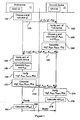
- FIG. 1 illustrates the session key exchange according to an embodiment of the present invention.
- FIG. 1 illustrates the session key exchange according to an embodiment of the present invention.
- the first device 11 Before the start of the method, the first device 11 knows its identity ID a , its own private key a and public key g a , g a is a short notation for g a mod p, where a is the first device's private key, g is a known generator and p is a known prime number, as is well known in the art.
- the second device 21 has the corresponding knowledge: ID b , b, g b . Certificates for the devices comprise the public key and the identity; C a (g a , ID a ) and C b (g b , ID b ), respectively.
- the devices 11, 12 also have processors (CPU) 12, 22 adapted to effect the steps of the method.
- the first device 11 chooses, preferably randomly, a first ephemeral private key x and calculates an ephemeral public key g x , that it sends together with its certificate C a (g a , ID a ) to the second device 21 in message 254.
- the second device 21 calculates a first hash value H(g y , K eph , K perm , ID b ) using the second ephemeral public key g y , the ephemeral shared key K eph , the Diffe-Hellman permanent key K perm , and its identity ID b , and a suitable hash function, for example one of the many functions known in the art. It should be known that other suitable functions than hash functions may be used for this and the following hash value calculations of the embodiment.
- the second device 21 then sends the second ephemeral public key g y , its certificate C b (g b , ID b ), and the first hash value H(g y , K eph , K perm , ID b ) to the first device 11 in message 262.
- the first device 11 Upon reception of message 262, the first device 11 verifies the certificate C b (g b , ID b ) of the second device 21; step 264. If the verification is unsuccessful, the first device 11 abandons the method. However, if the verification is successful, the first device 11 computes the ephemeral shared key K eph and the Diffie-Hellman permanent key K perm in step 266. In step 268, the first device 11 verifies the first hash value, using the same hash function as the second device 21 used in step 260.
- the first device 11 If the first hash value is not verified, then the first device 11 aborts the method, but if the first hash value is verified, then the first device 11 calculates a second hash value H(g x , K eph , S perm , ID a ) in step 270, using the first ephemeral public key g x , the ephemeral shared key K eph , the Diffie-Hellman permanent key K perm and its identity ID a . The first device 11 sends the second hash value H(g x , K eph , K perm , ID a ) to the second device 21 in message 272.
- the second device 21 Upon reception of the message 272, the second device 21 verifies the second hash value H(g x , K eph , K perm , ID a ) in step 274, using the same hash function as the one used by the first device 10 in step 270. If the second hash value is not verified, then the second device 21 aborts the protocol, but if the second hash value is verified, then the second device 21 calculates, in step 276, a session key K sess by calculating the hash value of the ephemeral shared key K eph .
- the first device 11 Upon reception of the "ready" message 278 from the second device 21, the first device 11 calculates, in step 280, the same session key K sess by calculating the hash value of the ephemeral shared key K eph , using the same hash function as that used by the second device 21 in step 276. Then the first device 11 sends a "ready" message 282 to the second device 21 to indicate that it too has calculated the session key K sess .
- both the first device 11 and the second device 21 possess the session key K sess that can be used to protect information sent between them.
- the confidentiality of the private keys is assured, the authentication and the key confirmation are mutual.
- the forward secrecy and the robustness against leakage of previous session key are assured as well.
- the three hash functions described in connection with steps 212, 220, and 226 may be different, the same, or that two of them are the same while the third is different.
- security module encompasses any kind of security module, portable or stationary, that comprises a processor and can be used to establish a secure authenticated channel according to the invention, such as for example smart cards, PC cards (formerly known as PCMCIA cards), and integrated circuits soldered to the Printed Circuit Board of an apparatus such as a television.
- the embodiment described hereinbefore is particularly suited for implementation in a digital television set and a security module.
- a person skilled in the art will appreciate that the invention may be implemented and used by any kind of device with the necessary resources, i.e. a processor and preferably a memory storing the necessary information.
- Non-limitative examples of other devices are DVD players, computers interacting with external accessories, and Automatic Teller Machines (ATMs) and bankcards.
- ATMs Automatic Teller Machines
Landscapes
- Engineering & Computer Science (AREA)
- Computer Security & Cryptography (AREA)
- Computer Networks & Wireless Communication (AREA)
- Signal Processing (AREA)
- Computing Systems (AREA)
- Theoretical Computer Science (AREA)
- Computer And Data Communications (AREA)
- Storage Device Security (AREA)
- Management, Administration, Business Operations System, And Electronic Commerce (AREA)
- Mobile Radio Communication Systems (AREA)
- Data Exchanges In Wide-Area Networks (AREA)
- Debugging And Monitoring (AREA)
- Information Retrieval, Db Structures And Fs Structures Therefor (AREA)
- Air Bags (AREA)
- Lock And Its Accessories (AREA)
Claims (3)
- Verfahren zum Berechnen eines Sitzungsschlüssels, der von einer ersten und von einer zweiten Vorrichtung (11, 21) gemeinsam genutzt wird,
wobei die erste Vorrichtung (11) ein Zertifikat (Ca) , das einen öffentlichen Schlüssel (ga) und eine Identität (IDa), die ihr selbst entspricht, umfasst, und Kenntnis über die Identität (IDa), die ihr selbst entspricht, über einen privaten Schlüssel (a) und über den öffentlichen Schlüssel (ga) besitzt,
wobei die zweite Vorrichtung (21) ein Zertifikat (Cb), das einen öffentlichen Schlüssel (gb) und eine Identität (IDb), die ihr selbst entspricht, umfasst, und Kenntnis über die Identität (IDb), die ihr selbst entspricht, über einen privaten Schlüssel (b) und über den öffentlichen Schlüssel (gb) besitzt, wobei das Verfahren die folgenden Schritte umfasst:bei der ersten Vorrichtung (11):- Wählen (252) eines ersten kurzlebigen privaten Schlüssels (x);- Berechnen (252) eines ersten kurzlebigen öffentlichen Schlüssels (gx);- Senden (254) ihres Zertifikats (Ca) und des ersten kurzlebigen öffentlichen Schlüssels (gx) an die zweite Vorrichtung;bei der zweiten Vorrichtung (21):- Empfangen (254) des Zertifikats (Ca) der ersten Vorrichtung und des ersten kurzlebigen öffentlichen Schlüssels (gx) ;- Überprüfen (256) des Zertifikats (Ca) der ersten Vorrichtung;- Wählen (258) eines zweiten kurzlebigen privaten Schlüssels (y);- Berechnen (258) eines zweiten kurzlebigen öffentlichen Schlüssels (gy);- Berechnen (258) eines kurzlebigen gemeinsam genutzten Schlüssels (Keph) aus dem ersten kurzlebigen öffentlichen Schlüssel (gx) und aus dem zweiten kurzlebigen privaten Schlüssel (y);- Berechnen (258) eines dauerhaften Schlüssels (Kperm) aus dem öffentlichen Schlüssel (ga) der ersten Vorrichtung und aus ihrem eigenen privaten Schlüssel (b);- Berechnen (260) eines ersten Werts (H (gy, Keph, Kperm, IDb)) aus dem zweiten kurzlebigen öffentlichen Schlüssel (gy), aus dem kurzlebigen gemeinsam genutzten Schlüssel (Keph), aus dem dauerhaften Schlüssel (Kperm) und aus der Identität (IDb), die ihr selbst entspricht;- Senden (262) ihres Zertifikats (Cb), des zweiten kurzlebigen öffentlichen Schlüssels (gy) und des ersten Werts (H (gy, Keph, Kperm, IDb)) an die erste Vorrichtung;bei der ersten Vorrichtung (11):- Empfangen (262) des Zertifikats (Cb) der zweiten Vorrichtung, des zweiten kurzlebigen öffentlichen Schlüssels (gy) und des ersten Werts (H(gy, Keph, Kperm, IDb)) von der zweiten Vorrichtung;- Überprüfen (264) des Zertifikats (Cb) der zweiten Vorrichtung;- Berechnen (266) des kurzlebigen gemeinsam genutzten Schlüssels (Keph) aus dem zweiten kurzlebigen öffentlichen Schlüssel (gy) und aus dem ersten kurzlebigen privaten Schlüssel (x);- Berechnen (266) des dauerhaften Schlüssels (Kperm) aus dem öffentlichen Schlüssel der zweiten Vorrichtung (gb) und aus ihrem eigenen privaten Schlüssel (a);- Überprüfen (268) des ersten Werts (H (gy, Keph, Kperm, IDb));- Berechnen (270) eines zweiten Werts (H(gx, Keph, Kperm, IDa)) aus dem ersten kurzlebigen öffentlichen Schlüssel (gx), aus dem kurzlebigen gemeinsam genutzten Schlüssel (Keph), aus dem dauerhaften Schlüssel (Kperm) und aus der Identität (IDa), die ihr selbst entspricht;- Senden (272) des zweiten Werts (H(gx, Keph, Kperm, IDa)) an die zweite Vorrichtung;bei der zweiten Vorrichtung (21):- Empfangen (272) des zweiten Werts (H(gx, Keph, Kperm, IDa));- Überprüfen (274) des zweiten Werts (H(gx, Keph, Kperm, IDa)); und- Berechnen (276) eines Sitzungsschlüssels (Ksess) als eine Funktion des kurzlebigen gemeinsam genutzten Schlüssels (Keph); undbei der ersten Vorrichtung (11):- Berechnen (280) des Sitzungsschlüssels (Ksess) als eine Funktion des kurzlebigen gemeinsam genutzten Schlüssels (Keph). - Erste Vorrichtung (11) zum Beteiligen mit einer zweiten Vorrichtung (21) an der Berechnung eines gemeinsam genutzten Sitzungsschlüssels, wobei die erste Vorrichtung ein Zertifikat (Ca), das einen öffentlichen Schlüssel (ga) und eine Identität (IDa), die ihr selbst entspricht, umfasst, und Kenntnis über die Identität (IDa), die ihr selbst entspricht, über einen privaten Schlüssel (a) und über den öffentlichen Schlüssel (ga) besitzt, wobei die erste Vorrichtung (11) einen Prozessor (12) umfasst zum:- Wählen eines kurzlebigen privaten Schlüssels (x);- Berechnen eines ersten kurzlebigen öffentlichen Schlüssels (gx),- Senden ihres Zertifikats (Ca) und des ersten kurzlebigen öffentlichen Schlüssels (gx) an die zweite Vorrichtung;- Empfangen eines Zertifikats (Cb) der zweiten Vorrichtung, eines zweiten kurzlebigen öffentlichen Schlüssels (gy) und eines ersten Werts (H (gy, Keph, Kperm, IDb)) von der zweiten Vorrichtung, wobei das Zertifikat (Cb) einen öffentlichen Schlüssel (gb) und eine Identität (IDb) der zweiten Vorrichtung umfasst und wobei der erste Wert (H(gy, Keph, Kperm, IDb)) aus dem zweiten kurzlebigen öffentlichen Schlüssel (gy), aus einem kurzlebigen gemeinsam genutzten Schlüssel (Keph), aus einem dauerhaften Schlüssel (Kperm) und aus der Identität (IDb), die der zweiten Vorrichtung entspricht, berechnet ist;- Überprüfen des Zertifikats (Cb) der zweiten Vorrichtung;- Berechnen des kurzlebigen gemeinsam genutzten Schlüssels (Keph) aus dem zweiten kurzlebigen öffentlichen Schlüssel (gy) und aus dem kurzlebigen privaten Schlüssel (x);- Berechnen des dauerhaften Schlüssels (Kperm) aus dem öffentlichen Schlüssel (gb) der zweiten Vorrichtung und aus ihrem eigenen privaten Schlüssel (a);- Überprüfen des ersten Werts (H(gy, Keph, Kperm, IDb));- Berechnen eines zweiten Werts (H(gx, Keph, Kperm, IDa)) aus dem ersten kurzlebigen öffentlichen Schlüssel (gx), aus dem kurzlebigen gemeinsam genutzten Schlüssel (Keph), aus dem dauerhaften Schlüssel (Kperm) und aus der Identität (IDa), die ihr selbst entspricht;- Senden des zweiten Werts (H (gx, Keph, Kperm, IDa)) an die zweite Vorrichtung; und- Berechnen eines Sitzungsschlüssels (Ksess) als eine Funktion des kurzlebigen gemeinsam genutzten Schlüssels (Keph).
- Zweite Vorrichtung (21) zum Beteiligen mit einer ersten Vorrichtung (11) an der Berechnung eines gemeinsam genutzten Sitzungsschlüssels, wobei die zweite Vorrichtung ein Zertifikat (Cb), das einen öffentlichen Schlüssel (gb) und eine Identität (IDb), die ihr selbst entspricht, umfasst, und Kenntnis über die Identität (IDb), die ihr selbst entspricht, über einen privaten Schlüssel (b) und über den öffentlichen Schlüssel (gb) besitzt,
wobei die zweite Vorrichtung (21) einen Prozessor (22) umfasst zum:- Empfangen eines Zertifikats (Ca) der ersten Vorrichtung und eines ersten kurzlebigen öffentlichen Schlüssels (gx), wobei das Zertifikat einen öffentlichen Schlüssel (ga) und eine Identität (IDa) der ersten Vorrichtung umfasst;- Überprüfen des Zertifikats (Ca) der ersten Vorrichtung;- Wählen eines kurzlebigen privaten Schlüssels (y);- Berechnen eines zweiten kurzlebigen öffentlichen Schlüssels (gy);- Berechnen eines kurzlebigen gemeinsam genutzten Schlüssels (Keph) aus dem ersten kurzlebigen öffentlichen Schlüssel (gx) und aus dem kurzlebigen privaten Schlüssel (y);- Berechnen eines dauerhaften Schlüssels (Kperm) aus dem öffentlichen Schlüssel (ga) der ersten Vorrichtung und aus ihrem eigenen privaten Schlüssel (b);- Berechnen eines ersten Werts (H(gy, Keph, Kperm, IDb)) aus dem zweiten kurzlebigen öffentlichen Schlüssel (gy), aus dem kurzlebigen gemeinsam genutzten Schlüssel (Keph), aus dem dauerhaften Schlüssel (Kperm) und aus der Identität (IDb), die ihr selbst entspricht;- Senden ihres Zertifikats (Cb), des zweiten kurzlebigen öffentlichen Schlüssels (gy) und des ersten Werts (H (gy, Keph, Kperm, IDb)) an die erste Vorrichtung;- Empfangen eines zweiten Werts (H(gx, Keph, Kperm, IDa)) von der ersten Vorrichtung, wobei der zweite Wert aus dem ersten kurzlebigen öffentlichen Schlüssel (gx), aus dem kurzlebigen gemeinsam genutzten Schlüssel (Keph), aus dem dauerhaften Schlüssel (Kperm) und aus der Identität (IDa), die der ersten Vorrichtung entspricht, berechnet ist;- Überprüfen des zweiten Werts (H(gx, Keph, Kperm, IDa)) ; und- Berechnen des Sitzungsschlüssels (Ksess) als eine Funktion des kurzlebigen gemeinsam genutzten Schlüssels (Keph).
Priority Applications (1)
| Application Number | Priority Date | Filing Date | Title |
|---|---|---|---|
| EP08100504A EP1906587A3 (de) | 2004-10-29 | 2004-10-29 | Sicherer, authentifizierter Kanal |
Applications Claiming Priority (1)
| Application Number | Priority Date | Filing Date | Title |
|---|---|---|---|
| PCT/EP2004/052722 WO2006048043A1 (en) | 2004-10-29 | 2004-10-29 | Secure authenticated channel |
Related Child Applications (2)
| Application Number | Title | Priority Date | Filing Date |
|---|---|---|---|
| EP08100504A Division EP1906587A3 (de) | 2004-10-29 | 2004-10-29 | Sicherer, authentifizierter Kanal |
| EP08100504.3 Division-Into | 2008-01-15 |
Publications (2)
| Publication Number | Publication Date |
|---|---|
| EP1805929A1 EP1805929A1 (de) | 2007-07-11 |
| EP1805929B1 true EP1805929B1 (de) | 2010-08-11 |
Family
ID=34959210
Family Applications (1)
| Application Number | Title | Priority Date | Filing Date |
|---|---|---|---|
| EP04822347A Expired - Lifetime EP1805929B1 (de) | 2004-10-29 | 2004-10-29 | Sicherer authentifizierter kanal |
Country Status (12)
| Country | Link |
|---|---|
| EP (1) | EP1805929B1 (de) |
| JP (1) | JP4719749B2 (de) |
| KR (2) | KR101075316B1 (de) |
| CN (1) | CN101048970B (de) |
| AT (1) | ATE477636T1 (de) |
| AU (1) | AU2004324546B2 (de) |
| BR (1) | BRPI0419162A (de) |
| DE (1) | DE602004028670D1 (de) |
| ES (1) | ES2348240T3 (de) |
| MX (1) | MX2007005037A (de) |
| RU (1) | RU2488226C2 (de) |
| WO (1) | WO2006048043A1 (de) |
Cited By (1)
| Publication number | Priority date | Publication date | Assignee | Title |
|---|---|---|---|---|
| CN109074759A (zh) * | 2016-05-03 | 2018-12-21 | 塞帝通公司 | 用于Cheon抗性的静态DIFFIE-HELLMAN安全性的方法和系统 |
Families Citing this family (30)
| Publication number | Priority date | Publication date | Assignee | Title |
|---|---|---|---|---|
| US7646872B2 (en) | 2004-04-02 | 2010-01-12 | Research In Motion Limited | Systems and methods to securely generate shared keys |
| CN102017510B (zh) * | 2007-10-23 | 2013-06-12 | 赵运磊 | 自封闭联合知识证明和Diffie-Hellman密钥交换方法与结构 |
| CN100488099C (zh) | 2007-11-08 | 2009-05-13 | 西安西电捷通无线网络通信有限公司 | 一种双向接入认证方法 |
| CN100553212C (zh) | 2007-11-16 | 2009-10-21 | 西安西电捷通无线网络通信有限公司 | 一种基于三元对等鉴别的可信网络接入控制系统 |
| CN101222328B (zh) | 2007-12-14 | 2010-11-03 | 西安西电捷通无线网络通信股份有限公司 | 一种实体双向鉴别方法 |
| EP2073430B1 (de) | 2007-12-21 | 2013-07-24 | Research In Motion Limited | Verfahren und Systeme zur sicheren Kanalinitialisierungstransaktionssicherheit auf der Basis eines gemeinsamen Geheimnisses mit niedriger Entropie |
| US8495375B2 (en) | 2007-12-21 | 2013-07-23 | Research In Motion Limited | Methods and systems for secure channel initialization |
| EP2073484B1 (de) * | 2007-12-21 | 2014-07-02 | BlackBerry Limited | Verfahren und Systeme zur sicheren Kanalinitialisierung |
| US8452017B2 (en) | 2007-12-21 | 2013-05-28 | Research In Motion Limited | Methods and systems for secure channel initialization transaction security based on a low entropy shared secret |
| KR20090076606A (ko) * | 2008-01-09 | 2009-07-13 | 삼성전자주식회사 | 컨텐츠 기록 방법, 타이틀 키 제공 방법, 컨텐츠 기록 장치및 컨텐츠 제공 서버 |
| KR101495722B1 (ko) * | 2008-01-31 | 2015-02-26 | 삼성전자주식회사 | 홈 네트워크에서의 통신 보안성을 보장하는 방법 및 이를위한 장치 |
| KR100948405B1 (ko) * | 2008-05-16 | 2010-03-19 | 숭실대학교산학협력단 | 유아이씨씨 사용 없이 안전하고 편리한 휴대성을 제공하는이에이피-에이케이에이 인증 방법 |
| KR101016642B1 (ko) * | 2008-11-27 | 2011-02-25 | 삼성전자주식회사 | 근접 무선 통신에서의 키 관리를 위한 모바일 시스템, 서비스 시스템 및 키 인증 방법 |
| EP2207340A1 (de) | 2009-01-12 | 2010-07-14 | Thomson Licensing | Verfahren und Vorrichtung zum Empfang von Steuerwörtern und Verfahren zu deren Übertragung |
| CN101600204B (zh) * | 2009-06-30 | 2011-05-11 | 中兴通讯股份有限公司 | 一种文件传输方法及系统 |
| JP5355263B2 (ja) * | 2009-07-08 | 2013-11-27 | 日本電信電話株式会社 | 鍵共有装置、鍵共有方法及びプログラム |
| CN101887503B (zh) * | 2010-06-24 | 2012-06-27 | 北京农业信息技术研究中心 | 种子流通监管系统及其认证方法 |
| JP5238045B2 (ja) * | 2011-02-02 | 2013-07-17 | トムソン ライセンシング | セキュア認証チャネル |
| EP2793157A1 (de) | 2013-04-19 | 2014-10-22 | Thomson Licensing | Vorrichtung und Verfahren zur Verwaltung von Passwörtern |
| EP2876569A1 (de) | 2013-11-26 | 2015-05-27 | Thomson Licensing | Vorrichtungen und Verfahren zur Passwortauthentifizierung |
| EP2955655A1 (de) | 2014-06-12 | 2015-12-16 | Thomson Licensing | Vorrichtungen und Verfahren zur Passwortauthentifizierung |
| EP2955654A1 (de) | 2014-06-12 | 2015-12-16 | Thomson Licensing | Vorrichtung und Verfahren zur Kennwortauthentifizierung |
| CN111756533B (zh) * | 2014-08-29 | 2023-07-04 | 维萨国际服务协会 | 用于安全密码生成的系统、方法和存储介质 |
| EP3251284B1 (de) | 2015-01-27 | 2020-08-19 | Visa International Service Association | Verfahren zur sicheren berechtigungsbereitstellung |
| EP3067811A1 (de) | 2015-03-12 | 2016-09-14 | Thomson Licensing | Vorrichtung und verfahren zur kennwortauthentifizierung |
| US9801055B2 (en) * | 2015-03-30 | 2017-10-24 | Qualcomm Incorporated | Authentication and key agreement with perfect forward secrecy |
| EP3086226A1 (de) | 2015-04-23 | 2016-10-26 | Thomson Licensing | Vorrichtung und verfahren zur bereitstellung von codeblöcken an einen client während der ausführung eines software-codes |
| CN105610575B (zh) * | 2015-09-22 | 2019-01-08 | 西安电子科技大学 | 空间信息网跨域的端到端密钥交换方法 |
| EP3748900A1 (de) | 2017-03-01 | 2020-12-09 | Apple Inc. | Systemzugriff unter verwendung einer mobilen vorrichtung |
| KR102648499B1 (ko) * | 2021-03-11 | 2024-03-19 | 한국전자통신연구원 | 기계 학습 기반 키 생성 장치 및 방법 |
Family Cites Families (13)
| Publication number | Priority date | Publication date | Assignee | Title |
|---|---|---|---|---|
| RU2077113C1 (ru) * | 1995-04-19 | 1997-04-10 | Военная академия связи | Способ криптозащиты системы телекоммуникационных технологий |
| US5761305A (en) * | 1995-04-21 | 1998-06-02 | Certicom Corporation | Key agreement and transport protocol with implicit signatures |
| US7334127B2 (en) * | 1995-04-21 | 2008-02-19 | Certicom Corp. | Key agreement and transport protocol |
| CA2176972C (en) | 1995-05-17 | 2008-11-25 | Scott A. Vanstone | Key agreement and transport protocol with implicit signatures |
| US5953420A (en) * | 1996-10-25 | 1999-09-14 | International Business Machines Corporation | Method and apparatus for establishing an authenticated shared secret value between a pair of users |
| US6081893A (en) * | 1997-05-28 | 2000-06-27 | Symantec Corporation | System for supporting secured log-in of multiple users into a plurality of computers using combined presentation of memorized password and transportable passport record |
| US6724894B1 (en) * | 1999-11-05 | 2004-04-20 | Pitney Bowes Inc. | Cryptographic device having reduced vulnerability to side-channel attack and method of operating same |
| US7047408B1 (en) * | 2000-03-17 | 2006-05-16 | Lucent Technologies Inc. | Secure mutual network authentication and key exchange protocol |
| RU2183348C2 (ru) * | 2000-07-19 | 2002-06-10 | Военный университет связи | Способ аутентификации объектов |
| US6986040B1 (en) * | 2000-11-03 | 2006-01-10 | Citrix Systems, Inc. | System and method of exploiting the security of a secure communication channel to secure a non-secure communication channel |
| RU2184390C1 (ru) * | 2000-11-08 | 2002-06-27 | Военный университет связи | Способ аутентификации объектов |
| US8219801B2 (en) * | 2003-03-10 | 2012-07-10 | International Business Machines Corporation | Method of authenticating digitally encoded products without private key sharing |
| CN1455543A (zh) * | 2003-05-30 | 2003-11-12 | 武汉理工大学 | 一种密钥的协定方法 |
-
2004
- 2004-10-29 EP EP04822347A patent/EP1805929B1/de not_active Expired - Lifetime
- 2004-10-29 WO PCT/EP2004/052722 patent/WO2006048043A1/en not_active Ceased
- 2004-10-29 AT AT04822347T patent/ATE477636T1/de not_active IP Right Cessation
- 2004-10-29 DE DE602004028670T patent/DE602004028670D1/de not_active Expired - Lifetime
- 2004-10-29 KR KR1020097022717A patent/KR101075316B1/ko not_active Expired - Fee Related
- 2004-10-29 ES ES04822347T patent/ES2348240T3/es not_active Expired - Lifetime
- 2004-10-29 MX MX2007005037A patent/MX2007005037A/es active IP Right Grant
- 2004-10-29 BR BRPI0419162-5A patent/BRPI0419162A/pt active Search and Examination
- 2004-10-29 CN CN2004800442942A patent/CN101048970B/zh not_active Expired - Fee Related
- 2004-10-29 JP JP2007538278A patent/JP4719749B2/ja not_active Expired - Fee Related
- 2004-10-29 KR KR1020077009716A patent/KR101075334B1/ko not_active Expired - Fee Related
- 2004-10-29 AU AU2004324546A patent/AU2004324546B2/en not_active Ceased
-
2009
- 2009-01-23 RU RU2009102230/08A patent/RU2488226C2/ru not_active IP Right Cessation
Cited By (5)
| Publication number | Priority date | Publication date | Assignee | Title |
|---|---|---|---|---|
| CN109074759A (zh) * | 2016-05-03 | 2018-12-21 | 塞帝通公司 | 用于Cheon抗性的静态DIFFIE-HELLMAN安全性的方法和系统 |
| CN109074759B (zh) * | 2016-05-03 | 2022-04-26 | 黑莓有限公司 | 用于Cheon抗性的静态DIFFIE-HELLMAN安全性的方法和系统 |
| US11424924B2 (en) | 2016-05-03 | 2022-08-23 | Blackberry Limited | Method and system for Cheon resistant static Diffie-Hellman security |
| US11616648B2 (en) | 2016-05-03 | 2023-03-28 | Blackberry Limited | Method and system for Cheon resistant static Diffie-Hellman security |
| US11902440B2 (en) | 2016-05-03 | 2024-02-13 | Malikie Innovations Limited | Method and system for Cheon resistant static Diffie-Hellman security |
Also Published As
| Publication number | Publication date |
|---|---|
| RU2488226C2 (ru) | 2013-07-20 |
| ES2348240T3 (es) | 2010-12-01 |
| AU2004324546B2 (en) | 2009-12-24 |
| KR101075334B1 (ko) | 2011-10-19 |
| WO2006048043A1 (en) | 2006-05-11 |
| AU2004324546A1 (en) | 2006-05-11 |
| JP4719749B2 (ja) | 2011-07-06 |
| CN101048970A (zh) | 2007-10-03 |
| DE602004028670D1 (de) | 2010-09-23 |
| JP2008518530A (ja) | 2008-05-29 |
| MX2007005037A (es) | 2007-06-19 |
| KR101075316B1 (ko) | 2011-10-19 |
| ATE477636T1 (de) | 2010-08-15 |
| CN101048970B (zh) | 2012-05-23 |
| BRPI0419162A (pt) | 2007-12-11 |
| KR20070070198A (ko) | 2007-07-03 |
| KR20090119791A (ko) | 2009-11-19 |
| EP1805929A1 (de) | 2007-07-11 |
| RU2009102230A (ru) | 2010-07-27 |
Similar Documents
| Publication | Publication Date | Title |
|---|---|---|
| AU2004324546B2 (en) | Secure authenticated channel | |
| US7809946B2 (en) | Secure authenticated channel | |
| Halevi et al. | Public-key cryptography and password protocols | |
| Boyd et al. | Elliptic curve based password authenticated key exchange protocols | |
| Jarecki et al. | Device-enhanced password protocols with optimal online-offline protection | |
| JPWO2007125877A1 (ja) | 通信装置、及び通信システム | |
| Madhusudhan | A secure and lightweight authentication scheme for roaming service in global mobile networks | |
| EP1906587A2 (de) | Sicherer, authentifizierter Kanal | |
| Castiglione et al. | An efficient and transparent one-time authentication protocol with non-interactive key scheduling and update | |
| Lee et al. | A computation-efficient three-party encrypted key exchange protocol | |
| Hsu et al. | Password authenticated key exchange protocol for multi-server mobile networks based on Chebyshev chaotic map | |
| KR100588302B1 (ko) | 모바일 환경에서의 그룹통신을 위한 세션키 생성 방법 | |
| Murdoch et al. | A Forward-secure Efficient Two-factor Authentication Protocol | |
| Al-Bakri et al. | A novel peer-to-peer SMS security solution using a hybrid technique of NTRU and AES-Rijndael | |
| AU2008201456B2 (en) | Secure authenticated channel | |
| JP5238045B2 (ja) | セキュア認証チャネル | |
| RU2359416C2 (ru) | Защищенный канал с аутентификацией | |
| Li et al. | A strong password-based remote mutual authentication with key agreement scheme on elliptic curve cryptosystem for portable devices | |
| CN101222323B (zh) | 安全认证信道 | |
| CA2486267C (en) | Secure authenticated channel | |
| Duraisamy et al. | A fast elliptic curve based key agreement protocol-on-chip (PoC) for securing networked embedded systems | |
| Blomqvist | Kleptography--Overview and a new proof of concept | |
| HK1119324A1 (en) | Secure authenticated channel | |
| HK1119324B (en) | Secure authenticated channel | |
| Chen et al. | Comments on two password based protocols. |
Legal Events
| Date | Code | Title | Description |
|---|---|---|---|
| PUAI | Public reference made under article 153(3) epc to a published international application that has entered the european phase |
Free format text: ORIGINAL CODE: 0009012 |
|
| 17P | Request for examination filed |
Effective date: 20070427 |
|
| AK | Designated contracting states |
Kind code of ref document: A1 Designated state(s): AT BE BG CH CY CZ DE DK EE ES FI FR GB GR HU IE IT LI LU MC NL PL PT RO SE SI SK TR |
|
| 17Q | First examination report despatched |
Effective date: 20071024 |
|
| DAX | Request for extension of the european patent (deleted) | ||
| GRAP | Despatch of communication of intention to grant a patent |
Free format text: ORIGINAL CODE: EPIDOSNIGR1 |
|
| RAP1 | Party data changed (applicant data changed or rights of an application transferred) |
Owner name: THOMSON LICENSING |
|
| GRAS | Grant fee paid |
Free format text: ORIGINAL CODE: EPIDOSNIGR3 |
|
| GRAA | (expected) grant |
Free format text: ORIGINAL CODE: 0009210 |
|
| AK | Designated contracting states |
Kind code of ref document: B1 Designated state(s): AT BE BG CH CY CZ DE DK EE ES FI FR GB GR HU IE IT LI LU MC NL PL PT RO SE SI SK TR |
|
| REG | Reference to a national code |
Ref country code: GB Ref legal event code: FG4D |
|
| REG | Reference to a national code |
Ref country code: CH Ref legal event code: EP |
|
| REG | Reference to a national code |
Ref country code: CH Ref legal event code: NV Representative=s name: KIRKER & CIE S.A. |
|
| REG | Reference to a national code |
Ref country code: IE Ref legal event code: FG4D |
|
| REF | Corresponds to: |
Ref document number: 602004028670 Country of ref document: DE Date of ref document: 20100923 Kind code of ref document: P |
|
| REG | Reference to a national code |
Ref country code: SE Ref legal event code: TRGR |
|
| REG | Reference to a national code |
Ref country code: NL Ref legal event code: T3 |
|
| PG25 | Lapsed in a contracting state [announced via postgrant information from national office to epo] |
Ref country code: AT Free format text: LAPSE BECAUSE OF FAILURE TO SUBMIT A TRANSLATION OF THE DESCRIPTION OR TO PAY THE FEE WITHIN THE PRESCRIBED TIME-LIMIT Effective date: 20100811 |
|
| PG25 | Lapsed in a contracting state [announced via postgrant information from national office to epo] |
Ref country code: BG Free format text: LAPSE BECAUSE OF FAILURE TO SUBMIT A TRANSLATION OF THE DESCRIPTION OR TO PAY THE FEE WITHIN THE PRESCRIBED TIME-LIMIT Effective date: 20101111 Ref country code: CY Free format text: LAPSE BECAUSE OF FAILURE TO SUBMIT A TRANSLATION OF THE DESCRIPTION OR TO PAY THE FEE WITHIN THE PRESCRIBED TIME-LIMIT Effective date: 20100811 Ref country code: PL Free format text: LAPSE BECAUSE OF FAILURE TO SUBMIT A TRANSLATION OF THE DESCRIPTION OR TO PAY THE FEE WITHIN THE PRESCRIBED TIME-LIMIT Effective date: 20100811 Ref country code: PT Free format text: LAPSE BECAUSE OF FAILURE TO SUBMIT A TRANSLATION OF THE DESCRIPTION OR TO PAY THE FEE WITHIN THE PRESCRIBED TIME-LIMIT Effective date: 20101213 Ref country code: SI Free format text: LAPSE BECAUSE OF FAILURE TO SUBMIT A TRANSLATION OF THE DESCRIPTION OR TO PAY THE FEE WITHIN THE PRESCRIBED TIME-LIMIT Effective date: 20100811 |
|
| PG25 | Lapsed in a contracting state [announced via postgrant information from national office to epo] |
Ref country code: GR Free format text: LAPSE BECAUSE OF FAILURE TO SUBMIT A TRANSLATION OF THE DESCRIPTION OR TO PAY THE FEE WITHIN THE PRESCRIBED TIME-LIMIT Effective date: 20101112 |
|
| PG25 | Lapsed in a contracting state [announced via postgrant information from national office to epo] |
Ref country code: DK Free format text: LAPSE BECAUSE OF FAILURE TO SUBMIT A TRANSLATION OF THE DESCRIPTION OR TO PAY THE FEE WITHIN THE PRESCRIBED TIME-LIMIT Effective date: 20100811 |
|
| PG25 | Lapsed in a contracting state [announced via postgrant information from national office to epo] |
Ref country code: EE Free format text: LAPSE BECAUSE OF FAILURE TO SUBMIT A TRANSLATION OF THE DESCRIPTION OR TO PAY THE FEE WITHIN THE PRESCRIBED TIME-LIMIT Effective date: 20100811 Ref country code: RO Free format text: LAPSE BECAUSE OF FAILURE TO SUBMIT A TRANSLATION OF THE DESCRIPTION OR TO PAY THE FEE WITHIN THE PRESCRIBED TIME-LIMIT Effective date: 20100811 Ref country code: MC Free format text: LAPSE BECAUSE OF NON-PAYMENT OF DUE FEES Effective date: 20101031 Ref country code: CZ Free format text: LAPSE BECAUSE OF FAILURE TO SUBMIT A TRANSLATION OF THE DESCRIPTION OR TO PAY THE FEE WITHIN THE PRESCRIBED TIME-LIMIT Effective date: 20100811 Ref country code: SK Free format text: LAPSE BECAUSE OF FAILURE TO SUBMIT A TRANSLATION OF THE DESCRIPTION OR TO PAY THE FEE WITHIN THE PRESCRIBED TIME-LIMIT Effective date: 20100811 |
|
| PLBE | No opposition filed within time limit |
Free format text: ORIGINAL CODE: 0009261 |
|
| STAA | Information on the status of an ep patent application or granted ep patent |
Free format text: STATUS: NO OPPOSITION FILED WITHIN TIME LIMIT |
|
| 26N | No opposition filed |
Effective date: 20110512 |
|
| REG | Reference to a national code |
Ref country code: DE Ref legal event code: R097 Ref document number: 602004028670 Country of ref document: DE Effective date: 20110512 |
|
| PG25 | Lapsed in a contracting state [announced via postgrant information from national office to epo] |
Ref country code: IE Free format text: LAPSE BECAUSE OF NON-PAYMENT OF DUE FEES Effective date: 20101029 |
|
| PG25 | Lapsed in a contracting state [announced via postgrant information from national office to epo] |
Ref country code: HU Free format text: LAPSE BECAUSE OF FAILURE TO SUBMIT A TRANSLATION OF THE DESCRIPTION OR TO PAY THE FEE WITHIN THE PRESCRIBED TIME-LIMIT Effective date: 20110212 Ref country code: LU Free format text: LAPSE BECAUSE OF NON-PAYMENT OF DUE FEES Effective date: 20101029 |
|
| REG | Reference to a national code |
Ref country code: FR Ref legal event code: PLFP Year of fee payment: 12 |
|
| REG | Reference to a national code |
Ref country code: FR Ref legal event code: PLFP Year of fee payment: 13 |
|
| REG | Reference to a national code |
Ref country code: DE Ref legal event code: R082 Ref document number: 602004028670 Country of ref document: DE Representative=s name: HOFSTETTER, SCHURACK & PARTNER PATENT- UND REC, DE |
|
| REG | Reference to a national code |
Ref country code: FR Ref legal event code: PLFP Year of fee payment: 14 |
|
| REG | Reference to a national code |
Ref country code: FR Ref legal event code: PLFP Year of fee payment: 15 |
|
| PGFP | Annual fee paid to national office [announced via postgrant information from national office to epo] |
Ref country code: FI Payment date: 20180920 Year of fee payment: 15 Ref country code: GB Payment date: 20180808 Year of fee payment: 15 Ref country code: NL Payment date: 20180913 Year of fee payment: 15 |
|
| PGFP | Annual fee paid to national office [announced via postgrant information from national office to epo] |
Ref country code: SE Payment date: 20181022 Year of fee payment: 15 Ref country code: DE Payment date: 20181009 Year of fee payment: 15 |
|
| PGFP | Annual fee paid to national office [announced via postgrant information from national office to epo] |
Ref country code: ES Payment date: 20181126 Year of fee payment: 15 Ref country code: FR Payment date: 20181030 Year of fee payment: 15 Ref country code: CH Payment date: 20181022 Year of fee payment: 15 Ref country code: TR Payment date: 20181026 Year of fee payment: 15 Ref country code: IT Payment date: 20181011 Year of fee payment: 15 Ref country code: BE Payment date: 20181022 Year of fee payment: 15 |
|
| REG | Reference to a national code |
Ref country code: DE Ref legal event code: R119 Ref document number: 602004028670 Country of ref document: DE |
|
| REG | Reference to a national code |
Ref country code: FI Ref legal event code: MAE |
|
| REG | Reference to a national code |
Ref country code: CH Ref legal event code: PL |
|
| REG | Reference to a national code |
Ref country code: NL Ref legal event code: MM Effective date: 20191101 |
|
| PG25 | Lapsed in a contracting state [announced via postgrant information from national office to epo] |
Ref country code: FI Free format text: LAPSE BECAUSE OF NON-PAYMENT OF DUE FEES Effective date: 20191029 Ref country code: DE Free format text: LAPSE BECAUSE OF NON-PAYMENT OF DUE FEES Effective date: 20200501 Ref country code: CH Free format text: LAPSE BECAUSE OF NON-PAYMENT OF DUE FEES Effective date: 20191031 Ref country code: LI Free format text: LAPSE BECAUSE OF NON-PAYMENT OF DUE FEES Effective date: 20191031 |
|
| REG | Reference to a national code |
Ref country code: BE Ref legal event code: MM Effective date: 20191031 |
|
| PG25 | Lapsed in a contracting state [announced via postgrant information from national office to epo] |
Ref country code: SE Free format text: LAPSE BECAUSE OF NON-PAYMENT OF DUE FEES Effective date: 20191030 Ref country code: NL Free format text: LAPSE BECAUSE OF NON-PAYMENT OF DUE FEES Effective date: 20191101 Ref country code: BE Free format text: LAPSE BECAUSE OF NON-PAYMENT OF DUE FEES Effective date: 20191031 |
|
| GBPC | Gb: european patent ceased through non-payment of renewal fee |
Effective date: 20191029 |
|
| PG25 | Lapsed in a contracting state [announced via postgrant information from national office to epo] |
Ref country code: IT Free format text: LAPSE BECAUSE OF NON-PAYMENT OF DUE FEES Effective date: 20191029 Ref country code: GB Free format text: LAPSE BECAUSE OF NON-PAYMENT OF DUE FEES Effective date: 20191029 Ref country code: FR Free format text: LAPSE BECAUSE OF NON-PAYMENT OF DUE FEES Effective date: 20191031 |
|
| REG | Reference to a national code |
Ref country code: ES Ref legal event code: FD2A Effective date: 20210302 |
|
| PG25 | Lapsed in a contracting state [announced via postgrant information from national office to epo] |
Ref country code: ES Free format text: LAPSE BECAUSE OF NON-PAYMENT OF DUE FEES Effective date: 20191030 |
|
| PG25 | Lapsed in a contracting state [announced via postgrant information from national office to epo] |
Ref country code: TR Free format text: LAPSE BECAUSE OF NON-PAYMENT OF DUE FEES Effective date: 20191029 |