EP1805965B1 - Verfahren und system zur kommunikation zwischen einem sicheren informationsspeichergerät und mindestens einer dritten instanz, entsprechende einrichtung, gerät und dritte instanz - Google Patents
Verfahren und system zur kommunikation zwischen einem sicheren informationsspeichergerät und mindestens einer dritten instanz, entsprechende einrichtung, gerät und dritte instanz Download PDFInfo
- Publication number
- EP1805965B1 EP1805965B1 EP20050805605 EP05805605A EP1805965B1 EP 1805965 B1 EP1805965 B1 EP 1805965B1 EP 20050805605 EP20050805605 EP 20050805605 EP 05805605 A EP05805605 A EP 05805605A EP 1805965 B1 EP1805965 B1 EP 1805965B1
- Authority
- EP
- European Patent Office
- Prior art keywords
- party
- secure container
- authorization
- given
- communicate
- Prior art date
- Legal status (The legal status is an assumption and is not a legal conclusion. Google has not performed a legal analysis and makes no representation as to the accuracy of the status listed.)
- Expired - Lifetime
Links
Images
Classifications
-
- H—ELECTRICITY
- H04—ELECTRIC COMMUNICATION TECHNIQUE
- H04L—TRANSMISSION OF DIGITAL INFORMATION, e.g. TELEGRAPHIC COMMUNICATION
- H04L63/00—Network architectures or network communication protocols for network security
- H04L63/08—Network architectures or network communication protocols for network security for authentication of entities
- H04L63/0853—Network architectures or network communication protocols for network security for authentication of entities using an additional device, e.g. smartcard, SIM or a different communication terminal
-
- H—ELECTRICITY
- H04—ELECTRIC COMMUNICATION TECHNIQUE
- H04L—TRANSMISSION OF DIGITAL INFORMATION, e.g. TELEGRAPHIC COMMUNICATION
- H04L9/00—Cryptographic mechanisms or cryptographic arrangements for secret or secure communications; Network security protocols
- H04L9/32—Cryptographic mechanisms or cryptographic arrangements for secret or secure communications; Network security protocols including means for verifying the identity or authority of a user of the system or for message authentication, e.g. authorization, entity authentication, data integrity or data verification, non-repudiation, key authentication or verification of credentials
-
- G—PHYSICS
- G06—COMPUTING OR CALCULATING; COUNTING
- G06F—ELECTRIC DIGITAL DATA PROCESSING
- G06F21/00—Security arrangements for protecting computers, components thereof, programs or data against unauthorised activity
- G06F21/30—Authentication, i.e. establishing the identity or authorisation of security principals
- G06F21/31—User authentication
- G06F21/34—User authentication involving the use of external additional devices, e.g. dongles or smart cards
-
- G—PHYSICS
- G06—COMPUTING OR CALCULATING; COUNTING
- G06Q—INFORMATION AND COMMUNICATION TECHNOLOGY [ICT] SPECIALLY ADAPTED FOR ADMINISTRATIVE, COMMERCIAL, FINANCIAL, MANAGERIAL OR SUPERVISORY PURPOSES; SYSTEMS OR METHODS SPECIALLY ADAPTED FOR ADMINISTRATIVE, COMMERCIAL, FINANCIAL, MANAGERIAL OR SUPERVISORY PURPOSES, NOT OTHERWISE PROVIDED FOR
- G06Q20/00—Payment architectures, schemes or protocols
- G06Q20/02—Payment architectures, schemes or protocols involving a neutral party, e.g. certification authority, notary or trusted third party [TTP]
-
- G—PHYSICS
- G06—COMPUTING OR CALCULATING; COUNTING
- G06Q—INFORMATION AND COMMUNICATION TECHNOLOGY [ICT] SPECIALLY ADAPTED FOR ADMINISTRATIVE, COMMERCIAL, FINANCIAL, MANAGERIAL OR SUPERVISORY PURPOSES; SYSTEMS OR METHODS SPECIALLY ADAPTED FOR ADMINISTRATIVE, COMMERCIAL, FINANCIAL, MANAGERIAL OR SUPERVISORY PURPOSES, NOT OTHERWISE PROVIDED FOR
- G06Q20/00—Payment architectures, schemes or protocols
- G06Q20/30—Payment architectures, schemes or protocols characterised by the use of specific devices or networks
- G06Q20/32—Payment architectures, schemes or protocols characterised by the use of specific devices or networks using wireless devices
-
- G—PHYSICS
- G06—COMPUTING OR CALCULATING; COUNTING
- G06Q—INFORMATION AND COMMUNICATION TECHNOLOGY [ICT] SPECIALLY ADAPTED FOR ADMINISTRATIVE, COMMERCIAL, FINANCIAL, MANAGERIAL OR SUPERVISORY PURPOSES; SYSTEMS OR METHODS SPECIALLY ADAPTED FOR ADMINISTRATIVE, COMMERCIAL, FINANCIAL, MANAGERIAL OR SUPERVISORY PURPOSES, NOT OTHERWISE PROVIDED FOR
- G06Q20/00—Payment architectures, schemes or protocols
- G06Q20/38—Payment protocols; Details thereof
- G06Q20/40—Authorisation, e.g. identification of payer or payee, verification of customer or shop credentials; Review and approval of payers, e.g. check credit lines or negative lists
-
- H—ELECTRICITY
- H04—ELECTRIC COMMUNICATION TECHNIQUE
- H04L—TRANSMISSION OF DIGITAL INFORMATION, e.g. TELEGRAPHIC COMMUNICATION
- H04L12/00—Data switching networks
- H04L12/02—Details
- H04L12/22—Arrangements for preventing the taking of data from a data transmission channel without authorisation
-
- H—ELECTRICITY
- H04—ELECTRIC COMMUNICATION TECHNIQUE
- H04L—TRANSMISSION OF DIGITAL INFORMATION, e.g. TELEGRAPHIC COMMUNICATION
- H04L63/00—Network architectures or network communication protocols for network security
- H04L63/10—Network architectures or network communication protocols for network security for controlling access to devices or network resources
Definitions
- the field of the invention is that of secure storage of information devices, made available to individuals (also called carriers) by an entity that manages these devices (also called device operator).
- the invention relates to a method and a communication system between a secure information storage device and at least one third.
- a secure information storage device is for example made in the form of a smart card, a dongle (USB key for example), or any other hardware or software device. It typically includes at least one secure container, in which information (data and / or programs) for use by a third party when communicating with the device is stored to provide one or more functions.
- entity means all the means (hardware and / or software) available to this entity to play its role in the system.
- third party means all means (hardware and / or software) available to this third party to play its role in the system.
- the entity, the third parties and the secure information storage devices are connected to one another via one or more communication networks.
- each device can be connected to the network in different ways, such as for example: connection directly (for example it has a SOAP server in the case of an IP network), connection via a hardware element (as the interface of a mobile telephone), intermediation by a software (case of an ISO 7816 reader driver or PKCS).
- connection directly for example it has a SOAP server in the case of an IP network
- connection via a hardware element as the interface of a mobile telephone
- intermediation by a software case of an ISO 7816 reader driver or PKCS.
- the third party is, for example, a service provider, such as a bank, an administration, a company, etc.
- the secure information storage devices are authentication devices used by third parties to authenticate the carriers of these devices. It is clear, however, as already indicated above, that the invention applies regardless of the function or functions that can be offered to third parties the information contained in the secure storage devices information.
- the authentication architectures implemented in the two cases are different and rather mutually exclusive.
- the authentication architectures are centralized, in the second (securing by deferred control) they are decentralized.
- Centralized architectures do not support the pooling of applications from different service providers because, by nature, there is only one centralized element that provides this authentication.
- each third party implements authentication devices of its own which are specific to an authentication method (OTP, CS, PKI ...) and to an authentication infrastructure (centralized architecture or decentralized). Investment and operating costs are therefore not pooled between different third parties.
- the management of authentication devices is cumbersome because these devices are hardware and each time requires a specific registration infrastructure, with specific learning costs and costs incurred by the lack of pooling.
- this known technique is extremely rigid since the issuer of the card must if possible know in advance the applications that will be deposited on the card. It is possible to download new applications in the lifetime of the card, but it is an entire picture of the card that needs to be reloaded.
- EP 1117077 A2 discloses a system including a smart card, a card management controller, and a plurality of businesses that securely use the memory of the smart card. A plurality of secure spaces are created in the memory of the card to store security and control data. The security data can be updated at the request of business organizations and under the supervision of the controller.
- the invention particularly aims to overcome these disadvantages of the state of the art.
- one of the objectives of the present invention in at least one embodiment, is to provide a communication technique between a secure information storage device and at least one third, which allows the third party to file and and / or use and / or modify, in a secure manner and during the life cycle of the device, information in a secure container included in the device and which is specific to this third party.
- the invention aims in particular, but not exclusively, at enabling a third party to perform, during the device's life cycle, a first personalization (which replaces a conventional pre-customization in the factory) or a post-personalization ( if a conventional pre-customization in the factory or a first personalization according to the invention has already been performed) of a secure container included in the device and assigned to this third party.
- the invention also aims, in at least one embodiment, to provide such a technique that several thirds each have a specific secure container included in the same device (mutualization of the device), and such that each third party can deposit and / or use and / or modify information in the secure container that is specific to it, independently of other third parties.
- each third party must be able to customize the contents of its secure container, independently of other third parties and the contents of other secure containers included in the same device.
- the invention also aims, in at least one embodiment, to provide such a technique for prohibiting access to a secure container to the device management entity, as well as to other third parties (in the where the device includes multiple secure containers assigned to different third parties).
- Another object of the invention in at least one embodiment, is to provide such a technique in which the device management entity (operator) plays the role of a responsible actor to which the device carriers can go. turn in case of problems with their devices (opposition, replacement, etc.), and which is the guarantor of the freedom and the protection of the privacy of the carriers (data protection of the carrier against unauthorized access, or even illegal, by some thirds).
- a complementary objective of the invention in the case where the information stored in a secure container is used by a third party to authenticate the bearer of the device, is to provide such a technique which is not related to an authentication method and which does not impose a centralized or decentralized architecture model.
- the general principle of the invention is therefore, after the device has been delivered to a carrier, to deposit in a secure container included in this device a communication authorization between the secure container and a third party, this communication authorization conditioning any acceptance the device of a communication between this secure container and this third party.
- the communication between the secure container and the third party is intended to allow the third party to deposit, use or modify information in the secure container. So, the invention allows a third party to make a first personalization or post-personalization of a secure container included in a device, after this device has been delivered to a carrier (that is to say by downloading).
- the entity plays a vital role in the mechanism of depositing a communication authorization in the secure container, ensuring that the secure container is only used by the third party to whom it has been assigned.
- the information contained in the secure container is under the sole control of that third party and is inaccessible to both the entity and others.
- third party in the case where the device is shared between several third parties.
- the given third party can therefore directly access its secure container, without the intervention of the entity, and therefore without again implementing the aforementioned mechanism (based on the deposit by the entity, in the secure container, of an authorization of communicate between the third party and the secure container).
- the aspect related to the management of the device is decoupled from the aspect related to the function performed with the information contained in the secure container. Indeed, it is the entity (operator) that manages the device, while it is the third party that performs the aforementioned function.
- This decoupling makes it possible to make the authentication architecture of the device by the entity, independent of the authentication method implemented by the third party to authenticate the bearer of the device.
- the solution of the invention does not impose an architecture model (centralized or decentralized) and is not linked to an authentication method (OTP, CS, PKI ...) that would be common to all third parties.
- the entity does not know the first access authorization specific to the third party, but it can revoke it, for example at the request of the holder of the device (in case of loss, theft, etc.) or the third party (in case revocation of the holder of the device or non-renewal of a contract between the entity and the third party).
- the step of revoking the first access authorization is preceded by the following step: the device authenticates the entity, with a second access authorization previously provided by the entity and deposited in the device, before agree to revoke the first specific third party specific access authorization for the secure container.
- the step of depositing the authorization to communicate in the secure container is preceded by the following step: the given third party requests the entity to deposit in the secure container the authorization to communicate between the given third party and the secure container, the given third party providing the entity with the identifier of the device.
- the given third party sends information to the secure container for the secure container to store.
- the information stored in the secure container belongs to the group comprising data and programs.
- the given third party is a service provider.
- the method allows communication between the device and at least two thirds, at least one container specific to each third is included in the device.
- the device comprises several secure containers that are allocated to different third parties, with at least one container per third (mutualization of the device).
- Each third party may deposit and / or use and / or modify information in the secure container that is specific to it, independently of other third parties (and even independently of the entity, in the preferential case where this third party has deposited in his secure container a first access authorization specific to it).
- the operator is the actor who deploys the system of the invention and equips the carriers. Each device being individualized from the outset by an authentication means of its own, the operator is able to identify and authenticate this device.
- the operator offers its secure containers (included in the devices it entrusts to carriers) for rental or sale to service providers.
- the operator is for example connected to different identity providers (IDPs), for example as remote identity providers, and responsible for the authentication of carriers.
- IDPs identity providers
- the operator has an access authorization (for example a secret in the cryptographic sense) that is specific to him and allows him to manage the secure containers of a device entrusted to a carrier.
- an access authorization for example a secret in the cryptographic sense
- the operator may in particular authorize the acceptance by a given secure container of another access authorization, specific to a given access provider. It can also revoke a specific access authorization to an access provider, without needing to know it.
- the operator remains the guarantor, vis-à-vis the wearer and the service providers, of the security, the tightness and the reliability of the overall system.
- Carriers are individuals who have a device entrusted by the operator. The wearer uses the device and each secure container included in it as if it were so many separate devices. For example, secure containers can be accessed through standardized APIs such as ISO 7816, PKCS, or other applications.
- the secure containers included in the devices have content readable or exploitable only by those who have access rights to these secure containers. These rights are delegated by the operator under the control of the holder.
- the information contained in the secure containers are for example data and programs, such as for example non-specialized documents, certificates or small programs, or applets, for a variety of purposes (including but not limited to authentication). .
- the service provider is an actor who contracts with the operator to be able to use the devices deployed by the operator.
- the operator allows the service provider to offer the bearer to receive on his device (and more precisely in one of the secure containers of this device) information (data and / or programs) allowing then a direct relationship between the service provider and the carrier.
- the device therefore provides a "signature holder" function for one or more service providers.
- each service provider has the right to generate a specific access authorization itself (for example in the form of a secret), and after it has been authorized by the operator gives him direct access (that is to say independently of the operator) to a secure container.
- the service provider must implement its own carrier registration mechanism as secure container users assigned to that service provider. This mechanism is particularly guarantee of the agreement of the carrier on the use of a secure container of its device by the service provider.
- the service provider is identified by an identifier in the device entrusted to the bearer.
- the service provider can access this device when he has obtained a network identification of the device, authenticated by an identity provider (IDP).
- IDP identity provider
- the identity provider is capable of authenticating a secure information storage device at a given network address.
- the authentication method is irrelevant for the device.
- the identity provider gives an anonymous pointer or not to the service provider in response to an authentication request.
- the secure information storage device is a dongle (USB key for example). It is clear, however, that the invention also applies with any other type of embodiment, hardware or software, of this device (particularly in the form of a smart card).
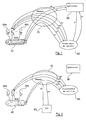
- This first phase is a phase of initialization of a service provider's access to a secure container included in the device.
- the end user has a dongle 40 comprising several secure containers (three in the illustrated example) 44a, 44b and 44c.
- This dongle 40 requires an identifier, possibly coinciding with the address of this dongle in a communication network 70.
- a service provider 60 who wants to communicate with one of these secure containers (for example that referenced 44b) identifies the dongle 40. It is assumed here that the dongle carrier is a customer of this supplier Services.
- the service provider 60 addresses an operator 50 who manages the dongles and the secure containers included therein, to ask him to file an authorization to communicate with a given secure container (by example that referenced 44b).
- the service provider sends the operator at least the identification of the dongle (eg the serial number as printed on the customer's dongle, or the anonymous "handle" of an identity provider (IDP ), or the identification number as it could be read in the dongle identification certificate if the choice of implementation of a dongle identification by a PKI certificate or an anonymous authentication certificate was retained) .
- the service provider 60 requests the operator 50 an identifier of the secure container 44b that is assigned to this service provider with respect to that client. This step is optional because in another implementation (option b), the operator gives this information to the service provider as soon as the contract that binds them is established.
- a fourth step (4) the operator 50 makes the dongle 40 a request for deposit of information in the secure container 44b concerned.
- the dongle 40 authenticates the operator 50 by means of an authorization of access (a secret) specific to the operator and which was filed to the personalization of the dongle, before its marketing.
- a sixth step (6) the operator 50 deposits in the secure container 44b the authorization to communicate between the secure container and the service provider 60.
- a seventh step (7) the operator 50 sends at least on the network 70, to the service provider 60, the identifier of the dongle 40 concerned, the address network of this dongle, the identifier of the secure container 44b, and the authorization to communicate above.
- the service provider 60 addresses directly to the secure container 44b of the dongle 40, because it knows the identifier and the network address of this dongle and the identifier of the secure container 44b, and provides the authorization to communicate above.
- a ninth step (9) the dongle 40 first verifies the aforementioned communication authorization, before accepting the communication between the secure container 44b and the service provider 60. More specifically, this verification is for example carried out by the system. of operation of the dongle, and in case of a positive result the latter requests the operating system of the secure container to accept the secret that the service provider will provide him via the aforementioned communication (see description of the figure 4 ).
- the service provider 60 transmits to the secure container 44b its own access authorization to this secure container, so that it is stored there for later use (i.e. whenever the access provider will again want to communicate with the secure container 44b, see description of the figure 2 ). In this way, the access provider becomes independent of the operator. The operator does not know this specific authorization to the service provider. He can not borrow it without the knowledge of the service provider. It has the power to revoke it (see description of the figure 3 ).
- the service provider 60 can now deposit in the secure container 44b data and programs that will be under only control and inaccessible to the other service provider and the operator 50.
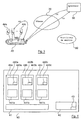
- the device 40 comprises an operating system (or OS, for "Operating System” in English) 41, a memory zone 42 and three secure containers 44a, 44b and 44c.
- OS operating system
- the invention is of course not limited to this particular value of the number of secure containers.
- the memory area 42 stores in particular the access authorization 43 specific to the operator (see the discussion above relating to the fifth step (5) of the initialization phase illustrated in FIG. figure 1 ).
- Each secure container 44a, 44b or 44c includes an operating system (OS) 441a, 441b or 441c, and a memory area 442a, 442b or 442c.
- the operating system (OS) of each secure container can also be seen as the lower layers of a computer stack.
- Each memory zone 442a, 442b or 442c stores in particular the access authorization 443a, 443b or 443c specific to the service provider (see the discussion above relating to the tenth step (10) of the initialization phase illustrated in FIG. figure 1 ).
- the operating system (native program (OS)) 41 of the device 40 has for example features that are similar to that of an operating system itself support virtual operating systems as CP / CMS (also called VM / 370) or to an application server. Thus, it can run different virtual machines, corresponding to different secure containers, in memory spaces and completely virtual, separate and isolated file systems. In other words, each virtual machine is the support of a "secure container" function. It governs access to permanent or volatile data, as well as the execution of programs, for example using the ISO 7816 or PKCS APIs.
- the operating system 41 of the device 40 is also responsible for the relationships with the service providers, the operator and the identity providers (IDPs). Each secure container knows the shared secret with the service provider. This secret has been downloaded under the control of the operating system 41 of the device 40. It is this operating system 41 that can authorize a secure container to accept a new secret shared with a service provider, without knowing what it is. secret that is in the field of the virtual machine and inaccessible, by construction of the device 40, to the operating system 41 of this device.
- each secure container is completely inaccessible to another secure container.
- Each virtual machine is therefore unaware of the existence of other virtual machines and thinks to enjoy the full potential of the device. If necessary, it is possible to reserve memory resources that will only be used by one of the secure containers.
- Each secure container can accept or provide data from / to the outside ("Over The Air") in a secure way because there is a shared secret between this container and the recipient of this container (the service provider).
- This secret can be changed by the operator, under the control of the operating system of the device, depending on the evolution of the assignors (service providers) of the secure containers.
- this database contains a doublet including an identifier of the service provider, and the shared secret with this service provider.
- the service provider 60 requests the bearer of the dongle 40 to identify himself to an identity provider (IDP) 80, in order to know the correspondence between the network address of the dongle and the identity of the wearer.
- IDP identity provider
- the service provider is able to communicate directly with the on-line dongle, or the service provider asks the operator to authenticate the dongle (itself or through an IDP).
- the interest of the second solution (which is the one described above and illustrated on the figure 2 ) is that it allows to prevent a service provider not bound to the operator to obtain a form of authentication of the dongle, and therefore of the carrier: either by sending a constant hazard, allowing to obtain always the same answer a given dongle, or by accessing a read in a secure container that would be free in reading to find recurrent information. It is about preserving the commercial interests of service providers who have contracted with the operator.
- a second step (22) if the service provider 60 has a relationship with the identity provider (IDP) 80, it establishes this authentication.
- the identity provider informs the service provider that there is an identified bearer at this network address. This regardless of the authentication method (PKI, OTP, secret key challenge, etc.).
- PKI authentication method
- OTP secret key challenge
- the transmission of this information to the service provider can be done either directly by an "out-of-band channel” or by a cookie on the browser, that is to say a couple (bearer identifier, network address of the dongle).
- the service provider knows the dongle thanks to the identifier and knows how to address him through the network address.
- the service provider 60 can therefore directly address the secure container 44b of the dongle, to request an operation, for example by means of ISO 7816 or PKCS API.
- This request is greeted by the operating system (OS) of dongle 40 which will look for which secure container is the recipient of the request.
- OS operating system
- the fifth step (25) is described below.
- the problem listed dongle 40 is to protect against attempts to access "illegal" to a secure container.
- the operating system of the secure container is responsible for this control. For this, it must know the identity of the service provider 60. If it is one of the service providers authorized to access this secure container 44b, it is also necessary that the system of the secure container knows that this service provider 60 has legal access to this secure container 44b (this information was provided by the operator via the operating system of the dongle), and that it authenticates the service provider . It does this for example via a secret key challenge. To be able to do this challenge, it is necessary that the dongle can pass requests to the service provider via the network. Depending on the case, the dongle may have its own network interface, or use an external interface. Depending on whether this authentication succeeds or fails, the service provider 60 may or may not communicate with the secure container 44b.
- the further exchange can be done by a conventional protocol such as ISO 7816, PKCS or other.
- This protocol is supported by the operating system of the secure container 44b, via the operating system of the dongle 40, to give the experience to the service provider 60 to have to do to an actor element in the chosen protocol.
- a third phase of the particular embodiment of the method according to the invention namely a phase of revocation of a specific access authorization previously assigned to the service provider 60 (third party) for a given secure container 44b of the dongle 40 .
- a first step (31) the operator 50 makes the dongle 40 a request for revocation of this access authorization specific to this service provider 60 for this secure container 44b.
- the dongle 40 authenticates the operator 50 by means of an authorization of access (a secret) specific to the operator and which was deposited to the personalization of the dongle, before its marketing.
- an authorization of access a secret
- the operating system (OS) of the dongle passes this request to the secure container concerned 44b, and the latter performs the requested revocation.
Landscapes
- Engineering & Computer Science (AREA)
- Computer Security & Cryptography (AREA)
- Business, Economics & Management (AREA)
- Theoretical Computer Science (AREA)
- General Physics & Mathematics (AREA)
- Computer Networks & Wireless Communication (AREA)
- Accounting & Taxation (AREA)
- Physics & Mathematics (AREA)
- Signal Processing (AREA)
- General Engineering & Computer Science (AREA)
- Computer Hardware Design (AREA)
- General Business, Economics & Management (AREA)
- Strategic Management (AREA)
- Computing Systems (AREA)
- Finance (AREA)
- Software Systems (AREA)
- Storage Device Security (AREA)
- Mobile Radio Communication Systems (AREA)
Claims (15)
- Verfahren zur Kommunikation zwischen einer Vorrichtung zur sicheren Informationsspeicherung (40) und mindestens einem Dritten (60), mit dem die Informationen ausgetauscht werden, wobei eine Entität (50) die Verwaltung einer Vielzahl von Vorrichtungen zur sicheren Informationsspeicherung gewährleistet, zu der die Vorrichtung gehört, dadurch gekennzeichnet, dass es die folgenden Schritte enthält:- die Entität hinterlegt (6) in einem Sicherheitsbehälter (44b), der in der Vorrichtung enthalten und für einen gegebenen Dritten spezifisch ist, eine Kommunikationsberechtigung zwischen dem Sicherheitsbehälter und dem gegebenen Dritten;- die Entität sendet (7) an den gegebenen Dritten eine Kennung der Vorrichtung, eine Adresse der Vorrichtung innerhalb eines Kommunikationsnetzes, eine Kennung des Sicherheitsbehälters und die Kommunikationsberechtigung;- der gegebene Dritte versucht, eine Kommunikation mit dem Sicherheitsbehälter aufzubauen (8), indem er die Adresse der Vorrichtung, die Kennung der Vorrichtung, die Kennung des Sicherheitsbehälters und die Kommunikationsberechtigung verwendet;- ehe sie die Kommunikation zwischen dem gegebenen Dritten und dem Sicherheitsbehälter akzeptiert, überprüft die Vorrichtung (9), ob die vom Dritten übertragene Kommunikationsberechtigung angesichts der vorher von der Entität im Sicherheitsbehälter hinterlegten Kommunikationsberechtigung akzeptabel ist.
- Verfahren nach Anspruch 1, dadurch gekennzeichnet, dass es außerdem die folgenden Schritte (10) enthält, die durchgeführt werden, nachdem die Kommunikation zwischen dem Sicherheitsbehälter und dem gegebenen Dritten akzeptiert wurde:- der gegebene Dritte sendet an den Sicherheitsbehälter eine für den gegebenen Dritten spezifische erste Zugriffsberechtigung für den Sicherheitsbehälter;- der Sicherheitsbehälter speichert die erste Zugriffsberechtigung, so dass nur der gegebene Dritte, der über die erste Zugriffsberechtigung verfügt, später vom Sicherheitsbehälter, unabhängig von der Entität, berechtigt wird, im Sicherheitsbehälter enthaltene Informationen zu verwenden und zu verändern.
- Verfahren nach Anspruch 2, dadurch gekennzeichnet, dass es außerdem die folgenden Schritte enthält:- die Entität sendet (31) an die Vorrichtung eine Anforderung des Widerrufs der für den gegebenen Dritten spezifischen ersten Zugriffsberechtigung für den Sicherheitsbehälter;- die Vorrichtung widerruft (33) die für den gegebenen Dritten spezifische erste Zugriffsberechtigung für den Sicherheitsbehälter.
- Verfahren nach Anspruch 3, dadurch gekennzeichnet, dass vor dem Schritt des Widerrufs der ersten Zugriffsberechtigung der folgende Schritt liegt:- die Vorrichtung authentifiziert (32) die Entität mit einer zweiten Zugriffsberechtigung, die vorher von der Entität geliefert und in der Vorrichtung hinterlegt wurde, ehe sie akzeptiert, die für den gegebenen Dritten spezifische erste Zugriffsberechtigung für den Sicherheitsbehälter zu widerrufen.
- Verfahren nach einem der Ansprüche 1 bis 4, dadurch gekennzeichnet, dass vor dem Schritt des Hinterlegens der Kommunikationsberechtigung im Sicherheitsbehälter die folgenden Schritte liegen:- die Entität überträgt (4) an die Vorrichtung eine Anforderung zum Hinterlegen der Kommunikationsberechtigung im Sicherheitsbehälter;- die Vorrichtung authentifiziert (5) die Entität mit einer dritten Zugriffsberechtigung, die vorher von der Entität geliefert und in der Vorrichtung hinterlegt wurde, ehe sie die Hinterlegung der Kommunikationsberechtigung im Sicherheitsbehälter akzeptiert.
- Verfahren nach einem der Ansprüche 1 bis 5, dadurch gekennzeichnet, dass vor dem Schritt der Hinterlegung der Kommunikationsberechtigung im Sicherheitsbehälter der folgende Schritt liegt:- der gegebene Dritte fordert (3) von der Entität, die Kommunikationsberechtigung zwischen dem gegebenen Dritten und dem Sicherheitsbehälter im Sicherheitsbehälter zu hinterlegen, wobei der gegebene Dritte an die Entität die Kennung der Vorrichtung liefert.
- Verfahren nach einem der Ansprüche 1 bis 6, dadurch gekennzeichnet, dass, nachdem die Kommunikation zwischen dem Sicherheitsbehälter und dem gegebenen Dritten akzeptiert wurde, der gegebene Dritte an den Sicherheitsbehälter Informationen sendet (11), damit der Sicherheitsbehälter sie speichert.
- Verfahren nach einem der Ansprüche 1 bis 7, dadurch gekennzeichnet, dass die im Sicherheitsbehälter gespeicherten Informationen zu der Gruppe gehören, die Daten und Programme enthält.
- Verfahren nach einem der Ansprüche 1 bis 8, dadurch gekennzeichnet, dass die im Sicherheitsbehälter gespeicherten Informationen es ermöglichen, eine Funktion durchzuführen, die zu der Gruppe gehört, die enthält:- Authentifizierung eines Inhabers der Vorrichtung durch den gegebenen Dritten;- elektronisches Portemonnaie;- Berechtigung zur Benutzung eines Geräts, mit dem die Vorrichtung zusammenwirkt;- Wartung eines Geräts, mit dem die Vorrichtung zusammenwirkt;- Verwaltung einer Funktionalität eines Geräts, mit dem die Vorrichtung zusammenwirkt.
- Verfahren nach einem der Ansprüche 1 bis 9, dadurch gekennzeichnet, dass der gegebene Dritte (60) ein Diensteanbieter ist.
- Verfahren nach einem der Ansprüche 1 bis 10, dadurch gekennzeichnet, dass es die Kommunikation zwischen der Vorrichtung und mindestens zwei Dritten erlaubt, wobei mindestens ein für jeden Dritten spezifischer Behälter in der Vorrichtung enthalten ist.
- System zur Kommunikation zwischen einer Vorrichtung zur sicheren Informationsspeicherung (40) und mindestens einem Dritten (60), mit dem die Informationen ausgetauscht werden, wobei eine Entität (50) die Verwaltung einer Vielzahl von Vorrichtungen zur sicheren Informationsspeicherung gewährleistet, zu der die Vorrichtung gehört, dadurch gekennzeichnet, dass:- die Entität Einrichtungen zum Hinterlegen in einem Sicherheitsbehälter, der in der Vorrichtung enthalten und für einen gegebenen Dritten spezifisch ist, einer Kommunikationsberechtigung zwischen dem Sicherheitsbehälter und dem gegebenen Dritten enthält;- die Entität Einrichtungen zum Senden einer Kennung der Vorrichtung, einer Adresse der Vorrichtung in einem Kommunikationsnetz, einer Kennung des Sicherheitsbehälters und der Kommunikationsberechtigung an den gegebenen Dritten enthält;- der gegebene Dritte Einrichtungen enthält, die es ermöglichen zu versuchen, unter Verwendung der Adresse der Vorrichtung, der Kennung der Vorrichtung, der Kennung des Sicherheitsbehälters und der Kommunikationsberechtigung eine Kommunikation mit dem Sicherheitsbehälter aufzubauen;- die Vorrichtung Einrichtungen zur Überprüfung enthält, ob die vom gegebenen Dritten übertragene Kommunikationsberechtigung angesichts der vorher von der Entität im Sicherheitsbehälter hinterlegten Kommunikationsberechtigung akzeptabel ist, so dass die Vorrichtung die Kommunikation zwischen dem gegebenen Dritten und dem Sicherheitsbehälter nur akzeptiert, wenn die Überprüfungseinrichtungen entscheiden, dass die von dem Dritten übertragene Kommunikationsberechtigung akzeptabel ist.
- Entität (50), die die Verwaltung einer Vielzahl von Vorrichtungen zur sicheren Informationsspeicherung gewährleistet, dadurch gekennzeichnet, dass sie enthält:- Einrichtungen zum Hinterlegen in einem Sicherheitsbehälter (44b), der in einer gegebenen Vorrichtung enthalten und für einen gegebenen Dritten (60) spezifisch ist, einer Kommunikationsberechtigung zwischen dem Sicherheitsbehälter und dem gegebenen Dritten;- Einrichtungen zum Senden einer Kennung der Vorrichtung, einer Adresse der gegebenen Vorrichtung in einem Kommunikationsnetz, einer Kennung des Sicherheitsbehälters und der Kommunikationsberechtigung an den gegebenen Dritten;so dass der gegebene Dritte versuchen kann, eine Kommunikation mit dem Sicherheitsbehälter aufzubauen, indem er die Adresse der gegebenen Vorrichtung, die Kennung der gegebenen Vorrichtung, die Kennung des Sicherheitsbehälters und die Kommunikationsberechtigung benutzt, und dass, vor dem Akzeptieren der Kommunikation zwischen dem gegebenen Dritten und dem Sicherheitsbehälter, die gegebene Vorrichtung überprüfen kann, ob die vom Dritten übertragene Kommunikationsberechtigung angesichts der vorher von der Entität im Sicherheitsbehälter hinterlegten Kommunikationsberechtigung akzeptabel ist.
- Vorrichtung zur sicheren Informationsspeicherung (40) von der Art, die Einrichtungen zur Kommunikation mit mindestens einem Dritten (60) enthält, mit dem die Informationen ausgetauscht werden, dadurch gekennzeichnet, dass sie enthält:- Einrichtungen zum Speichern in einem Sicherheitsbehälter, der in der Vorrichtung enthalten und für einen gegebenen Dritten spezifisch ist, einer Kommunikationsberechtigung zwischen dem Sicherheitsbehälter und dem gegebenen Dritten, wobei die Kommunikationsberechtigung durch eine Entität (50) hinterlegt wird, die die Verwaltung einer Vielzahl von Vorrichtungen zur sicheren Informationsspeicherung gewährleistet, zu der die Vorrichtung gehört;- Einrichtungen zur Überprüfung, ob eine vom gegebenen Dritten übertragene Kommunikationsberechtigung angesichts der vorher von der Entität im Sicherheitsbehälter hinterlegten Kommunikationsberechtigung akzeptabel ist, so dass die Vorrichtung die Kommunikation zwischen dem gegebenen Dritten und dem Sicherheitsbehälter nur akzeptiert, wenn die Überprüfungseinrichtungen entscheiden, dass die von dem Dritten übertragene Kommunikationsberechtigung akzeptabel ist.
- Dritter (60) von der Art, die Einrichtungen zur Kommunikation mit einer Vorrichtung zur sicheren Informationsspeicherung (40) enthält, dadurch gekennzeichnet, dass er enthält:- Einrichtungen für den Empfang von einer Entität (50), die die Verwaltung einer Vielzahl von Vorrichtungen zur sicheren Informationsspeicherung gewährleistet, zu der die Vorrichtung gehört, einer Kennung der Vorrichtung, einer Adresse der Vorrichtung innerhalb eines Kommunikationsnetzes, einer Kennung eines Sicherheitsbehälters, der in der Vorrichtung enthalten und für den Dritten spezifisch ist, und einer Kommunikationsberechtigung zwischen dem Sicherheitsbehälter und dem Dritten;- Einrichtungen, die es ermöglichen zu versuchen, unter Verwendung der Adresse der Vorrichtung, der Kennung der Vorrichtung, der Kennung des Sicherheitsbehälters und der Kommunikationsberechtigung eine Kommunikation mit dem Sicherheitsbehälter aufzubauen;so dass die Vorrichtung, ehe sie die Kommunikation zwischen dem Dritten und dem Sicherheitsbehälter akzeptiert, überprüfen kann, ob die von dem Dritten übertragene Kommunikationsberechtigung angesichts der vorher von der Entität im Sicherheitsbehälter hinterlegten Kommunikationsberechtigung akzeptabel ist.
Applications Claiming Priority (2)
| Application Number | Priority Date | Filing Date | Title |
|---|---|---|---|
| FR0411625 | 2004-10-29 | ||
| PCT/FR2005/002233 WO2006048515A1 (fr) | 2004-10-29 | 2005-09-07 | Procede et systeme de communiction entre un dispositif de stockage securise d’informations et au moins un tiers, entite, dispositif et tiers correspondants |
Publications (2)
| Publication Number | Publication Date |
|---|---|
| EP1805965A1 EP1805965A1 (de) | 2007-07-11 |
| EP1805965B1 true EP1805965B1 (de) | 2011-11-16 |
Family
ID=34954067
Family Applications (1)
| Application Number | Title | Priority Date | Filing Date |
|---|---|---|---|
| EP20050805605 Expired - Lifetime EP1805965B1 (de) | 2004-10-29 | 2005-09-07 | Verfahren und system zur kommunikation zwischen einem sicheren informationsspeichergerät und mindestens einer dritten instanz, entsprechende einrichtung, gerät und dritte instanz |
Country Status (7)
| Country | Link |
|---|---|
| US (1) | US8739267B2 (de) |
| EP (1) | EP1805965B1 (de) |
| JP (1) | JP5595636B2 (de) |
| KR (1) | KR101276092B1 (de) |
| CN (1) | CN101073239B (de) |
| AT (1) | ATE534224T1 (de) |
| WO (1) | WO2006048515A1 (de) |
Families Citing this family (25)
| Publication number | Priority date | Publication date | Assignee | Title |
|---|---|---|---|---|
| FR2903514B1 (fr) * | 2006-07-04 | 2008-10-17 | Oberthur Card Syst Sa | Boitier pour clef electronique et systeme comportant un tel boitier |
| EP2067480A4 (de) * | 2006-09-30 | 2009-11-25 | Takeda Pharmaceutical | Musclin-rezeptor und seine verwendung |
| FR2912522B1 (fr) * | 2007-02-12 | 2009-05-22 | Oberthur Card Syst Sa | Entite electronique portable et procede de communication. |
| DE102008012427A1 (de) * | 2008-02-29 | 2009-09-03 | MICON e.V. - Verein zur Förderung der Mobilität im Internet und in Kommunikationsnetzen e.V. | Mobiles Computersystem zum Ausführen von sicheren Transaktionen über ein ungeschütztes Kommunikationsnetzwerk |
| US20100280858A1 (en) * | 2009-04-30 | 2010-11-04 | Embarq Holdings Company, Llc | System and method for a small form pluggable ethernet demarcation device |
| US8321956B2 (en) * | 2009-06-17 | 2012-11-27 | Microsoft Corporation | Remote access control of storage devices |
| FI20115313A0 (fi) | 2011-03-31 | 2011-03-31 | Meontrust Oy | Autentikointimenetelmä ja -järjestelmä |
| CN102855422B (zh) * | 2012-08-21 | 2015-03-04 | 飞天诚信科技股份有限公司 | 一种盗版加密锁的识别方法和装置 |
| US8959537B2 (en) * | 2012-09-28 | 2015-02-17 | Sap Se | Configurable generation of proxies for backend APIs |
| US20140250186A1 (en) * | 2013-03-01 | 2014-09-04 | Prolifiq Software Inc. | Facilitated third-party communication |
| CN103905443A (zh) * | 2014-03-31 | 2014-07-02 | 北京握奇数据系统有限公司 | 一种验证装置、系统及注册、验证方法 |
| US9692788B2 (en) * | 2014-05-29 | 2017-06-27 | Blackberry Limited | Method and system for domain creation and bootstrapping |
| US9942180B2 (en) * | 2015-06-26 | 2018-04-10 | Blackberry Limited | Private text chatting sessions |
| CN105550576B (zh) * | 2015-12-11 | 2018-09-11 | 华为技术服务有限公司 | 容器间通信的方法与装置 |
| US10140159B1 (en) | 2016-03-04 | 2018-11-27 | Quest Software Inc. | Systems and methods for dynamic creation of container manifests |
| US10127030B1 (en) | 2016-03-04 | 2018-11-13 | Quest Software Inc. | Systems and methods for controlled container execution |
| US10270841B1 (en) | 2016-03-04 | 2019-04-23 | Quest Software Inc. | Systems and methods of real-time container deployment |
| US10289457B1 (en) | 2016-03-30 | 2019-05-14 | Quest Software Inc. | Systems and methods for dynamic discovery of container-based microservices |
| US10075300B1 (en) * | 2016-09-13 | 2018-09-11 | Wells Fargo Bank, N.A. | Secure digital communications |
| US10057061B1 (en) | 2016-09-13 | 2018-08-21 | Wells Fargo Bank, N.A. | Secure digital communications |
| US10853798B1 (en) | 2016-11-28 | 2020-12-01 | Wells Fargo Bank, N.A. | Secure wallet-to-wallet transactions |
| US10057225B1 (en) | 2016-12-29 | 2018-08-21 | Wells Fargo Bank, N.A. | Wireless peer to peer mobile wallet connections |
| CN108322307B (zh) * | 2017-01-16 | 2021-02-09 | 中标软件有限公司 | 基于内核内存共享的容器间通讯系统及方法 |
| US10776777B1 (en) | 2017-08-04 | 2020-09-15 | Wells Fargo Bank, N.A. | Consolidating application access in a mobile wallet |
| CN112115451B (zh) * | 2020-09-28 | 2024-04-12 | 天地伟业技术有限公司 | 一种在ARM架构的Docker容器中识别热插拔硬件USB加密狗的方法 |
Family Cites Families (13)
| Publication number | Priority date | Publication date | Assignee | Title |
|---|---|---|---|---|
| US4849614A (en) * | 1985-12-27 | 1989-07-18 | Toppan Moore Company, Ltd. | Composite IC card |
| US6473609B1 (en) * | 1995-12-11 | 2002-10-29 | Openwave Systems Inc. | Method and architecture for interactive two-way communication devices to interact with a network |
| JP4501197B2 (ja) * | 2000-01-07 | 2010-07-14 | ソニー株式会社 | 情報携帯処理システム、情報携帯装置のアクセス装置及び情報携帯装置 |
| CA2305249A1 (en) * | 2000-04-14 | 2001-10-14 | Branko Sarcanin | Virtual safe |
| US20020040438A1 (en) | 2000-05-05 | 2002-04-04 | Fisher David Landis | Method to securely load and manage multiple applications on a conventional file system smart card |
| US7310734B2 (en) * | 2001-02-01 | 2007-12-18 | 3M Innovative Properties Company | Method and system for securing a computer network and personal identification device used therein for controlling access to network components |
| JP4118032B2 (ja) * | 2001-04-10 | 2008-07-16 | 日本電信電話株式会社 | Icカード運用管理システム |
| US7697920B1 (en) * | 2006-05-05 | 2010-04-13 | Boojum Mobile | System and method for providing authentication and authorization utilizing a personal wireless communication device |
| US20040097217A1 (en) * | 2002-08-06 | 2004-05-20 | Mcclain Fred | System and method for providing authentication and authorization utilizing a personal wireless communication device |
| US8966579B2 (en) * | 2003-12-30 | 2015-02-24 | Entrust, Inc. | Method and apparatus for providing authentication between a sending unit and a recipient based on challenge usage data |
| US7707039B2 (en) * | 2004-02-15 | 2010-04-27 | Exbiblio B.V. | Automatic modification of web pages |
| US20050269402A1 (en) * | 2004-06-03 | 2005-12-08 | Tyfone, Inc. | System and method for securing financial transactions |
| US20070082703A1 (en) * | 2004-10-28 | 2007-04-12 | Koninklijke Kpn N.V. | Method and system for providing wireless identification |
-
2005
- 2005-09-07 KR KR1020077011679A patent/KR101276092B1/ko not_active Expired - Lifetime
- 2005-09-07 CN CN2005800374259A patent/CN101073239B/zh not_active Expired - Lifetime
- 2005-09-07 AT AT05805605T patent/ATE534224T1/de active
- 2005-09-07 US US11/666,585 patent/US8739267B2/en active Active
- 2005-09-07 EP EP20050805605 patent/EP1805965B1/de not_active Expired - Lifetime
- 2005-09-07 JP JP2007538459A patent/JP5595636B2/ja not_active Expired - Lifetime
- 2005-09-07 WO PCT/FR2005/002233 patent/WO2006048515A1/fr not_active Ceased
Also Published As
| Publication number | Publication date |
|---|---|
| ATE534224T1 (de) | 2011-12-15 |
| US8739267B2 (en) | 2014-05-27 |
| JP2008518343A (ja) | 2008-05-29 |
| KR101276092B1 (ko) | 2013-06-18 |
| US20090049521A1 (en) | 2009-02-19 |
| EP1805965A1 (de) | 2007-07-11 |
| KR20070070234A (ko) | 2007-07-03 |
| WO2006048515A1 (fr) | 2006-05-11 |
| CN101073239B (zh) | 2012-08-01 |
| CN101073239A (zh) | 2007-11-14 |
| JP5595636B2 (ja) | 2014-09-24 |
Similar Documents
| Publication | Publication Date | Title |
|---|---|---|
| EP1805965B1 (de) | Verfahren und system zur kommunikation zwischen einem sicheren informationsspeichergerät und mindestens einer dritten instanz, entsprechende einrichtung, gerät und dritte instanz | |
| EP2405378B1 (de) | Ausführungsverfahren einer gesicherten Anwendung in einer NFC-Vorrichtung | |
| EP1442557B1 (de) | System und verfahren zur erzeugung eines gesicherten netzes unter verwendung von beglaubigungen von verfahrensgruppen | |
| CA2647248A1 (fr) | Procede et serveur de coffres-forts electroniques avec mutualisation d'informations | |
| EP1459479A2 (de) | Kryptographisches system für eine gruppensignatur | |
| FR2958101A1 (fr) | Infrastructure de gestion de bi-cles de securite de personnes physiques (igcp/pki) | |
| FR2751104A1 (fr) | Procede de controle de transactions securisees independantes utilisant un dispositif physique unique | |
| WO2007012584A1 (fr) | Procédé de contrôle de transactions sécurisées mettant en oeuvre un dispositif physique unique à bi-clés multiples, dispositif physique, système et programme d'ordinateur correspondants | |
| US20150178711A1 (en) | Method for creating a payment system | |
| WO2022208016A1 (fr) | Procédé et système informatique de stockage decentralisé et de partage de fichiers numériques certifiés | |
| WO2007012583A1 (fr) | Procede de controle de transactions securisees mettant en oeuvre un dispositif physique unique, dispositif physique, systeme, et programme d'ordinateur correspondants | |
| EP1636767B1 (de) | Verfahren zur zuweisung von gesicherten ressourcen in einem sicherheitsmodul | |
| EP4359986B1 (de) | Blockchain-zahlungsverfahren und -vorrichtung | |
| CA2647239C (fr) | Procede et serveur pour l'acces a un coffre-fort electronique via plusieurs entites | |
| EP1413158B1 (de) | Zugangsverfahren zu einem von einem virtuellen operator vorgeschlagenen spezifischen dienst und chipkarte für eine entsprechende vorrichtung | |
| CA2831167C (fr) | Infrastructure non hierarchique de gestion de bi-cles de securite de personnes physiques ou d'elements (igcp/pki) | |
| WO2021123527A1 (fr) | Procede et dispositif de gestion d'une autorisation d'acces a un service de paiement fourni a un utilisateur | |
| FR3114714A1 (fr) | Procédé d’accès à un ensemble de données d’un utilisateur. | |
| FR2927750A1 (fr) | Terminal de paiement electronique pour l'echange de donnees securise sur un reseau ouvert | |
| FR3008516A1 (fr) | Methode de realisation de transaction, terminal et programme d'ordinateur correspondant. |
Legal Events
| Date | Code | Title | Description |
|---|---|---|---|
| PUAI | Public reference made under article 153(3) epc to a published international application that has entered the european phase |
Free format text: ORIGINAL CODE: 0009012 |
|
| 17P | Request for examination filed |
Effective date: 20070413 |
|
| AK | Designated contracting states |
Kind code of ref document: A1 Designated state(s): AT BE BG CH CY CZ DE DK EE ES FI FR GB GR HU IE IS IT LI LT LU LV MC NL PL PT RO SE SI SK TR |
|
| DAX | Request for extension of the european patent (deleted) | ||
| 17Q | First examination report despatched |
Effective date: 20100201 |
|
| GRAP | Despatch of communication of intention to grant a patent |
Free format text: ORIGINAL CODE: EPIDOSNIGR1 |
|
| GRAS | Grant fee paid |
Free format text: ORIGINAL CODE: EPIDOSNIGR3 |
|
| GRAA | (expected) grant |
Free format text: ORIGINAL CODE: 0009210 |
|
| AK | Designated contracting states |
Kind code of ref document: B1 Designated state(s): AT BE BG CH CY CZ DE DK EE ES FI FR GB GR HU IE IS IT LI LT LU LV MC NL PL PT RO SE SI SK TR |
|
| REG | Reference to a national code |
Ref country code: GB Ref legal event code: FG4D Free format text: NOT ENGLISH |
|
| REG | Reference to a national code |
Ref country code: CH Ref legal event code: EP |
|
| REG | Reference to a national code |
Ref country code: DE Ref legal event code: R081 Ref document number: 602005031273 Country of ref document: DE Owner name: ORANGE, FR Free format text: FORMER OWNER: FRANCE TELECOM, PARIS, FR Ref country code: DE Ref legal event code: R081 Ref document number: 602005031273 Country of ref document: DE Owner name: 3G LICENSING S.A., LU Free format text: FORMER OWNER: FRANCE TELECOM, PARIS, FR |
|
| REG | Reference to a national code |
Ref country code: IE Ref legal event code: FG4D Free format text: LANGUAGE OF EP DOCUMENT: FRENCH |
|
| REG | Reference to a national code |
Ref country code: DE Ref legal event code: R096 Ref document number: 602005031273 Country of ref document: DE Effective date: 20120126 |
|
| REG | Reference to a national code |
Ref country code: NL Ref legal event code: VDEP Effective date: 20111116 |
|
| LTIE | Lt: invalidation of european patent or patent extension |
Effective date: 20111116 |
|
| PG25 | Lapsed in a contracting state [announced via postgrant information from national office to epo] |
Ref country code: IS Free format text: LAPSE BECAUSE OF FAILURE TO SUBMIT A TRANSLATION OF THE DESCRIPTION OR TO PAY THE FEE WITHIN THE PRESCRIBED TIME-LIMIT Effective date: 20120316 Ref country code: LT Free format text: LAPSE BECAUSE OF FAILURE TO SUBMIT A TRANSLATION OF THE DESCRIPTION OR TO PAY THE FEE WITHIN THE PRESCRIBED TIME-LIMIT Effective date: 20111116 |
|
| PG25 | Lapsed in a contracting state [announced via postgrant information from national office to epo] |
Ref country code: LV Free format text: LAPSE BECAUSE OF FAILURE TO SUBMIT A TRANSLATION OF THE DESCRIPTION OR TO PAY THE FEE WITHIN THE PRESCRIBED TIME-LIMIT Effective date: 20111116 Ref country code: NL Free format text: LAPSE BECAUSE OF FAILURE TO SUBMIT A TRANSLATION OF THE DESCRIPTION OR TO PAY THE FEE WITHIN THE PRESCRIBED TIME-LIMIT Effective date: 20111116 Ref country code: SI Free format text: LAPSE BECAUSE OF FAILURE TO SUBMIT A TRANSLATION OF THE DESCRIPTION OR TO PAY THE FEE WITHIN THE PRESCRIBED TIME-LIMIT Effective date: 20111116 Ref country code: PT Free format text: LAPSE BECAUSE OF FAILURE TO SUBMIT A TRANSLATION OF THE DESCRIPTION OR TO PAY THE FEE WITHIN THE PRESCRIBED TIME-LIMIT Effective date: 20120316 Ref country code: SE Free format text: LAPSE BECAUSE OF FAILURE TO SUBMIT A TRANSLATION OF THE DESCRIPTION OR TO PAY THE FEE WITHIN THE PRESCRIBED TIME-LIMIT Effective date: 20111116 Ref country code: PL Free format text: LAPSE BECAUSE OF FAILURE TO SUBMIT A TRANSLATION OF THE DESCRIPTION OR TO PAY THE FEE WITHIN THE PRESCRIBED TIME-LIMIT Effective date: 20111116 Ref country code: GR Free format text: LAPSE BECAUSE OF FAILURE TO SUBMIT A TRANSLATION OF THE DESCRIPTION OR TO PAY THE FEE WITHIN THE PRESCRIBED TIME-LIMIT Effective date: 20120217 |
|
| REG | Reference to a national code |
Ref country code: IE Ref legal event code: FD4D |
|
| PG25 | Lapsed in a contracting state [announced via postgrant information from national office to epo] |
Ref country code: CY Free format text: LAPSE BECAUSE OF FAILURE TO SUBMIT A TRANSLATION OF THE DESCRIPTION OR TO PAY THE FEE WITHIN THE PRESCRIBED TIME-LIMIT Effective date: 20111116 |
|
| PG25 | Lapsed in a contracting state [announced via postgrant information from national office to epo] |
Ref country code: DK Free format text: LAPSE BECAUSE OF FAILURE TO SUBMIT A TRANSLATION OF THE DESCRIPTION OR TO PAY THE FEE WITHIN THE PRESCRIBED TIME-LIMIT Effective date: 20111116 Ref country code: SK Free format text: LAPSE BECAUSE OF FAILURE TO SUBMIT A TRANSLATION OF THE DESCRIPTION OR TO PAY THE FEE WITHIN THE PRESCRIBED TIME-LIMIT Effective date: 20111116 Ref country code: CZ Free format text: LAPSE BECAUSE OF FAILURE TO SUBMIT A TRANSLATION OF THE DESCRIPTION OR TO PAY THE FEE WITHIN THE PRESCRIBED TIME-LIMIT Effective date: 20111116 Ref country code: BG Free format text: LAPSE BECAUSE OF FAILURE TO SUBMIT A TRANSLATION OF THE DESCRIPTION OR TO PAY THE FEE WITHIN THE PRESCRIBED TIME-LIMIT Effective date: 20120216 Ref country code: IE Free format text: LAPSE BECAUSE OF FAILURE TO SUBMIT A TRANSLATION OF THE DESCRIPTION OR TO PAY THE FEE WITHIN THE PRESCRIBED TIME-LIMIT Effective date: 20111116 Ref country code: EE Free format text: LAPSE BECAUSE OF FAILURE TO SUBMIT A TRANSLATION OF THE DESCRIPTION OR TO PAY THE FEE WITHIN THE PRESCRIBED TIME-LIMIT Effective date: 20111116 |
|
| PG25 | Lapsed in a contracting state [announced via postgrant information from national office to epo] |
Ref country code: RO Free format text: LAPSE BECAUSE OF FAILURE TO SUBMIT A TRANSLATION OF THE DESCRIPTION OR TO PAY THE FEE WITHIN THE PRESCRIBED TIME-LIMIT Effective date: 20111116 Ref country code: IT Free format text: LAPSE BECAUSE OF FAILURE TO SUBMIT A TRANSLATION OF THE DESCRIPTION OR TO PAY THE FEE WITHIN THE PRESCRIBED TIME-LIMIT Effective date: 20111116 |
|
| REG | Reference to a national code |
Ref country code: AT Ref legal event code: MK05 Ref document number: 534224 Country of ref document: AT Kind code of ref document: T Effective date: 20111116 |
|
| PLBE | No opposition filed within time limit |
Free format text: ORIGINAL CODE: 0009261 |
|
| STAA | Information on the status of an ep patent application or granted ep patent |
Free format text: STATUS: NO OPPOSITION FILED WITHIN TIME LIMIT |
|
| 26N | No opposition filed |
Effective date: 20120817 |
|
| REG | Reference to a national code |
Ref country code: DE Ref legal event code: R097 Ref document number: 602005031273 Country of ref document: DE Effective date: 20120817 |
|
| PG25 | Lapsed in a contracting state [announced via postgrant information from national office to epo] |
Ref country code: AT Free format text: LAPSE BECAUSE OF FAILURE TO SUBMIT A TRANSLATION OF THE DESCRIPTION OR TO PAY THE FEE WITHIN THE PRESCRIBED TIME-LIMIT Effective date: 20111116 |
|
| BERE | Be: lapsed |
Owner name: FRANCE TELECOM Effective date: 20120930 |
|
| PG25 | Lapsed in a contracting state [announced via postgrant information from national office to epo] |
Ref country code: ES Free format text: LAPSE BECAUSE OF FAILURE TO SUBMIT A TRANSLATION OF THE DESCRIPTION OR TO PAY THE FEE WITHIN THE PRESCRIBED TIME-LIMIT Effective date: 20120227 Ref country code: MC Free format text: LAPSE BECAUSE OF NON-PAYMENT OF DUE FEES Effective date: 20120930 |
|
| REG | Reference to a national code |
Ref country code: CH Ref legal event code: PL |
|
| PG25 | Lapsed in a contracting state [announced via postgrant information from national office to epo] |
Ref country code: FI Free format text: LAPSE BECAUSE OF FAILURE TO SUBMIT A TRANSLATION OF THE DESCRIPTION OR TO PAY THE FEE WITHIN THE PRESCRIBED TIME-LIMIT Effective date: 20111116 |
|
| PG25 | Lapsed in a contracting state [announced via postgrant information from national office to epo] |
Ref country code: LI Free format text: LAPSE BECAUSE OF NON-PAYMENT OF DUE FEES Effective date: 20120930 Ref country code: CH Free format text: LAPSE BECAUSE OF NON-PAYMENT OF DUE FEES Effective date: 20120930 Ref country code: BE Free format text: LAPSE BECAUSE OF NON-PAYMENT OF DUE FEES Effective date: 20120930 |
|
| PG25 | Lapsed in a contracting state [announced via postgrant information from national office to epo] |
Ref country code: TR Free format text: LAPSE BECAUSE OF FAILURE TO SUBMIT A TRANSLATION OF THE DESCRIPTION OR TO PAY THE FEE WITHIN THE PRESCRIBED TIME-LIMIT Effective date: 20111116 |
|
| PG25 | Lapsed in a contracting state [announced via postgrant information from national office to epo] |
Ref country code: LU Free format text: LAPSE BECAUSE OF NON-PAYMENT OF DUE FEES Effective date: 20120907 |
|
| PG25 | Lapsed in a contracting state [announced via postgrant information from national office to epo] |
Ref country code: HU Free format text: LAPSE BECAUSE OF FAILURE TO SUBMIT A TRANSLATION OF THE DESCRIPTION OR TO PAY THE FEE WITHIN THE PRESCRIBED TIME-LIMIT Effective date: 20050907 |
|
| REG | Reference to a national code |
Ref country code: FR Ref legal event code: PLFP Year of fee payment: 11 |
|
| REG | Reference to a national code |
Ref country code: FR Ref legal event code: CD Owner name: ORANGE 78, FR Effective date: 20151229 Ref country code: FR Ref legal event code: CA Effective date: 20151229 |
|
| REG | Reference to a national code |
Ref country code: DE Ref legal event code: R081 Ref document number: 602005031273 Country of ref document: DE Owner name: ORANGE, FR Free format text: FORMER OWNER: FRANCE TELECOM, PARIS, FR Ref country code: DE Ref legal event code: R081 Ref document number: 602005031273 Country of ref document: DE Owner name: 3G LICENSING S.A., LU Free format text: FORMER OWNER: FRANCE TELECOM, PARIS, FR |
|
| REG | Reference to a national code |
Ref country code: DE Ref legal event code: R081 Ref document number: 602005031273 Country of ref document: DE Owner name: 3G LICENSING S.A., LU Free format text: FORMER OWNER: ORANGE, PARIS, FR |
|
| REG | Reference to a national code |
Ref country code: FR Ref legal event code: PLFP Year of fee payment: 12 |
|
| REG | Reference to a national code |
Ref country code: FR Ref legal event code: PLFP Year of fee payment: 13 |
|
| REG | Reference to a national code |
Ref country code: FR Ref legal event code: PLFP Year of fee payment: 14 |
|
| REG | Reference to a national code |
Ref country code: GB Ref legal event code: 732E Free format text: REGISTERED BETWEEN 20190905 AND 20190911 |
|
| REG | Reference to a national code |
Ref country code: DE Ref legal event code: R079 Ref document number: 602005031273 Country of ref document: DE Free format text: PREVIOUS MAIN CLASS: H04L0029060000 Ipc: H04L0065000000 |
|
| PGFP | Annual fee paid to national office [announced via postgrant information from national office to epo] |
Ref country code: DE Payment date: 20240820 Year of fee payment: 20 |
|
| PGFP | Annual fee paid to national office [announced via postgrant information from national office to epo] |
Ref country code: GB Payment date: 20240822 Year of fee payment: 20 |
|
| PGFP | Annual fee paid to national office [announced via postgrant information from national office to epo] |
Ref country code: FR Payment date: 20240820 Year of fee payment: 20 |
|
| REG | Reference to a national code |
Ref country code: DE Ref legal event code: R071 Ref document number: 602005031273 Country of ref document: DE |
|
| REG | Reference to a national code |
Ref country code: GB Ref legal event code: PE20 Expiry date: 20250906 |