EP1809031A2 - DMB-Endgerät und Verfahren zur Bereitstellung eines Sendungsvorschaudienstes - Google Patents
DMB-Endgerät und Verfahren zur Bereitstellung eines Sendungsvorschaudienstes Download PDFInfo
- Publication number
- EP1809031A2 EP1809031A2 EP07100496A EP07100496A EP1809031A2 EP 1809031 A2 EP1809031 A2 EP 1809031A2 EP 07100496 A EP07100496 A EP 07100496A EP 07100496 A EP07100496 A EP 07100496A EP 1809031 A2 EP1809031 A2 EP 1809031A2
- Authority
- EP
- European Patent Office
- Prior art keywords
- preview
- service
- broadcasting
- ensembles
- services
- Prior art date
- Legal status (The legal status is an assumption and is not a legal conclusion. Google has not performed a legal analysis and makes no representation as to the accuracy of the status listed.)
- Ceased
Links
Images



Classifications
-
- H—ELECTRICITY
- H04—ELECTRIC COMMUNICATION TECHNIQUE
- H04N—PICTORIAL COMMUNICATION, e.g. TELEVISION
- H04N5/00—Details of television systems
- H04N5/44—Receiver circuitry for the reception of television signals according to analogue transmission standards
- H04N5/445—Receiver circuitry for the reception of television signals according to analogue transmission standards for displaying additional information
-
- H—ELECTRICITY
- H04—ELECTRIC COMMUNICATION TECHNIQUE
- H04N—PICTORIAL COMMUNICATION, e.g. TELEVISION
- H04N21/00—Selective content distribution, e.g. interactive television or video on demand [VOD]
- H04N21/40—Client devices specifically adapted for the reception of or interaction with content, e.g. set-top-box [STB]; Operations thereof
- H04N21/47—End-user applications
- H04N21/472—End-user interface for requesting content, additional data or services; End-user interface for interacting with content, e.g. for content reservation or setting reminders, for requesting event notification, for manipulating displayed content
- H04N21/4722—End-user interface for requesting content, additional data or services; End-user interface for interacting with content, e.g. for content reservation or setting reminders, for requesting event notification, for manipulating displayed content for requesting additional data associated with the content
- H04N21/4725—End-user interface for requesting content, additional data or services; End-user interface for interacting with content, e.g. for content reservation or setting reminders, for requesting event notification, for manipulating displayed content for requesting additional data associated with the content using interactive regions of the image, e.g. hot spots
-
- H—ELECTRICITY
- H04—ELECTRIC COMMUNICATION TECHNIQUE
- H04N—PICTORIAL COMMUNICATION, e.g. TELEVISION
- H04N21/00—Selective content distribution, e.g. interactive television or video on demand [VOD]
- H04N21/40—Client devices specifically adapted for the reception of or interaction with content, e.g. set-top-box [STB]; Operations thereof
- H04N21/43—Processing of content or additional data, e.g. demultiplexing additional data from a digital video stream; Elementary client operations, e.g. monitoring of home network or synchronising decoder's clock; Client middleware
- H04N21/431—Generation of visual interfaces for content selection or interaction; Content or additional data rendering
- H04N21/4312—Generation of visual interfaces for content selection or interaction; Content or additional data rendering involving specific graphical features, e.g. screen layout, special fonts or colors, blinking icons, highlights or animations
-
- H—ELECTRICITY
- H04—ELECTRIC COMMUNICATION TECHNIQUE
- H04N—PICTORIAL COMMUNICATION, e.g. TELEVISION
- H04N21/00—Selective content distribution, e.g. interactive television or video on demand [VOD]
- H04N21/40—Client devices specifically adapted for the reception of or interaction with content, e.g. set-top-box [STB]; Operations thereof
- H04N21/43—Processing of content or additional data, e.g. demultiplexing additional data from a digital video stream; Elementary client operations, e.g. monitoring of home network or synchronising decoder's clock; Client middleware
- H04N21/434—Disassembling of a multiplex stream, e.g. demultiplexing audio and video streams, extraction of additional data from a video stream; Remultiplexing of multiplex streams; Extraction or processing of SI; Disassembling of packetised elementary stream
- H04N21/4345—Extraction or processing of SI, e.g. extracting service information from an MPEG stream
-
- H—ELECTRICITY
- H04—ELECTRIC COMMUNICATION TECHNIQUE
- H04N—PICTORIAL COMMUNICATION, e.g. TELEVISION
- H04N21/00—Selective content distribution, e.g. interactive television or video on demand [VOD]
- H04N21/40—Client devices specifically adapted for the reception of or interaction with content, e.g. set-top-box [STB]; Operations thereof
- H04N21/43—Processing of content or additional data, e.g. demultiplexing additional data from a digital video stream; Elementary client operations, e.g. monitoring of home network or synchronising decoder's clock; Client middleware
- H04N21/44—Processing of video elementary streams, e.g. splicing a video clip retrieved from local storage with an incoming video stream or rendering scenes according to encoded video stream scene graphs
- H04N21/4402—Processing of video elementary streams, e.g. splicing a video clip retrieved from local storage with an incoming video stream or rendering scenes according to encoded video stream scene graphs involving reformatting operations of video signals for household redistribution, storage or real-time display
- H04N21/440236—Processing of video elementary streams, e.g. splicing a video clip retrieved from local storage with an incoming video stream or rendering scenes according to encoded video stream scene graphs involving reformatting operations of video signals for household redistribution, storage or real-time display by media transcoding, e.g. video is transformed into a slideshow of still pictures, audio is converted into text
-
- H—ELECTRICITY
- H04—ELECTRIC COMMUNICATION TECHNIQUE
- H04N—PICTORIAL COMMUNICATION, e.g. TELEVISION
- H04N21/00—Selective content distribution, e.g. interactive television or video on demand [VOD]
- H04N21/40—Client devices specifically adapted for the reception of or interaction with content, e.g. set-top-box [STB]; Operations thereof
- H04N21/43—Processing of content or additional data, e.g. demultiplexing additional data from a digital video stream; Elementary client operations, e.g. monitoring of home network or synchronising decoder's clock; Client middleware
- H04N21/44—Processing of video elementary streams, e.g. splicing a video clip retrieved from local storage with an incoming video stream or rendering scenes according to encoded video stream scene graphs
- H04N21/4402—Processing of video elementary streams, e.g. splicing a video clip retrieved from local storage with an incoming video stream or rendering scenes according to encoded video stream scene graphs involving reformatting operations of video signals for household redistribution, storage or real-time display
- H04N21/440263—Processing of video elementary streams, e.g. splicing a video clip retrieved from local storage with an incoming video stream or rendering scenes according to encoded video stream scene graphs involving reformatting operations of video signals for household redistribution, storage or real-time display by altering the spatial resolution, e.g. for displaying on a connected PDA
-
- H—ELECTRICITY
- H04—ELECTRIC COMMUNICATION TECHNIQUE
- H04N—PICTORIAL COMMUNICATION, e.g. TELEVISION
- H04N21/00—Selective content distribution, e.g. interactive television or video on demand [VOD]
- H04N21/40—Client devices specifically adapted for the reception of or interaction with content, e.g. set-top-box [STB]; Operations thereof
- H04N21/43—Processing of content or additional data, e.g. demultiplexing additional data from a digital video stream; Elementary client operations, e.g. monitoring of home network or synchronising decoder's clock; Client middleware
- H04N21/44—Processing of video elementary streams, e.g. splicing a video clip retrieved from local storage with an incoming video stream or rendering scenes according to encoded video stream scene graphs
- H04N21/4402—Processing of video elementary streams, e.g. splicing a video clip retrieved from local storage with an incoming video stream or rendering scenes according to encoded video stream scene graphs involving reformatting operations of video signals for household redistribution, storage or real-time display
- H04N21/440281—Processing of video elementary streams, e.g. splicing a video clip retrieved from local storage with an incoming video stream or rendering scenes according to encoded video stream scene graphs involving reformatting operations of video signals for household redistribution, storage or real-time display by altering the temporal resolution, e.g. by frame skipping
-
- H—ELECTRICITY
- H04—ELECTRIC COMMUNICATION TECHNIQUE
- H04N—PICTORIAL COMMUNICATION, e.g. TELEVISION
- H04N21/00—Selective content distribution, e.g. interactive television or video on demand [VOD]
- H04N21/40—Client devices specifically adapted for the reception of or interaction with content, e.g. set-top-box [STB]; Operations thereof
- H04N21/47—End-user applications
-
- H—ELECTRICITY
- H04—ELECTRIC COMMUNICATION TECHNIQUE
- H04N—PICTORIAL COMMUNICATION, e.g. TELEVISION
- H04N21/00—Selective content distribution, e.g. interactive television or video on demand [VOD]
- H04N21/40—Client devices specifically adapted for the reception of or interaction with content, e.g. set-top-box [STB]; Operations thereof
- H04N21/47—End-user applications
- H04N21/482—End-user interface for programme selection
- H04N21/4821—End-user interface for programme selection using a grid, e.g. sorted out by channel and broadcast time
-
- H—ELECTRICITY
- H04—ELECTRIC COMMUNICATION TECHNIQUE
- H04N—PICTORIAL COMMUNICATION, e.g. TELEVISION
- H04N21/00—Selective content distribution, e.g. interactive television or video on demand [VOD]
- H04N21/60—Network structure or processes for video distribution between server and client or between remote clients; Control signalling between clients, server and network components; Transmission of management data between server and client, e.g. sending from server to client commands for recording incoming content stream; Communication details between server and client
- H04N21/61—Network physical structure; Signal processing
- H04N21/6106—Network physical structure; Signal processing specially adapted to the downstream path of the transmission network
- H04N21/6112—Network physical structure; Signal processing specially adapted to the downstream path of the transmission network involving terrestrial transmission, e.g. DVB-T
-
- H—ELECTRICITY
- H04—ELECTRIC COMMUNICATION TECHNIQUE
- H04N—PICTORIAL COMMUNICATION, e.g. TELEVISION
- H04N7/00—Television systems
Definitions
- the present invention relates to a terrestrial DMB (Digital Multimedia Broadcasting) system, and more particularly to a DMB terminal and a method for providing a broadcast preview service in a terrestrial DMB system.
- DMB Digital Multimedia Broadcasting
- the terrestrial DMB system is based on a DAB (Digital Audio Broadcasting) system, particularly Eureka-147, which is a European digital radio broadcasting standard for providing both high-quality (i.e., CD-grade) audio services and data services.
- the terrestrial DMB system has been developed for the purpose of providing multimedia broadcasting services, including video services.
- the terrestrial DMB system Compared with conventional digital broadcasting systems, such as ATSC (Advanced Television Systems Committee) and DVB (Digital Video Broadcasting) systems, the terrestrial DMB system has an advantage in that it enables subscribers on the move to watch broadcasts. Particularly, a subscriber of the terrestrial DMB system can watch broadcasts from a DMB receiver terminal regardless of location.
- ATSC Advanced Television Systems Committee
- DVB Digital Video Broadcasting
- the terrestrial DMB system has another advantage in that subscribers are provided with video, audio, and data services. Accordingly, more channels and services are available from the terrestrial DMB system than are available from conventional, stationary terrestrial digital broadcasting systems.
- terrestrial DMB signals include ensembles, each of which is composed of a number of services including service components.
- an ensemble is a basic unit of terrestrial DMB signals and, by selecting a desired service within an ensemble, a user is provided with the service.
- An ensemble may contain a plurality of video, audio, and data services.
- FIG. 1 is a graph illustrating an example of a structure of an ensemble used in a conventional terrestrial DMB system.
- the ensemble used in a terrestrial DMB system includes a number of services, each of which includes service components.
- the structure of ensembles conforms to DAB standards proposed by Eureka-147.
- the ensemble 101 labeled "DAB ENSEMBLE 1” includes services 102, 103, and 104 labeled "ALPHA 1 RADIO", “BETA RADIO”, and “ALPHA 2 RADIO”, respectively.
- Each service includes a plurality of service components 105 to 110.
- the services within the ensemble are included in sub-channels 114 to 118 labeled SubCH, which are portions of an ensemble frame. Broadcasting service configuration information of the sub-channels is obtained from MCl (Multiplex Configuration Information) 111 and Sl (Service Information) 112, which are received via an FIC (Fast Information Channel).
- MCl Multiplex Configuration Information
- Sl Service Information
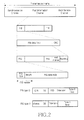
- FIG. 2 is a graph illustrating a configuration of a transmission frame of a conventional terrestrial DMB system.
- Broadcast transmission frames include three types of channels, particularly an SC (Synchronization channel) for signal synchronization, an FIC having service configuration information for MSC, and an MSC (Main Service channel) via which data is actually transmitted and provided.
- SC Synchronization channel
- FIC FIC having service configuration information for MSC
- MSC Mainn Service channel
- Terrestrial DMB broadcasting stations generally emit broadcasting service configuration information of service channels via the FIC.
- the terrestrial DMB broadcasting stations divide the information into small blocks, particularly FIBs (Fast Information Blocks), and repeatedly emit them for a predetermined broadcasting period.
- FIBs Fast Information Blocks
- data transmitted via the FIC includes a number of FIBs, as mentioned above.
- Each FIB is composed of a number of FIGs. (Fast Information Groups).
- the type of information contained in each FIG is described in the header of the FIG.
- FIG. 2 shows FIG type 0 and FIG type 1.
- the FIG type 0 indicates that the FIG contains MCI information and Sl information
- FIG type 1 indicates that the FIG contains information regarding labels for information content display of sub-channels.
- the terminal When a user tunes his DMT terminal to a specific ensemble, the terminal receives FIBs for a period via the FIC and parses them.
- broadcasting service configuration information e.g. MCI information 111, Sl information 112
- the user is provided with broadcasting services constituting the MSC of the ensemble.
- FIG. 3 is a table illustrating a broadcasting service configuration table for a conventional DMB system.
- an ensemble used by MBC includes one video service, three audio services, and one data service. This shows the characteristics of terrestrial DMB systems, in which a number of services including video, audio, and data services are transmitted via basic broadcasting signals. As such, different service providers can provide a number of video, audio, and data services.
- the present invention has been made to solve the above-mentioned problems occurring in the prior art. It is the object of the present invention to provide a system and a method for providing preview images of all broadcasting services available from a DMB broadcasting station when a DMB terminal is in a broadcasting service mode.
- a DMB terminal for providing a broadcasting service preview in a DMB system having a DMB broadcasting station for providing the DMB terminal with ensembles containing at least one broadcasting service provided by respective service providers, the DMB terminal including a DMB receiver for receiving the ensembles and a controller for receiving all of the ensembles at a broadcasting service preview request and creating preview images for broadcasting services within the ensembles, the controller displaying the preview images on a screen together with corresponding broadcasting service information.
- a method for providing a broadcasting service preview by a DMB terminal in a DMB system having a DMB broadcasting station for providing the DMB terminal with ensembles containing at least one broadcasting service provided by respective service providers including receiving all of the ensembles at a broadcasting service preview request of a user and creating preview images for broadcasting services within the ensembles, and displaying the preview images on a screen together with corresponding broadcasting service information.
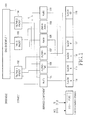
- FIG. 4 shows the configuration of a terrestrial DMB system according to the present invention. It is assumed in the following description that a DMB terminal 402 is a terminal adapted to receive terrestrial DMB signals for a terrestrial DMB service.
- a terrestrial DMB broadcasting station 400 receives broadcasting data for video, audio, and data services from a number of service subscribers and transmits the data as broadcasting services via a terrestrial public network.
- the DMB terminal 402 Based on the type and information of broadcasting services within each ensemble received from the terrestrial DMB broadcasting station 400, the DMB terminal 402 creates preview images for respective broadcasting services and displays the images on the screen.
- the DMB terminal 402 includes a DMB receiver 408, a buffer 407, a temporary image buffer 410, a multimedia unit 404, a display unit 412, an audio processing unit 420, a controller 406, a key input unit 414, and a memory 418.
- the controller 406 controls the overall operation of the DMB terminal 402. When the user requests a broadcasting service preview, the controller 406 receives all ensembles available from the terrestrial DMB broadcasting station 400 and checks the type and information of broadcasting services within the received ensembles.
- a DAB transmission system includes three channels, particularly an SC (Synchronization channel), an FIC (Fast Information channel), and an MSC (Main Service Channel).
- SC Synchronization channel
- FIC Fast Information channel
- MSC Main Service Channel
- the FIC consists of a number of FIBs, each of which is includes of a number of FIGs. There are eight types of FIGs., and corresponding information is obtained from type 0 FIG.
- FIG data field 0 is 13
- information regarding the Sld field, user application number field, and user application type field is obtained.
- the FIC included in received broadcasting data is used to check the type and information of broadcasting services within ensembles.
- data can be extracted from SubChld (sub-channel ID).
- PAD Program Associated Data
- corresponding data can be extracted when a service component has the same Sld and SCldS as obtained from FIG type 0, extension 13 and when subChld of the service component is obtained from FIG type 0, extension 8.
- SCld is obtained from FIG type 0, extension 8 and used to obtain SubChld and packet address from FIG type 0, extension 3.
- the controller 406 decodes broadcasting data within received ensembles and stores initial images of the broadcasting data in the temporary image buffer 410 as preview images together with the type and information of broadcasting services within ensembles, which have been obtained in the above-mentioned process.
- the controller 406 then reduces the preview images, which have been stored in the temporary image buffer 410, and stores them again in the temporary image buffer 410 as JPEG images. Together with the preview images of respective broadcasting services, which have been stored in this manner, the controller 406 displays information regarding corresponding services on the screen.
- the controller 406 receives a broadcasting frequency in a broadcasting frequency scanning process, it receives an ensemble based on that frequency and creates preview images of broadcasting services, which are included in the ensemble.
- the controller 406 repeats the same process for creating preview images of broadcasting services for every scanned broadcasting frequency. For example, when DMB broadcasting services are provided by six service provides as shown in FIG. 3, a total of six broadcasting frequencies will be scanned accordingly. Among the scanned broadcasting frequencies, the ensemble provided by service provider "YTN DMB Inc.” includes one video service, two audio services, and one data service. The controller 406 then creates preview images of four broadcasting services from "YTN DMB Inc.” A detailed description of operation of the controller 406 will be given later with reference to FIG. 5.
- the DMB receiver 408 receives broadcasting data via an antenna and demultiplexes transmission packets. Through a decoding process, the DMB receiver 408 parses the broadcasting data into video and audio data.
- the multimedia unit 404 outputs video and audio data, which have been transmitted via the DMB receiver 408, to the display unit 412 and the audio processing unit 420, respectively.
- the multimedia unit 404 may include a CODEC (CODER/DECODER) not shown).
- CODEC CODER/DECODER
- the multimedia unit 404 reduces initial images and converts them into still images under the control of the controller 406. After conversion, the images are stored in the temporary image buffer 410 together with corresponding broadcasting service information. The initial images are displayed on the screen as preview images in response to the user's request for a broadcasting service preview.
- the buffer 407 includes video and audio buffers for storing video and audio data inputted from the DMB receiver 408, respectively.
- the inputted data is buffered and outputted.
- the temporary image buffer 410 stores initial images of broadcasting services, which have been transmitted from the multimedia unit 404, together with corresponding broadcasting service information.
- the controller 406 requests output of stored images, the temporary image buffer 410 outputs them to the display unit 412.
- the display unit 412 receives key input data from the key input unit 414 and displays corresponding images under the control of the controller 406. When the user sets up or drives necessary functions, the display unit 412 provides visual indication accordingly.
- the display unit 412 displays images resulting from broadcasting services under the control of the controller 406. When the user requests a preview during broadcasting services, the display unit 412 displays preview images in response to the request.
- the display unit may include a liquid crystal display (LCD) and/or a touch-sensitive input device.
- the audio processing unit 420 is connected to a microphone (MIC) and a speaker (SPK) so as to convert audio signals transmitted from the multimedia unit 404 and output the converted audio signals via the speaker SPK.
- the audio processing unit 420 converts audio signals, which have been received from the microphone MIC, into data and transmit the data to the multimedia unit 404.
- the key input unit 414 provides user interface and, when one of its keys is operated, outputs a corresponding key input data, which is transmitted to the controller 406. The controller 406 then determines which key has been operated from the key input data and performs corresponding operation.
- the key input unit 414 includes a preview key for previewing broadcasting services.
- the preview key is either one of existing function keys and/or a separate key.
- the memory 418 stores information regarding overall operation of the DMB terminal 402, as well as information regarding broadcasting service provisions.
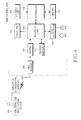
- FIG. 5 is a flowchart showing steps for providing a broadcast preview by using a DMB terminal according to the present invention.
- step 500 the controller 406 monitors the user's request for a broadcasting service preview while DMB broadcasting services are provided.
- the user may operate the keys of the key input unit 414 or select a preview item from a menu.
- step 500 the controller 406 proceeds to step 502 and scans broadcasting frequencies.
- step 504 the controller 406 fixes the scanned broadcasting frequencies and decodes DMB broadcasting data received by the DMB receiver 408.
- Each scanned broadcasting frequency is used to receive an ensemble, and an FIG within the ensemble is analyzed so as to check the type and configuration information of broadcasting services within the ensemble.
- the controller 406 After preceding from step 504 to step 506, the controller 406 creates a preview image of one of the broadcasting services included in an ensemble.
- the preview image is created differently depending on the type of the broadcasting service (i.e., video service, audio service, and/or data service).
- I frame intra-frame
- PAD Program Associated Data
- a part of conventional data services such as DLS(Dynamic Label Segment), slideshow, TPEG(Transport Protocol Experts Group), and BWS(Broadcast Website), is currently provided as the PAD.
- DLS Dynamic Label Segment
- slideshow slideshow
- TPEG Transmission Protocol Experts Group
- BWS Broadcast Website
- the broadcasting data when the broadcasting service is a data service, the broadcasting data includes DLS (Dynamic Label Segment), BWS (Broadcast Website), slideshow, TPEG (Transport Protocol Experts Group), and DGPS (Differential Global Positioning System).
- DLS Dynamic Label Segment
- BWS Broadcast Website
- slideshow TPEG
- TPEG Transmission Protocol Experts Group
- DGPS Different Global Positioning System
- MOT refers to a protocol used to transmit data in a DAB system.
- An MOT object is a set of data or file segments transmitted according to the MOT protocol and includes a header and a body.
- the body of an MOT object contains entire data or file.
- the MOT data includes EPG, BWS, slideshow, TPEG, and download Java application.
- slideshow the first page alone is created as a preview image.
- a preview image is created by decoding the first object only, because slides are transmitted one by one.
- DLS which is a character type
- a preview image is created by decoding a single object.
- the controller 406 proceeds to step 508 and reduces the preview images by applying an image reduction algorithm.
- the preview images are converted into still images and stored in the temporary image buffer 410 together with corresponding broadcasting service information.
- the controller 406 proceeds to step 510, in which it analyzes all broadcasting services included in the ensemble received in step 504 and checks if corresponding preview images have been created. When there are broadcasting services which have skipped analysis in step 510, the controller 406 returns to step 504. Then, the controller 406 analyzes the remaining broadcasting services of the ensemble (i.e., unanalyzed broadcasting services) and creating preview images, which are stored together with corresponding broadcasting service information. In this manner, steps 504 to 510 are repeated until every broadcasting service within an ensemble has a corresponding preview image created and stored.
- step 510 the controller 406 proceeds to step 512 and determines whether all ensembles available from the terrestrial DMB station 400 have been analyzed. If all ensembles have been analyzed, the controller 406 proceeds to step 514. If not, the controller 406 returns to step 502 and repeats steps 502 to 510. Particularly, the controller 406 scans a broadcasting frequency for receiving the next ensemble and receives the next ensemble by using the scanned broadcasting frequency. The controller 406 then creates preview images of broadcasting services within the received ensemble and stores the preview images.
- the controller 406 After creating and storing preview images of all broadcasting services within ensembles, which are available to the DMB terminal 402 from the terrestrial DMB broadcasting station 400, in steps 502 and 512, the controller 406 proceeds to step 514 and displays the preview images of respective broadcasting services, which have been stored in the temporary image buffer 410, via the display unit 412.
- the controller 406 then proceeds to step 516 and determines whether the user has selected a specific broadcasting service.
- a specific broadcasting service Referring to FIG. 6, when the user successively selects "1. Preview” and "1. Entire service preview” items, for example, the controller 406 analyzes all ensembles and displays preview images for all broadcasting services on the screen, as shown in (c) of FIG. 6.
- the controller 406 analyzes the corresponding service and provides its preview.
- the controller 406 analyzes corresponding ensembles and provides a preview accordingly.
- the controller 406 proceeds to step 520. Based on the broadcasting frequency of a selected broadcasting service, the controller 406 receives a corresponding ensemble and provides the user with a desired broadcasting service in step 520. The controller 406 then proceeds to step 522 and checks if the user wants to end the broadcasting service. If there is input for ending the broadcasting service, the controller 406 ends the service. If not, the controller 406 continuously proceeds to step 520 and provides the broadcasting service.
- controller 406 determines whether a preview update period has arrived in step 518. If the preview update period has arrived, the controller 406 proceeds to step 502 and receives broadcasting data for all ensembles. The controller 406 then creates and updates preview images for respective broadcasting services and displays them on the display unit 412.
- step 516 the controller 406 proceeds to step 518 and checks if the preview update period has arrived. If so, the controller 406 repeats steps 502 to 514, in which its receives broadcasting data for all ensembles, creates preview images for respective broadcasting services, updates the preview images, and displays the updated preview images on the display unit 412.
- broadcasting services within all ensembles from a terrestrial DMB broadcasting station are analyzed, preview images are created for respective broadcasting services, and the user is provided with the preview images.
- the present invention is advantageous in that preview images of broadcasting services available to a DMB terminal are provided as still images together with corresponding broadcasting service information. As a result, the user can obtain detailed information regarding available broadcasting services and conveniently select a desired broadcasting service without additional operation.
Landscapes
- Engineering & Computer Science (AREA)
- Multimedia (AREA)
- Signal Processing (AREA)
- Human Computer Interaction (AREA)
- Databases & Information Systems (AREA)
- Two-Way Televisions, Distribution Of Moving Picture Or The Like (AREA)
- Circuits Of Receivers In General (AREA)
Applications Claiming Priority (1)
| Application Number | Priority Date | Filing Date | Title |
|---|---|---|---|
| KR1020060004141A KR100744385B1 (ko) | 2006-01-13 | 2006-01-13 | 방송 미리보기 서비스 제공을 위한 dmb 단말기 및 방법 |
Publications (2)
| Publication Number | Publication Date |
|---|---|
| EP1809031A2 true EP1809031A2 (de) | 2007-07-18 |
| EP1809031A3 EP1809031A3 (de) | 2011-10-26 |
Family
ID=38006912
Family Applications (1)
| Application Number | Title | Priority Date | Filing Date |
|---|---|---|---|
| EP07100496A Ceased EP1809031A3 (de) | 2006-01-13 | 2007-01-12 | DMB-Endgerät und Verfahren zur Bereitstellung eines Sendungsvorschaudienstes |
Country Status (4)
| Country | Link |
|---|---|
| US (1) | US20070204307A1 (de) |
| EP (1) | EP1809031A3 (de) |
| KR (1) | KR100744385B1 (de) |
| CN (1) | CN101005578A (de) |
Families Citing this family (3)
| Publication number | Priority date | Publication date | Assignee | Title |
|---|---|---|---|---|
| KR20080045843A (ko) * | 2006-11-21 | 2008-05-26 | 삼성전자주식회사 | 휴대용 단말기에서 디지털 멀티미디어 방송 서비스 제공방법 및 장치 |
| JP4798172B2 (ja) * | 2008-05-20 | 2011-10-19 | コニカミノルタビジネステクノロジーズ株式会社 | 画像処理装置、画像出力方法および画像出力プログラム |
| MX389564B (es) * | 2016-07-08 | 2025-03-20 | Sony Corp | Aparato de recepcion, aparato de transmision y metodo de procesamiento de datos. |
Citations (2)
| Publication number | Priority date | Publication date | Assignee | Title |
|---|---|---|---|---|
| WO2000005887A1 (en) * | 1998-07-20 | 2000-02-03 | Canal+ Societe Anonyme | Navigation system for a multichannel digital television system |
| EP1603258A2 (de) | 2004-06-04 | 2005-12-07 | Samsung Electronics Co., Ltd. | Empfänger für digitalen Multimediarundfunk und Verfahren zur Anzeige der Kanäle |
Family Cites Families (23)
| Publication number | Priority date | Publication date | Assignee | Title |
|---|---|---|---|---|
| JP3855282B2 (ja) * | 1995-02-06 | 2006-12-06 | ソニー株式会社 | 受信装置および受信方法 |
| JPH09298752A (ja) * | 1996-05-07 | 1997-11-18 | Alpine Electron Inc | デジタル画像受信方法およびデジタル画像受信機 |
| US6434138B2 (en) * | 1996-05-08 | 2002-08-13 | Robert Bosch Gmbh | Process for transmitting messages by digital sound broadcasting and receiver for carrying out this process |
| US6115080A (en) * | 1998-06-05 | 2000-09-05 | Sarnoff Corporation | Channel selection methodology in an ATSC/NTSC television receiver |
| KR100298400B1 (ko) * | 1998-08-10 | 2001-09-06 | 구자홍 | 디지털 티브이의 채널표시방법 |
| JP2000295125A (ja) * | 1999-04-06 | 2000-10-20 | Sony Corp | デジタル音声放送の受信機 |
| US8595764B2 (en) * | 1999-06-25 | 2013-11-26 | Jlb Ventures, Llc | Image-oriented electronic programming guide |
| WO2001001677A1 (en) * | 1999-06-28 | 2001-01-04 | United Video Properties, Inc. | Interactive television program guide system and method with niche hubs |
| CN1409919A (zh) * | 1999-12-10 | 2003-04-09 | 联合视频制品公司 | 在交互式电视系统上和先进的机顶应用一起使用的功能 |
| US7373650B1 (en) * | 2000-02-01 | 2008-05-13 | Scientific-Atlanta, Inc. | Apparatuses and methods to enable the simultaneous viewing of multiple television channels and electronic program guide content |
| KR20020078345A (ko) * | 2001-04-09 | 2002-10-18 | 엘지전자 주식회사 | 썸네일 이미지 디코더를 내장하는 디지털 티브이 디코더 |
| US7873972B2 (en) * | 2001-06-01 | 2011-01-18 | Jlb Ventures Llc | Method and apparatus for generating a mosaic style electronic program guide |
| JP4028733B2 (ja) * | 2002-01-22 | 2007-12-26 | 富士通テン株式会社 | デジタル放送受信機の番組表表示方法 |
| JP4047124B2 (ja) * | 2002-10-08 | 2008-02-13 | キヤノン株式会社 | 受信装置及び受信方法 |
| KR101016912B1 (ko) * | 2002-12-16 | 2011-02-22 | 엔엑스피 비 브이 | 모자이크 프로그램 가이드 생성 방법, 장치 및 수신기 |
| KR100518847B1 (ko) * | 2003-09-17 | 2005-09-30 | 엘지전자 주식회사 | Dmb 수신기에서 epg 구성 방법 |
| KR100557046B1 (ko) * | 2003-09-29 | 2006-03-03 | 엘지전자 주식회사 | 디지털 방송에서 서비스 콤포넌트를 효과적으로 선택하기위한 장치 및 방법 |
| KR100651939B1 (ko) * | 2004-08-18 | 2006-12-06 | 엘지전자 주식회사 | 방송 수신기 및 디코딩 방법 |
| KR100677392B1 (ko) * | 2004-11-13 | 2007-02-02 | 엘지전자 주식회사 | 지상파 디지털 멀티미디어 방송 수신기의 방송채널 관리방법 |
| KR100617128B1 (ko) * | 2004-11-17 | 2006-08-31 | 엘지전자 주식회사 | 디지털 방송 방법 및 장치 |
| TW200704183A (en) * | 2005-01-27 | 2007-01-16 | Matrix Tv | Dynamic mosaic extended electronic programming guide for television program selection and display |
| KR100775234B1 (ko) * | 2005-09-26 | 2007-11-12 | 엘지전자 주식회사 | 방송프로그램 정보 제공 시스템 |
| US20070143785A1 (en) * | 2005-12-20 | 2007-06-21 | Sony Ericsson Mobile Communications Ab | Mobile device display of multiple streamed data sources |
-
2006
- 2006-01-13 KR KR1020060004141A patent/KR100744385B1/ko not_active Expired - Fee Related
-
2007
- 2007-01-12 CN CNA2007100003480A patent/CN101005578A/zh active Pending
- 2007-01-12 EP EP07100496A patent/EP1809031A3/de not_active Ceased
- 2007-01-16 US US11/653,774 patent/US20070204307A1/en not_active Abandoned
Patent Citations (2)
| Publication number | Priority date | Publication date | Assignee | Title |
|---|---|---|---|---|
| WO2000005887A1 (en) * | 1998-07-20 | 2000-02-03 | Canal+ Societe Anonyme | Navigation system for a multichannel digital television system |
| EP1603258A2 (de) | 2004-06-04 | 2005-12-07 | Samsung Electronics Co., Ltd. | Empfänger für digitalen Multimediarundfunk und Verfahren zur Anzeige der Kanäle |
Also Published As
| Publication number | Publication date |
|---|---|
| CN101005578A (zh) | 2007-07-25 |
| KR100744385B1 (ko) | 2007-07-30 |
| EP1809031A3 (de) | 2011-10-26 |
| US20070204307A1 (en) | 2007-08-30 |
| KR20070075641A (ko) | 2007-07-24 |
Similar Documents
| Publication | Publication Date | Title |
|---|---|---|
| US8498220B2 (en) | Service discovery mechanism in broadcast telecommunication network | |
| CN100508567C (zh) | 接收装置 | |
| US7747214B2 (en) | Mobile terminal and method for providing user interface using received terrestrial digital broadcasting data | |
| US20130291040A1 (en) | Transmission method and transmission apparatus for a combined broadcasting and communication service | |
| US20070240188A1 (en) | Datacasting | |
| CN101026702B (zh) | 同时显示多频道可视图像的数字广播接收器及其显示方法 | |
| KR101409023B1 (ko) | 어플리케이션 서비스 제공 방법 및 시스템 | |
| CN1601937A (zh) | 提供广域广播和局域广播的设备和方法及接收广播的终端 | |
| EP2323394A2 (de) | Verfahren und Vorrichtung zur Vorschau mit einem elektronischen Dienstführer in einem digitalen Rundfunkssystem | |
| US7623485B2 (en) | Method for providing user interface using received terrestrial digital broadcasting data in a mobile communication terminal | |
| EP1739869A1 (de) | Rundfunksender, Rundfunkempfänger, Übertragungsverfahren eines Rundfunksignals und Verfahren zur vorprogrammierten Aufzeichnung eines Rundfunksignals | |
| US9479738B2 (en) | Method and apparatus for transmitting and receiving broadcasting information using reserved channels | |
| EP1786124A2 (de) | Verfahren zum Anzeigen von einem Hintergrundbild auf einem digitalen Rundfunkempfänger | |
| EP1809031A2 (de) | DMB-Endgerät und Verfahren zur Bereitstellung eines Sendungsvorschaudienstes | |
| CN1143542C (zh) | 接收装置和接收方法 | |
| KR100750144B1 (ko) | 방송 채널 정보를 제공하는 방송 수신 장치 및 방송 채널정보 제공 방법 | |
| EP1814332A1 (de) | DMB-System und Verfahren zum Herunterladen eines BIFS-Stroms und DMB-Endgerät | |
| KR100735235B1 (ko) | 지상파 dmb 단말 장치에서 pip 기능을 이용한 이종서비스 제공 방법 | |
| JPWO2009057639A1 (ja) | デジタル放送受信装置 | |
| KR100790626B1 (ko) | 방송 수신기에서 데이터 서비스를 위한 유저 인터페이스제공 방법 | |
| KR101304888B1 (ko) | 다중 주파수 채널을 사용하는 디지털 방송수신기의서비스채널 변경 장치 및 방법 | |
| KR100750471B1 (ko) | 디지털 멀티미디어 방송 시스템의 방송 재생 방법 | |
| JP2004187098A (ja) | デジタル放送における送信方法、受信方法、送信装置、及び受信装置 | |
| JPH11177842A (ja) | ディジタル放送方法およびその受信装置 | |
| KR20070066610A (ko) | 디지털 멀티미디어 방송 수신 단말기에서 방송 서비스 정보갱신 장치 및 방법 |
Legal Events
| Date | Code | Title | Description |
|---|---|---|---|
| PUAI | Public reference made under article 153(3) epc to a published international application that has entered the european phase |
Free format text: ORIGINAL CODE: 0009012 |
|
| 17P | Request for examination filed |
Effective date: 20070112 |
|
| AK | Designated contracting states |
Kind code of ref document: A2 Designated state(s): AT BE BG CH CY CZ DE DK EE ES FI FR GB GR HU IE IS IT LI LT LU LV MC NL PL PT RO SE SI SK TR |
|
| AX | Request for extension of the european patent |
Extension state: AL BA HR MK YU |
|
| RIN1 | Information on inventor provided before grant (corrected) |
Inventor name: KIM, YOUNG-JIPC/O SAMSUNG ELECTRONICS CO., LTD. Inventor name: JUNG, JI-WUCK, Inventor name: LEE, KYOUNG-SHINC/O SAMSUNG ELECTRONICS CO., LTD. Inventor name: CHO, JEONG-SIKC/O SAMSUNG ELECTRONICS CO., LTD. Inventor name: KIM, SUN-MIC/O SAMSUNG ELECTRONICS CO., LTD. |
|
| PUAL | Search report despatched |
Free format text: ORIGINAL CODE: 0009013 |
|
| AK | Designated contracting states |
Kind code of ref document: A3 Designated state(s): AT BE BG CH CY CZ DE DK EE ES FI FR GB GR HU IE IS IT LI LT LU LV MC NL PL PT RO SE SI SK TR |
|
| AX | Request for extension of the european patent |
Extension state: AL BA HR MK RS |
|
| RIC1 | Information provided on ipc code assigned before grant |
Ipc: H04N 5/445 20110101AFI20110920BHEP |
|
| AKX | Designation fees paid |
Designated state(s): DE FR GB |
|
| RAP1 | Party data changed (applicant data changed or rights of an application transferred) |
Owner name: SAMSUNG ELECTRONICS CO., LTD. |
|
| 17Q | First examination report despatched |
Effective date: 20150908 |
|
| STAA | Information on the status of an ep patent application or granted ep patent |
Free format text: STATUS: THE APPLICATION HAS BEEN REFUSED |
|
| 18R | Application refused |
Effective date: 20170131 |