EP1809059A1 - Dispositif de station mobile, dispositif de station de base et procede de controle du taux de transmission - Google Patents
Dispositif de station mobile, dispositif de station de base et procede de controle du taux de transmission Download PDFInfo
- Publication number
- EP1809059A1 EP1809059A1 EP05805334A EP05805334A EP1809059A1 EP 1809059 A1 EP1809059 A1 EP 1809059A1 EP 05805334 A EP05805334 A EP 05805334A EP 05805334 A EP05805334 A EP 05805334A EP 1809059 A1 EP1809059 A1 EP 1809059A1
- Authority
- EP
- European Patent Office
- Prior art keywords
- transmission rate
- base station
- station apparatus
- section
- load
- Prior art date
- Legal status (The legal status is an assumption and is not a legal conclusion. Google has not performed a legal analysis and makes no representation as to the accuracy of the status listed.)
- Withdrawn
Links
Images




Classifications
-
- H—ELECTRICITY
- H04—ELECTRIC COMMUNICATION TECHNIQUE
- H04W—WIRELESS COMMUNICATION NETWORKS
- H04W28/00—Network traffic management; Network resource management
- H04W28/02—Traffic management, e.g. flow control or congestion control
-
- H—ELECTRICITY
- H04—ELECTRIC COMMUNICATION TECHNIQUE
- H04W—WIRELESS COMMUNICATION NETWORKS
- H04W88/00—Devices specially adapted for wireless communication networks, e.g. terminals, base stations or access point devices
- H04W88/02—Terminal devices
Definitions
- the present invention relates to a mobile station apparatus, base station apparatus, and a transmission rate control method, and particularly relates to a mobile station apparatus, base station apparatus, and transmission control method in a mobile communication system where a mobile station is instructed an uplink transmission rate from a plurality of base stations during a soft handover.
- HSUPA High Speed Uplink Packet Access
- W-CDMA Wideband-Code Division Multiple Access
- E-DCH Enhanced-Dedicated CHannel
- the power of this E-DCH occupies portions of received signal power for the base station apparatus other than portions for thermal noise power, other cell interference power, and power of dedicated channels used in communication such as for speech etc.
- RoT RoT (Rise over Thermal threshold)
- Non patent document 1 discloses carrying out scheduling by base station apparatus in order to distribute this E-DCH power to the mobile station apparatus in an efficient manner.
- the mobile station apparatus carries out a soft handover during positions near the boundary of a plurality of cells and communicates with a plurality of base station apparatuses.
- scheduling is carried out by a plurality of base station apparatuses, and the uplink transmission rate is controlled.
- transmission rate commands are transmitted from a plurality of base station apparatuses to one mobile station apparatus to control the uplink transmission rate, and the mobile station apparatus is required to decide the actual uplink transmission rate from the plurality of transmission rate commands.
- one primary cell is selected from cells of a plurality of base station apparatuses with which a mobile station apparatus communicates at the same time during a soft handover (hereinafter referred to as "active set" base station apparatuses).
- a primary cell base station apparatus freely instructs a transmission rate of the mobile station apparatus including transmitting an absolute transmission rate command (AG: Absolute Grants) specifically specifying an uplink transmission rate.
- a base station apparatus for non-primary cells other than the primary cells transmits a relative transmission rate command (RG: Relative Grants) indicating either of "HOLD” indicating maintaining of the transmission rate or "DOWN” indicating reduction in the transmission rate.
- the primary cell base station apparatus also transmits RG as the transmission rate command but the primary cell base station apparatus not only transmits "HOLD” and "DOWN” as the RG, but also transmits "UP” indicating to increase the transmission rate. Namely, the primary cell base station apparatus freely instructs the transmission rate using both AG and RG, and, in contrast, the non-primary cell base station apparatus instructs other than to increase the transmission rate using just RG.
- the mobile station apparatus basically conforms to AG or RG from the primary cell, by taking into consideration RG from the non-primary cell, the mobile station apparatus is able to achieve prompt optimization of the transmission rate and suppress increase in interference power at all cells of the active set base station apparatuses.
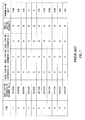
- FIG.1 is a view showing AG for the base station apparatus #1 (primary cell), RG for the base station apparatuses #2 to #4 (non-primary cell), the operations of the mobile station apparatus, and the transmission rate of the actual uplink.
- base station apparatus #1 transmits an instruction (AG) indicating to carry out uplink communication at a transmission rate of 128bps (kilobits per second) to the mobile station apparatus. Further, base station apparatuses #2 to #4 transmits "HOLD" (RG) indicating to maintain the current transmission rate to the mobile station apparatus taking into consideration propagation environment and communication conditions in the cells In FIG. 1, holding of the transmission rate (HOLD) is shown by “H,” and reducing of the transmission rate (DOWN) is shown by "D.”
- AG instruction
- HOLD RG
- the mobile station apparatus determines that there are no non-primary cells where the interference power is excessive, sets the transmission rate to 128kbps in accordance with the base station apparatus #1 and transmits packets.
- base station apparatus #1 again transmits AG of 128kbps.
- base station apparatus #2 transmits an instruction "DOWN” indicating to reduce transmission rate, and base station apparatuses #3 and #4 transmit "HOLD.”
- the mobile station apparatus determines that the interferences power of a cell of base station apparatus #2 is excessive, and reduces the transmission rate by just a reduction width set in advance. The mobile station apparatus then reduces the transmission rate by one stage without conforming to AG of base station apparatus #1, sets 96kbps, and transmits packets.
- the transmission rate control method described above when conforming to AG of a primary cell, the transmission rate substantially changes sometimes, and, on the other hand, when conforming to RG of a non-primary cell, the transmission rate increases or decreases by a predetermined width at a time, and the received signal power at the non-primary cell then temporarily exceeds the RoT threshold value, resulting in excessive loads.
- FIG.2 is a view showing transmission rate control at time 1 to 8 as in FIG.1.
- base station apparatus #1 transmits AG indicating the transmission rate to be increased to 512kbps. Further, base station apparatuses #2 to #4 receive packets transmitted at 32kbps under transmission rate control at time 1 where interference power is not excessive, and, like at time 1, "HOLD" is transmitted from base station apparatuses #2 to #4. Because of this, the mobile station apparatus sets the transmission rate to 512kbps in accordance with AG of the base station apparatus #1 and transmits packets. Base station apparatuses #1 to #4 receive packets transmitted at 512kbps.
- the mobile station apparatus When the transmission rate becomes 512kbps, the receiving power at base station apparatuses #2 to #4 exceeds the RoT threshold value, and at time 3, "DOWN" is transmitted from base station apparatuses #2 to #4. Because of this, the mobile station apparatus reduces by one stage and sets the transmission rate to 384kbps in accordance with RG of the base station apparatuses #2 to #4 and transmits packets. Base station apparatuses #1 to #4 receive packets transmitted at 384 kbps.
- a mobile station apparatus of the present invention is a mobile station apparatus simultaneously communicating with a plurality of base station apparatuses including one primary cell base station apparatus transmitting an absolute transmission rate command and at least one non-primary cell base station apparatus transmitting a relative transmission rate command, and adopting a configuration having: a determining section that determines whether or not a load at the non-primary cell base station apparatus is equal to or greater than a predetermined level; and a deciding section that decides an uplink transmission rate according to only the relative transmission rate command when the load at the non-primary cell base station apparatus is equal to or greater than the predetermined level.
- a base station apparatus of the present invention is a base station apparatus communicating with a plurality of mobile station apparatuses including a mobile station apparatus during soft handover and adopting a configuration having: a receiving section that receives other cell load information indicating load states at another base station apparatus, other than the base station apparatus, with which the mobile station apparatus during the soft handover is communicating; and a scheduling section that generates an absolute transmission rate commands or relative transmission rate commands corresponding to uplink transmission rates allocated to the plurality of mobile station apparatuses, in this apparatus the scheduling section restricts generation of the absolute transmission rate commands when the load at the another base station apparatus other than the base station apparatus is determined to be equal to or greater than a predetermined level by the other cell load information.
- a transmission rate control method of the present invention is a transmission rate control method for a mobile station apparatus simultaneously communicating with a plurality of base station apparatuses including one primary cell base station apparatus transmitting absolute transmission rate commands and at least one non-primary cell base station apparatus transmitting relative transmission rate commands, and has the steps of: determining whether or not a load at the non-primary cell base station apparatus is equal to or greater than a predetermined level; and deciding an uplink transmission rate according to only the relative transmission rate command when the load at the non-primary cell base station apparatus is equal to or greater than the predetermined level.
- uplink transmission rate is decided according to only relative transmission rate commands.
- the uplink transmission rate therefore does not increase abruptly due to absolute transmission rate commands, receiving power at all of the base station apparatus of the active set is suppressed from exceeding an RoT threshold value, and excessive loads can be prevented.
- the present invention it is possible to suppress receiving power at all base station apparatus of an active set from exceeding an RoT threshold value and it is possible to prevent excessive load.
- FIG.3 is a view showing a configuration for a mobile communication system of Embodiment 1 of the present invention.
- base station apparatuses 100a to 100c are close to each other and cover cells 200a to 200c, respectively.
- Mobile station apparatus 300 is positioned near the boundary of cells 200a to 200c and carries out a soft handover taking base station apparatuses 100a to 100c as the communicating party.
- base station apparatuses 100a to 100c are base station apparatus of an active set of mobile station apparatus 300.
- cell 200a is a primary cell of mobile station apparatus 300
- cell 200b and 200c are non-primary cells of mobile station apparatus 300.
- An AG specifically specifying the uplink transmission rate or an RG of one of "UP,” “HOLD,” or “DOWN” is transmitted from base station apparatus 100a covering the cell 200a to mobile station apparatus 300 (thick arrow in the drawing).
- RG of "HOLD” or “DOWN” is transmitted to mobile station apparatus 300 from base station apparatuses 100b and 100c covering cells 200b and 200c. Namely, there is no authority to increase the uplink transmission rate at non-primary cell base station apparatuses 100b and 100c.
- Mobile station apparatus 300 then receives these AG and RG, decides the final uplink transmission rate, and transmits the signal using the modulation method, coding rate and transmission power according to the decided transmission rate.
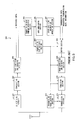
- FIG.4 is a block view showing the configuration of the main part of base station apparatus 100a of this embodiment.
- Base station apparatus 100a shown in FIG.4 is comprised of: RF (Radio Frequency: wireless frequency) receiving section 101; demodulating section 102; error correction decoding section 103; RoT (Rise over Thermal) information measuring section 104; other cell load information acquiring section 105; determining section 106; scheduling section 107; error correction encoding section 108; modulating section 109; and RF transmission section 110.
- Base station apparatuses 100b and 100c also have the same configurations.
- RF receiving section 101 receives signals transmitted from mobile apparatuses within cell 200a including mobile station apparatus 300 via an antenna, and performs predetermined radio receiving processing (down converting, A/D conversion, etc.)on the received signal.
- Demodulating section 102 demodulates the received signal after radio receiving processing, and outputs the obtained demodulated signal to error correction decoding section 103.
- Demodulating section 102 carries out demodulation in a manner corresponding to the modulation method applied at the mobile station apparatuses as the results of transmission rate control at the mobile station apparatuses.
- Error correction decoding section 103 performs error correction and decoding on the demodulated signal, outputs the received data, outputs requested transmission rate information indicating the uplink transmission rate requested by the mobile station apparatuses to scheduling section 107, and outputs other cell load information indicating the load state at the cells of active set base station apparatuses (here, base station apparatuses 100b and 100c) other than the base station apparatus (hereinafter referred to as an "other cell") to other cell load information acquiring section 105.
- Error correction decoding section 103 carries out error correction and demodulation in a manner corresponding to the coding rate applied at the mobile station apparatuses as the results of transmission rate control at the mobile station apparatuses.
- RoT information measuring section 104 measures breakdown of receiving power at RF receiving section 101, and outputs RoT information relating to this breakdown to scheduling section 107. Specifically, RoT information measuring section 104 measures thermal noise power, interference power from another cell, dedicated channel power from the mobile station apparatuses within cell 100a, and E-DCH power from the mobile station apparatuses within cell 100a at the receiving power at RF receiving section 101, and outputs RoT information indicating this breakdown to scheduling section 107.
- Other cell load information acquiring section 105 acquires other cell load information transmitted from mobile station apparatus 300 from the received signal after error correction decoding and outputs the result to determining section 106.
- the other cell load information indicates the load states of the base station apparatuses other than the base station apparatus (here, base station apparatuses 100b and 100c) and is generated and transmitted by mobile station apparatus 300. Generation of the other cell load information will be described later.
- Determining section 106 determines whether or not the base station apparatus is a primary cell base station apparatus, and, when the base station apparatus is a primary cell, refers to other cell load information and determines whether or not loads at base station apparatuses of the other cells (that is, non-primary cells) are large. When the load of any other cell is large, determining section 106 reports of prohibiting instructing the transmission rate using AG to mobile station apparatus 300 to scheduling section 107. Further, when the load of all of the other cells is small, determining section 106 reports a permission of instruction of the transmission rate using AG to mobile station apparatus 300 to scheduling section 107. When the load of any other cell is large, determining section 106 may also report that permission is provided if an increase is up to a transmission rate of a predetermined width to the scheduling section 107, rather than completely prohibiting instructing an transmission rate by AG.
- determining section 106 discards the other cell load information, and does not carry out any operation for scheduling section 107.
- Scheduling section 107 then carries out scheduling for the mobile station apparatus within cell 100a in accordance with the requested transmission rate information outputted by error correction decoding section 103, RoT information outputted by RoT information measuring section 104, and a report from determining section 106. Specifically, scheduling section 107 determines whether or not the requested transmission rate information transmitted from the mobile station apparatus can be satisfied from the RoT information, decides the transmission rate allocated to the mobile station apparatus, generates a transmission rate command corresponding to this transmission rate, and outputs the result to error correction encoding section 108.
- scheduling section 107 does not generate transmission rate commands specifying the absolute transmission rates even if the base station apparatus is a primary cell base station apparatus, and a transmission rate command instructing a relative transmission rate using "UP, " "HOLD,” “DOWN” is generated. Namely, when the other cell load is large, scheduling section 107 generates an RG transmission rate command rather than an AG transmission rate command. Further, if receiving a report of permitting an increase in the transmission rate of a predetermined amount from determining section 106, scheduling section 107 generates a transmission rate command for AG within the permitted range.
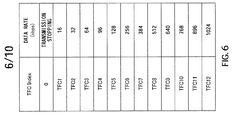
- scheduling section 107 may also generate a transmission rate command directly specifying, for example, an index (FGCI: TFCIndex) for a TFC (Transport Format Combination) corresponding to the data rate as shown in FIG.6 as an AG transmission rate command.
- FGCI index
- TFCIndex Transport Format Combination
- the RG transmission rate command means that TFC becomes one stage higher or lower.
- Error correction encoding section 108 performs error correction encoding on the transmission rate commands and transmission data and outputs the obtained encoded data to modulating section 109.
- Modulating section 109 modulates the encoded data and outputs the obtained modulated data to RF transmission section 110.
- RF transmission section 110 performs predetermined wireless transmission processing (D/A conversion, up conversion, etc.) on the modulation data and transmits the result via an antenna.
- predetermined wireless transmission processing D/A conversion, up conversion, etc.
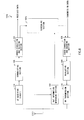
- FIG.5 is a block view showing the configuration of the main part of mobile station apparatus 300 of this embodiment.
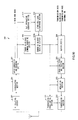
- Mobile station apparatus 300 shown in FIG.5 is comprised of: RF receiving section 301; demodulating section 302; error correction and decoding section 303; transmission rate command acquiring section 304; transmission rate deciding section 305; DOWN monitoring section 306; other cell load information generating section 307; buffer section 308; error correction encoding section 309; modulating section 310; transmission power control section 311; and RF transmitting section 312.
- RF receiving section 301 receives signals transmitted from base station apparatuses 100a to 100c via an antenna, and performs predetermined radio receiving processing (down converting, A/D conversion, etc.) on the received signal.
- Demodulating section 302 demodulates the received signal after radio receiving processing, and outputs the obtained demodulated signal to error correction and decoding section 303.
- Error correction and decoding section 303 performs error correction and decoding on the demodulated signal, outputs the received data, and outputs transmission rate commands included in the received signal to transmission rate command acquiring section 304.
- the transmission rate command acquiring section 304 acquires the transmission rate commands transmitted from the respective base station apparatuses 100a to 100c from the received signal after error correction and decoding, and outputs the commands to transmission rate deciding section 305 and DOWN monitoring section 306. Namely, transmission rate command acquiring section 304 acquires AG or RG transmitted from base station apparatus 100a of cell 200a that is a primary cell and RG transmitted from base station apparatuses 100b and 100c of cell 200b and 200c that are non-primary cells.
- Transmission rate deciding section 305 decides the uplink transmission rate in accordance with transmission rate commands transmitted from base station apparatuses 100a to 100c, and instructs the transmission rate to buffer section 308, error correction encoding section 309, modulating section 310, and transmission power control section 311.
- transmission rate deciding section 305 decides the transmission rate in accordance with AG from base station apparatus 100a tobe the final transmission rate. Further, for example, when the transmission rate command from primary cell base station apparatus 100a is AG, and, when the transmission rate command from at least one of non-primary cell base station apparatuses 100b and 100c is RG indicating "DOWN,” transmission rate deciding section 305 decides a transmission rate that is one stage lower than the current transmission rate to be the final transmission rate.
- transmission rate deciding section 305 may also synthesize "UP,” “HOLD,” and "DOWN" in transmission rate commands from the base station apparatuses in accordance with predetermined rules and decide a final transmission rate. For a rule for synthesizing RG's from the base station apparatuses, by deciding the final transmission rate in accordance with, for example, RG for which the transmission rate is a minimum among all RG' s, loads at all the active set base station apparatus are not excessive.
- DOWN monitoring section 306 monitors the transmission rate commands from non-primary cell base station apparatuses 100b and 100c and monitors the amount of "DOWN.” Namely, DOWN monitoring section 306 calculates the number of times "DOWN" is transmitted as an RG transmission rate command from base station apparatuses 100b and 100c within, for example, a predetermined time. DOWN monitoring section 306 then determines that the load is large at the mobile station apparatus where the amount of "DOWN" is large, and reports that the load at this base station apparatus is large, to other cell load information generating section 307. Specifically, DOWN monitoring section 306 determines, that the load of the base station apparatus is large, when, for example, the number of times "DOWN" is transmitted within a predetermined time is a predetermined value or more.
- DOWN monitoring section 306 may determine that, for example, the load of a base station apparatus transmitting "DOWN" consecutively more than a predetermined number of times is large, or may determine that the load of the base station apparatus is large when the ratio of transmitting "DOWN" within a predetermined time is greater than a predetermined value. Further, DOWN monitoring section 306 may also monitor the amount of "DOWN" for all of the active set base station apparatuses 100a to 100c.
- Other cell load information generating section 307 generates other cell load information indicating the load state of base station apparatuses 100b and 100c according to the results of monitoring RG transmission rate commands by DOWN monitoring section 306. Namely, other cell load information generating section 307 takes whether or not the loads of base station apparatuses 100b and 100c are large as other cell load information.
- Buffer section 308 temporarily accumulates transmission data, requested transmission rate information, and other cell load information, and outputs the accumulated data to error correction encoding section 309 according to the optimum transmission rate outputted by transmission rate deciding section 305.
- Error correction encoding section 309 performs error correction encoding on data outputted from buffer section 308 using a coding rate corresponding to the optimum transmission rate, and outputs the obtained encoded data to modulation section 310.
- Modulation section 310 modulates the encoded data using a modulation method corresponding to the final transmission rate and outputs obtained modulation data to RF transmission section 312.
- Transmission power control section 311 decides transmission power corresponding to optimum transmission rate and sets the decided transmission power at RF transmission section 312.
- RF transmission section 312 performs predetermined wireless transmission processing (D/A conversion, up converting, etc.) on modulation data and transmits this modulation data via the antenna with transmission power set by the transmission power control section 311.
- AG and RG transmission rate commands are transmitted to mobile station apparatus 300 from base station apparatuses 100a to 100c.
- an AG transmission rate command is transmitted from base station apparatus 100a because cell 200a is a primary cell
- an RG transmission rate command is transmitted from non-primary cell base station apparatuses 100b and 100c because 200b and 200c are non-primary cells.
- transmission rate commands generated by scheduling section 107 of base station apparatuses 100a to 100c is subjected to error correction and encoding together with transmission data by error correction and encoding section 108, is modulated by modulating section 109, and is subjected to predetermined wireless transmission processing by RF transmission section 110 before being transmitted to mobile station apparatus 300 via the antenna.
- the signal including the transmitted transmission rate commands is then received by RF receiving section 301 via an antenna and is subjected to predetermined radio receiving processing.
- the received signal is then demodulated by demodulating section 302, is subjected to error correction and decoding by error correction and decoding section 303 to output the received data and to output the transmission rate commands to transmission rate command acquiring section 304.
- Transmission rate command acquiring section 304 acquires AG transmission rate commands transmitted from base station apparatus 100a and RG transmission rate commands transmitted from base station apparatuses 100b and 100c, outputs all of the transmission rate commands to transmission rate deciding section 305, and outputs RG transmission rate commands to DOWN monitoring section 306.
- the transmission rate commands are then outputted to transmission rate deciding section 305, and the uplink transmission rate for actually transmitting data is decided by transmission rate deciding section 305.
- the uplink transmission rate for actually transmitting data is decided by transmission rate deciding section 305.
- both of the RG transmission rate commands transmitted from base station apparatuses 100b and 100c are "HOLD”
- a transmission rate conforming to an AG transmission rate command transmitted from base station apparatus 100a is taken to be the final transmission rate.
- at least one of the RG transmission rate commands transmitted from, for example, base station apparatuses 100b and 100c is "DOWN”
- a transmission rate that is one stage lower than the current transmission rate is taken to be the final transmission rate without conforming to the AG transmission rate command transmitted from base station apparatus 100a.
- the finally decided transmission rate is reported to buffer section 308, error correction and encoding section 309, modulation section 310 and transmission power control section 311.
- Deciding of the transmission rate described above is implemented by, for example, changing TFC as shown in FIG.6. Namely, for example, a table shown in FIG.7 is held by transmission rate deciding section 305, and the final transmission rate can be decided by TFC pointer 400 moving in accordance with a transmission rate command.
- TFC pointer 400 may move substantially, but when conforming to the RG transmission rate command, TFC pointer 400 moves one stage at a time.
- control TFC set 410 is not always fixed, and may be varied according to the load states of the active set base station apparatus. In this event, when control TFC set 401 is changed, mobile station apparatus 300 reports control TFC set 410 after change to all of the active set base station apparatuses.
- DOWN monitoring section 306. monitors the RG transmission rate commands received within a predetermined time until the transmission rate command is received on this occasion, monitors, for example, the number of times and rate "DOWN" is received for each base station apparatus, and determines load states of the non-primary cell base station apparatuses.
- the load of a base station apparatus may be determined to be large when "DOWN" received within a predetermined time is a predetermined number or more, the load of a base station apparatus may be determined to be large when the number of consecutively received "DOWN" becomes a predetermined number, or the load of a base station apparatus may be determined to be large when the proportion of "DOWN" received within a predetermined time is greater than a predetermined value.
- non-primary cell base station apparatuses 100b and 100c When the receiving power at the base station apparatuses exceeds the RoT threshold value, non-primary cell base station apparatuses 100b and 100c generate "DOWN" as the results of scheduling by the scheduling section 107. Therefore, at a base station apparatus that frequently transmit "DOWN,” receiving power may exceed the RoT threshold value, and the load becomes large.
- "DOWN" of the RG transmission rate commands transmitted from non-primary cell base station apparatuses 100b and 100c is monitored, and the load states at the base station apparatuses are determined from the statistical amount of "DOWN.”
- the base station apparatus for which the load is determined to be large through the statistical amount of "DOWN,” is reported to other cell load information generating section 307.
- Other cell load information indicating whether or not the load at the non-primary cell base station apparatuses 100b and 100c is large is then generated by other cell load information generating section 307.
- the statistical amount of "DOWN" itself corresponding to non-primary cell base station apparatuses 100b and 100c may be as other cell load information rather than taking whether or not the loads at non-primary cell base station apparatuses 100b and 100c are large as other cell load information. In this case, it is not necessary to determine the size of the load by DOWN monitoring section 306, but, rather, the size of the load only needs to be determined by primary cell base station apparatus 100a.
- the generated other cell load information is then outputted to buffer section 308. Further, transmission data and required transmission rate information indicating the desired uplink transmission rate at mobile station apparatus 300 is temporarily accumulated in buffer section 308.
- the transmission data of an amount corresponding to this transmission rate, requested transmission rate information, and other cell load information are outputted to error correction and encoding section 309 because the final transmission rate is reported to buffer section 308 from transmission rate deciding section 305.
- This data is then subjected to error correction and encoding at an coding rate corresponding to the final transmission rate by error correction and encoding section 309, and is modulated using a modulation method corresponding to the final transmission rate by modulation section 310.
- the obtained modulated data is outputted to RF transmission section 312. Further, transmission power is decided according to the final transmission rate by transmission power control section 311 and this transmission power is set at RF transmission section 312.
- the modulated data is then subjected to predetermined wireless transmission processing by RF transmission section 312 and is then transmitted to base station apparatuses 100a to 100c via an antenna at the set transmission power.
- a signal including transmitted other cell information and requested transmission rate information is received via the antenna by RF receiving section 101 and is subjected to predetermined radio receiving processing. Further, at this time, RoT information measuring section 104 measures receiving power of the received signal, generates RoT information relating to breakdown of the receiving power, and outputs the result to scheduling section 107.
- the received signal is then demodulated by demodulating section 102 and subjected to error correction and decoding by error correction and decoding section 103.
- the received data is outputted, and requested transmission rate information is outputted to scheduling section 107.
- Other cell load information is outputted to other cell load information acquiring section 105.
- Other cell load information acquiring section 105 acquires other cell load information indicating whether or not the loads at base station apparatuses 100b and 100c are large and reports the load states at the base station apparatuses to determining section 106. When the load states at base station apparatuses 100b and 100c are reported to determining section 106, other cell load information is discarded by determining section 106, and no operation at all is carried out for the scheduling section 107 if the base station apparatus is non-primary cell base station apparatuses 100b or 100c.
- determining section 106 refers to the load states of base station apparatuses 100b and 100c of the other cell (that is, the non-primary cell), transmits a report of prohibiting anAG specifying TFC directly to scheduling section 107 when the load is large at either one of the base station apparatus. Further, when the load of either base station apparatus is not large, a report of permitting an AG directly specifying TFC is transmitted to scheduling section 107.
- requested transmission rate information and RoT information are referred to, allocated receiving power for the mobile station apparatus within the cell covered by the base station apparatus is decided, and a transmission rate command for implementing the transmission rate according to this receiving power is generated.
- RG transmission rate commands for either "HOLD" maintaining TFC or "DOWN” lowering TFC by one stage is generated.
- a transmission rate command for AG or RG is generated as a result of report from determining section 106. Namely, when AG is permitted by determining section 106, an AG transmission rate command directly specifying TFC is generated, and, when AG is prohibited, an RG transmission rate command of "UP, " "HOLD,” or "DOWN” is generated.
- Transmission rate commands for AG and RG are transmitted again to mobile station apparatus 300 from base station apparatuses 100a to 100c, and the uplink transmission rate is controlled below.
- the load states of non-primary cell base station apparatuses 100b and 100c are estimated from the RG transmission rate command.
- the load states at the non-primary cell base station apparatuses are estimated by the mobile station apparatus based on an RG transmission rate command indicating increase or decrease of relative transmission rates transmitted from the active set base station apparatuses, and is reported to the primary cell base station apparatus.
- the primary cell base station apparatus does not generate an AG transmission rate command directly specifying the transmission rate. Because of this, when the load at the non-primary cell base station apparatus is large, the uplink transmission rate does not increase rapidly, and receiving power at all of the active set base station apparatus is suppressed from exceeding the RoT threshold value, thereby preventing excessive loads.
- a feature of Embodiment 2 of the present invention is that the a mobile station apparatus determines the load states at the non-primary cell base station apparatus, and, when the load at the non-primary cell base station apparatus is large, does not conform to the AG transmission rate command transmitted from the primary cell base station apparatus.
- the configuration of the mobile communication system of this embodiment is the same as in Embodiment 1 (FIG.3) and will therefore be not described.
- FIG.8 is a block view showing the configuration of the main part base station apparatus 100a of this embodiment.
- Base station apparatus 100a shown in FIG.8 is comprised of: RF receiving section 101; demodulating section 102; error correction decoding section 103; RoT information measuring section 104; scheduling section 107a; error correction and encoding section 108; modulating section 109; and RF transmission section 110.
- Base station apparatuses 100b and 100c also have the same configuration.
- Scheduling section 107a carries out scheduling of the mobile station apparatus within cell 100a in accordance with requested transmission rate information and RoT information. Specifically, scheduling section 107a determines whether or not the requested transmission rate information transmitted from the mobile station apparatus can be satisfied from the RoT information, decides the transmission rate allocated to the mobile station apparatus, generates a transmission rate command corresponding to this transmission rate, and outputs this to error correction encoding section 108.
- a difference of this embodiment from Embodiment 1 is that if the base station apparatus is a primary cell base station apparatus, scheduling section 107a generates an AG or RG transmission rate command regardless of load states at non-primary cell base station apparatuses. Further, if the base station apparatus is a non-primary cell base station apparatus, as in Embodiment 1, an RG transmission rate command is generated.
- FIG.9 is a block view showing the configuration of the main part of mobile station apparatus 300 of this embodiment.
- Mobile station apparatus 300 shown in FIG.9 is comprised of: RF receiving section 301; demodulating section 302; error correction and decoding section 303; transmission rate command acquiring section 304; transmission rate deciding section 305a; DOWN monitoring section 306a; buffer section 308; error correction and encoding section 309; modulating section 310; transmission power control section 311; and RF transmitting section 312.
- Transmission rate deciding section 305a decides the uplink transmission rate in accordance with transmission rate commands transmitted from base station apparatuses 100a to 100c and "DOWN" monitoring results at DOWN monitoring section 306a (described later), and instructs a transmission rate to buffer section 308, error correction encoding section 309, modulating section 310, and transmission power control section 311.
- transmission rate deciding section 305a decides the transmission rate conforming to AG from base station apparatus 100a as the final transmission rate.
- the transmission rate command from primary cell base station apparatus 100a is AG
- the transmission rate commands from non-primary cell base station apparatuses 100b and 100c are both RG indicating "HOLD”
- the final transmission rate is decided based on RG from base station apparatuses 100b and 100c regardless of AG from base station apparatus 100a, providing that there is a base station apparatus where the load is large from the results of monitoring "DOWN" at DOWN monitoring section 306a.
- DOWN monitoring section 306a monitors the transmission rate commands from non-primary cell base station apparatuses 100b and 100c and monitors the amount of "DOWN.” Namely, DOWN monitoring section 306a counts the number of times "DOWN” is transmitted as an RG transmission rate command from base station apparatuses 100b and 100c within, for example, a predetermined time. DOWN monitoring section 306a then determines that the load is large at mobile station apparatus where the amount of "DOWN" is large, and reports that the load at this base station apparatus is large to transmission rate deciding section 305a. Specifically, DOWN monitoring section 306a determines, for example, that the load of the base station apparatus is large when the number of times "DOWN" is transmitted within a predetermined time is greater than a predetermined value.
- DOWN monitoring section 306a may determine that, for example, the load of the base station apparatus transmitting "DOWN" consecutively more than a predetermined number of times is large, or may determine that the load of the base station apparatus is large when the ratio of transmitting "DOWN" within a predetermined time is greater than a predetermined value. Further, DOWN monitoring section 306a may also monitor the amount of "DOWN" for all of the active set base station apparatuses 100a to 100c.
- the signal including the transmitted transmission rate commands is then received by RF receiving section 301 via an antenna and is subjected to predetermined radio receiving processing.
- the received signal is then demodulated by the demodulating section 302, is subjected to error correction and decoding by error correction and decoding section 303.
- the received data is outputted, and the transmission rate commands are outputted to transmission rate command acquiring section 304.
- Transmission rate command acquiring section 304 acquires AG transmission rate commands transmitted from base station apparatus 100a and RG transmission rate commands transmitted from base station apparatuses 100b and 100c,outputs all of the transmission rate commands to transmission rate deciding section 305a, and outputs RG transmission rate commands to DOWN monitoring section 306a.
- DOWN monitoring section 306a monitors the RG transmission rate commands received within a predetermined time until the transmission rate command is received on this occasion, monitors, for example, the number of times or rate "DOWN" is received for each base station apparatus, and determines the load states of the non-primary cell base station apparatuses. Namely, load of base station apparatus where "DOWN" is received a predetermined number of times or more within a predetermined time is determined to be large, or load of base station apparatus where the proportion of "DOWN" received within a predetermined time is a predetermined value or more is determined to be large.
- the base station apparatus for which the load is determined to be large through the statistical amount of "DOWN,” is reported to transmission rate deciding section 305a.
- the transmission rate for transmitting actual uplink data is then decided by transmission rate deciding section 305a. Specifically, for example, when both of RG transmission rate commands transmitted from base station apparatuses 100b and 100c are "HOLD,” and there are no base station apparatus where the load is determined to be large from the statistical amount of "DOWN,” the transmission rate is taken to be the final transmission rate conforming to AG transmission rate commands transmitted from base station apparatus 100a.
- both of the RG transmission rate commands are "HOLD”
- a transmission rate that is the same as the current transmission rate or a transmission rate one stage lower is taken to be the final transmission rate without conforming to AG transmission rate commands transmitted from base station apparatus 100a, providing that there is a base station apparatus where the load is determined to be large from a statistical amount of "DOWN.”
- Finally decided transmission rate is reported to buffer section 308, error correction and encoding section 309, modulation section 310 and transmission power control section 311.
- transmission rate deciding section 305a ignores AG transmission rate commands transmitted from primary cell base station apparatus 100a and takes the transmission rate from RG as the final transmission rate. Namely, if primary cell base station apparatus 100a executes AG without taking into consideration other cell load states, AG is not carried out when other cell load is large.
- the receiving power at all of the base station apparatus of the active set is kept from exceeding the RoT threshold value by changing only mobile station apparatus 300 without changing the configuration of base station apparatuses 100a to 100c, thereby preventing excessive loads. Further, it is possible to reduce the amount of information such as other cell load information transmitted over the uplink.
- transmission data and requested transmission rate information below are transmitted to base station apparatuses 100a to 100c via the antenna using the coding rate, modulation method, and transmission power corresponding to the final transmission rate.
- the signal including the transmitted requested transmission rate information is then received by RF receiving section 101 via an antenna and is subjected to predetermined radio receiving processing. Further, at this time, RoT information measuring section 104 measures receiving power of the received signal, generates RoT information and outputs the result to scheduling section 107a. Demodulating section 102 demodulates the received signal, and error correction and decoding section 103 performs error correction and decoding on the received signal, outputs the received data, and outputs requestedtransmissionrate information to scheduling section 107.
- Scheduling section 107a refers to requested transmission rate information and RoT information, decides receiving power to be allocated to the mobile station apparatus within the cell covered by the base station apparatus, and generates a transmission rate command for implementing the transmission rate according tothisreceivingpower. Namely, scheduling section 107a of non-primary cell base station apparatuses 100b and 100c generates RG transmission rate commands for "HOLD" maintaining TFC or "DOWN” lowering TFC by one stage.
- a transmission rate command for AG or RG is generated.
- Transmission rate commands for AG and RG are transmitted again to mobile station apparatus 300 from base station apparatuses 100a to 100c, and the uplink transmission rate is controlled below.
- the load states of non-primary cell base station apparatuses 100b and 100c are estimated from the RG transmission rate command.
- the load states at the non-primary cell base station apparatus are estimated by the mobile station apparatus based on an RG transmission rate command indicating increase or decrease of relative transmission rates and transmitted from the active set base station apparatus.
- the mobile station apparatus ignores an AG transmission rate command directly specifying the transmission rate transmitted from the primary base station apparatus. Because of this, when the load at the non-primary cell base station apparatus is large, the uplink transmission rate does not increase rapidly, receiving power at all of the active set base station apparatus is suppressed from exceeding the RoT threshold value, thereby preventing excessive load. Further, this is achieved by just changing the configuration of the mobile station apparatus, thereby reducing the amount of information transmitted over the uplink.
- a feature of Embodiment 3 of the present invention is that a base station apparatus transmits RoT information, and a mobile station apparatus determines load states at non-primary cell base station apparatuses based on RoT information.
- the configuration of the mobile communication system of this embodiment is the same as in Embodiment 1 (FIG.3) and will therefore not be described.
- base station apparatus 100a of this embodiment is the same as base station apparatus 100a (FIG.8) of Embodiment 2 and will therefore not be described.
- base station apparatus 100a of this embodiment transmits RoT information generated by RoT information measuring section 104 to mobile station apparatus 300 together with a transmission rate control command.
- Base station apparatuses 100b and 100c also have the same configurations.
- FIG.10 is a block view showing the configuration of the main part of mobile station apparatus 300 of this embodiment.
- Mobile station apparatus 300 shown in FIG.10 is comprised of: RF receiving section 301; demodulating section 302; error correction and decoding section 303; transmission rate command acquiring section 304; transmission rate deciding section 305b; RoT information acquiring section 501; other cell load determining section 502; buffer section 308; error correction and encoding section 309; modulating section 310; transmission power control section 311; and RF transmitting section 312.
- RoT information acquiring section 501 acquires RoT information transmitted from base station apparatuses 100a to 100c from the received signal after error correction and outputs the information to other cell load determining section 502. Namely, RoT information acquiring section 501 acquires RoT information indicating breakdown of receiving power at base station apparatuses 100a to 100c and outputs the information to other cell load determining section 502.
- Other cell load determining section 502 determines load states at non-primary cell base station apparatuses 100b and 100c from RoT information of base station apparatuses 100a to 100c. Specifically, other cell load determining section 502 refers to RoT information of base station apparatuses 100b and 100c and compares a difference ( ⁇ RoT) of the receiving power and RoT threshold value per base station apparatus. Other cell load determining section 502 determines that the load of this base station apparatus is not large if the compari son results are such that ⁇ RoT is equal to or greater than a predetermined threshold value, and determines that the load of this base station apparatus is large if ⁇ RoT is less than a predetermined threshold value. Other cell load determining section 502 reports the determination result of the load states at non-primary cell base station apparatuses 100b and 100c to transmission rate determining section 305b.
- Transmission rate deciding section 305b decides the uplink transmission rate in accordance with the transmission rate commands transmitted from base station apparatuses 100a to 100c and the determination results at other cell load determining section 502, and instructs the transmission rate to buffer section 308, error correction and encoding section 309, modulating section 310, and transmission power control section 311.
- transmission rate deciding section 305b decides the transmission rate conforming to AG from base station apparatus 100a as the final transmission rate.
- the transmission rate command from primary cell base station apparatus 100a is AG and when the transmission rate commands from non-primary cell base station apparatuses 100b and 100c are both RG indicating "HOLD," the final transmission rate is decided based on RG from base station apparatuses 100b and 100c without conforming to AG from base station apparatus 100a, providing that there is a base station apparatus where the load is large from the determination results at other cell load determining section 502.
- the signal including the transmitted transmission rate commands and the RoT information is then received by RF receiving section 301 via an antenna and is subjected to predetermined radio receiving processing.
- the received signal is then demodulated by the demodulating section 302, is subjected to error correction and decoding by error correction and decoding section 303.
- the received data is outputted, and the transmission rate commands are outputted to transmission rate command acquiring section 304, and the RoT information is outputted to RoT information acquiring section 501.
- RoT information acquiring section 501 acquires RoT information indicating breakdown of receiving power at base station apparatuses 100a to 100c and outputs RoT information of base station apparatuses 100a to 100c to other cell load determining section 502.
- Other cell load determining section 502 then refers to RoT information of base station apparatuses 100a to 100c and determines the load states at non-primary cell base station apparatuses 100b and 100c. Namely, the difference ( ⁇ RoT) between an RoT threshold value and receiving power at the base station apparatuses are calculated from RoT information of base station apparatuses 100b and 100c, and ⁇ RoT is compared with a predetermined threshold value.
- the load state of the base station apparatus where ⁇ RoT is a predetermined threshold value or more is determined not to be large, the load state of base station apparatus where ⁇ RoT is less than a predetermined threshold value is determined to be large. This determination results are then outputted to transmission rate deciding section 305b.
- the transmission rate for transmitting actual uplink data is then decided by transmission rate deciding section 305b. Specifically, for example, when both of RG transmission rate commands transmitted from base station apparatuses 100b and 100c are "HOLD," and there are no base station apparatus where the load is determined to be large at the other cell load determining section 502, the transmission rate conforming to AG transmission rate commands transmitted from base station apparatus 100a is taken to be the final transmission rate.
- the RG transmission rate commands are "HOLD, " a transmission rate that is the same as the current transmission rate or a transmission rate one stage lower is taken to be the final transmission rate without conforming to AG transmission rate commands transmitted from base station apparatus 100a, providing that there is base station apparatus where the load is determined to be large by other cell load determining section 502.
- the finally decided transmission rate is reported to buffer section 308, error correction and encoding section 309, modulation section 310 and transmission power control section 311.
- other cell load determining section 502 determines the load states of non-primary cell base station apparatuses 100b and 100c from RoT information per base station apparatus, and, when there is a base station apparatus where the load is large, transmission rate deciding section 305b ignores AG transmission rate commands transmitted from primary cell base station apparatus 100a and takes the transmission rate from RG as the final transmission rate. Namely, even if primary cell base station apparatus 100a carries out AG without taking into consideration the load states of other cell, AG is not executed when the load of other cell is large. It is possible to suppress receiving power at all active set base station apparatuses from exceeding an RoT threshold value, thereby preventing excessive load. Further, it is possible to accurately determine load states at base station apparatuses 100a to 100c because RoT information directly reflecting load states at base station apparatuses 100a to 100c are referred to.
- transmission data and requested transmission rate information are transmitted to base station apparatuses 100a to 100c via the antenna using the coding rate, modulation method, and transmission power corresponding to the final transmission rate.
- scheduling section 107a carries out scheduling using only requested transmission rate information and RoT information and generates transmission rate commands regardless of load states of non-primary cell base station apparatuses 100b and 100c.
- Transmission rate commands for AG and RG and RoT information are transmitted again to mobile station apparatus 300 from base station apparatuses 100a to 100c, the uplink transmission rate is controlled, and at mobile station apparatus 300, load states of non-primary cell base station apparatuses 100b and 100c are estimated from the RoT information.
- load states at non-primary cell base station apparatus are determined by a mobile station apparatus based on RoT information transmitted from active set base station apparatus.
- the mobile station apparatus ignores an AG transmission rate command directly specifying the transmission rate transmitted from the primary base station apparatus. Because of this, when the load at the non-primary cell base station apparatus is large, the uplink transmission rate does not increase rapidly, so that it is possible to suppress receiving power at all the active set base station apparatuses from exceeding the RoT threshold value, thereby preventing excessive load. Further, it is possible to accurately determine load states at the base station apparatuses because RoT information directly reflecting the load states are referred to.
- a configuration is adopted where load states at non-primary cell base station apparatuses are determined based on RoT information, and AG transmission rate commands are ignored depending on the determination results
- a configuration may also be adopted where other cell load information is generated according to the determination results, and, like in Embodiment 1, instructing the transmission rate by AG is prohibited at the primary cell base station apparatus.
- a base station apparatus transmits RoT information
- load states at the base station apparatus may also be determined by all active set base station apparatuses based on RoT information, and excessive load information may be transmitted to a mobile station apparatus where whether or not the load of the base station apparatus is excessive is indicated.
- a mobile station apparatus may ignore AG from a primary cell base station apparatus based on excessive load information or may transmit excessive load information to a primary cell base station apparatus.
- instructing a transmission rate by AG from the primary cell base station apparatus may be prohibited according to excessive load information.
- mobile station apparatus 300 changes a coding rate, modulation method, and transmission power immediately after deciding the optimum transmission rate in accordance with a transmission rate command
- changes in the actual transmission rate may be delayed and time the transmission rate is actually changed may be reported to the active set base station apparatuses when an optimum transmission rate is decided in accordance with an AG transmission rate command.
- all the active set base station apparatuses are able to have a preparation period during which resources such as demodulator and memory size etc. are caused to correspond to a new transmission rate.
- a mobile station apparatus of a first aspect of the present invention is a mobile station apparatus simultaneously communicating with a plurality of base station apparatuses including one primary cell base station apparatus transmitting an absolute transmission rate command and at least one non-primary cell base station apparatus transmitting a relative transmission rate command, and adopting a configuration having: a determining section that determines whether or not a load at the non-primary cell base station apparatus is equal to or greater than a predetermined level; and a deciding section that decides an uplink transmission rate according to only the relative transmission rate command when the load at the non-primary cell base station apparatus is equal to or greater than the predetermined level.
- an uplink transmission rate is decided according to only relative transmission rate commands, so that the uplink transmission rate does not increase rapidly by absolute transmission rate commands, and receiving power at all active set base station apparatuses is suppressed from exceeding an RoT threshold value, thereby preventing excessive loads.
- a mobile station apparatus of a second aspect of the present invention adopts a configuration in the first aspect where the deciding section has: a generating section that generates other cell load information of prohibiting transmission of the absolute transmission rate command by the primary cell base station apparatus when the load at the non-primary cell base station apparatus is equal to or greater than the predetermined level; a transmission section that transmits the generated other cell load information to the primary cell base station apparatus; and an acquiring section that acquires only the relative transmission rate commands from the plurality of base station apparatuses.
- a mobile station apparatus of a third aspect of the present invention adopts a configuration in the first aspect where the deciding section: has an acquiring section that acquires the absolute transmission rate command and the relative transmission rate commands from the plurality of base station apparatus; and ignores the acquired absolute transmission rate command and decides the transmission rate when the load at the non-primary cell base station apparatus is equal to or greater than the predetermined level.
- a mobile station apparatus of Embodiment 4 of the present invention adopts a configuration in the first aspect where the determining section: has a receiving section that receives the relative transmission rate command transmitted from the non-primary cell base station apparatus; and determines whether or not the load at the non-primary cell base station apparatus is equal to or greater than the predetermined level based on a statistical amount of a command to reduce the transmission rate among the received relative transmission rate command.
- the size of the load is determined based on a statistical amount of "DOWN" transmitted from the non-primary cell base station apparatus, so that it is possible to determine the size of the load of the non-primary cell base station apparatus with a simple configuration without requiring new information only for determining the size of the load.
- Amobile station apparatus of the fifth embodiment of the present invention adopts a configuration in the fourth aspect where the determining section: determines that the load at the non-primary cell base station apparatus is equal to or greater than the predetermined level when the received command to reduce the transmission rate is equal to or greater than a predetermined number of times within a predetermined time.
- the load is determined to be large, so that it is possible to detect a state where receiving power at the non-primary cell base station apparatus exceeds the RoT threshold value in a reliable manner.
- a mobile station apparatus of a sixth aspect of the present invention adopts a configuration in the first aspect where the determining section: has a receiving section that receives RoT information indicating breakdown of the receiving power at the non-primary cell base station apparatus; and determines whether or not the load at the non-primary cell base station apparatus is equal to or greater than the predetermined level based on the received RoT information.
- the size of the load is determined based on RoT information transmitted from the non-primary cell base station apparatus, so that it is possible to determine the load state at the non-primary cell base station apparatus in a direct and reliable manner.
- a mobile station apparatus of a seventh aspect of the present invention adopts a configuration in the sixth aspect where the determining section: determines that load at non-primary cell base station apparatus is equal to or greater than the predetermined level when a difference between receiving power at the non-primary cell base station apparatus and an RoT threshold value indicating maximum receivable power is equal to or less than a predetermined threshold value.
- the load is determined to be large, so that it is possible to detect a state where receiving power at the non-primary cell base station apparatus exceeds the RoT threshold value in a reliable manner.
- a mobile station apparatus of an eighth aspect of the present invention adopts a configuration in the first aspect where the determining section: has a receiving section that receives excessive load information indicating load states at the non-primary cell base station apparatus; and determines whether or not the load at the non-primary cell base station apparatus is equal to or greater than a predetermined level based on the received excessive load information.
- a mobile station apparatus of a ninth aspect of the present invention adopts a configuration in the first aspect where the determining section has a receiving section that receives excessive load information indicating load states at the non-primary cell base station apparatus, and the deciding section has: a transmission section that transmits the received excessive load information to the primary cell base station apparatus; and an acquiring section that acquires only the relative transmission rate commands from the plurality of base station apparatus.
- the uplink transmission rate does not increase rapidly by absolute transmission rate commands, and receiving power at all the active set base station apparatuses is suppressed from exceeding an RoT threshold value, thereby preventing excessive loads.
- a mobile station apparatus of a tenth aspect of the present invention adopts a configuration in the first aspect where the deciding section limits a range within which the transmission rate changes when an uplink transmission rate is decided according to the absolute transmission rate command.
- a mobile station apparatus of an eleventh aspect of the present invention adopts a configuration in the tenth aspect where, when the range within which the transmission rate changes, the deciding section reports a range after change to the plurality of base station apparatuses.
- a mobile station apparatus of a twelfth aspect of the present invention adopts a configuration in the first aspect where the deciding section delays time the uplink transmission rate changes and reports the time the transmission rate changes after the delay to the plurality of base station apparatus when the uplink transmission rate is decided according to the absolute transmission rate command.
- change in transmission rate is delayed according to absolute transmission rate commands and the time the transmission rate actually changes is reported, so that it is possible for the active set base station apparatuses to prepare resources for the actual transmission rate.
- a mobile station apparatus of a thirteenth aspect of the present invention adopts a configuration in the first aspect where, when the transmission rate is decided using the absolute transmission rate command and the relative transmission rate command, the deciding section decides the uplink transmission rate in accordance with a command, providing that the command instructing to reduce the transmission rate is included in the relative transmission rate command.
- the uplink transmission rate is lowered by one stage, so that it is possible to prevent interference power for all the active set base station apparatuses from increasing in a reliable manner.
- a base station apparatus of a fourteenth aspect of the present invention is a base station apparatus communicating with a plurality of mobile station apparatuses including a mobile station apparatus during soft handover, and adopting a configuration having: a receiving section that receives other cell load information indicating load states at another base station apparatus, other than the base station apparatus, with which the mobile station apparatus during the soft handover is communicating; and a scheduling section that generates an absolute transmission rate commands or relative transmission rate commands corresponding to uplink transmission rates allocated to the plurality of mobile station apparatuses, in this appratus the scheduling section restricts generation of the absolute transmission rate commands when the load at the another base station apparatus other than the base station apparatus is determined to be equal to or greater than a predetermined level by the other cell load information.
- scheduling is carried out by limiting generation of relative transmission rate commands when the load at the base station apparatus other than the base station apparatus is determined to be large from other cell load information, so that by, for example, prohibiting generating relative transmission rate commands, the uplink transmission rate does not increase rapidly by absolute transmission rate commands, and receiving power at all the active set base station apparatuses is suppressed from exceeding an RoT threshold value, thereby preventing excessive loads.
- a base station apparatus of a fifteenth aspect of the present invention adopts a configuration in the fourteenth aspect where the scheduling section generates an absolute transmission rate command specifying a transmission rate within a range of a predetermined width when the load at the another base station apparatus other than the base station apparatus is equal to or greater than the predetermined level by the other cell load information.
- a transmission rate control method of a sixteenth aspect of the present invention is a transmission rate control method for a mobile station apparatus simultaneously communicating with a plurality of base station apparatuses including one primary cell base station apparatus transmitting absolute transmission rate commands and at least one non-primary cell base station apparatus transmitting relative transmission rate commands, and having the steps of: determining whether or not a load at the non-primary cell base station apparatus is equal to or greater than a predetermined level; and deciding an uplink transmission rate according to only the relative transmission rate command when the load at the non-primary cell base station apparatus is equal to or greater than the predetermined level.
- the uplink transmission rate is decided according to only relative transmission rate commands, so that the uplink transmission rate does not increase rapidly by absolute transmission rate commands, and receiving power at all the active set base station apparatus is suppressed from exceeding an RoT threshold value, thereby preventing excessive loads.
- a mobile station apparatus, base station apparatus and transmission rate control method of the present invention suppress receiving power at all active set base station apparatuses from exceeding an RoT threshold value, prevent excessive loads, and are, for example, useful as a mobile station apparatus, base station apparatus, and transmission rate control method in a mobile communication system where a mobile station apparatus during a soft handover is instructed an uplink transmission rate from a plurality of base station apparatuses.
Landscapes
- Engineering & Computer Science (AREA)
- Computer Networks & Wireless Communication (AREA)
- Signal Processing (AREA)
- Mobile Radio Communication Systems (AREA)
Applications Claiming Priority (2)
| Application Number | Priority Date | Filing Date | Title |
|---|---|---|---|
| JP2004329590A JP4647290B2 (ja) | 2004-11-12 | 2004-11-12 | 移動局装置、基地局装置、および伝送レート制御方法 |
| PCT/JP2005/019808 WO2006051695A1 (fr) | 2004-11-12 | 2005-10-27 | Dispositif de station mobile, dispositif de station de base et procede de controle du taux de transmission |
Publications (2)
| Publication Number | Publication Date |
|---|---|
| EP1809059A1 true EP1809059A1 (fr) | 2007-07-18 |
| EP1809059A4 EP1809059A4 (fr) | 2012-01-25 |
Family
ID=36336377
Family Applications (1)
| Application Number | Title | Priority Date | Filing Date |
|---|---|---|---|
| EP05805334A Withdrawn EP1809059A4 (fr) | 2004-11-12 | 2005-10-27 | Dispositif de station mobile, dispositif de station de base et procede de controle du taux de transmission |
Country Status (5)
| Country | Link |
|---|---|
| US (1) | US7801102B2 (fr) |
| EP (1) | EP1809059A4 (fr) |
| JP (1) | JP4647290B2 (fr) |
| CN (1) | CN101057520A (fr) |
| WO (1) | WO2006051695A1 (fr) |
Families Citing this family (18)
| Publication number | Priority date | Publication date | Assignee | Title |
|---|---|---|---|---|
| JP4602787B2 (ja) * | 2005-02-14 | 2010-12-22 | 株式会社エヌ・ティ・ティ・ドコモ | 移動通信システム及び無線基地局 |
| CN101167398B (zh) * | 2005-04-28 | 2011-09-07 | 株式会社Ntt都科摩 | 传送速度控制方法及无线基站 |
| KR100959336B1 (ko) * | 2006-06-23 | 2010-05-20 | 삼성전자주식회사 | 광대역 무선 통신시스템에서 인접 셀 간섭을 줄이기 위한장치 및 방법 |
| KR100959038B1 (ko) * | 2007-06-14 | 2010-05-20 | 삼성전자주식회사 | 자가 구성 가능 광대역 무선통신 시스템에서 파라미터 롤백장치 및 방법 |
| JP5062676B2 (ja) * | 2007-08-30 | 2012-10-31 | 京セラ株式会社 | 無線通信端末およびその制御方法 |
| JP5171196B2 (ja) * | 2007-10-09 | 2013-03-27 | 株式会社エヌ・ティ・ティ・ドコモ | 無線通信システム、無線通信方法及び基地局 |
| CN101420742B (zh) * | 2007-10-23 | 2010-09-29 | 中兴通讯股份有限公司 | 一种演进数据最优化系统中反向速率的控制方法 |
| US20090297323A1 (en) * | 2008-05-30 | 2009-12-03 | Genesis Worldwide Ii, Inc. | Method and apparatus for stacking sheet materials |
| CN101651897B (zh) * | 2008-08-12 | 2012-05-23 | 华为技术有限公司 | 无线资源调度的方法、装置和系统 |
| US8315217B2 (en) * | 2008-09-23 | 2012-11-20 | Qualcomm Incorporated | Method and apparatus for controlling UE emission in a wireless communication system |
| US8478236B2 (en) * | 2009-01-16 | 2013-07-02 | Broadcom Corporation | User profile based content delivery between a standard handset and a Femtocell device |
| JP5222763B2 (ja) * | 2009-03-23 | 2013-06-26 | Kddi株式会社 | 無線通信端末 |
| US9204347B2 (en) * | 2009-06-23 | 2015-12-01 | Google Technology Holdings LLC | HARQ adaptation for acquisition of neighbor cell system information |
| DK2777206T3 (da) * | 2011-11-07 | 2016-03-14 | Ericsson Telefon Ab L M | Fremgangsmåde og indretning til modtagelse af downlink-styringsinformation til mobil trådløs kommunikation |
| US9264935B2 (en) * | 2012-09-13 | 2016-02-16 | Telefonaktiebolaget L M Ericsson (Publ) | Congestion control method and aparatus for wireless networks |
| JP2015080066A (ja) * | 2013-10-16 | 2015-04-23 | 株式会社Nttドコモ | 移動通信システム |
| US20150289162A1 (en) * | 2014-04-06 | 2015-10-08 | Saguna Networks Ltd. | Methods circuits devices systems and associated computer executable code for implementing cell congestion detection in a mobile network |
| EP2930981B1 (fr) * | 2014-04-08 | 2018-02-21 | Nokia Solutions and Networks Oy | Contrôle de puissance pour un terminal d' équipement qui communique avec une station de base de faible puissance et une station de base de forte puissance |
Family Cites Families (4)
| Publication number | Priority date | Publication date | Assignee | Title |
|---|---|---|---|---|
| JP3499466B2 (ja) * | 1999-07-09 | 2004-02-23 | 松下電器産業株式会社 | 通信端末装置及び送信電力制御方法 |
| US7724701B2 (en) * | 2003-09-30 | 2010-05-25 | Qualcomm Incorporated | Method and apparatus for controlling reverse link data rate of a mobile station in a communication system with reverse link common rate control |
| US9629030B2 (en) * | 2003-10-14 | 2017-04-18 | Qualcomm Incorporated | Data rate control in soft handoff and during cell-switching |
| EP1617606A1 (fr) * | 2004-07-16 | 2006-01-18 | Matsushita Electric Industrial Co., Ltd. | Planification de transfert de mode pour des transmissions en montantes |
-
2004
- 2004-11-12 JP JP2004329590A patent/JP4647290B2/ja not_active Expired - Lifetime
-
2005
- 2005-10-27 US US11/719,048 patent/US7801102B2/en active Active
- 2005-10-27 CN CNA200580038850XA patent/CN101057520A/zh active Pending
- 2005-10-27 EP EP05805334A patent/EP1809059A4/fr not_active Withdrawn
- 2005-10-27 WO PCT/JP2005/019808 patent/WO2006051695A1/fr not_active Ceased
Non-Patent Citations (11)
| Title |
|---|
| 3GPP SUPPORT TEAM: "Draft1 Minutes of the 44th TSG-RAN WG2 meeting (Sophia-Antipolis, France, 04-08 October 2004)", 3GPP DRAFT; DRAFT1_MINUTES_RAN2#44, 3RD GENERATION PARTNERSHIP PROJECT (3GPP), MOBILE COMPETENCE CENTRE ; 650, ROUTE DES LUCIOLES ; F-06921 SOPHIA-ANTIPOLIS CEDEX ; FRANCE, vol. RAN WG2, no. Yokohama, Japan; 20041115, 27 October 2004 (2004-10-27), XP050450862, [retrieved on 2004-10-27] * |
| ERICSSON: "E-DCH Scheduling - Way Forward", TSG-RAN WG1 #38, XX, XX, 16 August 2004 (2004-08-16), pages 1-5, XP002367153, * |
| LUCENT: "Scheduling Grant for E-DCH", 3GPP DRAFT; R1-041212, 3RD GENERATION PARTNERSHIP PROJECT (3GPP), MOBILE COMPETENCE CENTRE ; 650, ROUTE DES LUCIOLES ; F-06921 SOPHIA-ANTIPOLIS CEDEX ; FRANCE, vol. RAN WG1, no. Seoul, Korea; 20040916, 16 September 2004 (2004-09-16), XP050099407, [retrieved on 2004-09-16] * |
| QUALCOMM EUROPE: "Scheduling for EUL", 3GPP DRAFT; R1-040900, 3RD GENERATION PARTNERSHIP PROJECT (3GPP), MOBILE COMPETENCE CENTRE ; 650, ROUTE DES LUCIOLES ; F-06921 SOPHIA-ANTIPOLIS CEDEX ; FRANCE, vol. RAN WG1, no. Prague, Czech Republic; 20040812, 12 August 2004 (2004-08-12), XP050099108, [retrieved on 2004-08-12] * |
| RAN1: "[Draft ] LS on scheduler related issues", 3GPP DRAFT; R1-041243, 3RD GENERATION PARTNERSHIP PROJECT (3GPP), MOBILE COMPETENCE CENTRE ; 650, ROUTE DES LUCIOLES ; F-06921 SOPHIA-ANTIPOLIS CEDEX ; FRANCE, vol. RAN WG1, no. Seoul, Korea; 20040927, 27 September 2004 (2004-09-27), XP050099436, [retrieved on 2004-09-27] * |
| SAMSUNG: "EUL scheduling: signalling support", 3GPP DRAFT; R1-041084 EUL SCHEDULING SIGNALLING SUPPORT, 3RD GENERATION PARTNERSHIP PROJECT (3GPP), MOBILE COMPETENCE CENTRE ; 650, ROUTE DES LUCIOLES ; F-06921 SOPHIA-ANTIPOLIS CEDEX ; FRANCE, vol. RAN WG1, no. Seoul, Korea; 20040916, 16 September 2004 (2004-09-16), XP050099290, [retrieved on 2004-09-16] * |
| SAMSUNG: "Node B controlled scheduling", 3GPP DRAFT; R1-040851, 3RD GENERATION PARTNERSHIP PROJECT (3GPP), MOBILE COMPETENCE CENTRE ; 650, ROUTE DES LUCIOLES ; F-06921 SOPHIA-ANTIPOLIS CEDEX ; FRANCE, vol. RAN WG1, no. Prague, Czech Republic; 20040812, 12 August 2004 (2004-08-12), XP050099060, [retrieved on 2004-08-12] * |
| See also references of WO2006051695A1 * |
| SIEMENS: "Scheduling in Soft Handover", 3GPP DRAFT; R1-041240, 3RD GENERATION PARTNERSHIP PROJECT (3GPP), MOBILE COMPETENCE CENTRE ; 650, ROUTE DES LUCIOLES ; F-06921 SOPHIA-ANTIPOLIS CEDEX ; FRANCE, vol. RAN WG1, no. Seoul, Korea; 20040923, 23 September 2004 (2004-09-23), XP050099433, [retrieved on 2004-09-23] * |
| SIEMENS: "Scheduling in soft handover", 3GPP DRAFT; R2-042162, 3RD GENERATION PARTNERSHIP PROJECT (3GPP), MOBILE COMPETENCE CENTRE ; 650, ROUTE DES LUCIOLES ; F-06921 SOPHIA-ANTIPOLIS CEDEX ; FRANCE, vol. RAN WG2, no. Sophia Antipolis, France; 20040930, 30 September 2004 (2004-09-30), XP050126769, [retrieved on 2004-09-30] * |
| TSG RAN WG1 SECRETARY: "[Draft 1] Report of 3GPP TSG RAN WG1 #38bis in Seoul (Seoul Korea, 20 24 September, 2004)", 3GPP DRAFT; R1-041283(DRAFT_#38BIS_REPORT), 3RD GENERATION PARTNERSHIP PROJECT (3GPP), MOBILE COMPETENCE CENTRE ; 650, ROUTE DES LUCIOLES ; F-06921 SOPHIA-ANTIPOLIS CEDEX ; FRANCE, vol. RAN WG1, no. Yokohama, Japan; 20041115, 8 November 2004 (2004-11-08), XP050448824, [retrieved on 2004-11-08] * |
Also Published As
| Publication number | Publication date |
|---|---|
| WO2006051695A1 (fr) | 2006-05-18 |
| EP1809059A4 (fr) | 2012-01-25 |
| JP4647290B2 (ja) | 2011-03-09 |
| US7801102B2 (en) | 2010-09-21 |
| CN101057520A (zh) | 2007-10-17 |
| US20070263585A1 (en) | 2007-11-15 |
| JP2006140845A (ja) | 2006-06-01 |
Similar Documents
| Publication | Publication Date | Title |
|---|---|---|
| US7801102B2 (en) | Mobile station apparatus, base station apparatus, and transmission rate control method | |
| JP3895361B2 (ja) | 通信方法 | |
| US9113445B2 (en) | Mobile station, base station, communication system, amount-of-data information transmission method, transmission-control-information notification method, and wireless communication method | |
| KR100651425B1 (ko) | 이동통신 시스템에서 역방향 트래픽 전송률 제어 장치 및방법 | |
| EP1806857A1 (fr) | Dispositif de station de base, dispositif de station mobile et procede de controle du debit de transmission | |
| EP2223560B1 (fr) | Transmission en liaison montante améliorée à puissance optimisée | |
| US9264935B2 (en) | Congestion control method and aparatus for wireless networks | |
| CN101420744A (zh) | 无线通信系统、无线通信方法、基站以及无线终端 | |
| US20100329136A1 (en) | Mobile radio communication system | |
| US8359040B2 (en) | Transmission rate control method, mobile station, radio base station, and wireless line control station | |
| JP2007502563A (ja) | Ack/nack信号の送信を可能にするための移動端末での電力管理 | |
| JP5007329B2 (ja) | 通信モード制御方法、移動体通信システム及び移動通信端末 | |
| US8437755B2 (en) | Transmission speed control method, wireless base station and wireless circuit control station | |
| JP2003298510A (ja) | 送信パワ制御方法 | |
| JP3895364B2 (ja) | 移動体通信システム | |
| JP2009538035A (ja) | ベストエフォート型マクロダイバーシティ | |
| JP2003218789A (ja) | 基地局装置、通信端末装置及び通信方法 | |
| KR101100776B1 (ko) | Hsdpa 서비스와 관련한 무선 통신을 위한 방법,사용자국 및 네트워크 장치 | |
| JP4437798B2 (ja) | 通信モード制御方法、移動体通信システム、基地局制御装置、基地局及び移動通信端末 | |
| KR20150023583A (ko) | 이동통신시스템에서 하향링크 제어정보의 송수신 방법 및 장치 | |
| KR20150019815A (ko) | 무선통신 시스템에서 상향링크 제어 방법 및 장치 |
Legal Events
| Date | Code | Title | Description |
|---|---|---|---|
| PUAI | Public reference made under article 153(3) epc to a published international application that has entered the european phase |
Free format text: ORIGINAL CODE: 0009012 |
|
| 17P | Request for examination filed |
Effective date: 20070511 |
|
| AK | Designated contracting states |
Kind code of ref document: A1 Designated state(s): DE FR GB |
|
| DAX | Request for extension of the european patent (deleted) | ||
| RBV | Designated contracting states (corrected) |
Designated state(s): DE FR GB |
|
| RAP1 | Party data changed (applicant data changed or rights of an application transferred) |
Owner name: PANASONIC CORPORATION |
|
| A4 | Supplementary search report drawn up and despatched |
Effective date: 20111222 |
|
| RIC1 | Information provided on ipc code assigned before grant |
Ipc: H04W 28/02 20090101AFI20111216BHEP |
|
| STAA | Information on the status of an ep patent application or granted ep patent |
Free format text: STATUS: THE APPLICATION IS DEEMED TO BE WITHDRAWN |
|
| 18D | Application deemed to be withdrawn |
Effective date: 20120503 |