EP1811699A1 - Verfahren zur realisierung weicher wiederbenutzung von frequenzen in dem drahtlosen nachrichtenübertragungssystem und zugehörige vorrichtung - Google Patents
Verfahren zur realisierung weicher wiederbenutzung von frequenzen in dem drahtlosen nachrichtenübertragungssystem und zugehörige vorrichtung Download PDFInfo
- Publication number
- EP1811699A1 EP1811699A1 EP05817661A EP05817661A EP1811699A1 EP 1811699 A1 EP1811699 A1 EP 1811699A1 EP 05817661 A EP05817661 A EP 05817661A EP 05817661 A EP05817661 A EP 05817661A EP 1811699 A1 EP1811699 A1 EP 1811699A1
- Authority
- EP
- European Patent Office
- Prior art keywords
- carrier
- cell
- sub
- sector
- transmit power
- Prior art date
- Legal status (The legal status is an assumption and is not a legal conclusion. Google has not performed a legal analysis and makes no representation as to the accuracy of the status listed.)
- Granted
Links
Images



Classifications
-
- H—ELECTRICITY
- H04—ELECTRIC COMMUNICATION TECHNIQUE
- H04W—WIRELESS COMMUNICATION NETWORKS
- H04W16/00—Network planning, e.g. coverage or traffic planning tools; Network deployment, e.g. resource partitioning or cells structures
- H04W16/02—Resource partitioning among network components, e.g. reuse partitioning
- H04W16/12—Fixed resource partitioning
-
- H—ELECTRICITY
- H04—ELECTRIC COMMUNICATION TECHNIQUE
- H04B—TRANSMISSION
- H04B1/00—Details of transmission systems, not covered by a single one of groups H04B3/00 - H04B13/00; Details of transmission systems not characterised by the medium used for transmission
- H04B1/69—Spread spectrum techniques
- H04B1/713—Spread spectrum techniques using frequency hopping
- H04B1/715—Interference-related aspects
-
- H—ELECTRICITY
- H04—ELECTRIC COMMUNICATION TECHNIQUE
- H04L—TRANSMISSION OF DIGITAL INFORMATION, e.g. TELEGRAPHIC COMMUNICATION
- H04L5/00—Arrangements affording multiple use of the transmission path
- H04L5/02—Channels characterised by the type of signal
- H04L5/023—Multiplexing of multicarrier modulation signals, e.g. multi-user orthogonal frequency division multiple access [OFDMA]
-
- H—ELECTRICITY
- H04—ELECTRIC COMMUNICATION TECHNIQUE
- H04W—WIRELESS COMMUNICATION NETWORKS
- H04W16/00—Network planning, e.g. coverage or traffic planning tools; Network deployment, e.g. resource partitioning or cells structures
- H04W16/02—Resource partitioning among network components, e.g. reuse partitioning
-
- H—ELECTRICITY
- H04—ELECTRIC COMMUNICATION TECHNIQUE
- H04W—WIRELESS COMMUNICATION NETWORKS
- H04W52/00—Power management, e.g. Transmission Power Control [TPC] or power classes
- H04W52/04—Transmission power control [TPC]
- H04W52/30—Transmission power control [TPC] using constraints in the total amount of available transmission power
- H04W52/34—TPC management, i.e. sharing limited amount of power among users or channels or data types, e.g. cell loading
- H04W52/343—TPC management, i.e. sharing limited amount of power among users or channels or data types, e.g. cell loading taking into account loading or congestion level
-
- H—ELECTRICITY
- H04—ELECTRIC COMMUNICATION TECHNIQUE
- H04B—TRANSMISSION
- H04B1/00—Details of transmission systems, not covered by a single one of groups H04B3/00 - H04B13/00; Details of transmission systems not characterised by the medium used for transmission
- H04B1/69—Spread spectrum techniques
- H04B1/713—Spread spectrum techniques using frequency hopping
- H04B1/715—Interference-related aspects
- H04B2001/7154—Interference-related aspects with means for preventing interference
-
- H—ELECTRICITY
- H04—ELECTRIC COMMUNICATION TECHNIQUE
- H04W—WIRELESS COMMUNICATION NETWORKS
- H04W4/00—Services specially adapted for wireless communication networks; Facilities therefor
- H04W4/02—Services making use of location information
-
- H—ELECTRICITY
- H04—ELECTRIC COMMUNICATION TECHNIQUE
- H04W—WIRELESS COMMUNICATION NETWORKS
- H04W52/00—Power management, e.g. Transmission Power Control [TPC] or power classes
- H04W52/04—Transmission power control [TPC]
- H04W52/06—TPC algorithms
- H04W52/16—Deriving transmission power values from another channel
Definitions
- the present invention relates to frequency reuse techniques, and particularly, to a method and an apparatus for implementing soft frequency reuse in a wireless communication system.
- the next generation mobile communication system needs to support multiple services such as voice, data, audio, video, image and so on, therefore, it is desirable for the next generation mobile communication system to support a higher data transmission rate, higher spectrum efficiency and better Quality of Service (QoS) guarantee mechanisms, and provide better mobility support and wireless network coverage, so as to provide users with communication services at all times and all places.
- the second generation mobile communication system uses the Time Division Multiple Access (TDMA) and the narrowband Code Division Multiple Access (CDMA) as dominate access techniques, e.g., the Global System for Mobile Communications (GSM) and the CDMA IS-95 mobile communications system.
- the third generation mobile communication system uses the wideband CDMA as dominate access techniques, e.g., the Universal Mobile Telecommunication System (UMTS) and the Wideband CDMA (WCDMA) mobile communication system.
- UMTS Universal Mobile Telecommunication System
- WCDMA Wideband CDMA
- data symbols of one user will occupy the entire width of carrier frequency and different users or user data are distinguished by means of spread spectrum codes. Since the multi-path channel makes the orthogonality between spread spectrum codes impossible, the CDMA technique becomes a self-interference system. Therefore, the system capacity and spectrum efficiency of the current CDMA technique are unable to meet the requirements of wideband wireless communications.
- a multi-carrier technique has been in the spotlight among wideband wireless communication techniques. It divides one wideband carrier into multiple sub-carriers on which data are transmitted in parallel. In most system applications, the width of a sub-carrier is less than the coherent bandwidth of the propagation channel. In this way, every sub-carrier demonstrates flat fading in a frequency-selective channel, which makes it possible to reduce inter-symbol interference and may support high-speed data transmission without complex channel equalization required.
- OFDM Orthogonal Frequency Division Multiplexing
- MC-CDMA Multi-Carrier CDMA
- MC-DS-CDMA Multi-Carrier Direct Spread CDMA
- MT-CDMA Multi-Tone CDMA
- MC-TDMA Multi-Carrier TDMA
- time-frequency two-dimension spreading technique and other spreading techniques based on the above mentioned techniques.
- the OFDM technique divides a given channel into multiple orthogonal sub-channels in the frequency domain and permits the overlap of partial frequency spectrum of sub-carriers. As long as the orthogonality between sub-carriers is guaranteed, data signals may be separated from the overlapping sub-carriers.
- FIG. 1A is a simplified schematic diagram illustrating a data transmission process in the OFDM technique.
- the user data are first performed a channel coding and interleaving process and then transformed into symbols through a modulation scheme, e.g., Binary Phase Shift Keying (BPSK) modulation, Quaternary Phase Shift Keying (QPSK) modulation or Quadrature Amplitude Modulation (QAM), finally the symbols are modulated onto radio frequency through OFDM process.
- BPSK Binary Phase Shift Keying
- QPSK Quaternary Phase Shift Keying
- QAM Quadrature Amplitude Modulation
- the symbols are first performed serial-to-parallel conversion to be converted into several low rate data sub-streams, each of which occupies a sub-carrier.
- the data sub-streams are mapped on the sub-carriers through Inverse Discrete Fourier Transform (IDFT) or Inverse Fast Fourier Transformer (IFFT). Cyclic Prefix (CP) is adopted by the OFDM technique as protection interval, which largely reduces, or even eliminates inter-symbol interference and assures the orthogonality of channels so that the inter-channel interference is greatly reduced.
- IDFT Inverse Discrete Fourier Transform
- IFFT Inverse Fast Fourier Transformer
- the multi-carrier mapping is performed through IDFT or IFFT, the spectrums of the sub-carriers are overlapping and orthogonal to one another, and the inter-symbol interference is avoided by means of the cyclic prefix.
- the out-band attenuation of sub-carrier spectrum may be increased by adding windows, and the cyclic prefix may not be used through certain technical means.
- the user data transmission in the multi-carrier technique is shown in Figure 1C, in which the user data are modulated first, e.g., performed channel coding, interleaving, symbol modulation and time domain and/or frequency domain spread. After the serial-to-parallel conversion, the modulated user data are mapped on multiple orthogonal or non-orthogonal sub-carriers through certain technical means, eventually the user data are performed parallel-to-serial modulation onto radio frequency.
- the OFDM technique was first invented in the middle of the 1960's.
- the OFDM technique was not widely applied for a long time because the development of the OFDM technique was impeded by many difficulties.
- the orthogonality between sub-carriers is required.
- the orthogonality between sub-carriers may be implemented theoretically by means of Fast Fourier Transform (FFT)
- FFT Fast Fourier Transform
- the requirements on the stability of a transmitter oscillator and a receiver oscillator as well as the linearity of a radio frequency power amplifier also prevent the OFDM technique from being applied in practical applications.
- the 1980's the development of a large scale integrated circuit technique has solved the problem of implementing the FFT.
- DSP Data Signal Processor
- the OFDM technique rapidly becomes a study focus due to its inherent strong resistance to delay spread and its high spectrum efficiency, and is adopted by multiple international specifications such as the European Digital Audio Broadcast (DAB), the European Digital Video Broadcast (DVB), the High Performance Local Area Network (HIPERLAN), the Institution of Electrical and Electronics Engineers (IEEE) 802.11 Wireless LAN (WLAN) and the IEEE802.16 wireless Metropolitan Area Network (MAN).
- DAB European Digital Audio Broadcast
- DVD European Digital Video Broadcast
- HIPERLAN High Performance Local Area Network
- IEEE Institution of Electrical and Electronics Engineers
- Wi-WLAN Wireless LAN
- the multi-carrier technique was discussed as a dominate access technique at the Radio Access Network (RAN) conference of 3rd Generation Partnership Project (3GPP) held in 2004.
- RAN Radio Access Network
- a frequency hopping technique may be used to eliminate co-channel interference.
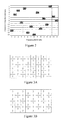
- a method for achieving frequency hopping in the OFDM technique includes: dividing the frequency spectrum resource into time-frequency grids, and setting each physical channel to correspond to a time-frequency grid. In a cell, the time-frequency grids corresponding to different physical channels are orthogonal to one another, hence interference between different physical channels in the cell is avoided.
- FIG. 2 shows a simplified diagram of the basic OFDM time-frequency pattern.
- the time-frequency pattern is generated based on a COSTA sequence with the length of 15, and all other time-frequency patterns are obtained by rotating the basic time-frequency pattern in the frequency domain.
- the time-frequency pattern adopted in a TTI is rotated at a time offset.
- Each cell has a unique time offset and, similar to scramble codes in the Wideband Code Division Multiple Access (WCDMA) system, the time offset is revisable in each TTI, therefore even the time-frequency patterns of two cells are identical in a TTI, the patterns will deviate from each other in the next TTI so that the inter-cell interference is averaged and the frequency reuse factor may be 1.
- WCDMA Wideband Code Division Multiple Access
- the probability of none co-channel interference is 12/27
- the probability of resource idling is 8/27. Therefore in random frequency-hopping, different terminals are likely to select the same sub-carrier and cause co-channel interference, or some sub-carriers may idle without any data transmission, which results in resource waste; both situations are disadvantageous concerning effective resource utilization.
- the embodiments of the present invention provide a method and an apparatus for implementing soft frequency reuse in a wireless communication system.
- a method for implementing soft frequency reuse in a wireless communication system includes:
- the selecting a portion of other group as the secondary carrier includes:
- a carrier in one of the at least two groups and a carrier in another group of the at least two groups are non-overlapped.
- the dividing carriers into at least two groups is implemented by one of the following ways:
- the dividing the carriers into the at least two groups dynamically based on time includes:
- the at least two groups is three groups.
- the transmit power of the primary carrier is not higher than the first transmit power threshold set for the primary carrier; and the transmit power of the secondary carrier is not higher than the second transmit power threshold set for the secondary carrier.
- the wireless communication system is a multi-carrier wireless communication system, and the primary carrier and the secondary cattier are sub-carriers in the multi-carrier wireless communication system.
- the method further includes:
- the method further includes:
- the method further includes:
- the method further includes:
- the adjusting the ratio dynamically includes:
- An apparatus for implementing soft frequency reuse in a wireless communication system includes:
- the apparatus further includes:
- the apparatus further includes:
- a frequency reuse scheme with the frequency reuse factor equal to 3 is used; in an inner zone of the cell or sector, i.e., in an area nearby the base station of the cell or sector, a frequency reuse scheme with the frequency reuse factor equal to 1 is used. Since transmit power is restricted in the inner zone of the cell or sector, an island coverage in which the frequency reuse factor equals to 1 is formed.
- the method provided by the embodiments of the present invention may be referred to as a method for implementing soft frequency reuse.
- the interference between cells or sectors may be eliminated by means of a controllable frequency reuse scheme provided by the embodiments of the present invention, which is favorable to implement resource management strategies and improve the stability of networks.
- FIGS. 3A to 3F are simplified schematic diagrams illustrating frequency reuse pattern in which the frequency reuse factor ranges from 2 to 7.
- Frequency Division Multiple Access (FDMA) and the second generation mobile communication system TDMA 7, 9 or 11 is usually selected as the frequency reuse factor to eliminate the co-channel interference.
- the frequency reuse factor 1 is adopted, the same carrier frequency is used in all cells, and different scramble codes are set to distinguish one cell from another. In this way, complex frequency planning is not needed, and it is easy to implement soft switching and improve the spectrum efficiency. Therefore, the frequency reuse factor being set as 1 is regarded as a great advantage of the CDMA technique.
- Multi-carrier technique and the CDMA technique have different features, and the networking technique and frequency planning in the multi-carrier wireless communication system are highlighted by researchers at present.
- frequency reuse may be achieved by implementing carrier frequency reuse and sub-carrier reuse.
- the carrier frequency reuse allows different carrier frequencies to be adopted by different cells, and each cell uses all of the sub-carriers.
- the sub-carrier reuse allows a carrier frequency to be adopted by different cells, and each cell uses different sub-carriers.
- Carrier-frequency reuse scheme is identical with conventional frequency reuse scheme in a single carrier system, in which a terminal needs to shift to another carrier frequency when the terminal switches to another cell, i.e., only hard switching is available.
- different cells adopt the same carrier frequency with different sub-carriers, as shown in Figure 4, therefore the terminal need not shift to another carrier frequency while switching to another cell and soft switching is thus achieved.
- a cellular network may be constructed with only one carrier frequency, though the terminals in the cellular network are required to have higher broadband performance than those in carrier frequency reuse scheme.
- the carrier frequency width is W and the frequency reuse factor is reuse_factor in a multi-carrier wireless communication system
- intra-cell multiple access interference may be eliminated by means of receive algorithms, i.e., P int ra-cell may be equal to 0 and every cell occupies 1/ reuse_factor of the total carrier frequency width, to which the thermal noise decreases in proportion.
- Radio Frequency (RF) parameters shown in Table 1 and the above formula may be used to obtain the trend that the SIR and the channel capacity at the border of cell change with the frequency reuse factor, and computing results are as shown in Figure 5A and 5B.
- Figure 5A is a simplified curve diagram illustrating the trend that the Signal to Interference Ratio (SIR) at the border of a cell changes with the frequency reuse factor in a sub-carrier reuse scheme
- Figure 5B is a simplified curve diagram illustrating the trend that the channel capacity at the border of a cell changes with the frequency reuse factor in a sub-carrier reuse scheme.
- SIR Signal to Interference Ratio
- Figure 5B is a simplified curve diagram illustrating the trend that the channel capacity at the border of a cell changes with the frequency reuse factor in a sub-carrier reuse scheme.
- the channel capacity at the border of the cell in the case that the frequency reuse factor is equal to 1 are almost the same as that in the case that the frequency reuse factor is equal to 2.
- the channel capacity at the border of the cell is the maximum in the case that the frequency reuse factor is equal to 3, and then the channel capacity at the border of the cell gradually decreases along with the increase of the frequency reuse factor. It may be thus included that 3 is an ideal frequency reuse factor at the border of the cell.
- the channel capacity at the border of the cell is increased and the inter-cell interference is avoided by using the frequency reuse at the border of the cell.
- the border of the cell is an area with the severest interference in the cell, but the terminal may be located at the center of the cell and be near a base station in practical operations. If the terminal is close to the base station, the signal power from the cell is high and the interference from adjacent cells is low, which makes it possible to acquire a higher SIR. In this way, the frequency of adjacent cells may be used at the center of the cell, thereby implementing the high rate communications.
- FIG. 6 is a simplified schematic diagram illustrating the networking using a soft frequency reuse scheme according to an embodiment of the present invention.
- Base station 1 manages Terminal 11 and Terminal 12
- Terminal 11 is located in an inner zone of the area managed by Base station 1, for example, 30% of the radius of the cell taking Base station 1 as the center
- Terminal 12 is located at the border of the area managed by Base station 1, for example, 90% of the radius of the cell taking Base station 1 as the center.
- Base station 2 manages Terminal 21 and Terminal 22
- Terminal 21 is located in an inner zone of the area managed by Base station 2, for example, 20% of the radius of the cell taking Base station 2 as the center
- Terminal 22 is located at the border of the area managed by Base station 2, for example, 85% of the radius of the cell taking Base station 2 as the center.
- Base station 3 manages Terminal 31 and Terminal 32
- Terminal 31 is located in an inner zone of the area managed by Base station 3, for example, 50% of the radius of the cell taking Base station 3 as the center
- Terminal 32 is located at the border of the area managed by Base station 3, for example, 95% of the radius of the cell taking Base station 3 as the center.
- different sub-carriers of different frequencies are allocated to terminals at the border of the cell, which may avoid or reduce the co-channel interference, and improve the communication rate at the border of the cell.
- the terminal in the inner zone of the cell may reduce the interference with the adjacent cells by limiting the transmit power and utilize the bandwidth adequately to improve the communication rate.
- a frequency reuse scheme with the frequency reuse factor equal to 3 is used, and in the inner zone of the cell, i.e., in the area near the base station of the cell, a frequency reuse scheme with the frequency reuse factor equal to 1 is used. Since the transmit power is restricted in the inner zone of the cell, island coverage in which the frequency reuse factor equals to 1 is formed. Setting different frequency reuse factors for different areas of one cell not only avoid the interference between adjacent cells in the case of continuous coverage so as to improve the communication rate at the border of the cell but also adequately utilize precious communication resources so as to implement high rate communications.
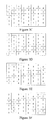
- all sub-carriers are divided into N sub-carrier groups, and each cell selects one sub-carrier group as its primary sub-carrier and other sub-carrier groups as its secondary sub-carriers.
- Different transmit power thresholds are set for the primary sub-carrier and the secondary sub-carriers of each cell, and the transmit power corresponding to each sub-carrier is unable to exceed the transmit power threshold set for the sub-carrier.
- the transmit power threshold of the primary sub-carrier is set as higher than the transmit power threshold of the secondary sub-carriers.
- the border of the cell is determined through the coverage area of the transmit power threshold of the primary sub-carrier.
- the terminal in the inner zone of the cell uses the secondary sub-carriers and the terminal at the border of the cell uses the primary sub-carrier. In this way, the interference at the borders of adjacent cells may be decreased greatly.
- Cell 1 selects the sub-carrier group including the sub-carriers identified as 1 and 2 as its primary sub-carrier and other sub-carrier groups as its secondary sub-carriers
- the adjacent Cell 2 selects the sub-carrier group including the sub-carrier identified as 4 as its primary sub-carrier and other sub-carrier groups as its secondary sub-carriers.
- the six sub-carrier groups may be regrouped, the sub-carriers identified as 2 and 5 are placed into one sub-carrier group, the sub-carriers identified as 4 and 6 are placed into one sub-carrier group, the sub-carrier identified as 1 is placed into one sub-carrier group and the sub-carrier identified as 3 is placed into one sub-carrier group.
- Cell 1 selects the sub-carrier group including the sub-carriers identified as 4 and 6 as its primary sub-carrier and other sub-carrier groups as its secondary sub-carriers
- the adjacent Cell 2 selects the sub-carrier group including the sub-carrier identified as 3 as its primary sub-carrier and other sub-carrier groups as its secondary sub-carriers.
- N 3 to keep the system capacity and the spectrum efficiency both at the maximum.
- Other values are also be assigned to N, e.g., 4, 5, 6, 7 or 8, etc..
- a full coverage type channel such as a broadcast channel and public control channel, may be set to use the primary sub-carrier of the cell only and adopt comparatively higher transmit power. Although the coverage area of adjacent cells overlaps partially each other, the interference between adjacent cells is comparatively lower, which is favorable for terminals to select cell, handover and accurately receive public control information.
- the service channel may be set to only use the primary sub-carrier when a terminal is located at the border of the cell. Since the primary sub-carriers of adjacent cells do not overlap each other, it is possible to reduce the interference between adjacent cells and improve the communication quality.
- the primary sub-carrier and the secondary sub-carriers may be used simultaneously when the terminal is close to the base station, so as to transmit data and multimedia services at a high rate. Since the transmit power of the secondary sub-carriers are relatively lower, the interference with the adjacent cells is reduced and the spectrum efficiency is improved.
- the distance between the terminal and the base station may be predefined, e.g., 75% of the coverage area of the cell. If the distance is within the predefined distance, it is regarded that the terminal is close to the base station.
- FIG. 6 is a simplified schematic diagram illustrating the channel capacity in a soft frequency reuse scheme according to an embodiment of the present invention.
- the coefficient shown by the horizontal axis is the ratio of the transmit power used by the terminals in the inner zone of the cell to that used by the terminals at the border of the cell.
- the gray blocks represent the channel capacity in the inner zone of the cell and the white blocks represent the channel capacity at the border of the cell. It can be seen from Figure 7 that:
- the inner zone of the cell may be the area whose center is the base station and radius is not greater than 50% of the radius of the cell, and the rest area of the cell may be taken as the border of the cell.
- the inner zone of the cell may also be the area whose center is the base station and radius is not greater than 60% of the radius of the cell, and the rest area of the cell may be taken as the border of the cell.
- the inner zone of the cell may also be the area whose center is the base station and radius is not greater than 35% of the radius of the cell, and the rest area of the cell may be taken as the border of the cell.
- the ratio between the transmit power thresholds of the secondary sub-carriers and the transmit power threshold of the primary sub-carrier may be adjusted dynamically, e.g., when it is determined that the proportion between the traffic at the border of the cell and the total traffic of the cell or sector is increasing, the ratio between the transmit power thresholds of the secondary sub-carriers and the transmit power threshold of the primary sub-carrier shall be reduced; and when it is determined that the proportion between the traffic at the border of the cell and the total traffic of the cell or sector is decreasing, the ratio between the transmit power thresholds of the secondary sub-carriers and the transmit power threshold of the primary sub-carrier shall be increased. In such way the spectrum resource may be fully utilized.
- the apparatus may further includes: an interleave/array unit, for arraying the data streams to be received by the inverse Fourier transformer in an interleaving manner, and a cyclic prefix adding unit, for adding a cyclic prefix into every sub-carrier to be converted by the parallel-to-serial converter.
- an interleave/array unit for arraying the data streams to be received by the inverse Fourier transformer in an interleaving manner
- a cyclic prefix adding unit for adding a cyclic prefix into every sub-carrier to be converted by the parallel-to-serial converter.
- the method provided by the embodiments of the present invention for implementing soft frequency reuse is also applicable to any wireless communication system, e.g., a simple carrier wireless communication system, in which a cell may adopt multiple frequencies, i.e., multiple carriers which may be divided into several carrier groups, and a carrier group may be set as the primary carrier group and the rest carrier groups may be set as the secondary carrier groups, thus soft frequency reuse is achieved. It should be further noted that each carrier group does not overlap one another.
Landscapes
- Engineering & Computer Science (AREA)
- Signal Processing (AREA)
- Computer Networks & Wireless Communication (AREA)
- Mobile Radio Communication Systems (AREA)
- Radio Relay Systems (AREA)
- Burglar Alarm Systems (AREA)
- Reduction Or Emphasis Of Bandwidth Of Signals (AREA)
Applications Claiming Priority (3)
| Application Number | Priority Date | Filing Date | Title |
|---|---|---|---|
| CN200410096809 | 2004-12-01 | ||
| CN2005100675402A CN1783861B (zh) | 2004-12-01 | 2005-04-20 | 一种在无线通信系统中实现频率软复用的方法 |
| PCT/CN2005/002046 WO2006058491A1 (en) | 2004-12-01 | 2005-11-29 | A method of realizing soft frequency reuse in the wireless communication system and the device thereof |
Publications (3)
| Publication Number | Publication Date |
|---|---|
| EP1811699A1 true EP1811699A1 (de) | 2007-07-25 |
| EP1811699A4 EP1811699A4 (de) | 2008-03-05 |
| EP1811699B1 EP1811699B1 (de) | 2011-01-12 |
Family
ID=36564758
Family Applications (1)
| Application Number | Title | Priority Date | Filing Date |
|---|---|---|---|
| EP05817661A Expired - Lifetime EP1811699B1 (de) | 2004-12-01 | 2005-11-29 | Soft-Frequenz-Wiederverwendung in einem drahtlosen Nachrichtenübertragungssystem |
Country Status (6)
| Country | Link |
|---|---|
| US (1) | US20070242769A1 (de) |
| EP (1) | EP1811699B1 (de) |
| CN (1) | CN1783861B (de) |
| AT (1) | ATE495641T1 (de) |
| DE (1) | DE602005025910D1 (de) |
| WO (1) | WO2006058491A1 (de) |
Cited By (5)
| Publication number | Priority date | Publication date | Assignee | Title |
|---|---|---|---|---|
| WO2008030943A3 (en) * | 2006-09-07 | 2008-04-24 | Sprint Spectrum Lp | Partially overlapping frequency bands in a hybrid frequency reuse plan |
| WO2008155359A1 (en) * | 2007-06-19 | 2008-12-24 | Nokia Siemens Networks Oy | Method for channel quality reporting, wireless communication device with channel quality reporting structures |
| US8909238B2 (en) | 2009-12-31 | 2014-12-09 | Huawei Technologies Co., Ltd. | Method and device for utilizing cell edge frequency band resource and base station |
| US9374749B2 (en) | 2008-11-14 | 2016-06-21 | Qualcomm Incorporated | Methods and systems using same base station carrier handoff for multicarrier support |
| EP3091802A4 (de) * | 2013-12-28 | 2017-08-23 | Xuezhi Yang | Funkressourcen-multiplexverfahren, basisstationsvorrichtung, endgerätevorrichtung und funkkommunikationssystem |
Families Citing this family (26)
| Publication number | Priority date | Publication date | Assignee | Title |
|---|---|---|---|---|
| CN1983918A (zh) * | 2005-12-12 | 2007-06-20 | 华为技术有限公司 | 实现软频率复用、数据发送的方法及接入设备 |
| CN101146076B (zh) * | 2006-09-12 | 2011-07-06 | 华为技术有限公司 | 一种基于均匀覆盖的数据传输方法及装置 |
| DE202008018353U1 (de) * | 2007-01-05 | 2013-03-28 | Samsung Electronics Co., Ltd. | Vorrichtung zum Senden und Empfangen von Steuer-Informationen zum Randomisieren von Inter-Zell-Interferenz in einem mobilen Kommunikationssystem |
| CN101242204B (zh) * | 2007-02-08 | 2012-01-25 | 联想(北京)有限公司 | 一种软频率复用的子载波优化方法及装置 |
| JP5152472B2 (ja) * | 2007-04-28 | 2013-02-27 | 日本電気株式会社 | 無線通信システムにおけるリソース割当制御方法および装置 |
| WO2009070930A1 (fr) * | 2007-12-05 | 2009-06-11 | Zte Corporation | Système et procédé de réalisation d'une transmission en liaison montante en empruntant ou en partageant des ressources de canal ou de spectre de cellules voisines |
| CN101472285B (zh) * | 2007-12-25 | 2010-09-01 | 北京沃泰丰通信技术有限公司 | 优化无线网络结构的方法和装置 |
| US20090185475A1 (en) * | 2008-01-23 | 2009-07-23 | Myung Hyung G | Non-orthogonal subcarrier mapping method and system |
| KR101009724B1 (ko) * | 2008-05-06 | 2011-01-19 | 포항공과대학교 산학협력단 | 802.16/와이브로 시스템에서의 셀간 간섭을 고려한 부하 기반의 서비스 구역 변경 방법 |
| US8280387B2 (en) * | 2008-05-22 | 2012-10-02 | Ntt Docomo, Inc. | Femtocell channel assignment and power control for improved femtocell coverage and efficient cell search |
| CN101677456B (zh) | 2008-09-16 | 2014-09-10 | 中兴通讯股份有限公司 | 无线通信系统中干扰控制信令的发送与接收方法 |
| US8619678B2 (en) | 2009-01-05 | 2013-12-31 | Lg Electronics Inc. | Wireless device in multicarrier system |
| US8160591B2 (en) | 2009-08-04 | 2012-04-17 | Motorola Mobility, Inc. | In a radio network environment, reducing interference among overlapping cells |
| US20110086636A1 (en) * | 2009-10-09 | 2011-04-14 | Industrial Technology Research Institute | System and method for home cellular networks |
| US8472390B2 (en) * | 2010-02-23 | 2013-06-25 | Motorola Solutions, Inc. | Method and apparatus for allocating spectrum |
| CN102291721A (zh) * | 2010-06-18 | 2011-12-21 | 鼎桥通信技术有限公司 | 一种分布式系统的载波配置方法 |
| CN102487372B (zh) * | 2010-12-02 | 2017-04-12 | 北京邮电大学 | 软空频复用方法与装置、基站 |
| CN102547736B (zh) * | 2010-12-30 | 2014-08-13 | 中兴通讯股份有限公司 | 一种相邻小区间下行干扰的控制方法及系统 |
| CN103201958B (zh) | 2011-02-07 | 2017-01-18 | 大力系统有限公司 | 用于分布式天线系统的远程单元的菊花链式环 |
| CN103167528B (zh) * | 2011-12-12 | 2016-09-07 | 中国移动通信集团北京有限公司 | 一种频率配置评估方法、装置及系统 |
| CN103841602B (zh) * | 2012-11-20 | 2017-02-22 | 中国移动通信集团河南有限公司 | 一种邻区配置方法及系统 |
| US20170250927A1 (en) * | 2013-12-23 | 2017-08-31 | Dali Systems Co. Ltd. | Virtual radio access network using software-defined network of remotes and digital multiplexing switches |
| CN103944849A (zh) * | 2014-01-16 | 2014-07-23 | 中山大学 | 一种小区干扰协调的动态软频率复用算法 |
| CN108322240B (zh) * | 2018-01-04 | 2021-10-01 | 南方科技大学 | 软频分复用方法及装置、大规模多天线系统和存储介质 |
| CN111031476B (zh) * | 2019-12-24 | 2021-10-26 | 哈尔滨工业大学 | 基于地理信息数据库的星地频谱共享方法 |
| US12494817B2 (en) * | 2021-10-28 | 2025-12-09 | Telefonaktiebolaget Lm Ericsson (Publ) | Transmitting a signal |
Family Cites Families (18)
| Publication number | Priority date | Publication date | Assignee | Title |
|---|---|---|---|---|
| US5164958A (en) * | 1991-05-22 | 1992-11-17 | Cylink Corporation | Spread spectrum cellular handoff method |
| US5579306A (en) * | 1994-09-01 | 1996-11-26 | Ericsson Inc. | Time and frequency slot allocation system and method |
| US5649292A (en) * | 1994-10-31 | 1997-07-15 | Airnet Communications Corporation | Obtaining improved frequency reuse in wireless communication systems |
| US5758090A (en) * | 1995-09-22 | 1998-05-26 | Airnet Communications, Inc. | Frequency reuse planning for CDMA cellular communication system by grouping of available carrier frequencies and power control based on the distance from base station |
| US6181918B1 (en) * | 1995-12-29 | 2001-01-30 | At&T Corp | System and method for management of neighbor-channel interference with cellular reuse partitioning |
| DE19700303B4 (de) * | 1997-01-08 | 2005-11-03 | Deutsches Zentrum für Luft- und Raumfahrt e.V. | Funkübertragungsverfahren für digitale Multimediatensignale zwischen Teilnehmerstationen in einem lokalen Netz |
| US6332069B1 (en) * | 1999-02-10 | 2001-12-18 | Hughes Electronics Corporation | Apparatus and method for grouping carriers to minimize the occurrence of call blocking in a satellite-based communications network |
| US6804214B1 (en) * | 1999-04-19 | 2004-10-12 | Telefonaktiebolaget Lm Ericsson (Publ) | System and method for implementing multiple carriers in cellular networks |
| US6370383B1 (en) * | 1999-09-14 | 2002-04-09 | Nortel Networks Limited | Adaptive power level tiered cellular mobile communications systems |
| JP3857652B2 (ja) * | 2001-04-18 | 2006-12-13 | 富士通株式会社 | 歪補償装置 |
| US6795716B2 (en) | 2001-05-14 | 2004-09-21 | Lucent Technologies Inc. | System and method of operating a wireless base station with quantized use of transmitter power |
| JP3851525B2 (ja) * | 2001-08-09 | 2006-11-29 | 株式会社エヌ・ティ・ティ・ドコモ | 移動局装置、移動通信システムおよびキャリア検出方法 |
| US20030220112A1 (en) * | 2002-01-16 | 2003-11-27 | Engim, Incorporated | System and method for enabling the use of spatially distributed multichannel wireless access points/base stations |
| US8094613B2 (en) * | 2002-09-24 | 2012-01-10 | Alcatel Lucent | Enhanced high traffic density CDMA wireless systems |
| DE60304104T2 (de) * | 2002-11-07 | 2006-11-09 | Samsung Electronics Co., Ltd., Suwon | Verfahren zur Wiederverwendung von Frequenzen in einem OFDM-Mobilfunkkommunikationssystem |
| GB2396522B (en) * | 2002-12-18 | 2006-01-04 | Motorola Inc | Method and apparatus for determining a transmit power |
| KR20040076438A (ko) * | 2003-02-25 | 2004-09-01 | 에스케이 텔레콤주식회사 | 직교 주파수 분할 다중 시스템 기반의 멀티셀에서의부반송파 운용 방법 |
| KR100539948B1 (ko) * | 2003-06-18 | 2005-12-28 | 삼성전자주식회사 | 직교 주파수 분할 다중 방식을 사용하는 통신 시스템에서기지국 구분을 위한 파일럿 패턴 세트 송수신 장치 및 방법 |
-
2005
- 2005-04-20 CN CN2005100675402A patent/CN1783861B/zh not_active Expired - Lifetime
- 2005-11-29 DE DE602005025910T patent/DE602005025910D1/de not_active Expired - Lifetime
- 2005-11-29 AT AT05817661T patent/ATE495641T1/de not_active IP Right Cessation
- 2005-11-29 WO PCT/CN2005/002046 patent/WO2006058491A1/zh not_active Ceased
- 2005-11-29 EP EP05817661A patent/EP1811699B1/de not_active Expired - Lifetime
-
2007
- 2007-05-31 US US11/756,473 patent/US20070242769A1/en not_active Abandoned
Cited By (7)
| Publication number | Priority date | Publication date | Assignee | Title |
|---|---|---|---|---|
| US7769073B2 (en) | 2002-05-03 | 2010-08-03 | Sprint Spectrum L.P. | Method and system using overlapping frequency bands in a hybrid frequency reuse plan |
| WO2008030943A3 (en) * | 2006-09-07 | 2008-04-24 | Sprint Spectrum Lp | Partially overlapping frequency bands in a hybrid frequency reuse plan |
| WO2008155359A1 (en) * | 2007-06-19 | 2008-12-24 | Nokia Siemens Networks Oy | Method for channel quality reporting, wireless communication device with channel quality reporting structures |
| EP2015492A1 (de) * | 2007-06-19 | 2009-01-14 | Nokia Siemens Networks Oy | Verfahren zur Berichterstattung über die Kanalqualität sowie drahtlose Kommunikationsvorrichtung mit Struktur zur Berichterstattung über die Kanalqualität |
| US9374749B2 (en) | 2008-11-14 | 2016-06-21 | Qualcomm Incorporated | Methods and systems using same base station carrier handoff for multicarrier support |
| US8909238B2 (en) | 2009-12-31 | 2014-12-09 | Huawei Technologies Co., Ltd. | Method and device for utilizing cell edge frequency band resource and base station |
| EP3091802A4 (de) * | 2013-12-28 | 2017-08-23 | Xuezhi Yang | Funkressourcen-multiplexverfahren, basisstationsvorrichtung, endgerätevorrichtung und funkkommunikationssystem |
Also Published As
| Publication number | Publication date |
|---|---|
| US20070242769A1 (en) | 2007-10-18 |
| WO2006058491A1 (en) | 2006-06-08 |
| ATE495641T1 (de) | 2011-01-15 |
| DE602005025910D1 (de) | 2011-02-24 |
| EP1811699B1 (de) | 2011-01-12 |
| CN1783861A (zh) | 2006-06-07 |
| CN1783861B (zh) | 2011-04-13 |
| EP1811699A4 (de) | 2008-03-05 |
Similar Documents
| Publication | Publication Date | Title |
|---|---|---|
| EP1811699B1 (de) | Soft-Frequenz-Wiederverwendung in einem drahtlosen Nachrichtenübertragungssystem | |
| US7412242B2 (en) | Apparatus and method for controlling transmission power in communication systems using orthogonal frequency division multiple access scheme | |
| US9948438B2 (en) | Radio access method for reduced PAPR | |
| US7502310B2 (en) | Apparatus and method for assigning subchannel in a mobile communication system using orthogonal frequency division multiple access scheme | |
| CN101406080B (zh) | 无线通信网络中进行分数频率复用的方法和系统 | |
| CN101729232B (zh) | 无线传送系统和无线传送方法 | |
| US7796567B2 (en) | Method and system for implementing soft time reuse in wireless communication system | |
| Li et al. | A novel broadband wireless OFDMA scheme for downlink in cellular communications | |
| US20080130485A1 (en) | Signal modulation method based on orthogonal frequency division multiplex and a modulation device thereof | |
| CN101064701B (zh) | 一种发送测量导频的方法及其用户终端、系统 | |
| CN1953364B (zh) | 一种多载波系统小区内的信道实现方法 | |
| CN100531174C (zh) | 频率复用因子为1的多载波系统中的资源分配方法 | |
| CN1983918A (zh) | 实现软频率复用、数据发送的方法及接入设备 | |
| CN1893410B (zh) | 实现正交频分复用系统的频率复用方法及接入设备 | |
| Lee et al. | OFDM-based semi-soft handover for high data rate services | |
| JP3813884B2 (ja) | マルチキャリア変調回路およびマルチキャリア復調回路 | |
| Plass et al. | Error performance for MC-CDMA and OFDMA in a downlink multi-cell scenario | |
| HK1129980A (en) | Method & system for fractional frequency reuse in a wireless communication network |
Legal Events
| Date | Code | Title | Description |
|---|---|---|---|
| PUAI | Public reference made under article 153(3) epc to a published international application that has entered the european phase |
Free format text: ORIGINAL CODE: 0009012 |
|
| 17P | Request for examination filed |
Effective date: 20070601 |
|
| AK | Designated contracting states |
Kind code of ref document: A1 Designated state(s): AT BE BG CH CY CZ DE DK EE ES FI FR GB GR HU IE IS IT LI LT LU LV MC NL PL PT RO SE SI SK TR |
|
| A4 | Supplementary search report drawn up and despatched |
Effective date: 20080205 |
|
| DAX | Request for extension of the european patent (deleted) | ||
| 17Q | First examination report despatched |
Effective date: 20091103 |
|
| GRAP | Despatch of communication of intention to grant a patent |
Free format text: ORIGINAL CODE: EPIDOSNIGR1 |
|
| RTI1 | Title (correction) |
Free format text: A METHOD FOR SOFT FREQUENCY REUSE IN A WIRELESS COMMUNICATION SYSTEM AND DEVICE THEREOF |
|
| RIC1 | Information provided on ipc code assigned before grant |
Ipc: H04W 16/12 20090101AFI20100909BHEP |
|
| RTI1 | Title (correction) |
Free format text: SOFT FREQUENCY REUSE IN A WIRELESS COMMUNICATION SYSTEM |
|
| GRAS | Grant fee paid |
Free format text: ORIGINAL CODE: EPIDOSNIGR3 |
|
| GRAA | (expected) grant |
Free format text: ORIGINAL CODE: 0009210 |
|
| AK | Designated contracting states |
Kind code of ref document: B1 Designated state(s): AT BE BG CH CY CZ DE DK EE ES FI FR GB GR HU IE IS IT LI LT LU LV MC NL PL PT RO SE SI SK TR |
|
| REG | Reference to a national code |
Ref country code: GB Ref legal event code: FG4D |
|
| REG | Reference to a national code |
Ref country code: CH Ref legal event code: EP |
|
| REG | Reference to a national code |
Ref country code: IE Ref legal event code: FG4D |
|
| REF | Corresponds to: |
Ref document number: 602005025910 Country of ref document: DE Date of ref document: 20110224 Kind code of ref document: P |
|
| REG | Reference to a national code |
Ref country code: DE Ref legal event code: R096 Ref document number: 602005025910 Country of ref document: DE Effective date: 20110224 |
|
| REG | Reference to a national code |
Ref country code: NL Ref legal event code: T3 |
|
| LTIE | Lt: invalidation of european patent or patent extension |
Effective date: 20110112 |
|
| PG25 | Lapsed in a contracting state [announced via postgrant information from national office to epo] |
Ref country code: GR Free format text: LAPSE BECAUSE OF FAILURE TO SUBMIT A TRANSLATION OF THE DESCRIPTION OR TO PAY THE FEE WITHIN THE PRESCRIBED TIME-LIMIT Effective date: 20110413 Ref country code: ES Free format text: LAPSE BECAUSE OF FAILURE TO SUBMIT A TRANSLATION OF THE DESCRIPTION OR TO PAY THE FEE WITHIN THE PRESCRIBED TIME-LIMIT Effective date: 20110423 Ref country code: IS Free format text: LAPSE BECAUSE OF FAILURE TO SUBMIT A TRANSLATION OF THE DESCRIPTION OR TO PAY THE FEE WITHIN THE PRESCRIBED TIME-LIMIT Effective date: 20110512 Ref country code: SE Free format text: LAPSE BECAUSE OF FAILURE TO SUBMIT A TRANSLATION OF THE DESCRIPTION OR TO PAY THE FEE WITHIN THE PRESCRIBED TIME-LIMIT Effective date: 20110112 Ref country code: LT Free format text: LAPSE BECAUSE OF FAILURE TO SUBMIT A TRANSLATION OF THE DESCRIPTION OR TO PAY THE FEE WITHIN THE PRESCRIBED TIME-LIMIT Effective date: 20110112 Ref country code: LV Free format text: LAPSE BECAUSE OF FAILURE TO SUBMIT A TRANSLATION OF THE DESCRIPTION OR TO PAY THE FEE WITHIN THE PRESCRIBED TIME-LIMIT Effective date: 20110112 |
|
| PG25 | Lapsed in a contracting state [announced via postgrant information from national office to epo] |
Ref country code: CY Free format text: LAPSE BECAUSE OF FAILURE TO SUBMIT A TRANSLATION OF THE DESCRIPTION OR TO PAY THE FEE WITHIN THE PRESCRIBED TIME-LIMIT Effective date: 20110112 Ref country code: SI Free format text: LAPSE BECAUSE OF FAILURE TO SUBMIT A TRANSLATION OF THE DESCRIPTION OR TO PAY THE FEE WITHIN THE PRESCRIBED TIME-LIMIT Effective date: 20110112 Ref country code: BG Free format text: LAPSE BECAUSE OF FAILURE TO SUBMIT A TRANSLATION OF THE DESCRIPTION OR TO PAY THE FEE WITHIN THE PRESCRIBED TIME-LIMIT Effective date: 20110412 Ref country code: PL Free format text: LAPSE BECAUSE OF FAILURE TO SUBMIT A TRANSLATION OF THE DESCRIPTION OR TO PAY THE FEE WITHIN THE PRESCRIBED TIME-LIMIT Effective date: 20110112 Ref country code: BE Free format text: LAPSE BECAUSE OF FAILURE TO SUBMIT A TRANSLATION OF THE DESCRIPTION OR TO PAY THE FEE WITHIN THE PRESCRIBED TIME-LIMIT Effective date: 20110112 Ref country code: FI Free format text: LAPSE BECAUSE OF FAILURE TO SUBMIT A TRANSLATION OF THE DESCRIPTION OR TO PAY THE FEE WITHIN THE PRESCRIBED TIME-LIMIT Effective date: 20110112 Ref country code: AT Free format text: LAPSE BECAUSE OF FAILURE TO SUBMIT A TRANSLATION OF THE DESCRIPTION OR TO PAY THE FEE WITHIN THE PRESCRIBED TIME-LIMIT Effective date: 20110112 |
|
| PG25 | Lapsed in a contracting state [announced via postgrant information from national office to epo] |
Ref country code: EE Free format text: LAPSE BECAUSE OF FAILURE TO SUBMIT A TRANSLATION OF THE DESCRIPTION OR TO PAY THE FEE WITHIN THE PRESCRIBED TIME-LIMIT Effective date: 20110112 Ref country code: DK Free format text: LAPSE BECAUSE OF FAILURE TO SUBMIT A TRANSLATION OF THE DESCRIPTION OR TO PAY THE FEE WITHIN THE PRESCRIBED TIME-LIMIT Effective date: 20110112 |
|
| PLBE | No opposition filed within time limit |
Free format text: ORIGINAL CODE: 0009261 |
|
| STAA | Information on the status of an ep patent application or granted ep patent |
Free format text: STATUS: NO OPPOSITION FILED WITHIN TIME LIMIT |
|
| PG25 | Lapsed in a contracting state [announced via postgrant information from national office to epo] |
Ref country code: SK Free format text: LAPSE BECAUSE OF FAILURE TO SUBMIT A TRANSLATION OF THE DESCRIPTION OR TO PAY THE FEE WITHIN THE PRESCRIBED TIME-LIMIT Effective date: 20110112 Ref country code: CZ Free format text: LAPSE BECAUSE OF FAILURE TO SUBMIT A TRANSLATION OF THE DESCRIPTION OR TO PAY THE FEE WITHIN THE PRESCRIBED TIME-LIMIT Effective date: 20110112 Ref country code: RO Free format text: LAPSE BECAUSE OF FAILURE TO SUBMIT A TRANSLATION OF THE DESCRIPTION OR TO PAY THE FEE WITHIN THE PRESCRIBED TIME-LIMIT Effective date: 20110112 |
|
| 26N | No opposition filed |
Effective date: 20111013 |
|
| REG | Reference to a national code |
Ref country code: DE Ref legal event code: R097 Ref document number: 602005025910 Country of ref document: DE Effective date: 20111013 |
|
| PG25 | Lapsed in a contracting state [announced via postgrant information from national office to epo] |
Ref country code: MC Free format text: LAPSE BECAUSE OF NON-PAYMENT OF DUE FEES Effective date: 20111130 |
|
| REG | Reference to a national code |
Ref country code: CH Ref legal event code: PL |
|
| GBPC | Gb: european patent ceased through non-payment of renewal fee |
Effective date: 20111129 |
|
| PG25 | Lapsed in a contracting state [announced via postgrant information from national office to epo] |
Ref country code: LI Free format text: LAPSE BECAUSE OF NON-PAYMENT OF DUE FEES Effective date: 20111130 Ref country code: CH Free format text: LAPSE BECAUSE OF NON-PAYMENT OF DUE FEES Effective date: 20111130 |
|
| REG | Reference to a national code |
Ref country code: IE Ref legal event code: MM4A |
|
| PG25 | Lapsed in a contracting state [announced via postgrant information from national office to epo] |
Ref country code: GB Free format text: LAPSE BECAUSE OF NON-PAYMENT OF DUE FEES Effective date: 20111129 Ref country code: IE Free format text: LAPSE BECAUSE OF NON-PAYMENT OF DUE FEES Effective date: 20111129 |
|
| PG25 | Lapsed in a contracting state [announced via postgrant information from national office to epo] |
Ref country code: LU Free format text: LAPSE BECAUSE OF NON-PAYMENT OF DUE FEES Effective date: 20111129 |
|
| PG25 | Lapsed in a contracting state [announced via postgrant information from national office to epo] |
Ref country code: TR Free format text: LAPSE BECAUSE OF FAILURE TO SUBMIT A TRANSLATION OF THE DESCRIPTION OR TO PAY THE FEE WITHIN THE PRESCRIBED TIME-LIMIT Effective date: 20110112 |
|
| PG25 | Lapsed in a contracting state [announced via postgrant information from national office to epo] |
Ref country code: HU Free format text: LAPSE BECAUSE OF FAILURE TO SUBMIT A TRANSLATION OF THE DESCRIPTION OR TO PAY THE FEE WITHIN THE PRESCRIBED TIME-LIMIT Effective date: 20110112 |
|
| PG25 | Lapsed in a contracting state [announced via postgrant information from national office to epo] |
Ref country code: PT Free format text: LAPSE BECAUSE OF FAILURE TO SUBMIT A TRANSLATION OF THE DESCRIPTION OR TO PAY THE FEE WITHIN THE PRESCRIBED TIME-LIMIT Effective date: 20110112 |
|
| REG | Reference to a national code |
Ref country code: FR Ref legal event code: PLFP Year of fee payment: 11 |
|
| REG | Reference to a national code |
Ref country code: FR Ref legal event code: PLFP Year of fee payment: 12 |
|
| REG | Reference to a national code |
Ref country code: FR Ref legal event code: PLFP Year of fee payment: 13 |
|
| REG | Reference to a national code |
Ref country code: FR Ref legal event code: PLFP Year of fee payment: 14 |
|
| PGFP | Annual fee paid to national office [announced via postgrant information from national office to epo] |
Ref country code: NL Payment date: 20241004 Year of fee payment: 20 |
|
| PGFP | Annual fee paid to national office [announced via postgrant information from national office to epo] |
Ref country code: DE Payment date: 20241001 Year of fee payment: 20 |
|
| PGFP | Annual fee paid to national office [announced via postgrant information from national office to epo] |
Ref country code: FR Payment date: 20241001 Year of fee payment: 20 |
|
| PGFP | Annual fee paid to national office [announced via postgrant information from national office to epo] |
Ref country code: IT Payment date: 20241010 Year of fee payment: 20 |
|
| REG | Reference to a national code |
Ref country code: DE Ref legal event code: R071 Ref document number: 602005025910 Country of ref document: DE |
|
| REG | Reference to a national code |
Ref country code: NL Ref legal event code: MK Effective date: 20251128 |