EP1814577B1 - Verwendung von baff zur behandlung von sepsis - Google Patents
Verwendung von baff zur behandlung von sepsis Download PDFInfo
- Publication number
- EP1814577B1 EP1814577B1 EP05810864.8A EP05810864A EP1814577B1 EP 1814577 B1 EP1814577 B1 EP 1814577B1 EP 05810864 A EP05810864 A EP 05810864A EP 1814577 B1 EP1814577 B1 EP 1814577B1
- Authority
- EP
- European Patent Office
- Prior art keywords
- seq
- sepsis
- baff
- amino acids
- soluble baff
- Prior art date
- Legal status (The legal status is an assumption and is not a legal conclusion. Google has not performed a legal analysis and makes no representation as to the accuracy of the status listed.)
- Expired - Lifetime
Links
Images
Classifications
-
- A—HUMAN NECESSITIES
- A61—MEDICAL OR VETERINARY SCIENCE; HYGIENE
- A61K—PREPARATIONS FOR MEDICAL, DENTAL OR TOILETRY PURPOSES
- A61K38/00—Medicinal preparations containing peptides
- A61K38/16—Peptides having more than 20 amino acids; Gastrins; Somatostatins; Melanotropins; Derivatives thereof
- A61K38/17—Peptides having more than 20 amino acids; Gastrins; Somatostatins; Melanotropins; Derivatives thereof from animals; from humans
- A61K38/177—Receptors; Cell surface antigens; Cell surface determinants
-
- A—HUMAN NECESSITIES
- A61—MEDICAL OR VETERINARY SCIENCE; HYGIENE
- A61P—SPECIFIC THERAPEUTIC ACTIVITY OF CHEMICAL COMPOUNDS OR MEDICINAL PREPARATIONS
- A61P29/00—Non-central analgesic, antipyretic or antiinflammatory agents, e.g. antirheumatic agents; Non-steroidal antiinflammatory drugs [NSAID]
-
- A—HUMAN NECESSITIES
- A61—MEDICAL OR VETERINARY SCIENCE; HYGIENE
- A61P—SPECIFIC THERAPEUTIC ACTIVITY OF CHEMICAL COMPOUNDS OR MEDICINAL PREPARATIONS
- A61P31/00—Antiinfectives, i.e. antibiotics, antiseptics, chemotherapeutics
- A61P31/04—Antibacterial agents
-
- A—HUMAN NECESSITIES
- A61—MEDICAL OR VETERINARY SCIENCE; HYGIENE
- A61P—SPECIFIC THERAPEUTIC ACTIVITY OF CHEMICAL COMPOUNDS OR MEDICINAL PREPARATIONS
- A61P43/00—Drugs for specific purposes, not provided for in groups A61P1/00-A61P41/00
-
- A—HUMAN NECESSITIES
- A61—MEDICAL OR VETERINARY SCIENCE; HYGIENE
- A61P—SPECIFIC THERAPEUTIC ACTIVITY OF CHEMICAL COMPOUNDS OR MEDICINAL PREPARATIONS
- A61P7/00—Drugs for disorders of the blood or the extracellular fluid
Definitions
- This invention relates to uses for treatment of sepsis.
- the invention further relates to uses of pharmaceutical compositions comprising BAFF (B Cell Activation Factor from the TNF family).
- BAFF B Cell Activation Factor from the TNF family
- Sepsis is a spectrum of clinical conditions caused by the immune response of a host to infection or trauma and characterized by systemic inflammation and coagulation ( Mesters et al. (1996) Thromb. Haemost., 75:902-907 ; Wheeler et al. (1999) N. Engl. J. Med., 340:207-214 ). It ranges from a systemic inflammatory response to organ dysfunction, to multiple organ failure leading to death. At an advanced stage, the disease progresses to severe sepsis, the condition characterized by at least one acute organ dysfunction. Ultimately, severe sepsis leads to the final stage, septic shock, which is characterized by hypoperfusion and hypotension that is unresponsive to fluid resuscitation.
- Sepsis is the leading cause of death in critically ill patients. An estimated 750,000 people per year develop severe sepsis in the United States alone, more than 210,000 of whom die ( Angus et al. (2001) Crit. Care Med., 29:1303 ).
- inflammatory mediators e.g., corticosteroids, anti-endotoxin antibodies, tumor necrosis factor (TNF) antagonists, interleukin(IL)-1 receptor antagonists
- TNF tumor necrosis factor
- IL-1 receptor antagonists interleukin(IL)-1 receptor antagonists
- sepsis involves increases in inflammatory mediators (e.g., TNF- ⁇ , interferon (INF) ⁇ , IL-2).
- inflammatory mediators e.g., TNF- ⁇ , interferon (INF) ⁇ , IL-2).
- INF interferon
- IL-2 interferon
- IL-4 and IL-10 anti-inflammatory cytokines
- Clinical features of advanced sepsis are consistent with immune suppression, such as loss of delayed hypersensitivity, an inability to clear infection, and a predisposition to nosocomial infections ( Meakins et al. (1977) Ann.
- WO 02/18620 and WO 98/18921 relate to Neutrokine-alpha polypeptides and nucleic acid molecules encoding it.
- WO 2004/081043 describes BAFF variant proteins and nucleic acids encoding such proteins.
- the present invention provides compositions and methods for treating sepsis.
- the methods include administering to a mammal, e.g., a human, having sepsis or at risk for developing sepsis, a soluble BAFF, e.g., a pharmaceutical composition containing soluble BAFF, in amount sufficient to treat sepsis, severe sepsis, and/or septic shock.
- soluble BAFF is a polypeptide that comprises a sequence at least 85% identical (preferably, at least 90%, 95%, 98%, 99%, or 100% identical) to the TNF-like domain of BAFF and lacks a transmembrane domain.
- the soluble BAFF is capable of binding to a BAFF receptor and is selected from:
- soluble BAFF is administered in one or more of the following periods: (1) prior to the onset of sepsis; (2) during initial sepsis but before the onset of severe sepsis; (3) during severe sepsis but before the onset of septic shock; (4) after the onset of septic shock.
- the uses of the invention are for treating sepsis patients with hypoimmune status, particularly, patients who exhibit a significant loss of B cells and/or CD4 T cells (e.g., those with absolute counts of circulating lymphocytes below 700 per mm 3 ).
- the invention can also be of particular use in sepsis patients with prolonged sepsis and other forms of sepsis as discussed below.
- soluble BAFF can be administered for a period of time and/or in an amount sufficient to reduce (e.g., to substantially reduce) one or more of: sepsis-related apoptosis of lymphocytes, organ dysfunction, and inflammatory response.
- the terms "to treat,” “treating,” and “treatment” refer to administering a therapy in an amount, manner, and/or mode effective to improve or ameliorate a symptom or parameter that characterizes a pathological condition; to reduce the severity of a symptom or parameter that characterizes a pathological condition; to prevent, slow or reverse progression of the pathological condition; or to prevent one or more symptom or parameter of the pathological condition.
- the invention provides uses of treating a mammal having, or at risk of having, sepsis, which include administering a composition containing soluble BAFF in an amount and/or for a period of time sufficient to treat sepsis, severe sepsis, and/or septic shock.
- BAFF in particular, a soluble polypeptide comprising the TNF-like domain of human BAFF
- mice treated with BAFF exhibited significantly higher survival rates compared to the control mice that did not receive BAFF.
- treatment with BAFF reduced sepsis-related apoptosis of lymphocytes.
- BAFF also known as BLyS, TALL-1, THANK, zTNF4, neutrokine ⁇ , NTN2, TNSF13b, Kay ligand, and MARCH
- BAFF has been implicated in costimulation of B cells ( Moore et al. (1999) Science, 285:260-263 ; Schneider et al. (1999) J. Exp. Med., 189:1747-1756 ; Mukhopadhyay et al. (1999) J. Biol. Chem., 274:15978-15981 ); increased B cell proliferation ( Moore et al.
- Full-length BAFF is a type II membrane protein having intracellular, transmembrane, and extracellular domains. In human BAFF, these domains are comprised approximately (e.g., ⁇ 2 or 3 residues) of amino acids 1-46, 47-73, and 74-285 of SEQ ID NO:1, respectively.
- these domains are comprised approximately (e.g., ⁇ 2 or 3 residues) of amino acids 1-53, 53-73, 74-309 of SEQ ID NO:2, respectively.
- a naturally occurring soluble form of BAFF exists, in which proteolytic cleavage occurs between amino acids R133 and A134 in human BAFF (amino acids R125 and A126 in mouse BAFF as predicted), resulting in a water-soluble biologically active C-terminal portion of BAFF.
- compositions suitable for use in methods of invention include soluble BAFF as defined in claim 1.
- soluble BAFF as defined in claim 1.
- Such soluble forms of BAFF generally do not comprise the transmembrane and intracellular domains. Since naturally occurring soluble BAFF does not comprise a portion of the extracellular domain (i.e., amino acids 74-133 of SEQ ID NO:1 or amino acids 74-125 of SEQ ID NO:2), soluble BAFF of the invention may likewise exclude these regions.
- BAFF shares identity with other TNF family members: 28.7% with APRIL, 16.2% with TNF- ⁇ , and 14.1 % with lymphotoxin(LT)- ⁇ .
- the soluble BAFF is a polypeptide comprising all or a substantial part of the TNF-like domain of BAFF, e.g., amino acids 145-284 of SEQ ID NO:1 (human BAFF), amino acids 170-305 of SEQ ID NO:2 (mouse BAFF), amino acids 11-150 of SEQ ID NO:3 (generic sequence), or a sequence at least 90%, or 95% identical thereto.
- the TNF-like domain of human BAFF is greater than 85% identical to mouse BAFF.
- Percent identity between two amino acid sequences may be determined by standard alignment algorithms such as, for example, Basic Local Alignment Tool (BLAST) described in Altschul et al. (1990) J. Mol. Biol., 215:403-410 , the algorithm of Needleman et al. (1970) J. Mol. Biol., 48:444-453 , or the algorithm of Meyers et al. (1988) Comput. Appl. Biosci., 4:11-17 .
- BLAST Basic Local Alignment Tool
- Such algorithms are incorporated into the BLASTN, BLASTP, and "BLAST 2 Sequences" programs (see www.ncbi.nlm.nih.gov/BLAST). When utilizing such programs, the default parameters can be used.
- BLAST 2 Sequences program BLASTN, reward for match 2, penalty for mismatch -2, open gap and extension gap-penalties 5 and 2 respectively; gap x_dropoff 50, expect 10, word size 11, filter ON.
- program BLASTP program BLASTP, matrix BLOSUM62, open gap and extension gap penalties 11 and 1 respectively, gap x dropoff 50, expect 10, word size 3, filter ON.
- the use includes evaluating the subject, before and/or after treatment, for one or more of: white blood cell count, platelet count, blood culture bacteria count, blood gas, kidney function.
- soluble BAFF comprises amino acids 134-285 of SEQ ID NO:1; or N- and/or C-terminal truncations thereof.
- the N-terminus of soluble BAFF may be between residues 134-170 of SEQ ID NO:1, e.g., the N-terminus of soluble BAFF may extend up to and include amino acid 134, 135, 136, 137, 138, 139, 140, 141, 142, 143, 144, 145, 146, 147, 148, 149, 150, 151, 152, 153, 154, 155, 156, 157, 158, 159, 160, 161, 162, 163, 164, 165, 166, 167, 168, 169, or 170; while independently, the C-terminus be between residues 250-285 of SEQ ID NO:1, e.g., it may extend up to and include amino acid 285, 284, 283, 282, 281, 280, 279, 278, 2
- soluble BAFF comprises amino acids 126-309 of SEQ ID NO:2, or an N- and/or C-terminal truncations thereof.
- the N-terminus of soluble BAFF may extend up to and include amino acid 134, 135, 136, 137, 138, 139, 140, 141, 142, 143, 144, 145, 146, 147, 148, 149, 150, 151, 152, 153, 154, 155, 156, 157, 158, 159, 160, 161, 162, 163, 164, 165, 166, 167, 168, 169, or 170; while independently, the C-terminus may extend to and include amino acid 309, 308, 307, 306, 305, 304, 303, 302, 301, 300, 299, 298, 297, 296, 295, 294, 293, 292, 291, 290, 289, 288, 287, 286, 285, 284, 283, 282, 281, 280, 2
- composition comprising soluble BAFF suitable for use in the methods of the invention further includes such derivatives of BAFF in which the native BAFF sequence is mutated, partially deleted, and/or contains one or more insertions so long as changes to the native sequence do not substantially affect the biological activity of the molecule.
- Such changes may involve, for example, conservative amino acid substitution(s) according to Table 1. Nonlimiting examples of such changes are shown in SEQ ID NO:3.
- soluble BAFF may contain no more than, for example, 50, 40, 30, 25, 20, 15, 10, 5, 4, 3, 2, or 1 amino acids that are substituted, deleted, or inserted relative to the naturally occurring BAFF sequences as set out from amino acid (aa) 136 to aa 285 of SEQ ID NO:1 or from aa 126 to aa 309 of SEQ ID NO:2.
- soluble BAFF further comprises a heterologous amino acid sequence, e.g., a portion of one or more proteins other than BAFF, covalently bound to the BAFF portion at the latter's N- and/or C-terminus, and optionally further comprising a linker.
- the non-BAFF protein can be, for example, an immunoglobulin (e.g., the Fc portion of an immunoglobulin of any type or subtype (e.g., IgG (IgG 1 , IgG 4 ), IgA, IgE, and IgM)), albumin, APRIL, or an affinity tag (e.g., myc-tag, His-tag).
- Soluble BAFF may also be linked to nonproteinaceous polymers, e.g., polyethylene glycol (PEG) and polypropylene glycol.
- Additional soluble BAFF compositions suitable for use in the invention and methods of making such compositions are described in, e.g., in United States Patents No. 6,689,579 ; 6,475,986 ; 6,297,736 ; United States Patent Application No. 09/911,777 ; United States Patent Application Publication Nos. 2003/0175208 ; 2002/0064829 ; 2003/0022239 ; 2003/0095967 ; 2002/0037852 ; 2002/0055624 ; 2001/0010925 ; 2003/0023038 ; 2003/0119149 ; 2003/0211509 ; PCT Application Publication Nos.
- the biological activity of soluble forms of BAFF may be evaluated using one or more of the following assays:
- soluble BAFF comprises a fragment of the BAFF extracellular domain capable of binding to a BAFF receptor.
- such a fragment may comprise one or more regions of at least 20, 30, 40, 50, 60, 70, 80, 90, 100, 110, or 120 contiguous amino acids of SEQ ID NO:1, SEQ ID NO:2, SEQ ID NO:3, or soluble BAFF derived therefrom.
- soluble BAFF is administered to a subject in one or more of the following periods: (1) prior to the onset of sepsis; (2) during initial sepsis but before the onset of severe sepsis; (3) during severe sepsis but before the onset of septic shock; (4) after the onset of septic shock.
- the subject treated is a "mammal,” e.g., human, monkey, pig, mouse, or rat.
- Soluble BAFF can be administered to a mammal prior to the onset of sepsis if a mammal is at high risk of developing sepsis (e.g., the mammal has suffered multiple trauma, burn injury, extensive surgical procedures).
- soluble BAFF may be administered up to three weeks before surgery, catheterization, mechanical ventilation, or other invasive procedure associated with a risk of causing sepsis.
- Soluble BAFF can be administered during initial sepsis but before the onset of severe sepsis, i.e., during the early stage of sepsis.
- the early stage of sepsis corresponds with an inflammatory response, characterized by increased levels of white blood cells (e.g., 30%, 50%, 70%, 100%, 150%, 200%, 300% above the upper end (i.e., 11,000 per mm 3 ) of the normal range); and/or increased levels of pro-inflammatory cytokines (TNF- ⁇ , INF ⁇ , and IL-2 e.g., more than 5, 10, 50, 100, or 500-fold above detectable levels).
- white blood cells e.g., 30%, 50%, 70%, 100%, 150%, 200%, 300% above the upper end (i.e., 11,000 per mm 3 ) of the normal range
- pro-inflammatory cytokines e.g., more than 5, 10, 50, 100, or 500-fold above detectable levels.
- Soluble BAFF can be administered during severe sepsis but before the onset of septic shock. Alternatively, soluble BAFF may be administered after the onset septic shock. These advanced stages of sepsis correspond with an immunosuppressive state. Accordingly, the uses of the invention can be practiced in subjects with hypoimmune status, e.g., those who exhibit a significant loss of B cells and/or CD4 T cells (e.g., absolute counts of circulating lymphocytes below the lower end (i.e., 700 per mm 3 ) of the normal range by 10%, 20%, 30%, 40%, 50%, 60%, 70%, such as below 630, 600, 550, 500, or 450 per mm 3 ; low absolute counts of total B cells (e.g., below 100, 70, 50, 30, 15, 10 per mm 3 ; and/or low absolute counts of CD8 T cells (e.g., below 500, 450, 400, 350, 300, 250, 200 per mm 3 ).
- Subjects with hypoimmune status may also exhibit high levels of anti-inflammatory cytokines (e.g., IL-4, Ib-10, e.g., more than 5, 10, 50, 100 or 500-fold above detectable levels), and/or loss of delayed hypersensitivity.
- cytokines e.g., IL-4, Ib-10, e.g., more than 5, 10, 50, 100 or 500-fold above detectable levels
- the invention can also be used to treat prolonged sepsis (e.g., 3, 4, 5, 6, 7, 8, 9, 10 days or longer), and other forms of sepsis as provided below.
- the invention provides a use for reducing apoptosis of lymphocytes in a subject having prolonged sepsis.
- the use comprises administering soluble BAFF to the subject in an amount and for a period of time sufficient to reduce apoptosis of lymphocytes (e.g., B cells, CD8 T cells) by at least 10%, 20%, 30%, 40%, 50%, 60%, or 70%.
- lymphocytes e.g., B cells, CD8 T cells
- Sepsis includes, but is not limited to, conditions such as bacteremia, septicemia, periotonitis, systemic inflammatory response syndrome (SIRS), refractory septic shock, and multiple-organ dysfunction syndrome (MODS).
- conditions such as bacteremia, septicemia, periotonitis, systemic inflammatory response syndrome (SIRS), refractory septic shock, and multiple-organ dysfunction syndrome (MODS).
- SIRS systemic inflammatory response syndrome
- MODS multiple-organ dysfunction syndrome
- the invention can be used in sepsis patients whose predicted mortality rate on the Acute Physiology and Chronic Health Evaluation (APACHE) II scale is at least 20%, 25%, 30%, 35%, 40%, 50%, 60%, 70%, 80%, or more.
- APACHE II scale For the description of the APACHE II scale, see, e.g., Knaus et al. (1985) Crit. Care Med., 13:818-829 .)
- administering is not limited to any particular formulation, delivery system, or route and may include, for example, parenteral (including subcutaneous, intravenous, intramedullary, intraarticular, intramuscular, or intraperitoneal injection) rectal, topical, transdermal, or oral (for example, in capsules, suspensions, or tablets). Administration may be provided in a single dose or repeatedly, and in any of a variety of pharmaceutical compositions containing physiologically acceptable salt forms, and/or with an acceptable pharmaceutical excipients.
- Antimicrobial agents that may be administered in conjunction with soluble BAFF include, without limitation,-aminoglycosides (e.g., amikacin, gentamicin, kanamycin, tobramycin, neomycin, netilmicin, and streptomycin), cephalosporins (such as cefadroxil, cefazolin, cephalexin, cephalothin, cefaclor, cefoxitin, cefuroxime, loracarbef, ceftazidime, and cefepime), macrolides (e.g., clarithromycin, erythromycin, and azithromycin), penicillins (e.g., amoxicillin, oxacillin, piperacillin, ticarcillin, and ampicillin), quinolones (e.g., ciprofloxacin, gemifloxicin, ofloxicin, levofloxicin, norfloxicin, enoxacin, trov
- adjunctive agents may also be used in combination with soluble BAFF to treat sepsis.
- adjunctive agents include sympathomimetic amines (e.g., norepinephrine, epinephrine, isoproterenol, dopamine, and dobutamine), anti-inflammatory agents (e.g., methylprednisolone, indomethacin, phenylbutazone, betamethasone, hydrocortisone, and dexamethasone), anticoagulants (e.g., heparin, anti-thrombin III, and coumarin-type drugs), diuretics (e.g., furosemide and ethacrynic acid), and opiate antagonists.
- sympathomimetic amines e.g., norepinephrine, epinephrine, isoproterenol, dopamine, and dobutamine
- anti-inflammatory agents e.g., methylprednisolone
- soluble BAFF agents that may be used in combination with soluble BAFF further include, without limitation, activated protein C, insulin, cytokines, cytokine antagonists, and therapies aimed at optimizing cardiac preload, afterload, and contractility.
- a treating physician will determine the exact dosages and regimens for soluble BAFF and adjunct therapeutics.
- a therapeutically effective dose of soluble BAFF may be in the range of 0.005 to 5 milligram per kilogram body weight.
- the dose may be administered one time or a plurality of times, e.g., 0.05 to 0.5 mg/kg/day.
- Therapeutically effective dosages achieved in one animal model may be converted for use in another animal, including humans, using known conversion factors (see, e.g., Freireich et al. (1966) Cancer Chemother. Reports, 50(4):219-244 and Table 2 for equivalent surface area dosage factors).
- mice (6-8 week old male C57BL6) were anesthetized, the peritoneum was opened sterilely, and the cecum was isolated and ligated with a 4-0 silk suture and punctured twice with a 25-gauge syringe needle. Sham-operated mice received cecal manipulation only. The abdominal cavity was closed in two layers. One milliliter of 0.9% saline was injected subcutaneously to compensate for third space fluid losses. Mice were allowed free access to food and water throughout the study. Mortality typically began at 24 hours and continued for the following 2-5 days. Survival was recorded at 7 days since mice had usually made a complete recovery from sepsis at this point.
- CLP cecal ligation and puncture
- mice were treated with 3 mg/kg of soluble BAFF (amino acids 136-285 or human BAFF; see, e.g., Thompson et al. (2001) Science, 293:2108-211, Suppl .) or saline as control.
- the injections with BAFF or saline were administered twice daily for 3 days before CLP.
- Mice also received a dose of BAFF or saline on the day of sepsis surgery.
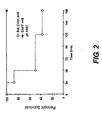
- Figure 2 all mice treated with BAFF survived sepsis. In contrast, only 37.5% of the mice treated with saline were alive 7 days after the induction of sepsis. Therefore, soluble BAFF dramatically improves survival in sepsis.
- mice were treated with BAFF via subcutaneous injection at a dose of 3 mg/kg twice daily for 5 days before CLP.
- Five control mice received saline only. Blood was collected from mice approximately 6 hours after the surgery.
- Apoptosis of circulating lymphocytes was evaluated using flow cytometry and annexin V/7AAD labeling kit (BioSource, No. PHN1018). As shown in Table 3, the pretreatment with BAFF significantly decreased lymphocyte apoptosis. The mean value for lymphocyte apoptosis in the saline-treated control group was 36.09 ⁇ 4.76%. In contrast, the mean value for lymphocyte apoptosis in the BAFF-treated group was 20.86 ⁇ 3.97%. Therefore, a pretreatment with BAFF reduces sepsis-induced lymphocyte death. The reduction of lymphocyte apoptosis in advanced stages of sepsis helps decrease immune suppression thereby improving survival. Table 3 Percentage of apoptotic cells No. BAFF-treated Control 1 16.96 42.32 2 12.72 32.36 3 23.14 34.41 4 18.09 23.3 5 33.4 48.08 Mean ⁇ SEM 20.86 ⁇ 3.97 36.09 ⁇ 4.76
Landscapes
- Health & Medical Sciences (AREA)
- Life Sciences & Earth Sciences (AREA)
- Pharmacology & Pharmacy (AREA)
- Veterinary Medicine (AREA)
- Public Health (AREA)
- General Health & Medical Sciences (AREA)
- Animal Behavior & Ethology (AREA)
- Chemical & Material Sciences (AREA)
- Medicinal Chemistry (AREA)
- General Chemical & Material Sciences (AREA)
- Nuclear Medicine, Radiotherapy & Molecular Imaging (AREA)
- Chemical Kinetics & Catalysis (AREA)
- Organic Chemistry (AREA)
- Bioinformatics & Cheminformatics (AREA)
- Engineering & Computer Science (AREA)
- Oncology (AREA)
- Immunology (AREA)
- Communicable Diseases (AREA)
- Hematology (AREA)
- Cell Biology (AREA)
- Zoology (AREA)
- Gastroenterology & Hepatology (AREA)
- Diabetes (AREA)
- Proteomics, Peptides & Aminoacids (AREA)
- Epidemiology (AREA)
- Pain & Pain Management (AREA)
- Rheumatology (AREA)
- Medicines That Contain Protein Lipid Enzymes And Other Medicines (AREA)
- Acyclic And Carbocyclic Compounds In Medicinal Compositions (AREA)
Claims (13)
- Löslicher BAFF (B-Zell-Aktivierungsfaktor aus der TNF-Familie) zur Verwendung bei der Behandlung oder Prävention von Sepsis, schwerer Sepsis oder septischem Schock bei einem Säugetier mit einer Sepsis oder mit einem Risiko, eine Sepsis zu entwickeln, wobei der lösliche BAFF in der Lage ist, an einen BAFF-Rezeptor zu binden und ausgewählt ist aus:(a) einem Polypeptid, welches die Aminosäuren 134-285 von SEQ ID NR. 1 oder N- und/oder C-terminale Trunkierungen davon umfasst, wobei sich der N-Terminus zwischen den Resten 134-170 von SEQ ID NR. 1 befindet und sich der C-Terminus zwischen den Resten 250-285 von SEQ ID NR. 1 befindet;(b) einem Polypeptid, welches die Aminosäuren 136-285 von SEQ ID NR. 1 umfasst;(c) einem Polypeptid, welches die Aminosäuren 145-284 von SEQ ID NR. 1 umfasst;(d) einem Polypeptid, welches die Aminosäuren 169-308 von SEQ ID NR. 2 umfasst;(e) einem Polypeptid, welches die Aminosäuren 126-309 von SEQ ID NR. 2 oder N- und/oder C-terminale Trunkierungen davon umfasst, wobei sich der N-Terminus zwischen den Resten 134-170 von SEQ ID NR. 2 befindet und sich der C-Terminus zwischen den Resten 270-309 von SEQ ID NR. 2 befindet;(f) einem Polypeptid, welches die Aminosäuren 170-305 von SEQ ID NR. 2 umfasst;(g) einem Polypeptid, welches die Aminosäuren 11-150 von SEQ ID NR. 3 umfasst;(h) einem Polypeptid, welches eine Aminosäuresequenz umfasst, die mindestens 90 % identisch mit den Aminosäuren 145-284 von SEQ ID NR. 1 ist;(i) einem Polypeptid, welches eine Aminosäuresequenz umfasst, die mindestens 90 % identisch mit den Aminosäuren 170-305 von SEQ ID NR. 2 ist; oder(j) jedem von (a) bis (i) verschmolzen mit einem Fc-Abschnitt eines Immunglobulins.
- Löslicher BAFF zur Verwendung nach Anspruch 1, wobei Sepsis, schwere Sepsis oder septischer Schock ein klinischer Zustand ist, der ferner als Bakteriämie, Septikämie, Peritonitis, systemisches inflammatorisches Response-Syndrom (SIRS), refraktärer septischer Schock oder Multiorganversagen (MODS) definiert ist.
- Löslicher BAFF zur Verwendung nach Anspruch 1 oder 2, wobei das Säugetier ein Mensch ist.
- Löslicher BAFF zur Verwendung nach Anspruch 3, wobei der Mensch ein Polytrauma oder eine Brandverletzung erlitten oder sich einem chirurgischen Eingriff unterzogen hat.
- Löslicher BAFF zur Verwendung nach einem der vorhergehenden Ansprüche, wobei das Säugetier eine verlängerte Sepsis von 3 Tagen oder länger aufweist.
- Löslicher BAFF zur Verwendung nach einem der vorhergehenden Ansprüche, wobei das Säugetier eine vorhergesagte Mortalitätsrate von mindestens 20 % auf der APACHE (Acute Physiology and Chronic Health Evaluation) II Skala aufweist.
- Löslicher BAFF zur Verwendung nach Anspruch 6, wobei das Säugetier ein Mensch ist, der eines oder mehrere der Folgenden zeigt:(a) absolute Zahl der weißen Blutkörperchen mindestens 30 % unter 11.000 pro mm3;(b) erhöhte Level an pro-inflammatorischen Zytokinen;(c) absolute Zahlen der zirkulierenden Lymphozyten unter 630 pro mm3;(d) absolute Zahlen der gesamten B-Zellen unter 100 pro mm3;(e) absolute Zahlen der gesamten CD8-T-Zellen unter 500 pro mm3;(f) hohes Level an anti-inflammatorischen Zytokinen; und(g) Verlust der verzögerten Hypersensitivität.
- Löslicher BAFF zur Verwendung nach Anspruch 6, wobei das Säugetier einen signifikanten Verlust von B- und/oder CD4-T-Zellen zeigt.
- Löslicher BAFF zur Verwendung nach einem der vorhergehenden Ansprüche, wobei der lösliche BAFF Folgendes umfasst:(a) die Aminosäuren 136-285 von SEQ ID NR. 1;(b) die Aminosäuren 145-284 von SEQ ID NR. 1;(c) die Aminosäuren 170-308 von SEQ ID NR. 2; oder(d) die Aminosäuren 11-150 von SEQ ID NR. 3.
- Löslicher BAFF zur Verwendung nach einem der vorhergehenden Ansprüche, wobei der lösliche BAFF in einem oder mehreren der folgenden Zeiträume an das Säugetier zu verabreichen ist:(a) vor dem Einsetzen einer Sepsis;(b) während einer anfänglichen Sepsis, jedoch vor dem Einsetzen einer schweren Sepsis;(c) während einer schweren Sepsis, jedoch vor dem Einsetzen eines septischen Schocks; und(d) nach dem Einsetzen eines septischen Schocks.
- Löslicher BAFF zur Verwendung nach einem der vorhergehenden Ansprüche, wobei der lösliche BAFF wie Folgt zu verabreichen ist:(a) in Kombination mit einem zweiten Therapeutikum für die Behandlung von Sepsis; oder(b) mit einer Dosierung zwischen 0,005 und 5 mg/kg.
- Löslicher BAFF zur Verwendung nach einem der vorhergehenden Ansprüche, welcher ferner das Evaluieren des Menschen auf eines oder mehrere der Folgenden umfasst: Zahl der weißen Blutkörperchen, Blutplättchenzahl, Blutkultur-Bakterienzahl, Blutgas und Nierenfunktion.
- Löslicher BAFF zur Verwendung nach einem der vorhergehenden Ansprüche, wobei der lösliche BAFF für einen Zeitraum zu verabreichen ist, der ausreichend ist, um die Apoptose von Lymphozyten zu verringern.
Priority Applications (1)
| Application Number | Priority Date | Filing Date | Title |
|---|---|---|---|
| EP10192504A EP2332563A3 (de) | 2004-10-13 | 2005-10-13 | Verwendung von BAFF zur Behandlung von Sepsis |
Applications Claiming Priority (2)
| Application Number | Priority Date | Filing Date | Title |
|---|---|---|---|
| US61843804P | 2004-10-13 | 2004-10-13 | |
| PCT/US2005/036907 WO2006044582A2 (en) | 2004-10-13 | 2005-10-13 | Use of baff to treat sepsis |
Related Child Applications (1)
| Application Number | Title | Priority Date | Filing Date |
|---|---|---|---|
| EP10192504A Division-Into EP2332563A3 (de) | 2004-10-13 | 2005-10-13 | Verwendung von BAFF zur Behandlung von Sepsis |
Publications (2)
| Publication Number | Publication Date |
|---|---|
| EP1814577A2 EP1814577A2 (de) | 2007-08-08 |
| EP1814577B1 true EP1814577B1 (de) | 2014-04-23 |
Family
ID=36051875
Family Applications (2)
| Application Number | Title | Priority Date | Filing Date |
|---|---|---|---|
| EP05810864.8A Expired - Lifetime EP1814577B1 (de) | 2004-10-13 | 2005-10-13 | Verwendung von baff zur behandlung von sepsis |
| EP10192504A Withdrawn EP2332563A3 (de) | 2004-10-13 | 2005-10-13 | Verwendung von BAFF zur Behandlung von Sepsis |
Family Applications After (1)
| Application Number | Title | Priority Date | Filing Date |
|---|---|---|---|
| EP10192504A Withdrawn EP2332563A3 (de) | 2004-10-13 | 2005-10-13 | Verwendung von BAFF zur Behandlung von Sepsis |
Country Status (5)
| Country | Link |
|---|---|
| EP (2) | EP1814577B1 (de) |
| AU (1) | AU2005295713B2 (de) |
| CA (1) | CA2583900A1 (de) |
| NZ (1) | NZ583905A (de) |
| WO (1) | WO2006044582A2 (de) |
Families Citing this family (5)
| Publication number | Priority date | Publication date | Assignee | Title |
|---|---|---|---|---|
| CA2900529A1 (en) | 2013-02-08 | 2014-08-14 | Institute For Myeloma & Bone Cancer Research | Improved diagnostic, prognostic, and monitoring methods for multiple myeloma, chronic lymphocytic leukemia, and b-cell non-hodgkin lymphoma |
| ES2898329T3 (es) | 2016-01-12 | 2022-03-07 | Oncotracker Inc | Métodos mejorados para supervisar el estado inmunitario de un sujeto |
| US20200326339A1 (en) * | 2016-05-16 | 2020-10-15 | James Richard BERENSON | Improved methods for monitoring immune status of a subject |
| WO2018231944A1 (en) | 2017-06-13 | 2018-12-20 | Berenson James R | Diagnostic, prognostic, and monitoring methods for solid tumor cancers |
| CN112516303A (zh) * | 2020-11-18 | 2021-03-19 | 华中科技大学同济医学院附属协和医院 | Baff抗体在制备脓毒血症药物中的应用 |
Family Cites Families (34)
| Publication number | Priority date | Publication date | Assignee | Title |
|---|---|---|---|---|
| US6541224B2 (en) | 1996-03-14 | 2003-04-01 | Human Genome Sciences, Inc. | Tumor necrosis factor delta polypeptides |
| US20030175208A1 (en) | 1996-10-25 | 2003-09-18 | Human Genome Sciences, Inc. | Neutrokine-alpha and neutrokine-alpha splice variant |
| ES2248823T5 (es) | 1996-10-25 | 2011-11-03 | Human Genome Sciences, Inc. | Neutroquina alfa. |
| US6689579B1 (en) | 1996-10-25 | 2004-02-10 | Human Genome Sciences, Inc. | Polynucleotides encoding neutrokine-α |
| AU5705898A (en) | 1996-12-17 | 1998-07-15 | Schering Corporation | Mammalian cell surface antigens; related reagents |
| IL133315A0 (en) | 1997-06-06 | 2001-04-30 | Regeneron Pharma | Ntn-2 member of tnf ligand family |
| JP2002517977A (ja) * | 1997-06-06 | 2002-06-18 | リジェネロン ファーマシューティカルズ,インコーポレイテッド | Tnfリガンドファミリーのntn−2メンバー |
| US20030022239A1 (en) | 1997-06-18 | 2003-01-30 | Genentech, Inc. | Secreted and transmembrane polypeptides and nucleic acids encoding the same |
| GB9714968D0 (en) | 1997-07-16 | 1997-09-24 | Radiodetection Ltd | Locating concealed conductors |
| JP3290108B2 (ja) | 1997-08-29 | 2002-06-10 | 麒麟麦酒株式会社 | プロモーター活性を増大させるdna配列 |
| WO1999011791A2 (en) | 1997-09-05 | 1999-03-11 | University Of Washington | Tumor necrosis factor family receptors and ligands, encoding nucleic acids and related binding agents |
| CA2303424A1 (en) | 1997-09-12 | 1999-03-18 | Jurg Tschopp | Kay - a novel immune system protein |
| US20020055624A1 (en) | 1997-11-17 | 2002-05-09 | Steven R. Wiley | Tnf-delta ligand and uses thereof |
| US20010010925A1 (en) | 1997-11-17 | 2001-08-02 | Steven R. Wiley | Methods of detecting target nucleic acids of tnf-delta |
| AU1467000A (en) | 1998-11-04 | 2000-05-22 | Government Of The United States Of America, As Represented By The Secretary Of The Department Of Health And Human Services, The | A novel tumor necrosis factor family member, drl, and related compositions and methods |
| GB9828628D0 (en) | 1998-12-23 | 1999-02-17 | Glaxo Group Ltd | Novel ligand |
| BR0007719A (pt) | 1999-01-25 | 2001-11-13 | Biogen Inc | Baff, agentes de bloqueio relacionados e uso dosmesmos no estìmulo e na inibição de células b e deimunoglobulinas em respostas imunológicas |
| US20030095967A1 (en) | 1999-01-25 | 2003-05-22 | Mackay Fabienne | BAFF, inhibitors thereof and their use in the modulation of B-cell response and treatment of autoimmune disorders |
| US6475986B1 (en) | 1999-02-02 | 2002-11-05 | Research Development Foundation | Uses of THANK, a TNF homologue that activates apoptosis |
| WO2000047740A2 (en) | 1999-02-12 | 2000-08-17 | Amgen Inc. | Tnf-related proteins |
| JP2003521931A (ja) | 2000-02-11 | 2003-07-22 | バイオジェン インコーポレイテッド | Tnfファミリーの異種ポリペプチド |
| CA2413160A1 (en) | 2000-06-15 | 2001-12-20 | Human Genome Sciences, Inc. | Human tumor necrosis factor delta and epsilon |
| EP1309718A4 (de) | 2000-08-15 | 2004-08-25 | Human Genome Sciences Inc | Neutrokin-alpha und spleiss-varianten von neutrokin-alpha |
| AU2001286775A1 (en) | 2000-08-25 | 2002-03-04 | Duke University | Adjuvant |
| US20040038349A1 (en) | 2001-07-27 | 2004-02-26 | Hilbert David M. | Heteromultimeric TNF ligand family members |
| AU2002339901A2 (en) | 2001-09-06 | 2003-03-24 | Biogen Idec Ma Inc. | Crystal structure of baff, and use thereof in drug design |
| EP1507793A4 (de) | 2001-10-17 | 2006-02-01 | Human Genome Sciences Inc | Neutrokin-alpha und neutrokin-alpha-spleissvariante |
| CA2465268A1 (en) | 2001-10-24 | 2003-05-01 | National Jewish Medical And Research Center | Three-dimensional structures of tall-1 and its cognate receptors and modified proteins and methods related thereto |
| WO2003050134A2 (en) | 2001-11-07 | 2003-06-19 | Human Genome Sciences, Inc. | Crystalline neutrokine-alpha protein, method of preparation thereof, and method of use thereof |
| EP2261250B1 (de) | 2001-12-21 | 2015-07-01 | Human Genome Sciences, Inc. | GCSF-Albumin Fusionsproteine |
| MXPA04005909A (es) | 2001-12-21 | 2005-05-17 | Immunex Corp | Polipeptidos recombinantes. |
| US20030211509A1 (en) | 2002-03-26 | 2003-11-13 | Wiley Steven R. | TNF-delta ligand and uses thereof |
| WO2004016737A2 (en) | 2002-08-14 | 2004-02-26 | Eli Lilly And Company | Novel htnfsf13b protein variants |
| CA2523776A1 (en) * | 2003-03-07 | 2004-09-23 | Xencor, Inc. | Baff mutants with at least one amino acid substitution and methods of their production |
-
2005
- 2005-10-13 NZ NZ583905A patent/NZ583905A/en not_active IP Right Cessation
- 2005-10-13 WO PCT/US2005/036907 patent/WO2006044582A2/en not_active Ceased
- 2005-10-13 AU AU2005295713A patent/AU2005295713B2/en not_active Ceased
- 2005-10-13 EP EP05810864.8A patent/EP1814577B1/de not_active Expired - Lifetime
- 2005-10-13 EP EP10192504A patent/EP2332563A3/de not_active Withdrawn
- 2005-10-13 CA CA002583900A patent/CA2583900A1/en not_active Abandoned
Also Published As
| Publication number | Publication date |
|---|---|
| WO2006044582A2 (en) | 2006-04-27 |
| EP2332563A2 (de) | 2011-06-15 |
| CA2583900A1 (en) | 2006-04-27 |
| AU2005295713B2 (en) | 2011-06-16 |
| AU2005295713A1 (en) | 2006-04-27 |
| NZ583905A (en) | 2011-12-22 |
| WO2006044582A3 (en) | 2006-07-27 |
| EP1814577A2 (de) | 2007-08-08 |
| EP2332563A3 (de) | 2013-03-13 |
Similar Documents
| Publication | Publication Date | Title |
|---|---|---|
| JP6825181B2 (ja) | 膵炎を治療するための薬剤の製造におけるil−22二量体の使用 | |
| Sheikh et al. | Death receptors as targets of cancer therapeutics | |
| EP2522676A2 (de) | Disintegrinvarianten und pharmazeutische Verwendungen damit | |
| US20190240145A1 (en) | Extended release of neuregulin for treating heart failure | |
| US8183201B2 (en) | Methods of treating αvβ3 integrin-associated diseases by administering polypeptides selective for αvβ3 integrin | |
| EP1814577B1 (de) | Verwendung von baff zur behandlung von sepsis | |
| JP2017114867A (ja) | ストロマ細胞由来因子−1のプロテアーゼ耐性変異体を用いた、組織損傷を修復するための方法 | |
| US10675324B2 (en) | Compositions and methods for modulating AT2R activity | |
| AU2016318097A1 (en) | Methods for treating heart failure using glucagon receptor antagonistic antibodies | |
| US7387993B2 (en) | Mannan-binding lectin (MBL) treatment of infections in individuals treated with TNF-αinhibitors | |
| JP2017524000A (ja) | 腹膜炎の治療のための組成物 | |
| HK1158950A (en) | Use of baff to treat sepsis | |
| Shin et al. | Soluble glucocorticoid-induced TNF receptor (sGITR) induces inflammation in mice | |
| CN111407881A (zh) | 神经调节蛋白用于预防、治疗或延迟心肌损伤的方法和组合物 | |
| WO2021091791A1 (en) | Inhibition of the ve-ptp phosphatase protects the kidney from ischemia-reperfusion injury | |
| JP4723496B2 (ja) | 線維症疾患の治療 | |
| HK1223556B (zh) | Il-22二聚体在制备用於治疗胰腺炎的药物中的用途 | |
| JP2007126388A (ja) | マスト細胞安定化剤 |
Legal Events
| Date | Code | Title | Description |
|---|---|---|---|
| PUAI | Public reference made under article 153(3) epc to a published international application that has entered the european phase |
Free format text: ORIGINAL CODE: 0009012 |
|
| 17P | Request for examination filed |
Effective date: 20070510 |
|
| AK | Designated contracting states |
Kind code of ref document: A2 Designated state(s): AT BE BG CH CY CZ DE DK EE ES FI FR GB GR HU IE IS IT LI LT LU LV MC NL PL PT RO SE SI SK TR |
|
| DAX | Request for extension of the european patent (deleted) | ||
| REG | Reference to a national code |
Ref country code: HK Ref legal event code: DE Ref document number: 1113460 Country of ref document: HK |
|
| 17Q | First examination report despatched |
Effective date: 20081128 |
|
| GRAP | Despatch of communication of intention to grant a patent |
Free format text: ORIGINAL CODE: EPIDOSNIGR1 |
|
| INTG | Intention to grant announced |
Effective date: 20130709 |
|
| GRAS | Grant fee paid |
Free format text: ORIGINAL CODE: EPIDOSNIGR3 |
|
| GRAA | (expected) grant |
Free format text: ORIGINAL CODE: 0009210 |
|
| AK | Designated contracting states |
Kind code of ref document: B1 Designated state(s): AT BE BG CH CY CZ DE DK EE ES FI FR GB GR HU IE IS IT LI LT LU LV MC NL PL PT RO SE SI SK TR |
|
| REG | Reference to a national code |
Ref country code: GB Ref legal event code: FG4D |
|
| REG | Reference to a national code |
Ref country code: CH Ref legal event code: EP |
|
| REG | Reference to a national code |
Ref country code: AT Ref legal event code: REF Ref document number: 663379 Country of ref document: AT Kind code of ref document: T Effective date: 20140515 |
|
| REG | Reference to a national code |
Ref country code: IE Ref legal event code: FG4D |
|
| REG | Reference to a national code |
Ref country code: DE Ref legal event code: R096 Ref document number: 602005043401 Country of ref document: DE Effective date: 20140605 |
|
| REG | Reference to a national code |
Ref country code: CH Ref legal event code: NV Representative=s name: SCHMAUDER AND PARTNER AG PATENT- UND MARKENANW, CH |
|
| REG | Reference to a national code |
Ref country code: AT Ref legal event code: MK05 Ref document number: 663379 Country of ref document: AT Kind code of ref document: T Effective date: 20140423 |
|
| REG | Reference to a national code |
Ref country code: NL Ref legal event code: VDEP Effective date: 20140423 |
|
| REG | Reference to a national code |
Ref country code: LT Ref legal event code: MG4D |
|
| PG25 | Lapsed in a contracting state [announced via postgrant information from national office to epo] |
Ref country code: BG Free format text: LAPSE BECAUSE OF FAILURE TO SUBMIT A TRANSLATION OF THE DESCRIPTION OR TO PAY THE FEE WITHIN THE PRESCRIBED TIME-LIMIT Effective date: 20140723 Ref country code: NL Free format text: LAPSE BECAUSE OF FAILURE TO SUBMIT A TRANSLATION OF THE DESCRIPTION OR TO PAY THE FEE WITHIN THE PRESCRIBED TIME-LIMIT Effective date: 20140423 Ref country code: CY Free format text: LAPSE BECAUSE OF FAILURE TO SUBMIT A TRANSLATION OF THE DESCRIPTION OR TO PAY THE FEE WITHIN THE PRESCRIBED TIME-LIMIT Effective date: 20140423 Ref country code: GR Free format text: LAPSE BECAUSE OF FAILURE TO SUBMIT A TRANSLATION OF THE DESCRIPTION OR TO PAY THE FEE WITHIN THE PRESCRIBED TIME-LIMIT Effective date: 20140724 Ref country code: IS Free format text: LAPSE BECAUSE OF FAILURE TO SUBMIT A TRANSLATION OF THE DESCRIPTION OR TO PAY THE FEE WITHIN THE PRESCRIBED TIME-LIMIT Effective date: 20140823 Ref country code: FI Free format text: LAPSE BECAUSE OF FAILURE TO SUBMIT A TRANSLATION OF THE DESCRIPTION OR TO PAY THE FEE WITHIN THE PRESCRIBED TIME-LIMIT Effective date: 20140423 Ref country code: LT Free format text: LAPSE BECAUSE OF FAILURE TO SUBMIT A TRANSLATION OF THE DESCRIPTION OR TO PAY THE FEE WITHIN THE PRESCRIBED TIME-LIMIT Effective date: 20140423 |
|
| PG25 | Lapsed in a contracting state [announced via postgrant information from national office to epo] |
Ref country code: SE Free format text: LAPSE BECAUSE OF FAILURE TO SUBMIT A TRANSLATION OF THE DESCRIPTION OR TO PAY THE FEE WITHIN THE PRESCRIBED TIME-LIMIT Effective date: 20140423 Ref country code: LV Free format text: LAPSE BECAUSE OF FAILURE TO SUBMIT A TRANSLATION OF THE DESCRIPTION OR TO PAY THE FEE WITHIN THE PRESCRIBED TIME-LIMIT Effective date: 20140423 Ref country code: PL Free format text: LAPSE BECAUSE OF FAILURE TO SUBMIT A TRANSLATION OF THE DESCRIPTION OR TO PAY THE FEE WITHIN THE PRESCRIBED TIME-LIMIT Effective date: 20140423 Ref country code: ES Free format text: LAPSE BECAUSE OF FAILURE TO SUBMIT A TRANSLATION OF THE DESCRIPTION OR TO PAY THE FEE WITHIN THE PRESCRIBED TIME-LIMIT Effective date: 20140423 Ref country code: AT Free format text: LAPSE BECAUSE OF FAILURE TO SUBMIT A TRANSLATION OF THE DESCRIPTION OR TO PAY THE FEE WITHIN THE PRESCRIBED TIME-LIMIT Effective date: 20140423 |
|
| PG25 | Lapsed in a contracting state [announced via postgrant information from national office to epo] |
Ref country code: PT Free format text: LAPSE BECAUSE OF FAILURE TO SUBMIT A TRANSLATION OF THE DESCRIPTION OR TO PAY THE FEE WITHIN THE PRESCRIBED TIME-LIMIT Effective date: 20140825 |
|
| REG | Reference to a national code |
Ref country code: DE Ref legal event code: R097 Ref document number: 602005043401 Country of ref document: DE |
|
| PG25 | Lapsed in a contracting state [announced via postgrant information from national office to epo] |
Ref country code: DK Free format text: LAPSE BECAUSE OF FAILURE TO SUBMIT A TRANSLATION OF THE DESCRIPTION OR TO PAY THE FEE WITHIN THE PRESCRIBED TIME-LIMIT Effective date: 20140423 Ref country code: BE Free format text: LAPSE BECAUSE OF FAILURE TO SUBMIT A TRANSLATION OF THE DESCRIPTION OR TO PAY THE FEE WITHIN THE PRESCRIBED TIME-LIMIT Effective date: 20140423 Ref country code: SK Free format text: LAPSE BECAUSE OF FAILURE TO SUBMIT A TRANSLATION OF THE DESCRIPTION OR TO PAY THE FEE WITHIN THE PRESCRIBED TIME-LIMIT Effective date: 20140423 Ref country code: EE Free format text: LAPSE BECAUSE OF FAILURE TO SUBMIT A TRANSLATION OF THE DESCRIPTION OR TO PAY THE FEE WITHIN THE PRESCRIBED TIME-LIMIT Effective date: 20140423 Ref country code: RO Free format text: LAPSE BECAUSE OF FAILURE TO SUBMIT A TRANSLATION OF THE DESCRIPTION OR TO PAY THE FEE WITHIN THE PRESCRIBED TIME-LIMIT Effective date: 20140423 Ref country code: CZ Free format text: LAPSE BECAUSE OF FAILURE TO SUBMIT A TRANSLATION OF THE DESCRIPTION OR TO PAY THE FEE WITHIN THE PRESCRIBED TIME-LIMIT Effective date: 20140423 |
|
| PLBE | No opposition filed within time limit |
Free format text: ORIGINAL CODE: 0009261 |
|
| STAA | Information on the status of an ep patent application or granted ep patent |
Free format text: STATUS: NO OPPOSITION FILED WITHIN TIME LIMIT |
|
| PG25 | Lapsed in a contracting state [announced via postgrant information from national office to epo] |
Ref country code: IT Free format text: LAPSE BECAUSE OF FAILURE TO SUBMIT A TRANSLATION OF THE DESCRIPTION OR TO PAY THE FEE WITHIN THE PRESCRIBED TIME-LIMIT Effective date: 20140423 |
|
| 26N | No opposition filed |
Effective date: 20150126 |
|
| REG | Reference to a national code |
Ref country code: DE Ref legal event code: R097 Ref document number: 602005043401 Country of ref document: DE Effective date: 20150126 |
|
| REG | Reference to a national code |
Ref country code: HK Ref legal event code: WD Ref document number: 1113460 Country of ref document: HK |
|
| PG25 | Lapsed in a contracting state [announced via postgrant information from national office to epo] |
Ref country code: MC Free format text: LAPSE BECAUSE OF FAILURE TO SUBMIT A TRANSLATION OF THE DESCRIPTION OR TO PAY THE FEE WITHIN THE PRESCRIBED TIME-LIMIT Effective date: 20140423 Ref country code: LU Free format text: LAPSE BECAUSE OF FAILURE TO SUBMIT A TRANSLATION OF THE DESCRIPTION OR TO PAY THE FEE WITHIN THE PRESCRIBED TIME-LIMIT Effective date: 20141013 |
|
| PG25 | Lapsed in a contracting state [announced via postgrant information from national office to epo] |
Ref country code: SI Free format text: LAPSE BECAUSE OF FAILURE TO SUBMIT A TRANSLATION OF THE DESCRIPTION OR TO PAY THE FEE WITHIN THE PRESCRIBED TIME-LIMIT Effective date: 20140423 |
|
| REG | Reference to a national code |
Ref country code: FR Ref legal event code: PLFP Year of fee payment: 11 |
|
| PGFP | Annual fee paid to national office [announced via postgrant information from national office to epo] |
Ref country code: IE Payment date: 20151028 Year of fee payment: 11 Ref country code: DE Payment date: 20151028 Year of fee payment: 11 Ref country code: CH Payment date: 20151027 Year of fee payment: 11 Ref country code: GB Payment date: 20151027 Year of fee payment: 11 |
|
| PGFP | Annual fee paid to national office [announced via postgrant information from national office to epo] |
Ref country code: FR Payment date: 20151019 Year of fee payment: 11 |
|
| PG25 | Lapsed in a contracting state [announced via postgrant information from national office to epo] |
Ref country code: TR Free format text: LAPSE BECAUSE OF FAILURE TO SUBMIT A TRANSLATION OF THE DESCRIPTION OR TO PAY THE FEE WITHIN THE PRESCRIBED TIME-LIMIT Effective date: 20140423 Ref country code: HU Free format text: LAPSE BECAUSE OF FAILURE TO SUBMIT A TRANSLATION OF THE DESCRIPTION OR TO PAY THE FEE WITHIN THE PRESCRIBED TIME-LIMIT; INVALID AB INITIO Effective date: 20051013 |
|
| REG | Reference to a national code |
Ref country code: DE Ref legal event code: R119 Ref document number: 602005043401 Country of ref document: DE |
|
| REG | Reference to a national code |
Ref country code: CH Ref legal event code: PL |
|
| GBPC | Gb: european patent ceased through non-payment of renewal fee |
Effective date: 20161013 |
|
| REG | Reference to a national code |
Ref country code: IE Ref legal event code: MM4A |
|
| REG | Reference to a national code |
Ref country code: FR Ref legal event code: ST Effective date: 20170630 |
|
| PG25 | Lapsed in a contracting state [announced via postgrant information from national office to epo] |
Ref country code: DE Free format text: LAPSE BECAUSE OF NON-PAYMENT OF DUE FEES Effective date: 20170503 Ref country code: GB Free format text: LAPSE BECAUSE OF NON-PAYMENT OF DUE FEES Effective date: 20161013 Ref country code: LI Free format text: LAPSE BECAUSE OF NON-PAYMENT OF DUE FEES Effective date: 20161031 Ref country code: CH Free format text: LAPSE BECAUSE OF NON-PAYMENT OF DUE FEES Effective date: 20161031 Ref country code: FR Free format text: LAPSE BECAUSE OF NON-PAYMENT OF DUE FEES Effective date: 20161102 |
|
| PG25 | Lapsed in a contracting state [announced via postgrant information from national office to epo] |
Ref country code: IE Free format text: LAPSE BECAUSE OF NON-PAYMENT OF DUE FEES Effective date: 20161013 |