EP1814846B1 - 11beta-hsd1-inhibitoren - Google Patents
11beta-hsd1-inhibitoren Download PDFInfo
- Publication number
- EP1814846B1 EP1814846B1 EP05806462A EP05806462A EP1814846B1 EP 1814846 B1 EP1814846 B1 EP 1814846B1 EP 05806462 A EP05806462 A EP 05806462A EP 05806462 A EP05806462 A EP 05806462A EP 1814846 B1 EP1814846 B1 EP 1814846B1
- Authority
- EP
- European Patent Office
- Prior art keywords
- alkyl
- cycloalkyl
- optionally substituted
- phenyl
- halogen
- Prior art date
- Legal status (The legal status is an assumption and is not a legal conclusion. Google has not performed a legal analysis and makes no representation as to the accuracy of the status listed.)
- Expired - Lifetime
Links
- 0 CCC(C(**)=*C)=I*C(CN)=**C Chemical compound CCC(C(**)=*C)=I*C(CN)=**C 0.000 description 4
- BNIUAUFSYHXBTF-UHFFFAOYSA-N CC(C)(CC(Cc1cccc(C(O)O)c1)=C)C=C Chemical compound CC(C)(CC(Cc1cccc(C(O)O)c1)=C)C=C BNIUAUFSYHXBTF-UHFFFAOYSA-N 0.000 description 1
Classifications
-
- C—CHEMISTRY; METALLURGY
- C07—ORGANIC CHEMISTRY
- C07D—HETEROCYCLIC COMPOUNDS
- C07D213/00—Heterocyclic compounds containing six-membered rings, not condensed with other rings, with one nitrogen atom as the only ring hetero atom and three or more double bonds between ring members or between ring members and non-ring members
- C07D213/02—Heterocyclic compounds containing six-membered rings, not condensed with other rings, with one nitrogen atom as the only ring hetero atom and three or more double bonds between ring members or between ring members and non-ring members having three double bonds between ring members or between ring members and non-ring members
- C07D213/04—Heterocyclic compounds containing six-membered rings, not condensed with other rings, with one nitrogen atom as the only ring hetero atom and three or more double bonds between ring members or between ring members and non-ring members having three double bonds between ring members or between ring members and non-ring members having no bond between the ring nitrogen atom and a non-ring member or having only hydrogen or carbon atoms directly attached to the ring nitrogen atom
- C07D213/60—Heterocyclic compounds containing six-membered rings, not condensed with other rings, with one nitrogen atom as the only ring hetero atom and three or more double bonds between ring members or between ring members and non-ring members having three double bonds between ring members or between ring members and non-ring members having no bond between the ring nitrogen atom and a non-ring member or having only hydrogen or carbon atoms directly attached to the ring nitrogen atom with hetero atoms or with carbon atoms having three bonds to hetero atoms with at the most one bond to halogen, e.g. ester or nitrile radicals, directly attached to ring carbon atoms
- C07D213/78—Carbon atoms having three bonds to hetero atoms, with at the most one bond to halogen, e.g. ester or nitrile radicals
- C07D213/79—Acids; Esters
-
- A—HUMAN NECESSITIES
- A61—MEDICAL OR VETERINARY SCIENCE; HYGIENE
- A61P—SPECIFIC THERAPEUTIC ACTIVITY OF CHEMICAL COMPOUNDS OR MEDICINAL PREPARATIONS
- A61P1/00—Drugs for disorders of the alimentary tract or the digestive system
- A61P1/18—Drugs for disorders of the alimentary tract or the digestive system for pancreatic disorders, e.g. pancreatic enzymes
-
- A—HUMAN NECESSITIES
- A61—MEDICAL OR VETERINARY SCIENCE; HYGIENE
- A61P—SPECIFIC THERAPEUTIC ACTIVITY OF CHEMICAL COMPOUNDS OR MEDICINAL PREPARATIONS
- A61P13/00—Drugs for disorders of the urinary system
- A61P13/12—Drugs for disorders of the urinary system of the kidneys
-
- A—HUMAN NECESSITIES
- A61—MEDICAL OR VETERINARY SCIENCE; HYGIENE
- A61P—SPECIFIC THERAPEUTIC ACTIVITY OF CHEMICAL COMPOUNDS OR MEDICINAL PREPARATIONS
- A61P19/00—Drugs for skeletal disorders
- A61P19/08—Drugs for skeletal disorders for bone diseases, e.g. rachitism, Paget's disease
- A61P19/10—Drugs for skeletal disorders for bone diseases, e.g. rachitism, Paget's disease for osteoporosis
-
- A—HUMAN NECESSITIES
- A61—MEDICAL OR VETERINARY SCIENCE; HYGIENE
- A61P—SPECIFIC THERAPEUTIC ACTIVITY OF CHEMICAL COMPOUNDS OR MEDICINAL PREPARATIONS
- A61P25/00—Drugs for disorders of the nervous system
-
- A—HUMAN NECESSITIES
- A61—MEDICAL OR VETERINARY SCIENCE; HYGIENE
- A61P—SPECIFIC THERAPEUTIC ACTIVITY OF CHEMICAL COMPOUNDS OR MEDICINAL PREPARATIONS
- A61P25/00—Drugs for disorders of the nervous system
- A61P25/08—Antiepileptics; Anticonvulsants
-
- A—HUMAN NECESSITIES
- A61—MEDICAL OR VETERINARY SCIENCE; HYGIENE
- A61P—SPECIFIC THERAPEUTIC ACTIVITY OF CHEMICAL COMPOUNDS OR MEDICINAL PREPARATIONS
- A61P25/00—Drugs for disorders of the nervous system
- A61P25/24—Antidepressants
-
- A—HUMAN NECESSITIES
- A61—MEDICAL OR VETERINARY SCIENCE; HYGIENE
- A61P—SPECIFIC THERAPEUTIC ACTIVITY OF CHEMICAL COMPOUNDS OR MEDICINAL PREPARATIONS
- A61P25/00—Drugs for disorders of the nervous system
- A61P25/28—Drugs for disorders of the nervous system for treating neurodegenerative disorders of the central nervous system, e.g. nootropic agents, cognition enhancers, drugs for treating Alzheimer's disease or other forms of dementia
-
- A—HUMAN NECESSITIES
- A61—MEDICAL OR VETERINARY SCIENCE; HYGIENE
- A61P—SPECIFIC THERAPEUTIC ACTIVITY OF CHEMICAL COMPOUNDS OR MEDICINAL PREPARATIONS
- A61P27/00—Drugs for disorders of the senses
- A61P27/02—Ophthalmic agents
-
- A—HUMAN NECESSITIES
- A61—MEDICAL OR VETERINARY SCIENCE; HYGIENE
- A61P—SPECIFIC THERAPEUTIC ACTIVITY OF CHEMICAL COMPOUNDS OR MEDICINAL PREPARATIONS
- A61P3/00—Drugs for disorders of the metabolism
- A61P3/04—Anorexiants; Antiobesity agents
-
- A—HUMAN NECESSITIES
- A61—MEDICAL OR VETERINARY SCIENCE; HYGIENE
- A61P—SPECIFIC THERAPEUTIC ACTIVITY OF CHEMICAL COMPOUNDS OR MEDICINAL PREPARATIONS
- A61P3/00—Drugs for disorders of the metabolism
- A61P3/06—Antihyperlipidemics
-
- A—HUMAN NECESSITIES
- A61—MEDICAL OR VETERINARY SCIENCE; HYGIENE
- A61P—SPECIFIC THERAPEUTIC ACTIVITY OF CHEMICAL COMPOUNDS OR MEDICINAL PREPARATIONS
- A61P3/00—Drugs for disorders of the metabolism
- A61P3/08—Drugs for disorders of the metabolism for glucose homeostasis
- A61P3/10—Drugs for disorders of the metabolism for glucose homeostasis for hyperglycaemia, e.g. antidiabetics
-
- A—HUMAN NECESSITIES
- A61—MEDICAL OR VETERINARY SCIENCE; HYGIENE
- A61P—SPECIFIC THERAPEUTIC ACTIVITY OF CHEMICAL COMPOUNDS OR MEDICINAL PREPARATIONS
- A61P35/00—Antineoplastic agents
-
- A—HUMAN NECESSITIES
- A61—MEDICAL OR VETERINARY SCIENCE; HYGIENE
- A61P—SPECIFIC THERAPEUTIC ACTIVITY OF CHEMICAL COMPOUNDS OR MEDICINAL PREPARATIONS
- A61P9/00—Drugs for disorders of the cardiovascular system
- A61P9/08—Vasodilators for multiple indications
-
- A—HUMAN NECESSITIES
- A61—MEDICAL OR VETERINARY SCIENCE; HYGIENE
- A61P—SPECIFIC THERAPEUTIC ACTIVITY OF CHEMICAL COMPOUNDS OR MEDICINAL PREPARATIONS
- A61P9/00—Drugs for disorders of the cardiovascular system
- A61P9/10—Drugs for disorders of the cardiovascular system for treating ischaemic or atherosclerotic diseases, e.g. antianginal drugs, coronary vasodilators, drugs for myocardial infarction, retinopathy, cerebrovascula insufficiency, renal arteriosclerosis
-
- C—CHEMISTRY; METALLURGY
- C07—ORGANIC CHEMISTRY
- C07C—ACYCLIC OR CARBOCYCLIC COMPOUNDS
- C07C311/00—Amides of sulfonic acids, i.e. compounds having singly-bound oxygen atoms of sulfo groups replaced by nitrogen atoms, not being part of nitro or nitroso groups
- C07C311/15—Sulfonamides having sulfur atoms of sulfonamide groups bound to carbon atoms of six-membered aromatic rings
- C07C311/16—Sulfonamides having sulfur atoms of sulfonamide groups bound to carbon atoms of six-membered aromatic rings having the nitrogen atom of at least one of the sulfonamide groups bound to hydrogen atoms or to an acyclic carbon atom
- C07C311/19—Sulfonamides having sulfur atoms of sulfonamide groups bound to carbon atoms of six-membered aromatic rings having the nitrogen atom of at least one of the sulfonamide groups bound to hydrogen atoms or to an acyclic carbon atom to an acyclic carbon atom of a hydrocarbon radical substituted by carboxyl groups
-
- C—CHEMISTRY; METALLURGY
- C07—ORGANIC CHEMISTRY
- C07D—HETEROCYCLIC COMPOUNDS
- C07D237/00—Heterocyclic compounds containing 1,2-diazine or hydrogenated 1,2-diazine rings
- C07D237/02—Heterocyclic compounds containing 1,2-diazine or hydrogenated 1,2-diazine rings not condensed with other rings
- C07D237/06—Heterocyclic compounds containing 1,2-diazine or hydrogenated 1,2-diazine rings not condensed with other rings having three double bonds between ring members or between ring members and non-ring members
- C07D237/10—Heterocyclic compounds containing 1,2-diazine or hydrogenated 1,2-diazine rings not condensed with other rings having three double bonds between ring members or between ring members and non-ring members with hetero atoms or with carbon atoms having three bonds to hetero atoms with at the most one bond to halogen, e.g. ester or nitrile radicals, directly attached to ring carbon atoms
- C07D237/24—Carbon atoms having three bonds to hetero atoms with at the most one bond to halogen
Definitions
- the present invention relates to a novel class of 11 ⁇ -HSD1 inhibitors, including pharmaceutically acceptable salts thereof, which are useful as therapeutic compounds, particularly in the treatment of type 2 diabetes mellitus, often referred to as non-insulin dependent diabetes mellitus (NIDDM), and of conditions that are often associated with this disease, such as metabolic syndrome, obesity and lipid disorders.
- NIDDM non-insulin dependent diabetes mellitus
- the present invention also relates to processes for preparing said compounds.
- Diabetes is a disease derived from multiple causative factors and characterized by elevated levels of plasma glucose (hyperglycemia) in the fasting state or after administration of glucose during an oral glucose tolerance test.
- hyperglycemia plasma glucose
- type 1 diabetes or insulin-dependent diabetes mellitus (IDDM)
- IDDM insulin-dependent diabetes mellitus
- type 2 diabetes or noninsulin-dependent diabetes mellitus (NIDDM) insulin is still produced in the body.
- NIDDM noninsulin-dependent diabetes mellitus
- hyperinsulinemia plasma insulin levels that are the same or even elevated in comparison with non-diabetic subjects
- insulin resistance is a resistance to the effect of insulin in stimulating glucose and lipid metabolism in the main insulin-sensitive tissues, which are muscle, liver and adipose tissues.
- patients who are insulin resistant but not diabetic have elevated insulin levels that compensate for the insulin resistance so that serum glucose levels are not elevated.
- the plasma insulin levels even when they are elevated, are insufficient to overcome the pronounced insulin resistance.
- Insulin resistance is not primarily due to a diminished number of insulin receptors but to a post-insulin receptor binding defect that is not yet completely understood. This resistance to insulin responsiveness results in insufficient insulin activation of glucose uptake, oxidation and storage in muscle and inadequate insulin repression of lipolysis in adipose tissue and of glucose production and secretion in the liver (gluconeogenesis and glycogenolysis).
- Persistent or uncontrolled hyperglycemia that occurs with diabetes is associated with increased and premature morbidity and mortality.
- Often abnormal glucose homeostasis is associated both directly and indirectly with obesity, hypertension, and alterations of the lipid, lipoprotein and apolipoprotein metabolism and other metabolic and hemodynamic disease. Therefore patients with type 2 diabetes mellitus are at an especially increased risk of macrovascular and microvascular complications, including atherosclerosis, coronary heart disease, stroke, peripheral vascular disease, hypertension, nephropathy, neuropathy, and retinopathy.
- This syndrome is characterized by insulin resistance, abdominal/visceral obesity, hyperinsulinemia, high blood pressure, low HDL, and high VLDL (dyslipidemia).
- diabetes mellitus e.g. atherosclerosis and coronary heart disease/cardiovascular disease.
- the metabolic syndrome often starts with continuous weight increase leading to significant visceral obesity.
- Increased visceral adipose tissue mass which is not only an energy storage organ but also an important endocrine organ secreting hormones and signalling molecules, is believed to be a major source for the development of all the diseases that are summarized as metabolic syndrome especially dyslipidemia, hypertension, insulin resistance and ⁇ -cell dysfunction.
- Progression of visceral obesity can lead toinsulin resistance causing impaired glucose tolerance and finally type 2 diabetes mellitus.
- Diabetes, dyslipidemia and hypertension are major risk factors for cardiovascular disease, a main cause for death in western world.
- Increased 11 ⁇ -HSD 1 activity in adipocytes is believed to be one of the essential factors that are responsible for the increase of visceral adipose tissue mass because overexpression in adipose tissue in mice causes visceral obesity and finally a disease state representing human metabolic syndrome (Masuzaki, H. et al. 2001).Furthermore, increased 11 ⁇ -HSD 1 activity in visceral adipose tissue is found in patients with visceral obesity and/or type 2 diabetes mellitus and in patients with metabolic syndrome.
- mice On the other hand deletion of 11 ⁇ -HSD 1 activity in mice protects against diet-induced obesity and related diseases like, glucose intolerance, insulin resistance, type 2 diabetes mellitus and metabolic syndrome (Kotelevtsev, Y. et al. 1997; Morton, NM. et al. 2001 and 2004) and ameliorates age-related learning impairments in addition (Yau, JLW. et al. 2001).
- sulfonylureas e. g. tolbutamide and glipizide
- meglitinide which stimulate the pancreatic ⁇ -cells to secrete more insulin, and/or by injection of insulin when sulfonylureas or meglitinide become ineffective, can result in insulin concentrations high enough to stimulate the very insulin-resistant tissues.
- phenformin can induce lactic acidosis and nausea/diarrhea.
- Metformin has fewer side effects than phenformin and is often prescribed for the treatment of type 2 diabetes.
- the glitazones are a newer class of compounds with the potential for ameliorating hyperglycemia and other symptoms of type 2 diabetes. These agents substantially increase insulin sensitivity in muscle, liver and adipose tissue in several animal models of type 2 diabetes, resulting in partial or complete correction of the elevated plasma levels of glucose without occurrence of hypoglycemia.
- the glitazones that are currently marketed are agonists of the peroxisome proliferator activated receptor (PPAR) gamma subtype.
- PPARgamma agonism is generally believed to be responsible for the improved insulin sensititization that is observed with the glitazones.
- Newer PPAR agonists that are being developed for treatment of type 2 diabetes and/or dyslipidemia are agonists of one or more of the PPAR alpha, gamma and delta subtypes.
- New biochemical approaches that have been recently introduced or are under active development include treatment with alpha-glucosidase inhibitors (e. g. acarbose), protein tyrosine phosphatase-1B (PTP-1B) inhibitors, and inhibitors of the dipeptidyl peptidase-IV (DPP-IV) enzyme. Inhibition of the expression of PTP-1B by the use of antisense oligonucleotides is also under investigation.
- alpha-glucosidase inhibitors e. g. acarbose
- PTP-1B protein tyrosine phosphatase-1B
- DPP-IV dipeptidyl peptidase-IV
- Another method of treating type 2 diabetes that has been suggested in the literature is the use of inhibitors of the 11- ⁇ -hydroxysteroid dehydrogenase type 1 enzyme (11 ⁇ -HSD 1) to reduce the amount of active glucocorticoids in tissues where glucose is metabolized.
- 11 ⁇ -HSD 1 11- ⁇ -hydroxysteroid dehydrogenase type 1 enzyme
- Mono- and bicyclic thiazole sulfonamides are disclosed in WO-A 01/90090 , WO-A 01/90091 , WO-A 01/90092 , WO-A 01/90093 , WO-A 01/90094 , WO-A 03/043999 and WO-A 2004/037251 .
- Thiophene and thiadiazole sufonamides are known from WO-A 03/044009 and WO-A 03/044000 .
- compounds containing a triazole moiety are known from WO-A 03/065983 and WO-A 03/104208 .
- Aryl and heteroaryl ketones are known from WO-A 04/011410 .
- 1,4-Disubstituted piperidines are known from WO-A 04/033427 and 2-oxo-ethanesulfonamides are known from WO-A 04/041264 .
- Adamantyl acetamides are known from WO-A 04/056744 and WO-A 04/056745 .
- Amide derivatives are known from WO-A 04/065351 .
- the object of the present invention is to provide a new class of compounds as 11 ⁇ -HSD 1 inhibitors which may be effective in the treatment of type 2 diabetes, metabolic syndrome and other 11 ⁇ -HSD 1 modulated diseases.
- the present invention provides compounds of formula (I) or a pharmaceutically acceptable salt, prodrug or metabolite thereof, wherein
- variable or substituent can be selected from a group of different variants and such variable or substituent occurs more than once the respective variants can be the same or different.
- Preferred compounds of formula (I) are those compounds in which one or more of the residues contained therein have the meanings given below, with all combinations of preferred substituent definitions being a subject of the present invention.
- the present invention also includes all tautomeric and stereoisomeric forms and mixtures thereof in all ratios, and their pharmaceutically acceptable salts.
- the substituents A, Y, Z 1 , Z 2 , R 1 to R 3 and X 1 to X 4 of the formula (I) independently have the following meaning.
- one or more of the substituents A, Y, Z 1 , Z 2 , R 1 to R 3 and X 1 to X 4 can have the preferred or more preferred meanings given below.
- At most three of X 1 , X 2 , X 3 and X 4 are N; more preferred at most one of X 1 , X 2 , X 3 and X 4 is N.
- R 4 is F; Cl; Br; CH 3 ; OCH 3 , NH 2 ; or phenyl.
- Y is -*S(O) 2 -NH-, or -*S(O 2 )-N(CH 3 )- wherein the atom marked with an asterisk is attached to A.
- A is phenyl, adamantyl; C 3-7 cycloalkyl; heterocyclyl; or C 1-6 alkyl, wherein C 1-6 alkyl is otionally substituted with T. More preferred, A is phenyl; cyclohexyl; thiophenyl; benzothiophenyl; naphthyl; diazolyl; or pyridyl.
- A is T and T is optionally substituted with up to 3 R 7 , independently being F; Cl; CH 3 ; OCH 3 ; N(CH 3 ) 2 ; T 1 ; OT 1 ; or NHT 1 .
- T 1 is phenyl, which is optionally substituted with up to three halogens, independently being F; or Cl.
- A is T and T is heterobicyclyl, more preferred T is decahydroquinoline or tetrahydroisoquinoline, wherein the ring nitrogen is directly linked to the sulphur of the sulphonamide group representing Y.
- Z 1 O and Z 2 is -NR 14 .
- R 14 is H.
- R 3 is phenyl; benzyl; heterocyclyl; C 3-7 cycloalkyl; or C 1-6 alkyl, wherein C 1-6 alkyl is optionally substituted with O-C 1-6 alkyl or C 3-7 cycloalkyl.
- R 3 is T 2 and T 2 is substituted with up to three R 19 , independently being F; Cl; CH 3 ; OCH 3 ; N(CH 3 ) 2 ; COOH; COOCH 3 ; CF 3 ; or C(O)NH 2 .
- T 2 is phenyl; cyclohexyl; or pyridyl.
- R 3 , R 14 are independently H or C 1-6 alkyl independently selected from the group consisting of ethyl; isopropyl; n-propyl; n-butyl, wherein C 1-6 alkyl is optionally substituted with N(CH 3 ) 2 ; or N(C 2 H 5 ) 2 .
- Z 1 N-R 15 and R 15 , R 3 jointly form a heterocycle.
- the heterocycle is oxazole; oxadiazole; diazole; or triazole, wherein the heterocycle is optionally substituted with one R 16 being C 1-6 alkyl, optionally substituted with N(CH 3 ) 2 or N(CH 2 CH 3 ) 2 ; C 3-7 cycloalkyl; phenyl; or heterocyclyl.
- R 16 is methyl; ethyl; iso-propyl; cyclohexyl; phenyl; or piperidinyl.
- R 3 , R 14 jointly form a heterocycle.
- the heterocycle is piperazine; morpholine; piperidine; or pyrrolidine, wherein the heterocycle is optionally substituted with methyl.
- tautomerism like e.g. keto-enol tautomerism
- compounds of general formula (I) may occur
- the individual forms like e.g. the keto and enol form, are comprised separately and together as mixtures in any ratio.
- stereoisomers like e.g. enantiomers, cis/trans isomers, conformers and the like.
- isomers can be separated by methods well known in the art, e.g. by liquid chromatography. Same applies for enantiomers by using e.g. chiral stationary phases. Additionally, enantiomers may be isolated by converting them into diastereomers, i.e. coupling with an enantiomerically pure auxiliary compound, subsequent separation of the resulting diastereomers and cleavage of the auxiliary residue. Alternatively, any enantiomer of a compound of formula (I) may be obtained from stereoselective synthesis using optically pure starting materials.
- the invention also comprises their corresponding pharmaceutically or toxicologically acceptable salts, in particular their pharmaceutically utilizable salts.
- the compounds of the formula (I) which contain acidic groups can be used according to the invention, for example, as alkali metal salts, alkaline earth metal salts or as ammonium salts. More precise examples of such salts include sodium salts, potassium salts, calcium salts, magnesium salts or salts with ammonia or organic amines such as, for example, ethylamine, ethanolamine, triethanolamine or amino acids.
- Compounds of the formula (I) which contain one or more basic groups i.e.
- acids which can be protonated, can be present and can be used according to the invention in the form of their addition salts with inorganic or organic acids.
- suitable acids include hydrogen chloride, hydrogen bromide, phosphoric acid, sulfuric acid, nitric acid, methanesulfonic acid, p-toluenesulfonic acid, naphthalenedisulfonic acids, oxalic acid, acetic acid, tartaric acid, lactic acid, salicylic acid, benzoic acid, formic acid, propionic acid, pivalic acid, diethylacetic acid, malonic acid, succinic acid, pimelic acid, fumaric acid, maleic acid, malic acid, sulfaminic acid, phenylpropionic acid, gluconic acid, ascorbic acid, isonicotinic acid, citric acid, adipic acid, and other acids known to the person skilled in the art.
- the invention also includes, in addition to the salt forms mentioned, inner salts or betaines (zwitterions).
- the respective salts according to the formula (I) can be obtained by customary methods which are known to the person skilled in the art like, for example by contacting these with an organic or inorganic acid or base in a solvent or dispersant, or by anion exchange or cation exchange with other salts.
- the present invention also includes all salts of the compounds of the formula (I) which, owing to low physiological compatibility, are not directly suitable for use in pharmaceuticals but which can be used, for example, as intermediates for chemical reactions or for the preparation of pharmaceutically acceptable salts.
- the present invention provides compounds of general formula (I) as 11 ⁇ -HSD1 inhibitors.
- the biochemical mechanism, where the 11 ⁇ -HSD1 enzyme may play a role is described in more detail in WO-A 03/065983 under the paragraph "Biochemical Mechanism” starting on page 18, which paragraph is herewith incorporated by reference.
- tissue specific 11 ⁇ -HSD1 enzyme and its counterpart 11 ⁇ -HSD2 may play a role for the modulation of glucocorticoid concentrations.
- Glucocorticoids also called corticosteroids
- Glucocorticoids are steroid hormones that play an important role in mammals, including humans. Control or modulation of glucocorticoid activity is important in regulating physiological processes in a wide range of tissues and organs.
- 11 ⁇ -HSD1 and 11 ⁇ -HSD2 have different cofactor requirements and substrate affinities.
- the 11 ⁇ -hydroxysteroid dehydrogenase type 2 enzyme (11 ⁇ -HSD2) is a high affinity enzyme that generally uses NAD + as the preferred cofactor and rapidly dehydrogenates 11 ⁇ -hydroxyglucocorticoids, such as cortisol, to 11-keto glucocorticoids, such as cortisone.
- the 11 ⁇ -hydroxysteroid dehydrogenase type 1 enzyme (11 ⁇ -HSD1) is a low affinity enzyme that generally uses NADP + /NADPH as a cofactor rather than NAD + ( Agarwal et al., 1994, J. Biol. Chem., 269: 25959-25962 ).
- 11 ⁇ -HSD1 is capable of acting as both a reductase and a dehydrogenase. Therefore, selectivity may play a role with regard to inhibitors of 11 ⁇ -HSD1.
- 11 ⁇ -HSD1 in vivo mainly acts as a reductase, converting 11-ketoglucocorticoids, such as cortisone, to 11 ⁇ -hydroxyglucocorticoids, such as cortisol. Therefore 11 ⁇ -HSD1 regulates the intracellular pool of the insulin antagonists 11 ⁇ -hydroxyglucocorticoids, such as cortisol in humans, especially in metabolically active tissues such as liver and adipose tissue.
- increased 11 ⁇ -HSD1 activity might be a cause for the development of type 2 diabetes mellitus, metabolic syndrome and related diseases, e. g. obesity, cardiovascular disease and hypertension.
- 11 ⁇ -HSD1 enzyme related or modulated diseases are also described in more detail in WO-A 03/065983 under the paragraph "Utilities" starting on page 20, which paragraph is herewith incorporated by reference.
- MCI mild cognitive impairment
- S. J. et al. 1998 Seckl, J. R. & Olsson, T. 1995.
- the hippocampus plays a central role in the formation of long-lasting memories, highly expresses receptors for glucocorticoids in rodents (Reul, J. M. H. M. & de Kloet, E. R. 1985) and humans (Seckl, J. R. et al. 1991), and is particularly sensitive to the deleterious actions of chronic glucocorticoid excess (Landfield, P. W. et al. 1978; Meaney, M. J. et al. 1995).
- HPA hypothalamic-pituitary-adrenal
- 11 ⁇ -HSDs are also expressed in the adult rat brain (Moisan, M.-P. et al. 1990; Lakshmi, V. et al. 1991; Sakai, R. R. et al. 1992) where 11 ⁇ -HSD1 is abundant, but 11 ⁇ -HSD2 is largely absent (Roland, B. L. et al. 1995).
- 11 ⁇ -HSD1 is abundant, but 11 ⁇ -HSD2 is largely absent (Roland, B. L. et al. 1995).
- the reaction catalyzed is reduction.
- glucocorticoids by 11 ⁇ -HSD1 allows intrinsically inert 11-keto steroids to mimic active glucocorticoids in potentiating kainate-induced neurotoxicity (Rajan, V. et al. 1996).
- Carbenoxolone which inhibits unspecifically both isozymes of 11 ⁇ -HSD in vitro and in vivo (Stewart, P. M. et al. 1990), prevents regeneration of glucocorticoids by 11 ⁇ -HSD1 and thereby protects primary cultures of hippocampal cells from glucocorticoid-mediated exacerbation of excitatory amino acid neurotoxicity (Rajan, V. et al. 1996).
- HAART Highly active antiretroviral therapy in patients infected with human immunodeficiency virus (HIV) is associated with a poorly understood lipodystrophic and hypertriglyceridaemic syndrome, which resembles Cushing's syndrome, but in which plasma cortisol is not elevated.
- HCV human immunodeficiency virus
- 11 ⁇ -HSD1 mRNA is increased and its concentration is correlated with features of insulin resistance. Therefore highly active antiretroviral therapy (HAART)-associated lipodystrophy might be explained by increased local regeneration of cortisol from inactive cortisone within adipose tissue, catalyzed by the enzyme 11 ⁇ -HSD1 ( Sutinen J.
- Glucocorticoids are known to control the proliferation of undifferentiated cells and the differentiation of precursor cells to fully differentiated cells ( T.M. Stulnig et al, Diabetologica 47 (2004), 1-11 .
- the activity of 11 ⁇ -HSD1 may therefore contribute to the development of cancer cells and the growth of tumours.
- Glucocorticoid-receptor immunoactivity in the hippocampus was found higher in seizure sensitive compared to seizure-resistant gerbils ( I.K. Hwang et al, Neurosci Res. 53 (2005), 14-24 ). Controlling glucocorticoid levels through 11 ⁇ -HSD1 activity may therefore be of therapeutic use for epilepsy.
- 11 ⁇ -HSD1 activity may be of therapeutic use for depression ( WO-A 2005/060963 ; WO-A 2005/047250 ; WO-A 2005/075471 ).
- the present invention provides compounds of formula (I) or pharmaceutically acceptable salts thereof for use as a medicament
- the present invention provides the use of a compound of formula (I) or a pharmaceutically acceptable salt thereof for the manufacture of a medicament for the treatment or prophylaxis of non-insulin dependent diabetes mellitus, hyperglycemia, low glucose tolerance, insulin resistance, ⁇ -cell dysfunction, obesity, lipid disorders, dyslipidemia, hyperlipidemia, hypertriglyceridemia, hypercholesterolemia, low HDL levels, high LDL levels, atherosclerosis and its sequelae, vascular restenosis, pancreatitis, abdominal obesity, neurodegenerative disease, retinopathy, nephropathy, neuropathy, Syndrome X, Alzheimer's disease, osteoporosis, cancer, epilepsy, depression, HAART-associated lipodystrophy or other conditions and disorders where insulin resistance is a component or that may be treated by inhibition of the 11 ⁇ -HSD1 enzyme.
- the present invention provides pharmaceutical compositions comprising a compound of formula (I) or a pharmaceutically acceptable salt thereof as active ingredient together with a pharmaceutically acceptable carrier, optionally in combination with one or more other pharmaceutical compositions.
- “Pharmaceutical composition” means one or more active ingredients, and one or more inert ingredients that make up the carrier, as well as any product which results, directly or indirectly, from combination, complexation or aggregation of any two or more of the ingredients, or from dissociation of one or more of the ingredients, or from other types of reactions or interactions of one or more of the ingredients. Accordingly, the pharmaceutical compositions of the present invention encompass any composition made by admixing a compound of the present invention and a pharmaceutically acceptable carrier.
- a pharmaceutical composition of the present invention may comprise one or more additional compounds as active ingredients like one or more compounds of formula (I) not being the first compound in the composition or other 11 ⁇ -HSD1 inhibitors.
- other active ingredients may be DPP-IV inhibitors; insulin sensitizers, e.g. PPAR agonists and biguanides; insulin and insulin mimetics; sulfonylureas and other insulin secretagogues; ⁇ -glucosidase inhibitors; glucagon receptor antagonists; GLP-1, GLP-1 mimetics, and GLP-1 receptor agonists; GIP, GIP mimetics, and GIP receptor agonists; PACAP, PACAP mimetics, and PACAP receptor 3 agonists; cholesterol lowering agents, e.g.
- HMG-CoA reductase inhibitors sequestrants, nicotinyl alcohol, nicotinic acid or a salt thereof, PPAR ⁇ agonists, PPAR ⁇ / ⁇ dual agonists, inhibitors of cholesterol absorption, acyl CoA: cholesterol acyltransferase inhibitors, and anti-oxidants; PPAR agonists; antiobesity compounds ; ileal bile acid transporter inhibitors; anti-inflammatory agents; or protein tyrosine phosphatase-1B (PTP-1B) inhibitors.
- PTP-1B protein tyrosine phosphatase-1B
- active ingredients may be anti-hypertensive compounds or compounds for the treatment of cardiovascular diseases, particularly atherosclerosis.
- the active ingredients may be comprised in one or more different pharmaceutical compositions (combination of pharmaceutical compositions).
- pharmaceutically acceptable salts refers to salts prepared from pharmaceutically acceptable non-toxic bases or acids, including inorganic bases or acids and organic bases or acids.
- the compounds of formula (I) can be combined as the active ingredient in intimate admixture with a pharmaceutical carrier according to conventional pharmaceutical compounding techniques.
- the carrier may take a wide variety of forms depending on the form of preparation desired for administration, e.g., oral or parenteral (including intravenous).
- any of the usual pharmaceutical media may be employed, such as water, glycols, oils, alcohols, flavoring agents, preservatives, coloring agents and the like in the case of oral liquid preparations, such as, for example, suspensions, elixirs and solutions; or carriers such as starches, sugars, microcrystalline cellulose, diluents, granulating agents, lubricants, binders, disintegrating agents and the like in the case of oral solid preparations such as powders, hard and soft capsules and tablets, with the solid oral preparations being preferred over the liquid preparations.
- oral liquid preparations such as, for example, suspensions, elixirs and solutions
- carriers such as starches, sugars, microcrystalline cellulose, diluents, granulating agents, lubricants, binders, disintegrating agents and the like in the case of oral solid preparations such as powders, hard and soft capsules and tablets, with the solid oral preparations being preferred over the liquid preparations.
- tablets and capsules represent the most advantageous oral dosage unit form in which case solid pharmaceutical carriers are obviously employed. If desired, tablets may be coated by standard aqueous or nonaqueous techniques. Such compositions and preparations should contain at least 0.1 percent of active compound. The percentage of active compound in these compositions may, of course, be varied and may conveniently be between about 2 percent to about 60 percent of the weight of the unit. The amount of active compound in such therapeutically useful compositions is such that an effective dosage will be obtained.
- the active compounds can also be administered intranasally, for example, as liquid drops or spray.
- the tablets, pills, capsules, and the like may also contain a binder such as gum tragacanth, acacia, corn starch or gelatin; excipients such as dicalcium phosphate; a disintegrating agent such as corn starch, potato starch, alginic acid; a lubricant such as magnesium stearate; and a sweetening agent such as sucrose, lactose or saccharin.
- a dosage unit form is a capsule, it may contain, in addition to materials of the above type, a liquid carrier such as a fatty oil.
- tablets may be coated with shellac, sugar or both.
- a syrup or elixir may contain, in addition to the active ingredient, sucrose as a sweetening agent, methyl and propylparabens as preservatives, a dye and a flavoring such as cherry or orange flavor.
- Compounds of formula (I) may also be administered parenterally. Solutions or suspensions of these active compounds can be prepared in water suitably mixed with a surfactant such as hydroxypropyl-cellulose. Dispersions can also be prepared in glycerol, liquid polyethylene glycols and mixtures thereof in oils. Under ordinary conditions of storage and use, these preparations contain a preservative to prevent the growth of microorganisms.
- the pharmaceutical forms suitable for injectable use include sterile aqueous solutions or dispersions and sterile powders for the extemporaneous preparation of sterile injectable solutions or dispersions.
- the form must be sterile and must be fluid to the extent that easy syringability exists. It must be stable under the conditions of manufacture and storage and must be preserved against the contaminating action of microorganisms such as bacteria and fungi.
- the carrier can be a solvent or dispersion medium containing, for example, water, ethanol, polyol (e.g., glycerol, propylene glycol and liquid polyethylene glycol), suitable mixtures thereof, and vegetable oils.
- Any suitable route of administration may be employed for providing a mammal, especially a human, with an effective dose of a compound of the present invention.
- oral, rectal, topical, parenteral, ocular, pulmonary, nasal, and the like may be employed.
- Dosage forms include tablets, troches, dispersions, suspensions, solutions, capsules, creams, ointments, aerosols, and the like.
- compounds of formula (I) are administered orally.
- the effective dosage of active ingredient employed may vary depending on the particular compound employed, the mode of administration, the condition being treated and the severity of the condition being treated. Such dosage may be ascertained readily by a person skilled in the art.
- the compounds of the present invention are administered at a daily dosage of from about 0.1 milligram to about 100 milligram per kilogram of animal body weight, preferably given as a single daily dose or in divided doses two to six times a day, or in sustained release form.
- the total daily dosage is from about 1.0 milligrams to about 1000 milligrams, preferably from about 1 milligram to about 50 milligrams. In the case of a 70 kg adult human, the total daily dose will generally be from about 7 milligrams to about 350 milligrams. This dosage regimen may be adjusted to provide the optimal therapeutic response.
- Available starting materials for the synthesis of preferred embodiments of the invention may be amines of formula (II) and sulfonyl chlorides of the formula (III). They may be purchased from commercially available sources such as Array, Sigma Aldrich, Fluka, ABCR or be synthesized by one skilled in the art.
- the sulfamide moiety could be introduced using a literature procedure ( J. Med. Chem, 1972, 15, 5, 538 ) starting from key intermediate 1C.
- nitrile intermediate could be synthesised by reaction of ethyl pyruvate and 4-cyanopyridine, according to literature procedure ( Tet. Lett., 1973, 645 ). It is anticipated that the remainder of the synthesis would utilise methodology already developed for route 1.
- Ethyl 5-bromonicotinate could be reacted with copper cyanide in order to displace the bromine atom and introduce a nitrile. With the nitrile in hand the methodology for the remainder of the route should follow that of route 1.
- the HCl salt of 3-aminomethyl-benzoic acid methyl ester 1C was dissolved in saturated sodium hydrogen carbonate and DCM. The phases were separated and the aqueous phase was extracted with DCM. The organic phases were dried (MgSO 4 ) and concentrated in vacuo to liberate the free amine.
- the resin was filtered and washed with DMF, 5% Na 2 CO 3 (aq), H 2 O, H 2 O/ acetone, MeOH, DCM, MeOH, DCM, MeOH.
- the final compounds were cleaved from resin with 60% TFA in DCM (2ml, x3) and the resulting solutions were concentrated.
- the crude mixtures were purified by column chromatography with DCM/ EtOAC (up to 20% EtOAc) as the eluent to give the final compound.
- the compound was synthesised using methods L and M to give title compound 20M.
- the human embryonic kidney cell line HEK 293
- HEK 293 As source for the respective enzyme the human embryonic kidney cell line, HEK 293, was transfected with the full length cDNAs for human and mouse 11 ⁇ -HSD and human 11 ⁇ -HSD2 followed by selection of stably expressing clones according to standard procedures.
- Cell suspensions were combined and after centrifugation by 1000g for 5 min the cell pellet was homogenized in 20 mM potassium phosphate buffer, pH 7.4, 5 mM EDTA, 250 mM sucrose (1.5 ml per cell pellet of five 15 cm dishes) using a Ultra Turrax Homogenizer. The whole cell lysate was frozen in liquid nitrogen and stored at -80°C in aliquots suitable for single use.
- the enzymatic reaction was carried out in the presence of cofactors NAD + (dehydrogenase activity) or NADPH (reductase activity) and the respective steroid substrates.
- NADPH glucose-6-phosphate
- G6P glucose-6-phosphate
- G6P-dehydrogenase glucose-6-phosphate
- reaction buffer 20 mM Tris-HCl (pH 7.4), 250 mM sucrose, 100 mM NaCl, 1 mM MgCl 2 , 1 mM EDTA, 1 mM EGTA, and stored on ice prior to use.
- reaction mixtures plus compounds in concentrations between 10 pM and 300 ⁇ M were prepared in a total volume of 102 ⁇ l and were incubated for 15 min at 37°C.
- Human and mouse 11 ⁇ -HSD type 1 reductase activity 100 ⁇ M NADPH (AppliChem, cat no. A1395,0500), 10 mM glucose-6-phosphate (Sigma cat no. G-7879), 0.37 U/ml glucose-6-phosphate-dehydrogenase (Fluka, cat. no 49275) and 3 ⁇ M 11-dehydrocorticosterone (Research Plus, cat. no. 3306-16) or 3 ⁇ M cortisone (Sigma, cat. no. C-2755) for mouse and human enzyme, respectively.
- the compounds exemplified in this invention typically have IC 50 values ⁇ 100 ⁇ M
- Human 11 ⁇ -HSD type 1 and type 2 dehydrogenase activity 500 ⁇ M NAD + (Applichem, cat. no. A1124,0001) and 3 ⁇ M cortisol (Sigma, cat no H-0888).
- the enzymatic reaction was started by adding 18 ⁇ l whole cell lysates, equivalent to 80.000 cells of the respective HSD overexpressing cell lines. After 60 minutes at 37°C the reaction was stopped by carbenoxolone (Sigma, cat. no C-4790), an inhibitor of all HSD enzymes analysed, in a final concentration of 100 ⁇ M.
- cortisole or corticosterone were measured in an ELISA-based assay principle.
- This cortisol/corticosterone ELISA makes use of a monoclonal antibody specifically binding to cortisol/corticosterone.
- the detection is competition-based, since cortisol or corticosterone in a sample compete with cortisol covalently attached to alkaline phosphatase (AP).
- AP alkaline phosphatase
- the amount of alkaline phosphatase bound was detected by a colourimetric measurement, using pNPP as phosphatase substrate.
- 96well ELISA plates (Falcon, cat. no. BD 353915) were coated with 5 ⁇ g/ml rabbit anti mouse IgG antibody (Sigma, cat. no. M-9637) in PBS overnight at 4°C. After aspiration of this solution the wells were blocked with 200 mM acetate citrate buffer, pH 6.0, 20% FCS and 2% gelatine for one hour at RT. The plates were washed three times (50 mM Tris-HCl, pH 7.8, 0.1% Tween 20) and 100 ⁇ l of samples and standards, cortisol or corticosterone ranging from 78 nM to 10 ⁇ M, were added. The stocks of Cortisol-AP conjugate (Fitzgerald, cat.
- mice monoclonal anti-cortisol antibody (Biotrend cat. no. 2330-4879) were diluted 1:1600 or 1:3600, respectively, in 100 mM Tris-HCl, pH 7.7, 10 mM MgCl 2 , 0.1% BSA. 50 ⁇ l of each dilution were added per well. After a incubation of two hours at RT under shaking, plates were washed three times (50 mM Tris-HCl, pH 7.8, 0.1% Tween 20).
- the compounds exemplified in this invention show no activity against the 11 ⁇ -HSD-2 enzyme.
- 30.000 11 ⁇ -HSD1 stably expressing HEK293 cells were seeded per 96 well in 100 ⁇ l culture medium (DMEM, 10% FCS and 600 ⁇ g/ml G418). After overnight incubation at 37°C and 5% CO 2 11 ⁇ -HSD inhibitors in final concentrations between 10 pM and 300 ⁇ M, 3 ⁇ M cortisone and 20 mM HEPES were added to the culture medium. All components, i.e. inhibitors, steroid substrate and HEPES were pre-diluted in DMEM prior to use.
- the culture medium was diluted 1:10 in 100 mM Tris-HCl, pH 7.7, 10 mM MgCl 2 and 0.1 % BSA.
- the determination of cortisol concentrations was carried out with a commercially available Cortisol ELISA (Assay Designs, cat. no. 901071) according to the recommended protocol.
- the concentrations of cortisol were calculated with SoftmaxPro software (Molecular Devices), the inhibitory potency of 11 ⁇ -HSD inhibitors was determined by IC50 calculation with Prism 4.0 software (GraphPad).
- the compounds exemplified in this invention typically have IC 50 values ⁇ 50 ⁇ M.
- 3500 cells were seeded per 96 well and cultured for 3 days in 200 ⁇ l culture medium (DMEM/Nutrient Mix F12, 100 U/ml penicillin, 100 ⁇ g/ml streptomycin, 17 ⁇ M biotin, 33 ⁇ M pantothenate, 10% none heat inactivated fetal calf serum) until confluence (day 0).
- culture medium DMEM/Nutrient Mix F12, 100 U/ml penicillin, 100 ⁇ g/ml streptomycin, 17 ⁇ M biotin, 33 ⁇ M pantothenate, 10% none heat inactivated fetal calf serum
- Differentiation was initiated by medium change to 100 ⁇ l differentiation medium (DMEM/Nutrient Mix F12, 100 U/ml penicillin, 100 ⁇ g/ml streptomycin, 17 ⁇ M biotin, 33 ⁇ M pantothenate, 0.01 mg/ml transferrin, 100 nM hydrocortisone, 20 nM human insulin, 0.2 nM T3, 25 nM dexamethasone, 250 ⁇ M IBMX, 3 ⁇ M rosiglitazone).
- DMEM/Nutrient Mix F12 100 U/ml penicillin, 100 ⁇ g/ml streptomycin, 17 ⁇ M biotin, 33 ⁇ M pantothenate, 0.01 mg/ml transferrin, 100 nM hydrocortisone, 20 nM human insulin, 0.2 nM T3, 25 nM dexamethasone, 250 ⁇ M IBMX, 3 ⁇ M rosiglitazone.
- the medium was changed to post-differentiation medium (DMEM/Nutrient Mix F12, 100 U/ml penicillin, 100 ⁇ g/ml streptomycin, 17 ⁇ M biotin, 33 ⁇ M pantothenate, 0.01 mg/ml transferrin, 100 nM hydrocortisone, 20 nM human insulin, 0.2 nM T3).
- the assay was performed with differentiated adipocytes between day 11 and day 15 of differentiation in assay medium (DMEM/Nutrient Mix F12, 17 ⁇ M biotin, 33 ⁇ M pantothenate, 0.01 mg/ml transfer 20 nM human insulin, 0.2 nM T3, 0.5 ⁇ M cortisone).
- the procedures for incubation with compound, determination of cortisol concentrations and data analysis were performed identically to the cellular assay with HEK293 cells described above.
- the compounds exemplified in this invention typically have IC 50 values ⁇ 50 ⁇ M.
Landscapes
- Health & Medical Sciences (AREA)
- Organic Chemistry (AREA)
- Chemical & Material Sciences (AREA)
- Engineering & Computer Science (AREA)
- Bioinformatics & Cheminformatics (AREA)
- Chemical Kinetics & Catalysis (AREA)
- Animal Behavior & Ethology (AREA)
- Veterinary Medicine (AREA)
- Public Health (AREA)
- General Chemical & Material Sciences (AREA)
- Medicinal Chemistry (AREA)
- Nuclear Medicine, Radiotherapy & Molecular Imaging (AREA)
- General Health & Medical Sciences (AREA)
- Pharmacology & Pharmacy (AREA)
- Life Sciences & Earth Sciences (AREA)
- Biomedical Technology (AREA)
- Neurosurgery (AREA)
- Diabetes (AREA)
- Neurology (AREA)
- Hematology (AREA)
- Obesity (AREA)
- Physical Education & Sports Medicine (AREA)
- Heart & Thoracic Surgery (AREA)
- Rheumatology (AREA)
- Cardiology (AREA)
- Orthopedic Medicine & Surgery (AREA)
- Urology & Nephrology (AREA)
- Psychiatry (AREA)
- Pain & Pain Management (AREA)
- Endocrinology (AREA)
- Emergency Medicine (AREA)
- Ophthalmology & Optometry (AREA)
- Vascular Medicine (AREA)
- Hospice & Palliative Care (AREA)
- Child & Adolescent Psychology (AREA)
- Pharmaceuticals Containing Other Organic And Inorganic Compounds (AREA)
- Acyclic And Carbocyclic Compounds In Medicinal Compositions (AREA)
- Organic Low-Molecular-Weight Compounds And Preparation Thereof (AREA)
- Other In-Based Heterocyclic Compounds (AREA)
- Pyridine Compounds (AREA)
Claims (27)
- Verbindung der Formel (I)
 X1, X2, X3, X4 unabhängig ausgewählt sind aus der Gruppe bestehend aus N; und CR4, worin R4 unabhängig H; Halogen; CN; C(O)OR4a; C(O)N(R4aR4b); OR4a; N(R4aR4b); Phenyl; C1-6 Alkyl; oder C3-7 Cycloalkyl ist, worin C1-6 Alkyl und C3-7 Cycloalkyl gegebenenfalls mit einem oder mehreren Halogenen substituiert sind, welche gleich oder verschieden sind;R4a, R4b unabhängig ausgewählt sind aus der Gruppe bestehend aus H; C1-6 Alkyl; und C3-7 Cycloalkyl;R1, R2 unabhängig ausgewählt sind aus der Gruppe bestehend aus H; C1-6 Alkyl; C3-7 Cycloalkyl; und Halogen, worin C1-6 Alkyl und C3-7 Cycloalkyl gegebenenfalls mit Halogen substituiert sind;Gegebenenfalls R1, R2 verbunden sind, um oxo (=O) zu bilden;Y -N(R1a)S(O)2-; -S(O)2N(R1b)-; oder -N(R1a)S(O)2N(R1b)- ist;A T; oder C1-6 alkyl ist, wobei C1-6 Alkyl gegebenenfalls mit einem oder mehreren R5 substituiert ist, worin R5 unabhängig Halogen; CN; COOR6; OR6; C(O)N(R6R6a); S(O)2N(R6R6a); S(O)N(R6R6a); S(O)2R6; N(R6)S(O)2N(R6aR6b); SR6; N(R6R6a); OC(O)R6; N(R6)C(O)R6a; N(R6)S(O)2R6a; N(R6)S(O)R6a; N(R6)C(O)N(R6aR6b); N(R6)C(CO)OR6a; OC(O)N(R6R6a); oder T ist;R1a, R1b unabhängig ausgewählt sind aus der Gruppe bestehend aus H; Allyl; Benzyl; CH2-C(O)NH2; CH2-COOH; CH2-C(O)O-C1-6 Alkyl; C1-6 Alkyl; und C3-7 Cycloalkyl, worin C1-6 Alkyl und C3-7 Cycloalkyl gegebenenfalls mit einem oder mehreren R1c substituiert sind, worin R1c unabhängig Halogen; C1-6 Alkyl; - CH=CH2; Phenyl; C(O)NH2; COOH; C(O)O-C1-6 Alkyl oder C3-7 Cycloalkyl ist;Gegebenenfalls A and R1a gemeinsam mit dem Stickstoff, an den sie gebunden sind, einen Heterocyclus oder Heterobicyclus bilden, die gegebenenfalls mit einem oder mehreren R7 substituiert sind, welche gleich oder verschieden sind;R6, R6a R6b unabhängig ausgewählt sind aus der Gruppe bestehend aus H; C1-6 Alkyl; und T, worin C1-6 Alkyl gegebenenfalls mit einem oder mehreren Halogenen substituiert ist, welche gleich oder verschieden sind;T C3-7 Cycloalkyl; Heterocyclyl; Heterobicyclyl; Phenyl; Naphthyl; Indenyl; Indanyl; Tetralinyl; Decalinyl; oder Adamantyl ist, worin T gegebenenfalls mit einem oder mehreren R7 substituiert ist, welche gleich oder verschieden sind;R7 ist unabhängig Halogen; CN; COOR8; OR8; C(O)N(R8R8a); S(O)2N(R8R8a); S(O)N(R8R8a); S(O)2R8; N(R8)S(O)2N(R8aR8b); SR8; N(R8R8a); OC(O)R8; N(R8)C(O)R8a; N(R8)S(O)2R8a; N(R8)S(O)R8a; N(R8)C(O)N(R8aR8b); N(R8)C(O)OR8a; OC(O)N(R8R8a); oxo (=O), wo der Ring zumindest teilweise gesättigt ist; C(O)R8; T1; oder C1-6 Alkyl, worin C1-6 Alkyl gegebenenfalls mit einem oder mehreren R9 substituiert ist;R8, R8a, R8b unabhängig ausgewählt sind aus der Gruppe bestehend aus H; T1; und C1-6 Alkyl, worin C1-6 Alkyl gegebenenfalls mit einem oder mehreren R10 substituiert ist;R9, R10 unabhängig ausgewählt sind aus der Gruppe bestehend aus Halogen; CN; COOR11; OR11; C(O)R11; C(O)N(R11R11a); S(O)2N(R11R11a); S(O)N(R11R11a); S(O)2R11; N(R11)S(O)2N(R11aR11b); SR11; N(R11R11a); OC(O)R11; N(R11)C(O)R11a; N(R11)SO2R11a; N(R11)S(O)R11a; N(R11)C(O)N(R11aR11b); N(R11)C(O)OR11a; OC(O)N(R11R11a); und T1;R11, R11a, R11b unabhängig ausgewählt sind aus der Gruppe bestehend aus H; C1-6 Alkyl; und T1;T1 C3-7 Cycloalkyl; Heterocyclyl; Heterobicyclyl; Phenyl; Naphthyl; Indenyl; Indanyl; Tetralinyl; Decalinyl; oderr Adamantyl ist, worin T1 gegebenenfalls mit einem oder mehreren R12 substituiert ist, worin R12 unabhängig Halogen; CN; COOR13; OR13; C(O)N(R13R13a); S(O)2N(R13R13a); S(O)N(R13R13a); S(O)2R13; N(R13)S(O)2N(R13aR13b); SR13; N(R13R13a); OC(O)R13; N(R13)C(O)R13a; N(R13)S(O)2R13a;N(R13)S(O)R13a; N(R13)C(O)N(R13aR13b); N(R13)C(O)OR13a; OC(O)N(R13R13a); oxo (=O), wo der Ring zumindest teilweise gesättigt ist; C(O)R13; C1-6 Alkyl; Phenyl; C3-7 Cycloalkyl; oder Heterocyclyl ist, worin C1-6 Alkyl; Phenyl; C3-7 Cycloalkyl; und Heterocyclyl gegebenenfalls mit einem oder mehreren Halogenen substituiert sind, welche gleich oder verschieden sind;R13, R13a, R13b unabhängig ausgewählt sind aus der Gruppe bestehend aus H; C1-6 Alkyl; Phenyl; C3-7 Cycloalkyl; und Heterocyclyl, worin C1-6 Alkyl; Phenyl; C3-7 Cycloalkyl; und Heterocyclyl gegebenenfalls mit einem oder mehreren Halogenen substituiert sind, welche gleich oder verschieden sind;Z1 =O oder =S ist;Gegebenenfalls Z1 =N-R15 ist und R15, R3 gemeinsam mit den Atomen an die sie gebunden sind, einen Heterocyclus or Heterobicyclus bilden, worin der Heterocyclus oder Heterobicyclus gegebenenfalls mit einem oder mehreren R16 substituiert ist, mit der Maßgabe, dass der Heterocyclus nicht
 Z2 O; S; oder N-R14 ist;R3, R14 unabhängig ausgewählt sind aus der Gruppe bestehend aus H; T2; C1-6 Alkyl, worin C1-6 Alkyl gegebenenfalls mit einem oder mehreren R17 substituiert ist, mit der Maßgabe, dass R17 nicht -COOH ist; wenn einer von R3 und R14 H und der andere Ethyl ist;Gegebenenfalls R3, R14 gemeinsam mit dem Stickstoff, an den sie gebunden sind, einen Heterocyclus oder Heterobicyclus bilden, worin der Heterocyclus oder Heterobicyclus gegebenenfalls mit einem oder mehreren R18 substituiert ist, mit der Maßgabe, dass der Heterobicyclus kein unsubstituiertes oder in 3,6 und/oder 7 Position substituiertes 1,2,3,4-Tetrahydrochinolin und eines deren 4-oxa, -thia, -aza und/oder 8-aza Derivative ist;T2 C3-7 Cycloalkyl, Heterocyclyl; Heterobicyclyl; Phenyl; Naphthyl; Indenyl; Indanyl; Tetralinyl; Decalinyl; oder Adamantyl ist, worin T2 gegebenenfalls mit einem oder mehreren R19 substituiert ist, mit der Maßgabe, dass T2 kein unsubstituiertes Phenyl ist, wenn A Phenyl ist; Y -S(O)2NH- ist, worin der Schwefel an A gebunden ist; R1, R2 H sind; X1, X3, X4 CH sind; X2 C-R4 ist, worin R4 OCH3 ist; Z1 =O ist; und Z2 NH ist;R16, R18, R19 unabhängig ausgewählt sind aus der Gruppe bestehend aus Halogen; CN; COOR20; OR20; C(O)N(R20R20a); S(O)2N(R20R20a); S(O)N(R20R20a); S(O)2R20; N(R20)S(O)2N(R20aR20b); SR20; N(R20R2oa); OC(O)R20; N(R20)C(O)R20a; N(R20)S(O)2R20a; N(R20)S(O)R20a; N(R20)C(O)N(R20aR20b); N(R20)C(O)OR20a; OC(O)N(R20R20a); oxo (=O), wo der Ring zumindest teilweise gesättigt ist; C(O)R20; C1-6 Alkyl; Phenyl; Heterocyclyl; und C3-7 Cycloalkyl, worin C1-6 Alkyl; Phenyl; Heterocyclyl; und C3-7 Cycloalkyl gegebenenfalls mit einem oder mehreren R21 substituiert sind;R20, R20a, R20b unabhängig ausgewählt sind aus der Gruppe bestehend aus H; Phenyl; Heterocyclyl; C3-7 Cycloalkyl und C1-6 Alkyl, worin Phenyl; Heterocyclyl; C3-7 Cycloalkyl; und C1-6 Alkyl gegebenenfalls mit einem oder mehreren Halogenen substituiert sind, welche gleich oder verschieden sind;R17, R21 unabhängig ausgewählt sind aus der Gruppe bestehend aus Halogen; CN; COOR22; OR22; C(O)R22; C(O)N(R22R22a); S(O)2N(R22R22a); S(O)N(R22R22a); S(O)2R22; N(R22)S(O)2N(R22aR22b); SR22; N(R22R22a); OC(O)R22; N(R22)C(O)R22a; N(R22)SO2R22a; N(R22)S(O)R22a; N(R22)C(O)N(R22aR22b); N(R22)C(O)OR22a; OC(O)N(R22R22a); C1-6 Alkyl; Phenyl; Heterocyclyl; und C3-7 Cycloalkyl, worin C1-6 Alkyl; Phenyl; Heterocyclyl; und C3-7 Cycloalkyl gegebenenfalls mit einem oder mehreren R23 substituiert sind;R22, R22a, R22b unabhängig ausgewählt sind aus der Gruppe bestehend aus H; Phenyl; Heterocyclyl; C3-7 Cycloalkyl und C1-6 Alkyl, worin Phenyl; Heterocyclyl; C3-7 Cycloalkyl; und C1-6 Alkyl gegebenenfalls mit einem oder mehreren R23a substituiert sind;R23, R23a unabhängig ausgewählt sind aus der Gruppe bestehend aus Halogen; CN; COOR24; OR24; C(O)R24; C(O)N(R24R24a); S(O)2N(R24R24a); S(O)N(R24R24a); S(O)2R24; N(R24)S(O)2N(R24aR24b); SR24; N(R24R24a); OC(O)R24; N(R24)C(O)R24a; N(R24)SO2R24a; N(R24)S(O)R24a; N(R24)C(O)N(R24aR24b); N(R24)C(O)OR24a; OC(O)N(R24R24a); und C1-6 Alkyl, worin C1-6 Alkyl gegebenenfalls mit einem oder mehreren Halogenen substituiert ist, welche gleich oder verschieden sind;R24, R24a, R24b unabhängig ausgewählt sind aus der Gruppe bestehend aus H; C1-6 Alkyl, worin C1-6 Alkyl gegebenenfalls mit einem oder mehreren Halogenen substituiert ist, welche gleich oder verschieden sind;mit der Maßgabe, dass die Verbindung der Formel (I) nicht N-[1-(3-aminocarbonyl-4-hydroxyphenyl)-2,2,2-trichlorethyl]-4-chlorbenzolsulfonamid ist.
 - Verbindung nach Anspruch 1, worin höchstens ein X1, X2, X3 und X4 N ist.
- Verbindung nach Anspruch 1 oder 2, worin R1 und R2 H oder verbunden sind, um =O zu bilden.
- Verbindung nach einem der Ansprüche 1 bis 3, worin R4 F; Cl; Br; CH3; OCH3, NH2; oder Phenyl ist.
- Verbindung nach einem der Ansprüche 1 bis 4, worin Y -*S(O)2-NH- oder -*S(O)2-N(CH3)- ist, worin das mit Stern gekennzeichnete Atom an A gebunden ist.
- Verbindung nach einem der Ansprüche 1 bis 5, worin A Phenyl, Adamantyl; C3-7 Cycloalkyl; Heterocyclyl; oder C1-6 Alkyl ist, worin C1-6 Alkyl gegebenenfalls mit T substituiert ist.
- Verbindung nach Anspruch 6, worin A Phenyl; Cyclohexyl; Thiophenyl; Benzothiophenyl; Naphthyl; Diazolyl; oder Pyridyl ist.
- Verbindung nach einem der Ansprüche 1 bis 7, worin A T ist und T gegebenenfalls mit bis zu 3 R7 substituiert ist, welche unabhängig F; Cl; CH3; OCH3; N(CH3)2; T1; OT1; oder NHT1 sind.
- Verbindung nach Anspruch 8, worin T1 Phenyl ist, welches gegebenenfalls mit bis zu drei Halogenen substituiert ist, welche unabhängig F; und Cl sind.
- Verbindung nach einem der Ansprüche 1 bis 9, worin A T ist und T Heterobicyclyl ist.
- Verbindung nach Anspruch 10, worin Heterobicyclyl Decahydrochinolin or Tetrahydroisochinolin ist und worin der Ringstickstoff direkt mit dem Schwefel der Sulfonamidgruppe, welche Y bildet, verbunden ist.
- Verbindung nach einem der Ansprüche 1 bis 11, worin Z1 =O ist und Z2 -NR14 ist.
- Verbindung nach einem der Ansprüche 1 bis 12, worin R14 H ist.
- Verbindung nach einem der Ansprüche 1 bis 13, worin R3 Phenyl; Benzyl; Heterocyclyl; C3-7 Cycloalkyl; oder C1-6 Alkyl ist, worin C1-6 Alkyl gegebenenfalls mit O-C1-6 Alkyl oder C3-7 Cycloalkyl substituiert ist.
- Verbindung nach einem der Ansprüche 1 bis 14, worin R3 T2 ist und T2 mit bis zu drei R19 substituiert ist, welche unabhängig F; Cl; CH3; OCH3; N(CH3)2; C(O)OH; C(O)OCH3; CF3; oder C(O)NH2 sind.
- Verbindung nach Anspruch 15, worin T2 Phenyl; Cyclohexyl; oder Pyridyl ist.
- Verbindung nach einem der Ansprüche 1 bis 16, worin R3, R14 unabhängig H oder C1-6 Alkyl sind, welche unabhängig Ethyl; Isopropyl; n-Propyl; n-Butyl sind, worin C1-6 Alkyl gegebenenfalls mit N(CH3)2; oder N(C2H5)2 substituiert ist.
- Verbidnung nach einem der Ansprüche 1 bis 17, worin Z1 =N-R15 ist und R15, R3 gemeinsam einen Heterocyclus bilden.
- Verbindung nach Anspruch 18, worin der Heterocyclus Oxazol; Oxadiazol; Diazol; oder Triazol ist, worin der Heterocyclus gegebenenfalls mit einem R16 substitiert ist, welcher C1-6 Alkyl, das gegebenenfalls mit N(CH3)2 oder N(CH2CH3)2 substituiert ist; C3-7 Cycloalkyl; Phenyl; oder Heterocyclyl ist.
- Verbindung nach Anspruch 19, worin R16 Methyl; Ethyl; iso-Propyl; Cyclohexyl; Phenyl; or Piperidinyl ist.
- Verbindung nach einem der Ansprüche 1 bis 20, worin R3, R14 gemeinsam einen Heterocyclus bilden.
- Verbidnung nach Anspruch 21, worin der Heterocyclus Piperazin; Morpholin; Piperidin; oder Pyrrolidin ist, und worin der Heterocyclus gegebenenfalls mit Methyl substituiert ist.
- Verbindung der Formel (I)
 X1, X2, X3, X4 unabhängig ausgewählt sind aus der Gruppe bestehend aus N; und CR4, worin R4 unabhängig H; Halogen; CN; C(O)OR4a; C(O)N(R4aR4b); OR4a; N(R4aR4b); Phenyl; C1-6 Alkyl; oder C3-7 Cycloalkyl ist, worin C1-6 Alkyl und C3-7 Cycloalkyl gegebenenfalls mit einem oder mehreren Halogenen substituiert sind, welche gleich oder verschieden sind;R4a, R4b unabhängig ausgewählt sind aus der Gruppe bestehend aus H; C1-6 Alkyl; und C3-7 Cycloalkyl;R1, R2 unabhängig ausgewählt sind aus der Gruppe bestehend aus H; C1-6 Alkyl; C3-7 Cycloalkyl; und Halogen, worin C1-6 Alkyl und C3-7 Cycloalkyl gegebenenfalls mit Halogen substituiert sind;Gegebenenfalls R1, R2 verbunden sind, um oxo (=O) zu bilden;Y -N(R1a)S(O)2-; -S(O)2N(R1b)-; oder -N(R1a)S(O)2N(R1b)- ist;A T; oder C1-6 Alkyl ist, wobei C1-6 Alkyl gegebenenfalls mit einem oder mehreren R5 substituiert ist, worin R5 unabhängig Halogen; CN; COOR6; OR6; C(O)N(R6R6a); S(O)2N(R6R6a); S(O)N(R6R6a); S(O)2R6; N(R6)S(O)2N(R6aR6b); SR6; N(R6R6a); OC(O)R6; N(R6)C(O)R6a; N(R6)S(O)2R6a; N(R6)S(O)R6a; N(R6)C(O)N6aR6b); N(R6)C(CO)OR6a; OC(O)N(R6R6a); oder T ist;R1a, R1b unabhängig ausgewählt sind aus der Gruppe bestehend aus H; Allyl; Benzyl; CH2-C(O)NH2; CH2-COOH; CH2-C(O)O-C1-6 Alkyl; C1-6 Alkyl; und C3-7 Cycloalkyl, worin C1-6 Alkyl und C3-7 Cycloalkyl gegebenenfalls mit einem oder mehreren R1c substituiert sind, worin R1c unabhängig Halogen; C1-6 Alkyl; - CH=CH2; Phenyl; C(O)NH2; COOH; C(O)O-C1-6 Alkyl oder C3-7 Cycloalkyl ist;Gegebenenfalls A and R1a gemeinsam mit dem Stickstoff, an den sie gebunden sind, einen Heterocyclus oder Heterobicyclus bilden, die gegebenenfalls mit einem oder mehreren R7 substituiert sind, welche gleich oder verschieden sind;R6, R6a R6b unabhängig ausgewählt sind aus der Gruppe bestehend aus H; C1-6 Alkyl; und T, worin C1-6 Alkyl gegebenenfalls mit einem oder mehreren Halogenen substituiert ist, welche gleich oder verschieden sind;T C3-7 Cycloalkyl; Heterocyclyl; Heterobicyclyl; Phenyl; Naphthyl; Indenyl; Indanyl; Tetralinyl; Decalinyl; oder Adamantyl ist, worin T gegebenenfalls mit einem oder mehreren R7 substituiert ist, welche gleich oder verschieden sind;R7 ist unabhängig Halogen; CN; COOR8; OR8; C(O)N(R8R8a); S(O)2N(R8R8a); S(O)N(R8R8a); S(O)2R8; N(R8)S(O)2N(R8aR8b); SR8; N(R8R8a); OC(O)R8; N(R8)C(O)R8a; N(R8)S(O)2R8a; N(R8)S(O)R8a; N(R8)C(O)N(R8aR8b); N(R8)C(O)OR8a; OC(O)N(R8R8a); oxo (=O), wo der Ring zumindest teilweise gesättigt ist; C(O)R8; T1; oder C1-6 Alkyl, worin C1-6 Alkyl gegebenenfalls mit einem oder mehreren R9 substituiert ist;R8, R8a, R8b unabhängig ausgewählt sind aus der Gruppe bestehend aus H; T1; und C1-6 Alkyl, worin C1-6 Alkyl gegebenenfalls mit einem oder mehreren R10 substituiert ist;R9, R10 unabhängig ausgewählt sind aus der Gruppe bestehend aus Halogen; CN; COOR11; OR11; C(O)R11; C(O)N(R11R11a); S(O)2N(R11R11a); S(O)N(R11R11a); S(O)2R11; N(R11)S(O)2N(R11aR11b); SR11; N(R11R11a); OC(O)R11; N(R11)C(O)R11a; N(R11)SO2R11a; N(R11)S(O)R11a; N(R11)C(O)N(R11aR11b); N(R11)C(O)OR11a; OC(O)N(R11R11a); und T1;R11, R11a, R11b unabhängig ausgewählt sind aus der Gruppe bestehend aus H; C1-6 Alkyl; und T1;T1 C3-7 Cycloalkyl; Heterocyclyl; Heterobicyclyl; Phenyl; Naphthyl; Indenyl; Indanyl; Tetralinyl; Decalinyl; oder Adamantyl ist, worin T1 gegebenenfalls mit einem oder mehreren R12 substituiert ist, worin R12 unabhängig Halogen; CN; COOR13; OR13; C(O)N(R13R13a); S(O)2N(R13R13a); S(O)N(R13R13a); S(O)2R13; N(R13)S(O)2N(R13aR13b); SR13; N(R13R13a); OC(O)R13; N(R13)C(O)R13a; N(R13)S(O)2R13a;N(R13)S(O)R13a;N(R13)C(O)N(R13aR13b);N(R13)C(O)OR13a; OC(O)N(R13R13a); oxo (=O), wo der Ring zumindest teilweise gesättigt ist; C(O)R13; C1-6 Alkyl; Phenyl; C3-7 Cycloalkyl; oder Heterocyclyl ist, worin C1-6 Alkyl; Phenyl; C3-7 Cycloalkyl; und Heterocyclyl gegebenenfalls mit einem oder mehreren Halogenen substituiert sind, welche gleich oder verschieden sind;R13, R13a, R13b unabhängig ausgewählt sind aus der Gruppe bestehend aus H; C1-6 Alkyl; Phenyl; C3-7 Cycloalkyl; und Heterocyclyl, worin C1-6 Alkyl; Phenyl; C3-7 Cycloalkyl; und Heterocyclyl gegebenenfalls mit einem oder mehreren Halogenen substituiert sind, welche gleich oder verschieden sind;Z1 =O oder =S ist;Gegebenenfalls Z1 =N-R15 ist und R15, R3 gemeinsam mit den Atomen an die sie gebunden sind, einen Heterocyclus or Heterobicyclus bilden, worin der Heterocyclus oder Heterobicyclus gegebenenfalls mit einem oder mehreren R16 substituiert ist;Z2 O; S; oder N-R14 ist;R3, R14 unabhängig ausgewählt sind aus der Gruppe bestehend aus H; T2; C1-6 Alkyl, worin C1-6 Alkyl gegebenenfalls mit einem oder mehreren R17 substituiert ist, mit der Maßgabe, dass R17 nicht -COOH ist; wenn einer von R3 und R14 H und der andere Ethyl ist;Gegebenenfalls R3, R14 gemeinsam mit dem Stickstoff, an den sie gebunden sind, einen Heterocyclus oder Heterobicyclus bilden, worin der Heterocyclus oder Heterobicyclus gegebenenfalls mit einem oder mehreren R18 substituiert ist, mit der Maßgabe, dass der Heterobicyclus kein unsubstituiertes oder in 3,6 und/oder 7 Position substituiertes 1,2,3,4-Tetrahydrochinolin und eines deren 4-oxa, -thia, -aza und/oder 8-aza Derivative ist;T2 C3-7 Cycloalkyl, Heterocyclyl; Heterobicyclyl; Phenyl; Naphthyl; Indenyl; Indanyl; Tetralinyl; Decalinyl; oder Adamantyl ist, worin T2 gegebenenfalls mit einem oder mehreren R19 substituiert ist, mit der Maßgabe, dass T2 kein unsubstituiertes Phenyl ist, wenn A Phenyl ist; Y -S(O)2NH- ist, worin der Schwefel an A gebunden ist; R1, R2 H sind; X1, X3, X4 CH sind; X2 C-R4 ist, worin R4 OCH3 ist; Z1 =O ist; und Z2 NH ist;R16, R18, R19 unabhängig ausgewählt sind aus der Gruppe bestehend aus Halogen; CN; COOR20; OR20; C(O)N(R20R20a); S(O)2N(R20R20a); S(O)N(R20R20a); S(O)2R20; N(R20)S(O)2N(R20aR20b); SR20; N(R20R20a); OC(O)R20; N(R20)C(O)R20a; N(R20)S(O)2R20a; N(R20)S(O)R20a; N(R20)C(O)N(R20aR20b); N(R20)C(O)OR20a; OC(O)N(R20R20a); oxo (=O), wo der Ring zumindest teilweise gesättigt ist; C(O)R20; C1-6 Alkyl; Phenyl; Heterocyclyl; und C3-7 Cycloalkyl, worin C1-6 Alkyl; Phenyl; Heterocyclyl; und C3-7 Cycloalkyl gegebenenfalls mit einem oder mehreren R21 substituiert sind;R20, R20a, R20b unabhängig ausgewählt sind aus der Gruppe bestehend aus H; Phenyl; Heterocyclyl; C3-7 Cycloalkyl und C1-6 Alkyl, worin Phenyl; Heterocyclyl; C3-7 Cycloalkyl; und C1-6 Alkyl gegebenenfalls mit einem oder mehreren Halogenen substituiert sind, welche gleich oder verschieden sind;R17, R21 unabhängig ausgewählt sind aus der Gruppe bestehend aus Halogen; CN; COOR22; OR22; C(O)R22; C(O)N(R22R22a); S(O)2N(R22R22a); S(O)N(R22R22a); S(O)2R22; N(R22)S(O)2N(R22aR22b); SR22; N(R22R22a); OC(O)R22; N(R22)C(O)R22a; N(R22)SO2R22a; N(R22)S(O)R22a; N(R22)C(O)N(R22aR22b); N(R22)C(O)OR22a; OC(O)N(R22R22a); C1-6 Alkyl; Phenyl; Heterocyclyl; und C3-7 Cycloalkyl, worin C1-6 Alkyl; Phenyl; Heterocyclyl; und C3-7 Cycloalkyl gegebenenfalls mit einem oder mehreren R23 substituiert sind;R22, R22a, R22b unabhängig ausgewählt sind aus der Gruppe bestehend aus H; Phenyl; Heterocyclyl; C3-7 Cycloalkyl und C1-6 Alkyl, worin Phenyl; Heterocyclyl; C3-7 Cycloalkyl; und C1-6 Alkyl gegebenenfalls mit einem oder mehreren R23a substituiert sind;R23, R23a unabhängig ausgewählt sind aus der Gruppe bestehend aus Halogen; CN; COOR24; OR24; C(O)R24; C(O)N(R24R24a); S(O)2N(R24R24a); S(O)N(R24R24a); S(O)2R24; N(R24)S(O)2N(R24aR24b); SR24; N(R24R24a); OC(O)R24; N(R24)C(O)R24a; N(R24)SO2R24a; N(R24)S(O)R24a; N(R24)C(O)N(R24aR24b); N(R24)C(O)OR24a; OC(O)N(R24R24a); und C1-6 Alkyl, worin C1-6 Alkyl gegebenenfalls mit einem oder mehreren Halogenen substituiert ist, welche gleich oder verschieden sind;R24, R24a, R24b unabhängig ausgewählt sind aus der Gruppe bestehend aus H; C1-6 Alkyl, worin C1-6 Alkyl gegebenenfalls mit einem oder mehreren Halogenen substituiert ist, welche gleich oder verschieden sind;zur Verwendung als Medikament.
 - Pharmaceutische Zusammensetzung enthaltend eine Verbindung oder ein pharmaceutisch verträgliches Salz davon wie in Anspruch 23 definiert zusammen mit einem pharmaceutischen Träger, gegebenenfalls in Kombination mit einem oder mehreren anderen pharmaceutischen Zusammensetzungen.
- Verwendung einer Verbindung der Formel (I)
 X1, X2, X3, X4 unabhängig ausgewählt sind aus der Gruppe bestehend aus N; und CR4, worin R4 unabhängig H; Halogen; CN; C(O)OR4a; C(O)N(R4aR4b); OR4a; N(R4aR4b); Phenyl; C1-6 Alkyl; oder C3-7 Cycloalkyl ist, worin C1-6 Alkyl und C3-7 Cycloalkyl gegebenenfalls mit einem oder mehreren Halogenen substituiert sind, welche gleich oder verschieden sind;R4a, R4b unabhängig ausgewählt sind aus der Gruppe bestehend aus H; C1-6 Alkyl; und C3-7 Cycloalkyl;R1, R2 unabhängig ausgewählt sind aus der Gruppe bestehend aus H; C1-6 Alkyl; C3-7 Cycloalkyl; und Halogen, worin C1-6 Alkyl und C3-7 Cycloalkyl gegebenenfalls mit Halogen substituiert sind;Gegebenenfalls R1, R2 verbunden sind, um oxo (=O) zu bilden;Y -N(R1a)S(O)2-; -S(O)2N(R1b)-; oder -N(R1a)S(O)2N(R1b)- ist;A T; oder C1-6 alkyl ist, wobei C1-6 Alkyl gegebenenfalls mit einem oder mehreren R5 substituiert ist, worin R5 unabhängig Halogen; CN; COOR6; OR6; C(O)N(R6R6a); S(O)2N(R6R6a); S(O)N(R6R6a); S(O)2R6; N(R6)S(O)2N(R6aR6b); SR6; N(R6R6a); OC(O)R6; N(R6)C(O)R6a; N(R6)S(O)2R6a; N(R6)S(O)R6a; N(R6)C(O)N(R6aR6b); N(R6)C(CO)OR6a; OC(O)N(R6R6a); oder T ist;R1a, R1b unabhängig ausgewählt sind aus der Gruppe bestehend aus H; Allyl; Benzyl; CH2-C(O)NH2; CH2-COOH; CH2-C(O)O-C1-6 Alkyl; C1-6 Alkyl; und C3-7 Cycloalkyl, worin C1-6 Alkyl und C3-7 Cycloalkyl gegebenenfalls mit einem oder mehreren R1c substituiert sind, worin R1c unabhängig Halogen; C1-6 Alkyl; - CH=CH2; Phenyl; C(O)NH2; COOH; C(O)O-C1-6 Alkyl oder C3-7 Cycloalkyl ist;Gegebenenfalls A and R1a gemeinsam mit dem Stickstoff, an den sie gebunden sind, einen Heterocyclus oder Heterobicyclus bilden, die gegebenenfalls mit einem oder mehreren R7 substituiert sind, welche gleich oder verschieden sind;R6, R6a R6b unabhängig ausgewählt sind aus der Gruppe bestehend aus H; C1-6 Alkyl; und T, worin C1-6Alkyl gegebenenfalls mit einem oder mehreren Halogenen substituiert ist, welche gleich oder verschieden sind;T C3-7 Cycloalkyl; Heterocyclyl; Heterobicyclyl; Phenyl; Naphthyl; Indenyl; Indanyl; Tetralinyl; Decalinyl; oder Adamantyl ist, worin T gegebenenfalls mit einem oder mehreren R7 substituiert ist, welche gleich oder verschieden sind;R7 ist unabhängig Halogen; CN; COOR8; OR8; C(O)N(R8R8a); S(O)2N(R8R8a); S(O)N(R8R8a); S(O)2R8; N(R8)S(O)2N(R8aR8b); SR8; N(R8R8a); OC(O)R8; N(R8)C(O)R8a; N(R8)S(O)2R8a; N(R8)S(O)R8a; N(R8)C(O)N(R8aR8b); N(R8)C(O)OR8a; OC(O)N(R8R8a); oxo (=O), wo der Ring zumindest teilweise gesättigt ist; C(O)R8; T1; oder C1-6 Alkyl, worin C1-6 Alkyl gegebenenfalls mit einem oder mehreren R9 substituiert ist;R8, R8a, R8b unabhängig ausgewählt sind aus der Gruppe bestehend aus H; T1; und C1-6 Alkyl, worin C1-6 Alkyl gegebenenfalls mit einem oder mehreren R10 substituiert ist;R9, R10 unabhängig ausgewählt sind aus der Gruppe bestehend aus Halogen; CN; COOR11; OR11; C(O)R11; C(O)N(R11R11a); S(O)2N(R11R11a); S(O)N(R11R11a); S(O)2R11; N(R11)S(O)2N(R11aR11b); SR11; N(R11R11a); OC(O)R11; N(R11)C(O)R11a; N(R11)SO2R11a; N(R11)S(O)R11a; N(R11)C(O)N(R11aR11b); N(R11)C(O)OR11a ; OC(O)N(R11R11a); und T1;R11, R11a, R11b unabhängig ausgewählt sind aus der Gruppe bestehend aus H; C1-6 Alkyl; und T1;T1 C3-7 Cycloalkyl; Heterocyclyl; Heterobicyclyl; Phenyl; Naphthyl; Indenyl; Indanyl; Tetralinyl; Decalinyl; oder Adamantyl ist, worin T1 gegebenenfalls mit einem oder mehreren R12 substituiert ist, worin R12 unabhängig Halogen; CN; COOR13; OR13; C(O)N(R13R13a); S(O)2N(R13R13a); S(O)N(R13R13a); S(O)2R13; N(R13)S(O)2N(R13aR13b); SR13; N(R13R13a); OC(O)R13; N(R13)C(O)R13a; N(R13)S(O)2R13a;N(R13)S(O)R13a; N(R13)C(O)N(R13aR13b); N(R13)C(O)OR13a; OC(O)N(R13R13a); oxo (=O), wo der Ring zumindest teilweise gesättigt ist; C(O)R13; C1-6 Alkyl; Phenyl; C3-7 Cycloalkyl; oder Heterocyclyl ist, worin C1-6 Alkyl; Phenyl; C3-7 Cycloalkyl; und Heterocyclyl gegebenenfalls mit einem oder mehreren Halogenen substituiert sind, welche gleich oder verschieden sind;R13, R13a, R13b unabhängig ausgewählt sind aus der Gruppe bestehend aus H; C1-6 Alkyl; Phenyl; C3-7 Cycloalkyl; und Heterocyclyl, worin C1-6 Alkyl; Phenyl; C3-7 Cycloalkyl; und Heterocyclyl gegebenenfalls mit einem oder mehreren Halogenen substituiert sind, welche gleich oder verschieden sind;Z1 =O oder =S ist;Gegebenenfalls Z1 =N-R15 ist und R15, R3 gemeinsam mit den Atomen an die sie gebunden sind, einen Heterocyclus or Heterobicyclus bilden, worin der Heterocyclus oder Heterobicyclus gegebenenfalls mit einem oder mehreren R16 substituiert ist;Z2 O; S; oder N-R14 ist;R3,R14 unabhängig ausgewählt sind aus der Gruppe bestehend aus H; T2; C1-6 Alkyl, worin C1-6 Alkyl gegebenenfalls mit einem oder mehreren R17 substituiert ist, mit der Maßgabe, dass R17 nicht -COOH ist; wenn einer von R3 und R14 H und der andere Ethyl ist;Gegebenenfalls R3, R14 gemeinsam mit dem Stickstoff, an den sie gebunden sind, einen Heterocyclus oder Heterobicyclus bilden, worin der Heterocyclus oder Heterobicyclus gegebenenfalls mit einem oder mehreren R18 substituiert ist;T2 C3-7 Cycloalkyl, Heterocyclyl; Heterobicyclyl; Phenyl; Naphthyl; Indenyl; Indanyl; Tetralinyl; Decalinyl; oder Adamantyl ist, worin T2 gegebenenfalls mit einem oder mehreren R19 substituiert ist, mit der Maßgabe, dass T2 kein unsubstituiertes Phenyl ist, wenn A Phenyl ist; Y -S(O)2NH- ist, worin der Schwefel an A gebunden ist; R1, R2 H sind; X1, X3, X4 CH sind; X2 C-R4 ist, worin R4 OCH3 ist; Z1 =O ist; und Z2 NH ist;R16, R18, R19 unabhängig ausgewählt sind aus der Gruppe bestehend aus Halogen; CN; COOR20; OR20; C(O)N(R20R20a); S(O)2N(R20R20a); S(O)N(R20R20a); S(O)2R20; N(R20)S(O)2N(R20aR20b); SR20; N(R20R20a); OC(O)R20; N(R20)C(O)R20a; N(R20)S(O)2R20a; N(R20)S(O)R20a; N(R20)C(O)N(R20aR20b); N(R20)C(O)OR20a; OC(O)N(R20R20a); oxo (=O), wo der Ring zumindest teilweise gesättigt ist; C(O)R20; C1-6 Alkyl; Phenyl; Heterocyclyl; und C3-7 Cycloalkyl, worin C1-6 Alkyl; Phenyl; Heterocyclyl; und C3-7 Cycloalkyl gegebenenfalls mit einem oder mehreren R21 substituiert sind;R20, R20a, R20b unabhängig ausgewählt sind aus der Gruppe bestehend aus H; Phenyl; Heterocyclyl; C3-7 Cycloalkyl und C1-6 Alkyl, worin Phenyl; Heterocyclyl; C3-7 Cycloalkyl; und C1-6 Alkyl gegebenenfalls mit einem oder mehreren Halogenen substituiert sind, welche gleich oder verschieden sind;R17, R21 unabhängig ausgewählt sind aus der Gruppe bestehend aus Halogen; CN; COOR22; OR22; C(O)R22; C(O)N(R22R22a); S(O)2N(R22R22a); S(O)N(R22R22a); S(O)2R22; N(R22)S(O)2N(R22aR22b); SR22; N(R22R22a); OC(O)R22; N(R22)C(O)R22a; N(R22)SO2R22a; N(R22)S(O)R22a; N(R22)C(O)N(R22aR22b); N(R22)C(O)OR22a; OC(O)N(R22R22a); C1-6 Alkyl; Phenyl; Heterocyclyl; und C3-7 Cycloalkyl, worin C1-6 Alkyl; Phenyl; Heterocyclyl; und C3-7 Cycloalkyl gegebenenfalls mit einem oder mehreren R23 substituiert sind;R22, R22a, R22b unabhängig ausgewählt sind aus der Gruppe bestehend aus H; Phenyl; Heterocyclyl; C3-7 Cycloalkyl und C1-6 Alkyl, worin Phenyl; Heterocyclyl; C3-7 Cycloalkyl; und C1-6 Alkyl gegebenenfalls mit einem oder mehreren R23a substituiert sind;R23, R23a unabhängig ausgewählt sind aus der Gruppe bestehend aus Halogen; CN; COOR24; OR24; C(O)R24; C(O)N(R24R24a); S(O)2N(R24R24a); S(O)N(R24R24a); S(O)2R24; N(R24)S(O)2N(R24aR24b); SR24; N(R24R24a); OC(O)R24; N(R24)C(O)R24a; N(R24)SO2R24a; N(R24)S(O)R24a; N(R24)C(O)N(R24aR24b); N(R24)C(O)OR24a; OC(O)N(R24R24a); und C1-6 Alkyl, worin C1-6 Alkyl gegebenenfalls mit einem oder mehreren Halogenen substituiert ist, welche gleich oder verschieden sind; R24, R24a, R24b unabhängig ausgewählt sind aus der Gruppe bestehend aus H; C1-6 Alkyl, worin C1-6 Alkyl gegebenenfalls mit einem oder mehreren Halogenen substituiert ist, welche gleich oder verschieden sind;zur Herstellung eines Medikaments für die Behandlung oder Vorbeugung von Insulin unabhängiger Diabetes mellitus, Hyperglykämie, geringe Glucose Toleranz, Insulin Resistenz, Fettleibigkeit, Lipid Funktionsstörungen, Dyslipidämie, Hyperlipidämie, Hypertriglyzeridämie, Hypercholesterinämie, geringen HDL Spiegeln, hohen LDL Spiegeln, Atherosclerose und deren Folgekrankheiten, Gefäßrestenose, Pankreatitis, Unterleibsfettleibigkeit, neurodegenerativer Krankheit, Retinopathie, Nephropathie, Neuropathie, Syndrom X, Alzheimer Krankheit, Osteoporose, Krebs, Epilepsie, Depression, HAART assoziierter Lipodystrophie oder anderen Leiden und Funktionsstörungen, bei denen Insulinresistenz eine Komponente ist, oder die durch Inhibition des 11β-HSD 1 Enzyms behandelt werden können.
 - Pharmaceutische Zusammensetzung enthaltend eine Verbindung oder deren pharmaceutisch verträgliches Salz wie in Anspruch 25 definiert zusammen mit einem pharmaceutisch verträglichen Träger, weiterhin eine oder mehrere zusätzliche Verbindungen oder deren pahrmaceutisch verträgliche Salze enthaltend ausgewählt aus der Gruppe bestehend aus Verbindungen wie in Anspruch 25 definiert, welche nicht die erste Verbindung sind; andere 11β-HSD1 Inhibitoren; DPP-IV Inhibitoren; Insulin Sensibilisierungsmittel, z.B. PPAR Agonisten and Biguanide; Insulin und Insulin Mimetika; Sulfonylharnstoffe und andere Insulin sekretanregende Mittel; α-Glucosidase Inhibitoren; Glucagon Rezeptor Antagonisten; GLP-1, GLP-1 Mimetika, und GLP-1 Rezeptor Agonisten; GIP, GIP Mimetika, und GIP Rezeptor Agonisten; PACAP, PACAP Mimetika, und PACAP Rezeptor 3 Agonisten; Cholestrerin senkende Mittel, z.B. HMG-CoA Reductase Inhibitoren, Komplexbildner, Nicotinylalkohol, Nicotinsäure oder ein Salz davon, PPARγ Agonisten, PPARα/γ Dualagonisten, Inhibitoren der Cholesterinabsorption, Acyl CoA: Cholesterinacyltransferase Inhibitoren, und Antioxidanzien; PPAR Agonisten; Antifettleibigkeitsmittel ; Ileal Gallensäure Transporter Inhibitoren; entzündungshemmende Mittel; und Protein Tyrosin Phosphatase-1B (PTP-1B) Inhibitoren; antihypertensive Verbindungen; und Verbindungen zur Behandlung von cardiovaskulären Krankheiten, insbesondere Atherosclerose.
- Verfahren zur Herstellung einer Verbindung wie in Anspruch 25 definiert, die Schritte enthaltend• Reduktion einer Verbindung der Formel (II)
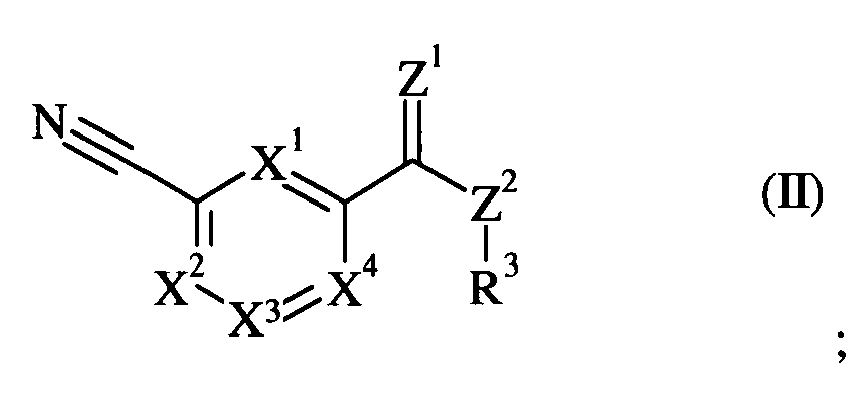 • Kupplung des erhaltenen Amins (III)
mit A-H und SO2Cl2, worin A T-N(R1c)- ist.
Priority Applications (1)
| Application Number | Priority Date | Filing Date | Title |
|---|---|---|---|
| EP05806462A EP1814846B1 (de) | 2004-11-08 | 2005-11-08 | 11beta-hsd1-inhibitoren |
Applications Claiming Priority (3)
| Application Number | Priority Date | Filing Date | Title |
|---|---|---|---|
| EP04026441A EP1655283A1 (de) | 2004-11-08 | 2004-11-08 | 11beta-HSD1 Inhibitoren |
| PCT/EP2005/011933 WO2006048330A1 (en) | 2004-11-08 | 2005-11-08 | 11βετα-hsd1 inhibitors |
| EP05806462A EP1814846B1 (de) | 2004-11-08 | 2005-11-08 | 11beta-hsd1-inhibitoren |
Publications (2)
| Publication Number | Publication Date |
|---|---|
| EP1814846A1 EP1814846A1 (de) | 2007-08-08 |
| EP1814846B1 true EP1814846B1 (de) | 2009-04-08 |
Family
ID=34927280
Family Applications (2)
| Application Number | Title | Priority Date | Filing Date |
|---|---|---|---|
| EP04026441A Withdrawn EP1655283A1 (de) | 2004-11-08 | 2004-11-08 | 11beta-HSD1 Inhibitoren |
| EP05806462A Expired - Lifetime EP1814846B1 (de) | 2004-11-08 | 2005-11-08 | 11beta-hsd1-inhibitoren |
Family Applications Before (1)
| Application Number | Title | Priority Date | Filing Date |
|---|---|---|---|
| EP04026441A Withdrawn EP1655283A1 (de) | 2004-11-08 | 2004-11-08 | 11beta-HSD1 Inhibitoren |
Country Status (7)
| Country | Link |
|---|---|
| US (1) | US20090069323A1 (de) |
| EP (2) | EP1655283A1 (de) |
| JP (1) | JP2008518999A (de) |
| AT (1) | ATE427932T1 (de) |
| DE (1) | DE602005013812D1 (de) |
| DK (1) | DK1814846T3 (de) |
| WO (1) | WO2006048330A1 (de) |
Families Citing this family (38)
| Publication number | Priority date | Publication date | Assignee | Title |
|---|---|---|---|---|
| US8415354B2 (en) | 2004-04-29 | 2013-04-09 | Abbott Laboratories | Methods of use of inhibitors of the 11-beta-hydroxysteroid dehydrogenase type 1 enzyme |
| US7880001B2 (en) | 2004-04-29 | 2011-02-01 | Abbott Laboratories | Inhibitors of the 11-beta-hydroxysteroid dehydrogenase Type 1 enzyme |
| US20100222316A1 (en) | 2004-04-29 | 2010-09-02 | Abbott Laboratories | Inhibitors of the 11-beta-hydroxysteroid dehydrogenase type 1 enzyme |
| US20090192198A1 (en) | 2005-01-05 | 2009-07-30 | Abbott Laboratories | Inhibitors of the 11-beta-hydroxysteroid dehydrogenase type 1 enzyme |
| KR101302627B1 (ko) | 2005-01-05 | 2013-09-10 | 아비에 인코포레이티드 | 11-베타-하이드록시스테로이드 데하이드로게나제 타입 1 효소의 억제제 |
| US8198331B2 (en) | 2005-01-05 | 2012-06-12 | Abbott Laboratories | Inhibitors of the 11-beta-hydroxysteroid dehydrogenase type 1 enzyme |
| KR101496190B1 (ko) | 2005-01-05 | 2015-02-26 | 애브비 인코포레이티드 | 11-베타-하이드록시스테로이드 데하이드로게나제 타입 1 효소의 억제제로서의 아다만틸 유도체 |
| US7572807B2 (en) | 2005-06-09 | 2009-08-11 | Bristol-Myers Squibb Company | Heteroaryl 11-beta-hydroxysteroid dehydrogenase type I inhibitors |
| US7579360B2 (en) | 2005-06-09 | 2009-08-25 | Bristol-Myers Squibb Company | Triazolopyridine 11-beta hydroxysteroid dehydrogenase type I inhibitors |
| WO2007067817A1 (en) * | 2005-12-07 | 2007-06-14 | Cv Therapeutics, Inc. | Abca1 elevating compounds |
| PE20080251A1 (es) | 2006-05-04 | 2008-04-25 | Boehringer Ingelheim Int | Usos de inhibidores de dpp iv |
| WO2007138112A2 (en) * | 2006-06-01 | 2007-12-06 | Devgen N.V. | Compounds that interact with ion channels, in particular with ion channels from the kv family |
| US9422235B2 (en) | 2006-12-19 | 2016-08-23 | Pharmos Corporation | Sulfonamide derivatives with therapeutic indications |
| TW200845991A (en) | 2007-01-12 | 2008-12-01 | Smithkline Beecham Corp | N-substituted glycine derivatives: hydroxylase inhibitors |
| JP5736098B2 (ja) | 2007-08-21 | 2015-06-17 | アッヴィ・インコーポレイテッド | 中枢神経系障害を治療するための医薬組成物 |
| US8119658B2 (en) | 2007-10-01 | 2012-02-21 | Bristol-Myers Squibb Company | Triazolopyridine 11-beta hydroxysteroid dehydrogenase type I inhibitors |
| MX2011005037A (es) | 2008-11-21 | 2011-06-16 | High Point Pharmaceuticals Llc | Compuestos de adamantilo benzamida. |
| ES2350077B1 (es) | 2009-06-04 | 2011-11-04 | Laboratorios Salvat, S.A. | Compuestos inhibidores de 11beta-hidroxiesteroide deshidrogenasa de tipo 1. |
| US8394858B2 (en) | 2009-12-03 | 2013-03-12 | Novartis Ag | Cyclohexane derivatives and uses thereof |
| CN101838227A (zh) * | 2010-04-30 | 2010-09-22 | 孙德群 | 一种苯甲酰胺类除草剂的安全剂 |
| US8513430B2 (en) | 2010-07-27 | 2013-08-20 | High Point Pharmaceuticals, Llc | Substituted thiazol-2-ylamine derivatives, pharmaceutical compositions, and methods of use as 11-beta HSD1 modulators |
| AU2011313853A1 (en) * | 2010-10-11 | 2013-05-02 | Auckland Uniservices Limited | Substituted benzamides and their uses |
| CN103547566B (zh) | 2011-02-18 | 2017-05-31 | 阿萨纳生物科技有限责任公司 | 氨基茚满化合物及其治疗疼痛的用途 |
| JP2014521595A (ja) | 2011-05-25 | 2014-08-28 | ブリストル−マイヤーズ スクイブ カンパニー | 抗アポトーシスBcl阻害剤として有用な置換スルホンアミド |
| WO2013112323A1 (en) | 2012-01-23 | 2013-08-01 | Eli Lilly And Company | Phenyl methanesulfonamide derivatives useful as mgat - 2 inhibitors |
| AR089771A1 (es) * | 2012-01-31 | 2014-09-17 | Lilly Co Eli | Derivados de bencil sulfonamida utiles como inhibidores de mogat-2 |
| US8993568B2 (en) | 2012-01-31 | 2015-03-31 | Eli Lilly And Company | Morpholinyl derivatives useful as MOGAT-2 inhibitors |
| TWI603957B (zh) | 2012-08-15 | 2017-11-01 | 阿沙納生物科學有限責任公司 | 胺基氫茚化合物用於治療膀胱過動症及間質性膀胱炎之用途 |
| CN104768941B (zh) * | 2012-11-06 | 2016-08-24 | 伊莱利利公司 | 用作MoGAT-2抑制剂的新苄基磺酰胺化合物 |
| CA2988147C (en) | 2015-06-03 | 2023-06-13 | Bristol-Myers Squibb Company | 4-hydroxy-3-(heteroaryl)pyridine-2-one apj agonists for use in the treatment of cardiovascular disorders |
| US10774064B2 (en) | 2016-06-02 | 2020-09-15 | Cadent Therapeutics, Inc. | Potassium channel modulators |
| BR112019014814B1 (pt) | 2017-01-23 | 2024-03-12 | Novartis Ag | Compostos, composições farmacêuticas dos mesmos e seus usos no tratamento de doenças associadas à disfunção de canais iônicos de potássio |
| SG11202002032SA (en) | 2017-09-22 | 2020-04-29 | Jubilant Epipad LLC | Heterocyclic compounds as pad inhibitors |
| CA3076476A1 (en) | 2017-10-18 | 2019-04-25 | Jubilant Epipad LLC | Imidazo-pyridine compounds as pad inhibitors |
| BR112020008851A2 (pt) | 2017-11-06 | 2020-10-20 | Jubilant Prodel LLC | composto da fórmula i, processo de preparação de compostos da fórmula i, composição farmacêutica, método para o tratamento e/ou prevenção de várias doenças, uso, método para o tratamento de câncer, método de tratamento de câncer e método para o tratamento e/ou prevenção de câncer e doenças infecciosas |
| PL3704120T3 (pl) | 2017-11-24 | 2024-09-16 | Jubilant Episcribe Llc | Związki heterocykliczne jako inhibitory prmt5 |
| SG11202008950PA (en) | 2018-03-13 | 2020-10-29 | Jubilant Prodel LLC | Bicyclic compounds as inhibitors of pd1/pd-l1 interaction/activation |
| AU2019366312B2 (en) | 2018-10-22 | 2025-04-24 | Novartis Ag | Crystalline forms of potassium channel modulators |
Family Cites Families (2)
| Publication number | Priority date | Publication date | Assignee | Title |
|---|---|---|---|---|
| GB0206219D0 (en) * | 2002-03-15 | 2002-05-01 | Ferring Bv | Non-Peptide GnRH antagonists |
| EP1562574A1 (de) * | 2002-11-07 | 2005-08-17 | Astrazeneca AB | 2-oxo-ethansulfonamid-derivate |
-
2004
- 2004-11-08 EP EP04026441A patent/EP1655283A1/de not_active Withdrawn
-
2005
- 2005-11-08 US US11/667,114 patent/US20090069323A1/en not_active Abandoned
- 2005-11-08 DK DK05806462T patent/DK1814846T3/da active
- 2005-11-08 AT AT05806462T patent/ATE427932T1/de not_active IP Right Cessation
- 2005-11-08 EP EP05806462A patent/EP1814846B1/de not_active Expired - Lifetime
- 2005-11-08 JP JP2007539549A patent/JP2008518999A/ja not_active Abandoned
- 2005-11-08 WO PCT/EP2005/011933 patent/WO2006048330A1/en not_active Ceased
- 2005-11-08 DE DE602005013812T patent/DE602005013812D1/de not_active Expired - Lifetime
Also Published As
| Publication number | Publication date |
|---|---|
| ATE427932T1 (de) | 2009-04-15 |
| JP2008518999A (ja) | 2008-06-05 |
| DE602005013812D1 (de) | 2009-05-20 |
| DK1814846T3 (da) | 2009-06-22 |
| EP1655283A1 (de) | 2006-05-10 |
| EP1814846A1 (de) | 2007-08-08 |
| WO2006048330A1 (en) | 2006-05-11 |
| US20090069323A1 (en) | 2009-03-12 |
| WO2006048330A8 (en) | 2006-10-05 |
Similar Documents
| Publication | Publication Date | Title |
|---|---|---|
| US20090069323A1 (en) | 11beta-hsdi inhibitors | |
| EP1659113A1 (de) | Hemmstoffe von 11beta-hydroxy steroid dehydrogenase Typ 1 (11beta-HSD1) | |
| WO2006048331A1 (en) | 11β-HSD1 INHIBITORS | |
| DE69737605T2 (de) | Sulfonierte aminosäurederivate und metalloproteinase-inhibitoren, die diese enthalten | |
| EP1551798B1 (de) | Sulfonderivate zur hemmung von gamma-secretase | |
| JP2930731B2 (ja) | アリール−及びヘテロアリール−スルホンアミド誘導体、その製造法及びエンドセリンアンタゴニストとしてのその用途 | |
| AU2005229330B2 (en) | DPP-IV inhibitors | |
| EP1797042B1 (de) | Indozolonderivate als 11b-hsd1-inhibitoren | |
| CA2602173A1 (en) | Dpp-iv inhibitors | |
| NO310071B1 (no) | 1-Fenyl-3-pyrazolkarboksamider som virker på neurotensin- reseptorer, mellomprodukter for fremstilling av dem og farmasöytiske preparater inneholdende dem | |
| AU2007229637A1 (en) | Amide derivatives and their application for the treatment of G protein related diseases | |
| KR20060132615A (ko) | 시클로프로판 화합물 및 그의 약제학적 용도 | |
| EP0611003A1 (de) | Substituierte Phenylsulfonamine als selektive B3-Agonisten zur Behandlung von Diabetes und Fettleibigkeit | |
| MX2012005560A (es) | Moduladores selectivos del receptor de esfingosina 1 fosfato y metodos de sintesis quiral. | |
| KR20060109937A (ko) | N-치환-n-술포닐아미노시클로프로판 화합물 및 그의약제학적 용도 | |
| SK281184B6 (sk) | Substituovaný sulfónamid, farmaceutická kompozícia na jeho báze a spôsob jeho prípravy | |
| RU2375351C2 (ru) | ПРОИЗВОДНЫЕ ПИРИМИДИНА, ОБЛАДАЮЩИЕ ИНГИБИРУЮЩИМ ДЕЙСТВИЕМ В ОТНОШЕНИИ 11b-HSD1 | |
| SK4382002A3 (en) | 2'-substituted 1,1'-biphenyl-2-carbonamides, method for the production thereof, use thereof as a medicament and pharmaceutical preparations containing said compounds | |
| CA2446365A1 (en) | Sulfonamides | |
| JP2006508090A (ja) | 新規β−アゴニスト、それらの製造方法及び医薬組成物としてのそれらの使用 | |
| CA2394603A1 (en) | Urotensin-ii receptor antagonists | |
| WO2007008942A2 (en) | Phenylamino-acetic acid [1-(pyridin-4-yl)-methylidene]-hydrazide derivatives and related compounds as modulators of g protein-coupled receptor kinases for the treatment of eye diseases | |
| US5705523A (en) | Pyridine- and imidazole-derived agents for cardiovascular diseases | |
| AU2006328903A1 (en) | Inhibitors of CCR9 activity | |
| US12365692B2 (en) | 6-hydroxy-8-oxatricyclo[3.2.1.02,4]octane-2-carboxamide derivatives for inducing chondrogenesis for treating joint damage |
Legal Events
| Date | Code | Title | Description |
|---|---|---|---|
| PUAI | Public reference made under article 153(3) epc to a published international application that has entered the european phase |
Free format text: ORIGINAL CODE: 0009012 |
|
| 17P | Request for examination filed |
Effective date: 20070604 |
|
| AK | Designated contracting states |
Kind code of ref document: A1 Designated state(s): AT BE BG CH CY CZ DE DK EE ES FI FR GB GR HU IE IS IT LI LT LU LV MC NL PL PT RO SE SI SK TR |
|
| RIN1 | Information on inventor provided before grant (corrected) |
Inventor name: FRYATT, TARA Inventor name: STEVEN, TAYLOR Inventor name: SCHNEIDER, MARTIN Inventor name: COULTER, THOMAS STEPHEN Inventor name: AICHER, BABETTE |
|
| RIN1 | Information on inventor provided before grant (corrected) |
Inventor name: STEVEN, TAYLOR Inventor name: COULTER, THOMAS STEPHEN Inventor name: SCHNEIDER, MARTIN Inventor name: AICHER, BABETTE Inventor name: FRYATT, TARA |
|
| DAX | Request for extension of the european patent (deleted) | ||
| GRAP | Despatch of communication of intention to grant a patent |
Free format text: ORIGINAL CODE: EPIDOSNIGR1 |
|
| GRAS | Grant fee paid |
Free format text: ORIGINAL CODE: EPIDOSNIGR3 |
|
| RIN1 | Information on inventor provided before grant (corrected) |
Inventor name: COULTER, THOMAS STEPHEN Inventor name: TAYLOR ,STEVEN Inventor name: AICHER, BABETTE Inventor name: FRYATT, TARA Inventor name: SCHNEIDER, MARTIN |
|
| GRAA | (expected) grant |
Free format text: ORIGINAL CODE: 0009210 |
|
| AK | Designated contracting states |
Kind code of ref document: B1 Designated state(s): AT BE BG CH CY CZ DE DK EE ES FI FR GB GR HU IE IS IT LI LT LU LV MC NL PL PT RO SE SI SK TR |
|
| REG | Reference to a national code |
Ref country code: GB Ref legal event code: FG4D |
|
| REG | Reference to a national code |
Ref country code: CH Ref legal event code: EP |
|
| REG | Reference to a national code |
Ref country code: IE Ref legal event code: FG4D |
|
| REF | Corresponds to: |
Ref document number: 602005013812 Country of ref document: DE Date of ref document: 20090520 Kind code of ref document: P |
|
| REG | Reference to a national code |
Ref country code: DK Ref legal event code: T3 |
|
| PG25 | Lapsed in a contracting state [announced via postgrant information from national office to epo] |
Ref country code: SI Free format text: LAPSE BECAUSE OF FAILURE TO SUBMIT A TRANSLATION OF THE DESCRIPTION OR TO PAY THE FEE WITHIN THE PRESCRIBED TIME-LIMIT Effective date: 20090408 |
|
| REG | Reference to a national code |
Ref country code: SE Ref legal event code: TRGR |
|
| PG25 | Lapsed in a contracting state [announced via postgrant information from national office to epo] |
Ref country code: AT Free format text: LAPSE BECAUSE OF FAILURE TO SUBMIT A TRANSLATION OF THE DESCRIPTION OR TO PAY THE FEE WITHIN THE PRESCRIBED TIME-LIMIT Effective date: 20090408 Ref country code: ES Free format text: LAPSE BECAUSE OF FAILURE TO SUBMIT A TRANSLATION OF THE DESCRIPTION OR TO PAY THE FEE WITHIN THE PRESCRIBED TIME-LIMIT Effective date: 20090719 Ref country code: FI Free format text: LAPSE BECAUSE OF FAILURE TO SUBMIT A TRANSLATION OF THE DESCRIPTION OR TO PAY THE FEE WITHIN THE PRESCRIBED TIME-LIMIT Effective date: 20090408 Ref country code: PT Free format text: LAPSE BECAUSE OF FAILURE TO SUBMIT A TRANSLATION OF THE DESCRIPTION OR TO PAY THE FEE WITHIN THE PRESCRIBED TIME-LIMIT Effective date: 20090908 Ref country code: LT Free format text: LAPSE BECAUSE OF FAILURE TO SUBMIT A TRANSLATION OF THE DESCRIPTION OR TO PAY THE FEE WITHIN THE PRESCRIBED TIME-LIMIT Effective date: 20090408 |
|
| PG25 | Lapsed in a contracting state [announced via postgrant information from national office to epo] |
Ref country code: IS Free format text: LAPSE BECAUSE OF FAILURE TO SUBMIT A TRANSLATION OF THE DESCRIPTION OR TO PAY THE FEE WITHIN THE PRESCRIBED TIME-LIMIT Effective date: 20090808 Ref country code: LV Free format text: LAPSE BECAUSE OF FAILURE TO SUBMIT A TRANSLATION OF THE DESCRIPTION OR TO PAY THE FEE WITHIN THE PRESCRIBED TIME-LIMIT Effective date: 20090408 Ref country code: PL Free format text: LAPSE BECAUSE OF FAILURE TO SUBMIT A TRANSLATION OF THE DESCRIPTION OR TO PAY THE FEE WITHIN THE PRESCRIBED TIME-LIMIT Effective date: 20090408 |
|
| PG25 | Lapsed in a contracting state [announced via postgrant information from national office to epo] |
Ref country code: EE Free format text: LAPSE BECAUSE OF FAILURE TO SUBMIT A TRANSLATION OF THE DESCRIPTION OR TO PAY THE FEE WITHIN THE PRESCRIBED TIME-LIMIT Effective date: 20090408 Ref country code: RO Free format text: LAPSE BECAUSE OF FAILURE TO SUBMIT A TRANSLATION OF THE DESCRIPTION OR TO PAY THE FEE WITHIN THE PRESCRIBED TIME-LIMIT Effective date: 20090408 Ref country code: CZ Free format text: LAPSE BECAUSE OF FAILURE TO SUBMIT A TRANSLATION OF THE DESCRIPTION OR TO PAY THE FEE WITHIN THE PRESCRIBED TIME-LIMIT Effective date: 20090408 |
|
| PLBE | No opposition filed within time limit |
Free format text: ORIGINAL CODE: 0009261 |
|
| STAA | Information on the status of an ep patent application or granted ep patent |
Free format text: STATUS: NO OPPOSITION FILED WITHIN TIME LIMIT |
|
| PG25 | Lapsed in a contracting state [announced via postgrant information from national office to epo] |
Ref country code: SK Free format text: LAPSE BECAUSE OF FAILURE TO SUBMIT A TRANSLATION OF THE DESCRIPTION OR TO PAY THE FEE WITHIN THE PRESCRIBED TIME-LIMIT Effective date: 20090408 Ref country code: BE Free format text: LAPSE BECAUSE OF FAILURE TO SUBMIT A TRANSLATION OF THE DESCRIPTION OR TO PAY THE FEE WITHIN THE PRESCRIBED TIME-LIMIT Effective date: 20090408 |
|
| 26N | No opposition filed |
Effective date: 20100111 |
|
| PG25 | Lapsed in a contracting state [announced via postgrant information from national office to epo] |
Ref country code: BG Free format text: LAPSE BECAUSE OF FAILURE TO SUBMIT A TRANSLATION OF THE DESCRIPTION OR TO PAY THE FEE WITHIN THE PRESCRIBED TIME-LIMIT Effective date: 20090708 |
|
| PG25 | Lapsed in a contracting state [announced via postgrant information from national office to epo] |
Ref country code: MC Free format text: LAPSE BECAUSE OF NON-PAYMENT OF DUE FEES Effective date: 20091130 |
|
| PGFP | Annual fee paid to national office [announced via postgrant information from national office to epo] |
Ref country code: DE Payment date: 20100129 Year of fee payment: 5 |
|
| REG | Reference to a national code |
Ref country code: IE Ref legal event code: MM4A |
|
| PG25 | Lapsed in a contracting state [announced via postgrant information from national office to epo] |
Ref country code: IE Free format text: LAPSE BECAUSE OF NON-PAYMENT OF DUE FEES Effective date: 20091108 Ref country code: GR Free format text: LAPSE BECAUSE OF FAILURE TO SUBMIT A TRANSLATION OF THE DESCRIPTION OR TO PAY THE FEE WITHIN THE PRESCRIBED TIME-LIMIT Effective date: 20090709 |
|
| PGFP | Annual fee paid to national office [announced via postgrant information from national office to epo] |
Ref country code: DK Payment date: 20101124 Year of fee payment: 6 Ref country code: FR Payment date: 20101130 Year of fee payment: 6 Ref country code: NL Payment date: 20101123 Year of fee payment: 6 |
|
| PGFP | Annual fee paid to national office [announced via postgrant information from national office to epo] |
Ref country code: CH Payment date: 20101124 Year of fee payment: 6 |
|
| PG25 | Lapsed in a contracting state [announced via postgrant information from national office to epo] |
Ref country code: IT Free format text: LAPSE BECAUSE OF FAILURE TO SUBMIT A TRANSLATION OF THE DESCRIPTION OR TO PAY THE FEE WITHIN THE PRESCRIBED TIME-LIMIT Effective date: 20090408 |
|
| PGFP | Annual fee paid to national office [announced via postgrant information from national office to epo] |
Ref country code: SE Payment date: 20101124 Year of fee payment: 6 Ref country code: GB Payment date: 20101123 Year of fee payment: 6 |
|
| PG25 | Lapsed in a contracting state [announced via postgrant information from national office to epo] |
Ref country code: LU Free format text: LAPSE BECAUSE OF NON-PAYMENT OF DUE FEES Effective date: 20091108 |
|
| PG25 | Lapsed in a contracting state [announced via postgrant information from national office to epo] |
Ref country code: HU Free format text: LAPSE BECAUSE OF FAILURE TO SUBMIT A TRANSLATION OF THE DESCRIPTION OR TO PAY THE FEE WITHIN THE PRESCRIBED TIME-LIMIT Effective date: 20091009 |
|
| PG25 | Lapsed in a contracting state [announced via postgrant information from national office to epo] |
Ref country code: TR Free format text: LAPSE BECAUSE OF FAILURE TO SUBMIT A TRANSLATION OF THE DESCRIPTION OR TO PAY THE FEE WITHIN THE PRESCRIBED TIME-LIMIT Effective date: 20090408 |
|
| REG | Reference to a national code |
Ref country code: DE Ref legal event code: R119 Ref document number: 602005013812 Country of ref document: DE Effective date: 20110601 Ref country code: DE Ref legal event code: R119 Ref document number: 602005013812 Country of ref document: DE Effective date: 20110531 |
|
| PG25 | Lapsed in a contracting state [announced via postgrant information from national office to epo] |
Ref country code: CY Free format text: LAPSE BECAUSE OF FAILURE TO SUBMIT A TRANSLATION OF THE DESCRIPTION OR TO PAY THE FEE WITHIN THE PRESCRIBED TIME-LIMIT Effective date: 20090408 |
|
| REG | Reference to a national code |
Ref country code: NL Ref legal event code: V1 Effective date: 20120601 |
|
| REG | Reference to a national code |
Ref country code: CH Ref legal event code: PL |
|
| REG | Reference to a national code |
Ref country code: DK Ref legal event code: EBP |
|
| REG | Reference to a national code |
Ref country code: SE Ref legal event code: EUG |
|
| GBPC | Gb: european patent ceased through non-payment of renewal fee |
Effective date: 20111108 |
|
| PG25 | Lapsed in a contracting state [announced via postgrant information from national office to epo] |
Ref country code: LI Free format text: LAPSE BECAUSE OF NON-PAYMENT OF DUE FEES Effective date: 20111130 Ref country code: CH Free format text: LAPSE BECAUSE OF NON-PAYMENT OF DUE FEES Effective date: 20111130 Ref country code: NL Free format text: LAPSE BECAUSE OF NON-PAYMENT OF DUE FEES Effective date: 20120601 |
|
| REG | Reference to a national code |
Ref country code: FR Ref legal event code: ST Effective date: 20120731 |
|
| PG25 | Lapsed in a contracting state [announced via postgrant information from national office to epo] |
Ref country code: GB Free format text: LAPSE BECAUSE OF NON-PAYMENT OF DUE FEES Effective date: 20111108 Ref country code: SE Free format text: LAPSE BECAUSE OF NON-PAYMENT OF DUE FEES Effective date: 20111109 Ref country code: DK Free format text: LAPSE BECAUSE OF NON-PAYMENT OF DUE FEES Effective date: 20111130 |
|
| PG25 | Lapsed in a contracting state [announced via postgrant information from national office to epo] |
Ref country code: FR Free format text: LAPSE BECAUSE OF NON-PAYMENT OF DUE FEES Effective date: 20111130 |
|
| PG25 | Lapsed in a contracting state [announced via postgrant information from national office to epo] |
Ref country code: DE Free format text: LAPSE BECAUSE OF NON-PAYMENT OF DUE FEES Effective date: 20110531 |