EP1815659B1 - Procede, dispositif et logiciel pour suivre un contenu - Google Patents
Procede, dispositif et logiciel pour suivre un contenu Download PDFInfo
- Publication number
- EP1815659B1 EP1815659B1 EP05800847A EP05800847A EP1815659B1 EP 1815659 B1 EP1815659 B1 EP 1815659B1 EP 05800847 A EP05800847 A EP 05800847A EP 05800847 A EP05800847 A EP 05800847A EP 1815659 B1 EP1815659 B1 EP 1815659B1
- Authority
- EP
- European Patent Office
- Prior art keywords
- client device
- devices
- network
- content
- event
- Prior art date
- Legal status (The legal status is an assumption and is not a legal conclusion. Google has not performed a legal analysis and makes no representation as to the accuracy of the status listed.)
- Expired - Lifetime
Links
Images


Classifications
-
- H—ELECTRICITY
- H04—ELECTRIC COMMUNICATION TECHNIQUE
- H04L—TRANSMISSION OF DIGITAL INFORMATION, e.g. TELEGRAPHIC COMMUNICATION
- H04L65/00—Network arrangements, protocols or services for supporting real-time applications in data packet communication
- H04L65/60—Network streaming of media packets
- H04L65/61—Network streaming of media packets for supporting one-way streaming services, e.g. Internet radio
-
- H—ELECTRICITY
- H04—ELECTRIC COMMUNICATION TECHNIQUE
- H04L—TRANSMISSION OF DIGITAL INFORMATION, e.g. TELEGRAPHIC COMMUNICATION
- H04L41/00—Arrangements for maintenance, administration or management of data switching networks, e.g. of packet switching networks
- H04L41/50—Network service management, e.g. ensuring proper service fulfilment according to agreements
- H04L41/508—Network service management, e.g. ensuring proper service fulfilment according to agreements based on type of value added network service under agreement
- H04L41/509—Network service management, e.g. ensuring proper service fulfilment according to agreements based on type of value added network service under agreement wherein the managed service relates to media content delivery, e.g. audio, video or TV
-
- H—ELECTRICITY
- H04—ELECTRIC COMMUNICATION TECHNIQUE
- H04L—TRANSMISSION OF DIGITAL INFORMATION, e.g. TELEGRAPHIC COMMUNICATION
- H04L63/00—Network architectures or network communication protocols for network security
- H04L63/12—Applying verification of the received information
- H04L63/123—Applying verification of the received information received data contents, e.g. message integrity
-
- H—ELECTRICITY
- H04—ELECTRIC COMMUNICATION TECHNIQUE
- H04L—TRANSMISSION OF DIGITAL INFORMATION, e.g. TELEGRAPHIC COMMUNICATION
- H04L67/00—Network arrangements or protocols for supporting network services or applications
- H04L67/50—Network services
- H04L67/51—Discovery or management thereof, e.g. service location protocol [SLP] or web services
-
- H—ELECTRICITY
- H04—ELECTRIC COMMUNICATION TECHNIQUE
- H04L—TRANSMISSION OF DIGITAL INFORMATION, e.g. TELEGRAPHIC COMMUNICATION
- H04L9/00—Cryptographic mechanisms or cryptographic arrangements for secret or secure communications; Network security protocols
- H04L9/40—Network security protocols
-
- H—ELECTRICITY
- H04—ELECTRIC COMMUNICATION TECHNIQUE
- H04L—TRANSMISSION OF DIGITAL INFORMATION, e.g. TELEGRAPHIC COMMUNICATION
- H04L65/00—Network arrangements, protocols or services for supporting real-time applications in data packet communication
- H04L65/1066—Session management
- H04L65/1101—Session protocols
Definitions
- the invention generally relates to the field of computer networks and more particularly to a method, a client device and a computer program product for keeping track of content in devices of a network.
- the UPnP TM standard is often used as the connectivity standard. This standard defines entities such as UPnP TM control points and UPnP TM devices and is frequently used for home networks.
- a UPnP TM device is a logical entity having a set of services which it offers to different elements of the network and a UPnP TM control point is a logical entity which tries to get access to a UPnP TM device.
- a physical device may contain any number of UPnP TM devices and UPnP TM control points.
- a physical device comprising a UPnP TM control point is termed a client device, while a physical device comprising a UPnP TM device is typically termed just a device.
- Examples of different types of UPnP TM devices are media servers and media renderers.
- a media server stores media content and can stream it over the network.
- a media renderer can accept such a stream and render or present it.
- a media server may be provided, for instance, in a PC or eHub and a media renderer may be provided, for instance, in a Streamium television set.
- a home network may include several such devices, client devices, media servers and media renderers as well as other devices.
- a client device When a client device accesses or controls a device, such as a media server, it may perform operations such as locating content items and ordering the start of streaming the content item, which may be in the form of a media file. However, such streaming is then associated with the client device via which streaming was commenced. If a user of the home network would like to select a content item that has been streamed on the network, it is hard to locate that content unless the client device that ordered the streaming is used. Furthermore, a user might like to change the client device from which streaming control is performed, i.e. continue streaming a content item while changing the device controlling the stream. If a user wants to perform the above-mentioned operations, the client device needs to locate the content item again on the media server. This can be time-consuming and may require extra processing operations. Moreover, it may be annoying to an end user, because a media device could include thousands of content items, which makes it hard to locate the desired item.
- US 2003/0055977 describes a system comprising a session transfer module and a number of client devices.
- a session can be transferred from a first client device to a second client device.
- a user can invoke the session transfer module via the first client device and can then select the device that is to receive the redirected session.
- the session transfer module then receives the command and transfers the session from the first client device to the second client device.
- a session history can be transferred from the first client device to the second client device via the session transfer module.
- This system is centralized, in which a central session transfer module transfers a session from one client device to another. A transfer can only take place if a user specifies, on said first device, to which second device the session is to be transferred. This unnecessarily complicates the transfer of a session.
- this object is achieved by a method of keeping track, in a client device, of content in devices of a network, the method comprising the steps of:
- this object is also achieved by a client device for keeping track of content in devices of a network, the client device comprising:
- this object is also achieved by a computer program product for keeping track of content in devices of a network, the computer program product comprising a computer program code which, when loaded in said client device, causes a client device to:
- the invention has the advantage of providing greater freedom for a user of a network, because the bond between content and client device is loosened. According to the invention, it is possible to access virtually any content that has been provided on a network from any client device without undue burden on the user.
- the invention thus allows a fast and simple switch-over from client device to client device without a user having to relocate network-provided content he wants to access.
- the invention is easy and simple to implement in a client device. Furthermore, it does not require standardization beyond the normal control and monitoring of streams in the network in order to be implemented.
- the additional information comprises an indicator for locating content being processed for the other client device. This allows a fast and direct locating of the content once a switch from client device to client device is performed.
- At least some of the additional information is obtained by locating it on the first discovered device, which is advantageous when not all of the additional information needed for a user to correctly identify content is provided in relation to an event.
- this located additional information includes metadata associated with the content. This has the advantage of obtaining information that allows a user to more easily know what content has been streamed on the network.
- the event is related to playing of a media stream, with the client device keeping track of the playing time. This feature allows a switch-over from client device to client device in the middle of a stream without a user having to start from the beginning or miss content.
- the additional information is provided in a history list, which allows a fast location of the most recently accessed or streamed content on the network.
- the additional information is provided in a favorites list, which allows a fast location of content that has been accessed most frequently on the network.
- the general idea behind the invention thus is that a client device obtains additional information related to an event provided by a discovered device, which event has been activated because of another client device. Because of this, it is possible to easily locate content that has been provided on the network.
- Fig. 1 shows diagrammatically a peer-to-peer computer network N, to which a number of physical entities is connected.
- the network N 1 comprises a first device MS, a second device MR1, a third device MR2, a first client device CL1 and a second client device CL2, all of which are separate physical entities.
- a UPnP TM device is a logical entity that has a set of different services which it offers to different elements in a network.
- a media server is a UPnP TM device that is provided in a physical device, such as, for instance, a PC or an eHub, and here the first device MS.
- a media server stores content and can stream it over the network, where examples of such content are MP3 files, streamed web radio and streamed video, for instance, MPEG-coded video.
- a media renderer is a UPnp TM device that is provided in a physical entity, as in a specialized television set, for instance, a Streamium TV or a PC or any other type of entity capable of presenting a media stream.
- a media renderer can accept streams provided by a media server and render them to a user.
- media renderers are provided in the third and second devices MR1 and MR2. It should be realized that one such physical entity can support more UPnP TM devices.
- the first device MS will therefore be referred to hereinafter as a media server
- the second device MR1 will be referred to as a first media renderer
- the third device MR2 will be referred to as a second media renderer MR2.
- Two other entities in the network N 1 are client devices which will hereinafter each be assumed to comprise a UPnP TM control point, which accesses the services of UPnP TM devices provided by devices MS, MR1 and MR2.
- a UPnP TM control point can also be provided in any other device which the client device can contact and then also in physical devices that provide UPnP TM devices.
- the control point is thus hereinafter assumed to be provided in a client device and will therefore not be further explained.
- the number of devices is kept low in the network in order to better explain the invention. In fact, there may be several more media servers, media renderers, client devices as well as a multitude of other types of devices in the network, such as printers, internet gateways and more PCs.
- the network N 1 may be a wireless network, for instance, a wireless LAN network or a Bluetooth TM network, but is not limited to this and may also be a fixed network like a LAN network as well as a mixture with a wireless and a wired part.
- the peer-to-peer networking is here enabled by the UPnP TM standard, but other ways of connecting are also applicable, such as SLP (Service Location Protocol) or Jini.
- Fig. 2 is a block-schematic diagram of the first client device CL1 in accordance with an embodiment of the invention.
- the device includes a control unit CO connected to a memory M1.
- the control unit CO is also connected to a transceiving unit TR for communicating with the network.
- the client device may be a PC, a laptop computer, a portable communication device, such as a cellular phone, an organizer or a remote control such as an iPronto control marketed by Philips.
- Fig. 3 shows a content list provided in the memory M1.
- the memory includes a history list with activities seen on the network, which comprises metadata MD1 associated with a first file F 1 and metadata MD2 associated with a second file F2 together with location information for locating the files.
- the first file F1 is located with a URI (Uniform Resource Identifier) HTTP: MS.DOM/C/VIDEO/Fl.MPEG, while the second file F2 is located with a URI HTTP:MS.DOM/C/AUDIO/F2.MP3.
- URI Uniform Resource Identifier
- Each URI points to the media server MS. The way in which this list is created will be described hereinafter. It is possible to display only the metadata to a user of the client device or a combination of metadata and location information.
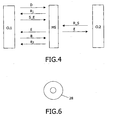
- Fig. 4 shows diagrammatically signals exchanged between the first client device CL1 and the media server MS as well as signals exchanged between the second client device CL2 and the media server MS. Also these signals will be described in more detail hereinafter.
- Fig. 5 shows a flow chart of a method of keeping track of content in devices of the network, which method is implemented in the first client device.
- the first client device CL1 is connected to the network N 1 , wherein communication with the network is carried out by the transceiving unit TR under the control of the control unit CU.
- the first client device CL 1 first discovers the devices of the network, step 10, which is done by the control unit CO ordering the transceiving unit TR to make a discovery search D, which search is an M-search in accordance with the UPnP TM standard.
- the search may be of the type regarding either all devices of the network, or only devices of a certain type or the service of a certain type, wherein the type then preferably refers to devices that can provide media content.
- Each device that matches the search then responds with its name on the network as well as its capabilities.
- the media server MS which is here also denoted as a first discovered device, sends such a response R 1 .
- the control unit CO of the first client device CL1 decides which devices are of interest.
- the control unit CO then orders the transceiving unit TR to send a request for a subscription to events S_E to the devices it finds interesting, step 12. In the present example, it sends such a subscription request S_E to the media server MS.
- the first client device CL1 can obtain information about events in the media server MS.
- this device sends event messages E to the first client device CL1, wherein one such device is the media server MS, as has been explained above.
- the control unit CO of the first client device CL1 then continuously checks if the transceiving unit TR has received such an event notification. If it has not, step 14, the control unit CO keeps on waiting for the reception. If it has, step 14, it goes on and extracts event-related information from the event message, step 15, and thereafter checks if it has knowledge of the circumstances regarding the event in the device in question, step 16.
- the circumstance may be that the content of a media file on the media server MS is being streamed to a rendering device.
- the event is related to the processing of content, possibly in the form of a file.
- the first client device CL1 had itself ordered an action that caused the event, it would naturally have information about the circumstances, like the location of the file and what file was being streamed and possibly metadata associated with the file. It might also have such knowledge if it had previously found out whether other client devices like the second client device CL2 had caused a previous event related to the current event.
- the second client device CL2 sends a request for streaming of media content R_S from the media server MS to the second media renderer MR2. This request R_S is thus sent to the media server MS.
- the media server MS sends an event notification E to all devices subscribing to the event, here both client devices CL1 and CL2. It is also assumed that also the second client device CL2 subscribes to the event.
- the transceiving unit TR of the first client device CL1 therefore receives the event notification E, step 14, which in the present embodiment is in the form of a HTTP post message with XML content.
- This event message includes a first piece of additional information in the form of an indicator for locating the file, which is a URI pointing out the location of the file in question.
- the transceiving unit TR then forwards the event message E to the control unit CO, which extracts the event-related information in the form of an indicator, i.e. the file name and location information of an event-related file, step 15, and investigates if it has previous knowledge of the stream and its location, step 16. If it has, the method continues with step 24. If it has not, step 16, further additional information in relation to the event or streamed data is obtained.
- the first client device CL1 might thus not have information about the circumstances regarding the event.
- the event message E comprised a first piece of additional information in the form of the URI HTTP: MS DOM/CNIDEO/F1.MPEG, which the first client device CL1 had no previous knowledge of. Therefore, the first client device CL1 obtains further additional information by browsing the directory of the event-generating device, i.e. the media server MS, step 18.
- the control unit CO orders the transceiving unit CO to send a browsing signal B from the first client device CL1 to the media server MS and, as a result R 2 , the metadata MD1 associated with the file F1 is obtained, step 20.
- the first client device CL1 can browse the directory of the media server MS and obtain the metadata associated with the file F1 being streamed as well as conform the location of the file.
- the metadata may include such things as the name of a movie or a song, together with additional information such as the director and actors' names if it is a movie or an artist and album name if it is a song.
- the control unit CO stores the information of the file and location in the memory M1 together with the metadata, step 22. In this way, the history list is updated.
- the metadata may alternatively be obtained by searching through the directory of the media server MS.
- the client device CL1 also keeps track of the playing time, step 26. This is done by starting a clock at the time the file F1 is being played and halting the clock at pauses, in which the occurrence of these events is typically signaled by an event message from the media server MS. The clock is also started again if the file F1 is started and reset once the file being streamed is stopped, which is a simple task because these events are also notified to client devices that subscribe to them.
- the first client device CL1 can then directly locate the file in question on the media server and, because of the knowledge of the playing time, also cause the media server to stream the file to the first media renderer MR1 from the instant when the media file was stopped from being streamed to the second media renderer MR2.
- the user thus does not have to locate the file or the playing position in the file, but can resume watching the decoded file either from the beginning or the point at which it was stopped.
- the invention has a number of advantages. It provides greater freedom for a user of a network, because the bond between content and client device is loosened. According to the invention, it is possible to access virtually any content that has been provided on a network from any client device without undue burden on the user.
- the invention thus allows a fast and simple switch-over from client device to client device without a user having to relocate network-provided content he wants to access. It is easy and simple to implement in a client device. Furthermore, it does not require standardization beyond the normal control and monitoring of streams in the network in order to be implemented. By keeping track of the time, it is possible to switch over in the middle of a stream without having to start from the beginning or miss content.
- the invention is not limited to switching over the streaming. It is also possible to stream a copy.
- the list does not have to be a history list. It may also be, for instance, a favorites list stating the content items that have been accessed most frequently on the network. It is further possible to provide both a history and a favorites list at the same time.
- the time being played can be used for more than starting playing from the same instant when a switch-over is being performed. It is also possible to start playing, for instance, slightly before or slightly after that position.
- the invention can be further implemented without keeping track of the time and only keep track of file name and location.
- the invention is not limited to streamed media, but is applicable to any other content whose location would be advantageous to know, such as, for instance, still images or computer games.
- the streaming of content provided in one file has been described hereinbefore. It should also be noted that content can be stored in more than one file and can also be provided in the form of a real-time stream.
- the invention is not limited to a media server that streams content, but can also be provided for a device that presents information on itself, like a PC, as long as the presentation is controlled through different client devices.
- a file was located directly by using a URI. It should be noted that this feature can be combined with name resolving in order to obtain the address of a device.
- the invention can be implemented in any suitable form including hardware, software, firmware or combinations thereof
- the invention is preferably implemented as computer software stored in a program memory and run on one or more data processors and/or digital signal processors.
- the program code can also be provided on a computer program product, one of which is shown in Fig. 6 in the form of a CD ROM disc 28. This is just an example and various other types of computer program products, such as memory sticks, are also feasible.
- the computer program product can also be provided in a pure program code which can be downloaded, for instance, from a further server, possibly via the Internet.
- the elements and components of an embodiment of the invention may be physically, functionally and logically implemented in any suitable way. Indeed, the functionality may be implemented in a single unit, in a plurality of units, or may be physically and functionally distributed between different units and processors.
Landscapes
- Engineering & Computer Science (AREA)
- Computer Networks & Wireless Communication (AREA)
- Signal Processing (AREA)
- Multimedia (AREA)
- Computer Security & Cryptography (AREA)
- Computer Hardware Design (AREA)
- Computing Systems (AREA)
- General Engineering & Computer Science (AREA)
- Information Transfer Between Computers (AREA)
- Two-Way Televisions, Distribution Of Moving Picture Or The Like (AREA)
- Electrotherapy Devices (AREA)
- Storage Device Security (AREA)
Claims (10)
- Procédé permettant de suivre, dans un dispositif client (CL1), du contenu dans des dispositifs d'un réseau, le procédé comprenant les étapes suivantes :- la découverte (D) de dispositifs (MS, MR1, MR2) dans un réseau (N1), (étape 10),- l'obtention d'informations concernant des événements (E) fournies par au moins certains dispositifs découverts (étape 12), caractérisé par :- l'obtention d'informations supplémentaires (E, R2) se rapportant à un événement fournies par un premier dispositif découvert (MS), lequel événement a été activé relativement à un autre dispositif client (CL2), (étapes 15 et 20), et- le stockage desdites informations supplémentaires, (étape 22), de sorte qu'un utilisateur puisse accéder à du contenu se rapportant à l'événement en utilisant lesdites informations supplémentaires.
- Procédé suivant la revendication 1, dans lequel lesdites informations supplémentaires comprennent un indicateur pour localiser du contenu, F1, en cours de traitement pour ledit autre dispositif client relativement audit premier dispositif découvert.
- Procédé suivant la revendication 1, dans lequel l'étape d'obtention d'informations supplémentaires comprend la localisation d'une partie au moins desdites informations supplémentaires dans ledit premier dispositif découvert.
- Procédé suivant la revendication 3, dans lequel des informations supplémentaires en cours de localisation dans ledit premier dispositif découvert comprennent des métadonnées associées à du contenu en cours de traitement pour ledit autre dispositif client relativement audit premier dispositif découvert.
- Procédé suivant la revendication 1, dans lequel ledit événement se rapporte à la lecture d'un flux multimédia fourni par ledit premier dispositif découvert et comprenant en outre l'étape de suivi du temps de lecture dudit flux multimédia, (étape 26).
- Procédé suivant la revendication 1, dans lequel l'étape de stockage comprend la mise à jour d'une liste de contenus fournis pour au moins certains dispositifs découverts dans le réseau avec lesdites informations supplémentaires.
- Procédé suivant la revendication 6, dans lequel ladite liste précise du contenu en fonction de l'instant auquel on a accédé au contenu.
- Procédé suivant la revendication 6, dans lequel ladite liste est associée à du contenu auquel on a accédé le plus fréquemment sur le réseau.
- Dispositif client (CL1) pour suivre du contenu dans des dispositifs d'un réseau, le dispositif client comprenant :- au moins une mémoire (M1) comprenant une liste de contenus associés à des dispositifs dans le réseau et des informations d'emplacement correspondantes, et- une unité de commande (CO) à même de :- au moins ordonner la découverte (D) de dispositifs (MS, MR1, MR2) dans un réseau (N1),- obtenir des informations concernant des événements (E) fournies par au moins certains dispositifs découverts, caractérisé en ce que l'unité de commande est à même de:- obtenir des informations supplémentaires (E, R2) se rapportant à un événement fournies par un premier dispositif découvert (MS), lequel événement a été activé relativement à un autre dispositif client (CL2), et- stocker lesdites informations supplémentaires dans ladite mémoire, de sorte qu'un utilisateur puisse accéder à du contenu se rapportant à un événement en utilisant lesdites informations supplémentaires.
- Produit formant programme informatique (50) pour suivre du contenu dans des dispositifs d'un réseau, le produit formant programme informatique comprenant un code de programme informatique qui, lorsqu'il est chargé dans un dispositif client (CL1), amène ledit dispositif client à :- au moins ordonner la découverte (D) de dispositifs (MS, MR1, MR2) dans un réseau (N1),- obtenir des informations concernant des événements (E) fournies par au moins certains dispositifs découverts, caractérisé en ce que cela amène ledit dispositif client à :- obtenir des informations supplémentaires (E, R2) se rapportant à un événement fournies par un premier dispositif découvert (MS), lequel événement a été activé relativement à un autre dispositif client (CL2), et- stocker lesdites informations supplémentaires, de sorte qu'un utilisateur puisse accéder à du contenu se rapportant à un événement en utilisant lesdites informations supplémentaires.
Priority Applications (1)
| Application Number | Priority Date | Filing Date | Title |
|---|---|---|---|
| EP05800847A EP1815659B1 (fr) | 2004-11-15 | 2005-11-09 | Procede, dispositif et logiciel pour suivre un contenu |
Applications Claiming Priority (3)
| Application Number | Priority Date | Filing Date | Title |
|---|---|---|---|
| EP04105760 | 2004-11-15 | ||
| PCT/IB2005/053681 WO2006051491A1 (fr) | 2004-11-15 | 2005-11-09 | Procede, dispositif et logiciel pour suivre un contenu |
| EP05800847A EP1815659B1 (fr) | 2004-11-15 | 2005-11-09 | Procede, dispositif et logiciel pour suivre un contenu |
Publications (2)
| Publication Number | Publication Date |
|---|---|
| EP1815659A1 EP1815659A1 (fr) | 2007-08-08 |
| EP1815659B1 true EP1815659B1 (fr) | 2008-09-10 |
Family
ID=35563170
Family Applications (1)
| Application Number | Title | Priority Date | Filing Date |
|---|---|---|---|
| EP05800847A Expired - Lifetime EP1815659B1 (fr) | 2004-11-15 | 2005-11-09 | Procede, dispositif et logiciel pour suivre un contenu |
Country Status (8)
| Country | Link |
|---|---|
| US (1) | US20080091813A1 (fr) |
| EP (1) | EP1815659B1 (fr) |
| JP (1) | JP2008520029A (fr) |
| KR (1) | KR20070086305A (fr) |
| CN (1) | CN101057480A (fr) |
| AT (1) | ATE408301T1 (fr) |
| DE (1) | DE602005009736D1 (fr) |
| WO (1) | WO2006051491A1 (fr) |
Families Citing this family (32)
| Publication number | Priority date | Publication date | Assignee | Title |
|---|---|---|---|---|
| US7933260B2 (en) | 2004-06-29 | 2011-04-26 | Damaka, Inc. | System and method for routing and communicating in a heterogeneous network environment |
| US8437307B2 (en) | 2007-09-03 | 2013-05-07 | Damaka, Inc. | Device and method for maintaining a communication session during a network transition |
| US8050272B2 (en) | 2004-06-29 | 2011-11-01 | Damaka, Inc. | System and method for concurrent sessions in a peer-to-peer hybrid communications network |
| US8009586B2 (en) | 2004-06-29 | 2011-08-30 | Damaka, Inc. | System and method for data transfer in a peer-to peer hybrid communication network |
| US7570636B2 (en) | 2004-06-29 | 2009-08-04 | Damaka, Inc. | System and method for traversing a NAT device for peer-to-peer hybrid communications |
| US20060230107A1 (en) * | 2005-03-15 | 2006-10-12 | 1000 Oaks Hu Lian Technology Development Co., Ltd. | Method and computer-readable medium for multimedia playback and recording in a peer-to-peer network |
| US20080155062A1 (en) * | 2006-11-02 | 2008-06-26 | Andre Rabold | System for providing media data |
| KR20080107982A (ko) * | 2007-06-07 | 2008-12-11 | 삼성전자주식회사 | 컨텐츠의 사용 가능 여부 결정 방법 및 그 장치 |
| EP2034699A3 (fr) * | 2007-08-16 | 2012-01-25 | Samsung Electronics Co., Ltd. | Procédé et dispositif pour supporter des interactions entre un utilisateur et des pairs |
| US7936734B2 (en) * | 2007-08-16 | 2011-05-03 | Samsung Electronics Co., Ltd. | Portable cellular enhancer |
| US8862164B2 (en) | 2007-09-28 | 2014-10-14 | Damaka, Inc. | System and method for transitioning a communication session between networks that are not commonly controlled |
| US8380859B2 (en) | 2007-11-28 | 2013-02-19 | Damaka, Inc. | System and method for endpoint handoff in a hybrid peer-to-peer networking environment |
| US8688665B2 (en) * | 2008-10-03 | 2014-04-01 | Motorola Mobility Llc | Collaborative transcoding |
| US8725895B2 (en) | 2010-02-15 | 2014-05-13 | Damaka, Inc. | NAT traversal by concurrently probing multiple candidates |
| US8892646B2 (en) | 2010-08-25 | 2014-11-18 | Damaka, Inc. | System and method for shared session appearance in a hybrid peer-to-peer environment |
| US8874785B2 (en) | 2010-02-15 | 2014-10-28 | Damaka, Inc. | System and method for signaling and data tunneling in a peer-to-peer environment |
| US8689307B2 (en) | 2010-03-19 | 2014-04-01 | Damaka, Inc. | System and method for providing a virtual peer-to-peer environment |
| US9043488B2 (en) | 2010-03-29 | 2015-05-26 | Damaka, Inc. | System and method for session sweeping between devices |
| US9191416B2 (en) | 2010-04-16 | 2015-11-17 | Damaka, Inc. | System and method for providing enterprise voice call continuity |
| US8352563B2 (en) | 2010-04-29 | 2013-01-08 | Damaka, Inc. | System and method for peer-to-peer media routing using a third party instant messaging system for signaling |
| US8446900B2 (en) | 2010-06-18 | 2013-05-21 | Damaka, Inc. | System and method for transferring a call between endpoints in a hybrid peer-to-peer network |
| US8611540B2 (en) | 2010-06-23 | 2013-12-17 | Damaka, Inc. | System and method for secure messaging in a hybrid peer-to-peer network |
| US8468010B2 (en) | 2010-09-24 | 2013-06-18 | Damaka, Inc. | System and method for language translation in a hybrid peer-to-peer environment |
| US8743781B2 (en) | 2010-10-11 | 2014-06-03 | Damaka, Inc. | System and method for a reverse invitation in a hybrid peer-to-peer environment |
| US8407314B2 (en) | 2011-04-04 | 2013-03-26 | Damaka, Inc. | System and method for sharing unsupported document types between communication devices |
| US8694587B2 (en) | 2011-05-17 | 2014-04-08 | Damaka, Inc. | System and method for transferring a call bridge between communication devices |
| US8478890B2 (en) | 2011-07-15 | 2013-07-02 | Damaka, Inc. | System and method for reliable virtual bi-directional data stream communications with single socket point-to-multipoint capability |
| US20140189076A1 (en) * | 2013-01-03 | 2014-07-03 | International Business Machines Corporation | Configuration of computer systems via simple object access protocol connections |
| US9027032B2 (en) | 2013-07-16 | 2015-05-05 | Damaka, Inc. | System and method for providing additional functionality to existing software in an integrated manner |
| US9357016B2 (en) | 2013-10-18 | 2016-05-31 | Damaka, Inc. | System and method for virtual parallel resource management |
| WO2016022574A1 (fr) | 2014-08-05 | 2016-02-11 | Damaka, Inc. | Système et procédé d'établissement de connectivité de communications et de collaboration unifiées (ucc) entre des systèmes incompatibles |
| US10091025B2 (en) | 2016-03-31 | 2018-10-02 | Damaka, Inc. | System and method for enabling use of a single user identifier across incompatible networks for UCC functionality |
Family Cites Families (14)
| Publication number | Priority date | Publication date | Assignee | Title |
|---|---|---|---|---|
| JP2002244955A (ja) * | 2001-02-20 | 2002-08-30 | Sharp Corp | コンテンツ配信システム |
| JP4383690B2 (ja) * | 2001-04-27 | 2009-12-16 | 株式会社日立製作所 | デジタルコンテンツ出力方法およびシステム |
| JP4640900B2 (ja) * | 2001-07-04 | 2011-03-02 | シャープ株式会社 | 情報中継装置、情報提示装置、情報提示装置の連携システム、情報中継装置の制御方法、情報提示装置の制御方法、情報提示プログラムならびにそれを記録したコンピュータ読み取り可能な記録媒体 |
| US7191233B2 (en) * | 2001-09-17 | 2007-03-13 | Telecommunication Systems, Inc. | System for automated, mid-session, user-directed, device-to-device session transfer system |
| JP3842661B2 (ja) * | 2002-02-06 | 2006-11-08 | 株式会社エヌ・ティ・ティ・ドコモ | 通信システム、通信制御方法、通信ノード、通信媒介ノード、通信媒介プログラム、セッション移動方法及びセッション移動プログラム |
| JP3888532B2 (ja) * | 2002-05-14 | 2007-03-07 | ソニー株式会社 | コンテンツ再生機器、サーバ接続方法、サーバ接続プログラムおよび記録媒体 |
| US7725557B2 (en) * | 2002-06-24 | 2010-05-25 | Microsoft Corporation | Client-side caching of streaming media content |
| JP2004102415A (ja) * | 2002-09-05 | 2004-04-02 | Toshiba Corp | データ伝送装置およびデータ伝送方法並びに車載用電子機器 |
| JP2004128597A (ja) * | 2002-09-30 | 2004-04-22 | Victor Co Of Japan Ltd | コンテンツ再生システム |
| US20040139180A1 (en) * | 2003-01-10 | 2004-07-15 | Sony Corporation | Automobile media synchronization |
| EP1588344A2 (fr) * | 2003-01-30 | 2005-10-26 | Bigfoot Productions, Inc. | Systeme d'apprentissage des langues utilisant le contenu integre dans un support unique |
| US8001187B2 (en) * | 2003-07-01 | 2011-08-16 | Apple Inc. | Peer-to-peer active content sharing |
| US20050154608A1 (en) * | 2003-10-21 | 2005-07-14 | Fair Share Digital Media Distribution | Digital media distribution and trading system used via a computer network |
| JP4496808B2 (ja) * | 2004-03-16 | 2010-07-07 | ソニー株式会社 | コンテンツ提供装置、コンテンツ提供方法、コンテンツ提供方法のプログラム、コンテンツ提供方法のプログラムを記録した記録媒体及びコンテンツ提供システム |
-
2005
- 2005-11-09 WO PCT/IB2005/053681 patent/WO2006051491A1/fr not_active Ceased
- 2005-11-09 CN CNA2005800389540A patent/CN101057480A/zh active Pending
- 2005-11-09 KR KR1020077013623A patent/KR20070086305A/ko not_active Ceased
- 2005-11-09 AT AT05800847T patent/ATE408301T1/de not_active IP Right Cessation
- 2005-11-09 US US11/718,816 patent/US20080091813A1/en not_active Abandoned
- 2005-11-09 DE DE602005009736T patent/DE602005009736D1/de not_active Expired - Lifetime
- 2005-11-09 EP EP05800847A patent/EP1815659B1/fr not_active Expired - Lifetime
- 2005-11-09 JP JP2007540796A patent/JP2008520029A/ja active Pending
Also Published As
| Publication number | Publication date |
|---|---|
| ATE408301T1 (de) | 2008-09-15 |
| JP2008520029A (ja) | 2008-06-12 |
| EP1815659A1 (fr) | 2007-08-08 |
| US20080091813A1 (en) | 2008-04-17 |
| DE602005009736D1 (de) | 2008-10-23 |
| CN101057480A (zh) | 2007-10-17 |
| KR20070086305A (ko) | 2007-08-27 |
| WO2006051491A1 (fr) | 2006-05-18 |
Similar Documents
| Publication | Publication Date | Title |
|---|---|---|
| EP1815659B1 (fr) | Procede, dispositif et logiciel pour suivre un contenu | |
| US8291037B2 (en) | Networked local media cache engine | |
| US8495187B2 (en) | Apparatus and method for coordinately managing media content | |
| US8463924B2 (en) | Remote access of media items | |
| US7890628B2 (en) | Method for controlling services | |
| US20050055352A1 (en) | Content directory and synchronization bridge | |
| JP5925304B2 (ja) | ローカル・エリア・ネットワークにおいてメディア・リソース・プレイリストを処理する方法、装置、およびシステム | |
| US7426563B2 (en) | Content playback apparatus, server connection method, and recording medium | |
| US20070118606A1 (en) | Virtual content directory service | |
| US7636705B2 (en) | Method and apparatus for supporting mobility of content bookmark | |
| KR20050113626A (ko) | 네트워크에서 사용자 스테이션들 사이의 파일들을 공유하는방법 | |
| EP2478699A1 (fr) | Procédé et mécanisme pour partager un contenu multimédia | |
| KR101597826B1 (ko) | UPnP를 이용하여 장면을 재생하는 방법 및 장치 | |
| US20070055650A1 (en) | Query caching in a system with a content directory service | |
| US8082326B2 (en) | Server and server program | |
| US20070088675A1 (en) | Response estimation in a system with a content directory service | |
| JP2005020180A (ja) | 情報処理装置、および情報処理方法、並びにコンピュータ・プログラム | |
| CN101552907B (zh) | 图像化分配装置和图像化分配方法 | |
| US20130014181A1 (en) | Scheduling content to be rendered | |
| JP5314840B2 (ja) | コンテンツ再生装置及びコンテンツ再生方法 | |
| US20070180473A1 (en) | Method and apparatus for recording broadcast programs by tracking change of broadcasting time | |
| KR20090061264A (ko) | Dlna 네트워크 환경에서의 적응적 데이터 전송 방법 및전송 시스템 | |
| EP1505791A1 (fr) | Méthode pour transférer la responsabilité d'éxécution |
Legal Events
| Date | Code | Title | Description |
|---|---|---|---|
| PUAI | Public reference made under article 153(3) epc to a published international application that has entered the european phase |
Free format text: ORIGINAL CODE: 0009012 |
|
| 17P | Request for examination filed |
Effective date: 20070615 |
|
| AK | Designated contracting states |
Kind code of ref document: A1 Designated state(s): AT BE BG CH CY CZ DE DK EE ES FI FR GB GR HU IE IS IT LI LT LU LV MC NL PL PT RO SE SI SK TR |
|
| DAX | Request for extension of the european patent (deleted) | ||
| GRAP | Despatch of communication of intention to grant a patent |
Free format text: ORIGINAL CODE: EPIDOSNIGR1 |
|
| GRAS | Grant fee paid |
Free format text: ORIGINAL CODE: EPIDOSNIGR3 |
|
| GRAA | (expected) grant |
Free format text: ORIGINAL CODE: 0009210 |
|
| AK | Designated contracting states |
Kind code of ref document: B1 Designated state(s): AT BE BG CH CY CZ DE DK EE ES FI FR GB GR HU IE IS IT LI LT LU LV MC NL PL PT RO SE SI SK TR |
|
| REG | Reference to a national code |
Ref country code: GB Ref legal event code: FG4D |
|
| REG | Reference to a national code |
Ref country code: CH Ref legal event code: EP |
|
| REG | Reference to a national code |
Ref country code: IE Ref legal event code: FG4D |
|
| REF | Corresponds to: |
Ref document number: 602005009736 Country of ref document: DE Date of ref document: 20081023 Kind code of ref document: P |
|
| PG25 | Lapsed in a contracting state [announced via postgrant information from national office to epo] |
Ref country code: LT Free format text: LAPSE BECAUSE OF FAILURE TO SUBMIT A TRANSLATION OF THE DESCRIPTION OR TO PAY THE FEE WITHIN THE PRESCRIBED TIME-LIMIT Effective date: 20080910 |
|
| PG25 | Lapsed in a contracting state [announced via postgrant information from national office to epo] |
Ref country code: FI Free format text: LAPSE BECAUSE OF FAILURE TO SUBMIT A TRANSLATION OF THE DESCRIPTION OR TO PAY THE FEE WITHIN THE PRESCRIBED TIME-LIMIT Effective date: 20080910 Ref country code: SI Free format text: LAPSE BECAUSE OF FAILURE TO SUBMIT A TRANSLATION OF THE DESCRIPTION OR TO PAY THE FEE WITHIN THE PRESCRIBED TIME-LIMIT Effective date: 20080910 Ref country code: LV Free format text: LAPSE BECAUSE OF FAILURE TO SUBMIT A TRANSLATION OF THE DESCRIPTION OR TO PAY THE FEE WITHIN THE PRESCRIBED TIME-LIMIT Effective date: 20080910 Ref country code: AT Free format text: LAPSE BECAUSE OF FAILURE TO SUBMIT A TRANSLATION OF THE DESCRIPTION OR TO PAY THE FEE WITHIN THE PRESCRIBED TIME-LIMIT Effective date: 20080910 |
|
| NLV1 | Nl: lapsed or annulled due to failure to fulfill the requirements of art. 29p and 29m of the patents act | ||
| PG25 | Lapsed in a contracting state [announced via postgrant information from national office to epo] |
Ref country code: BE Free format text: LAPSE BECAUSE OF FAILURE TO SUBMIT A TRANSLATION OF THE DESCRIPTION OR TO PAY THE FEE WITHIN THE PRESCRIBED TIME-LIMIT Effective date: 20080910 |
|
| PG25 | Lapsed in a contracting state [announced via postgrant information from national office to epo] |
Ref country code: ES Free format text: LAPSE BECAUSE OF FAILURE TO SUBMIT A TRANSLATION OF THE DESCRIPTION OR TO PAY THE FEE WITHIN THE PRESCRIBED TIME-LIMIT Effective date: 20081221 Ref country code: BG Free format text: LAPSE BECAUSE OF FAILURE TO SUBMIT A TRANSLATION OF THE DESCRIPTION OR TO PAY THE FEE WITHIN THE PRESCRIBED TIME-LIMIT Effective date: 20081210 |
|
| PG25 | Lapsed in a contracting state [announced via postgrant information from national office to epo] |
Ref country code: PT Free format text: LAPSE BECAUSE OF FAILURE TO SUBMIT A TRANSLATION OF THE DESCRIPTION OR TO PAY THE FEE WITHIN THE PRESCRIBED TIME-LIMIT Effective date: 20090210 Ref country code: NL Free format text: LAPSE BECAUSE OF FAILURE TO SUBMIT A TRANSLATION OF THE DESCRIPTION OR TO PAY THE FEE WITHIN THE PRESCRIBED TIME-LIMIT Effective date: 20080910 Ref country code: SK Free format text: LAPSE BECAUSE OF FAILURE TO SUBMIT A TRANSLATION OF THE DESCRIPTION OR TO PAY THE FEE WITHIN THE PRESCRIBED TIME-LIMIT Effective date: 20080910 Ref country code: CZ Free format text: LAPSE BECAUSE OF FAILURE TO SUBMIT A TRANSLATION OF THE DESCRIPTION OR TO PAY THE FEE WITHIN THE PRESCRIBED TIME-LIMIT Effective date: 20080910 Ref country code: RO Free format text: LAPSE BECAUSE OF FAILURE TO SUBMIT A TRANSLATION OF THE DESCRIPTION OR TO PAY THE FEE WITHIN THE PRESCRIBED TIME-LIMIT Effective date: 20080910 Ref country code: IS Free format text: LAPSE BECAUSE OF FAILURE TO SUBMIT A TRANSLATION OF THE DESCRIPTION OR TO PAY THE FEE WITHIN THE PRESCRIBED TIME-LIMIT Effective date: 20090110 |
|
| PG25 | Lapsed in a contracting state [announced via postgrant information from national office to epo] |
Ref country code: MC Free format text: LAPSE BECAUSE OF NON-PAYMENT OF DUE FEES Effective date: 20081130 |
|
| PLBE | No opposition filed within time limit |
Free format text: ORIGINAL CODE: 0009261 |
|
| STAA | Information on the status of an ep patent application or granted ep patent |
Free format text: STATUS: NO OPPOSITION FILED WITHIN TIME LIMIT |
|
| PG25 | Lapsed in a contracting state [announced via postgrant information from national office to epo] |
Ref country code: DK Free format text: LAPSE BECAUSE OF FAILURE TO SUBMIT A TRANSLATION OF THE DESCRIPTION OR TO PAY THE FEE WITHIN THE PRESCRIBED TIME-LIMIT Effective date: 20080910 Ref country code: EE Free format text: LAPSE BECAUSE OF FAILURE TO SUBMIT A TRANSLATION OF THE DESCRIPTION OR TO PAY THE FEE WITHIN THE PRESCRIBED TIME-LIMIT Effective date: 20080910 |
|
| 26N | No opposition filed |
Effective date: 20090611 |
|
| PG25 | Lapsed in a contracting state [announced via postgrant information from national office to epo] |
Ref country code: IT Free format text: LAPSE BECAUSE OF FAILURE TO SUBMIT A TRANSLATION OF THE DESCRIPTION OR TO PAY THE FEE WITHIN THE PRESCRIBED TIME-LIMIT Effective date: 20080910 |
|
| PG25 | Lapsed in a contracting state [announced via postgrant information from national office to epo] |
Ref country code: IE Free format text: LAPSE BECAUSE OF NON-PAYMENT OF DUE FEES Effective date: 20081109 |
|
| PG25 | Lapsed in a contracting state [announced via postgrant information from national office to epo] |
Ref country code: SE Free format text: LAPSE BECAUSE OF FAILURE TO SUBMIT A TRANSLATION OF THE DESCRIPTION OR TO PAY THE FEE WITHIN THE PRESCRIBED TIME-LIMIT Effective date: 20081210 |
|
| PG25 | Lapsed in a contracting state [announced via postgrant information from national office to epo] |
Ref country code: PL Free format text: LAPSE BECAUSE OF FAILURE TO SUBMIT A TRANSLATION OF THE DESCRIPTION OR TO PAY THE FEE WITHIN THE PRESCRIBED TIME-LIMIT Effective date: 20080910 |
|
| REG | Reference to a national code |
Ref country code: CH Ref legal event code: PL |
|
| PG25 | Lapsed in a contracting state [announced via postgrant information from national office to epo] |
Ref country code: LU Free format text: LAPSE BECAUSE OF NON-PAYMENT OF DUE FEES Effective date: 20081109 Ref country code: HU Free format text: LAPSE BECAUSE OF FAILURE TO SUBMIT A TRANSLATION OF THE DESCRIPTION OR TO PAY THE FEE WITHIN THE PRESCRIBED TIME-LIMIT Effective date: 20090311 Ref country code: CY Free format text: LAPSE BECAUSE OF FAILURE TO SUBMIT A TRANSLATION OF THE DESCRIPTION OR TO PAY THE FEE WITHIN THE PRESCRIBED TIME-LIMIT Effective date: 20080910 |
|
| PG25 | Lapsed in a contracting state [announced via postgrant information from national office to epo] |
Ref country code: TR Free format text: LAPSE BECAUSE OF FAILURE TO SUBMIT A TRANSLATION OF THE DESCRIPTION OR TO PAY THE FEE WITHIN THE PRESCRIBED TIME-LIMIT Effective date: 20080910 |
|
| PG25 | Lapsed in a contracting state [announced via postgrant information from national office to epo] |
Ref country code: CH Free format text: LAPSE BECAUSE OF NON-PAYMENT OF DUE FEES Effective date: 20091130 Ref country code: LI Free format text: LAPSE BECAUSE OF NON-PAYMENT OF DUE FEES Effective date: 20091130 Ref country code: GR Free format text: LAPSE BECAUSE OF FAILURE TO SUBMIT A TRANSLATION OF THE DESCRIPTION OR TO PAY THE FEE WITHIN THE PRESCRIBED TIME-LIMIT Effective date: 20081211 |
|
| PGFP | Annual fee paid to national office [announced via postgrant information from national office to epo] |
Ref country code: FR Payment date: 20101210 Year of fee payment: 6 |
|
| PGFP | Annual fee paid to national office [announced via postgrant information from national office to epo] |
Ref country code: GB Payment date: 20101130 Year of fee payment: 6 |
|
| PGFP | Annual fee paid to national office [announced via postgrant information from national office to epo] |
Ref country code: DE Payment date: 20110131 Year of fee payment: 6 |
|
| GBPC | Gb: european patent ceased through non-payment of renewal fee |
Effective date: 20111109 |
|
| REG | Reference to a national code |
Ref country code: FR Ref legal event code: ST Effective date: 20120731 |
|
| REG | Reference to a national code |
Ref country code: DE Ref legal event code: R119 Ref document number: 602005009736 Country of ref document: DE Effective date: 20120601 |
|
| PG25 | Lapsed in a contracting state [announced via postgrant information from national office to epo] |
Ref country code: GB Free format text: LAPSE BECAUSE OF NON-PAYMENT OF DUE FEES Effective date: 20111109 |
|
| PG25 | Lapsed in a contracting state [announced via postgrant information from national office to epo] |
Ref country code: FR Free format text: LAPSE BECAUSE OF NON-PAYMENT OF DUE FEES Effective date: 20111130 |
|
| PG25 | Lapsed in a contracting state [announced via postgrant information from national office to epo] |
Ref country code: DE Free format text: LAPSE BECAUSE OF NON-PAYMENT OF DUE FEES Effective date: 20120601 |