EP1816554A2 - Speicherzugriffsverfahren und Speicherzugriffsvorrichtung - Google Patents
Speicherzugriffsverfahren und Speicherzugriffsvorrichtung Download PDFInfo
- Publication number
- EP1816554A2 EP1816554A2 EP06127371A EP06127371A EP1816554A2 EP 1816554 A2 EP1816554 A2 EP 1816554A2 EP 06127371 A EP06127371 A EP 06127371A EP 06127371 A EP06127371 A EP 06127371A EP 1816554 A2 EP1816554 A2 EP 1816554A2
- Authority
- EP
- European Patent Office
- Prior art keywords
- storage
- upnp
- access
- standards
- module
- Prior art date
- Legal status (The legal status is an assumption and is not a legal conclusion. Google has not performed a legal analysis and makes no representation as to the accuracy of the status listed.)
- Ceased
Links
Images




Classifications
-
- G—PHYSICS
- G06—COMPUTING OR CALCULATING; COUNTING
- G06F—ELECTRIC DIGITAL DATA PROCESSING
- G06F3/00—Input arrangements for transferring data to be processed into a form capable of being handled by the computer; Output arrangements for transferring data from processing unit to output unit, e.g. interface arrangements
- G06F3/06—Digital input from, or digital output to, record carriers, e.g. RAID, emulated record carriers or networked record carriers
- G06F3/0601—Interfaces specially adapted for storage systems
- G06F3/0628—Interfaces specially adapted for storage systems making use of a particular technique
- G06F3/0662—Virtualisation aspects
- G06F3/0664—Virtualisation aspects at device level, e.g. emulation of a storage device or system
-
- B—PERFORMING OPERATIONS; TRANSPORTING
- B41—PRINTING; LINING MACHINES; TYPEWRITERS; STAMPS
- B41M—PRINTING, DUPLICATING, MARKING, OR COPYING PROCESSES; COLOUR PRINTING
- B41M3/00—Printing processes to produce particular kinds of printed work, e.g. patterns
-
- G—PHYSICS
- G06—COMPUTING OR CALCULATING; COUNTING
- G06F—ELECTRIC DIGITAL DATA PROCESSING
- G06F3/00—Input arrangements for transferring data to be processed into a form capable of being handled by the computer; Output arrangements for transferring data from processing unit to output unit, e.g. interface arrangements
- G06F3/06—Digital input from, or digital output to, record carriers, e.g. RAID, emulated record carriers or networked record carriers
- G06F3/0601—Interfaces specially adapted for storage systems
- G06F3/0602—Interfaces specially adapted for storage systems specifically adapted to achieve a particular effect
- G06F3/0614—Improving the reliability of storage systems
- G06F3/0617—Improving the reliability of storage systems in relation to availability
-
- G—PHYSICS
- G06—COMPUTING OR CALCULATING; COUNTING
- G06F—ELECTRIC DIGITAL DATA PROCESSING
- G06F3/00—Input arrangements for transferring data to be processed into a form capable of being handled by the computer; Output arrangements for transferring data from processing unit to output unit, e.g. interface arrangements
- G06F3/06—Digital input from, or digital output to, record carriers, e.g. RAID, emulated record carriers or networked record carriers
- G06F3/0601—Interfaces specially adapted for storage systems
- G06F3/0668—Interfaces specially adapted for storage systems adopting a particular infrastructure
- G06F3/067—Distributed or networked storage systems, e.g. storage area networks [SAN], network attached storage [NAS]
-
- H—ELECTRICITY
- H04—ELECTRIC COMMUNICATION TECHNIQUE
- H04L—TRANSMISSION OF DIGITAL INFORMATION, e.g. TELEGRAPHIC COMMUNICATION
- H04L12/00—Data switching networks
- H04L12/28—Data switching networks characterised by path configuration, e.g. LAN [Local Area Networks] or WAN [Wide Area Networks]
- H04L12/2803—Home automation networks
- H04L12/283—Processing of data at an internetworking point of a home automation network
- H04L12/2836—Protocol conversion between an external network and a home network
-
- B—PERFORMING OPERATIONS; TRANSPORTING
- B41—PRINTING; LINING MACHINES; TYPEWRITERS; STAMPS
- B41M—PRINTING, DUPLICATING, MARKING, OR COPYING PROCESSES; COLOUR PRINTING
- B41M7/00—After-treatment of prints, e.g. heating, irradiating, setting of the ink, protection of the printed stock
- B41M7/0027—After-treatment of prints, e.g. heating, irradiating, setting of the ink, protection of the printed stock using protective coatings or layers by lamination or by fusion of the coatings or layers
-
- H—ELECTRICITY
- H04—ELECTRIC COMMUNICATION TECHNIQUE
- H04L—TRANSMISSION OF DIGITAL INFORMATION, e.g. TELEGRAPHIC COMMUNICATION
- H04L12/00—Data switching networks
- H04L12/28—Data switching networks characterised by path configuration, e.g. LAN [Local Area Networks] or WAN [Wide Area Networks]
- H04L12/2803—Home automation networks
- H04L12/2816—Controlling appliance services of a home automation network by calling their functionalities
Definitions
- the invention relates to accessing storage.
- the present invention relates to accessing an Internet storage, and more particularly, to accessing a Distributed Hash Tale (DHT) storage according to Universal Plug and Play (UPnP) standards.
- DHT Distributed Hash Tale
- UPF Universal Plug and Play
- Figures 1 and 2 are block diagrams of related art home storage environments according to Universal Plug and Play (UPnP) standards.
- the related art storage environment of Figure 1 includes a UPnP Control Point (CP) 11 and a UPnP Media Server (MS) 12.
- CP UPnP Control Point
- MS UPnP Media Server
- a storage device of the UPnP MS 12 stores content and meta data of the content.
- the UPnP CP 11 controls acquisition of the content by controlling access to the storage device of the UPnP MS 12.
- the home storage environment of Figure 2 includes a UPnP CP 21, a first UPnP MS 22, a second UPnP MS 23, and a central server 24.
- content and meta data of the content are stored in storage devices of the first and the second UPnP MSs 22 and 23, and copies of the stored content and meta data of the stored content are stored in a storage device of the central server 24.
- the UPnP CP 21 controls acquisition of the content by controlling access to the storage devices of the first and the second UPnP MSs 22 and 23. However, when the first and the second UPnP MSs 22 and 23 are not in operation, the UPnP CP 21 controls acquisition of the content by controlling access to the storage device of the central server 24.
- FIG 3 is a block diagram of a related art Internet storage environment.
- the related art Internet storage environment includes a first client 31, a second client 32, and a central server 33.
- content and meta data of the content are stored in an Internet storage of the central server 33.
- Examples of the Internet storages are a picture sharing system provided by an Internet service provider (ISP), and an Internet disk service provided at http://idisk.megapass.net.
- ISP Internet service provider
- the first and the second clients 31 and 32 request the central server 33 to provide the content, and obtain the content in response to the request.
- a drawback of the home storage environment of Figure 1 is that it is impossible to access the storage device of the UPnP MS 12 when the UPnP MS 12 is not in operation.
- the home storage environment of Figure 2 is better than the home storage environment of Figure 1, but when both the first (or the second) UPnP MS 22 (or 23) and the central server 24 are not in operation, it is also impossible to access the storage devices thereof.
- storage access is not limited since ISPs directly provide Internet storage services, but content is uploaded and downloaded via the Internet, thus increasing Internet traffic.
- the present invention provides a method and apparatus for allowing content and meta data of the content to be acquired even when access to a home storage is not available.
- the present invention also provides a computer readable medium having recorded thereon a computer program for executing the method.
- a method of accessing storage comprising controlling access to a first storage, and accessing a second storage having higher access reliability than the first storage, if the access to the first storage is not available.
- a storage access apparatus comprising a control module which controls access to a first storage, and a server proxy which accesses a second storage having higher access reliability than the first storage, if the access to the first storage is not available.
- a computer readable medium having recorded thereon a computer program for executing the storage access method.
- a method of accessing storage comprising performing an operation of a server proxy as a server accessing a first storage in place of a server module accessing the first storage, and accessing a second storage having higher access reliability than the first storage, corresponding to the operation performed by the server proxy.
- a storage access apparatus comprising a first server module which acts as a server accessing a first storage in place of an existing server module accessing the first storage; and a second server module which accesses a second storage having higher access reliability than the first storage, corresponding to an operation performed by the first server module.
- a computer readable medium having recorded thereon a computer program for executing the second storage access method.
- a method of accessing storage comprising receiving access control to a storage in a format according to first standards, transforming the access control to the storage from the format according to the first standards into a format according to second standards, and accessing the storage using the access control having the transformed format according to the second standards.
- a storage access apparatus comprising a first server module which receives access control to a storage in a format according to first standards, a transformer which transforms the access control to the storage from the format according to the first standards into a format according to second standards, and a second server module which accesses the storage using the access control having the transformed format according to the second standards.
- a computer readable medium having recorded thereon a computer program for executing the third storage access method.
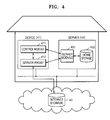
- FIG 4 is a block diagram of a storage access system according to the present invention.
- the storage access system includes a device 41, a server 42, and an Internet storage 43.
- the storage access system includes two storages, i.e. a home storage 422 and the Internet storage 43. Copies of content and meta data of the content stored in the home storage 422 are stored in the Internet storage 43 so that if access to the home storage 422 is not available, the Internet storage 43 is accessed, and , copies of content and meta data of the content stored in the home storage 422 can be retrieved even when the access to the home storage 422 is not available.
- the Internet storage 43 has higher access reliability than the home storage 422 is accessed.
- the home storage 422 is located in a home network and the Internet storage 43 is located in the Internet.
- Examples of Internet storages are a picture sharing system provided by an Internet service provider (ISP), an Internet disk service provided at http://idisk.megapass.net, a Distributed Hash Table (DHT) storage that is a set of storages distributed in the Internet, and so on.
- the home storage 422 and the Internet storage 43 may be physical devices such as hard discs, optical discs, and flash memory devices.
- the server 42 when the server 42 is not in operation, for example, when the server 42 is powered off, access to the home storage 422 is not available.
- the fact that the access reliability of the Internet storage 43 is higher than that of the home storage 422 means that the home storage 422 is in operation less frequently than the Internet storage 43. That is, since the home storage 422 is located in the home network, it might be probable that the home storage 422 is frequently turned on/off by home users. In contrast, since the Internet storage 43 is located in the Internet and provided by an ISP, it is less probable that the Internet storage 43 is frequently turned on/off.
- the device 41 includes a control module 411 and a server proxy 412.
- the control module 411 controls access of a server module 421 of the server 42 to the home storage 422.
- the control module 411 controls access of the server module 421 to the home storage 422 by calling Application Program Interfaces (APIs) that perform various operations for access of the server module 421 to the home storage 422.
- APIs Application Program Interfaces
- access to a storage indicates a process of reading data from, or writing data to, the storage.
- the server proxy 412 acts as a server in place of the server module 421.
- the control module 411 regards the server proxy 412 as the server module 421.
- the server proxy 412 detects whether access of the server module 421 to the home storage 422, which is controlled by the control module 411, is available, and if the access is not available, the server proxy 412 accesses the Internet storage 43, which has higher access reliability than the home storage 422. That is, when detecting the access of the server module 421 to the home storage 422, which is controlled by the control module 411, is not available, the server proxy 412 accesses the Internet storage 43 in place of the server module 421 accessing the home storage 422.
- the server proxy 412 when detecting the access of the server module 421 to the home storage 422, which is controlled by the control module 411, is not available, the server proxy 412 receives calls from the control module 411 for APIs that perform various operations for gaining access to the home storage 422, in place of the server module 421. Next, in response to the calls for the APIs, the server proxy 412 performs the APIs on the Internet storage 43 in place of the home storage 422 so as to access the Internet storage 43, instead of the server module 421 accessing the home storage 422.
- FIG. 5 is a block diagram of a UPnP storage access system according to the present invention.
- the UPnP storage access system includes a device 51, a server 52, and a DHT storage 53.
- the UPnP storage access system is realized by applying a UPnP network and the DHT storage 53 to the storage access system of Figure 4.
- the device 51 includes a UPnP Control Point (CP) module 511, a UPnP Media Server (MS) proxy 512, and a UPnP Media Renderer (MR) module 513.
- CP UPnP Control Point
- MS UPnP Media Server
- MR UPnP Media Renderer
- the UPnP CP module 511 controls the UPnP MS module 521 of the server 52 by calling UPnP actions, which are types of APIs, for the UPnP MS module 521 or the UPnP MS proxy 512.
- UPnP actions which are types of APIs, for the UPnP MS module 521 or the UPnP MS proxy 512.
- the UPnP CP module 511 controls access of the UPnP MS module 521 of the server 52 to the home storage 522 by calling UPnP actions, such as Browse(), Search(), CreateObject(), DestroyObject(), ImportResource(), and ExportResource().
- the UPnP CP module 511 obtains return values for calling subsequent UPnP actions, such as Browse(), Search(), CreateObject(), DestroyObject(), ImportResource(), ExportResource() by receiving from the UPnP MS proxy 512 the results of executing the UPnP actions.
- the UPnP MS proxy 512 acts as a UPnP media server in place of the UPnP MS module 521.
- the UPnP CP module 511 regards the UPnP MS proxy 512 as the UPnP MS module 521.
- the UPnP MS proxy 512 detects whether access of the UPnP MS module 521 to the home storage 522 under control of the UPnP CP module 511 is available, and if the access is not available, the UPnP MS proxy 512 accesses the DHT storage 53 which has higher access reliability than the home storage 522.
- the UPnP MS proxy 512 accesses the DHT storage 53 in place of access of the UPnP MS module 521 to the home storage 522.
- the UPnP MS proxy 512 receives UPnP actions, such as Browse(), Search(), CreateObject(), DestroyObject(), ImportResource(), and ExportResource(), from the UPnP CP module 511 in place of the UPnP MS module 521.
- UPnP actions such as Browse(), Search(), CreateObject(), DestroyObject(), ImportResource(), and ExportResource()
- the UPnP MS proxy 512 executes the UPnP actions on the DHT storage 53 in place of the home storage 522 in response to the call for the UPnP actions, and accesses the DHT storage 53 in place of the access of the UPnP MS module 521 to the home storage 522.
- FIG. 6 is a block diagram of the UPnP MS proxy 512 of Figure 5.
- the UPnP MS proxy 512 includes a UPnP MS module 61, a transformer 62, and a DHT MS module 63.
- the UPnP MS module 61 acts as a UPnP media server accessing the home storage 522 of Figure 5 in place of the UPnP MS module 521.
- the UPnP MS module 61 receives access control to the home storage 522 by receiving a call for UPnP actions, such as Browse(), Search(), CreateObjecto, DestroyObject(), ImportResource(), and ExportResource() from the UPnP CP module 511.
- UPnP MS proxy 512 supplies the results of performing the UPnP actions by the transformer 62 to the UPnP CP module 511.
- the UPnP MS module 61 performs UPnP addressing. That is, the UPnP MS module 61 assigns an Internet protocol (IP) address of the UPnP MS module 61. Also, the UPnP MS module 61 performs UPnP discovery. That is, the UPnP MS module 61 generates an advertisement message (an alive message) indicating that the UPNP MS module 61 is connected to a network, based on the assigned IP address, and transmits it to the UPnP CP module 511.
- IP Internet protocol
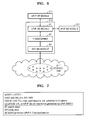
- FIG. 7 is a section of computer code illustrating a format of an alive message according to the present invention.
- the alive message generated by the UPnP MS module 61 has a Hypertext Transfer Protocol (HTTP) document format according to UPnP standards.
- HTTP Hypertext Transfer Protocol
- a location header of the alive records a Uniform Resource Locator (URL) of a UPnP device description generated by the UPnP MS module 61, i.e. an IP address of the UPnP MS module 61 from which the UPnP device description is provided.
- URL Uniform Resource Locator
- the UPnP MS module 61 performs a UPnP description. That is, when the UPnP CP module 511 discovering the UPnP MS module 61 through the UPnP discovery accesses the URL recorded in the location header of the alive message illustrated in Figure 7, the UPnP MS module 61 generates a UPnP device description and supplies it to the UPnP CP module 511. Information that the UPnP MS module 61 needs to generate the UPnP device description may be stored in the UPnP MS module 61, the home storage 522, or the DHT storage 53.
- FIG 8 is a section of computer code illustrating a format of a UPnP device description according to the present invention.
- a UPnP device description generated by the UPnP MS module 61 of Figure 6 has an XML document format according to UPnP standards.
- the UPnP MS module 61 acts as a UPnP media server to access the home storage 522 in place of the UPnP MS module 521
- the UPnP device description according to an exemplary embodiment of the present invention is the same as the existing UPnP device description regarding the UPnP MS module 521, but an IP address described in the UPnP device description is changed from the IP address of the UPnP MS module 521 to the IP address of the UPnP MS module 61.
- the UPnP MS module 61 performs UPnP control. That is, the UPnP MS module 61 performs an action corresponding to the control operation of the UPnP CP module 511 acquiring a description regarding the UPnP MS module 61 through the UPnP description.
- the UPnP MS module 61 performs UPnP eventing. That is, the UPnP MS module 61 transmits an event message, containing information regarding an event provided by the UPnP MS module 61, to the UPnP CP module 511 that controls the UPnP MS module 61 to correspond to UPnP control. For example, the UPnP MS module 61 transmits an event of UPnP content directory service events, which indicates a system update ID parameter SystemUpdateID, as an initial event message. If at least one in a content directory changes, the system update ID parameter SystemUpdateID is changed.
- eventing according to UPnP standards is not supported by the DHT MS module 63, since it is a module that performs only an action for gaining access to the DHT storage 53 according to DHT standards.
- the transformer 62 transforms the format of an event provided by the DHT MS module 63 into an event format according to UPnP standards, and transmits the transformed event to the UPnP MS module 61.
- the UPnP MS module 61 can perform UPnP eventing.
- the transformer 62 transforms access controls from a format for the home storage 522 according to UPnP standards into a format for the DHT storage 53 according to DHT standards. Specifically, the transformer 62 transforms the formats of UPnP actions received by the UPnP MS module 61, such as Browse(), Search(), CreateObject(), DestroyObject(), ImportResource(), and ExportResource(), according to UPnP standards, into the formats of APIs, such as Get(key), Put(key, value), Destroy(key), Update(key, value), Join(node), and Leave(node), according to DHT standards.
- UPnP actions received by the UPnP MS module 61 such as Browse(), Search(), CreateObject(), DestroyObject(), ImportResource(), and ExportResource()
- APIs such as Get(key), Put(key, value), Destroy(key), Update(key, value), Join(node), and Leave(node
- the transformer 62 transforms the format of a value obtained by access of the DHT MS module 63 to the DHT storage 53 into the format of a value obtained by access to the home storage 522 according to UPnP standards. More specifically, the transformer 62 transforms the format of a value obtained by executing APIs, such as Get(key), Put(key, value), Destroy(key), Update(key, value), Join(node), and Leave(node), by the DHT MS module 63 into the format of a value obtained by executing UPnP actions, such as Browse(), Search(), CreateObject(), DestroyObject(), ImportResource(), and ExportResource(), according to UPnP standards.
- APIs such as Get(key), Put(key, value), Destroy(key), Update(key, value), Join(node), and Leave(node
- the UPnP MS module 61 receives the call and informs the transformer 62 that Browse(root directory) was called by the UPnP CP module 511. Then, the transformer 62 transforms the format of storage access control according to a pseudo code illustrated in Figure 9.
- Figure 9 is a section of computer code illustrating an example of pseudo code for transforming the format of storage access control according to the present invention.
- the pseudo code is an example of code used to transform Browse(root directory) called by the UPnP CP module 511 into Get(key) according to DHT standards.
- the transformer 62 informs the transformer 62 of a call for Browse(root directory)
- the transformer 62 calls Get(home key), with respect to the DHT MS module 63, using a home key corresponding to a home network in order to obtain home data from a return value of the call for Get(home key).
- the home data refers to a home network, and includes hash keys of media servers in the home network, and especially, a hash key of the UPnP MS module 521.
- the transformer 62 calls Get(hash key of Media Server) with respect to the DHT MS module 63 by using the hash key of the UPnP MS module 521, and obtains hash data of the UPnP MS module 521 from a return value of the call for Get(hash key of Media Server).
- the hash data of the UPnP MS module 521 includes hash keys of a directory of the UPnP MS module 521, and particularly, a hash key of a root directory of the UPnP MS module 521.
- the transformer 62 calls Get(hash key of root directory) with respect to the DHT MS module 63 by using the hash key of the root directory of the UPnP MS module 521, and obtains root directory data of the UPnP MS module 521 from a return value of the call for Get(hash key of root directory).
- the root directory data contains meta data regarding a child directory, items, etc. of the root directory of the UPnP MS module 521.
- the transformer 62 transforms the format of the obtained root directory data into the format of a return value of a call for Browse(root directory) according to UPnP standards, and transmits the transformed root directory data to the DHT MS module 63.
- the DHT MS module 63 acts as a DHT media server accessing the DHT storage 53 to correspond to an operation performed by the UPnP MS module 61. That is, the DHT MS module 63 acts as the DHT media server that provides APIs, such as Get(key), Put(key, value), Destroy(key), Update(key, value), Join(node), and Leave(node), according to DHT standards.
- Get(key) is an API that performs detection of a value from the DHT storage 53 using the hash key and returns a value to correspond to UPnP standards.
- Put(key, value) is an API that stores the hash key and the value corresponding to UPnP standards of the hash key in the DHT storage 53.
- Destroy(key) is an API that deletes the hash key and the value corresponding to UPnP standards of the hash key from the DHT storage 53.
- Update(key, value) is an API that performs updating the value corresponding to UPnP standards of the hash key.
- Join(node) is an API that allows a new node to join the DHT storage 53.
- Leave(node) is an API that allows an existing node to leave the DHT storage 53.
- the DHT MS module 63 accesses the DHT storage 53 which has higher access reliability than the home storage 522 to correspond to an operation of the UPnP MS module 61. That is, the DHT MS module 63 accesses the DHT storage 53 according to an access control format transformed by the transformer 62, and obtains the accessing result. More specifically, the DHT MS module 63 accesses the DHT storage 53 by executing APIs, such as Get(key), Put(key, value), Destroy(key), Update(key, value), Join(node), and Leave(node), which are transformed by the transformer 62 according to DHT standards, and obtains the accessing result.
- APIs such as Get(key), Put(key, value), Destroy(key), Update(key, value), Join(node), and Leave(node
- the UPnP MR module 513 acts as a UPnP media renderer.
- the UPnP MR module 513 performs rendering on the content obtained as the result of calling ExportResource() by the UPnP CP module 511.
- the UPnP MS module 61 receives a call for Browse() from the UPnP CP module 511, and provides the UPnP CP module 511 with a browse for objects of a content directory as a result value of the call for Browse().
- the UPnP CP module 511 reads data from the DHT storage 53 by calling ExportResource() that instructs content of one of the objects of the content directory to be exported from the DHT storage 53 to the UPnP MR module 513.
- the UPnP MS module 61 receives a call for CreateObject() from the UPnP CP module 511, and creates a new object in a UPnP content directory.
- the UPnP CP module 511 assigns identification of the created new object as a result of the call for CreateObject() from the UPnP MS module 61, and calls ImportResource() that instructs content of an object corresponding to the assigned identification to be imported to the DHT storage 53 in order to write data to the DHT storage 53.
- the UPnP CP module 511 periodically determines whether content meta data present in the home network is the same as content meta data in the content and the DHT storage 53. If it is not the same, the UPnP CP module 511 reflects the difference therebetween.
- FIG 10 is a block diagram of another embodiment of a UPnP storage access system according to the present invention.
- the UPnP storage access system includes a UPnP CP 101, a UPnP MS 102, a UPnP MS proxy 103, a UPnP MR 104, and a DHT storage 105.
- the UPnP CP 101, the UPnP MS 102, the UPnP MS proxy 103, and the UPnP MR 104 correspond to the UPnP CP module 511, the UPnP MS module 521, the UPnP MS proxy 512, and the UPnP MR module 513, respectively. That is, the UPnP storage access system of Figure 10 shows that the UPnP CP module 511, the UPnP MS proxy 512, and the UPnP MR module 513 which constitute the device 51 of Figure 5 may be present as separate devices.
- FIG 11 is a block diagram of another embodiment of a UPnP storage access system according to the present invention.
- the storage access system includes a UPnP CP 111, a device 112, and a DHT storage 113.
- the UPnP storage access system of Figure 11 includes only a DHT storage 113 without a home storage. That is, the DHT storage 113 acts as the home storage 522 and the home storage 1021 illustrated in the storage access systems shown in Figures 5 and 10, respectively.
- the UPnP CP 111 calls UPnP actions, which are various types of APIs, with respect to a UPnP MS module 1121 of the device 112 in order to control the UPnP MS module 1121.
- UPnP actions such as Browse(), Search(), CreateObject(), DestroyObject(), ImportResource(), and ExportResource(), in order to control access of the UPnP MS module 1121 to the DHT storage 113.
- the UPnP CP 111 receives from the device 112 values obtained by executing the UPnP actions, as return values of the call for the UPnP actions.
- the device 112 also includes a transformer 1122 and a DHT MS module 1123 as well as the UPnP MS module 1121.
- the UPnP MS module 1121 acts as a UPnP media server accessing the DHT storage 113. More specifically, the UPnP MS module 1121 performs UPnP addressing, discovery, control, and eventing like the UPnP MS module 61 of Figure 6. However, unlike the UPnP MS module 61 of Figure 6, the UPnP MS module 1121 does not take the place of another UPnP MS module, and therefore, creates a UPnP device description without using the existing UPnP device description of another UPnP MS module.
- the UPnP MS module 1121 gains control of access to the DHT storage 113 according to UPnP standards by receiving a call for UPnP actions, such as Browse(), Search(), CreateObject(), DestroyObject(), ImportResource(), and ExportResource(), from the UPnP CP 111. Also, the UPnP MS module 1121 supplies the result of executing the UPnP actions, such as Browse(), Search(), CreateObject(), DestroyObject(), ImportResource(), and ExportResource(), which are transformed by the transformer 1122, to the UPnP CP 111.
- UPnP actions such as Browse(), Search(), CreateObject(), DestroyObject(), ImportResource(), and ExportResource()
- the transformer 1122 transforms access controls for the DHT storage 113 from a format according to UPnP standards, which is received by the UPnP MS module 1121, into a format according to DHT standards.
- the transformer 1122 transforms UPnP actions, such as Browse(), Search(), CreateObject(), DestroyObject(), ImportResource(), and ExportResource(), from a format according to UPnP standards, which are received by the UPnP MS module 1121, into a format of APIs according to DHT standards, such as Get(key), Put(key, value), Destroy(key), Update(key, value), Join(node), and Leave(node). That is, like the transformer 62 of Figure 6, the transformer 1122 can transform the format of storage access control according to the pseudo code illustrated in Figure 9.
- the transformer 1122 transforms the format of an access control of the DHT storage 113 according to DHT standards, which is received by the DHT MS module 1123, into the format of an access control of the DHT storage 113 according to UPnP standards.
- the transformer 1122 transforms the format of the result of executing APIs, such as Get(key), Put(key, value), Destroy(key), Update(key, value), Join(node), and Leave(node), which are obtained by the DHT MS module 1123, into the format of UPnP actions, such as Browse(), Search(), CreateObject(), DestroyObject(), ImportResource(), and ExportResource(), according to the UPnP standards.
- the DHT MS module 1123 acts as a DHT media server accessing the DHT storage 113 to correspond to an operation performed by the UPnP MS module 1121.
- the DHT MS module 1123 accesses the DHT storage 113 according to a format of access control transformed by the transformer 1122, and obtains the accessing result.
- the DHT MS module 1123 accesses the DHT storage 113 by executing APIs, such as Get(key), Put(key, value), Destroy(key), Update(key, value), Join(node), and Leave(node), according to DHT standards, which are transformed by the transformer 1122, and obtains the accessing result.
- Figure 12 is a flowchart illustrating a storage access method according to the present invention.
- the storage access method includes operations performed by the storage access system of Figure 4. Therefore, although not described here, the above description regarding the storage access system of Figure 4 is also applied to the storage access method of Figure 12.
- control module 411 controls access of the server module 421 of the server 42 to the home storage 422 by calling APIs that perform operations required for the server module 421 of the server 42 to access the home storage 422.
- the server proxy 412 performs operation 123. If the access is available, the storage access method is discontinued.
- the server proxy 412 receives a call for APIs that perform operations to gain access to the home storage 422 from the control module 411, in place of the server module 421.
- the server proxy 412 accesses the Internet storage 43 instead of the server module 421 accessing the home storage 422 by executing the APIs with respect to the Internet storage 43, not the home storage 422, in response to the execution of the APIs.
- FIG 13 is a flowchart illustrating a UPnP storage access method according to the present invention.
- the UPnP storage access method includes operations performed by the UPnP storage access system illustrated in Figures 5 and 6.
- the above description of the UPnP storage access system Figures 5 and 6 is also applied to the UPnP storage access method of Figure 13.
- the UPnP CP module 511 calls UPnP actions, such as Browse(), Search(), CreateObject(), DestroyObject(), ImportResource(), and ExportResource(), to control access of the UPnP MS module 521 of the server 52 to the home storage 522.
- UPnP actions such as Browse(), Search(), CreateObject(), DestroyObject(), ImportResource(), and ExportResource()
- the UPnP MS proxy 512 performs operation 133. If the access is available, the UPnP storage access method is discontinued.
- the UPnP MS proxy 512 receives a call for UPnP actions, such as Browse(), Search(), CreateObject(), DestroyObject(), ImportResource(), and ExportResource(), from the UPnP CP module 511 so as to gain access control to the home storage 522.
- UPnP actions such as Browse(), Search(), CreateObject(), DestroyObject(), ImportResource(), and ExportResource()
- the UPnP MS proxy 512 transforms the format of the UPnP actions, such as Browse(), Search(), CreateObject(), DestroyObject(), ImportResource(), and ExportResource(), according to UPnP standards, which are received in operation 133, into the format of APIs, such as Get(key), Put(key, value), Destroy(key), Update(key, value), Join(node), and Leave(node), according to DHT standards.
- the UPnP MS proxy 512 accesses the DHT storage 53 by executing the APIs, such as Get(key), Put(key, value), Destroy(key), Update(key, value), Join(node), and Leave(node), according to DHT standards, which are transformed in operation 134, and obtains the accessing result.
- APIs such as Get(key), Put(key, value), Destroy(key), Update(key, value), Join(node), and Leave(node
- the UPnP MS proxy 512 transforms the format of the result of executing the APIs, such as Get(key), Put(key, value), Destroy(key), Update(key, value), Join(node), and Leave(node), which are obtained in operation 135, into the format of the result of executing UPnP actions, such as Browse(), Search(), CreateObject(), DestroyObject(), ImportResource(), and ExportResource(), according to UPnP standards.
- the UPnP MS proxy 512 supplies the result of executing the UPnP actions, such as Browse(), Search(), CreateObject(), DestroyObject(), ImportResource(), and ExportResource(), which are obtained in operation 136, to the UPnP CP module 511.
- the UPnP actions such as Browse(), Search(), CreateObject(), DestroyObject(), ImportResource(), and ExportResource(), which are obtained in operation 136, to the UPnP CP module 511.
- the UPnP CP module 511 receives the result of executing UPnP actions, such as Browse(), Search(), CreateObject(), DestroyObject(), ImportResource(), and ExportResource(), which are supplied in operation 137, as a return value of the call for the UPnP actions.
- UPnP actions such as Browse(), Search(), CreateObject(), DestroyObject(), ImportResource(), and ExportResource()
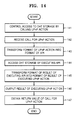
- FIG 14 is a flowchart illustrating another embodiment of a UPnP storage access method according to the present invention.
- the UPnP storage access method of Figure 14 includes operations performed by the UPnP storage access system of Figure 11. Although not described here, the above description regarding the UPnP storage access system of Figure 11 is also applied to the UPnP storage access method of Figure 14.
- the UPnP CP 111 controls access of the UPnP MS module 1121 of the device 112 to the DHT storage 113 by calling UPnP actions, such as Browse(), Search(), CreateObject(), DestroyObject(), ImportResource(), and ExportResource().
- UPnP actions such as Browse(), Search(), CreateObject(), DestroyObject(), ImportResource(), and ExportResource().
- the device 112 gains control of access to the DHT storage 113 according to UPnP standards by receiving a call for UPnP actions, such as Browse(), Search(), CreateObject(), DestroyObject(), ImportResource(), and ExportResource(), from the UPnP CP 111.
- UPnP actions such as Browse(), Search(), CreateObject(), DestroyObject(), ImportResource(), and ExportResource()
- the device 112 transforms the format of the UPnP actions, such as Browse(), Search(), CreateObject(), DestroyObject(), ImportResource(), and ExportResource(), according to UPnP standards, which are received in operation 142, into the format of APIs, such as Get(key), Put(key, value), Destroy(key), Update(key, value), Join(node), and Leave(node), according to DHT standards.
- UPnP actions such as Browse(), Search(), CreateObject(), DestroyObject(), ImportResource(), and ExportResource()
- UPnP standards which are received in operation 142
- APIs such as Get(key), Put(key, value), Destroy(key), Update(key, value), Join(node), and Leave(node
- the device 112 accesses the DHT storage 113 by executing the APIs, such as Get(key), Put(key, value), Destroy(key), Update(key, value), Join(node), and Leave(node), according to DHT standards which are transformed in operation 143, and obtains the accessing result.
- the APIs such as Get(key), Put(key, value), Destroy(key), Update(key, value), Join(node), and Leave(node
- the device 112 transforms the format of the result of executing the APIs, such as Get(key), Put(key, value), Destroy(key), Update(key, value), Join(node), and Leave(node), which are obtained in operation 144, into the format of the result of executing the UPnP actions, such as Browse(), Search(), CreateObject(), DestroyObject(), ImportResource(), and ExportResource(), according to UPnP standards.
- the APIs such as Get(key), Put(key, value), Destroy(key), Update(key, value), Join(node), and Leave(node)
- UPnP actions such as Browse(), Search(), CreateObject(), DestroyObject(), ImportResource(), and ExportResource()
- the device 112 supplies the result of executing the UPnP actions, such as Browse(), Search(), CreateObject(), DestroyObject(), ImportResource(), and ExportResource(), which are transformed in operation 145, to the UPnP CP 111.
- the UPnP actions such as Browse(), Search(), CreateObject(), DestroyObject(), ImportResource(), and ExportResource(), which are transformed in operation 145, to the UPnP CP 111.
- the UPnP CP module 111 receives the result of executing the UPnP actions, such as Browse(), Search(), CreateObject(), DestroyObject(), ImportResource(), and ExportResource(), which are supplied in operation 146, as a return value of the call for the UPnP actions, such as Browse(), Search(), CreateObject(), DestroyObject(), ImportResource(), and ExportResource().
- the UPnP actions such as Browse(), Search(), CreateObject(), DestroyObject(), ImportResource(), and ExportResource().
- the above embodiments of the present invention can be embodied as a computer program, which may be stored on a computer readable program, and executed in a general digital computer. Also, the data structures used in the above embodiments can be included in a signal or recorded in a computer readable medium via various devices.
- Examples of the computer readable medium include a magnetic storage medium (e.g., a ROM, a floppy disk, a hard disc, etc.), and an optical recoding medium (e.g., a CD-ROM, a DVD, etc.).
- a magnetic storage medium e.g., a ROM, a floppy disk, a hard disc, etc.
- an optical recoding medium e.g., a CD-ROM, a DVD, etc.
- the present invention it is detected whether access to a home storage is available, and an Internet storage which has higher access reliability than the home storage is accessed, when the access to the home storage is not available. Accordingly, even if the home storage is not in operation, for example, when the home storage is turned off, it is possible to obtain content and meta data of the content.
- the embodiments of the present invention introduce a proxy that acts as a UPnP media server in place of a UPnP media server module accessing the home storage, and accesses the Internet storage which has higher access reliability than the home storage to correspond to UPnP media server, thereby being compatible with the existing UPnP standards.
- a proxy that acts as a UPnP media server in place of a UPnP media server module accessing the home storage, and accesses the Internet storage which has higher access reliability than the home storage to correspond to UPnP media server, thereby being compatible with the existing UPnP standards.
- the advantages of the DHT storage such as data redundancy and location transparency, can be applied to the home storage environment.
- the home storage is accessed first, and the Internet storage is accessed when the access to the home storage is not available. That is, it is not always necessary to upload and download content via the Internet, thereby reducing Internet traffic.
Landscapes
- Engineering & Computer Science (AREA)
- Theoretical Computer Science (AREA)
- Human Computer Interaction (AREA)
- Physics & Mathematics (AREA)
- General Engineering & Computer Science (AREA)
- General Physics & Mathematics (AREA)
- Automation & Control Theory (AREA)
- Multimedia (AREA)
- Computing Systems (AREA)
- Computer Networks & Wireless Communication (AREA)
- Signal Processing (AREA)
- Information Retrieval, Db Structures And Fs Structures Therefor (AREA)
- Computer And Data Communications (AREA)
Applications Claiming Priority (1)
| Application Number | Priority Date | Filing Date | Title |
|---|---|---|---|
| KR1020060000968A KR100862659B1 (ko) | 2006-01-04 | 2006-01-04 | 인터넷 스토리지에 접근하는 방법 및 장치 |
Publications (2)
| Publication Number | Publication Date |
|---|---|
| EP1816554A2 true EP1816554A2 (de) | 2007-08-08 |
| EP1816554A3 EP1816554A3 (de) | 2009-11-18 |
Family
ID=37891686
Family Applications (1)
| Application Number | Title | Priority Date | Filing Date |
|---|---|---|---|
| EP06127371A Ceased EP1816554A3 (de) | 2006-01-04 | 2006-12-29 | Speicherzugriffsverfahren und Speicherzugriffsvorrichtung |
Country Status (5)
| Country | Link |
|---|---|
| US (1) | US9110606B2 (de) |
| EP (1) | EP1816554A3 (de) |
| JP (1) | JP5202847B2 (de) |
| KR (1) | KR100862659B1 (de) |
| CN (2) | CN1996848B (de) |
Cited By (1)
| Publication number | Priority date | Publication date | Assignee | Title |
|---|---|---|---|---|
| WO2008077299A1 (en) | 2006-12-27 | 2008-07-03 | Huawei Technologies Co., Ltd. | A redirector, a relay and a routing information configuration system and an updating method |
Families Citing this family (5)
| Publication number | Priority date | Publication date | Assignee | Title |
|---|---|---|---|---|
| WO2006108104A2 (en) * | 2005-04-05 | 2006-10-12 | Cohen Alexander J | Multi-media search, discovery, submission and distribution control infrastructure |
| US8775817B2 (en) * | 2008-05-12 | 2014-07-08 | Microsoft Corporation | Application-configurable distributed hash table framework |
| KR101831686B1 (ko) | 2010-06-14 | 2018-02-23 | 삼성전자주식회사 | 홈 네트워크에서 객체의 변경을 판단하는 방법 및 장치 |
| US9104507B2 (en) * | 2010-06-25 | 2015-08-11 | Daniel Knoodle | Developer platform |
| US8949999B2 (en) * | 2011-05-10 | 2015-02-03 | Blackberry Limited | Access control at a media server |
Citations (3)
| Publication number | Priority date | Publication date | Assignee | Title |
|---|---|---|---|---|
| US6029231A (en) | 1996-12-03 | 2000-02-22 | Emc Corporation | Retrieval of data stored on redundant disks across a network using remote procedure calls |
| US20030217136A1 (en) * | 2002-05-16 | 2003-11-20 | Chunglae Cho | Apparatus and method for managing and controlling UPnP devices in home network over external internet network |
| US6775695B1 (en) * | 1999-10-29 | 2004-08-10 | Hewlett-Packard Development Company, L.P. | Client session depth based caching in proxy servers |
Family Cites Families (57)
| Publication number | Priority date | Publication date | Assignee | Title |
|---|---|---|---|---|
| US5771354A (en) * | 1993-11-04 | 1998-06-23 | Crawford; Christopher M. | Internet online backup system provides remote storage for customers using IDs and passwords which were interactively established when signing up for backup services |
| US6754712B1 (en) * | 2001-07-11 | 2004-06-22 | Cisco Techonology, Inc. | Virtual dial-up protocol for network communication |
| US6073209A (en) * | 1997-03-31 | 2000-06-06 | Ark Research Corporation | Data storage controller providing multiple hosts with access to multiple storage subsystems |
| US6226649B1 (en) * | 1997-06-23 | 2001-05-01 | Oracle Corporation | Apparatus and method for transparent access of foreign databases in a heterogeneous database system |
| KR20000008981A (ko) | 1998-07-20 | 2000-02-15 | 윤종용 | 데이터 베이스 시스템에서 결함 극복 처리를 지원하는 시스템 |
| US6438652B1 (en) * | 1998-10-09 | 2002-08-20 | International Business Machines Corporation | Load balancing cooperating cache servers by shifting forwarded request |
| US6381602B1 (en) * | 1999-01-26 | 2002-04-30 | Microsoft Corporation | Enforcing access control on resources at a location other than the source location |
| ATE390788T1 (de) * | 1999-10-14 | 2008-04-15 | Bluearc Uk Ltd | Vorrichtung und verfahren zur hardware-ausführung oder hardware-beschleunigung von betriebssystemfunktionen |
| JP4982651B2 (ja) | 2000-02-04 | 2012-07-25 | リアルネットワークス・インコーポレイテッド | 分散型メディアネットワーク及びメタデータサーバを含んだシステム |
| US6956833B1 (en) * | 2000-02-08 | 2005-10-18 | Sony Corporation | Method, system and devices for wireless data storage on a server and data retrieval |
| US6779035B1 (en) * | 2000-03-06 | 2004-08-17 | Microsoft Corporation | Application programming interface and generalized network address translator for translation of transport-layer sessions |
| US7565326B2 (en) * | 2000-05-25 | 2009-07-21 | Randle William M | Dialect independent multi-dimensional integrator using a normalized language platform and secure controlled access |
| KR100375796B1 (ko) * | 2000-12-14 | 2003-03-15 | 주식회사 비즈모델라인 | 웹 공유 백업 저장장치를 이용한 개인간 직접 통신 분산 네트워크 시스템 |
| US20020078161A1 (en) * | 2000-12-19 | 2002-06-20 | Philips Electronics North America Corporation | UPnP enabling device for heterogeneous networks of slave devices |
| US7266556B1 (en) * | 2000-12-29 | 2007-09-04 | Intel Corporation | Failover architecture for a distributed storage system |
| US20020161826A1 (en) * | 2001-01-25 | 2002-10-31 | Carlos Arteaga | System and method for remote communication transactions |
| US20060173951A1 (en) * | 2001-01-25 | 2006-08-03 | Carlos Arteaga | System and method for transfer, control, and synchronization of data |
| US7194590B2 (en) * | 2001-02-28 | 2007-03-20 | Hitachi, Ltd. | Three data center adaptive remote copy |
| US20020174236A1 (en) * | 2001-03-26 | 2002-11-21 | Sanjay Mathur | Methods and apparatus for processing data in a content network |
| US6944133B2 (en) * | 2001-05-01 | 2005-09-13 | Ge Financial Assurance Holdings, Inc. | System and method for providing access to resources using a fabric switch |
| KR100430392B1 (ko) | 2001-06-20 | 2004-05-10 | 최용식 | 손톱 깎기 |
| JP3508857B2 (ja) * | 2001-07-31 | 2004-03-22 | 日本電気株式会社 | ノード間データ転送方法およびデータ転送装置 |
| EP1286501A1 (de) * | 2001-08-22 | 2003-02-26 | Thomson Licensing S.A. | Verfahren für die Verbindung von einem UPnP-Netz und einem HAVi-Netz mittels Brücken |
| US6938031B1 (en) * | 2001-10-19 | 2005-08-30 | Data Return Llc | System and method for accessing information in a replicated database |
| US7574496B2 (en) * | 2001-11-30 | 2009-08-11 | Surgient, Inc. | Virtual server cloud interfacing |
| KR100796865B1 (ko) * | 2001-12-31 | 2008-01-22 | 엘지전자 주식회사 | 이동 통신 단말기와 이를 이용한 네트웍 접속 시스템 및그 방법 |
| JP4287092B2 (ja) * | 2002-03-29 | 2009-07-01 | 株式会社富士通ソーシアルサイエンスラボラトリ | ファイル管理システムおよびファイル管理方法 |
| US20030191802A1 (en) | 2002-04-03 | 2003-10-09 | Koninklijke Philips Electronics N.V. | Reshaped UDDI for intranet use |
| GB2387684A (en) * | 2002-04-19 | 2003-10-22 | Hewlett Packard Co | Management of a long term digital document storage system |
| US7404011B2 (en) * | 2002-05-31 | 2008-07-22 | International Business Machines Corporation | System and method for accessing different types of back end data stores |
| US7813936B2 (en) * | 2002-08-20 | 2010-10-12 | Piccionelli Gregory A | Record-keeping system for transmission and production of content |
| US7664652B2 (en) * | 2002-08-20 | 2010-02-16 | Piccionelli Gregory A | Record-keeping system for transmission and production of content |
| US7827116B2 (en) * | 2002-08-20 | 2010-11-02 | Piccionelli Gregory A | Methods of producing and transmitting content based on compliance |
| US7769722B1 (en) * | 2006-12-08 | 2010-08-03 | Emc Corporation | Replication and restoration of multiple data storage object types in a data network |
| US7254636B1 (en) * | 2003-03-14 | 2007-08-07 | Cisco Technology, Inc. | Method and apparatus for transparent distributed network-attached storage with web cache communication protocol/anycast and file handle redundancy |
| JP4538454B2 (ja) * | 2003-06-30 | 2010-09-08 | インターナショナル・ビジネス・マシーンズ・コーポレーション | コンピュータ・ネットワークにおける電子文書のレプリカの検索 |
| US7010657B2 (en) * | 2003-07-21 | 2006-03-07 | Motorola, Inc. | Avoiding deadlock between storage assignments by devices in a network |
| US7349913B2 (en) * | 2003-08-21 | 2008-03-25 | Microsoft Corporation | Storage platform for organizing, searching, and sharing data |
| WO2005045682A1 (en) * | 2003-10-10 | 2005-05-19 | William Tracy Fuller | Methods for expansion, sharing of electronic storage |
| CA2547468A1 (en) * | 2003-11-04 | 2005-05-19 | Taskport, Inc. | Method and system for collaboration |
| JP4273973B2 (ja) | 2004-01-15 | 2009-06-03 | ソニー株式会社 | 情報通信システム、送信装置及び送信方法、並びにコンピュータ・プログラム |
| KR100585669B1 (ko) * | 2004-03-22 | 2006-06-07 | 엘지전자 주식회사 | 인터넷을 이용한 네트워크 디바이스 제어 방법 |
| US7420956B2 (en) * | 2004-04-16 | 2008-09-02 | Broadcom Corporation | Distributed storage and aggregation of multimedia information via a broadband access gateway |
| US7325040B2 (en) * | 2004-08-30 | 2008-01-29 | University Of Utah Research Foundation | Locally operated desktop environment for a remote computing system |
| US7711835B2 (en) * | 2004-09-30 | 2010-05-04 | Citrix Systems, Inc. | Method and apparatus for reducing disclosure of proprietary data in a networked environment |
| US7366856B2 (en) * | 2004-10-13 | 2008-04-29 | Ebay Inc. | Method and system to locate a storage device |
| JP2006178811A (ja) * | 2004-12-24 | 2006-07-06 | Hitachi Ltd | ストレージシステム及びストレージシステムのパス制御方法 |
| US7577689B1 (en) * | 2005-06-15 | 2009-08-18 | Adobe Systems Incorporated | Method and system to archive data |
| US20070033190A1 (en) * | 2005-08-08 | 2007-02-08 | Microsoft Corporation | Unified storage security model |
| US20070067670A1 (en) * | 2005-09-19 | 2007-03-22 | Xiotech Corporation | Method, apparatus and program storage device for providing drive load balancing and resynchronization of a mirrored storage system |
| US8027982B2 (en) * | 2006-03-01 | 2011-09-27 | Oracle International Corporation | Self-service sources for secure search |
| US8005816B2 (en) * | 2006-03-01 | 2011-08-23 | Oracle International Corporation | Auto generation of suggested links in a search system |
| US7707367B1 (en) * | 2007-06-28 | 2010-04-27 | Emc Corporation | Data storage system having separate atomic operation/non-atomic operation paths |
| US20090037522A1 (en) * | 2007-08-02 | 2009-02-05 | Sony Corporation | System and Method for Simulating Network Functionality for Demonstration Devices |
| US7991840B2 (en) * | 2008-01-24 | 2011-08-02 | International Business Machines Corporation | System and product for role-based tag management for collaborative services integrated within an SOA |
| US8909863B2 (en) * | 2009-11-16 | 2014-12-09 | Microsoft Corporation | Cache for storage and/or retrieval of application information |
| US8239589B1 (en) * | 2010-03-31 | 2012-08-07 | Amazon Technologies, Inc. | Balancing latency and throughput for shared resources |
-
2006
- 2006-01-04 KR KR1020060000968A patent/KR100862659B1/ko not_active Expired - Fee Related
- 2006-12-29 EP EP06127371A patent/EP1816554A3/de not_active Ceased
- 2006-12-30 CN CN2006101566731A patent/CN1996848B/zh not_active Expired - Fee Related
- 2006-12-30 CN CN2010101477109A patent/CN101834767B/zh not_active Expired - Fee Related
-
2007
- 2007-01-04 JP JP2007000261A patent/JP5202847B2/ja not_active Expired - Fee Related
- 2007-01-04 US US11/649,258 patent/US9110606B2/en not_active Expired - Fee Related
Patent Citations (3)
| Publication number | Priority date | Publication date | Assignee | Title |
|---|---|---|---|---|
| US6029231A (en) | 1996-12-03 | 2000-02-22 | Emc Corporation | Retrieval of data stored on redundant disks across a network using remote procedure calls |
| US6775695B1 (en) * | 1999-10-29 | 2004-08-10 | Hewlett-Packard Development Company, L.P. | Client session depth based caching in proxy servers |
| US20030217136A1 (en) * | 2002-05-16 | 2003-11-20 | Chunglae Cho | Apparatus and method for managing and controlling UPnP devices in home network over external internet network |
Non-Patent Citations (2)
| Title |
|---|
| ANONYMOUS: "Proxy server - Wikipedia, the free encyclopedia", 3 January 2006 (2006-01-03), XP055162453, Retrieved from the Internet <URL:http://en.wikipedia.org/w/index.php?title=Proxy_server&oldid=33773489> [retrieved on 20150115] * |
| ANONYMOUS: "Web cache - Wikipedia, the free encyclopedia", 31 December 2005 (2005-12-31), XP055162447, Retrieved from the Internet <URL:http://en.wikipedia.org/w/index.php?title=Web_cache&oldid=33331765> [retrieved on 20150115] * |
Cited By (1)
| Publication number | Priority date | Publication date | Assignee | Title |
|---|---|---|---|---|
| WO2008077299A1 (en) | 2006-12-27 | 2008-07-03 | Huawei Technologies Co., Ltd. | A redirector, a relay and a routing information configuration system and an updating method |
Also Published As
| Publication number | Publication date |
|---|---|
| JP5202847B2 (ja) | 2013-06-05 |
| CN101834767B (zh) | 2012-04-18 |
| US20070156899A1 (en) | 2007-07-05 |
| KR100862659B1 (ko) | 2008-10-10 |
| CN1996848A (zh) | 2007-07-11 |
| EP1816554A3 (de) | 2009-11-18 |
| CN1996848B (zh) | 2010-06-02 |
| CN101834767A (zh) | 2010-09-15 |
| JP2007183965A (ja) | 2007-07-19 |
| US9110606B2 (en) | 2015-08-18 |
| KR20070073263A (ko) | 2007-07-10 |
Similar Documents
| Publication | Publication Date | Title |
|---|---|---|
| EP1499089B1 (de) | Verfahren zum Zugreifen und Verteilen eines digitalen Dokumentes in einem P2P-Kommunikationsnetzwerk | |
| RU2448362C2 (ru) | Отображение обнаруженных элементов универсального режима "подключай и работай" на местоположение smb | |
| US8219692B2 (en) | Method and apparatus for storing and restoring state information of remote user interface | |
| CN102272747B (zh) | 用于管理远程用户界面的状态信息的方法和装置 | |
| US9323587B2 (en) | Method and system for automatic detecting and resolving APIs | |
| US20050055352A1 (en) | Content directory and synchronization bridge | |
| EP1808789A2 (de) | Verbesserungen und in zusammenhang mit Fernbenutzer-Schnittstellen | |
| JP4806072B2 (ja) | エンベデッドavコンテンツのプロトコルマッチング装置および方法 | |
| US20100235469A1 (en) | Method And System For Providing Access To Resources Related To A Locatable Resource | |
| US9110606B2 (en) | Method and apparatus for accessing home storage or internet storage | |
| CN101068252B (zh) | 将提供与不提供内容目录服务的装置同步的方法和设备 | |
| JP2002094531A (ja) | ネットワーク上のデバイス情報取得方法、ネットワーク上のデバイス情報取得装置及び記録媒体 | |
| JP4365401B2 (ja) | 通信制御プログラム、通信制御方法および通信制御装置 | |
| KR101434202B1 (ko) | 이벤트 메시지 수신 방법, 이벤트 메시지 전송 방법,피제어 장치 및 제어 포인트 | |
| JP5300650B2 (ja) | HttpServiceを用いたサービス登録装置、コンテンツ登録装置、サービス登録方法、コンテンツ登録方法、プログラム及び記録媒体 | |
| US20100250591A1 (en) | Methods, Systems, And Computer Program Products For Providing Access To Metadata For An Identified Resource | |
| KR100823269B1 (ko) | 원격 사용자 인터페이스의 상태 정보를 관리하는 방법 | |
| US8086562B2 (en) | Arrangement for anonymous API downloaded resources for advanced content | |
| US20070124445A1 (en) | Browser adaptation for context based navigation | |
| CN103812698B (zh) | 管理通用即插即用装置的信息的方法和设备 | |
| JP2006099380A (ja) | 更新版ソフトウェア配布方法及びシステム |
Legal Events
| Date | Code | Title | Description |
|---|---|---|---|
| PUAI | Public reference made under article 153(3) epc to a published international application that has entered the european phase |
Free format text: ORIGINAL CODE: 0009012 |
|
| 17P | Request for examination filed |
Effective date: 20061229 |
|
| AK | Designated contracting states |
Kind code of ref document: A2 Designated state(s): AT BE BG CH CY CZ DE DK EE ES FI FR GB GR HU IE IS IT LI LT LU LV MC NL PL PT RO SE SI SK TR |
|
| AX | Request for extension of the european patent |
Extension state: AL BA HR MK YU |
|
| RIC1 | Information provided on ipc code assigned before grant |
Ipc: G06F 3/06 20060101AFI20070404BHEP Ipc: G06F 11/20 20060101ALI20090727BHEP Ipc: H04L 12/28 20060101ALI20090727BHEP |
|
| PUAL | Search report despatched |
Free format text: ORIGINAL CODE: 0009013 |
|
| AK | Designated contracting states |
Kind code of ref document: A3 Designated state(s): AT BE BG CH CY CZ DE DK EE ES FI FR GB GR HU IE IS IT LI LT LU LV MC NL PL PT RO SE SI SK TR |
|
| AX | Request for extension of the european patent |
Extension state: AL BA HR MK RS |
|
| 17Q | First examination report despatched |
Effective date: 20100526 |
|
| AKX | Designation fees paid |
Designated state(s): DE FR GB |
|
| RAP1 | Party data changed (applicant data changed or rights of an application transferred) |
Owner name: SAMSUNG ELECTRONICS CO., LTD. |
|
| STAA | Information on the status of an ep patent application or granted ep patent |
Free format text: STATUS: THE APPLICATION HAS BEEN REFUSED |
|
| 18R | Application refused |
Effective date: 20170720 |