EP1816558A2 - Verfahren, Computer und System zur Geräteansteuerung - Google Patents
Verfahren, Computer und System zur Geräteansteuerung Download PDFInfo
- Publication number
- EP1816558A2 EP1816558A2 EP07000121A EP07000121A EP1816558A2 EP 1816558 A2 EP1816558 A2 EP 1816558A2 EP 07000121 A EP07000121 A EP 07000121A EP 07000121 A EP07000121 A EP 07000121A EP 1816558 A2 EP1816558 A2 EP 1816558A2
- Authority
- EP
- European Patent Office
- Prior art keywords
- data
- mark
- computer
- language
- model
- Prior art date
- Legal status (The legal status is an assumption and is not a legal conclusion. Google has not performed a legal analysis and makes no representation as to the accuracy of the status listed.)
- Ceased
Links
Images





Classifications
-
- G—PHYSICS
- G06—COMPUTING OR CALCULATING; COUNTING
- G06F—ELECTRIC DIGITAL DATA PROCESSING
- G06F3/00—Input arrangements for transferring data to be processed into a form capable of being handled by the computer; Output arrangements for transferring data from processing unit to output unit, e.g. interface arrangements
- G06F3/12—Digital output to print unit, e.g. line printer, chain printer
- G06F3/1201—Dedicated interfaces to print systems
- G06F3/1223—Dedicated interfaces to print systems specifically adapted to use a particular technique
- G06F3/1237—Print job management
- G06F3/1244—Job translation or job parsing, e.g. page banding
- G06F3/1246—Job translation or job parsing, e.g. page banding by handling markup languages, e.g. XSL, XML, HTML
-
- G—PHYSICS
- G06—COMPUTING OR CALCULATING; COUNTING
- G06F—ELECTRIC DIGITAL DATA PROCESSING
- G06F3/00—Input arrangements for transferring data to be processed into a form capable of being handled by the computer; Output arrangements for transferring data from processing unit to output unit, e.g. interface arrangements
- G06F3/12—Digital output to print unit, e.g. line printer, chain printer
- G06F3/1201—Dedicated interfaces to print systems
- G06F3/1202—Dedicated interfaces to print systems specifically adapted to achieve a particular effect
- G06F3/1203—Improving or facilitating administration, e.g. print management
- G06F3/1206—Improving or facilitating administration, e.g. print management resulting in increased flexibility in input data format or job format or job type
-
- G—PHYSICS
- G06—COMPUTING OR CALCULATING; COUNTING
- G06F—ELECTRIC DIGITAL DATA PROCESSING
- G06F3/00—Input arrangements for transferring data to be processed into a form capable of being handled by the computer; Output arrangements for transferring data from processing unit to output unit, e.g. interface arrangements
- G06F3/12—Digital output to print unit, e.g. line printer, chain printer
- G06F3/1201—Dedicated interfaces to print systems
- G06F3/1278—Dedicated interfaces to print systems specifically adapted to adopt a particular infrastructure
- G06F3/1285—Remote printer device, e.g. being remote from client or server
-
- G—PHYSICS
- G06—COMPUTING OR CALCULATING; COUNTING
- G06F—ELECTRIC DIGITAL DATA PROCESSING
- G06F40/00—Handling natural language data
- G06F40/10—Text processing
- G06F40/103—Formatting, i.e. changing of presentation of documents
- G06F40/117—Tagging; Marking up; Designating a block; Setting of attributes
-
- G—PHYSICS
- G06—COMPUTING OR CALCULATING; COUNTING
- G06F—ELECTRIC DIGITAL DATA PROCESSING
- G06F40/00—Handling natural language data
- G06F40/10—Text processing
- G06F40/12—Use of codes for handling textual entities
- G06F40/14—Tree-structured documents
- G06F40/143—Markup, e.g. Standard Generalized Markup Language [SGML] or Document Type Definition [DTD]
-
- G—PHYSICS
- G06—COMPUTING OR CALCULATING; COUNTING
- G06F—ELECTRIC DIGITAL DATA PROCESSING
- G06F40/00—Handling natural language data
- G06F40/10—Text processing
- G06F40/12—Use of codes for handling textual entities
- G06F40/149—Adaptation of the text data for streaming purposes, e.g. Efficient XML Interchange [EXI] format
-
- G—PHYSICS
- G06—COMPUTING OR CALCULATING; COUNTING
- G06F—ELECTRIC DIGITAL DATA PROCESSING
- G06F40/00—Handling natural language data
- G06F40/10—Text processing
- G06F40/12—Use of codes for handling textual entities
- G06F40/151—Transformation
- G06F40/154—Tree transformation for tree-structured or markup documents, e.g. XSLT, XSL-FO or stylesheets
-
- G—PHYSICS
- G06—COMPUTING OR CALCULATING; COUNTING
- G06K—GRAPHICAL DATA READING; PRESENTATION OF DATA; RECORD CARRIERS; HANDLING RECORD CARRIERS
- G06K15/00—Arrangements for producing a permanent visual presentation of the output data, e.g. computer output printers
- G06K15/02—Arrangements for producing a permanent visual presentation of the output data, e.g. computer output printers using printers
- G06K15/18—Conditioning data for presenting it to the physical printing elements
- G06K15/1801—Input data handling means
- G06K15/181—Receiving print data characterized by its formatting, e.g. particular page description languages
- G06K15/1811—Receiving print data characterized by its formatting, e.g. particular page description languages including high level document description only
- G06K15/1813—Page description language recognition
-
- G—PHYSICS
- G07—CHECKING-DEVICES
- G07G—REGISTERING THE RECEIPT OF CASH, VALUABLES, OR TOKENS
- G07G5/00—Receipt-giving machines
Definitions
- the present invention relates to a device driving method, a computer, and a processing system.
- Printers, scanners, and other types of devices are commonly connected to and used with a computer, and a device driver for controlling each different device must be installed in order to use each device.
- the device driver is generally installed on the computer to which the device is connected. See, for example, Japanese Unexamined Patent Appl. Pub. JP-A-2002-251347 .
- Such device drivers are typically specific to the operating system of the computer on which the device driver is installed, and the user must therefore install the device driver to match the computer operating system.
- installing software also requires knowing the type and version of the operating system in order to ensure that the matching device driver is installed. This can be a burden for the user.
- Replacing one computer with another computer also requires reinstalling the device driver on the new computer, which requires repeating the same troublesome installation process.
- the device manufacturer must also provide multiple versions of the same device driver in order to enable using their products on different computer systems.
- a computer having a mark-up language parsing unit and a port control unit receives from an application program a mark-up language document for output to a device such as a printer.
- the mark-up language document is converted to binary data containing the process commands and data in a form that can be processed by the device (e.g. printer), and outputs the binary data to the device.
- Devices can thus be used without needing to install a specific device driver, such as a printer driver, which is a specialized program conventionally required for each device to control that particular device and can be difficult to install.
- the mark-up language parsing unit can be an XML (extensible Markup Language) parser, for example, and an XML parser is built into most web browser applications available today.
- the invention can therefore be used on any computer on which a common web browser application is installed. Even users that are not particularly familiar with computers can therefore easily install device drivers without being aware of the computer operating system, for example.
- the computer that executes the device driving method of the invention does not need to be directly connected to the device.
- a network system may comprise a computer connected to the device to be controlled, and a server connected to the computer over a network.
- a mark-up language document is produced by an application program on the computer and is sent to the server, the server converts the mark-up language document to binary data and returns the binary data to the computer, and the computer then outputs the binary data to the device.
- the server functions as the computer that executes the device driving method of the invention.
- the computer of the invention is built into the device, and the device converts the mark-up language document to binary data.
- the device driving method of the invention can thus be rendered in various ways according to the operating environment of the device.
- the input mark-up language document is thus first converted to another mark-up language document that conforms to the output format information (stylesheet), and the resulting mark-up language document is then converted to binary data containing the commands and data that can be processed by the device based on the model-dependent data.
- stylesheet output format information
- the user can edit the output stylesheet as needed so that the input mark-up language document is output to the device in the format desired by the user.
- the output format information, model-dependent information, and port information are stored in separate storage units. Data that is used for different purposes can thus be managed and used separately. More specifically, while the output format information may be edited by the user, the model-dependent information is supplied by the device manufacturer.
- the port information relates to the communication port to which the device is connected, and is unrelated to the output format stylesheet and model-dependent information. By thus separately managing these different types of information, the data can be updated more easily and maintained more efficiently.
- the computer can easily know what errors occurred with the device and the operating status of the device, for example.
- the event data can also be used for remotely managing the device.
- the invention can preferably be applied to a printer as a device that typically has numerous configuration settings and requires a device driver that can be difficult to install.
- the device driving method of the invention enables a computer to function as a device driver by, for example, first acquiring a document written in a mark-up language that is output by an application program, converting this mark-up language document to binary data including data or control commands that can be processed by a device, and then controlling outputting the converted binary data to the device.
- the device driving method of the invention in the embodiment described below is used on a network system including a server, a computer, and a printer.
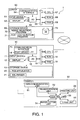
- FIG. 1 is a schematic block diagram of the network system 1 (referred to below as simply a "system") according to a preferred aspect of the invention.
- this system 1 includes a computer (“PC” below) 10 on which is installed a device driver implemented by the method of the invention, a printer 50 that is connected to the PC 10 as a device, and a server 60 that is connected to the PC 10 over a network such as the Internet or an intranet and supplies data to the PC 10.
- the PC 10 and the printer 50 are connected by a communication cable (not shown in the figure).
- the PC 10 is a typical personal computer having one or more input devices (one input device 11 is shown in Fig. 1 as representative of one or multiple devices), a display 12, a storage device 13, a communication interface 14, an input/output (I/O) interface 15, an internal bus 16, a CPU 17, a ROM 18, and a RAM 19.
- the PC 10 in this embodiment of the invention is a POS terminal that is installed in a retail store, for example, and generates transaction data for printing sales receipts.
- the input devices represented by the reference sign 11 may include a mouse, a keyboard, a barcode reader, and a card reader.
- the PC 10 acquires sales information from data that is input using the keyboard, the barcode reader, and/or the card reader, for example, and presents the product names and price information on the display 12.
- the communication interface 14 has a port driver 22 (port control unit) for controlling the communication port used for communication with the printer 50.
- the storage device 13 stores a POS application 20 for running the transaction processes and generating transaction data, and an XML parser 21, which is a general purpose program for interpreting XML (extensible Markup Language) documents.
- This XML parser 21 converts XML documents output from the POS application 20 to the commands and data that can be processed by the printer 50. More specifically, the CPU 17 executes the transaction processes by running the POS application 20, and controls the device driver process for the printer 50 by means of the XML parser 21.
- the printer 50 operates as a receipt printer and includes a data communication unit 51 for data communication with the PC 10 through the communication interface 14, a transportation unit 52 for conveying receipt paper that is stored in the form of a roll, a printing unit 53 for printing on the receipt paper synchronized to receipt paper transportation, a paper cutter unit 54 for cutting off the printed portion of the receipt paper, a drive unit 55 for driving the other parts of the printer, and a control unit 56 that is connected to the other parts of the printer to control overall printer 50 operation.
- a data communication unit 51 for data communication with the PC 10 through the communication interface 14
- a transportation unit 52 for conveying receipt paper that is stored in the form of a roll
- a printing unit 53 for printing on the receipt paper synchronized to receipt paper transportation
- a paper cutter unit 54 for cutting off the printed portion of the receipt paper
- a drive unit 55 for driving the other parts of the printer
- a control unit 56 that is connected to the other parts of the printer to control overall printer 50 operation.
- the server 60 is arranged similarly to the PC 10 and includes an input device 61, a display 62, a storage device 63, a communication interface 64, an I/O interface 65, an internal bus 66, a CPU 67, a ROM 68, and a RAM 69.
- a model selection program 70 for specifying the model of printer 50 that is connected to the PC 10, and a port configuration program 71 for configuring the communication port for communication with the printer 50, are stored in the storage device 63 of the server 60.
- a model-dependent information database 72 for storing the model-dependent data 101 (described below with reference to FIG. 9) that is provided to the PC 10 is also stored in the storage device 63 of the server 60.
- the server 60 compiles and sends the model-dependent data 101 and port data 102 to the PC 10 by means of the model selection program 70 and the port configuration program 71.
- the PC 10 thus receives and stores the model-dependent data 101 and the port data 102. More specifically, the server 60 provides to the PC 10 the model-dependent data 101 for the device model specified by the model selection program 70 and the port data 102 (described further below with reference to FIG. 10) configured by the port configuration program 71.
- FIG. 2 is a function block diagram of the system 1.
- the server 60 has the model selection program 70 and the port configuration program 71 noted above, and supplies the model-dependent data 101 for the device model specified by the model selection program 70 and the port data 102 configured by the port configuration program 71 to the PC 10.
- the PC 10 has a model-dependent-data reception unit 30, a port data reception unit 31, a storage unit 32, an XML document input unit 33, a first conversion unit 34, a second conversion unit 35, a binary data output unit 36, an event data acquisition unit 37, and an event data conversion unit 38.
- the model-dependent-data reception unit 30 controls storing the model-dependent data 101 received from the server 60 in the storage unit 32.
- the port data reception unit 31 similarly controls storing the port data 102 received from the server 60 in the storage unit 32.
- the model-dependent-data reception unit 30 and the port data reception unit 31 are rendered by the communication interface 14 shown in FIG. 1.
- the storage unit 32 is rendered by the storage device 13 shown in FIG. 1, and stores an output stylesheet 100, the model-dependent data 101, and the port data 102 in separate databases.
- the output stylesheet 100, the model-dependent data 101, and the port data 102 are described in further detail below.
- the XML document input unit 33 outputs an XML document (XML document A in FIG. 2) received from the POS application 20 to the first conversion unit 34.
- the first conversion unit 34 then converts this XML document (XML document A) based on the output stylesheet 100 in the storage unit 32 to another XML document (XML document B) that conforms to the output stylesheet 100.
- the second conversion unit 35 converts the XML document (XML document B) conforming to the output stylesheet 100 to process commands or data strings that can be processed by the printer 50 based on the model-dependent data 101 in the storage unit 32, and then converts these process commands and data strings to binary data.
- the binary data output unit 36 opens the communication port to the printer 50 based on the port data 102 in the storage unit 32, and outputs the converted binary data to the printer 50.
- the event data acquisition unit 37 gets the event data (including data and status information that can vary according to errors and specific events such as the cover opening) output as commands from the printer 50.
- the binary data output unit 36 and the event data acquisition unit 37 are rendered by the port driver 22 (included in the communication interface 14) incorporated in the PC 10 as shown in FIG. 1.
- the event data conversion unit 38 converts the acquired event data to an XML document (XML document C) and outputs this XML document to the POS application 20, for example.
- the XML document input unit 33, the first conversion unit 34, the second conversion unit 35, and the event data conversion unit 38 are rendered by the XML parser 21 running on the PC 10 as shown in FIG. 1.
- the output stylesheet 100, the model-dependent data 101, and the port data 102 are described in further detail below.
- the output stylesheet 100 defines the output format of XML documents output to the printer 50, and includes general configuration data such as the font and print layout. This information can be customized by the user so that the user can print XML documents in the desired printing format.
- the model-dependent data 101 defines the conversion rules for converting the XML document output from the POS application 20 to commands and data that can be processed by the printer 50, and more specifically includes initialization rules for initializing the printer 50, conversion rules for character attributes (such as the double height size, double width size, and underlining), and information about printer control commands such as paper feed and paper cutter commands, for example. This information is dependent upon the specifications and settings of the particular printer 50, and will therefore also differ according to the model of the printer 50.
- the model-dependent data 101 also includes information defining the conversion rules for converting the event data (binary data) acquired by the event data acquisition unit 37 to an XML document.
- This embodiment of the invention uses an XML document as the input data as described above, and uses the extensible Stylesheet Language (XSL) for the output stylesheet 100 and the model-dependent data 101 (see FIG. 8 and FIG. 9).
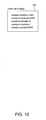
- Settings related to the communication port used to communicate with the printer 50 are defined in the port data 102 (see FIG. 10), and include the port type and the data transfer rate (an example of settings for a serial connection are shown in FIG. 10).
- FIG. 3A shows an example of the model selection window D1 displayed by the server 60 for setting the model-dependent data 101.
- FIG. 3B shows an example of the port configuration window D2 displayed by the server 60 for setting the port data 102.
- the model of printer 50 that is connected to the PC 10 is selected by the user from the model selection window D1 using a keyboard, mouse, touch screen panel, or other input device not shown.
- the model-dependent data 101 for the selected model is generated by the model selection program 70 and then downloaded from the server 60 to the PC 10.
- model selection program 70 of the server 60 reads the model-dependent data 101 for the model selected in the model selection window D1 from the model-dependent data database 72 and sends the model-dependent data 101 to the PC 10.
- the "SHOW DETAILS" control shown in FIG. 3A is linked to a screen for displaying items in the model-dependent data 101, and this screen can be used by the user to confirm and edit the settings of the model-dependent data 101.
- the user configures the port data 102 by setting the communication port parameters (including the type of port, the data transfer rate, the bit length, and the stop bit) of the printer 50 in the port configuration window D2.
- the port data 102 download command is then asserted, port data 102 conforming to the parameter settings in the port configuration window D2 is generated by the port configuration program 71 and then downloaded from the server 60 to the PC 10. More specifically, the port configuration program 71 of the server 60 generates the port data 102 to reflect the settings in the port configuration window D2 and then sends the port data 102 to the PC 10.
- the user manually accesses the server 60, selects the model and communication port settings, and then downloads the information to the PC 10 in this example, but the PC 10 could execute this process automatically (internally). More specifically, when the printer 50 is connected to the PC 10 or initialized, the PC 10 gets the model and port data from the printer 50 and sends the data to the server 60. The server 60 then runs the model selection program 70 and the port configuration program 71 to generate and return the model-dependent data 101 and the port data 102 based on the received information to the PC 10.
- the output stylesheet 100 is already stored in the PC 10 at the beginning of this process, but the output stylesheet 100 can obviously be downloaded from the server 60 in the same way as the model-dependent data 101 and the port data 102.
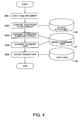
- FIG. 4 is a flow chart of the XML document conversion process that is executed by the PC 10.
- the XML document input unit 33 inputs the XML document A output from the POS application 20 as the input data to the first conversion unit 34 (S01).
- the first conversion unit 34 then converts the input XML document A according to the output stylesheet 100 to an XML document B conforming to the output stylesheet 100 (S02).
- the second conversion unit 35 then converts the XML document B conforming to the output stylesheet 100 to the commands and data strings that can be processed by the printer 50 based on the model-dependent data 101 (S03), and then converts these commands and data strings to binary data (S04).
- the binary data output unit 36 then references the port data 102 to output the converted binary data to the printer 50 (S05).
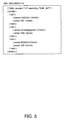
- FIG. 5 shows an example of the XML document A used as the input data.
- the input data includes product name information such as "RADISH”, “STRAWBERRY” and “PEACHES” and price information such as 150, 500, and 200 for each product.
- FIG. 8 shows an example of the output stylesheet 100 written in XSL.
- the first conversion unit 34 converts the XML document A shown in FIG. 5 based on the output stylesheet 100 shown in FIG. 8 to an XML document B conforming to the output stylesheet 100.
- FIG. 6 shows the XML document B converted from the XML document A shown in FIG. 5 based on the output stylesheet 100 shown in FIG. 8.
- the second conversion unit 35 then converts the XML document B shown in FIG. 6 based on the model-dependent data 101 shown in FIG. 9 to the commands and data strings that can be processed by the printer 50, and then converts these commands and data strings to binary data.
- the binary data output unit 36 then references the port data 102 shown in FIG. 10 to communicate with the printer 50 and output the converted binary data to the printer 50.
- An example of the output printed by the printer 50 based on this binary data is shown in FIG. 7. As shown in the figure, each product name and price is output and the product name is underlined based on the XML document A received as the input data (FIG. 5) and the output stylesheet 100 shown in FIG. 8.
- the process whereby the event information (including data and status information that can vary according to errors and specific events such as the cover opening) output as commands from the printer 50 are acquired, converted to an XML document, and output is described next.
- this process is executed by the event data acquisition unit 37 and the event data conversion unit 38 (see FIG. 2).
- the event data acquisition unit 37 gets the event data (binary data) output from the printer 50, and the event data conversion unit 38 converts the event data to an XML document by referring to the model-dependent data 101 and outputs the XML document to the POS application 20.
- FIG. 11A and FIG. 11B show an example of the tag definitions used in the XML document converted from the event data.
- FIG. 11A shows an example in which all event data content is contained between ⁇ event> tags (shaded in the figure).
- the attributes describing an event include the ⁇ name> of the printer, the ⁇ source> where the event occurred, and a ⁇ description> of the event. The content of each attribute follows the attribute tag.
- the POS application 20 can know the operating status of the printer 50 (has an error occurred or not) and selected status information (such as whether the cover is open or closed, and whether paper is loaded), and can manage the printer 50 remotely. Furthermore, as a result of the POS application 20 sending the XML document to the server 60, the server 60 (central processing terminal) can manage printers 50 installed in multiple stores, for example, and the printers 50 can be maintained more efficiently.
- the event data acquisition unit 37 is rendered by the port driver 22 of the PC 10, and the port driver 22 functions to control and monitor the communication port for communicating with the printer 50.
- the event data acquisition unit 37 can therefore also be arranged to get event data for the communication port of the printer 50 (such as information reporting failure to open the port). This enables the POS application 20 to remotely manage both the printer 50 and communication between the PC 10 and printer 50, and enables centralized control by the server 60 (central processing terminal).
- the device driving method of the invention enables using the device by simply installing an XML parser 21 and a port driver 22 to the computer and storing an output stylesheet 100, model-dependent data 101, and port data 102.
- the XML parser 21 is part of a typical web browser application, and by using a PC that has an installed web browser, the user does not need to install any special software in order to use a device.
- a conventional device driver that is a dedicated software program for controlling a device and does have to match the operating system of the computer does not need to be installed.
- Casual computer users can therefore easily use a printer (a device) without knowing anything about the computer environment, including the type and version of the operating system.
- the job of replacing a computer that requires installing new device drivers can also be simplified.
- a conventional printer driver such as a printer driver that is dependent on the computer operating system. More particularly, a conventional printer driver must be programmed according to operating system of the computer on which the printer driver will be installed, but the invention makes this programming unnecessary and therefore greatly reduces development costs.
- firmware settings and reference values can be stored in the model-dependent data 101, and the firmware can get and process the required information by referencing the model-dependent data 101.
- the firmware can therefore be updated by simply updating the model-dependent data 101.
- Changes in the output format, the model of printer 50, and the communication port settings can also be handled by simply changing the output stylesheet 100, the model-dependent data 101, and the port data 102. More specifically, the invention eliminates the need of the prior art to change the device driver program. Furthermore, if any of the information needs changing, the user can change the output format, change the printer 50 model, and change the communication port settings in real time.
- model-dependent data 101 for a plurality of different devices can be stored on the PC 10.
- the user can choose the types of device to use to read the model-dependent data 101 for the selected device as needed. If multiple devices are connected to the PC 10, each of the devices can be used by simply storing the model-dependent data 101 for each device on the PC 10.
- the PC 10 is described above as the computer that executes the method of the invention in a system 1 that includes a server 60, a PC 10, and a printer 50, but the computer that executes the method of the invention is not limited to the PC 10.
- the server 60 could be the computer that executes the method of the invention.
- the XML parser 21 and the port driver 22 would be installed in the server 60, the server 60 would receive the XML documents from the PC 10, convert the XML documents to binary data, and output the binary data through the PC 10 to the printer 50.
- the converted binary data can be output directly to the printer 50 instead of through the PC 10.
- the server 60 gets model information relating to the model of each device, and reads the model-dependent data 101 for the acquired device models.
- the model information can be acquired by manually entering the data using an input device 61 of the server 60, or the server 60 can access each device to automatically (internally) read the device information.
- the port data 102 can also be set using the input device 61 of the server 60.
- the printer 50 can be used as the computer that implements the invention.
- the XML document output from the POS application 20 is input to the printer 50, the printer 50 internally converts the received (input) XML document to binary data, and outputs the binary data to a buffer, for example.
- the invention can thus be implemented using a variety of different hardware configurations, and the device driving method of the invention can be executed in various ways according to the operating environment of the printer 50.
- a printer 50 is used by way of example as a device in this embodiment of the invention, but the invention is not limited to printers 50 and can be applied to other devices such as scanners, displays, and data readers.
- the output stylesheet 100, the model-dependent data 101, and the port data 102 are stored for each device type (such as printer or scanner), and these data are used selectively according to the type of device to which the data are output.
- the invention is described using an XML document by way of example as the input data, but the invention is not limited to XML documents and can use documents written in other mark-up languages, including HTML (HyperText Markup Language) and SGML (Standard Generalized Markup Language), as the input data.
- HTML HyperText Markup Language
- SGML Standard Generalized Markup Language
- POS application 20 is used by way of example as the application that outputs the input data (XML document), but the type of application that can be used is not limited to any particular type.
Landscapes
- Engineering & Computer Science (AREA)
- Theoretical Computer Science (AREA)
- Physics & Mathematics (AREA)
- General Physics & Mathematics (AREA)
- General Engineering & Computer Science (AREA)
- Computational Linguistics (AREA)
- Health & Medical Sciences (AREA)
- Artificial Intelligence (AREA)
- Audiology, Speech & Language Pathology (AREA)
- General Health & Medical Sciences (AREA)
- Human Computer Interaction (AREA)
- Multimedia (AREA)
- Accessory Devices And Overall Control Thereof (AREA)
- Stored Programmes (AREA)
Priority Applications (1)
| Application Number | Priority Date | Filing Date | Title |
|---|---|---|---|
| EP16152700.7A EP3046021A1 (de) | 2006-02-06 | 2007-01-04 | Vorrichtungsansteuerungsverfahren, computer und system |
Applications Claiming Priority (1)
| Application Number | Priority Date | Filing Date | Title |
|---|---|---|---|
| JP2006028021A JP4760415B2 (ja) | 2006-02-06 | 2006-02-06 | コンピュータのデバイスドライバ実現方法 |
Related Child Applications (1)
| Application Number | Title | Priority Date | Filing Date |
|---|---|---|---|
| EP16152700.7A Division EP3046021A1 (de) | 2006-02-06 | 2007-01-04 | Vorrichtungsansteuerungsverfahren, computer und system |
Publications (2)
| Publication Number | Publication Date |
|---|---|
| EP1816558A2 true EP1816558A2 (de) | 2007-08-08 |
| EP1816558A3 EP1816558A3 (de) | 2008-07-30 |
Family
ID=38110453
Family Applications (2)
| Application Number | Title | Priority Date | Filing Date |
|---|---|---|---|
| EP07000121A Ceased EP1816558A3 (de) | 2006-02-06 | 2007-01-04 | Verfahren, Computer und System zur Geräteansteuerung |
| EP16152700.7A Withdrawn EP3046021A1 (de) | 2006-02-06 | 2007-01-04 | Vorrichtungsansteuerungsverfahren, computer und system |
Family Applications After (1)
| Application Number | Title | Priority Date | Filing Date |
|---|---|---|---|
| EP16152700.7A Withdrawn EP3046021A1 (de) | 2006-02-06 | 2007-01-04 | Vorrichtungsansteuerungsverfahren, computer und system |
Country Status (3)
| Country | Link |
|---|---|
| US (3) | US8416433B2 (de) |
| EP (2) | EP1816558A3 (de) |
| JP (1) | JP4760415B2 (de) |
Cited By (2)
| Publication number | Priority date | Publication date | Assignee | Title |
|---|---|---|---|---|
| WO2013147314A1 (en) * | 2012-03-30 | 2013-10-03 | Seiko Epson Corporation | Print control device, printing system, and print control method |
| EP3316116A1 (de) * | 2016-10-27 | 2018-05-02 | Seiko Epson Corporation | Drucker und steuerungsverfahren eines druckers |
Families Citing this family (16)
| Publication number | Priority date | Publication date | Assignee | Title |
|---|---|---|---|---|
| US8208152B2 (en) * | 2005-01-31 | 2012-06-26 | Xerox Corporation | Printer controlled default driver configuration |
| US8341165B2 (en) * | 2007-12-03 | 2012-12-25 | Intel Corporation | Method and apparatus for searching extensible markup language (XML) data |
| JP5381009B2 (ja) * | 2008-10-20 | 2014-01-08 | セイコーエプソン株式会社 | デバイス制御システム |
| US9529573B2 (en) * | 2009-01-28 | 2016-12-27 | Microsoft Technology Licensing, Llc | Graphical user interface generation through use of a binary file |
| EP2577497A4 (de) * | 2010-05-24 | 2016-11-23 | Tata Consultancy Services Ltd | Verfahren und system zur aufschlüsselung eines xml-dokuments zur erreichung eines hohen parallelitätsgrades |
| JP5950613B2 (ja) * | 2012-02-20 | 2016-07-13 | キヤノン株式会社 | プログラム及び情報処理装置、制御方法 |
| JP6064494B2 (ja) * | 2012-09-28 | 2017-01-25 | セイコーエプソン株式会社 | 印刷制御装置および印刷制御装置の制御方法 |
| US10089046B2 (en) * | 2012-12-13 | 2018-10-02 | Seiko Epson Corporation | Receipt printing system, control method of a receipt printing system, and control device |
| JP6186836B2 (ja) * | 2013-04-23 | 2017-08-30 | セイコーエプソン株式会社 | 印刷制御方法、印刷制御装置および制御スクリプト |
| JP6111896B2 (ja) * | 2013-06-27 | 2017-04-12 | セイコーエプソン株式会社 | 媒体処理システム、印刷システム、媒体処理システムの制御方法、及び、媒体処理装置 |
| RU2623903C2 (ru) * | 2014-09-19 | 2017-06-29 | Открытое акционерное общество "Концерн "Системпром" | Средство вычислительной техники для одновременной обработки информации разной конфиденциальности |
| PL410736A1 (pl) * | 2014-12-22 | 2016-07-04 | Zortrax Spółka Z Ograniczoną Odpowiedzialnością | Sposób przetwarzania i zapisu parametrów procesu sterowania drukarki 3D |
| JP6260682B2 (ja) * | 2016-12-20 | 2018-01-17 | セイコーエプソン株式会社 | プリンターおよびプリンターの制御方法 |
| JP7234688B2 (ja) * | 2019-02-27 | 2023-03-08 | ブラザー工業株式会社 | プログラム、アプリケーション、情報処理装置 |
| JP7234687B2 (ja) * | 2019-02-27 | 2023-03-08 | ブラザー工業株式会社 | モジュール及びプログラム |
| JP7427951B2 (ja) * | 2019-12-16 | 2024-02-06 | ブラザー工業株式会社 | プログラム、プログラム群、および情報処理装置 |
Citations (5)
| Publication number | Priority date | Publication date | Assignee | Title |
|---|---|---|---|---|
| US20010013063A1 (en) | 2000-02-08 | 2001-08-09 | Hall David M. | System and method for applying printer-specific formatting |
| JP2002251347A (ja) | 2000-12-22 | 2002-09-06 | Canon Inc | ネットワークシステム、情報処理装置、方法、制御プログラム、及びコンピュータ読み取り可能な記憶媒体 |
| US6540142B1 (en) | 2001-12-17 | 2003-04-01 | Zih Corp. | Native XML printer |
| US20050024671A1 (en) * | 2003-07-31 | 2005-02-03 | Canon Kabushiki Kaisha | Peripheral device control system and method |
| EP1586989A2 (de) * | 2004-04-12 | 2005-10-19 | Ricoh Company, Ltd. | Automatische Anpassung der Druckersteuerung |
Family Cites Families (23)
| Publication number | Priority date | Publication date | Assignee | Title |
|---|---|---|---|---|
| US5375204A (en) * | 1992-04-30 | 1994-12-20 | Ricoh Company, Ltd. | System and method for efficient binary encoding of procedures in a document processing language |
| JP3499589B2 (ja) | 1993-01-08 | 2004-02-23 | 株式会社リコー | 符号化装置及び符号化方法 |
| WO2001006345A1 (en) * | 1999-07-14 | 2001-01-25 | Fargo Electronics, Inc. | Identification card printer with client/server |
| US7065564B2 (en) * | 2000-12-22 | 2006-06-20 | Canon Kabushiki Kaisha | Network system, method and apparatus for processing information, and control program |
| JP2002229752A (ja) * | 2001-02-06 | 2002-08-16 | Ricoh Co Ltd | Webプリンタ装置 |
| JP2003036152A (ja) * | 2001-05-17 | 2003-02-07 | Matsushita Electric Ind Co Ltd | 情報印刷システム |
| JP2003044244A (ja) * | 2001-08-02 | 2003-02-14 | Canon Inc | 印刷サーバ、印刷サーバの制御方法及びそのプログラム、並びに記憶媒体 |
| AUPS331402A0 (en) * | 2002-07-01 | 2002-07-25 | S4 Technology Pty Limited | Intelligent printer interface for managing data content and presentation |
| US20050099647A1 (en) * | 2002-07-31 | 2005-05-12 | Canon Kabushiki Kaisha | Print system and print control method |
| US7426051B2 (en) * | 2002-12-12 | 2008-09-16 | Seiko Epson Corporation | Image processing method and image processing system using the same |
| US7400421B2 (en) * | 2002-12-12 | 2008-07-15 | Seiko Epson Corporation | Image processing method and image processing system using the same |
| JP2004318818A (ja) | 2002-12-12 | 2004-11-11 | Seiko Epson Corp | 画像出力システム、画像出力装置、画像供給装置および制御プログラム |
| EP1429533A3 (de) * | 2002-12-12 | 2005-12-07 | Seiko Epson Corporation | Bildverarbeitungsverfahren und Bildverarbeitungssystem unter Verwendung desselben |
| US20040179103A1 (en) * | 2002-12-12 | 2004-09-16 | Masakatsu Endo | Image processing method and image processing system using the same |
| US7342918B2 (en) * | 2003-04-15 | 2008-03-11 | American Express Travel Related Services Co., Inc. | Transaction card information access web service |
| JP4401679B2 (ja) * | 2003-05-12 | 2010-01-20 | キヤノン株式会社 | 制御装置、制御プログラム、制御方法 |
| JP4673018B2 (ja) * | 2003-09-19 | 2011-04-20 | キヤノン株式会社 | 情報処理装置、プリンタの設定方法およびプログラム |
| US7769904B2 (en) * | 2004-06-09 | 2010-08-03 | L-3 Communications Integrated Systems L.P. | Extensible binary mark-up language for efficient XML-based data communications and related systems and methods |
| US8769401B2 (en) * | 2004-08-05 | 2014-07-01 | Digi International Inc. | Method for compressing XML documents into valid XML documents |
| JP4870414B2 (ja) * | 2005-03-31 | 2012-02-08 | 株式会社リコー | データ処理システム、データ処理装置、データ処理方法及びプログラム |
| JP5015145B2 (ja) * | 2005-05-18 | 2012-08-29 | カタリナ マーケティング コーポレーション | トランザクションデータを処理するためのアーキテクチャ及びデータ構造 |
| US20070073772A1 (en) * | 2005-09-23 | 2007-03-29 | Blue Mary C | Productivity tracking for printer systems |
| US20070079234A1 (en) * | 2005-09-30 | 2007-04-05 | Microsoft Corporation | Modeling XML from binary data |
-
2006
- 2006-02-06 JP JP2006028021A patent/JP4760415B2/ja not_active Expired - Fee Related
-
2007
- 2007-01-04 EP EP07000121A patent/EP1816558A3/de not_active Ceased
- 2007-01-04 EP EP16152700.7A patent/EP3046021A1/de not_active Withdrawn
- 2007-02-05 US US11/671,367 patent/US8416433B2/en not_active Expired - Fee Related
-
2013
- 2013-03-13 US US13/798,906 patent/US9244893B2/en active Active
-
2015
- 2015-12-11 US US14/966,319 patent/US9690526B2/en active Active
Patent Citations (5)
| Publication number | Priority date | Publication date | Assignee | Title |
|---|---|---|---|---|
| US20010013063A1 (en) | 2000-02-08 | 2001-08-09 | Hall David M. | System and method for applying printer-specific formatting |
| JP2002251347A (ja) | 2000-12-22 | 2002-09-06 | Canon Inc | ネットワークシステム、情報処理装置、方法、制御プログラム、及びコンピュータ読み取り可能な記憶媒体 |
| US6540142B1 (en) | 2001-12-17 | 2003-04-01 | Zih Corp. | Native XML printer |
| US20050024671A1 (en) * | 2003-07-31 | 2005-02-03 | Canon Kabushiki Kaisha | Peripheral device control system and method |
| EP1586989A2 (de) * | 2004-04-12 | 2005-10-19 | Ricoh Company, Ltd. | Automatische Anpassung der Druckersteuerung |
Cited By (6)
| Publication number | Priority date | Publication date | Assignee | Title |
|---|---|---|---|---|
| WO2013147314A1 (en) * | 2012-03-30 | 2013-10-03 | Seiko Epson Corporation | Print control device, printing system, and print control method |
| RU2599535C2 (ru) * | 2012-03-30 | 2016-10-10 | Сейко Эпсон Корпорейшн | Устройство управления печатью, печатающая система и способ управления печатью |
| US10019204B2 (en) | 2012-03-30 | 2018-07-10 | Seiko Epson Corporation | Print control device, printing system, and print control method |
| US10459668B2 (en) | 2012-03-30 | 2019-10-29 | Seiko Epson Corporation | Print control device, printing system, and print control method for generating image print commands from print data in markup language |
| EP3316116A1 (de) * | 2016-10-27 | 2018-05-02 | Seiko Epson Corporation | Drucker und steuerungsverfahren eines druckers |
| US10430697B2 (en) | 2016-10-27 | 2019-10-01 | Seiko Epson Corporation | Printer and method for processing string information |
Also Published As
| Publication number | Publication date |
|---|---|
| EP1816558A3 (de) | 2008-07-30 |
| JP2007207141A (ja) | 2007-08-16 |
| US20070182978A1 (en) | 2007-08-09 |
| JP4760415B2 (ja) | 2011-08-31 |
| US8416433B2 (en) | 2013-04-09 |
| US20160098236A1 (en) | 2016-04-07 |
| US9244893B2 (en) | 2016-01-26 |
| EP3046021A1 (de) | 2016-07-20 |
| US20130191727A1 (en) | 2013-07-25 |
| US9690526B2 (en) | 2017-06-27 |
Similar Documents
| Publication | Publication Date | Title |
|---|---|---|
| US8416433B2 (en) | Method, computer, and system for an operating system independent device driver | |
| EP1456790B1 (de) | Xml-druckersystem | |
| US9600463B2 (en) | XML printer system | |
| US9418322B2 (en) | XML printer system with RFID capability | |
| US7988051B2 (en) | XML printer system with RFID capability | |
| KR101505660B1 (ko) | 프로그램 스크립팅 언어를 이용하는 라벨 프린터 api | |
| US7959083B2 (en) | XML printer system | |
| EP1480160A2 (de) | Balkenkodedrucksystem, Verfahren zur Einstellung eines virtuellen Balkenkodeschritsatzes | |
| CN102915215B (zh) | 控制装置以及控制方法 | |
| JP4760417B2 (ja) | ネットワークシステムのデバイスドライバ実現方法、およびデバイスドライバ実現システム | |
| MXPA02004155A (es) | Herramienta y metodo de programacion para impresora. | |
| JP4760416B2 (ja) | ネットワークシステムのデバイスドライバ実現方法、およびデバイスドライバ実現システム | |
| US20050024665A1 (en) | System and method for dynamically controlling access to configuration attributes for a printing device | |
| US20050086663A1 (en) | Automation object and method for writing information into an automation object | |
| JP2002041908A (ja) | 受注出荷管理システムおよびコンピュータ読取可能な記録媒体 | |
| ZA200403823B (en) | XML printer system. |
Legal Events
| Date | Code | Title | Description |
|---|---|---|---|
| PUAI | Public reference made under article 153(3) epc to a published international application that has entered the european phase |
Free format text: ORIGINAL CODE: 0009012 |
|
| AK | Designated contracting states |
Kind code of ref document: A2 Designated state(s): AT BE BG CH CY CZ DE DK EE ES FI FR GB GR HU IE IS IT LI LT LU LV MC NL PL PT RO SE SI SK TR |
|
| AX | Request for extension of the european patent |
Extension state: AL BA HR MK YU |
|
| PUAL | Search report despatched |
Free format text: ORIGINAL CODE: 0009013 |
|
| AK | Designated contracting states |
Kind code of ref document: A3 Designated state(s): AT BE BG CH CY CZ DE DK EE ES FI FR GB GR HU IE IS IT LI LT LU LV MC NL PL PT RO SE SI SK TR |
|
| AX | Request for extension of the european patent |
Extension state: AL BA HR MK RS |
|
| 17P | Request for examination filed |
Effective date: 20081120 |
|
| 17Q | First examination report despatched |
Effective date: 20090116 |
|
| AKX | Designation fees paid |
Designated state(s): DE GB |
|
| STAA | Information on the status of an ep patent application or granted ep patent |
Free format text: STATUS: THE APPLICATION HAS BEEN REFUSED |
|
| 18R | Application refused |
Effective date: 20160113 |