EP1817003B1 - Microparticules de silicium poreux pour l'administration oculaire de medicaments - Google Patents
Microparticules de silicium poreux pour l'administration oculaire de medicaments Download PDFInfo
- Publication number
- EP1817003B1 EP1817003B1 EP05819498.6A EP05819498A EP1817003B1 EP 1817003 B1 EP1817003 B1 EP 1817003B1 EP 05819498 A EP05819498 A EP 05819498A EP 1817003 B1 EP1817003 B1 EP 1817003B1
- Authority
- EP
- European Patent Office
- Prior art keywords
- drug
- particles
- pores
- porous
- eye
- Prior art date
- Legal status (The legal status is an assumption and is not a legal conclusion. Google has not performed a legal analysis and makes no representation as to the accuracy of the status listed.)
- Expired - Lifetime
Links
Images


Classifications
-
- A—HUMAN NECESSITIES
- A61—MEDICAL OR VETERINARY SCIENCE; HYGIENE
- A61K—PREPARATIONS FOR MEDICAL, DENTAL OR TOILETRY PURPOSES
- A61K9/00—Medicinal preparations characterised by special physical form
- A61K9/0012—Galenical forms characterised by the site of application
- A61K9/0048—Eye, e.g. artificial tears
-
- A—HUMAN NECESSITIES
- A61—MEDICAL OR VETERINARY SCIENCE; HYGIENE
- A61F—FILTERS IMPLANTABLE INTO BLOOD VESSELS; PROSTHESES; DEVICES PROVIDING PATENCY TO, OR PREVENTING COLLAPSING OF, TUBULAR STRUCTURES OF THE BODY, e.g. STENTS; ORTHOPAEDIC, NURSING OR CONTRACEPTIVE DEVICES; FOMENTATION; TREATMENT OR PROTECTION OF EYES OR EARS; BANDAGES, DRESSINGS OR ABSORBENT PADS; FIRST-AID KITS
- A61F9/00—Methods or devices for treatment of the eyes; Devices for putting in contact-lenses; Devices to correct squinting; Apparatus to guide the blind; Protective devices for the eyes, carried on the body or in the hand
- A61F9/0008—Introducing ophthalmic products into the ocular cavity or retaining products therein
- A61F9/0017—Introducing ophthalmic products into the ocular cavity or retaining products therein implantable in, or in contact with, the eye, e.g. ocular inserts
-
- A—HUMAN NECESSITIES
- A61—MEDICAL OR VETERINARY SCIENCE; HYGIENE
- A61K—PREPARATIONS FOR MEDICAL, DENTAL OR TOILETRY PURPOSES
- A61K31/00—Medicinal preparations containing organic active ingredients
- A61K31/56—Compounds containing cyclopenta[a]hydrophenanthrene ring systems; Derivatives thereof, e.g. steroids
- A61K31/57—Compounds containing cyclopenta[a]hydrophenanthrene ring systems; Derivatives thereof, e.g. steroids substituted in position 17 beta by a chain of two carbon atoms, e.g. pregnane or progesterone
- A61K31/573—Compounds containing cyclopenta[a]hydrophenanthrene ring systems; Derivatives thereof, e.g. steroids substituted in position 17 beta by a chain of two carbon atoms, e.g. pregnane or progesterone substituted in position 21, e.g. cortisone, dexamethasone, prednisone or aldosterone
-
- A—HUMAN NECESSITIES
- A61—MEDICAL OR VETERINARY SCIENCE; HYGIENE
- A61K—PREPARATIONS FOR MEDICAL, DENTAL OR TOILETRY PURPOSES
- A61K47/00—Medicinal preparations characterised by the non-active ingredients used, e.g. carriers or inert additives; Targeting or modifying agents chemically bound to the active ingredient
- A61K47/06—Organic compounds, e.g. natural or synthetic hydrocarbons, polyolefins, mineral oil, petrolatum or ozokerite
- A61K47/24—Organic compounds, e.g. natural or synthetic hydrocarbons, polyolefins, mineral oil, petrolatum or ozokerite containing atoms other than carbon, hydrogen, oxygen, halogen, nitrogen or sulfur, e.g. cyclomethicone or phospholipids
-
- A—HUMAN NECESSITIES
- A61—MEDICAL OR VETERINARY SCIENCE; HYGIENE
- A61K—PREPARATIONS FOR MEDICAL, DENTAL OR TOILETRY PURPOSES
- A61K47/00—Medicinal preparations characterised by the non-active ingredients used, e.g. carriers or inert additives; Targeting or modifying agents chemically bound to the active ingredient
- A61K47/06—Organic compounds, e.g. natural or synthetic hydrocarbons, polyolefins, mineral oil, petrolatum or ozokerite
- A61K47/26—Carbohydrates, e.g. sugar alcohols, amino sugars, nucleic acids, mono-, di- or oligo-saccharides; Derivatives thereof, e.g. polysorbates, sorbitan fatty acid esters or glycyrrhizin
-
- A—HUMAN NECESSITIES
- A61—MEDICAL OR VETERINARY SCIENCE; HYGIENE
- A61K—PREPARATIONS FOR MEDICAL, DENTAL OR TOILETRY PURPOSES
- A61K9/00—Medicinal preparations characterised by special physical form
- A61K9/0012—Galenical forms characterised by the site of application
- A61K9/0048—Eye, e.g. artificial tears
- A61K9/0051—Ocular inserts or implants
-
- A—HUMAN NECESSITIES
- A61—MEDICAL OR VETERINARY SCIENCE; HYGIENE
- A61K—PREPARATIONS FOR MEDICAL, DENTAL OR TOILETRY PURPOSES
- A61K9/00—Medicinal preparations characterised by special physical form
- A61K9/14—Particulate form, e.g. powders, Processes for size reducing of pure drugs or the resulting products, Pure drug nanoparticles
- A61K9/16—Agglomerates; Granulates; Microbeadlets ; Microspheres; Pellets; Solid products obtained by spray drying, spray freeze drying, spray congealing,(multiple) emulsion solvent evaporation or extraction
- A61K9/1605—Excipients; Inactive ingredients
- A61K9/1611—Inorganic compounds
-
- A—HUMAN NECESSITIES
- A61—MEDICAL OR VETERINARY SCIENCE; HYGIENE
- A61K—PREPARATIONS FOR MEDICAL, DENTAL OR TOILETRY PURPOSES
- A61K9/00—Medicinal preparations characterised by special physical form
- A61K9/70—Web, sheet or filament bases ; Films; Fibres of the matrix type containing drug
- A61K9/7007—Drug-containing films, membranes or sheets
-
- A—HUMAN NECESSITIES
- A61—MEDICAL OR VETERINARY SCIENCE; HYGIENE
- A61P—SPECIFIC THERAPEUTIC ACTIVITY OF CHEMICAL COMPOUNDS OR MEDICINAL PREPARATIONS
- A61P27/00—Drugs for disorders of the senses
- A61P27/02—Ophthalmic agents
Definitions
- a field of the invention is nanostructure synthesis.
- Other fields of the invention include drug delivery, bioimplant materials and self-reporting bioresorbable materials.
- intraocular diseases such as age-related macular degeneration (ARMD) and choroidal neovascularization (CNV)
- ARMD age-related macular degeneration
- CNV choroidal neovascularization
- subfoveal CNV which comprise the majority of CNV cases
- photodynamic therapy using verteporfin is only useful for the small minority of patients with vessels that are angiographically classified as "predominantly classic,” and even then the visual outcomes of such treatments are disappointing.
- drugs that are antiangiogenic include angiostatic steroids, metalloproteinase inhibitors and VEGF binding drugs.
- angiostatic steroids include angiostatic steroids, metalloproteinase inhibitors and VEGF binding drugs.
- VEGF binding drugs include angiostatic steroids, metalloproteinase inhibitors and VEGF binding drugs.
- the problem common to all of these promising drugs is the transient nature of the therapeutic level requires frequent intravitreal injection.
- Nonspecific uveitis is another devastating eye disease that affects millions of people in the world. Uveitis produces a wide spectrum of inflammation of most parts of the eye and chronic uveitis can be devastating in adults and children. Surgically implanted steroids have shown that high intraocular doses for sustained times are extremely beneficial to chronic uveitis patients, but this implant has surgically related side effects.
- Intravitreal injection is being used in clinical trials of therapeutic agents, but pose a risk of infection that is estimated to be 0.5% per injection. Due to the short vitreous half-life of most small molecules after intravitreal injection, frequent injection is needed, which significantly increases the chance of intraocular infection.
- Extraocular diseases are also difficult to treat because, for example, eye drops applied topically require repeated and frequent doses.
- EP0251680 describes bioerodible microparticles for controlled drug release to the eye.
- the invention is as set out in the claims.
- the following description describes minimally invasive controlled drug delivery systems and methods in relation to the invention for use in delivery of a particular drug or drugs to the eye that include porous film or porous film particles having pores configured and dimensioned to at least partially receive at least one drug therein.
- devices and methods in relation to the invention for treating intraocular diseases where porous film particles impregnated with a particular drug are sized and configured to permit intraocular injection of the loaded porous film particles.
- release of the drug is also monitorable such that the amount of drug remaining in the porous substrate can be accurately quantified.
- the invention recognizes and addresses an important and unmet medical need for a minimally invasive, controllable and monitorable drug delivery system and methods of using the system that would enable long acting local treatment of both extraocular and intraocular diseases.
- intraocular diseases such as glaucoma, age-related macular degeneration (ARMD), choroidal neovascularization (CNV), uveitis and others
- drug delivery to the vitreous, retina, and choroid is a challenging task due to the daunting obstacles posed by the blood-retinal barrier and the tight junctions of the retinal pigment epithelium.
- AMD age-related macular degeneration
- CNV choroidal neovascularization
- uveitis uveitis
- drug delivery to the vitreous, retina, and choroid is a challenging task due to the daunting obstacles posed by the blood-retinal barrier and the tight junctions of the retinal pigment epithelium.
- Another challenge to retinal drug delivery is the fact that drug levels should be sustained for prolonged periods at the target site. This is difficult using intravitreal injections because the short half-life of most intravitreal injectable drugs.
- Intraocular implants have provided sustained vitreoretinal drug levels for treating certain retinal diseases
- photonic crystals have widespread application in optoelectronics, chemical and biological sensors, high-throughput screening, and drug delivery applications. These photonic crystals are especially advantageous because of the relative ease with which the optical properties, pore size, and surface chemistry can be manipulated. Moreover, position, width, and intensity of spectral reflectivity peaks may be controlled by the current density waveform and solution composition used in the electrochemical etch, thus rendering possible the preparation of films of porous Si photonic crystals that display any color within the visible light band with high color saturation, which is a desirable feature for information displays.
- Traditional methods of intraocular drug delivery include the use of liposomes or self-assembling liposomes, which often decrease vitreous clarity when used, cannot be easily customized to release drugs with different physicochemical properties, and do not "report" drug release information.
- the invention provides devices and methods for treating both intraocular and extraocular diseases that promote sustained release of a pharmacalogical candidate, or drug, that is impregnated on nanostructured silicon, such as Si, SiO 2 , Si/polymer or SiO 2 /polymer composite.
- nanostructured silicon such as Si, SiO 2 , Si/polymer or SiO 2 /polymer composite.
- Preferred devices and methods are also self-reporting such that drug release and quantity remaining are susceptible of monitoring.
- These include minimally invasive, self-reporting, controlled delivery systems for delivering a drug or drugs to surfaces of the eyes, both the ocular surface (cornea and conjunctiva) and the scleral surface, as well as intraocular portions of the eye, including the retina, choroids, lens, ciliary body, anterior chamber, and vitreous.
- a method includes injection of porous microscopic nanostructured silicon particles impregnated with a particular drug or drugs. While the invention contemplates use of numerous porous microscopic particles, preferred particles include porous silicon or silicon dioxide particles (so called, "smart dust"), which are prepared with a designed nanostructure that allows maintenance of sustained intraocular therapeutic drug levels with minimal invasiveness and elimination of systemic side effects. In addition to configuring the nanostructure to suit individual applications, the invention also contemplates chemically modifying the particles and the particular drug or drugs to tune and control release profiles of the particles. intraocular injection allows monitoring of drug levels non-invasively.
- Porous silicon is especially advantageous in that porous silicon films have a large free volume (typically 50-80%), and thus a high capacity for a drug can be custom designed at the nanoscale to deliver one or more drugs at a variety of customizable release rates with multiple drugs, and the photonic properties of a nanostructured material as a means to non-invasively determine the rate and amount of drug delivered has never been tested in the eye.
- the porous silicon photonic crystal particles are impregnated with a particular drug, and subsequently introduced into the retina, choroids, lens ciliary body, anterior chamber, and vitreous of the eye via injection.
- the “smart dust” photonic crystal particles may be optimized for intravitreal delivery of one or more of a vast array of drugs such as, for example, pigment epithelium derived factor (PEDF), an 8-mer peptide fragment of urokinase (uPA), dexamethasone, and a host of other drugs, small molecules, proteins, peptides and nucleic acids.
- PDF pigment epithelium derived factor
- uPA 8-mer peptide fragment of urokinase
- dexamethasone dexamethasone
- These smart dust photonic crystals may be impregnated with drugs by either trapping one or more of the drugs in porous Si smart dust, or second, the pores themselves may be chemically modified to bind the candidate drug.
- Photonic crystals are produced from porous silicon and porous silicon/polymer composites, or porous Si film or polymer replica or Si-polymer composite may be generated as a sheet for an exoplant.
- Pulsed electrochemical etching of a silicon chip produces a multilayered porous nanostructure.
- a convenient feature of porous Si is that the average pore size can be controlled over a wide range by appropriate choice of current, HF concentration, wafer resistivity, and electrode configuration used in the electrochemical etch. This tunability of the pore dimensions, porosity, and surface area is especially advantageous.
- the porous film is lifted off the silicon substrate, and it is then broken into micron-sized particles having a size conducive to intraocular injection.
- the micron-sized particles are sized and configured such that they may be injected into the eye with a 25 or 27-gauge needle.
- the particles act as one-dimensional photonic crystals, displaying an optical reflectivity spectrum that is determined by the waveform used in the electrochemical etch. This spectrum acts as an optical barcode that can be observed through human tissue using, for example, an inexpensive CCD spectrometer and a white light source.
- a drug is impregnated and trapped in the pores, and the optical code may be used to report on the release rate of the drug in the vitreous. In this manner, the amount of drug may be quantified to determine how much remains within the particles, and whether administration of additional doses are necessary.
- the optical interference spectrum used in particle identification can be measured with inexpensive and portable instrumentation (a CCD spectrometer or a diode laser interferometer). Removal of the drug from the pores is predicted to result in a change in the refractive index of the porous film and will be observed as a wavelength shift in the spectral code of the dust particle. Characteristic color changes are thus indicative of drug quantity remaining in the pores.
- the term photonic crystal is used for the film that has been machined and sized to small crystals for intraocular injection.
- a doctor or clinician may look through the iris of the eye and into the clear part of the eye to observe the colors of the injected particles. In this manner, the amount of drug remaining or the degree to which the particles have dissolved may be monitored, which in turns permits the doctor or clinician to forecast the length of time before the particles completely dissolve, and to predict when the patient may need subsequent injections.
- the porous silicon film may also be used as a template to generate an imprint of biologically compatible or bioresorbable materials. Both the porous silicon film and/or its imprint possess a sinusoidally varying porosity gradient, providing sharp features in the optical reflectivity spectrum that have been used to monitor the presence or absence of chemicals trapped in the pores. It has been shown that the particles (smart dust) made from the porous silicon films by mechanical grinding or by ultrasonic fracture still carry the optical reflectivity spectrum.
- porous silicon particles can be oxidized to increase stability and injected into animal eyes without toxicity to the intraocular tissues since silica is a mineral needed by the body for building bones and connective tissue. Previous studies have demonstrated the biocompatibility of porous Si in vitro and in animal models.
- porous silicon or silicon/polymer composite at a particular location of the eye, or using the porous silicon or silicon/polymer composite as a template to generate other biologically compatible or biologically resorbable materials for similar use.
- Biodegradable polymer imprints may be made from porous silicon templates, which may be used as drug delivery contact lenses or implants at an appropriate location of the eye, including the ocular surface and retrobulbar surface.
- a second usage of the invention includes drug(s) impregnated in porous films configured to be worn or attached on the front of the eye.
- a contact lens formed of impregnated porous thin film material, for example. While the second usage encompasses a contact lens, it also contemplates other similarly curved solid template correspondingly shaped with a front surface of the eye, as well as being configured to join the eye at the sclera as an episcleral plaque.
- the particular drug or drugs to be used with the polymer imprint may be added to the imprint solution prior to casting or engineered into the pores of the imprint after casting.
- the second usage of the invention provides a system and method of drug delivery wherein porous silicon films can be variously modified to be a long-lasting intraocular drug delivery vehicle to carry various therapeutic compounds.
- biodegradable porous polymer imprints made from porous silicon templates can be used as a drug delivery implant to be placed at an appropriate location in the eye. The drug can be added into the imprint solution before casting or engineered into the pores after casting.
- the invention contemplates a contact lens configured and arranged to cover a front extraocular surface, where a rim, or "carrier,” of the contact lens would be either a silicon or silicon/polymer composite film impregnated with drug(s). The wearer would receive a sustained and monitorable release of drug through the contact lens.
- An episcleral plaque is an extraocular way to deliver drugs and the intraocular dust Injection promotes monitoring of drug levels non-invasively.
- the invention contemplates use of a silicon or silicon/polymer composite film impregnated with drugs to be affixed or adhered to a retrobulbar surface of the eye. The patient would thereby receive a sustained and monitorable release of drug through the episcleral plaque.
- Either silicon smart dust or the episcleral one-way releasing plaque of biodegradable polymer imprint of silicon smart dust provide a device and method for intravitreal drug delivery that promotes sustained intraocular therapeutic drug levels with minimal invasiveness and elimination of systemic side effects.
- Impregnation of the porous material may proceed in several ways.
- the candidate drug may be "physically" trapped within the pores, or second, the pores themselves may be chemically modified to bind the candidate drug.
- “physical trapping” is similar to building a ship in a bottle, where the "ship” is the candidate drug and the “bottle” is the nanometer-scale pores in the porous Si matrix.
- Small molecules can be trapped in the porous matrix by oxidizing the porous Si around the molecule.
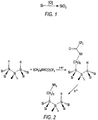
- the relevant reaction is illustrated in FIG. 1 , where "O” in the above equation is a molecular oxidant such as O 2 , dimethyl sulfoxide, hydrogen peroxide, or water. Since oxidation of silicon adds two atoms of oxygen per atom of Si to the material, there is a significant increase in volume of the matrix upon oxidation. This has the effect of swelling the pore walls and shrinking the free volume inside the pores, and under the appropriate conditions, molecules present in the pores during oxidation become trapped in the oxide matrix.
- the free volume in a porous Si film is typically between 50 and 80%. Oxidation should reduce this value somewhat, but the free volume is expected to remain quite high. Most of the current drug delivery materials are dense solids and can only deliver a small percentage of drug by weight. The amount of drug that can be loaded into the porous Si material is expected to be much larger than, for example, surface-modified nanoparticles or polylactide (PLA) polymers. Experiments can quantify the amount of each of the drugs that can be loaded into the smart dust delivery vehicle.
- a molecule is attached to the inner pore walls via covalent bonds.
- proteins, DNA, and various small molecules can be attached following several different procedures.
- the preferred usage uses electrochemical modification. For example, reduction of 1-iodo-6-(trifluoroacetylamino) hexane at a p-type porous silicon cathode leads to attachment of the trifluoroacetamidohexyl group. Subsequent acid-catalyzed hydrolysis should lead directly to the surface-bound amine species. The reactions are represented by the equation illustrated in FIG. 2 .
- the surface amine can then be functionalized with the 8-mer peptide fragment of uPA using standard peptide coupling methods.
- the polymer replicas can be implanted on the sclera for trans-scleral drug release. It has been shown in rabbit eyes that polymer replicas are biocompatible and may safely and effectively remain in the eye for multiple months, if not years. Measurement of the decay in intensity of the peaks in the photonic crystal spectrum should provide a monitor of the rate of drug release from an implanted biocompatible polymer.
- drug-impregnated poly(L-lactide) (PL) films cast from thermally oxidized porous silicon templates, can be prepared following a scheme, designated generally at 10, illustrated in FIG. 3 . Specifically, a template (such as electropolished PSi), generally at 12, is provided, having pores 14 dimensioned to suit a particular application. A polymer, generally at 16, is loaded into the pores 14 to form a polymer-template composite. The template 12 is subsequently removed, leaving a polymer-based photonic film 16.
- Replication of the optical spectrum in the biocompatible polymer upon removal of the porous silicon template can be used to confirm the replication process.
- the release characteristics of the polymers can be studied.
- the degradation of the photonic structure in these films can be characterized in pH 7.4 aqueous buffer solutions, in vitro and in vivo.
- PL imprints impregnated with caffeine we previously studied PL imprints impregnated with caffeine.
- the intensity of the rugate peak displays an approximately exponential decay when the polymer is dissolved in pH 10 buffer.
- Simultaneous measurement of the decay of the spectral peak and the appearance of caffeine in the solution confirmed that the drug was released on a time scale comparable to polymer degradation.
- the polymer-based photonic film shown in FIG. 3 contains a polymer "cap" 18 on one side of the film. Films prepared in this manner will preferentially leach drug out one side of the film, allowing greater control of the drug delivery parameters. Manufacturing variables are channel sizes and packing.
- in vitro pharmacokinetic studies can be used to determine the appropriate configuration of the porous silicon film and its dust for each drug.
- the drug conjugated porous silicon film and its dust can be aliquoted into vitreous samples in cell culture dishes.
- Intensity of reflected light from the porous silicon film or its dust can be measured using a low power spectrophotometer, at the same time free drug in the vitreous sample can be measured, as a function of time for the porous film or dust immersed in the vitreous sample.
- Correlation between spectrophotometer change and drug concentration in vitreous can be determined and used for in vivo PK studies.
- drug can be impregnated in the polymer casting solution. Then the free standing polymer porous film can further conjugate with drug molecules to fill the pores.
- In vitro PK studies can be performed in a similar way as with the porous silicon film or its dust.
- Optimized porous silicon smart dust adapted to the drug candidate will not be toxic after intravitreal injection and the vitreous drug half-life will be in the range of weeks and the drug level will sustain above the EC for months.
- a preferred method includes preparing porous Si photonic crystal particles, loading the pores of those crystal particles with one or more drugs, and injecting the particles into the vitreous via syringe.
- the amount of drug loaded in the particles may then be monitored via one or more of a plurality of methods, such as by visual inspection, digital imaging, laser eye scan, or spectroscopic observation. Any of these four methods are non-invasive, allowing the practitioner or clinician to observe the particles through the pupil of the eye.
- Porous Si photonic crystals are formed from a porous silicon film that is electrochemically etched in a single crystal Si substrate by application of a sinusoidal current density-time waveform.
- the waveform varies between 15 and 45 mA/cm 2 , with 70 repeats and a periodicity of 12.5 s.
- the one-dimensional photonic crystal that results has a color that depends on the waveform parameters.
- the conditions described above produce a film that has a strong reflectivity maximum in the green region of the spectrum. This is a convenient color for visual observation in the eye, though any color or pattern of colors (multiple spectral peaks) can be incorporated into the films.
- the spectral features can range in wavelength from 300 nm to 10,000 nm.
- the film is removed from the Si substrate using a pulse of current. Particles with dimensions in the range 1 ⁇ m to 270 ⁇ m are generated by ultrasonication.
- the photonic crystals are then loaded with a drug or drugs.
- the pores of the photonic crystals are large enough to allow infiltration of small drugs such as dexamethasone.
- Drug can be loaded into the film or particles by infiltration from solution.
- the drug loading solution consisted of 6x10⁻² M dexamethasone in methanol. 25 ⁇ L of the solution was pipetted onto the porous Si film and the solvent was allowed to evaporate in air. The film was briefly rinsed with deionized water to remove any excess drug remaining on the surface that had not infiltrated the pores.
- the photonic crystals are then injected into the patient.
- the drug-loaded crystals are placed in an appropriate excipient and injected into the vitreous.
- the porous silicon particles floated in the vitreous affording an ophthalmoscopically clear view of the fundus without any observed toxicity.
- the particles may last in the vitreous for up to four months without any noticeable abnormalities.
- the optical interference spectrum used in particle identification can readily be measured with inexpensive and portable instrumentation such as a CCD spectrometer or a diode laser interferometer. Removal of the drug from the porous nanostructure results in a change in. the refractive index of the porous film and is observed as a wavelength shift in the spectrum, or a shift in the code, of the dust particle.
- the high surface area and optical interferometric means of detection lead to very high sensitivity for this system.
- particles can be encoded to reflect infrared light that can penetrate living tissues and enable noninvasive sensing through opaque tissue.
- Porous silicon dust was injected into rabbit vitreous and no toxicity was found compared with the fellow eyes that received the same volume of phosphate-buffered saline (PBS) injection.
- the porous silicon film was etched using a sinusoidal current varying between 15 and 45 mA/cm 2 , with 70 repeats and a periodicity of 12.5 s.
- the film was sonicated into a dust that ranged from 1 ⁇ m to 270 ⁇ m.
- the porous silicon particles floated in the vitreous affording an ophthalmoscopically clear view of the fundus without any observed toxicity. The particles lasted in the vitreous for one week without any noticeable abnormalities.
- Thermally oxidized silicon dust was also injected into the vitreous of four rabbits.
- This chemical modification of the porous silicon film was proposed as one of the alternative methods to increase the residence time of the porous silicon dust in vitreous.
- This approach demonstrated a great increase of the residence time of the particles in the rabbit eye compared to the previous incompletely hydrosilylated smart dust (from less than 7 days to longer than 3 weeks).
- by increasing the sonication time during preparation smaller and more uniform smart dust particles were produced, which can be delivered into vitreous by the 25 or 27-gauge needle that is commonly used for intravitreal injection in the clinic.
- Intravitreal injection of 100 ⁇ l of oxidized porous Si photonic crystal particles in 5% dextrose was performed.
- the measured size of the smart dust ranged from 10 to 45 ⁇ m with an average of 30 ⁇ m; approximately 30,000 particles were injected into each rabbit eye.
- the injected particles appeared purplish green floating in the vitreous. From the second day some of the particles aggregated and sank onto the inferior retina. No toxicity was seen and the smart dust particles were still visible at the last examination 34 weeks later with at least half of the originally injected material remaining, as assessed by ophthalmoscopy. It is therefore anticipated that the particles would be safe and effective for at least a year if not two years.
- this preliminary thermal oxidation modification has greatly extended the time of intravitreal residence compared to the previous incompletely hydrosilylated smart dust.
- porous silicon particle was safe as an intravitreal drug delivery vehicle. Modifications such as oxidation and silicon-carbon chain conjugation can be used to further increase the stability of the silicon dust and can make it a long-lasting slow release intravitreal drug delivery system.
- This 8-mer peptide was administrated subcutaneously twice daily at 200 mg/kg/d beginning at the time of induction of CNV (with laser) to introduce CNV in Brown Norway rats.
- the hydride-terminated surface of p-type or p ++ -type porous silicon can be stabilized by electrochemical reduction of acetonitrile solutions of various organo halides. Reduction of 6-iodo-ethylhexanoate, t-iodo-6-iodomethane, 1-bromohexane, or ethyl 4-bromobutyrate at a porous Si cathode results in removal of the halogen and attachment of the organic fragment to the porous Si surface via a Si-C bond.
- a two-step procedure was devised involving attachment of the functional group of interest followed by attachment of methyl groups (by reduction of iodomethane) to residual, more sterically inaccessible sites on the porous Si surface and found that electrochemical alkylation greatly improves the stability of porous Si against oxidation and corrosion in various corrosive aqueous media, and that the methyl capping procedure provides the most stable porous Si material yet reported.
- This chemistry also allows covalent attachment of the candidate drugs for the release studies.
- This approach provides a porous Si material that is stable even in boiling aqueous pH 10 solutions.
- This chemistry was extended to the dust particles and find similar levels of stability. Parameters of the reaction may be adjusted in order to identify the key parameters leading to this instability.
- the surface coverage essentially the efficiency of the chemical reaction
- the type of organic species grafted to the surface alkyl carboxylates, alkyl esters, and alkyl halides
- the chain length of the alkyl species can be investigated. Reaction conditions such as the presence of added radical initiators, transition metal catalysts, and photoassisted hydrosilylation can be explored.
- each modified porous silicon film its sonicated dust can be intravitreally injected into 3 rabbit eyes with the fellow eyes used for control. After injection, the toxicity can be monitored by slit lamp, indirect ophthalmoscope, ERG, and pathology.
- a remote spectrometer probe can be used to determine the clearance rate of the silica dust in vitreous on living animals through the dilated pupil. The spectrometer probe is believed to render more accurate information since the small particles may not be seen using indirect ophthalmoscope.
- a spectrometric method of detection of the oxidized "smart dust" injected into the rabbit eyes was also investigated.
- One eyepiece of the surgical microscope was connected to the input of a fiber-optic based spectrophotometer and this allows us to accurately focus the detecting light on the intraocular "smart dust” particles.
- the preliminary data showed a feasibility of this approach and the specific wavelength of a porous Si photonic film was detected with a 1 nm spectral resolution. This resolution is sufficient to determine concentration of a species such as a large protein in the porous Si film to micromolar concentration levels.
- the probe can be adapted to a fundus camera which is used for clinical retinal imaging. For the rabbit or rodent eyes, the fundus can be photographed using a fundus camera without anesthesia.
- the optical codes of the porous Si photonic crystal particles can be read using digital imaging cameras. Since the color of the particles provides an indirect measure of the amount of drug loaded, the most accurate measure is obtained using a spectrometer. However, the color resolution in a digital camera is sufficient to measure the loading to an accuracy of 10%, which is sufficient for the present application.
- the color of the particles can be recorded using a color digital camera connected to the fundus camera.
- Software to process the digital images and extract concentration information can be obtained with minor modifications to commercially available software. The advantage of this approach is that it requires only minor modification to existing readily available medical equipment, and it allows acquisition of data from a large number of particles simultaneously. If higher resolution concentration information is needed, the illumination light can be filtered using a monochromator or bandpass filters, providing spectral resolution equivalent to that which can be obtained with a spectrometer.
- the long-lasting porous silicon film and its imprint can be further optimized for delivery of three candidate drugs (PEDF, an 8-mer peptide fragment of uPA, and dexamethsasone) by controlling the pore size and morphology. These parameters are easily controlled using the appropriate anodic electrochemical etching current density, duration of the etch cycle, and etchant solution composition. Since the imprint and its porous silicon template share the similar nanostructures, it is assumed that imprints from optimized porous silicon can also be appropriate for delivering those drug candidates.
- Chemistries have also been developed to expand the pores in order to accommodate larger molecules within the pores, such as a modified Fab fragment of human IgG.
- the pore expansion procedure involves the enlargement of pores by treatment with dimethylsulfoxide (DMSO) containing hydrofluoric acid (HF).
- DMSO dimethylsulfoxide
- HF hydrofluoric acid
- the porosity increases approximately 10% after the expansion treatment, and it was found that this chemistry allows admission of large molecules such as human IgG (150 kDa) and bovine serum albumin (67 kDa).
- the invention makes use the optical properties of porous silicon photonic crystals to monitor drug delivery rates.
- the shift in the reflectivity spectrum of the film coincides with release of a drug.
- Optical measurements were carried out while concurrent absorbance measurements were obtained as the drug-infused porous silicon films were introduced in buffered aqueous solutions. There is a linear correlation between the increase of drug concentration in solution (i.e. drug diffusing from the pores) and a change in the optical thickness of the porous silicon film.
Landscapes
- Health & Medical Sciences (AREA)
- Chemical & Material Sciences (AREA)
- Life Sciences & Earth Sciences (AREA)
- Public Health (AREA)
- Animal Behavior & Ethology (AREA)
- General Health & Medical Sciences (AREA)
- Veterinary Medicine (AREA)
- Engineering & Computer Science (AREA)
- Pharmacology & Pharmacy (AREA)
- Medicinal Chemistry (AREA)
- Epidemiology (AREA)
- Bioinformatics & Cheminformatics (AREA)
- Ophthalmology & Optometry (AREA)
- General Chemical & Material Sciences (AREA)
- Chemical Kinetics & Catalysis (AREA)
- Oil, Petroleum & Natural Gas (AREA)
- Molecular Biology (AREA)
- Biomedical Technology (AREA)
- Heart & Thoracic Surgery (AREA)
- Vascular Medicine (AREA)
- Inorganic Chemistry (AREA)
- Organic Chemistry (AREA)
- Biochemistry (AREA)
- Nuclear Medicine, Radiotherapy & Molecular Imaging (AREA)
- Biophysics (AREA)
- Medicines That Contain Protein Lipid Enzymes And Other Medicines (AREA)
- Pharmaceuticals Containing Other Organic And Inorganic Compounds (AREA)
- Medicinal Preparation (AREA)
Claims (16)
- Dispositif d'administration de médicament pour utilisation dans l'administration contrôlée d'un médicament ou de médicaments particuliers à un emplacement particulier de l'oeil, le dispositif comprenant :des particules de silicium ou de dioxyde de silicium poreux de taille micromètrique ayant des pores configurés et dimensionnés pour recevoir au moins partiellement au moins un médicament dans celui-ci ; etdans lequel les particules sont adaptées pour être administrées dans ou sur l'oeil.
- Dispositif de la revendication 1, dans lequel les parois internes des pores sont modifiées de façon covalente de sorte que l'efficacité de liaison de l'au moins médicament soit augmentée et/ou les profils de libération de médicament desdits pores soient ajustés.
- Dispositif de la revendication 2 dans lequel la modification covalente des parois internes est choisie dans le groupe comprenant des alcènes fonctionnels, l'oxyde de silicium, des organohalogénures fonctionnels et des métaux.
- Dispositif de la revendication 1 dans lequel les particules sont oxydées de façon à piéger le médicament ou les médicaments dans les pores.
- Dispositif de la revendication 1 dans lequel les particules sont adaptées pour injection intraoculaire.
- Dispositif de la revendication 1, dans lequel lesdites particules ont un code optique contrôlable.
- Dispositif de la revendication 1 dans lequel lesdits médicament ou médicaments comprend l'un du groupe constitué de stéroïdes angiostatiques, d'inhibiteurs de métalloprotéinase, d'un médicament liant le VEGF, d'un facteur dérivé d'épithélium pigmentaire, d'un fragment peptidique 8-mère d'urokinase et de la dexaméthasone
- Procédé de préparation d'un dispositif pour l'administration de médicament contrôlée à un emplacement de l'oeil comprenant :la fourniture d'une matrice contenant du silicium nanostructuré poreux ayant des pores configurés pour recevoir un médicament particulier,la fracturation de la matrice en particules de taille micrométrique, lesdites particules étant dimensionnées et configurées pour être administrées dans ou sur une surface de l'oeil ;et le chargement de la matrice ou des particules de taille micrométriques avec le médicament.
- Procédé de la revendication 8 dans lequel les particules sont adaptées pour injection intraoculaire.
- Procédé de la revendication 9 dans lequel les particules présentent une réponse optique contrôlable suivant la quantité de médicament disposée dans les pores.
- Procédé de la revendication 9 dans lequel les particules présentent une réponse optique contrôlable suivant la quantité de matériau poreux présente.
- Procédé de la revendication 8 comprenant en outre le piégeage du médicament ou des médicaments dans les pores par oxydation de la matrice poreuse autour du médicament ou des médicaments.
- Procédé de la revendication 8 comprenant en outre la modification covalente des parois internes des pores pour augmenter l'efficacité de liaison de l'au moins un médicament et pour ajuster les profils de libération desdits pores.
- Particule de silicium ou dioxyde de silicium poreux de taille micrométrique ayant des pores configurés et dimensionnés pour recevoir au moins partiellement un médicament dans ceux-ci ; et la particule est adaptée pour être administrée dans ou sur l'oeil.
- Particule de la revendication 14, dans laquelle les parois internes des pores sont modifiées de façon covalente de sorte que l'efficacité de liaison de l'au moins médicament soit augmentée et/ou le profil de libération de médicament desdits pores soit ajusté.
- Particule de la revendication 14, dans laquelle ledit médicament est choisi dans le groupe constitué de stéroïdes angiostatiques, d'inhibiteurs de métalloprotéinase, d'un médicament liant le VEGF, d'un facteur dérivé d'épithélium pigmentaire, d'un fragment peptidique 8-mère d'urokinase et de la dexaméthasone.
Priority Applications (1)
| Application Number | Priority Date | Filing Date | Title |
|---|---|---|---|
| EP18157695.0A EP3381446A1 (fr) | 2004-10-29 | 2005-10-31 | Cristaux photoniques poreux pour l'administration de médicaments oculaires |
Applications Claiming Priority (2)
| Application Number | Priority Date | Filing Date | Title |
|---|---|---|---|
| US62340904P | 2004-10-29 | 2004-10-29 | |
| PCT/US2005/039177 WO2006050221A2 (fr) | 2004-10-29 | 2005-10-31 | Cristaux photoniques poreux pour l'administration oculaire de medicaments |
Related Child Applications (1)
| Application Number | Title | Priority Date | Filing Date |
|---|---|---|---|
| EP18157695.0A Division EP3381446A1 (fr) | 2004-10-29 | 2005-10-31 | Cristaux photoniques poreux pour l'administration de médicaments oculaires |
Publications (3)
| Publication Number | Publication Date |
|---|---|
| EP1817003A2 EP1817003A2 (fr) | 2007-08-15 |
| EP1817003A4 EP1817003A4 (fr) | 2012-06-13 |
| EP1817003B1 true EP1817003B1 (fr) | 2018-02-21 |
Family
ID=36319719
Family Applications (2)
| Application Number | Title | Priority Date | Filing Date |
|---|---|---|---|
| EP05819498.6A Expired - Lifetime EP1817003B1 (fr) | 2004-10-29 | 2005-10-31 | Microparticules de silicium poreux pour l'administration oculaire de medicaments |
| EP18157695.0A Withdrawn EP3381446A1 (fr) | 2004-10-29 | 2005-10-31 | Cristaux photoniques poreux pour l'administration de médicaments oculaires |
Family Applications After (1)
| Application Number | Title | Priority Date | Filing Date |
|---|---|---|---|
| EP18157695.0A Withdrawn EP3381446A1 (fr) | 2004-10-29 | 2005-10-31 | Cristaux photoniques poreux pour l'administration de médicaments oculaires |
Country Status (5)
| Country | Link |
|---|---|
| US (3) | US20090208556A1 (fr) |
| EP (2) | EP1817003B1 (fr) |
| DK (1) | DK1817003T3 (fr) |
| ES (1) | ES2669585T3 (fr) |
| WO (1) | WO2006050221A2 (fr) |
Families Citing this family (38)
| Publication number | Priority date | Publication date | Assignee | Title |
|---|---|---|---|---|
| GB9808052D0 (en) | 1998-04-17 | 1998-06-17 | Secr Defence | Implants for administering substances and methods of producing implants |
| US8765484B2 (en) | 2002-02-07 | 2014-07-01 | The Regents Of The University Of California | Optically encoded particles |
| EP1817003B1 (fr) | 2004-10-29 | 2018-02-21 | The Regents of The University of California | Microparticules de silicium poreux pour l'administration oculaire de medicaments |
| US20100196435A1 (en) * | 2007-07-10 | 2010-08-05 | The Regents Of The University Of California | Materials and methods for delivering compositions to selected tissues |
| CA2757037C (fr) | 2009-01-29 | 2019-08-06 | Forsight Vision4, Inc. | Administration d'un medicament dans le segment posterieur |
| US8623395B2 (en) | 2010-01-29 | 2014-01-07 | Forsight Vision4, Inc. | Implantable therapeutic device |
| EP2427179A4 (fr) | 2009-05-04 | 2013-09-11 | Psivida Inc | Particules de silicium poreux d'élution de médicament |
| US10166142B2 (en) | 2010-01-29 | 2019-01-01 | Forsight Vision4, Inc. | Small molecule delivery with implantable therapeutic device |
| WO2012019136A2 (fr) | 2010-08-05 | 2012-02-09 | Forsight Vision 4, Inc. | Appareil d'injection et procédé d'administration de médicament |
| PT2600812T (pt) | 2010-08-05 | 2021-11-09 | Forsight Vision4 Inc | Aparelho para tratar um olho |
| EP2600876B1 (fr) | 2010-08-05 | 2015-04-29 | Forsight Vision4, Inc. | Procédés et appareils d'administration combinée de médicament |
| RU2640918C2 (ru) | 2010-11-01 | 2018-01-12 | Псивида Юэс, Инк. | Биоразлагаемые устройства на основе кремния для доставки терапевтических агентов |
| WO2012068549A2 (fr) | 2010-11-19 | 2012-05-24 | Forsight Vision4, Inc. | Formulations d'agents thérapeutiques pour des dispositifs implantés |
| US9394369B2 (en) | 2011-01-03 | 2016-07-19 | The Regents Of The University Of California | Luminescent porous silicon nanoparticles for targeted delivery and immunization |
| WO2013003620A2 (fr) | 2011-06-28 | 2013-01-03 | Forsight Vision4, Inc. | Procédés et appareil de diagnostic |
| ES2864203T3 (es) | 2011-09-16 | 2021-10-13 | Forsight Vision4 Inc | Aparato de intercambio de fluido |
| FR2988721B1 (fr) | 2012-03-27 | 2014-04-04 | Centre Nat Rech Scient | Nanoparticules de silicium poreux fonctionnalisees et leurs utilisations en therapie photodynamique |
| WO2014130998A1 (fr) * | 2013-02-25 | 2014-08-28 | Spinnaker Biosciences, Inc. | Silicium poreux fonctionnalisé en surface |
| EP2968113B8 (fr) | 2013-03-14 | 2020-10-28 | Forsight Vision4, Inc. | Systèmes pour l'administration intra-oculaire entretenue de composés à faible solubilité provenant d'un implant de système de pose d'orifice |
| CN105025928A (zh) | 2013-03-15 | 2015-11-04 | 普西维达公司 | 用于递送治疗剂的可生物蚀解的硅基组合物 |
| CN105246438B (zh) | 2013-03-28 | 2018-01-26 | 弗赛特影像4股份有限公司 | 用于输送治疗物质的眼科植入物 |
| KR20170040798A (ko) | 2014-08-08 | 2017-04-13 | 포사이트 비젼4, 인크. | 수용체 티로신 키나제 억제제의 안정한 가용성 제제 및 그의 제조 방법 |
| EP3217924B1 (fr) | 2014-11-10 | 2025-07-16 | ForSight Vision4, Inc. | Dispositifs expansibles d'administration de médicament |
| WO2017008059A1 (fr) | 2015-07-09 | 2017-01-12 | The Regents Of The University Of California | Nanoparticules de silicium poreuses revêtues de liposomes fusogènes |
| KR20180084104A (ko) | 2015-11-20 | 2018-07-24 | 포사이트 비젼4, 인크. | 연장 방출 약물 전달 장치를 위한 다공성 구조물 |
| CN109843301B (zh) | 2016-04-14 | 2022-05-27 | 斯宾纳克生物科学公司 | 用于递送治疗剂的含金属硅酸盐的多孔硅材料 |
| CN115607358A (zh) | 2017-11-21 | 2023-01-17 | 弗赛特影像4股份有限公司 | 用于可扩展端口递送系统的流体交换装置及使用方法 |
| WO2019191132A1 (fr) | 2018-03-27 | 2019-10-03 | The Regents Of The University Of California | Formulations d'administration de médicament |
| EP3714879A1 (fr) | 2019-03-28 | 2020-09-30 | Sisaf Ltd | Particules encapsulées structurées contenant du silicium |
| GB201904336D0 (en) | 2019-03-28 | 2019-05-15 | Sisaf Ltd | A delivery system |
| GB201904337D0 (en) | 2019-03-28 | 2019-05-15 | Sisaf Ltd | A delivery system |
| GB201904334D0 (en) | 2019-03-28 | 2019-05-15 | Sisaf Ltd | Carrier system for preparing herbaceous extracts |
| PE20240329A1 (es) | 2019-06-05 | 2024-02-27 | Regeneron Pharma | Dispositivos y metodos para administracion de dosis de precision |
| JP7876831B2 (ja) | 2021-02-26 | 2026-06-22 | ナノ ターゲティング アンド セラピー バイオファーマ インコーポレイテッド | 薬剤を後眼部に送達するための方法およびその使用 |
| US12649031B2 (en) | 2021-09-08 | 2026-06-09 | Regeneron Pharmaceuticals, Inc. | Methods for delivering agents with pre-filled syringes to minimize intraocular inflammation |
| USD1033637S1 (en) | 2022-01-24 | 2024-07-02 | Forsight Vision4, Inc. | Fluid exchange device |
| USD1120314S1 (en) | 2022-11-30 | 2026-03-24 | Regeneron Pharmaceuticals, Inc. | Dose delivery device |
| EP4701639A1 (fr) | 2023-05-31 | 2026-03-04 | University of Tartu | Molécules ciblant des tissus infectés et leurs procédés d'utilisation |
Citations (2)
| Publication number | Priority date | Publication date | Assignee | Title |
|---|---|---|---|---|
| WO2002015863A1 (fr) * | 2000-08-18 | 2002-02-28 | Psimedica Limited | Composition dermatologique |
| WO2003067231A1 (fr) * | 2002-02-07 | 2003-08-14 | The Regents Of The University Of California | Particules a codage optique |
Family Cites Families (37)
| Publication number | Priority date | Publication date | Assignee | Title |
|---|---|---|---|---|
| US2674743A (en) * | 1950-09-21 | 1954-04-13 | Romey A Gaiser | Therapeutic, cosmetic, and corrective device |
| US3828777A (en) * | 1971-11-08 | 1974-08-13 | Alza Corp | Microporous ocular device |
| JPS56135416A (en) * | 1980-03-27 | 1981-10-22 | Mitsubishi Chem Ind Ltd | Pharmaceutical preparation for skin |
| CA1311686C (fr) * | 1986-06-25 | 1992-12-22 | John Weldon Shell | Systeme d'administration de medicaments bioerodables a degagement controle |
| US4906476A (en) * | 1988-12-14 | 1990-03-06 | Liposome Technology, Inc. | Novel liposome composition for sustained release of steroidal drugs in lungs |
| US5296228A (en) * | 1992-03-13 | 1994-03-22 | Allergan, Inc. | Compositions for controlled delivery of pharmaceutical compounds |
| US5242950A (en) * | 1992-04-23 | 1993-09-07 | Somerset Pharmaceuticals, Inc. | Treatment of macular degeneration |
| RU2055555C1 (ru) * | 1992-05-07 | 1996-03-10 | Михаил Ефимович Маргус | Устройство для лечения глазных болезней |
| GB9611437D0 (en) * | 1995-08-03 | 1996-08-07 | Secr Defence | Biomaterial |
| GB9808052D0 (en) * | 1998-04-17 | 1998-06-17 | Secr Defence | Implants for administering substances and methods of producing implants |
| US6322865B1 (en) | 1998-07-13 | 2001-11-27 | Patent Holding Company | Hollow plastic article formed by a gas-assisted injection molding system |
| GB9815819D0 (en) | 1998-07-22 | 1998-09-16 | Secr Defence | Transferring materials into cells and a microneedle array |
| GB9909996D0 (en) | 1999-05-01 | 1999-06-30 | Secr Defence Brit | eland The SEE Sharp Kabushiki Kaisha 3-1 OPTICS - PATENTS 09/06/99 22:40:35 PAGE 40 NUMBER: 5747 30 JUNE 1999 cations For Patents retary of State for Defence, The Derivatized porous silicon |
| JP2003516169A (ja) | 1999-05-01 | 2003-05-13 | プシメデイカ・リミテツド | 誘導多孔性シリコン |
| SE9903958D0 (sv) | 1999-11-02 | 1999-11-02 | Boerje Sellergren | Porous materials for selective binding or transport of molecular guests |
| GB0008494D0 (en) * | 2000-04-07 | 2000-05-24 | Secr Defence | Microprojectile delivery system |
| GB0104383D0 (en) * | 2001-02-22 | 2001-04-11 | Psimedica Ltd | Cancer Treatment |
| US20020156274A1 (en) * | 2001-03-16 | 2002-10-24 | Terfloth Gerald J. | Process for preparing maytansinol |
| US6815850B2 (en) * | 2001-07-10 | 2004-11-09 | International Business Machines Corporation | Flux leakage barrier in fluid bearing for disk drive |
| GB0118689D0 (en) * | 2001-08-01 | 2001-09-19 | Psimedica Ltd | Pharmaceutical formulation |
| US20030060878A1 (en) * | 2001-08-31 | 2003-03-27 | Shadduck John H. | Intraocular lens system and method for power adjustment |
| US7482168B2 (en) * | 2001-09-15 | 2009-01-27 | The Regents Of The University Of California | Photoluminescent polymetalloles as chemical sensors |
| US7042570B2 (en) | 2002-01-25 | 2006-05-09 | The Regents Of The University Of California | Porous thin film time-varying reflectivity analysis of samples |
| DE60326597D1 (de) * | 2002-06-05 | 2009-04-23 | Univ Florida | Ophthalmisches arzneimittelabgabesystem |
| US7942989B2 (en) * | 2002-12-10 | 2011-05-17 | The Regents Of The University Of California | Porous silicon-based explosive |
| WO2004071949A2 (fr) * | 2003-02-13 | 2004-08-26 | The Regents Of The University Of California | Moulage nanostructure de polymeres organiques et de biopolymeres dans des matrices de silicium poreux |
| US7433811B2 (en) * | 2003-05-06 | 2008-10-07 | The Regents Of The University Of California | Direct patterning of silicon by photoelectrochemical etching |
| US7318903B2 (en) * | 2003-08-14 | 2008-01-15 | The Regents Of The University Of California | Photonic sensor particles and fabrication methods |
| GB0324483D0 (en) * | 2003-10-21 | 2003-11-19 | Psi Medica Ltd | Composite material |
| US20050181049A1 (en) * | 2003-11-19 | 2005-08-18 | Dong Liang C. | Composition and method for enhancing bioavailability |
| GB2409924A (en) * | 2004-01-06 | 2005-07-13 | Psimedica Ltd | Method of making a silicon-phosphorus composite |
| WO2006014138A1 (fr) * | 2004-08-03 | 2006-02-09 | Agency For Science, Technology And Research | Polymère ayant des pores interconnectés pour administration de médicament et procédé |
| US7903239B2 (en) * | 2004-10-19 | 2011-03-08 | The Regents Of The University Of California | Porous photonic crystal with light scattering domains and methods of synthesis and use thereof |
| EP1817003B1 (fr) | 2004-10-29 | 2018-02-21 | The Regents of The University of California | Microparticules de silicium poreux pour l'administration oculaire de medicaments |
| US20100196435A1 (en) * | 2007-07-10 | 2010-08-05 | The Regents Of The University Of California | Materials and methods for delivering compositions to selected tissues |
| US9394369B2 (en) * | 2011-01-03 | 2016-07-19 | The Regents Of The University Of California | Luminescent porous silicon nanoparticles for targeted delivery and immunization |
| US9216163B2 (en) * | 2013-05-20 | 2015-12-22 | Kyorin Pharmaceutical Co., Ltd. | Method of inhibiting angiogenesis |
-
2005
- 2005-10-31 EP EP05819498.6A patent/EP1817003B1/fr not_active Expired - Lifetime
- 2005-10-31 EP EP18157695.0A patent/EP3381446A1/fr not_active Withdrawn
- 2005-10-31 DK DK05819498.6T patent/DK1817003T3/en active
- 2005-10-31 US US11/665,557 patent/US20090208556A1/en not_active Abandoned
- 2005-10-31 ES ES05819498.6T patent/ES2669585T3/es not_active Expired - Lifetime
- 2005-10-31 WO PCT/US2005/039177 patent/WO2006050221A2/fr not_active Ceased
-
2013
- 2013-03-29 US US13/854,039 patent/US8945602B2/en not_active Expired - Lifetime
-
2017
- 2017-11-06 US US15/804,856 patent/US11241380B2/en not_active Expired - Lifetime
Patent Citations (2)
| Publication number | Priority date | Publication date | Assignee | Title |
|---|---|---|---|---|
| WO2002015863A1 (fr) * | 2000-08-18 | 2002-02-28 | Psimedica Limited | Composition dermatologique |
| WO2003067231A1 (fr) * | 2002-02-07 | 2003-08-14 | The Regents Of The University Of California | Particules a codage optique |
Also Published As
| Publication number | Publication date |
|---|---|
| EP1817003A4 (fr) | 2012-06-13 |
| ES2669585T3 (es) | 2018-05-28 |
| US8945602B2 (en) | 2015-02-03 |
| US11241380B2 (en) | 2022-02-08 |
| US20220000768A9 (en) | 2022-01-06 |
| DK1817003T3 (en) | 2018-05-22 |
| US20180055765A1 (en) | 2018-03-01 |
| EP3381446A1 (fr) | 2018-10-03 |
| WO2006050221A3 (fr) | 2007-10-11 |
| US20090208556A1 (en) | 2009-08-20 |
| WO2006050221A2 (fr) | 2006-05-11 |
| US20130224302A1 (en) | 2013-08-29 |
| EP1817003A2 (fr) | 2007-08-15 |
Similar Documents
| Publication | Publication Date | Title |
|---|---|---|
| US11241380B2 (en) | Porous photonic crystals for drug delivery to the eye | |
| US12171877B2 (en) | Materials and methods for delivering compositions to selected tissues | |
| WO2019143293A1 (fr) | Micro-réservoirs de médicament auto-implantables pour une administration de médicament oculaire localisée et contrôlée | |
| Dai et al. | Development of a novel CsA-PLGA drug delivery system based on a glaucoma drainage device for the prevention of postoperative fibrosis | |
| US20150119792A1 (en) | Light degradable drug delivery system for ocular therapy | |
| US20230166092A1 (en) | Ultrasound mediated non-invasive drug delivery porous carriers | |
| Zaman et al. | Micro‐patterned drug delivery device for light‐activated drug release | |
| HK1145652B (en) | Materials and methods for delivering compositions to selected tissues | |
| Ilhan et al. | Preparation and determination of in vivo and in vitro performance of doxycycline imprinted contact lenses for corneal neovascularization treatment |
Legal Events
| Date | Code | Title | Description |
|---|---|---|---|
| PUAI | Public reference made under article 153(3) epc to a published international application that has entered the european phase |
Free format text: ORIGINAL CODE: 0009012 |
|
| 17P | Request for examination filed |
Effective date: 20070419 |
|
| AK | Designated contracting states |
Kind code of ref document: A2 Designated state(s): AT BE BG CH CY CZ DE DK EE ES FI FR GB GR HU IE IS IT LI LT LU LV MC NL PL PT RO SE SI SK TR |
|
| AX | Request for extension of the european patent |
Extension state: AL BA HR MK YU |
|
| RIN1 | Information on inventor provided before grant (corrected) |
Inventor name: CHENG, LINGYUN Inventor name: CUNIN, FREDERIQUE Inventor name: SAILOR, MICHAEL Inventor name: ANGLIN, EMILY Inventor name: LI, YANG YANG Inventor name: FREEMAN, WILLIAM |
|
| R17D | Deferred search report published (corrected) |
Effective date: 20071011 |
|
| RIC1 | Information provided on ipc code assigned before grant |
Ipc: A61F 13/00 20060101AFI20071108BHEP |
|
| DAX | Request for extension of the european patent (deleted) | ||
| RIC1 | Information provided on ipc code assigned before grant |
Ipc: A61F 9/00 20060101ALI20120503BHEP Ipc: A61L 12/12 20060101ALI20120503BHEP Ipc: A61K 9/00 20060101AFI20120503BHEP |
|
| A4 | Supplementary search report drawn up and despatched |
Effective date: 20120514 |
|
| 17Q | First examination report despatched |
Effective date: 20140128 |
|
| REG | Reference to a national code |
Ref country code: DE Ref legal event code: R079 Ref document number: 602005053543 Country of ref document: DE Free format text: PREVIOUS MAIN CLASS: A61K0009000000 Ipc: A61K0047260000 |
|
| GRAP | Despatch of communication of intention to grant a patent |
Free format text: ORIGINAL CODE: EPIDOSNIGR1 |
|
| RIC1 | Information provided on ipc code assigned before grant |
Ipc: A61F 9/00 20060101ALI20170831BHEP Ipc: A61K 9/16 20060101ALI20170831BHEP Ipc: A61K 47/26 20060101AFI20170831BHEP |
|
| INTG | Intention to grant announced |
Effective date: 20170927 |
|
| GRAS | Grant fee paid |
Free format text: ORIGINAL CODE: EPIDOSNIGR3 |
|
| GRAA | (expected) grant |
Free format text: ORIGINAL CODE: 0009210 |
|
| AK | Designated contracting states |
Kind code of ref document: B1 Designated state(s): AT BE BG CH CY CZ DE DK EE ES FI FR GB GR HU IE IS IT LI LT LU LV MC NL PL PT RO SE SI SK TR |
|
| REG | Reference to a national code |
Ref country code: GB Ref legal event code: FG4D |
|
| REG | Reference to a national code |
Ref country code: CH Ref legal event code: EP |
|
| REG | Reference to a national code |
Ref country code: DE Ref legal event code: R096 Ref document number: 602005053543 Country of ref document: DE Ref country code: AT Ref legal event code: REF Ref document number: 970995 Country of ref document: AT Kind code of ref document: T Effective date: 20180315 |
|
| REG | Reference to a national code |
Ref country code: IE Ref legal event code: FG4D |
|
| REG | Reference to a national code |
Ref country code: DK Ref legal event code: T3 Effective date: 20180516 |
|
| REG | Reference to a national code |
Ref country code: ES Ref legal event code: FG2A Ref document number: 2669585 Country of ref document: ES Kind code of ref document: T3 Effective date: 20180528 |
|
| REG | Reference to a national code |
Ref country code: NL Ref legal event code: FP |
|
| REG | Reference to a national code |
Ref country code: LT Ref legal event code: MG4D |
|
| REG | Reference to a national code |
Ref country code: AT Ref legal event code: MK05 Ref document number: 970995 Country of ref document: AT Kind code of ref document: T Effective date: 20180221 |
|
| PG25 | Lapsed in a contracting state [announced via postgrant information from national office to epo] |
Ref country code: FI Free format text: LAPSE BECAUSE OF FAILURE TO SUBMIT A TRANSLATION OF THE DESCRIPTION OR TO PAY THE FEE WITHIN THE PRESCRIBED TIME-LIMIT Effective date: 20180221 Ref country code: LT Free format text: LAPSE BECAUSE OF FAILURE TO SUBMIT A TRANSLATION OF THE DESCRIPTION OR TO PAY THE FEE WITHIN THE PRESCRIBED TIME-LIMIT Effective date: 20180221 Ref country code: CY Free format text: LAPSE BECAUSE OF FAILURE TO SUBMIT A TRANSLATION OF THE DESCRIPTION OR TO PAY THE FEE WITHIN THE PRESCRIBED TIME-LIMIT Effective date: 20180221 |
|
| PG25 | Lapsed in a contracting state [announced via postgrant information from national office to epo] |
Ref country code: BG Free format text: LAPSE BECAUSE OF FAILURE TO SUBMIT A TRANSLATION OF THE DESCRIPTION OR TO PAY THE FEE WITHIN THE PRESCRIBED TIME-LIMIT Effective date: 20180521 Ref country code: GR Free format text: LAPSE BECAUSE OF FAILURE TO SUBMIT A TRANSLATION OF THE DESCRIPTION OR TO PAY THE FEE WITHIN THE PRESCRIBED TIME-LIMIT Effective date: 20180522 Ref country code: SE Free format text: LAPSE BECAUSE OF FAILURE TO SUBMIT A TRANSLATION OF THE DESCRIPTION OR TO PAY THE FEE WITHIN THE PRESCRIBED TIME-LIMIT Effective date: 20180221 Ref country code: LV Free format text: LAPSE BECAUSE OF FAILURE TO SUBMIT A TRANSLATION OF THE DESCRIPTION OR TO PAY THE FEE WITHIN THE PRESCRIBED TIME-LIMIT Effective date: 20180221 Ref country code: AT Free format text: LAPSE BECAUSE OF FAILURE TO SUBMIT A TRANSLATION OF THE DESCRIPTION OR TO PAY THE FEE WITHIN THE PRESCRIBED TIME-LIMIT Effective date: 20180221 |
|
| REG | Reference to a national code |
Ref country code: FR Ref legal event code: PLFP Year of fee payment: 14 |
|
| PG25 | Lapsed in a contracting state [announced via postgrant information from national office to epo] |
Ref country code: EE Free format text: LAPSE BECAUSE OF FAILURE TO SUBMIT A TRANSLATION OF THE DESCRIPTION OR TO PAY THE FEE WITHIN THE PRESCRIBED TIME-LIMIT Effective date: 20180221 Ref country code: PL Free format text: LAPSE BECAUSE OF FAILURE TO SUBMIT A TRANSLATION OF THE DESCRIPTION OR TO PAY THE FEE WITHIN THE PRESCRIBED TIME-LIMIT Effective date: 20180221 Ref country code: RO Free format text: LAPSE BECAUSE OF FAILURE TO SUBMIT A TRANSLATION OF THE DESCRIPTION OR TO PAY THE FEE WITHIN THE PRESCRIBED TIME-LIMIT Effective date: 20180221 |
|
| REG | Reference to a national code |
Ref country code: DE Ref legal event code: R097 Ref document number: 602005053543 Country of ref document: DE |
|
| PG25 | Lapsed in a contracting state [announced via postgrant information from national office to epo] |
Ref country code: CZ Free format text: LAPSE BECAUSE OF FAILURE TO SUBMIT A TRANSLATION OF THE DESCRIPTION OR TO PAY THE FEE WITHIN THE PRESCRIBED TIME-LIMIT Effective date: 20180221 Ref country code: SK Free format text: LAPSE BECAUSE OF FAILURE TO SUBMIT A TRANSLATION OF THE DESCRIPTION OR TO PAY THE FEE WITHIN THE PRESCRIBED TIME-LIMIT Effective date: 20180221 |
|
| PLBE | No opposition filed within time limit |
Free format text: ORIGINAL CODE: 0009261 |
|
| STAA | Information on the status of an ep patent application or granted ep patent |
Free format text: STATUS: NO OPPOSITION FILED WITHIN TIME LIMIT |
|
| 26N | No opposition filed |
Effective date: 20181122 |
|
| PG25 | Lapsed in a contracting state [announced via postgrant information from national office to epo] |
Ref country code: SI Free format text: LAPSE BECAUSE OF FAILURE TO SUBMIT A TRANSLATION OF THE DESCRIPTION OR TO PAY THE FEE WITHIN THE PRESCRIBED TIME-LIMIT Effective date: 20180221 |
|
| PG25 | Lapsed in a contracting state [announced via postgrant information from national office to epo] |
Ref country code: LU Free format text: LAPSE BECAUSE OF NON-PAYMENT OF DUE FEES Effective date: 20181031 Ref country code: MC Free format text: LAPSE BECAUSE OF FAILURE TO SUBMIT A TRANSLATION OF THE DESCRIPTION OR TO PAY THE FEE WITHIN THE PRESCRIBED TIME-LIMIT Effective date: 20180221 |
|
| PG25 | Lapsed in a contracting state [announced via postgrant information from national office to epo] |
Ref country code: TR Free format text: LAPSE BECAUSE OF FAILURE TO SUBMIT A TRANSLATION OF THE DESCRIPTION OR TO PAY THE FEE WITHIN THE PRESCRIBED TIME-LIMIT Effective date: 20180221 |
|
| PG25 | Lapsed in a contracting state [announced via postgrant information from national office to epo] |
Ref country code: PT Free format text: LAPSE BECAUSE OF FAILURE TO SUBMIT A TRANSLATION OF THE DESCRIPTION OR TO PAY THE FEE WITHIN THE PRESCRIBED TIME-LIMIT Effective date: 20180221 |
|
| PG25 | Lapsed in a contracting state [announced via postgrant information from national office to epo] |
Ref country code: HU Free format text: LAPSE BECAUSE OF FAILURE TO SUBMIT A TRANSLATION OF THE DESCRIPTION OR TO PAY THE FEE WITHIN THE PRESCRIBED TIME-LIMIT; INVALID AB INITIO Effective date: 20051031 |
|
| PG25 | Lapsed in a contracting state [announced via postgrant information from national office to epo] |
Ref country code: IS Free format text: LAPSE BECAUSE OF FAILURE TO SUBMIT A TRANSLATION OF THE DESCRIPTION OR TO PAY THE FEE WITHIN THE PRESCRIBED TIME-LIMIT Effective date: 20180621 |
|
| P01 | Opt-out of the competence of the unified patent court (upc) registered |
Effective date: 20230523 |
|
| PGFP | Annual fee paid to national office [announced via postgrant information from national office to epo] |
Ref country code: NL Payment date: 20241026 Year of fee payment: 20 |
|
| PGFP | Annual fee paid to national office [announced via postgrant information from national office to epo] |
Ref country code: DE Payment date: 20241029 Year of fee payment: 20 |
|
| PGFP | Annual fee paid to national office [announced via postgrant information from national office to epo] |
Ref country code: DK Payment date: 20241025 Year of fee payment: 20 |
|
| PGFP | Annual fee paid to national office [announced via postgrant information from national office to epo] |
Ref country code: BE Payment date: 20241028 Year of fee payment: 20 |
|
| PGFP | Annual fee paid to national office [announced via postgrant information from national office to epo] |
Ref country code: GB Payment date: 20241028 Year of fee payment: 20 |
|
| PGFP | Annual fee paid to national office [announced via postgrant information from national office to epo] |
Ref country code: FR Payment date: 20241025 Year of fee payment: 20 |
|
| PGFP | Annual fee paid to national office [announced via postgrant information from national office to epo] |
Ref country code: IE Payment date: 20241028 Year of fee payment: 20 |
|
| PGFP | Annual fee paid to national office [announced via postgrant information from national office to epo] |
Ref country code: IT Payment date: 20241021 Year of fee payment: 20 Ref country code: ES Payment date: 20241104 Year of fee payment: 20 |
|
| PGFP | Annual fee paid to national office [announced via postgrant information from national office to epo] |
Ref country code: CH Payment date: 20241101 Year of fee payment: 20 |
|
| REG | Reference to a national code |
Ref country code: CH Ref legal event code: H14 Free format text: ST27 STATUS EVENT CODE: U-0-0-H10-H14 (AS PROVIDED BY THE NATIONAL OFFICE) Effective date: 20251031 Ref country code: DE Ref legal event code: R071 Ref document number: 602005053543 Country of ref document: DE |
|
| REG | Reference to a national code |
Ref country code: DK Ref legal event code: EUP Expiry date: 20251031 |
|
| REG | Reference to a national code |
Ref country code: NL Ref legal event code: MK Effective date: 20251030 |
|
| REG | Reference to a national code |
Ref country code: GB Ref legal event code: PE20 Expiry date: 20251030 |
|
| REG | Reference to a national code |
Ref country code: ES Ref legal event code: FD2A Effective date: 20251126 |
|
| REG | Reference to a national code |
Ref country code: BE Ref legal event code: MK Effective date: 20251031 |
|
| REG | Reference to a national code |
Ref country code: IE Ref legal event code: MK9A |
|
| PG25 | Lapsed in a contracting state [announced via postgrant information from national office to epo] |
Ref country code: IE Free format text: LAPSE BECAUSE OF EXPIRATION OF PROTECTION Effective date: 20251031 |
|
| PG25 | Lapsed in a contracting state [announced via postgrant information from national office to epo] |
Ref country code: ES Free format text: LAPSE BECAUSE OF EXPIRATION OF PROTECTION Effective date: 20251101 |