EP1819122B1 - Bereitstellung eines Push-to-all- (PTA-) Dienstes - Google Patents
Bereitstellung eines Push-to-all- (PTA-) Dienstes Download PDFInfo
- Publication number
- EP1819122B1 EP1819122B1 EP06023242.8A EP06023242A EP1819122B1 EP 1819122 B1 EP1819122 B1 EP 1819122B1 EP 06023242 A EP06023242 A EP 06023242A EP 1819122 B1 EP1819122 B1 EP 1819122B1
- Authority
- EP
- European Patent Office
- Prior art keywords
- terminal
- session
- service
- request message
- pta
- Prior art date
- Legal status (The legal status is an assumption and is not a legal conclusion. Google has not performed a legal analysis and makes no representation as to the accuracy of the status listed.)
- Active
Links
Images



Classifications
-
- F—MECHANICAL ENGINEERING; LIGHTING; HEATING; WEAPONS; BLASTING
- F16—ENGINEERING ELEMENTS AND UNITS; GENERAL MEASURES FOR PRODUCING AND MAINTAINING EFFECTIVE FUNCTIONING OF MACHINES OR INSTALLATIONS; THERMAL INSULATION IN GENERAL
- F16K—VALVES; TAPS; COCKS; ACTUATING-FLOATS; DEVICES FOR VENTING OR AERATING
- F16K31/00—Actuating devices; Operating means; Releasing devices
- F16K31/12—Actuating devices; Operating means; Releasing devices actuated by fluid
- F16K31/36—Actuating devices; Operating means; Releasing devices actuated by fluid in which fluid from the circuit is constantly supplied to the fluid motor
- F16K31/365—Actuating devices; Operating means; Releasing devices actuated by fluid in which fluid from the circuit is constantly supplied to the fluid motor the fluid acting on a diaphragm
-
- H—ELECTRICITY
- H04—ELECTRIC COMMUNICATION TECHNIQUE
- H04L—TRANSMISSION OF DIGITAL INFORMATION, e.g. TELEGRAPHIC COMMUNICATION
- H04L67/00—Network arrangements or protocols for supporting network services or applications
- H04L67/14—Session management
- H04L67/141—Setup of application sessions
-
- F—MECHANICAL ENGINEERING; LIGHTING; HEATING; WEAPONS; BLASTING
- F16—ENGINEERING ELEMENTS AND UNITS; GENERAL MEASURES FOR PRODUCING AND MAINTAINING EFFECTIVE FUNCTIONING OF MACHINES OR INSTALLATIONS; THERMAL INSULATION IN GENERAL
- F16K—VALVES; TAPS; COCKS; ACTUATING-FLOATS; DEVICES FOR VENTING OR AERATING
- F16K37/00—Special means in or on valves or other cut-off apparatus for indicating or recording operation thereof, or for enabling an alarm to be given
- F16K37/0066—Hydraulic or pneumatic means
-
- H—ELECTRICITY
- H04—ELECTRIC COMMUNICATION TECHNIQUE
- H04L—TRANSMISSION OF DIGITAL INFORMATION, e.g. TELEGRAPHIC COMMUNICATION
- H04L65/00—Network arrangements, protocols or services for supporting real-time applications in data packet communication
- H04L65/1066—Session management
- H04L65/1101—Session protocols
- H04L65/1104—Session initiation protocol [SIP]
-
- H—ELECTRICITY
- H04—ELECTRIC COMMUNICATION TECHNIQUE
- H04L—TRANSMISSION OF DIGITAL INFORMATION, e.g. TELEGRAPHIC COMMUNICATION
- H04L65/00—Network arrangements, protocols or services for supporting real-time applications in data packet communication
- H04L65/40—Support for services or applications
- H04L65/4061—Push-to services, e.g. push-to-talk or push-to-video
-
- H—ELECTRICITY
- H04—ELECTRIC COMMUNICATION TECHNIQUE
- H04L—TRANSMISSION OF DIGITAL INFORMATION, e.g. TELEGRAPHIC COMMUNICATION
- H04L65/00—Network arrangements, protocols or services for supporting real-time applications in data packet communication
- H04L65/80—Responding to QoS
-
- H—ELECTRICITY
- H04—ELECTRIC COMMUNICATION TECHNIQUE
- H04L—TRANSMISSION OF DIGITAL INFORMATION, e.g. TELEGRAPHIC COMMUNICATION
- H04L67/00—Network arrangements or protocols for supporting network services or applications
- H04L67/14—Session management
- H04L67/142—Managing session states for stateless protocols; Signalling session states; State transitions; Keeping-state mechanisms
-
- H—ELECTRICITY
- H04—ELECTRIC COMMUNICATION TECHNIQUE
- H04W—WIRELESS COMMUNICATION NETWORKS
- H04W4/00—Services specially adapted for wireless communication networks; Facilities therefor
- H04W4/06—Selective distribution of broadcast services, e.g. multimedia broadcast multicast service [MBMS]; Services to user groups; One-way selective calling services
- H04W4/10—Push-to-Talk [PTT] or Push-On-Call services
-
- H—ELECTRICITY
- H04—ELECTRIC COMMUNICATION TECHNIQUE
- H04W—WIRELESS COMMUNICATION NETWORKS
- H04W76/00—Connection management
- H04W76/40—Connection management for selective distribution or broadcast
- H04W76/45—Connection management for selective distribution or broadcast for Push-to-Talk [PTT] or Push-to-Talk over cellular [PoC] services
-
- H—ELECTRICITY
- H04—ELECTRIC COMMUNICATION TECHNIQUE
- H04W—WIRELESS COMMUNICATION NETWORKS
- H04W84/00—Network topologies
- H04W84/02—Hierarchically pre-organised networks, e.g. paging networks, cellular networks, WLAN [Wireless Local Area Network] or WLL [Wireless Local Loop]
- H04W84/04—Large scale networks; Deep hierarchical networks
- H04W84/08—Trunked mobile radio systems
-
- H—ELECTRICITY
- H04—ELECTRIC COMMUNICATION TECHNIQUE
- H04L—TRANSMISSION OF DIGITAL INFORMATION, e.g. TELEGRAPHIC COMMUNICATION
- H04L65/00—Network arrangements, protocols or services for supporting real-time applications in data packet communication
- H04L65/10—Architectures or entities
- H04L65/1016—IP multimedia subsystem [IMS]
Definitions
- the present invention relates to a system and method of providing a Push To All (PTA) service.
- PTA Push To All
- a Push To All (PTA) service based on an IP-based Multimedia Subsystem includes a Push To Talk (PTT) service providing only a voice service, a Push To Video (PTV) service providing voice and image services, and a Message Session Relay Protocol (MSRP) service providing Short Message Service (SMS) or binary data service.
- PTT Push To Talk
- PTV Push To Video
- MSRP Message Session Relay Protocol
- the PTA is based on Session Initiation Protocol (SIP), which is a text-based application level protocol, and SIP is adopted by many systems due to its simple structure and excellent extendibility compared to other protocols.
- SIP Session Initiation Protocol
- the SIP is a signaling protocol used to connect a session.
- the SIP can be used in a video telephone call, multimedia, connecting to an online game, etc., in addition to an Internet telephone call.
- RFC 2543 is a first version of an RFC that was adopted as a standard, and has been updated to RFC 3261.
- a PTA service subscriber wants to communicate with a counterpart, the subscriber selects the counterpart to invite, generates an invitation message in SIP format, and transmits the message to a server by selecting a call button or a service start button on a PTA terminal.
- a session is created by the server, and the PTA subscriber participates in a PTA session such as PTT, PTV, MSRP, etc.
- the server informs the called subscriber of this request, and then receives a response indicating an intention to participate in the other PTA session, thereby enabling the called subscriber to participate in two PTA talk sessions simultaneously.
- the PTA service provides a multi session.
- the PTA service allows each PTA terminal subscriber to be provided with the multi-session after each PTA terminal subscriber registers information in advance as to whether to accept the multi session with the server.
- the PTA service allows "Call-Lag" multiple management to be performed by the SIP used by the PTA service to provide the multi session.
- terminals such as mobiles, PDAs, etc., providing the PTA service perform "Call-Lag" multiple management and have limited resources left over to provide the multi session.
- OPEN MOBILE ALLIANCE (OMA) with title “Push to talk over Cellular (PoC) - Architecture. Draft Version 2.0", published on 30 January 2006, pages 1-179 constitutes the closest prior art.
- PTA Push To All
- the present invention thus provides a terminal according to claim 1 and a method according to claim 5. Further embodiments are defined in the dependent claims.
- FIG. 1 is a view of a multi session service system in a Push To All (PTA) system according to an exemplary embodiment of the present invention.
- PTA Push To All
- a system for providing a PTA service comprises a PTA system 200 and a plurality of user terminals 100.
- the user terminals 100 are PTA terminals connected to the PTA system 200 to perform a Push To Talk (PTT) service, a Push To Video (PTV) service, and a Message Session Relay Protocol (MSRP) service.
- PTT Push To Talk
- PTV Push To Video
- MSRP Message Session Relay Protocol
- the user terminals 100 support establishment of a multi session by a user through user interfaces.
- a user terminal A 100a (hereinafter referred to as a "first terminal") is a PTA terminal in the process of performing the PTT, PTV, or MSRP service with a user terminal B 100b (hereinafter referred to as a "second terminal") through a session which has already been created.
- the first terminal receives a session request message, i.e., an "INVITE" message, from a calling subscriber using a user terminal C 100c (hereinafter referred to as a "third terminal”) through the PTA system 200.
- a session request message i.e., an "INVITE" message
- the first terminal 100a parses a Session Description Protocol (SDP) included in the transmitted "INVITE" message to determine the type of PTA service session that the third terminal 100c has requested.
- SDP Session Description Protocol
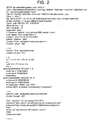
- FIGS. 2 and 3 are Session Initiation Protocol (SIP) "INVITE" messages according to an exemplary embodiment of the present invention.
- SIP Session Initiation Protocol
- the first terminal 100a Comparing the checked PTA service type with the PTA service type currently being provided, when the service types are the same, the first terminal 100a transmits a message rejecting a requested PTA service session to the PTA system 200 so that the message rejecting the requested PTA service session is provided to the third terminal 100c.
- the PTA service can authorize the PTT service and the PTV service as the same service.
- the first terminal 100a informs a called subscriber, i.e., a user, that a session request has been received, and allows the user to determine whether to accept a multi session.
- a called subscriber i.e., a user
- the first terminal 100a transmits a multi session acceptance message to the PTA system so that a new session can be created according to a request of the third terminal 100c.
- the PTA service system allows the called subscriber, i.e., the user, to determine whether to accept the session, and then generates the session according the user's decision.
- the first terminal 100a transmits the session rejection message to the PTA system 200 so as not to generate a session with the third terminal 100c when the PTT or PTV service session has been requested by the calling subscriber, i.e., the third terminal 100c.
- FIG. 4 is a view of a method of providing a PTA service according to an exemplary embodiment of the present invention.
- the first terminal 100a may receive a session request message, i.e., an "INVITE" message, from a third terminal 100c through a PTA system 200 (not shown- a description of a function of the PTA system 200 acting as a relay has been omitted), in S101.
- a session request message i.e., an "INVITE" message
- the first terminal 100a transmits a "100 Trying" message to the third terminal 100c when the "INVITE" message has been received from the third terminal 100c, in S102.
- the first terminal 100a then parses the SDP included in the received "INVITE" message, and checks the PTA service session type requested by the third terminal, in S103.
- the first terminal 100a Comparing the checked PTA service type with the PTA service type being provided, the first terminal 100a transmits a message to the third terminal 100c indicating that the requested PTA service session has been rejected when both PTA service types are identical, in S104.
- the first terminal 100a transmits a "486 Busy Here" message to the third terminal 100c to inform the third terminal 100c that a multi session has been rejected.
- the first terminal 100a informs a called subscriber, i.e., a user, that a session request has been received, and transmits a "180 Ringing" message to the third terminal 100c, in S105.
- a called subscriber i.e., a user
- the first terminal 100a After the first terminal 100a allows the user to determine whether to accept the multi session, it transmits a multi session acceptance message to the third terminal 100c when the user has accepted the multi session, in S106.
- the first terminal 100a transmits a "200 OK" message to the third terminal 100c, thereby informing the third terminal 100c that the multi session has been accepted.
- the first terminal 100a After transmitting the multi session acceptance message, the first terminal 100a receives an ACK message corresponding to the multi session acceptance message from the third terminal 100c, in S107, and performs RTP streaming with the third terminal 100c through a created session, in S108.
- FIG. 5 is a block diagram of a PTA user terminal according to an exemplary embodiment of the present invention.
- the PTA user terminal 100 includes a transceiver 100, a controller 120, a storage unit 130, an input unit 140, and an output unit 150.
- the transceiver 110 transmits and receives a PTT, PTV or MSRP service message to/from a PTA system 200.
- the controller 120 parses and processes the PTT, PTV or MSRP service message received through the transceiver 100, and controls all of the functions of the terminal.
- the storage unit 130 stores information on a service type being provided to the terminal, and information on a received message.
- the input unit 140 receives information from a user as to acceptance or rejection of a multi session.
- the output unit 150 provides information on requesting a response as to whether to accept the multi session and multi session request message reception information to a user through a speaker or a display.
- FIG. 6 is a flowchart of a method of providing a PTA service according to an exemplary embodiment of the present invention.
- a terminal performing a PTT, PTV or MSRP service with a second terminal 100b through a session which has already created determines whether a session request message has been received from a third terminal 100c, in S201.
- the terminal 100a parses the received message and checks a service type of a requested session, in S202.
- the terminal 100a checks whether the parsed PTA service type is the same service type as a PTA service type currently being provided with the second terminal 100b, in S203.
- the terminal 100a transmits a multi session rejection message to the third terminal 100c, in S204.
- the terminal 100a outputs information on requesting a response to whether to accept the multi session and the multi session request message reception information, and receives information corresponding to the output information from the user, in S205, S206.
- the terminal 100a transmits a multi session acceptance message to the third terminal 100c when information corresponding to acceptance of the multi session has been input by the user, in S207, and transmits the multi session rejection message to the third terminal 100c when information corresponding to rejection of the multi session has been input by the user, in S208.
- a system and method of providing a PTA service in accordance with the present invention enable a PTA service terminal having limited resources to efficiently perform a multi session by rejecting a session requested by a third terminal, while performing a PTA service such as PTT, PTV or MSRP with a second PTA terminal through a session in progress, when a service type of the session is the same as a service type of the session already in progress, and by accepting the session when the service type is different from the session already in progress.
- a PTA service terminal having limited resources to efficiently perform a multi session by rejecting a session requested by a third terminal, while performing a PTA service such as PTT, PTV or MSRP with a second PTA terminal through a session in progress, when a service type of the session is the same as a service type of the session already in progress, and by accepting the session when the service type is different from the session already in progress.
Landscapes
- Engineering & Computer Science (AREA)
- Computer Networks & Wireless Communication (AREA)
- Signal Processing (AREA)
- Multimedia (AREA)
- General Engineering & Computer Science (AREA)
- Mechanical Engineering (AREA)
- Business, Economics & Management (AREA)
- General Business, Economics & Management (AREA)
- Telephonic Communication Services (AREA)
- Mobile Radio Communication Systems (AREA)
Claims (6)
- Erstes Endgerät (100a), das einen Push-To-All, PTA, - Dienst bereitstellt, wobei das erste Endgerät (100a) Folgendes umfasst:einen Sendeempfänger (110), der konfiguriert ist, PTA-Dienstnachrichten an ein zweites Endgerät (100b, 100c) zu senden und von diesem zu empfangen; undeine Steuerung (120), die konfiguriert ist zum:Bestimmen, ob ein Diensttyp einer Sitzungsanforderungsnachricht, die von dem Sendeempfänger (110) von einem dritten Endgerät (100c) zum Aufbau einer neuen Sitzung mit dem ersten Endgerät (100a) empfangen wird, identisch mit einem Diensttyp einer aufgebauten Sitzung zwischen dem ersten ist Endgerät (100a) und dem zweiten Endgerät (100b) ist;Bestimmen, die Sitzungsanforderungsnachricht abzulehnen, falls der Diensttyp der Sitzungsanforderungsnachricht identisch mit dem Diensttyp der aufgebauten Sitzung zwischen dem ersten Endgerät und dem zweiten Endgerät ist;wobei die Steuerung ferner konfiguriert ist, falls der Diensttyp der Sitzungsanforderungsnachricht nicht mit dem Diensttyp der aufgebauten Sitzung zwischen dem ersten Endgerät und dem zweiten Endgerät identisch ist;eine Eingabe von einem Benutzer in Bezug darauf anzufordern, ob die neue Sitzung angenommen werden soll,zu bestimmen, die Sitzungsanforderungsnachricht anzunehmen, falls Informationen, die einer Annahme der neuen Sitzung entsprechen, von dem Benutzer eingegeben wurden;zu bestimmen, die Sitzungsanforderungsnachricht abzulehnen, falls Informationen, die einer Annahme der neuen Sitzung entsprechen, nicht vom Benutzer eingegeben wurden; wobei die Steuerung ferner konfiguriert ist zum:Erzeugen einer Sitzungsablehnungsnachricht zur Übertragung an das dritte Endgerät, falls bestimmt wird, die Sitzungsanforderungsnachricht abzulehnen; undAufbauen der neuen Sitzung mit dem dritten Endgerät, falls bestimmt wird, die Sitzungsanforderungsnachricht anzunehmen;wobei die Sitzungsanforderungsnachricht mindestens einen Diensttyp von Push-To-Talk, PTT, -Dienst, Push-to-Video, PTV, -Dienst und Message Session Relay Protocol, MSRP, zum Aufbauen einer Sitzung mit dem ersten Endgerät (100a) umfasst.
- Erstes Endgerät (100a) nach Anspruch 1, wobei das erste Endgerät (100a) ferner Folgendes umfasst:eine Speichereinheit (130), die konfiguriert ist, Informationen über einen Diensttyp, der dem ersten Endgerät (100a) bereitgestellt wird, und Informationen über eine empfangene Nachricht zu speichern;eine Eingabeeinheit (140), die konfiguriert ist, um Informationen von einem Benutzer gemäß der Annahme oder Ablehnung eines PTA-Dienstes zu empfangen; undeine Ausgabeeinheit (150), die konfiguriert ist, dem Benutzer Informationen zum Anfordern einer Antwort bezüglich der Annahme des PTA-Dienstes und der PTA-Dienstanfragenachrichten-Empfangsinformationen bereitzustellen.
- Erstes Endgerät (100a) nach Anspruch 2, wobei die Ausgabeeinheit mindestens einen Lautsprecher oder eine Anzeigevorrichtung umfasst.
- Erstes Endgerät (100a) nach Anspruch 1, wobei die Steuerung ferner konfiguriert ist, einen ersten Dienst mit dem zweiten Endgerät (100b) durch die aufgebaute Sitzung zwischen dem ersten Endgerät (100a) und dem zweiten Endgerät (100b) durchzuführen.
- Verfahren für ein erstes Endgerät (100a) zum Bereitstellen eines Push-To-All, PTA, -Dienstes, wobei das Verfahren Folgendes umfasst:Senden und Empfangen von PTA-Dienstnachrichten an und von einem zweiten Endgerät;Empfangen einer Sitzungsanforderungsnachricht zum Aufbauen einer neuen Sitzung mit dem ersten Endgerät (100a) von einem dritten Endgerät (100c);Bestimmen, ob ein Diensttyp der empfangenen Sitzungsanforderungsnachricht, die von dem dritten Endgerät zum Aufbau einer neuen Sitzung mit dem ersten Endgerät empfangen wird, identisch mit einem Diensttyp einer aufgebauten Sitzung zwischen dem ersten Endgerät (100a) und dem zweiten Endgerät (100b) ist;Bestimmen, die Sitzungsanforderungsnachricht abzulehnen, falls der Diensttyp der Sitzungsanforderungsnachricht identisch mit dem Diensttyp der aufgebauten Sitzung zwischen dem ersten Endgerät und dem zweiten Endgerät ist,falls der Diensttyp der Sitzungsanforderungsnachricht nicht mit dem Diensttyp der aufgebauten Sitzung zwischen dem ersten Endgerät und dem zweiten Endgerät identisch ist;Anfordern einer Eingabe von einem Benutzer in Bezug darauf, ob die neue Sitzung angenommen werden soll,Bestimmen, die Sitzungsanforderungsnachricht anzunehmen, falls Informationen, die einer Annahme der neuen Sitzung entsprechen, von dem Benutzer eingegeben wurden;Bestimmen, die Sitzungsanforderungsnachricht abzulehnen, falls Informationen, die einer Annahme der neuen Sitzung entsprechen, nicht vom Benutzer eingegeben wurden;Erzeugen einer Sitzungsablehnungsnachricht zur Übertragung an das dritte Endgerät, falls bestimmt wird, die Sitzungsanforderungsnachricht abzulehnen; undAufbauen der neuen Sitzung mit dem dritten Endgerät (100c), falls bestimmt wird, die Sitzungsanforderungsnachricht anzunehmen;wobei die Sitzungsanforderungsnachricht mindestens einen Diensttyp von Push-To-Talk, PTT, -Dienst, Push-to-Video, PTV, -Dienst und Message Session Relay Protocol, MSRP, zum Aufbauen einer Sitzung mit dem ersten Endgerät (100a) umfasst.
- Verfahren nach Anspruch 5, ferner Folgendes umfassend:
Durchführen eines ersten Dienstes mit dem zweiten Endgerät (100b) durch die aufgebaute Sitzung vor dem Empfangen der Sitzungsanforderungsnachricht.
Applications Claiming Priority (1)
| Application Number | Priority Date | Filing Date | Title |
|---|---|---|---|
| KR1020060013895A KR100656485B1 (ko) | 2006-02-13 | 2006-02-13 | Pta 서비스 제공 방법 및 그 시스템 |
Publications (2)
| Publication Number | Publication Date |
|---|---|
| EP1819122A1 EP1819122A1 (de) | 2007-08-15 |
| EP1819122B1 true EP1819122B1 (de) | 2019-01-02 |
Family
ID=37496476
Family Applications (1)
| Application Number | Title | Priority Date | Filing Date |
|---|---|---|---|
| EP06023242.8A Active EP1819122B1 (de) | 2006-02-13 | 2006-11-08 | Bereitstellung eines Push-to-all- (PTA-) Dienstes |
Country Status (3)
| Country | Link |
|---|---|
| US (2) | US8909789B2 (de) |
| EP (1) | EP1819122B1 (de) |
| KR (1) | KR100656485B1 (de) |
Families Citing this family (4)
| Publication number | Priority date | Publication date | Assignee | Title |
|---|---|---|---|---|
| DE102004053597B4 (de) * | 2004-11-05 | 2008-05-29 | Infineon Technologies Ag | Verfahren zum automatischen Erzeugen und/oder Steuern einer Telekommunikations-Konferenz mit einer Vielzahl von Teilnehmern, Telekommunikations-Konferenz-Endgerät und Telekommunikations-Konferenz-Servereinrichtung |
| KR100656485B1 (ko) * | 2006-02-13 | 2006-12-11 | 삼성전자주식회사 | Pta 서비스 제공 방법 및 그 시스템 |
| CN105323720A (zh) | 2014-06-30 | 2016-02-10 | 中兴通讯股份有限公司 | 集群通信业务处理方法、集群核心网设备及用户设备 |
| KR102019173B1 (ko) * | 2016-10-31 | 2019-09-09 | 삼성에스디에스 주식회사 | 웹 응용 서버의 클라이언트 세션 차단 방법 및 장치 |
Family Cites Families (60)
| Publication number | Priority date | Publication date | Assignee | Title |
|---|---|---|---|---|
| US6405254B1 (en) * | 1996-01-03 | 2002-06-11 | Sterling Commerce, Inc. | System and method for protocol conversion using facilities and utilities |
| US6714987B1 (en) * | 1999-11-05 | 2004-03-30 | Nortel Networks Limited | Architecture for an IP centric distributed network |
| US7213054B2 (en) * | 1999-12-15 | 2007-05-01 | Microsoft Corporation | Methods and apparatuses for handling single-user applications in multi-user computing environments |
| US6633635B2 (en) * | 1999-12-30 | 2003-10-14 | At&T Corp. | Multiple call waiting in a packetized communication system |
| EP1176766A1 (de) * | 2000-07-24 | 2002-01-30 | Lucent Technologies Inc. | Telekommunikationsnetzwerk mit Vereinbarungen priorisierter Dienstqualität |
| US7657628B1 (en) * | 2000-11-28 | 2010-02-02 | Verizon Business Global Llc | External processor for a distributed network access system |
| US7408948B2 (en) * | 2001-04-17 | 2008-08-05 | Nokia Corporation | Packet mode speech communication |
| US7277945B1 (en) * | 2001-09-12 | 2007-10-02 | Cisco Technology, Inc. | System and method for maintaining seamless session operation |
| US7191233B2 (en) * | 2001-09-17 | 2007-03-13 | Telecommunication Systems, Inc. | System for automated, mid-session, user-directed, device-to-device session transfer system |
| US7177641B1 (en) * | 2002-01-11 | 2007-02-13 | Cisco Technology, Inc. | System and method for identifying a wireless serving node for a mobile unit |
| US20030177245A1 (en) * | 2002-03-12 | 2003-09-18 | Science Applications International Corporation | Intelligent network interface |
| US7062253B2 (en) * | 2002-04-10 | 2006-06-13 | Sprint Spectrum L.P. | Method and system for real-time tiered rating of communication services |
| KR100605837B1 (ko) * | 2002-07-19 | 2006-07-31 | 삼성전자주식회사 | 데이터전용 이동통신시스템의 다중서비스 방법 및 장치 |
| WO2004063922A1 (en) * | 2003-01-03 | 2004-07-29 | Snowshore Networks, Inc. | High performance transparent call distribution |
| JP4107155B2 (ja) * | 2003-05-12 | 2008-06-25 | 日本電気株式会社 | ネットワークセッション制御システム、ネットワーク管理装置およびプログラム |
| KR100488817B1 (ko) * | 2003-07-14 | 2005-05-11 | 에스케이 텔레콤주식회사 | 에스아이피 기반 착신불가시 호/세션 전환 방법 및 시스템 |
| SE0302920D0 (sv) | 2003-11-03 | 2003-11-03 | Ericsson Telefon Ab L M | Improvements in or relating to group calls |
| US7900140B2 (en) * | 2003-12-08 | 2011-03-01 | Microsoft Corporation | Media processing methods, systems and application program interfaces |
| GB0329499D0 (en) * | 2003-12-19 | 2004-01-28 | Nokia Corp | Communication network |
| DE102004005720B3 (de) | 2004-02-05 | 2005-08-04 | Siemens Ag | Verfahren zum Verwalten von Kommunikationssitzungen |
| JP4553150B2 (ja) * | 2004-03-19 | 2010-09-29 | 日本電気株式会社 | 新規導入および抜き取りをシームレスに実行できる中間装置 |
| JP4264016B2 (ja) * | 2004-03-22 | 2009-05-13 | 株式会社日立製作所 | 通信制御装置及び通信制御装置におけるフィルタリング方法 |
| US7783735B1 (en) * | 2004-03-22 | 2010-08-24 | Mcafee, Inc. | Containment of network communication |
| US20050213580A1 (en) * | 2004-03-24 | 2005-09-29 | Georg Mayer | System and method for enforcing policies directed to session-mode messaging |
| KR20050102772A (ko) * | 2004-04-22 | 2005-10-27 | 삼성전자주식회사 | 인터넷 멀티미디어 서브시스템의 세션 기반 메시징서비스를 위한 세션 설정 방법 |
| US7006491B2 (en) * | 2004-04-30 | 2006-02-28 | Motorola, Inc. | Method and system for service integration in a multi-service communication system |
| US8150437B2 (en) * | 2004-09-09 | 2012-04-03 | Nextel Communications Company L.P. | Architecture to facilitate the monetization of disparate, inter-worked pushed to talk technologies |
| US7359726B2 (en) * | 2004-09-09 | 2008-04-15 | Nextel Communications Inc. | Push-to-talk signaling and media inter-working architecture |
| US8180722B2 (en) * | 2004-09-30 | 2012-05-15 | Avaya Inc. | Method and apparatus for data mining within communication session information using an entity relationship model |
| FI20041377A0 (fi) * | 2004-10-25 | 2004-10-25 | Nokia Corp | Palvelujen tarjonta tietoliikennejärjestelmässä |
| JP4491521B2 (ja) * | 2004-12-02 | 2010-06-30 | 株式会社日立製作所 | Rtpによるdtmf転送方法 |
| JP4507917B2 (ja) * | 2005-02-28 | 2010-07-21 | 日本電気株式会社 | セッション処理システム、セッション処理方法、及びプログラム |
| KR101155224B1 (ko) * | 2005-03-09 | 2012-06-13 | 삼성전자주식회사 | Sip/ip 코어 네트워크에서 세션 분리 방법 및 서버 및 단말 |
| US20060211450A1 (en) * | 2005-03-18 | 2006-09-21 | Niekerk Sabine V | Method and apparatus for controlling push-to-talk functions of a mobile communication unit from a unit circuit card |
| KR101158573B1 (ko) * | 2005-03-22 | 2012-06-22 | 삼성전자주식회사 | 푸쉬투토크 오버 셀룰러 망의 클라이언트 의견 수렴 방법및 그 시스템 |
| KR100761276B1 (ko) * | 2005-04-11 | 2007-09-28 | 엘지전자 주식회사 | PoC서비스를 위한 Simultaneous 세션제어방법 및 장치 |
| US8326993B2 (en) * | 2005-04-29 | 2012-12-04 | Microsoft Corporation | Techniques for managing terminal services sessions |
| US7499719B2 (en) * | 2005-06-22 | 2009-03-03 | Mototola, Inc. | Method and apparatus for mixed mode multimedia conferencing |
| CN101218802B (zh) * | 2005-07-08 | 2011-10-12 | 松下电器产业株式会社 | 移动节点和通信控制方法 |
| DE102005032302A1 (de) * | 2005-07-11 | 2007-01-25 | Infineon Technologies Ag | Server-Einheit, Client-Einheit, Verfahren zum Betreiben einer Server-Einheit und Verfahren zum Betreiben einer Client-Einheit |
| DE102005033667B4 (de) * | 2005-07-19 | 2007-05-24 | Infineon Technologies Ag | Kommunikationssitzungs-Server-Einheit, Kommunikations-Endgerät, Broadcast-Server-Einheit, Netzwerkeinheit, Verfahren zum Steuern einer Kommunikationssitzung mit mehreren Kommunikations-Endgeräten, Verfahren zum Aufbauen einer Kommunikationssitzung, Verfahren zum Übertragen von Daten im Rahmen einer Kommunikationssitzung mittels einer Broadcast-Server-Einheit und Computerprogrammelemente |
| KR101066297B1 (ko) * | 2005-09-30 | 2011-09-20 | 삼성전자주식회사 | 동시 다중 PoC 멀티미디어 서비스 제공 방법 및 그 장치 |
| ATE476811T1 (de) * | 2005-10-21 | 2010-08-15 | Research In Motion Ltd | Instant-messaging-einrichtungs- bzw. - serverprotokoll |
| US20070100908A1 (en) * | 2005-11-01 | 2007-05-03 | Neeraj Jain | Method and apparatus for tracking history information of a group session |
| KR101232434B1 (ko) * | 2005-11-15 | 2013-02-13 | 삼성전자주식회사 | PoC 시스템에서 동시 다중 세션 PoC 멀티미디어서비스 제공 방법과 단말기 및 그 시스템 |
| KR100656485B1 (ko) * | 2006-02-13 | 2006-12-11 | 삼성전자주식회사 | Pta 서비스 제공 방법 및 그 시스템 |
| US7676582B2 (en) * | 2006-06-30 | 2010-03-09 | Microsoft Corporation | Optimized desktop sharing viewer join |
| US8315162B2 (en) * | 2006-08-24 | 2012-11-20 | Research In Motion Limited | System and method for determining that a maximum number of IP sessions have been established |
| CN101227418B (zh) * | 2007-01-19 | 2012-04-04 | 华为技术有限公司 | 一种实现融合ip消息的方法、装置及系统 |
| KR100815562B1 (ko) * | 2007-04-11 | 2008-03-20 | 주식회사 케이티프리텔 | Sip 기반의 세션 처리를 수행하는 단말장치 및 이를이용한 세션 협상 요청 송/수신 방법 |
| US20080259909A1 (en) * | 2007-04-17 | 2008-10-23 | Stefan Runeson | Signaling of Early Media Capabilities in IMS Terminals |
| CN101374118B (zh) * | 2007-08-23 | 2015-07-29 | 华为技术有限公司 | 一种消息互连的方法、系统及装置 |
| US7979564B2 (en) * | 2007-12-03 | 2011-07-12 | Sprint Communications Company L.P. | Traffic differentiated network services |
| US20100279728A1 (en) * | 2007-12-27 | 2010-11-04 | Mauro Rossotto | Terminal provided with a poc client module |
| US8417786B2 (en) * | 2008-09-23 | 2013-04-09 | Research In Motion Limited | Methods and systems for aggregating presence information to provide a simplified unified presence |
| US8700081B2 (en) * | 2009-03-30 | 2014-04-15 | Qualcomm Incorporated | Determining whether to switch between group calls based on priority within a wireless communications system |
| JP4461192B1 (ja) * | 2009-04-10 | 2010-05-12 | 株式会社東芝 | 電子機器および通信制御方法 |
| CN102460393B (zh) * | 2009-05-01 | 2014-05-07 | 思杰系统有限公司 | 用于在虚拟存储资源之间建立云桥的系统和方法 |
| US9183560B2 (en) * | 2010-05-28 | 2015-11-10 | Daniel H. Abelow | Reality alternate |
| US8606899B1 (en) * | 2012-05-29 | 2013-12-10 | Sansay, Inc. | Systems and methods for dynamic session license control |
-
2006
- 2006-02-13 KR KR1020060013895A patent/KR100656485B1/ko not_active Expired - Lifetime
- 2006-10-17 US US11/581,391 patent/US8909789B2/en active Active
- 2006-11-08 EP EP06023242.8A patent/EP1819122B1/de active Active
-
2014
- 2014-11-17 US US14/543,313 patent/US9282152B2/en active Active
Non-Patent Citations (1)
| Title |
|---|
| None * |
Also Published As
| Publication number | Publication date |
|---|---|
| EP1819122A1 (de) | 2007-08-15 |
| KR100656485B1 (ko) | 2006-12-11 |
| US9282152B2 (en) | 2016-03-08 |
| US8909789B2 (en) | 2014-12-09 |
| US20070200915A1 (en) | 2007-08-30 |
| US20150074284A1 (en) | 2015-03-12 |
Similar Documents
| Publication | Publication Date | Title |
|---|---|---|
| JP5478581B2 (ja) | 事前設定セッションを管理する方法及びそれを実現するためのPoCシステム及びPoC端末装置 | |
| US20080114881A1 (en) | Method and system for establishing session for message communication between converged ip messaging service client and short messaging service client | |
| US20050266869A1 (en) | Apparatus and method for establishing talk session in push to talk (PTT) service providing system | |
| US9426108B2 (en) | Method for storing conversation upon user's request in CPM system, and system thereof | |
| CN101138172A (zh) | 用于无线一键通网络中分离终端的方法和系统 | |
| US7817649B2 (en) | Session invitation method and system | |
| US9049263B2 (en) | Method and terminal for establishing PT session in order to use PT box | |
| CN102348167A (zh) | 在服务器中支持多种多媒体类型的通信服务的方法 | |
| US9282152B2 (en) | Providing push to all (PTA) service | |
| RU2428807C2 (ru) | Сеансовая связь | |
| US20060087971A1 (en) | Method for reserving of PT system | |
| CN101790134B (zh) | 建立会话的方法、装置及系统 | |
| CN101389059A (zh) | 实现会话模式切换的方法、系统及设备 | |
| EP2214376B1 (de) | Verwaltungsverfahren, system und vorrichtung für spezifische vorrichtungen in einer multimedia-sitzung | |
| US9356791B2 (en) | Method for determining active communication sessions, communication session information servers, method for providing information about active communication sessions and document management servers | |
| JP2010507302A (ja) | 名刺の挿入による「プッシュ・ツー・トーク」タイプ通信セッションのシグナリングの向上 | |
| KR100690793B1 (ko) | 멀티미디어 시스템에서의 데이터 전송방법 | |
| KR100690794B1 (ko) | 이동 통신 단말기의 멀티미디어 서비스 모드 전환 방법 | |
| CN101310456A (zh) | 在PoC系统中管理多媒体通信服务的通话权的系统、方法和用户装置 | |
| CN101371536A (zh) | 使用pt箱而建立pt会话 |
Legal Events
| Date | Code | Title | Description |
|---|---|---|---|
| PUAI | Public reference made under article 153(3) epc to a published international application that has entered the european phase |
Free format text: ORIGINAL CODE: 0009012 |
|
| 17P | Request for examination filed |
Effective date: 20061108 |
|
| AK | Designated contracting states |
Kind code of ref document: A1 Designated state(s): AT BE BG CH CY CZ DE DK EE ES FI FR GB GR HU IE IS IT LI LT LU LV MC NL PL PT RO SE SI SK TR |
|
| AX | Request for extension of the european patent |
Extension state: AL BA HR MK YU |
|
| 17Q | First examination report despatched |
Effective date: 20080313 |
|
| AKX | Designation fees paid |
Designated state(s): DE FR GB |
|
| RAP1 | Party data changed (applicant data changed or rights of an application transferred) |
Owner name: SAMSUNG ELECTRONICS CO., LTD. |
|
| GRAP | Despatch of communication of intention to grant a patent |
Free format text: ORIGINAL CODE: EPIDOSNIGR1 |
|
| RIC1 | Information provided on ipc code assigned before grant |
Ipc: H04L 29/08 20060101ALI20180528BHEP Ipc: H04L 29/06 20060101AFI20180528BHEP |
|
| INTG | Intention to grant announced |
Effective date: 20180614 |
|
| GRAS | Grant fee paid |
Free format text: ORIGINAL CODE: EPIDOSNIGR3 |
|
| GRAA | (expected) grant |
Free format text: ORIGINAL CODE: 0009210 |
|
| AK | Designated contracting states |
Kind code of ref document: B1 Designated state(s): DE FR GB |
|
| REG | Reference to a national code |
Ref country code: GB Ref legal event code: FG4D |
|
| REG | Reference to a national code |
Ref country code: DE Ref legal event code: R096 Ref document number: 602006057187 Country of ref document: DE |
|
| REG | Reference to a national code |
Ref country code: DE Ref legal event code: R097 Ref document number: 602006057187 Country of ref document: DE |
|
| PLBE | No opposition filed within time limit |
Free format text: ORIGINAL CODE: 0009261 |
|
| STAA | Information on the status of an ep patent application or granted ep patent |
Free format text: STATUS: NO OPPOSITION FILED WITHIN TIME LIMIT |
|
| 26N | No opposition filed |
Effective date: 20191003 |
|
| GBPC | Gb: european patent ceased through non-payment of renewal fee |
Effective date: 20191108 |
|
| PG25 | Lapsed in a contracting state [announced via postgrant information from national office to epo] |
Ref country code: GB Free format text: LAPSE BECAUSE OF NON-PAYMENT OF DUE FEES Effective date: 20191108 Ref country code: FR Free format text: LAPSE BECAUSE OF NON-PAYMENT OF DUE FEES Effective date: 20191130 |
|
| REG | Reference to a national code |
Ref country code: DE Ref legal event code: R079 Ref document number: 602006057187 Country of ref document: DE Free format text: PREVIOUS MAIN CLASS: H04L0029060000 Ipc: H04L0065000000 |
|
| PGFP | Annual fee paid to national office [announced via postgrant information from national office to epo] |
Ref country code: DE Payment date: 20251020 Year of fee payment: 20 |