EP1820363B1 - Zugangsauswahl in drahtlosen netzwerken - Google Patents
Zugangsauswahl in drahtlosen netzwerken Download PDFInfo
- Publication number
- EP1820363B1 EP1820363B1 EP04809028.6A EP04809028A EP1820363B1 EP 1820363 B1 EP1820363 B1 EP 1820363B1 EP 04809028 A EP04809028 A EP 04809028A EP 1820363 B1 EP1820363 B1 EP 1820363B1
- Authority
- EP
- European Patent Office
- Prior art keywords
- mobile terminal
- speed
- circuit blocks
- speed estimation
- values
- Prior art date
- Legal status (The legal status is an assumption and is not a legal conclusion. Google has not performed a legal analysis and makes no representation as to the accuracy of the status listed.)
- Expired - Lifetime
Links
Images




Classifications
-
- H—ELECTRICITY
- H04—ELECTRIC COMMUNICATION TECHNIQUE
- H04W—WIRELESS COMMUNICATION NETWORKS
- H04W36/00—Hand-off or reselection arrangements
- H04W36/24—Reselection being triggered by specific parameters
- H04W36/32—Reselection being triggered by specific parameters by location or mobility data, e.g. speed data
- H04W36/322—Reselection being triggered by specific parameters by location or mobility data, e.g. speed data by location data
-
- H—ELECTRICITY
- H04—ELECTRIC COMMUNICATION TECHNIQUE
- H04W—WIRELESS COMMUNICATION NETWORKS
- H04W36/00—Hand-off or reselection arrangements
- H04W36/24—Reselection being triggered by specific parameters
- H04W36/32—Reselection being triggered by specific parameters by location or mobility data, e.g. speed data
- H04W36/324—Reselection being triggered by specific parameters by location or mobility data, e.g. speed data by mobility data, e.g. speed data
-
- H—ELECTRICITY
- H04—ELECTRIC COMMUNICATION TECHNIQUE
- H04W—WIRELESS COMMUNICATION NETWORKS
- H04W48/00—Access restriction; Network selection; Access point selection
- H04W48/18—Selecting a network or a communication service
Definitions
- the present invention relates to a communication system and a method for transmitting information in which values of the speed with which a mobile terminal is moving are used to improve access selection, in particular in a heterogeneous communication system including different kinds of networks.
- a mobile terminal may have multiple interfaces allowing it to connect over multiple link layers (L2s) to different access networks.
- L2s link layers
- Some access networks are likely to be preferred to others, as they provide higher bandwidths, a lower latency, a better support for fast moving terminals or lower costs.
- WLAN Wireless Local Area Network
- cellular systems are designed to be also used for providing communication with fast moving terminals such as terminals used in cars and trains.
- all access networks are not available in every geographical location.
- a mobile terminal may want to take a decision on whether to continue to use the wide-area access network or make a handoff to the local-area access network.
- a wide-area access network e.g. a cellular network
- a local-area access network e.g. a WLAN
- a handoff such as described above from a cellular network to a WLAN may require some time, such as a time period of the magnitude of order of 1 - 10 seconds, to be completed in the case where mobility mechanisms based on the IP-layer are used.
- the mobile terminal is geographically quickly moving out of the area covered by the WLAN it will not make any sense to try to handoff into it in the first place, only to then have to handoff out of it again a few seconds later.
- the mobile terminal is geographically located in an area covered by an access network, which is lacking radio and network support for quickly moving mobile terminals/nodes, and the mobile terminal is moved into a vehicle, e.g. a bus, a car, or a train, that starts to move with a speed which would have serious impact on ongoing communication services, it would be useful for the mobile terminal to handoff to a radio access technology that is more appropriate for fast moving terminals.
- a vehicle e.g. a bus, a car, or a train
- the mobile terminal should use an access network/method that is designed for the speed with which the mobile terminal is moving.
- a handoff may incur loss of packets, that packets are received out of order or a large variation of latency and should be considered well before being performed.
- Detection of movement of a mobile terminal in the network topology is required to make handoffs on the network layer, L3.
- a detected movement in the network topology does not include a measure of the time during which the mobile terminal can be predicted to stay in the same subnet or to be connected to the same point of attachment, as there is no information on or estimation of the speed of the physical/geographical movement of the mobile terminal.
- the existing work has focused on trying to minimize handoff effects or handoff duration. Most of the existing work has not been helpful in providing input to an access selection process on the anticipated time period during which the mobile terminal will stay in a particular cell, or to provide input to access selection that has to select between different types of access networks, where there is no coordination or cooperation between the cells or access networks of different types.
- the existing work on positioning mobile terminals also called localizing mobile terminals, has focused on how to determine the absolute, geographical positions of the mobile terminals, the work based on one or multiple cells belonging to one or multiple access networks.
- the existing work primarily deals with the problem of determining the position of mobile terminals, this problem generally being more complex than determining of only the geographical speeds of the mobile terminals.
- a procedure and possible associated devices that can measure the absolute geographical position of a mobile terminal can obviously also be easily modified to also calculate the geographical speed of the mobile terminal.
- a problem associated with such a modification is that positioning or localizing procedures already are quite complex and that they already require a high level of calculations from the mobile terminal and/or information about the infrastructure, such as information on existing roads in a cell.
- Some of the current procedures for positioning a mobile terminal generally require that the mobile terminal is aware of some level of the geographical topology of the access network to which is connected.
- Some of the current procedures for handling handoffs for a mobile terminal moving between different types of access networks require that there is some coordination or cooperation between the access networks.
- coordination or cooperation may be a too complex requirement for a method in which the mobile terminal at each time instance is selecting a good or best access network.
- the previously disclosed algorithm does not open up for a combination of input from different decision-taking entities within a mobile terminal, such as applications, operator policies, or user preferences.
- a problem that the invention intends to solve is how to perform estimation of the speed of a mobile terminal in an efficient way, in particular how to achieve that data are efficiently determined, calculated and collected and efficiently used for determining good estimates of the speed of the mobile terminal.
- a method and the devices required for performing the method are provided that supply information about the geographical movement of a mobile terminal to an access selection algorithm.
- the information is delivered in such a format that it is achieved that the access selection algorithm does not have to know details about each link layer or lower layer.
- Each network interface and its associated driver, or the corresponding parts of lower layers, provide generic information about the movement and an estimation of the speed of the mobile terminal to a speed estimation algorithm in the network layer, the speed estimation algorithm combining all this information.
- the speed estimation algorithm in the network layer makes a decision and provides it to an over-all access selection algorithm also performed in the network layer, this latter algorithm assumed to be already existing in some shape or other in the mobile terminal, and assumed to possibly also be taking other input values in order to determine the access network that is to be preferred at each time.
- An algorithm performed in the network layer can interpret information received or taken from lower layers and from this information produce a combined speed estimation based on information from a plurality of portions of a lower layer performed in the mobile terminal for different access devices or even performed in different network devices.
- a communication system for communicating information is considered, in particular a wireless communication system.
- the communication system can include at least two wireless networks, these networks sometimes also called access networks, and these networks can be of different types.
- the communication system can also be considered to include a wireless network system having at least two access points, each of the access points having a different or individual covered area.
- the wireless network system can include a single wireless network, the access points then being the same kind, or it can include a plurality of wireless networks.
- a mobile terminal for use in the communication system or being part of the communication system includes communication circuits for wirelessly communicating with each of the at least two wireless networks and/or the at least two access points.
- Each of the communication circuits includes in turn a plurality of circuit blocks for each performing a specific function in the communication between the mobile terminal and at least one of access points in at least one of the at least two wireless networks or at least one of the access points of the wireless network system.
- Such a circuit block can include electronic circuits specific to the function that the block performs and/or general electronic circuits shared by a plurality of circuit blocks together with a memory or a portion of a memory specific to the circuit block, the general electronic circuits operating according to information stored in the memory or in said portion of the memory.
- Speed estimation circuit blocks for performing speed estimation functions are provided for estimating, according to suitable algorithms, the speed with which the mobile terminal moves and communicate estimated values of said speed to a selection module, that can be a selection circuit block in the mobile terminal.
- the selection module performs a selection function and selects, based on the estimated values of the speed, one of the at least two wireless networks or one of the at least two access points, respectively, for communicating information from and to the mobile terminal.
- First ones of the speed estimation circuit blocks can be particular for each of the at least two wireless networks and thus perform first parts of the speed estimating function. Then, each of the first ones estimates or determines, according to adapted algorithms, values of the current position and/or of the speed of the mobile terminal, the estimating or determining being based only on the communication with only access points of an individual one of the at least two wireless networks.
- a second, different one of the speed estimation blocks is connected to the first ones for receiving the estimated or determined values. The second one calculates, according to a speed estimation algorithm, a combined value of the speed of the mobile terminal, the calculating being based on said received estimated or determined values, and it thus performs a second part of the speed estimating function.
- the circuit blocks of the communication circuits can be organized in a layer system that at least includes a network layer and at least one lower layer, Then, the network layer includes circuit blocks that handle the communication between the mobile terminal and the at least two wireless networks or wireless network system on a network level.
- the at least one lower layer includes circuit blocks that handle the physical transmission of information between the mobile terminal and access points of the at least two wireless networks or the wireless network system.
- the first ones of the speed estimation blocks are included in the at least one lower layer and the second one of the speed estimation blocks is included in the network layer.
- the estimated values of the current position of or of the speed of the mobile terminal are transferred from the at least one lower layer to the network layer, where the transferring can be performed using a special interface.
- a communication system being a combination of wireless communication networks, "access networks”, is illustrated in Fig. 1 .
- a mobile terminal 1 can move, e.g. when placed in car, between areas that are covered by networks of different kinds.
- WLANs having rather small coverages or covered areas 3 around their access points (APs) 4 may be provided and one or more cellular networks, such as cellular TDMA (Time Division Multiple Access) networks, having larger areas of coverage or cells 5 around their base stations (BSs) 6, may also be provided.
- APs access points
- BSs base stations
- the term "access point”, as used herein, is in a general sense taken to include all kinds of accessing devices used in wireless networks, including specifically access points in WLANs and base stations (BSs) in cellular networks.
- the communication between the mobile terminal 1 and the wireless networks can be considered as performed in different layers in a standard manner, see Fig. 2 , in which the structure of lower layers used for communication between a mobile terminal and communication system is illustrated, the different layers assigned or having different tasks.
- a physical layer L1 providing the electro-mechanical interface through which data moves among devices on the network and thus holding the hardware necessary for the communication.
- the link layer L2 provides a system through which network devices can share communication channels and thus holds the most basic software procedures for allowing the wireless communication.
- the next higher layer is the Network/IP layer L3, herein called the network layer, containing procedures specific to the network or generally to the communication system in which the communication is made.
- each of the layers can be considered as performed or located in the different devices involved in the communication, i.e. both in the mobile terminal 1 and in the access points 4/base stations 6 as well as in central network monitoring units, not shown, and thus it can be said that at least some of the layers are divided to have a portion of the same level for each device.
- the tasks of the lower layers can in particular be performed in communication circuits of the mobile terminal, each task then specifically performed by general and/or special circuits of one of the communication circuits and associated memory cells or memory areas holding commands specific to the task.
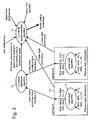
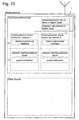
- the method and associated devices include four parts, at least some of which can be incorporated in a mobile terminal by a suitable modification of the software thereof, see the schematic of Fig. 3 illustrating the relation between the different parts and also the block diagram of Fig. 10 :
- the lower-layer algorithm is performed in the lower layers, in one of or in both of the physical layer L1 and the link layer L2.
- the lower layers are assumed to use some suitable methods, e.g. as disclosed in the prior art, to measure, estimate or otherwise derive values of different parameters that are to be used in calculations and subsequently sent or provided to the next higher layer, the network layer L3, together with values of other calculated, estimated or derived parameters.
- Examples of parameters which an arbitrary lower layer L1 or L2 generally is capable of measuring or calculating include:
- These measurements can be implemented in hardware, firmware or as part of the software driver for the respective interface. Often the wireless interface already performs a number of measurements in order to determine whether a handoff operation is necessary.
- the lower layer or layers L1 and/or L2 can calculate a plurality of other parameters from the directly known parameters. For instance, the distance DIST from the access point 4/base station 6 can be estimated based on the strength of the received signal, see block 406, if the mobile terminal 1 can estimate the radius of the cell in which it is in current communication, see block 407, and estimate the transmitting power of the access point/base station with which it is currently communicating, see block 409. In some cases there is no way for the mobile terminal to know the cell size or the transmitting power, but the mobile terminal may still provide a good guess. For instance, the mobile terminal 1 can assume that the access point 4/base station 6 transmits at maximum power, see block 411, and thus uses the maximum cell radius, see block 413.
- the estimated value DIST of the distance of the mobile terminal 1 from an access point 4/base station 6 can be saved, see block 419, and the accuracy of the estimated value can be estimated and stored, see blocks 421 and 423.
- the speed VEL of the mobile terminal 1 in relation to the access point 4/base station 6 can be calculated based on the way in which the distance changes over time, see block 425, and saved, see block 427.
- the estimation of the speed VEL with which the mobile terminal 1 is moving can in most cases only be estimated radially with respect to the access point 4/base station 6, with which the mobile terminal is in communication, i.e. only the radial component of the velocity of the moving terminal can be estimated. This is due to the fact that in most cases the received signal strength or the timing advance is the only real, changing input parameter, and this parameter is, ideally, only a function of the distance from the access point 4/base station 6.
- the radial-only estimations can supplement each other and provide a better estimation of the speed of the moving mobile terminal.
- a mobile terminal 1 can be moving in a direction, which is more radial with regard to the access point 4, 6 of one cell 3, 5, while the same movement then is likely to be more tangential with regards to the access point of another cell.
- the combination of such two radial components will cancel the risk of obtaining a zero speed estimation for a tangential-only movement, but at the same time provides a too low estimation of the speed of the mobile terminal since, in the case where the radial component in one cell 3, 5 is high, the radial component in another, neighbouring cell will be low.
- Information that is measured and calculated in the lower layers L1 and/or L2 is transferred to the speed estimation algorithm 15 performed in the higher layer, the network layer L3, using the lower layer to L3 interface 13, see Fig. 5 .
- the term primitive is used to indicate an abstract form of such transferred information.
- the idea behind the concept primitive is that the lower layers can provide a normalized format of radio-related information that can be used to compare radio conditions over different access technologies. Instead of specifying e.g. received signal strength in mW or dBm, the primitives use percent of maximum signal strength.
- Primitives may be sent from a lower layer to the network layer L3 periodically, at times occurring with a default interval, e.g. 10 ms, or with an interval that the network layer L3 can set, see the block 501 for transmitting primitives and its subblock 503 in Fig. 5 .
- a default interval e.g. 10 ms
- Primitives may also instead be sent from a lower layer to L3 when a certain threshold, for example 90 %, has been passed or exceeded, this threshold being a default value or set by the higher layer L3, see block 505.
- a certain threshold for example 90 %
- Each primitive may have several thresholds, for example at 10 %, 30 %, 50 %, 70 % and 90 %. Passing a threshold will set off a trigger.
- the network layer L3 is capable of specifying whether it wants primitives to be sent periodically or only be sent when triggered by passing a threshold, see block 507.
- Primitives include, but are not limited to, the following parameters:
- the RSS, SNR, TA, DIST, and VEL primitives are associated with one access point 4/base station 6.
- the BSid parameter e.g. BS1, BS2, ..., is only an identifier of the base station for the higher layer L3 to map previous results to and can also be written e.g. APid, such as AP1, AP2 identifying different access points 4, 6 in a wireless network. It has no real meaning for the higher layer L3.
- ABS, LU and LD primitives are not associated with a particular access point 4/base station 6.
- the parameter values received from lower layers are thus converted to the normalized values, see block 509, and the corresponding primitives are then formed, see block 511, in the interfaces 13.
- Each type of primitive is sent independently of other types. That means that if some primitives can be measured, whereas others cannot be measured, the former ones are sent and the latter ones are suppressed. This may happen even though the measurement of each primitive is related to other primitives.
- the higher layer L3 can specify the primitives which it wants to take or receive and the primitives which it does not want to take or receive, see block 513.
- the default setting will for the lower layers be to send all primitives for all access points 4/base stations 6 for which they can measure or calculate parameters associated with or derived from the communication with the access points/base stations.
- An implementation of the interfaces 13 between the lower layers and the higher layer L3 may for sending the primitives, see block 515, use any of:
- the speed estimation algorithm 15 in the network layer L3, see Fig. 6 takes input from all different lower layers and compiles the taken data to form an approximate value of the current speed of the geographical movement of the mobile terminal 1, this value called a combined value of the speed of the mobile terminal,.
- the speed estimation algorithm 15 uses heuristics to decide whether the mobile terminal 1 will stay within the same cell 3, 5, for a given part of the lower layers, for some time to come or if it is quickly moving out of the cell, or if the radio conditions are bad or if the cell is too crowded in the cell.
- the speed estimation algorithm 15 in the higher layer produces output regarding the wireless network that is preferred as far as the speed of mobile terminal is concerned, this output used as input to the network layer over-all access selection algorithm 17, see the description below.
- the speed estimation algorithm 15 in the higher layer L3 regularly takes or receives information as primitives from each of the lower layers attached.
- the values in the primitives that it receives may be generated in the next lower layer L2 or below, but from the point of view of the higher layer, they come from a specific part or portion of the lower layer L2, i.e. a network interface/network driver.
- the speed estimation algorithm 15 in the higher layer L3 does not have to use in the speed estimation all the information that it takes or receives from the lower layers.
- the speed estimation algorithm in L3 is capable of specifying preferences about the primitives that it receives from the lower layers such as from L2. For each primitive, and independently per part of L2, the speed estimation algorithm 15 in L3 can set:
- the speed estimation algorithm 15 in the network layer L3 uses the information that it takes or receives from each lower layer to estimate whether the mobile terminal 1 is geographically moving and the approximate speed with which the mobile terminal is moving.
- the speed estimation algorithm 15 is continuously collecting primitives from all lower layers and all access points 4/base stations 6 at each part of the lower layers and the algorithm extracts the parameter values in the primitives. New primitives or the values contained in the new primitives overwrite old ones in those cases where the parameter types are identical, e.g.
- the geographical speed s of the mobile terminal 1 is determined, see block 601 in Fig. 6
- an estimation of the accuracy of the position of the mobile terminal is determined, see block 602, as obtained from the respective primitives.
- the speed estimation algorithm 15 is executed at any time, e.g. periodically or when new primitives arrive. It is executed considering all collected primitives that have not yet expired. For each part of the lower layer, e.g. L2, it makes in block 601 the following decisions:
- the speed estimation algorithm 15 determines in block 639 a value of the weighted velocity or of collected or received VEL together with the possibly pre-configured accuracy associated with the type of the wireless network which is associated with the considered part of the lower layer. For instance, WLAN speed measurements have a weight 50 times (500:10) larger than those of cellular speed measurements. Based on the determination, an estimation of the physical or geographical speed s of the mobile terminal 1 is obtained. It must be observed that the speed is calculated and not the velocity. As used herein, in most cases the term "velocity" has a direction but the term "speed" never has.
- the speed estimation algorithm 15 averages in block 639 the speed s, as determined in block 639, twice over time, see block 641.
- a first averaging is made for all estimated values of the speed obtained during the last 5 seconds to obtain a short average value s short
- a second averaging is made for all estimated value of the speed obtained during the last 30 seconds to get a long average value s long .
- the short average value s short is used to detect accelerations of the mobile terminal 1
- the long average value s long is used to detect halts, i.e. that the mobile terminal is stationary or not substantially moving.
- the important decision that this algorithm makes is which access network should be preferred at each time, given the estimation of the speed of the mobile terminal 1. For instance, when the mobile terminal is moving with a speed above a certain level, a WLAN is a bad choice and a cellular network is a much better choice.
- the algorithm is preconfigured to use a LAN when the terminal is not moving, a WLAN when its moving with a low speed and otherwise a cellular network.
- Other access technologies can be easily added to this priority list. In the algorithm the following decisions are made:
- a WLAN is basically not designed for any movements of mobile terminals at all, but it can at least handle some low speeds of the mobile terminals.
- the access network chosen by this algorithm illustrated in block 643 becomes one of the output parameters that are fed into the IP layer over-all access selection algorithm 17.
- the access network selected here is not the final decision made by the system. This is only the best choice depending on the estimated speed s of the terminal 1.
- the speed estimation algorithm 15 described above provides an output indicating the most suitable access network to be used by the mobile terminal 1, e.g. a WLAN or a cellular network.
- the speed estimation algorithm also outputs an estimation of the speed s of the mobile terminal that can be used by any part of the wireless communication system.
- the output of the speed estimation algorithm 15 is one of multiple input parameters to the over-all access selection mechanism 17, see Fig. 8 , that manages the network layer L3.
- Other input to the access selection mechanism can come from lower layers, such as RSS and SNR directly from the drivers and not via the speed estimation algorithm in the network layer, from applications, policies, user selection or network instructions.
- the over-all access selection algorithm 17 is constantly running and is at each moment trying to select the access network that best matches, given all incoming status information, all incoming requirements, see block 801 in Fig. 8 .
- the speed estimation algorithm 15 performed in the same layer as described above is one of the sources for status information input.
- Another example is topological movement detection, which bases its movement detection on IP layer mechanisms such as IPv6 (Internet protocol version 6) Neighbor Discovery, see T. Narten et al., "RFC 2461 - Neighbor Discovery for IP Version 6 (IPv6)", IETF, Dec. 1998 .
- the requirements for access selection can come from, but is not limited to:
- the decision taken by the over-all access-selection algorithm 17 affects the routing inside the mobile terminal 1. For instance, the decision to change to another access network may change the primary interface and change the default route.
- the process of selecting an access network and finally finishing the handoff may be a long procedure. If an access point 4 for a WLAN is within reach, it does not automatically mean that the mobile terminal 1 can handoff to it and restore connectivity.
- the mobile terminal may have to authenticate first, and then begin signaling different mobility protocols.
- the handoff operation is not completed at the same moment at which the selection of the preferred access network is done. There may be several steps in between and they will take time and may fail.
- the access selection will still keep indicating to the communication system the access network that is the preferred one. Further details of this procedure can be obtained from prior art systems.
- the estimated speed s obtained from the same algorithm can be used to change other handoff decisions.
- a small margin e.g. defined as a fraction of RSS or SNR, should cater for the few seconds that a handoff operation performed by a L3 mobility mechanism requires without losing information packets.
- the optimal margin varies depending on the speed with which the mobile terminal 1 moves.
- the margin can be small and when moving faster, the margin must be larger.
- the estimated speed s that the speed estimation algorithm 15 as described above provides can be used to increase and decrease a threshold of RSS or SNR that is used for handoff decisions, see block 803 of Fig. 8 .
- a variable RSS threshold value RSS(s) is illustrated as dependent on the value s of the estimated speed, the threshold value triggering a handoff operation.
- the threshold value RSS(s) increases when the speed s increases, and vice versa.
- RSS 0 is a threshold value that is independent of the speed and works as a second choice if a speed estimation is not available.
- the estimated speed of a mobile terminal in a cellular network is used for adapting a temporal window over which averages of signal strengths are taken.
- This improved mechanism can be used for handoff operations for mobile terminals within one access technology or between different access technologies. If used for handoff decisions in a cellular network, this procedure is executed in the relevant base stations instead of being executed in the mobile terminals.
- the radio conditions are not expected to change, which can be interpreted as:
- the method and wireless communication system as described herein do not require accurate information from each part of the lower layers, such as absolute position, speed etc.
- the described method/system is not a positioning/localizing method/system - such a method/system would require a much higher accuracy but would have completely different requirements and goals.
- the method and wireless communication system as described herein do not require any additional hardware, such as a GPS receiver to estimate speed and improve access selection.
- the described method and communication system can be implemented using existing hardware including only modifications to the software, making them less expensive.
- the method and communication system as described herein do not require that the wireless networks are coordinated. Furthermore, they also allow the mobile terminals to use information from multiple different wireless networks that will provide more accurate estimates of the speed.
- the implementation of the described method primarily deals with access selection between different access types. Thus, it will in some respects be simpler than a method would be for performing handoff operations within a single wireless network, since there are no synchronization problems between base stations belonging to different wireless networks.
- An implementation of the method and communication system as described herein would make a mobile terminal 1 avoid handing off into a cell of small size when the mobile terminal is passing through such a cell at a high speed or handing over from a cell of small size to a larger cell if the speed of the mobile terminal gets to high, thus avoiding some or all of the following:
Landscapes
- Engineering & Computer Science (AREA)
- Computer Networks & Wireless Communication (AREA)
- Signal Processing (AREA)
- Mobile Radio Communication Systems (AREA)
Claims (39)
- Mobiles Endgerät (1) zur Verwendung in einem Kommunikationssystem zum Übermitteln von Information, wobei das Kommunikationssystem mindestens zwei drahtlose Netzwerke einschließt, wobei das mobile Endgerät Kommunikationsschaltungen zum drahtlosen Kommunizieren mit jedem der mindestens zwei drahtlosen Netzwerke einschließt, wobei die Kommunikationsschaltungen eine Vielzahl von Schaltungsblöcken zum jeweiligen Durchführen einer spezifischen Funktion bei der Kommunikation zwischen dem mobilen Endgerät und mindestens einem Zugangspunkt (4) in mindestens einem der mindestens zwei drahtlosen Netzwerke einschließt, wobei die Vielzahl von Schaltungsblöcken Geschwindigkeitsschätzungsschaltungsblöcke (15) zum Schätzen der Geschwindigkeit, mit der sich das mobile Endgerät bewegt, einschließt, wobei die Geschwindigkeitsschätzungsschaltungsblöcke dafür eingerichtet sind, geschätzte Werte der Geschwindigkeit an ein Auswahlmodul zu übermitteln, das dafür eingerichtet ist, auf der Grundlage der geschätzten Werte der Geschwindigkeit eines der mindestens zwei drahtlosen Netzwerke zum Übermitteln von Information vom und zum mobilen Endgerät auszuwählen,
dadurch gekennzeichnet:- dass die Schaltungsblöcke in einem Schichtsystem organisiert sind, das eine Netzwerkschicht und mindestens eine tiefere Schicht einschließt,- wobei die Netzwerkschicht Schaltungsblöcke einschließt, welche die Kommunikation zwischen dem mobilen Endgerät und den mindestens zwei drahtlosen Netzwerken auf Netzwerkebene abwickeln, und- wobei die mindestens eine tiefere Schicht Schaltungsblöcke einschließt, welche die physische Übertragung von Information zwischen dem mobilen Endgerät und Zugangspunkten der mindestens zwei drahtlosen Netzwerke abwickeln, und- dass erste der Geschwindigkeitsschätzungsschaltungsblöcke in die mindestens eine tiefere Schicht einbezogen sind, und- dass ein zweiter, anderer der Geschwindigkeitsschätzungsschaltungsblöcke in die Netzwerkschicht einbezogen ist, wobei die ersten der Geschwindigkeitsschätzungsschaltungsblöcke dafür eingerichtet sind, mindestens geschätzte Werte der aktuellen Position oder der Geschwindigkeit des mobilen Endgeräts zum zweiten der Geschwindigkeitsschätzungsschaltungsblöcke zu übertragen. - Mobiles Endgerät (1) nach Anspruch 1, dadurch gekennzeichnet, dass die ersten der Geschwindigkeitsschätzungsschaltungsblöcke Geschwindigkeitsschätzungsschaltungsblöcke speziell für jedes der mindestens zwei drahtlosen Netzwerke einschließen.
- Mobiles Endgerät (1) nach Anspruch 2, dadurch gekennzeichnet, dass jeder der speziellen Geschwindigkeitsschätzungsschaltungsblöcke dafür eingerichtet ist, die mindestens geschätzten Werte der aktuellen Position oder der aktuellen Geschwindigkeit des mobilen Endgeräts zum zweiten der Geschwindigkeitsschätzungsschaltungsblöcke zu übertragen, wobei die mindestens geschätzten Werte im jeweiligen speziellen Geschwindigkeitsschätzungsschaltungsblock bestimmt werden.
- Mobiles Endgerät (1) nach Anspruch 2, dadurch gekennzeichnet, dass jeder der speziellen Geschwindigkeitsschätzungsschaltungsblöcke dafür eingerichtet ist, Werte von Parametern, die dem mobilen Endgerät zugeordnet sind, als einzelne Nachrichten oder getrennte Informationselemente zum zweiten der Geschwindigkeitsschätzungsschaltungsblöcke zu übertragen, wobei jede Nachricht oder jedes Informationselement nur einen Wert eines der Parameter trägt.
- Mobiles Endgerät (1) nach Anspruch 2, dadurch gekennzeichnet, dass jeder der speziellen Geschwindigkeitsschätzungsschaltungsblöcke dafür eingerichtet ist, außerdem Werte von Parametern zum zweiten der Geschwindigkeitsschätzungsschaltungsblöcke zu übertragen, die der drahtlosen Übertragung zwischen dem mobilen Endgerät und einem jeweiligen Zugangspunkt eines der mindestens zwei drahtlosen Netzwerke direkt zugeordnet oder daraus abgeleitet sind, wobei die Parameter insbesondere mindestens eines von Folgendem einschließen, nämlich empfangene Signalstärke, Rauschabstand und Zeitversatz.
- Mobiles Endgerät (1) nach Anspruch 2, dadurch gekennzeichnet, dass jeder der speziellen Geschwindigkeitsschätzungsschaltungsblöcke dafür eingerichtet ist, Werte von Parametern, die dem mobilen Endgerät zugeordnet sind, periodisch und/oder wenn ein Wert eines der Parameter einen Schwellwert passiert, zum zweiten der Geschwindigkeitsschätzungsschaltungsblöcke zu übertragen.
- Mobiles Endgerät (1) nach Anspruch 2, dadurch gekennzeichnet, dass die speziellen Geschwindigkeitsschätzungsschaltungsblöcke dafür eingerichtet sind, Werte von Parametern unter Verwendung eines ausgewählten von Folgendem zu übertragen:- ein Software-Interrupt,- ein Funktionsaufruf und/oder eine Rückruffunktion, und- ein Benachrichtigungsdienst eines Betriebssystems.
- Mobiles Endgerät (1) nach Anspruch 2, dadurch gekennzeichnet, dass einer der speziellen Geschwindigkeitsschätzungsschaltungsblöcke dafür eingerichtet ist, einen geschätzten Wert der Geschwindigkeit des mobilen Endgeräts auf der Grundlage von aufeinanderfolgenden geschätzten Werten der Entfernung des mobilen Endgeräts von einem Zugangspunkt eines der mindestens zwei drahtlosen Netzwerke zu bestimmen.
- Mobiles Endgerät (1) nach Anspruch 8, dadurch gekennzeichnet, dass der eine der speziellen Geschwindigkeitsschätzungsschaltungsblöcke dafür eingerichtet ist, einen geschätzten Wert der Entfernung des mobilen Endgeräts von einem Zugangspunkt auf der Grundlage eines Zellenradius für diesen Zugangspunkt, der bei der Kommunikation mit dem Zugangspunkt verwendeten Sendeleistung und der Stärke von Signalen, die von dem Zugangspunkt empfangen werden, zu bestimmen.
- Mobiles Endgerät (1) nach Anspruch 8, dadurch gekennzeichnet, dass der eine der speziellen Geschwindigkeitsschätzungsschaltungsblöcke dafür eingerichtet ist, einen geschätzten Wert der Entfernung des mobilen Endgeräts von einem Zugangspunkt auf der Grundlage des beim Kommunizieren mit dem Zugangspunkt ermittelten Zeitversatzes zu bestimmen.
- Mobiles Endgerät (1) nach Anspruch 1, dadurch gekennzeichnet, dass der zweite der Geschwindigkeitsschätzungsschaltungsblöcke dafür eingerichtet ist, von den speziellen Geschwindigkeitsschätzungsschaltungsblöcken empfangene Information, die insbesondere Werte der geschätzten Position und/oder Geschwindigkeit des mobilen Endgeräts einschließt, zu kombinieren, um einen kombinierten Wert der Geschwindigkeit des mobilen Endgeräts zu ergeben.
- Mobiles Endgerät nach Anspruch 11, dadurch gekennzeichnet, dass der zweite der Geschwindigkeitsschätzungsschaltungsblöcke dafür eingerichtet ist, den kombinierten Wert gleich null zu bestimmen, wenn von den speziellen Geschwindigkeitsschätzungsschaltungsblöcken empfangene Information angibt, dass das mobile Endgerät in Kommunikation mit einem Zugangspunkt eines lokalen Netzwerks steht.
- Mobiles Endgerät nach Anspruch 11, dadurch gekennzeichnet, dass der zweite der Geschwindigkeitsschätzungsschaltungsblöcke dafür eingerichtet ist, den kombinierten Wert aus aufeinanderfolgenden geschätzten Werten der Entfernung des mobilen Endgeräts von einem Zugangspunkt eines der mindestens zwei drahtlosen Netzwerke zu bestimmen, so wie sie von einem der speziellen Geschwindigkeitsschätzungsschaltungsblöcke empfangen werden.
- Mobiles Endgerät nach Anspruch 11, dadurch gekennzeichnet, dass der zweite der Geschwindigkeitsschätzungsschaltungsblöcke dafür eingerichtet ist, den kombinierten Wert aus Änderungen von Werten des beim Kommunizieren mit dem Zugangspunkt ermittelten Zeitversatzes zu bestimmen, so wie sie von einem der speziellen Geschwindigkeitsschätzungsschaltungsblöcke empfangen werden.
- Mobiles Endgerät nach Anspruch 11, dadurch gekennzeichnet, dass der zweite der Geschwindigkeitsschätzungsschaltungsblöcke dafür eingerichtet ist, den kombinierten Wert aus aufeinanderfolgenden geschätzten Werten der Stärke von Signalen, die von einem Zugangspunkt empfangen werden, und vorbestimmten Werten einer Zellengröße und der Sendeleistung, die dem Zugangspunkt zugeordnet sind, zu bestimmen.
- Mobiles Endgerät nach Anspruch 11, dadurch gekennzeichnet, dass der zweite der Geschwindigkeitsschätzungsschaltungsblöcke dafür eingerichtet ist, einen Wert einer Genauigkeit des kombinierten Werts zu bestimmen.
- Mobiles Endgerät nach Anspruch 1, dadurch gekennzeichnet, dass das Auswahlmodul ein Auswahlschaltungsblock im mobilen Endgerät ist, wobei der Auswahlschaltungsblock mit den Geschwindigkeitsschätzungsschaltungsblöcken gekoppelt ist, insbesondere nur mit dem zweiten der Geschwindigkeitsschätzungsschaltungsblöcke.
- Mobiles Endgerät nach Anspruch 17, dadurch gekennzeichnet, dass der Auswahlschaltungsblock dafür eingerichtet ist, einen Schwellwert oder einen Grenzbereich für einen Parameter anzupassen, der beim Auswählen des drahtlosen Netzwerks verwendet wird, mit dem das mobile Endgerät Information austauschen soll, insbesondere einen Schwellwert für die Stärke oder für den Rauschabstand von Signalen, die von den mindestens zwei drahtlosen Netzwerken empfangen werden.
- Kommunikationssystem zum Übermitteln von Information, einschließend:- ein drahtloses Netzwerk mit mindestens zwei Zugangspunkten (4), die jeweils unterschiedliches oder individuelles Gebiet versorgen, und- ein mobiles Endgerät (1), das dafür eingerichtet ist, mit dem drahtlosen Netzwerksystem über geeignete der mindestens zwei Zugangspunkte (4) drahtlos zu kommunizieren,- eine Geschwindigkeitsschätzungsfunktion (15) zum Schätzen der Geschwindigkeit, mit der sich das mobile Endgerät bewegt,- eine Auswahlfunktion (17) zum Auswählen eines der mindestens zwei Zugangspunkte zum Übermitteln von Information vom und zum mobilen Endgerät, und zwar auf der Grundlage geschätzter Werte der Geschwindigkeit, die von der Geschwindigkeitsschätzungsfunktion empfangen werden,gekennzeichnet durch ein Schichtsystem für die Kommunikation, das eine Netzwerkschicht und mindestens eine tiefere Schicht einschließt, wobei die Netzwerkschicht die Kommunikation zwischen dem mobilen Endgerät und dem drahtlosen Netzwerksystem auf Netzwerkebene abwickelt und die mindestens eine tiefere Schicht die physische Übertragung von Information zwischen dem mobilen Endgerät und den mindestens zwei Zugangspunkten abwickelt,- wobei ein erster Teil der Geschwindigkeitsschätzungsfunktion in der mindestens einen tieferen Schicht angeordnet ist oder auf ihr durchgeführt wird, und- wobei ein zweiter Teil der Geschwindigkeitsschätzungsfunktion in der Netzwerkschicht angeordnet ist oder auf ihr durchgeführt wird,wobei der erste Teil dafür eingerichtet ist, mindestens geschätzte Werte der aktuellen Position oder der Geschwindigkeit des mobilen Endgeräts zum zweiten Teil zu übertragen.
- Kommunikationssystem nach Anspruch 19, dadurch gekennzeichnet, dass der erste Teil der Geschwindigkeitsschätzungsfunktion unterschiedliche Abschnitte einschließt, wobei jeder der unterschiedlichen Abschnitte nur der Kommunikation mit einem einzelnen der mindestens zwei unterschiedlichen Zugangspunkte zugeordnet ist.
- Kommunikationssystem nach Anspruch 20, dadurch gekennzeichnet, dass jeder der Abschnitte des ersten Teils dafür eingerichtet ist:- mindestens geschätzte Werte der aktuellen Position oder der aktuellen Geschwindigkeit des mobilen Endgeräts zu bestimmen, und- die im jeweiligen Abschnitt des ersten Teils bestimmten mindestens geschätzten Werte der aktuellen Position oder der aktuellen Geschwindigkeit des mobilen Endgeräts zum zweiten Teil der Geschwindigkeitsschätzungsfunktion zu übertragen.
- Kommunikationssystem nach Anspruch 20, dadurch gekennzeichnet, dass der zweite Teil der Geschwindigkeitsschätzungsfunktion dafür eingerichtet ist, Information zu kombinieren, wobei die Information insbesondere Werte der geschätzten Position und/oder Geschwindigkeit des mobilen Endgeräts einschließt, die von den Abschnitten des ersten Teils empfangen werden, um einen kombinierten Wert der Geschwindigkeit des mobilen Endgeräts zu ergeben.
- Kommunikationssystem nach Anspruch 19, dadurch gekennzeichnet, dass der erste Teil dafür eingerichtet ist, Werte von Parametern, die dem mobilen Endgerät zugeordnet sind, als einzelne Nachrichten oder getrennte Informationselemente zum zweiten Teil zu übertragen, wobei jede Nachricht oder jedes Informationselement nur einen Wert eines der Parameter trägt.
- Kommunikationssystem nach Anspruch 23, dadurch gekennzeichnet, dass die Werte der Parameter, einschließlich der geschätzten Werte der aktuellen Position oder der Geschwindigkeit, in dem oder durch den ersten Teil bestimmt, insbesondere gemessen, berechnet oder geschätzt, werden.
- Kommunikationssystem nach Anspruch 19, dadurch gekennzeichnet, dass der erste Teil dafür eingerichtet ist, außerdem Werte von Parametern zum zweiten Teil zu übertragen, die der drahtlosen Übertragung zwischen dem mobilen Endgerät und einem der mindestens zwei Zugangspunkte des drahtlosen Netzwerksystems direkt zugeordnet sind, wobei die Parameter insbesondere mindestens eines von Folgendem einschließen, nämlich empfangene Signalstärke, Rauschabstand und Zeitversatz.
- Kommunikationssystem nach Anspruch 19, dadurch gekennzeichnet, dass der erste Teil dafür eingerichtet ist, Werte von Parametern, die dem mobilen Endgerät zugeordnet sind, periodisch und/oder wenn ein Wert eines der Parameter einen Schwellwert passiert, zum zweiten Teil zu übertragen.
- Kommunikationssystem nach Anspruch 26, dadurch gekennzeichnet, dass der erste Teil dafür eingerichtet ist, die Werte der Parameter unter Verwendung eines ausgewählten von Folgendem zu übertragen:- ein Software-Interrupt,- ein Funktionsaufruf und/oder eine Rückruffunktion, und- ein Benachrichtigungsdienst eines Betriebssystems.
- Kommunikationssystem nach Anspruch 19, dadurch gekennzeichnet, dass die Auswahlfunktion dafür eingerichtet ist, einen Schwellwert oder einen Grenzbereich für einen Parameter anzupassen, der beim Auswählen desjenigen der mindestens zwei Zugangspunkte verwendet wird, mit dem das mobile Endgerät Information austauschen soll, insbesondere einen Schwellwert für die Stärke oder für den Rauschabstand von Signalen, die von den mindestens zwei Zugangspunkten empfangen werden.
- Verfahren zum Übermitteln von Information in einem Kommunikationssystem, wobei das Kommunikationssystem ein drahtloses Netzwerk mit mindestens zwei Zugangspunkten (4), die jeweils unterschiedliches oder individuelles Gebiet versorgen, und ein mobiles Endgerät (1) einschließt, wobei das Übermitteln von Information durch Funktionen in einem Schichtsystem abgewickelt wird, das eine Netzwerkschicht und mindestens eine tiefere Schicht einschließt, wobei Funktionen der Netzwerkschicht die Kommunikation zwischen dem mobilen Endgerät und dem Netzwerksystem auf Netzwerkebene abwickeln und Funktionen der mindestens einen tieferen Schicht die physische Übertragung von Information zwischen dem mobilen Endgerät und den mindestens zwei Zugangspunkten abwickeln,
wobei das Verfahren einschließt:- drahtloses Übertragen von Information zwischen dem drahtlosen Netzwerksystem und dem mobilen Endgerät über einen ausgewählten der mindestens zwei Zugangspunkte,- Schätzen (15) der Geschwindigkeit, mit der sich das mobile Endgerät bewegt, um geschätzte Geschwindigkeitswerte zu ergeben, und- Wechseln des ausgewählten der mindestens zwei Zugangspunkte, zwischen dem und dem mobilen Endgerät Information drahtlos übertragen wird, auf der Grundlage der geschätzten Geschwindigkeitswerte,dadurch gekennzeichnet, dass im Schritt des Schätzens:- das Schätzen der Geschwindigkeit sowohl in ersten Teilschritten, die in der mindestens einen tieferen Schicht durchgeführt werden, als auch in einem zweiten Teilschritt, der in der Netzwerkschicht durchgeführt wird, durchgeführt wird, und- mindestens geschätzte Werte der aktuellen Position oder der Geschwindigkeit des mobilen Endgeräts von den ersten Teilschritten zum zweiten Teilschritt übertragen werden. - Verfahren nach Anspruch 29, dadurch gekennzeichnet, dass die ersten Teilschritte in unterschiedlichen Abschnitten des Kommunikationssystems durchgeführt werden, wobei jeder der unterschiedlichen Abschnitte nur der Kommunikation innerhalb eines einzelnen der mindestens zwei unterschiedlichen Zugangspunkte zugeordnet ist.
- Verfahren nach Anspruch 29, dadurch gekennzeichnet, dass im Schritt des Schätzens:- in jedem der ersten Teilschritte mindestens geschätzte Werte der aktuellen Position oder der aktuellen Geschwindigkeit des mobilen Endgeräts bestimmt werden, und- alle der mindestens geschätzten Werte der aktuellen Position oder der aktuellen Geschwindigkeit des mobilen Endgeräts, die in allen der ersten Teilschritte bestimmt werden, zum zweiten Teilschritt übertragen werden.
- Verfahren nach Anspruch 29, dadurch gekennzeichnet, dass im zweiten Teilschritt Information kombiniert wird, wobei die Information insbesondere Werte der geschätzten Position und/oder Geschwindigkeit des mobilen Endgeräts einschließt, die von den ersten Teilschritten empfangen werden, um einen kombinierten Wert der Geschwindigkeit des mobilen Endgeräts zu ergeben.
- Verfahren nach Anspruch 29, dadurch gekennzeichnet, dass in den ersten Teilschritten Werte von Parametern, die dem mobilen Endgerät zugeordnet sind, als einzelne Nachrichten oder getrennte Informationselemente zum zweiten Teilschritt übertragen werden, wobei jede Nachricht oder jedes Informationselement nur einen Wert eines der Parameter trägt.
- Verfahren nach Anspruch 29, dadurch gekennzeichnet, dass in den ersten Teilschritten die Werte der Parameter, einschließlich der geschätzten Werte der aktuellen Position oder der Geschwindigkeit, bestimmt, insbesondere gemessen, berechnet oder geschätzt werden, und zwar in einer Funktion oder Funktionen, die in der mindestens einen tieferen Schicht durchgeführt werden.
- Verfahren nach Anspruch 29, dadurch gekennzeichnet, dass in den ersten Teilschritten außerdem Werte von Parametern zum zweiten Teilschritt übertragen werden, die der drahtlosen Übertragung zwischen dem mobilen Endgerät und einem der mindestens zwei Zugangspunkte des Netzwerksystems direkt zugeordnet sind, wobei die Parameter insbesondere mindestens eines von Folgendem einschließen, nämlich empfangene Signalstärke, Rauschabstand und Zeitversatz.
- Verfahren nach Anspruch 29, dadurch gekennzeichnet, dass von den ersten Teilschritten Werte von Parametern, die dem mobilen Endgerät zugeordnet sind, periodisch und/oder wenn ein Wert eines der Parameter einen Schwellwert passiert, zum zweiten Teilschritt übertragen werden.
- Verfahren nach Anspruch 35, dadurch gekennzeichnet, dass von den ersten Teilschritten die Werte der Parameter unter Verwendung eines ausgewählten von Folgendem übertragen werden:- ein Software-Interrupt,- ein Funktionsaufruf und/oder eine Rückruffunktion, und- ein Benachrichtigungsdienst eines Betriebssystems.
- Verfahren nach Anspruch 35, dadurch gekennzeichnet, dass von jedem der ersten Teilschritte Werte von Parametern, die dem mobilen Endgerät zugeordnet sind, als einzelne Nachrichten oder getrennte Informationselemente zum zweiten Teilschritt übertragen werden, wobei jede Nachricht oder jedes Informationselement nur einen Wert eines der Parameter trägt.
- Verfahren nach Anspruch 29, dadurch gekennzeichnet, dass im Schritt des Wechselns ein Schwellwert oder ein Grenzbereich für einen Parameter angepasst wird, der beim Auswählen desjenigen der mindestens zwei Zugangspunkte verwendet wird, mit dem das mobile Endgerät Information austauschen soll, insbesondere ein Schwellwert für die Stärke oder für den Rauschabstand von Signalen, die von den mindestens zwei Zugangspunkten empfangen werden.
Applications Claiming Priority (1)
| Application Number | Priority Date | Filing Date | Title |
|---|---|---|---|
| PCT/SE2004/001811 WO2006062445A1 (en) | 2004-12-06 | 2004-12-06 | Access selection in wireless networks |
Publications (2)
| Publication Number | Publication Date |
|---|---|
| EP1820363A1 EP1820363A1 (de) | 2007-08-22 |
| EP1820363B1 true EP1820363B1 (de) | 2013-07-03 |
Family
ID=36578183
Family Applications (1)
| Application Number | Title | Priority Date | Filing Date |
|---|---|---|---|
| EP04809028.6A Expired - Lifetime EP1820363B1 (de) | 2004-12-06 | 2004-12-06 | Zugangsauswahl in drahtlosen netzwerken |
Country Status (4)
| Country | Link |
|---|---|
| US (1) | US8112111B2 (de) |
| EP (1) | EP1820363B1 (de) |
| JP (1) | JP4758437B2 (de) |
| WO (1) | WO2006062445A1 (de) |
Families Citing this family (30)
| Publication number | Priority date | Publication date | Assignee | Title |
|---|---|---|---|---|
| US9661519B2 (en) * | 2003-02-24 | 2017-05-23 | Qualcomm Incorporated | Efficient reporting of information in a wireless communication system |
| US9338767B2 (en) | 2005-12-22 | 2016-05-10 | Qualcomm Incorporated | Methods and apparatus of implementing and/or using a dedicated control channel |
| US9125092B2 (en) | 2005-12-22 | 2015-09-01 | Qualcomm Incorporated | Methods and apparatus for reporting and/or using control information |
| US20070149132A1 (en) | 2005-12-22 | 2007-06-28 | Junyl Li | Methods and apparatus related to selecting control channel reporting formats |
| US9137072B2 (en) | 2005-12-22 | 2015-09-15 | Qualcomm Incorporated | Methods and apparatus for communicating control information |
| JP4971444B2 (ja) * | 2006-06-30 | 2012-07-11 | テレフオンアクチーボラゲット エル エム エリクソン(パブル) | 高速ダウンリンクパケットアクセス(hsdpa)チャネルのカバレージ向上 |
| US20080032712A1 (en) * | 2006-08-03 | 2008-02-07 | Bemmel Jeroen Van | Determining movement context of a mobile user terminal in a wireless telecommunications network |
| WO2008096408A1 (ja) * | 2007-02-05 | 2008-08-14 | Fujitsu Limited | 無線端末装置 |
| US20080225796A1 (en) | 2007-03-17 | 2008-09-18 | Qualcomm Incorporated | Handover in wireless communications |
| US8041780B2 (en) * | 2007-03-29 | 2011-10-18 | Alcatel Lucent | Method and apparatus for dynamically pushing content over wireless networks |
| US8068821B2 (en) * | 2007-03-29 | 2011-11-29 | Alcatel Lucent | Method and apparatus for providing content to users using unicast and broadcast wireless networks |
| US8588750B2 (en) * | 2007-03-31 | 2013-11-19 | Alcatel Lucent | Method and apparatus for providing interactive services to users using unicast and broadcast wireless networks |
| JP4516586B2 (ja) * | 2007-08-27 | 2010-08-04 | 株式会社日立製作所 | 移動体通信システム |
| ES2330708B1 (es) * | 2007-11-02 | 2010-09-21 | Universitat Politecnica De Catalunya | Procedimiento de seleccion de red de acceso radio oportunista. |
| US8761133B2 (en) | 2008-01-14 | 2014-06-24 | Nokia Corporation | Use of movement information about a wireless client |
| CN102017781B (zh) * | 2008-05-09 | 2015-06-17 | 马维尔国际贸易有限公司 | 为便携式设备提供位置感知wi-fi接入的系统和方法 |
| KR101276607B1 (ko) * | 2009-04-15 | 2013-06-20 | 한국전자통신연구원 | 이종 무선통신 시스템에서 액세스 시스템 선택 방법 및 장치 |
| US8489101B1 (en) * | 2009-08-28 | 2013-07-16 | Arris Group, Inc. | Call delivery in converged networks |
| WO2011068553A1 (en) * | 2009-12-01 | 2011-06-09 | Qualcomm Incorporated | Method and apparatus of processing synchronization shift commands in td-scdma uplink synchronization |
| KR20120001360A (ko) | 2010-06-29 | 2012-01-04 | 주식회사 케이티 | 음성호를 이용한 이종 무선 시스템간 핸드오버 수행 방법 및 그 핸드오버 정보 제공 방법 |
| KR20120001353A (ko) * | 2010-06-29 | 2012-01-04 | 주식회사 케이티 | Sms를 이용한 이종 무선 시스템간 핸드오버 수행 방법 및 그 핸드오버 정보 제공 방법 |
| CN102572921B (zh) * | 2011-12-27 | 2015-05-20 | 中兴通讯股份有限公司 | 一种无线通信装置及其最大接入数调节方法 |
| US20150245364A1 (en) * | 2012-02-16 | 2015-08-27 | Hewlett-Packard Development Company, L.P. | Radio resource management |
| CN103369668B (zh) * | 2012-03-27 | 2016-12-07 | 中兴通讯股份有限公司 | 利用无线通信系统进行位置定位的方法、装置及移动终端 |
| WO2013147832A1 (en) * | 2012-03-30 | 2013-10-03 | Intel Corporation | Motion-based management of a wireless processor-based device |
| EP2665307B1 (de) * | 2012-05-16 | 2015-07-08 | Telefonaktiebolaget L M Ericsson (publ) | Auf der Zellgröße basierende Mobilitätsverwaltung |
| US9761924B2 (en) * | 2012-11-29 | 2017-09-12 | Hewlett-Packard Development Company, L.P. | Wired connector and antenna |
| US9420475B2 (en) * | 2013-02-08 | 2016-08-16 | Intel Deutschland Gmbh | Radio communication devices and methods for controlling a radio communication device |
| KR102581310B1 (ko) | 2016-10-25 | 2023-09-22 | 삼성전자 주식회사 | 무선 통신 시스템에서 접속 네트워크를 선택하는 방법 및 장치 |
| CN112543474A (zh) * | 2019-09-20 | 2021-03-23 | 奇酷互联网络科技(深圳)有限公司 | 网络连接方法、移动终端和存储介质 |
Family Cites Families (9)
| Publication number | Priority date | Publication date | Assignee | Title |
|---|---|---|---|---|
| US5396645A (en) * | 1992-04-09 | 1995-03-07 | Comcast Pcs Communications, Inc. | System and method for determining whether to assign a macrocell or microcell communication frequency to a mobile communication terminal |
| RU2107992C1 (ru) * | 1992-09-23 | 1998-03-27 | Сименс АГ | Способ переключения мобильных абонентов в мобильной радиосети |
| EP0785696A3 (de) * | 1996-01-22 | 2000-04-05 | Hitachi, Ltd. | Mobiles Telekommunikationssystem und Schaltungsverfahren dafür |
| FI105005B (fi) * | 1997-05-13 | 2000-05-15 | Nokia Networks Oy | Päätelaitteen nopeuden estimoimismenetelmä, solun valitsemismenetelmä ja radiojärjestelmä |
| JP3732389B2 (ja) * | 2000-06-16 | 2006-01-05 | 松下電器産業株式会社 | 無線通信システム、基地局装置、通信端末装置、及び無線通信方法 |
| JP2002027519A (ja) | 2000-06-30 | 2002-01-25 | Toshiba Corp | 移動通信端末とその接続先基地局選択方法及び接続先基地局選択制御プログラムを記憶した記憶媒体 |
| JP4287604B2 (ja) * | 2001-08-27 | 2009-07-01 | 富士通株式会社 | 移動体通信システム並びに無線基地局,無線装置及び移動端末 |
| US8326257B2 (en) * | 2002-10-28 | 2012-12-04 | Qualcomm Incorporated | Utilizing speed and position information to select an operational mode in a wireless communication system |
| JP2004208001A (ja) | 2002-12-25 | 2004-07-22 | Sharp Corp | 無線通信システム、無線通信方法、無線通信プログラム及びプログラム記録媒体 |
-
2004
- 2004-12-06 JP JP2007544300A patent/JP4758437B2/ja not_active Expired - Fee Related
- 2004-12-06 EP EP04809028.6A patent/EP1820363B1/de not_active Expired - Lifetime
- 2004-12-06 WO PCT/SE2004/001811 patent/WO2006062445A1/en not_active Ceased
- 2004-12-06 US US11/720,870 patent/US8112111B2/en not_active Expired - Fee Related
Also Published As
| Publication number | Publication date |
|---|---|
| JP2008523658A (ja) | 2008-07-03 |
| US20090298496A1 (en) | 2009-12-03 |
| WO2006062445A1 (en) | 2006-06-15 |
| EP1820363A1 (de) | 2007-08-22 |
| US8112111B2 (en) | 2012-02-07 |
| JP4758437B2 (ja) | 2011-08-31 |
Similar Documents
| Publication | Publication Date | Title |
|---|---|---|
| EP1820363B1 (de) | Zugangsauswahl in drahtlosen netzwerken | |
| US8934369B2 (en) | Direction aware neighbor list infrastructure assisted roaming | |
| US7082305B2 (en) | Method and apparatus for generating a neighbor cell list | |
| EP2745567B1 (de) | Mobilitätszustandsbewusster betrieb eines mobilen relais | |
| US7447174B2 (en) | System and method for detecting node mobility based on network topology changes in a wireless communication network | |
| Kong et al. | Crowdsensing-based cross-operator switch in rail transit systems | |
| JP2009545917A (ja) | 無線通信ネットワークにおけるモバイル・ユーザ端末の移動コンテキストの判定 | |
| EP2207383A1 (de) | Verfahren und Vorrichtung zur Verwendung bei der Durchführung einer Handover-Funktion in einem zellularen, drahtlosen Netzwerk | |
| US20070183344A1 (en) | System and method for detecting node mobility based on network topology changes in a wireless communication network | |
| EP2615857A1 (de) | Verfahren zur Bestimmung eines zukünftigen Standorts einer mobilen elektronischen Vorrichtung | |
| EP2764726B1 (de) | Zellauswahlmechanismus in einem mobilen relaisbetrieb | |
| EP1566070B1 (de) | Erzeugen einer nachbarzellenliste abhaengig von dem geschwindigkeitsvektor eines benutzergeraets | |
| JP2013090203A (ja) | 無線通信システム、ハンドオーバ制御方法及び基地局 | |
| EP2257108A1 (de) | Verfahren und Kommunikationssystem zum Aufbau diskontinuierlicher Verbindungen zwischen einem sich bewegenden System und externen Zugangspunkten | |
| Aljeri et al. | An optimized link duration-based mobility management scheme for connected vehicular networks | |
| EP1902593B1 (de) | Netzwerkknoten | |
| US20250184852A1 (en) | Methods and apparatus for using machine learning to facilitate network handoffs between access points | |
| Almulla et al. | A fast location-based handoff scheme for vehicular networks | |
| KR20100135503A (ko) | 무선통신 시스템에서 핸드오버 결정 방법 및 장치 | |
| Madli et al. | A review of communication handoffs in vehicular ad-hoc networks (VANET) and its classification | |
| Aljeri | Efficient ai and prediction techniques for smart 5G-enabled vehicular networks | |
| EP4456630A1 (de) | Sidelink-vorhersage | |
| KR20250003988A (ko) | 사이드링크 통신을 위한 위치 결정 기준 신호의 송신 | |
| WO2024232235A1 (ja) | 通信装置、制御方法、及びプログラム | |
| WO2026019399A2 (en) | A method and system for conditional handover |
Legal Events
| Date | Code | Title | Description |
|---|---|---|---|
| PUAI | Public reference made under article 153(3) epc to a published international application that has entered the european phase |
Free format text: ORIGINAL CODE: 0009012 |
|
| 17P | Request for examination filed |
Effective date: 20070503 |
|
| AK | Designated contracting states |
Kind code of ref document: A1 Designated state(s): AT BE BG CH CY CZ DE DK EE ES FI FR GB GR HU IE IS IT LI LT LU MC NL PL PT RO SE SI SK TR |
|
| RIN1 | Information on inventor provided before grant (corrected) |
Inventor name: PETTERSSON, MATTIAS Inventor name: LARSSON, CONNY |
|
| DAX | Request for extension of the european patent (deleted) | ||
| 17Q | First examination report despatched |
Effective date: 20101007 |
|
| REG | Reference to a national code |
Ref country code: DE Ref legal event code: R079 Ref document number: 602004042626 Country of ref document: DE Free format text: PREVIOUS MAIN CLASS: H04Q0007380000 Ipc: H04W0036320000 |
|
| GRAP | Despatch of communication of intention to grant a patent |
Free format text: ORIGINAL CODE: EPIDOSNIGR1 |
|
| RIC1 | Information provided on ipc code assigned before grant |
Ipc: H04W 36/32 20090101AFI20130301BHEP |
|
| INTG | Intention to grant announced |
Effective date: 20130328 |
|
| RIN1 | Information on inventor provided before grant (corrected) |
Inventor name: PETTERSSON, MATTIAS Inventor name: LARSSON, CONNY |
|
| RAP1 | Party data changed (applicant data changed or rights of an application transferred) |
Owner name: TELEFONAKTIEBOLAGET LM ERICSSON (PUBL) |
|
| GRAS | Grant fee paid |
Free format text: ORIGINAL CODE: EPIDOSNIGR3 |
|
| GRAA | (expected) grant |
Free format text: ORIGINAL CODE: 0009210 |
|
| AK | Designated contracting states |
Kind code of ref document: B1 Designated state(s): AT BE BG CH CY CZ DE DK EE ES FI FR GB GR HU IE IS IT LI LT LU MC NL PL PT RO SE SI SK TR |
|
| REG | Reference to a national code |
Ref country code: GB Ref legal event code: FG4D |
|
| REG | Reference to a national code |
Ref country code: CH Ref legal event code: EP Ref country code: AT Ref legal event code: REF Ref document number: 620371 Country of ref document: AT Kind code of ref document: T Effective date: 20130715 |
|
| REG | Reference to a national code |
Ref country code: IE Ref legal event code: FG4D |
|
| REG | Reference to a national code |
Ref country code: DE Ref legal event code: R096 Ref document number: 602004042626 Country of ref document: DE Effective date: 20130829 |
|
| REG | Reference to a national code |
Ref country code: NL Ref legal event code: T3 |
|
| PG25 | Lapsed in a contracting state [announced via postgrant information from national office to epo] |
Ref country code: SI Free format text: LAPSE BECAUSE OF FAILURE TO SUBMIT A TRANSLATION OF THE DESCRIPTION OR TO PAY THE FEE WITHIN THE PRESCRIBED TIME-LIMIT Effective date: 20130703 |
|
| REG | Reference to a national code |
Ref country code: AT Ref legal event code: MK05 Ref document number: 620371 Country of ref document: AT Kind code of ref document: T Effective date: 20130703 |
|
| REG | Reference to a national code |
Ref country code: LT Ref legal event code: MG4D |
|
| PG25 | Lapsed in a contracting state [announced via postgrant information from national office to epo] |
Ref country code: LT Free format text: LAPSE BECAUSE OF FAILURE TO SUBMIT A TRANSLATION OF THE DESCRIPTION OR TO PAY THE FEE WITHIN THE PRESCRIBED TIME-LIMIT Effective date: 20130703 Ref country code: IS Free format text: LAPSE BECAUSE OF FAILURE TO SUBMIT A TRANSLATION OF THE DESCRIPTION OR TO PAY THE FEE WITHIN THE PRESCRIBED TIME-LIMIT Effective date: 20131103 Ref country code: BE Free format text: LAPSE BECAUSE OF FAILURE TO SUBMIT A TRANSLATION OF THE DESCRIPTION OR TO PAY THE FEE WITHIN THE PRESCRIBED TIME-LIMIT Effective date: 20130703 Ref country code: SE Free format text: LAPSE BECAUSE OF FAILURE TO SUBMIT A TRANSLATION OF THE DESCRIPTION OR TO PAY THE FEE WITHIN THE PRESCRIBED TIME-LIMIT Effective date: 20130703 Ref country code: CY Free format text: LAPSE BECAUSE OF FAILURE TO SUBMIT A TRANSLATION OF THE DESCRIPTION OR TO PAY THE FEE WITHIN THE PRESCRIBED TIME-LIMIT Effective date: 20130724 Ref country code: AT Free format text: LAPSE BECAUSE OF FAILURE TO SUBMIT A TRANSLATION OF THE DESCRIPTION OR TO PAY THE FEE WITHIN THE PRESCRIBED TIME-LIMIT Effective date: 20130703 Ref country code: PT Free format text: LAPSE BECAUSE OF FAILURE TO SUBMIT A TRANSLATION OF THE DESCRIPTION OR TO PAY THE FEE WITHIN THE PRESCRIBED TIME-LIMIT Effective date: 20131104 |
|
| PG25 | Lapsed in a contracting state [announced via postgrant information from national office to epo] |
Ref country code: GR Free format text: LAPSE BECAUSE OF FAILURE TO SUBMIT A TRANSLATION OF THE DESCRIPTION OR TO PAY THE FEE WITHIN THE PRESCRIBED TIME-LIMIT Effective date: 20131004 Ref country code: FI Free format text: LAPSE BECAUSE OF FAILURE TO SUBMIT A TRANSLATION OF THE DESCRIPTION OR TO PAY THE FEE WITHIN THE PRESCRIBED TIME-LIMIT Effective date: 20130703 Ref country code: ES Free format text: LAPSE BECAUSE OF FAILURE TO SUBMIT A TRANSLATION OF THE DESCRIPTION OR TO PAY THE FEE WITHIN THE PRESCRIBED TIME-LIMIT Effective date: 20131014 Ref country code: PL Free format text: LAPSE BECAUSE OF FAILURE TO SUBMIT A TRANSLATION OF THE DESCRIPTION OR TO PAY THE FEE WITHIN THE PRESCRIBED TIME-LIMIT Effective date: 20130703 |
|
| PG25 | Lapsed in a contracting state [announced via postgrant information from national office to epo] |
Ref country code: CY Free format text: LAPSE BECAUSE OF FAILURE TO SUBMIT A TRANSLATION OF THE DESCRIPTION OR TO PAY THE FEE WITHIN THE PRESCRIBED TIME-LIMIT Effective date: 20130703 |
|
| PG25 | Lapsed in a contracting state [announced via postgrant information from national office to epo] |
Ref country code: RO Free format text: LAPSE BECAUSE OF FAILURE TO SUBMIT A TRANSLATION OF THE DESCRIPTION OR TO PAY THE FEE WITHIN THE PRESCRIBED TIME-LIMIT Effective date: 20130703 Ref country code: EE Free format text: LAPSE BECAUSE OF FAILURE TO SUBMIT A TRANSLATION OF THE DESCRIPTION OR TO PAY THE FEE WITHIN THE PRESCRIBED TIME-LIMIT Effective date: 20130703 Ref country code: DK Free format text: LAPSE BECAUSE OF FAILURE TO SUBMIT A TRANSLATION OF THE DESCRIPTION OR TO PAY THE FEE WITHIN THE PRESCRIBED TIME-LIMIT Effective date: 20130703 Ref country code: CZ Free format text: LAPSE BECAUSE OF FAILURE TO SUBMIT A TRANSLATION OF THE DESCRIPTION OR TO PAY THE FEE WITHIN THE PRESCRIBED TIME-LIMIT Effective date: 20130703 Ref country code: SK Free format text: LAPSE BECAUSE OF FAILURE TO SUBMIT A TRANSLATION OF THE DESCRIPTION OR TO PAY THE FEE WITHIN THE PRESCRIBED TIME-LIMIT Effective date: 20130703 |
|
| PLBE | No opposition filed within time limit |
Free format text: ORIGINAL CODE: 0009261 |
|
| STAA | Information on the status of an ep patent application or granted ep patent |
Free format text: STATUS: NO OPPOSITION FILED WITHIN TIME LIMIT |
|
| PG25 | Lapsed in a contracting state [announced via postgrant information from national office to epo] |
Ref country code: IT Free format text: LAPSE BECAUSE OF FAILURE TO SUBMIT A TRANSLATION OF THE DESCRIPTION OR TO PAY THE FEE WITHIN THE PRESCRIBED TIME-LIMIT Effective date: 20130703 |
|
| 26N | No opposition filed |
Effective date: 20140404 |
|
| REG | Reference to a national code |
Ref country code: DE Ref legal event code: R097 Ref document number: 602004042626 Country of ref document: DE Effective date: 20140404 |
|
| REG | Reference to a national code |
Ref country code: CH Ref legal event code: PL |
|
| PG25 | Lapsed in a contracting state [announced via postgrant information from national office to epo] |
Ref country code: LU Free format text: LAPSE BECAUSE OF FAILURE TO SUBMIT A TRANSLATION OF THE DESCRIPTION OR TO PAY THE FEE WITHIN THE PRESCRIBED TIME-LIMIT Effective date: 20131206 Ref country code: MC Free format text: LAPSE BECAUSE OF FAILURE TO SUBMIT A TRANSLATION OF THE DESCRIPTION OR TO PAY THE FEE WITHIN THE PRESCRIBED TIME-LIMIT Effective date: 20130703 |
|
| REG | Reference to a national code |
Ref country code: IE Ref legal event code: MM4A |
|
| REG | Reference to a national code |
Ref country code: FR Ref legal event code: ST Effective date: 20140829 |
|
| PG25 | Lapsed in a contracting state [announced via postgrant information from national office to epo] |
Ref country code: IE Free format text: LAPSE BECAUSE OF NON-PAYMENT OF DUE FEES Effective date: 20131206 Ref country code: CH Free format text: LAPSE BECAUSE OF NON-PAYMENT OF DUE FEES Effective date: 20131231 Ref country code: LI Free format text: LAPSE BECAUSE OF NON-PAYMENT OF DUE FEES Effective date: 20131231 |
|
| PG25 | Lapsed in a contracting state [announced via postgrant information from national office to epo] |
Ref country code: FR Free format text: LAPSE BECAUSE OF NON-PAYMENT OF DUE FEES Effective date: 20131231 |
|
| PG25 | Lapsed in a contracting state [announced via postgrant information from national office to epo] |
Ref country code: TR Free format text: LAPSE BECAUSE OF FAILURE TO SUBMIT A TRANSLATION OF THE DESCRIPTION OR TO PAY THE FEE WITHIN THE PRESCRIBED TIME-LIMIT Effective date: 20130703 |
|
| PG25 | Lapsed in a contracting state [announced via postgrant information from national office to epo] |
Ref country code: HU Free format text: LAPSE BECAUSE OF FAILURE TO SUBMIT A TRANSLATION OF THE DESCRIPTION OR TO PAY THE FEE WITHIN THE PRESCRIBED TIME-LIMIT; INVALID AB INITIO Effective date: 20041206 Ref country code: BG Free format text: LAPSE BECAUSE OF FAILURE TO SUBMIT A TRANSLATION OF THE DESCRIPTION OR TO PAY THE FEE WITHIN THE PRESCRIBED TIME-LIMIT Effective date: 20130703 |
|
| PGFP | Annual fee paid to national office [announced via postgrant information from national office to epo] |
Ref country code: GB Payment date: 20181227 Year of fee payment: 15 |
|
| PGFP | Annual fee paid to national office [announced via postgrant information from national office to epo] |
Ref country code: DE Payment date: 20181231 Year of fee payment: 15 Ref country code: NL Payment date: 20181226 Year of fee payment: 15 |
|
| REG | Reference to a national code |
Ref country code: DE Ref legal event code: R119 Ref document number: 602004042626 Country of ref document: DE |
|
| REG | Reference to a national code |
Ref country code: NL Ref legal event code: MM Effective date: 20200101 |
|
| GBPC | Gb: european patent ceased through non-payment of renewal fee |
Effective date: 20191206 |
|
| PG25 | Lapsed in a contracting state [announced via postgrant information from national office to epo] |
Ref country code: NL Free format text: LAPSE BECAUSE OF NON-PAYMENT OF DUE FEES Effective date: 20200101 |
|
| PG25 | Lapsed in a contracting state [announced via postgrant information from national office to epo] |
Ref country code: GB Free format text: LAPSE BECAUSE OF NON-PAYMENT OF DUE FEES Effective date: 20191206 Ref country code: DE Free format text: LAPSE BECAUSE OF NON-PAYMENT OF DUE FEES Effective date: 20200701 |