EP1821435A1 - Appareil et procede de communication ofdm - Google Patents
Appareil et procede de communication ofdm Download PDFInfo
- Publication number
- EP1821435A1 EP1821435A1 EP05820402A EP05820402A EP1821435A1 EP 1821435 A1 EP1821435 A1 EP 1821435A1 EP 05820402 A EP05820402 A EP 05820402A EP 05820402 A EP05820402 A EP 05820402A EP 1821435 A1 EP1821435 A1 EP 1821435A1
- Authority
- EP
- European Patent Office
- Prior art keywords
- repetitions
- transmission data
- data
- ofdm communication
- communication apparatus
- Prior art date
- Legal status (The legal status is an assumption and is not a legal conclusion. Google has not performed a legal analysis and makes no representation as to the accuracy of the status listed.)
- Withdrawn
Links
Images




Classifications
-
- H—ELECTRICITY
- H04—ELECTRIC COMMUNICATION TECHNIQUE
- H04L—TRANSMISSION OF DIGITAL INFORMATION, e.g. TELEGRAPHIC COMMUNICATION
- H04L5/00—Arrangements affording multiple use of the transmission path
- H04L5/003—Arrangements for allocating sub-channels of the transmission path
- H04L5/0058—Allocation criteria
- H04L5/006—Quality of the received signal, e.g. BER, SNR, water filling
-
- H—ELECTRICITY
- H04—ELECTRIC COMMUNICATION TECHNIQUE
- H04L—TRANSMISSION OF DIGITAL INFORMATION, e.g. TELEGRAPHIC COMMUNICATION
- H04L27/00—Modulated-carrier systems
- H04L27/26—Systems using multi-frequency codes
-
- H—ELECTRICITY
- H04—ELECTRIC COMMUNICATION TECHNIQUE
- H04L—TRANSMISSION OF DIGITAL INFORMATION, e.g. TELEGRAPHIC COMMUNICATION
- H04L1/00—Arrangements for detecting or preventing errors in the information received
- H04L1/004—Arrangements for detecting or preventing errors in the information received by using forward error control
- H04L1/0056—Systems characterized by the type of code used
- H04L1/0064—Concatenated codes
- H04L1/0066—Parallel concatenated codes
-
- H—ELECTRICITY
- H04—ELECTRIC COMMUNICATION TECHNIQUE
- H04L—TRANSMISSION OF DIGITAL INFORMATION, e.g. TELEGRAPHIC COMMUNICATION
- H04L1/00—Arrangements for detecting or preventing errors in the information received
- H04L1/0078—Avoidance of errors by organising the transmitted data in a format specifically designed to deal with errors, e.g. location
- H04L1/0086—Unequal error protection
-
- H—ELECTRICITY
- H04—ELECTRIC COMMUNICATION TECHNIQUE
- H04L—TRANSMISSION OF DIGITAL INFORMATION, e.g. TELEGRAPHIC COMMUNICATION
- H04L1/00—Arrangements for detecting or preventing errors in the information received
- H04L1/08—Arrangements for detecting or preventing errors in the information received by repeating transmission, e.g. Verdan system
-
- H—ELECTRICITY
- H04—ELECTRIC COMMUNICATION TECHNIQUE
- H04L—TRANSMISSION OF DIGITAL INFORMATION, e.g. TELEGRAPHIC COMMUNICATION
- H04L5/00—Arrangements affording multiple use of the transmission path
- H04L5/003—Arrangements for allocating sub-channels of the transmission path
- H04L5/0044—Allocation of payload; Allocation of data channels, e.g. PDSCH or PUSCH
- H04L5/0046—Determination of the number of bits transmitted on different sub-channels
-
- H—ELECTRICITY
- H04—ELECTRIC COMMUNICATION TECHNIQUE
- H04L—TRANSMISSION OF DIGITAL INFORMATION, e.g. TELEGRAPHIC COMMUNICATION
- H04L5/00—Arrangements affording multiple use of the transmission path
- H04L5/0001—Arrangements for dividing the transmission path
- H04L5/0003—Two-dimensional division
- H04L5/0005—Time-frequency
- H04L5/0007—Time-frequency the frequencies being orthogonal, e.g. OFDM(A) or DMT
Definitions
- the present invention relates to an OFDM communication apparatus and an OFDM communication method that perform communication using an OFDM (Orthogonal Frequency Division Multiplexing) scheme.
- OFDM Orthogonal Frequency Division Multiplexing
- Multicarrier communication typified by an OFDM (Orthogonal Frequency Division Multiplexing) scheme is attracting attention as one of techniques for combating frequency selective fading.
- Multicarrier communication is a technique for performing high-speed transmission by transmitting data using a plurality of subcarriers whose transmission rate is suppressed to the degree where frequency selective phasing does not occur.
- the frequencies of a plurality of subcarriers where data are arranged are orthogonal each other, and therefore this scheme provides highest spectrum efficiency use in multicarrier communication and can be implemented using a relatively simple hardware configuration. Therefore, the OFDM scheme attracts attention as a candidate for a communication scheme adopted in the fourth generation mobile communication, and various studies have been undertaken.
- Non-patent Document 1 Maeda, Atarashi, Kishiyama, Sawahashi, "Performance Comparisons between OFCDM and OFDM in a Forward Link Broadband Channel," Technical Report RCS2002-162 of IEICE, August 2002
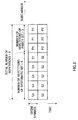
- FIG.1 shows an example of the frame format of a signal transmitted from the above OFDM communication apparatus.
- FIG.2 shows the simulation result of error rate characteristics for the case where the numbers of repetitions of the systematic bit and parity bit are changed.
- the horizontal axis indicates a ratio of the number of parity bits and the number of systematic bits (P/S ratio).
- the error rate characteristics improves by setting the number of repetitions of the systematic bits and parity bits as described above because systematic bits have a greater influence of the likelihood than parity bits in channel coding. Therefore, error rate characteristics are improved by improving the quality of systematic bits to a greater degree than the quality of parity bits.
- the OFDM communication apparatus of the present invention adopts a configuration having: a setting section that sets the number of repetitions of transmission data according to the type of the transmission data: and a transmission section that repeats the transmission data based on the number of repetitions and transmits the transmission data.
- the transmission data is channel coded and includes data having larger contribution to error correction capability and data having smaller contribution to error correction capability, and the setting section sets the larger number of repetitions of the data having larger contribution to error correction capability than the number of repetitions of the data having smaller contribution to error correction capability.
- the channel coding is turbo coding
- data having larger contribution to error correction capability is a systematic bit
- data having smaller contribution to error correction capability is a parity bit
- the present invention it is possible to set the optimum number of repetitions for transmission data, and thereby improve error rate characteristics as well as communication quality.
- FIG.3 shows an example of the format of the signal transmitted from the OFDM communication apparatus according to Embodiment 1 of the present invention.
- error rate characteristics can be improved by setting the P/S ratio to 3/5 as previously described.
- the number of repetitions of the systematic bit is set to five and the number of repetitions of the parity bit is set to three.
- FIG.4 is a block diagram showing the main configuration of the OFDM communication apparatus according to this embodiment.
- turbo coding is adopted as channel coding
- BPSK Binary Phase Shift Keying
- the OFDM communication apparatus is roughly configured with a transmission system and a reception system, wherein the transmission system has channel coding section 101, modulation section 102, repetition section 103, mapping section 104, OFDM transmission section 105 and RF (Radio Frequency) transmission section 106, and the reception system has RF reception section 151, quality information extraction section 152, repetition number determination section 153, systematic bit repetition number determination section 154 and parity bit repetition number determination section 155.
- the transmission system and the reception system share antenna 107.
- Channel coding section 101 performs channel coding on the information bits of the transmission data by turbo coding, and outputs the generated systematic bit S and parity bit P to modulation sections 102-1 and 102-2, respectively.
- Modulation section 102-1 performs modulation processing using the BPSK scheme on the systematic bit S outputted from channel coding section 101, and outputs the modulated systematic bit S to repetition section 103-1.
- modulation section 102-2 performs modulation processing using the BPSK scheme on the parity bit P outputted from channel coding section 101, and outputs the modulated parity bit P to repetition section 103-2.
- Repetition section 103-1 repeats systematic bit S a predetermined number of times and outputs the result to mapping section 104 according to the instruction from systematic bit repetition number determination section 154. Specifically, repetition section 103-1 generates duplicates of modulated systematic bit S outputted from modulation section 102-1 in the number of repetitions indicated from systematic bit repetition number determination section 154, and outputs the result to mapping section 104. Similarly, repetition section 103-2 repeats parity bit P a predetermined number of times and outputs the result to mapping section 104 according to the instruction of parity bit repetition number determination section 155.
- Mapping section 104 maps (superimposes) duplicated symbols outputted from repetition sections 103-1 and 103-2 on a plurality of subcarriers arranged in the two-dimensional directions of a time domain and frequency domain, and outputs the result to OFDM transmission section 105.
- OFDM transmission section 105 performs OFDM transmission processing such as Inverse Fast Fourier Transform (IFFT) and guard interval addition processing on the transmission symbols mapped on the subcarriers, and outputs the result to RF transmission section 106.
- OFDM transmission processing such as Inverse Fast Fourier Transform (IFFT) and guard interval addition processing
- RF transmission section 106 performs predetermined radio processing such as D/A conversion and up-conversion on the signal outputted from OFDM transmission section 105, and radio transmits the result via antenna 107.
- the reception processing described herein is not normal reception processing, that is, is not intended to obtain reception data, but rather determines the number of repetitions used in the repetition processing performed in the transmission processing described above.
- the configuration and a description of the normal reception processing of the OFDM communication apparatus according to this embodiment will be omitted.
- RF reception section 151 performs predetermined radio processing such as down-conversion and A/D conversion on the signal received via antenna 107, and outputs the obtained baseband signal to quality information extraction section 152.
- Quality information extraction section 152 extracts the quality information from the baseband signal outputted from RF reception section 151, and reports the quality information to repetition number determination section 153.
- the quality information is information relating to reception quality such as SIR (Signal to Interference Ratio), CIR (Carrier to Interference Ratio) and RSSI (Received Signal Strength Indicator) information observed in the OFDM communication apparatus of the communicating party.
- Repetition number determination section 153 determines the required number of repetitions, that is, the number of repetitions of the transmission signal where the reception quality of the OFDM communication apparatus of the communicating party is a predetermined level or higher, based on the quality information outputted from quality information extraction section 152. The number of repetitions is reported to both systematic bit repetition number determination section 154 and parity bit repetition number determination section 155.
- Systematic bit repetition number determination section 154 determines the optimum number of repetitions for the transmission data type (here, systematic bit) using the method described hereafter, based on the number of repetitions reported from repetition number determination section 153, and indicates the number to repetition section 103-1.
- parity bit repetition number determination section 155 determines the optimum number of repetitions for the transmission data type (here, paritybit) based on the method described hereafter, based on the number of repetitions reported from repetition number determination section 153, and indicates the number to repetition section 103-2.
- Repetition section 103-1 and repetition section 103-2 repeat each bit only a predetermined number of times according to the instructions from systematic bit repetition number determination section 154 and parity bit repetition number determination section 155, and output the results to mapping section 104.
- Systematic bit repetition number determination section 154 and parity bit repetition number determination section 155 know in advance the P/S ratio that provides the best error rate characteristics. For example, when the error rate characteristics are as shown in FIG.2, the optimum P/S ratio is 3/5.
- systematic bit repetition number determination section 154 and parity bit repetition number determination section 155 determine the number of repetitions for the systematic bit and parity bit that will satisfy the number of repetitions as well as the P/S ratio described above. This number of repetitions is continually used until a new number of repetitions is reported from repetition number determination section 153.
- systematic bit repetition number determination section 154 and parity bit repetition number determination section 155 may obtain the number of repetitions that form a ratio closest to the optimum P/S ratio.
- the OFDM communication apparatus has systematic bit repetition number determination section 154 for determining the number of repetitions of the systematic bit, and parity bit repetition number determination section 155 for determining the number of repetitions of the parity bit.
- the numbers of repetitions of the systematic bit and parity bit can be separately set with respect to one another.
- the number of repetitions of the channel coded transmission signal can be varied according to the type and attributes of the transmission signal. That is, in this embodiment, turbo coding is used as channel coding, and therefore the number of repetitions is made different depending on whether the transmission bit corresponds to a systematic bit or a parity bit, in particular, the number of repetitions is set so that the number of repetitions of a systematic bit is larger than the number of repetitions of a parity bit. As a result, the number of repetitions of the systematic bit of the channel coded transmission signal increases compared to that of the parity bit, and therefore performance of channel coding--error correction capability--improves.
- the average number of repetitions of both the systematic bit and parity bit is set to the number of repetitions where the reception quality of the OFDM communication apparatus of the communicating party is a predetermined level or higher.
- the error correction capability improves by increasing the number of repetitions of systematic bit or parity bit, but if the number of repetitions increases without limit, the transmission rate of the overall communication system decreases conversely.
- the total number of repetitions is fixed and the allocation of the limited number of repetitions between the systematic bit and parity bit is controlled.
- the total number of repetitions is fixed at a value where the reception quality of the OFDM communication apparatus of the communicating party is a predetermined level or higher, and the ratio of the numbers of repetitions for the systematic bit and parity bit are changed.
- the total number of repetitions does not necessarily need to be fixed to the above-described value, and for example, when the minimum required numbers of repetitions of the systematic bit and parity bit are known, the number of repetitions may be set so as to ensure these values at least.
- the channel coding scheme is not limited to this, and other schemes may be used.
- a standard for making the number of repetitions different according to data type for example, by increasing the number of repetitions of the channel coded signal, a larger number of repetitions are allocated to data having larger correction capability (error correction capability) when error correction is performed. That is, the number of repetitions of each data may be determined taking into consideration the degree of contribution to error correction capability when channel coding is performed.
- the transmission bits obtained by repeating the same data are arranged in series in the subcarrier direction (FIG.3), but the bits may be arranged apart.
- the repeated transmission signal may be arranged via an interleaver.
- systematic bit repetition number determination section 154 may first determine the number of repetitions of the systematic bit that has a greater influence of the number of repetitions and reports the number to parity bit repetition number determination section 155, and then parity bit repetition number determination section 155 may subtract the number of repetitions of the systematic bit from the total number of repetitions and set the remainder as the number of repetitions of parity bit.
- Embodiment 1 the case has been described as an example where there is one type of parity bit.
- application of the present invention to a case where a plurality of parity bit types exist will be described.
- the configuration of the OFDM communication apparatus according to this embodiment is basically the same as the configuration of the OFDM communication apparatus according to Embodiment 1 and descriptions thereof will be omitted.
- FIG.5 shows a format of a transmission signal based on a repetition method according to this embodiment.
- a case will be described as an example where two parity bit types P and R exist.
- the numbers of repetitions of P and R are alternately changed and set per OFDM symbol. That is, when P is set to three and R is set to four in a given OFDM symbol, P is set to four and R is set to three in the next OFDM symbol.
- Embodiment 1 the case has been described as an example where the modulation scheme is BPSK.
- the M-ary number is two or more, that is, a case where a modulation scheme such as QPSK (Quadrature Phase Shift Keying), 16QAM (Quadrature Amplitude Modulation) and 64QAM formed with symbols of two bits or more is adopted.
- QPSK Quadrature Phase Shift Keying
- 16QAM Quadrature Amplitude Modulation
- 64QAM formed with symbols of two bits or more
- the configuration of the OFDM communication apparatus according to this embodiment is basically the same as the configuration of the OFDM communication apparatus according to Embodiment 1 and descriptions thereof will be omitted.
- FIG.6 shows a format of a transmission signal based on a repetition method according to this embodiment.
- the OFDM communication apparatus further has a bit interleaver, and, in the modulated OFDM signals arranged in two dimension, interleaving is performed so that only systematic bits or parity bits are arranged.
- a symbol comprised of two bits has bit arrangement where the attributes of all bits contained in the symbol are the same.
- the bits are arranged so that bits of different attributes are not mixed together in one OFDM symbol.
- Control is performed upon transmission of two bits of Ich and Qch so that the systematic and parity bits are not mixed in Ich and Qch in the QPSK modulated signal.
- the number of repetitions can be controlled in the modulated QPSK symbol, so that it is possible to simplify the circuit scale compared to the case where the number of repetitions is controlled based on bits before modulation. That is, when the number of bits that can be transmitted per one symbol is M, it is possible to set the scale of the repetition circuit to 1/M.
- the OFDM communication apparatus and OFDM communication method according to the present invention are not limited to the above-described embodiments and can be implemented by making various modifications. For example, the embodiments can be appropriately combined and implemented.
- the OFDM communication apparatus may be implemented in a communication terminal apparatus and a base station apparatus in a mobile communication system, and it is thereby possible to provide a communication terminal apparatus, a base station apparatus and a mobile communication system having the same operation effects as described above.
- a base station may be indicated by "Node B,” a mobile station by “UE, " and a subcarrier by "Tone.”
- the present invention can also be implemented as software.
- the OFDM communication method algorithm according to the present invention in a programming language, storing the program in memory, and making an information processing section execute the program, it is possible to implement the same function as that of the OFDM communication apparatus of the present invention.
- LSIs are integrated circuits. These may be individual chips or may be partially or totally contained on a single chip.
- LSI has been used, but the terms IC, system LSI, super LSI, ultra LSI, and so forth may also be used according to differences in the degree of integration.
- the method of implementing integrated circuitry is not limited to LSI, and implementation by means of dedicated circuitry or a general-purpose processor may also be used.
- LSI manufacture utilization of a programmable FPGA (Field Programmable Gate Array) or a reconfigurable processor in which connections and settings of circuit cells within an LSI can be reconfigured is also possible.
- FPGA Field Programmable Gate Array
- the OFDM communication apparatus and OFDM communication method according to the present invention can be applied to applications such as a communication terminal apparatus and a base station apparatus in a mobile communication system.
Landscapes
- Engineering & Computer Science (AREA)
- Signal Processing (AREA)
- Computer Networks & Wireless Communication (AREA)
- Quality & Reliability (AREA)
- Detection And Prevention Of Errors In Transmission (AREA)
- Error Detection And Correction (AREA)
Applications Claiming Priority (2)
| Application Number | Priority Date | Filing Date | Title |
|---|---|---|---|
| JP2004379653 | 2004-12-28 | ||
| PCT/JP2005/023804 WO2006070753A1 (fr) | 2004-12-28 | 2005-12-26 | Appareil et procede de communication ofdm |
Publications (2)
| Publication Number | Publication Date |
|---|---|
| EP1821435A1 true EP1821435A1 (fr) | 2007-08-22 |
| EP1821435A4 EP1821435A4 (fr) | 2011-05-18 |
Family
ID=36614870
Family Applications (1)
| Application Number | Title | Priority Date | Filing Date |
|---|---|---|---|
| EP05820402A Withdrawn EP1821435A4 (fr) | 2004-12-28 | 2005-12-26 | Appareil et procede de communication ofdm |
Country Status (6)
| Country | Link |
|---|---|
| US (1) | US7856064B2 (fr) |
| EP (1) | EP1821435A4 (fr) |
| JP (1) | JP4415020B2 (fr) |
| KR (1) | KR20070086725A (fr) |
| CN (1) | CN101080892A (fr) |
| WO (1) | WO2006070753A1 (fr) |
Cited By (3)
| Publication number | Priority date | Publication date | Assignee | Title |
|---|---|---|---|---|
| WO2009049482A1 (fr) * | 2007-09-27 | 2009-04-23 | Datang Mobile Communications Equipment Co., Ltd | Procédé et dispositif de détection multi-utilisateur de signal de transmission ofdm |
| EP2486660A4 (fr) * | 2009-10-08 | 2015-03-11 | Intel Corp | Dispositif, système et procédé de communication de données par des symboles de communication sans fil à code de contrôle |
| WO2015165692A3 (fr) * | 2014-04-29 | 2016-02-25 | Volkswagen Aktiengesellschaft | Évaluation d'une probabilité de réception d'un paquet de données et d'un débit de transmission de paquets de données |
Families Citing this family (11)
| Publication number | Priority date | Publication date | Assignee | Title |
|---|---|---|---|---|
| JPWO2007013561A1 (ja) * | 2005-07-29 | 2009-02-12 | パナソニック株式会社 | マルチキャリア送信装置、マルチキャリア受信装置、およびこれらの方法 |
| JP4898707B2 (ja) * | 2005-12-27 | 2012-03-21 | パナソニック株式会社 | 無線送信装置およびマルチキャリア信号生成方法 |
| USRE46039E1 (en) * | 2007-09-03 | 2016-06-21 | Lg Electronics Inc. | Method of transmitting data using repetition coding |
| KR101445388B1 (ko) * | 2007-09-03 | 2014-09-26 | 엘지전자 주식회사 | 반복 코딩을 이용한 데이터 전송 방법 |
| USRE47602E1 (en) * | 2007-09-03 | 2019-09-10 | Lg Electronics Inc. | Method of transmitting data using repetition coding |
| US8161358B2 (en) * | 2008-10-06 | 2012-04-17 | Telefonaktiebolaget Lm Ericsson (Publ) | Parity bit soft estimation method and apparatus |
| EP3327965B1 (fr) * | 2011-02-04 | 2019-09-25 | Marvell World Trade Ltd. | Mode de commande phy pour réseau local sans fil (wlan) |
| US9504038B2 (en) * | 2014-12-25 | 2016-11-22 | Intel Corporation | Apparatus, method and system of communicating a wide-bandwidth data frame |
| US20170134126A1 (en) * | 2015-11-06 | 2017-05-11 | Qualcomm Incorporated | System and method for encoding and decoding header data portion of a frame |
| WO2017175956A1 (fr) * | 2016-04-05 | 2017-10-12 | 엘지전자 주식회사 | Procédé pour la transmission de signal au moyen de modulation répétitive dans un système de réseau local (lan) sans fil et appareil correspondant |
| FR3129554A1 (fr) * | 2021-11-19 | 2023-05-26 | Proes | Procédé destiné à ameliorer la communication radiofréquence entre un dispositif emetteur et un dispositif recepteur, et dispositif mettant en œuvre ledit procédé |
Family Cites Families (10)
| Publication number | Priority date | Publication date | Assignee | Title |
|---|---|---|---|---|
| IL141800A0 (en) | 1999-07-06 | 2002-03-10 | Samsung Electronics Co Ltd | Rate matching device and method for a data communication system |
| FR2805102A1 (fr) * | 2000-02-16 | 2001-08-17 | Canon Kk | Procedes et dispositifs d'emission et de reception d'information, et systemes les mettant en oeuvre |
| KR100361033B1 (ko) * | 2001-01-16 | 2003-01-24 | 한국과학기술원 | 비균일 반복부호를 바탕으로 한 터보부호를 쓰는다중반송파 직접수열 부호분할 다중접속 시스템 |
| KR100539864B1 (ko) | 2001-07-25 | 2005-12-28 | 삼성전자주식회사 | 부호분할다중접속 이동통신시스템에서 고속 데이터의 재전송장치 및 방법 |
| KR100918765B1 (ko) | 2001-10-20 | 2009-09-24 | 삼성전자주식회사 | 부호분할다중접속 이동통신시스템에서 부호화 및 레이트매칭장치 및 방법 |
| JP3657948B2 (ja) * | 2002-09-12 | 2005-06-08 | 松下電器産業株式会社 | 無線送信装置、無線受信装置、および送信キャンセルサブキャリアの選択方法 |
| CN1659817B (zh) | 2002-09-12 | 2010-06-09 | 松下电器产业株式会社 | 无线电发送设备、无线电接收设备和选择发送对消副载波的方法 |
| JP2004147068A (ja) | 2002-10-24 | 2004-05-20 | Hitachi Kokusai Electric Inc | Ofdm伝送装置 |
| JP4125976B2 (ja) * | 2003-03-04 | 2008-07-30 | 松下電器産業株式会社 | 無線通信装置および無線通信方法 |
| CN1622649A (zh) * | 2003-11-25 | 2005-06-01 | 安捷伦科技有限公司 | 生成最优重复的特播码流的系统和方法 |
-
2005
- 2005-12-26 KR KR1020077014703A patent/KR20070086725A/ko not_active Abandoned
- 2005-12-26 JP JP2006550766A patent/JP4415020B2/ja not_active Expired - Fee Related
- 2005-12-26 US US11/722,827 patent/US7856064B2/en active Active
- 2005-12-26 EP EP05820402A patent/EP1821435A4/fr not_active Withdrawn
- 2005-12-26 WO PCT/JP2005/023804 patent/WO2006070753A1/fr not_active Ceased
- 2005-12-26 CN CNA2005800434160A patent/CN101080892A/zh active Pending
Cited By (6)
| Publication number | Priority date | Publication date | Assignee | Title |
|---|---|---|---|---|
| WO2009049482A1 (fr) * | 2007-09-27 | 2009-04-23 | Datang Mobile Communications Equipment Co., Ltd | Procédé et dispositif de détection multi-utilisateur de signal de transmission ofdm |
| US8462899B2 (en) | 2007-09-27 | 2013-06-11 | China Academy Of Telecommunications Technology | Multi-user detecting method and device of OFDM transmission signal |
| EP2486660A4 (fr) * | 2009-10-08 | 2015-03-11 | Intel Corp | Dispositif, système et procédé de communication de données par des symboles de communication sans fil à code de contrôle |
| US9215033B2 (en) | 2009-10-08 | 2015-12-15 | Intel Corporation | Device, system and method of communicating data over wireless communication symbols with check code |
| WO2015165692A3 (fr) * | 2014-04-29 | 2016-02-25 | Volkswagen Aktiengesellschaft | Évaluation d'une probabilité de réception d'un paquet de données et d'un débit de transmission de paquets de données |
| US10069742B2 (en) | 2014-04-29 | 2018-09-04 | Volkswagen Ag | Estimating the probability that a data packet will be received and a data packet transmission rate |
Also Published As
| Publication number | Publication date |
|---|---|
| US7856064B2 (en) | 2010-12-21 |
| KR20070086725A (ko) | 2007-08-27 |
| WO2006070753A1 (fr) | 2006-07-06 |
| US20080144729A1 (en) | 2008-06-19 |
| EP1821435A4 (fr) | 2011-05-18 |
| JPWO2006070753A1 (ja) | 2008-06-12 |
| CN101080892A (zh) | 2007-11-28 |
| JP4415020B2 (ja) | 2010-02-17 |
Similar Documents
| Publication | Publication Date | Title |
|---|---|---|
| US11233598B2 (en) | Radio transmission device and method | |
| EP1903692B1 (fr) | Système de communication multiporteuse, appareil de communication multiporteuse et méthode de rapport cqi | |
| US20090046694A1 (en) | Radio transmission apparatus, and radio transmission method | |
| US7856064B2 (en) | OFDM communication apparatus and OFDM communication method | |
| US20070047431A1 (en) | Radio transmission apparatus and peak power suppression method in multicarrier communication | |
| US7778369B2 (en) | Multi-carrier transmission device and multi-carrier transmission method | |
| EP1901460A1 (fr) | Appareil station de base de transmission sans fil et procédé de transmission sans fil dans une transmission multiporteuse | |
| US8630313B2 (en) | Signal mapping method and communication device | |
| US7782965B2 (en) | Radio transmission device and radio transmission method in multi-carrier communication | |
| KR102773237B1 (ko) | 낮은 피크 평균 전력 비율을 위한 넌제로 삽입 기반의 변조 스킴 | |
| JPWO2007013560A1 (ja) | マルチキャリア通信における無線通信基地局装置、無線通信移動局装置、および、パイロット信号系列割当方法 | |
| CN121488425A (zh) | 频谱扩展资源的高效利用 |
Legal Events
| Date | Code | Title | Description |
|---|---|---|---|
| PUAI | Public reference made under article 153(3) epc to a published international application that has entered the european phase |
Free format text: ORIGINAL CODE: 0009012 |
|
| 17P | Request for examination filed |
Effective date: 20070626 |
|
| AK | Designated contracting states |
Kind code of ref document: A1 Designated state(s): AT BE BG CH CY CZ DE DK EE ES FI FR GB GR HU IE IS IT LI LT LU LV MC NL PL PT RO SE SI SK TR |
|
| DAX | Request for extension of the european patent (deleted) | ||
| RAP1 | Party data changed (applicant data changed or rights of an application transferred) |
Owner name: PANASONIC CORPORATION |
|
| A4 | Supplementary search report drawn up and despatched |
Effective date: 20110420 |
|
| RIC1 | Information provided on ipc code assigned before grant |
Ipc: H04L 1/00 20060101ALI20110414BHEP Ipc: H04L 27/26 20060101ALI20110414BHEP Ipc: H04J 11/00 20060101AFI20060713BHEP |
|
| 17Q | First examination report despatched |
Effective date: 20110916 |
|
| STAA | Information on the status of an ep patent application or granted ep patent |
Free format text: STATUS: THE APPLICATION IS DEEMED TO BE WITHDRAWN |
|
| 18D | Application deemed to be withdrawn |
Effective date: 20130702 |