EP1824676B1 - Vitrage solaire - Google Patents
Vitrage solaire Download PDFInfo
- Publication number
- EP1824676B1 EP1824676B1 EP05792247.8A EP05792247A EP1824676B1 EP 1824676 B1 EP1824676 B1 EP 1824676B1 EP 05792247 A EP05792247 A EP 05792247A EP 1824676 B1 EP1824676 B1 EP 1824676B1
- Authority
- EP
- European Patent Office
- Prior art keywords
- glazing
- coating
- vehicle
- pane
- low emissivity
- Prior art date
- Legal status (The legal status is an assumption and is not a legal conclusion. Google has not performed a legal analysis and makes no representation as to the accuracy of the status listed.)
- Expired - Lifetime
Links
Images

Classifications
-
- B—PERFORMING OPERATIONS; TRANSPORTING
- B32—LAYERED PRODUCTS
- B32B—LAYERED PRODUCTS, i.e. PRODUCTS BUILT-UP OF STRATA OF FLAT OR NON-FLAT, e.g. CELLULAR OR HONEYCOMB, FORM
- B32B17/00—Layered products essentially comprising sheet glass, or glass, slag, or like fibres
- B32B17/06—Layered products essentially comprising sheet glass, or glass, slag, or like fibres comprising glass as the main or only constituent of a layer, next to another layer of a specific material
- B32B17/10—Layered products essentially comprising sheet glass, or glass, slag, or like fibres comprising glass as the main or only constituent of a layer, next to another layer of a specific material of synthetic resin
- B32B17/10005—Layered products essentially comprising sheet glass, or glass, slag, or like fibres comprising glass as the main or only constituent of a layer, next to another layer of a specific material of synthetic resin laminated safety glass or glazing
- B32B17/10165—Functional features of the laminated safety glass or glazing
- B32B17/10339—Specific parts of the laminated safety glass or glazing being colored or tinted
-
- B—PERFORMING OPERATIONS; TRANSPORTING
- B32—LAYERED PRODUCTS
- B32B—LAYERED PRODUCTS, i.e. PRODUCTS BUILT-UP OF STRATA OF FLAT OR NON-FLAT, e.g. CELLULAR OR HONEYCOMB, FORM
- B32B17/00—Layered products essentially comprising sheet glass, or glass, slag, or like fibres
- B32B17/06—Layered products essentially comprising sheet glass, or glass, slag, or like fibres comprising glass as the main or only constituent of a layer, next to another layer of a specific material
- B32B17/10—Layered products essentially comprising sheet glass, or glass, slag, or like fibres comprising glass as the main or only constituent of a layer, next to another layer of a specific material of synthetic resin
- B32B17/10005—Layered products essentially comprising sheet glass, or glass, slag, or like fibres comprising glass as the main or only constituent of a layer, next to another layer of a specific material of synthetic resin laminated safety glass or glazing
- B32B17/10009—Layered products essentially comprising sheet glass, or glass, slag, or like fibres comprising glass as the main or only constituent of a layer, next to another layer of a specific material of synthetic resin laminated safety glass or glazing characterized by the number, the constitution or treatment of glass sheets
- B32B17/10036—Layered products essentially comprising sheet glass, or glass, slag, or like fibres comprising glass as the main or only constituent of a layer, next to another layer of a specific material of synthetic resin laminated safety glass or glazing characterized by the number, the constitution or treatment of glass sheets comprising two outer glass sheets
-
- B—PERFORMING OPERATIONS; TRANSPORTING
- B32—LAYERED PRODUCTS
- B32B—LAYERED PRODUCTS, i.e. PRODUCTS BUILT-UP OF STRATA OF FLAT OR NON-FLAT, e.g. CELLULAR OR HONEYCOMB, FORM
- B32B17/00—Layered products essentially comprising sheet glass, or glass, slag, or like fibres
- B32B17/06—Layered products essentially comprising sheet glass, or glass, slag, or like fibres comprising glass as the main or only constituent of a layer, next to another layer of a specific material
- B32B17/10—Layered products essentially comprising sheet glass, or glass, slag, or like fibres comprising glass as the main or only constituent of a layer, next to another layer of a specific material of synthetic resin
- B32B17/10005—Layered products essentially comprising sheet glass, or glass, slag, or like fibres comprising glass as the main or only constituent of a layer, next to another layer of a specific material of synthetic resin laminated safety glass or glazing
- B32B17/10165—Functional features of the laminated safety glass or glazing
- B32B17/10174—Coatings of a metallic or dielectric material on a constituent layer of glass or polymer
-
- C—CHEMISTRY; METALLURGY
- C03—GLASS; MINERAL OR SLAG WOOL
- C03C—CHEMICAL COMPOSITION OF GLASSES, GLAZES OR VITREOUS ENAMELS; SURFACE TREATMENT OF GLASS; SURFACE TREATMENT OF FIBRES OR FILAMENTS MADE FROM GLASS, MINERALS OR SLAGS; JOINING GLASS TO GLASS OR OTHER MATERIALS
- C03C17/00—Surface treatment of glass, not in the form of fibres or filaments, by coating
- C03C17/34—Surface treatment of glass, not in the form of fibres or filaments, by coating with at least two coatings having different compositions
- C03C17/36—Surface treatment of glass, not in the form of fibres or filaments, by coating with at least two coatings having different compositions at least one coating being a metal
-
- C—CHEMISTRY; METALLURGY
- C03—GLASS; MINERAL OR SLAG WOOL
- C03C—CHEMICAL COMPOSITION OF GLASSES, GLAZES OR VITREOUS ENAMELS; SURFACE TREATMENT OF GLASS; SURFACE TREATMENT OF FIBRES OR FILAMENTS MADE FROM GLASS, MINERALS OR SLAGS; JOINING GLASS TO GLASS OR OTHER MATERIALS
- C03C17/00—Surface treatment of glass, not in the form of fibres or filaments, by coating
- C03C17/34—Surface treatment of glass, not in the form of fibres or filaments, by coating with at least two coatings having different compositions
- C03C17/36—Surface treatment of glass, not in the form of fibres or filaments, by coating with at least two coatings having different compositions at least one coating being a metal
- C03C17/3602—Surface treatment of glass, not in the form of fibres or filaments, by coating with at least two coatings having different compositions at least one coating being a metal the metal being present as a layer
- C03C17/3639—Multilayers containing at least two functional metal layers
-
- C—CHEMISTRY; METALLURGY
- C03—GLASS; MINERAL OR SLAG WOOL
- C03C—CHEMICAL COMPOSITION OF GLASSES, GLAZES OR VITREOUS ENAMELS; SURFACE TREATMENT OF GLASS; SURFACE TREATMENT OF FIBRES OR FILAMENTS MADE FROM GLASS, MINERALS OR SLAGS; JOINING GLASS TO GLASS OR OTHER MATERIALS
- C03C17/00—Surface treatment of glass, not in the form of fibres or filaments, by coating
- C03C17/34—Surface treatment of glass, not in the form of fibres or filaments, by coating with at least two coatings having different compositions
- C03C17/36—Surface treatment of glass, not in the form of fibres or filaments, by coating with at least two coatings having different compositions at least one coating being a metal
- C03C17/3602—Surface treatment of glass, not in the form of fibres or filaments, by coating with at least two coatings having different compositions at least one coating being a metal the metal being present as a layer
- C03C17/3642—Surface treatment of glass, not in the form of fibres or filaments, by coating with at least two coatings having different compositions at least one coating being a metal the metal being present as a layer the multilayer coating containing a metal layer
-
- C—CHEMISTRY; METALLURGY
- C03—GLASS; MINERAL OR SLAG WOOL
- C03C—CHEMICAL COMPOSITION OF GLASSES, GLAZES OR VITREOUS ENAMELS; SURFACE TREATMENT OF GLASS; SURFACE TREATMENT OF FIBRES OR FILAMENTS MADE FROM GLASS, MINERALS OR SLAGS; JOINING GLASS TO GLASS OR OTHER MATERIALS
- C03C17/00—Surface treatment of glass, not in the form of fibres or filaments, by coating
- C03C17/34—Surface treatment of glass, not in the form of fibres or filaments, by coating with at least two coatings having different compositions
- C03C17/36—Surface treatment of glass, not in the form of fibres or filaments, by coating with at least two coatings having different compositions at least one coating being a metal
- C03C17/3602—Surface treatment of glass, not in the form of fibres or filaments, by coating with at least two coatings having different compositions at least one coating being a metal the metal being present as a layer
- C03C17/3657—Surface treatment of glass, not in the form of fibres or filaments, by coating with at least two coatings having different compositions at least one coating being a metal the metal being present as a layer the multilayer coating having optical properties
- C03C17/366—Low-emissivity or solar control coatings
-
- C—CHEMISTRY; METALLURGY
- C03—GLASS; MINERAL OR SLAG WOOL
- C03C—CHEMICAL COMPOSITION OF GLASSES, GLAZES OR VITREOUS ENAMELS; SURFACE TREATMENT OF GLASS; SURFACE TREATMENT OF FIBRES OR FILAMENTS MADE FROM GLASS, MINERALS OR SLAGS; JOINING GLASS TO GLASS OR OTHER MATERIALS
- C03C17/00—Surface treatment of glass, not in the form of fibres or filaments, by coating
- C03C17/34—Surface treatment of glass, not in the form of fibres or filaments, by coating with at least two coatings having different compositions
- C03C17/36—Surface treatment of glass, not in the form of fibres or filaments, by coating with at least two coatings having different compositions at least one coating being a metal
- C03C17/3602—Surface treatment of glass, not in the form of fibres or filaments, by coating with at least two coatings having different compositions at least one coating being a metal the metal being present as a layer
- C03C17/3681—Surface treatment of glass, not in the form of fibres or filaments, by coating with at least two coatings having different compositions at least one coating being a metal the metal being present as a layer the multilayer coating being used in glazing, e.g. windows or windscreens
-
- C—CHEMISTRY; METALLURGY
- C03—GLASS; MINERAL OR SLAG WOOL
- C03C—CHEMICAL COMPOSITION OF GLASSES, GLAZES OR VITREOUS ENAMELS; SURFACE TREATMENT OF GLASS; SURFACE TREATMENT OF FIBRES OR FILAMENTS MADE FROM GLASS, MINERALS OR SLAGS; JOINING GLASS TO GLASS OR OTHER MATERIALS
- C03C3/00—Glass compositions
- C03C3/04—Glass compositions containing silica
- C03C3/076—Glass compositions containing silica with 40% to 90% silica, by weight
- C03C3/083—Glass compositions containing silica with 40% to 90% silica, by weight containing aluminium oxide or an iron compound
- C03C3/085—Glass compositions containing silica with 40% to 90% silica, by weight containing aluminium oxide or an iron compound containing an oxide of a divalent metal
- C03C3/087—Glass compositions containing silica with 40% to 90% silica, by weight containing aluminium oxide or an iron compound containing an oxide of a divalent metal containing calcium oxide, e.g. common sheet or container glass
-
- C—CHEMISTRY; METALLURGY
- C03—GLASS; MINERAL OR SLAG WOOL
- C03C—CHEMICAL COMPOSITION OF GLASSES, GLAZES OR VITREOUS ENAMELS; SURFACE TREATMENT OF GLASS; SURFACE TREATMENT OF FIBRES OR FILAMENTS MADE FROM GLASS, MINERALS OR SLAGS; JOINING GLASS TO GLASS OR OTHER MATERIALS
- C03C4/00—Compositions for glass with special properties
- C03C4/02—Compositions for glass with special properties for coloured glass
-
- C—CHEMISTRY; METALLURGY
- C03—GLASS; MINERAL OR SLAG WOOL
- C03C—CHEMICAL COMPOSITION OF GLASSES, GLAZES OR VITREOUS ENAMELS; SURFACE TREATMENT OF GLASS; SURFACE TREATMENT OF FIBRES OR FILAMENTS MADE FROM GLASS, MINERALS OR SLAGS; JOINING GLASS TO GLASS OR OTHER MATERIALS
- C03C2217/00—Coatings on glass
- C03C2217/90—Other aspects of coatings
- C03C2217/94—Transparent conductive oxide layers [TCO] being part of a multilayer coating
-
- C—CHEMISTRY; METALLURGY
- C03—GLASS; MINERAL OR SLAG WOOL
- C03C—CHEMICAL COMPOSITION OF GLASSES, GLAZES OR VITREOUS ENAMELS; SURFACE TREATMENT OF GLASS; SURFACE TREATMENT OF FIBRES OR FILAMENTS MADE FROM GLASS, MINERALS OR SLAGS; JOINING GLASS TO GLASS OR OTHER MATERIALS
- C03C2218/00—Methods for coating glass
- C03C2218/30—Aspects of methods for coating glass not covered above
- C03C2218/365—Coating different sides of a glass substrate
-
- Y—GENERAL TAGGING OF NEW TECHNOLOGICAL DEVELOPMENTS; GENERAL TAGGING OF CROSS-SECTIONAL TECHNOLOGIES SPANNING OVER SEVERAL SECTIONS OF THE IPC; TECHNICAL SUBJECTS COVERED BY FORMER USPC CROSS-REFERENCE ART COLLECTIONS [XRACs] AND DIGESTS
- Y10—TECHNICAL SUBJECTS COVERED BY FORMER USPC
- Y10S—TECHNICAL SUBJECTS COVERED BY FORMER USPC CROSS-REFERENCE ART COLLECTIONS [XRACs] AND DIGESTS
- Y10S428/00—Stock material or miscellaneous articles
- Y10S428/913—Material designed to be responsive to temperature, light, moisture
-
- Y—GENERAL TAGGING OF NEW TECHNOLOGICAL DEVELOPMENTS; GENERAL TAGGING OF CROSS-SECTIONAL TECHNOLOGIES SPANNING OVER SEVERAL SECTIONS OF THE IPC; TECHNICAL SUBJECTS COVERED BY FORMER USPC CROSS-REFERENCE ART COLLECTIONS [XRACs] AND DIGESTS
- Y10—TECHNICAL SUBJECTS COVERED BY FORMER USPC
- Y10T—TECHNICAL SUBJECTS COVERED BY FORMER US CLASSIFICATION
- Y10T428/00—Stock material or miscellaneous articles
- Y10T428/31504—Composite [nonstructural laminate]
Definitions
- the present invention relates to a vehicle glazing, especially to a coated solar control vehicle glazing, which may be incorporated into a laminated vehicle glazing.
- a pane of tinted glass which has a coating on one of its surfaces to impart solar control properties to the glass is known.
- One such pane of glass is described in GB 2,289,273 A as a dark grey glass which is especially appropriate for installation as a vehicle sunroof.
- the glass contains 0.5 to 0.9 % total iron (Fe 2 O 3 ), 120 to 250 ppm Co, 25 to 100 ppm Se and 50 to 200 ppm Cr 2 O 3 .
- the glass supports a coating of at least one metal oxide (for example titanium oxide, tin oxide, iron oxide, cobalt oxide, chromium oxide, or a mixture of these) such that when in 4 mm thickness, the glass has a light transmission factor (Illuminant C) of less than 15 % and an energy transmission factor of less than 25 %.
- metal oxide for example titanium oxide, tin oxide, iron oxide, cobalt oxide, chromium oxide, or a mixture of these
- WO 01/02167 A1 provides an example of a tinted laminated glazing which includes a coating to achieve certain solar control properties.
- This glazing is described as being particularly useful as a vehicle roof glazing.
- WO '167 describes two plies of glass which are joined together by a ply of interlayer material, the composition of the glass being such that the luminous transmission (Illuminant A) of the glazing is less than 35 % and the energy transmission is less than 15 %.
- the glazing may include functional layers inside the laminate construction. These layers serve to reduce the energy transmitted by the glazing into a vehicle which may be glazed with the laminated glazing by reflecting the energy away from the interior of the vehicle, or absorbing the energy.
- US 2004/106017 A1 discloses a method of making a coated substrate including providing a substrate having a functional coating with a first emissivity value; depositing a coating material having a second emissivity value over at least a portion of the functional coating prior to heating to provide a coating stack having an emissivity value greater than the emissivity value of functional coating; and heating the coated substrate.
- the coated substrate may be used for an automotive glazing.
- each of the vehicle glazings described above is that, although solar energy may be absorbed by the glazing, when that energy is re-radiated, some is invariably directed into the vehicle which is glazed with one of the glazings.
- the temperature inside that vehicle rises as a result of the transmitted thermal energy, making the environment inside the vehicle uncomfortable for the vehicle occupants.
- Such vehicle glazings may be achieved by providing, in a first aspect, a pane of glazing material which includes an absorptive coating and a low emissivity coating, and in a second aspect, a laminated construction including an absorptive coating and a low emissivity coating.
- a vehicle glazing comprising a pane of glazing material having a first surface and a second surface; an absorptive coating on the first surface of the pane, which coating absorbs radiation of wavelength greater than 400 nm and solar energy incident on the glazing, the absorbed solar energy being re-radiated by the absorptive coating over a different wavelength range from that of the incident solar energy, and which reduces the intensity of visible light transmitted, thereby providing the glazing with a privacy function as well as a solar control function, a low emissivity coating on the second surface of the pane, the second surface being the interior surface of said pane, wherein the low emissivity coating has an emissivity in the range from 0.01 to less than 0.3 (when used on 3 mm clear float glass), which low emissivity coating suppresses the re-radiated energy, thereby reducing the amount of heat transmitted through the glazing, and also reduces heat loss from the vehicle by reflecting far infrared radiation back into the vehicle
- first surface and "a second surface” is meant the two major opposing surfaces of a pane of glazing material.
- the low emissivity coating is on the interior surface of the pane of glazing material.
- the interior surface is meant the surface of that pane of glazing material which would contact the interior environment of a vehicle into which the glazing may be fitted.
- Absorption of solar energy that is incident on the glazing may be achieved by the presence of an absorptive coating.
- absorbed solar energy is re-radiated by the absorptive medium (in this case the absorptive coating) over a different wavelength range than that of the incident energy and in all directions. At least some re-radiated energy may be directed towards the low emissivity coating.
- the re-radiated energy includes an infrared component of longer wavelength and lower energy (far infrared (“FIR”) radiation) than the absorbed (incident) NIR radiation. Because a low emissivity coating is a poor radiator of FIR radiation, the total amount of thermal energy passing into a vehicle glazed with a solar control glazing of the present invention is thereby reduced.
- the absorptive coating may reduce the intensity of visible light that is transmitted to the inside of a vehicle into which the glazing may be fitted, providing the glazing with a privacy function as well as a solar control function.
- the low emissivity coating is on the second surface of the pane of glazing material, i.e. it is on an opposite surface of the pane of glazing material to the absorptive coating.
- a vehicle glazing according to the invention may be used to glaze any opening in a vehicle (although when the visible light transmission (Illuminant A) of the glazing drops below 70 %, because of legal requirements in USA and Europe especially, the glazing could only be used to glaze an opening behind the B-pillar of a vehicle in those places).
- a vehicle glazing according to the invention is especially useful as a roof glazing.
- a roof glazing includes conventional sunroofs and what are known in the art as full-area rooflights (or moonroofs or panoramic roofs).
- the absorptive coating generally absorbs radiation of wavelength up to 100 ⁇ m. By this is meant that it preferably absorbs radiation at least in the visible and infrared (including both NIR and FIR) regions of the electromagnetic spectrum. Absorption in the visible and infrared regions is substantially constant over the appropriate range of wavelengths (approximately 0.4 to 100 ⁇ m).
- an absorptive coating may comprise a metal, metal alloy or a material based on a metal alloy, as all of these materials provide the requisite absorption properties for the present invention.
- Metals which may be used to form an absorbing coating of the invention include titanium, zirconium, copper, platinum, gold, zinc, tin, nickel and chromium.
- Suitable metal alloys include NiCr, TiN and stainless steels.
- Stainless steel oxides and oxynitrides are also suitable materials. When any of these materials are used, the absorptive coating may consist of a single layer of that material, however, the single layer may itself comprise many atomic or molecular layers of the material being used.
- an absorbing coating stack may be used as the coating.
- the coating stack may comprise at least one layer of a dielectric material and at least one layer of a metal or metal alloy.
- a coating stack more typically comprises at least first and second layers of a dielectric material in between which a layer of a metal or metal alloy is located.
- the metals and metal alloys suitable for use in a single layer absorptive coating, as listed above, may be used in the coating stack.
- Materials which may be used as a dielectric layer include tin oxide, titanium oxide, silicon dioxide, zinc oxide, indium-tin oxide ("ITO"), silicon nitride, titanium nitride, titanium oxynitride (TiN x O y ), NiCrO, carbides and stainless steel oxides and oxynitrides.
- An absorptive coating may be provided as a "hard” coating, which may be deposited in an "on-line” process: a coating is pyrolytically deposited onto the surface of float glass during its formation, in known manner, for example by use of a chemical vapour deposition process. Generally, deposition occurs in the region of a float line where the glass ribbon is at a temperature of between 400 and 760 °C; glass of this temperature may be found towards the exit of the tin bath, in the lehr gap (i.e. in the gap between the tin bath and the annealing lehr) and in the hot-end of the annealing lehr. As the glass is fully annealed (i.e.
- the coating is cured, thus the coating species which initially fused to the glass surface via pyrolysis effectively forms part of the final glass product.
- the coated side of the glass may be further subjected to a polishing process to reduce the microscopic rugosity of the coated surface to produce a glass that may be more easily handled.
- an absorptive coating may be provided as an "off-line coating": a coating is deposited onto the surface of a piece of glass subsequent to complete manufacture of the glass, i.e. in a separate process from the float process.
- Off-line coatings include sputtered coatings which are deposited, for example by use of a magnetic sputtering technique under vacuum conditions. Off-line coatings are commonly softer than typical pyrolytic coatings.
- low emissivity coatings are known in the art, any of which may be used in accordance with the present invention.
- the emissivity of a particular coating refers to the tendency of that coating to radiate energy.
- a low emissivity coating is a poor thermal radiator (compared to a blackbody entity, which is a perfect radiator and is defined as having an emissivity of unity).
- the low emissivity coating present on a surface of the pane of glazing material is such that, when used on 3 mm clear float glass, the coated glass has an emissivity in the range from 0.01 to 0.3; the actual value being measured according to EN 12898 (a published standard of the European Association of Flat Glass Manufacturers).
- a low emissivity coating may be provided as an on-line coating or an off-line coating in the same manner as described earlier for absorptive coatings.
- Hard coatings generally have emissivities greater than 0.15 (and preferably less than 0.2), whilst off-line coatings, normally sputtered coatings, generally have emissivities greater than 0.02 (and preferably less than 0.1). In both cases, the emissivities may be compared with the assumed normal emissivity of clear uncoated glass, which has a value of around 0.89.
- a hard (or pyrolytic) low emissivity coating may comprise a single layer of metal oxide, which is preferably a transparent conductive oxide. Oxides of metals such as tin, zinc, indium, tungsten and molybdenum may be comprised in the single layer of metal oxide. Usually the coating further comprises a dopant, for example fluorine, chlorine, antimony, tin, aluminium, tantalum, niobium, indium or gallium, so that coatings such as fluorine-doped tin oxide and tin-doped indium oxide may result. As with a single layer of absorptive coating, the low emissivity layer itself may comprise many atomic or molecular layers of the material being used.
- Off-line low emissivity coatings typically comprise a multi-layer coating stack which normally includes at least one metal layer (or a conductive metal compound) and at least one dielectric layer.
- the multi-layer stack structure may be repeated to further enhance the emissivity of the coating.
- silver, gold, copper, nickel and chromium may be used as the metal layer in a multi-layer stack; indium oxide, antimony oxide or the like may be used as the conductive metal compound.
- Coatings comprising one or two layers of silver interleaved between layers of a dielectric such as an oxide of silicon, aluminium, titanium, vanadium, tin or zinc are typical multilayer stacks.
- the one or more layers from which the coating is formed are of the order of tens of nanometres in thickness.
- a low emissivity coating provided on the interior surface of a pane of glazing material may reduce the level of thermal radiation from the sun that passes through the glazing (especially re-radiated FIR radiation that results from absorption of NIR radiation that is incident on the glazing). This effect is likely to have most utility during summer months when the amount of solar radiation that is incident on a vehicle glazing will usually be at its greatest.
- the low emissivity coating (which is on the surface of the glazing facing into the vehicle) may inhibit the escape of heat radiation from inside the vehicle to the surrounding external environment.
- Minimising the amount of heat loss from a vehicle may serve to reduce the "cold-shoulder/head effect".
- This effect essentially characterises the localised coolness in temperature that may be felt by a vehicle occupant when positioned close to a glazing, for example a side glazing or a rooflight.
- the cold-shoulder/head effect is a result of a vehicle's tendency to lose heat to the outside world, particularly via its glazings and especially on a cold day.
- a low emissivity coating may reduce this heat loss by reflecting FIR radiation back into the vehicle, where it may heat the localised cool air close to the glazings.
- At least one coating underlayer may be present under the absorptive coating and/or low emissivity coating.
- Such an underlayer may act as a barrier coating (to control migration of alkali metal ions from the glass into the other coatings) and/or as a colour suppressing layer (to suppress iridescent reflection colours resulting from variations in thickness of the absorptive coating and/or the low emissivity coating).
- pane of glazing material will be in a thickness of 8 mm or less (yet greater than 1.5 mm), however a thickness in the range from 2 mm to 6 mm is preferred.
- the pane of glazing material may be a pane of clear glass or a pane of body-tinted glass, and it may be toughened, for example by thermal or chemical tempering.
- a pane of glass is subjected to a heat treatment process, for example tempering or bending, this may be before or after deposition of one or more of the coatings. Should the heat treatment process occur after deposition of at least one coating, that deposited coating should be one which is not degraded by the exposure to elevated temperature.
- the pane of glazing material may additionally be flat or it may be curved.
- the pane of glazing material may be a pane of a plastics material (a "plastic glazing").
- a pane of clear glass, and the base glass of a pane of body-tinted glass may typically have a composition in the range (by weight): SiO 2 68 - 75 % Al 2 O 3 0 - 5 % Na 2 O 10 - 18 % K 2 O 0 - 5 % MgO 0 - 10 % CaO 5 - 15 % SO 3 0 - 2 %
- the composition may also contain other additives, for example, refining aids, which would normally be present in an amount of up to 2 %.
- a pane of body-tinted glass may further comprise 0.5 to 4.0 % (by weight of the glass) of total iron (calculated as Fe 2 O 3 ).
- Such a glass normally has a ferrous oxide content (calculated as FeO) in the range 0.05 to 1.6 % by weight.
- Absorption of total energy that is incident on the glazing (especially in the infrared) by the absorptive coating may be augmented by regulating the ferrous oxide content of the pane of glass.
- the ferrous oxide content is greater than 0.4 % by weight, further preferably greater than 0.8 % by weight and most preferably greater than 1.2 % by weight. The higher the ferrous oxide content of the glass, the more total energy is absorbed by the glass, particularly NIR radiation.
- a pane of body-tinted glass includes 5 to 350 ppm by weight of cobalt oxide (calculated as Co 3 O 4 ).
- cobalt oxide is preferably included in the glass in the range from 40 to 320 ppm, further preferably from 100 to 270 ppm and most preferably from 150 to 230 ppm by weight.
- a body-tinted glass preferably also contains selenium (calculated as Se) in the range up to 70 ppm, although preferably less than 55 ppm, further preferably less than 35 ppm and most preferably less than 20 ppm.
- Se selenium
- a pane of body-tinted glass may have a nickel content (calculated as NiO) in the range up to 500 ppm, and preferably it is greater than 55 ppm, further preferably greater than 100 ppm and most preferably greater than 200 ppm.
- Nickel is an ingredient that is added to a glass composition to achieve a grey to brown colour tone.
- a vehicle glazing according to the present invention has a visible light transmission of 20% or less.
- the visible light transmission of a glazing is measured using C.I.E. Illuminant A ("LT A ") over the wavelength range 380 nm to 780 nm at 5 nm intervals.
- An LT A of 15 % or less is especially preferred.
- the visible light transmission of a glazing is typically substantially constant.
- a source of energy which causes the visible light transmission of the glazing to change (typically to drop) from an initial value to a working value.
- the glazing has a transmitted energy of 20 % or less when measured using Parry Moon at Air Mass 2.
- the glazing has a transmitted energy of less than 10 %.
- Transmitted energy also known as direct solar heat transmission (“DSHT”) is measured at Air Mass 2 (simulating rays from the sun incident at an angle of 30° to the horizontal) over the wavelength range 350 to 2100 nm at 50 nm intervals.
- TE Transmitted energy
- DSHT direct solar heat transmission
- a low emissivity coating appears to be successful in suppressing re-radiated energy, especially FIR radiation, in addition to incident FIR radiation, thereby reducing the amount of heat transmitted through a glazing according to the invention.
- a laminated glazing for use in a vehicle, comprising two plies of glazing material with a sheet of interlayer formed of transparent plastic laminated therebetween, an absorptive coating on a surface of one of the plies of glazing material, which coating absorbs radiation of wavelength greater than 400 nm and solar energy incident on the glazing, the absorbed solar energy being re-radiated by the absorptive coating over a different wavelength range from that of the incident solar energy , and which reduces the intensity of visible light transmitted, thereby providing the glazing with a privacy function as well as a solar control function, a low emissivity coating on the exposed interior surface of the glazing, wherein the low emissivity coating has an emissivity in the range from 0.01 to less than 0.3 (when used on 3 mm clear float glass), which low emissivity coating suppresses the re-radiated energy, thereby reducing the amount of heat transmitted through the glazing, and also reduces heat loss from the vehicle by reflecting far inf
- the interior surface of the laminated glazing is meant the exposed surface of said glazing which faces into a vehicle into which the glazing may be fitted (i.e. the external surface of the inner ply). If conventional surface-numbering terminology is used, wherein the surface of the laminate which contacts the environment external to a vehicle is known as surface 1 and the surface which contacts the internal environment is known as surface 4, then the coating is supported on surface 4 (the performance of a low emissivity coating is currently far superior on surface 4 than it is on either surface 2 or surface 3).
- the absorptive coating and the low emissivity coating are each on a separate ply of glazing material.
- the absorptive coating and the low emissivity coating may be on the same ply of glazing material, in which case the monolithic glazing described earlier may form one ply of the laminate construction.
- a laminated vehicle glazing according to the invention may be used to glaze any opening in a vehicle (although when the visible light transmission (Illuminant A) of the glazing drops below 70 %, because of legal requirements in USA and Europe especially, the glazing could only be used to glaze an opening behind the B-pillar of a vehicle in those places).
- a laminated vehicle glazing according to the invention is especially useful as a roof glazing.
- the absorptive coating generally absorbs radiation of wavelength up to 100 ⁇ m. By this is meant that it preferably absorbs radiation at least in the visible and infrared (including both NIR and FIR) regions of the electromagnetic spectrum. Absorption in the visible and infrared regions is substantially constant over the appropriate range of wavelengths (approximately 0.4 to 100 ⁇ m).
- the low emissivity coating present on the interior surface of the glazing will normally be such that, when used on 3 mm clear float glass, the coated glass has an emissivity in the range from 0.01 to 0.3.
- At least one coating underlayer may be present under the absorptive coating and/or low emissivity coating, as described earlier for the monolithic glazing.
- At least one ply of glazing material used to construct the laminated glazing of the invention may be a pane of clear glass or a pane of body-tinted glass, as described earlier for the monolithic aspect of the invention.
- at least one ply may be a pane of a plastics material (a "plastic glazing").
- a laminated glazing is optimally provided in a thickness of 10 mm or less (yet greater than 3 mm), however a thickness in the range from 4 mm to 7 mm is preferred. Furthermore, each ply comprised in the laminate is advantageously of thickness in the range from 1.5 mm to 5 mm, although 2 mm to 3.5 mm is preferred.
- the sheet of interlayer material is a sheet of transparent plastic, for example polyvinylbutyral or such other suitable laminating material, and is ordinarily provided in a thickness of 0.76 mm.
- the sheet of interlayer material may however be tinted to have an optimum visible light transmission of 35 % or less, preferably 18 % or less.
- the sheet of interlayer material may absorb infrared radiation, for example when it comprises ITO.
- a sheet of interlayer material as "infrared absorbing” it is meant that when such a sheet (in 0.76 mm thickness) is interleaved between two pieces of clear glass (each of 2.1 mm thickness), the resulting laminate has a selectivity greater than 0.5 and preferably greater than 1, where the "selectivity" is calculated by dividing the percentage visible light transmission by the percentage total energy, i.e. LT A / TE, each measured for the laminate.
- Absorption of total energy that is incident on the glazing (especially thermal energy) by the absorptive coating included in the laminate may be augmented by the presence of a body-tinted interlayer.
- the laminated glazing preferably has a visible light transmission of 20% or less.
- the visible light transmission of a laminated vehicle glazing is typically substantially constant.
- a laminated glazing when installed in a vehicle (thus "in use" as a vehicle glazing), it may be subjected to a source of energy which causes the visible light transmission of the glazing to change (typically to drop) from an initial value to a working value. In such circumstances, if the initial value of the visible light transmission is not less than 20 % (which it may be), the working value is preferably less than 20 %.
- the laminated glazing has a transmitted energy of 20 % or less.
- transmitted energy of 10 % or less.
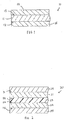
- FIG. 1 illustrates vehicle glazing 10 comprising pane of glazing material 11 which has inner surface 12 and outer surface 13 (labelled with respect to a vehicle into which glazing 10 may be fitted).
- Vehicle glazing 10 further comprises absorptive coating 14 and low emissivity coating 15.
- inner surface 12 of pane of glazing material 11 is provided with low emissivity coating 15, whilst outer surface 13 is provided with absorptive coating 14.
- Both absorptive coating 14 and low emissivity coating 15 may be provided directly onto pane of glazing material 11, or there may be one or more further coating layers (not shown) located between pane of glazing material 11 and absorptive coating 14 or low emissivity coating 15.
- These further coating layers may include barrier layers and/or colour-suppression layers, both of which are generally known in the art.
- pane of glazing material 11 may be a pane of clear glass, for example with a composition (by weight) of: 72.1 % SiO 2 , 1.1 % Al 2 O 3 , 13.5 % Na 2 O, 0.6 % K 2 O, 8.5 % CaO, 3.9 % MgO, 0.2 % SO 3 and optionally up to 0.2 % Fe 2 O 3 (preferably less than 0.15 %).
- Pane of glazing material could alternatively be a pane of plastics material, for example in the form of polycarbonate or polymethylmethacrylate, or a pane of body-tinted glass having either Composition A or Composition B (described below).
- Composition A produces a grey glass having a base glass composition including (by weight) 72.1 % SiO 2 , 1.1 % Al 2 O 3 , 13.5 % Na 2 O, 0.6 % K 2 O, 8.5 % CaO, 3.9% MgO and 0.2 % SO 3 , and a colourant portion comprising (by weight) 1.45 % total iron (calculated as Fe 2 O 3 ), 0.30 % ferrous oxide (calculated as FeO), 230 ppm Co 3 O 4 , 210 ppm NiO and 19 ppm Se.
- a base glass composition including (by weight) 72.1 % SiO 2 , 1.1 % Al 2 O 3 , 13.5 % Na 2 O, 0.6 % K 2 O, 8.5 % CaO, 3.9% MgO and 0.2 % SO 3 , and a colourant portion comprising (by weight) 1.45 % total iron (calculated as Fe 2 O 3 ), 0.30 % ferrous oxide (calculated as Fe
- Composition B produces a green glass which has the same base glass composition as composition A above, and a colourant portion comprising (by weight) 1.57 % total iron (calculated as Fe 2 O 3 ), 0.31 % ferrous oxide (calculated as FeO), 115 ppm Co 3 O 4 , 0 ppm NiO and 5 ppm Se.
- a colourant portion comprising (by weight) 1.57 % total iron (calculated as Fe 2 O 3 ), 0.31 % ferrous oxide (calculated as FeO), 115 ppm Co 3 O 4 , 0 ppm NiO and 5 ppm Se.
- SUNDYM 435TM Such a glass is currently available as SUNDYM 435TM, again from Pilkington plc in the United Kingdom.
- FIGS 2 , 3, 4, and 5 illustrate laminated vehicle glazing 20 which comprises outer ply of glazing material 21, inner ply of glazing material 22 and interlayer ply 23, in the form of a sheet of clear PVB, which nominally has a thickness of 0.76 mm.
- Laminated vehicle glazing 20 further comprises absorptive coating 24 and low emissivity coating 25.
- the surfaces of the plies of glazing material have been numbered S1, S2, S3 and S4 according to conventional numbering terminology (as explained earlier).
- FIG 2 shows that absorptive coating 24 is provided on surface S1 on outer ply of glazing material 21, whilst in Figure 3 it is provided on surface S2.
- Figure 4 shows that absorptive coating 24 is provided on surface S3 on inner ply of glazing material 22, whilst in Figure 5 it is provided on S4.
- low emissivity coating 25 is provided on surface S4 (in Figure 5 , low emissivity coating 25 is actually provided on absorptive coating 24, which is on surface S4).
- Both absorptive coating 24 and low emissivity coating 25 may be provided directly on a ply of glazing material, or there may be one or more further coating layers (not shown) located between the ply of glazing material and absorptive coating 24 or low emissivity coating 25.
- These further coating layers may include barrier layers and/or colour-suppression layers, both of which are generally known in the art.
- each of plies of glazing material 21, 22 may be a pane of clear glass, for example with a composition as described earlier, or a pane of a plastics material, for example in the form of polycarbonate or polymethylmethacrylate, or a pane of body-tinted glass having either Composition A or Composition B described earlier.
- the following table illustrates non-limiting examples of laminated glazing 20.
- low emissivity coating 25 has an emissivity of 0.13
- interlayer 23 is 0.76 mm clear PVB
- each ply of glass 21, 22 is 2.1 mm thick.
- the following information is provided in the table: the composition (clear, A or B as described earlier) of each ply of glass 21, 22, the nature of the absorptive coating 24 and the visible light transmission, the total energy transmission and the CIELAB colour co-ordinates (a* and b* - measured using Illuminant D65, 10° observer) of the laminate.
- Examples 1 to 3 are comparative examples illustrating prior art versions of laminated glazing 20 which do not include absorptive coating 24, but which are instead comprised of two plies of body-tinted glass.
- Examples 4 and 5 are examples of the invention; they show that a ply of clear glass can be combined with a ply of body-tinted glass, along with an absorptive coating, in a laminate construction to provide a laminated vehicle glazing that has at least equivalent performance to prior art laminated glazings.
Landscapes
- Chemical & Material Sciences (AREA)
- Life Sciences & Earth Sciences (AREA)
- Engineering & Computer Science (AREA)
- Chemical Kinetics & Catalysis (AREA)
- General Chemical & Material Sciences (AREA)
- Geochemistry & Mineralogy (AREA)
- Materials Engineering (AREA)
- Organic Chemistry (AREA)
- Laminated Bodies (AREA)
- Joining Of Glass To Other Materials (AREA)
- Surface Treatment Of Glass (AREA)
Claims (17)
- Vitrage de véhicule (10) comprenant
un panneau de matériau de vitrage (11) présentant une première surface et une seconde surface ;
un revêtement absorbant (14) sur la première surface du panneau,
lequel revêtement absorbe un rayonnement de longueur d'onde supérieure à 400 nm et de l'énergie solaire incidente sur le vitrage, l'énergie solaire absorbée étant ré-irradiée par le revêtement absorbant sur un intervalle de longueur d'onde différent de celui de l'énergie solaire incidente, et qui réduit l'intensité de lumière visible transmise, munissant par là le vitrage d'une fonction d'intimité ainsi que d'une fonction de contrôle solaire,
un revêtement de faible émissivité (15) sur la seconde surface du panneau,
la seconde surface étant la surface intérieure (12) dudit panneau,
dans lequel le revêtement de faible émissivité (15) présente une émissivité dans l'intervalle de 0,01 à moins de 0,3 (lorsqu'il est utilisé sur du verre flotté transparent de 3 mm),
lequel revêtement de faible émissivité supprime l'énergie ré-irradiée, réduisant par-là la quantité de chaleur transmise à travers le vitrage, et réduit également la perte de chaleur du véhicule en réfléchissant un rayonnement infrarouge lointain en retour dans le véhicule,
le vitrage de véhicule (10) présentant une transmission de lumière visible de 20 % ou inférieure et une énergie transmise de 20 % ou inférieure. - Vitrage de véhicule selon la revendication 1 pour une utilisation comme un vitrage de toit de véhicule.
- Vitrage de véhicule selon la revendication 1 ou 2, dans lequel le revêtement absorbant (14) absorbe un rayonnement de longueur d'onde jusqu'à 100 µm.
- Vitrage de véhicule selon l'une quelconque des revendications précédentes, dans lequel le revêtement absorbant (14) comprend un métal, un alliage de métal ou un matériau à base d'un alliage de métal.
- Vitrage de véhicule selon l'une quelconque des revendications 1 à 3, dans lequel le revêtement absorbant (14) comprend au moins une couche d'un matériau diélectrique et au moins une couche d'un métal ou alliage de métal.
- Vitrage de véhicule selon l'une quelconque des revendications précédentes, dans lequel le revêtement de faible émissivité (15) inclut un oxyde conducteur transparent et éventuellement un matériau dopant.
- Vitrage de véhicule selon l'une quelconque des revendications 1 à 5, dans lequel le revêtement de faible émissivité (15) inclut au moins une couche de métal et au moins une couche diélectrique.
- Vitrage de véhicule selon l'une quelconque des revendications précédentes, dans lequel le panneau de matériau de vitrage (11) est un panneau de verre transparent ou un panneau de verre teinté dans la masse.
- Vitrage de véhicule selon l'une quelconque des revendications 1 à 7, dans lequel le panneau de matériau de vitrage (11) est un panneau d'un matériau plastique.
- Vitrage feuilleté (20), pour une utilisation dans un véhicule, comprenant
deux épaisseurs de matériau de vitrage (21, 22) avec une feuille de couche intermédiaire (23) formée de plastique transparent stratifiée entre celles-ci,
un revêtement absorbant (24) sur une surface d'une des épaisseurs de matériau de vitrage,
lequel revêtement absorbe un rayonnement de longueur d'onde supérieure à 400 nm et de l'énergie solaire incidente sur le vitrage, l'énergie solaire absorbée étant ré-irradiée par le revêtement absorbant sur un intervalle de longueur d'onde différent de celui-ci de l'énergie solaire incidente, et qui réduit l'intensité de lumière visible transmise, munissant par-là le vitrage d'une fonction d'intimité ainsi que d'une fonction de contrôle solaire,
un revêtement de faible émissivité (25) sur la surface intérieure exposée du vitrage,
dans lequel le revêtement de faible émissivité (15) présente une émissivité dans l'intervalle de 0,01 à moins de 0,3 (lorsqu'il est utilisé sur du verre flotté transparent de 3 mm),
lequel revêtement de faible émissivité supprime l'énergie ré-irradiée, réduisant par-là la quantité de chaleur transmise à travers le vitrage, et réduit également la perte de chaleur du véhicule en réfléchissant un rayonnement infrarouge lointain en retour dans le véhicule,
le vitrage feuilleté (20) présentant une transmission de lumière visible de 20 % ou inférieure et une énergie transmise de 20 % ou inférieure. - Vitrage feuilleté selon la revendication 10, dans lequel le revêtement absorbant (24) et le revêtement de faible émissivité (25) se trouvent chacun sur une épaisseur séparée de matériau de vitrage.
- Vitrage stratifié selon la revendication 10, dans lequel le revêtement absorbant (24) et le revêtement de faible émissivité (25) se trouvent sur la même épaisseur de matériau de vitrage.
- Vitrage stratifié selon l'une quelconque des revendications 10 à 12 pour une utilisation comme un vitrage de toit.
- Vitrage feuilleté selon l'une quelconque des revendications 10 à 13, dans lequel le revêtement absorbant (24) absorbe un rayonnement de longueur d'onde jusqu'à 100 µm.
- Vitrage feuilleté selon l'une quelconque des revendications 10 à 14, dans lequel au moins une épaisseur de matériau de vitrage (21, 22) est un panneau de verre transparent ou d'un verre teinté dans la masse.
- Vitrage feuilleté selon l'une quelconque des revendications 10 à 14, dans lequel au moins une épaisseur de matériau de vitrage (21, 22) est un panneau de matériau plastique.
- Vitrage feuilleté selon l'une quelconque des revendications 10 à 16, dans lequel la feuille de matériau de couche intermédiaire (23) est teintée dans la masse.
Applications Claiming Priority (2)
| Application Number | Priority Date | Filing Date | Title |
|---|---|---|---|
| GB0423085A GB0423085D0 (en) | 2004-10-18 | 2004-10-18 | Solar control glazing |
| PCT/GB2005/003895 WO2006043026A1 (fr) | 2004-10-18 | 2005-10-10 | Vitrage solaire |
Publications (2)
| Publication Number | Publication Date |
|---|---|
| EP1824676A1 EP1824676A1 (fr) | 2007-08-29 |
| EP1824676B1 true EP1824676B1 (fr) | 2020-06-03 |
Family
ID=33462902
Family Applications (1)
| Application Number | Title | Priority Date | Filing Date |
|---|---|---|---|
| EP05792247.8A Expired - Lifetime EP1824676B1 (fr) | 2004-10-18 | 2005-10-10 | Vitrage solaire |
Country Status (6)
| Country | Link |
|---|---|
| US (1) | US8137814B2 (fr) |
| EP (1) | EP1824676B1 (fr) |
| JP (1) | JP5090916B2 (fr) |
| CN (1) | CN101060977B (fr) |
| GB (1) | GB0423085D0 (fr) |
| WO (1) | WO2006043026A1 (fr) |
Families Citing this family (39)
| Publication number | Priority date | Publication date | Assignee | Title |
|---|---|---|---|---|
| FR2906832A1 (fr) * | 2006-10-09 | 2008-04-11 | Saint Gobain | Vitrage multiple a selectivite augmentee |
| GB0808338D0 (en) * | 2008-05-08 | 2008-06-18 | Pilkington Group Ltd | Production of coated glass |
| CN102603209A (zh) * | 2011-01-25 | 2012-07-25 | 鸿富锦精密工业(深圳)有限公司 | 镀膜玻璃及其制备方法 |
| CN102529213A (zh) * | 2011-12-27 | 2012-07-04 | 李德杰 | 金属陶瓷薄膜为导电层的遮阳低辐射玻璃 |
| WO2013127563A1 (fr) | 2012-02-27 | 2013-09-06 | Saint-Gobain Glass France | Vitre composite possédant une fonction de protection solaire et une fonction de protection thermique |
| KR101399899B1 (ko) | 2012-06-15 | 2014-05-29 | 코닝정밀소재 주식회사 | 써모크로믹 윈도우 |
| BE1020717A3 (fr) * | 2012-06-19 | 2014-04-01 | Agc Glass Europe | Toit de vehicule. |
| KR101543496B1 (ko) * | 2012-06-19 | 2015-08-10 | (주)엘지하우시스 | 저방사 단열 코팅막, 이를 포함하는 건축 자재 및 저방사 단열 코팅막 제조 방법 |
| ES2626911T3 (es) | 2013-02-20 | 2017-07-26 | Saint-Gobain Glass France | Luna con recubrimiento reflectante de radiación térmica |
| EP2958871B1 (fr) | 2013-02-20 | 2021-03-10 | Saint-Gobain Glass France | Vitre avec un revêtement réfléchissant un rayonnement thermique |
| FR3002767B1 (fr) * | 2013-03-01 | 2015-02-27 | Saint Gobain | Dispositif de visualisation pour vitrages transparents |
| KR101518835B1 (ko) * | 2014-12-18 | 2015-05-13 | 한국건설기술연구원 | 창호시스템 |
| CN106612615B (zh) | 2015-08-18 | 2021-04-02 | 法国圣戈班玻璃厂 | 在使用风扇的情况下的玻璃弯曲装置和玻璃弯曲方法 |
| KR102051876B1 (ko) | 2015-09-08 | 2019-12-04 | 쌩-고벵 글래스 프랑스 | 과압-보조 중력 굽힘 방법 및 그에 적합한 장치 |
| BR112017027456B1 (pt) | 2015-11-25 | 2022-10-18 | Saint-Gobain Glass France | Método de curvatura por gravidade auxiliado por sobrepressão, dispositivo adequado para o mesmo e uso de uma ferramenta de moldagem superior |
| US10479171B2 (en) | 2015-12-29 | 2019-11-19 | Pilkington Group Limited | Laminated vehicle glazing |
| CA2994359C (fr) | 2016-01-28 | 2020-01-07 | Saint-Gobain Glass France | Procede de cintrage de verre par surpression et dispositif approprie |
| US11618507B2 (en) | 2017-03-30 | 2023-04-04 | Agp America S.A. | Opaque laminated vehicle roof with panoramic glazed appearance |
| US10556821B2 (en) * | 2017-04-26 | 2020-02-11 | Guardian Glass, LLC | Laminated window including different glass substrates with low-E coating adjacent vehicle or building interior and/or methods of making the same |
| JP7040526B2 (ja) * | 2017-07-13 | 2022-03-23 | Agc株式会社 | 自動車用窓ガラス |
| US20190043640A1 (en) * | 2017-08-04 | 2019-02-07 | Vitro Flat Glass, LLC | Protective Layer Over a Functional Coating |
| CN111183124B (zh) * | 2017-10-06 | 2022-06-10 | 中央硝子株式会社 | 汽车用夹层玻璃及其制造方法 |
| BR112020010113A2 (pt) * | 2017-12-05 | 2020-10-13 | Saint-Gobain Glass France | vidraça compósita que tem revestimento de proteção solar e revestimento de reflexão de radiação térmica |
| CN112074405A (zh) | 2018-03-27 | 2020-12-11 | 皮尔金顿集团有限公司 | 层叠玻璃件 |
| JP7381338B2 (ja) * | 2018-04-16 | 2023-11-15 | 積水化学工業株式会社 | 合わせガラス用中間膜、及び自動車ルーフ用合わせガラス |
| FR3086590B1 (fr) * | 2018-09-27 | 2021-01-01 | Saint Gobain | Procede d'obtention d'un materiau comprenant une feuille de verre. |
| FR3087382B1 (fr) * | 2018-10-18 | 2022-09-09 | Saint Gobain | Vitrage comprenant un revetement fonctionnel et un revetement absorbant d'ajustement colorimetrique |
| FR3092107B1 (fr) * | 2019-01-30 | 2022-08-12 | Saint Gobain | Substrat muni d’un empilement a proprietes thermiques et a couche absorbante |
| WO2020234593A1 (fr) | 2019-05-20 | 2020-11-26 | Pilkington Group Limited | Ensemble fenêtre stratifiée |
| KR102908593B1 (ko) * | 2019-08-23 | 2026-01-08 | 현대자동차주식회사 | 라이다 윈도우 일체형 광학필터 |
| FR3101278B1 (fr) * | 2019-09-30 | 2023-11-24 | Saint Gobain | Vitrage feuillete a basse transmission lumineuse et haute selectivite |
| FR3101345B1 (fr) * | 2019-09-30 | 2021-09-24 | Saint Gobain | Procédé d’obtention d’un vitrage bombé feuilleté |
| WO2021165680A1 (fr) * | 2020-02-20 | 2021-08-26 | Pilkington Group Limited | Articles en verre revêtus |
| GB202004302D0 (en) * | 2020-03-25 | 2020-05-06 | Pilkington Group Ltd | Electromagnetic radiation permeable glazing |
| US20230065099A1 (en) * | 2020-03-31 | 2023-03-02 | Sekisui Chemical Co., Ltd. | Intermediate film for laminated glass, and laminated glass |
| FR3118626B1 (fr) * | 2021-01-05 | 2023-10-27 | Saint Gobain | Toit automobile comprenant une feuille de verre |
| FR3124114B1 (fr) | 2021-06-18 | 2024-07-19 | Saint Gobain | Vitrage comprenant un revetement fonctionnel et un element absorbant d’ajustement colorimetrique |
| FR3124180B1 (fr) | 2021-06-18 | 2024-02-16 | Saint Gobain | Vitrage comprenant un revetement fonctionnel et un element absorbant |
| FR3164943A1 (fr) | 2024-07-25 | 2026-01-30 | Saint-Gobain Glass France | Vitrage comprenant un revetement fonctionnel et une couche absorbante |
Citations (1)
| Publication number | Priority date | Publication date | Assignee | Title |
|---|---|---|---|---|
| US6538192B1 (en) * | 1999-04-13 | 2003-03-25 | Glaverbel, S.A. | Glazing for the roof of a motor vehicle |
Family Cites Families (25)
| Publication number | Priority date | Publication date | Assignee | Title |
|---|---|---|---|---|
| US3514175A (en) * | 1966-06-24 | 1970-05-26 | Corning Glass Works | Structural closure members with absorption and reflection films |
| GB1524393A (en) | 1976-05-27 | 1978-09-13 | Pilkington Brothers Ltd | Heat-reflecting glass sheets |
| JPH07115891B2 (ja) * | 1987-12-25 | 1995-12-13 | 旭硝子株式会社 | 建物用電磁波遮蔽窓ガラス |
| US5229881A (en) * | 1992-06-10 | 1993-07-20 | Tempglass Eastern, Inc. | Low transmission low emissivity glass window and method of manufacture |
| LU88486A1 (fr) | 1994-05-11 | 1995-12-01 | Glaverbel | Verre gris sodo-calcique |
| US5792559A (en) | 1994-07-05 | 1998-08-11 | Ppg Industries, Inc. | Composite transparency |
| GB9619134D0 (en) * | 1996-09-13 | 1996-10-23 | Pilkington Plc | Improvements in or related to coated glass |
| GB9702777D0 (en) | 1997-02-11 | 1997-04-02 | Pilkington Plc | Improvements relating to glass and glazing |
| GB9708989D0 (en) * | 1997-05-03 | 1997-06-25 | Pilkington Plc | Laminated glazings |
| US6596398B1 (en) | 1998-08-21 | 2003-07-22 | Atofina Chemicals, Inc. | Solar control coated glass |
| US6218018B1 (en) * | 1998-08-21 | 2001-04-17 | Atofina Chemicals, Inc. | Solar control coated glass |
| AU747528B2 (en) * | 1998-12-21 | 2002-05-16 | Cardinal Ig Company | Low-emissivity, soil-resistant coating for glass surfaces |
| FR2793889B1 (fr) * | 1999-05-20 | 2002-06-28 | Saint Gobain Vitrage | Substrat transparent a revetement anti-reflets |
| BE1012766A3 (fr) | 1999-06-30 | 2001-03-06 | Glaverbel | Vitrage notamment pour toit de vehicule. |
| US6869644B2 (en) * | 2000-10-24 | 2005-03-22 | Ppg Industries Ohio, Inc. | Method of making coated articles and coated articles made thereby |
| US20020172775A1 (en) * | 2000-10-24 | 2002-11-21 | Harry Buhay | Method of making coated articles and coated articles made thereby |
| FR2829723B1 (fr) * | 2001-09-14 | 2004-02-20 | Saint Gobain | Vitrage de securite fonctionnalise |
| JP2003306356A (ja) * | 2002-04-15 | 2003-10-28 | Nippon Electric Glass Co Ltd | 電磁波遮蔽性を有する防火安全ガラス物品 |
| US6733889B2 (en) * | 2002-05-14 | 2004-05-11 | Pilkington North America, Inc. | Reflective, solar control coated glass article |
| DE10249263B4 (de) * | 2002-10-23 | 2004-12-09 | Daimlerchrysler Ag | Verbundglasscheibe mit Wärmekomfortwirkung sowie deren Verwendung |
| JP4460537B2 (ja) * | 2003-06-09 | 2010-05-12 | 日本板硝子株式会社 | 光触媒部材 |
| CN100503229C (zh) * | 2003-09-18 | 2009-06-24 | 上海耀华皮尔金顿玻璃股份有限公司 | 遮阳型机车用玻璃 |
| US20050196623A1 (en) * | 2004-03-03 | 2005-09-08 | Mckown Clem S.Jr. | Solar control coated glass composition |
| US7258757B2 (en) * | 2004-10-28 | 2007-08-21 | Film Technologies International, Inc. | Method of manufacturing an impact resistant and insulated glass unit composite with solar control and low-E coatings |
| JP2005343732A (ja) * | 2004-06-02 | 2005-12-15 | Fujikura Ltd | 熱線反射ガラス |
-
2004
- 2004-10-18 GB GB0423085A patent/GB0423085D0/en not_active Ceased
-
2005
- 2005-10-10 CN CN2005800391803A patent/CN101060977B/zh not_active Expired - Lifetime
- 2005-10-10 JP JP2007536250A patent/JP5090916B2/ja not_active Expired - Lifetime
- 2005-10-10 WO PCT/GB2005/003895 patent/WO2006043026A1/fr not_active Ceased
- 2005-10-10 EP EP05792247.8A patent/EP1824676B1/fr not_active Expired - Lifetime
- 2005-10-10 US US11/664,695 patent/US8137814B2/en not_active Expired - Lifetime
Patent Citations (1)
| Publication number | Priority date | Publication date | Assignee | Title |
|---|---|---|---|---|
| US6538192B1 (en) * | 1999-04-13 | 2003-03-25 | Glaverbel, S.A. | Glazing for the roof of a motor vehicle |
Also Published As
| Publication number | Publication date |
|---|---|
| EP1824676A1 (fr) | 2007-08-29 |
| JP5090916B2 (ja) | 2012-12-05 |
| WO2006043026A1 (fr) | 2006-04-27 |
| CN101060977B (zh) | 2012-01-04 |
| JP2008516878A (ja) | 2008-05-22 |
| US20080070045A1 (en) | 2008-03-20 |
| CN101060977A (zh) | 2007-10-24 |
| US8137814B2 (en) | 2012-03-20 |
| GB0423085D0 (en) | 2004-11-17 |
Similar Documents
| Publication | Publication Date | Title |
|---|---|---|
| EP1824676B1 (fr) | Vitrage solaire | |
| EP1644293B2 (fr) | Vitrage solaire | |
| US7846549B2 (en) | Transparent substrate coated with a silver layer | |
| GB2403731A (en) | Solar control glazing | |
| CN1842503B (zh) | 有反射红外线和/或太阳辐射的多个薄层的叠层的玻璃板 | |
| EP2552846B1 (fr) | Revêtements antisolaires contenant une couche métallique discontinue | |
| EP2183102B1 (fr) | Élément transparent de véhicule | |
| AU2005300507B2 (en) | Glazing | |
| EP1923362B1 (fr) | Plaque de verre réfléchissant les infrarouges et verre stratifié destiné à une vitre de véhicule | |
| EP1923365B1 (fr) | Verre stratifié destiné à une vitre de véhicule | |
| CZ296563B6 (cs) | Zasklívací tabule a zpusob její výroby | |
| CN121219127A (zh) | 阳光控制层压式嵌装玻璃 | |
| EP2517877B1 (fr) | Panneau-allège | |
| EP4168366B1 (fr) | Low-e revêtement comprenant deux couches à base de nitrure de titanium réchauffable | |
| CN120641366A (zh) | 包含银基功能涂层的层合装配玻璃 | |
| EP3972942B1 (fr) | Procédé de réduction de l'émissivité d'un article en verre revêtu | |
| CN121263300A (zh) | 复合玻璃板 | |
| JP2025509132A (ja) | 複合ペイン | |
| ES2964862T3 (es) | Acristalamiento para control solar |
Legal Events
| Date | Code | Title | Description |
|---|---|---|---|
| PUAI | Public reference made under article 153(3) epc to a published international application that has entered the european phase |
Free format text: ORIGINAL CODE: 0009012 |
|
| 17P | Request for examination filed |
Effective date: 20070502 |
|
| AK | Designated contracting states |
Kind code of ref document: A1 Designated state(s): AT BE BG CH CY CZ DE DK EE ES FI FR GB GR HU IE IS IT LI LT LU LV MC NL PL PT RO SE SI SK TR |
|
| DAX | Request for extension of the european patent (deleted) | ||
| 17Q | First examination report despatched |
Effective date: 20111124 |
|
| STAA | Information on the status of an ep patent application or granted ep patent |
Free format text: STATUS: EXAMINATION IS IN PROGRESS |
|
| GRAP | Despatch of communication of intention to grant a patent |
Free format text: ORIGINAL CODE: EPIDOSNIGR1 |
|
| STAA | Information on the status of an ep patent application or granted ep patent |
Free format text: STATUS: GRANT OF PATENT IS INTENDED |
|
| RIC1 | Information provided on ipc code assigned before grant |
Ipc: C03C 17/06 20060101ALI20191205BHEP Ipc: C03C 4/02 20060101ALI20191205BHEP Ipc: C03C 4/08 20060101ALI20191205BHEP Ipc: C03C 17/36 20060101ALI20191205BHEP Ipc: B32B 17/10 20060101AFI20191205BHEP Ipc: C03C 3/087 20060101ALI20191205BHEP |
|
| INTG | Intention to grant announced |
Effective date: 20200107 |
|
| GRAS | Grant fee paid |
Free format text: ORIGINAL CODE: EPIDOSNIGR3 |
|
| GRAA | (expected) grant |
Free format text: ORIGINAL CODE: 0009210 |
|
| STAA | Information on the status of an ep patent application or granted ep patent |
Free format text: STATUS: THE PATENT HAS BEEN GRANTED |
|
| REG | Reference to a national code |
Ref country code: DE Ref legal event code: R081 Ref document number: 602005056856 Country of ref document: DE Owner name: PILKINGTON GROUP LTD., ORMSKIRK, GB Free format text: FORMER OWNERS: PILKINGTON AUTOMOTIVE LTD., ST. HELENS, MERSEYSIDE, GB; PILKINGTON GROUP LTD., ST. HELENS, MERSEYSIDE, GB Ref country code: DE Ref legal event code: R081 Ref document number: 602005056856 Country of ref document: DE Owner name: PILKINGTON AUTOMOTIVE LTD., ORMSKIRK, GB Free format text: FORMER OWNERS: PILKINGTON AUTOMOTIVE LTD., ST. HELENS, MERSEYSIDE, GB; PILKINGTON GROUP LTD., ST. HELENS, MERSEYSIDE, GB |
|
| RAP1 | Party data changed (applicant data changed or rights of an application transferred) |
Owner name: PILKINGTON GROUP LIMITED Owner name: PILKINGTON AUTOMOTIVE LIMITED |
|
| AK | Designated contracting states |
Kind code of ref document: B1 Designated state(s): AT BE BG CH CY CZ DE DK EE ES FI FR GB GR HU IE IS IT LI LT LU LV MC NL PL PT RO SE SI SK TR |
|
| REG | Reference to a national code |
Ref country code: GB Ref legal event code: FG4D |
|
| REG | Reference to a national code |
Ref country code: CH Ref legal event code: EP Ref country code: AT Ref legal event code: REF Ref document number: 1276606 Country of ref document: AT Kind code of ref document: T Effective date: 20200615 |
|
| REG | Reference to a national code |
Ref country code: DE Ref legal event code: R096 Ref document number: 602005056856 Country of ref document: DE |
|
| REG | Reference to a national code |
Ref country code: LT Ref legal event code: MG4D |
|
| PG25 | Lapsed in a contracting state [announced via postgrant information from national office to epo] |
Ref country code: GR Free format text: LAPSE BECAUSE OF FAILURE TO SUBMIT A TRANSLATION OF THE DESCRIPTION OR TO PAY THE FEE WITHIN THE PRESCRIBED TIME-LIMIT Effective date: 20200904 Ref country code: FI Free format text: LAPSE BECAUSE OF FAILURE TO SUBMIT A TRANSLATION OF THE DESCRIPTION OR TO PAY THE FEE WITHIN THE PRESCRIBED TIME-LIMIT Effective date: 20200603 Ref country code: SE Free format text: LAPSE BECAUSE OF FAILURE TO SUBMIT A TRANSLATION OF THE DESCRIPTION OR TO PAY THE FEE WITHIN THE PRESCRIBED TIME-LIMIT Effective date: 20200603 Ref country code: LT Free format text: LAPSE BECAUSE OF FAILURE TO SUBMIT A TRANSLATION OF THE DESCRIPTION OR TO PAY THE FEE WITHIN THE PRESCRIBED TIME-LIMIT Effective date: 20200603 |
|
| REG | Reference to a national code |
Ref country code: NL Ref legal event code: MP Effective date: 20200603 |
|
| PG25 | Lapsed in a contracting state [announced via postgrant information from national office to epo] |
Ref country code: BG Free format text: LAPSE BECAUSE OF FAILURE TO SUBMIT A TRANSLATION OF THE DESCRIPTION OR TO PAY THE FEE WITHIN THE PRESCRIBED TIME-LIMIT Effective date: 20200903 Ref country code: LV Free format text: LAPSE BECAUSE OF FAILURE TO SUBMIT A TRANSLATION OF THE DESCRIPTION OR TO PAY THE FEE WITHIN THE PRESCRIBED TIME-LIMIT Effective date: 20200603 |
|
| REG | Reference to a national code |
Ref country code: AT Ref legal event code: MK05 Ref document number: 1276606 Country of ref document: AT Kind code of ref document: T Effective date: 20200603 |
|
| PG25 | Lapsed in a contracting state [announced via postgrant information from national office to epo] |
Ref country code: NL Free format text: LAPSE BECAUSE OF FAILURE TO SUBMIT A TRANSLATION OF THE DESCRIPTION OR TO PAY THE FEE WITHIN THE PRESCRIBED TIME-LIMIT Effective date: 20200603 |
|
| PG25 | Lapsed in a contracting state [announced via postgrant information from national office to epo] |
Ref country code: AT Free format text: LAPSE BECAUSE OF FAILURE TO SUBMIT A TRANSLATION OF THE DESCRIPTION OR TO PAY THE FEE WITHIN THE PRESCRIBED TIME-LIMIT Effective date: 20200603 Ref country code: EE Free format text: LAPSE BECAUSE OF FAILURE TO SUBMIT A TRANSLATION OF THE DESCRIPTION OR TO PAY THE FEE WITHIN THE PRESCRIBED TIME-LIMIT Effective date: 20200603 Ref country code: PT Free format text: LAPSE BECAUSE OF FAILURE TO SUBMIT A TRANSLATION OF THE DESCRIPTION OR TO PAY THE FEE WITHIN THE PRESCRIBED TIME-LIMIT Effective date: 20201006 Ref country code: CZ Free format text: LAPSE BECAUSE OF FAILURE TO SUBMIT A TRANSLATION OF THE DESCRIPTION OR TO PAY THE FEE WITHIN THE PRESCRIBED TIME-LIMIT Effective date: 20200603 Ref country code: IT Free format text: LAPSE BECAUSE OF FAILURE TO SUBMIT A TRANSLATION OF THE DESCRIPTION OR TO PAY THE FEE WITHIN THE PRESCRIBED TIME-LIMIT Effective date: 20200603 Ref country code: ES Free format text: LAPSE BECAUSE OF FAILURE TO SUBMIT A TRANSLATION OF THE DESCRIPTION OR TO PAY THE FEE WITHIN THE PRESCRIBED TIME-LIMIT Effective date: 20200603 Ref country code: RO Free format text: LAPSE BECAUSE OF FAILURE TO SUBMIT A TRANSLATION OF THE DESCRIPTION OR TO PAY THE FEE WITHIN THE PRESCRIBED TIME-LIMIT Effective date: 20200603 |
|
| PG25 | Lapsed in a contracting state [announced via postgrant information from national office to epo] |
Ref country code: PL Free format text: LAPSE BECAUSE OF FAILURE TO SUBMIT A TRANSLATION OF THE DESCRIPTION OR TO PAY THE FEE WITHIN THE PRESCRIBED TIME-LIMIT Effective date: 20200603 Ref country code: SK Free format text: LAPSE BECAUSE OF FAILURE TO SUBMIT A TRANSLATION OF THE DESCRIPTION OR TO PAY THE FEE WITHIN THE PRESCRIBED TIME-LIMIT Effective date: 20200603 Ref country code: IS Free format text: LAPSE BECAUSE OF FAILURE TO SUBMIT A TRANSLATION OF THE DESCRIPTION OR TO PAY THE FEE WITHIN THE PRESCRIBED TIME-LIMIT Effective date: 20201003 |
|
| REG | Reference to a national code |
Ref country code: DE Ref legal event code: R097 Ref document number: 602005056856 Country of ref document: DE |
|
| PLBE | No opposition filed within time limit |
Free format text: ORIGINAL CODE: 0009261 |
|
| STAA | Information on the status of an ep patent application or granted ep patent |
Free format text: STATUS: NO OPPOSITION FILED WITHIN TIME LIMIT |
|
| PG25 | Lapsed in a contracting state [announced via postgrant information from national office to epo] |
Ref country code: DK Free format text: LAPSE BECAUSE OF FAILURE TO SUBMIT A TRANSLATION OF THE DESCRIPTION OR TO PAY THE FEE WITHIN THE PRESCRIBED TIME-LIMIT Effective date: 20200603 |
|
| 26N | No opposition filed |
Effective date: 20210304 |
|
| PG25 | Lapsed in a contracting state [announced via postgrant information from national office to epo] |
Ref country code: SI Free format text: LAPSE BECAUSE OF FAILURE TO SUBMIT A TRANSLATION OF THE DESCRIPTION OR TO PAY THE FEE WITHIN THE PRESCRIBED TIME-LIMIT Effective date: 20200603 |
|
| REG | Reference to a national code |
Ref country code: CH Ref legal event code: PL |
|
| GBPC | Gb: european patent ceased through non-payment of renewal fee |
Effective date: 20201010 |
|
| PG25 | Lapsed in a contracting state [announced via postgrant information from national office to epo] |
Ref country code: LU Free format text: LAPSE BECAUSE OF NON-PAYMENT OF DUE FEES Effective date: 20201010 Ref country code: MC Free format text: LAPSE BECAUSE OF FAILURE TO SUBMIT A TRANSLATION OF THE DESCRIPTION OR TO PAY THE FEE WITHIN THE PRESCRIBED TIME-LIMIT Effective date: 20200603 |
|
| REG | Reference to a national code |
Ref country code: BE Ref legal event code: MM Effective date: 20201031 |
|
| PG25 | Lapsed in a contracting state [announced via postgrant information from national office to epo] |
Ref country code: FR Free format text: LAPSE BECAUSE OF NON-PAYMENT OF DUE FEES Effective date: 20201031 |
|
| PG25 | Lapsed in a contracting state [announced via postgrant information from national office to epo] |
Ref country code: GB Free format text: LAPSE BECAUSE OF NON-PAYMENT OF DUE FEES Effective date: 20201010 Ref country code: LI Free format text: LAPSE BECAUSE OF NON-PAYMENT OF DUE FEES Effective date: 20201031 Ref country code: BE Free format text: LAPSE BECAUSE OF NON-PAYMENT OF DUE FEES Effective date: 20201031 Ref country code: CH Free format text: LAPSE BECAUSE OF NON-PAYMENT OF DUE FEES Effective date: 20201031 |
|
| PG25 | Lapsed in a contracting state [announced via postgrant information from national office to epo] |
Ref country code: IE Free format text: LAPSE BECAUSE OF NON-PAYMENT OF DUE FEES Effective date: 20201010 |
|
| PG25 | Lapsed in a contracting state [announced via postgrant information from national office to epo] |
Ref country code: TR Free format text: LAPSE BECAUSE OF FAILURE TO SUBMIT A TRANSLATION OF THE DESCRIPTION OR TO PAY THE FEE WITHIN THE PRESCRIBED TIME-LIMIT Effective date: 20200603 Ref country code: CY Free format text: LAPSE BECAUSE OF FAILURE TO SUBMIT A TRANSLATION OF THE DESCRIPTION OR TO PAY THE FEE WITHIN THE PRESCRIBED TIME-LIMIT Effective date: 20200603 |
|
| P01 | Opt-out of the competence of the unified patent court (upc) registered |
Effective date: 20230512 |
|
| PGFP | Annual fee paid to national office [announced via postgrant information from national office to epo] |
Ref country code: DE Payment date: 20241022 Year of fee payment: 20 |
|
| REG | Reference to a national code |
Ref country code: DE Ref legal event code: R071 Ref document number: 602005056856 Country of ref document: DE |