EP1826686A1 - Sprachgesteuertes Multimedia-Datenabfragesystem - Google Patents
Sprachgesteuertes Multimedia-Datenabfragesystem Download PDFInfo
- Publication number
- EP1826686A1 EP1826686A1 EP06004055A EP06004055A EP1826686A1 EP 1826686 A1 EP1826686 A1 EP 1826686A1 EP 06004055 A EP06004055 A EP 06004055A EP 06004055 A EP06004055 A EP 06004055A EP 1826686 A1 EP1826686 A1 EP 1826686A1
- Authority
- EP
- European Patent Office
- Prior art keywords
- language
- data
- file
- media
- media file
- Prior art date
- Legal status (The legal status is an assumption and is not a legal conclusion. Google has not performed a legal analysis and makes no representation as to the accuracy of the status listed.)
- Granted
Links
Images





Classifications
-
- G—PHYSICS
- G10—MUSICAL INSTRUMENTS; ACOUSTICS
- G10L—SPEECH ANALYSIS TECHNIQUES OR SPEECH SYNTHESIS; SPEECH RECOGNITION; SPEECH OR VOICE PROCESSING TECHNIQUES; SPEECH OR AUDIO CODING OR DECODING
- G10L15/00—Speech recognition
- G10L15/005—Language recognition
-
- G—PHYSICS
- G06—COMPUTING OR CALCULATING; COUNTING
- G06F—ELECTRIC DIGITAL DATA PROCESSING
- G06F40/00—Handling natural language data
- G06F40/20—Natural language analysis
- G06F40/263—Language identification
-
- G—PHYSICS
- G10—MUSICAL INSTRUMENTS; ACOUSTICS
- G10L—SPEECH ANALYSIS TECHNIQUES OR SPEECH SYNTHESIS; SPEECH RECOGNITION; SPEECH OR VOICE PROCESSING TECHNIQUES; SPEECH OR AUDIO CODING OR DECODING
- G10L15/00—Speech recognition
- G10L15/08—Speech classification or search
- G10L15/18—Speech classification or search using natural language modelling
- G10L15/183—Speech classification or search using natural language modelling using context dependencies, e.g. language models
- G10L15/187—Phonemic context, e.g. pronunciation rules, phonotactical constraints or phoneme n-grams
-
- G—PHYSICS
- G10—MUSICAL INSTRUMENTS; ACOUSTICS
- G10L—SPEECH ANALYSIS TECHNIQUES OR SPEECH SYNTHESIS; SPEECH RECOGNITION; SPEECH OR VOICE PROCESSING TECHNIQUES; SPEECH OR AUDIO CODING OR DECODING
- G10L15/00—Speech recognition
- G10L15/22—Procedures used during a speech recognition process, e.g. man-machine dialogue
- G10L2015/226—Procedures used during a speech recognition process, e.g. man-machine dialogue using non-speech characteristics
- G10L2015/228—Procedures used during a speech recognition process, e.g. man-machine dialogue using non-speech characteristics of application context
Definitions
- This invention relates to a voice-controlled data system to a method for a voice-controlled selection of a media file stored on a data storage unit, and to a system and method for anatomically detecting the language of file identification data of a media file.
- the voice-controlled operation of multimedia systems is well known in the art.
- the voice-controlled operation of electronic systems comprising an audio module, a navigation module, a telecommunication module, and/ or a radio module, is a useful feature for the driver which helps the driver to focus on the traffic.
- speech recognition units are used in which a voice command from the user of the electronic system is detected and phonetic transcriptions of the detected voice command are used for executing the command of the user.
- the control of an electronic system comprising media files in order to select one of the files is a difficult task, since the speech recognition system has to recognize the speech input from the user, which may comprise variable vocabulary such as the name or the title of the media file.
- a voice-controlled data system which comprises a data storage unit comprising media files having associated file identification data. Furthermore, a vocabulary generating unit is provided which generates phonetic data corresponding to the file identification data, the phonetic data being supplied to a speech recognition unit as a recognition vocabulary, whereas one of the media files is selected according to a recognized speech control command on the basis of the generated phonetic data. Additionally, the file identification data comprise a language identification part for identifying the language of the file identification data, wherein the vocabulary generating unit generates the phonetic data for the file identification data of a media file based on its language identification part.
- the language identification part of the file identification data helps to find the correct pronunciation of the file identification data, the pronunciation being used in the speech recognition unit for identifying the voice command and for generating a speech control command.
- the language identification parts helps to identify the language of the data comprised in the file identification data.
- the file identification data is often used by the user of the data system for selecting one of the media files. The user may wish to play one of the media files and will therefore use a voice command telling the system the name of the file or the artist of the file.
- the vocabulary generating unit which generates the phonetic data is then able to correctly generate the phonetic data when the origin of the file identification data is known.
- the data system may comprise at least one language database comprising phonetic transcriptions of terms of a language and/or phonetic rules of a language.
- the language database comprising phonetic transcriptions may be used, and the correct language database may be selected in accordance with the language which was detected with the help of the language identification part of the file identification data.
- the system further comprises a language identification unit which extracts a language identification tag out of the language identification part for a media file.
- the language identification tag identifies the language of the corresponding file identification data, and abbreviations, e.g. DE for German, FR for French, etc may be used.
- abbreviations e.g. DE for German, FR for French, etc.
- One possibility of classifying the different languages by the language identification tag may be by using Norm ISO 639-2. In this ISO-norm the different languages are encoded by two or three characters.
- the language identification tag comprised in the file identification data helps to correctly determine the language which should be used for generating the phonetic data corresponding to the file identification data.
- the file identification data of the media file comprise at least one natural language term.
- natural language term is used for a language which is used for communicating between human beings, and does not mean computer-programming language which is used to instruct computer systems.
- the media files comprise audio or video files
- the file identification data comprise at least one of the following types of information: title of the file, composer or author of the file, artist of the file, and/or genre of the file, etc.
- the user of the data system wants to select one of the media files, he or she will probably use the artist or composer or title of the media file in the case of an audio file.
- the user may wish to select a media file on the data storage unit comprising files of Tina Turner or Edith Piaf.
- the speech recognition unit now has to recognize the input voice data. This is normally done by comparing the input voice data to phonetic data generated of the file identification data, i.e. of the title of the media file or of the artist of the media file.
- the language identification unit extracting the language identification tag helps to determine the correct pronunciation of the file identification data by using the language identification part for generating the phonetic data.
- the vocabulary generating unit generates the correct phonetic data of the media file, the phonetic data is then used by the speech recognition unit for determining the content of the voice command of the user of the system.
- the system may, furthermore, comprise a language database selecting unit which selects a language database in accordance with the extracted language identification tag.
- the data system normally accesses databases comprising phonetic transcriptions and phonetic rules of a language.
- the language identification tag helps to select the correct language database. For the correct pronunciation of an English phrase, the English language database comprising phonetic transcriptions of English terms and /or comprising English phonetic rules is needed, for the correct pronunciation of a French or German term, a French or German database has to be used, etc.
- a multilingual speech recognition means e.g. by providing a plurality of (parallel) speech recognition units operating in different languages, or by providing a multilingually trained speech recognition unit which is able to recognize words or phonemes from different languages.
- the plurality of speech recognition units may be supplied with the corresponding phonetic data generated in the different languages.
- a speech recognition unit configured to recognize German may be supplied with the phonetic transcriptions for file identification data that is tagged for German
- a French speech recognition unit receives the phonetic transcriptions for French file identification data, etc...
- a multilingually trained speech recognition unit may be supplied with all phonetic data for all file identification data irrespective of the individual language identification data.
- the multilingually trained speech recognition unit is preferably trained on speech data which includes data from all languages that are used in the data system.
- the different phonetics of the used languages may be mapped to the language of the speech recognition unit.
- the phonemes of phonetic transcriptions in foreign languages may be mapped to the native phonemes of the speech recognition unit in order to allow the single language speech recognition unit to recognize file identification data having phonetic transcriptions in a different language.
- the database system of the invention may further comprise a media file player for playing the selected media file, which is operated based on the speech control command.
- a media file player for playing the selected media file, which is operated based on the speech control command.
- the language identification part of the file identification data are extracted, phonetic data are generated in the vocabulary generating unit by utilizing the fact that the language of the file identification data is known.
- the generated phonetic data are input into the speech recognition unit where they are compared to the voice data, and a speech control command is generated and fed to the player which selects the media file in accordance with the speech control command.
- the file identification data comprise data sets of different languages.
- the different data sets may be the title of the file, the composer, the author, the artist or the genre of the file. All this different data sets are not necessarily of the same language, e.g. the singer may have a French name, the title of the song may be German, Italian, Spanish, etc.
- Each of the data sets may be used by the user for selecting one of the media files, so that the correct pronunciation of the different data sets has to be known, i.e. the correct phonetic transcriptions of the different data sets have to be guaranteed.
- the title of the song may be French, e.g. "la Promesse", the singer Kate Ryan being an English pronounced name.
- the language of each data set has to be known, so that the correct phonetic data of the title, of the artist or of the author of the file can be generated.
- the invention further relates to a multimedia system comprising a data system as mentioned above.
- the invention especially relates to a multimedia system incorporated in a vehicle dashboard.
- These multimedia systems normally comprise many electronic modules, e.g. an audio module, a video module, a telecommunication module, and/or a navigation module.
- the voice-controlled operating of electronic systems is an important feature, since it helps the driver to concentrate on the traffic. The driver does not need to operate different operating buttons and can, therefore, concentrate on the traffic, when speech recognition systems are used in the multimedia system.
- the invention further relates to a method for a voice-controlled selection of a media file stored on a data storage unit, the data storage unit comprising a plurality of media files which have respective file identification data.
- the method comprises the step of inputting voice data for selecting one of the media files and supplying the voice data to a speech recognition unit.
- a language identification part is extracted of the media files.
- phonetic data are generated corresponding to the file identification data based on the language information extracted from the language identification part.
- the generated phonetic data are then compared to the input voice data in the speech recognition unit and a corresponding speech control command is generated.
- a media file is selected from the data storage unit in accordance with the generated speech control command.
- the language identification part in the file identification data helps to generate the correct phonetic data of the file identification data, so that the voice command or the voice data for selecting one of the media files can be more easily artisted by the speech recognition unit.
- a language identification tag may be extracted from the language identification data.
- the extracted language identification tag is then used for generating the phonetic data.
- the language of the file identification data is known.
- a language database comprising phonetic transcriptions and/or comprising phonetic rules of a language is accessed for generating the phonetic data.
- the language database is selected in accordance with the extracted language identification tag. If the system works with different language recognition units, the language identification data helps to select the language recognition unit.
- the file identification data comprise data sets of different languages.
- the file identification data comprise corresponding language identification tags for each data set.
- different language databases corresponding to the different language identification tags are accessed.
- the title of the file may be English, the artist of the file may be French, or vice versa.
- phonetic data corresponding to file identification data of a media file is generated by applying phonetic rules of the language identified by the corresponding language identification part on natural language text stored in the file identification data.
- the conversion of the generated phonetic data to the speech control command is performed by pattern matching techniques applied in the speech recognition unit, e.g. dynamic time warping, dynamic programming, or statistical modelling techniques, e.g. hidden Markov Models.
- the voice data is compared to the phonetic data from the vocabulary generating unit and, as a result of the comparison, a speech control command is generated which is fed to a media player where the media file can be reproduced.
- One possibility to add the language ID tag to the file identification data is to manually add the respective language information to each entry of a data set.
- the manual edition of the media files is a very time-consuming task, as data bases comprising a large variety of audio data can comprise several million of audio data or several million of albums, each album normally comprising several tracks, i.e. media files.
- this automatic determination of the language should provide reliable results.
- said system comprises the data storage unit comprising the different media files, each media file having associated file identification data, the file identification data comprising at least one data entry, allowing the identification of a media file.
- a language estimation unit is provided which estimates the natural language of said at least one data entry of the file identification data of the media file.
- a data processing unit adds the estimated natural language to the file identification data.
- the data entry and the estimated natural language identification tag build a data set of the file identification data.
- language estimation units are known which are able to estimate the language of a written character string. These language estimation units can now be used in combination with the file identification data and can estimate the natural language of the data entry.
- the file identification data in the present case the data entry comprises at least one of the following information: artist of the media file, title, composer, recording year, genre etc.
- These language estimation systems have a certain accuracy by identifying the correct language. Especially in connection with the name of the artist, it is sometimes difficult to identify the language of the names of the artist. This may be also true for the title of the media file.
- the name "George Michael" is a name which could originate from different languages. In this example, the name could be an English name, a French name, or a German name. Accordingly, the language estimation unit can only estimate the correct natural language with a certain likelihood.
- the language estimation unit uses a statistical model and takes also into account identification data of other media files and/or takes into account data entries of said media file for which the language of a data entry has to be determined.
- the use of information stored in other media files or the use of information stored in the file identification data of the media file itself help to increase the likelihood that the correct natural language for a data entry such as the name of the artist or the title of the media file are correct. This is due to the fact, in case of statistical models, the more impact data are used with which the language can be determined, the higher the likelihood that the estimated language is correct.
- the latter relates to a method for automatically detecting the language of file identification data of a media file, the file identification data comprising at least one data entry allowing identification of a media file, the method comprising the step of selecting at least one of the media files out of the group of media files. From the file identification data of said media file at least one data entry is retrieved and the natural language of said at least one data entry of the media file is estimated based on a statistical model. The estimated natural language is then added to the file identification data. Preferably, the natural language is determined for different data sets of said media file, each data set comprising one data entry. In order to increase the likelihood for estimating the correct language of the file identification data, other media files or data entries of the selected file identification data of said media file are taken into account.
- a score is calculated for each estimated language, the score indicating to what extent the file identification data match an estimated natural language.
- the data entry such as the title or the name of the artist is compared to different languages, and a value is determined how good the processed data entry is in agreement with the structures and rules of a certain language.
- the score indicates whether an estimated data entry fits into the pattern or grammatical rules of a certain language.
- a high score could be obtained when the string Michael is compared to German, English or French language models.
- a high score means that the data entry fits well into a scheme of a sequence of characters which is characteristic for a predetermined language.
- a confidence-based approach can also be used in which a confidence value is determined for each estimated language, the confidence value being a measure how sure it is that the estimated language of said data entry is the correct language.
- a high confidence value indicates that the system estimating the language has identified the correct natural language of the data entry.
- the difference between the score and the confidence value is explained.
- the language estimation unit would generate a high score for the languages German, English, and French. Due to the fact, however, that three different languages are likely to be correct, the confidence value in this example is low, as the system cannot be sure that the correct natural language of the data entry was determined.
- the confidence value may also be high, as this time there is a high likelihood that the correct natural language was determined. Accordingly, the confidence-based approach can use the calculated score for estimating the language of a data entry.
- the language of the title of the media file may be determined, and the determined language of the title may also be used for the language of the artist. In the above-mentioned example this means that when the title of a song of George Michael is recognized as being an English title, the name of the artist can also be interpreted as being an English name.
- the other media files of an artist may be used for increasing the likelihood of the correct language.
- other media files of an artist may be identified and the languages of the titles of the other media files can be estimated.
- the language of the name of the artist is then determined based on the estimated languages of the other media files.
- the above-mentioned examples show that the other media files may help for determining the language of a name of an artist.
- the other titles of an artist can also be used for determining the language of a title of one of the media files of said artist.
- the artist of a first media file may be determined in a first step.
- the other media files of said artists may be determined, and the languages of the other media files of said artist may be estimated, so that the language of the first media file can be determined based on the estimated languages of the other media files.
- an artist uses one language in which a song is written. In some cases an artist may use two different languages. Accordingly, if the languages of all the media files of the artist are determined, said language or one of the perhaps to languages of the artist is also valid for the first media file.
- the most estimated language of the other media files may be used as language of the first media file. Furthermore, it is possible that the use of the language of the other media files depends on the determined score or the determined confidence value. If the confidence value is high or is larger than a predetermined value for a first language, this language may also be used for the first media file.
- the score of each estimated language for the other media files is determined, wherein the scores of each determined language are combined, the language having the highest score being used as language for the first media file.
- the language of the file identification data only one data entry such as the title or the name of the artist may be used.
- the data files of the data storage unit can be ranked depending on the determined confidence value.
- large data bases such as Gracenote exist having several millions of media files.
- the adding of the language ID is then carried out automatically. Due to the fact that the automatic estimation of the language cannot be done with a 100% accuracy, a user has to look over the processed data and has to verify the estimated languages by hand.
- the data files When the data files are now arranged depending on the determined confidence value, the data files can be arranged in such a way that the data files having a low confidence value are first presented to the user. The user can then check these data files and can check whether the determined language was correctly determined. Accordingly, these aspects of the invention help to speed up the processing of the data.
- this media file When a media file was determined having one title and which is present for different artists of different languages, this media file may also be ranked with a low confidence, so that the user can verify the estimated language.
- the system comprises a data storage unit 100.
- the data storage unit 100 comprises different media files 110.
- the media file could comprise audio or video data and could be part of a compact disc or DVD or any other storage unit, e.g. a SD card, or any other storage medium for storing data.
- the storage unit could also comprise media files which were downloaded from an electronic music store, so that the media files 110 contained in the data storage unit would depend on the individual preferences of the user.
- the media files could be from different artists, e.g. the data storage unit may have media files, e.g. songs from many different artists, and could also comprise titles of different genres, be it jazz, pop, classic, etc.
- the data storage unit could be incorporated into a vehicle (not shown), but could also be used in a non-mobile environment.
- each media file has a corresponding file identification data 111.
- the structure of the file identification data may depend on the media files, i.e. on the way the media files are stored on a data storage unit. Different ways of storing media file data have been known.
- the file identification data 111 can be part of a header of the media files.
- the file identification data can be part of the media file, but they could also be stored in a separate file and they could be linked to the media files 110.
- the file identification data are stored in the ID3 format.
- the language identification data could be stored in the ID3v2 system, the ID3v2 system allowing to store file related data of MP3 data.
- the composition of the file identification data will depend on the storing format of the data itself, be it MP3, AAC, WMA, MOV or WMV or any other format.
- the file identification data of each media file comprise different data sets 112, each data set comprising a data entry and the corresponding language ID tag. These data sets help to recognize the media file and comprise information about the title of the file, the artist of the file, the genre of the file, the composer, the number of tracks, etc.
- Each data set 112 comprises a language identification tag 113 which indicates the language of the information comprised in the data set.
- the title comprising natural language could be an English title (e.g. "Singing in the Rain").
- the language identification tag would show the information that the title is an English language title.
- the data set indicating the artist of a song of a media file could be a proper name. This name also comprises a language identification tag 113 which helps to correctly pronounce the name of the artist.
- a user of the data storage system wants to select one of the media files comprised in the data storage unit 100 he or she may use commands such as "play [name of the title]” or "play [name of artist]".
- the correct media file has to be transferred to a media player 120 which will play the selected media file in accordance with the input voice data input into a speech recognition unit 130.
- the speech recognition unit 130 has to correctly identify the voice command input by the user of the system.
- This voice command normally comprises an often used static vocabulary, e.g. commands like play, stop, go to, forward, backwards, etc.
- the speech recognition unit may have access to a static vocabulary database 140 which helps to identify the static vocabulary and provides the corresponding phonetic transcriptions.
- the voice command also comprises variable vocabulary which depends on the content of the media file, e.g. the title of the media file, the artist of the file etc.
- the speech recognition unit 130 has to recognize the static vocabulary and the variable vocabulary in order to generate the correct speech control command input into the player.
- a vocabulary generating unit 150 generates a phonetic transcription of the file identification data 111 of the media files 110.
- the language identification tags 113 are used for the correct phonetic transcription of the different data sets comprised in the file identification data.
- the title of the song may be "La Promesse".
- the language identification tag indicates that the title is French.
- the vocabulary generating unit 150 then knows how to generate the phonetic transcription of the title.
- the vocabulary generating unit may access different databases 160, these databases comprising phonetic transcriptions of terms of a certain language and/or phonetic rules of said language.
- these databases comprising phonetic transcriptions of terms of a certain language and/or phonetic rules of said language.
- three different language databases 160 are shown, an English language database, a French language database, and a German language database.
- the vocabulary generating unit may use a computer readable phonetic alphabet such as SAMPA or IPA, which are known in the art.
- the language identification tag 113 helps to identify the language of the different datasets 112 of the file identification data, so that the vocabulary generating unit 150 generates the correct phonetic transcription of the information comprised in the file identification data.
- the phonetic transcription generated by unit 150 is fed to the speech recognition unit which uses known speech recognition techniques in order to correctly identify the voice data or voice command input by the user of the system.
- the language identification tag helps to create the correct vocabulary which strongly depends on the media file comprised in the data storage unit 100.
- a language identification unit 210 extracts the language identification tag out of the set 112 and transmits the language identification tag to the language database selecting unit 220.
- the language database selection unit 220 selects one of the databases 160 in accordance with the language identification tag 113 extracted from the file identification data 111.
- the language database selection unit 220 controls a switching unit 230 and selects the database comprising phonetic rules and/or a phonetic transcription of different terms of the language identified by the language identification unit 210.
- a phonetic transcription unit 230 produces the phonetic data of the information comprised in the file identification data, i.e. of the title of the artist, etc.
- the phonetic transcription unit 230 transfers the generated phonetic data to the speech recognition unit 130 of Fig. 1, which then uses known recognition techniques, such as dynamic time warping, dynamic programming, statistical modeling technique, such a hidden Markov models.
- recognition techniques such as dynamic time warping, dynamic programming, statistical modeling technique, such a hidden Markov models.
- the functioning of speech recognition units is well known in the art and, for the sake of clarity, a detailed description thereof is omitted, as it does not help for the understanding of the present invention.
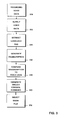
- Fig. 3 the different steps for the voice-controlled selection of a media file are shown.
- a first step 310 the voice data of the user of the system comprising the voice command are recorded.
- the voice data are supplied to the speech recognition unit 130.
- the language identification tag 113 is extracted from the file identification data, in step 330. Now the language of the terms comprised in the file identification data is known, so that the phonetic transcriptions can be generated in step 340.
- step 350 the phonetic transcription generated in step 340 is compared to the voice data in step 350.
- the speech recognition unit then generates a speech control command for the media player 120 by using speech recognition techniques known in the art (step 360).
- step 370 the media file is selected in correspondence with the generated speech control command.
- the language identification data i.e. the language identification tag helps to produce the correct phonetic transcription of the natural language term(s) comprised in the file identification data 111, so that the correct phonetic transcriptions can be obtained.
- the voice-controlled handling of a selection of a media file can be improved.
- the step 330 and 340 for generating the correct phonetic transcriptions may also be performed before the voice data is input in steps 310 and 320.
- the recognition vocabulary may be prepared in advance and stored until the system is used by inputting a voice command.
- the invention is not limited to the selection of one media file. It should be understood that at least one media file can be selected. In the case the user inputs the command "play [name of the artist]", the system can also select all files of said artist.
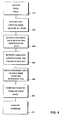
- a database is accessed, the database comprising a data storage unit as shown in Fig. 1.
- the file identification data of all files comprised in the database are extracted.
- the file identification information comprised in the file identification data has to be known, so that the different sets of each file identification data are extracted (step 430).
- the language identification tags are extracted for each data set (step 440).
- the phonetic data of each term of the data set is created by using the respective language identification tags (step 450).
- the language of each data set is not necessarily the same (cf. above the song "La Promesse" of Kate Ryan).
- the user will probably know the pronunciation of the file identification data, the pronunciation depending on the language. To this end, the language of the information comprised in the file identification data has to be known.
- phonetic transcriptions After phonetic transcriptions have been made, they are compared to the voice data input into the system (step 460), and the input voice control command can be executed (step 470).
- Fig. 5 shows a phonetic transcription of the name Kate Ryan and of the title of her song "La Promesse” in SAMPA.
- the language identification tag 113 of Fig. 5 has to be somehow incorporated into the identification data.
- a system is shown which helps to automatically determine the language of the file identification data.
- the system comprises a data storage unit 610 which comprises different media files 611.
- the media files do not comprise file identification data. If a user ripped the media files 611 comprised on a compact disc for storing the media files in another format such as an MP3 format or any other compressed data format, it would be difficult to select a media file using voice commands, as no information is,comprised in the media file allowing the identification such as the artist or the title of the file.
- file identification data 612 data bases may be accessed which comprise the additional file identification data.
- a commercially available data base is the Gracenote data base.
- the file identification data comprise information such as the title or the artist in different data entries 613. However, in these data entries the language ID is normally not incorporated.
- the file identification data 612 may already be present in the media file and need not to be transmitted from other data bases.
- the media file is present having the file identification data such as title and artist, the natural language of the title and the artist is not yet known.
- a user could determine the language for each data set of the data storage unit, but this would be a very time-consuming task.
- a language estimation unit 20 is provided which estimates the language based on the information contained in the file identification data.
- These language estimation units extract the data entries, e.g. the title, such as "Singing in the rain” or the name of the artist such as George Michael and determine the respective natural language of the data entries 613.
- the determined natural language is then fed to a data processing unit which adds the language ID tag estimated by unit 620 to the respective data entry.
- a data processing unit which adds the language ID tag estimated by unit 620 to the respective data entry.
- the data processing unit has added the language to file identification data comprising different data sets 614, each data set comprising a data entry 613 such as the title or the artist and the corresponding language ID tag 615.
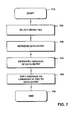
- Fig. 7 the basic steps carried out for determining the natural language ID are shown.
- the process starts in a step 710.
- a first step 720 the media file is selected for which the language of the file identification data should be estimated.
- the data entry 613 such as the title or the artist are retrieved for the file identification data.
- step 740 the natural language of the data entry is determined using a statistical model as will be explained lateron, and the determined language is then added to the data entry in step 750.
- the process ends in step 760.
- Fig. 8 a more detailed flow chart for selecting the language of a data entry is shown. In case of names or short titles the estimated language will often be incorrect. In order to improve the likelihood that the language estimation unit 620 determines the correct language additional information of the artist or of the media file may be used. In the embodiment shown in Fig. 8 media files of the same artist are taken into consideration for determining the correct language. The method starts in step 810. In step 820 the media file is selected for which the language of the file identification data should be determined. In order to do so first of all the artist itself is determined in step 830 retrieving the information from the corresponding data entry. In a next step 840 other media files of said artist are determined.
- step 850 the language of the other media files may be determined and the language-determining step 850 may be used for the media file selected in step 820 (step 860).
- step 850 it is possible to estimate the languages of the title or the language of an album or an artist. This can be done for all the other media files of said artist or for at least some of the other media files of said artist comprised in a data base. If the result of step 850 is that a majority of the media files have file identification data of a first predetermined language, said predetermined language may be used for determining the language of the media file selected in step 820. Artists often use one single language in their songs. In rare cases two different languages are used.
- the transfer of the estimated language to all or other media files can be made dependent on the likelihood that the estimated language is correct.
- the score can be determined for each estimated language, the score indicating the concordance of a data entry with one language.
- Each language has its characteristic sequence of characters.
- the score indicates whether a data entry such as the title or the name fits well the characteristics of a certain language.
- a confidence value can be determined for each determined language.
- the language estimation unit uses a statistical model by comparing the data entry to different languages. The most likely language, e.g.
- the language having the highest score may be used as estimated language.
- the confidence value indicates how sure the language estimation unit 620 can be that the correct language was identified.
- all the data entries of the media files may be connected to one large combined data entry, and the language can be determined for the combined data entry. Additionally, it is possible to separately estimate the language for each data entry and to select the language which was estimated in most of the cases. Additionally, the score resulting from each estimation may be used, and the different scores for the different media files can be combined in order to select the correct language.
- the information of other media files are taken into account.
- other data entries of the media file for which the language should be selected.
- the language of the name of the artist is to be determined
- the language of the title may be determined first, and the determined language may then also be used for the language of the name of the artist. It should be understood that the selection can also be made dependent on the determined score or confidence values.
- the present invention helps to provide a speech control system which uses the information of the language identification data for the correct generation of the voice control command which is fed to the media player which selects the media file in correspondence with the input voice data.
Landscapes
- Engineering & Computer Science (AREA)
- Computational Linguistics (AREA)
- Health & Medical Sciences (AREA)
- Audiology, Speech & Language Pathology (AREA)
- Theoretical Computer Science (AREA)
- Physics & Mathematics (AREA)
- Acoustics & Sound (AREA)
- Multimedia (AREA)
- Artificial Intelligence (AREA)
- General Health & Medical Sciences (AREA)
- General Engineering & Computer Science (AREA)
- General Physics & Mathematics (AREA)
- Human Computer Interaction (AREA)
- Management Or Editing Of Information On Record Carriers (AREA)
Priority Applications (1)
| Application Number | Priority Date | Filing Date | Title |
|---|---|---|---|
| EP06004055.7A EP1826686B1 (de) | 2006-02-28 | 2006-02-28 | Sprachgesteuertes Multimedia-Datenabfragesystem |
Applications Claiming Priority (1)
| Application Number | Priority Date | Filing Date | Title |
|---|---|---|---|
| EP06004055.7A EP1826686B1 (de) | 2006-02-28 | 2006-02-28 | Sprachgesteuertes Multimedia-Datenabfragesystem |
Publications (2)
| Publication Number | Publication Date |
|---|---|
| EP1826686A1 true EP1826686A1 (de) | 2007-08-29 |
| EP1826686B1 EP1826686B1 (de) | 2013-08-28 |
Family
ID=36229724
Family Applications (1)
| Application Number | Title | Priority Date | Filing Date |
|---|---|---|---|
| EP06004055.7A Expired - Lifetime EP1826686B1 (de) | 2006-02-28 | 2006-02-28 | Sprachgesteuertes Multimedia-Datenabfragesystem |
Country Status (1)
| Country | Link |
|---|---|
| EP (1) | EP1826686B1 (de) |
Cited By (3)
| Publication number | Priority date | Publication date | Assignee | Title |
|---|---|---|---|---|
| WO2019067037A1 (en) * | 2017-09-29 | 2019-04-04 | Rovi Guides, Inc. | RECOMMENDATION OF RESULTS IN SEVERAL LANGUAGES FOR SEARCH QUERY BASED ON A USER PROFILE |
| US10747817B2 (en) | 2017-09-29 | 2020-08-18 | Rovi Guides, Inc. | Recommending language models for search queries based on user profile |
| US10769210B2 (en) | 2017-09-29 | 2020-09-08 | Rovi Guides, Inc. | Recommending results in multiple languages for search queries based on user profile |
Citations (2)
| Publication number | Priority date | Publication date | Assignee | Title |
|---|---|---|---|---|
| US20040054541A1 (en) | 2002-09-16 | 2004-03-18 | David Kryze | System and method of media file access and retrieval using speech recognition |
| US20050108017A1 (en) * | 2003-10-27 | 2005-05-19 | John-Alexander Esser | Determining language for word recognition event |
-
2006
- 2006-02-28 EP EP06004055.7A patent/EP1826686B1/de not_active Expired - Lifetime
Patent Citations (2)
| Publication number | Priority date | Publication date | Assignee | Title |
|---|---|---|---|---|
| US20040054541A1 (en) | 2002-09-16 | 2004-03-18 | David Kryze | System and method of media file access and retrieval using speech recognition |
| US20050108017A1 (en) * | 2003-10-27 | 2005-05-19 | John-Alexander Esser | Determining language for word recognition event |
Non-Patent Citations (3)
| Title |
|---|
| DAVID ELWORTHY: "Language Identification with Confidence Limits", PROCEEDINGS OF THE SIXTH WORKSHOP ON VERY LARGE CORPORA, 1998, Montreal, Canada, pages 94 - 101, XP002381779, Retrieved from the Internet <URL:http://arxiv.org/abs/cs.CL/9907010> [retrieved on 20060519] * |
| HENRICH P ED - TUBACH J P ET AL TUBACH J P ET AL: "LANGUAGE IDENTIFICATION FOR THE AUTOMATIC GRAPHEME-TO-PHONEME CONVERSION OF FOREIGN WORDS IN A GERMAN TEXT-TO-SPEECH SYSTEM", PROCEEDINGS OF THE EUROPEAN CONFERENCE ON SPEECH COMMUNICATION AND TECHNOLOGY (EUROSPEECH). PARIS, SEPT. 26 - 28, 1989, EDINBURGH, CEP CONSULTANTS, GB, vol. VOL. 2 CONF. 1, 1 September 1989 (1989-09-01), pages 220 - 223, XP000209996 * |
| MAISON B ET AL: "Pronunciation modeling for names of foreign origin", AUTOMATIC SPEECH RECOGNITION AND UNDERSTANDING, 2003. ASRU '03. 2003 IEEE WORKSHOP ON ST. THOMAS, VI, USA NOV. 30-DEC. 3, 2003, PISCATAWAY, NJ, USA,IEEE, 30 November 2003 (2003-11-30), pages 429 - 434, XP010713325, ISBN: 0-7803-7980-2 * |
Cited By (6)
| Publication number | Priority date | Publication date | Assignee | Title |
|---|---|---|---|---|
| WO2019067037A1 (en) * | 2017-09-29 | 2019-04-04 | Rovi Guides, Inc. | RECOMMENDATION OF RESULTS IN SEVERAL LANGUAGES FOR SEARCH QUERY BASED ON A USER PROFILE |
| US10747817B2 (en) | 2017-09-29 | 2020-08-18 | Rovi Guides, Inc. | Recommending language models for search queries based on user profile |
| US10769210B2 (en) | 2017-09-29 | 2020-09-08 | Rovi Guides, Inc. | Recommending results in multiple languages for search queries based on user profile |
| EP3813062A1 (de) * | 2017-09-29 | 2021-04-28 | Rovi Guides, Inc. | Empfehlungen von ergebnissen in mehreren sprachen für suchfragen auf der basis des benutzerprofils |
| US11620340B2 (en) | 2017-09-29 | 2023-04-04 | Rovi Product Corporation | Recommending results in multiple languages for search queries based on user profile |
| US11966442B2 (en) | 2017-09-29 | 2024-04-23 | Rovi Product Corporation | Recommending language models for search queries based on user profile |
Also Published As
| Publication number | Publication date |
|---|---|
| EP1826686B1 (de) | 2013-08-28 |
Similar Documents
| Publication | Publication Date | Title |
|---|---|---|
| US8666727B2 (en) | Voice-controlled data system | |
| EP1693829B1 (de) | Sprachgesteuertes Datensystem | |
| US8106285B2 (en) | Speech-driven selection of an audio file | |
| CN101996631B (zh) | 用于对齐文本的方法和装置 | |
| US7979268B2 (en) | String matching method and system and computer-readable recording medium storing the string matching method | |
| EP1909263B1 (de) | Nutzung von Sprachidentifizierung von Mediendateidaten in Sprachdialogsystemen | |
| US8200490B2 (en) | Method and apparatus for searching multimedia data using speech recognition in mobile device | |
| US8117026B2 (en) | String matching method and system using phonetic symbols and computer-readable recording medium storing computer program for executing the string matching method | |
| JP4218758B2 (ja) | 字幕生成装置、字幕生成方法、及びプログラム | |
| KR100760301B1 (ko) | 부분 검색어 추출을 통한 미디어 파일 검색 방법 및 장치 | |
| WO2003010754A1 (fr) | Systeme de recherche a entree vocale | |
| US8706484B2 (en) | Voice recognition dictionary generation apparatus and voice recognition dictionary generation method | |
| JP5897718B2 (ja) | 音声検索装置、計算機読み取り可能な記憶媒体、及び音声検索方法 | |
| EP1826686A1 (de) | Sprachgesteuertes Multimedia-Datenabfragesystem | |
| JP4697432B2 (ja) | 音楽再生装置、音楽再生方法及び音楽再生用プログラム | |
| Ordelman et al. | Exploration of audiovisual heritage using audio indexing technology | |
| Kruspe et al. | Retrieval of song lyrics from sung queries | |
| Nouza et al. | Large-scale processing, indexing and search system for Czech audio-visual cultural heritage archives | |
| Hjortnæs et al. | Keyword spotting for audiovisual archival search in Uralic languages | |
| JP2005084422A (ja) | 音声認識検索装置 | |
| Eickeler et al. | Two novel applications of Speech Recognition methods for robust Spoken Document Retrieval | |
| Pfeil et al. | Evaluating text normalization for speech-based media selection | |
| Ordelman | Speech-based information retrieval for Dutch | |
| Kim et al. | Advances in SpeechFind: CRSS-UTD Spoken Document Retrieval System |
Legal Events
| Date | Code | Title | Description |
|---|---|---|---|
| PUAI | Public reference made under article 153(3) epc to a published international application that has entered the european phase |
Free format text: ORIGINAL CODE: 0009012 |
|
| AK | Designated contracting states |
Kind code of ref document: A1 Designated state(s): AT BE BG CH CY CZ DE DK EE ES FI FR GB GR HU IE IS IT LI LT LU LV MC NL PL PT RO SE SI SK TR |
|
| AX | Request for extension of the european patent |
Extension state: AL BA HR MK YU |
|
| 17P | Request for examination filed |
Effective date: 20080131 |
|
| 17Q | First examination report despatched |
Effective date: 20080229 |
|
| AKX | Designation fees paid |
Designated state(s): AT BE BG CH CY CZ DE DK EE ES FI FR GB GR HU IE IS IT LI LT LU LV MC NL PL PT RO SE SI SK TR |
|
| REG | Reference to a national code |
Ref country code: DE Ref legal event code: R079 Ref document number: 602006038070 Country of ref document: DE Free format text: PREVIOUS MAIN CLASS: G06F0017300000 Ipc: G10L0015000000 |
|
| GRAP | Despatch of communication of intention to grant a patent |
Free format text: ORIGINAL CODE: EPIDOSNIGR1 |
|
| RIC1 | Information provided on ipc code assigned before grant |
Ipc: G10L 15/00 20130101AFI20130423BHEP Ipc: G06F 17/27 20060101ALI20130423BHEP Ipc: G10L 15/187 20130101ALI20130423BHEP |
|
| INTG | Intention to grant announced |
Effective date: 20130514 |
|
| GRAS | Grant fee paid |
Free format text: ORIGINAL CODE: EPIDOSNIGR3 |
|
| GRAA | (expected) grant |
Free format text: ORIGINAL CODE: 0009210 |
|
| AK | Designated contracting states |
Kind code of ref document: B1 Designated state(s): AT BE BG CH CY CZ DE DK EE ES FI FR GB GR HU IE IS IT LI LT LU LV MC NL PL PT RO SE SI SK TR |
|
| REG | Reference to a national code |
Ref country code: GB Ref legal event code: FG4D |
|
| REG | Reference to a national code |
Ref country code: CH Ref legal event code: EP |
|
| REG | Reference to a national code |
Ref country code: AT Ref legal event code: REF Ref document number: 629722 Country of ref document: AT Kind code of ref document: T Effective date: 20130915 |
|
| REG | Reference to a national code |
Ref country code: IE Ref legal event code: FG4D |
|
| REG | Reference to a national code |
Ref country code: DE Ref legal event code: R096 Ref document number: 602006038070 Country of ref document: DE Effective date: 20131024 |
|
| REG | Reference to a national code |
Ref country code: AT Ref legal event code: MK05 Ref document number: 629722 Country of ref document: AT Kind code of ref document: T Effective date: 20130828 |
|
| REG | Reference to a national code |
Ref country code: LT Ref legal event code: MG4D |
|
| REG | Reference to a national code |
Ref country code: NL Ref legal event code: VDEP Effective date: 20130828 |
|
| PG25 | Lapsed in a contracting state [announced via postgrant information from national office to epo] |
Ref country code: CY Free format text: LAPSE BECAUSE OF FAILURE TO SUBMIT A TRANSLATION OF THE DESCRIPTION OR TO PAY THE FEE WITHIN THE PRESCRIBED TIME-LIMIT Effective date: 20130724 Ref country code: IS Free format text: LAPSE BECAUSE OF FAILURE TO SUBMIT A TRANSLATION OF THE DESCRIPTION OR TO PAY THE FEE WITHIN THE PRESCRIBED TIME-LIMIT Effective date: 20131228 Ref country code: SE Free format text: LAPSE BECAUSE OF FAILURE TO SUBMIT A TRANSLATION OF THE DESCRIPTION OR TO PAY THE FEE WITHIN THE PRESCRIBED TIME-LIMIT Effective date: 20130828 Ref country code: LT Free format text: LAPSE BECAUSE OF FAILURE TO SUBMIT A TRANSLATION OF THE DESCRIPTION OR TO PAY THE FEE WITHIN THE PRESCRIBED TIME-LIMIT Effective date: 20130828 Ref country code: AT Free format text: LAPSE BECAUSE OF FAILURE TO SUBMIT A TRANSLATION OF THE DESCRIPTION OR TO PAY THE FEE WITHIN THE PRESCRIBED TIME-LIMIT Effective date: 20130828 Ref country code: PT Free format text: LAPSE BECAUSE OF FAILURE TO SUBMIT A TRANSLATION OF THE DESCRIPTION OR TO PAY THE FEE WITHIN THE PRESCRIBED TIME-LIMIT Effective date: 20131230 |
|
| REG | Reference to a national code |
Ref country code: NL Ref legal event code: VDEP Effective date: 20130828 |
|
| PG25 | Lapsed in a contracting state [announced via postgrant information from national office to epo] |
Ref country code: SI Free format text: LAPSE BECAUSE OF FAILURE TO SUBMIT A TRANSLATION OF THE DESCRIPTION OR TO PAY THE FEE WITHIN THE PRESCRIBED TIME-LIMIT Effective date: 20130828 Ref country code: GR Free format text: LAPSE BECAUSE OF FAILURE TO SUBMIT A TRANSLATION OF THE DESCRIPTION OR TO PAY THE FEE WITHIN THE PRESCRIBED TIME-LIMIT Effective date: 20131129 Ref country code: BE Free format text: LAPSE BECAUSE OF FAILURE TO SUBMIT A TRANSLATION OF THE DESCRIPTION OR TO PAY THE FEE WITHIN THE PRESCRIBED TIME-LIMIT Effective date: 20130828 Ref country code: LV Free format text: LAPSE BECAUSE OF FAILURE TO SUBMIT A TRANSLATION OF THE DESCRIPTION OR TO PAY THE FEE WITHIN THE PRESCRIBED TIME-LIMIT Effective date: 20130828 Ref country code: FI Free format text: LAPSE BECAUSE OF FAILURE TO SUBMIT A TRANSLATION OF THE DESCRIPTION OR TO PAY THE FEE WITHIN THE PRESCRIBED TIME-LIMIT Effective date: 20130828 Ref country code: PL Free format text: LAPSE BECAUSE OF FAILURE TO SUBMIT A TRANSLATION OF THE DESCRIPTION OR TO PAY THE FEE WITHIN THE PRESCRIBED TIME-LIMIT Effective date: 20130828 |
|
| PG25 | Lapsed in a contracting state [announced via postgrant information from national office to epo] |
Ref country code: CY Free format text: LAPSE BECAUSE OF FAILURE TO SUBMIT A TRANSLATION OF THE DESCRIPTION OR TO PAY THE FEE WITHIN THE PRESCRIBED TIME-LIMIT Effective date: 20130828 |
|
| PG25 | Lapsed in a contracting state [announced via postgrant information from national office to epo] |
Ref country code: SK Free format text: LAPSE BECAUSE OF FAILURE TO SUBMIT A TRANSLATION OF THE DESCRIPTION OR TO PAY THE FEE WITHIN THE PRESCRIBED TIME-LIMIT Effective date: 20130828 Ref country code: NL Free format text: LAPSE BECAUSE OF FAILURE TO SUBMIT A TRANSLATION OF THE DESCRIPTION OR TO PAY THE FEE WITHIN THE PRESCRIBED TIME-LIMIT Effective date: 20130828 Ref country code: DK Free format text: LAPSE BECAUSE OF FAILURE TO SUBMIT A TRANSLATION OF THE DESCRIPTION OR TO PAY THE FEE WITHIN THE PRESCRIBED TIME-LIMIT Effective date: 20130828 Ref country code: RO Free format text: LAPSE BECAUSE OF FAILURE TO SUBMIT A TRANSLATION OF THE DESCRIPTION OR TO PAY THE FEE WITHIN THE PRESCRIBED TIME-LIMIT Effective date: 20130828 Ref country code: CZ Free format text: LAPSE BECAUSE OF FAILURE TO SUBMIT A TRANSLATION OF THE DESCRIPTION OR TO PAY THE FEE WITHIN THE PRESCRIBED TIME-LIMIT Effective date: 20130828 Ref country code: EE Free format text: LAPSE BECAUSE OF FAILURE TO SUBMIT A TRANSLATION OF THE DESCRIPTION OR TO PAY THE FEE WITHIN THE PRESCRIBED TIME-LIMIT Effective date: 20130828 |
|
| PG25 | Lapsed in a contracting state [announced via postgrant information from national office to epo] |
Ref country code: ES Free format text: LAPSE BECAUSE OF FAILURE TO SUBMIT A TRANSLATION OF THE DESCRIPTION OR TO PAY THE FEE WITHIN THE PRESCRIBED TIME-LIMIT Effective date: 20130828 Ref country code: IT Free format text: LAPSE BECAUSE OF FAILURE TO SUBMIT A TRANSLATION OF THE DESCRIPTION OR TO PAY THE FEE WITHIN THE PRESCRIBED TIME-LIMIT Effective date: 20130828 |
|
| REG | Reference to a national code |
Ref country code: DE Ref legal event code: R097 Ref document number: 602006038070 Country of ref document: DE |
|
| PLBE | No opposition filed within time limit |
Free format text: ORIGINAL CODE: 0009261 |
|
| STAA | Information on the status of an ep patent application or granted ep patent |
Free format text: STATUS: NO OPPOSITION FILED WITHIN TIME LIMIT |
|
| 26N | No opposition filed |
Effective date: 20140530 |
|
| REG | Reference to a national code |
Ref country code: DE Ref legal event code: R097 Ref document number: 602006038070 Country of ref document: DE Effective date: 20140530 |
|
| PG25 | Lapsed in a contracting state [announced via postgrant information from national office to epo] |
Ref country code: LU Free format text: LAPSE BECAUSE OF FAILURE TO SUBMIT A TRANSLATION OF THE DESCRIPTION OR TO PAY THE FEE WITHIN THE PRESCRIBED TIME-LIMIT Effective date: 20140228 Ref country code: MC Free format text: LAPSE BECAUSE OF FAILURE TO SUBMIT A TRANSLATION OF THE DESCRIPTION OR TO PAY THE FEE WITHIN THE PRESCRIBED TIME-LIMIT Effective date: 20130828 |
|
| REG | Reference to a national code |
Ref country code: CH Ref legal event code: PL |
|
| PG25 | Lapsed in a contracting state [announced via postgrant information from national office to epo] |
Ref country code: CH Free format text: LAPSE BECAUSE OF NON-PAYMENT OF DUE FEES Effective date: 20140228 Ref country code: LI Free format text: LAPSE BECAUSE OF NON-PAYMENT OF DUE FEES Effective date: 20140228 |
|
| REG | Reference to a national code |
Ref country code: IE Ref legal event code: MM4A |
|
| PG25 | Lapsed in a contracting state [announced via postgrant information from national office to epo] |
Ref country code: IE Free format text: LAPSE BECAUSE OF NON-PAYMENT OF DUE FEES Effective date: 20140228 |
|
| REG | Reference to a national code |
Ref country code: FR Ref legal event code: PLFP Year of fee payment: 11 |
|
| PG25 | Lapsed in a contracting state [announced via postgrant information from national office to epo] |
Ref country code: BG Free format text: LAPSE BECAUSE OF FAILURE TO SUBMIT A TRANSLATION OF THE DESCRIPTION OR TO PAY THE FEE WITHIN THE PRESCRIBED TIME-LIMIT Effective date: 20130828 |
|
| PGFP | Annual fee paid to national office [announced via postgrant information from national office to epo] |
Ref country code: FR Payment date: 20160217 Year of fee payment: 11 |
|
| PG25 | Lapsed in a contracting state [announced via postgrant information from national office to epo] |
Ref country code: TR Free format text: LAPSE BECAUSE OF FAILURE TO SUBMIT A TRANSLATION OF THE DESCRIPTION OR TO PAY THE FEE WITHIN THE PRESCRIBED TIME-LIMIT Effective date: 20130828 Ref country code: HU Free format text: LAPSE BECAUSE OF FAILURE TO SUBMIT A TRANSLATION OF THE DESCRIPTION OR TO PAY THE FEE WITHIN THE PRESCRIBED TIME-LIMIT; INVALID AB INITIO Effective date: 20060228 |
|
| REG | Reference to a national code |
Ref country code: FR Ref legal event code: ST Effective date: 20171031 |
|
| PG25 | Lapsed in a contracting state [announced via postgrant information from national office to epo] |
Ref country code: FR Free format text: LAPSE BECAUSE OF NON-PAYMENT OF DUE FEES Effective date: 20170228 |
|
| PGFP | Annual fee paid to national office [announced via postgrant information from national office to epo] |
Ref country code: GB Payment date: 20220124 Year of fee payment: 17 Ref country code: DE Payment date: 20220119 Year of fee payment: 17 |
|
| P01 | Opt-out of the competence of the unified patent court (upc) registered |
Effective date: 20230526 |
|
| REG | Reference to a national code |
Ref country code: DE Ref legal event code: R119 Ref document number: 602006038070 Country of ref document: DE |
|
| GBPC | Gb: european patent ceased through non-payment of renewal fee |
Effective date: 20230228 |
|
| PG25 | Lapsed in a contracting state [announced via postgrant information from national office to epo] |
Ref country code: GB Free format text: LAPSE BECAUSE OF NON-PAYMENT OF DUE FEES Effective date: 20230228 |
|
| PG25 | Lapsed in a contracting state [announced via postgrant information from national office to epo] |
Ref country code: GB Free format text: LAPSE BECAUSE OF NON-PAYMENT OF DUE FEES Effective date: 20230228 Ref country code: DE Free format text: LAPSE BECAUSE OF NON-PAYMENT OF DUE FEES Effective date: 20230901 |