EP1826698A2 - Stockage portable et procédé de gestion de données correspondantes - Google Patents
Stockage portable et procédé de gestion de données correspondantes Download PDFInfo
- Publication number
- EP1826698A2 EP1826698A2 EP07101687A EP07101687A EP1826698A2 EP 1826698 A2 EP1826698 A2 EP 1826698A2 EP 07101687 A EP07101687 A EP 07101687A EP 07101687 A EP07101687 A EP 07101687A EP 1826698 A2 EP1826698 A2 EP 1826698A2
- Authority
- EP
- European Patent Office
- Prior art keywords
- drm
- storage
- data
- host device
- system identifier
- Prior art date
- Legal status (The legal status is an assumption and is not a legal conclusion. Google has not performed a legal analysis and makes no representation as to the accuracy of the status listed.)
- Withdrawn
Links
Images





Classifications
-
- G—PHYSICS
- G06—COMPUTING OR CALCULATING; COUNTING
- G06F—ELECTRIC DIGITAL DATA PROCESSING
- G06F21/00—Security arrangements for protecting computers, components thereof, programs or data against unauthorised activity
- G06F21/10—Protecting distributed programs or content, e.g. vending or licensing of copyrighted material ; Digital rights management [DRM]
-
- H—ELECTRICITY
- H04—ELECTRIC COMMUNICATION TECHNIQUE
- H04L—TRANSMISSION OF DIGITAL INFORMATION, e.g. TELEGRAPHIC COMMUNICATION
- H04L9/00—Cryptographic mechanisms or cryptographic arrangements for secret or secure communications; Network security protocols
- H04L9/32—Cryptographic mechanisms or cryptographic arrangements for secret or secure communications; Network security protocols including means for verifying the identity or authority of a user of the system or for message authentication, e.g. authorization, entity authentication, data integrity or data verification, non-repudiation, key authentication or verification of credentials
-
- G—PHYSICS
- G06—COMPUTING OR CALCULATING; COUNTING
- G06F—ELECTRIC DIGITAL DATA PROCESSING
- G06F21/00—Security arrangements for protecting computers, components thereof, programs or data against unauthorised activity
- G06F21/70—Protecting specific internal or peripheral components, in which the protection of a component leads to protection of the entire computer
- G06F21/78—Protecting specific internal or peripheral components, in which the protection of a component leads to protection of the entire computer to assure secure storage of data
- G06F21/79—Protecting specific internal or peripheral components, in which the protection of a component leads to protection of the entire computer to assure secure storage of data in semiconductor storage media, e.g. directly-addressable memories
-
- H—ELECTRICITY
- H04—ELECTRIC COMMUNICATION TECHNIQUE
- H04L—TRANSMISSION OF DIGITAL INFORMATION, e.g. TELEGRAPHIC COMMUNICATION
- H04L9/00—Cryptographic mechanisms or cryptographic arrangements for secret or secure communications; Network security protocols
- H04L9/08—Key distribution or management, e.g. generation, sharing or updating, of cryptographic keys or passwords
-
- H—ELECTRICITY
- H04—ELECTRIC COMMUNICATION TECHNIQUE
- H04L—TRANSMISSION OF DIGITAL INFORMATION, e.g. TELEGRAPHIC COMMUNICATION
- H04L9/00—Cryptographic mechanisms or cryptographic arrangements for secret or secure communications; Network security protocols
- H04L9/30—Public key, i.e. encryption algorithm being computationally infeasible to invert or user's encryption keys not requiring secrecy
-
- G—PHYSICS
- G06—COMPUTING OR CALCULATING; COUNTING
- G06F—ELECTRIC DIGITAL DATA PROCESSING
- G06F2221/00—Indexing scheme relating to security arrangements for protecting computers, components thereof, programs or data against unauthorised activity
- G06F2221/21—Indexing scheme relating to G06F21/00 and subgroups addressing additional information or applications relating to security arrangements for protecting computers, components thereof, programs or data against unauthorised activity
- G06F2221/2129—Authenticate client device independently of the user
-
- G—PHYSICS
- G06—COMPUTING OR CALCULATING; COUNTING
- G06F—ELECTRIC DIGITAL DATA PROCESSING
- G06F2221/00—Indexing scheme relating to security arrangements for protecting computers, components thereof, programs or data against unauthorised activity
- G06F2221/21—Indexing scheme relating to G06F21/00 and subgroups addressing additional information or applications relating to security arrangements for protecting computers, components thereof, programs or data against unauthorised activity
- G06F2221/2137—Time limited access, e.g. to a computer or data
Definitions
- DRM digital rights management
- DRM digital rights management
- a device 110 can get digital content from a content provider 120.
- the digital content provided by a content provider has been encrypted, and there should be a RO in order to use the encrypted digital content.
- the device 110 can get a RO, in which the right to use the encrypted digital content is included, from a RO-issuing organization 130, after the user pays for it.
- the RO includes a key that can decrypt the encrypted digital content.
- the RO-issuing organization 130 reports the RO-issuing list to the content provider 120, and the RO-issuing organization 130 and the content provider 120 can be the same body depending on the situation.
- the device that acquired the RO can use the encrypted digital content via the RO.
- the encrypted digital content can be freely copied and distributed to other devices (not shown).
- the RO includes limit information such as the number of allowed uses of the encrypted digital content or the period of use of the encrypted digital content, the number of allowed copies of the RO, and others, there are limitations in the use of ROs, unlike encrypted digital content.
- Such DRM technology effectively protects digital content.
- DRM technology Because of the advantages of DRM technology, many content providers are securing DRM technology in order to protect their content, and it is expected that more DRM technology will be developed.
- the device 110 stores all the information necessary for DRM such as encrypted digital content and the RO.
- DRM digital content
- the portable storage has little or no computational functionality compared with host devices such mobile phones and PDAs, it has been difficult to apply various DRM technologies through a portable storage.
- Korean Unexamined Patent 10-2004-0053155 discloses a technology that can execute a plurality of applications in the same communication session while changing the applications.
- this patent is a technology that can use an existing session when simply changing applications, and does not suggest a technology that can support various DRM functions within a portable storage having limited functionality.
- Some exemplary embodiments of the present invention overcome the above disadvantages and problems. Some exemplary embodiments of the present invention may overcome other disadvantages and problems not described above.
- the present invention provides a method and apparatus for supporting a plurality of Digital Rights Management (DRM) technologies in a portable storage of limited performance.
- DRM Digital Rights Management
- a portable storage including a plurality of authentication modules that perform mutual authentication using different mutual authentication algorithms; a control module that controls the authentication modules so that any of the authentication modules can perform mutual authentication work with a host device through the DRM system identifier extracted from an authentication-request message received from the host device; and an object-management module that protects communication with the host device using a generated session key as a result of the mutual authentication.
- a method of managing data of a portable storage including performing a mutual authentication work with a host device using one of a plurality of authentication algorithms through a DRM system identifier extracted from a authentication-request message received from the host device; and protecting communication with the host device using a session key generated as a result of the mutual authentication.
- a host device refers to a device that can be connected to a portable storage, and can play back a content object by using a Rights Object (RO).
- the host device can be a portable content-playback device such as a mobile phone, a PDA or an MP3 player, or a fixed-type content-playback device such as a desktop computer or a digital TV.
- a portable storage refers to a storage device that includes nonvolatile memory that can be read, written to, and have data deleted from, such as a flash memory, has predetermined computational functionality, and can be easily connected and disconnected to a host device.
- Some examples of a mobile storage device are smart media, a memory stick, a CF card, an XD card, and a multimedia card.
- a content object is an encrypted digital object.
- the digital content is not limited to video, audio, a still image, a game, and text.
- a RO is a kind of license allowing use of a content object.
- the RO includes a content-encryption key, permission information, constraint information, and a content-object identifier that can identify the content object capable of being played back using the content-encryption key.
- the permission information is a key that can play back a content object, and can be in the predetermined binary form.
- the content-encryption key can be decrypted and used in acquiring original content.
- Play refers to a right that expresses a content object in the form of audio or video.
- Play can be set as the permission information of a RO to be consumed to play back a content object.
- Display refers to a right to express a content object to a visual device
- Print refers to a right to generate a hard copy of a content object. For example, if a content object is about a still video, in order to play back the content object, at least one among Display and Print can be set as permission information of the RO to be consumed.
- Execute refers to a right that can use a content object of a game or other types of application program.
- a content object is a Java game
- Execute in order to play back the content object, Execute can be set as permission information of the RO to be used.
- duplication methods are copying and moving.
- Copying and moving is a right to store a RO stored in one device, in another device.
- the RO stored in the original device is deactivated, but in the case of copying, even though the RO is stored in another device, the RO stored in the original device remains activated.
- the deactivation can mean deletion of the RO.
- Constraint information indicates a limit that can play back a content object, and one or more sets of information can be set for permission information.
- Some examples of the constraint information are a count constraint, a date-time constraint, an interval constraint, and an accumulated time constraint.
- the count constraint specifies how many times a content object can be played back. For example, if the count restraint of the RO is set as 10, the host device can play back the content object 10 times by using the RO.
- the date-time constraint limits the date and the time when the content object can be played back, and can include at least one among a start element and an end element.
- the host device can play back the content object after the date and the time indicated by the start element, and can play back the content object until the date and the time indicated by the end element.
- the interval constraint limits the period when a content object can be played back by using a RO from the point of time when the content object is played back for the first time. For example, in the case where the period constraint is set as 1 week, if the host device plays back the content object by using a RO for the first time at XX:XX:XX, December 1, 2005, the host device can play back the content object by using the RO until XX:XX:XX, December 8, 2005.
- the accumulated time constraint limits the total sum of hours for which the content object can be played back by using the RO. For example, if the accumulated time constraint is set as 10 hours, the host device can play back the content object for 10 hours by using the RO.
- the host device is not limited in the number of times or the date of the playback of the content object by using the RO.
- the state information indicates the consumption level of a RO. For example, in the case where the constraint information on the RO is set as 10, and the host device has consumed the RO for 4 hours in order for the device to use the content object, the state information indicates the information on how many hours (4 hours) the host device has consumed the RO or how many hours (6 hours) the host device will use the content object by using the RO.
- the state information can be included in the RO, or can be managed as separate information along with the RO by the device that stores the RO.
- the meta-information is metadata on a RO, and can include at least one among data related with permission information, constraint information, and state information.
- Figure 2 illustrates the connection state between a host state and a portable storage device according to an exemplary embodiment of the present invention.
- a host device 200 can be connected to a portable storage 300 via a portable-storage-interface module 220, and can include one or more DRM systems 210-1 to 210-N.
- DRM system is a module that executes DRM work, and each DRM system 210-1 to 210-N supports different DRM technologies.
- DRM systems 210-1 to 210-N hold their own unique identifiers. This could have been allocated according to mutual agreement between providers of each DRM system 210-1 to 210-N.
- the host device 200 transmits DRM-related data to the portable storage 300
- the identifier of DRM system in operation is transmitted along with the identifier of DRM system.
- the portable storage can know which type of DRM system the host device 200 uses.
- a DRM system is referred to using the format "210-x".
- FIG. 3 is a block diagram illustrating a portable storage according to an exemplary embodiment of the present invention.
- the illustrated portable storage 300 includes a host-interface module 310, a storage module 320, a control module 330, an object-management module 340, and a plurality of authentication modules 350-1 to 350-N.
- the authentication module is referred to as "350-x”.
- the host interface module 310 transmits data to the host device 200, or receives data from the host device 200.
- the portable storage 300 can be connected to the host device 200 via the host-interface module 310.
- the "connection” means an electrical connection, the state where the portable storage 300 and the host device 200 communicate with each other through a wire medium.
- this is merely exemplary, and the "connection” should include the meaning that the portable storage 300 and the host device 200 are in the state where they can communicate with each other through a wireless medium in a wireless state.
- the storage module 320 stores predetermined information or data.
- the storage module 320 includes a storage medium such as a flash memory.
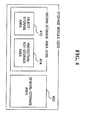
- the storage space held by the storage module 320 can be divided into a secure storage area 410 and a general storage area, as illustrated in Figure 4.
- non-secure data Data whose security is not important
- secure data data that needs to be protected
- the data stored in the secure-storage area 410 can be physically or logically protected from an approach by an external device or an external module.
- the secure-storage area 410 can be divided into an object-storage area 412 and a protection-key-storage area 414.
- the object-storage area 412 stores data that needs to be protected among data transmitted by the host device 200, or data generated as a result of communication with the host device 200. It is possible to define in advance what data can be stored in the object-storage area 412.
- the object-storage area 412 includes a plurality of object-storage slots 510-1 to 510-N.
- the DRM system identifier and predetermined security data are stored together in each object-storage slot.
- a part (from the start bit to the pth bit) of an object-storage slot 510-x is a DRM-system-identifier field 520
- the remaining part (from the (p + 1)th bit to the qth bit) is a data field 530 where security data is stored.
- the portable storage 300 can get to know what DRM system-related data is stored in each object-storage slot 510-1 to 510-L via the DRM-system-identifier field 520.
- the object-storage slots 510 illustrated in Figure 5 can include a summary information field (not shown) as well as the DRM system-identifier field 520 and the data field 530.
- the summary-information field can store identification information that indicates the type of data included in the data field 530. For example, by allocating 2 bits as the summary-information field, 00 (for the RO), 01 (for the state information), and 10 (for the meta-information) can be allocated.
- the host device 200 can retrieve desired data using the summary-information field. If the summary-information field is used, the summary information stored in the summary-information field can be transmitted together when the host device 200 transmits data, and the information can be extracted by the control module 330.
- the protection-key-storage area 414 stores a predetermined protection key allocated by DRM systems.
- the protection-key-storage area 414 can store a protection-key table 600 that includes the DRM-system identifier 610 and the protection key 620 corresponding to each DRM system.
- the protection key 620 corresponding to each DRM system is a unique encryption key allocated to each DRM system according to the mutual agreement between DRM-system providers.
- the protection key is used to protect data to be stored, in the case where data received in communication with the host device 200 is stored in the object-storage area 412 within the secure-storage area 410 of the storage module 320 according to the DRM system 210-x used by the host device 200.
- control module 330 controls the operation of modules 310, 320, 340, and 350-1 to 350M that constitute the portable storage 300.
- the control module 330 can identify the DRM-system identifier from the received information, and can determine the authentication module 350-x to be operated or can control the object-management module 340 through the confirmed DRM-system identifier.
- the object-management module 340 protects communication with the host device 200 using the generated session key. Specifically, the object-management module 340 can decrypt data received from the host device 200 using a session key, or can encrypt data to transmit to the host device 200 using a session key.
- the object-management module 340 can cryptologically protect data to be stored in the object-storage area 412 among the secure-storage area 410 of the storage module 320. Specifically, the object-management module 340 encrypts data to be stored in the object-storage area 412, using the protection key, and in the case where the encrypted data stored in the object-storage area 412 is provided to the host device 200, the data is decrypted using the protection key.
- the used protection key can be determined according to the DRM system used by the host device 200, and the type of DRM system can be known through the DRM system identifier received from the host device 200.
- the object-storage module 340 can store the related DRM-system identifier in the same object-storage slot as the data in order to confirm which DRM system the to-be-stored data is related to.
- the object-management module 340 can use a symmetric-key cryptography method such as the Data Encryption Standard (DES) or the Advanced Encryption Standard (AES). Such an object-management module 340 can be implemented as a single module by being integrated with the control module 330.
- DES Data Encryption Standard
- AES Advanced Encryption Standard
- the plurality of authentication modules 350-1 to 350-M performs mutual authentication work with the host device 200.
- the used mutual-authentication algorithm can be different depending on the DRM system, and the plurality of authentication modules 350-1 to 350-M use the mutual authentication algorithm used by the DRM system corresponding to each authentication module.
- Each authentication module 350-1 to 350-M can correspond to DRM systems 210-1 to 210-N of the host device 200.
- the portable storage 300 does not always hold the authentication module corresponding to all DRM systems 210-1 to 210-N, and there can be DRM systems that cannot be covered by the portable storage 30 depending on the exemplary embodiment.
- the portable storage 300 can perform the DRM work with various DRM systems.
- FIG. 7 is a flow chart illustrating a mutual authentication process according to an exemplary embodiment of the present invention.
- the illustrated mutual authentication process is merely exemplary, and the present invention is not limited to this.
- H refers to data that belongs to the host device 200 or has been generated by the host device 200
- P refers to data that belongs to the portable storage 300 or has been generated by the portable storage 300.
- the host device 200 requests the mutual authentication to the portable storage 300 (operation S710).
- the host device 200 can transmit a certificate H issued by the authentication authority on the host device 200.
- the certificate H includes an IDH and a public key H of the host device 200, and is electronically signed.
- the portable storage 300 which received the certificate H of the host device 200, confirms whether the certificate H is valid by using a Certificate Revocation List (CRL) (operation S712). If the certificate H of the host device 200 has not been registered in the CRL, the portable storage 300 can acquire the public key H of the host device 200 through the certificate H .
- CRL Certificate Revocation List
- the portable storage 300 If it is determined that the host device 200 is proper through the confirmation of the certificate H , the portable storage 300 generates a random number P (operation S714), and encrypts the generated random number P with the public key H of the host device 200 (operation S716).
- the portable storage 300 performs the mutual-authentication response (operation S720). At the time of the mutual-authentication response, the portable storage 300 transmits the certificate P issued on the portable storage 300 and the encrypted random number P .
- the certificate P includes the ID P and the public key P of the portable storage 300, and is electronically signed by the authentication authority.
- the host device 200 confirms that the portable storage 300 is a proper device, through the certificate P , and decrypts the encrypted random number P with its own individual key H (operation S722).
- the host device 200 can acquire the public key P of the portable storage 300 through the certificate P .
- the authenticationP confirmation work can be performed through the CRL as in the portable storage.
- the host device 200 In the case where it is determined that the portable storage 300 is proper, the host device 200 generates a random number H (operation S724), and encrypts the generated random number H with the public key P of the portable storage 300 (operation S726).
- the host device 200 sends a request for termination of the mutual authentication to the portable storage 300 (operation S730), and the host device 200 transmits the encrypted random number H .
- the portable storage 300 which receives the encrypted random number H , decrypts the encrypted random number H with its own individual key (operation S732).
- the host device 200 and the portable storage 300 share two random numbers (the random number H and the random number P )
- the host device 200 and the portable storage 300 which share two random numbers, generate a session key using the two random numbers (operations S740 and S742).
- the host device 200 and the portable-storage device 300 use the same key-generation algorithms to generate a session key.
- the security can be kept in the data transmission between the host device 200 and the portable storage 300.
- Figure 8 is a flow chart illustrating a process where a portable storage is connected to a host device according to an exemplary embodiment of the present invention.
- the host device 200 determines a DRM system 210-x to be used, and transmits an authentication-request message that includes an identifier of the DRM system to the portable storage 300.
- the control module 330 extracts the DRM-system identifier (operation S820).
- the control module 330 can check which DRM system the host device operates through the DRM-system identifier.
- the control module 330 delivers the authentication-request message to the authentication module corresponding to the DRM system identifier among the plurality of authentication modules 350-1 to 350-M (operation S830).
- the authentication module 350-x which receives the authentication-request message from the control module 330 among the plurality of authentication modules 350-1 to 350-M, performs the mutual authentication work with the DRM system 210-x of the host device 200 (operation S840).
- the information transmitted and received during the mutual authentication work passes the host interface module 310.
- the authentication module 350-x which completes the mutual authentication work, transmits the session key generated as a result of the mutual authentication to the object-management module 340 (operation S850).
- the object-management module 340 protects communication with the host device using the session key transmitted from the authentication module 350-x (operation S860).
- the object-management module 340 can store the session key transmitted from the authentication module 350-x in the object-storage area 412 within the secure-storage area 410 of the storage module 320.
- the session key is stored along with the authentication module 350-x and the identifier of the DRM system that performed the mutual authentication work.
- the object-management module 340 can delete the session key generated as a result of the mutual authentication work with the DRM system 210-x.
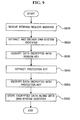
- Figure 9 is a flow chart illustrating a process where information is stored in a portable device according to an exemplary embodiment of the present invention.
- the DRM system 210-x of the host device 200 encrypts data to be stored by the DRM system itself, and generates the storage-request message that includes the encrypted data.
- the host device 200 inserts the identifier of the DRM system 210-x to the storage-request message, and transmits the message to the portable storage 300.
- the control module 330 extracts the DRM system identifier from the storage-request message, and transmits the identifier to the object-management module 340 (operation S920).
- the object-management module 340 decrypts the encrypted data included in the storage-request message using the session key corresponding to the DRM-system identifier transmitted from the control module 350 (operation S930). If the session key has been stored in the object-storage area 412 of the secure-storage area 410, the object-management module 340 can retrieve a necessary session key using the DRM-system identifier transmitted from the control module 350.
- the object-management module 340 extracts the protection key corresponding to the DRM-system identifier from the protection-key table stored in the security-key-storage area 414 (operation S940), and the decrypted data is encrypted using the extracted protection key (operation S950).
- the object-management module 340 stores the encrypted data and the DRM-system identifier in an empty object-storage slot of the object-storage area 412 within the secure-storage area 410 of the storage module 320 (operation S960).
- Figure 10 is a flow chart illustrating a data-retrieval process according to an exemplary embodiment of the present invention.
- the DRM system 210-x In the case where the host device 200 retrieves security data stored in the portable storage 300 using a predetermined DRM system 210-x, the DRM system 210-x generates a retrieval-request message.
- the host device 200 inserts the identifier of the DRM system 210-x to the retrieval-request message, and transmits the identifier to the portable storage 300.
- the control module 330 extracts the DRM-system identifier from the retrieval-request message, and delivers the identifier to the object-management module 340 (operation S1020).
- the object-management module 340 can retrieve data related with DRM system 210-x among data stored in the object-storage area 412 within the secure-storage area 410 of the storage module 320 using the DRM-system identifier transmitted from the control module 350 (operation S1030).
- the object-management module 340 extracts the security key corresponding to the DRM system from the security key table stored in the security-key-storage area 414 (operation S1040), and the encrypted data can be decrypted using the extracted security key (operation S1050).
- the object-management module 340 can provide the result of the retrieval to the host device 200 (operation S1060).
- the provision of the result of the retrieval can mean that the list of retrieved data is provided.
- the host device 200 can select certain data, and the object-management module 340 can transmit the selected data to the host device 200 through the host-interface module 310.
- the provision of the result of the retrieval in operation S1060 can mean that the retrieval data itself is transmitted to the host device 200.
- the object-management module 340 can encrypt data to be transmitted using the session key corresponding to the DRM system identifier transmitted from the control module 330 in operation S1020.
- the method and apparatus of the exemplary embodiments of the present invention has the following advantages.
- one portable storage can support a plurality of DRM systems without having a complicated structure.
- a plurality of DRM systems can be supported while reducing the amount of resources needed compared with the related art.
- the architecture of the portable storage for supporting the DRM system can be easily changed only by the development and the definition on the authentication module and the DRM-system identifier.
Landscapes
- Engineering & Computer Science (AREA)
- Computer Security & Cryptography (AREA)
- Theoretical Computer Science (AREA)
- Computer Hardware Design (AREA)
- Software Systems (AREA)
- General Physics & Mathematics (AREA)
- General Engineering & Computer Science (AREA)
- Physics & Mathematics (AREA)
- Signal Processing (AREA)
- Computer Networks & Wireless Communication (AREA)
- Technology Law (AREA)
- Multimedia (AREA)
- Computing Systems (AREA)
- Storage Device Security (AREA)
- Computer And Data Communications (AREA)
Applications Claiming Priority (1)
| Application Number | Priority Date | Filing Date | Title |
|---|---|---|---|
| KR1020060019561A KR100703811B1 (ko) | 2006-02-28 | 2006-02-28 | 휴대용 저장장치 및 휴대용 저장장치의 데이터 관리 방법 |
Publications (2)
| Publication Number | Publication Date |
|---|---|
| EP1826698A2 true EP1826698A2 (fr) | 2007-08-29 |
| EP1826698A3 EP1826698A3 (fr) | 2010-10-27 |
Family
ID=37907727
Family Applications (1)
| Application Number | Title | Priority Date | Filing Date |
|---|---|---|---|
| EP07101687A Withdrawn EP1826698A3 (fr) | 2006-02-28 | 2007-02-02 | Stockage portable et procédé de gestion de données correspondantes |
Country Status (5)
| Country | Link |
|---|---|
| US (1) | US20070220616A1 (fr) |
| EP (1) | EP1826698A3 (fr) |
| JP (1) | JP4895845B2 (fr) |
| KR (1) | KR100703811B1 (fr) |
| CN (1) | CN100495423C (fr) |
Cited By (3)
| Publication number | Priority date | Publication date | Assignee | Title |
|---|---|---|---|---|
| WO2010126695A1 (fr) * | 2009-04-28 | 2010-11-04 | Sandisk Corporation | Dispositif mémoire et procédé pour une protection adaptative de contenu |
| EP2005302A4 (fr) * | 2007-06-19 | 2011-02-16 | Trek 2000 Int Ltd | Systeme, procede et appareil pour lire le contenu d'un dispositif de stockage externe |
| EP3047373A4 (fr) * | 2013-09-17 | 2016-10-19 | Ricoh Co Ltd | Dispositif, système et procédé |
Families Citing this family (16)
| Publication number | Priority date | Publication date | Assignee | Title |
|---|---|---|---|---|
| JP2008103844A (ja) * | 2006-10-17 | 2008-05-01 | Toshiba Corp | 再生装置および鍵管理方法 |
| JP4867760B2 (ja) * | 2007-03-30 | 2012-02-01 | ソニー株式会社 | 情報処理装置および方法、並びに情報処理システム |
| US8539233B2 (en) * | 2007-05-24 | 2013-09-17 | Microsoft Corporation | Binding content licenses to portable storage devices |
| JP2009003676A (ja) * | 2007-06-21 | 2009-01-08 | Sony Corp | 電子機器、および情報処理方法 |
| US8745346B2 (en) | 2008-03-18 | 2014-06-03 | Microsoft Corporation | Time managed read and write access to a data storage device |
| US8082582B2 (en) * | 2008-05-21 | 2011-12-20 | Mediatek Inc. | Authorization system of navigation device and associated authorization method |
| CN101685425A (zh) * | 2008-09-28 | 2010-03-31 | 联想(北京)有限公司 | 移动存储设备及实现移动存储设备加密的方法 |
| CN102752269B (zh) * | 2011-04-21 | 2015-10-07 | 中国移动通信集团广东有限公司 | 基于云计算的身份认证的方法、系统及云端服务器 |
| JP5763993B2 (ja) * | 2011-07-08 | 2015-08-12 | 泰治郎 伊東 | 電子タグ認証システム及び電子タグ |
| US20130174248A1 (en) * | 2011-12-29 | 2013-07-04 | Donald J. Molaro | Portable data-storage device configured to enable a plurality of host devices secure access to data through mutual authentication |
| CN102882686A (zh) * | 2012-10-09 | 2013-01-16 | 北京深思洛克软件技术股份有限公司 | 一种认证方法及装置 |
| CN103093141A (zh) * | 2013-01-17 | 2013-05-08 | 北京华大信安科技有限公司 | 安全主控芯片cos的下载方法、引导方法及装置 |
| EP3086253B1 (fr) * | 2013-12-16 | 2017-12-13 | Panasonic Intellectual Property Management Co., Ltd. | Système d'authentification et procédé d'authentification |
| WO2015092951A1 (fr) * | 2013-12-16 | 2015-06-25 | パナソニックIpマネジメント株式会社 | Système d'authentification et procédé d'authentification |
| EP3086505B1 (fr) * | 2013-12-16 | 2020-12-30 | Panasonic Intellectual Property Corporation of America | Système d'authentification, procédé d'authentification et dispositif d'authentification |
| KR102657388B1 (ko) * | 2019-01-14 | 2024-04-16 | 삼성전자 주식회사 | 암호화될 데이터의 정보량에 기반하여 암호화에 사용될 키를 선택하는 전자 장치 및 전자 장치의 동작 방법 |
Citations (1)
| Publication number | Priority date | Publication date | Assignee | Title |
|---|---|---|---|---|
| US20050210279A1 (en) | 2004-03-22 | 2005-09-22 | Samsung Electronics Co., Ltd. | Authentication between device and portable storage |
Family Cites Families (26)
| Publication number | Priority date | Publication date | Assignee | Title |
|---|---|---|---|---|
| US5416840A (en) * | 1993-07-06 | 1995-05-16 | Phoenix Technologies, Ltd. | Software catalog encoding method and system |
| US6651168B1 (en) * | 1999-01-29 | 2003-11-18 | International Business Machines, Corp. | Authentication framework for multiple authentication processes and mechanisms |
| JP3389186B2 (ja) * | 1999-04-27 | 2003-03-24 | 松下電器産業株式会社 | 半導体メモリカード及び読み出し装置 |
| US6954753B1 (en) * | 1999-10-20 | 2005-10-11 | Hewlett-Packard Development Company, L.P. | Transparent electronic safety deposit box |
| JP2001203686A (ja) * | 2000-01-21 | 2001-07-27 | Sony Corp | データ処理装置、データ処理方法およびデータ検証値付与方法、並びにプログラム提供媒体 |
| CA2365236A1 (fr) * | 2000-01-21 | 2001-07-26 | Sony Corporation | Systeme d'authentification de donnees |
| CA2409920C (fr) * | 2000-06-22 | 2013-05-14 | Microsoft Corporation | Plate-forme de services informatiques distribuee |
| JP4608749B2 (ja) * | 2000-07-24 | 2011-01-12 | ソニー株式会社 | データ処理装置、データ処理方法、およびライセンスシステム、並びにプログラム提供媒体 |
| JP2002117376A (ja) * | 2000-10-04 | 2002-04-19 | Fujitsu Ltd | 著作権情報照会装置 |
| JP4714980B2 (ja) * | 2000-10-17 | 2011-07-06 | ソニー株式会社 | コンテンツ受信装置及びコンテンツ受信方法 |
| US6824064B2 (en) * | 2000-12-06 | 2004-11-30 | Mobile-Mind, Inc. | Concurrent communication with multiple applications on a smart card |
| US20030033524A1 (en) * | 2001-08-13 | 2003-02-13 | Luu Tran | Client aware authentication in a wireless portal system |
| JP2004013744A (ja) * | 2002-06-10 | 2004-01-15 | Takeshi Sakamura | デジタルコンテンツの発行システム及び発行方法 |
| US7152243B2 (en) * | 2002-06-27 | 2006-12-19 | Microsoft Corporation | Providing a secure hardware identifier (HWID) for use in connection with digital rights management (DRM) system |
| JP4536330B2 (ja) * | 2003-03-06 | 2010-09-01 | ソニー株式会社 | データ処理装置、および、その方法 |
| US20050044391A1 (en) * | 2003-07-25 | 2005-02-24 | Matsushita Electric Industrial Co., Ltd. | Data processing apparatus and data distribution apparatus |
| JP2005140823A (ja) * | 2003-11-04 | 2005-06-02 | Sony Corp | 情報処理装置、制御方法、プログラム、並びに記録媒体 |
| KR20050094273A (ko) * | 2004-03-22 | 2005-09-27 | 삼성전자주식회사 | 디지털 저작권 관리 구조, 휴대용 저장 장치 및 이를이용한 컨텐츠 관리 방법 |
| JP2005310025A (ja) * | 2004-04-26 | 2005-11-04 | Hitachi Ltd | ストレージ装置、計算機システムおよびイニシエータ認可方法 |
| KR101169021B1 (ko) * | 2004-05-31 | 2012-07-26 | 삼성전자주식회사 | 디바이스와 휴대형 저장장치간의 권리객체 정보 전달 방법및 장치 |
| KR101152388B1 (ko) * | 2004-05-31 | 2012-06-05 | 삼성전자주식회사 | 휴대용 저장장치와 디바이스에서 다수의 어플리케이션을수행하는 방법 및 장치 |
| KR101100391B1 (ko) * | 2004-06-01 | 2012-01-02 | 삼성전자주식회사 | 휴대형 저장장치와 디바이스간에 디지털 저작권 관리를이용한 콘텐츠 재생방법 및 장치와, 이를 위한 휴대형저장장치 |
| JP4579597B2 (ja) * | 2004-06-30 | 2010-11-10 | キヤノン株式会社 | 情報処理装置、情報処理方法およびプログラム |
| KR100564731B1 (ko) * | 2004-08-13 | 2006-03-28 | (주)잉카엔트웍스 | 네트워크를 통하여 개인 휴대 단말기로 데이터를 전송하는방법 및 그 시스템 |
| KR100678893B1 (ko) * | 2004-09-16 | 2007-02-07 | 삼성전자주식회사 | 객체 식별자를 이용하여 이동형 저장 장치에서 권리객체를 검색하는 방법 및 장치 |
| KR100628655B1 (ko) * | 2004-10-20 | 2006-09-26 | 한국전자통신연구원 | 상이한 디지털 저작권 관리 도메인간의 콘텐츠 교환을 위한방법 및 시스템 |
-
2006
- 2006-02-28 KR KR1020060019561A patent/KR100703811B1/ko not_active Expired - Fee Related
-
2007
- 2007-01-12 US US11/652,495 patent/US20070220616A1/en not_active Abandoned
- 2007-02-02 EP EP07101687A patent/EP1826698A3/fr not_active Withdrawn
- 2007-02-06 JP JP2007026501A patent/JP4895845B2/ja not_active Expired - Fee Related
- 2007-02-27 CN CNB2007100787835A patent/CN100495423C/zh not_active Expired - Fee Related
Patent Citations (1)
| Publication number | Priority date | Publication date | Assignee | Title |
|---|---|---|---|---|
| US20050210279A1 (en) | 2004-03-22 | 2005-09-22 | Samsung Electronics Co., Ltd. | Authentication between device and portable storage |
Non-Patent Citations (1)
| Title |
|---|
| HOUSLEY RSA LABORATORIES W POLK NIST W FORD VERISIGN D SOLO CITIGROUP R: "Internet X.509 Public Key Infrastructure Certificate and Certificate Revocation List (CRL) Profile; rfc3280.txt", 1 April 2002 (2002-04-01), XP015009058, ISSN: 0000-0003 * |
Cited By (5)
| Publication number | Priority date | Publication date | Assignee | Title |
|---|---|---|---|---|
| EP2005302A4 (fr) * | 2007-06-19 | 2011-02-16 | Trek 2000 Int Ltd | Systeme, procede et appareil pour lire le contenu d'un dispositif de stockage externe |
| WO2010126695A1 (fr) * | 2009-04-28 | 2010-11-04 | Sandisk Corporation | Dispositif mémoire et procédé pour une protection adaptative de contenu |
| US9075999B2 (en) | 2009-04-28 | 2015-07-07 | Sandisk Technologies Inc. | Memory device and method for adaptive protection of content |
| EP3047373A4 (fr) * | 2013-09-17 | 2016-10-19 | Ricoh Co Ltd | Dispositif, système et procédé |
| US10073792B2 (en) | 2013-09-17 | 2018-09-11 | Ricoh Company Limited | Device, system, and method for detecting, identifying, and communicating with a storage medium |
Also Published As
| Publication number | Publication date |
|---|---|
| KR100703811B1 (ko) | 2007-04-09 |
| JP4895845B2 (ja) | 2012-03-14 |
| US20070220616A1 (en) | 2007-09-20 |
| JP2007234003A (ja) | 2007-09-13 |
| EP1826698A3 (fr) | 2010-10-27 |
| CN101030243A (zh) | 2007-09-05 |
| CN100495423C (zh) | 2009-06-03 |
Similar Documents
| Publication | Publication Date | Title |
|---|---|---|
| EP1826698A2 (fr) | Stockage portable et procédé de gestion de données correspondantes | |
| US8302178B2 (en) | System and method for a dynamic policies enforced file system for a data storage device | |
| KR100503588B1 (ko) | 불휘발성 메모리를 갖는 기록 장치 | |
| US7010809B2 (en) | Reproduction device stopping reproduction of encrypted content data having encrypted region shorter than predetermined length | |
| CN101840484B (zh) | 具有多条内容的媒体存储结构在内容分发系统中的使用 | |
| CN101821746B (zh) | 用于版权对象的备份的设备和方法 | |
| CN100579005C (zh) | 存储媒体处理方法、存储媒体处理装置及一种服务器 | |
| US20020184259A1 (en) | Data reproducing/recording apparatus/ method and list updating method | |
| US20090006796A1 (en) | Media Content Processing System and Non-Volatile Memory That Utilizes A Header Portion of a File | |
| EP2466511B1 (fr) | Structures de stockage de média pour le stockage de contenu et dispositifs pour l'utilisation de telles structures | |
| KR20100031497A (ko) | 메모리로부터 헤더 데이터를 저장 및 액세싱하는 방법 | |
| EP2528004A1 (fr) | Media amovible sécurisé et son procédé de gestion | |
| CN1977490A (zh) | 存储媒体处理方法、存储媒体处理装置以及程序 | |
| AU2007356968B2 (en) | Encryption method for digital data memory card and assembly performing the same | |
| US8938073B2 (en) | Information processing device, information processing method, and program | |
| JPWO2006003883A1 (ja) | 記録媒体並びに記録媒体に情報を記録する記録装置及び記録方法 | |
| JP4592804B2 (ja) | 鍵管理装置および鍵管理システム | |
| AU2005225950B2 (en) | Portable storage device and method of managing files in the portable storage device | |
| US20060156413A1 (en) | Host device, portable storage device, and method for updating meta information regarding right objects stored in portable storage device | |
| KR101073836B1 (ko) | 저작권보호 시스템에서의 효율적인 디지털콘텐츠 라이센스관리 및 운영방법 | |
| JP2006190011A (ja) | 無線icチップ、それを利用した暗号復号化システム、それに用いられるプログラム、そのプログラムが記録された記録媒体、暗号復号化方法、および、プログラムのインストール方法 | |
| JP3977857B2 (ja) | 記憶装置 |
Legal Events
| Date | Code | Title | Description |
|---|---|---|---|
| PUAI | Public reference made under article 153(3) epc to a published international application that has entered the european phase |
Free format text: ORIGINAL CODE: 0009012 |
|
| 17P | Request for examination filed |
Effective date: 20070202 |
|
| AK | Designated contracting states |
Kind code of ref document: A2 Designated state(s): AT BE BG CH CY CZ DE DK EE ES FI FR GB GR HU IE IS IT LI LT LU LV MC NL PL PT RO SE SI SK TR |
|
| AX | Request for extension of the european patent |
Extension state: AL BA HR MK YU |
|
| PUAL | Search report despatched |
Free format text: ORIGINAL CODE: 0009013 |
|
| AK | Designated contracting states |
Kind code of ref document: A3 Designated state(s): AT BE BG CH CY CZ DE DK EE ES FI FR GB GR HU IE IS IT LI LT LU LV MC NL PL PT RO SE SI SK TR |
|
| AX | Request for extension of the european patent |
Extension state: AL BA HR MK RS |
|
| AKX | Designation fees paid |
Designated state(s): DE FR GB NL |
|
| 17Q | First examination report despatched |
Effective date: 20120307 |
|
| RAP1 | Party data changed (applicant data changed or rights of an application transferred) |
Owner name: SAMSUNG ELECTRONICS CO., LTD. |
|
| STAA | Information on the status of an ep patent application or granted ep patent |
Free format text: STATUS: THE APPLICATION IS DEEMED TO BE WITHDRAWN |
|
| 18D | Application deemed to be withdrawn |
Effective date: 20160225 |