EP1828343B1 - Pyrenderivate und pyrenderivate verwendende organische elektronische vorrichtung - Google Patents
Pyrenderivate und pyrenderivate verwendende organische elektronische vorrichtung Download PDFInfo
- Publication number
- EP1828343B1 EP1828343B1 EP06769052.9A EP06769052A EP1828343B1 EP 1828343 B1 EP1828343 B1 EP 1828343B1 EP 06769052 A EP06769052 A EP 06769052A EP 1828343 B1 EP1828343 B1 EP 1828343B1
- Authority
- EP
- European Patent Office
- Prior art keywords
- group
- unsubstituted
- substituted
- formula
- compound
- Prior art date
- Legal status (The legal status is an assumption and is not a legal conclusion. Google has not performed a legal analysis and makes no representation as to the accuracy of the status listed.)
- Ceased
Links
- 0 Cc1c(*)c(*)c2c3nc(*)c(*)nc3c3c4c2c1c1nc(*)c(*)nc1c4c(*)c(*=I)c3* Chemical compound Cc1c(*)c(*)c2c3nc(*)c(*)nc3c3c4c2c1c1nc(*)c(*)nc1c4c(*)c(*=I)c3* 0.000 description 5
- FFZVCCKJMKANER-UHFFFAOYSA-N C(CC#C1)c2c1nc(c1c3c4c5cccc4ccc3ccc1)c5c2 Chemical compound C(CC#C1)c2c1nc(c1c3c4c5cccc4ccc3ccc1)c5c2 FFZVCCKJMKANER-UHFFFAOYSA-N 0.000 description 1
- ZFOGAIQZLUJQFO-UHFFFAOYSA-N CC(C)(C)CC(C(C)(C)C)C(OCc(cc1)ccc1-c1ccc2c3nc(C#N)c(C#N)nc3c3cccc4c3c2c1c1nc(C#N)c(C#N)nc41)=O Chemical compound CC(C)(C)CC(C(C)(C)C)C(OCc(cc1)ccc1-c1ccc2c3nc(C#N)c(C#N)nc3c3cccc4c3c2c1c1nc(C#N)c(C#N)nc41)=O ZFOGAIQZLUJQFO-UHFFFAOYSA-N 0.000 description 1
- KTKYMAUJMDAVBB-UHFFFAOYSA-N CCC(C)(C)C(OCc(cc1)ccc1-c(ccc1c2c3c4cccc3c(nc3C#N)c1nc3C#N)c2c(nc1C#N)c4nc1C#N)=O Chemical compound CCC(C)(C)C(OCc(cc1)ccc1-c(ccc1c2c3c4cccc3c(nc3C#N)c1nc3C#N)c2c(nc1C#N)c4nc1C#N)=O KTKYMAUJMDAVBB-UHFFFAOYSA-N 0.000 description 1
- MRAPEZWSNVYCTI-ZNBSHBAVSA-N C[C@@H](C/C=C(/C=CC=C1)\C1=C)c(cc1)c2nc(c3cccc4ccc(cccc56)c5c34)c6nc2c1-c1cc(cccc2)c2cc1 Chemical compound C[C@@H](C/C=C(/C=CC=C1)\C1=C)c(cc1)c2nc(c3cccc4ccc(cccc56)c5c34)c6nc2c1-c1cc(cccc2)c2cc1 MRAPEZWSNVYCTI-ZNBSHBAVSA-N 0.000 description 1
- NYZUVBDXVLAODH-UHFFFAOYSA-N Cc1nc(c2c3c(c4ccc5)c5ccc3ccc2)c4[n]1-c(cc1)ccc1-c(cc1)ccc1-[n]1c(c2c3c4c5cccc4ccc3ccc2)c5nc1C Chemical compound Cc1nc(c2c3c(c4ccc5)c5ccc3ccc2)c4[n]1-c(cc1)ccc1-c(cc1)ccc1-[n]1c(c2c3c4c5cccc4ccc3ccc2)c5nc1C NYZUVBDXVLAODH-UHFFFAOYSA-N 0.000 description 1
- DTLQYQNZEXNQNN-UHFFFAOYSA-N N#Cc(c(C#N)c1)cc2c1nc(c1cccc3c1c(c1ccc4)c4cc3)c1n2 Chemical compound N#Cc(c(C#N)c1)cc2c1nc(c1cccc3c1c(c1ccc4)c4cc3)c1n2 DTLQYQNZEXNQNN-UHFFFAOYSA-N 0.000 description 1
- IQAHUVZHXJRWRD-UHFFFAOYSA-N N#Cc(cc1)ccc1-c1nc(c(cccc23)c2c2c4cccc2c(nc2-c(cc5)ccc5C#N)c3[n]2-c2ccccc2)c4[n]1-c1ccccc1 Chemical compound N#Cc(cc1)ccc1-c1nc(c(cccc23)c2c2c4cccc2c(nc2-c(cc5)ccc5C#N)c3[n]2-c2ccccc2)c4[n]1-c1ccccc1 IQAHUVZHXJRWRD-UHFFFAOYSA-N 0.000 description 1
- QKHFNWNAWLTHIA-UHFFFAOYSA-N N#Cc1c(C#N)nc(c(cccc23)c2c2c4cccc2c(nc2C#N)c3nc2C#N)c4n1 Chemical compound N#Cc1c(C#N)nc(c(cccc23)c2c2c4cccc2c(nc2C#N)c3nc2C#N)c4n1 QKHFNWNAWLTHIA-UHFFFAOYSA-N 0.000 description 1
- FQVOWPCGHLYSLB-UHFFFAOYSA-N O=C(c(cccc1C2=O)c1-c(c1ccc3)c3C2=O)C1=O Chemical compound O=C(c(cccc1C2=O)c1-c(c1ccc3)c3C2=O)C1=O FQVOWPCGHLYSLB-UHFFFAOYSA-N 0.000 description 1
- OJVDGZHBMCXBJJ-UHFFFAOYSA-N c(c1c(cccc2ccc3ccc4)c2c3c4c11)c(-c2c(cccc3)c3c(-c3ccccc3)c3c2cccc3)[n]1-c1ccccc1 Chemical compound c(c1c(cccc2ccc3ccc4)c2c3c4c11)c(-c2c(cccc3)c3c(-c3ccccc3)c3c2cccc3)[n]1-c1ccccc1 OJVDGZHBMCXBJJ-UHFFFAOYSA-N 0.000 description 1
- JHESMPIAEURTHD-UHFFFAOYSA-N c(c1c(cccc2ccc3ccc4)c2c3c4c11)c(-c2ccccc2)[n]1-c(cc1)ccc1-c1c(cccc2)c2c(-c2ccccc2)c2c1cccc2 Chemical compound c(c1c(cccc2ccc3ccc4)c2c3c4c11)c(-c2ccccc2)[n]1-c(cc1)ccc1-c1c(cccc2)c2c(-c2ccccc2)c2c1cccc2 JHESMPIAEURTHD-UHFFFAOYSA-N 0.000 description 1
- UIMZWKNJCQRBPD-UHFFFAOYSA-N c(c1c(cccc2ccc3ccc4)c2c3c4c11)c-2[n]1-c(cccc1)c1-c1cccc3c(-c4c(cccc5)c5ccc4)c(cccc4)c4c-2c13 Chemical compound c(c1c(cccc2ccc3ccc4)c2c3c4c11)c-2[n]1-c(cccc1)c1-c1cccc3c(-c4c(cccc5)c5ccc4)c(cccc4)c4c-2c13 UIMZWKNJCQRBPD-UHFFFAOYSA-N 0.000 description 1
- YUWZHPNBMPBDTK-UHFFFAOYSA-N c(c1c2c3c4c5c1cccc5ccc4ccc3)c(-c1cc3ccccc3cc1)[n]2-c1cc(cccc2)c2cc1 Chemical compound c(c1c2c3c4c5c1cccc5ccc4ccc3)c(-c1cc3ccccc3cc1)[n]2-c1cc(cccc2)c2cc1 YUWZHPNBMPBDTK-UHFFFAOYSA-N 0.000 description 1
- YPHDCAOUEPMKMN-UHFFFAOYSA-N c(c1c2c3c4c5c1cccc5ccc4ccc3)c(-c1ccccc1)[n]2-c(cc1)ccc1-[n](c(c(c1c2)c3)ccc3N(c3ccccc3)c3ccccc3)c1ccc2N(c1ccccc1)c1ccccc1 Chemical compound c(c1c2c3c4c5c1cccc5ccc4ccc3)c(-c1ccccc1)[n]2-c(cc1)ccc1-[n](c(c(c1c2)c3)ccc3N(c3ccccc3)c3ccccc3)c1ccc2N(c1ccccc1)c1ccccc1 YPHDCAOUEPMKMN-UHFFFAOYSA-N 0.000 description 1
- BUGDXJWPPFXUBS-UHFFFAOYSA-N c(cc1)ccc1-[n]1c(-c(cc2)ccc2[Si](c2ccccc2)(c2ccccc2)c2ccccc2)nc2c1c1c3c4c2cccc4ccc3ccc1 Chemical compound c(cc1)ccc1-[n]1c(-c(cc2)ccc2[Si](c2ccccc2)(c2ccccc2)c2ccccc2)nc2c1c1c3c4c2cccc4ccc3ccc1 BUGDXJWPPFXUBS-UHFFFAOYSA-N 0.000 description 1
- PQFFBPURUFKJQV-UHFFFAOYSA-N c(cc1)ccc1-c1c(cccc2)c2c(-c2nc(c3c4c5c6cccc5ccc4ccc3)c6[n]2-c2ccccc2)c2c1cccc2 Chemical compound c(cc1)ccc1-c1c(cccc2)c2c(-c2nc(c3c4c5c6cccc5ccc4ccc3)c6[n]2-c2ccccc2)c2c1cccc2 PQFFBPURUFKJQV-UHFFFAOYSA-N 0.000 description 1
- JVSSNNBUZAWZDZ-UHFFFAOYSA-N c(cc1)ccc1-c1nc(c2c3c4c5cccc4ccc3ccc2)c5[n]1-c(cc1)ccc1-c(cc1)ccc1-[n]1c(-c2ccccc2)nc2c1c1c3c4c2cccc4ccc3ccc1 Chemical compound c(cc1)ccc1-c1nc(c2c3c4c5cccc4ccc3ccc2)c5[n]1-c(cc1)ccc1-c(cc1)ccc1-[n]1c(-c2ccccc2)nc2c1c1c3c4c2cccc4ccc3ccc1 JVSSNNBUZAWZDZ-UHFFFAOYSA-N 0.000 description 1
- GYPRQRNPWKMEFP-UHFFFAOYSA-N c(cc1)ccc1N(c1ccccc1)c(cc1)ccc1-c1nc(c2c3c4c5cccc4ccc3ccc2)c5[n]1-c1ccccc1 Chemical compound c(cc1)ccc1N(c1ccccc1)c(cc1)ccc1-c1nc(c2c3c4c5cccc4ccc3ccc2)c5[n]1-c1ccccc1 GYPRQRNPWKMEFP-UHFFFAOYSA-N 0.000 description 1
- RVEKZTDLYQROPB-UHFFFAOYSA-N c(cc1)ccc1N(c1ccccc1)c(cc1)ccc1N(c(cc1)ccc1-c1nc(c2c3c4c5cccc4ccc3ccc2)c5[n]1-c1ccccc1)c(cc1)ccc1N(c1ccccc1)c1ccccc1 Chemical compound c(cc1)ccc1N(c1ccccc1)c(cc1)ccc1N(c(cc1)ccc1-c1nc(c2c3c4c5cccc4ccc3ccc2)c5[n]1-c1ccccc1)c(cc1)ccc1N(c1ccccc1)c1ccccc1 RVEKZTDLYQROPB-UHFFFAOYSA-N 0.000 description 1
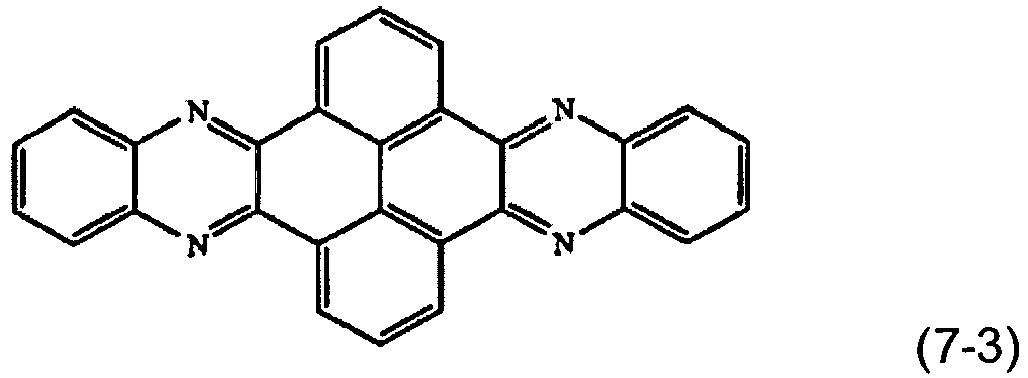
- RMLBPZWPSDSFOT-UHFFFAOYSA-N c1cc2nc(c3cccc4c3c(c3ccc5)c5cc4)c3nc2cc1 Chemical compound c1cc2nc(c3cccc4c3c(c3ccc5)c5cc4)c3nc2cc1 RMLBPZWPSDSFOT-UHFFFAOYSA-N 0.000 description 1
Images

Classifications
-
- C—CHEMISTRY; METALLURGY
- C09—DYES; PAINTS; POLISHES; NATURAL RESINS; ADHESIVES; COMPOSITIONS NOT OTHERWISE PROVIDED FOR; APPLICATIONS OF MATERIALS NOT OTHERWISE PROVIDED FOR
- C09K—MATERIALS FOR MISCELLANEOUS APPLICATIONS, NOT PROVIDED FOR ELSEWHERE
- C09K11/00—Luminescent materials, e.g. electroluminescent or chemiluminescent
- C09K11/06—Luminescent materials, e.g. electroluminescent or chemiluminescent containing organic luminescent materials
-
- H—ELECTRICITY
- H05—ELECTRIC TECHNIQUES NOT OTHERWISE PROVIDED FOR
- H05B—ELECTRIC HEATING; ELECTRIC LIGHT SOURCES NOT OTHERWISE PROVIDED FOR; CIRCUIT ARRANGEMENTS FOR ELECTRIC LIGHT SOURCES, IN GENERAL
- H05B33/00—Electroluminescent light sources
- H05B33/12—Light sources with substantially two-dimensional [2D] radiating surfaces
- H05B33/14—Light sources with substantially two-dimensional [2D] radiating surfaces characterised by the chemical or physical composition or the arrangement of the electroluminescent material, or by the simultaneous addition of the electroluminescent material in or onto the light source
-
- H—ELECTRICITY
- H10—SEMICONDUCTOR DEVICES; ELECTRIC SOLID-STATE DEVICES NOT OTHERWISE PROVIDED FOR
- H10K—ORGANIC ELECTRIC SOLID-STATE DEVICES
- H10K85/00—Organic materials used in the body or electrodes of devices covered by this subclass
- H10K85/10—Organic polymers or oligomers
- H10K85/111—Organic polymers or oligomers comprising aromatic, heteroaromatic, or aryl chains, e.g. polyaniline, polyphenylene or polyphenylene vinylene
- H10K85/113—Heteroaromatic compounds comprising sulfur or selene, e.g. polythiophene
-
- H—ELECTRICITY
- H10—SEMICONDUCTOR DEVICES; ELECTRIC SOLID-STATE DEVICES NOT OTHERWISE PROVIDED FOR
- H10K—ORGANIC ELECTRIC SOLID-STATE DEVICES
- H10K85/00—Organic materials used in the body or electrodes of devices covered by this subclass
- H10K85/10—Organic polymers or oligomers
- H10K85/141—Organic polymers or oligomers comprising aliphatic or olefinic chains, e.g. poly N-vinylcarbazol, PVC or PTFE
-
- H—ELECTRICITY
- H10—SEMICONDUCTOR DEVICES; ELECTRIC SOLID-STATE DEVICES NOT OTHERWISE PROVIDED FOR
- H10K—ORGANIC ELECTRIC SOLID-STATE DEVICES
- H10K85/00—Organic materials used in the body or electrodes of devices covered by this subclass
- H10K85/60—Organic compounds having low molecular weight
- H10K85/649—Aromatic compounds comprising a hetero atom
- H10K85/657—Polycyclic condensed heteroaromatic hydrocarbons
-
- C—CHEMISTRY; METALLURGY
- C09—DYES; PAINTS; POLISHES; NATURAL RESINS; ADHESIVES; COMPOSITIONS NOT OTHERWISE PROVIDED FOR; APPLICATIONS OF MATERIALS NOT OTHERWISE PROVIDED FOR
- C09K—MATERIALS FOR MISCELLANEOUS APPLICATIONS, NOT PROVIDED FOR ELSEWHERE
- C09K2211/00—Chemical nature of organic luminescent or tenebrescent compounds
- C09K2211/10—Non-macromolecular compounds
- C09K2211/1003—Carbocyclic compounds
- C09K2211/1007—Non-condensed systems
-
- C—CHEMISTRY; METALLURGY
- C09—DYES; PAINTS; POLISHES; NATURAL RESINS; ADHESIVES; COMPOSITIONS NOT OTHERWISE PROVIDED FOR; APPLICATIONS OF MATERIALS NOT OTHERWISE PROVIDED FOR
- C09K—MATERIALS FOR MISCELLANEOUS APPLICATIONS, NOT PROVIDED FOR ELSEWHERE
- C09K2211/00—Chemical nature of organic luminescent or tenebrescent compounds
- C09K2211/10—Non-macromolecular compounds
- C09K2211/1003—Carbocyclic compounds
- C09K2211/1011—Condensed systems
-
- C—CHEMISTRY; METALLURGY
- C09—DYES; PAINTS; POLISHES; NATURAL RESINS; ADHESIVES; COMPOSITIONS NOT OTHERWISE PROVIDED FOR; APPLICATIONS OF MATERIALS NOT OTHERWISE PROVIDED FOR
- C09K—MATERIALS FOR MISCELLANEOUS APPLICATIONS, NOT PROVIDED FOR ELSEWHERE
- C09K2211/00—Chemical nature of organic luminescent or tenebrescent compounds
- C09K2211/10—Non-macromolecular compounds
- C09K2211/1003—Carbocyclic compounds
- C09K2211/1014—Carbocyclic compounds bridged by heteroatoms, e.g. N, P, Si or B
-
- C—CHEMISTRY; METALLURGY
- C09—DYES; PAINTS; POLISHES; NATURAL RESINS; ADHESIVES; COMPOSITIONS NOT OTHERWISE PROVIDED FOR; APPLICATIONS OF MATERIALS NOT OTHERWISE PROVIDED FOR
- C09K—MATERIALS FOR MISCELLANEOUS APPLICATIONS, NOT PROVIDED FOR ELSEWHERE
- C09K2211/00—Chemical nature of organic luminescent or tenebrescent compounds
- C09K2211/10—Non-macromolecular compounds
- C09K2211/1018—Heterocyclic compounds
- C09K2211/1025—Heterocyclic compounds characterised by ligands
- C09K2211/1029—Heterocyclic compounds characterised by ligands containing one nitrogen atom as the heteroatom
-
- C—CHEMISTRY; METALLURGY
- C09—DYES; PAINTS; POLISHES; NATURAL RESINS; ADHESIVES; COMPOSITIONS NOT OTHERWISE PROVIDED FOR; APPLICATIONS OF MATERIALS NOT OTHERWISE PROVIDED FOR
- C09K—MATERIALS FOR MISCELLANEOUS APPLICATIONS, NOT PROVIDED FOR ELSEWHERE
- C09K2211/00—Chemical nature of organic luminescent or tenebrescent compounds
- C09K2211/10—Non-macromolecular compounds
- C09K2211/1018—Heterocyclic compounds
- C09K2211/1025—Heterocyclic compounds characterised by ligands
- C09K2211/1044—Heterocyclic compounds characterised by ligands containing two nitrogen atoms as heteroatoms
-
- C—CHEMISTRY; METALLURGY
- C09—DYES; PAINTS; POLISHES; NATURAL RESINS; ADHESIVES; COMPOSITIONS NOT OTHERWISE PROVIDED FOR; APPLICATIONS OF MATERIALS NOT OTHERWISE PROVIDED FOR
- C09K—MATERIALS FOR MISCELLANEOUS APPLICATIONS, NOT PROVIDED FOR ELSEWHERE
- C09K2211/00—Chemical nature of organic luminescent or tenebrescent compounds
- C09K2211/10—Non-macromolecular compounds
- C09K2211/1018—Heterocyclic compounds
- C09K2211/1025—Heterocyclic compounds characterised by ligands
- C09K2211/1092—Heterocyclic compounds characterised by ligands containing sulfur as the only heteroatom
-
- H—ELECTRICITY
- H10—SEMICONDUCTOR DEVICES; ELECTRIC SOLID-STATE DEVICES NOT OTHERWISE PROVIDED FOR
- H10K—ORGANIC ELECTRIC SOLID-STATE DEVICES
- H10K50/00—Organic light-emitting devices
- H10K50/10—OLEDs or polymer light-emitting diodes [PLED]
- H10K50/11—OLEDs or polymer light-emitting diodes [PLED] characterised by the electroluminescent [EL] layers
-
- H—ELECTRICITY
- H10—SEMICONDUCTOR DEVICES; ELECTRIC SOLID-STATE DEVICES NOT OTHERWISE PROVIDED FOR
- H10K—ORGANIC ELECTRIC SOLID-STATE DEVICES
- H10K50/00—Organic light-emitting devices
- H10K50/10—OLEDs or polymer light-emitting diodes [PLED]
- H10K50/14—Carrier transporting layers
-
- H—ELECTRICITY
- H10—SEMICONDUCTOR DEVICES; ELECTRIC SOLID-STATE DEVICES NOT OTHERWISE PROVIDED FOR
- H10K—ORGANIC ELECTRIC SOLID-STATE DEVICES
- H10K50/00—Organic light-emitting devices
- H10K50/10—OLEDs or polymer light-emitting diodes [PLED]
- H10K50/17—Carrier injection layers
-
- H—ELECTRICITY
- H10—SEMICONDUCTOR DEVICES; ELECTRIC SOLID-STATE DEVICES NOT OTHERWISE PROVIDED FOR
- H10K—ORGANIC ELECTRIC SOLID-STATE DEVICES
- H10K50/00—Organic light-emitting devices
- H10K50/10—OLEDs or polymer light-emitting diodes [PLED]
- H10K50/17—Carrier injection layers
- H10K50/171—Electron injection layers
-
- H—ELECTRICITY
- H10—SEMICONDUCTOR DEVICES; ELECTRIC SOLID-STATE DEVICES NOT OTHERWISE PROVIDED FOR
- H10K—ORGANIC ELECTRIC SOLID-STATE DEVICES
- H10K85/00—Organic materials used in the body or electrodes of devices covered by this subclass
- H10K85/60—Organic compounds having low molecular weight
- H10K85/615—Polycyclic condensed aromatic hydrocarbons, e.g. anthracene
-
- H—ELECTRICITY
- H10—SEMICONDUCTOR DEVICES; ELECTRIC SOLID-STATE DEVICES NOT OTHERWISE PROVIDED FOR
- H10K—ORGANIC ELECTRIC SOLID-STATE DEVICES
- H10K85/00—Organic materials used in the body or electrodes of devices covered by this subclass
- H10K85/60—Organic compounds having low molecular weight
- H10K85/615—Polycyclic condensed aromatic hydrocarbons, e.g. anthracene
- H10K85/626—Polycyclic condensed aromatic hydrocarbons, e.g. anthracene containing more than one polycyclic condensed aromatic rings, e.g. bis-anthracene
-
- H—ELECTRICITY
- H10—SEMICONDUCTOR DEVICES; ELECTRIC SOLID-STATE DEVICES NOT OTHERWISE PROVIDED FOR
- H10K—ORGANIC ELECTRIC SOLID-STATE DEVICES
- H10K85/00—Organic materials used in the body or electrodes of devices covered by this subclass
- H10K85/60—Organic compounds having low molecular weight
- H10K85/631—Amine compounds having at least two aryl rest on at least one amine-nitrogen atom, e.g. triphenylamine
-
- Y—GENERAL TAGGING OF NEW TECHNOLOGICAL DEVELOPMENTS; GENERAL TAGGING OF CROSS-SECTIONAL TECHNOLOGIES SPANNING OVER SEVERAL SECTIONS OF THE IPC; TECHNICAL SUBJECTS COVERED BY FORMER USPC CROSS-REFERENCE ART COLLECTIONS [XRACs] AND DIGESTS
- Y02—TECHNOLOGIES OR APPLICATIONS FOR MITIGATION OR ADAPTATION AGAINST CLIMATE CHANGE
- Y02E—REDUCTION OF GREENHOUSE GAS [GHG] EMISSIONS, RELATED TO ENERGY GENERATION, TRANSMISSION OR DISTRIBUTION
- Y02E10/00—Energy generation through renewable energy sources
- Y02E10/50—Photovoltaic [PV] energy
- Y02E10/549—Organic PV cells
Definitions
- the present invention relates to organic electronic devices using a pyrene derivative having a specific structure. Further, the invention relates to a pyrene derivative having a new structure, which can be used for organic electronic devices.
- organic electronic device refers to a device requiring charge exchange between an electrode using holes and/or electrons and an organic material.
- the organic electronic device can be largely classified into two types according to its operational principle as follows: one type is an electronic device having a configuration in which an exciton is formed in an organic material layer by photons flown from an external light source into the device and the exciton is separated into an electron and a hole, the electron and the hole formed are transported to a different electrode, respectively and used as a current source (voltage source), and the other type is an electronic device having a configuration in which a hole and/or electron are/is injected into an organic material semiconductor forming an interface with an electrode by applying a voltage or current to two or two or more electrodes to allow the device to operate by means of the injected electron and hole.
- the organic electronic device examples include an organic light-emitting device, an organic solar cell, an organic photoconductor (OPC) and an organic transistor, which all require a hole-injecting or hole-transporting material, an electron-injecting or electron-transporting material, or a light-emitting material for driving the device.
- OPC organic photoconductor
- the organic light-emitting device will be mainly and specifically described, but in the above-mentioned organic electronic devices, the hole-injecting or hole-transporting material, the electron-injecting or electron-transporting material, or the light-emitting material injection functions according to a similar principle.
- organic light-emitting phenomenon refers to a phenomenon in which electric energy is converted to light energy by means of an organic material.
- the organic light-emitting device using the organic light-emitting phenomenon has a structure usually comprising an anode, a cathode and an organic material layer interposed therebetween.
- the organic material layer may be mostly formed in a multilayer structure comprising layers of different materials, for example, the hole-injecting layer, the hole-transporting layer, the light-emitting layer, the electron-transporting layer, the electron-injecting layer and the like, in order to improve efficiency and stability of the organic light-emitting device.
- organic light-emitting device having such a structure
- a voltage is applied between two electrodes
- holes from the anode and electrons from a cathode are injected into the organic material layer
- the holes and the electrons injected are combined together to form excitons.
- lights are emitted.
- Such an organic light-emitting device is known to have characteristics such as self-luminescence, high brightness, high efficiency, low drive voltage, wide viewing angle, high contrast and high-speed response.
- the materials used for the organic material layer of the organic light-emitting device can be classified into a light-emitting material and a charge-transporting material, for example, a hole-injecting material, a hole-transporting material, an electron-transporting material and an electron-injecting material, according to their functions. Further, the light-emitting material can be divided into a blue, green or red light-emitting material and a yellow or orange light-emitting material required for giving more natural color, according to a light-emitting color.
- an efficiency of a device is lowered owing to maximum luminescence wavelength moved to a longer wavelength due to the interaction between molecules, deterioration of color purity and reduction in light emitting efficiency when only one material is used for the light-emitting material, and therefore a host/dopant system can be used as the light-emitting material for the purpose of enhancing color purity and light emitting efficiency through energy transfer.
- a material constituting the organic material layer in the device for example, a hole-injecting material, a hole-transporting material, a light-emitting material, an electron-transporting material and an electron-injecting material should be essentially composed of a stable and efficient material.
- a stable and efficient organic material layer material for the organic light-emitting device has not yet been fully realized. Accordingly, the development of new materials is continuously desired. The development of such a material is equally required to the above-mentioned other organic electronic devices.
- US-A-5 294 512 teaches an electrophotographic receptor comprising a light-sensitive layer which comprises a pyrene compound.
- a pyrene derivative having a specific structure can perform functions of hole injection and transportation, electron injection and transportation, and/or light emission in an organic electronic device including an organic light-emitting device, according to the substituents on the pyrene derivative, and have further found a pyrene derivative having a new structure, which can be used as an organic material layer material for the organic electronic device.
- An aspect of the present invention is an organic light-emitting device, a solar cell or an organic photoconductor comprising a first electrode, a second electrode and at least one organic material layer arranged between the first electrode and the second electrode, at least one organic material layer comprising a compound represented by any of the following formulae (1), (3), (5), (6), (8), (4-2) to (4-6), (4-10) and (7-2) to (7-5): wherein in formula (1):
- the pyrene derivative having a specific structure according to the invention has a basic structure in which the derivative can perform functions of not only electron or hole injection and/or transportation, but also that of light emission, for example, that of a single light-emitting material, a light-emitting dopant together with a suitable host or a blue light-emitting host together with a suitable dopant in an organic electronic device, and has a structure more suitable for a function of each organic material layer of an organic electronic device including an organic light-emitting device by introducing various substituents.
- Fig. 1 illustrates a structure of an organic light-emitting device according to one embodiment of the present invention.
- a steric structure of the compound of the above formula (1) according to the invention can be considered to be divided into two portions, A and B portions, as shown in the following figure:
- the A portion has a planar structure as a whole in that pyrene forms a fused ring, together with imidazole, pyrrole or pyrazine.
- n-type properties generally refers to properties exhibiting anionic characteristics by forming electrons owing to electrically conductive characteristics depending on LUMO levels.
- pyrene is known to have p-type properties. When pyrene forms a fused ring together with imidazole, pyrrole or pyrazine, it forms a new molecular orbital and thus has much stronger p-type properties than those of pyrene, unlike when pyrene is used alone.
- p-type properties refers to properties exhibiting cationic characteristics by forming holes owing to electrically conductive characteristics depending on HOMO levels.
- the A portion of the formula 1 is fused with imidazole, pyrrole or pyrazine and thus has amphoteric properties, unlike a conventionally known pyrene.
- the present inventors have found that the material of the formula (1) having these properties can perform all the functions of hole injection and transportation, electron injection and transportation, and light emission in an organic electronic device including an organic light-emitting device. It has not yet been known that the pyrene derivative having the above-mentioned structure can perform all the above-mentioned functions in an organic electronic device.
- the A and B portions of the formula (1) may has a slightly twisted steric structure.
- the compound of the formula (1) has a twisted three-dimensional structure as described above, pi-pi interaction in the structure of the compound is decreased, thereby having effects of suppressing the formation of excited excimer or excited exciplex from materials having a flat structure, such as pyrene.
- the A portion has amphoteric properties and thus the compound of the formula (1) can exhibit stronger n-type or p-type behavior of the whole molecule by introducing various substituents into the B portion. Furthermore, various substituents can be introduced at the positions of R 2 to R 9 as the substituents in the A portion of the above formula (1) to synthesize a compound having various energy band gaps. Therefore, the compound of the above formula (1) can more suitably meet the requirements for the hole-transporting layer, the light-emitting layer, the electron-injecting layer and the electron-transporting layer by means of various substituents.
- a compound having a suitable energy level according to substituents of the compound of the above formula (1) can be selected and used for an organic light-emitting device to thus realize a device with low drive voltage and high light efficiency.
- the alkyl group of R 0 and the alkyl group, the alkoxy group and the alkenyl group of R 1 to R 10 in the above formulae preferably have 1 to 20 carbon atoms.
- Examples of the aryl group of R 0 to R 10 in the above formulae include, but are not limited to, a phenyl group, a naphthyl group, an anthracenyl group, a tetracenyl group, a pentacenyl group, a biphenyl group, a terphenyl group, a pyrenyl group, a perylenyl group and a coronenyl group.
- Examples of the arylamine group of R 1 to R 10 in the above formulae include, but are not limited to, a diphenylamine group, a phenylnaphtylamine group, a ditolylamine group, a phenyltolylamine group, a carbazolyl group and a triphenylamine group.
- heterocyclic group of R 1 to R 10 in the above formulae examples include, but are not limited to, a pyridyl group, an acridinyl group, a thienyl group, an imidazolyl group, an oxazolyl group, a thiazolyl group and a quinolyl group.
- halogen group of R 1 to R 10 in the above formulae examples include fluorine, chlorine, bromine and iodine.
- Examples of the silane group of R 1 to R 10 in the above formulae include, but are not limited to, a silole group and a silylene group.
- halogen group of R 1 to R 10 in the above formulae examples include fluorine, chlorine, bromine and iodine.
- substituents R 1 to R 10 in the above formulae themselves have substituents
- substituents are selected from the group consisting of a hydrogen atom, an alkyl group, an alkoxy group, an alkenyl group, an aryl group, an arylamine group, a heterocyclic group, a silane group, a boron group, an aliphatic cyclic group, an amine group, a nitrile group, a nitro group, a halogen group, an amide group, an ester group and an ether group, and the above-mentioned properties of the compound according to the invention do not vary depending on the kinds of these substituents.
- More specific examples of the compound represented by the formula (7) according to the invention include, but are not limited to, the following compounds: wherein x is an integer of 2 to 10000000; R11 and R12 are each independently a substituted or unsubstituted C 1 -C 60 alkyl group or a substituted or unsubstituted C 1 -C 60 aryl group.
- Pyrene can be oxidized to prepare pyrene-4,5-dione or pyrene-4,5,9,10-dione and then stirred under reflux with an aldehyde and an amine of a substituent to be introduced under acid conditions to prepare a compound of an imidazole system.
- diamine can be added to pyrene-4,5-dione or pyrene-4,5,9,10-dione and then stirred under reflux under acid conditions to prepare a compound of a pyrazine system.
- the compound of a pyrrole system can be obtained using a pyrene aldehyde and the appropriate allyl halide can be introduced into an amine group of the prepared compound.
- the organic electronic device of the invention can be produced by the general production method of the organic electronic device and materials, except that the above-mentioned compound is used to form one or more organic material layer.
- the organic light-emitting device will be illustrated.
- the organic light-emitting device has a structure comprising a first electrode, a second electrode and an organic material layer arranged therebetween, and can be produced by the general production method of the organic electronic device and materials, except that the compound according to the invention is used in one or more organic material layer of the organic light-emitting device.
- the structure of the organic light-emitting device according to the invention is illustrated in Fig. 1 .
- the organic light-emitting device can be produced by depositing metals or metal oxides having electrical conductivity, or metal alloys thereof on a substrate to form an anode, forming thereon an organic material layer comprising a hole-injecting layer, a hole-transporting layer, a light-emitting layer and an electron-transporting layer and then depositing on the organic material layer a material capable of using as a cathode, using a PVD (physical vapor deposition) technique such as sputtering and e-beam evaporation.
- the organic light-emitting device can be also fabricated by sequentially depositing a cathode material, an organic material layer and an anode material, on the substrate (see International Publication No. WO 03/012890 ).
- the organic material layer may be of a multilayer structure comprising the hole-injecting layer, the hole-transporting layer, the light-emitting layer, the electron-transporting layer and the like, but not limited thereto, and may be of a monolayer structure. Further, the organic material layer can be produced in a smaller number of layers with various polymer materials by using not a vacuum deposition method but a solvent process such as spin coating, dip coating, doctor blade coating, screen printing, inkjet printing, heat transfer method or the like.
- the anode materials are preferably materials having large work function for facilitating usually hole injection into the organic material layer.
- Specific examples of the anode materials usable in the invention include metals such as vanadium, chrome, copper, zinc and gold or alloys thereof; metal oxides such as zinc oxide, indium oxide, indium tin oxide (ITO) and indium zinc oxide (IZO); metal/oxide composites such as ZnO : Al or SnO 2 Sb; and conductive polymers such as poly(3-methylthiophene), poly[3,4-(ethylene-1,2-dioxy)thiophene] (PEDT), polypyrrole and polyaniline, but are not limited thereto.
- metals such as vanadium, chrome, copper, zinc and gold or alloys thereof
- metal oxides such as zinc oxide, indium oxide, indium tin oxide (ITO) and indium zinc oxide (IZO)
- metal/oxide composites such as ZnO : Al or SnO 2 Sb
- conductive polymers such
- the cathode materials are preferably materials having small work function for facilitating usually electron injection into the organic material layer.
- Specific examples of the cathode materials include metals such as magnesium, calcium, sodium, potassium, titanium, indium, yttrium, lithium, gadolinium, aluminum, silver, tin and lead or alloys thereof; and multilayered materials such as LiF/Al or LiO 2 /Al, but are not limited thereto.
- the hole-injecting material is a material facilitating hole injection from an anode at low voltage.
- the HOMO (highest occupied molecular orbital) level of the hole-injecting material is preferably located between the work function of the anode materials and the HOMO level of its neighboring organic material layer.
- Specific examples of the hole-injecting material include metal porphyrin, oligothiophene, arylamine-based organic materials, hexanitrile hexaazatriphenylene, quinacridone-based organic materials, perylene-based organic materials, anthraquinone, and polyaniline-based and polythiophene-based conductive polymers, but are not limited thereto.
- the hole-transporting material is suitably a material having high hole mobility, which can transfer holes from the anode and the hole-injecting layer toward the light-emitting layer.
- a material having high hole mobility which can transfer holes from the anode and the hole-injecting layer toward the light-emitting layer.
- Specific examples thereof include arylamine-based organic materials, conductive polymers and block copolymers having both conjugated portions and nonconjugated portions, but are not limited thereto.
- the light-emitting material are a material capable of emitting visible light by accepting and recombining holes from the hole-transporting layer and electrons from the electron-transporting layer, preferably a material having high quantum efficiency for fluorescence and phosphorescence.
- Specific examples thereof include 8-hydroxyquinoline aluminum complex (Alq 3 ); carbazole-based compounds; dimerized styryl compounds; BAlq; 10-hydroxybenzoquinoline-metal compounds; benzoxazole-based, benzthiazole-based and benzimidazole-based compounds; poly(p-phenylenevinylene)(PPV)-based polymers; spiro compounds; and polyfluorene and rubrene, but are not limited thereto.
- Alq 3 8-hydroxyquinoline aluminum complex
- carbazole-based compounds dimerized styryl compounds
- BAlq 10-hydroxybenzoquinoline-metal compounds
- the electron-transporting material is suitably a material having high electron mobility, which can transfer electrons from the cathode to the light-emitting layer.
- a material having high electron mobility which can transfer electrons from the cathode to the light-emitting layer.
- Specific examples thereof include 8-hydroxyquinoline aluminum complex (Alq 3 ); complexes including Alq 3 ; organic radical compounds; and hydroxyflavone-metal complexes, but are not limited thereto.
- the organic light-emitting device according to the invention may be of a frontside, backside or double-sided light emission according to the materials used.
- the compounds according to the invention can function in an organic electronic device including an organic solar cell, an organic photoconductor and an organic transistor, according to a principle similar to that applied to the organic light-emitting device.
- the compound A (10 g, 37.6 mmol) and sodium hydrogen carbonate (NaHCO 3 , 16.4 g, 194 mmol) were dissolved in dimethylformamide (DMF, 200 mL), thereto was added methyl iodide (MeI, 30 mL) and then the reaction mixture was stirred at room temperature for 20 hours. The reactants were diluted with ethyl acetate and washed with water. Subsequently, anhydrous magnesium sulfate (MgSO 4 was added to the reaction solution to remove moisture and the solvent was removed under reduced pressure.
- DMF dimethylformamide
- MgSO 4 anhydrous magnesium sulfate
- the compound G (4.4 g, 12.4 mmol) was dissolved in 500 mL of methanol and thereto was added 5 mL of sulfuric acid. The reaction solution was stirred under reflux for 12 hours and cooled to room temperature. To the solution were added chloroform and distilled water to separate into an organic layer and an aqueous layer. Then, the aqueous layer was removed and anhydrous sodium sulfate (Na 2 SO 4 ) was added to the organic layer to remove moisture and the solvent was removed under reduced pressure.
- Na 2 SO 4 anhydrous sodium sulfate
- the obtained compound (4.16 g, 11.2 mmol) was dissolved in 100 mL of tetrahydrofuran (THF) and thereto was added LiAlH 4 (1.37 g, 36 mmol).
- the reaction solution was stirred at room temperature for 3 hours and cooled to 0°C, and then thereto was added a small amount of ethyl acetate (CH 3 CO 2 CH 2 CH 3 ) to remove the remaining LiAlH 4 .
- the reaction solution was poured into iced water to terminate the reaction.
- the compound L (4.30 g, 10.0 mmol) was dissolved in 100 mL of THF and the reaction solution was maintained at -78°C under an argon atmosphere. To this solution was slowly added 1.6 M t-BuLi (7 mL, 11.0 mmol) and the mixture was stirred at -78°C for 3 hours. Iodine (I 2 , 3.1 g, 12.0 mmol) was slowly added thereto while maintaining the temperature and the resulting mixture was stirred at -78°C for 2 hours. The resulting mixture was heated to room temperature and iced water was poured thereinto to filter the resulting solid.
- the compound E (3.15 g, 10 mmol), sodium periodate (NaIO 4 17.5 g, 81.8 mmol), ruthenium trichloride (RuCl 3 ⁇ xH 2 O, 0.25 g, 1.2 mmol), acetonitrile (MeCN, 40 mL), methylene chloride (CH 2 Cl 2 , 40 mL) and distilled water (H 2 O 50.0 mL) were stirred at 30 to 40°C overnight. The reaction product was cooled to room temperature and added to 200 mL of distilled water, and then the formed precipitate was filtered off under reduced pressure.
- the compound T (5.0 g, 12.4 mmol) was dissolved in 500 mL of methanol and thereto was added 5 mL of sulfuric acid. The reaction solution was stirred under reflux for 12 hours and cooled to room temperature. To the solution were added chloroform and distilled water to separate into an organic layer and an aqueous layer. Then, the aqueous layer was removed and anhydrous sodium sulfate (Na 2 SO 4 ) was added to the organic layer to remove moisture and the solvent was removed under reduced pressure.
- Na 2 SO 4 anhydrous sodium sulfate
- the obtained compound (5.0 g, 11.6 mmol) was dissolved in 100 mL of tetrahydrofuran (THF) and thereto was added LiAlH 4 (1.37 g, 36 mmol).
- the reaction solution was stirred at room temperature for 3 hours and cooled to 0°C, and then thereto was added a small amount of ethyl acetate (CH 3 CO 2 CH 2 CH 3 ) to remove the remaining LiAlH 4 .
- the reaction solution was poured into iced water to terminate the reaction.
- the compound Y (2.7 g, 5.0 mmol) was dissolved in 100 mL of THF and the reaction solution was maintained at -78°C under an argon atmosphere. To this solution was slowly added 1.6 M t-BuLi (7 mL, 11.0 mmol) and the mixture was stirred at -78°C for 3 hours. Iodine (I 2 , 3.1 g, 12.0 mmol) was slowly added thereto while maintaining the temperature and the resulting mixture was stirred at -78°C for 2 hours. The resulting mixture was heated to room temperature and iced water was poured thereinto to filter the resulting solid.
- a glass substrate (Corning 7059 glass) on which a thin film of ITO (indium tin oxide) was coated to a thickness of 1000 ⁇ was immersed in distilled water containing a detergent to wash the substrate with ultrasonic waves for 30 minutes (At this time, the detergent was a product commercially available from Fisher Co. and the distilled water has been filtered previously by using a filter commercially available from Millipore Co.). Next, washing with ultrasonic waves was repeated twice for 10 minutes by using distilled water. After the completion of washing with distilled water, washing with ultrasonic waves was carried out by using solvents such as isopropyl alcohol, acetone and methanol. The resultant product was dried.
- solvents such as isopropyl alcohol, acetone and methanol.
- hexanitrile hexaazatriphenylene, 4,4'-bis[N-(1-naphthyl)-N-phenylamino]biphenyl (NPB), the compound of the formula (3-3) prepared in Synthesis Example and an electron-transporting material of the following formula were sequentially coated to thicknesses of 500 ⁇ , 400 ⁇ , 300 ⁇ and 200 ⁇ by thermal vacuum deposition, thereby forming a hole-injecting layer, a hole-transporting layer, a light-emitting layer and an electron-transporting layer in this order.
- lithium fluoride (LiF) and aluminum were sequentially vacuum-deposited to a thickness of 12 ⁇ and 2000 ⁇ , respectively, to form a cathode.
- an organic light-emitting device was produced.
- deposition rate of each organic material was maintained at 0.4 to 0.7 ⁇ /sec and deposition rates of lithium fluoride and aluminum of the cathode were maintained at 0.3 ⁇ /sec and 2 ⁇ /sec, respectively.
- the vacuum degree during deposition was maintained at 2 ⁇ 10 -7 to 5 ⁇ 10 -8 torr.
- An organic light-emitting device was produced in the same manner as in Experimental Example 1, except that on the ITO electrode, hexanitrile hexaazatriphenylene, 4,4'-bis[N-(1-naphthyl)-N-phenylamino]biphenyl (NPB), Alq 3 and the compound of the formula (3-3) prepared in Synthesis Example were sequentially coated to thicknesses of 500 ⁇ , 400 ⁇ , 300 ⁇ and 200 ⁇ by thermal vacuum deposition, thereby forming a hole-injecting layer, a hole-transporting layer, a light-emitting layer and an electron-transporting layer in this order, and then on the electron-transporting layer, lithium fluoride (LiF) and aluminum were sequentially vacuum-deposited to a thickness of 12 ⁇ and 2000 ⁇ , respectively, to form a cathode.
- LiF lithium fluoride
- An organic light-emitting device was produced in the same manner as in Experimental Example 1, except that on the ITO electrode, hexanitrile hexaazatriphenylene and a hole-injecting material of the following formula were coated to thicknesses of 80 ⁇ and 800 ⁇ , thereby forming a bilayered hole-injecting layer; the compound of the formula (3-3) prepared in Synthesis Example was coated thereon to a thickness of 300 ⁇ to form a hole-transporting layer; Alq 3 and an electron-transporting material of the following formula were sequentially coated thereon to thicknesses of 300 ⁇ and 200 ⁇ by thermal vacuum deposition, thereby forming a light-emitting layer and an electron-transporting layer; and then on the electron-transporting layer, lithium fluoride (LiF) and aluminum were sequentially vacuum-deposited to a thickness of 12 ⁇ and 2000 ⁇ , respectively, to form a cathode.
- Hole-injecting material Electron-transporting material
- An organic light-emitting device was produced in the same manner as in Experimental Example 3, except that on the ITO electrode, hexanitrile hexaazatriphenylene, the hole-injecting material of the formula shown in Experimental Example 3 and the compound of the formula (3-3) were coated to thicknesses of 80 ⁇ , 1000 ⁇ and 100 ⁇ , thereby forming a hole-transporting layer; and Alq 3 and the electron-transporting material of the formula shown in Experimental Example 3 were sequentially coated thereon to thicknesses of 300 ⁇ and 200 ⁇ by thermal vacuum deposition, thereby forming a light-emitting layer and an electron-transporting layer, with varying the thickness of each layer in Experimental Example 3.
- An organic light-emitting device was produced in the same manner as in Experimental Example 3, except that on the ITO electrode, the compound of the formula (4-1) and the hole-injecting material of the formula shown in Experimental Example 3 were coated to thicknesses of 80 ⁇ and 800 ⁇ , thereby forming a bilayered hole-injecting layer; 4,4'-bis[N-(1-naphthyl)-N-phenylamino]biphenyl (NPB), Alq 3 and the electron-transporting material of the formula shown in Experimental Example 3 were sequentially coated thereon to thicknesses of 300 ⁇ , 300 ⁇ and 200 ⁇ by thermal vacuum deposition, thereby forming a hole-transporting layer, a light-emitting layer and an electron-transporting layer in this order; and then on the electron-transporting layer, lithium fluoride (LiF) and aluminum were sequentially vacuum-deposited to a thickness of 12 ⁇ and 2000 ⁇ , respectively, to form a cathode.
- LiF lithium fluoride
- An organic light-emitting device was produced in the same manner as in Experimental Example 4, except that on the ITO electrode, hexanitrile hexaazatriphenylene and the hole-injecting material of the formula shown in Experimental Example 3 were coated to thicknesses of 80 ⁇ and 1000 ⁇ , thereby forming a bilayered hole-injecting layer; the compound of the formula (5-21) prepared in Synthesis Example was coated thereon to a thickness of 100 ⁇ to form a hole-transporting layer; Alq 3 and the electron-transporting material of the formula shown in Experimental Example 3 were sequentially coated thereon to thicknesses of 300 ⁇ and 200 ⁇ by thermal vacuum deposition, thereby forming a light-emitting layer and an electron-transporting layer; and then on the electron-transporting layer, lithium fluoride (LiF) and aluminum were sequentially vacuum-deposited to a thickness of 12 ⁇ and 2000 ⁇ , respectively, to form a cathode.
- LiF lithium fluoride
- An organic light-emitting device was produced in the same manner as in Experimental Example 3, except that on the ITO electrode, the compound of the formula (7-1) and the hole-injecting material of the formula shown in Experimental Example 3 were coated to thicknesses of 80 ⁇ and 800 ⁇ , thereby forming a bilayered hole-injecting layer; 4,4'-bis[N-(1-naphthyl)-N-phenylamino]biphenyl (NPB), Alq 3 and the electron-transporting material of the formula shown in Experimental Example 3 were sequentially coated thereon to thicknesses of 300 ⁇ , 300 ⁇ and 200 ⁇ by thermal vacuum deposition, thereby forming a hole-transporting layer, a light-emitting layer and an electron-transporting layer in this order; and then on the electron-transporting layer, lithium fluoride (LiF) and aluminum were sequentially vacuum-deposited to a thickness of 12 ⁇ and 2000 ⁇ , respectively, to form a cathode.
- LiF lithium fluoride
- An organic light-emitting device was produced in the same manner as in Experimental Example 3, except that on the ITO electrode, the compound of the formula (7-20) and the hole-injecting material of the formula shown in Experimental Example 3 were coated to thicknesses of 80 ⁇ and 800 ⁇ , thereby forming a bilayered hole-injecting layer; 4,4'-bis[N-(1-naphthyl)-N-phenylamino]biphenyl (NPB), Alq 3 and the electron-transporting material of the formula shown in Experimental Example 3 were sequentially coated thereon to thicknesses of 300 ⁇ , 300 ⁇ and 200 ⁇ by thermal vacuum deposition, thereby forming a hole-transporting layer, a light-emitting layer and an electron-transporting layer in this order; and then on the electron-transporting layer, lithium fluoride (LiF) and aluminum were sequentially vacuum-deposited to a thickness of 12 ⁇ and 2000 ⁇ , respectively, to form a cathode.
- LiF lithium fluoride
- An organic light-emitting device was produced in the same manner as in Experimental Example 1, except that on the ITO electrode, hexanitrile hexaazatriphenylene, 4,4'-bis[N-(1-naphthyl)-N-phenylamino]biphenyl (NPB), the compound of the formula (8-4) prepared in Synthesis Example and the electron-transporting material of the formula shown in Experimental Example 3 were sequentially coated to thicknesses of 500 ⁇ , 400 ⁇ , 300 ⁇ and 200 ⁇ by thermal vacuum deposition, thereby forming a hole-injecting layer, a hole-transporting layer, a light-emitting layer and an electron-transporting layer in this order, and then on the electron-transporting layer, lithium fluoride (LiF) and aluminum were sequentially vacuum-deposited to a thickness of 12 ⁇ and 2000 ⁇ , respectively, to form a cathode.
- NPB 4,4'-bis[N-(1-naphthyl)-N
- riphenylene and a hole-injecting material of the following formula were coated to thicknesses of 80 ⁇ and 800 ⁇ , thereby forming a bilayered hole-injecting layer;
- the compound of the formula (3-3) prepared in Synthesis Example was coated thereon to a thickness of 300 ⁇ to form a hole-transporting layer;
- Alq 3 and an electron-transporting material of the following formula were sequentially coated thereon to thicknesses of 300 ⁇ and 200 ⁇ by thermal vacuum deposition, thereby forming a light-emitting layer and an electron-transporting layer; and then on the electron-transporting layer, lithium fluoride (LiF) and aluminum were sequentially vacuum-deposited to a thickness of 12 ⁇ and 2000 ⁇ , respectively, to form a cathode.
- LiF lithium fluoride
- An organic light-emitting device was produced in the same manner as in Experimental Example 3, except that on the ITO electrode, hexanitrile hexaazatriphenylene, the hole-injecting material of the formula shown in Experimental Example 3 and the compound of the formula (3-3) were coated to thicknesses of 80 ⁇ , 1000 ⁇ and 100 ⁇ , thereby forming a hole-transporting layer; and Alq 3 and the electron-transporting material of the formula shown in Experimental Example 3 were sequentially coated thereon to thicknesses of 300 ⁇ and 200 ⁇ by thermal vacuum deposition, thereby forming a light-emitting layer and an electron-transporting layer, with varying the thickness of each layer in Experimental Example 3.
- An organic light-emitting device was produced in the same manner as in Experimental Example 3, except that on the ITO electrode, the compound of the formula (4-1) and the hole-injecting material of the formula shown in Experimental Example 3 were coated to thicknesses of 80 ⁇ and 800 ⁇ , thereby forming a bilayered hole-injecting layer; 4,4'-bis[N-(1-naphthyl)-N-phenylamino]biphenyl (NPB), Alq 3 and the electron-transporting material of the formula shown in Experimental Example 3 were sequentially coated thereon to thicknesses of 300 ⁇ , 300 ⁇ and 200 ⁇ by thermal vacuum deposition, thereby forming a hole-transporting layer, a light-emitting layer and an electron-transporting layer in this order; and then on the electron-transporting layer, lithium fluoride (LiF) and aluminum were sequentially vacuum-deposited to a thickness of 12 ⁇ and 2000 ⁇ , respectively, to form a cathode.
- LiF lithium fluoride
- An organic light-emitting device was produced in the same manner as in Experimental Example 4, except that on the ITO electrode, hexanitrile hexaazatriphenylene and the hole-injecting material of the formula shown in Experimental Example 3 were coated to thicknesses of 80 ⁇ and 1000 ⁇ , thereby forming a bilayered hole-injecting layer; the compound of the formula (5-21) prepared in Synthesis Example was coated thereon to a thickness of 100 ⁇ to form a hole-transporting layer; Alq 3 and the electron-transporting material of the formula shown in Experimental Example 3 were sequentially coated thereon to thicknesses of 300 ⁇ and 200 ⁇ by thermal vacuum deposition, thereby forming a light-emitting layer and an electron-transporting layer; and then on the electron-transporting layer, lithium fluoride (LiF) and aluminum were sequentially vacuum-deposited to a thickness of 12 ⁇ and 2000 ⁇ , respectively, to form a cathode.
- LiF lithium fluoride
- An organic light-emitting device was produced in the same manner as in Experimental Example 3, except that on the ITO electrode, the compound of the formula (7-1) and the hole-injecting material of the formula shown in Experimental Example 3 were coated to thicknesses of 80 ⁇ and 800 ⁇ , thereby forming a bilayered hole-injecting layer; 4,4'-bis[N-(1-naphthyl)-N-phenylamino]biphenyl (NPB), Alq 3 and the electron-transporting material of the formula shown in Experimental Example 3 were sequentially coated thereon to thicknesses of 300 ⁇ , 300 ⁇ and 200 ⁇ by thermal vacuum deposition, thereby forming a hole-transporting layer, a light-emitting layer and an electron-transporting layer in this order; and then on the electron-transporting layer, lithium fluoride (LiF) and aluminum were sequentially vacuum-deposited to a thickness of 12 ⁇ and 2000 ⁇ , respectively, to form a cathode.
- LiF lithium fluoride
- An organic light-emitting device was produced in the same manner as in Experimental Example 3, except that on the ITO electrode, the compound of the formula (7-20) and the hole-injecting material of the formula shown in Experimental Example 3 were coated to thicknesses of 80 ⁇ and 800 ⁇ , thereby forming a bilayered hole-injecting layer; 4,4'-bis[N-(1-naphthyl)-N-phenylamino]biphenyl (NPB), Alq 3 and the electron-transporting material of the formula shown in Experimental Example 3 were sequentially coated thereon to thicknesses of 300 ⁇ , 300 ⁇ and 200 ⁇ by thermal vacuum deposition, thereby forming a hole-transporting layer, a light-emitting layer and an electron-transporting layer in this order; and then on the electron-transporting layer, lithium fluoride (LiF) and aluminum were sequentially vacuum-deposited to a thickness of 12 ⁇ and 2000 ⁇ , respectively, to form a cathode.
- LiF lithium fluoride
- An organic light-emitting device was produced in the same manner as in Experimental Example 1, except that on the ITO electrode, hexanitrile hexaazatriphenylene, 4,4'-bis[N-(1-naphthyl)-N-phenylamino]biphenyl (NPB), the compound of the formula (8-4) prepared in Synthesis Example and the electron-transporting material of the formula shown in Experimental Example 3 were sequentially coated to thicknesses of 500 ⁇ , 400 ⁇ , 300 ⁇ and 200 ⁇ by thermal vacuum deposition, thereby forming a hole-injecting layer, a hole-transporting layer, a light-emitting layer and an electron-transporting layer in this order, and then on the electron-transporting layer, lithium fluoride (LiF) and aluminum were sequentially vacuum-deposited to a thickness of 12 ⁇ and 2000 ⁇ , respectively, to form a cathode.
- NPB 4,4'-bis[N-(1-naphthyl)-N
Landscapes
- Chemical & Material Sciences (AREA)
- Engineering & Computer Science (AREA)
- Materials Engineering (AREA)
- Organic Chemistry (AREA)
- Physics & Mathematics (AREA)
- Spectroscopy & Molecular Physics (AREA)
- Electroluminescent Light Sources (AREA)
- Plural Heterocyclic Compounds (AREA)
- Compositions Of Macromolecular Compounds (AREA)
- Indole Compounds (AREA)
- Thin Film Transistor (AREA)
- Organic Low-Molecular-Weight Compounds And Preparation Thereof (AREA)
- Pyridine Compounds (AREA)
- Photovoltaic Devices (AREA)
- Nitrogen Condensed Heterocyclic Rings (AREA)
Claims (15)
- Organische lichtemittierende Vorrichtung, umfassend eine erste Elektrode, eine zweite Elektrode und zumindest eine organische Materialschicht, die zwischen der ersten Elektrode und der zweiten Elektrode angeordnet ist, zumindest eine organische Materialschicht, umfassend eine Verbindung, die durch eine der nachstehenden Formeln (1), (3), (5), (6), (8), (4-2) bis (4-6), (4-10) und (7-2) bis (7-5) dargestellt ist:
 n eine ganze Zahl von 1 oder 2 ist;X CH oder N ist;Y NR0 ist, wenn n = 1, und N ist, wenn n = 2;R0 aus einem Wasserstoffatom, einer substituierten oder unsubstituierten Alkylgruppe und einer substituierten oder unsubstituierten Arylgruppe ausgewählt ist;R1 bis R9 gleich oder jeweils voneinander verschieden sind und unabhängig ausgewählt sind aus einem Wasserstoffatom, einer substituierten oder unsubstituierten Alkylgruppe, einer substituierten oder unsubstituierten Alkoxygruppe, einer substituierten oder unsubstituierten Alkenylgruppe, einer substituierten oder unsubstituierten Arylgruppe, einer substituierten oder unsubstituierten Arylamingruppe, einer substituierten oder unsubstituierten heterocyclischen Gruppe, einer substituierten oder unsubstituierten Silangruppe, einer substituierten oder unsubstituierten Borgruppe, einer substituierten oder unsubstituierten aliphatischen cyclischen Gruppe, einer Amingruppe (-NHR, -NRR'), einer Nitrilgruppe (-CN), einer Nitrogruppe (-NO2), einer Halogengruppe, einer Amidgruppe (-NHCOR, -CONHR, -CONRR'), einer Estergruppe (-COOR), einer Sulfonylgruppe (-SO2R) einer Sulfoxidgruppe (-SOR), einer Sulfonamidgruppe (-SO2NRR'), einer Sulfonatgruppe (-SO3R) einer Trifluormethylgruppe (-CF3) und -L-M, die Substituenten ausgewählt sind aus einem Wasserstoffatom, einer Alkylgruppe, einer Alkoxygruppe, einer Alkenylgruppe, einer Arylgruppe, einer Arylamingruppe, einer heterocyclischen Gruppe, einer Silangruppe, einer Borgruppe, einer aliphatischen cyclischen Gruppe, einer Amingruppe, einer Nitrilgruppe, einer Nitrogruppe, einem Halogenatom, einer Amidgruppe, einer Estergruppe und einer Ethergruppe;jedes von R1 bis R9 zusammen mit der benachbarten Gruppe einen aliphatischen oder heterocyclischen kondensierten Ring bilden kann;L eine C1-60-Alkylengruppe, die gegebenenfalls mit zumindest einem aus einer Amingruppe (-NHR, -NRR'), einer Amidgruppe (-NHCOR, -CONHR, -CONRR'), einer Ethergruppe (-COR) und einer Estergruppe (-COOR) substituiert ist; eine C6-60-Arylengruppe, die gegebenenfalls mit zumindest einem aus einer Amingruppe (-NHR, -NRR'), einer Amidgruppe (-NHCOR, -CONHR, -CONRR'), einer Ethergruppe (-COR) und einer Estergruppe (-COOR) substituiert ist; oder eine 5- bis 7-gliedrige heterocyclische Gruppe, die gegebenenfalls mit zumindest einem aus einer Amingruppe (-NHR, -NRR'), einer Amidgruppe (-NHCOR, -CONHR, -CONRR'), einer Ethergruppe (-COR) und einer Estergruppe (-COOR) substituiert ist, ist;M aus einer Alkoholgruppe (-OH), einer Thiolgruppe (-SH), einer Phosphatgruppe (-PO3H), einer Amingruppe (-NHR, -NRR'), einem substituierten oder unsubstituierten Polyolefin, einem substituierten oder unsubstituierten Polyvinyl, einem substituierten oder unsubstituierten Polyacrylat, einem substituierten oder unsubstituierten Polythiophen, einem substituierten oder unsubstituierten Polypyrrol und einem substituierten oder unsubstituierten Polyanilin ausgewählt ist; undR und R' gleich oder jeweils voneinander verschieden sind und unabhängig aus einem Wasserstoffatom, einer unsubstituierten C1-60-Alkylgruppe, einer unsubstituierten C6-60-Arylgruppe und einer unsubstituierten 5- bis 7-gliedrigen heterocyclischen Gruppe ausgewählt sind;
 n, X, Y und R0 wie oben für Formel (1) definiert sind;R1 bis R10 und A1 bis A4 gleich oder jeweils voneinander verschieden sind und unabhängig aus einem Wasserstoffatom, einer substituierten oder unsubstituierten Alkylgruppe, einer substituierten oder unsubstituierten Alkoxygruppe, einer substituierten oder unsubstituierten Alkenylgruppe, einer substituierten oder unsubstituierten Arylgruppe, einer substituierten oder unsubstituierten Arylamingruppe, einer substituierten oder unsubstituierten heterocyclischen Gruppe, einer substituierten oder unsubstituierten Silangruppe, einer substituierten oder unsubstituierten Borgruppe, einer substituierten oder unsubstituierten aliphatischen cyclischen Gruppe, einer Amingruppe (-NHR, -NRR'), einer Nitrilgruppe (-CN), einer Nitrogruppe (-NO2), einer Halogengruppe, einer Amidgruppe (-NHCOR, -CONHR, -CONRR'), einer Estergruppe (-COOR), einer Sulfonylgruppe (-SO2R) einer Sulfoxidgruppe (-SOR), einer Sulfonamidgruppe (-SO2NRR'), einer Sulfonatgruppe (-SO3R) einer Trifluormethylgruppe (-CF3) und -L-M ausgewählt sind, die Substituenten aus einem Wasserstoffatom, einer Alkylgruppe, einer Alkoxygruppe, einer Alkenylgruppe, einer Arylgruppe, einer Arylamingruppe, einer heterocyclischen Gruppe, einer Silangruppe, einer Borgruppe, einer aliphatischen cyclischen Gruppe, einer Amingruppe, einer Nitrilgruppe, einer Nitrogruppe, einem Halogenatom, einer Amidgruppe, einer Estergruppe und einer Ethergruppe ausgewählt sind;jedes von R1 bis R10 und A1 bis A4 zusammen mit der benachbarten Gruppe einen aromatischen, aliphatischen oder heterocyclischen kondensierten Ring bilden kann; undL, M, R und R' wie oben für Formel (1) definiert sind;




- Organische lichtemittierende Vorrichtung gemäss Anspruch 1, wobei die Verbindung der Formel (1) durch die nachstehende Formel (4) dargestellt wird:
 R2 bis R9 wie in Anspruch 1 für Formel (1) definiert sind; undA1 und A2 die gleichen Definitionen aufweisen wie R2 bis R9.
 - Organische lichtemittierende Vorrichtung gemäss Anspruch 1, wobei die Verbindung der Formel (1) durch die nachstehende Formel (7) dargestellt wird:
 R2 bis R4 und R7 bis R9 wie in Anspruch 1 für Formel (1) definiert sind; undA1 bis A4 die gleichen Definitionen aufweisen wie R2 bis R4 und R7 bis R9
 - Organische lichtemittierende Vorrichtung gemäss Anspruch 1, wobei die Vorrichtung eine Elektronen-Injektionsschicht und eine Elektronen-Transportschicht als organische Materialschichten umfasst und diese Schichten eine Verbindung umfassen, die durch eine der Formeln (1), (3), (5), (6), (8), (4-2) bis (4-6), (4-10) und (7-2) bis (7-5) dargestellt ist.
- Organische lichtemittierende Vorrichtung gemäss Anspruch 1, wobei die Vorrichtung eine lichtemittierende Schicht als organische Materialschicht umfasst und diese Schicht eine Verbindung umfasst, die durch eine der Formeln (1), (3), (5), (6), (8), (4-2) bis (4-6), (4-10) und (7-2) bis (7-5) dargestellt ist.
- Organische lichtemittierende Vorrichtung gemäss Anspruch 1, wobei die Vorrichtung eine Loch-Injektionsschicht oder eine Loch-Transportschicht als organische Materialschicht umfasst und diese Schicht eine Verbindung umfasst, die durch eine der Formeln (1), (3), (5), (6), (8), (4-2) bis (4-6), (4-10) und (7-2) bis (7-5) dargestellt ist.
- Organische lichtemittierende Vorrichtung gemäss Anspruch 1, wobei die Vorrichtung eine Schicht, die gleichzeitig Elektronen-Injektion/-Transport und Lichtemission durchführt, als organische Materialschicht umfasst und diese Schicht eine Verbindung umfasst, die durch eine der Formeln (1), (3), (5), (6), (8), (4-2) bis (4-6), (4-10) und (7-2) bis (7-5) dargestellt ist.
- Organische Solarzelle, umfassend eine erste Elektrode, eine zweite Elektrode und zumindest eine organische Materialschicht, die zwischen der ersten Elektrode und der zweiten Elektrode angeordnet ist, zumindest eine organische Materialschicht, umfassend eine Verbindung, die durch eine der Formeln (1), (3), (5), (6), (8), (4-2) bis (4-6), (4-10) und (7-2) bis (7-5), wie in Anspruch 1 definiert, dargestellt ist.
- Organischer Fotoleiter, umfassend eine erste Elektrode, eine zweite Elektrode und zumindest eine organische Materialschicht, die zwischen der ersten Elektrode und der zweiten Elektrode angeordnet ist, zumindest eine organische Materialschicht, umfassend eine Verbindung, die durch eine der Formeln (1), (3), (5), (6), (8), (4-2) bis (4-6), (4-10) und (7-2) bis (7-5), wie in Anspruch 1 definiert, dargestellt ist.
- Verbindung, dargestellt durch die Formel (3), wie in Anspruch 1 definiert
- Verbindung, dargestellt durch die Formel (4), wie in Anspruch 2 definiert, oder irgendeine der Formeln (4-2) bis (4-6) und (4-10), wie in Anspruch 1 definiert.
- Verbindung, dargestellt durch die Formel (5), wie in Anspruch 1 definiert.
- Verbindung, dargestellt durch die Formel (6), wie in Anspruch 1 definiert.
- Verbindung, dargestellt durch die Formel (7), wie in Anspruch 3 definiert, oder irgendeine der Formeln (7-2) bis (7-5), wie in Anspruch 1 definiert.
- Verbindung, dargestellt durch die Formel (8), wie in Anspruch 1 definiert.
Applications Claiming Priority (2)
| Application Number | Priority Date | Filing Date | Title |
|---|---|---|---|
| KR20050057717 | 2005-06-30 | ||
| PCT/KR2006/002475 WO2007004799A1 (en) | 2005-06-30 | 2006-06-27 | Pyrene derivatives and organic electronic device using pyrene derivatives |
Publications (3)
| Publication Number | Publication Date |
|---|---|
| EP1828343A1 EP1828343A1 (de) | 2007-09-05 |
| EP1828343A4 EP1828343A4 (de) | 2012-05-09 |
| EP1828343B1 true EP1828343B1 (de) | 2016-12-07 |
Family
ID=37604633
Family Applications (1)
| Application Number | Title | Priority Date | Filing Date |
|---|---|---|---|
| EP06769052.9A Ceased EP1828343B1 (de) | 2005-06-30 | 2006-06-27 | Pyrenderivate und pyrenderivate verwendende organische elektronische vorrichtung |
Country Status (7)
| Country | Link |
|---|---|
| US (2) | US7745819B2 (de) |
| EP (1) | EP1828343B1 (de) |
| JP (2) | JP4987724B2 (de) |
| KR (1) | KR100786947B1 (de) |
| CN (2) | CN101080478B (de) |
| TW (1) | TWI428313B (de) |
| WO (1) | WO2007004799A1 (de) |
Families Citing this family (49)
| Publication number | Priority date | Publication date | Assignee | Title |
|---|---|---|---|---|
| KR101404299B1 (ko) | 2005-09-08 | 2014-06-05 | 도레이 카부시키가이샤 | 발광 소자 재료 및 발광 소자 |
| JP5347662B2 (ja) * | 2009-04-03 | 2013-11-20 | ソニー株式会社 | 有機電界発光素子および表示装置 |
| KR101097314B1 (ko) | 2009-09-03 | 2011-12-23 | 삼성모바일디스플레이주식회사 | 헤테로고리 화합물 및 이를 이용한 유기 발광 소자 |
| KR101193183B1 (ko) | 2009-09-03 | 2012-10-19 | 삼성디스플레이 주식회사 | 헤테로고리 화합물 및 이를 이용한 유기 발광 소자 |
| KR101202347B1 (ko) | 2009-10-09 | 2012-11-16 | 삼성디스플레이 주식회사 | 축합환 화합물 및 이를 포함한 유기층을 구비한 유기 발광 소자 |
| WO2011068305A2 (ko) * | 2009-12-03 | 2011-06-09 | 한국화학연구원 | 파이렌 화합물이 도입된 전도성 고분자 및 그를 이용한 유기 태양전지 |
| KR101142207B1 (ko) * | 2009-12-03 | 2012-05-08 | 한국화학연구원 | 파이렌 화합물이 도입된 전도성 고분자 및 그를 이용한 유기 태양전지 |
| KR20120006811A (ko) | 2010-07-13 | 2012-01-19 | 삼성모바일디스플레이주식회사 | 유기 발광 소자 |
| KR101328978B1 (ko) * | 2010-10-26 | 2013-11-13 | 삼성디스플레이 주식회사 | 유기 발광 소자 |
| US8455867B2 (en) * | 2010-10-26 | 2013-06-04 | Samsung Display Co., Ltd. | Organic light-emitting device |
| US8546793B2 (en) | 2010-10-26 | 2013-10-01 | Samsung Display Co., Ltd. | Organic light-emitting device |
| US20120168726A1 (en) * | 2011-01-05 | 2012-07-05 | Samsung Electronics Co., Ltd. | Organic semiconductor compound, and transistor and electronic device including the same |
| US9790236B2 (en) | 2011-01-05 | 2017-10-17 | Samsung Electronics Co., Ltd. | Organic semiconductor compound, and transistor and electronic device including the same |
| DE102011011104A1 (de) * | 2011-02-12 | 2012-08-16 | Merck Patent Gmbh | Substituierte Dibenzonaphtacene |
| CN102683592A (zh) * | 2011-03-10 | 2012-09-19 | 中国科学院微电子研究所 | 一种制备有机场效应晶体管结构的方法 |
| CN102683591A (zh) * | 2011-03-10 | 2012-09-19 | 中国科学院微电子研究所 | 一种制备有机场效应晶体管结构的方法 |
| KR20120128483A (ko) | 2011-05-17 | 2012-11-27 | 삼성디스플레이 주식회사 | 유기 발광 장치 |
| KR101881081B1 (ko) * | 2011-06-22 | 2018-08-20 | 삼성디스플레이 주식회사 | 헤테로고리 화합물, 이를 포함하는 유기 발광 소자 및 평판 표시 장치 |
| JP6012148B2 (ja) | 2011-08-22 | 2016-10-25 | ユー・ディー・シー アイルランド リミテッド | 有機電界発光素子、化合物、並びに該素子を用いた発光装置、表示装置及び照明装置 |
| EP2749560B1 (de) | 2012-04-13 | 2019-10-02 | LG Chem, Ltd. | Neuartige stickstoffhaltige heterozyklische Verbindungen und deren Verwendung in organischen elektronischen Vorrichtungen |
| CN103508964B (zh) * | 2012-09-13 | 2016-06-01 | Tcl集团股份有限公司 | 星形菲并喔啉类衍生物、制备方法和应用及电致发光器件 |
| KR101639867B1 (ko) | 2013-07-08 | 2016-07-14 | 주식회사 엘지화학 | 헤테로환 화합물 및 이를 포함하는 유기 발광 소자 |
| KR101647197B1 (ko) | 2013-09-26 | 2016-08-09 | 주식회사 엘지화학 | 카바졸 유도체 및 이를 포함하는 유기 발광 소자 |
| CN103539749B (zh) * | 2013-10-12 | 2016-05-11 | Tcl集团股份有限公司 | 菲并喔啉类荧光化合物及制备方法和应用及电致发光器件 |
| CN103554114A (zh) * | 2013-10-14 | 2014-02-05 | Tcl集团股份有限公司 | 二取代芘并二喔啉类衍生物、制备方法、应用和电致发光器件 |
| JP6107605B2 (ja) * | 2013-11-05 | 2017-04-05 | コニカミノルタ株式会社 | 有機エレクトロルミッセンス素子、及び照明装置 |
| CN103772362A (zh) * | 2014-01-03 | 2014-05-07 | 吉林大学 | 芘并咪唑衍生物及其作为电致发光材料的应用 |
| KR101964606B1 (ko) | 2014-05-26 | 2019-04-02 | 주식회사 엘지화학 | 디벤조 5원고리 화합물 및 이를 이용한 유기 발광 소자 |
| CN104592125A (zh) * | 2015-01-24 | 2015-05-06 | 吉林大学 | 芘并咪唑衍生物及其制备方法,及电致发光器件 |
| CN104592238B (zh) * | 2015-01-24 | 2020-04-14 | 吉林大学 | 芘并咪唑衍生物及其制备方法,及电致发光器件 |
| EP3334524B1 (de) | 2015-08-11 | 2025-10-01 | Braskem America, Inc. | Elektronendonator für polyolefin-polymerisationskatalysatoren und verwendungen davon |
| US11005108B2 (en) | 2015-08-14 | 2021-05-11 | Massachusetts Institute Of Technology | Molecularly tunable heterogeneous catalysts by edge functionalization of graphitic carbons |
| CN106632176A (zh) * | 2015-11-02 | 2017-05-10 | 上海和辉光电有限公司 | 一种可用于电致蓝色发光材料的环戊烯并芘衍生物及其应用 |
| CN106632283A (zh) * | 2015-11-02 | 2017-05-10 | 上海和辉光电有限公司 | 一种可用于电致蓝色发光材料的苯并芘衍生物及其应用 |
| CN105601636B (zh) * | 2015-12-13 | 2019-02-15 | 兰州大学 | 一种芘衍生物及制备方法和用途 |
| TW201802075A (zh) | 2016-03-18 | 2018-01-16 | 陶氏全球科技責任有限公司 | 菲并喹唑啉核化合物 |
| CN108727389B (zh) * | 2017-04-21 | 2020-09-18 | 北京鼎材科技有限公司 | 芘衍生物及其在有机发光材料中的应用 |
| CN107011267A (zh) * | 2017-06-08 | 2017-08-04 | 吉林大学 | 一种含有双芘并咪唑的衍生物及其制备方法和应用 |
| CN107129469A (zh) * | 2017-06-08 | 2017-09-05 | 吉林大学 | 一种芘并咪唑衍生物及其制备方法和应用 |
| CN107056710B (zh) * | 2017-06-16 | 2019-10-22 | 吉林大学 | 一种有机电致发光材料及有机电致发光器件 |
| CN108658993B (zh) * | 2018-06-25 | 2020-07-10 | 兰州大学 | 一种芘酰亚胺衍生物及其合成方法和应用 |
| JP7325731B2 (ja) | 2018-08-23 | 2023-08-15 | 国立大学法人九州大学 | 有機エレクトロルミネッセンス素子 |
| CN110759919B (zh) * | 2018-12-06 | 2021-12-07 | 广州华睿光电材料有限公司 | 芘醌类有机化合物及其应用 |
| CN110129038A (zh) * | 2019-06-10 | 2019-08-16 | 武汉华星光电半导体显示技术有限公司 | 深红色热活化延迟荧光材料和其制作方法、电致发光器件 |
| CN110240574B (zh) * | 2019-06-24 | 2023-04-07 | 武汉华星光电半导体显示技术有限公司 | 电致发光材料、电致发光材料的制备方法及发光器件 |
| CN114605389B (zh) * | 2022-03-25 | 2023-08-18 | 上海天马微电子有限公司 | 一种热活化延迟荧光材料及其器件 |
| CN116239098A (zh) * | 2023-01-11 | 2023-06-09 | 上海屹锂新能源科技有限公司 | 一种硫化多孔碳正极活性材料的制备方法 |
| CN117069702A (zh) * | 2023-07-07 | 2023-11-17 | 黑龙江大学 | 含芘并咪唑基团和咔唑苯基的化合物、其制备方法及应用 |
| CN118930489A (zh) * | 2024-07-14 | 2024-11-12 | 南京工业大学 | 一类基于1,8位修饰的芘并咪唑蓝色发光材料 |
Citations (1)
| Publication number | Priority date | Publication date | Assignee | Title |
|---|---|---|---|---|
| JP2003007358A (ja) * | 2001-06-20 | 2003-01-10 | Nippon Kayaku Co Ltd | 色素増感光電変換素子 |
Family Cites Families (17)
| Publication number | Priority date | Publication date | Assignee | Title |
|---|---|---|---|---|
| US5322941A (en) * | 1991-01-08 | 1994-06-21 | Hoechst Aktiengesellschaft | Process for the preparation of pyrene compounds |
| JPH04283574A (ja) * | 1991-03-13 | 1992-10-08 | Mitsubishi Kasei Corp | 1,2,5−チアジアゾロピレン誘導体およびこれを用いた有機電界発光素子 |
| US5294512A (en) * | 1992-02-25 | 1994-03-15 | Konica Corporation | Pyrene compound, manufacturing method therefor and electrophotographic photoreceptor containing the pyrene compound |
| JP3379020B2 (ja) * | 1992-02-25 | 2003-02-17 | コニカ株式会社 | 新規なピレン系化合物及びその製造法並びに該化合物を含む電子写真感光体 |
| JP4429438B2 (ja) | 1999-01-19 | 2010-03-10 | 出光興産株式会社 | アミノ化合物及びそれを用いた有機エレクトロルミネッセンス素子 |
| WO2000079617A1 (en) * | 1999-06-21 | 2000-12-28 | Cambridge University Technical Services Limited | Aligned polymers for an organic tft |
| JP2002273056A (ja) * | 2001-03-21 | 2002-09-24 | Namco Ltd | ゲーム装置及びプログラム |
| US6639281B2 (en) * | 2001-04-10 | 2003-10-28 | Sarnoff Corporation | Method and apparatus for providing a high-performance active matrix pixel using organic thin-film transistors |
| JP4593825B2 (ja) * | 2001-04-27 | 2010-12-08 | 株式会社豊田中央研究所 | 有機電界発光素子 |
| DE10135513B4 (de) | 2001-07-20 | 2005-02-24 | Novaled Gmbh | Lichtemittierendes Bauelement mit organischen Schichten |
| US6617609B2 (en) | 2001-11-05 | 2003-09-09 | 3M Innovative Properties Company | Organic thin film transistor with siloxane polymer interface |
| US6821811B2 (en) * | 2002-08-02 | 2004-11-23 | Semiconductor Energy Laboratory Co., Ltd. | Organic thin film transistor and method of manufacturing the same, and semiconductor device having the organic thin film transistor |
| JP4529547B2 (ja) | 2003-05-29 | 2010-08-25 | ソニー株式会社 | 有機電界発光素子 |
| US6852429B1 (en) | 2003-08-06 | 2005-02-08 | Canon Kabushiki Kaisha | Organic electroluminescent device based on pyrene derivatives |
| JP2005126431A (ja) | 2003-10-03 | 2005-05-19 | Semiconductor Energy Lab Co Ltd | ピレン誘導体、発光素子、および発光装置、並びに電気器具 |
| US7232619B2 (en) | 2003-10-03 | 2007-06-19 | Semiconductor Energy Laboratory Co., Ltd. | Pyrene derivative, light emitting element, and light emitting device |
| JP2005260094A (ja) * | 2004-03-12 | 2005-09-22 | Sharp Corp | 電子素子 |
-
2006
- 2006-06-26 KR KR1020060057583A patent/KR100786947B1/ko not_active Expired - Lifetime
- 2006-06-27 JP JP2007542934A patent/JP4987724B2/ja not_active Expired - Fee Related
- 2006-06-27 US US11/474,980 patent/US7745819B2/en not_active Ceased
- 2006-06-27 EP EP06769052.9A patent/EP1828343B1/de not_active Ceased
- 2006-06-27 CN CN200680001401.2A patent/CN101080478B/zh not_active Expired - Fee Related
- 2006-06-27 WO PCT/KR2006/002475 patent/WO2007004799A1/en not_active Ceased
- 2006-06-28 CN CN2006800032665A patent/CN101107716B/zh not_active Expired - Fee Related
- 2006-06-30 TW TW095123834A patent/TWI428313B/zh not_active IP Right Cessation
-
2011
- 2011-05-06 US US13/102,406 patent/USRE44824E1/en active Active
- 2011-12-09 JP JP2011270239A patent/JP2012109578A/ja active Pending
Patent Citations (1)
| Publication number | Priority date | Publication date | Assignee | Title |
|---|---|---|---|---|
| JP2003007358A (ja) * | 2001-06-20 | 2003-01-10 | Nippon Kayaku Co Ltd | 色素増感光電変換素子 |
Also Published As
| Publication number | Publication date |
|---|---|
| JP4987724B2 (ja) | 2012-07-25 |
| TW200706519A (en) | 2007-02-16 |
| TWI428313B (zh) | 2014-03-01 |
| KR20070003586A (ko) | 2007-01-05 |
| WO2007004799A1 (en) | 2007-01-11 |
| CN101107716A (zh) | 2008-01-16 |
| JP2012109578A (ja) | 2012-06-07 |
| CN101107716B (zh) | 2011-09-14 |
| EP1828343A4 (de) | 2012-05-09 |
| US7745819B2 (en) | 2010-06-29 |
| KR100786947B1 (ko) | 2007-12-17 |
| CN101080478B (zh) | 2014-07-30 |
| JP2008521243A (ja) | 2008-06-19 |
| USRE44824E1 (en) | 2014-04-08 |
| EP1828343A1 (de) | 2007-09-05 |
| CN101080478A (zh) | 2007-11-28 |
| US20070069203A1 (en) | 2007-03-29 |
Similar Documents
| Publication | Publication Date | Title |
|---|---|---|
| US7745819B2 (en) | Pyrene derivatives and organic electronic device using pyrene derivatives | |
| JP5583349B2 (ja) | 新規なアントラセン誘導体およびこれを用いた有機電子素子 | |
| JP5497045B2 (ja) | 新規なアントラセン誘導体およびこれを用いた有機電子素子 | |
| EP1907366B1 (de) | Neue imidazolderivate, herstellungsverfahren dafür und diese verwendende organische elektronische vorrichtung | |
| KR100867526B1 (ko) | 신규한 디아민 유도체, 이의 제조방법 및 이를 이용한유기전자소자 | |
| KR101460361B1 (ko) | 새로운 이미다졸 유도체 및 이를 이용한 유기전자소자 | |
| JP6465815B2 (ja) | ヘテロ環化合物およびこれを用いた有機発光素子 | |
| US8173273B2 (en) | Anthracene derivatives, method for preparation thereof, and organic electronic device using the same | |
| KR20090114008A (ko) | 신규한 이미다졸 유도체 및 이를 이용한 유기전자소자 | |
| KR102042330B1 (ko) | 화합물 및 이를 포함하는 유기 발광 소자 | |
| CN111032645A (zh) | 多环化合物及包含其的有机发光器件 | |
| EP2390249B1 (de) | Neue cycloalkenderivate und diese verwendende organische elektronische bauelemente | |
| KR20150082156A (ko) | 신규한 화합물 및 이를 포함하는 유기 발광 소자 | |
| US20070090353A1 (en) | Indene derivatives and organic light emitting diode using the same | |
| KR101273057B1 (ko) | 신규한 안트라센 유도체 및 이를 이용한 유기 전자 소자 | |
| CN117377670A (zh) | 化合物及包含其的有机发光器件 | |
| KR101350524B1 (ko) | 신규한 안트라센 유도체 및 이를 이용한 유기 전자 소자 | |
| KR20070063354A (ko) | 신규한 화합물, 이의 제조방법 및 이를 이용한유기전기소자 |
Legal Events
| Date | Code | Title | Description |
|---|---|---|---|
| PUAI | Public reference made under article 153(3) epc to a published international application that has entered the european phase |
Free format text: ORIGINAL CODE: 0009012 |
|
| 17P | Request for examination filed |
Effective date: 20070524 |
|
| AK | Designated contracting states |
Kind code of ref document: A1 Designated state(s): DE FR GB |
|
| DAX | Request for extension of the european patent (deleted) | ||
| RBV | Designated contracting states (corrected) |
Designated state(s): DE FR GB |
|
| DAX | Request for extension of the european patent (deleted) | ||
| A4 | Supplementary search report drawn up and despatched |
Effective date: 20120405 |
|
| RIC1 | Information provided on ipc code assigned before grant |
Ipc: C09K 11/06 20060101AFI20120330BHEP Ipc: H01L 51/00 20060101ALI20120330BHEP |
|
| 17Q | First examination report despatched |
Effective date: 20141031 |
|
| GRAP | Despatch of communication of intention to grant a patent |
Free format text: ORIGINAL CODE: EPIDOSNIGR1 |
|
| RIC1 | Information provided on ipc code assigned before grant |
Ipc: C09K 11/06 20060101AFI20160324BHEP Ipc: H05B 33/14 20060101ALI20160324BHEP Ipc: H01L 51/50 20060101ALI20160324BHEP Ipc: H01L 51/00 20060101ALI20160324BHEP |
|
| INTG | Intention to grant announced |
Effective date: 20160419 |
|
| RAP1 | Party data changed (applicant data changed or rights of an application transferred) |
Owner name: LG CHEM, LTD. |
|
| GRAS | Grant fee paid |
Free format text: ORIGINAL CODE: EPIDOSNIGR3 |
|
| GRAJ | Information related to disapproval of communication of intention to grant by the applicant or resumption of examination proceedings by the epo deleted |
Free format text: ORIGINAL CODE: EPIDOSDIGR1 |
|
| GRAL | Information related to payment of fee for publishing/printing deleted |
Free format text: ORIGINAL CODE: EPIDOSDIGR3 |
|
| GRAR | Information related to intention to grant a patent recorded |
Free format text: ORIGINAL CODE: EPIDOSNIGR71 |
|
| INTC | Intention to grant announced (deleted) | ||
| INTG | Intention to grant announced |
Effective date: 20160929 |
|
| GRAA | (expected) grant |
Free format text: ORIGINAL CODE: 0009210 |
|
| AK | Designated contracting states |
Kind code of ref document: B1 Designated state(s): DE FR GB |
|
| REG | Reference to a national code |
Ref country code: GB Ref legal event code: FG4D |
|
| REG | Reference to a national code |
Ref country code: DE Ref legal event code: R096 Ref document number: 602006051160 Country of ref document: DE |
|
| REG | Reference to a national code |
Ref country code: FR Ref legal event code: PLFP Year of fee payment: 12 |
|
| REG | Reference to a national code |
Ref country code: DE Ref legal event code: R097 Ref document number: 602006051160 Country of ref document: DE |
|
| PLBE | No opposition filed within time limit |
Free format text: ORIGINAL CODE: 0009261 |
|
| STAA | Information on the status of an ep patent application or granted ep patent |
Free format text: STATUS: NO OPPOSITION FILED WITHIN TIME LIMIT |
|
| 26N | No opposition filed |
Effective date: 20170908 |
|
| REG | Reference to a national code |
Ref country code: FR Ref legal event code: PLFP Year of fee payment: 13 |
|
| PGFP | Annual fee paid to national office [announced via postgrant information from national office to epo] |
Ref country code: FR Payment date: 20230522 Year of fee payment: 18 Ref country code: DE Payment date: 20230522 Year of fee payment: 18 |
|
| PGFP | Annual fee paid to national office [announced via postgrant information from national office to epo] |
Ref country code: GB Payment date: 20230523 Year of fee payment: 18 |
|
| REG | Reference to a national code |
Ref country code: DE Ref legal event code: R119 Ref document number: 602006051160 Country of ref document: DE |
|
| GBPC | Gb: european patent ceased through non-payment of renewal fee |
Effective date: 20240627 |
|
| PG25 | Lapsed in a contracting state [announced via postgrant information from national office to epo] |
Ref country code: DE Free format text: LAPSE BECAUSE OF NON-PAYMENT OF DUE FEES Effective date: 20250101 |
|
| PG25 | Lapsed in a contracting state [announced via postgrant information from national office to epo] |
Ref country code: FR Free format text: LAPSE BECAUSE OF NON-PAYMENT OF DUE FEES Effective date: 20240630 |
|
| PG25 | Lapsed in a contracting state [announced via postgrant information from national office to epo] |
Ref country code: GB Free format text: LAPSE BECAUSE OF NON-PAYMENT OF DUE FEES Effective date: 20240627 |