EP1829548B1 - Utilisation d'extraits de Pelargonium en association avec de Plantago pour la préparation d'un médicament pour le traitement de la pharyngite - Google Patents
Utilisation d'extraits de Pelargonium en association avec de Plantago pour la préparation d'un médicament pour le traitement de la pharyngite Download PDFInfo
- Publication number
- EP1829548B1 EP1829548B1 EP06004114A EP06004114A EP1829548B1 EP 1829548 B1 EP1829548 B1 EP 1829548B1 EP 06004114 A EP06004114 A EP 06004114A EP 06004114 A EP06004114 A EP 06004114A EP 1829548 B1 EP1829548 B1 EP 1829548B1
- Authority
- EP
- European Patent Office
- Prior art keywords
- pelargonium
- plantago
- use according
- extract
- pastille
- Prior art date
- Legal status (The legal status is an assumption and is not a legal conclusion. Google has not performed a legal analysis and makes no representation as to the accuracy of the status listed.)
- Expired - Lifetime
Links
Images


Classifications
-
- A—HUMAN NECESSITIES
- A61—MEDICAL OR VETERINARY SCIENCE; HYGIENE
- A61K—PREPARATIONS FOR MEDICAL, DENTAL OR TOILETRY PURPOSES
- A61K9/00—Medicinal preparations characterised by special physical form
- A61K9/20—Pills, tablets, discs, rods
- A61K9/2072—Pills, tablets, discs, rods characterised by shape, structure or size; Tablets with holes, special break lines or identification marks; Partially coated tablets; Disintegrating flat shaped forms
- A61K9/2086—Layered tablets, e.g. bilayer tablets; Tablets of the type inert core-active coat
-
- A—HUMAN NECESSITIES
- A61—MEDICAL OR VETERINARY SCIENCE; HYGIENE
- A61K—PREPARATIONS FOR MEDICAL, DENTAL OR TOILETRY PURPOSES
- A61K36/00—Medicinal preparations of undetermined constitution containing material from algae, lichens, fungi or plants, or derivatives thereof, e.g. traditional herbal medicines
- A61K36/18—Magnoliophyta (angiosperms)
- A61K36/185—Magnoliopsida (dicotyledons)
-
- A—HUMAN NECESSITIES
- A61—MEDICAL OR VETERINARY SCIENCE; HYGIENE
- A61K—PREPARATIONS FOR MEDICAL, DENTAL OR TOILETRY PURPOSES
- A61K36/00—Medicinal preparations of undetermined constitution containing material from algae, lichens, fungi or plants, or derivatives thereof, e.g. traditional herbal medicines
- A61K36/18—Magnoliophyta (angiosperms)
- A61K36/185—Magnoliopsida (dicotyledons)
- A61K36/68—Plantaginaceae (Plantain Family)
-
- A—HUMAN NECESSITIES
- A61—MEDICAL OR VETERINARY SCIENCE; HYGIENE
- A61K—PREPARATIONS FOR MEDICAL, DENTAL OR TOILETRY PURPOSES
- A61K9/00—Medicinal preparations characterised by special physical form
- A61K9/0012—Galenical forms characterised by the site of application
- A61K9/0053—Mouth and digestive tract, i.e. intraoral and peroral administration
- A61K9/0056—Mouth soluble or dispersible forms; Suckable, eatable, chewable coherent forms; Forms rapidly disintegrating in the mouth; Lozenges; Lollipops; Bite capsules; Baked products; Baits or other oral forms for animals
-
- A—HUMAN NECESSITIES
- A61—MEDICAL OR VETERINARY SCIENCE; HYGIENE
- A61P—SPECIFIC THERAPEUTIC ACTIVITY OF CHEMICAL COMPOUNDS OR MEDICINAL PREPARATIONS
- A61P1/00—Drugs for disorders of the alimentary tract or the digestive system
-
- A—HUMAN NECESSITIES
- A61—MEDICAL OR VETERINARY SCIENCE; HYGIENE
- A61P—SPECIFIC THERAPEUTIC ACTIVITY OF CHEMICAL COMPOUNDS OR MEDICINAL PREPARATIONS
- A61P1/00—Drugs for disorders of the alimentary tract or the digestive system
- A61P1/02—Stomatological preparations, e.g. drugs for caries, aphtae, periodontitis
-
- A—HUMAN NECESSITIES
- A61—MEDICAL OR VETERINARY SCIENCE; HYGIENE
- A61P—SPECIFIC THERAPEUTIC ACTIVITY OF CHEMICAL COMPOUNDS OR MEDICINAL PREPARATIONS
- A61P11/00—Drugs for disorders of the respiratory system
-
- A—HUMAN NECESSITIES
- A61—MEDICAL OR VETERINARY SCIENCE; HYGIENE
- A61P—SPECIFIC THERAPEUTIC ACTIVITY OF CHEMICAL COMPOUNDS OR MEDICINAL PREPARATIONS
- A61P11/00—Drugs for disorders of the respiratory system
- A61P11/04—Drugs for disorders of the respiratory system for throat disorders
Definitions
- the present invention relates to the use of extracts of Pelargonium sidoides and / or Pelargonium reniforme in combination with Plantago major and / or Plantago lanceolata for the topical prophylaxis or treatment of inflammation of the oral and pharyngeal space in the form of lozenges.
- Plantago ribwort plantain and common plantain
- Spitzwegerich is also regarded as a wild vegetable (Helm 1988) and like the close relative, also commercially traded Mediterranean type P. coronopus (Liebster 1990) used for salads and vegetables.
- the patent EP-A-0 870 507 discloses an antimicrobial drug combination containing geranium oil in combination with Plantago major for the topical treatment of infectious diseases.
- the document " Cough and Bronchitis” discloses the use of Pelargonium sidoides and / or Pelargonium reniforme extracts for the systemic treatment of mouth and throat infections and the use of Plantago lanceolata for the topical treatment of oropharyngeal inflammation.
- a receptor-mediated effect requires a specific receptor for the active substance (key-lock principle). This results in crowding-out effects between the test substance (e.g., ⁇ -blocker) and the body's own ligand (e.g., epinephrine), resulting in typical dose-dependency. If a substance binds to a receptor, it triggers a physiologically prescribed reaction or reaction sequence, which can be measured as a typical effect in pharmacological experiments.
- the test substance e.g., ⁇ -blocker
- the body's own ligand e.g., epinephrine
- topical treatments are not based on receptor interactions; rather, topical treatments are due to purely physical or physicochemical processes.
- Such diseases or disorders are, for example, inflammatory reactions, such as in the throat, throat or mouth, inflammation of the skin, such as eczema, shingles or diaper rash or gastric inflammation.
- dermatitis especially atopic dermatitis
- dermatitis is becoming increasingly important in view of the fact that Number of atopic dermatitis cases, especially in civilized countries, has risen dramatically.
- the inflammation of the oropharynx is also of great importance, since these are still extremely common and it remains difficult to treat such inflammations both from the ground up as well as symptomatically.
- the dosage form should be a lozenge, a lozenge, a chewable tablet, a capsule, a foam, a mouth or throat spray, a chewing gum, or a gargle solution, especially in those cases the disease to be treated is a disease of the oropharynx. It is achieved, for example, by sucking the lozenge or the tablet that the active ingredients dissolve very slowly in the mouth and throat and the reach affected cells only in low concentration. It also contributes to the fact that the preferred concentration of the active ingredients in the tablet, in particular the Pelargonium extract according to the preferred embodiments is chosen to be significantly lower than that in conventional Pelargonium preparations.
- the dosage forms according to the present invention are formulated such that initially the effect of the pelargonium component predominates, whereupon the action of the plantain predominates.
- a release pattern may be accomplished in a manner known to those skilled in the art. For example, it is possible to formulate pelargonium and ribwort with different carriers that release their active ingredients in different ways.
- pelargonium can be formulated with a slightly soluble sugar alcohol while ribwort is mixed with a sparingly soluble sugar-alcohol.
- the tannins of the Pelargonium component can first crosslink the proteins in the oral mucosa, whereupon the active ingredients of the plantain can put a protective layer of mucus on the same.
- the invention here expressly includes such embodiments in which the components Pelargonium sidoides and / or Pelargonium reniforme and Plantago major and / or Plantago lanceolata time-deposed, i. released one after the other, as well as those in which Plantago major and / or Plantago lanceolata and Pelargonium sidoides and / or Pelargonium reniforme are initially released together, possibly in a predominant proportion Pelargonium sidoides and / or Pelargonium reniforme, followed by a phase, in which mainly or exclusively Plantago major and / or Plantago lanceolata is released.
- lozenges or tablets are preferred, as well as, for example, chewing gums and soft or hard gelatin capsules, which in turn are similar in dosage to the preferred dosage forms as below described for lozenges have a relatively low active ingredient content compared to the conventional active ingredient content for pelargonium and / or plantain and again preferred substances that delay the release of the active ingredients and which are known in the art to those skilled.
- These recipes are chosen so that they are released depending on the disease in the stomach or intestine.
- a number of enteric coatings are known to the person skilled in the art, for example Eudragit.
- the preferred dosage forms are e.g. a cream, an ointment or a gel.
- the cream, ointment or gel may contain other conventional adjuvants and / or adjuvants and cream, ointment or gel bases which in turn are well known to those skilled in the art.
- the use is according to the present invention in combination with plantain, namely Plantago lanceolata, which can be used in the form of a dry extract.
- plantain namely Plantago lanceolata
- Another preferred use in particular the combination of an aqueous-ethanolic extract of Pelargonium sidoides and / or reniforme with dry extract from plantain is in the same dosage form, and particularly preferably in the form of a lozenge.
- This preferred embodiment is used for the treatment of mouth and throat infections.
- the disorders or diseases to be treated or the disorders or diseases to be prevented it is in particular a mouth or throat inflammation, a gastric or intestinal inflammation or a Inflammation of the skin, wherein the skin inflammation may be eg eczema, shingles or diaper dermatitis.
- the intestinal inflammation is in particular Crohn's disease or ulcerative colitis.
- the tannins released by Pelargonium sidoides will crosslink proteins of the inflamed mucosa in the mouth and throat. Infections will be prevented or existing infections will be weakened.
- the lozenges of ribwort removed from the lozenge subsequently surround the mucous membranes with a protective film. This mucus effect is aided by the property of the optional Arabic gum to swell with water to form a mucilaginous hydrocolloid.
- This function is achieved by the dosage form of the lozenges, which are sucked so that they remain as long as possible in the oral cavity.
- the specific combination of Pelargonium sidoides and / or Pelargonium reniforme and Plantago major and / or Plantago lanceolata is still possible and leads to the above-described particularly advantageous effects of the present invention.
- the tannins first crosslink the inflamed proteins of the (mucus) skin, whereupon the mucilages of the Spitzwergerichkrauts adhere to the tannins, whereby the cross-linking of the mucilage by u.
- U. not completely intercepted tannins has the beneficial effect that the mucilage better adhere to the inflamed tissue and thereby exert their protective function in a particularly advantageous manner.
- the tannins are usually dosed so low that an essential component will already be consumed by the cross-linking of the inflamed proteins; Any remaining residual tannins would then crosslink the mucilage. In this way it is ensured that no tanning agents in u.U. undesirable manner in the treatment of the pharynx gets into the stomach or intestinal tract or even systemic effects unfolded.
- dermatitis in particular atopic dermatitis
- bath or washing additives may further comprise excipients known in the art.
- Both the formulation in a cream, ointment or gel as well as the formulation in a bath or wash additive has the Effect that dermatitis can be treated topically; In turn, the effect is achieved by the tannins contained in Pelargonium sidoides or reniforme extract proteins of the inflamed skin and can thereby reduce the inflammation or prevent such.
- the other mucilages provided by the plantain extract subsequently surround the mantle skins with a protective film.
- a lozenge comprising a combination of pelargonium extract and plantain extract should most desirably be a bilayered lozenge, with an inner core layer formed by the ribwort constituent and an outer coating by the Pelargonium component is formed.
- the above-mentioned effect is particularly preferably achieved by first sucking the outer coating formed by the Pelargonium component and thereby crosslinking the proteins of the inflamed mucous membrane in the oropharynx, while after crosslinking by the Pelargonium component
- the inner core layer formed by the ribwort plantain component is sucked, and the already cross-linked proteins are then coated with a protective film.
- the following additives are particularly preferred in the present context: Arab gum, maltitol, sorbitol, Xylitol, sucrose, isomalt, water-free citric acid, acesulfame potassium, low-viscosity paraffin, bleached wax, water, cellulose derivatives, sugar alcohols, Eudragit and / or flavoring agents, in particular, these are suitable for the formulation of a lozenge.
- the flavorings are preferably geranium oil and / or menthol. More preferably, a lozenge comprising a combination of Pelargonium extract and plantain extract comprises 80 to 200 mg of Pelargonium mother tincture and 15 to 40 mg of plantain extract. In another particularly preferred embodiment, such a lozenge comprises 100.00 mg of Pelargonium mother tincture and 25.00 mg of plantain extract. With regard to the plantain extract, each is a 90% native extract.
- composition for such a lozenge Pelargonium mother tincture: 80-200 mg Plantain dry extract: 15-40 mg Arabian gum: 300 - 500 mg maltitol: 400 - 600 mg Sorbitol solution 70% (non-crystallizing): 100-200 mg Anhydrous citric acid: 4 - 9 mg Menthol: 0 - 100 mg Acesulfame potassium: 0.3-1 mg Geranium oil, of course: 0 - 0.1 mg Thin liquid paraffin: 0-2 mg Bleached wax: 0 - 0.1 mg Process water: qs
- the preferred ratio of pelargonium dry matter to ribwort dry extract is 1:50 to 1: 8, more preferably 1:40 to 1:20, even more preferably about 1:25 (w / w).
- the following embodiment is for such a lozenge: Pelargonium mother tincture: 100 mg Plantain dry extract: 25 mg Arabian gum: 412 mg maltitol: 553 mg Sorbitol solution 70% (non-crystallizing): 143 mg Anhydrous citric acid: 6.50 mg Menthol: 0.80 mg Acesulfame potassium: 0.5 mg Geranium oil, of course: 0.05 mg Thin liquid paraffin: 1.30 mg Bleached wax: 0.7 mg Process water: qs, with a tablet weight of 1,000.00 mg.
- Arabic gum maltitol, sorbitol, anhydrous citric acid, acesulfame potassium, paraffin wax, bleached wax, water, flavoring (geranium oil, menthol), sugar alcohols of varying solubility.
- a preferred purpose would be an application to relieve the symptoms of mild and moderate diseases of the oropharynx.
- the lozenges should be sucked so that they remain as long as possible (about 10 minutes) in the mouth.
- the tannins released by Pelargonium sidoides will crosslink proteins of the inflamed mucosa in the mouth and throat. Infections will be prevented or existing infections will be weakened.
- the lozenges of ribwort removed from the lozenge subsequently surround the mucous membranes with a protective film. This mucus effect is aided by the property of the optional Arabic gum to swell with water to form a mucilaginous hydrocolloid.
- This function is achieved by the dosage form of the lozenges, which are sucked so that they remain as long as possible in the oral cavity.
- Another conceivable form of administration would be a formulation in which pelargonium is contained in a higher dosage than the one mentioned above.
- This higher dosage would have the advantage that, in addition to the topical beneficial effect, the Pelargonium tannins could also act directly at the site of the immunological center in the throat, namely the Waldeyer's throat ring.
- tannins have an immune system supporting effect.
- it has been found according to the present invention that the combination of pelargonium and plantain in the case where pelargonium is used in high doses has a synergistic effect, since the highly branched polysaccharides of ribwort weed also stimulate immunocompetent cells.
- the previous crosslinking of the tanning agents not only allows the mucus layer of the mucilage of the ribwort plantain to accumulate loosely but also to adhere firmly to a network. This effect can synergistically improve the effect of the lozenge even on low-dose tannins.
- Pelargonium extract an aqueous-ethanolic extract from the root of Pelargonium sidoides in the form of a mother tincture, the above-explained tannin effect stands in the foreground for the lozenge.
- Tanning agents were originally understood to be plant extracts which were used for the tanning of animal skin and for the production of leather. Since the leather industry today predominantly uses chemical substances, it is only interested in the astringent effect of this natural product class in pharmacy and cosmetics.
- This astringent action is based on an interaction with protein molecules of the collagen fibers of the uppermost tissue layers of the skin and mucous membranes. This effect is exhibited only by tanning agents having a molecular weight between 500 and 3000 and one to two hydroxyl groups per 100 mass units.
- plants form tannins as secondary ingredients to repel predators (herbivores, insects) and phytopathogenic infectious agents (fungi, bacteria, viruses).
- the substance class is divided into condensed and hydrolyzable tannins.
- tannins can be cleaved by hydrolysis into sugars and gallic acid or ellagic acid (hexahydroxydiphenic acid). Therefore, one distinguishes gallotannins and ellagitannins.
- Typical representative is the "tannin” (hexagalloylglucose) or the digallic acid. Frequently, mixed compounds also occur which on hydrolysis give both gallic acid and catechol, e.g. the epicatechingallate from black tea.
- the total tannin content in the roots of Pelargonium sidoides is approximately 9% in dry matter (TM) ( Kolodziej, H., Kayser, O. Pelargonium sidoides DC - Recent findings on the understanding of the phytotherapeutic Umckaloabo. Z. Phytother. 19:28 (1998 )).
- the content of hydrolysable tannins is very low, since the values found for gallic acid are less than 0.01% in TM and for gallic acid methyl ester about 0.02% in TM ( Kayser, O .: Phenolic ingredients of P. sidoides. Diss. FU Berlin D188, 1997 ).
- catechin gelling agents for which catechin and gallocatechin are the most widely used monomers, have also been found to have a low level of afzelechin (Kolodziej 1998, supra). These monomers are in a complex composition of polymeric structures of at least eight flavonol units whose molecular weight is about 2300 and thus still in the range of an astringent effect.
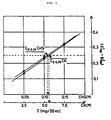
- tanning agent is completely bound and represented by the difference of the optical extinction of a color reaction before and after the adsorption 1E1 (750) - E2 (750) j (Grazca, 1987, supra).
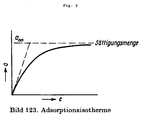
- adsorption value tends to a limit.
- the resulting curve (adsorption vs. concentration) is completely different from a pharmacological dose-response relationship.
- the present ratios are known from physical chemistry and are commonly described by the Langmuir equation for adsorption isotherms.
- the top in Fig. 1 The graph displayed represents the lower, linear part of the curve FIG. 2 ,
- Adstringens effect is when the tanning agent cross-links the protein molecules (eg in collagen fibers) with less stable ion or hydrogen bonds.
- These processes are the basis of the effect of the present invention lozenge on the mucous membranes in the mouth, since there is little tanning agent and a large amount of protein. Separate from this is the tanning in the true sense (eg in leather production), where an excess of tannin (usually tannin) enters into covalent bonds with the acid amide groups of the proteins, which leads to the absorption of about half of the leather weight of tannin and thus to saturation. This condition can not be achieved due to the very low amount of gallic acid in the dosage of the lozenge.
- the amount of tannins present in the lozenge although bound to the oral mucosa, but can not penetrate the epithelial barrier and thus is not absorbed.
- compositions claimed here according to the invention also differs significantly previously described compositions containing pelargonium and pelargonium extracts, all of which aim for systemic effects and therefore also require higher dosages.
- the tannins released from pelargonium extract of the lozenge nourish proteins of the inflamed mucosa in the mouth and throat due to their astringent properties. These are purely physicochemical mechanisms of action of adsorption and ionic bonds, which by definition are not counted as pharmacological effects. Due to the mechanism of action of superficial adsorption, tannin in the oral cavity is also not absorbed.
- the envelope-covering effect of the mucilages is the focus of the preparation according to the invention.
- mucus polysaccharides are usually heteropolysaccharides, ie polymeric carbohydrates from glycosidically linked sugars, which do not stick even in highly viscous solutions. Depending on the proportion of uronic acid units, these hydrogels may react neutral or acidic. Due to the primary structure The polymers can be divided into mannans, glucomannans, galactomannans, xylans, rhamnogalacturones, etc., wherein in slime-forming plants usually different chemically distinguishable biopolymers occur. The molecular weight of the mucus polysaccharides is of the order of 5 ⁇ 10 4 -10 6 .
- the leaves of plantain plantago lanceolata contain 2 - 5% of mucus polysaccharides consisting of the monomers glucuronic acid 7%, galacturonic acid 31%, galactose 44%, arabinose 32%, glucose 9%, rhamnose 7%, mannose 4%, fucose and xylose.
- the raw mucus can be further divided into four fractions consisting of one neutral and several acidic polysaccharide fractions.
- plantain contains 2-4% iridoids with the main components Aucubin and Catalpol, as well as tannins, flavonoids, phenolcarboxylic acids (caffeic acid, ferulic acid) and phenylethanoids, such as acetoside ( Paper DH, Marchesan M, Plantain (Plantago lanceolata L.) Z. Phytother. 20, 231-238, 1999 ).
- the anatomy of the oral mucosa shows an epithelial layer which is supported by a layer of connective tissue ( lamina basement membrane ), from which it is separated by a basement membrane.
- connective tissue lamina propria
- This is keratinized on the gums and palate.
- the remainder of the mucosa - except at the base of the tongue - shows 4 layers (superficial, intermediate, prickle-cell and basal layer).
- the thickness of the epithelium is 500 - 600 pm, with a total area of approx. 50 cm 2 .
- the "membrane-coating granules" of the "prickle-cells” are lipid-containing organelles whose contents are released into the intercellular spaces and are responsible for the cell cohesion and the intercellular barrier.
- the oral mucosa has no tight junctions between the epithelial cells, as they are typical of the intestinal mucosa (in the intestine).
- the mucous layer of the oral mucosa moisturizes and protects the epithelium and makes it lubricious.
- the actual mucus, called mucin is a glycoprotein whose protein core is surrounded by oligosaccharide side chains. This also causes the pH of 5.8 - 7.4 of the saliva.
- salivary glands 1,000 to 1,500 ml of saliva are secreted per day (about 40-60 ml / h) ( Roche Lexicon Medicine, ⁇ Urban & Fischer, 5th ed. 2003 , on the Internet at http://www. Care.de/roche/ called on 5.6.2005).
- Saliva also contains physiological mucus substances.
- 3 types of polysaccharides are present at a concentration of 50-300 mg / 100 ml.
- Fucomucoids contain fucose, hexosamine, galactose and some mannose, while the sialomucoids are rich in sialic acid and acetylgalactosamine. The low abundance acidic glycosaminoglycans have not been studied in detail.
- the binding of the mucus to the cultured oral mucosal cells can be measured by decreasing the concentration of polysaccharides in the supernatant solution. The extent and speed of the effect depends on the mucus drug used.
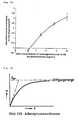
- Fig. 4 is the binding of the mucilage to oral mucosal cells shown (histochemical examination).
- the fluorescence-labeled rhamnogalacturonan used here is attached only apically to the epithelium [ep: epithelium, ct: connective tissue, bc: basal cells, d: lymph vessel] ( Schmidgall J. Schnetz E, Hensel A., Evidence for bioadhesive effects of polysaccharides and polysaccharide-containing herbs in an ex vivo bioadhesion assay on buccal membranes, Planta Med. 2000 Feb; 66 (1): 48-53 )
- the binding of the mucus to the cultured oral mucosal cells can be measured by decreasing the concentration of polysaccharides in the supernatant solution.
- the adsorption of the mucus on the cells is therefore a concentration-dependent process whose kinetics corresponds to the image of an adsorption isotherm (Schmidgall 2000 supra).
- the resulting curve (adsorption versus concentration) is completely different from one pharmacological dose-response relationship.
- the present ratios are known from physical chemistry and are usually represented by the Langmuir equation for adsorption isotherms.
- the mucilaginous substances released from plantain extract from the medical device are deposited on the inflamed mucosa in the mouth and throat. These are purely physico-chemical mechanisms of adsorption, which by definition are not counted as pharmacological effects. Due to the mechanism of action of the reversible adsorption on the epithelial surface, mucous substances in the oral cavity are also not absorbed.
- oral and pharyngeal therapeutics should be mentioned as possible fields of application of the present invention.
- the necessary symptomatic treatment consists of alleviation of these conditions with the aim of improving the subjective condition of the patient.
- the extract according to the invention or the combination according to the invention is preferably formulated in the dosage form usually used, but in particular one which allows topical administration of the invention to the inflamed site.
- the present invention contains the tannin-containing plant Pelargonium sidoides and / or Pelargonium reniforme and the phlegm-containing plant Plantago major and / or Plantago lanceolata.
- the tannins should cross-link proteins of the inflamed mucosa in the mouth and throat. Infections are thus prevented.
- the mucus envelops the mucous membranes in the mouth with a protective film.
- Adstringentia result in a densification of the colloidal structure and a superficial seal on the mucosa of the oropharynx. Since the concentration ratio of tannin molecules to protein is very small, it comes only to a superficial complexation of the protein molecules on the polyphenol molecules and thus to form a coherent and protective membrane. This reduces the irritation of the mucous membrane and achieves a mild antibacterial and anesthetic effect.
- the endogenous mucosal lining of the epithelium is disturbed in its function, resulting in chemical and microbial irritation.
- the effect of mucilage in this application is that the mucus polysaccharides attach thinly to the upper layers of the oral mucosa and thus on a inflamed oral mucosa form a - the physiological similar to the natural mucus layer - protective film. This leads to rehydration, desensitization of the pain receptors and decrease of the local inflammation with the consequence of a decreased cough irritation.
- the raw material Arabian gum (Acacia gum, Acacia senegal), from which the pastilles are preferably made, forms with water up to 50% colloidal solutions, which show no tendency to gel but adhere. From the highly branched arabinogalactans of Arabian gum form with water highly viscous hydrocolloid solutions that enhance the mucus sensation of plantain in the mouth.
- a lozenge causes a mechanical stimulus which, together with the acidic citric acid and the excipients maltitol and sorbitol, causes a so-called sialagogenic effect, ie stimulates the salivary glands to secrete.
- the oral mucosa is rinsed and natural mucus is distributed from the saliva in the mouth.
- the inventors have discovered in the development of the dosage form that the mother tincture can be incorporated directly into lozenges; then the amount equivalent to 2 mg of 100 mg of mother tincture is used.
- the urine tincture contains only 1% of the dry matter. This should be taken into consideration when interpreting the amounts of mother tincture used in pelargonium and plantain.
- Determining the effectiveness of the product according to the invention is the tannin content and mucilage content of the pastilles.
- This ingredient represents the mucilage activity of the inventive product.
- a commercial dry extract has a DEV of 4-5: 1.
- 1 lozenge lozenge according to the invention contains, for example: No. component Quantity per lozenge Quality monographie function 1 active substance 1 Pelargonium mother tincture 100.00 mg Lichtwer specification active substance 2 Plantago lanceolata dry extract 25.00 mg Lichtwer specification active substance Otherwise. ingredients P 3 Arabian gum 411.76 mg Ph. Eur. Curr. ed. Aerating 4 Maltitol solution 553.06 mg Ph. Eur. Curr. ed. Sugar substitute 5 Sorbitol solution 70% (non-krist.) 142.85 mg Ph. Eur. Curr. ed. Sugar substitute 6 anhydrous citric acid 6.50 mg Ph. Eur. Curr. ed. acidifiers 7 menthol 0.80 mg Ph.
- pastilles is based here on the use of Arabian gums or other hydrocolloids.
- active ingredients and auxiliaries are incorporated in a known manner.
- the resulting syrupy mass is poured into prefabricated powder forms on a so-called Mogul plant and then gently dried, powdered and shined.
- an easily soluble sugar alcohol is used for the one layer and a less soluble one for the second layer.
- a viscosity enhancer can be used in the sparingly soluble layer.
- Cellulosic derivatives or arabic gums are suitable for this purpose.
- tableting these are used for granulation of the extracts in order to improve the flowability of the tablet mass on the press.
- the technique of the 2-layer tablet is available from pharmaceutical contract manufacturers for tablets.
- the mother tincture can be grown on sucrose and dried.
- the flavorings are incorporated into this layer.
- the first two substances taste predominantly sweet and harmonize with the herbaceous taste of ribwort extract.
- HPMC Hydroxypropylmethylcellulose
- the product tastes sweet-cooling by the combination of xylitol and menthol with an exotic touch through the geranium. This is distracted by the tannin effect of Pelargonium flavor.
- the tannins quickly cross-link and seal the proteins of the irritated mucosa.
- the outer layer of the lozenge dissolves relatively quickly.
- the predominantly sweet-herbaceous-tasting second layer is slowly dissolved with the mucilage.
- the mucus, together with the sticky Arabian gum, lay like a film on the irritated mucous membranes of the mouth and throat and so calm the irritated neck.
Landscapes
- Health & Medical Sciences (AREA)
- Life Sciences & Earth Sciences (AREA)
- Natural Medicines & Medicinal Plants (AREA)
- Veterinary Medicine (AREA)
- Medicinal Chemistry (AREA)
- Chemical & Material Sciences (AREA)
- Public Health (AREA)
- General Health & Medical Sciences (AREA)
- Animal Behavior & Ethology (AREA)
- Pharmacology & Pharmacy (AREA)
- Engineering & Computer Science (AREA)
- Bioinformatics & Cheminformatics (AREA)
- Epidemiology (AREA)
- Nuclear Medicine, Radiotherapy & Molecular Imaging (AREA)
- Organic Chemistry (AREA)
- Chemical Kinetics & Catalysis (AREA)
- General Chemical & Material Sciences (AREA)
- Alternative & Traditional Medicine (AREA)
- Microbiology (AREA)
- Medical Informatics (AREA)
- Botany (AREA)
- Biotechnology (AREA)
- Mycology (AREA)
- Pulmonology (AREA)
- Zoology (AREA)
- Physiology (AREA)
- Nutrition Science (AREA)
- Otolaryngology (AREA)
- Medicines Containing Plant Substances (AREA)
- Cosmetics (AREA)
- Medicinal Preparation (AREA)
- Acyclic And Carbocyclic Compounds In Medicinal Compositions (AREA)
- Cultivation Of Plants (AREA)
- Feed For Specific Animals (AREA)
Claims (14)
- Utilisation de pélargonium en association avec du plantain pour la fabrication d'une composition pharmaceutique sous forme d'une pastille à sucer ou d'un comprimé à sucer pour la prophylaxie et le traitement topiques d'inflammation de la cavité buccale et pharyngée, le pélargonium étant Pelargonium sidoides et/ou Pelargonium reniforme et le plantain étant Plantago major et/ou Plantago lanceolata, le pélargonium étant utilisé sous forme d'un extrait.
- Utilisation selon la revendication 1, caractérisée en ce que d'abord l'action du composant pélargonium prédomine, et à la suite de cela l'action du composant plantain prédomine.
- Utilisation selon la revendication 2, caractérisée en ce que une action décalée dans le temps des composants est causée par la libération retardée du plantain.
- Utilisation selon la revendication 2 ou 3, caractérisée en ce que la libération retardée est provoquée par mélange avec des substances se dissolvant à des vitesses différentes.
- Utilisation selon l'une quelconque des revendications précédentes, caractérisée en ce que le plantain est lui aussi utilisé sous forme d'un extrait.
- Utilisation selon la revendication 5, caractérisée en ce que dans le cas de l'extrait de plantain il s'agit d'un extrait sec.
- Utilisation selon l'une quelconque des revendications précédentes, caractérisée en ce que dans le cas de l'extrait de pélargonium il s'agit d'un extrait aqueux-éthanolique.
- Utilisation selon l'une quelconque des revendications précédentes, caractérisée en ce qu'il s'agit d'une pastille à sucer bicouche, une couche de noyau interne étant constituée du composant plantain et un enrobage externe étant formé par le composant pélargonium.
- Utilisation selon l'une quelconque des revendications précédentes, caractérisée en ce qu'il s'agit d'une pastille à sucer et ce qu'elle comprend comme autres composants de la gomme arabique, du maltitol, du sorbitol, du xylitol, du saccharose, de l'isomalt, de l'acide citrique anhydre, de l'acésulfame potassique, de la paraffine fluide, de la cire blanchie, de l'eau, des dérivés de cellulose, des alcools dérivés de sucres, de l'Eudragit et/ou des arômes.
- Utilisation selon la revendication 9, caractérisée en ce que les arômes consistent en essence de géranium et/ou menthol.
- Utilisation selon l'une quelconque des revendications précédentes, caractérisée en ce qu'il s'agit d'une pastille à sucer qui comprend 80 - 200 mg de teinture-mère de pélargonium et 15 - 40 mg d'extrait sec de plantain.
- Utilisation selon la revendication 11, caractérisée en ce que la pastille à sucer comprend 100,00 mg de teinture-mère de pélargonium et 25,0 mg d'extrait sec de plantain.
- Utilisation selon la revendication 11, caractérisée en ce qu'il s'agit d'une pastille à sucer et en ce que celle-ci présente la composition suivante :
teinture-mère de pélargonium : 80-200 mg extrait sec de plantain : 15-40 mg gomme arabique : 300-500 mg solution de maltitol : 400-600 mg solution de sorbitol à 70 % (non cristallisable) : 100-200 mg acide citrique anhydre : 4-9 mg menthol : 0-100 mg acésulfame potassique 0,3-1 mg essence de géranium, naturelle : 0-0,1 mg paraffine fluide : 0-2 mg cire blanchie : 0-0,1 mg eau de traitement : q.s. - Utilisation selon la revendication 13, caractérisée en ce que la pastille contient, par pastille, ce qui suit :
teinture-mère de pélargonium : 100 mg extrait sec de plantain : 25 mg gomme arabique : 412 mg solution de maltitol : 553 mg solution de sorbitol à 70 % (non cristallisable) : 143 mg acide citrique anhydre : 6,50 mg menthol : 0,80 mg acésulfame potassique 0,5 mg essence de géranium, naturelle : 0,05 mg paraffine fluide : 1,30 mg cire blanchie : 0,7 mg eau de traitement : q.s., pour un poids de pastille de 1 000,00 mg
Priority Applications (11)
| Application Number | Priority Date | Filing Date | Title |
|---|---|---|---|
| EP08011644.5A EP1977757B1 (fr) | 2006-03-01 | 2006-03-01 | Comprimé comprenant Pelargonium en association avec Plantago |
| EP06004114A EP1829548B1 (fr) | 2006-03-01 | 2006-03-01 | Utilisation d'extraits de Pelargonium en association avec de Plantago pour la préparation d'un médicament pour le traitement de la pharyngite |
| PL06004114T PL1829548T3 (pl) | 2006-03-01 | 2006-03-01 | Zastosowanie ekstraktów z Pelargonium w połączeniu z Plantago do wytwarzania środka leczniczego do leczenia zapalenia gardła |
| PL08011644T PL1977757T3 (pl) | 2006-03-01 | 2006-03-01 | Pastylka do ssania zawierająca roślinę z rodzaju pelargonia w kombinacji z rośliną z rodzaju babka |
| PT06004114T PT1829548E (pt) | 2006-03-01 | 2006-03-01 | Utilização de extractos de pelargonium em combinação com plantago para a preparação de um medicamento para o tratamento da faringite |
| ES06004114T ES2321432T3 (es) | 2006-03-01 | 2006-03-01 | Utilizacion de extractos de pelargonio en combinacion con plantago para la preparacion de un medicamento para el tratamiento e la faringitis. |
| SI200630238T SI1829548T1 (sl) | 2006-03-01 | 2006-03-01 | Uporaba ekstraktov Pelargonium v kombinaciji s Plantago za pripravo zdravila za zdravljenje vnetja Ĺľrela |
| DK06004114T DK1829548T3 (da) | 2006-03-01 | 2006-03-01 | Anvendelse af Pelargoniumekstrakter i kombination med Plantago til fremstilling af et medikament til behandling af halsbetændelse |
| DE502006002773T DE502006002773D1 (de) | 2006-03-01 | 2006-03-01 | Verwendung von Pelargonium Extrakten in Kombination mit Plantago zur Herstellung eines Medikaments zur Behandlung der Rachenentzündung |
| AT06004114T ATE422161T1 (de) | 2006-03-01 | 2006-03-01 | Verwendung von pelargonium extrakten in kombination mit plantago zur herstellung eines medikaments zur behandlung der rachenentzündung |
| ES08011644.5T ES2662889T3 (es) | 2006-03-01 | 2006-03-01 | Pastilla para chupar que contiene Pelargonium en combinación con Plantago |
Applications Claiming Priority (1)
| Application Number | Priority Date | Filing Date | Title |
|---|---|---|---|
| EP06004114A EP1829548B1 (fr) | 2006-03-01 | 2006-03-01 | Utilisation d'extraits de Pelargonium en association avec de Plantago pour la préparation d'un médicament pour le traitement de la pharyngite |
Related Child Applications (1)
| Application Number | Title | Priority Date | Filing Date |
|---|---|---|---|
| EP08011644.5A Division EP1977757B1 (fr) | 2006-03-01 | 2006-03-01 | Comprimé comprenant Pelargonium en association avec Plantago |
Publications (2)
| Publication Number | Publication Date |
|---|---|
| EP1829548A1 EP1829548A1 (fr) | 2007-09-05 |
| EP1829548B1 true EP1829548B1 (fr) | 2009-02-04 |
Family
ID=36716801
Family Applications (2)
| Application Number | Title | Priority Date | Filing Date |
|---|---|---|---|
| EP08011644.5A Expired - Lifetime EP1977757B1 (fr) | 2006-03-01 | 2006-03-01 | Comprimé comprenant Pelargonium en association avec Plantago |
| EP06004114A Expired - Lifetime EP1829548B1 (fr) | 2006-03-01 | 2006-03-01 | Utilisation d'extraits de Pelargonium en association avec de Plantago pour la préparation d'un médicament pour le traitement de la pharyngite |
Family Applications Before (1)
| Application Number | Title | Priority Date | Filing Date |
|---|---|---|---|
| EP08011644.5A Expired - Lifetime EP1977757B1 (fr) | 2006-03-01 | 2006-03-01 | Comprimé comprenant Pelargonium en association avec Plantago |
Country Status (8)
| Country | Link |
|---|---|
| EP (2) | EP1977757B1 (fr) |
| AT (1) | ATE422161T1 (fr) |
| DE (1) | DE502006002773D1 (fr) |
| DK (1) | DK1829548T3 (fr) |
| ES (2) | ES2321432T3 (fr) |
| PL (2) | PL1977757T3 (fr) |
| PT (1) | PT1829548E (fr) |
| SI (1) | SI1829548T1 (fr) |
Cited By (1)
| Publication number | Priority date | Publication date | Assignee | Title |
|---|---|---|---|---|
| DE102012003286A1 (de) | 2012-02-20 | 2013-08-22 | Merz Pharma Gmbh & Co. Kgaa | Kombination aus Lipidtransferproteinen und Phenolderivate enthaltenden Pflanzenstoffen mit lokal-mucosaler Effizienz |
Families Citing this family (10)
| Publication number | Priority date | Publication date | Assignee | Title |
|---|---|---|---|---|
| GB2453770A (en) * | 2007-10-19 | 2009-04-22 | Reckitt Benckiser Healthcare | Oral composition comprising a cooling agent |
| DE202008008532U1 (de) * | 2008-06-30 | 2009-08-13 | Maria Clementine Martin Klosterfrau Vertriebsgesellschaft Mbh | Lutschzusammensetzung zur Behandlung von entzündlichen Erkrankungen des Mund- und Rachenraums |
| GB2481630A (en) * | 2010-07-01 | 2012-01-04 | Robert Taylor | Composition for dental health |
| US10111912B2 (en) | 2012-10-18 | 2018-10-30 | Montero Gida Sanayi Ve Ticaret A.S. | Herbal formulations |
| EA201590568A1 (ru) | 2012-10-18 | 2015-09-30 | Монтеро Гида Санайи Ве Тиджарет А.С. | Составы, содержащие экстракты растений |
| EA201590564A1 (ru) | 2012-10-18 | 2015-09-30 | Монтеро Гида Санайи Ве Тиджарет А.С. | Стабильные составы |
| SMT201700478T1 (it) | 2012-10-18 | 2017-11-15 | Montero Gida Sanayi Ve Ticaret As | Nuove formulazioni comprendenti estratti vegetali |
| ITMI20130529A1 (it) * | 2013-04-08 | 2014-10-09 | I R B Istituto Di Ricerche B Iotecnologiche S P A | Processo di produzione di cellule meristematiche di plantago lanceolata, composizione comprendente dette cellule o il loro estratto cellulare e l'utilizzo cosmetico, nutraceutico e dermatologico |
| CN104042701B (zh) * | 2014-05-11 | 2016-02-03 | 黄涵 | 清咽含片 |
| WO2022108540A1 (fr) * | 2020-11-19 | 2022-05-27 | Montero Gida Sanayi Ve Ticaret Anonim Sirketi | Composition orale à base d'herbes comprenant des ingrédients naturels |
Family Cites Families (3)
| Publication number | Priority date | Publication date | Assignee | Title |
|---|---|---|---|---|
| LU83173A1 (fr) * | 1981-02-27 | 1981-06-05 | Oreal | Nouvelles compositions cosmetiques pour le traitement des cheveux et de la peau contenant une poudre resultant de la pulverisation d'au moins une plante et un agent de cohesion |
| US6027716A (en) * | 1997-04-02 | 2000-02-22 | Farmo-Nat Ltd. | Synergistic herbal extracts |
| DE202004016077U1 (de) * | 2004-09-22 | 2005-11-10 | Maria Clementine Martin Klosterfrau Vertriebsgesellschaft Mbh | Lutschtablette gegen entzündliche Erkrankungen des Mund- und Rachenraums |
-
2006
- 2006-03-01 ES ES06004114T patent/ES2321432T3/es not_active Expired - Lifetime
- 2006-03-01 DK DK06004114T patent/DK1829548T3/da active
- 2006-03-01 ES ES08011644.5T patent/ES2662889T3/es not_active Expired - Lifetime
- 2006-03-01 SI SI200630238T patent/SI1829548T1/sl unknown
- 2006-03-01 PL PL08011644T patent/PL1977757T3/pl unknown
- 2006-03-01 DE DE502006002773T patent/DE502006002773D1/de not_active Expired - Lifetime
- 2006-03-01 AT AT06004114T patent/ATE422161T1/de active
- 2006-03-01 PL PL06004114T patent/PL1829548T3/pl unknown
- 2006-03-01 EP EP08011644.5A patent/EP1977757B1/fr not_active Expired - Lifetime
- 2006-03-01 PT PT06004114T patent/PT1829548E/pt unknown
- 2006-03-01 EP EP06004114A patent/EP1829548B1/fr not_active Expired - Lifetime
Cited By (2)
| Publication number | Priority date | Publication date | Assignee | Title |
|---|---|---|---|---|
| DE102012003286A1 (de) | 2012-02-20 | 2013-08-22 | Merz Pharma Gmbh & Co. Kgaa | Kombination aus Lipidtransferproteinen und Phenolderivate enthaltenden Pflanzenstoffen mit lokal-mucosaler Effizienz |
| WO2013124041A1 (fr) | 2012-02-20 | 2013-08-29 | Merz Pharma Gmbh & Co. Kgaa | Combinaison de protéines de transfert lipidique et de dérivés phénoliques contenant des substances végétales localement efficaces sur les muqueuses |
Also Published As
| Publication number | Publication date |
|---|---|
| EP1829548A1 (fr) | 2007-09-05 |
| EP1977757B1 (fr) | 2017-12-20 |
| PL1829548T3 (pl) | 2009-07-31 |
| ATE422161T1 (de) | 2009-02-15 |
| DK1829548T3 (da) | 2009-05-11 |
| ES2321432T3 (es) | 2009-06-05 |
| PT1829548E (pt) | 2009-04-14 |
| EP1977757A2 (fr) | 2008-10-08 |
| PL1977757T3 (pl) | 2018-06-29 |
| ES2662889T3 (es) | 2018-04-10 |
| SI1829548T1 (sl) | 2009-06-30 |
| DE502006002773D1 (de) | 2009-03-19 |
| EP1977757A3 (fr) | 2009-04-22 |
Similar Documents
| Publication | Publication Date | Title |
|---|---|---|
| US6197305B1 (en) | Anti-fungal compositions with prolonged activity | |
| EP2293805B1 (fr) | Composition à sucer pour le traitement d'affections inflammatoires de la cavité buccale et du pharynx | |
| EP2874600B1 (fr) | Composition pharmaceutique pour le traitement d'enrouement et de mal à la gorge | |
| EP1829548B1 (fr) | Utilisation d'extraits de Pelargonium en association avec de Plantago pour la préparation d'un médicament pour le traitement de la pharyngite | |
| EP2367557B1 (fr) | Composition pour le traitement de maladies infectieuses de la cavité buccale et pharyngienne | |
| EP2617412B1 (fr) | Composition pour le traitement topique | |
| EP2817002B1 (fr) | Combinaison de protéines de transfert lipidique et de dérivés phénoliques contenant des substances végétales localement efficaces sur les muqueuses | |
| EP1871340B1 (fr) | Medicament antitussif et sedatif contenant des extraits de mousse d'islande et de mauve et en plus des derives de zinc | |
| EP1639998B1 (fr) | Losange à base de mucilage de plantes contre les processus inflammatoires de la cavité buccale et pharyngienne | |
| EP3380109A1 (fr) | Composition pour le traitement de refroidissements et d'allergies | |
| Sagar et al. | Therapeutic study of garlic gel formulation for tongue ulcer healing | |
| DE202006011920U1 (de) | Zusammensetzung zur Behandlung von Rhinitis | |
| DE202009008263U1 (de) | Zusammensetzung zur Behandlung entzündlicher Erkrankungen | |
| WO2017028977A1 (fr) | Composition pour le traitement de la cavité laryngopharyngée | |
| AU2021104048A4 (en) | A novel polyherbal extract having antidiabetic potential | |
| DE202006008541U1 (de) | Reizlinderndes Hustenmittel | |
| RS50847B (sr) | Primena ekstrakta pelargonije u kombinaciji sa trputcem za pripremu leka za lečenje upale ždrela | |
| DE202004016078U1 (de) | Schleimdrogenbasierte Lutschtablette gegen entzündliche Erkrankungen des Mund- und Rachenraums | |
| DE202015104316U1 (de) | Zusammensetzung für die Behandlung des Hals-/Rachenraums | |
| EP4129313A2 (fr) | Composition pharmaceutique destinée au traitement de la neurodermatite | |
| EP1210945A1 (fr) | Composition pharmaceutique anti-artériosclérotique | |
| DE202005009181U1 (de) | Reizlinderndes Hustenmittel | |
| DE202005018338U1 (de) | Lutschtablette gegen Hustenreiz und Heiserkeit | |
| EP1238672A1 (fr) | Composition pharmaceutique à base d'une combinaison d'un extrait de réglisse et d'écorce de chaine | |
| RS20140263A1 (sr) | Bioaktivni polučvrsti i tečni fitopreparati |
Legal Events
| Date | Code | Title | Description |
|---|---|---|---|
| PUAI | Public reference made under article 153(3) epc to a published international application that has entered the european phase |
Free format text: ORIGINAL CODE: 0009012 |
|
| AK | Designated contracting states |
Kind code of ref document: A1 Designated state(s): AT BE BG CH CY CZ DE DK EE ES FI FR GB GR HU IE IS IT LI LT LU LV MC NL PL PT RO SE SI SK TR |
|
| AX | Request for extension of the european patent |
Extension state: AL BA HR MK YU |
|
| 17P | Request for examination filed |
Effective date: 20070911 |
|
| 17Q | First examination report despatched |
Effective date: 20071016 |
|
| AKX | Designation fees paid |
Designated state(s): AT BE BG CH CY CZ DE DK EE ES FI FR GB GR HU IE IS IT LI LT LU LV MC NL PL PT RO SE SI SK TR |
|
| AXX | Extension fees paid |
Extension state: MK Payment date: 20070911 Extension state: BA Payment date: 20070911 Extension state: AL Payment date: 20070911 Extension state: YU Payment date: 20070911 Extension state: HR Payment date: 20070911 |
|
| GRAP | Despatch of communication of intention to grant a patent |
Free format text: ORIGINAL CODE: EPIDOSNIGR1 |
|
| RIC1 | Information provided on ipc code assigned before grant |
Ipc: A61K 36/68 20060101AFI20081008BHEP Ipc: A61K 36/185 20060101ALI20081008BHEP Ipc: A61P 1/02 20060101ALI20081008BHEP Ipc: A61P 11/04 20060101ALI20081008BHEP |
|
| RTI1 | Title (correction) |
Free format text: USE OF PELARGONIUM EXTRACTS IN COMBINATION WITH PLANTAGO FOR THE PREPARATION OF A MEDICAMENT FOR THE TREATMENT OF PHARYNGITIS |
|
| GRAS | Grant fee paid |
Free format text: ORIGINAL CODE: EPIDOSNIGR3 |
|
| GRAA | (expected) grant |
Free format text: ORIGINAL CODE: 0009210 |
|
| AK | Designated contracting states |
Kind code of ref document: B1 Designated state(s): AT BE BG CH CY CZ DE DK EE ES FI FR GB GR HU IE IS IT LI LT LU LV MC NL PL PT RO SE SI SK TR |
|
| AX | Request for extension of the european patent |
Extension state: AL BA HR MK YU |
|
| REG | Reference to a national code |
Ref country code: GB Ref legal event code: FG4D Free format text: NOT ENGLISH |
|
| REG | Reference to a national code |
Ref country code: CH Ref legal event code: EP |
|
| REG | Reference to a national code |
Ref country code: IE Ref legal event code: FG4D Free format text: LANGUAGE OF EP DOCUMENT: GERMAN |
|
| REF | Corresponds to: |
Ref document number: 502006002773 Country of ref document: DE Date of ref document: 20090319 Kind code of ref document: P |
|
| REG | Reference to a national code |
Ref country code: PT Ref legal event code: SC4A Free format text: AVAILABILITY OF NATIONAL TRANSLATION Effective date: 20090406 |
|
| REG | Reference to a national code |
Ref country code: CH Ref legal event code: NV Representative=s name: KELLER & PARTNER PATENTANWAELTE AG |
|
| REG | Reference to a national code |
Ref country code: RO Ref legal event code: EPE |
|
| REG | Reference to a national code |
Ref country code: DK Ref legal event code: T3 |
|
| REG | Reference to a national code |
Ref country code: GR Ref legal event code: EP Ref document number: 20090401200 Country of ref document: GR |
|
| REG | Reference to a national code |
Ref country code: SE Ref legal event code: TRGR |
|
| REG | Reference to a national code |
Ref country code: ES Ref legal event code: FG2A Ref document number: 2321432 Country of ref document: ES Kind code of ref document: T3 |
|
| REG | Reference to a national code |
Ref country code: EE Ref legal event code: FG4A Ref document number: E003064 Country of ref document: EE Effective date: 20090420 |
|
| REG | Reference to a national code |
Ref country code: PL Ref legal event code: T3 |
|
| PLBE | No opposition filed within time limit |
Free format text: ORIGINAL CODE: 0009261 |
|
| STAA | Information on the status of an ep patent application or granted ep patent |
Free format text: STATUS: NO OPPOSITION FILED WITHIN TIME LIMIT |
|
| REG | Reference to a national code |
Ref country code: HU Ref legal event code: AG4A Ref document number: E006179 Country of ref document: HU |
|
| 26N | No opposition filed |
Effective date: 20091105 |
|
| PG25 | Lapsed in a contracting state [announced via postgrant information from national office to epo] |
Ref country code: CY Free format text: LAPSE BECAUSE OF FAILURE TO SUBMIT A TRANSLATION OF THE DESCRIPTION OR TO PAY THE FEE WITHIN THE PRESCRIBED TIME-LIMIT Effective date: 20100512 |
|
| PGFP | Annual fee paid to national office [announced via postgrant information from national office to epo] |
Ref country code: MC Payment date: 20110314 Year of fee payment: 6 Ref country code: DK Payment date: 20110315 Year of fee payment: 6 Ref country code: LT Payment date: 20110222 Year of fee payment: 6 Ref country code: IE Payment date: 20110328 Year of fee payment: 6 |
|
| PGFP | Annual fee paid to national office [announced via postgrant information from national office to epo] |
Ref country code: FI Payment date: 20110314 Year of fee payment: 6 Ref country code: IT Payment date: 20110323 Year of fee payment: 6 Ref country code: EE Payment date: 20110314 Year of fee payment: 6 Ref country code: IS Payment date: 20110218 Year of fee payment: 6 Ref country code: FR Payment date: 20110404 Year of fee payment: 6 Ref country code: LV Payment date: 20110314 Year of fee payment: 6 Ref country code: BG Payment date: 20110314 Year of fee payment: 6 Ref country code: SE Payment date: 20110314 Year of fee payment: 6 Ref country code: TR Payment date: 20110228 Year of fee payment: 6 |
|
| PGFP | Annual fee paid to national office [announced via postgrant information from national office to epo] |
Ref country code: GR Payment date: 20110321 Year of fee payment: 6 |
|
| PGFP | Annual fee paid to national office [announced via postgrant information from national office to epo] |
Ref country code: ES Payment date: 20110325 Year of fee payment: 6 |
|
| PG25 | Lapsed in a contracting state [announced via postgrant information from national office to epo] |
Ref country code: CY Free format text: LAPSE BECAUSE OF FAILURE TO SUBMIT A TRANSLATION OF THE DESCRIPTION OR TO PAY THE FEE WITHIN THE PRESCRIBED TIME-LIMIT Effective date: 20090301 |
|
| REG | Reference to a national code |
Ref country code: LT Ref legal event code: MM4D Effective date: 20120301 |
|
| REG | Reference to a national code |
Ref country code: SE Ref legal event code: EUG |
|
| PG25 | Lapsed in a contracting state [announced via postgrant information from national office to epo] |
Ref country code: FI Free format text: LAPSE BECAUSE OF NON-PAYMENT OF DUE FEES Effective date: 20120301 Ref country code: LT Free format text: LAPSE BECAUSE OF NON-PAYMENT OF DUE FEES Effective date: 20120301 Ref country code: MC Free format text: LAPSE BECAUSE OF NON-PAYMENT OF DUE FEES Effective date: 20120331 Ref country code: SE Free format text: LAPSE BECAUSE OF NON-PAYMENT OF DUE FEES Effective date: 20120302 |
|
| REG | Reference to a national code |
Ref country code: DK Ref legal event code: EBP |
|
| PG25 | Lapsed in a contracting state [announced via postgrant information from national office to epo] |
Ref country code: LV Free format text: LAPSE BECAUSE OF NON-PAYMENT OF DUE FEES Effective date: 20120301 |
|
| REG | Reference to a national code |
Ref country code: GR Ref legal event code: ML Ref document number: 20090401200 Country of ref document: GR Effective date: 20121008 |
|
| REG | Reference to a national code |
Ref country code: EE Ref legal event code: MM4A Ref document number: E003064 Country of ref document: EE Effective date: 20120331 |
|
| REG | Reference to a national code |
Ref country code: DE Ref legal event code: R082 Ref document number: 502006002773 Country of ref document: DE Representative=s name: VON ROHR PATENTANWAELTE PARTNERSCHAFT MBB, DE |
|
| REG | Reference to a national code |
Ref country code: FR Ref legal event code: ST Effective date: 20121130 |
|
| REG | Reference to a national code |
Ref country code: IE Ref legal event code: MM4A |
|
| PG25 | Lapsed in a contracting state [announced via postgrant information from national office to epo] |
Ref country code: IE Free format text: LAPSE BECAUSE OF NON-PAYMENT OF DUE FEES Effective date: 20120301 Ref country code: FR Free format text: LAPSE BECAUSE OF NON-PAYMENT OF DUE FEES Effective date: 20120402 Ref country code: IS Free format text: LAPSE BECAUSE OF FAILURE TO SUBMIT A TRANSLATION OF THE DESCRIPTION OR TO PAY THE FEE WITHIN THE PRESCRIBED TIME-LIMIT Effective date: 20121001 Ref country code: EE Free format text: LAPSE BECAUSE OF NON-PAYMENT OF DUE FEES Effective date: 20120331 |
|
| PG25 | Lapsed in a contracting state [announced via postgrant information from national office to epo] |
Ref country code: GR Free format text: LAPSE BECAUSE OF NON-PAYMENT OF DUE FEES Effective date: 20121008 Ref country code: IT Free format text: LAPSE BECAUSE OF NON-PAYMENT OF DUE FEES Effective date: 20120301 |
|
| PG25 | Lapsed in a contracting state [announced via postgrant information from national office to epo] |
Ref country code: DK Free format text: LAPSE BECAUSE OF NON-PAYMENT OF DUE FEES Effective date: 20120331 |
|
| PGFP | Annual fee paid to national office [announced via postgrant information from national office to epo] |
Ref country code: GB Payment date: 20130321 Year of fee payment: 8 Ref country code: CZ Payment date: 20130225 Year of fee payment: 8 Ref country code: RO Payment date: 20130226 Year of fee payment: 8 Ref country code: LU Payment date: 20130328 Year of fee payment: 8 |
|
| PGFP | Annual fee paid to national office [announced via postgrant information from national office to epo] |
Ref country code: SK Payment date: 20130228 Year of fee payment: 8 Ref country code: SI Payment date: 20130222 Year of fee payment: 8 |
|
| PGFP | Annual fee paid to national office [announced via postgrant information from national office to epo] |
Ref country code: PT Payment date: 20130222 Year of fee payment: 8 |
|
| PG25 | Lapsed in a contracting state [announced via postgrant information from national office to epo] |
Ref country code: BG Free format text: LAPSE BECAUSE OF NON-PAYMENT OF DUE FEES Effective date: 20121231 |
|
| PGFP | Annual fee paid to national office [announced via postgrant information from national office to epo] |
Ref country code: BE Payment date: 20130320 Year of fee payment: 8 |
|
| REG | Reference to a national code |
Ref country code: ES Ref legal event code: FD2A Effective date: 20140109 |
|
| PG25 | Lapsed in a contracting state [announced via postgrant information from national office to epo] |
Ref country code: ES Free format text: LAPSE BECAUSE OF NON-PAYMENT OF DUE FEES Effective date: 20120302 |
|
| PG25 | Lapsed in a contracting state [announced via postgrant information from national office to epo] |
Ref country code: TR Free format text: LAPSE BECAUSE OF NON-PAYMENT OF DUE FEES Effective date: 20120301 |
|
| REG | Reference to a national code |
Ref country code: PT Ref legal event code: MM4A Free format text: LAPSE DUE TO NON-PAYMENT OF FEES Effective date: 20140901 |
|
| REG | Reference to a national code |
Ref country code: NL Ref legal event code: V1 Effective date: 20141001 |
|
| PG25 | Lapsed in a contracting state [announced via postgrant information from national office to epo] |
Ref country code: RO Free format text: LAPSE BECAUSE OF NON-PAYMENT OF DUE FEES Effective date: 20140301 Ref country code: LU Free format text: LAPSE BECAUSE OF NON-PAYMENT OF DUE FEES Effective date: 20140301 Ref country code: CZ Free format text: LAPSE BECAUSE OF NON-PAYMENT OF DUE FEES Effective date: 20140301 |
|
| GBPC | Gb: european patent ceased through non-payment of renewal fee |
Effective date: 20140301 |
|
| PG25 | Lapsed in a contracting state [announced via postgrant information from national office to epo] |
Ref country code: SI Free format text: LAPSE BECAUSE OF NON-PAYMENT OF DUE FEES Effective date: 20140302 |
|
| REG | Reference to a national code |
Ref country code: SI Ref legal event code: KO00 Effective date: 20141007 |
|
| REG | Reference to a national code |
Ref country code: SK Ref legal event code: MM4A Ref document number: E 5407 Country of ref document: SK Effective date: 20140301 |
|
| PG25 | Lapsed in a contracting state [announced via postgrant information from national office to epo] |
Ref country code: PT Free format text: LAPSE BECAUSE OF NON-PAYMENT OF DUE FEES Effective date: 20140901 |
|
| PG25 | Lapsed in a contracting state [announced via postgrant information from national office to epo] |
Ref country code: GB Free format text: LAPSE BECAUSE OF NON-PAYMENT OF DUE FEES Effective date: 20140301 Ref country code: SK Free format text: LAPSE BECAUSE OF NON-PAYMENT OF DUE FEES Effective date: 20140301 |
|
| PG25 | Lapsed in a contracting state [announced via postgrant information from national office to epo] |
Ref country code: NL Free format text: LAPSE BECAUSE OF NON-PAYMENT OF DUE FEES Effective date: 20141001 |
|
| REG | Reference to a national code |
Ref country code: CH Ref legal event code: PCAR Free format text: NEW ADDRESS: EIGERSTRASSE 2 POSTFACH, 3000 BERN 14 (CH) |
|
| PGFP | Annual fee paid to national office [announced via postgrant information from national office to epo] |
Ref country code: HU Payment date: 20150319 Year of fee payment: 10 |
|
| PG25 | Lapsed in a contracting state [announced via postgrant information from national office to epo] |
Ref country code: HU Free format text: LAPSE BECAUSE OF NON-PAYMENT OF DUE FEES Effective date: 20160302 |
|
| PG25 | Lapsed in a contracting state [announced via postgrant information from national office to epo] |
Ref country code: BE Free format text: LAPSE BECAUSE OF NON-PAYMENT OF DUE FEES Effective date: 20140331 |
|
| PGFP | Annual fee paid to national office [announced via postgrant information from national office to epo] |
Ref country code: NL Payment date: 20190129 Year of fee payment: 12 Ref country code: CH Payment date: 20190320 Year of fee payment: 14 |
|
| PGFP | Annual fee paid to national office [announced via postgrant information from national office to epo] |
Ref country code: AT Payment date: 20190321 Year of fee payment: 14 |
|
| REG | Reference to a national code |
Ref country code: CH Ref legal event code: PFA Owner name: DIVAPHARMA CHUR AG, CH Free format text: FORMER OWNER: DIVAPHARMA CHUR AG, CH |
|
| REG | Reference to a national code |
Ref country code: CH Ref legal event code: PL |
|
| REG | Reference to a national code |
Ref country code: AT Ref legal event code: MM01 Ref document number: 422161 Country of ref document: AT Kind code of ref document: T Effective date: 20200301 |
|
| PG25 | Lapsed in a contracting state [announced via postgrant information from national office to epo] |
Ref country code: AT Free format text: LAPSE BECAUSE OF NON-PAYMENT OF DUE FEES Effective date: 20200301 Ref country code: LI Free format text: LAPSE BECAUSE OF NON-PAYMENT OF DUE FEES Effective date: 20200331 Ref country code: CH Free format text: LAPSE BECAUSE OF NON-PAYMENT OF DUE FEES Effective date: 20200331 |
|
| PG25 | Lapsed in a contracting state [announced via postgrant information from national office to epo] |
Ref country code: PL Free format text: LAPSE BECAUSE OF NON-PAYMENT OF DUE FEES Effective date: 20200301 |
|
| P01 | Opt-out of the competence of the unified patent court (upc) registered |
Effective date: 20230613 |
|
| PGFP | Annual fee paid to national office [announced via postgrant information from national office to epo] |
Ref country code: DE Payment date: 20250325 Year of fee payment: 20 |
|
| REG | Reference to a national code |
Ref country code: DE Ref legal event code: R071 Ref document number: 502006002773 Country of ref document: DE |