EP1829845A2 - Faserverstärkte Zementverbundwerkstoffe mit chemisch behandelten Fasern mit verbesserter Dispergierbarkeit - Google Patents
Faserverstärkte Zementverbundwerkstoffe mit chemisch behandelten Fasern mit verbesserter Dispergierbarkeit Download PDFInfo
- Publication number
- EP1829845A2 EP1829845A2 EP20070007327 EP07007327A EP1829845A2 EP 1829845 A2 EP1829845 A2 EP 1829845A2 EP 20070007327 EP20070007327 EP 20070007327 EP 07007327 A EP07007327 A EP 07007327A EP 1829845 A2 EP1829845 A2 EP 1829845A2
- Authority
- EP
- European Patent Office
- Prior art keywords
- fibers
- building material
- fiber
- chemically treated
- improved dispersibility
- Prior art date
- Legal status (The legal status is an assumption and is not a legal conclusion. Google has not performed a legal analysis and makes no representation as to the accuracy of the status listed.)
- Withdrawn
Links
- 239000000835 fiber Substances 0.000 title claims abstract description 547
- 239000004568 cement Substances 0.000 title claims description 84
- 239000002131 composite material Substances 0.000 title description 32
- 239000004566 building material Substances 0.000 claims abstract description 106
- 239000000203 mixture Substances 0.000 claims abstract description 101
- 239000002270 dispersing agent Substances 0.000 claims abstract description 98
- 229920003043 Cellulose fiber Polymers 0.000 claims abstract description 66
- 238000002156 mixing Methods 0.000 claims abstract description 35
- 238000000034 method Methods 0.000 claims description 104
- 230000008569 process Effects 0.000 claims description 53
- 238000009472 formulation Methods 0.000 claims description 50
- 239000011230 binding agent Substances 0.000 claims description 21
- 238000004519 manufacturing process Methods 0.000 claims description 20
- 239000004615 ingredient Substances 0.000 claims description 14
- 239000011159 matrix material Substances 0.000 claims description 13
- 239000004094 surface-active agent Substances 0.000 claims description 12
- 239000000654 additive Substances 0.000 claims description 11
- 238000001125 extrusion Methods 0.000 claims description 11
- 239000003733 fiber-reinforced composite Substances 0.000 claims description 11
- 229920002994 synthetic fiber Polymers 0.000 claims description 11
- 239000012209 synthetic fiber Substances 0.000 claims description 10
- 238000000465 moulding Methods 0.000 claims description 8
- -1 polypropylene Polymers 0.000 claims description 8
- 150000001875 compounds Chemical class 0.000 claims description 6
- 125000002091 cationic group Chemical group 0.000 claims description 5
- 239000002736 nonionic surfactant Substances 0.000 claims description 5
- 239000003945 anionic surfactant Substances 0.000 claims description 4
- 239000003093 cationic surfactant Substances 0.000 claims description 4
- 150000002894 organic compounds Chemical class 0.000 claims description 4
- 229920000768 polyamine Polymers 0.000 claims description 4
- 239000007921 spray Substances 0.000 claims description 4
- 239000004743 Polypropylene Substances 0.000 claims 2
- 229920001155 polypropylene Polymers 0.000 claims 2
- 125000002887 hydroxy group Chemical group [H]O* 0.000 abstract description 42
- 239000000463 material Substances 0.000 abstract description 30
- 239000001257 hydrogen Substances 0.000 abstract description 22
- 229910052739 hydrogen Inorganic materials 0.000 abstract description 22
- 230000003014 reinforcing effect Effects 0.000 abstract description 15
- 230000009471 action Effects 0.000 abstract description 10
- 230000002209 hydrophobic effect Effects 0.000 abstract description 8
- 238000009826 distribution Methods 0.000 abstract description 7
- 238000011282 treatment Methods 0.000 description 36
- 239000000126 substance Substances 0.000 description 24
- VYPSYNLAJGMNEJ-UHFFFAOYSA-N Silicium dioxide Chemical compound O=[Si]=O VYPSYNLAJGMNEJ-UHFFFAOYSA-N 0.000 description 23
- 239000000047 product Substances 0.000 description 21
- 239000006185 dispersion Substances 0.000 description 20
- 229920002678 cellulose Polymers 0.000 description 14
- 239000001913 cellulose Substances 0.000 description 14
- 206010061592 cardiac fibrillation Diseases 0.000 description 12
- 238000001035 drying Methods 0.000 description 12
- 230000002600 fibrillogenic effect Effects 0.000 description 12
- 230000000704 physical effect Effects 0.000 description 12
- 239000012615 aggregate Substances 0.000 description 10
- 238000006243 chemical reaction Methods 0.000 description 10
- 239000000377 silicon dioxide Substances 0.000 description 10
- 239000003607 modifier Substances 0.000 description 9
- 238000005507 spraying Methods 0.000 description 9
- 238000004537 pulping Methods 0.000 description 8
- 239000000243 solution Substances 0.000 description 8
- XLYOFNOQVPJJNP-UHFFFAOYSA-N water Substances O XLYOFNOQVPJJNP-UHFFFAOYSA-N 0.000 description 8
- 125000000524 functional group Chemical group 0.000 description 7
- 239000000123 paper Substances 0.000 description 7
- 239000010425 asbestos Substances 0.000 description 6
- 238000005266 casting Methods 0.000 description 6
- 229920005610 lignin Polymers 0.000 description 6
- 230000002787 reinforcement Effects 0.000 description 6
- 229910052895 riebeckite Inorganic materials 0.000 description 6
- 239000002002 slurry Substances 0.000 description 6
- 238000007655 standard test method Methods 0.000 description 6
- 238000003621 hammer milling Methods 0.000 description 5
- 230000006872 improvement Effects 0.000 description 5
- 239000011398 Portland cement Substances 0.000 description 4
- 238000013019 agitation Methods 0.000 description 4
- 230000015572 biosynthetic process Effects 0.000 description 4
- 239000003795 chemical substances by application Substances 0.000 description 4
- 239000012467 final product Substances 0.000 description 4
- 230000014759 maintenance of location Effects 0.000 description 4
- 150000003242 quaternary ammonium salts Chemical class 0.000 description 4
- 239000002893 slag Substances 0.000 description 4
- 238000012360 testing method Methods 0.000 description 4
- 239000002023 wood Substances 0.000 description 4
- 230000008901 benefit Effects 0.000 description 3
- 230000003115 biocidal effect Effects 0.000 description 3
- 239000003139 biocide Substances 0.000 description 3
- 239000000378 calcium silicate Substances 0.000 description 3
- 229910052918 calcium silicate Inorganic materials 0.000 description 3
- 239000004567 concrete Substances 0.000 description 3
- 230000003750 conditioning effect Effects 0.000 description 3
- 239000000839 emulsion Substances 0.000 description 3
- 238000001746 injection moulding Methods 0.000 description 3
- 238000003801 milling Methods 0.000 description 3
- 239000003960 organic solvent Substances 0.000 description 3
- 238000003825 pressing Methods 0.000 description 3
- 238000012545 processing Methods 0.000 description 3
- 239000002994 raw material Substances 0.000 description 3
- 238000007670 refining Methods 0.000 description 3
- 238000005070 sampling Methods 0.000 description 3
- 229910021487 silica fume Inorganic materials 0.000 description 3
- 239000007787 solid Substances 0.000 description 3
- NLXLAEXVIDQMFP-UHFFFAOYSA-N Ammonia chloride Chemical compound [NH4+].[Cl-] NLXLAEXVIDQMFP-UHFFFAOYSA-N 0.000 description 2
- VTYYLEPIZMXCLO-UHFFFAOYSA-L Calcium carbonate Chemical compound [Ca+2].[O-]C([O-])=O VTYYLEPIZMXCLO-UHFFFAOYSA-L 0.000 description 2
- PNEYBMLMFCGWSK-UHFFFAOYSA-N aluminium oxide Inorganic materials [O-2].[O-2].[O-2].[Al+3].[Al+3] PNEYBMLMFCGWSK-UHFFFAOYSA-N 0.000 description 2
- 125000000129 anionic group Chemical group 0.000 description 2
- 239000002956 ash Substances 0.000 description 2
- OYACROKNLOSFPA-UHFFFAOYSA-N calcium;dioxido(oxo)silane Chemical compound [Ca+2].[O-][Si]([O-])=O OYACROKNLOSFPA-UHFFFAOYSA-N 0.000 description 2
- 238000005119 centrifugation Methods 0.000 description 2
- 230000001143 conditioned effect Effects 0.000 description 2
- 238000010790 dilution Methods 0.000 description 2
- 239000012895 dilution Substances 0.000 description 2
- 238000005516 engineering process Methods 0.000 description 2
- 238000001914 filtration Methods 0.000 description 2
- 150000004679 hydroxides Chemical class 0.000 description 2
- 150000002484 inorganic compounds Chemical class 0.000 description 2
- 239000012784 inorganic fiber Substances 0.000 description 2
- 229910010272 inorganic material Inorganic materials 0.000 description 2
- 229910052500 inorganic mineral Inorganic materials 0.000 description 2
- NLYAJNPCOHFWQQ-UHFFFAOYSA-N kaolin Chemical compound O.O.O=[Al]O[Si](=O)O[Si](=O)O[Al]=O NLYAJNPCOHFWQQ-UHFFFAOYSA-N 0.000 description 2
- 239000012978 lignocellulosic material Substances 0.000 description 2
- 229920000609 methyl cellulose Polymers 0.000 description 2
- 239000001923 methylcellulose Substances 0.000 description 2
- 239000011707 mineral Substances 0.000 description 2
- 238000012986 modification Methods 0.000 description 2
- 230000004048 modification Effects 0.000 description 2
- 239000001301 oxygen Substances 0.000 description 2
- 229910052760 oxygen Inorganic materials 0.000 description 2
- 238000002360 preparation method Methods 0.000 description 2
- 239000013055 pulp slurry Substances 0.000 description 2
- 230000009467 reduction Effects 0.000 description 2
- 239000012783 reinforcing fiber Substances 0.000 description 2
- 238000007738 vacuum evaporation Methods 0.000 description 2
- 239000004034 viscosity adjusting agent Substances 0.000 description 2
- 230000003313 weakening effect Effects 0.000 description 2
- 239000005995 Aluminium silicate Substances 0.000 description 1
- 235000017166 Bambusa arundinacea Nutrition 0.000 description 1
- 235000017491 Bambusa tulda Nutrition 0.000 description 1
- 235000008733 Citrus aurantifolia Nutrition 0.000 description 1
- 241000196324 Embryophyta Species 0.000 description 1
- 235000002918 Fraxinus excelsior Nutrition 0.000 description 1
- 229920002488 Hemicellulose Polymers 0.000 description 1
- 240000000797 Hibiscus cannabinus Species 0.000 description 1
- UFHFLCQGNIYNRP-UHFFFAOYSA-N Hydrogen Chemical compound [H][H] UFHFLCQGNIYNRP-UHFFFAOYSA-N 0.000 description 1
- 239000005909 Kieselgur Substances 0.000 description 1
- 240000007594 Oryza sativa Species 0.000 description 1
- 235000007164 Oryza sativa Nutrition 0.000 description 1
- 229910019142 PO4 Inorganic materials 0.000 description 1
- 235000015334 Phyllostachys viridis Nutrition 0.000 description 1
- 244000082204 Phyllostachys viridis Species 0.000 description 1
- 229910000831 Steel Inorganic materials 0.000 description 1
- LSNNMFCWUKXFEE-UHFFFAOYSA-N Sulfurous acid Chemical compound OS(O)=O LSNNMFCWUKXFEE-UHFFFAOYSA-N 0.000 description 1
- 235000011941 Tilia x europaea Nutrition 0.000 description 1
- 241000677635 Tuxedo Species 0.000 description 1
- 230000002378 acidificating effect Effects 0.000 description 1
- 238000007605 air drying Methods 0.000 description 1
- XAGFODPZIPBFFR-UHFFFAOYSA-N aluminium Chemical compound [Al] XAGFODPZIPBFFR-UHFFFAOYSA-N 0.000 description 1
- 235000012211 aluminium silicate Nutrition 0.000 description 1
- 235000019270 ammonium chloride Nutrition 0.000 description 1
- 239000008346 aqueous phase Substances 0.000 description 1
- 239000007864 aqueous solution Substances 0.000 description 1
- 239000003125 aqueous solvent Substances 0.000 description 1
- QVGXLLKOCUKJST-UHFFFAOYSA-N atomic oxygen Chemical compound [O] QVGXLLKOCUKJST-UHFFFAOYSA-N 0.000 description 1
- 239000011425 bamboo Substances 0.000 description 1
- 239000011324 bead Substances 0.000 description 1
- 230000000903 blocking effect Effects 0.000 description 1
- 239000010882 bottom ash Substances 0.000 description 1
- 238000009435 building construction Methods 0.000 description 1
- 229910000019 calcium carbonate Inorganic materials 0.000 description 1
- 229910052799 carbon Inorganic materials 0.000 description 1
- 125000003178 carboxy group Chemical group [H]OC(*)=O 0.000 description 1
- 210000002421 cell wall Anatomy 0.000 description 1
- 229910010293 ceramic material Inorganic materials 0.000 description 1
- 150000001805 chlorine compounds Chemical class 0.000 description 1
- 239000004927 clay Substances 0.000 description 1
- 239000003245 coal Substances 0.000 description 1
- 239000011248 coating agent Substances 0.000 description 1
- 238000000576 coating method Methods 0.000 description 1
- 239000003086 colorant Substances 0.000 description 1
- 238000002485 combustion reaction Methods 0.000 description 1
- 238000013036 cure process Methods 0.000 description 1
- 230000003247 decreasing effect Effects 0.000 description 1
- 230000007547 defect Effects 0.000 description 1
- 230000001419 dependent effect Effects 0.000 description 1
- IQDGSYLLQPDQDV-UHFFFAOYSA-N dimethylazanium;chloride Chemical compound Cl.CNC IQDGSYLLQPDQDV-UHFFFAOYSA-N 0.000 description 1
- 230000003467 diminishing effect Effects 0.000 description 1
- 238000007598 dipping method Methods 0.000 description 1
- 239000010459 dolomite Substances 0.000 description 1
- 229910000514 dolomite Inorganic materials 0.000 description 1
- 230000000694 effects Effects 0.000 description 1
- 238000004049 embossing Methods 0.000 description 1
- 238000004880 explosion Methods 0.000 description 1
- 239000000945 filler Substances 0.000 description 1
- 239000003063 flame retardant Substances 0.000 description 1
- 239000010881 fly ash Substances 0.000 description 1
- 238000004108 freeze drying Methods 0.000 description 1
- 239000007789 gas Substances 0.000 description 1
- 239000011521 glass Substances 0.000 description 1
- 239000003365 glass fiber Substances 0.000 description 1
- 239000003292 glue Substances 0.000 description 1
- 150000004676 glycans Chemical class 0.000 description 1
- 238000009787 hand lay-up Methods 0.000 description 1
- 239000011121 hardwood Substances 0.000 description 1
- 230000036541 health Effects 0.000 description 1
- 239000011796 hollow space material Substances 0.000 description 1
- 125000001165 hydrophobic group Chemical group 0.000 description 1
- 238000005470 impregnation Methods 0.000 description 1
- 238000010348 incorporation Methods 0.000 description 1
- 239000011256 inorganic filler Substances 0.000 description 1
- 229910003475 inorganic filler Inorganic materials 0.000 description 1
- 239000004816 latex Substances 0.000 description 1
- 229920000126 latex Polymers 0.000 description 1
- 239000003562 lightweight material Substances 0.000 description 1
- 239000004571 lime Substances 0.000 description 1
- 238000011068 loading method Methods 0.000 description 1
- 229910052751 metal Inorganic materials 0.000 description 1
- 239000002184 metal Substances 0.000 description 1
- 229910000000 metal hydroxide Inorganic materials 0.000 description 1
- 229910044991 metal oxide Inorganic materials 0.000 description 1
- 150000004706 metal oxides Chemical class 0.000 description 1
- 239000010445 mica Substances 0.000 description 1
- 229910052618 mica group Inorganic materials 0.000 description 1
- 239000004005 microsphere Substances 0.000 description 1
- 230000008450 motivation Effects 0.000 description 1
- 230000007935 neutral effect Effects 0.000 description 1
- 238000000643 oven drying Methods 0.000 description 1
- 239000010893 paper waste Substances 0.000 description 1
- 239000002245 particle Substances 0.000 description 1
- 239000006072 paste Substances 0.000 description 1
- 239000010451 perlite Substances 0.000 description 1
- 235000019362 perlite Nutrition 0.000 description 1
- 239000010452 phosphate Substances 0.000 description 1
- NBIIXXVUZAFLBC-UHFFFAOYSA-K phosphate Chemical compound [O-]P([O-])([O-])=O NBIIXXVUZAFLBC-UHFFFAOYSA-K 0.000 description 1
- 239000000049 pigment Substances 0.000 description 1
- 239000004033 plastic Substances 0.000 description 1
- 239000004014 plasticizer Substances 0.000 description 1
- 238000013001 point bending Methods 0.000 description 1
- 239000002952 polymeric resin Substances 0.000 description 1
- 229920001282 polysaccharide Polymers 0.000 description 1
- 239000005017 polysaccharide Substances 0.000 description 1
- 229920001296 polysiloxane Polymers 0.000 description 1
- 238000003672 processing method Methods 0.000 description 1
- 239000008262 pumice Substances 0.000 description 1
- 238000005086 pumping Methods 0.000 description 1
- 230000001846 repelling effect Effects 0.000 description 1
- 238000011160 research Methods 0.000 description 1
- 229920005989 resin Polymers 0.000 description 1
- 239000011347 resin Substances 0.000 description 1
- 235000009566 rice Nutrition 0.000 description 1
- 239000004576 sand Substances 0.000 description 1
- 229920006395 saturated elastomer Polymers 0.000 description 1
- 238000004513 sizing Methods 0.000 description 1
- 239000011122 softwood Substances 0.000 description 1
- 239000002904 solvent Substances 0.000 description 1
- 239000010959 steel Substances 0.000 description 1
- 239000010902 straw Substances 0.000 description 1
- 235000000346 sugar Nutrition 0.000 description 1
- CCEKAJIANROZEO-UHFFFAOYSA-N sulfluramid Chemical group CCNS(=O)(=O)C(F)(F)C(F)(F)C(F)(F)C(F)(F)C(F)(F)C(F)(F)C(F)(F)C(F)(F)F CCEKAJIANROZEO-UHFFFAOYSA-N 0.000 description 1
- 229920001059 synthetic polymer Polymers 0.000 description 1
- 229920003002 synthetic resin Polymers 0.000 description 1
- 239000003760 tallow Substances 0.000 description 1
- 239000002562 thickening agent Substances 0.000 description 1
- 150000004684 trihydrates Chemical class 0.000 description 1
- 238000003828 vacuum filtration Methods 0.000 description 1
- 238000004078 waterproofing Methods 0.000 description 1
- 239000010456 wollastonite Substances 0.000 description 1
- 229910052882 wollastonite Inorganic materials 0.000 description 1
- 239000010457 zeolite Substances 0.000 description 1
Images


Classifications
-
- C—CHEMISTRY; METALLURGY
- C04—CEMENTS; CONCRETE; ARTIFICIAL STONE; CERAMICS; REFRACTORIES
- C04B—LIME, MAGNESIA; SLAG; CEMENTS; COMPOSITIONS THEREOF, e.g. MORTARS, CONCRETE OR LIKE BUILDING MATERIALS; ARTIFICIAL STONE; CERAMICS; REFRACTORIES; TREATMENT OF NATURAL STONE
- C04B28/00—Compositions of mortars, concrete or artificial stone, containing inorganic binders or the reaction product of an inorganic and an organic binder, e.g. polycarboxylate cements
- C04B28/02—Compositions of mortars, concrete or artificial stone, containing inorganic binders or the reaction product of an inorganic and an organic binder, e.g. polycarboxylate cements containing hydraulic cements other than calcium sulfates
- C04B28/04—Portland cements
-
- C—CHEMISTRY; METALLURGY
- C04—CEMENTS; CONCRETE; ARTIFICIAL STONE; CERAMICS; REFRACTORIES
- C04B—LIME, MAGNESIA; SLAG; CEMENTS; COMPOSITIONS THEREOF, e.g. MORTARS, CONCRETE OR LIKE BUILDING MATERIALS; ARTIFICIAL STONE; CERAMICS; REFRACTORIES; TREATMENT OF NATURAL STONE
- C04B20/00—Use of materials as fillers for mortars, concrete or artificial stone according to more than one of groups C04B14/00 - C04B18/00 and characterised by shape or grain distribution; Treatment of materials according to more than one of the groups C04B14/00 - C04B18/00 specially adapted to enhance their filling properties in mortars, concrete or artificial stone; Expanding or defibrillating materials
- C04B20/10—Coating or impregnating
- C04B20/1018—Coating or impregnating with organic materials
-
- C—CHEMISTRY; METALLURGY
- C04—CEMENTS; CONCRETE; ARTIFICIAL STONE; CERAMICS; REFRACTORIES
- C04B—LIME, MAGNESIA; SLAG; CEMENTS; COMPOSITIONS THEREOF, e.g. MORTARS, CONCRETE OR LIKE BUILDING MATERIALS; ARTIFICIAL STONE; CERAMICS; REFRACTORIES; TREATMENT OF NATURAL STONE
- C04B20/00—Use of materials as fillers for mortars, concrete or artificial stone according to more than one of groups C04B14/00 - C04B18/00 and characterised by shape or grain distribution; Treatment of materials according to more than one of the groups C04B14/00 - C04B18/00 specially adapted to enhance their filling properties in mortars, concrete or artificial stone; Expanding or defibrillating materials
- C04B20/10—Coating or impregnating
- C04B20/1051—Organo-metallic compounds; Organo-silicon compounds, e.g. bentone
-
- D—TEXTILES; PAPER
- D21—PAPER-MAKING; PRODUCTION OF CELLULOSE
- D21C—PRODUCTION OF CELLULOSE BY REMOVING NON-CELLULOSE SUBSTANCES FROM CELLULOSE-CONTAINING MATERIALS; REGENERATION OF PULPING LIQUORS; APPARATUS THEREFOR
- D21C9/00—After-treatment of cellulose pulp, e.g. of wood pulp, or cotton linters ; Treatment of dilute or dewatered pulp or process improvement taking place after obtaining the raw cellulosic material and not provided for elsewhere
- D21C9/001—Modification of pulp properties
- D21C9/002—Modification of pulp properties by chemical means; preparation of dewatered pulp, e.g. in sheet or bulk form, containing special additives
- D21C9/005—Modification of pulp properties by chemical means; preparation of dewatered pulp, e.g. in sheet or bulk form, containing special additives organic compounds
-
- C—CHEMISTRY; METALLURGY
- C04—CEMENTS; CONCRETE; ARTIFICIAL STONE; CERAMICS; REFRACTORIES
- C04B—LIME, MAGNESIA; SLAG; CEMENTS; COMPOSITIONS THEREOF, e.g. MORTARS, CONCRETE OR LIKE BUILDING MATERIALS; ARTIFICIAL STONE; CERAMICS; REFRACTORIES; TREATMENT OF NATURAL STONE
- C04B2103/00—Function or property of ingredients for mortars, concrete or artificial stone
- C04B2103/40—Surface-active agents, dispersants
- C04B2103/408—Dispersants
-
- Y—GENERAL TAGGING OF NEW TECHNOLOGICAL DEVELOPMENTS; GENERAL TAGGING OF CROSS-SECTIONAL TECHNOLOGIES SPANNING OVER SEVERAL SECTIONS OF THE IPC; TECHNICAL SUBJECTS COVERED BY FORMER USPC CROSS-REFERENCE ART COLLECTIONS [XRACs] AND DIGESTS
- Y02—TECHNOLOGIES OR APPLICATIONS FOR MITIGATION OR ADAPTATION AGAINST CLIMATE CHANGE
- Y02W—CLIMATE CHANGE MITIGATION TECHNOLOGIES RELATED TO WASTEWATER TREATMENT OR WASTE MANAGEMENT
- Y02W30/00—Technologies for solid waste management
- Y02W30/50—Reuse, recycling or recovery technologies
- Y02W30/91—Use of waste materials as fillers for mortars or concrete
Definitions
- This invention in one embodiment relates to the chemical treatment of cellulose fibers to impart the fiber with improved dispersibility and reinforcing efficiency in fiber reinforced composite materials. More particularly, in one embodiment, this invention relates to cellulose fiber reinforced cement composite materials using chemically treated fibers with improved dispersibility, including fiber treatment methods, formulations, methods of manufacture and final products with improved material properties relating to the same.
- Fiber-reinforced cement products such as building sheets, panels, planks and roofing have been used for building construction for more than one hundred years.
- Reinforcing fibers used in such building products include asbestos fibers, cellulose fibers ( see , e . g ., Australian Patent No. 515151 , U.S. Patent No. 6,030,447 ), metal fibers, glass fibers and other natural or synthetic fibers.
- asbestos fibers has decreased substantially due to health concerns associated with the exposure and inhalation of asbestos fibers.
- wood cellulose has become one of the predominant fibers used in commercial fiber-reinforced building materials because it is an effective, low cost, renewable natural reinforcement fiber compatible with common fiber cement manufacturing processes, including the autoclave process.
- cellulose reinforced fiber cement materials can have performance drawbacks such as lower reinforcing efficiency, lower strength and toughness due to poor fiber dispersion and uneven fiber distribution in the cement mix. These drawbacks are largely due to the hydrophilic nature of cellulose fibers. It is generally understood that cellulose fibers are primarily polysaccharides comprised of five or six carbon sugars that have multiple hydroxyl and carboxyl functional groups. These functional groups provide cellulose fibers with a strong tendency to form hydrogen intra-fiber and inter-fiber bonds. Hydrogen bonding between fibers often results in the formation of fiber clumps or clusters. The fiber clusters are difficult to disperse in a cementitious mixture even with the help of hydrapulping and refining processes as described in Australian Patent No.
- the hydrogen bonding within and among cellulose molecules is sufficiently strong such that complete dispersion or fiberization of the dried fibers by mechanical means is extremely difficult to achieve.
- Use of poorly dispersed or fiberized fibers in fiber cement composite materials usually results in uneven fiber distribution and lower reinforcing efficiency, which in turn can lead to lower strength, toughness, and strain in the final fiber cement product.
- substantially more fibers are needed to compensate for the uneven fiber distribution in the cementitious matrix, which in turn can significantly increase the material cost.
- a number of prior art references disclose methods of improving fiber dispersion in a cementitious mix.
- all of these references are directed toward using mechanical action to break the bonds between fibers.
- U.S. Patent No. 3,753,749 to Nutt discloses milling or otherwise mechanically preparing the fibers beforehand so that the fibers can be uniformly distributed in a concrete mix.
- U.S. Patent No. 5,989,335 to Soroushian discloses using mechanical action to reduce the bonding between fibers so that the fibers can be dispersed in conventional concrete mixes.
- One disadvantage of using mechanical means to break the inter-fiber bonding is that once the mechanically dispersed fibers are placed in the concrete mix, hydrogen bonds can again form between the fibers and cause the fibers to re-cluster in the mix.
- the fiber cement mixture typically has a solid content of about 30% to 80% by weight in a dry or semi-dry process such as extrusion, casting or molding processes. At such high solid concentrations, fiber dispersion cannot be achieved by dilution, solvency, or agitation. As a consequence, poorly dispersed fiber bundles or clusters often lead to severe defects in the final product, including a significant loss in mechanical properties.
- the high alkalinity of the aqueous fiber cement system (pH commonly higher than 10, also promotes the hydrogen bonding among fibers, which can make the fibers more difficult to disperse in a cementitious mixture than in most conventional paper-making systems where the pulp slurry is typically under acidic or neutral conditions.
- Certain preferred embodiments of the present invention provide a building material incorporating reinforcing fibers wherein at least a portion of the fibers are chemically treated to substantially improve the dispersibility of the fibers.
- the fibers are at least partially treated with a dispersant so that the fibers can remain substantially dispersed in a mixture even after mechanical mixing of the fibers, thereby substantially reducing the occurrence of re-clustering or clumping of the fibers in the mixture.
- the dispersant binds hydroxyl groups on the fiber surface so as to substantially inhibit bonding between hydroxyl groups of different fibers, thereby substantially reducing inter-fiber hydrogen bonding.
- the dispersant physically blocks the hydroxyl groups so as to substantially prevent the hydroxyl groups from bonding with hydroxyl groups of different fibers, and/or of the different sites of the same fiber.
- the dispersant comprises at least one functional group that chemically bonds to the hydroxyl groups on the fiber surface in a manner so as to substantially prevent the hydroxyl groups from bonding with hydroxyl groups of different fibers and/or other hydroxyl groups of the same fiber.
- the dispersants can include, but are not limited to, organic and/or inorganic chemicals such as surfactants and debonders that make the fiber surface more hydrophobic and thus more dispersible in an aqueous environment.
- One preferred formulation of a building material made in accordance with preferred embodiments of the present invention comprises a cementitious binder, preferably Portland cement; an aggregate, preferably silica which may be fine ground if it is to be autoclaved; cellulose fibers, at least some of the cellulose fibers having surfaces that are at least partially treated with a dispersant so as to make the surfaces hydrophobic and the fibers more readily dispersible; and one or more additives.
- the dispersant comprises a hydrophilic functional group and a hydrophobic functional group, wherein the hydrophilic group permanently or temporarily bonds to hydroxyl groups on the fiber surface in the presence of water or an organic solvent in a manner so as to substantially prevent the hydroxyl groups from bonding with other hydroxyl groups.
- the hydrophobic group is positioned on the fiber surface, repelling water and other treated hydrophobic fibers therefrom.
- the dispersants comprise from about 0.001% to 20% of the oven-dried weight of the fibers.
- the cellulose fibers comprise individualized fibers wherein the lignin of the fibers is chemically removed.
- a method of manufacturing a fiber reinforced composite building material using the formulations described constitutes another embodiment of the present invention.
- One preferred method comprises providing cellulose fibers and treating at least a portion of the cellulose fibers with a dispersant.
- the dispersant physically blocks and/or chemically bonds to at least some of the hydroxyl functional groups on the fiber surface, thereby substantially diminishing inter-fiber hydrogen bonding and making the fibers more dispersible in a mixture.
- the cellulose fibers comprise chemically treated fluff pulps used in the paper industry for purposes of reducing the fiberization energy.
- the chemically treated fibers have improved dispersibility and are mixed with a cementitious binder and other ingredients to form a fiber cement mixture.
- the fiber cement mixture is formed into a fiber cement article of a pre-selected shape and size.
- the fiber cement article is cured so as to form the fiber reinforced composite building material.
- the step of treating the fibers with a dispersant preferably comprises treating the fibers with inorganic compounds, organic compounds, or combinations thereof using techniques involving dry spraying or solution treatment, although other methods of applying dispersants are feasible, such as coating, and impregnation. In one embodiment, each of these techniques preferably occurs in the presence of water or an organic solvent.
- the step of mixing the chemically treated fibers with ingredients to form a fiber cement mixture comprises mixing the chemically treated fibers having improved dispersibility with non-cellulose materials such as cementitious binder, aggregate, and additives in accordance with preferred formulations described herein.
- the chemically treated fibers having improved dispersibility can also be mixed with conventional untreated cellulose fibers, fluff fibers, and/or natural inorganic fibers, and/or synthetic fibers along with other ingredients.
- the fabrication processes can be any of the existing technologies such as extrusion, molding, casting, injection molding, multi-wire forming and Hatschek processing, etc.
- incorporation of the chemically treated fibers with improved dispersibility in the building material increases the modulus of rupture (MOR) by more than about 5%, and/or increases the toughness by at least about 5%, more preferably by about 20%, and/or increases the strain by more than about 5%, and/or increases the z-direction tensile strength by at least about 5%, more preferably more than about 10%, when compared with a building material made with an equivalent formulation without the chemically treated fibers.
- MOR modulus of rupture
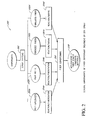
- FIGURE 1 illustrates an exemplifying process flow of one embodiment of treating fibers with dispersants in solution
- FIGURE 2 illustrates exemplifying process flows of several embodiments of treating fibers with dispersants using a dry spray process
- FIGURE 3 illustrates an exemplifying process flow of one embodiment of making fiber reinforced cement composite materials incorporating chemically treated fibers with improved dispersibility
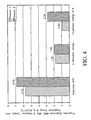
- FIGURE 4 is a graph illustrating key mechanical and physical properties of fiber cement building materials made with chemically treated fibers with improved dispersibility in accordance with one preferred embodiment and fiber cement materials made with conventional untreated fibers.
- the preferred embodiments of the present invention relate generally to the chemical treatment of cellulose fibers to impart improved fiber dispersibility and the use of these chemically treated fibers with improved dispersibility in cementitious fiber reinforced composite building materials.
- the processing methods of chemically treating the fibers to make them more readily dispersible, formulations of composite materials using these chemically treated fibers, and improvements in the mechanical and physical properties of the final composite material are also described.
- Chemically treated fibers with improved dispersibility are generally defined to include fibers that can be more readily distributed throughout a mixture such as a cementitious matrix and remain substantially dispersed even after mechanical mixing action stops. In contrast to fibers that are dispersed primarily by mechanical means, these chemically treated fibers, when incorporated into a mixture, remain substantially dispersed in the mixture without re-clustering or clumping once the mixing action stops.
- this invention relates to the application of chemically treated fibers with improved dispersibility into cementitious cellulose fiber reinforced building materials.
- the chemically treated fibers generally comprise fibers that are treated with one or more chemical compounds (dispersants) that inhibit the fibers from forming inter-fiber bonds.
- the dispersants bind the hydroxyl functional groups on the fiber surface either by physically blocking the site or chemically bonding to the hydroxyl groups so as to substantially prevent the hydroxyl groups from forming hydrogen bonds with hydroxyl groups on adjacent fibers.
- the dispersants may be applied to both long and short cellulose fibers to impart the fibers with improved dispersibility.
- Long fiber is herein defined as fibers with a length-weighted average length of longer than about 1 mm, and short fiber is defined as fibers with length-weighted average length of less than about 1 mm.
- Preferred embodiments of the present invention can be applied to, but is not limited to, fibers having length-weighted average length of about 0.01 to 7.0 mm.
- the chemicals selected for improving fiber dispersibility are preferably chemicals that cause the fiber surface to become more hydrophobic and/or can significantly reduce the occurrence of inter-fiber bonding, thus making the fibers substantially more readily dispersible.
- the dispersants attach to the fiber surface in a manner such that the dispersants physically block the hydroxyl groups on the fiber surface from contacting adjacent fibers, thereby significantly weakening the effects of hydrogen bonding between hydroxyl groups of adjacent fibers.
- the dispersants contain functional groups that chemically bond to hydroxyl groups on the fiber surface so as to inhibit formation of hydrogen bonding between hydroxyl groups of different fibers. Chemicals that can be used as dispersants in the fiber treatment process of the preferred embodiments include but are not limited to:
- dispersants can also be applied to the fibers as dispersants in the preferred fiber treatment process.
- surfactants and debonders can also be applied to the fibers as dispersants in the preferred fiber treatment process.
- the dispersant can also be other suitable organic or inorganic compounds, or combinations thereof, depending on the particular attributes needed for the specific application of the fiber cement material.
- Cellulose fibers that are used for chemical treatment with a dispersant can be made by various pulping methods.
- wood or other lignocellulosic raw materials such as kenaf, straw, and bamboo, etc.
- This task can be accomplished chemically, mechanically, thermally, biologically, or by combinations of these treatments.
- the chemical pulping methods are classified as Soda, Kraft, Kraft-AQ, Soda-AQ, Oxygen Delignification, Kraft-Oxygen, Solvent methods, and Sulfite pulping, steam explosion or any other pulping techniques.
- cellulose fibers are separated into individual fibers by rupturing the bonds between lignin and cellulosic components.
- Lignin which acts as a glue holding cellulose and hemicellulose together to provide mechanical strength in the wood, is broken and dissolved by chemical reactions. These chemical reactions for individualizing the fibers can be carried out in a reactor, often called a digester, under a high temperature around 150 to 250°C for about 30 minutes to 3 hours.
- the cellulose fibers used for the dispersant treatment can be unrefined/unfibrillated or refined/fibrillated cellulose pulps from sources, including but not limited to bleached, unbleached, semi-bleached cellulose pulp produced by various pulping techniques.
- the cellulose pulps can be made of softwood, hardwood, agricultural raw materials, recycled waste paper or any other form of lignocellulosic materials.
- the cellulose fibers used can be engineered cellulose fibers such as loaded fibers described in Applicant's copending application entitled FIBER CEMENT COMPOSITE MATERIALS USING CELLULOSE FIBERS LOADED WITH INORGANIC AND/OR ORGANIC SUBSTANCES, Serial No. 09/969,957, filed on October 2, 2001 , and/or sized fibers described in Applicant's copending application entitled FIBER CEMENT COMPOSITE MATERIALS USING SIZED CELLULOSE FIBERS, Serial No.
- a preferred fiber treatment method generally includes the following steps performed in various sequences:
- the fiber treatment method can be carried out by various means including but not limited to treatments in aqueous or organic solvent solutions, and/or treatments by vacuum or pressure spraying of the dispersant on dried or wet cellulose fibers.
- FIG. 1 illustrates an embodiment of a preferred fiber treatment process 100 that is carried out in solution.
- the process 100 begins with step 102 in which untreated cellulose fibers are dispersed, fiberized (individualized) and/or fibrillated.
- the fibers are dispersed at this stage by mechanically breaking at least some of the inter-fiber bonding to separate the fibers from each other.
- this dispersing step 102 typically does not provide the fibers with sufficient dispersibility such that the fibers remain substantially uniformly distributed when incorporated into a cementitious matrix.
- At least some of the inter-fiber hydrogen bonds that are broken by mechanical action during this dispersing step 102 tend to re-form in a mixture once the mechanical mixing action stops, thereby causing the fibers to re-cluster or clump together in the mixture.
- individualizing of fibers can occur in a chemical pulping process.
- the chemical pulping step may not be necessary. This is because chemical individualization of fibers is often done by the fiber manufacturer, who then provides the fibers to the buyer on standard lap sheets or rolls.
- the process 100 can also be applied to fibers that are not chemically individualized.
- the individualization of such fibers merely includes mechanically separating the fibers from the sheets or rolls, such as by hammer milling or other methods.
- the untreated cellulose fibers are received in dry form (laps and rolls) or in wet forms (wet laps and in containers).
- the untreated fibers are mechanically dispersed at a consistency of about 1% - 6% to form pulp slurry in a hydrapulper, which also imparts some fibrillation. Further fibrillation can be achieved using a refiner or a series of refiners.
- the fibers are then fibrillated to a range of about 0 to 800 degrees of Canadian Standard Freeness (CSF), more preferably about 100 to 700 degrees of CSF.
- Dispersion and fibrillation can be achieved by other techniques such as, for example, deflakering, milling, and shredding. However, use of chemically treated fibers without extensive fibrillation is also acceptable, or even preferred, for some products and processes.
- step 104 in which fibrillated or unfibrillated fibers in slurry forms are then de-watered using press filtration, vacuum filtration or continuous centrifugation to a total solid content of about 2% to 50%. Further de-watering of the fibers can be accomplished by vacuum evaporation drying, flash drying, freeze drying, low temperature oven drying, and other drying techniques that do not pose significant damages to the fiber integrity.
- the de-watered fibers are thoroughly mixed in a reactor vessel using dispensers, mixers, or hydra-pulpers of any kind.
- the water from the dewatering step 104 can be recycled to the water plant 104a and circulated back to step 102.
- step 106 in which dispersant treatment reactions are carried out.
- prepared dispersants are added to the reactor while constant agitation and mixing are applied.
- the dispersants comprise surfactants such as quaternaryamine, polyamine, and combinations thereof.
- dosage of the dispersants is up to about 20% of the oven dry mass of the cellulose pulp.
- the dispersants bind the hydroxyl groups on the fiber surface so as to inhibit the hydroxyl groups from forming hydrogen bonds with hydroxyl groups on adjacent fibers.
- reactor systems are preferably equipped with some kinds of agitation devices to ensure a good mixing.
- the dispersant treatment reactions can be carried out in the ambient or at an elevated temperature up to about 250°C, more preferably below 150°C.
- the retention time varies, depending on the particular dispersant, but preferably ranges from about 30 seconds to 24 hours.
- Batch or continuous reactors of all kinds can be used but continuous or semi-continuous tank or plug flow reactors are preferred for the fiber treatment in this embodiment.
- the residual dispersants can be separated and removed by centrifugation or filtration as shown in step 108 of the process 100. In one embodiment, the residual dispersants are recycled and reused.
- the post reaction fibers are preferably dried by low temperature oven, vacuum evaporation, and other nondestructive drying techniques. The treated fibers are then incorporated into fiber cement composite materials in step 110.
- Table 1 Dispersant Treatment Conditions of Some Embodiments Parameters Ranges More Preferable Percent of Fibers in Slurry (% by weight) about 0.01 to 70 about 0.5 to 10 Fiber Freeness after Fibrillation (CSF) about 0 to 800 about 100 to 700 Dosage of Dispersants (% by fiber weight) about 0.001 to 20 about 0.01 to 10
- Table 1 provides examples of reaction conditions of the fiber treatment process 100 described above. However, various changes and modifications in the conditions can be made from the embodiments presented herein without departing from the spirit of the invention.
- FIG. 2 illustrates several embodiments of treating fibers by dry spraying.
- the process 200 begins with step 202 in which the raw materials are prepared for the treatment.
- the untreated fibers can be received in various forms such as pulp laps (sheets) in bales 202a; pulp sheets in rolls 202b; fiberized (hammermill or shredded) fibers in bales, containers, or silos 202c; fibrillated (refined) dry or semi-dry fibers in bales, silos or containers 202d; and other dry forms of cellulose fibers.
- dispersants are sprayed onto cellulose fibers as shown in steps 204a and 204b.
- the dispersants may react with molecules on the fiber surface before, during or after fiberization process.
- the dispersants may be vaporized and the vaporized chemicals may be pressurized to provide enough spraying velocities.
- Some carrying gases may be used for spraying the dispersants in latex emulsions.
- the nozzles are selected to generate the finest spraying particles possible.
- dispersants are applied onto pulp laps, rolls or sheets by dipping the pulp webs in solution of the dispersants. After a predetermined retention time to allow dispersants to react with the fibers, the pulps are then individualized or fiberized by techniques such as hammer milling, shredding, roller milling, deflakering, or refining. Dispersant reactions and fiberization can also be carried out at the same time by spraying the chemicals on to the fibers during fiberization processes. As Figure 2 further shows, in treating fiberized fibers 202c, dispersants will be sprayed onto the fiberized fibers as shown in step 204c. The dispersant reactions are allowed to take place in a reactor with vigorous agitation/mixing. The dispersant treatment can also be carried out in systems such as flash dryers, hammermills, conventional resin application chambers, or closed mixing tank reactors.
- fibrillated cellulose fibers in a dry form can be used in the fiber treatment 204d.
- cellulose pulp is refined using conventional hydrapulpers, pulp refiners or deflakers.
- the fibrillated fibers are then de-watered and/or dried using techniques such as flash drying and air drying.
- the wet or dry fibrillated fibers are then brought to contact with desirable dispersants in a reactor.
- the dispersant treatment of these embodiments can be carried out at room temperature or elevated temperatures under the atmospheric or elevated pressures.
- the retention time for the treatment may vary to accommodate the process and equipment, preferably 30 seconds to 24 hours.
- the dosage of the dispersants is preferably in the range of about 0.001% to 20% of oven dried fibers.
- the reaction temperature can be up to about 250°C, preferably below about 150°C.
- the treated fibers are subsequently conditioned in step 206.
- the treated fibers can be conditioned by techniques such as drying, humidifying, and dispersing. After conditioning the fibers, the fibers are further processed.
- the fibers chemically treated with a dispersant are dispersed or fibrillated. In some cases, fibrillation may not be required.
- the chemically treated fibers are then incorporated into the manufacture of fiber cement composite materials in step 208.
- the dispersants may also be applied directly in the process of making fiber cement composite materials as will be described in greater detail below.
- the dispersants are added to the fibers before mixing with other ingredients.
- the cellulose fibers used for preparation of chemically treated fibers with improved dispersibility are individualized cellulose fibers with partial or complete removals of lignin components from the fiber cell walls.
- the cellulose fibers used are not individualized cellulose fibers in which the lignin components stay intact.
- treated fluff pulps that are intended for use in the paper industry for applications in diapers, sanitary napkins, hospital pads, and disposable fluff products can also be used as fibers in some embodiments of the present invention.
- treated fluff pulps typically contain debonding agents that weaken the inter-fiber and intra-fiber bonding so that better fiberization of the pulp can be accomplished with lower energy.
- the cementitious binder is preferably Portland cement but can also be, but is not limited to, high alumina cement, lime, high phosphate cement, and ground granulated blast furnace slag cement, or mixtures thereof.
- the aggregate is preferably ground silica sand but can also be, but is not limited to, amorphous silica, micro silica, silica fume, diatomaceous earth, coal combustion fly and bottom ashes, rice hull ash, blast furnace slag, granulated slag, steel slag, mineral oxides, mineral hydroxides, clays, magnasite or dolomite, metal oxides and hydroxides and polymeric beads, or mixtures thereof.
- the density modifiers can be organic and/or inorganic lightweight materials.
- the density modifiers may include plastic hollow materials, glass and ceramic materials, calcium silicate hydrates, microspheres, and volcano ashes including perlite, pumice, shirasu balloons and zeolites in expanded forms.
- the density modifiers can be natural or synthetic materials.
- the additives can include, but are not limited to, viscosity modifiers, fire retardants, waterproofing agents, silica fume, geothermal silica, thickeners, pigments, colorants, plasticizers, forming agents, flocculents, drainage aids, wet and dry strength aids, silicone materials, aluminum powder, clay, kaolin, alumina trihydrate, mica, metakaolin, calcium carbonate, wollastonite, and polymeric resin emulsion, or mixtures of thereof.
- Chemically treated cellulose fibers with improved dispersibility can be used in a variety of composite materials all having different proportions of cementitious binders, aggregates, fibers (chemically treated and/or conventional), and additives to obtain optimum properties for a particular application.
- the composite formulation contains about 0.5% to 20% chemically treated fibers with improved dispersibility by weight.
- the chemically treated fibers with improved dispersibility may be blended with conventional non-chemically treated fibers and/or synthetic polymer fibers in different proportions. It will be appreciated that the percentage of chemically treated fibers with improved dispersibility may be varied depending on the desired application and/or process.
- the proportion of the cementitious binder, aggregate, density modifiers, and additives can also be varied to obtain optimal properties for different applications, such as roofing, deck, fences, paving, pipes, siding, trim, soffits, backer for tile underlayment.
- the building material when the building material is to be autoclaved, a lower amount of cement in the formulation is used incorporating chemically treated, more readily dispersible cellulose fibers.
- the formulation for the autoclaved fiber cement composite materials in one embodiment comprises:
- a higher percentage of cement can be used, more preferably about 60-90%.
- the fine ground silica is not used, although silica may be used as a filler.
- the chemically treated fibers with improved dispersibility have a freeness of about 100-700 degrees of Canadian Standard Freeness (CSF) with moisture contents of 0% to 99% based on oven dry weight measured in accordance with TAPPI method T227 om-99.
- CSF Canadian Standard Freeness
- fiberized fibers are preferred.
- the cementitious binder and aggregate have surface areas of about 150 to 400 m 2 /kg and about 300 to 450 m 2 /kg, respectively. The surface area for both cement and aggregates is tested in accordance with ASTM C204-96a.
- a method of manufacturing a fiber reinforced composite building material using the formulations described constitutes another embodiment of the present invention.
- a preferred process of manufacturing a fiber reinforced cementitious composite material incorporating chemically treated cellulose fibers with improved dispersibility begins with treating the cellulose fibers with one or more dispersants in which the fiber surface is made substantially hydrophobic.
- the hydroxyl functional groups on the fiber surface are inhibited from forming hydrogen bonds with other hydroxyl groups, thus substantially reducing the occurrence of inter-fiber bonding.
- the method further comprises mechanically dispersing the untreated fibers at a pre-selected consistency to separate the fibers so as to facilitate chemical treatment of the fiber surface, and fibrillating the untreated fibers to a pre-selected freeness range.
- the preferred method comprises mixing the chemically treated fibers with ingredients to form a fiber cement mixture in accordance with preferred formulations, forming the fiber cement mixture into a fiber cement article of a pre-selected shape and size, and curing the fiber cement article so as to form the fiber reinforced composite building material.
- the dispersants may be applied to any of the above steps prior to forming the fiber cement mixture into a fiber cement article and curing the fiber cement article.
- the chemicals are added to the fibers first to allow enough time for the chemical reactions to take place before mixing the fibers with other ingredients to form the fiber cement mixture.
- dispersants may be added to the fiber cement mixture while the fibers are being mixed together with other ingredients.
- fibers treated with dispersants remain substantially dispersed in a cement mixture even after the mechanical mixing action stops, thereby substantially reducing the occurrence of re-clustering or clumping of the fibers in the cement mixture.
- the chemically treated fibers with improved dispersibility provide the final composite material with a more uniform fiber distribution and inhibit the formation of fiber clumps or clusters that are known to reduce the fiber reinforcing efficiency of the product.
- the step of mixing the chemically treated fibers with improved dispersibility with other ingredients to form a fiber cement mixture comprises mixing the chemically treated fibers with non-cellulose materials such as hydraulic binder, aggregate, density modifiers, and additives in accordance with the preferred formulations of this invention.
- the chemically treated fibers can also be mixed with synthetic fibers along with other ingredients.
- the fabrication processes can use any of the existing technologies, such as extrusion, molding, injection molding, casting, and Hatschek process, etc.
- Figure 3 illustrates a preferred process 300 of manufacturing a fiber reinforced cementitious composite material incorporating the chemically treated cellulose fibers with improved dispersibility.
- the process begins with step 302 in which the cellulose fibers are treated with dispersants to impart the fibers with hydrophobicity.
- a pre-prepared chemically treated fiber with improved dispersibility may also be used.
- the chemically treated fibers with improved dispersibility are subsequently processed in step 304.
- the fiber processing step 304 typically involves fiber dispersion and fibrillations.
- the fibers are dispersed at a consistency of about 1% to 6% in a hydra-pulper, which also imparts some fibrillation. Further fibrillation can be achieved using a refiner or series of refiners.
- the fibers are then fibrillated to a range of about 0 to 800 degrees of CSF (Canadian Standard Freeness), more preferably between about 100 to 700 degrees of CSF.
- Dispersion and fibrillation can also be achieved by other techniques such as hammermilling, deflakering, shredding, and the like.
- use of fibers chemically treated with a dispersant without fibrillation is also acceptable for some products and processes.
- the chemically treated cellulose fibers with improved dispersibility are proportionally mixed with other ingredients to form a waterborne mixture, slurry, or paste.
- the fibers are mixed with cement, silica, a density modifier and other additives in a well-known mixing process to form a slurry or paste.
- the chemically treated fibers with improved dispersibility will more readily disperse and distribute uniformly throughout the mix. Furthermore, the fibers will remain substantially dispersed even after the mechanical mixing action stops, thereby reducing the occurrence of re-clustering or clumping of the fibers.
- synthetic fiber can also be blended with the chemically treated fibers with improved dispersibility.
- step 308 in which the mixture may be formed into a "green" or uncured shaped article using a number of conventional manufacturing techniques as would be known to one skilled in the art, such as:
- These processes may also include a pressing or embossing operation after the article is formed. More preferably, no pressing is used.
- the processing steps and parameters used to achieve the final product using a Hatschek process are similar to what is described in Australian Patent No. 515151 .
- the "green" or uncured shaped article is cured in step 310.
- the article is preferably pre-cured for up to about 80 hours, most preferably about 24 hours or less.
- the article is then air-cured for approximately 30 days. More preferably, the pre-cured article is autoclaved at an elevated temperature and pressure in a steam saturated environment at about 60 to 200°C for about 3 to 30 hours, more preferably about 24 hours or less.
- the time and temperature chosen for the pre-cure and cure processes are dependent on the formulation, the manufacturing process, the process parameters, and the final form of the product.
- Fiber cement products using these chemically treated fibers have improved fiber dispersion, improved fiber reinforcing efficiency, improved toughness and strain.
- the use of chemically treated fibers with improved dispersibility obviates the need of adding additional fibers to the composite material to compensate for poor fiber distribution. Thus, less fibers are needed to achieve the same if not better physical and mechanical properties in the final product, which can result in significant cost reductions.
- Other desirable characteristics of fiber cement materials using the chemically treated fibers with improved dispersibility include improved water resistance and smoother surface finishes when extrusion, molding, or casting process is used.
- long fibers that are generally more difficult to disperse than short fibers, and thus sometimes avoided, can also be treated to provide them with improved dispersibility.
- Chemically treated long fibers with improved dispersibility can be used in the formulation to provide additional benefits afforded by using long cellulose fibers as a reinforcement agent.
- cellulose fibers were fiberized in dry form by a hammermill.
- Fiber cement composite specimens were fabricated using an extrusion process.
- the formulation for the samples A and B was the same except different fibers were used.
- the formulation contained 10% fibers (chemically treated fibers having improved dispersion for formulation A and conventional untreated fiber for formulation B), 10% calcium silicate hydrate, 1.5% methylcellulose, 39.25% Portland cement and 39.25% ground silica.
- Table 2 above provides an illustrative comparison of various mechanical and physical properties of fiber cement products made with formulations that incorporate chemically treated cellulose fibers to provide improved dispersibility and those that use conventional untreated fibers.
- Modulus of rupture (MOR), Z-direction tensile strength, and toughness were tested in accordance with ASTM (American Standard Test Method) C1185-98a entitled "Standard Test Methods for Sampling and Testing Non-Asbestos Fiber-Cement Flat Sheet, roofing and Siding Shingles, and Clapboards.” It will be appreciated by one skilled in the art that the specific values of particular mechanical properties will differ by varying the oven dry density.
- the MOR, Z-direction tensile strength, and toughness are all higher for fiber cement materials made with the chemically treated fibers having improved dispersibility.
- toughness and strain are physical properties that are highly influenced by the degree of fiber dispersion. Therefore, the degree of fiber dispersion can be measured indirectly by comparing the strain and toughness values of composites made with and without the chemically treated fibers with improved dispersibility. Fibers that are better dispersed will result in a higher strain and toughness value per unit mass of fiber added in the final product.
- this embodiment of the invention increases the MOR by approximately 12%, the Z-direction tensile strength by approximately 28%, and toughness by approximately 144%, when compared to the equivalent formulation made without chemically treated fibers with improved dispersibility.
- An equivalent formulation is herein defined as one in which the preferred chemically treated cellulose fibers with improved dispersibility are displaced by an equivalent percentage of cellulose fibers that are not treated with a dispersant in accordance with the embodiments of the present invention.
- Table 2 shows that fiber cement materials made with chemically treated fibers have better physical and mechanical properties than fiber cement materials of equivalent formulations but made with conventional untreated fibers.
- Figure 4 illustrates a comparison of key mechanical and physical properties of extruded fiber reinforced cement composite materials made with and without the chemically treated fibers.
- Sample C was prepared with chemically treated fibers with improved dispersibility (Weyerhaeuser's grade NF405, a debonder treated fibers) while sample D contains regular pulp (Weyerhaeuser's grade CF416).
- the samples have the same formulation except for the fibers used: 10% of treated fibers (NF405), 10% of CF416.
- the fibers were fiberized by hammermilling.
- extruded fiber reinforcement composite materials made with chemically treated fibers with improved dispersibility show about 18% improvement in MOR, about 7% improvement in Z-direction tensile strength and about 200% improvement in toughness when compared to extruded fiber reinforcement composite materials of an equivalent formulation but without the chemically treated fibers.
- the formulations of samples E and F were substantially the same except that different fibers were used: about 9% fiber by weight (chemically treated fiber with improved dispersibility or regular untreated fiber); about 10% calcium silicate hydrate which, in one embodiment, is used as a density modifier, about 1.5% methylcellulose which, in one embodiment, is used as an additive-viscosity modifier, about 39.75% Portland cement and about 39.75% ground silica.
- Fibers used in sample E were chemically treated with a surfactant emulsion, about 50:50 blend of di(hydrogenated tallow) dimethyl ammonium chloride (CAS number 61789-80-8) and alkyl-benzyl-dimethy ammonium chloride (CAS number 61789-72-8) by the dry spraying technique. The total dosage of the dispersant was about 0.06% of the oven dried fiber mass. The treatment was done at ambient temperature before the fiberization. Fibers used in Sample F were regular untreated fibers. Specimens of fiber cement composite materials were then formed using extrusion. The extruded samples were procured at about 150°C for about 12 hours and then cured by autoclaving at about 185°C for about 12 hours.
- a surfactant emulsion about 50:50 blend of di(hydrogenated tallow) dimethyl ammonium chloride (CAS number 61789-80-8) and alkyl-benzyl-dimethy ammonium chloride (CAS number 6
- Table 3 Comparison of key physical and mechanical properties of extruded fiber cement materials using chemically treated fibers with improved dispersibility and regular cellulose fibers Physical Properties Samples E F (Control) MOR/Fiber Wt.(MPa/Kg) 0.68 0.61 Strain/Fiber Wt. ( ⁇ m/m-Kg) 501 465 Toughness/Fiber Wt. (KJ/m 3 -Kg) 0.27 0.13
- Table 3 above provides an illustrative comparison of key mechanical and physical properties of fiber cement products that incorporate chemically treated cellulose fibers with improved dispersibility and those that are conventional untreated fibers.
- the samples were made with equivalent formulations except for the type of fibers used.
- Average toughness and strain values were determined using a three point bending test in accordance with ASTM (American Standard Test Method) C1185-98a entitled "Standard Test Methods for Sampling and Testing Non-Asbestos Fiber-Cement Flat Sheet, roofing and Siding Shingles, and Clapboards.”
- ASTM American Standard Test Method
- C1185-98a entitled "Standard Test Methods for Sampling and Testing Non-Asbestos Fiber-Cement Flat Sheet, roofing and Siding Shingles, and Clapboards.”
- This embodiment of the invention increases the MOR per kilogram of fiber used by approximately 11%, the strain per kilogram of fiber used by approximately 7%, and the toughness per kilogram of fiber used by approximately 100%.
- strain and toughness values per kilogram of fiber used are indicative of the degree of fiber reinforcing efficiency. Improvements in fiber reinforcing efficiencies are typically reflected in higher strain and toughness values per kilogram of fiber added. Thus, results in Table 3 indicate that the addition of chemically treated fibers improved the fiber reinforcing efficiency of the material as the values of the strain and toughness energy per kilogram of fiber added for materials made with chemically treated fibers are higher than that of materials made with an equivalent formulation without chemically treated fibers.
- preferred embodiments of the present invention in particular a chemically treated cellulose fiber incorporated into a fiber cement building material, have several advantages over the prior art. These materials, made in accordance with the preferred processes and formulations, have better fiber dispersion and higher fiber reinforcing efficiency, thus require less fiber dosage to attain the required physical and mechanical properties. Furthermore, improved fiber reinforcing efficiency also leads to improved physical and mechanical properties such as higher modulus of rupture, higher Z-direction tensile strength, higher toughness, higher strain, and better interlaminate bonding strength.
- the chemically treated fibers with improved dispersibility also improve water resistance and surface smoothness of the finished products, and reduce cost in fiber use.
- the chemically treated fibers of the preferred embodiments of the present invention have reduced inter-fiber and intra-fiber hydrogen bonding and thus can be more readily dispersed in a mixture. Once dispersed in a mixture, the chemically treated fibers tend to remain dispersed and are substantially less likely to re-cluster and form into clumps when mechanical mixing stops.
- the chemically treated fibers with improved dispersibility can be readily and uniformly distributed throughout a cementitious matrix, thus eliminating the need to add higher fiber dosage to compensate for poor fiber dispersion. In one embodiment, the use of chemically treated fibers with improved dispersibility results in about 5% reduction in dosage of fibers added to the building material while still achieving the same physical and mechanical properties.
- the chemically treated fibers with improved dispersibility also have better dispersibility in all types of aqueous solutions. Furthermore, treating cellulose fibers with dispersants will allow both long and short fibers to be used in the wet and semi-wet processes of manufacturing fiber cement composite materials.
- fiber cement formulations are selected for comparison purposes only and that a variety of other formulations can be used without departing from the scope of the present invention.
- other materials may also use chemically treated fibers with dispersibility in the formulation to improve the mechanical and physical properties of the material.
- fiber treatments such as fiber sizing, biocide treatment, and fiber loading can be combined with dispersant treatment to provide the treated fiber and the fiber cement composite material with even more desirable properties.
- the preferred embodiments have applicability to a number of building product applications, including but not limited to roofing, paving, exterior and interior panels, decking, piping, tile backers, siding, trim, soffits, and fencing.
- roofing paving, exterior and interior panels
- decking piping, tile backers, siding, trim, soffits, and fencing.
- non-building products and/or materials with non-cementitious matrices can also include, but is not limited to, non-building products and/or materials with non-cementitious matrices.
- the embodiments illustrated and described above are provided as examples of certain preferred embodiments of the present invention. Various changes and modifications can be made from the embodiments presented herein by those skilled in the art without departure from the spirit and scope of this invention.
Landscapes
- Chemical & Material Sciences (AREA)
- Engineering & Computer Science (AREA)
- Ceramic Engineering (AREA)
- Materials Engineering (AREA)
- Structural Engineering (AREA)
- Organic Chemistry (AREA)
- Chemical Kinetics & Catalysis (AREA)
- Inorganic Chemistry (AREA)
- General Chemical & Material Sciences (AREA)
- Life Sciences & Earth Sciences (AREA)
- Wood Science & Technology (AREA)
- Curing Cements, Concrete, And Artificial Stone (AREA)
Applications Claiming Priority (3)
| Application Number | Priority Date | Filing Date | Title |
|---|---|---|---|
| US27441401P | 2001-03-09 | 2001-03-09 | |
| US09/969,742 US6676745B2 (en) | 2000-10-04 | 2001-10-02 | Fiber cement composite materials using sized cellulose fibers |
| EP02706467A EP1368285B1 (de) | 2001-03-09 | 2002-02-22 | Faserverstärkte zementmaterialien unter verwendung von chemisch abgeänderten fasern mit verbesserter mischbarkeit |
Related Parent Applications (1)
| Application Number | Title | Priority Date | Filing Date |
|---|---|---|---|
| EP02706467A Division EP1368285B1 (de) | 2001-03-09 | 2002-02-22 | Faserverstärkte zementmaterialien unter verwendung von chemisch abgeänderten fasern mit verbesserter mischbarkeit |
Publications (2)
| Publication Number | Publication Date |
|---|---|
| EP1829845A2 true EP1829845A2 (de) | 2007-09-05 |
| EP1829845A3 EP1829845A3 (de) | 2007-11-07 |
Family
ID=38325955
Family Applications (1)
| Application Number | Title | Priority Date | Filing Date |
|---|---|---|---|
| EP20070007327 Withdrawn EP1829845A3 (de) | 2001-03-09 | 2002-02-22 | Faserverstärkte Zementverbundwerkstoffe mit chemisch behandelten Fasern mit verbesserter Dispergierbarkeit |
Country Status (1)
| Country | Link |
|---|---|
| EP (1) | EP1829845A3 (de) |
Cited By (6)
| Publication number | Priority date | Publication date | Assignee | Title |
|---|---|---|---|---|
| EP2256099A3 (de) * | 2009-05-29 | 2012-06-27 | Weyerhaeuser NR Company | Faserzementplatte mit modifizierter Faser |
| EP2256096A3 (de) * | 2009-05-29 | 2012-07-04 | Weyerhaeuser NR Company | Faserzementplatte mit modifizierter Faser |
| RU2494061C1 (ru) * | 2012-03-13 | 2013-09-27 | Федеральное государственное бюджетное образовательное учреждение высшего профессионального образования "Грозненский государственный нефтяной технический университет имени академика М.Д. Миллионщикова" | Мелкозернистая бетонная смесь и способ ее приготовления |
| AU2011232750B2 (en) * | 2011-03-16 | 2014-01-30 | Nichiha Corporation | Inorganic board and manufacturing method thereof |
| RU2528774C2 (ru) * | 2012-06-19 | 2014-09-20 | Сергей Михайлович Васильев | Сухая строительная смесь |
| EP4031508A4 (de) * | 2020-11-12 | 2022-08-10 | Erol Aslan | Baustoffmischung und herstellungsverfahren |
Citations (2)
| Publication number | Priority date | Publication date | Assignee | Title |
|---|---|---|---|---|
| GB2041384A (en) | 1979-02-10 | 1980-09-10 | Pennington J | Improvements in and Relating to Board Products and Mouldings |
| DE4316666C1 (de) | 1993-05-13 | 1994-12-08 | Maerkische Faser Ag | Hydrophilierungsmittel |
Family Cites Families (4)
| Publication number | Priority date | Publication date | Assignee | Title |
|---|---|---|---|---|
| US3836412A (en) * | 1970-04-16 | 1974-09-17 | Monsanto Co | Preparation of discontinuous fiber reinforced elastomer |
| US4428775A (en) * | 1981-02-11 | 1984-01-31 | National Gypsum Company | Reinforced cement sheet product containing no asbestos for fabricating on hatschek machine |
| US4457785A (en) * | 1982-09-24 | 1984-07-03 | Ppg Industries, Inc. | Treated glass fibers and nonwoven sheet-like mat and method |
| KR100855848B1 (ko) * | 2000-10-04 | 2008-09-01 | 제임스 하디 인터내셔널 파이낸스 비.브이. | 사이징된 셀룰로즈 섬유를 이용한 섬유 시멘트 복합 재료 |
-
2002
- 2002-02-22 EP EP20070007327 patent/EP1829845A3/de not_active Withdrawn
Patent Citations (2)
| Publication number | Priority date | Publication date | Assignee | Title |
|---|---|---|---|---|
| GB2041384A (en) | 1979-02-10 | 1980-09-10 | Pennington J | Improvements in and Relating to Board Products and Mouldings |
| DE4316666C1 (de) | 1993-05-13 | 1994-12-08 | Maerkische Faser Ag | Hydrophilierungsmittel |
Cited By (6)
| Publication number | Priority date | Publication date | Assignee | Title |
|---|---|---|---|---|
| EP2256099A3 (de) * | 2009-05-29 | 2012-06-27 | Weyerhaeuser NR Company | Faserzementplatte mit modifizierter Faser |
| EP2256096A3 (de) * | 2009-05-29 | 2012-07-04 | Weyerhaeuser NR Company | Faserzementplatte mit modifizierter Faser |
| AU2011232750B2 (en) * | 2011-03-16 | 2014-01-30 | Nichiha Corporation | Inorganic board and manufacturing method thereof |
| RU2494061C1 (ru) * | 2012-03-13 | 2013-09-27 | Федеральное государственное бюджетное образовательное учреждение высшего профессионального образования "Грозненский государственный нефтяной технический университет имени академика М.Д. Миллионщикова" | Мелкозернистая бетонная смесь и способ ее приготовления |
| RU2528774C2 (ru) * | 2012-06-19 | 2014-09-20 | Сергей Михайлович Васильев | Сухая строительная смесь |
| EP4031508A4 (de) * | 2020-11-12 | 2022-08-10 | Erol Aslan | Baustoffmischung und herstellungsverfahren |
Also Published As
| Publication number | Publication date |
|---|---|
| EP1829845A3 (de) | 2007-11-07 |
Similar Documents
| Publication | Publication Date | Title |
|---|---|---|
| EP1368285B1 (de) | Faserverstärkte zementmaterialien unter verwendung von chemisch abgeänderten fasern mit verbesserter mischbarkeit | |
| AU2002240552A1 (en) | Fiber reinforced cement composite materials using chemically treated fibers with improved dispersibility | |
| US7815841B2 (en) | Fiber cement composite materials using sized cellulose fibers | |
| AU2001296904B8 (en) | Method and apparatus for reducing impurities in cellulose fibers for manufacture of fiber reinforced cement composite materials | |
| AU2001292966A1 (en) | Fiber cement composite materials using sized cellulose fibers | |
| AU2001296904A1 (en) | Method and apparatus for reducing impurities in cellulose fibers for manufacture of fiber reinforced cement composite materials | |
| WO2002032830A9 (en) | Fiber cement composite material using biocide treated durable cellulose fibers | |
| EP1829845A2 (de) | Faserverstärkte Zementverbundwerkstoffe mit chemisch behandelten Fasern mit verbesserter Dispergierbarkeit | |
| EP1574614B1 (de) | Verfahren zum verringern von verunreinigungen in cellulosefasern für die herstellung von faserverstärkten zementverbundwerkstoffen | |
| AU2002211816B2 (en) | Fiber cement composite material using biocide treated durable cellulose fibers | |
| AU2002211816A1 (en) | Fiber cement composite material using biocide treated durable cellulose fibers |
Legal Events
| Date | Code | Title | Description |
|---|---|---|---|
| PUAI | Public reference made under article 153(3) epc to a published international application that has entered the european phase |
Free format text: ORIGINAL CODE: 0009012 |
|
| AC | Divisional application: reference to earlier application |
Ref document number: 1368285 Country of ref document: EP Kind code of ref document: P |
|
| AK | Designated contracting states |
Kind code of ref document: A2 Designated state(s): AT BE CH CY DE DK ES FI FR GB GR IE IT LI LU MC NL PT SE TR |
|
| AX | Request for extension of the european patent |
Extension state: AL LT LV MK RO SI |
|
| RIN1 | Information on inventor provided before grant (corrected) |
Inventor name: MERKLEY, DONALD J. Inventor name: LUO, CAIDIAN |
|
| PUAL | Search report despatched |
Free format text: ORIGINAL CODE: 0009013 |
|
| RIC1 | Information provided on ipc code assigned before grant |
Ipc: D21C 9/00 20060101ALI20070906BHEP Ipc: C04B 28/02 20060101ALI20070906BHEP Ipc: C04B 20/00 20060101ALI20070906BHEP Ipc: C04B 40/00 20060101ALI20070906BHEP Ipc: C04B 40/02 20060101ALI20070906BHEP Ipc: C04B 35/80 20060101AFI20070727BHEP |
|
| AK | Designated contracting states |
Kind code of ref document: A3 Designated state(s): AT BE CH CY DE DK ES FI FR GB GR IE IT LI LU MC NL PT SE TR |
|
| AX | Request for extension of the european patent |
Extension state: AL LT LV MK RO SI |
|
| RAP1 | Party data changed (applicant data changed or rights of an application transferred) |
Owner name: JAMES HARDIE INTERNATIONAL FINANCE B.V. |
|
| 17P | Request for examination filed |
Effective date: 20080501 |
|
| 17Q | First examination report despatched |
Effective date: 20080605 |
|
| AKX | Designation fees paid |
Designated state(s): AT BE CH CY DE DK ES FI FR GB GR IE IT LI LU MC NL PT SE TR |
|
| RAP1 | Party data changed (applicant data changed or rights of an application transferred) |
Owner name: JAMES HARDIE TECHNOLOGY LIMITED |
|
| STAA | Information on the status of an ep patent application or granted ep patent |
Free format text: STATUS: THE APPLICATION IS DEEMED TO BE WITHDRAWN |
|
| 18D | Application deemed to be withdrawn |
Effective date: 20130827 |