EP1832085B1 - Flusszuweisung - Google Patents
Flusszuweisung Download PDFInfo
- Publication number
- EP1832085B1 EP1832085B1 EP05853642A EP05853642A EP1832085B1 EP 1832085 B1 EP1832085 B1 EP 1832085B1 EP 05853642 A EP05853642 A EP 05853642A EP 05853642 A EP05853642 A EP 05853642A EP 1832085 B1 EP1832085 B1 EP 1832085B1
- Authority
- EP
- European Patent Office
- Prior art keywords
- flow
- packet
- core
- thread
- assigned
- Prior art date
- Legal status (The legal status is an assumption and is not a legal conclusion. Google has not performed a legal analysis and makes no representation as to the accuracy of the status listed.)
- Expired - Lifetime
Links
Images



Classifications
-
- H—ELECTRICITY
- H04—ELECTRIC COMMUNICATION TECHNIQUE
- H04L—TRANSMISSION OF DIGITAL INFORMATION, e.g. TELEGRAPHIC COMMUNICATION
- H04L9/00—Cryptographic mechanisms or cryptographic arrangements for secret or secure communications; Network security protocols
- H04L9/40—Network security protocols
-
- H—ELECTRICITY
- H04—ELECTRIC COMMUNICATION TECHNIQUE
- H04L—TRANSMISSION OF DIGITAL INFORMATION, e.g. TELEGRAPHIC COMMUNICATION
- H04L69/00—Network arrangements, protocols or services independent of the application payload and not provided for in the other groups of this subclass
- H04L69/30—Definitions, standards or architectural aspects of layered protocol stacks
- H04L69/32—Architecture of open systems interconnection [OSI] 7-layer type protocol stacks, e.g. the interfaces between the data link level and the physical level
-
- H—ELECTRICITY
- H04—ELECTRIC COMMUNICATION TECHNIQUE
- H04L—TRANSMISSION OF DIGITAL INFORMATION, e.g. TELEGRAPHIC COMMUNICATION
- H04L69/00—Network arrangements, protocols or services independent of the application payload and not provided for in the other groups of this subclass
- H04L69/12—Protocol engines
-
- H—ELECTRICITY
- H04—ELECTRIC COMMUNICATION TECHNIQUE
- H04L—TRANSMISSION OF DIGITAL INFORMATION, e.g. TELEGRAPHIC COMMUNICATION
- H04L69/00—Network arrangements, protocols or services independent of the application payload and not provided for in the other groups of this subclass
- H04L69/22—Parsing or analysis of headers
Definitions
- Networks enable computers and other devices to communicate.
- networks can carry data representing video, audio, e-mail, and so forth.
- data sent across a network is carried by smaller messages known as packets.
- packets By analogy, a packet is much like an envelope you drop in a mailbox.
- a packet typically includes payload and a header.
- the packet's payload is analogous to the letter inside the envelope.
- the packet's header is much like the information written on the envelope itself. The header can include information to help network devices handle the packet appropriately.
- TCP Transmission Control Protocol
- a number of network protocols cooperate to handle the complexity of network communication.
- a transport protocol known as Transmission Control Protocol (TCP) provides applications with simple mechanisms for establishing a connection and transferring data across a network.
- TCP handles a variety of communication issues such as data retransmission, adapting to network traffic congestion, and so forth.
- TCP operates on packets known as segments.
- a TCP segment travels across a network within ("encapsulated" by) a larger packet such as an Internet Protocol (IP) datagram.
- IP Internet Protocol
- IP datagram is further encapsulated by an even larger packet such as an Ethernet frame.
- the payload of a TCP segment carries a portion of a stream of data sent across a network by an application.
- a receiver can restore the original stream of data by reassembling the received segments.
- TCP associates a sequence number with each payload byte.
- the current state for each TCP connection is stored in a block of data known as a Transmission Control Block (TCB).
- the TCB includes data such as the next expected sequence number, the last sequence number transmitted, and so forth.
- a connection's TCB is typically read and, potentially, updated with each TCP segment received and transmitted.
- US 2003/081615 A 1 discloses a method for efficiently classifying packets for a multi-processor/multi-thread environment through an optimistic hashing process corresponding to the features of the preamble of claim 1, wherein the method initiates with receiving a packet and hash values are compared to values stored in a lookup table to determine which processor core is assigned to an incoming packet.
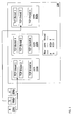
- FIGs. 1 is a diagram illustrating flow assignment.
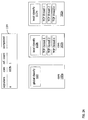
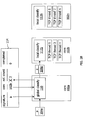
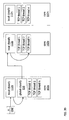
- FIG. 2A- 2D are diagrams illustrating operation of a sample scheme to assign flows.
- FIGs. 3-4 are flow-charts of sample processes to deliver packets based on their flow assignment.
- FIG. 5 is a diagram of a sample multi-core processor.
- FIG. 6 is a diagram of a network device.
- TCP Transmission Control Protocol
- TCP Transmission Control Protocol
- This state data is, generally, accessed for every TCP segment processed.
- the memory operations used to access this data can slow system performance due to the time it takes to read and write the state data to memory.
- the state data can cause a performance bottleneck as the different elements vie for access. For example, packets belonging to the same flow may be handled by different cores, leaving one core to wait for access to the flow's state data until the other core completes its processing.
- FIG. 1 depicts operation of a scheme that assigns packet flows to different threads executing on cores 102a-102n. For example, as shown, flow “a” is assigned to thread “1" of core 102a while flow “b” is assigned to thread “2" of core 102n. Packets belonging to these flows are processed by the assigned core 102a-102n thread. For example, packets 104a and 104c belonging to flow “a” are processed by thread “1" of core 102a while packet 104b is processed by assigned thread "2" of core 102n. By processing packets belonging to the same flow on the same core/thread, a variety of contention and access delays can be avoided.
- a TCB for a given flow can be stored in local core memory instead of being repeatedly read from/written to memory external to the core. Additionally, since contention across cores for a given flow's TCB is eliminated, latencies associated with locking can be avoided.
- FIG. 1 arbitrarily labeled the flows "a” and "b".
- the flow of a given packet can be identified by a tuple of data included in the IP header and encapsulated TCP header of an IP datagram.
- a flow may be identified by a combination of the IP source and destination addresses and the source and destination ports.
- the tuple may be hashed (e.g., by a CRC (Cyclic Redundancy Check) algorithm) to yield a sequence of bits ("a flow signature") identifying the flow.
- CRC Cyclic Redundancy Check
- FIGs. 2A-2D depicts a sample implementation of a multi-core system that makes flow assignments.
- the cores 102b-102n provide a pool of TCP threads to process TCP segments.
- Each TCP thread can independently process a TCP segment. This processing can include segment reassembly, navigation of the TCP state machine for the flow, generating ACK messages, managing transmission windows, and so forth.
- logic implementing flow assignment includes global classify 110 instructions that assign flows to cores 102b-102n and, thereafter, distribute packets belonging to these flows to the assigned cores 102b-102n.
- the global classify 110 instructions access data 114 that associates a flow with a given core 102b-102n. For example, in FIG. 2A , flow "a" is assigned to core 102b.
- the data 114 associates a reference count ("ref. count") with a given flow that identifies how many packets in the flow have been scheduled for processing by the assigned core.
- the data 114 also associates the flow with a "completed" count indicating how many of these scheduled packets have already been completely processed.
- the flow's entries may be victimized. For example, periodically a thread may subtract a flow's "completed" count from its "reference count”. If the result is zero, indicating all scheduled packets have been processed, the flow data may be eliminated from data 114. Otherwise, the "completed" count is zeroed and the existing assignment for the flow remains intact.
- the sample implementation also features local classify 112b-112n instructions executing on each core 102b-102n providing TCP threads. It should be noted that 112b-112n are instantiations of the same local classify logic for each core 102b-102n.
- the global classify 110 logic schedules a packet for processing by an assigned core 102b
- the local classify 112b-112n logic operating on that core 102b determines the particular thread assigned to a flow.
- the local classifier 112b can access local data 116b associating a flow with a given thread.
- the global 110 and local classify 112b logic route a datagram for processing with increasing granularity. That is, the global classify 110 logic can queue a datagram to the assigned core 102b, while the local classifier 112b queues the datagram to a particular thread within the core 102b.
- FIGs. 2B-2C depict handling of an IP datagram 104e encapsulating a TCP segment.
- the global classify 110 logic attempts to lookup the datagram's 104d flow signature ("a").
- the lookup for flow "a" succeeded, the assigned core ("102b") is retrieved, the global classify 110 logic queues the datagram 104e for processing by the assigned core 102b, and the reference count for the flow is incremented to reflect scheduling of the packet 104e for processing by core 102b.
- FIG. 2B depicts the actual packet being queued to the core, the global classify 110 and local classify 112b logic may operate on packet references/handles to avoid copying packet data.
- the local classifier 112b on the assigned core 102b eventually dequeues the datagram 104e and determines the thread assigned to process the flow's datagrams.
- the assigned thread then performs TCP processing on the segment.
- the thread may use local core memory to cache a copy of the flow's TCB from memory (not shown). This copy may be modified by the TCP thread and other threads of the core for the current packet and subsequently received packets in the flow.
- the thread increments the "completed" count for the flow.
- this implementation ensures that flow state data remains in local core memory for "back-to-back" packets (i.e., a packet is scheduled for processing by a thread before the thread has completed processing of a previous packet in the flow), avoiding a costly write and read of the flow's state data to/from external memory.
- the scenario illustrated in FIGs. 2B-2C assumed prior assignment of flow "a". However, often, a flow may not have a current assignment. In this event, the global classify 110 logic flow lookup for a packet will fail. At this point, the global classify 110 logic may make an initial flow assignment by writing data 114 associating the flow with the assigned core. Assignment of a flow may be implemented in a variety of ways to load balance flows across cores (e.g., by using a round-robin among cores) or provide different qualities of service. After assignment of a flow to a given core, the selected core can assign an available thread to process the flow.
- a core 102a executing the global classify 110 logic may also provide TCP threads and execute a local classifier 112a.
- a received packet may initially be processed by the core's 100a local classifier 112a.
- the local classifier 112a succeeds in identifying a assigned thread n for the received packet, it queues the packet to that thread n.
- the global classifier 114 executes. For example, as shown, assuming flow "a" is still assigned to thread "n" of core 102b, packet 104f would initially be handled by local classifier 112a of core 102a.
- local classifier 102a Since local classifier 102a would not store a local thread assignment for the packet's 104f flow, local classifier 102a would pass the packet to global classifier 110. At this point, the sequence of processing would remain the same as shown in FIG. 2C . That is, the global classifier 110 will queue packet 104f for handling by the local classifier 112b of core 102b which, in turn, queues the packet 104f for processing by thread "n".
- the global classifier 110 may assign a thread to the core 102a executing the global classifier 110.
- the global classifier 110 can assign the flow to a thread on the core 102a by updating the flow/thread assignment data accessed by the core's 102a local classifier 112a.
- the global classifier 110 can then queue the packet for re-handling by the local classifier 112a.
- FIG. 3 illustrates a sample global classify process.
- the global classifier performs a lookup 152 of a datagram's flow signature to determine 154 if the flow had previously been assigned to a given core and/or thread. If not, the global classifier assigns 158 the flow to a core and/or thread. The datagram is then queued 160 for processing by the assigned core and/or thread.
- FIG. 4 illustrates a sample local classify process.
- the local classifier attempts to determine 166 whether the flow of the queued datagram had been assigned to a thread on the core executing the local classifier. If so, the datagram is queued 170 for processing by that thread. Otherwise, the flow is assigned 168 to an available thread of the core (e.g., the currently executing thread).
- the TCP thread processing segments in a given flow can retain the flow's TCB in local memory of the assigned core. Again, this can reduce latency associated with access contention between cores and accessing external memory.
- the sample implementation shown in FIGs. 2-4 is, again, merely an example and other implementations may vary in design or operation.
- the data 114 used in the sample implementation is shown as a monolithic table, this data may be stored in separate tables to speed operation.
- flow signatures may be separately stored to speed the determination of whether a given flow has a current assignment.
- at least a portion of the signatures can be stored in a Content Addressable Memory (CAM) where a CAM "hit" quickly identifies a flow having a current assignment.
- CAM Content Addressable Memory
- the "completed" count, incremented by the TCP threads may be stored separately to reduce access contention between the TCP threads and the global classify logic 110.
- the different flow data may be associated by a table index (e.g., data associated with a flow is stored at the same relative position in the different tables).
- Implementations of the techniques illustrated above may vary in their granularity. That is, instead of assigning a given flow to a particular thread a system may only assign a flow to a given core and let the threads operate on the segments based on availability. Further, in other implementations, the threads may feature a global thread ID that can be used by the global classify logic to directly enqueue a packet to the correct thread instead of the two-part scheme illustrated above.
- FIG. 4 depicts an example of network processor 200.
- the network processor 200 shown is an Intel® Internet eXchange network Processor (IXP).
- IXP Internet eXchange network Processor
- Other network processors feature different designs.
- the network processor 200 shown features a collection of processing cores 202 on a single integrated semiconductor die.
- Each core 202 may be a Reduced Instruction Set Computing (RISC) processor tailored for packet processing.
- the cores 202 may not provide floating point or integer division instructions commonly provided by the instruction sets of general purpose processors.
- Individual cores 202 may provide multiple threads of execution.
- a core 202 may store multiple program counters and other context data for different threads.
- Individual cores 202 may feature local memory internal to the core.
- Individual cores 202 may also feature a CAM.
- a CAM may also be a resource shared by the different cores 202.
- the network processor 200 also features at least one interface 202 that can carry packets between the processor 200 and other network components.
- the processor 200 can feature a switch fabric interface 202 (e.g., a Common Switch Interface (CSIX)) that enables the processor 200 to transmit a packet to other processor(s) or circuitry connected to the fabric.
- the processor 200 can also feature an interface 202 (e.g., a System Packet Interface (SPI) interface) that enables the processor 200 to communicate with physical layer (PHY) and/or link layer devices (e.g., MAC or framer devices).
- the processor 200 also includes an interface 208 (e.g., a Peripheral Component Interconnect (PCI) bus interface) for communicating, for example, with a host or other network processors.
- PCI Peripheral Component Interconnect
- the processor 200 also includes other components shared by the cores 202 such as a hash core, internal scratchpad memory shared by the cores, and memory controllers 206, 212 that provide access to external memory shared by the cores.
- the network processor 200 also includes an additional processor 210 (e.g., a StrongARM® XScale® or Intel® Architecture (IA) core) that is often programmed to perform "control plane” tasks involved in network operations.
- the core processor 210 may also handle "data plane” tasks.
- the cores 202 may communicate with other cores 202 via core 210 or other shared resources (e.g., external memory or scratchpad memory).
- the cores 202 may also intercommunicate via neighbor registers directly wired to adjacent core(s) 204.
- the network processor 200 can be used to implement flow assignment in a variety of ways.
- the CAM's associated with each core 202 may be used to store assignment data used by a local classifier.
- the first N-entries of a CAM may store the signatures of N-flows assigned to different core threads.
- the ordinal number of the CAM entry identifies the assigned thread (e.g., the flow signature stored in the second CAM entry identifies the second core thread as assigned to the flow).
- the CAMs may also be used by the global classifier.
- the last M-entries of a CAM of a core executing the global classifier may be used to store a subset of flow signatures of currently assigned flows (e.g., the signatures column of data 114 in FIGs. 2A-2C ) to speed the initial signature lookup. Since the CAM(s) may not feature sufficient space for all the signatures of assigned flows, the remaining flow signatures and corresponding assignment data may be stored off-chip (e.g., in SRAM). Thus, a CAM miss for a signature causes the global classifier to perform a subsequent search of memory of the remaining signatures for a match.
- the network processor 200 shown features a variety of mechanisms that can be used to route packets among the different cores 202. For example, a packet can be queued for processing by an assigned core via the next neighbor registers connecting adjacent cores or via queues implemented in memory (e.g., in scratchpad or SRAM). Similarly, queues for particular threads may be implemented in local core memory, scratchpad, SRAM, and so forth.
- a packet can be queued for processing by an assigned core via the next neighbor registers connecting adjacent cores or via queues implemented in memory (e.g., in scratchpad or SRAM).
- queues for particular threads may be implemented in local core memory, scratchpad, SRAM, and so forth.
- the cores 202 may be programmed to implement a packet processing pipeline where threads operating on one or more core threads perform Ethernet operations (e.g., Ethernet receive, Ethernet de-encapsulation), IPv4 and/or IPv6 operations (e.g., verification), and threads on one or more cores handle TCP operation such. Other threads may implement application operations on the resulting data stream.
- Ethernet operations e.g., Ethernet receive, Ethernet de-encapsulation
- IPv4 and/or IPv6 operations e.g., verification
- Other threads may implement application operations on the resulting data stream.
- FIG. 5 depicts a network device that can process packets using techniques described above.
- the device features a collection of line cards 300 ("blades") interconnected by a switch fabric 310 (e.g., a crossbar or shared memory switch fabric).
- the switch fabric may conform to CSIX or other fabric technologies such as HyperTransport, Infiniband, PCI, Packet-Over-SONET, RapidIO, and/or UTOPIA (Universal Test and Operations PHY Interface for ATM).
- Individual line cards may include one or more physical layer (PHY) devices 302 (e.g., optic, wire, and wireless PHYs) that handle communication over network connections.
- PHY physical layer
- the PHYs translate between the physical signals carried by different network mediums and the bits (e.g., "0"-s and "1"-s) used by digital systems.
- the line cards 300 may also include framer devices (e.g., Ethernet, Synchronous Optic Network (SONET), High-Level Data Link (HDLC) framers or other "layer 2" devices) 304 that can perform operations on frames such as error detection and/or correction.
- framer devices e.g., Ethernet, Synchronous Optic Network (SONET), High-Level Data Link (HDLC) framers or other "layer 2" devices
- the line cards 300 shown may also include one or more network processors 306 that perform packet processing operations for packets received via the PHY(s) 302 and direct the packets, via the switch fabric 310, to a line card providing an egress interface to forward the packet.
- the network processor(s) 306 may perform "layer 2" duties instead of the framer devices 304.
- FIGs. 4 and 5 described specific examples of a network processor and a device incorporating network processors
- the techniques may be implemented in a variety of architectures including processors and devices having designs other than those shown.
- the techniques may be used in a multi-core TCP Offload Engine (TOE).
- TOE TCP Offload Engine
- Such a TOE may be integrated into a IP storage node, application (“layer 7") load balancer, or other devices.
- the techniques may be used to handle other transport layer protocol, protocols in other layers within a network protocol stack, protocols other than TCP and IP, and to handle other protocol data units.
- the techniques may be used to handle other connection oriented protocols such as Asynchronous Transfer Mode (ATM) packets ("cells”) or User Datagram Protocol (UDP) packets.
- ATM Asynchronous Transfer Mode
- UDP User Datagram Protocol
- IP encompasses both IPv4 and IPv6 IP implementations.
- circuitry as used herein includes hardwired circuitry, digital circuitry, analog circuitry, programmable circuitry, and so forth.
- the programmable circuitry may operate on executable instructions disposed on an article of manufacture (e.g., a nonvolatile memory such as a Read Only Memory).
Landscapes
- Engineering & Computer Science (AREA)
- Computer Security & Cryptography (AREA)
- Computer Networks & Wireless Communication (AREA)
- Signal Processing (AREA)
- Data Exchanges In Wide-Area Networks (AREA)
Claims (8)
- Verfahren, umfassend folgende Schritte:Zuweisen eines Flusses von Netzwerkpaketen (104a, 104c) zu einem Prozessorkern (102a) in einem Satz von mehreren Prozessorkernen (102a-n), die in eine einzelne Matrize integriert sind;aufgrund der Zuweisung verarbeiten eines Pakets (104a) im Fluss durch den zugewiesenen Prozessorkern (102a); dadurch gekennzeichnet, dassdie Prozessorkerne (102a-n) auf Multi-Threading eingerichtet sind und der Schritt des Zuweisens ferner das Zuweisen des Flusses (104a, 104c) zu einem Thread des zugewiesenen Multz-Thread-Frozessorkerns (102a) umfasst;wobei das Paket (104a) im Fluss von diesem Thread verarbeitet wird; und ferner umfassenddas Einlesen der mit dem Fluss (104a, 104c) verbundenen Daten in einen mit dem Prozessorkern (102a) verbundenen lokalen Speicher, wobei die Daten einen Übertragungssteuerblock einer Übertragungssteuerprotokoll-verbindung umfassen.
- Verfahren nach Anspruch 1, wobei das Paket (104a) ein ein Übertragungssteuerprotokol-Segment enthaltendes Internetprotokollpaket umfasst.
- Verfahren nach Anspruch 2, wobei der Fluss (104a, 104c) einen Fluss umfasst, der durch mindestens die Internetprotokoll-Quellenadresse, die Internetprotokoll-Zieladresse, den Übertragungssteuerprotokollsegment-Quellenport und/oder den Übertragungssteuerprotokollsegment-Zielport des Pakets gekennzeichnet ist.
- Verfahren nach Anspruch 1, ferner umfassend das Bestimmen, ob jedes Paket im Fluss (104a, 104c), das vom Kern-Thread zur Verarbeitung eingeplant wurde, verarbeitet worden ist.
- Verfahren nach Anspruch 1, ferner umfassend: Bestimmen, an einem ersten Prozessorkern, des Prozessorkerns, der dem Fluss zugewiesen ist; Bestimmen, am zugewiesenen Prozessorkern, eines Satzes von Threads, die dem Fluss zugewiesen wurden.
- Computer-implementzertes Medium, umfassend darin gespeicherte Anweisungen, die bewirken, dass ein Multikern-Prozessor die Verfahrensschritte nach einem der Ansprüche 1, 2, 4 oder 5 ausführt.
- Vorrichtung, umfassend:mehrere in eine einzelne Matrize integrierte Prozessorkerne (102a-n); undAnweisungen, die bewirken, dass mindestens einige der mehreren Prozessorkerne (102a-n) folgende Schritte durchführen:Zuweisen eines Flusses (104a, 104c) von Netzwerkpaketen zu einem der Prozessorkerne (102a); undbasierend auf der Zuweisung, Verarbeiten eines Pakets (104a) im Fluss durch den zugewiesenen Prozessorkern (102a); dadurch gekennzeichnet, dassdie Prozessorkerne (102a-n) auf Multi-Threading eingerichtet sind und der Schritt des Zuweisens ferner das Zuweisen des Flusses (104a, 104c) zu einem Thread des zugewiesenen Multi-Thread-Prozessorkerns (102a) umfasst;wobei das Paket (104a) im Fluss von diesem Thread verarbeitet wird, und der Prozessor mindestens einen inhaltsadressierbaren Speicher umfasst; und wobei die Anweisungen zum Zuweisen des Flusses zu einem der Threads Anweisungen zum schreiben der mit dem Fluss verbundenen Daten in den mindestens einen inhaltsadressierbaren Speicher umfassen, wobei die Daten einen Übertragungssteuerblock einer Übertragungssteuerprotokoll-verbindung umfassen.
- Vorrichtung nach Anspruch 7, wobei der Fluss ein Übertragungssteuerprotokoll-/Internetprotokoll-Fluss ist und das Paket (104a) ein Internetprotokoll-Paket umfasst, welches ein ÜbertragungssteuerprotokollSegment enthält.
Applications Claiming Priority (2)
| Application Number | Priority Date | Filing Date | Title |
|---|---|---|---|
| US11/011,800 US7564847B2 (en) | 2004-12-13 | 2004-12-13 | Flow assignment |
| PCT/US2005/044774 WO2006065691A1 (en) | 2004-12-13 | 2005-12-09 | Flow assignment |
Publications (2)
| Publication Number | Publication Date |
|---|---|
| EP1832085A1 EP1832085A1 (de) | 2007-09-12 |
| EP1832085B1 true EP1832085B1 (de) | 2011-09-07 |
Family
ID=36147088
Family Applications (1)
| Application Number | Title | Priority Date | Filing Date |
|---|---|---|---|
| EP05853642A Expired - Lifetime EP1832085B1 (de) | 2004-12-13 | 2005-12-09 | Flusszuweisung |
Country Status (6)
| Country | Link |
|---|---|
| US (1) | US7564847B2 (de) |
| EP (1) | EP1832085B1 (de) |
| JP (1) | JP2008523729A (de) |
| CN (2) | CN1801775B (de) |
| AT (1) | ATE524000T1 (de) |
| WO (1) | WO2006065691A1 (de) |
Cited By (1)
| Publication number | Priority date | Publication date | Assignee | Title |
|---|---|---|---|---|
| EP3358464A1 (de) * | 2017-02-01 | 2018-08-08 | Juniper Networks, Inc. | Konsistente flusszuweisung beim lastausgleich |
Families Citing this family (51)
| Publication number | Priority date | Publication date | Assignee | Title |
|---|---|---|---|---|
| US7564847B2 (en) | 2004-12-13 | 2009-07-21 | Intel Corporation | Flow assignment |
| US20070014240A1 (en) * | 2005-07-12 | 2007-01-18 | Alok Kumar | Using locks to coordinate processing of packets in a flow |
| US20070124728A1 (en) * | 2005-11-28 | 2007-05-31 | Mark Rosenbluth | Passing work between threads |
| US7496038B2 (en) * | 2005-12-12 | 2009-02-24 | International Business Machines Corporation | Method for faster detection and retransmission of lost TCP segments |
| US7555593B1 (en) * | 2006-01-31 | 2009-06-30 | Netlogic Microsystems, Inc. | Simultaneous multi-threading in a content addressable memory |
| US8332925B2 (en) | 2006-08-08 | 2012-12-11 | A10 Networks, Inc. | System and method for distributed multi-processing security gateway |
| US8079077B2 (en) | 2006-08-08 | 2011-12-13 | A10 Networks, Inc. | System and method for distributed multi-processing security gateway |
| US20080086575A1 (en) * | 2006-10-06 | 2008-04-10 | Annie Foong | Network interface techniques |
| US8094560B2 (en) * | 2008-05-19 | 2012-01-10 | Cisco Technology, Inc. | Multi-stage multi-core processing of network packets |
| US20100208729A1 (en) * | 2008-10-17 | 2010-08-19 | John Oddie | Method and System for Receiving Market Data Across Multiple Markets and Accelerating the Execution of Orders |
| JP5081847B2 (ja) * | 2009-02-20 | 2012-11-28 | 株式会社日立製作所 | マルチプロセッサによるパケット処理装置およびパケット処理方法 |
| US8874878B2 (en) * | 2010-05-18 | 2014-10-28 | Lsi Corporation | Thread synchronization in a multi-thread, multi-flow network communications processor architecture |
| US9461930B2 (en) | 2009-04-27 | 2016-10-04 | Intel Corporation | Modifying data streams without reordering in a multi-thread, multi-flow network processor |
| US8289975B2 (en) | 2009-06-22 | 2012-10-16 | Citrix Systems, Inc. | Systems and methods for handling a multi-connection protocol between a client and server traversing a multi-core system |
| JP5526748B2 (ja) * | 2009-12-09 | 2014-06-18 | 日本電気株式会社 | パケット処理装置、パケット振り分け装置、制御プログラム及びパケット分散方法 |
| WO2011114477A1 (ja) * | 2010-03-17 | 2011-09-22 | 富士通株式会社 | 階層型マルチコアプロセッサ、マルチコアプロセッサシステム、および制御プログラム |
| JP5573440B2 (ja) * | 2010-07-12 | 2014-08-20 | 日本電気株式会社 | データ転送装置、データ転送方法、及び、プログラム |
| US8634302B2 (en) * | 2010-07-30 | 2014-01-21 | Alcatel Lucent | Apparatus for multi-cell support in a network |
| JP5630310B2 (ja) * | 2011-02-16 | 2014-11-26 | ソニー株式会社 | 送信端末および送信方法 |
| CN102420771B (zh) * | 2011-12-28 | 2014-05-21 | 中国科学技术大学苏州研究院 | 高速网络环境中提高tcp并发连接速度的方法 |
| US9118618B2 (en) | 2012-03-29 | 2015-08-25 | A10 Networks, Inc. | Hardware-based packet editor |
| CN102664815A (zh) * | 2012-05-21 | 2012-09-12 | 华为技术有限公司 | 报文流量的负荷分担方法、装置和系统 |
| US9596286B2 (en) | 2012-05-25 | 2017-03-14 | A10 Networks, Inc. | Method to process HTTP header with hardware assistance |
| US8811401B2 (en) * | 2012-06-21 | 2014-08-19 | Breakingpoint Systems, Inc. | Binding of network flows to process threads |
| US8929379B2 (en) | 2012-06-21 | 2015-01-06 | Breakingpoint Systems, Inc. | High-speed CLD-based internal packet routing |
| CN102779075B (zh) * | 2012-06-28 | 2014-12-24 | 华为技术有限公司 | 一种在多处理器核系统中进行调度的方法、装置及系统 |
| WO2014038582A1 (ja) * | 2012-09-04 | 2014-03-13 | 日本電気株式会社 | パケット振分装置、パケット振分方法、およびパケット振分プログラム |
| JP5792138B2 (ja) * | 2012-09-21 | 2015-10-07 | 日本電信電話株式会社 | メディアサーバ、処理割当・割込振分方法、処理割当方法及び割込振分方法 |
| US10021174B2 (en) | 2012-09-25 | 2018-07-10 | A10 Networks, Inc. | Distributing service sessions |
| JP2015534769A (ja) | 2012-09-25 | 2015-12-03 | エイ10 ネットワークス インコーポレイテッドA10 Networks, Inc. | データネットワークにおける負荷分散 |
| KR101926464B1 (ko) * | 2012-10-11 | 2018-12-07 | 삼성전자 주식회사 | 멀티코어 프로세서에서 수행되는 프로그램의 컴파일 방법, 멀티코어 프로세서의 태스크 매핑 방법 및 태스크 스케줄링 방법 |
| US9330054B2 (en) | 2012-10-31 | 2016-05-03 | Freescale Semiconductor, Inc. | System and method for assigning a message |
| US9077702B2 (en) | 2013-01-30 | 2015-07-07 | Palo Alto Networks, Inc. | Flow ownership assignment in a distributed processor system |
| JP6139705B2 (ja) * | 2013-01-30 | 2017-05-31 | パロ・アルト・ネットワークス・インコーポレーテッドPalo Alto Networks Incorporated | 複数のネットワークフローを処理するためのセキュリティデバイスおよびその方法 |
| US8997223B2 (en) | 2013-01-30 | 2015-03-31 | Palo Alto Networks, Inc. | Event aggregation in a distributed processor system |
| US9240975B2 (en) | 2013-01-30 | 2016-01-19 | Palo Alto Networks, Inc. | Security device implementing network flow prediction |
| US20140258680A1 (en) * | 2013-03-05 | 2014-09-11 | Qualcomm Incorporated | Parallel dispatch of coprocessor instructions in a multi-thread processor |
| US9325758B2 (en) | 2013-04-22 | 2016-04-26 | International Business Machines Corporation | Runtime tuple attribute compression |
| US9426197B2 (en) * | 2013-04-22 | 2016-08-23 | International Business Machines Corporation | Compile-time tuple attribute compression |
| US10027761B2 (en) | 2013-05-03 | 2018-07-17 | A10 Networks, Inc. | Facilitating a secure 3 party network session by a network device |
| US20150019702A1 (en) * | 2013-07-10 | 2015-01-15 | Brocade Communications Systems, Inc. | Flexible flow offload |
| US20150074353A1 (en) * | 2013-09-06 | 2015-03-12 | Futurewei Technologies, Inc. | System and Method for an Asynchronous Processor with Multiple Threading |
| CN104618304B (zh) * | 2013-11-01 | 2017-12-15 | 新华三技术有限公司 | 数据处理方法及数据处理系统 |
| US10020979B1 (en) | 2014-03-25 | 2018-07-10 | A10 Networks, Inc. | Allocating resources in multi-core computing environments |
| US9806943B2 (en) | 2014-04-24 | 2017-10-31 | A10 Networks, Inc. | Enabling planned upgrade/downgrade of network devices without impacting network sessions |
| JP2016162266A (ja) * | 2015-03-03 | 2016-09-05 | 富士通株式会社 | 通信装置及びそのプロセッサ割当方法 |
| US9971724B1 (en) * | 2015-06-18 | 2018-05-15 | Rockwell Collins, Inc. | Optimal multi-core network architecture |
| CN113259415B (zh) * | 2016-07-30 | 2023-03-10 | 华为技术有限公司 | 一种网络报文处理方法、装置及网络服务器 |
| CN107294855B (zh) * | 2017-05-31 | 2019-08-16 | 国家电网公司 | 一种高性能计算网络下的tcp查找优化方法 |
| US11489770B1 (en) * | 2021-12-14 | 2022-11-01 | Coretech LT, UAB | Traffic service threads for large pools of network addresses |
| DE112022007735T5 (de) * | 2022-12-05 | 2025-06-18 | Intel Corporation | Verfahren und Vorrichtung zum Stapeln von Paketfragmenten vor dem Eintritt in eine Verarbeitungskernwarteschlange |
Family Cites Families (14)
| Publication number | Priority date | Publication date | Assignee | Title |
|---|---|---|---|---|
| JPH11161505A (ja) * | 1997-12-01 | 1999-06-18 | Matsushita Electric Ind Co Ltd | メディア送出装置 |
| US6195351B1 (en) * | 1998-01-28 | 2001-02-27 | 3Com Corporation | Logical switch set |
| US6668317B1 (en) * | 1999-08-31 | 2003-12-23 | Intel Corporation | Microengine for parallel processor architecture |
| US6661794B1 (en) * | 1999-12-29 | 2003-12-09 | Intel Corporation | Method and apparatus for gigabit packet assignment for multithreaded packet processing |
| US6952824B1 (en) | 1999-12-30 | 2005-10-04 | Intel Corporation | Multi-threaded sequenced receive for fast network port stream of packets |
| US6629195B2 (en) * | 2001-06-26 | 2003-09-30 | Intel Corporation | Implementing semaphores in a content addressable memory |
| US7248585B2 (en) * | 2001-10-22 | 2007-07-24 | Sun Microsystems, Inc. | Method and apparatus for a packet classifier |
| US7248586B1 (en) * | 2001-12-27 | 2007-07-24 | Cisco Technology, Inc. | Packet forwarding throughput with partial packet ordering |
| US7292589B2 (en) * | 2002-08-13 | 2007-11-06 | Narendra Kumar Dhara | Flow based dynamic load balancing for cost effective switching systems |
| US7299266B2 (en) * | 2002-09-05 | 2007-11-20 | International Business Machines Corporation | Memory management offload for RDMA enabled network adapters |
| US7039914B2 (en) * | 2003-03-07 | 2006-05-02 | Cisco Technology, Inc. | Message processing in network forwarding engine by tracking order of assigned thread in order group |
| GB0311564D0 (en) * | 2003-05-20 | 2003-06-25 | Ibm | Monitoring operational data in data processing systems |
| US20050111355A1 (en) | 2003-11-20 | 2005-05-26 | Eric Plaks | Managing timers |
| US7564847B2 (en) | 2004-12-13 | 2009-07-21 | Intel Corporation | Flow assignment |
-
2004
- 2004-12-13 US US11/011,800 patent/US7564847B2/en not_active Expired - Lifetime
-
2005
- 2005-12-09 JP JP2007545691A patent/JP2008523729A/ja active Pending
- 2005-12-09 WO PCT/US2005/044774 patent/WO2006065691A1/en not_active Ceased
- 2005-12-09 AT AT05853642T patent/ATE524000T1/de not_active IP Right Cessation
- 2005-12-09 EP EP05853642A patent/EP1832085B1/de not_active Expired - Lifetime
- 2005-12-12 CN CN200510107387.1A patent/CN1801775B/zh not_active Expired - Fee Related
- 2005-12-12 CN CN201210293264.1A patent/CN102904871B/zh not_active Expired - Lifetime
Non-Patent Citations (1)
| Title |
|---|
| A.S.TANENBAUM: "Modern Operating Systems", 2001, PRENTICE HALL, INC, NEW JERSEY, US * |
Cited By (1)
| Publication number | Priority date | Publication date | Assignee | Title |
|---|---|---|---|---|
| EP3358464A1 (de) * | 2017-02-01 | 2018-08-08 | Juniper Networks, Inc. | Konsistente flusszuweisung beim lastausgleich |
Also Published As
| Publication number | Publication date |
|---|---|
| US20060126628A1 (en) | 2006-06-15 |
| CN102904871A (zh) | 2013-01-30 |
| WO2006065691A1 (en) | 2006-06-22 |
| JP2008523729A (ja) | 2008-07-03 |
| CN1801775A (zh) | 2006-07-12 |
| CN102904871B (zh) | 2015-08-05 |
| ATE524000T1 (de) | 2011-09-15 |
| CN1801775B (zh) | 2014-03-26 |
| US7564847B2 (en) | 2009-07-21 |
| EP1832085A1 (de) | 2007-09-12 |
Similar Documents
| Publication | Publication Date | Title |
|---|---|---|
| US7564847B2 (en) | Flow assignment | |
| US8015392B2 (en) | Updating instructions to free core in multi-core processor with core sequence table indicating linking of thread sequences for processing queued packets | |
| US7181742B2 (en) | Allocation of packets and threads | |
| JP4723586B2 (ja) | パケットのキューイング、スケジューリングおよび順序づけ | |
| CN113728315A (zh) | 促进网络接口控制器(nic)中的有效消息匹配的系统和方法 | |
| US20050021558A1 (en) | Network protocol off-load engine memory management | |
| US7853951B2 (en) | Lock sequencing to reorder and grant lock requests from multiple program threads | |
| US20040073635A1 (en) | Allocating singles and bursts from a freelist | |
| US7529224B2 (en) | Scheduler, network processor, and methods for weighted best effort scheduling | |
| US7477641B2 (en) | Providing access to data shared by packet processing threads | |
| US20060031628A1 (en) | Buffer management in a network device without SRAM | |
| US7039054B2 (en) | Method and apparatus for header splitting/splicing and automating recovery of transmit resources on a per-transmit granularity | |
| US20070014240A1 (en) | Using locks to coordinate processing of packets in a flow | |
| US7293158B2 (en) | Systems and methods for implementing counters in a network processor with cost effective memory | |
| US20070044103A1 (en) | Inter-thread communication of lock protected data | |
| US7940764B2 (en) | Method and system for processing multicast packets | |
| US20060126640A1 (en) | High performance Transmission Control Protocol (TCP) SYN queue implementation | |
| US20060140203A1 (en) | System and method for packet queuing | |
| WO2003090018A2 (en) | Network processor architecture | |
| US20070156928A1 (en) | Token passing scheme for multithreaded multiprocessor system | |
| US20040233934A1 (en) | Controlling access to sections of instructions | |
| US9455598B1 (en) | Programmable micro-core processors for packet parsing | |
| US7603539B2 (en) | Systems and methods for multi-frame control blocks | |
| US7751422B2 (en) | Group tag caching of memory contents | |
| US20060067348A1 (en) | System and method for efficient memory access of queue control data structures |
Legal Events
| Date | Code | Title | Description |
|---|---|---|---|
| PUAI | Public reference made under article 153(3) epc to a published international application that has entered the european phase |
Free format text: ORIGINAL CODE: 0009012 |
|
| 17P | Request for examination filed |
Effective date: 20070713 |
|
| AK | Designated contracting states |
Kind code of ref document: A1 Designated state(s): AT BE BG CH CY CZ DE DK EE ES FI FR GB GR HU IE IS IT LI LT LU LV MC NL PL PT RO SE SI SK TR |
|
| DAX | Request for extension of the european patent (deleted) | ||
| 17Q | First examination report despatched |
Effective date: 20080505 |
|
| R17C | First examination report despatched (corrected) |
Effective date: 20080514 |
|
| GRAP | Despatch of communication of intention to grant a patent |
Free format text: ORIGINAL CODE: EPIDOSNIGR1 |
|
| GRAS | Grant fee paid |
Free format text: ORIGINAL CODE: EPIDOSNIGR3 |
|
| GRAA | (expected) grant |
Free format text: ORIGINAL CODE: 0009210 |
|
| REG | Reference to a national code |
Ref country code: GB Ref legal event code: FG4D |
|
| REG | Reference to a national code |
Ref country code: CH Ref legal event code: EP |
|
| REG | Reference to a national code |
Ref country code: IE Ref legal event code: FG4D |
|
| REG | Reference to a national code |
Ref country code: DE Ref legal event code: R096 Ref document number: 602005029958 Country of ref document: DE Effective date: 20111103 |
|
| REG | Reference to a national code |
Ref country code: DE Ref legal event code: R082 Ref document number: 602005029958 Country of ref document: DE Representative=s name: MAUCHER JENKINS, DE Ref country code: DE Ref legal event code: R082 Ref document number: 602005029958 Country of ref document: DE Representative=s name: R.G.C. JENKINS & CO., DE Ref country code: DE Ref legal event code: R082 Ref document number: 602005029958 Country of ref document: DE Representative=s name: MAUCHER BOERJES JENKINS, DE Ref country code: DE Ref legal event code: R082 Ref document number: 602005029958 Country of ref document: DE Representative=s name: MAUCHER JENKINS PATENTANWAELTE & RECHTSANWAELT, DE |
|
| REG | Reference to a national code |
Ref country code: NL Ref legal event code: VDEP Effective date: 20110907 |
|
| PG25 | Lapsed in a contracting state [announced via postgrant information from national office to epo] |
Ref country code: FI Free format text: LAPSE BECAUSE OF FAILURE TO SUBMIT A TRANSLATION OF THE DESCRIPTION OR TO PAY THE FEE WITHIN THE PRESCRIBED TIME-LIMIT Effective date: 20110907 Ref country code: SE Free format text: LAPSE BECAUSE OF FAILURE TO SUBMIT A TRANSLATION OF THE DESCRIPTION OR TO PAY THE FEE WITHIN THE PRESCRIBED TIME-LIMIT Effective date: 20110907 Ref country code: LT Free format text: LAPSE BECAUSE OF FAILURE TO SUBMIT A TRANSLATION OF THE DESCRIPTION OR TO PAY THE FEE WITHIN THE PRESCRIBED TIME-LIMIT Effective date: 20110907 |
|
| LTIE | Lt: invalidation of european patent or patent extension |
Effective date: 20110907 |
|
| PG25 | Lapsed in a contracting state [announced via postgrant information from national office to epo] |
Ref country code: SI Free format text: LAPSE BECAUSE OF FAILURE TO SUBMIT A TRANSLATION OF THE DESCRIPTION OR TO PAY THE FEE WITHIN THE PRESCRIBED TIME-LIMIT Effective date: 20110907 Ref country code: LV Free format text: LAPSE BECAUSE OF FAILURE TO SUBMIT A TRANSLATION OF THE DESCRIPTION OR TO PAY THE FEE WITHIN THE PRESCRIBED TIME-LIMIT Effective date: 20110907 Ref country code: GR Free format text: LAPSE BECAUSE OF FAILURE TO SUBMIT A TRANSLATION OF THE DESCRIPTION OR TO PAY THE FEE WITHIN THE PRESCRIBED TIME-LIMIT Effective date: 20111208 Ref country code: CY Free format text: LAPSE BECAUSE OF FAILURE TO SUBMIT A TRANSLATION OF THE DESCRIPTION OR TO PAY THE FEE WITHIN THE PRESCRIBED TIME-LIMIT Effective date: 20110907 Ref country code: AT Free format text: LAPSE BECAUSE OF FAILURE TO SUBMIT A TRANSLATION OF THE DESCRIPTION OR TO PAY THE FEE WITHIN THE PRESCRIBED TIME-LIMIT Effective date: 20110907 |
|
| REG | Reference to a national code |
Ref country code: AT Ref legal event code: MK05 Ref document number: 524000 Country of ref document: AT Kind code of ref document: T Effective date: 20110907 |
|
| PG25 | Lapsed in a contracting state [announced via postgrant information from national office to epo] |
Ref country code: BE Free format text: LAPSE BECAUSE OF FAILURE TO SUBMIT A TRANSLATION OF THE DESCRIPTION OR TO PAY THE FEE WITHIN THE PRESCRIBED TIME-LIMIT Effective date: 20110907 |
|
| PG25 | Lapsed in a contracting state [announced via postgrant information from national office to epo] |
Ref country code: IS Free format text: LAPSE BECAUSE OF FAILURE TO SUBMIT A TRANSLATION OF THE DESCRIPTION OR TO PAY THE FEE WITHIN THE PRESCRIBED TIME-LIMIT Effective date: 20120107 Ref country code: CZ Free format text: LAPSE BECAUSE OF FAILURE TO SUBMIT A TRANSLATION OF THE DESCRIPTION OR TO PAY THE FEE WITHIN THE PRESCRIBED TIME-LIMIT Effective date: 20110907 Ref country code: SK Free format text: LAPSE BECAUSE OF FAILURE TO SUBMIT A TRANSLATION OF THE DESCRIPTION OR TO PAY THE FEE WITHIN THE PRESCRIBED TIME-LIMIT Effective date: 20110907 |
|
| PG25 | Lapsed in a contracting state [announced via postgrant information from national office to epo] |
Ref country code: IT Free format text: LAPSE BECAUSE OF FAILURE TO SUBMIT A TRANSLATION OF THE DESCRIPTION OR TO PAY THE FEE WITHIN THE PRESCRIBED TIME-LIMIT Effective date: 20110907 Ref country code: PT Free format text: LAPSE BECAUSE OF FAILURE TO SUBMIT A TRANSLATION OF THE DESCRIPTION OR TO PAY THE FEE WITHIN THE PRESCRIBED TIME-LIMIT Effective date: 20120109 Ref country code: NL Free format text: LAPSE BECAUSE OF FAILURE TO SUBMIT A TRANSLATION OF THE DESCRIPTION OR TO PAY THE FEE WITHIN THE PRESCRIBED TIME-LIMIT Effective date: 20110907 Ref country code: RO Free format text: LAPSE BECAUSE OF FAILURE TO SUBMIT A TRANSLATION OF THE DESCRIPTION OR TO PAY THE FEE WITHIN THE PRESCRIBED TIME-LIMIT Effective date: 20110907 Ref country code: PL Free format text: LAPSE BECAUSE OF FAILURE TO SUBMIT A TRANSLATION OF THE DESCRIPTION OR TO PAY THE FEE WITHIN THE PRESCRIBED TIME-LIMIT Effective date: 20110907 Ref country code: EE Free format text: LAPSE BECAUSE OF FAILURE TO SUBMIT A TRANSLATION OF THE DESCRIPTION OR TO PAY THE FEE WITHIN THE PRESCRIBED TIME-LIMIT Effective date: 20110907 |
|
| PLBE | No opposition filed within time limit |
Free format text: ORIGINAL CODE: 0009261 |
|
| STAA | Information on the status of an ep patent application or granted ep patent |
Free format text: STATUS: NO OPPOSITION FILED WITHIN TIME LIMIT |
|
| PG25 | Lapsed in a contracting state [announced via postgrant information from national office to epo] |
Ref country code: MC Free format text: LAPSE BECAUSE OF NON-PAYMENT OF DUE FEES Effective date: 20111231 Ref country code: DK Free format text: LAPSE BECAUSE OF FAILURE TO SUBMIT A TRANSLATION OF THE DESCRIPTION OR TO PAY THE FEE WITHIN THE PRESCRIBED TIME-LIMIT Effective date: 20110907 |
|
| REG | Reference to a national code |
Ref country code: CH Ref legal event code: PL |
|
| 26N | No opposition filed |
Effective date: 20120611 |
|
| REG | Reference to a national code |
Ref country code: FR Ref legal event code: ST Effective date: 20120831 |
|
| REG | Reference to a national code |
Ref country code: IE Ref legal event code: MM4A |
|
| REG | Reference to a national code |
Ref country code: DE Ref legal event code: R097 Ref document number: 602005029958 Country of ref document: DE Effective date: 20120611 |
|
| PG25 | Lapsed in a contracting state [announced via postgrant information from national office to epo] |
Ref country code: CH Free format text: LAPSE BECAUSE OF NON-PAYMENT OF DUE FEES Effective date: 20111231 Ref country code: LI Free format text: LAPSE BECAUSE OF NON-PAYMENT OF DUE FEES Effective date: 20111231 Ref country code: IE Free format text: LAPSE BECAUSE OF NON-PAYMENT OF DUE FEES Effective date: 20111209 |
|
| PG25 | Lapsed in a contracting state [announced via postgrant information from national office to epo] |
Ref country code: FR Free format text: LAPSE BECAUSE OF NON-PAYMENT OF DUE FEES Effective date: 20120102 Ref country code: ES Free format text: LAPSE BECAUSE OF FAILURE TO SUBMIT A TRANSLATION OF THE DESCRIPTION OR TO PAY THE FEE WITHIN THE PRESCRIBED TIME-LIMIT Effective date: 20111218 |
|
| PG25 | Lapsed in a contracting state [announced via postgrant information from national office to epo] |
Ref country code: LU Free format text: LAPSE BECAUSE OF NON-PAYMENT OF DUE FEES Effective date: 20111209 |
|
| PG25 | Lapsed in a contracting state [announced via postgrant information from national office to epo] |
Ref country code: BG Free format text: LAPSE BECAUSE OF FAILURE TO SUBMIT A TRANSLATION OF THE DESCRIPTION OR TO PAY THE FEE WITHIN THE PRESCRIBED TIME-LIMIT Effective date: 20111207 |
|
| PG25 | Lapsed in a contracting state [announced via postgrant information from national office to epo] |
Ref country code: TR Free format text: LAPSE BECAUSE OF FAILURE TO SUBMIT A TRANSLATION OF THE DESCRIPTION OR TO PAY THE FEE WITHIN THE PRESCRIBED TIME-LIMIT Effective date: 20110907 |
|
| PG25 | Lapsed in a contracting state [announced via postgrant information from national office to epo] |
Ref country code: HU Free format text: LAPSE BECAUSE OF FAILURE TO SUBMIT A TRANSLATION OF THE DESCRIPTION OR TO PAY THE FEE WITHIN THE PRESCRIBED TIME-LIMIT Effective date: 20110907 |
|
| PGFP | Annual fee paid to national office [announced via postgrant information from national office to epo] |
Ref country code: GB Payment date: 20181205 Year of fee payment: 14 |
|
| GBPC | Gb: european patent ceased through non-payment of renewal fee |
Effective date: 20191209 |
|
| PG25 | Lapsed in a contracting state [announced via postgrant information from national office to epo] |
Ref country code: GB Free format text: LAPSE BECAUSE OF NON-PAYMENT OF DUE FEES Effective date: 20191209 |
|
| REG | Reference to a national code |
Ref country code: DE Ref legal event code: R079 Ref document number: 602005029958 Country of ref document: DE Free format text: PREVIOUS MAIN CLASS: H04L0029060000 Ipc: H04L0065000000 |
|
| REG | Reference to a national code |
Ref country code: DE Ref legal event code: R081 Ref document number: 602005029958 Country of ref document: DE Owner name: TAHOE RESEARCH, LTD., IE Free format text: FORMER OWNER: INTEL CORPORATION, SANTA CLARA, CALIF., US Ref country code: DE Ref legal event code: R082 Ref document number: 602005029958 Country of ref document: DE Representative=s name: DENNEMEYER & ASSOCIATES S.A., DE Ref country code: DE Ref legal event code: R082 Ref document number: 602005029958 Country of ref document: DE Representative=s name: DENNEMEYER & ASSOCIATES RECHTSANWALTSGESELLSCH, DE |
|
| PGFP | Annual fee paid to national office [announced via postgrant information from national office to epo] |
Ref country code: DE Payment date: 20241210 Year of fee payment: 20 |
|
| REG | Reference to a national code |
Ref country code: DE Ref legal event code: R082 Ref document number: 602005029958 Country of ref document: DE Representative=s name: DENNEMEYER & ASSOCIATES RECHTSANWALTSGESELLSCH, DE |
|
| REG | Reference to a national code |
Ref country code: DE Ref legal event code: R071 Ref document number: 602005029958 Country of ref document: DE |