EP1832302A1 - Materiau biodegradable et bioresorbable a usage medical - Google Patents
Materiau biodegradable et bioresorbable a usage medical Download PDFInfo
- Publication number
- EP1832302A1 EP1832302A1 EP05820158A EP05820158A EP1832302A1 EP 1832302 A1 EP1832302 A1 EP 1832302A1 EP 05820158 A EP05820158 A EP 05820158A EP 05820158 A EP05820158 A EP 05820158A EP 1832302 A1 EP1832302 A1 EP 1832302A1
- Authority
- EP
- European Patent Office
- Prior art keywords
- polymer
- dmo
- copolymer
- type polymer
- biodegradable
- Prior art date
- Legal status (The legal status is an assumption and is not a legal conclusion. Google has not performed a legal analysis and makes no representation as to the accuracy of the status listed.)
- Withdrawn
Links
- 239000000463 material Substances 0.000 title claims abstract description 16
- 229920000642 polymer Polymers 0.000 claims abstract description 68
- 125000000217 alkyl group Chemical group 0.000 claims abstract description 7
- 239000000203 mixture Substances 0.000 claims description 13
- 229920005604 random copolymer Polymers 0.000 claims description 8
- 125000004178 (C1-C4) alkyl group Chemical group 0.000 claims description 7
- UFHFLCQGNIYNRP-UHFFFAOYSA-N Hydrogen Chemical compound [H][H] UFHFLCQGNIYNRP-UHFFFAOYSA-N 0.000 claims description 3
- 239000001257 hydrogen Substances 0.000 claims description 3
- 229910052739 hydrogen Inorganic materials 0.000 claims description 3
- 229920002959 polymer blend Polymers 0.000 abstract description 18
- 125000004432 carbon atom Chemical group C* 0.000 abstract 3
- 125000004435 hydrogen atom Chemical group [H]* 0.000 abstract 1
- PAPBSGBWRJIAAV-UHFFFAOYSA-N ε-Caprolactone Chemical compound O=C1CCCCCO1 PAPBSGBWRJIAAV-UHFFFAOYSA-N 0.000 description 42
- 229920001577 copolymer Polymers 0.000 description 30
- JJTUDXZGHPGLLC-IMJSIDKUSA-N 4511-42-6 Chemical compound C[C@@H]1OC(=O)[C@H](C)OC1=O JJTUDXZGHPGLLC-IMJSIDKUSA-N 0.000 description 27
- 108010002156 Depsipeptides Proteins 0.000 description 19
- OKKJLVBELUTLKV-UHFFFAOYSA-N Methanol Chemical compound OC OKKJLVBELUTLKV-UHFFFAOYSA-N 0.000 description 15
- HEDRZPFGACZZDS-UHFFFAOYSA-N Chloroform Chemical compound ClC(Cl)Cl HEDRZPFGACZZDS-UHFFFAOYSA-N 0.000 description 14
- 239000000178 monomer Substances 0.000 description 13
- 125000002496 methyl group Chemical group [H]C([H])([H])* 0.000 description 12
- OHRURASPPZQGQM-GCCNXGTGSA-N romidepsin Chemical compound O1C(=O)[C@H](C(C)C)NC(=O)C(=C/C)/NC(=O)[C@H]2CSSCC\C=C\[C@@H]1CC(=O)N[C@H](C(C)C)C(=O)N2 OHRURASPPZQGQM-GCCNXGTGSA-N 0.000 description 12
- 238000006116 polymerization reaction Methods 0.000 description 10
- YXFVVABEGXRONW-UHFFFAOYSA-N Toluene Chemical compound CC1=CC=CC=C1 YXFVVABEGXRONW-UHFFFAOYSA-N 0.000 description 9
- 230000015556 catabolic process Effects 0.000 description 9
- 238000006731 degradation reaction Methods 0.000 description 9
- HEDRZPFGACZZDS-MICDWDOJSA-N Trichloro(2H)methane Chemical compound [2H]C(Cl)(Cl)Cl HEDRZPFGACZZDS-MICDWDOJSA-N 0.000 description 8
- 230000007515 enzymatic degradation Effects 0.000 description 8
- QNAYBMKLOCPYGJ-UHFFFAOYSA-N D-alpha-Ala Natural products CC([NH3+])C([O-])=O QNAYBMKLOCPYGJ-UHFFFAOYSA-N 0.000 description 7
- 238000002844 melting Methods 0.000 description 7
- 230000008018 melting Effects 0.000 description 7
- VEXZGXHMUGYJMC-UHFFFAOYSA-N Hydrochloric acid Chemical compound Cl VEXZGXHMUGYJMC-UHFFFAOYSA-N 0.000 description 6
- JVTAAEKCZFNVCJ-REOHCLBHSA-N L-lactic acid Chemical compound C[C@H](O)C(O)=O JVTAAEKCZFNVCJ-REOHCLBHSA-N 0.000 description 6
- ZMXDDKWLCZADIW-UHFFFAOYSA-N N,N-Dimethylformamide Chemical compound CN(C)C=O ZMXDDKWLCZADIW-UHFFFAOYSA-N 0.000 description 6
- HEMHJVSKTPXQMS-UHFFFAOYSA-M Sodium hydroxide Chemical compound [OH-].[Na+] HEMHJVSKTPXQMS-UHFFFAOYSA-M 0.000 description 6
- 229960003767 alanine Drugs 0.000 description 6
- 230000015572 biosynthetic process Effects 0.000 description 6
- 239000003054 catalyst Substances 0.000 description 6
- 238000000034 method Methods 0.000 description 6
- 229920001432 poly(L-lactide) Polymers 0.000 description 6
- 238000000425 proton nuclear magnetic resonance spectrum Methods 0.000 description 6
- -1 L-alanine Chemical class 0.000 description 5
- 229920000747 poly(lactic acid) Polymers 0.000 description 5
- 239000004626 polylactic acid Substances 0.000 description 5
- 238000003786 synthesis reaction Methods 0.000 description 5
- 238000005160 1H NMR spectroscopy Methods 0.000 description 4
- QNAYBMKLOCPYGJ-REOHCLBHSA-N L-alanine Chemical compound C[C@H](N)C(O)=O QNAYBMKLOCPYGJ-REOHCLBHSA-N 0.000 description 4
- 150000001370 alpha-amino acid derivatives Chemical class 0.000 description 4
- 235000008206 alpha-amino acids Nutrition 0.000 description 4
- 229940024606 amino acid Drugs 0.000 description 4
- 235000001014 amino acid Nutrition 0.000 description 4
- 150000001413 amino acids Chemical class 0.000 description 4
- 238000002156 mixing Methods 0.000 description 4
- 238000001226 reprecipitation Methods 0.000 description 4
- XLYOFNOQVPJJNP-UHFFFAOYSA-N water Chemical compound O XLYOFNOQVPJJNP-UHFFFAOYSA-N 0.000 description 4
- RTZKZFJDLAIYFH-UHFFFAOYSA-N Diethyl ether Chemical compound CCOCC RTZKZFJDLAIYFH-UHFFFAOYSA-N 0.000 description 3
- 108010067770 Endopeptidase K Proteins 0.000 description 3
- 108090000790 Enzymes Proteins 0.000 description 3
- 102000004190 Enzymes Human genes 0.000 description 3
- QNAYBMKLOCPYGJ-UWTATZPHSA-N L-Alanine Natural products C[C@@H](N)C(O)=O QNAYBMKLOCPYGJ-UWTATZPHSA-N 0.000 description 3
- 235000004279 alanine Nutrition 0.000 description 3
- WWZKQHOCKIZLMA-UHFFFAOYSA-N octanoic acid Chemical compound CCCCCCCC(O)=O WWZKQHOCKIZLMA-UHFFFAOYSA-N 0.000 description 3
- ILLHORFDXDLILE-UHFFFAOYSA-N 2-bromopropanoyl bromide Chemical compound CC(Br)C(Br)=O ILLHORFDXDLILE-UHFFFAOYSA-N 0.000 description 2
- VVCGOQDXURYHJV-UHFFFAOYSA-N 3,6-dimethylmorpholine-2,5-dione Chemical compound CC1NC(=O)C(C)OC1=O VVCGOQDXURYHJV-UHFFFAOYSA-N 0.000 description 2
- ROHFNLRQFUQHCH-YFKPBYRVSA-N L-leucine Chemical compound CC(C)C[C@H](N)C(O)=O ROHFNLRQFUQHCH-YFKPBYRVSA-N 0.000 description 2
- SEQKRHFRPICQDD-UHFFFAOYSA-N N-tris(hydroxymethyl)methylglycine Chemical compound OCC(CO)(CO)[NH2+]CC([O-])=O SEQKRHFRPICQDD-UHFFFAOYSA-N 0.000 description 2
- UIIMBOGNXHQVGW-UHFFFAOYSA-M Sodium bicarbonate Chemical compound [Na+].OC([O-])=O UIIMBOGNXHQVGW-UHFFFAOYSA-M 0.000 description 2
- 239000004809 Teflon Substances 0.000 description 2
- 229920006362 Teflon® Polymers 0.000 description 2
- ATJFFYVFTNAWJD-UHFFFAOYSA-N Tin Chemical compound [Sn] ATJFFYVFTNAWJD-UHFFFAOYSA-N 0.000 description 2
- 239000007864 aqueous solution Substances 0.000 description 2
- QVGXLLKOCUKJST-UHFFFAOYSA-N atomic oxygen Chemical compound [O] QVGXLLKOCUKJST-UHFFFAOYSA-N 0.000 description 2
- 239000000872 buffer Substances 0.000 description 2
- 238000006243 chemical reaction Methods 0.000 description 2
- 238000001816 cooling Methods 0.000 description 2
- 229950010030 dl-alanine Drugs 0.000 description 2
- 230000000694 effects Effects 0.000 description 2
- 125000001495 ethyl group Chemical group [H]C([H])([H])C([H])([H])* 0.000 description 2
- 230000009477 glass transition Effects 0.000 description 2
- 238000001727 in vivo Methods 0.000 description 2
- 239000003999 initiator Substances 0.000 description 2
- 238000005259 measurement Methods 0.000 description 2
- 239000001301 oxygen Substances 0.000 description 2
- 229910052760 oxygen Inorganic materials 0.000 description 2
- 230000000379 polymerizing effect Effects 0.000 description 2
- 108090000765 processed proteins & peptides Proteins 0.000 description 2
- 238000000746 purification Methods 0.000 description 2
- 239000002994 raw material Substances 0.000 description 2
- 238000001953 recrystallisation Methods 0.000 description 2
- 150000003839 salts Chemical class 0.000 description 2
- 239000000243 solution Substances 0.000 description 2
- 230000002792 vascular Effects 0.000 description 2
- RKDVKSZUMVYZHH-UHFFFAOYSA-N 1,4-dioxane-2,5-dione Chemical compound O=C1COC(=O)CO1 RKDVKSZUMVYZHH-UHFFFAOYSA-N 0.000 description 1
- HHKDBXNYWNUHPL-UHFFFAOYSA-N 2-bromobutanoyl bromide Chemical compound CCC(Br)C(Br)=O HHKDBXNYWNUHPL-UHFFFAOYSA-N 0.000 description 1
- VGCXGMAHQTYDJK-UHFFFAOYSA-N Chloroacetyl chloride Chemical compound ClCC(Cl)=O VGCXGMAHQTYDJK-UHFFFAOYSA-N 0.000 description 1
- 241001269238 Data Species 0.000 description 1
- LFQSCWFLJHTTHZ-UHFFFAOYSA-N Ethanol Chemical compound CCO LFQSCWFLJHTTHZ-UHFFFAOYSA-N 0.000 description 1
- 102100037815 Fas apoptotic inhibitory molecule 3 Human genes 0.000 description 1
- 239000006173 Good's buffer Substances 0.000 description 1
- 101000878510 Homo sapiens Fas apoptotic inhibitory molecule 3 Proteins 0.000 description 1
- 239000004395 L-leucine Substances 0.000 description 1
- 235000019454 L-leucine Nutrition 0.000 description 1
- KZSNJWFQEVHDMF-BYPYZUCNSA-N L-valine Chemical compound CC(C)[C@H](N)C(O)=O KZSNJWFQEVHDMF-BYPYZUCNSA-N 0.000 description 1
- 241001523956 Parengyodontium album Species 0.000 description 1
- 108091005804 Peptidases Proteins 0.000 description 1
- 102000035195 Peptidases Human genes 0.000 description 1
- 239000004698 Polyethylene Substances 0.000 description 1
- 229920000954 Polyglycolide Polymers 0.000 description 1
- 239000004793 Polystyrene Substances 0.000 description 1
- 239000004365 Protease Substances 0.000 description 1
- 108010055297 Sterol Esterase Proteins 0.000 description 1
- 102000000019 Sterol Esterase Human genes 0.000 description 1
- UZMAPBJVXOGOFT-UHFFFAOYSA-N Syringetin Natural products COC1=C(O)C(OC)=CC(C2=C(C(=O)C3=C(O)C=C(O)C=C3O2)O)=C1 UZMAPBJVXOGOFT-UHFFFAOYSA-N 0.000 description 1
- 239000007997 Tricine buffer Substances 0.000 description 1
- KZSNJWFQEVHDMF-UHFFFAOYSA-N Valine Natural products CC(C)C(N)C(O)=O KZSNJWFQEVHDMF-UHFFFAOYSA-N 0.000 description 1
- 238000010521 absorption reaction Methods 0.000 description 1
- 238000013019 agitation Methods 0.000 description 1
- 239000012670 alkaline solution Substances 0.000 description 1
- 239000012300 argon atmosphere Substances 0.000 description 1
- 229920001400 block copolymer Polymers 0.000 description 1
- 239000000969 carrier Substances 0.000 description 1
- 230000003197 catalytic effect Effects 0.000 description 1
- 238000011109 contamination Methods 0.000 description 1
- 238000007334 copolymerization reaction Methods 0.000 description 1
- 238000005336 cracking Methods 0.000 description 1
- 230000018044 dehydration Effects 0.000 description 1
- 238000006297 dehydration reaction Methods 0.000 description 1
- 238000011033 desalting Methods 0.000 description 1
- KCFYHBSOLOXZIF-UHFFFAOYSA-N dihydrochrysin Natural products COC1=C(O)C(OC)=CC(C2OC3=CC(O)=CC(O)=C3C(=O)C2)=C1 KCFYHBSOLOXZIF-UHFFFAOYSA-N 0.000 description 1
- 238000004821 distillation Methods 0.000 description 1
- 239000012153 distilled water Substances 0.000 description 1
- 238000009826 distribution Methods 0.000 description 1
- 239000003814 drug Substances 0.000 description 1
- 229940079593 drug Drugs 0.000 description 1
- 238000001035 drying Methods 0.000 description 1
- 239000003480 eluent Substances 0.000 description 1
- 238000001704 evaporation Methods 0.000 description 1
- 230000008020 evaporation Effects 0.000 description 1
- 238000010438 heat treatment Methods 0.000 description 1
- 229920001519 homopolymer Polymers 0.000 description 1
- 239000011261 inert gas Substances 0.000 description 1
- 230000010354 integration Effects 0.000 description 1
- 238000003402 intramolecular cyclocondensation reaction Methods 0.000 description 1
- JJTUDXZGHPGLLC-UHFFFAOYSA-N lactide Chemical compound CC1OC(=O)C(C)OC1=O JJTUDXZGHPGLLC-UHFFFAOYSA-N 0.000 description 1
- 150000002596 lactones Chemical class 0.000 description 1
- 229960003136 leucine Drugs 0.000 description 1
- 238000004519 manufacturing process Methods 0.000 description 1
- 239000012567 medical material Substances 0.000 description 1
- 239000002184 metal Substances 0.000 description 1
- 239000003863 metallic catalyst Substances 0.000 description 1
- 244000005700 microbiome Species 0.000 description 1
- 239000012299 nitrogen atmosphere Substances 0.000 description 1
- 238000000655 nuclear magnetic resonance spectrum Methods 0.000 description 1
- 230000003287 optical effect Effects 0.000 description 1
- 239000003960 organic solvent Substances 0.000 description 1
- 229920002463 poly(p-dioxanone) polymer Polymers 0.000 description 1
- 229920001610 polycaprolactone Polymers 0.000 description 1
- 239000000622 polydioxanone Substances 0.000 description 1
- 229920000573 polyethylene Polymers 0.000 description 1
- 239000004633 polyglycolic acid Substances 0.000 description 1
- 229920006254 polymer film Polymers 0.000 description 1
- 239000002861 polymer material Substances 0.000 description 1
- 239000002685 polymerization catalyst Substances 0.000 description 1
- 229920002223 polystyrene Polymers 0.000 description 1
- 239000000843 powder Substances 0.000 description 1
- 238000003825 pressing Methods 0.000 description 1
- 239000011541 reaction mixture Substances 0.000 description 1
- 238000007142 ring opening reaction Methods 0.000 description 1
- 229910000030 sodium bicarbonate Inorganic materials 0.000 description 1
- 239000002904 solvent Substances 0.000 description 1
- 238000001228 spectrum Methods 0.000 description 1
- 238000003860 storage Methods 0.000 description 1
- 238000000859 sublimation Methods 0.000 description 1
- 230000008022 sublimation Effects 0.000 description 1
- 239000000126 substance Substances 0.000 description 1
- IUTCEZPPWBHGIX-UHFFFAOYSA-N tin(2+) Chemical compound [Sn+2] IUTCEZPPWBHGIX-UHFFFAOYSA-N 0.000 description 1
- YFHICDDUDORKJB-UHFFFAOYSA-N trimethylene carbonate Chemical compound O=C1OCCCO1 YFHICDDUDORKJB-UHFFFAOYSA-N 0.000 description 1
- 239000004474 valine Substances 0.000 description 1
- 238000012795 verification Methods 0.000 description 1
Images



Classifications
-
- A—HUMAN NECESSITIES
- A61—MEDICAL OR VETERINARY SCIENCE; HYGIENE
- A61K—PREPARATIONS FOR MEDICAL, DENTAL OR TOILETRY PURPOSES
- A61K31/00—Medicinal preparations containing organic active ingredients
- A61K31/74—Synthetic polymeric materials
- A61K31/765—Polymers containing oxygen
-
- A—HUMAN NECESSITIES
- A61—MEDICAL OR VETERINARY SCIENCE; HYGIENE
- A61L—METHODS OR APPARATUS FOR STERILISING MATERIALS OR OBJECTS IN GENERAL; DISINFECTION, STERILISATION OR DEODORISATION OF AIR; CHEMICAL ASPECTS OF BANDAGES, DRESSINGS, ABSORBENT PADS OR SURGICAL ARTICLES; MATERIALS FOR BANDAGES, DRESSINGS, ABSORBENT PADS OR SURGICAL ARTICLES
- A61L27/00—Materials for grafts or prostheses or for coating grafts or prostheses
- A61L27/14—Macromolecular materials
- A61L27/18—Macromolecular materials obtained otherwise than by reactions only involving carbon-to-carbon unsaturated bonds
-
- A—HUMAN NECESSITIES
- A61—MEDICAL OR VETERINARY SCIENCE; HYGIENE
- A61L—METHODS OR APPARATUS FOR STERILISING MATERIALS OR OBJECTS IN GENERAL; DISINFECTION, STERILISATION OR DEODORISATION OF AIR; CHEMICAL ASPECTS OF BANDAGES, DRESSINGS, ABSORBENT PADS OR SURGICAL ARTICLES; MATERIALS FOR BANDAGES, DRESSINGS, ABSORBENT PADS OR SURGICAL ARTICLES
- A61L27/00—Materials for grafts or prostheses or for coating grafts or prostheses
- A61L27/50—Materials characterised by their function or physical properties, e.g. injectable or lubricating compositions, shape-memory materials, surface modified materials
- A61L27/58—Materials at least partially resorbable by the body
Definitions
- the present invention relates to a biodegradable bio-absorbable material of a bio-absorbable polymer for clinical practice, which can be used for a medical device made of biodegradable bio-absorbable material, such as suture thread, vascular stent, biological cell carrier, and carriers of drug and the like, and a method for producing the same.
- Bio-absorbable polymers for use as medical materials such as vascular stent and suture thread include for example polylactic acid, polyglycolic acid, a copolymer of the two, namely polyglactin, polydioxanone, and polyglyconate (the copolymer of trimethylene carbonate and glycolide).
- bio-absorbable polymers are degraded and absorbed in biological organisms. Therefore, such bio-absorbable polymers are widely used. Because the dynamic properties thereof such as tensile strength and the degradation rate thereof for absorption are individually nearly definite, the bio-absorbable polymers turn fragile when the dynamic properties are enhanced, involving the reduction of the degradation rate. When the degradation rate is increased, alternatively, the dynamic properties are deteriorated. Thus, disadvantageously, the bio-absorbable polymers have only limited purposes for use and are applied to limited sites.
- Nonpatent literature 1 KOBUNSHI RONBUNSHU, Vol. 56, No. 9, pp. 550-556 (September, 1999 ).
- the term “degradability” means a period of time enough for the biodegradable material to be degraded in vivo, preferably short.
- the term “heat resistance” means that the biodegradable material has a temperature appropriate for forming a medical device commercially and a glass transition temperature appropriate for maintaining various properties at a storage environment and strength at an intravital temperature.
- the term “mechanical properties” means a biodegradable material having a high strength enough to allow it to function in vivo as medical devices.
- the present invention provides a biodegradable bio-absorbable material for clinical practice, which comprises the following A-type polymer and B-type polymer: wherein X 1 and X 2 are in the range of 0 to 50 mole%, Y 1 and Y 2 are in the range of 0 to 50 mole%, Z 1 and Z 2 are in the range of 50 to 100 mole%, m 1 and m 2 are in the range of 3 to 8, R 1 and R 3 are the hydrogen or the C1-4 alkyl group, R 1 ' and R 3 ' are the C1-2 alkyl group, and R 2 , R 2 ', R 4 and R 4 ' are the C1-4 alkyl group provided that x 1 and x 2 are not 0 mole% at the same time.
- x 1 and x 2 may differ from each other and preferably are in the range of 1 to 20 mole%.
- y 1 and y 2 may also differ from each other and preferably are in the range of 1 to 30 mole%.
- z 1 and z 2 may also differ from each other and preferably are in the range of 70 to 99 mole%.
- m 1 and m 2 may also differ from each other and preferably are in the range of 5 to 7 and most preferably 5.
- R 1 , R 3 , R 1 ' and R 3 ' may differ from each other and preferably are the methyl or ethyl group and more preferably are the methyl group.
- R 1 ' and R 3 ' may or may not have an optical activity.
- R 2 , R 2 ', R 3 and R 3 ' may differ from each other and preferably are the methyl or ethyl group and more preferably are the methyl group.
- the A-type polymer and B-type polymer may have molecular weights different from each other and their number average molecular weights are preferably in the range of 1 ⁇ 10 3 to 3 ⁇ 10 5 , more preferably in the range of 2 ⁇ 10 3 to 3 ⁇ 10 5 and even more preferably 2 ⁇ 10 4 to 2 ⁇ 10 5 , in light of the formation of a stereocomplex.
- the A-type polymer and B-type polymer may be either a random copolymer or a block copolymer and preferably the random copolymer in light of the thermal and mechanical properties.
- the blend ratio of A-type polymer and B-type polymer is preferably 1:9 to 9:1 and more preferably 3:7 to 7:3.
- a method for synthesis of the A-type polymer and B-type polymer includes as follows.
- a predetermined amount of the following monomers purified in a suitable way wherein R 1 is the hydrogen or C1-4 alkyl group, R 1 ' is the C1-2 alkyl group; wherein m is in the range of 3 to 8; and or wherein R 2 , R 2 ', R 4 and R 4 ' are the C1-4 alkyl group, are added to a reactor, and furthermore a catalyst is added to the reactor in the amount needed for the monomers (generally 10 -7 to 10 -3 mol per mol of the monomers).
- a polymerization catalyst generally used includes a metallic catalyst such as tin octylate. Furthermore, a higher alcohol is added to the reactor as an initiator. The monomers, catalyst and initiator are adequately stirred in the reactor and polymerized at the temperature of 120 to 200°C under inert gases. A polymerizing temperature, the amount of catalyst and polymerizing time are controlled depending on a desired molecular weight. After the completion of polymerization, the resulting polymers are dissolved in an organic solvent such as chloroform and purified by reprecipitation using methanol or the like.
- an organic solvent such as chloroform
- the catalyst at the end of the polymer can also be removed by adding the number of moles of hydrochloric acid not less than that of the catalyst used in the polymerization to form a metallic salt during purification.
- a method for blending the polymers includes a method in which the L-DMO/L-LA copolymer and the L-DMO/D-LA copolymer or the L-DMO/CL/L-LA tercopolymer and the L-DMO/CL/D-LA tercopolymer, which are reprecipitated by using methanol, are dissolved in an adequate amount of chloroform at the predetermined ratio of the polymers again and then they are mixed, briskly stirred for 1 to 3 hours, transferred into a teflon petri dish, and cast to obtain the polymer blend (stereocomplex) in the form of a film.
- the polymers may be dissolved in chloroform after the polymerization and reprecipitated by using methanol to obtain the polymer blend (stereocomplex).
- the above reprecipitation removes lower molecular weight polymers which do not form the stereocomplex.
- the R 1 group in a side chain is a C1-4 alkyl group, while the R 1 ' group in a side chain is a C1-2 alkyl group.
- depsipeptides are synthesized from amino acid and a hydroxylate derivative, using chloroacetyl chloride, 2-bromopropionyl bromide and 2-bromo-n-butyryl bromide are as the hydroxylate derivative to prepare depsipeptides, namely L-MMO, L-DMO, and L-MEMO, in the order of the hydroxylate derivatives. All of them are applicable to the invention.
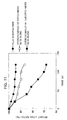
- the enzymatic degradation level of a copolymer from such depsipeptide monomer and a bio-absorbable polymer ⁇ -caprolactone (CL) with proteinase K is in the order of L-MMO/CL > L-DMO/CL > L-MEMO/CL.
- depsipeptide synthesized from amino acid and an oxyacid derivative amino acids such as L-alanine, L-(DL- or D-)valine, and L-leucine are used to prepare depsipeptides, namely DMO, PMO and BMO in the order of the amino acids. All of them are applicable to the invention.
- the enzymatic degradation level of a copolymer from such depsipeptide monomer and a bio-absorbable polymer ⁇ -caprolactone (CL) with proteinase K is in the order of DMO/CL > PMO/CL ⁇ BMO/CL.
- the enzymatic degradation level thereof with cholesterol esterase is in the order of PMO/CL > BMO/CL ⁇ DMO/CL.
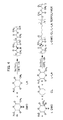
- a tercopolymer was prepared by adding a cyclic depsipeptide (DMO) to a copolymer of L-lactide (L-LA) as a raw material of polylactic acid and ⁇ -caprolactone as a raw material of poly ⁇ -caprolactone.
- DMO cyclic depsipeptide
- L-LA L-lactide
- Fig. 2 is the structure view of the copolymer with the peptide unit as recovered by the polymerization of the depsipeptide. U expresses depsipeptide unit.
- DMO 3,6-dimethyl-2,5-morpholine-dione
- the cyclic depsipeptide is a cyclic ester amide prepared from ⁇ -amino acid and a ⁇ -hydroxylate derivative.
- DL-alanine and DL-2-bromopropionyl bromide were used as ⁇ -amino acid and ⁇ -hydroxylate derivative, respectively.
- the cyclic depsipeptide was synthesized in a similar way.
- the cyclic depsipeptide (L-DMO) was synthetically prepared from ⁇ -amino acid (L-alanine) and a ⁇ -hydroxylate derivative (DL-2-bromopropionyl bromide), and was then purified for use.
- lactone was purified by dissolving CL in toluene and subsequently drying CL with CaH 2 for 48 hours, and then subjecting the resulting CL to distillation under reduced pressure (twice).
- L-Lactide (L-LA) was purified by recrystallization in THF and sublimation (twice).
- the copolymer was prepared as follows.
- the polymerization container was taken out of the oil bath and then cooled.
- the resulting crude polymer was dissolved in chloroform, an amount of hydrochloric acid more then double that of charged tin octylate was added to the polymer and stirred (for more than 3 minutes) to remove the catalyst at the end of the polymer, and the generated metal salt was extracted in distilled water (more than one) and purified via reprecipitation in methanol after dehydration.
- Tables 1 and 2 show the yields and molecular weights of the resulting polymers.
- L-DMO/CL/D-LA random tercopolymer L-DMO/L-LA random copolymer
- L-DMO/L-LA random copolymer L-DMO/D-LA random copolymer
- L-DMO/D-LA random copolymer L-DMO/D-LA random copolymer
- the 1 H-NMR datas ( ⁇ , CDCl 3 ) of the resulting polymers are as follows.
- P(L-DMO/D-LA) 1.49(m, 6H, CH 3 ⁇ 2(L-DMO)), 1.57(d, 6H, CH 3 ⁇ 2(L-LA)), 4.61(m, 1H, NHCH), 5.17(m, 1H, OCH), 6.58ppm(br. d, 1H, NH).
- P(L-DMO/CL/D-LA) 1.38(m, 2H, CH 2 CH 2 CH 2 CH 2 CH 2 ), 1.50(m, 6H, CH 3 ⁇ 2(L-DMO)), 1.57(d, 6H, CH 3 ⁇ 2(L-LA)), 1.68(m, 4H, CH 2 CH 2 CH 2 CH 2 ), 2.26 ⁇ 2.38(splitting in two peaks, 2H, CCH 2 ), 4.59(m, 1H, OCH(L-DMO)), 6.66ppm(br. m, 1H, NH).
- composition of the copolymer was determined on the basis of the peak integration ratio of 1 H NMR spectrum measured with a 400 MHz magnetic resonance system (JEOL JMN-LA400). Based on the spectrum, the chain sequence (randomness) of the copolymer was deduced as well.
- the number average molecular weight (Mn) of the polymer and the molecular distribution (Mw/Mn) thereof were determined on the basis of a standard curve prepared from standard polystyrene, using GPC 8010 system manufactured by TOSO, Co., Ltd. [column: TSK Gel (G2000H HR +G3000H HR + G4000H HR +G5000H HR ), column temperature of 40°C and differential refractive index (RI) meter]. Chloroform was used as the eluent at the flow of 1 mLmin -1 .
- the thermal properties of the polymer and the polymer blend namely the glass transition temperature (Tg), melting point (Tm) and melting heat ( ⁇ Hm) thereof were measured, using a differential scanning calorimeter SSC5100 DSC22C manufactured by Seiko Electric Co., Ltd. The measurement was done in nitrogen atmosphere at a temperature elevation rate of 10 °C/min.
- Polymer film (film thickness of about 200 ⁇ m; several tens grams) sealed in polyethylene sheet mesh (mesh size of about 1 ⁇ 1 mm) was incubated (37 °C) in a sample tube bottle placing an enzyme and a buffer (50 ml) therein, for degradation.
- the enzyme concentration was 1 International Unit (IU) per 1 mg of the polymer sample.
- the buffer containing the enzyme (degradation solution) was exchanged to a fresh one every about 40 hours, taking account of the reduction of the oxygen activity and the contamination and growth of microorganisms in air.
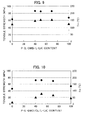
- the degradation level was evaluated on the basis of the changes of the weight and physico-chemical properties (molecular weight, composition and thermal properties) of the polymer before and after degradation.
- Proteinase K derived from Tritirachium album; manufactured by Merck Ltd., Japan; oxygen activity of 30.0 mAnsonU/mg
- Tricine pH 8.0
- melting points (Tm) or melting heats ( ⁇ Hm) of the copolymer (value in parentheses) and stereocomplex were measured and observed. Having compared melting heat ( ⁇ Hm) of the copolymer (value in parentheses) to that of the stereocomplex, it was found that of the stereocomplex is larger than that of the copolymer and it was found that the majority of the polymer blend is the stereocomplex.
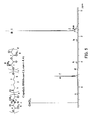
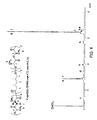
- Figs. 5 and 6 depict the 1 H NMR spectrum of the tercopolymer.
- the chart establishes the verification that the tercopolymer is random.
- the proton peaks (k, h) of the ⁇ - and ⁇ -methylene in the CL unit are sensitive to the adjacent comonomer units. It is indicated that because these peaks are individually split into two (the peak on the side of high magnetic field corresponds to the homosequence of CL-CL; the peak on the side of low high magnetic field correspond to a peak based on the hetero-sequence of L-LA-CL and L-DMO-CL), the tercopolymer is a random copolymer.
- the reason why the unit L-DMO is introduced appropriately in the resulting copolymer via copolymerization at 120 °C lower than the Tm thereof (about 170°C) is that the polymerization of the highly reactive L-LA (with Tm of about 95 °C) first occurs and the active elongating terminus induces the ring-opening of the L-DMO (and/or CL), which is then incorporated randomly in the copolymer.
- Polylactic acid which is a homopolymer or stereocomplex, has a small elongation of mechanical property and thus is restricted due to its breaking or cracking from being used in medical devices which change their form inside the body; for example they expand.
- the bio-absorbable polymer of the invention has a necessary elongation property similar to those of copolymer and tercopolymer without having to sacrifice the strength, thermal property or degradation profiles and thus is appropriate for use in medical devices.
- the bio-absorbable polymer of the invention is also able to control the degradation profiles by adjusting the blending ratio of said polymer.
- bio-absorbable polymer of the invention has a higher biocompatibility for use in indwelling medical devices inside the body and bio-absorbable medical devices compared with polylactic acid (lactide) and caprolactone having no hydrophilic group and the copolymer thereof, because the N-H group of the depsipeptide unit of the bio-absorbable polymer is hydrophile.
Landscapes
- Health & Medical Sciences (AREA)
- Chemical & Material Sciences (AREA)
- Public Health (AREA)
- Veterinary Medicine (AREA)
- Epidemiology (AREA)
- Life Sciences & Earth Sciences (AREA)
- Animal Behavior & Ethology (AREA)
- General Health & Medical Sciences (AREA)
- Medicinal Chemistry (AREA)
- Dermatology (AREA)
- Oral & Maxillofacial Surgery (AREA)
- Transplantation (AREA)
- Pharmacology & Pharmacy (AREA)
- Chemical Kinetics & Catalysis (AREA)
- Materials For Medical Uses (AREA)
- Polyesters Or Polycarbonates (AREA)
Applications Claiming Priority (2)
| Application Number | Priority Date | Filing Date | Title |
|---|---|---|---|
| JP2004373964A JP2006175153A (ja) | 2004-12-24 | 2004-12-24 | 医療用生分解性生体吸収材料 |
| PCT/JP2005/023464 WO2006068168A1 (fr) | 2004-12-24 | 2005-12-21 | Materiau biodegradable et bioresorbable a usage medical |
Publications (2)
| Publication Number | Publication Date |
|---|---|
| EP1832302A1 true EP1832302A1 (fr) | 2007-09-12 |
| EP1832302A4 EP1832302A4 (fr) | 2008-11-12 |
Family
ID=35449162
Family Applications (1)
| Application Number | Title | Priority Date | Filing Date |
|---|---|---|---|
| EP05820158A Withdrawn EP1832302A4 (fr) | 2004-12-24 | 2005-12-21 | Materiau biodegradable et bioresorbable a usage medical |
Country Status (5)
| Country | Link |
|---|---|
| US (1) | US20050271617A1 (fr) |
| EP (1) | EP1832302A4 (fr) |
| JP (1) | JP2006175153A (fr) |
| CN (1) | CN101076362A (fr) |
| WO (1) | WO2006068168A1 (fr) |
Cited By (2)
| Publication number | Priority date | Publication date | Assignee | Title |
|---|---|---|---|---|
| US7700819B2 (en) | 2001-02-16 | 2010-04-20 | Kci Licensing, Inc. | Biocompatible wound dressing |
| US7763769B2 (en) | 2001-02-16 | 2010-07-27 | Kci Licensing, Inc. | Biocompatible wound dressing |
Families Citing this family (5)
| Publication number | Priority date | Publication date | Assignee | Title |
|---|---|---|---|---|
| JP5102200B2 (ja) * | 2006-03-30 | 2012-12-19 | テルモ株式会社 | 生体内留置物 |
| WO2007116646A1 (fr) * | 2006-04-04 | 2007-10-18 | Terumo Kabushiki Kaisha | Sonde à demeure in vivo |
| JP5258189B2 (ja) * | 2006-11-09 | 2013-08-07 | 学校法人 関西大学 | 柔軟性生分解性ポリマー |
| WO2009072172A1 (fr) | 2007-12-03 | 2009-06-11 | Goodman Co., Ltd. | Stent et son procédé de production |
| US9592044B2 (en) | 2011-02-09 | 2017-03-14 | C. R. Bard, Inc. | T-fastener suture delivery system |
Family Cites Families (8)
| Publication number | Priority date | Publication date | Assignee | Title |
|---|---|---|---|---|
| JPS6136321A (ja) * | 1984-07-27 | 1986-02-21 | Daicel Chem Ind Ltd | 新規なポリマ−およびその樹脂組成物 |
| JP2986860B2 (ja) * | 1990-07-03 | 1999-12-06 | グンゼ株式会社 | 骨固定用具 |
| JP3412039B2 (ja) * | 1998-02-12 | 2003-06-03 | 株式会社ビーエムジー | 外科用接着剤組成物 |
| WO2000048576A1 (fr) * | 1999-02-19 | 2000-08-24 | Universiteit Utrecht | Hydrogels stereocomplexes |
| JP2001031762A (ja) * | 1999-07-21 | 2001-02-06 | Sharp Corp | 乳酸系生分解性重合体 |
| US6926903B2 (en) * | 2001-12-04 | 2005-08-09 | Inion Ltd. | Resorbable polymer composition, implant and method of making implant |
| JPWO2004000377A1 (ja) * | 2002-06-25 | 2005-10-20 | 株式会社グッドマン | 医療用生体吸収性プラスチック製用具 |
| WO2004000376A1 (fr) * | 2002-06-25 | 2003-12-31 | Goodman Co., Ltd | Materiaux biodegradables et bioabsorbables a usage medical et procede de production |
-
2004
- 2004-12-24 JP JP2004373964A patent/JP2006175153A/ja active Pending
- 2004-12-29 US US11/025,807 patent/US20050271617A1/en not_active Abandoned
-
2005
- 2005-12-21 EP EP05820158A patent/EP1832302A4/fr not_active Withdrawn
- 2005-12-21 CN CNA200580040255XA patent/CN101076362A/zh active Pending
- 2005-12-21 WO PCT/JP2005/023464 patent/WO2006068168A1/fr not_active Ceased
Non-Patent Citations (2)
| Title |
|---|
| No further relevant documents disclosed * |
| See also references of WO2006068168A1 * |
Cited By (5)
| Publication number | Priority date | Publication date | Assignee | Title |
|---|---|---|---|---|
| US7700819B2 (en) | 2001-02-16 | 2010-04-20 | Kci Licensing, Inc. | Biocompatible wound dressing |
| US7763769B2 (en) | 2001-02-16 | 2010-07-27 | Kci Licensing, Inc. | Biocompatible wound dressing |
| US8084664B2 (en) | 2001-02-16 | 2011-12-27 | Kci Licensing, Inc. | Biocompatible wound dressing |
| US8163974B2 (en) | 2001-02-16 | 2012-04-24 | Kci Licensing, Inc. | Biocompatible wound dressing |
| US8735644B2 (en) | 2001-02-16 | 2014-05-27 | Kci Licensing, Inc. | Biocompatible wound dressing |
Also Published As
| Publication number | Publication date |
|---|---|
| WO2006068168A1 (fr) | 2006-06-29 |
| EP1832302A4 (fr) | 2008-11-12 |
| JP2006175153A (ja) | 2006-07-06 |
| US20050271617A1 (en) | 2005-12-08 |
| CN101076362A (zh) | 2007-11-21 |
Similar Documents
| Publication | Publication Date | Title |
|---|---|---|
| Choi et al. | Synthesis and characterization of elastic PLGA/PCL/PLGA tri-block copolymers | |
| US5665831A (en) | Biocompatible block copolymer | |
| Engelberg et al. | Physico-mechanical properties of degradable polymers used in medical applications: a comparative study | |
| US7217744B2 (en) | Polymeric networks | |
| AU2006271727B2 (en) | Resorbable polyether esters for producing medical implants | |
| JP5394244B2 (ja) | 生体吸収性ポリマー | |
| US7884142B2 (en) | Biodegradable copolymer and thermosensitive material | |
| AU2004303600B2 (en) | Tunable segmented polyacetal | |
| JP2010006820A (ja) | ヒドロキシ酸から誘導されたモノマー及びそれから調製されたポリマー | |
| JP2008534732A (ja) | 新規な温度及びpH感受性のブロック共重合体及びこれを用いた高分子ヒドロゲル | |
| US20070117959A1 (en) | Novel polyesters | |
| EP3978569A1 (fr) | Composition polymère, corps moulé et tube d'induction de la régénération nerveuse | |
| EP1832302A1 (fr) | Materiau biodegradable et bioresorbable a usage medical | |
| AU3368393A (en) | Copolymer of lactone and carbonate and process for the preparation of such a copolymer | |
| JP2008222768A (ja) | 分岐型生分解性ポリエステル及びその製造方法 | |
| US20050163822A1 (en) | Biodegradable bio-absorbable material for clinical practice and method for producing the same | |
| WO2004000376A1 (fr) | Materiaux biodegradables et bioabsorbables a usage medical et procede de production | |
| US8383725B2 (en) | Polyester based degradable materials and implantable biomedical articles formed therefrom | |
| Watanabe et al. | Syntheses of random and block copolymers of lactides with 1, 5-dioxepan-2-one and their biodegradability | |
| CN121181864A (zh) | 精确调控单体比例聚(三亚甲基碳酸酯-co-丙交酯)共聚物及其制备方法与应用 | |
| Johnson | The synthesis, characterization, and study of the hydrolytic degradation characteristics of oxalate-based absorbable polyesters | |
| Drumond et al. | Preparation and characterization of resorbable hydrogel membranes useful for tissue engineering |
Legal Events
| Date | Code | Title | Description |
|---|---|---|---|
| PUAI | Public reference made under article 153(3) epc to a published international application that has entered the european phase |
Free format text: ORIGINAL CODE: 0009012 |
|
| 17P | Request for examination filed |
Effective date: 20070724 |
|
| AK | Designated contracting states |
Kind code of ref document: A1 Designated state(s): AT BE BG CH CY CZ DE DK EE ES FI FR GB GR HU IE IS IT LI LT LU LV MC NL PL PT RO SE SI SK TR |
|
| DAX | Request for extension of the european patent (deleted) | ||
| A4 | Supplementary search report drawn up and despatched |
Effective date: 20081010 |
|
| GRAP | Despatch of communication of intention to grant a patent |
Free format text: ORIGINAL CODE: EPIDOSNIGR1 |
|
| STAA | Information on the status of an ep patent application or granted ep patent |
Free format text: STATUS: THE APPLICATION IS DEEMED TO BE WITHDRAWN |
|
| 18D | Application deemed to be withdrawn |
Effective date: 20091211 |