EP1833795B1 - Composes de pyridine destines au traitement de maladies a mediation par prostaglandine - Google Patents
Composes de pyridine destines au traitement de maladies a mediation par prostaglandine Download PDFInfo
- Publication number
- EP1833795B1 EP1833795B1 EP05817767A EP05817767A EP1833795B1 EP 1833795 B1 EP1833795 B1 EP 1833795B1 EP 05817767 A EP05817767 A EP 05817767A EP 05817767 A EP05817767 A EP 05817767A EP 1833795 B1 EP1833795 B1 EP 1833795B1
- Authority
- EP
- European Patent Office
- Prior art keywords
- methyl
- chloro
- oxy
- phenyl
- fluorophenyl
- Prior art date
- Legal status (The legal status is an assumption and is not a legal conclusion. Google has not performed a legal analysis and makes no representation as to the accuracy of the status listed.)
- Expired - Lifetime
Links
- 0 C[C@](*)(C=*NC)C(*)=*C(C)=C* Chemical compound C[C@](*)(C=*NC)C(*)=*C(C)=C* 0.000 description 2
- WRDIVVWKTQUSIA-UHFFFAOYSA-N CCOC(c1cccc(Cc(cc(cc2)Cl)c2O)n1)=O Chemical compound CCOC(c1cccc(Cc(cc(cc2)Cl)c2O)n1)=O WRDIVVWKTQUSIA-UHFFFAOYSA-N 0.000 description 1
- WGOSUQFHQDEFND-UHFFFAOYSA-N CCOC(c1cccc(Cc(cc(cc2)Cl)c2OCc(ccc(Cl)c2)c2F)n1)=O Chemical compound CCOC(c1cccc(Cc(cc(cc2)Cl)c2OCc(ccc(Cl)c2)c2F)n1)=O WGOSUQFHQDEFND-UHFFFAOYSA-N 0.000 description 1
- KDISPJIQQUAXDX-UHFFFAOYSA-N CCOC(c1cccc(Cc(cc(cc2)Cl)c2OCc(cccc2)c2Cl)n1)=O Chemical compound CCOC(c1cccc(Cc(cc(cc2)Cl)c2OCc(cccc2)c2Cl)n1)=O KDISPJIQQUAXDX-UHFFFAOYSA-N 0.000 description 1
- JRCUXMFWDPQKHC-UHFFFAOYSA-N CCOC(c1cncc(Cc(cc(cc2)Cl)c2OCc(c(F)cc(F)c2)c2F)c1)=O Chemical compound CCOC(c1cncc(Cc(cc(cc2)Cl)c2OCc(c(F)cc(F)c2)c2F)c1)=O JRCUXMFWDPQKHC-UHFFFAOYSA-N 0.000 description 1
- SIDZTXYHXWTXTJ-UHFFFAOYSA-N Clc(cc1)cc(CBr)c1OCc1ccccc1 Chemical compound Clc(cc1)cc(CBr)c1OCc1ccccc1 SIDZTXYHXWTXTJ-UHFFFAOYSA-N 0.000 description 1
- KJMBCXMDHSRYHJ-UHFFFAOYSA-N Fc1c(CI)ccc([ClH+])c1 Chemical compound Fc1c(CI)ccc([ClH+])c1 KJMBCXMDHSRYHJ-UHFFFAOYSA-N 0.000 description 1
- KPCPZEBZKVMPDD-UHFFFAOYSA-N Fc1c(COc(cc2)c(Cc3nc(-c4nnn[nH]4)ccc3)cc2Cl)ccc(Cl)c1 Chemical compound Fc1c(COc(cc2)c(Cc3nc(-c4nnn[nH]4)ccc3)cc2Cl)ccc(Cl)c1 KPCPZEBZKVMPDD-UHFFFAOYSA-N 0.000 description 1
- ZSGFZXGRWCEBTK-UHFFFAOYSA-N OCc(cc(cc1)Cl)c1OCc1ccccc1 Chemical compound OCc(cc(cc1)Cl)c1OCc1ccccc1 ZSGFZXGRWCEBTK-UHFFFAOYSA-N 0.000 description 1
- BWIYOQPKPAOWEM-UHFFFAOYSA-N [O-]=S(c(cc1)ccc1Br)(NC(c1cccc(Cc(cc(cc2)Cl)c2OCc(ccc(Cl)c2)c2F)n1)=O)=O Chemical compound [O-]=S(c(cc1)ccc1Br)(NC(c1cccc(Cc(cc(cc2)Cl)c2OCc(ccc(Cl)c2)c2F)n1)=O)=O BWIYOQPKPAOWEM-UHFFFAOYSA-N 0.000 description 1
- HJPAXYLYYQIFCK-UHFFFAOYSA-M [O-]C(c1cccc(Cc(cc(cc2)Cl)c2OCc(ccc(Cl)c2)c2F)n1)=O Chemical compound [O-]C(c1cccc(Cc(cc(cc2)Cl)c2OCc(ccc(Cl)c2)c2F)n1)=O HJPAXYLYYQIFCK-UHFFFAOYSA-M 0.000 description 1
Classifications
-
- C—CHEMISTRY; METALLURGY
- C07—ORGANIC CHEMISTRY
- C07D—HETEROCYCLIC COMPOUNDS
- C07D213/00—Heterocyclic compounds containing six-membered rings, not condensed with other rings, with one nitrogen atom as the only ring hetero atom and three or more double bonds between ring members or between ring members and non-ring members
- C07D213/02—Heterocyclic compounds containing six-membered rings, not condensed with other rings, with one nitrogen atom as the only ring hetero atom and three or more double bonds between ring members or between ring members and non-ring members having three double bonds between ring members or between ring members and non-ring members
- C07D213/04—Heterocyclic compounds containing six-membered rings, not condensed with other rings, with one nitrogen atom as the only ring hetero atom and three or more double bonds between ring members or between ring members and non-ring members having three double bonds between ring members or between ring members and non-ring members having no bond between the ring nitrogen atom and a non-ring member or having only hydrogen or carbon atoms directly attached to the ring nitrogen atom
- C07D213/60—Heterocyclic compounds containing six-membered rings, not condensed with other rings, with one nitrogen atom as the only ring hetero atom and three or more double bonds between ring members or between ring members and non-ring members having three double bonds between ring members or between ring members and non-ring members having no bond between the ring nitrogen atom and a non-ring member or having only hydrogen or carbon atoms directly attached to the ring nitrogen atom with hetero atoms or with carbon atoms having three bonds to hetero atoms with at the most one bond to halogen, e.g. ester or nitrile radicals, directly attached to ring carbon atoms
- C07D213/78—Carbon atoms having three bonds to hetero atoms, with at the most one bond to halogen, e.g. ester or nitrile radicals
- C07D213/79—Acids; Esters
-
- A—HUMAN NECESSITIES
- A61—MEDICAL OR VETERINARY SCIENCE; HYGIENE
- A61K—PREPARATIONS FOR MEDICAL, DENTAL OR TOILETRY PURPOSES
- A61K31/00—Medicinal preparations containing organic active ingredients
- A61K31/33—Heterocyclic compounds
- A61K31/395—Heterocyclic compounds having nitrogen as a ring hetero atom, e.g. guanethidine or rifamycins
- A61K31/435—Heterocyclic compounds having nitrogen as a ring hetero atom, e.g. guanethidine or rifamycins having six-membered rings with one nitrogen as the only ring hetero atom
- A61K31/44—Non condensed pyridines; Hydrogenated derivatives thereof
- A61K31/445—Non condensed piperidines, e.g. piperocaine
- A61K31/4458—Non condensed piperidines, e.g. piperocaine only substituted in position 2, e.g. methylphenidate
-
- A—HUMAN NECESSITIES
- A61—MEDICAL OR VETERINARY SCIENCE; HYGIENE
- A61P—SPECIFIC THERAPEUTIC ACTIVITY OF CHEMICAL COMPOUNDS OR MEDICINAL PREPARATIONS
- A61P13/00—Drugs for disorders of the urinary system
- A61P13/12—Drugs for disorders of the urinary system of the kidneys
-
- A—HUMAN NECESSITIES
- A61—MEDICAL OR VETERINARY SCIENCE; HYGIENE
- A61P—SPECIFIC THERAPEUTIC ACTIVITY OF CHEMICAL COMPOUNDS OR MEDICINAL PREPARATIONS
- A61P19/00—Drugs for skeletal disorders
-
- A—HUMAN NECESSITIES
- A61—MEDICAL OR VETERINARY SCIENCE; HYGIENE
- A61P—SPECIFIC THERAPEUTIC ACTIVITY OF CHEMICAL COMPOUNDS OR MEDICINAL PREPARATIONS
- A61P25/00—Drugs for disorders of the nervous system
-
- A—HUMAN NECESSITIES
- A61—MEDICAL OR VETERINARY SCIENCE; HYGIENE
- A61P—SPECIFIC THERAPEUTIC ACTIVITY OF CHEMICAL COMPOUNDS OR MEDICINAL PREPARATIONS
- A61P25/00—Drugs for disorders of the nervous system
- A61P25/04—Centrally acting analgesics, e.g. opioids
-
- A—HUMAN NECESSITIES
- A61—MEDICAL OR VETERINARY SCIENCE; HYGIENE
- A61P—SPECIFIC THERAPEUTIC ACTIVITY OF CHEMICAL COMPOUNDS OR MEDICINAL PREPARATIONS
- A61P29/00—Non-central analgesic, antipyretic or antiinflammatory agents, e.g. antirheumatic agents; Non-steroidal antiinflammatory drugs [NSAID]
-
- A—HUMAN NECESSITIES
- A61—MEDICAL OR VETERINARY SCIENCE; HYGIENE
- A61P—SPECIFIC THERAPEUTIC ACTIVITY OF CHEMICAL COMPOUNDS OR MEDICINAL PREPARATIONS
- A61P37/00—Drugs for immunological or allergic disorders
-
- A—HUMAN NECESSITIES
- A61—MEDICAL OR VETERINARY SCIENCE; HYGIENE
- A61P—SPECIFIC THERAPEUTIC ACTIVITY OF CHEMICAL COMPOUNDS OR MEDICINAL PREPARATIONS
- A61P9/00—Drugs for disorders of the cardiovascular system
-
- C—CHEMISTRY; METALLURGY
- C07—ORGANIC CHEMISTRY
- C07D—HETEROCYCLIC COMPOUNDS
- C07D213/00—Heterocyclic compounds containing six-membered rings, not condensed with other rings, with one nitrogen atom as the only ring hetero atom and three or more double bonds between ring members or between ring members and non-ring members
- C07D213/02—Heterocyclic compounds containing six-membered rings, not condensed with other rings, with one nitrogen atom as the only ring hetero atom and three or more double bonds between ring members or between ring members and non-ring members having three double bonds between ring members or between ring members and non-ring members
- C07D213/04—Heterocyclic compounds containing six-membered rings, not condensed with other rings, with one nitrogen atom as the only ring hetero atom and three or more double bonds between ring members or between ring members and non-ring members having three double bonds between ring members or between ring members and non-ring members having no bond between the ring nitrogen atom and a non-ring member or having only hydrogen or carbon atoms directly attached to the ring nitrogen atom
- C07D213/60—Heterocyclic compounds containing six-membered rings, not condensed with other rings, with one nitrogen atom as the only ring hetero atom and three or more double bonds between ring members or between ring members and non-ring members having three double bonds between ring members or between ring members and non-ring members having no bond between the ring nitrogen atom and a non-ring member or having only hydrogen or carbon atoms directly attached to the ring nitrogen atom with hetero atoms or with carbon atoms having three bonds to hetero atoms with at the most one bond to halogen, e.g. ester or nitrile radicals, directly attached to ring carbon atoms
- C07D213/78—Carbon atoms having three bonds to hetero atoms, with at the most one bond to halogen, e.g. ester or nitrile radicals
- C07D213/79—Acids; Esters
- C07D213/80—Acids; Esters in position 3
-
- C—CHEMISTRY; METALLURGY
- C07—ORGANIC CHEMISTRY
- C07D—HETEROCYCLIC COMPOUNDS
- C07D401/00—Heterocyclic compounds containing two or more hetero rings, having nitrogen atoms as the only ring hetero atoms, at least one ring being a six-membered ring with only one nitrogen atom
- C07D401/02—Heterocyclic compounds containing two or more hetero rings, having nitrogen atoms as the only ring hetero atoms, at least one ring being a six-membered ring with only one nitrogen atom containing two hetero rings
- C07D401/04—Heterocyclic compounds containing two or more hetero rings, having nitrogen atoms as the only ring hetero atoms, at least one ring being a six-membered ring with only one nitrogen atom containing two hetero rings directly linked by a ring-member-to-ring-member bond
-
- C—CHEMISTRY; METALLURGY
- C07—ORGANIC CHEMISTRY
- C07D—HETEROCYCLIC COMPOUNDS
- C07D413/00—Heterocyclic compounds containing two or more hetero rings, at least one ring having nitrogen and oxygen atoms as the only ring hetero atoms
- C07D413/02—Heterocyclic compounds containing two or more hetero rings, at least one ring having nitrogen and oxygen atoms as the only ring hetero atoms containing two hetero rings
- C07D413/12—Heterocyclic compounds containing two or more hetero rings, at least one ring having nitrogen and oxygen atoms as the only ring hetero atoms containing two hetero rings linked by a chain containing hetero atoms as chain links
Definitions
- This invention relates to a pyridine compound, to processes for its preparation, to pharmaceutical compositions containing it and to its use in medicine, in particular its use in the treatment of conditions mediated by the action of PGE 2 at the EP 1 receptor.
- Prostaglandin receptors including the EP 1-4 , DP, FP IP and TP receptors are the effector proteins for the products (prostaglandins) downstream of COX-1/2 activation (PGE 2 , PGD2, PGF2a, PGI2 and thromboxane respectively).
- the NSAIDS non-steroidal anti-inflammatory drugs
- the EP 1 receptor is a 7-transmembrane receptor and its natural ligand is the prostaglandin PGE 2 - PGE 2 also has affinity for the other EP receptors (types EP 2 , EP 3 and EP 4 ).
- the EP 1 receptor is associated with smooth muscle contraction, pain (in particular inflammatory, neuropathic and visceral), inflammation, allergic activities, renal regulation and gastric or enteric mucus secretion.
- the TP (also known as TxA 2 ) receptor is a prostanoid receptor subtype stimulated by the endogenous mediator thromboxane. Activation of this receptor results in various physiological actions primarily incurred by its platelet aggregatory and smooth muscle constricting effects, thus opposing those of prostacyclin receptor activation.
- TP receptors have been identified in human kidneys ( G.P. Brown et al, Prostaglandins and other lipid mediators,1999, 57,179-188 ) in the glomerulus and extraglomerular vascular tissue. Activation of TP receptors constricts glomerular capillaries and suppresses glomerular filtration rates ( M.D. Breyer et al, Current Opinion in Nephrology and Hypertension, 2000, 9, 23-29 ), indicating that TP receptor antagonists could be useful for renal dysfunction in glomerulonephritis, diabetes mellitus and sepsis.
- TP antagonists have been investigated as potential asthma treatments resulting in, for example, orally active Seratrodast (AA-2414) ( S. Terao et al, Yakugaku Zasshi, 1999, 119(5), 377-390 ).
- Ramatroban is another TP receptor antagonist currently undergoing phase III clinical trials as an anti-asthmatic compound.
- Antagonists at the TP receptor have been shown to have a gastroprotective effect.
- SQ 33961 and BM 13505 inhibit gastric lesions induced by taurocholate acid, aspirin or indomethacin ( E.H. Ogletree et al, Journal of Pharmacology and Experimental Therapeutics, 1992, 263(1), 374-380 .
- Certain compounds disclosed herein also exhibit antagonism at the TP receptor and are therefore indicated to be useful in treating conditions mediated by the action of thromboxane at the TP receptor.
- Such conditions include those disclosed in WO 2004/039807 (Merck Frosst Canada & Co) and include respiratory diseases e.g. asthma, allergic diseases, male erectile dysfunction, thrombosis, renal disorders and gastric lesions.
- WO 96/06822 (7 March 1996 ), WO 96/11902 (25 April 1996 ), EP 752421-A1 (8 January 1997 ), WO 01/19814 (22 March 2001 ), WO 03/084917 (16 October 2003), WO 03/101959 (11 December 2003), WO 2004/039753 (13 May 2004), WO 2004/083185 (30 September 2004), WO 2005/037786 (28 April 2005), WO 2005/037793 (28 April 2005), WO 2005/037794 (28 April 2005 ), WO 2005/040128 (6 May 2005 ), WO 2005/054191 (16 June 2005 ) and WO2005/108369 (17 November 2005 ) disclose compounds as being useful in the treatment of prostaglandin mediated diseases.
- DT 2602340 A1 discloses certain benzyl picolinic acid derivatives as hypotensive agents and dopamine ⁇ -hydroxylase inhibitors.
- An example of a compound of formula (I) is 6-[(5-chloro-2- ⁇ [(4-chloro-2-fluorophenyl)methyl]oxy ⁇ phenyl)methyl]-2-pyridinecarboxylic acid or a salt thereof.
- the present invention provides 6-[(5-chloro-2- ⁇ [(4-chloro-2-fluorophenyl)methyl]oxy ⁇ phenyl)methyl]-2-pyridinecarboxylic acid or a salt thereof, particularly a pharmaceutically acceptable salt thereof.
- Pharmaceutically acceptable salts include salts formed with sodium, methanesulfonic acid or tris(hydroxymethyl)aminomethane (trometamol).
- Derivatives of the compound of formula (I) include salts, solvates (including hydrates), solvates (including hydrates) of salts, esters and polymorphs of the compound of formula (I).
- Derivatives of the compounds of formula (I) include pharmaceutically acceptable derivatives.
- the present disclosure also includes isotopically-labelled compounds, which are identical to the compounds of formula (I), except that one or more atoms are replaced by an atom having an atomic mass or mass number different from the atomic mass or mass number usually found in nature.
- isotopes that can be incorporated into compounds of the invention include isotopes of hydrogen, carbon, nitrogen, oxygen, phosphorous, fluorine, iodine, and chlorine, such as 2 H, 3 H, 11 C, 14 C, 18 F , 35 S, 123 I and 125 I.
- Isotopically-labelled compounds of formula (I) for example those into which radioactive isotopes such as 3 H and/or 14 C are incorporated, are useful in drug and/or substrate tissue distribution assays. 3 H and 14 C are considered useful due to their ease of preparation and detectability. 11 C and 18 F isotopes are considered useful in PET (positron emission tomography), and 125 I isotopes are considered useful in SPECT (single photon emission computerized topography), all useful in brain imaging.
- Isotopically labelled compounds of formula (I) can generally be prepared by carrying out the procedures disclosed in the Schemes and/or in the Examples below, by substituting a readily available isotopically labelled reagent for a non-isotopically labelled reagent.
- pharmaceutically acceptable derivative means any pharmaceutically acceptable salt, solvate, ester, or solvate of salt or ester of the compounds of formula (I), or any other compound which upon administration to the recipient is capable of providing (directly or indirectly) a compound of formula (I).
- pharmaceutically acceptable derivative means any pharmaceutically acceptable salt, solvate or solvate of salt.
- pharmaceutically acceptable derivative means any pharmaceutically acceptable salt.
- the derivatives referred to above will be pharmaceutically acceptable derivatives, but other derivatives may find use, for example in the preparation of compounds of formula (I) and the pharmaceutically acceptable derivatives thereof.
- Pharmaceutically acceptable salts include those described by Berge, Bighley and Monkhouse, J. Pharm. Sci., 1977, 66, 1-19 .
- the term "pharmaceutically acceptable salts” refers to salts prepared from pharmaceutically acceptable bases including inorganic bases and organic bases. Salts derived from inorganic bases include aluminum, ammonium, calcium, copper, ferric, ferrous, lithium, magnesium, manganic salts, manganous, potassium, sodium, zinc, and the like. Salts derived from pharmaceutically acceptable organic bases include salts of primary, secondary, and tertiary amines; substituted amines including naturally occurring substituted amines; and cyclic amines.
- Particular pharmaceutically acceptable organic.bases include arginine, betaine, caffeine, choline, N,N'-dibenzylethylenediamine, diethylamine, 2-diethylaminoethanol, 2-dimethylaminoethanol, ethanolamine, ethylenediamine, N-ethyl-morpholine, N-ethytpiperidine, glucamine, glucosamine, histidine, hydrabamine, isopropylamine, lysine, methylglucamine, morpholine, piperazine, piperidine, procaine, purines, theobromine, triethylamine, trimethylamine, tripropylamine, tris(hydroxymethyl)aminomethane (TRIS, trometamol) and the like.
- Salts may also be formed from basic ion exchange resins, for example polyamine resins.
- salts may be prepared from pharmaceutically acceptable acids, including inorganic and organic acids. Such acids include acetic, benzenesulfonic, benzoic, camphorsulfonic, citric, ethanesulfonic, ethanedisulfonic, fumaric, gluconic, glutamic, hydrobromic, hydrochloric, isethionic, lactic, maleic, malic, mandelic, methanesulfonic, mucic, pamoic, pantothenic, phosphoric, propionic, succinic, sulfuric, tartaric, p-toluenesulfonic acid, and the like.
- acids include acetic, benzenesulfonic, benzoic, camphorsulfonic, citric, ethanesulfonic, ethanedisulfonic, fumaric, gluconic, glutamic, hydrobro
- the compounds of formula (I) may be prepared in crystalline or non-crystalline form, and may be optionally hydrated or solvated. This invention includes in its scope stoichiometric hydrates as well as compounds containing variable amounts of water.
- Suitable solvates include pharmaceutically acceptable solvates, such as hydrates.
- Solvates include stoichiometric solvates and non-stoichiometric solvates.
- halogen or halo are used to represent fluorine, chlorine, bromine or iodine.
- alkyl as a group or part of a group means a straight, branched or cyclic alkyl group or combinations thereof.
- examples of alkyl include C 1 - 8 alkyl, for example methyl, ethyl, n-propyl, iso-propyl, n-butyl, sec-butyl, iso-butyl, t-butyl, pentyl, hexyl, 1,1-dimethylethyl, cyclopropyl, cyclopentyl or cyclohexyl or combinations thereof such as cyclopropylmethylene, cyclohexylmethylene and cyclopentylmethylene.
- cycloalkyl means a cyclic alkyl group comprising up to eight carbon atoms in a ring.
- alkenyl means linear or branched structures and combinations thereof, of the indicated number of carbon atoms, having at least one carbon-to-carbon double bond, wherein hydrogen may be replaced by an additional carbon to carbon double bond.
- C 3 . 8 alkenyl for example, includes 2-methyl-2-propenyl and the like.
- alkynyl means linear or branched structures and combinations thereof, of the indicated number of carbon atoms, having at least one carbon-to-carbon triple bond.
- C 3-8 alkynyl for example, includes propynyl and the like.
- alkoxy as a group or as part of a group means a straight, branched or cyclic chain alkoxy group. Unless hereinbefore defined "alkoxy” includes C 1-8 alkoxy, e.g. methoxy, ethoxy, n-propoxy, iso-propoxy, n-butoxy, sec-butoxy, iso-butoxy, t-butoxy, pentoxy, hexyloxy, cyclopentoxy or cyclohexyloxy. In one aspect "alkoxy” is C 1-6 alkoxy.
- heterocyclyl as a group or as part of a group means an aromatic or nonaromatic five or six membered ring which contains from 1 to 4 heteroatoms selected from nitrogen, oxygen or sulfur and unsubstituted or substituted by, for example, up to three substituents, preferably one or two substituents.
- 5-membered heterocycles include furan, tetrahydrofuran, thiophene, tetrahydrothiophene, pyrrole, pyrroline, pyrrolidine, dioxolane, oxazole, thiazole, imidazole, imidazoline, imidazolidine, pyrazole, pyrazoline, pyrazolidine, isoxazole, isothiazole, oxadiazole, triazole, thiadiazole, and tetrazole.
- 6-membered heterocycles include pyran, tetrahydropyran, pyridine, piperidine, dioxane, morpholine, dithiane, thiomorpholine, pyridazine, pyrimidine, pyrazine, piperazine, and triazine.
- heterocyclyloxy as a group or as part of a group refers to an "-O-heterocyclyl” group, wherein the term “heterocyclyl” is as defined above.
- aliphatic heterocyclyl as a group or as part of a group means an aliphatic five or six membered ring which contains 1 or 2 heteroatoms selected from nitrogen, oxygen or sulfur and is unsubstituted or substituted by, for example, up to three substituents, preferably one or two substituents.
- aryl as a group or part of a group means a 5- or 6-membered aromatic ring, for example phenyl, or a 7 to 12 membered bicyclic ring system where at least one of the rings is aromatic, for example naphthyl.
- An aryl group may be optionally substituted by one or more substituents, for example up to 4, 3 or 2 substituents.
- the aryl group is phenyl.
- aryloxy as a group or as part of a group refers to an "-O-aryl” group, wherein the term “aryl” is as defined above.
- heteroaryl as a group or as part of a group means a monocyclic five or six membered aromatic ring, or a fused bicyclic aromatic ring system comprising two of such monocyclic five or six membered aromatic rings. These heteroaryl rings contain one or more heteroatoms selected from nitrogen, oxygen or sulfur, where N-oxides, sulfur oxides and sulfur dioxides are permissible heteroatom substitutions. A heteroaryl group may be optionally substituted by one or more substituents, for example up to 3 or up to 2 substituents.
- heteroaryl used herein include furyl, thienyl, pyrrolyl, imidazolyl, pyrazolyl, triazolyl, tetrazolyl, thiazolyl, oxazolyl, isoxazolyl, oxadiazolyl, thiadiazolyl, isothiazolyl, pyridinyl; pyrimidinyl, quinolinyl, isoquinolinyl, benzofuryl, benzothienyl, indolyl, and indazolyl.
- bicyclic heterocyclyl when used herein means a fused bicyclic aromatic or nonaromatic bicyclic heterocyclyl ring system comprising up to four, preferably one or two, heteroatoms each selected from oxygen, nitrogen and sulphur. Each ring may have from 4 to 7, preferably 5 or 6, ring atoms.
- a bicyclic heteroaromatic ring system may include a carbocyclic ring.
- bicyclic heterocyclyl groups include quinolinyl, isoquinolinyl, quinoxalinyl, quinazolinyl, pyridopyrazinyl, benzoxazolyl, benzothiophenyl, benzimidazolyl, benzothiazolyl, benzoxadiazolyl, benzthiadiazolyl, indolyl, benztriazolyl or naphthyridinyl.
- the nitrogen atom When the heteroatom nitrogen replaces a carbon atom in an alkyl group, or when nitrogen is present in a heteroaryl, heterocyclyl or bicyclic heterocyclyl group, the nitrogen atom will, where appropriate be substituted by one or two substituents selected from hydrogen and C 1-8 alkyl, preferably hydrogen and C 1-6 alkyl, more preferably hydrogen.
- compounds of formula (I) wherein R 1 is CO 2 H hereinafter referred to as compounds of formula (IB)
- compounds of formula (IB) may be prepared by the general route shown in Scheme I below: wherein L 1 and L 2 are halo groups, selected for example from bromo and iodo; X, Y, Z, R 2a , R 2b , R 3a , R 3b , R 8 , R 9 , and R x are as defined for compounds of formula (I); and P and P 1 are protecting groups.
- Compounds of formula (IB) may be prepared from an intermediate of formula (II) by reaction with a suitable source of R x wherein R x is as defined for a compound of formula (I).
- suitable sources of R x include R x OH, R x Br, R x OTs and R x OMs.
- Suitable reaction conditions when the source of R x is R x Br include heating in the presence of a base e.g. potassium carbonate in a suitable solvent e.g. acetone or N,N-dimethylformamide, followed by removal of protecting group P.
- the compound of formula (IB) may be prepared by the reaction with R x OH under Mitsunobu conditions (Ph 3 P/diisopropylazodicarboxylate) ( O. Mitsunobu et al., Bull. Chem. Soc. Japan, 40, 935 (1967 ); O. Mitsunobu, Y. Yamada, ibid. 2380), followed by removal of the protecting group P.
- Mitsunobu conditions Ph 3 P/diisopropylazodicarboxylate
- P is C 1-4 alkyl or optionally substituted benzyl.
- Suitable deprotection methods will be known to the skilled person. Conditions for the deprotection of an ester to give the corresponding carboxylic acid are known to those skilled in the art and include heating in the presence of a suitable base, e.g. aqueous sodium hydroxide, in a solvent e.g. an alcohol.
- a suitable base e.g. aqueous sodium hydroxide
- Suitable conditions for the reaction of a compound of formula (III) with a compound of formula (IV) to give a compound of formula (II) include treating the compound of formula (IV) with activated zinc in a suitable solvent, e.g. tetrahydrofuran, and adding the resulting reagent to the compound of formula (III) in the presence of tetrakis(triphenylphosphine)palladium(0).
- a suitable solvent e.g. tetrahydrofuran
- P 1 is benzyl when Z is O. Removal of the protecting group P 1 can be achieved by heating with sodium methanethiolate in N,N-dimethylformamide. The skilled person will recognise that this procedure may also result in the loss of the P group. A protecting group may be replaced by conventional means.
- Compounds of formula (IB) may be prepared by reaction of an intermediate of formula (VI) with an intermediate of formula (VII).
- the intermediate of formula (VII) is a boronic acid [L 3 is B(OH) 2 ] or a boronic ester [L 3 is e.g. 4,4,5,5,-tetramethyl-1,3,2-dioxaborolane].
- L 4 of the compound of formula (VI) is chloro.
- Suitable reaction conditions when (VII) is a boronic acid or ester and L 4 of the compound of formula (VI) is chloro include heating the intermediates in the presence of tetrakis(triphenylphosphine)palladium(0) and a base, e.g. potassium carbonate, in a suitable solvent system (e.g. from 1:1 to 15:1 toluene/ethanol), followed by removal of protecting group P.
- Intermediates of formula (VII) when L 3 is B(OH) 2 may be prepared according to conventional methods from the corresponding iodobenzene of formula (VIII) by treatment with isopropylmagnesium bromide followed by trimethyl borate in a suitable solvent such as tetrahydrofuran under anhydrous conditions in an inert atmosphere.
- Intermediates of formula (VII) when L 3 is a boronic ester may be prepared under similar conditions, and by using, for example, isopropyltetramethyldioxaborolane instead of trimethyl borate.
- Intermediates of formula (VIII) may be prepared, for example, by the reaction of a compound of formula (XI) with R x L. Suitable reaction conditions include heating the compounds together in the presence of a base (e.g. potassium carbonate) in a suitable solvent, for example acetone.
- a base e.g. potassium carbonate
- a suitable solvent for example acetone.
- the compounds of formula (I) wherein R 1 is other than CO 2 H can be derived from the carboxylic acid (IB).
- Compounds wherein R 1 is an acylsulfonamide can be prepared by activation of the carboxylic acid, for example by forming the acid chloride (for example by reaction of the carboxylic acid with thionyl chloride) followed by reaction with a sulfonamide respectively.
- Other derivatives may be accessed by using the Curtius reaction ( P.A.S. Smith, Org. React. 3, 337-449 (1946 ) and J.H. Saunders, R. J. Slocombe, Chem. Rev.
- tetrazoles may be formed from carboxylic acids by converting the carboxylic acid to the primary amides, for example by reaction with sulfonyl chloride followed by ammonia, followed by dehydration of the amide to the nitrile, for example by heating in phosphorous oxychloride, followed by reaction with azide.
- Optional substituents for alkyl, alkenyl or alkynyl groups include OH, CO 2 R y , NR y R z , (O), OC 1-6 alkyl or halo, wherein R y and R z are independently selected from hydrogen and C 1-6 alkyl.
- An alkyl group may be substituted by one or more optional substituents, for example up to 5, 4, 3, or 2 optional substituents.
- Optional substituents for aryl, heteroaryl or heterocyclyl moieties as a group or part of a group are selected from optionally substituted C 1-6 alkyl, optionally substituted C 1-6 alkoxy and halogen.
- R 3a , R 3b , X and Y are as defined for compounds of formula (I), L 2 is halo e.g. Br or Cl and P is a protecting group are commercially available, or may be readily made by known transformations from commercially available intermediates.
- Z, R 2a , R 2b , R 8 , and R 9 are as defined for compounds of formula (I) are commercially available, or may be prepared from commercially available intermediates by conventional methods such as those described in the examples below. For example processes for the preparation of 2-(hydroxymethyl)phenols are described in W.A. Sheppard, J. Org. Chem., 1968, 33; 3297-3306 .
- X, Y, R 8 , R 9 , R 3a and R 3b are as defined above for compounds of formula (I) and P is a protecting group (e.g. methyl or ethyl) may be prepared by conventional methods known to the skilled person.
- R 8 and R 9 are both hydrogen the compound of formula (IX) may be prepared from the corresponding pyridine dicarboxylate by treatment with sodium borohydride in a suitable solvent such as ethanol.
- Pyridine dicarboxylates are commercially available, or may be prepared from commercially available intermediates by conventional means.
- a pyridine dicarboxylate may be prepared from a pyridine dicarboxylic acid by treating with concentrated sulfuric acid in the appropriate alcohol, e.g. ethanol.
- Z, R 2a and R 2b are as defined above for compounds of formula (I) are commercially available or may be prepared from commercially available starting materials by conventional methods known to the skilled person.
- lodophenols may be prepared by treatment of the corresponding anisole with boron tribromide in a suitable solvent such as dichloromethane. Suitable anisoles are commercially available.
- the compounds of formula (I) bind to the EP 1 receptor and are antagonists of this receptor. They are therefore considered useful in treating conditions mediated by the action of PGE 2 at EP 1 receptors.
- One condition mediated by the action of PGE 2 at EP 1 receptors is pain, including acute ' pain, chronic pain, chronic articular pain, musculoskeletal pain, neuropathic pain, inflammatory pain, visceral pain, pain associated with cancer, pain associated with migraine, tension headache and cluster headaches, pain associated with functional bowel, disorders, lower back and neck pain, pain associated with sprains and strains, sympathetically maintained pain; myositis, pain associated with influenza or other viral infections such as the common cold, pain associated with rheumatic fever, pain associated with myocardial ischemia, post operative pain, headache, toothache and dysmenorrhea.
- Chronic articular pain conditions include rheumatoid arthritis, osteoarthritis, rheumatoid spondylitis, gouty arthritis and juvenile arthritis.
- Pain associated with functional bowel disorders includes non-ulcer dyspepsia, non-cardiac chest pain and irritable bowel syndrome.
- Neuropathic pain syndromes include: diabetic neuropathy, sciatica, non-specific lower back pain, multiple sclerosis pain, fibromyalgia, HIV-related neuropathy, post-herpetic neuralgia, trigeminal neuralgia, and pain resulting from physical trauma, amputation, cancer, toxins or chronic inflammatory conditions.
- neuropathic pain conditions include pain associated with normally non-painful sensations such as "pins and needles" (paraesthesias and dysesthesias), increased sensitivity to touch (hyperesthesia), painful sensation following innocuous stimulation (dynamic, static, thermal or cold allodynia), increased sensitivity to noxious stimuli (thermal, cold, mechanical hyperalgesia), continuing pain sensation after removal of the stimulation (hyperpathia) or an absence of or deficit in selective sensory pathways (hypoalgesia).
- normally non-painful sensations such as "pins and needles” (paraesthesias and dysesthesias), increased sensitivity to touch (hyperesthesia), painful sensation following innocuous stimulation (dynamic, static, thermal or cold allodynia), increased sensitivity to noxious stimuli (thermal, cold, mechanical hyperalgesia), continuing pain sensation after removal of the stimulation (hyperpathia) or an absence of or deficit in selective sensory pathways (hypoalgesia).
- PGE 2 at EP 1 receptors include fever, inflammation, immunological diseases, abnormal platelet function diseases (e.g. occlusive vascular diseases), impotence or erectile dysfunction; bone disease characterised by abnormal bone metabolism or resorbtion; hemodynamic side effects of non-steroidal anti-inflammatory drugs (NSAID's) and cyclooxygenase-2 (COX-2) inhibitors, cardiovascular diseases; neurodegenerative diseases and neurodegeneration, neurodegeneration following trauma, tinnitus, dependence on a dependence-inducing agent such as opiods (e.g. morphine), CNS depressants (e.g. ethanol), psychostimulants (e.g. cocaine) and nicotine; complications of Type I diabetes, kidney dysfunction, liver dysfunction (e.g. hepatitis, cirrhosis), gastrointestinal dysfunction (e.g. diarrhoea), colon cancer, overactive bladder and urge in repeatedlyce.
- NSAID's non-steroidal anti-inflammatory drugs
- COX-2 cyclooxy
- Inflammatory conditions include skin conditions (e.g. sunburn, bums, eczema, dermatitis, psoriasis), ophthalmic diseases such as glaucoma, retinitis, retinopathies, uveitis and of acute injury to the eye tissue (e.g. conjunctivitis), inflammatory lung disorders (e.g. asthma, bronchitis, emphysema, allergic rhinitis, respiratory distress syndrome, pigeon fancier's disease, farmer's lung, chronic obstructive pulmonary disease (COPD); gastrointestinal tract disorders (e.g.
- an inflammatory component such as vascular disease, migraine, periarteritis nodosa, thyroiditis, aplastic anaemia, Hodgkin
- Immunological diseases include autoimmune diseases, immunological deficiency diseases or organ transplantation.
- the compounds of formula (I) are also effective in increasing the latency of HIV infection
- Bone diseases characterised by abnormal bone metabolism or resorbtion include osteoporosis (especially postmenopausal osteoporosis), hyper-calcemia, hyperparathyroidism, Paget's bone diseases, osteolysis, hypercalcemia of malignancy with or without bone metastases, rheumatoid arthritis, periodontitis, osteoarthritis, ostealgia, osteopenia, cancer cacchexia, calculosis, lithiasis (especially urolithiasis), solid carcinoma, gout and ankylosing spondylitis, tendinitis and bursitis.
- osteoporosis especially postmenopausal osteoporosis
- hyper-calcemia especially hyperparathyroidism
- Paget's bone diseases osteolysis
- hypercalcemia of malignancy with or without bone metastases rheumatoid arthritis
- periodontitis osteoarthritis
- osteoarthritis ostealgia
- osteopenia cancer ca
- Cardiovascular diseases include hypertension or myocardiac ischemia; functional or organic venous insufficiency; varicose therapy; haemorrhoids; and shock states associated with a marked drop in arterial pressure (e.g. septic shock).
- Neurodegenerative diseases include dementia, particularly degenerative dementia (including senile dementia, Alzheimer's disease, Pick's disease, Huntingdon's chorea, Parkinson's disease and Creutzfefdt-Jakob disease, ALS, motor neuron disease); vascular dementia (including multi-infarct dementia); as well as dementia associated with intracranial space occupying lesions; trauma; infections and related conditions (including HIV infection); metabolism; toxins; anoxia and vitamin deficiency; and mild cognitive impairment associated with ageing, particularly Age Associated Memory Impairment.
- degenerative dementia including senile dementia, Alzheimer's disease, Pick's disease, Huntingdon's chorea, Parkinson's disease and Creutzfefdt-Jakob disease, ALS, motor neuron disease
- vascular dementia including multi-infarct dementia
- the compounds of formula (I) are also considered useful in the treatment of neuroprotection and in the treatment of neurodegeneration following trauma such as stroke, cardiac arrest, pulmonary bypass, traumatic brain injury, spinal cord injury or the like.
- Type 1 diabetes Complications of Type 1 diabetes include diabetic microangiopathy, diabetic retinopathy, diabetic nephropathy, macular degeneration, glaucoma, nephrotic syndrome, aplastic anaemia, uveitis, Kawasaki disease and sarcoidosis.
- Kidney dysfunction includes nephritis, particularly mesangial proliferative glomerulonephritis and nephritic syndrome.
- the compounds of formula (I) are also considered useful for the preparation of a drug with diuretic action.
- compositions are conveniently administered in the form of pharmaceutical compositions.
- Such compositions may conveniently be presented for use in conventional manner in admixture with one or more physiologically acceptable carriers or excipients.
- a pharmaceutical composition comprising 6-[(5-chloro-2- ⁇ [(4-chloro-2-fluorophenyl)methyl]oxy ⁇ phenyl)methyl]-2-pyridinecarboxylic acid or a pharmaceutically acceptable salt thereof.
- a proposed daily dosage of compounds of formula (I) or their pharmaceutically acceptable derivatives for the treatment of man is from 0.01 to 80 mg/kg body weight, more particularly 0.01 to 30 mg/kg body weight per day, for example 0.1 to 10 mg/kg body weight per day, which may be administered as a single or divided dose, for example one to four times per day.
- the dose range for adult human beings is generally from 8 to 4000 mg/day, more particularly from 8 to 2000 mg/day, such as from 20 to 1000 mg/day, for example 35 to 200 mg/day.
- the precise amount of the compounds of formula (I) administered to a host, particularly a human patient, will be the responsibility of the attendant physician. However, the dose employed will depend on a number of factors including the age and sex of the patient, the precise condition being treated and its severity, and the route of administration.
- the compounds of formula (I) and their pharmaceutically acceptable derivatives may be formulated for administration in any suitable manner. They may be formulated for administration by inhalation or for oral, topical, transdermal or parenteral administration.
- the pharmaceutical composition may be in a form such that it can effect controlled release of the compounds of formula (I) and their pharmaceutically acceptable derivatives.
- the pharmaceutical composition may take the form of, for example, tablets (including sub-lingual tablets), capsules, powders, solutions, syrups or suspensions prepared by conventional means with acceptable excipients.
- the pharmaceutical composition may be given in the form of a transdermal.patch, such as a transdermal iontophoretic patch.
- the pharmaceutical composition may be given as an injection or a continuous infusion (e.g. intravenously, intravascularly or subcutaneously).
- the compositions may take such forms as suspensions, solutions or emulsions in oily or aqueous vehicles and may contain formulatory agents such as suspending, stabilising and/or dispersing agents.
- formulatory agents such as suspending, stabilising and/or dispersing agents.
- parenteral administration these may take the form of a unit dose presentation or as a multidose presentation preferably with an added preservative.
- the active ingredient may be in powder form for reconstitution with a suitable vehicle.
- the compounds of the invention may also be formulated as a depot preparation. Such long acting formulations may be administered by implantation (for example subcutaneously or intramuscularly) or by intramuscular injection.
- the compounds of the invention may be formulated with suitable polymeric or hydrophobic materials (for example as an emulsion in an acceptable oil) or ion exchange resins, or as sparingly soluble derivatives, for example, as a sparingly soluble salt.
- the EP 1 receptor compounds for use in the instant invention may be used in combination with other therapeutic agents, for example COX-2 (cyclooxygenase-2) inhibitors, such as celecoxib, deracoxib, rofecoxib, valdecoxib, parecoxib, COX-189 or 2-(4-ethoxy-phenyl)-3-(4-methanesulfonyl-phenyl)-pyrazolo[1,5-b]pyridazine ( WO99/012930 ); 5-lipoxygenase inhibitors; NSAIDs (non-steroidal anti-inflammatory drugs) such as diclofenac, indomethacin, nabumetone or ibuprofen; leukotriene receptor antagonists; DMARDs (disease modifying anti-rheumatic drugs) such as methotrexate; adenosine A1 receptor agonists; sodium channel blockers, such as lamotrigine; NMDA (N-
- Additional COX-2 inhibitors are disclosed in US Patent Nos. 5,474,995 US5,633,272 ; US5,466,823 , US6,310,099 and US6,291,523 ; and in WO 96/25405 , WO 97/38986 , WO 98/03484 , WO 97/14691 , WO99/12930 , WO00/26216 , WO00/52008 , WO00/38311 , WO01/58881 and WO02/18374 .
- the invention thus provides, in a further aspect, a combination comprising 6-[(5-chloro-2- ⁇ [(4-chloro-2-fluorophenyl)methyl]oxy ⁇ phenyl)methyl]-2-pyridinecarboxylic acid or a pharmaceutically acceptable salt thereof together with a further therapeutic agent or agents.
- compositions comprising a combination as defined above together with a pharmaceutically acceptable carrier or excipient comprise a further aspect of the invention.
- the individual components of such combinations may be administered either sequentially or simultaneously in separate or combined pharmaceutical formulations.
- certain compounds of the present invention and pharmaceutically acceptable derivatives thereof exhibit antagonism of the TP receptor and are therefore indicated to be useful in treating conditions mediated by the action of thromboxane at the TP receptor.
- Conditions mediated by the action of thromboxane at the TP receptor include renal disorders, asthma, or gastric lesions.
- Certain compounds of the invention are selective for EP 1 over EP 3 .
- references in the Examples below relating to the drying of organic layers or phases may refer to drying the solution over magnesium sulfate or sodium sulfate and filtering off the drying agent in accordance with conventional techniques. Products may generally be obtained by removing the solvent by evaporation under reduced pressure.
- Chromatographic methods are known to the skilled person and include e.g. column chromatography, flash chromatography, HPLC (high performace liquid chromatography), and MDAP (mass directed autopreparation).
- Biotage when used herein refers to commercially available pre-packed silica gel cartridges.
- a suspension of zinc (2.5g) in THF (1ml) containing 1, 2-dibromoethane (146 ⁇ l, 1.53mmol) was heated at 65°C for 1 minute.
- the mixture was cooled to 25°C and chlorotrimethylsilane (132 ⁇ l; 1.15mmol) was added, Stirred at 20°C for 15 minutes.
- Reaction 1 using 84.87g 4-chloro-2-iodophenol, 76g 4-chloro-2-fluorobenzyl bromide and 92g potassium carbonate in 900 ml acetone. Yield 129.36g. Identical by TLC with product of Reaction 1.
- the solution was then cooled from 85°C to 75°C. No precipitation occurred.
- the batch was then cooled further to 55°C over 30 minutes, leading to the formation of an immobile suspension.
- the batch was re-heated to 65°C which thinned the suspension.
- the batch was then cooled to 55°C over 30 minutes. This caused a more controlled precipitation with a mobile suspension.
- reaction mixture was stirred at -10°C for 15 minutes then isopropyl tetramethyl dioxaborolane (23ml) was added in one portion. Reaction exotherm (-10°C to 5°C). The cooling bath was removed and the reaction mixture allowed to warm to ambient temperature. The reaction was stirred at ambient temperature overnight under static N 2 flow.
- the cloudy reaction mixture was quenched by the addition of 50% saturated ammonium chloride solution (188ml) and the mixture stirred then separated.
- the aqueous phase was re-extracted with THF (50ml).
- the bulked organic phases were washed with water (190ml). Emulsion formed.
- the THF solution (still slightly cloudy) was evaporated under reduced pressure at 40°C to leave a wet solid.
- Isopropyl alcohol (50ml) was added and re-stripped to leave a white solid.
- Isopropyl alcohol (20ml) was added and the white slurry cooled in an ice-bath for 30 minutes.
- a further batch of crude product was prepared by as follows. A mixture of 2-(5-chloro-2- ⁇ [(4-chloro-2-fluorophenyl)methyl]oxy ⁇ phenyl)-4,4,5,5-tetramethyl-1,3,2-dioxaborolane (16g), ethyl 6-(chloromethyl)-2-pyridinecarboxylate (8g), K 2 CO 3 (11.2g) and Pd(PPh) 4 (tetrakis(triphenylphoshine)palladium(0), 2.4g) in toluene (150ml) and ethanol (10ml) was stirred and heated at 80-90°C for 6 hours.
- HPLC showed complete consumption of SM (starting material), formation of product and some homocoupled material.
- SM starting material
- the mixture was cooled to room temperature, water (150ml) was added and the mixture stirred vigorously for 5 minutes. A clear two phase mixture was formed. The layers were separated and the aqueous phase washed with water (150ml). The solvent was evaporated to leave a yellow-brown solid (22g).
- Toluene (55 ml) and ethanol (55 ml) were added to a mixture of 2-(5-chloro-2- ⁇ [(4-chloro-2-fluorophenyl)methyl]oxy ⁇ phenyl)-4,4,5,5-tetramethyl-1,3,2-dioxaborolane (11g, 27 mol), ethyl 6-(chloromethyl)-2-pyridinecarboxylate (5.5g, 27 mol), K 2 CO 3 (7.7g, 54 mol) and (tetrakis(triphenylphoshine)palladium(0), (1.65g, 5 mol%) and the mixture was heated at 80-90°C for 1 hour.
- 6-[(5-chloro-2- ⁇ [(4-chloro-2-fluorophenyl)methyl]oxy ⁇ phenyl)methyl]-2-pyridinecarboxylic acid 300mg was dissolved in methanol (5ml) at 60°C. Tris(hydroxymethyl)aminomethane (TRIS, 89.5mg) did not dissolve in MeOH (1ml) at RT (room temperature). The TRIS suspension was added to the 6-[(5-chloro-2- ⁇ [(4-chloro-2-fluorophenyl)methyl]oxy ⁇ -phenyl)methyl]-2-pyridinecarboxylic acid solution in one go, washing with the reaction mixture. Immediately after the addition, solid precipitated and set solid.
- Reference Examples 29 to 36 were prepared from appropriate intermediates using similar methods to that described in Reference Example 28: Ex. Name Structure Rt (min) [MH + ] Mol formula 29 6-[(5-Chloro-2- ⁇ [(4-chloro-2-fluorophenyl)methyl]ox y ⁇ -phenyl)methyl]-N (methylsulphonyl)-2-pyridinecarboxamide 3.55 min. 483 / 485 C 21 H 17 Cl 2 FN 2 O 4 S 30 6-[(5-Chloro-2- ⁇ [(4-chloro-2-fluorophenyl)methyl]ox y ⁇ -phenyl)methyl]-N-(propylsulphonyl)-2-pyridinecarboxamide 3.80 min.
- 6-[(5-Chloro-2- ⁇ [(4-chloro-2-fluorophenyl)methyl]oxy ⁇ phenyl)methyl]-2-pyridinecarbonitrile A solution of 6-[(5-chloro-2 ⁇ [(4-chloro-2-fluorophenyl)methyl]oxy ⁇ phenyl)-methyl]-2-pyridinecarboxamide (115 mg) in phosphoryl chloride (1.25 ml) was stirred at 60°C for 5 hours. Excess phosphoryl chloride was removed in vacuo and ethyl acetate (5 ml) added.
- the compounds of formula (I) can be tested using the following assays to demonstrate their prostanoid antagonist or agonist activity in vitro and in vivo and their selectivity.
- Prostaglandin receptors that may be investigated are DP, EP 1 , EP 2 , EP 3 , EP 4 , FP, IP and TP.
- the ability of compounds to antagonise EP 1 & EP 3 receptors may be demonstrated using a functional calcium mobilisation assay. Briefly, the antagonist properties of compounds are assessed by their ability to inhibit the mobilisation of intracellular calcium ([Ca 2+ ] ⁇ ) in response to activation of EP 1 or EP 3 receptors by the natural agonist hormone prostaglandin E 2 (PGE 2 ). Increasing concentrations of antagonist reduce the amount of calcium that a given concentration of PGE 2 can mobilise. The net effect is to displace the PGE 2 concentration-effect curve to higher concentrations of PGE 2 . The amount of calcium produced is assessed using a calcium-sensitive fluorescent dye such as Fluo-4, AM and a suitable instrument such as a Fluorimetric Imaging Plate Reader (FLIPR).
- FLIPR Fluorimetric Imaging Plate Reader
- Increasing amounts of [Ca 2+ ] i produced by receptor activation increase the amount of fluorescence produced by the dye and give rise to an increasing signal.
- the signal may be detected using the FLIPR instrument and the data generated may be analysed with suitable curve-fitting software.
- the human EP 1 or EP 3 calcium mobilisation assay (hereafter referred to as 'the calcium assay') utilises Chinese hamster ovary-K1 (CHO-K1) cells into which a stable (pCIN; BioTechniques 20(1996): 102-110 ) vector containing either EP 1 or EP 3 cDNA has previously been transfected.
- Cells are cultured in suitable flasks containing culture medium such as DMEM:F-12 supplemented with 10% v/v foetal calf serum, 2mM L-glutamine, 0.25mg/ml geneticin, 100 ⁇ M flurbiprofen and 10 ⁇ g/ml puromycin.
- cells are harvested using a proprietary reagent that dislodges cells such as Versene. Cells are re-suspended in a suitable quantity of fresh culture media for introduction into a 384-well plate. Following incubation for 24 hours at 37°C the culture media is replaced with a medium containing Fluo-4 and the detergent pluronic acid, and a further incubation takes place. Concentrations of compounds are then added to the plate in order to construct concentration-effect curves. This may be performed on the FLIPR in order to assess the agonist properties of the compounds. Concentrations of PGE 2 are then added to the plate in order to assess the antagonist properties of the compounds.
- a proprietary reagent that dislodges cells such as Versene.
- the data so generated may be analysed by means of a computerised curve-fitting routine.
- the concentration of compound that elicits a half-maximal inhibition of the calcium mobilisation induced by PGE 2 (pIC 50 ) may then be estimated.
- Compound potencies are determined using a radioligand binding assay. In this assay compound potencies are determined from their ability to compete with tritiated prostaglandin E 2 ([ 3 H]-PGE 2 ) for binding to the human EP 1 receptor.
- This assay utilises Chinese hamster ovary-K1 (CHO-K1) cells into which a stable vector containing the EP 1 cDNA has previously been transfected.
- Cells are cultured in suitable flasks containing culture medium such as DMEM:F-12 supplemented with 10% v/v foetal calf serum, 2mM L-glutamine, 0.25mg/ml geneticin, 10 ⁇ g/ml puromycin and 10 ⁇ M indomethacin.
- Cells are detached from the culture flasks by incubation in calcium and magnesium free phosphate buffered saline containing 1 mM disodium ethylenediaminetetraacetic acid (Na 2 EDTA) and 10 ⁇ M indomethacin for 5 min.
- the cells are isolated by centrifugation at 250xg for 5mins and suspended in an ice cold buffer such as 50 mM Tris, 1 mM Na 2 EDTA, 140mM NaCl, 10 ⁇ M indomethacin (pH 7.4).
- the cells are homogenised using a Polytron tissue disrupter (2x10s burst at full setting), centrifuged at 48,000xg for 20mins and the pellet containing the membrane fraction is washed (optional) three times by suspension and centrifugation at 48,000xg for 20mins.
- the final membrane pellet is suspended in an assay buffer such as 10mM 2-[N-morpholino]ethanesulphonic acid, 1 mM Na 2 EDTA, 10mM MgCl 2 (pH 6). Aliquots are frozen at -80°C until required.
- the cell membranes For the binding assay the cell membranes, competing compounds and [ 3 H]-PGE2 (3nM final assay concentration) are incubated in a final volume of 100 ⁇ l for 30 min at 30°C. All reagents are prepared in assay buffer. Reactions are terminated by rapid vacuum filtration over GF/B filters using a Brandell cell harvester. The filters are washed with ice cold assay buffer, dried and the radioactivity retained on the filters is measured by liquid scintillation counting in Packard TopCount scintillation counter.
- the data are analysed using non linear curve fitting techniques to determine the concentration of compound producing 50% inhibition of specific binding (IC 50 ).
- a functional calcium mobilisation assay may be performed. Briefly, the antagonist properties of compounds are assessed by their ability to inhibit the mobilisation of intracellular calcium ([Ca 2+ ] i ) in response to activation of TP receptors by the stable TXA 2 mimetic U46619 (9,11-dideoxy-11 ⁇ ,9 ⁇ -epoxy-methanoprostaglandin F2 ⁇ ; commercially available from e.g Sigma-Aldrich). Increasing concentrations of antagonist reduce the amount of calcium that a given concentration of U46619 can mobilise. The net effect is to displace the U46619 concentration-effect curve.
- the amount of calcium produced is assessed using a calcium-sensitive fluorescent dye such as Fluo-4, AM and a suitable instrument such as a Fluorimetric Imaging Plate Reader (FLIPR).
- FLIPR Fluorimetric Imaging Plate Reader
- Increasing amounts of [Ca 2+ ] i produced by receptor activation increase the amount of fluorescence produced by the dye and give rise to an increasing signal.
- the signal may be detected using the FLIPR instrument and the data generated may be analysed with suitable curve-fitting software.
- the agonist activity of the compounds are determined by their ability to cause an increase in intracellular mobilisation in the absence of U46619.
- the human TP calcium mobilisation assay utilises Chinese hamster ovary-K1 (CHO-K1) cells into which a stable (pCIN; BioTechniques 20(1996): 102-110 ) vector containing TP cDNA has previously been transfected.
- Cells are cultured in suitable flasks containing culture medium such as DMEM:F-12 supplemented with 10% v/v foetal calf serum, 2mM L-glutamine, 0.25mg/ml geneticin, 100 ⁇ M flurbiprofen and 10 ⁇ g/ml puromycin.
- cells are harvested using a proprietary reagent that dislodges cells such as Versene. Cells are re-suspended in a suitable quantity of fresh culture media for introduction into a 96-well plate. Following incubation for 24 hours at 37°C the culture media is replaced with a medium containing Fluo-4 and the detergent pluronic acid, and a further incubation takes place. Concentrations of compounds are then added to the plate in order to construct concentration-effect curves. This may be performed on the FLIPR in order to assess the agonist properties of the compounds. Concentrations of U46619 are then added to the plate in order to assess the antagonist properties of the compounds.
- a proprietary reagent that dislodges cells such as Versene.
- the data so generated may be analysed by means of a computerised curve-fitting routine.
- concentration of compound that elicits a half-maximal inhibition of the calcium mobilisation induced by U46619 (pIC 50 ) may then be estimated, and the percentage activation caused by the compounds directly can be used to determine if there is any agonism present.
- the compounds of examples 1-41 were tested in the binding assay for the human prostanoid EP 1 receptor. The results are expressed as pIC 50 values.
- a pIC 50 is the negative logarithm 10 of the IC 50 .
- the results given are averages of a number of experiments.
- the compounds of examples 1-26 and 28-41 had a pIC 50 value ⁇ 6. More particularly, the compounds of examples 3, 4, 10-12, 14, 28-30, 33-34, 36 and 38-39 exhibited a pIC 50 value ⁇ 7.5.
- the compounds of examples 27 and 41 exhibited pIC 50 values of ⁇ 6.
- the compounds of examples 2-20 and 28-41 (free bases or sodium salts) were tested in the human EP 1 calcium mobilisation assay. The results are expressed as functional pK i values.
- a functional pKi is the negative logarithm 10 of the antagonist dissociation constant as determined in the human EP 1 calcium mobilisation assay. The results given are averages of a number of experiments.
- the compounds of examples 2-20, 28-30 and 33-39 exhibited a functional pKi value >6. More particularly, the compounds of examples 2-4 12, 13, 18 28-30, 34 and 36-38 exhibited a functional pKi value of ⁇ 7.5.
- the compounds of examples 31-32 and 40-41 exhibited a functional pKi value ⁇ 6.
- the compounds of examples 2-4, 8-20 and 28-41 were tested in the human EP 3 calcium mobilisation assay. The results are expressed as functional pK i values.
- a functional pKi is the negative logarithm 10 of the antagonist dissociation constant as determined in the human EP 3 calcium mobilisation assay. The results given are averages of a number of experiments.
- the compounds of examples 2-4, 8-20 and 28-41 exhibited a functional pKi value of ⁇ 6.5.
- the compounds of examples 2, 4, 8-11, 15-17, 19, 28-32, 35-36 and 40 exhibit a functional pKi value of ⁇ 5.
- the compounds of examples 1, 3-15, 28-30, 33-34, 36 and 38-39 were tested in the human TP calcium mobilisation assay. The results are expressed as functional pK i values.
- a functional pKi is the negative logarithm 10 of the antagonist dissociation constant as determined in the human TP calcium mobilisation assay.
- the compounds of examples 3-12, 14, 28, 30, 34, 36, 38 and 39 exhibited a functional pKi of >6. More particularly, the compounds of examples 3, 12, 34, 38 and 39 exhibited a functional pKi of ⁇ 7.5.
- the compounds of examples 1, 13, 15, 29 and 33 exhibited a functional pKi of ⁇ 6.
Landscapes
- Chemical & Material Sciences (AREA)
- Organic Chemistry (AREA)
- Health & Medical Sciences (AREA)
- Veterinary Medicine (AREA)
- Public Health (AREA)
- General Health & Medical Sciences (AREA)
- Animal Behavior & Ethology (AREA)
- Life Sciences & Earth Sciences (AREA)
- Medicinal Chemistry (AREA)
- Pharmacology & Pharmacy (AREA)
- General Chemical & Material Sciences (AREA)
- Chemical Kinetics & Catalysis (AREA)
- Nuclear Medicine, Radiotherapy & Molecular Imaging (AREA)
- Bioinformatics & Cheminformatics (AREA)
- Engineering & Computer Science (AREA)
- Pain & Pain Management (AREA)
- Epidemiology (AREA)
- Neurosurgery (AREA)
- Biomedical Technology (AREA)
- Neurology (AREA)
- Immunology (AREA)
- Heart & Thoracic Surgery (AREA)
- Rheumatology (AREA)
- Physical Education & Sports Medicine (AREA)
- Urology & Nephrology (AREA)
- Cardiology (AREA)
- Pharmaceuticals Containing Other Organic And Inorganic Compounds (AREA)
- Pyridine Compounds (AREA)
- Organic Low-Molecular-Weight Compounds And Preparation Thereof (AREA)
- Acyclic And Carbocyclic Compounds In Medicinal Compositions (AREA)
- Plural Heterocyclic Compounds (AREA)
Abstract
Claims (11)
- Acide 6-[(5-chloro-2-{[(4-chloro-2-fluorophényl)méthyl]oxy}phényl)méthyl]-2-pyridinecarboxylique ou un sel de celui-ci.
- Acide 6-[(5-chloro-2-{[(4-chloro-2-fluorophényl)méthyl]oxy}phényl)méthyl]-2-pyridinecarboxylique.
- Composé selon la revendication 1, sous forme d'un sel de sodium.
- Composé selon la revendication 1, sous forme d'un sel de tris(hydroxyméthyl)aminométhane.
- Composition pharmaceutique comprenant un composé selon l'une quelconque des revendications 1 à 4 ou un sel pharmaceutiquement acceptable de celui-ci ainsi qu'un support ou excipient pharmaceutique.
- Composé selon l'une quelconque des revendications 1 à 4 ou sel pharmaceutiquement acceptable de celui-ci pour son utilisation comme substance thérapeutique active.
- Composé selon l'une quelconque des revendications 1 à 4 ou sel pharmaceutiquement acceptable de celui-ci pour son utilisation dans le traitement d'une affection qui est médiée par l'action de PGE2 au niveau des récepteurs EP1.
- Utilisation d'un composé selon l'une quelconque des revendications 1 à 4 ou d'un sel pharmaceutiquement acceptable de celui-ci pour la fabrication d'un médicament destiné au traitement d'une affection qui est médiée par l'action de PGE2 au niveau des récepteurs EP1.
- Utilisation d'un composé selon l'une quelconque des revendications 1 à 4 ou d'un sel pharmaceutiquement acceptable de celui-ci pour la fabrication d'un médicament destiné au traitement ou à la prévention d'une affection telle que la douleur ou un trouble inflammatoire, immunologique, osseux, neurodégénératif ou rénal.
- Utilisation d'un composé selon l'une quelconque des revendications 1 à 4 ou d'un sel pharmaceutiquement acceptable de celui-ci pour la fabrication d'un médicament destiné au traitement ou à la prévention d'une affection telle qu'une douleur inflammatoire, une douleur neuropathique ou une douleur viscérale.
- Procédé pour la préparation du composé selon la revendication 1, comprenant :la réaction d'un composé de formule (II) :où P est un groupe protecteur ;
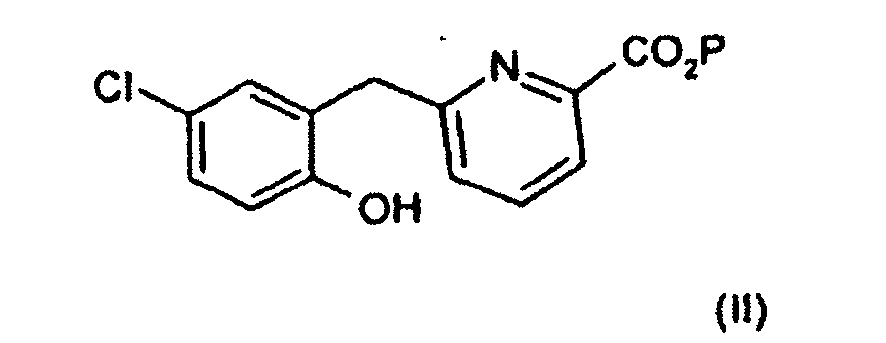
avec un composé
Priority Applications (1)
| Application Number | Priority Date | Filing Date | Title |
|---|---|---|---|
| EP09150218A EP2053042A1 (fr) | 2004-12-23 | 2005-12-21 | Dérivés de la pyridine au traitement de maladies induites par prostaglandine. |
Applications Claiming Priority (4)
| Application Number | Priority Date | Filing Date | Title |
|---|---|---|---|
| GB0428263A GB0428263D0 (en) | 2004-12-23 | 2004-12-23 | Compounds |
| GB0508458A GB0508458D0 (en) | 2005-04-26 | 2005-04-26 | Compounds |
| GB0524675A GB0524675D0 (en) | 2005-12-02 | 2005-12-02 | Compounds |
| PCT/EP2005/014061 WO2006066968A1 (fr) | 2004-12-23 | 2005-12-21 | Composes de pyridine destines au traitement de maladies a mediation par prostaglandine |
Related Child Applications (1)
| Application Number | Title | Priority Date | Filing Date |
|---|---|---|---|
| EP09150218A Division EP2053042A1 (fr) | 2004-12-23 | 2005-12-21 | Dérivés de la pyridine au traitement de maladies induites par prostaglandine. |
Publications (2)
| Publication Number | Publication Date |
|---|---|
| EP1833795A1 EP1833795A1 (fr) | 2007-09-19 |
| EP1833795B1 true EP1833795B1 (fr) | 2009-03-04 |
Family
ID=35735391
Family Applications (2)
| Application Number | Title | Priority Date | Filing Date |
|---|---|---|---|
| EP09150218A Withdrawn EP2053042A1 (fr) | 2004-12-23 | 2005-12-21 | Dérivés de la pyridine au traitement de maladies induites par prostaglandine. |
| EP05817767A Expired - Lifetime EP1833795B1 (fr) | 2004-12-23 | 2005-12-21 | Composes de pyridine destines au traitement de maladies a mediation par prostaglandine |
Family Applications Before (1)
| Application Number | Title | Priority Date | Filing Date |
|---|---|---|---|
| EP09150218A Withdrawn EP2053042A1 (fr) | 2004-12-23 | 2005-12-21 | Dérivés de la pyridine au traitement de maladies induites par prostaglandine. |
Country Status (20)
| Country | Link |
|---|---|
| US (2) | US20100137378A1 (fr) |
| EP (2) | EP2053042A1 (fr) |
| JP (1) | JP2008525363A (fr) |
| KR (1) | KR20070091301A (fr) |
| AR (1) | AR052429A1 (fr) |
| AT (1) | ATE424386T1 (fr) |
| AU (1) | AU2005318372A1 (fr) |
| BR (1) | BRPI0519398A2 (fr) |
| CA (1) | CA2592442A1 (fr) |
| DE (1) | DE602005013116D1 (fr) |
| EA (2) | EA200701324A1 (fr) |
| ES (1) | ES2321535T3 (fr) |
| IL (1) | IL183781A0 (fr) |
| MA (1) | MA29082B1 (fr) |
| MX (1) | MX2007007830A (fr) |
| NO (1) | NO20073332L (fr) |
| PE (2) | PE20060838A1 (fr) |
| TW (1) | TW200640865A (fr) |
| UY (1) | UY29298A1 (fr) |
| WO (1) | WO2006066968A1 (fr) |
Families Citing this family (23)
| Publication number | Priority date | Publication date | Assignee | Title |
|---|---|---|---|---|
| GB0608825D0 (en) * | 2006-05-04 | 2006-06-14 | Glaxo Group Ltd | Compounds |
| CA2687764A1 (fr) * | 2007-05-25 | 2008-12-04 | Vertex Pharmaceuticals Incorporated | Modulateurs de canal ionique et leurs procedes d'utilisation |
| FR2921062A1 (fr) * | 2007-09-17 | 2009-03-20 | Commissariat Energie Atomique | Composes utiles comme ligands et notamment comme chromophores organiques de complexation des lanthanides et leurs applications |
| US8399436B2 (en) | 2009-04-24 | 2013-03-19 | Glaxo Group Limited | N-pyrazolyl carboxamides as CRAC channel inhibitors |
| WO2011014587A2 (fr) | 2009-07-31 | 2011-02-03 | Amira Pharmaceuticals, Inc. | Compositions pharmaceutiques ophtalmiques d'antagonsites du récepteur dp2 |
| KR20120047273A (ko) | 2009-08-05 | 2012-05-11 | 판미라 파마슈티칼스, 엘엘씨 | Dp2 길항제 및 이의 용도 |
| WO2012052459A1 (fr) | 2010-10-21 | 2012-04-26 | Glaxo Group Limited | Composés de pyrazole agissant contre des troubles allergiques, inflammatoires et immunitaires |
| EP2570125A1 (fr) * | 2011-09-16 | 2013-03-20 | Almirall, S.A. | Ligands du récepteur Ep1 |
| TN2016000542A1 (en) | 2014-06-03 | 2018-04-04 | Idorsia Pharmaceuticals Ltd | Pyrazole compounds and their use as t-type calcium channel blockers |
| TW202140422A (zh) | 2014-10-06 | 2021-11-01 | 美商維泰克斯製藥公司 | 囊腫纖維化症跨膜傳導調節蛋白之調節劑 |
| ES2946970T3 (es) | 2016-03-31 | 2023-07-28 | Vertex Pharma | Regulador de conductancia transmembrana de moduladores de fibrosis quística |
| GEP20217329B (en) | 2016-09-30 | 2021-12-10 | Vertex Pharma | Modulator of cystic fibrosis transmembrane conductance regulator, pharmaceutical compositions, methods of treatment, and process for making the modulator |
| EA202192783A1 (ru) | 2016-12-09 | 2022-02-24 | Вертекс Фармасьютикалз Инкорпорейтед | Модулятор регулятора трансмембранной проводимости при муковисцидозе, фармацевтические композиции, способы лечения и способ получения указанного модулятора |
| HRP20220463T1 (hr) | 2016-12-16 | 2022-05-27 | Idorsia Pharmaceuticals Ltd | Farmaceutska kombinacija koja sadrži blokator kalcijevih kanala t-tipa |
| WO2018141961A1 (fr) | 2017-02-06 | 2018-08-09 | Idorsia Pharmaceuticals Ltd | Nouveau procédé de synthèse de 1-aryl-1-trifluorométhylcyclopropanes |
| MA54105A (fr) | 2017-06-08 | 2021-09-15 | Vertex Pharma | Méthodes de traitement de la fibrose kystique |
| IL272032B2 (en) | 2017-07-17 | 2026-04-01 | Vertex Pharma | Combination therapy for the treatment of cystic fibrosis including N-(1,3-DIMETHYLPYRAZOL-4-YL)SULFONYL-6-[3-(3,3,3-TRIFLUORO-2,2- DIMETHYL-PROPOXY)PYRAZOL-1-YL]-2-[(4S)-2,2,4- TRIMETHYLPYRROLIDIN-1-YL]PYRIDINE-3-CARBOXAMIDE and |
| MA49752A (fr) | 2017-08-02 | 2021-04-21 | Vertex Pharma | Procédés de préparation de composés de pyrrolidine |
| CA3078893A1 (fr) | 2017-10-19 | 2019-04-25 | Vertex Pharmaceuticals Incorporated | Formes cristallines et compositions de modulateurs de cftr |
| KR102716244B1 (ko) | 2017-12-08 | 2024-10-14 | 버텍스 파마슈티칼스 인코포레이티드 | 낭포성 섬유증 막횡단 전도 조절자의 조정제의 제조 방법 |
| TWI810243B (zh) | 2018-02-05 | 2023-08-01 | 美商維泰克斯製藥公司 | 用於治療囊腫纖化症之醫藥組合物 |
| WO2019200246A1 (fr) | 2018-04-13 | 2019-10-17 | Alexander Russell Abela | Modulateurs du régulateur de la conductance transmembranaire de la fibrose kystique, compositions pharmaceutiques, procédés de traitement et procédé de fabrication du modulateur |
| WO2021174475A1 (fr) * | 2020-03-05 | 2021-09-10 | Givaudan Sa | Composés organiques |
Family Cites Families (41)
| Publication number | Priority date | Publication date | Assignee | Title |
|---|---|---|---|---|
| GB1471276A (en) | 1975-01-22 | 1977-04-21 | Nippon Shinyaku Co Ltd | 5-benzylpicolinic acid deri vatives |
| EP0388682A1 (fr) | 1989-03-15 | 1990-09-26 | Bayer Ag | Hétéroarylphényléthers substitués, procédés pour leur préparation et leur utilisation comme insecticides |
| US5474995A (en) | 1993-06-24 | 1995-12-12 | Merck Frosst Canada, Inc. | Phenyl heterocycles as cox-2 inhibitors |
| US5466823A (en) | 1993-11-30 | 1995-11-14 | G.D. Searle & Co. | Substituted pyrazolyl benzenesulfonamides |
| JPH09507846A (ja) | 1993-12-30 | 1997-08-12 | スミスクライン・ビーチャム・コーポレイション | フェニルメチルヘキサンアミドおよびその使用 |
| GB9514160D0 (en) | 1994-07-25 | 1995-09-13 | Zeneca Ltd | Aromatic compounds |
| GB9417532D0 (en) | 1994-08-31 | 1994-10-19 | Zeneca Ltd | Aromatic compounds |
| GB9420557D0 (en) * | 1994-10-12 | 1994-11-30 | Zeneca Ltd | Aromatic compounds |
| AU4515696A (en) | 1994-12-12 | 1996-07-03 | Merck & Co., Inc. | Substituted 2-aminopyridines as inhibitors of nitric oxide synthase |
| JP3267300B2 (ja) | 1995-02-13 | 2002-03-18 | ジー.ディー.サール アンド カンパニー | 炎症の治療のための置換イソオキサゾール |
| US5633272A (en) | 1995-02-13 | 1997-05-27 | Talley; John J. | Substituted isoxazoles for the treatment of inflammation |
| TW502026B (en) | 1995-06-20 | 2002-09-11 | Zeneca Ltd | Aromatic compounds useful as antagonists of e-type prostaglandins, processes for the preparation thereof, pharmaceutical compositions comprising the compounds, and intermediates |
| TW434240B (en) | 1995-06-20 | 2001-05-16 | Zeneca Ltd | Aromatic compounds, preparation thereof and pharmaceutical composition comprising same |
| US5834468A (en) | 1995-07-07 | 1998-11-10 | Zeneca Limited | Substituted aryl and heteroaryl compounds as E-type prostaglandin antagonists |
| UA57002C2 (uk) | 1995-10-13 | 2003-06-16 | Мерк Фросст Кенада Енд Ко./Мерк Фросст Кенада Енд Сі. | Похідне (метилсульфоніл)феніл-2-(5н)-фуранону, фармацевтична композиція та спосіб лікування |
| GEP20032998B (en) | 1996-04-12 | 2003-06-25 | Searle & Co | Substituted Benzenesulfonamide Derivatives as Prodrugs of Cox-2 Inhibitors |
| SI0912518T1 (en) | 1996-07-18 | 2003-12-31 | Merck Frosst Canada & Co. | Substituted pyridines as selective cyclooxygenase-2 inhibitors |
| CO4960662A1 (es) | 1997-08-28 | 2000-09-25 | Novartis Ag | Ciertos acidos 5-alquil-2-arilaminofenilaceticos y sus derivados |
| ATE281458T1 (de) | 1997-09-05 | 2004-11-15 | Glaxo Group Ltd | Pharmazeutische zusammensetzung, enthaltend 2,3- diaryl-pyrazolo(1,5-b)pyridazin derivate |
| US6362009B1 (en) * | 1997-11-21 | 2002-03-26 | Merck & Co., Inc. | Solid phase synthesis of heterocycles |
| US6605624B1 (en) | 1998-02-13 | 2003-08-12 | Pharmacia Corporation | Substituted pyridines useful for inhibiting cholesteryl ester transfer protein activity |
| ATE275148T1 (de) | 1998-11-03 | 2004-09-15 | Glaxo Group Ltd | Pyrazolopyridin derivative als selektive cox-2 inhibitoren |
| US6025683A (en) | 1998-12-23 | 2000-02-15 | Stryker Corporation | Motor control circuit for regulating a D.C. motor |
| AUPP873799A0 (en) | 1999-02-17 | 1999-03-11 | Fujisawa Pharmaceutical Co., Ltd. | Pyridine compounds |
| WO2000052008A1 (fr) | 1999-02-27 | 2000-09-08 | Glaxo Group Limited | Pyrazolopyridines |
| CA2384783A1 (fr) | 1999-09-14 | 2001-03-22 | Merck Frosst Canada & Co./Merck Frosst Canada & Cie | Acides carboxyliques et acylsulfonamides, compositions contenant de tels composes et methodes de traitement |
| JP2001089452A (ja) | 1999-09-22 | 2001-04-03 | Sankyo Co Ltd | ピリミジン誘導体 |
| US7345051B2 (en) | 2000-01-31 | 2008-03-18 | Genaera Corporation | Mucin synthesis inhibitors |
| GB0003224D0 (en) | 2000-02-11 | 2000-04-05 | Glaxo Group Ltd | Chemical compounds |
| GB0021494D0 (en) | 2000-09-01 | 2000-10-18 | Glaxo Group Ltd | Chemical comkpounds |
| CN1659131A (zh) | 2002-04-08 | 2005-08-24 | 葛兰素集团有限公司 | 2-((2-烷氧基)-苯基)-环戊-1-烯基)芳香碳-以及杂环羧酸及其衍生物 |
| GB0212785D0 (en) | 2002-05-31 | 2002-07-10 | Glaxo Group Ltd | Compounds |
| EP1558614B1 (fr) | 2002-10-30 | 2010-09-01 | Merck Frosst Canada Ltd. | Pyridopyrrolizine et derives de pyridoindolizine |
| GB0225548D0 (en) | 2002-11-01 | 2002-12-11 | Glaxo Group Ltd | Compounds |
| GB0306329D0 (en) | 2003-03-19 | 2003-04-23 | Glaxo Group Ltd | Compounds |
| GB0323581D0 (en) | 2003-10-08 | 2003-11-12 | Glaxo Group Ltd | Novel compounds |
| GB0323585D0 (en) | 2003-10-08 | 2003-11-12 | Glaxo Group Ltd | Compounds |
| GB0323584D0 (en) | 2003-10-08 | 2003-11-12 | Glaxo Group Ltd | Compounds |
| EP1675832B1 (fr) | 2003-10-24 | 2008-02-20 | Glaxo Group Limited | Composes heterocyclyles |
| GB0328024D0 (en) | 2003-12-03 | 2004-01-07 | Glaxo Group Ltd | Compounds |
| GB0410121D0 (en) | 2004-05-06 | 2004-06-09 | Glaxo Group Ltd | Compounds |
-
2005
- 2005-12-21 EA EA200701324A patent/EA200701324A1/ru unknown
- 2005-12-21 BR BRPI0519398-2A patent/BRPI0519398A2/pt not_active IP Right Cessation
- 2005-12-21 EP EP09150218A patent/EP2053042A1/fr not_active Withdrawn
- 2005-12-21 KR KR1020077014271A patent/KR20070091301A/ko not_active Withdrawn
- 2005-12-21 AR ARP050105412A patent/AR052429A1/es unknown
- 2005-12-21 CA CA002592442A patent/CA2592442A1/fr not_active Abandoned
- 2005-12-21 US US11/722,402 patent/US20100137378A1/en not_active Abandoned
- 2005-12-21 EA EA200801909A patent/EA200801909A1/ru unknown
- 2005-12-21 WO PCT/EP2005/014061 patent/WO2006066968A1/fr not_active Ceased
- 2005-12-21 MX MX2007007830A patent/MX2007007830A/es not_active Application Discontinuation
- 2005-12-21 EP EP05817767A patent/EP1833795B1/fr not_active Expired - Lifetime
- 2005-12-21 TW TW094145424A patent/TW200640865A/zh unknown
- 2005-12-21 ES ES05817767T patent/ES2321535T3/es not_active Expired - Lifetime
- 2005-12-21 JP JP2007547393A patent/JP2008525363A/ja not_active Withdrawn
- 2005-12-21 AU AU2005318372A patent/AU2005318372A1/en not_active Abandoned
- 2005-12-21 AT AT05817767T patent/ATE424386T1/de not_active IP Right Cessation
- 2005-12-21 DE DE602005013116T patent/DE602005013116D1/de not_active Expired - Lifetime
- 2005-12-21 UY UY29298A patent/UY29298A1/es unknown
-
2006
- 2006-01-03 PE PE2006000025A patent/PE20060838A1/es not_active Application Discontinuation
- 2006-01-30 PE PE2008001431A patent/PE20081440A1/es not_active Application Discontinuation
-
2007
- 2007-06-06 MA MA29966A patent/MA29082B1/fr unknown
- 2007-06-07 IL IL183781A patent/IL183781A0/en unknown
- 2007-06-21 US US11/766,418 patent/US7759369B2/en not_active Expired - Fee Related
- 2007-06-28 NO NO20073332A patent/NO20073332L/no not_active Application Discontinuation
Also Published As
| Publication number | Publication date |
|---|---|
| TW200640865A (en) | 2006-12-01 |
| KR20070091301A (ko) | 2007-09-10 |
| JP2008525363A (ja) | 2008-07-17 |
| EP2053042A1 (fr) | 2009-04-29 |
| NO20073332L (no) | 2007-09-17 |
| CA2592442A1 (fr) | 2006-06-29 |
| EA200801909A1 (ru) | 2009-06-30 |
| EP1833795A1 (fr) | 2007-09-19 |
| WO2006066968A1 (fr) | 2006-06-29 |
| ES2321535T3 (es) | 2009-06-08 |
| MX2007007830A (es) | 2007-07-25 |
| US20080249138A1 (en) | 2008-10-09 |
| BRPI0519398A2 (pt) | 2009-01-20 |
| UY29298A1 (es) | 2006-05-31 |
| AR052429A1 (es) | 2007-03-21 |
| AU2005318372A1 (en) | 2006-06-29 |
| EA200701324A1 (ru) | 2007-10-26 |
| PE20060838A1 (es) | 2006-10-12 |
| IL183781A0 (en) | 2007-09-20 |
| MA29082B1 (fr) | 2007-12-03 |
| US7759369B2 (en) | 2010-07-20 |
| PE20081440A1 (es) | 2008-12-31 |
| US20100137378A1 (en) | 2010-06-03 |
| ATE424386T1 (de) | 2009-03-15 |
| DE602005013116D1 (de) | 2009-04-16 |
Similar Documents
| Publication | Publication Date | Title |
|---|---|---|
| US7759369B2 (en) | Pyridine compounds for the treatment of prostaglandin mediated diseases | |
| US20090099169A1 (en) | Benzofuran Compounds As EP1 Receptor Antagonists | |
| JP2021500330A (ja) | Pad阻害剤としてのイミダゾ−ピリジン化合物 | |
| US20100004240A1 (en) | Indole Compounds | |
| JP2006504767A (ja) | フェニル化合物 | |
| WO2005040128A1 (fr) | Composes heterocyclyles | |
| WO2005054191A1 (fr) | Composes pyrrole | |
| US20090281152A1 (en) | Indole Compounds Having Affinity to the EP1 Receptor | |
| US20070225340A1 (en) | Phenyl Compounds And Their Use In The Treatment Of Conditions Mediated By The Action Of Pge2 At The Ep1 Receptor | |
| WO2004083185A2 (fr) | Composes imidazole | |
| US20080287430A1 (en) | Furan Compounds Useful As Ep1 Receptor Antagonists | |
| US20080275053A1 (en) | Heterocyclyl Compounds | |
| US20080234335A1 (en) | Cyclohexene Compounds | |
| CN101128430A (zh) | 用于治疗前列腺素介导的疾病的吡啶化合物 | |
| US20090099177A1 (en) | Pyridyl compounds |
Legal Events
| Date | Code | Title | Description |
|---|---|---|---|
| PUAI | Public reference made under article 153(3) epc to a published international application that has entered the european phase |
Free format text: ORIGINAL CODE: 0009012 |
|
| 17P | Request for examination filed |
Effective date: 20070713 |
|
| AK | Designated contracting states |
Kind code of ref document: A1 Designated state(s): AT BE BG CH CY CZ DE DK EE ES FI FR GB GR HU IE IS IT LI LT LU LV MC NL PL PT RO SE SI SK TR |
|
| AX | Request for extension of the european patent |
Extension state: HR |
|
| RAX | Requested extension states of the european patent have changed |
Extension state: HR Payment date: 20070713 |
|
| 17Q | First examination report despatched |
Effective date: 20071004 |
|
| REG | Reference to a national code |
Ref country code: HK Ref legal event code: DE Ref document number: 1107565 Country of ref document: HK |
|
| GRAP | Despatch of communication of intention to grant a patent |
Free format text: ORIGINAL CODE: EPIDOSNIGR1 |
|
| GRAS | Grant fee paid |
Free format text: ORIGINAL CODE: EPIDOSNIGR3 |
|
| GRAA | (expected) grant |
Free format text: ORIGINAL CODE: 0009210 |
|
| AK | Designated contracting states |
Kind code of ref document: B1 Designated state(s): AT BE BG CH CY CZ DE DK EE ES FI FR GB GR HU IE IS IT LI LT LU LV MC NL PL PT RO SE SI SK TR |
|
| AX | Request for extension of the european patent |
Extension state: HR |
|
| REG | Reference to a national code |
Ref country code: GB Ref legal event code: FG4D |
|
| REG | Reference to a national code |
Ref country code: CH Ref legal event code: EP |
|
| REG | Reference to a national code |
Ref country code: IE Ref legal event code: FG4D |
|
| REF | Corresponds to: |
Ref document number: 602005013116 Country of ref document: DE Date of ref document: 20090416 Kind code of ref document: P |
|
| REG | Reference to a national code |
Ref country code: ES Ref legal event code: FG2A Ref document number: 2321535 Country of ref document: ES Kind code of ref document: T3 |
|
| PG25 | Lapsed in a contracting state [announced via postgrant information from national office to epo] |
Ref country code: NL Free format text: LAPSE BECAUSE OF FAILURE TO SUBMIT A TRANSLATION OF THE DESCRIPTION OR TO PAY THE FEE WITHIN THE PRESCRIBED TIME-LIMIT Effective date: 20090304 Ref country code: FI Free format text: LAPSE BECAUSE OF FAILURE TO SUBMIT A TRANSLATION OF THE DESCRIPTION OR TO PAY THE FEE WITHIN THE PRESCRIBED TIME-LIMIT Effective date: 20090304 Ref country code: LT Free format text: LAPSE BECAUSE OF FAILURE TO SUBMIT A TRANSLATION OF THE DESCRIPTION OR TO PAY THE FEE WITHIN THE PRESCRIBED TIME-LIMIT Effective date: 20090304 Ref country code: SI Free format text: LAPSE BECAUSE OF FAILURE TO SUBMIT A TRANSLATION OF THE DESCRIPTION OR TO PAY THE FEE WITHIN THE PRESCRIBED TIME-LIMIT Effective date: 20090304 |
|
| NLV1 | Nl: lapsed or annulled due to failure to fulfill the requirements of art. 29p and 29m of the patents act | ||
| PG25 | Lapsed in a contracting state [announced via postgrant information from national office to epo] |
Ref country code: SE Free format text: LAPSE BECAUSE OF FAILURE TO SUBMIT A TRANSLATION OF THE DESCRIPTION OR TO PAY THE FEE WITHIN THE PRESCRIBED TIME-LIMIT Effective date: 20090604 Ref country code: LV Free format text: LAPSE BECAUSE OF FAILURE TO SUBMIT A TRANSLATION OF THE DESCRIPTION OR TO PAY THE FEE WITHIN THE PRESCRIBED TIME-LIMIT Effective date: 20090304 Ref country code: PL Free format text: LAPSE BECAUSE OF FAILURE TO SUBMIT A TRANSLATION OF THE DESCRIPTION OR TO PAY THE FEE WITHIN THE PRESCRIBED TIME-LIMIT Effective date: 20090304 Ref country code: AT Free format text: LAPSE BECAUSE OF FAILURE TO SUBMIT A TRANSLATION OF THE DESCRIPTION OR TO PAY THE FEE WITHIN THE PRESCRIBED TIME-LIMIT Effective date: 20090304 |
|
| PG25 | Lapsed in a contracting state [announced via postgrant information from national office to epo] |
Ref country code: PT Free format text: LAPSE BECAUSE OF FAILURE TO SUBMIT A TRANSLATION OF THE DESCRIPTION OR TO PAY THE FEE WITHIN THE PRESCRIBED TIME-LIMIT Effective date: 20090818 Ref country code: EE Free format text: LAPSE BECAUSE OF FAILURE TO SUBMIT A TRANSLATION OF THE DESCRIPTION OR TO PAY THE FEE WITHIN THE PRESCRIBED TIME-LIMIT Effective date: 20090304 Ref country code: CZ Free format text: LAPSE BECAUSE OF FAILURE TO SUBMIT A TRANSLATION OF THE DESCRIPTION OR TO PAY THE FEE WITHIN THE PRESCRIBED TIME-LIMIT Effective date: 20090304 |
|
| PG25 | Lapsed in a contracting state [announced via postgrant information from national office to epo] |
Ref country code: IS Free format text: LAPSE BECAUSE OF FAILURE TO SUBMIT A TRANSLATION OF THE DESCRIPTION OR TO PAY THE FEE WITHIN THE PRESCRIBED TIME-LIMIT Effective date: 20090704 Ref country code: RO Free format text: LAPSE BECAUSE OF FAILURE TO SUBMIT A TRANSLATION OF THE DESCRIPTION OR TO PAY THE FEE WITHIN THE PRESCRIBED TIME-LIMIT Effective date: 20090304 Ref country code: SK Free format text: LAPSE BECAUSE OF FAILURE TO SUBMIT A TRANSLATION OF THE DESCRIPTION OR TO PAY THE FEE WITHIN THE PRESCRIBED TIME-LIMIT Effective date: 20090304 |
|
| PLBE | No opposition filed within time limit |
Free format text: ORIGINAL CODE: 0009261 |
|
| STAA | Information on the status of an ep patent application or granted ep patent |
Free format text: STATUS: NO OPPOSITION FILED WITHIN TIME LIMIT |
|
| PG25 | Lapsed in a contracting state [announced via postgrant information from national office to epo] |
Ref country code: BG Free format text: LAPSE BECAUSE OF FAILURE TO SUBMIT A TRANSLATION OF THE DESCRIPTION OR TO PAY THE FEE WITHIN THE PRESCRIBED TIME-LIMIT Effective date: 20090604 Ref country code: DK Free format text: LAPSE BECAUSE OF FAILURE TO SUBMIT A TRANSLATION OF THE DESCRIPTION OR TO PAY THE FEE WITHIN THE PRESCRIBED TIME-LIMIT Effective date: 20090304 |
|
| PGFP | Annual fee paid to national office [announced via postgrant information from national office to epo] |
Ref country code: ES Payment date: 20091221 Year of fee payment: 5 |
|
| 26N | No opposition filed |
Effective date: 20091207 |
|
| PGFP | Annual fee paid to national office [announced via postgrant information from national office to epo] |
Ref country code: FR Payment date: 20091215 Year of fee payment: 5 Ref country code: GB Payment date: 20091106 Year of fee payment: 5 Ref country code: IT Payment date: 20091219 Year of fee payment: 5 |
|
| PGFP | Annual fee paid to national office [announced via postgrant information from national office to epo] |
Ref country code: BE Payment date: 20091208 Year of fee payment: 5 Ref country code: DE Payment date: 20091230 Year of fee payment: 5 |
|
| PG25 | Lapsed in a contracting state [announced via postgrant information from national office to epo] |
Ref country code: MC Free format text: LAPSE BECAUSE OF NON-PAYMENT OF DUE FEES Effective date: 20100701 |
|
| REG | Reference to a national code |
Ref country code: CH Ref legal event code: PL |
|
| REG | Reference to a national code |
Ref country code: IE Ref legal event code: MM4A |
|
| PG25 | Lapsed in a contracting state [announced via postgrant information from national office to epo] |
Ref country code: CH Free format text: LAPSE BECAUSE OF NON-PAYMENT OF DUE FEES Effective date: 20091231 Ref country code: IE Free format text: LAPSE BECAUSE OF NON-PAYMENT OF DUE FEES Effective date: 20091221 Ref country code: GR Free format text: LAPSE BECAUSE OF FAILURE TO SUBMIT A TRANSLATION OF THE DESCRIPTION OR TO PAY THE FEE WITHIN THE PRESCRIBED TIME-LIMIT Effective date: 20090605 Ref country code: LI Free format text: LAPSE BECAUSE OF NON-PAYMENT OF DUE FEES Effective date: 20091231 |
|
| PG25 | Lapsed in a contracting state [announced via postgrant information from national office to epo] |
Ref country code: LU Free format text: LAPSE BECAUSE OF NON-PAYMENT OF DUE FEES Effective date: 20091221 |
|
| BERE | Be: lapsed |
Owner name: GLAXO GROUP LTD Effective date: 20101231 |
|
| PG25 | Lapsed in a contracting state [announced via postgrant information from national office to epo] |
Ref country code: HU Free format text: LAPSE BECAUSE OF FAILURE TO SUBMIT A TRANSLATION OF THE DESCRIPTION OR TO PAY THE FEE WITHIN THE PRESCRIBED TIME-LIMIT Effective date: 20090905 |
|
| GBPC | Gb: european patent ceased through non-payment of renewal fee |
Effective date: 20101221 |
|
| PG25 | Lapsed in a contracting state [announced via postgrant information from national office to epo] |
Ref country code: TR Free format text: LAPSE BECAUSE OF FAILURE TO SUBMIT A TRANSLATION OF THE DESCRIPTION OR TO PAY THE FEE WITHIN THE PRESCRIBED TIME-LIMIT Effective date: 20090304 |
|
| REG | Reference to a national code |
Ref country code: FR Ref legal event code: ST Effective date: 20110831 |
|
| PG25 | Lapsed in a contracting state [announced via postgrant information from national office to epo] |
Ref country code: BE Free format text: LAPSE BECAUSE OF NON-PAYMENT OF DUE FEES Effective date: 20101231 Ref country code: CY Free format text: LAPSE BECAUSE OF FAILURE TO SUBMIT A TRANSLATION OF THE DESCRIPTION OR TO PAY THE FEE WITHIN THE PRESCRIBED TIME-LIMIT Effective date: 20090304 |
|
| PG25 | Lapsed in a contracting state [announced via postgrant information from national office to epo] |
Ref country code: FR Free format text: LAPSE BECAUSE OF NON-PAYMENT OF DUE FEES Effective date: 20110103 |
|
| REG | Reference to a national code |
Ref country code: DE Ref legal event code: R119 Ref document number: 602005013116 Country of ref document: DE Effective date: 20110701 |
|
| PG25 | Lapsed in a contracting state [announced via postgrant information from national office to epo] |
Ref country code: GB Free format text: LAPSE BECAUSE OF NON-PAYMENT OF DUE FEES Effective date: 20101221 Ref country code: DE Free format text: LAPSE BECAUSE OF NON-PAYMENT OF DUE FEES Effective date: 20110701 |
|
| PG25 | Lapsed in a contracting state [announced via postgrant information from national office to epo] |
Ref country code: IT Free format text: LAPSE BECAUSE OF NON-PAYMENT OF DUE FEES Effective date: 20101221 |
|
| REG | Reference to a national code |
Ref country code: ES Ref legal event code: FD2A Effective date: 20120220 |
|
| PG25 | Lapsed in a contracting state [announced via postgrant information from national office to epo] |
Ref country code: ES Free format text: LAPSE BECAUSE OF NON-PAYMENT OF DUE FEES Effective date: 20101222 |
|
| REG | Reference to a national code |
Ref country code: HK Ref legal event code: WD Ref document number: 1107565 Country of ref document: HK |