EP1834801B1 - Umkehrbares wärmeempfindliches Aufzeichnungsmedium sowie umkehrbares wärmeempfindliches Aufzeichnungsetikett, umkehrbares wärmeempfindliches Aufzeichnungselement, Vorrichtung zur Bildverarbeitung und Verfahren zur Bildverarbeitung - Google Patents
Umkehrbares wärmeempfindliches Aufzeichnungsmedium sowie umkehrbares wärmeempfindliches Aufzeichnungsetikett, umkehrbares wärmeempfindliches Aufzeichnungselement, Vorrichtung zur Bildverarbeitung und Verfahren zur Bildverarbeitung Download PDFInfo
- Publication number
- EP1834801B1 EP1834801B1 EP07104354A EP07104354A EP1834801B1 EP 1834801 B1 EP1834801 B1 EP 1834801B1 EP 07104354 A EP07104354 A EP 07104354A EP 07104354 A EP07104354 A EP 07104354A EP 1834801 B1 EP1834801 B1 EP 1834801B1
- Authority
- EP
- European Patent Office
- Prior art keywords
- thermosensitive recording
- reversible thermosensitive
- recording medium
- layer
- group
- Prior art date
- Legal status (The legal status is an assumption and is not a legal conclusion. Google has not performed a legal analysis and makes no representation as to the accuracy of the status listed.)
- Not-in-force
Links
- 230000002441 reversible effect Effects 0.000 title claims abstract description 327
- 238000012545 processing Methods 0.000 title claims description 57
- 238000003672 processing method Methods 0.000 title claims description 23
- 239000010410 layer Substances 0.000 claims abstract description 320
- 239000011241 protective layer Substances 0.000 claims abstract description 116
- 150000001875 compounds Chemical class 0.000 claims abstract description 95
- -1 acrylate compound Chemical class 0.000 claims abstract description 92
- WXZMFSXDPGVJKK-UHFFFAOYSA-N pentaerythritol Chemical group OCC(CO)(CO)CO WXZMFSXDPGVJKK-UHFFFAOYSA-N 0.000 claims abstract description 38
- 229920000642 polymer Polymers 0.000 claims abstract description 23
- 150000001252 acrylic acid derivatives Chemical class 0.000 claims abstract description 21
- 238000004040 coloring Methods 0.000 claims abstract description 18
- 239000000203 mixture Substances 0.000 claims abstract description 17
- 239000002245 particle Substances 0.000 claims description 129
- 239000000463 material Substances 0.000 claims description 55
- 239000011230 binding agent Substances 0.000 claims description 39
- 238000010438 heat treatment Methods 0.000 claims description 38
- 238000003860 storage Methods 0.000 claims description 36
- TXBCBTDQIULDIA-UHFFFAOYSA-N 2-[[3-hydroxy-2,2-bis(hydroxymethyl)propoxy]methyl]-2-(hydroxymethyl)propane-1,3-diol Chemical group OCC(CO)(CO)COCC(CO)(CO)CO TXBCBTDQIULDIA-UHFFFAOYSA-N 0.000 claims description 32
- 239000000178 monomer Substances 0.000 claims description 31
- 150000002430 hydrocarbons Chemical group 0.000 claims description 26
- 125000001424 substituent group Chemical group 0.000 claims description 23
- 239000000919 ceramic Substances 0.000 claims description 21
- 229920001577 copolymer Polymers 0.000 claims description 18
- 230000003287 optical effect Effects 0.000 claims description 13
- 125000000962 organic group Chemical group 0.000 claims description 12
- 239000012790 adhesive layer Substances 0.000 claims description 10
- 238000002156 mixing Methods 0.000 claims description 10
- 125000005842 heteroatom Chemical group 0.000 claims description 9
- 239000004215 Carbon black (E152) Substances 0.000 claims description 8
- 229930195733 hydrocarbon Natural products 0.000 claims description 8
- NLHHRLWOUZZQLW-UHFFFAOYSA-N Acrylonitrile Chemical compound C=CC#N NLHHRLWOUZZQLW-UHFFFAOYSA-N 0.000 claims description 5
- GYCMBHHDWRMZGG-UHFFFAOYSA-N Methylacrylonitrile Chemical compound CC(=C)C#N GYCMBHHDWRMZGG-UHFFFAOYSA-N 0.000 claims description 4
- 230000002427 irreversible effect Effects 0.000 claims description 4
- 230000000007 visual effect Effects 0.000 claims description 3
- 229920005989 resin Polymers 0.000 description 101
- 239000011347 resin Substances 0.000 description 101
- 239000011248 coating agent Substances 0.000 description 57
- 238000000576 coating method Methods 0.000 description 57
- KRHYYFGTRYWZRS-UHFFFAOYSA-N Fluorane Chemical compound F KRHYYFGTRYWZRS-UHFFFAOYSA-N 0.000 description 53
- 229910000040 hydrogen fluoride Inorganic materials 0.000 description 53
- 238000012546 transfer Methods 0.000 description 44
- SSOONFBDIYMPEU-UHFFFAOYSA-N [3-hydroxy-2-[[3-hydroxy-2,2-bis(hydroxymethyl)propoxy]methyl]-2-(hydroxymethyl)propyl] prop-2-enoate Chemical compound OCC(CO)(CO)COCC(CO)(CO)COC(=O)C=C SSOONFBDIYMPEU-UHFFFAOYSA-N 0.000 description 42
- 238000000034 method Methods 0.000 description 42
- 238000002360 preparation method Methods 0.000 description 38
- 238000011161 development Methods 0.000 description 36
- 238000005336 cracking Methods 0.000 description 34
- MPIAGWXWVAHQBB-UHFFFAOYSA-N [3-prop-2-enoyloxy-2-[[3-prop-2-enoyloxy-2,2-bis(prop-2-enoyloxymethyl)propoxy]methyl]-2-(prop-2-enoyloxymethyl)propyl] prop-2-enoate Chemical compound C=CC(=O)OCC(COC(=O)C=C)(COC(=O)C=C)COCC(COC(=O)C=C)(COC(=O)C=C)COC(=O)C=C MPIAGWXWVAHQBB-UHFFFAOYSA-N 0.000 description 33
- 238000007639 printing Methods 0.000 description 29
- NIXOWILDQLNWCW-UHFFFAOYSA-M Acrylate Chemical compound [O-]C(=O)C=C NIXOWILDQLNWCW-UHFFFAOYSA-M 0.000 description 28
- 239000000126 substance Substances 0.000 description 22
- 230000015572 biosynthetic process Effects 0.000 description 21
- ZWEHNKRNPOVVGH-UHFFFAOYSA-N 2-Butanone Chemical compound CCC(C)=O ZWEHNKRNPOVVGH-UHFFFAOYSA-N 0.000 description 18
- 239000007787 solid Substances 0.000 description 18
- 230000007423 decrease Effects 0.000 description 17
- 230000008859 change Effects 0.000 description 16
- 230000000052 comparative effect Effects 0.000 description 16
- 238000004519 manufacturing process Methods 0.000 description 16
- KFZMGEQAYNKOFK-UHFFFAOYSA-N Isopropanol Chemical compound CC(C)O KFZMGEQAYNKOFK-UHFFFAOYSA-N 0.000 description 15
- VYPSYNLAJGMNEJ-UHFFFAOYSA-N Silicium dioxide Chemical compound O=[Si]=O VYPSYNLAJGMNEJ-UHFFFAOYSA-N 0.000 description 15
- YXFVVABEGXRONW-UHFFFAOYSA-N Toluene Chemical compound CC1=CC=CC=C1 YXFVVABEGXRONW-UHFFFAOYSA-N 0.000 description 15
- 239000002904 solvent Substances 0.000 description 15
- 239000000499 gel Substances 0.000 description 14
- 230000004048 modification Effects 0.000 description 13
- 238000012986 modification Methods 0.000 description 13
- HIVQCJOGAHNXBO-UHFFFAOYSA-N [3-prop-2-enoyloxy-2-[[3-prop-2-enoyloxy-2,2-bis(prop-2-enoyloxymethyl)propoxy]methyl]-2-(prop-2-enoyloxymethyl)propyl] propanoate Chemical compound CCC(=O)OCC(COC(=O)C=C)(COC(=O)C=C)COCC(COC(=O)C=C)(COC(=O)C=C)COC(=O)C=C HIVQCJOGAHNXBO-UHFFFAOYSA-N 0.000 description 12
- 239000003431 cross linking reagent Substances 0.000 description 12
- 230000000694 effects Effects 0.000 description 12
- 238000011156 evaluation Methods 0.000 description 12
- 230000035945 sensitivity Effects 0.000 description 12
- PPBRXRYQALVLMV-UHFFFAOYSA-N Styrene Chemical compound C=CC1=CC=CC=C1 PPBRXRYQALVLMV-UHFFFAOYSA-N 0.000 description 11
- 229920006267 polyester film Polymers 0.000 description 11
- 229920002451 polyvinyl alcohol Polymers 0.000 description 11
- 235000019422 polyvinyl alcohol Nutrition 0.000 description 11
- 239000011257 shell material Substances 0.000 description 11
- XLYOFNOQVPJJNP-UHFFFAOYSA-N water Substances O XLYOFNOQVPJJNP-UHFFFAOYSA-N 0.000 description 11
- 239000004372 Polyvinyl alcohol Substances 0.000 description 10
- 239000003513 alkali Substances 0.000 description 10
- 125000004432 carbon atom Chemical group C* 0.000 description 10
- 238000001816 cooling Methods 0.000 description 10
- 238000009826 distribution Methods 0.000 description 10
- 239000003999 initiator Substances 0.000 description 10
- 239000012948 isocyanate Substances 0.000 description 10
- 230000001681 protective effect Effects 0.000 description 10
- VCFFZAQQHCLMNH-UHFFFAOYSA-N [3-(6-prop-2-enoyloxyhexanoyloxy)-2-[[3-(6-prop-2-enoyloxyhexanoyloxy)-2,2-bis(6-prop-2-enoyloxyhexanoyloxymethyl)propoxy]methyl]-2-(6-prop-2-enoyloxyhexanoyloxymethyl)propyl] 6-prop-2-enoyloxyhexanoate Chemical compound C=CC(=O)OCCCCCC(=O)OCC(COC(=O)CCCCCOC(=O)C=C)(COC(=O)CCCCCOC(=O)C=C)COCC(COC(=O)CCCCCOC(=O)C=C)(COC(=O)CCCCCOC(=O)C=C)COC(=O)CCCCCOC(=O)C=C VCFFZAQQHCLMNH-UHFFFAOYSA-N 0.000 description 9
- ZCZFEIZSYJAXKS-UHFFFAOYSA-N [3-hydroxy-2,2-bis(hydroxymethyl)propyl] prop-2-enoate Chemical compound OCC(CO)(CO)COC(=O)C=C ZCZFEIZSYJAXKS-UHFFFAOYSA-N 0.000 description 9
- 238000004132 cross linking Methods 0.000 description 9
- 239000000945 filler Substances 0.000 description 9
- 239000004800 polyvinyl chloride Substances 0.000 description 9
- 229920002554 vinyl polymer Polymers 0.000 description 9
- UQSXHKLRYXJYBZ-UHFFFAOYSA-N Iron oxide Chemical compound [Fe]=O UQSXHKLRYXJYBZ-UHFFFAOYSA-N 0.000 description 8
- 239000006185 dispersion Substances 0.000 description 8
- 239000000839 emulsion Substances 0.000 description 8
- 230000006870 function Effects 0.000 description 8
- 125000002887 hydroxy group Chemical group [H]O* 0.000 description 8
- 238000010030 laminating Methods 0.000 description 8
- 229920005644 polyethylene terephthalate glycol copolymer Polymers 0.000 description 8
- 229920000915 polyvinyl chloride Polymers 0.000 description 8
- 239000004094 surface-active agent Substances 0.000 description 8
- 239000006096 absorbing agent Substances 0.000 description 7
- 239000000654 additive Substances 0.000 description 7
- 239000002585 base Substances 0.000 description 7
- 239000003795 chemical substances by application Substances 0.000 description 7
- 235000019646 color tone Nutrition 0.000 description 7
- 235000014113 dietary fatty acids Nutrition 0.000 description 7
- 239000000975 dye Substances 0.000 description 7
- 239000000194 fatty acid Substances 0.000 description 7
- 229930195729 fatty acid Natural products 0.000 description 7
- 230000001965 increasing effect Effects 0.000 description 7
- 239000011256 inorganic filler Substances 0.000 description 7
- 229910003475 inorganic filler Inorganic materials 0.000 description 7
- 150000002513 isocyanates Chemical class 0.000 description 7
- 239000000314 lubricant Substances 0.000 description 7
- 239000012766 organic filler Substances 0.000 description 7
- 230000008719 thickening Effects 0.000 description 7
- 239000001993 wax Substances 0.000 description 7
- LYCAIKOWRPUZTN-UHFFFAOYSA-N Ethylene glycol Chemical compound OCCO LYCAIKOWRPUZTN-UHFFFAOYSA-N 0.000 description 6
- ISWSIDIOOBJBQZ-UHFFFAOYSA-N Phenol Natural products OC1=CC=CC=C1 ISWSIDIOOBJBQZ-UHFFFAOYSA-N 0.000 description 6
- BZHJMEDXRYGGRV-UHFFFAOYSA-N Vinyl chloride Chemical compound ClC=C BZHJMEDXRYGGRV-UHFFFAOYSA-N 0.000 description 6
- 238000006243 chemical reaction Methods 0.000 description 6
- 238000010894 electron beam technology Methods 0.000 description 6
- 150000002148 esters Chemical class 0.000 description 6
- 230000009477 glass transition Effects 0.000 description 6
- 229910052751 metal Inorganic materials 0.000 description 6
- 239000002184 metal Substances 0.000 description 6
- 229920001225 polyester resin Polymers 0.000 description 6
- 239000004645 polyester resin Substances 0.000 description 6
- 229920005749 polyurethane resin Polymers 0.000 description 6
- 125000000391 vinyl group Chemical group [H]C([*])=C([H])[H] 0.000 description 6
- QNODIIQQMGDSEF-UHFFFAOYSA-N (1-hydroxycyclohexyl)-phenylmethanone Chemical compound C=1C=CC=CC=1C(=O)C1(O)CCCCC1 QNODIIQQMGDSEF-UHFFFAOYSA-N 0.000 description 5
- LFQSCWFLJHTTHZ-UHFFFAOYSA-N Ethanol Chemical compound CCO LFQSCWFLJHTTHZ-UHFFFAOYSA-N 0.000 description 5
- 229920000297 Rayon Polymers 0.000 description 5
- 238000001035 drying Methods 0.000 description 5
- 239000004816 latex Substances 0.000 description 5
- 229920000126 latex Polymers 0.000 description 5
- 239000004014 plasticizer Substances 0.000 description 5
- 229920002635 polyurethane Polymers 0.000 description 5
- 239000004814 polyurethane Substances 0.000 description 5
- 230000008569 process Effects 0.000 description 5
- 238000010791 quenching Methods 0.000 description 5
- 230000000171 quenching effect Effects 0.000 description 5
- 150000003254 radicals Chemical class 0.000 description 5
- 239000000377 silicon dioxide Substances 0.000 description 5
- 238000003756 stirring Methods 0.000 description 5
- 239000000454 talc Substances 0.000 description 5
- 229910052623 talc Inorganic materials 0.000 description 5
- 239000006097 ultraviolet radiation absorber Substances 0.000 description 5
- 229920003169 water-soluble polymer Polymers 0.000 description 5
- MYRTYDVEIRVNKP-UHFFFAOYSA-N 1,2-Divinylbenzene Chemical compound C=CC1=CC=CC=C1C=C MYRTYDVEIRVNKP-UHFFFAOYSA-N 0.000 description 4
- OZAIFHULBGXAKX-UHFFFAOYSA-N 2-(2-cyanopropan-2-yldiazenyl)-2-methylpropanenitrile Chemical compound N#CC(C)(C)N=NC(C)(C)C#N OZAIFHULBGXAKX-UHFFFAOYSA-N 0.000 description 4
- VTYYLEPIZMXCLO-UHFFFAOYSA-L Calcium carbonate Chemical compound [Ca+2].[O-]C([O-])=O VTYYLEPIZMXCLO-UHFFFAOYSA-L 0.000 description 4
- XEEYBQQBJWHFJM-UHFFFAOYSA-N Iron Chemical compound [Fe] XEEYBQQBJWHFJM-UHFFFAOYSA-N 0.000 description 4
- XTXRWKRVRITETP-UHFFFAOYSA-N Vinyl acetate Chemical compound CC(=O)OC=C XTXRWKRVRITETP-UHFFFAOYSA-N 0.000 description 4
- XLOMVQKBTHCTTD-UHFFFAOYSA-N Zinc monoxide Chemical compound [Zn]=O XLOMVQKBTHCTTD-UHFFFAOYSA-N 0.000 description 4
- HVVWZTWDBSEWIH-UHFFFAOYSA-N [2-(hydroxymethyl)-3-prop-2-enoyloxy-2-(prop-2-enoyloxymethyl)propyl] prop-2-enoate Chemical compound C=CC(=O)OCC(CO)(COC(=O)C=C)COC(=O)C=C HVVWZTWDBSEWIH-UHFFFAOYSA-N 0.000 description 4
- 239000002253 acid Substances 0.000 description 4
- 230000009471 action Effects 0.000 description 4
- 239000000853 adhesive Substances 0.000 description 4
- 230000001070 adhesive effect Effects 0.000 description 4
- QVQLCTNNEUAWMS-UHFFFAOYSA-N barium oxide Chemical compound [Ba]=O QVQLCTNNEUAWMS-UHFFFAOYSA-N 0.000 description 4
- 238000009835 boiling Methods 0.000 description 4
- 150000001732 carboxylic acid derivatives Chemical class 0.000 description 4
- 239000000470 constituent Substances 0.000 description 4
- 238000002425 crystallisation Methods 0.000 description 4
- 230000008025 crystallization Effects 0.000 description 4
- 230000003247 decreasing effect Effects 0.000 description 4
- 239000002270 dispersing agent Substances 0.000 description 4
- NOPFSRXAKWQILS-UHFFFAOYSA-N docosan-1-ol Chemical compound CCCCCCCCCCCCCCCCCCCCCCO NOPFSRXAKWQILS-UHFFFAOYSA-N 0.000 description 4
- UKMSUNONTOPOIO-UHFFFAOYSA-N docosanoic acid Chemical compound CCCCCCCCCCCCCCCCCCCCCC(O)=O UKMSUNONTOPOIO-UHFFFAOYSA-N 0.000 description 4
- POULHZVOKOAJMA-UHFFFAOYSA-N dodecanoic acid Chemical compound CCCCCCCCCCCC(O)=O POULHZVOKOAJMA-UHFFFAOYSA-N 0.000 description 4
- LNTHITQWFMADLM-UHFFFAOYSA-N gallic acid Chemical compound OC(=O)C1=CC(O)=C(O)C(O)=C1 LNTHITQWFMADLM-UHFFFAOYSA-N 0.000 description 4
- KEMQGTRYUADPNZ-UHFFFAOYSA-N heptadecanoic acid Chemical compound CCCCCCCCCCCCCCCCC(O)=O KEMQGTRYUADPNZ-UHFFFAOYSA-N 0.000 description 4
- IPCSVZSSVZVIGE-UHFFFAOYSA-N hexadecanoic acid Chemical compound CCCCCCCCCCCCCCCC(O)=O IPCSVZSSVZVIGE-UHFFFAOYSA-N 0.000 description 4
- 239000011859 microparticle Substances 0.000 description 4
- GLDOVTGHNKAZLK-UHFFFAOYSA-N octadecan-1-ol Chemical compound CCCCCCCCCCCCCCCCCCO GLDOVTGHNKAZLK-UHFFFAOYSA-N 0.000 description 4
- 230000035699 permeability Effects 0.000 description 4
- 229920001223 polyethylene glycol Polymers 0.000 description 4
- 229920000139 polyethylene terephthalate Polymers 0.000 description 4
- 239000005020 polyethylene terephthalate Substances 0.000 description 4
- 229920001296 polysiloxane Polymers 0.000 description 4
- 238000004886 process control Methods 0.000 description 4
- 150000003839 salts Chemical class 0.000 description 4
- 229920002050 silicone resin Polymers 0.000 description 4
- 229920003048 styrene butadiene rubber Polymers 0.000 description 4
- 238000003786 synthesis reaction Methods 0.000 description 4
- 239000002562 thickening agent Substances 0.000 description 4
- 239000004925 Acrylic resin Substances 0.000 description 3
- 229920000178 Acrylic resin Polymers 0.000 description 3
- UHOVQNZJYSORNB-UHFFFAOYSA-N Benzene Chemical compound C1=CC=CC=C1 UHOVQNZJYSORNB-UHFFFAOYSA-N 0.000 description 3
- WSFSSNUMVMOOMR-UHFFFAOYSA-N Formaldehyde Chemical compound O=C WSFSSNUMVMOOMR-UHFFFAOYSA-N 0.000 description 3
- 229920000877 Melamine resin Polymers 0.000 description 3
- IMNFDUFMRHMDMM-UHFFFAOYSA-N N-Heptane Chemical compound CCCCCCC IMNFDUFMRHMDMM-UHFFFAOYSA-N 0.000 description 3
- 239000004677 Nylon Substances 0.000 description 3
- 239000004793 Polystyrene Substances 0.000 description 3
- DNIAPMSPPWPWGF-UHFFFAOYSA-N Propylene glycol Chemical compound CC(O)CO DNIAPMSPPWPWGF-UHFFFAOYSA-N 0.000 description 3
- 229920002472 Starch Polymers 0.000 description 3
- GWEVSGVZZGPLCZ-UHFFFAOYSA-N Titan oxide Chemical compound O=[Ti]=O GWEVSGVZZGPLCZ-UHFFFAOYSA-N 0.000 description 3
- 229920002433 Vinyl chloride-vinyl acetate copolymer Polymers 0.000 description 3
- 230000000996 additive effect Effects 0.000 description 3
- 125000001931 aliphatic group Chemical group 0.000 description 3
- PNEYBMLMFCGWSK-UHFFFAOYSA-N aluminium oxide Inorganic materials [O-2].[O-2].[O-2].[Al+3].[Al+3] PNEYBMLMFCGWSK-UHFFFAOYSA-N 0.000 description 3
- 230000003466 anti-cipated effect Effects 0.000 description 3
- 239000002216 antistatic agent Substances 0.000 description 3
- 238000005452 bending Methods 0.000 description 3
- 230000005540 biological transmission Effects 0.000 description 3
- 239000003054 catalyst Substances 0.000 description 3
- 229920002678 cellulose Polymers 0.000 description 3
- 239000001913 cellulose Substances 0.000 description 3
- 229910052801 chlorine Inorganic materials 0.000 description 3
- 239000003086 colorant Substances 0.000 description 3
- VBWIZSYFQSOUFQ-UHFFFAOYSA-N cyclohexanecarbonitrile Chemical compound N#CC1CCCCC1 VBWIZSYFQSOUFQ-UHFFFAOYSA-N 0.000 description 3
- 238000013461 design Methods 0.000 description 3
- 238000010586 diagram Methods 0.000 description 3
- MTHSVFCYNBDYFN-UHFFFAOYSA-N diethylene glycol Chemical compound OCCOCCO MTHSVFCYNBDYFN-UHFFFAOYSA-N 0.000 description 3
- 239000003822 epoxy resin Substances 0.000 description 3
- RRAMGCGOFNQTLD-UHFFFAOYSA-N hexamethylene diisocyanate Chemical compound O=C=NCCCCCCN=C=O RRAMGCGOFNQTLD-UHFFFAOYSA-N 0.000 description 3
- 239000003317 industrial substance Substances 0.000 description 3
- 229910010272 inorganic material Inorganic materials 0.000 description 3
- 230000003993 interaction Effects 0.000 description 3
- 125000005647 linker group Chemical group 0.000 description 3
- 238000002844 melting Methods 0.000 description 3
- 230000008018 melting Effects 0.000 description 3
- 125000002496 methyl group Chemical group [H]C([H])([H])* 0.000 description 3
- 239000003094 microcapsule Substances 0.000 description 3
- JHOKTNSTUVKGJC-UHFFFAOYSA-N n-(hydroxymethyl)octadecanamide Chemical compound CCCCCCCCCCCCCCCCCC(=O)NCO JHOKTNSTUVKGJC-UHFFFAOYSA-N 0.000 description 3
- 229920001778 nylon Polymers 0.000 description 3
- 239000011368 organic material Substances 0.000 description 3
- 150000002989 phenols Chemical class 0.000 description 3
- 229920003023 plastic Polymers 0.000 description 3
- 239000004033 plastic Substances 0.000 description 3
- 229920005668 polycarbonate resin Polymers 0.000 description 3
- 239000004431 polycarbonate resin Substances 0.000 description 3
- 229920000647 polyepoxide Polymers 0.000 description 3
- 238000006116 polymerization reaction Methods 0.000 description 3
- 238000003825 pressing Methods 0.000 description 3
- 230000005855 radiation Effects 0.000 description 3
- 230000002829 reductive effect Effects 0.000 description 3
- 239000011342 resin composition Substances 0.000 description 3
- 238000010583 slow cooling Methods 0.000 description 3
- 235000019698 starch Nutrition 0.000 description 3
- 239000000758 substrate Substances 0.000 description 3
- 238000012360 testing method Methods 0.000 description 3
- OGIDPMRJRNCKJF-UHFFFAOYSA-N titanium oxide Inorganic materials [Ti]=O OGIDPMRJRNCKJF-UHFFFAOYSA-N 0.000 description 3
- PUPZLCDOIYMWBV-UHFFFAOYSA-N (+/-)-1,3-Butanediol Chemical compound CC(O)CCO PUPZLCDOIYMWBV-UHFFFAOYSA-N 0.000 description 2
- NNOZGCICXAYKLW-UHFFFAOYSA-N 1,2-bis(2-isocyanatopropan-2-yl)benzene Chemical compound O=C=NC(C)(C)C1=CC=CC=C1C(C)(C)N=C=O NNOZGCICXAYKLW-UHFFFAOYSA-N 0.000 description 2
- FKTHNVSLHLHISI-UHFFFAOYSA-N 1,2-bis(isocyanatomethyl)benzene Chemical compound O=C=NCC1=CC=CC=C1CN=C=O FKTHNVSLHLHISI-UHFFFAOYSA-N 0.000 description 2
- ALQLPWJFHRMHIU-UHFFFAOYSA-N 1,4-diisocyanatobenzene Chemical compound O=C=NC1=CC=C(N=C=O)C=C1 ALQLPWJFHRMHIU-UHFFFAOYSA-N 0.000 description 2
- OEPOKWHJYJXUGD-UHFFFAOYSA-N 2-(3-phenylmethoxyphenyl)-1,3-thiazole-4-carbaldehyde Chemical compound O=CC1=CSC(C=2C=C(OCC=3C=CC=CC=3)C=CC=2)=N1 OEPOKWHJYJXUGD-UHFFFAOYSA-N 0.000 description 2
- AFABGHUZZDYHJO-UHFFFAOYSA-N 2-Methylpentane Chemical compound CCCC(C)C AFABGHUZZDYHJO-UHFFFAOYSA-N 0.000 description 2
- NIXOWILDQLNWCW-UHFFFAOYSA-N 2-Propenoic acid Natural products OC(=O)C=C NIXOWILDQLNWCW-UHFFFAOYSA-N 0.000 description 2
- WYGWHHGCAGTUCH-UHFFFAOYSA-N 2-[(2-cyano-4-methylpentan-2-yl)diazenyl]-2,4-dimethylpentanenitrile Chemical compound CC(C)CC(C)(C#N)N=NC(C)(C#N)CC(C)C WYGWHHGCAGTUCH-UHFFFAOYSA-N 0.000 description 2
- INQDDHNZXOAFFD-UHFFFAOYSA-N 2-[2-(2-prop-2-enoyloxyethoxy)ethoxy]ethyl prop-2-enoate Chemical compound C=CC(=O)OCCOCCOCCOC(=O)C=C INQDDHNZXOAFFD-UHFFFAOYSA-N 0.000 description 2
- OMIGHNLMNHATMP-UHFFFAOYSA-N 2-hydroxyethyl prop-2-enoate Chemical compound OCCOC(=O)C=C OMIGHNLMNHATMP-UHFFFAOYSA-N 0.000 description 2
- VHSHLMUCYSAUQU-UHFFFAOYSA-N 2-hydroxypropyl methacrylate Chemical compound CC(O)COC(=O)C(C)=C VHSHLMUCYSAUQU-UHFFFAOYSA-N 0.000 description 2
- SGVYKUFIHHTIFL-UHFFFAOYSA-N 2-methylnonane Chemical compound CCCCCCCC(C)C SGVYKUFIHHTIFL-UHFFFAOYSA-N 0.000 description 2
- QZPSOSOOLFHYRR-UHFFFAOYSA-N 3-hydroxypropyl prop-2-enoate Chemical compound OCCCOC(=O)C=C QZPSOSOOLFHYRR-UHFFFAOYSA-N 0.000 description 2
- UPMLOUAZCHDJJD-UHFFFAOYSA-N 4,4'-Diphenylmethane Diisocyanate Chemical compound C1=CC(N=C=O)=CC=C1CC1=CC=C(N=C=O)C=C1 UPMLOUAZCHDJJD-UHFFFAOYSA-N 0.000 description 2
- HRPVXLWXLXDGHG-UHFFFAOYSA-N Acrylamide Chemical compound NC(=O)C=C HRPVXLWXLXDGHG-UHFFFAOYSA-N 0.000 description 2
- 229920002126 Acrylic acid copolymer Polymers 0.000 description 2
- 235000021357 Behenic acid Nutrition 0.000 description 2
- 229920002134 Carboxymethyl cellulose Polymers 0.000 description 2
- ZAMOUSCENKQFHK-UHFFFAOYSA-N Chlorine atom Chemical compound [Cl] ZAMOUSCENKQFHK-UHFFFAOYSA-N 0.000 description 2
- HEDRZPFGACZZDS-UHFFFAOYSA-N Chloroform Chemical compound ClC(Cl)Cl HEDRZPFGACZZDS-UHFFFAOYSA-N 0.000 description 2
- 229920001651 Cyanoacrylate Polymers 0.000 description 2
- RTZKZFJDLAIYFH-UHFFFAOYSA-N Diethyl ether Chemical compound CCOCC RTZKZFJDLAIYFH-UHFFFAOYSA-N 0.000 description 2
- 239000004593 Epoxy Chemical class 0.000 description 2
- 239000001856 Ethyl cellulose Substances 0.000 description 2
- ZZSNKZQZMQGXPY-UHFFFAOYSA-N Ethyl cellulose Chemical compound CCOCC1OC(OC)C(OCC)C(OCC)C1OC1C(O)C(O)C(OC)C(CO)O1 ZZSNKZQZMQGXPY-UHFFFAOYSA-N 0.000 description 2
- PEDCQBHIVMGVHV-UHFFFAOYSA-N Glycerine Chemical compound OCC(O)CO PEDCQBHIVMGVHV-UHFFFAOYSA-N 0.000 description 2
- 239000005057 Hexamethylene diisocyanate Substances 0.000 description 2
- 229920000663 Hydroxyethyl cellulose Polymers 0.000 description 2
- 239000004354 Hydroxyethyl cellulose Substances 0.000 description 2
- WOBHKFSMXKNTIM-UHFFFAOYSA-N Hydroxyethyl methacrylate Chemical compound CC(=C)C(=O)OCCO WOBHKFSMXKNTIM-UHFFFAOYSA-N 0.000 description 2
- 239000005639 Lauric acid Substances 0.000 description 2
- TWRXJAOTZQYOKJ-UHFFFAOYSA-L Magnesium chloride Chemical compound [Mg+2].[Cl-].[Cl-] TWRXJAOTZQYOKJ-UHFFFAOYSA-L 0.000 description 2
- MWCLLHOVUTZFKS-UHFFFAOYSA-N Methyl cyanoacrylate Chemical compound COC(=O)C(=C)C#N MWCLLHOVUTZFKS-UHFFFAOYSA-N 0.000 description 2
- 235000021314 Palmitic acid Nutrition 0.000 description 2
- 239000004698 Polyethylene Substances 0.000 description 2
- ATUOYWHBWRKTHZ-UHFFFAOYSA-N Propane Chemical compound CCC ATUOYWHBWRKTHZ-UHFFFAOYSA-N 0.000 description 2
- FAPWRFPIFSIZLT-UHFFFAOYSA-M Sodium chloride Chemical compound [Na+].[Cl-] FAPWRFPIFSIZLT-UHFFFAOYSA-M 0.000 description 2
- 235000021355 Stearic acid Nutrition 0.000 description 2
- KKEYFWRCBNTPAC-UHFFFAOYSA-N Terephthalic acid Chemical compound OC(=O)C1=CC=C(C(O)=O)C=C1 KKEYFWRCBNTPAC-UHFFFAOYSA-N 0.000 description 2
- WYURNTSHIVDZCO-UHFFFAOYSA-N Tetrahydrofuran Chemical compound C1CCOC1 WYURNTSHIVDZCO-UHFFFAOYSA-N 0.000 description 2
- 229920001807 Urea-formaldehyde Polymers 0.000 description 2
- 235000010724 Wisteria floribunda Nutrition 0.000 description 2
- MCMNRKCIXSYSNV-UHFFFAOYSA-N Zirconium dioxide Chemical compound O=[Zr]=O MCMNRKCIXSYSNV-UHFFFAOYSA-N 0.000 description 2
- 238000010521 absorption reaction Methods 0.000 description 2
- 229920006243 acrylic copolymer Polymers 0.000 description 2
- 230000002411 adverse Effects 0.000 description 2
- 150000001298 alcohols Chemical class 0.000 description 2
- 150000001447 alkali salts Chemical class 0.000 description 2
- 125000000217 alkyl group Chemical group 0.000 description 2
- 125000003368 amide group Chemical group 0.000 description 2
- 150000001408 amides Chemical class 0.000 description 2
- 239000012164 animal wax Substances 0.000 description 2
- 125000003118 aryl group Chemical group 0.000 description 2
- TZCXTZWJZNENPQ-UHFFFAOYSA-L barium sulfate Chemical compound [Ba+2].[O-]S([O-])(=O)=O TZCXTZWJZNENPQ-UHFFFAOYSA-L 0.000 description 2
- 235000015278 beef Nutrition 0.000 description 2
- 229940116226 behenic acid Drugs 0.000 description 2
- QRUDEWIWKLJBPS-UHFFFAOYSA-N benzotriazole Chemical compound C1=CC=C2N[N][N]C2=C1 QRUDEWIWKLJBPS-UHFFFAOYSA-N 0.000 description 2
- 239000012964 benzotriazole Substances 0.000 description 2
- 229920000704 biodegradable plastic Polymers 0.000 description 2
- MTAZNLWOLGHBHU-UHFFFAOYSA-N butadiene-styrene rubber Chemical compound C=CC=C.C=CC1=CC=CC=C1 MTAZNLWOLGHBHU-UHFFFAOYSA-N 0.000 description 2
- WERYXYBDKMZEQL-UHFFFAOYSA-N butane-1,4-diol Chemical compound OCCCCO WERYXYBDKMZEQL-UHFFFAOYSA-N 0.000 description 2
- 229910000019 calcium carbonate Inorganic materials 0.000 description 2
- 239000001768 carboxy methyl cellulose Substances 0.000 description 2
- 235000010948 carboxy methyl cellulose Nutrition 0.000 description 2
- 125000002843 carboxylic acid group Chemical group 0.000 description 2
- 239000008112 carboxymethyl-cellulose Substances 0.000 description 2
- 239000004359 castor oil Substances 0.000 description 2
- 235000019438 castor oil Nutrition 0.000 description 2
- 239000000460 chlorine Substances 0.000 description 2
- 239000011247 coating layer Substances 0.000 description 2
- 238000004891 communication Methods 0.000 description 2
- 238000007796 conventional method Methods 0.000 description 2
- 230000001186 cumulative effect Effects 0.000 description 2
- 238000001723 curing Methods 0.000 description 2
- DIOQZVSQGTUSAI-UHFFFAOYSA-N decane Chemical compound CCCCCCCCCC DIOQZVSQGTUSAI-UHFFFAOYSA-N 0.000 description 2
- 230000006866 deterioration Effects 0.000 description 2
- 230000002542 deteriorative effect Effects 0.000 description 2
- 229960000735 docosanol Drugs 0.000 description 2
- ILRSCQWREDREME-UHFFFAOYSA-N dodecanamide Chemical compound CCCCCCCCCCCC(N)=O ILRSCQWREDREME-UHFFFAOYSA-N 0.000 description 2
- 239000008393 encapsulating agent Substances 0.000 description 2
- 230000007613 environmental effect Effects 0.000 description 2
- UHESRSKEBRADOO-UHFFFAOYSA-N ethyl carbamate;prop-2-enoic acid Chemical compound OC(=O)C=C.CCOC(N)=O UHESRSKEBRADOO-UHFFFAOYSA-N 0.000 description 2
- 150000004665 fatty acids Chemical class 0.000 description 2
- 150000002222 fluorine compounds Chemical class 0.000 description 2
- 229940074391 gallic acid Drugs 0.000 description 2
- 235000004515 gallic acid Nutrition 0.000 description 2
- ZEMPKEQAKRGZGQ-XOQCFJPHSA-N glycerol triricinoleate Natural products CCCCCC[C@@H](O)CC=CCCCCCCCC(=O)OC[C@@H](COC(=O)CCCCCCCC=CC[C@@H](O)CCCCCC)OC(=O)CCCCCCCC=CC[C@H](O)CCCCCC ZEMPKEQAKRGZGQ-XOQCFJPHSA-N 0.000 description 2
- 125000005843 halogen group Chemical group 0.000 description 2
- LNEPOXFFQSENCJ-UHFFFAOYSA-N haloperidol Chemical compound C1CC(O)(C=2C=CC(Cl)=CC=2)CCN1CCCC(=O)C1=CC=C(F)C=C1 LNEPOXFFQSENCJ-UHFFFAOYSA-N 0.000 description 2
- 229920006015 heat resistant resin Polymers 0.000 description 2
- 239000012943 hotmelt Substances 0.000 description 2
- 230000002209 hydrophobic effect Effects 0.000 description 2
- AMWRITDGCCNYAT-UHFFFAOYSA-L hydroxy(oxo)manganese;manganese Chemical compound [Mn].O[Mn]=O.O[Mn]=O AMWRITDGCCNYAT-UHFFFAOYSA-L 0.000 description 2
- 235000019447 hydroxyethyl cellulose Nutrition 0.000 description 2
- 239000011147 inorganic material Substances 0.000 description 2
- 229910052742 iron Inorganic materials 0.000 description 2
- QQVIHTHCMHWDBS-UHFFFAOYSA-N isophthalic acid Chemical compound OC(=O)C1=CC=CC(C(O)=O)=C1 QQVIHTHCMHWDBS-UHFFFAOYSA-N 0.000 description 2
- ZLNQQNXFFQJAID-UHFFFAOYSA-L magnesium carbonate Chemical compound [Mg+2].[O-]C([O-])=O ZLNQQNXFFQJAID-UHFFFAOYSA-L 0.000 description 2
- 239000001095 magnesium carbonate Substances 0.000 description 2
- 229910000021 magnesium carbonate Inorganic materials 0.000 description 2
- 238000005259 measurement Methods 0.000 description 2
- 230000007246 mechanism Effects 0.000 description 2
- 150000002736 metal compounds Chemical class 0.000 description 2
- AYLRODJJLADBOB-QMMMGPOBSA-N methyl (2s)-2,6-diisocyanatohexanoate Chemical compound COC(=O)[C@@H](N=C=O)CCCCN=C=O AYLRODJJLADBOB-QMMMGPOBSA-N 0.000 description 2
- 125000001570 methylene group Chemical group [H]C([H])([*:1])[*:2] 0.000 description 2
- VLKZOEOYAKHREP-UHFFFAOYSA-N n-Hexane Chemical compound CCCCCC VLKZOEOYAKHREP-UHFFFAOYSA-N 0.000 description 2
- WQEPLUUGTLDZJY-UHFFFAOYSA-N n-Pentadecanoic acid Natural products CCCCCCCCCCCCCCC(O)=O WQEPLUUGTLDZJY-UHFFFAOYSA-N 0.000 description 2
- FTQWRYSLUYAIRQ-UHFFFAOYSA-N n-[(octadecanoylamino)methyl]octadecanamide Chemical compound CCCCCCCCCCCCCCCCCC(=O)NCNC(=O)CCCCCCCCCCCCCCCCC FTQWRYSLUYAIRQ-UHFFFAOYSA-N 0.000 description 2
- RKISUIUJZGSLEV-UHFFFAOYSA-N n-[2-(octadecanoylamino)ethyl]octadecanamide Chemical compound CCCCCCCCCCCCCCCCCC(=O)NCCNC(=O)CCCCCCCCCCCCCCCCC RKISUIUJZGSLEV-UHFFFAOYSA-N 0.000 description 2
- GOQYKNQRPGWPLP-UHFFFAOYSA-N n-heptadecyl alcohol Natural products CCCCCCCCCCCCCCCCCO GOQYKNQRPGWPLP-UHFFFAOYSA-N 0.000 description 2
- LYRFLYHAGKPMFH-UHFFFAOYSA-N octadecanamide Chemical compound CCCCCCCCCCCCCCCCCC(N)=O LYRFLYHAGKPMFH-UHFFFAOYSA-N 0.000 description 2
- QIQXTHQIDYTFRH-UHFFFAOYSA-N octadecanoic acid Chemical compound CCCCCCCCCCCCCCCCCC(O)=O QIQXTHQIDYTFRH-UHFFFAOYSA-N 0.000 description 2
- OQCDKBAXFALNLD-UHFFFAOYSA-N octadecanoic acid Natural products CCCCCCCC(C)CCCCCCCCC(O)=O OQCDKBAXFALNLD-UHFFFAOYSA-N 0.000 description 2
- TVMXDCGIABBOFY-UHFFFAOYSA-N octane Chemical compound CCCCCCCC TVMXDCGIABBOFY-UHFFFAOYSA-N 0.000 description 2
- 239000003921 oil Substances 0.000 description 2
- FATBGEAMYMYZAF-KTKRTIGZSA-N oleamide Chemical compound CCCCCCCC\C=C/CCCCCCCC(N)=O FATBGEAMYMYZAF-KTKRTIGZSA-N 0.000 description 2
- AJCDFVKYMIUXCR-UHFFFAOYSA-N oxobarium;oxo(oxoferriooxy)iron Chemical compound [Ba]=O.O=[Fe]O[Fe]=O.O=[Fe]O[Fe]=O.O=[Fe]O[Fe]=O.O=[Fe]O[Fe]=O.O=[Fe]O[Fe]=O.O=[Fe]O[Fe]=O AJCDFVKYMIUXCR-UHFFFAOYSA-N 0.000 description 2
- 239000012188 paraffin wax Substances 0.000 description 2
- 230000000737 periodic effect Effects 0.000 description 2
- 238000005191 phase separation Methods 0.000 description 2
- 239000005011 phenolic resin Substances 0.000 description 2
- KJFMBFZCATUALV-UHFFFAOYSA-N phenolphthalein Chemical compound C1=CC(O)=CC=C1C1(C=2C=CC(O)=CC=2)C2=CC=CC=C2C(=O)O1 KJFMBFZCATUALV-UHFFFAOYSA-N 0.000 description 2
- 229920006287 phenoxy resin Polymers 0.000 description 2
- 239000013034 phenoxy resin Substances 0.000 description 2
- 239000000049 pigment Substances 0.000 description 2
- 229920003229 poly(methyl methacrylate) Polymers 0.000 description 2
- 229920002037 poly(vinyl butyral) polymer Polymers 0.000 description 2
- 229920006122 polyamide resin Polymers 0.000 description 2
- 229920001707 polybutylene terephthalate Polymers 0.000 description 2
- 239000004417 polycarbonate Substances 0.000 description 2
- 229920000515 polycarbonate Polymers 0.000 description 2
- 229920000728 polyester Polymers 0.000 description 2
- 229920005906 polyester polyol Polymers 0.000 description 2
- 229920000573 polyethylene Polymers 0.000 description 2
- 239000004926 polymethyl methacrylate Substances 0.000 description 2
- 229920005990 polystyrene resin Polymers 0.000 description 2
- 229920000036 polyvinylpyrrolidone Polymers 0.000 description 2
- 239000001267 polyvinylpyrrolidone Substances 0.000 description 2
- 235000013855 polyvinylpyrrolidone Nutrition 0.000 description 2
- KCTAWXVAICEBSD-UHFFFAOYSA-N prop-2-enoyloxy prop-2-eneperoxoate Chemical compound C=CC(=O)OOOC(=O)C=C KCTAWXVAICEBSD-UHFFFAOYSA-N 0.000 description 2
- 238000001454 recorded image Methods 0.000 description 2
- 230000002040 relaxant effect Effects 0.000 description 2
- 238000006748 scratching Methods 0.000 description 2
- 230000002393 scratching effect Effects 0.000 description 2
- 235000012239 silicon dioxide Nutrition 0.000 description 2
- 229910052814 silicon oxide Inorganic materials 0.000 description 2
- 238000005549 size reduction Methods 0.000 description 2
- 238000004544 sputter deposition Methods 0.000 description 2
- 239000008107 starch Substances 0.000 description 2
- 239000008117 stearic acid Substances 0.000 description 2
- 239000003760 tallow Substances 0.000 description 2
- VZGDMQKNWNREIO-UHFFFAOYSA-N tetrachloromethane Chemical compound ClC(Cl)(Cl)Cl VZGDMQKNWNREIO-UHFFFAOYSA-N 0.000 description 2
- TUNFSRHWOTWDNC-HKGQFRNVSA-N tetradecanoic acid Chemical compound CCCCCCCCCCCCC[14C](O)=O TUNFSRHWOTWDNC-HKGQFRNVSA-N 0.000 description 2
- 229920001169 thermoplastic Polymers 0.000 description 2
- 229920002803 thermoplastic polyurethane Polymers 0.000 description 2
- DVKJHBMWWAPEIU-UHFFFAOYSA-N toluene 2,4-diisocyanate Chemical compound CC1=CC=C(N=C=O)C=C1N=C=O DVKJHBMWWAPEIU-UHFFFAOYSA-N 0.000 description 2
- 238000009827 uniform distribution Methods 0.000 description 2
- XSQUKJJJFZCRTK-UHFFFAOYSA-N urea group Chemical group NC(=O)N XSQUKJJJFZCRTK-UHFFFAOYSA-N 0.000 description 2
- JOYRKODLDBILNP-UHFFFAOYSA-N urethane group Chemical group NC(=O)OCC JOYRKODLDBILNP-UHFFFAOYSA-N 0.000 description 2
- 238000007740 vapor deposition Methods 0.000 description 2
- 230000008016 vaporization Effects 0.000 description 2
- 239000002966 varnish Substances 0.000 description 2
- 239000012178 vegetable wax Substances 0.000 description 2
- 229910052727 yttrium Inorganic materials 0.000 description 2
- 239000011787 zinc oxide Substances 0.000 description 2
- 229910000859 α-Fe Inorganic materials 0.000 description 2
- DTGKSKDOIYIVQL-WEDXCCLWSA-N (+)-borneol Chemical group C1C[C@@]2(C)[C@@H](O)C[C@@H]1C2(C)C DTGKSKDOIYIVQL-WEDXCCLWSA-N 0.000 description 1
- YNVAHBUBGBLIEY-WGDLNXRISA-N (1e,4e)-1,5-bis(2-hydroxyphenyl)penta-1,4-dien-3-one Chemical compound OC1=CC=CC=C1\C=C\C(=O)\C=C\C1=CC=CC=C1O YNVAHBUBGBLIEY-WGDLNXRISA-N 0.000 description 1
- HHQAGBQXOWLTLL-UHFFFAOYSA-N (2-hydroxy-3-phenoxypropyl) prop-2-enoate Chemical compound C=CC(=O)OCC(O)COC1=CC=CC=C1 HHQAGBQXOWLTLL-UHFFFAOYSA-N 0.000 description 1
- NAWXUBYGYWOOIX-SFHVURJKSA-N (2s)-2-[[4-[2-(2,4-diaminoquinazolin-6-yl)ethyl]benzoyl]amino]-4-methylidenepentanedioic acid Chemical compound C1=CC2=NC(N)=NC(N)=C2C=C1CCC1=CC=C(C(=O)N[C@@H](CC(=C)C(O)=O)C(O)=O)C=C1 NAWXUBYGYWOOIX-SFHVURJKSA-N 0.000 description 1
- WHBMMWSBFZVSSR-GSVOUGTGSA-M (R)-3-hydroxybutyrate Chemical compound C[C@@H](O)CC([O-])=O WHBMMWSBFZVSSR-GSVOUGTGSA-M 0.000 description 1
- WBYWAXJHAXSJNI-VOTSOKGWSA-M .beta-Phenylacrylic acid Natural products [O-]C(=O)\C=C\C1=CC=CC=C1 WBYWAXJHAXSJNI-VOTSOKGWSA-M 0.000 description 1
- BQTPKSBXMONSJI-UHFFFAOYSA-N 1-cyclohexylpyrrole-2,5-dione Chemical compound O=C1C=CC(=O)N1C1CCCCC1 BQTPKSBXMONSJI-UHFFFAOYSA-N 0.000 description 1
- IXPNQXFRVYWDDI-UHFFFAOYSA-N 1-methyl-2,4-dioxo-1,3-diazinane-5-carboximidamide Chemical compound CN1CC(C(N)=N)C(=O)NC1=O IXPNQXFRVYWDDI-UHFFFAOYSA-N 0.000 description 1
- BAWHYOHVWHQWFQ-UHFFFAOYSA-N 1-naphthalen-1-ylpyrrole-2,5-dione Chemical compound O=C1C=CC(=O)N1C1=CC=CC2=CC=CC=C12 BAWHYOHVWHQWFQ-UHFFFAOYSA-N 0.000 description 1
- HIDBROSJWZYGSZ-UHFFFAOYSA-N 1-phenylpyrrole-2,5-dione Chemical compound O=C1C=CC(=O)N1C1=CC=CC=C1 HIDBROSJWZYGSZ-UHFFFAOYSA-N 0.000 description 1
- QIJNJJZPYXGIQM-UHFFFAOYSA-N 1lambda4,2lambda4-dimolybdacyclopropa-1,2,3-triene Chemical compound [Mo]=C=[Mo] QIJNJJZPYXGIQM-UHFFFAOYSA-N 0.000 description 1
- ZHOOBJNSSOEZON-UHFFFAOYSA-N 2,2-bis(2-hydroxyphenyl)acetic acid Chemical compound C=1C=CC=C(O)C=1C(C(=O)O)C1=CC=CC=C1O ZHOOBJNSSOEZON-UHFFFAOYSA-N 0.000 description 1
- GKZPEYIPJQHPNC-UHFFFAOYSA-N 2,2-bis(hydroxymethyl)propane-1,3-diol prop-2-enoic acid Chemical compound OC(=O)C=C.OC(=O)C=C.OC(=O)C=C.OC(=O)C=C.OC(=O)C=C.OC(=O)C=C.OCC(CO)(CO)CO GKZPEYIPJQHPNC-UHFFFAOYSA-N 0.000 description 1
- NXSPRDZRIDNUDM-UHFFFAOYSA-N 2,3-dihydroxypropyl prop-2-eneperoxoate;prop-2-enoic acid Chemical compound OC(=O)C=C.OCC(O)COOC(=O)C=C NXSPRDZRIDNUDM-UHFFFAOYSA-N 0.000 description 1
- SMZOUWXMTYCWNB-UHFFFAOYSA-N 2-(2-methoxy-5-methylphenyl)ethanamine Chemical compound COC1=CC=C(C)C=C1CCN SMZOUWXMTYCWNB-UHFFFAOYSA-N 0.000 description 1
- JAHNSTQSQJOJLO-UHFFFAOYSA-N 2-(3-fluorophenyl)-1h-imidazole Chemical compound FC1=CC=CC(C=2NC=CN=2)=C1 JAHNSTQSQJOJLO-UHFFFAOYSA-N 0.000 description 1
- BMFMTNROJASFBW-UHFFFAOYSA-N 2-(furan-2-ylmethylsulfinyl)acetic acid Chemical compound OC(=O)CS(=O)CC1=CC=CO1 BMFMTNROJASFBW-UHFFFAOYSA-N 0.000 description 1
- XKBHBVFIWWDGQX-UHFFFAOYSA-N 2-bromo-3,3,4,4,5,5,5-heptafluoropent-1-ene Chemical compound FC(F)(F)C(F)(F)C(F)(F)C(Br)=C XKBHBVFIWWDGQX-UHFFFAOYSA-N 0.000 description 1
- NJRHMGPRPPEGQL-UHFFFAOYSA-N 2-hydroxybutyl prop-2-enoate Chemical compound CCC(O)COC(=O)C=C NJRHMGPRPPEGQL-UHFFFAOYSA-N 0.000 description 1
- 125000000954 2-hydroxyethyl group Chemical group [H]C([*])([H])C([H])([H])O[H] 0.000 description 1
- WWJCRUKUIQRCGP-UHFFFAOYSA-N 3-(dimethylamino)propyl 2-methylprop-2-enoate Chemical compound CN(C)CCCOC(=O)C(C)=C WWJCRUKUIQRCGP-UHFFFAOYSA-N 0.000 description 1
- REKYPYSUBKSCAT-UHFFFAOYSA-N 3-hydroxypentanoic acid Chemical compound CCC(O)CC(O)=O REKYPYSUBKSCAT-UHFFFAOYSA-N 0.000 description 1
- ZLPORNPZJNRGCO-UHFFFAOYSA-N 3-methylpyrrole-2,5-dione Chemical compound CC1=CC(=O)NC1=O ZLPORNPZJNRGCO-UHFFFAOYSA-N 0.000 description 1
- JLZZOOJNSRXHPX-UHFFFAOYSA-N 4-bromo-n-fluorocyclohexan-1-amine Chemical compound FNC1CCC(Br)CC1 JLZZOOJNSRXHPX-UHFFFAOYSA-N 0.000 description 1
- IFULDAJYSIMYII-UHFFFAOYSA-N 4-chloro-3-n-(2-chlorophenyl)-1-n-fluorocyclohexane-1,3-diamine Chemical compound C1C(NF)CCC(Cl)C1NC1=CC=CC=C1Cl IFULDAJYSIMYII-UHFFFAOYSA-N 0.000 description 1
- TTWBMGNNEJOEOJ-UHFFFAOYSA-N 4-chloro-n-fluorocyclohexan-1-amine Chemical compound FNC1CCC(Cl)CC1 TTWBMGNNEJOEOJ-UHFFFAOYSA-N 0.000 description 1
- SXIFAEWFOJETOA-UHFFFAOYSA-N 4-hydroxy-butyl Chemical group [CH2]CCCO SXIFAEWFOJETOA-UHFFFAOYSA-N 0.000 description 1
- LALRNTKQZSNQPH-UHFFFAOYSA-N 5,5-bis[4-(diethylamino)-2-ethoxyphenyl]furo[3,4-b]pyridin-7-one Chemical compound CCOC1=CC(N(CC)CC)=CC=C1C1(C=2C(=CC(=CC=2)N(CC)CC)OCC)C2=CC=CN=C2C(=O)O1 LALRNTKQZSNQPH-UHFFFAOYSA-N 0.000 description 1
- OIIAWEYLHHHZJC-UHFFFAOYSA-N 5-[4-(diethylamino)-2-ethoxyphenyl]-5-(1-ethyl-2-methylindol-3-yl)furo[3,4-b]pyridin-7-one Chemical compound CCOC1=CC(N(CC)CC)=CC=C1C1(C=2C3=CC=CC=C3N(CC)C=2C)C2=CC=CN=C2C(=O)O1 OIIAWEYLHHHZJC-UHFFFAOYSA-N 0.000 description 1
- UHBILTWKQVLRQT-UHFFFAOYSA-N 5-[4-(diethylamino)-2-methylphenyl]-5-(1-ethyl-2-methylindol-3-yl)furo[3,4-b]pyridin-7-one Chemical compound CC1=CC(N(CC)CC)=CC=C1C1(C=2C3=CC=CC=C3N(CC)C=2C)C2=CC=CN=C2C(=O)O1 UHBILTWKQVLRQT-UHFFFAOYSA-N 0.000 description 1
- GFGSEGIRJFDXFP-UHFFFAOYSA-N 6'-(diethylamino)-2'-(2,4-dimethylanilino)-3'-methylspiro[2-benzofuran-3,9'-xanthene]-1-one Chemical compound C=1C(N(CC)CC)=CC=C(C2(C3=CC=CC=C3C(=O)O2)C2=C3)C=1OC2=CC(C)=C3NC1=CC=C(C)C=C1C GFGSEGIRJFDXFP-UHFFFAOYSA-N 0.000 description 1
- TVEXGJYMHHTVKP-UHFFFAOYSA-N 6-oxabicyclo[3.2.1]oct-3-en-7-one Chemical compound C1C2C(=O)OC1C=CC2 TVEXGJYMHHTVKP-UHFFFAOYSA-N 0.000 description 1
- SKVLHBJJOXTLKQ-UHFFFAOYSA-N 7,7-bis[4-(diethylamino)-2-ethoxyphenyl]furo[3,4-b]pyridin-5-one Chemical compound CCOC1=CC(N(CC)CC)=CC=C1C1(C=2C(=CC(=CC=2)N(CC)CC)OCC)C2=NC=CC=C2C(=O)O1 SKVLHBJJOXTLKQ-UHFFFAOYSA-N 0.000 description 1
- RCVMSMLWRJESQC-UHFFFAOYSA-N 7-[4-(diethylamino)-2-ethoxyphenyl]-7-(1-ethyl-2-methylindol-3-yl)furo[3,4-b]pyridin-5-one Chemical compound CCOC1=CC(N(CC)CC)=CC=C1C1(C=2C3=CC=CC=C3N(CC)C=2C)C2=NC=CC=C2C(=O)O1 RCVMSMLWRJESQC-UHFFFAOYSA-N 0.000 description 1
- NLCOOYIZLNQIQU-UHFFFAOYSA-N 7-[4-(diethylamino)-2-ethoxyphenyl]-7-(2-methyl-1-octylindol-3-yl)furo[3,4-b]pyridin-5-one Chemical compound C12=CC=CC=C2N(CCCCCCCC)C(C)=C1C1(C2=NC=CC=C2C(=O)O1)C1=CC=C(N(CC)CC)C=C1OCC NLCOOYIZLNQIQU-UHFFFAOYSA-N 0.000 description 1
- HEZOBQKXNPCYHD-UHFFFAOYSA-N 7-[4-(diethylamino)-2-hexoxyphenyl]-7-(1,2-dimethylindol-3-yl)furo[3,4-b]pyridin-5-one Chemical compound CCCCCCOC1=CC(N(CC)CC)=CC=C1C1(C=2C3=CC=CC=C3N(C)C=2C)C2=NC=CC=C2C(=O)O1 HEZOBQKXNPCYHD-UHFFFAOYSA-N 0.000 description 1
- SYAOBLHWASSYCO-UHFFFAOYSA-N 7-[4-(diethylamino)-2-methylphenyl]-7-(1-ethyl-2-methylindol-3-yl)furo[3,4-b]pyridin-5-one Chemical compound CC1=CC(N(CC)CC)=CC=C1C1(C=2C3=CC=CC=C3N(CC)C=2C)C2=NC=CC=C2C(=O)O1 SYAOBLHWASSYCO-UHFFFAOYSA-N 0.000 description 1
- XPRZEPQZVQSZHQ-UHFFFAOYSA-N 7-[4-(diethylamino)phenyl]-7-(1-ethyl-2-methylindol-3-yl)furo[3,4-b]pyridin-5-one Chemical compound C1=CC(N(CC)CC)=CC=C1C1(C=2C3=CC=CC=C3N(CC)C=2C)C2=NC=CC=C2C(=O)O1 XPRZEPQZVQSZHQ-UHFFFAOYSA-N 0.000 description 1
- QTBSBXVTEAMEQO-UHFFFAOYSA-M Acetate Chemical compound CC([O-])=O QTBSBXVTEAMEQO-UHFFFAOYSA-M 0.000 description 1
- 229910000763 AgInSbTe Inorganic materials 0.000 description 1
- 239000005995 Aluminium silicate Substances 0.000 description 1
- VHUUQVKOLVNVRT-UHFFFAOYSA-N Ammonium hydroxide Chemical compound [NH4+].[OH-] VHUUQVKOLVNVRT-UHFFFAOYSA-N 0.000 description 1
- 229910052582 BN Inorganic materials 0.000 description 1
- 239000004342 Benzoyl peroxide Substances 0.000 description 1
- OMPJBNCRMGITSC-UHFFFAOYSA-N Benzoylperoxide Chemical compound C=1C=CC=CC=1C(=O)OOC(=O)C1=CC=CC=C1 OMPJBNCRMGITSC-UHFFFAOYSA-N 0.000 description 1
- LCFVJGUPQDGYKZ-UHFFFAOYSA-N Bisphenol A diglycidyl ether Chemical compound C=1C=C(OCC2OC2)C=CC=1C(C)(C)C(C=C1)=CC=C1OCC1CO1 LCFVJGUPQDGYKZ-UHFFFAOYSA-N 0.000 description 1
- PZNSFCLAULLKQX-UHFFFAOYSA-N Boron nitride Chemical compound N#B PZNSFCLAULLKQX-UHFFFAOYSA-N 0.000 description 1
- 229920000298 Cellophane Polymers 0.000 description 1
- 229920008347 Cellulose acetate propionate Polymers 0.000 description 1
- WBYWAXJHAXSJNI-SREVYHEPSA-N Cinnamic acid Chemical compound OC(=O)\C=C/C1=CC=CC=C1 WBYWAXJHAXSJNI-SREVYHEPSA-N 0.000 description 1
- 239000004641 Diallyl-phthalate Substances 0.000 description 1
- PXGOKWXKJXAPGV-UHFFFAOYSA-N Fluorine Chemical compound FF PXGOKWXKJXAPGV-UHFFFAOYSA-N 0.000 description 1
- 229910002601 GaN Inorganic materials 0.000 description 1
- GYHNNYVSQQEPJS-UHFFFAOYSA-N Gallium Chemical compound [Ga] GYHNNYVSQQEPJS-UHFFFAOYSA-N 0.000 description 1
- JMASRVWKEDWRBT-UHFFFAOYSA-N Gallium nitride Chemical compound [Ga]#N JMASRVWKEDWRBT-UHFFFAOYSA-N 0.000 description 1
- 108010010803 Gelatin Proteins 0.000 description 1
- 244000043261 Hevea brasiliensis Species 0.000 description 1
- UFHFLCQGNIYNRP-UHFFFAOYSA-N Hydrogen Chemical compound [H][H] UFHFLCQGNIYNRP-UHFFFAOYSA-N 0.000 description 1
- VQTUBCCKSQIDNK-UHFFFAOYSA-N Isobutene Chemical class CC(C)=C VQTUBCCKSQIDNK-UHFFFAOYSA-N 0.000 description 1
- NHTMVDHEPJAVLT-UHFFFAOYSA-N Isooctane Chemical compound CC(C)CC(C)(C)C NHTMVDHEPJAVLT-UHFFFAOYSA-N 0.000 description 1
- YIVJZNGAASQVEM-UHFFFAOYSA-N Lauroyl peroxide Chemical compound CCCCCCCCCCCC(=O)OOC(=O)CCCCCCCCCCC YIVJZNGAASQVEM-UHFFFAOYSA-N 0.000 description 1
- CERQOIWHTDAKMF-UHFFFAOYSA-N Methacrylic acid Chemical compound CC(=C)C(O)=O CERQOIWHTDAKMF-UHFFFAOYSA-N 0.000 description 1
- NTIZESTWPVYFNL-UHFFFAOYSA-N Methyl isobutyl ketone Chemical compound CC(C)CC(C)=O NTIZESTWPVYFNL-UHFFFAOYSA-N 0.000 description 1
- UIHCLUNTQKBZGK-UHFFFAOYSA-N Methyl isobutyl ketone Natural products CCC(C)C(C)=O UIHCLUNTQKBZGK-UHFFFAOYSA-N 0.000 description 1
- 229910039444 MoC Inorganic materials 0.000 description 1
- CNCOEDDPFOAUMB-UHFFFAOYSA-N N-Methylolacrylamide Chemical compound OCNC(=O)C=C CNCOEDDPFOAUMB-UHFFFAOYSA-N 0.000 description 1
- WHNWPMSKXPGLAX-UHFFFAOYSA-N N-Vinyl-2-pyrrolidone Chemical compound C=CN1CCCC1=O WHNWPMSKXPGLAX-UHFFFAOYSA-N 0.000 description 1
- JPYHHZQJCSQRJY-UHFFFAOYSA-N Phloroglucinol Natural products CCC=CCC=CCC=CCC=CCCCCC(=O)C1=C(O)C=C(O)C=C1O JPYHHZQJCSQRJY-UHFFFAOYSA-N 0.000 description 1
- NBIIXXVUZAFLBC-UHFFFAOYSA-N Phosphoric acid Chemical group OP(O)(O)=O NBIIXXVUZAFLBC-UHFFFAOYSA-N 0.000 description 1
- 239000002202 Polyethylene glycol Substances 0.000 description 1
- 229920002873 Polyethylenimine Polymers 0.000 description 1
- 229920001328 Polyvinylidene chloride Polymers 0.000 description 1
- OFOBLEOULBTSOW-UHFFFAOYSA-N Propanedioic acid Natural products OC(=O)CC(O)=O OFOBLEOULBTSOW-UHFFFAOYSA-N 0.000 description 1
- 229910052581 Si3N4 Inorganic materials 0.000 description 1
- PMZURENOXWZQFD-UHFFFAOYSA-L Sodium Sulfate Chemical compound [Na+].[Na+].[O-]S([O-])(=O)=O PMZURENOXWZQFD-UHFFFAOYSA-L 0.000 description 1
- 229920002125 Sokalan® Polymers 0.000 description 1
- KDYFGRWQOYBRFD-UHFFFAOYSA-N Succinic acid Natural products OC(=O)CCC(O)=O KDYFGRWQOYBRFD-UHFFFAOYSA-N 0.000 description 1
- QAOWNCQODCNURD-UHFFFAOYSA-N Sulfuric acid Chemical class OS(O)(=O)=O QAOWNCQODCNURD-UHFFFAOYSA-N 0.000 description 1
- LDKDGDIWEUUXSH-UHFFFAOYSA-N Thymophthalein Chemical compound C1=C(O)C(C(C)C)=CC(C2(C3=CC=CC=C3C(=O)O2)C=2C(=CC(O)=C(C(C)C)C=2)C)=C1C LDKDGDIWEUUXSH-UHFFFAOYSA-N 0.000 description 1
- NRTOMJZYCJJWKI-UHFFFAOYSA-N Titanium nitride Chemical compound [Ti]#N NRTOMJZYCJJWKI-UHFFFAOYSA-N 0.000 description 1
- ZJCCRDAZUWHFQH-UHFFFAOYSA-N Trimethylolpropane Chemical compound CCC(CO)(CO)CO ZJCCRDAZUWHFQH-UHFFFAOYSA-N 0.000 description 1
- OKKRPWIIYQTPQF-UHFFFAOYSA-N Trimethylolpropane trimethacrylate Chemical compound CC(=C)C(=O)OCC(CC)(COC(=O)C(C)=C)COC(=O)C(C)=C OKKRPWIIYQTPQF-UHFFFAOYSA-N 0.000 description 1
- WGLPBDUCMAPZCE-UHFFFAOYSA-N Trioxochromium Chemical compound O=[Cr](=O)=O WGLPBDUCMAPZCE-UHFFFAOYSA-N 0.000 description 1
- 229920001986 Vinylidene chloride-vinyl chloride copolymer Polymers 0.000 description 1
- 239000005083 Zinc sulfide Substances 0.000 description 1
- ORLQHILJRHBSAY-UHFFFAOYSA-N [1-(hydroxymethyl)cyclohexyl]methanol Chemical compound OCC1(CO)CCCCC1 ORLQHILJRHBSAY-UHFFFAOYSA-N 0.000 description 1
- ULQMPOIOSDXIGC-UHFFFAOYSA-N [2,2-dimethyl-3-(2-methylprop-2-enoyloxy)propyl] 2-methylprop-2-enoate Chemical compound CC(=C)C(=O)OCC(C)(C)COC(=O)C(C)=C ULQMPOIOSDXIGC-UHFFFAOYSA-N 0.000 description 1
- INXWLSDYDXPENO-UHFFFAOYSA-N [2-(hydroxymethyl)-3-prop-2-enoyloxy-2-[[3-prop-2-enoyloxy-2,2-bis(prop-2-enoyloxymethyl)propoxy]methyl]propyl] prop-2-enoate Chemical compound C=CC(=O)OCC(COC(=O)C=C)(CO)COCC(COC(=O)C=C)(COC(=O)C=C)COC(=O)C=C INXWLSDYDXPENO-UHFFFAOYSA-N 0.000 description 1
- PMZGKLUJTYTQAG-UHFFFAOYSA-M [Mg+].[O-]C(=O)C=C Chemical compound [Mg+].[O-]C(=O)C=C PMZGKLUJTYTQAG-UHFFFAOYSA-M 0.000 description 1
- YKTSYUJCYHOUJP-UHFFFAOYSA-N [O--].[Al+3].[Al+3].[O-][Si]([O-])([O-])[O-] Chemical compound [O--].[Al+3].[Al+3].[O-][Si]([O-])([O-])[O-] YKTSYUJCYHOUJP-UHFFFAOYSA-N 0.000 description 1
- ACGGZEQGHMNWFM-UHFFFAOYSA-M [Zn+].[O-]C(=O)C=C Chemical compound [Zn+].[O-]C(=O)C=C ACGGZEQGHMNWFM-UHFFFAOYSA-M 0.000 description 1
- KXBFLNPZHXDQLV-UHFFFAOYSA-N [cyclohexyl(diisocyanato)methyl]cyclohexane Chemical compound C1CCCCC1C(N=C=O)(N=C=O)C1CCCCC1 KXBFLNPZHXDQLV-UHFFFAOYSA-N 0.000 description 1
- 238000009825 accumulation Methods 0.000 description 1
- 230000002378 acidificating effect Effects 0.000 description 1
- 238000004220 aggregation Methods 0.000 description 1
- 230000002776 aggregation Effects 0.000 description 1
- 238000007754 air knife coating Methods 0.000 description 1
- 125000003545 alkoxy group Chemical group 0.000 description 1
- WNROFYMDJYEPJX-UHFFFAOYSA-K aluminium hydroxide Chemical compound [OH-].[OH-].[OH-].[Al+3] WNROFYMDJYEPJX-UHFFFAOYSA-K 0.000 description 1
- 235000012211 aluminium silicate Nutrition 0.000 description 1
- 150000001412 amines Chemical class 0.000 description 1
- 239000002280 amphoteric surfactant Substances 0.000 description 1
- 239000003945 anionic surfactant Substances 0.000 description 1
- 230000002421 anti-septic effect Effects 0.000 description 1
- 229910000410 antimony oxide Inorganic materials 0.000 description 1
- 239000003963 antioxidant agent Substances 0.000 description 1
- 235000006708 antioxidants Nutrition 0.000 description 1
- 229940064004 antiseptic throat preparations Drugs 0.000 description 1
- 125000003289 ascorbyl group Chemical class [H]O[C@@]([H])(C([H])([H])O*)[C@@]1([H])OC(=O)C(O*)=C1O* 0.000 description 1
- CFJRGWXELQQLSA-UHFFFAOYSA-N azanylidyneniobium Chemical compound [Nb]#N CFJRGWXELQQLSA-UHFFFAOYSA-N 0.000 description 1
- SKKMWRVAJNPLFY-UHFFFAOYSA-N azanylidynevanadium Chemical compound [V]#N SKKMWRVAJNPLFY-UHFFFAOYSA-N 0.000 description 1
- DMLAVOWQYNRWNQ-UHFFFAOYSA-N azobenzene Chemical compound C1=CC=CC=C1N=NC1=CC=CC=C1 DMLAVOWQYNRWNQ-UHFFFAOYSA-N 0.000 description 1
- JRPBQTZRNDNNOP-UHFFFAOYSA-N barium titanate Chemical compound [Ba+2].[Ba+2].[O-][Ti]([O-])([O-])[O-] JRPBQTZRNDNNOP-UHFFFAOYSA-N 0.000 description 1
- 229910002113 barium titanate Inorganic materials 0.000 description 1
- 239000011324 bead Substances 0.000 description 1
- 125000002511 behenyl group Chemical group [H]C([*])([H])C([H])([H])C([H])([H])C([H])([H])C([H])([H])C([H])([H])C([H])([H])C([H])([H])C([H])([H])C([H])([H])C([H])([H])C([H])([H])C([H])([H])C([H])([H])C([H])([H])C([H])([H])C([H])([H])C([H])([H])C([H])([H])C([H])([H])C([H])([H])C([H])([H])[H] 0.000 description 1
- RWCCWEUUXYIKHB-UHFFFAOYSA-N benzophenone Chemical compound C=1C=CC=CC=1C(=O)C1=CC=CC=C1 RWCCWEUUXYIKHB-UHFFFAOYSA-N 0.000 description 1
- 239000012965 benzophenone Substances 0.000 description 1
- 235000019400 benzoyl peroxide Nutrition 0.000 description 1
- AOJOEFVRHOZDFN-UHFFFAOYSA-N benzyl 2-methylprop-2-enoate Chemical compound CC(=C)C(=O)OCC1=CC=CC=C1 AOJOEFVRHOZDFN-UHFFFAOYSA-N 0.000 description 1
- 230000001588 bifunctional effect Effects 0.000 description 1
- QUDWYFHPNIMBFC-UHFFFAOYSA-N bis(prop-2-enyl) benzene-1,2-dicarboxylate Chemical compound C=CCOC(=O)C1=CC=CC=C1C(=O)OCC=C QUDWYFHPNIMBFC-UHFFFAOYSA-N 0.000 description 1
- 229910000416 bismuth oxide Inorganic materials 0.000 description 1
- IISBACLAFKSPIT-UHFFFAOYSA-N bisphenol A Chemical group C=1C=C(O)C=CC=1C(C)(C)C1=CC=C(O)C=C1 IISBACLAFKSPIT-UHFFFAOYSA-N 0.000 description 1
- 239000004067 bulking agent Substances 0.000 description 1
- KDYFGRWQOYBRFD-NUQCWPJISA-N butanedioic acid Chemical compound O[14C](=O)CC[14C](O)=O KDYFGRWQOYBRFD-NUQCWPJISA-N 0.000 description 1
- QHIWVLPBUQWDMQ-UHFFFAOYSA-N butyl prop-2-enoate;methyl 2-methylprop-2-enoate;prop-2-enoic acid Chemical compound OC(=O)C=C.COC(=O)C(C)=C.CCCCOC(=O)C=C QHIWVLPBUQWDMQ-UHFFFAOYSA-N 0.000 description 1
- BRPQOXSCLDDYGP-UHFFFAOYSA-N calcium oxide Chemical compound [O-2].[Ca+2] BRPQOXSCLDDYGP-UHFFFAOYSA-N 0.000 description 1
- 239000000292 calcium oxide Substances 0.000 description 1
- ODINCKMPIJJUCX-UHFFFAOYSA-N calcium oxide Inorganic materials [Ca]=O ODINCKMPIJJUCX-UHFFFAOYSA-N 0.000 description 1
- 239000000378 calcium silicate Substances 0.000 description 1
- 229910052918 calcium silicate Inorganic materials 0.000 description 1
- OAKHANKSRIPFCE-UHFFFAOYSA-L calcium;2-methylprop-2-enoate Chemical compound [Ca+2].CC(=C)C([O-])=O.CC(=C)C([O-])=O OAKHANKSRIPFCE-UHFFFAOYSA-L 0.000 description 1
- OYACROKNLOSFPA-UHFFFAOYSA-N calcium;dioxido(oxo)silane Chemical compound [Ca+2].[O-][Si]([O-])=O OYACROKNLOSFPA-UHFFFAOYSA-N 0.000 description 1
- TXTCTCUXLQYGLA-UHFFFAOYSA-L calcium;prop-2-enoate Chemical compound [Ca+2].[O-]C(=O)C=C.[O-]C(=O)C=C TXTCTCUXLQYGLA-UHFFFAOYSA-L 0.000 description 1
- 238000003490 calendering Methods 0.000 description 1
- 150000001718 carbodiimides Chemical class 0.000 description 1
- 150000004649 carbonic acid derivatives Chemical class 0.000 description 1
- 239000005018 casein Substances 0.000 description 1
- BECPQYXYKAMYBN-UHFFFAOYSA-N casein, tech. Chemical compound NCCCCC(C(O)=O)N=C(O)C(CC(O)=O)N=C(O)C(CCC(O)=N)N=C(O)C(CC(C)C)N=C(O)C(CCC(O)=O)N=C(O)C(CC(O)=O)N=C(O)C(CCC(O)=O)N=C(O)C(C(C)O)N=C(O)C(CCC(O)=N)N=C(O)C(CCC(O)=N)N=C(O)C(CCC(O)=N)N=C(O)C(CCC(O)=O)N=C(O)C(CCC(O)=O)N=C(O)C(COP(O)(O)=O)N=C(O)C(CCC(O)=N)N=C(O)C(N)CC1=CC=CC=C1 BECPQYXYKAMYBN-UHFFFAOYSA-N 0.000 description 1
- 235000021240 caseins Nutrition 0.000 description 1
- 125000002091 cationic group Chemical group 0.000 description 1
- 239000003093 cationic surfactant Substances 0.000 description 1
- HKQOBOMRSSHSTC-UHFFFAOYSA-N cellulose acetate Chemical compound OC1C(O)C(O)C(CO)OC1OC1C(CO)OC(O)C(O)C1O.CC(=O)OCC1OC(OC(C)=O)C(OC(C)=O)C(OC(C)=O)C1OC1C(OC(C)=O)C(OC(C)=O)C(OC(C)=O)C(COC(C)=O)O1.CCC(=O)OCC1OC(OC(=O)CC)C(OC(=O)CC)C(OC(=O)CC)C1OC1C(OC(=O)CC)C(OC(=O)CC)C(OC(=O)CC)C(COC(=O)CC)O1 HKQOBOMRSSHSTC-UHFFFAOYSA-N 0.000 description 1
- 229920006217 cellulose acetate butyrate Polymers 0.000 description 1
- 239000012461 cellulose resin Substances 0.000 description 1
- 229910000420 cerium oxide Inorganic materials 0.000 description 1
- 125000001309 chloro group Chemical group Cl* 0.000 description 1
- KRVSOGSZCMJSLX-UHFFFAOYSA-L chromic acid Substances O[Cr](O)(=O)=O KRVSOGSZCMJSLX-UHFFFAOYSA-L 0.000 description 1
- 229910000423 chromium oxide Inorganic materials 0.000 description 1
- 229930016911 cinnamic acid Natural products 0.000 description 1
- 235000013985 cinnamic acid Nutrition 0.000 description 1
- 239000010941 cobalt Substances 0.000 description 1
- 229910017052 cobalt Inorganic materials 0.000 description 1
- GUTLYIVDDKVIGB-UHFFFAOYSA-N cobalt atom Chemical compound [Co] GUTLYIVDDKVIGB-UHFFFAOYSA-N 0.000 description 1
- 229910052681 coesite Inorganic materials 0.000 description 1
- 239000008119 colloidal silica Substances 0.000 description 1
- 239000011246 composite particle Substances 0.000 description 1
- 239000004567 concrete Substances 0.000 description 1
- 238000011109 contamination Methods 0.000 description 1
- PMHQVHHXPFUNSP-UHFFFAOYSA-M copper(1+);methylsulfanylmethane;bromide Chemical compound Br[Cu].CSC PMHQVHHXPFUNSP-UHFFFAOYSA-M 0.000 description 1
- 238000003851 corona treatment Methods 0.000 description 1
- 229910052906 cristobalite Inorganic materials 0.000 description 1
- 238000007766 curtain coating Methods 0.000 description 1
- OIWOHHBRDFKZNC-UHFFFAOYSA-N cyclohexyl 2-methylprop-2-enoate Chemical compound CC(=C)C(=O)OC1CCCCC1 OIWOHHBRDFKZNC-UHFFFAOYSA-N 0.000 description 1
- KQWGXHWJMSMDJJ-UHFFFAOYSA-N cyclohexyl isocyanate Chemical compound O=C=NC1CCCCC1 KQWGXHWJMSMDJJ-UHFFFAOYSA-N 0.000 description 1
- FOTKYAAJKYLFFN-UHFFFAOYSA-N decane-1,10-diol Chemical compound OCCCCCCCCCCO FOTKYAAJKYLFFN-UHFFFAOYSA-N 0.000 description 1
- 125000002704 decyl group Chemical group [H]C([H])([H])C([H])([H])C([H])([H])C([H])([H])C([H])([H])C([H])([H])C([H])([H])C([H])([H])C([H])([H])C([H])([H])* 0.000 description 1
- GUJOJGAPFQRJSV-UHFFFAOYSA-N dialuminum;dioxosilane;oxygen(2-);hydrate Chemical compound O.[O-2].[O-2].[O-2].[Al+3].[Al+3].O=[Si]=O.O=[Si]=O.O=[Si]=O.O=[Si]=O GUJOJGAPFQRJSV-UHFFFAOYSA-N 0.000 description 1
- TYIXMATWDRGMPF-UHFFFAOYSA-N dibismuth;oxygen(2-) Chemical compound [O-2].[O-2].[O-2].[Bi+3].[Bi+3] TYIXMATWDRGMPF-UHFFFAOYSA-N 0.000 description 1
- 238000007607 die coating method Methods 0.000 description 1
- ZBCBWPMODOFKDW-UHFFFAOYSA-N diethanolamine Chemical compound OCCNCCO ZBCBWPMODOFKDW-UHFFFAOYSA-N 0.000 description 1
- 125000005442 diisocyanate group Chemical group 0.000 description 1
- JVSWJIKNEAIKJW-UHFFFAOYSA-N dimethyl-hexane Natural products CCCCCC(C)C JVSWJIKNEAIKJW-UHFFFAOYSA-N 0.000 description 1
- 238000003618 dip coating Methods 0.000 description 1
- NJLLQSBAHIKGKF-UHFFFAOYSA-N dipotassium dioxido(oxo)titanium Chemical compound [K+].[K+].[O-][Ti]([O-])=O NJLLQSBAHIKGKF-UHFFFAOYSA-N 0.000 description 1
- 238000007599 discharging Methods 0.000 description 1
- 125000003438 dodecyl group Chemical group [H]C([H])([H])C([H])([H])C([H])([H])C([H])([H])C([H])([H])C([H])([H])C([H])([H])C([H])([H])C([H])([H])C([H])([H])C([H])([H])C([H])([H])* 0.000 description 1
- 239000000428 dust Substances 0.000 description 1
- 229920001971 elastomer Polymers 0.000 description 1
- 230000005674 electromagnetic induction Effects 0.000 description 1
- 238000010556 emulsion polymerization method Methods 0.000 description 1
- 230000002708 enhancing effect Effects 0.000 description 1
- 238000005530 etching Methods 0.000 description 1
- 125000002573 ethenylidene group Chemical group [*]=C=C([H])[H] 0.000 description 1
- 229920001249 ethyl cellulose Polymers 0.000 description 1
- 235000019325 ethyl cellulose Nutrition 0.000 description 1
- 235000010944 ethyl methyl cellulose Nutrition 0.000 description 1
- IPZIVCLZBFDXTA-UHFFFAOYSA-N ethyl n-prop-2-enoylcarbamate Chemical compound CCOC(=O)NC(=O)C=C IPZIVCLZBFDXTA-UHFFFAOYSA-N 0.000 description 1
- STVZJERGLQHEKB-UHFFFAOYSA-N ethylene glycol dimethacrylate Chemical compound CC(=C)C(=O)OCCOC(=O)C(C)=C STVZJERGLQHEKB-UHFFFAOYSA-N 0.000 description 1
- 125000000816 ethylene group Chemical group [H]C([H])([*:1])C([H])([H])[*:2] 0.000 description 1
- 239000005038 ethylene vinyl acetate Substances 0.000 description 1
- 230000001747 exhibiting effect Effects 0.000 description 1
- 238000011049 filling Methods 0.000 description 1
- 239000010419 fine particle Substances 0.000 description 1
- 229910052731 fluorine Inorganic materials 0.000 description 1
- 239000011737 fluorine Substances 0.000 description 1
- IVJISJACKSSFGE-UHFFFAOYSA-N formaldehyde;1,3,5-triazine-2,4,6-triamine Chemical compound O=C.NC1=NC(N)=NC(N)=N1 IVJISJACKSSFGE-UHFFFAOYSA-N 0.000 description 1
- MSYLJRIXVZCQHW-UHFFFAOYSA-N formaldehyde;6-phenyl-1,3,5-triazine-2,4-diamine Chemical compound O=C.NC1=NC(N)=NC(C=2C=CC=CC=2)=N1 MSYLJRIXVZCQHW-UHFFFAOYSA-N 0.000 description 1
- 238000010528 free radical solution polymerization reaction Methods 0.000 description 1
- 235000013611 frozen food Nutrition 0.000 description 1
- 125000000524 functional group Chemical group 0.000 description 1
- WOLATMHLPFJRGC-UHFFFAOYSA-N furan-2,5-dione;styrene Chemical class O=C1OC(=O)C=C1.C=CC1=CC=CC=C1 WOLATMHLPFJRGC-UHFFFAOYSA-N 0.000 description 1
- AWJWCTOOIBYHON-UHFFFAOYSA-N furo[3,4-b]pyrazine-5,7-dione Chemical compound C1=CN=C2C(=O)OC(=O)C2=N1 AWJWCTOOIBYHON-UHFFFAOYSA-N 0.000 description 1
- 229910052733 gallium Inorganic materials 0.000 description 1
- 239000008273 gelatin Substances 0.000 description 1
- 229920000159 gelatin Polymers 0.000 description 1
- 235000019322 gelatine Nutrition 0.000 description 1
- 235000011852 gelatine desserts Nutrition 0.000 description 1
- 239000011521 glass Substances 0.000 description 1
- 235000011187 glycerol Nutrition 0.000 description 1
- VOZRXNHHFUQHIL-UHFFFAOYSA-N glycidyl methacrylate Chemical compound CC(=C)C(=O)OCC1CO1 VOZRXNHHFUQHIL-UHFFFAOYSA-N 0.000 description 1
- 150000002334 glycols Chemical class 0.000 description 1
- 229920000578 graft copolymer Polymers 0.000 description 1
- 230000005484 gravity Effects 0.000 description 1
- 238000007756 gravure coating Methods 0.000 description 1
- 238000007646 gravure printing Methods 0.000 description 1
- 229910000449 hafnium oxide Inorganic materials 0.000 description 1
- WIHZLLGSGQNAGK-UHFFFAOYSA-N hafnium(4+);oxygen(2-) Chemical compound [O-2].[O-2].[Hf+4] WIHZLLGSGQNAGK-UHFFFAOYSA-N 0.000 description 1
- 125000003187 heptyl group Chemical group [H]C([*])([H])C([H])([H])C([H])([H])C([H])([H])C([H])([H])C([H])([H])C([H])([H])[H] 0.000 description 1
- 125000004836 hexamethylene group Chemical group [H]C([H])([*:2])C([H])([H])C([H])([H])C([H])([H])C([H])([H])C([H])([H])[*:1] 0.000 description 1
- XXMIOPMDWAUFGU-UHFFFAOYSA-N hexane-1,6-diol Chemical compound OCCCCCCO XXMIOPMDWAUFGU-UHFFFAOYSA-N 0.000 description 1
- MEFJMBSAHDEPGF-UHFFFAOYSA-N hexanedioic acid;2-(2-hydroxyethylamino)ethanol Chemical compound OCCNCCO.OC(=O)CCCCC(O)=O MEFJMBSAHDEPGF-UHFFFAOYSA-N 0.000 description 1
- 238000007731 hot pressing Methods 0.000 description 1
- 239000001257 hydrogen Substances 0.000 description 1
- 229910052739 hydrogen Inorganic materials 0.000 description 1
- 125000004435 hydrogen atom Chemical group [H]* 0.000 description 1
- 150000004679 hydroxides Chemical class 0.000 description 1
- 229910003437 indium oxide Inorganic materials 0.000 description 1
- PJXISJQVUVHSOJ-UHFFFAOYSA-N indium(iii) oxide Chemical compound [O-2].[O-2].[O-2].[In+3].[In+3] PJXISJQVUVHSOJ-UHFFFAOYSA-N 0.000 description 1
- 230000000977 initiatory effect Effects 0.000 description 1
- 150000002484 inorganic compounds Chemical class 0.000 description 1
- 238000007689 inspection Methods 0.000 description 1
- 239000011810 insulating material Substances 0.000 description 1
- 239000011229 interlayer Substances 0.000 description 1
- 230000009878 intermolecular interaction Effects 0.000 description 1
- ZFSLODLOARCGLH-UHFFFAOYSA-N isocyanuric acid Chemical class OC1=NC(O)=NC(O)=N1 ZFSLODLOARCGLH-UHFFFAOYSA-N 0.000 description 1
- NIMLQBUJDJZYEJ-UHFFFAOYSA-N isophorone diisocyanate Chemical compound CC1(C)CC(N=C=O)CC(C)(CN=C=O)C1 NIMLQBUJDJZYEJ-UHFFFAOYSA-N 0.000 description 1
- 125000000654 isopropylidene group Chemical group C(C)(C)=* 0.000 description 1
- NLYAJNPCOHFWQQ-UHFFFAOYSA-N kaolin Chemical compound O.O.O=[Al]O[Si](=O)O[Si](=O)O[Al]=O NLYAJNPCOHFWQQ-UHFFFAOYSA-N 0.000 description 1
- 238000007759 kiss coating Methods 0.000 description 1
- 238000003475 lamination Methods 0.000 description 1
- 239000007788 liquid Substances 0.000 description 1
- 239000004973 liquid crystal related substance Substances 0.000 description 1
- 229910001629 magnesium chloride Inorganic materials 0.000 description 1
- 239000000395 magnesium oxide Substances 0.000 description 1
- CPLXHLVBOLITMK-UHFFFAOYSA-N magnesium oxide Inorganic materials [Mg]=O CPLXHLVBOLITMK-UHFFFAOYSA-N 0.000 description 1
- DZBOAIYHPIPCBP-UHFFFAOYSA-L magnesium;2-methylprop-2-enoate Chemical compound [Mg+2].CC(=C)C([O-])=O.CC(=C)C([O-])=O DZBOAIYHPIPCBP-UHFFFAOYSA-L 0.000 description 1
- AXZKOIWUVFPNLO-UHFFFAOYSA-N magnesium;oxygen(2-) Chemical compound [O-2].[Mg+2] AXZKOIWUVFPNLO-UHFFFAOYSA-N 0.000 description 1
- DWLAVVBOGOXHNH-UHFFFAOYSA-L magnesium;prop-2-enoate Chemical compound [Mg+2].[O-]C(=O)C=C.[O-]C(=O)C=C DWLAVVBOGOXHNH-UHFFFAOYSA-L 0.000 description 1
- 239000011976 maleic acid Substances 0.000 description 1
- QSHDDOUJBYECFT-UHFFFAOYSA-N mercury Chemical compound [Hg] QSHDDOUJBYECFT-UHFFFAOYSA-N 0.000 description 1
- 229910052753 mercury Inorganic materials 0.000 description 1
- VSQYNPJPULBZKU-UHFFFAOYSA-N mercury xenon Chemical compound [Xe].[Hg] VSQYNPJPULBZKU-UHFFFAOYSA-N 0.000 description 1
- 150000001247 metal acetylides Chemical class 0.000 description 1
- 229910001507 metal halide Inorganic materials 0.000 description 1
- 150000005309 metal halides Chemical class 0.000 description 1
- 229910044991 metal oxide Inorganic materials 0.000 description 1
- 150000004706 metal oxides Chemical class 0.000 description 1
- 229910052976 metal sulfide Inorganic materials 0.000 description 1
- FQPSGWSUVKBHSU-UHFFFAOYSA-N methacrylamide Chemical compound CC(=C)C(N)=O FQPSGWSUVKBHSU-UHFFFAOYSA-N 0.000 description 1
- ZQMHJBXHRFJKOT-UHFFFAOYSA-N methyl 2-[(1-methoxy-2-methyl-1-oxopropan-2-yl)diazenyl]-2-methylpropanoate Chemical compound COC(=O)C(C)(C)N=NC(C)(C)C(=O)OC ZQMHJBXHRFJKOT-UHFFFAOYSA-N 0.000 description 1
- UQGWXWGMIWIUCY-UHFFFAOYSA-N methyl 2-methylprop-2-enoate N,N,2-trimethylprop-2-enamide Chemical compound COC(C(=C)C)=O.CN(C(C(=C)C)=O)C UQGWXWGMIWIUCY-UHFFFAOYSA-N 0.000 description 1
- 229920000609 methyl cellulose Polymers 0.000 description 1
- WBYWAXJHAXSJNI-UHFFFAOYSA-N methyl p-hydroxycinnamate Natural products OC(=O)C=CC1=CC=CC=C1 WBYWAXJHAXSJNI-UHFFFAOYSA-N 0.000 description 1
- 239000001923 methylcellulose Substances 0.000 description 1
- 235000010981 methylcellulose Nutrition 0.000 description 1
- LVHBHZANLOWSRM-UHFFFAOYSA-N methylenebutanedioic acid Natural products OC(=O)CC(=C)C(O)=O LVHBHZANLOWSRM-UHFFFAOYSA-N 0.000 description 1
- 229920003087 methylethyl cellulose Polymers 0.000 description 1
- NFFIWVVINABMKP-UHFFFAOYSA-N methylidynetantalum Chemical compound [Ta]#C NFFIWVVINABMKP-UHFFFAOYSA-N 0.000 description 1
- 230000005012 migration Effects 0.000 description 1
- 238000013508 migration Methods 0.000 description 1
- 229910000476 molybdenum oxide Inorganic materials 0.000 description 1
- 229940088644 n,n-dimethylacrylamide Drugs 0.000 description 1
- YLGYACDQVQQZSW-UHFFFAOYSA-N n,n-dimethylprop-2-enamide Chemical compound CN(C)C(=O)C=C YLGYACDQVQQZSW-UHFFFAOYSA-N 0.000 description 1
- DNTMQTKDNSEIFO-UHFFFAOYSA-N n-(hydroxymethyl)-2-methylprop-2-enamide Chemical compound CC(=C)C(=O)NCO DNTMQTKDNSEIFO-UHFFFAOYSA-N 0.000 description 1
- 229920003052 natural elastomer Polymers 0.000 description 1
- 229920005615 natural polymer Polymers 0.000 description 1
- 229920001194 natural rubber Polymers 0.000 description 1
- SLCVBVWXLSEKPL-UHFFFAOYSA-N neopentyl glycol Chemical compound OCC(C)(C)CO SLCVBVWXLSEKPL-UHFFFAOYSA-N 0.000 description 1
- 230000007935 neutral effect Effects 0.000 description 1
- NQNBVCBUOCNRFZ-UHFFFAOYSA-N nickel ferrite Chemical compound [Ni]=O.O=[Fe]O[Fe]=O NQNBVCBUOCNRFZ-UHFFFAOYSA-N 0.000 description 1
- 229910000480 nickel oxide Inorganic materials 0.000 description 1
- 229910000484 niobium oxide Inorganic materials 0.000 description 1
- URLJKFSTXLNXLG-UHFFFAOYSA-N niobium(5+);oxygen(2-) Chemical compound [O-2].[O-2].[O-2].[O-2].[O-2].[Nb+5].[Nb+5] URLJKFSTXLNXLG-UHFFFAOYSA-N 0.000 description 1
- 150000004767 nitrides Chemical class 0.000 description 1
- 229910052757 nitrogen Inorganic materials 0.000 description 1
- 125000004433 nitrogen atom Chemical group N* 0.000 description 1
- 239000002736 nonionic surfactant Substances 0.000 description 1
- 125000001400 nonyl group Chemical group [H]C([*])([H])C([H])([H])C([H])([H])C([H])([H])C([H])([H])C([H])([H])C([H])([H])C([H])([H])C([H])([H])[H] 0.000 description 1
- UMRZSTCPUPJPOJ-KNVOCYPGSA-N norbornane Chemical compound C1C[C@H]2CC[C@@H]1C2 UMRZSTCPUPJPOJ-KNVOCYPGSA-N 0.000 description 1
- SRSFOMHQIATOFV-UHFFFAOYSA-N octanoyl octaneperoxoate Chemical compound CCCCCCCC(=O)OOC(=O)CCCCCCC SRSFOMHQIATOFV-UHFFFAOYSA-N 0.000 description 1
- AMEVLYGGLRIBIO-UHFFFAOYSA-N octoxycarbonyloxy octyl carbonate Chemical compound CCCCCCCCOC(=O)OOC(=O)OCCCCCCCC AMEVLYGGLRIBIO-UHFFFAOYSA-N 0.000 description 1
- 125000002347 octyl group Chemical group [H]C([*])([H])C([H])([H])C([H])([H])C([H])([H])C([H])([H])C([H])([H])C([H])([H])C([H])([H])[H] 0.000 description 1
- 238000007645 offset printing Methods 0.000 description 1
- 125000001117 oleyl group Chemical group [H]C([*])([H])C([H])([H])C([H])([H])C([H])([H])C([H])([H])C([H])([H])C([H])([H])C([H])([H])/C([H])=C([H])\C([H])([H])C([H])([H])C([H])([H])C([H])([H])C([H])([H])C([H])([H])C([H])([H])C([H])([H])[H] 0.000 description 1
- 239000003960 organic solvent Substances 0.000 description 1
- 230000003647 oxidation Effects 0.000 description 1
- 238000007254 oxidation reaction Methods 0.000 description 1
- RPQRDASANLAFCM-UHFFFAOYSA-N oxiran-2-ylmethyl prop-2-enoate Chemical compound C=CC(=O)OCC1CO1 RPQRDASANLAFCM-UHFFFAOYSA-N 0.000 description 1
- TWNQGVIAIRXVLR-UHFFFAOYSA-N oxo(oxoalumanyloxy)alumane Chemical compound O=[Al]O[Al]=O TWNQGVIAIRXVLR-UHFFFAOYSA-N 0.000 description 1
- BMMGVYCKOGBVEV-UHFFFAOYSA-N oxo(oxoceriooxy)cerium Chemical compound [Ce]=O.O=[Ce]=O BMMGVYCKOGBVEV-UHFFFAOYSA-N 0.000 description 1
- VTRUBDSFZJNXHI-UHFFFAOYSA-N oxoantimony Chemical compound [Sb]=O VTRUBDSFZJNXHI-UHFFFAOYSA-N 0.000 description 1
- PQQKPALAQIIWST-UHFFFAOYSA-N oxomolybdenum Chemical compound [Mo]=O PQQKPALAQIIWST-UHFFFAOYSA-N 0.000 description 1
- GNRSAWUEBMWBQH-UHFFFAOYSA-N oxonickel Chemical compound [Ni]=O GNRSAWUEBMWBQH-UHFFFAOYSA-N 0.000 description 1
- 125000004430 oxygen atom Chemical group O* 0.000 description 1
- BPUBBGLMJRNUCC-UHFFFAOYSA-N oxygen(2-);tantalum(5+) Chemical compound [O-2].[O-2].[O-2].[O-2].[O-2].[Ta+5].[Ta+5] BPUBBGLMJRNUCC-UHFFFAOYSA-N 0.000 description 1
- 239000003002 pH adjusting agent Substances 0.000 description 1
- 230000036961 partial effect Effects 0.000 description 1
- 230000035515 penetration Effects 0.000 description 1
- 150000002978 peroxides Chemical class 0.000 description 1
- 239000003208 petroleum Substances 0.000 description 1
- QCDYQQDYXPDABM-UHFFFAOYSA-N phloroglucinol Chemical compound OC1=CC(O)=CC(O)=C1 QCDYQQDYXPDABM-UHFFFAOYSA-N 0.000 description 1
- 229960001553 phloroglucinol Drugs 0.000 description 1
- 150000003014 phosphoric acid esters Chemical class 0.000 description 1
- XNGIFLGASWRNHJ-UHFFFAOYSA-N phthalic acid Chemical class OC(=O)C1=CC=CC=C1C(O)=O XNGIFLGASWRNHJ-UHFFFAOYSA-N 0.000 description 1
- 230000000704 physical effect Effects 0.000 description 1
- 239000000088 plastic resin Substances 0.000 description 1
- 229920001200 poly(ethylene-vinyl acetate) Polymers 0.000 description 1
- 229920000747 poly(lactic acid) Polymers 0.000 description 1
- 229920001495 poly(sodium acrylate) polymer Polymers 0.000 description 1
- 229920002401 polyacrylamide Polymers 0.000 description 1
- 229920000058 polyacrylate Polymers 0.000 description 1
- 239000004584 polyacrylic acid Substances 0.000 description 1
- 229920013716 polyethylene resin Polymers 0.000 description 1
- 239000004626 polylactic acid Substances 0.000 description 1
- 239000002952 polymeric resin Substances 0.000 description 1
- 229920000193 polymethacrylate Polymers 0.000 description 1
- 229920005672 polyolefin resin Polymers 0.000 description 1
- 229920005651 polypropylene glycol dimethacrylate Polymers 0.000 description 1
- 229920002223 polystyrene Polymers 0.000 description 1
- 229920005553 polystyrene-acrylate Polymers 0.000 description 1
- 229920002689 polyvinyl acetate Polymers 0.000 description 1
- 239000011118 polyvinyl acetate Substances 0.000 description 1
- 229920001289 polyvinyl ether Polymers 0.000 description 1
- 239000005033 polyvinylidene chloride Substances 0.000 description 1
- RGBXDEHYFWDBKD-UHFFFAOYSA-N propan-2-yl propan-2-yloxy carbonate Chemical compound CC(C)OOC(=O)OC(C)C RGBXDEHYFWDBKD-UHFFFAOYSA-N 0.000 description 1
- 239000001294 propane Substances 0.000 description 1
- 125000004805 propylene group Chemical group [H]C([H])([H])C([H])([*:1])C([H])([H])[*:2] 0.000 description 1
- 239000010453 quartz Substances 0.000 description 1
- 238000004064 recycling Methods 0.000 description 1
- 230000009467 reduction Effects 0.000 description 1
- 230000004044 response Effects 0.000 description 1
- 238000007763 reverse roll coating Methods 0.000 description 1
- 239000005060 rubber Substances 0.000 description 1
- 229960001860 salicylate Drugs 0.000 description 1
- 238000007650 screen-printing Methods 0.000 description 1
- 229910002027 silica gel Inorganic materials 0.000 description 1
- 150000004760 silicates Chemical class 0.000 description 1
- RMAQACBXLXPBSY-UHFFFAOYSA-N silicic acid Chemical compound O[Si](O)(O)O RMAQACBXLXPBSY-UHFFFAOYSA-N 0.000 description 1
- HQVNEWCFYHHQES-UHFFFAOYSA-N silicon nitride Chemical compound N12[Si]34N5[Si]62N3[Si]51N64 HQVNEWCFYHHQES-UHFFFAOYSA-N 0.000 description 1
- 229920002545 silicone oil Polymers 0.000 description 1
- 229920002379 silicone rubber Polymers 0.000 description 1
- 239000004945 silicone rubber Substances 0.000 description 1
- 235000010413 sodium alginate Nutrition 0.000 description 1
- 239000000661 sodium alginate Substances 0.000 description 1
- 229940005550 sodium alginate Drugs 0.000 description 1
- 239000011780 sodium chloride Substances 0.000 description 1
- NNMHYFLPFNGQFZ-UHFFFAOYSA-M sodium polyacrylate Chemical compound [Na+].[O-]C(=O)C=C NNMHYFLPFNGQFZ-UHFFFAOYSA-M 0.000 description 1
- 229910052938 sodium sulfate Inorganic materials 0.000 description 1
- 235000011152 sodium sulphate Nutrition 0.000 description 1
- 239000011877 solvent mixture Substances 0.000 description 1
- 238000005507 spraying Methods 0.000 description 1
- 239000003381 stabilizer Substances 0.000 description 1
- 125000004079 stearyl group Chemical group [H]C([*])([H])C([H])([H])C([H])([H])C([H])([H])C([H])([H])C([H])([H])C([H])([H])C([H])([H])C([H])([H])C([H])([H])C([H])([H])C([H])([H])C([H])([H])C([H])([H])C([H])([H])C([H])([H])C([H])([H])C([H])([H])[H] 0.000 description 1
- 229910052682 stishovite Inorganic materials 0.000 description 1
- 238000000859 sublimation Methods 0.000 description 1
- 230000008022 sublimation Effects 0.000 description 1
- 230000003746 surface roughness Effects 0.000 description 1
- 238000010558 suspension polymerization method Methods 0.000 description 1
- 229920003002 synthetic resin Polymers 0.000 description 1
- 239000000057 synthetic resin Substances 0.000 description 1
- 229910003468 tantalcarbide Inorganic materials 0.000 description 1
- 229910001936 tantalum oxide Inorganic materials 0.000 description 1
- SJMYWORNLPSJQO-UHFFFAOYSA-N tert-butyl 2-methylprop-2-enoate Chemical compound CC(=C)C(=O)OC(C)(C)C SJMYWORNLPSJQO-UHFFFAOYSA-N 0.000 description 1
- 150000003512 tertiary amines Chemical class 0.000 description 1
- YLQBMQCUIZJEEH-UHFFFAOYSA-N tetrahydrofuran Natural products C=1C=COC=1 YLQBMQCUIZJEEH-UHFFFAOYSA-N 0.000 description 1
- 125000000383 tetramethylene group Chemical group [H]C([H])([*:1])C([H])([H])C([H])([H])C([H])([H])[*:2] 0.000 description 1
- 229920001187 thermosetting polymer Polymers 0.000 description 1
- ZCUFMDLYAMJYST-UHFFFAOYSA-N thorium dioxide Chemical compound O=[Th]=O ZCUFMDLYAMJYST-UHFFFAOYSA-N 0.000 description 1
- 229910003452 thorium oxide Inorganic materials 0.000 description 1
- XOLBLPGZBRYERU-UHFFFAOYSA-N tin dioxide Chemical compound O=[Sn]=O XOLBLPGZBRYERU-UHFFFAOYSA-N 0.000 description 1
- 229910001887 tin oxide Inorganic materials 0.000 description 1
- VZCYOOQTPOCHFL-UHFFFAOYSA-N trans-butenedioic acid Natural products OC(=O)C=CC(O)=O VZCYOOQTPOCHFL-UHFFFAOYSA-N 0.000 description 1
- 238000002834 transmittance Methods 0.000 description 1
- 229910052905 tridymite Inorganic materials 0.000 description 1
- ZIBGPFATKBEMQZ-UHFFFAOYSA-N triethylene glycol Chemical compound OCCOCCOCCO ZIBGPFATKBEMQZ-UHFFFAOYSA-N 0.000 description 1
- IMNIMPAHZVJRPE-UHFFFAOYSA-N triethylenediamine Chemical compound C1CN2CCN1CC2 IMNIMPAHZVJRPE-UHFFFAOYSA-N 0.000 description 1
- MTPVUVINMAGMJL-UHFFFAOYSA-N trimethyl(1,1,2,2,2-pentafluoroethyl)silane Chemical compound C[Si](C)(C)C(F)(F)C(F)(F)F MTPVUVINMAGMJL-UHFFFAOYSA-N 0.000 description 1
- UONOETXJSWQNOL-UHFFFAOYSA-N tungsten carbide Chemical compound [W+]#[C-] UONOETXJSWQNOL-UHFFFAOYSA-N 0.000 description 1
- 125000002948 undecyl group Chemical group [H]C([*])([H])C([H])([H])C([H])([H])C([H])([H])C([H])([H])C([H])([H])C([H])([H])C([H])([H])C([H])([H])C([H])([H])C([H])([H])[H] 0.000 description 1
- 125000004417 unsaturated alkyl group Chemical group 0.000 description 1
- AVWRKZWQTYIKIY-UHFFFAOYSA-N urea-1-carboxylic acid Chemical class NC(=O)NC(O)=O AVWRKZWQTYIKIY-UHFFFAOYSA-N 0.000 description 1
- 150000003673 urethanes Chemical class 0.000 description 1
- 239000012463 white pigment Substances 0.000 description 1
- XOOUIPVCVHRTMJ-UHFFFAOYSA-L zinc stearate Chemical compound [Zn+2].CCCCCCCCCCCCCCCCCC([O-])=O.CCCCCCCCCCCCCCCCCC([O-])=O XOOUIPVCVHRTMJ-UHFFFAOYSA-L 0.000 description 1
- 229910052984 zinc sulfide Inorganic materials 0.000 description 1
- XKMZOFXGLBYJLS-UHFFFAOYSA-L zinc;prop-2-enoate Chemical compound [Zn+2].[O-]C(=O)C=C.[O-]C(=O)C=C XKMZOFXGLBYJLS-UHFFFAOYSA-L 0.000 description 1
- DRDVZXDWVBGGMH-UHFFFAOYSA-N zinc;sulfide Chemical compound [S-2].[Zn+2] DRDVZXDWVBGGMH-UHFFFAOYSA-N 0.000 description 1
- ZVWKZXLXHLZXLS-UHFFFAOYSA-N zirconium nitride Chemical compound [Zr]#N ZVWKZXLXHLZXLS-UHFFFAOYSA-N 0.000 description 1
Images


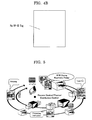

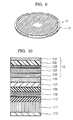
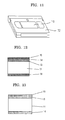
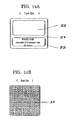


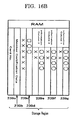
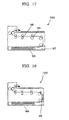

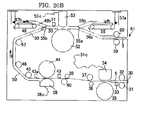
Classifications
-
- B—PERFORMING OPERATIONS; TRANSPORTING
- B41—PRINTING; LINING MACHINES; TYPEWRITERS; STAMPS
- B41M—PRINTING, DUPLICATING, MARKING, OR COPYING PROCESSES; COLOUR PRINTING
- B41M5/00—Duplicating or marking methods; Sheet materials for use therein
- B41M5/26—Thermography ; Marking by high energetic means, e.g. laser otherwise than by burning, and characterised by the material used
- B41M5/40—Thermography ; Marking by high energetic means, e.g. laser otherwise than by burning, and characterised by the material used characterised by the base backcoat, intermediate, or covering layers, e.g. for thermal transfer dye-donor or dye-receiver sheets; Heat, radiation filtering or absorbing means or layers; combined with other image registration layers or compositions; Special originals for reproduction by thermography
- B41M5/42—Intermediate, backcoat, or covering layers
- B41M5/44—Intermediate, backcoat, or covering layers characterised by the macromolecular compounds
-
- B—PERFORMING OPERATIONS; TRANSPORTING
- B41—PRINTING; LINING MACHINES; TYPEWRITERS; STAMPS
- B41M—PRINTING, DUPLICATING, MARKING, OR COPYING PROCESSES; COLOUR PRINTING
- B41M5/00—Duplicating or marking methods; Sheet materials for use therein
- B41M5/26—Thermography ; Marking by high energetic means, e.g. laser otherwise than by burning, and characterised by the material used
- B41M5/30—Thermography ; Marking by high energetic means, e.g. laser otherwise than by burning, and characterised by the material used using chemical colour formers
- B41M5/305—Thermography ; Marking by high energetic means, e.g. laser otherwise than by burning, and characterised by the material used using chemical colour formers with reversible electron-donor electron-acceptor compositions
-
- B—PERFORMING OPERATIONS; TRANSPORTING
- B41—PRINTING; LINING MACHINES; TYPEWRITERS; STAMPS
- B41M—PRINTING, DUPLICATING, MARKING, OR COPYING PROCESSES; COLOUR PRINTING
- B41M5/00—Duplicating or marking methods; Sheet materials for use therein
- B41M5/26—Thermography ; Marking by high energetic means, e.g. laser otherwise than by burning, and characterised by the material used
- B41M5/30—Thermography ; Marking by high energetic means, e.g. laser otherwise than by burning, and characterised by the material used using chemical colour formers
- B41M5/333—Colour developing components therefor, e.g. acidic compounds
- B41M5/3333—Non-macromolecular compounds
- B41M5/3335—Compounds containing phenolic or carboxylic acid groups or metal salts thereof
Definitions
- the present invention relates to a reversible thermosensitive recording medium capable of forming and erasing color developed images by controlling thermal energy using a reversible thermosensitive color developing composition which utilizes the coloring reaction between an electron donative coloring compound and an electron acceptive compound, and to a reversible thermosensitive recording label, a reversible thermosensitive recording member, an image processing apparatus and an image processing method, each using the reversible thermosensitive recording medium.
- thermosensitive recording media have been widely known that utilize the coloring reaction between an electron donative coloring compound (hereinafter also referred to as a "color coupler or leuco dye”) and an electron acceptive compound (hereinafter also referred to as a "developer”) and, with the development of office automation, the thermosensitive recording media have widely been used as output sheets for facsimiles, word processors, and scientific measurement instruments. Recently, they have also been used as magnetic thermosensitive cards such as prepaid cards or reward cards. It is required for the thermosensitive recording medium, which is put into practical use, to reconsider recycling or reduction of the amount taking account of environmental problems.
- an electron donative coloring compound hereinafter also referred to as a "color coupler or leuco dye”
- developer electron acceptive compound
- thermosensitive recording medium can not be repeatedly used by erasing recorded images, and new information can be merely added at the segment where images are not recorded and the area of recordable segment is limited. Therefore, the current measure to overcome this difficulty is to reduce the amount of information to be recorded or to make a new card at the time when no recording area is available Thus, it is required to develop a reversible thermosensitive recording medium capable of being overwritten as often as desired, against the backdrop of'the problems associated with recent garbage and deforestation.
- thermosensitive recording media Various reversible thermosensitive recording media have been proposed in response to these requirements.
- polymer type reversible thermosensitive recording media utilizing a physical change such as transparency or white turbidity are disclosed (see, for example, Japanese Patent Application Laid-Open ( JP-A) Nos. 63-107584 and 04-78573 ).
- a dye type reversible thermosensitive recording medium, which utilizes a chemical change is disclosed.
- a reversible thermosensitive recording medium using a combination of gallic acid and phloroglucinol as a developer (see JP-A No.
- thermosensitive recording medium using a compound such as phenolphthalein or thymolphthalein as a developer
- reversible thermosensitive recording media wherein a thermosensitive recording layer contains a homogenous compatible material of' a color coupler, a developer and a carboxylate ester
- JP-A Nos. 62-138556 , 62-138568 , and 62-140881 a reversible thermosensitive recording medium using an ascorbic acid derivative as a developer
- thermosensitive recording medium using a salt of bis(hydroxyphenyl)acetic acid or gallic acid with a higher aliphatic amine as a developer (see JP-A Nos. 02-188293 and 02-188294 ).
- thermosensitive color developing composition wherein color development and erasure can be easily conducted under heating and cooling conditions by using an organophosphoric acid compound having a long-chain aliphatic hydrocarbon group, an aliphatic carboxylic acid compound or a phenol compound as a developer and using the compound in combination with a leuco dye as a color coupler and the color developed state and the color erased state can be stably stabilized at normal temperature, and also color development and erasure can be repeated, and a reversible thermosensitive recording medium using the same as a thermosensitive recording layer (see JP-A Nos. 05-124360 , 06-210954 , and 10-95175 ).
- thermosensitive recording medium in case of' forming images by heating with a heating element such as thermal head, sticking occurs because of a large frictional force between the heating element and the thermosensitive recording layer, and also periodic irregularity corresponding to dot density of the thermal head is formed on the surface because the surface is likely to be deformed by heat and pressure of' a heating element. Therefore, the deformation amount increased while image formation and erasure is repeated, thus making it possible to form clear images.
- thermosensitive recording medium wherein an intermediate layer made mainly of a resin and a protective layer made mainly of' a heat resistant resin are sequentially provided on a thermosensitive recording layer (see JP-A No. 01-133781 ).
- adhesion is improved by the intermediate layer and deformation of the surface of the reversible recording medium is suppressed by the protective layer made of the heat resistant resin.
- the protective layer made of the heat resistant resin.
- thermosensitive recording medium comprising a thermosensitive recording layer and a protective layer, which has not a peak temperature of tan ⁇ (tan ⁇ is a ratio of a dynamic (storage) elastic modulus G' to a dynamic elastic loss modulus G", G"/G') at 250°C or lower or the corresponding dynamic relaxing phenomenon temperature, formed on the thermosensitive recording layer (see JP-A No, 09-142037 ).
- tan ⁇ is a ratio of a dynamic (storage) elastic modulus G' to a dynamic elastic loss modulus G", G"/G') at 250°C or lower or the corresponding dynamic relaxing phenomenon temperature, formed on the thermosensitive recording layer
- a reversible thermosensitive recording medium comprising a protective layer formed by irradiation with ultraviolet ray at irradiation energy of 150 mJ/cm 2 to 1,500 mJ/cm 2 so that the protective layer contains an ultraviolet curable resin composition and the ultraviolet curable composition contains an acrylate ester of a bisphenol A diglycidyl ether polymer as an epoxy acrylate having a bisphenol A skeleton, or a dipentaerythritol monohydroxypentaacrylate, and also a tan ⁇ peak temperature of the protective layer, or the corresponding dynamic relaxing phenomenon temperature becomes 155°C or lower (see JP-A No. 11-334220 ).
- thermosensitive recording media which have hitherto been proposed, are widely used for applications of magnetic thermosensitive cards such as prepaid cards and reward cards.
- magnetic thermosensitive cards such as prepaid cards and reward cards.
- a thermal head and a reversible thermosensitive recording medium in an image processing apparatus which conduct image formation and erasure, was discussed and bending of the reversible thermosensitive recording medium by an operator was not assumed at all because of the size of the form and the thickness of the card.
- thermosensitive recording medium has quickly been extending to OA equipment such as conference materials for trial printing or single use, and to components control and process control in the factory.
- display area is widely used within a range from signboard (A6) size to A5 size, A4 size and A3 size.
- thermosensitive recording medium since the reversible thermosensitive recording medium is handled in such a manner as in case of' a paper, which is not assumed at all in applications of conventional magnetic thermosensitive cards such as prepaid cards and reward cards, a conventional protective layer, whose physical strength with a thermal head is considered to be important, is too hard and cracking occurs in the surface of the medium at the time of handling before repeated printing, and thus images deteriorate.
- An object of the present invention is to provide a reversible thermosensitive recording medium which does not cause surface cracking even when handled like a paper and does not curl when used repeatedly, and also can keep compatibility between printability, adhesion and transferability of' a conventional medium and can repeatedly conduct color development and erasure, and to a reversible thermosensitive recording label, a reversible thermosensitive recording member, an image processing apparatus and an image processing method, each using the reversible thermosensitive recording medium.
- thermosensitive recording medium comprising a support, a thermosensitive recording layer formed on the support, and a protective layer formed on the thermosensitive recording layer
- the protective layer is made of two kinds of acrylates having a pentaerythritol group or a dipentaerythritol group used in combination and one compound is an acrylate compound (A) in which a pentaerythritol group or a dipentaerythritol group is directly bonded with a polymerizable group having an ester bond, while the other compound is an acrylate compound (B) having a hydrocarbon group, which may have a substituent having an ester bond, between a pentaerythritol group or a dipentaerythritol group and a polymerizable group having an ester bond, thereby enhancing the effect, and also when a mixing mass ratio of' the above two kinds of acryl
- the reversible thermosensitive recording medium of'the present invention comprises a support, a thermosensitive recording layer formed on the support, and a protective layer formed on the thermosensitive recording layer, wherein the thermosensitive recording layer contains an electron donative coloring compound and an electron acceptive compound, and the color tone reversibly changes depending on the temperature, and the protective layer contains a polymer of a composition containing two kinds of acrylate compounds selected from an acrylate compound having a pentaerythritol group and an acrylate compound having a dipentaerythritol group.
- the reversible thermosensitive recording label of' the present invention has either an adhesive layer or a binder layer on the surface opposite to the surface the thermosensitive recording medium of the present invention on which an image is to be formed.
- the reversible thermosensitive recording label has either the adhesive layer or binder layer and therefore can be widely applied to a thick support of a vinyl chloride card with a magnetic stripe, on which the thermosensitive recording layer is directly formed, a container having a sheet size larger than a card size, a sticker, and a large screen.
- the reversible thermosensitive recording member of the present invention comprises an information storage section and a reversible display section, the reversible display section being made of' the reversible thermosensitive recording medium of the present invention, and therefore causes no surface cracking even when handled like a paper and the medium does not curl when used repeatedly, and also compatibility between printability, adhesion and transferability of a conventional medium can be kept and color development and erasure can be stably repeated.
- desired various informations such as character information, image information, music information and video information are recorded and erased by a recording system according to the kinds such as magnetic thermosensitive recording layer, magnetic stripe, IC memory, optical memory, RF-ID tag card, disk, disk cartridge, tape cassette and hologram.
- the image processing apparatus of the present invention comprises at least image forming unit configured to heat the reversible thermosensitive recording medium of the present invention thereby forming images, or image erasing configured to erase the images.
- the reversible thermosensitive recording medium of the present invention is heated by the image forming unit heat thereby forming images on the reversible thermosensitive recording medium.
- the reversible thermosensitive recording medium of the present invention is heated by the image erasing unit thereby erasing the images formed on the reversible thermosensitive recording medium.
- the eversible thermosensitive recording medium of the present invention is used as the reversible thermosensitive recording medium, surface cracking does not occur even when handled like a paper and the medium does not curl even when used repeatedly, and also compatibility between printability, adhesion and transferability of a conventional medium can be kept and color development and erasure can be stably repeated, and thus highly practical rewriting recording can be conducted.
- the image processing method of'the present invention either formation of images or erasure of' images is conducted by heating the reversible thermosensitive recording medium of' the present invention.
- the reversible thermosensitive recording medium of'the present invention is heated thereby forming images on the reversible thermosensitive recording medium.
- the reversible thermosensitive recording medium of the present invention is heated thereby erasing the images formed on the reversible thermosensitive recording medium.
- the reversible thermosensitive recording medium of' the present invention is used as the reversible thermosensitive recording medium, surface cracking does not occur even when handled like a paper and the medium does not curl even when used repeatedly, and also compatibility between printability, adhesion and transferability of a conventional medium can be kept and color development and erasure can be stably repeated, and thus images having high color development density can be formed.
- the reversible thermosensitive recording medium of'the present invention comprises a support, a thermosensitive recording layer formed on the support and a protective layer formed on the thermosensitive recording layer, and also comprises an under layer, an intermediate layer and, if necessary, other layers.
- thermosensitive recording medium which has hitherto been proposed, is widely used for applications of' magnetic thermosensitive cards such as prepaid cards and reward cards.
- magnetic thermosensitive cards In the field of magnetic thermosensitive cards, only an interaction between a thermal head and a reversible thermosensitive recording medium in an image processing apparatus which conduct image formation and erasure has been discussed.
- thermosensitive recording medium is handled in such a manner as in case of a paper, which is not assumed at all in the field of a conventional magnetic thermosensitive card, a conventional protective layer, whose physical strength with a thermal head is considered to be important, is too hard and cracking occurs in the surface of the medium at the time of handling before repeated printing, and thus images deteriorate.
- a new problem which has never been anticipated arises for example, the reversible thermosensitive recording medium curls to the side of the thermosensitive recording surface, and thus it is required to quickly solve these problems.
- thermosensitive recording medium like paper
- the total thickness must be reduced as compared with applications of magnetic thermosensitive cards such as prepaid cards and reward cards.
- the reason is as follows. That is, when the sheet has a large thickness, the operator feels heavy and operation efficiency decreases. However, since a thin base material lacks stiffness, the reversible thermosensitive recording medium curls toward the thermosensitive recording surface when images are repeatedly formed and erased.
- the present inventors have intensively studied and found that the above problem can be solved by imparting flexibility to the protective layer so as to be as flexible as the support.
- a protective layer made of ultraviolet curable resin composition having simply high flexibility, cracking and curl can be improved, but it is difficult to simultaneously achieve printability, adhesion, transferability, and stability upon repeating of color development and erasure of a conventional medium.
- the present inventors can solve a new problem such as surface cracking caused upon handling of the operator, which has never been anticipated, when the protective layer contains a polymer of' an ultraviolet curable resin composition containing two kinds of acrylate compounds selected from an acrylate compound having a pentaerythritol group and an acrylate compound having a dipentaerythritol group.
- one compound is an acrylate compound (A) in which either a pentaerythritol group or a dipentaerythritol group is directly bonded to a polymerizable group having an ester bond
- the other compound is an acrylate compound (B) having a chain hydrocarbon group, which may have a substituent having an ester bond, between either a pentaerythritol group or a dipentaerythritol group and a polymerizable group having an ester bond.
- the acrylate compound (A) is very effective to printability, adhesion, transferability, and stability upon repeating of color development and erasure, while a hydrocarbon group, which may have a substituent having an ester bond of the acrylate compound (B) imparts flexibility to a coating film, and is very effective to prevent cracking and curl.
- the mixing mass ratio of two kinds of acrylates (A) and (B), (A)/(B), is more preferably from 1.0/9.0 to 5.0/5.0, still more preferably from 1.5/8.5 to 4.5/5.5, and particularly preferably from 2.0/8.0 to 4.0/6.0.
- the total content of the two acrylate compounds in the composition is preferably from 50% by mass to 100% by mass, and more preferably from 60% by mass to 100% by mass.
- Fillers may be added to the protective layer and the fillers can be roughly classified into inorganic fillers and organic fillers.
- the inorganic fillers include carbonates such as calcium carbonate and magnesium carbonate; silicates such as silicic anhydride, hydrous silicic acid, hydrous aluminum silicate, and hydrous calcium silicate; hydroxides such as alumina and iron oxide; metal oxides such as zinc oxide, indium oxide, alumina, silica, zirconia oxide, tin oxide, cerium oxide, iron oxide, antimony oxide, barium oxide, calcium oxide, barium oxide, bismuth oxide, nickel oxide, magnesium oxide, chromium oxide, manganese oxide, tantalum oxide, niobium oxide, titanium oxide, thorium oxide, hafnium oxide, molybdenum oxide, iron ferrite, nickel ferrite, cobalt ferrite, barium titanate, and potassium titanate; metal sulfides and sulfuric acid compounds, such as zinc sulfide and barium s
- Examples of materials of the organic fillers include silicone resins, cellulose resins, epoxy resins, nylon resins, phenol resins, polyurethane resins, urea resins, melamine resins, polyester resins, polycarbonate resins, styrene resins such as polystyrene, polystyrene-isoprene and polystyrene-vinylbenzene, acrylic resins such as vinylidene chloride-acryl, acrylurethane and ethyleneacryl, polyethylene resins, formaldehyde resins such as benzoguanamine formaldehyde and melamineformaldehyde, polymethyl methacrylate resins, and vinyl chloride resins.
- These materials can be used alone or in combination, or may be composite particles. Examples of' the shape include spherical, granular, tabular, and needle-like shapes.
- lubricants may be added to the protective layer, and specific example of'the lubricants include synthetic waxes such as ester wax, paraffin wax, and polyethylene wax; vegetable waxes such as hardened castor oil; animal waxes such as hardened beef tallow; higher alcohols such as stearyl alcohol and behenyl alcohol; higher fatty acids such as margaric acid, lauric acid, myristic acid, palmitic acid, stearic acid, behenic acid, and FROMEN acid; higher fatty acid esters such as sorbitan fatty acid esters; amides such as stearic acid amide, oleic acid amide, lauric acid amide, ethylenebisstearamide, methylenebisstearamide, and methylolstearamide.
- synthetic waxes such as ester wax, paraffin wax, and polyethylene wax
- vegetable waxes such as hardened castor oil
- animal waxes such as hardened beef tallow
- higher alcohols such as stearyl
- the protective layer may contain releasing agents and ultraviolet absorbers, and also may contain other components, if necessary.
- Examples of the releasing agent include silicone having a polymerizable group, silicone grafted polymer, wax, zinc stearate, and silicone oil.
- the amount of the releasing agent to be added is preferably from 0.01% by mass to 50% by mass, more preferably from 0.1% by mass to 40% by mass, and still more preferably from 1% by mass to 30% by mass, based on the total mass of the resin component of' the protective layer.
- the amount is less than 0.01% by mass, it becomes impossible to obtain the effect of the addition.
- the amount exceeds 50% by mass, there may arise a problem such as adhesion to the lower layer.
- the protective layer may contain, as the other components, additives, such as conventionally known surfactants, leveling agents, and/or antistatic agents.
- thermosensitive recording layer As a device for dispersing a solvent and a coating solution used in a coating solution of the protective layer, a drying method and a curing method, for example, known methods used in a thermosensitive recording layer described hereinafter can be used.
- the thickness of' the protective layer is preferably from 0.1 ⁇ m to 20 ⁇ m, more preferably from 0.5 ⁇ m to 10 ⁇ m, and still more preferably from 1.5 ⁇ m to 6 ⁇ m.
- the protective layer is broken when erasure and printing of recorded images are repeated, and thus sufficient durability is not obtained.
- the protective layer may be easily attacked by a chemical thereby to lose a function for serving as a reversible thermosensitive recording medium.
- the thickness is more than 20 ⁇ m, only blurred images having poor dot reproducibility (fineness of printed image) are obtained, and also energy used for printing and erasure may increases because of poor thermal conductivity, resulting in increase of burden on the device.
- the layer in contact with the surface of'the support side of the protective layer preferably contains an acrylate compound having either a pentaerythritol group or a dipentaerythritol group, thereby making it possible to further improve compatibility between adhesion and resistance to cracking.
- thermosensitive recording layer examples include a thermosensitive recording layer, and an intermediate layer between the thermosensitive recording layer and the protective layer.
- the thermosensitive recording layer and the intermediate layer will be described hereinafter.
- the acrylate compound having either a pentaerythritol group or a dipentaerythritol group is preferably an acrylate compound (C) represented by the following structural formula (5).
- a hydroxyl group (a hydroxyl group moiety formed by bonding a pentaerythritol group or a dipentaerythritol group with a hydrogen group) of the acrylate compound (C) is bonded with the components in the protective layer thereby increasing an interlayer binding force, and thus making it possible to further improve compatibility between resistance to cracking and curl, and adhesion: in the structural formula (5), X represents a pentaerythritol group or a dipentaerythritol group, a represents 1 to 5, and b represents 1 to 5.
- the content of the acrylate compound (C) preferably corresponds to a ratio, dry mass of the acrylate compound (C)/dry mass of the layer containing the acrylate compound (C), of 0.01 to 0.10. As a result, it is remarkably effective to keep compatibility between resistance to cracking and curl, and adhesion..
- the content of' the acrylate compound (C) preferably corresponds to a ratio, dry mass of the acrylate compound (C)/dry mass of the layer containing the acrylate compound (C), of 0.01 to 0.10, and more preferably 0.01 to 0.08, and still more preferably 0.01 to 0.07.
- the ratio, dry mass of the acrylate compound (C)/dry mass of the layer containing the acrylate compound (C) is less than 0.01, it is impossible to obtain a remarkable effect on keeping of compatibility between adhesion and resistance to cracking.
- the ratio is more than 0.10, stability upon repeating of color development and erasure may become worse.
- thermosensitive recording layer comprises an election donative coloring compound and an electron acceptive compound, and the color tone reversibly changes depending on the temperature.
- the thermosensitive recording layer when the thermosensitive recording layer is the layer in contact with the surface of the support side of the protective layer, the thermosensitive recording layer preferably contains either an acrylate compound having a pentaerythritol group or an acrylate compound having a dipentaerythritol group and, specifically, it preferably contains an acrylate compound (C) represented by the structural formula (5).
- the phrase "the color tone reversibly changes depending on the temperature" in the thermosensitive recording layer means a phenomenon of reversibly causing a visual change by the temperature change, and also means that relatively color developed and erased state can be formed by a difference in a rate of heating and a rate of cooling after heating.
- visible change is classified into a change in the state of color and a change in a shape, and a material causing a change in the state of color is mainly used in the present invention.
- the change in the state of color includes changes in light transmittance, reflectance, absorption wavelength and scattering degree, and an actual reversible thermosensitive recording material displays by a combination of these changes.
- the reversible thermosensitive recording material is not specifically limited as long as transparency and color tone reversibly change and can be appropriately selected according to the purposes and includes, for example, a reversible thermosensitive recording material which becomes the state of first color at a first specific temperature higher than a normal temperature, and becomes the state of second color by heating at a second specific temperature higher than the first specific temperature, followed by cooling.
- a reversible thermosensitive recording material wherein the state of color changes at the first specific temperature and the second specific temperature, is particularly preferable.
- thermosensitive recording material examples include a reversible thermosensitive recording material which become a transparent state at the first specific temperature and becomes an opaque state at the second specific temperature ( JP-A No. 55-154198 ), reversible thermosensitive recording materials wherein color is developed at the second specific temperature and color is erased at the first specific temperature ( JP-A Nos. 04-224996 , 04-247985 , and 04-267190 ), a reversible thermosensitive recording material which becomes an opaque state at the first specific temperature and becomes a transparent state at the second specific temperature ( JP-A No. 03-169590 ), and reversible thermosensitive recording materials wherein black, red and blue colors are developed at the first specific temperature and colors are erased at the second specific temperature ( JP-A Nos. 02-188293 and 02-188294 ).
- the reversible thermosensitive recording medium of the present invention can form relatively color developed and erased state by either a heating temperature or a rate of cooling after heating.
- a basic color developing and erasing phenomenon of a composition comprising a color coupler and a developer will be described.
- Fig. 1 shows a relation between the color development density and the temperature of the reversible thermosensitive recording medium.
- the color developed state (C) obtained by quenching from the molten state is a state where a developer and a color coupler are mixed while molecules thereof can be catalytically reacted, and a solid state is often formed. It is considered that the state is a state where a developer and a color coupler are aggregated and color development is maintained, and color development is stabilized by formation of'this aggregated structure.
- the color erased state is a state where both of them are phase separated. This state is considered to be a state where molecules of at least one compound are aggregated t and a developer are separated and stabilized by aggregation or crystallization.
- color development recording may be formed by heating to the temperature, at which melting and mixing is conducted, by a thermal head, followed by quenching.
- Color erasure is conducted by two methods, for example, a method of slowly cooling from a heated state and a method of' heating to the temperature which is slightly lower than the color developing temperature.
- these methods are the same in that both of'them are phase separated or at least one of'them is temporarily maintained at the crystallization temperature.
- Quenching is conducted in the formation of a color developed state so as not to maintain at the phase separation temperature or the crystallization temperature.
- quenching and slow cooling are relative to one composition and the boundary varies according to a combination of the color coupler and the developer.
- the electron acceptive compound (developer) is not specifically limited as long as it can reversibly conduct color development and erasure by means of heat as a factor, and can be appropriately selected according to the purposes.
- a compound having one or more structures selected from (i) a structure having developing capability of conducting color development of an electron donative coloring compound (color coupler) (for example, phenolic hydroxyl group, carboxylic acid group, phosphoric acid group, etc.), and (ii) a structure of controlling a molecular cohesive force (for example, structure linked with a long chain hydrocarbon group) in the molecule is preferable.
- the linking moiety may be present via a divalent or multivalent linking group containing hetero atom, and also a long chain hydrocarbon group may have at least either the same linking group or an aromatic group.
- Particularly preferable compounds are a phenol compound represented by the following structural formula (3) and a phenyl compound represented by the following structural formula (4): in the structural formula (3), X and Y represent a divalent organic group containing a hetero atom, R 3 represents a divalent hydrocarbon which may have a substituent, R 4 represents a monovalent hydrocarbon group which may have a substituent, n represents an integer of 1 to 3, m represents an integer of 1 to 20, and r represents an integer of 0 to 3; and in the structural formula (4), n represents an integer of 1 to 3, X represents a divalent organic group containing a hetero atom, R 3 represents a divalent hydrocarbon which may have a substituent, and R 4 represents a monovalent hydrocarbon group which may have a substituent; and R 3 in the structural formulas (3) and
- R 4 in the structural formulas (3) and (4) represents an aliphatic hydrocarbon group having 1 to 24 carbon atoms which may be substituted with a substituent, and the number of carbon atoms is preferably from 8 to 18.
- the aliphatic hydrocarbon group may be linear or branched, and may have an unsaturated bond.
- substituent bonded to a hydrocarbon group include hydroxyl group, halogen atom, and alkoxy group. Since stability of color development of color erasure deteriorate when the sum of the number of carbon atoms of R 3 and R 4 is 7 or less, the number of carbon atoms is preferably 8 or more, and more preferably 11 or more.
- R 4 is preferably as follows: wherein q, q', q" and q"' each represents an integer which satisfies the number of carbon atoms as for R 4 , and -(CH 2 ) q -CH 3 is particularly preferable
- X and Y in the structural formulas (3) and (4) represent a divalent organic group containing a hetero atom, particularly preferably a divalent organic group having a nitrogen atom or an oxygen atom and, for example, represents a divalent organic group having at least one group represented by the following structural formulas.
- the divalent organic group preferably includes groups represented by the following structural formulas
- particularly preferable groups are those represented by the following structural formulas.
- Examples of phenol compounds represented by the structural formula (3) include compounds represented by the following structural formulas (3-1) to (3-4): in the structural formulas (3-1) to (3-4), q, q', q" and s each independently represents an integer of 0 to 20 and the sum of these integers is 8 on more, and Y, Y' and Y" represent a divalent organic group containing a hetero atom and these substituents may be the same or different.
- examples of the structural formulas (3-1) and (3-2) include compounds shown in Table 1.
- specific examples of X and Y include, but are not limited to, the same substituents as those shown in Table 1.
- the phenol compound represented by the structural formula (4) is preferably a compound of either the following structural formula (4-1) or (4-2): in the structural formulas (4-1) and (4-2), m represents 5 to 11 and n represents 8 to 22.
- phenol compounds represented by the structural formulas (4-1) and (4-2) include the followings.
- the electron donative coloring compound is not specifically limited and can be appropriately selected according to the purposes and is preferably a leuco dye.
- the leuco dye is preferably a fluorine compound or an azaphthalide compound, and examples thereof include 2-anilino-3-methyl-6-diethylaminofluorane, 2-anilino-3-methyl-6-di(n-butylamino)fluorane, 2-anilino-3-methyl-6-(N-n-propyl-N-methylamino)fluorane, 2-anilino-3-methyl-6-(N-isapropyl-N-methylamino)fluorane, 2-anilino-3-methyl-6-(N-isobutyl-N-methylamino)fluorane, 2-anilino-3-methyl-6-(N-n-aniyl-N-methytamino)fluorane, 2-anilino-3-methyl-6-(N-sec-butyl-N-methylamino)fluorane, 2-anilino-3-methyl-6-(N-n-amyl-N-eth
- leuco dyes in addition to the fluorine compounds and the azaphthalide compound, conventionally known leuco dyes can be used, and examples thereof include 2-(p-acetylanilino)-6-(N-n-amyl-N-n-butylamino)fluorane, 2-benzylamino-6-(N-ethyl-p-toluidino)fluorane, 2-benzylamino-6-(N-methyl-2,4-dimethylanilino)fluorane, 2-benzylamino-6-(N-ethyl-2,4-dimethylanilino)fluorane, 2-benzylamino-6-(N-methyl-p-toluidino)fluorane, 2-benzylamino-6-(N-ethyl-p-toluldino)fluorane, 2-(di-p-methylbenzylamino)-6-(N-ethyl-p-toluidino)fluorane,
- a multi-color or full-color material can be produced by laminating a layer capable of developing colors having different color tones.
- the ratio of'the electron donative coloring compound (color coupler) to the electron acceptive compound (developer) is not unconditionally defined because a suitable range varies depending on a combination of compounds to be used, and a molar ratio of' a developer to a color coupler is preferably 01/1 to 20/1, and more preferably 0.2/1 to 10/1.
- a molar ratio of' a developer to a color coupler is preferably 01/1 to 20/1, and more preferably 0.2/1 to 10/1.
- density of' the color developed state decreases and a problem may arise.
- the color coupler and the developer can be used in the state of being encapsulated in a microcapsule.
- the developer in combination with a compound having at least one of an amide group, an urethane group and an urea group in the molecule as a color erasure accelerator, an intermolecular interaction is induced between the color erasure accelerator and the developer in the process of forming the erased state, and thus making it possible to markedly increase the erasing rate.
- the color erasure accelerator may be a compound having at least one selected from an amide group, a urethane group and a urea group in the molecule, and particularly preferable compounds are represented by the following structural formulas (5) to (11): R 5 -NHCO-R 6 Structural Formula (5) R 5 -NHCO-R 7 -CONH-R 6 Structural Formula (6) R 5 -CONH-R 7 -NHCO-R 6 Structural Formula (7) R 5 -NHCOO-R 6 Structural Formula (8) R 5 -NHCOO-R 7 -OCONH-R 6 Structural Formula (9) R 5 -OCONH-R 7 -NHCOO-R 6 Structural Formula (10) in the structural formulas (5) to (11), R 5 , R 6 and R 8 represent a linear alkyl group having 7 to 22 carbon atoms, a branched alkyl group or an unsaturated alkyl group, R 7 represents a divalent organic group
- R 5 , R 6 and R 8 examples include heptyl group, octyl group, nonyl group, decyl group, undecyl group, dodecyl group, stearyl group, behenyl group, and oleyl group.
- R 6 examples include methylene group, ethylene group, propylene group, butylene group, heptamethylene group, hexamethylene group, octamethylene group, -C 3 H 6 OC 3 H 6 - group,-C 2 H 4 OC 2 H 4 - group, and -C 2 H 4 OC 2 H 4 OC 2 H 4 - group.
- R 9 examples include those represented by the following structural formulas.
- the amount of the color erasure accelerator to be added is preferably within a range from 0.1 parts by mass to 300 parts by mass, and more preferably from 3 parts by mass to 100 parts by mass, per 100 parts by mass of'the developer. When the amount is less than 0.1 parts by mass, the effect of the addition of the color erasure accelerator may not be exerted. On the other hand, when the amount is more than 300 parts by mass, color development density may decrease.
- the thermosensitive recording layer can contain, in addition to the above components, various additives which are use to improve coating characteristics of the thermosensitive recording layer and to improve color development and erasure characteristics, if necessary.
- various additives include crosslinking agents, crosslinking accelerators, fillers, lubricants, surfactants, conductant agents, bulking agents, antioxidants, photostabilizers, color development stabilizers, and plasticizers.
- the binder resin is not specifically limited and can be appropriately selected according to the purposes, and examples thereof include polyvinyl chloride resins, polyvinyl acetate resins, vinyl chloride-vinyl acetate copolymer, ethyl cellulose, polystyrene resins, styrene copolymers, phenoxy resins, polyester resins, aromatic polyester resins, polyurethane resins, polycarbonate resins, polyacrylate ester resins, polymethacrylate ester resins, acrylic copolymers, maleic acid copolymers, polyvinyl alcohol resins, modified polyvinyl alcohol resins, hydroxyethyl cellulose, carboxymethyl cellulose and starches.
- the binder resin to be used is preferably a curable resin, which can be cured by heat, ultraviolet ray or electron beam, obtained by adding a crosslinking agent (hereinafter also referred to as a "resin in a crosslinked state".
- a crosslinking agent hereinafter also referred to as a "resin in a crosslinked state”.
- the curable resin is not specifically limited and can be appropriately selected according to the purposes, and examples thereof include resins having a group capable of reacting with a crosslinking agent, such as acrylpolyol resins, polyesterpolyol resins, polyurethanepolyol resins, phenoxy resins, polyvinylbutyral resins, cellulose acetatepropionate, and cellulose acetate butyrate; and resins obtained by copolymerizing a monomer capable of reacting a crosslinking agent with the other monomer.
- acrylpolyol resins, polyesterpolyol resins, and polyurethanepolyol resins are particularly preferable.
- the hydroxyl value of the curable resin is preferably 70 KOHmg/g or more, and more preferably 90 KOHmg/g or more, so as to improve durability, surfaced hardness of coating film, and cracking resistance.
- the hydroxyl value exerts an influence on crosslink density and therefore control chemical resistance and physical properties of the coating film.
- the acrylpolyol resin can be synthesized by a known solution polymerization method, suspension polymerization method or emulsion polymerization method using a (meth)acrylate ester monomer, an unsaturated monomer having a carboxylic acid group, an unsaturated monomer having ahydroxyl group, and the other ethylenically unsaturated monomer.
- Examples of'the unsaturated monomer having a hydroxyl group include hydroxyethyl acrylate (HEA), hydroxypropyl acrylate (HPA), 2-hydroxyethyl methacrylate (HEMA), 2-hydroxypropyl methacrylate (HPMA), 2-hydroxybutyl monoacrylate (2-HBA), and 1,4-hydroxybutyl monoacrylate (1-HBA).
- HPA hydroxyethyl acrylate
- HPA hydroxypropyl acrylate
- HEMA 2-hydroxyethyl methacrylate
- HPMA 2-hydroxypropyl methacrylate
- 2-hydroxybutyl monoacrylate 2-hydroxybutyl monoacrylate
- 1,4-hydroxybutyl monoacrylate 1,4-hydroxybutyl monoacrylate
- the crosslinking agent is not specifically limited and can be appropriately selected from conventionally known isocyanate compounds, amines, phenols, and epoxy compounds. Among these, isocyanate compounds are particularly preferable.
- the isocyanate compound is not specifically limited and can be appropriately selected from known compounds according to the purposes, and examples thereof include modified materials such as modified urethane, modified allophanate, modified isocyanurate, modified burette, modified carbodiimide, and blocked isocyanate of an isocyanate monomer.
- Examples of' the isocyanate monomer, which forms the modified material include tolylene diisocyanate (TDI), 4,4'-diphenylmethane diisocyanate (MDI), xylylene diisocyanate (XDI), naphthylene diisocyanate (NDI), paraphenylene diisocyanate (PPDI), tetramethylxylylene diisocyanate (TMXDI), hexamethylene diisocyanate (HDI), dicyclohexylmethane diisocyanate (HMDI), isophorone diisocyanate (IPDI), lysine diisocyanate (LDI), isopropylidene bis(4-cyclohexylisocyanate) (IPC), cyclohexyl diisocyanate (CHDI), and tolidine diisocyanate (TODI).
- TDI tolylene diisocyanate
- MDI 4,4'-dipheny
- crosslinking accelerator catalysts used in this kind of the reaction may be used.
- the crosslinking accelerator include tertiary amines such as 1,4-diazabicyclo[2,2,2]octane, and metal compound such as organotin compound.
- the total amount of' the crosslinking agent added may cause the crosslinking reaction or not. That is, the unreacted crosslinking agent may be present. Since this kind of' the crosslinking reaction proceeds with time, the presence of the unreacted crosslinking agent does not suggest that the crosslinking reaction does not proceed at all. Even if the unreacted crosslinking agent is detected, it does not mean that the resin in a crosslinked state is not present.
- the polymer in the non-crosslinked state it can be confirmed by immersing the coating film in a solvent having high solubility whether or not the polymer is in the crosslinked state or the non-crosslinked state.
- the polymer in the solvent begins to dissolve and not remained in the solute, and therefore the presence or absence of a polymer structure of the solute may be confirmed. If the presence of the polymer structure is not confirmed in the solute, it is believed that the polymer is in the non-crosslinked state, and thus making it possible to distinguish from the polymer in the crosslinked state.
- the gel fraction means a production ratio of' a gel when the resin solute losses independent mobility by the interaction in the solvent to produce an aggregated and solidified state (gel).
- the gel fraction of the resin is preferably 30% or more, more preferably 50% or more, still more preferably 70% or more, and particularly preferably 80% or more. Since repeated use durability deteriorates when the gel fraction is small, the resin is mixed with a curable resin, which is curable with heat, ultraviolet irradiation (UV) or electron beam irradiation (EB), or crosslinking the resin itself so as to improve the gel fraction.
- UV ultraviolet irradiation
- EB electron beam irradiation
- the gel fraction is measured in the following manner. That is, a film is separated from a support and an initial mass of the film is measured. Then, the film is interposed between 400 mesh wire gauzes, immersed in a solvent capable of dissolving g a resin before crosslinking for 24 hours and vacuum dried, and thus a mass after drying can be measured.
- Gel Fraction % Mass after Drying g / Initial Mass ( g ) ⁇ 100
- a mass ratio may be determined by an area ratio per unit area and each specific gravity of the resin and the organic low molecular substance through cross-section observation using a transmission electron microscope (TEM), scanning electron microscope (SEM) or the like, followed by calculation of a mass of the organic low molecular substance and further calculation of the gel fraction.
- TEM transmission electron microscope
- SEM scanning electron microscope
- thermosensitive recording layer is formed on a support and an the other layer such as protective layer is laminated thereon in the measurement, or the other layer is formed between the support and the thermosensitive recording layer
- the thickness of the thermosensitive recording layer and that of the other layer are measured through cross-section observation using a transmission electron microscope (TEM), a scanning electron microscope (SEM) or the like, and the surface corresponding to the thickness of the other layer is shaving thereby exposing the surface of a thermosensitive recording layer, and then the thermosensitive recording layer is separated and the gel fraction is measured in the same manner as described above.
- TEM transmission electron microscope
- SEM scanning electron microscope
- thermosensitive recording layer In the method for measuring the gel fraction, when a protective layer made of an ultraviolet curable resin is formed on the thermosensitive recording layer, an influence on the gel fraction must be prevented by shaving the thickness corresponding to the protective layer and slightly shaving the surface of the thermosensitive recording layer so as to prevent contamination of the protective layer as much as possible.
- inorganic fillers and/or organic fillers described in the protective layer may be used alone or in combination.
- a combination of inorganic fillers and organic fillers is not specifically limited. Examples of the shape include spherical, granular, tabular, and needle-like shapes.
- the content of the filler is preferably from 5 to 50% by volume in terms of' a volume fraction.
- the lubricant is not specifically limited and can be appropriately selected from known lubricants according to the purposes, and specific examples thereof include synthetic waxes such as ester wax, paraffin wax, and polyethylene wax; vegetable waxes such as hardened castor oil; animal waxes such as hardened beef tallow; higher alcohols such as stearyl alcohol and behenyl alcohol; higher fatty acids such as margaric acid, lauric acid, myristic acid, palmitic acid, stearic acid, and behenic acid; higher fatty acid esters such as sorbitan fatty acid esters; amides such as stearic acid amide, oleic acid amide, lauric acid amide, ethylenebisstearamide, methylenebisstearamide, methylolstearamide, and methylolstearamide.
- synthetic waxes such as ester wax, paraffin wax, and polyethylene wax
- vegetable waxes such as hardened castor oil
- animal waxes such as hardened beef tallow
- the content of the lubricant in the thermosensitive recording layer is preferably from 0.1% by volume to 95% by volume, and more preferably from 1% by volume to 75% by volume.
- the surfactant is not specifically limited and can be appropriately selected from known surfactants according to the purposes, and specific examples thereof include anionic surfactants, cationic surfactants, nonionic surfactant, and amphoteric surfactants.
- the plasticizer is not specifically limited and can be appropriately selected according to the purposes, and examples thereof include phosphate esters, fatty acid esters, phthalate esters, dibasic acid esters, glycols, polyester plasticizers, and epoxy plasticizers.
- thermosensitive recording layer is not specifically limited and can be appropriately selected, and examples thereof include (1) a method comprising coating a coating solution for a thermosensitive recording layer, which is prepared by dissolving or dispersing the binder resin, the electron donative coloring compound and the electron acceptive compound in a solvent, on a support, and vaporizing the solvent thereby to form into a sheet and to crosslink the sheet simultaneously or after forming into the sheet, (2) a method comprising coating a coating solution for a thermosensitive recording, which is prepared by dispersing the electron donative coloring compound and the electron acceptive compound in a solvent containing only the binder resin dissolved therein, on a support, and vaporizing the solvent thereby to form into a sheet and to crosslink the sheet simultaneously or after forming into the sheet, and (3) a method comprising melting the binder resin, the electron donative coloring compound and the electron acceptive compound with heating, mixing them, forming the molten mixture into a sheet, followed by cooling and further crosslinking.
- a method comprising coating a coating
- the solvent used in the method (1) or (2) varies depending on the kind of the binder resin, the electron donative coloring compound and the electron acceptive compound and can not be unconditionally defined, and examples thereof include tetrahydrofuran, methyl ethyl ketone, methyl isobutyl ketone, chloroform, carbon tetrachloride, ethanol, toluene, and benzene.
- the electron acceptive compound is dispersed in the form of particles in the thermosensitive recording layer.
- thermosensitive recording layer For the purpose of exhibiting high performances suited as a coating material, various pigments, defoamers, dispersing agents, slipping agents, antiseptics, crosslinking agents, and plasticizers may be added to the coating solution for a thermosensitive recording layer
- the method for coating a coating solution for a thermosensitive recording layer is not specifically limited and can be appropriately selected according to the purposes.
- a roll-shaped continuous support or a support cut into a sheet is transferred and the coating solution is coated on the support using a known method such as blade coating, wire bar coating, spray coating, air knife coating, bead coating, curtain coating, gravure coating, kiss coating, reverse roll coating, dip coating, or die coating method.
- the drying conditions of the coating solution for a thermosensitive recording layer are not specifically limited and can be appropriately selected according to the purposes and, for example, the coating solution is dried at a temperature within a range from room temperature to 140°C for about 10 minutes to 1 hour.
- the resin in the thermosensitive recording layer can be cured by heating, ultraviolet irradiation, or electron beam irradiation.
- the ultraviolet irradiation is not specifically limited and can be conducted using a known ultraviolet irradiation device, and examples of the device include those equipped with light source, lighting fixture, power supply, cooling device, or transfer device.
- the light source examples include mercury lamp, metal halide lamp, gallium lamp, mercury-xenon lamp, and flash lamp.
- the wavelength of the light source can be appropriately selected according to an ultraviolet absorption wavelength of photopolymerization initiators and photopolymerization accelerators added to a composition for a reversible thermosensitive recording medium.
- the conditions of the ultraviolet irradiation are not specifically limited and can be appropriately selected according to the purposes and, for example, the lamp output and transfer speed may be decided according to irradiation energy required to crosslink the resin.
- the electron beam irradiation can be conducted using a known electron beam irradiation device.
- the election beam irradiation device can be roughly classified into scanning (scanbeam) and non-scanning (areabeam) type devices and the conditions can be selected according to the irradiation area and irradiation dose.
- device rating is represented by Mrad ⁇ m/min and about 20 mA to 500 mA is selected as electron current rating.
- the thickness of' the thermosensitive recording layer is not specifically limited and can be appropriately selected according to the purposes and, for example, the thickness is preferably from 1 ⁇ m to 20 ⁇ m, and more preferably from 3 ⁇ m to 15 ⁇ m.
- the shape, structure and size of' the support are not specifically limited and can be appropriately selected according to the purposes, and the shape includes, fox example, a tabular shape, and the structure may be a single-layered structure or a multi-layered structure, and the size can be appropriately selected according to the size of the reversible thermosensitive recording medium.
- Examples of the material of the support include inorganic material and organic material.
- Examples of the inorganic material include glass, quartz, silicone, silicon oxide, aluminum oxide, SiO 2 , and metal.
- Examples of the organic material include paper, cellulose derivative such as cellulose triactate, synthetic paper polyethylene terephthalate, polycarbonate, polystyrene, and polymethyl methacrylate. These organic materials may be used alone or in combination,
- polyethylene terephthalate and PET-G film each having Haze of a support alone (Haze defined in JIS K7105) of 10% or less are particularly preferable so as to obtain a sheet having high image clearness.
- the support is preferably modified by a corona discharge treatment, an oxidation treatment (chromic acid), an etching treatment, an easy adhesive treatment, or an antistatic treatment.
- the support is preferably whitened by adding a white pigment such as titanium oxide.
- the thickness of the support is not specifically limited and can be appropriately selected according to the purposes, and is preferably from 10 ⁇ m to 2,000 ⁇ m, more preferably from 20 ⁇ m to 1,000 ⁇ m, still more preferably from 20 ⁇ m to 300 ⁇ m, and particularly preferably from 20 ⁇ m to 200 ⁇ m.
- the support may have a magnetic thermosensitive recording layer on at least either the same surface as that of or the surface opposite to the thermosensitive recording layer.
- the reversible thermosensitive recording medium of the present invention can be stuck to the other medium through a binder layer.
- the heat insulating layer is provided between the thermosensitive recording layer and the support for the purpose of attaining high sensitivity utilizing applied heat effectively, or improving adhesion between the support and the thermosensitive recording layer and preventing penetration of a thermosensitive recording layer material into the support, and also contain at least hollow particles penetrated therein, and contains a binder resin and, if necessary, other components.
- hollow particles examples include single hollow particles wherein one hollow portion is present in particles, and multihollow particles wherein a lot of hollow portions are present in particles. These hollow particles may be used alone or in combination.
- the binder resin the same resin as in case of the thermosensitive recording layer can be used.
- the heat insulating layer can contain at least either inorganic filler or various organic fillers, such as calcium carbonate, magnesium carbonate, titanium oxide, silicon oxide, aluminum hydroxide, kaolin, and talc.
- the heat insulating layer can also contain lubricants, surfactants, and dispersing agents.
- the thickness of the heat insulating layer is not specifically limited can be appropriately selected according to the purposes, and is preferably from 0.1 ⁇ m to 100 ⁇ m, more preferably from 1 ⁇ m to 80 ⁇ m, still more preferably from 5 ⁇ m to 50 ⁇ m, and particularly preferably from 5 ⁇ m to 40 ⁇ m.
- the erasing energy region by a thermal head system can be extended by forming a heat insulating layer containing hollow particles and using, as the hollow particles, hollow particles having porosity of 70% or more and a maximum particle size (D100) of 5.0 ⁇ m to 10.0 ⁇ m, a ratio of' the maximum particle size to a particle size (D50) at 50% frequency, (D100/D50), being from 2.0 to 3.0.
- D100 maximum particle size
- the particle size at 50% frequency means the particle size wherein a cumulative percentage reaches 50% when particle size distribution is expressed in cumulative percentage.
- the maximum particle size of' hollow particles is preferably from 5 ⁇ m to 10 ⁇ m.
- the maximum particle size is more than 10 ⁇ m, if a thermosensitive recording layer is provided on a heat insulating layer using the same, the portion large particles of the heat insulating layer includes the portion where the thermosensitive recording layer is not formed, and thus voids are likely to be generated when solid images are printed.
- the maximum particle size is less than 5 ⁇ m, it becomes difficult to secure porosity of 70% or more and, as a result, sensitivity decreases. Therefore, the maximum particle size of hollow particles is preferably from 5 ⁇ m to 10 ⁇ m. Considering only increase of the color development density, the effect can be exerted when the porosity is 60% or more.
- the reversible thermosensitive recording medium includes an erasing process and the erasing system using a thermal head is characterized in that energy applied for erasure drastically decreases as compared with the system using a heated roller, and thus the degree of effective utilization of energy applied must be increased. Therefore, the porosity of hollow particles used in the heat insulating layer must be 70% or more so as to secure the increase of the erasing optical density and erasing energy region in the erasing system using the thermal head.
- the ratio of the maximum particle size (D100) to a particle size (D50) at 50% frequency, (D100/D50), of hollow particles is preferably from 2.0 to 3.0.
- the ratio of' more than 3.0 shows that particle size distribution is in a broad state and the proportion of microparticles having a particle size of 1 ⁇ m or less increases, and the heat insulating layer using the same shows uniform distribution of hollow particles therein, and thus causing a phenomenon of deteriorating sensitivity arises.
- the ratio is less than 2.0, the resulting particles has very sharp particle size distribution and it is difficult to realize in view of' synthesis conditions. Therefore, the ratio of the maximum particle size (D100) to a particle size (D50) at 50% frequency, (D100/D50), of hollow particles is preferably from 2.0 to 3.0.
- the proportion of hollow particles having a particle size of 2 ⁇ m or less is preferably from 5% to 10%.
- the proportion of microparticles having a particle size of 1 ⁇ m or less increases and the heat insulating layer utilizing the same shows uniform distribution of hollow particles therein, and thus causing a phenomenon of deteriorating sensitivity arises.
- the proportion of less than 5% the resulting particles has very sharp particle size distribution and it is difficult to realize in view of synthesis conditions. Therefore, the proportion of hollow particles having a particle size of 2 ⁇ m is preferably from 5% to 10%.
- the hollow particles are characterized by having porosity of 70% or more and a maximum particle size (D100) of 5.0 ⁇ m to 10.0 ⁇ m and satisfying that the ratio of the maximum particle size (D100) to a particle size (D50) at 50% frequency, (D100/D50), of hollow particles is from 2.0 to 3.0, and it has never been known that hollow particles satisfying these conditions are utilized in a reversible thermosensitive recording material.
- a method of encapsulizing a volatile substance in a thermoplastic polymer, followed by expansion with volatilization so as to attain porosity of 60% or more is characterized by having porosity of 70% or more and a maximum particle size (D100) of 5.0 ⁇ m to 10.0 ⁇ m and satisfying that the ratio of the maximum particle size (D100) to a particle size (D50) at 50% frequency, (D100/D50), of hollow particles is from 2.0 to 3.0, and it has never been known that hollow particles satisfying these conditions are utilized in a reversible thermosensitive recording material.
- particles having a particle size of 1 ⁇ m or less are present by discharging water from particles including water therein obtained by utilizing seed polymerization, but the porosity was only 50% or less.
- the glass transition temperature (Tg) of the hollow particles is preferably from 95°C to 150°C, and more preferably from 95°C to 120°C,
- Tg is lower than 95°C
- the heat insulating layer using the same is fused with the thermosensitive color developing layer upon printing using the thermal head, and thus there is recognized a phenomenon that it becomes difficult to conduct good printing because sticking occurs.
- Tg is higher than 150°C
- Tg of the hollow particles is preferably from 95°C to 150°C.
- hollow particles in the heat insulating layer of the reversible thermosensitive recording medium preferably has porosity of 70% or more and a maximum particle size (D100) of 10.0 ⁇ m or less, and more preferably 5.0 ⁇ m to 10.0 ⁇ m.
- the ratio of the maximum particle size (D100) to a particle size (D50) at 50% frequency, (D100/D50), is preferably 3.0 or less, and more preferably from 2,0 to 3.0.
- the proportion of hollow particles having a particle size of 2 ⁇ m or less is preferably 10% or less, and more preferably from 5% to 10%.
- the glass transition temperature (Tg) is preferably 95°C or higher.
- thermosensitive recording medium By using hollow particles having the glass transition temperature of 95°C to 150°C, since thermal insulating properties and adhesion with the head are improved and heat of the thermal head is efficiently conducted to the surface of the reversible thermosensitive recording medium, higher sensitivity is attained and the surface of' the reversible thermosensitive recording medium is uniformly maintained, and thus formation of printing voids is prevented and uniformity of' printed images is improved.
- the value of'the particle size was entirely measured using a laser diffraction type particle size distribution analyzer (manufactured by HORIBA, Ltd., LA-900).
- the median size is a particle size at 50% frequency and is referred to as D50
- the maximum particle size is a maximum particle size of' distribution and is referred to as D100.
- Tg is glass transition temperature and represents Tg of a resin component of hollow particles.
- a solid was formed using the same resin as the resin component of hollow particles and the glass transition temperature (Tg) of'the resulting solid was measured by a common method (DSC, DTA, TMA, etc.).
- hollow particles function as a heat insulating material and have resilience and therefore improve color development sensitivity by efficiently making use of thermal energy from the thermal head.
- porosity is preferably 70% or more, more preferably from 75% to 98%, and still more preferably from 85% to 95%. When the porosity is less than 70%, the above effect is reduced. On the other hand, when the porosity is more than 98%, the strength may decrease because of the thickness of the film decreases.
- Various methods have been proposed as the method for producing hollow particles and, as the method for producing hollow particles of the present invention, a method comprising encapsulating a volatile substance as a core substance of a polymer, an outer layer being made of a thermoplastic polymer, followed by expansion with volatilization.
- Specific examples of the method include methods disclosed in WO99/46320 and JP-A No. 2000-24488 .
- it is indispensable that the shell material has low permeability so as to adjust porosity to 70% or more upon thermal expansion.
- a conventional polymer containing vinylidene chloride has low permeability, but had an environmental problem. Therefore, the present inventors have found that it is possible to lower permeability and adjust the porosity to 70% or more by using, as the shell material of' hollow particles having low permeability, a crosslinked vinyl polymer, rather than vinylidene chloride.
- vinyl polymer examples include monomers having carboxylic acid in the molecule, such as acrylate ester, ethylene, propylene, vinyl acetate, styrene, acrylonitrile, methacrylonitrile, acrylic acid, methacrylic acid, succinic acid, and itaconic acid; carboxylic acid metal salts such as magnesium acrylate, calcium acrylate, zinc acrylate, magnesium methacrylate, calcium methacrylate, and zinc methacrylate; N-methylolacrylamide having a group capable of reacting with carboxylic acid in the molecule, N-methylolmethacrylamide, glycidyl acrylate, glycidyl methacrylate, 2-hydroxyethyl (meth)acrylate, 2-hydroxypropyl (meth)acrylate, 2-hydroxybutyl (meth)acrylate, 2-hydroxy-3-phenoxypropyl acrylate, N,N-dimethylaminoethyl (meth)acrylate, N,N-di
- the thickness of' the shell must decrease. If the shell becomes thin, the strength to pressure decreases and the shell is likely to be broken. When a trial of increasing the strength by hardening the shell, the shell tends to become brittle and is likely to be broken by bending. Therefore, balance between hardness and flexibility is required to the shell material and a preferable shell material having both hardness and flexibility includes, for example, acrylonitrile and methacrylonitrile.
- a preferable shell material having both hardness and flexibility includes, for example, acrylonitrile and methacrylonitrile.
- hollow particles having the above particle size and porosity can not realize only by using the specific shell material, polymerization method and volatile encapsulating agent, and can be realized by other means..
- the hollow particles can also have a crosslinked structure.
- the material which forms a crosslinked structure that is, a crosslinking agent can be obtained by copolymerizing a vinyl monomer with a bifunctional or polyfunctional monomer.
- a vinyl monomer or divinylbenzene having two or more vinyl groups per one molecule is preferable.
- crosslinkable monomer for example, there can be used common crosslinkable monomers such as ethylene glycol di(meth)acrylate, propylene glycol di(meth)acrylate, diethylene glycol di(meth)acrylate, 1,4-butanediol di(meth)acrylate, 1,6-hexanediol di(meth)acrylate, trimethylolpropane tri(meth)acrylate, glycerin di(meth)acrylate, triethylene glycol di(meth)acrylate, PEG#200 di(meth)acrylate, PEG#400 di(meth)acrylate, PEG#600 di(meth)acrylate, 1,3-butanediol di(meth)acrylate, neopentyl glycol di(meth)acrylate, 1,10-decanediol di(meth)acrylate, pentaerythritol tri(meth)acrylate, pentaerythritol te
- the crosslinkable monomer those containing no halogen atom such as chlorine atom are used.
- the hollow particles formed must have sharp particle size distribution, and a copolymer having an acryl monomer represented by the formula (1) has characteristics which enable sharp particle size distribution of' particles so as to adjust the maximum particle size to the above range, and exerts excellent effect in this respect.
- Hydrogen is present at the end of a crossed bond of norbornane as the left ring of the formula (1), and a methyl group may be present at the end.
- the crosslinking agent in the present invention is preferably used in such an amount that that its content in the monomer is about 0.1% to 10%.
- a conventional method for producing an expandable microcapsule is commonly used. That is, a colloidal silica gel is used as an aqueous dispersing agent. A water soluble polymer compound is used as an auxiliary dispersing agent.
- water soluble polymer an amphoteric or cationic water soluble polymer such as diethanolamineadipic acid condensate, polyethyleneimine or polyvinyl pyrrolidone polymer is used.
- an inorganic metal salt is used.
- a compound, which is dissolved in water in a neutral or acidic range, such as sodium chloride, magnesium chloride, or sodium sulfate is used.
- the amount to be used is adjusted within a range from a saturation amount to an aqueous mixture to (saturation amount-5%).
- the pH of'the mixture is adjusted within a range from 3 to 5 to prepare an aqueous system.
- An oil phase is uniformly mixed before use.
- a monomer mixture having a radical reactive unsaturated double bond, a solvent mixture having a boiling point suited for the synthesis, and a radical initiator mixture can be used as the oil phase.
- the solvent an organic solvent having a boiling point lower than the temperature suited for the synthesis is used and any solvent can be used as long as it does not dissolve in an outer wall polymer and has high expansion efficiency.
- a hydrocarbon type solvent having a boiling point within a range from 50°C to 200°C is suitable.
- n-hexane, isohexane, n-heptane, n-octane, isooctane, n-decane, isodecane, and a petroleum fraction are appropriately used.
- the expansion initiation temperature tends to decrease.
- radical initiator two or more kinds of radical initiators are used in combination.
- a difference in a ten-hour half-life temperature between them being 20°C or higher in combination are preferably used in combination so as to eliminate the remained acrylonitrile monomer.
- the usable catalyst may be either a peroxide or azobis type catalyst, and ten-hour half-life temperature is preferably from 0 °C to 130°C, and more preferably from 20 °C to 100°C.
- hollow particles are used so as to improve sensitivity as one of characteristics of the particles, and a hydrophobic emulsion resin, an ultraviolet curable resin and a water soluble resin are used as the binder and the content of' the binder is preferably from 100 parts by mass to 300 parts by mass, and more preferably from 100 parts by mass to 200 parts by mass, per on 100 parts by mass of the hollow particles. It was found that sensitivity can be remarkably improved thereby. This reason is considered that surface smoothness of an intermediate layer was further improved by filling voids of hollow particles with which a heat insulating layer is packed. When the amount of the binder is less than 100 parts by mass, voids of the hollow particles are remained, and therefore color development density may deteriorate. On the other hand, when the amount is more than 300 parts by mass, the proportion of hollow particles in the heat insulating layer decreases and therefore thermal insulating properties of the heat insulating layer deteriorate and sensitivity may decrease.
- hydrophobic resins used in the heat insulating layer include styrene/butadiene copolymers, latex of styrene/butadiene/acrylester copolymer, and emulsions of vinyl acetate, vinyl acetate/acrylic acid copolymers, styrene/acryl ester copolymers, acryl ester resins and polyurethane resins.
- Examples of the ultraviolet curable resins used in the heat insulating layer include urethaneacrylate water soluble ultraviolet curable resins, epoxy acrylate water soluble ultraviolet curable resins, alkoxyacrylate ultraviolet curable resins, polyurethaneacrylate ultraviolet curable emulsions, acrylic monomers, urethaneacrylic oligomer, ether urethane acrylate oligomer, ester urethane acrylate oligomers, and polyester acrylate oligomers.
- water soluble resins used in the heat insulating layer include various modified polyvinyl alcohols such as completely saponified polyvinyl alcohol, carboxyl-modified polyvinyl alcohol, partially saponified polyvinyl alcohol, sulfonic acid-modified polyvinyl alcohol, silyl-modified polyvinyl alcohol, acetoacetyl-modified polyvinyl alcohol, and diacetone-modified polyvinyl alcohol.
- modified polyvinyl alcohols such as completely saponified polyvinyl alcohol, carboxyl-modified polyvinyl alcohol, partially saponified polyvinyl alcohol, sulfonic acid-modified polyvinyl alcohol, silyl-modified polyvinyl alcohol, acetoacetyl-modified polyvinyl alcohol, and diacetone-modified polyvinyl alcohol.
- known water soluble polymers can be used in combination as long as quality such as sensitivity is not adversely affected.
- binders such as known water soluble polymers and aqueous polymer emulsions include starch and derivatives thereof; cellulose derivatives such as methoxycellulose, hydroxyethyl cellulose, carboxymethyl cellulose, methyl cellulose, and ethyl cellulose; sodium polyacrylate, polyvinyl pyrrolidone, acrylamide/acrylate ester copolymer, alkali salts of styrene/maleic anhydride, alkali salts of isobutylene/maleic anhydride copolymer, polyacrylamide, sodium alginate, gelatin, and casein,
- the water soluble emulsions include emulsions of styrene/butadiene copolymers, latex of styrene/butadiene/acryl ester copolymers, vinyl acetate, vinyl acetate
- alkali thickeners can also be used in the heat insulating layer so as to improve head matching.
- the alkali thickener means a binder which thickens under alkali conditions.
- Typical examples of the alkali thickening binder include an emulsion latex containing a styrene-butadiene copolymer as a main component.
- an alkali thickening binder can also be used alone and, for example, a carboxylated latex as a copolymer of an unsaturated carboxylic acid is preferably used so as to make a binder component to be stably present as dispersed particles.
- the carboxylated latex is thickened because a highly carboxylated polymer on the surface of particles dissolves, and therefore thickening properties of the binder can be further improved.
- thickeners such as sodium montmorillonite or modified polyacrylic acid, which are commonly added in the prior art. Since the alkali thickening binder strongly bind hollow particles with each other, in addition to the thickening action, matching with the thermal head is remarkably improved when the thickener is used.
- the amount of the alkali thickening binder is preferably from 1 parts by mass to 80 parts by mass, and more preferably from 5 parts by mass to 50 parts by mass per 100 parts by mass of the hollow particles.
- the binder is preferably a styrene-butadiene copolymer but is not limited thereto, and may be any one as long as it is thickened under alkali conditions.
- pH adjustors are required so as to maintain a heat insulating layer solution under alkali conditions and, for example, NH 3 water is used as the pH adjuster and is not limited thereto as long as it does not adversely affect the color development.
- thermosensitive recording layer in addition to the plastic hollow microparticles and alkali thickening binder, auxiliary additive components used commonly in this kind of a reversible thermosensitive recording medium, for example, heat fusible substances and surfactants can be added, if necessary.
- heat fusible substances and surfactants can be added, if necessary.
- specific examples of the heat fusible substance include those described hereinafter in relation with the thermosensitive recording layer component.
- auxiliary additive components used commonly in this kind of a reversible thermosensitive recording medium for example, fillers, thermally fusible components, and surfactants can be used in combination with the hollow particles and binder, if necessary.
- viscosity at a liquid temperature of 20°C of an aqueous 20% dispersion of hollow particles is preferably 200 mPa.s or less. When the viscosity is more than 200 mPa.s, the viscosity of the coating solution prepared as described above increases and coating unevenness occurs.
- the surface may be smoothed by subjecting to a calendering treatment after forming the heat insulating layer.
- thermosensitive recording layer For the purpose of improving adhesion between the thermosensitive recording layer and the protective layer, preventing deterioration of the thermosensitive recording layer caused by coating the protective layer, and preventing migration of an additive in the protective layer to the thermosensitive recording layer, an intermediate layer is preferably provided between the thermosensitive recording layer and the protective layer, thereby making it possible to improve storage stability of color developed images.
- the intermediate layer is a layer in contact with the surface of the support side of'the protective layer, it preferably contains either an acrylate compound having a pentaerythritol group or an acrylate compound having a dipentaerythritol group and, specifically, it contains an acrylate compound (C) represented by the following structural formula (5), a binder resin and an ultraviolet absorber, and further contains other components, if necessary: in the structural formula (5), X represents a pentaerythritol group or a dipentaerythritol group, a represents 1 to 5, and b represents 1 to 5.
- thermosensitive recording layer resins used in the thermosensitive recording layer can be used.
- a curable resin among these resins heat resistance of' the reversible thermosensitive recording medium is further improved and good repeated use durability is obtained.
- the ultraviolet absorbers include organic ultraviolet absorbers such as benzotriazole ultraviolet absorbers, benzophenone ultraviolet absorber, salicylate ester ultraviolet absorber, cyanoacrylate ultraviolet absorber and cinnamic acid ultraviolet absorbers. Among these ultraviolet absorbers, benzotriazole ultraviolet absorbers are preferable.
- the content of' the ultraviolet absorber is preferably within a range from 0.5 parts by mass to 80 parts by mass per 100 parts by mass of' the resin component of the intermediate layer.
- the intermediate layer may contain ultraviolet absorptivity or shielding inorganic compounds, and additives such as conventionally known surfactants, leveling agents and antistatic agents.
- inorganic fillers and/or organic fillers described in the protective layer may be used alone or in combination.
- a combination of inorganic fillers and organic fillers is not specifically limited.
- the shape include spherical, granular, tabular, and needle-like shapes.
- the content of' the filler is preferably from 5% to 50% by volume.
- thermosensitive recording layer and the protective layer As a solvent used in a coating solution of the intermediate layer, a dispersing device of a coating solution, a method of forming an intermediate layer by coating, and a drying method and a curing method of the intermediate layer, for example, known methods used in the thermosensitive recording layer and the protective layer can be used.
- the thickness of the intermediate layer is not specifically limited and can be appropriately selected according to the purposes, and is preferably from 0.1 ⁇ m to 20 ⁇ m, and more preferably from 0.5 ⁇ m to 5 ⁇ m.
- the reversible thermosensitive recording medium of the present invention is not specifically limited and can be processed into any shape according to the applications.
- the reversible thermosensitive recording medium is formed into a sheet, label or roll.
- a sheet-shaped one having a general document size such as A4 size obtained by processing can be used of trial printing by using a printing/erasing device. Also, sheet-shaped one having a sheer size larger than a card size can be widely used in temporary output applications such as general document, instruction book for process management, circulating document and conference materials, because printing range is widen.
- a roll-shaped one thus obtained can be used in a display board, a notice board or an electronic blackboard by mounting into a device equipped with a printing/erasing section.
- a display unit is preferably used in a clean room because dust and garbage do not occur.
- a non-reversible thermosensitive recording layer may be used in combination.
- developed color tone of each thermosensitive recording layer may be the same or different.
- a colored layer capable of forming irreversible information such as any pattern by printing (printable section) such as offset printing or gravure printing, or an inkjet printer, a thermal transfer printer or a sublimation type printer on a portion or the entire surface of the same surface as that of the thermosensitive recording layer of the reversible thermosensitive recording medium, or a portion of the opposite surface.
- an OP varnish layer made mainly of a curable resin may be provided on a portion or the entire surface of the colored layer. Examples of any pattern include character, figure, design, photograph, and information detected with infrared rays. Also, any of the respective constituent layers can be simply colored by adding dyes or pigments.
- the reversible thermosensitive recording medium of the present invention can be provided with a hologram for security. It can also be provided with design such as human image, company mark or symbol mark by forming relief or intaglio irregularity so as to impart design properties.
- Formation and erasure of images to the reversible thermosensitive recording medium can be conducted using a known image processing apparatus and are preferably conducted using an image processing apparatus of the present invention described hereinafter.
- the image processing apparatus includes, for example, an image processing apparatus comprising an image forming configured to form images to a reversible thermosensitive recording medium, and an image erasing configured to erase the images, and is preferably an image processing apparatus comprising an image forming/erasing unit which simultaneously serve as the image forming unit and the image erasing unit in view of' a short processing time.
- an image processing apparatus capable of processing images by changing energy applied to a thermal head using the thermal head
- an image processing apparatus wherein the image forming unit is a thermal head and image erasing unit is selected from press contact type unit for bonding a heating element such as thermal head, ceramic heater (a heating element obtained by screen printing of a heat element on an alumina support), hot stamp, heat roller, or heat block, and non-contact type unit using warm air or infrared rays.
- the reversible thermosensitive recording member of' the present invention comprises an information storage section and a reversible display section, and the reversible display section comprises the reversible thermosensitive recording medium of the present invention and comprises the other member, if necessary.
- thermosensitive recording layer and an information storage section each capable of reversibly displaying, are provided on the same card (integrated) and a portion of storage information of the information storage section is displayed on the thermosensitive recording layer, a card owner can confirm the information only by having a look of the card without using a special device, and it is convenient.
- the reversible thermosensitive recording medium can be repeatedly used by rewriting the display of'the reversible thermosensitive recording section.
- the member comprising the information storage section and the reversible display section is roughly classified into the following two members:
- thermosensitive recording layer In case of these members (1) and (2), it is necessary to be set so that the information storage section and the reversible display section can exert each function, thereby making it possible to provide the information storage section on the surface opposite to the surface on which the thermosensitive recording layer of the support in the reversible thermosensitive recording medium is provided, or to provide between the support and the thermosensitive recording layer, or provided on a portion of the thermosensitive recording layer.
- the information storage section is not specifically limited and, for example, a magnetic thermosensitive recording layer, a magnetic stripe, an IC memory, an optical memory, an RF-ID tag, and hologram are preferably used.
- a sheet medium having a size lager than a card size an IC memory and an RF-ID tag are preferably used.
- the RF-ID tag is composed of' an IC chip, and an antenna connected to the IC chip.
- the magnetic thermosensitive recording layer is formed on a support by coating using a common iron oxide or barium ferrite, and vinyl chloride resin, urethane resin or nylon resin, or formed by vapor deposition or sputtering without using any of these resins.
- the magnetic thermosensitive recording layer may be provided on the surface opposite to the surface of the support on which a thermosensitive recording layer is provided, or provided between the support and the thermosensitive recording layer, or provided on a portion of the thermosensitive recording layer.
- a reversible thermosensitive material used for display may be used in the storage section by a bar code or a two-dimensional code. Among these, magnetic recording and IC are more preferable.
- a rewritable one is preferable and includes, for example, a rewritable hologram wherein interference light is written in a polymer azobenzene liquid crystal film.
- Examples of the member comprising the information recording section include card, disk, disk cartridge, and tape cassette. Specific examples thereof include thick cards such as IC cards or optical cards; disc cartridges incorporating therein a photomagnetic recording disc (MD) or a disk capable of overwriting, such as DVD-RAM; discs using no disk cartridge, such as CD-RW; recordable discs such as CD-R; optical recording media (CD-RW) using a phase change recording material; and video tape cassettes.
- the member comprising both a reversible display section and an information storage section will now be described by way of a card as an example That is, by displaying a portion of information stored in the information storage section in the thermosensitive recording layer, the information can be confirmed only by having a look of the card without using a special device, and thus convenience is remarkably improved as compared with a card to which no reversible thermosensitive recording medium is applied.
- the information storage section is not specifically limited as long as it can store required information and can be appropriately selected according to the purposes and, for example, magnetic recording, contact type IC, non-contact type IC, or optical memory is useful.
- the magnetic thermosensitive recording layer is formed on a support by coating using commonly used a metal compound such as iron oxide or barium ferrite, and vinyl chloride resin, urethane resin nylon resin, or formed by vapor deposition or sputtering without using the resin. Also, the thermosensitive recording layer used for display can be used as the storage section by the method such as bar code or two-dimensional code.
- the following reversible thermosensitive recording label, reversible thermosensitive recording member, image processing apparatus and image processing method of the present invention can be used particularly preferably.
- the surface of' the reversible thermosensitive recording medium means the surface of the thermosensitive recording layer side and is not limited to the protective layer, and also means the entire or partial surface which is brought into contact with the thermal head, for example, the surface of the printing layer and the surface of the OP layer in case of printing or erasing.
- the reversible thermosensitive recording member of' the present invention comprises a thermosensitive recording layer and an information storage section, each capable of reversibly displaying, and the information storage section is preferably an RF-ID tag.
- Fig. 2 is a schematic view showing an RF-ID tag 85.
- This RF-ID tag 85 is composed of an IC chip 81, and an antenna 82 connected to the IC chip.
- the IC chip 81 is divided into four sections: storage section, power supply adjustment section, transmission section and reception section, and each section takes over a portion of the function and performs communication. Transfer of' data is conducted by communication of the RF-ID tag 85 communicates with an antenna of a reader/writer.
- the antenna 82 of RF-ID receives electric wave from the reader/writer and electromotive force is generated by a resonance action through electromagnetic induction.
- the IC chip 81 in the RF-ID tag is started and signalizes information in the chip, and then a signal is received from the RF-ID tag 85.
- This information is received by the antenna at reader/writer side and recognized by a data-processing device, followed by data processing at software side.
- the RF-ID tag 85 is processed into a label or card and, as shown in Fig.. 3 , the RF-ID tag 85 can be attached to the reversible thermosensitive recording medium 90 of the present invention.
- the RF-ID tag 85 can be attached to the surface of the thermosensitive recording layer or that of the back layer, but is preferably attached to the surface of the back layer.
- a known adhesive or binder can be used to bond the RF-ID tag 85 to the reversible thermosensitive recording medium.
- Figs.. 4A and 4B show an example wherein a reversible thermosensitive recording medium is applied to an industrial rewritable sheet (reversible thermosensitive recording member) 90.
- a rewritable display section 91 is provided on the side of the thermosensitive recording layer (front side) and an RF-ID tag may not be laminated on the back side (back layer) as shown in Fig. 4B .
- the RF-ID tag 85 may be stuck, but the RF-ID tag 85 is preferably provided in view of improving convenience.
- 92 represents bar code printing.
- Fig. 5 is a schematic view showing how to use an industrial rewritable sheet using the reversible thermosensitive recording medium of the present invention (rewritable sheet) and the RF-ID tag.
- information such as name and quantity of articles as materials delivered is recorded on the sheet and the RF-ID tag and attached to a tote box, followed by inspection.
- processing instruction is given to the delivered materials and information is recorded on the rewritable sheet and the RF-ID tag to obtain a processing instruction book, followed by proceeding to the processing process.
- the rewritable sheet and the RF-ID tag as an ordering instruction book, on which ordering information is recorded, and the rewritable sheet is recovered after commodity shipment and shipment information is read, and it is used again as an ordinary bill.
- the reversible thermosensitive recording label of the present invention comprises at least either an adhesive layer or a binder layer on the surface opposite to the surface the reversible thermosensitive recording medium of the present invention on which an image is to be formed (in case of comprising the thermosensitive recording layer on the support, the surface opposite to the surface on which the thermosensitive recording layer of the support is formed, and further comprises the other layer selected appropriately, if necessary.
- the reversible thermosensitive recording medium using a heat fusible support as the support it is not necessarily to form an adhesive layer or a binder layer on the surface opposite to the surface on which the thermosensitive recording layer of the support is formed.
- the shape, structure and size of the adhesive layer or the binder layer are not specifically limited.
- the shape includes, for example, a sheet or a film, and the structure may be a single-layered structure or a multi-layered structure, and the size may be larger or smaller than that of the thermosensitive recording layer.
- the material of the adhesive layer or the binder layer is not specifically limited and can be appropriately selected according to the purposes, and examples thereof include urea resins, melamine resins, phenol resins, epoxy resins, vinyl chloride resins, vinyl acetate-acrylic copolymers, ethylene-vinyl acetate copolymer, acrylic resin, polyvinylether resin, vinyl chloride-vinyl acetate copolymer, polystyrene resin, polyester resins, polyurethane resins, polyamide resins, chlorinated polyolefin resins, polyvinylbutyral resins, acrylate ester copolymers, methacrylate ester copolymers, natural rubbers, cyanoacrylate resins, and silicone resins. These materials may be used alone or in combination.
- the material may be a hot melt type material, and a release paper or a non-release type paper may be used.
- the reversible thermosensitive recording label is commonly attached to a support sheet when used.
- the reversible thermosensitive recording label may be attached to the entire surface or a portion of the surface of the support sheet, or may be provided on one or both surfaces of'the support sheet, and is appropriately selected.
- the shape, structure and size of the base material sheet are not specifically limited and can be appropriately selected according to the purposes, and the shape includes, for example, a tabular shape, and the structure may be a single-layered structure or a multi-layered structure, and the size can be appropriately selected according to the size of'the reversible thermosensitive recording medium.
- a sheet made of a material such as chlorine-containing polymer, polyester resin or biodegradable plastic resin, and a laminate thereof are used.
- the chlorine-containing polymer is not specifically limited and can be appropriately selected according to the purposes, and examples thereof include polyvinyl chloride, vinyl chloride-vinyl acetate copolymer, vinyl chloride-vinyl acetate-vinyl alcohol copolymer, vinyl chlaride-vinyl acetate-maleic acid copolymer, vinyl chloride-acrylate copolymer, polyvinylidene chloride, vinylidene chloride-vinyl chloride copolymer, and vinylidene chloride-acrylonitrile copolymer.
- polyester resin examples include polyethylene terephthalate resin (PET), polybutylene terephthalate resin (PBT), or a condensed ester resin (for example, PETG: trade mark of Eastman Chemical Company) of an acid component such as terephthalic acid or isophthalic acid and an alcohol component such as ethylene glycol or cyclohexanedimethanol
- biodegradable plastic resins examples include polylactic acid resins, natural polymer resins composed of starch and modified polyvinyl alcohol, and a microbially produced resin composed of B-hydroxybutyric acid and B-hydroxyvaleric acid.
- the material of the base material sheet further includes a synthetic resin sheet or a synthetic paper made of poly acetate resin, polystyrene (PS) resin, epoxy resin, polyvinyl chloride (PVC) resin, polycarbonate (PC) resin, polyamide resin, acrylic resin, or silicone resin. These materials may be appropriately used in combination, or these materials may be laminated.
- PS polystyrene
- PVC polyvinyl chloride
- PC polycarbonate
- acrylic resin acrylic resin
- silicone resin silicone resin
- Examples of the laminate include a laminate obtained by laminating a 100 ⁇ m thick transparent polyvinyl chloride resin sheet as an over sheet on both surfaces of a core sheet formed by laminating two 250 ⁇ m thick white polyvinyl chloride resin sheets, and a laminate obtained by laminating a 100 ⁇ m thick transparent PETG sheet as an over sheet on both surfaces of a core sheet formed by laminating two 250 ⁇ m thick white PETG sheets.
- the support sheet and the reversible thermosensitive recording label are laminated by laying a reversible thermosensitive recording label 3 and a support sheet 4 one upon another so as to face with each other, followed by interposing between two mirror plates 2 and further pressing while applying heat using a hot plate 1, as shown in Fig. 6 .
- lamination can be conducted in the same manner as in Fig. 6 , except for using a support sheet 4 formed by laying a core sheet 6 and an over sheet 7 one upon another.
- Thermocompression bonding is conducted under pressure of commonly from 5 kgf/cm 2 to 70 kgf/cm 2 , preferably from 10 kgf/cm 2 to 50 kgf/cm 2 at a temperature within a range from 80°C to 170°C, preferably from 90°C to 150°C, using known means, for example, hot pressing machine equipped with a hot plate 1.
- the heating temperature upon thermocompression bonding is preferably from about 130°C to 150°C.
- the heating temperature is preferably from about 100°C to 130°C.
- Another method of laminating the reversible thermosensitive recording label with the support sheet can be conducted by laminating after preliminary thermobonding.
- the thermobonding is conducted by pressing a rubber roll against them and is completed after heat laminating.
- thermobonding are not specifically limited and optimum conditions are decided by the support sheet to be used, and the thermobonding can be conducted in the state of maintaining at a temperature of 90°C to 130°C for one hour or less, for example, 1 to 50 minutes..
- thermocompression bonding of a reversible thermosensitive recording label having a protective layer with the surface roughened by a filler on a support sheet such as card the filler on the surface of the protective layer is pushed into the protective layer or the lower layer as a result of thermocompression bonding and thus surface gloss increases and the effect of the filler is lost, resulting in deterioration of repeated use durability. Furthermore, printing and erasing are repeated in the state of increased surface gloss, gloss of the area where printing and erasing were conducted decreases, and thus a difference in gloss with the non printed/erased area is recognized as gloss unevenness.
- the protective layer of the reversible thermosensitive recording medium of the present invention the surface roughness of the reversible thermosensitive recording medium is preferably 0.15 ⁇ m or less because higher gloss feeling is obtained.
- the reversible thermosensitive recording label comprises at least either the adhesive layer or the binder layer
- it can be attached to the entire surface or a portion of the surface of a thick support made of vinyl chloride card with a magnetic stripe, on which the thermosensitive recording layer is not easily formed, and thus making it possible to display a portion of information stored magnetically.
- the reversible thermosensitive recording label can be used as a substitute for thick card such as IC card or optical card; disc cartridge incorporating disc capable of rewriting storage information, such as flexible disk, photomagnetic recording disc (MD) or DVD-RAM; disc using no disk cartridge such as CD-RW; recordable disc such as CD-R; optical recording medium (CD-RW) using a phase change recording material, and display label on a video tape cassette.
- thick card such as IC card or optical card
- disc cartridge incorporating disc capable of rewriting storage information such as flexible disk, photomagnetic recording disc (MD) or DVD-RAM
- disc using no disk cartridge such as CD-RW
- recordable disc such as CD-R
- optical recording medium (CD-RW) using a phase change recording material and display label on a video tape cassette.
- Fig. 8 is a schematic view showing an example wherein a reversible thermosensitive recording label 10 of the present invention is attached to a disk cartridge 70 of MD.
- a reversible thermosensitive recording label 10 of the present invention is attached to a disk cartridge 70 of MD.
- the reversible thermosensitive recording label of the present invention may be directly attached to a disc.
- Fig. 9 is a schematic view showing an example wherein a reversible thermosensitive recording label 10 of the present invention is attached to CD-RW 71.
- a reversible thermosensitive recording label 10 of the present invention is attached to CD-RW 71.
- it is possible to display a portion of storage information recorded additionally on CD-R by sticking the reversible thermosensitive recording label 10 to a recordable disc in place of' CD-RW 71.
- Fig. 10 is a schematic sectional view showing an example wherein a reversible thermosensitive recording label 10 of the present invention is attached to an optical recording medium (CD-RW) using a AgInSbTe phase change recording material.
- CD-RW optical recording medium
- a basic configuration of'this D-RW is as follows: a first dielectric layer 110, a photoinformation memory layer 109, a second dielectric layer 108, a reflective heat radiation layer 107 and an intermediate layer 106 are provided in this order on a support 111 with a groove, and a hardcoat layer 112 is provided on the backside of the support 111.
- the intermediate layer 106 of CD-RW the reversible thermosensitive recording label of' the present invention 10 is stuck..
- the reversible thermosensitive recording label 10 comprises a layer 105 of either an adhesive or a binder layer, a back layer 104, a support 103, a thermosensitive recording layer 102 and a protective layer 101 in this order. It is not necessarily to provide the dielectric layer on both surfaces of the photoinformation memory layer.
- the support is made of a material having low heat resistance, like a polycarbonate resin, a first dielectric layer 110 is preferably provided.
- Fig. 11 is a schematic view showing an example wherein a reversible thermosensitive recording label 10 of the present invention is attached to a video cassette 72.
- a reversible thermosensitive recording label 10 of the present invention is attached to a video cassette 72.
- the contents of display are automatically changed according to the change of the contents to be stored to the video tape cassette 72.
- Examples of the method of imparting the reversible thermosensitive recording function on any of a card, a disk, a disk cartridge and a tape cassette include, in addition to a method of sticking a reversible thermosensitive recording label, a method of directly forming the thermosensitive recording layer thereon by coating, and a method of preliminary forming the thermosensitive recording layer on another support and transferring the thermosensitive recording layer onto he card, the disk, the disk cartridge and the tape cassette.
- the hot melt type adhesive layer or binder layer may be provided on the thermosensitive recording layer.
- thermosensitive recording layer is provided on a rigid one such as the card, the disk, the disk cartridge and tape cassette
- a layer or sheet which is resilient and serves as a cushion, between a rigid support and a label or the thermosensitive recording layer so as to improve contact with the thermal head thereby uniformly forming images.
- the reversible thermosensitive recording medium of the present invention can include an aspect such as film comprising a support 11, a reversible thermosensitive recording layer 13, an intermediate layer 14 and a protective layer 15 formed on the support, and a back layer 16 formed on the back side of the support 11, as shown in Fig. 12 , or a film comprising a support 11, a reversible thermosensitive recording layer 13 and a protective layer 15 formed on the support 11, and a back layer 16 formed on the back side of the support 11, as shown in Fig. 13 .
- These films (reversible thermosensitive recording media) of these aspects can be preferably used in various industrial rewritable sheets provided with the RF-ID tag 85 shown in Fig. 4 .
- Fig.. 14A it can be used as a form processed into a reversible thermorecording card 21 having a printing display section 23.
- Fig. 14B on the back side of the card, a magnetic recording section is formed and a back layer 24 is formed on the magnetic recording section.
- a reversible thermosensitive recording member (card) shown in Fig. 15A is obtained by processing a film comprising a support, and a reversible thermosensitive recording layer and a protective layer formed on the support into a card, and forming recessed portion 25 containing an IC chip.
- a card-shaped reversible thermosensitive recording medium is provided with a rewriting recording section 26 by label processing, and also a recessed portion 25 for embedding an IC chip is formed at the predetermined position on the back side of the card.
- a wafer 231 is assembled and fixed into the recessed portion 25.
- an integrated circuit 233 is provided on a wafer substrate 232 and plural contact terminals 234 connected electrically to the integrated circuit 233 are provided on the wafer substrate 232.
- This contact terminal 234 is exposed on the back side of the wafer substrate 232 and an exclusive printer (reader/writer) serves to read or rewrite predetermined information by bringing into electrically contact with the contact terminal 234.
- thermorecording card The function of' the reversible thermorecording card will now be described with reference to Fig. 16 .
- Fig. 16A is a schematic constituent block diagram showing an integrated circuit 233.
- Fig.. 16B is a constituent block diagram showing an example of stored data of RAM.
- the integrated circuit 233 is composed, for example, of LSI and includes CPU 235 capable of carrying out a control operation by the predetermined procedure, ROM 236 for housing action programming data of CPU 235, and RAM 237 capable of writing and reading required data.
- the integrated circuit 233 includes an input/output interface 238 which receives an input signal to provide the input data to CPU 235 and also receives an output signal from CPU 235 to output to the outside, and a power-on-reset circuit, a clock generating circuit, a pulse divider circuit (interruption pulse generating circuit) and an address decoding circuit (these circuits are not shown).
- CPU 235 can carry out the operation of interruption control routine according to an interruption pulse applied periodically from a pulse divider circuit. Also, an address decoding circuit decodes address data from CPU 235 to provide a signal to ROM 236, RAM 237 and an input/output interface 238. To the input/output interface 238, plural (eight contact terminals in Fig. 16A ) contact terminals 234 are connected, and predetermined data from an exclusive printer (reader/writer) are inputted into CPU 235 from the contact terminal 234 via the input/output interface 238.
- CPU 235 responds to an input signal and carries out each operation in accordance with program data housed in ROM 236, and also outputs predetermined data and signals to a sheet reader/writer via the input/output interface 238.
- RAM 237 includes a plurality of storage regions 239a to 239g.
- sheet numbers are stored in the storage region 239a.
- ID data such as name, position and telephone number of a sheet controller are stored in the storage region 239b.
- residual margin which can be used by a user and information concerning handling are stored in a storage region 239c.
- information concerning ex-manager and ex-user is stored in the storage region 239d, the storage region 239e, the storage region 239f and the storage region 239g.
- At least either the reversible thermosensitive recording label or the reversible thermosensitive recording member of' the present invention is not specifically limited and image processing can be conducted by various image processing methods and image processing apparatuses, and also images are preferably formed and erased using an image processing apparatus of the present invention described hereinafter.
- the image processing apparatus of the present invention comprises at least either an image forming unit or an image erasing unit, and further comprises additional unit(s) selected appropriately, if necessary, for example, a transferring unit and controlling unit.
- the image processing method of the present invention comprises at least either an image forming step of heating the reversible thermosensitive recording medium of the present invention thereby forming images on the reversible thermosensitive recording medium, or an image erasing step of heating the reversible thermosensitive recording medium of the present invention thereby erasing images formed on the reversible thermosensitive recording medium, and further comprises other steps, if necessary, for example, a transferring step and a controlling step.
- the image processing method of the present invention can be preferably carried out by the image processing apparatus of the present invention, and at least either formation or erasure of images by heating the reversible thermosensitive recording medium of the present invention can be conducted by at least either an image forming unit or an image erasing unit, and the other step can be conducted by the other units.
- the image forming unit is a configured to heat the reversible thermosensitive recording medium of the present invention thereby forming images.
- the image erasing unit is a configured to heat the reversible thermosensitive recording medium of the present invention thereby erasing the images.
- the image forming unit is not specifically limited and can be appropriately selected according to the purposes, and examples thereof include thermal head and laser. These image forming units may be used alone or in combination,
- the image erasing unit is a configured to heat the reversible thermosensitive recording medium of the present invention thereby erasing the images, and examples thereof include hot stamp, ceramic heater, heat roller, heat block, hot air, thermal head, and laser irradiation device.
- a ceramic heater is preferable. By using the ceramic heater, the size of the apparatus can be reduced, and also a stable erased state can be obtained and images with good contrast can be obtained.
- the setting temperature of the ceramic heater is not specifically limited and can be appropriately selected according to the purposes, and is preferably 110°C or higher, more preferably 112°C or higher, and particularly preferably 115°C or higher.
- thermal head By using the thermal head, further size reduction of the apparatus can be conducted, and also power consumption can be decreased and a battery driving handy type apparatus can be used. Also, it is possible to use one thermal head which can simultaneously record and erase images. In this case, further size reduction of the apparatus can be conducted.
- new images may be recorded after entirely erasing old images, or it is also use an overwriting system wherein old images are erased at a time by changing energy every image and then new images are recorded. According to the overwriting system, the recording speed increased because the total time of recording and erasing the images decreases.
- the apparatus When using a reversible thermosensitive recording member (card) comprising the thermosensitive recording layer and the information storage section, the apparatus also includes a configured to read out the storage of the information storage section and a configured to rewrite the stored information.
- the transferring unit is not specifically limited as long as it has a function of sequentially transferring the reversible thermosensitive recording medium and can be appropriately selected according to the purposes, and examples thereof include a transfer belt, a transfer roller, and a combination of a transfer belt and a transfer roller.
- the controlling unit is not specifically limited as long as it has a function of controlling each step, and can control each step, and examples thereof include equipment such as sequencers and computers
- an image processing apparatus 100 comprises a heat roller 96, a thermal head 95, and a transfer roller.
- the images recorded on the thermosensitive recording layer are erased with heating at the heat roller 96.
- processed new information is recorded on the thermosensitive recording layer by the thermal head 95.
- the numeral 97 denotes a paper feed tray
- the numeral 98 denotes a rewritable sheet (reversible thermosensitive recording medium).
- the reversible thermosensitive recording medium comprises an RF-ID tag, as shown in Fig. 18 and Fig. 19 , it is further provided with an RF-ID reading device 99. In this case, there is also included an aspect of a parallel type image processing apparatus shown in Fig. 19 .
- this image processing apparatus 100 first, information of the RF-ID tag attached to the reversible thermosensitive recording medium is read by an RF-ID reader/writer 99 and, after inputting new information into RF-ID, the images recorded on a thermosensitive recording layer by a heat roller are erased with heating. Furthermore, processed new information is recorded on the thermosensitive recording layer by a thermal head based on the information which was read and rewritten by the RF-ID reader/writer.
- a bar code reading device and a magnetic head may be used.
- bar code information which has already recorded on the reversible thermosensitive recording layer, is read and bar code and visualized information recorded on the reversible thermosensitive recording layer is erased by the heat roller, and then new information processed based on the information read from the bar code is recorded as bar code and visualized information on the reversible thermosensitive recording layer by the thermal head.
- Image processing apparatuses shown in Fig. 17 or Fig. 18 are provided with a tray in which a reversible thermosensitive recording medium is stacked, and a medium is picked up one by one from the tray by a paper feeding method of a friction pad system.
- the transferred medium is transferred by a transfer roller and then sent to the RF-ID reader/writer section, where data are read and written.
- a reversible thermosensitive recording medium is transferred to the heat roller section as an erasing unit by the transfer roller and visualized information recorded on the medium is erased. After transferred to the thermal head section, new information is recorded on the reversible thermosensitive recording medium.. Then, the reversible thermosensitive recording medium is transferred by the transfer roller the medium is discharged from an upper paper ejecting section.
- the setting temperature of the heat roller is preferably set to the temperature suited for the erasing temperature of the reversible thermosensitive recording medium.
- the temperature of the surface of the heat roller is preferably 100°C or higher and 190°C or lower, more preferably 110°C or higher and 180°C or lower, and still more preferably 115°C or higher and 170°C or lower.
- An image processing apparatus shown in Fig. 20A comprises a thermal head 53 as the heat treating unit, a ceramic heater 38, a magnetic head 34, and transfer rollers 31, 40 and 47.
- this image processing apparatus first, information stored in a magnetic thermosensitive recording layer of a reversible thermosensitive recording medium is read by a magnetic head. Then, the images recorded on the reversible thermosensitive recording layer by a ceramic heater are erased with heating. Furthermore, processed new information is recorded on the reversible thermosensitive recording layer by the thermal head based on the information read by the magnetic head. Then, the information of'the magnetic thermosensitive recording layer is rewritten as new information.
- a reversible thermosensitive recording medium 5 wherein a magnetic thermosensitive recording layer is provided on the surface opposite to a thermosensitive recording layer is transferred along a transfer path shown by opposing arrows, or transferred along the transfer path in a reverse direction in the apparatus.
- the reversible thermosensitive recording medium 5 is subjected to magnetic recording or erasing on the magnetic thermosensitive recording layer between a magnetic head 34 and a transfer roller 31 and heat treated between a ceramic heater 38 and a transfer roller 40 so as to erase the images, and then images are formed between a thermal head 53 and a region transfer roller 47. Thereafter, the reversible thermosensitive recording medium is discharged out of the apparatus.
- the setting temperature of the ceramic heater 38 is preferably 110°C or higher, more preferably 112°C on higher, and particularly preferably 115°C or higher.
- the magnetic recording may be rewritten by the ceramic heater before or after erasing the images. If desired, after passing through the ceramic heater 38 and the transfer roller 40 or passing through the thermal head 53 and the transfer roller 47, the medium is transferred in the transfer path in the reverse direction. It is possible to subject again to the heat treatment by the ceramic heater 38 and the printing treatment by the thermal head 53.
- the reversible thermosensitive recording medium 5 inserted through an outlet/inlet 30 proceeds along a transfer path 50 shown by the dotted line, or proceeds along the transfer path 50 in the reverse direction in the apparatus.
- the reversible thermosensitive recording medium 5 inserted through the outlet/inlet 30 is transferred in a recording device by a transfer roller 31 and a guide roller 32.
- a sensor 33 When the medium reached the predetermined position of the transfer path 50, its presence is recognized by a sensor 33 through controlling unit 34c.
- the medium is passed between a guide roller 36 and a transfer roller 37, passed between a guide roller 39 and a transfer roller 40, heat treated between a ceramic heater 38 and a platen roller 44, which operate by recognition of its presence by a sensor 43, through ceramic heater controlling unit 38c so as to erase the images, transferred in a transfer path 50 by transfer rollers 45, 46 and 47.
- the setting temperature of the ceramic heater 38 is not specifically limited and can be appropriately selected according to the purposes, and is preferably 110°C or higher, more preferably 112°C or higher, and particularly preferably 115°C or higher.
- the reversible thermosensitive recording medium 5 is heat treated again between a thermal head 53 and a platen roller 52 by a transfer belt 58 moving in the reverse direction through the operation of a limit switch 57a inputted by pressing the reversible thermosensitive recording medium 5, transferred in the forward direction through a transfer path 49b opened by switching the transfer path switching unit 55b, a limit switch 57b and a transfer belt 48, and then discharged out of the apparatus through the transfer path 56a by a transfer roller 59 and a guide roller 60 via an outlet 61.
- the branched transfer path and a transfer switching unit can also be provided at both ends of the ceramic heater 38.
- a sensor 43a is preferably provided between a platen roller 44 and a transfer roller 45.
- the present invention exerts extremely excellent effect capable of providing a reversible thermosensitive recording medium which does not cause surface cracking even when handled like a paper and does not curl when used repeatedly, and also can keep compatibility between printability, adhesion and transferability of a conventional medium and can repeatedly conduct color development and erasure, and to a reversible thermosensitive recording label, a reversible thermosensitive recording member, an image processing apparatus and an image processing method, each using the reversible thermosensitive recording medium.
- the following components were ground and dispersed so as to adjust an average particle size within a range from 0.1 ⁇ m to 1.0 ⁇ m using a ball mill
- thermosensitive recording layer To the resulting dispersion solution, 4 parts by mass of' isocyanate (manufactured by Nippon Polyurethane Industry Co., Ltd., Coronate HL, solid content: 75%) was added, followed by thorough stirring to prepare a coating solution for thermosensitive recording layer. Then, the resulting coating solution for thermosensitive recording layer was coated on a 188 ⁇ m thick opaque polyester film (manufactured by Teijin DuPont Co., Ltd., Tetoron film) using a wire bar, dried at 100°C for 2 minutes and heated at 60°C for 24 hours to form a thermosensitive recording layer having a thickness of 12 ⁇ m to 13 ⁇ m.
- the following components were ground and dispersed so as to adjust an average particle size within a range from 2 to 3 ⁇ m using a ball mill to prepare a coating solution for a protective layer.
- thermosensitive recording layer The resulting coating solution for a protective layer was coated on the thermosensitive recording layer using a wire bar, dried with heating at 90°C for 1 minute and then crosslinked under a ultraviolet lamp at irradiation energy of 80 W/cm to form a 3 ⁇ m thick protective layer.
- a reversible thermosensitive recording medium of Example 1 was produced.
- the following components were ground and dispersed so as to adjust an average particle size within a range from 0.1 ⁇ m to 1.0 ⁇ m using a ball mill.
- thermosensitive recording layer was coated on a 125 ⁇ m thick opaque polyester film (manufactured by Teijin DuPont Co., Ltd., Tetoron film U2L98W) using a wire bar, heated at 100°C for 2 minutes and dried at 60°C for 24 hours to form a thermosensitive recording layer having a thickness of 12 ⁇ m to 13 ⁇ m.
- the following components were ground and dispersed so as to adjust an average particle size within a range from 2 ⁇ m to 3 ⁇ m using a ball mill to prepare a coating solution for a protective layer.
- thermosensitive recording layer The resulting coating solution for a protective layer was coated on the thermosensitive recording layer using a wire bar, dried with heating at 90°C for one minute and then crosslinked under a ultraviolet lamp at irradiation energy of 80 W/cm to form a 3 ⁇ m thick protective layer.
- a reversible thermosensitive recording medium of Example 2 was produced
- the following components were ground and dispersed so as to adjust an average particle size within a range from 0.1 ⁇ m to 1.0 ⁇ m using a ball mill.
- thermosensitive recording layer To the resulting dispersion solution, 4 parts by mass of isocyanate (manufactured by Nippon Polyurethane Industry Co., Ltd., Coronate HL) was added, followed by sufficient stirring to prepare a coating solution for a thermosensitive recording layer. Then, the resulting coating solution for a thermosensitive recording layer was coated on a 100 ⁇ m thick opaque polyester film (manufactured by Toray Industries, Inc., Tetoron film) using a wire bar, heated at 100°C for 2 minutes and dried at 60°C for 24 hours to form a thermosensitive recording layer having a thickness of 12 ⁇ m to 13 ⁇ m.
- isocyanate manufactured by Nippon Polyurethane Industry Co., Ltd., Coronate HL
- the following components were ground and dispersed so as to adjust an average particle size within a range from 2 ⁇ m to 3 ⁇ m using a ball mill to prepare a coating solution for a protective layer.
- thermosensitive recording layer The resulting coating solution for a protective layer was coated on the thermosensitive recording layer using a wire bar, dried with heating at 90°C for one minute and then crosslinked under a ultraviolet lamp at irradiation energy of 80 W/cm to form a 3 ⁇ m thick protective layer.
- a reversible thermosensitive recording medium of Example 3 was produced.
- the following components were ground and dispersed so as to adjust an average particle size within a range from 0.1 ⁇ m to 1.0 ⁇ m using a ball mill.
- thermosensitive recording layer To the resulting dispersion solution, 4 parts by mass of isocyanate (manufactured by Nippon Polyurethane Industry Co., Ltd., Coronate HL) was added, followed by sufficient stirring to prepare a coating solution for a thermosensitive recording layer. Then, the resulting coating solution for a thermosensitive recording layer was coated on a 75 ⁇ m thick opaque polyester film (manufactured by Teijin DuPont Co., Ltd., Tetoron film U3L99W) using a wire bar, heated at 100°C for 2 minutes and dried at 60°C for 24 hours to form a thermosensitive recording layer having a thickness of 12 ⁇ m to 13 ⁇ m.
- isocyanate manufactured by Nippon Polyurethane Industry Co., Ltd., Coronate HL
- the following components were ground and dispersed so as to adjust an average particle size within a range from 2 ⁇ m to 3 ⁇ m using a ball mill to prepare a coating solution for a protective layer.
- thermosensitive recording layer The resulting coating solution for a protective layer was coated on the thermosensitive recording layer using a wire bar, dried with heating at 90°C for one minute and then crosslinked under a ultraviolet lamp at irradiation energy of' 80 W/cm to form a 3 ⁇ m thick protective layer.
- a reversible thermosensitive recording medium of Example 4 was produced.
- thermosensitive recording layer was formed.
- Example 5 In the same manner as in Example 1, except that dipentaerythritol acrylate (manufactured by Nippon Kayaku Co., Ltd., KAYARAD D-310) as the compound represented by the structural formula (1) was used in place of dipentaerythritol acrylate (manufactured by Nippon Kayaku Co., Ltd., KAYARAD DPHA) as the compound represented by the structural formula (1) in Example 1, a reversible thermosensitive recording medium of Example 5 was produced.
- dipentaerythritol acrylate manufactured by Nippon Kayaku Co., Ltd., KAYARAD D-310
- dipentaerythritol acrylate manufactured by Nippon Kayaku Co., Ltd., KAYARAD DPHA
- thermosensitive recording layer was formed.
- a coating solution for an intermediate layer prepared by mixing the following components with stirring was coated on the thermosensitive recording layer using a wire bar and then dried with heating at 100°C to form a 1.5 ⁇ m thick intermediate layer.
- Example 2 In the same manner as in Example 2, except that dipentaerythritol acrylate (manufactured by Nippon Kayaku Co., Ltd., KAYARAD D-310) as the compound represented by the structural formula (1) was used in place of dipentaerythritol acrylate (manufactured by Nippon Kayaku Co., Ltd., KAYARAD DPHA) as the compound represented by the structural formula (1) in Example 2, a protective layer was formed
- the following components were mixed to prepare a coating solution for a back layer using a conventional method.
- thermosensitive recording layer for a back layer was coated on the surface on the coated support on which the thermosensitive recording layer, the intermediate layer and the protective layer are not formed, dried at 100°C for 2 minutes and cured at 60°C for 24 hours to form a 4 ⁇ m thick back layer, and thus a reversible thermosensitive recording medium was produced.
- thermosensitive recording layer was formed.
- Example 3 In the same manner as in Example 3, except that dipentaerythritol acrylate (manufactured by Nippon Kayaku Co., Ltd., KAYARAD D-310) as the compound represented by the structural formula (1) was used in place of dipentaerythritol acrylate (manufactured by Nippon Kayaku Co., Ltd.., KAYARAD DPHA) as the compound represented by the structural formula (1) in Example 3, a protective layer was formed..
- dipentaerythritol acrylate manufactured by Nippon Kayaku Co., Ltd., KAYARAD D-310
- dipentaerythritol acrylate manufactured by Nippon Kayaku Co., Ltd.., KAYARAD DPHA
- thermosensitive recording medium In the same manner as in Example 6, a back layer was formed and thus a reversible thermosensitive recording medium was produced.
- thermosensitive recording layer was formed.
- Example 4 In the same manner as in Example 4, except that dipentaerythritol acrylate (manufactured by Nippon Kayaku Co., Ltd., KAYARAD D-310) as the compound represented by the structural formula (1) was used in place of dipentaerythritol acrylate (manufactured by Nippon Kayaku Co., Ltd., KAYARAD DPHA) as the compound represented by the structural formula (1) in Example 4, a protective layer was formed.
- dipentaerythritol acrylate manufactured by Nippon Kayaku Co., Ltd., KAYARAD D-310
- dipentaerythritol acrylate manufactured by Nippon Kayaku Co., Ltd., KAYARAD DPHA
- thermosensitive recording medium In the same manner as in Example 6, a back layer was formed and thus a reversible thermosensitive recording medium was produced.
- the following components were ground and dispersed until hollow particles are sufficiently distributed to prepare a coating solution for a heat insulating layer. Then, the resulting coating solution for a heat insulating layer was coated on a 188 ⁇ m thick opaque polyester film (manufactured by Teijin DuPont Co., Ltd., Tetoron film) sing a wire bar and dried at 110°C for 4 minutes to form a heat insulating layer having a thickness of 22 ⁇ m to 24 ⁇ m.
- thermosensitive recording layer was formed.
- Example 6 In the same manner as in Example 6, except that 0.05% by mass of pentaerythritol acrylate (manufactured by Nippon Kayaku Co., Ltd., KAYARAD PET-30, solid content: 100%) was added so as to adjust the mass ratio to 0.05 in place of adding 0.02% by mass of dipentaerythritol acrylate (manufactured by Nippon Kayaku Co., Ltd., KAYARAD DPHA) in the formation of the intermediate layer in Example 6, an intermediate layer was formed.
- pentaerythritol acrylate manufactured by Nippon Kayaku Co., Ltd., KAYARAD PET-30, solid content: 100%
- dipentaerythritol acrylate manufactured by Nippon Kayaku Co., Ltd., KAYARAD DPHA
- Example 5 In the same manner as in Example 5, except that dipentaerythritol acrylate (manufactured by Negami Chemical Industries Co.., Ltd., UN-3320HA) was used in place of dipentaerythritol acrylate (manufactured by Nippon Kayaku Co.., Ltd., KAYARAD D-310) as the components of' the protective layer in Example 5, a protective layer was formed.
- thermosensitive recording medium In the same manner as in Example 6, a back layer was formed and thus a reversible thermosensitive recording medium was produced.
- Example 9 In the same manner as in Example 9, except that a 125 ⁇ m thick opaque polyester film (manufactured by Teijin DuPont Co., Ltd., Tetoron film U2L98W) was used in place of' the 188 ⁇ m thick opaque polyester film (manufactured by Teijin DuPont Co., Ltd.., Tetoron film) in Example 9, a heat insulating layer was formed.
- thermosensitive recording layer was formed.
- Example 6 In the same manner as in Example 6, except that 0.06% by mass of pentaerythritol acrylate (manufactured by Nippon Kayaku Go., Ltd., KAYARAD PET-30) was added in place of adding 0.02% by mass of dipentaerythritol acrylate (manufactured by Nippon Kayaku Co. , Ltd., KAYARAD DPHA) in Example 6, an intermediate layer was formed.
- pentaerythritol acrylate manufactured by Nippon Kayaku Go., Ltd., KAYARAD PET-30
- dipentaerythritol acrylate manufactured by Nippon Kayaku Co. , Ltd., KAYARAD DPHA
- Example 6 In the same manner as in Example 6, except that dipentaerythritol acrylate (manufactured by Negami Chemical Industries Co.., Ltd., UN-3320HA) was used in place of dipentaerythritol acrylate (manufactured by Nippon Kayaku Co., Ltd., KAYARAD D-310) as the components of the protective layer in Example 6, a protective layer was formed.
- dipentaerythritol acrylate manufactured by Negami Chemical Industries Co.., Ltd., UN-3320HA
- dipentaerythritol acrylate manufactured by Nippon Kayaku Co., Ltd., KAYARAD D-310
- thermosensitive recording medium In the same manner as in Example 6, a back layer was formed and thus a reversible thermosensitive recording medium was produced.
- Example 9 In the same manner as in Example 9, except that a 100 ⁇ m thick opaque polyester film (manufactured by Toray Industries, Inc..) was used in place of the 188 ⁇ m thick opaque polyester film (manufactured by Teijin DuPont Co., Ltd., Tetoron film) in Example 9, a heat insulating layer was formed.
- a 100 ⁇ m thick opaque polyester film manufactured by Toray Industries, Inc..
- 188 ⁇ m thick opaque polyester film manufactured by Teijin DuPont Co., Ltd., Tetoron film
- thermosensitive recording layer was formed.
- Example 7 In the same manner as in Example 7, except that 0.07% by mass of pentaerythritol acrylate (manufactured by Nippon Kayaku Co., Ltd., KAYARAD PET-30) was added in place of adding 0.02% by mass of dipentaerythritol acrylate (manufactured by Nippon Kayaku Co., Ltd., KAYARAD DPHA) in Example 7, an intermediate layer was formed.
- pentaerythritol acrylate manufactured by Nippon Kayaku Co., Ltd., KAYARAD PET-30
- dipentaerythritol acrylate manufactured by Nippon Kayaku Co., Ltd., KAYARAD DPHA
- Example 7 In the same manner as in Example 7, except that dipentaerythritol acrylate (manufactured by Negami Chemical Industries Co., Ltd., UN-3320HA) was used in place of dipentaerythritol acrylate (manufactured by Nippon Kayaku Co., Ltd., KAYARAD D-310) as the components of'the protective layer in Example 7, a protective layer was formed.
- dipentaerythritol acrylate manufactured by Negami Chemical Industries Co., Ltd., UN-3320HA
- dipentaerythritol acrylate manufactured by Nippon Kayaku Co., Ltd., KAYARAD D-310
- thermosensitive recording medium In the same manner as in Example 7, a back layer was formed and thus a reversible thermosensitive recording medium was produced.
- Example 9 In the same manner as in Example 9, except that a 75 ⁇ m thick opaque polyester film (manufactured by Teijin DuPont Co., Ltd., Tetoron film U3L99W) was used in place of' the 188 ⁇ m thick opaque polyester film (manufactured by Teijin DuPont Co., Ltd., Tetoron film) in Example 9, a heat insulating layer was formed
- thermosensitive recording layer was formed.
- Example 8 In the same manner as in Example 8, except that 0.08% by mass of pentaerythritol acrylate (manufactured by Nippon Kayaku Co., Ltd., KAYARAD PET-30) was added in place of adding 0.02% by mass of dipentaerythritol acrylate (manufactured by Nippon Kayaku Co., Ltd., KAYARAD DPHA) in Example 8, an intermediate layer was formed.
- pentaerythritol acrylate manufactured by Nippon Kayaku Co., Ltd., KAYARAD PET-30
- dipentaerythritol acrylate manufactured by Nippon Kayaku Co., Ltd., KAYARAD DPHA
- Example 8 In the same manner as in Example 8, except that dipentaerythritol acrylate (manufactured by Negami Chemical Industries Co., Ltd., UN-3320HA) was used in place of dipentaerythritol acrylate (manufactured by Nippon Kayaku Co., Ltd., KAYARAD D-310) as the components of the protective layer in Example 8, a protective layer was formed.
- thermosensitive recording medium In the same manner as in Example 8, a back layer was formed and thus a reversible thermosensitive recording medium was produced.
- Example 2 In the same manner as in Example 1, except that 25 parts by mass of dipentaerythritol acrylate (manufactured by Nippon Kayaku Co., Ltd., KAYARAD DPHA) was used in place of 4 parts by mass of dipentaerythritol acrylate (manufactured by Nippon Kayaku Co., Ltd., KAYARAD DPHA) and 21 parts by mass of dipentaerythritol acrylate (manufactured by Nippon Kayaku Co., Ltd., KAYARAD DPCA-60) as the components of the protective layer in Example 1, an reversible thermosensitive recording medium was produced.
- dipentaerythritol acrylate manufactured by Nippon Kayaku Co., Ltd., KAYARAD DPHA
- Example 2 In the same manner as in Example 2, except that 25 parts by mass of dipentaerythritol acrylate (manufactured by Negami Chemical Industries Co.., Ltd., UN-3320HA) was used in place of 7 parts by mass of dipentaerythritol acrylate (manufactured by Nippon Kayaku Co., Ltd., KAYARAD DPHA) and 18 parts by mass of dipentaerythritol acrylate (manufactured by Nippon Kayaku Co., Ltd., KAYARAD DPEA-12) as the components of the protective layer in Example 2, a reversible thermosensitive recording medium was produced.
- dipentaerythritol acrylate manufactured by Negami Chemical Industries Co.., Ltd., UN-3320HA
- 7 parts by mass of dipentaerythritol acrylate manufactured by Nippon Kayaku Co., Ltd., KAYARAD DPHA
- Example 3 In the same manner as in Example 3, except that 4 parts by mass of dipentaerythritol acrylate (manufactured by Nippon Kayaku Co., Ltd., KAYARAD DPHA) and 21 parts by mass of dipentaerythritol acrylate (manufactured by Negami Chemical Industries Co., Ltd.., UN-3320HA) were used in place of 9 parts by mass of dipentaerythritol acrylate (manufactured by Nippon Kayaku Co., Ltd., KAYARAD DPHA) and 16 parts by mass of' pentaerythritol acrylate (manufactured by Nippon Kayaku Co., Ltd., KAYARAD THE-330) as the components of the protective layer in Example 3, a reversible thermosensitive recording medium was produced.
- Example 4 In the same manner as in Example 4, except that 25 parts by mass of dipentaerythritol acrylate (manufactured by Nippon Kayaku Co.., Ltd., KAYARAD DPCA-60) was used in place of 12 parts by mass of dipentaerythritol acrylate (manufactured by Nippon Kayaku Co., Ltd., KAYARAD DPHA) and 13 parts by mass of pentaerythritol acrylate (manufactured by Nippon Kayaku Co., Ltd.., KAYARAD TPA-330) as the components of'the protective layer in Example 4, a reversible thermosensitive recording medium was produced,
- Example 3 In the same manner as in Example 3, except that 9 parts by mass of dipentaerythritol acrylate (manufactured by Nippon Kayaku Co., Ltd., KAYARAD DPCA-60) and 16 parts by mass of dipentaerythritol acrylate (manufactured by Nippon Kayaku Co., Ltd., KAYARAD DPCA-12) were used in place of 9 parts by mass of dipentaerythritol acrylate (manufactured by Nippon Kayaku Co., Ltd., KAYARAD DPHA) and 16 parts by mass of pentaerythritol acrylate (manufactured by Nippon Kayaku Co., Ltd., KAYARAD THE-330) as the components of the protective layer in Example 3, a reversible thermosensitive recording medium was produced.
- 9 parts by mass of dipentaerythritol acrylate manufactured by Nippon Kayaku Co., Ltd., KAYARAD DP
- Each of the reversible thermosensitive recording media thus produced was wound around an iron tube having a diameter of 4 mm and the surface of the recording medium was visually observed, followed by evaluation based on the following evaluation criteria.
- thermosensitive recording media Using each of the reversible thermosensitive recording media thus obtained, images were repeatedly formed and erased 100 times by a sheet printer (Prepeat 3100) manufactured by Sanwa Newtec Co., Ltd, and curl of each recording medium was measured by a ruler, followed by evaluation based on the following evaluation criteria
- OP varnish manufactured by T&K TOKA Co., UP2L was coated to a thickness of 1 ⁇ m using an RI tester and crosslinked using an ultraviolet lamp at 80 w/cm, followed by printing.
- the condition of spread of printing was evaluated according to the following evaluation criteria.
- cut lines were formed by the blade of a cutter using a cross cut-tape testing machine, followed by adhering an adhesive cellophane tape (manufactured by Nichiban Co., Ltd.) thereonto, and separating the tape to evaluate the state of' the protective layer according to the following evaluation criteria.
- thermosensitive recording media Using each of'the reversible thermosensitive recording media thus obtained, images were repeatedly formed and erased 100 times by a card printer (R28000) manufactured by PCC Co. and the surface of the recording medium was visually observed, followed by evaluation based on the following evaluation criteria
- thermosensitive recording media Using each of the reversible thermosensitive recording media thus obtained, images were repeatedly formed and erased 100 times by a card printer (R28000) manufactured by PCC Co., and then image densities of the color developed area and color erased area were measured using a Macbeth densitometer RD-914, X-Rite938.
- the reversible thermosensitive recording medium of the present invention is widely used in the form of a card or a sheet having a size larger than that of the card, and can be used as a general document and an instruction book for process control. Therefore, the reversible thermosensitive recording medium of the present invention can be widely used as an admission ticket or a sticker for a frozen food container, industrial product, every type of chemical container or the like, or large screen and various displays for physical distribution control, manufacturing process management or the like.
Landscapes
- Physics & Mathematics (AREA)
- Optics & Photonics (AREA)
- Chemical & Material Sciences (AREA)
- Chemical Kinetics & Catalysis (AREA)
- General Chemical & Material Sciences (AREA)
- Heat Sensitive Colour Forming Recording (AREA)
Claims (24)
- Reversibles wärmeempfindliches Aufzeichnungsmedium, umfassend:einen Träger,eine wärmeempfindliche Aufzeichnungsschicht, die auf dem Träger gebildet ist, undeine Schutzschicht, die auf der wärmeempfindlichen Aufzeichnungsschicht gebildet ist,wobei die wärmeempfindliche Aufzeichnungsschicht eine farbgebende Elektronendonor-Verbindung und eine Elektronenakzeptor-Verbindung umfasst und der Farbton sich in Abhängigkeit von der Temperatur reversibel ändert, undwobei die Schutzschicht ein Polymer von einer Zusammensetzung enthaltend zwei Arten von Acrylatverbindungen ausgewählt aus einer Acrylatverbindung mit einer Pentaerythritgruppe und einer Acrylatverbindung mit einer Dipentaerythritgruppe enthält.
- Reversibles wärmeempfindliches Aufzeichnungsmedium gemäß Anspruch 1, wobei unter den zwei Arten von Acrylatverbindungen eine Verbindung eine Acrylatverbindung (A) ist, in der eine Pentaerythritgruppe oder eine Dipentaerythritgruppe direkt an eine polymerisierbare Gruppe mit einer Estergruppe gebunden ist, und die andere Verbindung eine Acrylatverbindung (B) mit einer Kohlenwasserstoffgruppenkette, die einen Substituenten mit einer Esterbindung aufweisen kann, zwischen einer Pentaerythritgruppe oder einer Dipentaerythritgruppe und einer polymerisierbaren Gruppe mit einer Estergruppe ist.
- Reversibles wärmeempfindliches Aufzeichnungsmedium nach Anspruch 2, wobei das auf die Masse bezogene Mischungsverhältnis der zwei Arten von Acrylatverbindungen (A) und (B), (A)/(B), 1,0/9,0 bis 5,0/5,0 beträgt.
- Reversibles wärmeempfindliches Aufzeichnungsmedium nach irgendeinem der Ansprüche 1 bis 3, wobei die beiden Arten von Acrylatverbindungen durch die folgenden Strukturformeln (1) und (2) dargestellt sind:
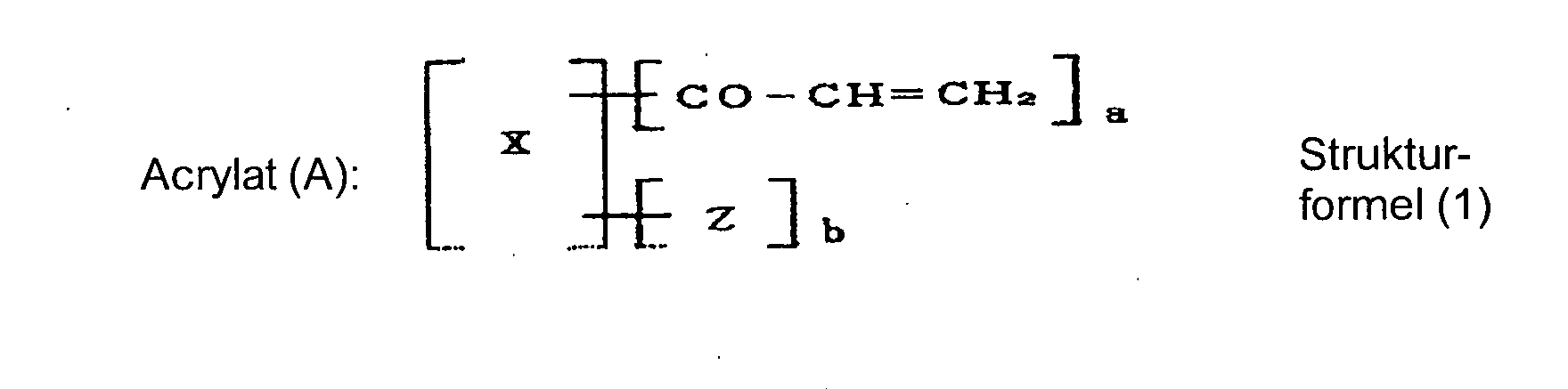

- Reversibles wärmeempfindliches Aufzeichnungsmedium nach irgendeinem der Ansprüche 1 bis 4, wobei die Elektronenakzeptor-Verbindung eine durch eine der folgenden Strukturformeln (3) und (4) dargestellte Phenolverbindung ist:


- Reversibles wärmeempfindliches Aufzeichnungsmedium nach irgendeinem der Ansprüche 1 bis 5, wobei eine Schicht in Kontakt mit der Oberfläche der Trägerseite der Schutzschicht eine Acrylatverbindung mit einer Pentaerythritgruppe oder einer Dipentaerythritgruppe enthält.
- Reversibles wärmeempfindliches Aufzeichnungsmedium nach Anspruch 6,
wobei die Acrylatverbindung mit einer Pentaerythritgruppe oder einer Dipentaerythritgruppe eine durch die folgende Strukturformel (5) dargestellte Acrylatverbindung (C) ist:
- Reversibles wärmeempfindliches Aufzeichnungsmedium nach Anspruch 7, wobei der Gehalt der Acrylatverbindung (C) einem Verhältnis Trockenmasse der Acrylatverbindung (C) / Trockenmasse der Schicht enthaltend die Acrylatverbindung (C) von 0,01 bis 0,10 entspricht.
- Reversibles wärmeempfindliches Aufzeichnungsmedium nach irgendeinem der Ansprüche 6 bis 8, wobei die Schicht in Kontakt mit der Oberfläche der Trägerseite der Schutzschicht eine wärmeempfindliche Aufzeichnungsschicht ist.
- Reversibles wärmeempfindliches Aufzeichnungsmedium nach irgendeinem der Ansprüche 6 bis 8, wobei die Schicht in Kontakt mit der Oberfläche der Trägerseite der Schutzschicht eine Zwischenschicht zwischen der wärmeempfindlichen Aufzeichnungsschicht und der Schutzschicht ist.
- Reversibles wärmeempfindliches Aufzeichnungsmedium nach irgendeinem der Ansprüche 1 bis 10, wobei das reversible wärmeempfindliche Aufzeichnungsmedium mindestens eine Wärmeisolierschicht enthaltend hohle Teilchen zwischen der wärmeempfindlichen Aufzeichnungsschicht und dem Träger umfasst.
- Reversibles wärmeempfindliches Aufzeichnungsmedium nach Anspruch 11, wobei die hohlen Teilchen eine Porosität von 70% oder mehr und eine maximale Teilchengröße (D100) von 5,0 µm bis 10,0 µm und auch ein Verhältnis der maximalen Teilchengröße zur Teilchengröße (D50) bei 50% Häufigkeit (D100/D50) von 2,0 bis 3,0 aufweisen und das Material, das die hohlen Teilchen bildet, ein Copolymer enthaltend mindestens Acrylnitril oder Methacrylnitril als eine Monomereinheit ist.
- Reversibles wärmeempfindliches Aufzeichnungsmedium nach irgendeinem der Ansprüche 1 bis 12, wobei das reversible wärmeempfindliche Aufzeichnungsmedium zur Form eines Etiketts, einer Platte/Folie oder einer Rolle verarbeitet ist.
- Reversibles wärmeempfindliches Aufzeichnungsmedium nach irgendeinem der Ansprüche 1 bis 13, wobei das reversible wärmeempfindliche Aufzeichnungsmedium eine irreversible visuelle Information und/oder einen druckbaren Abschnitt auf mindestens einem Teil der Oberfläche des reversiblen wärmeempfindlichen Aufzeichnungsmediums, auf der ein Bild zu erzeugen ist, und/oder der gegenüberliegenden Oberfläche davon umfasst.
- Reversibles wärmeempfindliches Aufzeichnungsetikett, umfassend:eine Klebschicht oder eine Bindemittelschicht auf einer Oberfläche entgegengesetzt zur Oberfläche des wärmeempfindlichen Aufzeichnungsmediums nach irgendeinem der Ansprüche 1 bis 14, auf der ein Bild zu erzeugen ist.
- Reversibles wärmeempfindliches Aufzeichnungselement, umfassend:einen Informationsspeicherabschnitt undeinen reversiblen Anzeigeabschnitt,wobei der reversible Anzeigeabschnitt ein reversibles wärmeempfindliches Aufzeichnungsmedium nach irgendeinem der Ansprüche 1 bis 12 umfasst.
- Reversibles wärmeempfindliches Aufzeichnungselement nach Anspruch 16, wobei der Informationsaufzeichnungsabschnitt ausgewählt ist aus einer magnetischen wärmeempfindlichen Aufzeichnungsschicht, einem Magnetstreifen, einem IC-Speicher, einem optischen Speicher, einem Hologramm, einer RF-ID-Kennzeichnungskarte, einer Disk, einer Diskkassette und einer Bandkassette.
- Anordnung von einer Bildverarbeitungsvorrichtung und einem Aufzeichnungsmaterial, wobei die Vorrichtung umfasst:eine Bilderzeugungseinheit, die geeignet ist, um ein reversibles wärmeempfindliches Aufzeichnungsmedium zu erwärmen, um dadurch ein Bild auf dem reversiblen wärmeempfindlichen Aufzeichnungsmedium zu erzeugen, und/oder eine Bildlöscheinheit, die geeignet ist, um ein reversibles wärmeempfindliches Aufzeichnungsmedium zu erwärmen, um dadurch ein auf dem reversiblen wärmeempfindlichen Aufzeichnungsmedium erzeugtes Bild zu löschen, wobei das Aufzeichnungsmaterial ein reversibles wärmeempfindliches Aufzeichnungsmedium nach irgendeinem der Ansprüche 1 bis 14 ist.
- Bildverarbeitungsanordnung nach Anspruch 18, wobei die Bilderzeugungseinheit ein Thermokopf oder eine Laserbestrahlungsvorrichtung ist.
- Bildverarbeitungsanordnung nach irgendeinem der Ansprüche 18 und 19, wobei die Bildlöscheinheit aus einem Thermokopf, einem keramischen Heizelement, einer Heizwalze, einem Heizstempel, einem Heizblock und einer Laserbestrahlungsvorrichtung ausgewählt ist.
- Bildverarbeitungsverfahren, umfassend
das Erwärmen eines reversiblen wärmeempfindlichen Aufzeichnungsmediums, um dadurch ein Bild auf dem reversiblen wärmeempfindlichen Aufzeichnungsmedium zu erzeugen, und/oder das Erwärmen eines reversiblen wärmeempfindlichen Aufzeichnungsmediums, um dadurch ein auf dem reversiblen wärmeempfindlichen Aufzeichnungsmedium erzeugtes Bild zu löschen, wobei das reversible wärmeempfindliche Aufzeichnungsmedium ein reversibles wärmeempfindliches Aufzeichnungsmedium nach irgendeinem der Ansprüche 1 bis 14 ist. - Bildverarbeitungsverfahren gemäß Anspruch 21, wobei die Bilder unter Verwendung eines Thermokopfes oder einer Laserbestrahlungsvorrichtung erzeugt werden.
- Bildverarbeitungsverfahren nach irgendeinem der Ansprüche 21 und 22, wobei das Bild unter Verwendung von einem ausgewählt aus einem Thermokopf, einem keramischen Heizelement, einer Heizwalze, einem Heizstempel, einem Heizblock und einer Laserbestrahlungsvorrichtung gelöscht wird.
- Bildverarbeitungsverfahren nach irgendeinem der Ansprüche 22 und 23, ferner umfassend die Erzeugung eines neuen Bilds, während das Bild unter Verwendung des Thermokopfes gelöscht wird.
Applications Claiming Priority (2)
| Application Number | Priority Date | Filing Date | Title |
|---|---|---|---|
| JP2006074368 | 2006-03-17 | ||
| JP2006139746 | 2006-05-19 |
Publications (2)
| Publication Number | Publication Date |
|---|---|
| EP1834801A1 EP1834801A1 (de) | 2007-09-19 |
| EP1834801B1 true EP1834801B1 (de) | 2008-09-17 |
Family
ID=38326202
Family Applications (1)
| Application Number | Title | Priority Date | Filing Date |
|---|---|---|---|
| EP07104354A Not-in-force EP1834801B1 (de) | 2006-03-17 | 2007-03-16 | Umkehrbares wärmeempfindliches Aufzeichnungsmedium sowie umkehrbares wärmeempfindliches Aufzeichnungsetikett, umkehrbares wärmeempfindliches Aufzeichnungselement, Vorrichtung zur Bildverarbeitung und Verfahren zur Bildverarbeitung |
Country Status (5)
| Country | Link |
|---|---|
| US (1) | US7732373B2 (de) |
| EP (1) | EP1834801B1 (de) |
| CN (1) | CN101041308B (de) |
| AT (1) | ATE408520T1 (de) |
| DE (1) | DE602007000125D1 (de) |
Families Citing this family (16)
| Publication number | Priority date | Publication date | Assignee | Title |
|---|---|---|---|---|
| TWI393918B (zh) * | 2008-10-01 | 2013-04-21 | Chunghwa Picture Tubes Ltd | 顯示介質與顯示器 |
| JP4826628B2 (ja) * | 2008-12-18 | 2011-11-30 | ソニー株式会社 | 熱転写シート |
| CN101670714A (zh) * | 2009-09-18 | 2010-03-17 | 陈东 | 具有特定打印介质可多次反复使用功能的打印机 |
| JP5659636B2 (ja) | 2010-08-31 | 2015-01-28 | 株式会社リコー | 可逆性感熱記録媒体、及び可逆性感熱記録部材 |
| US8529144B2 (en) * | 2010-10-14 | 2013-09-10 | Xerox Corporation | Integrated bidirectional urge unit for continuous feed printers |
| EP2463107B1 (de) * | 2010-12-09 | 2014-07-16 | Kabushiki Kaisha Toshiba | Farblöschvorrichtung und Steuerungsverfahren der Farblöschvorrichtung |
| JP2012210805A (ja) | 2011-03-18 | 2012-11-01 | Ricoh Co Ltd | 可逆性感熱記録媒体及び可逆性感熱記録部材 |
| JP6525892B2 (ja) | 2013-02-21 | 2019-06-05 | リープ テクノロジーズ エルティーディー | 紙に再印刷するためのシステムおよび方法 |
| US10907305B2 (en) | 2013-02-21 | 2021-02-02 | REEP Technologies Ltd. | System and method for reprinting on paper |
| WO2017034871A1 (en) | 2015-08-21 | 2017-03-02 | G&P Holding, Inc. | Silver and copper itaconates and poly itaconates |
| WO2020003794A1 (ja) | 2018-06-29 | 2020-01-02 | ソニー株式会社 | 可逆性記録媒体および外装部材 |
| DE112019004363T5 (de) * | 2018-08-31 | 2021-05-20 | Sony Corporation | Wärmeempfindliches aufzeichnungsmedium und äusseres bauelement |
| US10547757B1 (en) * | 2019-01-17 | 2020-01-28 | Reeo Technologies Ltd | System and method for archiving documents |
| JP6664570B1 (ja) * | 2019-07-25 | 2020-03-13 | 三菱電機株式会社 | サーマルプリンタ |
| JP7456157B2 (ja) * | 2019-12-27 | 2024-03-27 | 株式会社リコー | 熱転写記録媒体及び転写物 |
| CN113539053A (zh) * | 2021-06-29 | 2021-10-22 | 浙江天之元物流科技有限公司 | 一种环保双层热敏物流标签的制备工艺 |
Family Cites Families (33)
| Publication number | Priority date | Publication date | Assignee | Title |
|---|---|---|---|---|
| JPS60193691A (ja) | 1984-03-15 | 1985-10-02 | Mitsubishi Paper Mills Ltd | 可逆的画像形成材料 |
| JPH0764117B2 (ja) | 1985-04-15 | 1995-07-12 | 日本電信電話株式会社 | 書換形光記録方法および書換形光記録媒体 |
| JPH07113771B2 (ja) | 1985-09-05 | 1995-12-06 | 松下電子工業株式会社 | 基板上への樹脂パタ−ンの形成方法 |
| JPH07100769B2 (ja) | 1985-12-11 | 1995-11-01 | パイロツトインキ株式会社 | 色彩記憶性塗料 |
| JPH078931B2 (ja) | 1985-12-12 | 1995-02-01 | パイロットインキ 株式会社 | 色彩記憶性樹脂組成物 |
| JPH0659746B2 (ja) | 1985-12-14 | 1994-08-10 | パイロツトインキ株式会社 | 色彩記憶性印刷物 |
| JPS63107584A (ja) | 1986-10-23 | 1988-05-12 | Ricoh Co Ltd | 可逆性感熱記録材料 |
| JPH0829621B2 (ja) | 1987-01-14 | 1996-03-27 | 株式会社リコー | 可逆性記録材料 |
| JP2708464B2 (ja) | 1987-08-31 | 1998-02-04 | 株式会社リコー | 可逆性感熱記録材料 |
| JPH02188293A (ja) | 1989-01-18 | 1990-07-24 | Toppan Printing Co Ltd | 可逆性感熱記録媒体 |
| JPH02188294A (ja) | 1989-01-18 | 1990-07-24 | Toppan Printing Co Ltd | 可逆性感熱記録媒体 |
| JPH0478573A (ja) | 1990-07-20 | 1992-03-12 | Nitto Denko Corp | 可逆性感熱記録材料 |
| JP2981558B2 (ja) | 1990-12-26 | 1999-11-22 | 株式会社リコー | 可逆的熱発色性組成物、それを用いた記録媒体および記録方法 |
| JP3380277B2 (ja) | 1992-06-17 | 2003-02-24 | 三菱製紙株式会社 | 可逆性感熱記録材料 |
| JPH09142037A (ja) | 1995-11-17 | 1997-06-03 | Ricoh Co Ltd | 可逆性感熱記録媒体 |
| JP3557076B2 (ja) | 1996-06-06 | 2004-08-25 | 株式会社リコー | 可逆性感熱発色組成物およびそれを用いた可逆性感熱記録媒体 |
| JP3966585B2 (ja) | 1996-08-07 | 2007-08-29 | 株式会社リコー | 可逆性感熱記録媒体 |
| JPH10119440A (ja) | 1996-08-30 | 1998-05-12 | Ricoh Co Ltd | 可逆性感熱発色組成物およびそれを用いた可逆性感熱記録媒体 |
| JP3760431B2 (ja) | 1996-12-20 | 2006-03-29 | 株式会社リコー | 可逆性感熱記録媒体 |
| JP3735762B2 (ja) | 1997-06-26 | 2006-01-18 | 株式会社リコー | 可逆性感熱記録媒体 |
| JP3674824B2 (ja) | 1997-12-27 | 2005-07-27 | 株式会社リコー | 印字・消去方法 |
| JP3690638B2 (ja) * | 1998-03-23 | 2005-08-31 | 株式会社リコー | 可逆性感熱記録媒体 |
| US6261992B1 (en) | 1998-09-29 | 2001-07-17 | Ricoh Company, Ltd. | Reversible thermosensitive recording material and recording method and apparatus therefor |
| US6254243B1 (en) * | 1999-10-12 | 2001-07-03 | Walter A. Scrivens | Composite polymeric reflectors |
| RU2279313C2 (ru) * | 2000-07-12 | 2006-07-10 | Альбемарл Недерландс Б.В. | Смешанный металлический катализатор, содержащий горючее связующее |
| US6579826B2 (en) | 2000-10-10 | 2003-06-17 | Ricoh Company Limited | Reversible thermosensitive recording medium and image forming and erasing method using the recording medium |
| JP4024474B2 (ja) | 2000-11-30 | 2007-12-19 | 株式会社リコー | 可逆性感熱記録媒体及びこれの画像形成・消去方法 |
| JP2002248863A (ja) | 2001-02-26 | 2002-09-03 | Ricoh Co Ltd | 可逆性感熱記録媒体及びその画像処理方法 |
| JP3970117B2 (ja) | 2001-07-19 | 2007-09-05 | 株式会社リコー | 熱可逆記録媒体、ラベル、カード、ディスクカートリッジ、ディスク、テープカセット及び画像記録消去方法 |
| TWI224055B (en) | 2002-04-23 | 2004-11-21 | Ricoh Kk | Information recording/displaying card, image processing method using same, and image processor |
| EP1502764B1 (de) | 2002-04-23 | 2014-05-07 | Ricoh Company, Ltd. | Informationsaufzeichnungs-/-anzeigekarte, diese verwendendes bildverarbeitungsverfahren und bildprozessor |
| JP2005035276A (ja) * | 2003-06-25 | 2005-02-10 | Ricoh Co Ltd | 可逆性感熱記録媒体、並びに、可逆性感熱記録ラベル、可逆性感熱記録部材、画像処理装置及び画像処理方法 |
| JP4335017B2 (ja) * | 2004-01-08 | 2009-09-30 | 株式会社リコー | 熱可逆記録媒体、並びに、熱可逆記録部材及び画像処理方法 |
-
2007
- 2007-03-16 DE DE602007000125T patent/DE602007000125D1/de active Active
- 2007-03-16 EP EP07104354A patent/EP1834801B1/de not_active Not-in-force
- 2007-03-16 AT AT07104354T patent/ATE408520T1/de active
- 2007-03-16 US US11/724,895 patent/US7732373B2/en not_active Expired - Fee Related
- 2007-03-19 CN CN2007100883993A patent/CN101041308B/zh not_active Expired - Fee Related
Also Published As
| Publication number | Publication date |
|---|---|
| ATE408520T1 (de) | 2008-10-15 |
| EP1834801A1 (de) | 2007-09-19 |
| CN101041308A (zh) | 2007-09-26 |
| US20070232489A1 (en) | 2007-10-04 |
| CN101041308B (zh) | 2010-06-16 |
| US7732373B2 (en) | 2010-06-08 |
| DE602007000125D1 (de) | 2008-10-30 |
Similar Documents
| Publication | Publication Date | Title |
|---|---|---|
| US7732373B2 (en) | Reversible thermosensitive recording medium, as well as reversible thermosensitive recording label, reversible thermosensitive recording member, image processing apparatus and image processing method | |
| EP1491354B1 (de) | Reversibeles wärmeempfindliches Aufzeichnungsmaterial, Etikette, und Bildaufzeichnungsverfahren | |
| EP1552952B1 (de) | Warmeempfindliches reversibles Aufzeichnungsmedium, sowie Verfahren und Vorrichtung zur Bildverarbeitung | |
| JP2009279943A (ja) | 可逆性感熱記録媒体 | |
| JP3760431B2 (ja) | 可逆性感熱記録媒体 | |
| EP1669208B1 (de) | Reversibles wärmeempfindliches Aufzeichnungsmaterial, Etikette, Gerät, und Verfahren | |
| JP4410672B2 (ja) | 可逆性感熱記録媒体 | |
| JP5788667B2 (ja) | 可逆性感熱記録媒体及び可逆性感熱記録部材 | |
| JP5151195B2 (ja) | 可逆性感熱記録媒体、並びに可逆性感熱記録ラベル、可逆性感熱記録部材、画像処理装置及び画像処理方法 | |
| JP2006167996A (ja) | 可逆性感熱記録媒体、並びに、可逆性感熱記録ラベル、可逆性感熱記録部材、画像処理装置及び画像処理方法 | |
| JP2008254177A (ja) | 可逆性感熱記録媒体、並びに可逆性感熱記録ラベル、可逆性感熱記録部材、画像処理装置及び画像処理方法 | |
| JP4746401B2 (ja) | 可逆性感熱記録媒体、並びに可逆性感熱記録ラベル、可逆性感熱記録部材、画像処理装置及び画像処理方法 | |
| JP4030057B2 (ja) | 可逆性感熱記録媒体 | |
| JP2005053124A (ja) | 可逆性感熱記録媒体 | |
| JP4397312B2 (ja) | 可逆性感熱記録媒体 | |
| JP4410704B2 (ja) | 可逆性感熱記録媒体 | |
| JP4382539B2 (ja) | 可逆性感熱記録媒体、並びに、可逆性感熱記録ラベル、可逆性感熱記録部材、画像処理装置及び画像処理方法 | |
| JP4567559B2 (ja) | 可逆性感熱発色組成物およびそれを用いた可逆性感熱記録媒体 | |
| JP4879853B2 (ja) | 可逆性感熱記録媒体 | |
| JP2005262782A (ja) | 可逆性感熱層用組成物及び可逆性感熱記録媒体、並びに、可逆性感熱記録ラベル、可逆性感熱記録部材、画像処理装置及び画像処理方法 | |
| JP2007076051A (ja) | 可逆性感熱記録媒体 |
Legal Events
| Date | Code | Title | Description |
|---|---|---|---|
| PUAI | Public reference made under article 153(3) epc to a published international application that has entered the european phase |
Free format text: ORIGINAL CODE: 0009012 |
|
| AK | Designated contracting states |
Kind code of ref document: A1 Designated state(s): AT BE BG CH CY CZ DE DK EE ES FI FR GB GR HU IE IS IT LI LT LU LV MC MT NL PL PT RO SE SI SK TR |
|
| AX | Request for extension of the european patent |
Extension state: AL BA HR MK YU |
|
| 17P | Request for examination filed |
Effective date: 20071126 |
|
| GRAP | Despatch of communication of intention to grant a patent |
Free format text: ORIGINAL CODE: EPIDOSNIGR1 |
|
| AKX | Designation fees paid |
Designated state(s): AT DE FR GB |
|
| GRAS | Grant fee paid |
Free format text: ORIGINAL CODE: EPIDOSNIGR3 |
|
| GRAA | (expected) grant |
Free format text: ORIGINAL CODE: 0009210 |
|
| AK | Designated contracting states |
Kind code of ref document: B1 Designated state(s): AT DE FR GB |
|
| REG | Reference to a national code |
Ref country code: GB Ref legal event code: FG4D |
|
| REF | Corresponds to: |
Ref document number: 602007000125 Country of ref document: DE Date of ref document: 20081030 Kind code of ref document: P |
|
| PLBE | No opposition filed within time limit |
Free format text: ORIGINAL CODE: 0009261 |
|
| STAA | Information on the status of an ep patent application or granted ep patent |
Free format text: STATUS: NO OPPOSITION FILED WITHIN TIME LIMIT |
|
| 26N | No opposition filed |
Effective date: 20090618 |
|
| REG | Reference to a national code |
Ref country code: DE Ref legal event code: R082 Ref document number: 602007000125 Country of ref document: DE Representative=s name: MEISSNER, BOLTE & PARTNER GBR, DE Ref country code: DE Ref legal event code: R082 Ref document number: 602007000125 Country of ref document: DE Representative=s name: MEISSNER BOLTE PATENTANWAELTE RECHTSANWAELTE P, DE |
|
| REG | Reference to a national code |
Ref country code: DE Ref legal event code: R082 Ref document number: 602007000125 Country of ref document: DE Representative=s name: MEISSNER, BOLTE & PARTNER GBR, DE |
|
| REG | Reference to a national code |
Ref country code: FR Ref legal event code: PLFP Year of fee payment: 10 |
|
| REG | Reference to a national code |
Ref country code: FR Ref legal event code: PLFP Year of fee payment: 11 |
|
| REG | Reference to a national code |
Ref country code: FR Ref legal event code: PLFP Year of fee payment: 12 |
|
| PGFP | Annual fee paid to national office [announced via postgrant information from national office to epo] |
Ref country code: GB Payment date: 20200323 Year of fee payment: 14 Ref country code: AT Payment date: 20200320 Year of fee payment: 14 Ref country code: DE Payment date: 20200320 Year of fee payment: 14 |
|
| PGFP | Annual fee paid to national office [announced via postgrant information from national office to epo] |
Ref country code: FR Payment date: 20200319 Year of fee payment: 14 |
|
| REG | Reference to a national code |
Ref country code: DE Ref legal event code: R119 Ref document number: 602007000125 Country of ref document: DE |
|
| REG | Reference to a national code |
Ref country code: AT Ref legal event code: MM01 Ref document number: 408520 Country of ref document: AT Kind code of ref document: T Effective date: 20210316 |
|
| GBPC | Gb: european patent ceased through non-payment of renewal fee |
Effective date: 20210316 |
|
| PG25 | Lapsed in a contracting state [announced via postgrant information from national office to epo] |
Ref country code: AT Free format text: LAPSE BECAUSE OF NON-PAYMENT OF DUE FEES Effective date: 20210316 Ref country code: DE Free format text: LAPSE BECAUSE OF NON-PAYMENT OF DUE FEES Effective date: 20211001 Ref country code: GB Free format text: LAPSE BECAUSE OF NON-PAYMENT OF DUE FEES Effective date: 20210316 Ref country code: FR Free format text: LAPSE BECAUSE OF NON-PAYMENT OF DUE FEES Effective date: 20210331 |