EP1835737A2 - Procédé et lisible sur ordinateur pour le bayage des sources vidéo - Google Patents
Procédé et lisible sur ordinateur pour le bayage des sources vidéo Download PDFInfo
- Publication number
- EP1835737A2 EP1835737A2 EP06076628A EP06076628A EP1835737A2 EP 1835737 A2 EP1835737 A2 EP 1835737A2 EP 06076628 A EP06076628 A EP 06076628A EP 06076628 A EP06076628 A EP 06076628A EP 1835737 A2 EP1835737 A2 EP 1835737A2
- Authority
- EP
- European Patent Office
- Prior art keywords
- video source
- source group
- video
- frame number
- viewing time
- Prior art date
- Legal status (The legal status is an assumption and is not a legal conclusion. Google has not performed a legal analysis and makes no representation as to the accuracy of the status listed.)
- Granted
Links
Images






Classifications
-
- H—ELECTRICITY
- H04—ELECTRIC COMMUNICATION TECHNIQUE
- H04N—PICTORIAL COMMUNICATION, e.g. TELEVISION
- H04N5/00—Details of television systems
- H04N5/76—Television signal recording
- H04N5/765—Interface circuits between an apparatus for recording and another apparatus
- H04N5/775—Interface circuits between an apparatus for recording and another apparatus between a recording apparatus and a television receiver
-
- H—ELECTRICITY
- H04—ELECTRIC COMMUNICATION TECHNIQUE
- H04N—PICTORIAL COMMUNICATION, e.g. TELEVISION
- H04N21/00—Selective content distribution, e.g. interactive television or video on demand [VOD]
- H04N21/40—Client devices specifically adapted for the reception of or interaction with content, e.g. set-top-box [STB]; Operations thereof
- H04N21/43—Processing of content or additional data, e.g. demultiplexing additional data from a digital video stream; Elementary client operations, e.g. monitoring of home network or synchronising decoder's clock; Client middleware
- H04N21/442—Monitoring of processes or resources, e.g. detecting the failure of a recording device, monitoring the downstream bandwidth, the number of times a movie has been viewed, the storage space available from the internal hard disk
- H04N21/44213—Monitoring of end-user related data
- H04N21/44222—Analytics of user selections, e.g. selection of programmes or purchase activity
-
- H—ELECTRICITY
- H04—ELECTRIC COMMUNICATION TECHNIQUE
- H04N—PICTORIAL COMMUNICATION, e.g. TELEVISION
- H04N21/00—Selective content distribution, e.g. interactive television or video on demand [VOD]
- H04N21/40—Client devices specifically adapted for the reception of or interaction with content, e.g. set-top-box [STB]; Operations thereof
- H04N21/41—Structure of client; Structure of client peripherals
- H04N21/422—Input-only peripherals, i.e. input devices connected to specially adapted client devices, e.g. global positioning system [GPS]
- H04N21/42204—User interfaces specially adapted for controlling a client device through a remote control device; Remote control devices therefor
-
- H—ELECTRICITY
- H04—ELECTRIC COMMUNICATION TECHNIQUE
- H04N—PICTORIAL COMMUNICATION, e.g. TELEVISION
- H04N21/00—Selective content distribution, e.g. interactive television or video on demand [VOD]
- H04N21/40—Client devices specifically adapted for the reception of or interaction with content, e.g. set-top-box [STB]; Operations thereof
- H04N21/43—Processing of content or additional data, e.g. demultiplexing additional data from a digital video stream; Elementary client operations, e.g. monitoring of home network or synchronising decoder's clock; Client middleware
- H04N21/436—Interfacing a local distribution network, e.g. communicating with another STB or one or more peripheral devices inside the home
-
- H—ELECTRICITY
- H04—ELECTRIC COMMUNICATION TECHNIQUE
- H04N—PICTORIAL COMMUNICATION, e.g. TELEVISION
- H04N21/00—Selective content distribution, e.g. interactive television or video on demand [VOD]
- H04N21/40—Client devices specifically adapted for the reception of or interaction with content, e.g. set-top-box [STB]; Operations thereof
- H04N21/45—Management operations performed by the client for facilitating the reception of or the interaction with the content or administrating data related to the end-user or to the client device itself, e.g. learning user preferences for recommending movies, resolving scheduling conflicts
- H04N21/462—Content or additional data management e.g. creating a master electronic programme guide from data received from the Internet and a Head-end or controlling the complexity of a video stream by scaling the resolution or bit-rate based on the client capabilities
- H04N21/4622—Retrieving content or additional data from different sources, e.g. from a broadcast channel and the Internet
Definitions
- the present invention is related to a scanning method for video sources, and more particularly to a scanning method for video sources that are allowed for providing an input video signal to a display device such as a TV or projector, in which the scanning method is executed according to the scanning priority prioritized in terms of the statistic indicative of the viewing time or the frame number of the video source groups.
- the display device is required to be connectable with various video sources in order to provide wide-screen visual effect to the user.
- a contemporary TV is configured to be connectable with a multiplicity of video sources, such as video camera, portable computer, DVD device, and digital video recording/reproduction device.
- video sources such as video camera, portable computer, DVD device, and digital video recording/reproduction device.
- A/V peripheral device With the increase of the A/V peripheral device, a TV is necessary to build a variety of video input/output interfaces to access video signals promulgated with different audio/video specifications.
- the viewing time statistic or frame number statistic of the video source groups is used as a criteria to prioritize the scanning priority for the video source groups, such that each video source groups is scanned according to the scanning priority to determine if there is a video signal inputted into the video sources.
- the present invention can satisfy these needs.
- An object of the present invention is to provide a scanning method for video sources, in which the video sources of a display device is grouped and the scanning priority of each video source group is prioritized in terms of the viewing time statistic of each video source group, such that the display device can discover the video source which is providing an input video signal to the display device.
- Another object of the present invention is to provide a scanning method for video sources, in which the video sources of a display device are grouped and the scanning priority of each video source group is prioritized in terms of the frame number statistic of each video source group, such that the display device can discover the video source which is providing an input video signal to the display device.
- a scanning method for video sources of a display device includes the steps of: (a) grouping a plurality of video sources into a plurality of video source groups; (b) calculating a statistic of each video source group; (c) prioritizing a scanning priority for each video source group according to the statistic of each video source group; and (d) scanning each video source group according to the scanning priority of each video source group to determine if there is a video signal inputted into the video sources.
- a computer readable medium having computer-executable instructions for enabling a computer to accomplish a scanning method for the video sources of a display device
- the scanning method for the video sources includes the steps of: (a) grouping a plurality of video sources into a plurality of video source groups; (b) calculating a statistic for each video source group; (c) prioritizing the scanning priority for each video source group according to the statistic of each video source group; and (d) scanning each video source group according to the scanning priority of each video source group to determine if there is a video signal inputted into the video sources.
- Fig. 1 is a systematic block diagram showing the system for implementing the scanning method for video sources according to the present invention
- Fig. 2(A) and Fig. 2(B) respectively illustrate a first mode for grouping the video sources and a second mode for grouping the video sources according to the present invention
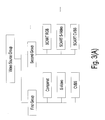
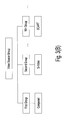
- Fig. 3(A) and Fig. 3(B) respectively illustrate a first exemplification for grouping the video sources and a second exemplification for grouping the video sources according to the present invention
- Fig. 4(A) illustrates the procedural steps of the main routine for performing the scanning method for video sources according to the present invention
- Fig. 4(B) illustrates the procedural steps of the subroutine A shown in Fig. 4(A);
- Fig. 5(A) illustrates an arithmetic process for calculating the viewing time statistic indicative of the viewing time of a video source group according to a first embodiment of the present invention
- Fig. 5(B) illustrates an arithmetic process for calculating the frame number statistic indicative of the number of played frames of a video source group according to a second embodiment of the present invention
- Fig. 6(A) illustrates the procedural steps of a proportional distribution routine for the statistic according to a first embodiment of the present invention
- Fig. 6(B) illustrates the procedural steps of a proportional distribution routine for the statistic according to a second embodiment of the present invention
- Fig. 7(A) illustrates the procedural steps of a weighting distribution routine for the statistic according to a first embodiment of the present invention.
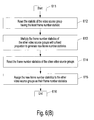
- Fig. 7(B) illustrates the procedural steps of a weighting distribution routine for the statistic according to a second embodiment of the present invention
- the present invention presents a scanning method for video sources, in which the scanning method is executed by grouping the video sources of a display device and prioritizing the scanning priority for each video source group in terms of the viewing time statistic indicative of the viewing time of a video source group or the frame number statistic indicative of the number of played frames of a video source group, in order to enable the display device to discover which video source is providing an input video signal to the display device when a video signal is inputted into the video sources.
- Fig. 1 shows a systematic block diagram outlining the system for performing the scanning method for video sources according to the present invention, in which the system is built in a display device 100, such as a TV or projector.
- a CPU 110 is configured to execute instructions for video decoding and playing.
- the CPU 110 is connected to a system memory 120 that is configured to store operational data during the video decoding process.
- the display device 100 is configured to communicate with external video display devices via the video sources 140, which are configured to allow video signals to be inputted into the display device 100 and played by means of the manipulation of the CPU 110.
- the CPU 110 includes a counter 112 that is configured to calculate the viewing time statistic indicative of the viewing time of a video source group or calculate the frame number statistic indicative of the number of played frames of a video source group.
- the statistic derived from the calculations of the counter 112 is stored in the flash memory 130 that is connected to the system memory 120.
- Fig. 2(A) shows a first mode for grouping the video sources 140.
- the video sources 140 are represented by the video signal input interfaces of the display device 100, and the criteria of video source grouping are based on the shared audio channel.
- the Component video source 212, the S-Video video source 211, and the CVBS video source 213 all share a shared audio channel, and all of them are grouped as a first video source group 141.
- the RGB video source, the S-Video video source, and the CVBS video source built in the SCART connector interface 214 are grouped as a second video source group.
- the video source having a higher resolution is assigned with a higher scanning priority in the same video source group.
- the scanning priority of the video sources in the first video source group 141 is prioritized based on the resolution of the input video signal specified by the video source as: Component video source 212 > S-Video video source 211 > CVBS video source 213, and the scanning priority of the video sources in the second video source group 142 is prioritized based on the resolution of the input video signal as: SCART/RGB video source > SCART/S-Video video source > SCART/CVBS video source.
- An exemplification of video source grouping with the topology of Fig. 2(A) is shown in Fig. 3(A).
- Fig. 2(B) shows a second mode for grouping the video sources 140.
- the video sources 140 are represented by the video signal input interfaces of the display device 100.
- each video source constitutes an individual video source group.
- the video sources 140 are grouped into a Component video source group 212, a S-Video video source group 211, a CVBS video source group 213, and a SCART video source group 214.
- An exemplification of video source grouping with the topology of Fig. 2(B) is shown in Fig. 3(B).
- Fig. 4(A) is a flowchart illustrating the procedural steps of the main routine for performing the scanning method for video sources according to the present invention
- Fig. 4(B) is a flowchart illustrating the procedural steps of the subroutine A shown in Fig. 4(A).
- the scanning method for video sources according to the present invention is described below with reference to Fig. 4(A) and Fig. 4(B):
- Step 401 Start.
- Step 402 Determine if there is a scheduled program to play or a video signal inputted into the previously-played video source.
- the display device 100 When the display device 100 is powered up, the display device may first determine if there is a scheduled program to play or a video signal inputted into the previously-played video source. When a scheduled program is about to play or a video signal is inputted into the previously-played video source, the process continues with step 403 to enable the CPU 110 to receive and decode the input video signal for playing. Otherwise, the process continues with step 404.
- Step 404 Using the viewing time statistic or frame number statistic as the criteria for prioritizing the scanning priority for video source groups: When the display device 100 is powered up, and there is no scheduled program to play or no video signal inputted into the previously-played video source, the CPU 110 will use the viewing time statistic or frame number statistic as the criteria for prioritizing the scanning priority for each video source group. For example, if the grouping of the video sources is carried out in the form of the first mode, the Component video source, the S-Video video source, and the CVBS video source are grouped as a first video source group, and the RGB video source, S-Video video source, and the CVBS video source built in the SCART connector interface are grouped as a second video source group.
- the CPU 110 is configured to compare the sum of the viewing time statistic or the sum of the frame number statistic of each video source in the first video source group with the sum of the viewing time statistic or the sum of the frame number statistic of each video source in the second video source group, and assign a higher scanning priority to the video source group having a greater viewing time statistic or frame number statistic.
- the scanning priority of each video source is prioritized based on the resolution of the input video signal as: Component video source (RGB video source) > S-Video video source > CVBS video source. If the grouping of the video sources is carried out in the form of the second mode, each video source constitutes an individual video source group.
- the CPU only needs to compare the viewing time statistic or the frame number statistic of each video source to determine the scanning priority for each video source group.
- the viewing time statistic or the frame number statistic of each video source group is calculated by the counter 112 and recorded in the flash memory 130. Next, the process continues with step 405.
- Step 405 Scanning the video source group of the highest scanning priority: At step 404, the scanning priority of each video source group is prioritized. Next, the scanning process begins with the video source group of the highest scanning priority. Next, the process continues with the subroutine A.
- Fig. 4(B) Please refer to Fig. 4(B), in which the procedural steps of the subroutine A shown in Fig. 4(A) are illustrated.
- the subroutine A is set to execute the scanning process for each video source in the same video source group.
- the process begins with step A11, in which the video source of the highest scanning priority in the video source group is scanned.
- step A12 if there is a video signal inputted into the video source of the highest scanning priority, the CPU 110 is configured to receive and decode a video signal from the video source of the highest scanning priority for playing. If there is no video signal inputted into the video source of the highest scanning priority, the process continues with step A21 to scan the video source of the second highest scanning priority.
- the subroutine of the scanning process continues with an analogical manner to scan each video source in the video source group until step An1.
- step An1 the video source of the lowest scanning priority is scanned.
- step An2 if there is a video signal inputted into the video source of the lowest scanning priority, the CPU 110 is configured to receive and decode a video signal from the video source of the lowest scanning priority for playing. If there is no video signal inputted into the video source of the lowest scanning priority, the process continues with step An+1 and the control of the process returns to the main routine of Fig. 4(A).
- the video source group of the second highest scanning priority will be scanned at step 406.
- the execution of the scanning process jumps to the subroutine A, in which the procedural steps thereof have been described above with reference to Fig. 4(B), and no further details is desired to be given herein.
- the main routine of the scanning process continues with an analogical manner to scan each video source group.
- the execution of the main routine goes to step 407, in which the video source group of the lowest scanning priority is scanned. If there is no video signal inputted into the video source group of the lowest priority, the scanning process continues with step 408 to enable the display device 100 to play TV programs. The execution of the main routine is terminated at step 409.
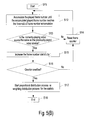
- Fig. 5(A) illustrates an arithmetic process for calculating the viewing time statistic indicative of the viewing time of a video source group according to a first embodiment of the present invention.
- the procedural steps of Fig. 5(A) is described as follows:
- Step 501 Start.
- Step 502 Accumulate the viewing time until the accumulated viewing time reaches the threshold of viewing time accumulation:
- the viewing time statistic indicative of the viewing time of a video source group is used as the criteria for prioritizing the scanning priority for each video source group. Therefore, it is set to increase the viewing time statistic calculated by a counter when the accumulated viewing time reaches a predetermined threshold of viewing time accumulation.
- the predetermined threshold of viewing time accumulation can be set to 10 minutes.
- Step 503 Determine if the currently-playing video source is the same as the previously-played video source. If the currently-playing video source is the same as the previously-played video source, the process continues with step 505. Otherwise, the process continues with step 504 to reset the timer of the CPU 110, and the execution of the process returns to the beginning of the process.
- Step 505 Increase the viewing time statistic by 1: If the accumulated viewing time has reached the predetermined threshold of viewing time accumulation, the viewing time statistic indicative of viewing time of the video source group is increased by 1. The process then continues with step 506.
- Step 506 Determine if the counter is overflowed: According to a practical aspect of the present invention, the counter 112 is consisted of a 2-byte data structure. However, the actual implementation of the counter 112 is not to be exhaustively limited to the form disclosed herein. If the counter 112 is consisted of a 2-byte data structure, the maximum countable value of the counter 112 should be 65535. At this step, if the count of the counter exceeds 65535, the process continues with step 507. Otherwise, the process continues with step 504 to reset the timer of the CPU 110, and the execution of the process returns to the beginning of the process.
- Step 507 Start proportional distribution process or weighting distribution process for the statistic: If the count of the counter exceeds 65535, a proportional distribution process or weighting distribution process will be executed.
- the procedural steps of the proportional distribution routine or weighting distribution routine will be described below with reference to the flowcharts of Fig. 6 and Fig. 7.
- Step 508 End.
- Fig. 5(B) illustrates an arithmetic process for calculating the frame number statistic indicative of the number of played frames of a video source group according to a second embodiment of the present invention.
- the procedural steps of Fig. 5(B) is described as follows:
- Step 511 Start.
- Step 512 Accumulate the played frame number until the accumulated played frame number reaches the threshold of frame number accumulation:
- the frame number statistic indicative of the number of played frames of a video source group is used as the criteria for prioritizing the scanning priority for each video source group. Therefore, it is set to increase the frame number statistic calculated by a counter when the accumulated played frame number reaches a predetermined threshold of frame number accumulation.
- the default frame rate of an NTSC-format DVD is set to 29.97 fps (about 30 fps). Therefore, the predetermined threshold of frame number accumulation can be set to 1800, which is about the number of played video frames for an NTSC-format DVD in one minute.
- a frame counter located within the CPU 110 is activated to start recording the number of played frames of the video source.
- the frame number of the video source is accumulated up to the predetermined threshold of frame number accumulation, that is, 1800 frames, the process continues with step 513.
- Step 513 Determine if the currently-playing video source is the same as the previously-played video source. If the currently-playing video source is the same as the previously-played video source, the process continues with step 515. Otherwise, the process continues with step 514 to reset the frame counter of the CPU 110, and the execution of the process returns to the beginning of the process.
- Step 515 Increase the frame number statistic by 1: If the accumulated frame number has reached the predetermined threshold of frame number accumulation, the frame number statistic indicative of the number of played frames of the video source group is increased by 1. The process then continues with step 516.
- Step 516 Determine if the counter is overflowed:
- the counter 112 is consisted of a 2-byte data structure.
- the maximum countable value of the counter 112 should be 65535.
- the process continues with step 517. Otherwise, the process continues with step 514 to reset the frame counter of the CPU 110, and the execution of the process returns to the beginning of the process.
- Step 517 Start proportional distribution process or weighting distribution process for the statistic: If the count of the counter exceeds 65535, a proportional distribution process or weighting distribution process will be executed.
- the procedural steps of the proportional distribution routine or weighting distribution routine will be described below with reference to the flowcharts of Fig. 6 and Fig. 7.
- Step 518 End.
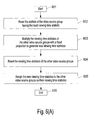
- Fig. 6(A) illustrates the procedural steps of a proportional distribution routine for the statistic according to a first embodiment of the present invention.
- the procedural steps of Fig. 6(A) will be described as follows:
- Step 601 Start.
- Step 602 Reset the statistic of the video source group having the least viewing time statistic:
- the mode of video source grouping is carried out with the topology as shown in Fig. 2(B), and the S-video video source group is assumed as the video source group having the least viewing time statistic. That is, the user seldom selects S-video video source to input video signals for viewing. Therefore, the viewing time statistic of the S-video video source group will be reset to zero.
- the process continues with step 603.
- Step 603 Multiply the viewing time statistics of the other video source groups with a fixed proportion to generate new viewing time statistics: For example, the viewing time statistics of the video source groups, except for the S-video video source group which has the least viewing time statistic, will be multiplied with a fixed proportion respectively, and the products are set as a new viewing time statistic for the CVBS video source group, SCART video source group, and Component video source group, respectively.
- the process continues with step 604.
- Step 604 Reset the viewing time statistics of the other video source groups: At this step, the viewing time statistics of the CVBS video source group, SCART video source group, and Component video source group will be reset to zero. Next, the process continues with step 605.
- Step 605 Assign the new viewing time statistics to the other video source groups as their viewing time statistics: The new viewing time statistics obtained at the step 603 will be assigned to the CVBS video source group, SCART video source group, and Component video source group respectively as their viewing time statistics. Next, the process continues with step 606.
- Step 606 End.
- Fig. 6(B) illustrates the procedural steps of a proportional distribution routine for the statistic according to a second embodiment of the present invention.
- the procedural steps of Fig. 6(B) will be described as follows:
- Step 611 Start.
- Step 612 Reset the statistic of the video source group having the least frame number statistic:
- the mode of video source grouping is carried out with the topology as shown in Fig. 2(B), and the S-video video source group is assumed as the video source group having the least frame number statistic. That is, the user seldom selects S-video video source to input video signals for viewing. Therefore, the frame number statistic of the S-video video source group will be reset to zero.
- the process continues with step 613.
- Step 613 Multiply the frame number statistic of the other video source groups with a fixed proportion to generate new frame number statistics: For example, the frame number statistics of the video source groups, except for the S-video video source group which has the least frame number statistic, will be multiplied with a fixed proportion respectively, and the products are set as a new frame number statistic for the CVBS video source group, SCART video source group, and Component video source group, respectively.
- the process continues with step 614.
- Step 614 Reset the frame number statistics of the other video source groups: At this step, the frame number statistics of the CVBS video source group, SCART video source group, and Component video source group will be reset to zero. Next, the process continues with step 615.
- Step 615 Assign the new frame number statistics to the other video source groups as their frame number statistics: The new frame number statistics obtained at step 613 will be assigned to the CVBS video source group, SCART video source group, and Component video source group respectively as their frame number statistics. Next, the process continues with step 616.
- Step 616 End.
- Fig. 7(A) illustrates the procedural steps of a weighting distribution routine for the statistic according to a first embodiment of the present invention.
- the procedural steps of Fig. 7(A) will be described as follows:
- Step 701 Start.
- Step 702 Reset the statistic of the video source group having the least viewing time statistic:
- the mode of video source grouping is carried out with the topology as shown in Fig. 2(B), and the S-video video source group is assumed as the video source group having the least viewing time statistic. That is, the user seldom selects S-video video source to input video signals for viewing. Therefore, the viewing time statistic of the S-video video source group will be reset to zero.
- the process continues with step 703.
- Step 703 Respectively multiply the viewing time statistic of the other video source groups with an individual weighting factor to generate new viewing time statistics: For example, the viewing time statistics of the video source groups, except for the S-video video source group which has the least viewing time statistic, will be respectively multiplied with an individual weighting factor, and the products are set as a new viewing time statistic for the CVBS video source group, SCART video source group, and Component video source group, respectively.
- the process continues with step 704.
- Step 704 Reset the viewing time statistics of the other video source groups: At this step, the viewing time statistics of the CVBS video source group, SCART video source group, and Component video source group will be reset to zero. Next, the process continues with step 705.
- Step 705 Assign the new viewing time statistics to the other video source groups as their viewing time statistics: The new viewing time statistics obtained at the step 703 will be assigned to the CVBS video source group, SCART video source group, and Component video source group respectively as their viewing time statistics. Next, the process continues with step 706.
- Step 706 End.
- Fig. 7(B) illustrates the procedural steps of a weighting distribution routine for the statistic according to a second embodiment of the present invention.
- the procedural steps of Fig. 7(B) will be described as follows:
- Step 711 Start.
- Step 712 Reset the statistic of the video source group having the least frame number statistic:
- the mode of video source grouping is carried out with the topology as shown in Fig. 2(B), and the S-video video source group is assumed as the video source group having the least frame number statistic. That is, the user seldom selects S-video video source to input video signals for viewing. Therefore, the frame number statistic of the S-video video source group will be reset to zero.
- the process continues with step 713.
- Step 713 Respectively multiply the frame number statistic of the other video source groups with an individual weighting factor to generate new frame number statistics: For example, the frame number statistics of the video source groups, except for the S-video video source group which has the least frame number statistic, will be respectively multiplied with an individual weighting factor, and the products are set as a new frame number statistic for the CVBS video source group, SCART video source group, and Component video source group, respectively.
- the process continues with step 714.
- Step 714 Reset the frame number statistics of the other video source groups: At this step, the frame number statistics of the CVBS video source group, SCART video source group, and Component video source group will be reset to zero. Next, the process continues with step 715.
- Step 715 Assign the new frame number statistics to the other video source groups as their frame number statistics: The new frame number statistics obtained at the step 713 will be assigned to the CVBS video source group, SCART video source group, and Component video source group respectively as their frame number statistics. Next, the process continues with step 716.
- Step 716 End.
- the present invention also provides a computer readable media having computer-executable instructions for enabling a computer to accomplish a scanning method for the video sources of a display device.
- the procedural steps of the scanning method for the video sources have been described without omission, and it is not intended to give details herein.
- the present invention takes the viewing time statistic or the frame number statistic indicative of the viewing time or the number of played video frames of a video source group of a display device as the criteria for prioritizing the scanning priority for each video source group, such that the display device can readily and efficiently determine which video source has received an input video signal and decode the input video signal for playing.
- the inventive technique disclosed herein the user is immune from manipulating the display device to scan each video source of the TV, and thereby provide a convenient solution for the display device to accomplish the scanning task for video sources.
Landscapes
- Engineering & Computer Science (AREA)
- Multimedia (AREA)
- Signal Processing (AREA)
- Health & Medical Sciences (AREA)
- General Health & Medical Sciences (AREA)
- Social Psychology (AREA)
- Databases & Information Systems (AREA)
- Computer Networks & Wireless Communication (AREA)
- Human Computer Interaction (AREA)
- Two-Way Televisions, Distribution Of Moving Picture Or The Like (AREA)
- Television Signal Processing For Recording (AREA)
- Transforming Electric Information Into Light Information (AREA)
Applications Claiming Priority (1)
| Application Number | Priority Date | Filing Date | Title |
|---|---|---|---|
| CNB2006100596566A CN100556106C (zh) | 2006-03-17 | 2006-03-17 | 视频信号源的扫描方法 |
Publications (3)
| Publication Number | Publication Date |
|---|---|
| EP1835737A2 true EP1835737A2 (fr) | 2007-09-19 |
| EP1835737A3 EP1835737A3 (fr) | 2009-05-13 |
| EP1835737B1 EP1835737B1 (fr) | 2014-04-09 |
Family
ID=38229250
Family Applications (1)
| Application Number | Title | Priority Date | Filing Date |
|---|---|---|---|
| EP06076628.4A Not-in-force EP1835737B1 (fr) | 2006-03-17 | 2006-08-28 | Procédé et lisible sur ordinateur pour le bayage des sources vidéo |
Country Status (2)
| Country | Link |
|---|---|
| EP (1) | EP1835737B1 (fr) |
| CN (1) | CN100556106C (fr) |
Families Citing this family (2)
| Publication number | Priority date | Publication date | Assignee | Title |
|---|---|---|---|---|
| CN102237072B (zh) * | 2010-05-07 | 2013-06-19 | 宏碁股份有限公司 | 信号源检测方法 |
| CN102843608B (zh) * | 2012-08-03 | 2017-02-22 | Tcl集团股份有限公司 | 智能电视的信源使用调查方法 |
Citations (1)
| Publication number | Priority date | Publication date | Assignee | Title |
|---|---|---|---|---|
| EP1081950A2 (fr) | 1999-08-30 | 2001-03-07 | Spotware Technologies, Inc. | Multiplexeur vidéo automatique |
Family Cites Families (6)
| Publication number | Priority date | Publication date | Assignee | Title |
|---|---|---|---|---|
| JP3351213B2 (ja) * | 1996-01-09 | 2002-11-25 | 三菱電機株式会社 | 学習メニュー制御方式 |
| CA2227010C (fr) * | 1997-01-17 | 2004-08-10 | Sony Corporation | Appareil d'affichage video et methode pour commander la commutation de terminaux d'entree externes associes |
| WO1999013640A1 (fr) * | 1997-09-11 | 1999-03-18 | Sony Corporation | Dispositif electronique |
| US6052471A (en) * | 1998-05-08 | 2000-04-18 | Sony Corporation | Smart audio receiver that automatically select an input audio source |
| FR2819673B1 (fr) * | 2001-01-16 | 2003-04-18 | Sagem | Procede de commande d'un appareil comportant plusieurs sources video |
| CN100342714C (zh) * | 2005-01-28 | 2007-10-10 | 四川长虹电器股份有限公司 | 视频设备信号选择方法 |
-
2006
- 2006-03-17 CN CNB2006100596566A patent/CN100556106C/zh not_active Expired - Fee Related
- 2006-08-28 EP EP06076628.4A patent/EP1835737B1/fr not_active Not-in-force
Patent Citations (1)
| Publication number | Priority date | Publication date | Assignee | Title |
|---|---|---|---|---|
| EP1081950A2 (fr) | 1999-08-30 | 2001-03-07 | Spotware Technologies, Inc. | Multiplexeur vidéo automatique |
Also Published As
| Publication number | Publication date |
|---|---|
| EP1835737B1 (fr) | 2014-04-09 |
| CN101039402A (zh) | 2007-09-19 |
| CN100556106C (zh) | 2009-10-28 |
| EP1835737A3 (fr) | 2009-05-13 |
Similar Documents
| Publication | Publication Date | Title |
|---|---|---|
| US6384846B1 (en) | Methods and apparatus for rendering multiple images using a limited rendering resource | |
| US20250071388A1 (en) | Intermediate key frame selection and animation | |
| US8141088B2 (en) | Multithreaded processor | |
| US7826712B2 (en) | Method and apparatus for receiving, storing, and presenting multimedia programming without indexing prior to storage | |
| US20040067043A1 (en) | Trick playback of digital video data | |
| US8893135B2 (en) | Digital broadcast receiver and software startup method | |
| US7825993B2 (en) | Method and computer readable media for scanning video sources | |
| US11184675B1 (en) | Systems and methods to improve skip forward functionality | |
| US7219173B2 (en) | System for video processing control and scheduling wherein commands are unaffected by signal interrupts and schedule commands are transmitted at precise time | |
| CN1461484A (zh) | 选择图像序列中的位置的方法和装置 | |
| US9055272B2 (en) | Moving image reproduction apparatus, information processing apparatus, and moving image reproduction method | |
| US20070079334A1 (en) | Methods and systems for resolving scheduling conflicts in a video recorder | |
| US8813084B2 (en) | Broadcast receiving apparatus and scheduling method thereof | |
| US11277666B2 (en) | Systems and methods to improve skip forward functionality | |
| US8639097B2 (en) | Video recording and playback apparatus | |
| CN106412634A (zh) | 媒体文件推送方法、媒体文件服务器及媒体文件推送系统 | |
| US20250166663A1 (en) | Systems and methods to improve skip forward functionality | |
| EP1835737A2 (fr) | Procédé et lisible sur ordinateur pour le bayage des sources vidéo | |
| WO2007149707A1 (fr) | Brouillage vidéo | |
| US8611721B2 (en) | Video playing apparatus and location search method thereof | |
| KR102770679B1 (ko) | 전자 프로그램 가이드, 전자 프로그램 가이드를 위한 방법, 및 해당 디바이스 | |
| CN115866349B (zh) | 一种多媒体文件的播放方法、装置和电子设备 | |
| CN112529823B (zh) | 一种图像处理方法、装置及设备 | |
| JP2006129050A (ja) | 動画を再生又は記録する装置、方法及びプログラム | |
| JP2008193270A (ja) | 動画再生装置 |
Legal Events
| Date | Code | Title | Description |
|---|---|---|---|
| PUAI | Public reference made under article 153(3) epc to a published international application that has entered the european phase |
Free format text: ORIGINAL CODE: 0009012 |
|
| AK | Designated contracting states |
Kind code of ref document: A2 Designated state(s): AT BE BG CH CY CZ DE DK EE ES FI FR GB GR HU IE IS IT LI LT LU LV MC NL PL PT RO SE SI SK TR |
|
| AX | Request for extension of the european patent |
Extension state: AL BA HR MK YU |
|
| 17P | Request for examination filed |
Effective date: 20081223 |
|
| PUAL | Search report despatched |
Free format text: ORIGINAL CODE: 0009013 |
|
| AK | Designated contracting states |
Kind code of ref document: A3 Designated state(s): AT BE BG CH CY CZ DE DK EE ES FI FR GB GR HU IE IS IT LI LT LU LV MC NL PL PT RO SE SI SK TR |
|
| AX | Request for extension of the european patent |
Extension state: AL BA HR MK RS |
|
| 17Q | First examination report despatched |
Effective date: 20090702 |
|
| AKX | Designation fees paid |
Designated state(s): AT BE BG CH CY CZ DE DK EE ES FI FR GB GR HU IE IS IT LI LT LU LV MC NL PL PT RO SE SI SK TR |
|
| GRAP | Despatch of communication of intention to grant a patent |
Free format text: ORIGINAL CODE: EPIDOSNIGR1 |
|
| INTG | Intention to grant announced |
Effective date: 20131104 |
|
| RIN1 | Information on inventor provided before grant (corrected) |
Inventor name: SHEN, SHIH-TONG C/O ACER INCORPORATED Inventor name: HO, KUANG-PENG C/O ACER INCORPORATED |
|
| GRAS | Grant fee paid |
Free format text: ORIGINAL CODE: EPIDOSNIGR3 |
|
| GRAA | (expected) grant |
Free format text: ORIGINAL CODE: 0009210 |
|
| AK | Designated contracting states |
Kind code of ref document: B1 Designated state(s): AT BE BG CH CY CZ DE DK EE ES FI FR GB GR HU IE IS IT LI LT LU LV MC NL PL PT RO SE SI SK TR |
|
| REG | Reference to a national code |
Ref country code: GB Ref legal event code: FG4D |
|
| REG | Reference to a national code |
Ref country code: AT Ref legal event code: REF Ref document number: 661882 Country of ref document: AT Kind code of ref document: T Effective date: 20140415 Ref country code: CH Ref legal event code: EP |
|
| REG | Reference to a national code |
Ref country code: IE Ref legal event code: FG4D |
|
| REG | Reference to a national code |
Ref country code: DE Ref legal event code: R096 Ref document number: 602006040978 Country of ref document: DE Effective date: 20140522 |
|
| REG | Reference to a national code |
Ref country code: AT Ref legal event code: MK05 Ref document number: 661882 Country of ref document: AT Kind code of ref document: T Effective date: 20140409 |
|
| REG | Reference to a national code |
Ref country code: NL Ref legal event code: VDEP Effective date: 20140409 |
|
| REG | Reference to a national code |
Ref country code: LT Ref legal event code: MG4D |
|
| PG25 | Lapsed in a contracting state [announced via postgrant information from national office to epo] |
Ref country code: GR Free format text: LAPSE BECAUSE OF FAILURE TO SUBMIT A TRANSLATION OF THE DESCRIPTION OR TO PAY THE FEE WITHIN THE PRESCRIBED TIME-LIMIT Effective date: 20140710 Ref country code: NL Free format text: LAPSE BECAUSE OF FAILURE TO SUBMIT A TRANSLATION OF THE DESCRIPTION OR TO PAY THE FEE WITHIN THE PRESCRIBED TIME-LIMIT Effective date: 20140409 Ref country code: LT Free format text: LAPSE BECAUSE OF FAILURE TO SUBMIT A TRANSLATION OF THE DESCRIPTION OR TO PAY THE FEE WITHIN THE PRESCRIBED TIME-LIMIT Effective date: 20140409 Ref country code: BG Free format text: LAPSE BECAUSE OF FAILURE TO SUBMIT A TRANSLATION OF THE DESCRIPTION OR TO PAY THE FEE WITHIN THE PRESCRIBED TIME-LIMIT Effective date: 20140709 Ref country code: IS Free format text: LAPSE BECAUSE OF FAILURE TO SUBMIT A TRANSLATION OF THE DESCRIPTION OR TO PAY THE FEE WITHIN THE PRESCRIBED TIME-LIMIT Effective date: 20140809 Ref country code: FI Free format text: LAPSE BECAUSE OF FAILURE TO SUBMIT A TRANSLATION OF THE DESCRIPTION OR TO PAY THE FEE WITHIN THE PRESCRIBED TIME-LIMIT Effective date: 20140409 |
|
| PG25 | Lapsed in a contracting state [announced via postgrant information from national office to epo] |
Ref country code: AT Free format text: LAPSE BECAUSE OF FAILURE TO SUBMIT A TRANSLATION OF THE DESCRIPTION OR TO PAY THE FEE WITHIN THE PRESCRIBED TIME-LIMIT Effective date: 20140409 Ref country code: ES Free format text: LAPSE BECAUSE OF FAILURE TO SUBMIT A TRANSLATION OF THE DESCRIPTION OR TO PAY THE FEE WITHIN THE PRESCRIBED TIME-LIMIT Effective date: 20140409 Ref country code: SE Free format text: LAPSE BECAUSE OF FAILURE TO SUBMIT A TRANSLATION OF THE DESCRIPTION OR TO PAY THE FEE WITHIN THE PRESCRIBED TIME-LIMIT Effective date: 20140409 Ref country code: PL Free format text: LAPSE BECAUSE OF FAILURE TO SUBMIT A TRANSLATION OF THE DESCRIPTION OR TO PAY THE FEE WITHIN THE PRESCRIBED TIME-LIMIT Effective date: 20140409 Ref country code: LV Free format text: LAPSE BECAUSE OF FAILURE TO SUBMIT A TRANSLATION OF THE DESCRIPTION OR TO PAY THE FEE WITHIN THE PRESCRIBED TIME-LIMIT Effective date: 20140409 |
|
| PG25 | Lapsed in a contracting state [announced via postgrant information from national office to epo] |
Ref country code: PT Free format text: LAPSE BECAUSE OF FAILURE TO SUBMIT A TRANSLATION OF THE DESCRIPTION OR TO PAY THE FEE WITHIN THE PRESCRIBED TIME-LIMIT Effective date: 20140811 |
|
| REG | Reference to a national code |
Ref country code: DE Ref legal event code: R097 Ref document number: 602006040978 Country of ref document: DE |
|
| PG25 | Lapsed in a contracting state [announced via postgrant information from national office to epo] |
Ref country code: BE Free format text: LAPSE BECAUSE OF FAILURE TO SUBMIT A TRANSLATION OF THE DESCRIPTION OR TO PAY THE FEE WITHIN THE PRESCRIBED TIME-LIMIT Effective date: 20140409 Ref country code: SK Free format text: LAPSE BECAUSE OF FAILURE TO SUBMIT A TRANSLATION OF THE DESCRIPTION OR TO PAY THE FEE WITHIN THE PRESCRIBED TIME-LIMIT Effective date: 20140409 Ref country code: EE Free format text: LAPSE BECAUSE OF FAILURE TO SUBMIT A TRANSLATION OF THE DESCRIPTION OR TO PAY THE FEE WITHIN THE PRESCRIBED TIME-LIMIT Effective date: 20140409 Ref country code: RO Free format text: LAPSE BECAUSE OF FAILURE TO SUBMIT A TRANSLATION OF THE DESCRIPTION OR TO PAY THE FEE WITHIN THE PRESCRIBED TIME-LIMIT Effective date: 20140409 Ref country code: DK Free format text: LAPSE BECAUSE OF FAILURE TO SUBMIT A TRANSLATION OF THE DESCRIPTION OR TO PAY THE FEE WITHIN THE PRESCRIBED TIME-LIMIT Effective date: 20140409 Ref country code: CZ Free format text: LAPSE BECAUSE OF FAILURE TO SUBMIT A TRANSLATION OF THE DESCRIPTION OR TO PAY THE FEE WITHIN THE PRESCRIBED TIME-LIMIT Effective date: 20140409 |
|
| PLBE | No opposition filed within time limit |
Free format text: ORIGINAL CODE: 0009261 |
|
| STAA | Information on the status of an ep patent application or granted ep patent |
Free format text: STATUS: NO OPPOSITION FILED WITHIN TIME LIMIT |
|
| 26N | No opposition filed |
Effective date: 20150112 |
|
| PG25 | Lapsed in a contracting state [announced via postgrant information from national office to epo] |
Ref country code: IT Free format text: LAPSE BECAUSE OF FAILURE TO SUBMIT A TRANSLATION OF THE DESCRIPTION OR TO PAY THE FEE WITHIN THE PRESCRIBED TIME-LIMIT Effective date: 20140409 Ref country code: LU Free format text: LAPSE BECAUSE OF FAILURE TO SUBMIT A TRANSLATION OF THE DESCRIPTION OR TO PAY THE FEE WITHIN THE PRESCRIBED TIME-LIMIT Effective date: 20140828 Ref country code: MC Free format text: LAPSE BECAUSE OF FAILURE TO SUBMIT A TRANSLATION OF THE DESCRIPTION OR TO PAY THE FEE WITHIN THE PRESCRIBED TIME-LIMIT Effective date: 20140409 |
|
| REG | Reference to a national code |
Ref country code: CH Ref legal event code: PL |
|
| REG | Reference to a national code |
Ref country code: DE Ref legal event code: R097 Ref document number: 602006040978 Country of ref document: DE Effective date: 20150112 |
|
| PG25 | Lapsed in a contracting state [announced via postgrant information from national office to epo] |
Ref country code: LI Free format text: LAPSE BECAUSE OF NON-PAYMENT OF DUE FEES Effective date: 20140831 Ref country code: CH Free format text: LAPSE BECAUSE OF NON-PAYMENT OF DUE FEES Effective date: 20140831 |
|
| REG | Reference to a national code |
Ref country code: IE Ref legal event code: MM4A |
|
| PG25 | Lapsed in a contracting state [announced via postgrant information from national office to epo] |
Ref country code: SI Free format text: LAPSE BECAUSE OF FAILURE TO SUBMIT A TRANSLATION OF THE DESCRIPTION OR TO PAY THE FEE WITHIN THE PRESCRIBED TIME-LIMIT Effective date: 20140409 |
|
| PG25 | Lapsed in a contracting state [announced via postgrant information from national office to epo] |
Ref country code: IE Free format text: LAPSE BECAUSE OF NON-PAYMENT OF DUE FEES Effective date: 20140828 |
|
| PG25 | Lapsed in a contracting state [announced via postgrant information from national office to epo] |
Ref country code: CY Free format text: LAPSE BECAUSE OF FAILURE TO SUBMIT A TRANSLATION OF THE DESCRIPTION OR TO PAY THE FEE WITHIN THE PRESCRIBED TIME-LIMIT Effective date: 20140409 |
|
| REG | Reference to a national code |
Ref country code: FR Ref legal event code: PLFP Year of fee payment: 11 |
|
| PG25 | Lapsed in a contracting state [announced via postgrant information from national office to epo] |
Ref country code: TR Free format text: LAPSE BECAUSE OF FAILURE TO SUBMIT A TRANSLATION OF THE DESCRIPTION OR TO PAY THE FEE WITHIN THE PRESCRIBED TIME-LIMIT Effective date: 20140409 Ref country code: HU Free format text: LAPSE BECAUSE OF FAILURE TO SUBMIT A TRANSLATION OF THE DESCRIPTION OR TO PAY THE FEE WITHIN THE PRESCRIBED TIME-LIMIT; INVALID AB INITIO Effective date: 20060828 |
|
| REG | Reference to a national code |
Ref country code: FR Ref legal event code: PLFP Year of fee payment: 12 |
|
| REG | Reference to a national code |
Ref country code: FR Ref legal event code: PLFP Year of fee payment: 13 |
|
| PGFP | Annual fee paid to national office [announced via postgrant information from national office to epo] |
Ref country code: GB Payment date: 20230713 Year of fee payment: 18 |
|
| PGFP | Annual fee paid to national office [announced via postgrant information from national office to epo] |
Ref country code: FR Payment date: 20230721 Year of fee payment: 18 Ref country code: DE Payment date: 20230712 Year of fee payment: 18 |
|
| REG | Reference to a national code |
Ref country code: DE Ref legal event code: R119 Ref document number: 602006040978 Country of ref document: DE |
|
| GBPC | Gb: european patent ceased through non-payment of renewal fee |
Effective date: 20240828 |
|
| PG25 | Lapsed in a contracting state [announced via postgrant information from national office to epo] |
Ref country code: DE Free format text: LAPSE BECAUSE OF NON-PAYMENT OF DUE FEES Effective date: 20250301 |
|
| PG25 | Lapsed in a contracting state [announced via postgrant information from national office to epo] |
Ref country code: GB Free format text: LAPSE BECAUSE OF NON-PAYMENT OF DUE FEES Effective date: 20240828 |
|
| PG25 | Lapsed in a contracting state [announced via postgrant information from national office to epo] |
Ref country code: FR Free format text: LAPSE BECAUSE OF NON-PAYMENT OF DUE FEES Effective date: 20240831 |