EP1836314B1 - Modifiziertes menschliches wachstumshormon - Google Patents
Modifiziertes menschliches wachstumshormon Download PDFInfo
- Publication number
- EP1836314B1 EP1836314B1 EP05855151A EP05855151A EP1836314B1 EP 1836314 B1 EP1836314 B1 EP 1836314B1 EP 05855151 A EP05855151 A EP 05855151A EP 05855151 A EP05855151 A EP 05855151A EP 1836314 B1 EP1836314 B1 EP 1836314B1
- Authority
- EP
- European Patent Office
- Prior art keywords
- substituted
- amino acid
- amino acids
- alkylene
- group
- Prior art date
- Legal status (The legal status is an assumption and is not a legal conclusion. Google has not performed a legal analysis and makes no representation as to the accuracy of the status listed.)
- Expired - Lifetime
Links
- 0 *C(*)C(N=C)=* Chemical compound *C(*)C(N=C)=* 0.000 description 8
- IQSUNBLELDRPEY-UHFFFAOYSA-N CCC1=CC=CC1 Chemical compound CCC1=CC=CC1 IQSUNBLELDRPEY-UHFFFAOYSA-N 0.000 description 1
Images












Classifications
-
- A—HUMAN NECESSITIES
- A61—MEDICAL OR VETERINARY SCIENCE; HYGIENE
- A61K—PREPARATIONS FOR MEDICAL, DENTAL OR TOILETRY PURPOSES
- A61K38/00—Medicinal preparations containing peptides
- A61K38/16—Peptides having more than 20 amino acids; Gastrins; Somatostatins; Melanotropins; Derivatives thereof
- A61K38/17—Peptides having more than 20 amino acids; Gastrins; Somatostatins; Melanotropins; Derivatives thereof from animals; from humans
- A61K38/22—Hormones
- A61K38/27—Growth hormone [GH], i.e. somatotropin
-
- A—HUMAN NECESSITIES
- A61—MEDICAL OR VETERINARY SCIENCE; HYGIENE
- A61K—PREPARATIONS FOR MEDICAL, DENTAL OR TOILETRY PURPOSES
- A61K47/00—Medicinal preparations characterised by the non-active ingredients used, e.g. carriers or inert additives; Targeting or modifying agents chemically bound to the active ingredient
- A61K47/02—Inorganic compounds
-
- A—HUMAN NECESSITIES
- A61—MEDICAL OR VETERINARY SCIENCE; HYGIENE
- A61K—PREPARATIONS FOR MEDICAL, DENTAL OR TOILETRY PURPOSES
- A61K47/00—Medicinal preparations characterised by the non-active ingredients used, e.g. carriers or inert additives; Targeting or modifying agents chemically bound to the active ingredient
- A61K47/06—Organic compounds, e.g. natural or synthetic hydrocarbons, polyolefins, mineral oil, petrolatum or ozokerite
- A61K47/26—Carbohydrates, e.g. sugar alcohols, amino sugars, nucleic acids, mono-, di- or oligo-saccharides; Derivatives thereof, e.g. polysorbates, sorbitan fatty acid esters or glycyrrhizin
-
- A—HUMAN NECESSITIES
- A61—MEDICAL OR VETERINARY SCIENCE; HYGIENE
- A61K—PREPARATIONS FOR MEDICAL, DENTAL OR TOILETRY PURPOSES
- A61K47/00—Medicinal preparations characterised by the non-active ingredients used, e.g. carriers or inert additives; Targeting or modifying agents chemically bound to the active ingredient
- A61K47/50—Medicinal preparations characterised by the non-active ingredients used, e.g. carriers or inert additives; Targeting or modifying agents chemically bound to the active ingredient the non-active ingredient being chemically bound to the active ingredient, e.g. polymer-drug conjugates
- A61K47/51—Medicinal preparations characterised by the non-active ingredients used, e.g. carriers or inert additives; Targeting or modifying agents chemically bound to the active ingredient the non-active ingredient being chemically bound to the active ingredient, e.g. polymer-drug conjugates the non-active ingredient being a modifying agent
- A61K47/56—Medicinal preparations characterised by the non-active ingredients used, e.g. carriers or inert additives; Targeting or modifying agents chemically bound to the active ingredient the non-active ingredient being chemically bound to the active ingredient, e.g. polymer-drug conjugates the non-active ingredient being a modifying agent the modifying agent being an organic macromolecular compound, e.g. an oligomeric, polymeric or dendrimeric molecule
- A61K47/59—Medicinal preparations characterised by the non-active ingredients used, e.g. carriers or inert additives; Targeting or modifying agents chemically bound to the active ingredient the non-active ingredient being chemically bound to the active ingredient, e.g. polymer-drug conjugates the non-active ingredient being a modifying agent the modifying agent being an organic macromolecular compound, e.g. an oligomeric, polymeric or dendrimeric molecule obtained otherwise than by reactions only involving carbon-to-carbon unsaturated bonds, e.g. polyureas or polyurethanes
- A61K47/60—Medicinal preparations characterised by the non-active ingredients used, e.g. carriers or inert additives; Targeting or modifying agents chemically bound to the active ingredient the non-active ingredient being chemically bound to the active ingredient, e.g. polymer-drug conjugates the non-active ingredient being a modifying agent the modifying agent being an organic macromolecular compound, e.g. an oligomeric, polymeric or dendrimeric molecule obtained otherwise than by reactions only involving carbon-to-carbon unsaturated bonds, e.g. polyureas or polyurethanes the organic macromolecular compound being a polyoxyalkylene oligomer, polymer or dendrimer, e.g. PEG, PPG, PEO or polyglycerol
-
- A—HUMAN NECESSITIES
- A61—MEDICAL OR VETERINARY SCIENCE; HYGIENE
- A61K—PREPARATIONS FOR MEDICAL, DENTAL OR TOILETRY PURPOSES
- A61K9/00—Medicinal preparations characterised by special physical form
- A61K9/0012—Galenical forms characterised by the site of application
- A61K9/0019—Injectable compositions; Intramuscular, intravenous, arterial, subcutaneous administration; Compositions to be administered through the skin in an invasive manner
-
- A—HUMAN NECESSITIES
- A61—MEDICAL OR VETERINARY SCIENCE; HYGIENE
- A61P—SPECIFIC THERAPEUTIC ACTIVITY OF CHEMICAL COMPOUNDS OR MEDICINAL PREPARATIONS
- A61P43/00—Drugs for specific purposes, not provided for in groups A61P1/00-A61P41/00
-
- A—HUMAN NECESSITIES
- A61—MEDICAL OR VETERINARY SCIENCE; HYGIENE
- A61P—SPECIFIC THERAPEUTIC ACTIVITY OF CHEMICAL COMPOUNDS OR MEDICINAL PREPARATIONS
- A61P5/00—Drugs for disorders of the endocrine system
- A61P5/06—Drugs for disorders of the endocrine system of the anterior pituitary hormones, e.g. TSH, ACTH, FSH, LH, PRL, GH
-
- A—HUMAN NECESSITIES
- A61—MEDICAL OR VETERINARY SCIENCE; HYGIENE
- A61P—SPECIFIC THERAPEUTIC ACTIVITY OF CHEMICAL COMPOUNDS OR MEDICINAL PREPARATIONS
- A61P5/00—Drugs for disorders of the endocrine system
- A61P5/10—Drugs for disorders of the endocrine system of the posterior pituitary hormones, e.g. oxytocin, ADH
-
- C—CHEMISTRY; METALLURGY
- C07—ORGANIC CHEMISTRY
- C07H—SUGARS; DERIVATIVES THEREOF; NUCLEOSIDES; NUCLEOTIDES; NUCLEIC ACIDS
- C07H21/00—Compounds containing two or more mononucleotide units having separate phosphate or polyphosphate groups linked by saccharide radicals of nucleoside groups, e.g. nucleic acids
- C07H21/04—Compounds containing two or more mononucleotide units having separate phosphate or polyphosphate groups linked by saccharide radicals of nucleoside groups, e.g. nucleic acids with deoxyribosyl as saccharide radical
-
- C—CHEMISTRY; METALLURGY
- C07—ORGANIC CHEMISTRY
- C07K—PEPTIDES
- C07K14/00—Peptides having more than 20 amino acids; Gastrins; Somatostatins; Melanotropins; Derivatives thereof
- C07K14/435—Peptides having more than 20 amino acids; Gastrins; Somatostatins; Melanotropins; Derivatives thereof from animals; from humans
- C07K14/575—Hormones
- C07K14/61—Growth hormone [GH], i.e. somatotropin
-
- C—CHEMISTRY; METALLURGY
- C08—ORGANIC MACROMOLECULAR COMPOUNDS; THEIR PREPARATION OR CHEMICAL WORKING-UP; COMPOSITIONS BASED THEREON
- C08G—MACROMOLECULAR COMPOUNDS OBTAINED OTHERWISE THAN BY REACTIONS ONLY INVOLVING UNSATURATED CARBON-TO-CARBON BONDS
- C08G65/00—Macromolecular compounds obtained by reactions forming an ether link in the main chain of the macromolecule
- C08G65/02—Macromolecular compounds obtained by reactions forming an ether link in the main chain of the macromolecule from cyclic ethers by opening of the heterocyclic ring
- C08G65/32—Polymers modified by chemical after-treatment
- C08G65/329—Polymers modified by chemical after-treatment with organic compounds
- C08G65/333—Polymers modified by chemical after-treatment with organic compounds containing nitrogen
- C08G65/33396—Polymers modified by chemical after-treatment with organic compounds containing nitrogen having oxygen in addition to nitrogen
-
- A—HUMAN NECESSITIES
- A61—MEDICAL OR VETERINARY SCIENCE; HYGIENE
- A61K—PREPARATIONS FOR MEDICAL, DENTAL OR TOILETRY PURPOSES
- A61K9/00—Medicinal preparations characterised by special physical form
- A61K9/14—Particulate form, e.g. powders, Processes for size reducing of pure drugs or the resulting products, Pure drug nanoparticles
- A61K9/19—Particulate form, e.g. powders, Processes for size reducing of pure drugs or the resulting products, Pure drug nanoparticles lyophilised, i.e. freeze-dried, solutions or dispersions
Definitions
- This invention relates to growth hormone polypeptides modified with at least one non-naturally-encoded amino acid.
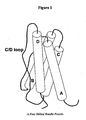
- the growth hormone (GH) supergene family ( Bazan, F. Immunology Today 11: 350-354 (1990 ); Mott, H. R. and Campbell, I. D. Current Opinion in Structural Biology 5: 114-121 (1995 ); Silvennoinen, O. and Ihle, J. N. (1996) SIGNALING BY THE HEMATOPOIETIC CYTOKINE RECEPTORS ) represents a set of proteins with similar structural characteristics. Each member of this family of proteins comprises a four helical bundle, the general structure of which is shown in Figure 1 .
- some members of the family include the following: growth hormone, prolactin, placental lactogen, erythropoietin (EPO), thrombopoietin (TPO), interleukin-2 (IL-2), IL-3, IL-4, IL-5, IL-6, IL-7, IL-9, IL-10, IL-11, IL-12 (p35 subunit), IL-13, IL-15, oncostatin M, ciliary neurotrophic factor, leukemia inhibitory factor, alpha interferon, beta interferon, gamma interferon, omega interferon, tau interferon, epsilon interferon, granulocyte-colony stimulating factor (G-CSF), granulocyte-macrophage colony stimulating factor (GM-CSF), macrophage colony stimulating factor (M-CSF) and cardiotrophin-1 (CT-1) ("the GH supergene family”).
- G-CSF granulocyte-colony stimulating factor
- GH supergene family Members of the GH supergene family have similar secondary and tertiary structures, despite the fact that they generally have limited amino acid or DNA sequence identity. The shared structural features allow new members of the gene family to be readily identified.
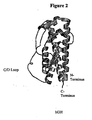
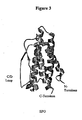
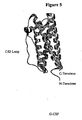
- the general structures of family members hGH, EPO, IFN ⁇ -2, and G-CSF are shown in Figures 2 , 3 , 4 , and 5 , respectively.
- hGH human growth hormone
- somatogenesis linear growth
- lactation activation of macrophages
- insulin-like and diabetogenic effects among others ( Chawla, R., et al., Ann. Rev. Med. 34:519-547 (1983 ); Isaksson, O., et al., Ann. Rev. Physiol., 47:483-499 (1985 ); Hughes, J. and Friesen, H., Ann. Rev. Physiol., 47:469-482 (1985 )).
- hGH The structure of hGH is well known ( Goeddel, D., et al., Nature 281:544-548 (1979 )), and the three-dimensional structure of hGH has been solved by X-ray crystallography ( de Vos, A., et al., Science 255:306-312 (1992 )).
- the protein has a compact globular structure, comprising four amphipathic alpha helical bundles, termed A-D beginning from the N-terminus, which are joined by loops.
- hGH also contains four cysteine residues, which participate in two intramolecular disulfide bonds: C53 is paired with C165 and C182 is paired with C189.
- the hormone is not glycosylated and has been expressed in a secreted form in E. coli ( Chang, C., et al., Gene 55:189-196 (1987 )).
- hGH-V Seeburg, DNA 1: 239 (1982 ); U.S. Patent Nos. 4,446,235 , 4,670,393 , and 4,665,180 , which are incorporated by reference herein
- 20-kDa hGH containing a deletion of residues 32-46 of hGH Kostyo et al., Biochem. Biophys. Acta 925: 314 (1987 ); Lewis, U., et al., J. Biol. Chem., 253:2679-2687 (1978 )
- hGH variants arising from post-transcriptional, post-translational, secretory, metabolic processing, and other physiological processes, have been reported ( Baumann, G., Endocrine Reviews 12: 424 (1991 )).
- US 6,608,183 discloses cysteine substitutions into hGH proteins at non-essential sites using site-directed mutagenesis.
- a cysteine-reactive polymer or other type of cysteine-reactive moiety can be added to the hGH proteins via the added cysteine residue.
- the biological effects of hGH derive from its interaction with specific cellular receptors.
- the hormone is a member of a family of homologous proteins that include placental lactogens and prolactins.
- hGH is unusual among the family members, however, in that it exhibits broad species specificity and binds to either the cloned somatogenic ( Leung, D., et al., Nature 330:537-543 (1987 )) or prolactin ( Boutin, J., et al., Cell 53:69-77 (1988 )) receptor. Based on structural and biochemical studies, functional maps for the lactogenic and somatogenic binding domains have been proposed ( Cunningham, B. and Wells, J., Proc. Natl. Acad. Sci. 88: 3407 (1991 )).
- the hGH receptor is a member of the hematopoietic/cytokine/growth factor receptor family, which includes several other growth factor receptors, such as the interleukin (IL)-3, -4 and -6 receptors, the granulocyte macrophage colony-stimulating factor (GM-CSF) receptor, the erythropoietin (EPO) receptor, as well as the G-CSF receptor.
- IL interleukin
- GM-CSF granulocyte macrophage colony-stimulating factor
- EPO erythropoietin
- hGHbp extracellular domain of its receptor
- Site I and Site II The conserved sequences are thought to be involved in protein-protein interactions. See, e.g., Chiba et al., Biochim. Biophys. Res. Comm. 184: 485-490 (1992 ).
- the interaction between hGH and extracellular domain of its receptor (hGHbp) is among the most well understood hormone-receptor interactions.
- High-resolution X-ray crystallographic data Cunningham, B., et al., Science, 254:821-825 (1991 ) has shown that hGH has two receptor binding sites and binds two receptor molecules sequentially using distinct sites on the molecule. The two receptor binding sites are referred to as Site I and Site II.
- Site I includes the carboxy terminal end of helix D and parts of helix A and the A-B loop, whereas Site II encompasses the amino terminal region of helix A and a portion of helix C. Binding of GH to its receptor occurs sequentially, with Site I binding first. Site II then engages a second GH receptor, resulting in receptor dimerization and activation of the intracellular signaling pathways that lead to cellular responses to the hormone.
- An hGH mutein in which a G120R substitution has been introduced into site II is able to bind a single hGH receptor, but is unable to dimerize two receptors. The mutein acts as an hGH antagonist in vitro, presumably by occupying receptor sites without activating intracellular signaling pathways ( Fuh, G., et al., Science 256:1677-1680 (1992 )).
- hGH Recombinant hGH is used as a therapeutic and has been approved for the treatment of a number of indications.
- hGH deficiency leads to dwarfism, for example, which has been successfully treated for more than a decade by exogenous administration of the hormone.
- hGH has also been approved for the treatment of renal failure (in children), Turner's Syndrome, and cachexia in AIDS patients.
- FDA Food and Drug Administration
- hGH is also currently under investigation for the treatment of aging, frailty in the elderly, short bowel syndrome, and congestive heart failure.
- Target populations for hGH treatment include children with idiopathic short stature (ISS) and adults with GHD-like symptoms.
- hGH Recombinant hGH is currently sold as a daily injectable product, with five major products currently on the market: HumatropeTM (Eli Lilly & Co.), NutropinTM (Genentech), NorditropinTM (Novo-Nordisk), GenotropinTM (Pfizer) and Saizen/SerostimTM (Serono).
- HumatropeTM Eli Lilly & Co.
- NutropinTM Genetech
- NorditropinTM Novo-Nordisk
- GenotropinTM Pfizer
- Saizen/SerostimTM Serono
- a significant challenge to using growth hormone as a therapeutic is that the protein has a short in vivo half-life and, therefore, it must be administered by daily subcutaneous injection for maximum effectiveness ( MacGillivray; et al., J. Clin. Endocrinol. Metab. 81: 1806-1809 (1996 )).
- PegvisomantTM is a genetically-engineered analogue of hGH that functions as a highly selective growth hormone receptor antagonist indicated for the treatment of acromegaly ( van der Lely, et al., The Lancet 358: 17-54-1759 (2001 ). Although several of the amino acid side chain residues in PegvisomantTM are derivatized with polyethylene glycol (PEG) polymers, the product is still administered once-daily, indicating that the pharmaceutical properties are not optimal. In addition to PEGylation and depot formulations, other administration routes, including inhaled and oral dosage forms of hGH, are under early-stage pre-clinical and clinical development and none have yet received approval from the FDA. Accordingly, there is a need for a polypeptide that exhibits growth hormone activity but that also provides a longer serum half-life and, therefore, more optimal therapeutic levels of hGH and an increased therapeutic half-life.
- PEG polyethylene glycol
- Covalent attachment of the hydrophilic polymer poly(ethylene glycol), abbreviated PEG is a method of increasing water solubility, bioavailability, increasing serum half-life, increasing therapeutic half-life, modulating immunogenicity, modulating biological activity, or extending the circulation time of many biologically active molecules, including proteins, peptides, and particularly hydrophobic molecules.
- PEG has been used extensively in pharmaceuticals, on artificial implants, and in other applications where biocompatibility, lack of toxicity, and lack of immunogenicity are of importance.
- the total molecular weight and hydration state of the PEG polymer or polymers attached to the biologically active molecule must be sufficiently high to impart the advantageous characteristics typically associated with PEG polymer attachment, such as increased water solubility and circulating half life, while not adversely impacting the bioactivity of the parent molecule.
- PEG derivatives are frequently linked to biologically active molecules through reactive chemical functionalities, such as lysine, cysteine and histidine residues, the N-terminus and carbohydrate moieties.
- Proteins and other molecules often have a limited number of reactive sites available for polymer attachment. Often, the sites most suitable for modification via polymer attachment play a significant role in receptor binding, and are necessary for retention of the biological activity of the molecule. As a result, indiscriminate attachment of polymer chains to such reactive sites on a biologically active molecule often leads to a significant reduction or even total loss of biological activity of the polymer-modified molecule.
- reactive chemical functionalities such as lysine, cysteine and histidine residues, the N-terminus and carbohydrate moieties.
- Proteins and other molecules often have a limited number of reactive sites available for polymer attachment. Often, the sites most suitable for modification via polymer attachment play a significant role in receptor binding, and are necessary for retention of the biological activity of the molecule.
- Reactive sites that form the loci for attachment of PEG derivatives to proteins are dictated by the protein's structure.
- Proteins, including enzymes are composed of various sequences of alpha-amino acids, which have the general structure H 2 N-CHR--COOH.
- the alpha amino moiety (H 2 N--) of one amino acid joins to the carboxyl moiety (--COOH) of an adjacent amino acid to form amide linkages, which can be represented as --(NH--CHR--CO) n --, where the subscript "n" can equal hundreds or thousands.
- the fragment represented by R can contain reactive sites for protein biological activity and for attachment of PEG derivatives.
- a second and equally important complication of existing methods for protein PEGylation is that the PEG derivatives can undergo undesired side reactions with residues other than those desired.
- Histidine contains a reactive imino moiety, represented structurally as --N(H)--, but many chemically reactive species that react with epsilon --NH 2 can also react with --N(H)--.
- the side chain of the amino acid cysteine bears a free sulfhydryl group, represented structurally as -SH.
- the PEG derivatives directed at the epsilon --NH 2 group of lysine also react with cysteine, histidine or other residues.
- cysteine residues In addition to lysine residues, considerable effort in the art has been directed toward the development of activated PEG reagents that target other amino acid side chains, including cysteine, histidine and the N-terminus. See, e.g., U.S. Pat. No. 6,610,281 which is incorporated by reference herein, and " Polyethylene Glycol and Derivatives for Advanced PEGylation", Nektar Molecular Engineering Catalog, 2003, pp. 1-17 .
- a cysteine residue can be introduced site-selectively into the structure of proteins using site-directed mutagenesis and other techniques known in the art, and the resulting free sulfhydryl moiety can be reacted with PEG derivatives that bear thiol-reactive functional groups.
- PEG derivatives have been developed that are more stable (e.g., U.S. Patent 6,602,498 , which is incorporated by reference herein) or that react selectively with thiol moieties on molecules and surfaces (e.g., U.S. Patent 6,610,281 , which is incorporated by reference herein).
- U.S. Patent 6,602,498 which is incorporated by reference herein
- thiol moieties on molecules and surfaces
- a number of new amino acids with novel chemical, physical or biological properties including photoaffinity labels and photoisomerizable amino acids, photocrosslinking amino acids (see, e.g., Chin, J. W., et al. (2002) Proc. Natl. Acad. Sci. U. S. A. 99:11020-11024 ; and, Chin, J. W., et al., (2002) J. Am. Chem. Soc. 124:9026-9027 ), keto amino acids, heavy atom containing amino acids, and glycosylated amino acids have been incorporated efficiently and with high fidelity into proteins in E. coli and in yeast in response to the amber codon, TAG, using this methodology. See, e.g., J. W.
- non-genetically encoded amino acids into proteins permits the introduction of chemical functional groups that could provide valuable alternatives to the naturally-occurring functional groups, such as the epsilon -NH 2 of lysine, the sulfhydryl -SH of cysteine, the imino group of histidine, etc.
- Certain chemical functional groups are known to be inert to the functional groups found in the 20 common, genetically-encoded amino acids but react cleanly and efficiently to form stable linkages.
- Azide and acetylene groups for example, are known in the art to undergo a Huisgen [3+2] cycloaddition reaction in aqueous conditions in the presence of a catalytic amount of copper.
- an azide moiety into a protein structure, for example, one is able to incorporate a functional group that is chemically inert to amines, sulfhydryls, carboxylic acids, hydroxyl groups found in proteins, but that also reacts smoothly and efficiently with an acetylene moiety to form a cycloaddition product.
- the azide in the absence of the acetylene moiety, the azide remains chemically inert and unreactive in the presence of other protein side chains and under physiological conditions.
- the present invention addresses, among other things, problems associated with the activity and production of GH polypeptides, and also addresses the production of a hGH polypeptide with improved biological or pharmacological properties, such as improved therapeutic half-life.
- This invention provides claim 1.
- the non-naturally encoded amino acid comprises a carbonyl group, an acetyl group, an aminooxy group.
- the non-naturally encoded amino acid comprises a carbonyl group.
- the non-naturally encoded amino acid has the structure: wherein n is 0-10; R 1 is an alkyl, aryl, substituted alkyl, or substituted aryl; R 2 is H, an alkyl, aryl, substituted alkyl, and substituted aryl; and R 3 is H, an amino acid, a polypeptide, or an amino terminus modification group, and R 4 is H, an amino acid, a polypeptide, or a carboxy terminus modification group.
- the non-naturally encoded amino acid comprises an aminooxy group.
- the present invention relates to methods of increasing therapeutic half-life, serum half-life or circulation time of GH, e.g., hGH polypeptides.
- the present invention provides a hormone composition containing a growth hormone (GH) linked to at least one water-soluble polymer by a covalent bond, where the covalent bond is an oxime bond.
- the GH is a human growth hormone (hGH), having SEQ ID NO: 2;
- the GH includes one or more non-naturally encoded amino acids (NEAAs), such as a NEAA that includes a carbonyl group, e.g., a ketone, such as an NEAA that is para-acetylphenylalanine.
- the oxime bond is between the NEAA and the water-soluble polymer.
- the GH can be substituted with a para-acetylphenylalanine at a position corresponding to position 35 of SEQ ID NO: 2.
- the water-soluble polymer includes one polyethylene glycol (PEG) molecule.
- the PEG is linear, i.e, a linear PEG of MW 30 kDa.
- the invention provides a hormone composition that contains a GH, e.g., hGH that comprises the sequence of SEQ ID NO: 2, where the GH, e.g., hGH is linked via an oxime bond to a 30 kDa linear PEG, and where the oxime bond is formed with a para-acetylphenylalanine substituted at a position corresponding to position 35 of SEQ ID NO: 2.
- a GH e.g., hGH that comprises the sequence of SEQ ID NO: 2
- the GH e.g., hGH is linked via an oxime bond to a 30 kDa linear PEG, and where the oxime bond is formed with a para-acetylphenylalanine substituted at a position corresponding to position 35 of SEQ ID NO: 2.
- a pharmaceutical composition that contains a hormone composition comprising a growth hormone linked by a covalent bond to at least one water-soluble polymer, wherein the covalent bond is an oxime bond, and a pharmaceutically acceptable excipient, i.e, hGH substituted at a position corresponding to amino acid 35 of SEQ ID NO: 2 with a para-acetylphenylalanine, and the oxime bond is formed between the para-acetylphenylalanine and the PEG.
- a hormone composition comprising a growth hormone linked by a covalent bond to at least one water-soluble polymer, wherein the covalent bond is an oxime bond
- a pharmaceutically acceptable excipient i.e, hGH substituted at a position corresponding to amino acid 35 of SEQ ID NO: 2 with a para-acetylphenylalanine, and the oxime bond is formed between the para-acetylphenylalanine and the PEG.
- the PEG is a linear PEG of about 30 kDa and the GH is hGH substituted at a position corresponding to amino acid 35 of SEQ ID NO: 2 with a para-acetylphenylalanine, and the oxime bond is formed between the para-acetylphenylalanine and the PEG.
- the individual that is treated may be human.
- the individual that is treated may suffer from pediatric growth hormone deficiency, idiopathic short stature, adult growth hormone deficiency of childhood onset, adult growth hormone deficiency of adult onset, or secondary growth hormone deficiency.
- the invention provides a hormone composition according to the invention comprising a GH, i.e., hGH linked to a PEG, wherein the GH, e.g., hGH has an average serum half-life of at least about 7-fold the serum half-life of a composition comprising the GH, e.g., hGH without the PEG, when administered to a mammal subcutaneously.
- a hormone composition according to the invention comprising a GH, i.e., hGH linked to a PEG, wherein the GH, e.g., hGH has an average serum half-life of at least about 7-fold the serum half-life of a composition comprising the GH, e.g., hGH without the PEG, when administered to a mammal subcutaneously.
- Figure 1 A diagram of the general structure for four helical bundle proteins is shown.
- FIG. 2 A diagram of the general structure for the four helical bundle protein Growth Hormone (GH) is shown.
- FIG. 3 A diagram of the general structure for the four helical bundle protein Erythropoietin (EPO) is shown.
- EPO Erythropoietin
- Figure 4 A diagram of the general structure for the four helical bundle protein Interferon alpha-2 (IFN ⁇ -2) is shown.
- FIG. 5 A diagram of the general structure for the four helical bundle protein Granulocyte Colony Stimulating Factor (G-CSF) is shown:
- FIG. 6 A Coomassie blue stained SDS-PAGE is shown demonstrating the expression of hGH comprising the non-naturally encoded amino acid p-acetyl phenylalanine at each of the following positions: Y35, F92, Y111, G131, R134, K140, Y143, or K145.
- FIG. 7 Panels A and B - A diagram of the biological activity of the hGH comprising a non-naturally encoded amino acid (Panel B) and wild-type hGH (Panel A) on IM9 cells is shown.
- FIG. 8 A Coomassie blue stained SDS-PAGE is shown demonstrating the production of hGH comprising a non-naturally encoded amino acid that is PEGylated by covalent linkage of PEG (5, 20 and 30 kDa) to the non-naturally encoded amino acid.
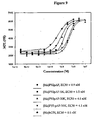
- FIG. 9 A diagram is shown demonstrating the biological activity of the various PEGylated forms of hGH comprising a non-naturally encoded amino acid on IM9 cells.
- FIG. 10 Panel A - This figure depicts the primary structure of hGH with the trypsin cleavage sites indicated and the non-natural amino acid substitution, F92pAF, specified with an arrow ( Figure modified from Becker et al. Biotechnol Appl Biochem. (1988) 10(4):326-337 ).
- Figure 10 Panel B - Superimposed tryptic maps are shown of peptides generated from a hGH polypeptide comprising a non-naturally encoded amino acid that is PEGylated (labeled A), peptides generated from a hGH polypeptide comprising a non-naturally encoded amino acid (labeled B), and peptides generated from WHO rhGH (labeled C).
- Figure 10 Panel C - A magnification of peak 9 from Panel B is shown.
- FIG 11 Panel A and Panel B show Coomassie blue stained SDS-PAGE analysis of purified PEG-hGH polypeptides.
- FIG. 12 A diagram of the biological activity of a hGH dimer molecule on IM9 cells is shown.
- FIG 13 Panel A - A diagram is shown of the IM-9 assay data measuring phosphorylation of pSTAT5 by hGH antagonist with the G120R substitution.
- Panel B - A diagram is shown of the IM-9 assay data measuring phosphorylation of pSTAT5 by a hGH polypeptide with a non-natural amino acid incorporated at the same position (G120).
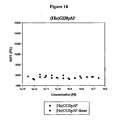
- FIG 14 - A diagram is shown indicating that a dimer of the hGH antagonist shown in Figure 13 , Panel B also lacks biological activity in the IM-9 assay.
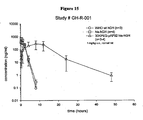
- Figure 15 - A diagram is shown comparing the serum half-life in rats of hGH polypeptide comprising a non-naturally encoded amino acid that is PEGylated with hGH polypeptide that is not PEGylated.
- Figure 16 - A diagram is shown comparing the serum half-life in rats of hGH polypeptides comprising a non-naturally encoded amino acid that is PEGylated.
- FIG 18 Panel A - A diagram is shown of the effect on rat body weight gain after administration of a single dose of hGH polypeptides comprising a non-naturally encoded amino acid that is PEGylated (position 35, 92).
- Figure 18 Panel B - A diagram is shown of the effect on circulating plasma IGF-1 levels after administration of a single dose of hGH polypeptides comprising a non-naturally encoded amino acid that is PEGylated (position 35, 92).
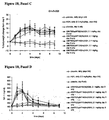
- FIG 18 Panel C - A diagram is shown of the effect on rat body weight gain after administration of a single dose of hGH polypeptides comprising a non-naturally encoded amino acid that is PEGylated (position 92, 134, 145, 131, 143).
- Panel D - A diagram is shown of the effect on circulating plasma IGF-1 levels after administration of a single dose of hGH polypeptides comprising a non-naturally encoded amino acid that is PEGylated (position 92, 134, 145, 131, 143).
- FIG. 18 Panel E - A diagram is shown comparing the serum half-life in rats of hGH polypeptides comprising a non-naturally encoded amino acid that is PEGylated (position 92, 134, 145, 131, 143).
- Figure 21 presents illustrative, non-limiting examples of PEG-containing reagents that can be used to modify non-natural amino acid polypeptides to form PEG-containing, oxime-linked non-natural amino acid polypeptides.
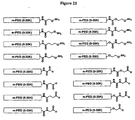
- Figure 22 presents illustrative, non-limiting examples of the synthesis of PEG-containing reagents that can be used to modify non-natural amino acid polypeptides to form PEG-containing, oxime-linked non-natural amino acid polypeptides.
- Figure 23 presents an illustrative, non-limiting example of the synthesis of an amide-based hydroxylamine PEG-containing reagent that can be used to modify non-natural amino acid polypeptides to form PEG-containing, oxime-linked non-natural amino acid polypeptides.
- Figure 24 presents an illustrative, non-limiting example of the synthesis of a carbamate-based PEG-containing reagent that can be used to modify non-natural amino acid polypeptides to form PEG-containing, oxime-linked non-natural amino acid polypeptides.
- Figure 25 presents an illustrative, non-limiting example of the synthesis of a carbamate-based PEG-containing reagent that can be used to modify non-natural amino acid polypeptides to form PEG-containing, oxime-linked non-natural amino acid polypeptides.
- Figure 26 presents illustrative, non-limiting examples of the synthesis of simple PEG-containing reagents that can be used to modify non-natural amino acid polypeptides to form PEG-containing, oxime-linked non-natural amino acid polypeptides.
- Figure 27 presents illustrative, non-limiting examples of branched PEG-containing reagents that can be used to modify non-natural amino acid polypeptides to form PEG-containing, oxime-linked non-natural amino acid polypeptides, and the use of one such reagent to modify a carbonyl-based non-natural amino acid polypeptide.
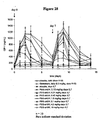
- Figure 28 presents a graph illustrating IGF-1 plasma concentration in hypophysectomized rats treated weekly with placebo or increasing dose of PEG- a hGH, or daily with placebo or Genotropin.
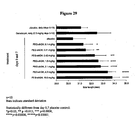
- Figure 29 presents a graph illustrating tibial bone length in hypophysectomized rats treated weekly with placebo or PEG- a hGH, or daily with placebo or Genotropin.
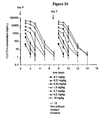
- Figure 30 presents a graph illustrating percent bodyweight change in hyposphysectomized rats treated weekly with placebo or PEG- a hGH, or daily with placebo or Genotropin.
- Figure 31 presents a graph illustrating plasma concentration versus time for PEG- a hGH administered subcutaneously on days 0 and 7.
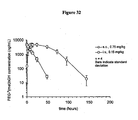
- Figure 32 presents a graph illustrating plasma concentration versus time for PEG- a (met)hGH administered as a single subcutaneous or intravenous dose.
- growth hormone or "GH” shall include those polypeptides and proteins that have at least one biological activity of a growth hormone from any mammalian species including but not limited to, human (hGH), bovine (bGH), porcine, and from other livestock or farm animals including but not limited to, chicken, as well as GH analogs, GH isoforms, GH mimetics, GH fragments, hybrid GH proteins, fusion proteins, oligomers and multimers, homologues, glycosylation pattern variants, variants, splice variants, and muteins, thereof, regardless of the biological activity of same, and further regardless of the method of synthesis or manufacture thereof including, but not limited to, recombinant (whether produced from cDNA, genomic DNA, synthetic DNA or other form of nucleic acid), in vitro, in vivo, by microinjection of nucleic acid molecules, synthetic, transgenic, and gene activated methods.
- hGH polypeptides of the invention are substantially identical or SEQ ID NO: 2,
- HumatropeTM EH Lilly & Co.
- NutropinTM Genetech
- NorditropinTM Novo-Nordisk
- GenotropinTM Pfizer
- Saizen/SerostimTM Serono
- hGH polypeptide also includes the pharmaceutically acceptable salts and prodrugs, and prodrugs of the salts, polymorphs, hydrates, solvates, biologically-active fragments, biologically active variants and stereoisomers of the naturally-occurring hGH as well as agonist, mimetic, and antagonist variants of the naturally-occurring hGH and polypeptide fusions thereof.
- Fusions comprising additional amino acids at the amino terminus, carboxyl terminus, or both, are encompassed by the term "hGH polypeptide.”
- exemplary fusions include, but are not limited to, e.g., methionyl growth hormone in which a methionine is linked to the N-terminus of hGH resulting from the recombinant expression of the mature form of hGH lacking the secretion signal peptide or portion thereof, fusions for the purpose of purification (including, but not limited to, to poly-histidine or affinity epitopes), fusions with serum albumin binding peptides and fusions with serum proteins such as serum albumin.
- 5,750,373 describes a method for selecting novel proteins such as growth hormone and antibody fragment variants having altered binding properties for their respective receptor molecules.
- the method comprises fusing a gene encoding a protein of interest to the carboxy terminal domain of the gene III coat protein of the filamentous phage M 13.
- hGH polypeptide includes polypeptides conjugated to a polymer such as PEG and may be comprised of one or more additional derivitizations of cysteine, lysine, or other residues.
- the hGH polypeptide may comprise a linker or polymer, wherein the amino acid to which the linker or polymer is conjugated may be a non-natural amino acid according to the present invention, or may be conjugated to a naturally encoded amino acid utilizing techniques known in the art such as coupling to lysine or cysteine.
- WO 99/03887 discloses PEGylated variants of polypeptides belonging to the growth hormone superfamily, wherein a cysteine residue has been substituted with a non-essential amino acid residue located in a specified region of the polypeptide.
- WO 00/26354 discloses a method of producing a glycosylated polypeptide variant with reduced allergenicity, which as compared to a corresponding parent polypeptide comprises at least one additional glycosylation site.
- U.S. Pat. No. 5,218,092 discloses modification of granulocyte colony stimulating factor (G-CSF) and other polypeptides so as to introduce at least one additional carbohydrate chain as compared to the native polypeptide.
- G-CSF granulocyte colony stimulating factor
- hGH polypeptide also includes glycosylated hGH, as well as but not limited to, polypeptides glycosylated at any amino acid position, N-linked or O-linked glycosylated forms of the polypeptide. Variants containing single nucleotide changes are also considered as biologically active variants of hGH polypeptide. In addition, splice variants are also included.
- hGH polypeptide also includes GH, e.g.; hGH polypeptide heterodimers, homodimers, heteromultimers, or homomultimers of any one or more GH, e.g., hGH polypeptides or any other polypeptide, protein, carbohydrate, polymer, small molecule, linker, ligand, or other biologically active molecule of any type, linked by chemical means or expressed as a fusion protein, as well as polypeptide analogues containing, for example, specific deletions or other modifications yet maintain biological activity.
- substitutions, deletions or additions of amino acids described herein in reference to SEQ ID NO: 1, 2, 3, or other GH sequence are intended to also refer to substitutions, deletions or additions in corresponding positions in GH, or hGH fusions, variants, fragments, etc. described herein or known in the art and are expressly encompassed by the present invention.
- hGH polypeptide also encompasses homodimers, heterodimers, homomultimers, and heteromultimers that are linked, including but not limited to those linked directly via non-naturally encoded amino acid side chains, either to the same or different non-naturally encoded amino acid side chains, to naturally-encoded amino acid side chains, or indirectly via a linker.
- linkers including but are not limited to, small organic compounds, water soluble polymers of a variety of lengths such as poly(ethylene glycol) or polydextran or polypeptides of various lengths.
- non-naturally encoded amino acid refers to an amino acid that is not one of the 20 common amino acids or pyrrolysine or selenocysteine.
- Other terms that may be used synonymously with the term “non-naturally encoded amino acid” are “non-natural amino acid,” “unnatural amino acid,” “non-naturally-occurring amino acid,” and variously hyphenated and non-hyphenated versions thereof.
- the term “non-naturally encoded amino acid” also includes, but is not limited to, amino acids that occur by modification (e.g.
- a naturally encoded amino acid including but not limited to, the 20 common amino acids or pyrrolysine and selenocysteine
- non-naturally-occurring amino acids include, but are not limited to, N -acetylglucosaminyl-L-serine, N -acetylglucosaminyl-L-threonine, and O-phosphotyrosine.
- amino terminus modification group refers to any molecule that can be attached to the amino terminus of a polypeptide.
- a “carboxy terminus modification group” refers to any molecule that can be attached to the carboxy terminus of a polypeptide.
- Terminus modification groups include, but are not limited to, various water soluble polymers, peptides or proteins such as serum albumin, or other moieties that increase serum half-life of peptides.
- linkage or “linker” is used herein to refer to groups or bonds that normally are formed as the result of a chemical reaction and typically are covalent linkages.
- Hydrolytically stable linkages means that the linkages are substantially stable in water and do not react with water at useful pH values, including but not limited to, under physiological conditions for an extended period of time, perhaps even indefinitely.
- Hydrolytically unstable or degradable linkages mean that the linkages are degradable in water or in aqueous solutions, including for example, blood.
- Enzymatically unstable or degradable linkages mean that the linkage can be degraded by one or more enzymes.
- PEG and related polymers may include degradable linkages in the polymer backbone or in the linker group between the polymer backbone and one or more of the terminal functional groups of the polymer molecule.
- ester linkages formed by the reaction of PEG carboxylic acids or activated PEG carboxylic acids with alcohol groups on a biologically active agent generally hydrolyze under physiological conditions to release the agent.
- hydrolytically degradable linkages include, but are not limited to, carbonate linkages; imine linkages resulted from reaction of an amine and an aldehyde; phosphate ester linkages formed by reacting an alcohol with a phosphate group; hydrazone linkages which are reaction product of a hydrazide and an aldehyde; acetal linkages that are the reaction product of an aldehyde and an alcohol; orthoester linkages that are the reaction product of a formate and an alcohol; peptide linkages formed by an amine group, including but not limited to, at an end of a polymer such as PEG, and a carboxyl group of a peptide; and oligonucleotide linkages formed by a phosphoramidite group, including but not limited to, at the end of a polymer, and a 5' hydroxyl group of an oligonucleotide.
- biologically active molecule means any substance which can affect any physical or biochemical properties of a biological system, pathway, molecule, or interaction relating to an organism, including but not limited to, viruses, bacteria, bacteriophage, transposon, prion, insects, fungi, plants, animals, and humans.
- biologically active molecules include, but are not limited to, any substance intended for diagnosis, cure, mitigation, treatment, or prevention of disease in humans or other animals, or to otherwise enhance physical or mental well-being of humans or animals.
- biologically active molecules include, but are not limited to, peptides, proteins, enzymes, small molecule drugs, hard drugs, soft drugs, carbohydrates, inorganic atoms or molecules, dyes, lipids, nucleosides, radionuclides, oligonucleotides, toxins, cells, viruses, liposomes, microparticles and micelles.
- Classes of biologically active agents that are suitable for use with the invention include, but are not limited to, drugs, prodrugs, radionuclides, imaging agents, polymers, antibiotics, fungicides, anti-viral agents, anti-inflammatory agents, anti-tumor agents, cardiovascular agents, anti-anxiety agents, hormones, growth factors, steroidal agents, microbially derived toxins, and the like.
- a “bifunctional polymer” refers to a polymer comprising two discrete functional groups that are capable of reacting specifically with other moieties (including but not limited to, amino acid side groups) to form covalent or non-covalent linkages.
- a bifunctional linker having one functional group reactive with a group on a particular biologically active component, and another group reactive with a group on a second biological component may be used to form a conjugate that includes the first biologically active component, the bifunctional linker and the second biologically active component.
- Many procedures and linker molecules for attachment of various compounds to peptides are known. See, e.g., European Patent Application No. 188,256 ; U.S. Patent Nos.
- a "multi-functional polymer” refers to a polymer comprising two or more discrete functional groups that are capable of reacting specifically with other moieties (including but not limited to, amino acid side groups) to form covalent or non-covalent linkages.
- a bi-functional polymer or multi-functional polymer may be any desired length or molecular weight, and may be selected to provide a particular desired spacing or conformation between one or more molecules linked to the GH e.g. hGH molecule.
- polyalkylene glycol or “poly(alkene glycol)” refers to polyethylene glycol (poly(ethylene glycol)), polypropylene glycol, polybutylene glycol, and derivatives thereof.
- polyalkylene glycol and/or “polyethylene glycol” encompasses both linear and branched polymers and average molecular weights of between 0.1 kDa and 100 kDa.
- Other PEGs are listed, for example, in commercial supplier catalogs, such as Shearwater Corporation's catalog “Polyethylene Glycol and Derivatives for Biomedical Applications” (2001).
- aryl when used in combination with other terms (including but not limited to, aryloxy, arylthioxy, arylalkyl) includes both aryl and heteroaryl rings.
- arylalkyl is meant to include those radicals in which an aryl group is attached to an alkyl group (including but not limited to, benzyl, phenethyl, pyridylmethyl and the like) including those alkyl groups in which a carbon atom (including but not limited to, a methylene group) has been replaced by, for example, an oxygen atom (including but not limited to, phenoxymethyl, 2-pyridyloxymethyl, 3-(1-naphthyloxy)propyl, and the like).
- the term "modulated serum half-life” means the positive or negative change in circulating half-life of a modified hGH relative to its non-modified form. Serum half-life is measured by taking blood samples at various time points after administration of hGH, and determining the concentration of that molecule in each sample. Correlation of the serum concentration with time allows calculation of the serum half-life. Increased serum half-life desirably has at least about two-fold, but a smaller increase may be useful, for example where it enables a satisfactory dosing regimen or avoids a toxic effect. In some embodiments, the increase is at least about three-fold, at least about five-fold, or at least about ten-fold.
- modulated therapeutic half-life means the positive or negative change in the half-life of the therapeutically effective amount of a modified hGH, relative to its non-modified form.
- Therapeutic half-life is measured by measuring pharmacokinetic and/or pharmacodynamic properties of the molecule at various time points after administration.
- Increased therapeutic half-life desirably enables a particular beneficial dosing regimen, a particular beneficial total dose, or avoids an undesired effect
- the increased therapeutic half-life results from increased potency, increased or decreased binding of the modified molecule to its target, increased or decreased breakdown of the molecule by enzymes such as proteases, or an increase or decrease in another parameter or mechanism of action of the non-modified molecule.
- polypeptide peptide
- protein protein
- polypeptide peptide
- peptide protein
- the terms apply to naturally occurring amino acid polymers as well as amino acid polymers in which one or more amino acid residues is a non-naturally encoded amino acid.
- the terms encompass amino acid chains of any length, including full length proteins, wherein the amino acid residues are linked by covalent peptide bonds.
- amino acid refers to naturally occurring and non-naturally occurring amino acids, as well as amino acid analogs and amino acid mimetics that function in a manner similar to the naturally occurring amino acids.
- Naturally encoded amino acids are the 20 common amino acids (alanine, arginine, asparagine, aspartic acid, cysteine, glutamine, glutamic acid, glycine, histidine, isoleucine, leucine, lysine, methionine, phenylalanine, proline, serine, threonine, tryptophan, tyrosine, and valine) and pyrrolysine and selenocysteine.
- Amino acid analogs refers to compounds that have the same basic chemical structure as a naturally occurring amino acid, i.e., an ⁇ carbon that is bound to a hydrogen, a carboxyl group, an amino group, and an R group, such as, homoserine, norleucine, methionine sulfoxide, methionine methyl sulfonium.
- Such analogs have modified R groups (such as, norleucine) or modified peptide backbones, but retain the same basic chemical structure as a naturally occurring amino acid.
- Amino acids may be referred to herein by either their commonly known three letter symbols or by the one-letter symbols recommended by the IUPAC-IUB Biochemical Nomenclature Commission. Nucleotides, likewise, may be referred to by their commonly accepted single-letter codes.
- post-translationally modified refers to any modification of a natural or non-natural amino acid that occurs to such an amino acid after it has been incorporated into a polypeptide chain.
- the term encompasses, by way of example only, co-translational in vivo modifications, co-translational in vitro modifications (such as in a cell-free translation system), post-translational in vivo modifications, and post-translational in vitro modifications.
- Non-naturally encoded amino acid polypeptides presented herein may include isotopically-labelled compounds with one or more atoms replaced by an atom having an atomic mass or mass number different from the atomic mass or mass number usually found in nature.
- isotopes that can be incorporated into the present compounds include isotopes of hydrogen, carbon, nitrogen, oxygen, fluorine and chlorine, such as 2 H, 3 H, 13 C, 14 C, 15 N, 18 O, 17 O, 35 S, 18 F, 36 Cl, respectively.
- Certain isotopically-labelled compounds described herein, for example those into which radioactive isotopes such as 3 H and 14 C are incorporated may be useful in drug and/or substrate tissue distribution assays. Further, substitution with isotopes such as deuterium, i.e ., 2 H, can afford certain therapeutic advantages resulting from greater metabolic stability, for example increased in vivo half-life or reduced dosage requirements.
- non-naturally encoded amino acid polypeptides are metabolized upon administration to an organism in need to produce a metabolite that is then used to produce a desired effect, including a desired therapeutic effect.
- active metabolites of non-naturally encoded amino acid polypeptides are active metabolites of non-naturally encoded amino acid polypeptides.
- non-naturally encoded amino acid polypeptides may exist as tautomers.
- the non-naturally encoded amino acid polypeptides described herein can exist in unsolvated as well as solvated forms with pharmaceutically acceptable solvents such as water, ethanol, and the like.
- the solvated forms are also considered to be disclosed herein.
- Those of ordinary skill in the art will recognize that some of the compounds herein can exist in several tautomeric forms. All such tautomeric forms are considered as part of the compositions described herein.
- GH e.g., hGH molecules comprising at least one unnatural amino acid
- the GH e.g., hGH polypeptides with at least one unnatural amino acid includes at least one post-translational modification.
- the at least one post-translational modification comprises attachment of a molecule including but not limited to, a label, a dye, a polymer, a water-soluble polymer, a derivative of polyethylene glycol, a photocrosslinker, a radionuclide, a cytotoxic compound, a drug, an affinity label, a photoaffinity label, a reactive compound, a resin, a second protein or polypeptide or polypeptide analog, an antibody or antibody fragment, a metal chelator, a cofactor, a fatty acid, a carbohydrate, a polynucleotide, a DNA, a RNA, an antisense polynucleotide, a saccharide, water-soluble dendrimer, a cyclodextrin, an inhibitory ribonucleic acid, a biomaterial, a nanoparticle, a spin label, a fluorophore, a metal-containing moiety, a radioactive moiety, a novel
- the first reactive group is an alkynyl moiety (including but not limited to, in the unnatural amino acid p-propargyloxyphenylalanine, where the propargyl group is also sometimes referred to as an acetylene moiety) and the second reactive group is an azido moiety, and [3+2] cycloaddition chemistry methodologies are utilized.
- the first reactive group is the azido moiety (including but not limited to, in the unnatural amino acid p-azido-L-phenylalanine) and the second reactive group is the alkynyl moiety.
- At least one unnatural amino acid comprising at least one post-translational modification
- the at least one post-translational modification comprises a saccharide moiety.
- the post-translational modification is made in vivo in a eukaryotic cell or in a non-eukaryotic cell.
- the protein includes at least one post-translational modification that is made in vivo by one host cell, where the post-translational modification is not normally made by another host cell type. In certain embodiments, the protein includes at least one post-translational modification that is made in vivo by a eukaryotic cell, where the post-translational modification is not normally made by a non-eukaryotic cell. Examples of post-translational modifications include, but are not limited to, glycosylation, acetylation, acylation, lipid-modification, palmitoylation, palmitate addition, phosphorylation, glycolipid-linkage modification, and the like.
- the post-translational modification comprises attachment of an oligosaccharide to an asparagine by a GlcNAc-asparagine linkage (including but not limited to, where the oligosaccharide comprises (GlcNAc-Man) 2 -Man-GlcNAc-GlcNAc, and the like).
- the post-translational modification comprises attachment of an oligosaccharide (including but not limited to, Gal-GalNAc, Gal-GlcNAc, etc.) to a serine or threonine by a GaINAc-serine, a GalNAc-threonine, a GlcNAc-serine, or a GlcNAc-threonine linkage.
- a protein or polypeptide of the invention can comprise a secretion or localization sequence, an epitope tag, a FLAG tag, a polyhistidine tag, a GST fusion, and/or the like.
- secretion signal sequences include, but are not limited to, a prokaryotic secretion signal sequence, a eukaryotic secretion signal sequence, a eukaryotic secretion signal sequence 5'-optimized for bacterial expression, a novel secretion signal sequence, pectate lyase secretion signal sequence, Omp A secretion signal sequence, and a phage secretion signal sequence.
- secretion signal sequences include, but are not limited to, STII (prokaryotic), Fd GIII and M13 (phage), Bgl2 (yeast), and the signal sequence bla derived from as transposon.
- the protein or polypeptide of interest can contain at least one, at least two, at least three, at least four, at least five, at least six, at least seven, at least eight, at least nine, or ten or more unnatural amino acids.
- the unnatural amino acids can be the same or different, for example, there can be 1, 2, 3, 4, 5, 6, 7, 8, 9, 10 or more different sites in the protein that comprise 1, 2, 3, 4, 5, 6, 7, 8, 9, 10 or more different unnatural amino acids.
- at least one, but fewer than all, of a particular amino acid present in a naturally occurring version of the protein is substituted with an unnatural amino acid.
- compositions based on members of the GH supergene family comprising at least one non-naturally encoded amino acid.
- Introduction of at least one non-naturally encoded amino acid into a GH supergene family member can allow for the application of conjugation chemistries that involve specific chemical reactions, including, but not limited to, with one or more non-naturally encoded amino acids while not reacting with the commonly occurring 20 amino acids.
- the GH supergene family member comprising the non-naturally encoded amino acid is linked to a water soluble polymer, such as polyethylene glycol (PEG), via the side chain of the non-naturally encoded amino acid.
- PEG polyethylene glycol
- Disclosed is a highly efficient method for the selective modification of proteins with PEG derivatives which involves the selective incorporation of non-genetically encoded amino acids, including but not limited to, those amino acids containing functional groups or substituents not found in the 20 naturally incorporated amino acids, including but not limited to a ketone, an azide or acetylene moiety, into proteins in response to a selector codon and the subsequent modification of those amino acids with a suitably reactive PEG derivative.
- the amino acid side chains can then be modified by utilizing chemistry methodologies known to those of ordinary skill in the art to be suitable for the particular functional groups or substituents present in the non-naturally encoded amino acid.
- Known chemistry methodologies of a wide variety are suitable for use in the present invention to incorporate a water soluble polymer into the protein.
- Such methodologies include but are not limited to a Huisgen [3+2] cycloaddition reaction (see, e.g ., Padwa, A. in Comprehensive Organic Synthesis, Vol. 4, (1991) Ed. Trost, B. M., Pergamon, Oxford, p. 1069-1109 ; and, Huisgen, R. in 1,3-Dipolar Cycloaddition Chemistry, (1984) Ed. Padwa, A., Wiley, New York, p. 1-176 ) with, including but not limited to, acetylene or azide derivatives, respectively.
- the Huisgen [3+2] cycloaddition method involves a cycloaddition rather than a nucleophilic substitution reaction
- proteins can be modified with extremely high selectivity.
- the reaction can be carried out at room temperature in aqueous conditions with excellent regioselectivity (1,4 > 1,5) by the addition of catalytic amounts of Cu(I) salts to the reaction mixture. See, e.g., Tome, et al., (2002) J. Org. Chem. 67:3057-3064 ; and, Rostovtsev, et al., (2002) Angew. Chem. Int. Ed. 41:2596-2599 ; and WO 03/101972 .
- a molecule that can be added to a protein of the invention through a [3+2] cycloaddition includes virtually any molecule with a suitable functional group or substituent including but not limited to an azido or acetylene derivative. These molecules can be added to an unnatural amino acid with an acetylene group, including but not limited to, p-propargyloxyphenylalanine, or azido group, including but not limited to p-azido-phenylalanine, respectively.
- the five-membered ring that results from the Huisgen [3+2] cycloaddition is not generally reversible in reducing environments and is stable against hydrolysis for extended periods in aqueous environments. Consequently, the physical and chemical characteristics of a wide variety of substances can be modified under demanding aqueous conditions with the active PEG derivatives of the present invention. Even more important, because the azide and acetylene moieties are specific for one another (and do not, for example, react with any of the 20 common, genetically-encoded amino acids), proteins can be modified in one or more specific sites with extremely high selectivity.
- PEG derivatives Disclosed are water soluble and hydrolytically stable derivatives of PEG derivatives and related hydrophilic polymers having one or more acetylene or azide moieties.
- the PEG polymer derivatives that contain acetylene moieties are highly selective for coupling with azide moieties that have been introduced selectively into proteins in response to a selector codon.
- PEG polymer derivatives that contain azide moieties are highly selective for coupling with acetylene moieties that have been introduced selectively into proteins in response to a selector codon.
- the azide moieties comprise, but are not limited to, alkyl azides, aryl azides and derivatives of these azides.
- the derivatives of the alkyl and aryl azides can include other substituents so long as the acetylene-specific reactivity is maintained.
- the acetylene moieties comprise alkyl and aryl acetylenes and derivatives of each.
- the derivatives of the alkyl and aryl acetylenes can include other substituents so long as the azide-specific reactivity is maintained.
- conjugates of substances having a wide variety of functional groups, substituents or moieties with other substances including but not limited to a label; a dye; a polymer; a water-soluble polymer; a derivative of polyethylene glycol; a photocrosslinker; a radionuclide; a cytotoxic compound; a drug; an affinity label; a photoaffinity label; a reactive compound; a resin; a second protein or polypeptide or polypeptide analog; an antibody or antibody fragment; a metal chelator; a cofactor; a fatty acid; a carbohydrate; a polynucleotide; a DNA; a RNA; an antisense polynucleotide; a saccharide; a water-soluble dendrimer; a cyclodextrin; an inhibitory ribonucleic acid; a biomaterial; a nanoparticle; a spin label; a fluorophore, a metal-containing moiety; a
- the present invention also includes conjugates of substances having azide or acetylene moieties with PEG polymer derivatives having the corresponding acetylene or azide moieties.
- a PEG polymer containing an azide moiety can be coupled to a biologically active molecule at a position in the protein that contains a non-genetically encoded amino acid bearing an acetylene functionality.
- the linkage by which the PEG and the biologically active molecule are coupled includes but is not limited to the Huisgen [3+2] cycloaddition product.
- biomaterials comprising a surface having one or more reactive azide or acetylene sites and one or more of the azide- or acetylene-containing polymers of the invention coupled to the surface via the Huisgen [3+2] cycloaddition linkage.
- Biomaterials and other substances can also be coupled to the azide- or acetylene-activated polymer derivatives through a linkage other than the azide or acetylene linkage, such as through a linkage comprising a carboxylic acid, amine, alcohol or thiol moiety, to leave the azide or acetylene moiety available for subsequent reactions.
- the azide-containing PEG derivative can be bonded directly to a carbon atom of the polymer.
- the azide-containing PEG derivative can be prepared by attaching a linking agent that has the azide moiety at one terminus to a conventional activated polymer so that the resulting polymer has the azide moiety at its terminus.
- the acetylene-containing PEG derivative the acetylene can be bonded directly to a carbon atom of the polymer.
- the acetylene-containing PEG derivative can be prepared by attaching a linking agent that has the acetylene moiety at one terminus to a conventional activated polymer so that the resulting polymer has the acetylene moiety at its terminus.
- a water soluble polymer having at least one active hydroxyl moiety undergoes a reaction to produce a substituted polymer having a more reactive moiety, such as a mesylate, tresylate, tosylate or halogen leaving group, thereon.
- a substituted polymer having a more reactive moiety such as a mesylate, tresylate, tosylate or halogen leaving group.
- the preparation and use of PEG derivatives containing sulfonyl acid halides, halogen atoms and other leaving groups are known to those of ordinary skill in the art.
- the resulting substituted polymer then undergoes a reaction to substitute for the more-reactive moiety an azide moiety at the terminus of the polymer.
- a water soluble polymer having at least one active nucleophilic or electrophilic moiety undergoes a reaction with a linking agent that has an azide at one terminus so that a covalent bond is formed between the PEG polymer and the linking agent and the azide moiety is positioned at the terminus of the polymer.
- Nucleophilic and electrophilic moieties including amines, thiols, hydrazides, hydrazines, alcohols, carboxylates, aldehydes, ketones, thioesters and the like, are known to those of ordinary skill in the art.
- a waster soluble polymer having at least one active hydroxyl moiety undergoes a reaction to displace a halogen or other activated leaving group from a precursor that contains an acetylene moiety.
- a water soluble polymer having at least one active nucleophilic or electrophilic moiety undergoes a reaction with a linking agent that has an acetylene at one terminus so that a covalent bond is formed between the PEG polymer and the linking agent and the acetylene moiety is positioned at the terminus of the polymer.
- a method for the selective modification of proteins to add other substances to the modified protein including but not limited to water soluble polymers such as PEG and PEG derivatives containing an azide or acetylene moiety.
- the azide- and acetylene-containing PEG derivatives can be used to modify the properties of surfaces and molecules where biocompatibility, stability, solubility and lack of immunogenicity are important, while at the same time providing a more selective means of attaching the PEG derivatives to proteins than was previously known in the art.
- Nucleic acids encoding a GH e.g., hGH polypeptide of interest will be isolated, cloned and often altered using recombinant methods, including but not limited to, for protein expression or during the generation of variants, derivatives, expression cassettes, or other sequences derived from a GH, e.g., hGH polypeptide.
- the sequences encoding the polypeptides of the invention may be operably linked to a heterologous promoter. Isolation of hGH and production of GH in host cells are described in, e.g., U.S. Patent Nos.
- a nucleotide sequence encoding a hGH polypeptide comprising a non-naturally encoded amino acid may be synthesized on the basis of the amino acid sequence of the parent polypeptide, including but not limited to, having the amino acid sequence shown in SEQ ID NO: 2 (hGH) and then changing the nucleotide sequence so as to effect introduction (i.e., incorporation or substitution) or removal (i.e., deletion or substitution) of the relevant amino acid residue(s).
- the nucleotide sequence may be conveniently modified by site-directed mutagenesis in accordance with conventional methods.
- the nucleotide sequence may be prepared by chemical synthesis, including but not limited to, by using an oligonucleotide synthesizer, wherein oligonucleotides are designed based on the amino acid sequence of the desired polypeptide, and preferably selecting those codons that are favored in the host cell in which the recombinant polypeptide will be produced.
- oligonucleotides are designed based on the amino acid sequence of the desired polypeptide, and preferably selecting those codons that are favored in the host cell in which the recombinant polypeptide will be produced.
- several small oligonucleotides coding for portions of the desired polypeptide may be synthesized and assembled by PCR, ligation or ligation chain reaction. See, e.g., Barany, et al., Proc. Natl. Acad. Sci. 88: 189-193 (1991 ); U.S. Patent 6,521,427 .
- This invention utilizes routine techniques in the field of recombinant genetics.
- Basic texts disclosing the general methods of use in this invention include Sambrook et al., Molecular Cloning, A Laboratory Manual, (3rd ed. 2001 ); Kriegler, Gene Transfer and Expression: A Laboratory Manual (1990 ); and Current Protocols in Molecular Biology (Ausubel et al., eds., 1994 )).
- mutagenesis is used in the invention for a variety of purposes, including but not limited to, to produce novel synthetases or tRNAs, to mutate tRNA molecules, to mutate polynucleotides encoding synthetases, to produce libraries of tRNAs, to produce libraries of synthetases, to produce selector codons, to insert selector codons that encode unnatural amino acids in a protein or polypeptide of interest.
- mutagenesis include but are not limited to site-directed, random point mutagenesis, homologous recombination, DNA shuffling or other recursive mutagenesis methods, chimeric construction, mutagenesis using uracil containing templates, oligonucleotide-directed mutagenesis, phosphorothioate-modified DNA mutagenesis, mutagenesis using gapped duplex DNA or the like, or any combination thereof.
- Additional suitable methods include point mismatch repair, mutagenesis using repair-deficient host strains, restriction-selection and restriction-purification, deletion mutagenesis, mutagenesis by total gene synthesis, double-strand break repair, and the like.
- Mutagenesis including but not limited to, involving chimeric constructs, are also included in the present invention.
- mutagenesis can be guided by known information of the naturally occurring molecule or altered or mutated naturally occurring molecule, including but not limited to, sequence, sequence comparisons, physical properties, secondary, tertiary, or quaternary structure, crystal structure or the like.
- Kunkel The efficiency of oligonucleotide directed mutagenesis, in Nucleic Acids & Molecular Biology (Eckstein, F. and Lilley, D.M.J. eds., Springer Verlag, Berlin) (1987 ); Kunkel, Rapid and efficient site-specific mutagenesis without phenotypic selection, Proc. Natl. Acad. Sci. USA 82:488-492 (1985 ); Kunkel et al., Rapid and efficient site-specific mutagenesis without phenotypic selection, Methods in Enzymol.
- Oligonucleotides for use in mutagenesis of the present invention, e.g., mutating libraries of synthetases; or altering tRNAs, are typically synthesized chemically according to the solid phase phosphoramidite triester method described by Beaucage and Caruthers, Tetrahedron Letts. 22(20):1-859-1862, (1981 ) e.g., using an automated synthesizer, as described in Needham-VanDevanter et al., Nucleic Acids Res., 12:6159-6168 (1984 ).
- the invention also makes use of eukaryotic host cells, non-eukaryotic host cells, and organisms for the in vivo incorporation of an unnatural amino acid via orthogonal tRNA/RS pairs.
- Host cells are genetically engineered (including but not limited to, transformed, transduced or transfected) with the polynucleotides of the invention or constructs which include a polynucleotide of the invention, including but not limited to, a vector of the invention, which can be, for example, a cloning vector or an expression vector.
- the coding regions for the orthogonal tRNA, the orthogonal tRNA synthetase, and the protein to be derivatized are operably linked to gene expression control elements that are functional in the desired host cell.
- the vector can be, for example, in the form of a plasmid, a cosmid, a phage, a bacterium, a virus, a naked polynucleotide, or a conjugated polynucleotide.
- the vectors are introduced into cells and/or microorganisms by standard methods including electroporation ( Fromm et al., Proc. Natl. Acad. Sci.
- the engineered host cells can be cultured in conventional nutrient media modified as appropriate for such activities as, for example, screening steps, activating promoters or selecting transformants. These cells can optionally be cultured into transgenic organisms.
- Other useful references including but not limited to for cell isolation and culture (e.g., for subsequent nucleic acid isolation) include Freshney (1994) Culture of Animal Cells, a Manual of Basic Technique, third edition, Wiley- Liss, New York and the references cited therein; Payne et al. (1992) Plant Cell and Tissue Culture in Liquid Systems John Wiley & Sons, Inc.
- plasmids containing DNA constructs of this invention can be used to amplify the number of plasmids containing DNA constructs of this invention.
- the bacteria are grown to log phase and the plasmids within the bacteria can be isolated by a variety of methods known in the art (see, for instance, Sambrook).
- kits are commercially available for the purification of plasmids from bacteria, (see, e.g., EasyPrepTM, FlexiPrepTM, both from Pharmacia Biotech; StrataCleanTM from Stratagene; and, QIAprepTM from Qiagen).
- the isolated and purified plasmids are then further manipulated to produce other plasmids, used to transfect cells or incorporated into related vectors to infect organisms.
- Typical vectors contain transcription and translation terminators, transcription and translation initiation sequences, and promoters useful for regulation of the expression of the particular target nucleic acid.
- the vectors optionally comprise generic expression cassettes containing at least one independent terminator sequence, sequences permitting replication of the cassette in eukaryotes, or prokaryotes, or both, (including but not limited to, shuttle vectors) and selection markers for both prokaryotic and eukaryotic systems.
- Vectors are suitable for replication and integration in prokaryotes, eukaryotes, or both. See, Gillam & Smith, Gene 8:81 (1979 ); Roberts, et al., Nature 328:731 (1987 ); Schneider, E., et al., Protein Expr. Purif. 6(1):10-14 (1995 ); Ausubel, Sambrook, Berger ( all supra ).
- a catalogue of bacteria and bacteriophages useful for cloning is provided, e.g., by the ATCC, e.g., The ATCC Catalogue of Bacteria and Bacteriophage (1992) Gherna et al. (eds) published by the ATCC . Additional basic procedures for sequencing, cloning and other aspects of molecular biology and underlying theoretical considerations are also found in Watson et al. (1992) Recombinant DNA Second Edition Scientific American Books, NY .
- nucleic acid and virtually any labeled nucleic acid, whether standard or non-standard
- the Great American Gene Company (Ramona, CA available on the World Wide Web at genco.com), ExpressGen Inc. (Chicago, IL available on the World Wide Web at expressgen.com), Operon Technologies Inc. (Alameda, CA) and many others.
- Selector codons can be used to expand the genetic codon framework of protein biosynthetic machinery.
- a selector codon includes, but is not limited to, a unique three base codon, a nonsense codon, such as a stop codon, including but not limited to, an amber codon (UAG), an ochre codon, or an opal codon (UGA), an unnatural codon, a four or more base codon, a rare codon, or the like.
- selector codons that can be introduced into a desired gene or polynucleotide, including but not limited to, one or more, two or more, three or more, 4, 5, 6, 7, 8, 9, 10 or more in a single polynucleotide encoding at least a portion of the hGH polypeptide.
- the methods described herein involve the use of a selector codon that is a stop codon for the incorporation of one or more unnatural amino acids in vivo in a cell.
- a selector codon that is a stop codon for the incorporation of one or more unnatural amino acids in vivo in a cell.
- an O-tRNA is produced that recognizes the stop codon, including but not limited to, UAG, and is aminoacylated by an O-RS with a desired unnatural amino acid.
- This O-tRNA is not recognized by the naturally occurring host's aminoacyl-tRNA synthetases.
- Conventional site-directed mutagenesis can be used to introduce the stop codon, including but not limited to, TAG, at the site of interest in a polypeptide of interest. See, e.g., Sayers, J.R., et al.
- the incorporation of unnatural amino acids in vivo can be done without significant perturbation of the eukaryotic host cell.
- the suppression efficiency for the UAG codon depends upon the competition between the O-tRNA, including but not limited to, the amber suppressor tRNA, and a eukaryotic release factor (including but not limited to, eRF) (which binds to a stop codon and initiates release of the growing peptide from the ribosome)
- the suppression efficiency can be modulated by, including but not limited to, increasing the expression level of O-tRNA, and/or the suppressor tRNA.
- Unnatural amino acids can also be encoded with rare codons.
- the rare arginine codon, AGG has proven to be efficient for insertion of Ala by a synthetic tRNA acylated with alanine.
- the synthetic tRNA competes with the naturally occurring tRNAArg, which exists as a minor species in Escherichia coli. Some organisms do not use all triplet codons.
- An unassigned codon AGA in Micrococcus luteus has been utilized for insertion of amino acids in an in vitro transcription/translation extract. See, e.g., Kowal and Oliver, Nucl. Acid, Res., 25:4685 (1997 ). Components of the present invention can be generated to use these rare codons in vivo.
- Selector codons also comprise extended codons, including but not limited to, four or more base codons, such as, four, five, six or more base codons.
- four base codons include, but are not limited to, AGGA, CUAG, UAGA, CCCU and the like.
- five base codons include, but are not limited to, AGGAC, CCCCU, CCCUC, CUAGA, CUACU, UAGGC and the like.
- a feature of the invention includes using extended codons based on frameshift suppression.
- Four or more base codons can insert, including but not limited to, one or multiple unnatural amino acids into the same protein.
- the four or more base codon is read as single amino acid.
- the anticodon loops can decode, including but not limited to, at least a four-base codon, at least a five-base codon, or at least a six-base codon or more. Since there are 256 possible four-base codons, multiple unnatural amino acids can be encoded in the same cell using a four or more base codon.
- CGGG and AGGU were used to simultaneously incorporate 2-naphthylalanine and an NBD derivative of lysine into streptavidin in vitro with two chemically acylated frameshift suppressor tRNAs. See, e.g., Hohsaka et al., (1999) J. Am. Chem. Soc., 121:12194 .
- Moore et al. examined the ability of tRNALeu derivatives with NCUA anticodons to suppress UAGN codons (N can be U, A, G, or C), and found that the quadruplet UAGA can be decoded by a tRNALeu with a UCUA anticodon with an efficiency of 13 to 26% with little decoding in the 0 or-1 frame. See, Moore et al., (2000) J. Mol. Biol., 298:195 .
- extended codons based on rare codons or nonsense codons can be used in the present invention, which can reduce missense readthrough and frameshift suppression at other unwanted sites.
- a selector codon can also include one of the natural three base codons, where the endogenous system does not use (or rarely uses) the natural base codon. For example, this includes a system that is lacking a tRNA that recognizes the natural three base codon, and/or a system where the three base codon is a rare codon.
- Selector codons optionally include unnatural base pairs. These unnatural base pairs further expand the existing genetic alphabet. One extra base pair increases the number of triplet codons from 64 to 125.
- Properties of third base pairs include stable and selective base pairing, efficient enzymatic incorporation into DNA with high fidelity by a polymerase, and the efficient continued primer extension after synthesis of the nascent unnatural base pair.
- Descriptions of unnatural base pairs which can be adapted for methods and compositions include, e.g., Hirao, et al., (2002) An Unnatural base pair for incorporating amino acid analogues into protein, Nature Biotechnology, 20:177-182 . See, also, Wu, Y., et al., (2002) J. Am. Chem. Soc. 124:14626-14630 . Other relevant publications are listed below.
- the unnatural nucleoside is membrane permeable and is phosphorylated to form the corresponding triphosphate.
- the increased genetic information is stable and not destroyed by cellular enzymes.
- Previous efforts by Benner and others took advantage of hydrogen bonding patterns that are different from those in canonical Watson-Crick pairs, the most noteworthy example of which is the iso-C:iso-G pair. See, e.g., Switzer et al., (1989) J. Am. Chem. Soc., 111:8322 ; and Piccirilli et al., (1990) Nature, 343:33 ; Kool, (2000) Curr. Opin. Chem. Biol., 4:602 .
- a PICS:PICS self-pair is found to be more stable than natural base pairs, and can be efficiently incorporated into DNA by Klenow fragment of Escherichia coli DNA polymerase I (KF). See, e.g., McMinn et al., (1999) J. Am. Chem. Soc., 121:11585-6 ; and Ogawa et al., (2000) J. Am. Chem. Soc., 122:3274 .
- a 3MN:3MN self-pair can be synthesized by KF with efficiency and selectivity sufficient for biological function. See, e.g ., Ogawa et al., (2000) J. Am. Chem. Soc., 122:8803 .
- both bases act as a chain terminator for further replication.
- a mutant DNA polymerase has been recently evolved that can be used to replicate the PICS self pair.
- a 7AI self pair can be replicated. See, e.g., Tae et al., (2001) J. Am. Chem. Soc., 123:7439 .
- a novel metallobase pair, Dipic:Py has also been developed, which forms a stable pair upon binding Cu(II). See, Meggers et al., (2000) J. Am. Chem. Soc., 122:10714 . Because extended codons and unnatural codons are intrinsically orthogonal to natural codons, the methods of the invention can take advantage of this property to generate orthogonal tRNAs for them.
- a translational bypassing system can also be used to incorporate an unnatural amino acid in a desired polypeptide.
- a large sequence is incorporated into a gene but is not translated into protein.
- the sequence contains a structure that serves as a cue to induce the ribosome to hop over the sequence and resume translation downstream of the insertion.
- the protein or polypeptide of interest (or portion thereof) in the methods and/or compositions described herein may be encoded by a nucleic acid.
- the nucleic acid comprises at least one selector codon, at least two selector codons, at least three selector codons, at least four selector codons, at least five selector codons, at least six selector codons, at least seven selector codons, at least eight selector codons, at least nine selector codons, ten or more selector codons.
- Genes coding for proteins or polypeptides of interest can be mutagenized using methods well-known to one of skill in the art and described herein to include, for example, one or more selector codon for the incorporation of an unnatural amino acid.
- a nucleic acid for a protein of interest is mutagenized to include one or more selector codon, providing for the incorporation of one or more unnatural amino acids.
- Such variants, including but not limited to, mutant, versions of any protein, for example, including at least one unnatural amino acid are described herein.
- the invention also includes corresponding nucleic acids, i.e., any nucleic acid with one or more selector codon that encodes one or more unnatural amino acid.
- Nucleic acid molecules encoding a protein of interest such as a hGH polypeptide may be readily mutated to introduce a cysteine at any desired position of the polypeptide.
- Cysteine is widely used to introduce reactive molecules, water soluble polymers, proteins, or a wide variety of other molecules, onto a protein of interest.
- Methods suitable for the incorporation of cysteine into a desired position of a polypeptide are known to those of ordinary skill in the art, such as those described in U.S. Patent No. 6,608,183 , and standard mutagenesis techniques.
- non-naturally encoded amino acids suitable for use are disclosed. Any number of non-naturally encoded amino acids can be introduced into a GH, e.g., hGH polypeptide.
- the introduced non-naturally encoded amino acids are substantially chemically inert toward the 20 common, genetically-encoded amino acids (i.e., alanine, arginine, asparagine, aspartic acid, cysteine, glutamine, glutamic acid, glycine, histidine, isoleucine, leucine, lysine, methionine, phenylalanine, proline, serine, threonine, hyptophan, tyrosine, and valine).
- the non-naturally encoded amino acids include side chain functional groups that react efficiently and selectively with functional groups not found in the 20 common amino acids (including but not limited to, azido, ketone, aldehyde and aminooxy groups) to form stable conjugates.
- a GH e.g., hGH polypeptide that includes a non-naturally encoded amino acid containing an azido functional group
- a polymer including but not limited to, poly(ethylene glycol) or, alternatively, a second polypeptide containing an alkyne moiety to form a stable conjugate resulting for the selective reaction of the azide and the alkyne functional groups to form a Huisgen [3+2] cycloaddition product.
- a non-naturally encoded amino acid is typically any structure having the above-listed formula wherein the R group is any substituent other than one used in the twenty natural amino acids, and may be suitable for use in the present invention. Because the non-naturally encoded amino acids of the invention typically differ from the natural amino acids only in the structure of the side chain, the non-naturally encoded amino acids form amide bonds with other amino acids, including but not limited to, natural or non-naturally encoded, in the same manner in which they are formed in naturally occurring polypeptides. However, the non-naturally encoded amino acids have side chain groups that distinguish them from the natural amino acids.
- R optionally comprises an alkyl-, aryl-, acyl-, keto-, azido-, hydroxyl-, hydrazine, cyano-, halo-, hydrazide, alkenyl, alkynl, ether, thiol, seleno-, sulfonyl-, borate, boronate, phospho, phosphono, phosphine, heterocyclic, enone, imine, aldehyde, ester, thioacid, hydroxylamine, amino group, or the like or any combination thereof.
- amino acids comprising a photoactivatable cross-linker include, but are not limited to, amino acids comprising a photoactivatable cross-linker, spin-labeled amino acids, fluorescent amino acids, metal binding amino acids, metal-containing amino acids, radioactive amino acids, amino acids with novel functional groups, amino acids that covalently or noncovalently interact with other molecules, photocaged and/or photoisomerizable amino acids, amino acids comprising biotin or a biotin analogue, glycosylated amino acids such as a sugar substituted serine, other carbohydrate modified amino acids, keto-containing amino acids, amino acids comprising polyethylene glycol or polyether, heavy atom substituted amino acids, chemically cleavable and/or photocleavable amino acids, amino acids with an elongated side chains as compared to natural amino acids, including but not limited to, polyethers or long chain hydrocarbons, including but not limited to, greater than about 5 or greater than about 10 carbons, carbon-linked sugar-containing amino acids, redox-
- non-naturally encoded amino acids that may be suitable for use for reactions with water soluble polymers include, but are not limited to, those with carbonyl, aminooxy, hydrazine, hydrazide, semicarbazide, azide and alkyne reactive groups.
- non-naturally encoded amino acids comprise a saccharide moiety.
- amino acids examples include N -acetyl-L-glucosaminyl-L-serine, N -acetyl-L-galactosaminyl-L-serine, N -acetyl-L-glucosaminyl-L-threonine, N -acetyl-L-glucosaminyl-L-asparagine and O -mannosaminyl-L-serine.
- amino acids also include examples where the naturally-occuring N- or O- linkage between the amino acid and the saccharide is replaced by a covalent linkage not commonly found in nature - including but not limited to, an alkene, an oxime, a thioether, an amide and the like.
- amino acids also include saccharides that are not commonly found in naturally-occuring proteins such as 2-deoxy-glucose, 2-deoxygalactose and the like.
- non-naturally encoded amino acids provided herein are commercially available, e.g., from Sigma-Aldrich (St. Louis, MO, USA), Novabiochem (a division of EMD Biosciences, Darmstadt, Germany), or Peptech (Burlington, MA, USA). Those that are not commercially available are optionally synthesized as provided herein or using standard methods known to those of ordinary skill in the art.
- unnatural amino acids that may be suitable for use also optionally comprise modified backbone structures, including but not limited to, as illustrated by the structures of Formula II and III: wherein Z typically comprises OH, NH 2 , SH, NH-R', or S-R'; X and Y, which can be the same or different, typically comprise S or O, and R and R', which are optionally the same or different, are typically selected from the same list of constituents for the R group described above for the unnatural amino acids having Formula I as well as hydrogen.
- unnatural amino acids of the invention optionally comprise substitutions in the amino or carboxyl group as illustrated by Formulas II and III.
- Unnatural amino acids of this type include, but are not limited to, ⁇ -hydroxy acids, ⁇ -thioacids, ⁇ -aminothiocarboxylates, including but not limited to, with side chains corresponding to the common twenty natural amino acids or unnatural side chains.
- substitutions at the ⁇ -carbon optionally include, but are not limited to, L, D, or ⁇ - ⁇ -disubstituted amino acids such as D-glutamate, D-alanine, D-methyl-O-tyrosine, aminobutyric acid, and the like.
- cyclic amino acids such as proline analogues as well as 3, 4,6, 7, 8, and 9 membered ring proline analogues and ⁇ amino acids such as substituted ⁇ -alanine and ⁇ -amino butyric acid.
- Tyrosine analogs include, but are not limited to, para-substituted tyrosines, ortho-substituted tyrosines, and meta substituted tyrosines, where the substituted tyrosine comprises, including but not limited to, a keto group (including but not limited to, an acetyl group), a benzoyl group, an amino group, a hydrazine, an hydroxyamine, a thiol group, a carboxy group, an isopropyl group, a methyl group, a C 6 - C 20 straight chain or branched hydrocarbon, a saturated or unsaturated hydrocarbon, an O-methyl group, a polyether group, a nitro group, an alkynyl group or the like.
- a keto group including but not limited to, an acetyl group
- benzoyl group an amino group, a hydrazine, an hydroxyamine, a thiol group, a carboxy group
- Glutamine analogs that may be suitable for use in the present invention include, but are not limited to, ⁇ -hydroxy derivatives, ⁇ -substituted derivatives, cyclic derivatives, and amide substituted glutamine derivatives.
- Example phenylalanine analogs that may be suitable for use include, but are not limited to, para-substituted phenylalanines, ortho-substituted phenyalanines, and meta-substituted phenylalanines, where the substituent comprises, including but not limited to, a hydroxy group, a methoxy group, a methyl group, an allyl group, an aldehyde, an azido, an iodo, a bromo, a keto group (including but not limited to, an acetyl group), a benzoyl, an alkynyl group, or the like.
- unnatural amino acids that may be suitable for use include, but are not limited to, a p -acetyl-L- phenylalanine, an O-methyl-L-tyrosine, an L-3-(2-naphthyl)alanine, a 3-methyl-phenylalanine, an O-4-allyl-L-tyrosine, a 4-propyl-L-tyrosine, a tri-O-acetyl-GlcNAc ⁇ -serine, an L-Dopa, a fluorinated phenylalanine, an isopropyl-L-phenylalanine, a p -azido-L-phenylalanine, a p -acyl-L-phenylalanine, a p -benzoyl-L-phenylalanine, an L-phosphoserine, a phosphonoserine, a phosphonotyrosine, a p -iod
- compositions of a GH e.g., hGH polypeptide that include an unnatural amino acid (such as p -(propargyloxy)-phenyalanine) are provided.
- an unnatural amino acid such as p -(propargyloxy)-phenyalanine
- compositions comprising p -(propargyloxy)-phenyalanine and, including but not limited to, proteins and/or cells are also provided.
- a composition that includes the p- (propargyloxy)-phenyalanine unnatural amino acid further includes an orthogonal tRNA.
- the unnatural amino acid can be bonded (including but not limited to, covalently) to the orthogonal tRNA, including but not limited to, covalently bonded to the orthogonal tRNA though an aminoacyl bond, covalently bonded to a 3'OH or a 2'OH of a terminal ribose sugar of the orthogonal tRNA, etc.
- the chemical moieties via unnatural amino acids that can be incorporated into proteins offer a variety of advantages and manipulations of the protein.
- the unique reactivity of a keto functional group allows selective modification of proteins with any of a number of hydrazine- or hydroxylamine-containing reagents in vitro and in vivo.
- a heavy atom unnatural amino acid for example, can be useful for phasing X-ray structure data.
- the site-specific introduction of heavy atoms using unnatural amino acids also provides selectivity and flexibility in choosing positions for heavy atoms.
- Photoreactive unnatural amino acids include but not limited to, amino acids with benzophenone and arylazides (including but not limited to, phenylazide) side chains), for example, allow for efficient in vivo and in vitro photocrosslinking of protein.
- photoreactive unnatural amino acids include, but are not limited to, p-azido-phenylalanine and p-benzoyl-phenylalanine.
- the protein with the photoreactive unnatural amino acids can then be crosslinked at will by excitation of the photoreactive group-providing temporal control.
- the methyl group of an unnatural amino can be substituted with an isotopically labeled, including but not limited to, methyl group, as a probe of local structure and dynamics, including but not limited to, with the use of nuclear magnetic resonance and vibrational spectroscopy.
- Alkynyl or azido functional groups allow the selective modification of proteins with molecules through a [3+2] cycloaddition reaction.
- a non-natural amino acid incorporated into a polypeptide at the amino terminus can be composed of an R group that is any substituent other than one used in the twenty natural amino acids and a 2 nd reactive group different from the NH 2 group normally present in ⁇ -amino acids (see Formula I).
- a similar non-natural amino acid can be incorporated at the carboxyl terminus with a 2 nd reactive group different from the COOH group normally present in ⁇ -amino acids (see Formula I).
- the unnatural amino acids of the invention may be selected or designed to provide additional characteristics unavailable in the twenty natural amino acids.
- unnatural amino acid may be optionally designed or selected to modify the biological properties of a protein into which they are incorporated.
- the following properties may be optionally modified by inclusion of an unnatural amino acid into a protein: toxicity, biodistribution, solubility, stability, e.g., thermal, hydrolytic, oxidative, resistance to enzymatic degradation, and the like, facility of purification and processing, structural properties, spectroscopic properties, chemical and/or photochemical properties, catalytic activity, redox potential, half-life, ability to react with other molecules, e.g., covalently or noncovalently, and the like.
- the present invention provides a GH, e.g., hGH, linked to a water soluble polymer, e.g., a PEG, by an oxime bond.
- a GH e.g., hGH
- a water soluble polymer e.g., a PEG
- non-naturally encoded amino acids are suitable for formation of oxime bonds. These include, but are not limited to, non-naturally encoded amino acids containing a carbonyl, dicarbonyl, or hydroxylamine group. Such amino acids are described in U.S. Patent Application Nos. 60/638,418 ; 60/638,527 ; and 60/639,195 , entitled “Compositions containing, methods involving, and uses of non-natural amino acids and polypeptides,” filed December 22, 2004, which are incorporated herein by reference in their entirety. Such amino acids are also described in U.S. Patent Application Nos.
- compositions containing, methods involving, and uses of non-natural amino acids and polypeptides filed July 1, 2005.
- Non-naturally encoded amino acids are also described in U.S. Patent Application No. 10/126,931 filed on 19 April 2002 and U.S. Patent Application No. 10/126,927, filed 19 Apr 2002 .
- Some embodiments of the invention utilize GH, e.g., hGH polypeptides that are substituted at one or more positions with a para-acetylphenylalanine amino acid.
- GH e.g., hGH polypeptides that are substituted at one or more positions with a para-acetylphenylalanine amino acid.
- the synthesis of p-acetyl-(+/-)-phenylalanine and m-acetyl-(+/-)-phenylalanine are described in Zhang, Z., et al., Biochemistry 42: 6735-6746 (2003 ).
- Other carbonyl- or dicarbonyl-containing amino acids can be similarly prepared by one of ordinary skill in the art.
- non-limiting examplary syntheses of non-natural amino acid that are included herein are presented in FIGS. 4 , 24-34 and 36-39 of U.S. Patent Application No. 10/126,931 .
- Amino acids with an electrophilic reactive group allow for a variety of reactions to link molecules via nucleophilic addition reactions among others.
- electrophilic reactive groups include a carbonyl group (including a keto group and a dicarbonyl group), a carbonyl-like group (which has reactivity similar to a carbonyl group (including a keto group and a dicarbonyl group) and is structurally similar to a carbonyl group), a masked carbonyl group (which can be readily converted into a carbonyl group (including a keto group and a dicarbonyl group)), or a protected carbonyl group (which has reactivity similar to a carbonyl group (including a keto group and a dicarbonyl group) upon deprotection).
- Such amino acids include amino acids having the structure of Formula (IV): wherein:
- amino acids having the structure of Formula (VI) are included: wherein:
- amino acids are included: wherein such compounds are optionally amino protected group, carboxyl protected or a salt thereof.
- any of the following non-natural amino acids may be incorporated into a non-natural amino acid polypeptide.
- B is optional, and when present is a linker selected from the group consisting of lower alkylene, substituted lower alkylene, lower alkenylene, substituted lower alkenylene, lower heteroalkylene, substituted lower heteroalkylene, -O-, -O-(alkylene or substituted alkylene)-, -S-, -S-(alkylene or substituted alkylene)-, -S(O) k - where k is 1, 2, or 3, -S(O) k (alkylene or substituted alkylene)-, -C(O)-, -C(O)-(alkylene or substituted alkylene)-, -C(S)-, -C(S)-(alkylene or substituted alkylene)-, -N(R')-, NR'-(alkylene or substituted alkylene)-, - C(O)N(R')-, NR'-(alkylene or substituted alkylene)-,
- amino acids are included: and wherein such compounds are optionally amino protected, optionally carboxyl protected, optionally amino protected and carboxyl protected, or a salt thereof.
- these non-natural amino acids and any of the following non-natural amino acids may be incorporated into a non-natural amino acid polypeptide.
- A is optional, and when present is lower alkylene, substituted lower alkylene, lower cycloalkylene, substituted lower cycloalkylene, lower alkenylene, substituted lower alkenylene, alkynylene, lower heteroalkylene, substituted heteroalkylene, lower heterocycloalkylene, substituted lower heterocycloalkylene, arylene, substituted arylene, heteroarylene, substituted heteroarylene, alkarylene, substituted alkarylene, aralkylene, or substituted aralkylene;
- B is optional, and when present is a linker selected from the group consisting of lower alkylene, substituted lower alkylene, lower alkenylene, substituted lower alkenylene, lower heteroalkylene, substituted lower heteroalkylene, -O-, -O-(alkylene or substituted alkylene)-, -S-, -S-(alkylene or substituted alkylene or substituted alkylene
- B is optional, and when present is a linker selected from the group consisting of lower alkylene, substituted lower alkylene, lower alkenylene, substituted lower alkenylene, lower heteroalkylene, substituted lower heteroalkylene, -O-, -O-(alkylene or substituted alkylene)-, -S-, -S-(alkylene or substituted alkylene)-, -S(O) k - where k is 1, 2, or 3, -S(O) k (alkylene or substituted alkylene)-, -C(O)-, -C(O)-(alkylene or substituted alkylene)-, -C(S)-, -C(S)-(alkylene or substituted alkylene)-, -N(R')-, NR'-(alkylene or substituted alkylene)-,- C(O)N(R')-,
- amino acids are included: wherein such compounds are optionally amino protected, optionally carboxyl protected, optionally amino protected and carboxyl protected, or a salt thereof.
- these non-natural amino acids and any of the following non-natural amino acids may be incorporated into a non-natural amino acid polypeptide.
- B is optional, and when present is a linker selected from the group consisting of lower alkylene, substituted lower alkylene, lower alkenylene, substituted lower alkenylene, lower heteroalkylene, substituted lower heteroalkylene, -O-, -O-(alkylene or substituted alkylene)-, -S-, -S-(alkylene or substituted alkylene)-, -S(O) k - where k is 1, 2, or 3, -S(O) k (alkylene or substituted alkylene)-, -C(O)-, -C(O)-(alkylene or substituted alkylene)-, -C(S)-, -C(S)-(alkylene or substituted alkylene)-, -N(R')-, -NR'-(alkylene or substituted alkylene)-, -C(O)N(R')-, -NR'-(alkylene or substituted alkylene)
- amino acids are included: and wherein such compounds are optionally amino protected, optionally carboxyl protected, optionally amino protected and carboxyl protected, or a salt thereof.
- these non-natural amino acids and any of the following non-natural amino acids may be incorporated into a non-natural amino acid polypeptide.
- non-natural amino acids described herein may include groups such as dicarbonyl, dicarbonyl like, masked dicarbonyl and protected dicarbonyl groups.
- A is optional, and when present is lower alkylene, substituted lower alkylene, lower cycloalkylene, substituted lower cycloalkylene, lower alkenylene, substituted lower alkenylene, alkynylene, lower heteroalkylene, substituted heteroalkylene, lower heterocycloalkylene, substituted lower heterocycloalkylene, arylene, substituted arylene, heteroarylene, substituted heteroarylene, alkarylene, substituted alkarylene, aralkylene, or substituted aralkylene;
- B is optional, and when present is a linker selected from the group consisting of lower alkylene, substituted lower alkylene, lower alkenylene, substituted lower alkenylene, lower heteroalkylene, substituted lower heteroalkylene, -O-, -O-(alkylene or substituted alkylene)-, -S-, -S-(alkylene or substituted alkylene or substituted alkylene
- B is optional, and when present is a linker selected from the group consisting of lower alkylene, substituted lower alkylene, lower alkenylene, substituted lower alkenylene, lower heteroalkylene, substituted lower heteroalkylene, -O-, -O-(alkylene or substituted alkylene)-, -S-, -S-(alkylene or substituted alkylene)-, -S(O) k - where k is 1, 2, or 3, -S(O) k (alkylene or substituted alkylene)-, -C(O)-, -C(O)-(alkylene or substituted alkylene)-, -C(S)-, -C(S)-(alkylene or substituted alkylene)-, -N(R')-, NR'-(alkylene or substituted alkylene)-, - C(O)N(R')
- amino acids are included: wherein such compounds are optionally amino protected, optionally carboxyl protected, optionally amino protected and carboxyl protected, or a salt thereof.
- these non-natural amino acids and any of the following non-natural amino acids may be incorporated into a non-natural amino acid polypeptide.
- B is optional, and when present is a linker selected from the group consisting of lower alkylene, substituted lower alkylene, lower alkenylene, substituted lower alkenylene, lower heteroalkylene, substituted lower heteroalkylene, -O-, -O-(alkylene or substituted alkylene)-, -S-, -S-(alkylene or substituted alkylene)-, -S(O) k - where k is 1, 2, or 3, -S(O) k (alkylene or substituted alkylene)-, -C(O)-, -C(O)-(alkylene or substituted alkylene)-, -C(S)-, -C(S)-(alkylene or substituted alkylene)-, -N(R')-, NR'-(alkylene or substituted alkylene)-, -C(O)N(R')-, NR'-(alkylene or substituted alkylene)-,
- amino acids are included: and wherein such compounds are optionally amino protected, optionally carboxyl protected, optionally amino protected and carboxyl protected, or a salt thereof.
- these non-natural amino acids and any of the following non-natural amino acids may be incorporated into a non-natural amino acid polypeptide.
- amino acids having the structure of Formula (XVII) are included: wherein:
- amino acids having the structure of Formula (XVIII) are included: wherein:
- amino acids having the structure of Formula (XIX) are included: wherein:
- amino acids having the structure of Formula (XX) are included: wherein:
- a polypeptide comprising a non-natural amino acid is chemically modified to generate a reactive carbonyl or dicarbonyl functional group.
- an aldehyde functionality useful for conjugation reactions can be generated from a functionality having adjacent amino and hydroxyl groups.
- an N-terminal serine or threonine which may be normally present or may be exposed via chemical or enzymatic digestion
- an aldehyde functionality under mild oxidative cleavage conditions using periodate. See, e.g., Gaertner, et. al., Bioconjug. Chem. 3: 262-268 (1992 ); Geoghegan, K.
- a non-natural amino acid bearing adjacent hydroxyl and amino groups can be incorporated into the polypeptide as a "masked" aldehyde functionality.
- 5-hydroxylysine bears a hydroxyl group adjacent to the epsilon amine.
- Reaction conditions for generating the aldehyde typically involve addition of molar excess of sodium metaperiodate under mild conditions to avoid oxidation at other sites within the polypeptide.
- the pH of the oxidation reaction is typically about 7.0.
- a typical reaction involves the addition of about 1.5 molar excess of sodium meta periodate to a buffered solution of the polypeptide, followed by incubation for about 10 minutes in the dark. See, e.g. U.S. Patent No. 6,423,685 .
- the carbonyl or dicarbonyl functionality can be reacted selectively with a hydroxylamine-containing reagent under mild conditions in aqueous solution to form the corresponding oxime linkage that is stable under physiological conditions. See, e.g., Jencks, W. P., J. Am. Chem. Soc. 81, 475-481 (1959 ); Shao, J. and Tam, J. P., J. Am. Chem. Soc. 117:3893-3899 (1995 ). Moreover, the unique reactivity of the carbonyl or dicarbonyl group allows for selective modification in the presence of the other amino acid side chains. See, e.g., Cornish, V. W., et al., J. Am. Chem.
- Amino acids with a carbonyl reactive group allow for a variety of reactions to link molecules (including but not limited to, PEG or other water soluble molecules) via nucleophilic addition or aldol condensation reactions among others.
- Exemplary carbonyl-containing amino acids can be represented as follows: wherein n is 0-10; R 1 is an alkyl, aryl, substituted alkyl, or substituted aryl; R 2 is H, alkyl, aryl, substituted alkyl, and substituted aryl; and R 3 is H, an amino acid, a polypeptide, or an amino terminus modification group, and R 4 is H, an amino acid, a polypeptide, or a carboxy terminus modification group.
- n 1, R 1 is phenyl and R 2 is a simple alkyl (i.e., methyl, ethyl, or propyl) and the ketone moiety is positioned in the para position relative to the alkyl side chain.
- n is 1, R 1 is phenyl and R 2 is a simple alkyl (i.e., methyl, ethyl, or propyl) and the ketone moiety is positioned in the meta position relative to the alkyl side chain.
- a polypeptide comprising a non-naturally encoded amino acid is chemically modified to generate a reactive carbonyl functional group.
- an aldehyde functionality useful for conjugation reactions can be generated from a functionality having adjacent amino and hydroxyl groups.
- an N -terminal serine or threonine which may be normally present or may be exposed via chemical or enzymatic digestion
- an aldehyde functionality under mild oxidative cleavage conditions using periodate. See, e.g ., Gaertner, et al., Bioconjug. Chem. 3: 262-268 (1992 ); Geoghegan, K.
- a non-naturally encoded amino acid bearing adjacent hydroxyl and amino groups can be incorporated into the polypeptide as a "masked" aldehyde functionality.
- 5-hydroxylysine bears a hydroxyl group adjacent to the epsilon amine.
- Reaction conditions for generating the aldehyde typically involve addition of molar excess of sodium metaperiodate under mild conditions to avoid oxidation at other sites within the polypeptide.
- the pH of the oxidation reaction is typically about 7.0.
- a typical reaction involves the addition of about 1.5 molar excess of sodium meta periodate to a buffered solution of the polypeptide, followed by incubation for about 10 minutes in the dark. See, e.g. U.S. Patent No. 6,423,685 ,.
- the carbonyl functionality can be reacted selectively with a hydrazine-, hydrazide-, hydroxylamine-, or semicarbazide-containing reagent under mild conditions in aqueous solution to form the corresponding hydrazone, oxime, or semicarbazone linkages, respectively, that are stable under physiological conditions.
- a hydrazine-, hydrazide-, hydroxylamine-, or semicarbazide-containing reagent under mild conditions in aqueous solution to form the corresponding hydrazone, oxime, or semicarbazone linkages, respectively, that are stable under physiological conditions.
- a hydrazine-, hydrazide-, hydroxylamine-, or semicarbazide-containing reagent under mild conditions in aqueous solution to form the corresponding hydrazone, oxime, or semicarbazone linkages, respectively, that are stable under physiological conditions.
- Non-naturally encoded amino acids containing a nucleophilic group such as a hydrazine, hydrazide or semicarbazide, allow for reaction with a variety of electrophilic groups to form conjugates (including but not limited to, with PEG or other water soluble polymers).
- Exemplary hydrazine, hydrazide or semicarbazide -containing amino acids can be represented as follows: wherein n is 0-10; R 1 is an alkyl, aryl, substituted alkyl, or substituted aryl or not present; X, is O, N, or S or not present; R 2 is H, an amino acid, a polypeptide, or an amino terminus modification group, and R 3 is H, an amino acid, a polypeptide, or a carboxy terminus modification group.
- n 4, R 1 is not present, and X is N. In some embodiments, n is 2, R 1 is not present, and X is not present. In some embodiments, n is 1, R 1 is phenyl, X is O, and the oxygen atom is positioned para to the alphatic group on the aryl ring.
- Hydrazide-, hydrazine-, and semicarbazide-containing amino acids are available from commercial sources.
- L-glutamate- ⁇ -hydrazide is available from Sigma Chemical (St. Louis, MO).
- Other amino acids not available commercially can be prepared by one of ordinary skill in the art. See, e.g., U.S. Pat. No. 6,281,211 ,.
- Polypeptides containing non-naturally encoded amino acids that bear hydrazide, hydrazine or semicarbazide functionalities can be reacted efficiently and selectively with a variety of molecules that contain aldehydes or other functional groups with similar chemical reactivity. See, e.g., Shao, J. and Tam, J., J. Am. Chem. Soc. 117:3893-3899 (1995 ).
- hydrazide, hydrazine and semicarbazide functional groups make them significantly more reactive toward aldehydes, ketones and other electrophilic groups as compared to the nucleophilic groups present on the 20 common amino acids (including but not limited to, the hydroxyl group of serine or threonine or the amino groups of lysine and the N-terminus).
- Non-naturally encoded amino acids containing an aminooxy (also called a hydroxylamine) group allow for reaction with a variety of electrophilic groups to form conjugates (including but not limited to, with PEG or other water soluble polymers).
- an aminooxy (also called a hydroxylamine) group allow for reaction with a variety of electrophilic groups to form conjugates (including but not limited to, with PEG or other water soluble polymers).
- the enhanced nucleophilicity of the aminooxy group permits it to react efficiently and selectively with a variety of molecules that contain aldehydes or other functional groups with similar chemical reactivity. See, e.g., Shao, J. and Tam, J., J. Am. Chem. Soc. 117:3893-3899 (1995 ); H. Hang and C. Bertozzi, Acc. Chem. Res. 34: 727-736 (2001 ).
- an oxime results generally from the reaction of an aminooxy group with a carbonyl-containing group such as a ket
- n is 1, R, is phenyl, X is O, m is 1, and Y is present.
- n is 2, R 1 and X are not present, m is 0, and Y is not present.
- Aminooxy-containing amino acids can be prepared from readily available amino acid precursors (homoserine, serine and threonine). See, e.g., M. Carrasco and R. Brown, J. Org. Chem. 68: 8853-8858 (2003 ). Certain aminooxy-containing amino acids, such as L-2-amino-4-(aminooxy)butyric acid), have been isolated from natural sources ( Rosenthal, G, Life Sci. 60: 1635-1641 (1997 ). Other aminooxy-containing amino acids can be prepared by one of ordinary skill in the art.
- azide and alkyne functional groups make them extremely useful for the selective modification of polypeptides and other biological molecules.
- Organic azides, particularly alphatic azides, and alkynes are generally stable toward common reactive chemical conditions.
- both the azide and the alkyne functional groups are inert toward the side chains (i.e., R groups) of the 20 common amino acids found in naturally-occuring polypeptides.
- R groups side chains
- the Huisgen cycloaddition reaction involves a selective cycloaddition reaction (see, e.g., Padwa, A., in COMPREHENSIVE ORGANIC SYNTHESIS, Vol. 4, (ed. Trost, B. M., 1991), p. 1069-1109 ; Huisgen, R. in 1,3-DIPOLAR CYCLOADDlTION CHEMISTRY, (ed. Padwa, A., 1984), p. 1-176 ) rather than a nucleophilic substitution, the incorporation of non-naturally encoded amino acids bearing azide and alkyne-containing side chains permits the resultant polypeptides to be modified selectively at the position of the non-naturally encoded amino acid.
- Cycloaddition reaction involving azide or alkyne-containing GH, e.g., hGH polypeptide can be carried out at room temperature under aqueous conditions by the addition of Cu(II) (including but not limited to, in the form of a.catalytic amount of CuSO 4 ) in the presence of a reducing agent for reducing Cu(II) to Cu(I), in situ, in catalytic amount.
- Cu(II) including but not limited to, in the form of a.catalytic amount of CuSO 4
- a reducing agent for reducing Cu(II) to Cu(I in situ, in catalytic amount.
- Exemplary reducing agents include, including but not limited to, ascorbate, metallic copper, quinine, hydroquinone, vitamin K, glutathione, cysteine, Fe 2+ , Co 2+ , and an applied electric potential.
- the GH e.g., hGH polypeptide comprises a non-naturally encoded amino acid comprising an alkyne moiety and the water soluble polymer to be attached to the amino acid comprises an azide moiety.
- the converse reaction i.e., with the azide moiety on the amino acid and the alkyne moiety present on the water soluble polymer can also be performed.
- the azide functional group can also be reacted selectively with a water soluble polymer containing an aryl ester and appropriately functionalized with an aryl phosphine moiety to generate an amide linkage.
- the aryl phosphine group reduces the azide in situ and the resulting amine then reacts efficiently with a proximal ester linkage to generate the corresponding amide. See, e.g., E. Saxon and C. Bertozzi, Science 287, 2007-2010 (2000 ).
- the azide-containing amino acid can be either an alkyl azide (including but not limited to, 2-amino-6-azido-1-hexanoic acid) or an aryl azide (p-azido-phenylalanine).
- Exemplary water soluble polymers containing an aryl ester and a phosphine moiety can be represented as follows: wherein X can be O, N, S or not present, Ph is phenyl, W is a water soluble polymer and R can be H, alkyl, aryl, substituted alkyl and substituted aryl groups.
- Exemplary R groups include but are not limited to -CH 2 , -C(CH 3 ) 3 , -OR', -NR'R", -SR', -halogen, -C(O)R', -CONR'R", -S(O) 2 R',-S(O) 2 NR'R", -CN and NO 2 .
- R', R", R'" and R" each independently refer to hydrogen, substituted or unsubstituted heteroalkyl, substituted or unsubstituted aryl, including but not limited to, aryl substituted with 1-3 halogens, substituted or unsubstituted alkyl, alkoxy or thioalkoxy groups, or arylalkyl groups.
- each of the R groups is independently selected as are each R', R", R"' and R"" groups when more than one of these groups is present.
- R' and R" are attached to the same nitrogen atom, they can be combined with the nitrogen atom to form a 5-, 6-, or 7-membered ring.
- -NR'R is meant to include, but not be limited to, 1-pyrrolidinyl and 4-morpholinyl.
- alkyl is meant to include groups including carbon atoms bound to groups other than hydrogen groups, such as haloalkyl (including but not limited to, -CF 3 and -CH 2 CF 3 ) and acyl (including but not limited to, -C(O)CH 3 , -C(O)CF 3 , -C(O)CH 2 OCH 3 , and the like).
- the azide functional group can also be reacted selectively with a water soluble polymer containing a thioester and appropriately functionalized with an aryl phosphine moiety to generate an amide linkage.
- the aryl phosphine group reduces the azide in situ and the resulting amine then reacts efficiently with the thioester linkage to generate the corresponding amide.
- Exemplary water soluble polymers containing a thioester and a phosphine moiety can be represented as follows: wherein n is 1-10; X can be O, N, S or not present, Ph is phenyl, and W is a water soluble polymer.
- Exemplary alkyne-containing amino acids can be represented as follows: wherein n is 0-10; R 1 is an alkyl, aryl, substituted alkyl, or substituted aryl or not present; X is O, N, S or not present; m is 0-10, R 2 is H, an amino acid, a polypeptide, or an amino terminus modification group, and R 3 is H, an amino acid, a polypeptide, or a carboxy terminus modification group.
- n is 1, R 1 is phenyl, X is not present, m is 0 and the acetylene moiety is positioned in the para position relative to the alkyl side chain.
- n is 1, R 1 is phenyl, X is O, m is 1 and the propargyloxy group is positioned in the para position relative to the alkyl side chain (i.e., O-propargyl-tyrosine). In some embodiments, n is 1, R 1 and X are not present and m is 0 (i.e., proparylglycine).
- Alkyne-containing amino acids are commercially available.
- propargylglycine is commercially available from Peptech (Burlington, MA).
- alkyne-containing amino acids can be prepared according to standard methods.
- p- propargyloxyphenylaianine can be synthesized, for example, as described in Deiters, A., et al., J. Am. Chem. Soc. 125: 11782-11783 (2003 )
- 4-alkynyl-L-phenylalanine can be synthesized as described in Kayser, B., et al., Tetrahedron 53(7): 2475-2484 (1997 ).
- Other alkyne-containing amino acids can be prepared by one of ordinary skill in the art.
- Exemplary azide-containing amino acids can be represented as follows: wherein n is 0-10; R 1 is an alkyl, aryl, substituted alkyl, substituted aryl or not present; X is O, N, S or not present; m is 0-10; R 2 is H, an amino acid, a polypeptide, or an amino terminus modification group, and R 3 is H, an amino acid, a polypeptide, or a carboxy terminus modification group.
- n is 1, R 1 is phenyl, X is not present, m is 0 and the azide moiety is positioned para to the alkyl side chain.
- n is 1, R 1 is phenyl, X is O m is 2 and the ⁇ -azidoethoxy moiety is positioned in the para position relative to the alkyl side chain.
- Azide-containing amino acids are available from commercial sources.
- 4-azidophenylalanine can be obtained from Chem-Impex International, Inc. (Wood Dale, IL).
- the azide group can be prepared relatively readily using standard methods known to those of ordinary skill in the art, including but not limited to, via displacement of a suitable leaving group (including but not limited to, halide, mesylate, tosylate) or via opening of a suitably protected lactone. See, e.g., Advanced Organic Chemistry by March (Third Edition, 1985, Wiley and Sons, New York ).
- beta-substituted aminothiol functional groups make them extremely useful for the selective modification of polypeptides and other biological molecules that contain aldehyde groups via formation of the thiazolidine. See, e.g., J. Shao and J. Tam, J. Am. Chem. Soc. 1995, 117 (14) 3893-3899 .
- beta-substituted aminothiol amino acids can be incorporated into GH, e.g., hGH polypeptides and then reacted with water soluble polymers comprising an aldehyde functionality.
- a water soluble polymer, drug conjugate or other payload can be coupled to a GH, e.g., hGH polypeptide comprising a beta-substituted aminothiol amino acid via formation of the thiazolidine.
- a GH e.g., hGH polypeptide comprising a beta-substituted aminothiol amino acid
- Unnatural amino acid uptake by a cell is one issue that is typically considered when designing and selecting unnatural amino acids, including but not limited to, for incorporation into a protein.
- the high charge density of ⁇ -amino acids suggests that these compounds are unlikely to be cell permeable.
- Natural amino acids are taken up into the eukaryotic cell via a collection of protein-based transport systems. A rapid screen can be done which assesses which unnatural amino acids, if any, are taken up by cells. See, e.g., the toxicity assays in, e.g., U.S. Patent Publication No. US 2004/0198637 en titled "Protein Arrays" which is incorporated by reference herein; and Liu, D.R.
- biosynthetic pathways already exist in cells for the production of amino acids and other compounds. While a biosynthetic method for a particular unnatural amino acid may not exist in nature, including but not limited to, in a cell, the invention provides such methods.
- biosynthetic pathways for unnatural amino acids are optionally generated in host cell by adding new enzymes or modifying existing host cell pathways. Additional new enzymes are optionally naturally occurring enzymes or artificially evolved enzymes.
- the biosynthesis of p -aminophenylalanine (as presented in an example in WO 2002/085923 entitled "In vivo incorporation of unnatural amino acids") relies on the addition of a combination of known enzymes from other organisms.
- the genes for these enzymes can be introduced into a eukaryotic cell by transforming the cell with a plasmid comprising the genes.
- the genes when expressed in the cell, provide an enzymatic pathway to synthesize the desired compound. Examples of the types of enzymes that are optionally added are provided in the examples below. Additional enzymes sequences are found, for example, in Genbank. Artificially evolved enzymes are also optionally added into a cell in the same manner. In this manner, the cellular machinery and resources of a cell are manipulated to produce unnatural amino acids.
- recursive recombination including but not limited to, as developed by Maxygen, Inc. (available on the World Wide Web at maxygen.com), is optionally used to develop novel enzymes and pathways. See, e.g., Stemmer (1994), Rapid evolution of a protein in vitro by DNA shuffling, Nature 370(4):389-391 ; and, Stemmer, (1994), DNA shuffling by random fragmentation and reassembly: In vitro recombination for molecular evolution, Proc. Natl. Acad. Sci. USA., 91:10747-10751 .
- DesignPathTM developed by Genencor (available on the World Wide Web at genencor.com) is optionally used for metabolic pathway engineering, including but not limited to, to engineer a pathway to create O-methyl-L-tyrosine in a cell.
- This technology reconstructs existing pathways in host organisms using a combination of new genes, including but not limited to, those identified through functional genomics, and molecular evolution and design.
- Diversa Corporation (available on the World Wide Web at diversa.com) also provides technology for rapidly screening libraries of genes and gene pathways, including but not limited to, to create new pathways.
- the unnatural amino acid produced with an engineered biosynthetic pathway is produced in a concentration sufficient for efficient protein biosynthesis, including but not limited to, a natural cellular amount, but not to such a degree as to affect the concentration of the other amino acids or exhaust cellular resources.
- concentrations produced in vivo in this manner are about 10 mM to about 0.05 mM.
- an unnatural amino acid can be done for a variety of purposes, including but not limited to, tailoring changes in protein structure and/or function, changing size, acidity, nucleophilicity, hydrogen bonding, hydrophobicity, accessibility of protease target sites, targeting to a moiety (including but not limited to, for a protein array), adding a biologically active molecule, attaching a polymer, attaching a radionuclide, modulating serum half-life, modulating tissue penetration (e.g. tumors), modulating active transport, modulating tissue, cell or organ specificity or distribution, modulating immunogenicity, modulating protease resistance, etc. Proteins that include an unnatural amino acid can have enhanced or even entirely new catalytic or biophysical properties.
- compositions including proteins that include at least one unnatural amino acid are useful for, including but not limited to, novel therapeutics, diagnostics, catalytic enzymes, industrial enzymes, binding proteins (including but not limited to, antibodies), and including but not limited to, the study of protein structure and function. See, e.g., Dougherty, (2000) Unnatural Amino Acids as Probes of Protein Structure and Function, Current Opinion in Chemical Biology, 4:645-652 .
- a composition includes at least one protein with at least one, including but not limited to, at least two, at least three, at least four, at least five, at least six, at least seven, at least eight, at least nine, or at least ten or more unnatural amino acids.
- the unnatural amino acids can be the same or different, including but not limited to, there can be 1, 2, 3, 4, 5, 6, 7, 8, 9, or 10 or more different sites in the protein that comprise 1, 2, 3, 4, 5, 6, 7, 8, 9, or 10 or more different unnatural amino acids.
- a composition includes a protein with at least one, but fewer than all, of a particular amino acid present in the protein is substituted with the unnatural amino acid.
- the unnatural amino acids can be identical or different (including but not limited to, the protein can include two or more different types of unnatural amino acids, or can include two of the same unnatural amino acid).
- the unnatural amino acids can be the same, different or a combination of a multiple unnatural amino acid of the same kind with at least one different unnatural amino acid.
- Proteins or polypeptides of interest with at least one unnatural amino acid are a feature of the invention.
- the invention also includes polypeptides or proteins with at least one unnatural amino acid produced using the compositions and methods of the invention.
- An excipient (including but not limited to, a pharmaceutically acceptable excipient) can also be present with the protein.
- proteins or polypeptides of interest will typically include eukaryotic post-translational modifications.
- a protein includes at least one unnatural amino acid and at least one post-translational modification that is made in vivo by a eukaryotic cell, where the post-translational modification is not made by a prokaryotic cell.
- the post-translation modification includes, including but not limited to, glycosylation, acetylation, acylation, lipid-modification, palmitoylation, palmitate addition, phosphorylation, glycolipid-linkage modification, glycosylation, and the like.
- the post-translational modification includes attachment of an oligosaccharide (including but not limited to, (GlcNAc-Man) 2 -Man-GlcNAc-GlcNAc)) to an asparagine by a GlcNAc-asparagine linkage.
- an oligosaccharide including but not limited to, (GlcNAc-Man) 2 -Man-GlcNAc-GlcNAc)
- GlcNAc-asparagine linkage See Table 1 which lists some examples of N-linked oligosaccharides of eukaryotic proteins (additional residues can also be present, which are not shown).
- the post-translational modification includes attachment of an oligosaccharide (including but not limited to, Gal-GalNAc, Gal-GlcNAc, etc.) to a serine or threonine by a GalNAc-serine or GalNAc-threonine linkage, or a GlcNAc-serine or a GlcNAc-threonine linkage.
- an oligosaccharide including but not limited to, Gal-GalNAc, Gal-GlcNAc, etc.
- Table 1 Examples of oligosaccharides through GlcNAc-linkage Type Base Structure 2. HIGH-MANNOSE 3. HYBRID 4. COMPLEX 5. XYLOSE
- the post-translation modification includes proteolytic processing of precursors (including but not limited to, calcitonin precursor, calcitonin gene-related peptide precursor, preproparathyroid hormone, preproinsulin, proinsulin, prepro-opiomelanocortin, pro-opiomelanocortin and the like), assembly into a multisubunit protein or macromolecular assembly, translation to another site in the cell (including but not limited to, to organelles, such as the endoplasmic reticulum, the Golgi apparatus, the nucleus, lysosomes, peroxisomes, mitochondria, chloroplasts, vacuoles, etc., or through the secretory pathway).
- precursors including but not limited to, calcitonin precursor, calcitonin gene-related peptide precursor, preproparathyroid hormone, preproinsulin, proinsulin, prepro-opiomelanocortin, pro-opiomelanocortin and the like
- the protein comprises a secretion or localization sequence, an epitope tag, a FLAG tag, a polyhistidine tag, a GST fusion, or the like.
- U.S. Patent Nos. 4,963,495 and 6,436,674 detail constructs designed to improve secretion of GH, e.g., hGH polypeptides.
- an unnatural amino acid presents additional chemical moieties that can be used to add additional molecules. These modifications can be made in vivo in a eukaryotic or non-eukaryotic cell, or in vitro.
- the post-translational modification is through the unnatural amino acid.
- the post-translational modification can be through a nucleophilic-electrophilic reaction.
- Most reactions currently used for the selective modification of proteins involve covalent bond formation between nucleophilic and electrophilic reaction partners, including but not limited to the reaction of ⁇ -haloketones with histidine or cysteine side chains. Selectivity in these cases is determined by the number and accessibility of the nucleophilic residues in the protein.
- Another highly efficient method is provided for the selective modification of proteins, which involves the genetic incorporation of unnatural amino acids, including but not limited to, containing an azide or alkynyl moiety into proteins in response to a selector codon.
- These amino acid side chains can then be modified by, including but not limited to, a Huisgen [3+2] cycloaddition reaction (see, e.g., Padwa, A. in Comprehensive Organic Synthesis, Vol. 4, (1991) Ed. Trost, B. M., Pergamon, Oxford, p. 1069-1109 ; and, Huisgen, R. in 1,3-Dipolar Cycloaddition Chemistry, (1984) Ed. Padwa, A., Wiley, New York, p.
- a molecule that can be added to a protein of the invention through a [3+2] cycloaddition includes virtually any molecule with an azide or alkynyl derivative.
- Molecules include, but are not limited to, dyes, fluorophores, crosslinking agents, saccharide derivatives, polymers (including but not limited to, derivatives of polyethylene glycol), photocrosslinkers, cytotoxic compounds, affinity labels, derivatives of biotin, resins, beads, a second protein or polypeptide (or more), polynucleotide(s) (including but not limited to, DNA, RNA, etc.), metal chelators, cofactors, fatty acids, carbohydrates, and the like.
- These molecules can be added to an unnatural amino acid with an alkynyl group, including but not limited to, p-propargyloxyphenylalanine, or azido group, including but not limited to, p-azido-phenylalanine, respectively.
- alkynyl group including but not limited to, p-propargyloxyphenylalanine, or azido group, including but not limited to, p-azido-phenylalanine, respectively.
- the GH e.g., hGH polypeptides of the invention can be generated in vivo using modified tRNA and tRNA synthetases to add to or substitute amino acids that are not encoded in naturally-occurring systems.
- the O-RS preferentially aminoacylates the O-tRNA with at least one non-naturally occurring amino acid in the translation system and the O-tRNA recognizes at least one selector codon that is not recognized by other tRNAs in the system.
- the translation system thus inserts the non-naturally-encoded amino acid into a protein produced in the system, in response to an encoded selector codon, thereby "substituting" an amino acid into a position in the encoded polypeptide.
- orthogonal tRNAs and aminoacyl tRNA synthetases have been described in the art for inserting particular synthetic amino acids into polypeptides, and are generally suitable for use in the present invention.
- keto-specific O-tRNA/aminoacyl-tRNA synthetases are described in Wang, L., et al., Proc. Natl. Acad Sci. USA 100:56-61 (2003 ) and Zhang, Z. et al., Biochem. 42(22):6735-6746 (2003 ).
- Exemplary O-RS, or portions thereof are encoded by polynucleotide sequences and include amino acid sequences disclosed in U.S.
- Patent Application Publications 2003/0082575 and 2003/0108885 each incorporated herein by reference.
- Corresponding O-tRNA molecules for use with the O-RSs are also described in U.S. Patent Application Publications 2003/0082575 (Serial No. 10/126,927 ) and 2003/0108885 (Serial No. 10/126,931 ).
- O-RS sequences for p-azido-L-Phe include, but are not limited to, nucleotide sequences SEQ ID NOs: 14-16 and 29-32 and amino acid sequences SEQ ID NOs: 46-48 and 61-64 as disclosed in U.S. Patent Application Publication 2003/0108885 (Serial No. 10/126,931 ).
- O-tRNA sequences suitable for use in the present invention include, but are not limited to, nucleotide sequences SEQ ID NOs: 1-3 as disclosed in U.S. Patent Application Publication 2003/0108885 (Serial No. 10/126,931 ).
- Other examples of O-tRNA/aminoacyl-tRNA synthetase pairs specific to particular non-naturally encoded amino acids are described in U.S. Patent Application Publication 2003/0082575 (Serial No. 10/126,927 )
- O-RS and O-tRNA that incorporate both keto- and azide-containing amino acids in S . cerevisiae are described in Chin, J. W., et al., Science 301:964-967 (2003 ).
- Glutaminyl see, e.g., Liu, D. R., and Schultz, P. G. (1999) Proc. Natl. Acad. Sci. U. S. A. 96:4780-4785
- aspartyl see, e.g., Pastrnak, M., et al., (2000) Helv. Chim. Acta 83:2277-2286
- tyrosyl see, e.g., Ohno, S., et al., (1998) J. Biochem. (Tokyo, Jpn.) 124:1065-1068 ; and, Kowal, A.
- O-tRNA/aminoacyl-tRNA synthetases involves selection of a specific codon which encodes the non-naturally encoded amino acid. While any codon can be used, it is generally desirable to select a codon that is rarely or never used in the cell in which the O-tRNA/aminoacyl-tRNA synthetase is expressed.
- exemplary codons include nonsense codon such as stop codons (amber, ochre, and opal), four or more base codons and other natural three-base codons that are rarely or unused.
- Specific selector codon(s) can be introduced into appropriate positions in the GH, e.g., hGH polynucleotide coding sequence using mutagenesis methods known in the art (including but not limited to, site-specific mutagenesis, cassette mutagenesis, restriction selection mutagenesis, etc.).
- Methods for producing at least one recombinant orthogonal aminoacyl-tRNA synthetase comprise: (a) generating a library of (optionally mutant) RSs derived from at least one aminoacyl-tRNA synthetase (RS) from a first organism, including but not limited to, a prokaryotic organism, such as Methanococcus jannaschii, Methanobacterium thermoautotrophicum, Halobacterium, Escherichia coli, A. fulgidus, P. furiosus, P. horikoshii, A. pernix, T.
- a prokaryotic organism such as Methanococcus jannaschii, Methanobacterium thermoautotrophicum, Halobacterium, Escherichia coli, A. fulgidus, P. furiosus, P. horikoshii, A. pernix, T.
- thermophilus or the like, or a eukaryotic organism; (b) selecting (and/or screening) the library of RSs (optionally mutant RSs) for members that aminoacylate an orthogonal tRNA (O-tRNA) in the presence of a non-naturally encoded amino acid and a natural amino acid, thereby providing a pool of active (optionally mutant) RSs; and/or, (c) selecting (optionally through negative selection) the pool for active RSs (including but not limited to, mutant RSs) that preferentially aminoacylate the O-tRNA in the absence of the non-naturally encoded amino acid, thereby providing the at least one recombinant O-RS; wherein the at least one recombinant O-RS preferentially aminoacylates the O-tRNA with the non-naturally encoded amino acid.
- O-tRNA orthogonal tRNA
- the RS is an inactive RS.
- the inactive RS can be generated by mutating an active RS.
- the inactive RS can be generated by mutating at least about 1, at least about 2, at least about 3, at least about 4, at least about 5, at least about 6, or at least about 10 or more amino acids to different amino acids, including but not limited to, alanine.
- mutant RSs can be generated using various techniques known in the art, including but not limited to rational design based on protein three dimensional RS structure, or mutagenesis of RS nucleotides in a random or rational design technique.
- the mutant RSs can be generated by site-specific mutations, random mutations, diversity generating recombination mutations, chimeric constructs, rational design and by other methods described herein or known in the art.
- selecting (and/or screening) the library of RSs (optionally mutant RSs) for members that are active, including but not limited to, that aminoacylate an orthogonal tRNA (O-tRNA) in the presence of a non-naturally encoded amino acid and a natural amino acid includes: introducing a positive selection or screening marker, including but not limited to, an antibiotic resistance gene, or the like, and the library of (optionally mutant) RSs into a plurality of cells, wherein the positive selection and/or screening marker comprises at least one selector codon, including but not limited to, an amber, ochre, or opal codon; growing the plurality of cells in the presence of a selection agent; identifying cells that survive (or show a specific response) in the presence of the selection and/or screening agent by suppressing the at least one selector codon in the positive selection or screening marker, thereby providing a subset of positively selected cells that contains the pool of active (optionally mutant) RSs.
- the selection and/or screening marker including but not limited
- the positive selection marker is a chloramphenicol acetyltransferase (CAT) gene and the selector codon is an amber stop codon in the CAT gene.
- the positive selection marker is a ⁇ -lactamase gene and the selector codon is an amber stop codon in the ⁇ -lactamase gene.
- the positive screening marker comprises a fluorescent or luminescent screening marker or an affinity based screening marker (including but not limited to, a cell surface marker).
- negatively selecting or screening the pool for active RSs (optionally mutants) that preferentially aminoacylate the O-tRNA in the absence of the non-naturally encoded amino acid includes: introducing a negative selection or screening marker with the pool of active (optionally mutant) RSs from the positive selection or screening into a plurality of cells of a second organism, wherein the negative selection or screening marker comprises at least one selector codon (including but not limited to, an antibiotic resistance gene, including but not limited to, a chloramphenicol acetyltransferase (CAT) gene); and, identifying cells that survive or show a specific screening response in a first medium supplemented with the non-naturally encoded amino acid and a screening or selection agent, but fail to survive or to show the specific response in a second medium not supplemented with the non-naturally encoded amino acid and the selection or screening agent, thereby providing surviving cells or screened cells with the at least one recombinant O-RS.
- CAT chloramphenicol acety
- a CAT identification protocol optionally acts as a positive selection and/or a negative screening in determination of appropriate O-RS recombinants.
- a pool of clones is optionally replicated on growth plates containing CAT (which comprises at least one selector codon) either with or without one or more non-naturally encoded amino acid. Colonies growing exclusively on the plates containing non-naturally encoded amino acids are thus regarded as containing recombinant O-RS.
- the concentration of the selection (and/or screening) agent is varied.
- the first and second organisms are different.
- the first and/or second organism optionally comprises: a prokaryote, a eukaryote, a mammal, an Escherichia coli, a fungi, a yeast, an archaebacterium, a eubacterium, a plant, an insect, a protist, etc.
- the screening marker comprises a fluorescent or luminescent screening marker or an affinity based screening marker.
- screening or selecting (including but not limited to, negatively selecting) the pool for active (optionally mutant) RSs includes: isolating the pool of active mutant RSs from the positive selection step (b); introducing a negative selection or screening marker, wherein the negative selection or screening marker comprises at least one selector codon (including but not limited to, a toxic marker gene, including but not limited to, a ribonuclease barnase gene, comprising at least one selector codon), and the pool of active (optionally mutant) RSs into a plurality of cells of a second organism; and identifying cells that survive or show a specific screening response in a first medium not supplemented with the non-naturally encoded amino acid, but fail to survive or show a specific screening response in a second medium supplemented with the non-naturally encoded amino acid, thereby providing surviving or screened cells with the at least one recombinant O-RS, wherein the at least one recombinant O-RS is specific for the non-natural
- the at least one selector codon comprises about two or more selector codons.
- Such embodiments optionally can include wherein the at least one selector codon comprises two or more selector codons, and wherein the first and second organism are different (including but not limited to, each organism is optionally, including but not limited to, a prokaryote, a eukaryote, a mammal, an Escherichia coli, a fungi, a yeast, an archaebacteria, a eubacteria, a plant, an insect, a protist, etc.).
- the negative selection marker comprises a ribonuclease barnase gene (which comprises at least one selector codon).
- the screening marker optionally comprises a fluorescent or luminescent screening marker or an affinity based screening marker.
- the screenings and/or selections optionally include variation of the screening and/or selection stringency.
- the methods for producing at least one recombinant orthogonal aminoacyl-tRNA synthetase can further comprise: (d) isolating the at least one recombinant O-RS; (e) generating a second set of O-RS (optionally mutated) derived from the at least one recombinant O-RS; and, (f) repeating steps (b) and (c) until a mutated O-RS is obtained that comprises an ability to preferentially aminoacylate the O-tRNA.
- steps (d)-(f) are repeated, including but not limited to, at least about two times.
- the second set of mutated O-RS derived from at least one recombinant O-RS can be generated by mutagenesis, including but not limited to, random mutagenesis, site-specific mutagenesis, recombination or a combination thereof.
- the stringency of the selection/screening steps optionally includes varying the selection/screening stringency.
- the positive selection/screening step (b), the negative selection/screening step (c) or both the positive and negative selection/screening steps (b) and (c) comprise using a reporter, wherein the reporter is detected by fluorescence-activated cell sorting (FACS) or wherein the reporter is detected by luminescence.
- FACS fluorescence-activated cell sorting
- the reporter is displayed on a cell surface, on a phage display or the like and selected based upon affinity or catalytic activity involving the non-naturally encoded amino acid or an analogue.
- the mutated synthetase is displayed on a cell surface, on a phage display or the like.
- Methods for producing a recombinant orthogonal tRNA include: (a) generating a library of mutant tRNAs derived from at least one tRNA, including but not limited to, a suppressor tRNA, from a first organism; (b) selecting (including but not limited to, negatively selecting) or screening the library for (optionally mutant) tRNAs that are aminoacylated by an aminoacyl-tRNA synthetase (RS) from a second organism in the absence of a RS from the first organism, thereby providing a pool of tRNAs (optionally mutant); and, (c) selecting or screening the pool of tRNAs (optionally mutant) for members that are aminoacylated by an introduced orthogonal RS (O-RS), thereby providing at least one recombinant O-tRNA; wherein the at least one recombinant O-tRNA recognizes a selector codon and is not efficiency recognized by the RS from the second organism and is preferentially aminoacyl
- the at least one tRNA is a suppressor tRNA and/or comprises a unique three base codon of natural and/or unnatural bases, or is a nonsense codon, a rare codon, an unnatural codon, a codon comprising at least 4 bases, an amber codon, an ochre codon, or an opal stop codon.
- the recombinant O-tRNA possesses an improvement of orthogonality. It will be appreciated that in some embodiments, O-tRNA is optionally imported into a first organism from a second organism without the need for modification.
- the first and second organisms are either the same or different and are optionally chosen from, including but not limited to, prokaryotes (including but not limited to, Methanococcus jannaschii, Methanobacterium thermoautotrophicum, Escherichia coli, Halobacterium, etc.), eukaryotes, mammals, fungi, yeasts, archaebacteria, eubacteria, plants, insects, protists, etc.
- the recombinant tRNA is optionally aminoacylated by a non-naturally encoded amino acid, wherein the non-naturally encoded amino acid is biosynthesized in vivo either naturally or through genetic manipulation.
- the non-naturally encoded amino acid is optionally added to a growth medium for at least the first or second organism.
- selecting (including but not limited to, negatively selecting) or screening the library for (optionally mutant) tRNAs that are aminoacylated by an aminoacyl-tRNA synthetase includes: introducing a toxic marker gene, wherein the toxic marker gene comprises at least one of the selector codons (or a gene that leads to the production of a toxic or static agent or a gene essential to the organism wherein such marker gene comprises at least one selector codon) and the library of (optionally mutant) tRNAs into a plurality of cells from the second organism; and, selecting surviving cells, wherein the surviving cells contain the pool of (optionally mutant) tRNAs comprising at least one orthogonal tRNA or nonfunctional tRNA. For example, surviving cells can be selected by using a comparison ratio cell density assay.
- the toxic marker gene can include two or more selector codons.
- the toxic marker gene is a ribonuclease barnase gene, where the ribonuclease barnase gene comprises at least one amber codon.
- the ribonuclease barnase gene can include two or more amber codons.
- selecting or screening the pool of (optionally mutant) tRNAs for members that are aminoacylated by an introduced orthogonal RS can include: introducing a positive selection or screening marker gene, wherein the positive marker gene comprises a drug resistance gene (including but not limited to, ⁇ -lactamase gene, comprising at least one of the selector codons, such as at least one amber stop codon) or a gene essential to the organism, or a gene that leads to detoxification of a toxic agent, along with the O-RS, and the pool of (optionally mutant) tRNAs into a plurality of cells from the second organism; and, identifying surviving or screened cells grown in the presence of a selection or screening agent, including but not limited to, an antibiotic, thereby providing a pool of cells possessing the at least one recombinant tRNA, where the at least one recombinant tRNA is aminoacylated by the O-RS and inserts an amino acid into a translation product encoded by the positive
- a drug resistance gene including
- Methods for generating specific O-tRNA/O-RS pairs include: (a) generating a library of mutant tRNAs derived from at least one tRNA from a first organism; (b) negatively selecting or screening the library for (optionally mutant) tRNAs that are aminoacylated by an aminoacyl-tRNA synthetase (RS) from a second organism in the absence of a RS from the first organism, thereby providing a pool of (optionally mutant) tRNAs; (c) selecting or screening the pool of (optionally mutant) tRNAs for members that are aminoacylated by an introduced orthogonal RS (O-RS), thereby providing at least one recombinant O-tRNA.
- RS aminoacyl-tRNA synthetase
- the at least one recombinant O-tRNA recognizes a selector codon and is not efficiency recognized by the RS from the second organism and is preferentially aminoacylated by the O-RS.
- the method also includes (d) generating a library of (optionally mutant) RSs derived from at least one aminoacyl-tRNA synthetase (RS) from a third organism; (e) selecting or screening the library of mutant RSs for members that preferentially aminoacylate the at least one recombinant O-tRNA in the presence of a non-naturally encoded amino acid and a natural amino acid, thereby providing a pool of active (optionally mutant) RSs; and, (f) negatively selecting or screening the pool for active (optionally mutant) RSs that preferentially aminoacylate the at least one recombinant O-tRNA in the absence of the non-naturally encoded amino acid, thereby providing the at least one specific O-tRNA/O-RS pair, wherein the at least one specific O-
- the specific O-tRNA/O-RS pair can include, including but not limited to, a mutRNATyr-mutTyrRS pair, such as a mutRNATyr-SS12TyrRS pair, a mutRNALeu-mutLeuRS pair, a mutRNAThr-mutThrRS pair, a mutRNAGlu-mutGluRS pair, or the like.
- a mutRNATyr-mutTyrRS pair such as a mutRNATyr-SS12TyrRS pair, a mutRNALeu-mutLeuRS pair, a mutRNAThr-mutThrRS pair, a mutRNAGlu-mutGluRS pair, or the like.
- such methods include wherein the first and third organism are the same (including but not limited to, Methanococcus jannaschii).
- Methods for selecting an orthogonal tRNA-tRNA synthetase pair for use in an in vivo translation system of a second organism are also included in the present invention.
- the methods include: introducing a marker gene, a tRNA and an aminoacyl-tRNA synthetase (RS) isolated or derived from a first organism into a first set of cells from the second organism; introducing the marker gene and the tRNA into a duplicate cell set from a second organism; and, selecting for surviving cells in the first set that fail to survive in the duplicate cell set or screening for cells showing a specific screening response that fail to give such response in the duplicate cell set, wherein the first set and the duplicate cell set are grown in the presence of a selection or screening agent, wherein the surviving or screened cells comprise the orthogonal tRNA-tRNA synthetase pair for use in the in the in vivo translation system of the second organism.
- comparing and selecting or screening includes an in vivo complementation assay. The concentration of the
- a cloned GH e.g., hGH polynucleotide
- Suitable bacterial promoters are known to those of ordinary skill in the art and described, e.g., in Sambrook et al. and Ausubel et al.
- Bacterial expression systems for expressing GH, e.g., hGH polypeptides of the invention are available in, including but not limited to, E . coli, Bacillus sp., Pseudomonas fluorescens, Pseudomonas aeruginosa, Pseudomonas putida, and Salmonella ( Palva et al., Gene 22:229-235 (1983 ); Mosbach et al., Nature 302:543-545 (1983 )). Kits for such expression systems are commercially available. Eukaryotic expression systems for mammalian cells, yeast, and insect cells are known to those of ordinary skill in the art and are also commercially available.
- host cells for expression are selected based on their ability to use the orthogonal components.
- Exemplary host cells include Gram-positive bacteria (including but not limited to B. brevis, B. subtilis, or Streptomyces) and Gram-negative bacteria ( E. coli, Pseudomonas fluorescens, Pseudomonas aeruginosa, Pseudomonas putida), as well as yeast and other eukaryotic cells.
- Cells comprising O-tRNA/O-RS pairs can be used as described herein.
- a eukaryotic host cell or non-eukaryotic host cell of the present invention provides the ability to synthesize proteins that comprise unnatural amino acids in large useful quantities.
- the composition optionally includes, including but not limited to, at least 10 micrograms, at least 50 micrograms, at least 75 micrograms, at least 100 micrograms, at least 200 micrograms, at least 250 micrograms, at least 500 micrograms, at least 1 milligram, at least 10 milligrams, at least 100 milligrams, at least one gram, or more of the protein that comprises an unnatural amino acid, or an amount that can be achieved with in vivo protein production methods (details on recombinant protein production and purification are provided herein).
- the protein is optionally present in the composition at a concentration of, including but not limited to, at least 10 micrograms of protein per liter, at least 50 micrograms of protein per liter, at least 75 micrograms of protein per liter, at least 100 micrograms of protein per liter, at least 200 micrograms of protein per liter, at least 250 micrograms of protein per liter, at least 500 micrograms of protein per liter, at least 1 milligram of protein per liter, or at least 10 milligrams of protein per liter or more, in, including but not limited to, a cell lysate, a buffer, a pharmaceutical buffer, or other liquid suspension (including but not limited to, in a volume of, including but not limited to, anywhere from about 1 nl to about 100 L).
- the production of large quantities (including but not limited to, greater that that typically possible with other methods, including but not limited to, in vitro translation) of a protein in a eukaryotic cell including at least one unnatural amino acid is a feature of
- a eukaryotic host cell or non-eukaryotic host cell of the present invention provides the ability to biosynthesize proteins that comprise unnatural amino acids in large useful quantities.
- proteins comprising an unnatural amino acid can be produced at a concentration of, including but not limited to, at least 10 ⁇ g/liter, at least 50 ⁇ g/liter, at least 75 ⁇ g/liter, at least 100 ⁇ g/liter, at least 200 ⁇ g/liter, at least 250 ⁇ g/liter, or at least 500 ⁇ g/liter, at least 1mg/liter, at least 2mg/liter, at least 3 mg/liter, at least 4 mg/liter, at least 5 mg/liter, at least 6 mg/liter, at least 7 mg/liter, at least 8 mg/liter, at least 9 mg/liter, at least 10 mg/liter, at least 20, 30, 40, 50, 60, 70, 80, 90, 100, 200, 300, 400, 500, 600, 700, 800, 900 mg/liter, 1 g/liter, 5 g/liter,
- GH e.g., hGH polypeptides
- suitable expression systems including, for example, yeast, insect cells, mammalian cells, and bacteria. A description of exemplary expression systems is provided below.
- yeast includes any of the various yeasts capable of expressing a gene encoding a GH, e.g., hGH polypeptide.
- yeasts include, but are not limited to, ascosporogenous yeasts ( Endomycetales), basidiosporogenous yeasts and yeasts belonging to the Fungi imperfecti ( Blastomycetes) group.
- the ascosporogenous yeasts are divided into two families, Spermophthoraceae and Saccharomycetaceae.
- the latter is comprised of four subfamilies, Schizosaccharomycoideae (e.g., genus Schizosaccharomyces), Nadsonioideae, Lipomycoideae and Saccharomycoideae (e.g., genera Pichia, Kluyveromyces and Saccharomyces ).
- the basidiosporogenous yeasts include the genera Leucosporidium, Rhodosporidium, Sporidiobolus, Filobasidium, and Filobasidiella.
- Yeasts belonging to the Fungi Imperfecti are divided into two families, Sporobolomycetaceae (e.g., genera Sporobolomyces and Bullera) and Cryptococcaceae (e.g., genus Candida).
- Pichia Of particular interest for use with the present invention are species within the genera Pichia, Kluyveromyces, Saccharomyces, Schizosaccharomyces, Hansenula, Torulopsis, and Candida, including, but not limited to, P. pastoris, P. guillerimondii, S. cerevisiae, S. carlsbergensis, S. diastaticus, S. douglasii, S. kluyveri, S, norbensis, S. oviformis, K lactis, K fragilis, C. albicans, C. maltosa, and H. polymorpha.
- suitable yeast for expression of GH e.g., hGH polypeptides
- suitable hosts may include those shown to have, for example, good secretion capacity, low proteolytic activity, good secretion capacity, good soluble protein production, and overall robustness.
- Yeast are generally available from a variety of sources including, but not limited to, the Yeast Genetic Stock Center, Department of Biophysics and Medical Physics, University of California (Berkeley, CA), and the American Type Culture Collection (“ATCC”) (Manassas, VA).
- yeast host or “yeast host cell” includes yeast that can be, or has been, used as a recipient for recombinant vectors or other transfer DNA.
- the term includes the progeny of the original yeast host cell that has received the recombinant vectors or other transfer DNA. It is understood that the progeny of a single parental cell may not necessarily be completely identical in morphology or in genomic or total DNA complement to the original parent, due to accidental or deliberate mutation. Progeny of the parental cell that are sufficiently similar to the parent to be characterized by the relevant property, such as the presence of a nucleotide sequence encoding a GH, e.g., hGH polypeptide, are included in the progeny intended by this definition.
- Expression and transformation vectors including extrachromosomal replicons or integrating vectors, have been developed for transformation into many yeast hosts.
- expression vectors have been developed for S . cerevisiae ( Sikorski et al., GENETICS (1989) 122:19 ; Ito et al., J. BACTERIOL. (1983) 153:163 ; Hinnen et al., PROC. NATAL. ACAD. SCI. USA (1978) 75:1929 ); C. albicans ( Kurtz et al., MOL. CELL. BIOL. (1986) 6:142 ); C. maltosa ( Kunze et al., J. BASIC MICROBIOL.
- Control sequences for yeast vectors are known to those of ordinary skill in the art and include, but are not limited to, promoter regions from genes such as alcohol dehydrogenase (ADH) ( EP 0 284 044 ); enolase; glucokinase; glucose-6-phosphate isomerase; glyceraldehyde-3-phosphate-dehydrogenase (GAP or GAPDH); hexokinase; phosphofructokinase; 3-phosphoglycerate mutase; and pyruvate kinase (PyK) ( EP 0 329 203 ).
- ADH alcohol dehydrogenase
- GAP or GAPDH glyceraldehyde-3-phosphate-dehydrogenase
- hexokinase phosphofructokinase
- 3-phosphoglycerate mutase 3-phosphoglycerate mutase
- the yeast PHO5 gene encoding acid phosphatase, also may provide useful promoter sequences ( Miyanohara et al., PROC. NATL. ACAD. SCI. USA (1983) 80:1 ).
- Other suitable promoter sequences for use with yeast hosts may include the promoters for 3-phosphoglycerate kinase ( Hitzeman et al., J. BIOL. CHEM. (1980) 255:12073 ); and other glycolytic enzymes, such as pyruvate decarboxylase, triosephosphate isomerase, and phosphoglucose isomerase ( Holland et al., BIOCHEMISTRY (1978) 17:4900 ; Hess et al., J. ADV.
- Inducible yeast promoters having the additional advantage of transcription controlled by growth conditions may include the promoter regions for alcohol dehydrogenase 2; isocytochrome C; acid phosphatase; metallothionein; glyceraldehyde-3-phosphate dehydrogenase; degradative enzymes associated with nitrogen metabolism; and enzymes responsible for maltose and galactose utilization. Suitable vectors and promoters for use in yeast expression are further described in EP 0 073 657 .
- Yeast enhancers also may be used with yeast promoters.
- synthetic promoters may also function as yeast promoters.
- the upstream activating sequences (UAS) of a yeast promoter may be joined with the transcription activation region of another yeast promoter, creating a synthetic hybrid promoter.
- hybrid promoters include the ADH regulatory sequence linked to the GAP transcription activation region. See U.S. Patent Nos. 4,880,734 and 4,876,197 , which are incorporated by reference herein.
- Other examples of hybrid promoters include promoters that consist of the regulatory sequences of the ADH2, GAL4, GAL10, or PHO5 genes, combined with the transcriptional activation region of a glycolytic enzyme gene such as GAP or PyK. See EP 0 164 556 .
- a yeast promoter may include naturally occurring promoters of non-yeast origin that have the ability to bind yeast RNA polymerase and initiate transcription.
- yeast expression vectors include terminators, for example, from GAPDH or the enolase genes ( Holland et al., J. BIOL. CHEM. (1981) 256:1385 ).
- the origin of replication from the 2 ⁇ plasmid origin is suitable for yeast.
- a suitable selection gene for use in yeast is the trp1 gene present in the yeast plasmid. See Tschumper et al., GENE (1980) 10:157 ; Kingsman et al., GENE (1979) 7:141 .
- the trp1 gene provides a selection marker for a mutant strain of yeast lacking the ability to grow in tryptophan.
- Leu2-deficient yeast strains (ATCC 20,622 or 38,626) are complemented by known plasmids bearing the Leu2 gene.
- Methods of introducing exogenous DNA into yeast hosts are known to those of ordinary skill in the art, and typically include, but are not limited to, either the transformation of spheroplasts or of intact yeast host cells treated with alkali cations.
- transformation of yeast can be carried out according to the method described in Hsiao et al., PROC. NATL. ACAD. SCI. USA (1979) 76:3829 and Van Solingen et al., J. BACT. (1977) 130:946 .
- other methods for introducing DNA into cells such as by nuclear injection, electroporation, or protoplast fusion may also be used as described generally in SAMBROOK ET AL., MOLECULAR CLONING: A LAB. MANUAL (2001 ).
- Yeast host cells may then be cultured using standard techniques known to those of ordinary skill in the art.
- the yeast host strains may be grown in fermentors during the amplification stage using standard feed batch fermentation methods known to those of ordinary skill in the art.
- the fermentation methods may be adapted to account for differences in a particular yeast host's carbon utilization pathway or mode of expression control.
- fermentation of a Saccharomyces yeast host may require a single glucose feed, complex nitrogen source (e.g., casein hydrolysates), and multiple vitamin supplementation.
- the methylotrophic yeast P . pastoris may require glycerol, methanol, and trace mineral"feeds, but only simple ammonium (nitrogen) salts for optimal growth and expression. See, e.g., U.S. Patent No. 5,324,639 ; Elliott et al., J. PROTEIN CHEM. (1990) 9:95 ; and Fieschko et al., BIOTECH. BIOBNG. (1987) 29:1113 ,.
- fermentation methods may have certain common features independent of the yeast host strain employed.
- a growth limiting nutrient typically carbon
- fermentation methods generally employ a fermentation medium designed to contain adequate amounts of carbon, nitrogen, basal salts, phosphorus, and other minor nutrients (vitamins, trace minerals and salts, etc.). Examples of fermentation media suitable for use with Pichia are described in U.S. Patent Nos. 5,324,639 and 5,231,178 ,
- insect host or "insect host cell” refers to a insect that can be, or has been, used as a recipient for recombinant vectors or other transfer DNA.
- the term includes the progeny of the original insect host cell that has been transfected. It is understood that the progeny of a single parental cell may not necessarily be completely identical in morphology or in genomic or total DNA complement to the original parent, due to accidental or deliberate mutation.
- Progeny of the parental cell that are sufficiently similar to the parent to be characterized by the relevant property, such as the presence of a nucleotide sequence encoding a GH, e.g., hGH polypeptide, are included in the progeny intended by this definition.
- suitable insect cells for expression of GH e.g., hGH polypeptides
- GH e.g., hGH polypeptides
- suitable hosts may include those shown to have, inter alia, good secretion capacity, low proteolytic activity, and overall robustness.
- Insect are generally available from a variety of sources including, but not limited to, the Insect Genetic Stock Center, Department of Biophysics and Medical Physics, University of California (Berkeley, CA); and the American Type Culture collection (“ATCC”) (Manassas, VA).
- ATCC American Type Culture collection
- the components of a baculovirus-infected insect expression system include a transfer vector, usually a bacterial plasmid, which contains both a fragment of the baculovirus genome, and a convenient restriction site for insertion of the heterologous gene to be expressed; a wild type baculovirus with sequences homologous to the baculovirus-specific fragment in the transfer vector (this allows for the homologous recombination of the heterologous gene in to the baculovirus genome); and appropriate insect host cells and growth media.
- the materials, methods and techniques used in constructing vectors, transfecting cells, picking plaques, growing cells in culture, and the like are known in the art and manuals are available describing these techniques.
- the vector and the wild type viral genome are transfected into an insect host cell where the vector and viral genome recombine.
- the packaged recombinant virus is expressed and recombinant plaques are identified and purified.
- Materials and methods for baculovirus/insect cell expression systems are commercially available in kit form from, for example, Invitrogen Corp. (Carlsbad, CA). These techniques are generally known to those of ordinary skill in the art and fully described in SUMMERS AND SMITH, TEXAS AGRICULTURAL EXPERIMENT STATION BULLETIN NO. 1555 (1987 ), herein incorporated by reference.
- Vectors that are useful in baculovirus/insect cell expression systems include, for example, insect expression and transfer vectors derived from the baculovirus Autographacalifornica nuclear polyhedrosis virus (AcNPV), which is a helper-independent, viral expression vector.
- AdNPV baculovirus Autographacalifornica nuclear polyhedrosis virus
- Viral expression vectors derived from this system usually use the strong viral polyhedrin gene promoter to drive expression of heterologous genes. See generally, O'Reilly ET AL., BACULOVIRUS EXPRESSION VECTORS: A LABORATORY MANUAL (1992).
- the above-described components comprising a promoter, leader (if desired), coding sequence of interest, and transcription termination sequence, are typically assembled into an intermediate transplacement construct (transfer vector).
- Intermediate transplacement constructs are often maintained in a replicon, such as an extra chromosomal element (e.g., plasmids) capable of stable maintenance in a host, such as bacteria.
- the replicon will have a replication system, thus allowing it to be maintained in a suitable host for cloning and amplification.
- the plasmid may contain the polyhedrin polyadenylation signal (Miller, ANN. REV. MICROBIOL. (1988) 42:177) and a prokaryotic ampicillin-resistance ( amp ) gene and origin of replication for selection and propagation in E . coli.
- pAc373 One commonly used transfer vector for introducing foreign genes into AcNPV is pAc373. Many other vectors, known to those of skill in the art, have also been designed including, for example, pVL985, which alters the polyhedrin start codon from ATG to ATT, and which introduces a BamHI cloning site 32 base pairs downstream from the ATT. See Luckow and Summers, VIROLOGY 170:31 (1989 ). Other commercially available vectors include, for example, PBlueBac4.5/V5-His; pBlueBacHis2; pMelBac; pBlueBac4.5 (Invitrogen Corp., Carlsbad, CA).
- the transfer vector and wild type baculoviral genome are co-transfected into an insect cell host.
- Methods for introducing heterologous DNA into the desired site in the baculovirus virus are known in the art. See SUMMERS AND SMITH, TEXAS AGRICULTURAL EXPERIMENT STATION BULLETIN NO. 1555 (1987 ); Smith et al., MOL. CELL. BIOL. (1983) 3:2156 ; Luckow and Summers, VIROLOGY (1989) 170:31 .
- the insertion can be into a gene such as the polyhedrin gene, by homologous double crossover recombination; insertion can also be into a restriction enzyme site engineered into the desired baculovirus gene. See Miller et al., BIOESSAYS (1989) 11(4):91 .
- Transfection may be accomplished by electroporation. See TROTTER AND WOOD, 39 METHODS IN MOLECULAR BIOLOGY (1995 ); Mann and King, J. GEN. VIROL. (1989) 70:3501 .
- liposomes may be used to transfect the insect cells with the recombinant expression vector and the baculovirus. See, e.g ., Liebman et al., BIOTECHNIQUES (1999) 26(1):36 ; Graves et al., BIOCHEMISTRY (1998) 37:6050 ; Nomura et al., J. BIOL. CHEM.
- liposomes include, for example, Cellfectin® and Lipofectin® (Invitrogen, Corp., Carlsbad, CA).
- calcium phosphate transfection may be used. See * TROTTER AND WOOD, 39 METHODS IN MOLECULAR BIOLOGY (1995 ); Kitts, NAR (1990) 18(19):5667 ; and Mann and King, J. GEN. VIROL. (1989) 70:3501 .
- Baculovirus expression vectors usually contain a baculovirus promoter.
- a baculovirus promoter is any DNA sequence capable of binding a baculovirus RNA polymerase and initiating the downstream (3') transcription of a coding sequence (e.g., structural gene) into mRNA.
- a promoter will have a transcription initiation region which is usually placed proximal to the 5' end of the coding sequence. This transcription initiation region typically includes an RNA polymerase binding site and a transcription initiation site.
- a baculovirus promoter may also have a second domain called an enhancer, which, if present, is usually distal to the structural gene. Moreover, expression may be either regulated or constitutive.
- Structural genes abundantly transcribed at late times in the infection cycle, provide particularly useful promoter sequences. Examples include sequences derived from the gene encoding the viral polyhedron protein ( FRIESEN ET AL., The Regulation of Baculovirus Gene Expression in THE MOLECULAR BIOLOGY OF BACULOVIRUSES (1986 ); EP 0 127 839 and 0 155 476 ) and the gene encoding the p10 protein ( Vlak et al., J. GEN. VIROL. (1988) 69:765 ).
- the newly formed baculovirus expression vector is packaged into an infectious recombinant baculovirus and subsequently grown plaques may be purified by techniques known to those of ordinary skill in the art. See Miller et al., BIOESSAYS (1989) 11(4):91 ; SUMMERS AND SMITH, TEXAS AGRICULTURAL EXPERIMENT STATION BULLETIN NO. 1555 (1987 ).
- Recombinant baculovirus expression vectors have been developed for infection into several insect cells.
- recombinant baculoviruses have been developed for, inter alia, Aedes aegypti (ATCC No. CCL-125), Bombyx mori (ATCC No. CRL-8910), Drosophila melanogaster (ATCC No. 1963), Spodoptera frugiperda, and Trichoplusia ni. See Wright, NATURE (1986) 321:718 ; Carbonell et al., J. VIROL. (1985) 56:153 ; Smith et al., MOL. CELL. BIOL. (1983) 3:2156 .
- the cell lines used for baculovirus expression vector systems commonly include, but are not limited to, Sf9 ( Spodoptera frugiperda ) (ATCC No. CRL-1711), St21 ( Spodoptera frugiperda ) (Invitrogen Corp., Cat. No. 11497-013 (Carlsbad, CA)), Tri-368 ( Trichopulsia ni ), and High-FiveTM BTI-TN-5B1-4 ( Trichopulsia ni ).
- Cells and culture media are commercially available for both direct and fusion expression of heterologous polypeptides in a baculovirus/expression, and cell culture technology is generally known to those of ordinary skill in the art.
- Bacterial expression techniques are known to those of ordinary skill in the art.
- a wide variety of vectors are available for use in bacterial hosts.
- the vectors may be single copy or low or high multicopy vectors.
- Vectors may serve for cloning and/or expression.
- the vectors normally involve markers allowing for selection, which markers may provide for cytotoxic agent resistance, prototrophy or immunity. Frequently, a plurality of markers is present, which provide for different characteristics.
- a bacterial promoter is any DNA sequence capable of binding bacterial RNA polymerase and initiating the downstream (3') transcription of a coding sequence (e.g. structural gene) into mRNA.
- a promoter will have a transcription initiation region which is usually placed proximal to the 5' end of the coding sequence. This transcription initiation region typically includes an RNA polymerase binding site and a transcription initiation site.
- a bacterial promoter may also have a second domain called an operator, that may overlap an adjacent RNA polymerase binding site at which RNA synthesis begins. The operator permits negative regulated (inducible) transcription, as a gene repressor protein may bind the operator and thereby inhibit transcription of a specific gene. Constitutive expression may occur in the absence of negative regulatory elements, such as the operator.
- positive regulation may be achieved by a gene activator protein binding sequence, which, if present is usually proximal (5') to the RNA polymerase binding sequence.
- a gene activator protein is the catabolite activator protein (CAP), which helps initiate transcription of the lac operon in Escherichia coli (E. coli) [ Raibaud et al., ANNU. REV. GENET. (1984) 18:173 ].
- Regulated expression may therefore be either positive or negative, thereby either enhancing or reducing transcription.
- Sequences encoding metabolic pathway enzymes provide particularly useful promoter sequences. Examples include promoter sequences derived from sugar metabolizing enzymes, such as galactose, lactose (lac) [ Chang et al., NATURE (1977) 198:1056 ], and maltose. Additional examples include promoter sequences derived from biosynthetic enzymes such as tryptophan (trp) [ Goeddel et al., Nuc. ACIDS RES. (1980) 8:4057 ; Yelverton et al., NUCL. ACIDS RES. (1981) 9:731 ; U.S. Pat. No. 4,738,921 ; EP Pub. Nos.
- Such vectors are known to those of ordinary skill in the art and include the pET29 series from Novagen, and the pPOP vectors described in W099/05297 .
- Such expression systems produce high levels of GH, e.g., hGH polypeptides in the host without compromising host cell viability or growth parameters.
- pET19 Novagen is another vector known in the art.
- synthetic promoters which do not occur in nature also function as bacterial promoters.
- transcription activation sequences of one bacterial or bacteriophage promoter may be joined with the operon sequences of another bacterial or bacteriophage promoter, creating a synthetic hybrid promoter [ U.S. Pat. No. 4,551,433 ].
- the tac promoter is a hybrid trp-lac promoter comprised of both trp promoter and lac operon sequences that is regulated by the lac repressor [ Amann et al., GENE (1983) 25:167 ; de Boer et al., PROC. NATL. ACAD. Sci. (1983) 80:21 ].
- a bacterial promoter can include naturally occurring promoters of non-bacterial origin that have the ability to bind bacterial RNA polymerase and initiate transcription.
- a naturally occurring promoter of non-bacterial origin can also be coupled with a compatible RNA polymerase to produce high levels of expression of some genes in prokaryotes.
- the bacteriophage T7 RNA polymerase/promoter system is an example of a coupled promoter system [ Studier et al., J. MOL. BIOL. (1986) 189:113 ; Tabor et al., Proc Natl. Acad. Sci. (1985) 82:1074 ].
- a hybrid promoter can also be comprised of a bacteriophage promoter and an E. coli operator region ( EP Pub. No. 267 851 ).
- an efficient ribosome binding site is also useful for the expression of foreign genes in prokaryotes.
- the ribosome binding site is called the Shine-Dalgarno (SD) sequence and includes an initiation codon (ATG) and a sequence 3-9 nucleotides in length located 3-11 nucleotides upstream of the initiation codon [ Shine et al., NATURE (1975) 254:34 ].
- SD sequence is thought to promote binding of mRNA to the ribosome by the pairing of bases between the SD sequence and the 3' and of E. coli 16S rRNA [ Steitz et al.
- bacterial host refers to a bacterial that can be, or has been, used as a recipient for recombinant vectors or other transfer DNA.
- the term includes the progeny of the original bacterial host cell that has been transfected. It is understood that the progeny of a single parental cell may not necessarily be completely identical in morphology or in genomic or total DNA complement to the original parent, due to accidental or deliberate mutation. Progeny of the parental cell that are sufficiently similar to the parent to be characterized by the relevant property, such as the presence of a nucleotide sequence encoding a GH, e.g., hGH polypeptide, are included in the progeny intended by this definition.
- suitable host bacteria for expression of GH e.g., hGH polypeptides
- suitable hosts may include those shown to have, inter alia, good inclusion body formation capacity, low proteolytic activity, and overall robustness.
- Bacterial hosts are generally available from a variety of sources including, but not limited to, the Bacterial Genetic Stock Center, Department of Biophysics and Medical Physics, University of California (Berkeley, CA); and the American Type Culture Collection ("ATCC”) (Manassas, VA).
- Industrial/pharmaceutical fermentation generally use bacterial derived from K strains (e.g. W3110) or from bacteria derived from B strains (e.g. BL21).
- E . coli hosts include, but are not limited to, strains of BL21, DH10B, or derivatives thereof.
- the E. coli host is a protease minus strain including, but not limited to, OMP- and LON-.
- Tthe host cell strain may be a species of Pseudomonas, including but not limited to, Pseudomonas fluorescens, Pseudomonas aeruginosa, and Pseudomonas putida.
- Pseudomonas fluorescens biovar 1 designated strain MB101
- strain MB101 is known to be useful for recombinant production and is available for therapeutic protein production processes.
- Examples of a Pseudomonas expression system include the system available from The Dow Chemical Company as a host strain (Midland, MI available on the World Wide Web at dow.com).
- U.S. Patent Nos. 4,755,465 and 4,859,600 describe the use of Pseudomonas strains as a host cell for GH, e.g., hGH production.
- the recombinant host cell strain is cultured under conditions appropriate for production of GH, e.g., hGH polypeptides.
- GH e.g., hGH polypeptides.
- the method of culture of the recombinant host cell strain will be dependent on the nature of the expression construct utilized and the identity of the host cell. Recombinant host strains are normally cultured using methods that are known to those of ordinary skill in the art.
- Recombinant host cells are typically cultured in liquid medium containing assimilatable sources of carbon, nitrogen, and inorganic salts and, optionally, containing vitamins, amino acids, growth factors, and other proteinaceous culture supplements known to those of ordinary skill in the art.
- Liquid media for culture of host cells may optionally contain antibiotics or anti-fungals to prevent the growth of undesirable microorganisms and/or compounds including, but not limited to, antibiotics to select for host cells containing the expression vector.
- Recombinant host cells may be cultured in batch or continuous formats, with either cell harvesting (in the case where the GH, e.g., hGH polypeptide accumulates intracellularly) or harvesting of culture supernatant in either batch or continuous formats.
- cell harvesting in the case where the GH, e.g., hGH polypeptide accumulates intracellularly
- harvesting of culture supernatant in either batch or continuous formats.
- batch culture and cell harvest are preferred.
- the GH, e.g., hGH polypeptides described herein are normally purified after expression in recombinant systems.
- the GH, e.g., hGH polypeptide may be purified from host cells or culture medium by a variety of methods known to the art.
- GH, e.g., hGH polypeptides produced in bacterial host cells may be poorly soluble or insoluble (in the form of inclusion bodies).
- amino acid substitutions may readily be made in the GH, e.g., hGH polypeptide that are selected for the purpose of increasing the solubility of the recombinantly produced protein utilizing the methods disclosed herein as well as those known in the art.
- the protein may be collected from host cell lysates by centrifugation and may further be followed by homogenization of the cells.
- compounds including, but not limited to, polyethylene imine (PEI) may be added to induce the precipitation of partially soluble protein.
- the precipitated protein may then be conveniently collected by centrifugation.
- Recombinant host cells may be disrupted or homogenized to release the inclusion bodies from within the cells using a variety of methods known to those of ordinary skill in the art. Host cell disruption or homogenization may be performed using well known techniques including, but not limited to, enzymatic cell disruption, sonication, dounce homogenization, or high pressure release disruption.
- the high pressure release technique is used to disrupt the E . coli host cells to release the inclusion bodies of the GH, e.g., hGH polypeptides.
- the high pressure release technique is used to disrupt the E . coli host cells to release the inclusion bodies of the GH, e.g., hGH polypeptides.
- inclusion bodies of GH e.g., hGH polypeptide
- Insoluble or precipitated GH e.g., hGH polypeptide may then be solubilized using any of a number of suitable solubilization agents known to the art.
- the GH, e.g., hGH polyeptide may be solubilized with urea or guanidine hydrochloride.
- the volume of the solubilized GH, e.g., hGH polypeptide should be minimized so that large batches may be produced using conveniently manageable batch sizes. This factor may be significant in a large-scale commercial setting where the recombinant host may be grown in batches that are thousands of liters in volume.
- GH e.g., hGH polypeptide
- the avoidance of harsh chemicals that can damage the machinery and container, or the protein product itself, should be avoided, if possible.
- the milder denaturing agent urea can be used to solubilize the GH, e.g., hGH polypeptide inclusion bodies in place of the harsher denaturing agent guanidine hydrochloride.
- urea significantly reduces the risk of damage to stainless steel equipment utilized in the manufacturing and purification process of GH, e.g., hGH polypeptide while efficiently solubilizing the GH, e.g., hGH polypeptide inclusion bodies.
- the hGH may be secreted into the periplasmic space or into the culture medium.
- soluble hGH may be present in the cytoplasm of the host cells. It may be desired to concentrate soluble hGH prior to performing purification steps. Standard techniques known to those of ordinary skill in the art may be used to concentrate soluble hGH from, for example, cell lysates or culture medium. In addition, standard techniques known to those of ordinary skill in the art may be used to disrupt host cells and release soluble hGH from the cytoplasm or periplasmic space of the host cells.
- the fusion sequence may be removed. Removal of a fusion sequence may be accomplished by enzymatic or chemical cleavage. Enzymatic removal of fusion sequences may be accomplished using methods known to those of ordinary skill in the art. The choice of enzyme for removal of the fusion sequence will be determined by the identity of the fusion, and the reaction conditions will be specified by the choice of enzyme as will be apparent to one of ordinary skill in the art. Chemical cleavage may be accomplished using reagents known to those of ordinary skill in the art, including but not limited to, cyanogen bromide, TEV protease, and other reagents.
- the cleaved GH e.g., hGH polypeptide may be purified from the cleaved fusion sequence by methods known to those of ordinary skill in the art. Such methods will be determined by the identity and properties of the fusion sequence and the GH, e.g., hGH polypeptide, as will be apparent to one of ordinary skill in the art. Methods for purification may include, but are not limited to, size-exclusion chromatography, hydrophobic interaction chromatography, ion-exchange chromatography or dialysis or any combination thereof.
- the GH e.g., hGH polypeptide may also be purified to remove DNA from the protein solution.
- DNA may be removed by any suitable method known to the art, such as precipitation or ion exchange chromatography, but may be removed by precipitation with a nucleic acid precipitating agent, such as, but not limited to, protamine sulfate.
- the GH, e.g., hGH polypeptide may be separated from the precipitated DNA using standard well known methods including, but not limited to, centrifugation or filtration. Removal of host nucleic acid molecules is an important factor in a setting where the GH, e.g., hGH polypeptide is to be used to treat humans and the methods of the present invention reduce host cell DNA to pharmaceutically acceptable levels.
- Methods for small-scale or large-scale fermentation can also be used in protein expression, including but not limited to, fermentors, shake flasks, fluidized bed bioreactors, hollow fiber bioreactors, roller bottle culture systems, and stirred tank bioreactor systems. Each of these methods can be performed in a batch, fed-batch, or continuous mode process.
- Human GH polypeptides can generally be recovered using methods standard in the art. For example, culture medium or cell lysate can be centrifuged or filtered to remove cellular debris. The supernatant may be concentrated or diluted to a desired volume or diafiltered into a suitable buffer to condition the preparation for further purification. Further purification of the GH, e.g., hGH polypeptide of the present invention includes separating deamidated and clipped forms of the GH, e.g., hGH polypeptide variant from the intact form.
- any of the following exemplary procedures can be employed for purification of GH, e.g., hGH polypeptides of the invention: affinity chromatography; anion- or cation-exchange chromatography (using, including but not limited to, DEAE SEPHAROSE); chromatography on silica; reverse phase HPLC; gel filtration (using, including but not limited to, SEPHADEX G-75); hydrophobic interaction chromatography; size-exclusion chromatography, metal-chelate chromatography; ultrafiltration/diafiltration; ethanol precipitation; ammonium sulfate precipitation; chromatofocusing; displacement chromatography; electrophoretic procedures (including but not limited to preparative isoelectric focusing), differential solubility (including but not limited to ammonium sulfate precipitation), SDS-PAGE, or extraction.
- affinity chromatography anion- or cation-exchange chromatography (using, including but not limited to, DEAE SEPHAROSE); chromatography on silica; reverse phase HPLC
- Proteins including but not limited to, proteins comprising unnatural amino acids, peptides comprising unnatural amino acids, antibodies to proteins comprising unnatural amino acids, binding partners for proteins comprising unnatural amino acids, etc., can be purified, either partially or substantially to homogeneity, according to standard procedures known to and used by those of skill in the art.
- polypeptides of the invention can be recovered and purified by any of a number of methods known to those of ordinary skill in the art, including but not limited to, ammonium sulfate or ethanol precipitation, acid or base extraction, column chromatography, affinity column chromatography, anion or cation exchange chromatography, phosphocellulose chromatography, hydrophobic interaction chromatography, hydroxylapatite chromatography, lectin chromatography, gel electrophoresis and the like. Protein refolding steps can be used, as desired, in making correctly folded mature proteins. High performance liquid chromatography (HPLC), affinity chromatography or other suitable methods can be employed in final purification steps where high purity is desired.
- HPLC high performance liquid chromatography
- affinity chromatography affinity chromatography or other suitable methods can be employed in final purification steps where high purity is desired.
- antibodies made against unnatural amino acids are used as purification reagents, including but not limited to, for affinity-based purification of proteins or peptides comprising one or more unnatural amino acid(s).
- the polypeptides are optionally used for a wide variety of utilities, including but not limited to, as assay components, therapeutics, prophylaxis, diagnostics, research reagents, and/or as immunogens for antibody production.
- proteins or polypeptides of interest with an unnatural amino acid in a eukaryotic host cell or non-eukaryotic host cell is that typically the proteins or polypeptides will be folded in their native conformations.
- proteins or polypeptides can possess a conformation different from the desired conformations of the relevant polypeptides.
- the expressed protein is optionally denatured and then renatured.
- guanidine, urea, DTT, DTE, and/or a chaperonin can be added to a translation product of interest.
- Methods of reducing, denaturing and renaturing proteins are known to those of ordinary skill in the art (see, the references above, and Debinski, et al. (1993) J. Biol. Chem., 268: 14065-14070 ; Kreitman and Pastan (1993) Bioconjug. Chem., 4: 581-585 ; and Buchner, et al., (1992) Anal.
- the GH, e.g., hGH polypeptide thus produced may be misfolded and thus lacks or has reduced biological activity.
- the bioactivity of the protein may be restored by "refolding".
- misfolded GH, e.g., hGH polypeptide is refolded by solubilizing (where the GH, e.g., hGH polypeptide is also insoluble), unfolding and reducing the polypeptide chain using, for example, one or more chaotropic agents (e.g. urea and/or guanidine) and a reducing agent capable of reducing disulfide bonds (e.g.
- chaotropic agents e.g. urea and/or guanidine
- a reducing agent capable of reducing disulfide bonds e.g.
- GH e.g., hGH polypeptide
- an oxidizing agent e.g., oxygen, cystine or cystamine
- GH may be refolded using standard methods known in the art, such as those described in U.S. Pat. Nos. 4,511,502 , 4,511,503 , and 4,512,922 ,.
- the GH, e.g., hGH polypeptide may also be cofolded with other proteins to form heterodimers or heteromultimers.
- the GH e.g. hGH polypeptide may be further purified.
- Purification of GH e.g., hGH may be accomplished using a variety of techniques known to those of ordinary skill in the art, including hydrophobic interaction chromatography, size exclusion chromatography, ion exchange chromatography, reverse-phase high performance liquid chromatography, affinity chromatography, and the like or any combination thereof. Additional purification may also include a step of drying or precipitation of the purified protein.
- GH e.g., hGH
- GH may be exchanged into different buffers and/or concentrated by any of a variety of methods known to the art, including, but not limited to, diafiltration and dialysis.
- GH e.g., hGH that is provided as a single purified protein may be subject to aggregation and precipitation.
- the purified GH e.g., hGH may be at least 90% pure (as measured by reverse phase high performance liquid chromatography, RP-HPLC, or sodium dodecyl sulfate-polyacrylamide gel electrophoresis, SDS-PAGE) or at least 95% pure, or at least 98% pure, or at least 99% or greater pure.
- the GH e.g., hGH is may be sufficiently pure for use as a pharmaceutical product or for further processing, such as conjugation with a water soluble polymer such as PEG.
- GH e.g., hGH molecules may be used as therapeutic agents in the absence of other active ingredients or proteins (other than excipients, carriers, and stabilizers, serum albumin and the like), or they may be complexed with another protein or a polymer.
- non-natural amino acid polypeptides described herein can be effected using the compositions, methods, techniques and strategies described herein. These modifications include the incorporation of further functionality onto the non-natural amino acid component of the polypeptide, including but not limited to, a label; a dye; a polymer; a water-soluble polymer; a derivative of polyethylene glycol; a photocrosslinker; a radionuclide; a cytotoxic compound; a drug; an affinity label; a photoaffinity label; a reactive compound; a resin; a second protein or polypeptide or polypeptide analog; an antibody or antibody fragment; a metal chelator; a cofactor; a fatty acid; a carbohydrate; a polynucleotide; a DNA; a RNA; an antisense polynucleotide; a saccharide; water-soluble dendrimer; a cyclodextrin; an inhibitory ribonucleic acid; a biomaterial
- compositions, methods, techniques and strategies described herein will focus on adding macromolecular polymers to the non-natural amino acid polypeptide with the understanding that the compositions, methods, techniques and strategies described thereto are also applicable (with appropriate modifications, if necessary and for which one of skill in the art could make with the disclosures herein) to adding other, functionalities, including but not limited to those listed above.
- a wide variety of macromolecular polymers and other molecules can be linked to GH, e.g., hGH polypeptides of the present invention to modulate biological properties of the GH, e.g., hGH polypeptide, and/or provide new biological properties to the GH, e.g., hGH molecule.
- These macromolecular polymers can be linked to the GH, e.g., hGH polypeptide via a naturally encoded amino acid, via a non-naturally encoded amino acid, or any functional substituent of a natural or non-natural amino acid, or any substituent or functional group added to a natural or non-natural amino acid.
- the molecular weight of the polymer may be of a wide range, including but not limited to, between about 100 Da and about 100,000 Da or more.
- the Molecular weight of the polymer may be between about 100 Da and about 100,000 Da, including but not limited to, 100,000 Da, 95,000 Da, 90,000 Da, 85,000 Da, 80,000 Da, 75,000 Da, 70,000 Da, 65,000 Da, 60,000 Da, 55,000 Da, 50,000 Da, 45,000 Da, 40,000 Da, 35,000 Da, 30,000 Da, 25,000 Da, 20,000 Da, 15,000 Da, 10,000 Da, 9,000 Da, 8,000 Da, 7,000 Da, 6,000 Da, 5,000 Da, 5,000 Da, 4,000 Da, 3,000 Da, 2,000 Da, 1,000 Da, 900 Da, 800 Da, 700 Da, 600 Da, 500 Da, 400 Da, 300 Da, 200 Da, and 100 Da.
- the molecular weight of the polymer is between about 100 Da and 50,000 Da. In some embodiments, the molecular weight of the polymer is between about 100 Da and 40,000 Da. In some embodiments, the molecular weight of the polymer is between about 1,000 Da and 40,000 Da. In some embodiments, the molecular weight of the polymer is between about 5,000 Da and 40,000 Da. In some embodiments, the molecular weight of the polymer is between about 10,000 Da and 40,000 Da.
- the present invention provides substantially homogenous preparations of polymer:protein conjugates.
- substantially homogenous as used herein means that polymer:protein conjugate molecules are observed to be greater than half of the total protein.
- the polymer:protein conjugate has biological activity and the present "substantially homogenous" PEGylated GH, e.g., hGH polypeptide preparations provided herein are those which are homogenous enough to display the advantages of a homogenous preparation, e.g., ease in clinical application in predictability of lot to lot pharmacokinetics.
- the polymer selected may be water soluble so that the protein to which it is attached does not precipitate in an aqueous environment, such as a physiological environment.
- the polymer may be branched or unbranched.
- the polymer will be pharmaceutically acceptable.
- polymers include but are not limited to polyalkyl ethers and alkoxy-capped analogs thereof (e.g., polyoxyethylene glycol, polyoxyethylene/propylene glycol, and methoxy or ethoxy-capped analogs thereof, especially polyoxyethylene glycol, the latter is also known as polyethyleneglycol or PEG); polyvinylpyrrolidones; polyvinylalkyl ethers; polyoxazolines, polyalkyl oxazolines and polyhydroxyalkyl oxazolines; polyacrylamides, polyalkyl acrylamides, and polyhydroxyalkyl acrylamides (e.g., polyhydroxypropylmethacrylamide and derivatives thereof); polyhydroxyalkyl acrylates; polysialic acids and analogs thereof; hydrophilic peptide sequences; polysaccharides and their derivatives, including dextran and dextran derivatives, e.g., carboxymethyldextran, dextran sulfates, aminodextran;
- the proportion of polyethylene glycol molecules to protein molecules will vary, as will their concentrations in the reaction mixture.
- the optimum ratio in terms of efficiency of reaction in that there is minimal excess unreacted protein or polymer
- molecular weight typically the higher the molecular weight of the polymer, the fewer number of polymer molecules which may be attached to the protein.
- branching of the polymer should be taken into account when optimizing these parameters.
- the term "therapeutically effective amount” refers to an amount which gives the desired benefit to a patient. The amount will vary from one individual to another and will depend upon a number of factors, including the overall physical condition of the patient and the underlying cause of the condition to be treated. The amount of GH, e.g.,hGH polypeptide used for therapy gives an acceptable rate of change and maintains desired response at a beneficial level. A therapeutically effective amount of the present compositions may be readily ascertained by one of ordinary skill in the art using publicly available materials and procedures.
- the water soluble polymer may be any structural form including but not limited to linear, forked or branched.
- the water soluble polymer is a poly(alkylene glycol), such as poly(ethylene glycol) (PEG), but other water soluble polymers can also be employed.
- PEG poly(ethylene glycol)
- PEG is a well-known, water soluble polymer that is commercially available or can be prepared by ring-opening polymerization of ethylene glycol according to methods known to those of ordinary skill in the art ( Sandler and Karo, Polymer Synthesis, Academic Press, New York, Vol. 3, pages 138-161 ).
- PEG polyethylene glycol molecule
- GH e.g., hGH polypeptide
- n 2 to 10,000 and X is H or a terminal modification, including but not limited to, a C 1-4 alkyl, a protecting group, or a terminal functional group.
- a PEG used terminates on one end with hydroxy or methoxy, i.e., X is H or CH 3 ("methoxy PEG").
- the PEG can terminate with a reactive group, thereby forming a bifunctional polymer.
- Typical reactive groups can include those reactive groups that are commonly used to react with the functional groups found in the 20 common amino acids (including but not limited to, maleimide groups, activated carbonates (including but not limited to, p-nitrophenyl ester), activated esters (including but not limited to, N-hydroxysuccinimide, p-nitrophenyl ester) and aldehydes) as well as functional groups that are inert to the 20 common amino acids but that react specifically with complementary functional groups present in non-naturally encoded amino acids (including but not limited to, azide groups, alkyne groups).
- Y may be an amide, carbamate or urea linkage to an amine group (including but not limited to, the epsilon amine of lysine or the N-terminus) of the polypeptide.
- Y may be a maleimide linkage to a thiol group (including but not limited to, the thiol group of cysteine).
- Y may be a linkage to a residue not commonly accessible via the 20 common amino acids.
- an azide group on the PEG can be reacted with an alkyne group on the GH, e.g., hGH polypeptide to form a Huisgen [3+2] cycloaddition product.
- an alkyne group on the PEG can be reacted with an azide group present in a non-naturally encoded amino acid to form a similar product.
- a strong nucleophile (including but not limited to, hydrazine, hydrazide, hydroxylamine, semicarbazide) can be reacted with an aldehyde or ketone group present in a non-naturally encoded amino acid to form a hydrazone, oxime or semicarbazone, as applicable, which in some cases can be further reduced by treatment with an appropriate reducing agent.
- the strong nucleophile can be incorporated into the GH, e.g., hGH polypeptide via a non-naturally encoded amino acid and used to react preferentially with a ketone or aldehyde group present in the water soluble polymer.
- the PEG molecule is available for reaction with the non-naturally-encoded amino acid.
- PEG derivatives bearing alkyne and azide moieties for reaction with amino acid side chains can be used to attach PEG to non-naturally encoded amino acids as described herein.
- the non-naturally encoded amino acid comprises an azide
- the PEG will typically contain either an alkyne moiety to effect formation of the [3+2] cycloaddition product or an activated PEG species (i.e., ester, carbonate) containing a phosphine group to effect formation of the amide linkage.
- the PEG will typically contain an azide moiety to effect formation of the [3+2] Huisgen cycloaddition product.
- the PEG will typically comprise a potent nucleophile (including but not limited to, a hydrazide, hydrazine, hydroxylamine, or semicarbazide functionality) in order to effect formation of corresponding hydrazone, oxime, and semicarbazone linkages, respectively.
- a reverse of the orientation of the reactive groups described above can be used, i.e., an azide moiety in the non-naturally encoded amino acid can be reacted with a PEG derivative containing an alkyne.
- the GH e.g., hGH polypeptide variant with a PEG derivative contains a chemical functionality that is reactive with the chemical functionality present on the side chain of the non-naturally encoded amino acid.
- azide- and acetylene-containing polymer derivatives comprising a water soluble polymer backbone having an average molecular weight from about 800 Da to about 100,000 Da.
- the polymer backbone of the water-soluble polymer can be poly(ethylene glycol).
- water soluble polymers including but not limited to poly(ethylene)glycol and other related polymers, including poly(dextran) and poly(propylene glycol), are also suitable for use in the practice and that the use of the term PEG or poly(ethylene glycol) is intended to encompass and include all such molecules.
- PEG includes, but is not limited to, poly(ethylene glycol) in any of its forms, including bifunctional PEG, multiarmed PEG, derivatized PEG, forked PEG, branched PEG, pendent PEG (i.e. PEG or related polymers having one or more functional groups pendent to the polymer backbone), or PEG with degradable linkages therein.
- PEG is typically clear, colorless, odorless, soluble in water, stable to heat, inert to many chemical agents, does not hydrolyze or deteriorate, and is generally non-toxic.
- Poly(ethylene glycol) is considered to be biocompatible, which is to say that PEG is capable of coexistence with living tissues or organisms without causing harm. More specifically, PEG is substantially non-immunogenic, which is to say that PEG does not tend to produce an immune response in the body. When attached to a molecule having some desirable function in the body, such as a biologically active agent, the PEG tends to mask the agent and can reduce or eliminate any immune response so that an organism can tolerate the presence of the agent. PEG conjugates tend not to produce a substantial immune response or cause clotting or other undesirable effects.
- the PEG polymer can also be prepared with weak or degradable linkages in the backbone.
- PEG can be prepared with ester linkages in the polymer backbone that are subject to hydrolysis. As shown below, this hydrolysis results in cleavage of the polymer into fragments of lower molecular weight: -PEG-CO 2- PEG-+H 2 O ⁇ PEG-CO 2 H+HO-PEG- It is understood by those of ordinary skill in the art that the term poly(ethylene glycol) or PEG represents or includes all the forms known in the art including but not limited to those disclosed herein.
- polymer backbones that are water-soluble, with from 2 to about 300 termini, are particularly useful in the invention.
- suitable polymers include, but are not limited to, other poly(alkylene glycols), such as poly(propylene glycol) ("PPG"), copolymers thereof (including but not limited to copolymers of ethylene glycol and propylene glycol), terpolymers thereof, mixtures thereof, and the like.
- PPG poly(propylene glycol)
- the molecular weight of each chain of the polymer backbone can vary, it is typically in the range of from about 800 Da to about 100,000 Da, often from about 6,000 Da to about 80,000 Da.
- the molecular weight of each chain of the polymer backbone may be between about 100 Da and about 100,000 Da, including but not limited to, 100,000 Da, 95,000 Da, 90,000 Da, 85,000 Da, 80,000 Da, 75,000 Da, 70,000 Da, 65,000 Da, 60,000 Da, 55,000 Da, 50,000 Da, 45,000 Da, 40,000 Da, 35,000 Da, 30,000 Da, 25,000 Da, 20,000 Da, 15,000 Da, 10,000 Da, 9,000 Da, 8,000 Da, 7,000 Da, 6,000 Da, 5,000 Da, 5,000 Da, 4,000 Da, 3,000 Da, 2,000 Da, 1,000 Da, 900 Da, 800 Da, 700 Da, 600 Da, 500 Da, 400 Da, 300 Da, 200 Da, and 100 Da.
- the molecular weight of each chain of the polymer backbone is between about 100 Da and 50,000 Da. In some embodiments, the molecular weight of each chain of the polymer backbone is between about 100 Da and 40,000 Da. In some embodiments, the molecular weight of each chain of the polymer backbone is between about 1,000 Da and 40,000 Da. In some embodiments, the molecular weight of each chain of the polymer backbone is between about 5,000 Da and 40,000 Da. In some embodiments, the molecular weight of each chain of the polymer backbone is between about 10,000 Da and 40,000 Da.
- the polymer derivatives are "multi-functional", meaning that the polymer backbone has at least two termini, and possibly as many as about 300 termini, functionalized or activated with a functional group.
- Multifunctional polymer derivatives include, but are not limited to, linear polymers having two termini, each terminus being bonded to a functional group which may be the same or different.
- suitable functional groups for use as X include, but are not limited to, hydroxyl, protected hydroxyl, alkoxyl, active ester, such as N-hydroxysuccinimidyl esters and 1-benzotriazolyl esters, active carbonate, such as N-hydroxysuccinimidyl carbonates and 1-benzotriazolyl carbonates, acetal, aldehyde, aldehyde hydrates, alkenyl, acrylate, methacrylate, acrylamide, active sulfone, amine, aminooxy, protected amine, hydrazide, protected hydrazide, protected thiol, carboxylic acid, protected carboxylic acid, isocyanate, isothiocyanate, maleimide, vinylsulfone, dithiopyridine, vinylpyridine, iodoacetamide, epoxide, glyoxals, diones, mesylates, tosylates, tresylate, alkene, hydroxy
- the selected X moiety should be compatible with the azide group so that reaction with the azide group does not occur.
- the azide-containing polymer derivatives may be homobifunctional, meaning that the second functional group (i.e., X) is also an azide moiety, or heterobifunctional, meaning that the second functional group is a different functional group.
- the term "protected” refers to the presence of a protecting group or moiety that prevents reaction of the chemically reactive functional group under certain reaction conditions.
- the protecting group will vary depending on the type of chemically reactive group being protected. For example, if the chemically reactive group is an amine or a hydrazide, the protecting group can be selected from the group of tert-butyloxycarbonyl (t-Boc) and 9-fluorenylmethoxycarbonyl (Fmoc). If the chemically reactive group is a thiol, the protecting group can be orthopyridyldisulfide.
- the chemically reactive group is a carboxylic acid, such as butanoic or propionic acid, or a hydroxyl group
- the protecting group can be benzyl or an alkyl group such as methyl, ethyl, or tert-butyl. Other protecting groups known in the art may also be used.
- terminal functional groups in the literature include, but are not limited to, N-succinimidyl carbonate (see e.g., U.S. Pat. Nos. 5,281,698 , 5,468,478 ), amine (see, e.g., Buckmann et al. Makromol. Chem. 182:1379 (1981 ), Zalipsky et al. Eur. Polym. J. 19:1177 (1983 )), hydrazide (See, e.g., Andresz et al. Makromol. Chem. 179:301 (1978 )), succinimidyl propionate and succinimidyl butanoate (see, e.g., Olson et al.
- succinimidyl succinate See, e.g., Abuchowski et al. Cancer Biochem. Biophys. 7:175 (1984 ) and Joppich et al. Makromol. Chem. 180:1381 (1979 ), succinimidyl ester (see, e.g., U.S. Pat. No. 4,670,417 ), benzotriazole carbonate (see, e.g., U.S. Pat. No.
- glycidyl ether see, e.g., Pitha et al. Eur. J Biochem. 94:11 (1979 ), Elling et al., Biotech. Appl. Biochem. 13:354 (1991 ), oxycarbonylimidazole (see, e.g., Beauchamp, et al., Anal. Biochem. 131:25 (1983 ), Tondelli et al. J. Controlled Release 1:251 (1985 )), p-nitrophenyl carbonate (see, e.g., Veronese, et al., Appl. Biochem.
- the azide-containing PEG derivatives can be prepared by a variety of methods known in the art and/or disclosed herein.
- a water soluble polymer backbone having an average molecular weight from about 800 Da to about 100,000 Da is reacted with an azide anion (which may be paired with any of a number of suitable counter-ions, including sodium, potassium, tert-butylammonium and so forth).
- the leaving group undergoes a nucleophilic displacement and is replaced by the azide moiety, affording the desired azide-containing PEG polymer.
- a suitable polymer backbone for use in the present invention has the formula X-PEG-L, wherein PEG is poly(ethylene glycol) and X is a functional group which does not react with azide groups and L is a suitable leaving group.
- suitable functional groups include, but are not limited to, hydroxyl, protected hydroxyl, acetal, alkenyl, amine, aminooxy, protected amine, protected hydrazide, protected thiol, carboxylic acid, protected carboxylic acid, maleimide, dithiopyridine, and vinylpyridine, and ketone.
- suitable leaving groups include, but are not limited to, chloride, bromide, iodide, mesylate, tresylate, and tosylate.
- a linking agent bearing an azide functionality is contacted with a water soluble polymer backbone having an average molecular weight from about 800 Da to about 100,000 Da, wherein the linking agent bears a chemical functionality that will react selectively with a chemical functionality on the PEG polymer, to form an azide-containing polymer derivative product wherein the azide is separated from the polymer backbone by a linking group.
- suitable functional groups include, but are not limited to, M being a carboxylic acid, carbonate or active ester ifN is an amine; M being a ketone ifN is a hydrazide or aminooxy moiety; M being a leaving group ifN is a nucleophile.
- Purification of the crude product may be accomplished by known methods including, but are not limited to, precipitation of the product followed by chromatography, if necessary.
- the amine group can be coupled to the carboxylic acid group using a variety of activating agents such as thionyl chloride or carbodiimide reagents and N-hydroxysuccinimide or N-hydroxybenzotriazole to create an amide bond between the monoamine PEG derivative and the azide-bearing linker moiety.
- activating agents such as thionyl chloride or carbodiimide reagents and N-hydroxysuccinimide or N-hydroxybenzotriazole to create an amide bond between the monoamine PEG derivative and the azide-bearing linker moiety.
- the resulting N-tert-butyl-Boc-protected azide-containing derivative can be used directly to modify bioactive molecules or it can be further elaborated to install other useful functional groups.
- the N-t-Boc group can be hydrolyzed by treatment with strong acid to generate an omega-amino-PEG-azide.
- the resulting amine can be used as a synthetic
- Heterobifunctional derivatives are particularly useful when it is desired to attach different molecules to each terminus of the polymer.
- the omega-N-amino-N-azido PEG would allow the attachment of a molecule having an activated electrophilic group, such as an aldehyde, ketone, activated ester, activated carbonate and so forth, to one terminus of the PEG and a molecule having an acetylene group to the other terminus of the PEG.
- polymer derivative has the structure: X-A-POLY- B-C ⁇ C-R wherein:
- Examples of a linking moiety for A and B include, but are not limited to, a multiply-functionalized alkyl group containing up to 18, and may contain between 1-10 carbon atoms. A heteroatom such as nitrogen, oxygen or sulfur may be included with the alkyl chain. The alkyl chain may also be branched at a heteroatom.
- Other examples of a linking moiety for A and B include, but are not limited to, a multiply functionalized aryl group, containing up to 10 and may contain 5-6 carbon atoms. The aryl group may be substituted with one more carbon atoms, nitrogen, oxygen, or sulfur atoms.
- Other examples of suitable linking groups include those linking groups described in U.S. Pat. Nos. 5,932,462 and 5,643,575 and U.S.
- linking moieties is by no means exhaustive and is intended to be merely illustrative, and that a wide variety of linking moieties having the qualities described above are contemplated to be useful in the present invention.
- suitable functional groups for use as X include hydroxyl, protected hydroxyl, alkoxyl, active ester, such as N-hydroxysuccinimidyl esters and 1-benzotriazolyl esters, active carbonate, such as N-hydroxysuccinimidyl carbonates and 1-benzotriazoly) carbonates, acetal, aldehyde, aldehyde hydrates, alkenyl, acrylate, methacrylate, acrylamide, active sulfone, amine, aminooxy, protected amine, hydrazide, protected hydrazide, protected thiol, carboxylic acid, protected carboxylic acid, isocyanate, isothiocyanate, maleimide, vinylsulfone, dithiopyridine, vinylpyridine, iodoacetamide, epoxide, glyoxals, diones, mesylates, tosylates, and tresylate, alkene, ketone, and acet
- the selected X moiety should be compatible with the acetylene group so that reaction with the acetylene group does not occur.
- the acetylene-containing polymer derivatives may be homobifunctional, meaning that the second functional group (i.e., X) is also an acetylene moiety, or heterobifunctional, meaning that the second functional group is a different functional group.
- polymer derivatives comprise a polymer backbone having the structure: X-CH 2 CH 2 O--(CH 2 CH 2 O) n --CH 2 CH 2 - O-(CH 2 ) m -C ⁇ CH wherein:
- acetylene-containing PEG derivatives of the invention can be prepared using methods known to those of ordinary skill in the art and/or disclosed herein.
- a water soluble polymer backbone having an average molecular weight from about 800 Da to about 100,000 Da is reacted with a compound that bears both an acetylene functionality and a leaving group that is suitable for reaction with the nucleophilic group on the PEG.
- a preferred polymer backbone for use in the reaction has the formula X-PEG-Nu, wherein PEG is poly(ethylene glycol), Nu is a nucleophilic moiety and X is a functional group that does not react with Nu, L or the acetylene functionality.
- Nu examples include, but are not limited to, amine, alkoxy, aryloxy, sulfhydryl, imino, carboxylate, hydrazide, aminoxy groups that would react primarily via a SN2-type mechanism. Additional examples of Nu groups include those functional groups that would react primarily via an nucleophilic addition reaction. Examples of L groups include chloride, bromide, iodide, mesylate, tresylate, and tosylate and other groups expected to undergo nucleophilic displacement as well as ketones, aldehydes, thioesters, olefins, alpha-beta unsaturated carbonyl groups, carbonates and other electrophilic groups expected to undergo addition by nucleophiles.
- A is an aliphatic linker of between 1-10 carbon atoms or a substituted aryl ring of between 6-14 carbon atoms.
- X is a functional group which does not react with azide groups and L is a suitable leaving group.
- a PEG polymer having an average molecular weight from about 800 Da to about 100,000 Da, bearing either a protected functional group or a capping agent at one terminus and a suitable leaving group at the other terminus is contacted by an acetylene anion.
- the leaving group L should be sufficiently reactive to undergo SN2-type displacement when contacted with a sufficient concentration of the acetylene anion.
- the reaction conditions required to accomplish SN2 displacement of leaving groups by acetylene anions are known to those of ordinary skill in the art.
- Purification of the crude product can usually be accomplished by methods known in the art including, but are not limited to, precipitation of the product followed by chromatography, if necessary.
- Water soluble polymers can be linked to the GH, e.g., hGH polypeptides of the invention.
- the water soluble polymers may be linked via a non-naturally encoded amino acid incorporated in the GH, e.g., hGH polypeptide or any functional group or substituent of a non-naturally encoded or naturally encoded amino acid, or any functional group or substituent added to a non-naturally encoded or naturally encoded amino acid.
- the water soluble polymers are linked to a GH, e.g., hGH polypeptide incorporating a non-naturally encoded amino acid via a naturally-occurring amino acid (including but not limited to, cysteine, lysine or the amine group of the N-terminal residue).
- a naturally-occurring amino acid including but not limited to, cysteine, lysine or the amine group of the N-terminal residue.
- the GH, e.g., hGH polypeptides of the invention comprise 1, 2, 3, 4, 5, 6, 7, 8, 9, 10, or more than 10 non-natural amino acids, wherein one or more non-naturally-encoded amino acid(s) are linked to water soluble polymer(s) (including but not limited to, PEG and/or oligosaccharides).
- the GH, e.g., hGH polypeptides of the invention further comprise 1, 2, 3, 4, 5, 6, 7, 8, 9, 10, or more than 10 naturally-encoded amino acid(s) linked to water soluble polymers.
- the GH, e.g., hGH polypeptides of the invention comprise one or more non-naturally encoded amino acid(s) linked to water soluble polymers and one or more naturally-occurring amino acids linked to water soluble polymers.
- the water soluble polymers used in the present invention enhance the serum half-life of the GH, e.g., hGH polypeptide relative to the unconjugated form.
- the number of water soluble polymers linked to a GH, e.g., hGH polypeptide (i.e., the extent of PEGylation or glycosylation) of the present invention can be adjusted to provide an altered (including but not limited to, increased or decreased) pharmacologic, pharmacokinetic or pharmacodynamic characteristic such as in vivo half-life.
- the half-life of GH is increased at least about 10, 20, 30, 40, 50, 60, 70, 80, 90 percent, 2- fold, 5-fold, 6-fold, 7-fold, 8-fold, 9-fold, 10-fold, 11-fold, 12-fold, 13-fold, 14-fold, 15-fold, 16-fold, 17-fold, 18-fold, 19-fold, 20-fold, 25-fold, 30-fold, 35-fold, 40-fold, 50-fold, or at least about 100-fold over an unmodified polypeptide.
- PEG derivatives containing a strong nucleophilic group i.e., hydrazide, hydrazine, hydroxylamine or semicarbazide
- a GH e.g., hGH polypeptide comprising a carbonyl-containing non-naturally encoded amino acid is modified with a PEG derivative that contains a terminal hydrazine, hydroxylamine, hydrazide or semicarbazide moiety that is linked directly to the PEG backbone.
- the hydroxylamine-terminal PEG derivative will have the structure: RO-(CH 2 CH 2 O) n -O-(CH 2 ) m -O-NH 2 where R is a simple alkyl (methyl, ethyl, propyl, etc.), m is 2-10 and n is 100-1,000 (i.e., average molecular weight is between 5-40 kDa).
- the semicarbazide-containing PEG derivative will have the structure: RO-(CH 2 CH 2 O) n -O-(CH 2 ) m -NH-C(O)-NH-NH 2 where R is a simple alkyl (methyl, ethyl, propyl, etc.), m is 2-10 and n is 100-1,000.
- a GH e.g., hGH polypeptide comprising a carbonyl-containing amino acid is modified with a PEG derivative that contains a terminal hydroxylamine moiety that is linked to the PEG backbone by means of an amide linkage.
- the hydroxylamine-terminal PEG derivatives have the structure: RO-(CH 2 CH 2 O) n -O-(CH 2 ) 2 -NH-C(O)(CH 2 ) m -O-NH 2 where R is a simple alkyl (methyl, ethyl, propyl, etc.), m is 2-10 and n is 100-1,000 (i.e., average molecular weight is between 5-40 kDa).
- the semicarbazide-containing PEG derivatives have the structure: RO-(CH 2 CH 2 O) n -O-(CH 2 ) 2 -NH-C(O)(CH 2 ) m -NH-C(O)-NH-NH 2 where R is a simple alkyl (methyl, ethyl, propyl, etc.), m is 2-10 and n is 100-1,000.
- a GH e.g., hGH polypeptide comprising a carbonyl-containing amino acid is modified with a branched PEG derivative that contains a terminal hydrazine, hydroxylamine, hydrazide or semicarbazide moiety, with each chain of the branched PEG having a MW ranging from 10-40 kDa and, may be from 5-20 kDa.
- a GH e.g., hGH polypeptide comprising a non-naturally encoded amino acid
- R is a simple alkyl (methyl, ethyl, propyl, etc.)
- m is 2-10 and n is 100-1,000
- the PEG derivatives containing a semicarbazide group will have the structure: [RO-(CH 2 CH 2 O) n -O-(CH 2 ) 2 -C(O)-NH-CH 2 -CH 2 ] 2 CH-X-(CH 2 ) m -NH-C(O)-NH-NH 2 where R is a simple alkyl (methyl, ethyl, propyl, etc.), X is optionally NH, O, S, C(O) or not present, m is 2-10 and n is 100-1,000.
- the PEG derivatives containing a hydroxylamine group will have the structure: [RO-(CH 2 CH 2 O) n -O-(CH 2 ) 2 -C(O)-NH-CH 2 -CH 2 ] 2 CH-X-(CH 2 ) m -O-NH 2 where R is a simple alkyl (methyl, ethyl, propyl, etc.), X is optionally NH, O, S, C(O) or not present, m is 2-10 and n is 100-1,000.
- the degree and sites at which the water soluble polymer(s) are linked to the hGH polypeptide can modulate the binding of the hGH polypeptide to the hGH polypeptide receptor at Site 1.
- the invention provides a GH, e.g., hGH, that is linked to at least one PEG by an oxime bond, where the PEG used in the reaction to form the oxime bond is a linear, 30 kDa monomethoxy-poly(ethylene glycol)-2-aminooxy ethylamine carbamate hydrochloride, as shown in FIG. 19 .
- FIG. 19 FIG.
- FIG. 21 presents further illustrative examples of hydroxylamine-containing PEG reagents that can react with carbonyl-containing non-natural amino acid polypeptides to form oxime-containing non-natural amino acid polypeptides linked to the PEG group, as well as examples of carbonyl-containing PEG reagents that can react with react with oxime-containing non-natural amino acid polypeptides or hydroxylamine-containing non-natural amino acid polypeptides to form new oxime-containing non-natural amino acid polypeptides linked to PEG groups.
- FIG. 21 presents further illustrative examples of hydroxylamine-containing PEG reagents that can react with carbonyl-containing non-natural amino acid polypeptides to form oxime-containing non-natural amino acid polypeptides linked to the PEG group, as well as examples of carbonyl-containing PEG reagents that can react with react with oxime-containing non-natural amino acid polypeptides or hydroxylamine-containing non-natural amino
- FIG. 22 presents four illustrative examples of synthetic methods for forming hydroxylamine-containing PEG reagents, or protected forms of hydroxylamine-containing PEG reagents, or masked forms of hydroxylamine-containing PEG reagents.
- FIG. 23 presents an illustrative example of synthetic methods for forming amide-linked hydroxylamine-containing PEG reagents, or protected forms of amide-linked hydroxylamine-containing PEG reagents, or masked forms of amide-linked hydroxylamine-containing PEG reagents.
- FIG. 25 present an illustrative examples of synthetic methods for forming carbamate-linked hydroxylamine-containing PEG reagents, or protected forms of carbamate-linked hydroxylamine-containing PEG reagents, or masked forms of carbamate-linked hydroxylamine-containing PEG reagents.
- FIG. 26 presents illustrative examples of synthetic methods for forming simple hydroxylamine-containing PEG reagents, or protected forms of simple hydroxylamine-containing PEG reagents, or masked forms of simple hydroxylamine-containing PEG reagents. Further, FIG.
- FIG. 27 presents illustrative examples of hydroxylamine-containing reagents that have multiple branches of linked PEG groups, and further shows the reaction of one such hydroxylamine-containing multi-PEG-branched reagents with a carbonyl-containing non-natural amino acid polypeptide to form an oxime-containing non-natural amino acid polypeptide with a linked multi-PEG-branched group.
- water soluble polymers e.g., PEGs, e.g., PEG modified to be capable of forming an oxime bond
- PEGs e.g., PEG modified to be capable of forming an oxime bond
- U.S. Patent Application Nos. 60/638,418 ; 60/638,527 ; and 60/639,195 entitled “Compositions containing, methods involving, and uses of non-natural amino acids and polypeptides," filed December 22, 2004.
- U.S. Patent Application Nos. 60/696,210 ; 60/696,302 ; and 60/696,068 entitled “Compositions containing, methods involving, and uses of non-natural amino acids and polypeptides," filed July 1,2005.
- the degree and sites at which the water soluble polymer(s) are linked to the GH, e.g., hGH polypeptide can modulate the binding of the GH, e.g., hGH polypeptide to the GH, e.g., hGH polypeptide receptor at Site 1.
- the linkages are arranged such that the GH, e.g., hGH polypeptide binds the GH, e.g., hGH polypeptide receptor at Site 1 with a K d of about 400 nM or lower, with a K d of 150 nM or lower, and in some cases with a K d of 100 nM or lower, as measured by an equilibrium binding assay, such as that described in Spencer et al., J. Biol. Chem., 263:7862-7867 (1988 ) for GH, e.g., hGH.
- an equilibrium binding assay such as that described in Spencer et al., J. Biol. Chem., 263:7862-7867 (1988 ) for GH, e.g., hGH.
- GH e.g., hGH polypeptides containing a non-naturally encoded amino acid, such as p-azido-L-phenylalanine
- PEGylation i.e., addition of any water soluble polymer
- GH e.g., hGH polypeptides containing a non-naturally encoded amino acid, such as p-azido-L-phenylalanine
- GH e.g., hGH polypeptide is PEGylated with an alkyne-terminated mPEG derivative. Briefly, an excess of solid mPEG(5000)-O-CH 2 -C ⁇ CH is added, with stirring, to an aqueous solution of p -azido-L-Phe-containing GH, e.g., hGH polypeptide at room temperature.
- the aqueous solution is buffered with a buffer having a pK a near the pH at which the reaction is to be carried out (generally about pH 4-10).
- a buffer having a pK a near the pH at which the reaction is to be carried out generally about pH 4-10.
- suitable buffers for PEGylation at pH 7.5 include, but are not limited to, HEPES, phosphate, borate, TRIS-HCl, EPPS, and TES.
- the pH is continuously monitored and adjusted if necessary.
- the reaction is typically allowed to continue for between about 1-48 hours.
- reaction products are subsequently subjected to hydrophobic interaction chromatography to separate the PEGylated GH, e.g., hGH polypeptide variants from free mPEG(5000)-O-CH 2 -C ⁇ CH and any high-molecular weight complexes of the pegylated GH, e.g., hGH polypeptide which may form when unblocked PEG is activated at both ends of the molecule, thereby crosslinking GH, e.g., hGH polypeptide variant molecules.
- PEGylated GH e.g., hGH polypeptide variants from free mPEG(5000)-O-CH 2 -C ⁇ CH
- any high-molecular weight complexes of the pegylated GH e.g., hGH polypeptide which may form when unblocked PEG is activated at both ends of the molecule, thereby crosslinking GH, e.g., hGH polypeptide variant molecules.
- the conditions during hydrophobic interaction chromatography are such that free mPEG(5000)-O-CH 2 -C ⁇ CH flows through the column, while any crosslinked PEGylated GH, e.g., hGH polypeptide variant complexes elute after the desired forms, which contain one GH, e.g., hGH polypeptide variant molecule conjugated to one or more PEG groups.
- Suitable conditions vary depending on the relative sizes of the cross-linked complexes versus the desired conjugates and are readily determined by those of ordinary skill in the art.
- the eluent containing the desired conjugates is concentrated by ultrafiltration and desalted by diafiltration.
- the PEGylated GH, e.g., hGH polypeptide obtained from the hydrophobic chromatography can be purified further by one or more procedures known to those of ordinary skill in the art including, but are not limited to, affinity chromatography; anion- or cation-exchange chromatography (using, including but not limited to, DEAE SEPHAROSE); chromatography on silica; reverse phase HPLC; gel filtration (using, including but not limited to, SEPHADEX G-75); hydrophobic interaction chromatography; size-exclusion chromatography, metal-chelate chromatography; ultrafiltration/diafiltration; ethanol precipitation; ammonium sulfate precipitation; chromatofocusing; displacement chromatography; electrophoretic procedures (including but not limited to preparative isoelectric focusing), differential solubility (including but not limited to ammonium sulfate precipitation), or extraction.
- affinity chromatography anion- or cation-exchange chromatography (using, including but not limited to, DEAE
- Apparent molecular weight may be estimated by GPC by comparison to globular protein standards ( Preneta, AZ in PROTEIN PURIFICATION METHODS, A PRACTICAL APPROACH (Harris & Angal, Eds.) IRL Press 1989, 293-306 ).
- the purity of the GH, e.g., hGH-PEG conjugate can be assessed by proteolytic degradation (including but not limited to, trypsin cleavage) followed by mass spectrometry analysis.
- proteolytic degradation including but not limited to, trypsin cleavage
- PEGylation i.e., addition of any water soluble polymer
- GH e.g., hGH polypeptides containing a non-naturally encoded amino acid containing a carbonyl group, e.g., such as p-acetyl-L-phenylalanine
- PEGylation is also carried out by any convenient method.
- a GH, hGH polypeptide containing a carbonyl-containing non-naturally encoded amino acid is PEGylated with an aminooxy ethylamine carbamate mPEG derivative of MW about 0.1-100 kDa, or about 1-100 kDa, or about 10-50 kDa, or about 20-40 kDa, or e.g., 30 kDa.
- an excess of solid MPEG-oxyamine e.g., mPEG(30,000)-O-CO-NH-(CH 2 ) 2 -ONH 3 + (a linear 30kDa monomethoxy-poly(ethylene glycol)-2-aminooxy ethylamine carbamate hydrochloride, 30K MPEG-oxyamine) is added, with stirring, to an aqueous solution of p-acetyl-L-phenylalanine-containing GH, e.g., hGH polypeptide at room temperature.
- the molar ratio of PEG:GH, e.g., hGH can be about 2-15, or about 5-10, or about 5, 6, 7, 8, 9 or 10.
- the aqueous solution is buffered with a buffer having a pK a near the pH at which the reaction is to be carried out (generally about pH 2-8).
- a buffer having a pK a near the pH at which the reaction is to be carried out generally about pH 2-8.
- An of a suitable buffer for PEGylation at pH 4.0 includes, but is not limited to, a sodium acetate/glycine buffer adjusted to pH 4.0 by addition of acetic acid.
- the reaction is typically allowed to continue for between about 1-60 hours, or about 10-50 hours, or about 18-48 hours, or about 39-50 hours, at room temperature with gentle shaking. PEGylation can be confirmed by SDS gel.
- the reaction products are subsequently subjected to purification from, e.g., from free 30K MPEG-oxyamine and any high-molecular weight complexes of the PEGylated GH, e.g., hGH polypeptide which may form when unblocked PEG is activated at both ends of the molecule, thereby crosslinking GH, e.g., hGH polypeptide variant molecules.
- Any suitable purification method may be used, e.g., column chromatography such as a SourceQ column run with SourceQ Buffer A and SourceQ Buffer B.
- the reaction mixture may be diluted with TRIS base and SourceQ Buffer A and MilliQ water prior to loading on the column.
- the eluent containing the desired conjugates can be further concentrated by ultrafiltration and desalted by diafiltration.
- the PEGylated GH e.g., hGH polypeptide obtained from the chromatography can be purified further by one or more procedures known to those of ordinary skill in the art and described herein (see, e.g., above).
- the final PEGylated GH, e.g., hGH polypeptide may be obtained at a purity of greater than 50, 60, 70, 80, 90, 95, 99, 99.9, or 99.99%. Purity may be determined by methods known in the art.
- Exemplary non-limiting methods of assessing purity include SDS-PAGE, measuring GH, e.g., hGH using Western blot and ELISA assays, Bradford assay, mass spectrometry (including, but no limited to, MALDI-TOF), HPLC methods such as RP HPLC, cation exchange HPLC, and gel filtration HPLC, and other methods for characterizing proteins known to those of ordinary skill in the art.
- a water soluble polymer linked to an amino acid of a GH e.g., hGH polypeptide of the invention can be further derivatized or substituted without limitation.
- a GH e.g., hGH polypeptide is modified with a PEG derivative that contains an azide moiety that will react with an alkyne moiety present on the side chain of the non-naturally encoded amino acid.
- the PEG derivatives will have an average molecular weight ranging from 1-100 kDa and, in some embodiments, from 10-40 kDa.
- the azide-terminal PEG derivative will have the structure: RO-(CH 2 CH 2 O) n -O-(CH 2 ) m -N 3 where R is a simple alkyl (methyl, ethyl, propyl, etc.), m is 2-10 and n is 100-1,000 (i.e., average molecular weight is between 5-40 kDa).
- the azide-terminal PEG derivative will have the structure: RO-(CH 2 CH 2 O) n -O-(CH 2 ) m -NH-C(O)-(CH 2 ) p -N 3 where R is a simple alkyl (ethyl, ethyl, propyl, etc.), m is 2-10, p is 2-10 and n is 100-1,000 (i.e., average molecular weight is between 5-40 kDa).
- a GH e.g., hGH polypeptide comprising a alkyne-containing amino acid is modified with a branched PEG derivative that contains a terminal azide moiety, with each chain of the branched PEG having a MW ranging from 10-40 kDa and, may be from 5-20 kDa.
- the azide-terminal PEG derivative will have the following structure: [RO-(CH 2 CH 2 O) n -O-(CH 2 ) 2 -NH-C(O)] 2 CH(CH 2 ) m -X-(CH 2 ) p N 3
- R is a simple alkyl (methyl, ethyl, propyl, etc.)
- m is 2-10
- p is 2-10
- n is 100-1,000
- a GH e.g., hGH polypeptide is modified with a PEG derivative that contains an alkyne moiety that will react with an azide moiety present on the side chain of the non-naturally encoded amino acid.
- the alkyne-terminal PEG derivative will have the following structure: RO-(CH 2 CH 2 O) n -O-(CH 2 ) m -C ⁇ CH where R is a simple alkyl (methyl, ethyl, propyl, etc.), m is 2-10 and n is 100-1,000 (i.e., average molecular weight is between 5-40 kDa).
- a GH e.g., hGH polypeptide comprising an alkyne-containing non-naturally encoded amino acid
- a PEG derivative that contains a terminal azide or terminal alkyne moiety that is linked to the PEG backbone by means of an amide linkage.
- the alkyne-terminal PEG derivative will have the following structure: RO-(CH 2 CH 2 O) n -O-(CH 2 ) m -NH-C(O)-(CH 2 ) p -C ⁇ CH where R is a simple alkyl (methyl, ethyl, propyl, etc.), m is 2-10, p is 2-10 and n is 100-1,000.
- a GH e.g., hGH polypeptide comprising an azide-containing amino acid is modified with a branched PEG derivative that contains a terminal alkyne moiety, with each chain of the branched PEG having a MW ranging from 10-40 kDa and may be from 5-20 kDa.
- the alkyne-terminal PEG derivative will have the following structure: (RO-(CH 2 CH 2 O) n -O-(CH 2 ) 2 -NH-C(O)] 2 CH(CH 2 ) m -X-(CH 2 ) p C ⁇ CH
- R is a simple alkyl (methyl, ethyl, propyl, etc.)
- m is 2-10
- p is 2-10
- arid n is 100-1,000
- a GH e.g., hGH polypeptide is modified with a PEG derivative that contains an activated functional group (including but not limited to, ester, carbonate) further comprising an aryl phosphine group that will react with an azide moiety present on the side chain of the non-naturally encoded amino acid.
- the PEG derivatives will have an average molecular weight ranging from 1-100 kDa and, in some embodiments, from 10-40 kDa.
- the PEG derivative will have the structure: wherein n is 1-10; X can be O, N, S or not present, Ph is phenyl, and W is a water soluble polymer.
- the PEG derivative will have the structure: wherein X can be O, N, S or not present, Ph is phenyl, W is a water soluble polymer and R can be H, alkyl, aryl, substituted alkyl and substituted aryl groups.
- R groups include but are not limited to -CH 2 , -C(CH 3 ) 3 , -OR', -NR'R", -SR', -halogen, -C(O)R', -CONR'R", -S(O) 2 R',-S(O) 2 NR'R", -CN and -NO 2 .
- R', R", R'" and R'"' each independently refer to hydrogen, substituted or unsubstituted heteroalkyl, substituted or unsubstituted aryl, including but not limited to, aryl substituted with 1-3 halogens, substituted or unsubstituted alkyl, alkoxy or thioalkoxy groups, or arylalkyl groups.
- each of the R groups is independently selected as are each R', R", R"' and R"" groups when more than one of these groups is present.
- R' and R" are attached to the same nitrogen atom, they can be combined with the nitrogen atom to form a 5-, 6-, or 7-membered ring.
- -NR'R is meant to include, but not be limited to, 1-pyrrolidinyl and 4-morpholinyl.
- alkyl is meant to include groups including carbon atoms bound to groups other than hydrogen groups, such as haloalkyl (including but not limited to, -CF 3 and -CH 2 CF 3 ) and acyl (including but not limited to, -C(O)CH 3 , -C(O)CF 3 , -C(O)CH 2 OCH 3 , and the like).
- PEG molecules that may be linked to GH, e.g., hGH polypeptides, as well as PEGylation methods include those described in, e.g., U.S. Patent Publication No. 2004/0001838 ; 2002/0052009 ; 2003/0162949 ; 2004/0013637 ; 2003/0228274 ; 2003/0220447 ; 2003/0158333 ; 2003/0143596 ; 2003/0114647 ; 2003/0105275 ; 2003/0105224 ; 2003/0023023 ; 2002/0156047 ; 2002/0099133 ; 2002/0086939 ; 2002/0082345 ; 2002/0072573 ; 2002/0052430 ; 2002/0040076 ; 2002/0037949 ; 2002/0002250 ; 2001/0056171 ; 2001/0044526 ; 2001/0021763 ; U.S.
- GH e.g., hGH polypeptides of the invention to modulate the half-life of GH, e.g., hGH polypeptides in serum.
- molecules are linked or fused to GH, e.g., hGH polypeptides of the invention to enhance affinity for endogenous serum albumin in an animal.
- a recombinant fusion of a GH, e.g., hGH polypeptide and an albumin binding sequence is made.
- albumin binding sequences include, but are not limited to, the albumin binding domain from streptococcal protein G (see. e.g., Makrides et al., J. Pharmacol. Exp. Ther. 277:534-542 (1996 ) and Sjolander et al., J, Immunol. Methods 201:115-123 (1997 )), or albumin-binding peptides such as those described in, e.g., Dennis, et al., J. Biol. Chem. 277:35035-35043 (2002 ).
- the GH e.g., hGH polypeptides of the present invention are acylated with fatty acids.
- the fatty acids promote binding to serum albumin. See, e.g., Kurtzhals, et al., Biochem. J. 312:725-731 (1995 ).
- the GH e.g., hGH polypeptides of the invention are fused directly with serum albumin (including but not limited to, human serum albumin).
- serum albumin including but not limited to, human serum albumin.
- GH e.g., hGH polypeptides incorporating one or more non-naturally encoded amino acids bearing saccharide residues.
- the saccharide residues may be either natural (including but not limited to, N-acetylglucosamine) or non-natural (including but not limited to, 3-fluorogalactose).
- the saccharides may be linked to the non-naturally encoded amino acids either by an N- or O-linked glycosidic linkage (including but not limited to, N-acetylgalactose-L-serine) or a non-natural linkage (including but not limited to, an oxime or the corresponding C- or S-linked glycoside).
- the saccharide (including but not limited to, glycosyl) moieties can be added to GH, e.g., hGH polypeptides either in vivo or in vitro.
- GH e.g., hGH polypeptides either in vivo or in vitro.
- a GH, e.g., hGH polypeptide comprising a carbonyl-containing non-naturally encoded amino acid is modified with a saccharide derivatized with an aminooxy group to generate the corresponding glycosylated polypeptide linked via an oxime linkage.
- the saccharide may be further elaborated by treatment with glycosyltransferases and other enzymes to generate an oligosaccharide bound to the GH, e.g., hGH polypeptide. See, e.g., H. Liu, et al. J. Am. Chem. Soc. 125: 1702-1703 (2003 ).
- a GH e.g., hGH polypeptide comprising a carbonyl-containing non-naturally encoded amino acid is modified directly with a glycan with defined structure prepared as an aminooxy derivative.
- a glycan with defined structure prepared as an aminooxy derivative e.g., a GH, e.g., hGH polypeptide comprising a carbonyl-containing non-naturally encoded amino acid is modified directly with a glycan with defined structure prepared as an aminooxy derivative.
- functionalities including azide, alkyne, hydrazide, hydrazine, and semicarbazide, can be used to link the saccharide to the non-naturally encoded amino acid.
- a GH e.g., hGH polypeptide comprising an azide or alkynyl-containing non-naturally encoded amino acid
- a Huisgen [3+2] cycloaddition reaction with, including but not limited to, alkynyl or azide derivatives, respectively. This method allows for proteins to be modified with extremely high selectivity.
- the present invention also provides for GH supergene family member combinations (including but not limited to GH, e.g., hGH and hGH analogs) such as homodimers, heterodimers, homomultimers, or heteromultimers (i.e., trimers, tetramers, etc.) where a GH supergene family member polypeptide such as GH, e.g., hGH containing one or more non-naturally encoded amino acids is bound to another GH supergene family member or variant thereof or any other polypeptide that is a non-GH supergene family member or variant thereof, either directly to the polypeptide backbone or via a linker.
- GH supergene family member combinations including but not limited to GH, e.g., hGH and hGH analogs
- homodimers e.g., heterodimers, homomultimers, or heteromultimers (i.e., trimers, tetramers, etc.)
- the GH supergene family member such as GH, e.g., hGH, dimer or multimer conjugates may exhibit new or desirable properties, including but not limited to different pharmacological, pharmacokinetic, pharmacodynamic, modulated therapeutic half-life, or modulated plasma half-life relative to the monomeric GH supergene family member.
- the GH supergene family member such as GH, e.g., hGH, dimers of the invention will modulate the dimerization of the GH supergene family member receptor.
- the GH supergene family member dimers or multimers of the present invention will act as a GH supergene family member receptor antagonist, agonist, or modulator.
- one or more of the GH, e.g., hGH molecules present in a GH, e.g., hGH containing dimer or multimer comprises a non-naturally encoded amino acid linked to a water soluble polymer that is present within the Site II binding region.
- each of the GH, e.g., hGH molecules of the dimer or multimer are accessible for binding to the GH, e.g., hGH polypeptide receptor via the Site I interface but are unavailable for binding to a second GH, e.g., hGH polypeptide receptor via the Site II interface.
- the GH e.g., hGH polypeptide dimer or multimer can engage the Site I binding sites of each of two distinct GH, e.g., hGH polypeptide receptors but, as the GH, e.g., hGH molecules have a water soluble polymer attached to a non-genetically encoded amino acid present in the Site II region, the GH, e.g., hGH polypeptide receptors cannot engage the Site II region of the GH, e.g., hGH polypeptide ligand and the dimer or multimer acts as a GH, e.g., hGH polypeptide antagonist.
- one or more of the GH, e.g., hGH molecules present in a GH, e.g., hGH polypeptide containing dimer or multimer comprises a non-naturally encoded amino acid linked to a water soluble polymer that is present within the Site I binding region, allowing binding to the Site II region.
- one or more of the GH, e.g., hGH molecules present in a GH, e.g., hGH polypeptide containing dimer or multimer comprises a non-naturally encoded amino acid linked to a water soluble polymer that is present at a site that is not within the Site I or Site II binding region, such that both are available for binding.
- a combination of GH e.g., hGH molecules is used having Site I, Site II, or both available for binding.
- a combination of GH, e.g., hGH molecules wherein at least one has Site I available for binding, and at least one has Site II available for binding may provide molecules having a desired activity or property.
- a combination of GH, e.g., hGH molecules having both Site I and Site II available for binding may produce a super-agonist GH, e.g., hGH molecule.
- the GH supergene family member polypeptides are linked directly, including but not limited to, via an Asn-Lys amide linkage or Cys-Cys disulfide linkage.
- the linked GH supergene family member polypeptides, and/or the linked non-GH supergene family member will comprise different non-naturally encoded amino acids to facilitate dimerization, including but not limited to, an alkyne in one non-naturally encoded amino acid of a first GH, e.g., hGH polypeptide and an azide in a second non-naturally encoded amino acid of a second GH supergene family member polypeptide will be conjugated via a Huisgen [3+2] cycloaddition.
- a first GH supergene family member, and/or the linked non-GH supergene family member, polypeptide comprising a ketone-containing non-naturally encoded amino acid can be conjugated to a second GH supergene family member polypeptide comprising a hydroxylamine-containing non-naturally encoded amino acid and the polypeptides are reacted via formation of the corresponding oxime.
- the two GH supergene family member polypeptides, and/or the linked non-GH supergene family member are linked via a linker.
- Any hetero- or homo-bifunctional linker can be used to link the two GH supergene family members, and/or the linked non-GH supergene family member, polypeptides, which can have the same or different primary sequence.
- the linker used to tether the GH supergene family member, and/or the linked non-GH supergene family member, polypeptides together can be a bifunctional PEG reagent.
- the linker may have a wide range of molecular weight or molecular length.
- Linkers may be used to provide a desired spatial relationship or conformation between the GH supergene family member and the linked entity or between the GH supergene family member and the receptor for the GH supergene family member, or between the linked entity and the receptor for the GH supergene family member.
- Linkers having longer or shorter molecular length may also be used to provide a desired space or flexibility between the GH supergene family member and the linked entity, or between the GH supergene family member and its receptor, or between the linked entity and GH supergene family member receptor.
- a linker having a particular shape or conformation may be utilized to impart a particular shape or conformation to the GH supergene family member or the linked entity, either before or after the GH supergene family member reaches its target.
- This optimization of the spatial relationship between the GH supergene family member and the linked entity may provide new, modulated, or desired properties to the molecule.
- water-soluble bifunctional linkers are provided that have a dumbbell structure that includes: a) an azide, an alkyne, a hydrazine, a hydrazide, a hydroxylamine, or a carbonyl-containing moiety on at least a first end of a polymer backbone; and b) at least a second functional group on a second end of the polymer backbone.
- the second functional group can be the same or different as the first functional group.
- the second functional group in some embodiments, is not reactive with the first functional group.
- the invention provides, in some embodiments, water-soluble compounds that comprise at least one arm of a branched molecular structure.
- the branched molecular structure can be dendritic.
- multimers comprising one or more GH supergene family member, such as GH, e.g., hGH are provided, formed by reactions with water soluble activated polymers that have the structure: R-(CH 2 CH 2 O) n -O-(CH 2 ) m -X wherein n is from about 5 to 3,000, m is 2-10, X can be an azide, an alkyne, a hydrazine, a hydrazide, an aminooxy group, a hydroxylamine, an acetyl, or carbonyl-containing moiety, and R is a capping group, a functional group, or a leaving group that can be the same or different as X.
- R can be, for example, a functional group selected from the group consisting of hydroxyl, protected hydroxyl, alkoxyl, N-hydroxysuccinimidyl ester, 1-benzotriazolyl ester, N-hydroxysuccinimidyl carbonate, 1-benzotriazolyl carbonate, acetal, aldehyde, aldehyde hydrates, alkenyl, acrylate, methacrylate, acrylamide, active sulfone, amine, aminooxy, protected amine, hydrazide, protected hydrazide, protected thiol, carboxylic acid, protected carboxylic acid, isocyanate, isothiocyanate, maleimide, vinylsulfone, dithiopyridine, vinylpyridine, iodoacetamide, epoxide, glyoxals, diones, mesylates, tosylates, and tresylate, alkene, and ketone.
- a functional group
- the hGH receptor can be prepared as described in McFarland et al., Science, 245: 494-499 (1989 ) and Leung, D., et al., Nature, 330:537-543 (1987 ).
- hGH polypeptide activity can be determined using standard or known in vitro or in vivo assays.
- cell lines that proliferate in the presence of hGH e.g., a cell line expressing the hGH receptor or a lactogenic receptor
- the affinity of the hormone for its receptor can be measured by using a BIAcoreTM biosensor (Pharmacia). See, e.g., U.S. Patent No. 5,849,535 ; Spencer, S. A., et al., J. Biol. Chem., 263:7862-7867 (1988 ).
- In vivo animal models for testing hGH activity include those described in, e.g., Clark et al., J. Biol. Chem. 271(36):21969-21977 (1996 ).
- Assays for dimerization capability of hGH polypeptides comprising one or more non-naturally encoded amino acids can be conducted as described in Cunningham, B., et al., Science, 254:821-825 (1991 ) and Fuh, G., et al., Science, 256:1677-1680 (1992 ).
- An important aspect of the invention is the prolonged biological half-life that is obtained by construction of the hGH polypeptide with or without conjugation of the polypeptide to a water soluble polymer moiety.
- the rapid decrease of hGH polypeptide serum concentrations has made it important to evaluate biological responses to treatment with conjugated and non-conjugated hGH polypeptide and variants thereof.
- the conjugated and non-conjugated hGH polypeptide and variants thereof of the present invention may have prolonged serum half-lives also after subcutaneous or i.v. administration, making it possible to measure by, e.g. ELISA method or by a primary screening assay.
- ELISA or RIA kits from either BioSource International (Camarillo, CA) or Diagnostic Systems Laboratories (Webster, TX) may be used. Measurement of in vivo biological half-life is carried out as described herein.
- potency and functional in vivo half-life of an hGH polypeptide comprising a non-naturally encoded amino acid can be determined according to the protocol described in Clark, R., et al., J. Biol. Chem. 271(36):21969-21977 (1996 ).
- GH e.g., hGH polypeptides
- Pharmacokinetic data for GH is well-studied in several species and can be compared directly to the data obtained for GH, e.g., hGH polypeptides comprising a non-naturally encoded amino acid. See Mordenti J., et al., Pharm. Res. 8(11):1351-59 (1991 ) for studies related to GH, e.g., hGH.
- Pharmacokinetic parameters can also be evaluated in a primate, e.g., cynomolgus monkeys.
- a primate e.g., cynomolgus monkeys.
- serum GH e.g., hGH
- a GH e.g., hGH
- the invention provides a GH, e.g., hGH, having an average serum half-life of at least about 0.25, 0.5, 0.75, 1, 2, 3, 4, 5, 6, 7, 8, 9, 10, 11, 12, or more than 12 hours when administered to a mammal subcutaneously.
- An "average" serum half-life is the mean of at least three animals, or at least four animals, or at least five animals, or more than five animals.
- the mammal is, in some embodiments, is a rat; in some embodiments, the mammal is a primate, such as a cynomolgus monkey, or such as a human.
- the invention provides a PEGylated GH, e.g., a PEGylated hGH, that has an average serum half-life in a mammal that is at least about 7-, 8-, 9-, 10-, 11-, 12-, 13-, 14-, 15- 16- 17- 18-, 19-, 20-, 21-, 22-, 23-, 24-, 25-, 30-, 35-, 40-, 45-, 50-fold, or more than 50-fold the average serum half-life of the GH, e.g., hGH, in its non-PEGylated form, when administered subcutaneously.
- GH e.g., hGH polypeptides in accordance with this invention
- the specific activity of GH, e.g., hGH polypeptides in accordance with this invention can be determined by various assays known in the art.
- the biological activity of the GH, e.g., hGH polypeptide muteins, or fragments thereof, obtained and purified in accordance with this invention can be tested by methods described or referenced herein or known to those of ordinary skill in the art.
- polypeptides or proteins of the invention are optionally employed for therapeutic uses, including but not limited to, in combination with a suitable pharmaceutical carrier.
- a suitable pharmaceutical carrier for example, comprise a therapeutically effective amount of the compound, and a pharmaceutically acceptable carrier or excipient.
- a carrier or excipient includes, but is not limited to, saline, buffered saline, dextrose, water, glycerol, ethanol, and/or combinations thereof.
- the formulation is made to suit the mode of administration. In general, methods of administering proteins are known to those of ordinary skill in the art and can be applied to administration of the polypeptides of the invention.
- compositions that contains a hormone composition comprising a growth hormone linked by a covalent bond to at least one water-soluble polymer, where the covalent bond is an oxime bond; and a pharmaceutically acceptable excipient.
- the GH can be a hGH.
- the GH e.g., hGH, may include a non-naturally encoded amino acid, such as a carbonyl-containing non-naturally encoded amino acid.
- the non-naturally encoded amino acid is a ketone-containing amino acid, e.g., para-acetylphenylalanine.
- the GH e.g., hGH
- the water-soluble polymer may be a PEG. Suitable PEGs include linear PEGs; any PEG described herein may be used. In certain embodiments, the PEG is a linear PEG of about 30 kDa.
- compositions comprising one or more polypeptide of the invention are optionally tested in one or more appropriate in vitro and/or in vivo animal models of disease, to confirm efficacy, tissue metabolism, and to estimate dosages, according to methods known to those of ordinary skill in the art.
- dosages can be initially determined by activity, stability or other suitable measures of unnatural herein to natural amino acid homologues (including but not limited to, comparison of a GH, e.g., hGH polypeptide modified to include one or more unnatural amino acids to a natural amino acid GH, e.g., hGH polypeptide), i.e., in a relevant assay.
- Administration is by any of the routes normally used for introducing a molecule into ultimate contact with blood or tissue cells.
- the unnatural amino acid polypeptides of the invention are administered in any suitable manner, optionally with one or more pharmaceutically acceptable carriers. Suitable methods of administering such polypeptides in the context of the present invention to a patient are available, and, although more than one route can be used to administer a particular composition, a particular route can often provide a more immediate and more effective action or reaction than another route.
- compositions of the present invention are determined in part by the particular composition being administered, as well as by the particular method used to administer the composition. Accordingly, there is a wide variety of suitable formulations of pharmaceutical compositions of the present invention.
- hGH polypeptides of the invention may be administered by any conventional route suitable for proteins or peptides, including, but not limited to parenterally, e.g. injections including, but not limited to, subcutaneously or intravenously or any other form of injections or infusions.
- Polypeptide compositions can be administered by a number of routes including, but not limited to oral, intravenous, intraperitoneal, intramuscular, transdermal, subcutaneous, topical, sublingual, or rectal means.
- Compositions comprising non-natural amino acid polypeptides, modified or unmodified can also be administered via liposomes. Such administration routes and appropriate formulations are generally known to those of skill in the art.
- the hGH polypeptide comprising a non-naturally encoded amino acid including but not limited to PEGylated hGH, may be used alone or in combination with other suitable components such as a pharmaceutical carrier.
- the GH e.g., hGH polypeptide comprising a non-natural amino acid, alone or in combination with other suitable components, can also be made into aerosol formulations (i.e., they can be "nebulized") to be administered via inhalation. Aerosol formulations can be placed into pressurized acceptable propellants, such as dichlorodifluoromethane, propane, nitrogen, and the like.
- Formulations suitable for parenteral administration include aqueous and non-aqueous, isotonic sterile injection solutions, which can contain antioxidants, buffers, bacteriostats, and solutes that render the formulation isotonic with the blood of the intended recipient, and aqueous and non-aqueous sterile suspensions that can include suspending agents, solubilizers, thickening agents, stabilizers, and preservatives.
- the formulations of hGH can be presented in unit-dose or multi-dose sealed containers, such as ampules and vials.
- Parenteral administration and intravenous administration are preferred methods of administration.
- the routes of administration already in use for natural amino acid homologue therapeutics including but not limited to, those typically used for EPO, GH, G-CSF, GM-CSF, IFNs, interleukins, antibodies, and/or any other pharmaceutically delivered protein
- formulations in current use provide preferred routes of administration and formulation for the polypeptides of the invention.
- the dose administered to a patient is sufficient to have a beneficial therapeutic response in the patient over time, or other appropriate activity, depending on the application.
- the dose is determined by the efficacy of the particular vector, or formulation, and the activity, stability or serum half-life of the unnatural amino acid polypeptide employed and the condition of the patient, as well as the body weight or surface area of the patient to be treated.
- the size of the dose is also determined by the existence, nature, and extent of any adverse side-effects that accompany the administration of a particular vector, formulation, or the like in a particular patient.
- the physician evaluates circulating plasma levels, formulation toxicities, progression of the disease, and/or where relevant, the production of anti- unnatural amino acid polypeptide antibodies.
- the dose administered, for example, to a 70 kilogram patient is typically in the range equivalent to dosages of currently-used therapeutic proteins, adjusted for the altered activity or serum half-life of the relevant composition.
- the vectors or pharmaceutical formulations of this invention can supplement treatment conditions by any known conventional therapy, including antibody administration, vaccine administration, administration of cytotoxic agents, natural amino acid polypeptides, nucleic acids, nucleotide analogues, biologic response modifiers, and the like.
- formulations of the present invention are administered at a rate determined by the LD-50 or ED-50 of the relevant formulation, and/or observation of any side-effects of the unnatural amino acid polypeptides at various concentrations, including but not limited to, as applied to the mass and overall health of the patient. Administration can be accomplished via single or divided doses.
- a patient undergoing infusion of a formulation develops fevers, chills, or muscle aches, he/she receives the appropriate dose of aspirin, ibuprofen, acetaminophen or other pain/fever controlling drug.
- Patients who experience reactions to the infusion such as fever, muscle aches, and chills are premedicated 30 minutes prior to the future infusions with either aspirin, acetaminophen, or, including but not limited to, diphenhydramine.
- Meperidine is used for more severe chills and muscle aches that do not quickly respond to antipyretics and antihistamines. Cell infusion is slowed or discontinued depending upon the severity of the reaction.
- Human GH polypeptides of the invention can be administered directly to a mammalian subject. Administration is by any of the routes normally used for introducing hGH polypeptide to a subject.
- the hGH polypeptide compositions according to embodiments of the present invention include those suitable for oral, rectal, topical, inhalation (including but not limited to, via an aerosol), buccal (including but not limited to, sub-lingual), vaginal, parenteral (including but not limited to, subcutaneous, intramuscular, intradermal, intraarticular, intrapleural, intraperitoneal, inracerebral, intraarterial, or intravenous), topical (i.e., both skin and mucosal surfaces, including airway surfaces) and transdermal administration, although the most suitable route in any given case will depend on the nature and severity of the condition being treated.
- GH e.g., hGH polypeptides of the invention
- GH e.g., hGH polypeptides of the invention
- GH can also be administered by continuous infusion (using, including but not limited to, minipumps such as osmotic pumps), single bolus or slow-release depot formulations.
- Formulations suitable for administration include aqueous and non-aqueous solutions, isotonic sterile solutions, which can contain antioxidants, buffers, bacteriostats, and solutes that render the formulation isotonic, and aqueous and non-aqueous sterile suspensions that can include suspending agents, solubilizers, thickening agents, stabilizers, and preservatives. Solutions and suspensions can be prepared from sterile powders, granules, and tablets of the kind previously described.
- Freeze-drying is a commonly employed technique for presenting proteins which serves to remove water from the protein preparation of interest.
- Freeze-drying or lyophilization, is a process by which the material to be dried is first frozen and then the ice or frozen solvent is removed by sublimation in a vacuum environment.
- An excipient may be included in pre-lyophilized formulations to enhance stability during the freeze-drying process and/or to improve stability of the lyophilized product upon storage. Pikal, M. Biopharm. 3(9)26-30 (1990 ) and Arakawa et al. Pharm. Res. 8(3):285-291 (1991 ).
- Spray drying of pharmaceuticals is also known to those of ordinary skill in the art. For example, see Broadhead, J. et al., "The Spray Drying of Pharmaceuticals," in Drug Dev. Ind. Pharm, 18 (11 & 12), 1169-1206 (1992 ).
- a variety of biological materials have been spray dried and these include: enzymes, sera, plasma, micro-organisms and yeasts.
- Spray drying is a useful technique because it can convert a liquid pharmaceutical preparation into a fine, dustless or agglomerated powder in a one-step process.
- the basic technique comprises the following four steps: a) atomization of the feed solution into a spray; b) spray-air contact; c) drying of the spray; and d) separation of the dried product from the drying air.
- U.S. Patent Nos. 6,235,710 and 6,001,800 describe the preparation of recombinant erythropoietin by spray drying.
- compositions of the invention may comprise a pharmaceutically acceptable carrier, excipient, or stabilizer.
- Pharmaceutically acceptable carriers are determined in part by the particular composition being administered, as well as by the particular method used to administer the composition. Accordingly, there is a wide variety of suitable formulations of pharmaceutical compositions (including optional pharmaceutically acceptable carriers, excipients, or stabilizers) of the present invention (see, e.g., Remington's Pharmaceutical Sciences, 17th ed. 1985 )).
- Suitable carriers include buffers containing succinate, phosphate, borate, HEPES, citrate, histidine or histidine derivatives, imidazole, acetate, bicarbonate, and other organic acids; antioxidants including but not limited to, ascorbic acid; low molecular weight polypeptides including but not limited to those less than about 10 residues; proteins, including but not limited to, serum albumin, gelatin, or immunoglobulins; hydrophilic polymers including but not limited to, polyvinylpyrrolidone; amino acids including but not limited to, glycine, glutamine, asparagine, arginine, histidine or histidine derivatives, methionine, glutamate, or lysine; monosaccharides, disaccharides, and other carbohydrates, including but not limited to, trehalose, sucrose, glucose, mannose, or dextrins; chelating agents including but not limited to, EDTA; divalent metal ions including but not limited to, zinc, cobalt,
- Suitable surfactants include for example but are not limited to polyethers based upon poly(ethylene oxide)-poly(propylene oxide)-poly(ethylene oxide), i.e., (PEO-PPO-PEO), or poly(propylene oxide)-poly(ethylene oxide)-poly(propylene oxide), i.e., (PPO-PEO-PPO), or a combination thereof.
- PEO-PPO-PEO and PPO-PEO-PPO are commercially available under the trade names Pluronics TM , R-Pluronics TM , Tetronics TM and R-Tetronics TM (BASF Wyandotte Corp., Wyandotte, Mich.) and are further described in U.S. Pat. No.
- ethylene/polypropylene block polymers may be suitable surfactants.
- a surfactant or a combination of surfactants may be used to stabilize PEGylated hGH against one or more stresses including but not limited to stress that results from agitation. Some of the above may be referred to as “bulking agents.” Some may also be referred to as “tonicity modifiers.”
- GH e.g., hGH polypeptides of the invention can also be administered by or as part of sustained-release systems.
- Sustained-release compositions include, including but not limited to, semi-permeable polymer matrices in the form of shaped articles, including but not limited to, films, or microcapsules.
- Sustained-release matrices include from biocompatible materials such as poly(2-hydroxyethyl methacrylate) ( Langer et al., J. Biomed. Mater. Res., 15: 267-277 (1981 ); Langer, Chem.
- polyglycolide polymer of glycolic acid
- polylactide co-glycolide copolymers of lactic acid and glycolic acid
- polyanhydrides copolymers of L-glutamic acid and gamma-ethyl-L-glutamate ( Sidman et al., Biopolymers, 22, 547-556 (1983 ), poly(ortho)esters, polypeptides, hyaluronic acid, collagen, chondroitin sulfate, carboxylic acids, fatty acids, phospholipids, polysaccharides, nucleic acids, polyamino acids, amino acids such as phenylalanine, tyrosine, isoleucine, polynucleotides, polyvinyl propylene, polyvinylpyrrolidone and silicone.
- Sustained-release compositions also include a liposomally entrapped compound.
- Liposomes containing the compound are prepared by methods known per se: DE 3,218,121 ; Eppstein et al., Proc. Natl. Acad. Sci. U.S.A., 82: 3688-3692 (1985 ); Hwang et al., Proc. Natl. Acad. Sci. U.SA., 77: 4030-4034 (1980 ); EP 52,322 ; EP 36,676 ; U.S. Patent No. 4,619,794 ; EP 143,949 ; U.S. Patent No. 5,021,234 ; Japanese Pat. Appln. 83-118008 ; U.S. Pat. Nos. 4,485,045 and 4,544,545 ; and EP 102,324 .
- Liposomally entrapped GH e.g., hGH polypeptides can be prepared by methods described in, e.g., DE 3,218,121 ; Eppstein et al., Proc. Natl. Acad. Sci. U.S.A., 82: 3688-3692 (1985 ); Hwang et al., Proc. Natl. Acad. Sci. U.S.A., 77: 4030-4034 (1980 ); EP 52,322 ; EP 36,676 ; U.S. Patent No. 4,619,794 ; EP 143,949 ; U.S. Patent No. 5,021,234 ; Japanese Pat. Appln. 83-118008 ; U.S.
- Patent Nos. 4,485,045 and 4,544,545 ; and EP 102,324 Composition and size of liposomes are well known or able to be readily determined empirically by one of ordinary skill in the art. Some examples of liposomes as described in, e.g., Park JW, et al., Proc. Natl. Acad. Sci.
- the dose administered to a patient in the context of the present invention should be sufficient to cause a beneficial response in the subject over time.
- the total pharmaceutically effective amount of the GH, e.g., hGH polypeptide of the present invention administered parenterally per dose is in the range of about 0.01 ⁇ g/kg/day to about 100 ⁇ g/kg, or about 0.05 mg/kg to about 1 mg/kg, of patient body weight, although this is subject to therapeutic discretion.
- the frequency of dosing is also subject to therapeutic discretion, and may be more frequent or less frequent than the commercially available GH, e.g., hGH polypeptide products approved for use in humans.
- a PEGylated GH e.g., hGH polypeptide of the invention can be administered by any of the routes of administration described above.
- the invention provides a composition comprising any of the GH, e.g., hGH, described herein in a pharmaceutical composition that is sufficiently stable for the storage and dosing regimens described herein. Methods of testing stability are known in the art.
- This example describes one of the many potential sets of criteria for the selection of preferred sites of incorporation of non-naturally encoded amino acids into hGH.
- This example demonstrates how preferred sites within the hGH polypeptide were selected for introduction of a non-naturally encoded amino acid.
- the crystal structure 3HHR composed of hGH complexed with two molecules of the extracellular domain of receptor (hGHbp), was used to determine preferred positions into which one or more non-naturally encoded amino acids could be introduced.
- Other hGH structures e.g. 1AXI
- PDB Protein Data Bank
- the structural model 3HHR contains the entire mature 22 kDa sequence of hGH with the exception of residues 148 - 153 and the C-terminal F 191 residue which were omitted due to disorder in the crystal. Two disulfide bridges are present, formed by C53 and C165 and C182 and C185. Sequence numbering used in this example is according to the amino acid sequence of mature hGH (22 kDa variant) shown in SEQ ID NO:2.
- the residue (a) should not interfere with binding of either hGHbp based on structural analysis of 3HHR, 1AXI, and 1HWG (crystallographic structures of hGH conjugated with hGHbp monomer or dimer), b) should not be affected by alanine or homolog scanning mutagenesis ( Cunningham et al. Science (1989) 244:1081-1085 and Cunningham et al.
- one or more non-naturally encoded encoded amino acids are incorporated at, but not limited to, one or more of the following positions of hGH: before position 1 (i.e. at the N-terminus), 1, 2, 3,4, 5, 8, 9, 11, 12, 15, 16, 19, 22, 29, 30, 32, 33, 34, 35, 36, 37, 38, 39, 40, 41, 42, 43, 44, 45, 46, 47, 48, 49, 52, 55, 57, 59, 65, 66, 69, 70, 71, 74, 88, 91, 92, 94, 95, 97, 98, 99, 100, 101, 102, 103, 104, 105, 106, 107, 108, 109, 111, 112, 113, 115, 116, 119, 120, 122, 123, 126, 127, 129, 130, 131, 132, 133, 134, 135, 136, 137, 138, 139, 140, 141,
- one or more non-naturally encoded amino acids are substituted at one or more of the following positions: 29, 30, 33, 34, 35, 37, 39, 40, 49, 57, 59, 66, 69, 70, 71, 74, 88, 91, 92, 94, 95, 98, 99, 101, 103, 107, 108, 111, 122, 126, 129, 130, 131, 133, 134, 135, 136, 137, 139, 140, 141, 142, 143, 145, 147, 154, 155, 156, 159, 183, 186, and 187 (SEQ ID NO: 2 or the corresponding amino acids of SEQ ID NO: 1 or 3).
- one or more non-naturally encoded amino acids are substituted at one or more of the following positions: 29, 33, 35, 37, 39, 49, 57, 69, 70, 71, 74, 88, 91, 92, 94, 95, 98, 99, 101, 103, 107, 108, 111, 129, 130, 131, 133, 134, 135, 136, 137, 139, 140, 141, 142, 143, 145, 147, 154, 155, 156, 186, and 187 (SEQ ID NO: 2 or the corresponding amino acids of SEQ ID NO: 1 or 3).
- one or more non-naturally encoded amino acids are substituted at one or more of the following positions: 35, 88, 91, 92, 94, 95, 99, 101, 103, 111, 131, 133, 134, 135, 136, 139, 140, 143, 145, and 155 (SEQ ID NO: 2 or the corresponding amino acids of SEQ ID NO: 1 or 3).
- one or more non-naturally encoded amino acids are substituted at one or more of the following positions: 30, 74, 103 (SEQ ID NO: 2 or the corresponding amino acids of SEQ ID NO: I or 3). In some embodiments, one or more non-naturally encoded amino acids are substituted at one or more of the following positions: 35, 92, 143, 145 (SEQ ID NO: 2 or the corresponding amino acids of SEQ ID NO: 1 or 3).
- the non-naturally occurring amino acid at one or more of these positions is linked to a water soluble polymer, including but not limited to, positions: before position 1 (i.e. at the N-terminus), 1, 2, 3, 4, 5, 8, 9, 11, 12, 15, 16, 19, 22, 29, 30, 32, 33, 34, 35, 36, 37, 38, 39, 40, 41, 42, 43, 44, 45, 46, 47, 48, 49, 52, 55, 57, 59, 65, 66, 69, 70, 71, 74, 88, 91, 92, 94, 95, 97, 98, 99, 100, 101, 102, 103, 104, 105, 106, 107, 108, 109, 111, 112, 113, 115, 116, 119, 120, 122, 123, 126, 127, 129, 130, 131, 132, 133, 134, 135, 136, 137, 138, 139, 140, 141, 142, 143,
- the non-naturally occurring amino acid at one or more of these positions is linked to a water soluble polymer, including but not limited to, positions: 29, 30, 33, 34, 35, 37, 39, 40, 49, 57, 59, 66, 69, 70, 71, 74, 88, 91, 92, 94, 95, 98, 99, 101, 103, 107, 108, 111, 122, 126, 129, 130, 131, 133, 134, 135, 136, 137, 139, 140, 141, 142, 143, 145, 147, 154, 155, 156, 159, 183, 186, and 187 (SEQ ID NO: 2 or the corresponding amino acids of SEQ ID NO: 1 or 3).
- the non-naturally occurring amino acid at one or more of these positions is linked to a water soluble polymer, including but not limited to, positions: 29, 33, 35, 37, 39, 49, 57, 69, 70, 71, 74, 88, 91, 92, 94, 95, 98, 99, 101, 103, 107, 108, 111, 129, 130, 131, 133, 134, 135, 136, 137, 139, 140, 141, 142, 143, 145, 147, 154, 155, 156, 186, and 187 (SEQ ID NO: 2 or the corresponding amino acids of SEQ ID NO: 1 or 3).
- the non-naturally occurring amino acid at one or more of these positions is linked to a water soluble polymer, including but not limited to, positions: 35, 88, 91, 92, 94, 95, 99, 101, 103, 111, 131, 133, 134, 135, 136, 139, 140, 143, 145, and 155 (SEQ ID NO: 2 or the corresponding amino acids of SEQ ID NO: 1 or 3).
- the non-naturally occurring amino acid at one or more of these positions is linked to a water soluble polymer, including but not limited to, positions: 30, 74, 103 (SEQ ID NO: 2 or the corresponding amino acids of SEQ ID NO: 1 or 3). In some embodiments, the non-naturally occurring amino acid at one or more of these positions is linked to a water soluble polymer: 30, 35, 74, 92, 103, 143, 145 (SEQ ID NO: 2 or the corresponding amino acids of SEQ ID NO: 1 or 3).
- the non-naturally occurring amino acid at one or more of these positions is linked to a water soluble polymer: 35, 92, 143, 145 (SEQ ID NO: 2 or the corresponding amino acids of SEQ ID NO: 1 or 3).
- Some sites for generation of an hGH antagonist include: 1, 2, 3, 4, 5, 8, 9, 11, 12, 15, 16, 19, 22, 103, 109, 112, 113, 115, 116, 119, 120, 123, 127, or an addition before position 1, or any combination thereof (SEQ ID NO: 2, or the corresponding amino acid in SEQ ID NO: 1, 3, or any other GH sequence). These sites were chosen utilizing criteria (c) - (e) of the agonist design.
- the antagonist design may also include site-directed modifications of site I residues to increase binding affinity to hGHbp.
- This example details cloning and expression of a hGH polypeptide including a non-naturally encoded amino acid in E. coli. This example also describes one method to assess the biological activity of modified hGH polypeptides.
- An introduced translation system that comprises an orthogonal tRNA (O-tRNA) and an orthogonal aminoacyl tRNA synthetase (O-RS) is used to express hGH containing a non-naturally encoded amino acid.
- the O-RS preferentially aminoacylates the O-tRNA with a non-naturally encoded Amino acid.
- the translation system inserts the non-naturally encoded amino acid into hGH, in response to an encoded selector codon.
- Table 2 O-RS and O-tRNA sequences.
- E . coli with plasmids containing the modified hGH gene and the orthogonal aminoacyl tRNA synthetase/tRNA pair (specific for the desired non-naturally encoded amino acid) allows the site-specific incorporation of non-naturally encoded amino acid into the hGH polypeptide.
- the transformed E. coli grown at 37° C in media containing between 0.01 - 100 mM of the particular non-naturally encoded amino acid, expresses modified hGH with high fidelity and efficiency.
- the His-tagged hGH containing a non-naturally encoded amino acid is produced by the E. coli host cells as inclusion bodies or aggregates.
- the aggregates are solubilized and affinity purified under denaturing conditions in 6M guanidine HCl. Refolding is performed by dialysis at 4°C overnight in 50mM TRIS-HCl, pH8.0, 40 ⁇ M CuSO 4 , and 2% (w/v) Sarkosyl. The material is then dialyzed against 20mM TRIS-HCl, pH 8.0, 100mM NaCl, 2mM CaCl 2 , followed by removal of the His-tag. See Boissel et al., (1993) J. Bio. Chem. 268:15983-93 . Methods for purification of hGH are known to those of ordinary skill in the art and are confirmed by SDS-PAGE, Western Blot analyses, or electrospray-ionization ion trap mass spectrometry and the like.
- Figure 6 is an SDS-PAGE of purified hGH polypeptides.
- the His-tagged mutant hGH proteins were purified using the ProBond Nickel-Chelating Resin (Invitrogen, Carlsbad, CA) via the standard His-tagged protein purification procedures provided by the manufacturer, followed by an anion exchange column prior to loading on the gel.
- Lane 1 shows the molecular weight marker
- lane 2 represents N-His hGH without incorporation of a non-natural amino acid.
- Lanes 3-10 contain N-His hGH mutants comprising the non-natural amino acid p-acetyl-phenylalanine at each of the positions Y35, F92, Y111, G131, R134, K140, Y143, and K145, respectively.
- modified hGH polypeptides To further assess the biological activity of modified hGH polypeptides, an assay measuring a downstream marker of hGH's interaction with its receptor was used.
- the interaction of hGH with its endogenously produced receptor leads to the tyrosine phosphorylation of a signal transducer and activator of transcription family member, STAT5, in the human IM-9 lymphocyte cell line.
- STAT5A and STAT5B were identified from an IM-9 cDNA library. See, e.g., Silva et al., Mol. Endocrinol. (1996) 10(5):508-518 .
- the human growth hormone receptor on IM-9 cells is selective for human growth hormone as neither rat growth hormone nor human prolactin resulted in detectable STAT5 phosphorylation.
- rat GHR L43R extra cellular domain and the G120R bearing hGH compete effectively against hGH stimulated pSTAT5 phoshorylation.
- IM-9 cells were stimulated with hGH polypeptides of the present invention.
- the human IM-9 lymphocytes were purchased from ATCC (Manassas, VA) and grown in RPMI 1640 supplemented with sodium pyruvate, penicillin, streptomycin (Invitrogen, Carlsbad, San Diego) and 10% heat inactivated fetal calf serum (Hyclone, Logan, UT).
- the IM-9 cells were starved overnight in assay media (phenol-red free RPMI, 10mM Hepes, 1% heat inactivated charcoal/dextran treated FBS, sodium pyruvate, penicillin and streptomycin) before stimulation with a 12-point dose range of hGH polypeptides for 10 min at 37°C.
- Stimulated cells were fixed with 1% formaldehyde before permeabilization with 90% ice-cold methanol for 1 hour on ice.
- the level of STAT5 phosphorylation was detected by intra-cellular staining with a primary phospho-STAT5 antibody (Cell Signaling Technology, Beverly, MA) at room temperature for 30 min followed by a PE-conjugated secondary antibody.
- Sample acquisition was performed on the FACS Array with acquired data analyzed on the Flowjo software (Tree Star Inc., Ashland, OR).
- EC 50 values were derived from dose response curves plotted with mean fluorescent intensity (MFI) against protein concentration utilizing SigmaPlot.
- Table 3 summarizes the IM-9 data generated with mutant hGH polypeptides.
- Various hGH polypeptides with a non-natural amino acid substitution at different positions were tested with human IM-9 cells as described.
- Figure 7 Panel A shows the IM-9 data for a His-tagged hGH polypeptide
- Figure 7 Panel B shows the IM-9 data for His-tagged hGH comprising the non-natural amino acid p-acetyl-phenylalanine substitution for Y143.
- the same assay was used to assess biological activity of hGH polypeptides comprising a non-natural amino acid that is PEGylated.
- This example details introduction of a carbonyl-containing amino acid and subsequent reaction with an aminooxy-containing PEG.
- This Example demonstrates a method for the generation of a hGH polypeptide that incorporates a ketone-containing non-naturally encoded amino acid that is subsequently reacted with an aminooxy-containing PEG of approximately 5,000 MW.
- Each of the residues 35, 88, 91, 92, 94, 95, 99, 101, 103, 111, 120, 131, 133, 134, 135, 136, 139, 140, 143, 145, and 155 identified according to the criteria of Example 1 (hGH) is separately substituted with a non-naturally encoded amino acid having the following structure:
- sequences utilized for site-specific incorporation of p-acetyl-phenylalanine into hGH are SEQ ID NO: 2 (hGH), and SEQ ID NO: 4 (muttRNA, M. jannaschii mtRNA CUA Tyr ), and 16, 17 or 18 (TyrRS LW1, 5, or 6) described in Example 2 above.
- the hGH polypeptide variant comprising the carbonyl-containing amino acid is reacted with an aminooxy-containing PEG derivative of the form: R-PEG(N)-O-(CH 2 ) n -O-NH 2 where R is methyl, n is 3 and N is approximately 5,000 MW.
- R-PEG(N)-O-(CH 2 ) n -O-NH 2 where R is methyl, n is 3 and N is approximately 5,000 MW.
- the purified hGH containing p- acetylphenylalanine dissolved at 10 mg/mL in 25 mM MES (Sigma Chemical, St. Louis, MO) pH 6.0,25 mM Hepes (Sigma Chemical, St. Louis, MO) pH 7.0, or in 10 mM Sodium Acetate (Sigma Chemical, St.
- the reaction, purification, and analysis conditions are as described in Example 3.
- This example demonstrates a method for the generation of a hGH polypeptide that incorporates non-naturally encoded amino acid comprising a ketone functionality at two positions among the following residues: E30, E74, Y103, K38, K41, K140, and K145.
- the hGH polypeptide is prepared as described in Examples I and 2, except that the selector codon is introduced at two distinct sites within the nucleic acid.
- This example details conjugation of hGH polypeptide to a hydrazide-containing PEG and subsequent in situ reduction.
- the purified hGH containing p-acetylphenylalanine is dissolved at between 0.1-10 mg/mL in 25 mM MES (Sigma Chemical, St.
- This example details introduction of an alkyne-containing amino acid into a hGH polypeptide and derivatization with mPEG-azide.
- the sequences utilized for site-specific incorporation of p-propargyl-tyrosine into hGH are SEQ ID NO: 2 (hGH), SEQ ID NO: 4 (muttRNA, M.jannaschii mtRNA CUA Tyr ), and 9, 10 or 11 described in Example 2 above.
- the hGH polypeptide containing the propargyl tyrosine is expressed in E . coli and purified using the conditions described in Example 3.
- the purified hGH containing propargyl-tyrosine dissolved at between 0.1-10 mg/mL in PB buffer (100 mM sodium phosphate, 0.15 M NaCl, pH 8) and a 10 to 1000-fold excess of an azide-containing PEG is added to the reaction mixture.
- a catalytic amount of CuSO 4 and Cu wire are then added to the reaction mixture.
- H 2 O is added and the mixture is filtered through a dialysis membrane.
- the sample can be analyzed for the addition, including but not limited to, by similar procedures described in Example 3.
- the PEG will have the following structure: R-PEG(N)-O-(CH 2 ) 2 -NH-C(O)(CH 2 ) n -N 3 where R is methyl, n is 4 and N is 10,000 MW.
- This example details substitution of a large, hydrophobic amino acid in a hGH polypeptide with propargyl tyrosine.
- a PEG is attached to the hGH polypeptide variant comprising the alkyne-containing amino acid.
- the PEG will have the following structure: Me-PEG(N)-O-(CH 2 ) 2 -N 3 and coupling procedures would follow those in Example 7. This will generate a hGH polypeptide variant comprising a non-naturally encoded amino acid that is approximately isosteric with one of the naturally-occurring, large hydrophobic amino acids and which is modified with a PEG derivative at a distinct site within the polypeptide.
- This example details generation of a hGH polypeptide homodimer, heterodimer, homomultimer, or heteromultimer separated by one or more PEG linkers.
- the alkyne-containing hGH polypeptide variant produced in Example 7 is reacted with a bifunctional PEG derivative of the form: N 3 -(CH 2 ) n -C(O)-NH-(CH 2 ) 2 -O-PEG(N)-O-(CH 2 ) 2 -NH-C(O)-(CH 2 ) n -N 3 where n is 4 and the PEG has an average MW of approximately 5,000, to generate the corresponding hGH polypeptide homodimer where the two hGH molecules are physically separated by PEG.
- a hGH polypeptide may be coupled to one or more other polypeptides to form heterodimers, homomultimers, or heteromultimers. Coupling, purification, and analyses will be performed as in Examples 7 and 3.
- This example details coupling of a saccharide moiety to a hGH polypeptide.
- the hGH polypeptide variant comprising the carbonyl-containing amino acid is reacted with a ⁇ -linked aminooxy analogue of N-acetylglucosamine (GlcNAc).
- GlcNAc N-acetylglucosamine
- the hGH polypeptide variant (10 mg/mL) and the aminooxy saccharide (21 mM) are mixed in aqueous 100 mM sodium acetate buffer (pH 5.5) and incubated at 37°C for 7 to 26 hours.
- a second saccharide is coupled to the first enzymatically by incubating the saccharide-conjugated hGH polypeptide (5 mg/mL) with UDP-galactose (16 mM) and ⁇ -1,4-galacytosyltransferase (0.4 units/mL) in 150 mM HEPES buffer (pH 7.4) for 48 hours at ambient temperature ( Schanbacher et al. J. Biol. Chem. 1970, 245, 5057-5061 ).
- This example details generation of a PEGylated hGH polypeptide antagonist.
- the hGH polypeptide variant comprising the carbonyl-containing amino acid will be reacted with an aminooxy-containing PEG derivative of the form: R-PEG(N)-O-(CH 2 ) n -O-NH 2 where R is methyl, n is 4 and N is 20,000 MW to generate a hGH polypeptide antagonist comprising a non-naturally encoded amino acid that is modified with a PEG derivative at a single site within the polypeptide.
- Coupling, purification, and analyses are performed as in Example 3.
- a hGH polypeptide variant comprising the alkyne-containing amino acid can be directly coupled to another hGH polypeptide variant comprising the azido-containing amino acid, each of which comprise non-naturally encoded amino acid substitutions at the sites described in, but not limited to, Example 10. This will generate the corresponding hGH polypeptide homodimer where the two hGH polypeptide variants are physically joined at the site II binding interface.
- a hGH polypeptide polypeptide may be coupled to one or more other polypeptides to form heterodimers, homomultimers, or heteromultimers. Coupling, purification, and analyses are performed as in Examples 3, 6, and 7.
- n is an integer from one to nine and R' can be a straight- or branched-chain, saturated or unsaturated C1, to C20 alkyl or heteroalkyl group.
- R' can also be a C3 to C7 saturated or unsaturated cyclic alkyl or cyclic heteroalkyl, a substituted or unsubstituted aryl or heteroaryl group, or a substituted or unsubstituted alkaryl (the alkyl is a C1 to C20 saturated or unsaturated alkyl) or heteroalkaryl group.
- PEG-OH is polyethylene glycol (PEG) or monomethoxy polyethylene glycol (mPEG) having a molecular weight of 800 to 40,000 Daltons (Da).
- mPEG-OH with a molecular weight of 20,000 Da (mPEG-OH 20 kDa; 2.0 g, 0.1 mmol, Sunbio) was treated with NaH (12 mg, 0.5 mmol) in THF (35 mL).
- a solution of propargyl bromide, dissolved as an 80% weight solution in xylene (0.56 mL, 5 mmol, 50 equiv., Aldrich), and a catalytic amount of KI were then added to the solution and the resulting mixture was heated to reflux for 2 hours. Water (1 mL) was then added and the solvent was removed under vacuum.
- mPEG-OH with a molecular weight of 20,000 Da (mPEG-OH 20 kDa; 2.0 g, 0.1 mmol, Sunbio) was treated with NaH (12 mg, 0.5 mmol) in THF (35 mL). Fifty equivalents of 5-bromo-1-pentyne (0.53 mL, 5 mmol, Aldrich) and a catalytic amount of KI were then added to the mixture. The resulting mixture was heated to reflux for 16 hours. Water (1 mL) was then added and the solvent was removed under vacuum. To the residue was added CH 2 Cl 2 (25 mL) and the organic layer was separated, dried over anhydrous Na 2 SO 4 , and the volume was reduced to approximately 2 mL.
- Methanesulfonyl chloride (2.5 g, 15.7 mmol) and triethylamine (2.8 mL, 20 mmol) were added to a solution of compound 3 (2.0 g, 11.0 mmol) in CH 2 Cl 2 at 0°C and the reaction was placed in the refrigerator for 16 hours. A usual work-up afforded the mesylate as a pale yellow oil. This oil (2.4 g, 9.2 mmol) was dissolved in THF (20 mL) and LiBr (2.0 g, 23.0 mmol) was added. The reaction mixture was heated to reflux for 1 hour and was then cooled to room temperature. To the mixture was added water (2.5 mL) and the solvent was removed under vacuum. The residue was extracted with ethyl acetate (3 x 1 mL) and the combined organic layers were washed with saturated NaCl solution (10 mL), dried over anhydrous Na 2 SO 4 , and concentrated to give the desired bromide.
- mPEG-OH 20 kDa (1.0 g, 0.05 mmol, Sunbio) was dissolved in THF (20 mL) and the solution was cooled in an ice bath. NaH (6 mg, 0.25 mmol) was added with vigorous stirring over a period of several minutes followed by addition of the bromide obtained from above (2.55 g, 11.4 mmol) and a catalytic amount of KI. The cooling bath was removed and the resulting mixture was heated to reflux for 12 hours. Water (1.0 mL) was added to the mixture and the solvent was removed under vacuum. To the residue was added CH 2 Cl 2 (25 mL) and the organic layer was separated, dried over anhydrous Na 2 SO 4 , and the volume was reduced to approximately 2 mL. Dropwise addition to an ether solution (150 mL) resulted in a white precipitate, which was collected to yield the PEG derivative.
- the terminal alkyne-containing poly(ethylene glycol) polymers can also be obtained by coupling a poly(ethylene glycol) polymer containing a terminal functional group to a reactive molecule containing the alkyne functionality as shown above.
- n is between 1 and 10.
- R' can be H or a small alkyl group from C1 to C4.
- mPEG-NH 2 with a molecular weight of 5,000 Da (mPEG-NH 2 , 1 g, Sunbio) was dissolved in THF (50 mL) and the mixture was cooled to 4°C.
- NHS ester 7 400 mg, 0.4 mmol was added portion-wise with vigorous stirring. The mixture was allowed to stir for 3 hours while warming to room temperature. Water (2 mL) was then added and the solvent was removed under vacuum. To the residue was added CH 2 Cl 2 (50 mL) and the organic layer was separated, dried over anhydrous Na 2 SO 4 , and the volume was reduced to approximately 2 mL. This CH 2 Cl 2 solution was added to ether (150mL) drop-wise. The resulting precipitate was collected and dried in vacuo.
- This Example represents the preparation of the methane sulfonyl ester of poly(ethylene glycol), which can also be referred to as the methanesulfonate or mesylate of poly(ethylene glycol).
- the corresponding tosylate and the halides can be prepared by similar procedures.
- the solution was cooled in an ice bath and 1.2 mL of distilled methanesulfonyl chloride (15 mmol) was added dropwise. The solution was stirred at room temperature under nitrogen overnight, and the reaction was quenched by adding 2 mL of absolute ethanol.
- the mesylate (20 g, 8 mmol) was dissolved in 75 ml of THF and the solution was cooled to 4°C. To the cooled solution was added sodium azide (1.56 g, 24 mmol). The reaction was heated to reflux under nitrogen for 2 hours. The solvents were then evaporated and the residue diluted with CH 2 Cl 2 (50 mL). The organic fraction was washed with NaCl solution and dried over anhydrous MgSO 4 . The volume was reduced to 20 ml and the product was precipitated by addition to 150 ml of cold dry ether.
- 4-azidobenzyl alcohol can be produced using the method described in U.S. Patent 5,998,595 , which is incorporated by reference herein Methanesulfonyl chloride (2.5 g, 15.7 mmol) and triethylamine (2.8 mL, 20 mmol) were added to a solution of 4-azidobenzyl alcohol (1.75 g, 11.0 mmol) in CH 2 Cl 2 at 0 °C and the reaction was placed in the refrigerator for 16 hours. A usual work-up afforded the mesylate as a pale yellow oil. This oil (9.2 mmol) was dissolved in THF (20 mL) and LiBr (2.0 g, 23.0 mmol) was added.
- the reaction mixture was heated to reflux for I hour and was then cooled to room temperature. To the mixture was added water (2.5 mL) and the solvent was removed under vacuum. The residue was extracted with ethyl acetate (3 x 15 mL) and the combined organic layers were washed with saturated NaCl solution (10 mL), dried over anhydrous Na 2 SO 4 , and concentrated to give the desired bromide.
- mPEG-OH 20 kDa (2.0 g, 0.1 mmol, Sunbio) was treated with NaH (12 mg, 0.5 mmol) in THF (35 mL) and the bromide (3.32 g, 15 mmol) was added to the mixture along with a catalytic amount of KI. The resulting mixture was heated to reflux for 12 hours. Water (1.0 mL) was added to the mixture and the solvent was removed under vacuum. To the residue was added CH 2 Cl 2 (25 mL) and the organic layer was separated, dried over anhydrous Na 2 SO 4 , and the volume was reduced to approximately 2 mL. Dropwise addition to an ether solution (150 mL) resulted in a precipitate, which was collected to yield mPEG-O-CH 2 -C 6 H 4 -N 3 .
- This example describes the synthesis of p-Acetyl-D,L-phenylalanine (pAF) and m-PEG-hydroxylamine derivatives.
- the racemic pAF was synthesized using the previously described procedure in Zhang, Z., Smith, B. A. C., Wang, L., Brock, A., Cho, C. & Schultz, P. G., Biochemistry, (2003) 42, 6735-6746 .
- the reaction was stirred at RT for 48 hours, and then was concentrated to about 100 mL.
- the mixture was added dropwise to cold ether (800 mL).
- the t-Boc-protected product precipitated out and was collected by filtering, washed by ether 3x100mL. It was further purified by re-dissolving in DCM (100 mL) and precipitating in ether (800 mL) twice.
- the product was dried in vacuum yielding 7.2 g (96%), confirmed by NMR and Nihydrin test.
- the deBoc of the protected product (7.0 g) obtained above was carried out in 50% TFA/DCM (40 mL) at 0 °C for I hour and then at RT for 1.5 hour. After removing most of TFA in vacuum, the TFA salt of the hydroxylamine derivative was converted to the HCl salt by adding 4N HCl in dioxane (1mL) to the residue. The precipitate was dissolved in DCM (50 mL) and reprecipitated in ether (800 mL). The final product (6.8 g, 97%) was collected by filtering, washed with ether 3x 100mL, dried in vacuum, stored under nitrogen. Other PEG (5K, 20K) hydroxylamine derivatives were synthesized using the same procedure.
- This example describes expression and purification methods used for hGH polypeptides comprising a non-natural amino acid.
- Host cells have been transformed with orthogonal tRNA, orthogonal aminoacyl tRNA synthetase, and hGH constructs.
- a small stab from a frozen glycerol stock of the transformed DH10B(fis3) cells were first grown in 2 ml defined medium (glucose minimal medium supplemented with leucine, isoleucine, trace metals, and vitamins) with 100 ⁇ g/ml ampicillin at 37 °C. When the OD 600 reached 2-5, 60 ⁇ l was transferred to 60 ml fresh defined medium with 100 ⁇ g/ml ampicillin and again grown at 37 °C to an OD 600 of 2-5. 50 ml of the culture was transferred to 2 liters of defined medium with 100 ⁇ g/ml ampicillin in a 5 liter fermenter (Sartorius BBI).
- the fermenter pH was controlled at pH 6.9 with potassium carbonate, the temperature at 37 °C, the air flow rate at 5 1pm, and foam with the polyalkylene defoamer KFO F119 (Lubrizol). Stirrer speeds were automatically adjusted to maintain dissolved oxygen levels ⁇ 30% and pure oxygen was used to supplement the air sparging if stirrer speeds reached their maximum value.
- the culture was fed a 50X concentrate of the defined medium at an exponentially increasing rate to maintain a specific growth rate of 0.15 hour -1 .
- a racemic mixture of para-acetyl-phenylalanine was added to a final concentration of 3.3 mM, and the temperature was lowered to 28°C.
- isopropyl-b-D-thiogalactopyranoside was added to a final concentration of 0.25 mM.
- Cells were grown an additional 8 hour at 28 °C, pelleted, and frozen at -80 °C until further processing.
- the His-tagged mutant hGH proteins were purified using the ProBond Nickel-Chelating Resin (Invitrogen, Carlsbad, CA) via the standard His-tagged protein purification procedures provided by Invitrogen's instruction manual, followed by an anion exchange column.
- the purified hGH was concentrated to 8 mg/ml and buffer exchanged to the reaction buffer (20 mM sodium acetate, 150 mM NaCl, 1 mM EDTA, pH 4.0). MPEG-Oxyamine powder was added to the hGH solution at a 20:1 molar ratio of PEG:hGH. The reaction was carried out at 28°C for 2 days with gentle shaking. The PEG-hGH was purified from un-reacted PEG and hGH via an anion exchange column.
- the quality of each PEGylated mutant hGH was evaluated by three assays before entering animal experiments.
- the purity of the PEG-hGH was examined by running a 4-12% acrylamide NuPAGE Bis-Tris gel with MES SDS running buffer under non-reducing conditions (Invitrogen). The gels were stained with Coomassie blue.
- the PEG-hGH band was greater than 95% pure based on densitometry scan.
- the endotoxin level in each PEG-hGH was tested by a kinetic LAL assay using the KTA 2 kit from Charles River Laboratories (Wilmington, MA), and it was less than 5 EU per dose.
- the biological activity of the PEG-hGH was assessed with the IM-9 pSTAT5 bioassay (mentioned in Example 2), and the EC 50 value was less than 15 nM.
- This example describes methods for evaluating purification and homogeneity of hGH polypeptides comprising a non-natural amino acid.
- Figure 8 is a SDS-PAGE of hGH polypeptides comprising a non-natural amino acid at position 92.
- Lanes 3, 4, and 5 of the gel show hGH comprising a p-acetyl-phenylalanine at position 92 covalently linked to either a 5 kDa, 20kDa, or 30 kDa PEG molecule.
- Additional hGH polypeptides comprising a non-natural amino acid that is PEGylated are shown Figure 11 . Five ⁇ g of each PEG-hGH protein was loaded onto each SDS-PAGE.
- Figure 11 Panel A: Lane 1, molecular weight marker; lane 2, WHO rhGH reference standard (2 ⁇ g); lanes 3 and 7, 30KPEG-F92pAF; lane 4, 30KPEG-Y35pAF; lane 5, 30KPEG-R134pAF; lane 6, 20KPEG-R134pAF; lane 8, WHO rhGH reference standard (20 ⁇ g).
- Figure 11 Panel B: Lane 9, molecular weight marker, lane 10, WHO rhGH reference standard (2 ⁇ g); lane 11, 30KPEG-F92pAF; lane 12, 30KPEG-K145pAF; lane 13, 30KPEG-Y143pAF; lane 14, 30KPEG-G131pAF; lane 15, 30KPEG-F92pAF/G120R, lane 16 WHO rhGH reference standard (20 ⁇ g).
- Figure 9 shows the biological activity of PEGylated hGH polypeptides (5 kDa, 20 kDa, or 30 kDa PEG) in IM-9 cells; methods were performed as described in Example 2.
- the purity of the hGH-PEG conjugate can be assessed by proteolytic degradation (including but not limited to, trypsin cleavage) followed by mass spectrometry analysis.
- proteolytic degradation including but not limited to, trypsin cleavage
- mass spectrometry analysis Pepinsky RB., et al., J. Pharmcol. & Exp. Ther. 297(3):1059-66 (2001 ).
- Methods for performing tryptic digests are also described in the European Pharmacopoeia (2002) 4th Edition, pp. 1938 ). Modifications to the methods described were performed. Samples are dialyzed overnight in 50 mM TRIS-HCl, pH 7.5.
- rhGH polypeptides were incubated with trypsin (TPCK-treated trypsin, Worthington) at a mass ratio of 66: for 4 hours in a 37°C water bath. The samples were incubated on ice for several minutes to stop the digestion reaction and subsequently maintained at 4°C during HPLC analysis. Digested samples ( ⁇ 200 ⁇ g) were loaded onto a 25 x 0.46 cm Vydac C-8 column (5- ⁇ m bead size, 100 ⁇ pore size) in 0.1% trifluoroacetic acid and eluted with a gradient from 0 to 80% acetonitrile over 70 min at a flow rate of 1 ml/min at 30°C. The elution of tryptic peptides was monitored by absorbance at 214 nm.
- trypsin TPCK-treated trypsin, Worthington
- Panel A depicts the primary structure of hGH with the trypsin cleavage sites indicated and the non-natural amino acid substitution, F92pAF, specified with an arrow ( Figure modified from Becker et al. Biotechnol Appl Biochem. (1988) 10(4):326-337 ).
- Panel B shows superimposed tryptic maps of peptides generated from a hGH polypeptide comprising a non-naturally encoded amino acid that is PEGylated (30K PEG His 6 -F92pAF rhGH, labeled A), peptides generated from a hGH polypeptide comprising a non-naturally encoded amino acid (His 6 -F92pAF rhGH, labeled B), and peptides generated from wild type hGH (WHO rhGH, labeled C).
- Comparison of the tryptic maps of WHO rhGH and His 6 -F92pAF rhGH reveals only two peak shifts, peptide peak I and peptide peak 9, and the remaining peaks are identical.
- This example describes a homodimer formed from two hGH polypeptides each comprising a non-natural amino acid.
- Figure 12 compares IM-9 assay results from a His-tagged hGH polypeptide comprising a p-acetyl-phenylalanine substitution at position 92 with a homodimer of this modified polypeptide joined with a linker that is bifunctional having functional groups and reactivity as described in Example 25 for PEGylation of hGH.
- This example describes a monomer and dimer hGH polypeptide that act as a hGH antagonist.
- hGH mutein in which a G120R substitution has been introduced into site II is able to bind a single hGH receptor, but is unable to dimerize two receptors.
- the mutein acts as an hGH antagonist in vitro, presumably by occupying receptor sites without activating intracellular signaling pathways ( Fuh, G., et al., Science 256:1677-1680 (1992 )).
- Figure 13 Panel A shows IM-9 assay data measuring phosphorylation of pSTAT5 by hGH with the G120R substitution.
- a hGH polypeptide with a non-natural amino acid incorporated at the same position (G120) resulted in a molecule that also acts as an hGH antagonist, as shown in Figure 13 , Panel B.
- a dimer of the hGH antagonist shown in Figure 13 Panel B was constructed joined with a linker that is bifunctional having functional groups and reactivity as described in Example 25 for PEGylation of hGH.
- Figure 14 shows that this dimer also lacks biological activity in the IM-9 assay.
- This example details the measurement of hGH activity and affinity of hGH polypeptides for the hGH receptor.
- rat GH receptor The extracellular domain of rat GH receptor (GHR ECD, amino acids S29-T238) was cloned into pET20b vector (Novagen) between Nde I and Hind III sites in frame with C-terminal 6His tag. A mutation of L43 to R was introduced to further approximate the human GH receptor binding site ( Souza et al., Proc Natl Acad Sci U S A. (1995) 92(4): 959-63 ). Recombinant protein was produced in BL21 (DE3) E. coli cells (Novagen) by induction with 0.4 mM IPTG at 30°C for 4-5 hours.
- the pellet was washed four times by resuspending in a dounce with 30mL of 50 mM Tris, pH 7.6, 100mM NaCl, 1 mM EDTA, 1% Triton X-100, and twice with the same buffer without Triton X-100.
- inclusion bodies consisted of more than 95% GHR ECD and were solubilized in 0.1M Tris, pH 11.5, 2M urea.
- Refolding was accomplished by means of passing an aliquot of the inclusion body solution through a S100 (Sigma) gel filtration column, equilibrated with 50 mM Tris, pH 7.8, 1 M L-arginine, 3.7 mM cystamine, 6.5 mM cysteamine. Fractions containing soluble protein were combined and dialyzed against 50 mM Tris, pH 7.6, 200 mM NaCl, 10% glycerol. The sample was briefly centrifuged to remove any precipitate and incubated with an aliquot of Talon resin (Clontech), according to manufacturer's instructions.
- Talon resin Talontech
- Table 5 indicates the binding parameters from BiacoreTM using rat GHR ECD (L43R) immobilized on a CM5 chip.
- Table 5 indicates the binding parameters from BiacoreTM using rat GHR ECD (L43R) immobilized on a CM5 chip.
- GH k on , x 10 -5 1/M*s k off , x 10 4 , 1/s K d , nM WHO WT 6.4 3.8 0.6 N-6His WT 9 5.6 0.6 rat GH WT 0.33 83 250 N12pAF 12.5 4.6 0.4 R16pAF 6.8 4.8 0.7 Y35pAF 7.8 5.3 0.7 E88pAF 6.8 5.4 .0.8 Q91pAF 6.6 4.9 0.7 F92pAF 8.6 5.0 0.6 R94pAF 5.6 6.0 1.1 S95pAF 0.7 3.1 4.3 N99pAF 2.2 3.8 1.7 Y103pAF ⁇ 0.06 ⁇ 6 > 100 Y111pAF 8.
- the IL-3 dependent mouse cell line, BAF3 was routinely passaged in RPMI 1640, sodium pyruvate, penicillin, streptomycin, 10% heat-inactivated fetal calf serum, 50uM 2-mercaptoethanol and 10% WEHI-3 cell line conditioned medium as source of IL-3. All cell cultures were maintained at 37°C in a humidified atmosphere of 5% CO 2 .
- the BAF3 cell line was used to establish the rat GHR (L43R) stable cell clone, 2E2-2B12-F4. Briefly, 1X10 7 mid-confluent BAF3 cells were electroporated with 15 ug of linearized pcDNA3.1 plasmid containing the full length rat GHR (L43R) cDNA. Transfected cells were allowed to recover for 48 hours before cloning by limiting dilution in media containing 800 ug/ml G418 and 5 nM WHO hGH. GHR expressing transfectants were identified by surface staining with antibody against human GHR (R&D Systems, Minneapolis, MN) and analyzed on a FACS Array (BD Biosciences, San Diego, CA).
- Transfectants expressing a good level of GHR were then screened for proliferative activity against WHO hGH in a BrdU proliferation assay (as described below).
- Stably transfected rat GHR (L43R) cell clones were established upon two further rounds of repeated subcloning of desired transfectants in the presence of 1.2 mg/ml G418 and 5 nM hGH with constant profiling for surface receptor expression and proliferative capability.
- Cell clone, 2E2-2B12-F4 thus established is routinely maintained in BAF3 media plus 1.2 mg/ml G418 in the absence of hGH.
- Cells were activated with a 12-point dose range of hGH proteins and labeled at the same time with 50 uM BrdU (Sigma, St. Louis, MO).
- BrdU uM BrdU
- cells were fixed/permeabilized with 100ul of BD cytofix/cytoperm solution (BD Biosciences) for 30 min at room temperature.
- BD Biosciences To expose BrdU epitopes, fixed/permeablilized cells were treated with 30 ug/well of DNase (Sigma) for 1 hour at 37°C.
- Immunofluorescent staining with APC-conjugated anti-BrdU antibody (BD Biosciences) enabled sample analysis on the FACS Array.
- Table 6 shows the bioactivity of PEG hGH mutants as profiled on the pSTAT5 (IM-9) and BrdU proliferation assays. WHO hGH is expressed as unity for comparison between assays.
- This example describes methods to measure in vitro and in vivo activity of PEGylated hGH.
- Cells (3x10 6 ) are incubated in duplicate in PBS/1% BSA (100 ⁇ l) in the absence or presence of various concentrations (volume: 10 ⁇ l) of unlabeled GH, hGH or GM-CSF and in the presence of 125 I-GH (approx. 100,000 cpm or 1 ng) at 0°C for 90 minutes (total volume: 120 ⁇ l).
- Cells are then resuspended and layered over 200 ⁇ l ice cold FCS in a 350 ⁇ l plastic centrifuge tube and centrifuged (1000 g; I minute). The pellet is collected by cutting off the end of the tube and pellet and supernatant counted separately in a gamma counter (Packard).
- cpm Specific binding
- cpm Specific binding
- cpm is determined as total binding in the absence of a competitor (mean of duplicates) minus binding (cpm) in the presence of 100-fold excess of unlabeled GH (non-specific binding).
- the non-specific binding is measured for each of the cell types used.
- Experiments are run on separate days using the same preparation of 125 I-GH and should display internal consistency.
- 125 I-GH demonstrates binding to the GH receptor-producing cells. The binding is inhibited in a dose dependent manner by unlabeled natural GH or hGH, but not by GM-CSF or other negative control.
- PEG-hGH, unmodified hGH and buffer solution are administered to mice or rats.
- the results will show superior activity and prolonged half life of the PEGylated hGH of the present invention compared to unmodified hGH which is indicated by significantly increased bodyweight.
- the quality of each PEGylated mutant hGH was evaluated by three assays before entering animal experiments.
- the purity of the PEG-hGH was examined by running a 4-12% acrylamide NuPAGE Bis-Tris gel with MES SDS running buffer under non-reducing conditions (Invitrogen, Carlsbad, CA). The gels were stained with Coomassie blue.
- the PEG-hGH band was greater than 95% pure based on densitometry scan.
- the endotoxin level in each PEG-hGH was tested by a kinetic LAL assay using the KTA 2 kit from Charles River Laboratories (Wilmington, MA), and was less than 5 EU per dose.
- the biological activity of the PEG-hGH was assessed with the IM-9 pSTAT5 bioassay (described in Example 2), and the EC 50 value confirmed to be less than 15 nM.
- PEG-modified growth hormone compounds were compared to each other and to nonPEGylated growth hormone in male Sprague-Dawley rats (261-425g) obtained from Charles River Laboratories. Catheters were surgically installed into the carotid artery for blood collection. Following successful catheter installation, animals were assigned to treatment groups (three to six per group) prior to dosing. Animals were dosed subcutaneously with 1 mg/kg of compound in a dose volume of 0.41-0.55 ml/kg. Blood samples were collected at various time points via the indwelling catheter and into EDTA-coated microfuge tubes. Plasma was collected after centrifugation, and stored at -80°C until analysis.
- Figure 15 shows the mean (+/- S.D.) plasma concentrations following a single subcutaneous dose in rats.
- Plasma samples were taken over the indicated time intervals and assayed for injected compound as described.
- 30KPEG-pAF92 (his)hGH has dramatically extended circulation compared to control hGH.
- Rats were administered either a bolus dose or daily dose subcutaneously. Throughout the study rats were daily and sequentially weighed, anesthetized, bled, and dosed (when applicable). Blood was collected from the orbital sinus using a heparinized capillary tube and placed into an EDTA coated microfuge tube. Plasma was isolated by centrifugation and stored at -80°C until analysis.
- the peptide IGF-1 is a member of the family of somatomedins or insulin-like growth factors. IGF-1 mediates many of the growth-promoting effects of growth hormone. IGF-1 concentrations were measured using a competitive binding enzyme immunoassay kit against,the provided rat/mouse IGF-1 standards (Diagnosic Systems Laboratories). Significant difference was determined by t-test using two-tailed distribution, unpaired, equal variance.
- Bodyweight results are shown for placebo treatments, wild type hGH (hGH), His-tagged hGH ((his)hGH), and hGH polypeptides comprising p-acetyl-phenylalanine covalently-linked to 30 kDa PEG at positions 35 and 92.
- Figure 18 Panel B - A diagram is shown of the effect on circulating plasma IGF-1 levels after administration of a single dose of hGH polypeptides comprising a non-naturally encoded amino acid that is PEGylated. Bars represent standard deviation.
- hGH wild type hGH
- hGH polypeptides comprising p-acetyl-phenylalanine covalently-linked to 30 kDa PEG at positions 92, 134, 145, 131, and 143.
- FIG 18 Panel D - A diagram is shown of the effect on circulating plasma IGF-1 levels after administration of a single dose of hGH polypeptides comprising a non-naturally encoded amino acid that is PEGylated (position 92, 134, 145, 131, 143) compared to placebo treatments and wild type hGH.
- Panel E shows the mean (+/- S.D.) plasma concentrations corresponding to hGH polypeptides comprising a non-naturally encoded amino acid that is PEGylated (position 92, 134, 145, 131, 143). Plasma samples were taken over the indicated time intervals and assayed for injected compound as described. Bars represent standard deviation.
- hypertension a history of any primary hematologic disease; history of significant hepatic, renal, cardiovascular, gastrointestinal, genitourinary, metabolic, neurologic disease; a history of anemia or seizure disorder; a known sensitivity to bacterial or mammalian-derived products, PEG, or human serum albumin; habitual and heavy consumer to beverages containing caffeine; participation in any other clinical trial or had blood transfused or donated within 30 days of study entry; had exposure to hGH within three months of study entry; had an illness within seven days of study entry; and have significant abnormalities on the pre-study physical examination or the clinical laboratory evaluations within 14 days of study entry. All subjects are evaluable for safety and all blood collections for pharmacokinetic analysis are collected as scheduled. All studies are performed with institutional ethics committee approval and patient consent.
- Study Design This will be a Phase I, single-center, open-label, randomized, two-period crossover study in healthy male volunteers. Eighteen subjects are randomly assigned to one of two treatment sequence groups (nine subjects/group). GH is administered over two separate dosing periods as a bolus s.c. injection in the upper thigh using equivalent doses of the PEGylated hGH comprising a non-naturally encoded amino acid and the commercially available product chosen. The dose and frequency of administration of the commercially available product is as instructed in the package label. Additional dosing, dosing frequency, or other parameter as desired, using the commercially available products may be added to the study by including additional groups of subjects. Each dosing period is separated by a 14-day washout period.
- Subjects are confined to the study center at least 12 hours prior to and 72 hours following dosing for each of the two dosing periods, but not between dosing periods. Additional groups of subjects may be added if there are to be additional dosing, frequency, or other parameter, to be tested for the PEGylated hGH as well.
- Multiple formulations of GH that are approved for human use may be used in this study.
- HumatropeTM (Eli Lilly & Co.), NutropinTM (Genentech), NorditropinTM (Novo-Nordisk), GenotropinTM (Pfizer) and Saizen/SerostimTM (Serono)) are commercially available GH products approved for human use.
- the experimental formulation of hGH is the PEGylated hGH comprising a non-naturally encoded amino acid.
- Blood Sampling Serial blood is drawn by direct vein puncture before and after administration of hGH.
- Venous blood samples (5 mL) for determination of serum GH concentrations are obtained at about 30, 20, and 10 minutes prior to dosing (3 baseline samples) and at approximately the following times after dosing: 30 minutes and at 1, 2, 5, 8, 12, 15, 18, 24, 30, 36, 48, 60 and 72 hours.
- Each serum sample is divided into two aliquots. All serum samples are stored at -20°C. Serum samples are shipped on dry ice. Fasting clinical laboratory tests (hematology, serum chemistry, and urinalysis) are performed immediately prior to the initial dose on day 1, the morning of day 4, immediately prior to dosing on day 16, and the morning of day 19.
- Safety Determinations Vital signs are recorded immediately prior to each dosing (Days 1 and 16), and at 6, 24, 48, and 72 hours after each dosing. Safety determinations are based on the incidence and type of adverse events and the changes in clinical laboratory tests from baseline. In addition, changes from pre-study in vital sign measurements, including blood pressure, and physical examination results are evaluated.
- Post-dose serum concentration values are corrected for pre-dose baseline GH concentrations by subtracting from each of the post-dose values the mean baseline GH concentration determined from averaging the GH levels from the three samples collected at 30, 20, and 10 minutes before dosing. Pre-dose serum GH concentrations are not included in the calculation of the mean value if they are below the quantification level of the assay.
- Pharmacokinetic parameters are determined from serum concentration data corrected for baseline GH concentrations. Pharmacokinetic parameters are calculated by model independent methods on a Digital Equipment Corporation VAX 8600 computer system using the latest version of the BIOAVL software.
- the following pharmacokinetics parameters are determined: peak serum concentration (C max ); time to peak serum concentration (t max ); area under the concentration-time curve (AUC) from time zero to the last blood sampling time (AUC 0-72 ) calculated with the use of the linear trapezoidal rule; and terminal elimination half-life (t 1/2 ), computed from the elimination rate constant.
- the elimination rate constant is estimated by linear regression of consecutive data points in the terminal linear region of the log-linear concentration-time plot.
- the mean, standard deviation (SD), and coefficient of variation (CV) of the pharmacokinetic parameters are calculated for each treatment.
- the ratio of the parameter means preserved formulation/non-preserved formulation) is calculated.
- Pharmacokinetic Results Mean serum GH concentration-time profiles (uncorrected for baseline GH levels) in all 18 subjects after receiving a single dose of one or more of commercially available hGH products (including, but not limited to HumatropeTM (Eli Lilly & Co.), NutropinTM (Genentech), NorditropinTM (Novo-Nordisk), GenotropinTM (Pfizer) and Saizen/SerostimTM (Serono)) are compared to the PEGylated hGH comprising a non-naturally encoded amino acid at each time point measured. All subjects should have pre-dose baseline GH concentrations within the normal physiologic range.
- Pharmacokinetic parameters are determined from serum data corrected for pre-dose mean baseline GH concentrations and the C max and t max are determined.
- the mean t max for the clinical comparator(s) chosen (HumatropeTM (Eli Lilly & Co.), NutropinTM (Genentech), NorditropinTM (Novo-Nordisk), GenotropinTM (Pfizer), Saizen/SerostimTM (Serono)) is significantly shorter than the t max for the PEGylated hGH comprising the non-naturally encoded amino acid.
- Terminal half-life values are significantly shorter for the commerically available hGH products tested compared with the terminal half-life for the PEGylated hGH comprising a non-naturally encoded amino acid.
- a hGH and PEG- a hGH are, respectively, hGH and a PEGylated hGH of SEQ ID NO:2 with a para-acetylphenylalanine at the 35 position and, in the PEGylated hGH, the PEG linked via an oxime bond formed with the para-acetylphenylalanine, where the PEG is a linear 30 kDa PEG.
- concentration of a hGH and PEG- a hGH (required for 50% maximal STAT5 phosphorylation (EC 50 ) was determined by activating IM-9 cells with increasing concentrations of a hGH and PEG- a hGH followed by intra-cellular immunofluorescent staining for phospho-STAT5.
- WHO World Health Organization
- PEG- a hGH activity was determined in vitro by the use of a cell line that proliferates in response to growth hormone.
- a cell line that proliferates in response to growth hormone.
- An example of such a cell line is the rat GHR[L43R]BAF3 cell clone named 2E2-2B12-F4, a line generated by stably transfecting mouse BAF3 cells with the rat GHR bearing a Leu to Arg substitution at position 43.
- the conversion of Leu-43 of the rat receptor to Arg-43 renders the rat GHR more 'human-like' and hence enables efficient hGH binding.
- Plasma IGF-1 levels also showed a clear dose-dependent increase when expressed as AUC.
- the AUC is expressed as AUC above the efficacious IGF-1 plasma level.
- Previous work showed that a sustained IGF-1 concentration of 34 ng/mL above baseline resulted in bodyweight gain in hypophysectomized rats.
- the baseline IGF-1 level determined from the placebo group throughout the study was 128 ng/mL.
- An increase of 34 ng/mL over 128 ng/mL estimates an efficacious IGF-1 level of 162 ng/mL.
- the AUC above 162 ng/mL was integrated. From this analysis, a dose-dependent increase in AUC above efficacious level was observed after each dose interval.
- Curve fitting of the AUC values from the first dose estimated the Eo and Emax IGF-1 AUC to be 0 and 5,029.8 ngXhr/mL, respectively, and determined the ED 50 for this parameter to be 0.909 mg/kg (Table 8)
- the duration of IGF-1 levels induced above the estimated efficacious level after the first dose was determined. At the higher doses, the IGF-1 levels had not returned to baseline before the second dose. In these instances, the IGF-1 concentration was extrapolated to the efficacious level using the calculated terminal slopes. From this evaluation, a dose-dependent increase in duration of IGF-1 concentration above the efficacious level was evident. Curve fitting estimated minimum and maximum durations to be 0 and 8.84 days, respectively, and determined the ED 50 for this parameter to be 0.173 mg/kg (Table 8).
- Bone growth was used as an additional pharmacodynamic measure to calculate the PEG- a hGH ED 50 .
- Tibias were collected from each animal at the end of the study and immersion fixed in 10% neutral-buffered formalin followed by radiography. The results are shown in Figure 29 .
- the amount of Genotropin administered over a 7-day interval is equivalent to 2.1 mg/kg of PEG- a hGH given weekly (i.e., days 0 and 7).
- PEG- a hGH also induced a dose-dependent increase in bodyweight ( Figure 30 ). Moreover, as with induction of tibial bone length, a dose-sparing effect was evident for PEG- a hGH over Genotropin.
- Daily treatment with Genotropin at 0.3 mg/kg/day induced 27.74 (+/-7.92) % bodyweight change on day 14 from day 0.
- PEG- a hGH, administered at the equivalent amount of GH i.e. 2.1 mg/kg on days 0 and 7
- This dose of PEG- a hGH resulted in 33.66 (+/- 7.55) % bodyweight change on day 14 from day 0.
- Curve fitting of the percent bodyweight change on day 14 estimated the minimum and maximum percent bodyweight change, induced by PEG- a hGH, to be 7.17 and 50.65, respectively. From this curve, the ED 50 for this parameter was determined to be 1.097 mg/kg (Table 8). Table 8. Efficacy study results with PEG- a hGH Pharmacodynamic Parameter (Effect) Treatment Regimen Range of Effect (Eo - Emax) ED 50 (mg/kg) IGF-1 Induction IGF-1 Cmax After single s.c. dose 136.7-1,136.2 mg/mL 0.136 IGF-1 AUC Above Efficacious Level After single s.c.
- the same plasma samples collected for IGF-1 concentration determination were also assayed for PEG- a hGH concentration.
- the ELISA assay used is specific for hGH, shows a reduced though still robust response for PEG- a hGH, and does not detect rat GH.
- the PEG- a hGH plasma concentration-time profiles are shown in Figure 31 .
- a dose-dependent increase in PEG- a hGH Cmax occurred.
- the duration of PEG- a hGH persistence in the circulation, as well as the overall PEG- a hGH AUC increased in a dose-dependent manner.
- Genotropin, administered daily was not detectable in plasma likely due to rapid clearance.
- the PEG- a hGH exposure results support the dose-dependent efficacy shown above.
- hypophysectomized rat studies have shown the following:
- Plasma concentration versus time profiles for PEG- a hGH administered subcutaneously at various doses in the rat disease model are shown in Example 34, above.
- a single injection of PEG- a (met)hGH was administered either at a subcutaneous or intravenous dose of 0.75 mg/kg or 0.15 mg/kg, respectively.
- a Cmax of 4,977 (+/- 1,286) ng/mL was reached approximately 16 hours after injection.
- the apparent terminal half-life was 12.23 (+/- 1.72) hours, compared to 7.05 (+/- 0.47) in rat with PEG- a hGH.
- the half-life after intravenous administration was 6.42 (+/-0.51) hours.
- the dose-corrected AUC values were 362,443 and 312,440 ngXhrXkg/mL/mg for the subcutaneous and intravenous doses, respectively.
- the bioavailability from the subcutaneous administration was calculated to be 116%.
- the optimal regimen for a PEGylated GH in humans is determined from the following studies in animals.
- Rat efficacy study- Dose-sparing i.e. comparable efficacy to Genotropin but with less PEG- a hGH dose
- Dose-sparing i.e. comparable efficacy to Genotropin but with less PEG- a hGH dose
- Rat one-month repeat-dose GLP safety study- Safety is evaluated following one month of exposure from doses that are 2X, 6X, and 20X above the maximum recommended human dose (MRHD).
- MRHD 0.36 mg/kg/week for pediatric GHD.
- Cynomolgus monkey one-month repeat-dose GLP safety study- Safety is evaluated following one month of exposure from doses that are 2X, 10X, and 30X above the maximum recommended human dose (MRHD).
- MRHD 0.36 mg/kg/week for pediatric GHD.
- Rat six-month repeat-dose GLP safety study Safety is evaluated following six months of exposure with dosing such that the exposure in rats is 1-2X and 10X the observed exposure at the MRHD in humans.
Landscapes
- Health & Medical Sciences (AREA)
- Chemical & Material Sciences (AREA)
- Life Sciences & Earth Sciences (AREA)
- Endocrinology (AREA)
- General Health & Medical Sciences (AREA)
- Medicinal Chemistry (AREA)
- Organic Chemistry (AREA)
- Veterinary Medicine (AREA)
- Public Health (AREA)
- Pharmacology & Pharmacy (AREA)
- Animal Behavior & Ethology (AREA)
- Engineering & Computer Science (AREA)
- Biochemistry (AREA)
- Molecular Biology (AREA)
- Epidemiology (AREA)
- Proteomics, Peptides & Aminoacids (AREA)
- Zoology (AREA)
- Gastroenterology & Hepatology (AREA)
- Bioinformatics & Cheminformatics (AREA)
- Genetics & Genomics (AREA)
- General Chemical & Material Sciences (AREA)
- Chemical Kinetics & Catalysis (AREA)
- Biophysics (AREA)
- Toxicology (AREA)
- Immunology (AREA)
- Nuclear Medicine, Radiotherapy & Molecular Imaging (AREA)
- Biotechnology (AREA)
- Dermatology (AREA)
- Polymers & Plastics (AREA)
- Diabetes (AREA)
- Oil, Petroleum & Natural Gas (AREA)
- Inorganic Chemistry (AREA)
- Peptides Or Proteins (AREA)
- Medicines That Contain Protein Lipid Enzymes And Other Medicines (AREA)
- Medicinal Preparation (AREA)
- Preparation Of Compounds By Using Micro-Organisms (AREA)
- Enzymes And Modification Thereof (AREA)
Claims (3)
- Hormonzusammensetzung, umfassend menschliches Wachstumshormon (hGH) mit der Aminosäuresequenz gemäß SEQ ID NO: 2 in kovalenter Verknüpfung mit einem 30 kDa großen linearen Polyethylenglykolmolekül über eine zwischen einer substituierten Aminosäure in Position 35 von SEQ ID NO: 2 und dem Polyethylenglykolmolekül gebildeten Oximbindung, wobei die Hormonzusammensetzung zu mehr als 95% reines hGH ist und weniger als 5 EU Endotoxin pro Dosis aufweist und wobei das GH bei subkutaner Verabreichung an einen Säuger eine mittlere Serumhalbwertszeit aufweist, die wenigstens das etwa 7-Fache der Serumhalbwertszeit einer das GH ohne das PEG enthaltenden Zusammensetzung beträgt.
- Hormonzusammensetzung nach Anspruch 1, wobei die Aminosäure in Position 35 von SEQ ID NO: 2 mit para-Acetylphenylalanin substituiert ist.
- Hormonzusammensetzung nach Anspruch 1, wobei die mittlere Serumhalbwertszeit bei subkutaner Verabreichung an einen Säuger wenigstens etwa 12 Stunden beträgt.
Priority Applications (1)
| Application Number | Priority Date | Filing Date | Title |
|---|---|---|---|
| EP10191749A EP2284191A3 (de) | 2004-12-22 | 2005-12-21 | Prozess zur Herstellung von hGH |
Applications Claiming Priority (3)
| Application Number | Priority Date | Filing Date | Title |
|---|---|---|---|
| US63861604P | 2004-12-22 | 2004-12-22 | |
| US72799605P | 2005-10-17 | 2005-10-17 | |
| PCT/US2005/046542 WO2006069220A2 (en) | 2004-12-22 | 2005-12-21 | Modified human growth hormone |
Related Child Applications (1)
| Application Number | Title | Priority Date | Filing Date |
|---|---|---|---|
| EP10191749.0 Division-Into | 2010-11-18 |
Publications (3)
| Publication Number | Publication Date |
|---|---|
| EP1836314A2 EP1836314A2 (de) | 2007-09-26 |
| EP1836314A4 EP1836314A4 (de) | 2008-08-13 |
| EP1836314B1 true EP1836314B1 (de) | 2012-01-25 |
Family
ID=36602317
Family Applications (2)
| Application Number | Title | Priority Date | Filing Date |
|---|---|---|---|
| EP05855151A Expired - Lifetime EP1836314B1 (de) | 2004-12-22 | 2005-12-21 | Modifiziertes menschliches wachstumshormon |
| EP10191749A Withdrawn EP2284191A3 (de) | 2004-12-22 | 2005-12-21 | Prozess zur Herstellung von hGH |
Family Applications After (1)
| Application Number | Title | Priority Date | Filing Date |
|---|---|---|---|
| EP10191749A Withdrawn EP2284191A3 (de) | 2004-12-22 | 2005-12-21 | Prozess zur Herstellung von hGH |
Country Status (15)
| Country | Link |
|---|---|
| US (6) | US7939496B2 (de) |
| EP (2) | EP1836314B1 (de) |
| JP (1) | JP2008525473A (de) |
| KR (1) | KR20070090023A (de) |
| CN (1) | CN103690936A (de) |
| AT (1) | ATE542920T1 (de) |
| AU (2) | AU2005319099B2 (de) |
| BR (1) | BRPI0519430A2 (de) |
| CA (1) | CA2594557C (de) |
| GB (1) | GB2436266A (de) |
| IL (1) | IL183343A (de) |
| MX (1) | MX2007007580A (de) |
| NZ (1) | NZ584597A (de) |
| SG (1) | SG160437A1 (de) |
| WO (1) | WO2006069220A2 (de) |
Families Citing this family (74)
| Publication number | Priority date | Publication date | Assignee | Title |
|---|---|---|---|---|
| CN103755800B (zh) * | 2004-02-02 | 2016-02-24 | Ambrx公司 | 经修饰的人类生长激素多肽与其用途 |
| US7385028B2 (en) * | 2004-12-22 | 2008-06-10 | Ambrx, Inc | Derivatization of non-natural amino acids and polypeptides |
| WO2006102659A2 (en) * | 2005-03-23 | 2006-09-28 | Nektar Therapeutics Al, Corporation | CONJUGATES OF AN hGH MOIETY AND A POLYMER |
| EP1893239A2 (de) * | 2005-06-15 | 2008-03-05 | Novo Nordisk Health Care AG | Durch transglutaminase vermittelte konjugation von wachstumshormon |
| CN101268098A (zh) * | 2005-08-30 | 2008-09-17 | 诺沃-诺迪斯克保健股份有限公司 | 聚乙二醇化生长激素的液体制剂 |
| SI1954710T1 (sl) * | 2005-11-08 | 2011-08-31 | Ambrx Inc | Pospeĺ evala za modifikacijo nenaravnih aminokislin in nenaravnih peptidov aminokislin |
| WO2008003750A2 (en) | 2006-07-07 | 2008-01-10 | Novo Nordisk Health Care Ag | New protein conjugates and methods for their preparation |
| HRP20110487T1 (hr) * | 2006-09-15 | 2011-08-31 | Creabilis Therapeutics S.R.L. | Polimerni konjugati hmgb1 box-a i varijanti hmgb1 box-a |
| EP2086588A2 (de) * | 2006-11-09 | 2009-08-12 | Novo Nordisk A/S | N-terminale pegylierte prolactin-rezeptor-moleküle |
| CL2008002053A1 (es) * | 2007-07-17 | 2009-05-22 | Hoffmann La Roche | Metodo para la purificacion de una eritropoyetina monopeguilada (epompeg) que consiste en proporcionar una solucion que contiene eritropoyetina mono, poli y no peguilada y hacerla pasar por dos pasos de cromatografia de intercambio cationico y metodo para producir epo mpeg que incluye metodo de purificacion. |
| US7960336B2 (en) * | 2007-08-03 | 2011-06-14 | Pharmain Corporation | Composition for long-acting peptide analogs |
| ES2632504T3 (es) | 2007-11-20 | 2017-09-13 | Ambrx, Inc. | Polipéptidos de insulina modificados y sus usos |
| CA2708760A1 (en) * | 2007-12-11 | 2009-06-18 | The Scripps Research Institute | In vivo unnatural amino acid expression in the methylotrophic yeast pichia pastoris |
| NZ602170A (en) | 2008-02-08 | 2014-03-28 | Ambrx Inc | Modified leptin polypeptides and their uses |
| HUE054585T2 (hu) | 2008-04-29 | 2021-09-28 | Ascendis Pharma Endocrinology Div A/S | Pegilezett rekombináns humán növekedési hormon vegyületek |
| PL2342223T3 (pl) | 2008-09-26 | 2017-09-29 | Ambrx, Inc. | Zmodyfikowane polipeptydy zwierzęcej erytropoetyny i ich zastosowania |
| US20090197339A1 (en) * | 2008-12-10 | 2009-08-06 | The Scripps Research Institute | In vivo unnatural amino acid expression in the methylotrophic yeast pichia pastoris |
| US8609383B2 (en) * | 2008-12-10 | 2013-12-17 | The Scripps Research Institute | Production of carrier-peptide conjugates using chemically reactive unnatural amino acids |
| US9238878B2 (en) | 2009-02-17 | 2016-01-19 | Redwood Bioscience, Inc. | Aldehyde-tagged protein-based drug carriers and methods of use |
| ES2552773T3 (es) | 2009-02-27 | 2015-12-02 | Atyr Pharma, Inc. | Motivos estructurales de polipéptidos asociados con la actividad de señalización celular |
| US20120130045A1 (en) * | 2009-06-01 | 2012-05-24 | Ablitech, Inc. | Biomolecule-polymer conjugates and methods of making same |
| CA2783296C (en) | 2009-12-15 | 2019-01-15 | Ascendis Pharma As | Growth hormone composition |
| NZ600361A (en) * | 2009-12-21 | 2014-06-27 | Ambrx Inc | Modified bovine somatotropin polypeptides and their uses |
| EP2516455A4 (de) * | 2009-12-21 | 2013-05-22 | Ambrx Inc | Modifizierte schweine-somatotropin-polypeptide und deren verwendungen |
| AU2011248625B2 (en) | 2010-04-26 | 2017-01-05 | Pangu Biopharma Limited | Innovative discovery of therapeutic, diagnostic, and antibody compositions related to protein fragments of cysteinyl-tRNA synthetase |
| CN103096910A (zh) | 2010-04-27 | 2013-05-08 | Atyr医药公司 | 与苏氨酰-tRNA合成酶的蛋白片段相关的治疗、诊断和抗体组合物的创新发现 |
| JP6294074B2 (ja) | 2010-04-27 | 2018-03-14 | エータイアー ファーマ, インコーポレイテッド | イソロイシルtRNA合成酵素のタンパク質フラグメントに関連した治療用、診断用および抗体組成物の革新的発見 |
| CN103097524B (zh) | 2010-04-28 | 2016-08-03 | Atyr医药公司 | 与丙氨酰-tRNA合成酶的蛋白片段相关的治疗、诊断和抗体组合物的创新发现 |
| WO2011150279A2 (en) | 2010-05-27 | 2011-12-01 | Atyr Pharma, Inc. | Innovative discovery of therapeutic, diagnostic, and antibody compositions related to protein fragments of glutaminyl-trna synthetases |
| CA2797374C (en) | 2010-04-29 | 2021-02-16 | Pangu Biopharma Limited | Innovative discovery of therapeutic, diagnostic, and antibody compositions related to protein fragments of asparaginyl trna synthetases |
| AU2011248457B2 (en) | 2010-04-29 | 2017-02-16 | Pangu Biopharma Limited | Innovative discovery of therapeutic, diagnostic, and antibody compositions related to protein fragments of valyl tRNA synthetases |
| CA2797799C (en) | 2010-05-03 | 2020-12-08 | Atyr Pharma, Inc. | Innovative discovery of therapeutic, diagnostic, and antibody compositions related to protein fragments of seryl-trna synthetases |
| WO2011139986A2 (en) | 2010-05-03 | 2011-11-10 | Atyr Pharma, Inc. | Innovative discovery of therapeutic, diagnostic, and antibody compositions related to protein fragments of arginyl-trna synthetases |
| CA2797977C (en) | 2010-05-03 | 2019-08-20 | Atyr Pharma, Inc. | Innovative discovery of therapeutic, diagnostic, and antibody compositions related to protein fragments of phenylalanyl-alpha-trna synthetases |
| WO2011140135A2 (en) * | 2010-05-03 | 2011-11-10 | Atyr Pharma, Inc. | Innovative discovery of therapeutic, diagnostic, and antibody compositions related to protein fragments of methionyl-trna synthetases |
| AU2011248100B2 (en) | 2010-05-04 | 2017-01-19 | Pangu Biopharma Limited | Innovative discovery of therapeutic, diagnostic, and antibody compositions related to protein fragments of glutamyl-prolyl-tRNA synthetases |
| CA2798139C (en) | 2010-05-04 | 2019-09-24 | Atyr Pharma, Inc. | Innovative discovery of therapeutic, diagnostic, and antibody compositions related to protein fragments of p38 multi-trna synthetase complex |
| CN103200953B (zh) | 2010-05-14 | 2017-02-15 | Atyr 医药公司 | 与苯丙氨酰‑β‑tRNA合成酶的蛋白片段相关的治疗、诊断和抗体组合物的创新发现 |
| CN103096914B (zh) | 2010-05-17 | 2015-08-12 | Atyr医药公司 | 与亮氨酰-tRNA合成酶的蛋白片段相关的治疗、诊断和抗体组合物的创新发现 |
| CA2800281C (en) | 2010-06-01 | 2021-01-12 | Atyr Pharma, Inc. | Innovative discovery of therapeutic, diagnostic, and antibody compositions related to protein fragments of lysyl-trna synthetases |
| CN103124561B (zh) | 2010-07-12 | 2017-05-03 | Atyr 医药公司 | 与天冬氨酰‑tRNA合成酶的蛋白片段相关的治疗、诊断和抗体组合物的创新发现 |
| US8999321B2 (en) | 2010-07-12 | 2015-04-07 | Atyr Pharma, Inc. | Innovative discovery of therapeutic, diagnostic, and antibody compositions related to protein fragments of glycyl-tRNA synthetases |
| US20130202576A1 (en) | 2010-07-12 | 2013-08-08 | Pangu Biopharma Limited | Innovative discovery of therapeutic, diagnostic, and antibody compositions related to protein fragments of histidyl-trna synthetases |
| AU2011289831C1 (en) | 2010-07-12 | 2017-06-15 | Pangu Biopharma Limited | Innovative discovery of therapeutic, diagnostic, and antibody compositions related to protein fragments of glycyl-tRNA synthetases |
| US9567386B2 (en) | 2010-08-17 | 2017-02-14 | Ambrx, Inc. | Therapeutic uses of modified relaxin polypeptides |
| SMT201900495T1 (it) | 2010-08-17 | 2019-11-13 | Ambrx Inc | Polipeptidi di relaxina modificati e loro usi |
| CN103108650A (zh) | 2010-08-25 | 2013-05-15 | Atyr医药公司 | 与酪氨酰-tRNA合成酶的蛋白片段相关的治疗、诊断和抗体组合物的创新发现 |
| WO2012048125A2 (en) | 2010-10-06 | 2012-04-12 | Atyr Pharma, Inc. | Innovative discovery of therapeutic, diagnostic, and antibody compositions related protein fragments of tryptophanyl trna synthetases |
| JP6162606B2 (ja) | 2011-01-14 | 2017-07-12 | レッドウッド バイオサイエンス, インコーポレイテッド | アルデヒド−タグ付き免疫グロブリンポリペプチド及びその使用方法 |
| WO2013022982A2 (en) | 2011-08-09 | 2013-02-14 | Atyr Pharma, Inc. | Pegylated tyrosyl-trna synthetase polypeptides |
| WO2013086216A1 (en) | 2011-12-06 | 2013-06-13 | Atyr Pharma, Inc. | Improved aspartyl-trna synthetases |
| US9822353B2 (en) | 2011-12-06 | 2017-11-21 | Atyr Pharma, Inc. | PEGylated aspartyl-tRNA synthetase polypeptides |
| AU2012368189B2 (en) | 2011-12-29 | 2017-08-31 | Atyr Pharma, Inc. | Aspartyl-tRNA synthetase-Fc conjugates |
| IN2014MN01642A (de) | 2012-02-16 | 2015-07-03 | Atyr Pharma Inc | |
| WO2013130913A1 (en) * | 2012-02-29 | 2013-09-06 | Ambrx, Inc. | Interleukin-10 polypeptide conjugates and their uses |
| US9587235B2 (en) | 2013-03-15 | 2017-03-07 | Atyr Pharma, Inc. | Histidyl-tRNA synthetase-Fc conjugates |
| ES2947818T3 (es) | 2014-11-18 | 2023-08-21 | Ascendis Pharma Endocrinology Div A/S | Nuevos profármacos poliméricos de la HCh |
| ES2896971T3 (es) | 2014-11-21 | 2022-02-28 | Ascendis Pharma Endocrinology Div A/S | Formas de administración de hormona del crecimiento de acción prolongada |
| US10676723B2 (en) | 2015-05-11 | 2020-06-09 | David Gordon Bermudes | Chimeric protein toxins for expression by therapeutic bacteria |
| CN109071634A (zh) | 2016-04-26 | 2018-12-21 | R.P.谢勒技术有限责任公司 | 抗体偶联物及其制备和使用方法 |
| WO2018085208A1 (en) | 2016-11-02 | 2018-05-11 | The Research Foundation For The State University Of New York | Methods of inhibiting viruses using compositions targeting tsg101-ubiquitin interaction |
| US11129906B1 (en) | 2016-12-07 | 2021-09-28 | David Gordon Bermudes | Chimeric protein toxins for expression by therapeutic bacteria |
| US10266578B2 (en) | 2017-02-08 | 2019-04-23 | Bristol-Myers Squibb Company | Modified relaxin polypeptides comprising a pharmacokinetic enhancer and uses thereof |
| WO2018183671A1 (en) | 2017-03-29 | 2018-10-04 | Tdw Group | Protein conjugates |
| CN110536694A (zh) | 2017-04-20 | 2019-12-03 | Atyr 医药公司 | 用于治疗肺部炎症的组合物和方法 |
| MX2021002575A (es) | 2018-09-11 | 2021-06-08 | Ambrx Inc | Conjugados de polipeptidos de interleucina-2 y sus usos. |
| CN109402134A (zh) * | 2018-11-29 | 2019-03-01 | 湖南百尔泰克生物科技有限公司 | 一种高效表达生长激素的工程菌的制备方法及其应用 |
| CA3121241A1 (en) * | 2018-12-11 | 2020-06-18 | Molecular Technologies Laboratories Llc | Pegylated growth hormone antagonists |
| EP3934625A1 (de) | 2019-03-04 | 2022-01-12 | Ascendis Pharma Endocrinology Division A/S | Langwirkende wachstumshormon-darreichungsformen mit überlegener wirksamkeit gegenüber täglichem somatropin |
| CN110897047A (zh) * | 2019-10-25 | 2020-03-24 | 广西泓尚科技有限责任公司 | 一种含有糖蜜的饲料添加剂的制备及其干燥方法 |
| CN112868668B (zh) * | 2021-03-19 | 2021-09-14 | 常州英诺升康生物医药科技有限公司 | 一种Fe3O4-DA-AMP纳米复合抗菌材料及其制备方法和应用 |
| AU2021458069B2 (en) * | 2021-07-29 | 2025-04-24 | Novocodex Biopharmaceuticals Co., Ltd. | Unnatural amino acid, and use thereof, recombinant protein containing same, and recombinant protein conjugate |
| CN113880954B (zh) * | 2021-09-29 | 2024-05-14 | 江苏大学 | 一种重组人生长激素及其构建方法和应用 |
| EP4561583A1 (de) | 2022-07-29 | 2025-06-04 | University of Rochester | Verfahren zur verbesserung der muskelmasse, -kraft oder -funktion mit einer kombination von testosteron und wachstumshormon |
Family Cites Families (269)
| Publication number | Priority date | Publication date | Assignee | Title |
|---|---|---|---|---|
| US3773919A (en) | 1969-10-23 | 1973-11-20 | Du Pont | Polylactide-drug mixtures |
| US4263428A (en) | 1978-03-24 | 1981-04-21 | The Regents Of The University Of California | Bis-anthracycline nucleic acid function inhibitors and improved method for administering the same |
| US4289872A (en) | 1979-04-06 | 1981-09-15 | Allied Corporation | Macromolecular highly branched homogeneous compound based on lysine units |
| US4342832A (en) | 1979-07-05 | 1982-08-03 | Genentech, Inc. | Method of constructing a replicable cloning vehicle having quasi-synthetic genes |
| US4898830A (en) | 1979-07-05 | 1990-02-06 | Genentech, Inc. | Human growth hormone DNA |
| ZA811368B (en) | 1980-03-24 | 1982-04-28 | Genentech Inc | Bacterial polypedtide expression employing tryptophan promoter-operator |
| DE3169595D1 (en) | 1980-11-10 | 1985-05-02 | Gersonde Klaus | Method of preparing lipid vesicles by ultrasonic treatment, the use of this method and apparatus for its application |
| IE52535B1 (en) | 1981-02-16 | 1987-12-09 | Ici Plc | Continuous release pharmaceutical compositions |
| FR2504010B1 (fr) | 1981-04-15 | 1985-10-25 | Sanofi Sa | Medicaments anticancereux contenant la chaine a de la ricine associee a un anticorps antimelanome et procede pour leur preparation |
| US4551433A (en) | 1981-05-18 | 1985-11-05 | Genentech, Inc. | Microbial hybrid promoters |
| JPS57206622A (en) | 1981-06-10 | 1982-12-18 | Ajinomoto Co Inc | Blood substitute |
| US4485045A (en) | 1981-07-06 | 1984-11-27 | Research Corporation | Synthetic phosphatidyl cholines useful in forming liposomes |
| NZ201705A (en) | 1981-08-31 | 1986-03-14 | Genentech Inc | Recombinant dna method for production of hepatitis b surface antigen in yeast |
| JPS58118008A (ja) | 1982-01-06 | 1983-07-13 | Nec Corp | デ−タ処理装置 |
| DE3374837D1 (en) | 1982-02-17 | 1988-01-21 | Ciba Geigy Ag | Lipids in the aqueous phase |
| US4671958A (en) | 1982-03-09 | 1987-06-09 | Cytogen Corporation | Antibody conjugates for the delivery of compounds to target sites |
| US4446235A (en) | 1982-03-22 | 1984-05-01 | Genentech, Inc. | Method for cloning human growth hormone varient genes |
| US4670393A (en) | 1982-03-22 | 1987-06-02 | Genentech, Inc. | DNA vectors encoding a novel human growth hormone-variant protein |
| DE3218121A1 (de) | 1982-05-14 | 1983-11-17 | Leskovar, Peter, Dr.-Ing., 8000 München | Arzneimittel zur tumorbehandlung |
| EP0102324A3 (de) | 1982-07-29 | 1984-11-07 | Ciba-Geigy Ag | Lipide und Tenside in wässriger Phase |
| US4511503A (en) | 1982-12-22 | 1985-04-16 | Genentech, Inc. | Purification and activity assurance of precipitated heterologous proteins |
| US4512922A (en) | 1982-12-22 | 1985-04-23 | Genentech, Inc. | Purification and activity assurance of precipitated heterologous proteins |
| US4511502A (en) | 1982-12-22 | 1985-04-16 | Genentech, Inc. | Purification and activity assurance of precipitated heterologous proteins |
| US4820352A (en) | 1983-01-10 | 1989-04-11 | Bausch & Lomb Incorporated | Cleaning and conditioning solutions for contact lenses and methods of use |
| CA1341302C (en) | 1983-02-22 | 2001-10-09 | Rae Lyn Burke | Yeast expression systems with vectors having gapdh or pyk promoters and synthesis of foreign protein |
| US5089398A (en) | 1983-02-22 | 1992-02-18 | Chiron Corporation | Enhanced yeast transcription employing hybrid GAPDH promoter region constructs |
| US4876197A (en) | 1983-02-22 | 1989-10-24 | Chiron Corporation | Eukaryotic regulatable transcription |
| JPS59166086A (ja) | 1983-03-09 | 1984-09-19 | Teruhiko Beppu | 新規な発現型プラスミドとそれらを用いて仔牛プロキモシン遺伝子を大腸菌内で発現させる方法 |
| US4755465A (en) | 1983-04-25 | 1988-07-05 | Genentech, Inc. | Secretion of correctly processed human growth hormone in E. coli and Pseudomonas |
| US4859600A (en) | 1983-04-25 | 1989-08-22 | Genentech, Inc. | Recombinant procaryotic cell containing correctly processed human growth hormone |
| ATE78293T1 (de) | 1983-05-27 | 1992-08-15 | Texas A & M Univ Sys | Verfahren zur herstellung eines rekombinanten baculovirus-expressionsvektors. |
| US4544545A (en) | 1983-06-20 | 1985-10-01 | Trustees University Of Massachusetts | Liposomes containing modified cholesterol for organ targeting |
| HUT35524A (en) | 1983-08-02 | 1985-07-29 | Hoechst Ag | Process for preparing pharmaceutical compositions containing regulatory /regulative/ peptides providing for the retarded release of the active substance |
| US4689406A (en) | 1983-08-10 | 1987-08-25 | Amgen | Enhancement of microbial expression of polypeptides |
| ATE159858T1 (de) | 1983-09-26 | 1997-11-15 | Ehrenfeld Udo | Mittel und erzeugnis für die diagnose und therapie von tumoren sowie zur behandlung von schwächen der zelligen und humoralen immunabwehr |
| US4615885A (en) | 1983-11-01 | 1986-10-07 | Terumo Kabushiki Kaisha | Pharmaceutical composition containing urokinase |
| DK518384A (da) | 1984-01-31 | 1985-07-01 | Idaho Res Found | Vektor til fremstilling af et gen-produkt i insektceller, fremgangsmaade til dens fremstilling samt dens anvendelse |
| EP0154316B1 (de) | 1984-03-06 | 1989-09-13 | Takeda Chemical Industries, Ltd. | Chemisch modifizierte Lymphokine und Verfahren zu ihrer Herstellung |
| US4880734A (en) | 1984-05-11 | 1989-11-14 | Chiron Corporation | Eukaryotic regulatable transcription |
| DE3587759T2 (de) | 1984-05-11 | 1994-07-07 | Chiron Corp., Emeryville, Calif. | Erhöhte Hefetranskription unter Verwendung einer Hybridkonstruktion der Promotorregion. |
| US4542225A (en) | 1984-08-29 | 1985-09-17 | Dana-Farber Cancer Institute, Inc. | Acid-cleavable compound |
| US4738921A (en) | 1984-09-27 | 1988-04-19 | Eli Lilly And Company | Derivative of the tryptophan operon for expression of fused gene products |
| US4963495A (en) | 1984-10-05 | 1990-10-16 | Genentech, Inc. | Secretion of heterologous proteins |
| US4659839A (en) | 1984-10-10 | 1987-04-21 | Mallinckrodt, Inc. | Coupling agents for radiolabeled antibody fragments |
| US4837148A (en) | 1984-10-30 | 1989-06-06 | Phillips Petroleum Company | Autonomous replication sequences for yeast strains of the genus pichia |
| US4665180A (en) | 1984-11-06 | 1987-05-12 | Petrolite Corporation | Substituted tetrahydropyrimidines and octahydrophenanthridines |
| GB8430252D0 (en) | 1984-11-30 | 1985-01-09 | Beecham Group Plc | Compounds |
| EP0188256B1 (de) | 1985-01-14 | 1991-08-21 | NeoRx | Metall-Radionuklid markiertes Protein für Diagnose und Therapie |
| DE3675588D1 (de) | 1985-06-19 | 1990-12-20 | Ajinomoto Kk | Haemoglobin, das an ein poly(alkenylenoxid) gebunden ist. |
| DE3676670D1 (de) | 1985-06-26 | 1991-02-07 | Cetus Corp | Solubilisierung von proteinen fuer pharmazeutische zusammensetzungen mittels polymerkonjugierung. |
| US4680338A (en) | 1985-10-17 | 1987-07-14 | Immunomedics, Inc. | Bifunctional linker |
| US4699784A (en) | 1986-02-25 | 1987-10-13 | Center For Molecular Medicine & Immunology | Tumoricidal methotrexate-antibody conjugate |
| GB8610600D0 (en) | 1986-04-30 | 1986-06-04 | Novo Industri As | Transformation of trichoderma |
| JPS63123383A (ja) | 1986-11-11 | 1988-05-27 | Mitsubishi Kasei Corp | ハイブリツドプロモ−タ−、発現調節dna配列および発現ベクタ− |
| US5186933A (en) | 1986-12-30 | 1993-02-16 | Baylor College Of Medicine | Synthesis and immunogenicity of rotavirus genes using a baculovirus expression system |
| EP0349594A4 (en) | 1987-03-16 | 1990-09-26 | American Biogenetic Sciences, Inc. | Recombinant baculovirus occlusion bodies in vaccines and biological insecticides |
| CA1304020C (en) | 1987-03-23 | 1992-06-23 | Meher H. Irani | High level expression in yeast |
| US5229490A (en) | 1987-05-06 | 1993-07-20 | The Rockefeller University | Multiple antigen peptide system |
| US5688763A (en) | 1987-06-12 | 1997-11-18 | Hammonds, Jr.; R. Glenn | Compositions and methods for the synthesis of growth hormone receptor and growth hormone binding protein |
| US5057417A (en) | 1987-06-12 | 1991-10-15 | Genentech, Inc. | Compositions and methods for the synthesis of growth hormone receptor and growth hormone binding protein |
| WO1989001038A1 (en) | 1987-07-24 | 1989-02-09 | Cetus Corporation | PRODUCTION OF BIOLOGICALLY ACTIVE FORMS OF CSF USING A BACULOVIRUS (AcNPV)-INSECT CELL EXPRESSION SYSTEM |
| WO1989001037A1 (en) | 1987-07-24 | 1989-02-09 | Cetus Corporation | Production of ricin toxins in a baculovirus-insect cell expression system |
| US5080891A (en) | 1987-08-03 | 1992-01-14 | Ddi Pharmaceuticals, Inc. | Conjugates of superoxide dismutase coupled to high molecular weight polyalkylene glycols |
| US4929555A (en) | 1987-10-19 | 1990-05-29 | Phillips Petroleum Company | Pichia transformation |
| US5063158A (en) | 1987-11-09 | 1991-11-05 | Eli Lilly And Company | Recombinant DNA expression vector comprising both transcriptional and translational activating sequences |
| US5192669A (en) | 1987-11-09 | 1993-03-09 | Eli Lilly And Company | Method to produce recombinant proteins using an expression vector comprising transcriptional and translational activating sequences |
| US4904584A (en) | 1987-12-23 | 1990-02-27 | Genetics Institute, Inc. | Site-specific homogeneous modification of polypeptides |
| CA1340772C (en) | 1987-12-30 | 1999-09-28 | Patricia Tekamp-Olson | Expression and secretion of heterologous protiens in yeast employing truncated alpha-factor leader sequences |
| US4847325A (en) | 1988-01-20 | 1989-07-11 | Cetus Corporation | Conjugation of polymer to colony stimulating factor-1 |
| US5674706A (en) | 1988-05-06 | 1997-10-07 | Chiron Corporation | High level expression of proteins in yeast |
| CA1324969C (en) | 1988-05-06 | 1993-12-07 | Jeffrey R. Shuster | High level expression of proteins in yeast |
| FR2631974B1 (fr) | 1988-05-31 | 1992-12-11 | Agronomique Inst Nat Rech | Baculovirus modifie, son procede de preparation et son application en tant que vecteur d'expression de genes |
| AU4197389A (en) | 1988-08-05 | 1990-03-05 | Mount Sinai School Of Medicine Of The City University Of New York, The | In vivo infection of live insects with a recombinant baculovirus |
| GB8819453D0 (en) | 1988-08-16 | 1988-09-21 | Roy P | Production of bluetongue virus non-structural proteins using baculovirus expression vector |
| NZ230425A (en) | 1988-09-02 | 1992-07-28 | Molecular Eng Ass | Production of paramyxovirus fusion (f) protein using recombinant baculovirus expression vector |
| US5218092A (en) | 1988-09-29 | 1993-06-08 | Kyowa Hakko Kogyo Co., Ltd. | Modified granulocyte-colony stimulating factor polypeptide with added carbohydrate chains |
| GB8824591D0 (en) | 1988-10-20 | 1988-11-23 | Royal Free Hosp School Med | Fractionation process |
| US5688666A (en) | 1988-10-28 | 1997-11-18 | Genentech, Inc. | Growth hormone variants with altered binding properties |
| US5534617A (en) | 1988-10-28 | 1996-07-09 | Genentech, Inc. | Human growth hormone variants having greater affinity for human growth hormone receptor at site 1 |
| EP0397834B1 (de) | 1988-10-28 | 2000-02-02 | Genentech, Inc. | Verfahren zum nachweis von aktiven domänen und aminosäureresten in polypeptiden und hormonvarianten |
| US6780613B1 (en) | 1988-10-28 | 2004-08-24 | Genentech, Inc. | Growth hormone variants |
| WO1990005785A1 (en) | 1988-11-18 | 1990-05-31 | The Regents Of The University Of California | Method for site-specifically incorporating unnatural amino acids into proteins |
| WO1990006952A1 (fr) | 1988-12-22 | 1990-06-28 | Kirin-Amgen, Inc. | Facteur de stimulation de colonies de granulocytes modifies chimiquement |
| US4902502A (en) | 1989-01-23 | 1990-02-20 | Cetus Corporation | Preparation of a polymer/interleukin-2 conjugate |
| WO1990010078A1 (en) | 1989-02-23 | 1990-09-07 | University Of Ottawa | Improved baculovirus expression system capable of producing foreign gene proteins at high levels |
| WO1990010277A1 (en) | 1989-02-24 | 1990-09-07 | Cell Analysis Systems, Inc. | Method and apparatus for determining a proliferation index of a cell sample |
| ES2136595T5 (es) | 1989-04-19 | 2004-04-01 | Enzon, Inc. | Carbonatos activos de oxidos de polialquileno para la modificacion de polipeptidos. |
| US5122614A (en) | 1989-04-19 | 1992-06-16 | Enzon, Inc. | Active carbonates of polyalkylene oxides for modification of polypeptides |
| US5324844A (en) | 1989-04-19 | 1994-06-28 | Enzon, Inc. | Active carbonates of polyalkylene oxides for modification of polypeptides |
| WO1990014428A1 (en) | 1989-05-17 | 1990-11-29 | University Of Georgia Research Foundation, Inc. | Improved baculovirus expression vectors |
| EP0400472B1 (de) | 1989-05-27 | 1996-04-03 | Sumitomo Pharmaceuticals Company, Limited | Verfahren für die Herstellung von Polyethylenglykolderivate und modifizierte Proteine. |
| FR2649120B1 (fr) | 1989-06-30 | 1994-01-28 | Cayla | Nouvelle souche et ses mutants de champignons filamenteux, procede de production de proteines recombinantes a l'aide de ladite souche et souches et proteines obtenues selon ce procede |
| US6267964B1 (en) | 1989-08-01 | 2001-07-31 | Affibody Technology Sweden Ab | Stabilized protein or peptide conjugates able to bond albumin having extended biological half-lives |
| US5350836A (en) | 1989-10-12 | 1994-09-27 | Ohio University | Growth hormone antagonists |
| US5162601A (en) | 1989-11-22 | 1992-11-10 | The Upjohn Company | Plant potyvirus expression vector with a gene for protease |
| US5312808A (en) | 1989-11-22 | 1994-05-17 | Enzon, Inc. | Fractionation of polyalkylene oxide-conjugated hemoglobin solutions |
| US5219564A (en) | 1990-07-06 | 1993-06-15 | Enzon, Inc. | Poly(alkylene oxide) amino acid copolymers and drug carriers and charged copolymers based thereon |
| FR2664905B1 (fr) | 1990-07-18 | 1994-08-12 | Agronomique Inst Nat Rech | Baculovirus modifie, son procede d'obtention, et vecteurs d'expression obtenus a partir dudit baculovirus. |
| WO1992001800A1 (en) | 1990-07-20 | 1992-02-06 | Chiron Corporation | Method for integrative transformation of yeast using dispersed repetitive elements |
| WO1992002628A1 (en) | 1990-08-02 | 1992-02-20 | Chiron Corporation | Expression of human cmv glycoprotein-h using the baculovirus-insect cell expression system |
| JP3051145B2 (ja) | 1990-08-28 | 2000-06-12 | 住友製薬株式会社 | 新規なポリエチレングリコール誘導体修飾ペプチド |
| CA2090969C (en) | 1990-09-04 | 2001-08-21 | Russell Arthur Brierley | Production of insulin-like growth factor-1 in methylotrophic yeast cells |
| EP0513332A4 (en) | 1990-11-14 | 1993-03-17 | Cargill, Incorporated | Conjugates of poly(vinylsaccharide) with proteins for the stabilization of proteins |
| US5252714A (en) | 1990-11-28 | 1993-10-12 | The University Of Alabama In Huntsville | Preparation and use of polyethylene glycol propionaldehyde |
| ES2113940T3 (es) | 1990-12-03 | 1998-05-16 | Genentech Inc | Metodo de enriquecimiento para variantes de proteinas con propiedades de union alteradas. |
| US5231178A (en) | 1991-01-16 | 1993-07-27 | The Salk Institute Biotechnology/Industrial Associates, Inc. | Method for the purification of intact, correctly-folded insulin-like growth factor-1 |
| WO1992016555A1 (en) | 1991-03-18 | 1992-10-01 | Enzon, Inc. | Hydrazine containing conjugates of polypeptides and glycopolypeptides with polymers |
| AU1651992A (en) | 1991-03-19 | 1992-10-21 | United States of America, as represented by the Secretary, U.S. Department of Commerce, The | Expression of influenza nucleoprotein antigens in baculovirus |
| US5595732A (en) | 1991-03-25 | 1997-01-21 | Hoffmann-La Roche Inc. | Polyethylene-protein conjugates |
| US6126944A (en) | 1991-04-26 | 2000-10-03 | The United States Of America As Represented By The Department Of Health And Human Services | Baculovirus expression vectors and recombinant antigens for detecting type-specific antibodies to herpes simplex virus |
| DE69231467T2 (de) * | 1991-05-10 | 2001-01-25 | Genentech, Inc. | Auswählen von agonisten und antagonisten von liganden |
| US5281698A (en) | 1991-07-23 | 1994-01-25 | Cetus Oncology Corporation | Preparation of an activated polymer ester for protein conjugation |
| US5290686A (en) | 1991-07-31 | 1994-03-01 | The United States Of America As Represented By The Department Of Health And Human Services | Expression of influenza a M2 protein in baculovirus |
| IT1260468B (it) | 1992-01-29 | 1996-04-09 | Metodo per mantenere l'attivita' di enzimi proteolitici modificati con polietilenglicole | |
| ATE156158T1 (de) | 1992-04-14 | 1997-08-15 | Cornell Res Foundation Inc | Makromoleküle auf basis von dendritischen polymeren und verfahren zur herstellung |
| US5516657A (en) | 1992-05-11 | 1996-05-14 | Cambridge Biotech Corporation | Baculovirus vectors for expression of secretory and membrane-bound proteins |
| ZA933926B (en) | 1992-06-17 | 1994-01-03 | Amgen Inc | Polyoxymethylene-oxyethylene copolymers in conjuction with blomolecules |
| WO1994004193A1 (en) | 1992-08-21 | 1994-03-03 | Enzon, Inc. | Novel attachment of polyalkylene oxides to bio-effecting substances |
| US5382657A (en) | 1992-08-26 | 1995-01-17 | Hoffmann-La Roche Inc. | Peg-interferon conjugates |
| NZ250375A (en) | 1992-12-09 | 1995-07-26 | Ortho Pharma Corp | Peg hydrazone and peg oxime linkage forming reagents and protein derivatives |
| NO934477L (no) * | 1992-12-09 | 1994-06-10 | Ortho Pharma Corp | PEG hydrazon- og PEG oksim-bindingdannende reagenser og proteinderivater derav |
| US5298643A (en) | 1992-12-22 | 1994-03-29 | Enzon, Inc. | Aryl imidate activated polyalkylene oxides |
| WO1994015625A1 (en) | 1993-01-15 | 1994-07-21 | Enzon, Inc. | Factor viii - polymeric conjugates |
| US5349001A (en) | 1993-01-19 | 1994-09-20 | Enzon, Inc. | Cyclic imide thione activated polyalkylene oxides |
| US5321095A (en) | 1993-02-02 | 1994-06-14 | Enzon, Inc. | Azlactone activated polyalkylene oxides |
| US5532142A (en) | 1993-02-12 | 1996-07-02 | Board Of Regents, The University Of Texas System | Method of isolation and purification of fusion polypeptides |
| IL104734A0 (en) | 1993-02-15 | 1993-06-10 | Univ Bar Ilan | Bioactive conjugates of cellulose with amino compounds |
| WO1994028024A1 (en) | 1993-06-01 | 1994-12-08 | Enzon, Inc. | Carbohydrate-modified polymer conjugates with erythropoietic activity |
| WO1995000162A1 (en) | 1993-06-21 | 1995-01-05 | Enzon, Inc. | Site specific synthesis of conjugated peptides |
| GB9317618D0 (en) * | 1993-08-24 | 1993-10-06 | Royal Free Hosp School Med | Polymer modifications |
| JP2732783B2 (ja) * | 1993-08-31 | 1998-03-30 | 沖電気工業株式会社 | 符号分割多元接続復調装置 |
| US5762939A (en) | 1993-09-13 | 1998-06-09 | Mg-Pmc, Llc | Method for producing influenza hemagglutinin multivalent vaccines using baculovirus |
| US5919455A (en) | 1993-10-27 | 1999-07-06 | Enzon, Inc. | Non-antigenic branched polymer conjugates |
| US5643575A (en) | 1993-10-27 | 1997-07-01 | Enzon, Inc. | Non-antigenic branched polymer conjugates |
| US5491076A (en) | 1993-11-01 | 1996-02-13 | The Texas A&M University System | Expression of foreign genes using a replicating polyprotein producing virus vector |
| US5605792A (en) | 1993-11-04 | 1997-02-25 | The Ohio State University Research Foundation | Infectious bursal disease virus VP2 fusion protein expressed by baculovirus, use as diagnostic |
| DE69430251T2 (de) * | 1993-11-10 | 2002-11-07 | Enzon, Inc. | Verbesserte interferon-polymerkonjugate |
| US5951974A (en) | 1993-11-10 | 1999-09-14 | Enzon, Inc. | Interferon polymer conjugates |
| US5446090A (en) | 1993-11-12 | 1995-08-29 | Shearwater Polymers, Inc. | Isolatable, water soluble, and hydrolytically stable active sulfones of poly(ethylene glycol) and related polymers for modification of surfaces and molecules |
| US5597709A (en) | 1994-01-27 | 1997-01-28 | Human Genome Sciences, Inc. | Human growth hormone splice variants hGHV-2(88) and hGHV-3(53) |
| FR2715664B1 (fr) * | 1994-01-31 | 1996-04-12 | Proteine Performance Sa | Baculovirus recombinant et son utilisation pour la production d'anticorps monoclonaux. |
| JP3090586B2 (ja) | 1994-03-15 | 2000-09-25 | 片倉工業株式会社 | システインプロテアーゼ遺伝子欠損バキュロウイルスおよびその製造法並びにこれを利用する有用タンパク質の製造法 |
| US5473034A (en) | 1994-03-18 | 1995-12-05 | Hyogo Prefectural Government | Method for producing protein-synthetic polymer conjugate and said conjugate produced thereby |
| US5629384A (en) | 1994-05-17 | 1997-05-13 | Consiglio Nazionale Delle Ricerche | Polymers of N-acryloylmorpholine activated at one end and conjugates with bioactive materials and surfaces |
| WO1995033490A1 (en) * | 1994-06-02 | 1995-12-14 | Enzon, Inc. | Method of solubilizing substantially water insoluble materials |
| US5730990A (en) * | 1994-06-24 | 1998-03-24 | Enzon, Inc. | Non-antigenic amine derived polymers and polymer conjugates |
| US6403375B1 (en) | 1994-08-24 | 2002-06-11 | Boyce Thompson Institute For Plant Research, Inc. | Establishment of Trichoplusia ni cell lines in serum-free medium for recombinant protein and baculovirus production |
| US5650234A (en) * | 1994-09-09 | 1997-07-22 | Surface Engineering Technologies, Division Of Innerdyne, Inc. | Electrophilic polyethylene oxides for the modification of polysaccharides, polypeptides (proteins) and surfaces |
| US5871986A (en) | 1994-09-23 | 1999-02-16 | The General Hospital Corporation | Use of a baculovirus to express and exogenous gene in a mammalian cell |
| US5824784A (en) | 1994-10-12 | 1998-10-20 | Amgen Inc. | N-terminally chemically modified protein compositions and methods |
| EP0788375A2 (de) | 1994-11-09 | 1997-08-13 | Robin Ewart Offord | Funktionstüchtige polymere für lagespezifische bindung |
| US5738846A (en) | 1994-11-10 | 1998-04-14 | Enzon, Inc. | Interferon polymer conjugates and process for preparing the same |
| IL116085A (en) | 1994-12-16 | 1999-12-31 | Ortho Pharma Corp | Spray dried erythropoietin |
| US5932462A (en) | 1995-01-10 | 1999-08-03 | Shearwater Polymers, Inc. | Multiarmed, monofunctional, polymer for coupling to molecules and surfaces |
| AU720337B2 (en) | 1995-02-17 | 2000-05-25 | Stichting Dienst Landbouwkundig Onderzoek | Production of biologically active recombinant bovine follicle stimulating hormone (REC bFSH) in the baculovirus expression system |
| FR2732035B1 (fr) | 1995-03-23 | 1997-05-30 | Agronomique Inst Nat Rech | Procede de regulation de l'expression d'un gene dans un baculovirus, par un site de fixation d'un recepteur de l'acide retinoique, et vecteur pour la mise en oeuvre du dit procede |
| US6184344B1 (en) | 1995-05-04 | 2001-02-06 | The Scripps Research Institute | Synthesis of proteins by native chemical ligation |
| NZ308772A (en) | 1995-05-17 | 1999-04-29 | Du Pont | Recombinant baculovirus insecticides |
| AU5893696A (en) | 1995-06-07 | 1996-12-30 | Novo Nordisk A/S | Modification of polypeptides |
| US5672662A (en) | 1995-07-07 | 1997-09-30 | Shearwater Polymers, Inc. | Poly(ethylene glycol) and related polymers monosubstituted with propionic or butanoic acids and functional derivatives thereof for biotechnical applications |
| AU718439B2 (en) | 1995-09-21 | 2000-04-13 | Genentech Inc. | Human growth hormone variants |
| GB9526733D0 (en) | 1995-12-30 | 1996-02-28 | Delta Biotechnology Ltd | Fusion proteins |
| AU1690697A (en) | 1996-01-17 | 1997-08-11 | Schering Corporation | Baculovirus expression system for human interleukin 5 receptor and method of screening for interleukin antagonists |
| US5861279A (en) | 1996-01-17 | 1999-01-19 | Schering Corporation | Baculovirus expression system for human interleukin 5 receptor and method of screening for interleukin 5 antagonists |
| US5747639A (en) | 1996-03-06 | 1998-05-05 | Amgen Boulder Inc. | Use of hydrophobic interaction chromatography to purify polyethylene glycols |
| US20020077461A1 (en) * | 1996-04-24 | 2002-06-20 | Soren Bjorn | Pharmaceutical formulation |
| TW517067B (en) | 1996-05-31 | 2003-01-11 | Hoffmann La Roche | Interferon conjugates |
| IL128229A0 (en) | 1996-08-02 | 1999-11-30 | Ortho Mcneil Pharm Inc | Polypeptides having a single covalently bound n-terminal water-soluble polymer |
| US5980948A (en) | 1996-08-16 | 1999-11-09 | Osteotech, Inc. | Polyetherester copolymers as drug delivery matrices |
| US5901183A (en) * | 1996-09-25 | 1999-05-04 | Magellan Corporation | Signal correlation technique for a receiver of a spread spectrum signal including a pseudo-random noise code that reduces errors when a multipath signal is present |
| US6214966B1 (en) | 1996-09-26 | 2001-04-10 | Shearwater Corporation | Soluble, degradable poly(ethylene glycol) derivatives for controllable release of bound molecules into solution |
| US5998595A (en) | 1996-11-05 | 1999-12-07 | Wako Pure Chemical Industries, Ltd. | Azidohalogenobenzyl derivatives, sugar compounds and protection of hydroxy groups |
| WO1998026080A1 (en) | 1996-12-13 | 1998-06-18 | Chiron Corporation | Method for expression of heterologous proteins in yeast |
| JP2001508783A (ja) | 1997-01-29 | 2001-07-03 | ポリマスク・ファーマシューティカルズ・パブリック・リミテッド・カンパニー | Peg化法 |
| GB9703406D0 (en) | 1997-02-19 | 1997-04-09 | Chiron Spa | Expression of heterologous proteins |
| AU7266698A (en) | 1997-04-30 | 1998-11-24 | Enzon, Inc. | Polyalkylene oxide-modified single chain polypeptides |
| US5990237A (en) | 1997-05-21 | 1999-11-23 | Shearwater Polymers, Inc. | Poly(ethylene glycol) aldehyde hydrates and related polymers and applications in modifying amines |
| DE69841682D1 (de) | 1997-06-06 | 2010-07-08 | Kyowa Hakko Kirin Co Ltd | Chemisch modifizierte polypeptide |
| US5965393A (en) | 1997-07-01 | 1999-10-12 | National Institute Of Immunology | Method for enhancing foreign gene expression in baculovirus expression vector system |
| CN1269805A (zh) | 1997-07-14 | 2000-10-11 | 博尔德生物技术公司 | 生长激素和相关蛋白的衍生物 |
| GB9715660D0 (en) | 1997-07-25 | 1997-10-01 | Zeneca Ltd | Proteins |
| EP1003889A1 (de) | 1997-08-05 | 2000-05-31 | Chiron Corporation | Gensequenzen aus pichia pastoris und deren verwendung |
| DE19735593C2 (de) | 1997-08-15 | 1999-08-26 | Hepavec Ag Fuer Gentherapie | Hüllprotein-modifizierter Baculovirus-Vektor für die Gentherapie |
| US6090584A (en) | 1997-08-21 | 2000-07-18 | University Technologies International Inc. | Baculovirus artificial chromosomes and methods of use |
| US5989868A (en) | 1997-09-12 | 1999-11-23 | The Board Of Regents Of The University Of Oklahoma | Fusion protein systems designed to increase soluble cytoplasmic expression of heterologous proteins in esherichia coli |
| EP1538206B1 (de) | 1997-09-16 | 2010-03-24 | Centocor, Inc. | Methoden zur kompletten chemischen Synthese und Zusammensetzung von Genen und Genomen |
| JP2001517686A (ja) | 1997-09-26 | 2001-10-09 | ユーエイビー リサーチ ファンデーション | 抗原性を減弱させた血球および、その利用法 |
| US6201072B1 (en) | 1997-10-03 | 2001-03-13 | Macromed, Inc. | Biodegradable low molecular weight triblock poly(lactide-co- glycolide) polyethylene glycol copolymers having reverse thermal gelation properties |
| US6004573A (en) | 1997-10-03 | 1999-12-21 | Macromed, Inc. | Biodegradable low molecular weight triblock poly(lactide-co-glycolide) polyethylene glycol copolymers having reverse thermal gelation properties |
| DE19748489A1 (de) | 1997-11-03 | 1999-05-06 | Roche Diagnostics Gmbh | Polyethylenglykol-derivatisierte Biomoleküle und deren Verwendung in heterogenen Nachweisverfahren |
| US6448369B1 (en) | 1997-11-06 | 2002-09-10 | Shearwater Corporation | Heterobifunctional poly(ethylene glycol) derivatives and methods for their preparation |
| EP0924298A1 (de) | 1997-12-18 | 1999-06-23 | Stichting Instituut voor Dierhouderij en Diergezondheid (ID-DLO) | Proteinexpression in Baculovirus-vektor Expressionsystemen |
| US5981709A (en) | 1997-12-19 | 1999-11-09 | Enzon, Inc. | α-interferon-polymer-conjugates having enhanced biological activity and methods of preparing the same |
| US5985263A (en) | 1997-12-19 | 1999-11-16 | Enzon, Inc. | Substantially pure histidine-linked protein polymer conjugates |
| KR100255565B1 (ko) * | 1997-12-26 | 2000-05-01 | 정선종 | 코드분할 다중접속 시스템의 비동기 다중 경로 채널에서의다중 모드 감산형 잡음 제거 방법 및 장치 |
| JP2002505110A (ja) | 1998-03-04 | 2002-02-19 | オニックス ファーマシューティカルズ,インコーポレイティド | 遺伝物質の高生産性発現のためのバキュロウイルス発現系及び方法 |
| DE69921102T2 (de) | 1998-03-05 | 2006-02-02 | Chiron Corp., Emeryville | Verfahren zur verbesserung der serum-halbwertszeit von biologisch aktiven molekülen |
| US6362254B2 (en) | 1998-03-12 | 2002-03-26 | Shearwater Corporation | Poly(ethylene glycol) derivatives with proximal reactive groups |
| KR100264953B1 (ko) | 1998-04-03 | 2001-03-02 | 박현우 | 재조합 베큘로바이러스, 이의 제조방법 및 이를 포함하는 미생물 살충제 |
| JP3024750B2 (ja) * | 1998-04-07 | 2000-03-21 | 日本電気株式会社 | Ds−cdmaマルチユーザ干渉キャンセラ装置及びds−cdma通信システム |
| ATE399567T1 (de) * | 1998-04-28 | 2008-07-15 | Serono Lab | Peg konjugate von lhrh analogen |
| TR200101751T2 (tr) | 1998-04-28 | 2002-05-21 | Applied Research Systems Ars Holding N.V. | Poliol-IFN-beta konjugatları |
| US6451986B1 (en) | 1998-06-22 | 2002-09-17 | Immunex Corporation | Site specific protein modification |
| US6160089A (en) | 1998-07-08 | 2000-12-12 | Mitsui Chemicals, Inc. | Method for secretory production of human growth hormone |
| US6168932B1 (en) | 1998-07-13 | 2001-01-02 | Parker Hughes Institute | Recombinant DTctGMCSF fusion toxin in a baculovirus expression vector system |
| US6245528B1 (en) | 1998-07-28 | 2001-06-12 | Academia Sinica | Latent baculovirus expression system |
| US6368825B1 (en) | 1998-08-10 | 2002-04-09 | Academia Sinica | Baculovirus containing minimal CMV promoter |
| HK1043801A1 (zh) | 1998-08-28 | 2002-09-27 | 格莱风科学公司 | 精确长度的聚酰胺链、其制备方法和其与蛋白质的缀合物 |
| SG84514A1 (en) * | 1998-08-31 | 2001-11-20 | Oki Techno Ct Singapore Pte | Receiving device and channel estimator for use in a cdma communication system |
| IL142061A0 (en) | 1998-09-18 | 2002-03-10 | Zymogenetics Inc | Interferon-epsilon |
| WO2000020032A1 (en) | 1998-10-06 | 2000-04-13 | Trustees Of Dartmouth College | RECOMBINANT CAT ALLERGEN, Fel dI, EXPRESSED IN BACULOVIRUS FOR DIAGNOSIS AND TREATMENT OF CAT ALLERGY |
| US6420339B1 (en) | 1998-10-14 | 2002-07-16 | Amgen Inc. | Site-directed dual pegylation of proteins for improved bioactivity and biocompatibility |
| ATE365210T1 (de) | 1998-10-30 | 2007-07-15 | Novozymes As | Glykosylierte proteine mit reduzierter allergenität |
| US6451346B1 (en) | 1998-12-23 | 2002-09-17 | Amgen Inc | Biodegradable pH/thermosensitive hydrogels for sustained delivery of biologically active agents |
| US6281211B1 (en) | 1999-02-04 | 2001-08-28 | Euro-Celtique S.A. | Substituted semicarbazides and the use thereof |
| JP4707237B2 (ja) | 1999-03-17 | 2011-06-22 | ザ ボード オブ トラスティーズ オブ ザ リーランド スタンフォード ジュニア ユニバーシティ | 外因性アミノ酸および新規atp再生システムを用いたインビトロ高分子生合成の方法 |
| US6342216B1 (en) | 1999-03-17 | 2002-01-29 | The Board Of Regents, The University Of Texas System | Therapy of cancer by insect cells containing recombinant baculovirus encoding genes |
| US6994986B2 (en) | 1999-03-17 | 2006-02-07 | The Board Of Trustees Of The Leland Stanford University | In vitro synthesis of polypeptides by optimizing amino acid metabolism |
| US6337191B1 (en) | 1999-03-22 | 2002-01-08 | The Board Of Trustees Of The Leland Stanford Junior University | Vitro protein synthesis using glycolytic intermediates as an energy source |
| JP2002542349A (ja) | 1999-04-16 | 2002-12-10 | ダブリューエム・マーシュ・ライス・ユニバーシティー | ポリ(プロピレンフマラート)−ジアクリレートマクロマーで交差結合された生体分解性のポリ(プロピレンフマラート)ネットワーク |
| US6514729B1 (en) | 1999-05-12 | 2003-02-04 | Xencor, Inc. | Recombinant interferon-beta muteins |
| US6714585B1 (en) * | 1999-06-25 | 2004-03-30 | Ericsson Inc. | Rake combining methods and apparatus using weighting factors derived from knowledge of spreading spectrum signal characteristics |
| US6261805B1 (en) | 1999-07-15 | 2001-07-17 | Boyce Thompson Institute For Plant Research, Inc. | Sialyiation of N-linked glycoproteins in the baculovirus expression vector system |
| CN1245216C (zh) * | 1999-10-04 | 2006-03-15 | 希龙公司 | 稳定化的含多肽的液体药物组合物 |
| WO2001027301A2 (en) | 1999-10-15 | 2001-04-19 | The Rockefeller University | System for rapid generation of recombinant baculovirus-based expression vectors for silkworm larvae |
| US6747969B1 (en) * | 1999-11-23 | 2004-06-08 | Olaf Hirsch | Transmission gap interference measurement |
| US6348558B1 (en) | 1999-12-10 | 2002-02-19 | Shearwater Corporation | Hydrolytically degradable polymers and hydrogels made therefrom |
| DE60026073T2 (de) | 1999-12-22 | 2006-09-28 | Nektar Therapeutics Al, Corp., Huntsville | Sterisch gehinderte derivate von wasserlöslichen polymeren |
| PT1259563E (pt) | 1999-12-22 | 2009-04-14 | Nektar Therapeutics Al Corp | Processo para a preparação de ésteres de 1-benzotriazolil- -carbonato de polímeros solúveis em água |
| US6413507B1 (en) | 1999-12-23 | 2002-07-02 | Shearwater Corporation | Hydrolytically degradable carbamate derivatives of poly (ethylene glycol) |
| US6646110B2 (en) | 2000-01-10 | 2003-11-11 | Maxygen Holdings Ltd. | G-CSF polypeptides and conjugates |
| US6602498B2 (en) | 2000-02-22 | 2003-08-05 | Shearwater Corporation | N-maleimidyl polymer derivatives |
| AU2001257577A1 (en) | 2000-02-28 | 2001-09-03 | Shearwater Corporation | Water-soluble polymer conjugates of artelinic acid |
| GB0012997D0 (en) | 2000-05-26 | 2000-07-19 | Eurogene Limited | Gene delivery |
| US6586207B2 (en) | 2000-05-26 | 2003-07-01 | California Institute Of Technology | Overexpression of aminoacyl-tRNA synthetases for efficient production of engineered proteins containing amino acid analogues |
| JP2002030098A (ja) | 2000-07-17 | 2002-01-29 | Institute Of Immunology Co Ltd | バキュロウィルスの発芽ウイルスからウイルスエンベロープを回収する方法 |
| DE10035676A1 (de) * | 2000-07-21 | 2002-02-07 | Siemens Ag | Gasturbine und Verfahren zum Betrieb einer Gasturbine |
| ATE500838T1 (de) * | 2000-09-08 | 2011-03-15 | Amylin Pharmaceuticals Inc | ßPSEUDOß-NATIVE CHEMISCHE LIGATION |
| US7118737B2 (en) * | 2000-09-08 | 2006-10-10 | Amylin Pharmaceuticals, Inc. | Polymer-modified synthetic proteins |
| US6680727B2 (en) * | 2000-10-17 | 2004-01-20 | Qualcomm Incorporated | Method and apparatus for canceling pilot interference in a CDMA communication system |
| US6436386B1 (en) | 2000-11-14 | 2002-08-20 | Shearwater Corporation | Hydroxyapatite-targeting poly (ethylene glycol) and related polymers |
| TW593427B (en) | 2000-12-18 | 2004-06-21 | Nektar Therapeutics Al Corp | Synthesis of high molecular weight non-peptidic polymer derivatives |
| KR100401296B1 (ko) | 2000-12-27 | 2003-10-11 | 드림바이오젠 주식회사 | 수식물질에 의해 수식된 단백질 변이체 및 이것의 제조방법 |
| TWI246524B (en) | 2001-01-19 | 2006-01-01 | Shearwater Corp | Multi-arm block copolymers as drug delivery vehicles |
| IL158418A0 (en) | 2001-04-19 | 2004-05-12 | Scripps Research Inst | In vivo incorporation of unnatural amino acids |
| WO2002085924A2 (en) * | 2001-04-23 | 2002-10-31 | Abgenix, Inc. | ANTI-α3(IV)NC1 MONOCLONAL ANTIBODIES AND ANIMAL MODEL FOR HUMAN ANTI-GLOMERULAR BASEMENT MEMBRANE AUTOANTIBODY DISEASE |
| GB0113657D0 (en) | 2001-06-05 | 2001-07-25 | Geneprot Inc | Improved native chemical ligation with three or more components |
| FR2827720B1 (fr) | 2001-07-20 | 2005-05-20 | Thales Sa | Dispositif a ondes acoustiques de surface a faibles pertes avec couche dielectrique de forte permittivite |
| US20040138412A1 (en) | 2001-09-07 | 2004-07-15 | Paolo Botti | Extended native chemical ligation |
| US6908963B2 (en) | 2001-10-09 | 2005-06-21 | Nektar Therapeutics Al, Corporation | Thioester polymer derivatives and method of modifying the N-terminus of a polypeptide therewith |
| MXPA04004336A (es) | 2001-11-07 | 2005-05-16 | Nektar Therapeutics Al Corp | Polimeros ramificados y sus conjugados. |
| WO2003042235A2 (en) | 2001-11-14 | 2003-05-22 | Geneprot, Inc. | Extended native chemical ligation of three or more peptide fragments |
| US20030171285A1 (en) | 2001-11-20 | 2003-09-11 | Finn Rory F. | Chemically-modified human growth hormone conjugates |
| EA008505B1 (ru) * | 2001-11-20 | 2007-06-29 | Фармация Корпорейшн | Конъюгаты химически модифицированного гормона роста человека |
| US6716821B2 (en) | 2001-12-21 | 2004-04-06 | Immunogen Inc. | Cytotoxic agents bearing a reactive polyethylene glycol moiety, cytotoxic conjugates comprising polyethylene glycol linking groups, and methods of making and using the same |
| AU2003213136A1 (en) | 2002-02-15 | 2003-09-09 | The Research Foundation Of State University Of New York At Buffalo | RIBOZYMES WITH BROAD tRNA AMINOACYLATION ACTIVITY |
| WO2003101972A1 (en) | 2002-05-30 | 2003-12-11 | The Scripps Research Institute | Copper-catalysed ligation of azides and acetylenes |
| US20070065469A1 (en) * | 2002-07-09 | 2007-03-22 | Michael Betz | Liquid formulations with high concentration of human growth hormone (high) comprising glycine |
| WO2004035743A2 (en) | 2002-10-16 | 2004-04-29 | The Scripps Research Institute | Site specific incorporation of keto amino acids into proteins |
| MXPA05003978A (es) | 2002-10-16 | 2005-06-22 | Scripps Research Inst | Sintesis de glicoproteinas. |
| MXPA05006836A (es) | 2002-12-22 | 2005-08-16 | Scripps Research Inst | Colecciones ordenadas de proteinas. |
| CN103289960B (zh) | 2003-04-17 | 2017-04-26 | 斯克利普斯研究院 | 扩展真核生物遗传密码 |
| BRPI0411475A (pt) * | 2003-06-18 | 2006-07-25 | Scripps Research Inst | adições de código genético de aminoácido reativo não natural |
| EP1666604B1 (de) | 2003-07-07 | 2008-02-13 | The Scripps Research Institute | Zusammensetzungen der orthogonalen Lysyl-tRNA und Aminoacyl-tRNA Synthetase Paaren und ihre Verwendungen |
| US20060160175A1 (en) | 2003-07-07 | 2006-07-20 | The Scripps Research Institute | Compositions of orthogonal leucyl-trna and aminoacyl-trna synthetase pairs and uses thereof |
| WO2005007624A2 (en) | 2003-07-07 | 2005-01-27 | The Scripps Research Institute | Compositions of orthogonal glutamyl-trna and aminoacyl trna synthetase pairs and uses thereof |
| SG176455A1 (en) | 2003-10-09 | 2011-12-29 | Ambrx Inc | Polymer derivatives |
| CN103755800B (zh) * | 2004-02-02 | 2016-02-24 | Ambrx公司 | 经修饰的人类生长激素多肽与其用途 |
| US20080076700A1 (en) * | 2004-10-18 | 2008-03-27 | Novo Nordisk A/S | Method for the Preparation of Oxime, Thiazolidine, Dithiane, Dithiolane, or Hydrazone Linked Analogues of Growth Hormone |
-
2005
- 2005-12-21 AU AU2005319099A patent/AU2005319099B2/en not_active Ceased
- 2005-12-21 BR BRPI0519430-0A patent/BRPI0519430A2/pt not_active IP Right Cessation
- 2005-12-21 US US11/316,534 patent/US7939496B2/en not_active Expired - Fee Related
- 2005-12-21 KR KR1020077016238A patent/KR20070090023A/ko not_active Ceased
- 2005-12-21 JP JP2007548463A patent/JP2008525473A/ja active Pending
- 2005-12-21 CN CN201310684410.8A patent/CN103690936A/zh active Pending
- 2005-12-21 EP EP05855151A patent/EP1836314B1/de not_active Expired - Lifetime
- 2005-12-21 EP EP10191749A patent/EP2284191A3/de not_active Withdrawn
- 2005-12-21 AT AT05855151T patent/ATE542920T1/de active
- 2005-12-21 CA CA2594557A patent/CA2594557C/en not_active Expired - Fee Related
- 2005-12-21 MX MX2007007580A patent/MX2007007580A/es active IP Right Grant
- 2005-12-21 NZ NZ584597A patent/NZ584597A/en not_active IP Right Cessation
- 2005-12-21 WO PCT/US2005/046542 patent/WO2006069220A2/en not_active Ceased
- 2005-12-21 SG SG201002027-9A patent/SG160437A1/en unknown
-
2007
- 2007-05-21 IL IL183343A patent/IL183343A/en not_active IP Right Cessation
- 2007-07-13 GB GB0713656A patent/GB2436266A/en not_active Withdrawn
- 2007-10-25 US US11/924,101 patent/US8143216B2/en not_active Expired - Fee Related
- 2007-10-25 US US11/924,056 patent/US20080107680A1/en not_active Abandoned
- 2007-10-25 US US11/924,242 patent/US8178494B2/en not_active Expired - Fee Related
- 2007-10-25 US US11/923,992 patent/US20080102124A1/en not_active Abandoned
-
2010
- 2010-12-13 AU AU2010249317A patent/AU2010249317A1/en not_active Abandoned
-
2011
- 2011-02-25 US US13/035,850 patent/US20110294161A1/en not_active Abandoned
Also Published As
Similar Documents
| Publication | Publication Date | Title |
|---|---|---|
| AU2005319099B2 (en) | Modified human growth hormone | |
| AU2009200832B2 (en) | Modified human growth hormone polypeptides and their uses | |
| AU2008201682B2 (en) | Modified human interferon polypeptides and their uses | |
| HK1154391A (en) | Process for the preparation of hgh |
Legal Events
| Date | Code | Title | Description |
|---|---|---|---|
| PUAI | Public reference made under article 153(3) epc to a published international application that has entered the european phase |
Free format text: ORIGINAL CODE: 0009012 |
|
| 17P | Request for examination filed |
Effective date: 20070713 |
|
| AK | Designated contracting states |
Kind code of ref document: A2 Designated state(s): AT BE BG CH CY CZ DE DK EE ES FI FR GB GR HU IE IS IT LI LT LU LV MC NL PL PT RO SE SI SK TR |
|
| AX | Request for extension of the european patent |
Extension state: AL BA HR MK YU |
|
| A4 | Supplementary search report drawn up and despatched |
Effective date: 20080715 |
|
| REG | Reference to a national code |
Ref country code: HK Ref legal event code: DE Ref document number: 1113591 Country of ref document: HK |
|
| 17Q | First examination report despatched |
Effective date: 20081112 |
|
| GRAP | Despatch of communication of intention to grant a patent |
Free format text: ORIGINAL CODE: EPIDOSNIGR1 |
|
| GRAS | Grant fee paid |
Free format text: ORIGINAL CODE: EPIDOSNIGR3 |
|
| GRAA | (expected) grant |
Free format text: ORIGINAL CODE: 0009210 |
|
| AK | Designated contracting states |
Kind code of ref document: B1 Designated state(s): AT BE BG CH CY CZ DE DK EE ES FI FR GB GR HU IE IS IT LI LT LU LV MC NL PL PT RO SE SI SK TR |
|
| AX | Request for extension of the european patent |
Extension state: AL BA HR MK YU |
|
| REG | Reference to a national code |
Ref country code: GB Ref legal event code: FG4D |
|
| REG | Reference to a national code |
Ref country code: CH Ref legal event code: EP |
|
| REG | Reference to a national code |
Ref country code: AT Ref legal event code: REF Ref document number: 542920 Country of ref document: AT Kind code of ref document: T Effective date: 20120215 |
|
| REG | Reference to a national code |
Ref country code: IE Ref legal event code: FG4D |
|
| REG | Reference to a national code |
Ref country code: DE Ref legal event code: R096 Ref document number: 602005032452 Country of ref document: DE Effective date: 20120322 |
|
| REG | Reference to a national code |
Ref country code: NL Ref legal event code: VDEP Effective date: 20120125 |
|
| LTIE | Lt: invalidation of european patent or patent extension |
Effective date: 20120125 |
|
| PG25 | Lapsed in a contracting state [announced via postgrant information from national office to epo] |
Ref country code: NL Free format text: LAPSE BECAUSE OF FAILURE TO SUBMIT A TRANSLATION OF THE DESCRIPTION OR TO PAY THE FEE WITHIN THE PRESCRIBED TIME-LIMIT Effective date: 20120125 Ref country code: BE Free format text: LAPSE BECAUSE OF FAILURE TO SUBMIT A TRANSLATION OF THE DESCRIPTION OR TO PAY THE FEE WITHIN THE PRESCRIBED TIME-LIMIT Effective date: 20120125 Ref country code: BG Free format text: LAPSE BECAUSE OF FAILURE TO SUBMIT A TRANSLATION OF THE DESCRIPTION OR TO PAY THE FEE WITHIN THE PRESCRIBED TIME-LIMIT Effective date: 20120425 Ref country code: IS Free format text: LAPSE BECAUSE OF FAILURE TO SUBMIT A TRANSLATION OF THE DESCRIPTION OR TO PAY THE FEE WITHIN THE PRESCRIBED TIME-LIMIT Effective date: 20120525 Ref country code: LT Free format text: LAPSE BECAUSE OF FAILURE TO SUBMIT A TRANSLATION OF THE DESCRIPTION OR TO PAY THE FEE WITHIN THE PRESCRIBED TIME-LIMIT Effective date: 20120125 |
|
| PG25 | Lapsed in a contracting state [announced via postgrant information from national office to epo] |
Ref country code: PL Free format text: LAPSE BECAUSE OF FAILURE TO SUBMIT A TRANSLATION OF THE DESCRIPTION OR TO PAY THE FEE WITHIN THE PRESCRIBED TIME-LIMIT Effective date: 20120125 Ref country code: FI Free format text: LAPSE BECAUSE OF FAILURE TO SUBMIT A TRANSLATION OF THE DESCRIPTION OR TO PAY THE FEE WITHIN THE PRESCRIBED TIME-LIMIT Effective date: 20120125 Ref country code: LV Free format text: LAPSE BECAUSE OF FAILURE TO SUBMIT A TRANSLATION OF THE DESCRIPTION OR TO PAY THE FEE WITHIN THE PRESCRIBED TIME-LIMIT Effective date: 20120125 Ref country code: GR Free format text: LAPSE BECAUSE OF FAILURE TO SUBMIT A TRANSLATION OF THE DESCRIPTION OR TO PAY THE FEE WITHIN THE PRESCRIBED TIME-LIMIT Effective date: 20120426 Ref country code: PT Free format text: LAPSE BECAUSE OF FAILURE TO SUBMIT A TRANSLATION OF THE DESCRIPTION OR TO PAY THE FEE WITHIN THE PRESCRIBED TIME-LIMIT Effective date: 20120525 |
|
| REG | Reference to a national code |
Ref country code: AT Ref legal event code: MK05 Ref document number: 542920 Country of ref document: AT Kind code of ref document: T Effective date: 20120125 |
|
| PG25 | Lapsed in a contracting state [announced via postgrant information from national office to epo] |
Ref country code: CY Free format text: LAPSE BECAUSE OF FAILURE TO SUBMIT A TRANSLATION OF THE DESCRIPTION OR TO PAY THE FEE WITHIN THE PRESCRIBED TIME-LIMIT Effective date: 20120125 |
|
| PG25 | Lapsed in a contracting state [announced via postgrant information from national office to epo] |
Ref country code: EE Free format text: LAPSE BECAUSE OF FAILURE TO SUBMIT A TRANSLATION OF THE DESCRIPTION OR TO PAY THE FEE WITHIN THE PRESCRIBED TIME-LIMIT Effective date: 20120125 Ref country code: SE Free format text: LAPSE BECAUSE OF FAILURE TO SUBMIT A TRANSLATION OF THE DESCRIPTION OR TO PAY THE FEE WITHIN THE PRESCRIBED TIME-LIMIT Effective date: 20120125 Ref country code: DK Free format text: LAPSE BECAUSE OF FAILURE TO SUBMIT A TRANSLATION OF THE DESCRIPTION OR TO PAY THE FEE WITHIN THE PRESCRIBED TIME-LIMIT Effective date: 20120125 Ref country code: RO Free format text: LAPSE BECAUSE OF FAILURE TO SUBMIT A TRANSLATION OF THE DESCRIPTION OR TO PAY THE FEE WITHIN THE PRESCRIBED TIME-LIMIT Effective date: 20120125 Ref country code: CZ Free format text: LAPSE BECAUSE OF FAILURE TO SUBMIT A TRANSLATION OF THE DESCRIPTION OR TO PAY THE FEE WITHIN THE PRESCRIBED TIME-LIMIT Effective date: 20120125 Ref country code: SI Free format text: LAPSE BECAUSE OF FAILURE TO SUBMIT A TRANSLATION OF THE DESCRIPTION OR TO PAY THE FEE WITHIN THE PRESCRIBED TIME-LIMIT Effective date: 20120125 |
|
| PG25 | Lapsed in a contracting state [announced via postgrant information from national office to epo] |
Ref country code: IT Free format text: LAPSE BECAUSE OF FAILURE TO SUBMIT A TRANSLATION OF THE DESCRIPTION OR TO PAY THE FEE WITHIN THE PRESCRIBED TIME-LIMIT Effective date: 20120125 Ref country code: SK Free format text: LAPSE BECAUSE OF FAILURE TO SUBMIT A TRANSLATION OF THE DESCRIPTION OR TO PAY THE FEE WITHIN THE PRESCRIBED TIME-LIMIT Effective date: 20120125 |
|
| PLBE | No opposition filed within time limit |
Free format text: ORIGINAL CODE: 0009261 |
|
| STAA | Information on the status of an ep patent application or granted ep patent |
Free format text: STATUS: NO OPPOSITION FILED WITHIN TIME LIMIT |
|
| 26N | No opposition filed |
Effective date: 20121026 |
|
| PG25 | Lapsed in a contracting state [announced via postgrant information from national office to epo] |
Ref country code: AT Free format text: LAPSE BECAUSE OF FAILURE TO SUBMIT A TRANSLATION OF THE DESCRIPTION OR TO PAY THE FEE WITHIN THE PRESCRIBED TIME-LIMIT Effective date: 20120125 |
|
| REG | Reference to a national code |
Ref country code: DE Ref legal event code: R097 Ref document number: 602005032452 Country of ref document: DE Effective date: 20121026 |
|
| PG25 | Lapsed in a contracting state [announced via postgrant information from national office to epo] |
Ref country code: ES Free format text: LAPSE BECAUSE OF FAILURE TO SUBMIT A TRANSLATION OF THE DESCRIPTION OR TO PAY THE FEE WITHIN THE PRESCRIBED TIME-LIMIT Effective date: 20120506 |
|
| PG25 | Lapsed in a contracting state [announced via postgrant information from national office to epo] |
Ref country code: MC Free format text: LAPSE BECAUSE OF NON-PAYMENT OF DUE FEES Effective date: 20121231 |
|
| REG | Reference to a national code |
Ref country code: CH Ref legal event code: PL |
|
| GBPC | Gb: european patent ceased through non-payment of renewal fee |
Effective date: 20121221 |
|
| REG | Reference to a national code |
Ref country code: IE Ref legal event code: MM4A |
|
| REG | Reference to a national code |
Ref country code: FR Ref legal event code: ST Effective date: 20130830 |
|
| REG | Reference to a national code |
Ref country code: DE Ref legal event code: R119 Ref document number: 602005032452 Country of ref document: DE Effective date: 20130702 |
|
| PG25 | Lapsed in a contracting state [announced via postgrant information from national office to epo] |
Ref country code: CH Free format text: LAPSE BECAUSE OF NON-PAYMENT OF DUE FEES Effective date: 20121231 Ref country code: LI Free format text: LAPSE BECAUSE OF NON-PAYMENT OF DUE FEES Effective date: 20121231 Ref country code: DE Free format text: LAPSE BECAUSE OF NON-PAYMENT OF DUE FEES Effective date: 20130702 Ref country code: IE Free format text: LAPSE BECAUSE OF NON-PAYMENT OF DUE FEES Effective date: 20121221 |
|
| PG25 | Lapsed in a contracting state [announced via postgrant information from national office to epo] |
Ref country code: FR Free format text: LAPSE BECAUSE OF NON-PAYMENT OF DUE FEES Effective date: 20130102 Ref country code: GB Free format text: LAPSE BECAUSE OF NON-PAYMENT OF DUE FEES Effective date: 20121221 |
|
| PG25 | Lapsed in a contracting state [announced via postgrant information from national office to epo] |
Ref country code: TR Free format text: LAPSE BECAUSE OF FAILURE TO SUBMIT A TRANSLATION OF THE DESCRIPTION OR TO PAY THE FEE WITHIN THE PRESCRIBED TIME-LIMIT Effective date: 20120125 |
|
| PG25 | Lapsed in a contracting state [announced via postgrant information from national office to epo] |
Ref country code: LU Free format text: LAPSE BECAUSE OF NON-PAYMENT OF DUE FEES Effective date: 20121221 |
|
| REG | Reference to a national code |
Ref country code: HK Ref legal event code: WD Ref document number: 1113591 Country of ref document: HK |
|
| PG25 | Lapsed in a contracting state [announced via postgrant information from national office to epo] |
Ref country code: HU Free format text: LAPSE BECAUSE OF FAILURE TO SUBMIT A TRANSLATION OF THE DESCRIPTION OR TO PAY THE FEE WITHIN THE PRESCRIBED TIME-LIMIT Effective date: 20051221 |