EP1837409A1 - Méthode de contrôle des infections bactériennes dans la production de sucre. - Google Patents
Méthode de contrôle des infections bactériennes dans la production de sucre. Download PDFInfo
- Publication number
- EP1837409A1 EP1837409A1 EP07425165A EP07425165A EP1837409A1 EP 1837409 A1 EP1837409 A1 EP 1837409A1 EP 07425165 A EP07425165 A EP 07425165A EP 07425165 A EP07425165 A EP 07425165A EP 1837409 A1 EP1837409 A1 EP 1837409A1
- Authority
- EP
- European Patent Office
- Prior art keywords
- peracetic acid
- juice
- sugar
- fed
- weight
- Prior art date
- Legal status (The legal status is an assumption and is not a legal conclusion. Google has not performed a legal analysis and makes no representation as to the accuracy of the status listed.)
- Granted
Links
Images


Classifications
-
- C—CHEMISTRY; METALLURGY
- C13—SUGAR INDUSTRY
- C13B—PRODUCTION OF SUCROSE; APPARATUS SPECIALLY ADAPTED THEREFOR
- C13B10/00—Production of sugar juices
- C13B10/006—Conservation of sugar juices
Definitions
- the present invention concerns a method for controlling bacterial infection in the sugar production process. More specifically, the invention concerns a method for controlling bacterial infection of raw sugar solutions obtained from sacchariferous material of vegetable origin, and particularly from sacchariferous plants such as sugar beet or sugar cane, based on the combined use - according to specific procedures - of two different kinds of agents having antimicrobial and/or bacteriostatic activity, both suitable for being employed in the processing of food products destined for human or animal consumption.
- sucrose or other sugar products based on raw vegetable material primarily sugar beet and sugar cane
- the vegetable material is first disintegrated mechanically and then undergoes extraction, or pressing, in order to obtain the raw sugar solutions from which, via subsequent operations, purified sugar in a solid state is obtained. Since they are agricultural raw materials, it is inevitable for the raw vegetable products to contain micro-organisms such as bacteria, yeasts or moulds, most of which are eliminated via initial washing. Those that remain, attached to soil particles which are not removed through washing, can easily develop within the processing system since the treated raw sugar solutions can act as nutrients for these organisms.
- the sugar beet production process (from Beta vulgaris), after the beet - with leaves removed - is washed and sliced, it is scalded in order to break down - by denaturation - the cells containing the dissolved sugar. In fact, slicing the beet only partly leads to breaking down the cell membranes, while the remaining cells remain intact.
- the slices (cossettes) must undergo heat treatment in order to denaturate the cell membranes. This treatment should take place at the highest temperature possible (such as 80°C) for a few minutes.
- the cossettes undergo an extraction process by diffusion, normally carried out in counterflow continuous cycle devices (diffusers), in which the sucrose is transferred into an aqueous phase called raw juice or diffusion juice.
- the residual solid phase of this operation is composed of the so-called spent pulps or spent cossettes.
- the extraction by diffusion section is fed, in counterflow, by an aqueous extraction medium partly consisting of fresh water and partly recycled water coming from the pressing of the spent pulps. Further micro-organisms can thus be introduced into the system through the extraction water.
- the diffusers of a sugar beet extraction system are excellent incubators that can multiply the bacterial population, and that the contact time inside them influences bacterial growth, while the working temperature exerts a selective action on the species that prosper.
- the temperature inside the extraction system influences the vital functions of the micro-organisms and, while low temperatures ( ⁇ 40°C) tend to facilitate the growth of mesophilic bacteria, and particularly lactobacilli, high temperatures tend to promote thermophilic bacteria, such as Bacillus stearotermophilus and Clostridium thermosaccharolacticum, in particular.
- Both kinds of bacteria degrade the sugars contained in the treated raw sugar material, mainly giving rise to the forming of lactic acid and other products of their metabolism, such as lower fatty acids (acetic, propionic and butyric acids), ethanol, acetone and gaseous products such as NO 2 . This obviously leads to sugar loss in the finished product and, in serious cases of infection can have economically serious consequences.
- lower fatty acids acetic, propionic and butyric acids
- ethanol acetone
- gaseous products such as NO 2
- the micro-organisms that are present cause an enzymatic splitting of the sucrose molecule, with the production of the two constituent monosaccharides - glucose and fructose (D(+)-glucose or dextrose, and D(-)-fructose or levulose).
- the hydrolised product thus obtained which is made up of two reducing sugars whose aqueous solutions have an overall optic power opposite to that of the initial sucrose solutions (dextro-rotatory), is called "inverted sugar".
- inverted sugars in the diffusion juice besides accompanying a loss in sugar, also gives the juice a darker colour and thus needs greater processing and further sugar losses for the final washing.
- the intensity of bacterial activity varies during the sugar production campaign, which is subject to considerable climatic changes that produce effects on the quality and on the state of cleanliness of the beet delivered to factories.
- the more deteriorated and dirty the beet the greater the virulence of microbiological activity within the extraction systems.
- Slowdowns in production due to a lack of beet supply or mechanical breakdowns, can have the same effect since they increase residence times and lower the temperature.
- the direct economic damage caused by sucrose destruction is accompanied by the indirect damage caused by the effects that the products of microbiological activity have on the process.
- the lactic acid destroys the natural alkalinity of the juices, while the reducing sugars increase their colouring.
- the proliferation of mesophilic bacteria can be reduced by avoiding, as much as possible, long stays, temperatures lower that 40-50°C and production system stoppages, and is in any case avoided with the exposure to high temperatures.
- thermophilic species for the deactivaton of thermophilic species and for controlling infections due to these micro-organisms it is necessary to have regular treatment with suitable disinfectants.
- the sugar industry is aware of the potentiality of problems linked to bacterial proliferation and has long been using various bactericides. The most widely used of these is formaldehyde, followed by dithiocarbamate, glutaric aldehyde and quaternary ammonium salts.
- formaldehyde or formalin is used in 30-40% solutions, such as by adding it in considerable quantities for a very short time (an intermittent, shock, dosage) in one or more stages of the system, such as in quantities of 0.5-1.0% of the hourly flow rate of the raw juice (that is, 50-100 kg of formaldehyde per 100 m 3 of treated raw juice per hour).
- the intervals between one shock dose and another can vary depending on the intensity of the infection, but on average there is one treatment every 8-24 hours (1-3 shocks per day).
- the effects of antibacterial treatment are normally monitored, by determining the lactic acid concentrations in the extraction system.
- One class of disinfectant compounds that were proposed and have been used for some time for controlling bacterial infections in the food industry - and which do not involve the aforesaid safety risks - is composed of peroxycarboxyl acids, and specifically of peracetic acid or peroxyacetic acid (PAA, with the formula CH 3 -CO-OOH).
- PAA peracetic acid or peroxyacetic acid
- Mixtures of peracetic acid and hydrogen peroxide (or oxygenated water, H 2 O 2 ) in various molar ratios have been used as disinfectants in the sugar industry, in the implementation of methods involving additions of product at various dosages and different H 2 O 2 /PAA ratios, at different stages of the production process.
- European patent EP 0678123 (Solvay Interox) describes a process for the disinfection of raw sugar juices in which a solution of peracetic acid with a H 2 O 2 /PAA molar ratio of at least 12:1 is fed into the pulp pressing water system and a solution of peracetic with a H 2 O 2 /PAA molar ratio lower than 10:1 is fed into an intermediate point of the diffusers.
- the bactericide solutions which are marketed under the Proxitane ® trademark, are preferably dosed: one in a continuous manner (such as at a concentration between 2 and 3% weight of PAA and 20-30% weight of hydrogen peroxide) in the press water system (in particular, so as to obtain PAA concentrations in the treated waters in the region of 5-50 ppm), and the other in the form of shocks in the diffusers (preferably in concentrations of 25-350 ppm of PAA, for example, with a shock concentration of 210 ppm, subsequently maintained at an average level of 130 ppm by a 10-minute dose every three hours).
- the second document instead proposes a more complex scheme, which involves dosing the peracetic acid/hydrogen peroxide solution, in various concentrations but still with the same ratio between the two components, onto the beets before slicing them, onto the already cut cossettes, in at least one stage of the system upstream of the diffusers and in at least one stage of the pulp press water system, as well as continuously in the recycled diffusion water system.
- peracetic acid besides having a disinfectant action, presents some positive side effects on the sugar production process that no other type of bactericide can produce. Among these it is possible to cite the following.
- PAA use poses further limitations when, in order to contrast bacterial resistance phenomena, it is decided to use higher doses of the same agent, or to suspend it in order to use another chemically different bacterial agent.
- the increase in the presses efficiency in terms of dry matter content, and thus of energy consumption for the subsequent drying stage subjects the presses to greater torsional stress which, if not controlled, may seriously damage them.
- Both lactic acid, produced by bacterial activity, and PAA act as pressing coadjuvants.
- the combined effect of lactic acid and PAA used as a moderator of bacterial activity, and thus of the lactic acid level enables controlling the presses stress simply by reducing the use of calcium sulphate and aluminium sulphate (which, as is known, are commonly used as coadjuvants to increase press yields).
- PAA calcium sulphate and aluminium sulphate
- suspending PAA and using an alternative method causes a decompensation in carrying out the process, due to the fluctuation of those parameters influenced by PAA (pressability, colour, glucose and calcium salts in the juices).
- the present invention thus aims at providing a method for controlling bacterial infection in processes for the production of sugar from vegetable materials, and particularly sugar beet and sugar cane - the method making use of disinfectant products compatible with the food industry and devoid of any negative effects for their use in both human and animal foodstuffs, but at the same time able to effectively combat the bacterial infections that can arise during the sugar production process, reducing as much as possible the loss of product and all the other inconveniences that result from the said bacterial infections.
- the process studied according to the present invention is based on improving the performance of the peracetic acid/hydrogen peroxide system and overcoming its limitations of use, in order to exploit, without any fluctuations disturbing the conductance of the extraction process, the technological benefits brought by this system and avoiding the onset of critical conditions to the presses, due to the loss of control over lactic acid production.
- the present invention proposes the joint, but not alternative, use of a second type of bactericide - also having compatible characteristics for use in foodstuffs - consisting of natural plant extracts such as those obtained from hops, wood and the exudates of conifers, or from palm kernels.
- hop extracts as they are (whose bacteriostatic properties are already well known and used in beer production) or their active constituents, the so-called beta-acids or “lupulons” and the so-called alpha-acids or “humulons", contained in hops, either in a dissolved or emulsion form in the aqueous medium.
- beta-acids or “lupulons” and the so-called alpha-acids or "humulons” contained in hops, either in a dissolved or emulsion form in the aqueous medium These agents, of which a commercial version is available under the BetaStab ® (BetaTec) trademark, are considered very active against the types of bacteria found in raw sugar juices during sugar production processes. However, also in this case their continual use for a certain period of time may lead to the onset of resistant bacteria strains.
- US patent no. 6770147 proposes formulations based on natural resins compatible with foodstuffs, and preferably resin acid extracts obtained from conifers, either substituting or in addition to hop extracts, to be used when treatment with the former gives rise to resistance.
- conifer resin extracts Rosin or colophony
- conifer resin extracts are composed of various diterpenes, amongst which the most important are abietic acid, neoabietic acid, palustric acid and levopimaric acid, and they have a natural antibacterial activity.
- the extracts of the palm kernel (or palm seed oil) of an African palm from which palm oil is traditionally obtained have recently been proposed.
- the fatty acids of palm kernel amongst which there is firstly myristic acid (linear aliphatic carboxy acid of 14 carbon atoms), but also, for example, lauric acid (dodecanoic) and palmitic acid (hexadecanoic), also have a marked antibacterial activity and can be used as natural agents for controlling bacterial infections in raw sugar juices of the sugar industry.
- the continuous application regimen of the PAA-based disinfectant system may be advantageously integrated, in order to eliminate episodes of resistance to this antibacterial treatment, with a simultaneous treatment for short periods with an antibacterial agent made up of natural plant extracts of the kind just mentioned, which will be cumulatively indicated as NVE (natural vegetable extract), regardless of the specific chemical constitution.
- NVE natural vegetable extract
- the present invention specifically provides a method for controlling bacterial infection in the sugar production process starting from sacchariferous vegetable materials, wherein to sugary material to be treated there is added one or more solutions based on peracetic acid and hydrogen peroxide, as a primary disinfectant, at least one of which is fed to the process in a continuative way, characterised by the fact that a further product is also added as a secondary disinfectant, and namely a product based on natural vegetable extracts compatible with foodstuffs and having antibacterial activity.
- the term “continuative” is generally taken to mean the use of a disinfectant agent that may consist of the continuous feeding of the said agent, without interruptions, into one or more stages of the sugar production process, or of discontinuous feeding, at intervals, but which is nonetheless on a regular basis over time and with no interruptions.
- the "continuative" use of the PAA/H 2 O 2 -based disinfectant may advantageously consist of, for example, a continuous feed in one stage of the extraction system, accompanied by "shock"-based feeding at regular intervals in another stage of the system, on condition that at least one of these two feeds does not incur interruptions for the entire duration of the treatment session considered.
- non-continuative is taken to mean the use of the disinfectant agent in a sporadic or episodic manner for a limited and circumscribed period of time with respect to the overall duration of the treatment session considered (and specifically, a sugar production campaign).
- the disinfectant used in a "non-continuative" manner may be fed into the process both with a continuous flow or with shocks at regular intervals.
- antibacterial activity is meant to be an actual bactericide activity or also a merely bacteriostatic activity, that is, such to inhibit the growth and proliferation of bacterial micro-organisms without necessarily causing their death.
- the NVE-based product is selected from the group consisting of: hop extract or one or more of its constituents having antibacterial activity; vegetable resins compatible with food consumption or one or more of their constituents having antibacterial activity; palm kernel extracts or one or more of their constituents having antibacterial activity; or a mixture of two or more of the said products.
- the NVE-based product is preferably composed of hop extract, or of a mixture of hop beta-acids, or of a mixture of hop alpha-acids.
- the said NVE-based product is a moderately alkaline aqueous emulsion containing 5-20% by weight of acids or other natural compounds having antibacterial activity.
- the NVE-based product is based on hop extract, it will contain, preferably, 80-90% by weight of water, 1-3% by weight of potassium hydroxide, 8-12% by weight of beta-acid, and 1-5% by weight of other hop compounds.
- the method for controlling bacterial infection proposed according to the present invention when applied to sugar beet production processes, preferably involves an application scheme in which, of the said one or more PAA-based solutions, a first solution is continuously added in the press water system (that is, in the juice obtained from pressing the pulp and which is wholly recycled in the diffusers) and a second solution is added in the form of shocks, in one or more of the following stages of the production process: inside the diffusers, in the extraction juice system, in the juice-cossette mixer, in the juice-cossette line, according to where infection areas are located, monitored by analysing parameters indicating the intensity of microbiological activity.
- solutions based on peracetic acid and hydrogen peroxide preferably contain - similarly to the commercially available solutions of the prior art - 2-15% by weight of peroxyacetic acid and 15-50% by weight of hydrogen peroxide, and may also contain 5-25% by weight of residual non-reacted acetic acid as well as 0.5-1.5% by weight of other acids used as stabilisers in the peracetic acid manufacturing process.
- the first peracetic acid-based solution continuously added in the press water system is preferably fed at a dosage ranging between 0.1 and 30 ppm of peracetic acid, preferably in the dosage range of 0.3-10 ppm of peracetic acid, while the second peracetic acid-based solution is preferably added in the form of shocks with an average dosage ranging between 3 and 120 ppm of peracetic acid, preferably between 3 and 60 ppm and with a frequency ranging between 3 and 12 times a day.
- the disinfectant process provided by the present invention envisages the timely and/or preventive check for the onset of PAA-resistant species.
- this must be used for short periods and at intervals not too close to one another.
- the NVE-based product compatible with foodstuffs and having antibacterial activity used in a non-continuative manner is fed into the process on the onset of species resistant to the peracetic acid-based disinfectant.
- the NVE-based product is preferably fed in the form of shocks with a frequency ranging between 1 and 6 times a day and in dosages between 5 and 50 kg of product per shock, until such time as a pre-established level of reduction in bacterial activity is ascertained.
- shocks with a frequency ranging between 1 and 6 times a day and in dosages between 5 and 50 kg of product per shock, until such time as a pre-established level of reduction in bacterial activity is ascertained.
- the NVE-based product compatible with foodstuffs and having an antibacterial activity is fed into the process - for preventive purposes - at pre-established time intervals.
- the NVE-based product is preferably fed in as shocks with a frequency of between 1 and 3 times a day and in doses ranging between 5 and 20 kg of product per shock, one day a week.
- the dosage and frequency of shocks must be determined according to the parameters indicating the intensity of the microbiological activity.
- the secondary disinfectant based on NVE can be fed into the process at one or more (such as by rotation) of the following stages of the production process: inside the diffusers, in the extraction juice system, in the juice-cossette mixer, and in the juice-cossette line.
- the experimentation had an overall duration of about 51 days and took place in three separate periods preceded by a conventional formalin treatment and alternating with a trial with vegetable extracts having disinfectant activity (NVE - hops).
- Period using formalin from the beginning of the campaign until 25 August, carried out at an average dosage of 390 ppm. Moreover, about 75 t of aluminium sulphate and a little under 276 t of CaSO 4 was also used. The lactic acid stayed at an average level of 270 ppm.
- the second half of the period saw the employment, by implementing the procedure according to the present invention, of targeted shocks of the second bactericide, and namely consisting of NVE-hops (natural vegetable extracts from hops).
- This period was selected as significant for comparison with the formalin period, thanks to the acquired management regularity.
- Period using PAA no. 3 this started on 13 October, straight after the pause for lack of beet, and ended on 24 October in order to run down formalin stocks.
- the period was characterised by very low and inconsistent operating paces which made it necessary, from time to time, to make use of a second biocide, and namely formalin (as noted, in order to run down stocks)
- Table 1 below reports the dosages of the disinfectants and press coadjuvants used in the various periods.
- TABLE 1 Sugar production campaign - Periods Formaldehyde PAA 1 Hops PPA 2
- PAA 3 Cut beet t 264,014 184,340 95,119 156,518 89,341
- Formaldehyde g/t 348 74
- 73 4
- Hops g/t - - 21 6 0
- the dosage was carried out in continuous mode by means of a dosage pump, directly on the press water tank upstream of the depulping filters.
- the 12% solution was dosed by means of electrovalves activated from the control room, mainly at 1/3 of the height of the towers and to a lesser extent in the mixer, in the juice-cossettes line and on the grill washing juice.
- the PAA applied regularly as a primary bactericide confirmed the expected technological benefits relative to:
- the control of the infections was conditioned by the pace of the diffusions and by the press absorptions.
- the PAA used in order to control lactic acid levels and the pH of the juices also exerts a strong influence on the solid matter of the pulps and on the absorption of the presses: this condition, especially in the first trial period, led to using occasional formalin shock treatments for fear of damaging the presses.
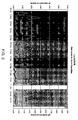
- the attached Figure 2 reports the lactic acid levels in the average raw juice throughout the period under study, with respect to the one contributed by the beet cossettes.
- invertase inverted sugar
- some bactericides which owe their action to the destruction of the lipoprotein membrane of the micro-organisms, give rise to the immediate release of the invertase present inside the cells. This phenomenon is widely described by Günther Pollach in his recent work on the antibacterial effects of fatty acids on diffusion juices ( G. Pollach et al., The concept of different natural antibacterials for the sugar industry, Zuckerindustrie 129, (2004), No. 8, 555-564 ).
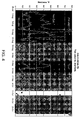
- the graph of herewith attached Figure 4 shows the trend of the calcium salts in the clear liquid of 2 nd saturation and in the thin juice. There is a significant decrease in calcium salts from the time PAA starts to be used and up to the end of the campaign, with the exception of the hop period, which resumes the trend found with formalin.
- the PAA/NVE combination turned out to be an optimal technological choice both as regards the control of infections, thanks to the contrasting effect with respect to the establishment of resistant species, and also as regards the possibility of avoiding the undesirable effect on press absorptions caused by the massive use of PAA concomitantly with peaks of lactic acid in the juices.
- the dry matter of the pressed spent pulps was virtually constant throughout the campaign at values comparable to those of Example 1 when not, indeed, better than them, with sampling points being equal.
- the best performances of the pressing station were confirmed by higher electric absorption values than the ones recorded during the previous campaign - indicating a better use of the machines that produced a quantity of pressed pulp that was considerably higher than in the previous year.
- aluminium sulphate was totally avoided during the campaign period except for the 15 days of trial with only vegetable extracts.
- the average dosage was around a value slightly lower than the average value of the previous campaigns.
- the method for controlling bacterial infections based on the combined use of PAA as the main antibacterial, fed into the system in a continuative manner, and of NVE as a secondary antibacterial, to be used in a non-continuative manner allows having a complete advantage of the technological benefits linked to using peracetic acid while, at the same time, controlling the development of PAA-resistant species that can be effectively eliminated via sporadic targeted treatment with natural antibacterial agents without interrupting the primary treatment.
Landscapes
- Chemical & Material Sciences (AREA)
- Life Sciences & Earth Sciences (AREA)
- Biochemistry (AREA)
- Organic Chemistry (AREA)
- Agricultural Chemicals And Associated Chemicals (AREA)
- Saccharide Compounds (AREA)
- Food Preservation Except Freezing, Refrigeration, And Drying (AREA)
- Preparation Of Compounds By Using Micro-Organisms (AREA)
- Pharmaceuticals Containing Other Organic And Inorganic Compounds (AREA)
Applications Claiming Priority (1)
| Application Number | Priority Date | Filing Date | Title |
|---|---|---|---|
| IT000157A ITRM20060157A1 (it) | 2006-03-22 | 2006-03-22 | Metodo per il controllo dell infezione batterica nel processo di produzione dello zucchero |
Publications (2)
| Publication Number | Publication Date |
|---|---|
| EP1837409A1 true EP1837409A1 (fr) | 2007-09-26 |
| EP1837409B1 EP1837409B1 (fr) | 2009-09-09 |
Family
ID=38308681
Family Applications (1)
| Application Number | Title | Priority Date | Filing Date |
|---|---|---|---|
| EP07425165A Active EP1837409B1 (fr) | 2006-03-22 | 2007-03-21 | Méthode de contrôle des infections bactériennes dans la production de sucre. |
Country Status (4)
| Country | Link |
|---|---|
| EP (1) | EP1837409B1 (fr) |
| AT (1) | ATE442460T1 (fr) |
| DE (1) | DE602007002315D1 (fr) |
| IT (1) | ITRM20060157A1 (fr) |
Cited By (1)
| Publication number | Priority date | Publication date | Assignee | Title |
|---|---|---|---|---|
| US8557309B2 (en) * | 2007-12-07 | 2013-10-15 | Malaysian Palm Oil Board | Antimicrobial composition based on botanical extracts from oil palm vegetation liquor |
Families Citing this family (1)
| Publication number | Priority date | Publication date | Assignee | Title |
|---|---|---|---|---|
| CA3190261A1 (fr) * | 2020-07-31 | 2022-04-21 | Hydrite Chemical Co. | Procede de regulation de la croissance microbienne dans le traitement du sucre |
Citations (7)
| Publication number | Priority date | Publication date | Assignee | Title |
|---|---|---|---|---|
| US3108907A (en) * | 1962-01-08 | 1963-10-29 | Cucullu Jose Capdevila | Process of preserving sugar juices |
| US4427454A (en) * | 1981-06-26 | 1984-01-24 | Riken Vitamin Oil Co., Ltd. | Method for treating sugar solution |
| EP0456627A2 (fr) * | 1990-05-10 | 1991-11-13 | Eka Nobel Ab | Procédé d'inhibition de la croissance microbienne |
| WO1994016110A1 (fr) * | 1993-01-06 | 1994-07-21 | Solvay Interox Limited | Desinfection de solutions aqueuses |
| EP0681029A2 (fr) * | 1994-05-06 | 1995-11-08 | Zuckerforschung Tulln Gesellschaft M.B.H. | Procédé pour déloquer la croissance des microorganismes thermophiles, en milieux aqueux sucrés |
| US20030101990A1 (en) * | 2000-05-16 | 2003-06-05 | Gunter Pollach | Method for the production of sugar or sugar-containing products from sugar-containing vegetable raw materials, sugar and sugar-containing products made by the method, and extraction solution for use in the method |
| WO2004081236A1 (fr) * | 2003-03-11 | 2004-09-23 | Zuckerforschung Tulln Gesellschaft M.B.H. | Procede de production de sucre et de produits contenant du sucre a partir de matieres premieres vegetales sacchariferes |
-
2006
- 2006-03-22 IT IT000157A patent/ITRM20060157A1/it unknown
-
2007
- 2007-03-21 DE DE602007002315T patent/DE602007002315D1/de not_active Expired - Fee Related
- 2007-03-21 EP EP07425165A patent/EP1837409B1/fr active Active
- 2007-03-21 AT AT07425165T patent/ATE442460T1/de not_active IP Right Cessation
Patent Citations (7)
| Publication number | Priority date | Publication date | Assignee | Title |
|---|---|---|---|---|
| US3108907A (en) * | 1962-01-08 | 1963-10-29 | Cucullu Jose Capdevila | Process of preserving sugar juices |
| US4427454A (en) * | 1981-06-26 | 1984-01-24 | Riken Vitamin Oil Co., Ltd. | Method for treating sugar solution |
| EP0456627A2 (fr) * | 1990-05-10 | 1991-11-13 | Eka Nobel Ab | Procédé d'inhibition de la croissance microbienne |
| WO1994016110A1 (fr) * | 1993-01-06 | 1994-07-21 | Solvay Interox Limited | Desinfection de solutions aqueuses |
| EP0681029A2 (fr) * | 1994-05-06 | 1995-11-08 | Zuckerforschung Tulln Gesellschaft M.B.H. | Procédé pour déloquer la croissance des microorganismes thermophiles, en milieux aqueux sucrés |
| US20030101990A1 (en) * | 2000-05-16 | 2003-06-05 | Gunter Pollach | Method for the production of sugar or sugar-containing products from sugar-containing vegetable raw materials, sugar and sugar-containing products made by the method, and extraction solution for use in the method |
| WO2004081236A1 (fr) * | 2003-03-11 | 2004-09-23 | Zuckerforschung Tulln Gesellschaft M.B.H. | Procede de production de sucre et de produits contenant du sucre a partir de matieres premieres vegetales sacchariferes |
Non-Patent Citations (3)
| Title |
|---|
| HEIN W ET AL: "10 years' experience with natural antibacterials within Agrana.", SUGAR INDUSTRY/ZUCKERINDUSTRIE 131 (7) 477-491 2006 ZUCKERFORSCHUNG TULLN GMBH., JOSEF-REITHER-STR. 21-23, A-3430 TULLN, AUSTRIA. E-MAIL WALTER-HEIN(A)ZUCKERFORSCHUNG.AT, 2006, XP009087900 * |
| HEIN W ET AL: "NEUE ERKENNTNISSE BEIM EINSATZ VON HOPFENPRODUKTEN IN DER ZUCKERINDUSTRIE NEW FINDINGS WITH THE USE OF HOP PRODUCTS IN THE SUGAR INDUSTRY", ZUCKERINDUSTRIE - SUGAR INDUSTRY - INDUSTRIE SUCRIRE, BARTENS, BERLIN, DE, vol. 122, no. 12, 1997, pages 940 - 949, XP001024033, ISSN: 0344-8657 * |
| POLLACH G ET AL: "The concept of different natural antibacterials for the sugar industry.", ZUCKERINDUSTRIE 129 (8) 555-564 2004, 2004, XP009087899 * |
Cited By (1)
| Publication number | Priority date | Publication date | Assignee | Title |
|---|---|---|---|---|
| US8557309B2 (en) * | 2007-12-07 | 2013-10-15 | Malaysian Palm Oil Board | Antimicrobial composition based on botanical extracts from oil palm vegetation liquor |
Also Published As
| Publication number | Publication date |
|---|---|
| DE602007002315D1 (de) | 2009-10-22 |
| EP1837409B1 (fr) | 2009-09-09 |
| ATE442460T1 (de) | 2009-09-15 |
| ITRM20060157A1 (it) | 2007-09-23 |
Similar Documents
| Publication | Publication Date | Title |
|---|---|---|
| EP0681029B1 (fr) | Procédé pour déloquer la croissance des microorganismes thermophiles, en milieux aqueux sucrés | |
| FI115726B (fi) | Vesipitoisten liuosten desinfiointi | |
| JP6684711B2 (ja) | テンサイ及び他の糖含有植物材料の加工における微生物制御の方法 | |
| US20190254313A1 (en) | Fruit and vegetable juice rich in sod and processing method thereof | |
| Nabiyev et al. | Identification of patterns in sugar beet storage conditions depending on enzymatic activity | |
| EP1837409B1 (fr) | Méthode de contrôle des infections bactériennes dans la production de sucre. | |
| EP1282731B1 (fr) | Procede de production de sucre a l'aide de resines | |
| US20090236561A1 (en) | Extraction liquid for extracting sugar-containing plant raw materials | |
| US20030166256A1 (en) | Integrated bacteria enzyme straw/barley matrix for ponds, lakes, aquariums and aquaculture | |
| Nogueira et al. | Apple cider fermentation | |
| US3694262A (en) | Method and composition for sanitation of sugar factories | |
| CN101438847A (zh) | 葡萄汁防褐变方法 | |
| Sutanto et al. | Fertilizer application of pineapple liquid waste (Plw) weight of pineapple (Ananas Comosus, L. Merr) | |
| ICMSF | Sugar, syrups and honey | |
| WO2023096636A1 (fr) | Processus et compositions pour l'ensilage de matières cellulosiques mises en croissance de manière hydroponique | |
| DE102005060199A1 (de) | Verfahren und Vorrichtung für die Vakuumtrocknung von Papayalatex | |
| Roberts et al. | Sugar, syrups, and honey | |
| GB190710848A (en) | Process for Obtaining Rubber, Gutta-percha and Balata from Lactescent Plants. | |
| DD284405A5 (de) | Verfahren zur konservierung von futterkartoffeln | |
| WO2014063260A1 (fr) | Procede de transformation industrielle de seigle vert | |
| MXPA96001323A (en) | Product to stabilize the sucrose contained in the sugar cane and application method |
Legal Events
| Date | Code | Title | Description |
|---|---|---|---|
| PUAI | Public reference made under article 153(3) epc to a published international application that has entered the european phase |
Free format text: ORIGINAL CODE: 0009012 |
|
| AK | Designated contracting states |
Kind code of ref document: A1 Designated state(s): AT BE BG CH CY CZ DE DK EE ES FI FR GB GR HU IE IS IT LI LT LU LV MC MT NL PL PT RO SE SI SK TR |
|
| AX | Request for extension of the european patent |
Extension state: AL BA HR MK YU |
|
| 17P | Request for examination filed |
Effective date: 20080326 |
|
| AKX | Designation fees paid |
Designated state(s): AT BE BG CH CY CZ DE DK EE ES FI FR GB GR HU IE IS IT LI LT LU LV MC MT NL PL PT RO SE SI SK TR |
|
| AXX | Extension fees paid |
Extension state: RS Payment date: 20070405 |
|
| 17Q | First examination report despatched |
Effective date: 20080519 |
|
| GRAP | Despatch of communication of intention to grant a patent |
Free format text: ORIGINAL CODE: EPIDOSNIGR1 |
|
| GRAS | Grant fee paid |
Free format text: ORIGINAL CODE: EPIDOSNIGR3 |
|
| GRAA | (expected) grant |
Free format text: ORIGINAL CODE: 0009210 |
|
| AK | Designated contracting states |
Kind code of ref document: B1 Designated state(s): AT BE BG CH CY CZ DE DK EE ES FI FR GB GR HU IE IS IT LI LT LU LV MC MT NL PL PT RO SE SI SK TR |
|
| AX | Request for extension of the european patent |
Extension state: RS |
|
| REG | Reference to a national code |
Ref country code: GB Ref legal event code: FG4D |
|
| REG | Reference to a national code |
Ref country code: CH Ref legal event code: EP |
|
| REG | Reference to a national code |
Ref country code: IE Ref legal event code: FG4D |
|
| REF | Corresponds to: |
Ref document number: 602007002315 Country of ref document: DE Date of ref document: 20091022 Kind code of ref document: P |
|
| PG25 | Lapsed in a contracting state [announced via postgrant information from national office to epo] |
Ref country code: SE Free format text: LAPSE BECAUSE OF FAILURE TO SUBMIT A TRANSLATION OF THE DESCRIPTION OR TO PAY THE FEE WITHIN THE PRESCRIBED TIME-LIMIT Effective date: 20090909 Ref country code: LT Free format text: LAPSE BECAUSE OF FAILURE TO SUBMIT A TRANSLATION OF THE DESCRIPTION OR TO PAY THE FEE WITHIN THE PRESCRIBED TIME-LIMIT Effective date: 20090909 Ref country code: FI Free format text: LAPSE BECAUSE OF FAILURE TO SUBMIT A TRANSLATION OF THE DESCRIPTION OR TO PAY THE FEE WITHIN THE PRESCRIBED TIME-LIMIT Effective date: 20090909 |
|
| NLV1 | Nl: lapsed or annulled due to failure to fulfill the requirements of art. 29p and 29m of the patents act | ||
| LTIE | Lt: invalidation of european patent or patent extension |
Effective date: 20090909 |
|
| PG25 | Lapsed in a contracting state [announced via postgrant information from national office to epo] |
Ref country code: LV Free format text: LAPSE BECAUSE OF FAILURE TO SUBMIT A TRANSLATION OF THE DESCRIPTION OR TO PAY THE FEE WITHIN THE PRESCRIBED TIME-LIMIT Effective date: 20090909 Ref country code: SI Free format text: LAPSE BECAUSE OF FAILURE TO SUBMIT A TRANSLATION OF THE DESCRIPTION OR TO PAY THE FEE WITHIN THE PRESCRIBED TIME-LIMIT Effective date: 20090909 Ref country code: PL Free format text: LAPSE BECAUSE OF FAILURE TO SUBMIT A TRANSLATION OF THE DESCRIPTION OR TO PAY THE FEE WITHIN THE PRESCRIBED TIME-LIMIT Effective date: 20090909 Ref country code: NL Free format text: LAPSE BECAUSE OF FAILURE TO SUBMIT A TRANSLATION OF THE DESCRIPTION OR TO PAY THE FEE WITHIN THE PRESCRIBED TIME-LIMIT Effective date: 20090909 |
|
| PG25 | Lapsed in a contracting state [announced via postgrant information from national office to epo] |
Ref country code: CY Free format text: LAPSE BECAUSE OF FAILURE TO SUBMIT A TRANSLATION OF THE DESCRIPTION OR TO PAY THE FEE WITHIN THE PRESCRIBED TIME-LIMIT Effective date: 20090909 |
|
| PG25 | Lapsed in a contracting state [announced via postgrant information from national office to epo] |
Ref country code: PT Free format text: LAPSE BECAUSE OF FAILURE TO SUBMIT A TRANSLATION OF THE DESCRIPTION OR TO PAY THE FEE WITHIN THE PRESCRIBED TIME-LIMIT Effective date: 20100111 Ref country code: ES Free format text: LAPSE BECAUSE OF FAILURE TO SUBMIT A TRANSLATION OF THE DESCRIPTION OR TO PAY THE FEE WITHIN THE PRESCRIBED TIME-LIMIT Effective date: 20091220 Ref country code: RO Free format text: LAPSE BECAUSE OF FAILURE TO SUBMIT A TRANSLATION OF THE DESCRIPTION OR TO PAY THE FEE WITHIN THE PRESCRIBED TIME-LIMIT Effective date: 20090909 Ref country code: CZ Free format text: LAPSE BECAUSE OF FAILURE TO SUBMIT A TRANSLATION OF THE DESCRIPTION OR TO PAY THE FEE WITHIN THE PRESCRIBED TIME-LIMIT Effective date: 20090909 Ref country code: EE Free format text: LAPSE BECAUSE OF FAILURE TO SUBMIT A TRANSLATION OF THE DESCRIPTION OR TO PAY THE FEE WITHIN THE PRESCRIBED TIME-LIMIT Effective date: 20090909 Ref country code: IS Free format text: LAPSE BECAUSE OF FAILURE TO SUBMIT A TRANSLATION OF THE DESCRIPTION OR TO PAY THE FEE WITHIN THE PRESCRIBED TIME-LIMIT Effective date: 20100109 |
|
| PG25 | Lapsed in a contracting state [announced via postgrant information from national office to epo] |
Ref country code: SK Free format text: LAPSE BECAUSE OF FAILURE TO SUBMIT A TRANSLATION OF THE DESCRIPTION OR TO PAY THE FEE WITHIN THE PRESCRIBED TIME-LIMIT Effective date: 20090909 |
|
| PG25 | Lapsed in a contracting state [announced via postgrant information from national office to epo] |
Ref country code: BE Free format text: LAPSE BECAUSE OF FAILURE TO SUBMIT A TRANSLATION OF THE DESCRIPTION OR TO PAY THE FEE WITHIN THE PRESCRIBED TIME-LIMIT Effective date: 20090909 Ref country code: AT Free format text: LAPSE BECAUSE OF FAILURE TO SUBMIT A TRANSLATION OF THE DESCRIPTION OR TO PAY THE FEE WITHIN THE PRESCRIBED TIME-LIMIT Effective date: 20090909 |
|
| PLBE | No opposition filed within time limit |
Free format text: ORIGINAL CODE: 0009261 |
|
| STAA | Information on the status of an ep patent application or granted ep patent |
Free format text: STATUS: NO OPPOSITION FILED WITHIN TIME LIMIT |
|
| PG25 | Lapsed in a contracting state [announced via postgrant information from national office to epo] |
Ref country code: DK Free format text: LAPSE BECAUSE OF FAILURE TO SUBMIT A TRANSLATION OF THE DESCRIPTION OR TO PAY THE FEE WITHIN THE PRESCRIBED TIME-LIMIT Effective date: 20090909 |
|
| 26N | No opposition filed |
Effective date: 20100610 |
|
| PG25 | Lapsed in a contracting state [announced via postgrant information from national office to epo] |
Ref country code: MC Free format text: LAPSE BECAUSE OF NON-PAYMENT OF DUE FEES Effective date: 20100331 Ref country code: GR Free format text: LAPSE BECAUSE OF FAILURE TO SUBMIT A TRANSLATION OF THE DESCRIPTION OR TO PAY THE FEE WITHIN THE PRESCRIBED TIME-LIMIT Effective date: 20091210 |
|
| REG | Reference to a national code |
Ref country code: FR Ref legal event code: ST Effective date: 20101130 |
|
| PG25 | Lapsed in a contracting state [announced via postgrant information from national office to epo] |
Ref country code: FR Free format text: LAPSE BECAUSE OF NON-PAYMENT OF DUE FEES Effective date: 20100331 Ref country code: IE Free format text: LAPSE BECAUSE OF NON-PAYMENT OF DUE FEES Effective date: 20100321 |
|
| PG25 | Lapsed in a contracting state [announced via postgrant information from national office to epo] |
Ref country code: DE Free format text: LAPSE BECAUSE OF NON-PAYMENT OF DUE FEES Effective date: 20101001 |
|
| PG25 | Lapsed in a contracting state [announced via postgrant information from national office to epo] |
Ref country code: IT Free format text: LAPSE BECAUSE OF FAILURE TO SUBMIT A TRANSLATION OF THE DESCRIPTION OR TO PAY THE FEE WITHIN THE PRESCRIBED TIME-LIMIT Effective date: 20090909 |
|
| PG25 | Lapsed in a contracting state [announced via postgrant information from national office to epo] |
Ref country code: MT Free format text: LAPSE BECAUSE OF FAILURE TO SUBMIT A TRANSLATION OF THE DESCRIPTION OR TO PAY THE FEE WITHIN THE PRESCRIBED TIME-LIMIT Effective date: 20090909 |
|
| REG | Reference to a national code |
Ref country code: CH Ref legal event code: PL |
|
| GBPC | Gb: european patent ceased through non-payment of renewal fee |
Effective date: 20110321 |
|
| PG25 | Lapsed in a contracting state [announced via postgrant information from national office to epo] |
Ref country code: CH Free format text: LAPSE BECAUSE OF NON-PAYMENT OF DUE FEES Effective date: 20110331 Ref country code: LI Free format text: LAPSE BECAUSE OF NON-PAYMENT OF DUE FEES Effective date: 20110331 |
|
| PG25 | Lapsed in a contracting state [announced via postgrant information from national office to epo] |
Ref country code: GB Free format text: LAPSE BECAUSE OF NON-PAYMENT OF DUE FEES Effective date: 20110321 |
|
| PG25 | Lapsed in a contracting state [announced via postgrant information from national office to epo] |
Ref country code: LU Free format text: LAPSE BECAUSE OF NON-PAYMENT OF DUE FEES Effective date: 20100321 Ref country code: BG Free format text: LAPSE BECAUSE OF FAILURE TO SUBMIT A TRANSLATION OF THE DESCRIPTION OR TO PAY THE FEE WITHIN THE PRESCRIBED TIME-LIMIT Effective date: 20090909 Ref country code: HU Free format text: LAPSE BECAUSE OF FAILURE TO SUBMIT A TRANSLATION OF THE DESCRIPTION OR TO PAY THE FEE WITHIN THE PRESCRIBED TIME-LIMIT Effective date: 20100310 |
|
| PG25 | Lapsed in a contracting state [announced via postgrant information from national office to epo] |
Ref country code: TR Free format text: LAPSE BECAUSE OF FAILURE TO SUBMIT A TRANSLATION OF THE DESCRIPTION OR TO PAY THE FEE WITHIN THE PRESCRIBED TIME-LIMIT Effective date: 20090909 |
|
| REG | Reference to a national code |
Ref country code: GB Ref legal event code: S28 Free format text: APPLICATION FILED |
|
| REG | Reference to a national code |
Ref country code: GB Ref legal event code: S28 Free format text: APPLICATION WITHDRAWN Effective date: 20140212 |