EP1841106A2 - DAB-kompatibles Verfahren und System zum Senden und Empfangen für terrestrischen mobilen Multimediarundfunk - Google Patents
DAB-kompatibles Verfahren und System zum Senden und Empfangen für terrestrischen mobilen Multimediarundfunk Download PDFInfo
- Publication number
- EP1841106A2 EP1841106A2 EP07104721A EP07104721A EP1841106A2 EP 1841106 A2 EP1841106 A2 EP 1841106A2 EP 07104721 A EP07104721 A EP 07104721A EP 07104721 A EP07104721 A EP 07104721A EP 1841106 A2 EP1841106 A2 EP 1841106A2
- Authority
- EP
- European Patent Office
- Prior art keywords
- channel
- data
- fic
- service
- mmb
- Prior art date
- Legal status (The legal status is an assumption and is not a legal conclusion. Google has not performed a legal analysis and makes no representation as to the accuracy of the status listed.)
- Withdrawn
Links
- 238000000034 method Methods 0.000 title claims abstract description 92
- 230000005540 biological transmission Effects 0.000 claims abstract description 144
- 230000010363 phase shift Effects 0.000 claims description 13
- 238000012937 correction Methods 0.000 claims description 10
- 230000015572 biosynthetic process Effects 0.000 claims description 8
- 238000010586 diagram Methods 0.000 description 13
- 230000008569 process Effects 0.000 description 12
- 238000012545 processing Methods 0.000 description 10
- 239000000969 carrier Substances 0.000 description 9
- 230000008901 benefit Effects 0.000 description 8
- 238000005516 engineering process Methods 0.000 description 8
- 239000011159 matrix material Substances 0.000 description 8
- 230000006835 compression Effects 0.000 description 6
- 238000007906 compression Methods 0.000 description 6
- 238000013507 mapping Methods 0.000 description 4
- 238000001228 spectrum Methods 0.000 description 4
- 230000000694 effects Effects 0.000 description 3
- 230000007246 mechanism Effects 0.000 description 3
- 230000004048 modification Effects 0.000 description 3
- 238000012986 modification Methods 0.000 description 3
- 230000008520 organization Effects 0.000 description 3
- 238000012360 testing method Methods 0.000 description 3
- 238000013461 design Methods 0.000 description 2
- 238000011161 development Methods 0.000 description 2
- 230000014509 gene expression Effects 0.000 description 2
- 230000006855 networking Effects 0.000 description 2
- 101000969688 Homo sapiens Macrophage-expressed gene 1 protein Proteins 0.000 description 1
- 102100021285 Macrophage-expressed gene 1 protein Human genes 0.000 description 1
- 230000006978 adaptation Effects 0.000 description 1
- 230000008859 change Effects 0.000 description 1
- 230000002860 competitive effect Effects 0.000 description 1
- 125000004122 cyclic group Chemical group 0.000 description 1
- 239000000284 extract Substances 0.000 description 1
- 230000006872 improvement Effects 0.000 description 1
- 238000005259 measurement Methods 0.000 description 1
- 239000000203 mixture Substances 0.000 description 1
- 229920001690 polydopamine Polymers 0.000 description 1
- 238000004904 shortening Methods 0.000 description 1
- 238000006467 substitution reaction Methods 0.000 description 1
- 230000001360 synchronised effect Effects 0.000 description 1
- 230000002123 temporal effect Effects 0.000 description 1
- 230000007704 transition Effects 0.000 description 1
Images







Classifications
-
- H—ELECTRICITY
- H04—ELECTRIC COMMUNICATION TECHNIQUE
- H04H—BROADCAST COMMUNICATION
- H04H20/00—Arrangements for broadcast or for distribution combined with broadcast
- H04H20/44—Arrangements characterised by circuits or components specially adapted for broadcast
- H04H20/46—Arrangements characterised by circuits or components specially adapted for broadcast specially adapted for broadcast systems covered by groups H04H20/53-H04H20/95
-
- H—ELECTRICITY
- H04—ELECTRIC COMMUNICATION TECHNIQUE
- H04H—BROADCAST COMMUNICATION
- H04H20/00—Arrangements for broadcast or for distribution combined with broadcast
- H04H20/65—Arrangements characterised by transmission systems for broadcast
- H04H20/71—Wireless systems
- H04H20/72—Wireless systems of terrestrial networks
-
- H—ELECTRICITY
- H04—ELECTRIC COMMUNICATION TECHNIQUE
- H04H—BROADCAST COMMUNICATION
- H04H20/00—Arrangements for broadcast or for distribution combined with broadcast
- H04H20/53—Arrangements specially adapted for specific applications, e.g. for traffic information or for mobile receivers
- H04H20/57—Arrangements specially adapted for specific applications, e.g. for traffic information or for mobile receivers for mobile receivers
-
- H—ELECTRICITY
- H04—ELECTRIC COMMUNICATION TECHNIQUE
- H04H—BROADCAST COMMUNICATION
- H04H20/00—Arrangements for broadcast or for distribution combined with broadcast
- H04H20/86—Arrangements characterised by the broadcast information itself
-
- H—ELECTRICITY
- H04—ELECTRIC COMMUNICATION TECHNIQUE
- H04H—BROADCAST COMMUNICATION
- H04H40/00—Arrangements specially adapted for receiving broadcast information
- H04H40/18—Arrangements characterised by circuits or components specially adapted for receiving
- H04H40/27—Arrangements characterised by circuits or components specially adapted for receiving specially adapted for broadcast systems covered by groups H04H20/53 - H04H20/95
Definitions
- the present invention relates to technological field of digital information transmission, in particular to a transmitting and receiving method for terrestrial mobile multimedia broadcasting and a system thereof which are compatible with digital audio broadcasting (DAB).
- DAB digital audio broadcasting
- Digital multimedia broadcasting refers to a multimedia broadcasting method used for handhold terminals.
- Standards for digital multimedia broadcasting which now attract more attention from those skilled, are European standard DVB-H, MediaFLO of US and Korean standard T-DMB.
- T-DMB (short for Digital Multimedia Broadcasting) is developed on the basis of DAB.
- DAB digital broadcasting is initiated by the famous EUREKA-147, an association of 12 members.
- the system of EUREKA-147 whose original name is digital audio broadcasting (DAB), has always been utilized as a standard for distinguishing the real DAB from other digital audio broadcastings.
- EUREKA-147 was selected by the International Standardization Organization (ISO) as an international standard for digital audio broadcasting in 1994.
- ISO International Standardization Organization
- Today, digital broadcasting according to this standard has been either implemented or under test in most part of the world.
- European Union first carried out a test on EUREKA-147 DAB at World Radio Administrative Conference in September 1988, and then the EUREKA-147 DAB mode has been standardized since 1995.
- the DAB Digital Audio Broadcasting
- 3G broadcasting the third generation broadcasting following the conventional AM/FM broadcasting.
- Digital broadcasting has such advantages as noise resistance, interference proof, resistance against attenuation in electric wave transmission and adaptability to high-speed mobile reception. It provides stereo audio quality equivalent to that of CDs and nearly no distortion in signal.
- T-DMB is a terrestrial digital multimedia broadcasting system introduced from Korea, which can be still referred as the international standard of Europe in a strict sense.
- the standard is established on the basis of the EUREKA-147 digital audio broadcasting (DAB) system developed by European manufacturers and has some modification so as to broadcast on-air digital TV programs for handheld devices such as mobile phones, PDAs and portable TVs.
- DVB digital audio broadcasting
- T-DMB has entered a commercial phase in Korea.
- the T-DMB broadcasting operators in Korea have been issued new licenses.
- the mobile digital TV broadcasting system DVB-H developed in Europe has just been put into test.
- T-DMB makes full use of the technological advantages of DAB (capable of reliably receiving signals in a high-speed mobile environment) and functionally expands the single audio information transmission to various carriers, such as data, text, graphics and video.
- T-DMB compresses, encodes, modulates and transmits digitalized audio and video signals and various data service signals in a digital state, thereby realizing a high-quality transmission, while it possesses multimedia characteristics and transmits data information with a large capacity, high efficiency and robust reliability.
- the transition from DAB to T-DMB means a great stride from a digital audio broadcasting to a digital multimedia broadcasting, which enables any digital information to be delivered by means of a digitalized platform system.
- Such a system can offer for users an integrated audiovisual information service and entertainment containing audio and video.
- DVB-H short for Digital Video Broadcasting Handheld
- DVB-H is a transmission standard for providing multimedia service to portable/handheld terminals via a terrestrial digital broadcasting network, specialized by Europe DVB organization after it proposed a series of standards for digital TV transmission.
- DVB-H is established to be above both DVB (data broadcasting) and DVB-T (transmission) standards and considered as an extended application of DVB-T standard.
- DVB-H actually focuses on protocol implementation though being a transmission standard.
- Front end of the system consists of a DVB-H encapsulator responsible for encapsulating IP data into a MPEG-2 system transport stream and a DVB-H modulator responsible for channel coding and modulation, while the terminal of the system consists of a DVB-H demodulator responsible for channel demodulation and decoding and a DVB-H terminal responsible for displaying and processing relevant services.
- DVB-H retains partly compatibility with a DVB-T receiving circuit, while much technological improvement has been made in order to meet requirement from receiving characteristics of handheld devices, such as low power consumption, great mobility, common platform and no-interruption in switching network service, thereby ensuring a normal view indoors, outdoors, in walking or in a traveling vehicle.
- the terminal periodically powers off part of the receiving circuit for saving power consumption.
- the antenna of a DVB terminal is smaller and more flexible in movement.
- the transmitting system can ensure DVB-H services to be successfully received at various moving rates.
- the system has a strong resistance against any interference and can offer sufficient flexibility for applications with different transmission bandwidths and channel bandwidths.
- the MediaFLO technology proposed by QAULCOMM is essentially a new air interface. It is designed for mobile multicast reception with a quick channel switching, a low power-consumption receiver and rich service contents.
- the MediaFLO enables a modulation mode supporting a robust data rate up to 11 Mbps within a channel of 6MHz.
- a quick channel switching time of average 1.5s is also highlighted and taken as one of the MediaFLO's trumps for exceeding other competitive mobile TV standards.
- the receiver extracts transmission time of a target service from head information of a transmission frame, and starts receiving from this moment.
- the Qualcomm has purchased a frequency of 700MHz (UHF TV Channel 55) and can transmit at a power up to 50kW.
- T-DMB has a low spectrum utilization efficiency, hardly provides enough information throughput to satisfy such a high-quality service as the mobile TV, and lacks sufficient power-saving mechanism for a receiver.
- DVB-H since it is derived from DVB-T which is a stationary receiving system, room for optimizing the mobile environment is rather limited.
- DVB-H has no enough power-saving mechanism for a receiver while some other performance indices are sacrificed, for example, the time for switching is increased to 5s.
- the number of the operating frequencies available for DVB-H is small.
- MediaFLO as an independent system has no compatibility and is designed mainly for a frequency of 700MHz, thereby lacking possibility for common application.
- the present invention provides a DAB-compatible transmitting method for terrestrial mobile multimedia broadcasting, which can effectively transmit service data of multimedia broadcasting under a mobile environment.
- the present invention further provides a DAB-compatible receiving method for terrestrial mobile multimedia broadcasting, which can effectively receive service data of multimedia broadcasting under a mobile environment.
- the present invention provides a DAB-compatible system for terrestrial mobile multimedia broadcasting, by which it can be realized that service data of multimedia broadcasting is effectively transmitted and received under a mobile environment.
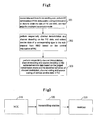
- a DAB-compatible method for transmitting terrestrial mobile multimedia broadcasting in which the service type of multimedia broadcasting is predefined to be including terrestrial mobile multimedia broadcasting (T-MMB) service comprises the steps of Receiving service data of multimedia broadcasting and performing sequentially source coding and channel coding on said service data according to their service type; Embedding the encoded data into a main service channel (MSC) of the system in a time division multiplex mode, identifying accordingly the service type, information on occupied sub-channel, source coding scheme, channel coding scheme and channel modulation scheme corresponding to the service data in a fast information channel (FIC) of the system, and performing channel coding on the data in the FIC; Performing Channel modulating on the data of FIC and MSC according to the determined transmission mode and said channel modulation scheme, performing OFDM modulation and radio frequency (RF) modulation on the channel-modulated data of FIC, MSC and data of a synchronization channel, and then sending them out.
- MSC main service channel
- FIC fast information channel
- the method can further comprises performing sequentially conditional access scrambling and energy dispersal on the source-encoded data, and after the channel coding and before the time division multiplexing, the method can further comprises performing time interleaving on the channel-encoded data.
- said channel coding on the service data can be a channel coding on the service data with concatenated code or low density parity check (LDPC) code.
- LDPC low density parity check
- the channel modulation for the T-MMB service data in a transmission frame can be a channel modulate on said T-MMB service data by means of Differential Quadrature Phase Shift Keying (DQPSK), 8-level Differential Phase Shift Keying (8DPSK), 16-level Differential Amplitude and Phase Shift Keying (16DAPSK) or 64-level Differential Amplitude and Phase Shift Keying (64DAPSK).
- DQPSK Differential Quadrature Phase Shift Keying
- 8DPSK 8-level Differential Phase Shift Keying
- 16DAPSK 16-level Differential Amplitude and Phase Shift Keying
- 64DAPSK 64-level Differential Amplitude and Phase Shift Keying
- the size of the corresponding capacity units (CUs) in MSC is determined according to the channel modulation scheme of the service data.
- said step of identifying accordingly the service type, information on occupied sub-channel, source coding scheme, channel coding scheme and channel modulation scheme corresponding to the service data in the fast information channel (FIC) of the system can comprise constructing a fast information group (FIG) of the FIC of T-MMB system based on the FIG of the FIC of DAB system and identifying the service type, information on occupied sub-channel, source coding scheme, channel coding scheme and channel modulation scheme corresponding to the service data in the FIG of the FIC of DAB system.
- FOG fast information group
- said step of identifying the service type corresponding to the service data in the FIG of the FIC of DAB system can comprise adding a description for the service type of T-MMB system to a field for data service component type in FIG type 0/extended mode 2 of the FIC of T-MMB system, and adding a description for T-MMB user application to a field for user application type in FIG type 0/extended mode 13 of the FIC of T-MMB system.
- said step of identifying information on sub-channel occupied by the service data in the FIG of the FIC of T-MMB system can comprise adding a sub-channel identification field in the FIG of the FIC of T-MMB system to identify the sub-channel occupied by the service data, and adding an initial address field in the FIG of the FIC of DAB system to identify the address of the first CU of the sub-channel.
- said step of identifying the channel coding scheme and the channel modulation scheme of the service data in the FIG of the FIC of T-MMB system can comprise adding a CodingType field into the FIG of the FIC of T-MMB system to identify the channel coding scheme of T-MMB service, adding a Sub-channel field into the FIG of the FIC of T-MMB system to identify the sub-channel size of T-MMB service and the protection level of the employed error correction code, and adding a ModuType field for the modulation type in the FIG of the FIC of T-MMB system to identify the channel modulation scheme of T-MMB service.
- said step of determining the transmission mode can comprise, with reference to the correspondence relationship between the predefined channel modulation scheme, transmission mode and operating frequency, determining the transmission mode according to the employed channel modulation scheme and the operating frequency specified by the system.
- the transmission mode IV is used in case that the operating frequency of T-MMB is BandIII, and the transmission mode III is used in case of L-Band;
- the transmission mode I is used in case that the operating frequency of T-MMB is BandIII, and the transmission mode II is used in case of L-Band.
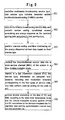
- a DAB-compatible receiving method for terrestrial mobile multimedia broadcasting comprises the steps of Performing RF demodulation, OFDM demodulation and synchronization on the received signal, obtaining the data of FIC and MSC, and judging the employed transmission mode; Performing sequentially channel demodulation and channel decoding on said FIC data, and extracting service data of a corresponding type in a sub-channel from MSC based on control information of FIC; Performing sequentially channel demodulation, channel decoding and source decoding on the extracted service data based on the judged transmission mode and the identified methods of channel modulation, channel coding and source coding of various service data in the FIC.
- said step of judging the transmission mode can comprise, with reference to the correspondence relationship between the predefined channel modulation scheme and the transmission mode and operating frequency, judging the transmission mode according to the employed channel modulation scheme and the operating frequency specified by the system.
- a DAB-compatible system for terrestrial mobile multimedia broadcasting comprises a network control centre (NCC) for sending multimedia broadcasting service data to a transmitting station, said transmitting station for receiving the multimedia broadcasting service data from said NCC, performing source coding and channel coding on said service data based on their service type, embedding the encoded data into the MSC of the system in a time division multiplex mode, identifying accordingly in a fast information channel (FIC) the service type, information on occupied sub-channel, source coding scheme, channel coding scheme and channel modulation scheme corresponding to the service data, performing channel coding on the data in FIC, and for performing channel modulation on the data of FIC and MSC based on the determined transmission mode and said channel modulation scheme, and performing OFDM modulation and RF modulation on the channel modulated data of FIC and MSC and data of the synchronization channel before transmitting them to a receiver in the system, and said receiver for performing RF demodulation, OFDM demodulation and synchronization on the received RF signal from said transmitting
- said transmitting station includes a receiving module for receiving multimedia broadcasting service data from said NCC and forwarding the service data to a source coding module, said source coding module for performing source coding on the signal forwarded from said receiving module based on the service type of the service data and then sending the result of source coding to a channel coding module, said channel coding module for performing channel coding on the received data and sending the result to a channel multiplexing module, a FIC data formation module for identifying accordingly in FIC the service type, information on occupied sub-channel, source coding scheme, channel coding scheme and channel modulation scheme corresponding to the service data, performing channel coding on the data in the FIC and sending the encoding result to said channel multiplexing module, said channel multiplexing module for embedding the received service data into MSC based on the service type in a time division multiplex mode and multiplexing the MSC data and the FIC encoding result sent from said FIC data formation module before sending them to a modulating & transmitting module, said modul
- said transmitting station can further includes a conditional access scrambler for perform conditional access scrambling on the received data from said source coding module before sending them to an energy disperser, said energy disperser for performing energy dispersal on the received data before send them to said channel coding module, and a time interleaver for performing time interleaving on the received data from said channel coding module before sending them to said channel multiplexing module.
- a conditional access scrambler for perform conditional access scrambling on the received data from said source coding module before sending them to an energy disperser
- said energy disperser for performing energy dispersal on the received data before send them to said channel coding module
- a time interleaver for performing time interleaving on the received data from said channel coding module before sending them to said channel multiplexing module.
- said receiver can be one of a DAB receiver, a DAB-IP receiver, a T-DMB (Digital Multimedia Broadcasting) receiver and a T-MMB receiver or their arbitrary combination.
- a DAB receiver a DAB-IP receiver
- T-DMB Digital Multimedia Broadcasting
- T-MMB receiver a T-MMB receiver or their arbitrary combination.
- said T-MMB receiver can include a receiving & demodulating module for receiving the RF signal from said transmitting station, performing RF demodulation, OFDM demodulation and synchronization on the received signal, obtaining FIC and MSC data and sending them to a FIC data extracting module and a service data extracting module respectively, said FIC data extracting module for performing channel demodulation and channel decoding on the received FIC data and sending the FIC control information to said service data extracting module, a channel demodulation module, a channel decoding module and a source decoding module, said service data extracting module for extracting various service data from MSC based on the FIC control information and sending them to said channel demodulation module, said channel demodulation module for performing channel demodulation on the received service data based on the judged transmission mode and the channel modulation of various service data identified in FIC, and sending the demodulated data to said channel decoding module, said channel decoding module for performing correspondingly channel decoding on the received signal based on the channel coding
- the invention based on DAB system predefines the service type of multimedia broadcasting to be transmitted, and at the transmitting end of multimedia broadcasting service data, receives the original service data and then performs source and channel coding on them based on their service type; and then embedding the encoded data into MSC of the system in a time division multiplex mode, identifying accordingly the control information, such as sub-channel, corresponding to the service data in FIC, and performing channel coding on the data in FIC; and performs channel, OFDM and RF modulations on the multiplexed data of FIC and MSC and then sending them out.
- the invention performs corresponding RF and OFDM demodulations on the received data to obtain FIC data and performs channel demodulation and channel decoding on them, and then performs channel demodulation, channel and source decoding on the data in each service channel based on the extracted control information of FIC to obtain the original service data. Therefore, the system is enabled to support the transmission of various multimedia service data by identifying the used sub-channel and the encoding and modulation schemes of different kind of service data in FIC.
- the system can provide an improved utilization ratio of frequency band and a strong interference proof for the transmitted data so as to be more suitable for the transmission of video programs.
- the solution is based on a multimedia service extension of the matured DAB system, which is designed for handheld mobile terminals, and proved to be reliable.
- the solution overcomes the disadvantages of existing DAB system such as the low efficiency of frequency band and a single service type and becomes more suitable for the transmission of video programs.
- the invention has advantages such as a good availability of frequency, a simple synchronization easy to implement, a good compatibility, a high utilization ratio of frequency band, support for portable and mobile reception, and a low-complexity receiver easy to implement.
- the invention can be used not only for terrestrial, satellite and other transmitting medium but also for data broadcasting, Internet and other broadband multimedia information transmission as well as an integrated data service field.
- Principal idea of the invention is that it predefines a service type of multimedia broadcasting to be transmitted, and at a transmitting end of multimedia broadcasting service data, it receives original service data of the multimedia broadcasting and performs source and channel coding on them based on their service type; and then it embeds the encoded data into MSC of the system in a time division multiplex mode, identifies accordingly control information, such as sub-channel, corresponding to the service data in FIC, and performing channel coding on the data in FIC; and then it performs channel, OFDM and RF modulations on the data multiplexed by the MSC and FIC, and sends them out.
- control information such as sub-channel, corresponding to the service data in FIC, and performing channel coding on the data in FIC
- the invention performs corresponding RF and OFDM demodulations on the received data to obtain FIC channel data, and performs channel demodulation and channel decoding on them; and then it performs channel demodulation, channel and source decoding on the data in each service channel based on the extracted control information of FIC, to obtain the original service data.
- the present invention is a new system and method for multimedia transmission established on the conventional DAB system.
- channel composition is the same as that of the DAB system and includes a FIC channel, a MSC channel and a synchronization channel, wherein the MSC channel carries service data, the FIC channel carries control data, and the synchronization channel is used for signal synchronization.
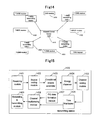
- the NCC 310 is used for sending multimedia broadcasting service data to the transmitting station 320.
- the transmitting station 320 receives the multipath digital multimedia broadcasting (program) signal from the NCC 310, performs source coding and channel coding on the signal based on their service type, embeds the encoded data into MSC of the system in a time division multiplex mode, identifies accordingly in the fast information channel (FIC) the service type, information on occupied sub-channel, source coding scheme, channel coding scheme and channel modulation scheme corresponding to the service data, and then performs channel coding on the data in the FIC.
- FIC fast information channel
- the transmitting station 320 is also used for performing channel modulation on the data in FIC and MSC based on the determined transmission mode and the channel modulation scheme, and performing OFDM modulation and RF modulation on the channel modulated data of FIC and MSC and the data of the synchronization channel before transmitting them to the receiver 330.
- the receiver 330 is used for performing RF demodulation, OFDM demodulation and synchronization on the received RF signal, extracting the service data of a corresponding service type in the sub-channel based on the control information of FIC obtained after channel demodulation and channel decoding, and performing channel demodulation, channel decoding and source decoding.
- the above is a general description for the DAB-compatible method for T-MMB transmission and reception and system of the present invention, in which the processing before multiplexing the service data into MSC is source coding and channel coding.
- the processing before multiplexing the service data into MSC is source coding and channel coding.
- an optional processing of conditional access scrambling and energy dispersal can be added between the source coding and the channel coding, and a processing of time interleaving can be add after the channel coding for a better adaptation to a channel environment with a great time variability.
- T-MMB is a digital multimedia broadcasting method based on the multimedia service extension of digital audio broadcasting (DAB) system. It incorporates latest technologies and gives an integrated consideration to such factors as frequency resource, receiver complexity, utilization ratio of frequency spectrum, system performance, etc. to overcome the problems existing in the above prior art, thereby realizing a full compatibility with DAB, a low-cost and low-power-consumption design, a good frequency availability, support to mobile reception, a single frequency network implementation, a high spectrum efficiency, multi-service, a high-quality service, etc.
- DAB digital audio broadcasting
- the invention embeds new multimedia service into the old DAB system as sub-channels by using the existing transmitter in DAB system, in order to construct a new T-MMB system.
- Audiovisual programs or multimedia information such as data, text and graphics are transmitted by one or more transmitters to cover certain regions after having undergone source coding, transmission encoding and channel coding (the conventional encoding schemes for the old service DAB signal, while new encoding schemes for the new service T-MMB signal).
- These transmitters can be flexibly networked such that they can constitute a Multi-Frequency Network (MFN) or a Single Frequency Network (SFN).
- MFN Multi-Frequency Network
- SFN Single Frequency Network
- the baseband signal at the transmitting end of T-MMB system can be divided into such parts as source compression encoding, code stream multiplexing, channel error correction coding, channel modulation and etc.
- Code stream multiplexing belongs to the transport layer and primarily multiplexes several basic code streams according to the MPEG-2 system level specification, that is, synthesizes various code streams such as audio code stream, video code stream and data code stream into one transmission code stream with a fixed length of transmission packet so as to facilitate channel transmission.
- the structure of the transport layers for DAB and T-DMB signals remain the same, while the structure of the transport layer for T-MMB signal differs from the conventional DAB system and adopts different error correction coding and modulation schemes to improve frequency spectrum efficiency and error correction performance and make the T-MMB system suitable for transmitting video programs.
- the structure of the transport layer for FIC also remains the same.
- the digital code stream is converted into data symbols and inserted into the synchronization channel, which is formed as the base-band signal via an OFDM signal generator and then sent to a RF modulator of the DAB transmitter with the same RF bandwidth as that of DAB.
- the present invention emphasizes on the transport layer.
- the invention maintains the transmission structure of DAB system.
- T-MMB system modifies only the structure of the transport layer for service sub-channel newly added to the DAB system, while other aspects such as the transmission frame configuration, the multiplex mode, the interleaving mode, the FIC structure, the synchronization channel, the structure of the OFDM signal generator and the transmitter of the system all remain the same.
- the T-MMB system extends the DAB system to support new channel coding and modulation technologies, making the T-MMB system able to transmit video programs.
- the following is an introduction of technical details related in the present invention with aspect to newly-added parts in the DAB system-based invention, while the description for the same parts in the T-MMB system as that of the DAB system will be omitted.
- the embodiment of the present invention explains specific implementation of the transmitting and receiving method and system for multimedia broadcasting service data in the invention, by example of the transmission for service data of four types of DAB, DAB-IP, T-DMB and T-MMB.
- the outer coding directly uses the standard of DVB-T EN 300 744 to provide appropriate error protection.
- the error protection for DAB sub-channel data stream and 188-byte transmission packet is as follows.
- Each of the inputted transmission packets has a length of 188 bytes with the beginning byte being a synchronization byte of value 0x47.
- the transmission packets can contain any data. Further details of transmission packets can be referred to ISO/ IEC 13818.
- the outer coding and the outer interleaving used for the inputted transmission packets are as shown in Table 1.
- the protection range of RS coding contains the synchronization byte (0x47).
- the length of RS coding and information segment are set to be 204 bytes and 188 bytes respectively, so as to correct an error within any 8 bytes among the received 204 bytes.
- Table 2 Synch byte 0x47 MPEG2 transport stream data (187 bytes) Check word (16 bytes)
- Each FIFO unit contains one byte, and the input and output switches need to be synchronized.
- the synchronization byte (0x47) must always pass through the branch "0" (corresponding to no delay) of the interleaver.
- LDPC code can provide a function of forward error correction like the convolutional code, while LDPC code has a stronger error-correcting capability, is more suitable for information transmission of poor-quality channels, and becomes convergent through several iterative decoding in a high SNR. Therefore, the receiver saves more power in the same condition.
- LDPC code has a very low bit error rate without concatenating any outer code.
- LDPC code provides equal error protection for the same service and independent coding for different services.
- the forward error correction coding uses LDPC code of a quasi-cyclic structure, which can use a shift register to carry out encoding and is convenient to be stored.
- P], wherein I is a unit matrix, and the quasi-cyclic matrix P can be denoted as follows: P P 1 , 1 P 1 , 2 ⁇ P 1 , ⁇ P 2 , 1 P 2 , 2 ⁇ P 2 , ⁇ ⁇ ⁇ ⁇ ⁇ P c - ⁇ , 1 P c - ⁇ , 2 ⁇ P c - ⁇ , ⁇
- the coding process consists in the steps of first filling b zeros at back of the source bits to obtain code information bits with its length being K, and then performing LDPC coding.
- the number of the filled zeros varies for LDPC codes of different code rates.
- Table 3 shows the coding parameters for LDPC codes of two code rates. Table 3 N K b t ⁇ i,j 4608 2304 0 72 0 or 1 4608 3096 24 72 0 or 1
- the above suitable channel coding schemes are employed on demand to perform channel coding on the T-MMB service data, thereby obtaining a great interference proof.
- the channel-encoded service data can be subject to time interleaving, which also ensures that DAB system is applicable to mobile reception.
- the channel-encoded data undergoes time interleaving in the same mode as that in the DAB system.
- the transmission method of this embodiment maintains the frame configuration of DAB system, the size of CUs corresponding to DAB, DAB-IP and T-DMB signals remains unchanged, the size of CU corresponding to T-MMB signal varies with the modulation scheme, but the number of CUs contained in CIF is the same.
- the frame configuration in the system of this embodiment enables the newly-added service to support various modulation schemes.
- Fig.7 shows the frame configuration explained by the example in which T-MMB service is transmitted in the stream mode.
- the method of the invention can also support the transmission of T-MMB service in a packet mode.
- the frame configuration is formed as shown in Fig.7, except that the subsequent processing such as channel coding should be performed after it is packetized to data packets of certain length in the DAB packet mode. If LDPC coding is used, the data packets of certain length are need to be buffered as LDPC code length before they are encoded.
- FIC fast information channel
- the service type of each service data, the information on the occupied sub-channel when embedded into MSC, encoding and modulation schemes of the service data are identified accordingly in the FIC. More specifically, it establishes the fast information group (FIG) for FIC in T-MMB system based on the FIG transmitted in FIC of DAB system, and identifying in FIG of FIC in T-MMB system the service type, the information on the occupied sub-channel, source coding scheme, channel coding scheme and channel modulation scheme corresponding to the service data.
- FOG fast information group
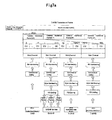
- FIG type 0/ extension mode 2 (0/2) transmitted in FIC defines the service information in DAB, as shown in Fig.8, and the specific definition can be referred to ETSI EN 300 401. In this embodiment, extension is made to part content in FIG 0/2 as follow.
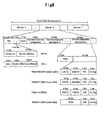
- the sub-channel information and the coding and modulation schemes for various services are indicated by the reserved FIG 0/15 (ETSI EN 300 401 [1]) as shown specifically in Fig.9.
- SubChld Sub-channle identifier
- the 6-bit field is encoded to an unsigned binary number for indicating some sub-channnel.
- - Start Address the 10-bit field is encoded to an unsigned binary number in the range from 0 to 863 and indicates the address of the first capacity unit (CU) in the sub-channel.
- - ModuType (Modulation Type): the 2-bit field is used to indicate DQPSK/BDPSK/16DAPSK modulation in such mode as 00: DQPSK; 01:8DPSK; 10: 16DAPSK; 11: reserved.
- - Coding Type the one bit is used to indicate the channel coding scheme in such mode as 0: RS concatenated convolutional coding; 1: LDPC coding;
- - Rfu the one bit is reserved for the future addition and is set to 0 before it is defined.
- - Sub-channel field (Sub-channel Data Field): the 12-bit field indicates the size of the sub-channel and the code rate of the channel coding.
- - PL(Protection Level) the two bits indicate the code rate of the channel coding in such mode as 00: protection level 1-C denoting that the code rate of the channel coding is 1/2; 01: protection level 2-C denoting that the code rate of the channel coding is 2/3; Other values are reserved for use in future.
- - Sub-channel Size the 10-bit field is encoded to an unsigned binary number in the range from 1 to 864 and gives the number of the capacity units occupied by the sub-channel, which is obtained according to the modulation scheme and the protection level, as shown in Table 4 and 5.
- Table 4 shows the sizes of the data sub-channels with different modulation schemes when the protection level is 1-C and the data rate is 24n Kbit/s (n is an integer greater than or equal to 1)
- Table 5 shows the sizes of the data sub-channels with different modulation schemes when the protection level is 2-C and the data rate is 32n Kbit/s (n is an integer greater than or equal to 1).
- Table 4 Modulation scheme DQPSK 8DPSK 16DAPSK Sub-channel size(CUs) 18n 12n 9n
- Table 5 Modulation scheme
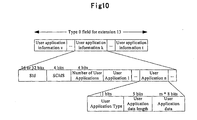
- User application information is defined in FIG 0/13(ETSI EN 300 401 [1]). This embodiment extends part content of the mode as specifically shown in Fig. 10.
- User Application Type the 11 bits give the user applications required to be decoded. These applications are identified by service identifier (SId) and service component identifier (SCId), the definitions of which can be referred to Table 16,TS 101 756 [2]. In this embodiment, the item is extended as follows:
- one transmission frame is composed of a synchronization channel (Sync), a fast information channel (FIC) and a main service channel (MSC) and has the same basic structure as that of DAB system, the description of which will be omitted here.
- Sync synchronization channel
- FIC fast information channel
- MSC main service channel
- the modulation for OFDM sub-carrier is particularly called channel modulation, and the process of OFDM multiplexing and symbol formation is called OFDM modulation in order to clarify the technology related to each part.
- the RF modulation following the OFDM modulation is to modulate the OFDM symbols to a specified operating frequency. Since the channel modulation performed on respective channel data is actually the modulation for OFDM sub-carrier, the above channel modulation and OFDM modulation can be called OFDM modulation as a whole.
- the channel modulation scheme in the old DAB system is Differential Differential Quadrature Phase Shift Keying (DQPSK). Since digital video data has a high code rate, the use of the channel modulation scheme in the old DAB system will give rise to a disadvantage of a low utilization rate of frequency band. To solve this disadvantage, in this embodiment, the support to two new modulation schemes, 8-level Differential Phase Shift Keying (8DPSK) and 16-level Differential Amplitude and Phase Shift Keying (16DAPSK) is provided on the basis of the DAB system. These channel modulation schemes all have a process of performing symbol mapping first and then differential modulation.
- DPSK Differential Phase Shift Keying
- 16DAPSK 16-level Differential Amplitude and Phase Shift Keying
- Z l -1, k represents a differential modulated signal of the kth sub-carrier of the (1-1)th OFDM symbol
- y l,k represents the mapped signal of the kth sub-carrier of the 1th OFDM symbol after frequency domain interleaving.
- DAPSK is a combined modulation scheme of differential amplitude and phase, in which differential modulation is performed on amplitude and phase independently.
- the amplitude is modulated by 2DASK
- the phase is modulated by 8DPSK.
- R L represents the inner loop amplitude of 16DAPSK
- p l - 1 , 4 ⁇ k ⁇ and p l , 4 ⁇ k ⁇ represents the amplitude mapped bit in the corresponding symbol after frequency domain interleaving
- ⁇ ' l -1, k and ⁇ ' l,k represent the phase information after frequency domain interleaving.
- the data in FIC are still channel-modulated by use of DQPSK in the DAB system, and the data in the synchronization channel is also used for the differential modulation with the data in FIC and MSC in the same mode as that in the DAB system.
- the DAB, DAB-IP and T-MMB data in MSC are channel-modulated by means of the old DQPSK in the DAB system.
- the T-MMB signal in MSC can use appropriately the old or newly-added channel modulation schemes according to the requirements.
- the channel modulation is essentially the modulation on OFDM sub-carriers
- the data must be first divided into blocks prior to the channel modulation.
- the symbol mapping is performed on data in the different channels.
- the obtained result for the symbol mapping is frequency-interleaved and inserted into a phase reference symbol of the synchronization channel for differential modulation together with the frequency-interleaved result.
- the overall channel modulation process is completed.
- the data on sub-carriers are divided into blocks depending on different transmission modes.
- the so-called transmission mode means that during OFDM modulation in the old DAB system, parameters, such as the number of sub-carriers, guard gap length and wave band, are combined to form four modes selectable by users.
- Table 8 shows the parameters corresponding to the four modes.
- Table 8 Parameters for DAB modes Parameters Transmission mode I Transmission mode II Transmission mode III Transmission mode IV S 76 76 153 76 K 1536 384 192 768 N 2048 512 256 1024 T s ⁇ 1246 ⁇ 312 ⁇ 156 ⁇ 623 T u 1000 250 125 500 T G ⁇ 246 ⁇ 62 ⁇ 31 ⁇ 123 T F 96 24 24 48
- the DAB supports various wave bands.
- Table 9 shows the wave bands available for each DAB mode, and Table 10 shows frequency range of each wave band.
- Table 9 Wave bands available for DAB modes Transmission mode Wave bands available in the DAB standard Transmission mode I Band I ⁇ Band II ⁇ Band III Transmission mode II Band I ⁇ Band II ⁇ Band III ⁇ Band IV ⁇ Band V ⁇ L-Band Transmission mode III ⁇ 3GHz Transmission mode IV Band I ⁇ Band II ⁇ Band III ⁇ Band IV ⁇ Band V ⁇ L-Band Table 10 Wave band range Wave bands Frequency range ⁇ MHz ⁇ Band I 47-86 Band II 87.5-108 Band III 174-230 Band IV/V 470-790 L-Band 1452-1492
- the time variable interference cannot be neglected.
- the factors affecting the time variable interference consist of moving speed, carrier frequency and the block length of OFDM symbol.
- the parameters such as the number of carriers, the length of guard gap, the operating frequency and the number of modulation constellations, are recombined in the T-MMB system.
- the time variable interference is resisted by reducing the block length of OFDM symbol.
- the block length of OFDM symbol in the T-MMB is reduced by adjusting the modes corresponding to the wave bands actually used in the DAB.
- the T-MMB system can support the high efficient and low-complexity 16DAPSK modulation scheme as well as the high-speed mobile reception.
- Table 11 shows the modes and corresponding wave bands recommended in the T-MMB system, where the number of carriers of OFDM symbol is reduced by half, as compared with the DAB, DAB-IP and T-DMB systems.
- the correspondence between channel modulation schemes, used transmission modes and operating frequencies can be preset, for example, the old correspondence between transmission modes and operating frequencies can be used when the channel modulation scheme is DQPSK, while the correspondence between transmission modes and operating frequencies as shown in Table 11 can be used when the channel modulation scheme is a more efficient channel coding scheme, such as 16QAPSK.
- the transmission mode Prior to the channel modulation, the transmission mode is determined with reference to the preset correspondence, based on the channel modulation scheme and system operating frequency to be used by the data in each channel, and the size of data block is further determined so as to divide the data in different channels into blocks. Then, the channel modulation and OFDM modulation are performed on the data in each channel according to the set parameters in the transmission mode and the channel modulation scheme to be used by each channel. Finally, the OFDM symbol is modulated onto the specified operating frequency and sent out.
- the transmission method of the invention can simultaneously transmit all kinds of service data including DAB, DAB-IP, T-DMB and T-MMB, and on the basis of the old DAB system, extends the channel coding and modulation schemes to enable the system to support more efficient coding and modulation schemes.
- it additionally provides the channel modulation schemes of 8DPSK and 16DAPSK, and of course, a more efficient modulation scheme, for example, 64DAPSK, can be used as well.
- the system in this embodiment is more suitable for transmitting video data, thanks to the application of various high efficient coding and modulation schemes.
- the actually used frequency and transmission mode in the embodiment are modified accordingly, to better suit for the high-efficient and low-complexity modulation scheme.
- the process of performing source coding and channel coding on the service data and embedding it into MSC precedes the step of identifying in FIC the coding and modulation schemes and the sub-channel information, that is, Step 505 follows Steps 502 ⁇ 504.
- the process of source and channel coding and embedding into MSC can be performed in parallel with the operation of identifying in FIC the coding and modulation schemes and the sub-channel information, or it can be carried out in an inverse order.
- the DAB-compatible T-MMB reception method corresponding to the transmission method, which is used to receive the data processed and sent by the above transmission method and process accordingly the data to recover the original multimedia service data.
- Fig. 13 is a detailed flowchart for the DAB-compatible T-MMB reception method in this embodiment of the present invention. As shown in Fig.13, the method comprises
- the positions in MSC for the data of each service type are read according to the positions in FIC for the sub-channel information in Fig.8, and then the four types of service data are extracted based on the read positions.
- the transmitting end When at the transmitting end it includes conditional access scrambling, energy dispersal and time interleaving, accordingly, the time de-interleaving, channel decoding, energy de-dispersal, conditional access descrambling and source decoding are performed sequentially on the data in each sub-channel after the service data are extracted at the receiving end.
- the DAB-compatible T-MMB reception method corresponding to the transmission method in this embodiment has been completed.
- the coding and modulation on the three types of signals of DAB, DAB-IP and T-DMB in the transmitted data are based on their own old standards, respectively, each type of signal can be successfully received by using DAB, DAB-IP or T-DMB reception method and normally played after de-modulation and decoding.
- the reception method of the invention four types of signals including DAB, DAB-IP, T-DMB and T-MMB can be normally received and accordingly de-modulated, decoded and played.
- the above transmission method of this embodiment can be implemented in physical transmitters, by which the formed multimedia service signals can be transmitted to cover a certain region.
- the corresponding receivers within this region can receive the multimedia service signals by means of the above reception method.
- These transmitters and receivers can be flexibly networked such that they can constitute a Multi-Frequency Network (MFN) or a Single Frequency Network (SFN), thereby constituting a DAB-compatible T-MMB transmission system.
- MFN Multi-Frequency Network
- SFN Single Frequency Network
- Fig. 14 is a detailed structural diagram for the DAB-compatible T-MMB system in the embodiment of the present invention.
- the system comprises a broadcasting station or network control center (NCC) 1410, more than one transmitting stations 1420 located in different areas which can be local broadcasting stations or regional transmitting base stations, and more than one receivers 1430.
- NCC network control center
- the transmitting stations 1420 receive multipath digital multimedia broadcasting (program) signals, which can include DAB, DAB-IP, T-DMB and T-MMB signals, from some broadcasting station or the network control center 1410, perform source and channel coding on the signals, and embed the encoded data into the main service channel (MSC) of the DAB system in a time division multiplex mode.
- the transmitting stations 1420 further identify accordingly in the fast information channel (FIC) the service type, information on occupied sub-channel, coding and modulation schemes corresponding to the service data, and then perform channel coding on the data in FIC.
- FIC fast information channel
- the transmitting stations 1420 also perform channel modulation on the data in FIC and MSC based on the determined transmission mode and the channel modulation scheme, and perform OFDM modulation and RF modulation on the channel modulated data of FIC and MSC and the data of the synchronization channel before sending them out.
- the transmitted signals are sent to terrestrial mobile receivers or portable receivers 1430, for example, mobile phone TV, via ground wave.
- the receivers 1430 are used for performing RF demodulation, OFDM demodulation and synchronization on the received RF signals, extracting the service data of a corresponding service type in the sub-channel based on the control information from FIC obtained after channel demodulation and channel decoding, and performing sequentially channel demodulation, channel decoding and source decoding on the extracted service data according to the coding schemes for the service type in FIC.
- the user receivers 1430 within the coverage region can be DAB, DAP-IP, T-DMB and T-MMB receivers.
- the coverage range depends on many factors, for example, landform, the height and power of transmission tower, receiver antenna and gain/ directionality, etc.
- the signals received by users include not only the directly arriving signals, but also the signals undergone one or more reflections as well as the signals transmitted by remote transmitters in a multi-frequency network or a same frequency network. This gives rise to the problem of multipath interference.
- Doppler effect exists for mobile receivers.
- the transmission channel is modeled as a time variable multipath channel. Because the present invention uses the structure of DAB system, in which the design of the transport layer itself is customized for this time variable multipath channel, the T-MMB transmission system of the invention supports mobile reception and SFN networking.
- the most basic transmitting station includes a receiving module, a source coding module, a channel coding module, a channel multiplexing module and a modulating & transmitting module. In this embodiment, it further includes a conditional access scrambler, an energy disperser and a time interleaver.
- the transmitting station 1420 has a structure as shown in Fig. 15.
- the transmitting station 1420 comprises a receiving module 1421, a source coding module 1422, a conditional access scrambler 1423, an energy disperser 1424, a channel coding module 1425, a time interleaver 1426, a FIC data formation module 1427, a channel multiplexing module 1428 and a modulating & transmitting module 1429.
- the receiving module 1421 is used for receiving the multipath digital multimedia broadcasting (program) signals from some broadcasting station or the network control center 1620 and forwarding the signals to the source coding module 1422.
- These signals can include DAB, DAB-IP, T-DMB and T-MMB signals.
- the source coding module 1422 is used for performing source coding on the signals forwarded from the receiving module 1421 based on the service type of the signals and then sending the encoded result to the conditional access scrambler 1423.
- the conditional access scrambler 1423 is used for performing conditional access scrambling on the received data and then sending the result to the energy disperser 1424.
- the energy disperser 1424 is used for performing energy dispersal on the received data and then sending the result to the channel coding module 1425.
- the channel coding module 1425 is used for performing channel coding on the received signals based on the service type of the signals, the process of which can be specifically carried out according to the channel coding scheme at the Step 503 shown in Fig.5, and sending the result to the time interleaver 1426.
- the time interleaver 1426 is used for performing time interleaving on the received data and then sending the result to the channel multiplexing module 1428.
- the FIC data formation module 1427 is used for identifying accordingly in FIC the service type, information on occupied sub-channel, source coding scheme, channel coding scheme and channel modulation scheme corresponding to the service data, performing channel coding on the data in FIC and sending the encoded result to the channel multiplexing module 1428.
- the channel multiplexing module 1428 is used for inserting the signals into MSC based on the service type in a time division multiplex mode, and multiplexing the MSC data and the FIC encoded result sent from the FIC data formation module 1427 before sending them to the modulating & transmitting module 1429.
- the modulating & transmitting module 1429 is used for performing channel modulation on the received FIC and MSC data based on the determined transmission mode and the channel modulation scheme, performing OFDM modulation on the channel-modulated FIC and MSC data and the data of the synchronization channel, and modulating the result to the preset operating frequency before sending them out.
- DAB, DAB-IP and T-DMB receivers each can successfully receive respective signals and be normally played after demodulation and decoding.
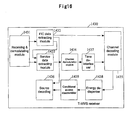
- Fig. 16 is a detailed structural diagram for the T-MMB receiver in the embodiment of the present invention.
- the receiving end includes primarily four steps in an order and a procedure inverse to the transmitting end, that is, RF demodulation, base band demodulation, channel decoding and source decoding.
- the T-MMB receivers 1430 comprise a receiving & demodulating module 1431, a FIC data extracting module 1432, a service data extracting module 1433, a channel demodulation module 1434, a channel decoding module 1435 and a source decoding module 1436.
- the transmitting station in this embodiment includes the conditional access scrambler, the energy disperser and the time interleaver, the receiver also includes a time de-interleaver 1437, an energy de-disperser 1438 and a conditional access descrambler 1439.
- the receiving & demodulating module 1431 is used for receiving the signals via the antenna, performing RF demodulation, synchronization and OFDM demodulation on the received signals to obtain FIC and MSC data, and sending them to the FIC data extracting module1432 and the service data extracting module 1433, respectively.
- the FIC data extracting module 1432 is used for performing channel demodulation and channel decoding on the received FIC data and sending the FIC control information to the service data extracting module1433, the channel demodulation module 1434, the channel decoding module 1435 and the source decoding module 1436.
- the service data extracting module 1433 is used for extracting various service data from MSC based on the control information from FIC, and sending them to the channel demodulation module 1434.
- the channel demodulation module 1434 is used for performing channel demodulation on the received service data based on the judged transmission mode and the channel modulation scheme of various service data identified in FIC, and sending the demodulated data to the time de-interleaver 1437.
- the time de-interleaver 1437 is used for performing time de-interleaving on the received data, and sending them to the channel decoding module 1435.
- the channel decoding module1435 is used for performing accordingly channel decoding on the received signal based on the channel coding scheme of the signals identified in FIC, and sending the result to the energy de-disperser 1438.
- the energy de-disperser 1438 is used for performing energy de-dispersal on the received data, and then sending them to the conditional access descrambler 1439.
- the conditional access descrambler 1439 is used for performing conditional access descrambling on the received data, and then send them to the source decoding module 1436.
- the source decoding module 1436 is used for performing source decoding on the received signal based on the service type.
- the receiver can process the corresponding service signals but not T-MMB service signal.
- the T-MMB receiver can process signals of four types of DAB, DAB-IP, T-DMB and T-MMB. Therefore, the T-MMB system can be sufficiently compatible with DAB, DAB-IP and T-DMB systems.
- DAB, DAB-IP, T-DMB and T-MMB signals are transmitted in the system.
- types of service data to be transmitted in the system can be adjusted based on actual demand, while the selected transmission methods for signals remain the same.
- the T-MMB transmitting and receiving method and system of the present invention are based on the multimedia service extension of the matured DAB system.
- DAB system since DAB system is designed for handheld mobile terminals, the invention is also suitable for mobile reception and exhibits a satisfactory reception effect.
- the control information in FIC extends the description for the information on each service sub-channel so that the method and the system of the invention are able to transmit simultaneously multiple types of multimedia service data, the drawback in the DAB system of a single service type is overcome.
- the system of the invention extends the channel coding and modulation schemes of the existing DAB system, introduces high efficient channel modulation schemes, such as 8DPSK and 16QAPSK to overcome the disadvantage of the existing DAB system with a low efficiency for frequency band.
- the invention also introduces a stronger error correction coding scheme such as LDPC code so as to provide a stronger interference proof for multimedia data, especially video data, and makes the overall methods and system more suitable for the transmission of video programs.
- a stronger error correction coding scheme such as LDPC code
- the invention makes compensation by shortening the block length for OFDM symbols, and gains an excellent effect in practical measurement, thereby fulfilling the signal quality requirement from users while improving the utilization ratio for frequency band.
- the invention has advantages such as a good availability of frequency, a simple synchronization easy to implement, an excellent compatibility, a high utilization ratio for frequency band, support for portable and mobile reception, and a low-complexity receiver easy to implement, and etc.
Landscapes
- Engineering & Computer Science (AREA)
- Signal Processing (AREA)
- Computer Networks & Wireless Communication (AREA)
- Two-Way Televisions, Distribution Of Moving Picture Or The Like (AREA)
- Circuits Of Receivers In General (AREA)
Applications Claiming Priority (2)
| Application Number | Priority Date | Filing Date | Title |
|---|---|---|---|
| CN200610066230 | 2006-03-30 | ||
| CN2006101609296A CN101022440B (zh) | 2006-03-30 | 2006-12-01 | 兼容dab的地面移动多媒体广播收发方法及系统 |
Publications (2)
| Publication Number | Publication Date |
|---|---|
| EP1841106A2 true EP1841106A2 (de) | 2007-10-03 |
| EP1841106A3 EP1841106A3 (de) | 2011-11-02 |
Family
ID=38283505
Family Applications (1)
| Application Number | Title | Priority Date | Filing Date |
|---|---|---|---|
| EP07104721A Withdrawn EP1841106A3 (de) | 2006-03-30 | 2007-03-23 | DAB-kompatibles Verfahren und System zum Senden und Empfangen für terrestrischen mobilen Multimediarundfunk |
Country Status (2)
| Country | Link |
|---|---|
| EP (1) | EP1841106A3 (de) |
| CN (1) | CN101022440B (de) |
Cited By (2)
| Publication number | Priority date | Publication date | Assignee | Title |
|---|---|---|---|---|
| EP2306724A4 (de) * | 2008-06-27 | 2011-11-09 | Beijing Nufront Mobile Multimedia Tech Co Ltd | Einrichtung, verfahren und system zum übertragen von digitalen ausstrahlungssignalen |
| EP2213094A4 (de) * | 2007-10-26 | 2012-11-21 | Korea Electronics Telecomm | Digitalausstrahlungssignal-sendeverfahren und einrichtung, aufzeichnungsmedium dafür und empfangseinrichtung dafür |
Families Citing this family (15)
| Publication number | Priority date | Publication date | Assignee | Title |
|---|---|---|---|---|
| CN101843064B (zh) * | 2007-08-30 | 2014-02-26 | Lg电子株式会社 | 信号发送和接收装置、以及信号发送和接收方法 |
| CN101355407A (zh) * | 2008-09-26 | 2009-01-28 | 北京新岸线移动多媒体技术有限公司 | 用于地面移动多媒体广播的接收机、接收装置和接收方法 |
| CN101729169B (zh) * | 2008-10-14 | 2012-12-19 | 国家广播电影电视总局广播科学研究院 | 一种多媒体数据的传输、接收方法及收、发装置 |
| CN101710831B (zh) * | 2009-12-03 | 2012-09-05 | 东南大学 | 具有高镜像抑制比的dab接收机射频前端 |
| CN103684666B (zh) * | 2012-09-13 | 2016-12-21 | 中国科学院上海高等研究院 | 在ngb-w通信系统中实现时间交织和解时间交织的方法 |
| CN105519063B (zh) * | 2014-02-26 | 2019-07-12 | 华为技术有限公司 | 一种发送、接收数据的方法、装置及系统 |
| EP3461042A4 (de) * | 2016-08-03 | 2019-08-07 | Guangdong OPPO Mobile Telecommunications Corp., Ltd. | Datenübertragungsverfahren und -vorrichtung |
| US10511668B2 (en) * | 2016-10-07 | 2019-12-17 | Hyundai Motor Company | Method of transmitting and receiving data in vehicle network and apparatus for the same |
| CN109547037B (zh) * | 2018-12-27 | 2020-09-01 | 重庆邮电大学 | 一种能同时发射iii波段和l波段的dmb发射系统 |
| CN110618887B (zh) * | 2019-01-08 | 2020-06-23 | 南京恒瑞欣电子科技有限公司 | 多计算机式管理控制系统 |
| CN110475097B (zh) * | 2019-01-26 | 2020-05-22 | 浙江智建科技股份有限公司 | 多参数实时监控平台 |
| CN109660278B (zh) * | 2019-01-26 | 2019-12-17 | 周翔 | 多参数实时监控平台 |
| CN110460410B (zh) * | 2019-08-22 | 2022-03-11 | 成都卫讯科技有限公司 | 基于网管信道的数据传输方法、装置、设备和存储介质 |
| CN116346264A (zh) * | 2023-03-01 | 2023-06-27 | 北京扬铭科技发展有限责任公司 | 通信信号模拟仿真方法以及设备 |
| CN118764829B (zh) * | 2024-09-04 | 2024-12-17 | 国家广播电视总局广播电视科学研究院 | 基于5g大塔广播的融合播控平台及业务数据的广播方法 |
-
2006
- 2006-12-01 CN CN2006101609296A patent/CN101022440B/zh not_active Expired - Fee Related
-
2007
- 2007-03-23 EP EP07104721A patent/EP1841106A3/de not_active Withdrawn
Non-Patent Citations (5)
| Title |
|---|
| "Digital Audio Broadcasting (DAB); Guidelines and rules for implementation and operation; Part 1: System outline; ETSI TR 101 496-1", 2. AVC MEETING; 23-05-1991 - 31-05-1991; PARIS ; (CCITT SGXV EXPERTGROUP FOR ATM VIDEO CODING), LIS, SOPHIA ANTIPOLIS CEDEX, FRANCE, vol. BC, no. V1.1.1, 1 November 2000 (2000-11-01), XP014004879, ISSN: 0000-0001 * |
| "Digital Audio Broadcasting (DAB); Guidelines and rules for implementation and operation; Part 2: System features; ETSI TR 101 496-2", 2. AVC MEETING; 23-05-1991 - 31-05-1991; PARIS ; (CCITT SGXV EXPERTGROUP FOR ATM VIDEO CODING), LIS, SOPHIA ANTIPOLIS CEDEX, FRANCE, vol. BC, no. V1.1.2, 1 May 2001 (2001-05-01), XP014004881, ISSN: 0000-0001 * |
| "Digital Radio Mondiale (DRM); System Specification European B roadcasting U nion U nion E uropéenne de R adio-Télévision EB UÜER; ETSI ES 201 980", 2. AVC MEETING; 23-05-1991 - 31-05-1991; PARIS ; (CCITT SGXV EXPERTGROUP FOR ATM VIDEO CODING), LIS, SOPHIA ANTIPOLIS CEDEX, FRANCE, vol. BC, no. V2.2.1, 1 October 2005 (2005-10-01), XP014032187, ISSN: 0000-0001 * |
| "Radio Broadcasting Systems; Digital Audio Broadcasting (DAB) to mobile, portable and fixed receivers European Broadcasting Union Union Européenne de Radio-Télévision EBUÜER; Final draft ETSI EN 300 401", ETSI STANDARDS, LIS, SOPHIA ANTIPOLIS CEDEX, FRANCE, vol. BC, no. V1.4.1, 1 January 2006 (2006-01-01), XP014032143, ISSN: 0000-0001 * |
| NEUMANN C ET AL: "ANALYSIS OF FEC CODES FOR PARTIALLY RELIABLE MEDIA BROADCASTING SCHEMES", LECTURE NOTES IN COMPUTER SCIENCE/MICCAI 2000, SPRINGER, DE, vol. 3311, 16 November 2004 (2004-11-16), pages 108-119, XP002400261, ISBN: 978-3-540-24128-7 * |
Cited By (4)
| Publication number | Priority date | Publication date | Assignee | Title |
|---|---|---|---|---|
| EP2213094A4 (de) * | 2007-10-26 | 2012-11-21 | Korea Electronics Telecomm | Digitalausstrahlungssignal-sendeverfahren und einrichtung, aufzeichnungsmedium dafür und empfangseinrichtung dafür |
| US8630278B2 (en) | 2007-10-26 | 2014-01-14 | Electronics And Telecommunications Research Institute | Digital broadcasting signal transmitting method and device, recording medium thereof, and receiving device thereof |
| US9246806B2 (en) | 2007-10-26 | 2016-01-26 | Electronics And Telecommunications Research Institute | Digital broadcasting signal transmitting method and device, recording medium thereof, and receiving device thereof |
| EP2306724A4 (de) * | 2008-06-27 | 2011-11-09 | Beijing Nufront Mobile Multimedia Tech Co Ltd | Einrichtung, verfahren und system zum übertragen von digitalen ausstrahlungssignalen |
Also Published As
| Publication number | Publication date |
|---|---|
| CN101022440A (zh) | 2007-08-22 |
| EP1841106A3 (de) | 2011-11-02 |
| CN101022440B (zh) | 2010-12-08 |
Similar Documents
| Publication | Publication Date | Title |
|---|---|---|
| EP1841106A2 (de) | DAB-kompatibles Verfahren und System zum Senden und Empfangen für terrestrischen mobilen Multimediarundfunk | |
| US11330325B2 (en) | Broadcasting signal transmission device, broadcasting signal reception device, and method for transmitting/receiving broadcasting signal using same | |
| Gomez-Barquero et al. | DVB-NGH: The next generation of digital broadcast services to handheld devices | |
| US9806930B2 (en) | Broadcast signal transmitter, broadcast signal receiver, and method for transceiving broadcast signals in broadcast signal transceivers | |
| US9143271B2 (en) | Broadcasting signal transmitting apparatus, broadcast signal receiving apparatus, and broadcast signal transceiving method in a broadcast signal transceiving apparatus | |
| US9948417B2 (en) | Broadcast transmission device, method by which broadcast transmission device processes data, broadcast reception device and method by which broadcast reception device processes data | |
| US10694259B2 (en) | Broadcast transmission device, broadcast reception device, operating method of broadcast transmission device, and operating method of broadcast reception device | |
| US20170111692A1 (en) | Broadcasting transmission device, method for operating broadcasting transmission device, broadcasting reception device, and method for operating broadcasting reception device | |
| US10313718B2 (en) | System physical layer pipe for a digital television system | |
| TW201206090A (en) | Encoder and encoding method providing incremental redundancy | |
| CN100525272C (zh) | 基于免费dab的地面移动多媒体广播收发方法与系统 | |
| EP3163881A1 (de) | Rundfunksignalsendevorrichtung, rundfunksignalempfangsvorrichtung, rundfunksignalsendeverfahren und rundfunksignalempfangsverfahren | |
| Faria et al. | DVB-H to deliver digital TV to handheld terminals | |
| HK1106891A (en) | Dab capatible terrestrial mobile multimedia broadcast transmission and receiving method and system | |
| GB2510651A (en) | Spread spectrum communication system with separate spreading codes for header and payload portions | |
| Tkachenko et al. | Perspective Systems for Mobile Broadcasting | |
| US20170064341A1 (en) | Broadcasting transmitting apparatus, method for operating broadcasting transmitting apparatus, broadcasting receiving apparatus, and method for operating broadcasting receiving apparatus | |
| Gómez-Barquero et al. | next-generation Mobile Multimedia broadcasting | |
| KR101652492B1 (ko) | Fef 다중화 기법을 이용한 지상파 단일 채널 고정 4k uhd 및 hd 융합방송 시스템 및 그 방법 | |
| Fischer | DVB-H/DVB-SH–Digital Video Broadcasting for Handhelds | |
| Tejedor Alonso | Digital TV: Fixed and mobile systems | |
| Fischer | Digital Terrestrial Television according to ISDB-T | |
| Tejedor | Digital TV: fixed and mobile systems | |
| Zhang et al. | Terrestrial television broadcasting in China: technologies and applications | |
| Boronat et al. | DVB-H Systems and Receivers |
Legal Events
| Date | Code | Title | Description |
|---|---|---|---|
| PUAI | Public reference made under article 153(3) epc to a published international application that has entered the european phase |
Free format text: ORIGINAL CODE: 0009012 |
|
| AK | Designated contracting states |
Kind code of ref document: A2 Designated state(s): AT BE BG CH CY CZ DE DK EE ES FI FR GB GR HU IE IS IT LI LT LU LV MC MT NL PL PT RO SE SI SK TR |
|
| AX | Request for extension of the european patent |
Extension state: AL BA HR MK YU |
|
| RAP1 | Party data changed (applicant data changed or rights of an application transferred) |
Owner name: BAO, DONGSHAN |
|
| RAP1 | Party data changed (applicant data changed or rights of an application transferred) |
Owner name: BEIJING NUFRONT MOBILE MULTIMEDIA TECHNOLOGY CO., |
|
| PUAL | Search report despatched |
Free format text: ORIGINAL CODE: 0009013 |
|
| AK | Designated contracting states |
Kind code of ref document: A3 Designated state(s): AT BE BG CH CY CZ DE DK EE ES FI FR GB GR HU IE IS IT LI LT LU LV MC MT NL PL PT RO SE SI SK TR |
|
| AX | Request for extension of the european patent |
Extension state: AL BA HR MK RS |
|
| RIC1 | Information provided on ipc code assigned before grant |
Ipc: H04H 20/46 20080101ALI20110930BHEP Ipc: H04H 20/72 20080101AFI20110930BHEP |
|
| AKY | No designation fees paid | ||
| REG | Reference to a national code |
Ref country code: DE Ref legal event code: R108 |
|
| REG | Reference to a national code |
Ref country code: DE Ref legal event code: R108 Effective date: 20120711 |
|
| STAA | Information on the status of an ep patent application or granted ep patent |
Free format text: STATUS: THE APPLICATION IS DEEMED TO BE WITHDRAWN |
|
| 18D | Application deemed to be withdrawn |
Effective date: 20120503 |