EP1841134A1 - Analysesystem und Verfahren zur Performanceanalyse - Google Patents
Analysesystem und Verfahren zur Performanceanalyse Download PDFInfo
- Publication number
- EP1841134A1 EP1841134A1 EP06112132A EP06112132A EP1841134A1 EP 1841134 A1 EP1841134 A1 EP 1841134A1 EP 06112132 A EP06112132 A EP 06112132A EP 06112132 A EP06112132 A EP 06112132A EP 1841134 A1 EP1841134 A1 EP 1841134A1
- Authority
- EP
- European Patent Office
- Prior art keywords
- user
- measurement
- communications
- entity
- performance
- Prior art date
- Legal status (The legal status is an assumption and is not a legal conclusion. Google has not performed a legal analysis and makes no representation as to the accuracy of the status listed.)
- Withdrawn
Links
Images


Classifications
-
- H—ELECTRICITY
- H04—ELECTRIC COMMUNICATION TECHNIQUE
- H04L—TRANSMISSION OF DIGITAL INFORMATION, e.g. TELEGRAPHIC COMMUNICATION
- H04L43/00—Arrangements for monitoring or testing data switching networks
- H04L43/12—Network monitoring probes
-
- G—PHYSICS
- G06—COMPUTING OR CALCULATING; COUNTING
- G06Q—INFORMATION AND COMMUNICATION TECHNOLOGY [ICT] SPECIALLY ADAPTED FOR ADMINISTRATIVE, COMMERCIAL, FINANCIAL, MANAGERIAL OR SUPERVISORY PURPOSES; SYSTEMS OR METHODS SPECIALLY ADAPTED FOR ADMINISTRATIVE, COMMERCIAL, FINANCIAL, MANAGERIAL OR SUPERVISORY PURPOSES, NOT OTHERWISE PROVIDED FOR
- G06Q10/00—Administration; Management
- G06Q10/06—Resources, workflows, human or project management; Enterprise or organisation planning; Enterprise or organisation modelling
-
- H—ELECTRICITY
- H04—ELECTRIC COMMUNICATION TECHNIQUE
- H04L—TRANSMISSION OF DIGITAL INFORMATION, e.g. TELEGRAPHIC COMMUNICATION
- H04L41/00—Arrangements for maintenance, administration or management of data switching networks, e.g. of packet switching networks
- H04L41/50—Network service management, e.g. ensuring proper service fulfilment according to agreements
- H04L41/5003—Managing SLA; Interaction between SLA and QoS
-
- H—ELECTRICITY
- H04—ELECTRIC COMMUNICATION TECHNIQUE
- H04L—TRANSMISSION OF DIGITAL INFORMATION, e.g. TELEGRAPHIC COMMUNICATION
- H04L41/00—Arrangements for maintenance, administration or management of data switching networks, e.g. of packet switching networks
- H04L41/50—Network service management, e.g. ensuring proper service fulfilment according to agreements
- H04L41/5061—Network service management, e.g. ensuring proper service fulfilment according to agreements characterised by the interaction between service providers and their network customers, e.g. customer relationship management
- H04L41/5064—Customer relationship management
-
- H—ELECTRICITY
- H04—ELECTRIC COMMUNICATION TECHNIQUE
- H04L—TRANSMISSION OF DIGITAL INFORMATION, e.g. TELEGRAPHIC COMMUNICATION
- H04L41/00—Arrangements for maintenance, administration or management of data switching networks, e.g. of packet switching networks
- H04L41/50—Network service management, e.g. ensuring proper service fulfilment according to agreements
- H04L41/5061—Network service management, e.g. ensuring proper service fulfilment according to agreements characterised by the interaction between service providers and their network customers, e.g. customer relationship management
- H04L41/5067—Customer-centric QoS measurements
-
- H—ELECTRICITY
- H04—ELECTRIC COMMUNICATION TECHNIQUE
- H04W—WIRELESS COMMUNICATION NETWORKS
- H04W24/00—Supervisory, monitoring or testing arrangements
-
- H—ELECTRICITY
- H04—ELECTRIC COMMUNICATION TECHNIQUE
- H04W—WIRELESS COMMUNICATION NETWORKS
- H04W24/00—Supervisory, monitoring or testing arrangements
- H04W24/08—Testing, supervising or monitoring using real traffic
-
- H—ELECTRICITY
- H04—ELECTRIC COMMUNICATION TECHNIQUE
- H04L—TRANSMISSION OF DIGITAL INFORMATION, e.g. TELEGRAPHIC COMMUNICATION
- H04L41/00—Arrangements for maintenance, administration or management of data switching networks, e.g. of packet switching networks
- H04L41/18—Delegation of network management function, e.g. customer network management [CNM]
-
- H—ELECTRICITY
- H04—ELECTRIC COMMUNICATION TECHNIQUE
- H04L—TRANSMISSION OF DIGITAL INFORMATION, e.g. TELEGRAPHIC COMMUNICATION
- H04L43/00—Arrangements for monitoring or testing data switching networks
- H04L43/08—Monitoring or testing based on specific metrics, e.g. QoS, energy consumption or environmental parameters
- H04L43/0852—Delays
- H04L43/0858—One way delays
-
- H—ELECTRICITY
- H04—ELECTRIC COMMUNICATION TECHNIQUE
- H04L—TRANSMISSION OF DIGITAL INFORMATION, e.g. TELEGRAPHIC COMMUNICATION
- H04L43/00—Arrangements for monitoring or testing data switching networks
- H04L43/20—Arrangements for monitoring or testing data switching networks the monitoring system or the monitored elements being virtualised, abstracted or software-defined entities, e.g. SDN or NFV
Definitions
- the present invention relates to an analysis system of the type that, for example, uses an agent entity on a communications device in order to obtain measurement data in relation to the communications device.
- the present invention also relates to a method of analysing performance of the type that, for example, uses an agent entity on a communications device in order to obtain measurement data in relation to the communications device.
- an analysis system for a communications network comprising: a user feedback entity arranged to receive information from a user as a result of the user attaining a subjectively unsatisfactory level of performance in relation to a communications device; and a processing resource arranged to initiate communication of a measurement by an agent entity on the communications device for identifying a cause of the unsatisfactory level of performance, the initiation of the communication of the measurement by the agent entity being in response to the receipt of the information from the user.
- the processing resource may be arranged to initiate performance of the measurement.
- the initiation of the communication of the measurement by the agent entity may include deployment of the measurement entity to the communications device.
- the initiation of the communication of the measurement by the agent entity may include communication of configuration data to the communications device in order to configure the agent entity.
- the agent entity may be a software probe agent.
- the user feedback entity may be a call centre.
- the user feedback entity may be an automated call handling system.
- the unsatisfactory level of performance may be an unsatisfactory quality of service experienced by the user.
- the unsatisfactory level of performance may be as perceived by the user.
- a method of analysing performance for a communications network comprising: receiving information from a user as a result of the user attaining a subjectively unsatisfactory level of performance in relation to a communications device; and initiating communication of a measurement by an agent entity on the communications device for identifying a cause of the unsatisfactory level of performance, the initiation of the communication of the measurement by the agent entity being in response to the receipt of the information from the user.
- a computer program code element comprising computer program code means to make a computer execute the method as set forth above in relation to the second aspect of the invention.
- the computer program code element may be embodied on a computer readable medium.
- the measurement data obtained is from a remote location, namely a communications device without unnecessarily consuming processing resources of the communications device or bandwidth of the communications network.
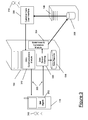
- a monitoring system is implemented in a wireless communications network 100, the communications network 100 being, in this example, a Global Systems for Mobile Communications (GSM) network.
- the communication network 100 is capable of providing or facilitating voice communication and/or data transactions, services, or communications.
- GSM Global Systems for Mobile Communications
- the skilled person will, of course, appreciate that other communications networks can be used in place of or overlay the GSM communications network described herein, for example other telecommunication networks such as a Universal Mobile Telecommunications System (UMTS) network, wireless networks, wireline telephone networks and data communication networks.
- UMTS Universal Mobile Telecommunications System
- the GSM communications network is not described in detail, but the skilled person will recognise that the GSM communications network comprises other functional and structural aspects not described herein.
- the communications network 100 comprises a Mobile Switching Centre (MSC) 102 coupled to a Public Switched Telephone Network (PSTN) 104, a Short Messaging Service Centre (SMSC) node 106, a Home Location Register (HLR) 108 and a Base Station Controller (BSC) 110 that also has functionality so as to serve as a Packet Control Unit (PCU) to support the GPRS.
- the BSC 110 is coupled to an Operations and Maintenance Centre-Radio (OMC-R) 112 and a base station 114, the base station 114 supporting a number of cells 116 in one of which a communications apparatus, for example a communications terminal, such as a cellular communications handset 118, is located for communication with the communications network 100.
- MSC Mobile Switching Centre
- PSTN Public Switched Telephone Network
- SMSC Short Messaging Service Centre
- HLR Home Location Register
- BSC Base Station Controller
- OMC-R Operations and Maintenance Centre-Radio
- the communications handset 118 is capable of communicating with the base station 114 via a Radio-Frequency (RF) interface 120.
- the communications handset 118 can be any device having a user interface capability associated with it, a network connectivity capability and an ability to accept software applications such as an agent entity, for example a software probe application, as described later herein.
- Examples of other communications apparatus include, but are not limited to, wireless communication devices, telematics devices or modules, Personal Computers (PCs), consumer appliances such as set-top boxes, and/or Personal Digital Assistants (PDAs).
- the BSC 110 is also coupled to a Serving GPRS Support Node (SGSN) 122, the HLR 108 being capable of communicating with the SGSN 122.
- the SGSN 122 is also coupled to a GPRS backbone network 124, the GPRS backbone network 124 being coupled to a Gateway GPRS Support Node (GGSN) 126.
- GGSN Gateway GPRS Support Node
- Both the SGSN 122 and the GGSN 126 are also coupled to an Operations and Maintenance Centre-Data (OMC-D) 128 and a charging gateway 130.
- OMC-D Operations and Maintenance Centre-Data
- the HLR 108 is also capable of communicating with the GGSN 126.
- the GGSN 126 is coupled to, in this example, a data communications network, for example an Internet 132, a measurement server 134 also being coupled to the Internet 132.
- the measurement server 134 comprises a persistent store, for example a first database 136, though the persistent store can be remotely located from the measurement server 134.
- the measurement server 134 is, in this example, able to send measurement data to the persistent store for subsequent retrieval.
- a customer care application server 138 is also coupled to the Internet 132 and capable of communicating with the measurement server 134 via the Internet 132.
- the communications handset 118 comprises a processing resource 200, such as a chipset, capable of supporting the agent entity 202, when present on the communications handset 118, and thus functioning as a probe.
- the communications handset 118 is also operable to function in the communications network 100.
- the agent entity 202 is of the type described in US patent publication number US 2003/0134631 A1 . The skilled person will, of course, realise that some of the functionality of US 2003/0134631 does not have to be employed and is application specific.
- the agent entity 202 is able to monitor, measure and capture transactions occurring in the communications network 100, as seen from the perspective of a user of the communications handset 118, and then provide this measurement data to the monitoring server 134 via a communications link using the RF interface 120.
- the communications link can be any means suitable for communicating between the communications handset 118 and the measurement server 134 via the communications network 100 and thus include, by way of example and not limitation, wireless, Internet and/or virtual private network (VPN) tunnelling.
- VPN virtual private network
- the communications link can be an Internet link to a public or private network server or it can be a private network medium to a private network, as in the case of a virtual private network (VPN) tunnel to a server residing at a corporate intranet site or it can be an HTTP connection via the Internet to the measurement server 134.
- the measurement values of the measurement data can be in CSV (Comma Separated Values) format passed in an HTTP POST parameter list.
- the user interaction data can optionally be encrypted; encryption can be necessary in environments in which user and data privacy is a concern.
- the measurement data can be network engineering metric data and/or user profile data and can be used to analyse and/or optimise functionality and quality of the communications network 100 as seen by the user of the communications handset 118. Operation and quality of the communications network 100 is managed by a network operator (not shown).
- the processing resource 200 also supports: a transceiver element 204 coupled to an antenna 205 and having both receiver and transmitter functionality for facilitating communications between the communications handset 118 and the communications network 100; a controller and processing capability, such as embedded JAVA processing, which together can be referred to as a control and processing element 206; a user interface element 208, such as a keypad, a microphone, a loudspeaker and/or a display screen, to allow the user to both send and receive communications and transactions in the communications network 100 via the communications handset 118.
- communications engaged in by the user of the communications handset 118 can be manifested as voice and/or data transactions between the user and the communications network 100 via the user interface 208.
- the processing resource 200 further comprises a memory element 210, such as a buffer, for storing, at least temporarily, transaction data that is monitored, measured and captured by the communication device prior to it being transmitted to the measurement server 134.
- the user interface element 208 can have an ability to monitor key presses made by the user, recognise voice activity of the user, and an ability to create a data file of the actual user experience on the communications handset 118.
- the agent entity 202 is dynamically and remotely configurable so as to define how the agent entity 202 monitors, measures and/or captures at least some portion of the characteristics of the transactions in which the user engages, from the perspective of the user, as the measurement data.
- the functionality of the agent entity 202 is performed in accordance with a functional definition of the agent entity 202 that can be, for example, dynamically and remotely configured, added to, changed, deleted and/or upgraded at will via the communications link by the network operator or other party interested in controlling operation of the agent entity 202.
- the measurement data collected by the agent entity 202 can be temporarily stored in the memory 210, the control and processing element 206 providing control of other elements in the communications handset 118 and processing capability required by the agent entity 202.
- the agent entity 202 can be considered a third party (3P) application capable of residing and operating within the communications handset 118.
- the software of the agent entity 202 can be implemented in any desired format, for example an open-development environment that facilitates the development of portable 3P applications. Examples of acceptable application and/or programming platforms and environments suitable for implementation of the probe element include, but are not limited to, the following: Sun JAVA (J2ME), C, C++, Qualcomm Binary Runtime Environment for Wireless (BREW) application environment, Microsoft Stinger, Symbian operating system, or proprietary third party operating systems, environments, and/or programming languages.
- the agent entity 202 which can include diagnostic criterion for performing network diagnostics, can be downloaded from the network operator to the communications handset 118 via the communications link, such as over the Internet 132.
- the agent entity 202 can have an identification element, such as a control or serial number, which can be used to associate a particular instantiation of the agent entity 202 with a particular network subscriber or communications device.
- an identification element such as a control or serial number
- the agent entity 202 can be provided in a pre-configured form in the communications handset 118 as, for example, a logic circuit.
- the communications handset 118 is capable of communicating with the measurement server 134 using the communications link 300 supported by the communications network 100.
- the measurement server 134 comprises a second processing resource capable of supporting a data record caching module 302 capable of accessing the first database 136 and communicating with an enrichment and correlation module 304, the enrichment and correlation module 304 also being supported by the second processing resource.
- the enrichment and correlation module 304 is capable of accessing a second database 306 of the customer care application server 138.
- the customer care application server 138 is also accessible via, in this example, a web-based user interface 308.
- the user interface 308 is also capable of communicating with an Over-The-Air (OTA) communications module 310 supported by the second processing resource of the measurement server 134.
- OTA Over-The-Air
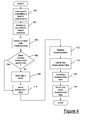
- a user 312 of the communications handset 118 contacts a user feedback entity, for example a call centre for handling customer service requests, in order to report (Step 400) a problem.
- a user feedback entity for example a call centre for handling customer service requests
- the user feedback entity can be an automated call handling system capable of recording the problem identified by the user, for example by using a so-called touch-tone keypad.
- the problem is, in this example, communicated (Step 400) by the user 312 as a subjectively unsatisfactory level of performance being experienced by the user 312.
- a customer support representative 314 or engineer uses (Step 402) network-based diagnostic systems to identify a cause of the unsatisfactory level of performance being experienced by the user 312.
- the customer service representative 314 via the user interface 308, initiates (Step 404) measurement by the agent entity 202.
- the user interface 308 communicates an instruction, in this example, to the OTA communications module 310 of the measurement server 134.
- the OTA communications module 310 then firstly determines (Step 406) whether the agent entity 202 currently resides on the communications handset 118. In the event that the communications handset 118 is not currently supporting the agent entity 202, the measurement server 134 determines whether the communications handset 118 is capable of supporting the agent entity 202.
- the OTA communications module 310 of the measurement server 134 sends (Step 408) the agent entity 202 to the communications handset 118 via the communications link 300, the communications handset 118 installing the agent entity 202.
- the OTA communications module 310 sends (Step 410) configuration data to the agent entity 202 in order to configure the agent entity 202 to perform measurements required by the measurement server 134, for example one or more of the following metrics: cell ID, outbound call connect time, TCP transmit rate, SMS send time, e-mail send time, HTTP page download state, signal strength, call fail event, browser application usage and/or reported error codes.
- the agent entity 202 performs the measurements in accordance with the configuration specified by the configuration data.
- the measurement data includes identification data, such as an International Mobile Equipment Identifier (IMEI) or an International Mobile Subscriber Identifier (IMSI) number in order to identify the communications handset 118 or a Subscriber Identity Module (SIM) card installed in the communications handset 118; the measurement data is communicated to the measurement server 134 via the communications link 300 for receipt (Step 412) by the data record caching module 302 in order to store (Step 414) the raw measurement data in the first database 136.
- identification data such as an International Mobile Equipment Identifier (IMEI) or an International Mobile Subscriber Identifier (IMSI) number in order to identify the communications handset 118 or a Subscriber Identity Module (SIM) card installed in the communications handset 118.
- IMEI International Mobile Equipment Identifier
- IMSI International Mobile Subscriber Identifier
- SIM Subscriber Identity Module
- the measurement data is also passed by the data caching module 312 to the enrichment and correlation module 304.
- the enrichment and correlation module 304 has access to an identifier database (not shown) containing associations between identification data and identities of users or subscribers, for example subscriber names and/or telephone numbers.
- the enrichment and correlation module 304 uses the identifier database in order to correlate (Step 416) the identification data contained in the measurement data and an identity of the user 312 that is in a form, such as the name or the telephone number, that is readily understood and identified by the customer services representative 314, i.e. user-friendly.
- the measurement data is enriched (Step 418) with the identity information and stored (Step 418) in the second database 306.
- the identifier database also contains associations between descriptors that are understandable by the customer services representative 314 or the engineer and measurement data results. Consequently, in order to be as user-friendly as possible, the enrichment and correlation module 304 correlates (Step 416) the measurement data with an appropriate descriptor acquired from the identifier database and enriches (Step 418) the measurement data by storing (Step 418) the appropriate descriptor with the measurement data in the second database 306, thereby recording an association between the appropriate descriptor and the measurement data.
- the customer services representative 314 (or the engineer) is able to retrieve the measurement data from the second database 306, relating to the user 312, via the user interface 308 along with the descriptor stored by the correlation and enrichment module 304. Consequently, presented with the descriptor, the customer services representative 314, using previously acquired training, is able to advise the user 312 and hopefully resolve the problem reported by the user 312.
- the agent entity 202 may already be performing measurements on the communications handset 118.
- the measurements being performed can include a measurement required by the customer services representative 314 (or the engineer).
- the measurement server 134 can be arranged to instruct the agent entity 202 simply to communicate the measurement required, or in the event that the measurement required is not currently being performed by the agent entity 202, the measurement server 134 can instruct the agent entity 202 to perform the required measurement for subsequent communication.
- the communication of the (required) measurement can be by display of the measurement by the communications handset 118 to the user 312 for subsequent (oral) communication by the user 312 to the customer services representative (or engineer).
- the measurement communicated in this way can optionally be communicated to the measurement server 134 by the customer services representative 314 (or engineer) using, for example, the user interface 308.
- Alternative embodiments of the invention can be implemented as a computer program product for use with a computer system, the computer program product being, for example, a series of computer instructions stored on a tangible data recording medium, such as a diskette, CD-ROM, ROM, or fixed disk, or embodied in a computer data signal, the signal being transmitted over a tangible medium or a wireless medium, for example, microwave or infrared.
- the series of computer instructions can constitute all or part of the functionality described above, and can also be stored in any memory device, volatile or non-volatile, such as semiconductor, magnetic, optical or other memory device.
Landscapes
- Engineering & Computer Science (AREA)
- Computer Networks & Wireless Communication (AREA)
- Signal Processing (AREA)
- Business, Economics & Management (AREA)
- General Business, Economics & Management (AREA)
- Human Resources & Organizations (AREA)
- Economics (AREA)
- Strategic Management (AREA)
- Entrepreneurship & Innovation (AREA)
- Development Economics (AREA)
- Game Theory and Decision Science (AREA)
- Educational Administration (AREA)
- Marketing (AREA)
- Operations Research (AREA)
- Quality & Reliability (AREA)
- Tourism & Hospitality (AREA)
- Physics & Mathematics (AREA)
- General Physics & Mathematics (AREA)
- Theoretical Computer Science (AREA)
- Telephonic Communication Services (AREA)
Priority Applications (1)
| Application Number | Priority Date | Filing Date | Title |
|---|---|---|---|
| EP06112132A EP1841134A1 (de) | 2006-03-31 | 2006-03-31 | Analysesystem und Verfahren zur Performanceanalyse |
Applications Claiming Priority (1)
| Application Number | Priority Date | Filing Date | Title |
|---|---|---|---|
| EP06112132A EP1841134A1 (de) | 2006-03-31 | 2006-03-31 | Analysesystem und Verfahren zur Performanceanalyse |
Publications (1)
| Publication Number | Publication Date |
|---|---|
| EP1841134A1 true EP1841134A1 (de) | 2007-10-03 |
Family
ID=36228564
Family Applications (1)
| Application Number | Title | Priority Date | Filing Date |
|---|---|---|---|
| EP06112132A Withdrawn EP1841134A1 (de) | 2006-03-31 | 2006-03-31 | Analysesystem und Verfahren zur Performanceanalyse |
Country Status (1)
| Country | Link |
|---|---|
| EP (1) | EP1841134A1 (de) |
Cited By (1)
| Publication number | Priority date | Publication date | Assignee | Title |
|---|---|---|---|---|
| CN103856976A (zh) * | 2012-12-04 | 2014-06-11 | 中国移动通信集团公司 | 无线局域网设备测试方法、系统和设备 |
Citations (3)
| Publication number | Priority date | Publication date | Assignee | Title |
|---|---|---|---|---|
| US20020133575A1 (en) * | 2001-02-22 | 2002-09-19 | Viola Networks Ltd. | Troubleshooting remote internet users |
| US20030134631A1 (en) | 2002-01-14 | 2003-07-17 | Snyder Thomas M. | Method and system for improved monitoring, measurment and analysis of communication networks utilizing dynamically and remotely configurable probes |
| US6625647B1 (en) * | 1997-06-03 | 2003-09-23 | Keynote Systems, Inc. | Method and apparatus for evaluating service to a user over the internet |
-
2006
- 2006-03-31 EP EP06112132A patent/EP1841134A1/de not_active Withdrawn
Patent Citations (3)
| Publication number | Priority date | Publication date | Assignee | Title |
|---|---|---|---|---|
| US6625647B1 (en) * | 1997-06-03 | 2003-09-23 | Keynote Systems, Inc. | Method and apparatus for evaluating service to a user over the internet |
| US20020133575A1 (en) * | 2001-02-22 | 2002-09-19 | Viola Networks Ltd. | Troubleshooting remote internet users |
| US20030134631A1 (en) | 2002-01-14 | 2003-07-17 | Snyder Thomas M. | Method and system for improved monitoring, measurment and analysis of communication networks utilizing dynamically and remotely configurable probes |
Cited By (1)
| Publication number | Priority date | Publication date | Assignee | Title |
|---|---|---|---|---|
| CN103856976A (zh) * | 2012-12-04 | 2014-06-11 | 中国移动通信集团公司 | 无线局域网设备测试方法、系统和设备 |
Similar Documents
| Publication | Publication Date | Title |
|---|---|---|
| US7043237B2 (en) | Method and system for improved monitoring, measurement and analysis of communication networks utilizing dynamically and remotely configurable probes | |
| US6771956B1 (en) | Real time call data analysis and display | |
| EP1859638B1 (de) | Vorrichtung und verfahren zum testen von produktakzeptanz auf einem drahtlosen gerät | |
| KR100656306B1 (ko) | 검출 및 통지 절차를 자동적으로 프러비저닝하는 시스템및 방법 | |
| EP1908196B1 (de) | System und verfahren zur verwaltung der dienstqualität drahtloser geräte | |
| US9538404B2 (en) | Apparatus and methods for product acceptance testing on a wireless device | |
| EP1309214B1 (de) | Lieferung an Netzwerk von Mobilstationen Funktions- und Selbstleistungs-Testergebnisse als Antwort auf eine verschlüsselte Anfrage | |
| US8423014B2 (en) | Method and system for quality of service (QoS) monitoring for wireless devices | |
| KR101084012B1 (ko) | 무선 디바이스의 음성 및/또는 데이터 프로세싱 성능을 결정하는 장치 및 방법 | |
| EP2127429B1 (de) | Anordnen der verfolgung von drahtlosen endgeräteaktivitäten | |
| US20020072358A1 (en) | Methods and apparatus for real-time performance monitoring in a wireless communication network | |
| EP1704737B1 (de) | Verfahren und netzwerk zur erfassung von geräteninformationen von mobilstationen | |
| US20090131043A1 (en) | Wireless communication system and test method thereof, and access terminal for testing wireless communication system | |
| EP1875728A1 (de) | Verfahren und vorrichtungen zur überwachung der sprachqualität an einem drahtlosen kommunikationsgerät | |
| US8320904B1 (en) | Method and system for remotely accessing and troubleshooting cellular wireless communication devices | |
| WO2012003772A1 (zh) | 无线网络自动测试的方法及系统 | |
| CN100488302C (zh) | 数据记录系统和方法 | |
| EP1841134A1 (de) | Analysesystem und Verfahren zur Performanceanalyse | |
| US8166342B2 (en) | Mobility PDA surveillance using GPS | |
| EP1841132A1 (de) | Software Agenteneinheit, Überwachungssystem and Verfahren zur Beschaffung von Informationen | |
| EP1843521A1 (de) | Vorrichtung und Verfahren zur Leistungsanalyse eines Kommunikationsnetzwerkes | |
| EP1871037A1 (de) | Verfahren, System und Vorrichtung zur Speicherung und Analyse von Benutzerinteraktionserfahrungen | |
| EP1239688A1 (de) | Mobilkommunikationsvorrichtung mit Mitteln zum Erkennen und Melden von Fehlern | |
| Linawati | Fault notification extension in support of BSS 2G siemens | |
| HK1117695A (en) | Apparatus and methods for determining connection quality of a wireless device on a wireless communications network |
Legal Events
| Date | Code | Title | Description |
|---|---|---|---|
| PUAI | Public reference made under article 153(3) epc to a published international application that has entered the european phase |
Free format text: ORIGINAL CODE: 0009012 |
|
| AK | Designated contracting states |
Kind code of ref document: A1 Designated state(s): AT BE BG CH CY CZ DE DK EE ES FI FR GB GR HU IE IS IT LI LT LU LV MC NL PL PT RO SE SI SK TR |
|
| AX | Request for extension of the european patent |
Extension state: AL BA HR MK YU |
|
| AKX | Designation fees paid | ||
| REG | Reference to a national code |
Ref country code: DE Ref legal event code: 8566 |
|
| STAA | Information on the status of an ep patent application or granted ep patent |
Free format text: STATUS: THE APPLICATION IS DEEMED TO BE WITHDRAWN |
|
| 18D | Application deemed to be withdrawn |
Effective date: 20071005 |