EP1841267A2 - System und Verfahren zur Optimierung des Authentifizierungsvorgangs während Zwischenzugangssystem-Weiterreichungen - Google Patents
System und Verfahren zur Optimierung des Authentifizierungsvorgangs während Zwischenzugangssystem-Weiterreichungen Download PDFInfo
- Publication number
- EP1841267A2 EP1841267A2 EP07006878A EP07006878A EP1841267A2 EP 1841267 A2 EP1841267 A2 EP 1841267A2 EP 07006878 A EP07006878 A EP 07006878A EP 07006878 A EP07006878 A EP 07006878A EP 1841267 A2 EP1841267 A2 EP 1841267A2
- Authority
- EP
- European Patent Office
- Prior art keywords
- wlan
- handover
- message
- aaa server
- mme
- Prior art date
- Legal status (The legal status is an assumption and is not a legal conclusion. Google has not performed a legal analysis and makes no representation as to the accuracy of the status listed.)
- Granted
Links
Images






Classifications
-
- H—ELECTRICITY
- H04—ELECTRIC COMMUNICATION TECHNIQUE
- H04W—WIRELESS COMMUNICATION NETWORKS
- H04W36/00—Hand-off or reselection arrangements
- H04W36/0005—Control or signalling for completing the hand-off
- H04W36/0011—Control or signalling for completing the hand-off for data sessions of end-to-end connection
- H04W36/0016—Hand-off preparation specially adapted for end-to-end data sessions
-
- H—ELECTRICITY
- H04—ELECTRIC COMMUNICATION TECHNIQUE
- H04L—TRANSMISSION OF DIGITAL INFORMATION, e.g. TELEGRAPHIC COMMUNICATION
- H04L63/00—Network architectures or network communication protocols for network security
- H04L63/08—Network architectures or network communication protocols for network security for authentication of entities
-
- H—ELECTRICITY
- H04—ELECTRIC COMMUNICATION TECHNIQUE
- H04L—TRANSMISSION OF DIGITAL INFORMATION, e.g. TELEGRAPHIC COMMUNICATION
- H04L63/00—Network architectures or network communication protocols for network security
- H04L63/08—Network architectures or network communication protocols for network security for authentication of entities
- H04L63/0823—Network architectures or network communication protocols for network security for authentication of entities using certificates
-
- H—ELECTRICITY
- H04—ELECTRIC COMMUNICATION TECHNIQUE
- H04W—WIRELESS COMMUNICATION NETWORKS
- H04W12/00—Security arrangements; Authentication; Protecting privacy or anonymity
- H04W12/04—Key management, e.g. using generic bootstrapping architecture [GBA]
- H04W12/043—Key management, e.g. using generic bootstrapping architecture [GBA] using a trusted network node as an anchor
- H04W12/0431—Key distribution or pre-distribution; Key agreement
-
- H—ELECTRICITY
- H04—ELECTRIC COMMUNICATION TECHNIQUE
- H04W—WIRELESS COMMUNICATION NETWORKS
- H04W12/00—Security arrangements; Authentication; Protecting privacy or anonymity
- H04W12/04—Key management, e.g. using generic bootstrapping architecture [GBA]
- H04W12/043—Key management, e.g. using generic bootstrapping architecture [GBA] using a trusted network node as an anchor
- H04W12/0433—Key management protocols
-
- H—ELECTRICITY
- H04—ELECTRIC COMMUNICATION TECHNIQUE
- H04W—WIRELESS COMMUNICATION NETWORKS
- H04W12/00—Security arrangements; Authentication; Protecting privacy or anonymity
- H04W12/06—Authentication
- H04W12/062—Pre-authentication
-
- H—ELECTRICITY
- H04—ELECTRIC COMMUNICATION TECHNIQUE
- H04W—WIRELESS COMMUNICATION NETWORKS
- H04W12/00—Security arrangements; Authentication; Protecting privacy or anonymity
- H04W12/06—Authentication
- H04W12/069—Authentication using certificates or pre-shared keys
-
- H—ELECTRICITY
- H04—ELECTRIC COMMUNICATION TECHNIQUE
- H04W—WIRELESS COMMUNICATION NETWORKS
- H04W36/00—Hand-off or reselection arrangements
- H04W36/14—Reselecting a network or an air interface
- H04W36/144—Reselecting a network or an air interface over a different radio air interface technology
- H04W36/1443—Reselecting a network or an air interface over a different radio air interface technology between licensed networks
-
- H—ELECTRICITY
- H04—ELECTRIC COMMUNICATION TECHNIQUE
- H04W—WIRELESS COMMUNICATION NETWORKS
- H04W36/00—Hand-off or reselection arrangements
- H04W36/14—Reselecting a network or an air interface
- H04W36/144—Reselecting a network or an air interface over a different radio air interface technology
- H04W36/1446—Reselecting a network or an air interface over a different radio air interface technology wherein at least one of the networks is unlicensed
Definitions
- the present invention relates generally to the field of Heterogeneous systems, optimization of the authentication procedure during Inter access system handovers, and a method of key derivation for the evolved system. More particularly, this invention provides a method of deriving new keys for securing communication with the new access system after handover using the previous access system keys.
- the Radio Access Network (RAN), System Architecture (SA) and the Core Terminal (CT) working groups of the Third Generation Partnership Project (3GPP) aim to develop an Enhanced UTRAN (E-UTRAN) architecture for next generation wireless systems.
- the E-UTRAN system is required to co-exist with the Second (2G) and Third Generation (3G) wireless systems, and in particular, to support handovers between the existing systems and the newly evolved E-UTRAN system, specified in the 3GPP TR 23.882, 3GPP TS 23.401 and 3GPP TS 23.402 specifications.
- the E-UTRAN system is an evolution of the 3GPP UTRAN system, in which the main entities are the User Equipment (UE), the Enhanced Node B (ENB), Mobility Management Entity (MME), User Plane Entity (UPE) and Inter Access System Anchor (IASA) as shown in the Figure 1.
- the ENB of the EUTRAN system should have the features of the Node B and the Radio Network Controller (RNC) of the legacy UTRAN system.
- MME of the System Architecture Evolution (SAE) manages and stores UE context (for idle state: UE/user identities, UE mobility state, user security parameters).
- the MME also generates temporary identities that it allocates to UEs, checks the authorization as to whether the UE may camp on the TA or on the PLMN(Public Land Mobile Network), and authenticates the user.
- the UPE of SAE terminates for idle state UEs the downlink data path and triggers/initiates paging when downlink data arrive for the UE.
- the UPE also manages and stores UE contexts, e.g. parameters of the Internet Protocol (IP) bearer service or network internal routing information, and performs replication of the user traffic in case of interception.
- IP Internet Protocol
- IASA is the user plane anchor for mobility between different access systems. It performs or supports handover between different access systems.
- the Global System for Mobile Communication (GSM)/Enhanced Data rates for Global Evolution (EDGE) Radio Access Network (GERAN) consists of the Base Transceiver Station (BTS) and the Base Station Controller (BSC).
- the UTRAN consists of the Node B and the Radio Network Controller (RNC).
- the General Packet Radio Service (GPRS) Core Network consists of the Serving GPRS Support Node (SGSN) and the Gateway GPRS Support Node (GGSN) as shown in Figure 1
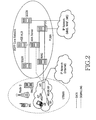
- the Integrated Wireless Local Area Network (I-WLAN) system specified in the 3GPP TS 23.234 specifications provides a system and method to integrate legacy UTRAN systems with WLAN systems, as shown in Figure 2.
- the I-WLAN system allows WLAN users to access 3GPP packet switched services.
- an aspect of the present invention is to address at least the above problems and/or disadvantages and to provide at least the advantages described below. Accordingly, an aspect of the present invention is to provide a method for optimizing an authentication procedure during inter access system handovers in heterogeneous networks. The method includes deriving new keys for accessing the new system, enabling an optimized authentication procedure during handover from an existing system to a new system by using the existing system access keys, and receiving a temporary Identification (ID) by a UE that is accessing the new system during handover preparation, which enables the UE to quickly perform re-authentication.
- ID temporary Identification
- Another aspect of the present invention is to provide a system for optimizing authentication procedure during inter access system handovers in heterogeneous networks.
- the system includes means for deriving new keys for accessing the new system, means for enabling an optimized authentication procedure during handover from an existing system to a new system by using the existing system access keys, and means for receiving a temporary ID by a UE that is accessing the new system during handover preparation, which enables the UE to quickly perform re-authentication.
- the present invention includes mechanisms that provide optimized authentication procedure during handover by utilizing the active authentication key in a first access system to be used in a second access system.
- This invention also includes a mechanism to quickly perform a re-authentication during a handover procedure.
- the present invention further includes mechanisms to derive keys for the evolved system to secure the communication between the UE and the network entities.
- the network can indicate to the UE to perform both the scenario-2 and scenario-3 authentication procedure and also the list of supported optimization procedures to the UE during the HO command while handing over from the SAE system or from the UMTS system to the I-WLAN system.
- the UE can select and begin one of the optimization procedures supported by the network directly without any trial and error method.
- the MME performs a soft registration in the HSS during the HO preparation phase, so that after handover the UE attaches with the same MME.
- the SGSN performs a soft registration in the HSS during the HO preparation phase, so that after handover the UE attaches with the same SGSN.
- the AAA server does a soft registration in the HSS during the HO preparation phase, so that after handover the UE attaches with the same AAA server.
- the secure mode command procedure is done during the HO preparation phase while handing over to SAE system or to UMTS system.
- the UE sends the selected algorithm from the list of network- supported algorithms broadcasted by the network in the measurement report to the SAE system.
- the SAE system can agree/negotiate with the UE selected algorithm, so that the UE can start protecting the initial message during handover.
- the SGSN passes the latest CK and IK to the MME or authentication and key management entity of the SAE system, derive the SAE specific keys and distribute the keys to the SAE system entities before or during handover.
- the MME converts the LTE(Lon Term Evolution) related parameters to UMTS specific parameters, during the HO request from the other AS and vise versa.
- the MME passes the latest CK and IK to the SGSN, which distributes the keys to the Radio Network Controller (RNC) during handover preparation request from the SAE system.
- RNC Radio Network Controller
- the UE during the forward handover authentication procedure for the UMTS AS, the UE sends the details of the previous access system within the RAU procedure or initial NAS message and the core network can retrieve the security context (e.g., CK and IK) and the buffered packets from the previous access system.
- the UE sends the details of the previous access system, such that the core network can retrieve the security context and the buffered packets from the previous access system.
- the details of the previous access system are sent within the EAPOL ID response messages.
- the UE sends the sequence number of the last successfully received packet to the access system, which forwards the same to the previous core network so that it may start forwarding the packets after the last successful sequence number received by the UE.
- the access system forwards the same to the previous core network so that it may start forwarding the packets after the last successful sequence number received by the UE.
- core network generates the temporary ID and pass it to the UE.
- the UE begins a fast re-authentication procedure for scenario-3 access.
- the UE sends the details of the previous access system within the TAU procedure or initial NAS message, so that core network can retrieve the security context (e.g., CK and IK) and the buffered packets from the previous access system.
- the present invention provides mechanisms to derive the SAE system specific keys.
- the present invention is provided to
- the present invention provides a system and method for providing an optimized authentication procedure during handover between the heterogeneous networks, and also for providing the mechanism to derive the SAE system specific keys.
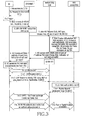
- FIG. 3 illustrates a Backward Handover from the SAE to the I-WLAN access system (Scenario 2 access) according to the present invention.
- a UE sends periodic or event based measurements to the EUTRAN network in step 1.
- the ENB/MME can request the UE to start scanning other Radio Access Technology (RATs) at step 2a, or alternatively, the ENB/MME can request the UE to scan a particular RAT which would be a neighboring RAT or available in its coverage area. Also, by Layer 2 (L2) or by some other means, the UE can decide that the EUTRAN cannot be continued and begin scanning the other RATs.[PLEASE SPECIFY WHERE THE "TRIGGER" STEP IN 2b IS DESCRIBED HEREIN]
- RATs Radio Access Technology
- the UE sends the I-WLAN measurement report containing the I-WLAN ID and NAI with other parameters to the SAE system in step 3. Then the ENB/MME decides itself or optionally, with the help of a logical interworking unit, to handover the UE to the I-WLAN network.
- the MME resolves the I-WLAN AAA server IP address and contacts the AAA server through the logical interworking unit in step 4.
- This logical interworking unit can be located within the MME or the AAA server, or alternatively, co-located within any network entity in the SAE the I-WLAN system.
- the functionality of the interworking unit is to convert the RAN and the CN containers/protocol/parameters of a first access system to a second access system.
- the MME sends the HO request to the AAA server through the interworking unit in step 5.
- the HO request contains the NAI, I-WLAN ID, Unused Authentication Vectors (AVs), latest CK and IK and other parameters.
- AVs Unused Authentication Vectors
- the AAA checks with a Home Subscription Service (HSS) whether any AAA is registered with the HSS(Home Subscriber Server), and if not, the AAA performs a soft registration in step 6.
- HSS Home Subscription Service
- the AAA generates/derives the keys (MSK, TEK and EMSK) using NAI, CK and IK.
- the AAA server also generates the Temp IDs (pseudonym ID and the fast re-authentication ID), and protects (encrypts) the Temp IDs using derived TEK and then sends it to the UE.
- the AAA server sends the HO accept to the MME through the interworking unit.
- the HO accept message contains the protected Temp IDs and the indication of whether scenario 2 and scenario 3 authentication is required.
- the MME forwards in step 8 the received parameters in the HO accept message as an HO command message to the UE.
- the UE After receiving the HO command from the SAE system to handover to the I-WLAN network, the UE in step 9 generates the keys (MSK, TEK and EMSK) using the latest CK and IK and decrypts the protected Temp IDs. In step 10, the UE starts the L2 attachment with the I-WLAN AS.
- the keys MSK, TEK and EMSK
- the WLAN-AN initiates the authentication procedure in step 11a.1, if the I-WLAN system requires the authentication.
- the UE sends the temp ID (fast re-authentication ID) if it is received in the HO command.
- the UE sends the EAP response identity with the temp ID (pseudonym ID or fast re-authentication ID), and optionally with the integrity protection of the EAP response identity message to the AAA server through the I-WLAN AN.
- the AAA server receives EAP response identity message with temp ID, then the AAA knows that the UE has done the HO preparation.
- the AAA server verifies in step 11a.3 the integrity protection and the temp ID.
- the AAA authenticates the UE.
- the AAA Server can send the message EAP Request/AKA Notification, which is Medium Access Control (MAC) protected, previous to the EAP Success message, if the AAA server requested previously to use protected successful result indications.
- the AAA server generates the new temp Ds and sends them to the UE along with the EAP Request/AKA Notification message.
- the WLAN AN forwards the EAP Request/AKA Notification message to the UE, which sends the EAP Response/AKA-Notification.
- the WLAN AN forwards the EAP Response/AKA-Notification message to the AAA server, which ignores the contents of this message
- the AAA Server sends in step 11a.4 the EAP Success message to WLAN-AN. If some extra keying material was generated for WLAN technology specific confidentiality and/or integrity protection, then the AAA Server includes this keying material in the underlying AAA protocol message (i.e. not at the EAP level).
- the I-WLAN AN stores the keying material to be used in communication with the authenticated WLAN-UE. If the AAA server does not use protected successful result indications, then the AAA server generates the new temp IDs and sends them to the UE along with the EAP success message.
- the I-WLAN AN informs the WLAN-UE in step 11a.5 about the successful authentication with the EAP Success message.
- the EAP AKA exchange has been successfully completed, and the WLAN-UE and the I-WLAN AN share keying material derived during that exchange.
- step 11b the UE initiates the fast re-authentication procedure with the I-WLAN network. If the UE does not receive the fast re-authentication ID, then the UE sends the pseudonym ID to initiate full authentication procedure.
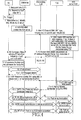
- FIG 4 illustrates a Backward Handover from the SAE to the I-WLAN access system (Scenario 2 and Scenario 3 access) according to the present invention.
- a UE sends periodic or event based measurements to the EUTRAN network in step 1.
- step 2a the ENB/MME can request the UE to start scanning other RATs or to scan a particular RAT which would be a neighboring RAT or available in its coverage area. Also, by L2 or by some other means, the UE can decide that the EUTRAN cannot be continued and begin scanning the other RATs.
- the UE sends the I-WLAN measurement report containing the I-WLAN ID and NAI with other parameters to the SAE system in step 3. Then the ENB/MME decides to handover the UE to the I-WLAN network.
- the MME resolves the I-WLAN AAA server IP address and contacts the AAA server through the logical interworking unit.
- the logical interworking unit can be located within the MME or the AAA server, or alternatively co-located within any network entity in the SAE or the I-WLAN system.
- the functionality of the interworking unit is to convert the RAN and the CN containers/protocol/parameters of a first access system to a second access system.
- the MME sends the HO request to the AAA server through the interworking unit in step 5.
- the HO request contains the NAI, I-WLAN ID, Unused AVs, latest CK and IK and other parameters.
- the AAA checks with the HSS in step 6 whether any AAA is registered with the HSS. If not, the AAA performs a soft registration.
- the AAA generates/derives the keys (MSK, TEK and EMSK) using NAI, CK and IK.
- the AAA server also generates the Temp IDs (pseudonym ID and the fast re-authentication ID), protects (encrypts) the Temp IDs using derived TEK, and then sends them to the UE.
- the AAA server sends in step 7 the HO accept to the MME through the interworking unit.
- the HO accept message contains the protected temp IDs and the indication of whether scenario 2 and scenario 3 authentication is required.
- the AAA server also includes the supported optimization procedure for the UEs which perform scenario 2 and scenario 3 consecutively within the HO accept.
- step 8 the MME forwards the received parameters in the HO accept message as an HO command message to the UE.
- step 9 the UE After receiving the HO command from the SAE system to handover to the I-WLAN network, in step 9 the UE generates the keys (MSK, TEK and EMSK) using the latest CK and IK and decrypts the protected Temp IDs (pseudonym ID and the fast re-authentication ID). In step 10, the UE begins the L2 attachment with the I-WLAN AS.
- the WLAN-AN initiates the authentication procedure in step 11a.1[IN FIGURE 4, PLEASE CHANGE 11a.i to 11a.1 FOR CONSISTENCY], if the I-WLAN system requires the authentication. Then the UE sends in step 11a.2 [IN FIGURE 4, PLEASE CHANGE 11a.ii to 11a.2 FOR CONSISTENCY] the temp ID (fast re-authentication ID) if it is received in the HO command. The UE sends the EAP response identity with the temp ID (pseudonym ID or fast re-authentication ID), and optionally with the integrity protection of the EAP response identity message, to the AAA server through the I-WLAN AN.
- the AAA server receives the EAP response identity message with a temp ID, then the AAA knows that the UE has done the HO preparation.
- the AAA server in step 11a.3 [IN FIGURE 4, PLEASE CHANGE 11a.iii to 11a.3 FOR CONSISTENCY] verifies the integrity protection and the temp ID.
- the AAA authenticates the UE.
- the AAA Server can send the message EAP Request/AKA Notification, which is MAC protected, previous to the EAP Success message, if the AAA server requested previously to use protected successful result indications.
- the AAA server generates the new temp IDs and sends to the UE along with the EAP Request/AKA Notification message.
- the WLAN AN forwards the EAP Request/AKA Notification message to the UE, which sends the EAP Response/AKA-Notification.
- the WLAN AN forwards the EAP Response/AKA-Notification message to the AAA server, which ignores the contents of this message.
- the AAA Server sends in step 11a.4 [IN FIGURE 4, PLEASE CHANGE 11a.iv to 11a.4 FOR CONSISTENCY] the EAP Success message to WLAN-AN. If some extra keying material was generated for WLAN technology specific confidentiality and/or integrity protection, then the AAA Server includes this keying material in the underlying AAA protocol message (i.e. not at the EAP level).
- the I-WLAN AN stores the keying material to be used in communication with the authenticated WLAN-UE. If the AAA server does not use protected successful result indications, then the AAA server generates the new temp IDs and sends them to the UE along with the EAP success message.
- the I-WLAN AN informs the WLAN-UE about the successful authentication with the EAP Success message in step 11a.5[IN FIGURE 4, PLEASE CHANGE 11a.v to 11a.5 FOR CONSISTENCY].
- the EAP AKA exchange has been successfully completed, and the WLAN-UE and the I-WLAN AN share keying material derived during that exchange.
- the UE initiates the fast re-authentication procedure with the I-WLAN network in step 11b. If the UE does not receive the fast re-authentication ID, then the UE sends the pseudonym ID to initiate a full authentication procedure.
- the UE initiates in step 12a the optimized authentication procedure for the scenario 3 listed by the AAA server in the HO command.
- the UE may initiate the scenario 3 authentication procedure using the EMSK based optimization procedure.
- step 12b the UE may initiate the fast re-authentication procedure for scenario 3 authentication procedure.
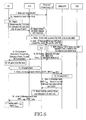
- Figure 5 illustrates a Backward Handover from the SAE to the I-WLAN access system (Direct Scenario 3 access) according to the present invention.
- a UE sends periodic or event based measurements to the EUTRAN network in step 1.
- the ENB/MME finds that UE measurement is below the threshold or MME decides in any manner that the EUTRAN cannot be continued, then in step 2 the ENB/MME can request the UE to start scanning other RATs, or request the UE to scan a particular RAT which would be a neighboring RAT or available in its coverage area. Alternatively, by L2 or by some other means, the UE decides that the EUTRAN cannot be continued and starts scanning the other RATs.
- the UE sends the I-WLAN measurement report containing the I-WLAN ID and NAI with other parameters to the SAE system in step 3. Then the ENB/MME decides to handover the UE to the I-WLAN network.
- the MME resolves the I-WLAN AAA server IP address and contacts the AAA server through the logical interworking unit in step 4.
- This logical interworking unit can be located within the MME or the AAA server, or alternatively co-located within any network entity in the SAE or the I-WLAN system.
- the functionality of the interworking unit is to convert the RAN and the CN containers/protocol/parameters of a first access system to a second access system.
- the MME sends the HO request to the AAA server through the interworking unit in step 5.
- the HO request contains the NAI, I-WLAN ID, Unused AVs, latest CK and IK and other parameters.
- the AAA checks with the HSS whether any AAA is registered with the HSS, and if not, the AAA performs a soft registration.
- the AAA generates/derives the keys (MSK, TEK and EMSK) using NAI, CK and IK.
- the AAA server also generates the Temp IDs (pseudonym ID and the fast re-authentication ID) and protects (encrypts) the Temp IDs using derived TEK. Then the AAA sends the Temp IDs to the UE.
- the AAA server sends the HO accept to the MME through the interworking unit in step 7.
- the HO accept message contains the protected temp IDs and the indication of whether scenario 2 and scenario 3 authentication is required.
- the AAA server also includes the supported optimization procedure for the UEs which consecutively perform scenario 2 and scenario 3 within the HO accept.
- the MME forwards the received parameters in the HO accept message in the HO command message to the UE in step 8.
- the UE in step 9 After receiving the HO command from the SAE system to handover to the I-WLAN network, the UE in step 9 generates the keys (MSK, TEK and EMSK) using the latest CK and IK and decrypts the protected Temp IDs.
- step 10 the UE begins the L2 attachment with the I-WLAN AS.
- the UE After a successful attachment with the I-WLAN AN, the UE initiates in step 11a the optimized authentication procedure for the scenario 3 listed by the AAA server in the HO command.
- the UE may initiate the scenario 3 authentication procedure using the EMSK based optimization procedure.
- step 11b the UE may initiate the fast re-authentication procedure for scenario 3 authentication procedure.
- the UE can send the details of the previous access system, so that the core network can retrieve the security context and the buffered packets from the old access system.
- the details of the last access system can be sent within the EAPOL ID response messages.
- scenario-2 authentication procedure if the UE and the network derive the keys using the CK and IK, then the core network can generate a temp ID and pass it to the UE.
- the UE can begin a fast re-authentication procedure for scenario-3 access.
- the UE can send the sequence number of the last successfully received packet to the I-WLAN network, which can forward the same to core network. Then, the core network starts forwarding the packets after the last successful received sequence number by the UE.
- Figure 6 illustrates a Backward Handover from the I-WLAN to the SAE system (Alternative-1) according to the present invention.
- a UE sends periodic or event based measurements to the logical decision and interworking unit in step 1.
- This logical decision and interworking unit can be located within the MME or the AAA server or as a separate entity, or alternatively co-located within any network entity in the SAE system or in the I-WLAN system.
- the functionality of the decision and interworking unit is to convert the RAN and the CN containers/protocol/parameters of a first access system to a second access system, and also to decide whether to HO based on the measurements.
- the logical decision and interworking unit finds that UE measurement is below the threshold or decides by any other means that I-WLAN cannot be continued, then in step 2 the logical decision and interworking unit can request the UE to start scanning other RATs, or the ENB/MME can request the UE to scan a particular RAT which would be a neighboring RAT or available in its coverage area. Alternatively, by L2 or some other means, the UE decides that the I-WLAN cannot be continued and starts scanning the other RATs.
- the UE sends the SAE measurement report containing the TAI, selected UIA and UEA, ENB-ID and optionally, START value the logical decision and interworking unit through the AAA server in step 3. Then in step 4 the logical decision and interworking unit decides to handover the UE to the SAE network and informs the AAA server.
- the AAA server uses TAI, the AAA server knows the MME address by contacting the HSS.
- the AAA server sends the HO request message to the MME/UPE.
- the HO request message contains Previous RAT type, Unused AVs, latest CK and IK, optionally ENB-ID and other parameters.
- the MME checks HSS whether any MME is registered with the HSS, and if not, it performs a soft registration in step 7.
- the MME also generates/derives the keys.
- the MME sends the HO accept to the AAA server through the interworking unit in step 8.
- the HO accept message contains the selected UEA and UIA, optionally FRESH and whether to start RAN protection and other parameters.
- the AAA server forwards the received parameters in the HO accept message in the HO command message to the UE in step 9.
- the UE After receiving the HO command from the AAA server to handover to theSAE network, the UE derives the keys specific to the SAE system using the latest CK and IK in step 10.
- the UE starts the L2 attachment with the ENB without any protection in step 11.
- the UE sends the initial Layer 3 (L3) message to the MME/UPE in step 12.
- the initial L3 message contains the user identity, START value and the MAC-I NAS .
- the MAC-I NAS is calculated using the derived SAE specific key, and optionally FRESH[PLEASE DEFINE] and START values.
- the MME/UPE verifies the MAC-I using the derived keys, the received START and optionally FRESH value in step 13.
- the MME/UPE sends the Initial L3 message reply, which includes the keys for the ENB, START, optionally FRESH and also the agreed UEA and the UIA.
- the MME calculates the MAC-I NAS over the Initial L3 message reply excluding the keys for the ENB START, optionally FRESH and also the agreed UEA and the UIA.
- the ENB receives the Initial L3 message reply and stores the keys START, optionally FRESH and the agreed UEA and UIA.
- the ENB forwards the Initial L3 message reply to the UE.
- the ENB can start the RAN security (MAC-I RAN ).
- the UE verifies the MAC-I NAS and MAC-I RAN
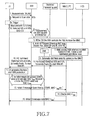
- Figure 7 illustrates a backward Handover from the I-WLAN to the SAE system (Alternative-2) according to the present invention.
- a UE sends periodic or event based measurements to the logical decision and interworking unit in step 1.
- This logical decision and interworking unit can be located within the MME or the AAA server, or as a separate entity or alternatively co-located within any network entity in the SAE or the I-WLAN system.
- the functionality of the decision and interworking unit is to convert the RAN and the CN containers/protocol/parameters of a first access system to a second access system and also to decide whether to HO based on the measurements.
- the logical decision and interworking unit finds that UE measurement is below the threshold or decides by any other manner that the I-WLAN cannot be continued, then the logical decision and interworking unit can request the UE to start scanning other RATs or ENB/MME request the UE to scan a particular RAT which would be a neighboring RAT or available in its coverage Alternatively ,by L2 or by some other means, the UE decides that the I-WLAN cannot be continued and starts scanning the other RATs.
- the UE sends the SAE measurement report containing the TAI, selected UIA and UEA, ENB-ID and optionally START value to the logical decision and interworking unit through the AAA server in step 3.
- the logical decision and interworking unit decides to handover the UE to the SAE network and informs the same to the AAA server.
- the AAA server uses TAI, the AAA server knows the MME address by contacting the HSS in step 5.
- the AAA server sends HO request message to the MME/UPE in step 6.
- the HO request message contains Previous RAT type, Unused AVs, latest CK and IK, and optionally ENB-ID and other parameters.
- step 7 the MME checks the HSS whether any MME is registered with the HSS, and if not, the MME does a soft registration. MME generates/derives the keys using the CK and IK sent by the AAA server.
- the MME generates FRESH and distribute the security context to the ENB, using the ENB-ID in step 8.
- the MME sends the HO accept to the AAA server through the interworking unit in step 9.
- the HO accept message contains the selected UEA and UIA, and optionally FRESH and to start RAN protection and other parameters.
- the AAA server forwards in step 10 the received parameters in the HO accept message in the HO command message to the UE.
- the UE After receiving the HO command from the AAA server to handover to theSAE network, the UE derives the keys specific to the SAE system using the latest CK and IK and starts the RAN protection in step 11.
- the UE starts the L2 attachment with the ENB in step 12.
- the UE starts protecting the RRC messages.
- the UE passes the START value and calculates the MAC-I RAN using the derived SAE specific key, optionally FRESH and START value.
- the ENB verifies the MAC-I RAN using the security context received in step 8 along with the START value.
- the UE sends in step 13 the initial L3 message to the MME/UPE.
- the initial L3 message contains the user identity, START value and the MAC-I NAS .
- the MAC-I NAS is calculated using the derived SAE specific key, optionally FRESH and START value.
- the MME/UPE verifies the MAC-I using the derived keys, the received START and optionally FRESH value in step 14.
- the MME/UPE sends the Initial L3 message reply.
- the MME calculates the MAC-I NAS over the Initial L3 message reply.
- the UE can send the details of the previous access system within the TAU procedure, such that core network can retrieve the security context (CK and IK) and the buffered packets from the old access system.
- security context CK and IK
- FIG. 8 illustrates a Backward Handover from the UMTS to the SAE system according to the present invention.
- a UE sends periodic or event based measurements to the SGSN in step 1.
- the SGSN can request the UE to start scanning other RATs, or the ENB/MME can request the UE to scan a particular RAT which would be a neighboring RAT or available in its coverage area in step 2.
- the UE decides that the UMTS cannot be continued and starts scanning the other RATs.
- the UE sends the SAE measurement report containing the TAI, selected UIA and UEA and optionally START value and/or ENB ID to the SGSN in step 3.
- the SGSN decides to handover the UE to the SAE network.
- the SGSN uses TAI, the SGSN knows the MME address and contacts the MME using the S3 or S4 interface or by contacting the HSS or by any other manner in step 4.
- the SGSN sends a HO request message to the MME/UPE in step 5.
- the HO request message contains security context, Previous RAT type, Unused AVs, latest CK and IK, and optionally ENB-ID, START value, KSI and other parameters.
- step 6 the MME checks with HSS whether any MME is registered with the HSS, and if not, MME does a soft registration. MME generates/derives the keys using the CK and IK sent by the SGSN.
- the MME converts the UMTS parameters to SAE specific parameters by using the logical interworking unit which can be located within the MME or within the AAA server or alternatively co-located within any network entity in the SAE system or in the I-WLAN system.
- the functionality of the interworking unit is to convert the RAN and the CN containers/protocol/parameters of one access system to another.
- step 7 the MME generates FRESH and distributes the security context which includes ENB keys for RAN protection, selected UIA and UEA , FRESH, START, KSI and other parameters to the ENB, using the ENB-ID.
- step 8 the MME sends the HO accept to the SGSN.
- the HO accept message contains the selected UEA and UIA, and optionally FRESH.
- the SGSN forwards the received parameters in the HO accept message in the HO command message to the UE in step 9.
- the UE in step 10 After receiving the HO command from the SGSN to handover to theSAE network, the UE in step 10 derives the keys specific to the SAE system using the latest CK and IK and optionally starts the RAN protection.
- the UE starts the L2 attachment with the ENB in step 11.
- the UE optionally starts protecting the RRC messages.
- the UE passes the START value and calculates the MAC-I RAN using the derived SAE specific key, optionally FRESH and START value.
- the ENB verifies the MAC-I RAN using the security context received in step 8 along with the START value.
- step 12 the UE sends the initial L3 message to the MME/UPE.
- the initial L3 message contains the user identity, START value, KSI and the MAC-I NAS .
- the MAC-I NAS is calculated using the derived SAE specific key, and optionally FRESH and START value.
- the MME/UPE verifies the MAC-I NAS using the derived keys, the received START and optionally FRESH value in step 13.
- the MME/UPE sends the Initial L3 message reply in step 14.
- the MME calculates the MAC-I NAS over the Initial L3 message reply.
- the UE can send the details of the previous access system, so that the core network can retrieve the security context (CK and IK) and the buffered packets from the old access system.
- the security context CK and IK
- Figure 9 illustrates a backward Handover from the SAE to the UMTS system according to the present invention.
- a UE sends periodic or event based measurements to the ENB/MME in step 1.
- the ENB/MME in step 2 can request the UE to start scanning other RATs or ENB/MME request the UE to scan a particular RAT which would be a neighboring RAT or available in its coverage area.
- the UE decides that the EUTRAN cannot be continued and starts scanning the other RATs.
- the UE sends the UMTS measurement report containing the RAI, supported UIA and UEA, KSI and START value and cell ID to the ENB/MME in step 3.
- the SGSN decides to handover the UE to the UMTS network in step 4.
- the MME knows the SGSN address and contact the SGSN using the S3 or S4 interface or by contacting the HSS or by any other well-knownmanner.
- MME sends in step 5 a HO request message to the SGSN.
- the HO request message contains security context, Previous RAT type, Unused AVs, latest CK and IK, and optionally cell-ID, START value, KSI and other parameters.
- MME converts the SAE parameters to UMTS specific parameters by using the logical interworking unit which can be located within the MME or within the SGSN or as a separate network entity or alternatively co-located within any network entity in the SAE or the UMTS system.
- the functionality of the interworking unit is to convert the RAN and the CN containers/protocol/parameters of a first access system to a second access system.
- the SGSN checks with the HSS whether any SGSN is registered with the HSS, and if not, it performs a soft registration in step 6.
- step 7 the SGSN generates FRESH, and distributes the security context which includes keys for protection, selected UIA and UEA , FRESH, START, KSI and other parameters to the RNC, using the cell-ID.
- RNC stores the received parameters.
- the SGSN sends the HO accept to the MME in step 8.
- the HO accept message contains the selected UEA and UIA, and optionally FRESH.
- the MME forwards the received parameters in the HO accept message in the HO command message to the UE in step 9.
- the UE After receiving the HO command from the MME to handover to the UMTS network, the UE uses the latest CK and IK for the UMTS network and optionally starts the RAN protection in step 10.
- the UE starts the L2 attachment with the RNC in step 11.
- the UE optionally starts protecting the RRC messages.
- the UE passes the START value.
- the UE sends the initial L3 message to the SGSN in step 12.
- the initial L3 message contains the user identity, START value, KSI and the MAC-I.
- the RNC verifies the MAC- in step 13, and forwards to the SGSN in step 14.
- the UE can send the details of the last/old access system, so that the core network can retrieve the security context (CK and IK) and the buffered packets from the old access system.
- the security context CK and IK
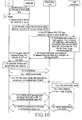
- Figure 10 illustrates a backward Handover from the UMTS to the I-WLAN access system (Scenario 2 access) according to the present invention.
- a UE sends periodic or event based measurements to the UTRAN network in step 1.
- RNC/SGSN finds that the UE measurement is below the threshold or the SGSN decides in any manner that EUTRAN cannot be continued, then RNC/SGSN can request the UE to start scanning other RATs or the ENB/MME can request the UE to scan a particular RAT which would be a neighboring RAT or available in its coverage area in step 2. Alternatively, by L2 or by some other means, the UE decides that the UTRAN cannot be continued and starts scanning the other RATs.
- the UE sends the I-WLAN measurement report containing the I-WLAN ID and NAI with other parameters to the SGSN in step 3. Then the SGSN decides to handover the UE to the I-WLAN network.
- the SGSN in step 4 resolves the I-WLAN AAA server IP address and contacts the AAA server through the logical interworking unit, which can be located within the SGSN or the AAA server or as a separate network entity. Alternatively it can be co-located within any network entity in the UMTS system or in the I-WLAN system.
- the functionality of the interworking unit is to convert the RAN and the CN containers/protocol/parameters of a first access system to a second access system.
- the SGSN sends the HO request to the AAA server through the interworking unit in step 5.
- the HO request contains the NAI, I-WLAN ID, Unused AVs, latest CK and IK and other parameters.
- the AAA checks with the HSS whether any AAA is registered with the HSS, and if not, the AAA performs a soft registration in step 6.
- the AAA generates/derives the keys (MSK, TEK and EMSK) using NAI, CK and IK, and the Temp IDs (pseudonym ID and the fast re-authentication ID).
- the AAA server protects (encrypts) the Temp IDs using derived TEK and then sends themto the UE.
- the AAA server sends the HO accept to the SGSN through the interworking unit in step 7.
- the HO accept message contains the protected temp IDs and the indication of whether scenario 2 and scenario 3 authentication is required.
- the SGSN forwards the received parameters in the HO accept message in the HO command message to the UE in step 8.
- the UE After receiving the HO command from the UMTS system to handover to the I-WLAN network, the UE generates the keys (MSK, TEK and EMSK) using the latest CK and IK and decrypts the protected Temp IDs (pseudonym ID and the fast re-authentication ID) in step 9.
- the UE starts the L2 attachment with the I-WLAN AS in step 10.
- step 11a.1 the WLAN-AN initiates the authentication procedure, if the I-WLAN system requires the authentication.
- the UE sends the temp ID (fast re-authentication ID) if it is received in the HO command.
- the UE sends the EAP response identity with the temp ID (pseudonym ID or fast re-authentication ID) and with the integrity protection of the EAP response identity message to the AAA server through the I-WLAN AN.
- AAA server receives an EAP response identity message with a temp ID, then the AAA knows that the UE has performed the HO preparation.
- the AAA server verifies in step 11a..3 the integrity protection and the temp ID.
- AAA authenticates the UE.
- the AAA Server may send the MAC protected message EAP Request/AKA Notification, previous to the EAP Success message, if the AAA server requested previously to use protected successful result indications.
- the AAA server generates the new temp IDs and sends them to the UE along with the EAP Request/AKA Notification message.
- the WLAN AN forwards the EAP Request/AKA Notification message to the UE.
- the UE sends the EAP Response/AKA-Notification.
- the WLAN AN forwards the EAP Response/AKA-Notification message to the AAA server, which ignores the contents of this message
- the AAA Server sends in step 11a.4 the EAP Success message to WLAN-AN. If some extra keying material was generated for WLAN technology specific confidentiality and/or integrity protection, then the AAA Server includes this keying material in the underlying AAA protocol message (i.e. not at the EAP level).
- the I-WLAN AN stores the keying material to be used in communication with the authenticated WLAN-UE. If the AAA server does not use protected successful result indications, then the AAA server generates the new temp IDs and sends them to the UE along with the EAP success message.
- the I-WLAN AN informs the WLAN-UE about the successful authentication with the EAP Success message in step 11a.5. At this time, the EAP AKA exchange has been successfully completed, and the WLAN-UE and the I-WLAN AN share keying material derived during that exchange.
- the UE initiates in step 11b the fast re-authentication procedure with the I-WLAN network. If the UE does not receive the fast re-authentication ID, then the UE sends the pseudonym ID to initiate a full authentication procedure.
- Figure 11 illustrates a Backward Handover from the UMTS to the I-WLAN access system (Scenario 2 and Scenario 3 access) according to the present invention.
- a UE sends periodic or event based measurements to the UTRAN network in step 1.
- RNC/SGSN finds that UE measurement is below the threshold or the SGSN decides in any manner that EUTRAN cannot be continued, then RNC/SGSN can request the UE to start scanning other RATs or or the ENB/MME can request the UE to scan a particular RAT which would be a neighboring RAT or available in its coverage area. Alternatively, by L2 or by some other manner, the UE decides that the UTRAN cannot be continued and starts scanning the other RATs.
- the UE sends the I-WLAN measurement report containing the I-WLAN ID and NAI with other parameters to the SGSN in step 3. Then the SGSN decides to handover the UE to the I-WLAN network.
- the SGSN resolves in step 4 the I-WLAN AAA server IP address and contacts the AAA server through the logical interworking unit, which can be located within the SGSN or the AAA server, or a separate network entity or alternatively co-located within any network entity in the UMTS system or in the I-WLAN system.
- the functionality of the interworking unit is to convert the RAN and the CN containers/protocol/parameters of one access system to another.
- the SGSN sends in step 5 the HO request to the AAA server through the interworking unit.
- the HO request contains the NAI, I-WLAN ID, Unused AVs, latest CK and IK and other parameters.
- the AAA checks with the HSS in step 6 whether any AAA is registered with the HSS, and if not, the AAA performs a soft registration.
- the AAA generates/derives the keys (MSK, TEK and EMSK) using NAI, CK and IK.
- the AAA server also generates the Temp IDs (pseudonym ID and the fast re-authentication ID).
- the AAA server protects(encrypts) the Temp IDs using derived TEK and then sends them to the UE.
- the AAA server sends the HO accept to the SGSN through the interworking unit in step 7
- the HO accept message contains the protected temp IDs and the indication of whether scenario 2 and scenario 3 authentication is required.
- the AAA server also includes the supported optimization procedure for the UEs which consecutively perform scenario 2 and scenario 3 within the HO accept.
- the SGSN forwards the received parameters in the HO accept message in the HO command message to the UE in step 8.
- the UE After receiving the HO command from the UMTS system to handover to the I-WLAN network, the UE generates the keys (MSK, TEK and EMSK) using the latest CK and IK and decrypts the protected Temp IDs in step 9.
- the keys MSK, TEK and EMSK
- the UE begins the L2 attachment with the I-WLAN AS in step 10.
- the WLAN-AN initiates the authentication procedure in step 11a.1, if the I-WLAN system requires the authentication.
- the UE sends the temp ID (fast re-authentication ID) in step 11a.2, if it is received in the HO command.
- the UE sends the EAP response identity with the temp ID (pseudonym ID or fast re-authentication ID) and with the integrity protection of the EAP response identity message to the AAA server through the I-WLAN AN.
- the AAA server receives EAP response identity message with temp ID, then the AAA knows that the UE has performed the HO preparation.
- the AAA server verifies in step 11a.3 the integrity protection and the temp ID.
- the AAA authenticates the UE.
- the AAA Server can send the MAC protected message EAP Request/AKA Notification, previous to the EAP Success message, if the AAA server requested previously to use protected successful result indications.
- the AAA server generates the new temp IDs and sends them to the UE along with the EAP Request/AKA Notification message.
- the WLAN AN forwards the EAP Request/AKA Notification message to the UE.
- the UE sends the EAP Response/AKA-Notification.
- the WLAN AN forwards the EAP Response/AKA-Notification message to the AAA server, which ignores the contents of this message
- the AAA Server sends the EAP Success message to WLAN-AN in step 11 a.4. If some extra keying material was generated for WLAN technology specific confidentiality and/or integrity protection, then the AAA Server includes this keying material in the underlying AAA protocol message (i.e. not at the EAP level).
- the I-WLAN AN stores the keying material to be used in communication with the authenticated WLAN-UE. If the AAA server does not use protected successful result indications, then the AAA server generates the new temp IDs and sends them to the UE along with the EAP success message.
- the I-WLAN AN informs the WLAN-UE about the successful authentication with the EAP Success message in step 11a.5. At this time, the EAP AKA exchange has been successfully completed, and the WLAN-UE and the I-WLAN AN share keying material derived during that exchange.
- step 11b the UE initiates the fast re-authentication procedure with the I-WLAN network. If the UE does not receive the fast re-authentication ID, then the UE sends the pseudonym ID to initiate a full authentication procedure.
- the UE After a successful scenario 2 authentication procedure, the UE initiates the optimized authentication procedure for the scenario 3 listed by the AAA server in the HO command in step 12a.
- the UE may initiate the scenario 3 authentication procedure using the EMSK based optimization procedure.
- step 12b the UE may initiate the fast re-authentication procedure for scenario 3 authentication procedure.
- Figure 12 illustrates a backward Handover from the UMTS to the I-WLAN access system (Scenario 3 access) according to the present invention.
- a UE sends periodic or event based measurements to the UTRAN network in step 1.
- step 2 the RNC/SGSN can request the UE to start scanning other RATs or the ENB/MME can request the UE to scan a particular RAT which would be a neighboring RAT or available in its coverage area.
- the UE decides that the UTRAN cannot be continued and starts scanning the other RATs.
- step 3 the UE sends the I-WLAN measurement report containing the I-WLAN ID and NAI with other parameters to the SGSN. Then the SGSN decides to handover the UE to the I-WLAN network.
- the SGSN resolves the I-WLAN AAA server IP address and contacts the AAA server through the logical interworking unit, which can be located within the SGSN or within the AAA server or as a separate network entity or alternatively co-located within any network entity in the UMTS system or in the I-WLAN system.
- the functionality of the interworking unit is to convert the RAN and the CN containers/protocol/parameters of one access system to another.
- the SGSN sends the HO request to the AAA server through the interworking unit in step 5.
- the HO request contains the NAI, I-WLAN ID, Unused AVs, latest CK and IK and other parameters.
- step 6 the AAA checks with the HSS whether any AAA is registered with the HSS, and if not, it performs a soft registration.
- the AAA generates/derives the keys (MSK, TEK and EMSK) using NAI, CK and IK.
- the AAA server also generates the Temp IDs (pseudonym ID and the fast re-authentication ID) and protects (encrypts) the Temp IDs using derived TEK and then send them to the UE.
- the AAA server sends in step 7 the HO accept to the SGSN through the interworking unit.
- the HO accept message contains the protected temp IDs (pseudonym ID and the fast re-authentication ID) and the indication of whether scenario 2 and scenario 3 authentication is required.
- the AAA server also includes the supported optimization procedure for the UEs which perform scenario 2 and scenario 3 consecutively within the HO accept.
- the SGSN forwards the received parameters in the HO accept message in the HO command message to the UE in step 8.
- the UE After receiving the HO command from the UMTS system to handover to the I-WLAN network, the UE generates the keys (MSK, TEK and EMSK) using the latest CK and IK and decrypts the protected Temp IDs (pseudonym ID and the fast re-authentication ID) in step 9.
- the UE starts the L2 attachment with the I-WLAN AS in step 10.
- the UE After the successful attachment with the I-WLAN AN, the UE initiates the optimized authentication procedure for the scenario 3 listed by the AAA server in the HO command in step 11a.
- the UE may initiate the scenario 3 authentication procedure using the EMSK based optimization procedure.
- the UE may initiate the fast re-authentication procedure for scenario 3 authentication procedure in step 11b.
- the UE can send the details of the previous access system, such that the core network can retrieve the security context and the buffered packets from the old access system.
- the details of the last access system can be sent within the EAPOL ID response messages.
- scenario-2 authentication procedure if the UE and the network derives the keys using the CK and IK, then the core network can generate a temporary ID and pass it to the UE.
- the UE can start a fast re-authentication procedure for scenario-3 access.
- the UE can send the sequence number of the last successfully received packet to the I-WLAN network.
- I-WLAN network can forward the same to core network and then the core network can start forwarding the packets after the last successful received sequence number by the UE.
- the UE and Network can optionally use the latest CK and IK.
- the UE starts the RRC connection procedure and SMC procedure without AKA authentication.
- SMC procedure can be performed during the HO preparation phase.
- In HO command network can send the supported algorithm and the UE selects the algorithm and starts protecting the initial message.
- the UE can send the details of the previous access system within the RAU message, and so that core network can retrieve the security context (CK and IK) and the buffered packets from the old access system.
- security context CK and IK
- AVs are derived in the UE and in the HSS as shown in the Figure 13.
- Functions f6, f7, f8 and f9 are new key derivation functions for an LTE/SAE system.
- the HSS passes n numbers of 9 AVs to the MME, when the MME requests for the AVs, to authenticate and to secure the communication of the LTE/SAE capable UE.
- function F8 and F9 are not present and CK NAS and IK NAS are used for both NAS signal protection and user plane protection.
- CK NAS ⁇ IK NAS ⁇ CK RAN ⁇ IK RAN prf + Identity of UE ⁇ IK ⁇ CK where prf indicates pseudo random function, and CK, IK and UE are previously identified.
- CK NAS ⁇ IK NAS ⁇ CK RAN ⁇ IK RAN prf + Identity of UE ⁇ IK ⁇ CK where each of these parameters is previously identified.
- Identity of a UE will be in NAI format, if EAP-AKA is used or will be IMSI or TMSI if UMTS-AKA based authentication is performed.
- Identity of the UE may also concatenate with the serving node identity.
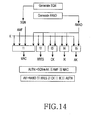
- the LTE/SAE system uses the UMTS AVs as shown in Figure 14 and derives the other keys as follows in Equations 8-13:
- CK NAS prf ⁇ CK
- UE - ⁇ ID ⁇ MME - ⁇ ID CK UP prf ⁇ CK
- UE - ⁇ ID ⁇ UPE - ⁇ ID CK RAN prf ⁇ CK
- UE - ⁇ ID ⁇ ENB - ⁇ ID IK NAS prf ⁇ IK
- UE - ⁇ ID ⁇ MME - ⁇ ID IK UP prf ⁇ IK
- UE - ⁇ ID ⁇ UPE - ⁇ ID IK RAN prf ⁇ IK
- prf indicates pseudo random function
- UE indicates User Equipment
- ID indicates Identifier
- MME indicates Mobility Management Entity
- Unique keys are derived for the network entities.
- the host for storing the applications includes but is not limited to a microchip, microprocessor, handheld communication device, computer, rendering device or a multi function device.
Landscapes
- Engineering & Computer Science (AREA)
- Computer Networks & Wireless Communication (AREA)
- Signal Processing (AREA)
- Computer Security & Cryptography (AREA)
- Computer Hardware Design (AREA)
- Computing Systems (AREA)
- General Engineering & Computer Science (AREA)
- Mobile Radio Communication Systems (AREA)
Applications Claiming Priority (1)
| Application Number | Priority Date | Filing Date | Title |
|---|---|---|---|
| IN597CH2006 | 2006-03-31 |
Publications (3)
| Publication Number | Publication Date |
|---|---|
| EP1841267A2 true EP1841267A2 (de) | 2007-10-03 |
| EP1841267A3 EP1841267A3 (de) | 2016-04-13 |
| EP1841267B1 EP1841267B1 (de) | 2019-06-12 |
Family
ID=38212655
Family Applications (1)
| Application Number | Title | Priority Date | Filing Date |
|---|---|---|---|
| EP07006878.8A Ceased EP1841267B1 (de) | 2006-03-31 | 2007-04-02 | System und Verfahren zur Optimierung des Authentifizierungsvorgangs während Zwischenzugangssystem-Weiterreichungen |
Country Status (8)
| Country | Link |
|---|---|
| US (1) | US8462742B2 (de) |
| EP (1) | EP1841267B1 (de) |
| JP (1) | JP5059096B2 (de) |
| KR (1) | KR101514845B1 (de) |
| CN (1) | CN101411115B (de) |
| AU (1) | AU2007232622B2 (de) |
| CA (1) | CA2642822C (de) |
| WO (1) | WO2007114623A1 (de) |
Cited By (12)
| Publication number | Priority date | Publication date | Assignee | Title |
|---|---|---|---|---|
| WO2009048888A3 (en) * | 2007-10-08 | 2009-06-11 | Qualcomm Inc | Provisioning communication nodes |
| WO2009133441A1 (en) * | 2008-04-28 | 2009-11-05 | Nokia Corporation | Intersystem mobility security context handling between different radio access networks |
| CN101867925A (zh) * | 2010-06-10 | 2010-10-20 | 中兴通讯股份有限公司 | 空口密钥处理方法及系统 |
| EP2268070A4 (de) * | 2008-10-22 | 2011-05-18 | Ntt Docomo Inc | Mobiles kommunikationsverfahren und schalter |
| JP2011519235A (ja) * | 2008-04-30 | 2011-06-30 | 聯發科技股▲ふん▼有限公司 | トラフィック暗号化キーの派生方法 |
| US20110194424A1 (en) * | 2007-08-07 | 2011-08-11 | Kyeong-In Jeong | Apparatus and method for measuring home cell/private network cell in mobile communication system |
| EP2512184A1 (de) * | 2011-04-13 | 2012-10-17 | ST-Ericsson SA | Verfahren und Vorrichtung zur Handhabung einer Abwärtsverbindungsübertragung während des Netzwerkumschaltens |
| WO2014185832A1 (en) * | 2013-05-13 | 2014-11-20 | Telefonaktiebolaget L M Ericsson (Publ) | Mobility in mobile communications network |
| EP2290875A4 (de) * | 2008-06-16 | 2015-05-27 | Zte Corp | Erzeugungsverfahren und -system für schlüsselidentitätskennung zum zeitpunkt, wenn sich die benutzereinrichtung transferiert |
| US9167505B2 (en) | 2007-10-08 | 2015-10-20 | Qualcomm Incorporated | Access management for wireless communication |
| US9775096B2 (en) | 2007-10-08 | 2017-09-26 | Qualcomm Incorporated | Access terminal configuration and access control |
| CN110495199A (zh) * | 2017-02-05 | 2019-11-22 | 诺基亚美国公司 | 无线网络中的安全小区重定向 |
Families Citing this family (117)
| Publication number | Priority date | Publication date | Assignee | Title |
|---|---|---|---|---|
| US8576795B2 (en) | 2007-03-16 | 2013-11-05 | Qualcomm Incorporated | Method and apparatus for handoff between source and target access systems |
| US7899939B2 (en) * | 2007-04-20 | 2011-03-01 | Research In Motion Limited | Apparatus, and associated method, for facilitating network selection using access technology indicator |
| US8331314B2 (en) * | 2007-04-20 | 2012-12-11 | Telefonaktiebolaget L M Ericsson (Publ) | Dormant session management associated with handover |
| CN101304600B (zh) * | 2007-05-08 | 2011-12-07 | 华为技术有限公司 | 安全能力协商的方法及系统 |
| US9049629B2 (en) * | 2007-06-18 | 2015-06-02 | Qualcomm Incorporated | Method and apparatus for fast inter-system handover |
| CN101370283B (zh) | 2007-08-13 | 2011-03-30 | 华为技术有限公司 | 演进网络中切换过程中非接入层消息的处理方法及装置 |
| ATE476836T1 (de) * | 2007-08-20 | 2010-08-15 | Mitsubishi Elec R&D Ct Europe | Verfahren und vorrichtungen zur ermöglichung der bestimmung, ob die weiterreichung einer kommunikation, in der ein mobiles endgerät beteiligt ist, von der ersten basisstation zur zweiten basisstation ausgeführt werden muss |
| CN101378591B (zh) | 2007-08-31 | 2010-10-27 | 华为技术有限公司 | 终端移动时安全能力协商的方法、系统及装置 |
| JP2010539786A (ja) * | 2007-09-17 | 2010-12-16 | テレフオンアクチーボラゲット エル エム エリクソン(パブル) | 電気通信システムにおける方法および構成 |
| US20100208706A1 (en) | 2007-09-19 | 2010-08-19 | Jun Hirano | Network node and mobile terminal |
| CN101400059B (zh) * | 2007-09-28 | 2010-12-08 | 华为技术有限公司 | 一种active状态下的密钥更新方法和设备 |
| CN101399767B (zh) | 2007-09-29 | 2011-04-20 | 华为技术有限公司 | 终端移动时安全能力协商的方法、系统及装置 |
| EP2053886A3 (de) * | 2007-10-26 | 2015-03-25 | Hitachi, Ltd. | Kommunikationssystem und Gateway-Vorrichtung |
| CN101511079B (zh) | 2007-11-01 | 2010-10-27 | 华为技术有限公司 | 一种通过演进网络临时标识接入旧有网络的方法和装置 |
| CN101431780B (zh) | 2007-11-09 | 2010-12-22 | 华为技术有限公司 | 一种实现网络优化切换的方法、设备及系统 |
| US20090136043A1 (en) * | 2007-11-26 | 2009-05-28 | Motorola, Inc. | Method and apparatus for performing key management and key distribution in wireless networks |
| KR101397038B1 (ko) * | 2007-11-27 | 2014-05-20 | 엘지전자 주식회사 | 패스트 핸드오버를 위한 핸드오버 연결식별자 할당방법 |
| WO2009069902A2 (en) * | 2007-11-27 | 2009-06-04 | Lg Electronics Inc. | Method of handover |
| CN101889423B (zh) * | 2007-12-19 | 2013-07-24 | 诺基亚公司 | 用于切换安全的方法、装置和系统 |
| US8755793B2 (en) * | 2008-01-04 | 2014-06-17 | Qualcomm Incorporated | Apparatus and methods to facilitate seamless handoffs between wireless communication networks |
| CN101521869A (zh) * | 2008-02-25 | 2009-09-02 | 三星电子株式会社 | 更新用户设备位置信息的方法 |
| GB2458886A (en) * | 2008-03-25 | 2009-10-07 | Nec Corp | Inter-network handover request message incorporating identifier of target gateway component |
| WO2009125283A2 (en) * | 2008-04-08 | 2009-10-15 | Nokia Corporation | Method, apparatus and computer program product for enabling user control of a fallback capability for circuit switched domain support |
| CN101267668B (zh) * | 2008-04-16 | 2015-11-25 | 中兴通讯股份有限公司 | 密钥生成方法、装置及系统 |
| CN102572833B (zh) | 2008-04-28 | 2016-08-10 | 华为技术有限公司 | 一种保持用户业务连续性的方法、系统及装置 |
| WO2009132709A1 (en) * | 2008-04-30 | 2009-11-05 | Nokia Siemens Networks Oy | Transmitting node b load status information in a self organising network |
| CN101572862B (zh) * | 2008-05-02 | 2013-11-06 | 三星电子株式会社 | 支持3g系统和lte系统间互通的方法和设备 |
| EP2283677B1 (de) * | 2008-06-05 | 2013-11-13 | Telefonaktiebolaget L M Ericsson (PUBL) | Techniken zur effizienzoptimierung in einer situation für ein mögliches handover eines mobilen endgeräts |
| US8638749B2 (en) | 2008-06-06 | 2014-01-28 | Qualcomm Incorporated | Method and apparatus for inter-network handoff |
| CN101299666A (zh) * | 2008-06-16 | 2008-11-05 | 中兴通讯股份有限公司 | 密钥身份标识符的生成方法和系统 |
| CN101610504B (zh) | 2008-06-18 | 2012-08-08 | 上海华为技术有限公司 | 接入、获取用户设备上下文及用户设备标识的方法和装置 |
| CN102625302B (zh) * | 2008-06-23 | 2016-03-30 | 华为技术有限公司 | 密钥衍生方法、设备及系统 |
| US20090316660A1 (en) * | 2008-06-24 | 2009-12-24 | Charles Perkins | Method, system, and apparatus for handover amongst plurality of communication networks |
| JP4394730B1 (ja) * | 2008-06-27 | 2010-01-06 | 株式会社エヌ・ティ・ティ・ドコモ | 移動通信方法及び移動局 |
| US8245039B2 (en) * | 2008-07-18 | 2012-08-14 | Bridgewater Systems Corp. | Extensible authentication protocol authentication and key agreement (EAP-AKA) optimization |
| EP2315371A4 (de) * | 2008-08-15 | 2015-10-14 | Samsung Electronics Co Ltd | Sicherheitsgeschütztes verfahren zur unterstützung eines nichtzugangsschicht-protokollbetriebs in einem mobiltelekommunikationssystem |
| KR101246021B1 (ko) | 2008-08-25 | 2013-03-25 | 에스케이텔레콤 주식회사 | 이동통신 단말기의 인증서비스 제공시스템 및 그 방법 |
| US9276909B2 (en) * | 2008-08-27 | 2016-03-01 | Qualcomm Incorporated | Integrity protection and/or ciphering for UE registration with a wireless network |
| WO2010042733A1 (en) * | 2008-10-08 | 2010-04-15 | Citrix Systems, Inc. | Systems and methods for connection management for asynchronous messaging over http |
| US8538419B2 (en) * | 2008-11-10 | 2013-09-17 | Qualcomm Incorporated | Method and apparatus to enable patching of user equipment context through retrieval of partial contexts from various network servers |
| JP5330531B2 (ja) * | 2008-11-10 | 2013-10-30 | インターデイジタル パテント ホールディングス インコーポレイテッド | タイマを動作させるための方法および装置 |
| CN101765094B (zh) * | 2008-12-22 | 2012-07-04 | 华为技术有限公司 | 实现用户设备切换的方法、装置及系统 |
| CN101883321B (zh) * | 2009-05-05 | 2014-03-19 | 中兴通讯股份有限公司 | 多媒体广播组播业务中获取接入信息、计费的方法和系统 |
| CN101583130B (zh) * | 2009-06-18 | 2015-09-16 | 中兴通讯股份有限公司 | 空口密钥的生成方法与装置 |
| TWI430674B (zh) * | 2009-08-14 | 2014-03-11 | Ind Tech Res Inst | 用於具有中繼節點之無線通訊系統的安全性方法 |
| US8605904B2 (en) * | 2009-08-14 | 2013-12-10 | Industrial Technology Research Institute | Security method in wireless communication system having relay node |
| US8429728B2 (en) * | 2009-08-24 | 2013-04-23 | Alcatel Lucent | Pre-registration security support in multi-technology interworking |
| US8958404B2 (en) | 2009-09-30 | 2015-02-17 | Nokia Corporation | Apparatus and method for providing access to a local area network |
| JP5453539B2 (ja) | 2009-10-05 | 2014-03-26 | テレフオンアクチーボラゲット エル エム エリクソン(パブル) | 電気通信システムにおける方法および装置 |
| KR101718096B1 (ko) * | 2009-12-01 | 2017-03-20 | 삼성전자주식회사 | 무선통신 시스템에서 인증방법 및 시스템 |
| US9775027B2 (en) * | 2009-12-31 | 2017-09-26 | Alcatel Lucent | Method for interworking among wireless technologies |
| US9270587B2 (en) * | 2010-01-08 | 2016-02-23 | Qualcomm Incorporated | Method and apparatus for routing messages of a positioning protocol in a wireless network |
| EP2517501A4 (de) | 2010-02-03 | 2013-03-06 | Huawei Tech Co Ltd | System und verfahren zur handhabung einer neuauswahl eines zugangsnetzes |
| US9197669B2 (en) | 2010-04-15 | 2015-11-24 | Qualcomm Incorporated | Apparatus and method for signaling enhanced security context for session encryption and integrity keys |
| US9084110B2 (en) | 2010-04-15 | 2015-07-14 | Qualcomm Incorporated | Apparatus and method for transitioning enhanced security context from a UTRAN/GERAN-based serving network to an E-UTRAN-based serving network |
| TWI450557B (zh) * | 2010-04-15 | 2014-08-21 | Qualcomm Inc | 用於為通信期加密和完整性密鑰訊號傳遞增強型安全性上下文的裝置和方法 |
| MY154249A (en) | 2010-04-16 | 2015-05-29 | Qualcomm Inc | Apparatus and method for transitioning from a serving network node that supports an enhanced security context to a legacy serving network node |
| CN101835152A (zh) * | 2010-04-16 | 2010-09-15 | 中兴通讯股份有限公司 | 终端移动到增强utran时建立增强密钥的方法及系统 |
| CN101835154B (zh) * | 2010-04-20 | 2016-03-30 | 中兴通讯股份有限公司 | 一种建立增强的空口密钥的方法及系统 |
| US9264954B2 (en) | 2010-04-28 | 2016-02-16 | Qualcomm Incorporated | Neighbor relation information management |
| US9294972B2 (en) * | 2010-04-28 | 2016-03-22 | Qualcomm Incorporated | Neighbor relation information management |
| CN101925050B (zh) * | 2010-08-19 | 2014-12-03 | 华为技术有限公司 | 一种安全上下文的生成方法及装置 |
| CN102457848B (zh) * | 2010-10-18 | 2015-12-16 | 中兴通讯股份有限公司 | 一种重鉴权和切换的并发处理方法及系统 |
| CN103262614A (zh) * | 2010-10-22 | 2013-08-21 | 诺基亚西门子通信公司 | 优化通信网络中数据交换的方法 |
| WO2012074336A2 (ko) * | 2010-12-02 | 2012-06-07 | 엘지전자 주식회사 | 다중 무선접속기술을 지원하는 무선 접속 시스템에서 데이터를 송수신하기 위한 방법 및 장치 |
| WO2013009111A2 (ko) * | 2011-07-12 | 2013-01-17 | 엘지전자 주식회사 | 이종망 간 협력 동작을 수행하는 방법 및 이를 위한 장치 |
| US9246673B2 (en) | 2011-12-28 | 2016-01-26 | Empire Technology Development Llc | Taste-based authentication to securely share data |
| CN104205988B (zh) * | 2012-01-31 | 2018-06-08 | 瑞典爱立信有限公司 | 具有终端的接入选择的连接设置 |
| US9088976B2 (en) * | 2012-04-29 | 2015-07-21 | Blackberry Limited | Provisioning radio resources in a radio access network |
| KR101456697B1 (ko) * | 2012-05-09 | 2014-10-31 | 주식회사 케이티 | 이동통신 시스템 및 패킷 교환 지원 노드 |
| WO2013169073A1 (en) | 2012-05-10 | 2013-11-14 | Samsung Electronics Co., Ltd. | Method and system for connectionless transmission during uplink and downlink of data packets |
| WO2013176588A1 (en) * | 2012-05-21 | 2013-11-28 | Telefonaktiebolaget L M Ericsson (Publ) | A mobile station and a wireless access point and methods therein in a wireless communications network |
| US9949197B2 (en) | 2012-06-25 | 2018-04-17 | Sony Corporation | Information processor, communication system and method |
| CN103517379B (zh) * | 2012-06-30 | 2017-08-18 | 华为技术有限公司 | 一种重关联的方法和设备 |
| US8885752B2 (en) * | 2012-07-27 | 2014-11-11 | Intel Corporation | Method and apparatus for feedback in 3D MIMO wireless systems |
| CN104854891A (zh) * | 2012-12-06 | 2015-08-19 | 日本电气株式会社 | 用于从网络向ue发送密钥的mtc密钥管理 |
| WO2014094251A1 (zh) * | 2012-12-19 | 2014-06-26 | 华为技术有限公司 | 通信安全处理方法及装置 |
| US9655012B2 (en) * | 2012-12-21 | 2017-05-16 | Qualcomm Incorporated | Deriving a WLAN security context from a WWAN security context |
| JP6309543B2 (ja) * | 2013-01-09 | 2018-04-11 | 株式会社Nttドコモ | 無線基地局間(inter−eNB)キャリアアグリゲーションによる保護された無線アクセス |
| BR122017006293A2 (pt) * | 2013-01-17 | 2019-09-03 | Intel Ip Corp | aparelho, sistema e método para comunicar informações de rede de acesso não celular através de uma rede celular |
| EP2954281B1 (de) | 2013-02-07 | 2018-09-12 | Dyno Nobel Inc. | Systeme zur abgabe von sprengstoffen und verfahren im zusammenhang damit |
| CN104247517B (zh) * | 2013-04-01 | 2018-07-31 | 华为技术有限公司 | 在拜访地选择网络的方法及设备 |
| CN104427584B (zh) * | 2013-08-19 | 2019-08-16 | 南京中兴软件有限责任公司 | 安全上下文处理方法及装置 |
| US9420503B2 (en) | 2014-01-21 | 2016-08-16 | Cisco Technology, Inc. | System and method for seamless mobility in a network environment |
| US9894589B2 (en) * | 2014-03-28 | 2018-02-13 | Qualcomm Incorporated | Methods and apparatus for coordinating system selection among a set of nodes |
| EP3135055B1 (de) * | 2014-04-25 | 2017-11-22 | Telefonaktiebolaget LM Ericsson (publ) | Netzwerkknoten und verfahren zur handhabung von verkehrsverfolgung eines benutzergeräts |
| CN106465109A (zh) | 2014-05-20 | 2017-02-22 | 诺基亚技术有限公司 | 蜂窝网络认证 |
| CN106465110B (zh) | 2014-05-20 | 2020-05-12 | 诺基亚技术有限公司 | 蜂窝认证中的异常处理 |
| US9872233B2 (en) * | 2014-06-02 | 2018-01-16 | Intel IP Corporation | Devices and method for retrieving and utilizing neighboring WLAN information for LTE LAA operation |
| CN106664286B (zh) * | 2014-08-13 | 2020-09-11 | 宇龙计算机通信科技(深圳)有限公司 | 异构网络之间的切换方法及切换系统 |
| US9825937B2 (en) * | 2014-09-23 | 2017-11-21 | Qualcomm Incorporated | Certificate-based authentication |
| US9949314B2 (en) * | 2014-09-23 | 2018-04-17 | Qualcomm Incorporated | Support blacklisting devices on WLAN access |
| US9918225B2 (en) * | 2014-11-03 | 2018-03-13 | Qualcomm Incorporated | Apparatuses and methods for wireless communication |
| KR102363180B1 (ko) | 2015-02-13 | 2022-02-14 | 닛본 덴끼 가부시끼가이샤 | 제1 통신 장치, 제1 통신 장치에 의해 수행되는 방법, User Equipment(UE) 및 User Equipment(UE)에 의해 수행되는 방법 |
| JP2016208112A (ja) * | 2015-04-16 | 2016-12-08 | 富士通株式会社 | 通信システム及び基地局 |
| KR102237511B1 (ko) * | 2015-04-29 | 2021-04-07 | 삼성전자주식회사 | 무선 통신 시스템에서 단말의 통신 제어 방법 및 장치 |
| KR102304147B1 (ko) | 2015-06-05 | 2021-09-23 | 콘비다 와이어리스, 엘엘씨 | 통합된 스몰 셀 및 wi-fi 네트워크를 위한 통합 인증 |
| CN109155775B (zh) * | 2016-05-09 | 2020-11-17 | 华为技术有限公司 | 一种移动设备、网络节点及其方法 |
| SG10201605752PA (en) * | 2016-07-13 | 2018-02-27 | Huawei Int Pte Ltd | A unified authentication work for heterogeneous network |
| US10560879B2 (en) * | 2016-08-05 | 2020-02-11 | Qualcomm Incorporated | Techniques for establishing a secure connection between a wireless device and a local area network via an access node |
| US10068066B2 (en) * | 2016-10-04 | 2018-09-04 | International Business Machines Corporation | Providing temporary contact information |
| US11095738B2 (en) | 2016-11-03 | 2021-08-17 | Apple Inc. | Push notifications for multiple user devices |
| WO2018083327A1 (en) * | 2016-11-07 | 2018-05-11 | Telefonaktiebolaget Lm Ericsson (Publ) | Mission-critical push-to-talk |
| WO2018137255A1 (zh) * | 2017-01-26 | 2018-08-02 | 华为技术有限公司 | 数据的保护方法、装置和系统 |
| CN116567853A (zh) | 2017-04-11 | 2023-08-08 | IPCom两合公司 | 控制用户设备的网络接入 |
| US10136318B1 (en) | 2017-06-21 | 2018-11-20 | At&T Intellectual Property I, L.P. | Authentication device selection to facilitate authentication via an updateable subscriber identifier |
| US20190014095A1 (en) | 2017-07-06 | 2019-01-10 | At&T Intellectual Property I, L.P. | Facilitating provisioning of an out-of-band pseudonym over a secure communication channel |
| US11696127B2 (en) * | 2017-11-16 | 2023-07-04 | Telefonaktiebolaget Lm Ericsson (Publ) | Replay protection for resume procedure |
| US11343332B2 (en) * | 2018-02-08 | 2022-05-24 | Telefonaktiebolaget Lm Ericsson (Publ) | Method for seamless migration of session authentication to a different stateful diameter authenticating peer |
| US12127002B2 (en) * | 2019-03-26 | 2024-10-22 | Apple Inc. | Integrity protection of uplink data |
| CN110166982B (zh) * | 2019-05-29 | 2022-04-05 | 深圳成谷科技有限公司 | 一种车路协同网络的切换方法及相关产品 |
| KR102381038B1 (ko) * | 2020-05-28 | 2022-03-30 | 고려대학교 산학협력단 | 피제어 장치의 보안 인증 기법 |
| US12362940B2 (en) * | 2020-06-05 | 2025-07-15 | Lenovo (Singapore) Pte. Ltd. | Supporting remote unit reauthentication |
| US11202255B1 (en) | 2020-07-31 | 2021-12-14 | T-Mobile Usa, Inc. | Cached entity profiles at network access nodes to re-authenticate network entities |
| US11696137B2 (en) | 2020-07-31 | 2023-07-04 | T-Mobile Usa, Inc. | Detecting malicious small cells based on a connectivity schedule |
| US11595865B2 (en) * | 2021-04-08 | 2023-02-28 | Cisco Technology, Inc. | Enforcing unique handover trigger thresholds for user equipment |
| US20250081046A1 (en) * | 2023-08-31 | 2025-03-06 | Qualcomm Incorporated | Cellular connection over non-cellular access via gateway |
Family Cites Families (12)
| Publication number | Priority date | Publication date | Assignee | Title |
|---|---|---|---|---|
| FI109503B (fi) * | 1997-04-15 | 2002-08-15 | Nokia Corp | Pakettien menetyksen estäminen pakettipohjaisen tietoliikenneverkon handoverissa sekä handovermenetelmä |
| SE517729C2 (sv) * | 2000-11-24 | 2002-07-09 | Columbitech Ab | Metod för att upprätthålla kommunikation mellan enheter tillhöriga skilda kommunikationsnät |
| US6744753B2 (en) * | 2001-11-01 | 2004-06-01 | Nokia Corporation | Local service handover |
| US7096022B2 (en) * | 2002-10-08 | 2006-08-22 | Ntt Docomo, Inc. | System and method for supporting quality of service in vertical handovers between heterogeneous networks |
| US7280505B2 (en) * | 2002-11-13 | 2007-10-09 | Nokia Corporation | Method and apparatus for performing inter-technology handoff from WLAN to cellular network |
| US20040236939A1 (en) * | 2003-02-20 | 2004-11-25 | Docomo Communications Laboratories Usa, Inc. | Wireless network handoff key |
| US7512783B2 (en) * | 2003-03-14 | 2009-03-31 | Naghian Siamaek | Provision of security services for an ad-hoc network |
| WO2005027560A1 (en) | 2003-09-12 | 2005-03-24 | Ntt Docomo, Inc. | Secure intra- and inter-domain handover |
| DE60317380T2 (de) * | 2003-09-12 | 2008-08-28 | Ntt Docomo Inc. | Nahtlose weiterreichung in einem heterogenen netzwerk |
| US20070230453A1 (en) * | 2004-02-06 | 2007-10-04 | Telecom Italia S.P.A. | Method and System for the Secure and Transparent Provision of Mobile Ip Services in an Aaa Environment |
| WO2005076649A1 (de) * | 2004-02-10 | 2005-08-18 | Forward Information Technologies Sa | Method and system for seamless handover of mobile devices in heterogenous networks |
| KR20060023359A (ko) | 2004-09-09 | 2006-03-14 | (주)아이엠넷피아 | 서로 다른 이기종 무선망간 로밍을 수행할 수 있는 이동단말기 |
-
2007
- 2007-04-02 EP EP07006878.8A patent/EP1841267B1/de not_active Ceased
- 2007-04-02 JP JP2009502694A patent/JP5059096B2/ja not_active Expired - Fee Related
- 2007-04-02 AU AU2007232622A patent/AU2007232622B2/en not_active Ceased
- 2007-04-02 CA CA2642822A patent/CA2642822C/en not_active Expired - Fee Related
- 2007-04-02 US US11/732,202 patent/US8462742B2/en active Active
- 2007-04-02 WO PCT/KR2007/001601 patent/WO2007114623A1/en not_active Ceased
- 2007-04-02 KR KR1020087023881A patent/KR101514845B1/ko not_active Expired - Fee Related
- 2007-04-02 CN CN200780011385XA patent/CN101411115B/zh not_active Expired - Fee Related
Cited By (22)
| Publication number | Priority date | Publication date | Assignee | Title |
|---|---|---|---|---|
| US20110194424A1 (en) * | 2007-08-07 | 2011-08-11 | Kyeong-In Jeong | Apparatus and method for measuring home cell/private network cell in mobile communication system |
| US8339981B2 (en) * | 2007-08-07 | 2012-12-25 | Samsung Electronics Co., Ltd | Apparatus and method for measuring home cell/private network cell in mobile communication system |
| US9775096B2 (en) | 2007-10-08 | 2017-09-26 | Qualcomm Incorporated | Access terminal configuration and access control |
| WO2009048888A3 (en) * | 2007-10-08 | 2009-06-11 | Qualcomm Inc | Provisioning communication nodes |
| US9167505B2 (en) | 2007-10-08 | 2015-10-20 | Qualcomm Incorporated | Access management for wireless communication |
| US9055511B2 (en) | 2007-10-08 | 2015-06-09 | Qualcomm Incorporated | Provisioning communication nodes |
| CN102017706B (zh) * | 2008-04-28 | 2015-03-25 | 诺基亚公司 | 在不同无线电访问网络之间的系统间移动性安全上下文处理 |
| WO2009133441A1 (en) * | 2008-04-28 | 2009-11-05 | Nokia Corporation | Intersystem mobility security context handling between different radio access networks |
| CN102017706A (zh) * | 2008-04-28 | 2011-04-13 | 诺基亚公司 | 在不同无线电访问网络之间的系统间移动性安全上下文处理 |
| US9706395B2 (en) | 2008-04-28 | 2017-07-11 | Nokia Technologies Oy | Intersystem mobility security context handling between different radio access networks |
| JP2011519235A (ja) * | 2008-04-30 | 2011-06-30 | 聯發科技股▲ふん▼有限公司 | トラフィック暗号化キーの派生方法 |
| EP2290875A4 (de) * | 2008-06-16 | 2015-05-27 | Zte Corp | Erzeugungsverfahren und -system für schlüsselidentitätskennung zum zeitpunkt, wenn sich die benutzereinrichtung transferiert |
| US8346261B2 (en) | 2008-10-22 | 2013-01-01 | Ntt Docomo, Inc. | Mobile communication method and switching center |
| EP2268070A4 (de) * | 2008-10-22 | 2011-05-18 | Ntt Docomo Inc | Mobiles kommunikationsverfahren und schalter |
| CN101867925A (zh) * | 2010-06-10 | 2010-10-20 | 中兴通讯股份有限公司 | 空口密钥处理方法及系统 |
| WO2012139755A1 (en) * | 2011-04-13 | 2012-10-18 | St-Ericsson Sa | Handling of downlink ip packet transmission switching on dual usim ue |
| EP2512184A1 (de) * | 2011-04-13 | 2012-10-17 | ST-Ericsson SA | Verfahren und Vorrichtung zur Handhabung einer Abwärtsverbindungsübertragung während des Netzwerkumschaltens |
| US9332468B2 (en) | 2011-04-13 | 2016-05-03 | St-Ericsson Sa | Handling of downlink IP packet transmission switching on dual SIM UE |
| WO2014185832A1 (en) * | 2013-05-13 | 2014-11-20 | Telefonaktiebolaget L M Ericsson (Publ) | Mobility in mobile communications network |
| EP2997767A4 (de) * | 2013-05-13 | 2016-05-04 | Ericsson Telefon Ab L M | Mobilität in einem mobilen kommunikationsnetz |
| US10448286B2 (en) | 2013-05-13 | 2019-10-15 | Telefonaktiebolaget Lm Ericsson (Publ) | Mobility in mobile communications network |
| CN110495199A (zh) * | 2017-02-05 | 2019-11-22 | 诺基亚美国公司 | 无线网络中的安全小区重定向 |
Also Published As
| Publication number | Publication date |
|---|---|
| US20070249352A1 (en) | 2007-10-25 |
| EP1841267B1 (de) | 2019-06-12 |
| EP1841267A3 (de) | 2016-04-13 |
| US8462742B2 (en) | 2013-06-11 |
| WO2007114623A1 (en) | 2007-10-11 |
| AU2007232622A1 (en) | 2007-10-11 |
| CA2642822A1 (en) | 2007-10-11 |
| CA2642822C (en) | 2013-01-15 |
| JP2009531952A (ja) | 2009-09-03 |
| CN101411115A (zh) | 2009-04-15 |
| JP5059096B2 (ja) | 2012-10-24 |
| KR20090004896A (ko) | 2009-01-12 |
| AU2007232622B2 (en) | 2010-04-29 |
| CN101411115B (zh) | 2012-06-06 |
| KR101514845B1 (ko) | 2015-04-23 |
Similar Documents
| Publication | Publication Date | Title |
|---|---|---|
| EP1841267B1 (de) | System und Verfahren zur Optimierung des Authentifizierungsvorgangs während Zwischenzugangssystem-Weiterreichungen | |
| US8116775B2 (en) | System and method of providing user equipment initiated and assisted backward handover in heterogeneous wireless networks | |
| EP3761598B1 (de) | Erzeugung von schlüsseln für den schutz in mobilfunknetzen der nächsten generation | |
| KR101508576B1 (ko) | 홈 노드-b 장치 및 보안 프로토콜 | |
| EP2187561B1 (de) | Verfahren, System und Vorrichtungen zur Aushandlung der Sicherheitsfähigkeiten während der Bewegung eines Endgeräts | |
| EP2293515B1 (de) | Verfahren, Netzwerkelement und mobile Station zur Übermittlung von Verschlüsselungsalgorithmen | |
| US20060128362A1 (en) | UMTS-WLAN interworking system and authentication method therefor | |
| US10004017B2 (en) | Switching method and switching system between heterogeneous networks | |
| US9148307B2 (en) | System and method of handover decision for inter RAT handover | |
| El Idrissi et al. | Security analysis of 3GPP (LTE)—WLAN interworking and a new local authentication method based on EAP-AKA | |
| CN111726228A (zh) | 使用互联网密钥交换消息来配置活动性检查 | |
| CN105451284A (zh) | 用于网络切换的方法及装置 | |
| CN101911742B (zh) | 用于交互rat切换的预认证方法 | |
| KR101308336B1 (ko) | 로밍 제한을 알리는 방법, 장치, 시스템 및 컴퓨터 판독가능 저장 매체 | |
| Krichene et al. | Securing roaming and vertical handover in fourth generation networks | |
| Haddar et al. | Securing fast pmipv6 protocol in case of vertical handover in 5g network | |
| Hassanein et al. | New authentication and key agreement protocol for LTE-WLAN interworking | |
| Rajavelsamy et al. | A novel method for authentication optimization during handover in heterogeneous wireless networks | |
| Krishnamurthi et al. | Using the liberty alliance architecture to secure IP-level handovers | |
| Ouyang et al. | A secure context transfer scheme for integration of UMTS and 802.11 WLANs |
Legal Events
| Date | Code | Title | Description |
|---|---|---|---|
| PUAI | Public reference made under article 153(3) epc to a published international application that has entered the european phase |
Free format text: ORIGINAL CODE: 0009012 |
|
| 17P | Request for examination filed |
Effective date: 20070402 |
|
| AK | Designated contracting states |
Kind code of ref document: A2 Designated state(s): AT BE BG CH CY CZ DE DK EE ES FI FR GB GR HU IE IS IT LI LT LU LV MC MT NL PL PT RO SE SI SK TR |
|
| AX | Request for extension of the european patent |
Extension state: AL BA HR MK YU |
|
| RAP1 | Party data changed (applicant data changed or rights of an application transferred) |
Owner name: SAMSUNG ELECTRONICS CO., LTD. |
|
| PUAL | Search report despatched |
Free format text: ORIGINAL CODE: 0009013 |
|
| AK | Designated contracting states |
Kind code of ref document: A3 Designated state(s): AT BE BG CH CY CZ DE DK EE ES FI FR GB GR HU IE IS IT LI LT LU LV MC MT NL PL PT RO SE SI SK TR |
|
| AX | Request for extension of the european patent |
Extension state: AL BA HR MK RS |
|
| RIC1 | Information provided on ipc code assigned before grant |
Ipc: H04Q 7/38 00000000AFI20160309BHEP Ipc: H04L 29/06 20060101ALI20160309BHEP |
|
| AKX | Designation fees paid |
Designated state(s): DE FR GB IT |
|
| AXX | Extension fees paid |
Extension state: BA Extension state: AL Extension state: MK Extension state: RS Extension state: HR |
|
| 17Q | First examination report despatched |
Effective date: 20180216 |
|
| REG | Reference to a national code |
Ref country code: DE Ref legal event code: R079 Ref document number: 602007058550 Country of ref document: DE Free format text: PREVIOUS MAIN CLASS: H04Q0007380000 Ipc: H04L0029060000 |
|
| RIC1 | Information provided on ipc code assigned before grant |
Ipc: H04W 12/06 20090101ALI20180917BHEP Ipc: H04L 29/06 20060101AFI20180917BHEP Ipc: H04W 12/04 20090101ALI20180917BHEP |
|
| GRAP | Despatch of communication of intention to grant a patent |
Free format text: ORIGINAL CODE: EPIDOSNIGR1 |
|
| INTG | Intention to grant announced |
Effective date: 20181120 |
|
| RIC1 | Information provided on ipc code assigned before grant |
Ipc: H04W 12/06 20090101ALI20180917BHEP Ipc: H04W 12/04 20090101ALI20180917BHEP Ipc: H04L 29/06 20060101AFI20180917BHEP |
|
| GRAS | Grant fee paid |
Free format text: ORIGINAL CODE: EPIDOSNIGR3 |
|
| GRAA | (expected) grant |
Free format text: ORIGINAL CODE: 0009210 |
|
| REG | Reference to a national code |
Ref country code: DE Ref legal event code: R081 Ref document number: 602007058550 Country of ref document: DE Owner name: SAMSUNG ELECTRONICS CO., LTD., SUWON-SI, KR Free format text: FORMER OWNER: SAMSUNG ELECTRO-MECHANICS CO., LTD., SUWON, KYONGGI, KR |
|
| AK | Designated contracting states |
Kind code of ref document: B1 Designated state(s): DE FR GB IT |
|
| REG | Reference to a national code |
Ref country code: GB Ref legal event code: FG4D |
|
| REG | Reference to a national code |
Ref country code: DE Ref legal event code: R096 Ref document number: 602007058550 Country of ref document: DE |
|
| PG25 | Lapsed in a contracting state [announced via postgrant information from national office to epo] |
Ref country code: IT Free format text: LAPSE BECAUSE OF FAILURE TO SUBMIT A TRANSLATION OF THE DESCRIPTION OR TO PAY THE FEE WITHIN THE PRESCRIBED TIME-LIMIT Effective date: 20190612 |
|
| REG | Reference to a national code |
Ref country code: DE Ref legal event code: R097 Ref document number: 602007058550 Country of ref document: DE |
|
| PLBE | No opposition filed within time limit |
Free format text: ORIGINAL CODE: 0009261 |
|
| STAA | Information on the status of an ep patent application or granted ep patent |
Free format text: STATUS: NO OPPOSITION FILED WITHIN TIME LIMIT |
|
| 26N | No opposition filed |
Effective date: 20200313 |
|
| PG25 | Lapsed in a contracting state [announced via postgrant information from national office to epo] |
Ref country code: FR Free format text: LAPSE BECAUSE OF NON-PAYMENT OF DUE FEES Effective date: 20200430 |
|
| GBPC | Gb: european patent ceased through non-payment of renewal fee |
Effective date: 20200402 |
|
| PG25 | Lapsed in a contracting state [announced via postgrant information from national office to epo] |
Ref country code: GB Free format text: LAPSE BECAUSE OF NON-PAYMENT OF DUE FEES Effective date: 20200402 |
|
| REG | Reference to a national code |
Ref country code: DE Ref legal event code: R079 Ref document number: 602007058550 Country of ref document: DE Free format text: PREVIOUS MAIN CLASS: H04L0029060000 Ipc: H04L0065000000 |
|
| PGFP | Annual fee paid to national office [announced via postgrant information from national office to epo] |
Ref country code: DE Payment date: 20220321 Year of fee payment: 16 |
|
| REG | Reference to a national code |
Ref country code: DE Ref legal event code: R119 Ref document number: 602007058550 Country of ref document: DE |
|
| PG25 | Lapsed in a contracting state [announced via postgrant information from national office to epo] |
Ref country code: DE Free format text: LAPSE BECAUSE OF NON-PAYMENT OF DUE FEES Effective date: 20231103 |