EP1842551A1 - E-selectin pour le traitement ou la prevention des accidents vasculaires cerebraux - Google Patents
E-selectin pour le traitement ou la prevention des accidents vasculaires cerebraux Download PDFInfo
- Publication number
- EP1842551A1 EP1842551A1 EP07112923A EP07112923A EP1842551A1 EP 1842551 A1 EP1842551 A1 EP 1842551A1 EP 07112923 A EP07112923 A EP 07112923A EP 07112923 A EP07112923 A EP 07112923A EP 1842551 A1 EP1842551 A1 EP 1842551A1
- Authority
- EP
- European Patent Office
- Prior art keywords
- selectin
- pharmaceutical composition
- composition according
- administration
- stroke
- Prior art date
- Legal status (The legal status is an assumption and is not a legal conclusion. Google has not performed a legal analysis and makes no representation as to the accuracy of the status listed.)
- Withdrawn
Links
- 108010024212 E-Selectin Proteins 0.000 title claims abstract description 171
- 102000015689 E-Selectin Human genes 0.000 title claims abstract 29
- 208000006011 Stroke Diseases 0.000 claims abstract description 47
- 238000011282 treatment Methods 0.000 claims abstract description 25
- 241000124008 Mammalia Species 0.000 claims abstract description 15
- 230000000451 tissue damage Effects 0.000 claims abstract description 15
- 231100000827 tissue damage Toxicity 0.000 claims abstract description 15
- 239000000203 mixture Substances 0.000 claims description 24
- 239000008194 pharmaceutical composition Substances 0.000 claims description 20
- 239000000443 aerosol Substances 0.000 claims description 13
- 101000622123 Homo sapiens E-selectin Proteins 0.000 claims description 12
- 102000051210 human SELE Human genes 0.000 claims description 10
- VBEQCZHXXJYVRD-GACYYNSASA-N uroanthelone Chemical compound C([C@@H](C(=O)N[C@H](C(=O)N[C@@H](CS)C(=O)N[C@@H](CC(N)=O)C(=O)N[C@@H](CS)C(=O)N[C@H](C(=O)N[C@@H]([C@@H](C)CC)C(=O)NCC(=O)N[C@@H](CC=1C=CC(O)=CC=1)C(=O)N[C@@H](CO)C(=O)NCC(=O)N[C@@H](CC(O)=O)C(=O)N[C@@H](CCCNC(N)=N)C(=O)N[C@@H](CS)C(=O)N[C@@H](CCC(N)=O)C(=O)N[C@@H]([C@@H](C)O)C(=O)N[C@@H](CCCNC(N)=N)C(=O)N[C@@H](CC(O)=O)C(=O)N[C@@H](CC(C)C)C(=O)N[C@@H](CCCNC(N)=N)C(=O)N[C@@H](CC=1C2=CC=CC=C2NC=1)C(=O)N[C@@H](CC=1C2=CC=CC=C2NC=1)C(=O)N[C@@H](CCC(O)=O)C(=O)N[C@@H](CC(C)C)C(=O)N[C@@H](CCCNC(N)=N)C(O)=O)C(C)C)[C@@H](C)O)NC(=O)[C@H](CO)NC(=O)[C@H](CC(O)=O)NC(=O)[C@H](CC(C)C)NC(=O)[C@H](CO)NC(=O)[C@H](CCC(O)=O)NC(=O)[C@@H](NC(=O)[C@H](CC=1NC=NC=1)NC(=O)[C@H](CCSC)NC(=O)[C@H](CS)NC(=O)[C@@H](NC(=O)CNC(=O)CNC(=O)[C@H](CC(N)=O)NC(=O)[C@H](CC(C)C)NC(=O)[C@H](CS)NC(=O)[C@H](CC=1C=CC(O)=CC=1)NC(=O)CNC(=O)[C@H](CC(O)=O)NC(=O)[C@H](CC=1C=CC(O)=CC=1)NC(=O)[C@H](CO)NC(=O)[C@H](CO)NC(=O)[C@H]1N(CCC1)C(=O)[C@H](CS)NC(=O)CNC(=O)[C@H]1N(CCC1)C(=O)[C@H](CC=1C=CC(O)=CC=1)NC(=O)[C@H](CO)NC(=O)[C@@H](N)CC(N)=O)C(C)C)[C@@H](C)CC)C1=CC=C(O)C=C1 VBEQCZHXXJYVRD-GACYYNSASA-N 0.000 claims description 7
- 108090000765 processed proteins & peptides Proteins 0.000 claims description 6
- 101800003838 Epidermal growth factor Proteins 0.000 claims description 5
- 102100033237 Pro-epidermal growth factor Human genes 0.000 claims description 5
- 210000005013 brain tissue Anatomy 0.000 claims description 5
- 230000000295 complement effect Effects 0.000 claims description 5
- 229940116977 epidermal growth factor Drugs 0.000 claims description 5
- 239000003814 drug Substances 0.000 claims description 4
- 238000004519 manufacturing process Methods 0.000 claims description 3
- 201000006417 multiple sclerosis Diseases 0.000 claims description 3
- 230000002265 prevention Effects 0.000 claims description 3
- 208000019553 vascular disease Diseases 0.000 claims description 3
- 239000007864 aqueous solution Substances 0.000 claims description 2
- -1 CR 1 Proteins 0.000 claims 2
- 101000622131 Rattus norvegicus E-selectin Proteins 0.000 claims 1
- 238000000034 method Methods 0.000 abstract description 46
- 230000001939 inductive effect Effects 0.000 abstract description 17
- 230000001965 increasing effect Effects 0.000 abstract description 9
- 102100023471 E-selectin Human genes 0.000 description 144
- 239000000427 antigen Substances 0.000 description 32
- 102000036639 antigens Human genes 0.000 description 32
- 108091007433 antigens Proteins 0.000 description 32
- 108010058846 Ovalbumin Proteins 0.000 description 24
- 229940092253 ovalbumin Drugs 0.000 description 24
- 241000700159 Rattus Species 0.000 description 21
- 206010061216 Infarction Diseases 0.000 description 20
- 230000007574 infarction Effects 0.000 description 20
- 238000009472 formulation Methods 0.000 description 19
- 230000000981 bystander Effects 0.000 description 18
- 102000004127 Cytokines Human genes 0.000 description 16
- 108090000695 Cytokines Proteins 0.000 description 16
- LOKCTEFSRHRXRJ-UHFFFAOYSA-I dipotassium trisodium dihydrogen phosphate hydrogen phosphate dichloride Chemical compound P(=O)(O)(O)[O-].[K+].P(=O)(O)([O-])[O-].[Na+].[Na+].[Cl-].[K+].[Cl-].[Na+] LOKCTEFSRHRXRJ-UHFFFAOYSA-I 0.000 description 16
- 239000002953 phosphate buffered saline Substances 0.000 description 16
- 208000032843 Hemorrhage Diseases 0.000 description 14
- 102000004887 Transforming Growth Factor beta Human genes 0.000 description 14
- 108090001012 Transforming Growth Factor beta Proteins 0.000 description 14
- 230000001629 suppression Effects 0.000 description 13
- 239000010432 diamond Substances 0.000 description 12
- 208000023275 Autoimmune disease Diseases 0.000 description 11
- ZRKFYGHZFMAOKI-QMGMOQQFSA-N tgfbeta Chemical compound C([C@H](NC(=O)[C@H](C(C)C)NC(=O)CNC(=O)[C@H](CCC(O)=O)NC(=O)[C@H](CCCNC(N)=N)NC(=O)[C@H](CC(N)=O)NC(=O)[C@H](CC(C)C)NC(=O)[C@H]([C@@H](C)O)NC(=O)[C@H](CCC(O)=O)NC(=O)[C@H]([C@@H](C)O)NC(=O)[C@H](CC(C)C)NC(=O)CNC(=O)[C@H](C)NC(=O)[C@H](CO)NC(=O)[C@H](CCC(N)=O)NC(=O)[C@@H](NC(=O)[C@H](C)NC(=O)[C@H](C)NC(=O)[C@@H](NC(=O)[C@H](CC(C)C)NC(=O)[C@@H](N)CCSC)C(C)C)[C@@H](C)CC)C(=O)N[C@@H]([C@@H](C)O)C(=O)N[C@@H](C(C)C)C(=O)N[C@@H](CC=1C=CC=CC=1)C(=O)N[C@@H](C)C(=O)N1[C@@H](CCC1)C(=O)N[C@@H]([C@@H](C)O)C(=O)N[C@@H](CC(N)=O)C(=O)N[C@@H](CCC(O)=O)C(=O)N[C@@H](C)C(=O)N[C@@H](CC=1C=CC=CC=1)C(=O)N[C@@H](CCCNC(N)=N)C(=O)N[C@@H](C)C(=O)N[C@@H](CC(C)C)C(=O)N1[C@@H](CCC1)C(=O)N1[C@@H](CCC1)C(=O)N[C@@H](CCCNC(N)=N)C(=O)N[C@@H](CCC(O)=O)C(=O)N[C@@H](CCCNC(N)=N)C(=O)N[C@@H](CO)C(=O)N[C@@H](CCCNC(N)=N)C(=O)N[C@@H](CC(C)C)C(=O)N[C@@H](CC(C)C)C(O)=O)C1=CC=C(O)C=C1 ZRKFYGHZFMAOKI-QMGMOQQFSA-N 0.000 description 11
- 230000000694 effects Effects 0.000 description 10
- 108090000978 Interleukin-4 Proteins 0.000 description 9
- 102000004388 Interleukin-4 Human genes 0.000 description 9
- 241001465754 Metazoa Species 0.000 description 9
- 210000001744 T-lymphocyte Anatomy 0.000 description 9
- 230000006698 induction Effects 0.000 description 9
- 229940028885 interleukin-4 Drugs 0.000 description 9
- 230000002792 vascular Effects 0.000 description 9
- 208000007536 Thrombosis Diseases 0.000 description 8
- 210000004556 brain Anatomy 0.000 description 8
- 230000004044 response Effects 0.000 description 8
- 102000003814 Interleukin-10 Human genes 0.000 description 7
- 108090000174 Interleukin-10 Proteins 0.000 description 7
- 206010053613 Type IV hypersensitivity reaction Diseases 0.000 description 7
- 210000004027 cell Anatomy 0.000 description 7
- 229940076144 interleukin-10 Drugs 0.000 description 7
- 230000005951 type IV hypersensitivity Effects 0.000 description 7
- 208000027930 type IV hypersensitivity disease Diseases 0.000 description 7
- 108010036395 Endoglin Proteins 0.000 description 6
- 206010020772 Hypertension Diseases 0.000 description 6
- 210000004369 blood Anatomy 0.000 description 6
- 239000008280 blood Substances 0.000 description 6
- 230000001186 cumulative effect Effects 0.000 description 6
- 210000002889 endothelial cell Anatomy 0.000 description 6
- 210000004698 lymphocyte Anatomy 0.000 description 6
- 239000002245 particle Substances 0.000 description 6
- 230000009467 reduction Effects 0.000 description 6
- 102100023472 P-selectin Human genes 0.000 description 5
- 102000003800 Selectins Human genes 0.000 description 5
- 108090000184 Selectins Proteins 0.000 description 5
- 230000004913 activation Effects 0.000 description 5
- 230000006470 autoimmune attack Effects 0.000 description 5
- 230000006378 damage Effects 0.000 description 5
- 230000034994 death Effects 0.000 description 5
- 231100000517 death Toxicity 0.000 description 5
- 230000003247 decreasing effect Effects 0.000 description 5
- 210000004837 gut-associated lymphoid tissue Anatomy 0.000 description 5
- 208000024891 symptom Diseases 0.000 description 5
- 210000001519 tissue Anatomy 0.000 description 5
- 206010011968 Decreased immune responsiveness Diseases 0.000 description 4
- 206010018985 Haemorrhage intracranial Diseases 0.000 description 4
- 208000008574 Intracranial Hemorrhages Diseases 0.000 description 4
- FAPWRFPIFSIZLT-UHFFFAOYSA-M Sodium chloride Chemical compound [Na+].[Cl-] FAPWRFPIFSIZLT-UHFFFAOYSA-M 0.000 description 4
- 238000004458 analytical method Methods 0.000 description 4
- 230000001363 autoimmune Effects 0.000 description 4
- 239000000969 carrier Substances 0.000 description 4
- 230000003511 endothelial effect Effects 0.000 description 4
- 210000003038 endothelium Anatomy 0.000 description 4
- 239000002158 endotoxin Substances 0.000 description 4
- 239000012634 fragment Substances 0.000 description 4
- 238000002347 injection Methods 0.000 description 4
- 239000007924 injection Substances 0.000 description 4
- 229920006008 lipopolysaccharide Polymers 0.000 description 4
- 210000003563 lymphoid tissue Anatomy 0.000 description 4
- 230000007246 mechanism Effects 0.000 description 4
- 210000004877 mucosa Anatomy 0.000 description 4
- 210000000440 neutrophil Anatomy 0.000 description 4
- 208000024172 Cardiovascular disease Diseases 0.000 description 3
- 102000016289 Cell Adhesion Molecules Human genes 0.000 description 3
- 108010067225 Cell Adhesion Molecules Proteins 0.000 description 3
- 102100037241 Endoglin Human genes 0.000 description 3
- 241000282412 Homo Species 0.000 description 3
- 208000004852 Lung Injury Diseases 0.000 description 3
- 108010035766 P-Selectin Proteins 0.000 description 3
- 206010069363 Traumatic lung injury Diseases 0.000 description 3
- 206010067584 Type 1 diabetes mellitus Diseases 0.000 description 3
- 150000001413 amino acids Chemical class 0.000 description 3
- 238000011161 development Methods 0.000 description 3
- 208000037265 diseases, disorders, signs and symptoms Diseases 0.000 description 3
- 230000008004 immune attack Effects 0.000 description 3
- 231100000515 lung injury Toxicity 0.000 description 3
- 210000001616 monocyte Anatomy 0.000 description 3
- 230000000770 proinflammatory effect Effects 0.000 description 3
- 239000007787 solid Substances 0.000 description 3
- 239000000243 solution Substances 0.000 description 3
- 238000013268 sustained release Methods 0.000 description 3
- 239000012730 sustained-release form Substances 0.000 description 3
- 102000009016 Cholera Toxin Human genes 0.000 description 2
- 108010049048 Cholera Toxin Proteins 0.000 description 2
- 206010014025 Ear swelling Diseases 0.000 description 2
- 241000588724 Escherichia coli Species 0.000 description 2
- 206010019280 Heart failures Diseases 0.000 description 2
- 101000622137 Homo sapiens P-selectin Proteins 0.000 description 2
- 206010061218 Inflammation Diseases 0.000 description 2
- 102000002227 Interferon Type I Human genes 0.000 description 2
- 108010014726 Interferon Type I Proteins 0.000 description 2
- 102000000589 Interleukin-1 Human genes 0.000 description 2
- 108010002352 Interleukin-1 Proteins 0.000 description 2
- 108010092694 L-Selectin Proteins 0.000 description 2
- FBOZXECLQNJBKD-ZDUSSCGKSA-N L-methotrexate Chemical compound C=1N=C2N=C(N)N=C(N)C2=NC=1CN(C)C1=CC=C(C(=O)N[C@@H](CCC(O)=O)C(O)=O)C=C1 FBOZXECLQNJBKD-ZDUSSCGKSA-N 0.000 description 2
- 102100033467 L-selectin Human genes 0.000 description 2
- 102000004895 Lipoproteins Human genes 0.000 description 2
- 108090001030 Lipoproteins Proteins 0.000 description 2
- 208000001647 Renal Insufficiency Diseases 0.000 description 2
- VYPSYNLAJGMNEJ-UHFFFAOYSA-N Silicium dioxide Chemical compound O=[Si]=O VYPSYNLAJGMNEJ-UHFFFAOYSA-N 0.000 description 2
- 108060008682 Tumor Necrosis Factor Proteins 0.000 description 2
- 102000000852 Tumor Necrosis Factor-alpha Human genes 0.000 description 2
- 241000700605 Viruses Species 0.000 description 2
- VREFGVBLTWBCJP-UHFFFAOYSA-N alprazolam Chemical compound C12=CC(Cl)=CC=C2N2C(C)=NN=C2CN=C1C1=CC=CC=C1 VREFGVBLTWBCJP-UHFFFAOYSA-N 0.000 description 2
- 238000013459 approach Methods 0.000 description 2
- 230000001580 bacterial effect Effects 0.000 description 2
- 230000003542 behavioural effect Effects 0.000 description 2
- 230000008901 benefit Effects 0.000 description 2
- 230000015572 biosynthetic process Effects 0.000 description 2
- 210000004958 brain cell Anatomy 0.000 description 2
- 201000008247 brain infarction Diseases 0.000 description 2
- 239000007975 buffered saline Substances 0.000 description 2
- 230000008859 change Effects 0.000 description 2
- 238000006243 chemical reaction Methods 0.000 description 2
- 239000003795 chemical substances by application Substances 0.000 description 2
- 102000033815 complement binding proteins Human genes 0.000 description 2
- 108091009760 complement binding proteins Proteins 0.000 description 2
- 210000001151 cytotoxic T lymphocyte Anatomy 0.000 description 2
- 239000003085 diluting agent Substances 0.000 description 2
- 201000010099 disease Diseases 0.000 description 2
- 229940079593 drug Drugs 0.000 description 2
- 238000002474 experimental method Methods 0.000 description 2
- 239000007888 film coating Substances 0.000 description 2
- 238000009501 film coating Methods 0.000 description 2
- 230000006870 function Effects 0.000 description 2
- 230000014509 gene expression Effects 0.000 description 2
- 230000001631 hypertensive effect Effects 0.000 description 2
- 230000001900 immune effect Effects 0.000 description 2
- 230000028993 immune response Effects 0.000 description 2
- 230000008629 immune suppression Effects 0.000 description 2
- 230000003053 immunization Effects 0.000 description 2
- 238000002649 immunization Methods 0.000 description 2
- 230000004957 immunoregulator effect Effects 0.000 description 2
- 230000001506 immunosuppresive effect Effects 0.000 description 2
- 230000002757 inflammatory effect Effects 0.000 description 2
- 230000004054 inflammatory process Effects 0.000 description 2
- NOESYZHRGYRDHS-UHFFFAOYSA-N insulin Chemical compound N1C(=O)C(NC(=O)C(CCC(N)=O)NC(=O)C(CCC(O)=O)NC(=O)C(C(C)C)NC(=O)C(NC(=O)CN)C(C)CC)CSSCC(C(NC(CO)C(=O)NC(CC(C)C)C(=O)NC(CC=2C=CC(O)=CC=2)C(=O)NC(CCC(N)=O)C(=O)NC(CC(C)C)C(=O)NC(CCC(O)=O)C(=O)NC(CC(N)=O)C(=O)NC(CC=2C=CC(O)=CC=2)C(=O)NC(CSSCC(NC(=O)C(C(C)C)NC(=O)C(CC(C)C)NC(=O)C(CC=2C=CC(O)=CC=2)NC(=O)C(CC(C)C)NC(=O)C(C)NC(=O)C(CCC(O)=O)NC(=O)C(C(C)C)NC(=O)C(CC(C)C)NC(=O)C(CC=2NC=NC=2)NC(=O)C(CO)NC(=O)CNC2=O)C(=O)NCC(=O)NC(CCC(O)=O)C(=O)NC(CCCNC(N)=N)C(=O)NCC(=O)NC(CC=3C=CC=CC=3)C(=O)NC(CC=3C=CC=CC=3)C(=O)NC(CC=3C=CC(O)=CC=3)C(=O)NC(C(C)O)C(=O)N3C(CCC3)C(=O)NC(CCCCN)C(=O)NC(C)C(O)=O)C(=O)NC(CC(N)=O)C(O)=O)=O)NC(=O)C(C(C)CC)NC(=O)C(CO)NC(=O)C(C(C)O)NC(=O)C1CSSCC2NC(=O)C(CC(C)C)NC(=O)C(NC(=O)C(CCC(N)=O)NC(=O)C(CC(N)=O)NC(=O)C(NC(=O)C(N)CC=1C=CC=CC=1)C(C)C)CC1=CN=CN1 NOESYZHRGYRDHS-UHFFFAOYSA-N 0.000 description 2
- 201000006370 kidney failure Diseases 0.000 description 2
- 230000000503 lectinlike effect Effects 0.000 description 2
- 238000012423 maintenance Methods 0.000 description 2
- 239000000463 material Substances 0.000 description 2
- 229940071648 metered dose inhaler Drugs 0.000 description 2
- 229960000485 methotrexate Drugs 0.000 description 2
- 210000000056 organ Anatomy 0.000 description 2
- 239000000843 powder Substances 0.000 description 2
- 238000002360 preparation method Methods 0.000 description 2
- 108090000623 proteins and genes Proteins 0.000 description 2
- 230000001105 regulatory effect Effects 0.000 description 2
- 230000003252 repetitive effect Effects 0.000 description 2
- 238000012552 review Methods 0.000 description 2
- 239000011780 sodium chloride Substances 0.000 description 2
- 241000894007 species Species 0.000 description 2
- 238000011699 spontaneously hypertensive rat Methods 0.000 description 2
- 239000007921 spray Substances 0.000 description 2
- 230000009861 stroke prevention Effects 0.000 description 2
- 230000035488 systolic blood pressure Effects 0.000 description 2
- 238000012360 testing method Methods 0.000 description 2
- 210000003556 vascular endothelial cell Anatomy 0.000 description 2
- JFRPGRWPRUCLQL-TWYXDQSVSA-N (8r,9s,13s,14s,17r)-3-ethyl-17-ethynyl-13-methyl-7,8,9,11,12,14,15,16-octahydro-6h-cyclopenta[a]phenanthren-17-ol;(8r,9s,10r,13s,14s,17r)-17-ethynyl-13-methyl-2,3,6,7,8,9,10,11,12,14,15,16-dodecahydro-1h-cyclopenta[a]phenanthren-17-ol Chemical compound C1CC[C@@H]2[C@H]3CC[C@](C)([C@](CC4)(O)C#C)[C@@H]4[C@@H]3CCC2=C1.C1C[C@]2(C)[C@@](C#C)(O)CC[C@H]2[C@@H]2CCC3=CC(CC)=CC=C3[C@H]21 JFRPGRWPRUCLQL-TWYXDQSVSA-N 0.000 description 1
- KISWVXRQTGLFGD-UHFFFAOYSA-N 2-[[2-[[6-amino-2-[[2-[[2-[[5-amino-2-[[2-[[1-[2-[[6-amino-2-[(2,5-diamino-5-oxopentanoyl)amino]hexanoyl]amino]-5-(diaminomethylideneamino)pentanoyl]pyrrolidine-2-carbonyl]amino]-3-hydroxypropanoyl]amino]-5-oxopentanoyl]amino]-5-(diaminomethylideneamino)p Chemical compound C1CCN(C(=O)C(CCCN=C(N)N)NC(=O)C(CCCCN)NC(=O)C(N)CCC(N)=O)C1C(=O)NC(CO)C(=O)NC(CCC(N)=O)C(=O)NC(CCCN=C(N)N)C(=O)NC(CO)C(=O)NC(CCCCN)C(=O)NC(C(=O)NC(CC(C)C)C(O)=O)CC1=CC=C(O)C=C1 KISWVXRQTGLFGD-UHFFFAOYSA-N 0.000 description 1
- 206010002942 Apathy Diseases 0.000 description 1
- 206010003591 Ataxia Diseases 0.000 description 1
- 241000894006 Bacteria Species 0.000 description 1
- 206010008111 Cerebral haemorrhage Diseases 0.000 description 1
- 102000000503 Collagen Type II Human genes 0.000 description 1
- 108010041390 Collagen Type II Proteins 0.000 description 1
- 206010010071 Coma Diseases 0.000 description 1
- 102100030886 Complement receptor type 1 Human genes 0.000 description 1
- 102100032768 Complement receptor type 2 Human genes 0.000 description 1
- 206010012442 Dermatitis contact Diseases 0.000 description 1
- 108010010803 Gelatin Proteins 0.000 description 1
- WQZGKKKJIJFFOK-GASJEMHNSA-N Glucose Natural products OC[C@H]1OC(O)[C@H](O)[C@@H](O)[C@@H]1O WQZGKKKJIJFFOK-GASJEMHNSA-N 0.000 description 1
- 102000002812 Heat-Shock Proteins Human genes 0.000 description 1
- 108010004889 Heat-Shock Proteins Proteins 0.000 description 1
- 101100275686 Homo sapiens CR2 gene Proteins 0.000 description 1
- 101000727061 Homo sapiens Complement receptor type 1 Proteins 0.000 description 1
- 101000935040 Homo sapiens Integrin beta-2 Proteins 0.000 description 1
- 208000035150 Hypercholesterolemia Diseases 0.000 description 1
- 206010020651 Hyperkinesia Diseases 0.000 description 1
- 208000000269 Hyperkinesis Diseases 0.000 description 1
- 206010062016 Immunosuppression Diseases 0.000 description 1
- 208000022559 Inflammatory bowel disease Diseases 0.000 description 1
- 102000004877 Insulin Human genes 0.000 description 1
- 108090001061 Insulin Proteins 0.000 description 1
- 108010008212 Integrin alpha4beta1 Proteins 0.000 description 1
- 102100025390 Integrin beta-2 Human genes 0.000 description 1
- 102000014150 Interferons Human genes 0.000 description 1
- 108010050904 Interferons Proteins 0.000 description 1
- 102000004856 Lectins Human genes 0.000 description 1
- 108090001090 Lectins Proteins 0.000 description 1
- 206010024264 Lethargy Diseases 0.000 description 1
- 108010028921 Lipopeptides Proteins 0.000 description 1
- 102000013967 Monokines Human genes 0.000 description 1
- 108010050619 Monokines Proteins 0.000 description 1
- 241000699660 Mus musculus Species 0.000 description 1
- 101100275687 Mus musculus Cr2 gene Proteins 0.000 description 1
- 102000047918 Myelin Basic Human genes 0.000 description 1
- 101710107068 Myelin basic protein Proteins 0.000 description 1
- 208000012902 Nervous system disease Diseases 0.000 description 1
- 208000025966 Neurological disease Diseases 0.000 description 1
- 206010033799 Paralysis Diseases 0.000 description 1
- 208000007542 Paresis Diseases 0.000 description 1
- 102000007079 Peptide Fragments Human genes 0.000 description 1
- 108010033276 Peptide Fragments Proteins 0.000 description 1
- 206010035039 Piloerection Diseases 0.000 description 1
- 241000288906 Primates Species 0.000 description 1
- 201000004681 Psoriasis Diseases 0.000 description 1
- 241000607142 Salmonella Species 0.000 description 1
- 102000007365 Sialoglycoproteins Human genes 0.000 description 1
- 108010032838 Sialoglycoproteins Proteins 0.000 description 1
- 229920002472 Starch Polymers 0.000 description 1
- 230000006052 T cell proliferation Effects 0.000 description 1
- 108091008874 T cell receptors Proteins 0.000 description 1
- 102000016266 T-Cell Antigen Receptors Human genes 0.000 description 1
- 210000000173 T-lymphoid precursor cell Anatomy 0.000 description 1
- 210000004241 Th2 cell Anatomy 0.000 description 1
- 102100040247 Tumor necrosis factor Human genes 0.000 description 1
- 206010046543 Urinary incontinence Diseases 0.000 description 1
- 206010046851 Uveitis Diseases 0.000 description 1
- 108010000134 Vascular Cell Adhesion Molecule-1 Proteins 0.000 description 1
- 102100023543 Vascular cell adhesion protein 1 Human genes 0.000 description 1
- 208000027418 Wounds and injury Diseases 0.000 description 1
- 230000005856 abnormality Effects 0.000 description 1
- 239000000853 adhesive Substances 0.000 description 1
- 230000001070 adhesive effect Effects 0.000 description 1
- 239000002671 adjuvant Substances 0.000 description 1
- 238000010171 animal model Methods 0.000 description 1
- 230000000890 antigenic effect Effects 0.000 description 1
- 230000009118 appropriate response Effects 0.000 description 1
- 230000004872 arterial blood pressure Effects 0.000 description 1
- 206010003246 arthritis Diseases 0.000 description 1
- 238000003556 assay Methods 0.000 description 1
- 206010003549 asthenia Diseases 0.000 description 1
- QVGXLLKOCUKJST-UHFFFAOYSA-N atomic oxygen Chemical compound [O] QVGXLLKOCUKJST-UHFFFAOYSA-N 0.000 description 1
- 230000005784 autoimmunity Effects 0.000 description 1
- 210000000227 basophil cell of anterior lobe of hypophysis Anatomy 0.000 description 1
- 230000009286 beneficial effect Effects 0.000 description 1
- 239000000440 bentonite Substances 0.000 description 1
- 229910000278 bentonite Inorganic materials 0.000 description 1
- 235000012216 bentonite Nutrition 0.000 description 1
- SVPXDRXYRYOSEX-UHFFFAOYSA-N bentoquatam Chemical compound O.O=[Si]=O.O=[Al]O[Al]=O SVPXDRXYRYOSEX-UHFFFAOYSA-N 0.000 description 1
- 210000004204 blood vessel Anatomy 0.000 description 1
- 230000037396 body weight Effects 0.000 description 1
- 239000002775 capsule Substances 0.000 description 1
- 150000001720 carbohydrates Chemical class 0.000 description 1
- 235000014633 carbohydrates Nutrition 0.000 description 1
- 239000012159 carrier gas Substances 0.000 description 1
- 230000020411 cell activation Effects 0.000 description 1
- 239000001913 cellulose Substances 0.000 description 1
- 229920002678 cellulose Polymers 0.000 description 1
- 210000003169 central nervous system Anatomy 0.000 description 1
- 150000001875 compounds Chemical class 0.000 description 1
- 239000000470 constituent Substances 0.000 description 1
- 208000010247 contact dermatitis Diseases 0.000 description 1
- 238000007796 conventional method Methods 0.000 description 1
- 208000029078 coronary artery disease Diseases 0.000 description 1
- 230000016396 cytokine production Effects 0.000 description 1
- 230000009849 deactivation Effects 0.000 description 1
- 238000012217 deletion Methods 0.000 description 1
- 230000037430 deletion Effects 0.000 description 1
- 230000001419 dependent effect Effects 0.000 description 1
- 238000013461 design Methods 0.000 description 1
- 239000008121 dextrose Substances 0.000 description 1
- 206010012601 diabetes mellitus Diseases 0.000 description 1
- 238000003745 diagnosis Methods 0.000 description 1
- 208000035475 disorder Diseases 0.000 description 1
- 239000002552 dosage form Substances 0.000 description 1
- 231100000673 dose–response relationship Toxicity 0.000 description 1
- 230000003828 downregulation Effects 0.000 description 1
- 239000003937 drug carrier Substances 0.000 description 1
- 229940112141 dry powder inhaler Drugs 0.000 description 1
- 238000010410 dusting Methods 0.000 description 1
- 230000008030 elimination Effects 0.000 description 1
- 238000003379 elimination reaction Methods 0.000 description 1
- 239000003995 emulsifying agent Substances 0.000 description 1
- 201000002491 encephalomyelitis Diseases 0.000 description 1
- 230000002708 enhancing effect Effects 0.000 description 1
- 239000002702 enteric coating Substances 0.000 description 1
- 238000009505 enteric coating Methods 0.000 description 1
- 230000007613 environmental effect Effects 0.000 description 1
- 210000003979 eosinophil Anatomy 0.000 description 1
- 238000011156 evaluation Methods 0.000 description 1
- 230000005713 exacerbation Effects 0.000 description 1
- 239000007789 gas Substances 0.000 description 1
- 229920000159 gelatin Polymers 0.000 description 1
- 239000008273 gelatin Substances 0.000 description 1
- 235000019322 gelatine Nutrition 0.000 description 1
- 235000011852 gelatine desserts Nutrition 0.000 description 1
- 108091006104 gene-regulatory proteins Proteins 0.000 description 1
- 102000034356 gene-regulatory proteins Human genes 0.000 description 1
- 230000002439 hemostatic effect Effects 0.000 description 1
- 230000036732 histological change Effects 0.000 description 1
- 230000004046 hyporesponsiveness Effects 0.000 description 1
- 230000002519 immonomodulatory effect Effects 0.000 description 1
- 230000008105 immune reaction Effects 0.000 description 1
- 238000001727 in vivo Methods 0.000 description 1
- 239000003112 inhibitor Substances 0.000 description 1
- 208000014674 injury Diseases 0.000 description 1
- 229940125396 insulin Drugs 0.000 description 1
- 229940079322 interferon Drugs 0.000 description 1
- 208000020658 intracerebral hemorrhage Diseases 0.000 description 1
- 238000001990 intravenous administration Methods 0.000 description 1
- 230000009191 jumping Effects 0.000 description 1
- 239000002523 lectin Substances 0.000 description 1
- 210000000265 leukocyte Anatomy 0.000 description 1
- 239000003446 ligand Substances 0.000 description 1
- 238000007798 limiting dilution analysis Methods 0.000 description 1
- GZQKNULLWNGMCW-PWQABINMSA-N lipid A (E. coli) Chemical compound O1[C@H](CO)[C@@H](OP(O)(O)=O)[C@H](OC(=O)C[C@@H](CCCCCCCCCCC)OC(=O)CCCCCCCCCCCCC)[C@@H](NC(=O)C[C@@H](CCCCCCCCCCC)OC(=O)CCCCCCCCCCC)[C@@H]1OC[C@@H]1[C@@H](O)[C@H](OC(=O)C[C@H](O)CCCCCCCCCCC)[C@@H](NC(=O)C[C@H](O)CCCCCCCCCCC)[C@@H](OP(O)(O)=O)O1 GZQKNULLWNGMCW-PWQABINMSA-N 0.000 description 1
- 239000007788 liquid Substances 0.000 description 1
- 230000033001 locomotion Effects 0.000 description 1
- 230000007774 longterm Effects 0.000 description 1
- 210000004072 lung Anatomy 0.000 description 1
- 239000003550 marker Substances 0.000 description 1
- 230000001404 mediated effect Effects 0.000 description 1
- 210000004088 microvessel Anatomy 0.000 description 1
- 238000013508 migration Methods 0.000 description 1
- 230000005012 migration Effects 0.000 description 1
- 230000000116 mitigating effect Effects 0.000 description 1
- 230000035772 mutation Effects 0.000 description 1
- 239000006199 nebulizer Substances 0.000 description 1
- 230000001537 neural effect Effects 0.000 description 1
- 230000000926 neurological effect Effects 0.000 description 1
- 108020004707 nucleic acids Proteins 0.000 description 1
- 102000039446 nucleic acids Human genes 0.000 description 1
- 150000007523 nucleic acids Chemical class 0.000 description 1
- 235000015097 nutrients Nutrition 0.000 description 1
- 229920001542 oligosaccharide Polymers 0.000 description 1
- 150000002482 oligosaccharides Chemical class 0.000 description 1
- 238000005457 optimization Methods 0.000 description 1
- 229940125395 oral insulin Drugs 0.000 description 1
- 230000003349 osteoarthritic effect Effects 0.000 description 1
- 239000001301 oxygen Substances 0.000 description 1
- 229910052760 oxygen Inorganic materials 0.000 description 1
- 230000003076 paracrine Effects 0.000 description 1
- 230000001717 pathogenic effect Effects 0.000 description 1
- 230000002093 peripheral effect Effects 0.000 description 1
- 230000005371 pilomotor reflex Effects 0.000 description 1
- 102000054765 polymorphisms of proteins Human genes 0.000 description 1
- 230000029279 positive regulation of transcription, DNA-dependent Effects 0.000 description 1
- 239000012254 powdered material Substances 0.000 description 1
- 230000037452 priming Effects 0.000 description 1
- 230000008569 process Effects 0.000 description 1
- 102000004196 processed proteins & peptides Human genes 0.000 description 1
- 238000012545 processing Methods 0.000 description 1
- 230000035755 proliferation Effects 0.000 description 1
- 230000009696 proliferative response Effects 0.000 description 1
- 230000001681 protective effect Effects 0.000 description 1
- 102000004169 proteins and genes Human genes 0.000 description 1
- 238000010298 pulverizing process Methods 0.000 description 1
- 238000011552 rat model Methods 0.000 description 1
- 102000005962 receptors Human genes 0.000 description 1
- 108020003175 receptors Proteins 0.000 description 1
- 210000003289 regulatory T cell Anatomy 0.000 description 1
- 230000001177 retroviral effect Effects 0.000 description 1
- 206010039073 rheumatoid arthritis Diseases 0.000 description 1
- 150000003839 salts Chemical class 0.000 description 1
- 238000009288 screen filtration Methods 0.000 description 1
- 230000003248 secreting effect Effects 0.000 description 1
- 230000028327 secretion Effects 0.000 description 1
- 239000000377 silicon dioxide Substances 0.000 description 1
- 210000003625 skull Anatomy 0.000 description 1
- 239000002904 solvent Substances 0.000 description 1
- 230000006641 stabilisation Effects 0.000 description 1
- 238000011105 stabilization Methods 0.000 description 1
- 235000019698 starch Nutrition 0.000 description 1
- 239000008107 starch Substances 0.000 description 1
- 235000000346 sugar Nutrition 0.000 description 1
- 238000001356 surgical procedure Methods 0.000 description 1
- 230000008961 swelling Effects 0.000 description 1
- 210000005222 synovial tissue Anatomy 0.000 description 1
- 230000002194 synthesizing effect Effects 0.000 description 1
- 239000006188 syrup Substances 0.000 description 1
- 235000020357 syrup Nutrition 0.000 description 1
- 230000009885 systemic effect Effects 0.000 description 1
- 238000002560 therapeutic procedure Methods 0.000 description 1
- 230000020192 tolerance induction in gut-associated lymphoid tissue Effects 0.000 description 1
- 238000013518 transcription Methods 0.000 description 1
- 230000035897 transcription Effects 0.000 description 1
- 238000011830 transgenic mouse model Methods 0.000 description 1
- 230000001052 transient effect Effects 0.000 description 1
- 230000010474 transient expression Effects 0.000 description 1
- 229960005486 vaccine Drugs 0.000 description 1
- 239000003981 vehicle Substances 0.000 description 1
- XLYOFNOQVPJJNP-UHFFFAOYSA-N water Substances O XLYOFNOQVPJJNP-UHFFFAOYSA-N 0.000 description 1
Images



Classifications
-
- A—HUMAN NECESSITIES
- A61—MEDICAL OR VETERINARY SCIENCE; HYGIENE
- A61K—PREPARATIONS FOR MEDICAL, DENTAL OR TOILETRY PURPOSES
- A61K9/00—Medicinal preparations characterised by special physical form
- A61K9/0012—Galenical forms characterised by the site of application
- A61K9/0043—Nose
-
- A—HUMAN NECESSITIES
- A61—MEDICAL OR VETERINARY SCIENCE; HYGIENE
- A61K—PREPARATIONS FOR MEDICAL, DENTAL OR TOILETRY PURPOSES
- A61K38/00—Medicinal preparations containing peptides
- A61K38/16—Peptides having more than 20 amino acids; Gastrins; Somatostatins; Melanotropins; Derivatives thereof
- A61K38/17—Peptides having more than 20 amino acids; Gastrins; Somatostatins; Melanotropins; Derivatives thereof from animals; from humans
- A61K38/177—Receptors; Cell surface antigens; Cell surface determinants
- A61K38/178—Lectin superfamily, e.g. selectins
-
- A—HUMAN NECESSITIES
- A61—MEDICAL OR VETERINARY SCIENCE; HYGIENE
- A61K—PREPARATIONS FOR MEDICAL, DENTAL OR TOILETRY PURPOSES
- A61K39/00—Medicinal preparations containing antigens or antibodies
- A61K39/0005—Vertebrate antigens
- A61K39/0008—Antigens related to auto-immune diseases; Preparations to induce self-tolerance
-
- A—HUMAN NECESSITIES
- A61—MEDICAL OR VETERINARY SCIENCE; HYGIENE
- A61P—SPECIFIC THERAPEUTIC ACTIVITY OF CHEMICAL COMPOUNDS OR MEDICINAL PREPARATIONS
- A61P25/00—Drugs for disorders of the nervous system
-
- A—HUMAN NECESSITIES
- A61—MEDICAL OR VETERINARY SCIENCE; HYGIENE
- A61P—SPECIFIC THERAPEUTIC ACTIVITY OF CHEMICAL COMPOUNDS OR MEDICINAL PREPARATIONS
- A61P3/00—Drugs for disorders of the metabolism
- A61P3/06—Antihyperlipidemics
-
- A—HUMAN NECESSITIES
- A61—MEDICAL OR VETERINARY SCIENCE; HYGIENE
- A61P—SPECIFIC THERAPEUTIC ACTIVITY OF CHEMICAL COMPOUNDS OR MEDICINAL PREPARATIONS
- A61P3/00—Drugs for disorders of the metabolism
- A61P3/08—Drugs for disorders of the metabolism for glucose homeostasis
- A61P3/10—Drugs for disorders of the metabolism for glucose homeostasis for hyperglycaemia, e.g. antidiabetics
-
- A—HUMAN NECESSITIES
- A61—MEDICAL OR VETERINARY SCIENCE; HYGIENE
- A61P—SPECIFIC THERAPEUTIC ACTIVITY OF CHEMICAL COMPOUNDS OR MEDICINAL PREPARATIONS
- A61P37/00—Drugs for immunological or allergic disorders
- A61P37/02—Immunomodulators
- A61P37/06—Immunosuppressants, e.g. drugs for graft rejection
-
- A—HUMAN NECESSITIES
- A61—MEDICAL OR VETERINARY SCIENCE; HYGIENE
- A61P—SPECIFIC THERAPEUTIC ACTIVITY OF CHEMICAL COMPOUNDS OR MEDICINAL PREPARATIONS
- A61P9/00—Drugs for disorders of the cardiovascular system
-
- A—HUMAN NECESSITIES
- A61—MEDICAL OR VETERINARY SCIENCE; HYGIENE
- A61P—SPECIFIC THERAPEUTIC ACTIVITY OF CHEMICAL COMPOUNDS OR MEDICINAL PREPARATIONS
- A61P9/00—Drugs for disorders of the cardiovascular system
- A61P9/10—Drugs for disorders of the cardiovascular system for treating ischaemic or atherosclerotic diseases, e.g. antianginal drugs, coronary vasodilators, drugs for myocardial infarction, retinopathy, cerebrovascula insufficiency, renal arteriosclerosis
-
- A—HUMAN NECESSITIES
- A61—MEDICAL OR VETERINARY SCIENCE; HYGIENE
- A61P—SPECIFIC THERAPEUTIC ACTIVITY OF CHEMICAL COMPOUNDS OR MEDICINAL PREPARATIONS
- A61P9/00—Drugs for disorders of the cardiovascular system
- A61P9/12—Antihypertensives
-
- A—HUMAN NECESSITIES
- A61—MEDICAL OR VETERINARY SCIENCE; HYGIENE
- A61K—PREPARATIONS FOR MEDICAL, DENTAL OR TOILETRY PURPOSES
- A61K39/00—Medicinal preparations containing antigens or antibodies
- A61K2039/54—Medicinal preparations containing antigens or antibodies characterised by the route of administration
- A61K2039/541—Mucosal route
- A61K2039/543—Mucosal route intranasal
Definitions
- the present invention relates to methods for treating or preventing strokes and methods for inducing tolerance to E-selectin,
- the present methods are especially adapted for use in patients at increased risk of stroke or who may become at increase risk of stroke.
- E-selectin (also known as ELAM-1, CD62, and CD62E) is a cytokine inducible cell surface glycoprotein cell adhesion molecule that is found exclusively on endothelial cells. E-selectin mediates the adhesion of various leukocytes, including neutrophils, monocytes, eosinophils, natural killer (NK) cells, and a subset of T cells, to activated endothelium ( Bevilacqua, et al., "Endothelial leukocyte adhesion molecule 1: an inducible receptor for neutrophils related to complement regulatory proteins and lectins," Science 243; 1160 (1989 ); Graber, et al., "T cells bind to cytokine-activated endothelial cells via a novel, inducible sialoglycoprotein and endothelial leukocyte adhesion molecule-1" J.
- E-selectin is induced on human endothelium in response to the cytokines IL-1 and TNF, as well as bacterial lipopolysaccharide (LPS), through transcriptional upregulation ( Montgomery, et al., "Activation of endothelial-leukocyte adhesion molecule 1 (ELAM-1) gene transcription” Proc. Natl. Acad. Sci. 88: 6523 (1991 )). E-selectin is expressed in vascular endothelial tissue where cells have been activated. Pober, J.
- E-selectin belongs to a family of adhesion molecules termed "selectins” that also includes P-selectin and L-selectin (see reviews in Lasky, “Selectins: interpreters of cell-specific carbohydrate information during inflammation” Science 258: 964 (1992 ) and Bevilacqua and Nelson, “Selectins” J. Clin. Invest. 91: 379 (1993 )). These molecules are characterized by common structural features such as an amino-terminal lectin-like domain, an epidermal growth factor (EGF) domain, and a discrete number of complement repeat modules (approximately 60 amino acids each) similar to those found in certain complement binding proteins.
- EGF epidermal growth factor
- Intravenous administration of autoantigens has been found to induce immune suppression through a mechanism called clonal anergy.
- Clonal anergy causes deactivation of only immune attack T-cells specific to a particular antigen, the result being a significant reduction in the immune response to this antigen.
- the autoimmune response-promoting T-cells specific to an autoantigen once clonal anergized, no longer proliferate in response to that antigen.
- This reduction in proliferation also reduces the immune reactions responsible for autoimmune disease symptoms (such as neural tissue damage that is observed in MS).
- oral administration of autoantigens (or immunodominant fragments) in a single dose and in substantially larger amounts than those that trigger "active suppression” may also induce tolerance through clonal anergy (or clonal deletion).
- a method of treatment has also been disclosed that proceeds by active suppression. Active suppression functions via a different mechanism from that of clonal anergy. This method, discussed extensively in Weiner (1993), involves oral or mucosa administration of antigens specific to the tissue under autoimmune attack. These so- called “bystander antigens” cause regulatory (suppressor) T-cells to be induced in the gut-associated lymphoid tissue (GALT), or bronchial associated lymphoid tissue (BALT), or most generally, mucosa associated lymphoid tissue (MALT); MALT includes both GALT and BALT. These regulatory cells are released in the blood or lymphatic tissue and then migrate to the organ or tissue afflicted by the autoimmune disease and suppress autoimmune attack of the afflicted organ or tissue.
- GALT gut-associated lymphoid tissue
- BALT bronchial associated lymphoid tissue
- MALT mucosa associated lymphoid tissue
- T-cells elicited by the bystander antigen recognize at least one antigenic determinant of the bystander antigen used to elicit them and are targeted to the locus of autoimmune attack where they mediate the local release of certain immunomodulatory factors and cytokines, such as transforming growth factor beta (TGF- ⁇ ), interleukin-4 (IL-4), and/or interleukin-10 (IL-10).
- TGF- ⁇ transforming growth factor beta
- IL-4 interleukin-4
- IL-10 interleukin-10
- IL-4 and IL-10 are also antigen-nonspecific immunoregulatory cytokines.
- IL-4 in particular enhances Th2 response (i.e., acts on T-cell precursors and causes them to differentiate preferentially into Th2 cells at the expense of Th1 responses).
- IL-4 also indirectly inhibits Th1 exacerbation.
- IL-10 is a direct inhibitor of Th1 responses.
- This invention meets these needs by providing a method for inducing tolerance of E-selectin. Furthermore, this invention provides a method for treating stroke by the treatment of E-selectin, apparently through a bystander effect provided by E-selectin tolerance.
- the present invention relates to methods for preventing damage to brain tissue resulting from blood vessel obstructions by treatment with E-selectin.
- the present invention also relates to methods for inducing tolerization to E-selectin. More particularly, the present invention provides a method for reducing stroke-related tissue damage by treating a mammal with E-selectin. Preferably, this treatment induces E-selectin tolerance in the mammal.
- Another aspect of the invention is a method for inducing E-selectin tolerance in a mammal through intranasal administration of E-selectin, preferably including booster administrations.
- This invention is especially useful in treatment of patients with a known increased risk of stroke.
- patients would include, for example, persons with high blood pressure (especially severe high blood pressure or high blood pressure not controllable with conventional drug treatment), persons with a family history of stroke, persons with one or more previous strokes, diabetes, hypercholesterolemia, and the like.
- the present method can also be used for treatment of patients scheduled to undergo drug treatments or surgical procedures that might increase the risk of stroke.
- the present methods can, however, be used with individuals without known increased risk to stroke.
- the invention is a method for preventing strokes or reducing tissue damage caused by a stroke in a patient.
- the method comprises administering E-selectin to the patient.
- E-selectin is administered in a manner that induces tolerance, most preferably bystander-effect tolerance.
- E-selectin (also known as ELAM-1, CD62, and CD62E) is a cytokine inducible cell surface glycoprotein cell adhesion molecule that is found exclusively on endothelial cells. Structurally, E-selectin belongs to a family of adhesion molecules termed "selectins" that also includes P-selectin and L-selectin (see reviews in Lasky, 1992 and Bevilacqua and Nelson, 1993). These molecules are characterized by common structural features such as an amino-terminal lectin-like domain, an epidermal growth factor (EGF) domain, and a discrete number of complement repeat modules (approximately 60 amino acids each) similar to those found in certain complement binding proteins.
- EGF epidermal growth factor
- Sources of E-selectin that can be used with the current invention include E-selectin that has been substantially purified from natural sources, recombinant E-selectin produced in procaryotic or preferably eukaryotic host cells by methods well-known in the art, and fragments of E-selectin. Furthermore, E-selectin can be replaced in the current invention by a small organic molecule or a small peptide with a structure that mimics that of a portion of, preferably an immunoreactive portion of E-selectin is used. As used herein, "substantially pure” refers to a purity that allows for the effective use of E-selectin for the treatment of stroke or induction of tolerance.
- E-selectin for the current invention is from the same species to which it is being administered. However, as illustrated in the attached Examples, E-selectin is effective in at least some instances in species other than that from which it originated.
- human E-selectin is effective when administered to rats in accordance with the methods of the current invention.
- Human E-selectin is comprised of 589 amino acids and has a molecular weight of 64 kDa. Nucleic acids encoding human E-selectin have been cloned and sequenced. (Bevilacqua, M. P. 1989).
- the source of E-selectin used for the current invention is recombinant human E-selectin.
- E-selectin tolerance induced by the bystander antigens of this invention is dose-dependent over a broad range of dosages.
- there are minimum and maximum effective dosages which will, of course, vary depending on the method of administration.
- active suppression of the clinical and histological changes accompanying or causing a stroke occur within a specific dosage range, which, however, varies depending on the organism receiving the dosage, the route of administration, whether E-selectin is administered in conjunction with other co-stimulatory molecules, and the specific regimen of E-selectin administration.
- E-selectin is generally administered in dosages ranging from about 0.005 and 500 mg/day., more preferably about 0.05 to 50 mg/day.
- Preferred oral dosages are from 0.5 ug to 50 mg per administration.
- E-selectin tolerance is preferably induced by dropwise or spray application of E-selectin intranasally.
- E-selectin formulations for use with the methods of the present invention may comprise inert constituents including pharmaceutically-acceptable carriers, diluents, solubilizing agents, emulsifying agents, salts, and the like, as is well-known in the art.
- Preferred E-selectin formulations are intranasal formulations including normal saline solutions, such as, for example, isotonic and physiologically buffered saline solutions and phosphate-buffered saline (PBS) solutions.
- the total volume of the intranasal formulations is typically less than 1 milliliter, preferably less than 100 ⁇ l.
- tablets may be formulated in accordance with conventional procedures employing solid carriers well-known in the art.
- Capsules employed for oral formulations to be used with the methods of the present invention may be made from any pharmaceutically acceptable material, such as gelatin or cellulose derivatives.
- Sustained release oral delivery systems and/or enteric coatings for orally administered dosage forms are also contemplated, such as those described in U.S. Pat. No. 4,704,295 , "Enteric Film-Coating Compositions," issued Nov. 3, 1987; U.S. Pat. No. 4,556,552 , "Enteric Film-Coating Compositions," issued Dec. 3, 1985; U.S. Pat. No. 4,309,404 , "Sustained Release Pharmaceutical Compositions, "issued Jan. 5, 1982; and U.S. Pat. No. 4,309,406 , “Sustained Release Pharmaceutical Compositions,” issued Jan. 5,1982.
- solid carriers examples include starch, sugar, bentonite, silica, and other commonly used carriers.
- carriers and diluents which may be used in the formulations of the present invention include saline, syrup, dextrose, and water.
- E-selectin can also be administered in an aerosol or inhaled form.
- formulations for tolerizing agents administered by inhalation are provided in Weiner, H. et al., "Improved treatment of autoimmune diseases by aerosol administration of auto antigens," WO9108760 (1991 ).
- the antigens can be administered as dry powder particles or as an atomized aqueous solution suspended in a carrier gas (e.g., air, N 2 , and the like).
- E-selectin formulations may be in the form of dusting powders and comprise finely divided particles having an average particle size of between about 1 and 5 microns, preferably between 2 and 3 microns. Finely divided particles may be prepared by pulverization and screen filtration using techniques well known in the art. The particles may be administered by inhaling a predetermined quantity of the finely divided or powdered material.
- the E-selectin formulations of the present invention may also be administered in the form of an aerosol spray using, for example, a nebulizer such as those described in U.S. Pat. No.
- SHR-SP rats are available upon request from professor Yukio Yamori, graduate School of Human and Environmental Studies, Kyoto University, Yoshida Nihonmatsu-cho, Sakyo-ku, Kyoto, 606-8316, Japan.
- SHR-SP rats typically die of early-onset cardiovascular disease, sometimes as early as 14 weeks of age, although some SHR-SP rats live to more than 56 weeks of age. Frequently, the cardiovascular disease manifests as a stroke in these rats.
- the occurrence of a stroke in these rats is diagnosed by measuring behavioral status that could be divided into 4 patterns: no abnormalities (grade 1), irritable (grade 2), lethargic (grade 3), akinetic (grade 4) ( Yamori, U. et al., Japanese Criculation Journal 46: 274 (1982 )).
- the brains of SHR-SP rats at the time of death typically contain numerous infarcts and intraparenchymal hemorrage areas that can be counted and measured through microscopal analysis of brain sections.
- the effectiveness of an E-selectin formulation can be determined by comparing infarct and intraparenchymal hemorrhage number and area of SHR-SP rats that have been treated with a test E-selectin formulation administered on a booster regime with those that have been treated with control formulations consisting of only carrier components, non-specific antigens (e. g., ovalbumin), or E-seiectin on a single tolerization rather than a booster schedule.
- control formulations consisting of only carrier components, non-specific antigens (e. g., ovalbumin), or E-seiectin on a single tolerization rather than a booster schedule.
- An example of this strategy is disclosed in the Examples section of this specification.
- the optimum dosage of E-selectin is one generating the maximum beneficial effect on brain tissue damage caused by thrombosis assessed as described above.
- An effective dosage causes at least a statistically or clinically significant attenuation of at least one marker, symptom, or histological evidence characteristic of stroke, such as those described above. Stabilization of symptoms or tissue damage, under conditions wherein control patients or animals experience a worsening of symptoms or tissue damage, is one indicator of efficacy of a suppressive treatment.
- dosages for mammals and human dosages can be determined by beginning with a relatively low dose (e.g., 1 microgram) and progressively increasing it while measuring appropriate responses (e.g., number of TGF-beta, IL-4, and/or IL-10 secreting cells; number and activation of immune attack T-cells in the blood (e.g., by limiting dilution analysis and ability to proliferate); and/or disease severity).
- the optimum dosage generates the maximum amount of prevention of strokes or the maximum protection from tissue damage in the brain caused by thrombosis while minimizing undesirable side effects.
- An effective dosage causes at least a statistically or clinically significant attenuation of at least one manifestation of thrombosis in the skull cavity such as, for example, the number or area of brain infarcts, the number or area of brain intraparenchymal hemorrhage, the occurrence rate or time to onset of stroke, and the like.
- the maximum effective dosage of a bystander antigen in humans can be ascertained by testing progressively higher dosages clinical trials starting with a relatively low dosage, for example 0.5 ⁇ g per administration.
- Preferred dosages for intranasal instillations are from 0.5 to 50 mg per administration, preferably for humans approximately from 5 ⁇ g to 5 mg per administration. For rats, one preferred dosage is 5 ⁇ g per administration.
- Preferred aerosol pharmaceutical formulations may comprise, for example, a physiologically-acceptable buffered saline solution containing between about 1 mg and about 300 mg of E-selectin.
- E-selectin is preferably used in the practice of this invention using a series of administrations. Typically these administrations are spaced apart over a period of 1 to 2 weeks. For example and as further detailed in the Examples, E-selectin can be administered in five intranasal administrations over a two week period. Preferably, this protocol involves administering E-selectin every other day for ten days. Preferably, the administration regimen is repeated in booster administrations which are generally administered several weeks apart. In one preferred embodiment, booster administrations are given after every three weeks. Booster administrations may include a series of administrations, as described above for initial administrations.
- Cytokine and non-cytokine synergists can be used in conjunction with E-selectin in the present invention to enhance the effectiveness of E-selectin tolerization.
- Administration "in conjunction with” encompasses simultaneous and sequenctial administration, as well as administration in combined form or separately.
- Oral and parenteral use of cytokine synergists (Type I interferons) has been described in Hafler, D. A. et al., "Treatment of autoimmune disease using oral tolerization and/or type 1 interferon," WO9527499 (1995 ).
- Administration of Th2 enhancing cytokines is described in Weiner H.
- IL-4 and IL-10 can be administered in the manner described in Weiner et al. Id.
- Non-limiting examples of non-cytokine synergists for use in the present invention include bacterial lipopolysaccharides from a wide variety of gram negative bacteria such as various subtypes of E. coli and Salmonella (LPS, Sigma Chemical Co., St. Louis, Mo.; Difco, Detroit, Mich.; BIOMOL Res. Labs., Madison, Pa.), Lipid A (Sigma Chemical Co., St.
- immunoregulatory lipoproteins such as peptides covalently linked to tripalmitoyl-S-glycarylcysteinyl-seryl-serine (P.sub.3 C55) which can be obtained as disclosed in Deres, K. et al. (Nature, 342: 561-564 , "In vivo priming of virus-specific cytotoxic T lymphocytes with synthetic lipopeptide vaccine," 1989) or "Braun's" lipoprotein from E. coli which can be obtained as disclosed in Braun, V., Biochim. Biophys.
- cholera toxin ⁇ -chain (CTB) the synergist ability of which has been described (though not in connection with abatement of autoimmune reaction) by Sun, J-B et al., "Cholera toxin B subunit: an efficient transmucosal carrier-delivery system for induction of peripheral immunological tolerance," Proc. Natl. Acad. Sci. (USA) 91: 10795 (1994 ).
- the effective dosage range for noncytokine synergists for mammals is from about 15 ng to about 15 mg per kg weight and preferably 300 ng-12 mg per kg weight.
- the effective dosage range for oral Type I interferon for mammals is from 1,000-150,000 units with no maximum effective dosage having been discerned.
- Another active compound that may be useful in combination with E-selectin is methotrexate which is known to cause a marked Th2 immune deviation with greatly increased IL-4 secretion when given on a pulse regimen (Weiner et al., "Treatment of Autoimmune Disease Using Tolerization in Combination with Methotrexate," U.S. Pat. No. 5,935,577 (1999 ).
- the co-stimulatory agent is preferably administered within 24 hours of administration of E-selectin. More preferably, it is administered at the same time as E-selectin. Most preferably, both are administered in a combined oral formulation.
- this invention is based on the hypothesis that activation of the luminal surface of endothelium in a vascular segment by proinflammatory cytokines such as tumor necrosis factor-alpha and interluekin-1-beta is a prerequisite for the development of thrombosis or the evolution of inflammatory vessel damage in that segment.
- the general approach involves exposing lymphocytes in bronchial-associated lymphoid tissue (BALT) and perhaps gut-associated lymphoid tissue (GALT) to an adhesion molecule antigen to produce tolerized lymphocytes. The antigen is instilled intranasally.
- the tolerized lymphocytes undergo "immune deviation,” thereby synthesizing and releasing transforming growth factor-beta (TGF ⁇ ; a cytokine that causes paracrine “bystander suppression” of proinflammatory cytokine production) when the same antigen is encountered again.
- TGF ⁇ transforming growth factor-beta
- the antigen is E-selectin, an adhesion molecule that is only expressed on the endothelial surface in vascular segments that have become activated.
- E-selectin an adhesion molecule that is only expressed on the endothelial surface in vascular segments that have become activated.
- the essence of this approach is, therefore, to program autologous lymphocytes to become mobile monitors that provide continuous surveillance of vessels. When they encounter E-selectin in an activated segment they bind to that segment and become stimulated to produce TGF ⁇ .
- the TGF ⁇ then suppresses production of proinflammatory cytokines, reduces endothelial thrombogenecity and minimizes vessel injury. After a single antigen exposure, tolerance of lymphocytes lasts for a period of weeks and long-term maintenance of the tolerant state requires repeated booster exposures to the antigen.
- the current invention provides methods of reducing the likelihood of a stroke by a mechanism that may include specifically reducing intracranial hemorrhage.
- this conclusion is based on the following considerations related to intracranial hemorrhage and endoglin gene polymorphisms. Mutations of the endoglin gene have been associated with intracranial hemorrhage in patients ( Alberts, M.J. et al., "Endoglin gene polymorphism as a risk factor for sporadic intracerebral hemorrhage," Ann. Neurol., 41: 683 (1997 )). Endoglin appears to bind TGF- ⁇ and subsequently plays a role in vascular maintenance and development.
- Impariment of endoglin function appears to diminish the response of the endothelium to TGF- ⁇ resulting in an increased tendency to hemorrhage.
- E-selectin tolerization also appears to increase the number of TGF- ⁇ positive lymphocytes and may increase the release of TGF- ⁇ in vessel segments that are becoming activated, as described above. This would be predicted to reduce the likelihood of hemorrhage in the presence of endoglin. This is potentially relevant to the observed elimination of intracranial hemorrhage in the group that received E-selectin tolerization and booster tolerization, as described in Examples section below.
- the current invention provides a method for mitigating brain tissue damage following a stroke by administering E-selectin to a patient immediately after, or preferably before occurrence of the stroke.
- E-selectin is administered in a manner that induces tolerance, as described below, most preferably bystander-effect tolerance.
- tolerance as described below, most preferably bystander-effect tolerance.
- One aspect of the current invention is a method for inducing E-selectin tolerance in a host.
- the method comprises intranasal administration of E-selectin.
- the protocol consists of booster intranasal administrations of E-selectin.
- E-selectin tolerance is induced by a five by two administration protocol of five intranasal administrations of E-selectin over a period of two weeks. In a most preferred embodiment, this five by two administration is repeated at least once. Most preferably, this booster regimen is repeated every three weeks for the life of the organism.
- Preferred dosages, E-selectin sources, formulations, dosage volumes, regimens, and methods for analyzing results aimed at optimizing these considerations for intranasal instillations for inducing E-selectin tolerance are similar to those described above for the use of E-selectin administration in stroke prevention.
- the preferred dosages range from 0.5 ⁇ g to 50 mg per administration, preferably for humans approximately from 5 ⁇ g to 5 mg per administration. Optimization of the dosage necessary for immune suppression involves no more than routine experimentation, given the guidelines disclosed herein.
- the current aspect of the invention for inducing E-selectin tolerance has many utilities. For example, it can be used in preventing and treating strokes and other forms of vascular disease such as coronary artery disease. Additionally, it can be used in treating disorders in which E-selectin has been determined, or may be determined, to play a role, such as, for example, lung injury, psoriasis, contact dermatitis, inflammatory bowel disease, arthritis, and the like. (See, e.g., Washington R., et al., "Expression of immunologically relevant endothelial cell activation antigens on isolated central nervous system microvessels from patients with multiple sclerosis," Ann. Neurol.
- DTH delayed type hypersensitivity
- EXAMPLE 1 Reduction of brain infarcts by administration of E-selectin.
- the effects of administration of E-selectin on infarcts of the brains of stroke-prone rats was analyzed.
- SHR-SP stroke-prone and spontaneously hypertensive
- E-selectin-(soluble human E-selectin: human E-selectin lectin, EGF, CR1, CR2 domains, myc peptide tail) ovalbumin or vehicle (PBS) were administered intranasally.
- Purified human E-selectin was obtained from Protein Design Laboratories (Fremont, CA).
- E-selectin and control preparations were administered in the following manner: SHR-SP rats were divided into three groups: (1) a saline (PBS) control group, (2) an E-selectin administration group (ES group), and (3) an ovalbumin (OVA) administration group (OVA group).
- ES and OVA groups were divided into single (non-booster) and repetitive (booster) administration groups.
- PBS phosphate-buffered saline
- E-selectin in 20 ⁇ l PBS was administered into each nostril every other day for 10 days for a total of 5 administrations.
- an initial 2.5 ⁇ g of E-selectin in 20 ⁇ l PBS was administered as above for the non-booster group; additionally, 2.5 ⁇ g of E-selectin in 20 ⁇ l of PBS was administered intranasally into each nostril every other day for 10 days (3 weeks after the first E-selectin course) and repeated every 3 weeks until the animals were sacrificed.
- OVA non-booster group 2.5 ⁇ g ovalbumin in 20 ⁇ l PBS was administered into each nostril every other day for 10 days for a total of 5 administrations.
- OVA booster group an initial 2.5 ⁇ g of ovalbumin in 20 ⁇ l PBS was administered into each nostril as above for the non-booster group; additionally, 2.5 ⁇ g of ovalbumin in 20 ⁇ l of PBS was administered intranasally into each nostril every other day for 10 days (3 weeks after the first ovalbumin course) and repeated every 3 weeks until the animals were sacrificed.
- the rats were evaluated for physical and neurological signs of stroke. These evaluations included an assessment of excitement (i.e., piloerection, hyperkinesis), hyperirratibility (i.e., jumping, trying to escape), behavioral and psychological depression (i.e., hypokinesis, hyposthenia, hypotenia, hyporesponsiveness), motion disturbance (i.e., transient episode of repetitive lifting of paws, ataxia, paresis, paralysis), and late symptoms observed near the time of death (i.e., apathy, coma, urinary incontinence). The rats were also monitored by measuring arterial blood pressure, body weight, heart weight, and arterial blood gas using methods know in the art.
- excitement i.e., piloerection, hyperkinesis
- hyperirratibility i.e., jumping, trying to escape
- behavioral and psychological depression i.e., hypokinesis, hyposthenia, hypotenia, hyporesponsiveness
- motion disturbance i.e., transient episode of repetitive lifting
- Infarcts were evaluated in the following manner. When animals showed signs of cardiac failure, kidney failure, or stroke, they were perfused and their brains were removed for histology and image processing. Sections from 8 predetermined stereotactic levels were cut from each brain (total of 240 sections). The number and area of infarcts or hemorrhages were determined for each section from each animal. Statistical significance of E-selectin administrations was determined by comparing E-selectin groups to control groups by a Cox Proportional Hazards Model.
- the animals lived for variable periods from 14 weeks to the termination of the experiment at 56 weeks. Deaths were caused by heart failure and kidney failure secondary to severe hypertension (mean systolic blood pressure 215 mm Hg), as well as by strokes. Average age at time of death and average systolic blood pressure did not differ among the experimental groups.
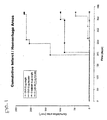
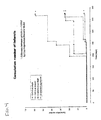
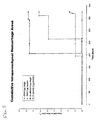
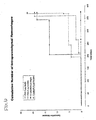
- Mean number of infarcts decreased from about 3.0 to about 7.3 for control and single administration E-selectin groups to about 0.3 in E-selectin booster groups (i.e., a greater than 91% reduction; see Tables I-IV, FIGS 2, and 4).
- Intraparenchymal hemorrhages were absent from the E-selectin booster group, but were present at an average number of from about 3.2 to about 2.3 per brain section analyzed in control and single E-selectin administration groups (see Tables I-IV and FIGS 1, 2, 5, and 6).
- Table I Group OVA Data Sample (sex) Infarcts Intraparenchymal Hemorrhage Number Area (mm 2 ) Number Area (mm 2 ) 1 (female) 13 6.966 2 0.439 2 (female) 0 0 0 0 3 (female) 1 0.062 15 0.390 4 (female) 19 133.850 4 0.950 5 (male) 15 70.559 1 0.021 6 (male) 10 10.308 0 0 7 (female) 0 0 0 0 8 (female) 0 0 0 0 0 Mean 7.3 27.718 2.8 0.225
- Table II Group OVAb Data Sample (sex) Infarcts Intraparenchymal Hemorrhage Number Area (mm 2 ) Number Area (mm 2 ) 1 (female) 0 0 0 0 2 (male) 3 0.734 1 4.784 3 (female) 21 40.502 17 1.372 4 (female) 0
- EXAMPLE 2 Induction of tolerance to E-selectin .
- An analysis was performed to determine whether tolerance to E-selectin was induced by the intranasal administration protocol of E-selectin described above, which resulted in decreased stroke-related tissue damage.
- either E-selectin or control PBS preparations were administered to rats as described in Example 1 for the non-booster groups. Delayed-type hypersensitivity (DTH) was analyzed by injecting 5 ⁇ g of E-selectin in 50 ⁇ l of PBS and 50 ⁇ l of complete Freund's adjuvant into hindpads (s.q.) 14 days after intranasal administration. Fourteen days later, the rats were rechallenged by injecting 5 ⁇ g E-selectin in 50 ⁇ l PBS into the ear and ear thickness was measured with microcalipers (Mitsutoyo) 48 hours later.
- DTH Delayed-type hypersensitivity
- results of the delayed-type hypersensitivity assay demonstrated that intranasal instillation of human E-selectin induced tolerance.
- Administration of E-selectin intranasally prior to footpad injection and elicitation ear injection resulted in a significant suppression of ear swelling compared to control groups (FIG. 7), as measured with Mitsutoyo microcalipers.
- This data demonstrates that the E-selectin administration protocol used induced tolerance to E-selectin.
Landscapes
- Health & Medical Sciences (AREA)
- Life Sciences & Earth Sciences (AREA)
- Medicinal Chemistry (AREA)
- Pharmacology & Pharmacy (AREA)
- Veterinary Medicine (AREA)
- Chemical & Material Sciences (AREA)
- Bioinformatics & Cheminformatics (AREA)
- Public Health (AREA)
- General Health & Medical Sciences (AREA)
- Animal Behavior & Ethology (AREA)
- Engineering & Computer Science (AREA)
- Chemical Kinetics & Catalysis (AREA)
- Organic Chemistry (AREA)
- Nuclear Medicine, Radiotherapy & Molecular Imaging (AREA)
- General Chemical & Material Sciences (AREA)
- Immunology (AREA)
- Diabetes (AREA)
- Epidemiology (AREA)
- Heart & Thoracic Surgery (AREA)
- Cardiology (AREA)
- Obesity (AREA)
- Hematology (AREA)
- Biomedical Technology (AREA)
- Rheumatology (AREA)
- Emergency Medicine (AREA)
- Endocrinology (AREA)
- Otolaryngology (AREA)
- Vascular Medicine (AREA)
- Urology & Nephrology (AREA)
- Neurology (AREA)
- Neurosurgery (AREA)
- Transplantation (AREA)
- Microbiology (AREA)
- Mycology (AREA)
- Cell Biology (AREA)
- Zoology (AREA)
- Gastroenterology & Hepatology (AREA)
- Proteomics, Peptides & Aminoacids (AREA)
- Medicines That Contain Protein Lipid Enzymes And Other Medicines (AREA)
Priority Applications (1)
| Application Number | Priority Date | Filing Date | Title |
|---|---|---|---|
| EP10183986A EP2295067A1 (fr) | 2000-05-24 | 2001-05-23 | E-selectin pour induire immunotolérance |
Applications Claiming Priority (2)
| Application Number | Priority Date | Filing Date | Title |
|---|---|---|---|
| US20669300P | 2000-05-24 | 2000-05-24 | |
| EP01939279A EP1286686B1 (fr) | 2000-05-24 | 2001-05-23 | E-selectin pour le traitement ou la prevention des accidents vasculaires cerebraux |
Related Parent Applications (1)
| Application Number | Title | Priority Date | Filing Date |
|---|---|---|---|
| EP01939279A Division EP1286686B1 (fr) | 2000-05-24 | 2001-05-23 | E-selectin pour le traitement ou la prevention des accidents vasculaires cerebraux |
Publications (1)
| Publication Number | Publication Date |
|---|---|
| EP1842551A1 true EP1842551A1 (fr) | 2007-10-10 |
Family
ID=38462147
Family Applications (1)
| Application Number | Title | Priority Date | Filing Date |
|---|---|---|---|
| EP07112923A Withdrawn EP1842551A1 (fr) | 2000-05-24 | 2001-05-23 | E-selectin pour le traitement ou la prevention des accidents vasculaires cerebraux |
Country Status (1)
| Country | Link |
|---|---|
| EP (1) | EP1842551A1 (fr) |
Cited By (2)
| Publication number | Priority date | Publication date | Assignee | Title |
|---|---|---|---|---|
| WO2008045488A3 (fr) * | 2006-10-09 | 2008-10-23 | Us Gov Health & Human Serv | Traitement de l'inflammation, de la démyélinisation et de la perte neuronale/axonale |
| US7897575B2 (en) | 2000-05-24 | 2011-03-01 | The United States Of America As Represented By The Department Of Health And Human Services | Treatment and prevention of vascular dementia |
Citations (4)
| Publication number | Priority date | Publication date | Assignee | Title |
|---|---|---|---|---|
| WO1993016724A1 (fr) * | 1992-02-28 | 1993-09-02 | Autoimmune, Inc. | Suppression de maladies auto-immunes par des antigenes en attente |
| WO1993022436A1 (fr) * | 1992-04-30 | 1993-11-11 | Genentech, Inc. | Variants du domaine lectine de la selectine |
| WO1994002162A1 (fr) * | 1992-07-21 | 1994-02-03 | Glycomed Incorporated | Medicaments peptidiques de traitement de maladies |
| WO2000004928A1 (fr) * | 1998-07-21 | 2000-02-03 | Pharmaspec, Inc. | Procede de therapie genique pour la revascularisation d'un tissu ischemique |
-
2001
- 2001-05-23 EP EP07112923A patent/EP1842551A1/fr not_active Withdrawn
Patent Citations (4)
| Publication number | Priority date | Publication date | Assignee | Title |
|---|---|---|---|---|
| WO1993016724A1 (fr) * | 1992-02-28 | 1993-09-02 | Autoimmune, Inc. | Suppression de maladies auto-immunes par des antigenes en attente |
| WO1993022436A1 (fr) * | 1992-04-30 | 1993-11-11 | Genentech, Inc. | Variants du domaine lectine de la selectine |
| WO1994002162A1 (fr) * | 1992-07-21 | 1994-02-03 | Glycomed Incorporated | Medicaments peptidiques de traitement de maladies |
| WO2000004928A1 (fr) * | 1998-07-21 | 2000-02-03 | Pharmaspec, Inc. | Procede de therapie genique pour la revascularisation d'un tissu ischemique |
Non-Patent Citations (3)
| Title |
|---|
| BEVILACQUA M P ET AL: "ENDOTHELIAL LEUKOCYTE ADHESION MOLECULE 1: AN INDUCIBLE RECEPTOR FOR NEUTROPHILS RELATED TO COMPLEMENT REGULATORY PROTEINS AND LECTINS", SCIENCE, AMERICAN ASSOCIATION FOR THE ADVANCEMENT OF SCIENCE,, US, vol. 243, no. 4895, 3 March 1989 (1989-03-03), pages 1160 - 1164, XP002056080, ISSN: 0036-8075 * |
| G. DEL ZOPPO ET AL.: "INFLAMMATION AND STROKE: PUTATIVE ROLE FOR CYTOKINES, ADHESION MOLECULES AND iNOS IN BRAIN RESPONSE TO ISCHEMIA.", BRAIN PATHOLOGY, vol. 10, no. 1, January 2000 (2000-01-01), pages 95 - 112, XP002197635 * |
| X. WANG ET AL.: "DEMONSTRATION OF INCREASED ENDOTHELIAL-LEUKOCYTE ADHESION MOLECULE-1 mRNA EXPRESSION IN RAT ISCHEMIC CORTEX.", STROKE, vol. 26, no. 9, September 1995 (1995-09-01), DALLAS, US, pages 1665 - 1669, XP001064744 * |
Cited By (3)
| Publication number | Priority date | Publication date | Assignee | Title |
|---|---|---|---|---|
| US7897575B2 (en) | 2000-05-24 | 2011-03-01 | The United States Of America As Represented By The Department Of Health And Human Services | Treatment and prevention of vascular dementia |
| US8940700B2 (en) | 2000-05-24 | 2015-01-27 | The United States Of America As Represented By The Secretary Of The Department Of Health And Human Services, National Institutes Of Health | E-selectin compositions and use thereof for inducing E-selectin tolerance |
| WO2008045488A3 (fr) * | 2006-10-09 | 2008-10-23 | Us Gov Health & Human Serv | Traitement de l'inflammation, de la démyélinisation et de la perte neuronale/axonale |
Similar Documents
| Publication | Publication Date | Title |
|---|---|---|
| AU642693B2 (en) | Improved treatment of autoimmune diseases by aerosol administration of auto antigens | |
| AU742970C (en) | Method of suppressing beta-amyloid-related changes in Alzheimer's disease | |
| CN102959082B (zh) | 用于治疗自身免疫性和变应性疾病的新组合物和方法 | |
| US20070253975A1 (en) | Methods for preventing strokes by inducing tolerance to E-selectin | |
| JPH08504745A (ja) | 自己免疫疾患のバイスタンダー抑制 | |
| US20010007758A1 (en) | Treatment of multiple sclerosis using COP-1 and Th2-enhancing cytokines | |
| AU2001264813A1 (en) | Methods for preventing strokes by inducing tolerance to E-selectin | |
| AU2005235514B2 (en) | Pharmaceutical formulations and methods for preventing or treating damage to brain tissue | |
| EP1842551A1 (fr) | E-selectin pour le traitement ou la prevention des accidents vasculaires cerebraux | |
| US8940700B2 (en) | E-selectin compositions and use thereof for inducing E-selectin tolerance | |
| WO2007028133A2 (fr) | Traitement et procede de prevention de la demence vasculaire | |
| JPH08500823A (ja) | レトロウィルス関連神経疾患のバイスタンダー抑制 | |
| WO1999037315A1 (fr) | Derives chimiques d'autoantigenes et de peptides suppresseurs d'auto-immunisation, et preparations pharmaceutiques les contenant | |
| WO2008045488A2 (fr) | Traitement de l'inflammation, de la démyélinisation et de la perte neuronale/axonale | |
| Khoury | Oral Tolerance: A Biologically Relevant Pathway to Generate Peripheral Tolerance against | |
| Benson | Efficacy and mechanisms of oral tolerance to myelin basic protein in relapsing experimental autoimmune encephalomyelitis |
Legal Events
| Date | Code | Title | Description |
|---|---|---|---|
| PUAI | Public reference made under article 153(3) epc to a published international application that has entered the european phase |
Free format text: ORIGINAL CODE: 0009012 |
|
| 17P | Request for examination filed |
Effective date: 20070723 |
|
| AC | Divisional application: reference to earlier application |
Ref document number: 1286686 Country of ref document: EP Kind code of ref document: P |
|
| AK | Designated contracting states |
Kind code of ref document: A1 Designated state(s): AT BE CH CY DE DK ES FI FR GB GR IE IT LI LU MC NL PT SE TR |
|
| 17Q | First examination report despatched |
Effective date: 20071130 |
|
| AKX | Designation fees paid |
Designated state(s): AT BE CH CY DE DK ES FI FR GB GR IE IT LI LU MC NL PT SE TR |
|
| GRAP | Despatch of communication of intention to grant a patent |
Free format text: ORIGINAL CODE: EPIDOSNIGR1 |
|
| INTG | Intention to grant announced |
Effective date: 20160105 |
|
| RIN1 | Information on inventor provided before grant (corrected) |
Inventor name: HALLENBECK, JOHN M. Inventor name: TAKEDA, HIDETAKA Inventor name: SPATZ, MARIA |
|
| STAA | Information on the status of an ep patent application or granted ep patent |
Free format text: STATUS: THE APPLICATION IS DEEMED TO BE WITHDRAWN |
|
| 18D | Application deemed to be withdrawn |
Effective date: 20160518 |