EP1842574A2 - Mehrschichtiges Sportbrett mit aufgedruckter graphischer Schicht - Google Patents
Mehrschichtiges Sportbrett mit aufgedruckter graphischer Schicht Download PDFInfo
- Publication number
- EP1842574A2 EP1842574A2 EP07105577A EP07105577A EP1842574A2 EP 1842574 A2 EP1842574 A2 EP 1842574A2 EP 07105577 A EP07105577 A EP 07105577A EP 07105577 A EP07105577 A EP 07105577A EP 1842574 A2 EP1842574 A2 EP 1842574A2
- Authority
- EP
- European Patent Office
- Prior art keywords
- foam
- adhesive resin
- polyethylene
- bonded
- resin film
- Prior art date
- Legal status (The legal status is an assumption and is not a legal conclusion. Google has not performed a legal analysis and makes no representation as to the accuracy of the status listed.)
- Granted
Links
- 239000006260 foam Substances 0.000 claims abstract description 409
- 229920006223 adhesive resin Polymers 0.000 claims abstract description 105
- 239000004840 adhesive resin Substances 0.000 claims abstract description 104
- 239000002985 plastic film Substances 0.000 claims abstract description 92
- 229920006255 plastic film Polymers 0.000 claims abstract description 71
- -1 polyethylene Polymers 0.000 claims description 180
- 239000004698 Polyethylene Substances 0.000 claims description 167
- 229920000573 polyethylene Polymers 0.000 claims description 167
- 229920000098 polyolefin Polymers 0.000 claims description 51
- 239000002131 composite material Substances 0.000 claims description 45
- 229920001684 low density polyethylene Polymers 0.000 claims description 30
- 239000004702 low-density polyethylene Substances 0.000 claims description 30
- 229920006327 polystyrene foam Polymers 0.000 claims description 29
- 239000004743 Polypropylene Substances 0.000 claims description 21
- 229920001903 high density polyethylene Polymers 0.000 claims description 17
- 239000004700 high-density polyethylene Substances 0.000 claims description 17
- 229920003023 plastic Polymers 0.000 claims description 16
- 239000004033 plastic Substances 0.000 claims description 5
- 239000005038 ethylene vinyl acetate Substances 0.000 claims description 4
- 239000004793 Polystyrene Substances 0.000 claims description 3
- 229920001200 poly(ethylene-vinyl acetate) Polymers 0.000 claims description 3
- 229920002223 polystyrene Polymers 0.000 claims description 2
- 229920005606 polypropylene copolymer Polymers 0.000 claims 1
- 239000010410 layer Substances 0.000 description 252
- 239000011162 core material Substances 0.000 description 112
- 239000010408 film Substances 0.000 description 91
- 238000000034 method Methods 0.000 description 22
- 229920001155 polypropylene Polymers 0.000 description 20
- 238000010276 construction Methods 0.000 description 16
- 229920001577 copolymer Polymers 0.000 description 14
- 238000010030 laminating Methods 0.000 description 13
- 238000007639 printing Methods 0.000 description 12
- 239000000463 material Substances 0.000 description 11
- 238000001125 extrusion Methods 0.000 description 10
- 238000004519 manufacturing process Methods 0.000 description 10
- 239000000976 ink Substances 0.000 description 9
- 239000000203 mixture Substances 0.000 description 9
- 210000004027 cell Anatomy 0.000 description 8
- 239000004794 expanded polystyrene Substances 0.000 description 8
- 229920001519 homopolymer Polymers 0.000 description 8
- 229920000642 polymer Polymers 0.000 description 8
- 230000035939 shock Effects 0.000 description 8
- 239000000758 substrate Substances 0.000 description 8
- 230000000694 effects Effects 0.000 description 6
- 239000004620 low density foam Substances 0.000 description 6
- VGGSQFUCUMXWEO-UHFFFAOYSA-N Ethene Chemical compound C=C VGGSQFUCUMXWEO-UHFFFAOYSA-N 0.000 description 5
- 239000005977 Ethylene Substances 0.000 description 5
- 238000010521 absorption reaction Methods 0.000 description 4
- 238000000576 coating method Methods 0.000 description 4
- 238000003475 lamination Methods 0.000 description 4
- 239000002984 plastic foam Substances 0.000 description 4
- XLYOFNOQVPJJNP-UHFFFAOYSA-N water Substances O XLYOFNOQVPJJNP-UHFFFAOYSA-N 0.000 description 4
- XTXRWKRVRITETP-UHFFFAOYSA-N Vinyl acetate Chemical compound CC(=O)OC=C XTXRWKRVRITETP-UHFFFAOYSA-N 0.000 description 3
- 239000011248 coating agent Substances 0.000 description 3
- 239000002356 single layer Substances 0.000 description 3
- 239000007787 solid Substances 0.000 description 3
- 238000005728 strengthening Methods 0.000 description 3
- 229920000089 Cyclic olefin copolymer Polymers 0.000 description 2
- 239000004716 Ethylene/acrylic acid copolymer Substances 0.000 description 2
- BAPJBEWLBFYGME-UHFFFAOYSA-N acrylic acid methyl ester Natural products COC(=O)C=C BAPJBEWLBFYGME-UHFFFAOYSA-N 0.000 description 2
- 229920006243 acrylic copolymer Polymers 0.000 description 2
- 239000000853 adhesive Substances 0.000 description 2
- 230000001070 adhesive effect Effects 0.000 description 2
- DQXBYHZEEUGOBF-UHFFFAOYSA-N but-3-enoic acid;ethene Chemical compound C=C.OC(=O)CC=C DQXBYHZEEUGOBF-UHFFFAOYSA-N 0.000 description 2
- 238000005520 cutting process Methods 0.000 description 2
- 230000000593 degrading effect Effects 0.000 description 2
- 238000010586 diagram Methods 0.000 description 2
- 238000004049 embossing Methods 0.000 description 2
- HDERJYVLTPVNRI-UHFFFAOYSA-N ethene;ethenyl acetate Chemical class C=C.CC(=O)OC=C HDERJYVLTPVNRI-UHFFFAOYSA-N 0.000 description 2
- 239000003292 glue Substances 0.000 description 2
- 238000012986 modification Methods 0.000 description 2
- 230000004048 modification Effects 0.000 description 2
- 229920006254 polymer film Polymers 0.000 description 2
- 239000011241 protective layer Substances 0.000 description 2
- 229920005989 resin Polymers 0.000 description 2
- 239000011347 resin Substances 0.000 description 2
- 239000004711 α-olefin Substances 0.000 description 2
- NIXOWILDQLNWCW-UHFFFAOYSA-M Acrylate Chemical compound [O-]C(=O)C=C NIXOWILDQLNWCW-UHFFFAOYSA-M 0.000 description 1
- OKTJSMMVPCPJKN-UHFFFAOYSA-N Carbon Chemical compound [C] OKTJSMMVPCPJKN-UHFFFAOYSA-N 0.000 description 1
- 239000004822 Hot adhesive Substances 0.000 description 1
- 229920005830 Polyurethane Foam Polymers 0.000 description 1
- 239000002253 acid Substances 0.000 description 1
- 238000004026 adhesive bonding Methods 0.000 description 1
- 239000002313 adhesive film Substances 0.000 description 1
- 239000012790 adhesive layer Substances 0.000 description 1
- 150000008064 anhydrides Chemical class 0.000 description 1
- 238000010420 art technique Methods 0.000 description 1
- 239000011324 bead Substances 0.000 description 1
- 210000002421 cell wall Anatomy 0.000 description 1
- 230000001413 cellular effect Effects 0.000 description 1
- 210000003850 cellular structure Anatomy 0.000 description 1
- 239000011247 coating layer Substances 0.000 description 1
- 230000006835 compression Effects 0.000 description 1
- 238000007906 compression Methods 0.000 description 1
- 229920003020 cross-linked polyethylene Polymers 0.000 description 1
- 239000004703 cross-linked polyethylene Substances 0.000 description 1
- 238000005034 decoration Methods 0.000 description 1
- 230000032798 delamination Effects 0.000 description 1
- 230000000994 depressogenic effect Effects 0.000 description 1
- QHZOMAXECYYXGP-UHFFFAOYSA-N ethene;prop-2-enoic acid Chemical class C=C.OC(=O)C=C QHZOMAXECYYXGP-UHFFFAOYSA-N 0.000 description 1
- 125000000816 ethylene group Chemical group [H]C([H])([*:1])C([H])([H])[*:2] 0.000 description 1
- 239000011152 fibreglass Substances 0.000 description 1
- 210000000497 foam cell Anatomy 0.000 description 1
- 238000010097 foam moulding Methods 0.000 description 1
- 229910002804 graphite Inorganic materials 0.000 description 1
- 239000010439 graphite Substances 0.000 description 1
- 238000010438 heat treatment Methods 0.000 description 1
- 239000004619 high density foam Substances 0.000 description 1
- 238000007373 indentation Methods 0.000 description 1
- 230000001788 irregular Effects 0.000 description 1
- 230000002093 peripheral effect Effects 0.000 description 1
- 229920005638 polyethylene monopolymer Polymers 0.000 description 1
- 229920000582 polyisocyanurate Polymers 0.000 description 1
- 239000011495 polyisocyanurate Substances 0.000 description 1
- 239000002861 polymer material Substances 0.000 description 1
- 239000011496 polyurethane foam Substances 0.000 description 1
- 230000001681 protective effect Effects 0.000 description 1
- 238000011084 recovery Methods 0.000 description 1
- 238000010008 shearing Methods 0.000 description 1
- 239000000126 substance Substances 0.000 description 1
- 239000010409 thin film Substances 0.000 description 1
- 238000009736 wetting Methods 0.000 description 1
Images




Classifications
-
- A—HUMAN NECESSITIES
- A63—SPORTS; GAMES; AMUSEMENTS
- A63C—SKATES; SKIS; ROLLER SKATES; DESIGN OR LAYOUT OF COURTS, RINKS OR THE LIKE
- A63C5/00—Skis or snowboards
- A63C5/003—Structure, covering or decoration of the upper ski surface
-
- A—HUMAN NECESSITIES
- A63—SPORTS; GAMES; AMUSEMENTS
- A63C—SKATES; SKIS; ROLLER SKATES; DESIGN OR LAYOUT OF COURTS, RINKS OR THE LIKE
- A63C5/00—Skis or snowboards
- A63C5/03—Mono skis; Snowboards
-
- A—HUMAN NECESSITIES
- A63—SPORTS; GAMES; AMUSEMENTS
- A63C—SKATES; SKIS; ROLLER SKATES; DESIGN OR LAYOUT OF COURTS, RINKS OR THE LIKE
- A63C5/00—Skis or snowboards
- A63C5/12—Making thereof; Selection of particular materials
-
- A—HUMAN NECESSITIES
- A63—SPORTS; GAMES; AMUSEMENTS
- A63C—SKATES; SKIS; ROLLER SKATES; DESIGN OR LAYOUT OF COURTS, RINKS OR THE LIKE
- A63C5/00—Skis or snowboards
- A63C5/12—Making thereof; Selection of particular materials
- A63C5/126—Structure of the core
-
- B—PERFORMING OPERATIONS; TRANSPORTING
- B63—SHIPS OR OTHER WATERBORNE VESSELS; RELATED EQUIPMENT
- B63B—SHIPS OR OTHER WATERBORNE VESSELS; EQUIPMENT FOR SHIPPING
- B63B32/00—Water sports boards; Accessories therefor
- B63B32/57—Boards characterised by the material, e.g. laminated materials
-
- A—HUMAN NECESSITIES
- A63—SPORTS; GAMES; AMUSEMENTS
- A63C—SKATES; SKIS; ROLLER SKATES; DESIGN OR LAYOUT OF COURTS, RINKS OR THE LIKE
- A63C2203/00—Special features of skates, skis, roller-skates, snowboards and courts
- A63C2203/08—Decoration
-
- B—PERFORMING OPERATIONS; TRANSPORTING
- B63—SHIPS OR OTHER WATERBORNE VESSELS; RELATED EQUIPMENT
- B63B—SHIPS OR OTHER WATERBORNE VESSELS; EQUIPMENT FOR SHIPPING
- B63B2241/00—Design characteristics
- B63B2241/20—Designs or arrangements for particular purposes not otherwise provided for in this class
Definitions
- Polystyrene foam core has been used to produce foam sports boards due to its lightweight and rigid properties.
- a polystyrene foam core does not provide the same degree of comfort in terms of cushioning and shock absorption properties when compared with a polyethylene foam core. It may be desirable to develop a sports board with a rigid polystyrene foam core and desirable resilient and shock absorption properties of polyethylene foam in the top and front portion of the board.
- Polyethylene foam sports boards with graphic imprinted plastic film outer layer are known in the prior art.
- such boards are composed of a number of polyethylene foam and polyethylene film layers that are laminated together by heating the film and foam layers and then immediately passing them through a pair of nip rollers.
- Schneider of US 5,211,593 has disclosed such a laminating process.
- graphics are first imprinted as ink on the inner surface of the outer plastic film that is transparent.
- the imprinted outer film is adhesively bonded to an inner plastic film.
- the surface of foam plank is heated to a temperature range of 180° F to 220° F and the resulting dual-layered film is pressed onto the heated surface of the foam plank by a pair of nip rollers.
- the standard foam core does not have a perfectly flat or planar surface, bonding between the film and foam core is limited to the apexes of the cells on the surface of the foam core. Thus the point of contact is not uniform between the film and foam, but instead the film contacts the points of the outer surface of the core that protrude from the irregular cellular surface of the foam core.
- the surface area of contact between the sheet and foam is thereby increased.
- this kind of structure is still prone to delamination by mechanical contact, effect of water, moisture and forces when in use simply because the interface between the film and foam layers contain unbonded area.
- the resulting laminate of the polyethylene foam and polyethylene film is then often heat laminated onto a standard foam core.
- the polyethylene film may comprise an outer film layer and an inner film layer having a graphic image imprinted on one surface interposed between the outer film layer and the inner film layer.
- Patent US 5,211,593 shows a prior art technique to laminate a dual-layered graphic film to a foam substrate.
- the laminating process involves two steps. Step one is to adhesively bond the graphic imprinted outer film with the inner film using conventional glue or adhesive. Step two is heat laminating the resulting dual-layered graphic film to a foam substrate. It would be advantageous to provide an improved laminating system that can laminate a graphic imprinted film directly to a foam substrate in one single process with improved bonding characteristics.
- the present invention also relates generally to sports boards, and more particularly to polyethylene based composite foam boards for gliding on snow or water having a stiffening element coupled to the core for mechanical strengthening of the board.
- the present invention also relates to stiffening elements composed of substantially polymer foam that may be placed in selected positions to selectively increase rigidity to selected portions of a foam board. With controlled placement of stiffening element, the foam board can be adapted to have higher stiffness in a first portion and greater flexibility in a second portion of the board.
- polystyrene (PS) foam has higher flexural strength at a similar density than does polyethylene (PE) foam. Due to the difference in chemical composition between the foam core, the polyethylene foam skin and polyethylene slick film, manufacturing requires special bonding material and techniques to bond the polyethylene skin to the foam core. That makes the manufacturing difficult and costly.
- Some manufacturers try to produce a polyethylene foam board with higher flexural strength by increasing the thickness or density of foam core, or by laminating a thick polymer film outside the foam board. Yet this increases the weight of foam board degrading desirable performance in its applications as a snow sled or bodyboard.
- the sport board according to the present invention is constructed as a foam sled to ride on at snow-covered slopes.
- the foam sled is an elongated board having a substantially planar main body with round edges and front tip deflected upward.
- Another common sports board can be made according to the present invention is a bodyboard for surfing or body boarding.
- the bodyboard is generally a planar board having a bottom surface, a top surface, front surface, tail surface and two side rail surfaces, the board is characterized by having two angularly outwardly extending side rails.
- Polystyrene foam core has been used to produce foam sports boards due to its lightweight and rigid properties.
- a polystyrene foam core does not provide the same degree of comfort in terms of cushioning and shock absorption properties when compared with a polyethylene foam core.
- the polystyrene foam is poor in elastic recovery under even minor impact force, and may form undesirable indentations such as in the front portion of a snow sled. It may be desirable to develop a foam core that has the structure stiffness advantages of a polystyrene foam core in the main body and the desirable resilient and shock absorption properties of polyethylene foam in the top and front portion of the board.
- a stringer system would generally include a fiberglass or graphite rod that is centrally inserted and adhesively secured in the foam core material.
- the disadvantage of the current stringer systems used is that the stringer may separate from the foam core after frequent use, in extreme conditions of use, for example when the board is bent up harshly, the stringer rod can pop out of either the deck or the bottom of the bodyboard. It would be desirable to provide a method to insert stiffening element by heat laminating to the foam core so that a strong bond forms between stiffening element and the foam core.
- the rider of a bodyboard grips the front edge close to one corner of lead nose and front portion of the side edge of the bodyboard.
- the hand in the front edge plays a significant role in steering control and maneuvering the bodyboard.
- Successful completion of maneuvers requires the bodyboard to respond adequately to the rider's steering.
- Force applied to the bodyboard that only distorts the board does not help the rider in redirecting the board.
- a high degree of stiffness of the bodyboard is desirable.
- the board may be more flexible at the portion between a transverse line about a quarter of the way from the nose and the lead nose.
- the necessary condition to provide stiffening to a composite foam core is that the flexural strength of the coupled stiffening element has to be substantially higher than that of the low density base foam core. It is apparent that when applying polystyrene foam plate as the stiffening element to a polyolefin foam base core, the polystyrene foam plate contributes higher flexural strength and a stiffening effect.
- the stiffening effect is based on the fact that the compressive strength of plastic foam such as polyethylene foam can vary with direction relative to the direction of extrusion, the maximum strength being along the direction of extrusion.
- the stiffening effect is mostly derived from the higher flexural strength of the solid polyolefin sheet.
- Fig. 13 maximum compressive strength of polyethylene foam sheet is parallel to direction Y provided by shearing force of foam sheet extrusion and the cell orientation of cell group of a conventional extruded polyethylene foam sheet wherein the cells are elongated in parallel alignment with vector Y along which the foam sheet is extruded as shown in Fig. 14, a magnification of the foam sheet section in the circle of Fig. 13.
- the present invention provides the solution to the above-mentioned problem by introducing an adhesive resin film layer between a plastic film and a foam substrate in a multi-layered sports board.
- the sports board comprises a foam core having a thickness generally in the range of 0.1 inch to 4 inches.
- Suitable foam board may include any plastic foam known in the art such as expanded polyethylene (EPE) foam, expanded polypropylene (EPP) foam, expanded polystyrene (EPS) foam, expanded ethylene vinyl acetate (EVA) foam, polyisocyanurate foam, polyurethane foam and expanded polyolefin foam.
- Polyolefin foams may further include homopolymers and copolymers of ethylene, propylene, styrene, and ethylene vinyl acetate as well as blends of such homopolymers and copolymers.
- the foam core can be fabricated from an extruded foam board and molded bead foam in non cross-linked type or cross-linked type. The present invention is particularly useful with extruded polyethylene foam. Such foam is lightweight and resilient with relatively low manufacturing cost.
- the foam core may also be a composite core made by laminating two or more layers of foam sheets.
- the skin comprises laminate of plastic film and polyolefin foam sheet.
- the skin may include a layer of plastic film material, such as extruded polyethylene, a polyolefin foam sheet, and an adhesive resin film layer disposed underside for heat bonding the plastic film with the polyolefin foam.
- the bottom surface of the polyolefin foam is heat bonded to the top surface and edge surface of the foam core.
- the thickness of the plastic film layer is generally in the range of 0.01 mm to 0.15mm.
- the plastic film may be transparent and include graphic images formed on the inner surface facing the adhesive resin film layer. The graphic images can be visible outside the plastic film.
- the plastic film layer preferably has the same polymer composition as the foam sheet.
- the plastic film need not be of the same polymer composition as the foam sheet.
- the plastic film may be a monolayer structure or a multilayer structure.
- a sheet co-extrusion process may be used to make the multilayer laminate of plastic film and adhesive resin film.
- Preferred plastic film is a polyolefin film and polyethylene film is typically used for the present application.
- Polyethylene film is a common plastic film and graphic images can be printed on it by conventional printing technique well known in the art.
- the adhesive resin film layer may be selected from a group consisting of anhydride-modified ethylene/vinyl acetate, anhydride modified ethylene acrylate, ethylene/propylene copolymer, homogeneous ethylene/alpha-olefin copolymer, anhydride-modified polyolefin, ethylene/acrylic acid copolymer, vinyl acetate/acrylic copolymer, ethylene/methylacrylate copolymer, ethylene/vinyl acetate copolymer, and blends of the foregoing, may be employed. These adhesive resins facilitate the bonding of various plastic film and foam substrate.
- these adhesive resin provide superior adhesive bonding in bonding a polyolefin foam layer to a polyolefin film layer or another polyolefin foam layer; whereby the two layers may have like or different polymer composition.
- these adhesive resins are capable of bonding the polymer material of the ink resin generally applied on polyolefin film for graphic printing. Therefore the adhesive resin are particularly useful in bonding a polyolefin foam layer to a graphic imprinted polyolefin film; and alternatively bonding a graphic imprinted polyolefin foam layer to a polyolefin film, the ink coated surface bonded to the adhesive resin layer. It is believed that such superior bonding is the result of the intermediate layers having a lower melt temperature than other materials, low shear viscosity, good wetting characteristics that diffuses quickly and forms a thin coating film layer with intimate adhesion bonding over the entire interface.
- the plastic film comprises an outer layer of transparent plastic film and an inner layer of a second plastic film.
- the outer layer of transparent plastic film may include graphic images formed on the inner surface facing the adhesive resin film layer. The graphic images can be visible outside the plastic film.
- the present invention also strengthens the board by introducing a generally planar stiffening element composed of substantially polymer foam into a low density polyolefin foam base, forming a composite foam core.
- the stiffening element has substantial higher compressive strength and flexural strength than the foam core.
- the sport board according to the present invention may be constructed as a foam sled to ride on at snow-covered slopes or a bodyboard for surfing at the seashore.
- the composite polyolefin foam core in accordance with the invention is a multi-layer laminated foam core, comprising alternative layers of low density polyolefin foam and polyolefin stiffening element.
- the stiffening elements are integrally heat laminated with the low density polyolefin foam to form an integrated composite foam core with improved compressive strength along the Y axis and a higher flexural strength along the X-Y plane of the board. At least one stiffening element is applied to the composite foam core to provide mechanical strengthening to the board.
- the low density polyolefin foam comprises a polyolefin polymer, such as homopolymer or copolymer of polyethylene and homopolymer or copolymer of polypropylene, more preferable a low density polyethylene foam.
- the stiffening element may be a thin layer of polyolefin structure including a layer of high density polyolefin foam sheet or a laminate of polyolefin structure consisting of three layers.
- the high density polyolefin foam sheet may include homopolymer or copolymer of polyethylene and homopolymer or copolymer of polypropylene, more preferable a polyethylene homopolymer.
- the three layers of the polyolefin laminate may comprise a laminate structure of polyethylene foam sheet/ polyethylene sheet/ polyethylene foam sheet or polypropylene foam sheet/ polypropylene sheet/ polypropylene foam sheet.
- these thin layers of polyolefin structure are substantially planar layers with opposing surfaces oriented in a direction generally parallel to the X-Z plane of the core.
- the stiffening element may also be a thick polystyrene foam plate having a thickness higher than about 4mm.
- the thick polystyrene foam layers are heat laminated to the low density polyolefin foam layers with substantially planar bonding surfaces.
- the bonding surfaces are oriented in a direction generally parallel to the X-Y plane of the core. In another embodiment, the bonding surfaces are oriented in a direction generally parallel to the X-Z plane of the core.
- the stiffening elements provide the board with improved rigidity, allowing improved maneuvering of a bodyboard and higher sliding speed for a snow sled. It is particularly useful that the flexibility near the front quarter length of a bodyboard provides desirable flex to a rider to manipulate directional steering during wave surfing. In the snow sled application, the flexible front section provides desirable resilient and shock absorbing properties to the board, in particular for front impact.
- Layer 16 has a thickness of between 0.02 mm and 0.15 mm, and preferably a thickness of 0.07 mm. Layer 16 has a density in the range of 0.89 to 0.98 g/cm 3 , and preferably a density of 0.95 g/cm 3 .
- the bottom sheet 18 is made of polyethylene sheet and provides an outer slick running surface of the board for reducing friction and while increasing its mechanical strength. Sheet 18 has a thickness of between 0.1 and 2mm, and preferably a thickness of 0.5 mm and a density in the range of 0.89 to 0.98 g/cm 3 , and preferably a density of 0.95 g/cm 3 .
- adhesive layer 20 is an anhydride-modified ethylene vinyl acetate.
- Layer 20 has a thickness of between 0.01 and 0.20 mm, and preferably a thickness of 0.07 mm.
- Layer 20 has a density in the range of 0.88 to 0.98 g/cm 3 , and preferably a density of 0.95 g/cm 3 .
- alternative adhesive resins may comprise ethylene/propylene copolymer, homogeneous ethylene/alpha-olefin copolymer, anhydride-modified polyolefin, anhydride modified ethylene acrylate, ethylene/acrylic acid copolymer, vinyl acetate/acrylic copolymer, ethylene/methylacrylate copolymer, and blends of the foregoing, may be employed.
- Andydride modified Ethylene Acrylate is also an acceptable alternative adhesive resin.
- These adhesive resin polymers may be modified by grafting with an acid, acrylate or anhydride polymer.
- Such adhesive resin layer is selected so that its presence in the board provides not only the bonding between layers but also a smoother surface for printing a higher resolution graphic image to provide a refined sports board. See Fig. 12.
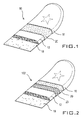
- a sports board 102 according to a second embodiment of the present invention comprises five layers of material.
- the four layers are the same as the board 10 of Fig. 1 with an addition of layer 23 of polyethylene foam.
- Layer 23 has a thickness of between 1 and 5 mm, and preferably a thickness of 3 mm.
- Layer 23 has a density in the range of 4 to 10 lb/ft 3 , and preferably a density of 6 lb/ft 3 .
- Layer 16 is preferable a polyethylene film.
- a sports board 103 according to a third embodiment of the present invention comprises six layers of material including the foam core 12, graphically-imprinted polyethylene film 16 and adhesive resin film 20 as used in the board 102 of Fig. 2.
- bottom sheet 38 is made of polyethylene into a thickness of between 0.1 and 2mm, and preferably a thickness of 0.35 mm and a density in the range of 0.89 to 0.98 g/cm 3 , and preferably a density of 0.95 g/cm 3 .
- Layer 30 is a closed-cell polyolefin foam sheet, preferable polypropylene foam sheet.
- Layer 30 has a thickness of between 1 and 5 mm, and preferably a thickness of 3 mm.
- Layer 30 has a density in the range of 4 to 10 lb/ft 3 , and preferably a density of 6 lb/ft 3 .
- Polypropylene foam has higher rigidity than polyethylene foam at similar density and provide a rigid shell structure to reinforce the foam board in this embodiment.
- An adhesive resin film layer (not shown in the drawing) is required to facilitate bonding between the polypropylene foam sheet 30 and the polyethylene foam core 12.
- a polyethylene foam sheet 31 which has a thickness of between 1 and 5 mm, and preferably a thickness of 3 mm and a density in the range of 4 to 10 Ib/ft 3 , and preferably a density of 6 Ib/ft 3 .
- a sports board 104 comprises nine layers of material including the five similar layers used in the board 103 of Fig. 3, namely the polyethylene foam core 12, graphically-imprinted polyethylene film 16, adhesive resin film 20, polypropylene foam sheet 30, polyethylene foam sheet 31 and polyethylene bottom sheet 38. Additionally, a second polyethylene film 40 is adhered to the underside of top polyethylene film 16.
- PE film 40 has a thickness of between 0.01 mm and 0.15 mm, and preferably a thickness of 0.07 mm.
- Layer 40 has a density in the range of 0.89 to 0.98 g/cm 3 , and preferably a density of 0.95 g/cm 3 .
- Polyethylene film 41 On the upper side of the bottom polyethylene sheet 18 are a polyethylene film 41 and adhesive resin film 42.
- Polyethylene film 41 has the same thickness and density as PE film 16.
- a graphic image may also be printed on the top surface of the polyethylene film 41 so that the graphic image imprinted surface is overlaid and bonded to the adhesive resin film 42.
- a sports board 105 of a fifth embodiment of the present invention comprises the top layers like those of the second embodiment including graphically-imprinted polyethylene film 16, adhesive resin film 20 and polyethylene foam layer 23. While its bottom layers include polyethylene foam sheet 31 and polyethylene bottom sheet 38 as in the third embodiment shown in Fig. 3.
- layer 50 is an expanded polystyrene (EPS) foam core.
- EPS foam has desirable properties of lightweight and rigid while polyethylene foam sheet provides a soft and resilient foam skin for comfort and shock absorbing in use.
- Foam core 50 has a thickness of between 0.5 and 2.5 inches, and preferably a thickness of 1 inch.
- Foam core 50 has a density in the range of 1.0 to 3 lb/ft 3 , and preferably a density of 1.5 lb/ft 3 .
- EPS foam core 50 is bonded to the top layers 16/20/23 and bottom layers 31/38 through respective adhesive resin films not shown in the drawing.
- a sports board 106 of a fifth embodiment of the present invention comprises polyethylene foam core 12 and the top layers like those of the second embodiment including polyethylene film 16, adhesive resin film 20 and polyethylene foam layer 23.
- graphic 62 may be now imprinted on the outer surface of layer 23 for viewing from the top of the board 106.
- its bottom layers include polyethylene foam sheet 31 and polyethylene bottom sheet 38 as in the third embodiment shown in Fig. 3 with an adhesive film 61 interposed between the two sheets 31 and 38.
- Another graphic 60 may be imprinted on the outer surface of sheet 31 for viewing from the bottom of the board 106.
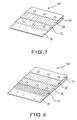
- Fig. 7 shows a sports board 107 according to a seventh embodiment of the present invention.
- Board 107 comprises top polyethylene film 16, which is bonded with adhesive resin film 20 to a substrate of polyethylene foam sheet 70 having a thickness of between 1 and 8 mm, and preferably a thickness of 5 mm.
- Foam sheet 70 has a density in the range of 1.5 to 12 lb/ft 3 , and preferably a density of 8 lb/ft 3 .
- PE sheet 38 To the bottom of foam sheet 70 is adhered PE sheet 38.
- an appropriate graphic may be printed on either the PE film 16 or the PE foam sheet 70.
- Fig. 8 shows a sports board 108 according to an eighth embodiment comprising top polyethylene film 16, which is bonded with adhesive resin film 20 to cross-linked PE foam sheet 80.
- Foam sheet 80 has a thickness of between 1 and 8 mm, and preferably a thickness of 3 mm with its density being in the range of 1.5 to 12 lb/ft 3 , and preferably 8 lb/ft 3 .
- To the bottom of foam sheet 80 is adhered PE sheet 38 and another polyethylene foam sheet 81 having a thickness of between 2 and 50 mm.
- Foam sheet 81 has a density in the range of 2 to 8 Ib/ft 3 .
- a graphic image may be printed on either the PE film 16 or the PE foam sheet 80.
- Sports board 103 is formed in a series of steps.
- polyethylene film layer 16 is imprinted with the desired graphics using a conventional imprinting process.
- polyethylene film layer 16 is fed from a top roll 123 and polypropylene foam layer 30 is fed from bottom roll 124.
- hot adhesive resin 20 is extruded, using a conventional extruder 130, between surface 34 of layer 16 and surface 35 of layer 30 as they pass nib rollers 131 to form a top laminate sheet of layers 16/20/30.
- top laminate of layers 16/20/30 are then sized at a cutting station 132 so that its outer edge will extend over the peripheral edge of core 12 enough so that it can be wrapped over, and heat laminated to the top surface and edge surface of the polyethylene foam core 12.
- polyethylene sheet layer 38 is extruded from another conventional extruder 133 and heat laminated with rollers 134 to polyethylene foam sheet layer 31 fed from bottom roll 125 to produce a bottom laminate 31/38.
- the bottom laminate is then heat laminated to the bottom surface of core 12 of the top laminate sheet 16/20/30.
- This heat laminating process is illustrated in Fig. 11 wherein top laminate sheets are conveyed toward a pair of nib rollers as the bottom laminate joins the top laminate to pass through the rollers with a supply of bonding heat blown between the two laminates that are welded under the pressure.
- a second polyethylene film 40 may be bonded to the graphics imprinted in the first polyethylene film 16 by using conventional glue or adhesive so that the graphic is covered.
- the resulting dual-layered graphic polyethylene film is similarly laminated to the polypropylene foam sheet 30 by extruding an adhesive resin film layer 20 in between.
- a third alternative way to provide a graphic image on the skin of sports board is to apply ink to the outer surface of the polypropylene foam sheet 30 by any conventional printing technique known in the art.
- the ink applied to polypropylene foam sheet 30 surface must be compatible to polyolefin.
- the graphic imprinted foam sheet is then laminated to the polyethylene film 16 by extruding an adhesive resin film layer 20 in between.
- the polyethylene film 16 acts as a protective film to protect the graphic image printed on the polypropylene foam sheet 30 from wear and tear.
- a fourth alternative way to provide a graphic image on the skin of sports board is to apply a thin coating of adhesive resin to the outer surface of the polypropylene foam sheet 30 by extruding a thin film layer of adhesive resin onto the graphic image receiving surface of the polypropylene foam sheet.
- the coating process is also illustrated in Fig. 10. After that ink is applied to the outer surface of the adhesive resin coating a graphic image is formed on the adhesive resin coated surface of the polypropylene foam sheet.
- the graphic imprinted foam sheet is similarly laminated to the polyethylene film 16 by extruding an adhesive resin film layer 20 in between.
- the additional adhesive resin coating layer provides a smoother printing surface and at the same time enhance the bond strength between the ink resin and the polypropylene foam sheet. Therefore the present invention provides a sports board with high-resolution graphic image imprinted and improved bonding characteristic.
- the sports board 102 of the second embodiment may have its bottom laminate replaced by the bottom laminate of the board 103 of the third embodiment.
- the sports board 105 of the fifth embodiment may have its bottom laminate replaced by the bottom laminate of the board 104 of the fourth embodiment.
- the sports board 106 of the sixth embodiment may have the bottom laminate of the board 104 of the fourth embodiment; and so on.
- Fig. 17 illustrates the seventh embodiment of the present invention.
- the foam board is constructed as a foam sled 700 to ride on at snow-covered slopes, wherein the composite foam core 705 consists of five layers laminated together in which bonding surfaces are oriented in a direction generally parallel to the X-Z plane of the board.
- a central low density EPS foam 702, working as the stiffening element for the board, is laminated with a low density polyethylene foam base core 703, 704 on both top and bottom surfaces through the respective binding layers 706 and 708.
- the binding layers may be adhesive resin or copolymer foam of polystyrene and polyethylene.
- the top skin laminate of sports board 700 comprises a top skin laminate of layers 712, 714 and 716.
- the bottom skin laminate comprises Layer 715, and 717.
- Layer 706, 708 and 712 are anhydride-modified ethylene vinyl acetate. These layers have thickness in the range of 0.02 to 0.15 mm and preferably of about 0.07 mm and a density in the range of 0.90 to 0.98 g/cm 3 and preferably of about 0.95 g/cm 3 .
- Polyethylene foam plate 703 and 704 have thickness in the range of 5 to 25 mm, and preferably of about 8 mm and have density in the range of 1.6 to 3 lb/ft 3 , and preferably a density of about 2.2 Ib/ft 3 .
- Polystyrene foam plate 702 has a thickness in the range of 4 to 30 mm, and preferably of about 12 mm and a density in the range of 1to 2.5 lb/ft 3 , and preferably a density of about 1.5 lb/ft 3 .
- the laminated foam core is formed in a series of steps. As shown in Fig. 15, Extruder 331 extrudes a continuous film of Layer 708 and disposes onto the surface of Layer 704 to form a laminate 704/708.
- Fig. 16 shows the heat lamination method to bond central polystyrene foam layer 702 with the polyethylene top and bottom foam layers 704 and 703. The resulting laminate 704/708 is then heat laminated to polystyrene foam layer 702 using a conventional heat laminating process to form laminate 704/708/702. Similarly a laminate of layers 706/703 is heat laminated to the laminate 704/708/702, forming the completely laminated foam core 705 as shown in Fig. 16.
- the resulting foam core assembly is then trimmed and shaped to the desirable shape and edge configuration.
- the top skin laminate and the bottom skin laminate can then be heat laminated to the resulting foam core to form a complete sports board 700 by the same heat laminating process as shown in Fig. 16.
- the upper and lower PE foam plates 703 and 704 on both sides of the EPS central foam plate 702 provide cushioning and shock absorbing advantage to a foam sled rider while the EPS plate 702 reinforces the stiffness of the foam sled 700, allowing higher sliding speed and improved traction stability.
- a front section 723 also called a nose 723 may be made out of the same blank material as the low density polyethylene foam base and is bonded to the front end of the foam core complex 701 to allow greater nose flexibility for improved shock absorbing property.
- the foam core complex 701 can have a variety of additional layers.
- a board can include a laminated composite foam core 701 having a generally planar configuration with a top surface, a bottom surface, a substantially symmetrical elongate concave side edges surfaces.
- the laminated composite foam core 701 also has a central polystyrene foam section 702 sandwiched between two low-density polyethylene foam side sections such as an upper low-density polyethylene foam side section 704 and a lower low density polyethylene foam side section 703.
- the polystyrene foam 702 has a first bonding surface and an opposing second bonding surface, wherein the surfaces being heat laminated to the low density polyethylene foam by a binding layer and oriented in a direction generally parallel to the X-Z plane of the board.
- the foam core complex 701 is made with the following layers:
- each layer is bonded to the bottom surfaces of the layer above.
- the bottom surfaces of each layer are bonded to the top surfaces of each layer below.
- the central polystyrene foam section 702 is replaced with a high density polyethylene foam section so that the layers are now as follows:
- the thickness of the high density polyethylene foam layer would be from 4-30 mm.
- the high density polyethylene foam layer has substantial higher compressive strength and flexural strength than the low density polyethylene foam sections that sandwich the high density polyethylene foam layer.
- the foam core complex 701 has a foam core complex third embodiment 805, as seen in Fig. 19.
- the central polystyrene foam section 702 is replaced with a composite central section 801 which is comprised of a central polyethylene solid plate 802, sandwiched between an upper high density polyethylene foam sheet 804, and a bottom high density polyethylene foam sheet 803.
- the foam core complex third embodiment 805 would have the following construction:
- the top layer 709 in a first top layer embodiment can be made with the following layers:
- the top layer 709 in a second top layer embodiment can be made with the following layers:
- each layer is bonded to the bottom surfaces of the layer above.
- the bottom surfaces of each layer are bonded to the top surfaces of each layer below.
- the foam sheet has a higher density than the polyethylene foam base of the composite foam core.
- a graphic image is printed on the first surface of the plastic film layer.
- the plastic film layer is preferably clear so that the graphic image visible from outside of the plastic film.
- the graphic image imprinted surface is overlaid and bonded to the adhesive resin film.
- the plastic film layer is the topmost layer.
- the foam sheet has a higher density than the polyethylene foam base of the composite foam core.
- the second bottom layer 717 in this case would be comprised of an adhesive resin sheet, above a plastic film sheet, above a transparent plastic sheet.
- a graphic can be printed on the inside surface of the plastic film sheet.
- a graphic can be printed on the inside surface of the transparent plastic sheet.
- the graphic image imprinted surface is preferably overlaid and bonded to the adhesive resin film.
- the polyethylene foam stiffening element layer can be comprised substantially of a polyethylene foam and heat laminated to the polyethylene foam base with bonding surfaces oriented in a direction generally parallel to the X-Z plane of core.
- the stiffening element has substantially higher flexural strength than the foam core base.
- the preferred nine layer construction includes using the first embodiment top layer with the first embodiment composite core and the first embodiment bottom layer to form a board having the following layers:
- the eight layer construction can be modified by using the second embodiment top layer construction with the second embodiment foam core with the first embodiment bottom layer construction as follows:
- the eight layer construction can be modified again by using the second embodiment top layer construction with the second embodiment foam core with the second embodiment bottom layer construction as follows:
- the eight layer construction can be modified again by using the second embodiment top layer construction with the third embodiment foam core with the second embodiment bottom layer construction as follows:
Landscapes
- Chemical & Material Sciences (AREA)
- Engineering & Computer Science (AREA)
- Combustion & Propulsion (AREA)
- Mechanical Engineering (AREA)
- Ocean & Marine Engineering (AREA)
- Laminated Bodies (AREA)
Applications Claiming Priority (2)
| Application Number | Priority Date | Filing Date | Title |
|---|---|---|---|
| US78961406P | 2006-04-05 | 2006-04-05 | |
| US11/431,453 US7404749B2 (en) | 2004-10-05 | 2006-05-10 | Multi-layer sports board with graphic imprinted skin |
Publications (3)
| Publication Number | Publication Date |
|---|---|
| EP1842574A2 true EP1842574A2 (de) | 2007-10-10 |
| EP1842574A3 EP1842574A3 (de) | 2007-11-28 |
| EP1842574B1 EP1842574B1 (de) | 2010-05-12 |
Family
ID=38283982
Family Applications (1)
| Application Number | Title | Priority Date | Filing Date |
|---|---|---|---|
| EP07105577A Not-in-force EP1842574B1 (de) | 2006-04-05 | 2007-04-03 | Mehrschichtiges Sportbrett mit aufgedruckter graphischer Schicht |
Country Status (4)
| Country | Link |
|---|---|
| US (1) | US7404749B2 (de) |
| EP (1) | EP1842574B1 (de) |
| AT (1) | ATE467447T1 (de) |
| DE (1) | DE602007006361D1 (de) |
Cited By (6)
| Publication number | Priority date | Publication date | Assignee | Title |
|---|---|---|---|---|
| CN102008814A (zh) * | 2010-09-25 | 2011-04-13 | 沈爱甫 | 一种运动滑板及其制作方法 |
| WO2016207470A1 (en) * | 2015-06-22 | 2016-12-29 | Turpeinen Markus | A cross-country ski and a method for manufacturing one |
| GB2544710A (en) * | 2015-05-11 | 2017-05-31 | Edward Martin Richard | Water boards |
| CN108372902A (zh) * | 2017-01-31 | 2018-08-07 | 博特有限公司 | 休闲水运工具和组装方法 |
| US10500653B2 (en) | 2012-05-22 | 2019-12-10 | Owens Corning Intellectual Capital, Llc | Laminated foam product and methods for making laminated foam products |
| EP3984735A1 (de) * | 2020-10-16 | 2022-04-20 | Tzong In Yeh | Schaumprodukt und herstellungsverfahren dafür |
Families Citing this family (13)
| Publication number | Priority date | Publication date | Assignee | Title |
|---|---|---|---|---|
| US6988920B2 (en) | 2002-01-09 | 2006-01-24 | Tzong In Yeh | Slider having improved resistance to erosion and wear |
| US8540538B2 (en) | 2002-01-09 | 2013-09-24 | Tzong In Yeh | Skidproof sports mat |
| US7850498B2 (en) * | 2002-01-09 | 2010-12-14 | Tzong In Yeh | Skidproof sports mat |
| US7503820B2 (en) * | 2004-10-05 | 2009-03-17 | Wah Kan Cheung | Multi-layered sports board |
| US7631883B2 (en) * | 2006-05-12 | 2009-12-15 | Wham-O, Inc. | Strengthened slider and method of making the same |
| TW200840767A (en) * | 2007-04-09 | 2008-10-16 | Tzong-In Yeh | Sports board |
| US20110023762A1 (en) * | 2009-07-31 | 2011-02-03 | Willy Chen | Structure for Sport Board |
| US9045201B1 (en) * | 2012-01-31 | 2015-06-02 | Tadas Kuzmarskis | Cork watersports board |
| US9308432B1 (en) * | 2014-10-07 | 2016-04-12 | Mervin Manufacturing, Inc. | Dual-edged snowboard and snow skis |
| US10464288B2 (en) * | 2016-08-29 | 2019-11-05 | Agit Global Ip Holdings, Llc | Foam product |
| US11897247B2 (en) | 2016-08-29 | 2024-02-13 | Agit Global Ip Holdings, Llc | Foam product |
| CN110549708A (zh) * | 2017-12-13 | 2019-12-10 | 叶宗殷 | 发泡产品 |
| US12109471B2 (en) | 2020-10-06 | 2024-10-08 | Sunfun1, Llc | Convertible recreational floatation board game device |
Family Cites Families (9)
| Publication number | Priority date | Publication date | Assignee | Title |
|---|---|---|---|---|
| US4850913A (en) * | 1987-04-10 | 1989-07-25 | Packaging Industries Group, Inc. | Sports board having a slick film surface and method for making |
| US6955576B2 (en) * | 2002-01-09 | 2005-10-18 | Tzong In Yeh | Slider |
| US5211593A (en) * | 1992-01-23 | 1993-05-18 | Kransco | Foam-core structure with graphics-imprinted skin |
| US5647784A (en) * | 1996-02-08 | 1997-07-15 | Mattel, Inc. | Composite bodyboard with increased strength and bonding characteristics |
| US6988920B2 (en) * | 2002-01-09 | 2006-01-24 | Tzong In Yeh | Slider having improved resistance to erosion and wear |
| US6908351B2 (en) * | 2003-06-24 | 2005-06-21 | Wham-O, Inc. | Expanded polystyrene core sports board |
| US7029349B2 (en) * | 2003-06-25 | 2006-04-18 | Pacific Link Holdings, Corp. | Body board |
| US7150666B2 (en) * | 2004-03-11 | 2006-12-19 | Bamba International (Canada) Ltd. | Multi-layered sports board |
| US20070020438A1 (en) * | 2005-07-22 | 2007-01-25 | Bamba International (Canada) Ltd. | Molded sports board |
-
2006
- 2006-05-10 US US11/431,453 patent/US7404749B2/en not_active Expired - Lifetime
-
2007
- 2007-04-03 AT AT07105577T patent/ATE467447T1/de not_active IP Right Cessation
- 2007-04-03 EP EP07105577A patent/EP1842574B1/de not_active Not-in-force
- 2007-04-03 DE DE602007006361T patent/DE602007006361D1/de active Active
Cited By (6)
| Publication number | Priority date | Publication date | Assignee | Title |
|---|---|---|---|---|
| CN102008814A (zh) * | 2010-09-25 | 2011-04-13 | 沈爱甫 | 一种运动滑板及其制作方法 |
| US10500653B2 (en) | 2012-05-22 | 2019-12-10 | Owens Corning Intellectual Capital, Llc | Laminated foam product and methods for making laminated foam products |
| GB2544710A (en) * | 2015-05-11 | 2017-05-31 | Edward Martin Richard | Water boards |
| WO2016207470A1 (en) * | 2015-06-22 | 2016-12-29 | Turpeinen Markus | A cross-country ski and a method for manufacturing one |
| CN108372902A (zh) * | 2017-01-31 | 2018-08-07 | 博特有限公司 | 休闲水运工具和组装方法 |
| EP3984735A1 (de) * | 2020-10-16 | 2022-04-20 | Tzong In Yeh | Schaumprodukt und herstellungsverfahren dafür |
Also Published As
| Publication number | Publication date |
|---|---|
| ATE467447T1 (de) | 2010-05-15 |
| DE602007006361D1 (de) | 2010-06-24 |
| US20070264891A1 (en) | 2007-11-15 |
| EP1842574A3 (de) | 2007-11-28 |
| EP1842574B1 (de) | 2010-05-12 |
| US7404749B2 (en) | 2008-07-29 |
Similar Documents
| Publication | Publication Date | Title |
|---|---|---|
| EP1842574B1 (de) | Mehrschichtiges Sportbrett mit aufgedruckter graphischer Schicht | |
| US7246568B1 (en) | Sports board with integral laminated stiffening element | |
| US7575493B2 (en) | Thermoformed sports board | |
| US5658179A (en) | Sports board and method of making | |
| US7083173B2 (en) | Dual density foam core sports board | |
| US5211593A (en) | Foam-core structure with graphics-imprinted skin | |
| US7377828B2 (en) | Multi-layered sports board | |
| US6908351B2 (en) | Expanded polystyrene core sports board | |
| US7578254B2 (en) | Sports board with integral laminated stiffening element | |
| US20070155261A1 (en) | Foam deck composite surfboard | |
| US20080026197A1 (en) | Multi-layered gliding board comprising a polyethylene and ethylene vinyl acetate copolymer foam layer and an ethylene based octene plastomer film layer | |
| US20080116619A1 (en) | Profile bodyboard | |
| US20080293315A1 (en) | Flexible reinforced board | |
| US20170190394A1 (en) | Break Resistant Composite Stringer System | |
| CN101139006B (zh) | 成形身体板 | |
| US20100084080A1 (en) | Profile bodyboard | |
| AU2005338023B2 (en) | Multi-layered sports board | |
| AU2005200534A1 (en) | A multi-layered sports board | |
| CN100534556C (zh) | 强力运动滑板结构 | |
| US7063769B2 (en) | Construction of gliding board and method of production | |
| US20070059515A1 (en) | Construction of gliding board | |
| WO2007053984A1 (fr) | Ski avec frein et procédé pour le fabriquer | |
| AU2007201787B2 (en) | A multi-layered sports board | |
| AU2007234613A1 (en) | Profile Bodyboard |
Legal Events
| Date | Code | Title | Description |
|---|---|---|---|
| PUAI | Public reference made under article 153(3) epc to a published international application that has entered the european phase |
Free format text: ORIGINAL CODE: 0009012 |
|
| AK | Designated contracting states |
Kind code of ref document: A2 Designated state(s): AT BE BG CH CY CZ DE DK EE ES FI FR GB GR HU IE IS IT LI LT LU LV MC MT NL PL PT RO SE SI SK TR |
|
| AX | Request for extension of the european patent |
Extension state: AL BA HR MK YU |
|
| PUAL | Search report despatched |
Free format text: ORIGINAL CODE: 0009013 |
|
| AK | Designated contracting states |
Kind code of ref document: A3 Designated state(s): AT BE BG CH CY CZ DE DK EE ES FI FR GB GR HU IE IS IT LI LT LU LV MC MT NL PL PT RO SE SI SK TR |
|
| AX | Request for extension of the european patent |
Extension state: AL BA HR MK YU |
|
| 17P | Request for examination filed |
Effective date: 20071212 |
|
| 17Q | First examination report despatched |
Effective date: 20080116 |
|
| AKX | Designation fees paid |
Designated state(s): AT BE BG CH CY CZ DE DK EE ES FI FR GB GR HU IE IS IT LI LT LU LV MC MT NL PL PT RO SE SI SK TR |
|
| GRAP | Despatch of communication of intention to grant a patent |
Free format text: ORIGINAL CODE: EPIDOSNIGR1 |
|
| GRAS | Grant fee paid |
Free format text: ORIGINAL CODE: EPIDOSNIGR3 |
|
| RAP1 | Party data changed (applicant data changed or rights of an application transferred) |
Owner name: CHEUNG, WAH KAN |
|
| RIN1 | Information on inventor provided before grant (corrected) |
Inventor name: CHEUNG, WAH KAN |
|
| GRAA | (expected) grant |
Free format text: ORIGINAL CODE: 0009210 |
|
| AK | Designated contracting states |
Kind code of ref document: B1 Designated state(s): AT BE BG CH CY CZ DE DK EE ES FI FR GB GR HU IE IS IT LI LT LU LV MC MT NL PL PT RO SE SI SK TR |
|
| REG | Reference to a national code |
Ref country code: GB Ref legal event code: FG4D |
|
| REG | Reference to a national code |
Ref country code: CH Ref legal event code: EP |
|
| REG | Reference to a national code |
Ref country code: IE Ref legal event code: FG4D |
|
| REF | Corresponds to: |
Ref document number: 602007006361 Country of ref document: DE Date of ref document: 20100624 Kind code of ref document: P |
|
| REG | Reference to a national code |
Ref country code: NL Ref legal event code: VDEP Effective date: 20100512 |
|
| REG | Reference to a national code |
Ref country code: SE Ref legal event code: TRGR |
|
| LTIE | Lt: invalidation of european patent or patent extension |
Effective date: 20100512 |
|
| PG25 | Lapsed in a contracting state [announced via postgrant information from national office to epo] |
Ref country code: LT Free format text: LAPSE BECAUSE OF FAILURE TO SUBMIT A TRANSLATION OF THE DESCRIPTION OR TO PAY THE FEE WITHIN THE PRESCRIBED TIME-LIMIT Effective date: 20100512 Ref country code: NL Free format text: LAPSE BECAUSE OF FAILURE TO SUBMIT A TRANSLATION OF THE DESCRIPTION OR TO PAY THE FEE WITHIN THE PRESCRIBED TIME-LIMIT Effective date: 20100512 Ref country code: ES Free format text: LAPSE BECAUSE OF FAILURE TO SUBMIT A TRANSLATION OF THE DESCRIPTION OR TO PAY THE FEE WITHIN THE PRESCRIBED TIME-LIMIT Effective date: 20100823 |
|
| PG25 | Lapsed in a contracting state [announced via postgrant information from national office to epo] |
Ref country code: SI Free format text: LAPSE BECAUSE OF FAILURE TO SUBMIT A TRANSLATION OF THE DESCRIPTION OR TO PAY THE FEE WITHIN THE PRESCRIBED TIME-LIMIT Effective date: 20100512 Ref country code: IS Free format text: LAPSE BECAUSE OF FAILURE TO SUBMIT A TRANSLATION OF THE DESCRIPTION OR TO PAY THE FEE WITHIN THE PRESCRIBED TIME-LIMIT Effective date: 20100912 Ref country code: AT Free format text: LAPSE BECAUSE OF FAILURE TO SUBMIT A TRANSLATION OF THE DESCRIPTION OR TO PAY THE FEE WITHIN THE PRESCRIBED TIME-LIMIT Effective date: 20100512 Ref country code: LV Free format text: LAPSE BECAUSE OF FAILURE TO SUBMIT A TRANSLATION OF THE DESCRIPTION OR TO PAY THE FEE WITHIN THE PRESCRIBED TIME-LIMIT Effective date: 20100512 |
|
| PG25 | Lapsed in a contracting state [announced via postgrant information from national office to epo] |
Ref country code: PL Free format text: LAPSE BECAUSE OF FAILURE TO SUBMIT A TRANSLATION OF THE DESCRIPTION OR TO PAY THE FEE WITHIN THE PRESCRIBED TIME-LIMIT Effective date: 20100512 Ref country code: CY Free format text: LAPSE BECAUSE OF FAILURE TO SUBMIT A TRANSLATION OF THE DESCRIPTION OR TO PAY THE FEE WITHIN THE PRESCRIBED TIME-LIMIT Effective date: 20100519 |
|
| PG25 | Lapsed in a contracting state [announced via postgrant information from national office to epo] |
Ref country code: EE Free format text: LAPSE BECAUSE OF FAILURE TO SUBMIT A TRANSLATION OF THE DESCRIPTION OR TO PAY THE FEE WITHIN THE PRESCRIBED TIME-LIMIT Effective date: 20100512 Ref country code: PT Free format text: LAPSE BECAUSE OF FAILURE TO SUBMIT A TRANSLATION OF THE DESCRIPTION OR TO PAY THE FEE WITHIN THE PRESCRIBED TIME-LIMIT Effective date: 20100913 Ref country code: GR Free format text: LAPSE BECAUSE OF FAILURE TO SUBMIT A TRANSLATION OF THE DESCRIPTION OR TO PAY THE FEE WITHIN THE PRESCRIBED TIME-LIMIT Effective date: 20100813 Ref country code: DK Free format text: LAPSE BECAUSE OF FAILURE TO SUBMIT A TRANSLATION OF THE DESCRIPTION OR TO PAY THE FEE WITHIN THE PRESCRIBED TIME-LIMIT Effective date: 20100512 |
|
| PG25 | Lapsed in a contracting state [announced via postgrant information from national office to epo] |
Ref country code: CZ Free format text: LAPSE BECAUSE OF FAILURE TO SUBMIT A TRANSLATION OF THE DESCRIPTION OR TO PAY THE FEE WITHIN THE PRESCRIBED TIME-LIMIT Effective date: 20100512 Ref country code: SK Free format text: LAPSE BECAUSE OF FAILURE TO SUBMIT A TRANSLATION OF THE DESCRIPTION OR TO PAY THE FEE WITHIN THE PRESCRIBED TIME-LIMIT Effective date: 20100512 Ref country code: RO Free format text: LAPSE BECAUSE OF FAILURE TO SUBMIT A TRANSLATION OF THE DESCRIPTION OR TO PAY THE FEE WITHIN THE PRESCRIBED TIME-LIMIT Effective date: 20100512 Ref country code: BE Free format text: LAPSE BECAUSE OF FAILURE TO SUBMIT A TRANSLATION OF THE DESCRIPTION OR TO PAY THE FEE WITHIN THE PRESCRIBED TIME-LIMIT Effective date: 20100512 |
|
| PLBE | No opposition filed within time limit |
Free format text: ORIGINAL CODE: 0009261 |
|
| STAA | Information on the status of an ep patent application or granted ep patent |
Free format text: STATUS: NO OPPOSITION FILED WITHIN TIME LIMIT |
|
| PG25 | Lapsed in a contracting state [announced via postgrant information from national office to epo] |
Ref country code: IT Free format text: LAPSE BECAUSE OF FAILURE TO SUBMIT A TRANSLATION OF THE DESCRIPTION OR TO PAY THE FEE WITHIN THE PRESCRIBED TIME-LIMIT Effective date: 20100512 |
|
| 26N | No opposition filed |
Effective date: 20110215 |
|
| REG | Reference to a national code |
Ref country code: DE Ref legal event code: R097 Ref document number: 602007006361 Country of ref document: DE Effective date: 20110214 |
|
| PG25 | Lapsed in a contracting state [announced via postgrant information from national office to epo] |
Ref country code: MC Free format text: LAPSE BECAUSE OF NON-PAYMENT OF DUE FEES Effective date: 20110430 |
|
| REG | Reference to a national code |
Ref country code: CH Ref legal event code: PL |
|
| PG25 | Lapsed in a contracting state [announced via postgrant information from national office to epo] |
Ref country code: MT Free format text: LAPSE BECAUSE OF FAILURE TO SUBMIT A TRANSLATION OF THE DESCRIPTION OR TO PAY THE FEE WITHIN THE PRESCRIBED TIME-LIMIT Effective date: 20100512 |
|
| PG25 | Lapsed in a contracting state [announced via postgrant information from national office to epo] |
Ref country code: CH Free format text: LAPSE BECAUSE OF NON-PAYMENT OF DUE FEES Effective date: 20110430 Ref country code: LI Free format text: LAPSE BECAUSE OF NON-PAYMENT OF DUE FEES Effective date: 20110430 |
|
| REG | Reference to a national code |
Ref country code: IE Ref legal event code: MM4A |
|
| PG25 | Lapsed in a contracting state [announced via postgrant information from national office to epo] |
Ref country code: IE Free format text: LAPSE BECAUSE OF NON-PAYMENT OF DUE FEES Effective date: 20110403 |
|
| PGFP | Annual fee paid to national office [announced via postgrant information from national office to epo] |
Ref country code: FR Payment date: 20120316 Year of fee payment: 6 |
|
| PGFP | Annual fee paid to national office [announced via postgrant information from national office to epo] |
Ref country code: FI Payment date: 20120420 Year of fee payment: 6 |
|
| PG25 | Lapsed in a contracting state [announced via postgrant information from national office to epo] |
Ref country code: LU Free format text: LAPSE BECAUSE OF NON-PAYMENT OF DUE FEES Effective date: 20110403 |
|
| PG25 | Lapsed in a contracting state [announced via postgrant information from national office to epo] |
Ref country code: TR Free format text: LAPSE BECAUSE OF FAILURE TO SUBMIT A TRANSLATION OF THE DESCRIPTION OR TO PAY THE FEE WITHIN THE PRESCRIBED TIME-LIMIT Effective date: 20100512 Ref country code: BG Free format text: LAPSE BECAUSE OF FAILURE TO SUBMIT A TRANSLATION OF THE DESCRIPTION OR TO PAY THE FEE WITHIN THE PRESCRIBED TIME-LIMIT Effective date: 20100812 |
|
| PG25 | Lapsed in a contracting state [announced via postgrant information from national office to epo] |
Ref country code: HU Free format text: LAPSE BECAUSE OF FAILURE TO SUBMIT A TRANSLATION OF THE DESCRIPTION OR TO PAY THE FEE WITHIN THE PRESCRIBED TIME-LIMIT Effective date: 20100512 |
|
| REG | Reference to a national code |
Ref country code: FR Ref legal event code: ST Effective date: 20131231 |
|
| PG25 | Lapsed in a contracting state [announced via postgrant information from national office to epo] |
Ref country code: FR Free format text: LAPSE BECAUSE OF NON-PAYMENT OF DUE FEES Effective date: 20130430 Ref country code: FI Free format text: LAPSE BECAUSE OF NON-PAYMENT OF DUE FEES Effective date: 20130403 |
|
| PGFP | Annual fee paid to national office [announced via postgrant information from national office to epo] |
Ref country code: SE Payment date: 20150423 Year of fee payment: 9 |
|
| PGFP | Annual fee paid to national office [announced via postgrant information from national office to epo] |
Ref country code: GB Payment date: 20160318 Year of fee payment: 10 |
|
| PGFP | Annual fee paid to national office [announced via postgrant information from national office to epo] |
Ref country code: DE Payment date: 20160318 Year of fee payment: 10 |
|
| REG | Reference to a national code |
Ref country code: SE Ref legal event code: EUG |
|
| PG25 | Lapsed in a contracting state [announced via postgrant information from national office to epo] |
Ref country code: SE Free format text: LAPSE BECAUSE OF NON-PAYMENT OF DUE FEES Effective date: 20160404 |
|
| REG | Reference to a national code |
Ref country code: DE Ref legal event code: R119 Ref document number: 602007006361 Country of ref document: DE |
|
| GBPC | Gb: european patent ceased through non-payment of renewal fee |
Effective date: 20170403 |
|
| PG25 | Lapsed in a contracting state [announced via postgrant information from national office to epo] |
Ref country code: DE Free format text: LAPSE BECAUSE OF NON-PAYMENT OF DUE FEES Effective date: 20171103 |
|
| PG25 | Lapsed in a contracting state [announced via postgrant information from national office to epo] |
Ref country code: GB Free format text: LAPSE BECAUSE OF NON-PAYMENT OF DUE FEES Effective date: 20170403 |