EP1842858A2 - Procédés et compositions pour traiter des lésions orales et oesophagiques - Google Patents
Procédés et compositions pour traiter des lésions orales et oesophagiques Download PDFInfo
- Publication number
- EP1842858A2 EP1842858A2 EP07112139A EP07112139A EP1842858A2 EP 1842858 A2 EP1842858 A2 EP 1842858A2 EP 07112139 A EP07112139 A EP 07112139A EP 07112139 A EP07112139 A EP 07112139A EP 1842858 A2 EP1842858 A2 EP 1842858A2
- Authority
- EP
- European Patent Office
- Prior art keywords
- intestinal trefoil
- agent
- therapeutic agent
- intestinal
- composition
- Prior art date
- Legal status (The legal status is an assumption and is not a legal conclusion. Google has not performed a legal analysis and makes no representation as to the accuracy of the status listed.)
- Withdrawn
Links
Images







Classifications
-
- A—HUMAN NECESSITIES
- A61—MEDICAL OR VETERINARY SCIENCE; HYGIENE
- A61K—PREPARATIONS FOR MEDICAL, DENTAL OR TOILETRY PURPOSES
- A61K38/00—Medicinal preparations containing peptides
- A61K38/16—Peptides having more than 20 amino acids; Gastrins; Somatostatins; Melanotropins; Derivatives thereof
- A61K38/17—Peptides having more than 20 amino acids; Gastrins; Somatostatins; Melanotropins; Derivatives thereof from animals; from humans
- A61K38/22—Hormones
Definitions
- Mucositis lesions are also sites of secondary infections, acting as portals of entry for endogenous oral microorganisms; a particularly serious concern in patients who are immunocompromised. Mucositis is therefore a significant risk factor forchronic debilitating local infections (e.g. yeast (Candida) infections) as well as life-threatening systemic infection (septicemia).
- yeast Candidadida
- Patients with mucositis and neutropenia have a relative risk of septicemia that is at least four times greater than that of individuals without mucositis.
- Aphthous ulcers of the mouth are a common and painful problem; approximately 10% of the population suffers from these mouth sores at one time or another.
- the cause of outbreaks of aphthous sores are not well understood, although they tend to be associated with stress and minor injury to the inside of the mouth. No satisfactory treatments are available, although topical application of steroids provides relief for some patients.
- lesions of the upper alimentary canal that result from antineoplastic therapy (i. e., chemotherapy or radiotherapy),Behcet's Disease, biopsy, surgery, tumor resection, thermal or chemical burns, tooth extraction, trauma from any cause, or lesions caused by microbial (i. e., bacterial, viral, or fungal) infection are also amenable to treatment.
- antineoplastic therapy i. e., chemotherapy or radiotherapy
- Behcet's Disease i. e., chemotherapy or radiotherapy
- biopsy i. e., surgery, tumor resection, thermal or chemical burns, tooth extraction, trauma from any cause, or lesions caused by microbial (i. e., bacterial, viral, or fungal) infection
- microbial i. e., bacterial, viral, or fungal
- the invention also features pharmaceutical compositions suitable for delivering an intestinal trefoil peptide to the upper alimentary canal.
- the pharmaceutical composition is an oral spray, an oral rinse (mouthwash), an ointment, a paste, a cream, a gel, chewing gum, a chewable tablet, a lozenge, or a bioerodable film.
- the pharmaceutical compositions use bioerodable microspheres to encapsulate one or more of the therapeutic agents.
- a mucoadhesive or viscosity-enhancing agent is present.
- fragment is meant to include polypeptides that are truncations or deletions of SP, pS2 and ITF.
- the fragments have 70% amino acid identity to the corresponding regions of the human polypeptide sequence. More preferably, the fragments are 85% identical, most preferably 95%, or even 99% identical to the human polypeptide sequence to which they correspond.
- the length of comparison sequences will generally be at least about 10 amino acid residues, usually at least 20 amino acid residues, more usually at least 30 amino acid residues, typically at least 45 amino acid residues, and preferably more than 60 amino acid residues.
- Fragments of SP are meant to include truncations or deletions and preferably have 70% sequence identity to the corresponding human SP polypeptide sequence ( Figure 3). More preferably, the fragments are 85% identical, most preferably 95%, or even 99% identical to the human polypeptide sequence.
- active fragments contain at least four cysteine residues which correspond to positions 6,8,19,29,34,35,46,58,68,78,83,84,95, and 104 in the human SP polypeptide. More preferably, fragments contain six cysteines which correspond to these positions. Even more preferable are fragments that contain eight cysteines. Most preferable are fragments that contain cysteines at ten, twelve, or even, all fourteen positions.
- compositions suitable for delivering a therapeutic to the upper alimentary canal include, but are not limited to solutions and suspensions delivered either as an oral spray or rinse, pastes, gels, chewable tablets, sublingual, gingival, or buccal wafers and films, chewing gum, lozenges, and other compositions designed to be retained in the mouth for an extended period of time. Any of these formulations can be prepared by well known and accepted methods of art. See, for example, Remingtion: The Science and Practice of Pharmacy, 19i edition, (ed. AR Gennaro), Mack Publishing Co., Easton, PA, 1995 .
- microsphere is meant a bioerodable polymeric pharmaceutical delivery device having a diameter of 5-100llm and a hollow central core suitable for encapsulation of the therapeutic agent.
- the therapeutic agent is encapsulated at the time of microsphere formulation.
- upper alimentary canal means the portion of the digestive system proximal to the cardiac sphincter (cardioesophageal sphincter) of the stomach.
- the upper alimentary canal is meant to include the oral cavity and associated structures (e. g., the tongue, gingival and sublingual tissues, and the hard and soft palates) and the esophagus.
- isolated DNA is meant DNA that is free of the genes which, in the naturally-occurring genome of the organism from which the given DNA is derived, flank the DNA.
- isolated DNA encompasses, for example,cDNA, cloned genomic DNA, and synthetic DNA.
- treating is meant administering a pharmaceutical composition for prophylactic and/or therapeutic purposes.
- the active ingredients of the pharmaceutical composition can treat the primary indication (i. e., epithelial lesion) or secondary symptoms (e. g., concomitant infection, pain, or inflammation).
- thermal burn is meant injury to or destruction of at least the epithelial cell layer caused by exposure to excessive temperature.
- Thermal burns of the upper alimentary canal are usually caused by ingestion of overly-heated foods and liquids, or inhalation of super-heated air. Thermal burns are meant to include, but are not limited to, burns classified as first degree, second degree, and third degree burns.
- antineoplastic therapy is meant any treatment regimen used to treat cancer.
- Typical antineoplastic therapies include chemotherapy and radiation therapy.
- the invention provides methods and compositions useful for the treatment of a wide range of lesions of the upper alimentary canal.
- the intestinal trefoil peptide therapy of this invention is particularly useful for treating epithelial lesions of the oral and esophageal mucosa, tongue, and gingival tissue.
- Mammalian trefoil peptides were discovered in 1982.
- One of the mammalian trefoil peptides human intestinal trefoil factor (ITF; TFF3)
- ITF human intestinal trefoil factor
- TFF3 human intestinal trefoil factor
- the other two known human intestinal trefoil peptides are spasmolytic polypeptide (SP; TFF2) and pS2(TFF1).
- SP spasmolytic polypeptide
- TFF1 spasmolytic polypeptide
- Trefoil peptides described extensively in the literature (e. g., Sands etal., Annu. Rev. Physiol.
- the spray delivery device is designed to create a droplet size which promotes retention on mucosal surfaces of the upper alimentary canal and minimize respiratory exposure.
- intestinal trefoil peptides are stable at stomach pH.
- swallowing an intestinal trefoil peptide-containing solution designed primarily for treating oral mucositis may also benefit lesions of the lower alimentary canal (i. e., stomach and intestines).
- the intestinal trefoil peptides and/or other therapeutics can be encapsulated in bioerodable microspheres rather than being dissolved in the aqueous phase of the formulation.
- bioerodable microspheres rather than being dissolved in the aqueous phase of the formulation.
- microencapsulation drug delivery systems have been developed and many share similar polymeric compositions as used for bioerodable films (described below).
- Polymers commonly used in the formation of microspheres include, for example, polycaprolactone, poly(-caprolactone-Co-DL-lactic acid), poly (DL-lactic acid), poly (DL-lactic acid-Co-glycolic acid) and poly(E-caprolactone-Co-glycolic acid) (see, for example, Pitt etal., J. Pharm. Sci., 68 : 1534,1979 ).
- Particularly useful mucoadhesives are hydrogels composed of about 0.05-20% of a water-soluble polymer such as, for example, poly (ethylene oxide), poly (ethylene glycol), poly (vinyl alcohol), poly (vinyl pyrrolidine), poly (acrylic acid), poly (hydroxy ethyl methacrylate), hydroxyethyl ethyl cellulose, hydroxy ethyl cellulose, chitosan, and mixtures thereof.
- a water-soluble polymer such as, for example, poly (ethylene oxide), poly (ethylene glycol), poly (vinyl alcohol), poly (vinyl pyrrolidine), poly (acrylic acid), poly (hydroxy ethyl methacrylate), hydroxyethyl ethyl cellulose, hydroxy ethyl cellulose, chitosan, and mixtures thereof.
- a dispersant such as sodium carboxymethyl cellulose (0.5-5.0%).
- compositions are ones that allow the composition to be administered asa flowable liquid but will cause the composition to gel in the upper alimentary canal, thereby providing a bioadhesive effect which acts to hold the therapeutic agents at the lesion site for an extended period of time.
- the anionic polysaccharides pectin and gellan are examples of materials which when formulated into a suitable composition will gel in the upper alimentary canal, owing to the presence of cations in the mucosal and salivary fluids.
- the liquid compositions containing pectin or gellan will typically consist of 0.01-20% w/v of the pectin or gellan in water or an aqueous buffer system.
- compositions which promote mucoadhesion and prolonged therapeutic retention in the upper alimentary canal are colloidal dispersions containing 2-50% colloidal particles such as silica or titanium dioxide.
- colloidal dispersions containing 2-50% colloidal particles such as silica or titanium dioxide.
- colloidal particles such as silica or titanium dioxide.
- Such formulations form as a flowable liquid with low viscosity suitable as a mouthwash or for generating a fine mist.
- the particles interact with glycoprotein, especially mucin, transforming the liquid into a viscous gel, providing effective mucoadhesion (e. g., U. S. Patent Nos. 5,993,846 and 6,319,513 ).
- the most simple bioerodable devices contain the therapeutic agent (s) incorporated into a solid, usually lipid-containing, film or tablet.
- the device is formulated to remain solid at room temperature, but melt at body temperature, releasing the incorporated therapeutics.
- Suitable formulations of this type include, for example, cocoa butter.
- Polymeric film devices provide several advantages for therapeutic delivery to the oral cavity. Unlike rinses, pastes, gels, and other flowable compositions, a film device can reside for prolonged periods of time (i. e., hours to days) in the oral cavity and provide sustained release throughout its residency. Typically, the film is partially or completely bioerodable and contains a mucoadhesive layer to fasten the film to the oral mucosa. Film devices, in addition to its use for delivering therapeutics, can also provide protection against mechanical injury or microbial infection of a lesion site. This physical barrier function is particularly advantageous when treating conditions such as mucositis or aphthous stomatitis.
- a film device can be used to release trefoil peptide therapy directly onto the underlying mucosa, into the lumen of the oral cavity, or a combination of both.
- Film devices consist of at least two layers; a mucoadhesive layer suitable for attaching the film to the oral mucosa and a bulk layer which contains the active therapeutic (s).
- a mucoadhesive layer suitable for attaching the film to the oral mucosa
- a bulk layer which contains the active therapeutic (s).
- active therapeutic s
- mucoadhesives are known in the art and are discussed above.
- one or more therapeutics can also be provided in the adhesive layer.
- a particularly useful bulk layer polymer consists of PLGA and ethyl cellulose.
- PLGA is bioerodable and can be formulated to degrade over a wide range of conditions and rates.
- Ethyl cellulose is a water-insoluble polymer that can act as a plasticizer for the PLGA when a film is formed, but will be eroded in a bodily fluid. Due to its water-insolubility, it also has an effect on the degree and rate of swelling of the resultant film.
- the trefoil peptide is human ITF.
- the trefoil peptides are present in the compositions of the invention at a concentration of between 0.1-1000 mg/ml, depending on the nature and condition of the lesion being treated, the anticipated frequency and duration of therapy, and the type of pharmaceutical composition used to deliver the trefoil peptide.
- Antimicrobial agents include antibacterials, antifungals, antivirals, and other topical antiseptics.
- antibacterial agents examples include the penicillins (e. g., penicillin G, ampicillin, methicillin, oxacillin, and amoxicillin), the cephalosporins (e. g., cefadroxil, ceforanid,cefotaxime, and ceftriaxone), the tetracyclines (e. g., doxycycline, minocycline, and tetracycline), the aminoglycosides (e. g., amikacin, gentamycin, kanamycin, neomycin, streptomycin, and tobramycin), the macrolides (e.
- penicillins e. g., penicillin G, ampicillin, methicillin, oxacillin, and amoxicillin
- cephalosporins e. g., cefadroxil, ceforanid,cefotaxime, and ceftriaxone
- the tetracyclines e. d
- Antifungal agents include both fungicidal and fungistatic agents such as, for example, amphotericin B, butylparaben, clindamycin, econaxole, fluconazole, flucytosine, griseofulvin, nystatin, and ketoconazole.
- Topical antiseptics include agents such as, for example, povidone-iodine and benzalkonium chloride.
- any of the commonly used topical analgesics can be used in the compositions of the invention.
- the analgesic is present in an amount such that there is provided to the oral lesion a topical concentration of between one-half and five percent concentration for lidocaine (5-50 mg/ml in 20-40 ml per dose of liquid).
- examples of other useful anesthetics include procaine, lidocaine, tetracaine,dibucaine, benzocaine, p-buthylaminobenzoic acid 2- (diethylamino) ethyl ester HC1, mepivacaine, piperocaine, and dyclonine.
- Steroids are commonly used to treat lesions of the upper alimentary canal.
- Mucositis is a common condition of the oral cavity which is characterized by inflammation of the mucous membranes.
- the condition is frequently caused by antineoplastic therapy, including chemotherapy and local radiation therapy.
- Symptoms of mucositis include ulcerations, redness, and swelling, and is associated with epithelial cell injury and death.
- Patients suffering from severe mucositis are susceptible to dehydration and malnutrition because mucositis pain limits dietary intake. In severe cases, mucositis can be so debilitating that patients may require prolonged hospitalization, parenteral nutrition, and narcotic pain medication. Additionally, destruction of the mucosal epithelium increases a patient's susceptibility to local and systemic infection. Disruption of the barrier function permits entry of microorganisms and microbial products normally retained in the gut lumen.
- mucositis is treated using a trefoil peptidecontaining rinse or oral spray which the patient self-administers 1-5 times per day.
- the aqueous solution preferably contains a mucoadhesive and an antiinflammatory agent.
- Other therapeutics such as an topical analgesic agent (e. g., lidocaine) may also be present.
- an intestinal trefoil peptide-containing film device an be placed directly over the lesions.
- Intestinal trefoil peptide-containing compositions of the invention are used to lessen complications and speed healing of the wound created by the extraction of a tooth.
- An oral rinse, paste, ointment, or gel, as described above, is applied to the site of extraction immediately following the procedure and then 1-4 times per day, as needed, until epithelial regrowth is complete.
- a topical analgesic is included in the formulation to relieve the temporary discomfort cause by the trauma of extraction.
- antibiotic agents may also be included in the formulation.
- Intestinal trefoil peptide-containing compositions can also be delivered in biodegradable drug delivery systems capable of formation of films applied below the gum line (described in U. S. Patent Nos. 5,945,115 and 5,990,194 .
- a biodegradable polymer, admixed with the intestinal trefoil peptide, is provided where the polymer can be injected in as a free-flowing solution below the gum line using a syringe. The polymer solution then, insitu, forms a solid biodegradable implant.
- the patient swishes the mouth with an intestinal trefoil peptide-containing rinse, 1-4 times per day until the ulcer heals (generally 5-10 days).
- An intestinal trefoil peptide-containing gel can also be applied to the ulcer, in the same manner that steroid-containing gels are currently used.
- a gel can contain both an intestinal trefoil protein and a steroid known to be effective for aphthous stomatitis treatment.
- a direct application of more concentrated material can be directly applied to the wound via a pledget with a stick applicator.
- the lesion can be treated directly by applying a bioerodable film device containing both a trefoil peptide and a steroid (i. e., triamcinolone) directly to the lesion.
- a bioerodable film device containing both a trefoil peptide and a steroid (i. e., triamcinolone) directly to the lesion.
- Any formulation useful for treating aphthous stomatitis can also, optionally, contain a local anesthetic (i. e., lidocaine or benzocaine).
- a biopsy or a curative resection is performed using a needle or a scalpel, resulting in an open wound.
- the surgical area susceptible to infection and inflammation, is treated by rinsing with a trefoil peptide-containing solution1-4 times per day.
- an analgesic, an anti-inflammatory, and an antibiotic are included in the formulation.
- a more concentrated gel, paste, or ointment may be directly applied to the lesion site.
- a topically active chemotherapeutic can be including in the trefoil peptide-containing composition.
- sustained release formulation such as a bioerodable film
- Topical analgesics and antimicrobial agents are the most preferred secondary therapeutics to be co-administered.
- Intestinal trefoil peptides can be produced by any method known in the art for expression of recombinant proteins.
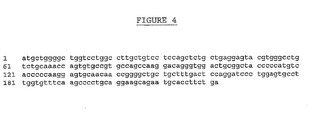
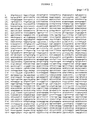
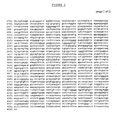
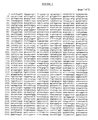
- Nucleic acids that encode trefoil peptides e. g., human intestinal trefoil factor ( Figure 4 and 7), human pS2 ( Figure 5 and 8), and human spasmolytic polypeptide ( Figure 6 and 9) or fragments thereof may be introduced into various cell types or cell-free systems for expression thereby allowing large-scale production, purification, and patient therapy.
- Typical expression vectors contain promoters that direct the synthesis of large amountsof mRNA corresponding to the inserted intestinal trefoil peptide nucleic acid in the plasmid-bearing cells. They may also include a eukaryotic or prokaryotic origin of replication sequence allowing for their autonomous replication within the host organism, sequences that encode genetic traits that allow vector-containing cells to be selected for in the presence of otherwise toxic drugs, and sequences that increase the efficiency with which the synthesizedmRNA is translated. Stable long-term vectors may be maintained as freely replicating entities by using regulatory elements of, for example, viruses (e. g., the OriP sequences from the Epstein Barr Virus genome). Cell lines may also be produced that have integrated the vector into the genomic DNA, and in this manner the gene product is produced on a continuous basis.
- viruses e. g., the OriP sequences from the Epstein Barr Virus genome
- plasmid vectors contain several elements required for the propagation of the plasmid in bacteria, and for expression of the DNA inserted into the plasmid. Propagation of only plasmid-bearing bacteria is achieved by introducing, into the plasmid, selectable marker-encoding sequences that allow plasmid-bearing bacteria to grow in the presence of otherwise toxic drugs.
- the plasmid also contains a transcriptional promoter capable of producing large amountsof mRNA from the cloned gene. Such promoters may be (but are not necessarily) inducible promoters that initiate transcription upon induction.
- the plasmid also preferably contains a polylinker to simplify insertion of the gene in the correct orientation within the vector.
- Mammalian cells can also be used to express a trefoil peptide.
- Stable or transient cell line clones can be made using intestinal trefoil peptide expression vectors to produce the trefoil peptides in a soluble (truncated and tagged) form.
- Appropriate cell lines include, for example, COS, HEK293T, CHO, or NIH cell lines.
- the appropriate expression vectors are constructed, they are introduced into an appropriate host cell by transformation techniques, such as, but not limited to, calcium phosphate transfection, DEAE-dextran transfection, electroporation, microinjection, protoplast fusion, or liposome-mediated transfection.
- the host cells that are transfected with the vectors of this invention may include (but are not limited to) E. coli or other bacteria, yeast, fungi, insect cells (using, for example, baculoviral vectors for expression in SF9 insect cells), or cells derived from mice, humans, or other animals.
- In vitro expression of trefoil peptides, fusions, or polypeptide fragments encoded by cloned DNA may also be used.
- Transgenic plants, plant cells and algae are also particularly useful for generating recombinant intestinal trefoil peptides for use in the methods and compositions of the invention.
- transgenic tobacco plants or cultured transgenic tobacco plant cells expressing an intestinal trefoil peptide can be created using techniques known in the art (see, for example, U. S. Patent Nos. 5,202,422 and 6,140,075 ).
- Transgenic algae expression systems can also be used to produce recombinant intestinal trefoil peptides (see, for example, Chen et al., Curr. Genet. 39: 365-370,2001 ).
- a recombinant protein Once a recombinant protein is expressed, it can be isolated from cell lysates using protein purification techniques such as affinity chromatography.
- the recombinant protein can, if desired, be purified further by e. g., high performance liquid chromatography (HPLC; e. g., see Fisher, Laboratory Techniques In Biochemistry And Molecular Biology, Work and Burdon, Eds., Elsevier,1980 ).
- HPLC high performance liquid chromatography
- Polypeptides of the invention particularly short intestinal trefoil peptide fragments can also be produced by chemical synthesis using, for example, Merrifield solid phase synthesis, solution phase synthesis, or a combination of both (see, for example, the methods described in Solid Phase Peptide Synthesis, 2nd ed., 1984, The Pierce Chemical Co.,Rockford, IL ).
- peptide fragments are then be condensed by standard peptide assembly chemistry.
- Trefoil peptide therapy is initiated prior to antineoplastic therapy (i. e., chemotherapy or radiation therapy), as a prophylactic to delay or prevent the onsetof mucositis.
- antineoplastic therapy i. e., chemotherapy or radiation therapy
- the patient begins intestinal trefoil peptide therapy three days prior to the first dose of antineoplastic therapy.
- the patient rinses the oral cavity with an intestinal trefoil peptide-containing solution.
- the trefoil peptide is provided as a concentrated oral spray.
- the patient swallows the solution, providing protection for the epithelial cells of the esophagus and lower gastrointestinal tract.
- intestinal trefoil peptide therapy In patients with existing mucositis, epithelial healing is promoted using intestinal trefoil peptide therapy as described above.
- Palliative therapy is provided using benzocaine (a local anesthetic), and nystatin (an antifungal).
- the intestinal trefoil peptide can beco-formulated with the benzocaine and nystatin.
- Rinse#I Mix equal partsof : (i) diphenhydramine elixir(Benadryl (g)) (ii) kaolin-pectin suspension(KaopectateM)) (iii) viscous lidocaine HCl (2%) (iv) nystatin (oral suspension; 100,000 iu/ml) (v) ITF (2.5 mg/ml) preferably swallowed after swishing Rinse#2 : Mix equal partsof : (i) diphenhydramine elixir(Benadryl (g) (ii)Maalox (MgOH & A1OH ; 40 mg/ml) (iii) viscous lidocaineHC1 (2%) (iv) ITF (2.5 mg/ml) preferably swallowed after swishingOtlier Embodiments All publications and patent applications cited in this specification are herein incorporated by reference as if each individual publication or patent application were specifically and individually indicated to be a
Landscapes
- Health & Medical Sciences (AREA)
- Life Sciences & Earth Sciences (AREA)
- Pharmacology & Pharmacy (AREA)
- Proteomics, Peptides & Aminoacids (AREA)
- Gastroenterology & Hepatology (AREA)
- Chemical & Material Sciences (AREA)
- Engineering & Computer Science (AREA)
- Bioinformatics & Cheminformatics (AREA)
- Immunology (AREA)
- Medicinal Chemistry (AREA)
- Endocrinology (AREA)
- Zoology (AREA)
- Epidemiology (AREA)
- Animal Behavior & Ethology (AREA)
- General Health & Medical Sciences (AREA)
- Public Health (AREA)
- Veterinary Medicine (AREA)
- Medicines That Contain Protein Lipid Enzymes And Other Medicines (AREA)
- Medicinal Preparation (AREA)
- Acyclic And Carbocyclic Compounds In Medicinal Compositions (AREA)
Applications Claiming Priority (2)
| Application Number | Priority Date | Filing Date | Title |
|---|---|---|---|
| US28624001P | 2001-04-24 | 2001-04-24 | |
| EP02764324A EP1383527A4 (fr) | 2001-04-24 | 2002-04-24 | Procedes et compositions de traitement de lesions buccales et oesophagiennes |
Related Parent Applications (1)
| Application Number | Title | Priority Date | Filing Date |
|---|---|---|---|
| EP02764324A Division EP1383527A4 (fr) | 2001-04-24 | 2002-04-24 | Procedes et compositions de traitement de lesions buccales et oesophagiennes |
Publications (2)
| Publication Number | Publication Date |
|---|---|
| EP1842858A2 true EP1842858A2 (fr) | 2007-10-10 |
| EP1842858A3 EP1842858A3 (fr) | 2008-04-02 |
Family
ID=38462260
Family Applications (1)
| Application Number | Title | Priority Date | Filing Date |
|---|---|---|---|
| EP07112139A Withdrawn EP1842858A3 (fr) | 2001-04-24 | 2002-04-24 | Procédés et compositions pour traiter des lésions orales et oesophagiques |
Country Status (1)
| Country | Link |
|---|---|
| EP (1) | EP1842858A3 (fr) |
Citations (1)
| Publication number | Priority date | Publication date | Assignee | Title |
|---|---|---|---|---|
| WO2001002570A1 (fr) | 1999-07-05 | 2001-01-11 | Vlaams Interuniversitair Instituut Voor Biotechnologie | Distribution de peptides en trefle |
Family Cites Families (3)
| Publication number | Priority date | Publication date | Assignee | Title |
|---|---|---|---|---|
| US6221840B1 (en) * | 1991-02-14 | 2001-04-24 | The General Hospital Corporation | Intestinal trefoil proteins |
| US6063755A (en) * | 1991-02-14 | 2000-05-16 | The General Hospital Corporation | Intestinal trefoil proteins |
| CA2196876C (fr) * | 1994-08-26 | 2007-04-17 | Lars Thim | Dimeres de peptides a trois boucles |
-
2002
- 2002-04-24 EP EP07112139A patent/EP1842858A3/fr not_active Withdrawn
Patent Citations (1)
| Publication number | Priority date | Publication date | Assignee | Title |
|---|---|---|---|---|
| WO2001002570A1 (fr) | 1999-07-05 | 2001-01-11 | Vlaams Interuniversitair Instituut Voor Biotechnologie | Distribution de peptides en trefle |
Non-Patent Citations (1)
| Title |
|---|
| PICO J-L ET AL: "Mucositis: Its Occurence, Consequences, and Treatment in the Oncology Setting.", THE ONCOLOGIST, vol. 3, 1998, pages 446 - 451, XP003029882 |
Also Published As
| Publication number | Publication date |
|---|---|
| EP1842858A3 (fr) | 2008-04-02 |
Similar Documents
| Publication | Publication Date | Title |
|---|---|---|
| US20110160118A1 (en) | Methods and compositions for treating oral and esophageal lesions | |
| EP1383527A1 (fr) | Procedes et compositions de traitement de lesions buccales et oesophagiennes | |
| US7538082B2 (en) | Methods and compositions for treating oral and esophageal lesions | |
| AU2002334886B2 (en) | Methods and compositions for treating dermal lesions | |
| US20090227512A1 (en) | Methods and compositions for treating and preventing distal bowel lesions | |
| US20030185839A1 (en) | Methods and compositions for treating dermal lesions | |
| ES2663777T3 (es) | Dispositivos de administración mucosa multidireccionales y métodos de uso | |
| US9730865B2 (en) | Application and uses of PRG4 and therapeutic modulation thereof | |
| AU2002334886A1 (en) | Methods and compositions for treating dermal lesions | |
| AU2003224773B2 (en) | Combination therapy using trefoil peptides | |
| JPH05505170A (ja) | 成長因子による口内粘膜炎の治療および予防 | |
| JPH059412B2 (fr) | ||
| JPH11514967A (ja) | 粘膜炎症の治療用医薬の製造のためのヒアルロン酸およびnsaidの使用 | |
| US20030181384A1 (en) | Methods and compositions for treating vaginal, cervical, and uterine epithelial lesions | |
| US20040171544A1 (en) | Trefoil domain-containing polypeptides and uses thereof | |
| AU2011331901A1 (en) | Anti-inflammatory compositions | |
| JP2001511797A (ja) | 創傷の治癒 | |
| US20060188471A1 (en) | Methods of treating epithelial lesions | |
| US20030105016A1 (en) | Methods and compositions for treating vaginal, cervical, and uterine epithelial lesions | |
| Sheoran | Buccal drug delivery system: A review | |
| EP1842858A2 (fr) | Procédés et compositions pour traiter des lésions orales et oesophagiques | |
| HK1109742A (en) | Methods and compositions for treating oral and esophageal lesions | |
| AU2002307512A1 (en) | Methods and compositions for treating oral and eosophageal Lesions | |
| AU2007240204A1 (en) | Methods and compositions for treating oral and esophageal lesions | |
| EP4603085A1 (fr) | Utilisation d'un dérivé de stilbène dans la prévention et/ou le traitement d'ulcères |
Legal Events
| Date | Code | Title | Description |
|---|---|---|---|
| PUAI | Public reference made under article 153(3) epc to a published international application that has entered the european phase |
Free format text: ORIGINAL CODE: 0009012 |
|
| AC | Divisional application: reference to earlier application |
Ref document number: 1383527 Country of ref document: EP Kind code of ref document: P |
|
| AK | Designated contracting states |
Kind code of ref document: A2 Designated state(s): AT BE CH CY DE DK ES FI FR GB GR IE IT LI LU MC NL PT SE TR |
|
| PUAL | Search report despatched |
Free format text: ORIGINAL CODE: 0009013 |
|
| AK | Designated contracting states |
Kind code of ref document: A3 Designated state(s): AT BE CH CY DE DK ES FI FR GB GR IE IT LI LU MC NL PT SE TR |
|
| RIC1 | Information provided on ipc code assigned before grant |
Ipc: A61K 38/00 20060101AFI20080227BHEP Ipc: A61K 38/16 20060101ALI20080227BHEP |
|
| REG | Reference to a national code |
Ref country code: HK Ref legal event code: DE Ref document number: 1109742 Country of ref document: HK |
|
| 17P | Request for examination filed |
Effective date: 20080930 |
|
| 17Q | First examination report despatched |
Effective date: 20081030 |
|
| AKX | Designation fees paid |
Designated state(s): AT BE CH CY DE DK ES FI FR GB GR IE IT LI LU MC NL PT SE TR |
|
| TPAC | Observations filed by third parties |
Free format text: ORIGINAL CODE: EPIDOSNTIPA |
|
| STAA | Information on the status of an ep patent application or granted ep patent |
Free format text: STATUS: THE APPLICATION IS DEEMED TO BE WITHDRAWN |
|
| 18D | Application deemed to be withdrawn |
Effective date: 20121009 |
|
| REG | Reference to a national code |
Ref country code: HK Ref legal event code: WD Ref document number: 1109742 Country of ref document: HK |