EP1843543A1 - Procédé, dispositif et système d'authentification pour un réseau de partage de fichiers poste à poste - Google Patents
Procédé, dispositif et système d'authentification pour un réseau de partage de fichiers poste à poste Download PDFInfo
- Publication number
- EP1843543A1 EP1843543A1 EP06300335A EP06300335A EP1843543A1 EP 1843543 A1 EP1843543 A1 EP 1843543A1 EP 06300335 A EP06300335 A EP 06300335A EP 06300335 A EP06300335 A EP 06300335A EP 1843543 A1 EP1843543 A1 EP 1843543A1
- Authority
- EP
- European Patent Office
- Prior art keywords
- application
- file sharing
- authenticated
- identifier
- sharing application
- Prior art date
- Legal status (The legal status is an assumption and is not a legal conclusion. Google has not performed a legal analysis and makes no representation as to the accuracy of the status listed.)
- Granted
Links
Images



Classifications
-
- H—ELECTRICITY
- H04—ELECTRIC COMMUNICATION TECHNIQUE
- H04L—TRANSMISSION OF DIGITAL INFORMATION, e.g. TELEGRAPHIC COMMUNICATION
- H04L63/00—Network architectures or network communication protocols for network security
- H04L63/08—Network architectures or network communication protocols for network security for authentication of entities
- H04L63/0807—Network architectures or network communication protocols for network security for authentication of entities using tickets, e.g. Kerberos
-
- H—ELECTRICITY
- H04—ELECTRIC COMMUNICATION TECHNIQUE
- H04L—TRANSMISSION OF DIGITAL INFORMATION, e.g. TELEGRAPHIC COMMUNICATION
- H04L51/00—User-to-user messaging in packet-switching networks, transmitted according to store-and-forward or real-time protocols, e.g. e-mail
- H04L51/04—Real-time or near real-time messaging, e.g. instant messaging [IM]
- H04L51/046—Interoperability with other network applications or services
-
- H—ELECTRICITY
- H04—ELECTRIC COMMUNICATION TECHNIQUE
- H04L—TRANSMISSION OF DIGITAL INFORMATION, e.g. TELEGRAPHIC COMMUNICATION
- H04L63/00—Network architectures or network communication protocols for network security
- H04L63/18—Network architectures or network communication protocols for network security using different networks or channels, e.g. using out of band channels
-
- H—ELECTRICITY
- H04—ELECTRIC COMMUNICATION TECHNIQUE
- H04L—TRANSMISSION OF DIGITAL INFORMATION, e.g. TELEGRAPHIC COMMUNICATION
- H04L67/00—Network arrangements or protocols for supporting network services or applications
- H04L67/01—Protocols
- H04L67/10—Protocols in which an application is distributed across nodes in the network
- H04L67/104—Peer-to-peer [P2P] networks
-
- H—ELECTRICITY
- H04—ELECTRIC COMMUNICATION TECHNIQUE
- H04L—TRANSMISSION OF DIGITAL INFORMATION, e.g. TELEGRAPHIC COMMUNICATION
- H04L69/00—Network arrangements, protocols or services independent of the application payload and not provided for in the other groups of this subclass
- H04L69/30—Definitions, standards or architectural aspects of layered protocol stacks
- H04L69/32—Architecture of open systems interconnection [OSI] 7-layer type protocol stacks, e.g. the interfaces between the data link level and the physical level
- H04L69/322—Intralayer communication protocols among peer entities or protocol data unit [PDU] definitions
- H04L69/329—Intralayer communication protocols among peer entities or protocol data unit [PDU] definitions in the application layer [OSI layer 7]
Definitions
- the present invention relates to networking and, more particularly, relates to peer-to-peer (P2P) networking.
- P2P peer-to-peer
- P2P networks are currently used widely in the personal computer world and in connection with the Internet. Additionally, it is expected that P2P networks will also become widely used in connection with mobile/wireless telephones and other wireless devices. P2P networks generally have an architecture in which multiple computers, workstations or other computerized devices share in common the same capabilities and responsibilities and communicate with one another essentially as equals or "peers".
- P2P networks are available today, including those that afford instant messaging (IM), file-sharing (FS), and distributed computing capabilities.
- P2P FS networks in particular make it possible for a large number of peers to search for, browse, access and download large numbers of files that are stored by one another.
- Conventional P2P FS networks are designed to allow all peers to have equal, essentially unrestricted access to the files of one another.
- conventional P2P FS networks allow for searches to be formed with respect to a large number of peers, allow simultaneous downloads from multiple sources, and allow peers to share files while they are downloading them.
- P2P FS networks have no central server. Although allowing unrestricted access to files in this manner is appropriate and desirable in many circumstances, this is not always the case.
- P2P FS networks generally have no such restrictions and do not allow for such restrictions.
- P2P FS networks allow a given peer to differentiate among other peers on the network, in general such P2P FS networks still do not allow the given peer to restrict access to a particular subset of peers on the network.
- the differentiation that does occur generally is internal to the P2P FS networks and identifies applications instead of users, and consequently is of limited benefit as users switch among devices or applications (e.g., as their identities change).
- the eDonkey2000/Overnet P2P FS network available from MetaMachine, Inc. of New York, NY includes an "Add Friends" feature, that feature does not allow a peer to limit access to its files to only those other peers that are listed as “friends”. Nor does it allow a peer to easily find one of its friends. Rather, the feature merely allows a peer to identify other eDonkey users, to chat with those users, and/or to provide the users with more bandwidth.
- P2P networks that do allow for restrictions to be placed on how different peers communicate, these P2P networks fail to provide the benefits that are available from P2P FS networks.
- P2P IM networks allow for private communications between peers, and further allow files to be sent from one peer to another, such networks do not allow a peer to independently search, browse or access the files of another peer as can be achieved with P2P FS networks.
- no P2P IM networks provide a search for files on the whole network nor download from multiple sources simultaneously.
- the present inventors have recognized that many computerized devices which operate in conjunction with P2P networks, and which in particular are configured to communicate via P2P FS networks, are configured for (or capable of being configured for) communications via authenticated P2P networks (e.g., P2P IM networks) as well.
- authenticated P2P networks e.g., P2P IM networks
- the present inventors have further recognized that an authenticated P2P network relationship between such computerized devices could be leveraged to allow for authenticated communications via a P2P FS network.
- the present inventors have recognized that a given computerized device could meaningfully restrict the accessing of its files by way of a P2P FS network by requiring that any other computerized device attempting access via a P2P FS network provide a special identification code or the like that was generated by the given computerized device and was provided to the accessing computerized device by way of an independent authenticated P2P network (for example, a P2P IM network) linking those two devices.
- an independent authenticated P2P network for example, a P2P IM network
- the present invention relates to a method of authenticating a first peer-to-peer ("P2P") file sharing application.
- the method includes (a) providing an identifier from a second P2P file sharing application to a second authenticated application associated therewith, and (b) transmitting the identifier from the second authenticated application for receipt by a first authenticated application and subsequently by the first P2P file sharing application with which the first authenticated application is associated.
- the method further includes (c) receiving the identifer at the second P2P file sharing application from the first P2P file sharing application subsequent to the transmitting of the identifier in (b), and (d) authenticating the first P2P file sharing application if the identifier received in (c) corresponds to that provided in (a).
- the present invention relates to a method of authenticating a first peer-to-peer ("P2P") file sharing application.
- the method includes (a) transmitting a first signal from the first P2P file sharing application or a first authenticated application associated therewith for receipt by a second P2P file sharing application or a second authenticated application associated therewith, respectively, and (b) receiving at the first authenticated application an identifier that was provided from the second authenticated application.
- the method also includes (c) communicating the identifier from the first authenticated application to the first P2P file sharing application, and (d) transmitting the identifier or a signal based upon the identifier for receipt by the second P2P file sharing application. Subsequently, the first P2P file sharing application is allowed to access information by way of the second P2P file sharing application.
- the present invention relates to an apparatus allowing for authentication of a first peer-to-peer (P2P) file sharing application.
- the apparatus includes a processing device on which is operating a second P2P file sharing application and a second authenticated program that is associated with the second P2P file sharing application.
- the second P2P file sharing application is configured to provide an identifier to the second authenticated program, and the second authenticated program is configured to transmit the identifier to a first authenticated program associated with the first P2P file sharing application.
- the authentication of the first P2P file sharing application occurs after the second P2P file sharing application receives the identifier back from the first P2P file sharing application.
- FIG. 1 is a simplified illustration of an exemplary networked group of computerized devices that are configured to allow for authenticated communications via a P2P FS network in accordance with at least some embodiments of the present invention
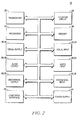
- FIG. 2 is a block diagram showing exemplary components of one of the computerized devices of FIG. 1;
- FIG. 3 is a mixed block/signal flow diagram showing in schematic form two of the computerized devices of FIG. 1, each of which has an authenticated application and a P2P FS application, where the P2P FS application of one of the devices is authenticated by the P2P FS application of the other of the devices in a first manner;
- FIG. 4 is a mixed block/signal flow diagram showing in schematic form two of the computerized devices of FIG. 1, each of which has an authenticated application and a P2P FS application, where the P2P FS application of one of the devices is authenticated by the P2P FS application of the other of the devices in a second manner that differs from the first manner of FIG. 3;
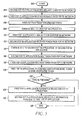
- FIG. 5 is a flow chart showing exemplary steps of operation of the computerized devices of FIG. 3 in performing the first manner of authentication.
- FIG. 6 is a flow chart showing exemplary steps of operation of the computerized devices of FIG. 4 in performing the second manner of authentication.
- an exemplary communications system 10 is shown in which three computerized devices are in communication and networked with one another.
- two of the three devices are first and second cellular telephones 12 and 14, respectively, while the third of the devices is a personal computer 16.
- the three computerized devices 12, 14 and 16 are all coupled with one another by way of the Internet 18, with each of the cellular telephones 12 and 14 being respectively coupled to the Internet by way of respective wireless communication links 20 and the computer 16 being coupled to the Internet by way of a hard-wired connection 22.
- the computerized devices 12, 14 and 16 communicate at least in part by way of one or more peer-to-peer (“P2P”) networks.
- P2P peer-to-peer
- FIG. 1 shows the system 10 to include the particular computerized devices 12, 14 and 16 shown in FIG. 1 and also shows those devices to be linked by way of the Internet 18 and the particular links 20 and 22, it should be understood that this embodiment is only exemplary and the present invention is intended to encompass any and all possible groupings of networked computerized devices that communicate at least in part by way of one or more P2P networks. Thus, the present invention is intended to encompass embodiments of systems having any number of computerized devices that are capable of P2P communications ranging from two devices to possibly thousands or more computerized devices.
- the present embodiment shows two devices of the system 10 to be cellular telephones and one of the devices to be a personal computer
- the present invention is also intended to encompass systems in which one or more of the computerized devices is/are any of a number of different types of devices including, for example, other wireless handheld devices such as personal digital assistance (PDAs), laptop or other portable personal computers that are enabled for wireless communications, other forms of computers including desktop computers, more powerful types of computers including mainframe computers, as well as less powerful computerized devices such as workstations.
- PDAs personal digital assistance
- laptop or other portable personal computers that are enabled for wireless communications
- other forms of computers including desktop computers, more powerful types of computers including mainframe computers, as well as less powerful computerized devices such as workstations.
- FIG. 1 shows the computerized devices of the system 10 as being networked by way of the Internet 18, the present invention is also intended to encompass any embodiment in which two or more computerized devices intercommunicate by way of one or more P2P networks, regardless of whether the underlying network is the Internet or follows any other particular communication protocol or format. Also, notwithstanding the showing of the wireless communication links 20 and the hardwired link 22 in FIG. 1, the present invention is intended to also apply to any computerized devices that communicate by way of one or more P2P networks, regardless of the particular medium or physical layers by which such communication occurs.
- FIG. 2 there is provided a block diagram illustrating exemplary internal components 30 of the first cellular telephone 12 of FIG. 1.
- the block diagram is equally representative of the internal components of the second cellular telephone 14, and is further intended to be representative of the internal components of other wireless or mobile devices other than cellular telephones, for example, wireless personal digital assistants or other handheld devices.
- the computer 16 shown in FIG. 1 has or can have many or all of the same (or similar) components as are shown to be included in FIG. 2 as being part of the cellular telephone 12 and as are described in further detail below.
- the internal components 30 of the first cellular telephone 12 include one or more wireless transceivers 32, a processor 34, a memory portion 36, one or more output devices 38, and one or more input devices 40.
- the processor 34 can be any of a variety of different processing devices including, for example, a microprocessor.
- the internal components 30 include a user interface (not shown) that comprises one or more output devices 38 and one or more input devices 40.
- Each transceiver 32 can utilize any of a variety of different wireless technologies for communication, for example, long-range wireless communications technologies such as CDMA or GSM as well as short-range wireless communications technologies such as BlueTooth technology.
- the internal components 30 can further include a component interface 42 to provide a direct connection to auxiliary components or accessories for additional or enhanced functionality.
- the internal components 30 preferably further include a power supply 44, such as a battery, for providing power to the other internal components while enabling the overall cellular telephone to be portable.
- the internal components 30 can operate in conjunction with one another to perform a number of functions. For example, upon reception of wireless signals, the internal components 30 detect communication signals and the transceiver 32 demodulates the communication signals to recover incoming information, such as voice data and/or other data, transmitted by the wireless signals. After receiving the incoming information from the transceiver 32, the processor 34 formats the incoming information for the one or more output devices 38 and/or for storage in the memory 36. Similarly, for transmission of wireless signals, the processor 34 formats outgoing information, which can (but need not) be activated by the input devices 40, and conveys the outgoing information to the transceiver 32 for modulation to communication signals.
- incoming information such as voice data and/or other data
- the input and output devices 38, 40 of the internal components 30 can include a variety of types of visual, audio and/or mechanical input and output devices.
- the output device(s) 38 can include a visual output device 46 such as a liquid crystal display or a light emitting diode indicator, an audio output device 48 such as a speaker, alarm and/or buzzer, and/or a mechanical output device 50 such as a vibrating mechanism.
- the input devices 40 can include a visual input device 52 such as an optical sensor (for example, a camera), an audio input device 54 such as a microphone, and a mechanical input device 56 such as a flip sensor, keyboard, keypad, selection button, touch pad, touch screen, capacitive sensor, motion sensor, and switch.
- Actions that actuate one or more of the input devices 40 can include, but are not limited to, opening of the cellular telephone, unlocking the device, moving the device to actuate a motion, moving the device to actuate a location positioning system, pressing of a button on the device, and operating the device.
- the internal components 30 can also include a location circuit 58.
- Examples of the location circuit 58 include, but are not limited to, a Global Positioning System (GPS) receiver, a triangulation receiver, an accelerometer, a gyroscope, or any other information-collecting device that can identify a current location of the cellular telephone 12 (or of one or more of its internal components 30).
- GPS Global Positioning System
- the memory portion 36 of the internal components 30 can include any number of a variety of different types of memory devices such as random access memory (RAM) devices, and can be used to store and retrieve data. Typically, although not necessarily, operation of the memory portion 36 in storing and retrieving data is governed by commands from the processor 34.
- the data that is stored by the memory portion 36 can include, but need not be limited to, operating systems (or other systems software), applications, and data. Each operating system in particular includes executable code that controls basic functions of the cellular telephone, such as interaction among the various internal components 30, communication with external devices via the transceiver 32 and/or the component interface 42, and storage and retrieval of applications and data to and from the memory portion 36.
- each application includes executable code that operates in conjunction with the operating system to provide more specific functionality for the cellular telephone 12, such as file system service and handling of protected and unprotected data stored in the memory portion 36.
- Exemplary applications can include, for example, a discovery application for discovering media on behalf of a user and his/her phone and a download user agent responsible for downloading the media object described by the download descriptor.
- these applications can also include P2P networking applications such as P2P file-sharing (FS) applications and P2P instant messaging (IM) applications.
- the applications can also include application files that are downloaded from another source by way of the P2P FS sharing applications.
- such data can include, for example, non-executable code or information that can be referenced and/or manipulated by an operating system or application for performing functions of the cellular telephone 12.
- data files can include data files that are downloaded from another source by way of P2P FS applications, as well as data that is obtained by way of another P2P application (for example, an IM application) or non-P2P application.
- the data files can include files having data with any of a variety of formats, purposes, types or uses including, for example, audio files, photographic or image files, text files, or other data files.
- a first computerized device 60 includes a first P2P FS application 62 referred to as "node 1" and a second, authenticated application that in the present embodiment is a P2P IM application 64 that is referred to as "user 1".
- the P2P FS application 62 and the P2P IM application 64 are associated with and in communication with one another, as represented symbolically by a communication link 66.
- the P2P FS and IM applications 62 and 64 are actually performed by way of the same processing device and/or stored on the same memory device, such that the communication link 66 merely is indicative of the fact that the two applications are discrete software applications that are linked functionally.
- the present invention is also intended to encompass embodiments in which the P2P FS application 62 and the P2P IM application 64 are performed by different processing devices and/or stored on distinct memory devices, which can exist on a shared computerized device or other machine, or even possibly on separate computerized devices or machines that are potentially at different or remote locations from one another.
- the P2P IM application 64 is shown to be the authenticated application that is in communication with the P2P FS application 62, in alternate embodiments other authenticated applications allowing for private or restricted communications between one computerized device and another computerized device could also be employed.
- the P2P IM application is shown to be used in the present embodiment since P2P IM applications are already commonly in use to allow peers to communicate private or otherwise restricted-access messages to other peers.
- the first computerized device 60 is in communication with a second computerized device 70 that, like the first computerized device, includes both a second P2P FS application 72 referred to as "node 2" and a second authenticated application that is a P2P IM application 74 referred to as "user 2".
- the two applications 72 and 74 are associated with and in communication with one another by a communication link 76.
- the associated applications of each pair not merely be in communication with one another but also be related or affiliated with one another in a functionally close manner such that communications passed between the associated applications not be shared with other applications, or at least not be shared with other applications that do not have the same type of close relationship. That is, the associated applications 62 and 64 are closely affiliated such that the applications communicate on a confidential or substantially confidential basis. Likewise, the associated applications 72 and 74 are closely affiliated such that the applications communicate on a confidential or substantially confidential basis.
- the respective P2P FS applications 62 and 72 of the computerized devices 60 and 70, respectively, are in communication by way of a P2P FS network technology such as eDonkey2000, Gnutella, Gnutella2, or FastTrack, among others, and this P2P networking connection is represented by a communication link 68.
- the P2P FS applications 62, 72 can be any type of P2P FS application that is capable of operating in relation to the particular P2P network technology that is being employed, for example, an eDonkey2000 application, a Gnutella application, a Gnutella2 application, or a Kazaa application.
- the respective P2P IM applications 64 and 74 of the respective computerized devices 60 and 70, respectively, are in communication via a P2P IM network technology represented by way of a communication link 78.
- the P2P IM network technology that is used in any particular embodiment can vary and, in at least some embodiments, is an AOL instant messenger ("AIM") technology, a Microsoft-based instant messaging technology, and a Jabber-based instant messaging technology.
- AIM AOL instant messenger
- the P2P IM applications 64, 74 can be any type of P2P IM application that is capable of operating in relation to the particular P2P IM network technology that is being used, e.g., the applications are AIM, Microsoft-based, or Jabber-based P2P IM applications.
- the authenticated applications need not be P2P IM applications but instead can be other types of authenticated applications, for example, an Internet relay chat (IRC) application, a P-to-T (push-to-talk) application or a short message service (SMS) application, as well as possibly other authentication mechanisms such as a corporate authentication server or other data communication services.
- IRC Internet relay chat
- P-to-T push-to-talk
- SMS short message service
- the communication link 78 would be representative of an authenticated networking connection having that type of format.
- both links can and typically (albeit not necessarily) do operate by way of the same shared underlying communications hardware and software/protocols. That is, for example, supposing that the first computerized device 60 corresponds to the first cellular telephone 12 of FIG. 1, both the communications occurring by way of the P2P FS communication link 68 and the P2P IM communication link 78 would typically occur by way of the same wireless link 20 and by way of the Internet 18.
- the links 68 and 78 are shown to be independent from one anther in FIG. 3, the links usually are achieved using the same, shared hardware and/or possibly some of the same so are.
- the P2P FS network communications it is also possible for the P2P FS network communications to occur by way of an entirely different medium than the P2P IM network communications or other authenticated communications.
- the mixed block/signal flow diagram of FIG. 3 not only shows applications that are operating on the computerized devices in accordance with certain embodiments of the present invention, but further shows a first particular manner of communications among the various applications of the computerized devices that allows those computerized devices to achieve P2P FS communications that are authenticated.
- This manner of communications is described below in detail with reference to both FIG. 3 and FIG. 5.
- this manner of communications allows for the P2P FS application 62 of the first computerized device 60 to restrict access to its files (that it possesses or over which it otherwise has control) to only certain peers rather than to all possible peers who might attempt to link up with that P2P FS application by way of the P2P FS communication link 68.
- This manner of communications presupposes that the second P2P FS application 72 has identified the first P2P FS application 62 as having control over files that the second P2P FS application wishes to access, and that the second P2P FS application knows the address of the first P2P FS application.
- this manner of communications would be particularly desirable and appropriate in situations where a party has already identified an address of a P2P FS application at which desired (or potentially-desirable) files are located, for example, either because that party had already been provided with that address information (e.g., the party was provided with that address information by a friend) or because the party had identified the address information by way of a search that was conducted (e.g., an index search).
- intercommunications between the first and second computerized devices 60, 70 of FIG. 3 can take a first form as indicated by the steps of a flow chart in FIG. 5 and corresponding signals shown in FIG. 3.
- the second P2P FS application 72 or the second computerized device 70 initially makes a determination that it would like to access the file contents of the P2P FS application 62 of the first computerized device 60. Therefore, at a step 102, the second P2P FS application 72 sends a request over the P2P FS communication link 68 to the address of the first P2P FS application 62.
- the signal transmitted in step 102 corresponds to a first signal 140 shown in FIG. 3 and, in particular, typically includes an indication of the P2P IM application 74 (or other authenticated application) with which the second P2P FS application 72 is associated (e.g., as shown in FIG. 2 "IM: user 2").
- the first P2P FS application 62 receives the signal communicated by the second P2P FS application 72.
- the first P2P FS application 62 (or another associated application) then at a step 106 creates a token, which can be a randomly generated code such as a randomly generated number or alphanumeric code, or alternately can be indicative of a user identifier, a node address and/or a time stamp (or could also be a combination of a randomly generated code with such other information).
- the token created at step 106 by the P2P FS application 62 in turn is sent by the first P2P FS application to the first P2P IM application 64, at a step 108.
- the identity of the P2P IM application 74 is also forwarded on to the P2P IM application 64 along with the token. This corresponds to a signal 142 shown in FIG. 3 (e.g., "user 2+ token").
- the first P2P IM application 64 sends the token over the P2P IM communication link 78 to the second P2P IM application 74, the address of which is known to the P2P IM application 64 since it was passed to that application in step 108.
- the sending of the token over the P2P IM communication link 78 corresponds to a signal 144 shown in FIG. 3.
- the sending of the token is accompanied by an identifier of the first P2P FS application 62 (e.g., "node 1''), so that the second computerized device 70 upon receiving the token can associate its original request in step 102 with the incoming token.
- the second P2P IM application 74 receives the token off of the P2P IM communication link 78. Then, at a step 114, the token is sent from the second P2P IM application 74 to the second P2P FS application 72 by way of the communication link 76, which corresponds to a signal 146 shown in FIG. 3. As with the signal 144, in at least some embodiments the signal 146 includes both the token and the identifier of the first P2P FS application (e.g., "node 1").
- the second P2P FS application 72 then sends an additional communication via the P2P FS communication link 68 to the first P2P FS application 62 that includes the token.
- the sending of this token in step 116 corresponds to a signal 148 shown in FIG. 3.
- the first P2P FS application 62 receives the token off of the P2P FS communication link 68. Then, at an additional step 120 the first P2P FS application 62 determines whether the received token is the same as the token that was created in step 106. If, at a step 122, it is determined that the tokens are the same, then the first P2P FS application 62 authenticates the second P2P FS application 72, that is, the first P2P FS application recognizes the second P2P FS application as being an authorized accessing peer, and grants access to that second P2P FS application. Although not shown, in some embodiments, the granting of access is accompanied by the sending of a signal back from the first P2P FS application 62 to the second P2P FS application 72 announcing that access has been granted.
- the second P2P FS application 72 then is able to and typically does access file information that is available at the first P2P FS application 62, at a step 126.
- the accessing typically is conducted in a secured manner, and can be any of a variety of types of accessing including, for example, searching, browsing, downloading of files, and other accessing.
- the files that are accessed can be any type of file including, for example, data files (containing any of a variety of types of data such as those discussed above), and files containing applications, programs, or other so are (including possibly operating system or other system so are).
- the routine is ended at a step 128. Also, in the event that the tokens are not the same as determined at step 122, then this is an indication either that an error in transmission has occurred or alternately that the P2P FS application attempting to access the first P2P FS application 62 is not that which is in fact associated with the second P2P IM application 74 and may be an imposter. Thus, in such case, access is not granted and the routine proceeds immediately from step 122 to the end step 128.
- FIG. 4 that figure is a mixed block/signal flow diagram that, like FIG. 3, also shows first and second computerized devices 80 and 90, respectively.
- the first and second computerized devices 80 and 90 again respectively have first and second P2P FS applications 82 and 92, respectively, and first and second authenticated applications that in the present embodiment are first and second P2P IM applications 84 and 94, respectively.
- the respective P2P FS applications 82, 92 are associated with and in communication with the respective P2P IM applications 84, 94 by way of respective communication links 86, and 96, respectively.
- the P2P FS applications 82 and 92 of the computerized devices 80 and 90 are in communication by way of a P2P FS communication link 88, and the P2P IM applications 84, 94 of the computerized devices are coupled by way of a P2P IM communication link 98.
- the mixed block/signal flow diagram provided in FIG. 4 shows a different possible manner of interaction and communication between the two computerized devices 80 and 90, which is described in further detail below with respect to both FIG. 4 and FIG. 6.
- the embodiment of FIGS. 4 and 6 makes it possible for a P2P FS application (specifically, the P2P FS application 92) to restrict access to its contents by other P2P FS applications.
- the P2P FS application (application 82) seeking access to file contents does not have the address of the P2P FS application (application 92) at which the files are stored/available, Rather, the P2P FS application seeking access to files (or the computerized device with which it is associated) has information regarding the identity of the computerized device at which the desired (or potentially desirable) file information is stored/available and knows how to contact the authenticated application (e.g., the second P2P IM application 94) of that computerized device at which the file information is stored/available (e.g., computerized device 90).
- the authenticated application e.g., the second P2P IM application 94
- the party seeking file information also typically does not know the particular file names of interest, but rather only knows that files of interest are available at a particular computerized device (e.g., at the computerized device 90).
- a particular computerized device e.g., at the computerized device 90.
- the manner of operation shown in FIGS. 4 and 6 would be particularly desirable and appropriate in circumstances where a party recognizes that another party has desirable file information on that party's computerized device but at the same time does not know with specificity the names of those files or the address of the other party's P2P FS application but rather only knows the identity of that other party and how to communicate with that other party's P2P IM application (or other authenticated application).
- an alternate manner of intercommunications between the first and second computerized devices 80 and 90 proceeds as follows. Beginning at a step 150, operation starts with the first computerized device 80 of FIG. 4 (or its user) determining that it would like to access files available at the P2P FS application of the second computerized device 90, and at the same time recognizing that it does not have the P2P FS network address of the P2P FS application 92.
- the first computerized device 80 Since the computerized device 80 (or its user) knows how to contact the computerized device 90 by way of the P2P IM communication link 98, at a step 152 the first computerized device 80 causes its P2P IM application (P2P IM application 84) to send an address request over the P2P IM communication link 98 to the second P2P IM application 94 of the second computerized device 90.
- the sending of this request corresponds to a first signal 190 shown in FIG. 4.
- the P2P FS application of the first computerized device 80 could have initiated the process by sending an address request to its associated P2P IM application.
- the second P2P IM application 94 receives the request off of the P2P IM communication link 98 and, in response, at a step 156, sends a further request to its associated P2P FS application 92 to create a token.
- the sending of this request occurs by way of the communication link 96 between the two applications 92 and 94 and corresponds to a signal 192 shown in FIG. 4.
- the second P2P IM application 94 making the token request will send an identifier of the P2P IM application 84 that made the original address request in step 152 (e.g., "generate token for IM:user1").
- the second P2P FS application 92 creates a token.
- the token can be any of the types of codes discussed above with reference to FIGS. 3 and 5.
- the token is accompanied by or itself includes the address (in this case, "address 2") of the second P2P FS application 92 on the P2P FS network.
- address 2 the address of the second P2P FS application 92 on the P2P FS network.
- the address of an application is typically either its IP address plus a port number (the IP address often but not necessarily being the same as that of the associated IM application) or a type of address specific to the FS protocol. For example, on a Gnutella2 protocol a firewalled node is identified by its GUID and the IP/port number of a hub to which it is connected.
- a step 160 the token and any appropriate accompanying information is sent back from the second P2P FS application 92 to the second P2P IM application 94, again by way of the communication link 96.
- This sending corresponds to a signal 194 shown in FIG. 4.
- the token provided in step 160 not only includes (or is accompanied by) the address information regarding the address of the P2P FS application 92, but also is accompanied by or includes the identifier of the first P2P IM application 84 that made the original request in step 152 (e.g., "user 1").
- the second P2P IM application 94 sends the token over the P2P IM communication link 98 to the first P2P IM application 84. Additionally, in step 162 the second P2P IM application 94 also sends the address of the P2P FS application 92 and also the identifier of the P2P IM application 84 to the first P2P IM application 84, either as part of the token or independently of the token.
- the sending of this information corresponds to a signal 196 shown in FIG. 4.
- the first P2P IM application 84 receives the token and accompanying information. Subsequently, this token and accompanying information is further provided to the first P2P FS application 82 by way of the communication link 86, at a step 166. The provision of this information corresponds to a signal 198 shown in FIG. 4.
- the first P2P FS application 82 attempts to enter into communications with the second P2P FS application 92 by sending the token over the P2P FS communication link 88 to the P2P FS network address corresponding to the address information that it received in step 166.
- the sending of this information corresponds to a signal 200 shown in FIG. 4.
- the token information is accompanied by the identifier of the first P2P IM application 84 that initiated the process in step 152, whose identity is known to the second P2P FS application 92 that generated the token (e.g., "IM:user1").
- the second P2P FS application 92 receives the information and then, at a step 172, the second P2P FS application determines whether the received token is the same as the token that was created in step 158. If the tokens are the same as determined at a step 174, then the second P2P FS application 92 at a step 176 authenticates the first P2P FS application 82 and grants access of its files thereto. Thus, at a step 178, the first P2P application 82 then accesses the file information available at the second P2P FS application 92, typically in a secured manner. When all accessing is complete, then the routine is ended at a step 180.
- a particular P2P FS application grants access in steps 124 and 176 typically depends upon predetermined access rights that have been given for different P2P FS application programs.
- Various levels or types of access are possible, for example, a user can browse the directory of another IM user, or search content by keywords or by metadata in one of several user repositories. Permissions for every file or every folder shared by an FS application can be set depending on IM users.
- the sending of messages for authentication is an automatic process used only for private files and with authorized users. Any other request of authentication will be ignored in order to keep anonymity on the FS network.
- the FS and IM applications can be unified in a single application.
- the embodiment of FIGS. 4 and 6, in particular, can be used to browse a friend's content repository or download a file that is being made available by the friend for sharing purposes.
- FIGS. 3-6 show two possible alternative manners of operating computerized devices so as to achieve a P2P FS network that includes an authentication mechanism by which only authorized peers or users can access certain restricted or private data
- the present invention is also intended to encompass numerous modifications and variations on these manners of operation.
- the tokens created by the P2P FS applications at which file information is stored can represent different levels of access that are appropriate for different types of users.
- certain users will be granted access rights to all of the files stored on a given computerized device whereas other users are granted access to only limited numbers of those files.
- access rights are communicated to any peer that retrieves or has retrieved a given file so that it can redistribute the file to authorized users.
- various embodiments of the present invention can provide a number of different advantages.
- various embodiments of the present invention allow a given P2P FS application to restrict or limit access to a file stored at it, and further provide this capability without modifying the normal manner of P2P communications by associating the FS application with an authenticating application such as an IM application.
- an authenticating application such as an IM application.
- users of the computerized devices employing these concepts can attain advantages that arise from each of the P2P FS applications and the P2P IM applications.
- an existing IM system as the authenticating applications also can provide an advantage to users who already employ that existing system, such that they will not have to search for friends on a new system.
- the above described processes can also be extended to work on several IM systems at the same time.
- the IM system used can be of any type, either centralized or not, so long as the IM system allows for the sending of special messages between users, which most conventional IM systems do.
- Embodiments of the present invention also allow for the creation of a decentralized storage space for private files, and can allow for the providing of a variety of rights to files and more bandwidth.
Landscapes
- Engineering & Computer Science (AREA)
- Computer Networks & Wireless Communication (AREA)
- Signal Processing (AREA)
- Computer Security & Cryptography (AREA)
- Computer Hardware Design (AREA)
- Computing Systems (AREA)
- General Engineering & Computer Science (AREA)
- Information Transfer Between Computers (AREA)
Priority Applications (1)
| Application Number | Priority Date | Filing Date | Title |
|---|---|---|---|
| EP06300335.4A EP1843543B1 (fr) | 2006-04-06 | 2006-04-06 | Procédé, dispositif et système d'authentification pour un réseau de partage de fichiers poste à poste |
Applications Claiming Priority (1)
| Application Number | Priority Date | Filing Date | Title |
|---|---|---|---|
| EP06300335.4A EP1843543B1 (fr) | 2006-04-06 | 2006-04-06 | Procédé, dispositif et système d'authentification pour un réseau de partage de fichiers poste à poste |
Publications (2)
| Publication Number | Publication Date |
|---|---|
| EP1843543A1 true EP1843543A1 (fr) | 2007-10-10 |
| EP1843543B1 EP1843543B1 (fr) | 2018-12-12 |
Family
ID=36808802
Family Applications (1)
| Application Number | Title | Priority Date | Filing Date |
|---|---|---|---|
| EP06300335.4A Expired - Lifetime EP1843543B1 (fr) | 2006-04-06 | 2006-04-06 | Procédé, dispositif et système d'authentification pour un réseau de partage de fichiers poste à poste |
Country Status (1)
| Country | Link |
|---|---|
| EP (1) | EP1843543B1 (fr) |
Cited By (5)
| Publication number | Priority date | Publication date | Assignee | Title |
|---|---|---|---|---|
| WO2010060704A2 (fr) | 2008-11-28 | 2010-06-03 | International Business Machines Corporation | Authentification d’un canal de communication secondaire à base de jeton de client à serveur à travers des canaux de communication principaux authentifiés |
| CN102904886A (zh) * | 2012-09-26 | 2013-01-30 | 曙光信息产业(北京)有限公司 | 实现文件共享的方法 |
| CN102960045A (zh) * | 2010-06-22 | 2013-03-06 | 瑞典爱立信有限公司 | 用于直接模式通信的方法和装置 |
| US20150149644A1 (en) * | 2013-11-26 | 2015-05-28 | Samsung Electronics Co., Ltd. | Method, storage medium, and apparatus for performing peer to peer service by using contacts information |
| WO2016190657A1 (fr) * | 2015-05-26 | 2016-12-01 | 김태정 | Terminal et procédé d'exploitation de terminal |
Citations (3)
| Publication number | Priority date | Publication date | Assignee | Title |
|---|---|---|---|---|
| US20040034776A1 (en) | 2002-08-14 | 2004-02-19 | Microsoft Corporation | Authenticating peer-to-peer connections |
| US20040083297A1 (en) * | 2002-10-25 | 2004-04-29 | Yahoo!, Inc. | Centrally controllable instant messaging system |
| US20040255121A1 (en) | 2002-09-25 | 2004-12-16 | Michael Eckert | Method and communication terminal device for secure establishment of a communication connection |
-
2006
- 2006-04-06 EP EP06300335.4A patent/EP1843543B1/fr not_active Expired - Lifetime
Patent Citations (3)
| Publication number | Priority date | Publication date | Assignee | Title |
|---|---|---|---|---|
| US20040034776A1 (en) | 2002-08-14 | 2004-02-19 | Microsoft Corporation | Authenticating peer-to-peer connections |
| US20040255121A1 (en) | 2002-09-25 | 2004-12-16 | Michael Eckert | Method and communication terminal device for secure establishment of a communication connection |
| US20040083297A1 (en) * | 2002-10-25 | 2004-04-29 | Yahoo!, Inc. | Centrally controllable instant messaging system |
Cited By (12)
| Publication number | Priority date | Publication date | Assignee | Title |
|---|---|---|---|---|
| WO2010060704A2 (fr) | 2008-11-28 | 2010-06-03 | International Business Machines Corporation | Authentification d’un canal de communication secondaire à base de jeton de client à serveur à travers des canaux de communication principaux authentifiés |
| WO2010060704A3 (fr) * | 2008-11-28 | 2010-10-28 | International Business Machines Corporation | Authentification d’un canal de communication secondaire à base de jeton de client à serveur à travers des canaux de communication principaux authentifiés |
| JP2012510655A (ja) * | 2008-11-28 | 2012-05-10 | インターナショナル・ビジネス・マシーンズ・コーポレーション | 認証のための方法、システム、およびコンピュータ・プログラム(1次認証済み通信チャネルによる2次通信チャネルのトークンベースのクライアント・サーバ認証) |
| US8332920B2 (en) | 2008-11-28 | 2012-12-11 | International Business Machines Corporation | Token-based client to server authentication of a secondary communication channel by way of primary authenticated communication channels |
| CN102960045A (zh) * | 2010-06-22 | 2013-03-06 | 瑞典爱立信有限公司 | 用于直接模式通信的方法和装置 |
| US20130084854A1 (en) * | 2010-06-22 | 2013-04-04 | Göran Selander | Methods and Arrangements for Direct Mode Communication |
| US8934892B2 (en) * | 2010-06-22 | 2015-01-13 | Telefonaktiebolaget L M Ericsson (Publ) | Methods and arrangements for direct mode communication |
| CN102960045B (zh) * | 2010-06-22 | 2016-05-18 | 瑞典爱立信有限公司 | 用于直接模式通信的方法和装置 |
| CN102904886A (zh) * | 2012-09-26 | 2013-01-30 | 曙光信息产业(北京)有限公司 | 实现文件共享的方法 |
| US20150149644A1 (en) * | 2013-11-26 | 2015-05-28 | Samsung Electronics Co., Ltd. | Method, storage medium, and apparatus for performing peer to peer service by using contacts information |
| US9497271B2 (en) * | 2013-11-26 | 2016-11-15 | Samsung Electronics Co., Ltd | Method, storage medium, and apparatus for performing peer to peer service by using contacts information |
| WO2016190657A1 (fr) * | 2015-05-26 | 2016-12-01 | 김태정 | Terminal et procédé d'exploitation de terminal |
Also Published As
| Publication number | Publication date |
|---|---|
| EP1843543B1 (fr) | 2018-12-12 |
Similar Documents
| Publication | Publication Date | Title |
|---|---|---|
| KR101475525B1 (ko) | 이동식 셀룰러 인핸서 | |
| EP1704746B1 (fr) | Gestion et acces a distance a des bases de donnees, a des services et a des dispositifs associes a un terminal mobile | |
| US10499205B2 (en) | SMS proxying | |
| US7545941B2 (en) | Method of initializing and using a security association for middleware based on physical proximity | |
| CN102027764B (zh) | 使用订户身份访问网络服务的方法、系统、和装置 | |
| US10887400B2 (en) | Answering a call with client through a host | |
| RU2569804C2 (ru) | Система и способ для пользовательского интерфейса, предназначенные для обнаружения и публикации информации о присутствии в сети | |
| US9485177B2 (en) | Client applications communicating via a user tunnel | |
| US20180137298A1 (en) | Remote data access techniques for portable devices | |
| EP2381708B1 (fr) | Procédé et appareil pour la fourniture de fichiers à des dispositifs électroniques | |
| US20120220279A1 (en) | Updating contact information for mobile traffic | |
| MXPA04007405A (es) | Lista de contactos unificada. | |
| RU2419238C1 (ru) | Система и способ распределения общей информации о местоположении между устройствами связи | |
| EP2885909B1 (fr) | Appareil, procédé et produit programme d'ordinateur pour partager des données | |
| EP1843543B1 (fr) | Procédé, dispositif et système d'authentification pour un réseau de partage de fichiers poste à poste | |
| US7359721B2 (en) | Communication device for displaying a shared message | |
| US20060031560A1 (en) | Method and system for transferring a file between data processing devices using a communication or instant messaging program | |
| CN101390365A (zh) | 在UPnP搜索服务中发现设备所有者的增强 | |
| JP4642652B2 (ja) | 無線制御端末、無線通信システムおよび無線通信方法 | |
| KR100976317B1 (ko) | 무선 단말의 가입자 아이디의 저장과 상호작용을 위한 방법 및 장치 | |
| EP2034699A2 (fr) | Procédé et dispositif pour supporter des interactions entre un utilisateur et des pairs | |
| WO2014117355A1 (fr) | Distribution d'un élément multimédia | |
| CN120768851A (zh) | 上网控制方法、转发设备、电子设备以及可读存储介质 | |
| KR20070027134A (ko) | 프로필 조회 서비스를 제공하는 프로필 정보 제공서버 및상기 프로필 정보 제공서버의 동작방법 |
Legal Events
| Date | Code | Title | Description |
|---|---|---|---|
| PUAI | Public reference made under article 153(3) epc to a published international application that has entered the european phase |
Free format text: ORIGINAL CODE: 0009012 |
|
| AK | Designated contracting states |
Kind code of ref document: A1 Designated state(s): AT BE BG CH CY CZ DE DK EE ES FI FR GB GR HU IE IS IT LI LT LU LV MC NL PL PT RO SE SI SK TR |
|
| AX | Request for extension of the european patent |
Extension state: AL BA HR MK YU |
|
| 17P | Request for examination filed |
Effective date: 20080326 |
|
| 17Q | First examination report despatched |
Effective date: 20080514 |
|
| AKX | Designation fees paid |
Designated state(s): AT BE BG CH CY CZ DE DK EE ES FI FR GB GR HU IE IS IT LI LT LU LV MC NL PL PT RO SE SI SK TR |
|
| RAP1 | Party data changed (applicant data changed or rights of an application transferred) |
Owner name: MOTOROLA MOBILITY, INC. |
|
| RAP1 | Party data changed (applicant data changed or rights of an application transferred) |
Owner name: MOTOROLA MOBILITY LLC |
|
| RAP1 | Party data changed (applicant data changed or rights of an application transferred) |
Owner name: GOOGLE TECHNOLOGY HOLDINGS LLC |
|
| GRAP | Despatch of communication of intention to grant a patent |
Free format text: ORIGINAL CODE: EPIDOSNIGR1 |
|
| STAA | Information on the status of an ep patent application or granted ep patent |
Free format text: STATUS: GRANT OF PATENT IS INTENDED |
|
| RIC1 | Information provided on ipc code assigned before grant |
Ipc: H04L 29/06 20060101AFI20180528BHEP Ipc: H04L 12/58 20060101ALI20180528BHEP |
|
| INTG | Intention to grant announced |
Effective date: 20180626 |
|
| RIN1 | Information on inventor provided before grant (corrected) |
Inventor name: ARNAL, JULIEN Inventor name: EHRHART, FRANCOIS-XAVIER Inventor name: HANSEN, MARK D. |
|
| GRAS | Grant fee paid |
Free format text: ORIGINAL CODE: EPIDOSNIGR3 |
|
| GRAA | (expected) grant |
Free format text: ORIGINAL CODE: 0009210 |
|
| STAA | Information on the status of an ep patent application or granted ep patent |
Free format text: STATUS: THE PATENT HAS BEEN GRANTED |
|
| AK | Designated contracting states |
Kind code of ref document: B1 Designated state(s): AT BE BG CH CY CZ DE DK EE ES FI FR GB GR HU IE IS IT LI LT LU LV MC NL PL PT RO SE SI SK TR |
|
| REG | Reference to a national code |
Ref country code: GB Ref legal event code: FG4D |
|
| REG | Reference to a national code |
Ref country code: CH Ref legal event code: EP |
|
| REG | Reference to a national code |
Ref country code: AT Ref legal event code: REF Ref document number: 1077472 Country of ref document: AT Kind code of ref document: T Effective date: 20181215 |
|
| REG | Reference to a national code |
Ref country code: DE Ref legal event code: R096 Ref document number: 602006057045 Country of ref document: DE |
|
| REG | Reference to a national code |
Ref country code: IE Ref legal event code: FG4D |
|
| REG | Reference to a national code |
Ref country code: NL Ref legal event code: MP Effective date: 20181212 |
|
| REG | Reference to a national code |
Ref country code: LT Ref legal event code: MG4D |
|
| PG25 | Lapsed in a contracting state [announced via postgrant information from national office to epo] |
Ref country code: BG Free format text: LAPSE BECAUSE OF FAILURE TO SUBMIT A TRANSLATION OF THE DESCRIPTION OR TO PAY THE FEE WITHIN THE PRESCRIBED TIME-LIMIT Effective date: 20190312 Ref country code: LT Free format text: LAPSE BECAUSE OF FAILURE TO SUBMIT A TRANSLATION OF THE DESCRIPTION OR TO PAY THE FEE WITHIN THE PRESCRIBED TIME-LIMIT Effective date: 20181212 Ref country code: ES Free format text: LAPSE BECAUSE OF FAILURE TO SUBMIT A TRANSLATION OF THE DESCRIPTION OR TO PAY THE FEE WITHIN THE PRESCRIBED TIME-LIMIT Effective date: 20181212 Ref country code: LV Free format text: LAPSE BECAUSE OF FAILURE TO SUBMIT A TRANSLATION OF THE DESCRIPTION OR TO PAY THE FEE WITHIN THE PRESCRIBED TIME-LIMIT Effective date: 20181212 Ref country code: FI Free format text: LAPSE BECAUSE OF FAILURE TO SUBMIT A TRANSLATION OF THE DESCRIPTION OR TO PAY THE FEE WITHIN THE PRESCRIBED TIME-LIMIT Effective date: 20181212 |
|
| REG | Reference to a national code |
Ref country code: AT Ref legal event code: MK05 Ref document number: 1077472 Country of ref document: AT Kind code of ref document: T Effective date: 20181212 |
|
| PG25 | Lapsed in a contracting state [announced via postgrant information from national office to epo] |
Ref country code: SE Free format text: LAPSE BECAUSE OF FAILURE TO SUBMIT A TRANSLATION OF THE DESCRIPTION OR TO PAY THE FEE WITHIN THE PRESCRIBED TIME-LIMIT Effective date: 20181212 Ref country code: GR Free format text: LAPSE BECAUSE OF FAILURE TO SUBMIT A TRANSLATION OF THE DESCRIPTION OR TO PAY THE FEE WITHIN THE PRESCRIBED TIME-LIMIT Effective date: 20190313 |
|
| PG25 | Lapsed in a contracting state [announced via postgrant information from national office to epo] |
Ref country code: NL Free format text: LAPSE BECAUSE OF FAILURE TO SUBMIT A TRANSLATION OF THE DESCRIPTION OR TO PAY THE FEE WITHIN THE PRESCRIBED TIME-LIMIT Effective date: 20181212 |
|
| PG25 | Lapsed in a contracting state [announced via postgrant information from national office to epo] |
Ref country code: IT Free format text: LAPSE BECAUSE OF FAILURE TO SUBMIT A TRANSLATION OF THE DESCRIPTION OR TO PAY THE FEE WITHIN THE PRESCRIBED TIME-LIMIT Effective date: 20181212 Ref country code: PL Free format text: LAPSE BECAUSE OF FAILURE TO SUBMIT A TRANSLATION OF THE DESCRIPTION OR TO PAY THE FEE WITHIN THE PRESCRIBED TIME-LIMIT Effective date: 20181212 Ref country code: PT Free format text: LAPSE BECAUSE OF FAILURE TO SUBMIT A TRANSLATION OF THE DESCRIPTION OR TO PAY THE FEE WITHIN THE PRESCRIBED TIME-LIMIT Effective date: 20190412 Ref country code: CZ Free format text: LAPSE BECAUSE OF FAILURE TO SUBMIT A TRANSLATION OF THE DESCRIPTION OR TO PAY THE FEE WITHIN THE PRESCRIBED TIME-LIMIT Effective date: 20181212 |
|
| PG25 | Lapsed in a contracting state [announced via postgrant information from national office to epo] |
Ref country code: RO Free format text: LAPSE BECAUSE OF FAILURE TO SUBMIT A TRANSLATION OF THE DESCRIPTION OR TO PAY THE FEE WITHIN THE PRESCRIBED TIME-LIMIT Effective date: 20181212 Ref country code: IS Free format text: LAPSE BECAUSE OF FAILURE TO SUBMIT A TRANSLATION OF THE DESCRIPTION OR TO PAY THE FEE WITHIN THE PRESCRIBED TIME-LIMIT Effective date: 20190412 Ref country code: SK Free format text: LAPSE BECAUSE OF FAILURE TO SUBMIT A TRANSLATION OF THE DESCRIPTION OR TO PAY THE FEE WITHIN THE PRESCRIBED TIME-LIMIT Effective date: 20181212 Ref country code: EE Free format text: LAPSE BECAUSE OF FAILURE TO SUBMIT A TRANSLATION OF THE DESCRIPTION OR TO PAY THE FEE WITHIN THE PRESCRIBED TIME-LIMIT Effective date: 20181212 |
|
| PGFP | Annual fee paid to national office [announced via postgrant information from national office to epo] |
Ref country code: FR Payment date: 20190527 Year of fee payment: 14 |
|
| REG | Reference to a national code |
Ref country code: DE Ref legal event code: R097 Ref document number: 602006057045 Country of ref document: DE |
|
| PLBE | No opposition filed within time limit |
Free format text: ORIGINAL CODE: 0009261 |
|
| STAA | Information on the status of an ep patent application or granted ep patent |
Free format text: STATUS: NO OPPOSITION FILED WITHIN TIME LIMIT |
|
| PG25 | Lapsed in a contracting state [announced via postgrant information from national office to epo] |
Ref country code: DK Free format text: LAPSE BECAUSE OF FAILURE TO SUBMIT A TRANSLATION OF THE DESCRIPTION OR TO PAY THE FEE WITHIN THE PRESCRIBED TIME-LIMIT Effective date: 20181212 Ref country code: AT Free format text: LAPSE BECAUSE OF FAILURE TO SUBMIT A TRANSLATION OF THE DESCRIPTION OR TO PAY THE FEE WITHIN THE PRESCRIBED TIME-LIMIT Effective date: 20181212 Ref country code: SI Free format text: LAPSE BECAUSE OF FAILURE TO SUBMIT A TRANSLATION OF THE DESCRIPTION OR TO PAY THE FEE WITHIN THE PRESCRIBED TIME-LIMIT Effective date: 20181212 |
|
| 26N | No opposition filed |
Effective date: 20190913 |
|
| REG | Reference to a national code |
Ref country code: CH Ref legal event code: PL |
|
| REG | Reference to a national code |
Ref country code: BE Ref legal event code: MM Effective date: 20190430 |
|
| PG25 | Lapsed in a contracting state [announced via postgrant information from national office to epo] |
Ref country code: LU Free format text: LAPSE BECAUSE OF NON-PAYMENT OF DUE FEES Effective date: 20190406 Ref country code: MC Free format text: LAPSE BECAUSE OF FAILURE TO SUBMIT A TRANSLATION OF THE DESCRIPTION OR TO PAY THE FEE WITHIN THE PRESCRIBED TIME-LIMIT Effective date: 20181212 |
|
| PG25 | Lapsed in a contracting state [announced via postgrant information from national office to epo] |
Ref country code: CH Free format text: LAPSE BECAUSE OF NON-PAYMENT OF DUE FEES Effective date: 20190430 Ref country code: LI Free format text: LAPSE BECAUSE OF NON-PAYMENT OF DUE FEES Effective date: 20190430 |
|
| PG25 | Lapsed in a contracting state [announced via postgrant information from national office to epo] |
Ref country code: BE Free format text: LAPSE BECAUSE OF NON-PAYMENT OF DUE FEES Effective date: 20190430 |
|
| PG25 | Lapsed in a contracting state [announced via postgrant information from national office to epo] |
Ref country code: TR Free format text: LAPSE BECAUSE OF FAILURE TO SUBMIT A TRANSLATION OF THE DESCRIPTION OR TO PAY THE FEE WITHIN THE PRESCRIBED TIME-LIMIT Effective date: 20181212 |
|
| PG25 | Lapsed in a contracting state [announced via postgrant information from national office to epo] |
Ref country code: IE Free format text: LAPSE BECAUSE OF NON-PAYMENT OF DUE FEES Effective date: 20190406 |
|
| PG25 | Lapsed in a contracting state [announced via postgrant information from national office to epo] |
Ref country code: FR Free format text: LAPSE BECAUSE OF NON-PAYMENT OF DUE FEES Effective date: 20200430 |
|
| PG25 | Lapsed in a contracting state [announced via postgrant information from national office to epo] |
Ref country code: CY Free format text: LAPSE BECAUSE OF FAILURE TO SUBMIT A TRANSLATION OF THE DESCRIPTION OR TO PAY THE FEE WITHIN THE PRESCRIBED TIME-LIMIT Effective date: 20181212 |
|
| PG25 | Lapsed in a contracting state [announced via postgrant information from national office to epo] |
Ref country code: HU Free format text: LAPSE BECAUSE OF FAILURE TO SUBMIT A TRANSLATION OF THE DESCRIPTION OR TO PAY THE FEE WITHIN THE PRESCRIBED TIME-LIMIT; INVALID AB INITIO Effective date: 20060406 |
|
| REG | Reference to a national code |
Ref country code: DE Ref legal event code: R079 Ref document number: 602006057045 Country of ref document: DE Free format text: PREVIOUS MAIN CLASS: H04L0029060000 Ipc: H04L0065000000 |
|
| P01 | Opt-out of the competence of the unified patent court (upc) registered |
Effective date: 20230515 |
|
| PGFP | Annual fee paid to national office [announced via postgrant information from national office to epo] |
Ref country code: GB Payment date: 20240429 Year of fee payment: 19 |
|
| PGFP | Annual fee paid to national office [announced via postgrant information from national office to epo] |
Ref country code: DE Payment date: 20240429 Year of fee payment: 19 |
|
| REG | Reference to a national code |
Ref country code: DE Ref legal event code: R119 Ref document number: 602006057045 Country of ref document: DE |
|
| GBPC | Gb: european patent ceased through non-payment of renewal fee |
Effective date: 20250406 |
|
| PG25 | Lapsed in a contracting state [announced via postgrant information from national office to epo] |
Ref country code: DE Free format text: LAPSE BECAUSE OF NON-PAYMENT OF DUE FEES Effective date: 20251104 |
|
| PG25 | Lapsed in a contracting state [announced via postgrant information from national office to epo] |
Ref country code: GB Free format text: LAPSE BECAUSE OF NON-PAYMENT OF DUE FEES Effective date: 20250406 |