EP1844573B1 - Wireless network system and communication method for external device to temporarily access wireless network - Google Patents
Wireless network system and communication method for external device to temporarily access wireless network Download PDFInfo
- Publication number
- EP1844573B1 EP1844573B1 EP06715832.9A EP06715832A EP1844573B1 EP 1844573 B1 EP1844573 B1 EP 1844573B1 EP 06715832 A EP06715832 A EP 06715832A EP 1844573 B1 EP1844573 B1 EP 1844573B1
- Authority
- EP
- European Patent Office
- Prior art keywords
- wireless network
- network device
- key
- access point
- communication
- Prior art date
- Legal status (The legal status is an assumption and is not a legal conclusion. Google has not performed a legal analysis and makes no representation as to the accuracy of the status listed.)
- Expired - Lifetime
Links
Images


Classifications
-
- H—ELECTRICITY
- H04—ELECTRIC COMMUNICATION TECHNIQUE
- H04L—TRANSMISSION OF DIGITAL INFORMATION, e.g. TELEGRAPHIC COMMUNICATION
- H04L9/00—Cryptographic mechanisms or cryptographic arrangements for secret or secure communications; Network security protocols
- H04L9/08—Key distribution or management, e.g. generation, sharing or updating, of cryptographic keys or passwords
- H04L9/0816—Key establishment, i.e. cryptographic processes or cryptographic protocols whereby a shared secret becomes available to two or more parties, for subsequent use
- H04L9/0819—Key transport or distribution, i.e. key establishment techniques where one party creates or otherwise obtains a secret value, and securely transfers it to the other(s)
- H04L9/0822—Key transport or distribution, i.e. key establishment techniques where one party creates or otherwise obtains a secret value, and securely transfers it to the other(s) using key encryption key
-
- C—CHEMISTRY; METALLURGY
- C02—TREATMENT OF WATER, WASTE WATER, SEWAGE, OR SLUDGE
- C02F—TREATMENT OF WATER, WASTE WATER, SEWAGE, OR SLUDGE
- C02F1/00—Treatment of water, waste water, or sewage
- C02F1/46—Treatment of water, waste water, or sewage by electrochemical methods
- C02F1/461—Treatment of water, waste water, or sewage by electrochemical methods by electrolysis
- C02F1/46104—Devices therefor; Their operating or servicing
-
- H—ELECTRICITY
- H04—ELECTRIC COMMUNICATION TECHNIQUE
- H04L—TRANSMISSION OF DIGITAL INFORMATION, e.g. TELEGRAPHIC COMMUNICATION
- H04L63/00—Network architectures or network communication protocols for network security
- H04L63/06—Network architectures or network communication protocols for network security for supporting key management in a packet data network
- H04L63/062—Network architectures or network communication protocols for network security for supporting key management in a packet data network for key distribution, e.g. centrally by trusted party
-
- H—ELECTRICITY
- H04—ELECTRIC COMMUNICATION TECHNIQUE
- H04L—TRANSMISSION OF DIGITAL INFORMATION, e.g. TELEGRAPHIC COMMUNICATION
- H04L63/00—Network architectures or network communication protocols for network security
- H04L63/08—Network architectures or network communication protocols for network security for authentication of entities
- H04L63/0853—Network architectures or network communication protocols for network security for authentication of entities using an additional device, e.g. smartcard, SIM or a different communication terminal
-
- H—ELECTRICITY
- H04—ELECTRIC COMMUNICATION TECHNIQUE
- H04L—TRANSMISSION OF DIGITAL INFORMATION, e.g. TELEGRAPHIC COMMUNICATION
- H04L9/00—Cryptographic mechanisms or cryptographic arrangements for secret or secure communications; Network security protocols
- H04L9/32—Cryptographic mechanisms or cryptographic arrangements for secret or secure communications; Network security protocols including means for verifying the identity or authority of a user of the system or for message authentication, e.g. authorization, entity authentication, data integrity or data verification, non-repudiation, key authentication or verification of credentials
- H04L9/3263—Cryptographic mechanisms or cryptographic arrangements for secret or secure communications; Network security protocols including means for verifying the identity or authority of a user of the system or for message authentication, e.g. authorization, entity authentication, data integrity or data verification, non-repudiation, key authentication or verification of credentials involving certificates, e.g. public key certificate [PKC] or attribute certificate [AC]; Public key infrastructure [PKI] arrangements
-
- H—ELECTRICITY
- H04—ELECTRIC COMMUNICATION TECHNIQUE
- H04W—WIRELESS COMMUNICATION NETWORKS
- H04W12/00—Security arrangements; Authentication; Protecting privacy or anonymity
- H04W12/50—Secure pairing of devices
-
- C—CHEMISTRY; METALLURGY
- C02—TREATMENT OF WATER, WASTE WATER, SEWAGE, OR SLUDGE
- C02F—TREATMENT OF WATER, WASTE WATER, SEWAGE, OR SLUDGE
- C02F1/00—Treatment of water, waste water, or sewage
- C02F1/46—Treatment of water, waste water, or sewage by electrochemical methods
- C02F1/461—Treatment of water, waste water, or sewage by electrochemical methods by electrolysis
- C02F1/46104—Devices therefor; Their operating or servicing
- C02F1/46109—Electrodes
- C02F2001/46152—Electrodes characterised by the shape or form
-
- C—CHEMISTRY; METALLURGY
- C02—TREATMENT OF WATER, WASTE WATER, SEWAGE, OR SLUDGE
- C02F—TREATMENT OF WATER, WASTE WATER, SEWAGE, OR SLUDGE
- C02F2201/00—Apparatus for treatment of water, waste water or sewage
- C02F2201/002—Construction details of the apparatus
- C02F2201/004—Seals, connections
-
- C—CHEMISTRY; METALLURGY
- C02—TREATMENT OF WATER, WASTE WATER, SEWAGE, OR SLUDGE
- C02F—TREATMENT OF WATER, WASTE WATER, SEWAGE, OR SLUDGE
- C02F2201/00—Apparatus for treatment of water, waste water or sewage
- C02F2201/46—Apparatus for electrochemical processes
- C02F2201/461—Electrolysis apparatus
- C02F2201/46105—Details relating to the electrolytic devices
- C02F2201/46115—Electrolytic cell with membranes or diaphragms
-
- H—ELECTRICITY
- H04—ELECTRIC COMMUNICATION TECHNIQUE
- H04L—TRANSMISSION OF DIGITAL INFORMATION, e.g. TELEGRAPHIC COMMUNICATION
- H04L2209/00—Additional information or applications relating to cryptographic mechanisms or cryptographic arrangements for secret or secure communication H04L9/00
- H04L2209/80—Wireless
-
- H—ELECTRICITY
- H04—ELECTRIC COMMUNICATION TECHNIQUE
- H04L—TRANSMISSION OF DIGITAL INFORMATION, e.g. TELEGRAPHIC COMMUNICATION
- H04L63/00—Network architectures or network communication protocols for network security
- H04L63/18—Network architectures or network communication protocols for network security using different networks or channels, e.g. using out of band channels
Definitions
- the present invention broadly relates to a wireless network system and a communication method using the same and, more particularly, to a wireless network system and a communication method that allows an external network device that temporarily accesses the wireless network, to easily log in and out of the wireless network.
- the wireless network system does not provide a physically fixed data transmission path. Therefore, the wireless network system is more vulnerable to security attacks than the cable network system.
- most wireless communication protocols support encryption of the data packets that are transmitted through the network.
- WPA-PSK Wi-Fi protected access pre-shared key
- LAN wireless local area network
- WEP wired equivalent privacy
- the WEP system was designed to provide minimum protection to wirelessly-transmitted frames. Therefore, the WEP system has security problems in that it disturbs a widespread construction of IEEE 802.11 technology. Such problems are a design defect of the WEP system.
- IEEE 802.1x is based on an extensible authentication protocol (EAP), which is formally specified in RFC 2284.
- EAP extensible authentication protocol
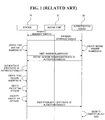
- FIG. 1 illustrates the procedure of creating an encryption key according to the related art.
- An access point 20 of FIG. 1 serves to relay messages between a station 10 and an authentication server 30.
- the access point 20 transmits request/identification messages to the station 10 to identify a user, in operation S11. Then, the station 10 transmits response/identification messages including user identification (e.g., MyID) to the authentication server 30, in operation S12.
- user identification e.g., MyID
- the random number means a numeral or character string having randomness.
- the authentication server 30 transmits a certificate of authentication issued from a certificate authority to the station 10 along with the second random number in operation S16.
- the station 10 authenticates the certificate of authentication transmitted from the authentication server 30 using a public key of the certificate authority (i.e ., the authentication server 30) in operation S 17, and creates a third random number of a predetermined size (e.g ., 48 bytes) in operation S18.
- a public key of the certificate authority i.e ., the authentication server 30
- creates a third random number of a predetermined size e.g ., 48 bytes
- the station 10 creates an encryption key using the first to third random numbers in operation S19, and encrypts the encryption key using the public key of the authentication server 30 included in the authentication certificate of the authentication server 30 in operation S20. Then, the station 10 transmits the encrypted key and its authentication certificate to the authentication server 30 in operation S21.
- the authentication server 30 authenticates the authentication certificate of the station 10 by decrypting the public key of the certificate authority, and then decrypts the received encryption key using its secret key in order to use the decrypted key as an encryption key, in operation S22.
- the station 10 and the authentication server 30 share the encryption key, and create a final encryption key using the shared encryption key, the first random number and the second random number, and perform mutual wireless communication using the final encryption key.
- the aforementioned procedure of creating the encryption key enables safe wireless communication between wireless network devices having an authentication certificate issued from a separate certificate authority.
- this new wireless network device should be provided with an authentication certificate issued by the certificate authority.
- the authentication certificate should have a temporary term of validity.
- the wireless network device having such an authentication certificate can access the wireless network only for the allowed term specified in the issued certificate of authentication.
- the procedure of issuing the certificate of authentication from the certificate authority is performed separately from the procedure of accessing the wireless network.
- the wireless network device accesses the certificate authority using a system connected to the certificate authority through a cable in order to obtain the authentication certificate issued by a predetermined issuing procedure. Then, the wireless network device transmits the issued certificate of authentication to the wireless network device using a predetermined mobile storage medium such as a diskette or a smart card.
- the wireless network device logs onto the corresponding wireless network.
- the wireless network device should be provided with the authentication certificate issued by the certificate authority. Also, if the wireless network device frequently logs onto the wireless network, the procedure of issuing and discarding the authentication certificate must be repeated. This makes it more difficult for the wireless network manager to manage the network.
- Korean Patent Unexamined Publication No. 2002-0051127 discloses a method of wirelessly transmitting authentication data and encryption/decryption data processed by a smart card to a cellular phone by performing local communication between the cellular phone and the smart card through a high speed wireless modem chip if authentication and encryption/decryption functions are requested by an authentication server or a user.
- This related art method is to ensure reliable communication by transmitting and receiving data at a high speed through the high speed wireless modem chip.
- this method is not suitable for authenticating a network device that temporarily logs onto a wireless network, or for preventing a network device from logging onto the wireless network without permission.
- Illustrative, non-limiting embodiments of the present invention may overcome the above disadvantages and other disadvantages not described above.
- the present invention is not necessarily required to overcome any of the disadvantages described above, and the illustrative, non-limiting embodiments of the present invention may not overcome any of the problems described above.
- the appended claims should be consulted to ascertain the true scope of the invention.
- the present invention is provides a wireless network system and a communication method where an external network device easily and temporarily logs onto a wireless network by providing authentication information to the external network device through devices existing in the wireless network.
- a key ma nagement device which comprises a limited communication unit receiving encryption information from a wireless network device, a storage unit storing authentication information for authentication of the wireless network device, and a key creating unit creating an encryption key through the received encryption information to allow the wireless network device to log onto a wireless network.
- the key creating unit also transmits the created encryption key to the wireless network device.
- a wireless network system comprising a limited communication unit transmitting and receiving encryption information from and to a key management device that creates an encryption key, a wireless communication unit performing communication with an access point of a predetermined wireless network, and a controller receiving the created encryption key from the key management device and performing wireless communication with the access point of the wireless network using the received encryption key.
- an access point comprising an encryption information management unit issuing encryption information for authentication of a wireless network device logging onto a wireless network, a limited communication unit performing communication with a key management device that transmits an encryption key to the wireless network device, a wireless communication unit performing communication with the wireless network device, and a controller performing authentication of the wireless network device and performing communication with the authenticated wireless network device using the encryption key.
- a key management method comprising receiving encryption information from a wireless network device, storing authentication information for authentication of the wireless network device, and creating an encryption key through the received encryption information to allow the wireless network device to log onto a wireless network and transmitting the created encryption key to the wireless network device.
- a communication method of a wireless network system comprising transmitting encryption information to a key management device that creates an encryption key, receiving the created encryption key from the key management device and performing wireless communication with an access point of a wireless network using the received encryption key.
- a communication method of an access point comprising transmitting encryption information to a wireless network device logging onto a wireless network, receiving an encryption key transmitted from the wireless network device, and performing authentication of the wireless network device and performing communication with the authenticated wireless network device using the encryption key.
- FIG. 2 illustrates a wireless network according to the exemplary, non-limiting embodiment of the present invention.
- a wireless network 100 includes an access point 110, a key management device 120, one or more stations 130 and 140.
- An external device 150 is located outside the network 100.
- the stations 130 and 140 constituting the wireless network 100 are referred to as 'wireless network devices' in the exemplary embodiment of the present invention. Also, the access point 110 and the stations 130 and 140 can maintain communication security using the EAP.
- a station is a wireless network device, such as notebook computer, cellular phone, digital TV, or set top box that can access a wireless network.
- An access point is a network access controller that controls access to the wireless network.
- the access point and the station can be those defined in the IEEE 802.11 standard.
- FIG. 3 illustrates the key management device according to an exemplary, non-limiting embodiment of the present invention.
- the key management device 120 includes a nonvolatile memory such as a flash memory that can read, write, and erase data.
- the key management device 120 may be a mobile device including the nonvolatile memory as needed.
- the key management device 120 may be a portable storage device such as a smart card or a multimedia card, or a portable communication device such as a cellular phone or a personal data assistant (PDA).
- PDA personal data assistant
- the exemplary key management device 120 depicted in FIG. 3 includes a limited communication unit 121 for transmitting encryption information to and receiving encryption information from the wireless network device, a storage unit 122 for storing authentication information for authentication of an external network device 150 if the external network device 150 logs onto the wireless network 100, a key creating unit 123 for creating an encryption key through the transmitted and received encryption information, and a controller 124 for performing authentication of the external network device 150 if the external network device 150 logs onto the wireless network 100, and for transmitting the created encryption key to the external network device 150.
- a limited communication unit 121 for transmitting encryption information to and receiving encryption information from the wireless network device
- a storage unit 122 for storing authentication information for authentication of an external network device 150 if the external network device 150 logs onto the wireless network 100
- a key creating unit 123 for creating an encryption key through the transmitted and received encryption information
- a controller 124 for performing authentication of the external network device 150 if the external network device 150 logs onto the wireless network 100, and for transmitting the created
- the limited communication unit 121 has a communication radius smaller than that of the wireless network devices included in the wireless network 100.
- the communication radius is made smaller to prevent external eavesdropping.
- the limited communication unit 121 may use an infrared, a Bluetooth, or a local communication protocol.
- Examples of encryption information are a first random number created by the wireless network device, a second random number created by the access point 110, and a machine access control (MAC) address of the wireless network device.
- examples of the authentication information are a certificate of authentication issued by the access point 110, and a secret key.
- the access point 110 according to an exemplary, non-limiting embodiment of the present invention can authenticate a wireless network device that desires to log onto the wireless network 100, and can issue all the certificates of authentication in addition to performing the communication with the wireless network device.
- the certificate of authentication stored in the storage unit 122 includes a root certificate of authentication (hereinafter, referred to as a 'first certificate of authentication') issued by the access point 110 that serves as a certificate authority, and a certificate of authentication (hereinafter, referred to as 'second certificate of authentication') of the key management device 120.
- the first certificate of authentication includes a public key that authenticates all the certificates of authentication issued by the access point 110.
- the secret key stored in the storage unit 122 may be issued by the access point 110 and provided to the key management device 120 for storage in the storage unit 122.
- the key management device 120 can be aware of the aforementioned public key because the first certificate of authentication is stored therein. Also, the key management device 120 can authenticate all the certificates of authentication issued by the access point 110.
- the MAC address of the wireless network device is stored in the storage unit 122 because that the wireless network device can become disconnected from the wireless network 100 after it is identified.
- the key creating unit 123 creates a third random number along with the first random number and the second random number in order to create the encryption key.
- the controller 124 encrypts the created encryption key using the public key included in the certificate of authentication (hereinafter, referred to as the 'third certificate of authentication') included in the certificate of authentication issued by the access point 110, and transmits the encryption key to the wireless network device through the limited communication unit 121.
- a value that electronically signs a hash value of all the messages using the secret key stored in the storage unit 122 is transmitted to the wireless network device along with the encryption key.
- the encryption key and the electronically signed hash value are used to either create a key for communication between the wireless network device and the access point 110, or to allow the access point 110 to authenticate the wireless network device.
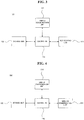
- FIG. 4 illustrates the wireless network device according to an exemplary, non-limiting embodiment of the present invention.
- the wireless network device 200 shown in FIG. 4 can be the stations 130 and 140 and the external network device 150 shown in FIG. 2 .
- the respective stations of FIG. 4 can be used in a similar manner as those of FIG. 2 .
- the wireless network device 200 includes a limited communication unit 210 for transmitting encryption information to and receiving encryption information from the key management device 120, a wireless communication unit 220 for wirelessly communicating with the access point 110, a storage unit 230 for storing an electronically signed hash value and the encryption key transmitted by the key management device 120, and a controller 240 for performing authentication with the access point 110 using the encryption key stored in the storage unit 230.
- the storage unit 230 also stores the first certificate of authentication transmitted by the key management device 120.
- the first certificate of authentication is a root certificate of authentication issued by the access point 110 that serves as a certificate authority.
- the wireless network device 200 can authenticate all the certificates of authentication issued by the access point 110 using the public key included in the first certificate of authentication.
- the controller 240 creates a predetermined first random number and transmits the created random number to the access point 110. Also, the controller 240 receives a second random number and a third certificate of authentication from the access point 110. At this time, the controller 240 can authenticate the received second certificate of authentication of the access point 110 using the public key included in the first certificate of authentication.
- the controller 240 transmits the first random number, the second random number, the third certificate of authentication, and the hash value of the messages transmitted to and received from the access point to the key management device 120.
- the controller 240 can perform authentication with the access point 110 through the received encryption key.
- the encryption key received from the key management device 120 is encrypted using the public key included in the third certificate of authentication stored in the storage unit 122 of the key management device 120.
- the controller 240 can receive the hash value electronically signed by the secret key of the key management device along with the encryption key. The encryption key and the electronically signed hash value can be used for authentication between the access point 110 and the wireless network device.
- the controller 240 transmits the encryption key and the electronically signed hash value to the access point 110 along with the second certificate of authentication of the key management device 120. Therefore, the access point 110 authenticates the received certificate of authentication of the key management device 120 to identify the public key of the key management device 120, and authenticates the electronically signed hash value received from the wireless network device 200 using the authenticated public key to determine whether the wireless network device 200 has logged onto the wireless network 100. Then, the controller 240 decrypts the encryption key to create a key used for communication between the wireless network device and the access point.
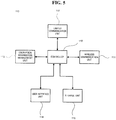
- FIG. 5 illustrates the access point according to an exemplary, non-limiting embodiment of the present invention.
- the access point 110 includes a wireless communication unit 111 for communicating with the wireless network device 200, a limited communication unit 112 for communicating with the key management device 120, an encryption information management unit 113 for creating encryption information, a user interface unit 114 for allowing a user to input a control command of the access point 110, a storage unit 115 for storing authentication information, and a controller 116 for performing authentication for the wireless network devices of the wireless network 100.
- the wireless communication unit 111 can be used to receive the first random number created by the wireless network device 200, and transmit the second random number and the third certificate of authentication from the access point 110.
- the third certificate of authentication is one that serves to identify the access point 110.
- the third certificate of authentication is different from the first certificate of authentication and the second certificate of authentication that serves to identify the authentication server.
- the limited communication unit 112 does not provide for external communication with the key management device 120 and only communicates with the key management device 120 using an infrared communication, a local communication, a Bluetooth communication, and so on.
- the encryption information management unit 113 can create the first certificate of authentication, the second certificate of authentication, the third certificate of authentication, and the secret key. Also, the encryption information management unit 113 creates and discards authentication information issued by the key management device 120.
- the controller 116 receives the encryption key created by the key management device 120 and the electronically signed hash value through the wireless communication unit 111 to authenticate the wireless network device.
- the received encryption key is encrypted using the public key of the access point 110 and can be received along with the hash value electronically signed by the secret key of the key management device 120.
- the controller 116 also receives the certificate of authentication of the key management device 120.
- the controller 116 Since the controller 116 has the certificate of authentication issued from the certificate authority along with the public key that can authenticate all the certificates of authentication it issued, it authenticates the public key of the key management device 120 using the certificate of authentication of the key management device 120, decrypts the encryption key using its secret key, and authenticates the electronically signed hash value to perform authentication of the wireless network device.
- the limited communication unit 112 receives the MAC address of the corresponding wireless network device 200 and the controller 116 disconnects the network device, which has the same MAC address as the received MAC address, from the wireless network 100.
- FIG. 6 illustrates the procedure of creating the encryption key according to an exemplary, non-limiting embodiment of the present invention.
- the key management device 120 receives the first certificate of authentication issued by the access point 110, which serves as the certificate authority, the second certificate of authentication that it issued, and the secret key.
- the access point 110 has the first certificate, the third certificate of authentication that it issued, and the secret key.
- the key management device 120 transmits the first certificate of authentication to the wireless network device 200, in operation S111.
- the access point 110 serves as the certificate authority (e.g., issuing and discarding the certificate of authentication, and issuing the secret key) and the authentication server, which performs authentication with the wireless network device 120.
- the first certificate of authentication is the root certificate of authentication of the certificate authority. Therefore, the wireless network device 200 has the public key that can authenticate all the certificates of authentication issued by the access point 110 when it receives the first certificate of authentication.
- the wireless network device 200 creates the first random number and transmits it to the access point 110, in operation S113.
- the access point 110 that has received the first random number, creates the second random number in operation S114, and transmits the second random number and the third certificate of authentication to the wireless network device 200, in operation S115.
- the wireless network device 200 authenticates the third certificate of authentication using the public key included in the first certificate of authentication in operation S116. If the third certificate of authentication is completely authenticated, the wireless network device 200 transmits the first random number, the second random number, the third certificate of authentication, the hash value of all the messages transmitted to and received from the access point 110 until authentication was completed, and its MAC address to the key management device 120, in operation S117.
- the first and second random numbers are used to create the encryption key in the key management device 120, and the hash value is used for authentication procedure with the access point 110.
- the MAC address is used to process log-out of the wireless network device 200, if the wireless network device 200 logs out of the wireless network 100.
- the key management device 120 stores the received MAC address, in operation S118, and creates the encryption key using the received first and second random numbers and a predetermined random number, in operation S119.
- the key management device 120 electronically signs the hash value received from the wireless network device 200 using its secret key stored in the storage unit 122, and encrypts the encryption key created using the first random number and the second random number using the public key of the access point 110 included in the third certificate of authentication, in operation S120. Then, the key management device 120 transmits the electronically signed hash value and the encryption key to the wireless network device 200 along with the second certificate of authentication, in operation S121.
- the second certificate of authentication may be transmitted along with the first certificate of authentication in operation S111.
- the wireless network device 200 transmits the electronically signed hash value, the encryption key, and the second certificate of authentication to the access point 110 in operation S122.
- the access point 110 authenticates the second certificate of authentication through the public key included in the first certificate of authentication, decrypts the encryption key using its secret key, and authenticates the electronically signed hash value using the public key included in the second certificate of authentication.
- the wireless network device 200 is allowed to log onto the wireless network 100 and to create a key to be used for communicating using the encryption key obtained by the decryption. If the electronically signed hash value is not authenticated, the wireless network device 200 is not allowed to log onto the wireless network 100.
- the wireless network device 200 since the key management device 120 has a secret key for authentication procedure with the access point 110, the wireless network device 200 cannot log onto the wireless network 100 if there is no key management device 120. In other words, the wireless network device 200 can log onto the wireless network 100 only if there is the key management device 120. Also, the authentication information is only created in the key management device 120 using the secret key without exposing the secret key of the key management device 120 to the wireless network device 200. The wireless network device is provided with the created authentication information in order to log onto the wireless network 100.
- the wireless network device 200 temporarily logs onto the wireless network 100, or frequently logs in and out of the wireless network, it does not need a pair of public keys from the certificate authority whenever it logs in and out of the wireless network (management of the network).
- the wireless network manager controls the wireless network device 200 by lending or collecting the key management device 120 so that the wireless network device 200 can temporarily log onto the wireless network.
- the validity of the first to third certificates is more flexible than the existing certificate of authentication, which is set on annual basis, as it can be set on a daily/time basis.
- the access point 110 according to an exemplary, non-limiting embodiment of the present invention directly issues the certificate of authentication to the wireless network device 200 if the wireless network device 200 does not support infrared, Bluetooth, or local communication methods. Also, the access point 110 serves to discard the issued certificate of authentication if the wireless network device 200 logs out of the wireless network 100.
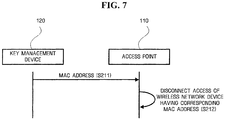
- FIG. 7 illustrates the procedure for logging out of the wireless network according to an exemplary, non-limiting embodiment of the present invention.
- the network manager allows the access point 110 to access the key management device 120, and the key management device 120 transmits the MAC address of the corresponding wireless network device 200 to the access point 110 in operation S211.
- the access point 110 then disconnects the wireless network device having the corresponding MAC address in operation S212.
- the key management device 120 and the access point 110 transmit the MAC address to each other through the limited communication units 121 and 112 to prevent external eavesdropping.
- the key management device 120 does not create the encryption key, but the wireless network device 200 can create the encryption key. In other words, the key management device 120 is involved only in authentication between the wireless network device 200 and the access point 110. The procedure of creating the encryption key is performed between the wireless network device 200 and the access point 110 as shown for example in FIG. 1 .
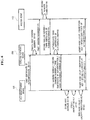
- FIG. 8 illustrates the procedure of authenticating the wireless network device using the key management device according to an exemplary, non-limiting embodiment of the present invention.
- the key management device 120 has the first certificate of authentication issued by the access point 110, its certificate of authentication, and the secret key.
- the access point 110 has the first certificate of authentication serving as the certificate authority, the third certificate of authentication corresponding to its certificate of authentication, and the secret key.
- the key management device 120 transmits the first certificate of authentication to the wireless network device 200 in operation S311. Therefore, the wireless network device 200 has the public key that can authenticate all the certificates of authentication issued by the access point 110.
- the wireless network device 200 creates the first random number in operation S312 and transmits the created first random number to the access point 110 in operation S313.
- the access point 110 that has received the first random number from the wireless network device 200 creates the second random number in operation S314 and transmits the created second random number and the third certificate of authentication corresponding to its certificate of authentication to the wireless network device 200, in operation S315.
- the wireless network device 200 authenticates the third certificate of authentication. If the third certificate of authentication is authenticated in operation S316, the wireless network device 200 transmits the second random number created by the access point 110, the hash value of all the messages transmitted from and received by the access point until authentication is completed, and its MAC address to the key management device 120, in operation S317.
- the key management device 120 stores the received MAC address in operation S318, and electronically signs the hash value received from the wireless network device 200 using its secret key in operation S319.
- the key management device 120 transmits the signed hash value and the second certificate of authentication to the wireless network device 200, in operation S320.
- the wireless network device 200 creates the third random number in operation S321, and the encryption key using the first random number it created and the second random number received from the access point 110 in operation S322, and encrypts the created encryption key using the public key of the access point 110 in operation S323.
- the wireless network device 200 transmits the signed hash value, the second certificate of authentication and the encryption key encrypted using the public key of the access point 110 to the access point 110, in operation S324. Since the access point 110 has the first certificate of authentication, the access point 110 authenticates the certificate of the key management device 120 by authenticating the second certificate of authentication, obtains the encryption key by decrypting the encryption key encrypted using its secret key, and authenticates the signed hash value in order to authenticate the wireless network device 200, in operation S325.
- the wireless network device and the communication method according to exemplary, non-limiting embodiments of present invention may provide the following.
- the key management device existing in the corresponding wireless network creates an encryption key that can be temporarily used in the external network device so that setting of the network can be changed without affecting the existing wireless network.
- the communication unit having a communication radius smaller than the distance between the wireless network devices of the wireless network is used for communicating between the key management device and the external network device, it is possible to maintain security during the transmission of the encryption key.
Landscapes
- Engineering & Computer Science (AREA)
- Computer Security & Cryptography (AREA)
- Computer Networks & Wireless Communication (AREA)
- Signal Processing (AREA)
- Computer Hardware Design (AREA)
- Computing Systems (AREA)
- General Engineering & Computer Science (AREA)
- Chemical & Material Sciences (AREA)
- Chemical Kinetics & Catalysis (AREA)
- Electrochemistry (AREA)
- General Chemical & Material Sciences (AREA)
- Life Sciences & Earth Sciences (AREA)
- Hydrology & Water Resources (AREA)
- Environmental & Geological Engineering (AREA)
- Water Supply & Treatment (AREA)
- Organic Chemistry (AREA)
- Mobile Radio Communication Systems (AREA)
- Small-Scale Networks (AREA)
Description
- The present invention broadly relates to a wireless network system and a communication method using the same and, more particularly, to a wireless network system and a communication method that allows an external network device that temporarily accesses the wireless network, to easily log in and out of the wireless network.
- Recently, with the development of communication and network technologies, coaxial/optical cable networks are being changed to wireless networks that use various frequency bands.
- Unlike the cable network system, the wireless network system does not provide a physically fixed data transmission path. Therefore, the wireless network system is more vulnerable to security attacks than the cable network system. To safely perform wireless communication, most wireless communication protocols support encryption of the data packets that are transmitted through the network. For example, the Wi-Fi protected access pre-shared key (WPA-PSK) system used in a wireless local area network (LAN) or the wired equivalent privacy (WEP) system is used to more safely perform the wireless communication.
- The WEP system was designed to provide minimum protection to wirelessly-transmitted frames. Therefore, the WEP system has security problems in that it disturbs a widespread construction of IEEE 802.11 technology. Such problems are a design defect of the WEP system.
- IEEE 802.1x is based on an extensible authentication protocol (EAP), which is formally specified in RFC 2284.
-
FIG. 1 illustrates the procedure of creating an encryption key according to the related art. Anaccess point 20 ofFIG. 1 serves to relay messages between astation 10 and anauthentication server 30. - As shown in
FIG. 1 , theaccess point 20 transmits request/identification messages to thestation 10 to identify a user, in operation S11. Then, thestation 10 transmits response/identification messages including user identification (e.g., MyID) to theauthentication server 30, in operation S12. - Then, the
station 10 and theauthentication server 30, respectively, create a first random number and a second random number to prevent the messages from being reused by another party, in operations S 13 and S 14, and exchange the random numbers in operations S15 and S16. At this time, the random number means a numeral or character string having randomness. - Further, the
authentication server 30 transmits a certificate of authentication issued from a certificate authority to thestation 10 along with the second random number in operation S16. - The
station 10 authenticates the certificate of authentication transmitted from theauthentication server 30 using a public key of the certificate authority (i.e., the authentication server 30) in operation S 17, and creates a third random number of a predetermined size (e.g., 48 bytes) in operation S18. - The
station 10 creates an encryption key using the first to third random numbers in operation S19, and encrypts the encryption key using the public key of theauthentication server 30 included in the authentication certificate of theauthentication server 30 in operation S20. Then, thestation 10 transmits the encrypted key and its authentication certificate to theauthentication server 30 in operation S21. - The
authentication server 30 authenticates the authentication certificate of thestation 10 by decrypting the public key of the certificate authority, and then decrypts the received encryption key using its secret key in order to use the decrypted key as an encryption key, in operation S22. - Then, the
station 10 and theauthentication server 30 share the encryption key, and create a final encryption key using the shared encryption key, the first random number and the second random number, and perform mutual wireless communication using the final encryption key. - The aforementioned procedure of creating the encryption key enables safe wireless communication between wireless network devices having an authentication certificate issued from a separate certificate authority.
- To allow a new wireless network device to temporarily access a corresponding wireless network, this new wireless network device should be provided with an authentication certificate issued by the certificate authority. The authentication certificate should have a temporary term of validity. The wireless network device having such an authentication certificate can access the wireless network only for the allowed term specified in the issued certificate of authentication.
- The document
DE10254747, 19 February2004 (2004-02-19), discloses a portable unit for the installation of a preferably common key in at least one equipment (in particular wireless) of a network, which contains a key unit for the supply of a key data set and which is intended for the short-distance information transfer of the key data set. - However, the procedure of issuing the certificate of authentication from the certificate authority is performed separately from the procedure of accessing the wireless network. In other words, the wireless network device accesses the certificate authority using a system connected to the certificate authority through a cable in order to obtain the authentication certificate issued by a predetermined issuing procedure. Then, the wireless network device transmits the issued certificate of authentication to the wireless network device using a predetermined mobile storage medium such as a diskette or a smart card.
- Then, the wireless network device logs onto the corresponding wireless network. To prevent the wireless network device from logging in to the wireless network without permission, the wireless network device should be provided with the authentication certificate issued by the certificate authority. Also, if the wireless network device frequently logs onto the wireless network, the procedure of issuing and discarding the authentication certificate must be repeated. This makes it more difficult for the wireless network manager to manage the network.
- Korean Patent Unexamined Publication No.
2002-0051127 - Illustrative, non-limiting embodiments of the present invention may overcome the above disadvantages and other disadvantages not described above. The present invention is not necessarily required to overcome any of the disadvantages described above, and the illustrative, non-limiting embodiments of the present invention may not overcome any of the problems described above. The appended claims should be consulted to ascertain the true scope of the invention.
- The present invention is provides a wireless network system and a communication method where an external network device easily and temporarily logs onto a wireless network by providing authentication information to the external network device through devices existing in the wireless network.
- According to an aspect of the present invention, there is provided a key ma nagement device, which comprises a limited communication unit receiving encryption information from a wireless network device, a storage unit storing authentication information for authentication of the wireless network device, and a key creating unit creating an encryption key through the received encryption information to allow the wireless network device to log onto a wireless network. The key creating unit also transmits the created encryption key to the wireless network device.
- According to another aspect of the present invention, there is provided a wireless network system comprising a limited communication unit transmitting and receiving encryption information from and to a key management device that creates an encryption key, a wireless communication unit performing communication with an access point of a predetermined wireless network, and a controller receiving the created encryption key from the key management device and performing wireless communication with the access point of the wireless network using the received encryption key.
- According to yet another aspect of the present invention, there is provided an access point comprising an encryption information management unit issuing encryption information for authentication of a wireless network device logging onto a wireless network, a limited communication unit performing communication with a key management device that transmits an encryption key to the wireless network device, a wireless communication unit performing communication with the wireless network device, and a controller performing authentication of the wireless network device and performing communication with the authenticated wireless network device using the encryption key.
- According to yet another aspect of the present invention, there is provided a key management method comprising receiving encryption information from a wireless network device, storing authentication information for authentication of the wireless network device, and creating an encryption key through the received encryption information to allow the wireless network device to log onto a wireless network and transmitting the created encryption key to the wireless network device.
- According to another aspect of the present invention, there is provided a communication method of a wireless network system comprising transmitting encryption information to a key management device that creates an encryption key, receiving the created encryption key from the key management device and performing wireless communication with an access point of a wireless network using the received encryption key.
- According to another aspect of the present invention, there is provided a communication method of an access point comprising transmitting encryption information to a wireless network device logging onto a wireless network, receiving an encryption key transmitted from the wireless network device, and performing authentication of the wireless network device and performing communication with the authenticated wireless network device using the encryption key.
- The above and other aspects of the present invention will become more apparent from the following detailed description of exemplary embodiments taken in conjunction with the accompanying drawings, in which:
-
FIG. 1 is a view illustrating the procedure of creating an encryption key according to the related art; -
FIG. 2 is a view illustrating a wireless network according to an exemplary, non-limiting embodiment of the present invention; -
FIG. 3 is a block diagram illustrating the construction of a key management device according to an exemplary, non-limiting embodiment of the present invention; -
FIG. 4 is a block diagram illustrating the construction of a wireless network system according to an exemplary, non-limiting embodiment of the present invention; -
FIG. 5 is a block diagram illustrating the construction of an access point according to an exemplary, non-limiting embodiment of the present invention; -
FIG. 6 is a view illustrating the procedure of creating an encryption key according to an exemplary, non-limiting embodiment of the present invention; -
FIG. 7 is a view illustrating the procedure of logging out of the wireless network according to an exemplary, non-limiting embodiment of the present invention; and -
FIG. 8 is a view illustrating the procedure of authenticating a wireless network device according to an exemplary, non-limiting embodiment of the present invention. - Hereinafter, exemplary, non-limiting embodiments of the present invention will be described in detail with reference to the accompanying drawings. The aspects and features of the present invention and methods for achieving the aspects and features will be apparent by referring to the exemplary, non-limiting embodiments to be described in detail with reference to the accompanying drawings. However, the present invention is not limited to the embodiments disclosed hereinafter, but can be implemented in diverse forms. The matters defined in the description, such as the detailed construction and elements, are nothing but specific details provided to assist those of ordinary skill in the art in a comprehensive understanding of the invention, and the present invention is only defined within the scope of the appended claims. In the whole description of the exemplary, non-limiting embodiments of the present invention, the same drawing reference numerals are used for analogous elements across various figures.
-
FIG. 2 illustrates a wireless network according to the exemplary, non-limiting embodiment of the present invention. - As shown in
FIG. 2 , awireless network 100 includes anaccess point 110, akey management device 120, one ormore stations external device 150 is located outside thenetwork 100. - Hereinafter, the
stations wireless network 100 are referred to as 'wireless network devices' in the exemplary embodiment of the present invention. Also, theaccess point 110 and thestations - In an exemplary, non-limiting embodiment of the present invention, a station is a wireless network device, such as notebook computer, cellular phone, digital TV, or set top box that can access a wireless network. An access point is a network access controller that controls access to the wireless network. In an exemplary, non-limiting embodiment of the present invention, the access point and the station can be those defined in the IEEE 802.11 standard.
-
FIG. 3 illustrates the key management device according to an exemplary, non-limiting embodiment of the present invention. - The
key management device 120 includes a nonvolatile memory such as a flash memory that can read, write, and erase data. Thekey management device 120 may be a mobile device including the nonvolatile memory as needed. For example, thekey management device 120 may be a portable storage device such as a smart card or a multimedia card, or a portable communication device such as a cellular phone or a personal data assistant (PDA). - The exemplary
key management device 120 depicted inFIG. 3 includes alimited communication unit 121 for transmitting encryption information to and receiving encryption information from the wireless network device, astorage unit 122 for storing authentication information for authentication of anexternal network device 150 if theexternal network device 150 logs onto thewireless network 100, akey creating unit 123 for creating an encryption key through the transmitted and received encryption information, and acontroller 124 for performing authentication of theexternal network device 150 if theexternal network device 150 logs onto thewireless network 100, and for transmitting the created encryption key to theexternal network device 150. - The
limited communication unit 121 has a communication radius smaller than that of the wireless network devices included in thewireless network 100. The communication radius is made smaller to prevent external eavesdropping. For example, thelimited communication unit 121 may use an infrared, a Bluetooth, or a local communication protocol. These exemplary description of thecommunication unit 121 is provided by way of an example only and not by way of a limitation. One of ordinary skill in the art would readily understand that many variations to the describedcommunication unit 121 are within the scope of the invention. - Examples of encryption information are a first random number created by the wireless network device, a second random number created by the
access point 110, and a machine access control (MAC) address of the wireless network device. Also, examples of the authentication information are a certificate of authentication issued by theaccess point 110, and a secret key. Theaccess point 110 according to an exemplary, non-limiting embodiment of the present invention can authenticate a wireless network device that desires to log onto thewireless network 100, and can issue all the certificates of authentication in addition to performing the communication with the wireless network device. - Furthermore, the certificate of authentication stored in the
storage unit 122 includes a root certificate of authentication (hereinafter, referred to as a 'first certificate of authentication') issued by theaccess point 110 that serves as a certificate authority, and a certificate of authentication (hereinafter, referred to as 'second certificate of authentication') of thekey management device 120. The first certificate of authentication includes a public key that authenticates all the certificates of authentication issued by theaccess point 110. The secret key stored in thestorage unit 122 may be issued by theaccess point 110 and provided to thekey management device 120 for storage in thestorage unit 122. - Therefore, the
key management device 120 can be aware of the aforementioned public key because the first certificate of authentication is stored therein. Also, thekey management device 120 can authenticate all the certificates of authentication issued by theaccess point 110. - Furthermore, the MAC address of the wireless network device is stored in the
storage unit 122 because that the wireless network device can become disconnected from thewireless network 100 after it is identified. - The
key creating unit 123 creates a third random number along with the first random number and the second random number in order to create the encryption key. Thecontroller 124 encrypts the created encryption key using the public key included in the certificate of authentication (hereinafter, referred to as the 'third certificate of authentication') included in the certificate of authentication issued by theaccess point 110, and transmits the encryption key to the wireless network device through thelimited communication unit 121. At this time, a value that electronically signs a hash value of all the messages using the secret key stored in thestorage unit 122 is transmitted to the wireless network device along with the encryption key. - The encryption key and the electronically signed hash value are used to either create a key for communication between the wireless network device and the
access point 110, or to allow theaccess point 110 to authenticate the wireless network device. -
FIG. 4 illustrates the wireless network device according to an exemplary, non-limiting embodiment of the present invention. Thewireless network device 200 shown inFIG. 4 can be thestations external network device 150 shown inFIG. 2 . The respective stations ofFIG. 4 can be used in a similar manner as those ofFIG. 2 . - As shown in
FIG. 4 , thewireless network device 200 according to the an exemplary, non-limiting embodiment of the present invention includes alimited communication unit 210 for transmitting encryption information to and receiving encryption information from thekey management device 120, awireless communication unit 220 for wirelessly communicating with theaccess point 110, astorage unit 230 for storing an electronically signed hash value and the encryption key transmitted by thekey management device 120, and acontroller 240 for performing authentication with theaccess point 110 using the encryption key stored in thestorage unit 230. Thestorage unit 230 also stores the first certificate of authentication transmitted by thekey management device 120. The first certificate of authentication is a root certificate of authentication issued by theaccess point 110 that serves as a certificate authority. Thewireless network device 200 can authenticate all the certificates of authentication issued by theaccess point 110 using the public key included in the first certificate of authentication. - The
controller 240 creates a predetermined first random number and transmits the created random number to theaccess point 110. Also, thecontroller 240 receives a second random number and a third certificate of authentication from theaccess point 110. At this time, thecontroller 240 can authenticate the received second certificate of authentication of theaccess point 110 using the public key included in the first certificate of authentication. - Then, the
controller 240 transmits the first random number, the second random number, the third certificate of authentication, and the hash value of the messages transmitted to and received from the access point to thekey management device 120. Thecontroller 240 can perform authentication with theaccess point 110 through the received encryption key. At this time, the encryption key received from thekey management device 120 is encrypted using the public key included in the third certificate of authentication stored in thestorage unit 122 of thekey management device 120. Also, thecontroller 240 can receive the hash value electronically signed by the secret key of the key management device along with the encryption key. The encryption key and the electronically signed hash value can be used for authentication between theaccess point 110 and the wireless network device. In other words, thecontroller 240 transmits the encryption key and the electronically signed hash value to theaccess point 110 along with the second certificate of authentication of thekey management device 120. Therefore, theaccess point 110 authenticates the received certificate of authentication of thekey management device 120 to identify the public key of thekey management device 120, and authenticates the electronically signed hash value received from thewireless network device 200 using the authenticated public key to determine whether thewireless network device 200 has logged onto thewireless network 100. Then, thecontroller 240 decrypts the encryption key to create a key used for communication between the wireless network device and the access point. -
FIG. 5 illustrates the access point according to an exemplary, non-limiting embodiment of the present invention. - As shown in
FIG. 5 , theaccess point 110 includes awireless communication unit 111 for communicating with thewireless network device 200, alimited communication unit 112 for communicating with thekey management device 120, an encryptioninformation management unit 113 for creating encryption information, auser interface unit 114 for allowing a user to input a control command of theaccess point 110, astorage unit 115 for storing authentication information, and acontroller 116 for performing authentication for the wireless network devices of thewireless network 100. - The
wireless communication unit 111 can be used to receive the first random number created by thewireless network device 200, and transmit the second random number and the third certificate of authentication from theaccess point 110. The third certificate of authentication is one that serves to identify theaccess point 110. The third certificate of authentication is different from the first certificate of authentication and the second certificate of authentication that serves to identify the authentication server. - The
limited communication unit 112 does not provide for external communication with thekey management device 120 and only communicates with thekey management device 120 using an infrared communication, a local communication, a Bluetooth communication, and so on. - The encryption
information management unit 113 can create the first certificate of authentication, the second certificate of authentication, the third certificate of authentication, and the secret key. Also, the encryptioninformation management unit 113 creates and discards authentication information issued by thekey management device 120. - The
controller 116 receives the encryption key created by thekey management device 120 and the electronically signed hash value through thewireless communication unit 111 to authenticate the wireless network device. In more detail, the received encryption key is encrypted using the public key of theaccess point 110 and can be received along with the hash value electronically signed by the secret key of thekey management device 120. At this time, thecontroller 116 also receives the certificate of authentication of thekey management device 120. - Since the
controller 116 has the certificate of authentication issued from the certificate authority along with the public key that can authenticate all the certificates of authentication it issued, it authenticates the public key of thekey management device 120 using the certificate of authentication of thekey management device 120, decrypts the encryption key using its secret key, and authenticates the electronically signed hash value to perform authentication of the wireless network device. - If the
wireless network device 200 logs out of a corresponding wireless network by communicating with thekey management device 120, thelimited communication unit 112 receives the MAC address of the correspondingwireless network device 200 and thecontroller 116 disconnects the network device, which has the same MAC address as the received MAC address, from thewireless network 100. - An exemplary, non-limiting procedure for creating the encryption key for the
key management device 120, thewireless network device 200, and theaccess point 110 will be described as follows. -
FIG. 6 illustrates the procedure of creating the encryption key according to an exemplary, non-limiting embodiment of the present invention. - In the exemplary embodiment of the present invention, the
key management device 120 receives the first certificate of authentication issued by theaccess point 110, which serves as the certificate authority, the second certificate of authentication that it issued, and the secret key. Theaccess point 110 has the first certificate, the third certificate of authentication that it issued, and the secret key. - As shown in
FIG. 6 , thekey management device 120 transmits the first certificate of authentication to thewireless network device 200, in operation S111. Theaccess point 110 according to the exemplary embodiment of the present invention serves as the certificate authority (e.g., issuing and discarding the certificate of authentication, and issuing the secret key) and the authentication server, which performs authentication with thewireless network device 120. The first certificate of authentication is the root certificate of authentication of the certificate authority. Therefore, thewireless network device 200 has the public key that can authenticate all the certificates of authentication issued by theaccess point 110 when it receives the first certificate of authentication. - Then, the
wireless network device 200 creates the first random number and transmits it to theaccess point 110, in operation S113. Theaccess point 110 that has received the first random number, creates the second random number in operation S114, and transmits the second random number and the third certificate of authentication to thewireless network device 200, in operation S115. - The
wireless network device 200 authenticates the third certificate of authentication using the public key included in the first certificate of authentication in operation S116. If the third certificate of authentication is completely authenticated, thewireless network device 200 transmits the first random number, the second random number, the third certificate of authentication, the hash value of all the messages transmitted to and received from theaccess point 110 until authentication was completed, and its MAC address to thekey management device 120, in operation S117. The first and second random numbers are used to create the encryption key in thekey management device 120, and the hash value is used for authentication procedure with theaccess point 110. Also, the MAC address is used to process log-out of thewireless network device 200, if thewireless network device 200 logs out of thewireless network 100. - The
key management device 120 stores the received MAC address, in operation S118, and creates the encryption key using the received first and second random numbers and a predetermined random number, in operation S119. - Furthermore, the
key management device 120 electronically signs the hash value received from thewireless network device 200 using its secret key stored in thestorage unit 122, and encrypts the encryption key created using the first random number and the second random number using the public key of theaccess point 110 included in the third certificate of authentication, in operation S120. Then, thekey management device 120 transmits the electronically signed hash value and the encryption key to thewireless network device 200 along with the second certificate of authentication, in operation S121. The second certificate of authentication may be transmitted along with the first certificate of authentication in operation S111. - Then, the
wireless network device 200 transmits the electronically signed hash value, the encryption key, and the second certificate of authentication to theaccess point 110 in operation S122. Theaccess point 110 authenticates the second certificate of authentication through the public key included in the first certificate of authentication, decrypts the encryption key using its secret key, and authenticates the electronically signed hash value using the public key included in the second certificate of authentication. - If the electronically signed hash value is authenticated, the
wireless network device 200 is allowed to log onto thewireless network 100 and to create a key to be used for communicating using the encryption key obtained by the decryption. If the electronically signed hash value is not authenticated, thewireless network device 200 is not allowed to log onto thewireless network 100. - As described above, in the
wireless network device 200 according to the exemplary, non-limiting embodiment of the present invention, since thekey management device 120 has a secret key for authentication procedure with theaccess point 110, thewireless network device 200 cannot log onto thewireless network 100 if there is nokey management device 120. In other words, thewireless network device 200 can log onto thewireless network 100 only if there is thekey management device 120. Also, the authentication information is only created in thekey management device 120 using the secret key without exposing the secret key of thekey management device 120 to thewireless network device 200. The wireless network device is provided with the created authentication information in order to log onto thewireless network 100. If thewireless network device 200 temporarily logs onto thewireless network 100, or frequently logs in and out of the wireless network, it does not need a pair of public keys from the certificate authority whenever it logs in and out of the wireless network (management of the network). The wireless network manager controls thewireless network device 200 by lending or collecting thekey management device 120 so that thewireless network device 200 can temporarily log onto the wireless network. - Further, in an exemplary, non-limiting embodiment of the present invention, the validity of the first to third certificates is more flexible than the existing certificate of authentication, which is set on annual basis, as it can be set on a daily/time basis. The
access point 110 according to an exemplary, non-limiting embodiment of the present invention directly issues the certificate of authentication to thewireless network device 200 if thewireless network device 200 does not support infrared, Bluetooth, or local communication methods. Also, theaccess point 110 serves to discard the issued certificate of authentication if thewireless network device 200 logs out of thewireless network 100. -
FIG. 7 illustrates the procedure for logging out of the wireless network according to an exemplary, non-limiting embodiment of the present invention. - As shown in
FIG. 7 , if thewireless network device 200 logs out of thewireless network 100, the network manager allows theaccess point 110 to access thekey management device 120, and thekey management device 120 transmits the MAC address of the correspondingwireless network device 200 to theaccess point 110 in operation S211. - The
access point 110 then disconnects the wireless network device having the corresponding MAC address in operation S212. - The
key management device 120 and theaccess point 110 transmit the MAC address to each other through thelimited communication units - The
key management device 120 does not create the encryption key, but thewireless network device 200 can create the encryption key. In other words, thekey management device 120 is involved only in authentication between thewireless network device 200 and theaccess point 110. The procedure of creating the encryption key is performed between thewireless network device 200 and theaccess point 110 as shown for example inFIG. 1 . -
FIG. 8 illustrates the procedure of authenticating the wireless network device using the key management device according to an exemplary, non-limiting embodiment of the present invention. Referring toFIG. 8 , in an analogous manner toFIG. 7 , thekey management device 120 has the first certificate of authentication issued by theaccess point 110, its certificate of authentication, and the secret key. Theaccess point 110 has the first certificate of authentication serving as the certificate authority, the third certificate of authentication corresponding to its certificate of authentication, and the secret key. - As shown in
FIG. 8 , thekey management device 120 transmits the first certificate of authentication to thewireless network device 200 in operation S311. Therefore, thewireless network device 200 has the public key that can authenticate all the certificates of authentication issued by theaccess point 110. - Then, the
wireless network device 200 creates the first random number in operation S312 and transmits the created first random number to theaccess point 110 in operation S313. Theaccess point 110 that has received the first random number from thewireless network device 200 creates the second random number in operation S314 and transmits the created second random number and the third certificate of authentication corresponding to its certificate of authentication to thewireless network device 200, in operation S315. Thewireless network device 200 authenticates the third certificate of authentication. If the third certificate of authentication is authenticated in operation S316, thewireless network device 200 transmits the second random number created by theaccess point 110, the hash value of all the messages transmitted from and received by the access point until authentication is completed, and its MAC address to thekey management device 120, in operation S317. - The
key management device 120 stores the received MAC address in operation S318, and electronically signs the hash value received from thewireless network device 200 using its secret key in operation S319. - Then, the
key management device 120 transmits the signed hash value and the second certificate of authentication to thewireless network device 200, in operation S320. - Then, the
wireless network device 200 creates the third random number in operation S321, and the encryption key using the first random number it created and the second random number received from theaccess point 110 in operation S322, and encrypts the created encryption key using the public key of theaccess point 110 in operation S323. - The
wireless network device 200 transmits the signed hash value, the second certificate of authentication and the encryption key encrypted using the public key of theaccess point 110 to theaccess point 110, in operation S324. Since theaccess point 110 has the first certificate of authentication, theaccess point 110 authenticates the certificate of thekey management device 120 by authenticating the second certificate of authentication, obtains the encryption key by decrypting the encryption key encrypted using its secret key, and authenticates the signed hash value in order to authenticate thewireless network device 200, in operation S325. - As described above, the wireless network device and the communication method according to exemplary, non-limiting embodiments of present invention may provide the following.
- First, if the external network device temporarily logs onto the wireless network, the key management device existing in the corresponding wireless network creates an encryption key that can be temporarily used in the external network device so that setting of the network can be changed without affecting the existing wireless network.
- Second, since the secret key for creating the encryption key provided to the external network device is only stored in the key management device, it is possible to prevent an external network device from accessing the network without permission.
- Third, since the communication unit having a communication radius smaller than the distance between the wireless network devices of the wireless network is used for communicating between the key management device and the external network device, it is possible to maintain security during the transmission of the encryption key.
- Although exemplary, non-limiting embodiments of the present invention have been described for illustrative purposes, those skilled in the art will appreciate that various modifications, additions and substitutions are possible, without departing from the scope and spirit of the invention as disclosed in the accompanying claims.
Claims (37)
- A key management device (120) comprising:a limited communication unit (121) that receives encryption information from a wireless network device (200) logging onto a wireless network;a storage unit (122) that stores authentication information for authentication of the wireless network device (200); anda key creating unit (123) that creates an encryption key based on the received encryption information, to allow the wireless network device (200) to log onto the wireless network,wherein the key creating unit transmits the created encryption key to the wireless network device (200).
- The key management device as claimed in claim 1, wherein the limited communication unit has a communication radius that is smaller than a distance between wireless network devices of the wireless network.
- The key management device as claimed in claim 2, wherein the limited communication unit uses at least one of an infrared communication, a local communication, and a Bluetooth communication.
- The key management device as claimed in claim 3, wherein the encryption information comprises a first random number created by the wireless network device, a second random number created by an access point of the wireless network, and a media access control (MAC) address of the wireless network device.
- The key management device as claimed in claim 4, wherein the authentication information comprises a secret key and a certificate of authentication issued by the access point.
- The key management device as claimed in claim 5, wherein the key creating unit creates the encryption key based on the first random number, the second random number, and a third random number, and wherein the key creating unit encrypts the created encryption key based on the secret key to transmit the encryption key to the wireless network device.
- A wireless network device (200) comprising:a limited communication unit (210) that transmits encryption information to and receives encryption information from a key management device (120) that creates an encryption key based on the encryption information;a wireless communication unit (220) that performs communication with an access point (110) of a wireless network; anda controller (240) that receives the created encryption key from the key management device (120) and wirelessly communicates with the access point of the wireless network using the received encryption key.
- The wireless network device as claimed in claim 7, wherein the encryption information comprises a first random number, a second random number received from the access point, and a media access control (MAC) address.
- The wireless network device as claimed in claim 8, wherein the received encryption key is encrypted by a secret key issued by the access point to the key management device.
- The wireless network device as claimed in claim 9, wherein the encryption key is received together with the second random number encrypted by the secret key.
- The wireless network device as claimed in claim 10, wherein the limited communication unit has a communication radius that is smaller than a distance between wireless network devices of the wireless network.
- The wireless network device as claimed in claim 11, wherein the limited communication unit uses at least one of an infrared communication, a local communication, and a Bluetooth communication.
- An access point (110) comprising:an encryption information management unit (113) that issues encryption information for authentication of a wireless network device (200) logging onto a wireless network;a limited communication unit (112) that communicates with a key management device (120) that transmits an encryption key to the wireless network device (200);a wireless communication unit (111) that communicates with the wireless network device (200); anda controller (116) that performs the authentication of the wireless network device (200), and that communicates with the authenticated wireless network device (200) using the encryption key,wherein the encryption key is created based on an encryption information from the wireless network device (200).
- The access point as claimed in claim 13, wherein the encryption information comprises a first random number received from the wireless network device, a second random number transmitted to the wireless network device, and a certificate of authentication transmitted to the wireless network device.
- The access point as claimed in claim 14, wherein the received encryption key is created using the first random number, the second random number, and a third random number.
- The access point as claimed in claim 13, wherein the limited communication unit receives a media access control (MAC) address of the wireless network device transmitted from the key management device.
- The access point as claimed in claim 16, wherein the limited communication unit has a communication radius that is smaller than a distance between wireless network devices in the wireless network.
- The access point as claimed in claim 17, wherein the limited communication unit uses at least one of an infrared communication, a local communication, and a Bluetooth communication.
- A communication method of a key management unit (112) comprising:receiving encryption information from a wireless network device (200) logging onto a wireless network;storing authentication information for authentication of the wireless network device (200); andcreating an encryption key based on the received encryption information to allow the wireless network device (200) to log onto the wireless network, andtransmitting the created encryption key to the wireless network device (200).
- The key management method as claimed in claim 19, wherein the receiving of the encryption information from the wireless network device comprises receiving the encryption information from a communication unit having a communication radius that is smaller than a distance between wireless network devices in the wireless network.
- The key management method as claimed in claim 20, wherein the encryption information is received through at least one of an infrared communication, a local communication, and a Bluetooth communication.
- The key management method as claimed in claim 21, wherein the encryption information comprises a first random number created by the wireless network device, a second random number created by an access point of the wireless network, and a media access control (MAC) address of the wireless network device.
- The key management method as claimed in claim 22, wherein the authentication information comprises a secret key and a certificate of authentication issued by the access point.
- The key management method as claimed in claim 23, wherein the creating of the encryption key comprises creating the encryption key using the first random number, the second random number, and a third random number, and encrypting the created encryption key using the secret key to transmit the encryption key to the wireless network device.
- A communication method of a wireless network device (200) comprising:transmitting encryption information to a key management device (120) that creates an encryption key based on the encryption information;receiving the created encryption key from the key management device (120); andwirelessly communicating with an access point (110) of a wireless network using the received encryption key.
- The communication method of a wireless network device as claimed in claim 25, wherein the encryption information comprises a first random number, a second random number received from the access point of the wireless network, and a media access control (MAC) address.
- The communication method of a wireless network device as claimed in claim 26, wherein the received encryption key is encrypted by a secret key issued from the access point to the key management device.
- The communication method of a wireless network device as claimed in claim 27, wherein the encryption key is received together with the second random number encrypted by the secret key.
- The communication method of a wireless network device as claimed in claim 28, wherein the encryption information and the encryption key are respectively transmitted and received at a communication radius that is smaller than a distance between wireless network devices in the wireless network.
- The communication method of a wireless network device as claimed in claim 29, wherein the transmitted encryption information and the received encryption key are transmitted and received via at least one of an infrared communication, a local communication, and a Bluetooth communication.
- A communication method of an access point (110) comprising:transmitting encryption information to a wireless network device (200) logging onto a wireless network;communicating with a key management device (120) that tramsmits an encryption key to the wireless network device (200); andperforming authentication of the wireless network device (200), andcommunicating with the authenticated wireless network device (200) using the encryption key,wherein the encryption key is created based on an encryption information from the wireless network device (200).
- The communication method of an access point as claimed in claim 31, wherein the encryption information comprises a first random number received from the wireless network device, a second random number transmitted to the wireless network device, and a certificate of authentication transmitted to the wireless network device.
- The communication method of an access point as claimed in claim 32, wherein the encryption key is created using the first random number, the second random number, and a third random number created by the key management device.
- The communication method of an access point as claimed in claim 31, further comprising receiving a media access control (MAC) address of the wireless network device from a key management device.
- The communication method of an access point as claimed in claim 34, wherein the key management device has a communication radius that is smaller than a distance between wireless network devices in the wireless network.
- The communication method of an access point as claimed in claim 35, wherein the key management device uses at least one of an infrared communication, a local communication, and a Bluetooth communication.
- The communication method of an access point as claimed in claim 36, further comprising disconnecting the wireless network device with an MAC address, which is the same as the MAC address received from the wireless network.
Applications Claiming Priority (2)
| Application Number | Priority Date | Filing Date | Title |
|---|---|---|---|
| KR1020050010069A KR100843072B1 (en) | 2005-02-03 | 2005-02-03 | Wireless network system and communication method using same |
| PCT/KR2006/000379 WO2006083125A1 (en) | 2005-02-03 | 2006-02-03 | Wireless network system and communication method for external device to temporarily access wireless network |
Publications (3)
| Publication Number | Publication Date |
|---|---|
| EP1844573A1 EP1844573A1 (en) | 2007-10-17 |
| EP1844573A4 EP1844573A4 (en) | 2014-06-11 |
| EP1844573B1 true EP1844573B1 (en) | 2018-05-30 |
Family
ID=36756574
Family Applications (1)
| Application Number | Title | Priority Date | Filing Date |
|---|---|---|---|
| EP06715832.9A Expired - Lifetime EP1844573B1 (en) | 2005-02-03 | 2006-02-03 | Wireless network system and communication method for external device to temporarily access wireless network |
Country Status (8)
| Country | Link |
|---|---|
| US (1) | US7912224B2 (en) |
| EP (1) | EP1844573B1 (en) |
| JP (1) | JP4545197B2 (en) |
| KR (1) | KR100843072B1 (en) |
| CN (1) | CN101112039B (en) |
| AU (1) | AU2006211768B2 (en) |
| NZ (1) | NZ556670A (en) |
| WO (1) | WO2006083125A1 (en) |
Families Citing this family (58)
| Publication number | Priority date | Publication date | Assignee | Title |
|---|---|---|---|---|
| US9100457B2 (en) | 2001-03-28 | 2015-08-04 | Qualcomm Incorporated | Method and apparatus for transmission framing in a wireless communication system |
| US7693508B2 (en) * | 2001-03-28 | 2010-04-06 | Qualcomm Incorporated | Method and apparatus for broadcast signaling in a wireless communication system |
| US8121296B2 (en) | 2001-03-28 | 2012-02-21 | Qualcomm Incorporated | Method and apparatus for security in a data processing system |
| US8077679B2 (en) | 2001-03-28 | 2011-12-13 | Qualcomm Incorporated | Method and apparatus for providing protocol options in a wireless communication system |
| US7352868B2 (en) | 2001-10-09 | 2008-04-01 | Philip Hawkes | Method and apparatus for security in a data processing system |
| US7649829B2 (en) | 2001-10-12 | 2010-01-19 | Qualcomm Incorporated | Method and system for reduction of decoding complexity in a communication system |
| US7599655B2 (en) | 2003-01-02 | 2009-10-06 | Qualcomm Incorporated | Method and apparatus for broadcast services in a communication system |
| US8098818B2 (en) | 2003-07-07 | 2012-01-17 | Qualcomm Incorporated | Secure registration for a multicast-broadcast-multimedia system (MBMS) |
| US8718279B2 (en) * | 2003-07-08 | 2014-05-06 | Qualcomm Incorporated | Apparatus and method for a secure broadcast system |
| US8724803B2 (en) | 2003-09-02 | 2014-05-13 | Qualcomm Incorporated | Method and apparatus for providing authenticated challenges for broadcast-multicast communications in a communication system |
| US8156339B2 (en) * | 2004-07-21 | 2012-04-10 | Sanyo Electric Co., Ltd. | Method for transmission/reception of contents usage right information in encrypted form, and device thereof |
| US10681151B2 (en) | 2006-05-15 | 2020-06-09 | Microsoft Technology Licensing, Llc | Notification framework for wireless networks |
| CA2662166A1 (en) * | 2006-09-06 | 2008-03-13 | Sslnext, Inc. | Method and system for establishing real-time authenticated and secured communications channels in a public network |
| US8032753B2 (en) * | 2006-11-23 | 2011-10-04 | Electronics And Telecommunications Research Institute | Server and system for transmitting certificate stored in fixed terminal to mobile terminal and method using the same |
| US20080229098A1 (en) * | 2007-03-12 | 2008-09-18 | Sips Inc. | On-line transaction authentication system and method |
| US20080305769A1 (en) * | 2007-06-08 | 2008-12-11 | Nahum Rubinstein | Device Method & System For Facilitating Mobile Transactions |
| US8799648B1 (en) * | 2007-08-15 | 2014-08-05 | Meru Networks | Wireless network controller certification authority |
| CN101772024B (en) * | 2008-12-29 | 2012-10-31 | 中国移动通信集团公司 | Method, device and system for determining user identity |
| US8904177B2 (en) * | 2009-01-27 | 2014-12-02 | Sony Corporation | Authentication for a multi-tier wireless home mesh network |
| US7961674B2 (en) * | 2009-01-27 | 2011-06-14 | Sony Corporation | Multi-tier wireless home mesh network with a secure network discovery protocol |
| US8964634B2 (en) * | 2009-02-06 | 2015-02-24 | Sony Corporation | Wireless home mesh network bridging adaptor |
| KR101655264B1 (en) * | 2009-03-10 | 2016-09-07 | 삼성전자주식회사 | Method and system for authenticating in communication system |
| US7990897B2 (en) | 2009-03-11 | 2011-08-02 | Sony Corporation | Method and apparatus for a wireless home mesh network with network topology visualizer |
| US8914628B2 (en) * | 2009-11-16 | 2014-12-16 | At&T Intellectual Property I, L.P. | Method and apparatus for providing radio communication with an object in a local environment |
| KR101221595B1 (en) * | 2010-12-01 | 2013-01-14 | 경북대학교 산학협력단 | Authentication method for avoiding AP spoofing, authentication server and authentication system |
| US9319877B2 (en) | 2010-12-21 | 2016-04-19 | Massachusetts Institute Of Technology | Secret key generation |
| US9031498B1 (en) | 2011-04-26 | 2015-05-12 | Sprint Communications Company L.P. | Automotive multi-generation connectivity |
| US8484707B1 (en) * | 2011-06-09 | 2013-07-09 | Spring Communications Company L.P. | Secure changing auto-generated keys for wireless access |
| US9439240B1 (en) | 2011-08-26 | 2016-09-06 | Sprint Communications Company L.P. | Mobile communication system identity pairing |
| US8548532B1 (en) | 2011-09-27 | 2013-10-01 | Sprint Communications Company L.P. | Head unit to handset interface and integration |
| EP2624081B1 (en) | 2012-01-31 | 2018-01-10 | Nxp B.V. | Configuration method, configuration device, computer program product and control system |
| US9398454B1 (en) | 2012-04-24 | 2016-07-19 | Sprint Communications Company L.P. | In-car head unit wireless communication service subscription initialization |
| US9420462B2 (en) * | 2012-04-25 | 2016-08-16 | Panasonic Corporation | Wireless communication apparatus, communication device, wireless communication method, and wireless communication control program |
| US8630747B2 (en) | 2012-05-14 | 2014-01-14 | Sprint Communications Company L.P. | Alternative authorization for telematics |
| EP2665235B1 (en) | 2012-05-15 | 2016-01-06 | Nxp B.V. | Method for establishing secure communication between nodes in a network, network node, key manager, installation device and computer program product |
| JP5987552B2 (en) * | 2012-08-21 | 2016-09-07 | 株式会社リコー | Wireless communication apparatus, program and method |
| US9032547B1 (en) | 2012-10-26 | 2015-05-12 | Sprint Communication Company L.P. | Provisioning vehicle based digital rights management for media delivered via phone |
| US9173238B1 (en) | 2013-02-15 | 2015-10-27 | Sprint Communications Company L.P. | Dual path in-vehicle communication |
| US9110774B1 (en) | 2013-03-15 | 2015-08-18 | Sprint Communications Company L.P. | System and method of utilizing driving profiles via a mobile device |
| US10489132B1 (en) | 2013-09-23 | 2019-11-26 | Sprint Communications Company L.P. | Authenticating mobile device for on board diagnostic system access |
| US9252951B1 (en) | 2014-06-13 | 2016-02-02 | Sprint Communications Company L.P. | Vehicle key function control from a mobile phone based on radio frequency link from phone to vehicle |
| US9591482B1 (en) | 2014-10-31 | 2017-03-07 | Sprint Communications Company L.P. | Method for authenticating driver for registration of in-vehicle telematics unit |
| CN105744513A (en) * | 2014-12-08 | 2016-07-06 | 中兴通讯股份有限公司 | Access parametric configuration method, device and system |
| US9649999B1 (en) | 2015-04-28 | 2017-05-16 | Sprint Communications Company L.P. | Vehicle remote operations control |
| US9444892B1 (en) | 2015-05-05 | 2016-09-13 | Sprint Communications Company L.P. | Network event management support for vehicle wireless communication |
| EP3104548B1 (en) * | 2015-06-08 | 2019-01-30 | Nxp B.V. | Method and system for facilitating secure communication |
| US9604651B1 (en) | 2015-08-05 | 2017-03-28 | Sprint Communications Company L.P. | Vehicle telematics unit communication authorization and authentication and communication service provisioning |
| US11170094B2 (en) * | 2016-01-27 | 2021-11-09 | Secret Double Octopus Ltd. | System and method for securing a communication channel |
| CN107040922B (en) * | 2016-05-05 | 2019-11-26 | 腾讯科技(深圳)有限公司 | Wireless network connecting method, apparatus and system |
| CN106411404A (en) * | 2016-09-21 | 2017-02-15 | 南方科技大学 | Control method, control device, mobile terminal and wireless communication system |
| CN110493758B (en) | 2018-05-14 | 2023-01-13 | 阿里巴巴集团控股有限公司 | Bluetooth Mesh network and network distribution method, equipment and storage medium thereof |
| CN110505606B (en) | 2018-05-18 | 2022-12-02 | 阿里巴巴集团控股有限公司 | Bluetooth Mesh network and its distribution network authentication method, device and storage medium |
| CN110636478B (en) | 2018-06-22 | 2023-04-14 | 阿里巴巴集团控股有限公司 | Bluetooth Mesh network system and its communication method, device and storage medium |
| KR102322447B1 (en) * | 2019-11-15 | 2021-11-09 | 고려대학교 산학협력단 | Certificate transparency system |
| KR20220115341A (en) * | 2021-02-10 | 2022-08-17 | 엘지이노텍 주식회사 | Wireless Communication System |
| EP4228197B1 (en) | 2022-02-10 | 2024-10-23 | Seoul National University R & DB Foundation | Key management system for homomorphic encryption operation and method of operating the same |
| KR102526112B1 (en) * | 2022-02-10 | 2023-04-26 | 서울대학교산학협력단 | Key management system for homomorphic encryption operation and method of operation thereof |
| US12549382B2 (en) * | 2023-02-03 | 2026-02-10 | Dell Products Lp | Method and apparatus for device identifier composition engine certificate-based security and out-of-band temporary key generation for bluetooth pairing |
Family Cites Families (37)
| Publication number | Priority date | Publication date | Assignee | Title |
|---|---|---|---|---|
| JP3271460B2 (en) * | 1995-01-12 | 2002-04-02 | ケイディーディーアイ株式会社 | Identifier concealment method in wireless communication |
| JPH09271072A (en) | 1996-03-29 | 1997-10-14 | Nippon Telegr & Teleph Corp <Ntt> | Wireless data communication method and apparatus |
| US6201871B1 (en) * | 1998-08-19 | 2001-03-13 | Qualcomm Incorporated | Secure processing for authentication of a wireless communications device |
| CA2255285C (en) * | 1998-12-04 | 2009-10-13 | Certicom Corp. | Enhanced subscriber authentication protocol |
| KR100321716B1 (en) * | 1998-12-08 | 2002-03-08 | 이계철 | Key authentication method in authentication system |
| JP3628250B2 (en) * | 2000-11-17 | 2005-03-09 | 株式会社東芝 | Registration / authentication method used in a wireless communication system |
| US20030115452A1 (en) * | 2000-12-19 | 2003-06-19 | Ravi Sandhu | One time password entry to access multiple network sites |
| KR100644865B1 (en) * | 2000-12-22 | 2006-11-13 | 엠텍비젼 주식회사 | A mobile phone having a wireless modem chip for near field communication, a smart card having a wireless modem chip for near field communication, and a wireless data communication method using the same |
| US6842460B1 (en) * | 2001-06-27 | 2005-01-11 | Nokia Corporation | Ad hoc network discovery menu |
| JP2003032742A (en) | 2001-07-13 | 2003-01-31 | Dainippon Printing Co Ltd | Method for preventing illegal use of portable telephone |
| JP4303905B2 (en) | 2001-09-27 | 2009-07-29 | 株式会社リコー | Wireless communication system switching device |
| AU2002343424A1 (en) * | 2001-09-28 | 2003-04-14 | Bluesocket, Inc. | Method and system for managing data traffic in wireless networks |
| KR20010106325A (en) * | 2001-10-15 | 2001-11-29 | 신용태 지동관 | Wireless pda ebook contents service method and system with user authentication function for the digital rights management |
| US20030099362A1 (en) * | 2001-11-27 | 2003-05-29 | Doug Rollins | Method and apparatus for WEP key management and propagation in a wireless system |
| US7362869B2 (en) * | 2001-12-10 | 2008-04-22 | Cryptomathic A/S | Method of distributing a public key |
| US7269260B2 (en) * | 2001-12-26 | 2007-09-11 | Kabushiki Kaisha Toshiba | Communication system, wireless communication apparatus, and communication method |
| US7353395B2 (en) * | 2002-03-21 | 2008-04-01 | Ntt Docomo Inc. | Authenticated ID-based cryptosystem with no key escrow |
| US7203957B2 (en) * | 2002-04-04 | 2007-04-10 | At&T Corp. | Multipoint server for providing secure, scaleable connections between a plurality of network devices |
| US6988204B2 (en) * | 2002-04-16 | 2006-01-17 | Nokia Corporation | System and method for key distribution and network connectivity |
| JP3748106B2 (en) * | 2002-04-25 | 2006-02-22 | ソニー株式会社 | COMMUNICATION SYSTEM, INFORMATION PROCESSING DEVICE AND METHOD, RECORDING MEDIUM, AND PROGRAM |
| CN1215386C (en) * | 2002-04-26 | 2005-08-17 | St微电子公司 | Method and hardware architecture for controlling a process or processing data according to quantum soft computing |
| US20060032905A1 (en) | 2002-06-19 | 2006-02-16 | Alon Bear | Smart card network interface device |
| JP2004040717A (en) * | 2002-07-08 | 2004-02-05 | Matsushita Electric Ind Co Ltd | Device authentication system |
| DE10254747A1 (en) * | 2002-07-29 | 2004-02-19 | Philips Intellectual Property & Standards Gmbh | Security system for wireless network devices |
| JP4218934B2 (en) * | 2002-08-09 | 2009-02-04 | キヤノン株式会社 | Network construction method, wireless communication system, and access point device |
| JP4695877B2 (en) | 2002-08-14 | 2011-06-08 | トムソン ライセンシング | Session key management for public wireless local area networks supporting multiple virtual operators |
| AU2003266320A1 (en) * | 2002-09-16 | 2004-04-30 | Telefonaktiebolaget Lm Ericsson (Publ) | Secure access to a subscription module |
| US8942375B2 (en) * | 2002-09-17 | 2015-01-27 | Broadcom Corporation | Method and system for providing multiple encryption in a multi-band multi-protocol hybrid wired/wireless network |
| KR100470071B1 (en) * | 2002-12-23 | 2005-02-05 | 한국전자통신연구원 | Apparatus of authentication server with combine information management for WLAN interworking system |
| KR100577390B1 (en) | 2003-04-16 | 2006-05-10 | 삼성전자주식회사 | Network device and system for authentication and network device authentication method using the device |
| US7275157B2 (en) * | 2003-05-27 | 2007-09-25 | Cisco Technology, Inc. | Facilitating 802.11 roaming by pre-establishing session keys |
| CN1297155C (en) * | 2003-06-10 | 2007-01-24 | 华为技术有限公司 | Authentication method for user of global mobile communication system when roaming to CDMA network |
| US8341700B2 (en) * | 2003-10-13 | 2012-12-25 | Nokia Corporation | Authentication in heterogeneous IP networks |
| EP1536592B1 (en) * | 2003-11-26 | 2006-08-09 | France Telecom | Authentication between a cellular mobile terminal and a short range access point |
| US7548744B2 (en) * | 2003-12-19 | 2009-06-16 | General Motors Corporation | WIFI authentication method |
| CN1298194C (en) * | 2004-03-22 | 2007-01-31 | 西安电子科技大学 | Radio LAN security access method based on roaming key exchange authentication protocal |
| US8260257B2 (en) * | 2005-02-07 | 2012-09-04 | Cisco Technology, Inc. | Key distribution for wireless devices |
-
2005
- 2005-02-03 KR KR1020050010069A patent/KR100843072B1/en not_active Expired - Fee Related
-
2006
- 2006-02-03 CN CN200680003849.8A patent/CN101112039B/en not_active Expired - Fee Related
- 2006-02-03 JP JP2007554012A patent/JP4545197B2/en not_active Expired - Fee Related
- 2006-02-03 US US11/346,283 patent/US7912224B2/en active Active
- 2006-02-03 AU AU2006211768A patent/AU2006211768B2/en not_active Ceased
- 2006-02-03 WO PCT/KR2006/000379 patent/WO2006083125A1/en not_active Ceased
- 2006-02-03 NZ NZ556670A patent/NZ556670A/en not_active IP Right Cessation
- 2006-02-03 EP EP06715832.9A patent/EP1844573B1/en not_active Expired - Lifetime
Non-Patent Citations (1)
| Title |
|---|
| None * |
Also Published As
| Publication number | Publication date |
|---|---|
| CN101112039A (en) | 2008-01-23 |
| JP2008529440A (en) | 2008-07-31 |
| EP1844573A1 (en) | 2007-10-17 |
| US20060171540A1 (en) | 2006-08-03 |
| EP1844573A4 (en) | 2014-06-11 |
| US7912224B2 (en) | 2011-03-22 |
| KR100843072B1 (en) | 2008-07-03 |
| NZ556670A (en) | 2010-09-30 |
| AU2006211768B2 (en) | 2009-12-10 |
| CN101112039B (en) | 2014-07-16 |
| KR20060089008A (en) | 2006-08-08 |
| AU2006211768A1 (en) | 2006-08-10 |
| WO2006083125A1 (en) | 2006-08-10 |
| JP4545197B2 (en) | 2010-09-15 |
Similar Documents
| Publication | Publication Date | Title |
|---|---|---|
| EP1844573B1 (en) | Wireless network system and communication method for external device to temporarily access wireless network | |
| AU2023202028B2 (en) | Wireless access credential system | |
| EP1887730B1 (en) | Apparatus and method for managing stations associated with WPA-PSK wireless network | |
| WO2012151351A1 (en) | Wireless authentication using beacon messages | |
| CN103533539A (en) | Virtual SIM card parameter management method and device | |
| KR100523058B1 (en) | Apparatus and Method of Dynamic Group Key Management in Wireless Local Area Network System | |
| EP2063601A2 (en) | Methods to enhance WLAN security | |
| JP2019213085A (en) | Data communication system | |
| KR20040088137A (en) | Method for generating encoded transmission key and Mutual authentication method using the same | |
| KR101057227B1 (en) | Mutual authentication method and system for wireless LAN using smart card information of mobile communication terminal | |
| US10541990B2 (en) | Client device ticket | |
| KR100924315B1 (en) | Security-enhanced WLAN authentication system and method |
Legal Events
| Date | Code | Title | Description |
|---|---|---|---|
| PUAI | Public reference made under article 153(3) epc to a published international application that has entered the european phase |
Free format text: ORIGINAL CODE: 0009012 |
|
| 17P | Request for examination filed |
Effective date: 20070726 |
|
| AK | Designated contracting states |
Kind code of ref document: A1 Designated state(s): DE FR GB NL |
|
| DAX | Request for extension of the european patent (deleted) | ||
| RBV | Designated contracting states (corrected) |
Designated state(s): DE FR GB NL |
|
| RAP1 | Party data changed (applicant data changed or rights of an application transferred) |
Owner name: SAMSUNG ELECTRONICS CO., LTD. |
|
| A4 | Supplementary search report drawn up and despatched |
Effective date: 20140514 |
|
| RIC1 | Information provided on ipc code assigned before grant |
Ipc: H04L 9/08 20060101ALI20140508BHEP Ipc: H04W 12/04 20090101ALI20140508BHEP Ipc: H04L 29/06 20060101ALI20140508BHEP Ipc: H04L 9/32 20060101AFI20140508BHEP |
|
| 17Q | First examination report despatched |
Effective date: 20140612 |
|
| GRAP | Despatch of communication of intention to grant a patent |
Free format text: ORIGINAL CODE: EPIDOSNIGR1 |
|
| STAA | Information on the status of an ep patent application or granted ep patent |
Free format text: STATUS: GRANT OF PATENT IS INTENDED |
|
| INTG | Intention to grant announced |
Effective date: 20171030 |
|
| GRAS | Grant fee paid |
Free format text: ORIGINAL CODE: EPIDOSNIGR3 |
|
| GRAJ | Information related to disapproval of communication of intention to grant by the applicant or resumption of examination proceedings by the epo deleted |
Free format text: ORIGINAL CODE: EPIDOSDIGR1 |
|
| GRAL | Information related to payment of fee for publishing/printing deleted |
Free format text: ORIGINAL CODE: EPIDOSDIGR3 |
|
| STAA | Information on the status of an ep patent application or granted ep patent |
Free format text: STATUS: EXAMINATION IS IN PROGRESS |
|
| INTC | Intention to grant announced (deleted) | ||
| RAP1 | Party data changed (applicant data changed or rights of an application transferred) |
Owner name: SAMSUNG ELECTRONICS CO., LTD. |
|
| GRAR | Information related to intention to grant a patent recorded |
Free format text: ORIGINAL CODE: EPIDOSNIGR71 |
|
| STAA | Information on the status of an ep patent application or granted ep patent |
Free format text: STATUS: GRANT OF PATENT IS INTENDED |
|
| GRAA | (expected) grant |
Free format text: ORIGINAL CODE: 0009210 |
|
| STAA | Information on the status of an ep patent application or granted ep patent |
Free format text: STATUS: THE PATENT HAS BEEN GRANTED |
|
| AK | Designated contracting states |
Kind code of ref document: B1 Designated state(s): DE FR GB NL |
|
| INTG | Intention to grant announced |
Effective date: 20180424 |
|
| REG | Reference to a national code |
Ref country code: GB Ref legal event code: FG4D |
|
| REG | Reference to a national code |
Ref country code: DE Ref legal event code: R096 Ref document number: 602006055502 Country of ref document: DE |
|
| REG | Reference to a national code |
Ref country code: NL Ref legal event code: FP |
|
| REG | Reference to a national code |
Ref country code: DE Ref legal event code: R097 Ref document number: 602006055502 Country of ref document: DE |
|
| PLBE | No opposition filed within time limit |
Free format text: ORIGINAL CODE: 0009261 |
|
| STAA | Information on the status of an ep patent application or granted ep patent |
Free format text: STATUS: NO OPPOSITION FILED WITHIN TIME LIMIT |
|
| PGFP | Annual fee paid to national office [announced via postgrant information from national office to epo] |
Ref country code: GB Payment date: 20190122 Year of fee payment: 14 Ref country code: NL Payment date: 20190122 Year of fee payment: 14 Ref country code: FR Payment date: 20190124 Year of fee payment: 14 Ref country code: DE Payment date: 20190122 Year of fee payment: 14 |
|
| 26N | No opposition filed |
Effective date: 20190301 |
|
| REG | Reference to a national code |
Ref country code: DE Ref legal event code: R119 Ref document number: 602006055502 Country of ref document: DE |
|
| REG | Reference to a national code |
Ref country code: NL Ref legal event code: MM Effective date: 20200301 |
|
| GBPC | Gb: european patent ceased through non-payment of renewal fee |
Effective date: 20200203 |
|
| PG25 | Lapsed in a contracting state [announced via postgrant information from national office to epo] |
Ref country code: NL Free format text: LAPSE BECAUSE OF NON-PAYMENT OF DUE FEES Effective date: 20200301 |
|
| PG25 | Lapsed in a contracting state [announced via postgrant information from national office to epo] |
Ref country code: FR Free format text: LAPSE BECAUSE OF NON-PAYMENT OF DUE FEES Effective date: 20200229 Ref country code: GB Free format text: LAPSE BECAUSE OF NON-PAYMENT OF DUE FEES Effective date: 20200203 Ref country code: DE Free format text: LAPSE BECAUSE OF NON-PAYMENT OF DUE FEES Effective date: 20200901 |