EP1844595B1 - Authentification au moyen d'une fonctionnalité GAA pour connexions de réseau unidirectionnelles - Google Patents
Authentification au moyen d'une fonctionnalité GAA pour connexions de réseau unidirectionnelles Download PDFInfo
- Publication number
- EP1844595B1 EP1844595B1 EP06710685A EP06710685A EP1844595B1 EP 1844595 B1 EP1844595 B1 EP 1844595B1 EP 06710685 A EP06710685 A EP 06710685A EP 06710685 A EP06710685 A EP 06710685A EP 1844595 B1 EP1844595 B1 EP 1844595B1
- Authority
- EP
- European Patent Office
- Prior art keywords
- entity
- function entity
- network application
- application function
- bootstrapping
- Prior art date
- Legal status (The legal status is an assumption and is not a legal conclusion. Google has not performed a legal analysis and makes no representation as to the accuracy of the status listed.)
- Expired - Lifetime
Links
Images



Classifications
-
- H—ELECTRICITY
- H04—ELECTRIC COMMUNICATION TECHNIQUE
- H04L—TRANSMISSION OF DIGITAL INFORMATION, e.g. TELEGRAPHIC COMMUNICATION
- H04L63/00—Network architectures or network communication protocols for network security
- H04L63/08—Network architectures or network communication protocols for network security for authentication of entities
-
- H—ELECTRICITY
- H04—ELECTRIC COMMUNICATION TECHNIQUE
- H04L—TRANSMISSION OF DIGITAL INFORMATION, e.g. TELEGRAPHIC COMMUNICATION
- H04L12/00—Data switching networks
- H04L12/02—Details
- H04L12/16—Arrangements for providing special services to substations
- H04L12/18—Arrangements for providing special services to substations for broadcast or conference, e.g. multicast
-
- H—ELECTRICITY
- H04—ELECTRIC COMMUNICATION TECHNIQUE
- H04W—WIRELESS COMMUNICATION NETWORKS
- H04W12/00—Security arrangements; Authentication; Protecting privacy or anonymity
- H04W12/04—Key management, e.g. using generic bootstrapping architecture [GBA]
- H04W12/043—Key management, e.g. using generic bootstrapping architecture [GBA] using a trusted network node as an anchor
- H04W12/0431—Key distribution or pre-distribution; Key agreement
-
- H—ELECTRICITY
- H04—ELECTRIC COMMUNICATION TECHNIQUE
- H04W—WIRELESS COMMUNICATION NETWORKS
- H04W12/00—Security arrangements; Authentication; Protecting privacy or anonymity
- H04W12/06—Authentication
-
- H—ELECTRICITY
- H04—ELECTRIC COMMUNICATION TECHNIQUE
- H04L—TRANSMISSION OF DIGITAL INFORMATION, e.g. TELEGRAPHIC COMMUNICATION
- H04L12/00—Data switching networks
- H04L12/02—Details
- H04L12/16—Arrangements for providing special services to substations
- H04L12/18—Arrangements for providing special services to substations for broadcast or conference, e.g. multicast
- H04L12/1836—Arrangements for providing special services to substations for broadcast or conference, e.g. multicast with heterogeneous network architecture
-
- H—ELECTRICITY
- H04—ELECTRIC COMMUNICATION TECHNIQUE
- H04L—TRANSMISSION OF DIGITAL INFORMATION, e.g. TELEGRAPHIC COMMUNICATION
- H04L12/00—Data switching networks
- H04L12/02—Details
- H04L12/16—Arrangements for providing special services to substations
- H04L12/18—Arrangements for providing special services to substations for broadcast or conference, e.g. multicast
- H04L12/189—Arrangements for providing special services to substations for broadcast or conference, e.g. multicast in combination with wireless systems
-
- H—ELECTRICITY
- H04—ELECTRIC COMMUNICATION TECHNIQUE
- H04W—WIRELESS COMMUNICATION NETWORKS
- H04W4/00—Services specially adapted for wireless communication networks; Facilities therefor
- H04W4/06—Selective distribution of broadcast services, e.g. multimedia broadcast multicast service [MBMS]; Services to user groups; One-way selective calling services
Definitions
- IP Internet Protocol
- the reference points (interfaces) between the individual entities in Figure 2 are denoted by Ub, Ua, Zn, and Zh.
- the interfaces Zn and Zh are based on Diameter (according to the Diameter Base Protocol which is specified in IETF RFC 3588), the interface Ub is based on a reuse of HTTP Digest AKA messages, and the protocol used on the interface Ua depends on the application to be executed.
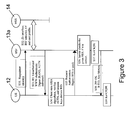
- the user equipment UE 12 sends an HTTP request towards the bootstrapping server function BSF 13a (step S31).
- the BSF 13a retrieves the user profile and a challenge, i.e. authentication vector (AV), over the Zh interface from the home subscriber system HSS 14.
- the BSF 13a forwards authentication parameters RAND and AUTN to the UE 12 in order to demand the UE 12 to authenticate itself.
- the UE 12 calculates a message authentication code (MAC) so as to verify the challenge from the authenticated network, as well as calculates session keys CK, IK, and RES.
- MAC message authentication code
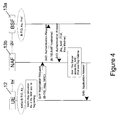
- FIG 4 an example procedure using a bootstrapped security association is depicted.
- the UE 12 After having initiated a bootstrapping session (S40a), the UE 12 can start to communicate with the network application function NAF 13b. Thereby, the master key Ks generated during bootstrapping procedure in the UE 12 and in the BSF 13a is used to derive the NAF-specific key Ks_NAF (step S40b).
- An application request (step S41) includes the transaction identifier B-TID obtained during bootstrapping, an application-specific dataset denoted by msg, and all credentials being denoted by MAC.
- this object is for example achieved by a method comprising performing authentication between a client entity (UE) and a network comprising at least a bootstrapping server function entity (BSF) and a network application function entity (NAF), wherein the client entity (UE) has a unidirectional network connection lacking a return channel to the networkbootstrapping server function entity (BSF) and/or the network application function entity (NAF), the authentication comprising: transmitting (S62) a request for authentication information from the network application function entity to the bootstrapping server function entity, said request comprising a private identity of the client entity, when the network application function entity needs to securely transmit data to the client entity; processing (S63) the request and retrieving the authentication information at the bootstrapping server function entity, wherein said retrieving comprises creating bootstrapping session data for the client entity; transmitting (S64) response including the authentication information comprising the bootstrapping session data for the client entity from the bootstrapping server function entity to the network application function entity; transmitting (S66) the
- this object is for example achieved by an apparatus, said apparatus being operable as a client entity for use within an authentication architecture for performing authentication between the client entity (UE) and a network, the network comprising at least a bootstrapping server function entity (BSF) and a network application function entity (NAF), wherein the client entity (UE) is operable to have a unidirectional network connection lacking a return channel from the client entity to the bootstrapping server function entity (BSF) and/or the network application function entity (NAF), said apparatus comprising: receiving means (87) for receiving, from the network application function entity, authentication information from the bootstrapping server function entity and data to be transmitted from the network application function entity to the client entity, said authentication information comprising bootstrapping session data for the client entity, and authenticating means (81) for authenticating the network using the received authentication information comprising the bootstrapping session data for the client entity, wherein said authenticating comprises performing an authentication including a generic authentication in accordance with a generic authentication architecture.
- BSF bootstrapping server function entity
- NAF network application function
- this object is for example achieved by an A computer program embodied on a computer-readable medium, the computer program configured to load into a memory of a digital processing means and to control said digital processing means to perform the method according to the seventh aspect.
- this object is for example achieved by a computer program embodied on a computer-readable medium, the computer program configured to load into a memory of a digital processing means and to control said digital processing means to perform the method according to the tenth aspect.
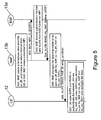
- the bootstrapping phase between the client and the bootstrapping server function is basically removed. Further, it is advantageous that this bootstrapping phase is partly combined with the meta-protocol (or the single messages) between the network application function and the client.
- the NAF entity 13b uses the broadcast channel between itself and the UE 12 to send parameters AUTN, RAND, NAF_ID, and the encrypted data to the UE 12.
- AUTN, RAND, NAF_ID, and the encrypted data itself may be further protected with other known means (e.g., by using a public key of the device certificate of the UE).
- the UE 12 receives the data from the NAF 13b, it first uses the parameters AUTN and the RAND to authenticate the network. If this is successful, it will derive the bootstrapping key (Ks) from session keys CK and IK, and continue to derive the NAF-specific key Ks_NAF using Ks, NAF_ID, and other key derivation parameters. It can then decrypt the data using the key Ks_NAF, and take the data (e.g., broadcast keys) into use in the UE 12.
- Ks bootstrapping key
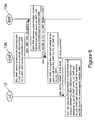
- Figure 6 illustrates a signaling diagram of a method according to an embodiment of the present invention.
- the client entity UE 12 has no return channel to the network, and thus cannot perform a bootstrapping procedure directly with the BSF 13a entity. Rather, the bootstrapping takes place with the aid of a NAF entity. Hence, such a procedure may be referred to as reverse bootstrapping.
- the BSF entity 13a should contain the existing bootstrapping session data (identified by the bootstrapping transaction identifier B-TID), and calculate the key Ks_NAF as mentioned also above.
- the BSF entity 13a according to this embodiment creates bootstrapping session data without communicating with the client entity UE 12, which are to be used for calculation of Ks_NAF and a selection of USSs.
- the BSF entity 13a sends parameters AUTN, RAND, B-TID, Ks_NAF, lifetime of the Ks_NAF, and the requested USSs (if any) to the NAF. Also AUTN, RAND, and B-TID is returned to the NAF.
- the NAF then (in step 5) optionally uses the key Ks_NAF to encrypt (or otherwise secure) the data to be transmitted.
- Ks_NAF a NAF-specific functionality.
- GBA specifications are very open on what happens in the NAF 13b and how the NAF 13b uses the GBA keys.
- the functionality of encrypting (and decrypting) of data to be transmitted is purely optional in the framework of performing authentication.
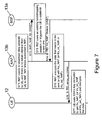
- Figure 7 illustrates a signaling diagram of a further method according to a second comparative example.
- the client UE 12 has no return channel to the NAF entity 13b but does have such a bidirectional connection to other network elements such as the BSF 13a. That is, similar to the above scenarios, the client entity UE 12 is not able to communicate with both of the relevant network elements NAF 13b and BSF 13a in a bidirectional manner. However, in the present case, the client can perform a bootstrapping procedure with the BSF entity 13a.
- An example for such a scenario may be a mobile terminal that has 3G functionalities, e.g. IP connectivity, but it is also equipped with a facility to receive for example digital video broadcast for handheld terminals, i.e. is DVB-H enabled.
- 3G functionalities e.g. IP connectivity
- the NAF entity 13b needs to deliver some data (e.g., broadcast keys) to the client entity UE 12. It knows the identity of subscriber, i.e. its IMPI, and the data that need to be delivered to the UE 12. The NAF entity 13b then sends the subscriber's IMPI, its NAF_ID (i.e., NAF hostname), and optionally one or more GSIDs (GAA service identifiers for requesting NAF-specific user security settings) over the Zn reference point (step S72). Up to this point, the method is rather similar to the one of the above-described embodiment.
- some data e.g., broadcast keys
- the client entity according to still another embodiment of the present invention is a set-top box (or digibox). If so, the client entity being such a set-top box is configured to be operated according to any appropriate known technique, such as for example according to DVB-H standards.
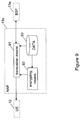
- Figure 9 illustrates a block diagram of a network application function entity according to an embodiment of the present invention.
- a client entity for performing authentication between a client entity and a network
- the network comprising at least a bootstrapping server function entity and a network application function entity, and wherein the client entity is not able to communicate with both of the network entities in a bidirectional manner, wherein the standard Ub reference point between the client entity and the bootstrapping server function entity is not utilized for authentication purposes.
- the present invention discloses authentication using GAA functionality for unidirectional network connections.
Landscapes
- Engineering & Computer Science (AREA)
- Computer Networks & Wireless Communication (AREA)
- Signal Processing (AREA)
- Computer Security & Cryptography (AREA)
- Computer Hardware Design (AREA)
- Computing Systems (AREA)
- General Engineering & Computer Science (AREA)
- Mobile Radio Communication Systems (AREA)
Claims (56)
- Procédé comprenant :l'exécution d'une authentification entre une entité client (UE) et un réseau comprenant au moins une entité de fonction de serveur d'amorçage (BSF) et une entité de fonction d'application de réseau (NAF), dans lequel l'entité client (UE) a une connexion de réseau unidirectionnelle à laquelle il manque un canal de retour de l'entité client à l'entité de fonction de serveur d'amorçage (BSF) et/ou l'entité de fonction d'application de réseau (NAF), l'authentification comprenant :la transmission (S62) d'une demande d'informations d'authentification de l'entité de fonction d'application de réseau à l'entité de fonction de serveur d'amorçage, ladite demande comprenant une identité privée de l'entité client, lorsque l'entité de fonction d'application de réseau doit transmettre des données en toute sécurité à l'entité client ;le traitement (S63) de la demande et l'extraction des informations d'authentification au niveau de l'entité de fonction de serveur d'amorçage, dans lequel ladite extraction comprend la création de données de session d'amorçage pour l'entité client ;la transmission (S64) d'une réponse comprenant les informations d'authentification comprenant les données de session d'amorçage pour l'entité client de l'entité de fonction de serveur d'amorçage à l'entité de fonction d'application de réseau ;la transmission (S66) des informations d'authentification comprenant les données de session d'amorçage pour l'entité client et les données à transmettre de l'entité de fonction d'application de réseau à l'entité client ; etl'authentification (S67) du réseau en utilisant les informations d'authentification comprenant les données de session d'amorçage pour l'entité client au niveau de l'entité client, dans lequel ladite authentification comprend l'exécution d'une authentification comprenant une authentification générique en fonction d'une architecture d'authentification générique.
- Procédé selon la revendication 1, dans lequel la transmission de la demande est déclenchée par un moyen différent de l'entité client.
- Procédé selon la revendication 1, dans lequel la demande comprend en outre une identité de l'entité de fonction d'application de réseau.
- Procédé selon la revendication 1, dans lequel le traitement de la demande et l'extraction des informations d'authentification comprennent la recherche des informations d'authentification dans un système d'abonné domestique (HSS).
- Procédé selon la revendication 1, dans lequel les informations d'authentification comprennent en outre au moins un paramètre de défi aléatoire ou un paramètre d'authentification de réseau.
- Procédé selon la revendication 5, dans lequel la réponse comprend en outre une clé de l'entité de fonction d'application de réseau.
- Procédé selon la revendication 1, dans lequel la transmission des informations d'authentification comprend en outre la transmission d'une identité de l'entité de fonction d'application de réseau.
- Procédé selon la revendication 1, dans lequel l'authentification du réseau comprend en outre la génération d'une clé de l'entité de fonction d'application de réseau au niveau de l'entité client.
- Procédé selon la revendication 1, dans lequel l'authentification du réseau comprend en outre l'établissement d'une session d'amorçage entre l'entité client et l'entité de fonction de serveur d'amorçage.
- Procédé selon la revendication 9, dans lequel l'établissement d'une session d'amorçage est basé sur les informations d'authentification de l'entité de fonction d'application de réseau.
- Procédé selon la revendication 1, dans lequel l'authentification du réseau comprend en outre la mémorisation des données de session d'amorçage au niveau de l'entité client.
- Procédé selon la revendication 1, comprenant en outre la détermination qu'une session d'amorçage valide existe entre l'entité client et l'entité de fonction de serveur d'amorçage.
- Procédé selon la revendication 12, dans lequel la session d'amorçage valide existe en permanence.
- Procédé selon la revendication 12, dans lequel le traitement de la demande comprend en outre le déclenchement de l'entité client pour établir la session d'amorçage valide.
- Procédé selon la revendication 12, dans lequel la réponse comprend en outre une clé de l'entité de fonction d'application de réseau.
- Procédé selon la revendication 12, dans lequel l'authentification du réseau comprend en outre la génération d'une clé de l'entité de fonction d'application de réseau au niveau de l'entité client.
- Procédé selon la revendication 1, comprenant en outre le contact initial de l'entité de fonction d'application de réseau et l'envoi d'une identité privée de l'entité client par l'entité client.
- Procédé selon la revendication 1, comprenant en outre le déclenchement, par l'entité de fonction d'application de réseau, de l'entité client pour établir une session d'amorçage valide.
- Procédé selon la revendication 1, comprenant en outre le déclenchement, par l'entité de fonction d'application de réseau, de l'entité de fonction de serveur d'amorçage pour déclencher une procédure d'amorçage non sollicitée avec l'entité client.
- Procédé selon la revendication 1, comprenant en outre le cryptage des données à transmettre au niveau de l'entité de fonction d'application de réseau en utilisant une clé de la fonction d'application de réseau.
- Procédé selon la revendication 20, comprenant en outre le décryptage des données au niveau de l'entité client en utilisant la clé de l'entité de fonction d'application de réseau.
- Procédé selon la revendication 1, dans lequel le réseau comprend un réseau de diffusion.
- Programme informatique concrétisé sur un support lisible par ordinateur, le programme informatique étant configuré pour être chargé dans une mémoire d'un moyen de traitement numérique et pour commander au dit moyen de traitement numérique d'effectuer le procédé selon l'une quelconque des revendications 1 à 22.
- Appareil,
ledit appareil étant utilisable en tant qu'entité client à utiliser à l'intérieur d'une architecture d'authentification entre l'entité client (UE) et un réseau, le réseau comprenant au moins une entité de fonction de serveur d'amorçage (BSF) et une entité de fonction d'application de réseau (NAF), dans lequel l'entité client (UE) est utilisable pour avoir une connexion de réseau unidirectionnelle à laquelle il manque un canal de retour de l'entité client à l'entité de fonction de serveur d'amorçage (BSF) et/ou l'entité de fonction d'application de réseau (NAF), ledit appareil comprenant :un moyen de réception (87) pour recevoir, de l'entité de fonction d'application de réseau, des informations d'authentification de l'entité de fonction de serveur d'amorçage et des données à transmettre de l'entité de fonction d'application de réseau à l'entité client, lesdites informations d'authentification comprenant des données de session d'amorçage pour l'entité client, etun moyen d'authentification (81) pour authentifier le réseau en utilisant les informations d'authentification reçues comprenant les données de session d'amorçage pour l'entité client, dans lequel ladite authentification comprend l'exécution d'une authentification comprenant une authentification générique en fonction d'une architecture d'authentification générique. - Appareil selon la revendication 24, comprenant en outre un moyen de génération de clé (82) pour générer une clé de l'entité de fonction d'application de réseau.
- Appareil selon la revendication 24, comprenant en outre un moyen d'établissement (84) pour établir une session d'amorçage entre l'appareil et l'entité de fonction de serveur d'amorçage.
- Appareil selon la revendication 24, comprenant en outre un moyen de mémorisation (85) pour mémoriser les données de session d'amorçage.
- Appareil selon la revendication 24, comprenant en outre un moyen de décryptage (83) pour décrypter les données cryptées reçues de l'entité de fonction d'application de réseau en utilisant une clé de l'entité de fonction d'application de réseau.
- Appareil selon la revendication 24, comprenant en outre un moyen de traitement et de commande (86) pour traiter les données et les signaux, et pour commander l'appareil et ses moyens constitutifs.
- Appareil selon la revendication 25, dans lequel l'appareil comprend au moins un équipement utilisateur et peut être connecté à un module d'identité d'abonné universel.
- Appareil selon la revendication 24, dans lequel l'entité client comprend un boîtier décodeur.
- Appareil selon la revendication 31, dans lequel le moyen d'authentification est configuré pour accéder à des informations d'identité d'utilisateur disponibles au niveau de l'appareil.
- Appareil selon la revendication 32, dans lequel les informations d'identité d'utilisateur sont mémorisées dans une carte à puce pouvant être connectée à l'entité client.
- Procédé, comprenant :l'exécution d'une authentification entre une entité client (UE) et un réseau comprenant au moins une entité de fonction de serveur d'amorçage (BSF) et une entité de fonction d'application de réseau (NAF), dans lequel l'entité client (UE) a une connexion de réseau unidirectionnelle à laquelle il manque un canal de retour de l'entité client à l'entité de fonction de serveur d'amorçage (BSF) et/ou l'entité de fonction d'application de réseau (NAF), l'authentification comprenant :la réception (S66), de l'entité de fonction d'application de réseau, d'informations d'authentification de la fonction de serveur d'amorçage et des données à transmettre de l'entité de fonction d'application de réseau, lesdites informations d'authentification comprenant des données de session d'amorçage pour l'entité client, etl'authentification (S67) du réseau en utilisant les informations d'authentification reçues comprenant les données de session d'amorçage pour l'entité client, dans lequel ladite authentification comprend l'exécution d'une authentification comprenant une authentification générique en fonction d'une architecture d'authentification générique.
- Procédé selon la revendication 34, comprenant en outre la génération d'une clé de l'entité de fonction d'application de réseau.
- Procédé selon la revendication 34, comprenant en outre l'établissement d'une session d'amorçage entre l'entité client et l'entité de fonction de serveur d'amorçage.
- Procédé selon la revendication 34, comprenant en outre la mémorisation des données de session d'amorçage.
- Procédé selon la revendication 34, comprenant en outre le décryptage des données cryptées reçues de l'entité de fonction d'application de réseau en utilisant une clé de l'entité de fonction d'application de réseau.
- Procédé selon la revendication 34, comprenant en outre le traitement des données et des signaux, et la commande de l'entité client et de ses moyens constitutifs.
- Programme informatique concrétisé sur un support lisible par ordinateur, le programme informatique étant configuré pour être chargé dans une mémoire d'un moyen de traitement numérique et pour commander au dit moyen de traitement numérique d'effectuer le procédé selon l'une quelconque des revendications 34 à 39.
- Appareil,
ledit appareil étant utilisable en tant qu'entité de fonction d'application de réseau à utiliser à l'intérieur d'une architecture d'authentification pour effectuer une authentification entre une entité client (UE) et un réseau, le réseau comprenant au moins l'appareil servant d'entité de fonction d'application de réseau (NAF) et une entité de fonction de serveur d'amorçage (BSF), dans lequel l'entité client (UE) est utilisable pour avoir une connexion de réseau unidirectionnelle à laquelle il manque un canal de retour de l'entité client à l'entité de fonction de serveur d'amorçage (BSF) et/ou l'entité de fonction d'application de réseau (NAF), ledit appareil comprenant :un moyen d'émission-réception (91) pour envoyer à l'entité client, et pour envoyer à et recevoir de l'entité de fonction de serveur d'amorçage,dans lequel le moyen d'émission-réception est apte à effectuerla transmission d'une demande d'informations d'authentification à l'entité de fonction de serveur d'amorçage, ladite demande comprenant une identité privée de l'entité client, lorsque l'entité de fonction d'application de réseau doit transmettre des données en toute sécurité à l'entité client,la réception d'une réponse comprenant les informations d'authentification comprenant les données de session d'amorçage pour l'entité client de l'entité de fonction de serveur d'amorçage, etla transmission des informations d'authentification comprenant les données de session d'amorçage pour l'entité client et les données à transmettre à l'entité client,dans lequel lesdites informations d'authentification sont adaptées à une authentification comprenant une authentification générique en fonction d'une architecture d'authentification générique. - Appareil selon la revendication 41, dans lequel le moyen d'émission-réception (91) est configuré pour transmettre une identité de l'entité de fonction d'application de réseau à l'entité client.
- Appareil selon la revendication 41, comprenant en outre un moyen de cryptage (92) pour crypter les données à transmettre à l'entité client en utilisant une clé de l'entité de fonction d'application de réseau.
- Appareil selon la revendication 41, dans lequel l'appareil est configuré pour diffuser des transmissions.
- Procédé, comprenant
l'exécution d'une authentification entre une entité client (UE) et un réseau comprenant au moins une entité de fonction de serveur d'amorçage (BSF) et une entité de fonction d'application de réseau (NAF), dans lequel l'entité client (UE) a une connexion de réseau unidirectionnelle à laquelle il manque un canal de retour de l'entité client à l'entité de fonction de serveur d'amorçage (BSF) et/ou l'entité de fonction d'application de réseau (NAF), l'authentification comprenant :la transmission (S62) d'une demande d'informations d'authentification à l'entité de fonction de serveur d'amorçage, ladite demande comprenant une identité privée de l'entité client, lorsque l'entité de fonction d'application de réseau doit transmettre des données en toute sécurité à l'entité client ;la réception (S64) d'une réponse comprenant les informations d'authentification comprenant les données de session d'amorçage pour l'entité client de l'entité de fonction de serveur d'amorçage, etla transmission (S66) des informations d'authentification comprenant les données de session d'amorçage pour l'entité client et les données à transmettre à l'entité client,dans lequel lesdites informations d'authentification sont adaptées à une authentification comprenant une authentification générique en fonction d'une architecture d'authentification générique. - Procédé selon la revendication 45, comprenant en outre la transmission d'une identité de l'entité de fonction d'application de réseau à l'entité client.
- Procédé selon la revendication 45, comprenant en outre le cryptage des données à transmettre à l'entité client en utilisant une clé de l'entité de fonction d'application.
- Programme informatique concrétisé sur un support lisible par ordinateur, le programme informatique étant configuré pour être chargé dans une mémoire d'un moyen de traitement numérique et pour commander au dit moyen de traitement numérique d'effectuer le procédé selon l'une quelconque des revendications 45 à 47.
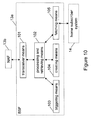
- Appareil,
ledit appareil étant utilisable en tant qu'entité de fonction de serveur d'amorçage à utiliser à l'intérieur d'une architecture d'authentification pour effectuer une authentification entre une entité client (UE) et un réseau, le réseau comprenant au moins l'appareil servant d'entité de fonction de serveur d'amorçage (BSF) et une entité de fonction d'application de réseau (NAF), dans lequel l'entité client (UE) est utilisable pour avoir une connexion de réseau unidirectionnelle à laquelle il manque un canal de retour de l'entité client à l'entité de fonction de serveur d'amorçage (BSF) et/ou l'entité de fonction d'application de réseau (NAF), ledit appareil comprenant :un moyen d'émission-réception (101) pour envoyer à et recevoir de l'entité de fonction d'application de réseau, etun moyen de traitement et d'extraction (102) pour traiter une demande reçue de l'entité de fonction d'application de réseau, ladite demande comprenant une identité privée de l'entité client, et pour extraire des informations d'authentification, ledit moyen de traitement et d'extraction comprenant en outre un moyen de création (104) pour créer des données de session d'amorçage pour l'entité client,dans lequel le moyen d'émission-réception (101) est configuré pour recevoir la demande de l'entité de fonction d'application de réseau et transmettre les informations d'authentification comprenant les données de session d'amorçage créées pour l'entité client à l'entité de fonction d'application de réseau,dans lequel lesdites informations d'authentification sont adaptées à une authentification comprenant une authentification générique en fonction d'une architecture d'authentification générique. - Appareil selon la revendication 49, comprenant en outre un moyen de recherche (105) pour rechercher les informations d'authentification dans un système d'abonné domestique (HSS).
- Appareil selon la revendication 49, comprenant en outre un moyen de déclenchement (103) pour le déclenchement de l'entité client pour établir une session d'amorçage valide.
- Appareil selon la revendication 49, dans lequel le réseau comprend un réseau de diffusion.
- Procédé, comprenant
l'exécution d'une authentification entre une entité client (UE) et un réseau comprenant au moins une entité de fonction de serveur d'amorçage (BSF) et une entité de fonction d'application de réseau (NAF), dans lequel l'entité client (UE) a une connexion de réseau unidirectionnelle à laquelle il manque un canal de retour de l'entité client à l'entité de fonction de serveur d'amorçage (BSF) et/ou l'entité de fonction d'application de réseau (NAF), l'authentification comprenant :la réception (S62) d'une demande d'informations d'authentification de l'entité de fonction d'application de réseau, ladite demande comprenant une identité privée de l'entité client,le traitement (S63) de la demande reçue de l'entité de fonction d'application de réseau et l'extraction des informations d'authentification, comprenant en outre la création de données de session d'amorçage pour l'entité client ;la transmission (S64) d'une réponse comprenant les informations d'authentification comprenant les données de session d'amorçage créées pour l'entité client à l'entité de fonction d'application de réseau ;dans lequel lesdites informations d'authentification sont adaptées à une authentification comprenant une authentification générique en fonction d'une architecture d'authentification générique. - Procédé selon la revendication 53, comprenant en outre la recherche des informations d'authentification dans un système d'abonné domestique (HSS).
- Procédé selon la revendication 53, comprenant en outre le déclenchement de l'entité client pour établir une session d'amorçage valide.
- Programme informatique concrétisé sur un support lisible par ordinateur, le programme informatique étant configuré pour être chargé dans une mémoire d'un moyen de traitement numérique et pour commander au dit moyen de traitement numérique d'effectuer le procédé selon l'une quelconque des revendications 53 à 55.
Priority Applications (4)
| Application Number | Priority Date | Filing Date | Title |
|---|---|---|---|
| EP10189236.2A EP2288107B1 (fr) | 2005-02-03 | 2006-01-17 | Authentification au moyen d'une fonctionnalité GAA pour connexions de réseau unidirectionnelles |
| PL06710685T PL1844595T3 (pl) | 2005-02-03 | 2006-01-17 | Uwierzytelnianie wykorzystujące funkcjonalność GAA dla jednokierunkowych połączeń sieciowych |
| EP06710685A EP1844595B1 (fr) | 2005-02-03 | 2006-01-17 | Authentification au moyen d'une fonctionnalité GAA pour connexions de réseau unidirectionnelles |
| PL10189236T PL2288107T3 (pl) | 2005-02-03 | 2006-01-17 | Uwierzytelnianie przy pomocy funkcjonalności GAA dla jednokierunkowych połączeń sieciowych |
Applications Claiming Priority (4)
| Application Number | Priority Date | Filing Date | Title |
|---|---|---|---|
| EP05002300 | 2005-02-03 | ||
| US11/108,848 US8726023B2 (en) | 2005-02-03 | 2005-04-19 | Authentication using GAA functionality for unidirectional network connections |
| EP06710685A EP1844595B1 (fr) | 2005-02-03 | 2006-01-17 | Authentification au moyen d'une fonctionnalité GAA pour connexions de réseau unidirectionnelles |
| PCT/IB2006/050173 WO2006082533A1 (fr) | 2005-02-03 | 2006-01-17 | Authentification au moyen d'une fonctionnalite gaa pour connexions de reseau unidirectionnelles |
Related Child Applications (2)
| Application Number | Title | Priority Date | Filing Date |
|---|---|---|---|
| EP10189236.2A Division EP2288107B1 (fr) | 2005-02-03 | 2006-01-17 | Authentification au moyen d'une fonctionnalité GAA pour connexions de réseau unidirectionnelles |
| EP10189236.2A Division-Into EP2288107B1 (fr) | 2005-02-03 | 2006-01-17 | Authentification au moyen d'une fonctionnalité GAA pour connexions de réseau unidirectionnelles |
Publications (2)
| Publication Number | Publication Date |
|---|---|
| EP1844595A1 EP1844595A1 (fr) | 2007-10-17 |
| EP1844595B1 true EP1844595B1 (fr) | 2011-03-02 |
Family
ID=36282576
Family Applications (2)
| Application Number | Title | Priority Date | Filing Date |
|---|---|---|---|
| EP06710685A Expired - Lifetime EP1844595B1 (fr) | 2005-02-03 | 2006-01-17 | Authentification au moyen d'une fonctionnalité GAA pour connexions de réseau unidirectionnelles |
| EP10189236.2A Expired - Lifetime EP2288107B1 (fr) | 2005-02-03 | 2006-01-17 | Authentification au moyen d'une fonctionnalité GAA pour connexions de réseau unidirectionnelles |
Family Applications After (1)
| Application Number | Title | Priority Date | Filing Date |
|---|---|---|---|
| EP10189236.2A Expired - Lifetime EP2288107B1 (fr) | 2005-02-03 | 2006-01-17 | Authentification au moyen d'une fonctionnalité GAA pour connexions de réseau unidirectionnelles |
Country Status (3)
| Country | Link |
|---|---|
| EP (2) | EP1844595B1 (fr) |
| PL (2) | PL1844595T3 (fr) |
| WO (1) | WO2006082533A1 (fr) |
Families Citing this family (4)
| Publication number | Priority date | Publication date | Assignee | Title |
|---|---|---|---|---|
| US8726023B2 (en) | 2005-02-03 | 2014-05-13 | Nokia Corporation | Authentication using GAA functionality for unidirectional network connections |
| EP1844595B1 (fr) | 2005-02-03 | 2011-03-02 | Nokia Corporation | Authentification au moyen d'une fonctionnalité GAA pour connexions de réseau unidirectionnelles |
| US8046824B2 (en) * | 2005-04-11 | 2011-10-25 | Nokia Corporation | Generic key-decision mechanism for GAA |
| TW201015940A (en) * | 2008-10-01 | 2010-04-16 | Avermedia Tech Inc | Network authorization method and application thereof |
Family Cites Families (3)
| Publication number | Priority date | Publication date | Assignee | Title |
|---|---|---|---|---|
| WO2003036857A1 (fr) * | 2001-10-24 | 2003-05-01 | Nokia Corporation | Le chiffrement dans le concept de multidiffusion |
| ES2279078T3 (es) * | 2003-06-24 | 2007-08-16 | Alcatel Lucent | Red de acceso a linea de abonado digital con un control mejorado de la autenticacion, autorizacion, contabilidad y configuracion para servicios de emision multiple. |
| EP1844595B1 (fr) | 2005-02-03 | 2011-03-02 | Nokia Corporation | Authentification au moyen d'une fonctionnalité GAA pour connexions de réseau unidirectionnelles |
-
2006
- 2006-01-17 EP EP06710685A patent/EP1844595B1/fr not_active Expired - Lifetime
- 2006-01-17 PL PL06710685T patent/PL1844595T3/pl unknown
- 2006-01-17 WO PCT/IB2006/050173 patent/WO2006082533A1/fr not_active Ceased
- 2006-01-17 PL PL10189236T patent/PL2288107T3/pl unknown
- 2006-01-17 EP EP10189236.2A patent/EP2288107B1/fr not_active Expired - Lifetime
Also Published As
| Publication number | Publication date |
|---|---|
| PL2288107T3 (pl) | 2014-07-31 |
| EP2288107B1 (fr) | 2014-04-02 |
| WO2006082533A1 (fr) | 2006-08-10 |
| PL1844595T3 (pl) | 2011-07-29 |
| EP1844595A1 (fr) | 2007-10-17 |
| EP2288107A1 (fr) | 2011-02-23 |
Similar Documents
| Publication | Publication Date | Title |
|---|---|---|
| US10284555B2 (en) | User equipment credential system | |
| CN101194529B (zh) | 用于协商至少一个第一通信用户和第二通信用户之间的安全密钥以保护通信连接的安全的方法 | |
| US8374582B2 (en) | Access method and system for cellular mobile communication network | |
| CN101112038B (zh) | 通信系统中的用户认证和授权 | |
| US8527759B2 (en) | IMS user equipment, control method thereof, host device, and control method thereof | |
| US20060274695A1 (en) | System and method for effectuating a connection to a network | |
| US8726023B2 (en) | Authentication using GAA functionality for unidirectional network connections | |
| CN111050322A (zh) | 基于gba的客户端注册和密钥共享方法、装置及系统 | |
| JP2012034381A (ja) | Gaaのための汎用鍵の決定メカニズム | |
| EP2979418B1 (fr) | Etablissement d'une communication vocale sécurisée utilisant une architecture gba | |
| WO2008006312A1 (fr) | Procédé de fourniture de service push de gaa et dispositif associé | |
| KR101309426B1 (ko) | 모바일 네트워크에서 재귀 인증을 위한 방법 및 시스템 | |
| EP1844595B1 (fr) | Authentification au moyen d'une fonctionnalité GAA pour connexions de réseau unidirectionnelles | |
| CN102694779B (zh) | 组合认证系统及认证方法 | |
| US20240340164A1 (en) | Establishment of forward secrecy during digest authentication |
Legal Events
| Date | Code | Title | Description |
|---|---|---|---|
| PUAI | Public reference made under article 153(3) epc to a published international application that has entered the european phase |
Free format text: ORIGINAL CODE: 0009012 |
|
| 17P | Request for examination filed |
Effective date: 20070621 |
|
| AK | Designated contracting states |
Kind code of ref document: A1 Designated state(s): AT BE BG CH CY CZ DE DK EE ES FI FR GB GR HU IE IS IT LI LT LU LV MC NL PL PT RO SE SI SK TR |
|
| DAX | Request for extension of the european patent (deleted) | ||
| 17Q | First examination report despatched |
Effective date: 20081110 |
|
| GRAP | Despatch of communication of intention to grant a patent |
Free format text: ORIGINAL CODE: EPIDOSNIGR1 |
|
| RIC1 | Information provided on ipc code assigned before grant |
Ipc: H04W 12/06 20090101AFI20100826BHEP |
|
| RTI1 | Title (correction) |
Free format text: AUTHENTICATION USING GAA FUNCTIONALITY FOR UNIDIRECTIONAL NETWORK CONNECTIONS |
|
| GRAA | (expected) grant |
Free format text: ORIGINAL CODE: 0009210 |
|
| GRAS | Grant fee paid |
Free format text: ORIGINAL CODE: EPIDOSNIGR3 |
|
| AK | Designated contracting states |
Kind code of ref document: B1 Designated state(s): AT BE BG CH CY CZ DE DK EE ES FI FR GB GR HU IE IS IT LI LT LU LV MC NL PL PT RO SE SI SK TR |
|
| REG | Reference to a national code |
Ref country code: GB Ref legal event code: FG4D |
|
| REG | Reference to a national code |
Ref country code: CH Ref legal event code: EP |
|
| REG | Reference to a national code |
Ref country code: IE Ref legal event code: FG4D |
|
| REG | Reference to a national code |
Ref country code: PT Ref legal event code: SC4A Free format text: AVAILABILITY OF NATIONAL TRANSLATION Effective date: 20110330 |
|
| REG | Reference to a national code |
Ref country code: NL Ref legal event code: T3 |
|
| REF | Corresponds to: |
Ref document number: 602006020409 Country of ref document: DE Date of ref document: 20110414 Kind code of ref document: P |
|
| REG | Reference to a national code |
Ref country code: DE Ref legal event code: R096 Ref document number: 602006020409 Country of ref document: DE Effective date: 20110414 |
|
| REG | Reference to a national code |
Ref country code: SE Ref legal event code: TRGR |
|
| REG | Reference to a national code |
Ref country code: ES Ref legal event code: FG2A Ref document number: 2359077 Country of ref document: ES Kind code of ref document: T3 Effective date: 20110506 |
|
| REG | Reference to a national code |
Ref country code: RO Ref legal event code: EPE |
|
| PG25 | Lapsed in a contracting state [announced via postgrant information from national office to epo] |
Ref country code: LV Free format text: LAPSE BECAUSE OF FAILURE TO SUBMIT A TRANSLATION OF THE DESCRIPTION OR TO PAY THE FEE WITHIN THE PRESCRIBED TIME-LIMIT Effective date: 20110302 Ref country code: GR Free format text: LAPSE BECAUSE OF FAILURE TO SUBMIT A TRANSLATION OF THE DESCRIPTION OR TO PAY THE FEE WITHIN THE PRESCRIBED TIME-LIMIT Effective date: 20110603 Ref country code: LT Free format text: LAPSE BECAUSE OF FAILURE TO SUBMIT A TRANSLATION OF THE DESCRIPTION OR TO PAY THE FEE WITHIN THE PRESCRIBED TIME-LIMIT Effective date: 20110302 |
|
| REG | Reference to a national code |
Ref country code: PL Ref legal event code: T3 |
|
| LTIE | Lt: invalidation of european patent or patent extension |
Effective date: 20110302 |
|
| PG25 | Lapsed in a contracting state [announced via postgrant information from national office to epo] |
Ref country code: SI Free format text: LAPSE BECAUSE OF FAILURE TO SUBMIT A TRANSLATION OF THE DESCRIPTION OR TO PAY THE FEE WITHIN THE PRESCRIBED TIME-LIMIT Effective date: 20110302 Ref country code: AT Free format text: LAPSE BECAUSE OF FAILURE TO SUBMIT A TRANSLATION OF THE DESCRIPTION OR TO PAY THE FEE WITHIN THE PRESCRIBED TIME-LIMIT Effective date: 20110302 Ref country code: BG Free format text: LAPSE BECAUSE OF FAILURE TO SUBMIT A TRANSLATION OF THE DESCRIPTION OR TO PAY THE FEE WITHIN THE PRESCRIBED TIME-LIMIT Effective date: 20110602 Ref country code: FI Free format text: LAPSE BECAUSE OF FAILURE TO SUBMIT A TRANSLATION OF THE DESCRIPTION OR TO PAY THE FEE WITHIN THE PRESCRIBED TIME-LIMIT Effective date: 20110302 Ref country code: CY Free format text: LAPSE BECAUSE OF FAILURE TO SUBMIT A TRANSLATION OF THE DESCRIPTION OR TO PAY THE FEE WITHIN THE PRESCRIBED TIME-LIMIT Effective date: 20110302 |
|
| REG | Reference to a national code |
Ref country code: HU Ref legal event code: AG4A Ref document number: E010974 Country of ref document: HU |
|
| PG25 | Lapsed in a contracting state [announced via postgrant information from national office to epo] |
Ref country code: BE Free format text: LAPSE BECAUSE OF FAILURE TO SUBMIT A TRANSLATION OF THE DESCRIPTION OR TO PAY THE FEE WITHIN THE PRESCRIBED TIME-LIMIT Effective date: 20110302 |
|
| PG25 | Lapsed in a contracting state [announced via postgrant information from national office to epo] |
Ref country code: EE Free format text: LAPSE BECAUSE OF FAILURE TO SUBMIT A TRANSLATION OF THE DESCRIPTION OR TO PAY THE FEE WITHIN THE PRESCRIBED TIME-LIMIT Effective date: 20110302 |
|
| PG25 | Lapsed in a contracting state [announced via postgrant information from national office to epo] |
Ref country code: SK Free format text: LAPSE BECAUSE OF FAILURE TO SUBMIT A TRANSLATION OF THE DESCRIPTION OR TO PAY THE FEE WITHIN THE PRESCRIBED TIME-LIMIT Effective date: 20110302 Ref country code: CZ Free format text: LAPSE BECAUSE OF FAILURE TO SUBMIT A TRANSLATION OF THE DESCRIPTION OR TO PAY THE FEE WITHIN THE PRESCRIBED TIME-LIMIT Effective date: 20110302 Ref country code: IS Free format text: LAPSE BECAUSE OF FAILURE TO SUBMIT A TRANSLATION OF THE DESCRIPTION OR TO PAY THE FEE WITHIN THE PRESCRIBED TIME-LIMIT Effective date: 20110702 |
|
| PLBE | No opposition filed within time limit |
Free format text: ORIGINAL CODE: 0009261 |
|
| STAA | Information on the status of an ep patent application or granted ep patent |
Free format text: STATUS: NO OPPOSITION FILED WITHIN TIME LIMIT |
|
| 26N | No opposition filed |
Effective date: 20111205 |
|
| PG25 | Lapsed in a contracting state [announced via postgrant information from national office to epo] |
Ref country code: DK Free format text: LAPSE BECAUSE OF FAILURE TO SUBMIT A TRANSLATION OF THE DESCRIPTION OR TO PAY THE FEE WITHIN THE PRESCRIBED TIME-LIMIT Effective date: 20110302 |
|
| REG | Reference to a national code |
Ref country code: DE Ref legal event code: R097 Ref document number: 602006020409 Country of ref document: DE Effective date: 20111205 |
|
| PG25 | Lapsed in a contracting state [announced via postgrant information from national office to epo] |
Ref country code: MC Free format text: LAPSE BECAUSE OF NON-PAYMENT OF DUE FEES Effective date: 20120131 |
|
| REG | Reference to a national code |
Ref country code: CH Ref legal event code: PL |
|
| PG25 | Lapsed in a contracting state [announced via postgrant information from national office to epo] |
Ref country code: CH Free format text: LAPSE BECAUSE OF NON-PAYMENT OF DUE FEES Effective date: 20120131 Ref country code: LI Free format text: LAPSE BECAUSE OF NON-PAYMENT OF DUE FEES Effective date: 20120131 |
|
| PG25 | Lapsed in a contracting state [announced via postgrant information from national office to epo] |
Ref country code: TR Free format text: LAPSE BECAUSE OF FAILURE TO SUBMIT A TRANSLATION OF THE DESCRIPTION OR TO PAY THE FEE WITHIN THE PRESCRIBED TIME-LIMIT Effective date: 20110302 |
|
| PG25 | Lapsed in a contracting state [announced via postgrant information from national office to epo] |
Ref country code: LU Free format text: LAPSE BECAUSE OF NON-PAYMENT OF DUE FEES Effective date: 20120117 |
|
| REG | Reference to a national code |
Ref country code: GB Ref legal event code: 732E Free format text: REGISTERED BETWEEN 20150910 AND 20150916 |
|
| REG | Reference to a national code |
Ref country code: DE Ref legal event code: R081 Ref document number: 602006020409 Country of ref document: DE Owner name: NOKIA TECHNOLOGIES OY, FI Free format text: FORMER OWNER: NOKIA CORPORATION, ESPOO, FI Ref country code: DE Ref legal event code: R081 Ref document number: 602006020409 Country of ref document: DE Owner name: NOKIA TECHNOLOGIES OY, FI Free format text: FORMER OWNER: NOKIA CORPORATION, 02610 ESPOO, FI |
|
| REG | Reference to a national code |
Ref country code: ES Ref legal event code: PC2A Owner name: NOKIA TECHNOLOGIES OY Effective date: 20151124 |
|
| REG | Reference to a national code |
Ref country code: PT Ref legal event code: PC4A Owner name: NOKIA TECHNOLOGIES OY, FI Effective date: 20151127 |
|
| REG | Reference to a national code |
Ref country code: FR Ref legal event code: PLFP Year of fee payment: 11 |
|
| REG | Reference to a national code |
Ref country code: NL Ref legal event code: PD Owner name: NOKIA TECHNOLOGIES OY; FI Free format text: DETAILS ASSIGNMENT: VERANDERING VAN EIGENAAR(S), OVERDRACHT; FORMER OWNER NAME: NOKIA CORPORATION Effective date: 20151111 |
|
| REG | Reference to a national code |
Ref country code: FR Ref legal event code: PLFP Year of fee payment: 12 |
|
| REG | Reference to a national code |
Ref country code: FR Ref legal event code: TP Owner name: NOKIA TECHNOLOGIES OY, FI Effective date: 20170109 |
|
| REG | Reference to a national code |
Ref country code: FR Ref legal event code: PLFP Year of fee payment: 13 |
|
| REG | Reference to a national code |
Ref country code: HU Ref legal event code: FH1C Free format text: FORMER REPRESENTATIVE(S): DR. ANTALFFY-ZSIROS ANDRAS, DANUBIA SZABADALMI ES JOGI IRODA KFT., HU Representative=s name: DR. KOCSOMBA NELLI UEGYVEDI IRODA, HU Ref country code: HU Ref legal event code: GB9C Owner name: NOKIA TECHNOLOGIES OY, FI Free format text: FORMER OWNER(S): NOKIA CORPORATION, FI |
|
| REG | Reference to a national code |
Ref country code: HU Ref legal event code: HC9C Owner name: NOKIA TECHNOLOGIES OY, FI Free format text: FORMER OWNER(S): NOKIA CORPORATION, FI |
|
| REG | Reference to a national code |
Ref country code: HU Ref legal event code: HC9C Owner name: NOKIA TECHNOLOGIES OY, FI Free format text: FORMER OWNER(S): NOKIA CORPORATION, FI |
|
| PGFP | Annual fee paid to national office [announced via postgrant information from national office to epo] |
Ref country code: NL Payment date: 20241214 Year of fee payment: 20 Ref country code: PL Payment date: 20241213 Year of fee payment: 20 |
|
| PGFP | Annual fee paid to national office [announced via postgrant information from national office to epo] |
Ref country code: GB Payment date: 20241205 Year of fee payment: 20 |
|
| PGFP | Annual fee paid to national office [announced via postgrant information from national office to epo] |
Ref country code: FR Payment date: 20241209 Year of fee payment: 20 |
|
| PGFP | Annual fee paid to national office [announced via postgrant information from national office to epo] |
Ref country code: IE Payment date: 20241209 Year of fee payment: 20 |
|
| PGFP | Annual fee paid to national office [announced via postgrant information from national office to epo] |
Ref country code: RO Payment date: 20241230 Year of fee payment: 20 |
|
| PGFP | Annual fee paid to national office [announced via postgrant information from national office to epo] |
Ref country code: SE Payment date: 20241212 Year of fee payment: 20 |
|
| PGFP | Annual fee paid to national office [announced via postgrant information from national office to epo] |
Ref country code: HU Payment date: 20241218 Year of fee payment: 20 |
|
| PGFP | Annual fee paid to national office [announced via postgrant information from national office to epo] |
Ref country code: DE Payment date: 20241203 Year of fee payment: 20 Ref country code: PT Payment date: 20250117 Year of fee payment: 20 |
|
| PGFP | Annual fee paid to national office [announced via postgrant information from national office to epo] |
Ref country code: ES Payment date: 20250206 Year of fee payment: 20 |
|
| PGFP | Annual fee paid to national office [announced via postgrant information from national office to epo] |
Ref country code: IT Payment date: 20241210 Year of fee payment: 20 |
|
| REG | Reference to a national code |
Ref country code: DE Ref legal event code: R071 Ref document number: 602006020409 Country of ref document: DE |
|
| REG | Reference to a national code |
Ref country code: NL Ref legal event code: MK Effective date: 20260116 |
|
| REG | Reference to a national code |
Ref country code: ES Ref legal event code: FD2A Effective date: 20260126 |
|
| REG | Reference to a national code |
Ref country code: GB Ref legal event code: PE20 Expiry date: 20260116 |
|
| REG | Reference to a national code |
Ref country code: IE Ref legal event code: MK9A |
|
| PG25 | Lapsed in a contracting state [announced via postgrant information from national office to epo] |
Ref country code: ES Free format text: LAPSE BECAUSE OF EXPIRATION OF PROTECTION Effective date: 20260118 |
|
| PG25 | Lapsed in a contracting state [announced via postgrant information from national office to epo] |
Ref country code: IE Free format text: LAPSE BECAUSE OF EXPIRATION OF PROTECTION Effective date: 20260117 |
|
| PG25 | Lapsed in a contracting state [announced via postgrant information from national office to epo] |
Ref country code: PT Free format text: LAPSE BECAUSE OF EXPIRATION OF PROTECTION Effective date: 20260128 |