EP1846410B1 - Dihydroquinazolinones utilisees comme modulateurs de la 5ht - Google Patents
Dihydroquinazolinones utilisees comme modulateurs de la 5ht Download PDFInfo
- Publication number
- EP1846410B1 EP1846410B1 EP06720489A EP06720489A EP1846410B1 EP 1846410 B1 EP1846410 B1 EP 1846410B1 EP 06720489 A EP06720489 A EP 06720489A EP 06720489 A EP06720489 A EP 06720489A EP 1846410 B1 EP1846410 B1 EP 1846410B1
- Authority
- EP
- European Patent Office
- Prior art keywords
- compounds
- compound
- mmol
- agents
- receptor
- Prior art date
- Legal status (The legal status is an assumption and is not a legal conclusion. Google has not performed a legal analysis and makes no representation as to the accuracy of the status listed.)
- Expired - Lifetime
Links
- 0 CC(C(C)(C)C)c1c(C)c(NC)c(*)c(C)c1I Chemical compound CC(C(C)(C)C)c1c(C)c(NC)c(*)c(C)c1I 0.000 description 2
- DKQIRCWKPRRIIZ-UHFFFAOYSA-N CN(C(CNCC1)N1c1cccc(Cl)c11)C1=O Chemical compound CN(C(CNCC1)N1c1cccc(Cl)c11)C1=O DKQIRCWKPRRIIZ-UHFFFAOYSA-N 0.000 description 1
- QFAJZBVTBPQORX-JTQLQIEISA-N CN([C@H](CNCC1)N1c1cccc(C(F)(F)F)c11)C1=O Chemical compound CN([C@H](CNCC1)N1c1cccc(C(F)(F)F)c11)C1=O QFAJZBVTBPQORX-JTQLQIEISA-N 0.000 description 1
- KASOLEPRPUHFBR-ZUZCIYMTSA-N C[C@@H](C1)NCC[C@H](N2)N1c1cc(C3CC3)ccc1C2=O Chemical compound C[C@@H](C1)NCC[C@H](N2)N1c1cc(C3CC3)ccc1C2=O KASOLEPRPUHFBR-ZUZCIYMTSA-N 0.000 description 1
- VSUIIHZXNORQFD-MRXNPFEDSA-N C[C@@](CCNCC1)(N2)N1c(cc(C1CC1)cc1)c1C2=O Chemical compound C[C@@](CCNCC1)(N2)N1c(cc(C1CC1)cc1)c1C2=O VSUIIHZXNORQFD-MRXNPFEDSA-N 0.000 description 1
- ZNXTUFJZAOLJDS-GFCCVEGCSA-N Cc(cc1)cc(N(CCNCC2)[C@H]2N2)c1C2=O Chemical compound Cc(cc1)cc(N(CCNCC2)[C@H]2N2)c1C2=O ZNXTUFJZAOLJDS-GFCCVEGCSA-N 0.000 description 1
- LPKJUCYUFFRDCH-LBPRGKRZSA-N Cc(cc1)cc2c1N(CCNCC1)[C@@H]1NC2=O Chemical compound Cc(cc1)cc2c1N(CCNCC1)[C@@H]1NC2=O LPKJUCYUFFRDCH-LBPRGKRZSA-N 0.000 description 1
- VVVPTXJGJFFXFX-UHFFFAOYSA-N Cc1cccc(N(CCN(C)CC2)C2N2C)c1C2=O Chemical compound Cc1cccc(N(CCN(C)CC2)C2N2C)c1C2=O VVVPTXJGJFFXFX-UHFFFAOYSA-N 0.000 description 1
- CFWSKNFCUYRGMG-LBPRGKRZSA-N Cc1cccc(N(CCN(C)CC2)[C@@H]2N2)c1C2=O Chemical compound Cc1cccc(N(CCN(C)CC2)[C@@H]2N2)c1C2=O CFWSKNFCUYRGMG-LBPRGKRZSA-N 0.000 description 1
- CFWSKNFCUYRGMG-GFCCVEGCSA-N Cc1cccc(N(CCN(C)CC2)[C@H]2N2)c1C2=O Chemical compound Cc1cccc(N(CCN(C)CC2)[C@H]2N2)c1C2=O CFWSKNFCUYRGMG-GFCCVEGCSA-N 0.000 description 1
- WIFJKXBKDKLXAC-UHFFFAOYSA-N N=C(C1N2)NCCN1c(cccc1Cl)c1C2=O Chemical compound N=C(C1N2)NCCN1c(cccc1Cl)c1C2=O WIFJKXBKDKLXAC-UHFFFAOYSA-N 0.000 description 1
- GLJGIEOODMUWKP-SNVBAGLBSA-N O=C(c1ccc2)N[C@@H](CCNCC3)N3c1c2Cl Chemical compound O=C(c1ccc2)N[C@@H](CCNCC3)N3c1c2Cl GLJGIEOODMUWKP-SNVBAGLBSA-N 0.000 description 1
- NELOKGGDUWBHMO-UHFFFAOYSA-N O=C1NC(CCCNCC2)N2c2cccc(Cl)c12 Chemical compound O=C1NC(CCCNCC2)N2c2cccc(Cl)c12 NELOKGGDUWBHMO-UHFFFAOYSA-N 0.000 description 1
- HEDSOSCROGYLIK-UHFFFAOYSA-N O=C1NC(CNCC2)N2c2c1c(Cl)cc(Cl)c2 Chemical compound O=C1NC(CNCC2)N2c2c1c(Cl)cc(Cl)c2 HEDSOSCROGYLIK-UHFFFAOYSA-N 0.000 description 1
- ZQQJPJLBCFBJMS-UHFFFAOYSA-N O=C1NC(CNCC2)N2c2cc(-c3cccnc3)ccc12 Chemical compound O=C1NC(CNCC2)N2c2cc(-c3cccnc3)ccc12 ZQQJPJLBCFBJMS-UHFFFAOYSA-N 0.000 description 1
- HRJQEYYNXILSJI-UHFFFAOYSA-N O=C1NC(CNCCC2)N2c2c1c(Cl)ccc2 Chemical compound O=C1NC(CNCCC2)N2c2c1c(Cl)ccc2 HRJQEYYNXILSJI-UHFFFAOYSA-N 0.000 description 1
- FBUFZUUNWIRBIV-SNVBAGLBSA-N O=C1N[C@@H](CCNCC2)N2c2c1c(C(F)(F)F)ccc2 Chemical compound O=C1N[C@@H](CCNCC2)N2c2c1c(C(F)(F)F)ccc2 FBUFZUUNWIRBIV-SNVBAGLBSA-N 0.000 description 1
- HVGOEFOHXQIZBF-SECBINFHSA-N O=C1N[C@@H](CNCC2)N2c2c1c(Cl)ccc2 Chemical compound O=C1N[C@@H](CNCC2)N2c2c1c(Cl)ccc2 HVGOEFOHXQIZBF-SECBINFHSA-N 0.000 description 1
- VBVBFXYPCWNFIW-SNVBAGLBSA-N O=C1N[C@@H](CNCC2)N2c2cc(Br)ccc12 Chemical compound O=C1N[C@@H](CNCC2)N2c2cc(Br)ccc12 VBVBFXYPCWNFIW-SNVBAGLBSA-N 0.000 description 1
- IMKQWROBTHMGIR-AWEZNQCLSA-N O=C1N[C@H](CCNCC2)N2c2cc(C3CC3)ccc12 Chemical compound O=C1N[C@H](CCNCC2)N2c2cc(C3CC3)ccc12 IMKQWROBTHMGIR-AWEZNQCLSA-N 0.000 description 1
- ZBZSDZXMFOCFTN-JTQLQIEISA-N O=C1N[C@H](CNCC2)N2c2ccccc12 Chemical compound O=C1N[C@H](CNCC2)N2c2ccccc12 ZBZSDZXMFOCFTN-JTQLQIEISA-N 0.000 description 1
Classifications
-
- C—CHEMISTRY; METALLURGY
- C07—ORGANIC CHEMISTRY
- C07D—HETEROCYCLIC COMPOUNDS
- C07D487/00—Heterocyclic compounds containing nitrogen atoms as the only ring hetero atoms in the condensed system, not provided for by groups C07D451/00 - C07D477/00
- C07D487/02—Heterocyclic compounds containing nitrogen atoms as the only ring hetero atoms in the condensed system, not provided for by groups C07D451/00 - C07D477/00 in which the condensed system contains two hetero rings
- C07D487/04—Ortho-condensed systems
-
- A—HUMAN NECESSITIES
- A61—MEDICAL OR VETERINARY SCIENCE; HYGIENE
- A61P—SPECIFIC THERAPEUTIC ACTIVITY OF CHEMICAL COMPOUNDS OR MEDICINAL PREPARATIONS
- A61P25/00—Drugs for disorders of the nervous system
- A61P25/06—Antimigraine agents
-
- A—HUMAN NECESSITIES
- A61—MEDICAL OR VETERINARY SCIENCE; HYGIENE
- A61P—SPECIFIC THERAPEUTIC ACTIVITY OF CHEMICAL COMPOUNDS OR MEDICINAL PREPARATIONS
- A61P25/00—Drugs for disorders of the nervous system
- A61P25/18—Antipsychotics, i.e. neuroleptics; Drugs for mania or schizophrenia
-
- A—HUMAN NECESSITIES
- A61—MEDICAL OR VETERINARY SCIENCE; HYGIENE
- A61P—SPECIFIC THERAPEUTIC ACTIVITY OF CHEMICAL COMPOUNDS OR MEDICINAL PREPARATIONS
- A61P25/00—Drugs for disorders of the nervous system
- A61P25/20—Hypnotics; Sedatives
-
- A—HUMAN NECESSITIES
- A61—MEDICAL OR VETERINARY SCIENCE; HYGIENE
- A61P—SPECIFIC THERAPEUTIC ACTIVITY OF CHEMICAL COMPOUNDS OR MEDICINAL PREPARATIONS
- A61P25/00—Drugs for disorders of the nervous system
- A61P25/22—Anxiolytics
-
- A—HUMAN NECESSITIES
- A61—MEDICAL OR VETERINARY SCIENCE; HYGIENE
- A61P—SPECIFIC THERAPEUTIC ACTIVITY OF CHEMICAL COMPOUNDS OR MEDICINAL PREPARATIONS
- A61P25/00—Drugs for disorders of the nervous system
- A61P25/24—Antidepressants
-
- A—HUMAN NECESSITIES
- A61—MEDICAL OR VETERINARY SCIENCE; HYGIENE
- A61P—SPECIFIC THERAPEUTIC ACTIVITY OF CHEMICAL COMPOUNDS OR MEDICINAL PREPARATIONS
- A61P3/00—Drugs for disorders of the metabolism
- A61P3/04—Anorexiants; Antiobesity agents
-
- A—HUMAN NECESSITIES
- A61—MEDICAL OR VETERINARY SCIENCE; HYGIENE
- A61P—SPECIFIC THERAPEUTIC ACTIVITY OF CHEMICAL COMPOUNDS OR MEDICINAL PREPARATIONS
- A61P3/00—Drugs for disorders of the metabolism
- A61P3/08—Drugs for disorders of the metabolism for glucose homeostasis
- A61P3/10—Drugs for disorders of the metabolism for glucose homeostasis for hyperglycaemia, e.g. antidiabetics
Definitions
- the 5-HT 2 subfamily is composed of the 5-HT 2A , 5-HT 2B , and 5-HT 2C receptors as determined by gene homology and pharmacological properties. There exists a substantial correlation for the relationship between 5-HT 2 receptor modulation and a variety of diseases and therapies. Prior to the early 1990's the 5-HT 2C and 5-HT 2A receptors were referred to as 5-HT 1C and 5-HT 2 , respectively.
- the direct or indirect agonism or antagonism of 5-HT 2 receptors has been associated with the treatment of various central nervous system (CNS) disorders including obesity, depression, schizophrenia and bi-polar disorders.
- CNS central nervous system
- serotonergic activity to the mode of action of anti-obesity drugs has been well documented.
- Compounds that increase the overall basal tone or serotonin in the CNS have been developed as anorectic drugs.
- the serotonin releasing agents such as fenfluramine, function by increasing the amount of serotonin present in the nerve synapse.
- the 5-HT 2C receptor is a G-protein coupled receptor. It is almost exclusively expressed in the central nervous system including the hypothalamus, hippocampus, amygdala, nucleus of the solitary tract, spinal cord, cortex, olfactory bulb, ventral tegmental area (VTA), nucleus accumbens and choroid plexus ( Hoffman, B. and Mezey, E., FEBS Lett., 247, 1989 ). There is ample evidence to support the role of selective 5-HT 2C receptor ligands in a number of disease therapies.
- 5-HT 2C knockout mice develop a late stage obesity syndrome that is not reversed by fenfluramine or other direct acting 5-HT 2C agonists such as mCPP ( Nonogaki, K., et al., Nature Med., 4, 1998 ; Vickers, S., et. al., Psychopharmacology, 143, 1999 ).
- Administration of selective 5-HT 2C agonists to rats causes a reduction in food intake and corresponding reduction in body weight ( Vickers, S., et al., Br. J. Pharmacol., 130, 2000 ) and these responses can be blocked by administration of selective 5-HT 2C antagonists ( Vicker, S., et al., Neuropharmacol., 41, 2001 ).
- 5-HT 2C receptor modulation in the hypothalamus can also influence thermoregulation ( Mazzola-Pomietto, P, et al., Psychopharmacology, 123, 1996 ), sleep ( Sharpley, A., et al., Neuropharmacology, 33, 1994 ), sexual behavior and neuroendocrine function ( Rittenhouse, P. et al., J. Pharmacol. Exp. Ther., 271, 1994 ).
- Activation of 5-HT 2C receptors in the VTA modulates the activity of dopaminergic neurons that are involved in aspects of depression ( Di Matteo, V. et al., Trends Pharmacol.
- 5-HT 2C receptor agonists such as WAY 161503, RO 60-0175 and RO 60-0332 are active in rodent models of depression ( Cryan, J. and Lucki, I., J. Pharmacol. Exp. Ther., 295, 2000 ).
- 5-HT 2C agonists have been reported to reduce the rewarding effects of nicotine administration in rats ( Grottick, A., et al., Psychopharmacology, 157, 2001 ) and influences rodent responses to cocaine administration ( Grottick, A., et al., J. Pharmacol. Exp. Ther., 295, 2000 ).
- the present application provides novel compounds according to Formula 1 : including stereoisomers and pharmaceutically acceptable salt forms thereof, wherein A, B, m, n, R 1 , R 2 , R 3 , R 4 , R 5 , R 6 and R 7 are described herein. Additionally. the present application provides pharmaceutical compositions comprising at least one compound according to Formula I and optionally at least one other theapeutic agent. Finally, the present application relates to the use of compounds according to Formula I in the manufacture of a medicament for treating a disease or disorder that can be regulated by a serotonin modulator.
- alkyl as employed herein alone or as part of another group includes both straight and branched chain hydrocarbons, containing 1 to 40 carbons, preferably 1 to 20 carbons, more preferably 1 to 6 carbons, in the normal chain, such as, for example, methyl, ethyl, propyl, isopropyl, butyl, /butyl, isobutyl, pentyl, hexyl, isohexyl, heptyl, 4,4-dimethylpentyl, octal, 2,2.4-trimethylpentyl, nonyl, decyl, undecyl, dodecyl, the various branched chain isomers thereon, and the like.
- alkylene as employed herein alone or as part of another group refers to alkyl linking groups above having single bonds for attachment to other groups at two different carbon atoms.
- alkenyl refers to straight or branched chain radicals of 2 to 20 carbons, preferably 2 to 12 carbons, and more preferably 2 to 6 carbons in the normal chain, which include one or more double bonds in the normal chain, such as, for example, vinyl, 2-propenyl, 3-butenyl, 2-butenyl, 4-pentenyl, 3-pentenyl, 2-hexenyl, 3-hexenyl, 2-heptenyl, 3-heptenyl, 4-heptenyl, 3-octenyl, 3-nonenyl, 4-decenyl, 3-undecenyl, 4-dodecenyl, 4,8,12-tetradecatrienyl, and the like.
- alkenylene and as employed herein alone or as part of another group refers to alkenyl linking groups, having single bonds for attachment at two different carbon atoms.
- alkynyl refers to straight or branched chain radicals of 2 to 20 carbons, preferably 2 to 12 carbons and more preferably 2 to 8 carbons in the normal chain, which include one or more triple bonds in the normal chain, such as, for example, 2-propynyl, 3-butynyl, 2-butynyl, 4-pentynyl, 3-pentynyl, 2-hexynyl, 3-hexynyl, 2-heptynyl, 3-heptynyl, 4-heptynyl, 3-octynyl, 3-nonynyl, 4-decynyl,3-undecynyl, 4-dodecynyl and the like, and which may be optionally substituted with one or more functional groups as defined above for alkyl.
- alkynylene as employed herein alone or as part of another group refers to alkynyl linking groups, having single bonds for attachment at two different carbon atoms.
- halogen or "halo” as used herein alone or as part of another group refers to chlorine, bromine, fluorine and iodine.
- cycloalkyl refers to saturated cyclic hydrocarbon groups containing 1 to 3 rings, including monocyclic alkyl, bicyclic alkyl and tricyclic alkyl, containing a total of 3 to 20 carbons forming the rings, preferably 4 to 10 carbons, forming the ring such as, for example, cyclopropyl, cyclobutyl, cyclopentyl, cyclohexyl, cycloheptyl, cyclooctyl, cyclodecyl, cyclododecyl, cyclohexenyl, wherein the cycloalkyl may be fused to 1 aromatic ring as described for aryl.
- heterocyclyl refers to an unsubstituted or substituted stable 4-, 5-, 6- or 7-membered monocyclic ring system which may be saturated or unsaturated, and which consists of carbon atoms and from one to four heteroatoms selected from N, O, S, SO and/or SO 2 group, wherein the nitrogen heteroatoms may optionally be oxidized, and the nitrogen heteroatom may optionally be quaternized.
- the heterocyclic ring may be attached at any heteroatom or carbon atom which results in the creation of a stable structure such as, for example, piperidinyl, piperazinyl, oxopiperazinyl, oxopiperidinyl and oxadiazolyl.
- aryl as employed herein alone or as part of another group refers to monocyclic and bicyclic aromatic groups containing 6 to 10 carbons in the ring portion such as, for example, phenyl or naphthyl and may optionally include one to three additional rings fused to "aryl” such as, for example, aryl, cycloalkyl, heteroaryl or cycloheteroalkyl rings.
- heteroaryl refers to a 5-, 6- or 7-membered aromatic heterocyclic ring which contains one or more heteroatoms selected from nitrogen, sulfur, oxygen and/or a SO or SO 2 group. Such rings may be fused to another ring such as, for example, cycloalkyl, cycloheteroalkyl, aryl or heteroaryl and include possible N-oxides.
- oxy refers to an oxygen atom serving as a linker between two groups such as, for example, hydroxy, oxyalkyl, alkenyl, alyalkynyl, oxyperfluoroalkyl, oxyaryl, oxyheteroaryl, oxycarboalkyl, oxycarboalkenyl, oxycarboalkynyl, oxycarboaryl, oxycarboheteroaryl, oxycarbocycloalkyl, oxycarboaminoalkyl, oxycarboaminoalkenyl, oxycarboaminoalkynyl, oxycarboaminoaryl, oxycarboaminocycloalkyl, oxycarboaminoheterocyclyl, oxycarboaminoheteroaryl, aminocarboxyalkyl, aminocarboxyalkyl, aminocarboxyalkenyl, aminocarboxyalkyl
- thio refers to a sulfur atom serving as a linker between two groups such as, for example, thioalkyl, thioalkenyl, thioalkynyl, thioaryl, thioheteroaryl and thiocycloalkyl.
- perfluoro refers to a group wherein more than one hyrdogen atom attached to one or more carbon atoms in the group has been replaced with a fluorine atom such as, for example, perfluoroalkyl, perfluoroalkenyl, perfluoroalkynyl and oxyperfluoroalkyl.
- amino refers to a nitrogen atom that may be either terminal or a linker between two other groups, wherein the group may be a primary, secondary or tertiary (two hydrogen atoms bonded to the nitrogen atom, one hydrogen atom bonded to the nitrogen atom and no hydrogen atoms bonded to the nitrogen atom, respectively) amine such as, for example, amino, aminoalkyl, aminoalkenyl, aminoalkynyl, aminoaryl, aminoheteroaryl, aminocycloalkyl, alkylamino, alkenylamino, alkynylamino, arylamino, hetercarylamino, cycloalkylamino, carboaminoalkyl, carboaminoalkenyl, carboaminoakynyl, carboaminoaryl, carboaminocycloalkyl, carboheterocyclyl, carboheteroaryl, carboheteroaryl
- nitrile refers to a cyano (a carbon atom triple-bonded to a nitrogen atom) group.
- sulfinyl refers to an -SO- group such as, for example, sulfinylalkyl, sulfinylalkenyl, sulfinylalkynyl, sulfinylaryl, sulfinylcycloalkyl, sulfinylheterocyclyl and sulfinylheteroaryl.
- sulfonyl refers to an -SO 2 - group such as, for example, sulfonylalkyl, sulfonylalkenyl, sulfonylalk-ynyl, sulfonylaryl, sulfonylcycloalkyl, sulfonylheterocyclyl and sulfonylheteroaryl.
- An administration of a therapeutic agent of the application includes administration of a therapeutically effective amount of the agent of the application.
- therapeutically effective amount refers to an amount of a therapeutic agent to treat or prevent a condition treatable by administration of a composition of the application. That amount is the amount sufficient to exhibit a detectable therapeutic or preventative or ameliorative effect. The effect may include, for example, treatment or prevention of the conditions listed herein.
- the precise effective amount for a subject will depend upon the subject's size and health, the nature and extent of the condition being treated, recommendations of the treating physician, and the therapeutics or combination of therapeutics selected for administration. Thus, it is not useful to specify an exact effective amount in advance.
- the pharmaceutically acceptable salts of the compounds of formula I of the application include alkali metal salts such as lithium, sodium or potassium, alkaline earth metal salts such as calcium or magnesium, as well as zinc or aluminum and other cations such as ammonium, choline, diethanolamine, ethylenediamine, t-butylamine, t-octylamine, dehydroabietylamine, as well as pharmaceutically acceptable anions such as chloride, bromide, iodide, tartrate, acetate, methanesulfonate, maleate, succinate, glutarate, stearate and salts of naturally occurring amino acids such as arginine, lysine, alanine and the like, and prodrug esters thereof.
- alkali metal salts such as lithium, sodium or potassium
- alkaline earth metal salts such as calcium or magnesium
- other cations such as ammonium, choline, diethanolamine, ethylenediamine, t-butylamine,
- the compounds of the present application can be prepared in a number of ways well known to one skilled in the art of organic synthesis.
- the compounds of the present application can be synthesized using the methods described below, together with synthetic methods known in the art of synthetic organic chemistry, or variations thereon as appreciated by those skilled in the art. Preferred methods include, but are not limited to, those described below. All references cited herein are hereby incorporated in their entirety by reference.
- novel compounds of Formula I may be prepared using the reactions and techniques described in this section. The reactions are performed in solvents appropriate to the reagents and materials employed and are suitable for the transformations being effected. Also, in the description of the synthetic methods described below, it is to be understood that all proposed reaction conditions, including solvent, reaction atmosphere, reaction temperature, duration of the experiment and workup procedures, are chosen to be the conditions standard for that reaction, which should be readily recognized by one skilled in the art.
- One skilled in the art of organic synthesis understands that the functionality present on various portions of the edict molecule must be compatible with the reagents and reactions proposed. Not all compounds of Formula I falling into a given class may be compatible with some of the reaction conditions required in some of the methods described. Such restrictions to the substituents, which are compatible with the reaction conditions, will be readily apparent to one skilled in the art and alternate methods must be used.
- Oxidative cleavage of the olefinic bond of 5 by using catalytic amounts of osmium tetroxide in the presenceof sodium periodate in THF and water affords a mixture contaning aldehyde 6 and hemi-aminal 7, which upon treatment with a reducing agent such as triethylsilane in the presence of an acid such as TFA affords 8. Removal of the N-protecting group affords compounds of Formula Ia (R 1 H).
- a base e.g. NaH
- Compound 3 can also be prepared as outlined in Scheme 2 by reaction of ortho nitrobenzamides 9 with compound 2 in the presence of a reducing agent such a iron powder and an acid (e.g. acetic acid).
- Compound 5 can also be prepared by reacting ortho halobenzamodes 10 with amines 11 in the presence of a base (e.g. potassium carbonate, sodium carbonate, etc.) in solvents such as DMF, DMA or NMP.
- a base e.g. potassium carbonate, sodium carbonate, etc.
- solvents such as DMF, DMA or NMP.
- treatment of compound 5 with borane followed by sodium hydroxide and hydrogen peroxide affords 13 which can be oxididized to 14 by using reagents such as Dess-Martin's periodinane.
- Compound 14 can be converted to the compound of Formula Ic by treatment with triethyl silane and TFA.
- the compounds of the present application are 5HT modulators, and include compounds which are, for example, selective agonists, partial agonists, antagonists or partial antagonists of the 5HT 2C receptor. Accordingly, the compounds of the present application may be useful for the treatment or prevention of diseases and disorders associated with 5HT receptor activity. Preferably, compounds of the present application possess activity as agonists of the 5HT 2C receptor, and may be used in the treatment of diseases or disorders associated with the activity of the 5HT 2C receptor.
- the compounds of the present application can be administered to mammals, preferably humans, for the treatment of a variety of conditions and disorders, including, but not limited to metabolic and eating disorders as well as conditions associated with metabolic disorders, (e.g., obesity, diabetes, arteriosclerosis, hypertension, polycystic ovary disease, cardiovascular disease, osteoarthritis, dermatological disorders, impaired glucose hemostatsis, insulin resistance, hypercholesterolemia, hypertriglyceridemia, cholelithiasis and sleep disorders, dislipidemic conditions, bulimia nervosa and compulsive eating disorders); pain; sleep disorders and psychiatric disorders, such as substance abuse, depression, anxiety, psychosis, mania and schizophrenia.
- metabolic disorders e.g., obesity, diabetes, arteriosclerosis, hypertension, polycystic ovary disease, cardiovascular disease, osteoarthritis, dermatological disorders, impaired glucose hemostatsis, insulin resistance, hypercholesterolemia, hypertriglyceridemia, cholelithiasis and sleep
- These compounds could also be used for the improvement of cognitive function (e.g., the treatment of dementia, including Alzheimer's disease, short term memory loss and attention deficit disorders); neurodegenerative disorders (e.g., Parkinson's Disease, cerebral apoplexy and craniocerebral trauma) and hypotension (e.g., hemorrhagic and endotoxin-inducd hypotension).
- cognitive function e.g., the treatment of dementia, including Alzheimer's disease, short term memory loss and attention deficit disorders
- neurodegenerative disorders e.g., Parkinson's Disease, cerebral apoplexy and craniocerebral trauma
- hypotension e.g., hemorrhagic and endotoxin-inducd hypotension.
- cardiac dysfunction e.g., associated with valvular disease, myocardial infarction, cardiac hypertrophy or congestive heart failure
- cardiac dysfunction e.g., associated with valvular disease, myocardial infarction, cardiac hypertrophy or congestive heart failure
- improvement of the overall pulmonary function transplant rejection; rheumatoid arthritis; osteoarthritis; fibromyalgia; multiple sclerosis; inflammatory bowel disease; lupus; graft vs. host disease; T-cell mediated hypersensitivity disease; psoriasis; asthma; Hashimoto's thyroiditis; Guillain-Barre syndrome; cancer; contact dermatitis; allergic rhinitis; and ischemic or reperfusion injury.
- These compounds could also be used for treatment of sexual dysfunction and erectogenesis.
- appetite disorders are understood as meaning: disorders associated with a substance and especially abuse of a substance and/or dependency on a substance, disorders of eating behaviors, especially those liable to cause excess weight, irrespective of its origin, for example: bulimia nervosa, craving for sugars.
- the present application therefore further relates to the use of a 5HT 2C receptor agonist for the treatment of bulimia and obesity, including obesity associated with type II diabetes (non-insulin-dependent diabetes), or more generally any disease resulting in the patient becoming overweight.
- Overweight and obesity is defined by a body mass index (kg/m 2 ) for example, at least 26. It may be due to any cause, whether genetic or environmental, including overeating and bulemia, polycycstic ovary disease, craniopharyngeoma, Prader-Willi Syndrome, Frohlich's Syndrome, Type II diabetes, growth hormone deficiency, Turner's Syndrome and other pathological states characterized by reduced metabolic activity or reduced energy expenditure.
- the term “treating” or “treatment” encompasses prevention, partial alleviation, or cure of the disease or disorder.
- treatment of obesity is expected to prevent progression of medical covariants of obesity, such as arteriosclerosis, Type II diabetes, polycystic ovary disease, cardiovascular disease, osteoarthritis, dermatological disorders, hypertension, insulin resistance, hypercholesterolemia, hypertriglyceridemia, cholelithiasis and sleep disorders.
- medical covariants of obesity such as arteriosclerosis, Type II diabetes, polycystic ovary disease, cardiovascular disease, osteoarthritis, dermatological disorders, hypertension, insulin resistance, hypercholesterolemia, hypertriglyceridemia, cholelithiasis and sleep disorders.
- Substances of abuse include alcohol, amphetamines (or amphetamine-like substances), caffeine, cannabis, cocaine, hallucinogens, inhalents, nicotine, opioids, phencyclidine (or phencyclidine-like compounds), sedative-hypnotics or benzodiazepines, and other (or unknown) substances and combinations of the above.
- the terms "substance abuse disorders” also includes drug, nicotine or alcohol withdrawal syndromes and substance-induced anxiety or mood disorder with onset during withdrawal.
- Compounds in the present application may be useful in treating memory impairment and cognitive disorders.
- the condition of memory impairment is manifested by impairment of the ability to learn new information and/or the inability to recall previously learned information.
- Memory impairment is a primary symptom of dementia and can also be a symptom associated with such diseases as Alzheimer's disease, schizophrenia, Parkinson's disease, Huntington's disease, Pick's disease, Creutzfeld-Jakob disease, attention deficit-hyperactivity disorder, HIV, cardiovascular disease such as ischemia or stroke, and head trauma as well as age-related cognitive decline.
- Dementias are diseases that include memory loss and additional intellectual impairment separate from memory.
- 5HT 2C modulators may also be useful in treating cognitive impairments related to attentional deficits, such as attention deficit-hyperactivity disorders.
- Parkinson's Disease is a neurodenerative movement disorder characterized by bradykinesia and tremor.
- compositions comprising, as an active ingredient, a therapeutically effective amount of at least one of the compounds of formula I, alone or in combination with a pharmaceutical carrier or diluent.
- compounds of the present application can be used alone, in combination with other suitable therapeutic agents useful in the treatment of the aforementioned disorders including: anti-obesity agents; anti-diabetic agents, appetite suppressants; cholesterol/lipid-lowering agents, cognition enhancing agents, agents used to treat neurodegeneration, agents used to treat respiratory conditions, agents used to treat bowel disorders, anti-inflammatory agents; anti-anxiety agents; anti-depressants; anti-psychotic agents; sedatives; hypnotics; anti-hypertensive agents; anti-tumor agents and analgesics.
- Such other therapeutic agent(s) may be administered prior to, simultaneously with, or following the administration of the 5HT 2C modulators in accordance with the application.
- Suitable anti-obesity agents for use in combination with the compounds of the present application include leptin and leptin-sensitizing agents, melanocortin receptor (MC4R) agonists, agouti-related peptide (AGRP) antagonists, melanin-concentrating hormone receptor (MCHR) antagonists, growth hormone secretagogue receptor (GHSR) antagonists, orexin antagonists, CCK agonists, GLP-1 agonists, NPY1 or NPY5 antagonsits, NPY2 or NPY4 modulators, corticotropin releasing factor agonists, histamine receptor-3 (H3) modulators, aP2 inhibitors, PPAR gamma modulators, PPAR delta modulators, beta 3 adrenergic agonists, such as AJ9677 (Takeda/Dainippon), L750355 (Merck), or CP331648 (Pfizer) or other known beta 3 agonists as disclosed in U.S.
- a lipase inhibitor such as orlistat or ATL-962 (Alizyme)
- leptinergics such as adiponectin modulating agents
- cannabinoid-1 receptor antagonists such as SR-141716 (Sanofi) or SLV-319 (Solvay)
- ACC acetyl CoA carboxylase
- monoamine reuptake inhibitors or releasing agents such as fenfluramine, dexfenfluramine, fluvoxamine, fluoxetine, paroxetine, sertraline, chlorphentermine, cloforex, clortermine, picilorex, sibutramine, dexamphetamine, phentermine, phenylpropanolamine or mazindol, anorectic agents such as topiramate (Johnson & Johnson), axokine (Regeneron).
- suitable anti-diabetic agents for use in combination with the compounds of the present application include: insulin, which may include short- and long-lasting forms as well as oral and inhaled forms, insulin secretagogues or insulin sensitizers, which may include biguanides, sulfonyl ureas, glucosidase inhibitors, aldose reductase inhibitors, PPAR ⁇ agonists such as thiazolidinediones, PPAR ⁇ agonists (such as fibric acid derivatives), PPAR ⁇ antagonists or agonists, PPAR ⁇ / ⁇ dual agonists such as muraglitizar described in Bristol-Myers Squibb U.S.
- insulin secretagogues or insulin sensitizers which may include biguanides, sulfonyl ureas, glucosidase inhibitors, aldose reductase inhibitors, PPAR ⁇ agonists such as thiazolidinediones, PPAR
- dipeptidyl peptidase IV (DP4) inhibitors such as saxagliptan described in Bristol-Myers Squibb U.S. patents 6,395,767 and 6,573,287 , SGLT2 inhibitors such as the compounds described in Bristol-Myers Squibb U.S. patents 6,414,126 and 6,515,117 , glycogen phosphorylase inhibitors, and/or meglitinides, as well as insulin, and/or glucagon-like peptide-1 (GLP-1), and/or a PTP-1B inhibitor (protein tyrosine phosphatase-1B inhibitor).
- DP4 inhibitors such as saxagliptan described in Bristol-Myers Squibb U.S. patents 6,395,767 and 6,573,287
- SGLT2 inhibitors such as the compounds described in Bristol-Myers Squibb U.S. patents 6,414,126 and 6,515,117 , glycogen phosphorylase inhibitors, and/
- the antidiabetic agent may be glucokinase inhibitors, 11 ⁇ HSD inhibitors or oral antihyperglycemic agents, which is preferably a biguanide such as metformin or phenformin or salts thereof, preferably metformin HCl.
- a biguanide such as metformin or phenformin or salts thereof, preferably metformin HCl.
- the compounds of the present application will be employed in a weight ratio to biguanide within the range from about 0.001:1 to about 10:1, preferably from about 0.01:1 to about 5:1.
- the antidiabetic agent may also preferably be a sulfonyl urea such as glyburide (also known as glibenclamide), glimepiride (disclosed in U.S. Patent No. 4,379,785 ), glipizide, gliclazide or chlorpropamide, other known sulfonylureas or other antihyperglycemic agents which act on the ATP-dependent channel of the beta-cells, with glyburide and glipizide being preferred, which may be administered in the same or in separate oral dosage forms.
- the oral antidiabetic agent may also be a glucosidase inhibitor such as acarbose (disclosed in U.S. Patent No. 4,904,769 ) or miglitol (disclosed in U.S. Patent No. 4,639,436 ), which may be administered in the same or in a separate oral dosage forms.
- the compounds of the present application may be employed in combination with a PPAR ⁇ agonist such as a thiazolidinedione oral anti-diabetic agent or other insulin sensitizers (which has an insulin sensitivity effect in NIDDM patients) such as troglitazone (Warner-Lambert's REZULIN, disclosed in U.S. Patent No. 4,572,912 ), rosiglitazone (SKB), pioglitazone (Takeda), Mitsubishi's MCC-555 (disclosed in U.S. Patent No.
- a PPAR ⁇ agonist such as a thiazolidinedione oral anti-diabetic agent or other insulin sensitizers (which has an insulin sensitivity effect in NIDDM patients) such as troglitazone (Warner-Lambert's REZULIN, disclosed in U.S. Patent No. 4,572,912 ), rosiglitazone (SKB), pioglitazone (Takeda
- Glaxo-Wellcome's GL-262570 englitazone
- CP-68722, Pfizer englitazone
- darglitazone CP-86325, Pfizer
- isaglitazone MIT/J&J
- JTT-501 JPNT/P&U
- L-895645 Merck
- R-119702 Sankyo/WL
- NN-2344 Dr. Reddy/NN
- YM-440 Yamanouchi
- rosiglitazone and pioglitazone preferably rosiglitazone and pioglitazone.
- the compounds of the present application may be employed in combination with anti-hyperlipidemia agents, or agents used to treat arteriosclerosis.
- An example of an hypolipidemic agent would be an HMG CoA reductase inhibitor which includes, but is not limited to, mevastatin and related compounds as disclosed in U.S. Patent No. 3,983,140 , lovastatin (mevinolin) and related compounds as disclosed in U.S. Patent No. 4,231,938 , pravastatin and related compounds such as disclosed in U.S. Patent No. 4,346,227 , simvastatin and related compounds as disclosed in U.S. Patent Nos. 4,448,784 and 4,450,171 .
- HMG CoA reductase inhibitors which may be employed herein include, but are not limited to, fluvastatin, disclosed in U.S. Patent No. 5,354,772 , cerivastatin disclosed in U.S. Patent Nos. 5,006,530 and 5,177,080 , atorvastatin disclosed in U.S. Patent Nos. 4,681,893 , 5,273,995 , 5,385,929 and 5,686,104 , pitavastatin (Nissan/Sankyo's nisvastatin (NK-104) or itavastatin), disclosed in U.S. Patent No.
- the squalene synthetase inhibitors suitable for use herein include, but are not limited to, ⁇ -phosphono-sulfonates disclosed in U.S. Patent No. 5,712,396 , those disclosed by Biller et al, J. Med. Chem., 1988, Vol. 31, No. 10, pp 1869-1871 , including isoprenoid (phosphinyl-methyl)phosphonates as well as other known squalene synthetase inhibitors, for example, as disclosed in U.S. Patent No. 4,871,721 and 4,924,024 and in Biller, S.A., Neuenschwander, K., Ponpipom, M.M., and Poulter, C.D., Current Pharmaceutical Design, 2, 1-40 (1996 ).
- squalene synthetase inhibitors suitable for use herein include the terpenoid pyrophosphates disclosed by P. Ortiz de Montellano et al, J. Med. Chem., 1977, 20, 243-249 , the farnesyl diphosphate analog A and presqualene pyrophosphate (PSQ-PP) analogs as disclosed by Corey and Volante, J. Am. Chem. Soc., 1976, 98, 1291-1293 , phosphinylphosphonates reported by McClard, R.W.
- hypolipidemic agents suitable for use herein include, but are not limited to, fibric acid derivatives, ⁇ PPAR agonists, such as fenofibrate, gemfibrozil, clofibrate, bezafibrate, ciprofibrate, clinofibrate and the like, probucol, and related compounds as disclosed in U.S. Patent No.
- bile acid sequestrants such as cholestyramine, colestipol and DEAE-Sephadex (SECHOLEX, POLICEXIDE) and cholestagel (Sankyo/Geltex), as well as lipostabil (Rhone-Poulenc), Eisai E-5050 (an N-substituted ethanolamine derivative), imanixil (HOE-402), tetrahydrolipstatin (THL), istigmastanylphos-phorylcholine (SPC, Roche), aminocyclodextrin (Tanabe Seiyoku), Ajinomoto AJ-814 (azulene derivative), melinamide (Sumitomo), Sandoz 58-035, American Cyanamid CL-277,082 and CL-283,546 (disubstituted urea derivatives), nicotinic acid (niaci), bile acid sequestrants such as cholestyramine, colestipol and DEAE-S
- Patent No. 4,759,923 quaternary amine poly(diallyldimethylammonium chloride) and ionenes such as disclosed in U.S. Patent No. 4,027,009 , and other known serum cholesterol lowering agents.
- the other hypolipidemic agent may be an ACAT inhibitor (which also has anti-atherosclerosis activity) such as disclosed in, Drugs of the Future 24, 9-15 (1999 ), (Avasimibe); " The ACAT inhibitor, Cl-1011 is effective in the prevention and regression of aortic fatty streak area in hamsters", Nicolosi et al, Atherosclerosis (Shannon, Irel). (1998), 137(1), 77-85 ; " The pharmacological profile of FCE 27677: a novel ACAT inhibitor with potent hypolipidemic activity mediated by selective suppression of the hepatic secretion of ApoB 100-containing lipoprotein", Ghiselli, Giancarlo, Cardiovasc. Drug Rev.
- ACAT inhibitors physiologic mechanisms for hypolipidemic and anti-atherosclerotic activities in experimental animals, Krause et al, Editor(s): Ruffolo, Robert R., Jr.; Hollinger, Mannfred A., Inflammation: Mediators Pathways (1995), 173-98, Publisher: CRC, Boca Raton, F la.; " ACAT inhibitors: potential anti-atherosclerotic agents", Sliskovic et al, Curr. Med. Chem. (1994), 1 (3), 204-25 ; " Inhibitors of acyl-CoA:cholesterol O-acyl transferase (ACAT) as hypocholesterolemic agents. 6.
- the first water-soluble ACAT inhibitor with lipid-regulating activity Inhibitors of acyl-CoA:cholesterol acyltransferase (ACAT). 7. Development of a series of substituted N-phenyl-N'-[(1-phenylcyclopentyl)methyl]ureas with enhanced hypocholesterolemic activity", Stout et al, Chemtracts: Org. Chem. (1995), 8(6), 359-62 , or TS-962 (Taisho Pharmaceutical Co. Ltd), as well as F-1394, CS-505, F-12511, HL-004, K-10085 and YIC-C8-434.
- the hypolipidemic agent may be an upregulator of LDL receptor activity such as MD-700 (Taisho Pharmaceutical Co. Ltd) and LY295427 (Eli Lilly).
- the hypolipidemic agent may be a cholesterol absorption inhibitor preferably Schering-Plough's SCH48461 (ezetimibe) as well as those disclosed in Atherosclerosis 115, 45-63 (1995 ) and J. Med. Chem. 41, 973 (1998 ).
- the other lipid agent or lipid-modulating agent may be a cholesteryl transfer protein inhibitor (CETP) such as Pfizer's Torcetrapib ® as well as those disclosed in WO/0038722 and in EP 818448 (Bayer ) and EP 992496 , and Pharmacia's SC-744 and SC-795, as well as CETi-1 and JTT-705.
- CETP cholesteryl transfer protein inhibitor
- the hypolipidemic agent may be an ileal Na + /bile acid cotransporter inhibitor such as disclosed in Drugs of the Future, 24, 425-430 (1999 ).
- the ATP citrate lyase inhibitor which may be employed in the combination of the application may include, for example, those disclosed in U.S. Patent No. 5,447,954 .
- the other lipid agent also includes a phytoestrogen compound such as disclosed in via 00/30665 including isolated soy bean protein, soy protein concentrate or soy flour as well as an isoflavone such as genistein, daidzein, glycitein or equol, or phytosterols, phytostanol or tocotrienol as disclosed in WO 2000/015201 ; a beta-lactam cholesterol absorption inhibitor such as disclosed in EP 675714 ; an HDL upregulator such as an LXR agonist, a PPAR ⁇ -agonist and/or an FXR agonist; an LDL catabolism promoter such as disclosed in EP 1022272 ; a sodium-proton exchange inhibitor such as disclosed in DE 19622222 ; an LDL-receptor inducer or a steroidal glycoside such as disclosed in U.S.
- a phytoestrogen compound such as disclosed in via 00/30665 including isolated soy bean protein, soy protein concentrate or soy flour as
- Patent No. 5,698,527 and GB 2304106 an anti-oxidant such as beta-carotene, ascorbic acid, ⁇ -tocopherol or retinol as disclosed in WO 94/15592 as well as Vitamin C and an antihomocysteine agent such as folic acid, a folate, Vitamin B6, Vitamin B 12 and Vitamin E; isoniazid as disclosed in WO 97/35576 ; a cholesterol absorption inhibitor, an HMG-CoA synthase inhibitor, or a lanosterol demethylase inhibitor as disclosed in WO 97/48701 ; a PPAR ⁇ agonist for treating dyslipidemia; or a sterol regulating element binding protein-I (SREBP-1) as disclosed in WO 2000/050574 , for example, a sphingolipid, such as ceramide, or neutral sphingomyelenase (N-SMase) or fragment thereof, and inhibitors or lipid synthesis enzymes such as
- Preferred dislipidemic agents are pravastatin, lovastatin, simvastatin, atorvastatin, fluvastatin, pitavastatin ,rosuvastatin, fenofibrate and Pfizer's Torcetrapib ® as well as niacin and/or cholestagel.
- the compounds of the present application may be employed in combination with anti-hypertensive agents.
- suitable anti-hypertensive agents for use in combination with the compounds of the present application include beta adrenergic blockers, calcium channel blockers (L-type and T-type; e.g.
- diltiazem verapamil, nifedipine, amlodipine and mybefradil
- diuretics e.g., chlorothiazide, hydrochlorothiazide, flumethiazide, hydroflumethiazide, bendroflumethiazide, methylchlorothiazide, trichloromethiazide, polythiazide, benzthiazide, ethacrynic acid tricrynafen, chlorthalidone, furosemide, musolimine, bumetanide, triamtrenene, amiloride, spironolactone), renin inhibitors, ACE inhibitors (e.g., captopril, zofenopril, fosinopril, enalapril, ceranopril, cilazopril, delapril, pentopril, quinapril, ramipril, lisino
- Dual ET/AII antagonist e.g., compounds disclosed in WO 00/01389
- neutral endopeptidase (NEP) inhibitors neutral endopeptidase (NEP) inhibitors
- vasopepsidase inhibitors dual NEP-ACE inhibitors
- omapatrilat and gemopatrilat e.g., omapatrilat and gemopatrilat
- 5HT 2C modulators could be useful in treating other diseases associated with obesity, including sleep disorders. Therefore, the compounds described in the present application could be used in combination with therapeutics for treating sleep disorders. Examples of suitable therapies for treatment of sleeping disorders for use in combination with the compounds of the present application include melatonin analogs, melatonin receptor agonists, ML 1 B agonists.
- GABA A receptor agonists such as barbiturates (e.g., amobarbital, aprobarbital, butabarbital, mephobarbital, pentobarbital, phenobarbital, secobarbital and talbutal), benzodiazepines (e.g., diazepam, lorazepam, oxazepam, alprazolam, chlordiazepoxide, clonazepam, chlorazepate, halazepam and prazepam), also specifically including triazolam (Halcion).
- Other agents for treating sleep disorders include zolpidem (Ambien) and Neurocrine's indiplon..
- 5HT 2C modulators may reduce or ameliorate substance abuse or addictive disorders. Therefore, combination of 5HT 2C modulators with agents used to treat addictive disorders may reduce the dose requirement or improve the efficacy of current addictive disorder therapeutics. Examples of agents used to treat substance abuse or addictive disorders are: selective serotonin reuptake inhibitors (SSRI), methadone, buprenorphine, nicotine and bupropion and opiate antagonists.
- SSRI selective serotonin reuptake inhibitors
- methadone methadone
- buprenorphine nicotine and bupropion and opiate antagonists.
- 5HT 2C modulators may reduce anxiety or depression; therefore, the compounds described in this application may be used in combination with anti-anxiety agents or antidepressants.
- suitable anti-anxiety agents for use in combination with the compounds of the present application include benzodiazepines (e.g., diazepam, lorazepam, oxazepam, alprazolam, chlordiazepoxide, clonazepam, chlorazepate, halazepam and prazepam), 5HT 1A receptor agonists (e.g., buspirone, flesinoxan, gepirone, ipsapirone and serzone), corticotropin releasing factor (CRF) antagonists and SSRI's.
- CRF corticotropin releasing factor
- Suitable classes of anti-depressants for use in combination with the compounds of the present application include norepinephrine reuptake inhibitors (tertiary and secondary amine tricyclics), selective serotonin reuptake inhibitors (SSRIs) (fluoxetine, fluvoxamine, paroxetine, citalopram and sertraline), monoamine oxidase inhibitors (MAOIs) (isocarboxazid, phenelzine, tranylcypromine, selegiline), reversible inhibitors of monoamine oxidase (RIMAs) (moclobemide), serotonin and norepinephrine reuptake inhibitors (SNRIs) (venlafaxine), corticotropin releasing factor (CRF) receptor antagonists (Britsol-Myers Squibb U.S.
- SSRIs selective serotonin reuptake inhibitors
- MAOIs monoamine oxidase inhibitors
- RIMAs
- the combination of a conventional antipsychotic drug with a 5HT 2C modulator could also enhance symptom reduction in the treatment of psychosis or mania. Further, such a combination could enable rapid symptom reduction, reducing the need for chronic treatment with antipsychotic agents. Such a combination could also reduce the effective antipsychotic dose requirement, resulting in reduced probability of developing the motor dysfunction typical of chronic antipsychotic treatment.
- Suitable antipsychotic agents for use in combination with the compounds of the present application include the phenothiazine (chlorpromazine, mesoridazine, thioridazine, acetophenazine, fluphenazine, perphenazine and trifluoperazine), thioxanthine (chlorprothixene, thiothixene), heterocyclic dibenzazepine (clozapine, olanzepine and aripiprazole), butyrophenone (haloperidol), diphenylbutylpiperidine (pimozide) and indolone (molindolone) classes of antipsychotic agents.
- Other antipsychotic agents with potential therapeutic value in combination with the compounds in the present application include loxapine, sulpiride and risperidone.
- schizophrenic disorders include paranoid, disorganized, catatonic, undifferentiated and residual schizophrenia, schizophreniform disorder, schizoafflective disorder, delusional disorder, brief psychotic disorder and psychotic disorder not specified.
- Suitable antipsychotic drugs for combination with the compounds in the present application include the antipsychotics mentioned above, as well as dopamine receptor antagonists, muscarinic receptor agonists, 5HT 2A receptor antagonists and 5HT 2A /dopamine receptor antagonists or partial agonists (e.g., olanzepine, aripiprazole, risperidone, ziprasidone).
- cognition-enhancing agents such as acetylcholinesterase inhibitors (e.g., tacrine the active agent in Cognex ® ), ADHD agents (e.g. methyl-phenidate, atomoxetine the active agent in Strattera ® and histamine 3 antagonists), muscarinic receptor-1 agonists (e.g., milameline), nicotinic agonists, glutamic acid receptor (AMPA and NMDA) modulators such as memantine, and nootropic agents (e.g., piracetam, levetiracetam).
- cognition-enhancing agents such as acetylcholinesterase inhibitors (e.g., tacrine the active agent in Cognex ® ), ADHD agents (e.g. methyl-phenidate, atomoxetine the active agent in Strattera ® and histamine 3 antagonists), muscarinic receptor-1 agonists (e.g., milameline), nicotinic agonists
- Suitable therapies for treatment of Alzheimer's disease and cognitive disorders for use in combination with the compounds of the present application include donepezil, tacrine, revastigraine, 5HT6 receptor antagonists, gamma secretase inhibitors, beta secretase inhibitors, SK channel blockers, Maxi-K blockers, and KCNQs blockers.
- agents used to treat Parkinson's Disease include: levadopa with or without a COMT inhibitor, antiglutamatergic drugs (amantadine, riluzole), alpha-2 adrenergic antagonists such as idazoxan, opiate antagonists, such as naltrexone, other dopamine agonists or transportor modulators, such as ropinirole, or pramipexole or neurotrophic factors such as glial derived neurotrophic factor (GDNF).
- antiglutamatergic drugs amantadine, riluzole
- alpha-2 adrenergic antagonists such as idazoxan
- opiate antagonists such as naltrexone
- other dopamine agonists or transportor modulators such as ropinirole, or pramipexole
- neurotrophic factors such as glial derived neurotrophic factor (GDNF).
- GDNF glial derived neurotrophic factor
- the compounds described in the present application could be used in combination with agents used to treat erectile dysfunction.
- suitable treatment for erectile dysfunction include sildenafil (Viagra), vardenafil (Levitra) and tadalafil (Cialis).
- Other compounds that could be used in combination for erectile dysfunction include yohimbine, phentolamine and papaverine.
- suitable anti-inflammatory agents include prednisone, dexamethasone, cyclooxygenase inhibitors (i.e., COX-1 and/or COX-2 inhibitors such as NSAIDs, aspirin, indomethacin, ibuprofen, piroxicam, Naproxen ® , Celebrex ® , Vioxx ® , Arcoxia ® , and Bextra ® ), CTLA4-Ig agonists/antagonists, CD40 ligand antagonists, IMPDH inhibitors, such as mycophenolate (CellCept ® ), integrin antagonists, alpha-4 beta-7 integrin antagonists, cell adhesion inhibitors, interferon gamma antagonists, ICAM-1 inhibitor, tumor necrosis factor (TNF) antagonists (e.g., infliximab, OR1384, including TNF-
- cyclosporins e.g., cyclosporin A
- Anti-Tac anti-IL-2 receptor
- Anti-CD45RB anti-CD2, anti-CD3 (OKT-3)
- anti-CD4, anti-CD80 anti-CD86
- monoclonal antibody OKT3 agents blocking the interaction between CD40 and gp39, such as antibodies specific for CD40 and/or gp39 (i.e., CD154), fusion proteins constructed from CD40 and gp39 (CD40Ig and CD8gp39), inhibitors, such as nuclear translocation inhibitors, of NF-kappa B function, such as deoxyspergualin (DSG), gold compounds, antiproliferative agents such as methotrexate, FK506 (tacrolimus, Prograf), mycophenolate mofetil, cytotoxic drugs such as azathiprine and cyclophosphamide, anticytokines such as
- the compounds of formula I of the application can be administered orally or parenterally, such as subcutaneously or intravenously, as well as by nasal application, transdermally, rectally or sublingually to various mammalian species known to be subject to such maladies, e.g., humans, in an effective amount within the dosage range of about 0.2 to 1000 mg, preferably from about 1 to 100 mg in a regimen of single, two or four divided daily doses.
- the compounds of the formula I can be administered for any of the uses described herein by any suitable means, for example, orally, such as in the form of tablets, capsules, granules or powders; sublingually; bucally; parenterally, such as by subcutaneous, intravenous, intramuscular, or intracisternal injection or infusion techniques (e.g., as sterile injectable aqueous or non-aqueous solutions or suspensions); nasally, including administration to the nasal membranes, such as by inhalation spray; topically, such as in the form of a cream or ointment; or rectally such as in the form of suppositories; in dosage unit formulations containing non-toxic, pharmaceutically acceptable vehicles or diluents.
- suitable means for example, orally, such as in the form of tablets, capsules, granules or powders; sublingually; bucally; parenterally, such as by subcutaneous, intravenous, intramuscular, or intracisternal injection or infusion
- the present compounds can, for example, be administered in a form suitable for immediate release or extended release. Immediate release or extended release can be achieved by the use of suitable pharmaceutical compositions comprising the present compounds, or, particularly in the case of extended release, by the use of devices such as subcutaneous implants or osmotic pumps.
- the present compounds can also be administered liposomally.
- compositions for oral administration include suspensions which can contain, for example, microcrystalline cellulose for imparting bulk, alginic acid or sodium alginate as a suspending agent, methylcellulose as a viscosity enhancer, and sweeteners or flavoring agents such as those known in the art; and immediate release tablets which can contain, for example, microcrystalline cellulose, dicalcium phosphate, starch, magnesium stearate and/or lactose and/or other excipients, binders, extenders, disintegrants, diluents and lubricants such as those known in the art.
- the compounds of formula I can also be delivered through the oral cavity by sublingual and/or buccal administration.
- Molded tablets, compressed tablets or freeze-dried tablets are exemplary forms which may be used.
- Exemplary compositions include those formulating the present compound(s) with fast dissolving diluents such as mannitol, lactose, sucrose and/or cyclodextrins. Also included in such formulations may be high molecular weight excipients such as celluloses (avicel) or polyethylene glycols (PEG).
- Such formulations can also include an excipient to aid mucosal adhesion such as hydroxy propyl cellulose (HPC), hydroxy propyl methyl cellulose (HPMC), sodium carboxy methyl cellulose (SCMC), maleic anhydride copolymer (e.g., Gantrez), and agents to control release such as polyacrylic copolymer (e.g. Carbopol 934).
- HPC hydroxy propyl cellulose
- HPMC hydroxy propyl methyl cellulose
- SCMC sodium carboxy methyl cellulose
- maleic anhydride copolymer e.g., Gantrez
- agents to control release such as polyacrylic copolymer (e.g. Carbopol 934).
- Lubricants, glidants, flavors, coloring agents and stabilizers may also be added for ease of fabrication and use.
- compositions for nasal aerosol or inhalation administration include solutions in saline which can contain, for example, benzyl alcohol or other suitable preservatives, absorption promoters to enhance bioavailability, and/or other solubilizing or dispersing agents such as those known in the art.
- compositions for parenteral administration include injectable solutions or suspensions which can contain, for example, suitable non-toxic, parenterally acceptable diluents or solvents, such as mannitol, 1,3-butanediol, water, Ringer's solution, an isotonic sodium chloride solution, or other suitable dispersing or wetting and suspending agents, including synthetic mono- or diglycerides, and fatty acids, including oleic acid, or Cremaphor.
- suitable non-toxic, parenterally acceptable diluents or solvents such as mannitol, 1,3-butanediol, water, Ringer's solution, an isotonic sodium chloride solution, or other suitable dispersing or wetting and suspending agents, including synthetic mono- or diglycerides, and fatty acids, including oleic acid, or Cremaphor.
- compositions for rectal administration include suppositories which can contain, for example, a suitable non-irritating excipient, such as cocoa butter, synthetic glyceride esters or polyethylene glycols, which are solid at ordinary temperatures, but liquify and/or dissolve in the rectal cavity to release the drug.
- a suitable non-irritating excipient such as cocoa butter, synthetic glyceride esters or polyethylene glycols, which are solid at ordinary temperatures, but liquify and/or dissolve in the rectal cavity to release the drug.
- compositions for topical administration include a topical carrier such as Plastibase (mineral oil gelled with polyethylene).
- a topical carrier such as Plastibase (mineral oil gelled with polyethylene).
- a compound is considered active as a 5-HT 2 agonist if it has an EC 50 value or a K i value of less than about 50 micromolar; preferably less than about 1.0 micromolar; more preferably less than about 0.1 micromolar.
- compounds of the present application have been shown to have an EC 50 value of less than about 50 micromolar for 5-HT 2 agonism.
- In vivo assays assessed compound activity in a variety of behavioral paradigms including acute and chronic feeding models, anxiety and depression models (learned-helplessness, elevated plus maze, Geller-Siefter, conditioned taste aversion, taste reactivity, satiety sequence). In aggregate, these models reflect activity as a 5-HT 2C agonist (feeding models, anxiety models, depression models) and provide some indication as to bioavailability, metabolism and pharmacokinetics.
- Radioligand binding experiments were conducted on recombinant human 5-HT 2A , 5-HT 2B , and 5-HT 2C receptors expressed in HEK293E cells.
- the affinities of compounds of the present application to bind at these receptors is determined by their capacity to compete for [ 125 I]-1-(2,5-dimethoxy-4-iodophenyl)-2-amino-propane (DOI) or [ 3 H]-lysergic acid diethylamide (LSD) binding at the 5-HT 2A , 5-HT 2B , or 5-HT 2C receptors.
- the functional properties of compounds were determined in whole cells expressing 5-HT 2A , 5-HT 2B , or 5-HT 2C receptors by assessing their ability to stimulate or inhibit receptor-mediated phosphoinositol hydrolysis and/or intracellular calcium release. The procedures used are described below.
- Stable cell lines were generated by transfecting 293EBNA cells with plasmids containing human 5-HT 2A , 5-HT 2B , or 5-HT 2C receptor (INI, INV, VNV or VGV RNA-edited isoforms) cDNA using calcium phosphate.
- These plasmids also contained the cytomegalovirus (CMV) immediate early promoter to drive receptor expression and EBV oriP for their maintenance as an extrachromosomal element, and the hph gene from E. Coli to yield hygromycin B resistance (Horlick et al., 1997).
- CMV cytomegalovirus
- Transfected cells were maintained in Dulbecco's Modified Eagle medium (DMEM) containing dialyzed 10% fetal bovine serum at 37°C in a humid environment (5% CO 2 ) for 10 days.
- DMEM Dulbecco's Modified Eagle medium
- the 5-HT 2A cells were adapted to spinner culture for bulk processing whereas it was necessary to maintain the other lines as adherent cultures.
- PBS phosphate-buffered saline
- pellets of whole cells containing approximately 1 X 10 8 cells expressing the 5-HT 2A , 5-HT 2B or 5-HT 2C receptor were thawed on ice and homogenized in 50 mM Tris HCl (pH 7.7) containing 1.0 mM EDTA using a Brinkman Polytron (PT-10, setting 6 for 10 sec).
- the homogenate was centrifuged at 48,000 x g for 10 min and the resulting pellet washed twice by repeated homogenization and centrifugation steps.
- the final pellet was resuspended in tissue buffer and protein determinations were made by the bichichoninic acid (BCA) assay (Pierce Co., IL) using bovine serum albumin as the standard.
- BCA bichichoninic acid
- Radioligand binding studies were conducted to determine the binding affinities (Ki values) of compounds for the human recombinant 5-HT 2A , 5-HT 2B , and 5-HT 2C receptors (Fitzgerald et al., 1999). Assays were conducted in disposable polypropylene 96-well plates (Costar Corp., Cambridge, MA) and were initiated by the addition of 5-HT 2A , 5-HT 2B , or 5-HT 2C membrane homogenate in tissue buffer (10-30 (g/well) to assay buffer (50 mM Tris HCl, 0.5 mM EDTA, 10 mM pargyline, 10 mM MgSO 4 , 0.05% ascorbic acid, pH 7.5) containing [ 125 I]DOI for the 5-HT 2A and 5-HT 2C receptors (0.3-0.5 nM, final) or [ 3 H]LSD (1-2.0 nM, final) for the 5-HT 2B receptor, with or without competing drug (i.e, newly synthesized chemical entity).
- HEK293E cells expressing the human 5-HT 2A , 5-HT 2B , or 5-HT 2C receptor were lifted with 0.5 mM EDTA and plated at a density of 100,000/well onto poly-D-lysine-coated 24-well plates (Biocoat; Becton Dickinson, Bedford, MA) in Dulbecco's modified Eagle's serum (DMEM; Gibco BRL) containing high glucose, 2mM glutamine, 10% dialyzed fetal calf serum, 250 (g/mL hygromycin B, and 250(g/mL G418.
- DMEM Dulbecco's modified Eagle's serum
- the growth media was removed and replaced with DMEM without fetal calf serum and inositol (Gibco BRL).
- DMEM fetal calf serum and inositol
- the cells were then incubated with DMEM (without serum and inositol) containing a final concentration of 0.5 uCi/well myo-[ 3 H]inositol for 16-18 hr.
- the cells were washed with DMEM (without serum or inositol) containing 10 mM LiCl and 10 (M pargyline and then incubated for 30 min with the same media but now containing one of several test compounds. Reactions were terminated by aspirating the media and lysing the cells by freeze-thaw.
- [ 3 H]phosphoinositides were extracted with chloroform/methanol (1:2 v/v), separated by anion exchange chromatography (Bio-Rad AGI-X8 resin), and counted by liquid scintillation spectroscopy as described previously (Egan et al., 1998).
- HEK293E cells expressing the human 5-HT 2C , or 5-HT 2B receptor were lifted with 0.5 mM EDTA and plated at a density of 50,000/well onto poly-D-lysine-coated 96-well plates (Biocoat; Becton Dickinson, Bedford, MA) in Dulbecco's modified Eagle's serum (DMEM; Gibco BRL) containing high glucose, 2mM glutamine, 10% dialyzed fetal calf serum, 250 ⁇ g/mL hygromycin B, and 250 ⁇ g/mL G418.
- DMEM Dulbecco's modified Eagle's serum
- the cell plates are removed from the incubator and an equal volume of Loading Buffer (Hanks BSS with 200mM HEPES, pH 5.98) containing the calcium dye reagent (Fluo-3) is added to each well (100 ⁇ L per well for 96-well plates and then incubated for 1 hour at 37C. Following the dye loading of the cells he plates are transferred to the FLIPR. Test compounds are added to the plate as a concentration response curve and the changes in fluorescence units due to calcium influx are monitored for a period of three seconds.
- Loading Buffer Hard BSS with 200mM HEPES, pH 5.98
- Acute overnight feeding assay Compounds are assessed to for their ability to reduce food consumption during the dark cycle, which is the most active period of feeding in the rat.
- Fischer 344 rats are trained on a fixed ratio three (FR3) response paradigm which requires them to press a bar 3 consecutive times in order to obtain a food pellet. The number of bar presses occurring throughout the dark cycle can be monitored electronically as a measure of food intake by the animal. Rats are dosed orally or intraperitoneally with test compound 30 minutes prior to the onset of the dark cycle. The treated animals are then placed in individual operant boxes for 15 hours (12 hrs of dark cycle and the first three hours of the light cycle). Food intake in compound treated animals is compared to that of vehicle treated animals in order to determine percent reductions in food intake. Simultaneous measurements of water intake and locomotor activity are also measured during the period to assess for potential adverse effects.
- Compounds are assessed for their long term impact on food intake and body weight in a three to fourteen week chronic treatment paradigm in Sprague-Dawley rats (starting weight ⁇ 450 g). Male Sprague-Dawley rats are pre-handled for one week prior to the onset of dosing during which time they are also assessed for food intake behavior. Rats are then assigned to treatment groups. Rats are dosed with vehicle or compound by oral gavage. The food intake and body weights are cumulatively assessed at the end of each treatment week and compared to vehicle treated animals. In some studies food intake is measured daily in order to assess the impact of reduced food consumption on pair-fed animals. At the end of the study period the animals are assessed for changes in body composition utilizing DEXA and are then sacrificed in order to examine changes in various blood plasma parameters.
- the serotonin agonist and serotonin antagonist compounds of this application can be administered as treatment for the control or prevention of central nervous system disorders including obesity, anxiety, depression, psychosis, schizophrenia, sleep and sexual disorders, migraine and other conditions associated with cephalic pain, social phobias, and gastrointestinal disorders such as dysfunction of the gastrointestinal tract motility by any means that produces contact of the active agent with the agent's site of action, i.e., 5-HT 2 receptors, in the body of a mammal. It can be administered by any conventional means available for use in conjunction with pharmaceuticals, either as an individual therapeutic agent or in a combination of therapeutic agents. It can be administered alone, but preferably is administered with a pharmaceutical carrier selected on the basis of the chosen route of administration and standard pharmaceutical practice.
- the compounds of the present application can be administered in such oral dosage forms as tablets, capsules (each of which includes sustained release or timed release formulations), pills, powders, granules, elixirs, tinctures, suspensions, syrups, and emulsions. Likewise, they may also be administered in intravenous (bolus or infusion), intraperitoneal, subcutaneous, or intramuscular form. Further, they may also be administered by internasal delivery, transdermal delivery and suppository or depot delivery all using dosage forms well known to those of ordinary skill in the pharmaceutical arts.
- a daily dosage of active ingredient can be expected to be about 0.001 to about 1000 milligrams per kilogram of body weight, with the preferred dose being about 0.01 to about 100 mg/kg; with the more preferred dose being about 0.01 to about 30 mg/kg.
- compounds of the present application may be administered in a single daily dose, or the total daily dosage may be administered in divided doses of two, three, or four times daily.
- compositions suitable for administration contain from about 0.5 mg to about 100 mg of active ingredient per unit.
- the active ingredient will ordinarily be present in an amount of about 0.5-95% by weight based on the total weight of the composition.
- the active ingredient can be administered orally in solid dosage forms, such as capsules, tablets and powders, or in liquid dosage forms, such as elixirs, syrups and suspensions. It can also be administered parenterally, in sterile liquid dosage forms.
- Gelatin capsules contain the active ingredient and powdered carriers, such as lactose, starch, cellulose derivatives, magnesium stearate, stearic acid, and the like. Similar diluents can be used to make compressed tablets. Both tablets and capsules can be manufactured as sustained release products to provide for continuous release of medication over a period of hours. Compressed tablets can be sugar coated or film coated to mask any unpleasant taste and protect the tablet from the atmosphere, or enteric coated for selective disintegration in the gastrointestinal tract. Liquid dosage forms for oral administration can contain coloring and flavoring to increase patient acceptance.
- water, a suitable oil, saline, aqueous dextrose (glucose), and related sugar solutions and glycols such as propylene glycol or polyethylene glycols are suitable carriers for parenteral solutions.
- Solutions for parenteral administration preferably contain a water soluble salt of the active ingredient, suitable stabilizing agents, and if necessary, buffer substances.
- Antioxidizing agents such as sodium bisulfite, sodium sulfite, or ascorbic acid, either alone or combined, are suitable stabilizing agents.
- citric acid and its salts, and sodium EDTA are also used.
- parenteral solutions can contain preservatives, such as benzalkonium chloride, methyl- or propyl-paraben and chlorobutanol.
- Suitable pharmaceutical carriers are described in Remington's Pharmaceutical Sciences, supra, a standard reference text in this field.
- a large number of unit capsules can be prepared by filling standard two-piece hard gelatin capsules each with 100 mg of powdered active ingredient, 150 mg of lactose, 50 mg of cellulose, and 6 mg magnesium stearic.
- a mixture of active ingredient in a digestible oil such as soybean oil, cottonseed oil or olive oil can be prepared and injected by means of a positive displacement pump into gelatin to form soft gelatin capsules containing 100 mg of the active ingredient. The capsules should then be washed and dried.
- a digestible oil such as soybean oil, cottonseed oil or olive oil
- a large number of tablets can be prepared by conventional procedures so that the dosage unit is 100 mg of active ingredient, 0.2 mg of colloidal silicon dioxide, 5 milligrams of magnesium stearate, 275 mg of microcrystalline cellulose, 11 mg of starch and 98.8 mg of lactose.
- Appropriate coatings may be applied to increase palatability or delay absorption.
- An aqueous suspension can be prepared for oral administration so that each 5 mL contain 25 mg of finely divided active ingredient, 200 mg of sodium carboxymethyl cellulose, 5 mg of sodium benzoate, 1.0 g of sorbitol solution, U.S.P., and 0.025 mg of vanillin.
- a parenteral composition suitable for administration by injection can be prepared by stirring 1.5% by weight of active ingredient in 10% by volume propylene glycol and water. The solution is sterilized by commonly used techniques.
- step D To a mixture of the compound from step D (870 mg, 2.63 mmol) and sodium periodate (1.70 g, 7.88 mmol) in THF (40 mL) and water (40 mL) was added a solution of aqueous 2% osmium tetroxide (0.5 mL). The reaction mixture was stirred at room temperature for 3 h, diluted with ethyl acetate (100 mL) and washed with water (100 mL).
- the racemic mixture from part F was subjected to chiral chromatography (chiralcel OJ column (50 x 500 mm)/hexanes-ethanol-methanol-triethylamine 80:10:10:0.3) to give the title compound as the faster moving enantiomer.
- This material was treated in dichloromethane with a solution of HCl in ether to afford the corresponsing HCl salt (off-white solid).
- This compound was prepared in a manner similar to that described for the part E compound of Example 1 (white solid, 74%).
- This compound was prepared in a manner similar to that described for the part F compound of Example 1 (white solid, 88%).
- This compound was prepared in a manner similar to that described for the part E compound of Example 1 (brown solid, 67% yield).
- This compound was prepared in a manner similar to that described for the part C compound of Example 2.
- the racemic mixture from part D was subjected to chiral chromatography (chiralcel OD column (50 x 500 mm)/hexanes-ethanol-methanol-triethylamine 80:10:10:0.3) to give the title compound as the faster moving enantiomer (white solid).
- the sodium hydroxide layer was then acidified to pH 3 with a solution of concentrated HCl and extracted with ethyl acetate (2 x 50 mL). The combined ethyl acetate layer was dried over sodium sulfate and concentrated to give the title compound (14.14 g, 81% yield) as a brown solid.
- This compound was prepared as described for the part F compound of Example, 650 mg (87%) as a light brown solid.
- the racemic mixture from part G (65 mg, 0.28 mmol.) was subjected to chiral chromatography (chiralcel AD column/hexanes-ethanol-methanol-triethylamine 75:12.5:12.5:0.3) to give the title compound as the faster moving enantiomer 289.25 mg (white solid).
- This compound was prepared as described for the part F compound of Example 1, 182 mg (81%) as a brown gum.
- This compound was obtained by isolating the slower moving component from step E; MS 300 [M+H] + .
Landscapes
- Health & Medical Sciences (AREA)
- Organic Chemistry (AREA)
- Chemical & Material Sciences (AREA)
- Engineering & Computer Science (AREA)
- Bioinformatics & Cheminformatics (AREA)
- Life Sciences & Earth Sciences (AREA)
- Public Health (AREA)
- Veterinary Medicine (AREA)
- General Health & Medical Sciences (AREA)
- Chemical Kinetics & Catalysis (AREA)
- General Chemical & Material Sciences (AREA)
- Medicinal Chemistry (AREA)
- Nuclear Medicine, Radiotherapy & Molecular Imaging (AREA)
- Animal Behavior & Ethology (AREA)
- Pharmacology & Pharmacy (AREA)
- Neurology (AREA)
- Neurosurgery (AREA)
- Biomedical Technology (AREA)
- Diabetes (AREA)
- Obesity (AREA)
- Hematology (AREA)
- Pain & Pain Management (AREA)
- Psychiatry (AREA)
- Child & Adolescent Psychology (AREA)
- Anesthesiology (AREA)
- Endocrinology (AREA)
- Emergency Medicine (AREA)
- Pharmaceuticals Containing Other Organic And Inorganic Compounds (AREA)
- Fats And Perfumes (AREA)
- Luminescent Compositions (AREA)
Claims (9)
- Composé selon la Formule I:

A est CR1aR1b;
B est CR1cR1d;
m est 1 ou 2;
n est 2 ou 3;
R1, R1a, R1b, R1c, R1d et R2 sont sélectionnés indépendamment parmi le groupe consistant en H, alkyle, alcényle, alcynyle, cycloalkyle, hétérocyclyle, aryle et hétéroaryle;
R3 est sélectionné parmi le groupe consistant en H, alkyle, alcényle, alcynyle, cycloalkyle, hétérocyclyle, aryle et hétéroaryle;
R4, R5, R6 et R7 sont sélectionnés indépendamment parmi le groupe consistant en H, hydroxy, alkyle, alcényle, alcynyle, oxyalkyle, oxyalcényle, oxyalcynyle, oxycycloalkyle, oxyperfluoroalkyle, thioalkyle, thioalcényle, thioalcynyle, thioaryle, thiohétéroaryle, thiocycloalkyle, aryle, hétéroaryle, hétérocyclyle, nitrile, halogène, carboaminoalkyle, carboaminoalcényle, carboaminoalcynyle, carboaminoaryle, carboamino-cycloalkyle, carbohétérocyclyle, carbohétéroaryle, carboamino-hétérocyclyle, carboamino-hétéroaryle, aminocarboalkyle, aminocarboalcényle, aminocarboalcynyle, aminocarboaryle, aminocarbo-cycloalkyle, aminocarbo-hétérocyclyle, aminocarbo-hétéroaryle, oxycarboaminoalkyle, oxycarboaminoalcényle, oxycarboaminoalcynyle, oxycarboaminoaryle, oxycarboaminocycloalkyle, oxycarbo-aminohétérocyclyle, oxycarbo-aminohétéroaryle, aminocarboxyalkyle, aminocarboxyalcényle, aminocarboxyalcynyle, aminocarboxyaryle, aminocarboxy-cycloalkyle, aminocarboxy-hétérocyclyle, aminocarboxy-hétéroaryle, aminocarbo-aminoalkyle, aminocarbo-aminoalcényle, aminocarbo-aminoalcynyle, aminocarbo-aminoaryle, aminocarbo-aminocycloalkyle, aminocarbo-hétérocyclyle, aminocarbo-hétéroaryle, aminocarbo-aminohétérocyclyle, aminocarbo-aminohétéroaryle, perfluoroalkyle, perfluoroalcényle, perfluoroalcynyle, oxyaryle, oxyhétéroaryle, aminoalkyle, aminoalcényle, aminoalcynyle, aminoaryle, aminohétéroaryle, aminocycloalkyle, alkylamino, alcénylamino, alcynylamino, arylamino, hétéroarylamino, cycloalkylamino, carboxyalkyle, carboxyalcényle, carboxyalcynyle, carboxyaryle, carboxyhétéroaryle, carboxycycloalkyle, oxycarboalkyle, oxycarboalcényle, oxycarboalcynyle, oxycarboaryle, oxycarbohétéroaryle, oxycarbocycloalkyle, sulfonylalkyle, sulfonylaryle, sulfonylamino, aminosulfonylalkyle, alkylcycloalkyle et cycloalkyle,
où R1, R1a, R1b, R1c, R1d, R2, R3, R4, R5, R6 et R7 peuvent être indépendamment substitués par un ou plusieurs hydroxy, alkyle, alcényle, alcynyle, oxyalkyle, oxyalcényle, oxyalcynyle, oxycycloalkyle, oxyperfluoroalkyle, thioalkyle, thioalcényle, thioalcynyle, thioaryle, thiohétéroaryle, thiocycloalkyle, aryle, hétéroaryle, hétérocyclyle, amino, nitrile, halogène, carboaminoalkyle, carboaminoalcényle, carboaminoalcynyle, carboaminoaryle, carboamino-cycloalkyle, carbohétérocyclyle, carbohétéroaryle, carboamino-hétérocyclyle, carboamino-hétéroaryle, aminocarboalkyle, aminocarboalcényle, aminocarboalcynyle, aminocarboaryle, aminocarbo-cycloalkyle, aminocarbo-hétérocyclyle, aminocarbo-hétéroaryle, oxycarboaminoalkyle, oxycarboaminoalcényle, oxycarboaminoalcynyle, oxycarboaminoaryle, oxycarbo-amino-cycloalkyle, oxycarbo-amino-hétérocyclyle, oxycarbo-amino-hétéroaryle, aminocarboxyalkyle, aminocarboxyalcényle, aminocarboxyalcynyle, aminocarboxyaryle, aminocarboxy-cycloalkyle, aminocarboxy-hétérocyclyle, aminocarboxy-hétéroaryle, aminocarbo-aminoalkyle, aminocarbo-aminoalcényle, aminocarbo-aminoalcynyle, aminocarbo-aminoaryle, aminocarbo-aminocycloalkyle, aminocarbo-hétérocyclyle, aminocarbo-hétéroaryle, aminocarbo-aminohétérocyclyle, aminocarbo-aminohétéroaryle, perfluoroalkyle, perfluoroalcényle, perfluoroalcynyle, oxyaryle, oxyhétéroaryle, aminoalkyle, aminoalcényle, aminoalcynyle, aminoaryle, aminohétéroaryle, aminocycloalkyle, alkylamino, alcénylamino, alcynylamino, arylamino, hétéroarylamino, cycloalkylamino, carboxyalkyle, carboxyalcényle, carboxyalcynyle, carboxyaryle, carboxyhétéroaryle, carboxycycloalkyle, oxycarboalkyle, oxycarboalcényle, oxycarboalcynyle, oxycarboaryle, oxycarbohétéroaryle, oxycarbocycloalkyle, sulfonylalkyle, sulfonylaryle, sulfonylamino, aminosulfonylalkyle, alkylcycloalkyle et cycloalkyle.
où R4 et R5, R5 et R6 ou R6 et R7 peuvent être pris ensemble pour former un cycloalkyle, un aryle, un hétérocyclyle ou un hétéroaryle à 5-8 chaînons. - Le composé selon la revendication 1, dans lequel R1 et R2 sont sélectionnés parmi le groupe consistant en H, alkyle et cycloalkyle.
- Le composé selon la revendication 2, dans lequel R4, R5, R6 et R7 sont sélectionnés parmi le groupe consistant en H, alkyle, cycloalkyle, perfluoroalkyle, halo, aryle et alcoxy.
- Le composé selon la revendication 3, dans lequel l'halo est sélectionné parmi le groupe consistant en chloro, bromo et fluoro.
- Le composé selon la revendication 1, dans lequel le composé est sélectionné parmi le groupe consistant en


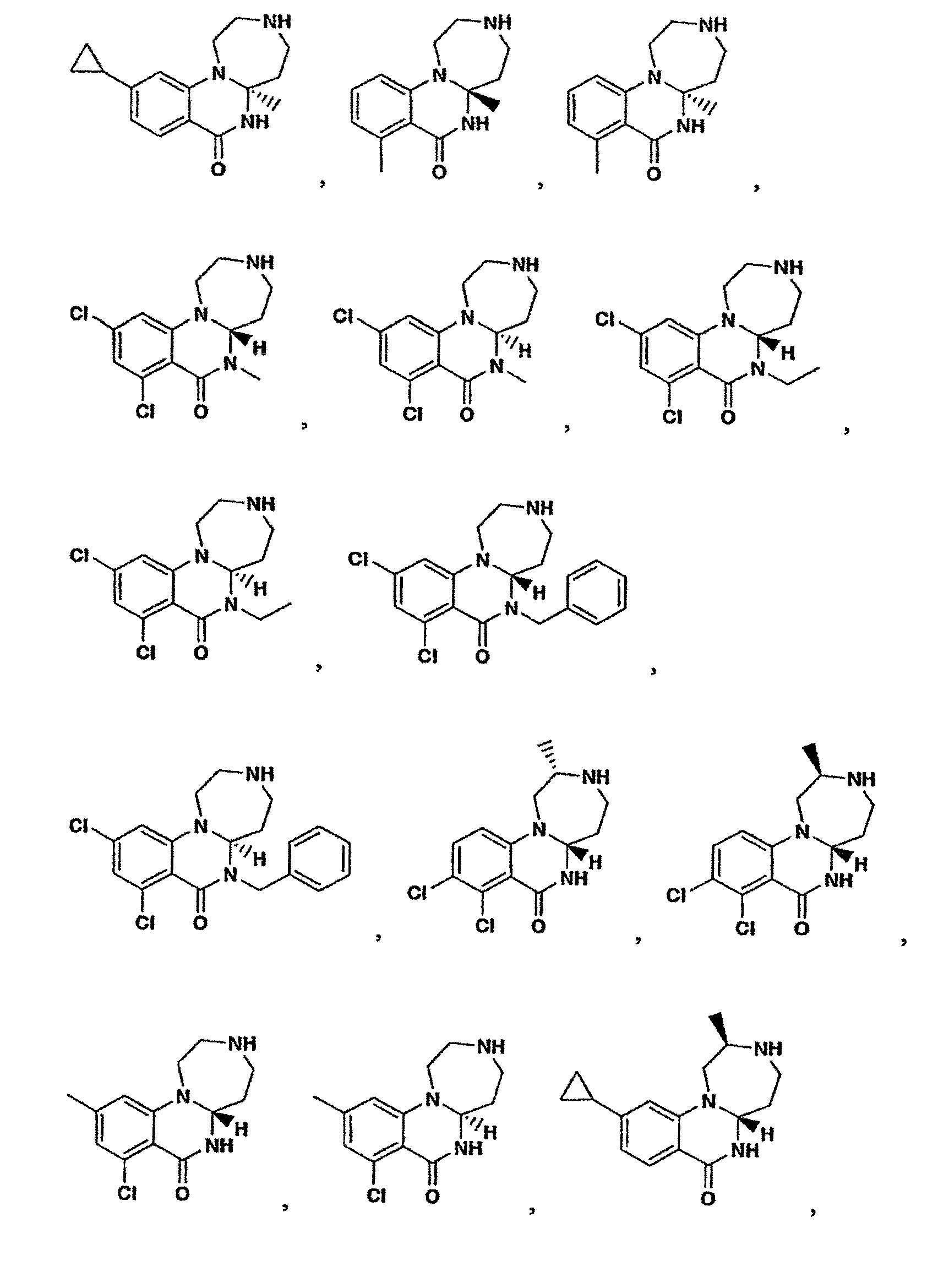

- Composition pharmaceutique, comprenant:un composé selon la revendication 1; etun adjuvant ou un excipient pharmaceutique.
- La composition pharmaceutique selon la revendication 6, comprenant en outre:au moins un agent thérapeutique supplémentaire.
- Utilisation d'un composé selon la revendication 1 dans la fabrication d'un médicament pour le traitement de maladies, de conditions et de troubles divers associés à la modulation des récepteurs de la sérotonine chez un mammifère, y compris des maladies métaboliques telles que l'obésité, le diabète, les complications diabétiques, l'athérosclérose, la tolérance abaissée au glucose et la dyslipidémie; les maladies du système nerveux central telles que l'anxiété, la dépression, le trouble obsessif-compulsif, le trouble de panique, la psychose, la schizophrénie, le trouble du sommeil, le trouble sexuel et les phobies sociales; la douleur céphalique; la migraine et les troubles gastro-intestinaux.
- L'utilisation selon la revendication 8, où la maladie, la condition ou le trouble est l'obésité.
Applications Claiming Priority (2)
| Application Number | Priority Date | Filing Date | Title |
|---|---|---|---|
| US65183305P | 2005-02-10 | 2005-02-10 | |
| PCT/US2006/004417 WO2006086464A2 (fr) | 2005-02-10 | 2006-02-09 | Dihydroquinazolinones utilisees comme modulateurs de la 5ht |
Publications (2)
| Publication Number | Publication Date |
|---|---|
| EP1846410A2 EP1846410A2 (fr) | 2007-10-24 |
| EP1846410B1 true EP1846410B1 (fr) | 2009-01-21 |
Family
ID=36649714
Family Applications (1)
| Application Number | Title | Priority Date | Filing Date |
|---|---|---|---|
| EP06720489A Expired - Lifetime EP1846410B1 (fr) | 2005-02-10 | 2006-02-09 | Dihydroquinazolinones utilisees comme modulateurs de la 5ht |
Country Status (6)
| Country | Link |
|---|---|
| US (1) | US7238702B2 (fr) |
| EP (1) | EP1846410B1 (fr) |
| AT (1) | ATE421518T1 (fr) |
| DE (1) | DE602006004964D1 (fr) |
| ES (1) | ES2319461T3 (fr) |
| WO (1) | WO2006086464A2 (fr) |
Cited By (1)
| Publication number | Priority date | Publication date | Assignee | Title |
|---|---|---|---|---|
| US10154988B2 (en) | 2012-11-14 | 2018-12-18 | The Johns Hopkins University | Methods and compositions for treating schizophrenia |
Families Citing this family (13)
| Publication number | Priority date | Publication date | Assignee | Title |
|---|---|---|---|---|
| SE0102036D0 (sv) * | 2001-06-08 | 2001-06-08 | Axon Biochemicals Bv | Pharmaceutical formulation for the efficient administration of apomorphine, 6aR- (-) -N- Propyl- norapomorphine and their derivatives and pro-drugs thereof |
| AR077974A1 (es) | 2009-08-28 | 2011-10-05 | Takeda Pharmaceutical | Compuestos de hexahidrooxazinopterina para uso como inhibidores de mtor |
| JPWO2011071136A1 (ja) | 2009-12-11 | 2013-04-22 | アステラス製薬株式会社 | 線維筋痛症治療剤 |
| US8664387B2 (en) | 2009-12-14 | 2014-03-04 | Merck Sharp & Dohme Corp. | Pyridoquinazolinone M1 receptor positive allosteric modulators |
| RU2013114710A (ru) | 2010-09-03 | 2014-10-10 | Байер Интеллектуэль Проперти Гмбх | Замещенные конденсированные пиримидиноны и дигидропиримидиноны |
| EP2678342B1 (fr) | 2011-02-25 | 2015-01-07 | Takeda Pharmaceutical Company Limited | Oxazinoptéridines et oxazonoptéridinones n-substituées |
| NZ628910A (en) | 2012-01-20 | 2016-02-26 | Actelion Pharmaceuticals Ltd | Heterocyclic amide derivatives as p2x7 receptor antagonists |
| DE102012101680A1 (de) * | 2012-02-29 | 2013-08-29 | Aicuris Gmbh & Co. Kg | Pharmazeutische Zubereitung enthaltend ein antiviral wirksames Dihydrochinazolinderivat |
| WO2015066344A1 (fr) | 2013-11-01 | 2015-05-07 | Arena Pharmaceuticals, Inc. | Agonistes du récepteur 5-ht2c et compositions et procédés d'utilisation |
| CN111763177A (zh) * | 2020-07-09 | 2020-10-13 | 四川大学华西医院 | 一种喹唑啉类化合物的合成及其抗三阴性乳腺癌作用 |
| EP4619393A1 (fr) | 2022-11-16 | 2025-09-24 | Basf Se | Benzodiazépines substituées utilisées comme fongicides |
| WO2024104815A1 (fr) | 2022-11-16 | 2024-05-23 | Basf Se | Benzodiazépines substituées utilisées comme fongicides |
| CN120202194A (zh) | 2022-11-16 | 2025-06-24 | 巴斯夫欧洲公司 | 作为杀真菌剂的取代的四氢苯并二氮杂䓬 |
Family Cites Families (74)
| Publication number | Priority date | Publication date | Assignee | Title |
|---|---|---|---|---|
| US3674836A (en) * | 1968-05-21 | 1972-07-04 | Parke Davis & Co | 2,2-dimethyl-{11 -aryloxy-alkanoic acids and salts and esters thereof |
| US4027009A (en) * | 1973-06-11 | 1977-05-31 | Merck & Co., Inc. | Compositions and methods for depressing blood serum cholesterol |
| JPS5612114B2 (fr) * | 1974-06-07 | 1981-03-18 | ||
| NO154918C (no) * | 1977-08-27 | 1987-01-14 | Bayer Ag | Analogifremgangsmaate til fremstilling av terapeutisk aktive derivater av 3,4,5-trihydroksypiperidin. |
| US4231938A (en) * | 1979-06-15 | 1980-11-04 | Merck & Co., Inc. | Hypocholesteremic fermentation products and process of preparation |
| DE2951135A1 (de) * | 1979-12-19 | 1981-06-25 | Hoechst Ag, 6230 Frankfurt | Sulfonylharnstoffe, verfahren zu ihrer herstellung, pharmazeutische praeparate auf basis dieser verbindungen und ihre verwendung |
| MX7065E (es) * | 1980-06-06 | 1987-04-10 | Sankyo Co | Un procedimiento microbiologico para preparar derivados de ml-236b |
| US4450171A (en) * | 1980-08-05 | 1984-05-22 | Merck & Co., Inc. | Antihypercholesterolemic compounds |
| US4448784A (en) * | 1982-04-12 | 1984-05-15 | Hoechst-Roussel Pharmaceuticals, Inc. | 1-(Aminoalkylphenyl and aminoalkylbenzyl)-indoles and indolines and analgesic method of use thereof |
| US5354772A (en) * | 1982-11-22 | 1994-10-11 | Sandoz Pharm. Corp. | Indole analogs of mevalonolactone and derivatives thereof |
| JPS6051189A (ja) * | 1983-08-30 | 1985-03-22 | Sankyo Co Ltd | チアゾリジン誘導体およびその製造法 |
| DE3543999A1 (de) * | 1985-12-13 | 1987-06-19 | Bayer Ag | Hochreine acarbose |
| US4681893A (en) * | 1986-05-30 | 1987-07-21 | Warner-Lambert Company | Trans-6-[2-(3- or 4-carboxamido-substituted pyrrol-1-yl)alkyl]-4-hydroxypyran-2-one inhibitors of cholesterol synthesis |
| US4759923A (en) * | 1987-06-25 | 1988-07-26 | Hercules Incorporated | Process for lowering serum cholesterol using poly(diallylmethylamine) derivatives |
| JP2569746B2 (ja) * | 1987-08-20 | 1997-01-08 | 日産化学工業株式会社 | キノリン系メバロノラクトン類 |
| US4871721A (en) * | 1988-01-11 | 1989-10-03 | E. R. Squibb & Sons, Inc. | Phosphorus-containing squalene synthetase inhibitors |
| US4924024A (en) * | 1988-01-11 | 1990-05-08 | E. R. Squibb & Sons, Inc. | Phosphorus-containing squalene synthetase inhibitors, new intermediates and method |
| NO177005C (no) * | 1988-01-20 | 1995-07-05 | Bayer Ag | Analogifremgangsmåte for fremstilling av substituerte pyridiner, samt mellomprodukter til bruk ved fremstillingen |
| US5753675A (en) * | 1989-03-03 | 1998-05-19 | Novartis Pharmaceuticals Corporation | Quinoline analogs of mevalonolactone and derivatives thereof |
| FI94339C (fi) * | 1989-07-21 | 1995-08-25 | Warner Lambert Co | Menetelmä farmaseuttisesti käyttökelpoisen /R-(R*,R*)/-2-(4-fluorifenyyli)- , -dihydroksi-5-(1-metyylietyyli)-3-fenyyli-4-/(fenyyliamino)karbonyyli/-1H-pyrroli-1-heptaanihapon ja sen farmaseuttisesti hyväksyttävien suolojen valmistamiseksi |
| US5177080A (en) * | 1990-12-14 | 1993-01-05 | Bayer Aktiengesellschaft | Substituted pyridyl-dihydroxy-heptenoic acid and its salts |
| JP2648897B2 (ja) * | 1991-07-01 | 1997-09-03 | 塩野義製薬株式会社 | ピリミジン誘導体 |
| GB9209628D0 (en) * | 1992-05-05 | 1992-06-17 | Smithkline Beecham Plc | Compounds |
| US5712396A (en) * | 1992-10-28 | 1998-01-27 | Magnin; David R. | α-phosphonosulfonate squalene synthetase inhibitors |
| LT3300B (en) | 1992-12-23 | 1995-06-26 | Schering Corp | Combination of a cholesterol biosynhtesis inhibitor and a beta- lactam cholesterol absorbtion inhibitor |
| US5594016A (en) * | 1992-12-28 | 1997-01-14 | Mitsubishi Chemical Corporation | Naphthalene derivatives |
| US5662934A (en) | 1993-01-05 | 1997-09-02 | Najarian; Thomas | Compositions and methods for lowering cholesterol while maintaining antioxidant levels |
| JP3254219B2 (ja) * | 1993-01-19 | 2002-02-04 | ワーナー−ランバート・コンパニー | 安定な経口用のci−981製剤およびその製法 |
| US5776983A (en) * | 1993-12-21 | 1998-07-07 | Bristol-Myers Squibb Company | Catecholamine surrogates useful as β3 agonists |
| US5488064A (en) * | 1994-05-02 | 1996-01-30 | Bristol-Myers Squibb Company | Benzo 1,3 dioxole derivatives |
| US5385929A (en) * | 1994-05-04 | 1995-01-31 | Warner-Lambert Company | [(Hydroxyphenylamino) carbonyl] pyrroles |
| US5612359A (en) * | 1994-08-26 | 1997-03-18 | Bristol-Myers Squibb Company | Substituted biphenyl isoxazole sulfonamides |
| US5491134A (en) * | 1994-09-16 | 1996-02-13 | Bristol-Myers Squibb Company | Sulfonic, phosphonic or phosphiniic acid β3 agonist derivatives |
| US5541204A (en) * | 1994-12-02 | 1996-07-30 | Bristol-Myers Squibb Company | Aryloxypropanolamine β 3 adrenergic agonists |
| US5698527A (en) | 1995-08-08 | 1997-12-16 | Merck & Co., Inc. | Steroidal glycosides as antihyperlipidemic agents |
| DE69636677D1 (de) | 1995-12-13 | 2006-12-14 | Univ California | Kristalle der mit einem Ligand komplexierten Ligandenbindedomäne des Schilddrüsenhormonrezeptors |
| US6107300A (en) * | 1996-03-27 | 2000-08-22 | Dupont Pharmaceuticals | Arylamino fused pyrimidines |
| IL117702A0 (en) | 1996-03-28 | 1996-07-23 | Tel Aviv Medical Center Resear | Drug for hyperlipoproteinemia |
| US5770615A (en) * | 1996-04-04 | 1998-06-23 | Bristol-Myers Squibb Company | Catecholamine surrogates useful as β3 agonists |
| ZA973884B (en) * | 1996-05-23 | 1998-11-06 | Du Pont Merck Pharma | Tetrahydropteridines and pyridylpiperazines for treatment of neurological disorders |
| DE19622222A1 (de) | 1996-06-03 | 1997-12-04 | Hoechst Ag | Verwendung von Inhibitoren des zellulären Na·+·/H·+·-Exchangers (NHE) zur Herstellung eines Medikament zur Normalisierung der Serumlipide |
| WO1997048701A1 (fr) | 1996-06-20 | 1997-12-24 | Pfizer Inc. | 4,1-benzoxazepines ou 4,1-benzothiazepines et leur utilisation comme inhibiteurs de squalene synthetase |
| HRP970330B1 (en) | 1996-07-08 | 2004-06-30 | Bayer Ag | Cycloalkano pyridines |
| US6191131B1 (en) * | 1997-07-23 | 2001-02-20 | Dupont Pharmaceuticals Company | Azolo triazines and pyrimidines |
| TW536540B (en) * | 1997-01-30 | 2003-06-11 | Bristol Myers Squibb Co | Endothelin antagonists: N-[[2'-[[(4,5-dimethyl-3-isoxazolyl)amino]sulfonyl]-4-(2-oxazolyl)[1,1'-biphenyl]-2-yl]methyl]-N,3,3-trimethylbutanamide and N-(4,5-dimethyl-3-isoxazolyl)-2'-[(3,3-dimethyl-2-oxo-1-pyrrolidinyl)methyl]-4'-(2-oxazolyl)[1,1'-biphe |
| GB9713739D0 (en) | 1997-06-27 | 1997-09-03 | Karobio Ab | Thyroid receptor ligands |
| JP2002507996A (ja) * | 1997-07-03 | 2002-03-12 | デュポン ファーマシューティカルズ カンパニー | 神経学的障害を治療するためのイミダゾピリミジン類およびイミダゾピリジン類 |
| US6635626B1 (en) * | 1997-08-25 | 2003-10-21 | Bristol-Myers Squibb Co. | Imidazoquinoxaline protein tyrosine kinase inhibitors |
| WO1999011643A1 (fr) * | 1997-09-02 | 1999-03-11 | Du Pont Pharmaceuticals Company | Pyridines a cycle fusionne et a substitution heterocyclyle, antagonistes du facteur de liberation de la cortitropine (crf), utiles dans le traitement des troubles lies au snc et au stress |
| KR100666887B1 (ko) | 1997-10-08 | 2007-01-10 | 상꾜 가부시키가이샤 | 치환 축합 복소환 화합물 |
| CA2320354A1 (fr) | 1998-02-18 | 1999-08-26 | Neurosearch A/S | Nouveaux composes et leur utilisation comme modulateurs positifs du recepteur ampa |
| ES2324846T3 (es) * | 1998-03-04 | 2009-08-17 | Bristol-Myers Squibb Company | Inhibidores de la proteina tirosina quinasa de imidazopirazina heterociclo-sustituida. |
| US6365589B1 (en) * | 1998-07-02 | 2002-04-02 | Bristol-Myers Squibb Pharma Company | Imidazo-pyridines, -pyridazines, and -triazines as corticotropin releasing factor antagonists |
| PT1094816E (pt) | 1998-07-06 | 2009-03-10 | Bristol Myers Squibb Co | Sulfonamidas bifenílicas duplamente antagonistas receptores de angiotensina e endotelina |
| WO2000015201A2 (fr) | 1998-09-10 | 2000-03-23 | Forbes Medi-Tech Inc. | COMPOSITIONS COMPRENANT UN OU PLUSIEURS PHYTOSTEROLS, PHYTOSTANOLS, OU LEURS MELANGES, UN OU PLUSIEURS TOCOTRIENOLS, $G(ab, $G(b), $G(d) OU $G(g), OU LEURS DERIVES, UTILISATION DE CES COMPOSITIONS POUR TRAITER OU PREVENIR L'AFFECTION CARDIO-VASCULAIRE, SES ATTEINTES SOUS-JACENTES ET D'AUTRES ETATS PATHOLOGIQUES |
| US6147089A (en) | 1998-09-17 | 2000-11-14 | Pfizer Inc. | Annulated 4-carboxyamino-2-methyl-1,2,3,4,-tetrahydroquinolines |
| HK1041635A1 (zh) | 1998-11-25 | 2002-07-19 | Nutri Pharma Asa | 含大豆蛋白,食用纤维及植物性雌激素混合物的成份,以及使用上述成份预防及/或治疗心血管疾病 |
| BR9915744A (pt) * | 1998-12-04 | 2001-08-21 | Bristol Myers Squibb Co | Derivados 4-arilquinolin-2-ona 3-substituìdos como moduladores do canal de potássio |
| AU2157400A (en) | 1998-12-23 | 2000-07-31 | G.D. Searle & Co. | Combinations of cholesteryl ester transfer protein inhibitors and hmg coa reductase inhibitors for cardiovascular indications |
| US6271380B1 (en) * | 1998-12-30 | 2001-08-07 | Dupont Pharmaceuticals Company | 1H-imidazo[4,5-d]pyridazin-7-ones, 3H-imidazo-[4,5-c]pyridin-4-ones and corresponding thiones as corticotropin releasing factor (CRF) receptor ligands |
| EP1155121B1 (fr) | 1999-02-24 | 2006-04-26 | The Johns Hopkins University | Compositions et procedes pour moduler le cholesterol serique |
| US6329051B1 (en) * | 1999-04-27 | 2001-12-11 | Albany International Corp. | Blowable insulation clusters |
| US6414002B1 (en) * | 1999-09-22 | 2002-07-02 | Bristol-Myers Squibb Company | Substituted acid derivatives useful as antidiabetic and antiobesity agents and method |
| US6515117B2 (en) * | 1999-10-12 | 2003-02-04 | Bristol-Myers Squibb Company | C-aryl glucoside SGLT2 inhibitors and method |
| PH12000002657B1 (en) * | 1999-10-12 | 2006-02-21 | Bristol Myers Squibb Co | C-aryl glucoside SGLT2 inhibitors |
| US6395767B2 (en) * | 2000-03-10 | 2002-05-28 | Bristol-Myers Squibb Company | Cyclopropyl-fused pyrrolidine-based inhibitors of dipeptidyl peptidase IV and method |
| US6630476B2 (en) * | 2000-07-07 | 2003-10-07 | Bristol-Myers Squibb Pharma Company | Pyrrolo [3,4-d] pyrimidines as corticotropin releasing factor (CRF) antagonists |
| US6589952B2 (en) | 2000-07-14 | 2003-07-08 | Bristol-Myers Squibb Pharma Company | Imidazo[1,2-a]pyrazines for the treatment of neurological disorders |
| HUP0303038A2 (hu) * | 2000-09-21 | 2003-12-29 | Bristol-Myers Squibb Co. | Szubsztituált azolszármazékok mint kortikotropin releasing faktor inhibitorok, ezeket tartalmazó gyógyszerkészítmények és alkalmazásuk |
| US7112593B2 (en) | 2001-03-27 | 2006-09-26 | Eisai Co., Ltd. | N-aryl-substituted cyclic amine derivative and medicine containing the same as active ingredient |
| EP1375479A1 (fr) | 2001-04-06 | 2004-01-02 | Eisai Co., Ltd. | Derive de pyrolidine et son procede d'obtention |
| US6573287B2 (en) * | 2001-04-12 | 2003-06-03 | Bristo-Myers Squibb Company | 2,1-oxazoline and 1,2-pyrazoline-based inhibitors of dipeptidyl peptidase IV and method |
| NZ534582A (en) | 2002-02-27 | 2006-03-31 | Pfizer Prod Inc | ACC inhibitors |
| EP1471066A1 (fr) * | 2003-04-24 | 2004-10-27 | Aventis Pharma Deutschland GmbH | Dérivés de triaza- et tetraaza-anthracènediones, leurs préparation et utilisation comme pharmaceutiques |
-
2006
- 2006-02-09 EP EP06720489A patent/EP1846410B1/fr not_active Expired - Lifetime
- 2006-02-09 ES ES06720489T patent/ES2319461T3/es not_active Expired - Lifetime
- 2006-02-09 DE DE602006004964T patent/DE602006004964D1/de not_active Expired - Lifetime
- 2006-02-09 US US11/350,997 patent/US7238702B2/en not_active Expired - Lifetime
- 2006-02-09 AT AT06720489T patent/ATE421518T1/de not_active IP Right Cessation
- 2006-02-09 WO PCT/US2006/004417 patent/WO2006086464A2/fr not_active Ceased
Cited By (2)
| Publication number | Priority date | Publication date | Assignee | Title |
|---|---|---|---|---|
| US10154988B2 (en) | 2012-11-14 | 2018-12-18 | The Johns Hopkins University | Methods and compositions for treating schizophrenia |
| EP3610890A1 (fr) | 2012-11-14 | 2020-02-19 | The Johns Hopkins University | Procédés et compositions de traitement de la schizophrénie |
Also Published As
| Publication number | Publication date |
|---|---|
| US20060178386A1 (en) | 2006-08-10 |
| WO2006086464A3 (fr) | 2006-09-14 |
| ES2319461T3 (es) | 2009-05-07 |
| DE602006004964D1 (de) | 2009-03-12 |
| ATE421518T1 (de) | 2009-02-15 |
| US7238702B2 (en) | 2007-07-03 |
| EP1846410A2 (fr) | 2007-10-24 |
| WO2006086464A2 (fr) | 2006-08-17 |
Similar Documents
| Publication | Publication Date | Title |
|---|---|---|
| US7812024B2 (en) | Modulators of serotonin receptors | |
| US20070027178A1 (en) | Substituted tetrahydro-1H-pyrido[4,3-b]indoles as serotonin receptors agonists and antagonists | |
| US7037910B2 (en) | Azabicyclic heterocycles as cannabinoid receptor modulators | |
| US20060079556A1 (en) | N-sulfonylpiperidine cannabinoid receptor 1 antagonists | |
| WO2005007628A1 (fr) | Derives de tetrahydroquinoleine constituant des modulateurs des recepteurs des cannabinoides | |
| US7238702B2 (en) | Dihydroquinazolinones as 5HT modulators | |
| US7572805B2 (en) | Pyrrolo(oxo)isoquinolines as 5HT ligands | |
| US7618980B2 (en) | Pyrrolo(oxo)quinolines as 5HT ligands | |
| US7795436B2 (en) | Substituted tricyclic heterocycles as serotonin receptor agonists and antagonists | |
| US7709647B2 (en) | Tetrahydroquinoline cannabinoid receptor modulators | |
| US7314882B2 (en) | Bicyclic heterocycles as cannabinoid receptor modulators | |
| US7220859B2 (en) | Bicyclic heterocycles as cannabinoid receptor modulators | |
| US7368458B2 (en) | Bicyclic heterocycles as cannabinoid receptor modulators |
Legal Events
| Date | Code | Title | Description |
|---|---|---|---|
| PUAI | Public reference made under article 153(3) epc to a published international application that has entered the european phase |
Free format text: ORIGINAL CODE: 0009012 |
|
| 17P | Request for examination filed |
Effective date: 20070820 |
|
| AK | Designated contracting states |
Kind code of ref document: A2 Designated state(s): AT BE BG CH CY CZ DE DK EE ES FI FR GB GR HU IE IS IT LI LT LU LV MC NL PL PT RO SE SI SK TR |
|
| DAX | Request for extension of the european patent (deleted) | ||
| GRAP | Despatch of communication of intention to grant a patent |
Free format text: ORIGINAL CODE: EPIDOSNIGR1 |
|
| GRAS | Grant fee paid |
Free format text: ORIGINAL CODE: EPIDOSNIGR3 |
|
| GRAA | (expected) grant |
Free format text: ORIGINAL CODE: 0009210 |
|
| AK | Designated contracting states |
Kind code of ref document: B1 Designated state(s): AT BE BG CH CY CZ DE DK EE ES FI FR GB GR HU IE IS IT LI LT LU LV MC NL PL PT RO SE SI SK TR |
|
| REG | Reference to a national code |
Ref country code: GB Ref legal event code: FG4D |
|
| REG | Reference to a national code |
Ref country code: CH Ref legal event code: EP |
|
| REG | Reference to a national code |
Ref country code: IE Ref legal event code: FG4D |
|
| REF | Corresponds to: |
Ref document number: 602006004964 Country of ref document: DE Date of ref document: 20090312 Kind code of ref document: P |
|
| REG | Reference to a national code |
Ref country code: ES Ref legal event code: FG2A Ref document number: 2319461 Country of ref document: ES Kind code of ref document: T3 |
|
| PG25 | Lapsed in a contracting state [announced via postgrant information from national office to epo] |
Ref country code: NL Free format text: LAPSE BECAUSE OF FAILURE TO SUBMIT A TRANSLATION OF THE DESCRIPTION OR TO PAY THE FEE WITHIN THE PRESCRIBED TIME-LIMIT Effective date: 20090121 |
|
| NLV1 | Nl: lapsed or annulled due to failure to fulfill the requirements of art. 29p and 29m of the patents act | ||
| PG25 | Lapsed in a contracting state [announced via postgrant information from national office to epo] |
Ref country code: FI Free format text: LAPSE BECAUSE OF FAILURE TO SUBMIT A TRANSLATION OF THE DESCRIPTION OR TO PAY THE FEE WITHIN THE PRESCRIBED TIME-LIMIT Effective date: 20090121 Ref country code: SI Free format text: LAPSE BECAUSE OF FAILURE TO SUBMIT A TRANSLATION OF THE DESCRIPTION OR TO PAY THE FEE WITHIN THE PRESCRIBED TIME-LIMIT Effective date: 20090121 Ref country code: LT Free format text: LAPSE BECAUSE OF FAILURE TO SUBMIT A TRANSLATION OF THE DESCRIPTION OR TO PAY THE FEE WITHIN THE PRESCRIBED TIME-LIMIT Effective date: 20090121 |
|
| PG25 | Lapsed in a contracting state [announced via postgrant information from national office to epo] |
Ref country code: AT Free format text: LAPSE BECAUSE OF FAILURE TO SUBMIT A TRANSLATION OF THE DESCRIPTION OR TO PAY THE FEE WITHIN THE PRESCRIBED TIME-LIMIT Effective date: 20090121 Ref country code: PL Free format text: LAPSE BECAUSE OF FAILURE TO SUBMIT A TRANSLATION OF THE DESCRIPTION OR TO PAY THE FEE WITHIN THE PRESCRIBED TIME-LIMIT Effective date: 20090121 Ref country code: LV Free format text: LAPSE BECAUSE OF FAILURE TO SUBMIT A TRANSLATION OF THE DESCRIPTION OR TO PAY THE FEE WITHIN THE PRESCRIBED TIME-LIMIT Effective date: 20090121 Ref country code: IS Free format text: LAPSE BECAUSE OF FAILURE TO SUBMIT A TRANSLATION OF THE DESCRIPTION OR TO PAY THE FEE WITHIN THE PRESCRIBED TIME-LIMIT Effective date: 20090521 Ref country code: SE Free format text: LAPSE BECAUSE OF FAILURE TO SUBMIT A TRANSLATION OF THE DESCRIPTION OR TO PAY THE FEE WITHIN THE PRESCRIBED TIME-LIMIT Effective date: 20090421 Ref country code: PT Free format text: LAPSE BECAUSE OF FAILURE TO SUBMIT A TRANSLATION OF THE DESCRIPTION OR TO PAY THE FEE WITHIN THE PRESCRIBED TIME-LIMIT Effective date: 20090622 |
|
| PG25 | Lapsed in a contracting state [announced via postgrant information from national office to epo] |
Ref country code: MC Free format text: LAPSE BECAUSE OF NON-PAYMENT OF DUE FEES Effective date: 20090228 Ref country code: BE Free format text: LAPSE BECAUSE OF FAILURE TO SUBMIT A TRANSLATION OF THE DESCRIPTION OR TO PAY THE FEE WITHIN THE PRESCRIBED TIME-LIMIT Effective date: 20090121 |
|
| PG25 | Lapsed in a contracting state [announced via postgrant information from national office to epo] |
Ref country code: DK Free format text: LAPSE BECAUSE OF FAILURE TO SUBMIT A TRANSLATION OF THE DESCRIPTION OR TO PAY THE FEE WITHIN THE PRESCRIBED TIME-LIMIT Effective date: 20090121 Ref country code: EE Free format text: LAPSE BECAUSE OF FAILURE TO SUBMIT A TRANSLATION OF THE DESCRIPTION OR TO PAY THE FEE WITHIN THE PRESCRIBED TIME-LIMIT Effective date: 20090121 Ref country code: CZ Free format text: LAPSE BECAUSE OF FAILURE TO SUBMIT A TRANSLATION OF THE DESCRIPTION OR TO PAY THE FEE WITHIN THE PRESCRIBED TIME-LIMIT Effective date: 20090121 |
|
| REG | Reference to a national code |
Ref country code: IE Ref legal event code: MM4A |
|
| PLBE | No opposition filed within time limit |
Free format text: ORIGINAL CODE: 0009261 |
|
| STAA | Information on the status of an ep patent application or granted ep patent |
Free format text: STATUS: NO OPPOSITION FILED WITHIN TIME LIMIT |
|
| PG25 | Lapsed in a contracting state [announced via postgrant information from national office to epo] |
Ref country code: SK Free format text: LAPSE BECAUSE OF FAILURE TO SUBMIT A TRANSLATION OF THE DESCRIPTION OR TO PAY THE FEE WITHIN THE PRESCRIBED TIME-LIMIT Effective date: 20090121 Ref country code: RO Free format text: LAPSE BECAUSE OF FAILURE TO SUBMIT A TRANSLATION OF THE DESCRIPTION OR TO PAY THE FEE WITHIN THE PRESCRIBED TIME-LIMIT Effective date: 20090121 |
|
| 26N | No opposition filed |
Effective date: 20091022 |
|
| PG25 | Lapsed in a contracting state [announced via postgrant information from national office to epo] |
Ref country code: IE Free format text: LAPSE BECAUSE OF NON-PAYMENT OF DUE FEES Effective date: 20090209 Ref country code: BG Free format text: LAPSE BECAUSE OF FAILURE TO SUBMIT A TRANSLATION OF THE DESCRIPTION OR TO PAY THE FEE WITHIN THE PRESCRIBED TIME-LIMIT Effective date: 20090421 |
|
| REG | Reference to a national code |
Ref country code: CH Ref legal event code: PL |
|
| PG25 | Lapsed in a contracting state [announced via postgrant information from national office to epo] |
Ref country code: LI Free format text: LAPSE BECAUSE OF NON-PAYMENT OF DUE FEES Effective date: 20100228 Ref country code: GR Free format text: LAPSE BECAUSE OF FAILURE TO SUBMIT A TRANSLATION OF THE DESCRIPTION OR TO PAY THE FEE WITHIN THE PRESCRIBED TIME-LIMIT Effective date: 20090422 Ref country code: CH Free format text: LAPSE BECAUSE OF NON-PAYMENT OF DUE FEES Effective date: 20100228 |
|
| PG25 | Lapsed in a contracting state [announced via postgrant information from national office to epo] |
Ref country code: LU Free format text: LAPSE BECAUSE OF NON-PAYMENT OF DUE FEES Effective date: 20090209 |
|
| PG25 | Lapsed in a contracting state [announced via postgrant information from national office to epo] |
Ref country code: HU Free format text: LAPSE BECAUSE OF FAILURE TO SUBMIT A TRANSLATION OF THE DESCRIPTION OR TO PAY THE FEE WITHIN THE PRESCRIBED TIME-LIMIT Effective date: 20090722 |
|
| PG25 | Lapsed in a contracting state [announced via postgrant information from national office to epo] |
Ref country code: TR Free format text: LAPSE BECAUSE OF FAILURE TO SUBMIT A TRANSLATION OF THE DESCRIPTION OR TO PAY THE FEE WITHIN THE PRESCRIBED TIME-LIMIT Effective date: 20090121 |
|
| PG25 | Lapsed in a contracting state [announced via postgrant information from national office to epo] |
Ref country code: CY Free format text: LAPSE BECAUSE OF FAILURE TO SUBMIT A TRANSLATION OF THE DESCRIPTION OR TO PAY THE FEE WITHIN THE PRESCRIBED TIME-LIMIT Effective date: 20090121 |
|
| PGFP | Annual fee paid to national office [announced via postgrant information from national office to epo] |
Ref country code: ES Payment date: 20140113 Year of fee payment: 9 Ref country code: FR Payment date: 20140211 Year of fee payment: 9 Ref country code: IT Payment date: 20140217 Year of fee payment: 9 |
|
| PGFP | Annual fee paid to national office [announced via postgrant information from national office to epo] |
Ref country code: GB Payment date: 20140206 Year of fee payment: 9 |
|
| PGFP | Annual fee paid to national office [announced via postgrant information from national office to epo] |
Ref country code: DE Payment date: 20140417 Year of fee payment: 9 |
|
| REG | Reference to a national code |
Ref country code: DE Ref legal event code: R119 Ref document number: 602006004964 Country of ref document: DE |
|
| GBPC | Gb: european patent ceased through non-payment of renewal fee |
Effective date: 20150209 |
|
| REG | Reference to a national code |
Ref country code: FR Ref legal event code: ST Effective date: 20151030 |
|
| PG25 | Lapsed in a contracting state [announced via postgrant information from national office to epo] |
Ref country code: IT Free format text: LAPSE BECAUSE OF NON-PAYMENT OF DUE FEES Effective date: 20150209 |
|
| PG25 | Lapsed in a contracting state [announced via postgrant information from national office to epo] |
Ref country code: GB Free format text: LAPSE BECAUSE OF NON-PAYMENT OF DUE FEES Effective date: 20150209 Ref country code: DE Free format text: LAPSE BECAUSE OF NON-PAYMENT OF DUE FEES Effective date: 20150901 |
|
| PG25 | Lapsed in a contracting state [announced via postgrant information from national office to epo] |
Ref country code: FR Free format text: LAPSE BECAUSE OF NON-PAYMENT OF DUE FEES Effective date: 20150302 |
|
| REG | Reference to a national code |
Ref country code: ES Ref legal event code: FD2A Effective date: 20160530 |
|
| PG25 | Lapsed in a contracting state [announced via postgrant information from national office to epo] |
Ref country code: ES Free format text: LAPSE BECAUSE OF NON-PAYMENT OF DUE FEES Effective date: 20150210 |