EP1850146A1 - Ankunftsrichtungsschätzvorrichtung - Google Patents
Ankunftsrichtungsschätzvorrichtung Download PDFInfo
- Publication number
- EP1850146A1 EP1850146A1 EP05719250A EP05719250A EP1850146A1 EP 1850146 A1 EP1850146 A1 EP 1850146A1 EP 05719250 A EP05719250 A EP 05719250A EP 05719250 A EP05719250 A EP 05719250A EP 1850146 A1 EP1850146 A1 EP 1850146A1
- Authority
- EP
- European Patent Office
- Prior art keywords
- incoming direction
- sensors
- sin
- estimation apparatus
- signal
- Prior art date
- Legal status (The legal status is an assumption and is not a legal conclusion. Google has not performed a legal analysis and makes no representation as to the accuracy of the status listed.)
- Granted
Links
Images




Classifications
-
- G—PHYSICS
- G01—MEASURING; TESTING
- G01S—RADIO DIRECTION-FINDING; RADIO NAVIGATION; DETERMINING DISTANCE OR VELOCITY BY USE OF RADIO WAVES; LOCATING OR PRESENCE-DETECTING BY USE OF THE REFLECTION OR RERADIATION OF RADIO WAVES; ANALOGOUS ARRANGEMENTS USING OTHER WAVES
- G01S13/00—Systems using the reflection or reradiation of radio waves, e.g. radar systems; Analogous systems using reflection or reradiation of waves whose nature or wavelength is irrelevant or unspecified
- G01S13/02—Systems using reflection of radio waves, e.g. primary radar systems; Analogous systems
- G01S13/06—Systems determining position data of a target
- G01S13/42—Simultaneous measurement of distance and other co-ordinates
- G01S13/44—Monopulse radar, i.e. simultaneous lobing
-
- H—ELECTRICITY
- H01—ELECTRIC ELEMENTS
- H01Q—ANTENNAS, i.e. RADIO AERIALS
- H01Q21/00—Antenna arrays or systems
- H01Q21/06—Arrays of individually energised antenna units similarly polarised and spaced apart
Definitions
- the present invention relates to an incoming direction estimation apparatus.
- Fig. 1 is a diagram showing a mono-pulse radar as an example of a conventional incoming direction estimation apparatus.
- This apparatus is a system comprising one transmission antenna AT, two reception antennas A R0 and A R1 , an interface module (this comprisal adopts a single-pole, double-throw (SPDT)), which interfaces the reception antennas, and a radio frequency (RF) unit, an RF unit constituted by a transceiver and receiver, an RF oscillator, a base band (BB) oscillator, a BB module (not shown herein) comprising an analog to digital (A/D) converter, et cetera, and a signal processing apparatus (also not shown herein) comprising a central processing unit (CPU) and such.
- a radar wave transmitted from the antenna AT is received by the antennas A R0 and A R1 after being reflected on an angle measurement target.
- the radar wave transmitted from the antenna AT uses an RF signal that is a resultant of an oscillation frequency of the RF oscillator RF-VCO being modified by a signal of a triangular wave oscillated and emitted by the base band oscillator BB-OSC, or the like wave, followed by being amplified by a high power amplifier (HPA).
- HPA high power amplifier
- the radar wave received by the antennas A R0 and A R1 is led by way of the switch SPDT, amplified by the low noise amplifier (LNA), mixed with the transmission radar wave by the multiplier M and converted into a base band signal BB.
- LNA low noise amplifier
- BB base band signal
- Too small an antenna interval generates an electromagnetic coupling between the two antennas, losing an independence of two reception signals that are supposed to be obtained by essentially maintaining an exact phase difference indicated by the above expressions 1.1 and 1.2, and therefore an approximation represented by the expression 1.5 is no longer applicable even if ⁇ y/ ⁇ y is forcibly transformed, resulting in making it difficult to estimate the ⁇ accurately.
- a try to obtain a sufficient system gain needs to take a sufficient gain of the antennas, generally requiring a large area size for each antenna. Consequently, a try to obtain a sufficient system gain makes the antennas become large, creating a situation of making it impossible to minimize the antenna interval.
- tan -1 is a nonlinear function in which a derivative becomes smaller than "1" with a distance from the original point, and the nonlinearity of the tan -1 ( ⁇ ) further influences the sin -1 that is also a nonlinear function adversely to a large ⁇ (i.e., to a signal incoming from an angle close to an FOV limit), thus resulting in fundamentally degrading accuracy of a measurement angle.
- the object for the present invention is to provide an incoming direction estimation apparatus capable of obtaining a wide field of view (FOV) and providing a high accuracy of angle measurement.
- FOV wide field of view
- An incoming direction estimation apparatus comprises: at least three sensors for receiving a signal from a target by being placed so as to make
- the present invention is contrived to reduce an apparent value range of tan -1 ( ⁇ ) included in an arithmetic expression used for estimating a direction by using signals from three (or more) sensors simultaneously and bring a necessary field of view into a zone where a calculation error is fundamentally small. This in turn makes it possible to widen an FOV per se.
- Fig. 2 is a diagram of an outline comprisal of a mono-pulse radar incoming direction estimation apparatus according to a preferred embodiment of the present invention.
- the configuration shown by Fig. 2 is equipped with three reception antennas.
- a switch SP3T single-pole, 3-throw changes over radar wave reception signals from the three antennas sequentially and transmits them to a later stage.
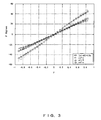
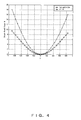
- Figs. 3 and 4 each is a diagram showing a comparison of the preferred embodiment (o:
- the vertical axis of Fig. 3 is a mono-pulse angle measurement value ⁇ (i.e., the range of the top to bottom of each characteristic line is an FOV), and ⁇ est shown in Fig. 4 is a calculated value by means of a mono-pulse angle measurement, and ⁇ ref is a physical angle (i.e., the conventional method: ref-c and the present invention: ref-n in the showing of Fig.
- the ⁇ at around 20° that is the FOV limit accomplished by the conventional method is about 0.6 for example, whereas the ⁇ in the case of measuring an angle at around 20° is about 0.4 according to the present invention, meaning that a relative error of the ⁇ when measuring the same angle of 20° is about 9% for the conventional method, whereas it is 2% for the embodiment of the present invention, thus an improvement of about 1/5 reduction.
- the conventional method is a mono-pulse angle measurement using two sets of antenna
- the only way to extend the FOV is to narrow the absolute interval between the individual antennas, while is faced with a difficulty in avoiding a degradation of angle measurement accuracy nearby the end of the FOV.
- narrowing the absolute interval between the antennas is faced with serious problems in consideration of the physical size limit, electromagnetic coupling and gain, and an improvement of angle measurement accuracy by just averaging can never provide a fundamental solution.
- the preferred embodiment of the present invention has no problem with the absolute interval between antennas and therefore enables a setup for a highly flexible performance (e.g., an FOV can remain wide even if the absolute interval between antennas becomes large as a result of obtaining a large gain by designing large individual antennas). It is also easy to improve the angle measurement accuracy as shown in Fig. 4.
- the present embodiment can be implemented by a program or circuit.
- an inverse trigonometric function is usually incorporated as a scheme of a Taylor expansion (refer to the second term of left-hand side of the expression 2.2.1); it may, however, be substituted by a Pade expansion (refer to the third term of the left-hand side of the aforementioned expression).
- the Pade expansion is well known to provide a numerical stability and high accuracy than the Taylor expansion (e.g., set for M ⁇ N+1 or such), possibly providing a compensation effect in a calculation in the case in which a normal calculation could result in an error by exceeding a domain of a trigonometric function due to an influence of a noise or such.
- Figs. 5 and 6 each is a diagram describing the case of applying the preferred embodiment of the present invention to a regular-interval array sensor.
- an angle formed by a straight line passing z, z* and "0" in terms of a method of least squares and a real or imaginary axis is regarded as 2 ⁇ asin ⁇ .
- z and z* which are obtained by an n-time of measurements, on a unit circle, two circles defined by
- Fig. 6 is a process flow in the case of a regular interval array.
- the error limit ⁇ is calculated by min (S/N), the minimum value of S/N ratio, or such for example.
- the step S11 measures a signal and the step S12 judges whether or not the absolute value of the difference between the absolute value of arg (Zn) and that of arg (Zn*) is less than or equal to the ⁇ . If the judgment of the step S12 is "yes", an incoming angle is determined to be an sin -1 ((1/2na)arg(Zn)).
- step S12 If the judgment of the step S12 is "no", the step S14 stores the arg (Zn) and arg(Zn*), and the step S15 judges whether the number of measurement times n is equal to or more than a specified number of times, e.g., "3". If the judgment of the step S15 is "no", the process returns to the step S11 for measuring a signal.
- step S15 calculates the centers z 0 and z 0 * of a circle passing the Zn and Zn* by applying a method of least squares
- step S17 calculates a straight line L passing the z 0 , z 0 * and "0" by applying a method of least squares
- step S18 determines the incoming angle to be sin -1 ((1/2 ⁇ a)arg(L)).
- the expression 2.7.1 is obtained by changing a phase reference and an angle ⁇ is calculated by using the expression 2.7.2.
- the same trigonometric function that requires a relatively large load among the elementary function can be used satisfactorily and therefore a program size can be a little smaller.
- Such a configuration determines an FOV by a relative interval between sensors, instead of an absolute interval therebetween, thereby making it possible to secure an extremely wide FOV which used to be very difficult by employing the conventional mono-pulse apparatus.
- Fig. 7 is a block configuration diagram of a mono-pulse radar incorporating an incoming direction estimation apparatus according to the preferred embodiment of the present invention.
- a radar wave received by these antennas is converted into a baseband signal by an RF receiver 10.
- the baseband signal is converted into a digital signal by a BB circuit and an analog-to-digital (A/D) converter 11, and also subjected to processing as a baseband signal.
- a distance/speed estimator 12 estimates a distance to a target and a speed thereof by using the processed baseband signal, and the incoming direction estimation apparatus 13 according to the present embodiment estimates an incoming direction of the radar wave from the target.
- the incoming direction of the radar wave is used as a direction of the target.
Landscapes
- Engineering & Computer Science (AREA)
- Radar, Positioning & Navigation (AREA)
- Remote Sensing (AREA)
- Computer Networks & Wireless Communication (AREA)
- Physics & Mathematics (AREA)
- General Physics & Mathematics (AREA)
- Radar Systems Or Details Thereof (AREA)
Priority Applications (1)
| Application Number | Priority Date | Filing Date | Title |
|---|---|---|---|
| EP09166013A EP2113783B1 (de) | 2005-02-17 | 2005-02-17 | Eingangsrichtungsschätzvorrichtung |
Applications Claiming Priority (1)
| Application Number | Priority Date | Filing Date | Title |
|---|---|---|---|
| PCT/JP2005/002448 WO2006087783A1 (ja) | 2005-02-17 | 2005-02-17 | 到来方向推定装置 |
Related Child Applications (2)
| Application Number | Title | Priority Date | Filing Date |
|---|---|---|---|
| EP09166013A Division EP2113783B1 (de) | 2005-02-17 | 2005-02-17 | Eingangsrichtungsschätzvorrichtung |
| EP09166013.4 Division-Into | 2009-07-21 |
Publications (3)
| Publication Number | Publication Date |
|---|---|
| EP1850146A1 true EP1850146A1 (de) | 2007-10-31 |
| EP1850146A4 EP1850146A4 (de) | 2008-10-01 |
| EP1850146B1 EP1850146B1 (de) | 2010-08-04 |
Family
ID=36916199
Family Applications (2)
| Application Number | Title | Priority Date | Filing Date |
|---|---|---|---|
| EP09166013A Expired - Lifetime EP2113783B1 (de) | 2005-02-17 | 2005-02-17 | Eingangsrichtungsschätzvorrichtung |
| EP05719250A Expired - Lifetime EP1850146B1 (de) | 2005-02-17 | 2005-02-17 | Ankunftsrichtungsschätzvorrichtung |
Family Applications Before (1)
| Application Number | Title | Priority Date | Filing Date |
|---|---|---|---|
| EP09166013A Expired - Lifetime EP2113783B1 (de) | 2005-02-17 | 2005-02-17 | Eingangsrichtungsschätzvorrichtung |
Country Status (5)
| Country | Link |
|---|---|
| US (1) | US7663549B2 (de) |
| EP (2) | EP2113783B1 (de) |
| JP (1) | JP4681599B2 (de) |
| DE (1) | DE602005022773D1 (de) |
| WO (1) | WO2006087783A1 (de) |
Cited By (1)
| Publication number | Priority date | Publication date | Assignee | Title |
|---|---|---|---|---|
| RU2367973C1 (ru) * | 2008-03-26 | 2009-09-20 | Открытое Акционерное Общество "Научно-Исследовательский Институт Измерительных Приборов" /Оао "Нииип"/ | Способ радиолокационного обзора пространства (варианты) |
Families Citing this family (11)
| Publication number | Priority date | Publication date | Assignee | Title |
|---|---|---|---|---|
| RU2450283C1 (ru) * | 2011-02-08 | 2012-05-10 | Открытое акционерное общество "Авангард" | Фазовый способ пеленгации и фазовый пеленгатор для его осуществления |
| US8451164B2 (en) | 2011-02-09 | 2013-05-28 | Lawrence Livermore National Security, Llc. | Radar network communication through sensing of frequency hopping |
| RU2458355C1 (ru) * | 2011-04-29 | 2012-08-10 | Открытое акционерное общество "Центральное конструкторское бюро автоматики" | Фазовый пеленгатор |
| US8849229B2 (en) | 2012-06-01 | 2014-09-30 | Wisconsin Alumni Research Foundation | Electrically small, super directive antennas |
| RU2526533C2 (ru) * | 2012-12-03 | 2014-08-27 | Открытое акционерное общество "Омский научно-исследовательский институт приборостроения" (ОАО "ОНИИП") | Фазовый пеленгатор |
| RU2532259C2 (ru) * | 2013-01-09 | 2014-11-10 | Открытое акционерное общество "Омский научно-исследовательский институт приборостроения" (ОАО "ОНИИП") | Фазовый способ пеленгации |
| RU2536440C1 (ru) * | 2013-05-29 | 2014-12-27 | Открытое акционерное общество "Центральное конструкторское бюро автоматики" | Фазовый пеленгатор |
| RU2543065C1 (ru) * | 2013-12-20 | 2015-02-27 | Открытое акционерное общество "Центральное конструкторское бюро автоматики" | Фазовый пеленгатор |
| RU2599257C1 (ru) * | 2015-11-30 | 2016-10-10 | Борис Николаевич Горевич | Способ пространственной обработки радиосигналов |
| CN113412433A (zh) * | 2019-01-31 | 2021-09-17 | 三菱电机株式会社 | 测角装置、测角方法及车载装置 |
| CN113777555A (zh) * | 2021-08-26 | 2021-12-10 | 南京航空航天大学 | 一种基于稀疏阵列的doa跟踪方法 |
Family Cites Families (10)
| Publication number | Priority date | Publication date | Assignee | Title |
|---|---|---|---|---|
| US3633205A (en) * | 1969-06-30 | 1972-01-04 | Loral Electronics Corp | Wideband interferometer type antenna systems |
| US5600326A (en) * | 1991-12-16 | 1997-02-04 | Martin Marietta Corp. | Adaptive digital beamforming architecture and algorithm for nulling mainlobe and multiple sidelobe radar jammers while preserving monopulse ratio angle estimation accuracy |
| DE19543813A1 (de) * | 1995-11-24 | 1997-05-28 | Bosch Gmbh Robert | Radarsystem, insbesondere Kraftfahrzeug-Radarsystem |
| US5657027A (en) * | 1996-06-02 | 1997-08-12 | Hughes Electronics | Two dimensional interferometer array |
| JP2000230974A (ja) | 1999-02-09 | 2000-08-22 | Toyota Motor Corp | レーダ装置 |
| JP2001091616A (ja) * | 1999-09-22 | 2001-04-06 | Mitsubishi Electric Corp | 入射角度推定装置及び入射角度推定装置の素子アンテナの配列方法 |
| CN1280640C (zh) | 2000-06-05 | 2006-10-18 | Tc许可有限公司 | 确定调制的反向散射通信系统中应答器方向的方法和设备 |
| JP2004228615A (ja) | 2003-01-17 | 2004-08-12 | Ntt Docomo Inc | ユーザに固有の秘密情報を用いた鍵隔離型暗号化方法、鍵隔離型暗号システム及び外部補助装置 |
| EP2977783B1 (de) * | 2003-04-10 | 2020-06-24 | Leonardo Mw Ltd | Interferometer |
| JP4681664B2 (ja) * | 2009-10-05 | 2011-05-11 | 富士通株式会社 | 到来方向推定装置 |
-
2005
- 2005-02-17 WO PCT/JP2005/002448 patent/WO2006087783A1/ja not_active Ceased
- 2005-02-17 JP JP2007503523A patent/JP4681599B2/ja not_active Expired - Fee Related
- 2005-02-17 EP EP09166013A patent/EP2113783B1/de not_active Expired - Lifetime
- 2005-02-17 DE DE602005022773T patent/DE602005022773D1/de not_active Expired - Lifetime
- 2005-02-17 EP EP05719250A patent/EP1850146B1/de not_active Expired - Lifetime
-
2007
- 2007-08-17 US US11/889,903 patent/US7663549B2/en not_active Expired - Fee Related
Cited By (1)
| Publication number | Priority date | Publication date | Assignee | Title |
|---|---|---|---|---|
| RU2367973C1 (ru) * | 2008-03-26 | 2009-09-20 | Открытое Акционерное Общество "Научно-Исследовательский Институт Измерительных Приборов" /Оао "Нииип"/ | Способ радиолокационного обзора пространства (варианты) |
Also Published As
| Publication number | Publication date |
|---|---|
| EP1850146A4 (de) | 2008-10-01 |
| EP2113783A1 (de) | 2009-11-04 |
| US7663549B2 (en) | 2010-02-16 |
| EP2113783B1 (de) | 2011-09-28 |
| US20080007455A1 (en) | 2008-01-10 |
| JP4681599B2 (ja) | 2011-05-11 |
| DE602005022773D1 (de) | 2010-09-16 |
| WO2006087783A1 (ja) | 2006-08-24 |
| EP1850146B1 (de) | 2010-08-04 |
| JPWO2006087783A1 (ja) | 2008-07-03 |
Similar Documents
| Publication | Publication Date | Title |
|---|---|---|
| US7663549B2 (en) | Incoming direction estimation apparatus | |
| US7825858B2 (en) | Methods and systems for frequency independent bearing detection | |
| JP4232570B2 (ja) | 車両用レーダ装置 | |
| EP1760488B1 (de) | Radar-vorrichtung | |
| JP4737165B2 (ja) | レーダの物標検知方法、およびこの物標検知方法を用いたレーダ装置 | |
| US8049662B2 (en) | Systems and methods for antenna calibration | |
| US9234956B2 (en) | Radar device | |
| US9024812B2 (en) | Systems and methods for providing antenna calibration | |
| EP2386871B1 (de) | Radarvorrichtung | |
| US8884810B2 (en) | Compact beacon radar and full ATC services system | |
| EP2482097B1 (de) | Radarvorrichtung und Verfahren zur Berechnung der Empfangsleistung in einer Radarvorrichtung | |
| KR20160134436A (ko) | 도래각 추정 장치 및 이를 이용한 도래각 추정 방법 | |
| WO2008015883A1 (en) | Radar target detecting method, and radar device using the method | |
| JP3918573B2 (ja) | レーダ装置 | |
| JP2018116000A (ja) | レーダ装置および物体認識方法 | |
| EP2096457B1 (de) | Digitale Strahlformung mittels frequenzmodulierten Signalen | |
| JP2001201526A (ja) | アンテナ測定装置およびアンテナ測定方法 | |
| US20170016985A1 (en) | Positioning system | |
| KR101770097B1 (ko) | 위상차 직접 비교를 이용한 간섭계 기반의 각도 추정 장치 및 방법 | |
| JP7396128B2 (ja) | アンテナ装置の較正装置、較正システム、及び較正方法 | |
| JP4681664B2 (ja) | 到来方向推定装置 | |
| EP3792642B1 (de) | Verfahren und vorrichtung zur antennen-array-strahlsynthesemessung | |
| JP2001201525A (ja) | アンテナ測定装置およびアンテナ測定方法 | |
| JP7164714B2 (ja) | レーダ装置 | |
| US20240036183A1 (en) | Radar method and radar system for a phase-coherent analysis |
Legal Events
| Date | Code | Title | Description |
|---|---|---|---|
| PUAI | Public reference made under article 153(3) epc to a published international application that has entered the european phase |
Free format text: ORIGINAL CODE: 0009012 |
|
| 17P | Request for examination filed |
Effective date: 20070830 |
|
| AK | Designated contracting states |
Kind code of ref document: A1 Designated state(s): DE FR GB |
|
| DAX | Request for extension of the european patent (deleted) | ||
| RBV | Designated contracting states (corrected) |
Designated state(s): DE FR GB |
|
| A4 | Supplementary search report drawn up and despatched |
Effective date: 20080903 |
|
| 17Q | First examination report despatched |
Effective date: 20081119 |
|
| GRAP | Despatch of communication of intention to grant a patent |
Free format text: ORIGINAL CODE: EPIDOSNIGR1 |
|
| GRAS | Grant fee paid |
Free format text: ORIGINAL CODE: EPIDOSNIGR3 |
|
| GRAA | (expected) grant |
Free format text: ORIGINAL CODE: 0009210 |
|
| AK | Designated contracting states |
Kind code of ref document: B1 Designated state(s): DE FR GB |
|
| REG | Reference to a national code |
Ref country code: GB Ref legal event code: FG4D |
|
| REF | Corresponds to: |
Ref document number: 602005022773 Country of ref document: DE Date of ref document: 20100916 Kind code of ref document: P |
|
| PLBE | No opposition filed within time limit |
Free format text: ORIGINAL CODE: 0009261 |
|
| STAA | Information on the status of an ep patent application or granted ep patent |
Free format text: STATUS: NO OPPOSITION FILED WITHIN TIME LIMIT |
|
| 26N | No opposition filed |
Effective date: 20110506 |
|
| REG | Reference to a national code |
Ref country code: DE Ref legal event code: R097 Ref document number: 602005022773 Country of ref document: DE Effective date: 20110506 |
|
| REG | Reference to a national code |
Ref country code: FR Ref legal event code: PLFP Year of fee payment: 12 |
|
| PGFP | Annual fee paid to national office [announced via postgrant information from national office to epo] |
Ref country code: GB Payment date: 20160217 Year of fee payment: 12 Ref country code: FR Payment date: 20160108 Year of fee payment: 12 |
|
| GBPC | Gb: european patent ceased through non-payment of renewal fee |
Effective date: 20170217 |
|
| REG | Reference to a national code |
Ref country code: FR Ref legal event code: ST Effective date: 20171031 |
|
| PG25 | Lapsed in a contracting state [announced via postgrant information from national office to epo] |
Ref country code: FR Free format text: LAPSE BECAUSE OF NON-PAYMENT OF DUE FEES Effective date: 20170228 |
|
| PG25 | Lapsed in a contracting state [announced via postgrant information from national office to epo] |
Ref country code: GB Free format text: LAPSE BECAUSE OF NON-PAYMENT OF DUE FEES Effective date: 20170217 |
|
| PGFP | Annual fee paid to national office [announced via postgrant information from national office to epo] |
Ref country code: DE Payment date: 20200204 Year of fee payment: 16 |
|
| REG | Reference to a national code |
Ref country code: DE Ref legal event code: R119 Ref document number: 602005022773 Country of ref document: DE |
|
| PG25 | Lapsed in a contracting state [announced via postgrant information from national office to epo] |
Ref country code: DE Free format text: LAPSE BECAUSE OF NON-PAYMENT OF DUE FEES Effective date: 20210901 |