EP1850218A2 - Procédé et appareil de contrôle d'orientation de l'écran d'une interface utilisateur d'un dispositif portable - Google Patents
Procédé et appareil de contrôle d'orientation de l'écran d'une interface utilisateur d'un dispositif portable Download PDFInfo
- Publication number
- EP1850218A2 EP1850218A2 EP07105100A EP07105100A EP1850218A2 EP 1850218 A2 EP1850218 A2 EP 1850218A2 EP 07105100 A EP07105100 A EP 07105100A EP 07105100 A EP07105100 A EP 07105100A EP 1850218 A2 EP1850218 A2 EP 1850218A2
- Authority
- EP
- European Patent Office
- Prior art keywords
- screen orientation
- user interface
- input
- orientation
- electronic device
- Prior art date
- Legal status (The legal status is an assumption and is not a legal conclusion. Google has not performed a legal analysis and makes no representation as to the accuracy of the status listed.)
- Withdrawn
Links
Images



Classifications
-
- G—PHYSICS
- G06—COMPUTING OR CALCULATING; COUNTING
- G06F—ELECTRIC DIGITAL DATA PROCESSING
- G06F1/00—Details not covered by groups G06F3/00 - G06F13/00 and G06F21/00
- G06F1/16—Constructional details or arrangements
- G06F1/1613—Constructional details or arrangements for portable computers
- G06F1/1615—Constructional details or arrangements for portable computers with several enclosures having relative motions, each enclosure supporting at least one I/O or computing function
- G06F1/1624—Constructional details or arrangements for portable computers with several enclosures having relative motions, each enclosure supporting at least one I/O or computing function with sliding enclosures, e.g. sliding keyboard or display
-
- G—PHYSICS
- G06—COMPUTING OR CALCULATING; COUNTING
- G06F—ELECTRIC DIGITAL DATA PROCESSING
- G06F1/00—Details not covered by groups G06F3/00 - G06F13/00 and G06F21/00
- G06F1/16—Constructional details or arrangements
- G06F1/1613—Constructional details or arrangements for portable computers
- G06F1/1615—Constructional details or arrangements for portable computers with several enclosures having relative motions, each enclosure supporting at least one I/O or computing function
- G06F1/1616—Constructional details or arrangements for portable computers with several enclosures having relative motions, each enclosure supporting at least one I/O or computing function with folding flat displays, e.g. laptop computers or notebooks having a clamshell configuration, with body parts pivoting to an open position around an axis parallel to the plane they define in closed position
-
- G—PHYSICS
- G06—COMPUTING OR CALCULATING; COUNTING
- G06F—ELECTRIC DIGITAL DATA PROCESSING
- G06F1/00—Details not covered by groups G06F3/00 - G06F13/00 and G06F21/00
- G06F1/16—Constructional details or arrangements
- G06F1/1613—Constructional details or arrangements for portable computers
- G06F1/1633—Constructional details or arrangements of portable computers not specific to the type of enclosures covered by groups G06F1/1615 - G06F1/1626
- G06F1/1675—Miscellaneous details related to the relative movement between the different enclosures or enclosure parts
- G06F1/1677—Miscellaneous details related to the relative movement between the different enclosures or enclosure parts for detecting open or closed state or particular intermediate positions assumed by movable parts of the enclosure, e.g. detection of display lid position with respect to main body in a laptop, detection of opening of the cover of battery compartment
-
- G—PHYSICS
- G06—COMPUTING OR CALCULATING; COUNTING
- G06F—ELECTRIC DIGITAL DATA PROCESSING
- G06F2200/00—Indexing scheme relating to G06F1/04 - G06F1/32
- G06F2200/16—Indexing scheme relating to G06F1/16 - G06F1/18
- G06F2200/161—Indexing scheme relating to constructional details of the monitor
- G06F2200/1614—Image rotation following screen orientation, e.g. switching from landscape to portrait mode
-
- G—PHYSICS
- G06—COMPUTING OR CALCULATING; COUNTING
- G06F—ELECTRIC DIGITAL DATA PROCESSING
- G06F2200/00—Indexing scheme relating to G06F1/04 - G06F1/32
- G06F2200/16—Indexing scheme relating to G06F1/16 - G06F1/18
- G06F2200/163—Indexing scheme relating to constructional details of the computer
- G06F2200/1637—Sensing arrangement for detection of housing movement or orientation, e.g. for controlling scrolling or cursor movement on the display of an handheld computer
Definitions
- aspects of the present invention relate to a portable electronic device having a function of a user interface, and more particularly, to a method and an apparatus to automatically switch a graphic user interface and a key interface of a portable electronic device between horizontal and vertical screen orientation modes based on a screen orientation of the portable electronic device.
- portable electronic devices such as MPEG Layer-3 (MP3) players, cellular phones, and game devices
- MP3 players such as MPEG Layer-3 (MP3) players, cellular phones, and game devices
- the graphic user interface informs a user of a current operational status of the portable electronic device and enables the user to operate the portable electronic device conveniently.
- a graphic user interface and/or a key interface are configured to operate in only one screen orientation mode (that is, either a horizontal or a vertical screen orientation mode). Accordingly, when a user views the graphic user interface of the portable electronic device from a direction different than the currently displayed direction, it is difficult for the user to recognize the graphic user interface. For example, when the portable electronic device is rotated by 90 degrees, the displayed graphic user interface and/or the key interface of the portable electronic device rotates by 90 degrees, and, accordingly, there is a disadvantage in that the user may have to tum his head.
- a portable electronic device which has a pivoting function
- the portable electronic device when the portable electronic device is rotated by 90 degrees in a certain direction and the displayed graphic user interface of the portable electronic device is rotated by 90 degrees in the opposite direction, the screen of the portable electronic device can be viewed correctly.
- the key interface remains in a status rotated by 90 degrees, and, accordingly, there is confusion in key operations of the user.
- aspects of the present invention provide a method and apparatus to automatically switch a graphic user interface and a key interface of a portable electronic device between horizontal and vertical screen orientation modes based on a screen orientation of the portable electronic device.
- a method of controlling a user interface of a portable electronic device comprising: sensing a screen orientation of the portable electronic device; and changing a display orientation of a graphic user interface and an input interface by changing an input mapping according to the sensed screen orientation of the portable electronic device.
- a device to control a display orientation of a user interface of a portable electronic device comprising: a screen orientation sensing unit to sense a screen orientation of the portable electronic device by detecting a magnet fixed to the portable electronic device; a display unit to display a graphic user interface; an input unit including an input interface to receive inputs from a user; and a controller to change a display orientation of the graphic user interface according to the screen orientation sensed by the screen orientation sensing unit, and to change the input interface by changing an input mapping according to the sensed screen orientation.
- FIGS. 1A and 1B are diagrams illustrating an external appearance of a portable electronic device having a user interface with a pivot function according to an embodiment of the present invention.
- a portable electronic device includes a first body 120, which corresponds to a housing of the main body of the electronic device, a second body 110, which corresponds to a user interface (UI) housing, and a sliding unit (not shown).
- UI user interface
- the first body 120 includes a speaker unit 120-1
- the second body 110 includes a display unit 110-1.
- the sliding unit is a mechanical assembly in which a support member, a holder, etc., are assembled. The sliding unit slides the second body 110 with respect to the first body 120. As the second body 110 is slid with respect to the first body 120, the speaker unit 120-1 is exposed.
- a portable electronic device is used in a vertical display orientation mode. That is, a top and a bottom of a display of the portable electronic device are vertically related.
- the portable electronic device includes a user interface (UI) housing 110 and a mainframe housing 120 combined with each other.
- UI housing 110 a hall sensor to sense a screen orientation of the portable electronic device is attached.
- mainframe housing 120 a magnet is attached.
- the installation positions and/or quantity of the hall sensors and the magnets may vary according to the portable electronic device used.
- the hall sensor senses a sliding of the second body 110 with respect to the first body 120.
- FIG. 1B is a diagram illustrating an external appearance of the portable electronic device according to an embodiment when the portable electronic device is slid so as to settle into a horizontal screen orientation mode after being used in a vertical screen orientation mode.
- the UI housing 110 of the portable electronic device is placed in a horizontal screen orientation mode. That is, the top and the bottom of the display of the portable electronic device are horizontally related. At this time, the UI housing 110 and the mainframe housing 120 are parted from each other.
- the hall sensor generates a logic value of "1" corresponding to a horizontal screen orientation mode, since the hall sensor is parted from the magnet.
- FIG. 2 is block diagram illustrating a device to control a screen orientation of a user interface of a portable electronic device according to an embodiment of the present invention.
- the device to control a screen orientation of a user interface of the portable electronic device illustrated in FIG. 2 includes a hall sensor 210, a flash memory 220, a synchronous dynamic random access memory (SDRAM) 230, a display unit 240, a key-input unit 250, a controller 260, and a digital-to-analog converter (DAC) 290.
- SDRAM synchronous dynamic random access memory
- the hall sensor 210 senses horizontal and vertical screen orientation modes of the portable electronic device by identifying whether the portable electronic device is, for example, closed or open. In other words, the hall sensor 210 senses the magnet, according to an aspect, and outputs a logic signal "0" corresponding to the vertical screen orientation mode when the portable electronic device is closed (or the top and the bottom of the display are vertically related). On the other hand, the hall sensor 210 does not sense the magnet and outputs a logic signal "1" corresponding to the horizontal screen orientation mode when the portable electronic device is open (or the top and the bottom of the display are horizontally related).
- the flash memory 220 stores audio and/or video data and/or pictures.
- the flash memory 220 stores first graphical user interface information regarding the horizontal screen orientation and second graphical user interface information regarding the vertical screen orientation.
- the flash memory 220 stores first graphical user interface information regarding the horizontal screen orientation and second graphical user interface information regarding the vertical screen orientation.
- other storage devices such as a hard drive, may be used.
- the SDRAM 230 stores a program to control general operations of the portable electronic device and a program to control the screen orientation of the user interface according to an embodiment of the present invention.
- the SDRAM 230 may also temporarily store data generated while the programs are being executed. However, it is understood that, according to other aspects, other storage devices or memory types may be used.
- the key-input unit 250 includes keys to input number and letter information and function keys to set various functions. However, it is understood that, according to other aspects, other devices, such as a rotatable dial and/or a touch screen, may be used to input functions and information.
- the controller 260 controls general operations of the device and decodes the audio and/or video data stored in the flash memory 220.
- the controller 260 detects the screen orientation of the portable electronic device using a signal received from the hall sensor 210 and changes a display orientation of the user interface according to the screen orientation.
- the controller 260 checks a sliding on/off status indicating whether the device is in a sliding-on or sliding-off status using the hall sensor 210, determines whether there is a change in the screen orientation of the portable electronic device according to the checked sliding on/off status, and simultaneously outputs information about the graphic user interface, in terms of the changed screen orientation, to the display unit 240 and changes the key interface according to a change in key mapping.
- the information on the graphic user interface is stored in coordinate tables, each corresponding to either the horizontal or the vertical screen orientation.
- the controller 260 displays on the display unit 240 the first graphical user interface information regarding the horizontal screen orientation and the second graphical user interface information regarding the vertical screen orientation, according to an output signal of the hall sensor 210.
- the controller 260 displays a first graphical user interface (GUI) corresponding to first key mapping and switches the first GUI corresponding to the first key mapping to a second GUI corresponding to second key mapping according to a change in the screen orientation of the device detected using the hall sensor 210.
- GUI graphical user interface
- An interrupt method or a polling method in the controller 260 may be used to detect a signal from the hall sensor 210.
- the display unit 240 displays the information on the graphic user interface output from the controller 260.
- the display unit 240 may be implemented by a liquid crystal display (LCD).
- LCD liquid crystal display
- a register used to register a change in the screen orientation mode is included. Accordingly, when a value stored in the register is changed, the display orientation mode is changed.
- the DAC 290 converts the audio data decoded by the controller 260 into an analog audio signal and outputs the converted analog audio signal to a speaker 270, an earphone 280, and/or an external device.
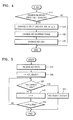
- FIG. 3 is a flowchart illustrating a method of controlling a screen orientation of a user interface of a portable electronic device according to an embodiment of the present invention.
- the orientation of the user interface is controlled according to the screen orientation of the portable electronic device (operation 320).
- the screen orientation of the portable electronic device is checked according to a sliding on/off status.
- a change in the screen orientation of the portable electronic device is detected using the hall sensor 210, and the graphic user interface is displayed while changing a key interface according to the changed screen orientation.
- the controlling of the screen orientation of the user interface includes displaying a first GUI corresponding to first key mapping and switching the first GUI corresponding to a second GUI corresponding to second key mapping when a change in the screen orientation of the device is detected by the hall sensor.
- an input is processed according to a value of a key input from the key-input unit 250 (operation 330).
- a function of the device corresponding to the input is performed (operation 340).
- the graphic user interface is output to a display unit 240, such as an LCD (operation 350).
- the operations 320, 330, 340, and 350 are repeated after the portable electronic device is turned on until the device is turned off.
- FIG. 4 is a detailed flowchart of controlling a screen orientation of a user interface of the portable electronic device (operation 320) illustrated in FIG. 3.
- a flag indicating a current screen orientation is set. For example, when the portable electronic device is in a vertical screen orientation (a top and a bottom of a display are vertically related), the flag is set to "0.” When the portable electronic device is in a horizontal screen orientation (the top and the bottom of the display are horizontally related), the flag is set to "1.”
- a change in a signal from the hall sensor is checked (operation 410).
- the hall sensor generates a signal "1" corresponding to the horizontal screen orientation when the top and the bottom of the display of the portable electronic device are horizontally related (for example, when the portable device is open).
- the hall sensor generates a signal "0" corresponding to the vertical screen orientation when the top and the bottom of the display of the portable electronic device are vertically related (for example, when the portable device is closed).
- the controller 260 can detect a change in the screen orientation by comparing the signal received from the hall sensor and the flag indicating the current screen orientation.
- FIG. 5 is a diagram illustrating the processing of an input from the key-input unit 250 (operation 330) illustrated in FIG. 3 according to an embodiment of the present invention.
- the key mapping tables are set as below:
- an input corresponding to a key pressed by a user is received (operation 510).
- the key variable i is set to a first key, for example KEY_SELECT (operation 520).
- the variable i of the key table is increased by one, and whether the input key data matches the table key data is repeatedly checked until the key data is the last key variable, for example, KEY_MAX (operation 540 and operation 550).
- the controller 260 receives "b" data (operation 510).
- the key variable i is set to KEY_SELECT(0), and the 0-th data in the key table provided above ("c") is compared to the received data (operation 530).
- the key variable i is increased by one and set to KEY_PLUS(1) (operation 540).
- the key variable i is not KEY_MAX(7), the next data entry in the key table is compared to the received data (operation 530).
- the data corresponding to the key variable i in the key table ("b") and the received data ("b") are compared (operation 530). At this time, since the table data matches the received data, a KEY_PLUS event which has a value of the key variable i occurs (operation 550). When the received data is "a,” as illustrated in FIG. 8A, a key event cannot occur since there is no data in the key table, as provided above, matching the received data.
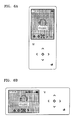
- FIGs. 6A and 6B are diagrams illustrating user interfaces displayed in vertical and horizontal screen orientation modes when the portable electronic device is closed or open according to an embodiment of the present invention.
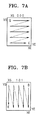
- FIGs. 7A and 7B are diagrams illustrating a method of displaying in the vertical and horizontal screen orientation modes illustrated in FIGs. 6A and 6B.
- the display orientation is switched according to the register used to register a change in the screen orientation, which is, for example, built into an LCD integrated chip (IC).
- IC LCD integrated chip
- FIG. 8A is a diagram illustrating hardware keys of a portable electronic device according to an embodiment of the present invention.
- FIG. 8B illustrates a key mapping table for keys represented in the input interface of the portable electronic device illustrated in FIG. 8A.
- LEDs light emitting diodes for keys may be lit so as to change positions of predetermined function keys according to the switching of the screen orientation.
- the portable electronic device has nine keys from a to i, only seven keys are visible as illustrated in FIGs. 6A and 6B.
- the LEDs are disposed below the key pads. Also, the LEDs corresponding to the keys which are not used are turned off, so that the user can use only seven keys.
- key mapping table illustrated in FIG. 8B key assignments for the vertical and horizontal screen orientations differ according to function.
- LEDs for g and f are turned off, and functions for the remaining keys are assigned for the vertical screen orientation mode (+) in FIG. 8B.
- LEDs for a and i are turned off, and functions for the remaining keys are assigned for the horizontal screen orientation mode (-) in FIG. 8B. Accordingly, a key can be made to appear or disappear by turning the LED corresponding to the key on or off, so that the user can find a key represented as "M" in the same position, which is in an upper left portion, for the horizontal or vertical display orientation mode.
- the key mapping varies according to the horizontal or the vertical screen orientation modes. That is, when a key in the same physical position is pressed, a different function is performed according to the horizontal or the vertical screen orientation modes. Although keys in different physical positions are pressed, a same function is performed according to the horizontal or the vertical screen orientation modes.
- a to i represent physical key numbers. For example, although the "h" key in the horizontal screen orientation mode and the "b" key in the vertical screen orientation mode are physically different, the user recognizes that the keys have the same function ( moving upward) since the positions of the keys are the same.
- the computer-readable recording medium is any data storage device that can store data which can thereafter be read by a computer system.
- Examples of the computer-readable recording medium include read-only memory (ROM), random-access memory (RAM), CD-ROMs, magnetic tapes, floppy disks, optical data storage devices, and a computer data signal embodied in a carrier wave comprising a compression source code segment and an encryption source code segment (such as data transmission through the Internet).
- the computer-readable recording medium can also be distributed over network-coupled computer systems so that the computer-readable code is stored and executed in a distributed fashion.
- a graphic user interface of a portable electronic device can be switched between horizontal and vertical screen orientation modes based on a screen orientation of the portable electronic device, and the functions of a user interface are switched according to the screen orientation mode, thereby enabling a user to easily recognize the functions of the user interface.
Landscapes
- Engineering & Computer Science (AREA)
- Theoretical Computer Science (AREA)
- Computer Hardware Design (AREA)
- Physics & Mathematics (AREA)
- Human Computer Interaction (AREA)
- General Engineering & Computer Science (AREA)
- General Physics & Mathematics (AREA)
- Mathematical Physics (AREA)
- User Interface Of Digital Computer (AREA)
Applications Claiming Priority (4)
| Application Number | Priority Date | Filing Date | Title |
|---|---|---|---|
| KR20060038862 | 2006-04-28 | ||
| KR1020060051983A KR20070117839A (ko) | 2006-06-09 | 2006-06-09 | 포터블 기기의 사용자 인터페이스 피봇 제어 방법 및 장치 |
| KR1020060069395A KR101297181B1 (ko) | 2006-07-24 | 2006-07-24 | 케이스의 움직임을 기초로 출력모드를 자동전환하는재생장치 및 방법 |
| KR1020060091183A KR100833241B1 (ko) | 2006-04-28 | 2006-09-20 | 슬라이딩-틸트장치 및 이를 채용한 모바일 기기 |
Publications (1)
| Publication Number | Publication Date |
|---|---|
| EP1850218A2 true EP1850218A2 (fr) | 2007-10-31 |
Family
ID=38283311
Family Applications (1)
| Application Number | Title | Priority Date | Filing Date |
|---|---|---|---|
| EP07105100A Withdrawn EP1850218A2 (fr) | 2006-04-28 | 2007-03-28 | Procédé et appareil de contrôle d'orientation de l'écran d'une interface utilisateur d'un dispositif portable |
Country Status (2)
| Country | Link |
|---|---|
| US (1) | US20070252853A1 (fr) |
| EP (1) | EP1850218A2 (fr) |
Cited By (31)
| Publication number | Priority date | Publication date | Assignee | Title |
|---|---|---|---|---|
| WO2009089465A3 (fr) * | 2008-01-11 | 2009-12-23 | Apple Inc. | Affichage graphique de saisie dynamique |
| EP2034385A3 (fr) * | 2007-09-07 | 2010-06-02 | Sandisk Corporation | Dispositif électronique doté de circuits susceptibles de modifier l'orientation d'un indicateur et procédé correspondant |
| EP1883269A3 (fr) * | 2006-07-24 | 2010-09-01 | Samsung Electronics Co., Ltd. | Appareil de reproduction et procédé pour la conversion automatique du mode de sortie d'après les mouvements d'un boîtier |
| US7795553B2 (en) | 2006-09-11 | 2010-09-14 | Apple Inc. | Hybrid button |
| US7880729B2 (en) | 2005-10-11 | 2011-02-01 | Apple Inc. | Center button isolation ring |
| US7910843B2 (en) | 2007-09-04 | 2011-03-22 | Apple Inc. | Compact input device |
| WO2011014127A3 (fr) * | 2009-07-31 | 2011-04-07 | Razer (Asia-Pacific) Pte Ltd | Système et procédé de mappage en contexte unifié de commandes de dispositif d'entrée physique pour des actions de programme d'application |
| US7932897B2 (en) | 2004-08-16 | 2011-04-26 | Apple Inc. | Method of increasing the spatial resolution of touch sensitive devices |
| US8022935B2 (en) | 2006-07-06 | 2011-09-20 | Apple Inc. | Capacitance sensing electrode with integrated I/O mechanism |
| US8059099B2 (en) | 2006-06-02 | 2011-11-15 | Apple Inc. | Techniques for interactive input to portable electronic devices |
| US8274479B2 (en) | 2006-10-11 | 2012-09-25 | Apple Inc. | Gimballed scroll wheel |
| CN101882051B (zh) * | 2009-05-07 | 2013-02-20 | 深圳富泰宏精密工业有限公司 | 行动装置及控制该行动装置用户界面的控制方法 |
| US8395590B2 (en) | 2008-12-17 | 2013-03-12 | Apple Inc. | Integrated contact switch and touch sensor elements |
| US8416198B2 (en) | 2007-12-03 | 2013-04-09 | Apple Inc. | Multi-dimensional scroll wheel |
| US8446370B2 (en) | 2002-02-25 | 2013-05-21 | Apple Inc. | Touch pad for handheld device |
| US8482530B2 (en) | 2006-11-13 | 2013-07-09 | Apple Inc. | Method of capacitively sensing finger position |
| US8514185B2 (en) | 2006-07-06 | 2013-08-20 | Apple Inc. | Mutual capacitance touch sensing device |
| US8537132B2 (en) | 2005-12-30 | 2013-09-17 | Apple Inc. | Illuminated touchpad |
| US8552990B2 (en) | 2003-11-25 | 2013-10-08 | Apple Inc. | Touch pad for handheld device |
| US8683378B2 (en) | 2007-09-04 | 2014-03-25 | Apple Inc. | Scrolling techniques for user interfaces |
| US8743060B2 (en) | 2006-07-06 | 2014-06-03 | Apple Inc. | Mutual capacitance touch sensing device |
| US8749493B2 (en) | 2003-08-18 | 2014-06-10 | Apple Inc. | Movable touch pad with added functionality |
| US8816967B2 (en) | 2008-09-25 | 2014-08-26 | Apple Inc. | Capacitive sensor having electrodes arranged on the substrate and the flex circuit |
| US8820133B2 (en) | 2008-02-01 | 2014-09-02 | Apple Inc. | Co-extruded materials and methods |
| US8872771B2 (en) | 2009-07-07 | 2014-10-28 | Apple Inc. | Touch sensing device having conductive nodes |
| US8952886B2 (en) | 2001-10-22 | 2015-02-10 | Apple Inc. | Method and apparatus for accelerated scrolling |
| CN104391640A (zh) * | 2014-07-24 | 2015-03-04 | 贵阳朗玛信息技术股份有限公司 | 屏幕显示的控制方法及装置 |
| US9354751B2 (en) | 2009-05-15 | 2016-05-31 | Apple Inc. | Input device with optimized capacitive sensing |
| US9367151B2 (en) | 2005-12-30 | 2016-06-14 | Apple Inc. | Touch pad with symbols based on mode |
| US9454256B2 (en) | 2008-03-14 | 2016-09-27 | Apple Inc. | Sensor configurations of an input device that are switchable based on mode |
| CN106598521A (zh) * | 2016-12-14 | 2017-04-26 | 广东欧珀移动通信有限公司 | 移动终端的屏幕状态控制方法、装置和移动终端 |
Families Citing this family (41)
| Publication number | Priority date | Publication date | Assignee | Title |
|---|---|---|---|---|
| KR100876754B1 (ko) * | 2007-04-18 | 2009-01-09 | 삼성전자주식회사 | 작동모드를 전환하기 위한 휴대용 전자기기 |
| US8602997B2 (en) | 2007-06-12 | 2013-12-10 | Sotera Wireless, Inc. | Body-worn system for measuring continuous non-invasive blood pressure (cNIBP) |
| US8419649B2 (en) | 2007-06-12 | 2013-04-16 | Sotera Wireless, Inc. | Vital sign monitor for measuring blood pressure using optical, electrical and pressure waveforms |
| US11330988B2 (en) | 2007-06-12 | 2022-05-17 | Sotera Wireless, Inc. | Body-worn system for measuring continuous non-invasive blood pressure (cNIBP) |
| US12245852B2 (en) | 2007-06-12 | 2025-03-11 | Sotera Wireless, Inc. | Optical sensors for use in vital sign monitoring |
| US11607152B2 (en) | 2007-06-12 | 2023-03-21 | Sotera Wireless, Inc. | Optical sensors for use in vital sign monitoring |
| KR101348721B1 (ko) * | 2007-09-03 | 2014-01-08 | 엘지전자 주식회사 | 휴대 단말기 및 그 휴대 단말기의 터치 인식 방법 |
| TW200929996A (en) * | 2007-12-25 | 2009-07-01 | E Ten Information Sys Co Ltd | Portable electronic apparatus and operating method thereof |
| US8454436B2 (en) * | 2008-06-26 | 2013-06-04 | Wms Gaming Inc. | Gaming machine with movable display screen |
| US10973414B2 (en) | 2009-05-20 | 2021-04-13 | Sotera Wireless, Inc. | Vital sign monitoring system featuring 3 accelerometers |
| US8909330B2 (en) | 2009-05-20 | 2014-12-09 | Sotera Wireless, Inc. | Body-worn device and associated system for alarms/alerts based on vital signs and motion |
| US11896350B2 (en) | 2009-05-20 | 2024-02-13 | Sotera Wireless, Inc. | Cable system for generating signals for detecting motion and measuring vital signs |
| US9775529B2 (en) | 2009-06-17 | 2017-10-03 | Sotera Wireless, Inc. | Body-worn pulse oximeter |
| TWI403751B (zh) * | 2009-09-08 | 2013-08-01 | Benq Corp | 電子裝置狀態判斷方法及使用此方法之電子裝置 |
| US8622922B2 (en) | 2009-09-14 | 2014-01-07 | Sotera Wireless, Inc. | Body-worn monitor for measuring respiration rate |
| US12121364B2 (en) | 2009-09-14 | 2024-10-22 | Sotera Wireless, Inc. | Body-worn monitor for measuring respiration rate |
| US11253169B2 (en) | 2009-09-14 | 2022-02-22 | Sotera Wireless, Inc. | Body-worn monitor for measuring respiration rate |
| US8527038B2 (en) | 2009-09-15 | 2013-09-03 | Sotera Wireless, Inc. | Body-worn vital sign monitor |
| US10420476B2 (en) | 2009-09-15 | 2019-09-24 | Sotera Wireless, Inc. | Body-worn vital sign monitor |
| US12156743B2 (en) | 2009-09-15 | 2024-12-03 | Sotera Wireless, Inc. | Body-worn vital sign monitor |
| US8364250B2 (en) | 2009-09-15 | 2013-01-29 | Sotera Wireless, Inc. | Body-worn vital sign monitor |
| US20110066044A1 (en) | 2009-09-15 | 2011-03-17 | Jim Moon | Body-worn vital sign monitor |
| US8321004B2 (en) | 2009-09-15 | 2012-11-27 | Sotera Wireless, Inc. | Body-worn vital sign monitor |
| US10806351B2 (en) | 2009-09-15 | 2020-10-20 | Sotera Wireless, Inc. | Body-worn vital sign monitor |
| US8591411B2 (en) * | 2010-03-10 | 2013-11-26 | Sotera Wireless, Inc. | Body-worn vital sign monitor |
| US8979765B2 (en) | 2010-04-19 | 2015-03-17 | Sotera Wireless, Inc. | Body-worn monitor for measuring respiratory rate |
| US8747330B2 (en) | 2010-04-19 | 2014-06-10 | Sotera Wireless, Inc. | Body-worn monitor for measuring respiratory rate |
| US9339209B2 (en) | 2010-04-19 | 2016-05-17 | Sotera Wireless, Inc. | Body-worn monitor for measuring respiratory rate |
| US9173593B2 (en) | 2010-04-19 | 2015-11-03 | Sotera Wireless, Inc. | Body-worn monitor for measuring respiratory rate |
| US9173594B2 (en) | 2010-04-19 | 2015-11-03 | Sotera Wireless, Inc. | Body-worn monitor for measuring respiratory rate |
| US8888700B2 (en) | 2010-04-19 | 2014-11-18 | Sotera Wireless, Inc. | Body-worn monitor for measuring respiratory rate |
| US8688966B2 (en) * | 2010-08-31 | 2014-04-01 | Apple Inc. | Systems, methods, and computer-readable media for presenting visual content with a consistent orientation |
| WO2012092303A1 (fr) | 2010-12-28 | 2012-07-05 | Sotera Wireless, Inc. | Système à porter sur le corps pour la mesure continue, non invasive du débit cardiaque, du débit systolique, de la puissance cardiaque et de la pression sanguine |
| EP2675348B1 (fr) | 2011-02-18 | 2019-11-06 | Sotera Wireless, Inc. | Processeur porté au poignet modulaire pour la surveillance de patient |
| WO2012112885A1 (fr) | 2011-02-18 | 2012-08-23 | Sotera Wireless, Inc. | Capteur optique pour la mesure de propriétés physiologiques |
| TWI442074B (zh) * | 2011-09-23 | 2014-06-21 | Acer Inc | 電子裝置與防呆方法 |
| KR20130051098A (ko) | 2011-11-09 | 2013-05-20 | 삼성전자주식회사 | 화면 회전 제어 방법 및 이를 지원하는 단말기 및 터치 시스템 |
| US9123142B2 (en) | 2012-10-02 | 2015-09-01 | At&T Intellectual Property I, L.P. | Adjusting content display orientation on a screen based on user orientation |
| WO2014065812A1 (fr) * | 2012-10-26 | 2014-05-01 | Thomson Licensing | Interfaces utilisateur pour dispositifs électroniques à main |
| US8976202B2 (en) | 2013-01-28 | 2015-03-10 | Dave CAISSY | Method for controlling the display of a portable computing device |
| CN104598030B (zh) * | 2015-01-15 | 2018-03-23 | 青岛海信电器股份有限公司 | 一种智能终端控制键功能自动调整方法、装置及智能终端 |
Family Cites Families (4)
| Publication number | Priority date | Publication date | Assignee | Title |
|---|---|---|---|---|
| FI20021759A0 (fi) * | 2002-10-03 | 2002-10-03 | Nokia Corp | Menetelmä ja käyttöliittymä tekstin syöttämiseen |
| KR100663478B1 (ko) * | 2003-01-30 | 2007-01-02 | 삼성전자주식회사 | 휴대단말기의 화면표시 장치 및 방법 |
| CN1319356C (zh) * | 2003-04-24 | 2007-05-30 | 三星电子株式会社 | 在移动终端中使用旋转键以及控制显示的装置和方法 |
| US7388590B2 (en) * | 2004-02-27 | 2008-06-17 | Microsoft Corporation | Method and system for using a color scheme to communicate information related to the integration of hardware and software in a computing device |
-
2007
- 2007-02-27 US US11/711,081 patent/US20070252853A1/en not_active Abandoned
- 2007-03-28 EP EP07105100A patent/EP1850218A2/fr not_active Withdrawn
Cited By (49)
| Publication number | Priority date | Publication date | Assignee | Title |
|---|---|---|---|---|
| US9009626B2 (en) | 2001-10-22 | 2015-04-14 | Apple Inc. | Method and apparatus for accelerated scrolling |
| US9977518B2 (en) | 2001-10-22 | 2018-05-22 | Apple Inc. | Scrolling based on rotational movement |
| US8952886B2 (en) | 2001-10-22 | 2015-02-10 | Apple Inc. | Method and apparatus for accelerated scrolling |
| US10353565B2 (en) | 2002-02-25 | 2019-07-16 | Apple Inc. | Input apparatus and button arrangement for handheld device |
| US8446370B2 (en) | 2002-02-25 | 2013-05-21 | Apple Inc. | Touch pad for handheld device |
| US8749493B2 (en) | 2003-08-18 | 2014-06-10 | Apple Inc. | Movable touch pad with added functionality |
| US8933890B2 (en) | 2003-11-25 | 2015-01-13 | Apple Inc. | Techniques for interactive input to portable electronic devices |
| US8552990B2 (en) | 2003-11-25 | 2013-10-08 | Apple Inc. | Touch pad for handheld device |
| US7932897B2 (en) | 2004-08-16 | 2011-04-26 | Apple Inc. | Method of increasing the spatial resolution of touch sensitive devices |
| US7880729B2 (en) | 2005-10-11 | 2011-02-01 | Apple Inc. | Center button isolation ring |
| US9367151B2 (en) | 2005-12-30 | 2016-06-14 | Apple Inc. | Touch pad with symbols based on mode |
| US8537132B2 (en) | 2005-12-30 | 2013-09-17 | Apple Inc. | Illuminated touchpad |
| US8059099B2 (en) | 2006-06-02 | 2011-11-15 | Apple Inc. | Techniques for interactive input to portable electronic devices |
| US8743060B2 (en) | 2006-07-06 | 2014-06-03 | Apple Inc. | Mutual capacitance touch sensing device |
| US10890953B2 (en) | 2006-07-06 | 2021-01-12 | Apple Inc. | Capacitance sensing electrode with integrated I/O mechanism |
| US10359813B2 (en) | 2006-07-06 | 2019-07-23 | Apple Inc. | Capacitance sensing electrode with integrated I/O mechanism |
| US8022935B2 (en) | 2006-07-06 | 2011-09-20 | Apple Inc. | Capacitance sensing electrode with integrated I/O mechanism |
| US9360967B2 (en) | 2006-07-06 | 2016-06-07 | Apple Inc. | Mutual capacitance touch sensing device |
| US8514185B2 (en) | 2006-07-06 | 2013-08-20 | Apple Inc. | Mutual capacitance touch sensing device |
| US10139870B2 (en) | 2006-07-06 | 2018-11-27 | Apple Inc. | Capacitance sensing electrode with integrated I/O mechanism |
| US9405421B2 (en) | 2006-07-06 | 2016-08-02 | Apple Inc. | Mutual capacitance touch sensing device |
| EP1883269A3 (fr) * | 2006-07-24 | 2010-09-01 | Samsung Electronics Co., Ltd. | Appareil de reproduction et procédé pour la conversion automatique du mode de sortie d'après les mouvements d'un boîtier |
| US8718308B2 (en) | 2006-07-24 | 2014-05-06 | Samsung Electronics Co., Ltd. | Reproducing apparatus and method for automatically converting output mode based on movements of casing |
| US8044314B2 (en) | 2006-09-11 | 2011-10-25 | Apple Inc. | Hybrid button |
| US7795553B2 (en) | 2006-09-11 | 2010-09-14 | Apple Inc. | Hybrid button |
| US10180732B2 (en) | 2006-10-11 | 2019-01-15 | Apple Inc. | Gimballed scroll wheel |
| US8274479B2 (en) | 2006-10-11 | 2012-09-25 | Apple Inc. | Gimballed scroll wheel |
| US8482530B2 (en) | 2006-11-13 | 2013-07-09 | Apple Inc. | Method of capacitively sensing finger position |
| US8683378B2 (en) | 2007-09-04 | 2014-03-25 | Apple Inc. | Scrolling techniques for user interfaces |
| US12159028B2 (en) | 2007-09-04 | 2024-12-03 | Apple Inc. | Scrolling techniques for user interfaces |
| US8330061B2 (en) | 2007-09-04 | 2012-12-11 | Apple Inc. | Compact input device |
| US7910843B2 (en) | 2007-09-04 | 2011-03-22 | Apple Inc. | Compact input device |
| US10866718B2 (en) | 2007-09-04 | 2020-12-15 | Apple Inc. | Scrolling techniques for user interfaces |
| EP2034385A3 (fr) * | 2007-09-07 | 2010-06-02 | Sandisk Corporation | Dispositif électronique doté de circuits susceptibles de modifier l'orientation d'un indicateur et procédé correspondant |
| US8416198B2 (en) | 2007-12-03 | 2013-04-09 | Apple Inc. | Multi-dimensional scroll wheel |
| US8866780B2 (en) | 2007-12-03 | 2014-10-21 | Apple Inc. | Multi-dimensional scroll wheel |
| US8125461B2 (en) | 2008-01-11 | 2012-02-28 | Apple Inc. | Dynamic input graphic display |
| WO2009089465A3 (fr) * | 2008-01-11 | 2009-12-23 | Apple Inc. | Affichage graphique de saisie dynamique |
| US8820133B2 (en) | 2008-02-01 | 2014-09-02 | Apple Inc. | Co-extruded materials and methods |
| US9454256B2 (en) | 2008-03-14 | 2016-09-27 | Apple Inc. | Sensor configurations of an input device that are switchable based on mode |
| US8816967B2 (en) | 2008-09-25 | 2014-08-26 | Apple Inc. | Capacitive sensor having electrodes arranged on the substrate and the flex circuit |
| US8395590B2 (en) | 2008-12-17 | 2013-03-12 | Apple Inc. | Integrated contact switch and touch sensor elements |
| CN101882051B (zh) * | 2009-05-07 | 2013-02-20 | 深圳富泰宏精密工业有限公司 | 行动装置及控制该行动装置用户界面的控制方法 |
| US9354751B2 (en) | 2009-05-15 | 2016-05-31 | Apple Inc. | Input device with optimized capacitive sensing |
| US8872771B2 (en) | 2009-07-07 | 2014-10-28 | Apple Inc. | Touch sensing device having conductive nodes |
| WO2011014127A3 (fr) * | 2009-07-31 | 2011-04-07 | Razer (Asia-Pacific) Pte Ltd | Système et procédé de mappage en contexte unifié de commandes de dispositif d'entrée physique pour des actions de programme d'application |
| CN104391640A (zh) * | 2014-07-24 | 2015-03-04 | 贵阳朗玛信息技术股份有限公司 | 屏幕显示的控制方法及装置 |
| CN106598521A (zh) * | 2016-12-14 | 2017-04-26 | 广东欧珀移动通信有限公司 | 移动终端的屏幕状态控制方法、装置和移动终端 |
| CN106598521B (zh) * | 2016-12-14 | 2020-06-09 | Oppo广东移动通信有限公司 | 移动终端的屏幕状态控制方法、装置和移动终端 |
Also Published As
| Publication number | Publication date |
|---|---|
| US20070252853A1 (en) | 2007-11-01 |
Similar Documents
| Publication | Publication Date | Title |
|---|---|---|
| EP1850218A2 (fr) | Procédé et appareil de contrôle d'orientation de l'écran d'une interface utilisateur d'un dispositif portable | |
| CN101482765A (zh) | 控制便携设备的用户界面屏幕方向的方法和装置 | |
| US20090195513A1 (en) | Interactive multimedia control module | |
| EP2955603B1 (fr) | Équipement electronique avec dispositif d'affichage | |
| KR102161565B1 (ko) | 보조 입력 장치를 이용한 전자 장치 및 그 운용 방법 | |
| AU2013100572B4 (en) | Smart cover peek | |
| US9230074B2 (en) | Method for switching wallpaper in screen lock state, mobile electronic device thereof, and storage medium thereof | |
| US7932839B2 (en) | Mobile terminal and method for operating touch keypad thereof | |
| US20060097983A1 (en) | Tapping input on an electronic device | |
| US20130038556A1 (en) | Display apparatus | |
| US20100188268A1 (en) | Touchpad | |
| CN108268187A (zh) | 智能终端的显示方法及装置 | |
| EP3627730A1 (fr) | Procédé de traitement de perturbations radioélectriques et dispositif électronique | |
| US20100265209A1 (en) | Power reduction for touch screens | |
| US20120098763A1 (en) | Electronic reader and notation method thereof | |
| KR20140113361A (ko) | 화면 제어 방법 및 장치 | |
| KR102710384B1 (ko) | 버튼 입력에 기능을 맵핑하기 위한 전자 장치 및 방법 | |
| US20100201712A1 (en) | Mobile electronic device with competing input devices | |
| EP2912537A1 (fr) | Interfaces utilisateur pour dispositifs électroniques à main | |
| US10318025B2 (en) | Auxiliary input device of electronic device and method of executing function thereof | |
| US9176526B2 (en) | Portable terminal device, image display method used for same, and recording medium to record program for same | |
| EP2034385A2 (fr) | Dispositif électronique doté de circuits susceptibles de modifier l'orientation d'un indicateur et procédé correspondant | |
| JP2012138656A (ja) | 携帯通信端末、バックライト制御方法、記録媒体 | |
| JP5221694B2 (ja) | 電子機器、オブジェクトの表示方法及びオブジェクトの表示プログラム。 | |
| US20090201259A1 (en) | Cursor creation for touch screen |
Legal Events
| Date | Code | Title | Description |
|---|---|---|---|
| PUAI | Public reference made under article 153(3) epc to a published international application that has entered the european phase |
Free format text: ORIGINAL CODE: 0009012 |
|
| 17P | Request for examination filed |
Effective date: 20070328 |
|
| AK | Designated contracting states |
Kind code of ref document: A2 Designated state(s): AT BE BG CH CY CZ DE DK EE ES FI FR GB GR HU IE IS IT LI LT LU LV MC MT NL PL PT RO SE SI SK TR |
|
| AX | Request for extension of the european patent |
Extension state: AL BA HR MK YU |
|
| STAA | Information on the status of an ep patent application or granted ep patent |
Free format text: STATUS: THE APPLICATION IS DEEMED TO BE WITHDRAWN |
|
| 18D | Application deemed to be withdrawn |
Effective date: 20101001 |