EP1850242A1 - Verfahren zur Wiedergabe eines Browser-Cache-Zusatzes einer tragbaren elektronischen Vorrichtung auf einer anderen Vorrichtung und entsprechende Vorrichtung - Google Patents
Verfahren zur Wiedergabe eines Browser-Cache-Zusatzes einer tragbaren elektronischen Vorrichtung auf einer anderen Vorrichtung und entsprechende Vorrichtung Download PDFInfo
- Publication number
- EP1850242A1 EP1850242A1 EP06252317A EP06252317A EP1850242A1 EP 1850242 A1 EP1850242 A1 EP 1850242A1 EP 06252317 A EP06252317 A EP 06252317A EP 06252317 A EP06252317 A EP 06252317A EP 1850242 A1 EP1850242 A1 EP 1850242A1
- Authority
- EP
- European Patent Office
- Prior art keywords
- file
- notification
- handheld electronic
- electronic device
- notifications
- Prior art date
- Legal status (The legal status is an assumption and is not a legal conclusion. Google has not performed a legal analysis and makes no representation as to the accuracy of the status listed.)
- Granted
Links
Images

Classifications
-
- G—PHYSICS
- G06—COMPUTING OR CALCULATING; COUNTING
- G06F—ELECTRIC DIGITAL DATA PROCESSING
- G06F16/00—Information retrieval; Database structures therefor; File system structures therefor
- G06F16/90—Details of database functions independent of the retrieved data types
- G06F16/95—Retrieval from the web
- G06F16/957—Browsing optimisation, e.g. caching or content distillation
- G06F16/9574—Browsing optimisation, e.g. caching or content distillation of access to content, e.g. by caching
Definitions
- the disclosed and claimed concept relates generally to handheld electronic devices and, more particularly, to a method of reflecting on another device an addition to a browser cache on a handheld electronic device.
- handheld electronic devices Numerous types of handheld electronic devices are known. Examples of handheld electronic devices include, for instance, personal data assistants (PDAs), handheld computers, two-way pagers, cellular telephones, and the like. Many handheld electronic devices also feature a wireless communication capability, although many such handheld electronic devices are stand-alone devices that are functional without communication with other devices.
- PDAs personal data assistants
- handheld computers two-way pagers
- cellular telephones and the like.
- Many handheld electronic devices also feature a wireless communication capability, although many such handheld electronic devices are stand-alone devices that are functional without communication with other devices.
- Some handheld electronic devices that are sold with certain software resident thereon and are configured to allow additional software developed by third parties to be installed and executed on the electronic handheld device.
- the manufacturer of the device may sell the device with original software that is sufficiently versatile to enable cooperation between the original software and third-party software.
- Such third-party software may be provided on the device when originally provided to a consumer, or may be added after purchase. While such handheld electronic devices and software have been generally effective for their intended purposes, such handheld electronic devices have not been without limitation.
- the original software provided by a manufacturer may be configured to be so versatile as to be somewhat burdensome to use.
- the original software may provide a routine such as an Application Programming Interface (API) that third-party software can employ to receive notifications in response to certain events on the handheld electronic device.
- API Application Programming Interface
- the original software may provide many more notifications than are needed or are usable by the third-party software.
- the processing of so many unnecessary notifications undesirably adds processing overhead and consumes both processing and power resources.
- such APIs may still provide fewer than all of the functions that might be desirable for use with certain third-party software.
- the API may provide certain notifications, but such notifications may provide less than all of the data that would be desirable for proper operation of the third-party software.
- Fig. 1 is a schematic depiction of an improved handheld electronic device in accordance with the disclosed and claimed concept in communication with a network;
- Fig. 2 is a schematic depiction of a portion of a memory on the handheld electronic device of Fig. 1;
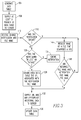
- Fig. 3 is an exemplary flowchart of at least a portion of an improved method that can be performed on the improved handheld electronic device of Fig. 1;
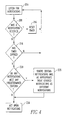
- Fig. 4 is an exemplary flowchart of at least a portion of another method that can be performed on the improved handheld electronic device of Fig. 1.
- An improved handheld electronic device 4 is depicted schematically in Fig. 1 as being in communication with a network 8.
- the exemplary network 8 enables communication between it and the handheld electronic device 4 via an antenna 10 that is connected through the network 8 with a server 12.
- the exemplary network 8 communicates wirelessly with the handheld electronic device 4, although it is understood that the network 8 could have a wired connection with the handheld electronic device 4 without departing from the present concept.
- the exemplary handheld electronic device 4 comprises an input apparatus 16, a processor apparatus 20, and an output apparatus 24.
- the processor apparatus 20 is configured to process input received from the input apparatus 16 and to provide output to the output apparatus 24.
- the processor apparatus 20 comprises a processor and a memory 28. While not expressly depicted herein, it is understood that the processor could be any of a wide variety of processors, such as a microprocessor ( ⁇ P) that is responsive to input from the input apparatus 16, that provides output to the output apparatus 24, and that interfaces with the memory 28.
- ⁇ P microprocessor
- the memory 28 is depicted schematically in Fig. 2.
- the memory 28 can be any of a variety of types of internal and/or external storage media such as, without limitation, RAM, ROM, EPROM(s), EEPROM(s), and the like that provide a storage register for data such as in the fashion of an internal storage area of a computer, and can be volatile memory or nonvolatile memory.
- the memory 28 additionally includes a number of routines stored therein that are executable on the processor, as will be set forth below in greater detail. As employed herein the expression "a number of" and variations thereof shall refer broadly to any nonzero quantity, including a quantity of one.
- the routines can be in any of a variety of forms such as, without limitation, software, firmware, and the like.
- the memory 28 comprises a browser cache 32 having a number of files 36 stored therein within a directory structure.
- Each file 36 in the browser cache 32 has a file name 40 and has stored therein, for example, an object 44, a location from where the object 44 was obtained, such as a Uniform Resource Locator (URL) 48, and an expiry date 52 for the object 44. Additional relevant information may be stored in each file without departing from the present concept.
- URL Uniform Resource Locator
- the memory 28 additionally has stored therein an operating system 56, an API 60, and a browser routine 64, among other routines as mentioned above.
- the browser routine 64 is operable to obtain and process various items such as HyperText Markup Language (HTML) documents.
- HTML HyperText Markup Language
- a given HTML document may comprise, for example, text, and may additionally comprise descriptions of locations where additional objects may be obtained and which are to be inserted into the text. Exemplary objects that are insertable into text would include images, executable code such as JavaScript, and other objects.
- the objects stored at such locations must be obtained in one fashion or another for inclusion in the output that results from the such processing of the HTML document.
- the locations may, for example, be URLs on a network such as the Internet.
- certain of the needed objects may be stored, i.e., saved, in the browser cache 32 as objects 44 stored within the files 36.
- an HTLM document being processed by the browser routine 64 comprises a location such as a URL 48 in one of the files 36, and if the expiry date 52 of the object 44 in the file 36 has not been exceeded, the object 44 stored in the file 36 is retrieved from within the browser cache 32 and is provided to the browser routine 64 for inclusion in the HTML document. In such a fashion, the amount of communication traffic between handheld electronic device 4 and the network 8 can be reduced.
- One exemplary implementation of such a browser cache 32 on the handheld electronic device 4 would additionally include storing on the server 12 or otherwise making available to the server 12 a mirror of the browser cache 32.
- the server 12 may analyze the obtained HTML document and determine whether or not it includes one or more URLs from which may be obtained objects that should be included in the HTML document.
- the server 12 may determine from its mirror of the browser cache 32 whether or not the object which is available at a given URL might already be stored in the browser cache 32.
- the server 12 will request the object from the URL and will send the object to the handheld electronic device 4, typically in conjunction with the sending of the HTML document from the server 12 to the handheld electronic device 4.
- the object from the indicated URL is already available in an unexpired condition in the browser cache 32, the object is not at that time requested from the URL.
- the mirror of the browser cache 32 is advantageously updated whenever the browser cache 32 changes.
- a data table 68 such as is depicted generally in Fig. 2, is generated and is stored in the memory 28.
- the data table 68 includes a number of first objects 72 and a number of second objects 76 stored therein.
- Each first object 72 comprises a file name 40, which is the file name 40 of a file 36 in the browser cache 32.
- Each first object 72 has associated therewith a second object 76 that comprises the location, i.e., the URL 48 in the present example, of the same file 36.
- the file names 40 are each stored in the first objects 72 as a hash of the file name 40 in order to reduce storage requirements and to facilitate processing.
- a hash of each URL 48 in the second objects 76 is provided to the server 12 to create on the server 12 the mirror of the browser cache 32. It may additionally be desirable to provide, in conjunction with each hash of a URL 48, the expiry date 52 of the object 44 that was obtained from the same URL 48, as is stored in one of the files 36.
- the API 60 is configured to provide to the browser routine 64 the name of the file 36 in the browser cache 32 that has undergone the change.
- the API 60 also provides a notification of the type of change undergone by the file 36 of which the file name 40 has just been provided.
- the various notifications include a CREATE notification, an UPDATE notification, a DELETE notification, and a RENAME notification indicating that a particular file has been created, updated, deleted, or renamed, respectively.
- a RENAME notification typically two file names 40 are provided, i.e., the initial file name 40 of the file 36, as well as a new name for the same file 36.
- the browser routine 64 is advantageously configured to obtain in other fashions the particular URL 48 of the file 36 in the browser cache 32 that has undergone the change.
- Fig. 3 generally depicts an exemplary flowchart depicting certain aspects of the way in which the server 12 is able to have a substantially continuously updated mirror of the browser cache 32 that is stored on the handheld electronic device 4.
- the data table 68 is generated, as at 104. At least a portion of the data table 68 is then supplied, as at 108, to the server 12.
- typically what is supplied to the server 12 is a hash of each URL 48 stored in the second objects 76, along with the corresponding expiry date 52.
- the browser routine 64 receives from the API 60 a notification, as at 112, that a certain file 36 has undergone a change. Specifically, the file name 40 of the file 36 that has undergone the change, as well as a notification type are provided to the browser routine 64. As indicated above, the four exemplary types of notifications are CREATE, UPDATE, DELETE, and RENAME.
- the browser routine 64 obtains, as at 128, from the data table 68 the URL 48 that is associated with the received file name 40. More specifically, the data table 68 is consulted to identify the first object 72 which has stored therein a file name 40 that is the same as the received file name 40. The second object 76 associated therewith is consulted to obtain the URL 48 stored therein. The URL 48 and other appropriate data are then supplied, as at 132, to the server 12. The data table 68 is then updated, as at 136, to reflect the change that was notified at 112, assuming that the notification was not ignored at 124.
- a notification which is a DELETE notification will generally result in supplying to the server 12 a hash of the URL 48 of the deleted file 36, along with a notification that the change was a DELETE.
- the server 32 will previously have stored in its mirror of the browser cache 32 a hash of the URL 48 in the file 36 that is being deleted.
- the server Upon receiving the update transmission, as at 132, the server will delete from its mirror of the browser cache 32 the hash of the URL 48 of the deleted file 36.
- updated data such as an updated expiry date 52 typically will be supplied, as at 132, to the server 12.
- updated data can be obtained in any of a variety of ways. Such updated data can even be obtained from the server 12.
- the browser routine 64 may make a request of the server 12 for a specific HTML document. After receiving the request, the server will obtain, such as from the network 8, the requested HTML document.
- the obtained HTML document may comprise one or more URLs, and the server 12 may determine from its mirror 12 of the browser cache 32 that the object available at a particular indicated URL is already stored on the handheld electronic device 4 as an object 44 in the browser cache 32. However, the server 12 may also determine that the expiry date 52 of the object 44 has been exceeded, i.e., the object 44 has expired.
- the browser cache 32 may be configured to delete files 36 when the expiry date 52 of the object 44 stored therein has been exceeded.
- the browser cache 32 may be configured such that the file 36 having stored therein an exceeded expiry date 52 is not necessarily deleted, but the object 44 stored therein is updated if requested after expiration of the expiry date 52.
- the server 12 might make the determination that the expiry date 52 of the object 44 has been exceeded by first creating a hash of the URL contained within the obtained HTML document. The server 12 will then identifying in its mirror of the browser cache 32 the matching URL hash, and determining whether the expiry date 52 that is associated with the identified matching URL hash has been exceeded.
- the server 12 may make a new request of the object from the URL.
- a header of the request may include an instruction to the URL that it provide the object stored at the URL only if the object has changed since being stored in the browser cache 32. If it turns out that the object is not changed, the URL may simply return to the server 12 an updated expiry date.
- the updated expiry date will then be transmitted to the handheld electronic device 4, and the operating system 56 will store the received expiry date as an updated expiry date 52 in the corresponding file 40.
- Such an update will cause the API 60 to generate an UPDATE notification which will be received by the browser routine 64, as at 112.
- the browser routine 64 supplies to the server 12 the URL 48 and appropriate additional data, part of the additional data will be the updated expiry date 52 that has already been stored in the file 36 within the browser cache 32.
- the server then would transmit to the handheld electronic device the updated object and updated expiry date, and these would both be saved in the file 36, with the API 60 generating an UPDATE notification at 112, and with the updated expiry date 52 being supplied, as at 132 to the server 12.
- processing continues to 144 where the browser routine 64 requests from the operating system 56 the name of a file 36 that comprises a URL 48 which was the subject of a recent request by the browser routine 64. That is, during a browsing session the browser routine 64 makes a number of browser requests of the server 12. The fact that a particular URL request was made by the browser routine 64 does not indicate whether or not a file 36 having the particular URL stored therein was recently added to the browser cache 32 since it is possible that the object 44 which would otherwise be available at the URL on the network was already stored in the browser cache 32. However, the browser routine 64 maintains a list of recent URL requests. As such, at 144 the browser routine 64 requests of the operating system 56 the name of a file 36 having a particular URL 48 stored therein. The particular URL 48 typically will be the URL that was the subject of the most recent URL request by the browser routine 64.
- the operating system 56 may return a file name 40 or may return nothing. It is then determined, as at 148, whether the returned file name 40, if any, and the file name 40 that was generated as part of a notification at 112 are the same. If they are not the same, or if no file name was returned in response to the request at 144 regarding a particular URL, processing returns to 144 where additional requests are made for additional URLs that were the subject of recent URL requests.
- the URLs employed in the requests at 144 typically will be made in reverse chronological order, i.e., the most recent URL will be the subject of the first request at 144, and if the result at 148 is "no", a successive request at 144 will be made with respect to the URL that was next most recently requested by the browser routine 64, and so forth.
- the operating system 56 will return a file name 40 that matches the file name 40 that was generated as part of the notification at 112. In such a circumstance, a hash of the URL that was the subject of the successful request is supplied, as at 132, to the server 12. The data table 68 is then updated, as at 136.
- the API 60 is capable of generating numerous notifications that may be in excess of what is necessarily or desirably handled by the routines on the handheld electronic device 4. For instance, the API 60 may generate numerous notifications in response to a single event. By way of example, it is noted that an updating operation on the handheld electronic device 4 may generate five separate notifications as follows:
- the device may create a new file, thus resulting in a CREATE notification
- the device may update the new file by writing into the new file the contents of an old file, thus generating an UPDATE notification
- the device may append any changes, i.e., edit, the new file, thus resulting in an UPDATE notification;
- the device may delete the old file, thus resulting in a DELETE notification
- the device may rename the new file to have the name of the old file and to have the attributes of the old file, thus resulting in a RENAME notification.
- the notifications generated by the API 60 are advantageously subjected to one or more predetermined criteria or algorithms to determine whether or not one or more of the notifications can be ignored.
- the various predetermined criteria i.e., algorithms, likely will be specific to a given routine on the handheld electronic device 4. That is, what may be an unnecessary or irrelevant notification to one routine might be relevant or desirably noted by another routine.
- the browser routine 64 is provided herein as an exemplary routine to which certain notifications generated by the API 60 may desirably be ignored. It is reiterated that certain of the algorithms may be usable in conjunction with other routines than the browser routine 64, and that other algorithms may be unusable with routines other than the browser routine 64. Also, other routines may have other predetermined criteria or algorithms for use in determining whether certain of the notifications can be ignored by the routines.
- One of the predetermined criteria is to determine whether or not a notification relates to a particular type of file. For instance, a certain routine may find relevant only those notifications that relate to a file having a suffix ".txt". As is mentioned above, the API 60 may generate a number of notifications that each comprise the type of notification, i.e., CREATE, UPDATE, DELETE, or RENAME, as well as the file name 40 of a file 36 that was the subject of the notification. If the particular routine finds relevant only those particular notifications that relate to a ".txt" file, any notification that relates to a file that is of a type other than a ".txt" file will be ignored.
- the type of notification i.e., CREATE, UPDATE, DELETE, or RENAME
- a RENAME notification from a file type that the particular routine does not consider relevant into a file name that the routine does consider to be relevant will be ignored and instead treated as a CREATE notification of the file name that the routine considers to be relevant.
- a RENAME notification of a file 36 from filename.tmp to filename.txt will be treated as a CREATE notification of filename.txt.
- a RENAME notification from a file type that the particular routine considers to be relevant into a file name that the routine does not consider to be relevant will be ignored and instead treated as a DELETE notification of the file name that the routine considers to be relevant.
- ignoring a notification can occur in two fashions. In the first fashion, ignoring a notification can simply mean paying no attention to the notification, with no subsequent action. The other fashion of ignoring a notification can occur by paying no attention to the notification that was received, and rather treating the notification as a different notification.
- the different notification can be of a different type and/or can be as to a different file.
- Notifications typically are received from the API 60 as a sequence, i.e., a plurality of notifications are sequentially received from the API 60.
- the exemplary browser routine 64 may initiate analysis of the notifications, i.e., for the purpose of potentially ignoring certain of the notifications, in response to any of a variety of events.
- the browser routine 64 might employ a timer which is reset upon each receipt of a notification.
- the timer may be set to a particular period of time, i.e., a period of two seconds, or another appropriate time period. If the timer expires without detecting another notification from the API 60, the analysis of the series of notifications may be initiated.
- notifications may be identified as being in discrete "bunches" which are analyzed together. Other triggering events can be envisioned.
- each notification is analyzed as being a "current” notification and is analyzed in the context of a "following” notification in the sequence. That is, notifications are analyzed in pairs.
- the "following" notification is a sequentially next notification immediately following the "current” notification, but it is noted that the "following" notification could, in appropriate circumstances, be sequentially later than the immediately next notification after the "current” notification.
- both notifications may be kept, i.e., not ignored. This may be based, at least in part, upon the unlikelihood of detecting from the API 60 such a pair of notifications. Table 1 thus suggests that if such an unlikely pair of notifications is detected, the notifications are not ignored. As an alternative, another routine might choose to ignore both notifications in such a circumstance.
- a DELETE notification as to a particular file is followed by a RENAME notification renaming another file to the name of the particular file, such notifications are replaced with a DELETE notification as to the another file and an UPDATE notification as to the particular file.
- the two original notifications are ignored, and are treated as two different notifications.
- the two notifications could be treated as a DELETE notification as to the another file and a CREATE notification as to the particular file.
- the two different notifications can then be analyzed in the context of the other notifications in the sequence of notifications being analyzed in order to possibly ignore one or more of these notifications or other notifications in the series.
- a RENAME of one file to the name of another file which is followed by a CREATE, an UPDATE, or a DELETE notification as to the another file will result in neither notification being ignored. In other embodiments, however, one or more of such notifications could potentially be ignored, depending upon the needs of the routine.
- a sequence of notifications to be analyzed may be as follows:
- Table 1 indicates that an UPDATE notification followed by a DELETE notification as to the same file results in both notifications being kept. If the aforementioned DELETE notification is now considered a "current” notification and is analyzed in the context of the subsequent CREATE notification being a "following” notification, Table 1 indicates that a DELETE notification that is preceded by an UPDATE notification and followed by a CREATE notification as to the same file name, will result in the DELETE and the following CREATE notifications both being ignored.
- the next "current” notification to be analyzed will be the most immediately preceding notification that has not yet been ignored.
- the first UPDATE notification will again be considered as a "current” notification, and will be considered to be followed by the second UPDATE notification.
- Table 1 indicates that an UPDATE notification followed by another UPDATE notification as to the same file will result in the second UPDATE notification being ignored.
- the browser routine 64 listens, as at 204, for notifications from the API 60. It is determined, as at 208, whether or not a notification was received. If a notification was received, the timer is reset, as at 212, and processing returns to 204 where the browser routine 64 listens for further notifications. If at 208 it is determined that no notification was received in the preceding listening operation at 204, it is then determined, as at 216, whether or not the timer has expired. If not, processing returns to 204 where further listening occurs.
- processing continues to 220 whether it is determined whether or not any of the notifications meet any of the predetermined criteria, i.e., the criteria that are predetermined for the routine performing the listening at 204 or for which the notifications are being detected. If no notifications meet the predetermined criteria, the notifications are acted upon, as at 224. Such notifications may be acted upon by being stored, by initiating other processing, or in other fashions.
- the predetermined criteria i.e., the criteria that are predetermined for the routine performing the listening at 204 or for which the notifications are being detected. If no notifications meet the predetermined criteria, the notifications are acted upon, as at 224. Such notifications may be acted upon by being stored, by initiating other processing, or in other fashions.
- processing continues at 228 where certain of the notifications are ignored and, as appropriate, may be treated as being different notifications. Processing thereafter continues at 224 where the remaining notifications are acted upon.
Landscapes
- Engineering & Computer Science (AREA)
- Databases & Information Systems (AREA)
- Theoretical Computer Science (AREA)
- Data Mining & Analysis (AREA)
- Physics & Mathematics (AREA)
- General Engineering & Computer Science (AREA)
- General Physics & Mathematics (AREA)
- Information Retrieval, Db Structures And Fs Structures Therefor (AREA)
- Computer And Data Communications (AREA)
- Information Transfer Between Computers (AREA)
- Memory System Of A Hierarchy Structure (AREA)
Priority Applications (5)
| Application Number | Priority Date | Filing Date | Title |
|---|---|---|---|
| AT06252317T ATE475937T1 (de) | 2006-04-28 | 2006-04-28 | Verfahren zur wiedergabe eines browser-cache- zusatzes einer tragbaren elektronischen vorrichtung auf einer anderen vorrichtung und entsprechende vorrichtung |
| EP06252317A EP1850242B1 (de) | 2006-04-28 | 2006-04-28 | Verfahren zur Wiedergabe eines Browser-Cache-Zusatzes einer tragbaren elektronischen Vorrichtung auf einer anderen Vorrichtung und entsprechende Vorrichtung |
| DE602006015775T DE602006015775D1 (de) | 2006-04-28 | 2006-04-28 | Verfahren zur Wiedergabe eines Browser-Cache-Zusatzes einer tragbaren elektronischen Vorrichtung auf einer anderen Vorrichtung und entsprechende Vorrichtung |
| PCT/CA2007/000709 WO2007124574A1 (en) | 2006-04-28 | 2007-04-26 | Method of reflecting on another device an addition to a browser cache on a handheld electronic device, and associated device |
| CA2649331A CA2649331C (en) | 2006-04-28 | 2007-04-26 | Method of reflecting on another device an addition to a browser cache on a handheld electronic device, and associated device |
Applications Claiming Priority (1)
| Application Number | Priority Date | Filing Date | Title |
|---|---|---|---|
| EP06252317A EP1850242B1 (de) | 2006-04-28 | 2006-04-28 | Verfahren zur Wiedergabe eines Browser-Cache-Zusatzes einer tragbaren elektronischen Vorrichtung auf einer anderen Vorrichtung und entsprechende Vorrichtung |
Publications (2)
| Publication Number | Publication Date |
|---|---|
| EP1850242A1 true EP1850242A1 (de) | 2007-10-31 |
| EP1850242B1 EP1850242B1 (de) | 2010-07-28 |
Family
ID=36748572
Family Applications (1)
| Application Number | Title | Priority Date | Filing Date |
|---|---|---|---|
| EP06252317A Expired - Lifetime EP1850242B1 (de) | 2006-04-28 | 2006-04-28 | Verfahren zur Wiedergabe eines Browser-Cache-Zusatzes einer tragbaren elektronischen Vorrichtung auf einer anderen Vorrichtung und entsprechende Vorrichtung |
Country Status (5)
| Country | Link |
|---|---|
| EP (1) | EP1850242B1 (de) |
| AT (1) | ATE475937T1 (de) |
| CA (1) | CA2649331C (de) |
| DE (1) | DE602006015775D1 (de) |
| WO (1) | WO2007124574A1 (de) |
Family Cites Families (8)
| Publication number | Priority date | Publication date | Assignee | Title |
|---|---|---|---|---|
| US5940074A (en) * | 1996-06-03 | 1999-08-17 | Webtv Networks, Inc. | Remote upgrade of software over a network |
| US6192398B1 (en) * | 1997-10-17 | 2001-02-20 | International Business Machines Corporation | Remote/shared browser cache |
| US20030028673A1 (en) * | 2001-08-01 | 2003-02-06 | Intel Corporation | System and method for compressing and decompressing browser cache in portable, handheld and wireless communication devices |
| US6985936B2 (en) * | 2001-09-27 | 2006-01-10 | International Business Machines Corporation | Addressing the name space mismatch between content servers and content caching systems |
| AU2003250670A1 (en) * | 2002-07-23 | 2004-02-09 | Research In Motion Limited | Data store management system and method for wireless devices |
| JP2004078783A (ja) * | 2002-08-21 | 2004-03-11 | Nec Corp | Wwwブラウザのキャッシュ管理装置、そのキャッシュ管理方法及びプログラム |
| US20050097186A1 (en) * | 2003-10-08 | 2005-05-05 | International Business Machines Corporation | Method, system, and computer program product for managing interaction between remote devices and server resources |
| CA2591782C (en) * | 2004-12-22 | 2011-12-20 | Research In Motion Limited | System and method for enhancing network browsing speed by setting a proxy server on a handheld device |
-
2006
- 2006-04-28 AT AT06252317T patent/ATE475937T1/de not_active IP Right Cessation
- 2006-04-28 DE DE602006015775T patent/DE602006015775D1/de not_active Expired - Lifetime
- 2006-04-28 EP EP06252317A patent/EP1850242B1/de not_active Expired - Lifetime
-
2007
- 2007-04-26 CA CA2649331A patent/CA2649331C/en active Active
- 2007-04-26 WO PCT/CA2007/000709 patent/WO2007124574A1/en not_active Ceased
Non-Patent Citations (2)
| Title |
|---|
| HIROYUKI INOUE, TAKESHI SAKAMOTO, SUGURU YAMAGUCHI, YUJI OIE: "WebHint: An Automatic Configuration Mechanism for Optimizing World Wide Web Cache System Utilization", PROC. OF THE 1998 INTERNET SOCIETY CONFERENCE (INET'98), 21 July 1998 (1998-07-21), pages 1 - 9, XP002394003 * |
| SQUID DEVELOPERS: "Squid Programmers Guide", INTERNET ARTICLE, 11 August 2004 (2004-08-11), pages 1 - 63, XP002394004, Retrieved from the Internet <URL:http://www.squid-cache.org/Doc/Prog-Guide/> [retrieved on 20060801] * |
Also Published As
| Publication number | Publication date |
|---|---|
| CA2649331A1 (en) | 2007-11-08 |
| CA2649331C (en) | 2011-09-06 |
| WO2007124574A1 (en) | 2007-11-08 |
| ATE475937T1 (de) | 2010-08-15 |
| DE602006015775D1 (de) | 2010-09-09 |
| EP1850242B1 (de) | 2010-07-28 |
Similar Documents
| Publication | Publication Date | Title |
|---|---|---|
| US7937361B2 (en) | Method of reflecting on another device a change to a browser cache on a handheld electronic device, and associated device | |
| US9015269B2 (en) | Methods and systems for notifying a server with cache information and for serving resources based on it | |
| US7552220B2 (en) | System and method to refresh proxy cache server objects | |
| US8762490B1 (en) | Content-facilitated speculative preparation and rendering | |
| CN105095226B (zh) | 网页资源加载方法及装置 | |
| US6678791B1 (en) | System and method for session-aware caching | |
| JP6091579B2 (ja) | ウェブページのネストしたフラグメントキャッシングを処理する方法および装置 | |
| US20020194382A1 (en) | Method and system for efficient and automated version management of embedded objects in web documents | |
| US6553461B1 (en) | Client controlled pre-fetching of resources | |
| US20020078087A1 (en) | Content indicator for accelerated detection of a changed web page | |
| US9953052B1 (en) | Caching of updated network content portions | |
| KR20160024293A (ko) | 통신 시스템에서 페이지 로딩 시간 단축 방법 및 장치 | |
| CN105069011A (zh) | 用于管理网页收藏夹的方法、装置及系统 | |
| US8146101B2 (en) | Method of processing notifications provided by a routine, and associated handheld electronic device | |
| US7644149B2 (en) | Method of reflecting on another device an addition to a browser cache on a handheld electronic device, and associated device | |
| US8225192B2 (en) | Extensible cache-safe links to files in a web page | |
| CN111273964B (zh) | 一种数据加载方法及装置 | |
| US8577912B1 (en) | Method and system for robust hyperlinking | |
| CA2649596C (en) | Method of reflecting on another device a change to a browser cache on a handheld electronic device, and associated device | |
| CA2649367C (en) | Method of processing notifications provided by a routine, and associated handheld electronic device | |
| CA2649331C (en) | Method of reflecting on another device an addition to a browser cache on a handheld electronic device, and associated device | |
| WO2012119496A1 (zh) | 预读方法和装置 | |
| CN112379950B (zh) | 页面调用方法、装置及服务器 | |
| CN107341263B (zh) | 一种静态页面数据处理的方法及装置 | |
| CN116846881A (zh) | 一种缓存库文件的更新方法及终端 |
Legal Events
| Date | Code | Title | Description |
|---|---|---|---|
| PUAI | Public reference made under article 153(3) epc to a published international application that has entered the european phase |
Free format text: ORIGINAL CODE: 0009012 |
|
| 17P | Request for examination filed |
Effective date: 20060517 |
|
| AK | Designated contracting states |
Kind code of ref document: A1 Designated state(s): AT BE BG CH CY CZ DE DK EE ES FI FR GB GR HU IE IS IT LI LT LU LV MC NL PL PT RO SE SI SK TR |
|
| AX | Request for extension of the european patent |
Extension state: AL BA HR MK YU |
|
| AKX | Designation fees paid |
Designated state(s): AT BE BG CH CY CZ DE DK EE ES FI FR GB GR HU IE IS IT LI LT LU LV MC NL PL PT RO SE SI SK TR |
|
| AXX | Extension fees paid |
Extension state: MK Payment date: 20080402 Extension state: YU Payment date: 20080402 Extension state: HR Payment date: 20080402 Extension state: BA Payment date: 20080402 Extension state: AL Payment date: 20080402 |
|
| 17Q | First examination report despatched |
Effective date: 20081114 |
|
| GRAP | Despatch of communication of intention to grant a patent |
Free format text: ORIGINAL CODE: EPIDOSNIGR1 |
|
| GRAS | Grant fee paid |
Free format text: ORIGINAL CODE: EPIDOSNIGR3 |
|
| GRAA | (expected) grant |
Free format text: ORIGINAL CODE: 0009210 |
|
| AK | Designated contracting states |
Kind code of ref document: B1 Designated state(s): AT BE BG CH CY CZ DE DK EE ES FI FR GB GR HU IE IS IT LI LT LU LV MC NL PL PT RO SE SI SK TR |
|
| AX | Request for extension of the european patent |
Extension state: AL BA HR MK YU |
|
| REG | Reference to a national code |
Ref country code: GB Ref legal event code: FG4D |
|
| REG | Reference to a national code |
Ref country code: CH Ref legal event code: EP |
|
| REG | Reference to a national code |
Ref country code: IE Ref legal event code: FG4D |
|
| REF | Corresponds to: |
Ref document number: 602006015775 Country of ref document: DE Date of ref document: 20100909 Kind code of ref document: P |
|
| REG | Reference to a national code |
Ref country code: NL Ref legal event code: VDEP Effective date: 20100728 |
|
| LTIE | Lt: invalidation of european patent or patent extension |
Effective date: 20100728 |
|
| PG25 | Lapsed in a contracting state [announced via postgrant information from national office to epo] |
Ref country code: FI Free format text: LAPSE BECAUSE OF FAILURE TO SUBMIT A TRANSLATION OF THE DESCRIPTION OR TO PAY THE FEE WITHIN THE PRESCRIBED TIME-LIMIT Effective date: 20100728 Ref country code: LT Free format text: LAPSE BECAUSE OF FAILURE TO SUBMIT A TRANSLATION OF THE DESCRIPTION OR TO PAY THE FEE WITHIN THE PRESCRIBED TIME-LIMIT Effective date: 20100728 Ref country code: NL Free format text: LAPSE BECAUSE OF FAILURE TO SUBMIT A TRANSLATION OF THE DESCRIPTION OR TO PAY THE FEE WITHIN THE PRESCRIBED TIME-LIMIT Effective date: 20100728 Ref country code: AT Free format text: LAPSE BECAUSE OF FAILURE TO SUBMIT A TRANSLATION OF THE DESCRIPTION OR TO PAY THE FEE WITHIN THE PRESCRIBED TIME-LIMIT Effective date: 20100728 |
|
| PG25 | Lapsed in a contracting state [announced via postgrant information from national office to epo] |
Ref country code: SI Free format text: LAPSE BECAUSE OF FAILURE TO SUBMIT A TRANSLATION OF THE DESCRIPTION OR TO PAY THE FEE WITHIN THE PRESCRIBED TIME-LIMIT Effective date: 20100728 Ref country code: PL Free format text: LAPSE BECAUSE OF FAILURE TO SUBMIT A TRANSLATION OF THE DESCRIPTION OR TO PAY THE FEE WITHIN THE PRESCRIBED TIME-LIMIT Effective date: 20100728 Ref country code: BG Free format text: LAPSE BECAUSE OF FAILURE TO SUBMIT A TRANSLATION OF THE DESCRIPTION OR TO PAY THE FEE WITHIN THE PRESCRIBED TIME-LIMIT Effective date: 20101028 Ref country code: CY Free format text: LAPSE BECAUSE OF FAILURE TO SUBMIT A TRANSLATION OF THE DESCRIPTION OR TO PAY THE FEE WITHIN THE PRESCRIBED TIME-LIMIT Effective date: 20100728 Ref country code: IS Free format text: LAPSE BECAUSE OF FAILURE TO SUBMIT A TRANSLATION OF THE DESCRIPTION OR TO PAY THE FEE WITHIN THE PRESCRIBED TIME-LIMIT Effective date: 20101128 Ref country code: PT Free format text: LAPSE BECAUSE OF FAILURE TO SUBMIT A TRANSLATION OF THE DESCRIPTION OR TO PAY THE FEE WITHIN THE PRESCRIBED TIME-LIMIT Effective date: 20101129 |
|
| PG25 | Lapsed in a contracting state [announced via postgrant information from national office to epo] |
Ref country code: SE Free format text: LAPSE BECAUSE OF FAILURE TO SUBMIT A TRANSLATION OF THE DESCRIPTION OR TO PAY THE FEE WITHIN THE PRESCRIBED TIME-LIMIT Effective date: 20100728 Ref country code: LV Free format text: LAPSE BECAUSE OF FAILURE TO SUBMIT A TRANSLATION OF THE DESCRIPTION OR TO PAY THE FEE WITHIN THE PRESCRIBED TIME-LIMIT Effective date: 20100728 Ref country code: BE Free format text: LAPSE BECAUSE OF FAILURE TO SUBMIT A TRANSLATION OF THE DESCRIPTION OR TO PAY THE FEE WITHIN THE PRESCRIBED TIME-LIMIT Effective date: 20100728 Ref country code: GR Free format text: LAPSE BECAUSE OF FAILURE TO SUBMIT A TRANSLATION OF THE DESCRIPTION OR TO PAY THE FEE WITHIN THE PRESCRIBED TIME-LIMIT Effective date: 20101029 |
|
| PG25 | Lapsed in a contracting state [announced via postgrant information from national office to epo] |
Ref country code: DK Free format text: LAPSE BECAUSE OF FAILURE TO SUBMIT A TRANSLATION OF THE DESCRIPTION OR TO PAY THE FEE WITHIN THE PRESCRIBED TIME-LIMIT Effective date: 20100728 |
|
| PGFP | Annual fee paid to national office [announced via postgrant information from national office to epo] |
Ref country code: MC Payment date: 20110328 Year of fee payment: 6 |
|
| PG25 | Lapsed in a contracting state [announced via postgrant information from national office to epo] |
Ref country code: CZ Free format text: LAPSE BECAUSE OF FAILURE TO SUBMIT A TRANSLATION OF THE DESCRIPTION OR TO PAY THE FEE WITHIN THE PRESCRIBED TIME-LIMIT Effective date: 20100728 Ref country code: IT Free format text: LAPSE BECAUSE OF FAILURE TO SUBMIT A TRANSLATION OF THE DESCRIPTION OR TO PAY THE FEE WITHIN THE PRESCRIBED TIME-LIMIT Effective date: 20100728 Ref country code: EE Free format text: LAPSE BECAUSE OF FAILURE TO SUBMIT A TRANSLATION OF THE DESCRIPTION OR TO PAY THE FEE WITHIN THE PRESCRIBED TIME-LIMIT Effective date: 20100728 Ref country code: RO Free format text: LAPSE BECAUSE OF FAILURE TO SUBMIT A TRANSLATION OF THE DESCRIPTION OR TO PAY THE FEE WITHIN THE PRESCRIBED TIME-LIMIT Effective date: 20100728 Ref country code: SK Free format text: LAPSE BECAUSE OF FAILURE TO SUBMIT A TRANSLATION OF THE DESCRIPTION OR TO PAY THE FEE WITHIN THE PRESCRIBED TIME-LIMIT Effective date: 20100728 |
|
| PGFP | Annual fee paid to national office [announced via postgrant information from national office to epo] |
Ref country code: LU Payment date: 20110415 Year of fee payment: 6 |
|
| PLBE | No opposition filed within time limit |
Free format text: ORIGINAL CODE: 0009261 |
|
| STAA | Information on the status of an ep patent application or granted ep patent |
Free format text: STATUS: NO OPPOSITION FILED WITHIN TIME LIMIT |
|
| PG25 | Lapsed in a contracting state [announced via postgrant information from national office to epo] |
Ref country code: ES Free format text: LAPSE BECAUSE OF FAILURE TO SUBMIT A TRANSLATION OF THE DESCRIPTION OR TO PAY THE FEE WITHIN THE PRESCRIBED TIME-LIMIT Effective date: 20101108 |
|
| 26N | No opposition filed |
Effective date: 20110429 |
|
| PGFP | Annual fee paid to national office [announced via postgrant information from national office to epo] |
Ref country code: IE Payment date: 20110412 Year of fee payment: 6 Ref country code: CH Payment date: 20110412 Year of fee payment: 6 |
|
| REG | Reference to a national code |
Ref country code: DE Ref legal event code: R097 Ref document number: 602006015775 Country of ref document: DE Effective date: 20110429 |
|
| PGFP | Annual fee paid to national office [announced via postgrant information from national office to epo] |
Ref country code: NL Payment date: 20110420 Year of fee payment: 6 |
|
| PG25 | Lapsed in a contracting state [announced via postgrant information from national office to epo] |
Ref country code: MC Free format text: LAPSE BECAUSE OF NON-PAYMENT OF DUE FEES Effective date: 20120430 |
|
| REG | Reference to a national code |
Ref country code: CH Ref legal event code: PL |
|
| PG25 | Lapsed in a contracting state [announced via postgrant information from national office to epo] |
Ref country code: LI Free format text: LAPSE BECAUSE OF NON-PAYMENT OF DUE FEES Effective date: 20120430 Ref country code: CH Free format text: LAPSE BECAUSE OF NON-PAYMENT OF DUE FEES Effective date: 20120430 |
|
| PG25 | Lapsed in a contracting state [announced via postgrant information from national office to epo] |
Ref country code: IE Free format text: LAPSE BECAUSE OF NON-PAYMENT OF DUE FEES Effective date: 20120428 |
|
| PG25 | Lapsed in a contracting state [announced via postgrant information from national office to epo] |
Ref country code: TR Free format text: LAPSE BECAUSE OF FAILURE TO SUBMIT A TRANSLATION OF THE DESCRIPTION OR TO PAY THE FEE WITHIN THE PRESCRIBED TIME-LIMIT Effective date: 20100728 |
|
| PG25 | Lapsed in a contracting state [announced via postgrant information from national office to epo] |
Ref country code: HU Free format text: LAPSE BECAUSE OF FAILURE TO SUBMIT A TRANSLATION OF THE DESCRIPTION OR TO PAY THE FEE WITHIN THE PRESCRIBED TIME-LIMIT Effective date: 20100728 |
|
| PG25 | Lapsed in a contracting state [announced via postgrant information from national office to epo] |
Ref country code: LU Free format text: LAPSE BECAUSE OF NON-PAYMENT OF DUE FEES Effective date: 20120428 |
|
| REG | Reference to a national code |
Ref country code: DE Ref legal event code: R082 Ref document number: 602006015775 Country of ref document: DE Representative=s name: MERH-IP MATIAS ERNY REICHL HOFFMANN, DE |
|
| REG | Reference to a national code |
Ref country code: DE Ref legal event code: R082 Ref document number: 602006015775 Country of ref document: DE Representative=s name: MERH-IP MATIAS ERNY REICHL HOFFMANN, DE Effective date: 20140925 Ref country code: DE Ref legal event code: R081 Ref document number: 602006015775 Country of ref document: DE Owner name: BLACKBERRY LIMITED, WATERLOO, CA Free format text: FORMER OWNER: RESEARCH IN MOTION LTD., WATERLOO, ONTARIO, CA Effective date: 20140925 Ref country code: DE Ref legal event code: R082 Ref document number: 602006015775 Country of ref document: DE Representative=s name: MERH-IP MATIAS ERNY REICHL HOFFMANN PATENTANWA, DE Effective date: 20140925 |
|
| REG | Reference to a national code |
Ref country code: FR Ref legal event code: PLFP Year of fee payment: 11 |
|
| REG | Reference to a national code |
Ref country code: FR Ref legal event code: PLFP Year of fee payment: 12 |
|
| REG | Reference to a national code |
Ref country code: FR Ref legal event code: PLFP Year of fee payment: 13 |
|
| REG | Reference to a national code |
Ref country code: DE Ref legal event code: R079 Ref document number: 602006015775 Country of ref document: DE Free format text: PREVIOUS MAIN CLASS: G06F0017300000 Ipc: G06F0016000000 |
|
| REG | Reference to a national code |
Ref country code: DE Ref legal event code: R082 Ref document number: 602006015775 Country of ref document: DE Ref country code: DE Ref legal event code: R081 Ref document number: 602006015775 Country of ref document: DE Owner name: MALIKIE INNOVATIONS LTD., IE Free format text: FORMER OWNER: BLACKBERRY LIMITED, WATERLOO, ONTARIO, CA |
|
| PGFP | Annual fee paid to national office [announced via postgrant information from national office to epo] |
Ref country code: DE Payment date: 20250428 Year of fee payment: 20 |
|
| PGFP | Annual fee paid to national office [announced via postgrant information from national office to epo] |
Ref country code: GB Payment date: 20250422 Year of fee payment: 20 |
|
| PGFP | Annual fee paid to national office [announced via postgrant information from national office to epo] |
Ref country code: FR Payment date: 20250424 Year of fee payment: 20 |