EP1850325A1 - Prognose und Zustandsüberwachung für Maschinen unter Verwendung von Spracherkennungsverfahren - Google Patents
Prognose und Zustandsüberwachung für Maschinen unter Verwendung von Spracherkennungsverfahren Download PDFInfo
- Publication number
- EP1850325A1 EP1850325A1 EP07251799A EP07251799A EP1850325A1 EP 1850325 A1 EP1850325 A1 EP 1850325A1 EP 07251799 A EP07251799 A EP 07251799A EP 07251799 A EP07251799 A EP 07251799A EP 1850325 A1 EP1850325 A1 EP 1850325A1
- Authority
- EP
- European Patent Office
- Prior art keywords
- sound
- machine
- data
- speech recognition
- health monitoring
- Prior art date
- Legal status (The legal status is an assumption and is not a legal conclusion. Google has not performed a legal analysis and makes no representation as to the accuracy of the status listed.)
- Withdrawn
Links
- 238000000034 method Methods 0.000 title claims abstract description 36
- 230000036541 health Effects 0.000 title claims abstract description 33
- 238000012544 monitoring process Methods 0.000 title claims abstract description 33
- 230000009471 action Effects 0.000 claims description 12
- 230000002159 abnormal effect Effects 0.000 claims description 2
- 230000001143 conditioned effect Effects 0.000 claims description 2
- 239000007789 gas Substances 0.000 description 15
- 238000004891 communication Methods 0.000 description 3
- 230000003750 conditioning effect Effects 0.000 description 3
- 238000012986 modification Methods 0.000 description 3
- 230000004048 modification Effects 0.000 description 3
- 230000001133 acceleration Effects 0.000 description 2
- 239000003570 air Substances 0.000 description 2
- 239000000567 combustion gas Substances 0.000 description 2
- 230000006866 deterioration Effects 0.000 description 2
- 238000012545 processing Methods 0.000 description 2
- 239000012080 ambient air Substances 0.000 description 1
- 230000005540 biological transmission Effects 0.000 description 1
- 238000004364 calculation method Methods 0.000 description 1
- 238000002485 combustion reaction Methods 0.000 description 1
- 238000013481 data capture Methods 0.000 description 1
- 238000013480 data collection Methods 0.000 description 1
- 238000001514 detection method Methods 0.000 description 1
- 238000003745 diagnosis Methods 0.000 description 1
- 238000001914 filtration Methods 0.000 description 1
- 239000012530 fluid Substances 0.000 description 1
- 239000000446 fuel Substances 0.000 description 1
- 230000006872 improvement Effects 0.000 description 1
- 238000011835 investigation Methods 0.000 description 1
- 238000012423 maintenance Methods 0.000 description 1
- 230000008569 process Effects 0.000 description 1
- 238000012552 review Methods 0.000 description 1
- 230000035945 sensitivity Effects 0.000 description 1
- 230000005236 sound signal Effects 0.000 description 1
- 238000001228 spectrum Methods 0.000 description 1
- 230000001360 synchronised effect Effects 0.000 description 1
- 230000001960 triggered effect Effects 0.000 description 1
Images

Classifications
-
- G—PHYSICS
- G07—CHECKING-DEVICES
- G07C—TIME OR ATTENDANCE REGISTERS; REGISTERING OR INDICATING THE WORKING OF MACHINES; GENERATING RANDOM NUMBERS; VOTING OR LOTTERY APPARATUS; ARRANGEMENTS, SYSTEMS OR APPARATUS FOR CHECKING NOT PROVIDED FOR ELSEWHERE
- G07C3/00—Registering or indicating the condition or the working of machines or other apparatus, other than vehicles
-
- F—MECHANICAL ENGINEERING; LIGHTING; HEATING; WEAPONS; BLASTING
- F02—COMBUSTION ENGINES; HOT-GAS OR COMBUSTION-PRODUCT ENGINE PLANTS
- F02D—CONTROLLING COMBUSTION ENGINES
- F02D41/00—Electrical control of supply of combustible mixture or its constituents
- F02D41/22—Safety or indicating devices for abnormal conditions
-
- G—PHYSICS
- G01—MEASURING; TESTING
- G01M—TESTING STATIC OR DYNAMIC BALANCE OF MACHINES OR STRUCTURES; TESTING OF STRUCTURES OR APPARATUS, NOT OTHERWISE PROVIDED FOR
- G01M15/00—Testing of engines
- G01M15/04—Testing internal-combustion engines
- G01M15/12—Testing internal-combustion engines by monitoring vibrations
-
- G—PHYSICS
- G01—MEASURING; TESTING
- G01M—TESTING STATIC OR DYNAMIC BALANCE OF MACHINES OR STRUCTURES; TESTING OF STRUCTURES OR APPARATUS, NOT OTHERWISE PROVIDED FOR
- G01M15/00—Testing of engines
- G01M15/14—Testing gas-turbine engines or jet-propulsion engines
-
- G—PHYSICS
- G10—MUSICAL INSTRUMENTS; ACOUSTICS
- G10L—SPEECH ANALYSIS TECHNIQUES OR SPEECH SYNTHESIS; SPEECH RECOGNITION; SPEECH OR VOICE PROCESSING TECHNIQUES; SPEECH OR AUDIO CODING OR DECODING
- G10L15/00—Speech recognition
- G10L15/26—Speech to text systems
-
- F—MECHANICAL ENGINEERING; LIGHTING; HEATING; WEAPONS; BLASTING
- F02—COMBUSTION ENGINES; HOT-GAS OR COMBUSTION-PRODUCT ENGINE PLANTS
- F02D—CONTROLLING COMBUSTION ENGINES
- F02D2200/00—Input parameters for engine control
- F02D2200/02—Input parameters for engine control the parameters being related to the engine
- F02D2200/025—Engine noise, e.g. determined by using an acoustic sensor
-
- Y—GENERAL TAGGING OF NEW TECHNOLOGICAL DEVELOPMENTS; GENERAL TAGGING OF CROSS-SECTIONAL TECHNOLOGIES SPANNING OVER SEVERAL SECTIONS OF THE IPC; TECHNICAL SUBJECTS COVERED BY FORMER USPC CROSS-REFERENCE ART COLLECTIONS [XRACs] AND DIGESTS
- Y02—TECHNOLOGIES OR APPLICATIONS FOR MITIGATION OR ADAPTATION AGAINST CLIMATE CHANGE
- Y02T—CLIMATE CHANGE MITIGATION TECHNOLOGIES RELATED TO TRANSPORTATION
- Y02T10/00—Road transport of goods or passengers
- Y02T10/10—Internal combustion engine [ICE] based vehicles
- Y02T10/40—Engine management systems
Definitions
- the invention relates generally to health monitoring of machines.
- the present invention provides a method of monitoring the health of a machine using a health monitoring system, the method comprising the steps of: capturing sound produced by the machine during operation thereof; and comparing the sound to known reference sounds.
- the present invention provides a method of monitoring the health of a machine using a health monitoring system, the method comprising the steps of: intermittently capturing sound data of the engine in operation; and comparing the sound data to known sound data to determine a health condition of the machine.
- a gas turbine engine health monitoring system comprising at least one microphone communicating with a sound recognition system.
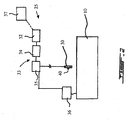
- Fig.1 illustrates a gas turbine engine 10 of a type preferably provided for use in subsonic flight, generally comprising in serial flow communication a fan 12 through which ambient air is propelled, a multistage compressor 14 for pressurizing the air, a combustor 16 in which the compressed air is mixed with fuel and ignited for generating an annular stream of hot combustion gases, and a turbine section 18 for extracting energy from the combustion gases.
- the present invention permits health monitoring of various machines, including such a gas turbine engine 10. However, it is to be understood that any type of machine may be monitored as described in further detail below.
- the term "machine” as used herein will be understood to include any mechanical system in motion, such as the example gas turbine engine 10 considered herein.
- the system and method of one aspect of the present invention permits machine sensor data, obtained from a sensor such as a microphone for example, to be captured and employed for the purpose of determining the health of the machine in question, whether a gas turbine engine 10 or another type of machine.
- a sensor such as a microphone for example
- the monitoring system 25 includes a microphone or vibration sensor assembly 30, containing one or more of such devices, which communicates with a sound recognition system 33 including a data analyzer 34, described further below, a signal conditioner 35 and a data collector/transmitter 32.
- the sound recognition system 33 communicates with a controller 36 of the machine 10 (such as an electronic engine controller of the gas turbine engine 10) and with a preferably central knowledge base 37.
- the number, type and placement of microphones/sensors employed in microphone/vibration assembly 30 depends on the machine type, size and parameters to be monitored, among other things.
- two microphones 30 are preferably provided and mounted under the engine cowling.
- the signal conditioner, data collector/transmitter 32 and the data analyzer 34 may also be incorporated together in a common assembly, or alternately a single device (such as a microcomputer) may perform the roles of each of these components.
- the data analyzer 34 includes a computer having at least one human speech recognition software algorithm installed/programmed therein, which is capable of comparing the captured sound data from the microphone(s) to known or reference sound data, preferably stored onboard within the monitoring system.
- Suitable human speech recognition systems include those based on Hidden Markov Model ("HMM") techniques. Systems having both analysis and probability functions are preferred, are commercially available, can be quite small and may be inexpensively obtained.
- the speech recognition system is trained to recognise "words" indicative of the machine's health and operational conditions, as desired.
- the recognition system includes a probability calculation on "word” matching, and has some form of output code generator, to indicate whether a word is known or unknown, healthy or unhealthy, which "word” has been recognised and the probability of correct match.
- a signal conditioning module 35 may be desirable, depending on the requirements of the speech recognition system selected, to condition the sound signal prior to providing it to the data analyzer 34 of the speech recognition system, such as to make the frequency content or volume compatible with the selected speech recognition (e.g. to bring the signal frequencies into the typical human speech range expected by commercially-available speech recognition systems).
- signal conditioning module 35 modifies captured data in a pre-determined manner, perhaps determined in part on the type or timing of sound data captured (that is, different expected data may have different frequency spectra), with the objective of causing the data to be better handled by the speech recognition system. For example, captured data of a first type (e.g. engine run-up) is modified in a first way, based on the expected frequencies, volume, etc.
- Data modification may include frequency filtering and/or transposing out-of-range frequencies into in-range frequencies (e.g. low frequency sounds could be speed up, or very high frequency sounds slowed down, to yield something more processable by the system), and/or other suitable operations.
- the requirements (if any) of the signal conditioning module 35 will be determined, in large part, by the input requirements of the selected sound recognition system.
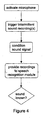
- the microphone or vibration sensor 30 captures data (e.g. in random access memory) representing sound or other vibration generated by the machine during its operation, and transmits the data representative of the sound or other vibration to sound recognition system 33, where the data is conditioned, if necessary, to meet the input requirements of the data analyzer 34.
- the data analyzer 34 compares the captured sound data to known sounds, to determine whether the captured sound is known, and whether it is representative of a healthy operating condition, or an abnormal, sub-optimal, deterioration or problematic condition.
- the data is preferably processed by the data analyzer 34 to permit the data to be analyzed according to speech recognition techniques, as will also be described below.
- the sound data may also, if desired, be recorded or stored, or transmitted for remote recording or storage, by the data collector/transmitter 32 for further processing.
- the data is preferably pre-processed by the signal conditioner 36 prior to analysis to permit the data to be analyzed according to speech recognition techniques.
- data is captured intermittently, preferably over relatively short durations (e.g. 1 to 3 seconds, or shorter, or longer, but preferably less than, say, 5 seconds), to form discrete "words” of data to improve comparing/matching accuracy.
- the "words” are then provided to an appropriately trained speech recognition system contained therein, which analyzes the captured "words” of sound data to determine whether these "words” are known or unknown, and whether the "words" are likely to indicate a healthy engine, or an unhealthy one.
- the intermittent capturing is synchronized with specific engine operational parameters, and designed to locate specific indicators of health, or deterioration, of the machine.
- these specific engine operations may include acceleration through a particular speed range.
- data capture is triggered to start at a given high pressure shaft speed (sometimes referred to as "N2") during a normal acceleration to aircraft take-off, and capturing of the sounds generated is terminated at a second pre-selected N2 speed.
- N2 high pressure shaft speed
- Similar "sound bites" may be captured and analyzed.
- engine steady state i.e. cruise
- the captured “words” may be designed to capture the presence (or absence) of vibration, pressure fluctuations in the gas path, compressor surge, engine speed instability, blade tip rubs, sounds related to gearbox operation, as well as general loose or rattling components or surging, or run down noises, and/or any other suitable event or condition.
- the data analyzer 34 is pre-programmed or "trained” with suitable "vocabulary", such that is as able to identify and distinguish between sound data which is representative of normal healthy engine data, and that what is data indicative of engine problems or conditions requiring action or noting.
- suitable "vocabulary” such that is as able to identify and distinguish between sound data which is representative of normal healthy engine data, and that what is data indicative of engine problems or conditions requiring action or noting.
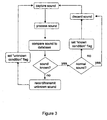
- the captured data is recognised as a normal sound, preferably no specific action is taken. If the sound is recognised as a known problem or indicator, requiring specific service action, a flag indicating the action required, or a code representing the required action, is set for later retrieval, or for immediate or later transmittal to a central location, such as a service centre for the machine.
- a flag indicating, for example, that the further investigation is required is set for later retrieval, or for immediate or later transmittal to a central location, such as the machine manufacturer's diagnostic centre, preferably along with the sound itself, and also preferably along with other specific machine operating information associated with the unknown condition, to provide other potentially useful information to the diagnostic centre.
- the diagnostic centre preferably uses its available resources to determine the cause of the unknown sound, and an appropriate action required for this machine. If necessary, the diagnostic centre will dispatch an appropriate team or action to acquire more data (e.g. from the machine itself, once it is serviced), in order to determine the cause of the sound, and an appropriate associated action required.
- a knowledge base is updated, and preferably the newly recognized sound is then transmitted back, preferably with an associated flag or action associated, to sound recognition system 33.
- This process potentially allows the diagnostic centre to identify the unknown condition off-line, and then upload the appropriate flag or service action back to the sound recognition system 33, or to the appropriate service record for machine 10.
- This also allows the newly recognized sound to be recognised again in the future, should it reoccur, and then the appropriate service action or flags can be set as required.
- all similar systems in service elsewhere are periodically updated with all such new reference data, as well.
- the analyzer may either simply discard the data or cause a healthy status flag to be recorded for that particular time. If the "word” or sound is recognized as unhealthy and having a specific meaning, again, to conserve recording space the analyzer may either simply discard the data or cause an appropriate "specific unhealthy” status flag to be recorded for that particular time. If the "word” is not recognized at all, preferably it is saved or stored, and a suitable flag set. As mentioned, correlation of unknown "words” by detailed analysis and/or by maintenance records, leads to an improved "vocabulary" which may be used for prognostics, diagnostics and general health monitoring of the machine.
- Microphones are preferred because of their wide dynamic range of sensitivity of any sensor type and can detect vibration, pressure fluctuations, sounds generated by the flow of fluid within the machine, transmission related sounds, as well as sounds caused by loose or rattling components.
- sounds such as compressor surge, speed instability, or run down noises rubs, gas path flow noise, gearbox generated sounds, and the like can also be detected by the microphone 30.
- microphones are preferred as the sensor 30, a vibration sensor or other suitable sensors may also be used which permit the detection of audible or non-audible pressure waves generated by machine during the operation thereof.
- the sound data from the microphone or vibration sensor 30 is collected and analyzed in conjunction with that of other sensors (e.g.
- Vibration transducers may be used in conjunction with the microphones or alone, and the signal(s) may require preconditioning prior to providing the sound recognition system.
- the sound recognition system when used with vibration sensors, is preferably provided with reference vibration data for comparison purposes, rather than sound data, per se.
- the present invention may be used in conjunction with existing data collection systems, or may be used to replace existing systems.
- Microphones offer the advantages of not having to be directly attached to the engine, reducing life problems associated with connectors exposed to vibration over long periods, and so on.
- a small sound generator 40 may be co-located with the microphone 30 such that the monitoring system 25 is able self-check its own health, preferably when the machine 10 stopped, to verify that the monitoring system 25 is in good working order.
- the present embodiment applies to any suitable system for which the health condition monitoring is desired.
- communication lines are depicted in Fig. 2, it will be understood that the communications may be wireless, such as by a wireless connection.
- the data collector and/or data analyzer may not be mounted on or in proximity to the machine, and, in the case of a gas turbine engine 10, may not even be located on the aircraft but rather at a remote location, and may communicate with the monitoring system 25 via a computer network, such as the World Wide Web.
- the monitoring system is preferably used to monitor the health of a gas turbine engine, it may be used to monitor any machine such as an internal combustion engine, an electric motor or generator, and the like.
- the data analyzer 34 preferably uses a speech recognition algorithm(s) to perform such a step of comparing the captured sound data to that of known sounds, other software can be alternately used to perform this function. Still other modifications which fall within the scope of the present invention will be apparent to those skilled in the art, in light of a review of this disclosure, and such modifications are intended to fall within the appended claims.
Landscapes
- Engineering & Computer Science (AREA)
- Physics & Mathematics (AREA)
- General Physics & Mathematics (AREA)
- Combustion & Propulsion (AREA)
- Chemical & Material Sciences (AREA)
- Audiology, Speech & Language Pathology (AREA)
- Acoustics & Sound (AREA)
- Multimedia (AREA)
- Human Computer Interaction (AREA)
- Health & Medical Sciences (AREA)
- Computational Linguistics (AREA)
- Mechanical Engineering (AREA)
- General Engineering & Computer Science (AREA)
- Measurement Of Mechanical Vibrations Or Ultrasonic Waves (AREA)
- Measurement Of The Respiration, Hearing Ability, Form, And Blood Characteristics Of Living Organisms (AREA)
Applications Claiming Priority (1)
| Application Number | Priority Date | Filing Date | Title |
|---|---|---|---|
| US11/412,901 US20070255563A1 (en) | 2006-04-28 | 2006-04-28 | Machine prognostics and health monitoring using speech recognition techniques |
Publications (1)
| Publication Number | Publication Date |
|---|---|
| EP1850325A1 true EP1850325A1 (de) | 2007-10-31 |
Family
ID=38226345
Family Applications (1)
| Application Number | Title | Priority Date | Filing Date |
|---|---|---|---|
| EP07251799A Withdrawn EP1850325A1 (de) | 2006-04-28 | 2007-04-30 | Prognose und Zustandsüberwachung für Maschinen unter Verwendung von Spracherkennungsverfahren |
Country Status (3)
| Country | Link |
|---|---|
| US (1) | US20070255563A1 (de) |
| EP (1) | EP1850325A1 (de) |
| WO (1) | WO2007124586A1 (de) |
Cited By (4)
| Publication number | Priority date | Publication date | Assignee | Title |
|---|---|---|---|---|
| GB2446035A (en) * | 2007-01-26 | 2008-07-30 | Csi Technology Inc | Audio data representing vibration/fault characteristics in industrial machines |
| EP3029448A1 (de) * | 2014-12-02 | 2016-06-08 | Air China Limited | Testvorrichtung für bordklimaanlagensystem und verfahren zum testen davon |
| WO2020014713A1 (en) * | 2018-07-12 | 2020-01-16 | Honeywell International Inc. | Monitoring industrial equipment using audio |
| US11466587B2 (en) | 2019-03-18 | 2022-10-11 | Rolls-Royce Plc | Condition determination of a gas turbine engine |
Families Citing this family (13)
| Publication number | Priority date | Publication date | Assignee | Title |
|---|---|---|---|---|
| DE102006055012B4 (de) * | 2006-11-22 | 2021-01-14 | Robert Bosch Gmbh | Verfahren zur Diagnose einer Brennkraftmaschine in einem Kraftfahrzeug |
| WO2009086033A1 (en) * | 2007-12-20 | 2009-07-09 | Dean Enterprises, Llc | Detection of conditions from sound |
| JP5837341B2 (ja) * | 2011-06-24 | 2015-12-24 | 株式会社ブリヂストン | 路面状態判定方法とその装置 |
| CN103487252B (zh) * | 2013-09-24 | 2015-08-12 | 重庆市科学技术研究院 | 汽车变速器台架耐久试验运行状态监测方法 |
| FR3011936B1 (fr) * | 2013-10-11 | 2021-09-17 | Snecma | Procede, systeme et programme d'ordinateur d'analyse acoustique d'une machine |
| JP6282148B2 (ja) * | 2014-03-17 | 2018-02-21 | Dmg森精機株式会社 | 工作機械 |
| FR3032273B1 (fr) * | 2015-01-30 | 2019-06-21 | Safran Aircraft Engines | Procede, systeme et programme d'ordinateur pour phase d'apprentissage d'une analyse acoustique ou vibratoire d'une machine |
| US20160370255A1 (en) * | 2015-06-16 | 2016-12-22 | GM Global Technology Operations LLC | System and method for detecting engine events with an acoustic sensor |
| GB201510957D0 (en) * | 2015-06-22 | 2015-08-05 | Ge Aviat Systems Group Ltd | Systems and Methods For Verification And Anomaly Detection |
| US9784635B2 (en) * | 2015-06-29 | 2017-10-10 | General Electric Company | Systems and methods for detection of engine component conditions via external sensors |
| GB2557880A (en) * | 2016-06-17 | 2018-07-04 | Gm Global Tech Operations Inc | A method of identifying a faulted component in a automotive system |
| US20220178324A1 (en) * | 2020-12-09 | 2022-06-09 | Transportation Ip Holdings, Llc | Systems and methods for diagnosing equipment |
| US12252995B2 (en) * | 2022-08-22 | 2025-03-18 | Pratt & Whitney Canada Corp. | Acoustical health monitoring of gas turbine engines |
Citations (4)
| Publication number | Priority date | Publication date | Assignee | Title |
|---|---|---|---|---|
| DE3332941A1 (de) * | 1983-09-13 | 1985-03-28 | Kletek Controllsysteme GmbH & Co KG, 2820 Bremen | Verfahren und vorrichtung zur schallanalyse von maschinen und anlagen |
| WO1990009644A1 (en) * | 1989-02-07 | 1990-08-23 | Smiths Industries Public Limited Company | Monitoring |
| GB2393514A (en) * | 2002-09-24 | 2004-03-31 | Invensys Controls Uk Ltd | Diagnostic method for an energy conversion device |
| EP1734354A2 (de) * | 2005-06-16 | 2006-12-20 | Pratt & Whitney Canada Corp. | Erkennung des Motorzustands mit externem Mikrofon |
Family Cites Families (25)
| Publication number | Priority date | Publication date | Assignee | Title |
|---|---|---|---|---|
| US4144768A (en) * | 1978-01-03 | 1979-03-20 | The Boeing Company | Apparatus for analyzing complex acoustic fields within a duct |
| US4215412A (en) * | 1978-07-13 | 1980-07-29 | The Boeing Company | Real time performance monitoring of gas turbine engines |
| GB2101449B (en) * | 1981-06-17 | 1985-03-20 | Rolls Royce | Microphone device for noise measurement |
| US4463453A (en) * | 1981-12-22 | 1984-07-31 | The Boeing Company | Acoustic intensity measurement apparatus and method including probe having ambient noise shield |
| GB8329218D0 (en) * | 1983-11-02 | 1983-12-07 | Ffowcs Williams J E | Reheat combustion system for gas turbine engine |
| DE3409487C2 (de) * | 1984-03-15 | 1986-05-22 | Deutsche Forschungs- und Versuchsanstalt für Luft- und Raumfahrt e.V., 5000 Köln | Verfahren zur Ermittlung des Propellerdrucksignals aus dem im Flug mit einem am Flugzeug angeordneten Mikrofon gemessenen Propeller/Zylinder-Auslaß-Mischsignal bei Propellerflugzeugen |
| DE3942298A1 (de) * | 1989-12-21 | 1991-06-27 | Bosch Gmbh Robert | Vorrichtung zur bestimmung der drehzahl und einer weiteren betriebskenngroesse einer brennkraftmaschine mittels eines sensors |
| US5029215A (en) * | 1989-12-29 | 1991-07-02 | At&T Bell Laboratories | Automatic calibrating apparatus and method for second-order gradient microphone |
| US6175787B1 (en) * | 1995-06-07 | 2001-01-16 | Automotive Technologies International Inc. | On board vehicle diagnostic module using pattern recognition |
| US5352090A (en) * | 1992-08-07 | 1994-10-04 | The United States Of America As Represented By The Administrator Of The National Aeronautics And Space Administration | System for determining aerodynamic imbalance |
| US7103460B1 (en) * | 1994-05-09 | 2006-09-05 | Automotive Technologies International, Inc. | System and method for vehicle diagnostics |
| US5523701A (en) * | 1994-06-21 | 1996-06-04 | Martin Marietta Energy Systems, Inc. | Method and apparatus for monitoring machine performance |
| WO1996003585A1 (en) * | 1994-07-28 | 1996-02-08 | The Boeing Company | Active control of tone noise in engine ducts |
| US5684251A (en) * | 1995-03-28 | 1997-11-04 | Northrop Grumman Corporation | Portable acoustic impedance data acquisition and analysis system |
| US5839099A (en) * | 1996-06-11 | 1998-11-17 | Guvolt, Inc. | Signal conditioning apparatus |
| DE19704540C1 (de) * | 1997-02-06 | 1998-07-23 | Siemens Ag | Verfahren zur aktiven Dämpfung einer Verbrennungsschwingung und Verbrennungsvorrichtung |
| DE59903184D1 (de) * | 1998-07-22 | 2002-11-28 | Friedmund Nagel | Vorrichtung und verfahren zur aktiven reduzierung der schallemission von strahltriebwerken und zu deren diagnose |
| EP0985810B1 (de) * | 1998-09-10 | 2003-10-29 | ALSTOM (Switzerland) Ltd | Verfahren zum Minimieren thermoakustischer Schwingungen in Gasturbinenbrennkammern |
| US6330499B1 (en) * | 1999-07-21 | 2001-12-11 | International Business Machines Corporation | System and method for vehicle diagnostics and health monitoring |
| US6205765B1 (en) * | 1999-10-06 | 2001-03-27 | General Electric Co. | Apparatus and method for active control of oscillations in gas turbine combustors |
| US7277822B2 (en) * | 2000-09-28 | 2007-10-02 | Blemel Kenneth G | Embedded system for diagnostics and prognostics of conduits |
| JP4262878B2 (ja) * | 2000-09-28 | 2009-05-13 | 石川島運搬機械株式会社 | 回転機械異常音診断処理手法 |
| US6845161B2 (en) * | 2001-05-21 | 2005-01-18 | Hewlett-Packard Development Company, L.P. | System and method for performing acoustic analysis of devices |
| GB0116193D0 (en) * | 2001-07-03 | 2001-08-22 | Rolls Royce Plc | An apparatus and method for detecting a damaged rotary machine aerofoil |
| US6775642B2 (en) * | 2002-04-17 | 2004-08-10 | Motorola, Inc. | Fault detection system having audio analysis and method of using the same |
-
2006
- 2006-04-28 US US11/412,901 patent/US20070255563A1/en not_active Abandoned
-
2007
- 2007-04-27 WO PCT/CA2007/000729 patent/WO2007124586A1/en not_active Ceased
- 2007-04-30 EP EP07251799A patent/EP1850325A1/de not_active Withdrawn
Patent Citations (4)
| Publication number | Priority date | Publication date | Assignee | Title |
|---|---|---|---|---|
| DE3332941A1 (de) * | 1983-09-13 | 1985-03-28 | Kletek Controllsysteme GmbH & Co KG, 2820 Bremen | Verfahren und vorrichtung zur schallanalyse von maschinen und anlagen |
| WO1990009644A1 (en) * | 1989-02-07 | 1990-08-23 | Smiths Industries Public Limited Company | Monitoring |
| GB2393514A (en) * | 2002-09-24 | 2004-03-31 | Invensys Controls Uk Ltd | Diagnostic method for an energy conversion device |
| EP1734354A2 (de) * | 2005-06-16 | 2006-12-20 | Pratt & Whitney Canada Corp. | Erkennung des Motorzustands mit externem Mikrofon |
Cited By (10)
| Publication number | Priority date | Publication date | Assignee | Title |
|---|---|---|---|---|
| GB2446035A (en) * | 2007-01-26 | 2008-07-30 | Csi Technology Inc | Audio data representing vibration/fault characteristics in industrial machines |
| US7538663B2 (en) | 2007-01-26 | 2009-05-26 | Csi Technology, Inc. | Enhancement of periodic data collection by addition of audio data |
| GB2446035B (en) * | 2007-01-26 | 2012-01-11 | Csi Technology Inc | Enhancement of periodic data collection by addition of audio data |
| EP3029448A1 (de) * | 2014-12-02 | 2016-06-08 | Air China Limited | Testvorrichtung für bordklimaanlagensystem und verfahren zum testen davon |
| US10156494B2 (en) | 2014-12-02 | 2018-12-18 | Air China Limited | Testing equipment of onboard air conditioning system and a method of testing the same |
| WO2020014713A1 (en) * | 2018-07-12 | 2020-01-16 | Honeywell International Inc. | Monitoring industrial equipment using audio |
| US10867622B2 (en) | 2018-07-12 | 2020-12-15 | Honeywell International Inc. | Monitoring industrial equipment using audio |
| AU2019300182B2 (en) * | 2018-07-12 | 2022-04-07 | Honeywell International Inc. | Monitoring industrial equipment using audio |
| US11348598B2 (en) | 2018-07-12 | 2022-05-31 | Honeywell Internationa, Inc. | Monitoring industrial equipment using audio |
| US11466587B2 (en) | 2019-03-18 | 2022-10-11 | Rolls-Royce Plc | Condition determination of a gas turbine engine |
Also Published As
| Publication number | Publication date |
|---|---|
| US20070255563A1 (en) | 2007-11-01 |
| WO2007124586A1 (en) | 2007-11-08 |
Similar Documents
| Publication | Publication Date | Title |
|---|---|---|
| EP1850325A1 (de) | Prognose und Zustandsüberwachung für Maschinen unter Verwendung von Spracherkennungsverfahren | |
| EP2538210A2 (de) | Akustische Diagnose von in Betrieb stehenden Turbinenmotoren | |
| US8655571B2 (en) | MFCC and CELP to detect turbine engine faults | |
| US7522988B2 (en) | Method for monitoring functional components of a motor vehicle | |
| US20230115963A1 (en) | Mechanical failure detection system and method | |
| US10359339B2 (en) | Monitoring system for an engine test bench | |
| US7698942B2 (en) | Turbine engine stall warning system | |
| CN110608187B (zh) | 基于频率特征变化的轴流压气机失速喘振预测装置 | |
| EP3217170A1 (de) | Überwachung des zustands eines motors mit akustischen sensoren | |
| EP3052792B1 (de) | Verfahren und vorrichtung zur überwachung des betriebs eines nox-sensors | |
| EP1734354A2 (de) | Erkennung des Motorzustands mit externem Mikrofon | |
| CN109209783A (zh) | 一种基于噪声检测叶片的雷击损伤的方法及装置 | |
| CN106840375A (zh) | 一种涡轮增压机异常噪声测试方法及其装置 | |
| KR20160066529A (ko) | 기내 에어컨 시스템의 테스팅 장치 및 테스팅 방법 | |
| CN107976318B (zh) | 对飞机燃烧室动力学的间接监测 | |
| CN118705204A (zh) | 一种列车变频轴流风机的控制系统及方法 | |
| CN117052608A (zh) | 一种声振协同的风机叶片断裂预警装置及方法 | |
| US9282481B2 (en) | Mobile terminal and instrument diagnostic method | |
| CN118032384A (zh) | 一种商用车转向异响测试分析方法及系统 | |
| US20230306802A1 (en) | Diagnostic system and method | |
| US20060142972A1 (en) | System and method of using sensors to emulate human senses for diagnosing an assembly | |
| RU2542162C1 (ru) | Способ диагностики предаварийных режимов работы рдтт при огневых стендовых испытаниях | |
| CN118603570A (zh) | 一种振动检测的发动机故障检测方法及装置 | |
| CN112268703A (zh) | 一种矿井通风机轴承检测系统 | |
| RU2783860C2 (ru) | Устройство и способ для виброакустического анализа промышленного оборудования, содержащего вращающиеся части |
Legal Events
| Date | Code | Title | Description |
|---|---|---|---|
| PUAI | Public reference made under article 153(3) epc to a published international application that has entered the european phase |
Free format text: ORIGINAL CODE: 0009012 |
|
| AK | Designated contracting states |
Kind code of ref document: A1 Designated state(s): AT BE BG CH CY CZ DE DK EE ES FI FR GB GR HU IE IS IT LI LT LU LV MC MT NL PL PT RO SE SI SK TR |
|
| AX | Request for extension of the european patent |
Extension state: AL BA HR MK YU |
|
| 17P | Request for examination filed |
Effective date: 20071030 |
|
| 17Q | First examination report despatched |
Effective date: 20080131 |
|
| AKX | Designation fees paid |
Designated state(s): DE FR GB |
|
| STAA | Information on the status of an ep patent application or granted ep patent |
Free format text: STATUS: THE APPLICATION IS DEEMED TO BE WITHDRAWN |
|
| 18D | Application deemed to be withdrawn |
Effective date: 20080611 |