EP1850561A1 - Procédé at appareil permettant la génération d'une adresse unique locale de IPv6 - Google Patents
Procédé at appareil permettant la génération d'une adresse unique locale de IPv6 Download PDFInfo
- Publication number
- EP1850561A1 EP1850561A1 EP20070101691 EP07101691A EP1850561A1 EP 1850561 A1 EP1850561 A1 EP 1850561A1 EP 20070101691 EP20070101691 EP 20070101691 EP 07101691 A EP07101691 A EP 07101691A EP 1850561 A1 EP1850561 A1 EP 1850561A1
- Authority
- EP
- European Patent Office
- Prior art keywords
- bit
- value
- eui
- ula
- generating
- Prior art date
- Legal status (The legal status is an assumption and is not a legal conclusion. Google has not performed a legal analysis and makes no representation as to the accuracy of the status listed.)
- Withdrawn
Links
Images


Classifications
-
- H—ELECTRICITY
- H04—ELECTRIC COMMUNICATION TECHNIQUE
- H04L—TRANSMISSION OF DIGITAL INFORMATION, e.g. TELEGRAPHIC COMMUNICATION
- H04L61/00—Network arrangements, protocols or services for addressing or naming
- H04L61/50—Address allocation
- H04L61/5038—Address allocation for local use, e.g. in LAN or USB networks, or in a controller area network [CAN]
-
- H—ELECTRICITY
- H04—ELECTRIC COMMUNICATION TECHNIQUE
- H04L—TRANSMISSION OF DIGITAL INFORMATION, e.g. TELEGRAPHIC COMMUNICATION
- H04L61/00—Network arrangements, protocols or services for addressing or naming
- H04L61/50—Address allocation
- H04L61/5092—Address allocation by self-assignment, e.g. picking addresses at random and testing if they are already in use
-
- H—ELECTRICITY
- H04—ELECTRIC COMMUNICATION TECHNIQUE
- H04L—TRANSMISSION OF DIGITAL INFORMATION, e.g. TELEGRAPHIC COMMUNICATION
- H04L12/00—Data switching networks
- H04L12/28—Data switching networks characterised by path configuration, e.g. LAN [Local Area Networks] or WAN [Wide Area Networks]
-
- H—ELECTRICITY
- H04—ELECTRIC COMMUNICATION TECHNIQUE
- H04L—TRANSMISSION OF DIGITAL INFORMATION, e.g. TELEGRAPHIC COMMUNICATION
- H04L2101/00—Indexing scheme associated with group H04L61/00
- H04L2101/60—Types of network addresses
- H04L2101/604—Address structures or formats
-
- H—ELECTRICITY
- H04—ELECTRIC COMMUNICATION TECHNIQUE
- H04L—TRANSMISSION OF DIGITAL INFORMATION, e.g. TELEGRAPHIC COMMUNICATION
- H04L2101/00—Indexing scheme associated with group H04L61/00
- H04L2101/60—Types of network addresses
- H04L2101/618—Details of network addresses
- H04L2101/659—Internet protocol version 6 [IPv6] addresses
Definitions
- the present invention relates to Internet protocol version 6 (IPv6), and more particularly, to the generation of an IPv6 unique local address (ULA).
- IPv6 Internet protocol version 6
- UUA IPv6 unique local address
- IPv6 uses an IPv6 global address, an IPv6 link local address, and the like.
- the IPv6 global address must be uniquely designated in an entire IPv6 address system, whereas the IPv6 link local address need only be uniquely designated in each link.
- IPv6 unique local address (ULA) is required to be uniquely designated in the entire IPv6 address system although the IPv6 unique local address is only used in a local area.
- Request for comments (RFC) 4193 provides regulations for the generation of the IPv6 ULA.
- the IPv6 ULA is generated using a network time protocol (NTP) and is uniquely designated in the entire IPv6 address system.
- NTP network time protocol
- the NTP is used to synchronize time of network terminals.
- IPv6 ULA is not generated according to RFC 4193 in a home network that does not support technology using the NTP.
- the present invention provides a method and apparatus for generating an IPv6 unique local address (ULA) having uniqueness without need for the network time protocol (NTP).
- ULA IPv6 unique local address
- NTP network time protocol
- aspects of the present invention also provide a computer readable recording medium storing a computer readable program for executing the method of generating an IPv6 ULA.
- a method of generating an IPv6 unique local address comprising: generating a 64-bit first value using unique information on a universal plug and play (UPnP) device used by a router; generating a modified 64-bit extended unique identifier (EUI-64) using unique information on an interface device used by the router; generating a 128-bit second value by concatenating the 64-bit first value and the modified EUI-64; generating a 160-bit third value by applying secure hash algorithm-1 (SHA-1) to the 128-bit second value; and generating a global ID by extracting 40 bits from the 160-bit third value.
- UPA IPv6 unique local address
- an apparatus for generating an IPv6 ULA comprising: a first value generator to generate a 64-bit first value using unique information on a UPnP device used by a router; a modified EUI-64 generator to generate a modified EUI-64 using unique information on an interface device used by the router; a second value generator to generate a 128-bit second value by concatenating the 64-bit first value and the modified EUI-64; a SHA-1 application unit to generate a 160-bit third value by applying SHA-1 to the 128-bit second value; and a global ID generator to generate a global ID by extracting 40 bits from the 160-bit third value.
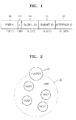
- FIG. 1 is a diagram of an IPv6 ULA, according to an example embodiment of the present invention.
- the IPv6 ULA is part of a header in a data packet for transmission in a network.
- the IPv6 ULA comprises a prefix 10, an L bit 12, a global ID 14, a subnet ID 16, and an interface ID 18.
- the prefix 10, the L bit 12, the global ID 14, and the subnet ID 16 constitute a 64-bit ULA prefix.
- the ULA prefix is an IPv6 prefix in the IPv6 ULA. Therefore, the IPv6 ULA of the current embodiment of the present invention meets the requirement that an IPv6 address comprises the IPv6 prefix and the interface ID 18.
- the prefix 10 indicates that an address a unique local address (ULA).
- the prefix 10 has a value of "FC00::/7” indicating that the prefix 10 has 7 bits and a value of "1111110" according to provisions defined in RFC 3513 for describing an IPv6 address.
- an IPv6 link local address has a value of "FE80::/10" indicating that the prefix 10 has a value of "1111111010".
- the L bit 12 indicates that the IPv6 prefix is designated at a local site.
- An IPv6 global address uses a global routing prefix allocated by an institute that manages the IPv6 address, whereas the IPV6 ULA is designated at the local site. Therefore, the L bit 12 has a value of 1.
- the global ID 14 has a 40-bit value that may be generated using a method described below.
- the subnet ID 16 indicates an ID of a subnet including a router (not shown) at a site where the IPv6 ULA is used and has a 16-bit value.
- the interface ID 18 indicates an ID of a host device that receives an ULA prefix from the router and has a 64-bit value.
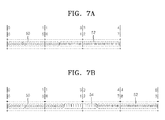
- Figure 2 is a diagram of a link 20 that uses an IPv6 link local address.
- the link 20 is a part of a network comprising a router 22 and a plurality of hosts. Since the hosts can directly communicate data in the link 20, the hosts do not necessarily pass through the router 22. Therefore, the hosts communicate using the IPv6 link local address in the link 20.
- FIG 3 is a diagram of a site 30 that uses an IPv6 ULA.
- the site 30 comprises a plurality of links.
- the IPv6 ULA of the present invention is used in a site or a set of sites. For convenience, the IPv6 ULA that is used in the site 30 will now be described.
- the site 30 can comprise a router 36 that connects networks inside and outside the site 30.
- a router 34 of the link 32 including a transmission host checks a data packet and determines that the link 32 does not comprise a reception host.
- the router 34 transmits the data packet to external links. Therefore, an IPv6 link local address cannot be used to communicate data between the hosts that are included in the site 30 but are in different links.
- the IPv6 ULA is used to communicate data between the hosts.
- FIG. 4 is a flowchart of a method of generating an IPv6 ULA according to an example embodiment of the present invention.
- a 64-bit first value is generated using unique information on a universal plug and play (UPnP) device in a router (or other system) that generates the IPv6 ULA (Operation 100).
- UUID universal unique identifier
- upper 64 bits or other 64 bits can be used to generate the 64-bit first value.
- Other aspects of the present invention that use non-UPnP devices may use other types of unique information to extract a unique identifier, such as a device serial number.
- the method may be performed by any system needing to create an IPv6 ULA global prefix.
- the method of generating the IPv6 ULA of the current embodiment of the present invention uses the unique information on the UPnP device instead of a value of a network time protocol (NTP), it is possible to generate the IPv6 ULA having uniqueness without using NTP. Further, the method of generating the IPv6 ULA can be applied using the NTP.
- NTP network time protocol
- a router generates modified extended unique identifier (EUI)-64 information (Operation 110).
- the modified EUI-64 information is a 64-bit value generated using a EUI-64 of an interface device or a media access control (MAC) address, etc.
- the router (or other system) generates the modified EUI-64 using the EUI-64 of the interface device. If the interface device does not have the EUI-64, the router generates the modified EUI-64 using the MAC address of the router. Other aspects of the present invention may utilize other unique information of the router, such as a serial number, if the interface device does not have an EUI-64. The generation of the modified EUI-64 according to the present invention will be described with reference to Figures 6 and 7.
- a 128-bit second value is generated using a concatenation of the 64-bit first value and the 64-bit modified EUI-64 (Operation 120).
- SHA-1 Secure hash algorithm-1 is applied to the 128-bit second value to generate a 160-bit third value (Operation 130).
- SHA-1 is an encoding algorithm developed by the National Institute of Standards and Technology (NIST). The SHA-1 reduces a 264-bit below message to a 160-bit message.
- Lower 40 bits are extracted from the 160-bit third value to generate a global ID (Operation 140). However, the upper 40 bits or other 40 bits can be used to generate the global ID.
- FIG 5 is a flowchart of a method of generating an IPv6 ULA according to another embodiment of the present invention.
- a router or other system
- a router generates a global ID using unique information on an UPnP device (or other device) and an interface device as illustrated in Figure 4 (Operation 200).
- the router combines a prefix having a value of "FC00::/7", an L bit having a value of "1", the global ID, and a previously allocated subnet ID, and generates an ULA prefix (Operation 210).
- the router transmits the generated ULA prefix to a host (Operation 220).
- the router If a subnet uses IPv6 address automatic configuration, the router includes the ULA prefix in a router advertisement (RA) message and transmits the RA message to the host.
- RA router advertisement
- the router If the subnet uses a dynamic host configuration protocol version 6 (DHCPv6), the router includes the ULA prefix in a DHCPv6 option and transmits the DHCPv6 option to the host.
- DHCPv6 dynamic host configuration protocol version 6
- the host that receives the ULA prefix generates a 64-bit interface ID, combines the ULA prefix and the 64-bit interface ID, and generates the IPv6 ULA.
- the IPv6 ULA is used after an address redundancy check process is performed.
- the address redundancy check process transmits a broadcasted message to devices in a link or a site.
- Figure 6A is a diagram of an EUI-64 of an interface device.
- Figure 6B is a diagram of a modified EUI-64 using the EUI-64. Referring to Figure 6A, the modified EUI-64 is generated when the interface device has an EUI-64.
- the EUI-64 of the interface device comprises a EUI-64 company ID 40 and a EUI-64manufacturer-selected extension identifier 42.
- the EUI-64 company ID 40 is a 24-bit value of a company of the interface device allocated by the IEEE registration institute.
- the EUI-64manufacturer-selected extension identifier 42 is a value that the company of the interface device, such as the interface device's manufacturer, allocates to the interface device. Therefore, the EUI-64 of the interface device has a sole value.
- a seventh bit 44 of the EUI-64 company ID 40 is a universal/local bit, as shown in Figure 6B. According to the current embodiment, the universal/local bit must be designated as 1 pursuant to the IEEE EUI-64 standard.
- the interface device has the EUI-64
- the EUI-64 illustrated in Figure 6A is selected as a temporary EUI-64
- a seventh bit of the temporary EUI-64 is designated as 1 (46).
- Figure 7A is a diagram of a MAC address.
- Figure 7B is a diagram of a modified EUI-64 using the MAC address.
- the modified EUI-64 is generated when an interface device does not have an EUI-64.
- other numbers unique to the router such as a serial number, may be used if the interface device does not have an EUI-64.
- the MAC address comprises a MAC company ID 50 and a MAC vendor supplied ID 52.
- the MAC company ID 50 is a 24-bit value that the IEE registration institute allocates to a company of the interface device.
- the MAC vendor supplied ID 52 is a value that the company of the interface device allocates to the interface device. Therefore, the MAC address of the interface device has a sole value.
- the 2-octet value is a fill-in octet 54.
- the fill-in octet 54 having values of "FF" and "FE” is inserted into the MAC company ID 50 and the MAC vendor supplied ID 52 to generate a temporal EUI-64. Any value may be used for the fill-in octet.
- a seventh bit value of the temporary EUI-64 is designated as "1".
- a method of generating an IPv6 ULA uses a EUI-64 that is unique address of an interface device or a MAC address, a unique IPv6 ULA can be generated.
- the invention can also be embodied as computer (including any device that has an information processing function) readable codes on a computer readable recording medium.
- the computer readable recording medium is any data storage device that can store data which can be thereafter read by a computer system. Examples of the computer readable recording medium include read-only memory (ROM), random-access memory (RAM), CD-ROMs, magnetic tapes, floppy disks, and optical data storage devices.
- a global ID is generated using unique information on an UPnP device and an interface device and the IPv6 ULA is generated using the global ID, thereby generating the IPv6 ULA having uniqueness in an entire IPv6 address system without an NTP.
- Hardware modules may include a field programmable gate array (FPGA) or an application specific integrated circuit (ASIC).
- FPGA field programmable gate array
- ASIC application specific integrated circuit
- Software modules can be written in a variety of software languages, including C, C++, Java, Visual Basic, and others. Accordingly, it is intended, therefore, that the present invention not be limited to the various example embodiments disclosed, but that the present invention includes all embodiments falling within the scope of the appended claims.
Landscapes
- Engineering & Computer Science (AREA)
- Computer Networks & Wireless Communication (AREA)
- Signal Processing (AREA)
- Data Exchanges In Wide-Area Networks (AREA)
- Small-Scale Networks (AREA)
Applications Claiming Priority (1)
| Application Number | Priority Date | Filing Date | Title |
|---|---|---|---|
| KR20060039004A KR100728040B1 (ko) | 2006-04-28 | 2006-04-28 | IPv6 유니크 로컬 주소 생성 방법 및 장치 |
Publications (1)
| Publication Number | Publication Date |
|---|---|
| EP1850561A1 true EP1850561A1 (fr) | 2007-10-31 |
Family
ID=38359308
Family Applications (1)
| Application Number | Title | Priority Date | Filing Date |
|---|---|---|---|
| EP20070101691 Withdrawn EP1850561A1 (fr) | 2006-04-28 | 2007-02-02 | Procédé at appareil permettant la génération d'une adresse unique locale de IPv6 |
Country Status (9)
| Country | Link |
|---|---|
| US (1) | US20070253431A1 (fr) |
| EP (1) | EP1850561A1 (fr) |
| JP (1) | JP2007300608A (fr) |
| KR (1) | KR100728040B1 (fr) |
| CN (1) | CN101064723A (fr) |
| BR (1) | BRPI0707865A2 (fr) |
| RU (1) | RU2008135964A (fr) |
| TW (1) | TW200742351A (fr) |
| WO (1) | WO2007126223A1 (fr) |
Cited By (2)
| Publication number | Priority date | Publication date | Assignee | Title |
|---|---|---|---|---|
| CN102868778A (zh) * | 2012-09-19 | 2013-01-09 | 中国联合网络通信集团有限公司 | IPv6地址生成方法和装置 |
| EP3367623A1 (fr) * | 2013-06-25 | 2018-08-29 | Google LLC | Réseau matriciel |
Families Citing this family (16)
| Publication number | Priority date | Publication date | Assignee | Title |
|---|---|---|---|---|
| JP2010531106A (ja) * | 2007-06-22 | 2010-09-16 | テレフオンアクチーボラゲット エル エム エリクソン(パブル) | アクセスネットワークのマルチホーミングのためのシステムおよび方法 |
| US8447846B2 (en) | 2010-08-06 | 2013-05-21 | International Business Machines Corporation | Using unique local unicast addresses in a global domain name server by providing a centralized registry |
| US8819282B2 (en) | 2010-08-06 | 2014-08-26 | International Business Machines Corporation | Using unique local unicast addresses in a global domain name server |
| KR101234784B1 (ko) * | 2011-05-30 | 2013-02-20 | 삼성에스디에스 주식회사 | 아이디 기반 암호화 방법 및 그 장치 |
| CN102404718B (zh) * | 2011-11-03 | 2014-05-28 | 北京交通大学 | 一种无线传感网络的IPv6地址无状态自动配置方法 |
| US9516451B2 (en) | 2012-04-10 | 2016-12-06 | Mcafee, Inc. | Opportunistic system scanning |
| US8955036B2 (en) | 2012-04-11 | 2015-02-10 | Mcafee, Inc. | System asset repository management |
| US9049207B2 (en) | 2012-04-11 | 2015-06-02 | Mcafee, Inc. | Asset detection system |
| US8954573B2 (en) | 2012-04-11 | 2015-02-10 | Mcafee Inc. | Network address repository management |
| US9531704B2 (en) | 2013-06-25 | 2016-12-27 | Google Inc. | Efficient network layer for IPv6 protocol |
| US9191209B2 (en) | 2013-06-25 | 2015-11-17 | Google Inc. | Efficient communication for devices of a home network |
| US9973380B1 (en) * | 2014-07-10 | 2018-05-15 | Cisco Technology, Inc. | Datacenter workload deployment using cross-domain global service profiles and identifiers |
| US10110488B2 (en) * | 2015-04-23 | 2018-10-23 | Qualcomm Incorporated | Data link interface internet protocol (IP) address generation |
| WO2017163651A1 (fr) * | 2016-03-24 | 2017-09-28 | 日本電気株式会社 | Dispositif de communication et procédé de réglage d'adresse |
| US10924454B2 (en) | 2018-03-06 | 2021-02-16 | Kaloom Inc. | Computing device and method for generating a fabric-wide IPV6 address |
| CN112532762B (zh) * | 2020-11-25 | 2023-04-21 | 中盈优创资讯科技有限公司 | 由IPv6地址规避IPv4私网地址冲突的方法及装置 |
Family Cites Families (11)
| Publication number | Priority date | Publication date | Assignee | Title |
|---|---|---|---|---|
| US6690669B1 (en) * | 1996-11-01 | 2004-02-10 | Hitachi, Ltd. | Communicating method between IPv4 terminal and IPv6 terminal and IPv4-IPv6 converting apparatus |
| KR20020062472A (ko) * | 2001-01-20 | 2002-07-26 | 주식회사 하이닉스반도체 | 통합 인터넷 프로토콜 단말기에서의 인터넷 프로토콜 주소변환 방법 |
| JP4491980B2 (ja) * | 2001-03-05 | 2010-06-30 | ソニー株式会社 | 通信処理システム、通信処理方法、および通信端末装置、並びにプログラム |
| JP4572476B2 (ja) * | 2001-03-13 | 2010-11-04 | ソニー株式会社 | 通信処理システム、通信処理方法、および通信端末装置、データ転送制御装置、並びにプログラム |
| KR100424614B1 (ko) * | 2002-04-27 | 2004-03-27 | 삼성전자주식회사 | 인터넷 프로토콜 기반 통신 시스템 및 그의 호스트 주소설정 및 소스 주소 선택 방법 |
| JP2004032253A (ja) * | 2002-06-25 | 2004-01-29 | Hitachi Ltd | ネットワーク通信装置および通信方式 |
| KR100532100B1 (ko) * | 2002-12-30 | 2005-11-29 | 삼성전자주식회사 | 무선랜 홈네트워크 환경에서 디바이스를 식별하는 방법 |
| KR100547119B1 (ko) * | 2003-06-05 | 2006-01-26 | 삼성전자주식회사 | 인터페이스 ID를 이용하여 IPv6 주소를 생성하는방법 및 그 장치 |
| US7401215B2 (en) * | 2003-09-29 | 2008-07-15 | Sun Microsystems, Inc. | Method and apparatus for facilitating cryptographic layering enforcement |
| KR20060038690A (ko) * | 2004-11-01 | 2006-05-04 | 에스케이 텔레콤주식회사 | 휴대 인터넷 서비스를 위한 ip 주소 할당 방법 |
| KR100636209B1 (ko) * | 2004-11-12 | 2006-10-19 | 삼성전자주식회사 | Mac 주소 보안 방법 및 장치 |
-
2006
- 2006-04-28 KR KR20060039004A patent/KR100728040B1/ko not_active Expired - Fee Related
-
2007
- 2007-02-02 EP EP20070101691 patent/EP1850561A1/fr not_active Withdrawn
- 2007-02-27 TW TW096106797A patent/TW200742351A/zh unknown
- 2007-02-28 CN CNA2007100058873A patent/CN101064723A/zh active Pending
- 2007-03-13 US US11/685,384 patent/US20070253431A1/en not_active Abandoned
- 2007-04-03 JP JP2007097694A patent/JP2007300608A/ja active Pending
- 2007-04-13 WO PCT/KR2007/001795 patent/WO2007126223A1/fr not_active Ceased
- 2007-04-13 BR BRPI0707865-0A patent/BRPI0707865A2/pt not_active IP Right Cessation
- 2007-04-13 RU RU2008135964/09A patent/RU2008135964A/ru not_active Application Discontinuation
Non-Patent Citations (3)
| Title |
|---|
| HINDEN NOKIA B HABERMAN JHU-APL R: "Unique Local IPv6 Unicast Addresses", IETF STANDARD, INTERNET ENGINEERING TASK FORCE, IETF, CH, October 2005 (2005-10-01), XP015041823, ISSN: 0000-0003 * |
| HINDEN NOKIA S DEERING CISCO SYSTEMS R: "Internet Protocol Version 6 (IPv6) Addressing Architecture", IETF STANDARD, INTERNET ENGINEERING TASK FORCE, IETF, CH, April 2003 (2003-04-01), XP015009295, ISSN: 0000-0003 * |
| SCHULZRINNE COLUMBIA UNIVERSITY S CASNER PACKET DESIGN R FREDERICK BLUE COAT SYSTEMS INC V JACOBSON PACKET DESIGN H: "RTP: A Transport Protocol for Real-Time Applications", IETF STANDARD, INTERNET ENGINEERING TASK FORCE, IETF, CH, July 2003 (2003-07-01), XP015009332, ISSN: 0000-0003 * |
Cited By (5)
| Publication number | Priority date | Publication date | Assignee | Title |
|---|---|---|---|---|
| CN102868778A (zh) * | 2012-09-19 | 2013-01-09 | 中国联合网络通信集团有限公司 | IPv6地址生成方法和装置 |
| EP3367623A1 (fr) * | 2013-06-25 | 2018-08-29 | Google LLC | Réseau matriciel |
| US10693760B2 (en) | 2013-06-25 | 2020-06-23 | Google Llc | Fabric network |
| EP3866409A1 (fr) * | 2013-06-25 | 2021-08-18 | Google LLC | Réseau local |
| EP4319068A3 (fr) * | 2013-06-25 | 2024-04-17 | Google LLC | Réseau de tissu |
Also Published As
| Publication number | Publication date |
|---|---|
| KR100728040B1 (ko) | 2007-06-13 |
| TW200742351A (en) | 2007-11-01 |
| JP2007300608A (ja) | 2007-11-15 |
| CN101064723A (zh) | 2007-10-31 |
| WO2007126223A1 (fr) | 2007-11-08 |
| BRPI0707865A2 (pt) | 2011-05-10 |
| US20070253431A1 (en) | 2007-11-01 |
| RU2008135964A (ru) | 2010-03-10 |
Similar Documents
| Publication | Publication Date | Title |
|---|---|---|
| US20070253431A1 (en) | Method and apparatus for generating ipv6 unique local address | |
| US8065515B2 (en) | Autoconfigured prefix delegation based on distributed hash | |
| CN103348662B (zh) | 用于在计算机网络中产生地址的方法 | |
| US20030187882A1 (en) | Identifier query method, communication terminal, and network system | |
| EP2259542B1 (fr) | Procédé, appareil et système destinés à traiter un message de protocole de configuration dynamique d hôte | |
| US7436833B2 (en) | Communication system, router, method of communication, method of routing, and computer program product | |
| KR100601673B1 (ko) | 다중 인터페이스들이 탑재된 이동 스테이션에서의 통신방법 및 장치 | |
| KR100864158B1 (ko) | 휴대 인터넷 망에서 임시 주소 생성/할당 방법 및 그를이용한 무선 자원 할당 방법 | |
| CN108769290B (zh) | 一种IPv6多地址生成与重复地址检测方法 | |
| US20040139187A1 (en) | Method of identifying devices using IPv6 address | |
| JP4335149B2 (ja) | IPv6アドレスを利用してデバイスを識別する方法 | |
| US20120166798A1 (en) | Method and system for using neighbor discovery unspecified solicitation to obtain link local address | |
| Lindem et al. | OSPFv3 autoconfiguration | |
| US7530100B2 (en) | Apparatus for limiting use of particular network address | |
| KR20110065975A (ko) | 로컬 링크 ipv6 환경에서 mac 정보를 이용한 ipv6 주소 수집 방안 | |
| KR100545777B1 (ko) | 홈네트워크 환경에서의 정보가전 기기의 IPv6 주소 및이름 자동설정 방법 | |
| KR100547119B1 (ko) | 인터페이스 ID를 이용하여 IPv6 주소를 생성하는방법 및 그 장치 | |
| KR100426055B1 (ko) | 망계층에서의 아이피 버전 식스 기반 노드의 안전한멀티캐스트 주소 자동할당방법 | |
| KR100739286B1 (ko) | 휴대 인터넷 단말의 인터페이스 식별값 생성 방법 및 그를이용한 주소 자동 설정 방법 | |
| KR100846014B1 (ko) | 물리적 매체의 유형에 독립적인 유사 EUI-64 식별자를사용하여 IPv6 링크-로컬 어드레스를 구성하는 방법 | |
| Jeong et al. | Auto-networking technologies for IPv6 mobile ad hoc networks | |
| KR20040097455A (ko) | 인터넷 프로토콜 주소 구성 장치 및 방법과 인터넷프로토콜 주소를 이용한 서비스 방법 | |
| Kim et al. | The study on secure auto-configuration technology in IPv6 | |
| Lindem et al. | RFC 7503: OSPFv3 Autoconfiguration | |
| KR101189130B1 (ko) | 데이터 송수신 장치 및 방법 |
Legal Events
| Date | Code | Title | Description |
|---|---|---|---|
| PUAI | Public reference made under article 153(3) epc to a published international application that has entered the european phase |
Free format text: ORIGINAL CODE: 0009012 |
|
| 17P | Request for examination filed |
Effective date: 20070202 |
|
| AK | Designated contracting states |
Kind code of ref document: A1 Designated state(s): AT BE BG CH CY CZ DE DK EE ES FI FR GB GR HU IE IS IT LI LT LU LV MC NL PL PT RO SE SI SK TR |
|
| AX | Request for extension of the european patent |
Extension state: AL BA HR MK YU |
|
| 17Q | First examination report despatched |
Effective date: 20071214 |
|
| AKX | Designation fees paid |
Designated state(s): AT BE BG CH CY CZ DE DK EE ES FI FR GB GR HU IE IS IT LI LT LU LV MC NL PL PT RO SE SI SK TR |
|
| STAA | Information on the status of an ep patent application or granted ep patent |
Free format text: STATUS: THE APPLICATION IS DEEMED TO BE WITHDRAWN |
|
| 18D | Application deemed to be withdrawn |
Effective date: 20090901 |