EP1851024B1 - Installation et procede de traitement de materiaux plastiques heterogenes obtenus du recyclage de dechets - Google Patents
Installation et procede de traitement de materiaux plastiques heterogenes obtenus du recyclage de dechets Download PDFInfo
- Publication number
- EP1851024B1 EP1851024B1 EP20060704238 EP06704238A EP1851024B1 EP 1851024 B1 EP1851024 B1 EP 1851024B1 EP 20060704238 EP20060704238 EP 20060704238 EP 06704238 A EP06704238 A EP 06704238A EP 1851024 B1 EP1851024 B1 EP 1851024B1
- Authority
- EP
- European Patent Office
- Prior art keywords
- plant
- plastic
- unit
- heterogeneous
- sub
- Prior art date
- Legal status (The legal status is an assumption and is not a legal conclusion. Google has not performed a legal analysis and makes no representation as to the accuracy of the status listed.)
- Expired - Lifetime
Links
Images


Classifications
-
- B—PERFORMING OPERATIONS; TRANSPORTING
- B29—WORKING OF PLASTICS; WORKING OF SUBSTANCES IN A PLASTIC STATE IN GENERAL
- B29B—PREPARATION OR PRETREATMENT OF THE MATERIAL TO BE SHAPED; MAKING GRANULES OR PREFORMS; RECOVERY OF PLASTICS OR OTHER CONSTITUENTS OF WASTE MATERIAL CONTAINING PLASTICS
- B29B17/00—Recovery of plastics or other constituents of waste material containing plastics
- B29B17/02—Separating plastics from other materials
-
- B—PERFORMING OPERATIONS; TRANSPORTING
- B29—WORKING OF PLASTICS; WORKING OF SUBSTANCES IN A PLASTIC STATE IN GENERAL
- B29B—PREPARATION OR PRETREATMENT OF THE MATERIAL TO BE SHAPED; MAKING GRANULES OR PREFORMS; RECOVERY OF PLASTICS OR OTHER CONSTITUENTS OF WASTE MATERIAL CONTAINING PLASTICS
- B29B17/00—Recovery of plastics or other constituents of waste material containing plastics
- B29B17/0026—Recovery of plastics or other constituents of waste material containing plastics by agglomeration or compacting
- B29B17/0042—Recovery of plastics or other constituents of waste material containing plastics by agglomeration or compacting for shaping parts, e.g. multilayered parts with at least one layer containing regenerated plastic
-
- B—PERFORMING OPERATIONS; TRANSPORTING
- B29—WORKING OF PLASTICS; WORKING OF SUBSTANCES IN A PLASTIC STATE IN GENERAL
- B29B—PREPARATION OR PRETREATMENT OF THE MATERIAL TO BE SHAPED; MAKING GRANULES OR PREFORMS; RECOVERY OF PLASTICS OR OTHER CONSTITUENTS OF WASTE MATERIAL CONTAINING PLASTICS
- B29B17/00—Recovery of plastics or other constituents of waste material containing plastics
- B29B17/04—Disintegrating plastics, e.g. by milling
-
- B—PERFORMING OPERATIONS; TRANSPORTING
- B29—WORKING OF PLASTICS; WORKING OF SUBSTANCES IN A PLASTIC STATE IN GENERAL
- B29C—SHAPING OR JOINING OF PLASTICS; SHAPING OF MATERIAL IN A PLASTIC STATE, NOT OTHERWISE PROVIDED FOR; AFTER-TREATMENT OF THE SHAPED PRODUCTS, e.g. REPAIRING
- B29C48/00—Extrusion moulding, i.e. expressing the moulding material through a die or nozzle which imparts the desired form; Apparatus therefor
- B29C48/25—Component parts, details or accessories; Auxiliary operations
- B29C48/36—Means for plasticising or homogenising the moulding material or forcing it through the nozzle or die
- B29C48/50—Details of extruders
- B29C48/76—Venting, drying means; Degassing means
-
- B—PERFORMING OPERATIONS; TRANSPORTING
- B29—WORKING OF PLASTICS; WORKING OF SUBSTANCES IN A PLASTIC STATE IN GENERAL
- B29B—PREPARATION OR PRETREATMENT OF THE MATERIAL TO BE SHAPED; MAKING GRANULES OR PREFORMS; RECOVERY OF PLASTICS OR OTHER CONSTITUENTS OF WASTE MATERIAL CONTAINING PLASTICS
- B29B17/00—Recovery of plastics or other constituents of waste material containing plastics
- B29B17/02—Separating plastics from other materials
- B29B2017/0213—Specific separating techniques
- B29B2017/0217—Mechanical separating techniques; devices therefor
- B29B2017/0224—Screens, sieves
-
- B—PERFORMING OPERATIONS; TRANSPORTING
- B29—WORKING OF PLASTICS; WORKING OF SUBSTANCES IN A PLASTIC STATE IN GENERAL
- B29B—PREPARATION OR PRETREATMENT OF THE MATERIAL TO BE SHAPED; MAKING GRANULES OR PREFORMS; RECOVERY OF PLASTICS OR OTHER CONSTITUENTS OF WASTE MATERIAL CONTAINING PLASTICS
- B29B17/00—Recovery of plastics or other constituents of waste material containing plastics
- B29B17/02—Separating plastics from other materials
- B29B2017/0213—Specific separating techniques
- B29B2017/0268—Separation of metals
-
- B—PERFORMING OPERATIONS; TRANSPORTING
- B29—WORKING OF PLASTICS; WORKING OF SUBSTANCES IN A PLASTIC STATE IN GENERAL
- B29B—PREPARATION OR PRETREATMENT OF THE MATERIAL TO BE SHAPED; MAKING GRANULES OR PREFORMS; RECOVERY OF PLASTICS OR OTHER CONSTITUENTS OF WASTE MATERIAL CONTAINING PLASTICS
- B29B17/00—Recovery of plastics or other constituents of waste material containing plastics
- B29B17/02—Separating plastics from other materials
- B29B2017/0213—Specific separating techniques
- B29B2017/0268—Separation of metals
- B29B2017/0272—Magnetic separation
-
- B—PERFORMING OPERATIONS; TRANSPORTING
- B29—WORKING OF PLASTICS; WORKING OF SUBSTANCES IN A PLASTIC STATE IN GENERAL
- B29B—PREPARATION OR PRETREATMENT OF THE MATERIAL TO BE SHAPED; MAKING GRANULES OR PREFORMS; RECOVERY OF PLASTICS OR OTHER CONSTITUENTS OF WASTE MATERIAL CONTAINING PLASTICS
- B29B17/00—Recovery of plastics or other constituents of waste material containing plastics
- B29B17/04—Disintegrating plastics, e.g. by milling
- B29B2017/042—Mixing disintegrated particles or powders with other materials, e.g. with virgin materials
-
- B—PERFORMING OPERATIONS; TRANSPORTING
- B29—WORKING OF PLASTICS; WORKING OF SUBSTANCES IN A PLASTIC STATE IN GENERAL
- B29C—SHAPING OR JOINING OF PLASTICS; SHAPING OF MATERIAL IN A PLASTIC STATE, NOT OTHERWISE PROVIDED FOR; AFTER-TREATMENT OF THE SHAPED PRODUCTS, e.g. REPAIRING
- B29C45/00—Injection moulding, i.e. forcing the required volume of moulding material through a nozzle into a closed mould; Apparatus therefor
- B29C45/0001—Injection moulding, i.e. forcing the required volume of moulding material through a nozzle into a closed mould; Apparatus therefor characterised by the choice of material
-
- B—PERFORMING OPERATIONS; TRANSPORTING
- B29—WORKING OF PLASTICS; WORKING OF SUBSTANCES IN A PLASTIC STATE IN GENERAL
- B29C—SHAPING OR JOINING OF PLASTICS; SHAPING OF MATERIAL IN A PLASTIC STATE, NOT OTHERWISE PROVIDED FOR; AFTER-TREATMENT OF THE SHAPED PRODUCTS, e.g. REPAIRING
- B29C48/00—Extrusion moulding, i.e. expressing the moulding material through a die or nozzle which imparts the desired form; Apparatus therefor
- B29C48/03—Extrusion moulding, i.e. expressing the moulding material through a die or nozzle which imparts the desired form; Apparatus therefor characterised by the shape of the extruded material at extrusion
- B29C48/12—Articles with an irregular circumference when viewed in cross-section, e.g. window profiles
-
- B—PERFORMING OPERATIONS; TRANSPORTING
- B29—WORKING OF PLASTICS; WORKING OF SUBSTANCES IN A PLASTIC STATE IN GENERAL
- B29K—INDEXING SCHEME ASSOCIATED WITH SUBCLASSES B29B, B29C OR B29D, RELATING TO MOULDING MATERIALS OR TO MATERIALS FOR MOULDS, REINFORCEMENTS, FILLERS OR PREFORMED PARTS, e.g. INSERTS
- B29K2705/00—Use of metals, their alloys or their compounds, for preformed parts, e.g. for inserts
- B29K2705/08—Transition metals
- B29K2705/12—Iron
-
- Y—GENERAL TAGGING OF NEW TECHNOLOGICAL DEVELOPMENTS; GENERAL TAGGING OF CROSS-SECTIONAL TECHNOLOGIES SPANNING OVER SEVERAL SECTIONS OF THE IPC; TECHNICAL SUBJECTS COVERED BY FORMER USPC CROSS-REFERENCE ART COLLECTIONS [XRACs] AND DIGESTS
- Y02—TECHNOLOGIES OR APPLICATIONS FOR MITIGATION OR ADAPTATION AGAINST CLIMATE CHANGE
- Y02W—CLIMATE CHANGE MITIGATION TECHNOLOGIES RELATED TO WASTEWATER TREATMENT OR WASTE MANAGEMENT
- Y02W30/00—Technologies for solid waste management
- Y02W30/50—Reuse, recycling or recovery technologies
- Y02W30/52—Mechanical processing of waste for the recovery of materials, e.g. crushing, shredding, separation or disassembly
-
- Y—GENERAL TAGGING OF NEW TECHNOLOGICAL DEVELOPMENTS; GENERAL TAGGING OF CROSS-SECTIONAL TECHNOLOGIES SPANNING OVER SEVERAL SECTIONS OF THE IPC; TECHNICAL SUBJECTS COVERED BY FORMER USPC CROSS-REFERENCE ART COLLECTIONS [XRACs] AND DIGESTS
- Y02—TECHNOLOGIES OR APPLICATIONS FOR MITIGATION OR ADAPTATION AGAINST CLIMATE CHANGE
- Y02W—CLIMATE CHANGE MITIGATION TECHNOLOGIES RELATED TO WASTEWATER TREATMENT OR WASTE MANAGEMENT
- Y02W30/00—Technologies for solid waste management
- Y02W30/50—Reuse, recycling or recovery technologies
- Y02W30/62—Plastics recycling; Rubber recycling
Definitions
- the present invention concerns a plant, and the relative method, to process heterogeneous plastic materials arriving from waste recycling processes, both urban and industrial.
- the present invention provides, starting from a mass of heterogeneous plastic materials, possibly pre-processed, to obtain in an extrusion unit a melted mixture suitable for injection into molds in order to make plastic articles having desired and pre-determinate characteristics.
- Plants and methods are known, for processing and recycling plastic materials arriving from the differentiated and/or non-differentiated collection of urban and industrial waste, which normally provide to purify and separate groups of homogeneous polymers, to extrude the latter and possibly inject the extruded product into molds in order to make plastic articles.
- the molds can be of the injection type, rotational, heat blow with one or more layers, structural foam, thermoforming, profile extrusion, or others.
- PET PolyEthyleneTerephthalate
- HDPE High Density PolyEthylene
- the quality of the final product derives directly from the quality of the plastic extruded; therefore, in order to obtain high-quality products, the extruded plastic must have known and controllable characteristics of sliding and fluidity, it must be homogeneous, without gaseous inclusions (unless foreseen) and inert materials, and must also generally be worked at high injection and molding pressure. These conditions entail an increase in the complexity and costs of the plant, and make it impossible for the plant to work material which has not be subjected in advance to careful processes of washing, selection and preparation.
- Heterogeneous plastics for which it is not advantageous or possible to effect an effective separation, very often finish up in the waste dumps.
- Plants are also known for processing non-selected heterogeneous plastics, which do not, however, give much attention to the degassing of the material during the process, and use very low working pressures and very wide sections of the passage through the extruder.
- the final products consequently, whether they are extruded profiles or molded articles, are characterized in that they have a large section, are heavy and have little mechanical consistency.
- the article thus obtained is therefore very expensive and has no particular industrial applications since it is of little technical value compared with the same objects made with pure plastic materials, coming from recycled single material or of other materials.
- One purpose of the present invention is to achieve a plant that allows to use heterogeneous plastics to produce articles that are resistant and stable in quality, analogous to those produced with pure raw materials.
- Another purpose of the present invention is to achieve a processing plant for heterogeneous plastic materials that allows the inert fractions or of polymers that are not compatible with the polyolefin base, to obtain in the extruder an injectable melted plastic, having characteristics of consistent amalgamation and able, thanks to its inert loads, to be compacted into suitable molds and give resistant quality to the products obtained.
- a plant according to the present invention is applied for processing heterogeneous plastic materials arriving from the differentiated and/or non-differentiated collection of waste, in order to obtain a plastic article.
- the plant comprises at least a pre-processing unit able to receive said waste at inlet, and to subject it to at least a process of grinding and screening in order to provide at outlet a mass of heterogeneous plastic materials of a size of not more than about 30 mm and inside it a percentage in weight of non-plastic materials not more than 10%.
- the plant downstream of the pre-processing unit the plant comprises a mixing and plasticization unit able to extrude the mass of heterogeneous plastic materials emerging from the pre-processing unit, in order to obtain a substantially melted heterogeneous plastic mixture.
- the mixing and plasticization unit is also suitable to perform a strong action of degassing on the plastic mixture in the course of the extrusion steps.
- the pre-processing unit and the mixing and plasticization unit are disposed in line with each other and are substantially integrated into the plant.
- the pre-processing unit and the mixing and plasticization unit are remote from each other, so that the material arrives at the extrusion step already suitably treated.
- the pre-processing unit comprises at least shredding means and selection means suitable to separate the heterogeneous plastic material from the rest of the waste, and gelling means suitable to effect a pre-plasticization and first degassing of the heterogeneous plastic material.
- the pre-processing unit comprises a plurality of containers which allow a differentiated storage of the plastic material according to the structural characteristics of the plastic article to be made.
- the mixing and plasticization unit comprises at least an extrusion unit and degassing means suitable to extract from the melted plastic mixture the gases produced during extrusion and due to the melting of organic materials, degraded plastics or other, present therein, which could interfere with the correct homogenization of the material and hence with the subsequent achievement of the article.
- the degassing means are disposed at least upstream of the outlet of the extrusion unit.
- the plant also comprises introduction means able to inject in a controlled manner into the plastic mixture one or more inert gases, for example nitrogen, carbon dioxide, etc., and/or one or more additives such as for example glass fiber, rock wool, talc, calcium carbonate, mica, bakelite and/or other material such as metal oxide, solid expander, anti-oxidant, fluidizer and others, according to the technical and/or structural characteristics of the article to be made.
- inert gases for example nitrogen, carbon dioxide, etc.
- additives such as for example glass fiber, rock wool, talc, calcium carbonate, mica, bakelite and/or other material such as metal oxide, solid expander, anti-oxidant, fluidizer and others, according to the technical and/or structural characteristics of the article to be made.
- the plant Downstream of the mixing and plasticization unit, the plant comprises, in a preferential embodiment, an injection unit provided with injection means that injects into a mold the melted plastic emerging from the extruder, in order to make the article.
- the plant downstream of the mixing and plasticization unit the plant comprises a die-plate unit for making profiles.
- the plant comprises a programmable command and control unit to coordinate the functioning cycle of the above units, in order to allow the selective management of the compositions of the heterogeneous plastic material according to the technical and/or structural characteristics of the article to be made, and also to control and adjust the speed of advance of the material, the extrusion temperature and pressure, the working times and all the other operative parameters including those relating to the pre-processing.
- the method to process heterogeneous plastic materials provides at least a first pre-processing step wherein the waste arriving from the differentiated and/or non-differentiated collection is subjected to at least a step of grinding and screening, in order to obtain a mass of heterogeneous plastic materials of a size not more than 30 mm and with inside it a percentage in weight of non-plastic materials of not more than 10%; the method then provides a second step of mixing and plasticization wherein the mass of heterogeneous plastic materials emerging from the step of pre-processing is extruded, in order to obtain a substantially melted heterogeneous plastic mixture, wherein it is provided, during said mixing and plasticization step, to perform a strong degassing action on the plastic mixture, to eliminate as much as possible, and in any case according to predetermined and/or predeterminable values, the quantity of gas present in the melted plastic emerging from the extruder.
- the present invention provides, according to another solution, to control and adjust the processing parameters according to the specific characteristics of the article to be obtained.
- the plant and method according to the present invention also allow to use polyolefin-based heterogeneous plastic materials, that is, with a main component of at least 55% of polyolefin, as basic plastic material for the production of articles having quality characteristics analogous to those of articles made using homogeneous plastic materials such as PP (Polypropylene), HDPE, LDPE, or others.
- polyolefin-based heterogeneous plastic materials that is, with a main component of at least 55% of polyolefin, as basic plastic material for the production of articles having quality characteristics analogous to those of articles made using homogeneous plastic materials such as PP (Polypropylene), HDPE, LDPE, or others.
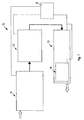
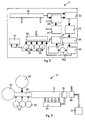
- a plant 10 for processing heterogeneous plastic materials comprises a pre-processing unit 11 for heterogeneous plastic materials arriving from the waste collection, a mixing and plasticization unit 12 in which a degassing of the plastic mixture obtained also occurs, and in this case an injection unit 13 in order to achieve a desired article 16 in molds 17.
- the plant 10 comprises a command and control unit 15 which coordinates the work cycle of said units 11, 12, 13.
- Fig. 6 shows schematically a method 50 for processing heterogeneous plastic materials according to the present invention, which provides in sequence a step of pre-processing 51, a mixing and plasticization step 52 and in this case also an injection step 53.
- the command and control unit 15 is of the programmable type and is suitable to condition the functioning of the components of the plant 10 at least according to the technical and/or structural characteristics of the article 16 to be made.
- the command and control unit 15 is suitable to condition in programmable manner a multiplicity of operations, such as for example: the selection of composition of the plastic material according to the structural characteristics to obtain the article 16; the control and regulation of the speed of feed of the material and the temperature of the plastic materials during the mixing and plasticization steps 52 and injection 53; the control and regulation of the injection and closing pressure of the molds 17; the control and regulation of the cooling times and temperatures of the molds 17; the regulation of the other parameters of the method 50, such as for example the production data, alarms, frequency of maintenance, anomalies, control, regulation of the degassing systems; the control and regulation of the possible injection of inert gases and/or additives and/or other materials; and others.
- command and control unit 15 is suitable to control, even remotely, for example via radio waves, via cable or other, the correct functioning of the plant 10 through sensors associated with every individual function of the components installed.
- sensors control the temperature of the plastic material, the presence of gas, the possible controlled injection of inert gases, the cooling of the molds 17, the quality of the cooling, the injection pressure, the closing pressure of the molds 17 and other parameters.
- the pre-processing unit 11 is suitable to perform a plurality of processes on the heterogeneous plastic material arriving from the differentiated and/or non-differentiated waste collection, which allow to obtain a material suitable for the subsequent operations of extrusion and molding.
- the pre-processing unit 11 is suitable to perform at least a grinding and screening of the heterogeneous plastic material so that, at outlet from the process, the material has a size of not more than about 30 mm, and the percentage of non-plastic materials present inside it is less than 10% in weight of the total mass.
- the pre-processing unit 11 comprises a first conveyor belt 19 which provides to load the waste inside a first shredder 20. The latter then shreds the waste to take it to a size varying from 30 to 100 mm.
- the mass of waste thus shredded is removed from the bottom of the shredder 20 and is subjected to a demetalization achieved by means of an electromagnet 22 positioned above the transit path of the mass of waste, the function of which is to attract the pieces of iron possibly present in said mass of waste and remove it therefrom.
- an operation is also performed to select small, non-plastic parts mixed in the heterogeneous mass, such as for example glass, earth, sand or suchlike.
- the selection operation can be selectively done by means of a screen 23, for example of the rotary type, vibrating, centrifugal or other.
- the mass of waste almost exclusively comprises heterogeneous plastic material with a percentage in weight of non-plastic material less than 10%.
- the mass of waste is transported into one or more shredder mills 25, possibly disposed parallel, which in turn provide to finely grind the mass of waste, taking it to a size of not more than 30 mm.
- the mass of waste is optionally transferred to one or more feeder silos 25a, acting as a storage unit for a gelling device 26, or into one or more storage silos 29, hereafter explained in detail, or directly sent to the mixing and plasticization unit 12.
- the pre-processing step 11 comprises in this case a pre-plasticization sub-step 54, wherein the mass of plastic waste treated is inserted directly, or as in this case through the feeder silos 25a, into a pre-extruder or gelling device 26. Since the mass of waste originates directly from the differentiated or non-differentiated collection, and contains various organic components, for example paper or other residual materials, the pre-plasticization sub-step 54 allows to perform a first extraction of the gases contained in said organic components, and the mass of waste exiting from said step consists only of heterogeneous plastic materials.
- the heterogeneous plastic materials emerging from the gelling device 26 is in the form of strings of great thickness which are transferred into a second cooled mill 27 which cools them and smashes them into granules and/or agglomerates.
- the strings emerging from the gelling device 26 can be inserted directly into the mixing and plasticization unit 12.
- the plastic granules thus obtained are then stored in the storage silos 29, which in turn feed one or more mixer silos 30 the purpose of which is to form one or more feed storage units for a main extruder 31 of the mixing unit 12.
- pre-processing unit 11 it is also possible to process rigid plastic waste, such as for example HDPE.
- the mass of waste is first loaded in a jaw-type shredder 21, which allows to grind the rigid and voluminous materials.
- the materials removed from the jaw-type shredder 21 then converge in the main processing line, that is, through the shredder 20, or the electromagnet 22 and so on.
- the rigid plastic material can also not be subjected to the sub-step of pre-plasticization 54, that is, it may not be made to pass through the gelling device 26, and therefore, at outlet from the mills 25, it can be transferred directly to the storage silos 29.
- some of the operations normally provided in the pre-processing step 51 can be by-passed, for example it is possible to skip the shredding and/or screening operations and the plastic material can be introduced directly into the silos 25a or into the gelling device 26 and/or into the extruder 31.
- the conditions to be maintained are in any case that, at the end of the pre-processing step 51, the mass of plastic material that is introduced into the mixing and plasticization unit 12 has at least a size less than 30 mm and inside it less than 10% in weight of non-plastic material is contained.
- the mixing and plasticization step 52 is started, in which the mass of plastic material emerging from the pre-processing unit 11 is introduced into the mixing and plasticization unit 12.
- the unit 12 comprises a forced feed screw 32 and a main extruder 31 with which degassing devices 34 are associated.
- the degassing devices 34 are suitable to remove, from the plastic mixture subjected to extrusion, the gas that forms due to the humidity in the material, the impurities and residues contained in the plastic waste which could evaporate during the degradation of the plastic materials.
- This gas is harmful for a good homogenization of the material, since it could then be accidentally transferred into the molds 17, thus impeding a correct flow of the plastic material, with the possible consequence of producing partly incomplete articles 16 or with possible breaking points.
- a variant of the invention provides that downstream of the main extruder 31 another degassing device 35 can be disposed, for example with positive displacement blowers or other device with an analogous function, which allows to guarantee the complete removal of the gas from the extruded plastic mixture, which is then fed to the molds 17.
- a sub-step 55 of addition is also provided, in which various types of additives are added in the forced feed screw 32, such as for example colorants, deodorants, reinforcers, expanders or other materials, stored in suitable containing silos 33.
- the purpose of the main extruder 31 is to amalgamate and plasticize the inert plastic material inserted together with the possible additives and/or materials loaded on each occasion, forming a desired heterogeneous plastic mixture.
- the extruded plastic mixture thus goes to form a completely degassed melted plastic, in which it is possible to insert in controlled manner, by means of suitable introduction nozzles 36, inert gases having expanding functions, which allow the article 16 to be made to have greater mechanical resistance and lower weight.
- the melted plastic emerging from the above mixing and plasticization unit 12 passes through a transport member, not shown, which conveys it to a storage head 37 of the injection unit 13, to perform the injection step 53.
- An injection thruster 40 is associated with the storage head 37, and provides to inject the melted plastic under pressure through an adjacent injection chamber 39, consisting of a collector which then divides into a plurality of branches which go to feed injectors 41, of a relatively wide section, in order to fill the molds 17 better.
- the large number of injectors 41 and their greater section also allow to facilitate the discharge of inert and/or metal parts, and to reduce the injection times, which increases the productivity of the plant 10.
- the path of the melted plastic, from the storage head 37 to the molds 17, is equipped with a system of heat regulation which also allows to manage the different zones independently.
- the temperature in this segment is maintained at from around 150°C to about 260°C.
- the injection pressure exerted by the injection thruster 40 is also controlled and regulated by the command and control unit 15, for example from about 120 bar to more than 350 bar.
- the injectors are individually commanded in opening and closing and allow to dose the melt in every zone of the mold 17.
- the injectors 41 also allow to exert a great compaction on the molded material, improving the mechanical characteristics of the article 16.
- Each of the molds 17 is advantageously made by means of specific metal alloys, possibly surface treated in order to increase the duration thereof, particularly suitable for allowing a rapid flow and cooling of the plastic material inside it, and is formed by an upper part 17a and a lower part 17b.
- the injectors can be associated with the upper part 17a of each mold, while inside the lower part 17b a plurality of cooling channels are made, not shown here, inside which a thermo vector fluid flows with the function of cooling the plastic material injected inside the mold 17.
- the cooling system can be managed by means of the command and control unit 15, so as to regulate the intensity thereof according to the structural and aesthetic characteristics of the article 16 to be made.
- the plant 10 also comprises a pressure unit 14, the function of which is to maintain the upper part 17a pressed against the lower part 17b of each mold 17, contrasting the injection pressure exerted by the injectors 41.
- the maximum thrust force of the pressure unit 14 is some hundreds of tons.
- the pressure unit 14 consists of a fixed structure 42 on which the injectors 41 are fixed, and where the cylinders are housed that exert the thrust on the upper part 17a of each mold 17 during injection, and a mobile structure 43, in this case rotary in one or more positions, in this case four, on which the lower parts 17b of the molds 17 are rested.
- the injection step 53 is divided, in this case, into four sub-steps, respectively start-of-cycle 53a, injection 53b, cooling 53c and discharge 53d.
- the start-of-cycle sub-step 53a provides that the mobile structure 43 supports a first mold 17 upstream of the fixed structure. In this sub-step 53a the first mold 17 is open and waiting for the melted plastic to be injected into it.
- the mobile structure 43 is rotated, in this case by about 90°, with respect to the first sub-step 53a, and the first mold 17 finds itself in a second position, where it is in correspondence with the fixed structure 42 and is kept closed with a determinate pressure, and the injection of the melted plastic is effected inside it.
- the thermo vector fluid begins to flow inside the cooling channels of the lower part 17b, thus advantageously also beginning the cooling of the material injected.
- the mobile structure 43 rotates, in this case by another 90°, taking the first mold 17 to a third position where the thermo vector fluid continues to flow in the cooling channels and the plastic material injected continues in its cooling. Simultaneously, a second mold 17 is taken under the fixed structure 42 in order to start a new injection.
- the cooling times and the rotation of the mobile structure 43 are managed automatically by the command and control unit 15.
- the mobile structure 43 is rotated further, in this case by another 90°, so as to determine the positioning of the first mold 17 in a fourth position where the two parts 17a and 17b are separated and, by means of an extractor device 45, the article 16 thus made is removed from the first mold 17.
- the number of positions provided for the mobile structure 43 is determined according to the characteristics of the article 16 to be made, and to its operating parameters, that is, material, temperatures, cooling time, and others, while the operating cycle described above remains the same.
- the first sub-step 53a, the second sub-step 53b, the third sub-step 53c and the fourth sub-step 53d are performed at least partly simultaneously.
- both the injection thruster 40 and the pressure unit 14 are fed by an oil-dynamic plant, not shown, and consisting in a substantially known manner of a pump, a tank and other accessories such as filters, level controls, command valves, cylinders, connections and pipes.
- the feed to the cooling channels occurs by means of a plant, not shown, substantially consisting of a storage tank and a refrigerator which allows to work with very low temperatures.
- the plant 10 advantageously has a closed cycle, and also comprises a distributor for the thermo vector fluid which feeds the molds 17 through the mobile structure 43.
Landscapes
- Engineering & Computer Science (AREA)
- Mechanical Engineering (AREA)
- Environmental & Geological Engineering (AREA)
- Processing And Handling Of Plastics And Other Materials For Molding In General (AREA)
- Separation, Recovery Or Treatment Of Waste Materials Containing Plastics (AREA)
- Extrusion Moulding Of Plastics Or The Like (AREA)
Claims (31)
- Installation de traitement de matériaux plastiques hétérogènes provenant du recyclage de déchets, afin d'obtenir un article en plastique (16), et comprenant au moins une unité de pré-traitement (11) apte à recevoir en entrée lesdits déchets et de les soumettre au moins à un processus de broyage et de tamisage afin de fournir en sortie une masse de matériaux plastiques hétérogènes ne mesurant pas plus de 30 mm et ne contenant pas plus d'environ 10 % en poids de matériaux non plastiques, et une unité de mélange et de plastification (12) comprenant au moins une unité d'extrusion (31, 32) dans laquelle est amenée ladite masse de matériaux plastiques hétérogènes provenant de ladite unité de pré-traitement (11) afin d'obtenir un mélange plastique hétérogène, et un moyen de dégazage (34) associé à ladite unité d'extrusion (31, 32), afin d'effectuer un fort dégazage dudit mélange plastique, au moins pendant l'extrusion, installation caractérisée en ce que ladite unité de pré-traitement (11) comprend une pluralité de récipients (29, 30) destinés au stockage distinct dudit matériau plastique hétérogène, chacun desdits récipients (29, 30) étant rempli d'un matériau différent lié aux différences de caractéristiques structurelles dudit article plastique (16) à fabriquer.
- Installation selon la revendication 1, caractérisée en ce que ladite unité de pré-traitement (11) et ladite unité de mélange et de plastification (12) sont alignées l'une sur l'autre.
- Installation selon la revendication 1, caractérisée en ce que ladite unité de pré-traitement (11) et ladite unité de mélange et de plastification (12) sont distantes l'une de l'autre.
- Installation selon l'une quelconque des revendications ci-dessus, caractérisée en ce que ladite unité de pré-traitement (11) comprend des moyens de déchiquetage (20, 21, 25, 27) et des moyens de sélection (22, 23, 24) destinés à séparer le matériau plastique hétérogène du reste desdits déchets.
- Installation selon l'une quelconque des revendications ci-dessus, caractérisée en ce que ladite unité de pré-traitement (11) comprend un moyen de gélification (26) destiné à effectuer une pré-plastification et un dégazage au moins partiel dudit matériau plastique hétérogène.
- Installation selon la revendication 5, caractérisée en ce qu'il est prévu, en amont dudit moyen de gélification (26) au moins un organe d'alimentation (25a) pouvant jouer le rôle d'unité de stockage dudit matériau plastique hétérogène.
- Installation selon la revendication 4, caractérisée en ce que lesdits moyens de déchiquetage comprennent une première déchiqueteuse (20) placée en amont desdits moyens de sélection (22, 23, 24) et apte à déchiqueter lesdits déchets jusqu'à une taille allant d'environ 30 à environ 100 mm, et au moins une deuxième déchiqueteuse (25) placée en aval desdits moyens de sélection (22, 23, 24) et apte à déchiqueter lesdits déchets jusqu'à une taille inférieure à 30 mm.
- Installation selon la revendication 7, caractérisée en ce que lesdits moyens de déchiquetage comprennent au moins une troisième déchiqueteuse (27) placée en aval dudit moyen de gélification (26) et apte à déchiqueter ledit matériau plastique hétérogène en granulés.
- Installation selon l'une quelconque des revendications 4 à 8, caractérisée en ce que lesdits moyens de sélection comprennent au moins un premier dispositif démétalliseur (22) muni d'un électroaimant apte à retirer les parties ferromagnétiques desdits déchets, et un tamis (23) apte à séparer desdits déchets les petites parties et les parties non plastiques telles que la terre, le sable, le papier, le verre et autres.
- Installation selon la revendication 9, caractérisée en ce que lesdits moyens de sélection comprennent aussi un second dispositif démétalliseur (24) à courants induits, apte à séparer les pièces métalliques non ferromagnétiques desdits déchets.
- Installation selon la revendication 1, caractérisée en ce que ladite unité de mélange et de plastification (12) comprend aussi des moyens d'introduction (33, 36) aptes à injecter de façon contrôlée un ou plusieurs gaz et/ou un ou plusieurs additifs et/ou une autre matière choisie en fonction des caractéristiques techniques et/ou structurelles de l'article en plastique (16) à fabriquer.
- Installation selon la revendication 11, caractérisée en ce que lesdits moyens d'introduction (33, 36) sont associés à ladite unité d'extrusion (31, 32) pour injecter lesdits gaz ou autre matière dans le mélange plastique lorsque celui-ci se trouve dans ladite unité d'extrusion (31, 32).
- Installation selon la revendication 11, caractérisée en ce que lesdits moyens d'introduction (33, 36) sont placés en sortie de ladite unité d'extrusion (31, 32) afin d'introduire lesdits gaz ou autre matière dans le mélange plastique qui émerge de ladite unité d'extrusion (31, 32).
- Installation selon la revendication 5, caractérisée en ce que ladite unité d'extrusion (31, 32) est alimentée directement depuis ledit moyen de gélification (26).
- Installation selon l'une quelconque des revendications ci-dessus, caractérisée en ce que ladite unité d'extrusion comprend une extrudeuse principale (31) d'où émerge ledit mélange plastique sensiblement fondu, et un élément à vis (32) apte à mélanger ledit matériau plastique hétérogène provenant de ladite unité de pré-traitement (11), et à le pousser vers ladite extrudeuse principale (31).
- Installation selon la revendication 1, caractérisée en ce que ledit moyen de dégazage comprend aussi au moins un dispositif de dégazage (35) placé en sortie de ladite unité d'extrusion (31, 32).
- Installation selon l'une quelconque des revendications ci-dessus, caractérisée en ce qu'elle comprend aussi une unité d'injection (13) munie de moyens d'injection (37, 39, 40, 41) aptes à injecter dans au moins un moule (17) ledit matériau plastique fondu émergeant de ladite unité de mélange et de plastification (12).
- Installation selon la revendication 17, caractérisée en ce que ledit moyen d'injection comprend une tête accumulatrice (37), une chambre chaude d'injection (39) dotée d'une pluralité d'injecteurs (41) et communiquant avec ladite tête accumulatrice (37), et un poussoir d'injection (40) pouvant être introduit axialement dans ladite tête accumulatrice (37) afin de définir l'émergence dudit matériau plastique fondu, par ladite chambre d'injection (39) et lesdits injecteurs (41).
- Installation selon les revendications 17 et 18, caractérisée en ce que ledit moule (17) comprend au moins une partie supérieure (17a) à laquelle sont sélectivement associés lesdits injecteurs (41), et une partie inférieure (17b) à l'intérieur de laquelle est ménagée une pluralité de canaux de refroidissement, à l'intérieur desquels circule un fluide caloporteur destiné à permettre le refroidissement du matériau plastique injecté.
- Installation selon l'une quelconque des revendications 17 à 19, caractérisée en ce que ladite unité d'injection (13) comprend aussi un moyen de pression et de déplacement (14) dudit moule (17), doté d'une structure fixe (42) sur laquelle sont fixés lesdits injecteurs (41) et possédant au moins un actionneur apte à exercer une poussée sur ladite partie supérieure (17a) dudit moule (17), ainsi que d'une structure mobile (43) sur laquelle est placée ladite partie inférieure (17b) dudit moule (17), et capable de déplacer ledit moule (17) dans une pluralité de positions opératoires.
- Installation selon l'une quelconque des revendications ci-dessus, caractérisée en ce qu'elle comprend au moins une unité de commande et de contrôle (15) capable de gérer tous les composants de ladite installation (10) en fonction de paramètres prédéterminés et/ou sélectivement définissables liés aux caractéristiques mécaniques et/ou esthétiques et/ou fonctionnelles de l'article en plastique (16) à fabriquer.
- Procédé de traitement de matériaux plastiques hétérogènes provenant du recyclage de déchets, afin d'obtenir un article en plastique (16), et comprenant au moins une étape de pré-traitement (51) dans laquelle lesdits déchets sont au moins soumis à un processus de broyage et de tamisage afin d'en tirer une masse de matériaux plastiques hétérogène ne mesurant pas plus de 30 mm et ne contenant pas plus d'environ 10 % en poids de matériaux non plastiques, et une seconde étape de mélange et de plastification (52) dans laquelle ladite masse de matériaux plastiques hétérogènes émergeant de ladite première étape de pré-traitement (51) est extrudée, afin d'obtenir un mélange plastique hétérogène sensiblement fondu, et dans laquelle est effectué un fort dégazage dudit mélange plastique, procédé caractérisé en ce qu'il comprend une étape supplémentaire consistant à doter ladite unité de pré-traitement (11) d'une pluralité de récipients (29, 30) destinés au stockage distinct dudit matériau plastique hétérogène, chacun desdits récipients (29, 30) étant rempli d'un matériau différent lié aux différences de caractéristiques structurelles dudit article en plastique (16) à fabriquer.
- Procédé selon la revendication 22, caractérisé en ce que ladite première étape de pré-traitement (51) comprend au moins une sous-étape de pré-plastification (54) dans laquelle lesdits matériaux plastiques hétérogènes sont pré-plastifiés, dégazés et stockés de manière distincte en fonction des caractéristiques techniques et/ou structurelles dudit article en plastique (16) à fabriquer.
- Procédé selon la revendication 23, caractérisé en ce que ladite action de fort dégazage est effectuée au moins avant la fin de l'extrusion dudit mélange plastique hétérogène.
- Procédé selon la revendication 22, caractérisé en ce que ladite seconde étape de mélange et de plastification (52) comprend également au moins une sous-étape d'ajout (55) dans laquelle est injecté, dans ledit mélange plastique fondu, au moins un gaz inerte et/ou au moins un additif et/ou une autre matière, en fonction des caractéristiques techniques et/ou structurelles dudit article en plastique (16) à fabriquer.
- Procédé selon la revendication 25, caractérisé en ce que ladite seconde étape de mélange et de plastification (52) et ladite sous-étape d'ajout sont effectuées à la suite l'une de l'autre.
- Procédé selon la revendication 25, caractérisé en ce que ladite seconde étape de mélange et de plastification (52) et ladite sous-étape d'ajout sont effectuées au moins en partie simultanément.
- Procédé selon l'une quelconque des revendications 22 à 27, caractérisé en ce qu'il comprend aussi une étape d'injection (53) dans laquelle ledit mélange plastique fondu est injecté dans au moins un moule (17) afin de fabriquer ledit article en plastique (16).
- Procédé selon la revendication 28, caractérisé en ce que ladite étape d'injection (53) comprend au moins une première sous-étape (53a) dans laquelle ledit moule (17) se trouve dans une première position de début de cycle ; une deuxième sous-étape (53b) dans laquelle ladite injection est effectuée dans ledit moule (27), où ledit (17) est maintenu fermé sous pression et où ledit matériau plastique commence à refroidir ; une troisième sous-étape (53c) dans laquelle ledit matériau plastique injecté continue de refroidir; et une quatrième sous-étape (53d) dans laquelle ledit article en plastique (16) ainsi fabriqué est retiré dudit moule (17).
- Procédé selon la revendication 29, caractérisé en ce que ladite première sous-étape (53a), ladite deuxième sous-étape (53b), ladite troisième sous-étape (53c) et ladite quatrième sous-étape (53d) peuvent être effectuées au moins en partie simultanément.
- Procède selon l'une quelconque des revendications 22 à 30, caractérisé en ce que la gestion et la coordination opérationnelle desdites étapes (51, 52, 53) et desdites sous-étapes (53a, 53b, 53c, 53d, 54, 55) se déroule de façon sensiblement automatisé par l'intermédiaire d'une unité de commande et de contrôle (15), en fonction de paramètres prédéterminés et/ou sélectivement définissables liés aux caractéristiques techniques et/ou structurelles de l'article en plastique (16) à fabriquer.
Priority Applications (1)
| Application Number | Priority Date | Filing Date | Title |
|---|---|---|---|
| SI200630068T SI1851024T1 (sl) | 2005-01-19 | 2006-01-17 | Naprava in postopek za procesiranje heterogenih materialov iz umetnih snovi, ki prihajajo iz recikliranja odpadkov |
Applications Claiming Priority (2)
| Application Number | Priority Date | Filing Date | Title |
|---|---|---|---|
| ITUD20050004 ITUD20050004A1 (it) | 2005-01-19 | 2005-01-19 | Impianto e procedimento per il trattamento di materie plastiche eterogenee provenienti dal riciclo di rifiuti |
| PCT/EP2006/050240 WO2006077207A1 (fr) | 2005-01-19 | 2006-01-17 | Installation et procede de traitement de materiaux plastiques heterogenes obtenus du recyclage de dechets |
Publications (2)
| Publication Number | Publication Date |
|---|---|
| EP1851024A1 EP1851024A1 (fr) | 2007-11-07 |
| EP1851024B1 true EP1851024B1 (fr) | 2008-05-21 |
Family
ID=36090777
Family Applications (1)
| Application Number | Title | Priority Date | Filing Date |
|---|---|---|---|
| EP20060704238 Expired - Lifetime EP1851024B1 (fr) | 2005-01-19 | 2006-01-17 | Installation et procede de traitement de materiaux plastiques heterogenes obtenus du recyclage de dechets |
Country Status (7)
| Country | Link |
|---|---|
| EP (1) | EP1851024B1 (fr) |
| AT (1) | ATE396026T1 (fr) |
| DE (1) | DE602006001296D1 (fr) |
| ES (1) | ES2309940T3 (fr) |
| IT (1) | ITUD20050004A1 (fr) |
| SI (1) | SI1851024T1 (fr) |
| WO (1) | WO2006077207A1 (fr) |
Families Citing this family (3)
| Publication number | Priority date | Publication date | Assignee | Title |
|---|---|---|---|---|
| CN107675277A (zh) * | 2017-10-20 | 2018-02-09 | 新凤鸣集团股份有限公司 | 一种聚酯废丝的再利用设备及其再利用方法 |
| WO2025125700A1 (fr) * | 2023-12-11 | 2025-06-19 | Circular Polymer Solutions, Sl | Système de recyclage de matériaux et déchets plastiques |
| ES2992817A1 (es) * | 2023-12-11 | 2024-12-18 | Circular Polymers Solutions S L | Sistema de reciclaje de materiales y residuos plasticos |
Family Cites Families (3)
| Publication number | Priority date | Publication date | Assignee | Title |
|---|---|---|---|---|
| US5232960A (en) * | 1987-09-25 | 1993-08-03 | Ciba-Geigy Corporation | Process and plant for manufacturing heat-hardenable meltable mixtures such as reactive hot melt adhesives |
| FR2621272B1 (fr) * | 1987-10-06 | 1990-03-30 | Mcneil Akron Repiquet Sarl | Procede et machine pour la fabrication d'un produit fini par extrusion a partir d'une matiere thermoplastique extrudable de nature hygroscopique |
| KR100363291B1 (ko) * | 1994-12-27 | 2003-05-09 | 세키스이가세이힝코교가부시키가이샤 | 열가소성폴리에스테르계수지발포체의연속적제조방법및제조장치 |
-
2005
- 2005-01-19 IT ITUD20050004 patent/ITUD20050004A1/it unknown
-
2006
- 2006-01-17 EP EP20060704238 patent/EP1851024B1/fr not_active Expired - Lifetime
- 2006-01-17 SI SI200630068T patent/SI1851024T1/sl unknown
- 2006-01-17 AT AT06704238T patent/ATE396026T1/de not_active IP Right Cessation
- 2006-01-17 WO PCT/EP2006/050240 patent/WO2006077207A1/fr not_active Ceased
- 2006-01-17 ES ES06704238T patent/ES2309940T3/es not_active Expired - Lifetime
- 2006-01-17 DE DE200660001296 patent/DE602006001296D1/de not_active Expired - Lifetime
Also Published As
| Publication number | Publication date |
|---|---|
| ES2309940T3 (es) | 2008-12-16 |
| SI1851024T1 (sl) | 2008-10-31 |
| WO2006077207A1 (fr) | 2006-07-27 |
| ITUD20050004A1 (it) | 2006-07-20 |
| DE602006001296D1 (de) | 2008-07-03 |
| ATE396026T1 (de) | 2008-06-15 |
| EP1851024A1 (fr) | 2007-11-07 |
Similar Documents
| Publication | Publication Date | Title |
|---|---|---|
| AU670077B2 (en) | Process and device for recycling blown plastics | |
| EP2252440B1 (fr) | Procédé et dispositif de moulage par injection de matériau plastique | |
| KR100478570B1 (ko) | 괴성화물 및 그 제조방법 | |
| EP0169231B1 (fr) | Procede et appareil de moulage par injection de produits en pvc | |
| JP3270464B2 (ja) | 複合されたコンパウンド―射出成形法及びこの方法を実施するための装置 | |
| EP1768824A1 (fr) | Dispositif et procede de traitement de matiere plastique thermoplastique a recycler | |
| EA026171B1 (ru) | Способ рециркуляции отходов термопластичных материалов и использование такого рециркулированного термопласта в производстве композиционного материала | |
| KR101981193B1 (ko) | 자동차 폐카페트 재생 장치 | |
| EP2942173B1 (fr) | Procédé de fabrication de granulé pour moulage par injection d'une pièce moulée | |
| KR101389752B1 (ko) | 폐합성수지를 이용한 건축재 제조방법 및 그 방법을 이용한 제조장치 | |
| EP1851024A1 (fr) | Installation et procede de traitement de materiaux plastiques heterogenes obtenus du recyclage de dechets | |
| CN107405791B (zh) | 用于制造热塑性颗粒的方法和装置 | |
| KR20240040891A (ko) | 폐전선 피복물 재활용 시스템을 이용한 폐전선 피복 재활용 방법 | |
| EP3463800A1 (fr) | Procédé et appareil de production d'objets en matériau polymère | |
| WO2006077218A1 (fr) | Dispositif de traitement de matieres plastiques issues du recyclage de dechets | |
| JP7495990B2 (ja) | 再生ポリマー材料から物品を製造するための装置および方法 | |
| FR2685659A1 (fr) | Procede de regeneration des matieres plastiques en vue de la fabrication de produits plastiques composites a usage courant et l'installation mettant en óoeuvre le procede. | |
| KR20150124230A (ko) | 폐플라스틱 재생용 컴파운드 장치 | |
| CA2285772A1 (fr) | Appareils pour la preparation de preformes dans les usines de fabrication en vue de la production de bouteilles et de contenants ou de produits de differentes sortes | |
| CN205439148U (zh) | 物料塑化料筒机构 | |
| KR20070044103A (ko) | 톱밥 플라스틱 보드, 그 제조방법, 및 그 제조장치 | |
| JP2014184702A (ja) | 射出成形方法、及び、射出成形装置 | |
| KR20240040883A (ko) | 폐전선 피복물 재활용 시스템 | |
| US20030147985A1 (en) | Apparatus for feeding reclaimed plastic to injection molding machine | |
| JP3402347B2 (ja) | 混合樹脂材料を用いた成形方法及びその装置 |
Legal Events
| Date | Code | Title | Description |
|---|---|---|---|
| PUAI | Public reference made under article 153(3) epc to a published international application that has entered the european phase |
Free format text: ORIGINAL CODE: 0009012 |
|
| 17P | Request for examination filed |
Effective date: 20070814 |
|
| AK | Designated contracting states |
Kind code of ref document: A1 Designated state(s): AT BE BG CH CY CZ DE DK EE ES FI FR GB GR HU IE IS IT LI LT LU LV MC NL PL PT RO SE SI SK TR |
|
| GRAP | Despatch of communication of intention to grant a patent |
Free format text: ORIGINAL CODE: EPIDOSNIGR1 |
|
| GRAS | Grant fee paid |
Free format text: ORIGINAL CODE: EPIDOSNIGR3 |
|
| GRAA | (expected) grant |
Free format text: ORIGINAL CODE: 0009210 |
|
| DAX | Request for extension of the european patent (deleted) | ||
| AK | Designated contracting states |
Kind code of ref document: B1 Designated state(s): AT BE BG CH CY CZ DE DK EE ES FI FR GB GR HU IE IS IT LI LT LU LV MC NL PL PT RO SE SI SK TR |
|
| REG | Reference to a national code |
Ref country code: GB Ref legal event code: FG4D |
|
| REG | Reference to a national code |
Ref country code: CH Ref legal event code: EP |
|
| REF | Corresponds to: |
Ref document number: 602006001296 Country of ref document: DE Date of ref document: 20080703 Kind code of ref document: P |
|
| REG | Reference to a national code |
Ref country code: IE Ref legal event code: FG4D |
|
| PG25 | Lapsed in a contracting state [announced via postgrant information from national office to epo] |
Ref country code: FI Free format text: LAPSE BECAUSE OF FAILURE TO SUBMIT A TRANSLATION OF THE DESCRIPTION OR TO PAY THE FEE WITHIN THE PRESCRIBED TIME-LIMIT Effective date: 20080521 |
|
| NLV1 | Nl: lapsed or annulled due to failure to fulfill the requirements of art. 29p and 29m of the patents act | ||
| PG25 | Lapsed in a contracting state [announced via postgrant information from national office to epo] |
Ref country code: NL Free format text: LAPSE BECAUSE OF FAILURE TO SUBMIT A TRANSLATION OF THE DESCRIPTION OR TO PAY THE FEE WITHIN THE PRESCRIBED TIME-LIMIT Effective date: 20080521 Ref country code: PL Free format text: LAPSE BECAUSE OF FAILURE TO SUBMIT A TRANSLATION OF THE DESCRIPTION OR TO PAY THE FEE WITHIN THE PRESCRIBED TIME-LIMIT Effective date: 20080521 Ref country code: LV Free format text: LAPSE BECAUSE OF FAILURE TO SUBMIT A TRANSLATION OF THE DESCRIPTION OR TO PAY THE FEE WITHIN THE PRESCRIBED TIME-LIMIT Effective date: 20080521 |
|
| REG | Reference to a national code |
Ref country code: ES Ref legal event code: FG2A Ref document number: 2309940 Country of ref document: ES Kind code of ref document: T3 |
|
| PG25 | Lapsed in a contracting state [announced via postgrant information from national office to epo] |
Ref country code: IS Free format text: LAPSE BECAUSE OF FAILURE TO SUBMIT A TRANSLATION OF THE DESCRIPTION OR TO PAY THE FEE WITHIN THE PRESCRIBED TIME-LIMIT Effective date: 20080921 |
|
| PG25 | Lapsed in a contracting state [announced via postgrant information from national office to epo] |
Ref country code: SE Free format text: LAPSE BECAUSE OF FAILURE TO SUBMIT A TRANSLATION OF THE DESCRIPTION OR TO PAY THE FEE WITHIN THE PRESCRIBED TIME-LIMIT Effective date: 20080821 Ref country code: CZ Free format text: LAPSE BECAUSE OF FAILURE TO SUBMIT A TRANSLATION OF THE DESCRIPTION OR TO PAY THE FEE WITHIN THE PRESCRIBED TIME-LIMIT Effective date: 20080521 Ref country code: LT Free format text: LAPSE BECAUSE OF FAILURE TO SUBMIT A TRANSLATION OF THE DESCRIPTION OR TO PAY THE FEE WITHIN THE PRESCRIBED TIME-LIMIT Effective date: 20080521 Ref country code: DK Free format text: LAPSE BECAUSE OF FAILURE TO SUBMIT A TRANSLATION OF THE DESCRIPTION OR TO PAY THE FEE WITHIN THE PRESCRIBED TIME-LIMIT Effective date: 20080521 |
|
| PG25 | Lapsed in a contracting state [announced via postgrant information from national office to epo] |
Ref country code: BE Free format text: LAPSE BECAUSE OF FAILURE TO SUBMIT A TRANSLATION OF THE DESCRIPTION OR TO PAY THE FEE WITHIN THE PRESCRIBED TIME-LIMIT Effective date: 20080521 Ref country code: PT Free format text: LAPSE BECAUSE OF FAILURE TO SUBMIT A TRANSLATION OF THE DESCRIPTION OR TO PAY THE FEE WITHIN THE PRESCRIBED TIME-LIMIT Effective date: 20081021 Ref country code: SK Free format text: LAPSE BECAUSE OF FAILURE TO SUBMIT A TRANSLATION OF THE DESCRIPTION OR TO PAY THE FEE WITHIN THE PRESCRIBED TIME-LIMIT Effective date: 20080521 Ref country code: RO Free format text: LAPSE BECAUSE OF FAILURE TO SUBMIT A TRANSLATION OF THE DESCRIPTION OR TO PAY THE FEE WITHIN THE PRESCRIBED TIME-LIMIT Effective date: 20080521 |
|
| PLBE | No opposition filed within time limit |
Free format text: ORIGINAL CODE: 0009261 |
|
| STAA | Information on the status of an ep patent application or granted ep patent |
Free format text: STATUS: NO OPPOSITION FILED WITHIN TIME LIMIT |
|
| 26N | No opposition filed |
Effective date: 20090224 |
|
| PG25 | Lapsed in a contracting state [announced via postgrant information from national office to epo] |
Ref country code: BG Free format text: LAPSE BECAUSE OF FAILURE TO SUBMIT A TRANSLATION OF THE DESCRIPTION OR TO PAY THE FEE WITHIN THE PRESCRIBED TIME-LIMIT Effective date: 20080821 Ref country code: EE Free format text: LAPSE BECAUSE OF FAILURE TO SUBMIT A TRANSLATION OF THE DESCRIPTION OR TO PAY THE FEE WITHIN THE PRESCRIBED TIME-LIMIT Effective date: 20080521 |
|
| PGFP | Annual fee paid to national office [announced via postgrant information from national office to epo] |
Ref country code: AT Payment date: 20090128 Year of fee payment: 4 |
|
| PG25 | Lapsed in a contracting state [announced via postgrant information from national office to epo] |
Ref country code: MC Free format text: LAPSE BECAUSE OF NON-PAYMENT OF DUE FEES Effective date: 20090131 |
|
| PG25 | Lapsed in a contracting state [announced via postgrant information from national office to epo] |
Ref country code: IE Free format text: LAPSE BECAUSE OF NON-PAYMENT OF DUE FEES Effective date: 20090117 |
|
| PGFP | Annual fee paid to national office [announced via postgrant information from national office to epo] |
Ref country code: CH Payment date: 20100215 Year of fee payment: 5 Ref country code: ES Payment date: 20100222 Year of fee payment: 5 |
|
| PGFP | Annual fee paid to national office [announced via postgrant information from national office to epo] |
Ref country code: FR Payment date: 20100305 Year of fee payment: 5 Ref country code: IT Payment date: 20100127 Year of fee payment: 5 Ref country code: SI Payment date: 20100212 Year of fee payment: 5 |
|
| PGFP | Annual fee paid to national office [announced via postgrant information from national office to epo] |
Ref country code: DE Payment date: 20100211 Year of fee payment: 5 Ref country code: GB Payment date: 20100129 Year of fee payment: 5 |
|
| PG25 | Lapsed in a contracting state [announced via postgrant information from national office to epo] |
Ref country code: GR Free format text: LAPSE BECAUSE OF FAILURE TO SUBMIT A TRANSLATION OF THE DESCRIPTION OR TO PAY THE FEE WITHIN THE PRESCRIBED TIME-LIMIT Effective date: 20080822 |
|
| PG25 | Lapsed in a contracting state [announced via postgrant information from national office to epo] |
Ref country code: LU Free format text: LAPSE BECAUSE OF NON-PAYMENT OF DUE FEES Effective date: 20090117 |
|
| PG25 | Lapsed in a contracting state [announced via postgrant information from national office to epo] |
Ref country code: HU Free format text: LAPSE BECAUSE OF FAILURE TO SUBMIT A TRANSLATION OF THE DESCRIPTION OR TO PAY THE FEE WITHIN THE PRESCRIBED TIME-LIMIT Effective date: 20081122 |
|
| PG25 | Lapsed in a contracting state [announced via postgrant information from national office to epo] |
Ref country code: TR Free format text: LAPSE BECAUSE OF FAILURE TO SUBMIT A TRANSLATION OF THE DESCRIPTION OR TO PAY THE FEE WITHIN THE PRESCRIBED TIME-LIMIT Effective date: 20080521 |
|
| REG | Reference to a national code |
Ref country code: CH Ref legal event code: PL |
|
| GBPC | Gb: european patent ceased through non-payment of renewal fee |
Effective date: 20110117 |
|
| PG25 | Lapsed in a contracting state [announced via postgrant information from national office to epo] |
Ref country code: CY Free format text: LAPSE BECAUSE OF FAILURE TO SUBMIT A TRANSLATION OF THE DESCRIPTION OR TO PAY THE FEE WITHIN THE PRESCRIBED TIME-LIMIT Effective date: 20080521 |
|
| REG | Reference to a national code |
Ref country code: FR Ref legal event code: ST Effective date: 20110930 |
|
| REG | Reference to a national code |
Ref country code: SI Ref legal event code: KO00 Effective date: 20110907 |
|
| PG25 | Lapsed in a contracting state [announced via postgrant information from national office to epo] |
Ref country code: CH Free format text: LAPSE BECAUSE OF NON-PAYMENT OF DUE FEES Effective date: 20110131 Ref country code: LI Free format text: LAPSE BECAUSE OF NON-PAYMENT OF DUE FEES Effective date: 20110131 Ref country code: FR Free format text: LAPSE BECAUSE OF NON-PAYMENT OF DUE FEES Effective date: 20110131 |
|
| PG25 | Lapsed in a contracting state [announced via postgrant information from national office to epo] |
Ref country code: GB Free format text: LAPSE BECAUSE OF NON-PAYMENT OF DUE FEES Effective date: 20110117 Ref country code: SI Free format text: LAPSE BECAUSE OF NON-PAYMENT OF DUE FEES Effective date: 20110118 Ref country code: AT Free format text: LAPSE BECAUSE OF NON-PAYMENT OF DUE FEES Effective date: 20110117 |
|
| REG | Reference to a national code |
Ref country code: DE Ref legal event code: R119 Ref document number: 602006001296 Country of ref document: DE Effective date: 20110802 |
|
| PG25 | Lapsed in a contracting state [announced via postgrant information from national office to epo] |
Ref country code: IT Free format text: LAPSE BECAUSE OF NON-PAYMENT OF DUE FEES Effective date: 20110117 |
|
| REG | Reference to a national code |
Ref country code: ES Ref legal event code: FD2A Effective date: 20120220 |
|
| PG25 | Lapsed in a contracting state [announced via postgrant information from national office to epo] |
Ref country code: ES Free format text: LAPSE BECAUSE OF NON-PAYMENT OF DUE FEES Effective date: 20110118 |
|
| PG25 | Lapsed in a contracting state [announced via postgrant information from national office to epo] |
Ref country code: DE Free format text: LAPSE BECAUSE OF NON-PAYMENT OF DUE FEES Effective date: 20110802 |