EP1853583B1 - Amingebundene pyridyl- und phenylsubstituierte piperazin-piperidine mit cxcr3-antagonistischer aktivität - Google Patents
Amingebundene pyridyl- und phenylsubstituierte piperazin-piperidine mit cxcr3-antagonistischer aktivität Download PDFInfo
- Publication number
- EP1853583B1 EP1853583B1 EP06735089A EP06735089A EP1853583B1 EP 1853583 B1 EP1853583 B1 EP 1853583B1 EP 06735089 A EP06735089 A EP 06735089A EP 06735089 A EP06735089 A EP 06735089A EP 1853583 B1 EP1853583 B1 EP 1853583B1
- Authority
- EP
- European Patent Office
- Prior art keywords
- alkyl
- group
- compound according
- nhr
- compound
- Prior art date
- Legal status (The legal status is an assumption and is not a legal conclusion. Google has not performed a legal analysis and makes no representation as to the accuracy of the status listed.)
- Expired - Lifetime
Links
- 0 **C(C(C=C1)=*C*=C1I(CC1)CCN1C1CCN(**=C)CC1)=*=C Chemical compound **C(C(C=C1)=*C*=C1I(CC1)CCN1C1CCN(**=C)CC1)=*=C 0.000 description 66
- BBONDHQWTRXSMK-UHFFFAOYSA-N CC(C(C1=O)=O)=C1NC Chemical compound CC(C(C1=O)=O)=C1NC BBONDHQWTRXSMK-UHFFFAOYSA-N 0.000 description 1
- YMHMAUYIIGBUIE-UHFFFAOYSA-N CC(C)CN(CCNC1CCC(Cc(ccc(O)c2)c2F)CC1)c(ncc(NS(N)(=O)=O)c1)c1O Chemical compound CC(C)CN(CCNC1CCC(Cc(ccc(O)c2)c2F)CC1)c(ncc(NS(N)(=O)=O)c1)c1O YMHMAUYIIGBUIE-UHFFFAOYSA-N 0.000 description 1
- CYNHJAOZMFGKGT-UHFFFAOYSA-N CC(Nc(cc1[I]=C)ccc1F)=O Chemical compound CC(Nc(cc1[I]=C)ccc1F)=O CYNHJAOZMFGKGT-UHFFFAOYSA-N 0.000 description 1
- LBTCXHUGDNALOQ-UHFFFAOYSA-N CC(Nc1c(C)[o]nc1C)=O Chemical compound CC(Nc1c(C)[o]nc1C)=O LBTCXHUGDNALOQ-UHFFFAOYSA-N 0.000 description 1
- QEHNDXFWCJKLAL-UHFFFAOYSA-N CCC(C1)NCCN1c(ncc([N+]([O-])=O)c1)c1Cl Chemical compound CCC(C1)NCCN1c(ncc([N+]([O-])=O)c1)c1Cl QEHNDXFWCJKLAL-UHFFFAOYSA-N 0.000 description 1
- FIUZKIKCWQAKKQ-UHFFFAOYSA-N CCC(CN(CC1)c(c(Cl)c2)ncc2N)N1C(CC1)CCN1C(OC(C)(C)C)=O Chemical compound CCC(CN(CC1)c(c(Cl)c2)ncc2N)N1C(CC1)CCN1C(OC(C)(C)C)=O FIUZKIKCWQAKKQ-UHFFFAOYSA-N 0.000 description 1
- YWGIJTJVWYPPEY-ZNZDOKOWSA-N CCCN(C[C@H](CC)NC(CCC1)CC[C@H]1N[C@@H](C(OCC=C1CC1)=O)c(cc1)ccc1O)c(c(O)c1)ccc1NS(C)(=O)=O Chemical compound CCCN(C[C@H](CC)NC(CCC1)CC[C@H]1N[C@@H](C(OCC=C1CC1)=O)c(cc1)ccc1O)c(c(O)c1)ccc1NS(C)(=O)=O YWGIJTJVWYPPEY-ZNZDOKOWSA-N 0.000 description 1
- CLPSBPPDPOVXMT-NRFANRHFSA-N CC[C@@H](CN(CC1)c(c(Cl)c2)ncc2NC(C)=O)N1C1CCN(Cc(ccc(Cl)c2)c2F)CC1 Chemical compound CC[C@@H](CN(CC1)c(c(Cl)c2)ncc2NC(C)=O)N1C1CCN(Cc(ccc(Cl)c2)c2F)CC1 CLPSBPPDPOVXMT-NRFANRHFSA-N 0.000 description 1
- MBQCOMKDAQOACE-FQEVSTJZSA-N CC[C@@H](CN(CC1)c(c(Cl)c2)ncc2NS(C)(=O)=O)N1C1CCN(Cc(ccc(Cl)c2)c2F)CC1 Chemical compound CC[C@@H](CN(CC1)c(c(Cl)c2)ncc2NS(C)(=O)=O)N1C1CCN(Cc(ccc(Cl)c2)c2F)CC1 MBQCOMKDAQOACE-FQEVSTJZSA-N 0.000 description 1
- MFWUJJPLDXBFGR-FQEVSTJZSA-N CC[C@@H](CN(CC1)c(ncc(NS(C)(=O)=O)c2)c2Cl)N1C1CCN(Cc(cc2)ccc2OC(F)(F)F)CC1 Chemical compound CC[C@@H](CN(CC1)c(ncc(NS(C)(=O)=O)c2)c2Cl)N1C1CCN(Cc(cc2)ccc2OC(F)(F)F)CC1 MFWUJJPLDXBFGR-FQEVSTJZSA-N 0.000 description 1
- CCCULFPUMOGUII-SFHVURJKSA-N CC[C@@H](CN(CC1)c(ncc([N+]([O-])=O)c2)c2Cl)N1C1CCN(Cc(ccc(Cl)c2)c2F)CC1 Chemical compound CC[C@@H](CN(CC1)c(ncc([N+]([O-])=O)c2)c2Cl)N1C1CCN(Cc(ccc(Cl)c2)c2F)CC1 CCCULFPUMOGUII-SFHVURJKSA-N 0.000 description 1
- ACIDFAVKAUFAJL-UHFFFAOYSA-N O=C1CCN(Cc(ccc(Cl)c2)c2F)CC1 Chemical compound O=C1CCN(Cc(ccc(Cl)c2)c2F)CC1 ACIDFAVKAUFAJL-UHFFFAOYSA-N 0.000 description 1
- UJTUFZCLHMKKDB-GHZUAHJPSA-N O[C@@H](CC(CC1)c(ncc(NC(c2cnccc2)=O)c2)c2O)N1C1CCN(Cc(cc2)ccc2O)CC1 Chemical compound O[C@@H](CC(CC1)c(ncc(NC(c2cnccc2)=O)c2)c2O)N1C1CCN(Cc(cc2)ccc2O)CC1 UJTUFZCLHMKKDB-GHZUAHJPSA-N 0.000 description 1
Classifications
-
- C—CHEMISTRY; METALLURGY
- C07—ORGANIC CHEMISTRY
- C07D—HETEROCYCLIC COMPOUNDS
- C07D401/00—Heterocyclic compounds containing two or more hetero rings, having nitrogen atoms as the only ring hetero atoms, at least one ring being a six-membered ring with only one nitrogen atom
- C07D401/14—Heterocyclic compounds containing two or more hetero rings, having nitrogen atoms as the only ring hetero atoms, at least one ring being a six-membered ring with only one nitrogen atom containing three or more hetero rings
-
- A—HUMAN NECESSITIES
- A61—MEDICAL OR VETERINARY SCIENCE; HYGIENE
- A61P—SPECIFIC THERAPEUTIC ACTIVITY OF CHEMICAL COMPOUNDS OR MEDICINAL PREPARATIONS
- A61P1/00—Drugs for disorders of the alimentary tract or the digestive system
- A61P1/04—Drugs for disorders of the alimentary tract or the digestive system for ulcers, gastritis or reflux esophagitis, e.g. antacids, inhibitors of acid secretion, mucosal protectants
-
- A—HUMAN NECESSITIES
- A61—MEDICAL OR VETERINARY SCIENCE; HYGIENE
- A61P—SPECIFIC THERAPEUTIC ACTIVITY OF CHEMICAL COMPOUNDS OR MEDICINAL PREPARATIONS
- A61P17/00—Drugs for dermatological disorders
-
- A—HUMAN NECESSITIES
- A61—MEDICAL OR VETERINARY SCIENCE; HYGIENE
- A61P—SPECIFIC THERAPEUTIC ACTIVITY OF CHEMICAL COMPOUNDS OR MEDICINAL PREPARATIONS
- A61P17/00—Drugs for dermatological disorders
- A61P17/06—Antipsoriatics
-
- A—HUMAN NECESSITIES
- A61—MEDICAL OR VETERINARY SCIENCE; HYGIENE
- A61P—SPECIFIC THERAPEUTIC ACTIVITY OF CHEMICAL COMPOUNDS OR MEDICINAL PREPARATIONS
- A61P25/00—Drugs for disorders of the nervous system
-
- A—HUMAN NECESSITIES
- A61—MEDICAL OR VETERINARY SCIENCE; HYGIENE
- A61P—SPECIFIC THERAPEUTIC ACTIVITY OF CHEMICAL COMPOUNDS OR MEDICINAL PREPARATIONS
- A61P27/00—Drugs for disorders of the senses
- A61P27/02—Ophthalmic agents
-
- A—HUMAN NECESSITIES
- A61—MEDICAL OR VETERINARY SCIENCE; HYGIENE
- A61P—SPECIFIC THERAPEUTIC ACTIVITY OF CHEMICAL COMPOUNDS OR MEDICINAL PREPARATIONS
- A61P27/00—Drugs for disorders of the senses
- A61P27/02—Ophthalmic agents
- A61P27/04—Artificial tears; Irrigation solutions
-
- A—HUMAN NECESSITIES
- A61—MEDICAL OR VETERINARY SCIENCE; HYGIENE
- A61P—SPECIFIC THERAPEUTIC ACTIVITY OF CHEMICAL COMPOUNDS OR MEDICINAL PREPARATIONS
- A61P29/00—Non-central analgesic, antipyretic or antiinflammatory agents, e.g. antirheumatic agents; Non-steroidal antiinflammatory drugs [NSAID]
-
- A—HUMAN NECESSITIES
- A61—MEDICAL OR VETERINARY SCIENCE; HYGIENE
- A61P—SPECIFIC THERAPEUTIC ACTIVITY OF CHEMICAL COMPOUNDS OR MEDICINAL PREPARATIONS
- A61P3/00—Drugs for disorders of the metabolism
- A61P3/08—Drugs for disorders of the metabolism for glucose homeostasis
- A61P3/10—Drugs for disorders of the metabolism for glucose homeostasis for hyperglycaemia, e.g. antidiabetics
-
- A—HUMAN NECESSITIES
- A61—MEDICAL OR VETERINARY SCIENCE; HYGIENE
- A61P—SPECIFIC THERAPEUTIC ACTIVITY OF CHEMICAL COMPOUNDS OR MEDICINAL PREPARATIONS
- A61P31/00—Antiinfectives, i.e. antibiotics, antiseptics, chemotherapeutics
-
- A—HUMAN NECESSITIES
- A61—MEDICAL OR VETERINARY SCIENCE; HYGIENE
- A61P—SPECIFIC THERAPEUTIC ACTIVITY OF CHEMICAL COMPOUNDS OR MEDICINAL PREPARATIONS
- A61P31/00—Antiinfectives, i.e. antibiotics, antiseptics, chemotherapeutics
- A61P31/04—Antibacterial agents
-
- A—HUMAN NECESSITIES
- A61—MEDICAL OR VETERINARY SCIENCE; HYGIENE
- A61P—SPECIFIC THERAPEUTIC ACTIVITY OF CHEMICAL COMPOUNDS OR MEDICINAL PREPARATIONS
- A61P35/00—Antineoplastic agents
-
- A—HUMAN NECESSITIES
- A61—MEDICAL OR VETERINARY SCIENCE; HYGIENE
- A61P—SPECIFIC THERAPEUTIC ACTIVITY OF CHEMICAL COMPOUNDS OR MEDICINAL PREPARATIONS
- A61P37/00—Drugs for immunological or allergic disorders
- A61P37/02—Immunomodulators
- A61P37/06—Immunosuppressants, e.g. drugs for graft rejection
-
- A—HUMAN NECESSITIES
- A61—MEDICAL OR VETERINARY SCIENCE; HYGIENE
- A61P—SPECIFIC THERAPEUTIC ACTIVITY OF CHEMICAL COMPOUNDS OR MEDICINAL PREPARATIONS
- A61P37/00—Drugs for immunological or allergic disorders
- A61P37/08—Antiallergic agents
-
- A—HUMAN NECESSITIES
- A61—MEDICAL OR VETERINARY SCIENCE; HYGIENE
- A61P—SPECIFIC THERAPEUTIC ACTIVITY OF CHEMICAL COMPOUNDS OR MEDICINAL PREPARATIONS
- A61P43/00—Drugs for specific purposes, not provided for in groups A61P1/00-A61P41/00
-
- C—CHEMISTRY; METALLURGY
- C07—ORGANIC CHEMISTRY
- C07D—HETEROCYCLIC COMPOUNDS
- C07D211/00—Heterocyclic compounds containing hydrogenated pyridine rings, not condensed with other rings
- C07D211/04—Heterocyclic compounds containing hydrogenated pyridine rings, not condensed with other rings with only hydrogen or carbon atoms directly attached to the ring nitrogen atom
- C07D211/06—Heterocyclic compounds containing hydrogenated pyridine rings, not condensed with other rings with only hydrogen or carbon atoms directly attached to the ring nitrogen atom having no double bonds between ring members or between ring members and non-ring members
- C07D211/36—Heterocyclic compounds containing hydrogenated pyridine rings, not condensed with other rings with only hydrogen or carbon atoms directly attached to the ring nitrogen atom having no double bonds between ring members or between ring members and non-ring members with hetero atoms or with carbon atoms having three bonds to hetero atoms with at the most one bond to halogen, e.g. ester or nitrile radicals, directly attached to ring carbon atoms
- C07D211/56—Nitrogen atoms
- C07D211/58—Nitrogen atoms attached in position 4
-
- C—CHEMISTRY; METALLURGY
- C07—ORGANIC CHEMISTRY
- C07D—HETEROCYCLIC COMPOUNDS
- C07D401/00—Heterocyclic compounds containing two or more hetero rings, having nitrogen atoms as the only ring hetero atoms, at least one ring being a six-membered ring with only one nitrogen atom
- C07D401/02—Heterocyclic compounds containing two or more hetero rings, having nitrogen atoms as the only ring hetero atoms, at least one ring being a six-membered ring with only one nitrogen atom containing two hetero rings
- C07D401/12—Heterocyclic compounds containing two or more hetero rings, having nitrogen atoms as the only ring hetero atoms, at least one ring being a six-membered ring with only one nitrogen atom containing two hetero rings linked by a chain containing hetero atoms as chain links
-
- C—CHEMISTRY; METALLURGY
- C07—ORGANIC CHEMISTRY
- C07D—HETEROCYCLIC COMPOUNDS
- C07D405/00—Heterocyclic compounds containing both one or more hetero rings having oxygen atoms as the only ring hetero atoms, and one or more rings having nitrogen as the only ring hetero atom
- C07D405/14—Heterocyclic compounds containing both one or more hetero rings having oxygen atoms as the only ring hetero atoms, and one or more rings having nitrogen as the only ring hetero atom containing three or more hetero rings
-
- C—CHEMISTRY; METALLURGY
- C07—ORGANIC CHEMISTRY
- C07D—HETEROCYCLIC COMPOUNDS
- C07D409/00—Heterocyclic compounds containing two or more hetero rings, at least one ring having sulfur atoms as the only ring hetero atoms
- C07D409/14—Heterocyclic compounds containing two or more hetero rings, at least one ring having sulfur atoms as the only ring hetero atoms containing three or more hetero rings
-
- C—CHEMISTRY; METALLURGY
- C07—ORGANIC CHEMISTRY
- C07D—HETEROCYCLIC COMPOUNDS
- C07D413/00—Heterocyclic compounds containing two or more hetero rings, at least one ring having nitrogen and oxygen atoms as the only ring hetero atoms
- C07D413/14—Heterocyclic compounds containing two or more hetero rings, at least one ring having nitrogen and oxygen atoms as the only ring hetero atoms containing three or more hetero rings
-
- C—CHEMISTRY; METALLURGY
- C07—ORGANIC CHEMISTRY
- C07D—HETEROCYCLIC COMPOUNDS
- C07D417/00—Heterocyclic compounds containing two or more hetero rings, at least one ring having nitrogen and sulfur atoms as the only ring hetero atoms, not provided for by group C07D415/00
- C07D417/14—Heterocyclic compounds containing two or more hetero rings, at least one ring having nitrogen and sulfur atoms as the only ring hetero atoms, not provided for by group C07D415/00 containing three or more hetero rings
Definitions
- the present invention relates to novel pyridyl and phenyl substituted piperazine-piperidines with CXCR3 antagonist activity, pharmaceutical compositions containing one or more such antagonists, one or more such antagonists in combination with other compounds with chemokine activity, one or more such antagonists in combination with known immunosuppressive agents, non-limiting example(s) include Methotrexate, interferon, cyclosporin, FK-506 and FTY720, methods of preparing such antagonists and methods of using such antagonists to modulate CXCR3 activity.
- This invention also discloses methods of using such CXCR3 antagonists for the treatment (non-limiting examples include palliative, curative and prophylactic therapies) of diseases and conditions where CXCR3 has been implicated.
- CXCR3 Diseases and conditions where CXCR3 has been implicated include but are not limited to inflammatory conditions (psoriasis and inflammatory bowel disease), autoimmune disease (multiple sclerosis, rheumatoid arthritis), fixed drug eruptions, cutaneous delayed-type hypersensitivity responses, type I diabetes, viral meningitis and tuberculoid leprosy.
- CXCR3 antagonist activity has also been indicated as a therapy for tumor growth suppression as well as graft rejection (allograft and zenograft rejections for example).
- Chemokines constitute a family of small cytokines that are produced in inflammation and regulate leukocyte recruitment ( Baggiolini, M. et al., Adv. Immunol., 55 : 97-179 (1994 ); Springer, T. A., Annu. Rev. Physio., 57 : 827-872 (1995 ); and Schall, T. J. and K. B. Bacon, Curr. Opin. Immunol, 6: 865-873 (1994 )).
- Chemokines are capable of selectively inducing chemotaxis of the formed elements of the blood (other than red blood cells), including leukocytes such as neutrophils, monocytes, macrophages, eosinophils, basophils, mast cells, and lymphocytes, such as T cells and B cells.
- leukocytes such as neutrophils, monocytes, macrophages, eosinophils, basophils, mast cells, and lymphocytes, such as T cells and B cells.
- other changes can be selectively induced by chemokines in responsive cells, including changes in cell shape, transient rises in the concentration of intracellular free calcium ions ([Ca 2+ ] i ), granule exocytosis, integrin upregulation, formation of bioactive lipids (e. g., leukotrienes) and respiratory burst, associated with leukocyte activation.
- the chemokines are early triggers of the inflammatory response, causing inflammatory mediator release,
- the chemokines are related in primary structure and share four conserved cysteines, which form disulfide bonds. Based upon this conserved cysteine motif, the family can be divided into distinct branches, including the C-X-C chemokines ( ⁇ -chemokines) in which the first two conserved cysteines are separated by an intervening residue (e. g., IL-8, IP-10, Mig, I-TAC, PF4, ENA-78, GCP-2, GRO ⁇ , GROß, GRO ⁇ , NAP-2, NAP-4), and the C-C chemokines ( ⁇ -chemokines), in which the first two conserved cysteines are adjacent residues (e.
- CXC-chemokines attract neutrophil leukocytes.
- CXC-chemokines interleukin 8 (IL-8), GRO alpha (GRO ⁇ ), and neutrophil-activating peptide 2 (NAP-2) are potent chemoattractants and activators of neutrophils.
- the CXC-chemokines designated Mig (monokine induced by gamma interferon) and IP-10 (interferon-gamma inducible 10 kDa protein) are particularly active in inducing chemotaxis of activated peripheral blood lymphocytes.
- CC-chemokines are generally less selective and can attract a variety of leukocyte cell types, including monocytes, eosinophils, basophils, T lymphocytes and natural killer cells.
- CC-chemokines such as human monocyte chemotactic proteins 1-3 (MCP-1, MCP-2 and MCP-3), RANTES (Regulated on Activation, Normal T Expressed and Secreted), and the macrophage inflammatory proteins 1 ⁇ and 1 ⁇ (MIP-1 ⁇ and MIP-1 ⁇ ) have been characterized as chemoattractants and activators of monocytes or lymphocytes, but do not appear to be chemoattractants for neutrophils.
- CXCR3 is a G-protein coupled receptor with seven transmembrane-spanning domains and has been shown to be restrictively expressed in activated T cells, preferentially human Th1 cells.
- chemokine receptors transduce an intracellular signal through the associated G-protein resulting in a rapid increase in intracellular calcium concentration.
- CXCR3 expressing cells show no significant response to the CXC-chemokines IL-8, GRO ⁇ , NAP-2, GCP-2 (granulocyte chemotactic protein-2), ENA78 (epithelial-derived neutrophil-activating peptide 78), PF4 (platelet factor 4), or the CC-chemokines MCP-1, MCP-2, MCP-3, MCP-4, MIP-1 ⁇ , MIP-1ß, RANTES, 1309, eotaxin or lymphotactin.
- CXCR3, I-TAC Interferon-inducible T cell Alpha Chemoattractant
- the restricted expression of human CXCR3 in activated T lymphocytes and the ligand selectivity of CXCR3 are noteworthy.
- the human receptor is highly expressed in IL-2 activated T lymphocytes, but was not detected in resting T lymphocytes, monocytes or granulocytes ( Qin, S. et al., J. Clin. Invest., 101: 746-754 (1998 )). Additional studies of receptor distribution indicate that it is mostly CD3 + cells that express CXCR3, including cells which are CD95 + , CD45RO + , and CD45RA low , a phenotype consistent with previous activation, although a proportion of CD20 + (B) cells and CD56 + (NK) cells also express this receptor.
- the selective expression in activated T lymphocytes is of interest, because other receptors for chemokines which have been reported to attract lymphocytes (e. g., MCP-1, MCP-2, MCP-3, MIP-1 ⁇ , MIP-1 ⁇ , RANTES) are also expressed by granulocytes, such as neutrophils, eosinophils, and basophils, as well as monocytes. These results suggest that the CXCR3 receptor is involved in the selective recruitment of effector T cells.
- CXCR3 recognizes unusual CXC-chemokines, designated IP-10, Mig and I-TAC. Although these belong to the CXC-subfamily, in contrast to IL-8 and other CXC-chemokines which are potent chemoattractants for neutrophils, the primary targets of IP-10, Mig and I-TAC are lymphocytes, particularly effector cells such as activated or stimulated T lymphocytes and natural killer (NK) cells ( Taub, D. D. et al., J Exp. Med., 177: 18090-1814 (1993 ); Taub, D. D. et al., J. Immunol., 155: 3877-3888 (1995 ); Cole, K. E. et al., J. Exp.
- NK cells are large granular lymphocytes, which lack a specific T cell receptor for antigen recognition, but possess cytolytic activity against cells such as tumor cells and virally infected cells.
- IP-10, Mig and I-TAC lack the ELR motif, an essential binding epitope in those CXC-chemokines that efficiently induce neutrophil chemotaxis ( Clark-Lewis, I. et al., J. Biol. Chem. 266: 23128-23134 (1991 ); Hebert, C. A. et al., J. Biol. Chem., 266 : 18989-18994 (1991 ); and Clark-Lewis, 1.
- IP-10 expression is induced in a variety of tissues in inflammatory conditions such as psoriasis, fixed drug eruptions, cutaneous delayed-type hypersensitivity responses and tuberculoid leprosy as well as tumors and in animal model studies, for example, experimental glomerulonephritis, and experimental allergic encephalomyelitis.
- IP-10 has a potent in vivo antitumor effect that is T cell dependent, is reported to be an inhibitor of angiogenesis in vivo and can induce chemotaxis and degranulation of NK cells in vitro, suggesting a role as a mediator of NK cell recruitment and degranulation (in tumor cell destruction, for example)
- IP-10, Mig and I-TAC are also distinct from that of other CXC chemokines in that expression of each is induced by interferon-gamma (IFN ⁇ ), while the expression of IL-8 is down-regulated by IFN ⁇ ( Luster, A. D. et al., Nature, 315 : 672-676 (1985 ); Farber, J. M., Proc. Natl. Acad. Sci. USA, 87 : 5238-5242 (1990 ); Farber, J. M., Biochem. Biophys. Res. Commun., 192 (1): 223-230 (1993 ), Liao, F.
- Chemokines are recognized as the long-sought mediators for the recruitment of lymphocytes.
- Several CC-chemokines were found to elicit lymphocyte chemotaxis ( Loetscher, P. et al., FASEB J., 8: 1055-1060 (1994 )), however, they are also active on granulocytes and monocytes ( Uguccioni, M. et al., Eur. J. Immunol., 25 : 64-68 (1995 ); Baggiolini, M. and C. A. Dahinden, Immunol. Today, 15 : 127-133 (1994 )).
- IP-10, Mig and I-TAC which are selective in their action on lymphocytes, including activated T lymphocytes and NK cells, and which bind CXCR3, a receptor which does not recognize numerous other chemokines and which displays a selective pattern of expression.
- CXCR3 IL-12 kinase-like kinase
- T lymphocytes bearing a CXCR3 receptor as a result of activation can be recruited into inflammatory lesions, sites of infection and/or tumors by IP-10, Mig and/or I-TAC, which can be induced locally by interferon-gamma.
- CXCR3 plays a role in the selective recruitment of lymphocytes, particularly effector cells such as activated or stimulated T lymphocytes.
- activated and effector T cells have been implicated in a number of disease states such as graft-rejection, inflammation, rheumatoid arthritis, multiple sclerosis, inflammatory bowel disease (such as Crohn's disease and ulcerative colitis) and psoriasis.
- CXCR3 represents a promising target for the development of novel therapeutics.
- WO2004113323 discloses compounds of formula (I): in which Z is R 7 -phenyl, R 7 -pyridyl, R 7 -thiophenyl or R 7 -naphthyl as CCR5 antagonists for treating conditions such as inflammatory diseases, multiple sclerosis, arthritis, cancer and psoriasis.
- CXCR3 activity There is a need for compounds that are capable of modulating CXCR3 activity.
- diseases and conditions associated with CXCR3 such as inflammatory conditions (psoriasis and inflammatory bowel disease), autoimmune disease (multiple sclerosis, rheumatoid arthritis) and graft rejection (allograft and
- zenograft rejections for example) as well as infectious diseases, cancers and tumors, fixed drug eruptions, cutaneous delayed-type hypersensitivity responses, type I diabetes, viral meningitis and tuberculoid leprosy.
- the invention provides novel compounds of the Formula 1: or pharmaceutically acceptable salts, solvates or esters thereof wherein:
- a further feature of the invention is a pharmaceutical composition containing as active ingredient at least one compound of Formula 1 together with at least one pharmaceutically acceptable carrier or excipient.
- the invention provides methods of preparing compounds of Formula as well as disclosing methods for treating diseases, for example, treatment (e. g., palliative therapy, curative therapy, prophylactic therapy) of certain disease; and conditions e. g., inflammatory diseases (e. g., psoriasis, inflammatory bowel disease), autoimmune diseases (e. g., rheumatoid arthritis, multiple sclerosis), graft rejection (e. g., allograft rejection, xenograft rejection), ophthalmic inflammation or dry eye, infectious diseases and tumors.
- treatment e. g., palliative therapy, curative therapy, prophylactic therapy
- conditions e. g., inflammatory diseases (e. g., psoriasis, inflammatory bowel disease), autoimmune diseases (e. g., rheumatoid arthritis, multiple sclerosis), graft rejection (e. g., allograft rejection, xenograf
- a method of treating a CXCR3 chemokine mediated disease in a patient in need of such treatment comprising administering to the patient a therapeutically effective amount of at least one compound of Formula 1, or a pharmaceutically acceptable salt, solvate or ester thereof.
- Treatment e. g., palliative therapy, curative therapy, prophylactic therapy
- certain diseases and conditions such as inflammatory diseases (e. g., psoriasis, inflammatory bowel disease), autoimmune diseases (e. g., rheumatoid arthritis, multiple sclerosis), graft rejection (e.
- a method of modulating (inhibiting or promoting) an inflammatory response in an individual in need of such therapy comprises administering a therapeutically effective amount of a compound (e. g., small organic molecule) which inhibits or promotes mammalian CXCR3 function in an individual in need thereof.
- a method of inhibiting or blocking T-cell mediated chemotaxis in a patient in need of such treatment comprising administering to the patient a therapeutically effective amount of a compound of Formula 1 or a pharmaceutically acceptable salt, solvate or ester thereof.
- Also disclosed is a method of treating inflammatory bowel disease (such Crohn's disease, ulcerative colitis) in a patient in need of such treatment comprising administering to the patient a therapeutically effective amount of at least one compound of Formula 1, or a pharmaceutically acceptable salt, solvate or ester thereof.
- inflammatory bowel disease such Crohn's disease, ulcerative colitis
- Also disclosed is a method of treating inflammatory bowel disease in a patient in need of such treatment comprising administering to the patient a therapeutically effective amount of: (a) at least one compound of Formula 1, or a pharmaceutically acceptable salt, solvate or ester thereof concurrently or sequentially with (b) at least one compound selected from the group consisting of: sulfasalazine, 5-aminosalicylic acid, sulfapyridine, anti-TNF compounds, anti-IL-12 compounds, corticosteroids, glucocorticoids, T-cell receptor directed therapies (such as anti-CD3 antibodies), immunosuppresives, methotrexate, azathioprine, and 6-mercaptopurines.
- Also disclosed is a method of treating graft rejection in a patient in need of such treatment comprising administering to the patient a therapeutically effective amount of at least one compound of Formula 1, or a pharmaceutically acceptable salt, solvate or ester thereof.
- Also disclosed is a method of treating graft rejection in a patient in need of such treatment comprising administering to the patient a therapeutically effective amount of: (a) at least one compound of Formula 1, or a pharmaceutically acceptable salt, solvate or ester thereof concurrently or sequentially with (b) at least one compound selected from the group consisting of: cyclosporine A, FK-506, FTY720, beta-interferon, rapamycin, mycophenolate, prednisolone, azathioprine, cyclophosphamide and an antilymphocyte globulin.
- non-steroidal anti-inflammatory agents COX-2 inhibitors, COX-1 inhibitors, immunosuppressives, cyclosporine, methotrexate, steroids, PDE IV inhibitors
- immunosuppressives cyclosporins, methotrexate, steroids, corticosteroids, anti-TNF- ⁇ compounds, anti-IL compounds, anti-IL-23 compounds, vitamin A and D compounds and fumarates.
- ophthalmic inflammation including, for e.g., uveitis, posterior segment intraocular inflammation, Sjogren's syndrome
- dry eye in a patient in need of such treatment the method comprising administering to the patient a therapeutically effective amount of: a) at least one compound according to Formula 1, or a pharmaceutically acceptable salt, solvate or ester thereof concurrently or sequentially with (b) at least one compound selected from the group consisting of: immunosuppressives, cyclosporins, methotrexate, FK506, steroids, corticosteroids, and anti-TNF- ⁇ compounds.
- a disease selected from the group consisting of: inflammatory disease, rheumatoid arthritis, multiple sclerosis, inflammatory bowel disease, graft rejection, psoriasis, fixed drug eruptions, cutaneous delayed-type hypersensitivity responses, ophthalmic inflammation (including e.g., uveitis, posterior segment intraocular inflammation, and S
- a method of treating a disease selected from the group consisting of: inflammatory disease, rheumatoid arthritis, multiple sclerosis, inflammatory bowel disease, graft rejection, psoriasis, fixed drug eruptions, cutaneous delayed-type hypersensitivity responses and tuberculoid leprosy, ophthalmic inflammation, type I diabetes, viral meningitis and cancer in a patient in need of such treatment comprising administering to the patient an effective amount of (a) at least one compound according to Formula 1, or a pharmaceutically acceptable salt, solvate or ester thereof concurrently or sequentially with (b) at least one medicament selected from the group consisting of: disease modifying antirheumatic drugs; nonsteroidal antiinflammatory drugs; COX-2 selective inhibitors; COX-1 inhibitors; immunosuppressives; steroids; PDE IV inhibitors, anti-TNF- ⁇ compounds, MMP inhibitors, corticosteroids, glucocorticoids, chemokine inhibitors, CB2-selective inhibitors, biological
- a disease
- Alkenyl means an aliphatic hydrocarbon group containing at least one carbon-carbon double bond and which may be straight or branched and comprising about 2 to about 15 carbon atoms in the chain.
- Preferred alkenyl groups have about 2 to about 12 carbon atoms in the chain; and more preferably about 2 to about 6 carbon atoms in the chain.
- Branched means that one or more lower alkyl groups such as methyl, ethyl or propyl, are attached to a linear alkenyl chain.
- “Lower alkenyl” means about 2 to about 6 carbon atoms in the chain which may be straight or branched.
- suitable alkenyl groups include ethenyl, propenyl, n-butenyl, 3-methylbut-2-enyl, n-pentenyl, octenyl and decenyl.
- Alkyl means an aliphatic hydrocarbon group which may be straight or branched and comprising about 1 to about 20 carbon atoms in the chain. Preferred alkyl groups contain about 1 to about 12 carbon atoms in the chain. More preferred alkyl groups contain about 1 to about 6 carbon atoms in the chain. Branched means that one or more lower alkyl groups such as methyl, ethyl or propyl, are attached to a linear alkyl chain. "Lower alkyl” means a group having about 1 to about 6 carbon atoms in the chain which may be straight or branched.
- Non-limiting examples of suitable alkyl groups include methyl, ethyl, n-propyl, isopropyl, n-butyl, t-butyl, n-pentyl, heptyl, nonyl, decyl, fluoromethyl, trifluoromethyl and cyclopropylmethyl.
- Alkylheteroaryl means an alkyl-heteroaryl- group wherein the alkyl is as previously described and the bond to the parent moiety is through the heteroaryl group.
- Alkylamino means an -NH2 or-NH3+ group in which one or more of the hydrogen atoms on the nitrogen is replaced by an alkyl group as defined above. The bond to the parent is through the nitrogen.
- Alkylaryl means an alkyl-aryl- group in which the alkyl and aryl are as described herein. Preferred alkylaryls comprise a lower alkyl group. Non-limiting examples of suitable alkylaryl groups include o-tolyl, p-tolyl and xylyl. The bond to the parent moiety is through the aryl.
- Alkylthio means an alkyl-S- group in which the alkyl group is as described herein.
- suitable alkylthio groups include methylthio, ethylthio, i-propylthio and heptylthio.
- the bond to the parent moiety is through the sulfur.
- Alkylsulfonyl means an alkyl-S(O) 2 - group. Preferred groups are those in which the alkyl group is lower alkyl. The bond to the parent moiety is through the sulfonyl.
- Alkylsulfinyl means an alkyl-S(O)- group. Preferred groups are those in which the alkyl group is lower alkyl. The bond to the parent moiety is through the sulfinyl.
- Alkynyl means an aliphatic hydrocarbon group containing at least one carbon-carbon triple bond and which may be straight or branched and comprising about 2 to about 15 carbon atoms in the chain.
- Preferred alkynyl groups have about 2 to about 12 carbon atoms in the chain; and more preferably about 2 to about 4 carbon atoms in the chain.
- Branched means that one or more lower alkyl groups such as methyl, ethyl or propyl, are attached to a linear alkynyl chain.
- “Lower alkynyl” means about 2 to about 6 carbon atoms in the chain which may be straight or branched.
- suitable alkynyl groups include ethynyl, propynyl, 2-butynyl, 3-methylbutynyl, n-pentynyl, and decynyl.
- Alkoxy means an alkyl-O- group in which the alkyl group is, as previously described.
- suitable alkoxy groups include methoxy, ethoxy, n-propoxy, isopropoxy, n-butoxy, heptoxy and methylhydroxy.
- the bond to the parent moiety is through the ether oxygen.
- suitable alkoxycarbonyl groups include methoxycarbonyl and ethoxycarbonyl. The bond to the parent moiety is through the carbonyl.
- Aminoalkyl means an amine-alkyl- group in which alkyl is as previously defined. Preferred aminoalkyls contain lower alkyl. Non-limiting examples of suitable aminoalkyl groups include aminomethyl and 2-Dimethlylamino-2-ethyl. The bond to the parent moiety is through the alkyl.
- the bond to the parent moiety is through the carbon.
- Aralkyl or “arylalkyl” means an aryl-alkyl- group in which the aryl and alkyl are as previously described. Preferred aralkyls comprise a lower alkyl group attached to the aryl group. Non-limiting examples of suitable aralkyl groups include phenymethylene, 2-phenethyl and naphthalenylmethyl. The bond to the parent moiety is through the alkyl.
- Alkenyl means an aryl-alkenyl-group in which the aryl and alkenyl are as previously described. Preferred aralkenyls contain a lower alkenyl group. Non-limiting examples of suitable aralkenyl groups include 2-phenethenyl and 2-naphthylethenyl. The bond to the parent moiety is through the alkenyl.
- Alkylthio means an aralkyl-S- group in which the aralkyl group is as previously described.
- Non-limiting example of a suitable aralkylthio group is benzylthio.
- the bond to the parent moiety is through the sulfur.
- Alkoxy means an aralkyl-O- group in which the aralkyl group is as described above. The bond to the parent moiety is through the oxygen group.
- a suitable aralkoxycarbonyl group is benzyloxycarbonyl.
- the bond to the parent moiety is through the carbonyl.
- suitable groups include benzoyl and 1- and 2-naphthoyl.
- Aryl (sometimes abbreviated “Ar”) means an aromatic monocyclic or multicyclic ring system comprising about 6 to about 14 carbon atoms, preferably about 6 to about 10 carbon atoms.
- suitable aryl groups include phenyl and naphthyl.
- Aryloxy means an aryl-O- group in which the aryl group is as previously described.
- suitable aryloxy groups include phenoxy and naphthoxy.
- the bond to the parent moiety is through the ether oxygen.
- suitable aryloxycarbonyl groups include phenoxycarbonyl and naphthoxycarbonyl.
- the bond to the parent moiety is through the carbonyl.
- Arylsulfonyl means an aryl-S(O) 2 - group. The bond to the parent moiety is through the sulfonyl.
- Arylsulfinyl means an aryl-S(O)- group. The bond to the parent moiety is through the sulfinyl.
- Arylthio means an aryl-S- group in which the aryl group is as previously described.
- suitable arylthio groups include phenylthio and naphthylthio.
- the bond to the parent moiety is through the sulfur.
- Carbamates and urea substituents refer to groups with oxygens and nitrogens respectively adjacent an amide; representative carbamate and urea substituents include the following:
- Cycloalkyl means a non-aromatic mono- or multicyclic ring system comprising about 3 to about 10 carbon atoms, preferably about 5 to about 10 carbon atoms. Preferred cycloalkyl rings contain about 5 to about 7 ring atoms.
- suitable monocyclic cycloalkyls include cyclopropyl, cyclopentyle, cyclohexyl, cycloheptyl and the like.
- Non-limiting examples can include bicyclic cycloalkyls such as bicycloheptane.
- suitable multicyclic cycloalkyls include 1-decalin, norbornyl, adamantyl and the like.
- Cycloalkenyl means a non-aromatic mono or multicyclic ring system comprising about 3 to about 10 carbon atoms, preferably about 5 to about 10 carbon atoms which contains at least one carbon-carbon double bond. Preferred cycloalkenyl rings contain about 5 to about 7 ring atoms.
- suitable monocyclic cycloalkenyls include, cyclopentenyl, cyclohexenyl, cycloheptenyl, and the like.
- Non-limiting example of a suitable multicyclic cycloalkenyl is norbornylenyl.
- the term is cycloalkenyl" additionally means moieties such as cyclobutenedione, cyclopentenone, cyclopentenedione and the like.
- Halogen (or halo) means fluorine, chlorine, bromine, or iodine. Preferred are fluorine, chlorine and bromine.
- Haloalkyl means an alkyl as defined above wherein one or more hydrogen atoms on the alkyl is replaced by a halo group defined above.
- Heteroaryl means an aromatic monocyclic or multicyclic ring system comprising about 5 to about 14 ring atoms, preferably about 5 to about 10 ring atoms, in which one or more of the ring atoms is an element other than carbon, for example nitrogen, oxygen or sulfur, alone or in combination.
- Preferred heteroaryls contain about 5 to about 6 ring atoms.
- the prefix aza, oxa or thia before the heteroaryl root name means that at least a nitrogen, oxygen or sulfur atom respectively, is present as a ring atom.
- the nitrogen or sulfur atom of the heteroaryl can be optionally oxidized to the corresponding N-oxide, S-oxide or S,S-dioxide.
- Non-limiting examples of suitable heteroaryls include pyridyl, pyrazinyl, furanyl, thienyl, pyrimidinyl, isoxazolyl, isothiazolyl, oxazolyl, thiazolyl, pyrazolyl, furazanyl, pyrrolyl, pyrazolyl, triazolyl, 1,2,4-thiadiazolyl, pyridazinyl, quinoxalinyl, phthalazinyl, imidazo[1,2-a]pyridinyl, imidazo[2,1-b]thiazolyl, benzofurazanyl, indolyl, azaindolyl, benzimidazolyl, benzothienyl, quinolinyl, imidazolyl, thienopyridyl, quinazolinyl, thienopyrimidyl, pyrrolopyridyl, imidazopyridyl
- heterocyclyl (or heterocycloalkyl) means a non-aromatic saturated monocyclic or multicyclic ring system comprising about 3 to about 10 ring atoms, preferably about 5 to about 10 ring atoms, in which one or more of the atoms in the ring system is an element other than carbon, for example nitrogen, oxygen or sulfur, alone or in combination. There are no adjacent oxygen and/or sulfur atoms present in the ring system.
- Preferred heterocyclyls contain about 5 to about 6 ring atoms.
- the prefix aza, oxa or thia before the heterocyclyl, root name means that at least a nitrogen, oxygen or sulfur atom respectively is present as a ring atom.
- the nitrogen or sulfur atom of the heterocyclyl can be optionally oxidized to the corresponding N-oxide, S-oxide or S,S-dioxide.
- suitable monocyclic heterocyclyl rings include piperidyl, pyrrolidinyl, piperazinyl, morpholinyl, oxazolidinyl, imidazolidinyl, thiomorpholinyl, thiazolidinyl, 1,3-dioxolanyl, 1,4-dioxanyl, tetrahydrofuranyl, tetrahydrothiophenyl, tetrahydrothiopyranyl, and the like.
- Heterocyclenyl means a non-aromatic monocyclic or multicyclic ring system comprising about 3 to about 10 ring atoms, preferably about 5 to about 10 ring atoms, in which one or more of the atoms in the ring system is an element other than carbon, for example nitrogen, oxygen or sulfur atom, alone or in combination, and which contains at least one carbon-carbon double bond or carbon-nitrogen double bond. There are no adjacent oxygen and/or sulfur atoms present in the ring system.
- Preferred heterocyclenyl rings contain about 5 to about 6 ring atoms.
- the prefix aza, oxa or thia before the heterocyclenyl root name means that at least a nitrogen, oxygen or sulfur atom respectively is present as a ring atom.
- the nitrogen or sulfur atom of the heterocyclenyl can be optionally oxidized to the corresponding N-oxide, S-oxide or S,S-dioxide.
- Non-limiting examples of suitable monocyclic azaheterocyclenyl groups include 1,2,3,4-tetrahydropyridine, 1,2-dihydropyridyl, 1,4-dihydropyridyl, 1,2,3,6-tetrahydropyridine, 1,4,5,6-tetrahydropyrimidine, dihydro-2-pyrrolinyl, dihydro-3-pyrrolinyl, dihydro-2-imidazolinyl, dihydro-2-pyrazolinyl, dihydro-4,5-trizolyl and the like.
- Non-limiting examples of suitable oxaheterocyclenyl groups include 3,4-dihydro-2H-pyran, dihydrofuranyl, fluorodihydrofuranyl, and the like.
- Non-limiting example of a suitable multicyclic oxaheterocyclenyl group is 7-oxabicyclo[2.2.1]heptenyl.
- suitable monocyclic thiaheterocyclenyl rings include thiophenyl, dihydrothiophenyl, dihydrothiopyranyl, and the like.
- Heteroaralkyl means a heteroaryl-alkyl- group in which the heteroaryl and alkyl are as previously described. Preferred heteroaralkyls contain a lower alkyl group. Non-limiting examples of suitable aralkyl groups include pyridylmethyl, 2-(furan-3-yl)ethyl and quinolin-(3-yl)methyl. The bond to the parent moiety is through the alkyl.
- Heteroaralkenyl means an heteroaryl-alkenyl- group in which the heteroaryl and alkenyl are as previously described. Preferred heteroaralkenyls contain a lower alkenyl group. Non-limiting examples of suitable heteroaralkenyl groups include 2-(pyrid-3-yl)ethenyl and 2-(quinolin-3-yl)ethenyl. The bond to the parent moiety is through the alkenyl.
- Hydroxyalkyl means a HO-alkyl- group in which alkyl is as previously defined. Preferred hydroxyalkyls contain lower alkyl. Non-limiting examples of suitable hydroxyalkyl groups include hydroxymethyl and 2-hydroxyethyl, The bond to the parent moiety is through the alkyl.
- Spiroalkyl means an alkylene group wherein two carbon atoms of an alkyl group are attached to one carbon atom of a parent molecular group thereby forming a carbocyclic or heterocyclic ring of three to eleven atoms.
- Representative structures include examples such as:
- the spiroalkyl groups of this invention include
- moieties include, substituents, groups or rings
- the phrases "one or more" and “at least one” mean that, there can be as many moieties as chemically permitted, and the determination of the maximum number of such moieties is well within the knowledge of those skilled in the art.
- composition is intended to encompass a product comprising the specified ingredients in the specified amounts, as well as any product which results, directly or indirectly, from combination of the specified ingredients in the specified amounts.
- the straight line —— as a bond generally indicates a mixture of, or either of, the possible isomers, non-limiting example(s) include, containing (R)- and (S)- stereochemistry.
- non-limiting example(s) include, containing (R)- and (S)- stereochemistry.
- Lines drawn into the ring systems such as, for example: indicate that the indicated line (bond) may be attached to any of the substitutable ring carbon atoms.
- Metabolic conjugates for example, glucoronides and sulfates which can under reversible conversion to compounds of Formula 1 are contemplated in this application.
- Effective amount or “therapeutically effective amount” is meant to describe an amount of compound or a composition of the present invention effective to antagonize CXCR3 and thus produce the desired therapeutic effect in a suitable patient.
- “Mammal” means humans and other mammalian animals.
- Patient includes both human and animals.
- Solvate means a physical association of a compound of this invention with one or more solvent molecules. This physical association involves varying degrees of ionic and covalent bonding, including hydrogen bonding. In certain instances the solvate will be capable of isolation, for example when one or more solvent molecules are incorporated in the crystal lattice of the crystalline solid.
- Solvate encompasses both solution-phase and isolatable solvates. Non-limiting examples of suitable solvates include ethanolates, methanolates, and the like.
- “Hydrate” is a solvate wherein the solvent molecule is H 2 O.
- the compounds of Formula 1 form salts which are also within the scope of this invention.
- Reference to a compound of Formula 1 herein is understood to include reference to salts thereof, unless otherwise indicated.
- the term "salt(s)" denotes acidic salts formed with inorganic and/or organic acids, as well as basic salts formed with inorganic and/or organic bases.
- zwitterions inner salts may be formed and are included within the term "salt(s)" as used herein.
- Salts of the compounds of the Formula 1 may be formed, for example, by reacting a compound of Formula 1 with an amount of acid or base, such as an equivalent amount, in a medium such as one in which the salt precipitates or in an aqueous medium followed by lyophilization.
- Acids (and bases) which are generally considered suitable for the formation of pharmaceutically useful salts from basic (or acidic) pharmaceutical compounds are discussed, for example, by S. Berge et al, Journal of Pharmaceutical Sciences (1977) 66(1) 1-19 ; P. Gould, International J.
- Exemplary acid addition salts include acetates, adipates, alginates, ascorbates, aspartates, benzoates, benzenesulfonates, bisulfates, borates, butyrates, citrates, camphorates, camphorsulfonates, cyclopentanepropionates, digluconates, dodecylsulfates, ethanesulfonates, fumarates, glucoheptanoates, glycerophosphates, hemisulfates, heptanoates, hexanoates, hydrochlorides, hydrobromides, hydroiodides, 2-hydroxyethanesulfonates, lactates, maleates, methanesulfonates, methyl sulfates, 2-naphthalenesulfonates, nicotinates, nitrates, oxalates, pamoates, pectinates, persulfates, 3-
- Exemplary basic salts include ammonium salts, alkali metal salts such as sodium, lithium, and potassium salts, alkaline earth metal salts such as calcium and magnesium salts, aluminum salts, zinc salts, salts with organic bases (for example, organic amines) such as benzathines, diethylamine, dicyclohexylamines, hydrabamines (formed with N,N-bis(dehydroabietyl)ethylenediamine), N-methyl-D-glucamines, N-methyl-D-glucamides, t-butyl amines, piperazine, phenylcyclohexylamine, choline, tromethamine, and salts with amino acids such as arginine, lysine and the like.
- organic bases for example, organic amines
- organic bases for example, organic amines
- Basic nitrogen-containing groups may be quarternized with agents such as lower alkyl halides (non-limiting example(s) include methyl, ethyl, propyl, and butyl chlorides, bromides and iodides), dialkyl sulfates (non-limiting example(s) include dimethyl, diethyl, dibutyl, and diamyl sulfates), long chain halides (non-limiting example(s) include decyl, lauryl, myristyl and stearyl chlorides, bromides and iodides), aralkyl halides (non-limiting example(s) include benzyl and phenethyl bromides), and others.
- agents such as lower alkyl halides (non-limiting example(s) include methyl, ethyl, propyl, and butyl chlorides, bromides and iodides), dialkyl sulfates (non-limiting example(s
- esters of the present compounds include the following groups: (1) carboxylic acid esters obtained by esterification of the hydroxy groups, in which the non-carbonyl moiety of the carboxylic acid portion of the ester grouping is selected from straight or branched chain alkyl (for example, acetyl, n-propyl, t-butyl, or n-butyl), alkoxyalkyl (for example, methoxymethyl), aralkyl (for example, benzyl), aryloxyalkyl (for example, phenoxymethyl), aryl (for example, phenyl optionally substituted with, for example, halogen, C 1-4 alkyl, or C 1-4 alkoxy or amino); (2) sulfonate esters, such as alkyl- or aralkylsulfonyl (for example, methanesulfonyl); (3) amino acid esters (for example, L-valyl or L-isoleucyl); (4) phosphoric acid
- All stereoisomers (for example, geometric isomers, optical isomers and the like) of the present compounds including those of the salts, solvates and prodrugs of the compounds as well as the salts and solvates of the prodrugs), such as those which may exist due to asymmetric carbons on various substituents, including enantiomeric forms (which may exist even in the absence of asymmetric carbons), rotameric forms, atropisomers, and diastereomeric forms, are contemplated within the scope of this invention.
- Individual stereoisomers of the compounds of the invention may, for example, be substantially free of other isomers, or may be admixed, for example, as racemates or with all other, or other selected, stereoisomers.
- the chiral centers of the present invention can have the S or R configuration as defined by the IUPAC 1974 Recommendations.
- the use of the terms “salt”, “solvate” “prodrug” and the like, is intended to equally apply to the salt, solvate and prodrug of enantiomers, stereoisomers, rotamers, tautomers, racemates or prodrugs of the inventive compounds.
- the present invention discloses compounds of Formula 1, having CXCR3 antagonist activity, or a pharmaceutically acceptable derivative thereof, where the various definitions are given above.
- R 1 and R 2 are independently absent or present, and if present each is independently selected from the group consisting of H, -CH 3 , fluorophenylmethylene, trifluoromethylphenylmethylene, indanyl, cyanophenylmethylene, difluorophenylmethylene, bromophenylmethylene, chlorophenylmethylene, -CH 2 CH 2 Ophenyl, cyclopentyl, bromochlorophenylmethylene, fluorochlorophenylmethylene, dichlorophenylmethylene, phenylmethylene, -(CH 2 ) 3 phenyl, -CH 2 CF 3 , methoxylphenylmethylene, -CH(CH 3 ) 2 , -C 2 H 5 , -CH 2 -cyclopropyl, -(CH 2 ) 2 CH 3 , cyclohexylmethylene, cyclohexyl, - CH 2
- Z is N or C(R 29 ).
- Z is N.
- Z is C(H), C(alkyl), C(halogen), C(CF 3 ) or C(N(R 30 ) 2 ).
- Z is C(alkyl), C(F) or C(NH 2 ).
- G is N or C(R 4 ).
- G is N.
- G is C(R 4 ).
- G is C(H), C(alkyl), C(halogen), C(CF 3 ) or C(N(R 30 ) 2 ).
- G and Z are the same.
- G and Z are different.
- G and Z are both N.
- G is N and Z is C(R 29 ).
- G is C(R 4 ) and Z is N.
- R 3 is selected from the group consisting of H, alkyl, haloalkyl, hydroxyalkyl, halogen, -N(R 30 ) 2 , -OR 30 and - CF 3 .
- R 3 is selected from the group consisting of H, -CH 3 , -CH 2 CH 3 , cyclopropyl, -F, -Cl, OCH 3 , OCF 3 and CF 3 .
- Z is N and R 4 is selected from the group consisting of H, alkyl, hydroxyalkyl, halogen, OR 30 , or CF 3 .
- R 6 is selected from the group consisting of H, -NH 2 , -CH 3 , -CN and -F.
- R 10 is selected from the group consisting of H, alkyl, aralkyl, hydroxyalkyl, and carbonyl.
- R 10 is selected from the group consisting of -CH 3 , -CH 2 CH 3 and -CH 2 CH 2 CH 3 , and m is 0 - 2.
- R 11 is selected from the group consisting of H, alkyl, hydroxyalkyl and carbonyl.
- R 11 is H or -CH 3 .
- R 12 is selected from the group consisting of H, -CH 3 , CN and -CH 2 CH 3 .
- the ring atoms of ring D are independently C or N and substituted by independently selected 0-4 R 20 moieties.
- ring D is a 5 to 6 membered aryl, heteroaryl, heterocyclenyl, or heterocyclyl ring and substituted by independently selected 0-4 R 20 moieties.
- two R 20 moieties are linked together to form a five or six membered aryl, cycloalkyl, heterocyclenyl, heterocyclyl or heteroaryl ring wherein said five or six membered aryl, cycloalkyl, heterocyclenyl, heterocyclyl, and heteroaryl ring is fused to ring D and the fused ring is optionally substituted with 0 to 4 R 21 moieties.
- m is 0-3.
- n is 0-2.
- q is 1, 2 or 3.
- r is 1 or 2.
- Z is N, C(H), C(alkyl), C(F) or C(NH 2 );
- G is N or C(R 4 );
- a compound is selected from the following structures in Table 1 below (or a pharmaceutically acceptable salt or solvate thereof) which are shown along with their IC 50 ratings.
- the IC 50 values are rated, "A” for IC 50 values less than about 25 nanomolar (nM), "B” for IC 50 values in the range of from about 25 to about 100 nM and "C” for IC 50 values greater than about 100 nM.
- Compound Number 1 has an IC 50 value of 0.8 nM.
- Table 1 Compound No.
- the compound according to Formula 1 can be selected from the group consisting of compounds of the formulae: or pharmaceutically acceptable salts, solvates or esters thereof.
- this invention discloses the following compounds: and or pharmaceutically acceptable salts, solvates or esters thereof.
- the human IC 50 values (in nM) for the above compounds have been set forth above underneath their chemical structures.
- the compound according to Formula 1 is in purified form.
- this invention provides a pharmaceutical composition
- a pharmaceutical composition comprising at least one compound of Formula 1, or a pharmaceutically acceptable salt, solvate or ester thereof in combination with at least one pharmaceutically acceptable carrier.
- the invention provides a pharmaceutical composition of Formula 1, further comprising at least one additional agent, drug, medicament, antibody and/or inhibitor for treating a CXCR3 chemokine receptor mediated disease.
- the therapeutic agents in the combination may be administered in any order such as, for example, sequentially, concurrently, together, simultaneously and the like.
- the amounts of the various actives in such combination therapy may be different amounts (different dosage amounts) or same amounts (same dosage amounts).
- a compound of Formula III and an additional therapeutic agent may be present in fixed amounts (dosage amounts) in a single dosage unit (e.g., a capsule, a tablet and the like).
- a commercial example of such single dosage unit containing fixed amounts of two different active compounds is VYTORIN ® (available from Merck Schering-Plough Pharmaceuticals, Kenilworth, New Jersey).
- the present invention discloses methods for preparing pharmaceutical compositions comprising the inventive heterocyclic substituted piperazine compounds of Formula 1 as an active ingredient.
- the active ingredients will typically be administered in admixture with suitable carrier materials suitably selected with respect to the intended form of administration, i.e. oral tablets, capsules (either solid-filled, semi-solid filled or liquid filled), powders for constitution, oral gels, elixirs, dispersible granules, syrups, suspensions, and the like, and consistent with conventional pharmaceutical practices.
- the active drug component may be combined with any oral non-toxic pharmaceutically acceptable inert carrier, such as lactose, starch, sucrose, cellulose, magnesium stearate, dicalcium phosphate, calcium sulfate, talc, mannitol, ethyl alcohol (liquid forms) and the like.
- suitable binders, lubricants, disintegrating agents and coloring agents may also be incorporated in the mixture.
- Powders and tablets may be comprised of from about 5 to about 95 percent inventive composition.
- Suitable binders include starch, gelatin, natural sugars, corn sweeteners, natural and synthetic gums such as acacia, sodium alginate, carboxymethylcellulose, polyethylene glycol and waxes.
- lubricants there may be mentioned for use in these dosage forms, boric acid, sodium benzoate, sodium acetate, sodium chloride, and the like.
- Disintegrants include starch, methylcellulose, guar gum and the like. Sweetening and flavoring agents and preservatives may also be included where appropriate.
- compositions of the present invention may be formulated in sustained release form to provide the rate controlled release of any one or more of the components or active ingredients to optimize the therapeutic effects, i.e. anti-inflammatory activity and the like.
- Suitable dosage forms for sustained release include layered tablets containing layers of varying disintegration rates or controlled release polymeric matrices impregnated with the active components and shaped in tablet form or capsules containing such impregnated or encapsulated porous polymeric matrices.
- Liquid form preparations include solutions, suspensions and emulsions. As an example may be mentioned water or water-propylene glycol solutions for parenteral injections or addition of sweeteners and pacifiers for oral solutions, suspensions and emulsions. Liquid form preparations may also include solutions for intranasal administration.
- Aerosol preparations suitable for inhalation may include solutions and solids in powder form, which may be in combination with a pharmaceutically acceptable carrier such as inert compressed gas, e.g. nitrogen.
- a pharmaceutically acceptable carrier such as inert compressed gas, e.g. nitrogen.
- a low melting wax such as a mixture of fatty acid glycerides such as cocoa butter is first melted, and the active ingredient is dispersed homogeneously therein by stirring or similar mixing. The molten homogeneous mixture is then poured into convenient sized molds, allowed to cool and thereby solidify.
- solid form preparations which are intended to be converted, shortly before use, to liquid form preparations for either oral or parenteral administration.
- liquid forms include solutions, suspensions and emulsions.
- the compounds of the invention may also be deliverable transdermally.
- the transdermal compositions may take the form of creams, lotions, aerosols and/or emulsions and can be included in a transdermal patch of the matrix or reservoir type as are conventional in the art for this purpose.
- the compound is administered orally.
- the pharmaceutical preparation is in a unit dosage form.
- the preparation is subdivided into suitably sized unit doses containing appropriate quantities of the active components, e.g., an effective amount to achieve the desired purpose.
- the quantity of the inventive active composition in a unit dose of preparation may be generally varied or adjusted from about 1.0 milligram to about 1,000 milligrams, preferably from about 1.0 to about 950 milligrams, more preferably from about 1.0 to about 500 milligrams, and typically from about 1 to about 250 milligrams, according to the particular application.
- the actual dosage employed may be varied depending upon the patient's age, sex, weight and severity of the condition being treated. Such techniques are well known to those skilled in the art.
- the human oral dosage form containing the active ingredients can be administered 1 or 2 times per day.
- the amount and frequency of the administration will be regulated according to the judgment of the attending clinician.
- a generally recommended daily dosage regimen for oral administration may range from about 1.0 milligram to about 1,000 milligrams per day, in single or divided doses.
- the invention includes tautomers, enantiomers and other stereoisomers of the compounds also.
- certain imidazole compounds may exist in tautomeric forms. Such variations are contemplated to be within the scope of the invention.
- Certain compounds of the present invention may exist in multiple crystalline forms or amorphous forms. All physical forms of the current invention are contemplated.
- compositions disclosed above for treatment of diseases of a CXCR3 chemokine receptor mediated disease in a patient in need of such treatment comprising administering to the patient a therapeutically effective amount of at least one compound according to Formula 1, or a pharmaceutically acceptable salt, solvate or ester thereof.
- a method directed to administering to the patient (a) an effective amount of at least one compound according to Formula 1, or a pharmaceutical acceptable salt, solvate or ester thereof concurrently or sequentially with (b) at least one additional agent, drug, medicament, antibody and/or inhibitor for treating a CXCR3 chemokine receptor mediated disease, in combination with a pharmaceutically acceptable carrier.
- At least one compound of Formula 1 binds to a CXCR3 receptor.
- the method can further comprise administering: (a) a therapeutically effective amount of at least one compound according to Formula 1, or a pharmaceutically acceptable salt, solvate or ester thereof concurrently or sequentially with (b) at least one medicament selected from the group consisting of: disease modifying antirheumatic drugs; nonsteroidal anti-inflammatory drugs; COX-2 selective inhibitors; COX-1 inhibitors; immunosuppressives (such as cyclosporins and methotrexate); steroids (including corticosteroids such as glucorticoids); PDE IV inhibitors, anti-TNF- ⁇ compounds, TNF- ⁇ -convertase (TACE) inhibitors, MMP inhibitors, cytokine inhibitors, glucocorticoids, other chemokine inhibitors such as CCR2 and CCR5, CB2-selective inhibitors, p38 inhibitors, biological response modifiers; anti-inflammatory agents and therapeutics.
- the disease can be an inflammatory disease (e.g., psoriasis, inflammatory bowel disease
- Also discloded is a method of inhibiting or blocking T-cell mediated chemotaxis in a patient in need of such treatment the method comprising administering to the patient a therapeutically effective amount of at least one compound according to Formula 1 or a pharmaceutically acceptable salt, solvate or ester thereof.
- inflammatory bowel disease such Crohn's disease, ulcerative colitis
- a method of treating inflammatory bowel disease comprising administering to the patient a therapeutically effective amount of at least one compound according to Formula 1, or a pharmaceutically acceptable salt, solvate or ester thereof.
- a method of treating or preventing graft rejection in a patient in need of such treatment comprising administering to the patient a therapeutically effective amount of at least one compound according to Formula 1, or a pharmaceutically acceptable salt, solvate or ester thereof.
- ophthalmic inflammation including, for e.g., uveitis, posterior segment intraocular inflammation, Sjogren's syndrome
- dry eye in a patient in need of such treatment the method comprising administering to the patient a therapeutically effective amount of: a) at least one compound according to Formula 1, or a pharmaceutically acceptable salt, solvate or ester thereof concurrently or sequentially with (b) at least one compound selected from the group consisting of: immunosuppressives, cyclosporins, methotrexate, FK506, steroids, corticosteroids, and anti-TNF- ⁇ compounds.
- a disease selected from the group consisting of: inflammatory disease, rheumatoid arthritis, multiple sclerosis, inflammatory bowel disease, graft rejection, psoriasis, fixed drug eruptions, cutaneous delayed-type hypersensitivity responses, ophthalmic inflammation (including e.g., uveitis, posterior segment intraocular inflammation, and S
- a disease selected from the group consisting of inflammatory disease, rheumatoid arthritis, multiple sclerosis, inflammatory bowel disease, graft rejection, psoriasis, fixed drug eruptions, cutaneous delayed-type hypersensitivity responses and tuberculoid leprosy, ophthalmic inflammation, type !
- such method comprising administering to the patient an effective amount of (a) at least one compound according to Formula 1, or a pharmaceutically acceptable salt, solvate or ester thereof concurrently or sequentially with (b) at least one medicament selected from the group consisting of: disease modifying antirheumatic drugs; nonsteroidal antiinflammatory drugs; COX-2 selective inhibitors; COX-1 inhibitors; immunosuppressives; steroids; PDE IV inhibitors, anti-TNF- ⁇ compounds, MMP inhibitors, corticosteroids, glucocorticoids, chemokine inhibitors, CB2-selective inhibitors, biological response modifiers; anti-inflammatory agents and therapeutics.
- Another embodiment of the invention discloses a method of making the inventive compounds disclosed above.
- the prepared compounds may be analyzed for their composition and purity as well as characterized by standard analytical techniques such as, for example, elemental analysis, NMR, mass spectroscopy, and IR spectroscopy.
- Suitable protecting groups for carboxylic acids include methyl, ethyl, isopropyl, or benzyl ester and the like.
- Suitable protecting groups for an amine include methyl, benzyl, ethoxyethyl, t-butoxycarbonyl, phthaloyl and the like. All protecting groups can be appended to and removed by literature methods known to those skilled in the art.
- a reactive carboxy derivative e.g. acid halide, or ester at elevated temperatures
- a coupling reagent e.g. DECI, DCC
- Suitable solvents for the reaction are halogenated hydrocarbons, ethereal solvents, dimethylformamide and the like. The reaction may be conducted under pressure or in a sealed vessel.
- Suitable reducing reagents of the intermediate imine are sodium borohydride, sodium triacetoxyborohydride and the like at 0 o C to 100 o C.
- Suitable solvents for the reaction are halogenated hydrocarbons, ethereal solvents, dimethylformamide and the like.
- Another such method is, but not limited to, the reaction of a primary or secondary amine with a reactive alkylating agent such as an alkyl halide, benzyl halide, mesylate, tosylate or the like.
- a reactive alkylating agent such as an alkyl halide, benzyl halide, mesylate, tosylate or the like.
- Suitable solvents for the reaction are halogenated hydrocarbons, ethereal solvents, dimethylformamide and the like.
- the reaction may be conducted under pressure or in a sealed vessel at 0 o C to 100 o C.
- Suitable reducing reagents include sodium borohydride, lithium aluminum hydride, diborane and the like at -20 o C to 100 o C.
- Suitable solvents for the reaction are halogenated hydrocarbons, ethereal solvents, dimethylformamide and the like.
- Suitable oxidizing reagents include oxygen, hydrogen peroxide, m-chloroperoxybenzoic acid and the like at -20 o C to 100 o C.
- Suitable solvents for the reaction are halogenated hydrocarbons, ethereal solvents, water and the like.
- the starting materials and the intermediates of a reaction may be isolated and purified if desired using conventional techniques, including but not limited to filtration, distillation, crystallization, chromatography and the like. Such materials can be characterized using conventional means, including physical constants and spectral data.
- An appropriately substituted 2-halo-5-nitropyridine, 1-halo-4-nitrophenyl, or a suitable coupling analog of structure I is allowed to react with an optionally substituted or protected piperazine of structure II to afford a compound of general structure III.
- the reaction is carried out in a solvent such as dioxane in the presence of a base such as triethylamine, diisopropylethylamine, potassium carbonate or cesium carbonate.
- catalysts such as palladium acetate may be added and the reaction heated to a temperature between 30°C and 150°C.
- step A If the product of step A is a protected piperazine of structure III , deprotection is required.
- Pr 2 is an optionally substituted benzyl group, deprotection can be effected by reaction under a pressure of hydrogen gas in the presence of a suitable catalyst such as palladium.
- Pr 2 is ethoxyethyl, deprotection can be effected by reaction with trimethylsilyl iodide.
- Pr 2 is t-butoxycarbonyl
- deprotection can be effected with a strong acid such as trifluoroacetic acid or hydrogen chloride.
- a piperazine of structure IV is allowed to react with a ketone of structure V in the presence of a reducing agent to afford a compound of structure VI where R 12 is hydrogen.
- a reducing agent for the reductive amination reaction.
- a piperazine of structure IV is allowed to react with a ketone with structure V in the presence of a reducing agent to form a compound of structure VI where R 12 is a cyanide residue.
- Typical conditions are the reaction of an equimolar quantity of a piperazine of structure IV and a ketone of structure V in the presence of titanium isopropoxide in a halogenated solvent such as methylene chloride for 1-48 hours.
- a cyanide source such as dimethylaluminum cyanide affords a compound of structure VI where R 1 2 is a cyanide residue.
- a piperazine of structure IV is allowed to react with a ketone of structure V in the presence of a reducing reagent to afford a compound of structure VIII where R 12 is hydrogen.
- a reducing reagent to afford a compound of structure VIII where R 12 is hydrogen.
- a protected piperidine of structure VI or X is deprotected to provide the secondary amine of structure VII or XI , respectively.
- Pr 3 is an optionally substituted benzyl group
- deprotection can be effected by reaction under a pressure of hydrogen gas in the presence of a suitable catalyst such as palladium.
- Pr 2 is ethoxyethyl
- deprotection can be effected by reaction with trimethylsilyl iodide.
- Pr 2 is t-butoxycarbonyl
- deprotection can be effected with a strong acid such as trifluoroacetic acid or hydrogen chloride.
- a secondary amine of structure VII or XI is either alkylated or acylated to provide compounds of structures VIII or IX , respectively.
- General methods for such alkylations and acylations are described above and are well known to those skilled in the art.
- a nitro compound of structure VI or VIII is allowed to react with an appropriate reducing reagent such as tin(II) chloride in a solvent such as ethanol or ethyl acetate to afford the corresponding amine.
- an appropriate reducing reagent such as tin(II) chloride in a solvent such as ethanol or ethyl acetate
- a compound of structures VIII and VI can be functionalized by methods as alkylation, acylation, or sulfonylation to provide compounds of structures X or IX .
- alkylations, acylations, and sulfonylations are described above and are well known to those skilled in the art.
- 2,3-Dichloro-5-nitropyridine ( 1 ) was prepared from commercially available 2-hydroxy-5-nitropyridine (Aldrich) according to the procedure of Koch and Schnatterer, in Synthesis 1990, 499-501 .
- 2(S)-Ethylpiperazine ( 2 ) was prepared from commercially available starting materials by analogy to the procedure of Kiely and Priebe, in Org. Prep. Proc. Int. 1990, 22, 761-768 .
- the nitro compound 5 (4.0 g, 8.8 mmol) was dissolved in absolute ethanol (60 mL). Anhydrous tin(II) chloride (8.4 g, 44 mmol) was added in small portions, and the reaction mixture was stirred at room temperature for 2 days. The reaction mixture was poured into ice-cold 10% aqueous sodium hydroxide solution (100 mL) and was then stirred for 30 min. The slurry was extracted with ethyl acetate (2 x 150 mL). The combined organic phases were washed successively with water (100 mL) and brine (100 mL), dried over anhydrous magnesium sulfate, filtered, and concentrated under reduced pressure to yield a light yellow solid. Purification by silica gel chromatography (5% (7 M ammonia in methanol) in dichloromethane) gave amine 13 as an off-white solid (1.65 g, 50% yield).
- the brown solid was dissolved in methanol (50 mL) and a solution of lithium hydroxide monohydrate (906 mg, 22 mmol) in water (20 mL) was added. The reaction solution was stirred overnight at room temperature. The volatile solvent was evaporated under reduced pressure to yield an off-white suspension. The suspension was extracted with ethyl acetate (2 x 100 mL) and the extracts were washed successively with 1 N aqueous sodium bicarbonate solution (50 mL) and brine (50 mL).
- Amine salt 15 (102 mg, 0.200 mmol, based on •3HCl salt), diisopropylethylamine (1 mL, 740 mg, 5.7 mmol), and 4-(trifluoromethoxy)benzaldehyde (57 ⁇ L, 76 mg, 0.400 mmol) were dissolved in dichloromethane (5 mL) and the resulting solution was stirred at room temperature for 30 min. The solution was cooled to 0°C, and solid sodium triacetoxyborohydride (85 mg, 0.400 mmol) was added. The reaction was stirred at room temperature overnight. The reaction mixture was diluted with dichloromethane (50 mL) and washed with water (25 mL) and brine (25 mL).
- Amine salt 15 (50 mg, 98 mmol based on •3HCl salt) was suspended in DMF (1 mL) and diisopropylethylamine (90 ⁇ L, 68 mg, 0.50 mmol), 2-amino-4-chlorobenzoic acid (23 mg, 0.135 mmol), DECI (26 mg, 0.135 mmol), and HOBT (18 mg, 0.135 mmol) were added sequentially. The stirred reaction mixture was heated with stirring at 70°C. The reaction mixture was partitioned in ethyl acetate (40 mL) and water (10 mL).
- Amine salt 15 (204 mg, 400 mmol based on •3HCl salt) was suspended in DMF (4 mL) and diisopropylethylamine (0.5 mL, 372 mg, 2.9 mmol), 2-methoxy-4-chlorobenzoic acid (112 mg, 0.600 mmol), DECI (115 mg, 0.599 mmol), and HOBT (81 mg, 0.600 mmol) were added successively.
- the reaction mixture was heated with stirring at 70°C.
- the reaction mixture was partitioned in ethyl acetate (100 mL) and water (50 mL).
- Neat thionyl chloride (66 mL, 108 g, 0.911 mol) was added to solid p-chloromandelic acid (20 g, 0.107 mol, Aldrich) and the mixture was stirred at 70°C for 19 hours. The majority of the volatile components was removed by evaporation under reduced pressure, and residual thionyl chloride was removed by co-evaporation with toluene (2 x 200 mL). The remaining pale yellow liquid was cooled to 0°C and methanol (100 mL) was added slowly. The resulting solution was stirred at room temperature for 8 hours. The solvent was evaporated under reduced pressure to give a pale yellow crude product. Purification of the crude product by silica gel chromatography (19:1 hexanes-ether) gave ester 32 (15.5 g, 67% yield).
- Lithium borohydride (308 ⁇ L, 2.0 M in THF; 0.616 mmol) was added to a solution of ester 33 (180 mg) in THF (1.5 mL) at 0°C. The reaction mixture was stirred at 0°C for 30 min and at room temperature for 24 hours. An additional portion of lithium borohydride (600 ⁇ L, 2.0 M in THF; 1.2 mmol) and THF (2 mL) was added and the reaction was allowed to proceed for a further 14 hours. The reaction mixture was diluted with ethyl acetate (50 mL) and water (-10 mL) was cautiously added. 1 N aqueous hydrochloric acid was added dropwise until effervescence was no longer observed.
- 2-Cyano-4-chlorobenzyl bromide was prepared from 5-chloro-2-methylbenzonitrile (Matrix Scientific) by the method given in Preparative Example 39.
- Amine salt 15 was converted to 54 by the method given in Preparative Example 13, substituting 2-cyano-4-chlorobenzyl bromide for 4-cyanobenzyl bromide.
- methyl 2,5-dichloronicotinate (4.5 g, 22 mmol) was dissolved in ammonia solution (250 mL, 0.5 M in 1,4-dioxane; 0.125 mol).
- ammonia solution 250 mL, 0.5 M in 1,4-dioxane; 0.125 mol.
- the pressure vessels were sealed and heated at (85 ⁇ 5) °C for 9 days.
- the two reaction mixtures were allowed to cool to room temperature, then combined and concentrated under reduced pressure to yield a white solid.
- Neat thionyl chloride 50 mL, 81 g, 0.69 mol was added to solid p-chloromandelic acid (9.3 g, 0.050 mol, Aldrich) and the mixture was stirred at 70°C for 19 hours. The majority of the volatile components was removed by evaporation under reduced pressure, and residual thionyl chloride was removed by co-evaporation with toluene (2 x 200 mL). The remaining pale yellow liquid was cooled to 0°C and ammonia solution (50 mL, 0.5 M in dioxane, 25 mmol) was added slowly. The resulting solution was stirred at room temperature for 2 days. The solvent was evaporated under reduced pressure to give a pale yellow residue. Crystallization from dichloromethane-hexanes gave amide 60 (10.0 g, 98% yield).
- Chloro-amide 63 was prepared from p-chloromandelic acid (Aldrich) via the method given for Preparative Example 47, substituting methylamine for ammonia.
- 2-Ethoxy-3-isopropylcyclobutene-1,2-dione ( 65 ) was prepared from 2,3-diethoxycyclobutene-1,2-dione (Aldrich) using the procedure of Moore et al., given in J. Org. Chem. 1996, 61, 6009-6012 .
- Compound 67 was prepared from amine 13, first by reaction with 65 according to the method given in Preparative Example 51 and then by following the method given in Preparative Example 11.
- Amine 75 was prepared from the combination of 3 and 1-carbethoxy-4-piperidone (Aldrich) according to the method shown in Preparative Example 2, followed by application of the procedure of Preparative Example 9.
- Amine 75 (1.10 g, 2.8 mmol) was dissolved in concentrated hydrochloric acid (10 mL) and the solution was cooled to -10°C.
- Sodium nitrite 211 mg, 3.1 mmol
- Tin(II) chloride 2.6 g, 13 mmol
- the solution was allowed to warm to room temperature and was stirred for a further 30 min.
- the reaction mixture was cooled to 0°C and 20% aqueous sodium hydroxide solution (20 mL) was added cautiously.
- Hydrazine 76 (310 mg, 0.76 mmol) was dissolved in 1:1 ethanol/water (6 mL). Concentrated hydrochloric acid (0.1 mL) and 1,1,3,3-tetraethoxypropane (0.220 mL, 200 mg, 0.91 mmol) were added. The mixture was heated at reflux overnight, then cooled to room temperature, diluted with ethyl acetate (50 mL), and washed sequentially with saturated aqueous sodium bicarbonate solution (3 x 25 mL), water (25 mL) and brine (25 mL). The organic layer was dried over anhydrous sodium sulfate, filtered, and concentrated to give 77 .
- 1,3-Bis( t -butoxycarbonyl)-2-methyl-2-thiopseudourea (30 mg, 0.10 mmol, Aldrich), mercury(II) chloride (27 mg, 0.10 mmol), and triethylamine (300 ⁇ L, 216 mg, 2.1 mmol) were added sequentially to a solution of 8 (47 mg, 0.10 mmol) in DMF (1 mL). The reaction was stirred overnight at room temperature. The reaction mixture was diluted with ethyl acetate (50 mL) and washed sequentially with water (25 mL) and brine (25 mL). The organic layer was dried over anhydrous sodium sulfate, filtered, and concentrated to give a brown oil.
- Amine salt 6 was combined with 84 according to the method given in Preparative Example 13 to afford 86 .
- Amine salt 6 was combined with 85 according to the method given in Preparative Example 13 to afford 87.
- Bromide 88 prepared from 5-chloro-2-methylbenzonitrile (Matrix Scientific) was combined with amine salt 6 according to the method of Preparative Example 13 to give 89.
- Nitrile 89 (377 mg, 0.75 mmol) was then dissolved in absolute ethanol (3 mL). Hydroxylamine hydrochloride (150 mg, 1.5 mmol) and diisopropylethylamine (261 ⁇ L, 194 mg, 1.5 mmol) were added. The reaction mixture was stirred at reflux for 16 hours. The reaction mixture was cooled to room temperature, neutralized with saturated sodium bicarbonate solution, and extracted with ethyl acetate.
- Compound 75 was prepared from the combination of 3 with 1-carbethoxy-4-piperidone (Aldrich) according to the method given in Preparative Example 2, followed by application of the procedure given in Preparative Example 9.
- Oxazole-4-carboxylic acid ( 94 ) was prepared according to the procedure of Schöllkopf et al. in Liebigs Ann. Chem. 1979, 1370-1387 .
- Amine 98 was prepared according to the method of Taveras et al. in WO 03/080053 and WO 04/011418 .
- inventive compounds can readily be evaluated to determine activity at the CXCR3 receptors by known methods, such as, for example, development of a human CXCR3 (N-delta 4) Binding Assay.
- the DNA encoding human CXCR3 was cloned by PCR using human genomic DNA (Promega, Madison, WI) as a template.
- the PCR primers were designed based on the published sequence of human orphan receptor GPR9 (1) with incorporated restriction sites, a Kozak consensus sequence, CD8 leader and Flag tag.
- the PCR product was subcloned into the mammalian expression vector pME18Sneo, a derivative of the SR-alpha expression vector (designated as pME18Sneo-hCXCR3 (N-delta 4).
- IL-3-dependent mouse pro-B cells Ba/F3 were transfected by electroporation in 0.4 ml Dulbecco's PBS containing 4 X 10 6 cells with 20 ⁇ g of pME18Sneo-hCXCR3 (N-delta 4) plasmid DNA. Cells were pulsed at 400 Volts, 100 OHMs, 960 ⁇ Fd. The transfected cells were under selection with 1 mg/ml G418 (Life Technologies, Gaithersburg, MD). G418-resistant Ba/F3 clones were screened for CXCR3 expression by specific binding of [ 125 I] IP-10 (NEN Life Science Products, Boston, MA).
- Ba/F3 cells expressing human CXCR3 were pelleted and resuspended in the lysis buffer containing 10 mM HEPES , pH 7.5 and Complete ® protease inhibitors (1 tablet per 100 ml) (Boehringer Mannheim, Indianapolis, IN) at a cell density of 20 x 10 6 cells per ml. After 5 minute incubation on ice, cells were transferred to 4639 cell disruption bomb (Parr Instrument, Moline, IL) and applied with 1,500 psi of nitrogen for 30 minutes on ice. Large cellular debris was removed by centrifugation at 1,000 x g. Cell membrane in the supernatant was sedimented at 100,000 x g. The membrane was resuspended in the lysis buffer supplemented with 10% sucrose and stored at -80 °C. Total protein concentration of the membrane was determined by BCA method from Pierce (Rockford, IL).
- Ki ratings for the various compounds of the present invention are given in the afore-mentioned Table 1. From these ratings and value ranges, it would be apparent to the skilled artisan that the compounds of the invention have excellent utility as CXCR3 receptor antagonists.
Landscapes
- Organic Chemistry (AREA)
- Chemical & Material Sciences (AREA)
- Health & Medical Sciences (AREA)
- Pharmacology & Pharmacy (AREA)
- Chemical Kinetics & Catalysis (AREA)
- General Chemical & Material Sciences (AREA)
- Medicinal Chemistry (AREA)
- Nuclear Medicine, Radiotherapy & Molecular Imaging (AREA)
- Life Sciences & Earth Sciences (AREA)
- Animal Behavior & Ethology (AREA)
- General Health & Medical Sciences (AREA)
- Public Health (AREA)
- Veterinary Medicine (AREA)
- Bioinformatics & Cheminformatics (AREA)
- Engineering & Computer Science (AREA)
- Immunology (AREA)
- Diabetes (AREA)
- Communicable Diseases (AREA)
- Dermatology (AREA)
- Ophthalmology & Optometry (AREA)
- Oncology (AREA)
- Pain & Pain Management (AREA)
- Emergency Medicine (AREA)
- Biomedical Technology (AREA)
- Neurosurgery (AREA)
- Transplantation (AREA)
- Pulmonology (AREA)
- Neurology (AREA)
- Rheumatology (AREA)
- Endocrinology (AREA)
- Hematology (AREA)
- Obesity (AREA)
- Pharmaceuticals Containing Other Organic And Inorganic Compounds (AREA)
- Plural Heterocyclic Compounds (AREA)
- Medicines That Contain Protein Lipid Enzymes And Other Medicines (AREA)
Claims (59)
- Eine Verbindung mit der allgemeinen Struktur, die in Formel 1 gezeigt ist:
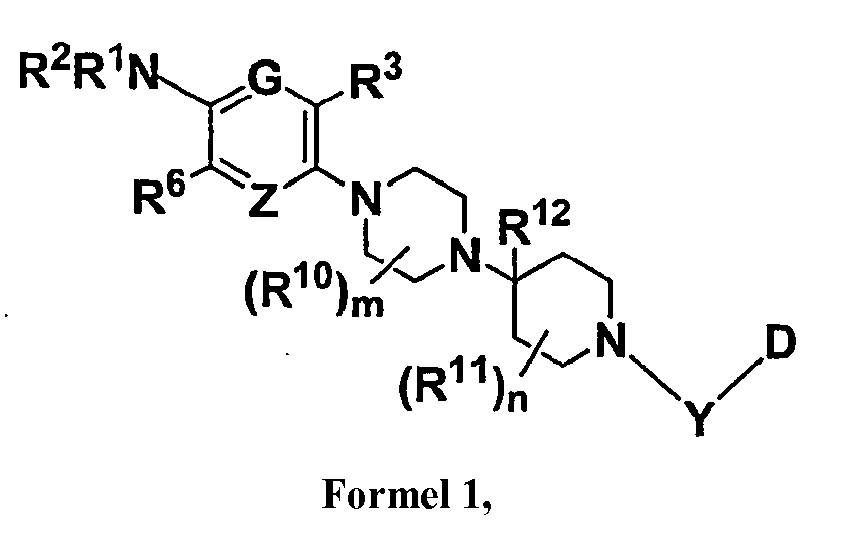 Z N, C(R29), NO oder NOH ist,G N, C(R4), NO oder NOH ist,R1 und R2 unabhängig fehlen oder vorliegen, und wenn sie vorliegen, jedes unabhängig ausgewählt ist aus der Gruppe, bestehend aus H, Alkyl, Alkoxy, Alkenyl, Carbonyl, Cycloalkyl, Cycloalkenyl, Alkylaryl, Arylalkyl, Aryl, Amino, Alkylamino, Amidinyl, Carboxamido, Cyano, Hydroxyl, Harnstoff, -N≡CH, =NCN, -(CH2)qOH, -(CH2)qOR31, -(CH2)qNH2, -(CH2)qNHR31, -(CH2)qN(R31)2, -(CH2)qC(=O)NHR31, -(CH2)qSO2R31, -(CH2)qNHSO2R31, -(CH2)qSO2NHR31, -C(=S)N(H)-Alkyl, -N(H)-S(O)2-Alkyl, -N(H)C(=O)N(H)-Alkyl, -S(O)2-Alkyl, -S(O)2NH2, -S(O)2N(H)-Alkyl, -S(O)2N(Alkyl)2, -S(O)2Aryl, -S(O)2Heteroaryl, -S(O)2-Heterocyclyl, -C(=S)N(H)-Cycloalkyl, -C(=O)N(H)NH2, -C(=O)-Alkyl, -C(=O)-Heteroaryl, -C(=O)-Heterocyclyl, -Heteroaryl, Heterocyclyl und Heterocyclenyl, oder alternativ das N mit den Resten R1 und R2 zusammengenommen ein Heterocyclyl, Heteroaryl oder -N=C(NH2)2 bildet,die R3-, R4-, R6- und R29-Reste gleich oder verschieden sein können, wobei jeder unabhängig ausgewählt ist aus der Gruppe, bestehend aus H, Alkyl, Alkylaryl, Aralkyl, -CN, CF3, Halogenalkyl, Cycloalkyl, Halogen, Hydroxyalkyl, -N=CH-(R31), -C(=O)N(R30)2, -N(R30)2, -OR30, -SO2(R31), -N(R30)C(=O)N(R30)2 und -N(R30)C(=O)R31,Die R10-Reste gleich oder verschieden sein können, wobei jeder unabhängig ausgewählt ist aus der Gruppe, bestehend aus H, Alkyl, Cycloalkyl, Aryl, Heteroaryl, Heterocyclenyl, Heterocyclyl, Alkylaryl, Arylalkyl, -CO2H, Hydroxyalkyl, -C(=O)N(R30)2, -(CH2)qOH, -(CH2)qOR31, -(CH2)qNHR31, -(CH2)qN(R31)2, -OR30, Halogen, =O und -C(=O)R31,die R11-Reste gleich oder verschieden sein können, wobei jeder unabhängig ausgewählt ist aus der Gruppe, bestehend aus H, Alkyl, Cycloalkyl, Aryl, Heteroaryl, Heterocyclyl, Heterocyclenyl, Alkylaryl, Arylalkyl, Hydroxyalkyl, Carboxamid, CO2H, -(CH2)qOH, -(CH2)qOR31, -(CH2)qNHR31, -(CH2)qN(R31)2, -OR30, Halogen, =O und -C(=O)R31,Die R12-Reste gleich oder verschieden sein können, wobei jeder unabhängig ausgewählt ist aus der Gruppe, bestehend aus H, Alkyl, -CN, -C(=O)N(R30)2, -(CH2)qOH, -(CH2)qOR31, -(CH2)qNHR31, -(CH2)qN(R31)2 und -S(O2)R31,D ein fünf- bis neungliedriger Cycloalkyl-, Cycloalkenyl-, Aryl-, Heteroaryl-, Heterocyclenyl- oder Heterocyclylring mit 0-4 Heteroatomen, unabhängig ausgewählt aus O, S oder N, ist, wobei Ring D unsubstituiert oder gegebenenfalls mit 1-5 unabhängig ausgewählten R20-Resten substituiert ist,die R20-Reste gleich oder verschieden sein können, wobei jeder unabhängig ausgewählt ist aus der Gruppe, bestehend aus H, Alkyl, Alkenyl, Alkylaryl, Alkinyl, Alkoxy, Alkylamino, Alkylthiocarboxy, Alkylheteroaryl, Alkylthio, Alkylsulfonyl, Alkylsulfonyl, Alkoxycarbonyl, Aminoalkyl, Amidinyl, Aralkyl, Aralkenyl, Aralkoxy, Aralkoxycarbonyl, Aralkylthio, Aryl, Aroyl, Aryloxy, Cyano, Cycloalkyl, Cycloalkenyl, Formyl, Guanidinyl, Halogen, Halogenalkyl, Heteroalkyl, Heteroaryl, Heterocyclyl, Heterocyclenyl, Hydroxyalkyl, Hydroxamat, Nitro, Trifluormethoxy, -(CH2)qOH, -(CH2)qOR31, -(CH2)qNH2, -(CH2)qNHR31, -(CH2)qN(R31)2, -(CH2)qC(=O)NHR31, -(CH2)qSO2R31, -(CH2)qNHSO2R31, -(CH2)qSO2NHR31, -Alkinyl-C(R31)2OR31, -C(=O)R30, -C(=O)N(R30)2, -C(=NR30)NHR30, -C(=NOH)N(R30)2, -C(=NOR31)N(R30)2, -C(=O)OR30, -N(R30)2, -N(R30)C(=O)R31, -NHC(=O)N(R30)2, -N(R30)C(=O)OR31, -N(R30)C(=NCN)N(R30)2, -N(R30)C(=O)N(R30)SO2(R31), -N(R30)C(=O)N(R30)2, -N(R30)SO2(R31), -N(R30)S(O)2N(R30)2, -OR30, -OC(=O)N(R30)2, -SR30, -SO2N(R30)2, -SO2(R31), -OSO2(R31) und -OSi(R30)3, oder alternativ zwei R20-Reste miteinander verknüpft sind, um einen fünf- oder sechsgliedrigen Aryl-, Cycloalkyl-, Heterocyclyl-, Heterocyclenyl- oder Heteroarylring zu bilden, wobei der fünf- oder sechsgliedrige Aryl-, Cycloalkyl-, Heterocyclyl-, Heterocyclenyl- oder Heteroarylring an Ring D kondensiert ist und der kondensierte Ring gegebenenfalls mit 0-4 R21-Resten substituiert ist,die R21-Reste gleich oder verschieden sein können, wobei jeder unabhängig ausgewählt ist aus der Gruppe, bestehend aus H, Alkyl, Alkenyl, Alkylaryl, Alkinyl, Alkoxy, Alkylamino, Alkylthiocarboxy, Alkylheteroaryl, Alkylthio, Alkylsulfonyl, Alkylsulfonyl, Alkoxycarbonyl, Aminoalkyl, Amidinyl, Aralkyl, Aralkenyl, Aralkoxy, Aralkoxycarbonyl, Aralkylthio, Aryl, Aroyl, Aryloxy, Carboxamido, Cyano, Cycloalkyl, Cycloalkenyl, Formyl, Guanidinyl, Halogen, Halogenalkyl, Heteroalkyl, Heteroaryl, Heterocyclyl, Heterocyclenyl, Hydroxyalkyl, Hydroxamat, Nitro, Trifluormethoxy, -(CH2)qOH, -(CH2)qOR31, -(CH2)qNH2, -(CH2)qNHR31, -(CH2)qN(R31)2, -(CH2)qC(=O)NHR31, -(CH2)qSO2R31, -(CH2)qNSO2R31, -(CH2)qSO2NHR31, -Alkinyl-C(R31)2OR31, -C(=O)R30, -C(=O)N(R30)2, -C(=NR30)NHR30, -C(=NOH)N(R30)2, -C(=NOR31)N(R30)2, -C(=O)OR30, -N(R30)2, -N(R30)C(=O)R31, -NHC(=O)N(R30)2, -N(R30)C(=O)OR31, -N(R30)C(=NCN)N(R30)2, -N(R30)C(=O)N(R30)SO2(R31), -N(R30)C(=O)N(R30)2, -N(R30)SO2(R31), -N(R30)S(O)2N(R30)2, -OR30, -OC(=O)N(R30)2, -SR30, -SO2N(R30)2, -SO2(R31), -OSO2(R31) und -OSi(R30)3,Y ausgewählt ist aus der Gruppe, bestehend aus -(CR13R13)r-, -CHR13C(=O)-, -(CHR13)rO-, -(CHR13)rN(R30)-, -C(=O)-, -C(=NR30)-, -C(=N-OR30)-, -CH(C(=O)NHR30)-, CH-Heteroaryl-, -C(R13R13)rC(R13)=C(R13)-, -(CHR13)rC(=O)- und -(CHR13)rN(H)C(=O)-, oder alternativ Y Cycloalkyl, Heterocyclenyl oder Heterocyclyl ist, wobei das Cycloalkyl, Heterocyclenyl oder Heterocyclyl mit Ring D kondensiert ist,die R13-Reste gleich oder verschieden sein können, wobei jeder unabhängig ausgewählt ist aus der Gruppe, bestehend aus H, Alkyl, Alkylaryl, Cycloalkyl, Alkoxy, Aryl, Heteroaryl, Heterocyclenyl, Heterocyclyl, Spiroalkyl, -CN, -CO2H, -C(=O)R30, -C(=O)N(R30)2, -(CHR30)qOH, -(CHR30)qOR31, -(CHR30)qNH2, -(CHR30)qNHR31, -(CH2)qC(=O)NHR31, -(CH2)qSO2R31, -(CH2)qNSO2R31,-(CH2)qSO2NHR31, -NH2, -N(R30)2, -N(R30)C(=O)N(R30)2, -N(R30)SO2(R31), -OH, OR30, -SO2N(R30)2 und -SO2(R31),die R30-Reste gleich oder verschieden sein können, wobei jeder unabhängig ausgewählt ist aus der Gruppe, bestehend aus H, Alkyl, Alkylaryl, Aryl, Aralkyl, Cycloalkyl, CN, -(CH2)qOH, -(CH2)qO-Alkyl, -(CH2)qO-Alkylaryl, -(CH2)qO-Aryl, -(CH2)qO-Aralkyl, -(CH2)qO-Cycloalkyl, -(CH2)qNH2, -(CH2)qNHAlkyl, -(CH2)qN(Alkyl)2, -(CH2)qNH-Alkylaryl, -(CH2)qNH-Aryl, -(CH2)qNH-Aralkyl, -(CH2)qNH-Cycloalkyl, -(CH2)qC(=O)NH-Alkyl, -(CH2)qC(=O)N(Alkyl)2, -(CH2)qC(=O)NH-Alkylaryl, -(CH2)qC(=O)NH-Aryl, -(CH2)qC(=O)NH-Aralkyl, -(CH2)qC(=O)NH-Cycloalkyl, -(CH2)qSO2-Alkyl, -(CH2)qSO2-Alkylaryl, -(CH2)qSO2-Aryl, -(CH2)qSO2-Aralkyl, -(CH2)qSO2-Cycloalkyl, -(CH2)qNSO2-Alkyl, -(CH2)qNSO2-Alkylaryl, -(CH2)qNSO2-Aryl, -(CH2)qNSO2-Aralkyl, -(CH2)qNSO2-Cycloalkyl, -(CH2)qSO2NH-Alkyl, -(CH2)qSO2NH-Alkylaryl, -(CH2)qSO2NH-Aryl, -(CH2)qSO2NH-Aralkyl, -(CH2)qSO2NH-Cycloalkyl, Heterocyclenyl, Heterocyclyl und Heteroaryl,die R31-Reste gleich oder verschieden sein können, wobei jeder unabhängig ausgewählt ist aus der Gruppe, bestehend aus Alkyl, Alkylaryl, Aryl, Aralkyl, Cycloalkyl, -(CH2)qOH, -(CH2)qO-Alkyl, -(CH2)qO-Alkylaryl, -(CH2)qO-Aryl, -(CH2)qO-Aralkyl, -(CH2)qO-Cycloalkyl, -(CH2)qNH2, -(CH2)qNH-Alkyl, -(CH2)qN(Alkyl)2, -(CH2)qNH-Alkylaryl, -(CH2)qNH-Aryl, -(CH2)qNH-Aralkyl, -(CH2)qNH-Cycloalkyl, -(CH2)qC(=O)NH-Alkyl, -(CH2)qC(=O)N(Alkyl)2, -(CH2)qC(=O)NH-Alkylaryl, -(CH2)qC(=O)NH-Aryl, -(CH2)qC(=O)NH-Aralkyl, -(CH2)qC(=O)NH-Cycloalkyl, -(CH2)qSO2-Alkyl, -(CH2)qSO2-Alkylaryl, -(CH2)qSO2-Aryl, -(CH2)qSO2-Aralkyl, -(CH2)qSO2-Cycloalkyl, -(CH2)qNSO2-Alkyl, -(CH2)qNSO2-Alkylaryl, -(CH2)qNSO2-Aryl, -(CH2)qNSO2-Aralkyl, -(CH2)qNSO2-Cycloalkyl, -(CH2)qSO2NH-Alkyl, -(CH2)qSO2NH-Alkylaryl, -(CH2)qSO2NH-Aryl, -(CH2)qSO2NH-Aralkyl, -(CH2)qSO2NH-Cycloalkyl, Heterocyclenyl, Heterocyclyl und Heteroaryl,m 0 bis 4 ist,n 0 bis 4 ist,jedes q gleich oder verschieden sein kann, wobei jedes unabhängig ausgewählt ist aus 1 bis 5, undr 1 bis 4 ist,mit der Maßgabe, dass nicht zwei benachbarte Doppelbindung in einem Ring vorliegen und dass, wenn ein Stickstoff durch zwei Alkylgruppen substituiert ist, die zwei Alkylgruppen gegebenenfalls miteinander verbunden sein können, um einen Ring zu bilden.
 - Die Verbindung gemäß Anspruch 1, wobei R1 und R2 unabhängig fehlen oder vorliegen, und wenn sie vorliegen, jedes unabhängig ausgewählt ist aus der Gruppe, bestehend aus H, Alkyl, Aryl, Amino, Alkoxy, Halogen, Hydroxy, Cycloalkyl, Cycloalkenyl, Arylalkyl, Amidinyl, Carboxamido, Heteroaryl, Heterocyclyl, Heterocyclenyl, Harnstoff, -S(O)2-Alkyl, -S(O)2N(H)-Alkyl, -S(O)2-Heteroaryl, -S(O)2-Heterocyclyl, -C(=O)-Heteroaryl, -C(=O)-Heterocyclyl, -S(O)2N(Alkyl)2 und -C(=S)N(H)-Cycloalkyl.
- Die Verbindung gemäß Anspruch 1, wobei R1 und R2 unabhängig fehlen oder vorliegen, und wenn sie vorliegen, jedes unabhängig ausgewählt ist aus der Gruppe, bestehend aus H, Alkylaryl, Aryl, Heteroaryl, -(CH2)qCF3, -(CH2)qOH, -(CH2)qOR31, -(CH2)qNH2, -(CH2)qNHR31, -(CH2)qN(R31)2, -(CH2)qC(=O)NHR31, -(CH2)qSO2R31, -(CH2)qNHSO2R31, -(CH2)qSO2NHR31, -(CH2)q-Amidinyl, Cyclopropyl, Cyclopropylhydroxyl, Cyclobutyl, Cyclobutylhydroxy, Cyclopentyl und Cyclopentylhydroxy und
q eine ganze Zahl von 1 bis 5 ist. - Die Verbindung nach Anspruch 1, wobei R1 und R2 unabhängig fehlen oder vorliegen, und wenn sie vorliegen, jedes unabhängig ausgewählt ist aus der Gruppe, bestehend aus H, -CH3, Fluorphenylmethylen, Trifluormethylphenylmethylen, Indanyl, Cyanophenylmethylen, Difluorphenylmethylen, Bromphenylmethylen, Chlorphenylmethylen, -CH2CH2-O-Phenyl, Cyclopentyl, Bromchlorphenylmethylen, Fluorchlorphenylmethylen, Dichlorphenylmethylen, Phenylmethylen, -(CH2)3Phenyl, -CH2CF3, Methoxylphenylmethylen, -CH(CH3)2, -C2H5, -CH2-Cyclopropyl, -(CH2)2CH3, Cyclohexylmethylen, Cyclohexyl, -CH2CH2SO2CH3, -CH2-CH2-NH2, -CH2CH2OCH3, Cyclopropyl, Isoxazolyl, -CH2CH2OH, -CH2CH2O-Phenyl, -CH2CH2CH3, -NH2, -(CH2)2NH2, Pyrazolyl, 5-Methylisoxazolyl, -CH2CH(OCH2CH3)2, -OCH3, -NHC(=O)NH2, Chlorpyridyl, Pyridylmethylen, -C(=O)NH-Cyclopropyl, -C(=O)N(H)C2H5, -C(=O)N(H)CH2CF3, -C(=O)N(H)C(CH3)3, -C(=S)N(H)-Cyclopropyl, -C(=O)NH2, -C(=O)N(H)CH3, -S(O)2CH3, -S(O)2N(CH3)2, -S(O)2CH2CH3, -C(=O)CH3, -S(O)2(CH2)2CH3, -C(=O)N(H)-Cyclohexyl, -C(=NH)NH2, -C(=O)N(H)NH2, -C(=O)N(H)CH(CH3)2, Thiazolyl, -C(=O)N(CH3)2, -S(O)2CH2CF3, Cyclopropyl, -S(O)2CF3, -CH2CH(OCH2CH3)2,


- Die Verbindung gemäß Anspruch 1, wobei R1 und R2 unabhängig fehlen oder vorliegen, und wenn sie vorliegen, jedes unabhängig ausgewählt ist aus der Gruppe, bestehend aus H, -CH3, -C2H5, Difluorphenylmethylen, Cyclopropyl, Dichlorphenylmethylen, -CH(CH3)2, Cyclohexylmethylen, Cyclohexyl, Isoxazolyl, Difluorphenyl, -CH2CH2OH, -CH2-CH2-N(CH3))2, -C(=O)N(H)-Cyclopropyl, -C(=O)N(H)C2H5, -C(=O)N(H)CH2CF3, -C(=O)N(H)CH(CH3)2, -C(=O)N(H)C(CH3)3, -C(=S)N(H)-Cyclopropyl, -C(=O)NH2, -C(=O)N(H)CH3, -S(O)2CH3, -S(O)2N(CH3)2, -S(O)2CH2CH3, -C(=O)CH3, -S(O)2CH2)2CH3, -C(=O)N(H)-Cyclohexyl, -C(=NH)NH2, -C(=O)N(H)NH2, Thiazolyl,

- Die Verbindung gemäß Anspruch 1, wobei Z N oder C(R29) ist.
- Die Verbindung gemäß Anspruch 6, wobei Z N ist.
- Die Verbindung gemäß Anspruch 6, wobei Z C(H), C(Alkyl), C(Halogen), C(CF3) oder C(N(R30)2) ist.
- Die Verbindung gemäß Anspruch 8, wobei Z C(Alkyl), C(F) oder C(NH2) ist.
- Die Verbindung gemäß Anspruch 1, wobei G N oder C(R4) ist.
- Die Verbindung gemäß Anspruch 10, wobei G N ist.
- Die Verbindung gemäß Anspruch 10, wobei G C(R4) ist.
- Die Verbindung gemäß Anspruch 10, wobei G C(H), C(Alkyl), C(Halogen), C(CF3) oder C(N(R30)2) ist.
- Die Verbindung gemäß Anspruch 1, wobei G und Z gleich sind.
- Die Verbindung gemäß Anspruch 1, wobei G und Z verschieden sind.
- Die Verbindung gemäß Anspruch 14, wobei G und Z N sind.
- Die Verbindung gemäß Anspruch 14, wobei G C(CR4) ist und Z C(R29) ist, wobei R4=R29.
- Die Verbindung gemäß Anspruch 15, wobei G N ist und Z C(R29) ist.
- Die Verbindung gemäß Anspruch 15, wobei G C(R4) ist und Z N ist.
- Die Verbindung gemäß Anspruch 1, wobei R3 ausgewählt ist aus der Gruppe, bestehend aus H, Alkyl, Halogenalkyl, Hydroxyalkyl, Halogen, -N(R30)2, -OR30 und -CF3.
- Die Verbindung gemäß Anspruch 20, wobei R3 ausgewählt ist aus der Gruppe, bestehend aus H, -CH3, -CH2CH3, Cyclopropyl, -F, -Cl, OCH3, OCF3 und CF3.
- Die Verbindung gemäß Anspruch 1, wobei Z N ist und R4 ausgewählt ist aus der Gruppe, bestehend aus H, Alkyl, Hydroxyalkyl, Halogen, OR30 oder CF3.
- Die Verbindung gemäß Anspruch 1, wobei R6 ausgewählt ist aus der Gruppe, bestehend aus H, Alkyl, Halogen, Hydroxyalkyl, -CN, -N(R30)2, -OR30, -N=CH-Alkyl und -NR30C(=O)-Alkyl.
- Die Verbindung gemäß Anspruch 23, wobei R6 ausgewählt ist aus der Gruppe, bestehend aus H, -NH2, -CH3, -CN und -F.
- Die Verbindung gemäß Anspruch 1, wobei R10 ausgewählt ist aus der Gruppe, bestehend aus H, Alkyl, Aralkyl, Hydroxyalkyl und Carbonyl.
- Die Verbindung gemäß Anspruch 25, wobei R10 ausgewählt ist aus der Gruppe, bestehend aus -CH3, -CH2CH3 und -CH2CH2CH3, und m 0-2 ist.
- Die Verbindung gemäß Anspruch1, wobei R11 ausgewählt ist aus der Gruppe, bestehend aus H, Alkyl, Hydroxyalkyl und Carbonyl.
- Die Verbindung gemäß Anspruch 27, wobei R11 H oder -CH3 ist.
- Die Verbindung gemäß Anspruch 1, wobei R12 ausgewählt ist aus der Gruppe, bestehend aus H, CN, -C(=O)N(R30)2 und Alkyl.
- Die Verbindung gemäß Anspruch 29, wobei R12 ausgewählt ist aus der Gruppe, bestehend aus H, -CH3, CN und -CH2CH3.
- Die Verbindung gemäß Anspruch 1, wobei die Ringatome von Ring D unabhängig C oder N sind und durch unabhängig ausgewählte 0-4 R20-Reste substituiert sind.
- Die Verbindung gemäß Anspruch 1, wobei Ring D ein 5- bis 6-gliedriger Aryl-, Heteroaryl-, Heterocyclenyl- oder HeterocyclyMng ist und durch unabhängig ausgewählte 0-4 R20-Reste substituiert ist.
- Die Verbindung gemäß Anspruch 1, wobei die R20-Reste gleich oder verschieden sein können, wobei jeder unabhängig ausgewählt ist aus der Gruppe, bestehend aus H, Alkyl, Alkylaryl, Alkinyl, Alkoxy, Alkylamino, Alkylheteroaryl, Alkylsulfinyl, Alkoxycarbonyl, Aminoalkyl, Amidinyl, Aralkyl, Aralkoxy, Aryl, Aryloxy, Cyano, Cycloalkyl, Cycloalkenyl, Halogen, Halogenalkyl, Heteroalkyl, Heteroaryl, Heterocyclyl, Hydroxyalkyl, Trifluormethyl, Trifluormethoxy, -(CH2)qOR31, -(CH2)qNHR31, -(CH2)qC(=O)NHR31, -(CH2)qSO2R31, -(CH2)qNSO2R31, -(CH2)qSO2NHR31, -AlkinylC(R31)2OR31, -C(=O)R30, -C(=O)N(R30)2, -C(=O)OR30, -N(R30)2, -N(R30)C(=O)R31, -NHC(=O)N(R30)2, -N(R30)C(=O)OR31, -N(R30)C(=NCN)N(R30)2, -N(R30)C(=O)N(R30)2, -N(R30)SO2(R31), -N(R30)SO2N(R30)2, -OR30, -OC(=O)N(R30)2, -SR30, -SO2N(R30)2, -SO2(R31), -OSO2(R31) und -OSi(R30)3.
- Die Verbindung gemäß Anspruch 1, wobei die R20-Reste gleich oder verschieden sein können, wobei jeder unabhängig ausgewählt ist aus der Gruppe, bestehend aus H, Alkyl, Amino, Halogen, CN, CH3, CF3, OCF3, -(CH2)qOR31, -(CH2)qNHR31, -(CH2)qC(=O)NHR31, -(CH2)qSO2R31, -(CH2)qNSO2R31, -(CH2)qSO2NHR31, -Alkinyl-C(R31)2OR31, -C(=O)R30, -C(=O)OR30, -N(R30)2, -N(R30)C(=O)R31, -NHC(=O)N(R30)2, -N(R30)C(=O)OR31, -N(R30)C(=NCN)R30)2, -N(R30)C(=O)N(R30)2, -OR30, -OC(=O)N(R30)2 und -OSO2(R31).
- Die Verbindung gemäß Anspruch 1, wobei zwei R20-Reste miteinander verknüpft sind, um einen fünf- oder sechsgliedrigen Aryl-, Cycloalkyl-, Heterocyclenyl-, Heterocyclyl- oder Heteroarylring zu bilden, wobei der fünf- oder sechsgliedrige Aryl-, Cycloalkyl-, Heterocyclenyl-, Heterocyclyl- und Heteroarylring an Ring D kondensiert ist und der kondensierte Ring gegebenenfalls mit 0 bis 4 R21-Resten substituiert ist.
- Die Verbindung gemäß Anspruch 1, wobei die R20-Reste gleich oder verschieden sein können, wobei jeder unabhängig ausgewählt ist aus der Gruppe, bestehend aus H, -CN, -CH3, -CF3, -CH2OH, -CO2H, -CO2CH3, -NH2, -NHCH3, -OCF3, -OH, F, Cl, Br, -C(=NOH)NH2, -OCH2CH2S(O2)CH3, -C(=O)NH2,

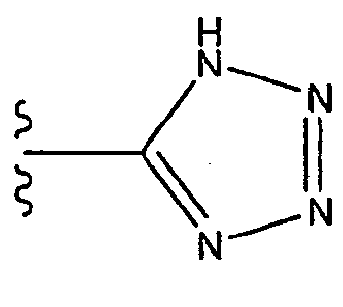

- Die Verbindung gemäß Anspruch 1, wobei Y ausgewählt ist aus der Gruppe, bestehend aus: -(CHR13)r-, -(CR13R13)r-, -C(=O)- und -CHR13C(=O)-.
- Die Verbindung gemäß Anspruch 1, wobei Y ausgewählt ist aus der Gruppe, bestehend aus: -CH2-, -CH(CH3)-, -CH(CH2OH)-, -C(=O)- und -CH(CO2-Alkyl)-.
- Die Verbindung gemäß Anspruch 1, wobei m 0-3 ist.
- Die Verbindung gemäß Anspruch 1, wobei n 0-2 ist.
- Die Verbindung gemäß Anspruch 1, wobei q 1, 2 oder 3 ist.
- Die Verbindung gemäß Anspruch 1, wobei r 1 oder 2 ist.
- Die Verbindung gemäß Anspruch 1, wobei Z N, C(H), C(Alkyl), C(F) oder C(NH2) ist,
G N oder C(R4) ist,
R1 und R2 unabhängig fehlen oder vorliegen, und wenn sie vorliegen, jedes unabhängig ausgewählt ist aus der Gruppe, bestehend aus H, Alkylaryl, Aryl, Heteroaryl, -(CH2)qCF3, -(CH2)qOH, -(CH2)qOR31, -(CH2)qNH2, -(CH2)qNHR31, -(CH2)q-N(R31)2, -(CH2)qC(=O)NHR31, -(CH2)qSO2R31, -(CH2)qNHSO2R31, -(CH2)qSO2NHR31, -(CH2)q-Amidinyl, Cyclopropyl, Cyclopropylhydroxyl, Cyclobutyl, Cyclobutylhydroxy, Cyclopentyl und Cyclopentylhydroxy,
R3 ausgewählt ist aus der Gruppe, bestehend aus H, Alkyl, Halogenalkyl, Hydroxyalkyl, Halogen, -N(R30)2, -OR30 und -CF3,
R4 ausgewählt ist aus der Gruppe, bestehend aus H, Alkyl, Halogenalkyl, Hydroxyalkyl, Halogen, -N(R30)2, -OR30 und -CF3,
R6 ausgewählt ist aus der Gruppe, bestehend aus H, Alkyl, Halogen, Hydroxyalkyl, -CN, -N(R30)2, -OR30, -N=CH-Alkyl und -NR30C(=O)-Alkyl,
R10 ausgewählt ist aus der Gruppe, bestehend aus H, Alkyl, Aralkyl, Hydroxyalkyl und Carbonyl, R11 ausgewählt ist aus der Gruppe, bestehend aus H, Alkyl, Hydroxyalkyl und Carbonyl,
R12 ausgewählt ist aus der Gruppe, bestehend aus H, CN, -C(=O)N(R30)2 und Alkyl,
Ring D ein 5- bis 6-gliedriger Aryl-, Heteroaryl-, Heterocyclenyl- oder Heterocyclylring ist und durch 0-4 R20-Reste substituiert ist,
die R20-Reste gleich oder verschieden sein können, wobei jeder unabhängig ausgewählt ist aus der Gruppe, bestehend aus H, Alkyl, Amino, Halogen, CN, CH3, CF3, OCF3, -(CH2)qOR31, -(CH2)qNHR31, -(CH2)qC(=O)NHR31, -(CH2)qSO2R31, -(CH2)qNSO2R31, -(CH2)qSO2NHR31, -Alkinyl-CR31)2OR31, -C(=O)R30, -C(=O)OR30, -N(R30)2, -N(R30)C(=O)R31, -NHC(=O)N(R30)2, -N(R30)C(=O)OR31, -N(R30)C(=NCN)N(R30)2, -N(R30)C(=O)N(R30)2, -OR30, -OC(=O)N(R30)2,
Y ausgewählt ist aus der Gruppe, bestehend aus: -CH2-, -CH(CH3)-, -CH(CH2OH)-, -C(=O)- und -CH(CO2-Alkyl)-,
m 0-2 ist,
n 0-2 ist,
q 1 oder 2 ist und
r 1 oder 2 ist. - Die Verbindung gemäß Anspruch 1, ausgewählt aus der Gruppe, bestehend aus:
Verbindung Nr. STRUKTUR 1 
2 
3 
4 
5 
6 
7 
8 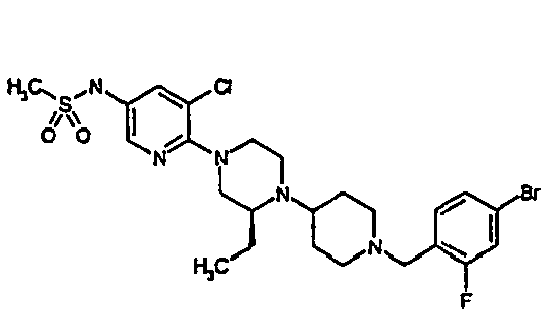
9 
10 
11 
12 
13 
14 
15 
16 
17 
18 
19 
20 
21 
22 
23 
24 
25 
26 
27 
28 
29 
30 
31 
32 
33 
34 
35 
36 
37 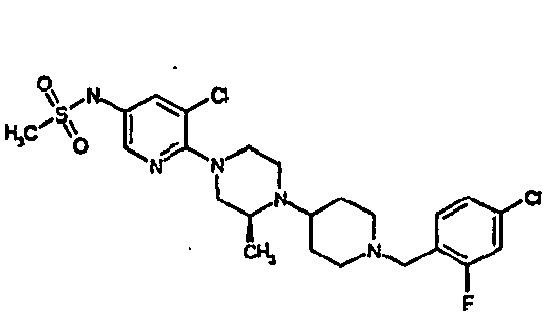
38 
39 
40 
41 
42 
43 
44 
45 
46 
47 
48 
49 
50 
51 
52 
53 
54 
55 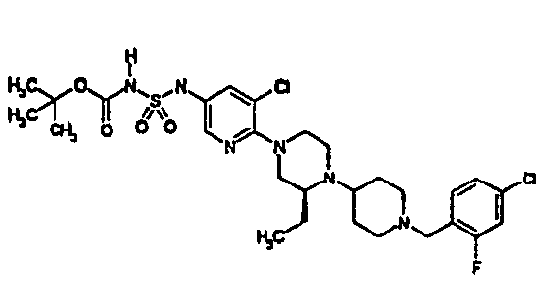
56 
57 
58 
59 
60 
61 
62 
63 
64 
65 
66 
67 
68 
69 
70 
71 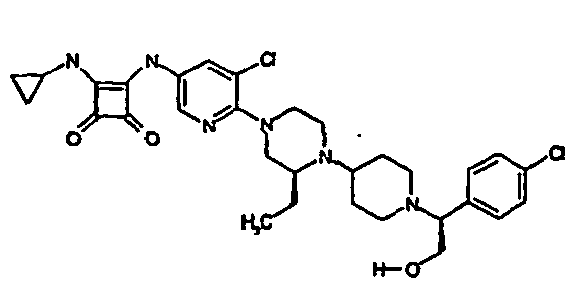
72 
73 
74 
75 
76 
77 
78 
79 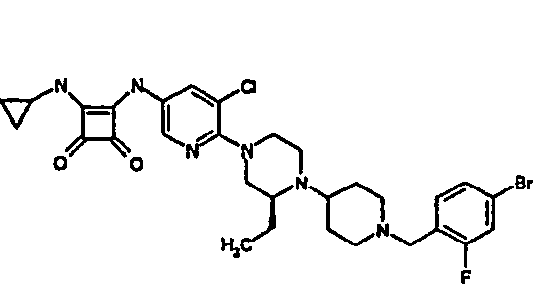
80 
81 
82 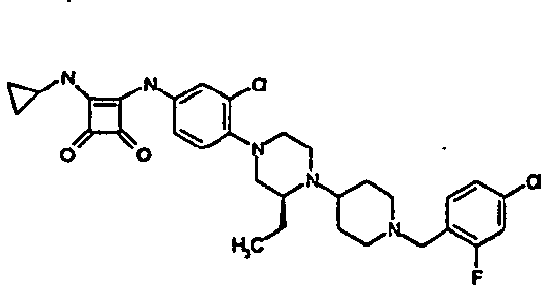
83 
84 
85 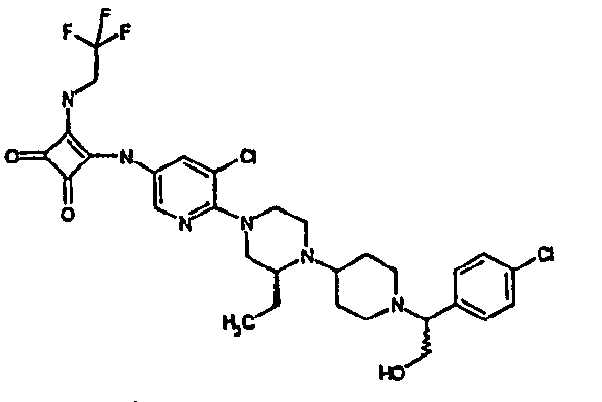
86 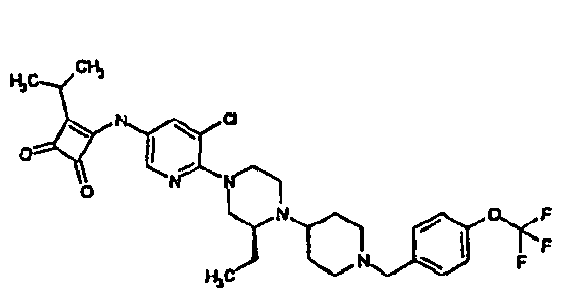
87 
88 
89 
90 
91 
92 
93 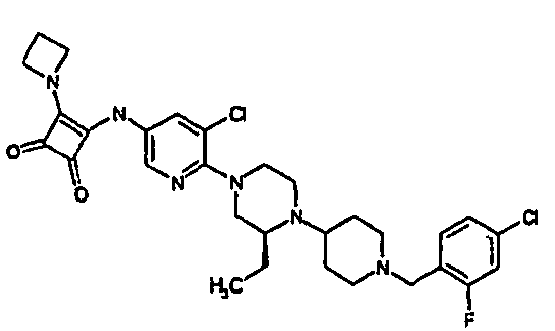
94 
95 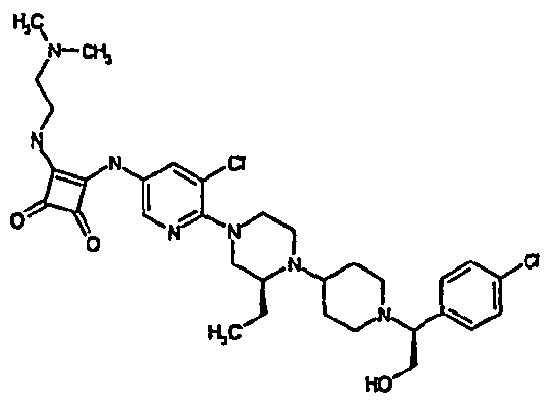
96 
97 
98 
99 
100 
101 
102 
103 
104 
105 
106 
107 
108 
109 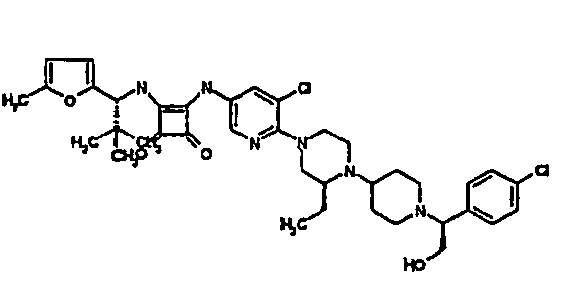
110 
111 
112 
113 
114 
115 
116 
117 
118 
119 
120 
121 
122 
123 
124 
125 
126 
127 
128 
129 
130 
131 
132 
133 
134 
135 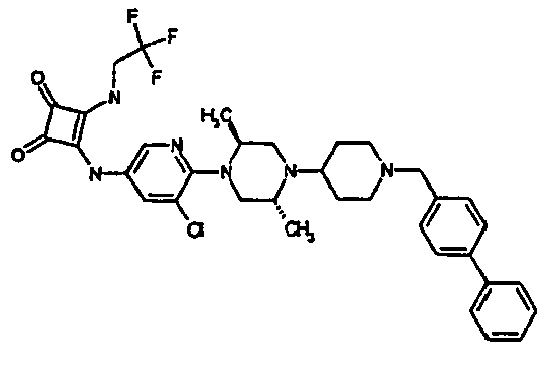
136 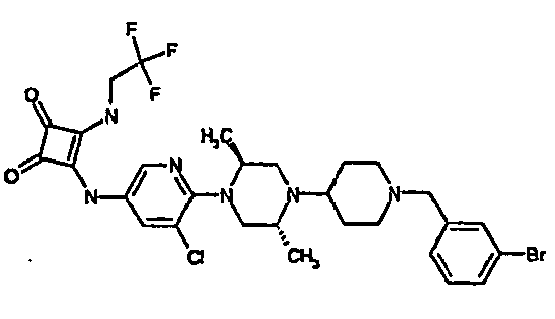
137 
138 
139 
140 
141 
142 
143 
144 
145 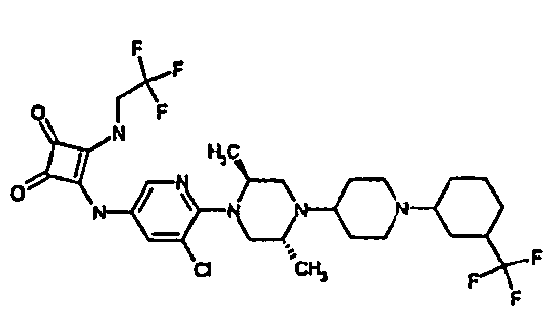
146 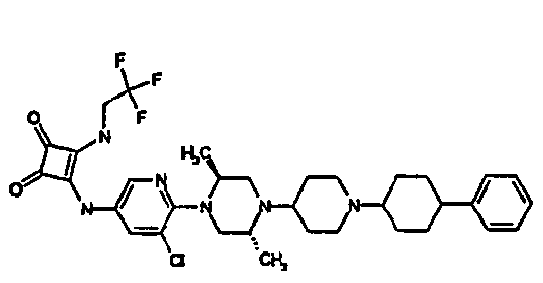
147 
148 
149 
150 
151 
152 
153 
154 
155 
156 
157 
158 
159 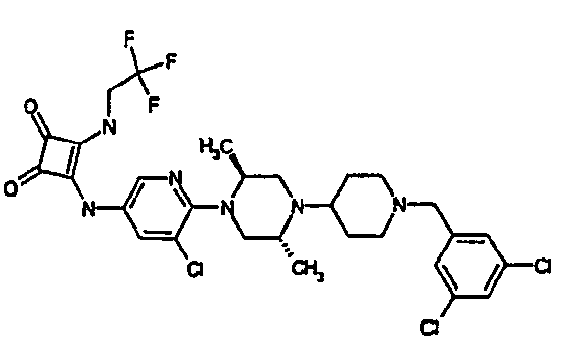
160 
161 
162 
163 
164 
165 
166 
167 
168 
169 
170 
171 
172 
173 
174 
175 
176 
177 
178 
179 
180 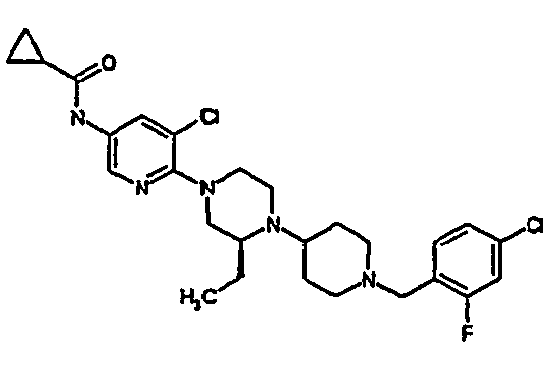
181 
182 
183 
184 
185 
186 
187 
188 
189 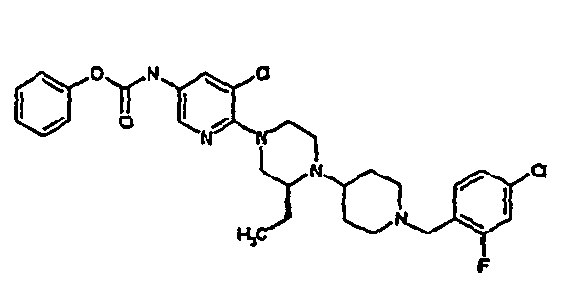
190 
191 
192 
193 
194 
195 
196 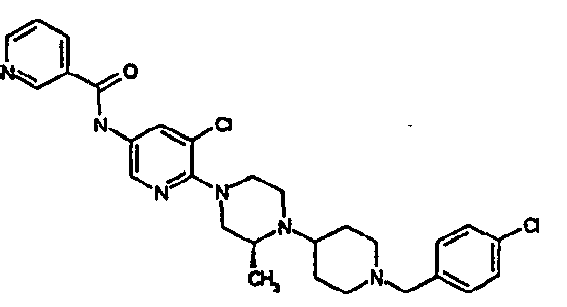
197 
198 
199 
200 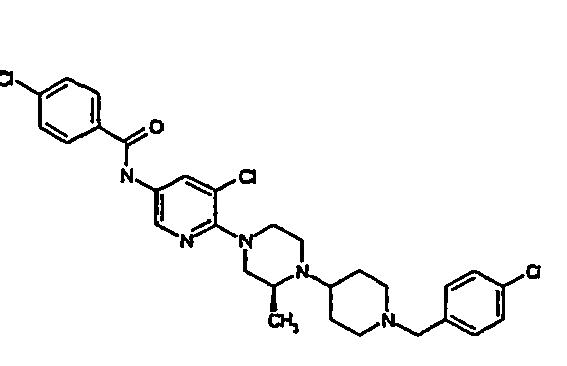
201 
202 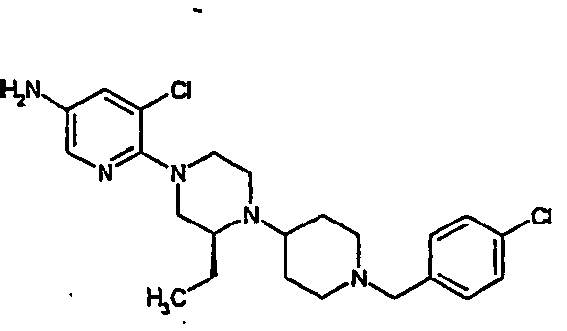
203 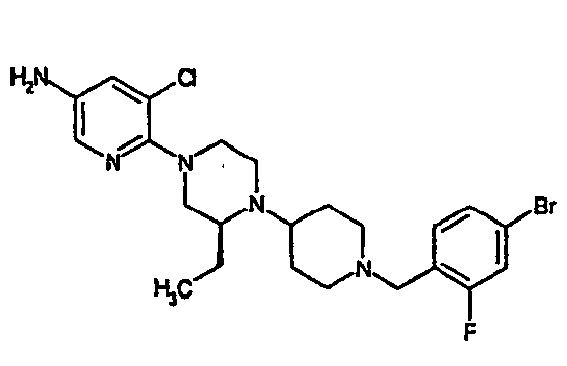
204 
205 
206 
207 
208 
209 
210 
211 
212 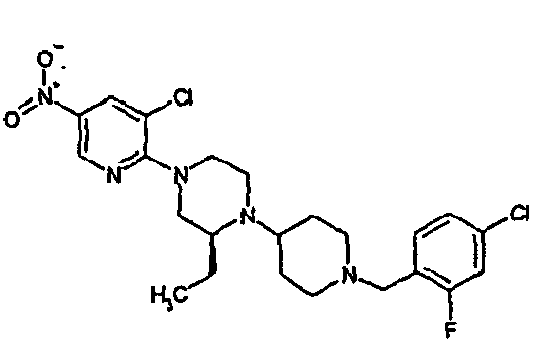
213 
214 
215 
216 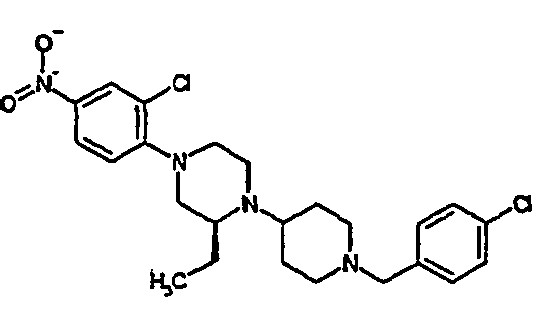
217 
218 
219 
220 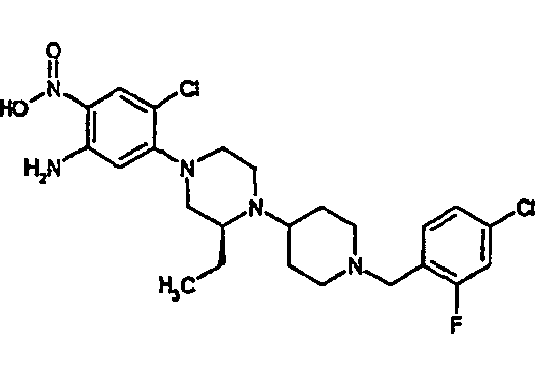
221 
222 
223 
224 
225 
226 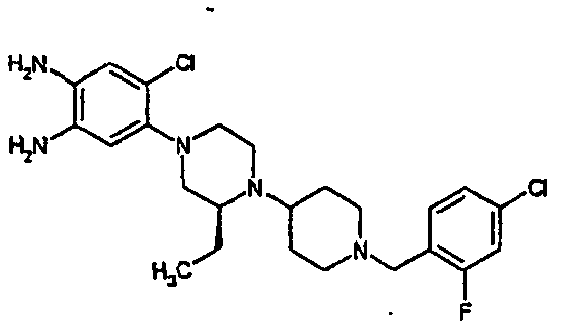
227 
228 
229 
230 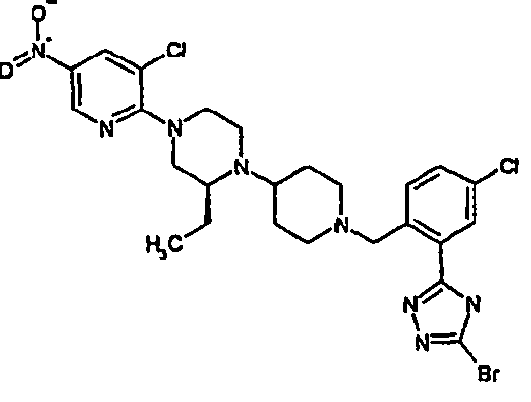
231 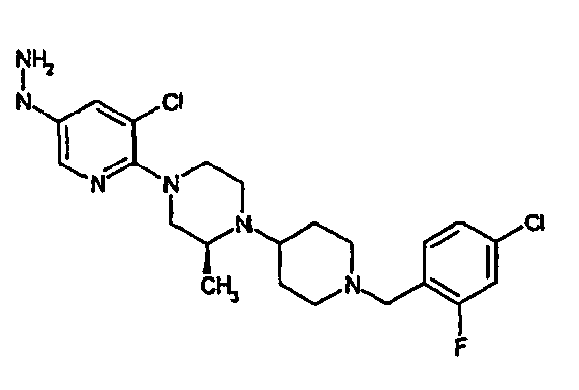
232 
233 
234 
235 
236 
237 
238 
239 
240 
241 
242 
243 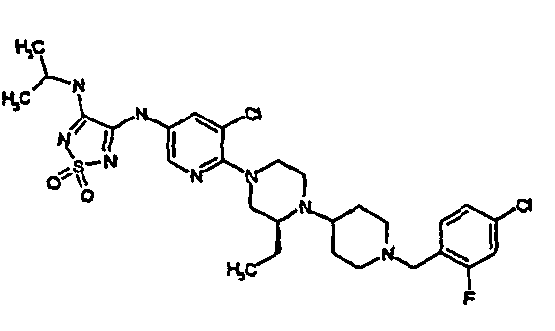
244 
245 
246 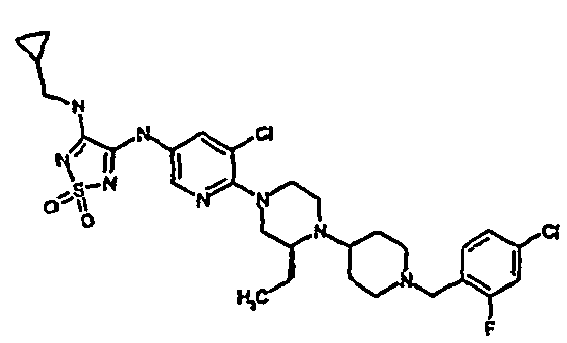
247 
248 
249 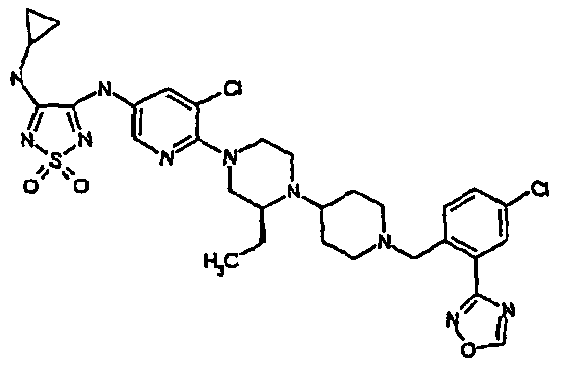
250 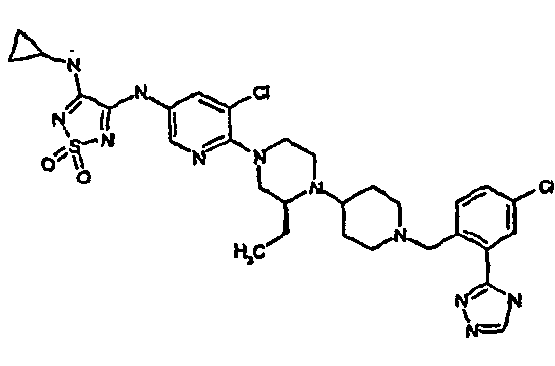
251 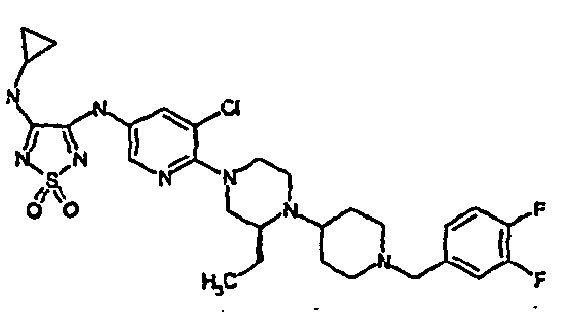
252 
253 
254 
255 
256 
257 
258 
259 
260 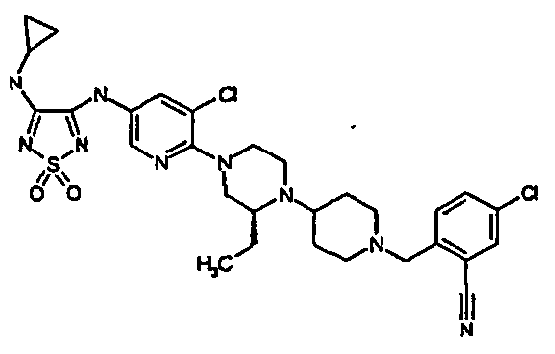
261 
262 
263 
264 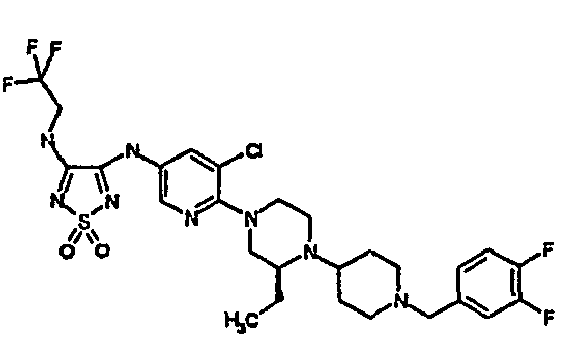
265 
266 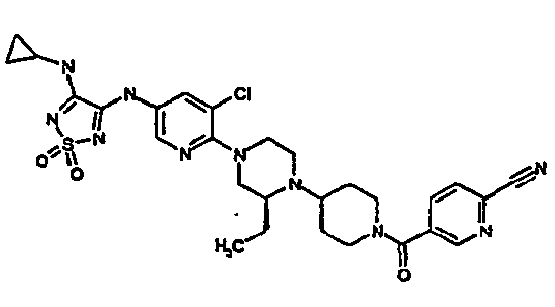
267 
268 
269 
270 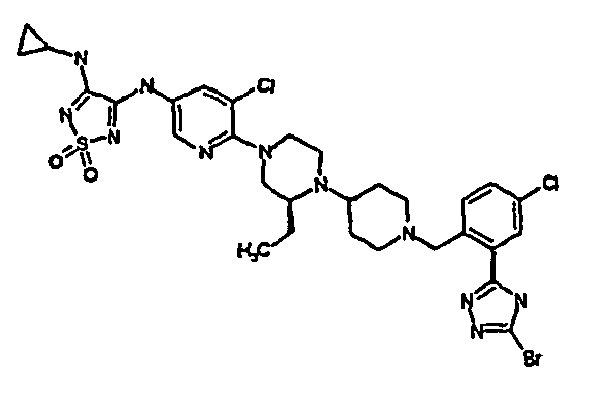
271 
272 
273 
274 
275 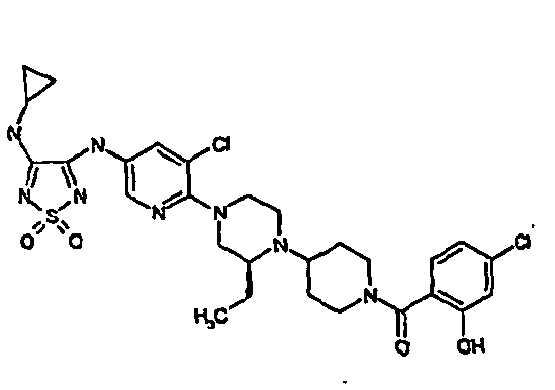
276 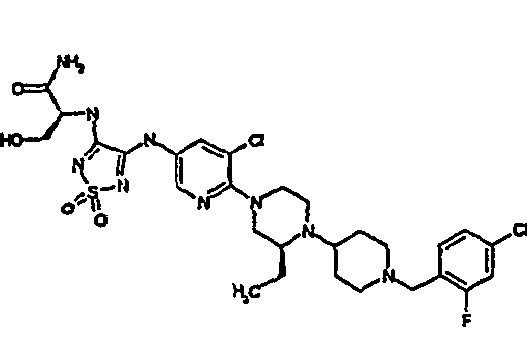
277 
278 
279 
280 
- Die Verbindung gemäß Anspruch 44, ausgewählt aus der Gruppe, bestehend aus:
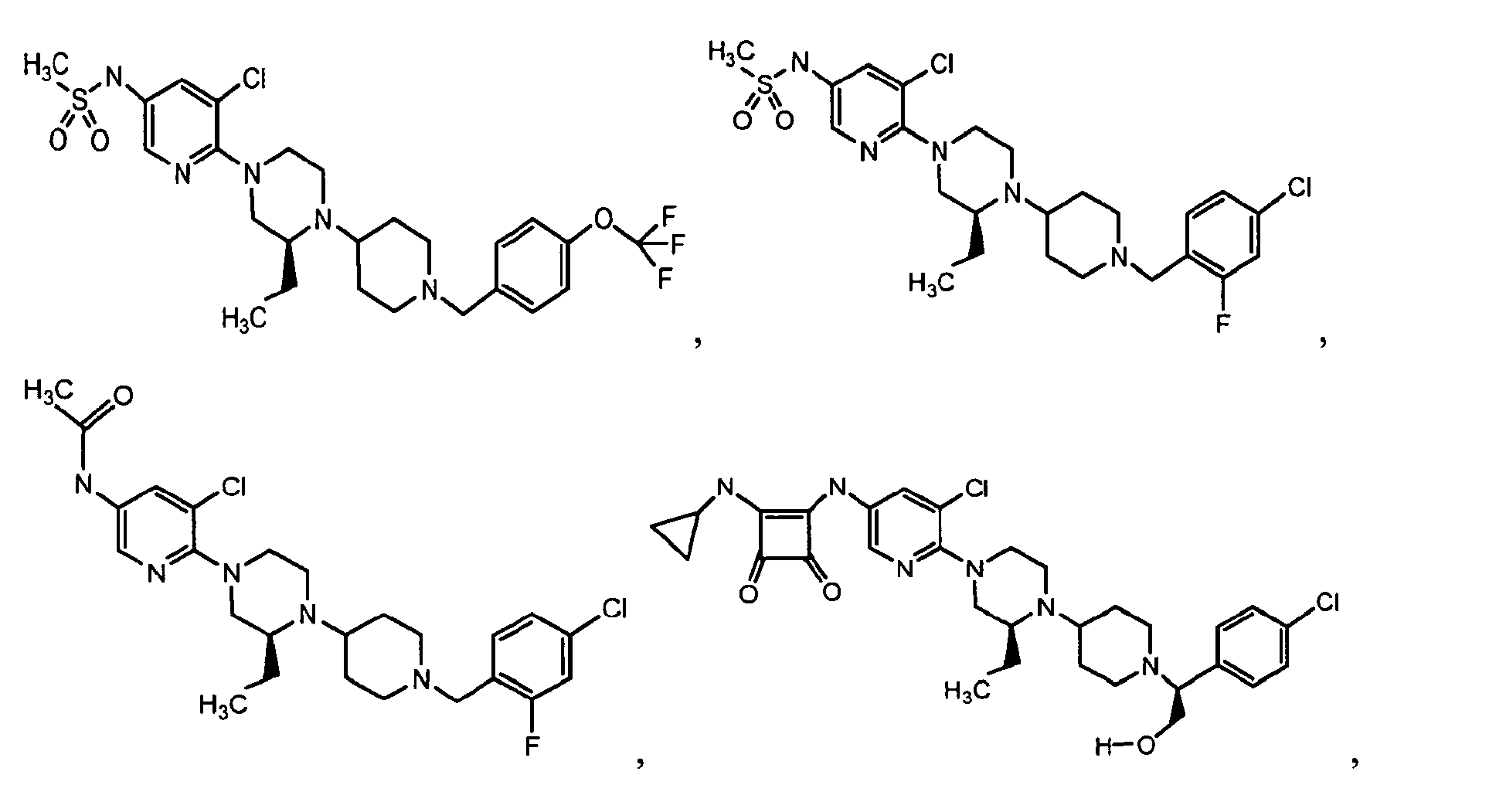

- Eine Verbindung gemäß einem vorhergehenden Anspruch in gereinigter Form.
- Eine pharmazeutische Zusammensetzung, die wenigstens eine Verbindung nach einem der Ansprüche 1 bis 45 oder ein(en) pharmazeutisch annehmbares/n Salz, Solvat oder Ester davon in Kombination mit wenigstens einem pharmazeutisch annehmbaren Träger enthält.
- Eine Kombination aus einer Verbindung nach einem der Ansprüche 1 bis 45 oder einem pharmazeutisch annehmbaren Salz, Solvat oder Ester davon und wenigstens einem zusätzlichen Mittel, Arzneimittel, Medikament, Antikörper und/oder Inhibitor zur Behandlung einer durch CXCR3-Chemokin-Rezeptor vermittelten Erkrankung.
- Die Kombination gemäß Anspruch 48, wobei das wenigstens eine Medikament ausgewählt ist aus: krankheitsmodifizierenden Antirheumatika, nichtsteroidalen Antiphlogistika, COX-2-selektiven Inhibitoren, COX-1-Inhibitoren, Immunsuppressiva, Steroiden, PDE-IV-Inhibitoren, Anti-TNF-α-Verbindungen, TNF-alpha-Konvertase-Inhibitoren, Cytokin-Inhibitoren, MMP-Inhibitoren, Glucokortikoiden, Chemokin-Inhibitoren, CB2-selektiven Inhibitoren, p38-Inhibitoren, Modifikatoren der biologischen Reaktion, Antiphlogistika und Therapeutika.
- Die Kombination gemäß Anspruch 48, wobei das wenigstens eine Arzneimittel ausgewählt ist aus: Sulfasalazin, 5-Aminosalicylsäure, Sulfapyridin, Anti-TNF-Verbindungen, Anti-IL-12-Verbindungen, Kortikosteroiden, Glucokortikoiden, auf T-Zellen-Rezeptor gerichteten Therapien, Immunsuppressiva, Methotrexat, Azathioprin und 6-Mercaptopurinen.
- Die Kombination gemäß Anspruch 48, wobei das wenigstens eine Arzneimittel ausgewählt ist aus: Cyclosporin A, FK-506, FTY720, beta-Interferon, Rapamycin, Mycophenolat, Prednisolon, Azathioprin, Cyclophosphamid und einem Antilymphozyt-Globulin.
- Die Kombination nach Anspruch 48, wobei das wenigstens eine Arzneimittel ausgewählt ist: beta-Interferon, Glatirameracetat, Kortikosteroiden, Glucokortikoiden, Methotrexat, Azothioprin, Mitoxantron, VLA-4-Inhibitoren, FTY720, Anti-IL-12-Verbindungen und CB2-selektiven Inhibitoren.
- Die Kombination nach Anspruch 52, wobei das wenigstens eine Arzneimittel ausgewählt ist aus: Methotrexat, Cyclosporin, Leflunomid, Sulfasalazin, Kortikosteroiden, β-Methason, β-Interferon, Glatirameracetat, Prednison, Etonercept und Infliximab.
- Die Kombination nach Anspruch 48, wobei das wenigstens eine Arzneimittel ausgewählt ist aus der Gruppe, bestehend aus: nichtsteroidalen Antiphlogistika, COX-2-Inhibitoren, COX-1-Inhibitoren, Immunsuppressiva, Cyclosporin, Methotrexat, Steroiden, PDE-IV-Inhibitoren, Anti-TNF-α-Verbindungen, MMP-Inhibitoren, Kortikosteroiden, Glucokortikoiden, Chemokin-Inhibitoren, CB2-selektiven Inhibitoren, Caspase(ICE)-Inhibitoren und anderen Verbindungsklassen, die für die Behandlung von rheumatoider Arthritis indiziert sind.
- Die Kombination nach Anspruch 48, wobei das wenigstens eine Arzneimittel ausgewählt ist aus der Gruppe, bestehend aus: Immunsuppressiva, Cyclosporinen, Methotrexat, Steroiden, Kortikosteroiden, Anti-TNF-α-Verbindungen, Anti-IL-Verbindungen, Anti-IL-23-Verbindungen, Vitamin-A- und -D-Verbindungen und Fumaraten.
- Die Kombination nach Anspruch 48, wobei das wenigstens eine Arzneimittel ausgewählt ist aus der Gruppe, bestehend aus: Immunsuppressiva, Cyclosporinen, Methotrexat, FK506, Steroiden, Kortikosteroiden und Anti-TNF-α-Verbindungen.
- Eine Verbindung wie in einem der Ansprüche 1 bis 45 definiert oder ein pharmazeutisch annehmbares/r Salz, Solvat oder Ester davon zur Verwendung bei einem Verfahren zur Behandlung des menschlichen Körpers durch Therapie.
- Die Verbindung zur Verwendung gemäß Anspruch 57, wobei die Therapie die Behandlung einer durch CXCR3-Chemokin-Rezeptor vermittelten Erkrankung, die Inhibierung oder Blockierung von durch T-Zellen vermittelter Chemotaxis oder die Behandlung einer entzündlichen Erkrankung, von rheumatoider Arthritis, multipler Sklerose, entzündlicher Darmerkrankung, Transplantatabstoßung, Psoriasis, fixen Arzneiexanthemen, kutanen Spättyp-Überempfindlichkeitsreaktionen, Augenentzündung, Lepra tuberculosa und Krebs, Typ-1-Diabetes oder viraler Meningitis ist.
- Verwendung einer Verbindung nach einem der Ansprüche 1 bis 45 oder eines pharmazeutisch annehmbaren Salzes, Solvats oder Esters davon zur Herstellung eines Medikaments zur Behandlung einer durch CXCR3-Chemokin-Rezeptor vermittelten Erkrankung, Inhibierung oder Blockierung von durch T-Zellen vermittelter Chemotaxis oder zur Behandlung einer entzündlichen Erkrankung, von rheumatoider Arthritis, multipler Sklerose, entzündlicher Darmerkrankung, Transplantatabstoßung, Psoriasis, fixen Arzneiexanthemen, kutanen Spättyp-Überempfindlichkeitsreaktionen, Augenentzündung, Lepra tuberculosa und Krebs, Typ-1-Diabetes oder viraler Meningitis.
Applications Claiming Priority (2)
| Application Number | Priority Date | Filing Date | Title |
|---|---|---|---|
| US65333905P | 2005-02-16 | 2005-02-16 | |
| PCT/US2006/005266 WO2006088920A1 (en) | 2005-02-16 | 2006-02-14 | Amine-linked pyridyl and phenyl substituted piperazine-piperidines with cxcr3 antagonist activity |
Publications (2)
| Publication Number | Publication Date |
|---|---|
| EP1853583A1 EP1853583A1 (de) | 2007-11-14 |
| EP1853583B1 true EP1853583B1 (de) | 2011-09-07 |
Family
ID=36499283
Family Applications (1)
| Application Number | Title | Priority Date | Filing Date |
|---|---|---|---|
| EP06735089A Expired - Lifetime EP1853583B1 (de) | 2005-02-16 | 2006-02-14 | Amingebundene pyridyl- und phenylsubstituierte piperazin-piperidine mit cxcr3-antagonistischer aktivität |
Country Status (10)
| Country | Link |
|---|---|
| US (1) | US7566718B2 (de) |
| EP (1) | EP1853583B1 (de) |
| JP (2) | JP4688889B2 (de) |
| CN (1) | CN101203509B (de) |
| AR (1) | AR054185A1 (de) |
| AT (1) | ATE523506T1 (de) |
| CA (1) | CA2598460C (de) |
| MX (1) | MX2007009948A (de) |
| TW (1) | TWI316514B (de) |
| WO (1) | WO2006088920A1 (de) |
Families Citing this family (63)
| Publication number | Priority date | Publication date | Assignee | Title |
|---|---|---|---|---|
| SI1663197T1 (sl) | 2003-09-09 | 2008-06-30 | Biogen Idec Internat Gmbh | Uporaba derivatov fumarne kisline za zdravljenje sräśne insuficience in astme |
| BRPI0509803A (pt) | 2004-04-13 | 2007-09-18 | Incyte Corp | derivados de piperazinilpiperidina como antagonistas de receptor de quimiocina |
| GB2418427A (en) | 2004-09-02 | 2006-03-29 | Univ Cambridge Tech | Ligands for G-protein coupled receptors |
| AU2006214378A1 (en) * | 2005-02-16 | 2006-08-24 | Pharmacopeia, Inc. | Pyridyl and phenyl substituted piperazine-piperidines with CXCR3 antagonist activity |
| MX2007009949A (es) * | 2005-02-16 | 2007-09-26 | Schering Corp | Pirazinil-piperazin-piperidinas sustituidas con heteroarilo con actividad antagonista de cxcr3. |
| CA2598489A1 (en) * | 2005-02-16 | 2006-08-24 | Schering Corporation | Piperazine-piperidines with cxcr3 antagonist activity |
| CN101146793A (zh) * | 2005-02-16 | 2008-03-19 | 先灵公司 | 具有cxcr3拮抗剂活性的新的杂环取代了的吡啶或苯基化合物 |
| TW200714610A (en) | 2005-02-16 | 2007-04-16 | Univ Maryland | CXCR3 is a gliadin receptor |
| BRPI0607946A2 (pt) * | 2005-02-16 | 2009-10-20 | Schering Corp | piperazina-piperidinas substituìdas por pirazinila com atividade de antagonista cxcr3 |
| CA2598456A1 (en) * | 2005-02-16 | 2006-08-24 | Schering Corporation | Heterocyclic substituted piperazines with cxcr3 antagonist activity |
| JP2009511582A (ja) * | 2005-10-11 | 2009-03-19 | シェーリング コーポレイション | Cxcr3拮抗薬活性を有する置換複素環式化合物 |
| CN101460482B (zh) * | 2006-03-21 | 2013-03-27 | 默沙东公司 | 具有cxcr3拮抗剂活性的杂环取代的吡啶化合物 |
| MX2009000577A (es) * | 2006-07-14 | 2009-03-09 | Schering Corp | Compuestos de piperazina sustituida heterociclica con actividad antagonista de cxcr3. |
| AR064609A1 (es) * | 2006-12-22 | 2009-04-15 | Schering Corp | Piperazinas sustituidas, composiciones farmaceuticas que las comprenden y su uso en el tratamiento de enfermedades mediadas por el receptor de quimiocinas cxcr3. |
| EP2680006A1 (de) | 2007-02-08 | 2014-01-01 | Biogen Idec MA Inc. | NRF2-screening-Assays sowie entsprechende Verfahren und Zusammensetzungen |
| CA2678577A1 (en) * | 2007-02-26 | 2008-09-04 | Vitae Pharmaceuticals, Inc. | Cyclic urea and carbamate inhibitors of 11.beta.-hydroxysteroid dehydrogenase 1 |
| CN101678082B (zh) | 2007-03-26 | 2013-06-19 | 再生医药有限公司 | 使用cxcl9和抗cxcl9抗体促进骨髓保护和再生的方法 |
| EP2183228B1 (de) * | 2007-07-26 | 2014-08-20 | Vitae Pharmaceuticals, Inc. | ZYKLISCHE 11ß-HYDROXYSTEROID-DEHYDROGENASE-1-HEMMER |
| AR069207A1 (es) * | 2007-11-07 | 2010-01-06 | Vitae Pharmaceuticals Inc | Ureas ciclicas como inhibidores de la 11 beta - hidroxi-esteroide deshidrogenasa 1 |
| CA2708303A1 (en) | 2007-12-11 | 2009-06-18 | Vitae Pharmaceuticals, Inc. | Cyclic urea inhibitors of 11.beta.-hydroxysteroid dehydrogenase 1 |
| GB2455539B (en) * | 2007-12-12 | 2012-01-18 | Cambridge Entpr Ltd | Anti-inflammatory compositions and combinations |
| AU2008335709A1 (en) * | 2007-12-13 | 2009-06-18 | Amgen Inc. | Gamma secretase modulators |
| TW200934490A (en) * | 2008-01-07 | 2009-08-16 | Vitae Pharmaceuticals Inc | Lactam inhibitors of 11 &abgr;-hydroxysteroid dehydrogenase 1 |
| WO2009094169A1 (en) | 2008-01-24 | 2009-07-30 | Vitae Pharmaceuticals, Inc. | Cyclic carbazate and semicarbazide inhibitors of 11beta-hydroxysteroid dehydrogenase 1 |
| JP5734666B2 (ja) * | 2008-02-11 | 2015-06-17 | ヴァイティー ファーマシューティカルズ,インコーポレイテッド | 11β−ヒドロキシステロイドデヒドロゲナーゼ1の1,3−オキサアゼパン−2−オン及び1,3−ジアゼパン−2−オン阻害剤 |
| US8598160B2 (en) * | 2008-02-15 | 2013-12-03 | Vitae Pharmaceuticals, Inc. | Cycloalkyl lactame derivatives as inhibitors of 11-beta-hydroxysteroid dehydrogenase 1 |
| JP5538356B2 (ja) * | 2008-03-18 | 2014-07-02 | ヴァイティー ファーマシューティカルズ,インコーポレイテッド | 11β−ヒドロキシステロイドデヒドロゲナーゼ1型の阻害剤 |
| CL2009001059A1 (es) * | 2008-05-01 | 2010-11-12 | Boehringer Ingelheim Int | Compuestos derivados de 1,3-oxazin-2-ona-3,6 sustituidos, inhibidores de la actividad de la 11-beta-hidroxiesteroide deshidrogenasa i; composicion farmaceutica que los comprende; utiles en el tratamiento de enfermedades tales como diabetes mellitus, entre otras. |
| CA2723032A1 (en) * | 2008-05-01 | 2009-11-05 | Vitae Pharmaceuticals, Inc. | Cyclic inhibitors of 11beta-hydroxysteroid dehydrogenase 1 |
| AR071236A1 (es) | 2008-05-01 | 2010-06-02 | Vitae Pharmaceuticals Inc | Inhibidores ciclicos de la 11beta-hidroxiesteroide deshidrogenasa 1 |
| WO2009134387A1 (en) | 2008-05-01 | 2009-11-05 | Vitae Pharmaceuticals, Inc. | Cyclic inhibitors of 11beta-hydroxysteroid dehydrogenase 1 |
| TWI433838B (zh) * | 2008-06-25 | 2014-04-11 | 必治妥美雅史谷比公司 | 作為趨化因子受體活性調節劑之六氫吡啶衍生物 |
| US8846668B2 (en) | 2008-07-25 | 2014-09-30 | Vitae Pharmaceuticals, Inc. | Inhibitors of 11beta-hydroxysteroid dehydrogenase 1 |
| WO2010011314A1 (en) | 2008-07-25 | 2010-01-28 | Boehringer Ingelheim International Gmbh | Cyclic inhibitors of 11 beta-hydroxysteroid dehydrogenase 1 |
| UA103198C2 (en) | 2008-08-04 | 2013-09-25 | Новартис Аг | Squaramide derivatives as cxcr2 antagonists |
| CA2744946A1 (en) | 2009-02-04 | 2010-08-12 | Boehringer Ingelheim International Gmbh | Cyclic inhibitors of 11.beta.-hydroxysteroid dehydrogenase 1 |
| TW201039034A (en) * | 2009-04-27 | 2010-11-01 | Chunghwa Picture Tubes Ltd | Pixel structure and the method of forming the same |
| UA109255C2 (ru) | 2009-04-30 | 2015-08-10 | Берінгер Інгельхайм Інтернешнл Гмбх | Циклические ингибиторы 11бета-гидроксистероиддегидрогеназы 1 |
| KR20120061771A (ko) * | 2009-04-30 | 2012-06-13 | 비타이 파마슈티컬즈, 인코포레이티드 | 11베타-하이드록시스테로이드 탈수소효소 1의 고리형 억제제 |
| EP2440537A1 (de) | 2009-06-11 | 2012-04-18 | Vitae Pharmaceuticals, Inc. | Cyclische hemmer der 11beta-hydroxysteroiddehydrogenase 1 auf basis der 1,3 -oxazinan- 2 -on-struktur |
| WO2011002910A1 (en) | 2009-07-01 | 2011-01-06 | Vitae Pharmaceuticals, Inc. | Cyclic inhibitors of 11beta-hydroxysteroid dehydrogenase 1 |
| US8933072B2 (en) | 2010-06-16 | 2015-01-13 | Vitae Pharmaceuticals, Inc. | Substituted 5-,6- and 7-membered heterocycles, medicaments containing such compounds, and their use |
| JP5813106B2 (ja) | 2010-06-25 | 2015-11-17 | ベーリンガー インゲルハイム インターナショナル ゲゼルシャフト ミット ベシュレンクテル ハフツング | 代謝障害の処置のための11−β−HSD1のインヒビターとしてのアザスピロヘキサノン |
| WO2012000904A1 (en) | 2010-06-28 | 2012-01-05 | INSERM (Institut National de la Santé et de la Recherche Médicale) | Pharmaceutical composition for use in the treatment of glaucoma |
| GB201017345D0 (en) | 2010-10-14 | 2010-11-24 | Proximagen Ltd | Receptor antagonists |
| PH12013500808A1 (en) | 2010-11-02 | 2015-10-07 | Boehringer Ingelheim Int | Pharmaceutical combinations for the treatment of metabolic disorders |
| HUE035751T2 (hu) | 2011-09-02 | 2018-08-28 | Novartis Ag | Gyulladásgátló szubsztituált ciklobuténdion vegyület kolinsó |
| CA2852160A1 (en) | 2011-10-28 | 2013-05-02 | Galderma Research & Development | New leukocyte infiltrate markers for rosacea and uses thereof |
| US9266876B2 (en) | 2012-02-02 | 2016-02-23 | Actelion Pharmaceuticals Ltd. | 4-(benzoimidazol-2-yl)-thiazole compounds and related aza derivatives |
| WO2013135674A1 (en) * | 2012-03-12 | 2013-09-19 | Syngenta Participations Ag | Insecticidal 2-aryl-acetamide compounds |
| WO2014117035A1 (en) | 2013-01-24 | 2014-07-31 | Transderm, Inc. | COMPOSITIONS FOR TRANSDERMAL DELIVERY OF mTOR INHIBITORS |
| EA030067B1 (ru) | 2013-07-22 | 2018-06-29 | Идорсиа Фармасьютиклз Лтд | Производные 1-(пиперазин-1-ил)-2-([1,2,4]триазол-1-ил)этанона |
| EP3578176A1 (de) * | 2013-10-08 | 2019-12-11 | Lu, Qing-Bin | Nicht-platin-basierte antikrebsverbindungen zur verwendung in einer gezielten chemotherapie |
| US9763992B2 (en) | 2014-02-13 | 2017-09-19 | Father Flanagan's Boys' Home | Treatment of noise induced hearing loss |
| AR099789A1 (es) | 2014-03-24 | 2016-08-17 | Actelion Pharmaceuticals Ltd | Derivados de 8-(piperazin-1-il)-1,2,3,4-tetrahidro-isoquinolina |
| JP6337218B2 (ja) | 2015-01-15 | 2018-06-06 | イドーシア ファーマシューティカルズ リミテッドIdorsia Pharmaceuticals Ltd | Cxcr3受容体調節剤としてのヒドロキシアルキル−ピペラジン誘導体 |
| AR103399A1 (es) | 2015-01-15 | 2017-05-10 | Actelion Pharmaceuticals Ltd | Derivados de (r)-2-metil-piperazina como moduladores del receptor cxcr3 |
| US11311552B2 (en) | 2015-04-02 | 2022-04-26 | Proximagen, Llc | Therapies for cancer |
| US12084472B2 (en) | 2015-12-18 | 2024-09-10 | Ardelyx, Inc. | Substituted 4-phenyl pyridine compounds as non-systemic TGR5 agonists |
| TWI773657B (zh) | 2015-12-18 | 2022-08-11 | 美商亞德利克斯公司 | 作爲非全身tgr5促效劑之經取代之4-苯基吡啶化合物 |
| JP7108631B2 (ja) | 2017-01-06 | 2022-07-28 | パルヴェラ セラピューティクス、インク. | mTOR阻害剤の無水組成物およびその使用方法 |
| US11000513B2 (en) | 2018-07-02 | 2021-05-11 | Palvella Therapeutics, Inc. | Anhydrous compositions of mTOR inhibitors and methods of use |
| GEP20237476B (en) | 2018-09-21 | 2023-03-27 | Pfizer | N-substituted-dioxocyclobutenylamino-3-hydroxypicolinamides useful as ccr6 inhibitors |
Citations (2)
| Publication number | Priority date | Publication date | Assignee | Title |
|---|---|---|---|---|
| WO2006088840A1 (en) * | 2005-02-16 | 2006-08-24 | Schering Corporation | Novel heterocyclic substituted pyridine or phenyl compounds with cxcr3 antagonist activity |
| WO2006088837A2 (en) * | 2005-02-16 | 2006-08-24 | Schering Corporation | Heterocyclic substituted piperazines with cxcr3 antagonist activity |
Family Cites Families (7)
| Publication number | Priority date | Publication date | Assignee | Title |
|---|---|---|---|---|
| US6498161B1 (en) * | 1999-04-06 | 2002-12-24 | Merck & Co., Inc. | Pyrrolidine modulators of chemokine receptor activity |
| CA2371583C (en) * | 1999-05-04 | 2005-09-13 | Schering Corporation | Piperazine derivatives useful as ccr5 antagonists |
| GB0203994D0 (en) | 2002-02-20 | 2002-04-03 | Celltech R&D Ltd | Chemical compounds |
| DE60326436D1 (en) * | 2002-03-13 | 2009-04-16 | Janssen Pharmaceutica Nv | Aminoderivate als histone-deacetylase-inhibitoren |
| JPWO2003082855A1 (ja) * | 2002-03-28 | 2005-08-04 | 協和醗酵工業株式会社 | 抗炎症剤 |
| EP1633737A1 (de) * | 2003-06-13 | 2006-03-15 | Schering Aktiengesellschaft | Chinolylamidderivate als ccr-5-antagonisten |
| GB0315203D0 (en) | 2003-06-28 | 2003-08-06 | Celltech R&D Ltd | Chemical compounds |
-
2006
- 2006-02-14 EP EP06735089A patent/EP1853583B1/de not_active Expired - Lifetime
- 2006-02-14 JP JP2007556254A patent/JP4688889B2/ja not_active Expired - Fee Related
- 2006-02-14 WO PCT/US2006/005266 patent/WO2006088920A1/en not_active Ceased
- 2006-02-14 MX MX2007009948A patent/MX2007009948A/es active IP Right Grant
- 2006-02-14 CN CN2006800124667A patent/CN101203509B/zh not_active Expired - Fee Related
- 2006-02-14 US US11/354,328 patent/US7566718B2/en active Active
- 2006-02-14 CA CA2598460A patent/CA2598460C/en not_active Expired - Fee Related
- 2006-02-14 AT AT06735089T patent/ATE523506T1/de not_active IP Right Cessation
- 2006-02-15 TW TW095105139A patent/TWI316514B/zh not_active IP Right Cessation
- 2006-02-15 AR ARP060100548A patent/AR054185A1/es not_active Application Discontinuation
-
2010
- 2010-12-28 JP JP2010294310A patent/JP2011068686A/ja not_active Withdrawn
Patent Citations (2)
| Publication number | Priority date | Publication date | Assignee | Title |
|---|---|---|---|---|
| WO2006088840A1 (en) * | 2005-02-16 | 2006-08-24 | Schering Corporation | Novel heterocyclic substituted pyridine or phenyl compounds with cxcr3 antagonist activity |
| WO2006088837A2 (en) * | 2005-02-16 | 2006-08-24 | Schering Corporation | Heterocyclic substituted piperazines with cxcr3 antagonist activity |
Also Published As
| Publication number | Publication date |
|---|---|
| US7566718B2 (en) | 2009-07-28 |
| MX2007009948A (es) | 2007-09-26 |
| JP4688889B2 (ja) | 2011-05-25 |
| AR054185A1 (es) | 2007-06-06 |
| EP1853583A1 (de) | 2007-11-14 |
| TWI316514B (en) | 2009-11-01 |
| JP2008530219A (ja) | 2008-08-07 |
| TW200640902A (en) | 2006-12-01 |
| CN101203509A (zh) | 2008-06-18 |
| JP2011068686A (ja) | 2011-04-07 |
| US20060276480A1 (en) | 2006-12-07 |
| CN101203509B (zh) | 2013-05-08 |
| CA2598460A1 (en) | 2006-08-24 |
| WO2006088920A1 (en) | 2006-08-24 |
| CA2598460C (en) | 2013-05-07 |
| ATE523506T1 (de) | 2011-09-15 |
Similar Documents
| Publication | Publication Date | Title |
|---|---|---|
| EP1853583B1 (de) | Amingebundene pyridyl- und phenylsubstituierte piperazin-piperidine mit cxcr3-antagonistischer aktivität | |
| EP1858895B1 (de) | Piperazin-piperidine mit cxcr3-antagonistischer aktivität | |
| EP1853587B1 (de) | Neue heterozyklische substituierte pyridin- oder phenylverbindungen mit cxcr3-antagonistischer aktivität | |
| EP1996577B1 (de) | Heterocyclische substituierte pyridinverbindungen mit cxcr3-antagonistenaktivität | |
| EP1848710B1 (de) | Heterocyclische substituierte piperazine mit cxcr3-antagonistenaktivität | |
| EP1856098B1 (de) | Pyrazinylsubstituierte piperazinpiperidine mit cxcr3-antagonistenaktivität | |
| EP2041117B1 (de) | Heterocyclische substituierte piperazin-verbindungen mit cxcr3-antagonistenaktivität | |
| EP1856097B1 (de) | Pyridyl- and phenylsubstituierte piperazinpiperidine mit cxcr3-antagonistenaktivität | |
| EP1937666B1 (de) | Substituierte heterocyclische verbindungen mit cxcr3-antagonistischer wirkung | |
| EP1858888B1 (de) | Heteroaryl-substituierte pyrazinyl-piperazin-piperidine mit cxcr3-antagonistischer aktivität | |
| US20120157466A1 (en) | Heterocyclic compounds with cxcr3 antagonist activity |
Legal Events
| Date | Code | Title | Description |
|---|---|---|---|
| PUAI | Public reference made under article 153(3) epc to a published international application that has entered the european phase |
Free format text: ORIGINAL CODE: 0009012 |
|
| 17P | Request for examination filed |
Effective date: 20070912 |
|
| AK | Designated contracting states |
Kind code of ref document: A1 Designated state(s): AT BE BG CH CY CZ DE DK EE ES FI FR GB GR HU IE IS IT LI LT LU LV MC NL PL PT RO SE SI SK TR |
|
| AX | Request for extension of the european patent |
Extension state: AL BA HR MK YU |
|
| RIN1 | Information on inventor provided before grant (corrected) |
Inventor name: MCGUINNESS, BRIAN F. Inventor name: WONG, MICHAEL K. C. Inventor name: SHU, YOUHENG Inventor name: KOZLOWSKI, JOSEPH A. Inventor name: YU, WENSHENG Inventor name: SHAO, YUEFEI Inventor name: ROSENBLUM, STUART B. Inventor name: HOBBS, DOUGLAS W. |
|
| REG | Reference to a national code |
Ref country code: HK Ref legal event code: DE Ref document number: 1109145 Country of ref document: HK |
|
| RAP1 | Party data changed (applicant data changed or rights of an application transferred) |
Owner name: PHARMACOPEIA, LLC Owner name: SCHERING CORPORATION |
|
| 17Q | First examination report despatched |
Effective date: 20100512 |
|
| GRAP | Despatch of communication of intention to grant a patent |
Free format text: ORIGINAL CODE: EPIDOSNIGR1 |
|
| GRAS | Grant fee paid |
Free format text: ORIGINAL CODE: EPIDOSNIGR3 |
|
| GRAA | (expected) grant |
Free format text: ORIGINAL CODE: 0009210 |
|
| REG | Reference to a national code |
Ref country code: GB Ref legal event code: FG4D |
|
| REG | Reference to a national code |
Ref country code: CH Ref legal event code: NV Representative=s name: SERVOPATENT GMBH Ref country code: CH Ref legal event code: EP |
|
| REG | Reference to a national code |
Ref country code: NL Ref legal event code: T3 |
|
| REG | Reference to a national code |
Ref country code: IE Ref legal event code: FG4D |
|
| REG | Reference to a national code |
Ref country code: DE Ref legal event code: R096 Ref document number: 602006024217 Country of ref document: DE Effective date: 20111103 |
|
| PG25 | Lapsed in a contracting state [announced via postgrant information from national office to epo] |
Ref country code: FI Free format text: LAPSE BECAUSE OF FAILURE TO SUBMIT A TRANSLATION OF THE DESCRIPTION OR TO PAY THE FEE WITHIN THE PRESCRIBED TIME-LIMIT Effective date: 20110907 Ref country code: LT Free format text: LAPSE BECAUSE OF FAILURE TO SUBMIT A TRANSLATION OF THE DESCRIPTION OR TO PAY THE FEE WITHIN THE PRESCRIBED TIME-LIMIT Effective date: 20110907 Ref country code: SE Free format text: LAPSE BECAUSE OF FAILURE TO SUBMIT A TRANSLATION OF THE DESCRIPTION OR TO PAY THE FEE WITHIN THE PRESCRIBED TIME-LIMIT Effective date: 20110907 |
|
| LTIE | Lt: invalidation of european patent or patent extension |
Effective date: 20110907 |
|
| PG25 | Lapsed in a contracting state [announced via postgrant information from national office to epo] |
Ref country code: AT Free format text: LAPSE BECAUSE OF FAILURE TO SUBMIT A TRANSLATION OF THE DESCRIPTION OR TO PAY THE FEE WITHIN THE PRESCRIBED TIME-LIMIT Effective date: 20110907 Ref country code: SI Free format text: LAPSE BECAUSE OF FAILURE TO SUBMIT A TRANSLATION OF THE DESCRIPTION OR TO PAY THE FEE WITHIN THE PRESCRIBED TIME-LIMIT Effective date: 20110907 Ref country code: LV Free format text: LAPSE BECAUSE OF FAILURE TO SUBMIT A TRANSLATION OF THE DESCRIPTION OR TO PAY THE FEE WITHIN THE PRESCRIBED TIME-LIMIT Effective date: 20110907 Ref country code: GR Free format text: LAPSE BECAUSE OF FAILURE TO SUBMIT A TRANSLATION OF THE DESCRIPTION OR TO PAY THE FEE WITHIN THE PRESCRIBED TIME-LIMIT Effective date: 20111208 Ref country code: CY Free format text: LAPSE BECAUSE OF FAILURE TO SUBMIT A TRANSLATION OF THE DESCRIPTION OR TO PAY THE FEE WITHIN THE PRESCRIBED TIME-LIMIT Effective date: 20110907 |
|
| REG | Reference to a national code |
Ref country code: AT Ref legal event code: MK05 Ref document number: 523506 Country of ref document: AT Kind code of ref document: T Effective date: 20110907 |
|
| PG25 | Lapsed in a contracting state [announced via postgrant information from national office to epo] |
Ref country code: BE Free format text: LAPSE BECAUSE OF FAILURE TO SUBMIT A TRANSLATION OF THE DESCRIPTION OR TO PAY THE FEE WITHIN THE PRESCRIBED TIME-LIMIT Effective date: 20110907 |
|
| PG25 | Lapsed in a contracting state [announced via postgrant information from national office to epo] |
Ref country code: CZ Free format text: LAPSE BECAUSE OF FAILURE TO SUBMIT A TRANSLATION OF THE DESCRIPTION OR TO PAY THE FEE WITHIN THE PRESCRIBED TIME-LIMIT Effective date: 20110907 Ref country code: IS Free format text: LAPSE BECAUSE OF FAILURE TO SUBMIT A TRANSLATION OF THE DESCRIPTION OR TO PAY THE FEE WITHIN THE PRESCRIBED TIME-LIMIT Effective date: 20120107 Ref country code: SK Free format text: LAPSE BECAUSE OF FAILURE TO SUBMIT A TRANSLATION OF THE DESCRIPTION OR TO PAY THE FEE WITHIN THE PRESCRIBED TIME-LIMIT Effective date: 20110907 |
|
| PG25 | Lapsed in a contracting state [announced via postgrant information from national office to epo] |
Ref country code: IT Free format text: LAPSE BECAUSE OF FAILURE TO SUBMIT A TRANSLATION OF THE DESCRIPTION OR TO PAY THE FEE WITHIN THE PRESCRIBED TIME-LIMIT Effective date: 20110907 Ref country code: EE Free format text: LAPSE BECAUSE OF FAILURE TO SUBMIT A TRANSLATION OF THE DESCRIPTION OR TO PAY THE FEE WITHIN THE PRESCRIBED TIME-LIMIT Effective date: 20110907 Ref country code: PL Free format text: LAPSE BECAUSE OF FAILURE TO SUBMIT A TRANSLATION OF THE DESCRIPTION OR TO PAY THE FEE WITHIN THE PRESCRIBED TIME-LIMIT Effective date: 20110907 Ref country code: RO Free format text: LAPSE BECAUSE OF FAILURE TO SUBMIT A TRANSLATION OF THE DESCRIPTION OR TO PAY THE FEE WITHIN THE PRESCRIBED TIME-LIMIT Effective date: 20110907 Ref country code: PT Free format text: LAPSE BECAUSE OF FAILURE TO SUBMIT A TRANSLATION OF THE DESCRIPTION OR TO PAY THE FEE WITHIN THE PRESCRIBED TIME-LIMIT Effective date: 20120109 |
|
| PLBE | No opposition filed within time limit |
Free format text: ORIGINAL CODE: 0009261 |
|
| REG | Reference to a national code |
Ref country code: CH Ref legal event code: PFA Owner name: PHARMACOPEIA, LLC Free format text: SCHERING CORPORATION#2000 GALLOPING HILL ROAD#KENILWORTH, NJ 07033-0530 (US) $ PHARMACOPEIA, LLC#10275 SCIENCE CENTER DRIVE#SAN DIEGO, CA 92121 (US) -TRANSFER TO- PHARMACOPEIA, LLC#10275 SCIENCE CENTER DRIVE#SAN DIEGO, CA 92121 (US) $ MERCK SHARP & DOHME CORP.#126 EAST LINCOLN AVENUE#RAHWAY, NEW JERSEY 07065 (US) |
|
| STAA | Information on the status of an ep patent application or granted ep patent |
Free format text: STATUS: NO OPPOSITION FILED WITHIN TIME LIMIT |
|
| PG25 | Lapsed in a contracting state [announced via postgrant information from national office to epo] |
Ref country code: DK Free format text: LAPSE BECAUSE OF FAILURE TO SUBMIT A TRANSLATION OF THE DESCRIPTION OR TO PAY THE FEE WITHIN THE PRESCRIBED TIME-LIMIT Effective date: 20110907 |
|
| 26N | No opposition filed |
Effective date: 20120611 |
|
| RAP2 | Party data changed (patent owner data changed or rights of a patent transferred) |
Owner name: MERCK SHARP & DOHME CORP. Owner name: PHARMACOPEIA, LLC |
|
| PG25 | Lapsed in a contracting state [announced via postgrant information from national office to epo] |
Ref country code: MC Free format text: LAPSE BECAUSE OF NON-PAYMENT OF DUE FEES Effective date: 20120229 |
|
| REG | Reference to a national code |
Ref country code: NL Ref legal event code: TD Effective date: 20120924 |
|
| REG | Reference to a national code |
Ref country code: DE Ref legal event code: R097 Ref document number: 602006024217 Country of ref document: DE Effective date: 20120611 |
|
| REG | Reference to a national code |
Ref country code: IE Ref legal event code: MM4A |
|
| PG25 | Lapsed in a contracting state [announced via postgrant information from national office to epo] |
Ref country code: IE Free format text: LAPSE BECAUSE OF NON-PAYMENT OF DUE FEES Effective date: 20120214 |
|
| REG | Reference to a national code |
Ref country code: FR Ref legal event code: CD Owner name: PHARMACOPEIA, LLC, US Effective date: 20130319 Ref country code: FR Ref legal event code: CD Owner name: SCHERING CORPORATION, US Effective date: 20130319 |
|
| PG25 | Lapsed in a contracting state [announced via postgrant information from national office to epo] |
Ref country code: ES Free format text: LAPSE BECAUSE OF FAILURE TO SUBMIT A TRANSLATION OF THE DESCRIPTION OR TO PAY THE FEE WITHIN THE PRESCRIBED TIME-LIMIT Effective date: 20111218 |
|
| PGFP | Annual fee paid to national office [announced via postgrant information from national office to epo] |
Ref country code: CH Payment date: 20130129 Year of fee payment: 8 |
|
| PGFP | Annual fee paid to national office [announced via postgrant information from national office to epo] |
Ref country code: NL Payment date: 20130212 Year of fee payment: 8 |
|
| PG25 | Lapsed in a contracting state [announced via postgrant information from national office to epo] |
Ref country code: BG Free format text: LAPSE BECAUSE OF FAILURE TO SUBMIT A TRANSLATION OF THE DESCRIPTION OR TO PAY THE FEE WITHIN THE PRESCRIBED TIME-LIMIT Effective date: 20111207 |
|
| REG | Reference to a national code |
Ref country code: DE Ref legal event code: R082 Ref document number: 602006024217 Country of ref document: DE Representative=s name: ABITZ & PARTNER, DE Effective date: 20130516 Ref country code: DE Ref legal event code: R081 Ref document number: 602006024217 Country of ref document: DE Owner name: MERCK SHARP & DOHME CORP., US Free format text: FORMER OWNER: PHARMACOPEIA, LLC, SCHERING CORP., , US Effective date: 20130516 Ref country code: DE Ref legal event code: R081 Ref document number: 602006024217 Country of ref document: DE Owner name: PHARMACOPEIA, LLC, US Free format text: FORMER OWNER: SCHERING CORP., PHARMACOPEIA, INC., , US Effective date: 20110914 Ref country code: DE Ref legal event code: R081 Ref document number: 602006024217 Country of ref document: DE Owner name: MERCK SHARP & DOHME CORP., US Free format text: FORMER OWNER: SCHERING CORP., PHARMACOPEIA, INC., , US Effective date: 20110914 Ref country code: DE Ref legal event code: R081 Ref document number: 602006024217 Country of ref document: DE Owner name: PHARMACOPEIA, LLC, US Free format text: FORMER OWNER: PHARMACOPEIA, LLC, SCHERING CORP., , US Effective date: 20130516 Ref country code: DE Ref legal event code: R081 Ref document number: 602006024217 Country of ref document: DE Owner name: MERCK SHARP & DOHME CORP., RAHWAY, US Free format text: FORMER OWNER: PHARMACOPEIA, LLC, SCHERING CORP., , US Effective date: 20130516 Ref country code: DE Ref legal event code: R081 Ref document number: 602006024217 Country of ref document: DE Owner name: PHARMACOPEIA, LLC, SAN DIEGO, US Free format text: FORMER OWNER: PHARMACOPEIA, LLC, SCHERING CORP., , US Effective date: 20130516 Ref country code: DE Ref legal event code: R081 Ref document number: 602006024217 Country of ref document: DE Owner name: MERCK SHARP & DOHME CORP., RAHWAY, US Free format text: FORMER OWNER: SCHERING CORP., PHARMACOPEIA, INC., , US Effective date: 20110914 Ref country code: DE Ref legal event code: R081 Ref document number: 602006024217 Country of ref document: DE Owner name: PHARMACOPEIA, LLC, SAN DIEGO, US Free format text: FORMER OWNER: SCHERING CORP., PHARMACOPEIA, INC., , US Effective date: 20110914 Ref country code: DE Ref legal event code: R081 Ref document number: 602006024217 Country of ref document: DE Owner name: MERCK SHARP & DOHME CORP., RAHWAY, US Free format text: FORMER OWNERS: SCHERING CORP., 07033-0530 KENILWORTH, NEW JERSEY, US; PHARMACOPEIA, INC., CRANBURY, N.J., US Effective date: 20110914 Ref country code: DE Ref legal event code: R081 Ref document number: 602006024217 Country of ref document: DE Owner name: MERCK SHARP & DOHME CORP., RAHWAY, US Free format text: FORMER OWNERS: PHARMACOPEIA, LLC, SAN DIEGO, CALIF., US; SCHERING CORP., 07033-0530 KENILWORTH, NEW JERSEY, US Effective date: 20130516 Ref country code: DE Ref legal event code: R081 Ref document number: 602006024217 Country of ref document: DE Owner name: PHARMACOPEIA, LLC, SAN DIEGO, US Free format text: FORMER OWNERS: SCHERING CORP., 07033-0530 KENILWORTH, NEW JERSEY, US; PHARMACOPEIA, INC., CRANBURY, N.J., US Effective date: 20110914 Ref country code: DE Ref legal event code: R081 Ref document number: 602006024217 Country of ref document: DE Owner name: PHARMACOPEIA, LLC, SAN DIEGO, US Free format text: FORMER OWNERS: PHARMACOPEIA, LLC, SAN DIEGO, CALIF., US; SCHERING CORP., 07033-0530 KENILWORTH, NEW JERSEY, US Effective date: 20130516 Ref country code: DE Ref legal event code: R082 Ref document number: 602006024217 Country of ref document: DE Representative=s name: ABITZ & PARTNER PATENTANWAELTE MBB, DE Effective date: 20130516 |
|
| PG25 | Lapsed in a contracting state [announced via postgrant information from national office to epo] |
Ref country code: TR Free format text: LAPSE BECAUSE OF FAILURE TO SUBMIT A TRANSLATION OF THE DESCRIPTION OR TO PAY THE FEE WITHIN THE PRESCRIBED TIME-LIMIT Effective date: 20110907 |
|
| PG25 | Lapsed in a contracting state [announced via postgrant information from national office to epo] |
Ref country code: LU Free format text: LAPSE BECAUSE OF NON-PAYMENT OF DUE FEES Effective date: 20120214 |
|
| PG25 | Lapsed in a contracting state [announced via postgrant information from national office to epo] |
Ref country code: HU Free format text: LAPSE BECAUSE OF FAILURE TO SUBMIT A TRANSLATION OF THE DESCRIPTION OR TO PAY THE FEE WITHIN THE PRESCRIBED TIME-LIMIT Effective date: 20060214 |
|
| REG | Reference to a national code |
Ref country code: HK Ref legal event code: WD Ref document number: 1109145 Country of ref document: HK |
|
| REG | Reference to a national code |
Ref country code: NL Ref legal event code: V1 Effective date: 20140901 |
|
| REG | Reference to a national code |
Ref country code: CH Ref legal event code: PL |
|
| PG25 | Lapsed in a contracting state [announced via postgrant information from national office to epo] |
Ref country code: CH Free format text: LAPSE BECAUSE OF NON-PAYMENT OF DUE FEES Effective date: 20140228 Ref country code: LI Free format text: LAPSE BECAUSE OF NON-PAYMENT OF DUE FEES Effective date: 20140228 Ref country code: NL Free format text: LAPSE BECAUSE OF NON-PAYMENT OF DUE FEES Effective date: 20140901 |
|
| REG | Reference to a national code |
Ref country code: FR Ref legal event code: PLFP Year of fee payment: 11 |
|
| REG | Reference to a national code |
Ref country code: FR Ref legal event code: PLFP Year of fee payment: 12 |
|
| REG | Reference to a national code |
Ref country code: FR Ref legal event code: PLFP Year of fee payment: 13 |
|
| PGFP | Annual fee paid to national office [announced via postgrant information from national office to epo] |
Ref country code: GB Payment date: 20220125 Year of fee payment: 17 Ref country code: DE Payment date: 20220112 Year of fee payment: 17 |
|
| PGFP | Annual fee paid to national office [announced via postgrant information from national office to epo] |
Ref country code: FR Payment date: 20220119 Year of fee payment: 17 |
|
| REG | Reference to a national code |
Ref country code: GB Ref legal event code: 732E Free format text: REGISTERED BETWEEN 20220908 AND 20220914 |
|
| REG | Reference to a national code |
Ref country code: DE Ref legal event code: R081 Ref document number: 602006024217 Country of ref document: DE Owner name: PHARMACOPEIA, LLC, SAN DIEGO, US Free format text: FORMER OWNERS: MERCK SHARP & DOHME CORP., RAHWAY, N.J., US; PHARMACOPEIA, LLC, SAN DIEGO, CALIF., US Ref country code: DE Ref legal event code: R081 Ref document number: 602006024217 Country of ref document: DE Owner name: MERCK SHARP & DOHME LLC, RAHWAY, US Free format text: FORMER OWNERS: MERCK SHARP & DOHME CORP., RAHWAY, N.J., US; PHARMACOPEIA, LLC, SAN DIEGO, CALIF., US |
|
| REG | Reference to a national code |
Ref country code: DE Ref legal event code: R119 Ref document number: 602006024217 Country of ref document: DE |
|
| GBPC | Gb: european patent ceased through non-payment of renewal fee |
Effective date: 20230214 |
|
| PG25 | Lapsed in a contracting state [announced via postgrant information from national office to epo] |
Ref country code: GB Free format text: LAPSE BECAUSE OF NON-PAYMENT OF DUE FEES Effective date: 20230214 |
|
| PG25 | Lapsed in a contracting state [announced via postgrant information from national office to epo] |
Ref country code: GB Free format text: LAPSE BECAUSE OF NON-PAYMENT OF DUE FEES Effective date: 20230214 Ref country code: FR Free format text: LAPSE BECAUSE OF NON-PAYMENT OF DUE FEES Effective date: 20230228 Ref country code: DE Free format text: LAPSE BECAUSE OF NON-PAYMENT OF DUE FEES Effective date: 20230901 |