EP1854318B1 - Dynamische identitätsassoziation in einem drahtlosen netzwerk - Google Patents
Dynamische identitätsassoziation in einem drahtlosen netzwerk Download PDFInfo
- Publication number
- EP1854318B1 EP1854318B1 EP06705093.0A EP06705093A EP1854318B1 EP 1854318 B1 EP1854318 B1 EP 1854318B1 EP 06705093 A EP06705093 A EP 06705093A EP 1854318 B1 EP1854318 B1 EP 1854318B1
- Authority
- EP
- European Patent Office
- Prior art keywords
- msisdn
- imsi
- mobile telecommunications
- location
- subscriber
- Prior art date
- Legal status (The legal status is an assumption and is not a legal conclusion. Google has not performed a legal analysis and makes no representation as to the accuracy of the status listed.)
- Expired - Lifetime
Links
Images










Classifications
-
- H—ELECTRICITY
- H04—ELECTRIC COMMUNICATION TECHNIQUE
- H04W—WIRELESS COMMUNICATION NETWORKS
- H04W8/00—Network data management
- H04W8/02—Processing of mobility data, e.g. registration information at HLR [Home Location Register] or VLR [Visitor Location Register]; Transfer of mobility data, e.g. between HLR, VLR or external networks
- H04W8/06—Registration at serving network Location Register, VLR or user mobility server
-
- H—ELECTRICITY
- H04—ELECTRIC COMMUNICATION TECHNIQUE
- H04M—TELEPHONIC COMMUNICATION
- H04M3/00—Automatic or semi-automatic exchanges
- H04M3/42—Systems providing special services or facilities to subscribers
- H04M3/42229—Personal communication services, i.e. services related to one subscriber independent of his terminal and/or location
- H04M3/42263—Personal communication services, i.e. services related to one subscriber independent of his terminal and/or location where the same subscriber uses different terminals, i.e. nomadism
-
- H—ELECTRICITY
- H04—ELECTRIC COMMUNICATION TECHNIQUE
- H04M—TELEPHONIC COMMUNICATION
- H04M2207/00—Type of exchange or network, i.e. telephonic medium, in which the telephonic communication takes place
- H04M2207/18—Type of exchange or network, i.e. telephonic medium, in which the telephonic communication takes place wireless networks
-
- H—ELECTRICITY
- H04—ELECTRIC COMMUNICATION TECHNIQUE
- H04M—TELEPHONIC COMMUNICATION
- H04M2242/00—Special services or facilities
- H04M2242/30—Determination of the location of a subscriber
-
- H—ELECTRICITY
- H04—ELECTRIC COMMUNICATION TECHNIQUE
- H04W—WIRELESS COMMUNICATION NETWORKS
- H04W8/00—Network data management
- H04W8/26—Network addressing or numbering for mobility support
Definitions
- This invention relates to a wireless telecommunication system.
- this invention relates to a method and system for providing wireless services subscribers with access to telecommunication services within different geographical areas of a wireless telecommunication system.
- a wireless services subscriber has a wireless MS (Mobile Station) which is assigned an IMSI (International Mobile Subscriber Identity).
- the IMSI is uniquely associated with the subscriber, and is stored in a Subscriber Identity Module that is installed in the wireless telephone.
- the subscriber's PLMN Public Land Mobile Network
- the subscriber's PLMN maintains a subscription with the local subscriber for the provision of local telecommunications services.
- the home PLMN maintains a static association between the local subscriber's IMSI and a local MSISDN (Mobile Subscriber ISDN Number) directory number that is uniquely associated with the subscriber.
- MSISDN Mobile Subscriber ISDN Number
- the PLMN includes a Home Location Register HLR (Home Location Register), and one or more MSC/VLRs (Mobile Switching Centre / Visitor Location Register). Any one of the MSC/VLRs will be in communication with the subscriber's MS as the subscriber roams within the PLMN.
- the MSC/VLR currently in communication with the MS maintains the subscriber's IMSI and MSISDN directory number, and a TMSI (Temporary Mobile Subscriber Identity).
- the TMSI is a temporary identifier that is local to the servicing MSC/VLR and used by the MSC/VLR to temporarily identify the MS.
- the HLR maintains Subscriber Data associated with the subscriber, including the subscriber's IMSI, associated MSISDN directory number, and the MSC/VLR that is currently servicing the MS.
- An originating party originates a telephone call with the subscriber by dialling the subscriber's MSISDN directory number from the party's PSTN (Public Switched Telephone Network).
- PSTN Public Switched Telephone Network
- the PSTN forwards the MSISDN directory number to a GMSC (Gateway Mobile Switching Centre) that is associated with the subscriber's PLMN.
- GMSC Gateway Mobile Switching Centre
- the GMSC forwards the MSISDN directory number to the subscriber's HLR, and requests that the HLR provide routing information which the GMSC can use to terminate the telephone call.
- the HLR Using the MSISDN directory number, the HLR identifies the servicing MSC/VLR, and requests that the MSC/VLR provide the requested routing information.
- the MSC/VLR replies with a temporary MSRN (Mobile Station Roaming Number), and maintains an association between the MSRN and the subscriber's TMSI.
- MSRN Mobile Station Roaming Number
- the GMSC uses the MSRN to route the telephone call to the servicing MSC/VLR.
- the servicing MSC/VLR terminates the telephone call at the MS using the TMSI associated with the MSRN, and then makes the MSRN available for use in subsequent terminating calls.
- a problem with the conventional GSM network is that the MSISDN number is local to the subscriber's home PLMN. Therefore, if a subscriber roams outside the subscriber's home PLMN, in order to provide the subscriber with telecommunications services within the visited PLMN the visited PLMN must first contact the subscriber's home PLMN to obtain the subscriber's Subscriber Data. If the Subscriber Data reveals that the subscriber is entitled to telecommunications services within the visited PLMN, the subscriber can then originate a call within the visited PLMN.
- the home PLMN must forward the call to the visited PLMN which, in turn, terminates the call to the mobile terminal, as described above.
- a subscriber To offset the costs of this additional overhead, typically a subscriber must pay roaming charges if the subscriber roams outside the subscriber's home PLMN and receives a terminating call to its home MSISDN number. These charges are payable even if the party that originated the call and the subscriber are both resident within the same visited PLMN.
- Bijanki (US 6,539,223 ) teaches a mobile telecommunications system that includes a HLR having entries associating the identity (e.g. IMSI) of a mobile telecommunications device with a plurality of MSISDN directory numbers.
- the HLR uses supplemental information, such as the geographical location of the mobile telecommunications device, to determine which of the directory numbers to use for the purpose of telephone call termination.
- the supplemental information may be provided to the HLR either from the MSC, or a GPS unit associated with the mobile telecommunications device.
- the HLR includes a home MSISDN directory number (HDN) associated with the mobile's home sector, and a mobile MSISDN directory number (MDN) associated with a sector other than the mobile's home sector.
- HDN home MSISDN directory number
- MDN mobile MSISDN directory number
- the MSC terminates the call to the mobile via the HDN.
- the MSC does not terminate the call to the mobile. Instead, if the user of the mobile has activated a call-forwarding feature to the mobile's MDN, the MSC forwards the call to mobile via the MDN.
- Thakker (US 6,907,242 ) teaches a method and system for providing local telecommunications services to visited subscribers of a GSM network.
- a home PLMN transmits a non-local subscriber's IMSI to a local PLMN, requesting that the local PLMN provide telecommunications services for the non-local subscriber.
- the local PLMN creates a local subscription for the non-local subscriber, which includes, at a minimum, a local MSISDN directory number that is uniquely associated with the subscriber.
- the local PLMN maintains a mapping between the non-local subscriber's IMSI and the unique local MSISDN directory number.
- the local MSC/VLR When the non-local subscriber's visits the local PLMN, the local MSC/VLR initiates a location update with the subscriber's Home Location Register HLR (Home Location Register) and receives, in response, the non-local subscriber's Subscriber Data.
- the local MSC/VLR updates the local HLR with the subscriber's new location, using the unique local MSISDN directory number associated with the non-local subscriber's IMSI.
- the local HLR then responds to the local MSC/VLR with an ISD (Insert Subscriber Data) message.
- ISD Intelligent Subscriber Data
- the local HLR purges the mapping between the unique local MSISDN directory number and the non-local subscriber's IMSI, and returns the unique local MSISDN directory number to a pool in the local PLMN for subsequent remapping.
- WO2004/075598 describes a SIMM system and method that supports Mobile Subscriber Integrated Service Digital Network (MSISDN) numbers on a mobile device.
- the mobile device includes one Subscriber Identity Module (SIM) and one International Mobile Subscriber Identity (IMSI).
- SIMM system includes at least one signal gateway that supports the use of numerous MSISDN numbers by the mobile device.
- the signal gateway couples among components of the public mobile networks to which the MSISDN numbers correspond.
- the signal gateway connects calls between the mobile device and a first public mobile network using a first MSISDN where, for example, the first public mobile network is in a first country.
- the signal gateway connects calls between the mobile device and a second public mobile network using a second MSISDN where, for example, the second public mobile network is in a second country.
- the invention described herein provides wireless subscribers with access to telecommunication services by dynamically selecting one of a number of local directory numbers for association with a subscriber identity of a telecommunications service user, and by dynamically selecting one of a number of subscriber identities of a telecommunications service user for association with a local directory number.
- the evaluation criteria at least one of the following parameters: the visited geographic region, the time instant of the location update request, the next available directory number in a list of the directory numbers, and membership of the user in a group.
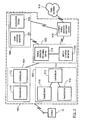
- a mobile telecommunications device 10 is shown in communication with a mobile telecommunications system 100.
- the mobile telecommunications system 100 comprises a plurality of base station subsystems (BSS) 104, a plurality of network subsystems 106, and a network management system 108.
- BSS base station subsystems
- the mobile telecommunications system 100 is configured as a GSM (Global System for Mobile Communication) network.
- GSM Global System for Mobile Communication
- the mobile telecommunications system 100 may instead have other network configurations.
- the mobile telecommunications system 100 is shown comprising two base station subsystems 104 and a single network subsystem 106, typically the mobile telecommunications system 100 comprises several base station subsystems 104 and network subsystems 106.
- the mobile telecommunications device 10 typically comprises a wireless telephone or wireless personal digital assistant, and is uniquely identified in the mobile telecommunications system 100 by an IMEI (International Mobile Equipment Identity).
- the mobile telecommunications device 10 includes a SmartCard, commonly referred to as a SIM (Subscriber Identity Module), upon which is stored an IMSI (International Mobile Subscriber Identity).
- the IMSI acts as an identifier which the mobile telecommunications system 100 uses to identify the owner of the mobile telecommunications device 10.
- the base station subsystems (BSS) 104 are each deployed in a respective geographical region, and communicate with the mobile telecommunications devices 10 located in their respective geographical region.
- Each base station subsystem 104 is in communication with the mobile telecommunications device 10 in its respective geographical region over a wireless link, and includes one or more base station transceivers 110, and a base station controller 112.
- Each base station transceiver 110 includes one or more radio transceivers that establish the wireless link between the mobile telecommunications device 10 and the base station subsystem 104.
- the base station controller 112 controls the base station transceivers 110, and manages the wireless link between the mobile telecommunications device 10 and the base station subsystem 104.
- Each network subsystem 106 is in communication with one or more of the base station subsystems 104.
- the network subsystems 106 are also in communication with a fixed network 114, such as PSTN (Public Switched Telephone Network) or ISDN (Integrated Service Digital Network) via a GMSC (Gateway Mobile Services Switching Centre) 116.
- the GMSC 116 acts as an interface or switching node between the mobile telecommunications system 100 and the fixed network 114.
- Each network subsystem 106 comprises a MSC (Mobile Services Switching Centre) 118, and a VLR (Visitor Location Register) 120.
- MSC Mobile Services Switching Centre
- VLR Visitor Location Register
- the MSC 118 and the VLR 120 are shown as separate functional entities, typically the MSC 118 and the VLR 120 of each network subsystem 106 are implemented together as a single networked computer, so that the geographical region controlled by the MSC 118 corresponds to the geographical region controlled by the VLR 120.
- Each MSC 118 is in communication with the base station controllers 114 of the associated base station subsystems 104, and acts as an interface or switching node between the network subsystem 106 and the GMSC 116.
- the MSC 118 also communicates with the VLR 120 and the network management system 108 via Mobile Application Part (MAP) on top of SS7 (Signaling System Number 7) protocol.
- MAP Mobile Application Part
- SS7 Signal-to-SS7
- Each VLR 120 contains administrative information required to provide call control and provide subscribed services for each mobile telecommunications device 10 located within the geographical region controlled by the VLR 120.
- the VLR 120 maintains the IMSI, the TMSI (Temporary Mobile Subscriber Identity), the MSISDN (Mobile Subscriber Integrated Service Digital Network) directory number, and the MSRN (Mobile Station Roaming Number) for each mobile telecommunications device 10 within the controlled geographical region.
- IMSI Temporal Mobile Subscriber Identity
- MSISDN Mobile Subscriber Integrated Service Digital Network
- MSRN Mobile Station Roaming Number
- the network management system 108 is typically implemented as a networked computer server, which communicates with the network subsystem 106 and GMSC 116 via MAP on top of SS7 protocol.
- the network management system 108 typically comprises a non-volatile memory, a main memory, and a central processing unit in communication with the non-volatile memory and the main memory.
- the non-volatile memory carries computer processing instructions for the network management system 108 which, when loaded into the main memory and executed by the central processing unit, define a HLR (Home Location Register) 122, and an AE (Association Engine) 124.
- the HLR 122 and the AE 124 are preferably implemented on single networked computer, the HLR 122 and the AE 124 may instead by implemented on separate networked computers. Further, although the HLR 122 and the AE 124 are preferably implemented in computer software, the HLR 122 and the AE 124 may instead be implemented in electronics hardware.
- the HLR 122 includes a relational database 200 of linked database elements, and a set of associated methods 300.
- the AE 124 includes a relational database 400 of linked database elements, and a set of associated methods 500.
- selected database elements in the HLR database 200 are linked to corresponding database elements in the AE database 400.
- selected HLR methods 300 are configured to call corresponding AE methods 500.
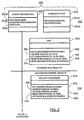
- the HLR database 200 maintains basic administrative information for each registered user of the GSM network. As shown, the HLR database 200 includes SubscriberProfile tables 202, and MobileStation tables 204. Each SubscriberProfile table 202 includes a Referencelmsi record 202a identifying the IMSI associated with a registered user of the telecommunications network, a BasicReferenceMsIsdn record 202b identifying the default MSISDN associated with the IMSI, and a Services record 202c identifying the services for which the user has subscribed (e.g. call display, call waiting, voice-mail, call forwarding).
- SubscriberProfile table 202 includes a Referencelmsi record 202a identifying the IMSI associated with a registered user of the telecommunications network, a BasicReferenceMsIsdn record 202b identifying the default MSISDN associated with the IMSI, and a Services record 202c identifying the services for which the user has subscribed (e.g. call display, call waiting, voice-
- Each MobileStation table 204 includes a Referencelmsi record 204a for linking to one of the SubscriberProfile tables 202, and a ReferenceMsIsdn record 204b for associating a plurality of MSISDNs with one IMSI.
- One purpose served by the ReferenceMsIsdn record 204b is that it allows the subscriber to have a different MSISDN for each of a number of different telecommunications services (eg. Voice, Facsimile), all associated with the same IMSI.
- the mobile telecommunications system 100 uses the MobileStation table 204 to locate the associated SubscriberProfile table 202 when attempting to terminate call to a mobile telecommunications device 10.
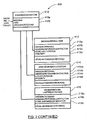
- the HLR methods 300 include a GetSubscriberProfileImsi method 302, a GetBasicMsIsdn method 304, a SetSubscriberStatus method 306, a GetSubscriberProfileMsIsdn method 308, and a ResetSubscriberStatus method 310.
- the HLR methods 300 will be discussed in greater detail below.
- the AE database 400 maintains supplemental administrative information for each registered user of the telecommunications network, such as a preferred set of reference MSISDNs associated with each registered user's IMSI, a preferred set of reference IMSIs associated with each of a plurality of MSISDNs, and evaluation parameters linking together this information.
- the AE methods 500 are used to evaluate these associations.
- the AE database 400 and the AE methods 500 together define a decision tree that dynamically associates reference subscriber identities with reference directory numbers.
- the decision tree includes a first set of logic rules each associating a unique reference IMSI with one of a number of the reference MSISDNs, and a second set of logic rules each associating a unique reference MSISDN with one of a number of the reference IMSIs.
- the first set of logic rules is used to assign a MSISDN to an IMSI when a user's mobile telecommunications device 10 enters the geographical region associated with a visited network subsystem 106.
- the second set of logic rules is used to assign an IMSI to a MSISDN when the mobile telecommunications system 100 attempts to terminate a telephone call with a mobile telecommunications device 10 that is located in the visited geographical region (the region serviced by the visited network subsystem 106).
- Each logic rule is evaluated using one or more evaluation parameters.
- Preferred evaluation parameters include the current geographical region of the mobile telecommunications device 10, the time instant of a location update request, the next available MSISDN in a list of MSISDNs, and membership of the subscriber in a group.
- the AE database 400 includes ImsiAssociation tables 402, ImsiCriteria-Time tables 404, ImsiCriteria-Location tables 406, ImsiCriteria-LastRegistration tables 408, MsIsdnAssociation tables 410, MsIsdnCriteria-Time tables 412, MsIsdnCriteria-Location tables 414, and MsIsdnCriteria-LastRegistration tables 416.
- ImsiAssociation tables 402 ImsiCriteria-Time tables 404
- ImsiCriteria-Location tables 406 ImsiCriteria-LastRegistration tables 408
- MsIsdnAssociation tables 410 MsIsdnCriteria-Time tables 412, MsIsdnCriteria-Location tables 414, and MsIsdnCriteria-LastRegistration tables 416.
- Each ImsiAssociation table 402 includes an Imsi record 402a identifying the IMSI associated with a registered user of the GSM network, a BasicMsIsdn record 402b identifying a MSISDN associated with the IMSI, and a ReferenceImsi record 402c.
- the ReferenceImsi record 402c is used to group together all the IMSIs that have been assigned to a common subscriber.
- Each ImsiAssociation table 402 may be associated with one of the ImsiCriteria-Time tables 404, one of the ImsiCriteria-Location tables 406, or one of the ImsiCriteria-LastRegistration tables 408.
- Each ImsiCriteria-Time table 404 includes an ImsiCriteriald record 404a for linking with one of the ImsiAssociation tables 402, ActivityStatus record 404b that is set if the user's mobile telecommunications device 10 is located within one of the geographic regions serviced by the mobile telecommunications system 100; an ImsiCriteriaWeightFactor record 404c for ranking the association defined by the corresponding ImsiAssociation table 402 relative to other such associations, an AvailabilityPeriod record 404d identifying the time period during which the association defined by the corresponding ImsiAssociation table 402 is valid, and a Priority record 404e for ranking the criteria defined in this table relative to other criteria.
- the Priority record 404e typically includes a hexadecimal value between x00 and xFF, inclusive.
- Each ImsiCriteria-Location table 406 includes an ImsiCriteriaId record 406a for linking with one of the ImsiAssociation tables 402, and a RegisteredLocation record 406b that identifies the geographical region in which the mobile telecommunications device 10 is currently located.
- the RegisteredLocation record 406b record contains the SS7 address of the network subsystem 106 currently servicing the user's mobile telecommunications device 10.
- Each ImsiCriteria-Location table 406 also includes an ImsiCriteriaWeightFactor record 406c for ranking the association defined by the corresponding ImsiAssociation table 402 relative to other such associations, a LocationRange record 406d identifying a geographic region for which the association defined by the corresponding ImsiAssociation table 402 is valid, and a Priority record 406e for ranking the criteria defined in this table relative to other criteria.
- the Priority record 406e typically includes a hexadecimal value between x00 and xFF, inclusive.
- Each ImsiCriteria-LastRegistration table 408 includes an ImsiCriteriaId record 408a for linking with one of the ImsiAssociation tables 402, a MobileStationIdentifier record 408b identifying the IMEI of the user's mobile telecommunications device 10, and a RegisteredImsi record 408c identifying the IMSI provided by the user when it moved into one of the geographic regions serviced by the mobile telecommunications system 100.
- the RegisteredImsi record 408c is used to group together all the IMSIs that have been assigned to a common subscriber.
- Each ImsiCriteria-LastRegistration table 408 also includes an ImsiCriteriaWeightFactor record 408d for ranking the association defined by the corresponding ImsiAssociation table 402 relative to other such associations, a TransferIndicator flag 408e, and a Priority record 408f for ranking the criteria defined in this table relative to other criteria.
- the Priority record 408f typically includes a hexadecimal value between x00 and xFF, inclusive.
- the ImsiAssociation tables 402 might associate one of the subscriber's IMSIs with one MSISDN (eg. to originate personal calls), and associate another one of the subscriber's IMSIs with another MSISDN (eg. to originate business calls).
- the subscriber might want to dynamically prevent one of the MSISDNs (eg. the personal MSISDN) from being dynamically assigned to the associated IMSI during the provisioning of a service, and instead allow one of the other MSISDNs (eg. the business MSISDN) to be dynamically assigned to the IMSI.
- the TransferIndicator flag 408c allows the subscriber to dynamically specify (eg.
- Each MsIsdnAssociation table 410 includes a MsIsdn record 410a identifying a MSISDN for call termination, and an Imsi record 410b for linking with one of the ImsiAssociation tables 402.
- Each MsIsdnAssociation table 410 may be associated with one of the MsIsdnCriteria-Time tables 412, one of the MsIsdnCriteria-Location tables 414, or one of the MsIsdnCriteria-LastRegistration tables 416.
- Each MsIsdnCriteria-Time table 412 includes a MsIsdnCriteriaId record 412a for linking with one of the MsIsdnAssociation tables 410, a MsIsdnCriteriaWeightFactor record 412b for ranking the association defined by the corresponding MsIsdnAssociation table 410 relative to other such associations, an AvailabilityPeriod record 412c identifying the time period during which the association defined by the corresponding MsIsdnAssociation table 410 is valid, and a Priority record 412d for ranking the criteria defined in this table relative to other criteria.
- the Priority record 412d typically includes a hexadecimal value between x00 and xFF, inclusive.
- Each MsIsdnCriteria-Location table 414 includes a MsIsdnCriteriaId record 414a for linking with one of the MsIsdnAssociation tables 410, a MsIsdnCriteriaWeightFactor record 414b for ranking the association defined by the corresponding MsIsdnAssociation table 410 relative to other such associations, a LocationRange record 414c identifying geographic region for which the association defined by the corresponding MsIsdnAssociation table 410 is valid, and a Priority record 414d for ranking the criteria defined in this table relative to other criteria.
- the Priority record 414d typically includes a hexadecimal value between x00 and xFF, inclusive.
- Each MsIsdnCriteria-LastRegistration table 416 includes a MsIsdnCriteriaId record 416a for linking with one of the MsIsdnAssociation tables 410, a MsIsdnCriteriaWeightFactor record 416b for ranking the association defined by the corresponding MsIsdnAssociation table 410 relative to other such associations, and a PublishedMsIsdnIndicator record 416c indicating whether the MSISDN identified in the corresponding MsIsdnAssociation table 410 is published (i.e. the user of the mobile telecommunications device 10 allows telephone calls to the specified MSISDN to be terminated at the mobile telecommunications device 10).
- the AE methods 500 include a GetReferenceImsi(Imsi) method 502, a GetBasicMsIsdn method 504, a SetImsiCriteria method 506, a GetReferenceImsi(MsIsdn) method 508, and a ResetImsiCriteria method 510.
- the SetImsiCriteria method 506 includes a SetImsiCriteria(Time) method, a SetImsiCriteria(Location) method, and a SetImsiCriteriaLastRegistration method.
- the GetReferenceImsi(MsIsdn) method 508 includes an EvaluateMsIsdnCriteria(Time) method, an EvaluateMsIsdnCriteria(Location) method, and an EvaluateMsIsdnCriteriaLastRegistration method.
- the ImsiCriteria-Time tables 404, the ImsiCriteria-Location tables 406, and the ImsiCriteria-LastRegistration tables 408, together with the GetReferenceImsi(Imsi) method 502, the GetBasicMsIsdn method 504, and the SetImsiCriteria method 506, comprise the first set of logic rules discussed above.
- the MsIsdnCriteria-Time tables 412, the MsIsdnCriteria-Location tables 414, and the MsIsdnCriteria-LastRegistration tables 416, together with the GetReferenceImsi(MsIsdn) method 508 and the EvaluateMsIsdnCriteria methods, comprise the second set of logic rules discussed above.
- the operation of the mobile telecommunications system 100 will be discussed in greater detail below, in the context of a mobile telecommunications device 10 entering a serviced geographical region, and subsequently in the context of terminating a telephone call to a mobile telecommunications device 10 located in the serviced geographical region.
- Fig. 3 is a flowchart that depicts, by way of overview, the operation of the network management system 108 after a mobile telecommunications device 10 roams into a serviced geographical region.
- the network management system 108 receives a location update request, initiated by the mobile telecommunications device 10 after it roams into the serviced geographical region.
- the location update request includes a subscriber identity associated with the user of the mobile telecommunications device 10.
- the network management system 108 dynamically selects one of the directory numbers that are associated with the received subscriber identity by evaluating the decision tree using the received subscriber identity.
- the directory number is local to the serviced geographic region into which the mobile telecommunications device 10 has roamed.
- the network management system 108 provides the mobile telecommunications device 10 with access to telecommunication services within the serviced geographic region by forwarding the selected directory number to the network subsystem 106.
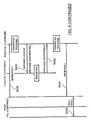
- Fig. 4 depicts the signal flow within the mobile telecommunications system 100 after a mobile telecommunications device 10 roams from one network subsystem 106 to another network subsystem 106.
- These two network subsystems 106 can be both in a home geographical region or a visited geographical region. Alternately, one of the network subsystems 106 can be in a home geographical region, with the other network subsystem 106 being in the visited geographical region.
- the mobile telecommunications device 10 roams from a home geographical region into a visited geographical region (i.e. the subscriber associated with the mobile telecommunications device 10 is registered to receive telecommunications services from the network subsystem 106 in its home geographical region, and the mobile telecommunications device 10 roams into a geographical region that is serviced by a different network subsystem 106).
- the same methodology would apply if the mobile telecommunications device 10 roamed from a visited geographical region into a home geographical region; roamed between the network subsystems 106 of the home geographical region; or roamed between the network subsystems 106 of the visited geographical region.
- the mobile telecommunications device 10 receives the LAI (Location Area Identifier) from the base station subsystem 104 that services the geographical region into which the mobile telecommunications device 10 has roamed, and determines that it has roamed into a visited geographic region. Accordingly, at step S402, the mobile telecommunications device 10 issues a MM / Location Update message with the associated visited network subsystem 106 (the current network subsystem 106), including the LAI and TMSI previously issued to the device 10.
- LAI Location Area Identifier
- the current network subsystem 106 determines from the received LAI that the mobile telecommunications device 10 previously registered in a different geographical region serviced by the mobile telecommunications system 100.
- the current network subsystem 106 issues a MAP / Send Parameters message to the previous network subsystem 106 (the network subsystem 106'), including the TMSI previously issued to the mobile telecommunications device 10.
- the network subsystem 106' responds, at step S406, with the IMSI associated with the received TMSI.
- the current network subsystem 106 issues a MAP / Update Location message to the HLR 122, including the received IMSI and the LAI of the current network subsystem 106. Then, at step S410, the HLR 122 invokes the GetSubscriberProfileImsi method 302 to determine the ReferenceImsi 402c that is associated with the received IMSI.
- a business entity might have multiple IMSIs, all having a common subscription for telecommunications services. It is therefore convenient to allow the mobile telecommunications system 100 to associate all these IMSIs with a single subscriber identity (ReferenceImsi 402c).
- the GetSubscriberProfileImsi method 302 facilitates this arrangement by identifying the ReferenceImsi 402c that is associated with a specific IMSI.
- the HLR 122 uses the ReferenceImsi 402c to locate the associated SubscriberProfile table 202 to determine the services to which the subscriber is entitled.
- the HLR 122 invokes the GetBasicMsIsdn method 304, which identifies the ImsiAssociation tables 402 that are associated with the received IMSI, and then selects a BasicMsIsdn 402b from the BasicMsIsdns listed in the identified ImsiAssociation tables 402.
- the BasicMsIsdn 402b is dynamically selected from an evaluation of the criteria specified in the ImsiCriteria-Time tables 404, ImsiCriteria-Location tables 406, and ImsiCriteria-LastRegistration tables 408 that are associated with the identified ImsiAssociation tables 402. Since one of the evaluation criteria is preferably geographical region, typically the selected BasicMsIsdn 402b is local to the geographical region into which the mobile telecommunications device 10 has roamed.
- the HLR 122 invokes the SetSubscriberStatus method 306 which updates the ActivityStatus records 404b, the RegisterLocation records 406b and the RegisteredImsi records 408c (of the ImsiCriteria-Time tables 404, the ImsiCriteria-Location tables 406, and the ImsiCriteria-LastRegistration tables 408) that are associated with the identified ImsiAssociation tables 402.
- the ImsiCriteria-LastRegistration tables 408 identify the MSISDN that is currently assigned to a particular IMSI.
- the AE 124 maintains the MSISDN-IMSI assignment, and the IMSI-LAI association until such time as the AE 124 is requested to select another MSISDN for the same IMSI.
- the HLR 122 responds to the MAP / Location Update message by issuing a MAP / ISD (Insert Subscriber Data) message to the current network subsystem 106, including the IMSI, the BasicMsIsdn, and the services identified in the corresponding Services record 202c.
- a MAP / ISD Intelligent Subscriber Data
- the VLR 120 of the current network subsystem 106 updates its subscriber information for the corresponding IMSI, and then responds to the HLR 122 with a MAP / ISD Result message, at step S418, confirming that the VLR 120 has been updated.
- the HLR 122 issues a MAP / Cancel Location message to the network subsystem 106', including the IMSI of the user of the mobile telecommunications device 10.
- the network subsystem 106' deletes its own subscriber information for the corresponding IMSI, and releases the TMSI previously assigned to that IMSI.
- the network subsystem 106' then issues a MAP / Update Location Result message to the HLR 122, at step S422, confirming deletion of this information.
- the HLR 122 issues a MAP / Update Location Result message to the current network subsystem 106, at step S424.
- the current network subsystem 106 then causes the current base station subsystem 104 to conduct authentication and cyphering steps with the mobile telecommunications device 10.
- the current network subsystem 106 generates a new TMSI for the IMSI, and issues a MM / Location Update Result message to the mobile telecommunications device 10 (via the current base station subsystem 104), including the new TMSI.
- the mobile telecommunications device 10 then saves the new TMSI to allow the device 10 to subsequently identify itself to the mobile telecommunications system 100.
- Fig. 5 is a flowchart that depicts the operation of the GetSubscriberProfileImsi method 302 and the GetReferenceImsi(Imsi) method 502. These two methods allow the mobile telecommunications system 100 to associate more than one MSISDN with a single subscriber identity (TMSI).
- TMSI subscriber identity
- the GetSubscriberProfile(Imsi) method 302 begins at step S500, and proceeds to invoke the GetReferenceImsi(Imsi) method 502 at step S502.
- the GetReferenceImsi(Imsi) method 502 begins at step S510.
- the GetReferenceImsi(Imsi) method 502 queries the ImsiAssociation tables 400 for all tables 400 associated with the received IMSI.
- the GetReferenceImsi(Imsi) method 502 determines whether any associations for the received IMSI exist. If not, the GetReferenceImsi(Imsi) method 502 returns without any ReferenceImsi, at step S516.
- the GetReferenceImsi(Imsi) method 502 determines, at steps S518, S520, whether the identified tables all listed the same ReferenceImsi 402c. If the identified tables all listed the same ReferenceImsi 402c, the GetReferenceImsi(Imsi) method 502 returns the ReferenceImsi 402c, at step S522. Otherwise, the GetReferenceImsi(Imsi) method 502 returns without any Referencelmsi, at step S524.
- the GetSubscriberProfileImsi method 302 determines whether the GetReferenceImsi(Imsi) method 502 returned a ReferenceImsi. If so, GetSubscriberProfileImsi method 302 returns the ReferenceImsi 402c, at step S508. Otherwise, the GetSubscriberProfile(Imsi) method 302 returns the ReferenceImsi 202a from the SubscriberProfile table 302, at step S506.
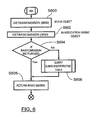
- Fig. 6 is a flowchart that depicts the operation of the GetBasicMsIsdn method 304 (of the HLR 122) and the GetBasicMsIsdn method 504 (of the AE 124).
- These two methods allow the mobile telecommunications system 100 to dynamically select one MSISDN (BasicMsIsdn) from a list of MSISDNs (BasicMsIsdns) that are associated with an IMSI (ReferenceImsi), based on evaluation criteria (such as current geographical region of the mobile telecommunications device 10, the time instant of a location update request, the next available MSISDN in a list of MSISDNs, and membership of the subscriber in a group).
- the GetBasicMsIsdn method 304 begins at step S600, and proceeds to invoke the GetBasicMsIsdn method 504 at step S602.
- the GetBasicMsIsdn method 504 method 508 begins at step S610.
- the GetBasicMsIsdn method 504 queries the ImsiAssociation tables 402 for all tables 402 associated with the received IMSI.
- the GetBasicMsIsdn method 504 determines whether any associations for the received IMSI exist. If not, the GetBasicMsIsdn method 504 returns without any BasicMsIsdn, at step S616.
- the GetBasicMsIsdn method 504 evaluates all the IMSI criteria parameter tables (the ImsiCriteria-Time tables 404, the ImsiCriteria-Location tables 406, and the ImsiCriteria-LastRegistration tables 408) associated with the identified ImsiAssociation tables 402, at steps S618 to S624. To do so, the GetBasicMsIsdn method 504 repeatedly invokes the EvaluateImsiCriteria(Time) method (if the criteria is time), the EvaluateImsiCriteria(Location) method (if the criteria is location), and the EvaluateImsiCriteriaLastRegistration method (if the criteria is last registration), at step S620. These three methods (discussed below with reference to Figs. 7 to 9 ) calculate values for the ImsiCriteriaWeightFactor records 404c, 406c, 408d for each of the IMSI criteria parameter tables.
- the GetBasicMsIsdn method 504 attempts to identify the BasicMsIsdn 402b associated with the maximum calculated ImsiCriteriaWeightFactor. If the GetBasicMsIsdn method 504 is able to identify a maximum ImsiCriteriaWeightFactor, using the ImsiAssociation table 402 the GetBasicMsIsdn method 504 returns the BasicMsIsdn 402b associated with the maximum ImsiCriteriaWeightFactor, at step S628. Otherwise, the GetBasicMsIsdn method 504 returns no BasicMsIsdn, at step S630.
- the GetBasicMsIsdn method 304 determines whether the GetBasicMsIsdn method 504 returned a BasicMsIsdn. If so, the GetBasicMsIsdn method 304 returns the BasicMsIsdn 402b, at step S608. Otherwise, using the received IMSI the GetBasicMsIsdn method 304 returns the BasicReferenceMsIsdn 202b from the SubscriberProfile table 302, at step S606.
- Fig. 7 is a flowchart that depicts the operation of the EvaluateImsiCriteria(Time) method. This method calculates the ImsiCriteriaWeightFactor record 404c of the ImsiCriteria-Time table 404 that is associated with the received IMSI.
- the EvaluateImsiCriteria(Time) method begins at step S700.
- the EvaluateImsiCriteria(Time) method saves the value of the ImsiCriteriaWeightFactor in the ImsiCriteriaWeightFactor record 404c.
- the EvaluateImsiCriteria(Time) method performs a binary OR operation on the ImsiCriteriaWeightFactor record 404c and the Priority record 404e, and saves the result in the ImsiCriteriaWeightFactor record 404c.
- the GetBasicMsIsdn method 504 will give the BasicMsIsdn 402b associated with the located ImsiGriteria-Time table 402 a higher priority if the criteria specified in the located ImsiCriteria-Time table 402 is met, than if the specified criteria is not met.
- Fig. 8 is a flowchart that depicts the operation of the EvaluateImsiCriteria(Location) method. This method calculates the ImsiCriteriaWeightFactor record 406c of the ImsiCriteria-Location table 406 that is associated with the received IMSI.
- the EvaluateImsiCritena(Location) method begins at step S800.
- the EvaluateImsiCriteria(Location) method locates the ImsiCriteria-Location table 406 associated with the received IMSI.
- the EvaluateImsiCriteria(Location) method also determines the current location of the mobile telecommunications device 10 from the LAI of the current network subsystem 106, and then determines whether the current location is within the geographical region specified in the LocationRange record 406d of the located ImsiCriteria-Location table 406.
- the EvaluateImsiCriteria(Location) method saves the value of the ImsiCriteriaWeightFactor in the ImsiCriteriaWeightFactor record 404c.
- the EvaluateImsiCriteria(Location) method performs a binary OR operation on the ImsiCriteriaWeightFactor record 404c and the Priority record 406e, and saves the result in the ImsiCriteriaWeightFactor record 404c.
- the GetBasicMsIsdn method 504 will give the BasicMsIsdn 402b associated with the located ImsiCriteria-Location table 406 a higher priority if the criteria specified in the located ImsiCriteria-Location table 406 is met, than if the specified criteria is not met.
- Fig. 9 is a flowchart that depicts the operation of the EvaluateImsiCriteria(LastRegistration) method. This method calculates the ImsiCriteriaWeightFactor record 408d of the ImsiCriteria-LastRegistration tables 408 that is associated with the received IMSI.
- the EvaluateImsiCriteria(LastRegistration) method begins at step S900.
- the EvaluateImsiCriteria(LastRegistration) method locates the ImsiCriteria-LastRegistration table 408 associated with the received IMSI, and then determines whether the TransferIndicator 408e flag has been set (i.e. telephone calls using the mobile telecommunications device 10 having the received IMSI from the associated MSISDN are authorized).
- the EvaluateImsiCriteria(LastRegistration) method performs a binary OR operation on the ImsiCriteriaWeightFactor record 408d and the Priority record 408f, and saves the result in the ImsiCriteriaWeightFactor record 408d.
- the GetBasicMsIsdn method 504 will give the BasicMsIsdn 402b associated with the located ImsiCriteria-LastRegistration table 408 a higher priority if the criteria specified in the located ImsiCriteria-LastRegistration table 408 is met, than if the specified criteria is not met.
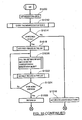
- Fig. 10 is a flowchart that depicts the operation of the SetSubscriberStatus method 306 and the SetImsiCriteria method 506. These two methods allow the mobile telecommunications system 100 to populate the IMSI criteria parameter tables (the ImsiCriteria-Time tables 404, the ImsiCriteria-Location tables 406, and the ImsiCriteria-LastRegistration tables 408).
- the IMSI criteria parameter tables the ImsiCriteria-Time tables 404, the ImsiCriteria-Location tables 406, and the ImsiCriteria-LastRegistration tables 408.
- the SetSubscriberStatus method 306 begins at step S1000, and proceeds to invoke the SetImsiCriteria method 506 at step S1002.
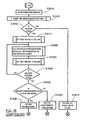
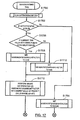
- the SetImsiCriteria method 506 begins at step S1010. At step S1012, the SetImsiCriteria method 506 queries the ImsiAssociation tables 400 for all tables 400 associated with the received IMSI. At step S1014, the SetImsiCriteria method 506 determines whether any associations for the received IMSI exist. If not, the SetImsiCriteria method 506 simply returns, at step S1016. Otherwise, the SetImsiCriteria method 506 populates all the IMSI criteria parameter tables associated with the identified ImsiAssociation tables 400, at steps S1018 to S1024.
- the SetImsiCriteria method 506 repeatedly invokes the SetImsiCriteria(Time) method, the SetImsiCriteria(Location) method, and the SetImsiCriteriaLastRegistration method, at step S1020. These latter three methods are discussed below, with reference to Figs. 11, 12 and 13 .
- SetImsiCriteria method 506 returns at step S1026.
- the SetSubscriberStatus method 306 then returns at step S1004.
- Fig. 11 is a flowchart that depicts the operation of the SetImsiCriteria(Time) method. This method sets the ActivityStatus flag 404b of the ImsiCriteria-Time table 404 that is associated with the received IMSI.
- Fig. 12 is a flowchart that depicts the operation of the SetImsiCriteria(Location) method. This method sets the RegisteredLocation record 406b of the ImsiCriteria-Location table 406 that is associated with the received IMSI.
- Fig. 13 is a flowchart that depicts the operation of the SetImsiCriteria(LastRegistration) method.
- This method identifies all the ImsiCriteria-LastRegistration tables 408 associated with the received IMSI that have the same MobileStationldentifier 408b, and sets the RegisteredImsi record 408c of each of these tables 408 to the received IMSI.
- this method allows the mobile telecommunications system 100 to identify the IMSI of the last mobile telecommunications device 10 that roamed into the visited and/or home geographical region. The mobile telecommunications system 100 uses this information when terminating a telephone call to a mobile telecommunications device 10.
- the ResetSubscriberStatus method 310 and the ResetImsiCriteria method 510 serve to the reset or unpopulate the IMSI criteria parameter tables aftert the mobile telecommunications device 10 leaves the visited geographical region.
- the ResetImsiCriteria method 510 includes a SetImsiCriteria(Time) method, a SetImsiCriteria(Location) method, and a SetImsiCriteriaLastRegistration method.
- ResetSubscriberStatus method 310 and the ResetImsiCriteria method 510 operate in a similar fashion respectively as the the SetSubscriberStatus method 306 and the SetImsiCriteria method 506, no further description of these methods is required.
- Fig. 14 is a flowchart that depicts, by way of overview, the operation of the network management system 108 when terminating a telephone call to a mobile telecommunications device 10 located in a serviced geographical region.
- the network management system 108 receives a routing information request for terminating a communication with a mobile telecommunications device 10 within the serviced geographical region.
- the routing information request includes a directory number that is local to the geographic region in which the mobile telecommunications device 10 is now located.
- the network management system 108 dynamically selects one of the subscriber identities that are associated with the received directory number by evaluating the decision tree using the received directory number.
- the network management system 108 provides the mobile telecommunications device 10 with access to telecommunication services within the serviced geographic region by forwarding the selected subscriber identity to the network subsystem 106.
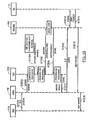
- Fig. 15 depicts the signal flow in the mobile telecommunications system 100 when terminating a telephone call to a mobile telecommunications device 10 that is located in a serviced geographical region.
- the mobile telecommunications device 10 might be located in its home geographical region; or might be located in a visited geographical region.
- the mobile telecommunications device 10 has roamed from a home geographical region into a visited geographical region.
- the same methodology would apply if the mobile telecommunications device 10 roamed from a visited geographical region into a home geographical region; roamed between the network subsystems 106 of the home geographical region; or roamed between the network subsystems 106 of the visited geographical region.
- a person originates a telephone call from the PSTN 114 by dialing a MSISDN.
- the PSTN 114 issues an ISUP (ISDN User Part) Initial Address message to the GMSC 116 of the mobile telecommunications system 100, including the dialled MSISDN.
- the GMSC 116 issues a MAP / SRI (Send Routing Information) message to the HLR 122, including the dialled MSISDN.
- the HLR 122 invokes the GetSubscriberProfile(MsIsdn) method 308, which identifies the MsIsdnAssociation tables 410 that are associated with the received MSISDN, and then selects a Referencelmsi 402c from the IMSIs that are associated (via the ImsiAssociation tables 402) with the identified MsIsdnAssociation tables 410.
- the Referencelmsi 402c is dynamically selected from an evaluation of the criteria specified in the MsIsdnCriteria-Time tables 412, MsIsdnCriteria-Location tables 414, and MsIsdnCriteria-LastRegistration tables 416 that are associated with the identified MsIsdnAssociadon tables 410. Since one of the evaluation criteria is preferably geographical region, typically the selected ReferenceImsi 402c is associated with a mobile telecommunications device 10 that is currently located in a geographical region for which the MSISDN is a local telephone number.
- the HLR 122 uses the ReferenceImsi 402c to locate the associated SubscriberProfile table 202 to determine the services to which the subscriber is entitled.
- the HLR 122 queries the ImsiAssociation tables 402 with the selected ReferenceImsi 402c, and identifies the corresponding RegisteredImsi 408c from the associated ImsiCriteria-LastRegistration tables 408.
- the RegisteredImsi 408c will be the same as the ReferenceImsi 402c so that no such query will be necessary.
- the HLR 122 uses the Registeredlmsi 408c to determine the LAI of the network subsystem 106 with which the IMSI is currently registered, and then issues a MAP / PRN (Provide Roaming Number) message to that network subsystem 106, including the RegisteredImsi 408c.
- MAP / PRN Public Roaming Number
- the network subsystem 106 assigns a temporary MSRN (Mobile Station Roaming Number) to the received RegisteredImsi 408c.
- the network subsystem 106 also updates its subscriber profile for the RegisteredImsi 408c, by associating the MSRN with the TMSI assigned to the RegisteredImsi 408c.
- the network subsystem 106 responds to the HLR 122 with a MAP / PRN Result message, including the MSRN.
- the HLR 122 responds to the MAP / SRI message by issuing a SRI Result message to the GMSC 116, including the MSRN.
- the GMSC 116 issues an ISUP Initial Address message to the network subsystem 106, including the received MSRN.
- the network subsystem 106 determines the TMSI associated with the MSRN. Then, at step S1514, the network subsystem 106 issues a RR / Paging message (via the base station subsystem 104), including the TMSI.
- Each mobile telecommunications device 10 that receives the RR / Paging message compares its TMSI with the TMSI received at step S1514.
- the mobile telecommunications device 10 that was assigned the matching TMSI issues a RR / Page Response message to the network subsystem 106.
- the network subsystem 106 initiates call setup procedures with the mobile telecommunications device 10, causing the mobile telecommunications device 10 to ring.
- the mobile telecommunications device 10 issues a CC / Connect message to the network subsystem 106.
- the network subsystem 106 then issues an ISUP Answer message to the GMSC 116, at step S1518.
- the GMSC 116 then issues an ISUP Answer message to the PSTN 114, at step S1520, thereby completing call termination.
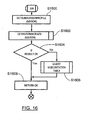
- Fig. 16 is a flowchart that depicts the operation of the GetSubscriberProfile(MsIsdn) method 308 and the GetReferenceImsi(MsIsdn) method 508. These two methods allow the mobile telecommunications system 100 to dynamically select one IMSI (ReferenceImsi) from a list of IMSIs (ReferenceImsis) that are associated with a MSISDN, based on evaluation criteria (such as current geographical region of the mobile telecommunications device 10, the time instant of a location update request, the next available IMSI in a list of IMSIs, and membership of the subscriber in a group).
- IMSI referenceImsi
- the GetSubscriberProfile(MsIsdn) method 308 begins at step S1600, and proceeds to invoke the GetReferenceImsi(MsIsdn) method 508 at step S1602.
- the GetReferenceImsi(MsIsdn) method 508 begins at step S1610.
- the GetReferenceImsi(MsIsdn) method 508 queries the MsIsdnAssociation tables 410 for all tables 410 associated with the received MSISDN.
- the GetReferenceImsi(MsIsdn) method 508 determines whether any associations for the received MSISDN exist. If not, the GetReferenceImsi(MsIsdn) method 508 returns without any ReferenceImsi, at step S1616.
- the GetReferenceImsi(MsIsdn) method 508 evaluates all the MSISDN criteria parameter tables (the MsIsdnCriteria-Time tables 412, the MsIsdnCriteria-Location tables 414, and the MsIsdnCriteria-LastRegistration tables 416) associated with the identified MsIsdnAssociation tables 410, at steps S1618 to S1624.
- the GetReferenceImsi(Mslsdn) method 508 repeatedly invokes the EvaluateMsIsdnCriteria(Time) method (where the criteria is time), the EvaluateMsIsdnCriteria(Location) method (where the criteria is location), and the EvaluateMsIsdnCriteria(LastRegistration) method (where the criteria is last registration), at step S1620.
- These three methods calculate values for the MsIsdnCriteriaWeightFactor records 412b, 414b, 416b for each of the MSISDN criteria parameter tables.
- the GetReferenceImsi(MsIsdn) method 508 attempts to identify the MsIsdn 410a associated with the maximum calculated MsIsdnCriteriaWeightFactor. If the GetReferenceImsi(MsIsdn) method 508 is able to identify a maximum MsIsdnCriteriaWeightFactor, using the ImsiAssociation table 402 and the MsIsdn 410a the GetReferenceImsi(MsIsdn) method 508 returns the ReferenceImsi 402c associated with the maximum MsIsdnCriteriaWeightFactor, at step S1628. Otherwise, the GetReferenceImsi(MsIsdn) method 508 returns no ReferenceImsi, at step S1630.
- the GetSubscriberProfile(MsIsdn) method 308 determines whether the GetReferenceImsi(Imsi) method 502 returned a Referencelmsi. If so, the GetSubscriberProfile(MsIsdn) method 308 returns the ReferenceImsi 402c, at step S1608. Otherwise, using the received MSISDN as a search key to the MobileStation table 204, the GetSubscriberProfile(MsIsdn) method 308 returns the ReferenceImsi 202a from the SubscriberProfile table 302, at step S1606.
- Fig. 17 is a flowchart that depicts the operation of the EvaluateMsIsdnCriteria(Time) method. This method calculates the MsIsdnCriteriaWeightFactor record 412b of the MsIsdnCriteria-Time table 412 that is associated with the received MSISDN.
- the EvaluateMsIsdnCriteria(Time) method begins at step S1700.
- the EvaluateMsIsdnCriteria(Time) method locates the ImsiCriteria-Time table 404 associated with the received MSISDN, and then determines whether the ActivityStatus record 404b of the located ImsiCriteria-Time table 404 has been set (i.e. an IMSI associated with the received MSISDN is located within one of the geographic regions serviced by the mobile telecommunications system 100). If not, at step S1704, the EvaluateMsIsdnCriteria(Time) method returns with an invalid MsIsdnCriteriaWeightFactor.
- the EvaluateMsIsdnCriteria(Time) method saves the value of the MsIsdnCriteriaWeightFactor in the MsIsdnCriteriaWeightFactor record 412b.
- the EvaluateMsIsdnCriteria(Time) method performs a binary OR operation on the MsIsdnCriteriaWeightFactor record 412b and the Priority record 412c, and saves the result in the MsIsdnCriteriaWeightFactor record 412b.
- the GetReferenceImsi(MsIsdn) method 508 will give the IMSI 410b associated with the located MsIsdnCriteria-Time table 412 a higher priority if the criteria specified in the located MsIsdnCriteria-Time table 412 is met, than if the specified criteria is not met.
- Fig. 18 is a flowchart that depicts the operation of the EvaluateMsIsdnCriteria(Location) method. This method calculates the MsIsdnCriteriaWeightFactor record 414b of the MsIsdnCriteria-Location table 414 that is associated with the received MSISDN.
- the EvaluateMsIsdnCriteria(Location) method begins at step S1800.
- the EvaluateMsIsdnCriteria(Location) method locates the ImsiCriteria-Location table 406 associated with the received MSISDN, and then determines whether the RegisteredLocation record 406b of the located ImsiCriteria-Location table 406 is valid (i.e. the RegisteredLocation record 406b identifies one of the geographic regions serviced by the mobile telecommunications system 100). If not, at step S1804, the EvaluateMsIsdnCriteria(Location) method returns with an invalid MsIsdnCriteriaWeightFactor.
- the EvaluateMsIsdnCriteria(Location) method saves the value of the MsIsdnCriteriaWeightFactor in the MsIsdnCriteriaWeightFactor record 414b.
- the EvaluateMsIsdnCriteria(Location) method performs a binary OR operation on the MsIsdnCriteriaWeightFactor record 414b and the Priority record 414c, and saves the result in the MsIsdnCriteriaWeightFactor record 414b.
- the GetReferenceImsi(MsIsdn) method 508 will give the IMSI 410b associated with the located MsIsdnCriteria-Location table 414 a higher priority if the criteria specified in the located MsIsdnCriteria-Location table 414 is met, than if the specified criteria is not met.
- Fig. 19 is a flowchart that depicts the operation of the EvaluateMsIsdnCriteria(LastRegistration) method. This method calculates the MsIsdnCriteriaWeightFactor record 416b of the MsIsdnCriteria-LastRegistration tables 416 that is associated with the received MSISDN.
- the EvaluateMsIsdnCriteria(LastRegistration) method begins at step S1900.
- the EvaluateMsIsdnCriteria(LastRegistration) method locates the MsIsdnCriteria-LastRegistration table 416 associated with the received MSISDN, and then determines whether the PublishedMsIsdnIndicator 416c flag has been set (i.e. telephone calls to the received MSISDN are authorized for termination at the mobile telecommunications device 10 having the associated IMSI).
- the GetSubscriberProfile(MsIsdn) method 308 will only allow telephone calls to the received MSISDN if the PublishedMsIsdnIndicator 416c flag has been set.
- the MSISDN that is typically assigned to an IMSI when the mobile terminal 10 roams to a visited geographic region is a local number to the visited geographic region.
- calls made from the mobile terminal 10 to other local numbers do not incur long distance or roaming charges.
- an entity can maintain a pool of MSISDNs for its personnel, and then select the next available MSISDN when its personnel roam to a new visited geographic region.
- an entity can maintain a pool of IMSIs for its personnel (eg. for service representatives), and then select the next available IMSI when its personnel roam to a new visited geographic region.
- This approach has the benefit of allowing customers to make a local call to the same MSISDN, and have the call routed to those personnel who are presently in the visited geographic region.
- the invention provides significant flexibility in the assignment of MSISDNs and the termination of calls. For instance, the selection of MSISDNs and IMSIs could be based on membership in a group, so that a block of MSISDNs and IMSIs could be reserved for sales personnel, and another block MSISDNs and IMSIs could be reserved for service personnel
- sales personnel could be each assigned a specific time block to make sales calls.
- none of the sales calls made by the sales personnel during their respective assigned time blocks would be subject to roaming charges. All of the calls would appear to originate from the same number, thereby providing consistency to customers having call display.
- service personnel could be each assigned a specific time block to answer service calls.
- customers could make a local call to the same MSISDN, and have the call routed to the individual assigned to the current time block. If a call originated during a time block for which no service personnel were assigned, the invention could route the call to the service person still residing in the visited geographic region or the service person having a phone number listed with the mobile telecommunications system 100.
- each ImsiAssociation table 402 is associated with only one IMSI criteria parameter table (i.e. one ImsiCriteria-Time table 404, one ImsiCriteria-Location table 406, or one ImsiCriteria-LastRegistration table 408).
- one or more of the ImsiAssociation tables 402 may be associated with more than one of the IMSI criteria parameter tables.
- an ImsiAssociation table 402 is associated with one ImsiCriteria-Time table 404, and one ImsiCriteria-Location table 406, and the GetBasicMsIsdn method 304 is configured to select the BasicMsIsdn associated with the largest combined ImsiCriteriaWeightFactor.
- This variation allows the mobile telecommunications system 100 to define IMSI-MSISDN associations using multiple or nested criteria.
- each MsIsdnAssociation table 410 is associated with only one MSISDN criteria parameter table (i.e. one MsIsdnCriteria-Time table 412, one MsIsdnCriteria-Location table 414, or one MsIsdnCriteria-LastRegistration table 416).
- one or more of the MsIsdnAssociation tables 410 may be associated with more than one of the MsIsdn criteria parameter tables.
- a MsIsdnAssociation table 410 is associated with one MsIsdnCriteria-Time table 412, and one MsIsdnCriteria-Location table 414, and the GetSubscriberProfile method 308 is configured to select the ReferenceImsi associated with the largest combined MsIsdnCriteriaWeightFactor.
- This variation allows the mobile telecommunications system 100 to define MSISDN-IMSI associations using multiple or nested criteria.
Landscapes
- Engineering & Computer Science (AREA)
- Signal Processing (AREA)
- Databases & Information Systems (AREA)
- Computer Networks & Wireless Communication (AREA)
- Mobile Radio Communication Systems (AREA)
Claims (2)
- Verfahren zur Bereitstellung des Zugriffs auf Telekommunikationsdienste, wobei das Verfahren folgende Schritte umfasst:Empfangen einer Positionsaktualisierungsanforderung, nachdem eine Mobilstation (10) in eine besuchte geografische Region eintritt, wobei die Positionsaktualisierungsanforderung eine Teilnehmerkennung umfasst, die einem Telekommunikationsdienstbenutzer zugeordnet ist, wobei der Benutzer dafür registriert ist, Telekommunikationsdienste innerhalb einer geographischen Heimregion zu erhalten, wobei sich die geographische Heimregion von der besuchten geographischen Region unterscheidet; und dynamisches Auswählen einer Verzeichnisnummer, die der empfangenen Teilnehmerkennung zugeordnet ist, ausgehend von Bewertungskriterien, die von einem Heimpositionsregister (122) verwaltet werden, wobei die Verzeichnisnummer für die besuchte geographischen Region lokal ist, wobei die Bewertungskriterien eine Referenzteilnehmerkennung einer Vielzahl von Referenzverzeichnisnummern zuordnen, wobei die Mobilstation (10) über die ausgewählte Verzeichnisnummer Zugriff auf die Telekommunikationsdienste innerhalb der besuchten geographischen Region erhält;wobei die dynamische Auswahl einer Verzeichnisnummer das Bestimmen einer Vielzahl von kombinierten Gewichtungsfaktoren umfasst, wobei jeder kombinierte Gewichtungsfaktor durch Folgendes bestimmt wird: Bestimmen eines ersten Gewichtungsfaktors in Abhängigkeit von Daten einer Zeitkriteriendatentabelle, Bestimmen eines zweiten Gewichtungsfaktors in Abhängigkeit von Daten einer Positionskriteriendatentabelle und Bestimmen eines kombinierten Gewichtungsfaktors in Abhängigkeit von einer Kombination aus dem ersten Gewichtungsfaktor und dem zweiten Gewichtungsfaktor; undAuswählen des Verzeichnismitglieds, das dem größten kombinierten Gewichtungssfaktor zugeordnet ist.
- Computerlesbares Medium, das Computerverarbeitungsanweisungen umfasst, die, wenn sie von einem Computer ausgeführt werden, den Computer veranlassen, das Verfahren nach Anspruch 1 durchzuführen.
Applications Claiming Priority (2)
| Application Number | Priority Date | Filing Date | Title |
|---|---|---|---|
| US64915705P | 2005-02-03 | 2005-02-03 | |
| PCT/CA2006/000128 WO2006081656A1 (en) | 2005-02-03 | 2006-02-03 | Dynamic identity association within a wireless network |
Publications (3)
| Publication Number | Publication Date |
|---|---|
| EP1854318A1 EP1854318A1 (de) | 2007-11-14 |
| EP1854318A4 EP1854318A4 (de) | 2009-07-29 |
| EP1854318B1 true EP1854318B1 (de) | 2015-07-01 |
Family
ID=36776895
Family Applications (1)
| Application Number | Title | Priority Date | Filing Date |
|---|---|---|---|
| EP06705093.0A Expired - Lifetime EP1854318B1 (de) | 2005-02-03 | 2006-02-03 | Dynamische identitätsassoziation in einem drahtlosen netzwerk |
Country Status (5)
| Country | Link |
|---|---|
| US (2) | US8238884B2 (de) |
| EP (1) | EP1854318B1 (de) |
| CA (1) | CA2596732C (de) |
| EA (1) | EA010756B1 (de) |
| WO (1) | WO2006081656A1 (de) |
Families Citing this family (39)
| Publication number | Priority date | Publication date | Assignee | Title |
|---|---|---|---|---|
| EP1854318B1 (de) | 2005-02-03 | 2015-07-01 | Tekelec, Inc. | Dynamische identitätsassoziation in einem drahtlosen netzwerk |
| US8346214B2 (en) | 2005-04-29 | 2013-01-01 | Jasper Wireless, Inc. | Self provisioning of wireless terminals in wireless networks |
| US9226151B2 (en) | 2006-04-04 | 2015-12-29 | Jasper Wireless, Inc. | System and method for enabling a wireless device with customer-specific services |
| US8478238B2 (en) * | 2005-04-29 | 2013-07-02 | Jasper Wireless, Inc. | Global platform for managing subscriber identity modules |
| US8818331B2 (en) | 2005-04-29 | 2014-08-26 | Jasper Technologies, Inc. | Method for enabling a wireless device for geographically preferential services |
| US9307397B2 (en) | 2005-04-29 | 2016-04-05 | Jasper Technologies, Inc. | Method for enabling a wireless device with customer-specific services |
| US8745184B1 (en) | 2007-05-18 | 2014-06-03 | Jasper Wireless, Inc. | Wireless communication provisioning using state transition rules |
| US9167471B2 (en) | 2009-05-07 | 2015-10-20 | Jasper Technologies, Inc. | System and method for responding to aggressive behavior associated with wireless devices |
| US8867575B2 (en) | 2005-04-29 | 2014-10-21 | Jasper Technologies, Inc. | Method for enabling a wireless device for geographically preferential services |
| WO2007089821A2 (en) * | 2006-01-31 | 2007-08-09 | Roamware, Inc. | Caller line identification in mobile number portability |
| US7813737B1 (en) * | 2006-07-25 | 2010-10-12 | Nextel Communications Inc. | Integrated digital enhanced network migrated subscriber mapping |
| WO2009011563A1 (en) * | 2007-07-13 | 2009-01-22 | Telefonaktiebolaget Lm Ericsson (Publ) | Method of routing a call made to a fixed telephone number of a uma-subscriber in a telecommunication network |
| US8290474B2 (en) * | 2008-10-09 | 2012-10-16 | Nokia Corporation | Method, apparatus and computer program product for providing smart card security |
| GB0916582D0 (en) * | 2009-09-22 | 2009-10-28 | Software Cellular Network Ltd | Subscriber identification management broker for fixed/mobile networks |
| JPWO2011055445A1 (ja) * | 2009-11-06 | 2013-03-21 | 富士通株式会社 | 無線基地局、通信システム及び通信制御方法 |
| EP2403288B1 (de) * | 2010-04-28 | 2018-05-23 | Verint Systems Ltd. | System und Verfahren zur Bestimmung der gemeinsam benutzten Kommunikationsendgeräte und zur Identifizierung von rauschenden Einheiten in einer groß angelegten Verknüpfungsanalyse |
| NL2005518C2 (en) * | 2010-10-14 | 2012-04-17 | Vodafone Libertel N V | Mobile communication network such as a gsm network. |
| US9253630B2 (en) | 2011-06-02 | 2016-02-02 | Truphone Limited | Identity management for mobile devices |
| US9603006B2 (en) | 2011-09-19 | 2017-03-21 | Truphone Limited | Managing mobile device identities |
| US8897826B2 (en) * | 2012-01-05 | 2014-11-25 | Tara Chand Singhal | System and method for a cellular communication networks originated 911 call emergency response system |
| CN102905246A (zh) * | 2012-09-29 | 2013-01-30 | 华为技术有限公司 | 处理双活终端的方法和移动交换中心 |
| AU2014408526B2 (en) * | 2014-10-10 | 2017-12-07 | Huawei Technologies Co., Ltd. | A network entity for geographically routing a data packet towards a mobile device over a communication network |
| US9992667B2 (en) * | 2015-04-14 | 2018-06-05 | T-Mobile Usa, Inc. | Multi-line mobile service with dynamic MSISDN association |
| US9967732B2 (en) | 2016-08-15 | 2018-05-08 | At&T Intellectual Property I, L.P. | Method and apparatus for managing mobile subscriber identification information according to registration errors |
| US9838991B1 (en) | 2016-08-15 | 2017-12-05 | At&T Intellectual Property I, L.P. | Method and apparatus for managing mobile subscriber identification information according to registration requests |
| US9843922B1 (en) | 2016-09-14 | 2017-12-12 | At&T Intellectual Property I, L.P. | Method and apparatus for utilizing mobile subscriber identification information with multiple devices based on registration errors |
| US9814010B1 (en) | 2016-09-14 | 2017-11-07 | At&T Intellectual Property I, L.P. | Method and apparatus for utilizing mobile subscriber identification information with multiple devices based on registration requests |
| US9924347B1 (en) | 2016-09-14 | 2018-03-20 | At&T Intellectual Property I, L.P. | Method and apparatus for reassigning mobile subscriber identification information |
| US10015764B2 (en) | 2016-09-14 | 2018-07-03 | At&T Intellectual Property I, L.P. | Method and apparatus for assigning mobile subscriber identification information to multiple devices |
| US9794905B1 (en) * | 2016-09-14 | 2017-10-17 | At&T Mobility Ii Llc | Method and apparatus for assigning mobile subscriber identification information to multiple devices according to location |
| US9906943B1 (en) | 2016-09-29 | 2018-02-27 | At&T Intellectual Property I, L.P. | Method and apparatus for provisioning mobile subscriber identification information to multiple devices and provisioning network elements |
| US9918220B1 (en) | 2016-10-17 | 2018-03-13 | At&T Intellectual Property I, L.P. | Method and apparatus for managing and reusing mobile subscriber identification information to multiple devices |
| US10070303B2 (en) | 2016-11-11 | 2018-09-04 | At&T Intellectual Property I, L.P. | Method and apparatus for provisioning of multiple devices with mobile subscriber identification information |
| US10136305B2 (en) | 2016-12-01 | 2018-11-20 | At&T Intellectual Property I, L.P. | Method and apparatus for using mobile subscriber identification information for multiple device profiles for a device |
| US10341842B2 (en) | 2016-12-01 | 2019-07-02 | At&T Intellectual Property I, L.P. | Method and apparatus for using temporary mobile subscriber identification information in a device to provide services for a limited time period |
| US10070407B2 (en) | 2016-12-01 | 2018-09-04 | At&T Intellectual Property I, L.P. | Method and apparatus for using active and inactive mobile subscriber identification information in a device to provide services for a limited time period |
| US10231204B2 (en) | 2016-12-05 | 2019-03-12 | At&T Intellectual Property I, L.P. | Methods, systems, and devices for registering a communication device utilizing a virtual network |
| CN110278554A (zh) * | 2019-07-16 | 2019-09-24 | 北京市天元网络技术股份有限公司 | 一种定位方法及设备 |
| US12137497B2 (en) * | 2019-09-12 | 2024-11-05 | Trespass Tracker Ltd. | System and method of tracking a mobile device |
Family Cites Families (18)
| Publication number | Priority date | Publication date | Assignee | Title |
|---|---|---|---|---|
| FI95758C (fi) * | 1992-05-25 | 1996-03-11 | Nokia Telecommunications Oy | Sijainninpäivitys solukkoradioverkossa |
| US5924035A (en) * | 1996-03-27 | 1999-07-13 | Ericsson Inc. | Method and apparatus for dialing a B-number within a mobile telecommunications system |
| US6073015A (en) * | 1996-07-11 | 2000-06-06 | Telefonaktiebolaget L M Ericsson (Publ) | System and method of providing services when the mobile is home registered in a microcellular network and receives support from a macrocellular network |
| EP0925705A1 (de) | 1996-09-16 | 1999-06-30 | Ericsson Inc. | Verwendung einer datenbank für portierte telefonnummern zur vermeidung von gesprächsumweglenkung |
| FI112580B (fi) * | 1997-06-27 | 2003-12-15 | Nokia Corp | Kutsunsiirron reititys peruspalvelukohtaisesti |
| FI114274B (fi) * | 1998-12-21 | 2004-09-15 | Nokia Corp | Puhelun reititys |
| US6487412B1 (en) * | 1999-07-01 | 2002-11-26 | Gte Wireless Service Corporation | Method and system for routing calls to wireless directory numbers in a network |
| US6539223B1 (en) * | 1999-10-07 | 2003-03-25 | Lucent Technologies Inc. | Mobile telecommunications device having multiple directory number capability |
| US20020177440A1 (en) * | 2001-05-24 | 2002-11-28 | Subrata Mukherjee | System and method for providing serviceto guest users in a wireless enterprise network |
| US6907242B2 (en) * | 2001-10-02 | 2005-06-14 | Ericsson Inc. | Local subscriber number and services for non-local wireless subscribers |
| US7039403B2 (en) * | 2001-10-26 | 2006-05-02 | Wong Gregory A | Method and apparatus to manage a resource |
| US6993038B2 (en) * | 2002-06-11 | 2006-01-31 | Tekelec | Methods and systems for automatically provisioning address translation information in a mobile services node address translation database |
| WO2004075598A1 (en) | 2003-02-18 | 2004-09-02 | Roamware, Inc. | Providing multiple msisdn numbers in a mobile device with a single imsi |
| JP2008515282A (ja) * | 2004-09-22 | 2008-05-08 | シーメンス コミュニケイションズ インコーポレイテッド | 1つの番号によるfmcでの擬似番号ポータビリティ |
| EP1854318B1 (de) | 2005-02-03 | 2015-07-01 | Tekelec, Inc. | Dynamische identitätsassoziation in einem drahtlosen netzwerk |
| EP1771031A3 (de) * | 2005-09-28 | 2007-12-05 | Starhome GmbH | Verfolgung von Roaming zellularen Telefongesprächen zum Verhindern von Betrug |
| US20070232300A1 (en) * | 2006-04-03 | 2007-10-04 | Starhome Gmbh | Seamless callback service for roaming users |
| WO2008012815A2 (en) * | 2006-07-24 | 2008-01-31 | Starhome Gmbh | Improvements in or relating to global location registers in roaming cellular telephony |
-
2006
- 2006-02-03 EP EP06705093.0A patent/EP1854318B1/de not_active Expired - Lifetime
- 2006-02-03 US US11/815,397 patent/US8238884B2/en active Active
- 2006-02-03 EA EA200701644A patent/EA010756B1/ru not_active IP Right Cessation
- 2006-02-03 WO PCT/CA2006/000128 patent/WO2006081656A1/en not_active Ceased
- 2006-02-03 CA CA2596732A patent/CA2596732C/en not_active Expired - Lifetime
-
2012
- 2012-08-06 US US13/567,753 patent/US8478253B2/en not_active Expired - Lifetime
Also Published As
| Publication number | Publication date |
|---|---|
| WO2006081656A1 (en) | 2006-08-10 |
| CA2596732C (en) | 2014-12-09 |
| EA200701644A1 (ru) | 2008-02-28 |
| US20090029684A1 (en) | 2009-01-29 |
| EP1854318A4 (de) | 2009-07-29 |
| US8478253B2 (en) | 2013-07-02 |
| CA2596732A1 (en) | 2006-08-10 |
| US8238884B2 (en) | 2012-08-07 |
| US20120302232A1 (en) | 2012-11-29 |
| EA010756B1 (ru) | 2008-10-30 |
| EP1854318A1 (de) | 2007-11-14 |
Similar Documents
| Publication | Publication Date | Title |
|---|---|---|
| CA2596732C (en) | Dynamic identity association within a wireless network | |
| US5978678A (en) | Cellular telephone network routing method and apparatus for internationally roaming mobile stations | |
| US6038445A (en) | Providing service area dependent subscriber data within a mobile telecommunications network | |
| US6324396B1 (en) | Calling party number provisioning | |
| US6556823B2 (en) | Location dependent service for mobile telephones | |
| EP2932744B1 (de) | Verfahren zur bedienung von besucherteilnehmern in einem mobilkommunikationssystem | |
| US6505050B1 (en) | Method and apparatus for suppressing route request messages for wireless gateway applications | |
| US5978673A (en) | Providing location-based call forwarding within a mobile telecommunications network | |
| US7003299B2 (en) | Method and apparatus for providing partitioned telecommunication services | |
| FI97510C (fi) | Menetelmä puhelun hinnan laskentaperusteiden parantamiseksi matkapuhelinverkossa | |
| US20020080751A1 (en) | System and method for routing calls in a wireless communication network | |
| CA2328223C (en) | International automatic roaming service method | |
| US20030187949A1 (en) | Determining geographic location of internet users | |
| EP1212910A1 (de) | System zum vergleichen von mobilfunkteilnehmerprofilen | |
| CA2229995A1 (en) | Mobile communication system architecture and routing method therefor | |
| US6633755B1 (en) | Method and nodes for routing a call in a mobile telecommunication network | |
| US6539223B1 (en) | Mobile telecommunications device having multiple directory number capability | |
| EP1135954A1 (de) | Optimierte leitweglenkung von an mobilstationen gerichtete anrufe in einem telekommunikationsnetz | |
| EP1496718B1 (de) | Verfahren und system zum virtuellen roaming und zur kommunikation in einem zellularen system | |
| Haran | Deploying IN Services in a Mobile Environment |
Legal Events
| Date | Code | Title | Description |
|---|---|---|---|
| PUAI | Public reference made under article 153(3) epc to a published international application that has entered the european phase |
Free format text: ORIGINAL CODE: 0009012 |
|
| 17P | Request for examination filed |
Effective date: 20070813 |
|
| AK | Designated contracting states |
Kind code of ref document: A1 Designated state(s): AT BE BG CH CY CZ DE DK EE ES FI FR GB GR HU IE IS IT LI LT LU LV MC NL PL PT RO SE SI SK TR |
|
| RIN1 | Information on inventor provided before grant (corrected) |
Inventor name: REITKOP, PABIO Inventor name: BARBEAU, LOUIS Inventor name: ROOTHAM, ALEX Inventor name: ROSENBLATT, ARIEL Inventor name: COTE, DANIEL |
|
| DAX | Request for extension of the european patent (deleted) | ||
| A4 | Supplementary search report drawn up and despatched |
Effective date: 20090701 |
|
| RIC1 | Information provided on ipc code assigned before grant |
Ipc: H04W 8/06 20090101AFI20090625BHEP |
|
| 17Q | First examination report despatched |
Effective date: 20091009 |
|
| RAP1 | Party data changed (applicant data changed or rights of an application transferred) |
Owner name: TEKELEC, INC. |
|
| GRAP | Despatch of communication of intention to grant a patent |
Free format text: ORIGINAL CODE: EPIDOSNIGR1 |
|
| INTG | Intention to grant announced |
Effective date: 20150407 |
|
| GRAS | Grant fee paid |
Free format text: ORIGINAL CODE: EPIDOSNIGR3 |
|
| GRAA | (expected) grant |
Free format text: ORIGINAL CODE: 0009210 |
|
| AK | Designated contracting states |
Kind code of ref document: B1 Designated state(s): AT BE BG CH CY CZ DE DK EE ES FI FR GB GR HU IE IS IT LI LT LU LV MC NL PL PT RO SE SI SK TR |
|
| REG | Reference to a national code |
Ref country code: GB Ref legal event code: FG4D |
|
| REG | Reference to a national code |
Ref country code: AT Ref legal event code: REF Ref document number: 734573 Country of ref document: AT Kind code of ref document: T Effective date: 20150715 Ref country code: CH Ref legal event code: EP |
|
| REG | Reference to a national code |
Ref country code: IE Ref legal event code: FG4D |
|
| REG | Reference to a national code |
Ref country code: DE Ref legal event code: R096 Ref document number: 602006045821 Country of ref document: DE |
|
| REG | Reference to a national code |
Ref country code: AT Ref legal event code: MK05 Ref document number: 734573 Country of ref document: AT Kind code of ref document: T Effective date: 20150701 |
|
| REG | Reference to a national code |
Ref country code: NL Ref legal event code: MP Effective date: 20150701 |
|
| REG | Reference to a national code |
Ref country code: LT Ref legal event code: MG4D |
|
| REG | Reference to a national code |
Ref country code: FR Ref legal event code: PLFP Year of fee payment: 11 |
|
| PG25 | Lapsed in a contracting state [announced via postgrant information from national office to epo] |
Ref country code: LV Free format text: LAPSE BECAUSE OF FAILURE TO SUBMIT A TRANSLATION OF THE DESCRIPTION OR TO PAY THE FEE WITHIN THE PRESCRIBED TIME-LIMIT Effective date: 20150701 Ref country code: LT Free format text: LAPSE BECAUSE OF FAILURE TO SUBMIT A TRANSLATION OF THE DESCRIPTION OR TO PAY THE FEE WITHIN THE PRESCRIBED TIME-LIMIT Effective date: 20150701 Ref country code: FI Free format text: LAPSE BECAUSE OF FAILURE TO SUBMIT A TRANSLATION OF THE DESCRIPTION OR TO PAY THE FEE WITHIN THE PRESCRIBED TIME-LIMIT Effective date: 20150701 Ref country code: GR Free format text: LAPSE BECAUSE OF FAILURE TO SUBMIT A TRANSLATION OF THE DESCRIPTION OR TO PAY THE FEE WITHIN THE PRESCRIBED TIME-LIMIT Effective date: 20151002 |
|
| PG25 | Lapsed in a contracting state [announced via postgrant information from national office to epo] |
Ref country code: ES Free format text: LAPSE BECAUSE OF FAILURE TO SUBMIT A TRANSLATION OF THE DESCRIPTION OR TO PAY THE FEE WITHIN THE PRESCRIBED TIME-LIMIT Effective date: 20150701 Ref country code: PL Free format text: LAPSE BECAUSE OF FAILURE TO SUBMIT A TRANSLATION OF THE DESCRIPTION OR TO PAY THE FEE WITHIN THE PRESCRIBED TIME-LIMIT Effective date: 20150701 Ref country code: PT Free format text: LAPSE BECAUSE OF FAILURE TO SUBMIT A TRANSLATION OF THE DESCRIPTION OR TO PAY THE FEE WITHIN THE PRESCRIBED TIME-LIMIT Effective date: 20151102 Ref country code: SE Free format text: LAPSE BECAUSE OF FAILURE TO SUBMIT A TRANSLATION OF THE DESCRIPTION OR TO PAY THE FEE WITHIN THE PRESCRIBED TIME-LIMIT Effective date: 20150701 Ref country code: AT Free format text: LAPSE BECAUSE OF FAILURE TO SUBMIT A TRANSLATION OF THE DESCRIPTION OR TO PAY THE FEE WITHIN THE PRESCRIBED TIME-LIMIT Effective date: 20150701 Ref country code: IS Free format text: LAPSE BECAUSE OF FAILURE TO SUBMIT A TRANSLATION OF THE DESCRIPTION OR TO PAY THE FEE WITHIN THE PRESCRIBED TIME-LIMIT Effective date: 20151101 |
|
| REG | Reference to a national code |
Ref country code: DE Ref legal event code: R097 Ref document number: 602006045821 Country of ref document: DE |
|
| PG25 | Lapsed in a contracting state [announced via postgrant information from national office to epo] |
Ref country code: SK Free format text: LAPSE BECAUSE OF FAILURE TO SUBMIT A TRANSLATION OF THE DESCRIPTION OR TO PAY THE FEE WITHIN THE PRESCRIBED TIME-LIMIT Effective date: 20150701 Ref country code: EE Free format text: LAPSE BECAUSE OF FAILURE TO SUBMIT A TRANSLATION OF THE DESCRIPTION OR TO PAY THE FEE WITHIN THE PRESCRIBED TIME-LIMIT Effective date: 20150701 Ref country code: CZ Free format text: LAPSE BECAUSE OF FAILURE TO SUBMIT A TRANSLATION OF THE DESCRIPTION OR TO PAY THE FEE WITHIN THE PRESCRIBED TIME-LIMIT Effective date: 20150701 Ref country code: DK Free format text: LAPSE BECAUSE OF FAILURE TO SUBMIT A TRANSLATION OF THE DESCRIPTION OR TO PAY THE FEE WITHIN THE PRESCRIBED TIME-LIMIT Effective date: 20150701 Ref country code: IT Free format text: LAPSE BECAUSE OF FAILURE TO SUBMIT A TRANSLATION OF THE DESCRIPTION OR TO PAY THE FEE WITHIN THE PRESCRIBED TIME-LIMIT Effective date: 20150701 |
|
| PLBE | No opposition filed within time limit |
Free format text: ORIGINAL CODE: 0009261 |
|
| STAA | Information on the status of an ep patent application or granted ep patent |
Free format text: STATUS: NO OPPOSITION FILED WITHIN TIME LIMIT |
|
| PG25 | Lapsed in a contracting state [announced via postgrant information from national office to epo] |
Ref country code: BE Free format text: LAPSE BECAUSE OF NON-PAYMENT OF DUE FEES Effective date: 20160229 Ref country code: RO Free format text: LAPSE BECAUSE OF FAILURE TO SUBMIT A TRANSLATION OF THE DESCRIPTION OR TO PAY THE FEE WITHIN THE PRESCRIBED TIME-LIMIT Effective date: 20150701 |
|
| 26N | No opposition filed |
Effective date: 20160404 |
|
| PG25 | Lapsed in a contracting state [announced via postgrant information from national office to epo] |
Ref country code: SI Free format text: LAPSE BECAUSE OF FAILURE TO SUBMIT A TRANSLATION OF THE DESCRIPTION OR TO PAY THE FEE WITHIN THE PRESCRIBED TIME-LIMIT Effective date: 20150701 |
|
| PG25 | Lapsed in a contracting state [announced via postgrant information from national office to epo] |
Ref country code: MC Free format text: LAPSE BECAUSE OF FAILURE TO SUBMIT A TRANSLATION OF THE DESCRIPTION OR TO PAY THE FEE WITHIN THE PRESCRIBED TIME-LIMIT Effective date: 20150701 Ref country code: LU Free format text: LAPSE BECAUSE OF FAILURE TO SUBMIT A TRANSLATION OF THE DESCRIPTION OR TO PAY THE FEE WITHIN THE PRESCRIBED TIME-LIMIT Effective date: 20160203 |
|
| REG | Reference to a national code |
Ref country code: CH Ref legal event code: PL |
|
| PG25 | Lapsed in a contracting state [announced via postgrant information from national office to epo] |
Ref country code: LI Free format text: LAPSE BECAUSE OF NON-PAYMENT OF DUE FEES Effective date: 20160229 Ref country code: CH Free format text: LAPSE BECAUSE OF NON-PAYMENT OF DUE FEES Effective date: 20160229 |
|
| REG | Reference to a national code |
Ref country code: IE Ref legal event code: MM4A |
|
| PG25 | Lapsed in a contracting state [announced via postgrant information from national office to epo] |
Ref country code: BE Free format text: LAPSE BECAUSE OF FAILURE TO SUBMIT A TRANSLATION OF THE DESCRIPTION OR TO PAY THE FEE WITHIN THE PRESCRIBED TIME-LIMIT Effective date: 20150701 |
|
| REG | Reference to a national code |
Ref country code: FR Ref legal event code: PLFP Year of fee payment: 12 |
|
| PG25 | Lapsed in a contracting state [announced via postgrant information from national office to epo] |
Ref country code: IE Free format text: LAPSE BECAUSE OF NON-PAYMENT OF DUE FEES Effective date: 20160203 |
|
| PG25 | Lapsed in a contracting state [announced via postgrant information from national office to epo] |
Ref country code: NL Free format text: LAPSE BECAUSE OF FAILURE TO SUBMIT A TRANSLATION OF THE DESCRIPTION OR TO PAY THE FEE WITHIN THE PRESCRIBED TIME-LIMIT Effective date: 20150701 |
|
| REG | Reference to a national code |
Ref country code: FR Ref legal event code: PLFP Year of fee payment: 13 |
|
| PG25 | Lapsed in a contracting state [announced via postgrant information from national office to epo] |
Ref country code: CY Free format text: LAPSE BECAUSE OF FAILURE TO SUBMIT A TRANSLATION OF THE DESCRIPTION OR TO PAY THE FEE WITHIN THE PRESCRIBED TIME-LIMIT Effective date: 20150701 Ref country code: HU Free format text: LAPSE BECAUSE OF FAILURE TO SUBMIT A TRANSLATION OF THE DESCRIPTION OR TO PAY THE FEE WITHIN THE PRESCRIBED TIME-LIMIT; INVALID AB INITIO Effective date: 20060203 |
|
| PG25 | Lapsed in a contracting state [announced via postgrant information from national office to epo] |
Ref country code: TR Free format text: LAPSE BECAUSE OF FAILURE TO SUBMIT A TRANSLATION OF THE DESCRIPTION OR TO PAY THE FEE WITHIN THE PRESCRIBED TIME-LIMIT Effective date: 20150701 |
|
| PG25 | Lapsed in a contracting state [announced via postgrant information from national office to epo] |
Ref country code: BG Free format text: LAPSE BECAUSE OF FAILURE TO SUBMIT A TRANSLATION OF THE DESCRIPTION OR TO PAY THE FEE WITHIN THE PRESCRIBED TIME-LIMIT Effective date: 20150701 |
|
| P01 | Opt-out of the competence of the unified patent court (upc) registered |
Effective date: 20230516 |
|
| PGFP | Annual fee paid to national office [announced via postgrant information from national office to epo] |
Ref country code: FR Payment date: 20241231 Year of fee payment: 20 |
|
| PGFP | Annual fee paid to national office [announced via postgrant information from national office to epo] |
Ref country code: DE Payment date: 20241231 Year of fee payment: 20 |
|
| PGFP | Annual fee paid to national office [announced via postgrant information from national office to epo] |
Ref country code: GB Payment date: 20250102 Year of fee payment: 20 |
|
| REG | Reference to a national code |
Ref country code: DE Ref legal event code: R071 Ref document number: 602006045821 Country of ref document: DE |
|
| REG | Reference to a national code |
Ref country code: GB Ref legal event code: PE20 Expiry date: 20260202 |