EP1854319B1 - Station mobile et station de base pour un protocole de communication comprenant une ouverture de session normale et une ouverture de session ad hoc - Google Patents
Station mobile et station de base pour un protocole de communication comprenant une ouverture de session normale et une ouverture de session ad hoc Download PDFInfo
- Publication number
- EP1854319B1 EP1854319B1 EP05798656A EP05798656A EP1854319B1 EP 1854319 B1 EP1854319 B1 EP 1854319B1 EP 05798656 A EP05798656 A EP 05798656A EP 05798656 A EP05798656 A EP 05798656A EP 1854319 B1 EP1854319 B1 EP 1854319B1
- Authority
- EP
- European Patent Office
- Prior art keywords
- base station
- hoc
- login operation
- mobile device
- message
- Prior art date
- Legal status (The legal status is an assumption and is not a legal conclusion. Google has not performed a legal analysis and makes no representation as to the accuracy of the status listed.)
- Expired - Lifetime
Links
Images


Classifications
-
- H—ELECTRICITY
- H04—ELECTRIC COMMUNICATION TECHNIQUE
- H04W—WIRELESS COMMUNICATION NETWORKS
- H04W60/00—Affiliation to network, e.g. registration; Terminating affiliation with the network, e.g. de-registration
-
- H—ELECTRICITY
- H04—ELECTRIC COMMUNICATION TECHNIQUE
- H04M—TELEPHONIC COMMUNICATION
- H04M1/00—Substation equipment, e.g. for use by subscribers
- H04M1/72—Mobile telephones; Cordless telephones, i.e. devices for establishing wireless links to base stations without route selection
- H04M1/725—Cordless telephones
-
- H—ELECTRICITY
- H04—ELECTRIC COMMUNICATION TECHNIQUE
- H04W—WIRELESS COMMUNICATION NETWORKS
- H04W80/00—Wireless network protocols or protocol adaptations to wireless operation
-
- H—ELECTRICITY
- H04—ELECTRIC COMMUNICATION TECHNIQUE
- H04W—WIRELESS COMMUNICATION NETWORKS
- H04W84/00—Network topologies
- H04W84/02—Hierarchically pre-organised networks, e.g. paging networks, cellular networks, WLAN [Wireless Local Area Network] or WLL [Wireless Local Loop]
- H04W84/10—Small scale networks; Flat hierarchical networks
- H04W84/12—WLAN [Wireless Local Area Networks]
-
- H—ELECTRICITY
- H04—ELECTRIC COMMUNICATION TECHNIQUE
- H04W—WIRELESS COMMUNICATION NETWORKS
- H04W84/00—Network topologies
- H04W84/18—Self-organising networks, e.g. ad-hoc networks or sensor networks
-
- H—ELECTRICITY
- H04—ELECTRIC COMMUNICATION TECHNIQUE
- H04W—WIRELESS COMMUNICATION NETWORKS
- H04W88/00—Devices specially adapted for wireless communication networks, e.g. terminals, base stations or access point devices
- H04W88/02—Terminal devices
- H04W88/06—Terminal devices adapted for operation in multiple networks or having at least two operational modes, e.g. multi-mode terminals
-
- H—ELECTRICITY
- H04—ELECTRIC COMMUNICATION TECHNIQUE
- H04W—WIRELESS COMMUNICATION NETWORKS
- H04W88/00—Devices specially adapted for wireless communication networks, e.g. terminals, base stations or access point devices
- H04W88/08—Access point devices
- H04W88/10—Access point devices adapted for operation in multiple networks, e.g. multi-mode access points
Definitions
- the present invention relates to digital communication communications, and more particularly to registration of a handset at a base station according to a communication protocol.
- the registration of a terminal plays a central role in all communication protocols in digital communication systems.
- the application takes place in a registration process defined by the communication protocol, which usually rarely or once, namely when the terminal is to be used for the first time, is performed.
- the terminal is logged in the digital communication network and can then establish any communication links over the communication network.
- the terminal is given an identity unique to the digital communication system, e.g. As a number or network address, assigned, based on which it can be detected or addressed in the future within the digital communication system.
- the control of which handset is allowed to log on is also of central importance. Without control, any handset that supports the communication protocol of the digital radio communication system could also be registered without authorization, and thus have access to the communication system or could make connections via the communication system build up.
- the mobile components in company networks are usually not registered by the participants or users, but centrally by the system administrator.
- Known digital radio communication systems are e.g. GSM, UMTS, DECT, WLAN and Bluetooth.
- the DECT standard defines a radio access technology that can be used in private, corporate and public communication systems.
- the DECT standard supports a variety of applications, from voice and fax to data transfers.
- the ETSI DECT standard (ETS 300 175, part 1-7) describes both the physical layer, also referred to as physical layer or PHL, the media access control layer, also referred to as Medium Access Control Layer or MACL for short, the data link control layer , also referred to as Data Link Control Layer or DLCL for short, the network layer, also referred to as Network Layer or NL for short, as well as the login processes and security features of a communication system.
- the Mobility Management (MM) unit is responsible for login, authentication, and key assignment.
- a DECT communication system consists of at least one base station (Fixed Part: FP) and one or more handsets (Portable Part: PP). DECT technology is widely used, especially in private and corporate communications systems.
- ⁇ DECT communication systems typically 1 to 8 handsets can be registered and operated, the handsets can communicate internally with each other and the base station with the public analog or ISDN network are connected.
- corporate DECT communication systems a plurality of base stations are usually coupled to the private branch exchange, whereby internal as well as external communication connections to the public, analog or ISDN network are possible via the handsets as in the private DECT communication system.
- Handsets and base stations are taught each other in DECT communication systems, i. As part of a subscription process (subscription) handset and base station exchange the identities and keys ("Access Rights Request Process") over air. These are stored in non-volatile databases. Base station and handset can subsequently communicate with each other.
- the access rights request process is described in more detail below after an overview of the general packet structure of the DECT standard.
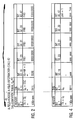
- Fig. 3 shows the essential parts of a DECT package for understanding the sign-on process.
- the DECT packet consists of an S-field used to synchronize the communication link between the base station and the handset, and a D-field for payload, where the DECT packet may have different lengths.
- the D field is in turn subdivided into an A field for controlling communication between the base station and the handset, and a B field generally containing the application data.
- the A field has an A-field header, A-field information, and an R-CRC field for backing up the control data.
- the A field has a field length of 64 bits, the bits being designated in ascending order from a0 for the first bit to a63 for the last bit.
- the A-field header includes the first eight bits from a0 to a7, the A-field information includes bits a8 to a47, and the R-CRC field includes bits a48 to a63.
- the first three bits of the A field header form the TA field, also referred to as the tail identifier, which specifies the type of A field information (a8 .. a47).
- the tail identifier specifies the type of A field information (a8 .. a47).
- One of the logical channels is the channel Q T , which is transmitted only by the base station and contains system information, such as. B. about the equipment of the base station or the current connection.
- the Q 1 bit (a3) and the Q 2 bit (a7) serve to control the quality of the transmission.
- the BA field indicates the nature of the B field, e.g. B. a protected or unprotected information transfer.
- Tail field Within the 40-bit A-field information, also referred to as Tail field, the transmission of internal MAC messages is also possible (Note, as described above, there are several logical channels for the A-field).
- the Access Rights Request Process allows the registration of a handset to a base station via the air interface.
- the base station by z. B. push a button or menu selection in a login operation offset.
- the base station signals to all handsets by a broadcast message that logging in to the base station is possible.
- Fig. 4 shows the structure of the A-field without R-CRC field and the specifics of the A-field for the signaling of the log-on readiness of the base station.
- the log-on readiness of the base station is signaled via the logical channel Q T , which is uniquely defined by the tail identifier value "100" (a0 .. a2).
- bits a8 to a11 are defined as Q headers
- the Q header defines the type of the following A field bits a12 to a47.
- a Q header value Q H "0011” means that the so-called "fixed part capabilities" are sent, wherein the value 1 for the bit a44 signals the readiness of the base station to log on.
- the handset is also placed in a sign-on readiness mode. Then the handset analyzes the broadcast message of the base station to the bit a44, it recognizes the registration process readiness of the base station at the bit value 1 for the bit a44, the handset starts the further logon process with an Access Rights Request message.
- the Access Rights Request message contains the identity of the handset and optionally further information, the z. B. define the type of authentication and encryption of the communication links.
- the base station Upon receiving the Access Rights Request message, the base station processes the information contained therein and responds to the handset with an Access Rights Accept message if it supports the type of authentication and encryption prescribed by the handset.
- the base station's Access Rights Accept message includes the identity of the handset, the identity of the base station, and the type of authentication and encryption of the communication link given by the handset.
- the handset Upon receipt of the Access Rights Accept message, the handset stores its own identity, the identity of the base station, and the type of authentication and encryption agreed upon with the base station as a record for registering the handset with that base station.
- the base station Likewise, the base station stores the identity of the handset and the type of authentication and encryption of the communication link agreed with the handset as a record.
- the future key UAK (User Authentication Key) for the authentication of the handset against the base station is not yet defined, but only the type of authentication.
- the UAK is exchanged once over an over-the-air arbitration process. This process is initiated by the base station in the form of a key-allocation message to the handset, the message including the type of authentication and the authentication code, also referred to as Authentication Code (AC).
- AC Authentication Code
- the handset sends the user-entered authentication code to the base station by means of an Authenticate Request message.
- the handset and the base station authenticate each other based on the authentication code and calculate based on the DECT standard authentication algorithm (DSSA) based on a predetermined random number of the handset and the authentication code, the UAK. If the authentication code entered by the user coincides with the authentication code stored in the base station, the UAK is deemed to have been agreed between the mobile unit and the base station and will in future be used for mutual authentication.
- DSSA DECT standard authentication algorithm
- the UAK is stored by both the handset and the base station, along with the identity of the handset, the identity of the base station, and the type of authentication and encryption of the communication link, the store process changing the system configuration.
- the base station emits a specific signaling (bit a44 in a broadcast message).
- the handset recognizes a base station ready to register and initiates the registration process.
- a central login through the system administration means that each handset can only be registered by a system administrator. But travel z. For example, if an employee of a company from a location A to a location B and would like to use his handset there, he must first go to the system administration, possibly even once cross the entire premises, hoping that a competent System Administrator is present and also just has time to complete the login. Another possibility is that the employee has to carry two handsets, one for location A and another for location B, which in turn creates additional baggage for the employee and always runs the risk of having the wrong handset with them , All listed solutions are impractical and inefficient in everyday business life.
- the WO 2004/016012 A1 describes a controller for broadcast services in wireless communication networks.
- the wireless communication network restricts service areas within the network by sending out registration mark information in each of the plurality of service areas.
- the tag information indicates whether registration for a given broadcast service is currently needed for mobile devices that want access to that broadcast service.
- the sent tag information is used to prompt for such registrations and allows the network to disable one or more broadcast services, for example, if no responses to these registration requests are received by the base station in a timely manner.
- the US 5 642 398 A describes a method for registration of mobile communication devices.
- the registration can take place when the communication device is switched on or off, due to an elapsed time span, a covered distance or on the basis of the entry into a zone in which the mobile communication device was not previously registered.
- a registration can also be initiated by a base station or by parameter changes in the mobile communication device.
- a mobile communication device based on a registration information list (RIL) stored in the mobile communication device, together with registration configuration information generated by the Base stations are sent, determine when it should register.
- RIL registration information list
- the object of the present invention is to provide a practical and efficient concept for the possible integration of a handset in different and separate networks.
- a handset according to claim 1 by a base station according to claim 8, by a method for operating a handset according to claim 15, by a method for operating a base station according to claim 16 and by a computer program according to claim 17.
- the present invention is based on the recognition that a different signaling of the base station for the readiness for a normal logon process and for the readiness for an ad hoc logon process distinguishes the logon information for a normal logon process and the logon information for an ad hoc Logon process enabled.
- a base station for communicating with a mobile part which can generate and send a signaling of a readiness of the base station for a normal logon process and a different signaling of a readiness of the base station for an ad hoc logon process and a handset for communicating a base station, which is a signaling of a readiness of the base station for a normal logon and a different message for signaling a Can receive and interpret readiness for an ad hoc logon process and start the ad hoc logon process.
- the different signaling according to the invention makes it possible to process the credentials differently.
- a preferred embodiment for a mobile part or a base station is characterized in particular by the fact that the login information for an ad hoc login is not stored in a separate memory like the login information for a normal login in the system configuration.
- To separately display, analyze, or further process in downstream processes e.g. in case of an unauthorized login easy to recognize and delete immediately.
- Another preferred embodiment of the present invention has a second volatile memory for storing the credentials for the ad hoc login process, this has the advantage that when the handset or the base station is turned off, the credentials for the ad hoc login process are automatically to be deleted.
- preferred embodiments of the present invention of a base station or a handset are characterized in that the communication protocol used for communicating the log-on readiness of the base station for an ad-hoc logon process uses an escape code defined by the communication protocol, wherein the Escape code indicates an application not defined by the communication protocol.
- the communication protocol used for communicating the log-on readiness of the base station for an ad-hoc logon process uses an escape code defined by the communication protocol, wherein the Escape code indicates an application not defined by the communication protocol.
- preferred embodiments of the present invention are arranged so that the handset as well as the base station for the ad hoc login process carry the same communication with the base station or handset as in the normal login process.
- a preferred embodiment of the present invention is characterized in particular in that it uses the ETSI DECT standard ETS 300 175 as the communication protocol.
- ETSI DECT ETS 300 175
- This has the advantage that a normal so-called "Access Rights Request Process” takes place as in a normal logon process, and thus the keys required for authentication and for encryption of the communication connection are generated.
- the ad hoc login readiness is signaled via a proprietary broadcast message.
- a signaling over bit a44 in the Q-field as in a normal logon process is disadvantageous, since otherwise normal / other handsets could attempt a normal logon process.
- preferred embodiments of the present invention are characterized in particular in that the ad hoc application of the handset not only by command, but z. B. can also be terminated automatically by time limit. This has the advantage that no intervention of a system administrator is necessary to clear the logon.
- the present invention provides an ad-hoc login that is easy to use for the employee as a user and does not require multiple handsets simultaneously to lead with you. Furthermore, the risk of misuse for the company as well as the effort for system administration can be reduced to a minimum. So z. B. an employee who does not normally work in aircraft handling and whose handset is therefore not registered there at the base station, if necessary, spontaneously spontaneously log on the ad hoc login process and participate in a conference call the aircraft handling service group. This does not change the system configuration, that is, z. For example, the configured user groups remain the same.
- the ad hoc credentials can further z.
- FIG. 1A shows a block diagram of a handset 10 according to the invention for communication with a base station according to a communication protocol comprising a receiver 11 adapted to receive a communication protocol message from a base station and forward the message to the means 12 for interpretation.
- the means 12 for interpreting the message based on the communication protocol is adapted to signal the readiness of the base station for the normal logon process from the signaling of the readiness of the base station for an ad hoc logon process and to signal to the processor 13 the readiness of the base station for an ad hoc login process.
- the processor 13 in turn, is configured when the readiness of the base station for an ad hoc sign-on is signaled to perform an ad-hoc sign-on operation with the base station.
- the device 12 may also be integrated with the processor 13, but in this case the same functionalities remain.
- the processor performs the usual function of translating speech signals or data signals into broadcastable signals as well as the procedures defined by the communication protocol.
- a preferred embodiment of the handset 10 according to the invention further comprises a first memory 14 for storing a normal logon information for the normal logon process and a second memory 15 for storing ad hoc logon information for the ad hoc logon process.
- the first memory 14 and the second memory 15 are designed so that the processor 13 has read and write access to the information contained therein.
- the second memory 15 may be a volatile memory.
- a preferred embodiment further comprises means 16 for placing the handset 10 into an ad-hoc sign-on readiness, which is arranged to activate in particular the means 12 for interpretation and the processor 13 for an ad-hoc sign-on.
- the device 16 may be formed for offsetting, the handset by z. As the input of a user of the handset, depending on one external event or periodically into ad-hoc login readiness.
- An embodiment of the handset according to the invention may further comprise a device 17 for terminating an ad hoc application, wherein the device 17 may be designed to terminate depending on the embodiment, by input by a user of the handset, by time limit or by switching off the handset, the ad -hoc login to finish.
- the means 17 for terminating for example, initiate an ad hoc unsubscribe process via the processor or delete the ad hoc login information directly in the second memory 15.
- the means 12 for interpreting is adapted to search in a message received via the receiver 11 for an escape code defined by the communication protocol, the escape code indicating an application not defined by the communication protocol, upon detection of the escape -Codes evaluate a subsequent portion of the data stream and in the case of detecting a predetermined occupancy of the wider area to enable the processor to start the ad hoc login process.
- the means 12 for interpreting already activates the processor when it has recognized the escape code.
- the processor is designed to perform the same communication with the base station in the ad hoc login process as in the normal login process.
- a preferred embodiment uses the ETSI DECT standard ETS 300 175 as the communication protocol and the access rights request process for the ad hoc logon process as for the normal logon process.
- Embodiments of the handset further include a transmitter 18 for communication with the base station.
- Fig. 1B shows a base station according to the invention comprising a processor 23 for performing the ad hoc sign-on, a means 22 for generating, configured to generate as message the first or second message, wherein the first message and the second message are different from each other , and a transmitter 21 which transmits the base station standby signaling message for ad hoc logon operation of the device 22 for generation.
- the device 22 may also be integrated with the processor 23, but in this case the same functionalities remain.
- a preferred embodiment of the base station according to the invention further comprises a first memory 24 for storing a normal logon information for the normal logon process and a second memory for storing ad hoc logon information for the ad hoc logon process.
- the first memory 24 and the second memory 25 are configured such that the processor has read and write access.
- the second memory 25 may be a volatile memory for the ad hoc login process.
- a further embodiment of the base station according to the invention comprises means 26 for placing the base station in the ad hoc login ready state, which controls the means 22 for generating and the processor 23 such that the means 22 for generating only the second message for signaling generates the ad hoc login ready, and the processor starts an ad hoc login operation only when enabled by the means for offsetting it.
- the device 26 is designed for offsetting, by entering a user of Base station, periodically or dependent on a predetermined external event, to put the base station in the ad hoc login readiness.
- the base station comprises a device 27 for terminating an ad hoc registration of the handset, wherein the device 27 is designed to terminate, by entering a user of the base station, due to a predetermined external event, by time limit or by turning off the base station to end the ad hoc registration.
- the device 27 for finishing z. B. via the processor 23 starts an ad hoc unsubscribe process or directly deletes the ad hoc credentials in the second memory 25.
- inventions are further configured to use an escape code defined by the communication protocol for the second message, wherein the escape code indicates an application not defined by the communication protocol and the second message can be generated such that a Escape code the following range has a given, unique assignment.
- the processor is designed to perform the same communication with the handset in the ad hoc sign-on process as in the normal login process.
- ETSI DECT standard ETS 300 175 as the communication protocol and also use the same access rights request process for the ad hoc login process as for the normal login process.
- base station includes a receiver 28 for communication with the handset.
- a preferred embodiment of a base station according to the invention and a handset according to the invention, which use the ETSI DECT standard as a communication protocol, will be described in more detail below.
- the base station sends a special, proprietary signaling to mark the ad hoc login readiness. Proprietary fields are discarded in other DECT systems. Other learned handsets without ad hoc mode ignore this message, but can be operated normally.
- the A-field (without R-CRC) 40 shows exemplary signaling in the MAC layer.
- the A-field 40 has as in Fig. 3 described an A-field header 41, also referred to as tail header, and the A-field information 42, also referred to as Tail, whose first four bits a8 to a11 define the Q-channel.
- Tail identifier TA 100, ie Q T channel.
- the proprietary message following in the tail includes a special identifier (IIS-Hdr) that identifies the ad-hoc login readiness.
- IIS-Hdr special identifier
- the handset searches only base stations in ad hoc logon readiness by evaluating the proprietary signaling. If a handset finds a base station in ad-hoc login readiness for ad-hoc sign-on readiness, the identities and keys are exchanged and temporarily stored as in a regular sign-on service. After that you can the base station and the handset arbitrarily connect and disconnect.
- the ad hoc registration can be terminated by command, by time limit or by switching off the modules.
- the temporary access data will be deleted, a subsequent connection setup would be rejected. This allows a handset to temporarily connect to a base station through an ad-hoc login without changing the system configuration.
Landscapes
- Engineering & Computer Science (AREA)
- Computer Networks & Wireless Communication (AREA)
- Signal Processing (AREA)
- Mobile Radio Communication Systems (AREA)
- Communication Control (AREA)
- Radio Relay Systems (AREA)
Claims (17)
- Station mobile (10) destinée à communiquer avec une station de base selon un protocole de communication, le protocole de communication présentant un premier message pour signaler une disponibilité de la station de base pour une opération d'ouverture de session normale de la station mobile (10) à la station de base et un deuxième message pour signaler une disponibilité de la station de base pour une opération d'ouverture de session ad hoc de la station mobile (10) à la station de base, aux caractéristiques suivantes:un récepteur (11) qui est réalisé de manière à recevoir un message du protocole de communication d'une station de base;un moyen (12) destiné à interpréter le message sur base du protocole de communication, le moyen (12) destiné à interpréter étant réalisé de manière à distinguer le signalement de la disponibilité de la station de base pour l'opération d'ouverture de session normale du signalement de la disponibilité de la station de base pour une opération d'ouverture de session ad hoc;un processeur (13) qui est réalisé de manière à effectuer, lorsqu'est signalée la disponibilité de la station de base pour une opération d'ouverture de session ad hoc, une opération d'ouverture de session ad hoc avec la station de base;une première mémoire (14) destinée à mémoriser une configuration de système qui comprend des informations d'ouverture de session normale pour l'opération d'ouverture de session normale, et une deuxième mémoire (15), séparée de la première mémoire (14), destinée à mémoriser une information d'ouverture de session ad hoc pour l'opération d'ouverture de session ad hoc; etun moyen (17) destiné à terminer une ouverture de session ad hoc de la station mobile (10), le moyen (17) destiné à terminer étant réalisé de manière à terminer, par ordre, par limitation de temps ou par déconnexion de la station mobile, l'ouverture de session ad hoc et à effacer l'information d'ouverture de session ad hoc dans la deuxième mémoire (15).
- Station mobile (10) selon la revendication 1, dans laquelle la deuxième mémoire (15) pour l'opération d'ouverture de session ad hoc est une mémoire volatile et la première mémoire (14) est une mémoire non volatile.
- Station mobile (10) selon l'une des revendications 1 à 2, dans laquelle le moyen (12) destiné à interpréter est réalisé de manière à chercher, dans un message reçu, un code Escape (= d'échappement) défini par le protocole de communication, le code Escape indiquant une application non définie par le protocole de communication.
- Station mobile (10) selon la revendication 3, dans lequel le moyen (12) destiné à interpréter est réalisé de manière à interpréter le message de sorte que, en cas d'identification du code Escape, il est évalué une zone suivante du flux de données, et à activer, en cas d'occupation prédéterminée de la zone suivante, le processeur, de sorte qu'il commence l'opération d'ouverture de session ad hoc, ou à déjà activer le processeur (13) pour commencer l'opération d'ouverture de session ad hoc lorsque le message présente le code Escape.
- Station mobile (10) selon l'une des revendications 1 à 4, dans laquelle le processeur (13) est réalisé de manière à réaliser, dans l'opération d'ouverture de session ad hoc, une communication avec la station de base identique à celle dans l'opération d'ouverture de session normale.
- Station mobile (10) selon la revendication 1, qui présente par ailleurs les caractéristiques suivantes, un moyen (16) destiné à amener la station mobile à la disponibilité pour l'opération d'ouverture de session ad hoc, le moyen (12) destiné à interpréter ou le processeur (13) étant réalisés de manière à n'être actifs pour une opération d'ouverture de session ad hoc que lorsque le dispositif (16) destiné à amener signale la disponibilité pour l'opération d'ouverture de session ad hoc.
- Station mobile (10) selon la revendication 6, dans laquelle le moyen (16) destiné à amener est réalisé de manière à amener la station mobile (10), périodiquement ou en fonction d'un événement externe, en disponibilité pour l'opération d'ouverture de session ad hoc.
- Station de base (20) destinée à communiquer avec une station mobile selon un protocole de communication, le protocole de communication présentant un premier message pour signaler une disponibilité de la station de base pour une opération d'ouverture de session normale de la station mobile à la station de base (20) et un deuxième message pour signaler une disponibilité de la station de base (20) pour une opération d'ouverture de session ad hoc de la station mobile à la station de base (20), aux caractéristiques suivantes:un émetteur (21) qui est réalisé de manière à envoyer un message du protocole de communication à une station mobile;un moyen (22) destiné à générer le message sur base du protocole de communication, le moyen (22) destiné à générer étant réalisé de manière générer, comme message, le premier ou le deuxième message, le premier message et le deuxième message étant différents l'un de l'autre; etun processeur (23) qui est réalisé de manière à réaliser, lorsque la station de base (20) est en disponibilité pour une opération d'ouverture de session ad hoc et reçoit de la station mobile une demande d'opération d'ouverture de session ad hoc, une opération d'ouverture de session ad hoc avec la station mobile;une première mémoire (24) destinée à mémoriser une configuration de système qui comporte des informations d'ouverture de session normale pour l'opération d'ouverture de session normale, et une deuxième mémoire (25), séparée de la première mémoire (24), destinée à mémoriser une information d'ouverture de session ad hoc pour l'opération d'ouverture de session ad hoc; etun moyen (27) destiné à terminer une ouverture de session ad hoc de la station mobile, le moyen (27) destiné à terminer étant réalisé de manière à effacer, par ordre, par suite d'un événement externe prédéterminé, par limitation de temps ou par déconnexion de la station de base, l'information d'ouverture de session ad hoc dans la deuxième mémoire (25).
- Station de base (20) selon la revendication 8, dans laquelle la deuxième mémoire (25) pour l'opération d'ouverture de session ad hoc est une mémoire volatile et la première mémoire (24) est une mémoire non volatile.
- Station de base (20) selon l'une des revendications 8 à 9, dans laquelle le moyen (22) destiné à générer est réalisé de manière à utiliser, pour le deuxième message, un code Escape défini par le protocole de communication, le code Escape indiquant une application non définie par le protocole de communication.
- Station de base (20) selon la revendication 10, dans lequel le moyen (22) destiné à générer est réalisé de sorte que le deuxième message soit généré de sorte qu'une zone suivant l'Escape présente une occupation univoque prédéterminée.
- Station de base (20) selon l'une des revendications 8 à 11, dans laquelle le processeur (23) est réalisé de manière à réaliser, dans l'opération d'ouverture de session ad hoc, une communication avec la station mobile identique à celle dans l'opération d'ouverture de session normale.
- Station de base (20) selon la revendication 8, qui présente par ailleurs les caractéristiques suivantes, un moyen (26) destiné à amener la station de base (20) en disponibilité pour l'opération d'ouverture de session ad hoc, le moyen (22) destiné à générer étant réalisé de manière à ne générer le deuxième message que lorsqu'il est activé par le moyen (26) destiné à amener et par ailleurs le processeur (23) ne commençant une opération d'ouverture de session ad hoc que lorsqu'il est activé à cet effet par le moyen (26) destiné à amener.
- Station de base (20) selon la revendication 13, dans laquelle le moyen (26) destiné à amener est réalisé de manière à amener la station de base (20), périodiquement ou en fonction d'un événement externe prédéterminé, en disponibilité pour l'opération d'ouverture de session ad hoc.
- Procédé pour faire fonctionner une station mobile (10) pour communiquer avec une station de base selon un protocole de communication, le protocole de communication présentant un premier message pour signaler une disponibilité de la station de base pour une opération d'ouverture de session normale de la station mobile (10) à la station de base et un deuxième message pour signaler une disponibilité de la station de base pour une opération d'ouverture de session ad hoc de la station mobile (10) à la station de base, pour obtenir une ouverture de session à la station de base, aux étapes suivantes consistant à:recevoir un message du protocole de communication;interpréter un message sur base du protocole de communication, pour distinguer le signalement de la disponibilité de la station de base pour l'opération d'ouverture de session normale du signalement de la disponibilité de la station de base pour une opération d'ouverture de session ad hoc;effectuer l'opération d'ouverture de session ad hoc lorsqu'est signalée la disponibilité de la station de base pour une opération d'ouverture de session ad hoc;mémoriser une information d'ouverture de session ad hoc pour l'opération d'ouverture de session ad hoc dans une deuxième mémoire séparée d'une première mémoire, la première mémoire mémorisant une configuration de système qui comporte des informations d'ouverture de session normale pour l'opération d'ouverture de session normale; etterminer une ouverture de session ad hoc à la station de base, l'étape consistant à terminer étant mise en oeuvre de manière à effacer, par ordre, par limitation de temps ou par déconnexion de la station mobile, l'information d'ouverture de session ad hoc dans la deuxième mémoire (15).
- Procédé pour faire fonctionner une station de base (20) pour communiquer avec une station mobile selon un protocole de communication, le protocole de communication présentant un premier message pour signaler une disponibilité de la station de base (20) pour une opération d'ouverture de session normale de la station mobile à la station de base (20) et un deuxième message pour signaler une disponibilité de la station de base (20) pour une opération d'ouverture de session ad hoc de la station mobile à la station de base (20), pour obtenir une ouverture de session à la station de base (20), aux étapes suivantes consistant à:générer soit le premier, soit le deuxième message, le premier et le deuxième message étant différents l'un de l'autre;envoyer un message; etréaliser l'opération d'ouverture de session ad hoc lorsque la station de base (20) est en disponibilité pour une opération d'ouverture de session ad hoc et obtient de la station mobile une demande d'opération d'ouverture de session ad hoc;mémoriser une information d'ouverture de session ad hoc pour l'opération d'ouverture de session ad hoc dans une deuxième mémoire séparée d'une première mémoire, la première mémoire mémorisant une configuration de système qui comporte des informations d'ouverture de session normale pour l'opération d'ouverture de session normale; etterminer une ouverture de session ad hoc de la station mobile, l'étape consistant à terminer étant mise en oeuvre pour effacer, par ordre, par suite d'un événement externe prédéterminé, par limitation de temps ou par déconnexion de la station de base, l'information d'ouverture de session ad hoc dans la deuxième mémoire (25).
- Programme d'ordinateur avec un code de programme pour réaliser un procédé selon la revendication 15 ou la revendication 16 lorsque le programme d'ordinateur est exécuté sur un ordinateur.
Priority Applications (1)
| Application Number | Priority Date | Filing Date | Title |
|---|---|---|---|
| PL05798656T PL1854319T3 (pl) | 2005-03-02 | 2005-10-06 | Stacja mobilna i stacja bazowa dla protokołu komunikacyjnego obejmującego normalną operację logowania oraz operację logowania ad hoc. |
Applications Claiming Priority (2)
| Application Number | Priority Date | Filing Date | Title |
|---|---|---|---|
| DE102005009504A DE102005009504B3 (de) | 2005-03-02 | 2005-03-02 | Mobilteil und Basisstation für ein Kommunikationsprotokoll mit einer Normal-Anmeldung und einer Ad-hoc-Anmeldung |
| PCT/EP2005/010786 WO2006092160A1 (fr) | 2005-03-02 | 2005-10-06 | Station mobile et station de base pour un protocole de communication comprenant une ouverture de session normale et une ouverture de session ad hoc |
Publications (2)
| Publication Number | Publication Date |
|---|---|
| EP1854319A1 EP1854319A1 (fr) | 2007-11-14 |
| EP1854319B1 true EP1854319B1 (fr) | 2008-08-13 |
Family
ID=35520681
Family Applications (1)
| Application Number | Title | Priority Date | Filing Date |
|---|---|---|---|
| EP05798656A Expired - Lifetime EP1854319B1 (fr) | 2005-03-02 | 2005-10-06 | Station mobile et station de base pour un protocole de communication comprenant une ouverture de session normale et une ouverture de session ad hoc |
Country Status (10)
| Country | Link |
|---|---|
| US (1) | US7979069B2 (fr) |
| EP (1) | EP1854319B1 (fr) |
| AT (1) | ATE405125T1 (fr) |
| CA (1) | CA2601972C (fr) |
| DE (2) | DE102005009504B3 (fr) |
| DK (1) | DK1854319T3 (fr) |
| ES (1) | ES2312026T3 (fr) |
| PL (1) | PL1854319T3 (fr) |
| PT (1) | PT1854319E (fr) |
| WO (1) | WO2006092160A1 (fr) |
Families Citing this family (55)
| Publication number | Priority date | Publication date | Assignee | Title |
|---|---|---|---|---|
| DE102006050639A1 (de) | 2006-10-26 | 2008-04-30 | Philip Behrens | Methode und Gerät zur Kontrolle und/oder Begrenzung von elektronischen Medieninhalten |
| DE102007000613A1 (de) * | 2007-10-31 | 2009-05-28 | Siemens Home And Office Communication Devices Gmbh & Co. Kg | Verfahren zum Anmelden eines Mobilteils an eine Basisstation und funkgesteuertes Kommunikationssystem basierend auf einem solchen Verfahren |
| US8548428B2 (en) | 2009-01-28 | 2013-10-01 | Headwater Partners I Llc | Device group partitions and settlement platform |
| US8346225B2 (en) | 2009-01-28 | 2013-01-01 | Headwater Partners I, Llc | Quality of service for device assisted services |
| US8626115B2 (en) | 2009-01-28 | 2014-01-07 | Headwater Partners I Llc | Wireless network service interfaces |
| US8832777B2 (en) * | 2009-03-02 | 2014-09-09 | Headwater Partners I Llc | Adapting network policies based on device service processor configuration |
| US8275830B2 (en) | 2009-01-28 | 2012-09-25 | Headwater Partners I Llc | Device assisted CDR creation, aggregation, mediation and billing |
| US8635335B2 (en) | 2009-01-28 | 2014-01-21 | Headwater Partners I Llc | System and method for wireless network offloading |
| US8340634B2 (en) | 2009-01-28 | 2012-12-25 | Headwater Partners I, Llc | Enhanced roaming services and converged carrier networks with device assisted services and a proxy |
| US8250207B2 (en) | 2009-01-28 | 2012-08-21 | Headwater Partners I, Llc | Network based ambient services |
| US8391834B2 (en) | 2009-01-28 | 2013-03-05 | Headwater Partners I Llc | Security techniques for device assisted services |
| US8402111B2 (en) | 2009-01-28 | 2013-03-19 | Headwater Partners I, Llc | Device assisted services install |
| US8406748B2 (en) | 2009-01-28 | 2013-03-26 | Headwater Partners I Llc | Adaptive ambient services |
| US8589541B2 (en) | 2009-01-28 | 2013-11-19 | Headwater Partners I Llc | Device-assisted services for protecting network capacity |
| US9270559B2 (en) | 2009-01-28 | 2016-02-23 | Headwater Partners I Llc | Service policy implementation for an end-user device having a control application or a proxy agent for routing an application traffic flow |
| US9706061B2 (en) | 2009-01-28 | 2017-07-11 | Headwater Partners I Llc | Service design center for device assisted services |
| US10715342B2 (en) | 2009-01-28 | 2020-07-14 | Headwater Research Llc | Managing service user discovery and service launch object placement on a device |
| US9755842B2 (en) | 2009-01-28 | 2017-09-05 | Headwater Research Llc | Managing service user discovery and service launch object placement on a device |
| US10326800B2 (en) | 2009-01-28 | 2019-06-18 | Headwater Research Llc | Wireless network service interfaces |
| US11985155B2 (en) | 2009-01-28 | 2024-05-14 | Headwater Research Llc | Communications device with secure data path processing agents |
| US10200541B2 (en) | 2009-01-28 | 2019-02-05 | Headwater Research Llc | Wireless end-user device with divided user space/kernel space traffic policy system |
| US12543031B2 (en) | 2009-01-28 | 2026-02-03 | Headwater Research Llc | Adapting network policies based on device service processor configuration |
| US9565707B2 (en) | 2009-01-28 | 2017-02-07 | Headwater Partners I Llc | Wireless end-user device with wireless data attribution to multiple personas |
| US10492102B2 (en) | 2009-01-28 | 2019-11-26 | Headwater Research Llc | Intermediate networking devices |
| US9955332B2 (en) | 2009-01-28 | 2018-04-24 | Headwater Research Llc | Method for child wireless device activation to subscriber account of a master wireless device |
| US9572019B2 (en) | 2009-01-28 | 2017-02-14 | Headwater Partners LLC | Service selection set published to device agent with on-device service selection |
| US12389218B2 (en) | 2009-01-28 | 2025-08-12 | Headwater Research Llc | Service selection set publishing to device agent with on-device service selection |
| US12166596B2 (en) | 2009-01-28 | 2024-12-10 | Disney Enterprises, Inc. | Device-assisted services for protecting network capacity |
| US10798252B2 (en) | 2009-01-28 | 2020-10-06 | Headwater Research Llc | System and method for providing user notifications |
| US12452377B2 (en) | 2009-01-28 | 2025-10-21 | Headwater Research Llc | Service design center for device assisted services |
| US10779177B2 (en) | 2009-01-28 | 2020-09-15 | Headwater Research Llc | Device group partitions and settlement platform |
| US10264138B2 (en) | 2009-01-28 | 2019-04-16 | Headwater Research Llc | Mobile device and service management |
| US9858559B2 (en) | 2009-01-28 | 2018-01-02 | Headwater Research Llc | Network service plan design |
| US10064055B2 (en) | 2009-01-28 | 2018-08-28 | Headwater Research Llc | Security, fraud detection, and fraud mitigation in device-assisted services systems |
| US10237757B2 (en) | 2009-01-28 | 2019-03-19 | Headwater Research Llc | System and method for wireless network offloading |
| US11218854B2 (en) | 2009-01-28 | 2022-01-04 | Headwater Research Llc | Service plan design, user interfaces, application programming interfaces, and device management |
| US9980146B2 (en) | 2009-01-28 | 2018-05-22 | Headwater Research Llc | Communications device with secure data path processing agents |
| US10248996B2 (en) | 2009-01-28 | 2019-04-02 | Headwater Research Llc | Method for operating a wireless end-user device mobile payment agent |
| US9392462B2 (en) | 2009-01-28 | 2016-07-12 | Headwater Partners I Llc | Mobile end-user device with agent limiting wireless data communication for specified background applications based on a stored policy |
| US12388810B2 (en) | 2009-01-28 | 2025-08-12 | Headwater Research Llc | End user device that secures an association of application to service policy with an application certificate check |
| US11973804B2 (en) | 2009-01-28 | 2024-04-30 | Headwater Research Llc | Network service plan design |
| US8793758B2 (en) | 2009-01-28 | 2014-07-29 | Headwater Partners I Llc | Security, fraud detection, and fraud mitigation in device-assisted services systems |
| US10783581B2 (en) | 2009-01-28 | 2020-09-22 | Headwater Research Llc | Wireless end-user device providing ambient or sponsored services |
| US9578182B2 (en) | 2009-01-28 | 2017-02-21 | Headwater Partners I Llc | Mobile device and service management |
| US9557889B2 (en) | 2009-01-28 | 2017-01-31 | Headwater Partners I Llc | Service plan design, user interfaces, application programming interfaces, and device management |
| US9647918B2 (en) | 2009-01-28 | 2017-05-09 | Headwater Research Llc | Mobile device and method attributing media services network usage to requesting application |
| US10484858B2 (en) | 2009-01-28 | 2019-11-19 | Headwater Research Llc | Enhanced roaming services and converged carrier networks with device assisted services and a proxy |
| US12432130B2 (en) | 2009-01-28 | 2025-09-30 | Headwater Research Llc | Flow tagging for service policy implementation |
| US9571559B2 (en) | 2009-01-28 | 2017-02-14 | Headwater Partners I Llc | Enhanced curfew and protection associated with a device group |
| US9954975B2 (en) | 2009-01-28 | 2018-04-24 | Headwater Research Llc | Enhanced curfew and protection associated with a device group |
| US10841839B2 (en) | 2009-01-28 | 2020-11-17 | Headwater Research Llc | Security, fraud detection, and fraud mitigation in device-assisted services systems |
| US10057775B2 (en) | 2009-01-28 | 2018-08-21 | Headwater Research Llc | Virtualized policy and charging system |
| WO2014159862A1 (fr) | 2013-03-14 | 2014-10-02 | Headwater Partners I Llc | Portage de justificatif d'identité automatisé pour des dispositifs mobiles |
| US9779405B1 (en) * | 2016-09-26 | 2017-10-03 | Stripe, Inc. | Systems and methods for authenticating a user commerce account associated with a merchant of a commerce platform |
| US11375561B2 (en) * | 2019-12-09 | 2022-06-28 | Amazon Technologies, Inc. | Multi-functional, software configurable device for fixed wireless networks |
Family Cites Families (14)
| Publication number | Priority date | Publication date | Assignee | Title |
|---|---|---|---|---|
| US5642398A (en) * | 1991-09-20 | 1997-06-24 | Qualcomm Incorporated | Comprehensive mobile communications device registration method |
| DE4236778A1 (de) | 1992-10-30 | 1994-05-05 | Siemens Ag | Verfahren zum Zusammenschluß von Sende-/Empfangseinrichtungen eines Schnurlos-Kommunikationssystems zu einer kommunikationsfähigen Einheit |
| DE19610086C2 (de) | 1996-03-14 | 2000-02-17 | Siemens Ag | Verfahren und Anordnung zum Abwickeln von Protokollen zwischen Telekommunikationsgeräten drahtloser Telekommunikationssysteme |
| US6834186B1 (en) * | 1996-12-20 | 2004-12-21 | Avaya Technology Corp. | Wireless handset feature transparency between switching nodes |
| US6574452B1 (en) * | 1998-07-28 | 2003-06-03 | Canon Kabushiki Kaisha | Method and device for communication on a network |
| JP3601434B2 (ja) * | 2000-10-13 | 2004-12-15 | 日本電気株式会社 | 擬似公衆無線アクセスサービス |
| US7069433B1 (en) * | 2001-02-20 | 2006-06-27 | At&T Corp. | Mobile host using a virtual single account client and server system for network access and management |
| FI20011239A7 (fi) * | 2001-06-12 | 2002-12-13 | Nokia Corp | Tiedonsiirtomenetelmä ja -järjestely |
| CN1518815A (zh) * | 2001-06-19 | 2004-08-04 | �ʼҷ����ֵ�������˾ | 无线通信系统 |
| GB2389010B (en) * | 2002-03-28 | 2006-02-01 | 3Com Corp | A method and system for providing communications network access and control in a public area |
| US7379738B2 (en) * | 2002-08-05 | 2008-05-27 | Telefonaktiebolaget Lm Ericsson (Publ) | Information service broadcast control in a wireless communication network |
| US20040165563A1 (en) * | 2003-02-24 | 2004-08-26 | Hsu Raymond T. | Wireless local access network system detection and selection |
| US20040235452A1 (en) * | 2003-05-22 | 2004-11-25 | Fischer Michael Andrew | Network access point for providing multiple levels of security |
| US20040259544A1 (en) * | 2003-06-20 | 2004-12-23 | Amos James A. | Hybrid wireless IP phone system and method for using the same |
-
2005
- 2005-03-02 DE DE102005009504A patent/DE102005009504B3/de not_active Expired - Fee Related
- 2005-10-06 WO PCT/EP2005/010786 patent/WO2006092160A1/fr not_active Ceased
- 2005-10-06 EP EP05798656A patent/EP1854319B1/fr not_active Expired - Lifetime
- 2005-10-06 PT PT05798656T patent/PT1854319E/pt unknown
- 2005-10-06 CA CA2601972A patent/CA2601972C/fr not_active Expired - Fee Related
- 2005-10-06 PL PL05798656T patent/PL1854319T3/pl unknown
- 2005-10-06 ES ES05798656T patent/ES2312026T3/es not_active Expired - Lifetime
- 2005-10-06 DK DK05798656T patent/DK1854319T3/da active
- 2005-10-06 DE DE502005005060T patent/DE502005005060D1/de not_active Expired - Lifetime
- 2005-10-06 AT AT05798656T patent/ATE405125T1/de active
-
2007
- 2007-08-17 US US11/840,270 patent/US7979069B2/en not_active Expired - Fee Related
Also Published As
| Publication number | Publication date |
|---|---|
| PT1854319E (pt) | 2008-11-17 |
| US7979069B2 (en) | 2011-07-12 |
| DE502005005060D1 (de) | 2008-09-25 |
| US20080020764A1 (en) | 2008-01-24 |
| DE102005009504B3 (de) | 2006-03-09 |
| CA2601972A1 (fr) | 2006-09-08 |
| ES2312026T3 (es) | 2009-02-16 |
| ATE405125T1 (de) | 2008-08-15 |
| PL1854319T3 (pl) | 2009-04-30 |
| EP1854319A1 (fr) | 2007-11-14 |
| WO2006092160A1 (fr) | 2006-09-08 |
| CA2601972C (fr) | 2014-08-12 |
| DK1854319T3 (da) | 2008-11-24 |
Similar Documents
| Publication | Publication Date | Title |
|---|---|---|
| DE102005009504B3 (de) | Mobilteil und Basisstation für ein Kommunikationsprotokoll mit einer Normal-Anmeldung und einer Ad-hoc-Anmeldung | |
| DE60106665T2 (de) | Vorrichtung und entsprechendes Verfahren zur Vereinfachung der Authentifikation von Kommunikationsstationen in einem mobilen Kommunikationssystem | |
| DE60209858T2 (de) | Verfahren und Einrichtung zur Zugriffskontrolle eines mobilen Endgerätes in einem Kommunikationsnetzwerk | |
| DE69528371T2 (de) | Vielfachsystem-teilnehmeridentifizierungsmodul | |
| DE19722424C5 (de) | Verfahren zum Sichern eines Zugreifens auf ein fernab gelegenes System | |
| DE60029217T2 (de) | Verfahren und vorrichtung zum initialisieren von sicheren verbindungen zwischen und nur zwischen zueinandergehörenden schnurlosen einrichtungen | |
| DE60307482T2 (de) | Authentifizierung zwischen einem zellularen Mobilendgerät und einem kurzreichweitigen Zugangspunkt | |
| DE69929574T2 (de) | Verfahren zur Sicherung einer Funkverbindung in einem drahtlosen System | |
| EP1365620B1 (fr) | Procédé pour le rattachement d'un terminal de communication dans un réseau de service (IMS) | |
| EP1763200B1 (fr) | Système informatique et procédé pour transmettre des données dépendant du contexte | |
| DE60206634T2 (de) | Verfahren und System zur Authentifizierung von Benutzern in einem Telekommunikationssystem | |
| DE19756587C2 (de) | Verfahren und Kommunikationssystem zur Verschlüsselung von Informationen für eine Funkübertragung und zur Authentifikation von Teilnehmern | |
| EP1064810B1 (fr) | Procede, station mobile et systeme de radiocommunication pour commander des fonctions liees a la securite lors de la gestion de communications | |
| EP1527589A1 (fr) | Systeme de securite pour appareils d'un reseau sans fil | |
| EP1283618A2 (fr) | Procédé de transmission d'information cryptographique aux membres d'un groupe de multidiffusion | |
| EP1336937A1 (fr) | Système de contrôle d'accès, methode de contrôle d'accès et dispositifs pour la mettre en oeuvre | |
| DE60222810T2 (de) | Verfahren, system und einrichtung zur dienstauswahl über ein drahtloses lokales netzwerk | |
| DE112018000632T5 (de) | Verfahren und systeme zum verbinden eines drahtlosen kommunikationsgeräts mit einem verlegbaren drahtlosen kommunikationsnetzwerk | |
| EP1943855B1 (fr) | Serveur et procede pour fournir une cle de mobilite | |
| DE112008002860T5 (de) | Verfahren und Vorrichtung für das Bereitstellen einer sicheren Verknüpfung mit einer Benutzeridentität in einem System für digitale Rechteverwaltung | |
| EP1230820B1 (fr) | Procede d'authentification d'un reseau de communication radio par rapport a une station mobile ainsi que reseau de communication radio et station mobile | |
| DE60224391T2 (de) | Sicherer Zugang zu einem Teilnehmermodul | |
| EP2482573B1 (fr) | Procédé de configuration d'un appareil de communication ainsi qu'appareil de configuration | |
| EP0717578A2 (fr) | Méthode de connexion des stations d'abonnés à un réseau radio mobile | |
| DE102012210343A1 (de) | Verfahren und Vorrichtung zum Übermitteln einer Prüfanfrage an ein Identifizierungsmodul |
Legal Events
| Date | Code | Title | Description |
|---|---|---|---|
| PUAI | Public reference made under article 153(3) epc to a published international application that has entered the european phase |
Free format text: ORIGINAL CODE: 0009012 |
|
| 17P | Request for examination filed |
Effective date: 20070814 |
|
| AK | Designated contracting states |
Kind code of ref document: A1 Designated state(s): AT BE BG CH CY CZ DE DK EE ES FI FR GB GR HU IE IS IT LI LT LU LV MC NL PL PT RO SE SI SK TR |
|
| GRAP | Despatch of communication of intention to grant a patent |
Free format text: ORIGINAL CODE: EPIDOSNIGR1 |
|
| DAX | Request for extension of the european patent (deleted) | ||
| GRAS | Grant fee paid |
Free format text: ORIGINAL CODE: EPIDOSNIGR3 |
|
| GRAA | (expected) grant |
Free format text: ORIGINAL CODE: 0009210 |
|
| AK | Designated contracting states |
Kind code of ref document: B1 Designated state(s): AT BE BG CH CY CZ DE DK EE ES FI FR GB GR HU IE IS IT LI LT LU LV MC NL PL PT RO SE SI SK TR |
|
| REG | Reference to a national code |
Ref country code: GB Ref legal event code: FG4D Free format text: NOT ENGLISH |
|
| REG | Reference to a national code |
Ref country code: CH Ref legal event code: EP |
|
| REG | Reference to a national code |
Ref country code: IE Ref legal event code: FG4D Free format text: LANGUAGE OF EP DOCUMENT: GERMAN |
|
| REF | Corresponds to: |
Ref document number: 502005005060 Country of ref document: DE Date of ref document: 20080925 Kind code of ref document: P |
|
| REG | Reference to a national code |
Ref country code: SE Ref legal event code: TRGR |
|
| REG | Reference to a national code |
Ref country code: PT Ref legal event code: SC4A Free format text: AVAILABILITY OF NATIONAL TRANSLATION Effective date: 20081105 |
|
| REG | Reference to a national code |
Ref country code: DK Ref legal event code: T3 |
|
| REG | Reference to a national code |
Ref country code: GR Ref legal event code: EP Ref document number: 20080402957 Country of ref document: GR |
|
| PG25 | Lapsed in a contracting state [announced via postgrant information from national office to epo] |
Ref country code: IS Free format text: LAPSE BECAUSE OF FAILURE TO SUBMIT A TRANSLATION OF THE DESCRIPTION OR TO PAY THE FEE WITHIN THE PRESCRIBED TIME-LIMIT Effective date: 20081213 Ref country code: LT Free format text: LAPSE BECAUSE OF FAILURE TO SUBMIT A TRANSLATION OF THE DESCRIPTION OR TO PAY THE FEE WITHIN THE PRESCRIBED TIME-LIMIT Effective date: 20080813 |
|
| REG | Reference to a national code |
Ref country code: ES Ref legal event code: FG2A Ref document number: 2312026 Country of ref document: ES Kind code of ref document: T3 |
|
| PG25 | Lapsed in a contracting state [announced via postgrant information from national office to epo] |
Ref country code: SI Free format text: LAPSE BECAUSE OF FAILURE TO SUBMIT A TRANSLATION OF THE DESCRIPTION OR TO PAY THE FEE WITHIN THE PRESCRIBED TIME-LIMIT Effective date: 20080813 Ref country code: LV Free format text: LAPSE BECAUSE OF FAILURE TO SUBMIT A TRANSLATION OF THE DESCRIPTION OR TO PAY THE FEE WITHIN THE PRESCRIBED TIME-LIMIT Effective date: 20080813 |
|
| PG25 | Lapsed in a contracting state [announced via postgrant information from national office to epo] |
Ref country code: BG Free format text: LAPSE BECAUSE OF FAILURE TO SUBMIT A TRANSLATION OF THE DESCRIPTION OR TO PAY THE FEE WITHIN THE PRESCRIBED TIME-LIMIT Effective date: 20081113 |
|
| REG | Reference to a national code |
Ref country code: PL Ref legal event code: T3 |
|
| PG25 | Lapsed in a contracting state [announced via postgrant information from national office to epo] |
Ref country code: CZ Free format text: LAPSE BECAUSE OF FAILURE TO SUBMIT A TRANSLATION OF THE DESCRIPTION OR TO PAY THE FEE WITHIN THE PRESCRIBED TIME-LIMIT Effective date: 20080813 Ref country code: SK Free format text: LAPSE BECAUSE OF FAILURE TO SUBMIT A TRANSLATION OF THE DESCRIPTION OR TO PAY THE FEE WITHIN THE PRESCRIBED TIME-LIMIT Effective date: 20080813 Ref country code: RO Free format text: LAPSE BECAUSE OF FAILURE TO SUBMIT A TRANSLATION OF THE DESCRIPTION OR TO PAY THE FEE WITHIN THE PRESCRIBED TIME-LIMIT Effective date: 20080813 Ref country code: MC Free format text: LAPSE BECAUSE OF NON-PAYMENT OF DUE FEES Effective date: 20081031 |
|
| PLBE | No opposition filed within time limit |
Free format text: ORIGINAL CODE: 0009261 |
|
| STAA | Information on the status of an ep patent application or granted ep patent |
Free format text: STATUS: NO OPPOSITION FILED WITHIN TIME LIMIT |
|
| 26N | No opposition filed |
Effective date: 20090514 |
|
| PG25 | Lapsed in a contracting state [announced via postgrant information from national office to epo] |
Ref country code: EE Free format text: LAPSE BECAUSE OF FAILURE TO SUBMIT A TRANSLATION OF THE DESCRIPTION OR TO PAY THE FEE WITHIN THE PRESCRIBED TIME-LIMIT Effective date: 20080813 |
|
| PG25 | Lapsed in a contracting state [announced via postgrant information from national office to epo] |
Ref country code: CY Free format text: LAPSE BECAUSE OF FAILURE TO SUBMIT A TRANSLATION OF THE DESCRIPTION OR TO PAY THE FEE WITHIN THE PRESCRIBED TIME-LIMIT Effective date: 20080813 Ref country code: HU Free format text: LAPSE BECAUSE OF FAILURE TO SUBMIT A TRANSLATION OF THE DESCRIPTION OR TO PAY THE FEE WITHIN THE PRESCRIBED TIME-LIMIT Effective date: 20090214 |
|
| PG25 | Lapsed in a contracting state [announced via postgrant information from national office to epo] |
Ref country code: TR Free format text: LAPSE BECAUSE OF FAILURE TO SUBMIT A TRANSLATION OF THE DESCRIPTION OR TO PAY THE FEE WITHIN THE PRESCRIBED TIME-LIMIT Effective date: 20080813 |
|
| REG | Reference to a national code |
Ref country code: FR Ref legal event code: PLFP Year of fee payment: 11 |
|
| REG | Reference to a national code |
Ref country code: FR Ref legal event code: PLFP Year of fee payment: 12 |
|
| PGFP | Annual fee paid to national office [announced via postgrant information from national office to epo] |
Ref country code: PL Payment date: 20160927 Year of fee payment: 12 Ref country code: PT Payment date: 20160923 Year of fee payment: 12 |
|
| PGFP | Annual fee paid to national office [announced via postgrant information from national office to epo] |
Ref country code: LU Payment date: 20161026 Year of fee payment: 12 |
|
| PGFP | Annual fee paid to national office [announced via postgrant information from national office to epo] |
Ref country code: NL Payment date: 20161025 Year of fee payment: 12 Ref country code: FI Payment date: 20161024 Year of fee payment: 12 Ref country code: CH Payment date: 20161025 Year of fee payment: 12 Ref country code: DK Payment date: 20161025 Year of fee payment: 12 Ref country code: IE Payment date: 20161026 Year of fee payment: 12 |
|
| PGFP | Annual fee paid to national office [announced via postgrant information from national office to epo] |
Ref country code: BE Payment date: 20161025 Year of fee payment: 12 Ref country code: GR Payment date: 20161024 Year of fee payment: 12 Ref country code: SE Payment date: 20161025 Year of fee payment: 12 Ref country code: AT Payment date: 20161024 Year of fee payment: 12 |
|
| REG | Reference to a national code |
Ref country code: FR Ref legal event code: PLFP Year of fee payment: 13 |
|
| REG | Reference to a national code |
Ref country code: DK Ref legal event code: EBP Effective date: 20171031 |
|
| REG | Reference to a national code |
Ref country code: SE Ref legal event code: EUG |
|
| REG | Reference to a national code |
Ref country code: CH Ref legal event code: PL |
|
| REG | Reference to a national code |
Ref country code: NL Ref legal event code: MM Effective date: 20171101 |
|
| REG | Reference to a national code |
Ref country code: AT Ref legal event code: MM01 Ref document number: 405125 Country of ref document: AT Kind code of ref document: T Effective date: 20171006 |
|
| REG | Reference to a national code |
Ref country code: IE Ref legal event code: MM4A |
|
| PG25 | Lapsed in a contracting state [announced via postgrant information from national office to epo] |
Ref country code: CH Free format text: LAPSE BECAUSE OF NON-PAYMENT OF DUE FEES Effective date: 20171031 Ref country code: LI Free format text: LAPSE BECAUSE OF NON-PAYMENT OF DUE FEES Effective date: 20171031 Ref country code: FI Free format text: LAPSE BECAUSE OF NON-PAYMENT OF DUE FEES Effective date: 20171006 Ref country code: NL Free format text: LAPSE BECAUSE OF NON-PAYMENT OF DUE FEES Effective date: 20171101 Ref country code: LU Free format text: LAPSE BECAUSE OF NON-PAYMENT OF DUE FEES Effective date: 20171006 Ref country code: PT Free format text: LAPSE BECAUSE OF NON-PAYMENT OF DUE FEES Effective date: 20180406 |
|
| REG | Reference to a national code |
Ref country code: BE Ref legal event code: MM Effective date: 20171031 |
|
| PG25 | Lapsed in a contracting state [announced via postgrant information from national office to epo] |
Ref country code: SE Free format text: LAPSE BECAUSE OF NON-PAYMENT OF DUE FEES Effective date: 20171007 Ref country code: GR Free format text: LAPSE BECAUSE OF NON-PAYMENT OF DUE FEES Effective date: 20180504 Ref country code: AT Free format text: LAPSE BECAUSE OF NON-PAYMENT OF DUE FEES Effective date: 20171006 Ref country code: BE Free format text: LAPSE BECAUSE OF NON-PAYMENT OF DUE FEES Effective date: 20171031 |
|
| REG | Reference to a national code |
Ref country code: FR Ref legal event code: PLFP Year of fee payment: 14 |
|
| PG25 | Lapsed in a contracting state [announced via postgrant information from national office to epo] |
Ref country code: IE Free format text: LAPSE BECAUSE OF NON-PAYMENT OF DUE FEES Effective date: 20171006 |
|
| PG25 | Lapsed in a contracting state [announced via postgrant information from national office to epo] |
Ref country code: DK Free format text: LAPSE BECAUSE OF NON-PAYMENT OF DUE FEES Effective date: 20171031 |
|
| PG25 | Lapsed in a contracting state [announced via postgrant information from national office to epo] |
Ref country code: PL Free format text: LAPSE BECAUSE OF NON-PAYMENT OF DUE FEES Effective date: 20171006 |
|
| PGFP | Annual fee paid to national office [announced via postgrant information from national office to epo] |
Ref country code: DE Payment date: 20191023 Year of fee payment: 15 |
|
| PGFP | Annual fee paid to national office [announced via postgrant information from national office to epo] |
Ref country code: IT Payment date: 20191021 Year of fee payment: 15 Ref country code: FR Payment date: 20191022 Year of fee payment: 15 Ref country code: ES Payment date: 20191120 Year of fee payment: 15 |
|
| PGFP | Annual fee paid to national office [announced via postgrant information from national office to epo] |
Ref country code: GB Payment date: 20191023 Year of fee payment: 15 |
|
| REG | Reference to a national code |
Ref country code: DE Ref legal event code: R119 Ref document number: 502005005060 Country of ref document: DE |
|
| GBPC | Gb: european patent ceased through non-payment of renewal fee |
Effective date: 20201006 |
|
| PG25 | Lapsed in a contracting state [announced via postgrant information from national office to epo] |
Ref country code: FR Free format text: LAPSE BECAUSE OF NON-PAYMENT OF DUE FEES Effective date: 20201031 Ref country code: DE Free format text: LAPSE BECAUSE OF NON-PAYMENT OF DUE FEES Effective date: 20210501 |
|
| PG25 | Lapsed in a contracting state [announced via postgrant information from national office to epo] |
Ref country code: GB Free format text: LAPSE BECAUSE OF NON-PAYMENT OF DUE FEES Effective date: 20201006 |
|
| PG25 | Lapsed in a contracting state [announced via postgrant information from national office to epo] |
Ref country code: IT Free format text: LAPSE BECAUSE OF NON-PAYMENT OF DUE FEES Effective date: 20201006 |
|
| REG | Reference to a national code |
Ref country code: ES Ref legal event code: FD2A Effective date: 20220120 |
|
| PG25 | Lapsed in a contracting state [announced via postgrant information from national office to epo] |
Ref country code: ES Free format text: LAPSE BECAUSE OF NON-PAYMENT OF DUE FEES Effective date: 20201007 |