EP1854875B1 - Polymérase d'ADN thermostable provenant de Ampullavirus ABV archeen et de ses applications - Google Patents
Polymérase d'ADN thermostable provenant de Ampullavirus ABV archeen et de ses applications Download PDFInfo
- Publication number
- EP1854875B1 EP1854875B1 EP06290764A EP06290764A EP1854875B1 EP 1854875 B1 EP1854875 B1 EP 1854875B1 EP 06290764 A EP06290764 A EP 06290764A EP 06290764 A EP06290764 A EP 06290764A EP 1854875 B1 EP1854875 B1 EP 1854875B1
- Authority
- EP
- European Patent Office
- Prior art keywords
- dna
- polypeptide
- dna polymerase
- dna molecule
- sequence
- Prior art date
- Legal status (The legal status is an assumption and is not a legal conclusion. Google has not performed a legal analysis and makes no representation as to the accuracy of the status listed.)
- Expired - Lifetime
Links
Images



Classifications
-
- C—CHEMISTRY; METALLURGY
- C12—BIOCHEMISTRY; BEER; SPIRITS; WINE; VINEGAR; MICROBIOLOGY; ENZYMOLOGY; MUTATION OR GENETIC ENGINEERING
- C12N—MICROORGANISMS OR ENZYMES; COMPOSITIONS THEREOF; PROPAGATING, PRESERVING, OR MAINTAINING MICROORGANISMS; MUTATION OR GENETIC ENGINEERING; CULTURE MEDIA
- C12N9/00—Enzymes; Proenzymes; Compositions thereof; Processes for preparing, activating, inhibiting, separating or purifying enzymes
- C12N9/10—Transferases (2.)
- C12N9/12—Transferases (2.) transferring phosphorus containing groups, e.g. kinases (2.7)
- C12N9/1241—Nucleotidyltransferases (2.7.7)
- C12N9/1252—DNA-directed DNA polymerase (2.7.7.7), i.e. DNA replicase
-
- C—CHEMISTRY; METALLURGY
- C12—BIOCHEMISTRY; BEER; SPIRITS; WINE; VINEGAR; MICROBIOLOGY; ENZYMOLOGY; MUTATION OR GENETIC ENGINEERING
- C12N—MICROORGANISMS OR ENZYMES; COMPOSITIONS THEREOF; PROPAGATING, PRESERVING, OR MAINTAINING MICROORGANISMS; MUTATION OR GENETIC ENGINEERING; CULTURE MEDIA
- C12N9/00—Enzymes; Proenzymes; Compositions thereof; Processes for preparing, activating, inhibiting, separating or purifying enzymes
- C12N9/10—Transferases (2.)
- C12N9/12—Transferases (2.) transferring phosphorus containing groups, e.g. kinases (2.7)
- C12N9/1241—Nucleotidyltransferases (2.7.7)
- C12N9/1276—RNA-directed DNA polymerase (2.7.7.49), i.e. reverse transcriptase or telomerase
-
- C—CHEMISTRY; METALLURGY
- C12—BIOCHEMISTRY; BEER; SPIRITS; WINE; VINEGAR; MICROBIOLOGY; ENZYMOLOGY; MUTATION OR GENETIC ENGINEERING
- C12P—FERMENTATION OR ENZYME-USING PROCESSES TO SYNTHESISE A DESIRED CHEMICAL COMPOUND OR COMPOSITION OR TO SEPARATE OPTICAL ISOMERS FROM A RACEMIC MIXTURE
- C12P19/00—Preparation of compounds containing saccharide radicals
- C12P19/26—Preparation of nitrogen-containing carbohydrates
- C12P19/28—N-glycosides
- C12P19/30—Nucleotides
- C12P19/34—Polynucleotides, e.g. nucleic acids, oligoribonucleotides
-
- C—CHEMISTRY; METALLURGY
- C12—BIOCHEMISTRY; BEER; SPIRITS; WINE; VINEGAR; MICROBIOLOGY; ENZYMOLOGY; MUTATION OR GENETIC ENGINEERING
- C12Q—MEASURING OR TESTING PROCESSES INVOLVING ENZYMES, NUCLEIC ACIDS OR MICROORGANISMS; COMPOSITIONS OR TEST PAPERS THEREFOR; PROCESSES OF PREPARING SUCH COMPOSITIONS; CONDITION-RESPONSIVE CONTROL IN MICROBIOLOGICAL OR ENZYMOLOGICAL PROCESSES
- C12Q1/00—Measuring or testing processes involving enzymes, nucleic acids or microorganisms; Compositions therefor; Processes of preparing such compositions
- C12Q1/68—Measuring or testing processes involving enzymes, nucleic acids or microorganisms; Compositions therefor; Processes of preparing such compositions involving nucleic acids
- C12Q1/6869—Methods for sequencing
Definitions
- the present invention is directed to the thermostable DNA polymerase protein of the archaeal ampullavirus ABV (Acidianus Bottle-shaped virus) and the nucleic acid encoding said DNA polymerase.
- the invention also relates to method of synthesizing, amplifying or sequencing nucleic acid implementing said DNA polymerase protein and kit or apparatus comprising said DNA polymerase protein.
- the double-stranded (ds) DNA viruses of hyperthermophilic Crenarchaeota exhibit remarkably diverse morphotypes and genome structures and, on the basis of these properties several have already been assigned to six new viral families: spindle-shaped Fuselloviridae, filamentous Lipothrixviridae, rod-shaped Rudiviridae, droplet-shaped Guttaviridae, spherical Globuloviridae and two-tailed Bicaudaviridae (reviewed in Prangishvili et al., 2001; Prangishvili and Garrett, 2004, 2005).
- a novel virus was recently discovered which exhibited a unique bottle-shaped morphology and it was tentatively assigned to a new family, the Ampullaviridae (Häring et al., 2005a).
- a variety of nucleic acid amplification techniques developed as tools for nucleic acid analysis and manipulation, have been successfully applied for clinical diagnosis of genetic and infectious diseases.
- Amplification techniques can be grouped into those requiring temperature cycling (PCR and ligase chain reaction) and isothermal systems (amplification systems (3SR and NASBA), strand-displacement amplification, and Q ⁇ replication systems).
- PCR and ligase chain reaction PCR and ligase chain reaction
- isothermal systems amplification systems
- amplification systems 3SR and NASBA
- strand-displacement amplification strand-displacement amplification
- Q ⁇ replication systems Two aspects are frequent caveats in these procedures: fidelity of synthesis and length of the amplified product.
- the phi29 DNA polymerase is a highly processive polymerase featuring strong strand displacement activity which allows for highly efficient isothermal DNA amplification ( Blanco et al., Proc. Natl. Acad. Sci. USA, 81, 5325-5329, 1984 and J. Biol.Chem., 264, 8935-8940, 1989 ).
- TP isothermal TP-primed amplification
- TP for terminal protein
- the specific activity for this phi29 DNA polymerase is given for a temperature of 30°C and it is precised that this phi29 DNA polymerase is inactivated at 65°C.
- the inventors After sequencing and annoted the complete genomic sequence of the virus ABV (Acidianus Bottle-shaped virus) infecting hyperthermophilic archaea of the genera Acidianus, the inventors have demonstrated a nucleic sequence encoding a DNA-dependent DNA polymerase. Surprisingly, the nalysis of the protein sequence indicated that it belongs to the protein-primed DNA polymerase family. The gene for DNA polymerase was heterologously expressed in E. coli and DNA polymerization activity of the recombinant protein has been confirmed.
- This novel enzyme similar to known viral DNA polymerases, is highy processive and self sufficient, not requiring auxiliary proteins. Due to these features the enzyme can have significant advantages as a tool for DNA amplification by PCR.
- thermostable viral enzyme Being protein-primed thermostable viral enzyme it can be much more efficient in exponential amplification of single- or double-stranded linear DNA (i.e. by the GenomiPhi procedure developed by Amersham) than bacteriophage Phi29 DNA polymerase, a mesophilic protein-primed enzyme, currently utilized in this procedure.
- GenomiPhi Amplification Kit of Amersham enables to perform unlimited DNA tests from a small number of cells or limited amount of precious sample and is an easy genomic DNA amplification method that representatively amplifies the whole genome.
- the present invention is directed to an isolated DNA polymerase selected from the group of polypeptides consisting of:
- the DNA polymerase according to the invention is isolated from the archaeal Ampullavirus ABV. It is disclosed that said DNA polymerase is isolated from the ABV gene encoding the DBA polymerase.
- the DNA polymerase of the present invention comprises at least the Pol I, Pol IIa, Pol IIb, Pol III and Pol IV fragments of SEQ ID NO: 1 as identified in Figure 4 .
- the polypeptide of the present invention having its DNA polymerase preserved but a deficient or significantly less exonuclease activity than the polypeptide having the sequence SEQ ID NO: 1 can be selected by taking into account the amino acid sequence homology with other polymerases and those mutations known to reduce exonuclease activity of DNA polymerase ( Derbyshire et al., Science. 1988 Apr 8; 240(4849):199-201 ). Generally, the amino acid at these portions shown as Exo I, Exo II and/or Exo III in figure 4 can be either deleted or replaced with different amino acids. Large deletions or multiple replacement of amino acids at these Exo I, Exo II and/or Exo III positions can be also carried out. After mutagenesis the polypeptide having the sequence SEQ ID NO: 1, the level of exonuclease activity is measured and the amount of DNA polymerase activity determined to ensure it is sufficient for use in the present invention.
- 5' exonuclease activity refers to the presence of an activity in a protein which is capable of removing nucleotides from the 5' end of an oligonucleotide. 5' exonuclease activity may be measured using any of the assays provided herein.
- the DNA polymerases of this invention include polypeptides which have been genetically modified to reduce the exonuclease activity of that polymerase, as well as those which are substantially identical (identity to at least 80 %) naturally-occurring ABV DNA polymerase or a modified polymerase thereof, or to the equivalent enzymes enumerated above. Each of these enzymes can be modified to have properties similar to those of the ABV DNA polymerase. It is possible to isolate the enzyme from ABV virus infected cells directly, but preferably the enzyme is isolated from cells which overproduce it (recombinant expression).
- exonuclease activity refers to the presence of an activity in a protein which is capable of removing nucleotides from the 3' end or from the 5' end of an oligonucleotide. Such exonuclease activity may be measured using any of the exonuclease activity assays well known by the skilled person.
- DNA polymerase activity refers to the ability of an enzymatic polypeptide to synthesize new DNA strands by the incorporation of deoxynucleoside triphosphates.
- the example 4 below provides an example of assay for the measurement of DNA polymerase activity. Such DNA polymerase activity may be measured using any of the DNA polymerase activity assays well known by the skilled person.
- a protein which can direct the synthesis of new DNA strands (DNA synthesis) by the incorporation of deoxynucleoside triphosphates in a template-dependent manner is said to be "capable of DNA polymerase activity".
- polypeptides polypeptide sequences, peptides and proteins are interchangeable.
- identity in the context of two or more polypeptide sequences, refer to two or more sequences or subsequences that are the same or have a specified percentage of amino acid residues that are the same (i.e., about 80 % identity, preferably 85 %, 90 %, 95 %, 98 %, 99 %, or higher identity over a specified region when compared and aligned for maximum correspondence over a comparison window or designated region) as measured using a BLAST or BLAST 2.0 sequence comparison algorithms with default parameters, or by manual alignment and visual inspection (see, e.g., NCBI web site).
- the definition also includes sequences that have deletions and/or additions, as well as those that have substitutions. As described below, the preferred algorithms can account for gaps and the like.
- identity exists over a region that is at least about 25 amino acids in length, or more preferably over a region that is 25-75 amino acids in length.
- sequence comparison typically one sequence acts as a reference sequence, to which test sequences are compared.
- test and reference sequences are entered into a computer, subsequence coordinates are designated, if necessary, and sequence algorithm program parameters are designated.
- sequence algorithm program parameters Preferably, default program parameters can be used, or alternative parameters can be designated.
- sequence comparison algorithm then calculates the percent sequence identities for the test sequences relative to the reference sequence, based on the program parameters.
- BLAST 2 sequences Tatusova et al., "Blast 2 sequences - a new tool for comparing protein and nucleotide sequences", FEMS Microbiol Lett. 174:247-250 ) available on the site http://www.ncbi.nlm.nih.gov/ gorf/b12.html, the parameters used being those given by default (in particular for the parameters "open gap penalty”: 5, and “extension gap penalty”: 2; the matrix chosen being, for example, the matrix "BLOSUM 62" proposed by the program), the percentage of identity between the two sequences to be compared being calculated directly by the program.
- amino acid sequence having at least 80 %, preferably 85 %, 90 %, 95 %, 98 %, 99 %, or higher identity with a reference amino acid sequence those having, with respect to the reference sequence, certain modifications, in particular a deletion, addition or substitution of at least one amino acid, a truncation or an elongation are preferred.
- substitutions are preferred in which the substituted amino acids are replaced by "equivalent" amino acids.
- equivalent amino acids is aimed here at indicating any amino acid capable of being substituted with one of the amino acids of the base structure without, however, essentially modifying the DNA polymerase activity of the reference polypeptide and such as will be defined later, especially in the example 4, last paragraph.
- the present invention provides a nucleic acid encoding a DNA polymerase polypeptide according to the invention.
- nucleic acid having the sequence SEQ ID NO: 2 or having a sequence which is at least 80 % identity after optimum alignment with the sequence SEQ ID NO: 2, the polypeptide encoded by said nucleic acid having a DNA polymerase activity, preferably at a temperature of 50°C or superior to 50°C.
- nucleic acid polynucleotide, oligonucleotide, or acid nucleic or nucleotide sequence are interchangeable.
- the invention encompasses a vector comprising the nucleic acid of the invention.
- the vector according to the invention is characterized in that said nucleic acid is operably linked to a promoter.
- the present disclosure relates to cloning and/or expression vectors which contain a nucleotide sequence according to the invention.
- the vectors according to the invention contain elements which allow the expression and/or the secretion of the nucleotide sequences in a determined host cell.
- the vector must therefore contain a promoter, signals of initiation and termination of translation, as well as appropriate regions of regulation of transcription. It must be able to be maintained in a stable manner in the host cell and can optionally have particular signals which specify the secretion of the translated protein.
- These different elements are chosen and optimized by the person skilled in the art as a function of the host cell used.
- the nucleotide sequences according to the invention can be inserted into autonomous replication vectors in the chosen host, or be integrative vectors of the chosen host.
- Such vectors are prepared by methods currently used by the person skilled in the art, and the resulting clones can be introduced into an appropriate host by standard methods, such as lipofection electroporation, thermal shock, or chemical methods.
- the vectors can be, for example, vectors of plasmidic or viral origin. They are useful for transforming host cells in order to clone or to express the nucleotide sequences according to the invention.
- the vector of the present invention is the plasmidic vector contained in the bacteria which has been deposited according to the Budapest Treaty at the C.N.C.M. (Collection Nationale de Cultures de Microorganismes, Institut Pasteur, Paris, France) the 28 April 2006 under the number I-3601.
- This cloned plasmidic vector is the vector pET30a wherein the nucleic sequence of the DNA polymerase of the invention has been inserted between the NdeI and XbaI sites of the pET30a plasmid.
- expression vector refers to a recombinant DNA molecule containing the desired coding nucleic acid sequence and appropriate nucleic acid sequences necessary for the expression of the operably linked coding sequence in a particular host organism.
- Nucleic acid sequences necessary for expression in prokaryotes usually include a promoter, an operator (optional), and a ribosome binding site, often along with other sequences.
- Eukaryotic cells are known to utilize promoters, enhancers, and termination and polyadenylation signals.
- the present invention relates to a host cell comprising the vector according to the invention, particularly the recombinant bacteria which has been deposited according to the Budapest Treaty at the C.N.C.M. (Collection Nationale de Cultures de Microorganismes, Institut Pasteur, Paris, France) the 28 April 2006 under the number I-3601.
- the DNA polymerase polypeptide of the present invention may be expressed in either prokaryotic or eukaryotic host cells. Nucleic acid encoding the DNA polymerase polypeptide of the present invention may be introduced into bacterial host cells by a number of means including transformation of bacterial cells made competent for transformation by treatment with calcium chloride or by electroporation. If the DNA polymerase polypeptide of the present invention are to be expressed in eukaryotic host cells, nucleic acid encoding the DNA polymerase polypeptide of the present invention may be introduced into eukaryotic host cells by a number of means including calcium phosphate co-precipitation, spheroplast fusion, electroporation and the like.
- transformation may be affected by treatment of the host cells with lithium acetate or by electroporation or any other method known in the art. It is contemplated that any host cell will be useful in producing the peptides or proteins or fragments thereof of the invention.
- the cells transformed according to the invention can be used in processes for preparation of recombinant polypeptides according to the invention.
- the processes for preparation of a polypeptide according to the invention in recombinant form, characterized in that they employ a vector and/or a cell transformed by a vector according to the invention, are themselves comprised in the present invention.
- a cell transformed by a vector according to the invention is cultured under conditions which allow the expression of said polypeptide and said recombinant peptide is recovered.
- the present invention relates to a method of producing a DNA polymerase, said method comprising:
- Said host cell can be a prokaryotic or an eukaryotic cell.
- the host cell can be chosen from prokaryotic or eukaryotic systems.
- nucleotide sequences facilitating secretion in such a prokaryotic or eukaryotic system can therefore advantageously be used for the production of recombinant proteins, intended to be secreted.
- the purification of these recombinant proteins of interest will be facilitated by the fact that they are present in the supernatant of the cell culture rather than in the interior of the host cells.
- the present invention encompasses a method of synthesizing a double-stranded DNA molecule comprising:
- the present invention encompasses a method of synthesizing a single-stranded DNA molecule comprising:
- the present invention encompasses a method for production of DNA molecules of greater than 10 kilobases in length comprising the method according to the invention, wherein the first DNA molecule:
- said deoxyribonucleoside triphosphates are selected from the group consisting of dATP, dCTP, dGTP and dTTP.
- the present invention encompasses a method for amplifying a double stranded DNA molecule, comprising:
- the step of amplifying is performed by PCR, or PCR-like method, or RT-PCR reaction implementing the polypeptide having a DNA polymerase activity (DNA polymerase polypeptide).
- PCR describes a method of gene amplification which involves sequenced-based hybridization of primers to specific genes within a DNA sample and subsequent amplification involving multiple rounds of annealing (hybridization), elongation and denaturation using a heat-stable DNA polymerase.
- RT-PCR is an abbreviation for reverse transcriptase-polymerase chain reaction. Subjecting mRNA to the reverse transcriptase enzyme results in the production of cDNA which is complementary to the base sequences of the mRNA. Large amounts of selected cDNA can then be produced by means of the polymerase chain reaction which relies on the action of heat-stable DNA polymerase.
- PCR-like will be understood to mean all methods using direct or indirect reproductions of nucleic acid sequences, or alternatively in which the labeling systems have been amplified, these techniques are of course known, in general they involve the amplification of DNA by a polymerase; when the original sample is an RNA, it is advisable to carry out a reverse transcription beforehand.
- NASBA Nucleic Acid Sequence Based Amplification
- TAS Transcription based Amplification System
- LCR Low Resistance Chain Reaction
- ERA Endo Run Amplification
- CPR Cycling Probe Reaction
- SDA String Displacement Amplification
- the method may be carried out by converting the isolated mRNA to cDNA according to standard methods using reverse transcriptase (RT-PCR).
- RT-PCR reverse transcriptase
- the present disclosure relates to a method of preparing cDNA from mRNA, comprising:
- the present disclosure is further directed to a method of preparing dsDNA (double strand DNA) from mRNA, comprising:
- the present invention encompasses a method for determining the nucleotide base sequence of a DNA molecule, comprising the steps of:
- said terminating agent is a dideoxynucleoside triphosphate.
- a DNA synthesis terminating agent which terminates DNA synthesis at a specific nucleotide base refers to compounds, including but not limited to, dideoxynucleosides having a 2',3' dideoxy structure (e.g., ddATP, ddCTP, ddGTP and ddTTP). Any compound capable of specifically terminating a DNA sequencing reaction at a specific base may be employed as a DNA synthesis terminating agent.
- the present invention encompasses a method for amplification of a DNA molecule comprising the steps of:
- the method for amplification of a DNA molecule according to the invention is characterized in that at one end of said DNA molecule a fragment containing the replication origin of said ABV is covalently bound.
- sequences of the inverted terminal repeat (ITR) and the surrounding region should be involved in replication initiation.
- the sequences SEQ ID NO: 5 (left end) and SEQ ID NO: 6 (right end) are the sequences of both genomic termini including the ITR.
- sequence of the fragment containing the replication origin of said ABV comprises the sequences SEQ ID NO: 5 (left end) and SEQ ID NO: 6 (right end).
- the present invention is directed to a kit for sequencing a DNA molecule, comprising:
- the present invention also encompasses a kit for amplifying a DNA molecule, comprising:
- the kit for amplifying a DNA molecule according to the invention further comprises the isolated terminal protein of archaeal ampullavirus ABV corresponding to the polypeptide having the SEQ ID NO: 3 encoded by the ORF163 (SEQ ID NO: 4) of the ABV genome.
- the present invention also comprises the use of a polypeptide according to the invention for implementing rolling circle amplification, multiple displacement amplification or protein-primed amplification method.
- the method according to the invention, the kit according to the invention or the use according to the invention is characterized in that the DNA polymerase polypeptide according to the invention is a polypeptide having DNA polymerase activity and deficient exonuclease activity (at least less than 1 %, preferably less than 0.1 % of the activity normally associated with the wild type ABV DNA polymerase).
- exonuclease activity associated with the DNA polymerase polypeptides of the invention can not significantly interfere with the use of the polymerase in a DNA sequencing, synthesizing or amplification reaction. However, it is preferred that the level of exonuclease activity be reduced to a level which is less than 10 % or 1 %, preferably less than 0.1 % of the activity normally associated with DNA polymerases isolated from cells infected with the naturally-occuring ABV or having the sequence SEQ ID NO: 1.
- Inventors also disclose an apparatus for DNA sequencing or amplification having a reactor comprising a DNA polymerase polypeptide of the present invention.
- the present invention also provides methods for producing anti-DNA polymerase polypeptide of the invention comprising, exposing an animal having immunocompetent cells to an immunogen comprising a polypeptide of the invention or at least an antigenic portion (determinant) of a polypeptide of the invention under conditions such that immunocompetent cells produce antibodies directed specifically against the polypeptide of the invention, or epitopic portion thereof.
- the method further comprises the step of harvesting the antibodies.
- the method comprises the step of fusing the immunocompetent cells with an immortal cell line under conditions such that a hybridoma is produced.
- Such antibodies can be used particularly for purifying the polypeptide of the present invention in a sample where others components are present.
- Oligonucleotide po1F1 (5'-CCTCCCTATTTGATAGGC-3' SEQ ID NO: 8) was 5'-labeled with ( ⁇ - 32 P)ATP and T4 polynucleotide kinase and electrophoretically purifiedon 8M urea-20 % polyacrylamide gels.
- Labeled po1F1 was mixed with polF1c+24 (5'-AGGTAAGCATGCATCAGTTAATACGCCTATCAAATAGGGAGG-3' SEQ ID NO: 9) and the mixture was used as primer-template DNA molecule in the polymerization assay (see below).
- Aerobic enrichment cultures were prepared from samples taken from a water reservoir in the crater of the Solfatara volcano at Pozzuoli, Italy, at 87-93°C and pH 1.5-2, as described earlier (Häring et al., 2005a). They were grown at 75°C, pH 3. Virions were purified by centrifugation in a CsCl buoyant density gradient and disrupted with 1% (w/v) SDS for 1 hour at room temperature prior to extracting and precipitating DNA as descxribed earlier (Häring et al., 2005a).
- the assembly and sequence obtained from the amplified library was confirmed by preparing a mixed shotgun library using about 50 ng original ABV DNA and 1 ⁇ g DNA extracted from Acidianus betalipothrixviruses (Vestergaard et al., in prep.).
- the library was prepared as described above except that larger sonicated DNA fragments were cloned in the range 2 to 6.5 kbp. PCR reactions were performed to verify the regions where were not covered by the second library and a few clones were also sequenced further by primer walking (Peng et al., 2001).
- BlastP search was performed against NCBI database. SMART and MotifScan were used to detect conserved domains, profiles or patterns. Coiled coils, secondary structures and transmembrane helices were detected by programs in ExPASy Proteomics Tools ( http://www.expasy.org/tools/ ).
- ORF653 was PCR amplified from the original viral DNA using two primers containing NdeI and XhoI restriction sites, respectively (5'-TATTTTTACATATGCTACAAATCCT-3' SEQ ID NO: 10 and 5'-TATAACTCGAGTGAGAGAATACTATTTAAGTC-3' SEQ ID NO: 11).
- the PCR product was firstly cloned into pGEM-T vector (Promega) and the purified plasmid containing the ORF653 insert was digested with NdeI and XhoI.
- DNA fragment containing ORF653 with cohensive NdeI and XhoI ends was separated from pGEM-T fragment by low-melting agarose (Promega) gel electrophoresis and purified using gel extraction kit (Quiagen). The purified fragment was subsequently cloned into pET30-a vector (Novagen) digested with NdeI and XhoI and treated by calf intestinal phosphatase. The construct contains sequence encoding 6-histidine residues following the C-terminal end of the product of ORF653. Construct was sequenced to verify the sequence of the inserted ORF653 before transformation into the expression host cell Rosetta (Novagen).
- a single colony of Rosetta transformant was inoculated into 5 ml LB medium containing 25 ⁇ g/ml Kanamycin and Chloramphenicol and incubated at 37°C until OD reaches 0.5.
- the 5 ml culture was then transformed to 250 ml LB medium containing the same antibiotics.
- Cells were harvested after overnight growing at 30°C in the presence of 0.1 mM IPTG and 1 % ethanol.
- the his-tagged protein was purified using Ni-NTA His.Bind resins according to the protocol provided by the company (Novagen) and checked by SDS-PAGE.
- the hybrid molecule polF1/polF1c+24 (described above) contains a 24-nucleotide long 5'-protuding end, and therefore can be used as primer-template for DNA polymerization.
- the reaction mixture contained, in 10 ⁇ l, 25 mM Tris-HCl (pH 7.6), 1 mM Dithiothreitol, 10 mM MgCl, 250 ⁇ M each of the four dNTPs, 0.1 ⁇ M of the primer-template DNA molecule and increasing concentration of recombinant polymerase.
- Nucleic acid was isolated from ABV virions and shown to be insensitive to RNase A but digestible by type II restriction endonucleases consistent with it being ds DNA. Given the low amount of genomic DNA that was available ( ⁇ 200 ng purified DNA), we adopted a two-step genome sequencing strategy.
- the genome exhibits inverted terminal repeats (ITRs) of 580 bp, smaller than those of the genomes of the rudiviruses (Peng et al., 2001) but similar to those of the archaeal betalipothrixviruses (Vestergaard et al., in prep.).
- ITRs inverted terminal repeats
- the genome was annotated and start codons (88 % AUG, 6 % GUG and 6 % UUG), TATA-like promoter motifs and/or Shine-Dalgarno motifs were assigned as described earlier (Bettstetter et al., 2003, supplementary Table 1S).
- a map for the whole viral genome containing 59 putative ORFs ranging in size from 37 to 653 amino acids is presented in Fig. 3 .
- Three ORFs, 653, 103 and 257, contain internal start codons which are preceded by Shine-Dalgarno motifs.
- the internal ORFs were thus also assigned as putative genes ( Fig. 3 and Table 1).
- ORFs except one are located on one strand between position 8.5 kb and the right end. Of the remainder, all except 3 (ORF247, ORF53a and ORF156) are located on the other strand between the left end and position 8.5 kb ( Fig. 3 ).
- About 49 % of the ORFs shown in Fig. 3 are preceded by putative promoter sequences, and 68 % are preceded by putative Shine-Dalgarno motifs.
- about 11 % of the ORFs exhibit downstream T-rich putative terminators.
- About 85 % of the ORFs are arranged in putative operons and about 25 % of the genes are predicted to generate transcripts that are either leaderless or carry very short leaders.
- ORFs The distance between ORFs is generally very short and 24 % of the ORFs overlap with upstream ORF indicating that the genome is compact. Very strikingly, the 29 ORFs located between positions 10 kb to 21 kb appear to form one single big operon ( Fig. 3 and Table 1S)
- ORF653 showed a significant sequence similarity with family B DNA polymerases with the best matches to protein-primed polymerases.
- ORF156 was identified as a thymidylate kinase and ORF315 as a putative glycosyl transferase.
- ORF133 may be involved in protein-protein interactions.
- the secondary structure prediction of ORF133 protein sequence revealed about 90 % extended strand and random coil. This correlates with the high content of beta-sheets in the tertiary structures of different apaG proteins.
- Three adjacent ORFs (112, 166 and 346) contain a few transmembrane helices and appear to be putative membrane or membrane-bound protein.
- ORF346 which carry putative prokaryotic membrane lipoprotein lipid attachment site and EGF-like domain. The latter generally occur in the extracellular domain of membrane-bound proteins or in secreted proteins (Table 1).
- ORF346 constituting a viral coat protein which interacts with host membrane proteins, or a transmembrane protein which facilitates the release of viral particles from host cells.
- the putative transmembrane proteins encoded by the two upstream ORFs (112 and 166) might also be involved in the same process.
- the C-terminal sequences of both ORF346 and the downstream ORF470 show low complexity as observed in a few large ORFs in other crenarchaeal viral genomes (e.g. Häring et al., 2005; Neumann and Zillig, 1990). Function(s) of the proteins is unknown.
- ABV is exceptional in that its genome encodes a putative protein-primed DNA polymerase.
- These enzymes are invariably encoded in linear ds DNA genomes carrying ITRs with covalently linked terminal proteins and have been characterised in both a bacteriophage, 29, and in a eukaryal adenovirus (reviewed by Salas, 1991).
- the replication initiation model for these viruses involves a free terminal protein forming a heterodimer with the DNA polymerase and interacting with the replication origin via the viral DNA-bound terminal protein and specific nucleotide sequences at either end of the genome.
- a hydroxyl group of serine, threonine or tyrosine in the terminal protein serves as the recipient site for the first nucleotide.
- many linear ds DNA plasmids and mitochondrial genomes exhibit ITRs and protein-priming DNA polymerases and carry terminal proteins which are likely to replicate in a similar way (Salas, 1991).
- the subfamily of protein-priming DNA polymerases belongs to the DNA-dependent DNA polymerase family B and possesses two insertions, TPR-1 and TPR-2 (Blasco et al., 2000; Dufour et al., 2000; Rodriguez et al., 2005).
- ORF653 contains three exonuclease domains (Exo I, II and III) in the N-terminal region and five conserved synthetic domains (pol I, IIa, IIb, III and IV) in the C-terminal part characteristic of family B DNA polymerases (Blanco et al., 1991; Rohe et al., 1992). Moreover, the insertions TPR-1 and TPR-2 are also present in ORF653 ( Fig. 4 ).
- TPR-1 is similar in size (50 aa) to those of all the protein-priming DNA polymerases, including that encoded by human adenovirus (Dufour et al., 2000)
- TPR-2 located between motifs pol IIa and IIb, is truncated relative to the known size range of inserts extending from 28 aa ( ⁇ 29) to 118 aa (adenovirus type 2) (Bois et al., 1999).
- TPR-1 was found to participate in the interaction with the terminal priming protein (Dufour et al., 2000) while TPR-2 was shown to be required for the high processivity and strand-displacement activity of the polymerase (Rodriguez et al., 2005). Although the function of the more conserved TPR-1 is likely to be general for all protein-priming DNA polymerases, it remains unclear whether this applies to the more variable TPR-2.
- ORF653 is a DNA polymerase
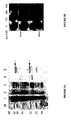
- the gene was amplified from the viral genome by PCR and cloned into an E . coli expression vector. A reasonable amount of soluble recombinant protein was purified together with a C-terminal fragment of the protein ( Fig. 5A ). To test the polymerization activity, the protein was incubated with a labelled primer-template DNA at 50°C. Figure 5B clearly shows that the primer (18 nt) was elongated to the size of the template (42 nt) indicative of polymerization activity. When NTPs was used instead of dNTPs, no polymerization was detected (data not shown). This confirms that the product of ORF653 is indeed a DNA polymerase.
- coli bacteriophage PRD1 shows no significant sequence similarity with other known terminal proteins (Savilahti et al., 1987) and only 13/48 % identity/similarity was found between the terminal protein of ⁇ 29 and a linear mitochondrial plasmid of white-rot fungus Pleurotus ostreatus (Kim et al., 2000). However, the gene location of the terminal protein is highly conserved.
- Sequence alignment of the DNA polymerases also revealed large sequence extensions at the N-terminal part in the other linear plasmids (Bois et al., 1999), indicating that the genes of the polymerase and terminal protein may generally be fused.
- transcript mapping revealed that the DNA polymerase and terminal protein genes are always cotranscribed into a single mRNA in all the studied viruses, including CP-1 (Martin et al., 1996) and ⁇ 29 family phages (reviewed by Meijer et al., 2001).
- the polymerase and terminal protein are closely linked in both gene organization and function.
- the gene upstream of the polymerase encodes 163 aa which is two thirds the size of the bacteriophage terminal proteins.
- the bottle-shaped virion contains a "stopper" at the narrow end, and a disk, or ring, bearing 20 short filaments at the broad end (Häring et al., 2005).
- the main body appears to be built up of two layers encasing a complex core and the nucleoprotein filament is packed, compactly, within the main body. Thus, the DNA packaging mechanism is likely to be complex.
- Packaging of genomic DNA has been studied for diverse bacteriophages and eukaryal viruses carrying linear genomes.
- the mechanisms share some common features, including the involvement of a pair of noncapsid proteins and the energy source, ATP, to translocate the long DNA molecule into a preformed procapsid (reviewed by Guo, 2005).
- An essential component of the ⁇ 29 packaging machinery is a 174-nt RNA, pRNA, which participates actively in DNA translocation by binding to the procapsid and ATP and cooperating with the packaging protein (Guo, 2005).
- the pRNA is encoded adjacent to the ITR at one end of ⁇ 29 genome and it exhibits a high level of secondary structure and conserved secondary structural motifs can form for all the known ⁇ 29 related bacteriophages (reviewed by Meijer et al., 2001). Moreover, a corresponding region, adjacent to an ITR, was also found to be important for the packaging of adenoviral DNA (Grable and Hearing, 1990). Examination of the corresponding regions in the ABV genome, revealed a 600-bp region, lacking open reading frames, close to the left ITR, which was relatively G+C-rich in the centre.
- the predicted secondary structure for the 200 bp G+C-rich sequence shows high similarity to that of pRNA from bacteriophages ⁇ 29 and CP-1 ( Fig. 6 ).
- the seven helices labeled A to F are highly conserved in all pRNAs of bacteriophages. Differences occur only in the region to the left of helix F where extra hairpin-loops occur in the putative ABV RNA while a small loop is present in the bacteriophage pRNAs ( Fig. 6 ).
- Transcription of the ABV RNA could be initiated at the promoter-like sequence, ATTTAAT, located 20 bp upstream of the element.
- the conserved genomic position, similar secondary structure, high G+C content and presence of a putative promoter all strongly indicate that this non-coding region encodes a RNA molecule which is probably involved in viral DNA packaging.
- ⁇ 29 DNA packaging Another important component involved in ⁇ 29 DNA packaging is the connector which was proposed to rotate in order to translocate the DNA into the prohead (Meijer et al., 2001).
- the "stopper" resembles the connector of ⁇ 29 which also has a bottle-neck shape and the wide end of which is also buried inside the prohead (Meijer et al., 2001).
- the broad end of the stopper is connected to the nucleoprotein filament (Häring et al., 2005). Therefore, the connector may also be involved in packaging of ABV.
- Genomic content at the left end of ABV, bacteriophage ⁇ 29 and eukaryotic adenovirus is depicted in Figure 7 which shows high similarity between the three viruses.
- ABV is the first archaeal virus which is reported to contain a protein-primed DNA polymerase.
- the presence of the polymerase in three morphologically distinct viruses from three domains of life strongly indicates the protein-primed DNA replication mechanism is ancient, probably existed prior to the divergence of three domains of life.
Landscapes
- Life Sciences & Earth Sciences (AREA)
- Health & Medical Sciences (AREA)
- Chemical & Material Sciences (AREA)
- Organic Chemistry (AREA)
- Wood Science & Technology (AREA)
- Zoology (AREA)
- Engineering & Computer Science (AREA)
- Bioinformatics & Cheminformatics (AREA)
- Genetics & Genomics (AREA)
- Molecular Biology (AREA)
- General Health & Medical Sciences (AREA)
- Microbiology (AREA)
- Biotechnology (AREA)
- Biochemistry (AREA)
- General Engineering & Computer Science (AREA)
- Medicinal Chemistry (AREA)
- Biomedical Technology (AREA)
- Chemical Kinetics & Catalysis (AREA)
- General Chemical & Material Sciences (AREA)
- Measuring Or Testing Involving Enzymes Or Micro-Organisms (AREA)
- Enzymes And Modification Thereof (AREA)
- Saccharide Compounds (AREA)
- Apparatus Associated With Microorganisms And Enzymes (AREA)
- Micro-Organisms Or Cultivation Processes Thereof (AREA)
Claims (27)
- ADN polymérase isolée choisie dans le groupe de polypeptides constitué par :a) le polypeptide ayant la séquence d'acides aminés de SEQ ID No.: 1 ;b) un fragment de a) ayant une activité ADN polymérase ;c) un polypeptide comprenant au moins les fragments de SEQ ID No.: 1 permettant l'activité ADN polymérase de ladite ADN polymérase de a) ;d) un polypeptide ayant la séquence d'acides aminés de SEQ ID No.: 1, dans lequel les sites d'exonucléases suivants, identifiés sur la figure 4 :Exo I : ---I---DLET---,Exo II : -Y-HNL-FD---FIL, et/ouExo III : KE---YL--D---L,ont été mutés ou délétés pour que le polypeptide d'ADN polymérase obtenu ait un déficit d'activité exonucléase, voire pas d'activité exonucléase détectable, par rapport au polypeptide ayant la séquence d'acides aminés de SEQ ID No.: 1 ;e) un polypeptide ayant une séquence qui présente une identité d'au moins 80 %, après alignement optimal, avec la séquence SEQ ID No.:1, ledit polypeptide ayant une activité ADN polymérase.
- ADN polymérase selon la revendication 1, qui est isolée à partir de l'ampullavirus d'Archaea ABV.
- ADN polymérase selon les revendications 1 ou 2, qui comprend au moins les fragments suivants de SEQ ID No.: 1 comme identifié sur la figure 4 :Pol I : YDVNSSLYP-AM ;Pol IIa : --K---NS-YG ;Pol IIb : T---GR ;Pol III : Y-DTDS ; etPol IV : K-Y.
- Acide nucléique codant pour un polypeptide d'ADN polymérase selon l'une des revendications 1 à 3.
- Vecteur comprenant l'acide nucléique selon la revendication 4.
- Vecteur selon la revendication 5, dans lequel ledit acide nucléique est lié de manière opérationnelle à un promoteur.
- Vecteur selon la revendication 5, qui a été déposé auprès de la C.N.C.M. (Collection Nationale de Cultures de Microorganismes, Institut Pasteur, Paris, France) le 28 Avril 2006 sous le numéro 1-3601.
- Cellule hôte comprenant le vecteur selon les revendications 5 à 7.
- Cellule hôte selon la revendication 8, qui a été déposée auprès de la C.N.C.M. (Collection Nationale de Cultures de Microorganismes, Institut Pasteur, Paris, France) le 28 Avril 2006 sous le numéro 1-3601.
- Procédé de production d'une ADN polymérase, ledit procédé comprenant :(a) la culture de la cellule hôte selon les revendications 8 ou 9 dans des conditions convenables pour l'expression dudit acide nucléique ; et(b) l'isolement de ladite ADN polymérase à partir de ladite cellule hôte.
- Procédé selon la revendication 10, dans lequel ladite cellule hôte est une cellule procaryote ou eucaryote.
- Procédé de synthèse d'une molécule d'ADN double brin comprenant :(a) l'hybridation d'une amorce à une première molécule d'ADN ; et(b) l'incubation de ladite molécule d'ADN de l'étape (a) en présence d'un ou de plusieurs désoxyribonucléosides triphosphates ou analogues de ceux-ci et du polypeptide selon les revendications 1 à 3, dans des conditions suffisantes pour synthétiser une seconde molécule d'ADN complémentaire de tout ou partie de ladite première molécule d'ADN.
- Procédé de synthèse d'une molécule d'ADN simple brin comprenant :(a) la synthèse d'une molécule d'ADN double brin par un procédé selon la revendication 12; et(b) la dénaturation de la molécule d'ADN double brin obtenue à l'étape (a) ; et(c) la récupération de la molécule d'ADN simple brin obtenue à l'étape (b).
- Procédé de production de molécules d'ADN de plus de 10 kilobases de long comprenant les procédés selon les revendications 12 ou 13, dans lequel la première molécule d'ADN qui sert de matrice dans l'étape (a) est supérieure à 10 kilobases.
- Procédé selon les revendications 12 à 14, dans lequel lesdits désoxyribonucléosides triphosphates sont choisis dans le groupe constitué par les dATP, dCTP, dGTP et dTTP.
- Procédé d'amplification d'une molécule d'ADN double brin, comprenant :(a) l'utilisation d'une première et d'une seconde amorces, ladite première amorce étant complémentaire d'une séquence au niveau, ou à proximité des terminaisons 3' du premier brin de ladite molécule d'ADN et ladite seconde amorce étant complémentaire d'une séquence au niveau, ou à proximité des terminaisons 3' du second brin de ladite molécule d'ADN ;(b) l'hybridation de ladite première amorce audit premier brin et de ladite seconde amorce audit second brin en présence du polypeptide selon les revendications 1 à 3, dans des conditions telles qu'un acide nucléique complémentaire dudit premier brin et un acide nucléique complémentaire dudit second brin sont synthétisés ;(c) la dénaturation- dudit premier brin et de son brin complémentaire ; et- dudit second brin et de son brin complémentaire ; et(d) la répétition des étapes (a) à (c) une ou plusieurs fois.
- Procédé permettant de déterminer la séquence de bases nucléotidiques d'une molécule d'ADN, comprenant les étapes suivantes :(a) la mise en contact de ladite molécule d'ADN avec une molécule d'amorce capable de s'hybrider à ladite molécule d'ADN ;(b) l'incubation dudit hybride formé à l'étape (a) dans un réacteur contenant quatre désoxynucléosides triphosphates différents, un polypeptide d'ADN polymérase selon les revendications 1 à 3, et un ou plusieurs agents de terminaison de synthèse de l'ADN qui terminent la synthèse de l'ADN à une base nucléotidique spécifique, chacun desdits agents terminant la synthèse de l'ADN à une base nucléotidique différente ; et(c) la séparation des produits d'ADN de la réaction d'incubation en fonction de la taille, de façon qu'au moins une partie de la séquence de bases nucléotidiques dudit ADN puisse être déterminée.
- Procédé selon la revendication 17, dans lequel ledit agent de terminaison est un didésoxy-nucléoside triphosphate.
- Procédé d'amplification d'une molécule d'ADN comprenant les étapes suivantes :(a) l'incubation de ladite molécule d'ADN en présence d'un polypeptide contenant l'ADN polymérase selon les revendications 1 à 3, de la protéine terminale de l'ampullavirus d'Archaea ABV et d'un mélange de désoxynucléosides triphosphates différents.
- Procédé d'amplification d'une molécule d'ADN selon la revendication 19, dans lequel à une extrémité de ladite molécule d'ADN un fragment contenant l'origine de réplication dudit ABV est lié par covalence.
- Procédé selon les revendications 10 à 20, dans lequel le polypeptide selon les revendications 1 à 3 est un polypeptide tel que défini dans la revendication 1d) ayant un déficit d'activité exonucléase et une activité ADN polymérase.
- Kit pour le séquençage d'une molécule d'ADN, comprenant :(a) un premier moyen de récipient comprenant le polypeptide selon les revendications 1 à 3 ;(b) un deuxième moyen de récipient comprenant un ou plusieurs didésoxyribonucléosides triphosphates ; et(c) un troisième moyen de récipient comprenant un ou plusieurs désoxyribonucléosides triphosphates.
- Kit pour l'amplification d'une molécule d'ADN, comprenant :(a) un premier moyen de récipient comprenant le polypeptide selon les revendications 1 à 3 ; et(b) un second moyen de récipient comprenant un ou plusieurs désoxyribonucléosides triphosphates.
- Kit selon la revendication 23 comprenant, en outre, une protéine terminale isolée ou recombinante d'ampullavirus d'Archaea ABV ayant la séquence SEQ ID No.: 3.
- Kit selon les revendications 22 à 24, dans lequel le polypeptide selon les revendications 1 à 3 est un polypeptide tel que défini dans la revendication 1d) ayant un déficit d'activité exonucléase et une activité ADN polymérase.
- Utilisation d'un polypeptide selon les revendications 1 à 3 pour l'amplification en cercle roulant, l'amplification par déplacements multiples ou l'amplification avec une amorce protéique.
- Utilisation selon la revendication 26, dans laquelle le polypeptide selon les revendications 1 à 3 est un polypeptide tel que défini dans la revendication 1d) ayant un déficit d'activité exonucléase et une activité ADN polymérase.
Priority Applications (12)
| Application Number | Priority Date | Filing Date | Title |
|---|---|---|---|
| DK06290764.7T DK1854875T3 (da) | 2006-05-12 | 2006-05-12 | Termostabil DNA polymerase af Archaeal-ampullavirus ABV og dets applikationer |
| AT06290764T ATE486932T1 (de) | 2006-05-12 | 2006-05-12 | Thermostabile dna polymerase von archae ampullavirus abv und dessen verwendungen |
| DE602006017973T DE602006017973D1 (de) | 2006-05-12 | 2006-05-12 | Thermostabile DNA Polymerase von archae Ampullavirus ABV und dessen Verwendungen |
| ES06290764T ES2355650T3 (es) | 2006-05-12 | 2006-05-12 | Adn polimerasa termoestable del ampullavirus de arqueas abv y sus aplicaciones. |
| EP06290764A EP1854875B1 (fr) | 2006-05-12 | 2006-05-12 | Polymérase d'ADN thermostable provenant de Ampullavirus ABV archeen et de ses applications |
| US12/300,377 US20100003676A1 (en) | 2006-05-12 | 2007-05-14 | Thermostable dna polymerase of the archaeal ampullavirus abv and its applications |
| JP2009508542A JP2009536820A (ja) | 2006-05-12 | 2007-05-14 | 古細菌アンプラウイルスabv耐熱性dnaポリメラーゼ及びその用途 |
| AU2007251259A AU2007251259A1 (en) | 2006-05-12 | 2007-05-14 | Thermostable DNA polymerase of the archaeal ampullavirus ABV and its applications |
| PCT/IB2007/002319 WO2007132358A2 (fr) | 2006-05-12 | 2007-05-14 | Adn polymérase thermostable de l'ampullavirus d'archaea abv et ses applications |
| EP07789625A EP2021465A2 (fr) | 2006-05-12 | 2007-05-14 | Adn polymérase thermostable de l'ampullavirus d'archaea abv et ses applications |
| CA002651585A CA2651585A1 (fr) | 2006-05-12 | 2007-05-14 | Adn polymerase thermostable de l'ampullavirus d'archaea abv et ses applications |
| IL195194A IL195194A0 (en) | 2006-05-12 | 2008-11-10 | Thermostable dna polymerase of the archaeal ampullavirus abv and its applications |
Applications Claiming Priority (1)
| Application Number | Priority Date | Filing Date | Title |
|---|---|---|---|
| EP06290764A EP1854875B1 (fr) | 2006-05-12 | 2006-05-12 | Polymérase d'ADN thermostable provenant de Ampullavirus ABV archeen et de ses applications |
Publications (2)
| Publication Number | Publication Date |
|---|---|
| EP1854875A1 EP1854875A1 (fr) | 2007-11-14 |
| EP1854875B1 true EP1854875B1 (fr) | 2010-11-03 |
Family
ID=37027484
Family Applications (2)
| Application Number | Title | Priority Date | Filing Date |
|---|---|---|---|
| EP06290764A Expired - Lifetime EP1854875B1 (fr) | 2006-05-12 | 2006-05-12 | Polymérase d'ADN thermostable provenant de Ampullavirus ABV archeen et de ses applications |
| EP07789625A Withdrawn EP2021465A2 (fr) | 2006-05-12 | 2007-05-14 | Adn polymérase thermostable de l'ampullavirus d'archaea abv et ses applications |
Family Applications After (1)
| Application Number | Title | Priority Date | Filing Date |
|---|---|---|---|
| EP07789625A Withdrawn EP2021465A2 (fr) | 2006-05-12 | 2007-05-14 | Adn polymérase thermostable de l'ampullavirus d'archaea abv et ses applications |
Country Status (11)
| Country | Link |
|---|---|
| US (1) | US20100003676A1 (fr) |
| EP (2) | EP1854875B1 (fr) |
| JP (1) | JP2009536820A (fr) |
| AT (1) | ATE486932T1 (fr) |
| AU (1) | AU2007251259A1 (fr) |
| CA (1) | CA2651585A1 (fr) |
| DE (1) | DE602006017973D1 (fr) |
| DK (1) | DK1854875T3 (fr) |
| ES (1) | ES2355650T3 (fr) |
| IL (1) | IL195194A0 (fr) |
| WO (1) | WO2007132358A2 (fr) |
Families Citing this family (2)
| Publication number | Priority date | Publication date | Assignee | Title |
|---|---|---|---|---|
| EP2742127B1 (fr) * | 2011-08-12 | 2019-10-09 | Mello Biotechnology, Inc. | Expression inductible dans des procaryotes d'un promoteur eucaryotique pol-2 |
| WO2026017767A1 (fr) * | 2024-07-16 | 2026-01-22 | Institut Pasteur | Nouvelle classe de polymérases virales miniatures pour la synthèse sans matrice d'acides nucléiques naturels ou modifiés |
Family Cites Families (1)
| Publication number | Priority date | Publication date | Assignee | Title |
|---|---|---|---|---|
| US5198543A (en) | 1989-03-24 | 1993-03-30 | Consejo Superior Investigaciones Cientificas | PHI29 DNA polymerase |
-
2006
- 2006-05-12 AT AT06290764T patent/ATE486932T1/de not_active IP Right Cessation
- 2006-05-12 DK DK06290764.7T patent/DK1854875T3/da active
- 2006-05-12 EP EP06290764A patent/EP1854875B1/fr not_active Expired - Lifetime
- 2006-05-12 DE DE602006017973T patent/DE602006017973D1/de not_active Expired - Lifetime
- 2006-05-12 ES ES06290764T patent/ES2355650T3/es not_active Expired - Lifetime
-
2007
- 2007-05-14 AU AU2007251259A patent/AU2007251259A1/en not_active Abandoned
- 2007-05-14 EP EP07789625A patent/EP2021465A2/fr not_active Withdrawn
- 2007-05-14 CA CA002651585A patent/CA2651585A1/fr not_active Abandoned
- 2007-05-14 WO PCT/IB2007/002319 patent/WO2007132358A2/fr not_active Ceased
- 2007-05-14 JP JP2009508542A patent/JP2009536820A/ja active Pending
- 2007-05-14 US US12/300,377 patent/US20100003676A1/en not_active Abandoned
-
2008
- 2008-11-10 IL IL195194A patent/IL195194A0/en unknown
Also Published As
| Publication number | Publication date |
|---|---|
| DE602006017973D1 (de) | 2010-12-16 |
| WO2007132358A3 (fr) | 2008-01-24 |
| DK1854875T3 (da) | 2011-02-14 |
| AU2007251259A1 (en) | 2007-11-22 |
| CA2651585A1 (fr) | 2007-11-22 |
| EP2021465A2 (fr) | 2009-02-11 |
| IL195194A0 (en) | 2011-08-01 |
| JP2009536820A (ja) | 2009-10-22 |
| WO2007132358A2 (fr) | 2007-11-22 |
| ATE486932T1 (de) | 2010-11-15 |
| US20100003676A1 (en) | 2010-01-07 |
| EP1854875A1 (fr) | 2007-11-14 |
| ES2355650T3 (es) | 2011-03-29 |
Similar Documents
| Publication | Publication Date | Title |
|---|---|---|
| EP2079834B1 (fr) | Adn polymérases mutantes et procédés associés | |
| US5939292A (en) | Thermostable DNA polymerases having reduced discrimination against ribo-NTPs | |
| US5624833A (en) | Purified thermostable nucleic acid polymerase enzyme from Thermotoga maritima | |
| US5948663A (en) | Purified thermostable pyrococcus furiosus DNA polymerase I | |
| US5545552A (en) | Purified thermostable pyrococcus furiosus DNA polymerase I | |
| EP1259624B1 (fr) | Nouvelles acide nucleique polymerases chimeriques thermostables | |
| US20080176293A1 (en) | RNA-Dependent RNA Polymerase, Methods And Kits For The Amplification And/Or Labelling Of RNA | |
| JPH08168376A (ja) | 古細菌由来の組換え熱安定dnaポリメラーゼ | |
| WO1992009689A1 (fr) | Adn polymerase i thermostable purifiee de $i(pyrococcus furiosus) | |
| EP2164955B1 (fr) | Adn polymérases mutantes et procédés associés | |
| EP1836319B1 (fr) | Polypeptides presentant une activite de liaison d'acides nucleiques et procedes permettant d'amplifier des acides nucleiques | |
| Peng et al. | Genome of the Acidianus bottle-shaped virus and insights into the replication and packaging mechanisms | |
| US5866395A (en) | Purified thermostable pyrococcus furiosus DNA polymerase I | |
| WO2011098588A1 (fr) | Primase/adn polymérase thermostable de thermococcus nautilus 30/1 plasmide p tn2 et ses applications | |
| JP2001513983A (ja) | 高忠実度ポリメラーゼおよびその使用 | |
| CN113755465A (zh) | 嵌合体dna聚合酶及其制备方法 | |
| JPH09140387A (ja) | 熱安定性ピロホスファターゼをコードするdna | |
| US20100003676A1 (en) | Thermostable dna polymerase of the archaeal ampullavirus abv and its applications | |
| US20120083018A1 (en) | Thermostable dna polymerases and methods of use | |
| JP4399684B2 (ja) | 改良されたrnaポリメラーゼ | |
| CN107287221B (zh) | 人工合成的编码胸苷磷酸化酶蛋白的基因及其应用 | |
| WO2007117331A2 (fr) | Nouvelle adn polymerase provenant d'un thermoanaerobacter tengcongenesis | |
| US20100291638A1 (en) | Thermostable dna polymerases and methods of use | |
| JP4217922B2 (ja) | サーモコッカス・ペプトノフィラス由来の熱安定性dnaポリメラーゼ、該酵素をコードする遺伝子およびその用途 | |
| JP4224581B2 (ja) | 糖ヌクレオチド合成活性を有する耐熱性酵素および該酵素をコードするdna |
Legal Events
| Date | Code | Title | Description |
|---|---|---|---|
| PUAI | Public reference made under article 153(3) epc to a published international application that has entered the european phase |
Free format text: ORIGINAL CODE: 0009012 |
|
| AK | Designated contracting states |
Kind code of ref document: A1 Designated state(s): AT BE BG CH CY CZ DE DK EE ES FI FR GB GR HU IE IS IT LI LT LU LV MC NL PL PT RO SE SI SK TR |
|
| AX | Request for extension of the european patent |
Extension state: AL BA HR MK YU |
|
| 17P | Request for examination filed |
Effective date: 20080506 |
|
| AKX | Designation fees paid |
Designated state(s): AT BE BG CH CY CZ DE DK EE ES FI FR GB GR HU IE IS IT LI LT LU LV MC NL PL PT RO SE SI SK TR |
|
| 17Q | First examination report despatched |
Effective date: 20080627 |
|
| RTI1 | Title (correction) |
Free format text: THERMOSTABLE DNA POLYMERASE OF THE ARCHAEAL AMPULLAVIRUS ABV AND ITS APPLICATIONS |
|
| GRAP | Despatch of communication of intention to grant a patent |
Free format text: ORIGINAL CODE: EPIDOSNIGR1 |
|
| GRAS | Grant fee paid |
Free format text: ORIGINAL CODE: EPIDOSNIGR3 |
|
| GRAA | (expected) grant |
Free format text: ORIGINAL CODE: 0009210 |
|
| AK | Designated contracting states |
Kind code of ref document: B1 Designated state(s): AT BE BG CH CY CZ DE DK EE ES FI FR GB GR HU IE IS IT LI LT LU LV MC NL PL PT RO SE SI SK TR |
|
| REG | Reference to a national code |
Ref country code: GB Ref legal event code: FG4D |
|
| REG | Reference to a national code |
Ref country code: CH Ref legal event code: EP |
|
| REG | Reference to a national code |
Ref country code: IE Ref legal event code: FG4D |
|
| REF | Corresponds to: |
Ref document number: 602006017973 Country of ref document: DE Date of ref document: 20101216 Kind code of ref document: P |
|
| REG | Reference to a national code |
Ref country code: CH Ref legal event code: NV Representative=s name: MICHELI & CIE SA |
|
| REG | Reference to a national code |
Ref country code: DK Ref legal event code: T3 |
|
| REG | Reference to a national code |
Ref country code: SE Ref legal event code: TRGR |
|
| REG | Reference to a national code |
Ref country code: NL Ref legal event code: T3 |
|
| REG | Reference to a national code |
Ref country code: ES Ref legal event code: FG2A Ref document number: 2355650 Country of ref document: ES Kind code of ref document: T3 Effective date: 20110329 |
|
| LTIE | Lt: invalidation of european patent or patent extension |
Effective date: 20101103 |
|
| PG25 | Lapsed in a contracting state [announced via postgrant information from national office to epo] |
Ref country code: LT Free format text: LAPSE BECAUSE OF FAILURE TO SUBMIT A TRANSLATION OF THE DESCRIPTION OR TO PAY THE FEE WITHIN THE PRESCRIBED TIME-LIMIT Effective date: 20101103 |
|
| PG25 | Lapsed in a contracting state [announced via postgrant information from national office to epo] |
Ref country code: AT Free format text: LAPSE BECAUSE OF FAILURE TO SUBMIT A TRANSLATION OF THE DESCRIPTION OR TO PAY THE FEE WITHIN THE PRESCRIBED TIME-LIMIT Effective date: 20101103 Ref country code: BG Free format text: LAPSE BECAUSE OF FAILURE TO SUBMIT A TRANSLATION OF THE DESCRIPTION OR TO PAY THE FEE WITHIN THE PRESCRIBED TIME-LIMIT Effective date: 20110203 Ref country code: IS Free format text: LAPSE BECAUSE OF FAILURE TO SUBMIT A TRANSLATION OF THE DESCRIPTION OR TO PAY THE FEE WITHIN THE PRESCRIBED TIME-LIMIT Effective date: 20110303 Ref country code: PT Free format text: LAPSE BECAUSE OF FAILURE TO SUBMIT A TRANSLATION OF THE DESCRIPTION OR TO PAY THE FEE WITHIN THE PRESCRIBED TIME-LIMIT Effective date: 20110303 Ref country code: LV Free format text: LAPSE BECAUSE OF FAILURE TO SUBMIT A TRANSLATION OF THE DESCRIPTION OR TO PAY THE FEE WITHIN THE PRESCRIBED TIME-LIMIT Effective date: 20101103 Ref country code: FI Free format text: LAPSE BECAUSE OF FAILURE TO SUBMIT A TRANSLATION OF THE DESCRIPTION OR TO PAY THE FEE WITHIN THE PRESCRIBED TIME-LIMIT Effective date: 20101103 Ref country code: SI Free format text: LAPSE BECAUSE OF FAILURE TO SUBMIT A TRANSLATION OF THE DESCRIPTION OR TO PAY THE FEE WITHIN THE PRESCRIBED TIME-LIMIT Effective date: 20101103 |
|
| PG25 | Lapsed in a contracting state [announced via postgrant information from national office to epo] |
Ref country code: GR Free format text: LAPSE BECAUSE OF FAILURE TO SUBMIT A TRANSLATION OF THE DESCRIPTION OR TO PAY THE FEE WITHIN THE PRESCRIBED TIME-LIMIT Effective date: 20110204 |
|
| PG25 | Lapsed in a contracting state [announced via postgrant information from national office to epo] |
Ref country code: EE Free format text: LAPSE BECAUSE OF FAILURE TO SUBMIT A TRANSLATION OF THE DESCRIPTION OR TO PAY THE FEE WITHIN THE PRESCRIBED TIME-LIMIT Effective date: 20101103 Ref country code: CZ Free format text: LAPSE BECAUSE OF FAILURE TO SUBMIT A TRANSLATION OF THE DESCRIPTION OR TO PAY THE FEE WITHIN THE PRESCRIBED TIME-LIMIT Effective date: 20101103 |
|
| PGFP | Annual fee paid to national office [announced via postgrant information from national office to epo] |
Ref country code: CH Payment date: 20110510 Year of fee payment: 6 Ref country code: FR Payment date: 20110524 Year of fee payment: 6 Ref country code: ES Payment date: 20110412 Year of fee payment: 6 Ref country code: SE Payment date: 20110524 Year of fee payment: 6 Ref country code: LU Payment date: 20110531 Year of fee payment: 6 Ref country code: IE Payment date: 20110408 Year of fee payment: 6 |
|
| PG25 | Lapsed in a contracting state [announced via postgrant information from national office to epo] |
Ref country code: RO Free format text: LAPSE BECAUSE OF FAILURE TO SUBMIT A TRANSLATION OF THE DESCRIPTION OR TO PAY THE FEE WITHIN THE PRESCRIBED TIME-LIMIT Effective date: 20101103 Ref country code: SK Free format text: LAPSE BECAUSE OF FAILURE TO SUBMIT A TRANSLATION OF THE DESCRIPTION OR TO PAY THE FEE WITHIN THE PRESCRIBED TIME-LIMIT Effective date: 20101103 Ref country code: PL Free format text: LAPSE BECAUSE OF FAILURE TO SUBMIT A TRANSLATION OF THE DESCRIPTION OR TO PAY THE FEE WITHIN THE PRESCRIBED TIME-LIMIT Effective date: 20101103 |
|
| PGFP | Annual fee paid to national office [announced via postgrant information from national office to epo] |
Ref country code: GB Payment date: 20110426 Year of fee payment: 6 Ref country code: NL Payment date: 20110530 Year of fee payment: 6 Ref country code: BE Payment date: 20110419 Year of fee payment: 6 Ref country code: DK Payment date: 20110512 Year of fee payment: 6 |
|
| PLBE | No opposition filed within time limit |
Free format text: ORIGINAL CODE: 0009261 |
|
| STAA | Information on the status of an ep patent application or granted ep patent |
Free format text: STATUS: NO OPPOSITION FILED WITHIN TIME LIMIT |
|
| PGFP | Annual fee paid to national office [announced via postgrant information from national office to epo] |
Ref country code: IT Payment date: 20110524 Year of fee payment: 6 Ref country code: DE Payment date: 20110531 Year of fee payment: 6 |
|
| 26N | No opposition filed |
Effective date: 20110804 |
|
| REG | Reference to a national code |
Ref country code: DE Ref legal event code: R097 Ref document number: 602006017973 Country of ref document: DE Effective date: 20110804 |
|
| PG25 | Lapsed in a contracting state [announced via postgrant information from national office to epo] |
Ref country code: MC Free format text: LAPSE BECAUSE OF NON-PAYMENT OF DUE FEES Effective date: 20110531 |
|
| BERE | Be: lapsed |
Owner name: INSTITUT PASTEUR Effective date: 20120531 |
|
| REG | Reference to a national code |
Ref country code: NL Ref legal event code: V1 Effective date: 20121201 |
|
| REG | Reference to a national code |
Ref country code: CH Ref legal event code: PL |
|
| REG | Reference to a national code |
Ref country code: SE Ref legal event code: EUG |
|
| REG | Reference to a national code |
Ref country code: DK Ref legal event code: EBP |
|
| GBPC | Gb: european patent ceased through non-payment of renewal fee |
Effective date: 20120512 |
|
| PG25 | Lapsed in a contracting state [announced via postgrant information from national office to epo] |
Ref country code: LI Free format text: LAPSE BECAUSE OF NON-PAYMENT OF DUE FEES Effective date: 20120531 Ref country code: CH Free format text: LAPSE BECAUSE OF NON-PAYMENT OF DUE FEES Effective date: 20120531 |
|
| REG | Reference to a national code |
Ref country code: IE Ref legal event code: MM4A |
|
| PG25 | Lapsed in a contracting state [announced via postgrant information from national office to epo] |
Ref country code: SE Free format text: LAPSE BECAUSE OF NON-PAYMENT OF DUE FEES Effective date: 20120513 Ref country code: IT Free format text: LAPSE BECAUSE OF NON-PAYMENT OF DUE FEES Effective date: 20120512 Ref country code: BE Free format text: LAPSE BECAUSE OF NON-PAYMENT OF DUE FEES Effective date: 20120531 |
|
| REG | Reference to a national code |
Ref country code: FR Ref legal event code: ST Effective date: 20130131 |
|
| REG | Reference to a national code |
Ref country code: DE Ref legal event code: R119 Ref document number: 602006017973 Country of ref document: DE Effective date: 20121201 |
|
| PG25 | Lapsed in a contracting state [announced via postgrant information from national office to epo] |
Ref country code: NL Free format text: LAPSE BECAUSE OF NON-PAYMENT OF DUE FEES Effective date: 20121201 |
|
| REG | Reference to a national code |
Ref country code: DE Ref legal event code: R082 Ref document number: 602006017973 Country of ref document: DE Representative=s name: KILIAN KILIAN & PARTNER, DE Ref country code: DE Ref legal event code: R082 Ref document number: 602006017973 Country of ref document: DE Representative=s name: KILIAN KILIAN & PARTNER MBB PATENTANWAELTE, DE |
|
| PG25 | Lapsed in a contracting state [announced via postgrant information from national office to epo] |
Ref country code: DK Free format text: LAPSE BECAUSE OF NON-PAYMENT OF DUE FEES Effective date: 20120531 Ref country code: GB Free format text: LAPSE BECAUSE OF NON-PAYMENT OF DUE FEES Effective date: 20120512 Ref country code: FR Free format text: LAPSE BECAUSE OF NON-PAYMENT OF DUE FEES Effective date: 20120531 Ref country code: IE Free format text: LAPSE BECAUSE OF NON-PAYMENT OF DUE FEES Effective date: 20120512 |
|
| PG25 | Lapsed in a contracting state [announced via postgrant information from national office to epo] |
Ref country code: CY Free format text: LAPSE BECAUSE OF FAILURE TO SUBMIT A TRANSLATION OF THE DESCRIPTION OR TO PAY THE FEE WITHIN THE PRESCRIBED TIME-LIMIT Effective date: 20101103 |
|
| PG25 | Lapsed in a contracting state [announced via postgrant information from national office to epo] |
Ref country code: DE Free format text: LAPSE BECAUSE OF NON-PAYMENT OF DUE FEES Effective date: 20121201 |
|
| PG25 | Lapsed in a contracting state [announced via postgrant information from national office to epo] |
Ref country code: TR Free format text: LAPSE BECAUSE OF FAILURE TO SUBMIT A TRANSLATION OF THE DESCRIPTION OR TO PAY THE FEE WITHIN THE PRESCRIBED TIME-LIMIT Effective date: 20101103 |
|
| PG25 | Lapsed in a contracting state [announced via postgrant information from national office to epo] |
Ref country code: HU Free format text: LAPSE BECAUSE OF FAILURE TO SUBMIT A TRANSLATION OF THE DESCRIPTION OR TO PAY THE FEE WITHIN THE PRESCRIBED TIME-LIMIT Effective date: 20101103 |
|
| REG | Reference to a national code |
Ref country code: ES Ref legal event code: FD2A Effective date: 20140109 |
|
| PG25 | Lapsed in a contracting state [announced via postgrant information from national office to epo] |
Ref country code: ES Free format text: LAPSE BECAUSE OF NON-PAYMENT OF DUE FEES Effective date: 20120513 |
|
| PG25 | Lapsed in a contracting state [announced via postgrant information from national office to epo] |
Ref country code: LU Free format text: LAPSE BECAUSE OF NON-PAYMENT OF DUE FEES Effective date: 20120512 |