EP1855679B1 - Aminomethyl-beta-sekretase-hemmer zur behandlung von alzheimer - Google Patents
Aminomethyl-beta-sekretase-hemmer zur behandlung von alzheimer Download PDFInfo
- Publication number
- EP1855679B1 EP1855679B1 EP06718443.2A EP06718443A EP1855679B1 EP 1855679 B1 EP1855679 B1 EP 1855679B1 EP 06718443 A EP06718443 A EP 06718443A EP 1855679 B1 EP1855679 B1 EP 1855679B1
- Authority
- EP
- European Patent Office
- Prior art keywords
- alkyl
- group
- aryl
- alkylene
- compound
- Prior art date
- Legal status (The legal status is an assumption and is not a legal conclusion. Google has not performed a legal analysis and makes no representation as to the accuracy of the status listed.)
- Expired - Lifetime
Links
- ADTDWNGHABHFPL-IAROGAJJSA-N C/C(/C=C/S)=N/O Chemical compound C/C(/C=C/S)=N/O ADTDWNGHABHFPL-IAROGAJJSA-N 0.000 description 1
- WXUXBRXOWPFXFJ-UHFFFAOYSA-N CCCCN(CCN(C(CCc1ccccc1)C(O)=O)C1=O)C1=O Chemical compound CCCCN(CCN(C(CCc1ccccc1)C(O)=O)C1=O)C1=O WXUXBRXOWPFXFJ-UHFFFAOYSA-N 0.000 description 1
- CXZMQLQAMRIYJE-UHFFFAOYSA-N CCCCN(CCN(CC(O)=O)C1=O)C1=O Chemical compound CCCCN(CCN(CC(O)=O)C1=O)C1=O CXZMQLQAMRIYJE-UHFFFAOYSA-N 0.000 description 1
- 0 CCCN(**)C(C)(*)c1nnc(C(*)(**)N)[o]1 Chemical compound CCCN(**)C(C)(*)c1nnc(C(*)(**)N)[o]1 0.000 description 1
- AWOKJYNQTPXTNU-LMNIDFBRSA-N C[C@@](Cc1ccccc1)(c1nnc(C(CCSC)NC(c2ccccc2)=O)[o]1)N Chemical compound C[C@@](Cc1ccccc1)(c1nnc(C(CCSC)NC(c2ccccc2)=O)[o]1)N AWOKJYNQTPXTNU-LMNIDFBRSA-N 0.000 description 1
- UTMMRSHYFHMPAS-ZWAGFTRDSA-N C[C@@](Cc1ccccc1)(c1nnc(C(Cc2ccccc2)NC(c2ccccc2)=O)[o]1)N Chemical compound C[C@@](Cc1ccccc1)(c1nnc(C(Cc2ccccc2)NC(c2ccccc2)=O)[o]1)N UTMMRSHYFHMPAS-ZWAGFTRDSA-N 0.000 description 1
- VIAJBCUCSMJJJO-RXBMAGMESA-N C[C@@](Cc1ccccc1)(c1nnc(C2([C@H](Cc3ccccc3)C2)N(CCC2(CC3CC3)NC(C)=O)C2=O)[o]1)N Chemical compound C[C@@](Cc1ccccc1)(c1nnc(C2([C@H](Cc3ccccc3)C2)N(CCC2(CC3CC3)NC(C)=O)C2=O)[o]1)N VIAJBCUCSMJJJO-RXBMAGMESA-N 0.000 description 1
- BLHTXORQJNCSII-UHFFFAOYSA-N Cc1c[n](C)cn1 Chemical compound Cc1c[n](C)cn1 BLHTXORQJNCSII-UHFFFAOYSA-N 0.000 description 1
- FICAQKBMCKEFDI-UHFFFAOYSA-N Cc1n[o]c(C)c1 Chemical compound Cc1n[o]c(C)c1 FICAQKBMCKEFDI-UHFFFAOYSA-N 0.000 description 1
Classifications
-
- C—CHEMISTRY; METALLURGY
- C07—ORGANIC CHEMISTRY
- C07D—HETEROCYCLIC COMPOUNDS
- C07D413/00—Heterocyclic compounds containing two or more hetero rings, at least one ring having nitrogen and oxygen atoms as the only ring hetero atoms
- C07D413/02—Heterocyclic compounds containing two or more hetero rings, at least one ring having nitrogen and oxygen atoms as the only ring hetero atoms containing two hetero rings
- C07D413/06—Heterocyclic compounds containing two or more hetero rings, at least one ring having nitrogen and oxygen atoms as the only ring hetero atoms containing two hetero rings linked by a carbon chain containing only aliphatic carbon atoms
-
- A—HUMAN NECESSITIES
- A61—MEDICAL OR VETERINARY SCIENCE; HYGIENE
- A61P—SPECIFIC THERAPEUTIC ACTIVITY OF CHEMICAL COMPOUNDS OR MEDICINAL PREPARATIONS
- A61P25/00—Drugs for disorders of the nervous system
- A61P25/28—Drugs for disorders of the nervous system for treating neurodegenerative disorders of the central nervous system, e.g. nootropic agents, cognition enhancers, drugs for treating Alzheimer's disease or other forms of dementia
-
- A—HUMAN NECESSITIES
- A61—MEDICAL OR VETERINARY SCIENCE; HYGIENE
- A61P—SPECIFIC THERAPEUTIC ACTIVITY OF CHEMICAL COMPOUNDS OR MEDICINAL PREPARATIONS
- A61P43/00—Drugs for specific purposes, not provided for in groups A61P1/00-A61P41/00
-
- C—CHEMISTRY; METALLURGY
- C07—ORGANIC CHEMISTRY
- C07D—HETEROCYCLIC COMPOUNDS
- C07D271/00—Heterocyclic compounds containing five-membered rings having two nitrogen atoms and one oxygen atom as the only ring hetero atoms
- C07D271/02—Heterocyclic compounds containing five-membered rings having two nitrogen atoms and one oxygen atom as the only ring hetero atoms not condensed with other rings
- C07D271/10—1,3,4-Oxadiazoles; Hydrogenated 1,3,4-oxadiazoles
Definitions
- the invention is directed to a class of aminomethyl compounds which are useful as inhibitors of the ⁇ -secretase enzyme, and which are useful in the treatment of diseases in which the ⁇ -secretase enzyme is involved, such as Alzheimer's Disease.
- Alzheimer's disease is characterized by the abnormal deposition of amyloid in the brain in the form of extra-cellular plaques and intra-cellular neurofibrillary tangles.
- the rate of amyloid accumulation is a combination of the rates of formation, aggregation and egress from the brain. It is generally accepted that the main constituent of amyloid plaques is the 4kD amyloid protein ( ⁇ A4, also referred to as A ⁇ , ⁇ -protein and ⁇ AP) which is a proteolytic product of a precursor protein of much larger size.
- the amyloid precursor protein (APP or A ⁇ PP) has a receptor-like structure with a large ectodomain, a membrane spanning region and a short cytoplasmic tail.
- the A ⁇ domain encompasses parts of both extra-cellular and transmembrane domains of APP, thus its release implies the existence of two distinct proteolytic events to generate its NH 2 - and COOH-termini. At least two secretory mechanisms exist which release APP from the membrane and generate soluble, COOH-truncated forms of APP (APP s ). Proteases that release APP and its fragments from the membrane are termed "secretases.” Most APP s is released by a putative ⁇ -secretase which cleaves within the A ⁇ protein to release ⁇ -APP s and precludes the release of intact A ⁇ .
- ⁇ -secretase a ⁇ -secretase
- CTFs COOH-terminal fragments
- BACE amyloid precursor protein-cleaving enzyme
- the compounds of the present invention are useful for treating Alzheimer's disease by inhibiting the activity of ⁇ -secretase or BACE, thus preventing the formation of insoluble A ⁇ and arresting the production of A ⁇ .
- the present invention is directed to aminomethyl compounds useful as inhibitors of the ⁇ -secretase enzyme, and are useful in the treatment of diseases in which the ⁇ -secretase enzyme is involved, such as Alzheimer's disease.
- the invention is also directed to pharmaceutical compositions comprising these compounds, and these compounds and compositions for use in the treatment of such diseases in which the ⁇ -secretase enzyme is involved.
- the present invention is directed to compounds of formula (I): wherein:
- ⁇ -secretase enzyme activity or ⁇ -site amyloid precursor protein-cleaving enzyme (“BACE") activity
- BACE ⁇ -site amyloid precursor protein-cleaving enzyme
- ⁇ -secretase enzyme ⁇ -site amyloid precursor protein-cleaving enzyme
- BACE ⁇ -site amyloid precursor protein-cleaving enzyme
- the present invention is further directed to a method for the manufacture of a medicament or a composition for inhibiting ⁇ -secretase enzyme activity in humans and animals comprising combining a compound of the present invention with a pharmaceutical carrier or diluent.
- A is selected from the group consisting of
- Particularly preferred A groups include:
- R 2 is C 1-3 alkyl (preferably methyl).
- X and Y are linked together to form a carbocyclic group with the nitrogen to which they are attached, as shown below:
- Z 2 is NR 20 .
- R 7 and R 8 may be linked together to form a C 6-10 aryl which is fused to the N-containing ring to which R 7 and R 8 are bonded, as shown below:
- the fused C 6-10 aryl may be unsubstituted or substituted with one or more R 22 , wherein R 22 is selected from the group consisting of
- the compounds of the invention are compounds of formula (II) wherein R 3 , R 4 , X and Y are as defined above, and pharmaceutically acceptable salts thereof, and individual enantiomers and diastereomers thereof.
- the compounds of the invention are compounds of formula (II') wherein R 3 , R 4 , X and Y are as defined above, and pharmaceutically acceptable salts thereof, and individual enantiomers and diastereomers thereof.
- R 3 is hydrogen or C 1-3 alkyl. In certain embodiments, R 3 is hydrogen or C 1-3 alkyl and R 4 is hydrogen or C 0-3 alkylene-C 6-10 aryl.
- the invention is directed to compounds of formula (III): wherein R 1 , R 2 , R 3 , R 4 , Q 1 , Z 1 and Z 2 are as defined above, and pharmaceutically acceptable salts thereof, and individual enantiomers and diastereomers thereof.
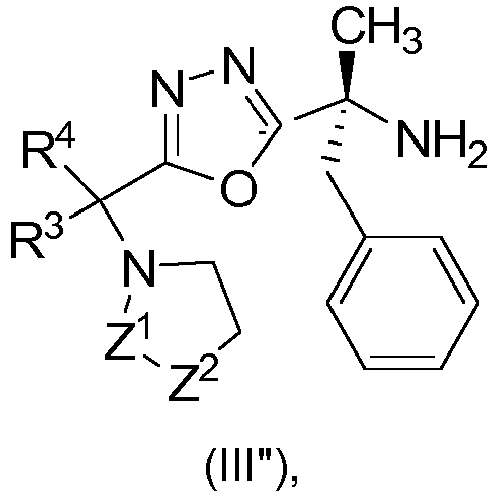
- the compounds of the invention are compounds of formula (III') wherein R 3 , R 4 , Z 1 and Z 2 are as defined above, and pharmaceutically acceptable salts thereof, and individual enantiomers and diastereomers thereof, and (III"): wherein R 3 , R 4 , Z 1 and Z 2 are as defined above, and pharmaceutically acceptable salts thereof, and individual enantiomers and diastereomers thereof.
- Another embodiment of the present invention includes a compound which is selected from the title compounds of the following Examples and pharmaceutically acceptable salts thereof.
- alkyl by itself or as part of another substituent, means a saturated straight or branched chain hydrocarbon radical having the number of carbon atoms designated (e.g., C 1-10 alkyl means an alkyl group having from one to ten carbon atoms).
- Preferred alkyl groups for use in the invention are C 1-6 alkyl groups, having from one to six carbon atoms.
- Exemplary alkyl groups include methyl, ethyl, n-propyl, isopropyl, n-butyl, isobutyl, tert-butyl, pentyl, hexyl, and the like.
- alkylene by itself or as part of another substituent, means a saturated straight or branched chain divalent hydrocarbon radical having the number of carbon atoms designated.
- C 0 alkylene (for example, in the radical "-C 0 alkylene-C 6-10 aryl") represents a bond, and means that the alkylene group is absent.
- alkenyl by itself or as part of another substituent, means a straight or branched chain hydrocarbon radical having a single carbon-carbon double bond and the number of carbon atoms designated (e.g., C 2-10 alkenyl means an alkenyl group having from two to ten carbon atoms).
- Preferred alkenyl groups for use in the invention are C 2-6 alkenyl groups, having from two to six carbon atoms.
- Exemplary alkenyl groups include ethenyl and propenyl.
- alkynyl by itself or as part of another substituent, means a straight or branched chain hydrocarbon radical having a single carbon-carbon triple bond and the number of carbon atoms designated (e.g., C 2-10 alkynyl means an alkynyl group having from two to ten carbon atoms).
- Preferred alkynyl groups for use in the invention are C 2-6 alkynyl groups, having from two to six carbon atoms.
- Exemplary alkenyl groups include ethynyl and propynyl.
- cycloalkyl by itself or as part of another substituent, means a saturated monocyclic, polycyclic, spirocyclic or bridged cyclic hydrocarbon radical having the number of carbon atoms designated (e.g., C 3-12 cycloalkyl means a cycloalkyl group having from three to twelve carbon atoms).
- Preferred cycloalkyl groups include C 3-8 cycloalklyl groups, especially C 3-8 monocyclic cycloalkyl groups.
- Exemplary monocyclic cycloalkyl groups include cyclopropyl, cyclobutyl, cyclopentyl, cyclohexyl and the like.
- Exemplary bridged cycloalkyl groups include adamantly and norbornyl.
- the term "carbocyclic,” by itself or as part of another substituent, means a cycloalkyl group as defined above, or a non-aromatic heterocyclic group.
- Suitable non-aromatic heterocyclic groups for use in the invention include piperidinyl, piperazinyl, morpholinyl, tetrahydrofuranyl, tetrahydrothienyl, pyrrolidinyl, pyrazolidinyl and imidazolildinyl.
- the substituent When a non-aromatic heterocyclic group as defined herein is substituted, the substituent may be bonded to a ring carbon atom of the heterocyclic group, or on a ring heteroatom ( i.e., a nitrogen, oxygen or sulfur), which has a valence which permits substitution. Preferably, the substituent is bonded to a ring carbon atom.
- the point of attachment may be at a ring carbon atom of the heterocyclic group, or at a ring heteroatom ( i.e ., a nitrogen, oxygen or sulfur), which has a valence which permits attachment.
- the attachment is at a ring carbon atom.
- aryl by itself or as part of another substituent, means an aromatic or cyclic radical having the number of carbon atoms designated (e.g., C 6-10 aryl means an aryl group having from six to ten carbons atoms).
- Preferred aryl groups for use in the invention include phenyl and naphthyl.
- halo or halogen includes fluoro, chloro, bromo and iodo.
- heteroaryl by itself or as part of another substituent, means an aromatic cyclic group having at least one ring heteroatom (O, N or S).
- exemplary heteroaryl groups for use in the invention include furanyl, pyranyl, benzofuranyl, isobenzofuranyl, chromenyl, thienyl, thiophenyl, thiazolyl, benzothiophenyl, pyrrolyl, pyrazolyl, imidazolyl, pyridyl,pyrazinyl, pyrazolyl, pyrimidinyl, pyridazinyl, tetrazolyl, indolyl, indazolyl, benzimidazolyl, quinolyl, indynyl, triazinyl, triazolyl, oxazolyl, isoxazolyl, oxadiazolyl, indolyl, benzoxazolyl, and iso
- the substituent When a heteroaryl group as defined herein is substituted, the substituent may be bonded to a ring carbon atom of the heteroaryl group, or on a ring heteroatom (i.e ., a nitrogen, oxygen or sulfur), which has a valence which permits substitution. Preferably, the substituent is bonded to a ring carbon atom.
- the point of attachment may be at a ring carbon atom of the heteroaryl group, or at a ring heteroatom (i.e., a nitrogen, oxygen or sulfur), which has a valence which permits attachment.
- the attachment is at a ring carbon atom.
- Some of the compounds of the instant invention have at least one asymmetric center. Additional asymmetric centers may be present depending upon the nature of the various substituents on the molecule. Compounds with asymmetric centers give rise to enantiomers (optical isomers), diastereomers (configurational isomers) or both, and it is intended that all of the possible enantiomers and diastereomers in mixtures and as pure or partially purified compounds are included within the scope of this invention. The present invention is meant to encompass all such isomeric forms of these compounds.
- racemic mixtures of the compounds may be separated so that the individual enantiomers are isolated.
- the separation can be carried out by methods well known in the art, such as the coupling of a racemic mixture of compounds to an enantiomerically pure compound to form a diastereomeric mixture, followed by separation of the individual diastereomers by standard methods, such as fractional crystallization or chromatography.
- the coupling reaction is often the formation of salts using an enantiomerically pure acid or base.
- the diastereomeric derivatives may then be converted to the pure enantiomers by cleavage of the added chiral residue.
- the racemic mixture of the compounds can also be separated directly by chromatographic methods using chiral stationary phases, which methods are well known in the art.
- any enantiomer of a compound may be obtained by stereoselective synthesis using optically pure starting materials or reagents of known configuration by methods well known in the art.
- the compounds claimed in this invention can be prepared according to the following general procedures.
- Scheme 1.2 depicts the synthesis of intermediates of type 1.2.4.
- Sandmeyer reaction of amino acid derivative 1.2.1 gives the corresponding ⁇ -bromo acid 1.2.2, which can be readily transformed to methyl ester 1.2.3 under acidic conditions.
- EDC coupling of acid 1.2.2 with acylhydrazide 1.1.3 and dehydration provides the desired oxadiazole 1.2.4.
- Scheme 3.1 describes the coupling acids of type 2.2.3 and 2.2.4 (generically depicted by acid 3.1.1). Dehydration and Boc deprotection affords 3.1.2.
- Scheme 3.2 depicts an alternate route to compounds of type 3.1.2. Deprotonation of derivatives 2.1.4, 2.1.5 or 2.1.6 (generically depicted by 3.2.1), followed by alkylation with ⁇ -bromooxadiazole 1.2.4 and Boc deprotection provides an alternate route to 3.1.2.
- Scheme 3.3 describes the synthesis of oxazoles of type 3.3.1. Coupling of acids 2.2.3 and 2.2.4 (generically depicted by acid 3.1.1), alcohol oxidation, cyclodehydration and Boc deprotection affords 3.3.1.
- substantially pure means that the isolated material is at least 90% pure, and preferably 95% pure, and even more preferably 99% pure as assayed by analytical techniques known in the art.
- salts refers to salts prepared from pharmaceutically acceptable non-toxic bases or acids including inorganic or organic bases and inorganic or organic acids.
- the compounds of the invention may be mono, di or tris salts, depending on the number of acid functionalities present in the free base form of the compound.
- Free bases and salts derived from inorganic bases include aluminum, ammonium, calcium, copper, ferric, ferrous, lithium, magnesium, manganic salts, manganous, potassium, sodium, zinc, and the like. Particularly preferred are the ammonium, calcium, magnesium, potassium, and sodium salts. Salts in the solid form may exist in more than one crystal structure, and may also be in the form of hydrates.
- Salts derived from pharmaceutically acceptable organic non-toxic bases include salts of primary, secondary, and tertiary amines, substituted amines including naturally occurring substituted amines, cyclic amines, and basic ion exchange resins, such as arginine, betaine, caffeine, choline, N,N'-dibenzylethylene-diamine, diethylamine, 2-diethylaminoethanol, 2-dimethylaminoethanol, ethanolamine, ethylenediamine, N-ethylmorpholine, N-ethylpiperidine, glucamine, glucosamine, histidine, hydrabamine, isopropylamine, lysine, methylglucamine, morpholine, piperazine, piperidine, polyamine resins, procaine, purines, theobromine, triethylamine, trimethylamine, tripropylamine, tromethamine, and the like.
- basic ion exchange resins such as
- salts may be prepared from pharmaceutically acceptable non-toxic acids, including inorganic and organic acids.
- acids include acetic, trifluoroacetic, benzenesulfonic, benzoic, camphorsulfonic, citric, ethanesulfonic, fumaric, gluconic, glutamic, hydrobromic, hydrochloric, isethionic, lactic, maleic, malic, mandelic, methanesulfonic, mucic, nitric, pamoic, pantothenic, phosphoric, succinic, sulfuric, tartaric, p-toluenesulfonic acid, and the like.
- Particularly preferred are citric, hydrobromic, hydrochloric, trifluoroacetic, maleic, phosphoric, sulfuric, fumaric, and tartaric acids.
- the compounds of the present invention have utility in treating, ameliorating, controlling or reducing the risk of Alzheimer's disease.
- the compounds may be useful for the prevention of dementia of the Alzheimer's type, as well as for the treatment of early stage, intermediate stage or late stage dementia of the Alzheimer's type.
- the compounds may also be useful in treating, ameliorating, controlling or reducing the risk of diseases mediated by abnormal cleavage of amyloid precursor protein (also referred to as APP), and other conditions that may be treated or prevented by inhibition of ⁇ -secretase.
- APP amyloid precursor protein
- Such conditions include mild cognitive impairment, Trisomy 21 (Down Syndrome), cerebral amyloid angiopathy, degenerative dementia, Hereditary Cerebral Hemorrhage with Amyloidosis of the Dutch-Type (HCHWA-D), Creutzfeld-Jakob disease, prion disorders, amyotrophic lateral sclerosis, progressive supranuclear palsy, head trauma, stroke, Down syndrome, pancreatitis, inclusion body myositis, other peripheral amyloidoses, diabetes and atherosclerosis.
- the subject or patient to whom the compounds of the present invention is administered is generally a human being, male or female, in whom inhibition of ⁇ -secretase enzyme activity is desired, but may also encompass other mammals, such as dogs, cats, mice, rats, cattle, horses, sheep, rabbits, monkeys, chimpanzees or other apes or primates, for which inhibition of ⁇ -secretase enzyme activity or treatment of the above noted disorders is desired.
- the compounds of the present invention may be used in combination with one or more other drugs in the treatment of diseases or conditions for which the compounds of the present invention have utility, where the combination of the drugs together are safer or more effective than either drug alone. Additionally, the compounds of the present invention may be used in combination with one or more other drugs that treat, prevent, control, ameliorate, or reduce the risk of side effects or toxicity of the compounds of the present invention. Such other drugs may be administered, by a route and in an amount commonly used therefor, contemporaneously or sequentially with the compounds of the present invention. Accordingly, the pharmaceutical compositions of the present invention include those that contain one or more other active ingredients, in addition to the compounds of the present invention. The combinations may be administered as part of a unit dosage form combination product, or as a kit or treatment protocol wherein one or more additional drugs are administered in separate dosage forms as part of a treatment regimen.
- combinations of the compounds of the present invention with other drugs in either unit dose or kit form include combinations with anti-Alzheimer's agents, for example other beta-secretase inhibitors or gamma-secretase inhibitors; tau phpsphorylation inhibitors; M1 receptor positive allosteric modulators; blockers of A ⁇ oligomer formation; 5-HT modulators, such as PRX-03140, GSK 742467, SGS-518, FK-962, SL-65.0155, SRA-333 and xaliproden; p25/CDK5 inhibitors; NK1/NK3 receptor antagonists; COX-2 inhibitors; HMG-CoA reductase inhibitors; NSAIDs including ibuprofen; vitamin E; anti-amyloid antibodies, including anti-amyloid humanized monoclonal antibodies; antiinflammatory compounds such as (R)-flurbiprofen, nitroflurbiprofen, rosiglitazone, ND-1251, VP-02
- composition as used herein is intended to encompass a product comprising specified ingredients in predetermined amounts or proportions, as well as any product which results, directly or indirectly, from combination of the specified ingredients in the specified amounts.
- This term in relation to pharmaceutical compositions is intended to encompass a product comprising one or more active ingredients, and an optional carrier comprising inert ingredients, as well as any product which results, directly or indirectly, from combination, complexation or aggregation of any two or more of the ingredients, or from dissociation of one or more of the ingredients, or from other types of reactions or interactions of one or more of the ingredients.
- compositions are prepared by uniformly and intimately bringing the active ingredient into association with a liquid carrier or a finely divided solid carrier or both, and then, if necessary, shaping the product into the desired formulation.
- the active object compound is included in an amount sufficient to produce the desired effect upon the process or condition of diseases.
- the pharmaceutical compositions of the present invention encompass any composition made by admixing a compound of the present invention and a pharmaceutically acceptable carrier.
- compositions intended for oral use may be prepared according to any method known to the art for the manufacture of pharmaceutical compositions and such compositions may contain one or more agents selected from the group consisting of sweetening agents, flavoring agents, coloring agents and preserving agents in order to provide pharmaceutically elegant and palatable preparations.
- Tablets may contain the active ingredient in admixture with non-toxic pharmaceutically acceptable excipients which are suitable for the manufacture of tablets.
- excipients may be, for example, inert diluents, such as calcium carbonate, sodium carbonate, lactose, calcium phosphate or sodium phosphate; granulating and disintegrating agents, for example, corn starch, or alginic acid; binding agents, for example starch, gelatin or acacia, and lubricating agents, for example magnesium stearate, stearic acid or talc.
- the tablets may be uncoated or they may be coated by known techniques to delay disintegration and absorption in the gastrointestinal tract and thereby provide a sustained action over a longer period.
- compositions for oral use may also be presented as hard gelatin capsules wherein the active ingredient is mixed with an inert solid diluent, for example, calcium carbonate, calcium phosphate or kaolin, or as soft gelatin capsules wherein the active ingredient is mixed with water or an oil medium, for example peanut oil, liquid paraffin, or olive oil.
- an inert solid diluent for example, calcium carbonate, calcium phosphate or kaolin
- water or an oil medium for example peanut oil, liquid paraffin, or olive oil.
- compositions include aqueous suspensions, which contain the active materials in admixture with excipients suitable for the manufacture of aqueous suspensions.
- oily suspensions may be formulated by suspending the active ingredient in a vegetable oil, for example arachis oil, olive oil, sesame oil or coconut oil, or in a mineral oil such as liquid paraffin. Oily suspensions may also contain various excipients.
- the pharmaceutical compositions of the invention may also be in the form of oil-in-water emulsions, which may also contain excipients such as sweetening and flavoring agents.
- compositions may be in the form of a sterile injectable aqueous or oleaginous suspension, which may be formulated according to the known art, or may be administered in the form of suppositories for rectal administration of the drug.
- the compounds of the present invention may also be administered by inhalation, by way of inhalation devices known to those skilled in the art, or by a transdermal patch.
- pharmaceutically acceptable it is meant the carrier, diluent or excipient must be compatible with the other ingredients of the formulation and not deleterious to the recipient thereof.
- administering should be understood to mean providing a compound of the invention to the individual in need of treatment in a form that can be introduced into that individual's body in a therapeutically useful form and therapeutically useful amount, including, but not limited to: oral dosage forms, such as tablets, capsules, syrups, suspensions, and the like; injectable dosage forms, such as IV, IM, or IP, and the like; transdermal dosage forms, including creams, jellies, powders, or patches; buccal dosage forms; inhalation powders, sprays, suspensions, and the like; and rectal suppositories.
- oral dosage forms such as tablets, capsules, syrups, suspensions, and the like
- injectable dosage forms such as IV, IM, or IP, and the like
- transdermal dosage forms including creams, jellies, powders, or patches
- buccal dosage forms inhalation powders, sprays, suspensions, and the like
- rectal suppositories rectal suppositories.
- an effective amount or “therapeutically effective amount” means the amount of the subject compound that will elicit the biological or medical response of a tissue, system, animal or human that is being sought by the researcher, veterinarian, medical doctor or other clinician.
- treatment means any administration of a compound of the present invention and includes (1) inhibiting the disease in an animal that is experiencing or displaying the pathology or symptomatology of the diseased (i.e., arresting further development of the pathology and/or symptomatology), or (2) ameliorating the disease in an animal that is experiencing or displaying the pathology or symptomatology of the diseased (i.e., reversing the pathology and/or symptomatology).
- controlling includes preventing treating, eradicating, ameliorating or otherwise reducing the severity of the condition being controlled.
- compositions containing compounds of the present invention may conveniently be presented in unit dosage form and may be prepared by any of the methods well known in the art of pharmacy.
- unit dosage form is taken to mean a single dose wherein all active and inactive ingredients are combined in a suitable system, such that the patient or person adminstering the drug to the patient can open a single container or package with the entire dose contained therein, and does not have to mix any components together from two or more containers or packages.
- Typical examples of unit dosage forms are tablets or capsules for oral administration, single dose vials for injection, or suppositories for rectal administration. This list of unit dosage forms is not intended to be limiting in any way, but merely to represent typical examples of unit dosage forms.
- compositions containing compounds of the present invention may conveniently be presented as a kit, whereby two or more components, which may be active or inactive ingredients, carriers, diluents, and the like, are provided with instructions for preparation of the actual dosage form by the patient or person adminstering the drug to the patient.
- kits may be provided with all necessary materials and ingredients contained therein, or they may contain instructions for using or making materials or components that must be obtained independently by the patient or person administering the drug to the patient.
- the compounds of the present invention are administered at a daily dosage of from about 0.1 mg to about 100 mg per kg of animal body weight, preferably given as a single daily dose or in divided doses two to six times a day, or in sustained release form.
- the total daily dosage is from about 1.0 mg to about 2000 mg, preferably from about 0.1 mg to about 20 mg per kg of body weight. In the case of a 70 kg adult human, the total daily dose will generally be from about 7 mg to about 1,400 mg. This dosage regimen may be adjusted to provide the optimal therapeutic response.
- the compounds may be administered on a regimen of 1 to 4 times per day, preferably once or twice per day.
- Specific dosages of the compounds of the present invention, or pharmaceutically acceptable salts thereof, for administration include 1 mg, 5 mg, 10 mg, 30 mg, 80 mg, 100 mg, 150 mg, 300 mg and 500 mg.
- Pharmaceutical compositions of the present invention may be provided in a formulation comprising about 0.5 mg to 1000 mg active ingredient; more preferably comprising about 0.5 mg to 500 mg active ingredient; or 0.5 mg to 250 mg active ingredient; or 1 mg to 100 mg active ingredient.
- Specific pharmaceutical compositions useful for treatment may comprise about 1 mg, 5 mg, 10 mg, 30 mg, 80 mg, 100 mg, 150 mg, 300 mg and 500 mg of active ingredient.
- ECL Assay A homogeneous end point electrochemiluminescence (ECL) assay is employed using a biotinylated BACE substrate.
- the Km of the substrate is greater than 100 ⁇ M and can not be determined due to the limit of solubility of the substrate.
- a typical reaction contains approximately 0.1 nM enzyme, 0.25 ⁇ M of the substrate, and buffer (50 mM NaOAc, pH 4.5, 0.1 mg/ml BSA, 0.2% CHAPS, 15 mM EDTA and 1 mM deferoxamine) in a total reaction volume of 100 ⁇ l. The reaction proceeds for 30 min and is then stopped by the addition of 25 ⁇ L of 1 M Tris-HCl, pH 8.0.
- the resulting enzymatic product is assayed by adding a ruthenylated antibody which specifically recognizes the C-terminal residue of the product. Streptavidin coated magnetic beads are added into the solution and the samples are subjected to M-384 (Igen Inc., Gaithersburg, MD) analysis. Under these conditions, less than 10% of substrate is processed by BACE 1.
- the enzyme used in these studies is soluble (transmembrane domain and cytoplasmic extension excluded) human protein produced in a baculovirus expression system.
- solutions of inhibitor in DMSO (12 concentrations of the inhibitors are prepared starting from 100 ⁇ M with three fold series dilution) are included in the reaction mixture (final DMSO concentration is 10 %). All experiments are conducted at rt using the standard reaction conditions described above. To determine the IC 50 of the compound, a four parameter equation is used for curve fitting. The errors in reproducing the dissociation constants are typically less than two-fold.
- HPLC assay A homogeneous end point HPLC assay is employed with the substrate (coumarin-CO-REVNFEVEFR), which is cleaved by BACE 1 to release the N-terminal fragment attached with coumarin.
- the Km of the substrate is greater than 100 ⁇ M and can not be determined due to the limit of solubility of the substrate.
- a typical reaction contains approximately 2 nM enzyme, 1.0 ⁇ M of the substrate, and buffer (50 mM NaOAc, pH 4.5, 0.1 mg/ml BSA, 0.2% CHAPS, 15 mM EDTA and 1 mM deferoxamine) in a total reaction volume of 100 ⁇ l.
- the reaction is proceeded for 30 min and the reaction is stopped by the addition of 25 ⁇ L of 1 M Tris-HCl, pH 8.0.
- the resulting reaction mixture is loaded on the HPLC and the product is separated from substrate with 5 min linear gradient. Under these conditions, less than 10% of substrate is processed by BACE 1.
- the enzyme used in these studies is soluble (transmembrane domain and cytoplasmic extension excluded) human protein produced in a baculovirus expression system.
- solutions of inhibitor in DMSO (12 concentrations of the inhibitors are prepared and the concentration rage is dependent on the potency predicted by ECL) are included in the reaction mixture (final DMSO concentration is 10 %). All experiments are conducted at rt using the standard reaction conditions described above.
- To determine the IC 50 of the compound four parameters equation is employed for curve fitting. The errors in reproducing the dissociation constants are typically less than two-fold.
- the compounds of the following examples had activity in inhibiting the beta-secretase enzyme in one or both of the aforementioned assays, generally with an IC 50 from about 1 nM to 500 ⁇ M. Such a result is indicative of the intrinsic activity of the compounds in use as inhibitors of beta-secretase enzyme activity.
- Step A Coupling.
- Step B Dehydration.
- Example No. Structure 4 5 6 7 8 9 10 11 12 13 14 15 16 17 18 19 20 21 22 23 24 25 26 27 28 29 30
Landscapes
- Organic Chemistry (AREA)
- Chemical & Material Sciences (AREA)
- Health & Medical Sciences (AREA)
- Bioinformatics & Cheminformatics (AREA)
- Engineering & Computer Science (AREA)
- General Health & Medical Sciences (AREA)
- Veterinary Medicine (AREA)
- Nuclear Medicine, Radiotherapy & Molecular Imaging (AREA)
- General Chemical & Material Sciences (AREA)
- Pharmacology & Pharmacy (AREA)
- Life Sciences & Earth Sciences (AREA)
- Animal Behavior & Ethology (AREA)
- Chemical Kinetics & Catalysis (AREA)
- Public Health (AREA)
- Medicinal Chemistry (AREA)
- Biomedical Technology (AREA)
- Neurosurgery (AREA)
- Neurology (AREA)
- Hospice & Palliative Care (AREA)
- Psychiatry (AREA)
- Pharmaceuticals Containing Other Organic And Inorganic Compounds (AREA)
- Acyclic And Carbocyclic Compounds In Medicinal Compositions (AREA)
- Heterocyclic Carbon Compounds Containing A Hetero Ring Having Nitrogen And Oxygen As The Only Ring Hetero Atoms (AREA)
- Plural Heterocyclic Compounds (AREA)
Claims (14)
- Eine Verbindung der Formel (I):
 A eine Heteroarylgruppe mit fünf oder sechs Ringatomen ist,Q1 -CH2 ist,R1 Phenyl ist,R2 -C1-10-Alkyl ist,R3 und R4 unabhängig ausgewählt sind aus der Gruppe bestehend aus(1) Wasserstoff,(2) -C1-10-Alkyl,(3) -C3-12-Cycloalkyl,(4) -C2-10-Alkenyl,(5) -C2-10-Alkinyl,(6) -C0-3-Alkylen-C6-10-aryl,(7) -C0-3-Alkylenheteroaryl,(8) -C0-3-Alkylen-Q2-C1-10-alkyl und(9) -C0-3-Alkylen-Q2-C0-3-alkylen-C6-10-aryl,
wobei die R3- und R4-Alkyl-, -Alkylen-, -Cycloalkyl-, -Alkenyl-, -Alkinyl-, -Aryl- und -Heteroarylgruppen unsubstituiert oder substituiert sind mit einem oder mehreren(a) Halogen,(b) -OH,(c) -CN,(d) -C1-10-Alkyl, wobei das Alkyl unsubstituiert oder substituiert ist mit einem oder mehreren Halogen,(e) -O-C1-10-Alkyl,(f) -C3-12-Cycloalkyl,(g) -C6-10-Aryl,(h) Heteroaryl,(i) -SO2R21,(j) -SR21,und Q2 ausgewählt ist aus der Gruppe bestehend aus
wobei R21 ausgewählt ist aus der Gruppe bestehend aus(i) -C1-10-Alkyl, wobei das Alkyl unsubstituiert oder substituiert ist mit einem oder mehreren Halogen,(ii) -C6-10-Aryl und(iii) Heteroaryl,und die obige Alkyl-, Cycloalkyl-, Aryl- oder Heteroarylgruppe unsubstituiert oder substituiert ist mit einem oder mehreren(i) Halogen,(ii) -OH,(iii)-CN,(iv) -O-C1-10-Alkyl,(v) -C3-12-Cycloalkyl und(vi) -C6-10-Aryl,(a) -S-,(b) -SO2- und(c) -O-,oder R3 und R4 mit dem Kohlenstoff, an den sie gebunden sind, verbunden sind unter Bildung einer carbocyclischen Gruppe, die 3 bis 12 Ring-Kohlenstoffatome besitzt und gegebenenfalls eine Ring-Doppelbindung besitzt, wobei eines oder mehrere der Ring-Kohlenstoffatome durch ein N-, O- oder S-Atom oder eine -NH-, -C(=O)- oder -SO2-Gruppe ersetzt sein können,X und Y miteinander verknüpft sind, um mit dem Stickstoff, an den sie gebunden sind, eine carbocyclische Gruppe zu bilden zur Bildung von (a) -CR16R17,(b) -C(=O),(b) -CR16R17C(=O)-,(c) -C(=O)-C(=O)-,(d) -C(=O)-CR16R17 und(e) -SO2,Z2 ausgewählt ist aus der Gruppe bestehend aus
und R16 und R17 ausgewählt sind aus der Gruppe bestehend aus(i) Wasserstoff,(ii) C1-10-Alkyl und(iii) C0-6-Alkylen-C6-10-aryl,(a) -CR18R19,(b) -O-,(c) -NR20 und(d) -N(C=O)-,R6, R7, R8 und R9 unabhängig ausgewählt sind aus der Gruppe bestehend aus
wobei R18 und R19 ausgewählt sind aus der Gruppe bestehend aus(i) Wasserstoff,(ii) -C1-10-Alkyl,(iii) -C2-10-Alkenyl,(iv) -C2-10-Alkinyl,(v) -C0-3-Alkylen-C6-10-aryl,(vi) -C0-3-Alkylen-C3-12-cycloalkyl und(vii) -C0-3-Alkylen-NR18R19, wobei R18 und R19 ausgewählt sind aus der Gruppe bestehend ausoder R18 und R19 zusammen mit dem N-Atom, an das sie gebunden sind, verbunden sind unter Bildung einer carbocyclischen Gruppe mit vier oder fünf Ring-Kohlenstoffatomen, wobei eines oder mehrere der Ring-Kohlenstoffatome durch ein N-, O- oder S-Atom oder eine -NH-, -C(=O)- oder -SO2-Gruppe ersetzt sein können,(A) Wasserstoff oder(B) -C1-3-Alkyl,
und R20 ausgewählt ist aus der Gruppe bestehend aus(i) Wasserstoff,(ii) -C1-10-Alkyl, wobei das Alkyl unsubstituiert oder substituiert ist mit einem oder mehreren Halogen,(iii) -C(=O)-O-C1-10-Alkyl,(iv) -C(=O)-C1-10-Alkyl,(v) -C(=O)-O-C0-3-Alkylen-C6-10-aryl,(vi) -C(=O)-C0-3-Alkylen-C6-10-aryl,wobei die Alkyl-, Alkylen-, Cycloalkyl-, Alkenyl-, Alkinyl- und Arylreste unsubstituiert oder substituiert sind mit einem oder mehreren(i) Halogen,(ii) -OH,(iii) -CN,(iv) -C1-10-Alkyl, wobei das Alkyl unsubstituiert oder substituiert ist mit einem oder mehreren Halogen,(v) -O-C1-10-Alkyl und(vi) -C3-12-Cycloalkyl,(a) Wasserstoff und(b) C1-3-Alkyl, wobei das Alkyl unsubstituiert oder substituiert ist mit einem oder mehreren Halogen,oder R7 und R8 verbunden sein können, um ein C6-10-Aryl zu bilden, das an den N-haltigen Ring, an den R7 und R8 gebunden sind, kondensiert ist, wobei das C6-10-Aryl unsubstituiert oder substituiert ist mit einem oder mehreren(a) Halogen,(b) -OH,(c) -CN,(d) -C1-10-Alkyl, wobei das Alkyl unsubstituiert oder substituiert ist mit einem oder mehreren Halogen,(e) -O-C1-10-Alkyl und(f) -C3-12-Cycloalkyl,oder eine Verbindung, ausgewählt aus:
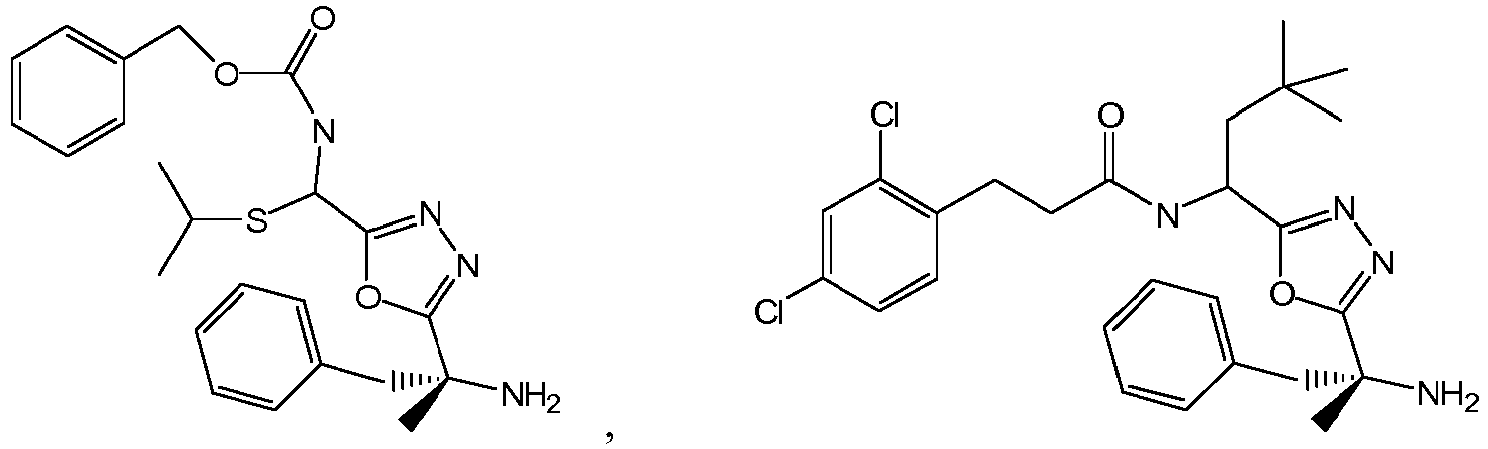
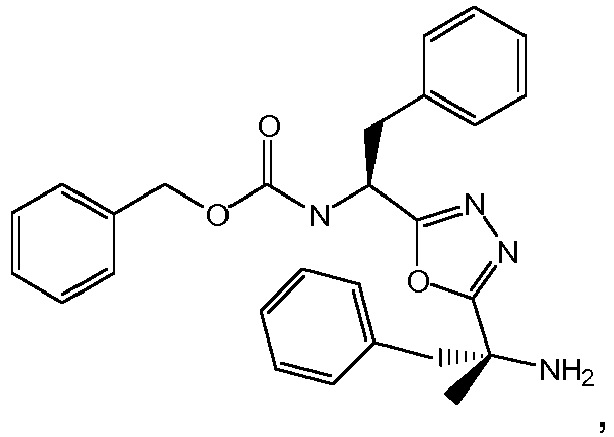
- Die Verbindung nach Anspruch 1, wobei A ausgewählt ist aus der Gruppe bestehend aus


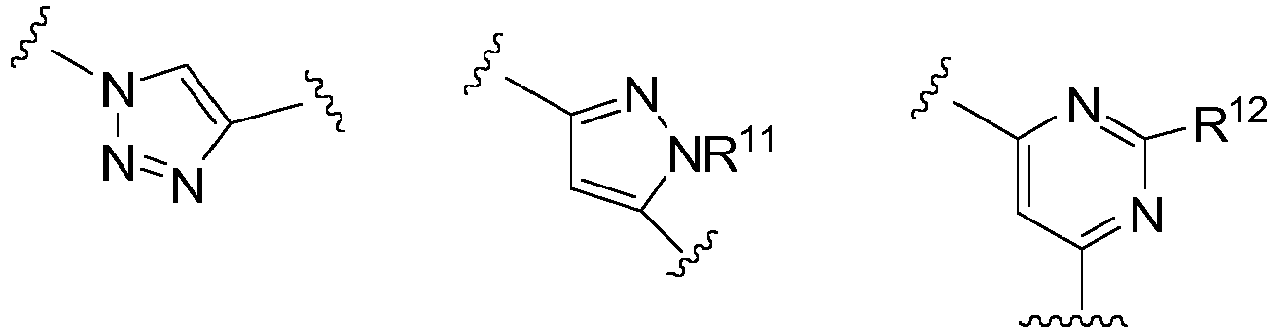
- Die Verbindung nach Anspruch 1 oder 2, wobei R2 C1-3-Alkyl ist.
- Die Verbindung nach einem vorhergehenden Anspruch, wobei Z1 -C(=O)-C(=O)- ist und Z2 NR20 ist, oder Z1 -C(=O)- ist und Z2 NR20 ist.
- Die Verbindung nach einem der Ansprüche 1-3, wobei Z1 ausgewählt ist aus -CR16R17C(=O)-, -C(=O)-CR16R17- und -SO2-, und Z2 NR20 ist.
- Die Verbindung nach Anspruch 1, wobei die Verbindungen die Formel (II) besitzen

- Die Verbindung nach Anspruch 6, wobei die Verbindungen die Formel (II') besitzen

- Eine Verbindung nach einem der Ansprüche 1-7, wobei R3 Wasserstoff oder C1-3-Alkyl ist und R4 Wasserstoff oder C0-3-Alkylen-C6-10-aryl ist.
- Die Verbindung nach Anspruch 1, wobei die Verbindungen die Formel (III) besitzen:

- Die Verbindung nach Anspruch 9, wobei die Verbindungen die Formel (III') besitzen

- Die Verbindung nach Anspruch 10, wobei die Verbindungen die Formel (III") besitzen:
- Die Verbindung nach Anspruch 1, die ausgewählt ist aus der Gruppe bestehend aus 1-(5-((R)-2-Amino-1-phenylpropan-2-yl)-1,3,4-oxadiazol-2-yl)methyl)-4-butylpiperazin-2,3-dion, 1-(1-(5-((R)-2-Amino-1-phenylpropan-2-yl)-1,3,4-oxadiazol-2-yl)-2-phenylethyl)-4-butylpiperazin-2,3-dion und 1-(1-(5-((R)-2-Amino-1-phenylpropan-2-yl)-1,3,4-oxadiazol-2-yl)-3-phenylpropyl)-4-butylpiperazin-2,3-dion, und pharmazeutisch annehmbare Salze davon.
- Die pharmazeutische Zusammensetzung, die eine therapeutisch wirksame Menge einer Verbindung nach einem der Ansprüche 1-12 oder eines pharmazeutisch annehmbaren Salzes davon und einen pharmazeutisch annehmbaren Träger umfasst.
- Eine Verbindung gemäß einem der Ansprüche 1-12 zur Verwendung bei der Behandlung, Besserung oder Steuerung von Alzheimer-Krankheit bei einem Patienten, der dies benötigt.
Applications Claiming Priority (2)
| Application Number | Priority Date | Filing Date | Title |
|---|---|---|---|
| US64492505P | 2005-01-19 | 2005-01-19 | |
| PCT/US2006/001366 WO2006078576A2 (en) | 2005-01-19 | 2006-01-13 | Aminomethyl beta-secretase inhibitors for the treatment of alzheimer's disease |
Publications (3)
| Publication Number | Publication Date |
|---|---|
| EP1855679A2 EP1855679A2 (de) | 2007-11-21 |
| EP1855679A4 EP1855679A4 (de) | 2014-07-23 |
| EP1855679B1 true EP1855679B1 (de) | 2016-06-29 |
Family
ID=36692760
Family Applications (1)
| Application Number | Title | Priority Date | Filing Date |
|---|---|---|---|
| EP06718443.2A Expired - Lifetime EP1855679B1 (de) | 2005-01-19 | 2006-01-13 | Aminomethyl-beta-sekretase-hemmer zur behandlung von alzheimer |
Country Status (7)
| Country | Link |
|---|---|
| US (1) | US7820674B2 (de) |
| EP (1) | EP1855679B1 (de) |
| JP (1) | JP2008527040A (de) |
| CN (1) | CN101106994A (de) |
| AU (1) | AU2006206653A1 (de) |
| CA (1) | CA2594943A1 (de) |
| WO (1) | WO2006078576A2 (de) |
Families Citing this family (16)
| Publication number | Priority date | Publication date | Assignee | Title |
|---|---|---|---|---|
| US7763609B2 (en) | 2003-12-15 | 2010-07-27 | Schering Corporation | Heterocyclic aspartyl protease inhibitors |
| CA2594946A1 (en) * | 2005-01-19 | 2006-07-27 | Merck & Co., Inc | Tertiary carbinamines having substituted heterocycles, which are active as inhibitors of beta-secretase, for the treatment of alzheimer's disease |
| EP2089383B1 (de) | 2006-11-09 | 2015-09-16 | Probiodrug AG | 3-hydroxy-1,5-dihydropyrrol-2-one derivate als inhibitoren von glutaminylcyclase zur behandlung von geschwüren, krebs und anderen krankheiten |
| US9126987B2 (en) | 2006-11-30 | 2015-09-08 | Probiodrug Ag | Inhibitors of glutaminyl cyclase |
| AU2008220785B2 (en) | 2007-03-01 | 2013-02-21 | Vivoryon Therapeutics N.V. | New use of glutaminyl cyclase inhibitors |
| JP5667440B2 (ja) | 2007-04-18 | 2015-02-12 | プロビオドルグ エージー | グルタミニルシクラーゼ阻害剤としてのチオ尿素誘導体 |
| US20090264315A1 (en) | 2007-07-26 | 2009-10-22 | Texas A&M University System | Dipeptide mimics, libraries combining two dipeptide mimics with a third group, and methods for production thereof |
| JP5934645B2 (ja) | 2009-09-11 | 2016-06-15 | プロビオドルグ エージー | グルタミニルシクラーゼ阻害剤としてのヘテロ環式誘導体 |
| UA108363C2 (uk) | 2009-10-08 | 2015-04-27 | Похідні імінотіадіазиндіоксиду як інгібітори bace, композиція на їх основі і їх застосування | |
| WO2011107530A2 (en) | 2010-03-03 | 2011-09-09 | Probiodrug Ag | Novel inhibitors |
| JP5688745B2 (ja) | 2010-03-10 | 2015-03-25 | プロビオドルグ エージー | グルタミニルシクラーゼ(qc、ec2.3.2.5)の複素環阻害剤 |
| WO2011131748A2 (en) | 2010-04-21 | 2011-10-27 | Probiodrug Ag | Novel inhibitors |
| US8815881B2 (en) * | 2010-08-09 | 2014-08-26 | Hoffmann-La Roche Inc. | 1,4,5,6-tetrahydro-pyrimidin-2-ylamine compounds |
| EP2686313B1 (de) | 2011-03-16 | 2016-02-03 | Probiodrug AG | Benzimidazolderivate als glutaminylcyclase-hemmer |
| ES2812698T3 (es) | 2017-09-29 | 2021-03-18 | Probiodrug Ag | Inhibidores de glutaminil ciclasa |
| CN111655260A (zh) * | 2017-10-26 | 2020-09-11 | 南方研究院 | 作为TGF-β抑制剂的噁二唑和噻二唑 |
Family Cites Families (16)
| Publication number | Priority date | Publication date | Assignee | Title |
|---|---|---|---|---|
| US3954868A (en) * | 1972-03-02 | 1976-05-04 | Uniroyal, Inc. | Bis(diphenylaminomethane) antimicrobial agents |
| TW245719B (de) * | 1990-09-10 | 1995-04-21 | Sterling Winthrop Inc | |
| CA2143246C (en) | 1994-03-16 | 2000-08-22 | Thierry Godel | Imidazodiazepines |
| TW343965B (en) * | 1994-03-30 | 1998-11-01 | Hoffmann La Roche | Novel mono- and bicyclic DNA gyrase inhibitors |
| EP1053235A1 (de) * | 1998-02-03 | 2000-11-22 | American Home Products Corporation | Oxazole derivate als serotonin-1a rezeptor agonisten |
| DE60113032T2 (de) * | 2000-10-30 | 2006-07-06 | Pfizer Products Inc., Groton | Glukokortikoidrezeptor-Modulatoren |
| US6566311B1 (en) | 2001-11-30 | 2003-05-20 | Uniroyal Chemical Company, Inc. | 1,3,4-oxadiazole additives for lubricants |
| TW200301698A (en) * | 2001-12-21 | 2003-07-16 | Bristol Myers Squibb Co | Acridone inhibitors of IMPDH enzyme |
| US6951946B2 (en) | 2002-03-19 | 2005-10-04 | Lexicon Pharmaceuticals, Inc. | Large scale synthesis of 1,2,4- and 1,3,4-oxadiazole carboxylates |
| US7132568B2 (en) | 2002-06-17 | 2006-11-07 | Sunesis Pharmaceuticals, Inc. | Aspartyl protease inhibitors |
| US7115652B2 (en) | 2002-06-17 | 2006-10-03 | Sunesis Pharmaceuticals, Inc. | Aspartyl protease inhibitors |
| JP4977322B2 (ja) * | 2002-11-21 | 2012-07-18 | フイナ・テクノロジー・インコーポレーテツド | オレフィン重合用の新しい触媒構造 |
| AU2005236063A1 (en) | 2004-04-20 | 2005-11-03 | Merck & Co., Inc. | 2, 4, 6-substituted pyridyl derivative compounds useful as beta-secretase inhibitors for the treatment of Alzheimer's disease |
| WO2005103020A1 (en) | 2004-04-20 | 2005-11-03 | Merck & Co., Inc. | 1,3,5-substituted phenyl derivative compounds useful as beta-secretase inhibitors for the treatment of alzheimer's disease |
| JP2008520718A (ja) | 2004-11-23 | 2008-06-19 | メルク エンド カムパニー インコーポレーテッド | アルツハイマー病の治療のためのβ−セクレターゼ阻害剤として有用な2,3,4,6−置換ピリジル誘導体化合物 |
| CA2594946A1 (en) | 2005-01-19 | 2006-07-27 | Merck & Co., Inc | Tertiary carbinamines having substituted heterocycles, which are active as inhibitors of beta-secretase, for the treatment of alzheimer's disease |
-
2006
- 2006-01-13 WO PCT/US2006/001366 patent/WO2006078576A2/en not_active Ceased
- 2006-01-13 JP JP2007552194A patent/JP2008527040A/ja active Pending
- 2006-01-13 AU AU2006206653A patent/AU2006206653A1/en not_active Abandoned
- 2006-01-13 EP EP06718443.2A patent/EP1855679B1/de not_active Expired - Lifetime
- 2006-01-13 CN CNA2006800026471A patent/CN101106994A/zh active Pending
- 2006-01-13 CA CA002594943A patent/CA2594943A1/en not_active Abandoned
- 2006-01-13 US US11/795,283 patent/US7820674B2/en active Active
Also Published As
| Publication number | Publication date |
|---|---|
| CN101106994A (zh) | 2008-01-16 |
| JP2008527040A (ja) | 2008-07-24 |
| EP1855679A4 (de) | 2014-07-23 |
| WO2006078576A3 (en) | 2006-10-05 |
| AU2006206653A1 (en) | 2006-07-27 |
| US20080153846A1 (en) | 2008-06-26 |
| EP1855679A2 (de) | 2007-11-21 |
| WO2006078576A2 (en) | 2006-07-27 |
| US7820674B2 (en) | 2010-10-26 |
| CA2594943A1 (en) | 2006-07-27 |
Similar Documents
| Publication | Publication Date | Title |
|---|---|---|
| EP1841426B1 (de) | Als inhibitoren von beta-secretase aktive tertiäre carbinamine mit substituierten heterocyclen zur behandlung der alzheimer-krankheit | |
| AU2004277981B2 (en) | Benzylether and benzylamino beta-secretase inhibitors for the treatment of Alzheimer's disease | |
| EP1740581B1 (de) | Beta-sekretase-inhibitoren für die behandlung von alzheimer-krankheit geeignete 2,4,6-substituierte pyridylderivatverbindungen | |
| EP1855679B1 (de) | Aminomethyl-beta-sekretase-hemmer zur behandlung von alzheimer | |
| ES2835331T3 (es) | Piridinonas antifibroticas | |
| AU2004255191A1 (en) | Phenylcarboxylate beta-secretase inhibitors for the treatment of Alzheimer's disease | |
| AU2005245376A1 (en) | Phenyl carboxamide compounds useful as beta-secretase inhibitors for the treatment of Alzheimer's disease | |
| EP1817312B1 (de) | Makrozyklische aminiopyridyl-beta-sekretase-hemmer zur behandlung von morbus alzheimer | |
| EP1817311B1 (de) | 2,3,4,6-substituierte pyridylderivat-verbindungen als beta-sektretase-inhibitoren zur behandlung von morbus alzheimer | |
| EP2077719B1 (de) | Piperidin- und pyrrolidin-beta-secretase-hemmer zur behandlung von alzheimer-krankheit | |
| JP2008520670A (ja) | アルツハイマー病の治療のための大環状第三アミンβ−セクレターゼ阻害剤 | |
| US20090170830A1 (en) | Tricyclic Beta-Secretase Inhibitors for the Treatment of Alzheimer's Disease | |
| US20090182021A1 (en) | Tricyclic Beta-Secretase Inhibitors for the Treatment of Alzheimer's Disease | |
| CN101106989A (zh) | 作为β-分泌酶有效抑制剂用于治疗阿尔茨海默氏病的、具有取代的杂环的叔碳胺 | |
| EP1912963B1 (de) | Cyclische ketale als beta-sekretase-inhibitoren zur behandlung von alzheimer-krankheit |
Legal Events
| Date | Code | Title | Description |
|---|---|---|---|
| PUAI | Public reference made under article 153(3) epc to a published international application that has entered the european phase |
Free format text: ORIGINAL CODE: 0009012 |
|
| 17P | Request for examination filed |
Effective date: 20070820 |
|
| AK | Designated contracting states |
Kind code of ref document: A2 Designated state(s): AT BE BG CH CY CZ DE DK EE ES FI FR GB GR HU IE IS IT LI LT LU LV MC NL PL PT RO SE SI SK TR |
|
| DAX | Request for extension of the european patent (deleted) | ||
| RAP1 | Party data changed (applicant data changed or rights of an application transferred) |
Owner name: MERCK SHARP & DOHME CORP. |
|
| RAP1 | Party data changed (applicant data changed or rights of an application transferred) |
Owner name: SCHERING CORPORATION |
|
| RAP1 | Party data changed (applicant data changed or rights of an application transferred) |
Owner name: MERCK SHARP & DOHME CORP. |
|
| A4 | Supplementary search report drawn up and despatched |
Effective date: 20140620 |
|
| RIC1 | Information provided on ipc code assigned before grant |
Ipc: C07D 271/06 20060101ALI20140613BHEP Ipc: A61P 25/28 20060101ALI20140613BHEP Ipc: C07D 413/06 20060101ALI20140613BHEP Ipc: C07D 271/10 20060101ALI20140613BHEP Ipc: A61K 31/4745 20060101AFI20140613BHEP |
|
| RIC1 | Information provided on ipc code assigned before grant |
Ipc: C07D 271/06 20060101ALI20151218BHEP Ipc: A61K 31/4745 20060101AFI20151218BHEP Ipc: A61P 25/28 20060101ALI20151218BHEP Ipc: C07D 271/10 20060101ALI20151218BHEP Ipc: C07D 413/06 20060101ALI20151218BHEP |
|
| GRAP | Despatch of communication of intention to grant a patent |
Free format text: ORIGINAL CODE: EPIDOSNIGR1 |
|
| INTG | Intention to grant announced |
Effective date: 20160129 |
|
| GRAS | Grant fee paid |
Free format text: ORIGINAL CODE: EPIDOSNIGR3 |
|
| GRAA | (expected) grant |
Free format text: ORIGINAL CODE: 0009210 |
|
| AK | Designated contracting states |
Kind code of ref document: B1 Designated state(s): AT BE BG CH CY CZ DE DK EE ES FI FR GB GR HU IE IS IT LI LT LU LV MC NL PL PT RO SE SI SK TR |
|
| REG | Reference to a national code |
Ref country code: GB Ref legal event code: FG4D |
|
| REG | Reference to a national code |
Ref country code: CH Ref legal event code: EP |
|
| REG | Reference to a national code |
Ref country code: AT Ref legal event code: REF Ref document number: 808539 Country of ref document: AT Kind code of ref document: T Effective date: 20160715 |
|
| REG | Reference to a national code |
Ref country code: IE Ref legal event code: FG4D |
|
| REG | Reference to a national code |
Ref country code: DE Ref legal event code: R096 Ref document number: 602006049452 Country of ref document: DE |
|
| REG | Reference to a national code |
Ref country code: LT Ref legal event code: MG4D |
|
| PG25 | Lapsed in a contracting state [announced via postgrant information from national office to epo] |
Ref country code: FI Free format text: LAPSE BECAUSE OF FAILURE TO SUBMIT A TRANSLATION OF THE DESCRIPTION OR TO PAY THE FEE WITHIN THE PRESCRIBED TIME-LIMIT Effective date: 20160629 Ref country code: LT Free format text: LAPSE BECAUSE OF FAILURE TO SUBMIT A TRANSLATION OF THE DESCRIPTION OR TO PAY THE FEE WITHIN THE PRESCRIBED TIME-LIMIT Effective date: 20160629 |
|
| REG | Reference to a national code |
Ref country code: NL Ref legal event code: MP Effective date: 20160629 |
|
| PG25 | Lapsed in a contracting state [announced via postgrant information from national office to epo] |
Ref country code: NL Free format text: LAPSE BECAUSE OF FAILURE TO SUBMIT A TRANSLATION OF THE DESCRIPTION OR TO PAY THE FEE WITHIN THE PRESCRIBED TIME-LIMIT Effective date: 20160629 Ref country code: GR Free format text: LAPSE BECAUSE OF FAILURE TO SUBMIT A TRANSLATION OF THE DESCRIPTION OR TO PAY THE FEE WITHIN THE PRESCRIBED TIME-LIMIT Effective date: 20160930 Ref country code: SE Free format text: LAPSE BECAUSE OF FAILURE TO SUBMIT A TRANSLATION OF THE DESCRIPTION OR TO PAY THE FEE WITHIN THE PRESCRIBED TIME-LIMIT Effective date: 20160629 Ref country code: LV Free format text: LAPSE BECAUSE OF FAILURE TO SUBMIT A TRANSLATION OF THE DESCRIPTION OR TO PAY THE FEE WITHIN THE PRESCRIBED TIME-LIMIT Effective date: 20160629 |
|
| REG | Reference to a national code |
Ref country code: AT Ref legal event code: MK05 Ref document number: 808539 Country of ref document: AT Kind code of ref document: T Effective date: 20160629 |
|
| REG | Reference to a national code |
Ref country code: FR Ref legal event code: PLFP Year of fee payment: 12 |
|
| PG25 | Lapsed in a contracting state [announced via postgrant information from national office to epo] |
Ref country code: SK Free format text: LAPSE BECAUSE OF FAILURE TO SUBMIT A TRANSLATION OF THE DESCRIPTION OR TO PAY THE FEE WITHIN THE PRESCRIBED TIME-LIMIT Effective date: 20160629 Ref country code: IT Free format text: LAPSE BECAUSE OF FAILURE TO SUBMIT A TRANSLATION OF THE DESCRIPTION OR TO PAY THE FEE WITHIN THE PRESCRIBED TIME-LIMIT Effective date: 20160629 Ref country code: IS Free format text: LAPSE BECAUSE OF FAILURE TO SUBMIT A TRANSLATION OF THE DESCRIPTION OR TO PAY THE FEE WITHIN THE PRESCRIBED TIME-LIMIT Effective date: 20161029 Ref country code: RO Free format text: LAPSE BECAUSE OF FAILURE TO SUBMIT A TRANSLATION OF THE DESCRIPTION OR TO PAY THE FEE WITHIN THE PRESCRIBED TIME-LIMIT Effective date: 20160629 Ref country code: CZ Free format text: LAPSE BECAUSE OF FAILURE TO SUBMIT A TRANSLATION OF THE DESCRIPTION OR TO PAY THE FEE WITHIN THE PRESCRIBED TIME-LIMIT Effective date: 20160629 Ref country code: EE Free format text: LAPSE BECAUSE OF FAILURE TO SUBMIT A TRANSLATION OF THE DESCRIPTION OR TO PAY THE FEE WITHIN THE PRESCRIBED TIME-LIMIT Effective date: 20160629 |
|
| PG25 | Lapsed in a contracting state [announced via postgrant information from national office to epo] |
Ref country code: PL Free format text: LAPSE BECAUSE OF FAILURE TO SUBMIT A TRANSLATION OF THE DESCRIPTION OR TO PAY THE FEE WITHIN THE PRESCRIBED TIME-LIMIT Effective date: 20160629 Ref country code: AT Free format text: LAPSE BECAUSE OF FAILURE TO SUBMIT A TRANSLATION OF THE DESCRIPTION OR TO PAY THE FEE WITHIN THE PRESCRIBED TIME-LIMIT Effective date: 20160629 Ref country code: ES Free format text: LAPSE BECAUSE OF FAILURE TO SUBMIT A TRANSLATION OF THE DESCRIPTION OR TO PAY THE FEE WITHIN THE PRESCRIBED TIME-LIMIT Effective date: 20160629 Ref country code: PT Free format text: LAPSE BECAUSE OF FAILURE TO SUBMIT A TRANSLATION OF THE DESCRIPTION OR TO PAY THE FEE WITHIN THE PRESCRIBED TIME-LIMIT Effective date: 20161031 Ref country code: BE Free format text: LAPSE BECAUSE OF FAILURE TO SUBMIT A TRANSLATION OF THE DESCRIPTION OR TO PAY THE FEE WITHIN THE PRESCRIBED TIME-LIMIT Effective date: 20160629 |
|
| REG | Reference to a national code |
Ref country code: DE Ref legal event code: R097 Ref document number: 602006049452 Country of ref document: DE |
|
| PLBE | No opposition filed within time limit |
Free format text: ORIGINAL CODE: 0009261 |
|
| STAA | Information on the status of an ep patent application or granted ep patent |
Free format text: STATUS: NO OPPOSITION FILED WITHIN TIME LIMIT |
|
| PG25 | Lapsed in a contracting state [announced via postgrant information from national office to epo] |
Ref country code: DK Free format text: LAPSE BECAUSE OF FAILURE TO SUBMIT A TRANSLATION OF THE DESCRIPTION OR TO PAY THE FEE WITHIN THE PRESCRIBED TIME-LIMIT Effective date: 20160629 |
|
| 26N | No opposition filed |
Effective date: 20170330 |
|
| PG25 | Lapsed in a contracting state [announced via postgrant information from national office to epo] |
Ref country code: SI Free format text: LAPSE BECAUSE OF FAILURE TO SUBMIT A TRANSLATION OF THE DESCRIPTION OR TO PAY THE FEE WITHIN THE PRESCRIBED TIME-LIMIT Effective date: 20160629 Ref country code: BG Free format text: LAPSE BECAUSE OF FAILURE TO SUBMIT A TRANSLATION OF THE DESCRIPTION OR TO PAY THE FEE WITHIN THE PRESCRIBED TIME-LIMIT Effective date: 20160929 |
|
| REG | Reference to a national code |
Ref country code: CH Ref legal event code: PL |
|
| PG25 | Lapsed in a contracting state [announced via postgrant information from national office to epo] |
Ref country code: MC Free format text: LAPSE BECAUSE OF FAILURE TO SUBMIT A TRANSLATION OF THE DESCRIPTION OR TO PAY THE FEE WITHIN THE PRESCRIBED TIME-LIMIT Effective date: 20160629 |
|
| PG25 | Lapsed in a contracting state [announced via postgrant information from national office to epo] |
Ref country code: CH Free format text: LAPSE BECAUSE OF NON-PAYMENT OF DUE FEES Effective date: 20170131 Ref country code: LI Free format text: LAPSE BECAUSE OF NON-PAYMENT OF DUE FEES Effective date: 20170131 |
|
| REG | Reference to a national code |
Ref country code: IE Ref legal event code: MM4A |
|
| PG25 | Lapsed in a contracting state [announced via postgrant information from national office to epo] |
Ref country code: LU Free format text: LAPSE BECAUSE OF NON-PAYMENT OF DUE FEES Effective date: 20170113 |
|
| REG | Reference to a national code |
Ref country code: FR Ref legal event code: PLFP Year of fee payment: 13 |
|
| PG25 | Lapsed in a contracting state [announced via postgrant information from national office to epo] |
Ref country code: IE Free format text: LAPSE BECAUSE OF NON-PAYMENT OF DUE FEES Effective date: 20170113 |
|
| PG25 | Lapsed in a contracting state [announced via postgrant information from national office to epo] |
Ref country code: HU Free format text: LAPSE BECAUSE OF FAILURE TO SUBMIT A TRANSLATION OF THE DESCRIPTION OR TO PAY THE FEE WITHIN THE PRESCRIBED TIME-LIMIT; INVALID AB INITIO Effective date: 20060113 |
|
| PG25 | Lapsed in a contracting state [announced via postgrant information from national office to epo] |
Ref country code: CY Free format text: LAPSE BECAUSE OF NON-PAYMENT OF DUE FEES Effective date: 20160629 |
|
| PG25 | Lapsed in a contracting state [announced via postgrant information from national office to epo] |
Ref country code: TR Free format text: LAPSE BECAUSE OF FAILURE TO SUBMIT A TRANSLATION OF THE DESCRIPTION OR TO PAY THE FEE WITHIN THE PRESCRIBED TIME-LIMIT Effective date: 20160629 |
|
| PGFP | Annual fee paid to national office [announced via postgrant information from national office to epo] |
Ref country code: GB Payment date: 20211228 Year of fee payment: 17 Ref country code: FR Payment date: 20211222 Year of fee payment: 17 |
|
| PGFP | Annual fee paid to national office [announced via postgrant information from national office to epo] |
Ref country code: DE Payment date: 20211216 Year of fee payment: 17 |
|
| REG | Reference to a national code |
Ref country code: DE Ref legal event code: R119 Ref document number: 602006049452 Country of ref document: DE |
|
| GBPC | Gb: european patent ceased through non-payment of renewal fee |
Effective date: 20230113 |
|
| PG25 | Lapsed in a contracting state [announced via postgrant information from national office to epo] |
Ref country code: GB Free format text: LAPSE BECAUSE OF NON-PAYMENT OF DUE FEES Effective date: 20230113 Ref country code: DE Free format text: LAPSE BECAUSE OF NON-PAYMENT OF DUE FEES Effective date: 20230801 |
|
| PG25 | Lapsed in a contracting state [announced via postgrant information from national office to epo] |
Ref country code: FR Free format text: LAPSE BECAUSE OF NON-PAYMENT OF DUE FEES Effective date: 20230131 |