EP1857536A1 - Appareil de fermentation malolactique et procédé correspondant - Google Patents
Appareil de fermentation malolactique et procédé correspondant Download PDFInfo
- Publication number
- EP1857536A1 EP1857536A1 EP06125494A EP06125494A EP1857536A1 EP 1857536 A1 EP1857536 A1 EP 1857536A1 EP 06125494 A EP06125494 A EP 06125494A EP 06125494 A EP06125494 A EP 06125494A EP 1857536 A1 EP1857536 A1 EP 1857536A1
- Authority
- EP
- European Patent Office
- Prior art keywords
- malic acid
- amount
- fruit juice
- fermented fruit
- phase
- Prior art date
- Legal status (The legal status is an assumption and is not a legal conclusion. Google has not performed a legal analysis and makes no representation as to the accuracy of the status listed.)
- Withdrawn
Links
- 238000000034 method Methods 0.000 title claims abstract description 40
- 238000000855 fermentation Methods 0.000 title claims abstract description 19
- 230000004151 fermentation Effects 0.000 title claims abstract description 19
- BJEPYKJPYRNKOW-REOHCLBHSA-N (S)-malic acid Chemical compound OC(=O)[C@@H](O)CC(O)=O BJEPYKJPYRNKOW-REOHCLBHSA-N 0.000 claims abstract description 44
- BJEPYKJPYRNKOW-UHFFFAOYSA-N alpha-hydroxysuccinic acid Natural products OC(=O)C(O)CC(O)=O BJEPYKJPYRNKOW-UHFFFAOYSA-N 0.000 claims abstract description 44
- 239000001630 malic acid Substances 0.000 claims abstract description 44
- 235000011090 malic acid Nutrition 0.000 claims abstract description 44
- 238000006243 chemical reaction Methods 0.000 claims abstract description 27
- 235000015203 fruit juice Nutrition 0.000 claims abstract description 22
- 244000005700 microbiome Species 0.000 claims abstract description 21
- 238000001914 filtration Methods 0.000 claims abstract description 10
- 230000001939 inductive effect Effects 0.000 claims abstract description 6
- 238000007599 discharging Methods 0.000 claims abstract 9
- 238000011012 sanitization Methods 0.000 claims description 13
- 230000012010 growth Effects 0.000 claims description 12
- JVTAAEKCZFNVCJ-UHFFFAOYSA-N lactic acid Chemical compound CC(O)C(O)=O JVTAAEKCZFNVCJ-UHFFFAOYSA-N 0.000 claims description 12
- 230000001954 sterilising effect Effects 0.000 claims description 11
- 238000004659 sterilization and disinfection Methods 0.000 claims description 11
- 238000005406 washing Methods 0.000 claims description 11
- 239000001963 growth medium Substances 0.000 claims description 10
- 239000002054 inoculum Substances 0.000 claims description 7
- 239000004310 lactic acid Substances 0.000 claims description 6
- 235000014655 lactic acid Nutrition 0.000 claims description 6
- 230000036961 partial effect Effects 0.000 claims description 6
- 239000012530 fluid Substances 0.000 claims description 5
- 238000004891 communication Methods 0.000 claims description 4
- 239000000919 ceramic Substances 0.000 claims description 2
- 230000003134 recirculating effect Effects 0.000 claims description 2
- 239000007788 liquid Substances 0.000 claims 11
- 230000003698 anagen phase Effects 0.000 claims 5
- 238000006555 catalytic reaction Methods 0.000 claims 1
- 239000007943 implant Substances 0.000 claims 1
- 235000014101 wine Nutrition 0.000 description 59
- 241000894006 Bacteria Species 0.000 description 18
- 230000001580 bacterial effect Effects 0.000 description 14
- 230000000813 microbial effect Effects 0.000 description 7
- LFQSCWFLJHTTHZ-UHFFFAOYSA-N Ethanol Chemical compound CCO LFQSCWFLJHTTHZ-UHFFFAOYSA-N 0.000 description 6
- JOYRKODLDBILNP-UHFFFAOYSA-N Ethyl urethane Chemical compound CCOC(N)=O JOYRKODLDBILNP-UHFFFAOYSA-N 0.000 description 6
- 230000015556 catabolic process Effects 0.000 description 6
- 230000001413 cellular effect Effects 0.000 description 6
- 238000006731 degradation reaction Methods 0.000 description 6
- 230000001476 alcoholic effect Effects 0.000 description 4
- 238000005516 engineering process Methods 0.000 description 4
- 238000004519 manufacturing process Methods 0.000 description 4
- 239000002245 particle Substances 0.000 description 4
- QTBSBXVTEAMEQO-UHFFFAOYSA-N Acetic acid Chemical compound CC(O)=O QTBSBXVTEAMEQO-UHFFFAOYSA-N 0.000 description 3
- 230000005526 G1 to G0 transition Effects 0.000 description 3
- 241000192134 Oenococcus oeni Species 0.000 description 3
- HEMHJVSKTPXQMS-UHFFFAOYSA-M Sodium hydroxide Chemical compound [OH-].[Na+] HEMHJVSKTPXQMS-UHFFFAOYSA-M 0.000 description 3
- 230000002210 biocatalytic effect Effects 0.000 description 3
- 230000015572 biosynthetic process Effects 0.000 description 3
- KRKNYBCHXYNGOX-UHFFFAOYSA-N citric acid Chemical compound OC(=O)CC(O)(C(O)=O)CC(O)=O KRKNYBCHXYNGOX-UHFFFAOYSA-N 0.000 description 3
- 238000011065 in-situ storage Methods 0.000 description 3
- 238000002360 preparation method Methods 0.000 description 3
- XLYOFNOQVPJJNP-UHFFFAOYSA-N water Substances O XLYOFNOQVPJJNP-UHFFFAOYSA-N 0.000 description 3
- FHVDTGUDJYJELY-UHFFFAOYSA-N 6-{[2-carboxy-4,5-dihydroxy-6-(phosphanyloxy)oxan-3-yl]oxy}-4,5-dihydroxy-3-phosphanyloxane-2-carboxylic acid Chemical compound O1C(C(O)=O)C(P)C(O)C(O)C1OC1C(C(O)=O)OC(OP)C(O)C1O FHVDTGUDJYJELY-UHFFFAOYSA-N 0.000 description 2
- 108090000790 Enzymes Proteins 0.000 description 2
- 102000004190 Enzymes Human genes 0.000 description 2
- RHGKLRLOHDJJDR-BYPYZUCNSA-N L-citrulline Chemical compound NC(=O)NCCC[C@H]([NH3+])C([O-])=O RHGKLRLOHDJJDR-BYPYZUCNSA-N 0.000 description 2
- CSNNHWWHGAXBCP-UHFFFAOYSA-L Magnesium sulfate Chemical compound [Mg+2].[O-][S+2]([O-])([O-])[O-] CSNNHWWHGAXBCP-UHFFFAOYSA-L 0.000 description 2
- RHGKLRLOHDJJDR-UHFFFAOYSA-N Ndelta-carbamoyl-DL-ornithine Natural products OC(=O)C(N)CCCNC(N)=O RHGKLRLOHDJJDR-UHFFFAOYSA-N 0.000 description 2
- 240000004808 Saccharomyces cerevisiae Species 0.000 description 2
- XSQUKJJJFZCRTK-UHFFFAOYSA-N Urea Chemical compound NC(N)=O XSQUKJJJFZCRTK-UHFFFAOYSA-N 0.000 description 2
- 229940072056 alginate Drugs 0.000 description 2
- 235000010443 alginic acid Nutrition 0.000 description 2
- 229920000615 alginic acid Polymers 0.000 description 2
- 239000011942 biocatalyst Substances 0.000 description 2
- 230000001680 brushing effect Effects 0.000 description 2
- 229960002173 citrulline Drugs 0.000 description 2
- 235000013477 citrulline Nutrition 0.000 description 2
- 238000004140 cleaning Methods 0.000 description 2
- 238000013461 design Methods 0.000 description 2
- 239000006185 dispersion Substances 0.000 description 2
- 230000000694 effects Effects 0.000 description 2
- 239000007789 gas Substances 0.000 description 2
- 230000006698 induction Effects 0.000 description 2
- 238000001139 pH measurement Methods 0.000 description 2
- 239000011148 porous material Substances 0.000 description 2
- 239000002243 precursor Substances 0.000 description 2
- 230000002829 reductive effect Effects 0.000 description 2
- 238000009877 rendering Methods 0.000 description 2
- 238000013341 scale-up Methods 0.000 description 2
- 239000000126 substance Substances 0.000 description 2
- 238000011514 vinification Methods 0.000 description 2
- 239000004475 Arginine Substances 0.000 description 1
- 108700029181 Bacteria lipase activator Proteins 0.000 description 1
- 239000001888 Peptone Substances 0.000 description 1
- 108010080698 Peptones Proteins 0.000 description 1
- VMHLLURERBWHNL-UHFFFAOYSA-M Sodium acetate Chemical compound [Na+].CC([O-])=O VMHLLURERBWHNL-UHFFFAOYSA-M 0.000 description 1
- 235000011054 acetic acid Nutrition 0.000 description 1
- 230000002411 adverse Effects 0.000 description 1
- GZCGUPFRVQAUEE-SLPGGIOYSA-N aldehydo-D-glucose Chemical compound OC[C@@H](O)[C@@H](O)[C@H](O)[C@@H](O)C=O GZCGUPFRVQAUEE-SLPGGIOYSA-N 0.000 description 1
- 230000003466 anti-cipated effect Effects 0.000 description 1
- ODKSFYDXXFIFQN-UHFFFAOYSA-N arginine Natural products OC(=O)C(N)CCCNC(N)=N ODKSFYDXXFIFQN-UHFFFAOYSA-N 0.000 description 1
- 235000019568 aromas Nutrition 0.000 description 1
- 239000011324 bead Substances 0.000 description 1
- 230000033228 biological regulation Effects 0.000 description 1
- 230000000711 cancerogenic effect Effects 0.000 description 1
- 229940041514 candida albicans extract Drugs 0.000 description 1
- 239000004202 carbamide Substances 0.000 description 1
- 231100000315 carcinogenic Toxicity 0.000 description 1
- 239000005018 casein Substances 0.000 description 1
- BECPQYXYKAMYBN-UHFFFAOYSA-N casein, tech. Chemical compound NCCCCC(C(O)=O)N=C(O)C(CC(O)=O)N=C(O)C(CCC(O)=N)N=C(O)C(CC(C)C)N=C(O)C(CCC(O)=O)N=C(O)C(CC(O)=O)N=C(O)C(CCC(O)=O)N=C(O)C(C(C)O)N=C(O)C(CCC(O)=N)N=C(O)C(CCC(O)=N)N=C(O)C(CCC(O)=N)N=C(O)C(CCC(O)=O)N=C(O)C(CCC(O)=O)N=C(O)C(COP(O)(O)=O)N=C(O)C(CCC(O)=N)N=C(O)C(N)CC1=CC=CC=C1 BECPQYXYKAMYBN-UHFFFAOYSA-N 0.000 description 1
- 235000021240 caseins Nutrition 0.000 description 1
- 230000003197 catalytic effect Effects 0.000 description 1
- 239000003795 chemical substances by application Substances 0.000 description 1
- 235000015165 citric acid Nutrition 0.000 description 1
- 238000005352 clarification Methods 0.000 description 1
- 150000001875 compounds Chemical class 0.000 description 1
- 238000010276 construction Methods 0.000 description 1
- 230000001934 delay Effects 0.000 description 1
- 230000001627 detrimental effect Effects 0.000 description 1
- 238000010586 diagram Methods 0.000 description 1
- YXVFQADLFFNVDS-UHFFFAOYSA-N diammonium citrate Chemical compound [NH4+].[NH4+].[O-]C(=O)CC(O)(C(=O)O)CC([O-])=O YXVFQADLFFNVDS-UHFFFAOYSA-N 0.000 description 1
- ZPWVASYFFYYZEW-UHFFFAOYSA-L dipotassium hydrogen phosphate Chemical compound [K+].[K+].OP([O-])([O-])=O ZPWVASYFFYYZEW-UHFFFAOYSA-L 0.000 description 1
- 230000002255 enzymatic effect Effects 0.000 description 1
- 238000002474 experimental method Methods 0.000 description 1
- 239000000284 extract Substances 0.000 description 1
- 239000000796 flavoring agent Substances 0.000 description 1
- 235000019634 flavors Nutrition 0.000 description 1
- 239000011521 glass Substances 0.000 description 1
- 230000003100 immobilizing effect Effects 0.000 description 1
- 230000036512 infertility Effects 0.000 description 1
- 230000000670 limiting effect Effects 0.000 description 1
- 230000005923 long-lasting effect Effects 0.000 description 1
- 229910052943 magnesium sulfate Inorganic materials 0.000 description 1
- 235000019341 magnesium sulphate Nutrition 0.000 description 1
- 238000012423 maintenance Methods 0.000 description 1
- 229940099596 manganese sulfate Drugs 0.000 description 1
- 239000011702 manganese sulphate Substances 0.000 description 1
- 235000007079 manganese sulphate Nutrition 0.000 description 1
- SQQMAOCOWKFBNP-UHFFFAOYSA-L manganese(II) sulfate Chemical compound [Mn+2].[O-]S([O-])(=O)=O SQQMAOCOWKFBNP-UHFFFAOYSA-L 0.000 description 1
- 239000000463 material Substances 0.000 description 1
- 239000011159 matrix material Substances 0.000 description 1
- 235000013372 meat Nutrition 0.000 description 1
- 235000019319 peptone Nutrition 0.000 description 1
- 229920000136 polysorbate Polymers 0.000 description 1
- 230000002250 progressing effect Effects 0.000 description 1
- 238000011160 research Methods 0.000 description 1
- 230000000717 retained effect Effects 0.000 description 1
- 239000001632 sodium acetate Substances 0.000 description 1
- 235000017281 sodium acetate Nutrition 0.000 description 1
- 239000007787 solid Substances 0.000 description 1
- 230000002269 spontaneous effect Effects 0.000 description 1
- 238000012414 sterilization procedure Methods 0.000 description 1
- 238000003860 storage Methods 0.000 description 1
- 238000012360 testing method Methods 0.000 description 1
- 230000035899 viability Effects 0.000 description 1
- 239000012138 yeast extract Substances 0.000 description 1
Images
Classifications
-
- C—CHEMISTRY; METALLURGY
- C12—BIOCHEMISTRY; BEER; SPIRITS; WINE; VINEGAR; MICROBIOLOGY; ENZYMOLOGY; MUTATION OR GENETIC ENGINEERING
- C12G—WINE; PREPARATION THEREOF; ALCOHOLIC BEVERAGES; PREPARATION OF ALCOHOLIC BEVERAGES NOT PROVIDED FOR IN SUBCLASSES C12C OR C12H
- C12G1/00—Preparation of wine or sparkling wine
- C12G1/02—Preparation of must from grapes; Must treatment and fermentation
- C12G1/0203—Preparation of must from grapes; Must treatment and fermentation by microbiological or enzymatic treatment
Definitions
- the present invention concerns an apparatus for inducing malo-lactic fermentation in a fermented fruit juice, preferably wine, and the corresponding process.
- the malo-lactic fermentation contributes to reduce the wine acidity and to increase the organoleptic properties.
- MLF malo-lactic fermentation
- Some wine-producers wait for the MLF taking place naturally due to the Oenococcus oeni cells growth in the wine. Nevertheless, the cells growing time cannot be known a priori: the MLF can take place from 2 to 4 weeks after the completion of the alcoholic fermentation or after some months or cannot take place at all.
- EC ethylcarbamate
- the EC production is favoured by the temperature increase; thus, the normal conditions employed to induce the MLF, i.e. increasing the temperature of the cellar and/or the temperature of the storage vessel due to the endogenous bacteria, favour the potential production of EC.
- European Patent 0 327 380 describes a method which is based on the observation that MLF induction requires a very high concentration of bacterial cells in a stationary phase (>10 8 CFU/ml): under these conditions the bacteria act as biocatalysts.
- the method disclosed in EP-B-0 327 380 provides for the biocatalyst bacteria entrapped in a reactor; the wine flows inside the reactor through an inlet filter, and at the end of the MLF the wine flows through an exit port where a second filter with 0.45 ⁇ m is present.
- This scheme of "double filtration" has been proposed to overcome the limitation of a previous teaching disclosed in US-A-4 380 552 which was characterized by a phenomenon of an unacceptable microbial growth in wine.
- EP-B-0 237 380 discloses also the use of bacterial cells attached to solid supports like thin sheets or suitable material such as beads made of glass, gel or alginate. However, the use of bacteria entrapped e.g.
- alginate particles might be cumbersome in respect to the efficiency of the particles preparation (i.e. amount of the catalytic molecules to be added) and the maintenance of the sterility. Furthermore, the dispersion properties of the particles and their wettability can affect the malo-lactic capacity of the system, which may vary as a function of the matrix of the wine to be treated; finally, this method is not amenable for scale up, because limited by the volume of entrapped cells.
- Object of the present invention is to provide an apparatus - and the corresponding process - able to induce the MLF in a fermented fruit juice, preferably wine, which overcomes the limitations of the prior art.
- the present invention provides the use of an apparatus to induce the MLF where the biocatalytic cells (preferably bacteria) are coated on a support made of a porous structure - also called cellular filter - which allows maximizing the surface contact between the biocatalytic cells and the wine to be converted.
- the biocatalytic cells preferably bacteria
- the present invention provides for the formation of the cellular filter in situ within the same apparatus where the MLF occurs. It must be specified that in the present invention wine does not undergo to any filtration event, which would cause a lowering of the amount of the various wine substances, therefore, impairing its organoleptic features.
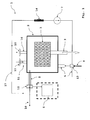
- the apparatus which is indicated with reference number 1, includes a reaction vessel 2 into which a porous support (a filter) to anchor the bacterial cells is present, first inlet means 4 for introducing wine or the bacterial inoculums and/or the culture media into the reaction vessel and second outlet means 5 for withdrawing from the reaction vessel 2 the culture broth or the wine during the recirculation phase which is carried out through a recirculation plant 17, as well as for withdrawing wine from the apparatus 1 at the end of the MLF.
- Wine exits from the apparatus 1 through withdrawing/evacuation means 10 which are in fluid communication with the second outlet means 5, controlled by a valve 12.
- the wine recirculation into the apparatus 1 is activated by a pump 7.
- first inlet means 4 which is in fluid communication with a third inlet means 8 by means of a valve 13, it is possible to introduce the wine into the reaction vessel 2, the culture media, the inoculums of the malolactic bacteria, as well as the cleaning, sterilization and washing solutions of the apparatus 1
- the porous anchorage support 3 is in fluid communication with a fourth outlet means 9, through which the exhausted culture media for the bacteria responsible for the MLF is withdrawn.
- the apparatus 1 is also provided with i) a fifth inlet means 11 for inserting gas within the vessel 2, wherein the inlet means 11 is provided with a first filter 15, and ii) a sixth outlet means 16 for exiting the gas from the vessel 2, wherein the inlet means 16 is provided with a second filter 18.
- the apparatus 1 is also equipped with a heat exchanger 14.
- the apparatus 1 is provided with a control unit 6, which has the function to control the valves 12 and 13 (preferably electronic valves) and adequate means - located within the reaction vessel 2 - for checking the parameters into the vessel 2 and/or in the recirculation plant 17.
- Said means for controlling the parameters within the reaction vessel 2 are e.g. sensors of pH, temperature, partial pressure of O 2, CO 2 , N 2 and air, wherein said controlling means are able to monitor the bacterial growth and the occurrence of the MLF.
- Said controlling means are able to control the valve 12 for completely withdrawing the wine from the apparatus 1 once the MLF has been completed.
- the anchorage support 3 is used to immobilize the microbial cells which are in the late phase of growth (yeasts and bacteria) at a concentration able to control the conversion of malic acid into lactic acid, and preferably at a concentration of 10 9 -10 10 CFU/ml or more.
- Microorganisms which are conveniently used to induce the MLF are bacteria belonging to Oenococcus oeni species. However, any kind of microorganism capable to induce the MLF can be conveniently used with the present invention.
- Anchorage supports that can be used into the apparatus 1 include surface or depth filters, lenticolar filters, filtering cartridges, sponges, ceramics, stainless filters or any kind of surface capable to anchor microorganisms.
- An additional feature of the support 3, which is able to render the cellular anchorage highly efficient, is its positive zeta potential in aqueous fluids; in this manner, it is possible to add to the "physically driven mechanism” a “chemically driven mechanism” of anchorage, due the overall negative charge of the employed bacteria.
- the support 3 is also inert towards colloidal interference, i.e. it avoids the adhesion of colloidal substances which can impair the activity of the cells on the wine, and is highly wettable, in order to facilitate the contact between the wine and the cells; opposed to the known art, there is no possible effects of the different wine matrixes on the particles solubility and dispersion.
- the adoption of the support 3 is amenable for scale up because the malo-lactic capacity is in direct relationship with the surface area of the filter that can be easily adapted as a function of the wine volume to be converted.
- the design of the apparatus allows to use all the advantages of the filters without actually filtering the wine; the present invention, once the bacteria immobilization has been completed inside the vessel 2, allows the wine to freely flow inside it, brushing against the support 3.
- the support 3 here acts as an immobilizing agent, thus creating an "enzymatic reactor" wherein the wine is not passing through it but is brushing against it.
- the apparatus 1 is designed to work in a continuous way; however it is conceivable to work also in a discontinuous manner.
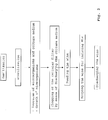
- the process for inducing the MLF in the wine includes the following steps:
- the apparatus 1 Prior to the wine feeding into the vessel 2, the apparatus 1 undergoes to a sterilization procedure, followed by a step of microbial growth to a stationary phase; at that point, the cells are immobilized onto the anchorage support 3.
- the apparatus 1 works, according to the present invention, as a bio-reactor. Given a certain amount of microbial cells, these can be grown into the apparatus; the microbial growth can be induced and monitored through specific regulation and control systems (i.e. pH, pO 2, pCO 2, pN 2, air and temperature sensors) managed by the control unit 6.
- the apparatus is ready to induce the MLF.
- the apparatus undergoes to a final washing step.
- All the steps can be carried out with continuous controls of the growth parameters (i.e. pH, pCO 2 ), of MLF induction (pH) and washing control (pH).
- the growth parameters i.e. pH, pCO 2
- pH, pCO 2 MLF induction
- washing control pH
- the apparatus 1 is also configured to be sterilized and sanitized in situ; the sanitization and the further washing can be monitored in continuous through the pH measurement of the sanitization and washing solutions.
- the present invention exploits the biocatalytic properties of high concentrations of Oenococcus oeni or other suitable microorganisms which are anchored on the support 3 into the vessel 2.
- the expert in the art will be able to determine also thanks to the present sensors, the suitable combination of cellular density and wine flow which thus allowing the MLF in a short period of time without any detrimental effect to the wine quality.
- the apparatus may also be used to check the converting features of specific microorganisms by measuring the kinetic of the malic acid degradation, i.e. the time necessary for a complete conversion, the quantities of malic acid, lactic acid, citric acid and acetic acid present in the wine before and after the fermentation. To this end, the size of the vessel 2 will be reduced compared to the size of the vessel 2 for large volume treatment.
- the apparatus is sterilized according the known techniques; in a possible configuration the apparatus may be linked to vapour source for a period of 30 min. at a temperature of 125°C; the sanitization is carried out washing the entire apparatus with 0.5 N NaOH and subsequent washing with water; the process ca be monitored in continuous through the pH control.
- the apparatus is ready for the inoculums and the growth steps.
- the inoculums withdrawn from a reservoir containing the adequate amount of culture media, are introduced into the vessel 2 through the inlets means 8 and 4.
- the bacterial growth is induced by mean of the continuous flow of the preparation throughout the elements of the apparatus; bacterial growth is monitored through the control of various parameters including pH, pO 2 and CO 2 .
- the exhausted culture media is withdrawn through the outlet 9. In this way, the cells are immobilized onto the support 3, because of a superior size than the pores of the filter. The result is that the support is covered by a cellular multilayer and then ready for the MLF.
- This step is activated by loading the wine into the vessel 2, allowing it to be in contact with the cellular multilayer anchored on the support 3; occurrence of the MLF is monitored by pH, and the whole process is managed by the control unit 6.
- the apparatus is sanitized, washed and sterilized for another working cycle.
- the aim of this example is to show the potential of the present invention compared to one of the current technology, i.e. the addition of malolactic bacteria directly in the wine to be converted.
- MLF was not progressing after several months upon the completion of the alcoholic fermentation and no signals of progression were anticipated.
- Simon, FRANCE were dissolved in 200 ml of water and further diluted in 2.4 L of MRS culture media, made of (g/litre): peptone from casein 10.0; meat extract 8.0; yeast extract 4.0; D(+)-glucose 20.0; dipotassium hydrogen phosphate 2.0; Tween ® 80 1.0; di-ammonium hydrogen citrate 2.0; sodium acetate 5.0; magnesium sulfate 0.2; manganese sulfate 0.04.
- the bacterial preparation was then inoculated in the vessel 2 according the procedure described here above; the vessel 3 was prepared with a porous support. The cells were grown over night at high concentration (>10 9 -10 10 CFU/ml); then the exhausted media was withdrawn through the outlet means 9, resulting on formation of a bacterial multilayer onto the support 3.
- a 50 L tank containing the same Barolo wine was heated up to 25°C; 20% of the volume was withdrawn with the purpose to dilute the alcohol content, and the total volume was reconstituted by adding water and the converted wine. Malic acid and pH measurements were taken daily; when the degradation of malic acid reached 80% of the initial value, the wine was then added onto a 500 L tank. Again, upon obtainment of 80% degradation, the wine was finally added in a tank containing 4000 L of the unconverted Barolo wine.
Landscapes
- Chemical & Material Sciences (AREA)
- Life Sciences & Earth Sciences (AREA)
- Engineering & Computer Science (AREA)
- Organic Chemistry (AREA)
- Health & Medical Sciences (AREA)
- Microbiology (AREA)
- Molecular Biology (AREA)
- Biochemistry (AREA)
- Bioinformatics & Cheminformatics (AREA)
- General Engineering & Computer Science (AREA)
- General Health & Medical Sciences (AREA)
- Genetics & Genomics (AREA)
- Biotechnology (AREA)
- Wood Science & Technology (AREA)
- Zoology (AREA)
- Apparatus Associated With Microorganisms And Enzymes (AREA)
Applications Claiming Priority (1)
| Application Number | Priority Date | Filing Date | Title |
|---|---|---|---|
| ITTO20060350 ITTO20060350A1 (it) | 2006-05-15 | 2006-05-15 | Dispositivo per la fermentazione malolattica e relativo procedimento |
Publications (1)
| Publication Number | Publication Date |
|---|---|
| EP1857536A1 true EP1857536A1 (fr) | 2007-11-21 |
Family
ID=38473955
Family Applications (1)
| Application Number | Title | Priority Date | Filing Date |
|---|---|---|---|
| EP06125494A Withdrawn EP1857536A1 (fr) | 2006-05-15 | 2006-12-06 | Appareil de fermentation malolactique et procédé correspondant |
Country Status (2)
| Country | Link |
|---|---|
| EP (1) | EP1857536A1 (fr) |
| IT (1) | ITTO20060350A1 (fr) |
Cited By (1)
| Publication number | Priority date | Publication date | Assignee | Title |
|---|---|---|---|---|
| USD604545S1 (en) | 2008-10-31 | 2009-11-24 | Regent Medical Limited | Soap dispenser |
Citations (3)
| Publication number | Priority date | Publication date | Assignee | Title |
|---|---|---|---|---|
| US4380552A (en) * | 1980-10-27 | 1983-04-19 | Novo Industri A/S | Method of deacidifying wine and composition therefor |
| EP0327380A2 (fr) * | 1988-02-05 | 1989-08-09 | Unisearch Limited | Fermentation malolactique de vin |
| WO2004111179A2 (fr) * | 2003-06-12 | 2004-12-23 | Lallemand Sas | SOUCHES MALOLACTIQUES TOLERANTES A L’ALCOOL POUR LA MATURATION DES VINS DE pH MOYEN OU ELEVE |
-
2006
- 2006-05-15 IT ITTO20060350 patent/ITTO20060350A1/it unknown
- 2006-12-06 EP EP06125494A patent/EP1857536A1/fr not_active Withdrawn
Patent Citations (3)
| Publication number | Priority date | Publication date | Assignee | Title |
|---|---|---|---|---|
| US4380552A (en) * | 1980-10-27 | 1983-04-19 | Novo Industri A/S | Method of deacidifying wine and composition therefor |
| EP0327380A2 (fr) * | 1988-02-05 | 1989-08-09 | Unisearch Limited | Fermentation malolactique de vin |
| WO2004111179A2 (fr) * | 2003-06-12 | 2004-12-23 | Lallemand Sas | SOUCHES MALOLACTIQUES TOLERANTES A L’ALCOOL POUR LA MATURATION DES VINS DE pH MOYEN OU ELEVE |
Non-Patent Citations (2)
| Title |
|---|
| HERNANDEZ ET AL: "Phenolic compounds in red wine subjected to industrial malolactic fermentation and ageing on lees", ANALYTICA CHIMICA ACTA, ELSEVIER, AMSTERDAM, NL, vol. 563, no. 1-2, 23 March 2006 (2006-03-23), pages 116 - 125, XP005350100, ISSN: 0003-2670 * |
| LOVITT ET AL: "The performance of a membrane bioreactor for the malolactic fermentation of media containing ethanol", DESALINATION, ELSEVIER, AMSTERDAM, NL, vol. 199, no. 1-3, 20 November 2006 (2006-11-20), pages 435 - 437, XP005620832, ISSN: 0011-9164 * |
Cited By (1)
| Publication number | Priority date | Publication date | Assignee | Title |
|---|---|---|---|---|
| USD604545S1 (en) | 2008-10-31 | 2009-11-24 | Regent Medical Limited | Soap dispenser |
Also Published As
| Publication number | Publication date |
|---|---|
| ITTO20060350A1 (it) | 2007-11-16 |
Similar Documents
| Publication | Publication Date | Title |
|---|---|---|
| CA2451330C (fr) | Procedes de fermentation par lot/en continu combines | |
| Brányik et al. | Continuous beer fermentation using immobilized yeast cell bioreactor systems | |
| Montanari et al. | Production of alcohol-free beer | |
| AU629849B2 (en) | Method using immobilized yeast to produce ethanol and alcoholic beverages | |
| AU2010270295B2 (en) | A method for production of an alcoholic beverage with reduced content of alcohol | |
| CN101932691B (zh) | 生产具有低酒精含量葡萄酒的方法 | |
| US4380552A (en) | Method of deacidifying wine and composition therefor | |
| Bekatorou et al. | Cell immobilization technologies for applications in alcoholic beverages | |
| US5104665A (en) | Malolactic fermentation of wine | |
| EP1046706A1 (fr) | Procédé et dispositif de conversion biocatalytique en continu de solutions aqueuses, pourvu d'une ou plusieurs étapes de dégazage | |
| US7563469B1 (en) | Method of aerating yeast prior to pitching | |
| EP1857536A1 (fr) | Appareil de fermentation malolactique et procédé correspondant | |
| Nedović et al. | Beer production using immobilised cells | |
| Divies et al. | Wine production by immobilised cell systems | |
| CN100560708C (zh) | 连续和分批组合性发酵工艺 | |
| US20030106437A1 (en) | Method and apparatus for the continuous biocatalytic conversion of aqueous solutions, having one or more degassing stages | |
| Tataridis et al. | Production of sparkling wine with immobilized yeast fermentation | |
| CN107904133A (zh) | 泵回流法生产玫瑰醋的方法 | |
| US3396031A (en) | Method of fermentation of wort | |
| GB2584286A (en) | A process for fed-batch yeast propagation | |
| JP2012532590A (ja) | アルコール飲料の製造におけるアルコール発酵停止の減少 | |
| Masschelein et al. | State of the Art Developments in Immobilised Yeast Technology for Brewing | |
| Baiano et al. | The role of starter cultures and spontaneous fermentation in traditional and innovative beer production | |
| Sjöström | Monitoring of metabolites and by-products in a down-scaled industrial lager beer fermentation | |
| JPH0638728A (ja) | バイオリアクタによる醸造酒の連続発酵方法 |
Legal Events
| Date | Code | Title | Description |
|---|---|---|---|
| PUAI | Public reference made under article 153(3) epc to a published international application that has entered the european phase |
Free format text: ORIGINAL CODE: 0009012 |
|
| AK | Designated contracting states |
Kind code of ref document: A1 Designated state(s): AT BE BG CH CY CZ DE DK EE ES FI FR GB GR HU IE IS IT LI LT LU LV MC NL PL PT RO SE SI SK TR |
|
| AX | Request for extension of the european patent |
Extension state: AL BA HR MK YU |
|
| 17P | Request for examination filed |
Effective date: 20080516 |
|
| AKX | Designation fees paid |
Designated state(s): DE ES FR IT |
|
| 17Q | First examination report despatched |
Effective date: 20080717 |
|
| STAA | Information on the status of an ep patent application or granted ep patent |
Free format text: STATUS: THE APPLICATION IS DEEMED TO BE WITHDRAWN |
|
| 18D | Application deemed to be withdrawn |
Effective date: 20100701 |