EP1859812B1 - Polykationisch aufladbares polymer und seine verwendung als träger von nukleinsäure - Google Patents
Polykationisch aufladbares polymer und seine verwendung als träger von nukleinsäure Download PDFInfo
- Publication number
- EP1859812B1 EP1859812B1 EP06713718.2A EP06713718A EP1859812B1 EP 1859812 B1 EP1859812 B1 EP 1859812B1 EP 06713718 A EP06713718 A EP 06713718A EP 1859812 B1 EP1859812 B1 EP 1859812B1
- Authority
- EP
- European Patent Office
- Prior art keywords
- group
- denotes
- integer
- independently denote
- nucleic acid
- Prior art date
- Legal status (The legal status is an assumption and is not a legal conclusion. Google has not performed a legal analysis and makes no representation as to the accuracy of the status listed.)
- Expired - Lifetime
Links
Images




Classifications
-
- A—HUMAN NECESSITIES
- A61—MEDICAL OR VETERINARY SCIENCE; HYGIENE
- A61K—PREPARATIONS FOR MEDICAL, DENTAL OR TOILETRY PURPOSES
- A61K48/00—Medicinal preparations containing genetic material which is inserted into cells of the living body to treat genetic diseases; Gene therapy
- A61K48/0008—Medicinal preparations containing genetic material which is inserted into cells of the living body to treat genetic diseases; Gene therapy characterised by an aspect of the 'non-active' part of the composition delivered, e.g. wherein such 'non-active' part is not delivered simultaneously with the 'active' part of the composition
- A61K48/0025—Medicinal preparations containing genetic material which is inserted into cells of the living body to treat genetic diseases; Gene therapy characterised by an aspect of the 'non-active' part of the composition delivered, e.g. wherein such 'non-active' part is not delivered simultaneously with the 'active' part of the composition wherein the non-active part clearly interacts with the delivered nucleic acid
- A61K48/0041—Medicinal preparations containing genetic material which is inserted into cells of the living body to treat genetic diseases; Gene therapy characterised by an aspect of the 'non-active' part of the composition delivered, e.g. wherein such 'non-active' part is not delivered simultaneously with the 'active' part of the composition wherein the non-active part clearly interacts with the delivered nucleic acid the non-active part being polymeric
-
- A—HUMAN NECESSITIES
- A61—MEDICAL OR VETERINARY SCIENCE; HYGIENE
- A61K—PREPARATIONS FOR MEDICAL, DENTAL OR TOILETRY PURPOSES
- A61K47/00—Medicinal preparations characterised by the non-active ingredients used, e.g. carriers or inert additives; Targeting or modifying agents chemically bound to the active ingredient
- A61K47/50—Medicinal preparations characterised by the non-active ingredients used, e.g. carriers or inert additives; Targeting or modifying agents chemically bound to the active ingredient the non-active ingredient being chemically bound to the active ingredient, e.g. polymer-drug conjugates
- A61K47/51—Medicinal preparations characterised by the non-active ingredients used, e.g. carriers or inert additives; Targeting or modifying agents chemically bound to the active ingredient the non-active ingredient being chemically bound to the active ingredient, e.g. polymer-drug conjugates the non-active ingredient being a modifying agent
- A61K47/56—Medicinal preparations characterised by the non-active ingredients used, e.g. carriers or inert additives; Targeting or modifying agents chemically bound to the active ingredient the non-active ingredient being chemically bound to the active ingredient, e.g. polymer-drug conjugates the non-active ingredient being a modifying agent the modifying agent being an organic macromolecular compound, e.g. an oligomeric, polymeric or dendrimeric molecule
- A61K47/59—Medicinal preparations characterised by the non-active ingredients used, e.g. carriers or inert additives; Targeting or modifying agents chemically bound to the active ingredient the non-active ingredient being chemically bound to the active ingredient, e.g. polymer-drug conjugates the non-active ingredient being a modifying agent the modifying agent being an organic macromolecular compound, e.g. an oligomeric, polymeric or dendrimeric molecule obtained otherwise than by reactions only involving carbon-to-carbon unsaturated bonds, e.g. polyureas or polyurethanes
- A61K47/60—Medicinal preparations characterised by the non-active ingredients used, e.g. carriers or inert additives; Targeting or modifying agents chemically bound to the active ingredient the non-active ingredient being chemically bound to the active ingredient, e.g. polymer-drug conjugates the non-active ingredient being a modifying agent the modifying agent being an organic macromolecular compound, e.g. an oligomeric, polymeric or dendrimeric molecule obtained otherwise than by reactions only involving carbon-to-carbon unsaturated bonds, e.g. polyureas or polyurethanes the organic macromolecular compound being a polyoxyalkylene oligomer, polymer or dendrimer, e.g. PEG, PPG, PEO or polyglycerol
-
- A—HUMAN NECESSITIES
- A61—MEDICAL OR VETERINARY SCIENCE; HYGIENE
- A61K—PREPARATIONS FOR MEDICAL, DENTAL OR TOILETRY PURPOSES
- A61K47/00—Medicinal preparations characterised by the non-active ingredients used, e.g. carriers or inert additives; Targeting or modifying agents chemically bound to the active ingredient
- A61K47/50—Medicinal preparations characterised by the non-active ingredients used, e.g. carriers or inert additives; Targeting or modifying agents chemically bound to the active ingredient the non-active ingredient being chemically bound to the active ingredient, e.g. polymer-drug conjugates
- A61K47/51—Medicinal preparations characterised by the non-active ingredients used, e.g. carriers or inert additives; Targeting or modifying agents chemically bound to the active ingredient the non-active ingredient being chemically bound to the active ingredient, e.g. polymer-drug conjugates the non-active ingredient being a modifying agent
- A61K47/62—Medicinal preparations characterised by the non-active ingredients used, e.g. carriers or inert additives; Targeting or modifying agents chemically bound to the active ingredient the non-active ingredient being chemically bound to the active ingredient, e.g. polymer-drug conjugates the non-active ingredient being a modifying agent the modifying agent being a protein, peptide or polyamino acid
- A61K47/64—Drug-peptide, drug-protein or drug-polyamino acid conjugates, i.e. the modifying agent being a peptide, protein or polyamino acid which is covalently bonded or complexed to a therapeutically active agent
- A61K47/645—Polycationic or polyanionic oligopeptides, polypeptides or polyamino acids, e.g. polylysine, polyarginine, polyglutamic acid or peptide TAT
- A61K47/6455—Polycationic oligopeptides, polypeptides or polyamino acids, e.g. for complexing nucleic acids
-
- A—HUMAN NECESSITIES
- A61—MEDICAL OR VETERINARY SCIENCE; HYGIENE
- A61P—SPECIFIC THERAPEUTIC ACTIVITY OF CHEMICAL COMPOUNDS OR MEDICINAL PREPARATIONS
- A61P43/00—Drugs for specific purposes, not provided for in groups A61P1/00-A61P41/00
-
- C—CHEMISTRY; METALLURGY
- C08—ORGANIC MACROMOLECULAR COMPOUNDS; THEIR PREPARATION OR CHEMICAL WORKING-UP; COMPOSITIONS BASED THEREON
- C08G—MACROMOLECULAR COMPOUNDS OBTAINED OTHERWISE THAN BY REACTIONS ONLY INVOLVING UNSATURATED CARBON-TO-CARBON BONDS
- C08G18/00—Polymeric products of isocyanates or isothiocyanates
- C08G18/06—Polymeric products of isocyanates or isothiocyanates with compounds having active hydrogen
- C08G18/08—Processes
- C08G18/0804—Manufacture of polymers containing ionic or ionogenic groups
- C08G18/0809—Manufacture of polymers containing ionic or ionogenic groups containing cationic or cationogenic groups
- C08G18/0814—Manufacture of polymers containing ionic or ionogenic groups containing cationic or cationogenic groups containing ammonium groups or groups forming them
-
- C—CHEMISTRY; METALLURGY
- C08—ORGANIC MACROMOLECULAR COMPOUNDS; THEIR PREPARATION OR CHEMICAL WORKING-UP; COMPOSITIONS BASED THEREON
- C08G—MACROMOLECULAR COMPOUNDS OBTAINED OTHERWISE THAN BY REACTIONS ONLY INVOLVING UNSATURATED CARBON-TO-CARBON BONDS
- C08G63/00—Macromolecular compounds obtained by reactions forming a carboxylic ester link in the main chain of the macromolecule
- C08G63/68—Polyesters containing atoms other than carbon, hydrogen and oxygen
- C08G63/685—Polyesters containing atoms other than carbon, hydrogen and oxygen containing nitrogen
- C08G63/6854—Polyesters containing atoms other than carbon, hydrogen and oxygen containing nitrogen derived from polycarboxylic acids and polyhydroxy compounds
-
- C—CHEMISTRY; METALLURGY
- C08—ORGANIC MACROMOLECULAR COMPOUNDS; THEIR PREPARATION OR CHEMICAL WORKING-UP; COMPOSITIONS BASED THEREON
- C08G—MACROMOLECULAR COMPOUNDS OBTAINED OTHERWISE THAN BY REACTIONS ONLY INVOLVING UNSATURATED CARBON-TO-CARBON BONDS
- C08G69/00—Macromolecular compounds obtained by reactions forming a carboxylic amide link in the main chain of the macromolecule
- C08G69/02—Polyamides derived from amino-carboxylic acids or from polyamines and polycarboxylic acids
- C08G69/08—Polyamides derived from amino-carboxylic acids or from polyamines and polycarboxylic acids derived from amino-carboxylic acids
- C08G69/10—Alpha-amino-carboxylic acids
-
- C—CHEMISTRY; METALLURGY
- C08—ORGANIC MACROMOLECULAR COMPOUNDS; THEIR PREPARATION OR CHEMICAL WORKING-UP; COMPOSITIONS BASED THEREON
- C08G—MACROMOLECULAR COMPOUNDS OBTAINED OTHERWISE THAN BY REACTIONS ONLY INVOLVING UNSATURATED CARBON-TO-CARBON BONDS
- C08G73/00—Macromolecular compounds obtained by reactions forming a linkage containing nitrogen with or without oxygen or carbon in the main chain of the macromolecule, not provided for in groups C08G12/00 - C08G71/00
- C08G73/02—Polyamines
- C08G73/028—Polyamidoamines
-
- C—CHEMISTRY; METALLURGY
- C08—ORGANIC MACROMOLECULAR COMPOUNDS; THEIR PREPARATION OR CHEMICAL WORKING-UP; COMPOSITIONS BASED THEREON
- C08G—MACROMOLECULAR COMPOUNDS OBTAINED OTHERWISE THAN BY REACTIONS ONLY INVOLVING UNSATURATED CARBON-TO-CARBON BONDS
- C08G73/00—Macromolecular compounds obtained by reactions forming a linkage containing nitrogen with or without oxygen or carbon in the main chain of the macromolecule, not provided for in groups C08G12/00 - C08G71/00
- C08G73/02—Polyamines
- C08G73/028—Polyamidoamines
- C08G73/0293—Quaternisation of polyamidoamines
-
- C—CHEMISTRY; METALLURGY
- C12—BIOCHEMISTRY; BEER; SPIRITS; WINE; VINEGAR; MICROBIOLOGY; ENZYMOLOGY; MUTATION OR GENETIC ENGINEERING
- C12N—MICROORGANISMS OR ENZYMES; COMPOSITIONS THEREOF; PROPAGATING, PRESERVING, OR MAINTAINING MICROORGANISMS; MUTATION OR GENETIC ENGINEERING; CULTURE MEDIA
- C12N15/00—Mutation or genetic engineering; DNA or RNA concerning genetic engineering, vectors, e.g. plasmids, or their isolation, preparation or purification; Use of hosts therefor
- C12N15/09—Recombinant DNA-technology
- C12N15/87—Introduction of foreign genetic material using processes not otherwise provided for, e.g. co-transformation
- C12N15/88—Introduction of foreign genetic material using processes not otherwise provided for, e.g. co-transformation using microencapsulation, e.g. using amphiphile liposome vesicle
Definitions
- This invention belongs to a technical field on the delivery of nucleic acid to target cells or tissues, and relates, more specifically, to the use of polycationically charged polymer as a carrier for the delivery of nucleic acid, and also to a novel polycationically charged polymer.
- Synthetic vector is considered to have no grave toxicity as compared with virus vector although synthetic vector is not free of some risk of toxicity or the like as brought into question in drug delivery system which has been studied in conventional medical treatment. Furthermore, in synthetic vector, there is no limitation on the size of nucleic acid to be carried, and, moreover, precise molecular designing is possible. For these reasons, assiduous research and development are being made with regard to synthetic vector.
- Typical examples of synthetic vector include cationic lipid (e.g., lipofectin) and cationic polymer each of which forms an ion complex with negatively charged DNA.
- cationic lipid e.g., lipofectin
- cationic polymer each of which forms an ion complex with negatively charged DNA.
- it has been tried to lower the toxicity against cells by changing the molecular structure of lipid, and also to enhance the efficiency of expression of gene in the introduced cells, and, thus, results have been produced to a certain extent (see, e.g., non-patent document 1. Documents are identified below. The same is applied to other documents.). In vivo, however, desired results have not been obtained.
- block copolymer which is made of cationic polymer (e.g., polylysine) and, connected thereto, water-soluble and low-toxicity polyethylene glycol (PEG) forms polymer micelle which is an autonomously associated polyion complex (PIC) with DNA encapsulated therein.
- PEG polyethylene glycol
- the inventors have also provided a block copolymer which is composed of a segment chain having a specific amine group at side chain as a cationically charged group and PEG chain, as a block copolymer which may be used as a further improved carrier of gene (see patent document 1: Japanese Patent Application KOKAI Publication No. 2004-352972 ).
- Patent document 1 Japanese Patent Application KOKAI Publication No. 2004-352972
- Non-patent document 1 C. F. Benett et al., J. Drug Targetting, 5, 149 (1997 )
- Non-patent document 2 O. Boussif et al., Proc. Natl. Acad. Sci., USA, 92, 7297 (1995 )
- Non-patent document 3 S. C. Richardson et al., Int. J. Pharm. 178, (1999) 231
- a block copolymer as mentioned in patent document 1 which is composed of a segment chain having a specific amine group at side chain as a cationically charged group and of PEG chain is quite low toxic against animal cells (in particular mammalian cells), and is capable of keeping gene which has been introduced into cells in an expressible state for a long period of time, and, that, by these merits, said block copolymer is usable as a carrier or vector by which to maintain the expression of introduced gene for a long period of time without giving adverse effects on cells having, for instance, differentiation potency.
- Such a polymer which has a segment chain having a specific amine group at side chain is, even when it has no PEG chain and does not form polymer micelle as PIC with DNA, quite low toxic against animal cells (in particular mammalian cells), and is capable of keeping gene which has been introduced into cells in an expressible state for a long period of time, in contrast to polycationically charged polymer such as poly(L-lysine), DEAE-dextran, polyethylenimine and chitosan.
- this invention provides a composition for the delivery of nucleic acid to target cells or tissues, which composition comprises polycationically charged polymer as a carrier of nucleic acid.
- This invention further provides a polycationically charged polymer for use in a method for the delivery of nucleic acid to target cells or tissues.
- This invention also provides an in vitro method for the delivery of nucleic acid to target cells or tissues, which method comprises bringing a conjugate of nucleic acid and a polycationically charged polymer into contact with said target cells or tissues.
- Polycationically charged polymer which is used in the above is a polymer of formula (III) below or its salt.
- R 10 denotes hydroxyl group, oxybenzyl group or a group of -NH-R 11 wherein R 11 denotes either unsubstituted straight chain or branched C 1-20 alkyl group or straight chain or branched C 1-20 alkyl group substituted with substituent selected from the group consisting of acetalized formyl group, cyano group, formyl group, carboxyl group, amino group, C 1-6 alkoxycarbonyl group, C 2-7 acylamide group, tri (same or different)-C 1-6 alkylsiloxy group, siloxy group or silylamino group;
- R 2a and R 2b independently denote methylene group or ethylene group;
- R 3 denotes hydrogen atom, protecting group, hydrophobic group or polymerizable group;
- R 5a and R 5b independently denote hydroxyl group, oxy
- polycationically charged polymer in an in vitro method for the delivery of nucleic acid to target cells or tissues and polycationically charged polymer for use in a method for the delivery of nucleic acid to target cells or tissues is a block copolymer of formula (I) or (II) below or its salt.
- R 1a and R 1b independently denote hydrogen atom or unsubstituted or substituted straight chain or branched C 1-12 alkyl group;
- L 1 and L 2 each denote a linker;
- R 2a , R 2b , R 2c and R 2d independently denote methylene group or ethylene group;
- R 3 denotes hydrogen atom, protecting group, hydrophobic group or polymerizable group;
- R 4 denotes hydroxyl group, oxybenzyl group or a group of -NH-(CH 2 ) a -X or a residue of initiator wherein a denotes an integer of 1 to 5, and wherein X independently denote either a residue of amine compound which contains at least one species of primary, secondary, tertiary or quaternary ammonium salt or a residue of compound other than amine;
- R 5a , R 5b , R 5c and R 5d independently denote hydroxyl group, oxybenzyl group or a group
- polymer of the above-mentioned formula (III) has never been mentioned in any document.
- polymer of the above-mentioned formula (III) or its salt is also provided as an embodiment of this invention.
- This invention also provides a conjugate of polymer of the above-mentioned formula (III) and nucleic acid.
- Nucleic acid as referred to in this invention means, although not restrictive, any nucleic acid or nucleic acid-related substance that may have some actions or other on animal cells when delivered to them.
- Classified according to chemical structure, DNA, RNA and nucleic acid analogue of so-called oligo or polymer e.g., peptide nucleic acid and nucleic acid analogue wherein phosphoric acid part of nucleic acid has been modified into phosphorothioate, methylphosphonate, phosphate trimester, phosphoroamidate, etc.
- the nucleic acid of this invention includes any molecule that carries genetic information or belongs to the category of antisense.
- the phrase "having a main chain based on poly(amino acid)” means preferably a main chain of poly(amino acid) which is formed through peptide bond from natural or synthetic amino acids.
- a side chain is, with the main chain being based on poly(amino acid), connected to main chain via carboxyl group at ⁇ - or ⁇ -position, amino group at ⁇ -position, etc.
- connection as mentioned above may be made via a linker having an alkylene chain which has 4 or less carbon atoms,
- Such a side chain is usually introduced by polymer reaction although it is not restrictive.
- the reaction there is employed halogen-substitution reaction, condensation reaction with use of carboxyl group or amino group, ester exchange reaction or amionlysis.
- the molecular weight of such a polymer is usually 1,000 to 200,000 although it is not restrictive so long as the purpose of this invention is achieved.
- Polycationically charged polymer which is used in this invention is a polymer of formula (III) or its salt, or a block copolymer of formula (I) or (II) or its salt.
- Salt as referred to in this invention includes, although not restrictive, salts with counter ion such as Cl - , Br-, I - , (1/2SO 4 ) - , NO 3 - , (1/2CO 3 ) - , (1/3PO 4 ) - , CH 3 COO - , CF 3 COO - , CH 3 SO 3 - and CF 3 SO 3 - .
- R 11 , R 1a and R 1b in formula (III), formula (I) or (II) include methyl, ethyl, n -propyl, iso- propyl, n -butyl, sec -butyl, tert -butyl, n -pentyl, n -hexyl, decyl and undecyl.
- substituents include acetalized formyl group, cyano group, formyl group, carboxyl group, amino group, C 1-6 alkoxycarbonyl group, C 2-7 acylamide group, tri (same or different)-C 1-6 alkylsiloxy group, siloxy group or silylamino group.
- acetalized means the formation of acetal portion by a reaction between carbonyl of formyl and two molecules of alkanol having one to six carbon atoms or alkylenediol which may be branched and has two to six carbon atoms. This is also a means to protect said carbonyl group.
- the substituents When the substituents is an acetalized formyl group for instance, it can be hydrolyzed under acidic mild condition, and converted to formyl group (-CHO or aldehyde group) which is another substituents.
- Formyl group, carboxyl group or amino group as mentioned above can be used for giving to carrier, via themselves, antibody or its fragment (F(ab') 2 , F(ab), etc.) having specific bondability of the antibody, and other functionality or targeting property.
- a polymer of formula (III) wherein, among the total of R 5a and R 5b , -NH-(CH 2 ) a -X groups wherein X denotes (NH(CH 2 ) 2 ) e -NH 2 wherein e denotes an integer of 1 to 5 account for 50 % or more. More desirable is a polymer wherein, among the total of R 5a and R 5b , -NH-(CH 2 ) a -X groups wherein X denotes (NH(CH 2 ) 2 ) e -NH 2 wherein e denotes an integer of 1 to 5 account for 85 % or more.
- R 5a and R 5b are -NH-(CH 2 ) a -X groups wherein a is 2 and e is 1.
- a polymer of formula (III) wherein R 2a and R 2b denote methylene group is preferable.
- Desirable in particular is a polymer of formula (III) wherein each group is as mentioned above and wherein X is selected from the group consisting of the following groups: - (CH 2 ) f -NH 2 , -(NR 7a ) (CH 2 ) d1 ) e1 - NHR 8a , -N(CH 3 ) 2 , -N(CH 2 CH 3 ) 2 , -(NR 7b (CH 2 ) d2 ) e2 -(NR 7c (CH 2 ) d3 ) e3 -NHR 8b , -(CH 2 ) g CH 3 , or wherein X 2 denote hydrogen atom, C 1-6 alkyl group or amino C 1-6 alkyl group; R 7a , R 7b and R 7c independently denote hydrogen atom or methyl group; d1, d2 and d3 independently denote an integer of 1 to 5; e1, e2 and e3 independently denote an integer
- polystyrene resin More especially desirable is a polymer of the same formula wherein z denotes 0 (zero) and/or R 3 is selected from the group consisting of acetyl group, acryloyl group and methacryloyl group.
- R 3 is selected from the group consisting of acetyl group, acryloyl group and methacryloyl group.
- a block copolymer preferably used is a copolymer of formula (I) or (II) wherein, among the total of R 5a and R 5b and the total of R 5c and R 5d , -NH-(CH 2 ) a -X groups wherein X denotes (NH(CH 2 ) 2 ) e -NH 2 wherein e denotes an integer of 1 to 5 account for 50 % or more, or further desirably 85 % or more.
- R 5a , R 5b , R 5c and R 5d are -NH-(CH 2 ) a -X groups wherein a is 2 and e is an integer of 1 to 3, in particular e is 1.
- a block copolymer of formula (I) or (II) wherein L 1 denotes -(CH 2 ) b -NH-(b denotes an integer of 1 to 5) and L 2 denotes -(CH 2 ) c -CO- (c denotes an integer of 1 to 5).
- a block copolymer wherein R 2a , R 2b ,R 2c and R 2d denote methylene group, and wherein X is selected from the groups which are concretely mentioned above with respect to formula (III).
- More desirably usable in this invention is a block copolymer of formula (I) or (II) wherein each group is as defined above, and R 3 denotes acetyl group, acryloyl group or methacryloyl group, and, under circumstances, R 4 denotes -NH-R 9 wherein R 9 denotes unsubstituted or substituted straight chain or branched C 1-20 alkyl group.
- R 2a , R 2b ,R 2c and R 2d independently denote methylene group or ethylene group as mentioned above.
- the recurring unit corresponds to poly(aspartic acid derivative).
- the recurring unit corresponds to poly(glutamic acid derivative).
- both of R 2c and R 2d denote methylene group
- the recurring unit corresponds to poly(aspartic acid derivative)
- both denote ethylene group the recurring unit corresponds to poly(glutamic acid derivative).
- R 2a and R 2b denote methylene group and ethylene group
- R 2c and R 2d denote methylene group and ethylene group
- recurring unit of aspartic acid derivative and glutamic acid derivative can exist either in the form of block or at random.
- the mixing ratio of nucleic acid and polycationically charged polymer can be expressed by a proportion (N/P ratio) of cation in polymer to phosphoric acid group in nucleic acid molecule.
- N/P ratio is a quantity defined by the following equation. Thus, N/P ratio hereinafter means this quantity unless otherwise defined.
- N / P ratio Total number of cation in polymer in solution / Total number of phosphoric acid group in nucleic acid in solution
- N/P ratio is not limited so long as polyion complex is formed.
- N/P ratio differs depending on the nature of non-charged segment or charged segment in polymer.
- Teen skilled in the art could choose appropriate N/P ratio.
- nucleic acid and polymer need to be blended in an aqueous medium, preferably in a medium based on deionized water.
- aqueous medium preferably in a medium based on deionized water.
- manipulation such as dialysis, agitation, dilution, condensation, ultrasonic treatment, temperature control, pH control, ionic intensity control and the addition of organic solvent.
- the composition and the targeted tissues or tissues have only to be placed in a state where they can be brought into contact with each other.
- Such a contact may be achieved by the cultivation of cells in the presence of the composition, or by the addition of the composition into culture of cells.
- Contact of the composition with cells or tissues in vivo can be attained by the administration of the composition to an individual which needs the introduction of the nucleic acid (or an individual to be treated) by any administration method that is usually employed in the field of genetic therapy. Examples of such an individual include, although not restrictive, human being, mouse, rat, rabbit, dog, monkey, ox, horse, pig, birds, or the like.
- the direct introduction or implantation into the targeted tissue or in the vicinity of targeted cells or tissue intravenous injection, intra-arterial injection, intramuscular injection, peroral administration, transpulmonary administration, etc.
- intravenous injection intra-arterial injection
- intramuscular injection intramuscular injection
- transpulmonary administration transpulmonary administration
- diluent, vehicle or other physiologically active components which are usually employed in the field of medicinal formulation.
- Administration is capable of curing diseases of the above-mentioned individual such as genetic disease, cancer, refractory diseases like AIDS, infectious diseases, etc.
- BLA-NCA ⁇ -Benzyl-L-aspartate-N-carboxylic anhydride
- DMF N,N-dimethylformamide
- PBLA poly( ⁇ -benzyl-L-aspartate)
- the resultant mixture was made to react at 40°C for one day.
- the resultant reaction liquid was added dropwise to an aqueous solution of acetic acid.
- the resultant solution was put in a dialysis tube, and, thus, dialysis was conducted with use of 0.01 N hydrochloric acid as an outer liquid. After evaporation, freeze drying was conducted to give white powders of poly(N-(2-aminoethyl)-aminoethylaspartamide.
- DET poly(N-(2-aminoethyl)-aminoethylaspartamide.
- Production Example 2 Synthesis of polyethylene glycol-poly(N-(2-aminoethyl)-aminoethylaspartamide block copolymer
- Polyethylene glycol whose one terminal was methoxy and the other terminal was aminopropyl, and whose average molecular weight was 12,000 was dissolved in dichloromethane.
- a solution which had been prepared by dissolving BLA-NCA in a mixed solvent of DMF and dichloromethane was added to the resultant solution.
- the resultant solution was made to react at 40°C for two days.
- N terminal was acetylated with acetic anhydride, and, thus, polyethylene glycol-block-poly( ⁇ -benzyl-L-aspartate) (PEG-PBLA) was obtained. From analysis with NMR, the polymerization degree of PBLA portion was known to be 68.
- PEG-PBLA (12-68) a block copolymer wherein PEG has a molecular weight of 12,000, and wherein PBLA portion has a polymerization degree of 68
- PEG-PBLA (12-68) parenthetically mentioned figure 12 stands for molecular weight of 12,000, and 68 stands for polymerization degree.
- Production Example 3 Synthesis of polyethylene glycol-poly(N-(3-aminopropyl)-aminopropylaspartamide block copolymer
- Example 1 Introduction of gene into cultured cells (cell lines) with use of DET and PEG-DET
- N/P ratio is a quantity defined by the following equation. Thus, N/P ratio hereinafter means this quantity unless otherwise defined.
- N / P ratio Total number of cation in polymer in solution / Total number of phosphoric acid group in nucleic acid in solution
- Exgen 500 linear polyethylenimine, which may hereinafter be abbreviated as LPEI; manufactured by MBI Fermentas
- LPEI linear polyethylenimine
- Fugene 6 Fugene 6
- Lipofectamine invitrogen
- HuH-7 cells and 293T cells were each seeded in an amount of 2.5 ⁇ 10 4 cells/well in a 24-well dish, and were then incubated in 10 % serum-containing DMEM for 24 hours, and were thus provided for experiment. Then, medium was replaced with another 10 % serum-containing DMEM (250 ⁇ l/well). Subsequently, each complex as prepared was added dropwise into the medium, and, thus, transfection was conducted. Each complex was administered in an amount of 0.75 ⁇ g/well as pDNA. After 48 hours of incubation in this state, the expression of luciferase gene was quantified.
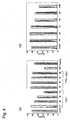
- DET/pDNA complex exhibited high expression of luciferase gene, in particular when N/P ratio was 10 or more, in both of the cells.
- Example 2 Introduction of gene into primary cultured cell lines with use of DET and PEG-DET
- POB primary osteoblasts
- luciferase gene For evaluation by luciferase gene, cells were each seeded in an amount of 2.5 x 10 4 cells/well in a 24-well dish as in Example 1, and were then incubated in 10 % serum-containing DMEM for 24 hours, and, then, transfection was conducted. The expression of luciferase gene was quantified after 48 hours and 120 hours (only for synovial fibroblasts).
- DET and PEG-DET were evaluated with respect to differentiation induction caused by the introduction of transcription factor gene into osteoblasts while the function of DET and PEG-DET, i.e., very low toxicity and good gene introduction ability, was made full use of.
- Runx 2 which is a transcription factor for the differentiation of osteoblasts was introduced into POB with PEG-DET, DET and Fugene 6, and, thus, the expression of osteocalcin which is a marker of the differentiation of osteoblasts was quantified on the 5 th and the 10 th days.
- Luciferase gene was introduced into POB with the three of PEG-DET, DET and Fugene 6. Resultant genetic expression was evaluated as a usual expression of luciferase gene, i.e., as an amount of expressed luciferase protein, and, simultaneously, the expression of intracellular expression of luciferase mRNA was quantified and evaluated with real-time PCR.
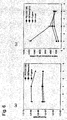
- emission quantification indicated that Fugene 6 exhibited very high expression from the first day, and that the expression slightly decreased on the 5 th day.
- PEG-DET and DET on the other hand, exhibited relatively low expression, but the expression was comparatively maintained up to the 5 th day.
- Fugene 6 exhibited very high expression on the first day, but the expression rapidly lowered on the 3 rd day.
- PEG-DET and DET rather exhibited an increase of expression from the 1 st to the 3 rd day, and, on the 5 th day, the expression slightly surpassed expression by Fugene 6.
- Fugene 6 when observed with regard to the expression of luciferase protein, Fugene 6 already exhibited very high expression on the first day. This protein was accumulated in cells, and, resultantly, emission quantification indicated relatively high expression for a long period of time.
- new mRNA transcription is considered to cease to occur at a very early stage in Fugene 6 whereas said process of transcription is considered to be kept for as long as several days or more in PEG-DET and DET.
- PEG-DET and DET when forming a complex with pDNA, are polymers which show a very high ability to introduce gene into cells. Under a condition that this high ability of gene introduction was shown, cytotoxicity was very low, and, furthermore, good gene introduction was exhibited even for primary cultured cell lines into which gene introduction is usually hard. Moreover, gene expression can be maintained for a long period of time, and, thus, it has been confirmed that the above-mentioned polymers function very effectively for gene introduction for the purpose of differentiation induction of cells.
- the present invention has thus turned out to be a practically very good system as a method for introducing gene into cells which has low toxicity and enables time-wise regulation of gene expression.
- the control of the state of expression of introduced gene is a very important factor since it enables efficient production of therapeutic effects and secures the safety of the therapy.
- the polymer of this invention is very useful as a clinically applicable gene delivery system which is necessary for the remedy of diseases with use of gene introduction.
- This invention is therefore applicable in the fields of medical treatment, pharmacy, supply of medicines for research and test, etc.
Landscapes
- Health & Medical Sciences (AREA)
- Chemical & Material Sciences (AREA)
- Life Sciences & Earth Sciences (AREA)
- Medicinal Chemistry (AREA)
- Engineering & Computer Science (AREA)
- Organic Chemistry (AREA)
- Bioinformatics & Cheminformatics (AREA)
- Chemical Kinetics & Catalysis (AREA)
- Genetics & Genomics (AREA)
- Polymers & Plastics (AREA)
- General Health & Medical Sciences (AREA)
- Veterinary Medicine (AREA)
- Public Health (AREA)
- Animal Behavior & Ethology (AREA)
- Pharmacology & Pharmacy (AREA)
- Biochemistry (AREA)
- Epidemiology (AREA)
- Biotechnology (AREA)
- Molecular Biology (AREA)
- General Engineering & Computer Science (AREA)
- Zoology (AREA)
- Wood Science & Technology (AREA)
- Proteomics, Peptides & Aminoacids (AREA)
- Biomedical Technology (AREA)
- Physics & Mathematics (AREA)
- Plant Pathology (AREA)
- Microbiology (AREA)
- Biophysics (AREA)
- Manufacturing & Machinery (AREA)
- Nuclear Medicine, Radiotherapy & Molecular Imaging (AREA)
- General Chemical & Material Sciences (AREA)
- Medicines That Contain Protein Lipid Enzymes And Other Medicines (AREA)
- Medicinal Preparation (AREA)
- Pharmaceuticals Containing Other Organic And Inorganic Compounds (AREA)
Claims (22)
- Zusammensetzung zur Abgabe von Nukleinsäure an Targetzellen oder -gewebe, welche ein polykationisch geladenes Polymer als einen Träger für Nukleinsäure und eine Nukleinsäure umfasst, wobei das polykationisch geladene Polymer ein Polymer der folgenden Formel (III) oder ein Salz davon ist:

- Zusammensetzung nach Anspruch 1 zur Abgabe von Nukleinsäure, wobei unter der Gesamtheit der Gruppen R5a und R5b, die Gruppen -NH-(CH2)a-X, worin X NH(CH2)2)e-NH2 bedeutet, worin e eine ganze Zahl von 1 bis 5 bedeutet, 50% oder mehr ausmachen.
- Zusammensetzung nach Anspruch 1 zur Abgabe von Nukleinsäure, wobei unter der Gesamtheit der Gruppen R5a und R5b, die Gruppen -NH-(CH2)a-X, worin X NH(CH2)2)e-NH2 bedeutet, worin e eine ganze Zahl von 1 bis 5 bedeutet, 85% oder mehr ausmachen.
- Zusammensetzung nach Anspruch 1 zur Abgabe von Nukleinsäure, wobei alle oder ein Teil der Gruppen R5a und R5b -NH-(CH2)a-X-Gruppen sind, worin a 2 oder 3 ist und e eine ganze Zahl von 1 bis 3.
- Zusammensetzung nach Anspruch 4 zur Abgabe von Nukleinsäure, wobei e 1 ist.
- Zusammensetzung nach den Ansprüchen 1 bis 5 zur Abgabe von Nukleinsäure, wobei R2a und R2b eine Methylengruppe bedeuten.
- Zusammensetzung nach Ansprüchen 1 bis 5 zur Abgabe von Nukleinsäure, wobei X ausgewählt ist aus der Gruppe, bestehend aus den folgenden Gruppen:


- Zusammensetzung nach Ansprüchen 1 bis 7 zur Abgabe von Nukleinsäure, wobei z 0 (Null) bedeutet.
- Zusammensetzung nach Ansprüchen 1 bis 8 zur Abgabe von Nukleinsäure, wobei R3 ausgewählt ist aus der Gruppe, bestehend aus einer Acetylgruppe, Acryloylgruppe und Methacryloylgruppe.
- In-vitro-Verfahren zur Abgabe von Nukleinsäure an Targetzellen oder -gewebe, wobei das Verfahren das Inkontaktbringen eines Konjugats aus Nukleinsäure und einem polykationisch geladenen Polymer mit den Targetzellen oder dem -gewebe umfasst, wobei die Targetzellen oder das -gewebe primär kultivierte Zelllinien sind, wobei das polykationisch geladene Polymer ausgewählt ist aus der Gruppe, bestehend aus einem Blockcopolymer der folgenden Formel (I) oder (II) oder deren Salz:


- Polykationisch geladenes Polymer, ausgewählt aus der Gruppe, bestehend aus einem Blockcopolymer der folgenden Formel (I) oder (II) oder deren Salz:


zur Verwendung in einem Verfahren zur Abgabe von Nukleinsäure an Targetzellen oder -gewebe, wobei das Verfahren das Inkontaktbringen von Nukleinsäure und dem polykationisch geladenen Polymer mit den Targetzellen oder dem -gewebe umfasst, wobei die Targetzellen oder das -gewebe Zellen sind, die ein Differenzierungspotential aufweisen. - Verfahren nach Anspruch 10, wobei das polykationisch geladene Polymer das Polymer der Formel (III) oder dessen Salz ist:

- Polykationisch geladenes Polymer nach Anspruch 11, wobei die Targetzellen oder -gewebe im Körper eines Individuums vorliegen, das Bedarf an der Zuführung von Nukleinsäure hat, und wobei das Konjugat von Nukleinsäure und polykationisch geladenem Polymer dem Individuum vor dem Kontakt verabreicht wird.
- Polymer der folgenden Formel (III) oder dessen Salz:

- Polymer oder dessen Salz nach Anspruch 14, wobei unter der Gesamtheit der Gruppen R5a und R5b, die Gruppen -NH-(CH2)a-X, worin X NH (CH2)2)e-NH2 bedeutet, worin e eine ganze Zahl von 1 bis 5 bedeutet, 50% oder mehr ausmachen.
- Polymer oder dessen Salz nach Anspruch 14, wobei unter der Gesamtheit der Gruppen R5a und R5b, die Gruppen -NH-(CH2)a-X, worin X NH(CH2)2)e-NH2 bedeutet, worin e eine ganze Zahl von 1 bis 5 bedeutet, 85% oder mehr ausmachen.
- Polymer oder dessen Salz nach einem der Ansprüche 14 bis 16, wobei alle oder ein Teil der Gruppen R5a und R5b -NH-(CH2)a-X-Gruppen sind, worin a 2 oder 3 ist und e eine ganze Zahl von 1 bis 3.
- Polymer oder dessen Salz nach Anspruch 17, wobei e 1 ist.
- Polymer oder dessen Salz nach einem der Ansprüche 14 bis 18, wobei R11 entweder eine unsubstituierte geradkettige oder verzweigte C1-20-Alkylgruppe oder geradkettige oder verzweigte C1-20-Alkylgruppe, die substituiert ist mit einem Substituenten, ausgewählt aus der Gruppe, bestehend aus einer acetalisierten Formylgruppe, Cyanogruppe, Formylgruppe, Carboxylgruppe, Aminogruppe, C1-6-Alkoxycarbonylgruppe, C2-7-Acylamidgruppe, Tri- (gleiche oder verschiedene)-C1-6-Alkylsiloxygruppe, Siloxygruppe oder Silylaminogruppe, bedeutet.
- Polymer oder dessen Salz nach einem der Ansprüche 14 bis 19, wobei X ausgewählt ist aus der Gruppe, bestehend aus den folgenden Gruppen:


- Polymer oder dessen Salz nach einem der Ansprüche 14 bis 20, wobei z 0 (Null) bedeutet.
- Polymer oder dessen Salz nach einem der Ansprüche 14 bis 21, wobei R3 ausgewählt ist aus der Gruppe, bestehend aus einer Acetylgruppe, Acryloylgruppe und Methacryloylgruppe.
Applications Claiming Priority (2)
| Application Number | Priority Date | Filing Date | Title |
|---|---|---|---|
| JP2005035233 | 2005-02-10 | ||
| PCT/JP2006/302577 WO2006085664A1 (ja) | 2005-02-10 | 2006-02-08 | ポリカチオン荷電性ポリマー及び核酸のキャリヤーとしての使用 |
Publications (3)
| Publication Number | Publication Date |
|---|---|
| EP1859812A1 EP1859812A1 (de) | 2007-11-28 |
| EP1859812A4 EP1859812A4 (de) | 2010-08-25 |
| EP1859812B1 true EP1859812B1 (de) | 2014-01-01 |
Family
ID=36793225
Family Applications (1)
| Application Number | Title | Priority Date | Filing Date |
|---|---|---|---|
| EP06713718.2A Expired - Lifetime EP1859812B1 (de) | 2005-02-10 | 2006-02-08 | Polykationisch aufladbares polymer und seine verwendung als träger von nukleinsäure |
Country Status (4)
| Country | Link |
|---|---|
| US (1) | US7829657B2 (de) |
| EP (1) | EP1859812B1 (de) |
| JP (1) | JP5061349B2 (de) |
| WO (1) | WO2006085664A1 (de) |
Cited By (1)
| Publication number | Priority date | Publication date | Assignee | Title |
|---|---|---|---|---|
| WO2018176065A1 (en) * | 2017-03-23 | 2018-09-27 | Oregon State University | Therapeutic compositions and methods for treatment of muscle wasting diseases |
Families Citing this family (37)
| Publication number | Priority date | Publication date | Assignee | Title |
|---|---|---|---|---|
| JP2008143844A (ja) * | 2006-12-11 | 2008-06-26 | Kitakyushu Foundation For The Advancement Of Industry Science & Technology | N1−ベンジルエタン−1,2−ジアミン誘導体およびその塩ならびにそれを用いた遺伝子キャリア |
| KR101564796B1 (ko) * | 2008-03-10 | 2015-10-30 | 고쿠리츠다이가쿠호우진 도쿄다이가쿠 | 비하전성 친수성 블록 및 측사슬의 일부에 소수성 기가 도입된 카티온성 폴리아미노산 블록을 포함하여 이루어지는 공중합체, 그 사용 |
| US20090232762A1 (en) * | 2008-03-11 | 2009-09-17 | May Pang Xiong | Compositions for delivery of therapeutic agents |
| WO2010021720A1 (en) | 2008-08-19 | 2010-02-25 | Nektar Therapeutics | Conjugates of small-interfering nucleic acids |
| KR20110097938A (ko) * | 2008-12-11 | 2011-08-31 | 싸이오서스 테라퓨틱스 엘티디. | 하전된 4차 아미노기를 포함하는 중합체를 사용한 핵산 벡터의 개질 |
| ES2477416T3 (es) | 2009-02-13 | 2014-07-16 | The University Of Tokyo | Poliamino�cidos cati�nicos y usos de los mismos |
| WO2010100781A1 (ja) * | 2009-03-06 | 2010-09-10 | 国立大学法人東京大学 | 核酸デリバリー用組成物 |
| US8287910B2 (en) * | 2009-04-30 | 2012-10-16 | Intezyne Technologies, Inc. | Polymeric micelles for polynucleotide encapsulation |
| US20100292432A1 (en) * | 2009-04-30 | 2010-11-18 | Intezyne Technologies, Incorporated | Polymers for polynucleotide encapsulation |
| JP5804453B2 (ja) | 2009-05-14 | 2015-11-04 | 国立大学法人 東京大学 | 結晶性ポリオール微粒子及びその調製方法 |
| WO2011002077A1 (ja) * | 2009-07-02 | 2011-01-06 | 国立大学法人 東京大学 | 高分子ミセル内包TNF-α遺伝子治療剤 |
| JP5463531B2 (ja) | 2009-07-22 | 2014-04-09 | 国立大学法人 東京大学 | Phd2発現抑制物質搭載ポリイオンコンプレックス |
| PL2474306T3 (pl) * | 2009-08-31 | 2017-06-30 | Nanocarrier Co., Ltd. | Kompozycja w postaci cząstek stałych i zawierająca ją kompozycja lecznicza |
| US20110142886A1 (en) * | 2009-12-01 | 2011-06-16 | Intezyne Technologies, Incorporated | Pegylated polyplexes for polynucleotide delivery |
| WO2011077787A1 (ja) * | 2009-12-25 | 2011-06-30 | 独立行政法人科学技術振興機構 | 穏和な環境下でペプチド主鎖が切断され得るポリペプチド誘導体の製造方法 |
| JP4655298B1 (ja) * | 2010-02-23 | 2011-03-23 | ナノキャリア株式会社 | 短鎖のカチオン性ポリアミノ酸およびその使用 |
| US20110229528A1 (en) * | 2010-03-12 | 2011-09-22 | Intezyne Technologies, Incorporated | Pegylated polyplexes for polynucleotide delivery |
| CN102971002B (zh) * | 2010-07-09 | 2019-04-05 | 国立大学法人东京大学 | 核酸递送用组合物及载体组合物、使用其的药物组合物以及核酸递送方法 |
| EP2666482A4 (de) | 2011-01-14 | 2015-01-07 | Univ Tokyo | Partikelzusammensetzung und pharmazeutische zusammensetzung mit der partikelzusammensetzung |
| EP2842546A4 (de) * | 2012-04-27 | 2015-12-30 | Univ Tokyo | Pharmazeutische zusammensetzung mit einheitenstruktur zur nukleinsäurefreisetzung |
| US9943608B2 (en) | 2012-11-13 | 2018-04-17 | Baylor College Of Medicine | Multi-arm biodegradable polymers for nucleic acid delivery |
| US12064484B2 (en) | 2013-06-28 | 2024-08-20 | Ethris Gmbh | Compositions for introducing RNA into cells |
| EP3079668A1 (de) | 2013-12-09 | 2016-10-19 | Durect Corporation | Pharmazeutisch aktive wirkstoffkomplexe, polymerkomplexe und zusammensetzungen und verfahren damit |
| CN103709411B (zh) * | 2013-12-13 | 2016-01-20 | 天津大学 | 含有吗啉-2,5-二酮衍生物共聚物的两亲性三嵌段共聚物及制备方法及用途 |
| US10232054B2 (en) | 2014-02-12 | 2019-03-19 | Accurna, Inc. | Composition for mRNA delivery |
| JP2017507946A (ja) | 2014-02-26 | 2017-03-23 | エスリス ゲーエムベーハーethris GmbH | Rnaを胃腸内投与するための組成物 |
| JP2015168653A (ja) * | 2014-03-07 | 2015-09-28 | 学校法人東京理科大学 | 細胞内送達用高分子担体 |
| EP3034539A1 (de) | 2014-12-19 | 2016-06-22 | Ethris GmbH | Zusammensetzungen zur Einführung von Nukleinsäure in Zellen |
| EP3329925B1 (de) | 2015-07-31 | 2021-01-13 | NanoCarrier Co., Ltd. | Polyion-komplex mit mrna-abgabe in einen lebenden körper zur behandlung von arthropathien |
| CN111050752B (zh) | 2017-08-31 | 2022-08-16 | 国立大学法人东京大学 | 搭载核酸的单元型聚离子复合物 |
| US20210024694A1 (en) * | 2018-02-01 | 2021-01-28 | The University Of Tokyo | Polymer compound for nucleic acid delivery |
| EP3788094A2 (de) | 2018-04-27 | 2021-03-10 | Genedit Inc. | Kationisches polymer und verwendung zur verabreichung von biomolekülen |
| WO2020067142A1 (en) | 2018-09-25 | 2020-04-02 | The University Of Tokyo | Amphiphilic poly(amino acid), block copolymer using the amphiphilic poly(amino acid), and complex including the amphiphilic poly(amino acid) or the block copolymer and nucleic acid |
| CN111105698B (zh) * | 2019-12-09 | 2021-07-27 | 深圳昌茂粘胶新材料有限公司 | 一种耐高温抗刮的pi电池标签材料及其制备方法 |
| KR20220133999A (ko) | 2020-01-31 | 2022-10-05 | 타이리스 테라뷰틱스, 에스.엘. | 변형된 뉴클레오티드들을 갖는 닫힌 선형 dna |
| CN116396465B (zh) * | 2022-07-21 | 2024-02-13 | 苏州炫景生物科技有限公司 | 聚合物核酸递送载体及药物组合物应用 |
| JP7842172B2 (ja) * | 2023-10-06 | 2026-04-07 | インハ ユニバーシティ リサーチ アンド ビジネス ファウンデーション | 新規高分子化合物及びそれを含む核酸送達用組成物 |
Family Cites Families (9)
| Publication number | Priority date | Publication date | Assignee | Title |
|---|---|---|---|---|
| JP2690276B2 (ja) * | 1995-01-10 | 1997-12-10 | 科学技術振興事業団 | 静電結合型高分子ミセル薬物担体とその薬剤 |
| DE19933024C2 (de) * | 1999-07-15 | 2003-03-13 | Medinnova Ges Med Innovationen | Kationische Blockcopolymere |
| ATE345780T1 (de) | 2001-07-13 | 2006-12-15 | Nanocarrier Co Ltd | Lyophilisierende zusammensetzung von wirkstoff- verkapselnder polymer-mizelle und verfahren zu ihrer herstellung |
| JP2003104914A (ja) * | 2001-09-28 | 2003-04-09 | Yasuhiko Tabata | Dna−金属−水溶性高分子複合体 |
| US7060498B1 (en) * | 2001-11-28 | 2006-06-13 | Genta Salus Llc | Polycationic water soluble copolymer and method for transferring polyanionic macromolecules across biological barriers |
| JP4535229B2 (ja) * | 2003-05-08 | 2010-09-01 | 国立大学法人 東京大学 | ポリエチレングリコール−ポリカチオンブロック共重合体 |
| WO2004105799A1 (ja) * | 2003-05-29 | 2004-12-09 | Toudai Tlo, Ltd. | 安定化高分子ミセル |
| JP4480149B2 (ja) * | 2003-11-07 | 2010-06-16 | 独立行政法人科学技術振興機構 | ポリペプチドの製造方法 |
| WO2005078084A1 (ja) | 2004-02-13 | 2005-08-25 | Toudai Tlo, Ltd. | 2本鎖オリゴ核酸を担持したポリイオンコンプレックスおよびその製造法とそれを含む医薬組成物 |
-
2006
- 2006-02-08 US US11/884,146 patent/US7829657B2/en active Active
- 2006-02-08 WO PCT/JP2006/302577 patent/WO2006085664A1/ja not_active Ceased
- 2006-02-08 JP JP2007502678A patent/JP5061349B2/ja not_active Expired - Lifetime
- 2006-02-08 EP EP06713718.2A patent/EP1859812B1/de not_active Expired - Lifetime
Non-Patent Citations (2)
| Title |
|---|
| ITAKA K ET AL: "Biodegradable polyamino acid-based polycations as safe and effective gene carrier minimizing cumulative toxicity", BIOMATERIALS, ELSEVIER SCIENCE PUBLISHERS BV., BARKING, GB, vol. 31, no. 13, 1 May 2010 (2010-05-01), pages 3707 - 3714, XP026946008, ISSN: 0142-9612, [retrieved on 20100213], DOI: 10.1016/J.BIOMATERIALS.2009.11.072 * |
| ITAKA K ET AL: "Polyion complex micelles from plasmid DNA and poly(ethylene glycol)-poly(l-lysine) block copolymer as serum-tolerable polyplex system: physicochemical properties of micelles relevant to gene transfection efficiency", BIOMATERIALS, ELSEVIER SCIENCE PUBLISHERS BV., BARKING, GB, vol. 24, no. 24, 1 November 2003 (2003-11-01), pages 4495 - 4506, XP004446090, ISSN: 0142-9612, DOI: 10.1016/S0142-9612(03)00347-8 * |
Cited By (2)
| Publication number | Priority date | Publication date | Assignee | Title |
|---|---|---|---|---|
| WO2018176065A1 (en) * | 2017-03-23 | 2018-09-27 | Oregon State University | Therapeutic compositions and methods for treatment of muscle wasting diseases |
| US10905766B2 (en) | 2017-03-23 | 2021-02-02 | Oregon State University | Therapeutic compositions and methods for treatment of muscle wasting diseases |
Also Published As
| Publication number | Publication date |
|---|---|
| EP1859812A1 (de) | 2007-11-28 |
| WO2006085664A1 (ja) | 2006-08-17 |
| EP1859812A4 (de) | 2010-08-25 |
| JP5061349B2 (ja) | 2012-10-31 |
| US7829657B2 (en) | 2010-11-09 |
| JPWO2006085664A1 (ja) | 2008-06-26 |
| US20080249049A1 (en) | 2008-10-09 |
Similar Documents
| Publication | Publication Date | Title |
|---|---|---|
| EP1859812B1 (de) | Polykationisch aufladbares polymer und seine verwendung als träger von nukleinsäure | |
| AU2005294699B2 (en) | Biodegradable cationic polymers | |
| KR101912978B1 (ko) | 페닐보론산기가 도입된 블록 공중합체 및 그의 용도 | |
| US11020418B2 (en) | Unit structure-type pharmaceutical composition for nucleic acid delivery | |
| US8318856B2 (en) | Nucleic acid delivery system comprising conjugates of PEI and hyaluronic acid | |
| US9314529B2 (en) | Nucleic acid delivery composition and carrier composition, pharmaceutical composition using the same, and method for nucleic acid delivery | |
| US8153110B2 (en) | Environment-responding siRNA carrier using disulfide-cross-linked polymeric micelle | |
| US8658150B2 (en) | Polymer derived from linear polyethylenimine for gene transfer | |
| US8383091B2 (en) | Biodegradable polyacetals for in vivo polynucleotide delivery | |
| AU2007238965A1 (en) | Biodegradable cationic polymers | |
| Leiro et al. | Versatile fully biodegradable dendritic nanotherapeutics | |
| US9278075B2 (en) | Particle composition and pharmaceutical composition using particle composition | |
| US10858484B2 (en) | Biodegradable dendritic structure, methods and uses thereof | |
| WO2012051457A1 (en) | Nucleic acid delivery compounds | |
| WO2010100781A1 (ja) | 核酸デリバリー用組成物 | |
| Lee | Design, Synthesis, and Structure-Bioactivity Characterization of Novel Carbohydrate-Based Polymers as Nucleic Acid Delivery Vectors | |
| KR20120098022A (ko) | 신장세포특이적인 펩타이드 및 폴리에스테르아민 중합체를 포함하는 유전자 전달체 및 이를 포함한 신장 섬유증 예방 또는 치료용 조성물. | |
| AU2012200435A1 (en) | "Biodegradable cationic polymers" |
Legal Events
| Date | Code | Title | Description |
|---|---|---|---|
| PUAI | Public reference made under article 153(3) epc to a published international application that has entered the european phase |
Free format text: ORIGINAL CODE: 0009012 |
|
| 17P | Request for examination filed |
Effective date: 20070831 |
|
| AK | Designated contracting states |
Kind code of ref document: A1 Designated state(s): AT BE BG CH CY CZ DE DK EE ES FI FR GB GR HU IE IS IT LI LT LU LV MC NL PL PT RO SE SI SK TR |
|
| DAX | Request for extension of the european patent (deleted) | ||
| A4 | Supplementary search report drawn up and despatched |
Effective date: 20100727 |
|
| 17Q | First examination report despatched |
Effective date: 20110704 |
|
| GRAP | Despatch of communication of intention to grant a patent |
Free format text: ORIGINAL CODE: EPIDOSNIGR1 |
|
| INTG | Intention to grant announced |
Effective date: 20130715 |
|
| RIN1 | Information on inventor provided before grant (corrected) |
Inventor name: NAKANISHI, MASATAKA Inventor name: JANG, WOO-DONG Inventor name: MIYATA, KANJIRO Inventor name: NISHIYAMA, NOBUHIRO Inventor name: FUKUSHIMA, SHIGETO Inventor name: ITAKA, KEIJI Inventor name: KATAOKA, KAZUNORI Inventor name: ASANO, SHUNSAKU Inventor name: KANAYAMA, NAOKI |
|
| GRAS | Grant fee paid |
Free format text: ORIGINAL CODE: EPIDOSNIGR3 |
|
| GRAA | (expected) grant |
Free format text: ORIGINAL CODE: 0009210 |
|
| AK | Designated contracting states |
Kind code of ref document: B1 Designated state(s): AT BE BG CH CY CZ DE DK EE ES FI FR GB GR HU IE IS IT LI LT LU LV MC NL PL PT RO SE SI SK TR |
|
| REG | Reference to a national code |
Ref country code: GB Ref legal event code: FG4D |
|
| RIN1 | Information on inventor provided before grant (corrected) |
Inventor name: KANAYAMA, NAOKI Inventor name: FUKUSHIMA, SHIGETO Inventor name: ITAKA, KEIJI Inventor name: NAKANISHI, MASATAKA Inventor name: KATAOKA, KAZUNORI Inventor name: JANG, WOO-DONG Inventor name: ASANO, SHUNSAKU Inventor name: NISHIYAMA, NOBUHIRO Inventor name: MIYATA, KANJIRO |
|
| REG | Reference to a national code |
Ref country code: CH Ref legal event code: EP |
|
| REG | Reference to a national code |
Ref country code: IE Ref legal event code: FG4D |
|
| REG | Reference to a national code |
Ref country code: AT Ref legal event code: REF Ref document number: 647291 Country of ref document: AT Kind code of ref document: T Effective date: 20140215 |
|
| REG | Reference to a national code |
Ref country code: DE Ref legal event code: R096 Ref document number: 602006039864 Country of ref document: DE Effective date: 20140220 |
|
| REG | Reference to a national code |
Ref country code: NL Ref legal event code: VDEP Effective date: 20140101 |
|
| REG | Reference to a national code |
Ref country code: AT Ref legal event code: MK05 Ref document number: 647291 Country of ref document: AT Kind code of ref document: T Effective date: 20140101 |
|
| REG | Reference to a national code |
Ref country code: LT Ref legal event code: MG4D |
|
| PG25 | Lapsed in a contracting state [announced via postgrant information from national office to epo] |
Ref country code: IS Free format text: LAPSE BECAUSE OF FAILURE TO SUBMIT A TRANSLATION OF THE DESCRIPTION OR TO PAY THE FEE WITHIN THE PRESCRIBED TIME-LIMIT Effective date: 20140501 Ref country code: LT Free format text: LAPSE BECAUSE OF FAILURE TO SUBMIT A TRANSLATION OF THE DESCRIPTION OR TO PAY THE FEE WITHIN THE PRESCRIBED TIME-LIMIT Effective date: 20140101 |
|
| PG25 | Lapsed in a contracting state [announced via postgrant information from national office to epo] |
Ref country code: PT Free format text: LAPSE BECAUSE OF FAILURE TO SUBMIT A TRANSLATION OF THE DESCRIPTION OR TO PAY THE FEE WITHIN THE PRESCRIBED TIME-LIMIT Effective date: 20140502 Ref country code: ES Free format text: LAPSE BECAUSE OF FAILURE TO SUBMIT A TRANSLATION OF THE DESCRIPTION OR TO PAY THE FEE WITHIN THE PRESCRIBED TIME-LIMIT Effective date: 20140101 Ref country code: CY Free format text: LAPSE BECAUSE OF FAILURE TO SUBMIT A TRANSLATION OF THE DESCRIPTION OR TO PAY THE FEE WITHIN THE PRESCRIBED TIME-LIMIT Effective date: 20140101 Ref country code: FI Free format text: LAPSE BECAUSE OF FAILURE TO SUBMIT A TRANSLATION OF THE DESCRIPTION OR TO PAY THE FEE WITHIN THE PRESCRIBED TIME-LIMIT Effective date: 20140101 Ref country code: SE Free format text: LAPSE BECAUSE OF FAILURE TO SUBMIT A TRANSLATION OF THE DESCRIPTION OR TO PAY THE FEE WITHIN THE PRESCRIBED TIME-LIMIT Effective date: 20140101 Ref country code: NL Free format text: LAPSE BECAUSE OF FAILURE TO SUBMIT A TRANSLATION OF THE DESCRIPTION OR TO PAY THE FEE WITHIN THE PRESCRIBED TIME-LIMIT Effective date: 20140101 Ref country code: AT Free format text: LAPSE BECAUSE OF FAILURE TO SUBMIT A TRANSLATION OF THE DESCRIPTION OR TO PAY THE FEE WITHIN THE PRESCRIBED TIME-LIMIT Effective date: 20140101 |
|
| PG25 | Lapsed in a contracting state [announced via postgrant information from national office to epo] |
Ref country code: BE Free format text: LAPSE BECAUSE OF FAILURE TO SUBMIT A TRANSLATION OF THE DESCRIPTION OR TO PAY THE FEE WITHIN THE PRESCRIBED TIME-LIMIT Effective date: 20140101 Ref country code: LV Free format text: LAPSE BECAUSE OF FAILURE TO SUBMIT A TRANSLATION OF THE DESCRIPTION OR TO PAY THE FEE WITHIN THE PRESCRIBED TIME-LIMIT Effective date: 20140101 |
|
| REG | Reference to a national code |
Ref country code: CH Ref legal event code: PL |
|
| REG | Reference to a national code |
Ref country code: DE Ref legal event code: R097 Ref document number: 602006039864 Country of ref document: DE |
|
| PG25 | Lapsed in a contracting state [announced via postgrant information from national office to epo] |
Ref country code: MC Free format text: LAPSE BECAUSE OF FAILURE TO SUBMIT A TRANSLATION OF THE DESCRIPTION OR TO PAY THE FEE WITHIN THE PRESCRIBED TIME-LIMIT Effective date: 20140101 Ref country code: LI Free format text: LAPSE BECAUSE OF NON-PAYMENT OF DUE FEES Effective date: 20140228 Ref country code: DK Free format text: LAPSE BECAUSE OF FAILURE TO SUBMIT A TRANSLATION OF THE DESCRIPTION OR TO PAY THE FEE WITHIN THE PRESCRIBED TIME-LIMIT Effective date: 20140101 Ref country code: EE Free format text: LAPSE BECAUSE OF FAILURE TO SUBMIT A TRANSLATION OF THE DESCRIPTION OR TO PAY THE FEE WITHIN THE PRESCRIBED TIME-LIMIT Effective date: 20140101 Ref country code: CZ Free format text: LAPSE BECAUSE OF FAILURE TO SUBMIT A TRANSLATION OF THE DESCRIPTION OR TO PAY THE FEE WITHIN THE PRESCRIBED TIME-LIMIT Effective date: 20140101 Ref country code: RO Free format text: LAPSE BECAUSE OF FAILURE TO SUBMIT A TRANSLATION OF THE DESCRIPTION OR TO PAY THE FEE WITHIN THE PRESCRIBED TIME-LIMIT Effective date: 20140101 Ref country code: CH Free format text: LAPSE BECAUSE OF NON-PAYMENT OF DUE FEES Effective date: 20140228 |
|
| PLBE | No opposition filed within time limit |
Free format text: ORIGINAL CODE: 0009261 |
|
| STAA | Information on the status of an ep patent application or granted ep patent |
Free format text: STATUS: NO OPPOSITION FILED WITHIN TIME LIMIT |
|
| PG25 | Lapsed in a contracting state [announced via postgrant information from national office to epo] |
Ref country code: SK Free format text: LAPSE BECAUSE OF FAILURE TO SUBMIT A TRANSLATION OF THE DESCRIPTION OR TO PAY THE FEE WITHIN THE PRESCRIBED TIME-LIMIT Effective date: 20140101 Ref country code: PL Free format text: LAPSE BECAUSE OF FAILURE TO SUBMIT A TRANSLATION OF THE DESCRIPTION OR TO PAY THE FEE WITHIN THE PRESCRIBED TIME-LIMIT Effective date: 20140101 |
|
| REG | Reference to a national code |
Ref country code: IE Ref legal event code: MM4A |
|
| 26N | No opposition filed |
Effective date: 20141002 |
|
| REG | Reference to a national code |
Ref country code: DE Ref legal event code: R097 Ref document number: 602006039864 Country of ref document: DE Effective date: 20141002 |
|
| PG25 | Lapsed in a contracting state [announced via postgrant information from national office to epo] |
Ref country code: IE Free format text: LAPSE BECAUSE OF NON-PAYMENT OF DUE FEES Effective date: 20140208 |
|
| PG25 | Lapsed in a contracting state [announced via postgrant information from national office to epo] |
Ref country code: SI Free format text: LAPSE BECAUSE OF FAILURE TO SUBMIT A TRANSLATION OF THE DESCRIPTION OR TO PAY THE FEE WITHIN THE PRESCRIBED TIME-LIMIT Effective date: 20140101 |
|
| REG | Reference to a national code |
Ref country code: FR Ref legal event code: PLFP Year of fee payment: 11 |
|
| PG25 | Lapsed in a contracting state [announced via postgrant information from national office to epo] |
Ref country code: BG Free format text: LAPSE BECAUSE OF FAILURE TO SUBMIT A TRANSLATION OF THE DESCRIPTION OR TO PAY THE FEE WITHIN THE PRESCRIBED TIME-LIMIT Effective date: 20140101 |
|
| PG25 | Lapsed in a contracting state [announced via postgrant information from national office to epo] |
Ref country code: IT Free format text: LAPSE BECAUSE OF FAILURE TO SUBMIT A TRANSLATION OF THE DESCRIPTION OR TO PAY THE FEE WITHIN THE PRESCRIBED TIME-LIMIT Effective date: 20140101 Ref country code: GR Free format text: LAPSE BECAUSE OF FAILURE TO SUBMIT A TRANSLATION OF THE DESCRIPTION OR TO PAY THE FEE WITHIN THE PRESCRIBED TIME-LIMIT Effective date: 20140402 |
|
| PG25 | Lapsed in a contracting state [announced via postgrant information from national office to epo] |
Ref country code: TR Free format text: LAPSE BECAUSE OF FAILURE TO SUBMIT A TRANSLATION OF THE DESCRIPTION OR TO PAY THE FEE WITHIN THE PRESCRIBED TIME-LIMIT Effective date: 20140101 Ref country code: LU Free format text: LAPSE BECAUSE OF NON-PAYMENT OF DUE FEES Effective date: 20140208 Ref country code: HU Free format text: LAPSE BECAUSE OF FAILURE TO SUBMIT A TRANSLATION OF THE DESCRIPTION OR TO PAY THE FEE WITHIN THE PRESCRIBED TIME-LIMIT; INVALID AB INITIO Effective date: 20060208 |
|
| REG | Reference to a national code |
Ref country code: FR Ref legal event code: PLFP Year of fee payment: 12 |
|
| REG | Reference to a national code |
Ref country code: FR Ref legal event code: PLFP Year of fee payment: 13 |
|
| PGFP | Annual fee paid to national office [announced via postgrant information from national office to epo] |
Ref country code: FR Payment date: 20230220 Year of fee payment: 18 |
|
| PGFP | Annual fee paid to national office [announced via postgrant information from national office to epo] |
Ref country code: GB Payment date: 20230220 Year of fee payment: 18 Ref country code: DE Payment date: 20230216 Year of fee payment: 18 |
|
| REG | Reference to a national code |
Ref country code: DE Ref legal event code: R119 Ref document number: 602006039864 Country of ref document: DE |
|
| GBPC | Gb: european patent ceased through non-payment of renewal fee |
Effective date: 20240208 |
|
| PG25 | Lapsed in a contracting state [announced via postgrant information from national office to epo] |
Ref country code: DE Free format text: LAPSE BECAUSE OF NON-PAYMENT OF DUE FEES Effective date: 20240903 |
|
| PG25 | Lapsed in a contracting state [announced via postgrant information from national office to epo] |
Ref country code: GB Free format text: LAPSE BECAUSE OF NON-PAYMENT OF DUE FEES Effective date: 20240208 |
|
| PG25 | Lapsed in a contracting state [announced via postgrant information from national office to epo] |
Ref country code: FR Free format text: LAPSE BECAUSE OF NON-PAYMENT OF DUE FEES Effective date: 20240229 |
|
| PG25 | Lapsed in a contracting state [announced via postgrant information from national office to epo] |
Ref country code: GB Free format text: LAPSE BECAUSE OF NON-PAYMENT OF DUE FEES Effective date: 20240208 Ref country code: FR Free format text: LAPSE BECAUSE OF NON-PAYMENT OF DUE FEES Effective date: 20240229 Ref country code: DE Free format text: LAPSE BECAUSE OF NON-PAYMENT OF DUE FEES Effective date: 20240903 |